EP1930973A1 - Liquid fuel composition and fuel cell using the same - Google Patents
Liquid fuel composition and fuel cell using the same Download PDFInfo
- Publication number
- EP1930973A1 EP1930973A1 EP07023573A EP07023573A EP1930973A1 EP 1930973 A1 EP1930973 A1 EP 1930973A1 EP 07023573 A EP07023573 A EP 07023573A EP 07023573 A EP07023573 A EP 07023573A EP 1930973 A1 EP1930973 A1 EP 1930973A1
- Authority
- EP
- European Patent Office
- Prior art keywords
- polyoxometalate
- fuel
- fuel cell
- catalyst
- anions
- Prior art date
- Legal status (The legal status is an assumption and is not a legal conclusion. Google has not performed a legal analysis and makes no representation as to the accuracy of the status listed.)
- Granted
Links
Images




Classifications
-
- H—ELECTRICITY
- H01—ELECTRIC ELEMENTS
- H01M—PROCESSES OR MEANS, e.g. BATTERIES, FOR THE DIRECT CONVERSION OF CHEMICAL ENERGY INTO ELECTRICAL ENERGY
- H01M8/00—Fuel cells; Manufacture thereof
- H01M8/22—Fuel cells in which the fuel is based on materials comprising carbon or oxygen or hydrogen and other elements; Fuel cells in which the fuel is based on materials comprising only elements other than carbon, oxygen or hydrogen
-
- C—CHEMISTRY; METALLURGY
- C10—PETROLEUM, GAS OR COKE INDUSTRIES; TECHNICAL GASES CONTAINING CARBON MONOXIDE; FUELS; LUBRICANTS; PEAT
- C10L—FUELS NOT OTHERWISE PROVIDED FOR; NATURAL GAS; SYNTHETIC NATURAL GAS OBTAINED BY PROCESSES NOT COVERED BY SUBCLASSES C10G OR C10K; LIQUIFIED PETROLEUM GAS; USE OF ADDITIVES TO FUELS OR FIRES; FIRE-LIGHTERS
- C10L1/00—Liquid carbonaceous fuels
- C10L1/10—Liquid carbonaceous fuels containing additives
- C10L1/14—Organic compounds
- C10L1/18—Organic compounds containing oxygen
-
- C—CHEMISTRY; METALLURGY
- C10—PETROLEUM, GAS OR COKE INDUSTRIES; TECHNICAL GASES CONTAINING CARBON MONOXIDE; FUELS; LUBRICANTS; PEAT
- C10L—FUELS NOT OTHERWISE PROVIDED FOR; NATURAL GAS; SYNTHETIC NATURAL GAS OBTAINED BY PROCESSES NOT COVERED BY SUBCLASSES C10G OR C10K; LIQUIFIED PETROLEUM GAS; USE OF ADDITIVES TO FUELS OR FIRES; FIRE-LIGHTERS
- C10L1/00—Liquid carbonaceous fuels
- C10L1/10—Liquid carbonaceous fuels containing additives
- C10L1/12—Inorganic compounds
- C10L1/1233—Inorganic compounds oxygen containing compounds, e.g. oxides, hydroxides, acids and salts thereof
-
- C—CHEMISTRY; METALLURGY
- C10—PETROLEUM, GAS OR COKE INDUSTRIES; TECHNICAL GASES CONTAINING CARBON MONOXIDE; FUELS; LUBRICANTS; PEAT
- C10L—FUELS NOT OTHERWISE PROVIDED FOR; NATURAL GAS; SYNTHETIC NATURAL GAS OBTAINED BY PROCESSES NOT COVERED BY SUBCLASSES C10G OR C10K; LIQUIFIED PETROLEUM GAS; USE OF ADDITIVES TO FUELS OR FIRES; FIRE-LIGHTERS
- C10L1/00—Liquid carbonaceous fuels
- C10L1/10—Liquid carbonaceous fuels containing additives
- C10L1/12—Inorganic compounds
- C10L1/1283—Inorganic compounds phosphorus, arsenicum, antimonium containing compounds
-
- C—CHEMISTRY; METALLURGY
- C10—PETROLEUM, GAS OR COKE INDUSTRIES; TECHNICAL GASES CONTAINING CARBON MONOXIDE; FUELS; LUBRICANTS; PEAT
- C10L—FUELS NOT OTHERWISE PROVIDED FOR; NATURAL GAS; SYNTHETIC NATURAL GAS OBTAINED BY PROCESSES NOT COVERED BY SUBCLASSES C10G OR C10K; LIQUIFIED PETROLEUM GAS; USE OF ADDITIVES TO FUELS OR FIRES; FIRE-LIGHTERS
- C10L1/00—Liquid carbonaceous fuels
- C10L1/10—Liquid carbonaceous fuels containing additives
- C10L1/14—Organic compounds
- C10L1/18—Organic compounds containing oxygen
- C10L1/192—Macromolecular compounds
-
- H—ELECTRICITY
- H01—ELECTRIC ELEMENTS
- H01M—PROCESSES OR MEANS, e.g. BATTERIES, FOR THE DIRECT CONVERSION OF CHEMICAL ENERGY INTO ELECTRICAL ENERGY
- H01M4/00—Electrodes
- H01M4/86—Inert electrodes with catalytic activity, e.g. for fuel cells
- H01M4/90—Selection of catalytic material
- H01M4/92—Metals of platinum group
- H01M4/925—Metals of platinum group supported on carriers, e.g. powder carriers
- H01M4/926—Metals of platinum group supported on carriers, e.g. powder carriers on carbon or graphite
-
- H—ELECTRICITY
- H01—ELECTRIC ELEMENTS
- H01M—PROCESSES OR MEANS, e.g. BATTERIES, FOR THE DIRECT CONVERSION OF CHEMICAL ENERGY INTO ELECTRICAL ENERGY
- H01M8/00—Fuel cells; Manufacture thereof
- H01M8/10—Fuel cells with solid electrolytes
- H01M8/1009—Fuel cells with solid electrolytes with one of the reactants being liquid, solid or liquid-charged
-
- H—ELECTRICITY
- H01—ELECTRIC ELEMENTS
- H01M—PROCESSES OR MEANS, e.g. BATTERIES, FOR THE DIRECT CONVERSION OF CHEMICAL ENERGY INTO ELECTRICAL ENERGY
- H01M4/00—Electrodes
- H01M4/86—Inert electrodes with catalytic activity, e.g. for fuel cells
- H01M4/90—Selection of catalytic material
- H01M4/92—Metals of platinum group
- H01M4/921—Alloys or mixtures with metallic elements
-
- H—ELECTRICITY
- H01—ELECTRIC ELEMENTS
- H01M—PROCESSES OR MEANS, e.g. BATTERIES, FOR THE DIRECT CONVERSION OF CHEMICAL ENERGY INTO ELECTRICAL ENERGY
- H01M8/00—Fuel cells; Manufacture thereof
- H01M8/10—Fuel cells with solid electrolytes
- H01M8/1009—Fuel cells with solid electrolytes with one of the reactants being liquid, solid or liquid-charged
- H01M8/1011—Direct alcohol fuel cells [DAFC], e.g. direct methanol fuel cells [DMFC]
-
- Y—GENERAL TAGGING OF NEW TECHNOLOGICAL DEVELOPMENTS; GENERAL TAGGING OF CROSS-SECTIONAL TECHNOLOGIES SPANNING OVER SEVERAL SECTIONS OF THE IPC; TECHNICAL SUBJECTS COVERED BY FORMER USPC CROSS-REFERENCE ART COLLECTIONS [XRACs] AND DIGESTS
- Y02—TECHNOLOGIES OR APPLICATIONS FOR MITIGATION OR ADAPTATION AGAINST CLIMATE CHANGE
- Y02E—REDUCTION OF GREENHOUSE GAS [GHG] EMISSIONS, RELATED TO ENERGY GENERATION, TRANSMISSION OR DISTRIBUTION
- Y02E60/00—Enabling technologies; Technologies with a potential or indirect contribution to GHG emissions mitigation
- Y02E60/30—Hydrogen technology
- Y02E60/50—Fuel cells
Definitions
- the present invention relates to fuel cell technology, more particularly, to a fuel composition for improving performance of fuel cells and a fuel cell manufactured using the same.
- a fuel cell is a high efficiency electrochemical system to convert energy generated by chemical reaction into electric energy. Compared with other electric energy resources, the fuel cell has advantages over them such as high efficiency and environmental sustainability. In this regard, it is considered that fuel cell technologies are essential for developments of original advanced technologies in the country.
- Fig. 1 is a schematic view illustrating one of conventionally known fuel cells.
- a fuel cell comprises an anode electrode 11, a cathode electrode 12 and an electrolyte 13 disposed between the electrodes 11 and 12, both of the electrodes being connected to each other by an electric circuit 14.
- a typical fuel cell uses hydrogen H 2 as fuel and oxygen O 2 as oxidant Hydrogen generates protons and electrons according to the following chemical reaction 1. Electrons flow to the electric circuit 14 connecting the electrodes 11 and 12, while protons pass through the electrolyte 13 in contact with the anode electrode 11 and the cathode electrode 12. [Chemical reaction 1] H 2 ⁇ 2H + + 2e -
- a fuel cell directly using hydrogen fuel is a simple, convenient and clean cell with superior efficiency. But, this has restrictions on use thereof due to high flammability of the fuel. For instance, as hydrogen storage and transportation require high pressure tanks, hydrogen-powered fuel cells inevitably have limitations on use thereof in a variety of applications.
- oxygenated hydrocarbon fuel is a liquid phase fuel, which has higher energy density than hydrogen and is simple and more convenient than gaseous materials for storage, carrying, handling and/or transportation thereof.
- oxygenated hydrocarbons including, for example: a direct oxidation process of oxygenated hydrocarbons such as alcohol or methanol; a preparation method of hydrogen by modifying oxygenated hydrocarbons, etc.
- a direct (hydrogen) fuel feeding fuel cell is easy and simple to use in view of directly feeding the fuel to the fuel cell.
- oxygenated hydrocarbon based fuel is directly introduced to a fuel cell, it is difficult for a catalyst to completely oxidize the fuel and carbon monoxide and other carbonaceous intermediates are usually generated according to the following chemical reaction 3: [Chemical reaction 3] CH 3 OH ⁇ CO + 4H + + 4e -
- hydrocarbon molecules contained in a biomass material generate plenty of carbon monoxide through catalytic decomposition.
- the present invention is directed to solve the problems of conventional arts in regard to fuel cells using hydrocarbon fuels as described above and, an object of the present invention is to provide a fuel composition capable of efficiently oxidizing carbon monoxide and other carbonaceous intermediates.
- Another object of the present invention is to provided a fuel cell with improved performance by using the fuel composition according to the present invention.
- the inventive fuel composition comprises: at least one of oxygenated hydrocarbons; and at least one polyoxometalate and/or at least one oxidation-reduction reactive anion (hereinafter, referred to as "redox anion") caused by dissolution of polyoxometalate in an organic medium containing solution and/or an aqueous solution.
- redox anion oxidation-reduction reactive anion
- Oxygenated hydrocarbons may include compounds having -OH functional groups.
- oxygenated hydrocarbons may include at least one selected from CH 4 O, C 2 H 6 O, C 4 H 10 O, C 5 H 12 O, C 6 H 14 O, ethyleneglycol, glycerin and compounds having -COOH and/or - CHO groups.
- anions contained in the fuel composition according to the present invention may comprise at least one selected from Keggin anions, Wells-Dawson anions, Lindqvist anions and Anderson anions.
- polyoxometalate and/or at least one redox anion caused by dissolution of polyoxometalate can be comprised in a content ranging from 0.1 ⁇ 10 -9 M to 0.5M to total 1 liter of the residual ingredients containing at least one of the above mentioned oxygenated hydrocarbons.
- the inventive fuel cell uses the fuel composition according to the present invention as fuel.
- Such fuel cell of the present invention uses a catalyst made of noble metals and/or noble metal alloys.
- the present invention plays an important role in development of portable fuel cells including, for example, DMFC (direct methanol fuel cell), DAFC (direct alcohol fuel cell), DFAFC (direct formic acid fuel cell) and the like.
- DMFC direct methanol fuel cell
- DAFC direct alcohol fuel cell
- DFAFC direct formic acid fuel cell
- the present invention utilizes polyoxometalate as an oxidation assistant for low temperature oxidation at less than 100°C in a fuel anode electrode in addition to oxygenated hydrocarbons (or carbohydrates) such as ethanol, ethyleneglycol, formic acid, etc.
- Polyoxometalate used in the present invention is previously known to be stable under a strong acidic environment of not higher than pH 2. or less and, for molybdenum-containing polyoxometalate, this compound exhibits reductive property in the range of capable adsorbing and desorbing carbon monoxide, therefore, can selectively oxidize carbon monoxide.
- polyoxometalates containing tungsten, vanadium and/or other elements have different redox potentials depending on the elements, which present a preferable solution to selectively oxidize and eliminate undesirable byproducts of fuel cells using various fuels including, for example, ethanol.
- polyoxometalate described above will be applicable in commonly available catalysts based on noble metals and/or noble metal alloys and, additionally, a variety of alloy catalysts and/or non-noble metal catalysts to be developed in the future.
- the intermediates (mostly carbon monoxide) become the most common cause to reduce fuel cell efficiency in case of low temperature fuel cell, even when the intermediates are contained in only a small amount. Particularly, for carbon monoxide, it strictly binds to the catalyst used in the fuel cell and causes poisoning of the catalyst.
- catalyst poisoning reduces active sites of the catalyst and results in decrease in activity of the catalyst, overall efficiency of the fuel cell is lowered.
- hydrocarbon molecules contained in a biomass also generate plenty of carbon monoxide through catalytic decomposition.
- the present invention proposes addition of polyoxometalate (hereinafter, often referred to as "POM") as an oxidation assistant to fuel.
- the fuel composition of the present invention comprises oxygenated hydrocarbons and polyoxometalate.
- POM can oxidize carbon monoxide according to the following chemical reaction 4, thereby generating hydrogen gas.
- Carbon monoxide was considered to be one of catalyst poisoning materials to be removed on the basis of traditional knowledge and/or existing techniques.
- carbon monoxide functions as an appropriate oxidation assistant for active electrochemical oxidation of oxygenated hydrocarbons in an anode electrode.
- Polyoxometalate used in the present invention principally means a compound containing polyoxometalate and/or anions which are caused by polyoxometalate and have redox reactivity in an aqueous solution and/or an organic medium containing solution, namely, heteropolyanions (hereinafter often referred to as "HPA").
- HPA heteropolyanions
- Table 1 shows characteristics of anions caused by dissolution of polyoxometalate in an organic solution and/or an aqueous solution.
- the anions described above include transitional metals such as molybdenum Mo, vanadium V, tungsten W, etc. as well as oxygen atoms. Based on structures of individuals anions, they have inherent features and are classified into or defined with different names thereof.
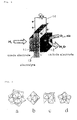
- Fig. 2 illustrates an example of structures of the anions caused by dissolution of polyoxometalate in an organic solution and/or an aqueous solution. From Fig.
- heteropolyanions caused by polyoxometalate applicable in the present invention include, but are not limited to, at least one selected from Keggin anions (PMo 12 O 40 3- ), Well-Dawson anions (P 2 W 18 O 62 6- ), Lindqvist anions (Mo 6 O 19 2- ) and Anderson anions ([TeMoO 6 O 26 ) 6- ) (reference: Chem. Rev. 1998, 98, 273-296 ).
- Fig. 3 is a diagram illustrating electrochemical behavior of various anions HPA depending on pH values and potentials.
- the chemical reaction 4 is the one using Keggin anions as a preferred embodiment of the present invention: [Chemical reaction 4] CO (g) + H 2 O (1) + PMo 12 O 40 3- (aq) ⁇ CO 2 (g) + 2H + (aq) + PMo 12 O 40 5- (aq)
- Oxygenate hydrocarbon used in the present invention is a compound having -OH functional groups, which include, for example, at least one selected from CH 4 O, C 2 H 6 O, C 4 H 10 O, C 5 H 12 O, C 6 H 14 O, ethyleneglycol, glycerin and compounds having -COOH and/or -CHO groups.
- Polyoxometalate and/or at least one of anions caused by polyoxometalate is preferably included in a content ranging from 0.1 x 10 -9 M to 0.5M to total 1 liter of the residual ingredients containing at least one of the above mentioned oxygenated hydrocarbons.
- a three(3)-electrode system was prepared as shown in Fig. 4 and was subjected to comparison of both results of each, before (inventive embodiment) and after (comparative control) adding the oxidation assistant to the system.
- red solid lines shown in Figs. 5 to 11 illustrate the present embodiments while black (dot) lines display the comparative controls.
- Left side in Fig. 4 is a schematic view of the three-electrode system and right side is a photograph of the three-electrode system, which was directly used in the experiments of the present invention.
- the three-electrode system was fabricated by preparing a working electrode 51 made of glass carbon, a counter electrode 52 made of platinum wire and a reference electrode RE 53 made of Ag/AgCl.
- Numerical symbol 54 represents a catalyst, in which all of catalytic materials were applied to a constant area of 0.07cm 2 .
- Numeral symbol 55 represents an electrolyte. Before the electrochemical experiment, the fabricated system was sufficiently stabilized. The experiment was conducted using the following equipment, AUTOLAB model PGSTAT 30 available from Eco Chemie Company and Solartron analytical 1400 and/or 1400E available from AMETEK Company.
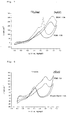
- Fig. 5 is a graph illustrating CV curves obtained when polyoxometalate (POM) is added or is not added to a methanol solution in the presence of Pt/C (platinum/carbon alloy) catalyst as one of noble metal catalysts (model name, ETEK) according to a preferred embodiment of the present invention.
- Fig. 6 is a graph illustrating CV curves obtained when POM is added or is not added to a methanol solution in the presence of PtRu/C (platinum-ruthenium/carbon alloy) catalyst (ETEK) according to a preferred embodiment of the present invention. Numbers shown in the following drawings represent i f /i b values of their corresponding fuels.
- cyclic voltammogram and potentiostat experiments were conducted to evaluate electrochemical characteristics of a sample prepared by adding phosphomolybdic acid hydrate H 3 PMo 12 O 40 to a methanol solution.
- the fabricated three-electrode system ( Fig. 4 ) underwent the electrochemical experiment by carrying a catalyst ink in the working electrode under conditions of constant scan rate (mVs -1 ) and potential range (V).
- a first solution prepared by adding 0.5M H 2 SO 4 and 2M CH 3 OH to 40wt.% Pt/C catalyst (ETEK) and a second solution prepared by adding 0.001M H 3 PMO 12 O 40 to the first solution were subjected to the cyclic voltammogram (CV) experiment, respectively.
- Fig. 5 shows a result of testing Pt/C catalyst (ETEK) at the scan rate of 50mVs -1 while Fig. 6 shows a result of testing PtRu/C catalyst (ETEK) at the scan rate of 50mVs -1 .
- Black dot lines 1 shown in Figs. 5 and 6 represent CV curves of the methanol solution while red solid lines 2 represent CV curves of the solution containing POM.
- I f /I b value becomes a criterion to indicate how a catalyst efficiently reacts with a particular fuel. As illustrated in (1) and (2) of Figs. 5 and 6 , it was demonstrated that I f /I b value was increased for the catalyst after POM addition, compared with the catalyst before POM addition.
- Keggin anion type PMo 12 O 40 3- effectively oxidizes carbonaceous intermediates and byproducts without lowering the current density.
- PtRu/C curves in Fig. 6 themselves show improved performance of methanol in the electrochemical reaction.
- Ruthenium metal dissociates water to produce hydroxyl ions OH - , which are, in turn, reacted with CO poisoning the catalyst to oxidize CO and generate CO 2 thereby improving performance of a catalyst (called as "Bifunctional effect").
- I f/ I b value is very high when using the catalyst and adding the anion type PMo 12 O 40 3- (HPAs). That is, the catalyst with poisoning resistance to CO can exhibit highly improved activity if using a specific oxidation assistant proposed in the present invention.
- the present inventive fuel composition which represents high oxidation effect even with a small amount of oxidation assistant, can be used in a wide range of applications, although novel catalysts with a plurality of advantages including, for example, excellent poisoning resistance and/or activity will be developed in the future.
- Fig. 7 is a graph illustrating CV curves obtained when polyoxometalate is added or is not added to an ethanol solution in the presence of PtRu/C catalyst (ETEK) according to a preferred embodiment of the present invention.
- Fig. 8 is a graph illustrating CV curves obtained when polyoxometalate is added or is not added to an ethyleneglycol solution in the presence of PtRu/C catalyst (ETEK) according to a preferred embodiment of the present invention.
- Fig. 9 is a graph illustrating I-V curves in relation to current and cell voltage obtained when fuel compositions with or without POM are introduced into an anode electrode according to a preferred embodiment of the present invention.
- I-V curves were obtained using Fuel Cell Station available from Fuel Cell Technology Company and MEA was measured using MEA for 5cm 2 DMFC available from NANO BEST Corp.
- the experiments were conducted under a sufficiently stabilized condition by working the unit cell at 0.3V while introducing 1mole of methanol solution into the cell for 10 hours.
- the fuel that is, 1M methanol solution flowed into an anode electrode at a flow rate of 0.63 (ml/min), while 100 sccm of air flowed into a cathode electrode under pressure of 2 atm.
- Fig. 10 is a graph illustrating methanol oxidation current densities displayed in Long-Term Cycles Stability type (abbrev. to "LTCS") CV curves when POM is added or is not added to a methanol solution in the presence of PtRu/C catalyst (ETEK) according to a preferred embodiment of the present invention.
- LTCS Long-Term Cycles Stability type
- Fig. 11 is a graph illustrating methanol oxidation current ratios displayed in LTCS type CV curves when POM is added or is not added to a methanol solution in the presence of PtRu/C catalyst (ETEK) according to a preferred embodiment of the present invention.
- i 1 means the first cycle after complete activation of the catalyst, while i represents each of methanol oxidation current densities of the corresponding cycle after the first cycle.
- Fig. 12 is a graph illustrating CV curves obtained when H 3 PMo 12 O 40 is added to a methanol solution with different concentrations in the presence of PtRu/C catalyst as a noble metal catalyst according to a preferred embodiment of the present invention.
- solid line A is a methanol oxidation current curve in the CV experiment at a three-electrode cell using 2M methanol solution as an electrolyte and dot line B is a methanol oxidation current curve measured by adding 0.01M POM to 2M methanol solution.
- Dot line C is a methanol oxidation current curve measured by adding 0.001M POM to 2M methanol solution and dot line D is a methanol oxidation current curve measured by adding 5.0x10 -5 M POM to 2M methanol solution.
- the fuel composition of the present invention is preferably used in manufacturing fuel cells.
- a variety of fuel cells including the fuel composition with improved performance as fuel can be fabricated according to the present invention.
- the present fuel composition is preferably applied to catalysts made of noble metals such as Pt, Au, Ru, Ir, etc. and/or alloys containing the same.
- the present fuel composition is also applied to catalysts made of non-noble metals and alloys thereof.
- the present invention is very important in terms of scientific and/or practical aspects. More particularly, in view of the scientific aspect, the present invention is preferably applied in existing low temperature solid polymeric fuel cell technology and/or in developments of electrode catalysts that can be obtained from biomass materials and be directly oxidized at low temperature and, thus, is inter-compatible with general fuel cell technology using hydrogen or methanol fuel.
- the assistant is simple and economical because it requires no alternative and/or complex processes.
- the present invention advances time for commercial use of portable fuel cells and, furthermore, contributes to a preferable ratio of alternative energy supply.
Landscapes
- Chemical & Material Sciences (AREA)
- Engineering & Computer Science (AREA)
- Chemical Kinetics & Catalysis (AREA)
- General Chemical & Material Sciences (AREA)
- Oil, Petroleum & Natural Gas (AREA)
- Organic Chemistry (AREA)
- Electrochemistry (AREA)
- Inorganic Chemistry (AREA)
- Life Sciences & Earth Sciences (AREA)
- Manufacturing & Machinery (AREA)
- Sustainable Development (AREA)
- Sustainable Energy (AREA)
- Health & Medical Sciences (AREA)
- Emergency Medicine (AREA)
- Materials Engineering (AREA)
- Fuel Cell (AREA)
- Catalysts (AREA)
- Liquid Carbonaceous Fuels (AREA)
Abstract
Description
- This application claims priority to
Korean Patent Application No. 10-2006-0122992, filed on December 6, 2006 - The present invention relates to fuel cell technology, more particularly, to a fuel composition for improving performance of fuel cells and a fuel cell manufactured using the same.
- A fuel cell is a high efficiency electrochemical system to convert energy generated by chemical reaction into electric energy. Compared with other electric energy resources, the fuel cell has advantages over them such as high efficiency and environmental sustainability. In this regard, it is considered that fuel cell technologies are essential for developments of original advanced technologies in the country.
- Although a demand for fuel cell which is an electric power source with high efficiency and environmental sustainability grows, there are still technical difficulties which interfere with use of the fuel cell in wide range of applications.
-
Fig. 1 is a schematic view illustrating one of conventionally known fuel cells. - In general, a fuel cell comprises an
anode electrode 11, acathode electrode 12 and anelectrolyte 13 disposed between theelectrodes electric circuit 14. A typical fuel cell uses hydrogen H2 as fuel and oxygen O2 as oxidant Hydrogen generates protons and electrons according to the followingchemical reaction 1. Electrons flow to theelectric circuit 14 connecting theelectrodes electrolyte 13 in contact with theanode electrode 11 and thecathode electrode 12.
[Chemical reaction 1] H2 → 2H+ + 2e-
- At the same time, electrons and protons generated from the
anode electrode 11 are electrochemically reduced at thecathode electrode 12 by the reductant such as oxygen to produce water as a reactant according to the following chemical reaction 2:
[Chemical reaction 2] 1/2 O2 + 2H+ + 2e- → H2O
- As described above, a fuel cell directly using hydrogen fuel is a simple, convenient and clean cell with superior efficiency. But, this has restrictions on use thereof due to high flammability of the fuel. For instance, as hydrogen storage and transportation require high pressure tanks, hydrogen-powered fuel cells inevitably have limitations on use thereof in a variety of applications.
- For the reasons described above, hydrogen is usually applied in the form of oxygenated hydrocarbons as fuel rather than direct use of hydrogen element itself. The oxygenated hydrocarbon fuel is a liquid phase fuel, which has higher energy density than hydrogen and is simple and more convenient than gaseous materials for storage, carrying, handling and/or transportation thereof. As a result, there have been proposed applications of oxygenated hydrocarbons including, for example: a direct oxidation process of oxygenated hydrocarbons such as alcohol or methanol; a preparation method of hydrogen by modifying oxygenated hydrocarbons, etc.
- A direct (hydrogen) fuel feeding fuel cell is easy and simple to use in view of directly feeding the fuel to the fuel cell. However, if oxygenated hydrocarbon based fuel is directly introduced to a fuel cell, it is difficult for a catalyst to completely oxidize the fuel and carbon monoxide and other carbonaceous intermediates are usually generated according to the following chemical reaction 3:
[Chemical reaction 3] CH3OH → CO + 4H+ + 4e-
- Even when the intermediates (mostly carbon monoxide) are used in only a small amount, these are securely adsorbed to a platinum catalyst often used in low temperature fuel cells, poison the catalyst (as called "catalyst poisoning") and reduce activity of the catalyst.
- Also, hydrocarbon molecules contained in a biomass material generate plenty of carbon monoxide through catalytic decomposition.
- As described above, direct injection type liquid fuels which produce carbon monoxide and other carbonaceous intermediates during electrochemical oxidation have significant problems, particularly, durability of the fuel cells.
- In order to solve the above problems, conventional techniques and proposals have focused on developing catalysts with superior poisoning resistance. Particularly, although PtRu/C (platinum-ruthenium/carbon alloy) catalyst has favorable performance, this also has many difficulties and/or limitations in efficiently eliminating carbon monoxide and needs an additional expensive catalyst.
- Since most of existing fuel cells work in a strong acidic environment of
pH 2 or less, appropriate oxidation assistants are not readily discovered. In case of the low temperature fuel cell, it is very difficult to oxidize carbon monoxide which was strongly adsorbed to a catalyst. - Accordingly, the present invention is directed to solve the problems of conventional arts in regard to fuel cells using hydrocarbon fuels as described above and, an object of the present invention is to provide a fuel composition capable of efficiently oxidizing carbon monoxide and other carbonaceous intermediates.
- Another object of the present invention is to provided a fuel cell with improved performance by using the fuel composition according to the present invention.
- In order to accomplish the above former object, the inventive fuel composition comprises: at least one of oxygenated hydrocarbons; and at least one polyoxometalate and/or at least one oxidation-reduction reactive anion (hereinafter, referred to as "redox anion") caused by dissolution of polyoxometalate in an organic medium containing solution and/or an aqueous solution.
- Oxygenated hydrocarbons may include compounds having -OH functional groups.
- Alternatively, oxygenated hydrocarbons may include at least one selected from CH4O, C2H6O, C4H10O, C5H12O, C6H14O, ethyleneglycol, glycerin and compounds having -COOH and/or - CHO groups.
- Preferably, anions contained in the fuel composition according to the present invention may comprise at least one selected from Keggin anions, Wells-Dawson anions, Lindqvist anions and Anderson anions.
- Preferably, polyoxometalate and/or at least one redox anion caused by dissolution of polyoxometalate can be comprised in a content ranging from 0.1 × 10⁻⁹M to 0.5M to total 1 liter of the residual ingredients containing at least one of the above mentioned oxygenated hydrocarbons.
- In order to accomplish the above latter object, the inventive fuel cell uses the fuel composition according to the present invention as fuel.
- Such fuel cell of the present invention uses a catalyst made of noble metals and/or noble metal alloys.
- Conventional techniques and/or proposals have substantially concentrated on researches and studies for catalysts with enhanced durability, whereas the present invention suggests an oxidation method of carbonaceous intermediates using a specific additive for fuel, which was substantially not attempted or tried hitherto, as well as applications thereof.
- The present invention plays an important role in development of portable fuel cells including, for example, DMFC (direct methanol fuel cell), DAFC (direct alcohol fuel cell), DFAFC (direct formic acid fuel cell) and the like. Briefly, the present invention utilizes polyoxometalate as an oxidation assistant for low temperature oxidation at less than 100°C in a fuel anode electrode in addition to oxygenated hydrocarbons (or carbohydrates) such as ethanol, ethyleneglycol, formic acid, etc.
- Polyoxometalate used in the present invention is previously known to be stable under a strong acidic environment of not higher than
pH 2. or less and, for molybdenum-containing polyoxometalate, this compound exhibits reductive property in the range of capable adsorbing and desorbing carbon monoxide, therefore, can selectively oxidize carbon monoxide. Alternatively, polyoxometalates containing tungsten, vanadium and/or other elements have different redox potentials depending on the elements, which present a preferable solution to selectively oxidize and eliminate undesirable byproducts of fuel cells using various fuels including, for example, ethanol. - It is expected that polyoxometalate described above will be applicable in commonly available catalysts based on noble metals and/or noble metal alloys and, additionally, a variety of alloy catalysts and/or non-noble metal catalysts to be developed in the future.
- These and other objects, features, aspects, and advantages of preferred embodiments of the present invention will be more fully described in the following detailed description, taken in conjunction with the accompanying drawings. In the drawings:
-
Fig. 1 is a schematic view illustrating a fuel cell generally known in the related arts; -
Fig. 2 illustrates an example of structures of anions caused by polyoxometalate in an organic solution and/or an aqueous solution; -
Fig. 3 is a diagram illustrating electrochemical behavior of various heteropoly acid (HPA) anions depending on pH values and potentials; -
Fig. 4 illustrates a three-electrode system used in experiments according to examples of the present invention; -
Fig. 5 is a graph illustrating cyclic voltammograms(CV) obtained when polyoxometalate (H3PMo12O40) is added or is not added to a methanol solution in the presence of Pt/C (platinum/carbon alloy) catalyst as one of noble metal catalysts (model name, ETEK) according to a preferred embodiment of the present invention; -
Fig. 6 is a graph illustrating CV curves obtained when polyoxometalate is added or is not added to a methanol solution in the presence of PtRu/C (platinum-ruthenium/carbon alloy) catalyst (ETEK) according to a preferred embodiment of the present invention; -
Fig. 7 is a graph illustrating CV curves obtained when polyoxometalate is added or is not added to an ethanol solution in the presence of PtRu/C catalyst (ETEK) according to a preferred embodiment of the present invention; -
Fig. 8 is a graph illustrating CV curves obtained when polyoxometalate is added or is not added to an ethyleneglycol solution in the presence of PtRu/C catalyst (ETEK) according to a preferred embodiment of the present invention; -
Fig. 9 is a graph illustrating Current-voltage (I-V) curves in relation to current and cell voltage obtained when fuel compositions with or without polyoxometalate are introduced into an anode electrode according to a preferred embodiment of the present invention; -
Fig. 10 is a graph illustrating methanol oxidation current densities displayed in Long-Term Cycles Stability type CV curves when polyoxometalate is added or is not added to a methanol solution in the presence of PtRu/C catalyst (ETEK) according to a preferred embodiment of the present invention; -
Fig. 11 is a graph illustrating methanol oxidation current ratios displayed in Long-Term Cycles Stability type CV curves when polyoxometalate is added or is not added to a methanol solution in the presence of PtRu/C catalyst (ETEK) according to a preferred embodiment of the present invention; and -
Fig. 12 is a graph illustrating CV curves obtained when H3PMo12O40 is added to a methanol solution with different concentrations in the presence of PtRu/C catalyst as a noble metal catalyst according to a preferred embodiment of the present invention. - Hereafter, the present invention will be described in detail with reference to the accompanying drawings.
- Again referring to the
chemical reaction 3 and as described above, if the oxygenated hydrocarbon fuel is directly introduced into a fuel cell, the catalyst has a difficulty in complete oxidation of the fuel and, thus, generates carbon monoxide (hereinafter, sometimes referred to as "CO") and carbonaceous intermediates according to thechemical reaction 3 during use of the fuel cell:
[Chemical reaction 3] CH3OH → CO + 4H+ + 4e-
- The intermediates (mostly carbon monoxide) become the most common cause to reduce fuel cell efficiency in case of low temperature fuel cell, even when the intermediates are contained in only a small amount. Particularly, for carbon monoxide, it strictly binds to the catalyst used in the fuel cell and causes poisoning of the catalyst.
- As such catalyst poisoning reduces active sites of the catalyst and results in decrease in activity of the catalyst, overall efficiency of the fuel cell is lowered. In general, hydrocarbon molecules contained in a biomass also generate plenty of carbon monoxide through catalytic decomposition.
- Conventional investigations and studies have been focused on production of high purity hydrogen through fuel modification, however, this requires multiple stage catalyst processes and/or addition processes in modification and/or treatment of fuel, since concentration of carbon monoxide must be controlled to be less than 10ppm in order to use hydrogen in hydrogen fuel cells for low temperature solid electrolytes.
- On the other hand, the present invention proposes addition of polyoxometalate (hereinafter, often referred to as "POM") as an oxidation assistant to fuel. That is, the fuel composition of the present invention comprises oxygenated hydrocarbons and polyoxometalate. POM can oxidize carbon monoxide according to the following chemical reaction 4, thereby generating hydrogen gas. Carbon monoxide was considered to be one of catalyst poisoning materials to be removed on the basis of traditional knowledge and/or existing techniques. However, in case of the fuel composition according to the present invention, carbon monoxide functions as an appropriate oxidation assistant for active electrochemical oxidation of oxygenated hydrocarbons in an anode electrode.
- Polyoxometalate used in the present invention principally means a compound containing polyoxometalate and/or anions which are caused by polyoxometalate and have redox reactivity in an aqueous solution and/or an organic medium containing solution, namely, heteropolyanions (hereinafter often referred to as "HPA").
- Table 1 shows characteristics of anions caused by dissolution of polyoxometalate in an organic solution and/or an aqueous solution.
[TABLE 1] 1 The same behavior as metal oxides 2 Stable to water, air and/or temperature (benefits for processing) 3 Large size (diameter, 6-25Å) 4 Independent dimension/structure (restricted geometric factor) 5 Anion (range of charge, -3 to -14 valents) 6 High ionization weight (103 to 104) 7 Completely oxidized compound/reductivity 8 Varied oxidation numbers for addenda atom (E1/2 = 0.5 to - 0.1V vs SCE) 9 Color of oxidized compound/ reduction form 10 Photo- reduction 11 Arrhenius acids, pKa < 0 12 Structural form containing 70 or more of elements (processing merit). 13 Acidic form readily dissolved in water and solvent (such as ether, alcohol, ketone) carrying oxygen; Also easily soluble in aromatic or petroleum based solvents (processing merit). 14 Hydrolytic property causing incomplete structure (reference: Chem. Rev. 1998, 98, 359-387) - The anions described above include transitional metals such as molybdenum Mo, vanadium V, tungsten W, etc. as well as oxygen atoms. Based on structures of individuals anions, they have inherent features and are classified into or defined with different names thereof.
Fig. 2 illustrates an example of structures of the anions caused by dissolution of polyoxometalate in an organic solution and/or an aqueous solution. FromFig. 2 , "a" represents Keggin anions (PMo12O40 3-), "b" represents Lindqvist anions (Mo6O19 2-), "c" represents β-octamolybdate anions (β - [Mo8O26]4-), and "d" represents [S2Mo5O23]4- anions, respectively (reference: Chem. Rev. 1998, 98, 219-237). - The heteropolyanions caused by polyoxometalate applicable in the present invention include, but are not limited to, at least one selected from Keggin anions (PMo12O40 3-), Well-Dawson anions (P2W18O62 6-), Lindqvist anions (Mo6O19 2-) and Anderson anions ([TeMoO6O26)6-) (reference: Chem. Rev. 1998, 98, 273-296).
-
Fig. 3 is a diagram illustrating electrochemical behavior of various anions HPA depending on pH values and potentials. - Based on a principle according to the chemical reaction 4, polyoxometalate improves poisoning resistance of noble metal catalysts while oxidizing carbon monoxide and, additionally, generates hydrogen gas preferably used as fuel. The chemical reaction 4 is the one using Keggin anions as a preferred embodiment of the present invention:
[Chemical reaction 4] CO (g) + H2O (1) + PMo12O40 3- (aq) → CO2 (g) + 2H+ (aq) + PMo12O40 5- (aq)
- Oxygenate hydrocarbon used in the present invention is a compound having -OH functional groups, which include, for example, at least one selected from CH4O, C2H6O, C4H10O, C5H12O, C6H14O, ethyleneglycol, glycerin and compounds having -COOH and/or -CHO groups.
- Polyoxometalate and/or at least one of anions caused by polyoxometalate is preferably included in a content ranging from 0.1 x 10⁻⁹M to 0.5M to total 1 liter of the residual ingredients containing at least one of the above mentioned oxygenated hydrocarbons.
- Particular experimental examples in regard to fuel compositions according to the present invention will be described in detail below. These examples describe a part of experiments carried out with particular ones of oxygenated hydrocarbons and polyoxometalates applicable in the present invention.
- In order to evaluate electrochemical performance and characteristics of the fuel composition by addition of specific oxidation assistant according to the present invention, a three(3)-electrode system was prepared as shown in
Fig. 4 and was subjected to comparison of both results of each, before (inventive embodiment) and after (comparative control) adding the oxidation assistant to the system. For reference, red solid lines shown inFigs. 5 to 11 illustrate the present embodiments while black (dot) lines display the comparative controls. Left side inFig. 4 is a schematic view of the three-electrode system and right side is a photograph of the three-electrode system, which was directly used in the experiments of the present invention. - Referring to
Fig. 4 , first of all, the three-electrode system was fabricated by preparing a workingelectrode 51 made of glass carbon, acounter electrode 52 made of platinum wire and areference electrode RE 53 made of Ag/AgCl.Numerical symbol 54 represents a catalyst, in which all of catalytic materials were applied to a constant area of 0.07cm2.Numeral symbol 55 represents an electrolyte. Before the electrochemical experiment, the fabricated system was sufficiently stabilized. The experiment was conducted using the following equipment,AUTOLAB model PGSTAT 30 available from Eco Chemie Company and Solartron analytical 1400 and/or 1400E available from AMETEK Company. -
Fig. 5 is a graph illustrating CV curves obtained when polyoxometalate (POM) is added or is not added to a methanol solution in the presence of Pt/C (platinum/carbon alloy) catalyst as one of noble metal catalysts (model name, ETEK) according to a preferred embodiment of the present invention.Fig. 6 is a graph illustrating CV curves obtained when POM is added or is not added to a methanol solution in the presence of PtRu/C (platinum-ruthenium/carbon alloy) catalyst (ETEK) according to a preferred embodiment of the present invention. Numbers shown in the following drawings represent if/ib values of their corresponding fuels. - Referring
Figs. 5 and 6 , cyclic voltammogram and potentiostat experiments were conducted to evaluate electrochemical characteristics of a sample prepared by adding phosphomolybdic acid hydrate H3PMo12O40 to a methanol solution. The fabricated three-electrode system (Fig. 4 ) underwent the electrochemical experiment by carrying a catalyst ink in the working electrode under conditions of constant scan rate (mVs-1) and potential range (V). - Firstly, a first solution prepared by adding 0.5M H2SO4 and 2M CH3OH to 40wt.% Pt/C catalyst (ETEK) and a second solution prepared by adding 0.001M H3PMO12O40 to the first solution were subjected to the cyclic voltammogram (CV) experiment, respectively.
-
Fig. 5 shows a result of testing Pt/C catalyst (ETEK) at the scan rate of 50mVs-1 whileFig. 6 shows a result of testing PtRu/C catalyst (ETEK) at the scan rate of 50mVs-1. - Each of CV experiments was repeated 30 cycles and the catalyst was sufficiently activated before the experiment.
Black dot lines 1 shown inFigs. 5 and 6 represent CV curves of the methanol solution while redsolid lines 2 represent CV curves of the solution containing POM. - From CV curves of the
methanol solution 1 shown inFigs. 5 and 6 , it was found that current density had a peak value of more than 0(zero) when potential was scanned in a negative direction. This value is a current density obtained by oxidation of various carbonaceous intermediates and byproducts, which were not completely oxidized when methanol underwent oxidation by a catalyst electrode in case that the potential was scanned in a positive direction. As a catalyst has increase in activity to methanol fuel, the catalyst efficiently oxidizes methanol. Therefore, the catalyst demonstrates higher current density value If under lower over-potential in the positive direction and, conversely, lower current density value Ib in the negative direction. If/Ib value becomes a criterion to indicate how a catalyst efficiently reacts with a particular fuel. As illustrated in (1) and (2) ofFigs. 5 and 6 , it was demonstrated that If/Ib value was increased for the catalyst after POM addition, compared with the catalyst before POM addition. - Furthermore, it was found that Keggin anion type PMo12O40 3- effectively oxidizes carbonaceous intermediates and byproducts without lowering the current density.
- Especially, PtRu/C curves in
Fig. 6 themselves show improved performance of methanol in the electrochemical reaction. Ruthenium metal dissociates water to produce hydroxyl ions OH-, which are, in turn, reacted with CO poisoning the catalyst to oxidize CO and generate CO2 thereby improving performance of a catalyst (called as "Bifunctional effect"). It was understood that If/Ib value is very high when using the catalyst and adding the anion type PMo12O40 3- (HPAs). That is, the catalyst with poisoning resistance to CO can exhibit highly improved activity if using a specific oxidation assistant proposed in the present invention. - It is expected that the present inventive fuel composition which represents high oxidation effect even with a small amount of oxidation assistant, can be used in a wide range of applications, although novel catalysts with a plurality of advantages including, for example, excellent poisoning resistance and/or activity will be developed in the future.
-
Fig. 7 is a graph illustrating CV curves obtained when polyoxometalate is added or is not added to an ethanol solution in the presence of PtRu/C catalyst (ETEK) according to a preferred embodiment of the present invention. - Results of CV and potentiostat experiments for a sample which was prepared by adding H3PMo12O40 to the ethanol solution in the presence of PtRu/C catalyst (red solid lines) as a noble metal catalyst for fuel cell were compared with results of the same experiments for another sample obtained before addition of H3PMo12O40 to the ethanol solution. It was identified that these results are similar to the ones from Experimental example 1.
-
Fig. 8 is a graph illustrating CV curves obtained when polyoxometalate is added or is not added to an ethyleneglycol solution in the presence of PtRu/C catalyst (ETEK) according to a preferred embodiment of the present invention. - Results of CV and potentiostat experiments for a sample which was prepared by adding H3PMo12O40 to the ethanol solution in the presence of PtRu/C catalyst (red solid lines) as a noble metal catalyst for fuel cell were compared with results of the same experiments for another sample obtained before addition of H3PMo12O40 to the ethanol solution.
- It was identified that these results are similar to the ones from Experimental example 1.
-
Fig. 9 is a graph illustrating I-V curves in relation to current and cell voltage obtained when fuel compositions with or without POM are introduced into an anode electrode according to a preferred embodiment of the present invention. - In order to evaluate performance of fuel unit cell, I-V curves were obtained using Fuel Cell Station available from Fuel Cell Technology Company and MEA was measured using MEA for 5cm2 DMFC available from NANO BEST Corp. The experiments were conducted under a sufficiently stabilized condition by working the unit cell at 0.3V while introducing 1mole of methanol solution into the cell for 10 hours. The fuel, that is, 1M methanol solution flowed into an anode electrode at a flow rate of 0.63 (ml/min), while 100 sccm of air flowed into a cathode electrode under pressure of 2 atm.
- On the other hand, the above procedure was repeated with a solution containing 5 x 10⁻⁵ M POM in 1M methanol in order to obtain CV curves. From the CV curves, it was found that the unit cell has no reduction in performance (
Fig. 9 ). -
Fig. 10 is a graph illustrating methanol oxidation current densities displayed in Long-Term Cycles Stability type (abbrev. to "LTCS") CV curves when POM is added or is not added to a methanol solution in the presence of PtRu/C catalyst (ETEK) according to a preferred embodiment of the present invention. -
Fig. 11 is a graph illustrating methanol oxidation current ratios displayed in LTCS type CV curves when POM is added or is not added to a methanol solution in the presence of PtRu/C catalyst (ETEK) according to a preferred embodiment of the present invention. - In order to identify durability of the anode electrode, LTSC type CV experiment was conducted to evaluate durability of catalyst.
- CV experiment was repeated 1000 times to expose the catalyst to a severe environment and methanol oxidation current densities before and after addition of 0.001M POM were demonstrated in the CV curves, respectively (
Fig. 10 ). As cycles of the CV experiment were repeated in a positive direction with reference to first cycle of the CV experiment after completely activating the catalyst, there were obtained the methanol oxidation current densities in the positive direction as illustrated inFig. 11 . Herein, i1 means the first cycle after complete activation of the catalyst, while i represents each of methanol oxidation current densities of the corresponding cycle after the first cycle. - As shown in the drawings, it can be clearly understood that there is a great difference between oxidation current densities of the present inventive embodiments and the ones of the comparative controls.
-
Fig. 12 is a graph illustrating CV curves obtained when H3PMo12O40 is added to a methanol solution with different concentrations in the presence of PtRu/C catalyst as a noble metal catalyst according to a preferred embodiment of the present invention. - In order to identify influence of concentration on oxidation by a procedure disclosed in detailed description of the present invention, CV experiment was conducted by adding H3PMo12O40 to the methanol solution with different concentrations (0.5 x 10⁻⁵M to 0.01M) in the presence of PtRu/C catalyst as a noble metal catalyst for fuel cell. By this experiment, oxidation effect of carbonaceous intermediates can be identified using H3PMo12O40 even in a small amount thereof. On the other hand, when adding high concentration POM to the methanol solution, it was found that the fuel cell exhibits improved durability although oxidation current density thereof is decreased.
- In
Fig. 12 , solid line A is a methanol oxidation current curve in the CV experiment at a three-electrode cell using 2M methanol solution as an electrolyte and dot line B is a methanol oxidation current curve measured by adding 0.01M POM to 2M methanol solution. - Dot line C is a methanol oxidation current curve measured by adding 0.001M POM to 2M methanol solution and dot line D is a methanol oxidation current curve measured by adding 5.0x10⁻⁵M POM to 2M methanol solution.
- The fuel composition of the present invention is preferably used in manufacturing fuel cells. Thus, a variety of fuel cells including the fuel composition with improved performance as fuel can be fabricated according to the present invention. For example, the present fuel composition is preferably applied to catalysts made of noble metals such as Pt, Au, Ru, Ir, etc. and/or alloys containing the same. Additionally, the present fuel composition is also applied to catalysts made of non-noble metals and alloys thereof.
- In consideration of scientific achievement and contribution expected by the present invention, since carbon monoxide is inevitably generated during reaction of an anode electrode on the basis of inherent characteristics of biomass molecules, there are lots of studies about electrochemical interaction between CO and metal electrode catalysts from investigations of CO removal and conversion of CO into electric energy. Results of the studies described above are expected to remarkably contribute in researches on electrode catalysts with poisoning resistance to CO, which is one of most common issues in existing hydrogen fuel cells.
- The present invention is very important in terms of scientific and/or practical aspects. More particularly, in view of the scientific aspect, the present invention is preferably applied in existing low temperature solid polymeric fuel cell technology and/or in developments of electrode catalysts that can be obtained from biomass materials and be directly oxidized at low temperature and, thus, is inter-compatible with general fuel cell technology using hydrogen or methanol fuel.
- In addition to CO removal according to the present invention, additional fuel can be ensured by generating hydrogen gas. Especially, for polyoxometalate as the oxidation assistant used in the present invention, the assistant is simple and economical because it requires no alternative and/or complex processes.
- From the above experimental examples, it was identified that only a small amount of oxidation assistant can exhibit high oxidation of intermediates and, as a result, the present invention is believed to have great commercial merit.
- Meanwhile, even though POM is produced in small amounts due to low demand and high cost under existing circumstances, it is obvious that mass production of POM can be realized and, in turn, considerably reduce the price of POM.
- Consequently, with technological improvements as described above, it is clear that the present invention advances time for commercial use of portable fuel cells and, furthermore, contributes to a preferable ratio of alternative energy supply.
- While the present invention has been described with reference to a limited number of preferred embodiments, it will be understood by those skilled in the art that various modifications, variations and applications may be made therein without departing from the scope of the present invention as defined by the appended claims.
Claims (9)
- A fuel composition, comprising:at least one of oxygenated hydrocarbons; andat least one polyoxometalate and/or at least one redox reactive anion caused by dissolution of polyoxometalate in an organic medium containing solution and/or an aqueous solution.
- The fuel composition according to claim 1, wherein the oxygenated hydrocarbons are compounds having -OH functional groups.
- The fuel composition according to claim 2, wherein the oxygenated hydrocarbons comprise at least one selected from CH4O C2H6O, C4H10O, C5H12O, C6H14O, ethyleneglycol, glycerin and compounds having -COOH and/or -CHO groups.
- The fuel composition according to claim 1, wherein the anion comprises at least one selected from Keggin anions, Wells-Dawson anions, Lindqvist anions and Anderson anions.
- The fuel composition according to claim 1, wherein the polyoxometalate and/or at least one anion caused by dissolution of polyoxometalate comprise in a content ranging from 0.1 x 10⁻⁹M to 0.5M to total 1 liter of the residual ingredients containing at least one of the oxygenated hydrocarbons.
- A fuel cell comprising:an anode electrode;a cathode electrode; anda fuel composition which comprises at least one of oxygenated hydrocarbons, and at least one polyoxometalate and/or at least one redox reactive anion caused by dissolution of polyoxometalate in an organic medium containing solution and/or an aqueous solution.
- The fuel cell according to claim 6, wherein the fuel cell uses at least one selected from noble metal catalysts and alloy containing noble metal catalysts as catalysts in either of the anode electrode or the cathode electrode.
- The fuel cell according to claim 6, wherein the oxygenated hydrocarbons in the fuel composition are alcohols and, the fuel composition includes at least one selected from Keggin anions, Wells-Dawson anions, Lindqvist anions and Anderson anions.
- The fuel cell according to claim 8, wherein the polyoxometalate and/or at least one anion caused by dissolution of polyoxometalate comprise in a content ranging from 0.1 x 10⁻⁹M to 0.5M to total 1 liter of the residual ingredients containing at least one of the oxygenated hydrocarbons.
Applications Claiming Priority (1)
| Application Number | Priority Date | Filing Date | Title |
|---|---|---|---|
| KR1020060122992A KR100823021B1 (en) | 2006-12-06 | 2006-12-06 | Liquid fuel composition and fuel cell using same |
Publications (2)
| Publication Number | Publication Date |
|---|---|
| EP1930973A1 true EP1930973A1 (en) | 2008-06-11 |
| EP1930973B1 EP1930973B1 (en) | 2010-06-09 |
Family
ID=39190265
Family Applications (1)
| Application Number | Title | Priority Date | Filing Date |
|---|---|---|---|
| EP07023573A Not-in-force EP1930973B1 (en) | 2006-12-06 | 2007-12-05 | Liquid fuel composition and fuel cell using the same |
Country Status (5)
| Country | Link |
|---|---|
| US (1) | US20080176130A1 (en) |
| EP (1) | EP1930973B1 (en) |
| JP (1) | JP4677438B2 (en) |
| KR (1) | KR100823021B1 (en) |
| DE (1) | DE602007007042D1 (en) |
Cited By (3)
| Publication number | Priority date | Publication date | Assignee | Title |
|---|---|---|---|---|
| EP2001068A1 (en) * | 2007-06-08 | 2008-12-10 | National Taiwan University of Science and Technology | Catalytic liquid fuel |
| US8075644B2 (en) | 2006-06-09 | 2011-12-13 | National Taiwan University Of Science And Technology | Catalytic liquid fuel |
| CN104649325A (en) * | 2015-01-06 | 2015-05-27 | 河南大学 | Wells-Dawson niobium-tungsten mixed polyacid rare earth derivative and preparation method and applications thereof |
Families Citing this family (4)
| Publication number | Priority date | Publication date | Assignee | Title |
|---|---|---|---|---|
| US20110014527A1 (en) * | 2009-07-17 | 2011-01-20 | Leroy James Ohlsen | Polyoxometalate flow-cell power system |
| KR102064551B1 (en) * | 2012-03-28 | 2020-01-09 | 삼성전자주식회사 | Adsorbent for carbon dioxide, method of preparing the same, and capture module for carbon dioxide |
| US20140050947A1 (en) * | 2012-08-07 | 2014-02-20 | Recapping, Inc. | Hybrid Electrochemical Energy Storage Devices |
| WO2015109271A1 (en) * | 2014-01-17 | 2015-07-23 | Georgia Tech Research Corporation | Compositions comprising an oxidizer and water, compositions comprising biomass, a biomass-oxidizer, and water, and methods of making and using the same |
Citations (3)
| Publication number | Priority date | Publication date | Assignee | Title |
|---|---|---|---|---|
| US20060024539A1 (en) * | 2004-07-29 | 2006-02-02 | Dumesic James A | Catalytic method to remove CO and utilize its energy content in CO-containing streams |
| US20060141334A1 (en) * | 2002-11-13 | 2006-06-29 | Hitoshi Nakajima | Catalyst for fuel cell and electrode using the same |
| US20060165576A1 (en) * | 2005-01-25 | 2006-07-27 | Samsung Sdi Co., Ltd. | Catalytic system for removing carbon monoxide, and processor and fuel cell system using the same |
Family Cites Families (7)
| Publication number | Priority date | Publication date | Assignee | Title |
|---|---|---|---|---|
| US4633372A (en) * | 1985-08-26 | 1986-12-30 | The Standard Oil Company | Polyoxometalate-modified carbon electrodes and uses therefor in capacitors |
| US4630176A (en) * | 1985-11-22 | 1986-12-16 | The Standard Oil Company | Polyoxometalate-modified carbon electrodes and uses therefor |
| WO2003002856A2 (en) * | 2001-06-29 | 2003-01-09 | The Lubrizol Corporation | Emulsified fuel compositions prepared employing emulsifier derived from high polydispersity olefin polymers |
| US6921593B2 (en) * | 2001-09-28 | 2005-07-26 | Hewlett-Packard Development Company, L.P. | Fuel additives for fuel cell |
| US7208244B2 (en) | 2003-10-15 | 2007-04-24 | Auburn University | Di-ruthenium-substituted polyoxometalate electrocatalyst and method of oxygen generation |
| US8062552B2 (en) * | 2005-05-19 | 2011-11-22 | Brookhaven Science Associates, Llc | Electrocatalyst for oxygen reduction with reduced platinum oxidation and dissolution rates |
| KR101408885B1 (en) * | 2007-06-15 | 2014-06-19 | 삼성에스디아이 주식회사 | Fuel Composition for Polymer Electrolyte Type Fuel Cell and Polymer Electrolyte Type Fuel Cell System Including the Same |
-
2006
- 2006-12-06 KR KR1020060122992A patent/KR100823021B1/en not_active Expired - Fee Related
-
2007
- 2007-12-05 DE DE602007007042T patent/DE602007007042D1/en active Active
- 2007-12-05 US US11/987,920 patent/US20080176130A1/en not_active Abandoned
- 2007-12-05 EP EP07023573A patent/EP1930973B1/en not_active Not-in-force
- 2007-12-06 JP JP2007315360A patent/JP4677438B2/en not_active Expired - Fee Related
Patent Citations (3)
| Publication number | Priority date | Publication date | Assignee | Title |
|---|---|---|---|---|
| US20060141334A1 (en) * | 2002-11-13 | 2006-06-29 | Hitoshi Nakajima | Catalyst for fuel cell and electrode using the same |
| US20060024539A1 (en) * | 2004-07-29 | 2006-02-02 | Dumesic James A | Catalytic method to remove CO and utilize its energy content in CO-containing streams |
| US20060165576A1 (en) * | 2005-01-25 | 2006-07-27 | Samsung Sdi Co., Ltd. | Catalytic system for removing carbon monoxide, and processor and fuel cell system using the same |
Non-Patent Citations (2)
| Title |
|---|
| CHEM. REV., vol. 98, 1998, pages 219 - 237 |
| CHEM. REV., vol. 98, 1998, pages 273 - 296 |
Cited By (4)
| Publication number | Priority date | Publication date | Assignee | Title |
|---|---|---|---|---|
| US8075644B2 (en) | 2006-06-09 | 2011-12-13 | National Taiwan University Of Science And Technology | Catalytic liquid fuel |
| EP2001068A1 (en) * | 2007-06-08 | 2008-12-10 | National Taiwan University of Science and Technology | Catalytic liquid fuel |
| CN104649325A (en) * | 2015-01-06 | 2015-05-27 | 河南大学 | Wells-Dawson niobium-tungsten mixed polyacid rare earth derivative and preparation method and applications thereof |
| CN104649325B (en) * | 2015-01-06 | 2016-03-30 | 河南大学 | A Wells-Dawson type niobium-tungsten mixed polyacid rare earth derivative, its preparation method and application |
Also Published As
| Publication number | Publication date |
|---|---|
| JP2008144168A (en) | 2008-06-26 |
| KR100823021B1 (en) | 2008-04-17 |
| JP4677438B2 (en) | 2011-04-27 |
| DE602007007042D1 (en) | 2010-07-22 |
| EP1930973B1 (en) | 2010-06-09 |
| US20080176130A1 (en) | 2008-07-24 |
Similar Documents
| Publication | Publication Date | Title |
|---|---|---|
| Serov et al. | Recent achievements in direct ethylene glycol fuel cells (DEGFC) | |
| US7566514B2 (en) | Catalyst for cathode in fuel cell | |
| EP1930973B1 (en) | Liquid fuel composition and fuel cell using the same | |
| US6183894B1 (en) | Electrocatalyst for alcohol oxidation in fuel cells | |
| Bambagioni et al. | Self‐sustainable production of hydrogen, chemicals, and energy from renewable alcohols by electrocatalysis | |
| RU2334784C2 (en) | Suspensions applied as fuel for electrochemical fuel elements | |
| EP0899805B1 (en) | Carbon monoxide tolerant catalyst and electrode for a fuel cell | |
| AU745966B2 (en) | Improved composition of a selective oxidation catalyst for use in fuel cells | |
| US8048548B2 (en) | Electrocatalyst for alcohol oxidation at fuel cell anodes | |
| US20080241642A1 (en) | Electrochemical oxidation of formic acid using a noble metal based catalyst with admetals | |
| US6245707B1 (en) | Methanol tolerant catalyst material | |
| Souza et al. | Niobium increasing the electrocatalytic activity of palladium for alkaline direct ethanol fuel cell | |
| US20100183942A1 (en) | Electrode catalyst for fuel cell, method for producing the same, and fuel cell using the electrode catalyst | |
| Muneeb et al. | An ascorbate fuel cell with carbon black nanoparticles as anode and cathode | |
| US20080014494A1 (en) | Catalysts Including Metal Oxide For Organic Fuel Cells | |
| US20070078052A1 (en) | Methanol tolerant catalyst material | |
| Wang et al. | Electrooxidation of acetaldehyde on carbon-supported Pt, PtRu and Pt3Sn and unsupported PtRu0. 2 catalysts: A quantitative DEMS study | |
| Pérez et al. | Rhodium-based cathodes with ultra-low metal loading to increase the sustainability in the hydrogen evolution reaction | |
| Souza et al. | Niobium enhances electrocatalytic Pd activity in alkaline direct glycerol fuel cells | |
| JP2011090916A (en) | Anode catalyst for fuel cell, method of manufacturing the same, and membrane electrode assembly | |
| Matsuoka et al. | Electrocatalytic oxidation of ethylene glycol in alkaline solution | |
| JP2002343403A (en) | Operating method of fuel cell | |
| CN118272852B (en) | High-efficiency hydrogen storage platinum-carbon catalyst and preparation method and application thereof | |
| CN101026237A (en) | Oxygen reduction electrode and fuel cell including the same | |
| JP2016513013A (en) | Method for the synthesis of bimetallic catalyst particles made of platinum and another metal and its use in an electrochemical hydrogen production method |
Legal Events
| Date | Code | Title | Description |
|---|---|---|---|
| PUAI | Public reference made under article 153(3) epc to a published international application that has entered the european phase |
Free format text: ORIGINAL CODE: 0009012 |
|
| AK | Designated contracting states |
Kind code of ref document: A1 Designated state(s): AT BE BG CH CY CZ DE DK EE ES FI FR GB GR HU IE IS IT LI LT LU LV MC MT NL PL PT RO SE SI SK TR |
|
| AX | Request for extension of the european patent |
Extension state: AL BA HR MK RS |
|
| 17P | Request for examination filed |
Effective date: 20081210 |
|
| AKX | Designation fees paid |
Designated state(s): DE FR GB |
|
| GRAP | Despatch of communication of intention to grant a patent |
Free format text: ORIGINAL CODE: EPIDOSNIGR1 |
|
| GRAJ | Information related to disapproval of communication of intention to grant by the applicant or resumption of examination proceedings by the epo deleted |
Free format text: ORIGINAL CODE: EPIDOSDIGR1 |
|
| GRAP | Despatch of communication of intention to grant a patent |
Free format text: ORIGINAL CODE: EPIDOSNIGR1 |
|
| RAP1 | Party data changed (applicant data changed or rights of an application transferred) |
Owner name: GWANGJU INSTITUTE OF SCIENCE AND TECHNOLOGY (GIST) |
|
| RIN1 | Information on inventor provided before grant (corrected) |
Inventor name: KIM, JEA-HONG Inventor name: SEO, MIN-HODEPT.OF MATERIALS FOR SCI.&ENG.,GIST,1, Inventor name: CHOI, SUNG-MOCKDEPT. OF MATERIALS FOR SCI.&ENG.,GI Inventor name: KIM, WON-BAEDEPT. OF MATERIALS FOR SCI.&ENG.,GIST, |
|
| GRAS | Grant fee paid |
Free format text: ORIGINAL CODE: EPIDOSNIGR3 |
|
| GRAA | (expected) grant |
Free format text: ORIGINAL CODE: 0009210 |
|
| AK | Designated contracting states |
Kind code of ref document: B1 Designated state(s): DE FR GB |
|
| REF | Corresponds to: |
Ref document number: 602007007042 Country of ref document: DE Date of ref document: 20100722 Kind code of ref document: P |
|
| PLBE | No opposition filed within time limit |
Free format text: ORIGINAL CODE: 0009261 |
|
| STAA | Information on the status of an ep patent application or granted ep patent |
Free format text: STATUS: NO OPPOSITION FILED WITHIN TIME LIMIT |
|
| REG | Reference to a national code |
Ref country code: DE Ref legal event code: R097 Ref document number: 602007007042 Country of ref document: DE Effective date: 20110309 |
|
| REG | Reference to a national code |
Ref country code: FR Ref legal event code: ST Effective date: 20110831 |
|
| PG25 | Lapsed in a contracting state [announced via postgrant information from national office to epo] |
Ref country code: FR Free format text: LAPSE BECAUSE OF NON-PAYMENT OF DUE FEES Effective date: 20110103 |
|
| PGFP | Annual fee paid to national office [announced via postgrant information from national office to epo] |
Ref country code: DE Payment date: 20151019 Year of fee payment: 9 Ref country code: GB Payment date: 20151023 Year of fee payment: 9 |
|
| REG | Reference to a national code |
Ref country code: DE Ref legal event code: R119 Ref document number: 602007007042 Country of ref document: DE |
|
| GBPC | Gb: european patent ceased through non-payment of renewal fee |
Effective date: 20161205 |
|
| PG25 | Lapsed in a contracting state [announced via postgrant information from national office to epo] |
Ref country code: DE Free format text: LAPSE BECAUSE OF NON-PAYMENT OF DUE FEES Effective date: 20170701 Ref country code: GB Free format text: LAPSE BECAUSE OF NON-PAYMENT OF DUE FEES Effective date: 20161205 |