EP1928126B1 - Mobile equipment, base station apparatus and communication control method - Google Patents
Mobile equipment, base station apparatus and communication control method Download PDFInfo
- Publication number
- EP1928126B1 EP1928126B1 EP07122020.6A EP07122020A EP1928126B1 EP 1928126 B1 EP1928126 B1 EP 1928126B1 EP 07122020 A EP07122020 A EP 07122020A EP 1928126 B1 EP1928126 B1 EP 1928126B1
- Authority
- EP
- European Patent Office
- Prior art keywords
- base station
- station apparatus
- mobile equipment
- address
- connection
- Prior art date
- Legal status (The legal status is an assumption and is not a legal conclusion. Google has not performed a legal analysis and makes no representation as to the accuracy of the status listed.)
- Ceased
Links
Images







Classifications
-
- H—ELECTRICITY
- H04—ELECTRIC COMMUNICATION TECHNIQUE
- H04W—WIRELESS COMMUNICATION NETWORKS
- H04W76/00—Connection management
- H04W76/10—Connection setup
- H04W76/19—Connection re-establishment
-
- H—ELECTRICITY
- H04—ELECTRIC COMMUNICATION TECHNIQUE
- H04W—WIRELESS COMMUNICATION NETWORKS
- H04W36/00—Hand-off or reselection arrangements
- H04W36/0005—Control or signalling for completing the hand-off
- H04W36/0055—Transmission or use of information for re-establishing the radio link
-
- H—ELECTRICITY
- H04—ELECTRIC COMMUNICATION TECHNIQUE
- H04W—WIRELESS COMMUNICATION NETWORKS
- H04W8/00—Network data management
- H04W8/26—Network addressing or numbering for mobility support
Definitions
- the present invention generally relates to mobile equipments, base station apparatuses and communication control methods, and more particularly to a mobile equipment, a base station apparatus and a communication control method that are applicable to a digital radio communication system such as the Long Term Evolution (LTE) system.
- LTE Long Term Evolution
- the third generation portable telephone (International Mobile Telecommunications 2000 (IMT-2000)) system employing the Wideband Code Division Multiple Access (W-CDMA) system is becoming the mainstream of the mobile radio communication.
- the 3rd Generation Partnership Project (3GPP) that is the standardization body for the third generation mobile communication system, is adjusting the specifications related to the LTE system so as to realize an even faster communication and to provide a higher quality service.
- the LTE is the next generation communication system that is also referred to as a Super 3G, S3G or 3.9G.
- FIG. 1 generally shows an existing LTE system.
- the LTE system shown in FIG. 1 includes access gateways (aGWs) 20 (20 1 , 20 2 ) provided in a Core Network (CN) 10, base station apparatuses 30 (30 0 , 30 1 , 30 2 , 30 3 ), and a mobile equipment 40.
- the access gateways 20 and the base station apparatuses 30 form an LTE Radio Access Network (LTE-RAN) 35.
- LTE-RAN LTE Radio Access Network
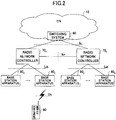
- FIG. 2 generally shows an existing IMT-2000 that is the mainstream of the mobile radio communication system.
- the IMT-2000 system shown in FIG. 2 includes a switching system 60 provided in a Core Network (CN) 10, Radio Network Controllers (RNCs) 70 (70 1 , 70 2 ), base station apparatuses 80 (80 0 , 80 1 , 80 2 , 80 3 ), and a mobile equipment 90.
- CN Core Network
- RNCs Radio Network Controllers
- base station apparatuses 80 80 0 , 80 1 , 80 2 , 80 3
- a Japanese Laid-Open Patent Application No. 2004-135292 proposes such an IMT-2000 system.
- the IMT-2000 system is provided with the radio network controllers 70 that do not exist in the LTE system.
- the radio network controllers are eliminated, and instead, a portion of the functions provided in the radio network controllers is implemented in the base station apparatuses.
- the radio network controller 70 of the IMT-2000 system has an important function related to the mobile control, which is one of the important functions of the mobile communication system. More particularly, the radio network controller 70 manages information of the base station apparatuses 80 and the mobile equipment 90 that are under the control of the radio network controller 70, radio resource allocation states and the like. The radio network controller 70 carries out the mobile control with respect to the base station apparatuses 80 and the mobile equipment 90 based on such information managed by the radio network controller 70.
- the radio network controller 70 needs to store all of the information related to the base stations 80 that are under the control of the radio network controller 80, the information related to other radio network controllers located in the vicinities of the radio network controller 70, the information related to the base stations that are under the control of the other radio network controllers and the like.
- the radio network controller 70 carries out the mobile control with respect to the move of the mobile equipment 90 between the base station apparatuses 80 that are under the control of the radio network controller 70.
- the radio network controller 70 carries out the mobile control by sharing the information of the mobile equipment 90 with the other radio network controller using an interface Iur.
- the radio network controller 70 1 holds its own identifier "a”
- the radio network controller 70 2 holds its own identifier "b”.
- FIG. 3 is a diagram for explaining a mobile control in the third generation mobile communication system.
- a step S2 the mobile equipment 90 moves from the area covered by the base station apparatus 80 1 with which the mobile equipment 90 is communicating to the area covered by another base station apparatus 80 0 , for example.
- a step S4 the mobile equipment 90 sends a reconnect request message with respect to the radio network controller 70 1 via the base station apparatus 80 0 .
- This reconnect request message includes the identifier "a" of the radio network controller 70 1 that controls the base station apparatus 80 1 covering the area in which the mobile equipment 90 was located before moving, and the identifier of the mobile equipment 90.
- the mobile control is started when this reconnect request message is sent from the mobile equipment 90 to the radio network controller 70 1 .
- the radio network controller 70 1 which receives the reconnect request message from the mobile equipment 90 uses the identifier included in the reconnect request message to judge the radio network controller with which the mobile equipment 90 was communicating before moving, and confirms whether or not the identifier included in the reconnect request message matches the identifier of the radio network controller 70 1 .
- the radio network controller 70 1 Since the identifier included in the reconnect request message matches the identifier of the radio network controller 70 1 in this particular case, the radio network controller 70 1 judges that the moving destination of the mobile equipment 90 is within the area covered by the base station apparatus that is under control of the radio network controller 70 1 . Because all of the information related to the mobile equipment 90 is stored within the radio network controller 70 1 itself, the radio network controller 70 1 uses the mobile equipment information stored therein to carry out a procedure of resuming the communication with the mobile equipment 90.
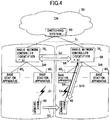
- FIG. 4 is a diagram for explaining the mobile control in the third generation mobile communication system.
- a step S2 the mobile equipment 90 moves from the area covered by the base station apparatus 80 1 with which the mobile equipment 90 is communicating to the area covered by another base station apparatus 80 2 , for example.
- a step S4 the mobile equipment 90 sends a reconnect request message with respect to the radio network controller 70 2 which controls the base station apparatus 80 2 via the base station apparatus 80 2 .
- This reconnect request message includes the identifier "a" of the radio network controller 70 1 that controls the base station apparatus 80 1 covering the area in which the mobile equipment 90 was located before moving, and the identifier of the mobile equipment 90.
- the mobile control is started when this reconnect request message is sent from the mobile equipment 90 to the radio network controller 70 2 .
- the radio network controller 70 2 which receives the reconnect request message from the mobile equipment 90 uses the identifier included in the reconnect request message to judge the radio network controller with which the mobile equipment 90 was communicating before moving, and confirms whether or not the identifier included in the reconnect request message matches the identifier of the radio network controller 70 2 .
- a step S8 since the identifier included in the reconnect request message does not match the identifier of the radio network controller 70 2 in this particular case, the radio network controller 70 2 judges that the moving destination of the mobile equipment 90 is within the area covered by the base station apparatus that is under control of another radio network controller. Because the radio network controller 70 2 does not store all of the information related to the mobile equipment 90, the radio network controller 70 2 carries out a procedure of acquiring the information related to the mobile equipment 90 from the radio network controller holding the identifier included in the reconnect request message.
- the radio network controller 70 2 which acquires the information related to the mobile equipment 90 carries out a procedure of resuming the communication with respect to the mobile equipment 90.
- the geometrical range covered by the base stations that are under the control of a single radio network controller is several tens to several hundred times the area covered by one base station. Consequently, the mobile control for the case where the mobile equipment moves between areas covered by the base station apparatuses that are under the control of a single radio network controller is more dominant compared to the mobile control for the case where the mobile equipment moves between the area covered by the base station apparatus that is under the control of the radio network controller with which the mobile equipment is communicating and the area covered by the base station apparatus that is under the control of another radio network controller.
- the number of radio network controllers provided in the vicinity of one radio network controller is not large.
- the information of the adjacent radio network controllers may be stored, as system data, within each radio network controller, so as to identify with relative ease the radio network controller at the moving destination of the mobile equipment.
- the information between two radio network controllers is exchanged via the interface Iur which provides an interface between the two radio network controllers.
- the radio network controller 70 that is started sets a connection to the radio network controllers provided in the vicinity of the radio network controller 70.
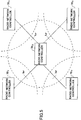
- each radio network controller stores, as the system data, the information of the radio network controllers that have a possibility of making a communication therewith. As shown in FIG.
- FIG. 5 is a diagram for explaining the transmission and reception of the mobile equipment information in the third generation mobile communication system.
- the LTE system implements a portion of the functions provided in the radio network controllers into the base station apparatuses.
- the management of the mobile equipment is made for each area that is relatively small.
- Intra-LTE MME/UPE Relocation in Active Mode is disclosed in Figure 7.15-5 of " 3rd Generation Partnership Project; Technical Specification Group Services and System Aspect; 3GPP System Architecture Evolution: Report on Technical Options and Conclusions (Release 7)", 3GPP Standard; 3GPP TR 23.882, 3rd Generation Partnership Project (3GPP), Mobile Competence Centre; 650, Route des Lucioles; F-06921 Sophia-Antipolis Cedex, France, no. V1.6.1, 1 November 2006, pp 1 to 171 .
- a C-RNTI that enables UE identification is disclosed in Section 8.1 " E-UTRAN related UE identities" of "3rd Generation Partnership Project; Technical Specification Group Radio Access Network; Evolved Universal Terrestrial Radio Access (E-UTRA) and Evolved Universal Radio Access Network (E-UTRAN); Overall description: Stage 2 (Release 8)", 3GPP Standard; 3GPP TS 36.300, 3rd Generation Partnership Project (3GPP), Mobile Competence Centre; 650, Route des Lucioles; F-06921 Sophia-Antipolis Cedex, France, no. V0.3.1, 1 November 2006, pp 1 to 64 .
- Another and more specific object of the present invention is to provide a mobile equipment, a base station apparatus and a communication control method, which can suppress at least one of the problems described above, so as to enable exchange of the mobile equipment information between the base station apparatuses without requiring the information of the adjacent base station apparatuses to be stored in advance in each base station apparatus.
- a Long Term Evolution - LTE - system comprising: a plurality of base station apparatuses including a first base station apparatus and a second base station apparatus, each base station apparatus having an address which is the network layer address of a network between the base station apparatuses; and a mobile equipment configured to make a connection setting to the first base station apparatus, and after a communication with the first base station apparatus is disconnected, to make a re-connect request to the second base station apparatus that is capable of continuing the communication, characterized in that: the mobile equipment is operable to be notified of a mobile equipment identifier, allocated to the mobile equipment for identifying the mobile equipment when making the connection setting, and an address of a network layer allocated to the first base station apparatus to which the connection setting is made; the second base station apparatus is operable to acquire mobile equipment information related to the connection setting from the first base station apparatus that stores said mobile equipment information, based on the mobile equipment identifier and the address of the network layer of the first base station apparatus, when an address
- this system it is possible to notify, by the re-connect request, the mobile equipment identifier that is notified when making the connection setting and the address of the network layer of the base station apparatus that makes the connection setting, thereby making it possible to re-establish the connection between the mobile equipment and the base station apparatus that is capable of continuing the communication.
- a base station apparatus configured to receive a re-connect request that is sent from a mobile equipment whose connection to an arbitrary base station apparatus is disconnected in a Long Term Evolution - LTE - system, and to reconnect the base station apparatus to the mobile equipment, each base station apparatus having an address which is the network layer address of a network between the base station apparatuses, characterized in that the re-connect request includes a mobile equipment identifier for identifying a mobile equipment that is allocated when making a connection setting to the arbitrary base station apparatus, and an address of a network layer allocated to the arbitrary base station apparatus to which the connection setting is made by the mobile equipment prior to sending the re-connect request, and that said base station apparatus comprises: a base station information storage configured to store an address of the network layer allocated to the base station apparatus; a mobile equipment information storage configured to store mobile equipment information related to the connection setting of the mobile equipment when the connection setting is made to the arbitrary base station apparatus; a connection control unit configured to reset the connection to the
- this base station apparatus it is possible to notify the mobile equipment identifier and the address of the network layer of the base station apparatus that makes the connection setting when making the connection setting, and re-establish the connection between the base station apparatus and the mobile equipment, based on the mobile equipment identifier and the address of the network layer of the base station apparatus that makes the connection setting.
- a communication control method in which a connection setting is made between a mobile equipment and a base station apparatus of a Long Term Evolution - LTE - system, characterised by: notifying a mobile equipment identifier allocated to each mobile equipment and an address of a network layer allocated to the base station apparatus to which the connection setting is made to the mobile equipment when making the connection setting, the address being the network layer address of a network of which the base station apparatus is a part; after a communication between the mobile equipment and the base station apparatus is disconnected, sending a re-connect request from the mobile equipment to an arbitrary base station apparatus that is capable of continuing the communication, the address being the network layer address of the network of which the base station apparatus is a part; wherein the re-connect request includes the address of the network layer allocated to the base station apparatus and the mobile equipment identifier from the mobile equipment; acquiring from the base station apparatus, mobile equipment information related to the connection setting of the mobile equipment by the arbitrary base station apparatus, based on the mobile equipment
- the mobile equipment can notify the mobile equipment identifier and the address of the network layer of the base station apparatus that makes the connection setting when making the connection setting, and the base station apparatus can re-connect to the mobile equipment based on the mobile equipment identifier and the address of the network layer of the base station apparatus that makes the connection setting that are notified by the re-connect request.
- FIGS. 6 through 13 those parts that have the same functions are designated by the same reference numerals, and a description will not be repeated with respect to the parts having the same functions.
- FIG. 6 is a diagram for explaining the structure of a mobile communication system 100 in this embodiment of the present invention.
- the mobile communication system 100 shown in FIG. 6 is an LTE system, for example, and includes a Gateway (GW) 300 that is provided in a Core Network (CN) 2000, base station apparatuses 400 (400 0 , 400 1 , 400 2 , 400 3 ), and a mobile equipment 500.
- GW Gateway
- CN Core Network
- the base station apparatuses 400 0 , 400 1 , 400 2 and 400 3 are connected via a base station network 450, such as an IP network.
- a base station network 450 such as an IP network.
- An address for identifying the base station apparatus within the base station network 450 such as a network layer address, including an IP address, is allocated to each base station apparatus.
- Each of the base station apparatuses 400 0 , 400 1 , 400 2 and 400 3 can communicate with another base station apparatus within the base station network 450 by knowing the network layer address, such as the IP address, of the other base station apparatus.
- the mobile equipment 500 that is located within the area covered by one base station apparatus 400, establishes a communication by radio with the base station apparatus that manages this area.
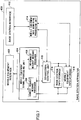
- FIG. 7 is a block diagram showing a structure of the base station 400 in this embodiment of the present invention.
- the base station apparatus 400 includes a mobile equipment interface 402, a mobile equipment signal processing unit 404, a connection control unit 410, a base station interface 412, a mobile equipment information acquiring processing unit 414, a base station information storage 416, and a mobile equipment information storage 418.
- the mobile equipment signal processing unit 404 includes a connect request message processor 406 and a reconnect request message processor 408.
- the mobile equipment interface 402 forms an interface between the base station apparatus 400 to which the mobile equipment interface 402 belongs and the mobile equipment 500.
- the base station interface 412 forms an interface between the base station apparatus 400 to which the base station interface 412 belongs and another base station apparatus 400.
- the connect request message processor 406 notifies the connection control unit 410 when the connect request message is received from the mobile equipment 500.
- the connection control unit 410 carries out a predetermined connection process based on the connect request message that is notified from the connect request message processor 406, so as to allocate the mobile equipment identifier for identifying the mobile equipment 500 to the mobile equipment 500 and to set the connection between the base station apparatus 400 and the mobile equipment 500.
- the connection control unit 410 notifies, with respect to the mobile equipment 500, the network layer address information of the base station apparatus 400 to which the connection control unit 410 belongs, in the base station network 450, which network layer address information is stored in the base station information storage 416 which will be described later.
- connection control unit 410 stores, in the mobile equipment information storage 418, the mobile equipment information related to the connection setting of the mobile equipment 500 to which the connection has been set from the base station apparatus 400, in correspondence with the mobile equipment identifier that is allocated to the mobile equipment 500.
- the reconnect request message processor 408 notifies the connection control unit 410 when the reconnect request message is received from the mobile equipment 500.
- the connection control unit 410 Based on the reconnect request message notified from the reconnect request message processor 408, the connection control unit 410 confirms the network layer address information of the base station apparatus included in the reconnect request message, and judges whether or not the mobile equipment 500 was communicating with the base station apparatus 400 to which the connection control unit 410 belongs before the mobile equipment 500 sent the reconnect request message, that is, before the communication was disconnected. For example, the connection control unit 410 judges whether or not the network layer address included in the reconnect request message that is received from the mobile equipment 500 matches the network layer address that is allocated to the base station apparatus 400 to which the connection control unit 410 belongs.
- connection control unit 410 judges whether or not the network layer address of the base station apparatus included in the reconnect request message matches the network layer address that is allocated to the base station apparatus 400 to which the connection control unit 410 belongs and is stored in the base station information storage 416, so as to judge that the mobile equipment 500 was communicating with the base station apparatus 400 if the network layer addresses match, and to judge that the mobile equipment 500 was not communicating with the base station apparatus 400 if the network layer addresses do not match.
- connection control unit 410 judges that the mobile equipment 500 was communicating with the base station apparatus 400 to which the connection control unit 410 belongs, the connection control unit 410 re-establishes the connection between the base station apparatus 400 and the mobile equipment 500 using the mobile equipment information corresponding to the mobile equipment identifier that was notified by the reconnect request message stored in the mobile equipment information storage 418.
- connection control unit 410 judges that the mobile equipment 500 was not communicating with the base station apparatus 400 to which the connection control unit 410 belongs, the connection control unit 410 re-establishes the connection between the mobile equipment 500 and the base station apparatus (hereinafter referred to as the previously-communicating base station apparatus) with which the mobile equipment 500 was communicating before moving, using the mobile equipment information corresponding to the mobile equipment identifier that was notified by the reconnect request message stored in the mobile equipment information storage 418. For example, the connection control unit 410 communicates with the previously-communicating base station apparatus using the protocol employed by the base station network 450.
- connection control unit 410 communicates with the previously-communicating base station apparatus by sending IP packets to the IP address of the previously-communicating base station apparatus.
- the mobile equipment information acquiring processing unit 414 When the communication is established between the previously-communicating base station apparatus and the mobile equipment 500, the mobile equipment information acquiring processing unit 414 requests the mobile equipment information with respect to the previously-communicating base station apparatus. More particularly, the mobile equipment information acquiring processing unit 414 notifies a mobile equipment information acquisition request that includes the mobile equipment identifier, with respect to the previously-communicating base station apparatus.
- the mobile equipment information acquiring processing unit 414 of the previously-communicating base station apparatus Based on the mobile equipment identifier included in the notified mobile equipment information acquisition request, the mobile equipment information acquiring processing unit 414 of the previously-communicating base station apparatus identifies the mobile equipment information corresponding to the mobile equipment identifier stored in the mobile equipment information storage 418 of the previously-communicating base station apparatus, and notifies the identified mobile equipment information to the base station apparatus 400 that is the source of the mobile equipment information acquisition request.
- the base station information storage 416 stores the network layer address information of the base station apparatus 400 to which the base station information storage 416 belongs.
- the base station information storage 416 stores the IP address of the base station apparatus 400 to which the base station information storage 416 belongs.
- the mobile equipment information storage 418 stores the mobile equipment identifier that is allocated to each mobile equipment and is used to identify each mobile equipment when setting the connection between the base station apparatus and each mobile equipment, and information related to the connection setting of the mobile equipment.
- the information related to the connection setting of the mobile equipment is stored in the mobile equipment information storage 418, in correspondence with the mobile equipment identifier, and includes information related to the capability or capacity of the mobile equipment, the code used, the service provided, and the like.
- the information related to the capability or capacity of the mobile equipment includes information that indicates a bandwidth in which the transmission and reception is possible.
- FIG. 8 is a block diagram showing a structure of the mobile equipment 500 in this embodiment of the present invention.
- the mobile equipment 500 shown in FIG. 8 includes a base station interface 502, a base station signal processing unit 504, a connection control unit 510, a base station information storage 512, and a mobile equipment information storage 514.
- the base station signal processing unit 504 includes a connection establishment message processor 506, and a connection re-establishment message processor 508.
- the base station interface 502 provides an interface between the mobile equipment 500 to which the base station interface 502 belongs and the base station apparatus 400.
- the connection establishment message processor 506 generates a message that is required to establish a connection between the mobile equipment 500 to which the connection establishment message processor 506 belongs and the base station apparatus 400, and sends this message via the base station interface 502.
- the connection establishment message processor 506 stores in the base station information storage 512 the network layer address information of the base station apparatus 400 in the base station network that is notified from the base station apparatus 400.
- the connection establishment message processor 506 stores the notified mobile equipment identifier for identifying the mobile equipment, that is allocated to each mobile equipment by the base station apparatus 400, in the mobile equipment information storage 514.
- connection control unit 510 carries out a control related to the connection between the mobile equipment 500 to which the connection control unit 510 belongs and the base station apparatus 400.
- connection re-establishment message processor 508 After the communication between the mobile equipment 500 and the base station apparatus to which the connection setting was made is disconnected, the connection re-establishment message processor 508 generates a message required to re-establish a connection between the mobile equipment 500 and the base station apparatus that is capable of continuing the communication, and sends this message via the base station interface 502.
- This message required to re-establish the connection includes the network layer address of the base station apparatus that was communicating and is stored in the base station information storage 512, and the mobile equipment identifier that is allocated to the mobile equipment 500 and is stored in the mobile equipment information storage 514.
- connection control unit 510 carries out a process related to the re-establishment of the connection between the mobile equipment 500 to which the connection control unit 510 belongs and the base station apparatus.
- the base station information storage 512 stores the network layer address information of the base station apparatus in the base station network 450, such as the IP address, that is notified from the base station apparatus 400 to which mobile equipment 500 establishes the connection.
- the mobile equipment information storage 514 stores the mobile equipment identifier for identifying the mobile equipment, that is allocated to each mobile equipment by the base station apparatus 400, when establishing the connection.
- FIG. 9 is a flow chart for explaining the operation of the base station apparatus 400 in this embodiment of the present invention.
- connection request message processor 406 receives via the mobile equipment interface 402 the connection request message that is sent from the mobile equipment 500, and inputs the connection request message to the connection control unit 410.
- the connection control unit 410 sets a connection between the base station apparatus 400 to which the connection control unit 410 belongs and the mobile equipment 500, in a step S902.
- the connection control unit 410 allocates the mobile equipment identifier for identifying each mobile equipment, with respect to the mobile equipment 500 that made the connection establish request, and notifies the mobile equipment identifier to the mobile equipment 500, and also stores in the mobile equipment information storage 418 the mobile equipment information related to the connection setting in correspondence with the mobile equipment identifier.
- the connection control unit 410 notifies the network layer address information of the base station apparatus 400 in the base station network 450 to the mobile equipment 500.
- the mobile equipment 500 which receives the network layer address information of the base station apparatus 400 stores the network layer address information therein.
- the mobile equipment 500 detects the base station apparatus 400 that is capable of continuing the communication, and sends a reconnect request message for making the connection re-establish request to the detected base station apparatus 400.
- the base station apparatus 400 that receives this re-connect request message may be the base station apparatus that was communicating with the mobile equipment 500 or, a base station apparatus different from the base station apparatus that was communicating with the mobile equipment 500.
- the re-connect request message includes the mobile equipment identifier and the network layer address information of the base station apparatus notified in the step S902.
- the re-connect request message processor 408 When the re-connect request message from the mobile equipment 500 is received, the re-connect request message processor 408 inputs the re-connect request message to the connection control unit 410, in a step S904.
- the connection control unit 410 Based on the input re-connect request message, the connection control unit 410 confirms the network layer address information of the base station apparatus included in the re-connect request message, and judges whether or not the mobile equipment 500 which made the connection re-establish request was communicating with the base station apparatus 400 to which the connection control unit 410 belongs before sending the re-connect request message. By making this judgement, the connection control unit 410 judges whether or not it is necessary to communicate with another base station apparatus in order to inquire the mobile equipment information of the mobile equipment 500 which made the connection re-establish request, in a step S906.
- the connection control unit 410 judges whether or not the network layer address notified by the re-connect request message from the mobile equipment 500 matches the network layer address allocated to the base station apparatus 400 to which the connection control unit 410 belongs. More particularly, the connection control unit 410 judges whether or not the network layer address information of the base station apparatus included in the re-connect request message matches the network layer address information of the base station apparatus (to which the connection control unit 410 belongs) stored in the base station information storage 416, and judges that it is unnecessary to communicate with another base station apparatus if the two network layer address information match, and judges that it is necessary to communicate with another base station apparatus if the two network layer address information do not match.
- connection control unit 410 re-establishes the connection between the base station apparatus 400 and the mobile equipment 500 using the mobile equipment information that corresponds to the mobile equipment identifier notified by the re-connect request message and is stored in the mobile equipment information storage 418, in a step S912.
- the connection control 410 establishes a communication with the previously-communicating base station apparatus, using the network layer address notified from the mobile equipment 500.
- the establishment of the communication between the base station apparatus 400 and the previously-communicating base station apparatus depends on the protocol employed by the base station network 450. If the IP protocol is used as the network layer protocol employed by the base station network 450, for example, the connection control unit 410 communicates with the previously-communicating base station apparatus by sending IP packets to the IP address of the previously-communicating base station apparatus.
- the mobile equipment information acquiring processing unit 414 When the communication is established between the base station apparatus 400 and the previously-communicating base station apparatus, the mobile equipment information acquiring processing unit 414 requests acquisition of the mobile equipment information with respect to the previously-communicating base station apparatus. The mobile equipment information acquiring processing unit 414 sends to the previously-communicating base station apparatus the mobile equipment information acquisition request that includes the mobile equipment identifier notified by the re-connect request message.
- the mobile equipment information acquiring processing unit 414 of the previously-communicating base station apparatus acquires the mobile equipment information corresponding to the mobile equipment identifier from the mobile equipment information storage 418 of the previously-communicating base station apparatus, and notifies the acquired mobile equipment information to the base station apparatus 400 that sent the mobile equipment information acquisition request.
- the mobile equipment information acquiring processing unit 414 of the base station apparatus 400 receives the mobile equipment information sent from the previously-communicating base station apparatus, in a step S908.
- connection control unit 410 of the base station apparatus 400 re-establishes the connection with the mobile equipment 500, using the mobile equipment information received from the previously-communicating base station apparatus, in a step S910.
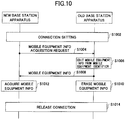
- FIG. 10 is a flow chart for explaining the transmission and reception of the mobile equipment information between the base station apparatuses in this embodiment of the present invention.
- connection control unit 410 of the new base station apparatus sets a connection to the connection control unit 410 of the old base station apparatus, in a step S1002.
- the mobile equipment information acquiring processing unit 414 of the new base station apparatus makes a mobile equipment information acquisition request with respect to the mobile equipment information acquiring processing unit 414 of the old base station apparatus, in a step S1004.
- This mobile equipment information acquisition request includes the mobile equipment identifier of the mobile equipment which made the re-connect request with respect to the new base station apparatus.
- the mobile equipment information acquiring processing unit 414 of the old base station apparatus acquires the mobile equipment information corresponding to the mobile equipment identifier from the mobile equipment information storage 418 of the old base station apparatus, and edits the acquired mobile equipment information, in a step S1006.
- the mobile equipment information acquiring processing unit 414 of the old base station apparatus sends the edited mobile equipment information to the new base station apparatus, in a step S1008.
- the mobile equipment information acquiring processing unit 414 of the old base station apparatus deletes from the mobile equipment information storage 418 of the old base station apparatus the mobile equipment information that is sent to the new base station apparatus, in a step S1010.
- the mobile equipment information acquiring processing unit 414 of the new base station apparatus acquires the mobile equipment information from the old base station apparatus in a step S1012, the mobile equipment information acquiring processing unit 414 of the new base station apparatus inputs the acquired mobile equipment information to the connection control unit 410 of the new base station apparatus.
- connection control unit 410 of the new base station apparatus releases the connection between the new base station apparatus and the old base station apparatus, in a step S1014.
- the base station apparatus which receives the re-connect request message from the mobile equipment 500 can carry out a connection re-establishing process to re-establish the connection to the mobile equipment 500, using the mobile equipment information that is stored in the base station apparatus or, the mobile equipment information that is acquired from the old base station apparatus.
- the base station apparatus 400 which re-establishes the connection to the mobile equipment 500 notifies the core network 200 that the communication with the mobile equipment 500 has started. Hence, by re-establishing the connection to the mobile equipment 500 by inheriting the mobile equipment information that was used by the old base station apparatus, and notifying the re-establishment of the communication to the core network 200, it is possible to re-establish the radio layer communication in a state where the communication between the mobile equipment 500 and the core network 200 is maintained.
- FIG. 11 is a flow chart for explaining the sequence from the call connection up to the mobile control in this embodiment of the present invention.
- FIG. 12 is a diagram for explaining the structure of the system in this embodiment of the present invention.
- the mobile equipment 500 moves from the area covered by the base station apparatus 400 0 to the area covered by the base station apparatus 400 2 .
- the base station apparatus 400 0 corresponds to the old base station apparatus shown in FIG. 11
- the base station apparatus 400 2 corresponds to the new base station apparatus shown in FIG. 11 .
- the communication among the plurality of base station apparatuses 400 0 , 400 1 , 400 2 and 400 3 is possible via the base station network 450 such as the IP network, and the transport layer protocol, such as the TCP protocol, may be employed in the base station network 450.
- the base station network 450 such as the IP network
- the transport layer protocol such as the TCP protocol
- the core network 200 can communicate with the mobile equipment 500 via the base station apparatus 400, and exchanges the data for the mobile equipment 500 with the base station apparatus 400 that covers the area in which the mobile equipment 500 is located. Furthermore, when the mobile equipment 500 moves and the base station apparatus 400 that covers the area in which the mobile equipment 500 is located changes, the core network 200 receives a notification of this change from the base station apparatus 400, and changes the base station apparatus with which the data for the mobile equipment 500 is exchanged.
- the connection establishment message processor 506 of the mobile equipment 500 detects the base station apparatus 400 with which a communication can be established, and sends a connection establish request with respect to the base station apparatus 400 0 , in a step S1102.
- a connection setting is made between the connection control unit 510 of the mobile equipment 500 and the connection control unit 410 of the base station apparatus 400 0 , in a step S1104.
- the connection control unit 510 of the mobile equipment 500 detects the base station apparatus 400 2 that is capable of continuing the communication, and re-establishes a connection, in a step S1106.
- connection re-establishment message processor 508 of the mobile equipment 500 requests re-establishment of the connection with respect to the base station apparatus 400 2 , in a step S1108.
- the re-connect request message processor 408 of the base station apparatus 400 2 When the re-connect request message processor 408 of the base station apparatus 400 2 receives the connection re-establish request from the mobile equipment 500, the re-connect request message processor 408 acquires the network layer address of the old base station apparatus and the mobile equipment identifier that are included in the connection re-establish request, in steps S1110 and S1112, and inputs the network layer address and the mobile equipment identifier to the connection control unit 410. In this case, the re-connect request message processor 408 of the base station apparatus 400 2 acquires the IP address A as the network layer address of the base station apparatus 400 0 .
- the connection control unit 410 of the base station apparatus 400 2 judges whether or not the area in which the mobile equipment 500 was located before moving is the same as the area covered by the base station apparatus 400 2 . In other words, the base station apparatus 400 2 judges whether or not it is necessary to inquire the information of the mobile equipment 500 to another base station apparatus. If it is unnecessary to inquire the information of the mobile equipment 500, that is, if the input network layer address matches the network layer address of the base station apparatus 400 2 , the connection is re-established using the mobile equipment information stored in the base station apparatus 400 2 .
- the input network layer address namely, the IP address A
- the network layer address namely, the IP address C of the base station apparatus 400 2 .
- the connection control unit 410 of the base station apparatus 400 2 judges that it is necessary to inquire the information of the mobile equipment 500 to another base station apparatus.
- the connection control unit 410 of the base station apparatus 400 2 establishes a connection with the base station apparatus 400 0 .
- the mobile equipment information acquiring processing unit 414 of the base station apparatus 400 2 requests the mobile equipment information with respect to the base station apparatus 400 0 .
- the mobile equipment information acquiring processing unit 414 of the base station apparatus 400 0 sends the mobile equipment information stored in the mobile equipment information storage 418 thereof to the base station apparatus 400 2 according to the mobile equipment information acquisition request from the base station apparatus 400 2 , in a step S1114.
- connection control unit 410 of the base station apparatus 400 2 makes a resetting of the connection to the mobile equipment 500 using the notified mobile equipment information, in a step S1116.
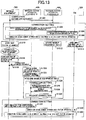
- FIG. 13 is a flow chart for explaining the sequence from the call connection up to the mobile control in the embodiment of the present invention.
- the base station apparatus 400 0 corresponds to the old base station apparatus shown in FIG. 13
- the base station apparatus 400 1 corresponds to the new base station apparatus shown in FIG. 13 .
- the connection establishment message processor 506 of the mobile equipment 500 detects the base station apparatus 400 0 that is connectable thereto, and sends a connection establish request with respect to the base station apparatus 400 0 , in a step S1302.
- a connection is set between the connection control unit 510 of the mobile equipment 500 and the connection control unit 410 of the base station apparatus 400 0 , in a step S1304. Then, a connection is established between the connection control unit 410 of the base station apparatus 400 0 and the core network 200, in a step S1306. Further, a connection is established between the connection control unit 510 of the mobile equipment 500 and the core network 200, via the base station apparatus 400 0 , in a step S1308.
- the connection establishment message processor 506 of the mobile equipment 500 stores the IP address of the base station apparatus 400 0 that is notified from the base station apparatus 400 0 to which the connection is established, in the base station information storage 512, in a step S1310.
- the connection request message processor 406 of the base station apparatus 400 0 stores the mobile equipment information related to the connection of the mobile equipment 500 to which the connection is established, in the mobile equipment information storage 418 in correspondence with the mobile equipment identifier, in a step S1312.
- a home location register (not shown) in the core network 200 stores the mobile equipment information and the base station information, in a step S1314.
- the mobile equipment 500 detects the base station apparatus 400 that is capable of continuing the communication, in a step S1316.
- connection re-establishment message processor 508 of the mobile equipment 500 sends a re-connect request message for making the connection re-establish request, in a step S1318.
- the re-connect request message processor 408 of the base station apparatus 400 1 When the re-connect request message processor 408 of the base station apparatus 400 1 receives the re-establish request message from the mobile equipment 500, the re-connect request message processor 408 acquires the network layer address of the old base station apparatus and the mobile equipment identifier that are included in the re-establish request message, in steps S1320 and S1322, and inputs the network layer address and the mobile equipment identifier to the connection control unit 410 of the base station apparatus 400 1 . In this case, the re-connect request message processor 408 of the base station apparatus 400 1 acquires the IP address A as the network layer address of the base station apparatus 400 0 .
- the connection control unit 410 of the base station apparatus 400 1 judges whether or not the area covered by the base station apparatus 400 1 is the same as the area in which the mobile equipment 500 was located before moving. In other words, the connection control unit 410 of the base station apparatus 400 1 judges whether or not it is necessary to inquire the information of the mobile equipment 500 to another base station apparatus. If it is unnecessary to inquire the information of the mobile equipment 500 to another base station apparatus, that is, if the input network layer address matches the network layer address of the base station apparatus 400 1 , the mobile equipment information stored in the base station apparatus 400 1 is used to re-establish the connection.
- connection control unit 410 of the base station apparatus 400 1 judges that it is necessary to inquire the information of the mobile equipment 500 to another base station apparatus.
- the connection control unit 410 of the base station apparatus 400 1 establishes a connection to the base station apparatus 400 0 , in a step S1324.
- the mobile equipment information acquiring processor 414 of the base station apparatus 400 1 requests acquisition of the mobile equipment information with respect to the base station apparatus 400 0 , in a step S1326.
- the mobile equipment information acquiring processor 414 of the base station apparatus 400 0 sends the mobile equipment information that is stored in the mobile equipment information storage 418 of the base station apparatus 400 0 and corresponds to the mobile equipment identifier included in the mobile equipment information acquisition request, in a step S1328.
- connection control unit 410 of the base station apparatus 400 1 releases the connection to the base station apparatus 400 0 , in a step S1330.
- connection control unit 410 of the base station apparatus 400 1 uses the notified mobile equipment information to carry out a resetting of the connection to the mobile equipment 500, in a step S1332.
- a connection is set between the connection control unit 410 of the base station apparatus 400 1 and the core network 200, in a step S1334.
- a connection is set between the connection control unit 510 of the mobile equipment 500 and the core network 200, via the base station apparatus 400 1 , in a step S1336.
- the base station apparatus at the moving destination of the mobile equipment can acquire the mobile equipment information from the old base station apparatus when carrying out the mobile control, so as to re-establish the communication with the mobile equipment.
- each base station apparatus were made to store the information of the adjacent or surrounding base station apparatuses as the management area of the mobile equipment becomes smaller, the system data and the system and layout design would become complex. But according to this embodiment, it is possible to exchange the mobile equipment information in a state where each base station apparatus does not store the information of the adjacent or surrounding base station apparatuses.
Landscapes
- Engineering & Computer Science (AREA)
- Computer Networks & Wireless Communication (AREA)
- Signal Processing (AREA)
- Mobile Radio Communication Systems (AREA)
Description
- The present invention generally relates to mobile equipments, base station apparatuses and communication control methods, and more particularly to a mobile equipment, a base station apparatus and a communication control method that are applicable to a digital radio communication system such as the Long Term Evolution (LTE) system.
- Recently, the third generation portable telephone (International Mobile Telecommunications 2000 (IMT-2000)) system employing the Wideband Code Division Multiple Access (W-CDMA) system is becoming the mainstream of the mobile radio communication. In view of this trend, the 3rd Generation Partnership Project (3GPP), that is the standardization body for the third generation mobile communication system, is adjusting the specifications related to the LTE system so as to realize an even faster communication and to provide a higher quality service. The LTE is the next generation communication system that is also referred to as a Super 3G, S3G or 3.9G.
-
FIG. 1 generally shows an existing LTE system. The LTE system shown inFIG. 1 includes access gateways (aGWs) 20 (201, 202) provided in a Core Network (CN) 10, base station apparatuses 30 (300, 301, 302, 303), and amobile equipment 40. The access gateways 20 and thebase station apparatuses 30 form an LTE Radio Access Network (LTE-RAN) 35. -
FIG. 2 generally shows an existing IMT-2000 that is the mainstream of the mobile radio communication system. The IMT-2000 system shown inFIG. 2 includes aswitching system 60 provided in a Core Network (CN) 10, Radio Network Controllers (RNCs) 70 (701, 702), base station apparatuses 80 (800, 801, 802, 803), and amobile equipment 90. For example, a Japanese Laid-Open Patent Application No.2004-135292 - As may be seen by comparing
FIGS. 1 and2 , the IMT-2000 system is provided with theradio network controllers 70 that do not exist in the LTE system. - In future mobile radio communication systems typified by the LTE system, it is desirable to simplify the network structure as much as possible. By simplifying the network structure, it would be possible to reduce the number of nodes arranged within the network, improve the communication quality, and improve the maintenance requirements.
- For this reason, in the LTE system, the radio network controllers are eliminated, and instead, a portion of the functions provided in the radio network controllers is implemented in the base station apparatuses.
- The
radio network controller 70 of the IMT-2000 system has an important function related to the mobile control, which is one of the important functions of the mobile communication system. More particularly, theradio network controller 70 manages information of thebase station apparatuses 80 and themobile equipment 90 that are under the control of theradio network controller 70, radio resource allocation states and the like. Theradio network controller 70 carries out the mobile control with respect to thebase station apparatuses 80 and themobile equipment 90 based on such information managed by theradio network controller 70. Accordingly, theradio network controller 70 needs to store all of the information related to thebase stations 80 that are under the control of theradio network controller 80, the information related to other radio network controllers located in the vicinities of theradio network controller 70, the information related to the base stations that are under the control of the other radio network controllers and the like. - The
radio network controller 70 carries out the mobile control with respect to the move of themobile equipment 90 between thebase station apparatuses 80 that are under the control of theradio network controller 70. In addition, with respect to the move of themobile equipment 90 between thebase station apparatus 80 that is under the control of theradio network controller 70 and the base station apparatus that is under the control of another radio network controller, theradio network controller 70 carries out the mobile control by sharing the information of themobile equipment 90 with the other radio network controller using an interface Iur. - Next, a description will be given of the mobile control in the IMT-2000 system. It is assumed for the sake of convenience that the system structure of the IMT-2000 system is the same as that shown in
FIG. 2 . For example, theradio network controller 701 holds its own identifier "a", and theradio network controller 702 holds its own identifier "b". - A description will be given of a case where the
mobile equipment 90 moves between areas covered by the base station apparatuses that are under the control of a single radio network controller, by referring toFIG. 3. FIG. 3 is a diagram for explaining a mobile control in the third generation mobile communication system. - In a step S2, the
mobile equipment 90 moves from the area covered by thebase station apparatus 801 with which themobile equipment 90 is communicating to the area covered by anotherbase station apparatus 800, for example. - Then, in a step S4, the
mobile equipment 90 sends a reconnect request message with respect to theradio network controller 701 via thebase station apparatus 800. This reconnect request message includes the identifier "a" of theradio network controller 701 that controls thebase station apparatus 801 covering the area in which themobile equipment 90 was located before moving, and the identifier of themobile equipment 90. The mobile control is started when this reconnect request message is sent from themobile equipment 90 to theradio network controller 701. - In a step S6, the
radio network controller 701 which receives the reconnect request message from themobile equipment 90 uses the identifier included in the reconnect request message to judge the radio network controller with which themobile equipment 90 was communicating before moving, and confirms whether or not the identifier included in the reconnect request message matches the identifier of theradio network controller 701. - Since the identifier included in the reconnect request message matches the identifier of the
radio network controller 701 in this particular case, theradio network controller 701 judges that the moving destination of themobile equipment 90 is within the area covered by the base station apparatus that is under control of theradio network controller 701. Because all of the information related to themobile equipment 90 is stored within theradio network controller 701 itself, theradio network controller 701 uses the mobile equipment information stored therein to carry out a procedure of resuming the communication with themobile equipment 90. - Next, a description will be given of a case where the
mobile equipment 90 moves between the area covered by the base station apparatus that is under the control of the radio network controller with which themobile equipment 90 is communicating and the area covered by the base station apparatus that is under the control of another radio network controller, by referring toFIG. 4. FIG. 4 is a diagram for explaining the mobile control in the third generation mobile communication system. - In a step S2, the
mobile equipment 90 moves from the area covered by thebase station apparatus 801 with which themobile equipment 90 is communicating to the area covered by anotherbase station apparatus 802, for example. - Then, in a step S4, the
mobile equipment 90 sends a reconnect request message with respect to theradio network controller 702 which controls thebase station apparatus 802 via thebase station apparatus 802. This reconnect request message includes the identifier "a" of theradio network controller 701 that controls thebase station apparatus 801 covering the area in which themobile equipment 90 was located before moving, and the identifier of themobile equipment 90. The mobile control is started when this reconnect request message is sent from themobile equipment 90 to theradio network controller 702. - In a step S6, the
radio network controller 702 which receives the reconnect request message from themobile equipment 90 uses the identifier included in the reconnect request message to judge the radio network controller with which themobile equipment 90 was communicating before moving, and confirms whether or not the identifier included in the reconnect request message matches the identifier of theradio network controller 702. - In a step S8, since the identifier included in the reconnect request message does not match the identifier of the
radio network controller 702 in this particular case, theradio network controller 702 judges that the moving destination of themobile equipment 90 is within the area covered by the base station apparatus that is under control of another radio network controller. Because theradio network controller 702 does not store all of the information related to themobile equipment 90, theradio network controller 702 carries out a procedure of acquiring the information related to themobile equipment 90 from the radio network controller holding the identifier included in the reconnect request message. - In a step S10, the
radio network controller 702 which acquires the information related to themobile equipment 90 carries out a procedure of resuming the communication with respect to themobile equipment 90. - However, the following problems are encountered in the systems described above.
- Generally, in the third generation mobile communication system having the radio network controllers, several tens to several hundred base stations are provided with respect to one radio network controller. For this reason, the geometrical range covered by the base stations that are under the control of a single radio network controller is several tens to several hundred times the area covered by one base station. Consequently, the mobile control for the case where the mobile equipment moves between areas covered by the base station apparatuses that are under the control of a single radio network controller is more dominant compared to the mobile control for the case where the mobile equipment moves between the area covered by the base station apparatus that is under the control of the radio network controller with which the mobile equipment is communicating and the area covered by the base station apparatus that is under the control of another radio network controller.
- In addition, in the third generation mobile communication system, the number of radio network controllers provided in the vicinity of one radio network controller is not large. Hence, the information of the adjacent radio network controllers may be stored, as system data, within each radio network controller, so as to identify with relative ease the radio network controller at the moving destination of the mobile equipment.
- For example, the information between two radio network controllers is exchanged via the interface Iur which provides an interface between the two radio network controllers. The
radio network controller 70 that is started sets a connection to the radio network controllers provided in the vicinity of theradio network controller 70. Moreover, each radio network controller stores, as the system data, the information of the radio network controllers that have a possibility of making a communication therewith. As shown inFIG. 5 , for example, if theradio network controller 702 receives the identifier of theradio network controller 703, as the information of the radio network controller that manages the base station apparatus covering the area in which themobile equipment 90 was located before moving, theradio network controller 702 is able to know the location of theradio network controller 703 by referring to the system data stored in theradio network controller 702, thereby making it possible to recognize theradio network controller 703 to which the information of themobile equipment 90 is to be inquired.FIG. 5 is a diagram for explaining the transmission and reception of the mobile equipment information in the third generation mobile communication system. - On the other hand, in the future radio communication systems, it would be desirable to implement a portion of the functions provided in the radio network controllers into the base station apparatuses, so as to simplify the network structure. For this reason, the LTE system implements a portion of the functions provided in the radio network controllers into the base station apparatuses. In other words, the management of the mobile equipment is made for each area that is relatively small. As a result, it may be seen that the following inconveniences (1) and (2) will occur, and that there is a need to simplify as much as possible the mobile control for the case where the mobile equipment moves between management areas that are covered by different base station apparatuses.
- (1) The proportion of the mobile control for the case where the mobile equipment moves between management areas that are covered by different base station apparatuses increases; and
- (2) The number of other management areas located in the vicinity of the management area in which the mobile equipment is located increases.
- Under such conditions, it is difficult to store in each base station apparatus the information of the adjacent base station apparatuses as a means of identifying the other management areas of the adjacent base station apparatuses. Consequently, there is a demand to realize the mobile control between the adjacent base station apparatuses that does not require the information of the adjacent base station apparatuses to be stored in advance, that is, does not require the network structure to be recognized.
- Intra-LTE MME/UPE Relocation in Active Mode is disclosed in Figure 7.15-5 of "3rd Generation Partnership Project; Technical Specification Group Services and System Aspect; 3GPP System Architecture Evolution: Report on Technical Options and Conclusions (Release 7)", 3GPP Standard; 3GPP TR 23.882, 3rd Generation Partnership Project (3GPP), Mobile Competence Centre; 650, Route des Lucioles; F-06921 Sophia-Antipolis Cedex, France, no. V1.6.1, 1 November 2006, . This Figure, and the preceding Figure 7.15-4, describe an S1 link that connects an eNB to an MME/UPE located in an upper layer, and a handover process from an eNB1 to an eNB2 via the MME/UPE and IASA.
- A C-RNTI that enables UE identification is disclosed in Section 8.1 "E-UTRAN related UE identities" of "3rd Generation Partnership Project; Technical Specification Group Radio Access Network; Evolved Universal Terrestrial Radio Access (E-UTRA) and Evolved Universal Radio Access Network (E-UTRAN); Overall description: Stage 2 (Release 8)", 3GPP Standard; 3GPP TS 36.300, 3rd Generation Partnership Project (3GPP), Mobile Competence Centre; 650, Route des Lucioles; F-06921 Sophia-Antipolis Cedex, France, no. V0.3.1, 1 November 2006, .
- Accordingly, it is a general object of the present invention to provide a novel and useful mobile equipment, base station apparatus and communication control method, in which the problems described above are suppressed.
- Another and more specific object of the present invention is to provide a mobile equipment, a base station apparatus and a communication control method, which can suppress at least one of the problems described above, so as to enable exchange of the mobile equipment information between the base station apparatuses without requiring the information of the adjacent base station apparatuses to be stored in advance in each base station apparatus.
- According to one aspect of the present invention, there is provided a Long Term Evolution - LTE - system comprising: a plurality of base station apparatuses including a first base station apparatus and a second base station apparatus, each base station apparatus having an address which is the network layer address of a network between the base station apparatuses; and a mobile equipment configured to make a connection setting to the first base station apparatus, and after a communication with the first base station apparatus is disconnected, to make a re-connect request to the second base station apparatus that is capable of continuing the communication, characterized in that: the mobile equipment is operable to be notified of a mobile equipment identifier, allocated to the mobile equipment for identifying the mobile equipment when making the connection setting, and an address of a network layer allocated to the first base station apparatus to which the connection setting is made; the second base station apparatus is operable to acquire mobile equipment information related to the connection setting from the first base station apparatus that stores said mobile equipment information, based on the mobile equipment identifier and the address of the network layer of the first base station apparatus, when an address of a network layer allocated to the second base station apparatus does not match an address of the network layer allocated to the first base station apparatus; the second base station apparatus is operable, in a case in which the address of the network layer of the second base station apparatus and the address of the network layer of the first base station apparatus match, to use the mobile equipment information corresponding to the mobile equipment identifier notified by the re-connect request to re-establish the connection to the mobile equipment; and that said mobile equipment comprises: a connection re-establishment message processor configured to generate a re-connect request that includes the address of the network layer allocated to the first base station apparatus and the mobile equipment identifier, and to send the re-connect request to the second base station apparatus; and a connection control unit configured to re-establish the connection to the second base station apparatus, wherein said connection control unit is operable to re-establish the connection according to the mobile equipment information related to the connection setting acquired by the second base station apparatus, based on the address of the network layer allocated to the first base station apparatus and the mobile equipment identifier.
- According to this system, it is possible to notify, by the re-connect request, the mobile equipment identifier that is notified when making the connection setting and the address of the network layer of the base station apparatus that makes the connection setting, thereby making it possible to re-establish the connection between the mobile equipment and the base station apparatus that is capable of continuing the communication.
- According to another aspect of the present invention, there is provided a base station apparatus configured to receive a re-connect request that is sent from a mobile equipment whose connection to an arbitrary base station apparatus is disconnected in a Long Term Evolution - LTE - system, and to reconnect the base station apparatus to the mobile equipment, each base station apparatus having an address which is the network layer address of a network between the base station apparatuses, characterized in that the re-connect request includes a mobile equipment identifier for identifying a mobile equipment that is allocated when making a connection setting to the arbitrary base station apparatus, and an address of a network layer allocated to the arbitrary base station apparatus to which the connection setting is made by the mobile equipment prior to sending the re-connect request, and that said base station apparatus comprises: a base station information storage configured to store an address of the network layer allocated to the base station apparatus; a mobile equipment information storage configured to store mobile equipment information related to the connection setting of the mobile equipment when the connection setting is made to the arbitrary base station apparatus; a connection control unit configured to reset the connection to the mobile equipment based on the mobile equipment information corresponding to the mobile equipment identifier; and a first processing unit configured to acquire mobile equipment information related to the connection setting from the arbitrary base station apparatus to which the mobile equipment is connected prior to the disconnection, based on the mobile equipment identifier and the address of the network layer of the arbitrary base station apparatus, when the address of the network layer allocated to the base station apparatus does not match the address of the network layer allocated to the arbitrary base station apparatus; wherein the first processing unit is also operable, in a case in which the address of the network layer of the base station apparatus and the address of the network layer of the arbitrary base station apparatus match, to use the mobile equipment information corresponding to the mobile equipment identifier notified by the re-connect request to re-establish the connection to the mobile equipment.
- According to this base station apparatus, it is possible to notify the mobile equipment identifier and the address of the network layer of the base station apparatus that makes the connection setting when making the connection setting, and re-establish the connection between the base station apparatus and the mobile equipment, based on the mobile equipment identifier and the address of the network layer of the base station apparatus that makes the connection setting.
- According to still another aspect of the present invention, there is provided a communication control method in which a connection setting is made between a mobile equipment and a base station apparatus of a Long Term Evolution - LTE - system, characterised by: notifying a mobile equipment identifier allocated to each mobile equipment and an address of a network layer allocated to the base station apparatus to which the connection setting is made to the mobile equipment when making the connection setting, the address being the network layer address of a network of which the base station apparatus is a part; after a communication between the mobile equipment and the base station apparatus is disconnected, sending a re-connect request from the mobile equipment to an arbitrary base station apparatus that is capable of continuing the communication, the address being the network layer address of the network of which the base station apparatus is a part; wherein the re-connect request includes the address of the network layer allocated to the base station apparatus and the mobile equipment identifier from the mobile equipment; acquiring from the base station apparatus, mobile equipment information related to the connection setting of the mobile equipment by the arbitrary base station apparatus, based on the mobile equipment identifier and the address of the network layer of the base station apparatus, when an address of a network layer allocated to the arbitrary base station apparatus does not match the address of the network layer allocated to the base station apparatus; resetting the connection between the arbitrary base station apparatus and the mobile equipment that made the re-connect request, based on the address and the mobile equipment identifier included in the re-connect request, the address of the network layer allocated to the arbitrary base station apparatus, and the mobile equipment information related to the connection setting of the mobile equipment that has the connection setting to the arbitrary base station apparatus; and in a case in which the address of the network layer of the arbitrary base station apparatus and the address of the network layer of the base station apparatus match, using the mobile equipment information corresponding to the mobile equipment identifier notified by the re-connect request to re-establish the connection to the mobile equipment.
- According to this communication control method, the mobile equipment can notify the mobile equipment identifier and the address of the network layer of the base station apparatus that makes the connection setting when making the connection setting, and the base station apparatus can re-connect to the mobile equipment based on the mobile equipment identifier and the address of the network layer of the base station apparatus that makes the connection setting that are notified by the re-connect request.
- Other objects and further features of the present invention will be apparent from the following detailed description when read in conjunction with the accompanying drawings.
-
-
FIG. 1 is a diagram for explaining an existing LTE system; -
FIG. 2 is a diagram for explaining an existing IMT-2000 system; -
FIG. 3 is a diagram for explaining a mobile control in the third generation mobile communication system; -
FIG. 4 is a diagram for explaining the mobile control in the third generation mobile communication system; -
FIG. 5 is a diagram for explaining transmission and reception of mobile equipment information in the third generation mobile communication system; -
FIG. 6 is a diagram for explaining a structure of the mobile communication system in an embodiment of the present invention; -
FIG. 7 is a block diagram showing a structure of a base station in the embodiment of the present invention; -
FIG. 8 is a block diagram showing a structure of the mobile equipment in the embodiment of the present invention; -
FIG. 9 is a flow chart for explaining an operation of the base station in the embodiment of the present invention; -
FIG. 10 is a flow chart for explaining the transmission and reception of the mobile equipment information between the base station apparatuses in the embodiment of the present invention; -
FIG. 11 is a flow chart for explaining a sequence from a call connection up to the mobile control in the embodiment of the present invention; -
FIG. 12 is a diagram for explaining a structure of the system in the embodiment of the present invention; and -
FIG. 13 is a flow chart for explaining the sequence from the call connection up to the mobile control in the embodiment of the present invention. - A description will be given of embodiment of the mobile equipment, the base station apparatus and the communication control method according to the present invention, by referring to
FIG. 6 and the subsequent figures. InFIGS. 6 through 13 , those parts that have the same functions are designated by the same reference numerals, and a description will not be repeated with respect to the parts having the same functions. - First, a description will be given of the structure of the mobile communication system to which the mobile equipment and the base station apparatus in an embodiment of the present invention may be applied.
FIG. 6 is a diagram for explaining the structure of amobile communication system 100 in this embodiment of the present invention. - In this embodiment, the
mobile communication system 100 shown inFIG. 6 is an LTE system, for example, and includes a Gateway (GW) 300 that is provided in a Core Network (CN) 2000, base station apparatuses 400 (4000, 4001, 4002, 4003), and amobile equipment 500. - The
base station apparatuses base station network 450, such as an IP network. An address for identifying the base station apparatus within thebase station network 450, such as a network layer address, including an IP address, is allocated to each base station apparatus. Each of thebase station apparatuses base station network 450 by knowing the network layer address, such as the IP address, of the other base station apparatus. - In addition, the
mobile equipment 500, that is located within the area covered by onebase station apparatus 400, establishes a communication by radio with the base station apparatus that manages this area. - A description will now be given of the
base station apparatus 400 of this embodiment, by referring toFIG. 7. FIG. 7 is a block diagram showing a structure of thebase station 400 in this embodiment of the present invention. - The
base station apparatus 400 includes amobile equipment interface 402, a mobile equipmentsignal processing unit 404, aconnection control unit 410, abase station interface 412, a mobile equipment information acquiringprocessing unit 414, a basestation information storage 416, and a mobileequipment information storage 418. The mobile equipmentsignal processing unit 404 includes a connectrequest message processor 406 and a reconnectrequest message processor 408. - The
mobile equipment interface 402 forms an interface between thebase station apparatus 400 to which themobile equipment interface 402 belongs and themobile equipment 500. Thebase station interface 412 forms an interface between thebase station apparatus 400 to which thebase station interface 412 belongs and anotherbase station apparatus 400. - The connect
request message processor 406 notifies theconnection control unit 410 when the connect request message is received from themobile equipment 500. - The
connection control unit 410 carries out a predetermined connection process based on the connect request message that is notified from the connectrequest message processor 406, so as to allocate the mobile equipment identifier for identifying themobile equipment 500 to themobile equipment 500 and to set the connection between thebase station apparatus 400 and themobile equipment 500. When establishing the connection, theconnection control unit 410 notifies, with respect to themobile equipment 500, the network layer address information of thebase station apparatus 400 to which theconnection control unit 410 belongs, in thebase station network 450, which network layer address information is stored in the basestation information storage 416 which will be described later. In addition, theconnection control unit 410 stores, in the mobileequipment information storage 418, the mobile equipment information related to the connection setting of themobile equipment 500 to which the connection has been set from thebase station apparatus 400, in correspondence with the mobile equipment identifier that is allocated to themobile equipment 500. - The reconnect
request message processor 408 notifies theconnection control unit 410 when the reconnect request message is received from themobile equipment 500. - Based on the reconnect request message notified from the reconnect
request message processor 408, theconnection control unit 410 confirms the network layer address information of the base station apparatus included in the reconnect request message, and judges whether or not themobile equipment 500 was communicating with thebase station apparatus 400 to which theconnection control unit 410 belongs before themobile equipment 500 sent the reconnect request message, that is, before the communication was disconnected. For example, theconnection control unit 410 judges whether or not the network layer address included in the reconnect request message that is received from themobile equipment 500 matches the network layer address that is allocated to thebase station apparatus 400 to which theconnection control unit 410 belongs. - More particularly, the
connection control unit 410 judges whether or not the network layer address of the base station apparatus included in the reconnect request message matches the network layer address that is allocated to thebase station apparatus 400 to which theconnection control unit 410 belongs and is stored in the basestation information storage 416, so as to judge that themobile equipment 500 was communicating with thebase station apparatus 400 if the network layer addresses match, and to judge that themobile equipment 500 was not communicating with thebase station apparatus 400 if the network layer addresses do not match. - If the
connection control unit 410 judges that themobile equipment 500 was communicating with thebase station apparatus 400 to which theconnection control unit 410 belongs, theconnection control unit 410 re-establishes the connection between thebase station apparatus 400 and themobile equipment 500 using the mobile equipment information corresponding to the mobile equipment identifier that was notified by the reconnect request message stored in the mobileequipment information storage 418. - On the other hand, if the
connection control unit 410 judges that themobile equipment 500 was not communicating with thebase station apparatus 400 to which theconnection control unit 410 belongs, theconnection control unit 410 re-establishes the connection between themobile equipment 500 and the base station apparatus (hereinafter referred to as the previously-communicating base station apparatus) with which themobile equipment 500 was communicating before moving, using the mobile equipment information corresponding to the mobile equipment identifier that was notified by the reconnect request message stored in the mobileequipment information storage 418. For example, theconnection control unit 410 communicates with the previously-communicating base station apparatus using the protocol employed by thebase station network 450. In a case where the IP protocol is used as the network layer protocol employed by thebase station network 450, for example, theconnection control unit 410 communicates with the previously-communicating base station apparatus by sending IP packets to the IP address of the previously-communicating base station apparatus. - When the communication is established between the previously-communicating base station apparatus and the
mobile equipment 500, the mobile equipment information acquiringprocessing unit 414 requests the mobile equipment information with respect to the previously-communicating base station apparatus. More particularly, the mobile equipment information acquiringprocessing unit 414 notifies a mobile equipment information acquisition request that includes the mobile equipment identifier, with respect to the previously-communicating base station apparatus. - Based on the mobile equipment identifier included in the notified mobile equipment information acquisition request, the mobile equipment information acquiring
processing unit 414 of the previously-communicating base station apparatus identifies the mobile equipment information corresponding to the mobile equipment identifier stored in the mobileequipment information storage 418 of the previously-communicating base station apparatus, and notifies the identified mobile equipment information to thebase station apparatus 400 that is the source of the mobile equipment information acquisition request. - The base
station information storage 416 stores the network layer address information of thebase station apparatus 400 to which the basestation information storage 416 belongs. For example, in the case where the IP protocol is used as the network layer protocol employed by thebase station network 450, for example, the basestation information storage 416 stores the IP address of thebase station apparatus 400 to which the basestation information storage 416 belongs. - The mobile
equipment information storage 418 stores the mobile equipment identifier that is allocated to each mobile equipment and is used to identify each mobile equipment when setting the connection between the base station apparatus and each mobile equipment, and information related to the connection setting of the mobile equipment. The information related to the connection setting of the mobile equipment is stored in the mobileequipment information storage 418, in correspondence with the mobile equipment identifier, and includes information related to the capability or capacity of the mobile equipment, the code used, the service provided, and the like. For example, the information related to the capability or capacity of the mobile equipment includes information that indicates a bandwidth in which the transmission and reception is possible. - Next, a description will be given of the
mobile equipment 500 in this embodiment, by referring toFIG. 8. FIG. 8 is a block diagram showing a structure of themobile equipment 500 in this embodiment of the present invention. - The
mobile equipment 500 shown inFIG. 8 includes abase station interface 502, a base stationsignal processing unit 504, aconnection control unit 510, a basestation information storage 512, and a mobileequipment information storage 514. The base stationsignal processing unit 504 includes a connectionestablishment message processor 506, and a connectionre-establishment message processor 508. - The
base station interface 502 provides an interface between themobile equipment 500 to which thebase station interface 502 belongs and thebase station apparatus 400. - The connection
establishment message processor 506 generates a message that is required to establish a connection between themobile equipment 500 to which the connectionestablishment message processor 506 belongs and thebase station apparatus 400, and sends this message via thebase station interface 502. In addition, when establishing the connection, the connectionestablishment message processor 506 stores in the basestation information storage 512 the network layer address information of thebase station apparatus 400 in the base station network that is notified from thebase station apparatus 400. Furthermore, when establishing the connection, the connectionestablishment message processor 506 stores the notified mobile equipment identifier for identifying the mobile equipment, that is allocated to each mobile equipment by thebase station apparatus 400, in the mobileequipment information storage 514. - The
connection control unit 510 carries out a control related to the connection between themobile equipment 500 to which theconnection control unit 510 belongs and thebase station apparatus 400. - After the communication between the
mobile equipment 500 and the base station apparatus to which the connection setting was made is disconnected, the connectionre-establishment message processor 508 generates a message required to re-establish a connection between themobile equipment 500 and the base station apparatus that is capable of continuing the communication, and sends this message via thebase station interface 502. This message required to re-establish the connection includes the network layer address of the base station apparatus that was communicating and is stored in the basestation information storage 512, and the mobile equipment identifier that is allocated to themobile equipment 500 and is stored in the mobileequipment information storage 514. - The
connection control unit 510 carries out a process related to the re-establishment of the connection between themobile equipment 500 to which theconnection control unit 510 belongs and the base station apparatus. - The base
station information storage 512 stores the network layer address information of the base station apparatus in thebase station network 450, such as the IP address, that is notified from thebase station apparatus 400 to whichmobile equipment 500 establishes the connection. - The mobile
equipment information storage 514 stores the mobile equipment identifier for identifying the mobile equipment, that is allocated to each mobile equipment by thebase station apparatus 400, when establishing the connection. - Next, a description will be given of the operation of the
base station apparatus 400 in this embodiment, by referring toFIG. 9. FIG. 9 is a flow chart for explaining the operation of thebase station apparatus 400 in this embodiment of the present invention. - The connection
request message processor 406 receives via themobile equipment interface 402 the connection request message that is sent from themobile equipment 500, and inputs the connection request message to theconnection control unit 410. - Based on the input connection request message, the
connection control unit 410 sets a connection between thebase station apparatus 400 to which theconnection control unit 410 belongs and themobile equipment 500, in a step S902. When setting the connection, theconnection control unit 410 allocates the mobile equipment identifier for identifying each mobile equipment, with respect to themobile equipment 500 that made the connection establish request, and notifies the mobile equipment identifier to themobile equipment 500, and also stores in the mobileequipment information storage 418 the mobile equipment information related to the connection setting in correspondence with the mobile equipment identifier. In addition, when establishing the connection, theconnection control unit 410 notifies the network layer address information of thebase station apparatus 400 in thebase station network 450 to themobile equipment 500. Themobile equipment 500 which receives the network layer address information of thebase station apparatus 400 stores the network layer address information therein. - For example, if the
mobile equipment 500 moves or the radio environment temporarily deteriorates to thereby disconnect the connection that has been established, themobile equipment 500 detects thebase station apparatus 400 that is capable of continuing the communication, and sends a reconnect request message for making the connection re-establish request to the detectedbase station apparatus 400. Thebase station apparatus 400 that receives this re-connect request message may be the base station apparatus that was communicating with themobile equipment 500 or, a base station apparatus different from the base station apparatus that was communicating with themobile equipment 500. The re-connect request message includes the mobile equipment identifier and the network layer address information of the base station apparatus notified in the step S902. - When the re-connect request message from the
mobile equipment 500 is received, the re-connectrequest message processor 408 inputs the re-connect request message to theconnection control unit 410, in a step S904. - Based on the input re-connect request message, the
connection control unit 410 confirms the network layer address information of the base station apparatus included in the re-connect request message, and judges whether or not themobile equipment 500 which made the connection re-establish request was communicating with thebase station apparatus 400 to which theconnection control unit 410 belongs before sending the re-connect request message. By making this judgement, theconnection control unit 410 judges whether or not it is necessary to communicate with another base station apparatus in order to inquire the mobile equipment information of themobile equipment 500 which made the connection re-establish request, in a step S906. - For example, as described above, the
connection control unit 410 judges whether or not the network layer address notified by the re-connect request message from themobile equipment 500 matches the network layer address allocated to thebase station apparatus 400 to which theconnection control unit 410 belongs. More particularly, theconnection control unit 410 judges whether or not the network layer address information of the base station apparatus included in the re-connect request message matches the network layer address information of the base station apparatus (to which theconnection control unit 410 belongs) stored in the basestation information storage 416, and judges that it is unnecessary to communicate with another base station apparatus if the two network layer address information match, and judges that it is necessary to communicate with another base station apparatus if the two network layer address information do not match. - If it is judged that the
mobile equipment 500 was communicating with thebase station apparatus 400 to which theconnection control unit 410 belongs and the judgement result in the step S906 is NO, theconnection control unit 410 re-establishes the connection between thebase station apparatus 400 and themobile equipment 500 using the mobile equipment information that corresponds to the mobile equipment identifier notified by the re-connect request message and is stored in the mobileequipment information storage 418, in a step S912. - On the other hand, if it is judged that the
mobile equipment 500 was communication with another base station apparatus that is different from thebase station apparatus 400 to which theconnection control unit 410 belongs and the judgement result in the step S906 is YES, theconnection control 410 establishes a communication with the previously-communicating base station apparatus, using the network layer address notified from themobile equipment 500. The establishment of the communication between thebase station apparatus 400 and the previously-communicating base station apparatus depends on the protocol employed by thebase station network 450. If the IP protocol is used as the network layer protocol employed by thebase station network 450, for example, theconnection control unit 410 communicates with the previously-communicating base station apparatus by sending IP packets to the IP address of the previously-communicating base station apparatus. - When the communication is established between the
base station apparatus 400 and the previously-communicating base station apparatus, the mobile equipment information acquiringprocessing unit 414 requests acquisition of the mobile equipment information with respect to the previously-communicating base station apparatus. The mobile equipment information acquiringprocessing unit 414 sends to the previously-communicating base station apparatus the mobile equipment information acquisition request that includes the mobile equipment identifier notified by the re-connect request message. Based on the mobile equipment identifier included in the notified mobile equipment information acquisition request, the mobile equipment information acquiringprocessing unit 414 of the previously-communicating base station apparatus acquires the mobile equipment information corresponding to the mobile equipment identifier from the mobileequipment information storage 418 of the previously-communicating base station apparatus, and notifies the acquired mobile equipment information to thebase station apparatus 400 that sent the mobile equipment information acquisition request. - The mobile equipment information acquiring
processing unit 414 of thebase station apparatus 400 receives the mobile equipment information sent from the previously-communicating base station apparatus, in a step S908. - The
connection control unit 410 of thebase station apparatus 400 re-establishes the connection with themobile equipment 500, using the mobile equipment information received from the previously-communicating base station apparatus, in a step S910. - Next, a description will be given of a process in which the base station apparatus (hereinafter referred to as the new base station apparatus) that covers the area of the moving destination of the
mobile equipment 500 receives the mobile equipment information from the previously-communicating base station apparatus (hereinafter referred to as the old base station apparatus) that covers the area at the moving source of themobile equipment 500, for a case where the new base station apparatus and the old base station apparatus are different, by referring toFIG. 10. FIG. 10 is a flow chart for explaining the transmission and reception of the mobile equipment information between the base station apparatuses in this embodiment of the present invention. - The
connection control unit 410 of the new base station apparatus sets a connection to theconnection control unit 410 of the old base station apparatus, in a step S1002. - The mobile equipment information acquiring
processing unit 414 of the new base station apparatus makes a mobile equipment information acquisition request with respect to the mobile equipment information acquiringprocessing unit 414 of the old base station apparatus, in a step S1004. This mobile equipment information acquisition request includes the mobile equipment identifier of the mobile equipment which made the re-connect request with respect to the new base station apparatus. - Based on the mobile equipment identifier included in the mobile equipment information acquisition request, the mobile equipment information acquiring
processing unit 414 of the old base station apparatus acquires the mobile equipment information corresponding to the mobile equipment identifier from the mobileequipment information storage 418 of the old base station apparatus, and edits the acquired mobile equipment information, in a step S1006. - The mobile equipment information acquiring
processing unit 414 of the old base station apparatus sends the edited mobile equipment information to the new base station apparatus, in a step S1008. The mobile equipment information acquiringprocessing unit 414 of the old base station apparatus deletes from the mobileequipment information storage 418 of the old base station apparatus the mobile equipment information that is sent to the new base station apparatus, in a step S1010. - When the mobile equipment information acquiring
processing unit 414 of the new base station apparatus acquires the mobile equipment information from the old base station apparatus in a step S1012, the mobile equipment information acquiringprocessing unit 414 of the new base station apparatus inputs the acquired mobile equipment information to theconnection control unit 410 of the new base station apparatus. - Based on the mobile equipment information, the
connection control unit 410 of the new base station apparatus releases the connection between the new base station apparatus and the old base station apparatus, in a step S1014. - Accordingly, the base station apparatus which receives the re-connect request message from the
mobile equipment 500 can carry out a connection re-establishing process to re-establish the connection to themobile equipment 500, using the mobile equipment information that is stored in the base station apparatus or, the mobile equipment information that is acquired from the old base station apparatus. - The
base station apparatus 400 which re-establishes the connection to themobile equipment 500 notifies thecore network 200 that the communication with themobile equipment 500 has started. Hence, by re-establishing the connection to themobile equipment 500 by inheriting the mobile equipment information that was used by the old base station apparatus, and notifying the re-establishment of the communication to thecore network 200, it is possible to re-establish the radio layer communication in a state where the communication between themobile equipment 500 and thecore network 200 is maintained. - Next, a description will be given of a sequence from a call connection up to the mobile control, by referring to
FIG. 11. FIG. 11 is a flow chart for explaining the sequence from the call connection up to the mobile control in this embodiment of the present invention. - As shown in
FIG. 12 , a description will be given of a case in this embodiment where IP addresses A, B, C and D are respectively allocated with respect to thebase station apparatuses FIG. 6 .FIG. 12 is a diagram for explaining the structure of the system in this embodiment of the present invention. In addition, it is assumed for the sake of convenience that themobile equipment 500 moves from the area covered by thebase station apparatus 4000 to the area covered by thebase station apparatus 4002. Accordingly, thebase station apparatus 4000 corresponds to the old base station apparatus shown inFIG. 11 , and thebase station apparatus 4002 corresponds to the new base station apparatus shown inFIG. 11 . The communication among the plurality ofbase station apparatuses base station network 450 such as the IP network, and the transport layer protocol, such as the TCP protocol, may be employed in thebase station network 450. - The
core network 200 can communicate with themobile equipment 500 via thebase station apparatus 400, and exchanges the data for themobile equipment 500 with thebase station apparatus 400 that covers the area in which themobile equipment 500 is located. Furthermore, when themobile equipment 500 moves and thebase station apparatus 400 that covers the area in which themobile equipment 500 is located changes, thecore network 200 receives a notification of this change from thebase station apparatus 400, and changes the base station apparatus with which the data for themobile equipment 500 is exchanged. - The connection
establishment message processor 506 of themobile equipment 500 detects thebase station apparatus 400 with which a communication can be established, and sends a connection establish request with respect to thebase station apparatus 4000, in a step S1102. - A connection setting is made between the
connection control unit 510 of themobile equipment 500 and theconnection control unit 410 of thebase station apparatus 4000, in a step S1104. - For example, if the
mobile equipment 500 moves and the established connection is disconnected or, the radio environment temporarily deteriorates and the established connection is disconnected, theconnection control unit 510 of themobile equipment 500 detects thebase station apparatus 4002 that is capable of continuing the communication, and re-establishes a connection, in a step S1106. - The connection
re-establishment message processor 508 of themobile equipment 500 requests re-establishment of the connection with respect to thebase station apparatus 4002, in a step S1108. - When the re-connect
request message processor 408 of thebase station apparatus 4002 receives the connection re-establish request from themobile equipment 500, the re-connectrequest message processor 408 acquires the network layer address of the old base station apparatus and the mobile equipment identifier that are included in the connection re-establish request, in steps S1110 and S1112, and inputs the network layer address and the mobile equipment identifier to theconnection control unit 410. In this case, the re-connectrequest message processor 408 of thebase station apparatus 4002 acquires the IP address A as the network layer address of thebase station apparatus 4000. - Based on the input network layer address, the
connection control unit 410 of thebase station apparatus 4002 judges whether or not the area in which themobile equipment 500 was located before moving is the same as the area covered by thebase station apparatus 4002. In other words, thebase station apparatus 4002 judges whether or not it is necessary to inquire the information of themobile equipment 500 to another base station apparatus. If it is unnecessary to inquire the information of themobile equipment 500, that is, if the input network layer address matches the network layer address of thebase station apparatus 4002, the connection is re-established using the mobile equipment information stored in thebase station apparatus 4002. - In this particular case, the input network layer address, namely, the IP address A, does not match the network layer address, namely, the IP address C of the
base station apparatus 4002. Hence, theconnection control unit 410 of thebase station apparatus 4002 judges that it is necessary to inquire the information of themobile equipment 500 to another base station apparatus. - The
connection control unit 410 of thebase station apparatus 4002 establishes a connection with thebase station apparatus 4000. The mobile equipment information acquiringprocessing unit 414 of thebase station apparatus 4002 requests the mobile equipment information with respect to thebase station apparatus 4000. The mobile equipment information acquiringprocessing unit 414 of thebase station apparatus 4000 sends the mobile equipment information stored in the mobileequipment information storage 418 thereof to thebase station apparatus 4002 according to the mobile equipment information acquisition request from thebase station apparatus 4002, in a step S1114. - The
connection control unit 410 of thebase station apparatus 4002 makes a resetting of the connection to themobile equipment 500 using the notified mobile equipment information, in a step S1116. - Next, a more detailed description will be given of the sequence from the call connection up to the mobile control, by referring to
FIG. 13. FIG. 13 is a flow chart for explaining the sequence from the call connection up to the mobile control in the embodiment of the present invention. - A description will be given of this embodiment for a case where the
mobile equipment 500 moves from the area that is covered by thebase station apparatus 4000 to the area that is covered by thebase station apparatus 4001 in the system structure shown inFIG. 12 . Hence, thebase station apparatus 4000 corresponds to the old base station apparatus shown inFIG. 13 , and thebase station apparatus 4001 corresponds to the new base station apparatus shown inFIG. 13 . - The connection
establishment message processor 506 of themobile equipment 500 detects thebase station apparatus 4000 that is connectable thereto, and sends a connection establish request with respect to thebase station apparatus 4000, in a step S1302. - Next, a connection is set between the
connection control unit 510 of themobile equipment 500 and theconnection control unit 410 of thebase station apparatus 4000, in a step S1304. Then, a connection is established between theconnection control unit 410 of thebase station apparatus 4000 and thecore network 200, in a step S1306. Further, a connection is established between theconnection control unit 510 of themobile equipment 500 and thecore network 200, via thebase station apparatus 4000, in a step S1308. - The connection
establishment message processor 506 of themobile equipment 500 stores the IP address of thebase station apparatus 4000 that is notified from thebase station apparatus 4000 to which the connection is established, in the basestation information storage 512, in a step S1310. The connectionrequest message processor 406 of thebase station apparatus 4000 stores the mobile equipment information related to the connection of themobile equipment 500 to which the connection is established, in the mobileequipment information storage 418 in correspondence with the mobile equipment identifier, in a step S1312. For example, a home location register (not shown) in thecore network 200 stores the mobile equipment information and the base station information, in a step S1314. - For example, if the
mobile equipment 500 moves and the established connection is disconnected or, the radio environment temporarily deteriorates and the established connection is disconnected, themobile equipment 500 detects thebase station apparatus 400 that is capable of continuing the communication, in a step S1316. - Next, with respect to the detected
base station apparatus 4001, the connectionre-establishment message processor 508 of themobile equipment 500 sends a re-connect request message for making the connection re-establish request, in a step S1318. - When the re-connect
request message processor 408 of thebase station apparatus 4001 receives the re-establish request message from themobile equipment 500, the re-connectrequest message processor 408 acquires the network layer address of the old base station apparatus and the mobile equipment identifier that are included in the re-establish request message, in steps S1320 and S1322, and inputs the network layer address and the mobile equipment identifier to theconnection control unit 410 of thebase station apparatus 4001. In this case, the re-connectrequest message processor 408 of thebase station apparatus 4001 acquires the IP address A as the network layer address of thebase station apparatus 4000. - Based on the input network layer address, the
connection control unit 410 of thebase station apparatus 4001 judges whether or not the area covered by thebase station apparatus 4001 is the same as the area in which themobile equipment 500 was located before moving. In other words, theconnection control unit 410 of thebase station apparatus 4001 judges whether or not it is necessary to inquire the information of themobile equipment 500 to another base station apparatus. If it is unnecessary to inquire the information of themobile equipment 500 to another base station apparatus, that is, if the input network layer address matches the network layer address of thebase station apparatus 4001, the mobile equipment information stored in thebase station apparatus 4001 is used to re-establish the connection. - In this particular case, the input network layer address, namely, the IP address A, does not match the network layer address of the
base station apparatus 4001, namely, the IP address B. For this reason,connection control unit 410 of thebase station apparatus 4001 judges that it is necessary to inquire the information of themobile equipment 500 to another base station apparatus. - The
connection control unit 410 of thebase station apparatus 4001 establishes a connection to thebase station apparatus 4000, in a step S1324. The mobile equipmentinformation acquiring processor 414 of thebase station apparatus 4001 requests acquisition of the mobile equipment information with respect to thebase station apparatus 4000, in a step S1326. According to the mobile equipment information acquisition request received from thebase station apparatus 4001, the mobile equipmentinformation acquiring processor 414 of thebase station apparatus 4000 sends the mobile equipment information that is stored in the mobileequipment information storage 418 of thebase station apparatus 4000 and corresponds to the mobile equipment identifier included in the mobile equipment information acquisition request, in a step S1328. - The
connection control unit 410 of thebase station apparatus 4001 releases the connection to thebase station apparatus 4000, in a step S1330. - The
connection control unit 410 of thebase station apparatus 4001 uses the notified mobile equipment information to carry out a resetting of the connection to themobile equipment 500, in a step S1332. Next, a connection is set between theconnection control unit 410 of thebase station apparatus 4001 and thecore network 200, in a step S1334. Further, a connection is set between theconnection control unit 510 of themobile equipment 500 and thecore network 200, via thebase station apparatus 4001, in a step S1336. - In the radio mobile communication system according to this embodiment, the base station apparatus at the moving destination of the mobile equipment can acquire the mobile equipment information from the old base station apparatus when carrying out the mobile control, so as to re-establish the communication with the mobile equipment.
- If each base station apparatus were made to store the information of the adjacent or surrounding base station apparatuses as the management area of the mobile equipment becomes smaller, the system data and the system and layout design would become complex. But according to this embodiment, it is possible to exchange the mobile equipment information in a state where each base station apparatus does not store the information of the adjacent or surrounding base station apparatuses.
- Further, the present invention is not limited to these embodiments, but various variations and modifications may be made without departing from the scope of the present invention.
Claims (12)
- A Long Term Evolution - LTE - system (100) comprising:a plurality of base station apparatuses (4000 to 4003) including a first base station apparatus (4000) and a second base station apparatus (4002), each base station apparatus having an address which is the network layer address of a network between the base station apparatuses (4000 to 4003); anda mobile equipment (500) configured to make a connection setting to the first base station apparatus (4000), and after a communication with the first base station apparatus (4000) is disconnected, to make a re-connect request to the second base station apparatus (4002) that is capable of continuing the communication,characterized in that:the mobile equipment (500) is operable to be notified of a mobile equipment identifier, allocated to the mobile equipment (500) for identifying the mobile equipment (500) when making the connection setting, and an address of a network layer allocated to the first base station apparatus (4000) to which the connection setting is made;the second base station apparatus (4002) is operable to acquire mobile equipment information related to the connection setting from the first base station apparatus (4000) that stores said mobile equipment information, based on the mobile equipment identifier and the address of the network layer of the first base station apparatus (4000), when an address of a network layer allocated to the second base station apparatus (4002) does not match an address of the network layer allocated to the first base station apparatus (4000);the second base station apparatus (4002) is operable, in a case in which the address of the network layer of the second base station apparatus (4002) and the address of the network layer of the first base station apparatus (4000) match, to use the mobile equipment information corresponding to the mobile equipment identifier notified by the re-connect request to re-establish the connection to the mobile equipment;and that said mobile equipment (500) comprises:a connection re-establishment message processor (508) configured to generate a re-connect request that includes the address of the network layer allocated to the first base station apparatus (4000) and the mobile equipment identifier, and to send the re-connect request to the second base station apparatus (4002); anda connection control unit (510) configured to re-establish the connection to the second base station apparatus (4002),wherein said connection control unit (510) is operable to re-establish the connection according to the mobile equipment information related to the connection setting acquired by the second base station apparatus (4002), based on the address of the network layer allocated to the first base station apparatus (4000) and the mobile equipment identifier.
- The LTE system as claimed in claim 1, wherein:each of the plurality of base station apparatuses (4000 to 4003) forming an IP network is allocated with an IP address;said mobile equipment (500) is configured to be notified of an IP address from the base station apparatus to which the connection setting is made; andsaid connection re-establishment message processor is operable to generate the re-connect request including the IP address as the address of the network layer.
- A base station apparatus (4002) configured to receive a re-connect request that is sent from a mobile equipment (500) whose connection to an arbitrary base station apparatus (4000) is disconnected in a Long Term Evolution - LTE - system (100), and to reconnect the base station apparatus (4002) to the mobile equipment (500), each base station apparatus having an address which is the network layer address of a network between the base station apparatuses (4000, 4002),
characterized in that the re-connect request includes a mobile equipment identifier for identifying a mobile equipment (500) that is allocated when making a connection setting to the arbitrary base station apparatus (4000), and an address of a network layer allocated to the arbitrary base station apparatus (4000) to which the connection setting is made by the mobile equipment (500) prior to sending the re-connect request,
and that said base station apparatus (4002) comprises:a base station information storage (416) configured to store an address of the network layer allocated to the base station apparatus (4002);a mobile equipment information storage (418) configured to store mobile equipment information related to the connection setting of the mobile equipment (500) when the connection setting is made to the arbitrary base station apparatus (4000);a connection control unit (410) configured to reset the connection to the mobile equipment (500) based on the mobile equipment information corresponding to the mobile equipment identifier; anda first processing unit (414) configured to acquire mobile equipment information related to the connection setting from the arbitrary base station apparatus (4000) to which the mobile equipment (500) is connected prior to the disconnection, based on the mobile equipment identifier and the address of the network layer of the arbitrary base station apparatus (4000), when the address of the network layer allocated to the base station apparatus (4002) does not match the address of the network layer allocated to the arbitrary base station apparatus (4000);wherein the first processing unit (414) is also operable, in a case in which the address of the network layer of the base station apparatus (4002) and the address of the network layer of the arbitrary base station apparatus (4000) match, to use the mobile equipment information corresponding to the mobile equipment identifier notified by the re-connect request to re-establish the connection to the mobile equipment. - The base station apparatus as claimed in claim 3, wherein:said mobile equipment information storage (418) is operable to store a mobile equipment identifier, and the mobile equipment information related to the connection setting of the mobile equipment (500) and corresponding to the mobile equipment identifier, in correspondence with each other; andsaid connection control unit (410) is operable to reset the connection to the mobile equipment (500) using the mobile equipment information corresponding to the mobile equipment identifier included in the re-connect request stored in said mobile equipment information storage (418), when the address of the network layer allocated to the arbitrary base station apparatus (4000) included in the re-connect request matches the address of the network layer that is allocated to the base station apparatus (4002) and is stored in said base station information storage (416).
- The base station apparatus as claimed in claim 3 or 4, further comprising:a second processing unit (414) configured to request the mobile information with respect to the mobile equipment (500) that made the re-connect request;wherein said connection control unit (410) is operable to set a connection to the arbitrary base station apparatus (4000) whose connection is disconnected based on the address of the network layer allocated to the arbitrary base station apparatus (4000) included in the re-connect request, when the address of the network layer allocated to the arbitrary base station apparatus (4000) included in the re-connect request does not match the address of the network layer that is allocated to the base station apparatus (4002) and is stored in said base station information storage (416); andsaid second processing unit (414) is operable to send the mobile equipment identifier included in the re-connect request to the address of the network layer allocated to the arbitrary base station apparatus (4000) included in the re-connect request, and acquire the mobile equipment information of the mobile equipment (500) that made the re-connect request from the arbitrary base station apparatus (4000) whose connection is disconnected.
- The base station apparatus as claimed in claim 5, wherein said connection control unit (410) is operable to disconnect the connection to the arbitrary base station apparatus (4000) whose connection to the mobile equipment (500) is disconnected, after said second processing unit (414) acquires the mobile equipment information from the arbitrary base station apparatus (4000) whose connection to the mobile equipment (500) is disconnected.
- The base station apparatus as claimed in claim 5 or 6, wherein said connection control unit (410) is operable to reset the connection to the mobile equipment (500) that made the re-connect request, using the mobile equipment information acquired by the second processing unit (414).
- The base station apparatus as claimed in any of claims 3 to 7, wherein:each of a plurality of base station apparatuses (4000 to 4003) forming an IP network is allocated with an IP address; andsaid base station information storage (416) is operable to store an IP address as the address of the network layer allocated to the base station apparatus (4002).
- A communication control method in which a connection setting is made between a mobile equipment (500) and a base station apparatus (4000) of a Long Term Evolution - LTE - system (100), characterised by:notifying a mobile equipment identifier allocated to each mobile equipment (500) and an address of a network layer allocated to the base station apparatus (4000) to which the connection setting is made to the mobile equipment (500) when making the connection setting, the address being the network layer address of a network of which the base station apparatus (4000) is a part;after a communication between the mobile equipment (500) and the base station apparatus (4000) is disconnected, sending a re-connect request from the mobile equipment (500) to an arbitrary base station apparatus (4002) that is capable of continuing the communication, the address being the network layer address of the network of which the base station apparatus (4002) is a part;wherein the re-connect request includes the address of the network layer allocated to the base station apparatus (4000) and the mobile equipment identifier from the mobile equipment (500);acquiring from the base station apparatus (4000), mobile equipment information related to the connection setting of the mobile equipment (500) by the arbitrary base station apparatus (4002), based on the mobile equipment identifier and the address of the network layer of the base station apparatus (4000), when an address of a network layer allocated to the arbitrary base station apparatus (4002) does not match the address of the network layer allocated to the base station apparatus (4000);resetting the connection between the arbitrary base station apparatus (4002) and the mobile equipment (500) that made the re-connect request, based on the address and the mobile equipment identifier included in the re-connect request, the address of the network layer allocated to the arbitrary base station apparatus (4002), and the mobile equipment information related to the connection setting of the mobile equipment (500) that has the connection setting to the arbitrary base station apparatus (4002); andin a case in which the address of the network layer of the arbitrary base station apparatus (4002) and the address of the network layer of the base station apparatus (4000) match, using the mobile equipment information corresponding to the mobile equipment identifier notified by the re-connect request to re-establish the connection to the mobile equipment.
- The communication control method as claimed in claim 9, wherein said resetting the connection re-establishes a connection between the arbitrary base station apparatus (4002) and the mobile equipment (500) using the mobile equipment information corresponding to the mobile equipment identifier stored in the arbitrary base station apparatus (4002), when the address of the network layer allocated to the base station apparatus (4000) included in the re-connect request matches the address of the network layer allocated to the arbitrary base station apparatus (4002).
- The communication control method as claimed in claim 9 or 10, further comprising:setting, by the arbitrary base station apparatus (4002), a connection to the base station apparatus (4000) whose connection is disconnected, based on the address of the network layer allocated to the arbitrary base station apparatus (4002) included in the re-connect request, when the address of the network layer allocated to the arbitrary base station apparatus (4002) included in the re-connect request does not match the address of the network layer allocated to the base station apparatus (4000); andrequesting, from the arbitrary base station apparatus (4002), the mobile equipment information, with respect to the base station apparatus (4000), based on the mobile equipment identifier included in the re-connect request.
- The communication control method as claimed in any of claims 9 to 11, wherein the address of the network layer is an IP address.
Applications Claiming Priority (1)
| Application Number | Priority Date | Filing Date | Title |
|---|---|---|---|
| JP2006326174A JP4778409B2 (en) | 2006-12-01 | 2006-12-01 | Mobile device, base station apparatus, and communication control method |
Publications (4)
| Publication Number | Publication Date |
|---|---|
| EP1928126A2 EP1928126A2 (en) | 2008-06-04 |
| EP1928126A3 EP1928126A3 (en) | 2011-03-09 |
| EP1928126B1 true EP1928126B1 (en) | 2017-03-29 |
| EP1928126B8 EP1928126B8 (en) | 2017-05-31 |
Family
ID=39232923
Family Applications (1)
| Application Number | Title | Priority Date | Filing Date |
|---|---|---|---|
| EP07122020.6A Ceased EP1928126B8 (en) | 2006-12-01 | 2007-11-30 | Mobile equipment, base station apparatus and communication control method |
Country Status (3)
| Country | Link |
|---|---|
| US (1) | US8583085B2 (en) |
| EP (1) | EP1928126B8 (en) |
| JP (1) | JP4778409B2 (en) |
Cited By (1)
| Publication number | Priority date | Publication date | Assignee | Title |
|---|---|---|---|---|
| US20250162847A1 (en) * | 2022-02-22 | 2025-05-22 | Maha Maschinenbau Haldenwang Gmbh & Co. Kg | Lifting device and method for forming a lifting assembly from individual lifting devices |
Families Citing this family (6)
| Publication number | Priority date | Publication date | Assignee | Title |
|---|---|---|---|---|
| US9049581B2 (en) * | 2008-06-23 | 2015-06-02 | Qualcomm Incorporated | Utilizing system access sequences to request resources for GCI reporting in wireless networks |
| CN102860116B (en) * | 2011-01-21 | 2016-03-30 | 华为技术有限公司 | A kind of connection reconstruction method, apparatus and system |
| JP6298389B2 (en) * | 2014-09-16 | 2018-03-20 | 株式会社東芝 | Relay device, communication system, and relay method |
| US20180027605A1 (en) * | 2015-02-12 | 2018-01-25 | Telefonaktiebolaget Lm Ericsson (Publ) | Method, System and Devices for Connecting a User Equipment, UE, to a Telecommunication Network |
| EP3305006B1 (en) * | 2015-05-29 | 2019-07-10 | Telefonaktiebolaget LM Ericsson (publ) | Method, system and devices for connecting a user equipment, ue, to a telecommunication network. |
| WO2017019246A1 (en) * | 2015-07-24 | 2017-02-02 | Qualcomm Incorporated | Satellite communication location reporting and paging |
Family Cites Families (10)
| Publication number | Priority date | Publication date | Assignee | Title |
|---|---|---|---|---|
| KR100277104B1 (en) * | 1998-12-03 | 2001-01-15 | 윤종용 | Method for reconnection of a dropped call in mobile communication system |
| US20040015607A1 (en) * | 2000-01-28 | 2004-01-22 | Bender Paul E. | System and method for using an IP address as a wireless unit identifier |
| US7180879B2 (en) * | 2001-08-17 | 2007-02-20 | Ragulan Sinnarajah | Method and apparatus for call setup latency reduction |
| JP2003348007A (en) | 2002-03-20 | 2003-12-05 | Nec Corp | Wireless mobile communication method, wireless base station, wireless resource management device, and mobile terminal device |
| KR20040016540A (en) | 2002-08-17 | 2004-02-25 | 삼성전자주식회사 | Apparatus for transmitting/receiving data on handover in mobile communication system serving multimedia broadcast/multicast service and method thereof |
| US7668541B2 (en) * | 2003-01-31 | 2010-02-23 | Qualcomm Incorporated | Enhanced techniques for using core based nodes for state transfer |
| US7130619B2 (en) * | 2004-01-20 | 2006-10-31 | Lucent Technologies Inc. | Mobile-originated reconnection of dropped wireless calls |
| WO2006032003A2 (en) | 2004-09-13 | 2006-03-23 | Nextel Communications, Inc. | System and method for handoff processing |
| US20060099950A1 (en) * | 2004-11-08 | 2006-05-11 | Klein Thierry E | Method and apparatus for activating an inactive mobile unit in a distributed network |
| US20070153769A1 (en) * | 2005-12-30 | 2007-07-05 | Comstock David R | Method of locating and transferring session information between access nodes in a radio access network |
-
2006
- 2006-12-01 JP JP2006326174A patent/JP4778409B2/en not_active Expired - Fee Related
-
2007
- 2007-11-30 US US11/987,471 patent/US8583085B2/en not_active Expired - Fee Related
- 2007-11-30 EP EP07122020.6A patent/EP1928126B8/en not_active Ceased
Non-Patent Citations (2)
| Title |
|---|
| "3rd Generation Partnership Project; Technical Specification Group Radio Access Network; Evolved Universal Terrestrial Radio Access (E-UTRA) and Evolved Universal Terrestrial Radio Access Network (E-UTRAN); Overall description; Stage 2 (Release 8)", 3GPP STANDARD; 3GPP TS 36.300, 3RD GENERATION PARTNERSHIP PROJECT (3GPP), MOBILE COMPETENCE CENTRE ; 650, ROUTE DES LUCIOLES ; F-06921 SOPHIA-ANTIPOLIS CEDEX ; FRANCE, no. V0.3.1, 1 November 2006 (2006-11-01), pages 1 - 64, XP050380377 * |
| "3rd Generation Partnership Project; Technical Specification Group Services and System Aspects; 3GPP System Architecture Evolution: Report on Technical Options and Conclusions (Release 7)", 3GPP STANDARD; 3GPP TR 23.882, 3RD GENERATION PARTNERSHIP PROJECT (3GPP), MOBILE COMPETENCE CENTRE ; 650, ROUTE DES LUCIOLES ; F-06921 SOPHIA-ANTIPOLIS CEDEX ; FRANCE, no. V1.6.1, 1 November 2006 (2006-11-01), pages 1 - 171, XP050364116 * |
Cited By (1)
| Publication number | Priority date | Publication date | Assignee | Title |
|---|---|---|---|---|
| US20250162847A1 (en) * | 2022-02-22 | 2025-05-22 | Maha Maschinenbau Haldenwang Gmbh & Co. Kg | Lifting device and method for forming a lifting assembly from individual lifting devices |
Also Published As
| Publication number | Publication date |
|---|---|
| EP1928126B8 (en) | 2017-05-31 |
| EP1928126A2 (en) | 2008-06-04 |
| US8583085B2 (en) | 2013-11-12 |
| US20080132280A1 (en) | 2008-06-05 |
| JP2008141533A (en) | 2008-06-19 |
| JP4778409B2 (en) | 2011-09-21 |
| EP1928126A3 (en) | 2011-03-09 |
Similar Documents
| Publication | Publication Date | Title |
|---|---|---|
| JP4824239B2 (en) | SRNS relocation in UMTS networks | |
| EP2947951B1 (en) | Double-connection implementation method and base station | |
| CN102238667B (en) | A method for establishing a connection between base stations | |
| US8654709B2 (en) | Decentrallizing core network functionalities | |
| JP4733093B2 (en) | Wireless communication system and wireless communication method | |
| JP5820066B2 (en) | Traffic offload via local network based on APN specific information or non-APN specific information | |
| EP3737195B1 (en) | Network architecture and information interaction method and device | |
| KR101509837B1 (en) | Method for establishing connection by home node b in a communication system | |
| US11129054B2 (en) | Methods, systems and devices for supporting local breakout in small cell architecture | |
| EP3562182A1 (en) | Communication path conversion method and device | |
| EP3534647A2 (en) | Offloading at least a portion of data traffic from a macro wireless access network node to a local wireless access network node | |
| EP2894903A1 (en) | Bearer offload in dual connectivity operation | |
| EP2687025A1 (en) | Method and device relating to relay technique | |
| CN101305637B (en) | Telecommunications apparatus and method | |
| CN105580434A (en) | exchange master node | |
| EP1868395B1 (en) | Network selection | |
| EP1928126A2 (en) | Mobile equipment, base station apparatus ans communication control method | |
| CA2755359A1 (en) | Radio communication device for mobile communication system | |
| WO2015018304A1 (en) | Method and device for host configuration | |
| CN101272315B (en) | Packet data package transmission method, system and network appliance | |
| KR20160092407A (en) | Method and apparatus for establishing multi-cell network in mobile communication system | |
| EP2532208B1 (en) | Wireless communication routing | |
| WO2018230623A1 (en) | Wireless communication system, user device, wireless base station, and wireless communication method | |
| EP3694252B1 (en) | Cell switching method and device | |
| US20070165600A1 (en) | Method for management of communications, telecommunication system for carrying out said method and associated equipment |
Legal Events
| Date | Code | Title | Description |
|---|---|---|---|
| PUAI | Public reference made under article 153(3) epc to a published international application that has entered the european phase |
Free format text: ORIGINAL CODE: 0009012 |
|
| AK | Designated contracting states |
Kind code of ref document: A2 Designated state(s): AT BE BG CH CY CZ DE DK EE ES FI FR GB GR HU IE IS IT LI LT LU LV MC MT NL PL PT RO SE SI SK TR |
|
| AX | Request for extension of the european patent |
Extension state: AL BA HR MK RS |
|
| PUAL | Search report despatched |
Free format text: ORIGINAL CODE: 0009013 |
|
| REG | Reference to a national code |
Ref document number: 602007050364 Country of ref document: DE Ipc: H04W0076020000 Ref country code: DE Ref legal event code: R079 Free format text: PREVIOUS MAIN CLASS: H04L0012280000 |
|
| AK | Designated contracting states |
Kind code of ref document: A3 Designated state(s): AT BE BG CH CY CZ DE DK EE ES FI FR GB GR HU IE IS IT LI LT LU LV MC MT NL PL PT RO SE SI SK TR |
|
| AX | Request for extension of the european patent |
Extension state: AL BA HR MK RS |
|
| RIC1 | Information provided on ipc code assigned before grant |
Ipc: H04W 76/02 20090101AFI20110201BHEP |
|
| 17P | Request for examination filed |
Effective date: 20110905 |
|
| AKX | Designation fees paid |
Designated state(s): DE FR GB |
|
| 17Q | First examination report despatched |
Effective date: 20130207 |
|
| GRAP | Despatch of communication of intention to grant a patent |
Free format text: ORIGINAL CODE: EPIDOSNIGR1 |
|
| RIC1 | Information provided on ipc code assigned before grant |
Ipc: H04W 76/02 20090101AFI20161006BHEP Ipc: H04W 36/08 20090101ALN20161006BHEP Ipc: H04W 8/26 20090101ALN20161006BHEP |
|
| INTG | Intention to grant announced |
Effective date: 20161028 |
|
| RIN1 | Information on inventor provided before grant (corrected) |
Inventor name: KOBAYASHI, KAZUNARI Inventor name: KUMAGAI, TOMONORI |
|
| GRAS | Grant fee paid |
Free format text: ORIGINAL CODE: EPIDOSNIGR3 |
|
| GRAA | (expected) grant |
Free format text: ORIGINAL CODE: 0009210 |
|
| GRAT | Correction requested after decision to grant or after decision to maintain patent in amended form |
Free format text: ORIGINAL CODE: EPIDOSNCDEC |
|
| AK | Designated contracting states |
Kind code of ref document: B1 Designated state(s): DE FR GB |
|
| REG | Reference to a national code |
Ref country code: GB Ref legal event code: FG4D |
|
| RAP2 | Party data changed (patent owner data changed or rights of a patent transferred) |
Owner name: FUJITSU LIMITED |
|
| REG | Reference to a national code |
Ref country code: DE Ref legal event code: R096 Ref document number: 602007050364 Country of ref document: DE |
|
| REG | Reference to a national code |
Ref country code: FR Ref legal event code: PLFP Year of fee payment: 11 |
|
| REG | Reference to a national code |
Ref country code: DE Ref legal event code: R079 Ref document number: 602007050364 Country of ref document: DE Free format text: PREVIOUS MAIN CLASS: H04W0076020000 Ipc: H04W0076100000 |
|
| REG | Reference to a national code |
Ref country code: DE Ref legal event code: R097 Ref document number: 602007050364 Country of ref document: DE |
|
| PLBE | No opposition filed within time limit |
Free format text: ORIGINAL CODE: 0009261 |
|
| STAA | Information on the status of an ep patent application or granted ep patent |
Free format text: STATUS: NO OPPOSITION FILED WITHIN TIME LIMIT |
|
| 26N | No opposition filed |
Effective date: 20180103 |
|
| REG | Reference to a national code |
Ref country code: FR Ref legal event code: PLFP Year of fee payment: 12 |
|
| PGFP | Annual fee paid to national office [announced via postgrant information from national office to epo] |
Ref country code: DE Payment date: 20181120 Year of fee payment: 12 |
|
| PGFP | Annual fee paid to national office [announced via postgrant information from national office to epo] |
Ref country code: FR Payment date: 20181011 Year of fee payment: 12 Ref country code: GB Payment date: 20181128 Year of fee payment: 12 |
|
| REG | Reference to a national code |
Ref country code: DE Ref legal event code: R119 Ref document number: 602007050364 Country of ref document: DE |
|
| GBPC | Gb: european patent ceased through non-payment of renewal fee |
Effective date: 20191130 |
|
| PG25 | Lapsed in a contracting state [announced via postgrant information from national office to epo] |
Ref country code: DE Free format text: LAPSE BECAUSE OF NON-PAYMENT OF DUE FEES Effective date: 20200603 Ref country code: GB Free format text: LAPSE BECAUSE OF NON-PAYMENT OF DUE FEES Effective date: 20191130 Ref country code: FR Free format text: LAPSE BECAUSE OF NON-PAYMENT OF DUE FEES Effective date: 20191130 |