EP1924693B1 - Hybrid portable origin of replication plasmids - Google Patents
Hybrid portable origin of replication plasmids Download PDFInfo
- Publication number
- EP1924693B1 EP1924693B1 EP06803399A EP06803399A EP1924693B1 EP 1924693 B1 EP1924693 B1 EP 1924693B1 EP 06803399 A EP06803399 A EP 06803399A EP 06803399 A EP06803399 A EP 06803399A EP 1924693 B1 EP1924693 B1 EP 1924693B1
- Authority
- EP
- European Patent Office
- Prior art keywords
- replication
- origin
- plasmid
- pbr322
- nucleotide sequences
- Prior art date
- Legal status (The legal status is an assumption and is not a legal conclusion. Google has not performed a legal analysis and makes no representation as to the accuracy of the status listed.)
- Not-in-force
Links
Images


Classifications
-
- C—CHEMISTRY; METALLURGY
- C12—BIOCHEMISTRY; BEER; SPIRITS; WINE; VINEGAR; MICROBIOLOGY; ENZYMOLOGY; MUTATION OR GENETIC ENGINEERING
- C12N—MICROORGANISMS OR ENZYMES; COMPOSITIONS THEREOF; PROPAGATING, PRESERVING, OR MAINTAINING MICROORGANISMS; MUTATION OR GENETIC ENGINEERING; CULTURE MEDIA
- C12N15/00—Mutation or genetic engineering; DNA or RNA concerning genetic engineering, vectors, e.g. plasmids, or their isolation, preparation or purification; Use of hosts therefor
- C12N15/09—Recombinant DNA-technology
- C12N15/63—Introduction of foreign genetic material using vectors; Vectors; Use of hosts therefor; Regulation of expression
- C12N15/67—General methods for enhancing the expression
- C12N15/69—Increasing the copy number of the vector
-
- C—CHEMISTRY; METALLURGY
- C12—BIOCHEMISTRY; BEER; SPIRITS; WINE; VINEGAR; MICROBIOLOGY; ENZYMOLOGY; MUTATION OR GENETIC ENGINEERING
- C12N—MICROORGANISMS OR ENZYMES; COMPOSITIONS THEREOF; PROPAGATING, PRESERVING, OR MAINTAINING MICROORGANISMS; MUTATION OR GENETIC ENGINEERING; CULTURE MEDIA
- C12N15/00—Mutation or genetic engineering; DNA or RNA concerning genetic engineering, vectors, e.g. plasmids, or their isolation, preparation or purification; Use of hosts therefor
- C12N15/09—Recombinant DNA-technology
Definitions
- the invention relates to modifying plasmid origins of replication and, more specifically, to a functional hybrid portable origin of replication for plasmids pBR322 or pACYC184.
- methods and plasmids for use in exchanging origins of replication are disclosed.
- Plasmids replicate independently of the bacterial cell's chromosome. They are usually small, circular, double-stranded molecules, found in all types of bacteria (perhaps all species, although not all strains, of bactoria). The number of copies (i.e., the copy number) varies from plasmid type to plasmid type, and a cell can have more than one type of plasmid. Plasmids contain genes that are non-essential, but often beneficial, to the bacterium.
- plasmids Common genes found in plasmids include those encoding plasmid replication (i.e., the origin of replication) and cellular maintenance, antibiotic resistance, bacteriocin production, sex determination, and other cellular functions ( Kornberg and Baker, DNA Replication, 2nd ed. (1991 )).
- a number of plasmids are known in the art such as pBR322, pMB1, p15A, pACYC184, pACYC177, ColE1, pBR3286, p1, pBR26, pBR313, pBR327, pBR328, pPIGDM1, pPVUI, pF, pSC101 and pC101p-157.
- the plasmid pBR322 is one of the most commonly used Escherichia coli cloning vectors, a map of which is shown in Figure 1 .
- pBR322 is 4361 base pairs in length and contains the following genetic elements: (1) the replicon responsible for the replication of plasmid (the origin of replication is from plasmid pMB1); (2) the rop gene coding for the Rop protein, which promotes conversion of the unstable RNA I - RNA II complex to a stable complex and serves to decrease copy number; (3) the bla gene, coding for beta-lactamase that confers resistance to ampicillin; and (4) the tetR gene, encoding the tetracycline resistance protein.
- the complete nucleotide sequence of the plasmid pBR322 has been determined, revealing several unique restriction sites useful for the cloning of DNA fragments.
- DNA replication initiates at position 2533 and proceeds in the direction indicated in Figure 1 .
- Plasmids carrying the pMB1 and ColE1 replicons are incompatible, but they are fully compatible with those carrying the p15A replicon (such as the standard cloning vectors pACYC177 and pACYC184).
- the plasmid pBR322 has several important advantages that have led to it being widely and successfully employed as the starting plasmid for constructing many expression vectors.
- the advantages include that pBR322 has been completely sequenced, has several unique restriction sites useful for cloning DNA fragments, is not self-transmissible, and is readily available.
- pBR322 there are a number of disadvantages associated with using pBR322.
- One of the important features of a plasmid is its copy number, which is set by the region on the plasmid called the origin of replication.
- the origin of replication on the plasmid pBR322 extends from numbered coordinates 1766 to 3148.
- the copy number of a plasmid is a fundamental plasmid characteristic that is determined and regulated by an array of plasmid genetic elements (reviewed in The Biology of Plasmids, David K. Summers, Blackwell Science, 1996 ; and in Plasmid Biology, Barbara E. Funnell and Gregory J. Phillips, American Society for Microbiology Press, 2004 ).
- Each specific plasmid has a characteristic plasmid copy number.
- specific plasmid copy numbers have been found to range from as few as one copy per cell to hundreds of copies per cell.
- the plasmid copy number has a number of important effects on the host cell.
- a gene of interest on a multicopy number plasmid can have toxic effects on a cell and make cloning the gene of interest difficult if not impossible.
- a lower copy number plasmid in these circumstances, such as pACYC184, which is considered a low copy number plasmid.
- it is desirable to utilize a plasmid with a high copy number such as the pBluescript® series of vectors (available from Stratagene, La Jolla, California) that are modified ColE1 plasmids with a high copy number and other useful features.
- pBR322 One of the disadvantages of pBR322 is its copy number of about 20, placing it in the low copy number range.
- the origin of replication of pBR322 is derived from the plasmid pMB1 and is homologous to the origin of replication region on plasmid ColE1. Thus, while it is often stated that pBR322 has a ColE1 origin of replication, it actually has a pMB1 origin of replication.
- the plasmid pBR322 Since the plasmid pBR322 has a low copy number, it is often necessary to utilize a different plasmid with a high copy number to generate large amounts of an over-expressed desired protein. In other instances, it is desirable to utilize a low copy number plasmid, in order to get expression of certain toxic proteins, where the host cell does not tolerate over-expression. Thus, it has previously been the case that if a plasmid with a significantly higher or lower plasmid copy number than that of pBR322 were desired for cloning purposes, a plasmid without the many useful features of pBR322 would have to be utilized.
- modified pBR322 plasmid that has some characteristics of the pMB1 ORI and some characteristics of another ORI such as the ORI from ColE1. It would also be of great benefit to provide a modified pBR322 plasmid that has easily exchangeable origin of replication, which could be utilized as an expression plasmid, and that otherwise remains unchanged. In this manner, one could still have the benefits of the pBR322 plasmid, and also have the flexibility of being able to change the origin of replication to any desired alternative origin of replication.
- modified pBR322 plasmids containing a portable origin of replication, preferably flanked by multiple unique restriction sites known as multiple cloning sites (MCS), creating an easily exchangeable pBR322 origin of replication.
- MCS multiple cloning sites
- pACYC184 with its low copy number and its origin of replication region lacking unique restriction sites for facilitating exchange of the origin of replication region could be readily used if were modified with flanking MCS.
- Bacteriophage P1 exists inside E. coli cells in the quiescent prophage state as an independent plasmid with a copy number of about 2-3 per cell, rather than being integrated into the E. coli chromosome like most other prophage.
- the origin of replication of the P1 genome can be employed as a plasmid origin of replication.
- the origin of replication of P1 contains genetic elements that provide for stable inheritance of the plasmid, making this origin of replication attractive for use as the basis of a stable 2-3 copy number plasmid cloning vector.
- the plasmid F is a plasmid of E. coli involved in genetic exchange.
- the origin of replication of the plasmid F contains genetic elements that provide for stable inheritance of the plasmid, making the plasmid F origin of replication attractive for use as the basis of a stable 1-2 copy number plasmid cloning vector.
- the plasmid pSC101 is a plasmid isolated from Salmonella that can replicate in E. coli cells.
- the parent plasmid of pSC101 is plasmid R6-5, that is in turn derived from the plasmids R6.
- the origin of replication is thus the same on the plasmids pSC10, R6-5, and R6.
- the origin of replication of P1 contains genetic elements that provide for stable inheritance of the plasmid, making this origin of replication attractive for use as the basis of a stable 5 copy number plasmid cloning vector.
- the puzzle was solved with the finding that plasmid multimers form with the smaller ColE1-like cloning vectors, and that this multimerization was the cause of the unstable inheritance because plasmid multimers are maintained at a lower copy number than plasmid monomers (the content of plasmid-monomer equivalents is the same per cell), and thus plasmid multimer-contaihing cells are more at risk of giving rise to plasmid-free segregants after cell division.
- a region on ColEl was found that functioned to resolve plasmid multimers back to monomers, and was designated cer (for C ol E 1 r esolution) (Summers and Sherratt, 1984).
- At least four chromosomally-encoded proteins are involved, including ArgR, the repressor of arginine biosynthesis (Stirling et al., 1988); PepA, aminopeptidase A (Stirling et al., 1989); and the recombinases XerC (Colloms et al., 1990) and XerD (Blakely et al., 1993).
- This dependence on host factors is likely to put constraints on the functional host range of the cer system.
- cer- mediated recombination occurs in a unidirectional fashion, ensuring only the conversion of multimers to monomers (Guhathakurta and Summers, 1995; Guhathakurta et al., 1996).
- Multimer resolution is necessary but not sufficient for the stable maintenance of CoIE1.
- a promoter within cer pcer, directs the synthesis of a 70 nucleotide untranslated RNA molecule that is not required for multimer resolution, but is essential for stable plasmid maintenance.
- This RNA molecules known as RCD ( r egulator of c ell d ivision), arrests the division of cells containing plasmid multimer (Patent and Summers, 1993). This effect of RCD prevents multimer-containing cells from dividing and producing plasmid-free segregant cells. Transcription from p cer occurs almost exclusively in multimer-containing cells, with very little RCD detected in monomer-containing cells.
- JESSEN J R ET AL "Modification of bacterial artificial chromosomes through chi-stimulated homologous recombination and its application in zebrafish transgenesis "PROCEEDINGS OF THE NATIONAL ACADEMY OF SCIENCES OF USA, NATIONAL ACADEMY OF SCIENCE, WASHINGTON, DC, US, vol.
- the highest number of point mutations created in the DNA-A boxes is 9, which means that the most nucleotides changed is 9. See D5, Table 1.
- the mutated oriC was then placed in to a pBR322 plasmid. See. D5 , page 302, col 2, paragraph 3, lines 11-14.
- the pBR322 plasmid acted only as a carrier for testing the efficiency of the mutated oriC,
- the present invention addresses the foregoing problems listed in the art by creating modified hybrid pBR322 or pACYC184 plasmids.
- Examples of the problems listed in the art are: 1) the need for either high or low copy plasmids; 2) the need for portability of the origin of replication between plasmids; and 3) the need for customizable plasmids, i.e., the ability to add specific genetic elements to a plasmid, such as the cer region that increases plasmid stability in culture.
- Some hybrid pBR322 or pACYC184 plasmids contain a cer site in order to provide for prolonged plasmid stability in culture. This plasmid stability is particularly desired for modified constructs that produce a desired protein when such constructs need to be cultured for many (>20) generations in the absence of antibiotic selection.
- the present invention is directed to a functional hybrid origin of replication as per claim 1.
- the present invention includes plasmids modified to contain a portable functional origin of replication, preferably flanked by multiple unique restriction sites known as multiple cloning sites (MCS), creating an easily exchangeable origin of replication.
- MCS multiple cloning sites
- Such modified plasmids will provide useful cloning tools that allow for regulation of the level of expression of desired or target gene products.
- An embodiment of the present invention includes a functional chimeric or hybrid origin of replication comprising nucleotide sequences from an origin of replication from at least two different plasmids.
- Such functional hybrid origins of replication comprise nucleotide sequences from pBR322 (SEQ ID 1) and nucleotide sequences from ColE1 (SEQ ID 6).
- Another functional hybrid origin of replication comprise nucleotide sequences from position 1766 to AlwNi restriction site in a pBR322 plasmid linked to nucleotide sequences from an AlwNi restriction site to position 3148 in a ColE1 plasmid (SEQ ID 7).
- Yet another functional hybrid origin of replication comprises nucleotide sequences from position 1766 to AlwNI restriction site in a ColE1 plasmid linked to nucleotide sequences from an AlwNI restriction site to position 3148 in a pBr322 plasmid (SEQ ID 12).
- Another hybrid origin of replication comprises nucleotide sequences from pBR322 and pACYC184 (SEQ ID 28).
- at least 200 nucleotides, more preferably 250 nucleotides, from a one origin of replication is linked to nucleotides from a different origin of replication.
- Another embodiment of the present invention includes an exchangeable origin of replication cassette comprising a nucleotide sequence of a functional hybrid origin of replication flanked on each side by nucleotide sequences coding for at least one cloning site; said cloning site not within a regulatory or structural coding region.
- the exchangeable origin of replication cassette may comprise multiple cloning sites such as: SEQ ID NO: 30 (the BglII - NsiI - NotI multiple cloning site fragment) and/or SEQ ID NO: 31 (the SacI - SpeI - BglII multiple cloning site fragment).
- the recognition sites for these restriction endonucleases are ATGCAT for NsiI GCGGCCGC for NotI, GAGCTC for SacI, and AGATCT for BglII, ATGCAT for NsiI, GCGGCCGC for NotI, GAGCTC for SacI, and ACTAGT for SpeI.
- Another embodiment of the present invention includes modified plasmids containing an exchangeable origin of replication cassette comprising a nucleotide sequence of a functional hybrid origin of replication flanked on each side by nucleotide sequences coding for at least one cloning site. Additional embodiments include a modified plasmid wherein the exchangeable origin of replication comprises the nucleotide sequences from the pBR322, ColEI, pMBI, P15A or pACYC184 origin of replication.
- Yet further embodiments include a modified plasmid wherein the exchangeable origin of replication comprises a functional hybrid ColE1 and pMB1 origin of replication.
- Embodiments of the present invention include a modified plasmid based on the pBR322 plasmid backbone, or a plasmid exhibiting at least 70% nucleotide sequence identity with the origin of replication regions of pBB322.
- the remainder of the origin of replication is comprised of sequences from permanents pACYC184 and ColE1. This means there is an overall homology of at least 70% between the ORI of pBR322 and a second ORI being used to create the hybrid ORI.
- the plasmids is pXT977.
- the plasmid could be further modified so that multiple cloning sites flank the hybrid origin of replication.
- the plasmid is pXT988.
- An additional embodiment includes a modified plasmid based on the pBR322 plasmid backbone, or a plasmid exhibiting at least 70% nucleotide sequence identity with the origin of replication regions of pBR322 or pACYC184, comprising a pMB1 origin of replication flanked by multiple cloning sites.
- the plasmid is pXT995.
- the modified plasmid vector further comprises bovine somatotropin (bST) expression elements, and is represented pXT757, pXT985, pXT986, pXT987, pXT996, pXT1002, pXT1003, pXT1004, pXT1007, pXT1109, or pXT1110.
- bST bovine somatotropin
- primers comprise an annealing region and a region comprising at least one cloning site that corresponds to a cloning site in a second plasmid;
- the invention covers a method of exchanging a functional hybrid origin of replication region between a first plasmid and a second plasmid comprising:
- primers comprise an annealing region and a region comprising at least one cloning site that corresponds to a cloning site in a second plasmid;
- Yet further embodiments include a bacterial host cell transformed with any of the modified plasmids described above.
- the modified plasmids above may be used in kits.
- the invention may encompass a method of producing a recombinant protein of interest comprising:
- the invention may include a method of producing plasmid DNA in E. coli comprising:
- Figure 1 shows a linear map of the pBR322 origin of replication (nucleotides 1766-3148).
- Figure 2 shows the design of a modified pBR322 construct, pXT975.
- panel 2A the design of one of the primers used to create the modified plasmid is shown with a region at coordinate 3149 that is homologous to pBR322 and a long tail region that is homologous to the ColE1 origin of replication.
- panel 2B the design of a second primer is shown with a region at coordinate 2892 that is homologous to the ColE1 origin of replication and a tail region that is homologous to the pBR322 plasmid at coordinate 3149.
- Panel 2C shows the modified pBR322 construct, pXT975 in which positions 1766-2892 of the origin of replication have been replaced with the corresponding region from the ColE1 origin to create a hybrid origin of replication.
- Figure 3 shows the design of a modified pBR322 construct, pXT976.
- panel 3A the design of one of the primers used to create the modified plasmid is shown with a region at coordinate 1667 that is homologous to pBR322 and a long tail region that is homologous to the ColE1 origin of replication.
- panel 3B the design of a second primer is shown with a region at coordinate 2892 that is homologous to the ColE1 origin of replication and a tail region that is homologous to the pBR322 plasmid at coordinate 1667.
- Panel 3C shows the modified pBR322 construct, pXT976 in which positions 2892-3148 of the origin of replication have been replaced with the corresponding region from the ColE1 origin to create a hybrid origin of replication.
- Figure 4 shows a comparison of the origin of replication regions among pBR322, pXT975, pXT976, and pXT977.
- the modified pBR322 construct, pXT977 has the entire pBR322 (pMB1) origin of replication replaced with the origin of replication of ColE1 (nucleotides 1766-3148).
- Figure 5 shows the construction of pXT988, a modified pBR322 construct with the ColE1 origin of replication region flanked by multiple cloning sites (MCS).
- MCS multiple cloning sites
- the design of a second primer is shown with a region at coordinate 2892 that is homologous to the ColE1 origin of replication and a tail region containing sequences of multiple restriction enzyme recognition sites and a region of sequences that is homologous to the pBR322 plasmid at coordinate 3430.
- the design of a second primer is shown with a region at coordinate 1667 that is homologous to the pBR322 origin of replication and a tail region containing sequences of multiple restriction enzyme recognition sites and a region of sequences that is homologous to the ColE1 plasmid.
- panel 5D the design of a second primer is shown with a region at coordinate 2892 that is homologous to the ColE1 origin of replication and a tail region containing sequences of multiple restriction enzyme recognition sites and a region of sequences that is homologous to the pBR322 plasmid at coordinate 1667.
- Panel 5E shows the modified pBR322 construct, pXT976 in which positions 1766-2892 of the origin of replication have been replaced with the corresponding region from the ColE1 origin to create a hybrid origin of replication.
- Figure 6 shows features of plasmids with the origin of replication regions flanked by multiple cloning sites (MCS). Shown in panel 6A is the plasmids pXT995, where the origin of replication is entirely from pBR322 and is flanked by MCS.
- Panel 6B shows hybrid plasmid pXT1001, where the origin of replication contains segments from both the ColE1 and the pBR322 (pMB1) origins of replications and is flanked by MCS.
- Panel 6C shows hybrid plasmid pXT1000, where the origin of replication contains segments from both the ColE1 and the pBR322 (pMB1) origins of replications and is flanked by MCS.
- Panel 6D shows hybrid plasmid pXT988, where the origin of replication is entirely from ColEl, and is flanked by MCS.
- Figure 7 shows the features of pXT1092, in which the pBR322 (pMB1) origin of replication flanked by multiple cloning sites (MCS) has been flipped into the opposite orientation of that found on pXT995.
- pMB1 pBR322 origin of replication flanked by multiple cloning sites
- Figure 8 shows a linear map of the origin of replication region on the plasmid pACYC184 (nucleotides 580-1407) and the single restriction enzyme site at coordinate 596 for the restriction enzyme BstZ171.
- Figure 9 shows a comparison of the nucleotide sequences of the origins of replication from pBR322 (top nucleotide sequence) and pACYC184 (lower nucleotide sequence).
- Figure 10 shows the nucleotide sequence of hybrid plasmid pXT1007 containing a cer site.
- Figure 11 shows a linear map of the origin of replication region of plasmid pXT1221, containing a cer site.
- expression construct and “recombinant expression construct” and “expression system” will be understood to describe genetically-engineered nucleic acid sequences encoding at a minimum an origin of replication, a selectable marker and a gene or polypeptide-encoding nucleic acid of interest to be expressed in a recipient host cell.
- Plasmid or "vector” will be understood to include any extrachromosomal covalently continuous double-stranded nucleic acid molecule.
- copy number is the number of molecules of a particular type of plasmid on or in a cell or part of a cell. This will be understood to describe a characteristic of a recombinant expression construct present in a host cell in greater than a single copy per cell. Most plasmids are classified by the terms “multiple copy number,” “low copy number” or “high copy number,” which describes the ratio of plasmid/chromosome molecules.
- regulatable promoter is intended to encompass DNA sequences that mediate transcription of a nucleic acid in a cell. Regulatable promoters are distinguished from promoters that are not regulatable in that regulatable promoters are operatively linked to "cis-acting transcription control elements" that will be understood to be nucleic acid sequences that regulate or control transcription of a polypeptide-encoding nucleic acid. As used herein, the term “cis-acting transcription control element” is particularly directed to nucleic acid sequences that make said regulatable promoter "inducible,” as that term is defined herein below.
- Said regulatable promoters of the invention comprising said cis-acting transcription control elements are operatively-linked to polypeptide-enooding nucleic acids and control transcription thereof in a cell, most preferably a bacterial cell, and more preferably an E. coli cell, into which a recombinant expression construct of the invention has been introduced.
- the transcription control of the regulatable promoters of the invention is mediated by interaction between the cis-acting transcription control elements with the trans-acting transcription factors encoded by the recombinant expression constructs of the invention.
- Regulatable promoters such as then bacteriophage lambda P L promoter, the promoters of the lac operon, the trp operon, and the ara operon, as well as some of their derivatives, have been widely used to control gene expression.
- Another family of regulatable promoters is the synthetic cpex promoter series (described in Bogosian et al., United States Patent 6,617,130 ), which is induced by nalidixic acid.
- operatively linked is intended to describe the linkage between nucleic acids wherein the position and proximity of the linkage ensures coupled replication and is sufficient and appropriate to be recognized by trans-acting transcription factors and other cellular factors whereby polypeptide-encoding nucleic acid is efficiently expressed under appropriate conditions.
- organ of replication or "ORI" as used herein is intended to encompass regions of nucleotides that are necessary for replication of a plasmid. Some of examples of origins of replications: nucleotides 1766-3148 of pBR322; nucleotides 1667-2892 of ColE1; and nucleotides 580-1407 of pACC184.
- hybrid or “chimeric” will be understood to mean any plasmid containing nucleotide sequences from two or more plasmids.
- hybrid origin of replication or “chimeric origin of replication” as used herein are intended to encompass nucleotide sequences from a first plasmid's origin of replication combined or linked with nucleotide sequences from a second plasmid's origin of replication in order to create a region of nucleotides that allows for the replication of a plasmid.
- Some examples of plasmids containing hybrid origin of replications are: pXY95; pXT976; pXT977; and pXT1091.
- restriction enzyme will be understood to mean any of a group of enzymes, produced by bacteria, which cleave molecules of DNA internally at specific base sequences. Examples of restriction enzymes would include: BspEI; BglII; NsiI; NotI; SacI; SpeI; and AlwNI
- restriction site will be understood to mean a sequence of bases in a DNA molecule that is recognized by a restriction enzyme.
- multiple cloning sites will be understood to mean a region of nucleotides containing more than one restriction site. Examples of nucleotides sequences containing multiple cloning sites would include: SEQ ID 14; SEQ ID 15; SEQ ID 19; and SEQ ID 20.
- PCR amplicons will be understood to mean amplification products of a polymerase chain reaction (PCR).
- the terms “elevated” or “elevated expression” or “over expression” are intended to indicate that the amount of the polypeptide produced in a cell, preferably a bacterial cell and more preferably an E. coli cell transformed with at least one of the recombinant expression constructs of the invention, is higher, more preferably much higher, than the amount of the polypeptide produced either natively or using other recombinant expression constructs.
- the term is intended to mean increased expression compared with endogenous expression levels.
- heterologous polypeptides the term is intended to reflect increased production of said heterologous polypeptides associated with conventional recombinant or genetic engineering-related expression vectors, systems and methods.
- the present invention provides nucleic acids, recombinant expression constructs, bacterial cells, reagents and methods for regulating bacterial gene expression, for over expression of desired or target polypeptides in bacteria.
- Functional hybrid origins of replication comprising nucleotide sequences from an origin of replication from at least two different plasmids can be created. Sequences from pBR322, pACYC184, p15A, MB1 or ColE1 can be combined to create functional a hybrid origin of replication. Plasmids can also be modified to contain a portable hybrid origin of replication. Depending on the needs of the user, different regions of different origin of replications could be used in order to tailor the characteristics of the origin of replication to suit the user's needs. For some embodiments of the present invention, at least 200 nucleotides, more preferably 250 nucleotides, from a one origin of replication is linked to nucleotides from a different origin of replication.
- Plasmids can also be modified to contain a portable hybrid origin of replication.
- a hybrid origin of replication is created that is flanked by multiple unique restriction sites known as multiple cloning sites (MCS). With the MCS on each side of the origin of replication, the hybrid origin of replication is easily exchangeable or portable.
- MCS multiple cloning sites
- Such modified plasmids will provide useful cloning tools that allow for regulation of the level of expression of desired or target gene products because the copy number of a plasmid could be controlled.
- the present invention encompasses a number of modified plasmids that were created by modifying the pBR322 plasmid.
- One of these modified pBR322 plasmids has the standard pMB1 origin of replication region normally present on pBR322; flanked by multiple unique restriction sites (a multiple cloning site, or MCS).
- Another modified pBR322 plasmid of the present invention pXT988, has had the pMB1 origin of replication replaced with the ColE1 origin. It also has the desirable feature of having the origin region flanked by MCS.
- the pXT995 and pXT988 plasmids of the present invention allow for easy replacement of the origin of replication with nearly any desired origin of replication. These plasmids also retain the desirable features of the parent pBR322 plasmid.
- the pXT995 and pXT988 plasmids will be useful in situations where it is desirable to modify the plasmid copy number, by exchanging the origin of replication such as when a low copy number is desirable, for over-expressing a gene that is not well-tolerated by the host cell. In other circumstances, however, it may be desirable to have a high copy number plasmid, such as when purifying an over-expressed protein. Additionally, it may be desirable to have a differentially regulatable origin of replication. All of these options or adaptations are available by using the modified plasmids pXT995 or pXT988 of the present invention or creating other customized plasmids based on the disclosure of the present invention.
- Bacteria were routinely cultured in Luria-Bertani (LB) medium or LB agar supplemented as appropriate with ampicillin (100 ⁇ g/ml), chloramphenicol (25 ⁇ g/ml), tetracycline (10 ⁇ g/ml), kanamycin (25 ⁇ g/ml), streptomycin (25 ⁇ g/ml), or spectinomycin (25 ⁇ g/ml).
- Plasmid DNA was isolated using an alkaline lysis method and purified if necessary using a Qiaprep Spin Miniprep (Qiagen).
- Polymerase chain reaction (PCR) was done in a Roche GeneAmp PCR System 2700, using the Roche PCR, Master Kit. Custom primers were synthesized by In Vitrogen. Restriction digestions were carried out according to the enzyme manufacturers' instructions for each restriction endonuclease. For isolation of DNA fragments, the fragments were separated on 0.9% (wt/vol) agarose gels and isolated using a Qiaquick Gel Extraction Kit (Qiagen). Roche T4 DNA Ligase was used for DNA ligations.
- Plasmid transformations were carried out in a BioRad Micropulser, using In Vitrogen ElectoMax DH5 ⁇ competent cells.
- automated sequencing was carried out using an ABI Prism 3730XL DNA sequencer (PE Biosystems) and Big Dye terminator mixes:
- the present invention involves genetically modifying the origin of replication region of pBR322 (pMB1) from coordinates 1766-3148 and to create an exchangeable origin of replication region flanked by unique restriction sites (e.g. multiple cloning sites, MCS).
- unique restriction sites e.g. multiple cloning sites, MCS.
- SOE splicing by overlap extension
- the plasmid pBR322 has a copy number of about 20-30, a number determined in part by its pMB 1 origin of replication.
- An aspect of the present invention involves replacing the pMB1 origin of replication region of pBR322 with a number of different origin constructs, including creating several hybrid plasmids such as pXT975, pXT976, pXT1000, and pXT1001, which have a modified origin of replication region.
- These plasmids contain a hybrid origin of replication comprising of pMB1 origin of replication nucleotide sequences and ColEl origin of replication nucleotide sequences.
- ColE1 has been one of the standard plasmids utilized in many of the traditional experiments on plasmid origins of replication
- the construction of a modified pBR322-based plasmid that has its origin of replication region replaced with the ColEl origin of replication region provides a very useful tool for cloning and expression constructs, as well as for future origin of replication experiments.
- another aspect of the present invention involves creating a modified pBR322 construct in which the entire origin of replication has been replaced with a corresponding origin from ColEl, and is also flanked by multiple cloning sites (MCS).
- MCS multiple cloning sites
- An origin of replication When an origin of replication is flanked by MCS, it results in an origin of replication region that is easily exchangeable with other desired origins of replication.
- An example of this type of modified construct includes plasmid pXT988.
- the plasmid pXT988 serves as a template from which to create any desired, pBR322-based plasmid construct having any desired origin of replication, since it has an easily replaceable origin cassette flanked by multiple cloning sites.
- a related plasmid of the present invention, pXT995 has the unmodified pBR322 (pMB1) origin of replication flanked by MCS, also facilitating the replacement of the origin with any origin of replication that has desired features such as a lower copy number, a higher copy number, or other desirable feature.
- FIG. 1 A map showing the unique restriction sites on pBR322 is shown in Figure 1 .
- Two MCS's, the BglII - NsiI - NotI fragment with the SEQ ID NO: 30; AGATCTATGCATGCGGCCGC; and the SacI - SpeI - BglII fragment with SEQ ID NO: 31; GAGCTCACTAGTAGATCT were used for constructing some of the desired modified plasmids.
- the initial splicing by overlap extension (SOE) manipulations use two existing unique restriction sites on pBR322 that are located outside of the 1766-3148 origin of replication region. At this stage of the plasmid manipulations it did not matter that these sites were some distance outside the origin of replication region.
- the restriction sites used were BspEI at coordinate 1667, and BsaI at coordinate 3430.
- a third site was used to facilitate the SOE work, the unique AlwNI site within the origin of replication region at coordinate 2892. This AlwNI site is also present at the same relative position within the ColE1 origin of replication.
- Primers were used to amplify by PCR the region on pBR322 from about coordinate 3149 within the origin of replication region to about coordinate 3500, past the Bsal site at coordinate 3430, as shown in Figure 2 .
- the nucleotide sequence of pBR322 is described in SEQ ID NO: 1.
- the nucleotide sequence given here is different from that found in Genbank, as more recent nucleotide sequencing of the plasmid pBR322 by the inventors has shown differences with the Genbank nucleotide sequence; the nucleotide sequence given here is believed by the inventors to be the correct nucleotide sequence of pBR322.
- the resulting 399 base pair PCR fragment was used as the source of a 399 base pair primer ( SEQ ID NO:4 ),
- nucleotide sequence of plasmid ColE1 is described in SEQ ID NO:6 .
- the nucleotide sequence given here is different from that found in Genbank, as more recent nucleotide sequencing of the plasmid ColE1 by the inventors has shown differences with the Genbank nucleotide sequence; the nucleotide sequence given here is believed by the inventors to be the correct nucleotide sequence of ColE1.
- telomere sequence of pXT975 is described in SEQ ID NO:7.
- the resulting 236 base pair PCR fragment was used as the source of a 236 base pair primer ( SEQ ID NO:10 ), along with a second, regular primer matching the ColE1 origin of replication just past the AlwNI site (SEQ ID NO:11 5'-GCCCGACCGCTGCGCCTTATCCGG-3'), to generate a PCR fragment from ColEl plasmid DNA.
- telomere sequence corresponding to pXT976 is described in SEQ ID NO: 12.
- telomere sequence is described as SEQ ID NO:13.
- Example 4 Comparative maps of the origin of replication regions of pBR322, pXT975, pXT976, and pXT977.
- Example 5 Experimentally determined plasmid copy numbers for pBR322, and modified pBR322-based plasmids pXT975, pXT976, and pXT977.
- the copy numbers for plasmids pBR322, pXT975, pXT976, and pXT977 were determined in strain LBB427, which is the standard wild-type E . coli K-12 strain W3110 with a mutation inactivating the fhuA gene.
- the copy number measurements were made on two sets of shake flask cultures grown in L-broth plus ampicillin (100 micrograms per milliliter). At each copy number measurement time point, a sample of the culture was diluted and plated on L-broth agar plates containing ampicillin (100 micrograms per milliliter) in order to get a count of plasmid-containing cells per milliliter of culture.
- Plasmid DNA quantification was performed by linearization of the plasmid with a restriction enzyme that cut the plasmid molecule at only one site, running the linearized plasmid DNA on a polyacrylamide gel along, staining the gel with ethidium bromide, and performing scanning densitometry on the stained plasmid DNA band.
- the resultant densitometric scan reading was compared to the densitometric scan readings obtained from known amounts of a plasmid DNA standard to determine the amount of plasmid DNA per milliliter of culture.
- Example 6 Construction of pXT988, a modified pBR322 plasmid containing the ColE1 origin of replication region flanked by multiple cloning sites creating a replaceable origin of replication region.
- the nucleotide sequence of the multiple cloning site (MCS) included on the primer SEQ ID NO:14 included recognition sites for the restriction endonucleases BglII (AGATCT), NsiI (ATGCAT), and NotI (GCGGCCGC).
- the nucleotide sequence of the multiple cloning site (MCS) included on the primer SEQ ID NO:15 included recognition sites for the restriction endonucleases SacI (GAGCTC), SpeI (ACTAGT), and BglII (AGATCT).
- the final two PCR fragments made as described above were cut with AlwNI, ligated together, and then amplified with PCR primers matching the tail regions outside the BspEI and BsaI sites (SEQ ID NO:2 and SEQ ID NO:8).
- the resulting PCR fragment was digested with BspEI and BsaI and inserted into pBR322.
- the resulting plasmid is pXT988, as shown in Figure 5E , has the pBR322 (pMB1) origin of replication region from coordinates 1766 to 3148 replaced by the corresponding region from the ColEl origin of replication, and also has the ColEl origin of replication region flanked by multiple cloning sites, creating a replaceable ColEl origin of replication region.
- the restriction sites in the two multiple cloning sites are also shown in the Figure 5E .
- the nucleotide sequence of pXT988 is described as SEQ ID NO:18.
- Example 7 Construction of pXT995, a modified pBR322 plasmid with the pMB1 origin of replication region flanked by multiple cloning sites.
- plasmid pXT988 which is a modified pBR322-based plasmid with the pMB1 origin of replication region replaced by the ColEl origin of replication region, and flanked by multiple cloning sites, provides for the quick and easy replacement of this origin of replication with any desired alternative origin of replication. Since pXT988 has the ColEl origin of replication region, the obvious first choice in demonstrating the utility of this new tool was to replace the ColEl origin of replication region with the pBR322 (pMB1) origin of replication region.
- the first step to exchange the pMB 1 origin of replication for the ColEl origin of replication was to use primers located just inside where the multiple cloning sites were located, to amplify the pMB1 origin of replication region of pBR322.
- the primers included tails with the same multiple cloning sites, and are given as SEQ ID NO:19
- the nucleotide sequence of the multiple cloning site (MCS) included on the primer SEQ ID NO:19 included recognition sites for the restriction endonucleases BglII (AGATCT), NsiI (ATGCAT), and NotI (GCGGCCGC).
- the nucleotide sequence of the multiple cloning site (MCS) included on the primer SEQ ID NO:20 included with recognition sites for the restriction endonucleases SacI (GAGCTC), SpeI (ACTAGT), and BglII (AGATCT).
- Plasmid pXT995 has the pBR322 (pMB1) origin of replication region and also has the flanking multiple cloning sites, creating a pMB1 origin cassette.
- the nucleotide sequence for plasmid pXT995 is described in SEQ ID NO:21.
- Example 8 Construction of pXT1000, a modified pBR322 plasmid with a hybrid origin of replication flanked by MCS.
- the plasmid pXT1000 was constructed by inserting the AlwNI-SpeI fragment from pXT996 (this fragment carries the origin of replication region of pBR322 from the AIwNI site to the MCS) into pXT988. This yielded a plasmid with a composite or hybrid origin of replication, with the region of the origin of replication from the MCS to the AIwNI site being from the ColE1 ORI, and the region of the origin of replication from the AlwNI site to the MCS being from the pMB1 ORI. The resulting plasmid is shown in Figure 6C .
- the nucleotide sequence for plasmid pXT1000 is described in SEQ ID NO:22.
- Example 9 Construction of pXT1001, with a composite origin of replication flanked by MCS; ColE1 from AlwNI to the MCS.
- the plasmid pXT1001 was constructed by inserting the NsiI-AlwNI fragment from pXT996 (this fragment is the pMB1 origin of replication region from the MCS to the AlwNI site) into pXT988. This yielded a plasmid with a composite or hybrid origin of replication, with the region of the origin of replication from the MCS to the AlwNI site being from the pMB1 ori, and the region of the origin of replication from the AlwNI site to the MCS being from the ColE1 ORI.
- the hybrid plasmid pXT1001 is shown in Figure 6B and pXT988 is shown in Figure 6D .
- the nucleotide sequence of plasmid pXT1001 is given as SEQ ID NO:23.
- Plasmid SEQ ID No. pBR322 origin of replication region taken from pBR322 (pMB1) 1 pXT995 origin of replication region (positions 1766-3148) taken from pBR322 (pMB1), flanked by MCS 21 pXT975 hybrid origin of replication region with one part of the region (position 1766 to AlwNI restriction site) taken from pBR322, and the other part of the region (from AlwNI restriction site to position 3148) taken from ColE1 7 pXT1001 hybrid origin of replication region with one part of the region (position 1766 to AlwNI restriction site) taken from pBR322, and the other part of the region (from AlwNI restriction site to position 3148) taken from ColEl, flanked by MCS 23 pXT976 hybrid origin of replication region with one
- Example 10 Plasmid copy numbers of plasmids with homogeneous pMB1 or hybrid pMB1/ColE1 origin of replication regions, with or without flanking MCS.
- the copy numbers were determined in strain LBB427, which is the standard wild-type E. coli K-12 strain W3110 with a mutation inactivating the fhuA gene.
- the copy number measurements were made on two sets of shake flask cultures grown in L-broth plus ampicillin (100 micrograms per milliliter). The copy number measurements were made as described above. Table 4 shows the results of this experiment; at each time point, two plasmid copy numbers are given, showing the results from the duplicate cultures that were assayed.
- Example 11 Construction of bovine somatotropin (bST) expression plasmids with either homogeneous pMB1, ColE1, or hybrid pMB1/ColE1 origins of replication.
- bST bovine somatotropin
- Bovine somatotropin is a natural protein produced in the pituitary glands of all cattle and it helps adult cows produce milk.
- bST Bovine somatotropin
- pXT757 identical to pXT709, described in Bogosian et al., United States Patent 6,828,124 , which is herby incorporated by reference in its entirety
- the plasmid pXT757 contains the synthetic cpex-20 promoter (described in Bogosian et al., United States Patent 6,617,130 , which is herby incorporated by reference in its entirety) driving the expression of a synthetic bovine somatotropin (bST) gene.
- the cpex-20 promoter was designed to be regulated by the LexA repressor protein of the E. coli SOS regulon, and as such is inducible by the addition of nalidixic acid.
- the EcoRI-BamHI fragment of pXT757 (containing the complete bST expression region from pXT757) was inserted into each of plasmids pXT975, pXT976, and pXT977.
- Example 12 Expression of bovine somatotropin (bST) from modified pBR322-based plasmids containing either homogeneous pMB1, ColE1, or hybrid pMB1/ColE1 origins of replication.
- bST bovine somatotropin
- the host strain LBB427 was used in experiments to determine the effect of hybrid ORI on the expression level of the protein bST.
- the level of bST protein expression was measured during culture in a fermenter containing a chemically defined inorganic salts and glucose minimal medium (without any antibiotics), with bST synthesis induced by the addition of 50 ppm nalidixic acid at an optical density at 660 nm of 23.
- the level of bST expression was measured using an HPLC assay with a limit of detection of 1 milligram of bST per liter.
- the fermentation growth conditions and the HPLC assay are described in Bogosian et al. 1989; as described in that paper, the fermenter contained a minimal medium without any antibiotics.
- Example 13 Construction of pXT1092, using pXT995 as template for inverting the pBR322 origin of replication region with flanking MCS region
- the plasmid pXT995 is a modified pBR322 with a MCS cassette flanking the position of the origin of replication, as described: Bgl II -Nsi I- Not I, origin of replication, Sac I -Spe I -Bgl II .
- Inverting or flipping the origin of replication region of pXT995 was accomplished by digestion with Bgl II , followed by re-ligation.
- eight transformants were obtained and three contained an inverted origin of replication region.
- One of these transformants was designated pXT1092 ( SEQ ID NO: 33 ) and is shown in Figure 7 .
- the plasmid pXT996 is a modified pXT757 with the pBR322 origin of replication flanked by MCS as described: Bgl II -Nsi I- Not I , origin of replication, Sac I -Spe I -Bgl II .
- Bgl II -Nsi I- Not I origin of replication
- Sac I -Spe I -Bgl II origin of replication
- Example 14 Construction of plasmids with origin of replication region from pACYC184.
- the plasmid pACYC184 was derived from the plasmid P15A (Chang and Cohen, 1978).
- the nucleotide sequence of plasmid pACYC184 is given as SEQ ID NO:24.
- the copy number of P15A was reported to be about 15 (Cozzarelli et al., 1968), and the copy number of pACYC184 has been variously reported to range from about 18 (Chang and Cohen, 1978), or about 30 (Ray and Skurray, 1984), or about 9 (Atlung et al., 1999).
- the 4245 base pair plasmid, pACYC184 is compatible with pMB1- or ColEl-related plasmids and can therefore be used together with a pMB1- or ColE1-derivative within the same cell.
- pACYC184 contains: (1) the replicon (rep) responsible for the replication of plasmid (this origin of replication is from the plasmid p15A); ( 2 ) the tetR gene, encoding tetracycline resistance protein; and ( 3 ) the cat gene, encoding for chloramphenicol acetyl transferase and thus conferring resistance to chloramphenicol.
- the rop gene encodes a protein that acts to lower the plasmids copy number when compared to plasmids without the rop gene. Therefore, if the rop gene could be added to the ORI of a high copy plasmid, one could alter the copy number of the plasmid inside a cell.
- the plasmid pACYC184 lacks the rop gene.
- Figure 9 shows a linear map of the pACYC184 origin of replication containing a single BstZ17I restriction site.
- the nucleotide sequence of pACYC184 (nucleotides 568-1407) reveals an origin of replication region with extensive homology to the origin of replication region on pBR322 (nucleotides 2222-3139).
- the rop gene lies just counterclockwise of the BstZl7I site, which is at coordinate 2249 on pBR322 and coordinate 596 on pACYC184. The region of homology between these two origins of replication regions begins just prior to this BstZl7I site.
- the pACYC184, origin of replication from coordinates 517 to 1464 ( SEQ ID 24 ), was amplified as a 948 bp NotI-SacI PCR fragment and inserted into the MCS of pXT995. This yielded pXT1094 ( SEQ ID 27 ), a plasmid with the pBR322 backbone of the bla and tetR genes, but with the pBR322 origin of replication replaced by the pACYC184 origin of replication (the plasmid p15A origin of replication), and flanked by MCS.
- the upstream primer ( SEQ ID NO:25 ) 5'-GGCTCAGCAGCGGCCGCGCTGTCCCTCCTGTTCAGCTATTGACGGGG-3' contains a single nucleotide change in the region near the MCS, outside of the region of homology between the pBR322 and pACYC184 origin of replication regions, eliminating the AlwNI site there by changing the site from CAG-CTA-CTG to CAG-CTA-TTG.
- the downstream primer ( SEQ ID NO:26 ) 5'-GGCTCTGACGAGCTCGGTGCTACATTTGAAGAGATAAATTGCACTGAAATCTAGG-3' contains a single nucleotide change in the corresponding region near that MCS, eliminating the Xba I site there by changing the site from TCTAGA to CCTAGA.
- the nucleotide sequence of plasmid pXT1094 is given as SEQ ID NO:27.
- pXT1091 a composite plasmid with the pACYC184 origin of replication and the pBR322 rop gene, flanked by MCS.
- the pACYC184 origin of replication was excised at a Bst Z17I- Sac I restriction fragment from pXT1094 and inserted into pXT995, creating pXT1091.
- the nucleotide sequence of pXT1091 is given as SEQ ID NO:28.
- the BstZ 17I site lies between the rop gene and the origin of replication region.
- the BstZ 17I site lies in the same relative position with respect to the origin of replication region, in this case just inside the beginning of the region of homology between the two origin of replication regions (as shown in the alignment of Figure 9 and the pACYC184 origin of replication region shown in Figure 8 ).
- the unmodified pACYC184 does not contain a rop gene.
- the new plasmid pXT1091 has the following genetic elements, in clockwise order, the pBR322 tetR gene, the first MCS, the pBR322 rop gene, the BstZ 17I site, the pACYC184 origin of replication region, the second MCS, and then the pBR322 bla gene.
- the nucleotide sequence of plasmid pXT1091 is given as SEQ ID NO:28.
- Example 15 Plasmid copy numbers of pACYC184, pXT1091, and pXT1094
- plasmids modified with hybrid ORI containing the rop gene can have their copy numbers in bacteria altered.
- the copy numbers for pACYC184, pXT1091, and pXT1094 were determined in strain DH5 ⁇ , grown in one set of shake flask cultures grown in L-broth plus the appropriate antibiotic, specifically 10 micrograms per milliliter tetracycline for pACYC184, and 100 micrograms per milliliter ampicillin for pXT1091 and pXT1094.
- the copy number measurements were made as described above. Table 7 shows the results of this experiment.
- Plasmid copy number during growth in shake flasks with L-broth medium (plus tetracycline or ampicillin) Plasmid (hours after inoculation) 7 hours pACYC184 85 pXT1091 620 pXT1094 210
- Example 16 Construction of pXT1110, with the pACYC184 origin of replication flanked by MCS and the pXT757 derived bST protein expression elements, and pXT1109, with the pXCYC184 and rop gene flanked by MCS and the pXT757-derived bST protein expression elements
- Example 17 Expression of bST protein from modified pBR322-based plasmids containing either the pMB1, the pACYC184 origins of replication or the pACYC184 plus rop origin of replication.
- plasmids modified with hybrid ORI can alter the level of expression of a target protein.
- the host strain LBB427 was used in experiments to determine the effect of hybrid ORI on the expression level of the protein bST (bovine somatotrophin).
- the level of bST protein expression was measured during culture in a fermenter containing a chemically defined inorganic salts and glucose minimal medium (without any antibiotics), with bST protein synthesis induced by the addition of 50 ppm nalidixic acid at an optical density at 660 nm of 23.
- the level of bST protein expression was measured using an HPLC assay with a limit of detection of 1 milligram of bST per liter.
- the cer protein typically increases the stability of inheritance of a plasmid. Therefore, it may be useful to include the cer gene on a plasmid in order to increase the rate of retention of the plasmid within a cell.
- the present invention allows for the inclusion of the cer gene in a hybrid ORI, thereby demonstrating the advantage of being able to tailor the ORI of a plasmid to suit one's needs.
- nucleotide sequence given in Figure 10 is different from that found in the Genbank nucleotide sequence of ColE1, as more recent nucleotide sequencing of the plasmid ColE1 by the inventors has shown differences with the Genbank nucleotide sequence; the nucleotide sequence given here is believed by the inventors to be the correct nucleotide sequence of the cer site on the plasmid ColEl.
- the transcribed region giving rise to the RNA molecule RCD is underlined (Patient and Summers, 1993).
- Example 19 Stability of plasmids pXT757 (no cer site) and pXT1007 (with a cer site)
- LBB427 [pXT757] and LBB427 [pXT1007] were studied by culturing in LB without any antibiotics. The procedure was to start with a fresh overnight culture grown in LB plus ampicillin and tetracycline (where 100% of the cells would contain the plasmid) and sub-culture in LB without any antibiotics. For each sub-culture, 10 microliters of the previous full-density culture were transferred to 10 ml of LB. This is a 1000-fold dilution, requiring the culture to grow for 10 generations to reach full density again.
- Example 20 Expression of bST from plasmids with the cer site
- the host strain, LBB427 was used in experiments to determine the effect of hybrid ORI on the expression level of the protein bST.
- the level of bST protein expression was measured during culture in a fermenter containing a chemically defined inorganic salts and glucose minimal medium (without any antibiotics), with bST protein synthesis induced by the addition of 50 ppm nalidixic acid at an optical density at 660 nm of 23.
- the level of bST protein expression was measured using an HPLC assay with a limit of detection of 1 milligram of bST per liter.
- the fermentation growth conditions and the HPLC assay are described in Bogosian et al. 1989; as described in that paper, the fermenter contained a minimal medium without any antibiotics.
- Table 10 Influence of cer site on bST expression Strain and plasmid fermentation bST expression mg per liter LBB427 [pXT1007] Run 1 6300 Run 2 6300 avg. 6300
- bST protein expression from pXT757 was about 6400 mg per liter.
- the results here indicate that addition of the cer site to the origin of replication in pXT757 (thereby creating the plasmid pXT1007) did not lead to increased expression of bST protein.
- the lack of any beneficial effect of the increased plasmid retention associated with the addition of the cer site may reflect the fact that the fermentation culture was grown for a low number of generations in the absence of antibiotic selection for plasmid retention. Under the fermentation culture conditions used here, the inoculum was grown in L-broth plus antibiotics, and thus 100% of the cells in the inoculum would contain plasmid.
- Example 21 Construction of pXT1221, a composite pBR322 containing a cer site and origin of replication flanked by MCS
- the NsiI-SpeI fragment of pXT1007 was inserted into pXT995 (which is pBR322 with the origin of replication flanked by MCS) to yield pXT1221 as shown in Figure 11 .
- the cer site and pBR322 origin of replication arrangement on pXT1221 with respect to the MCS is:
- DH5 ⁇ [pXT1221] The stability of DH5 ⁇ [pXT1221] was tested as described above for plasmids with and without the cer site, the results shown in Table 11. Remarkably, the plasmid stability was virtually unchanged for greater than 300 generations for constructs containing the cer site.
- the present invention enables the construction of a variety of new types of plasmid vectors with modified origins of replication.
- the utility of the present invention is partially illustrated by the construction of new plasmid vectors with a wide range of plasmid copy numbers, ranging from 10 to 500 plasmid copies per cell.
- the utility of the present invention is also illustrated by the ease with which plasmids could be constructed containing the cer site and exhibiting increased plasmid retention during prolonged growth (>20 generations) in the absence of antibiotic selections.
- Such modified plasmids will also provide useful cloning tools that allow for regulation of the level of expression of desired or target gene products.
- compositions and/or methods and/or processes and/or apparatus disclosed and claimed herein can be made and executed without undue experimentation in light of the present disclosure.
Landscapes
- Genetics & Genomics (AREA)
- Health & Medical Sciences (AREA)
- Engineering & Computer Science (AREA)
- Life Sciences & Earth Sciences (AREA)
- Chemical & Material Sciences (AREA)
- Wood Science & Technology (AREA)
- Organic Chemistry (AREA)
- Biotechnology (AREA)
- General Engineering & Computer Science (AREA)
- Biomedical Technology (AREA)
- Zoology (AREA)
- Bioinformatics & Cheminformatics (AREA)
- Molecular Biology (AREA)
- Microbiology (AREA)
- Plant Pathology (AREA)
- Physics & Mathematics (AREA)
- Biochemistry (AREA)
- General Health & Medical Sciences (AREA)
- Biophysics (AREA)
- Micro-Organisms Or Cultivation Processes Thereof (AREA)
- Preparation Of Compounds By Using Micro-Organisms (AREA)
- Saccharide Compounds (AREA)
Abstract
Description
- The invention relates to modifying plasmid origins of replication and, more specifically, to a functional hybrid portable origin of replication for plasmids pBR322 or pACYC184. In particular, methods and plasmids for use in exchanging origins of replication are disclosed.
- Many species of bacteria contain small circular extrachromosomal genetic elements, known as plasmids. Plasmids replicate independently of the bacterial cell's chromosome. They are usually small, circular, double-stranded molecules, found in all types of bacteria (perhaps all species, although not all strains, of bactoria). The number of copies (i.e., the copy number) varies from plasmid type to plasmid type, and a cell can have more than one type of plasmid. Plasmids contain genes that are non-essential, but often beneficial, to the bacterium. Common genes found in plasmids include those encoding plasmid replication (i.e., the origin of replication) and cellular maintenance, antibiotic resistance, bacteriocin production, sex determination, and other cellular functions (Kornberg and Baker, DNA Replication, 2nd ed. (1991)).
- A number of plasmids are known in the art such as pBR322, pMB1, p15A, pACYC184, pACYC177, ColE1, pBR3286, p1, pBR26, pBR313, pBR327, pBR328, pPIGDM1, pPVUI, pF, pSC101 and pC101p-157.
- Many microbial plasmid expression vectors an derivatives of the pBR322 plasmid. The plasmid pBR322 is one of the most commonly used Escherichia coli cloning vectors, a map of which is shown in
Figure 1 . pBR322 is 4361 base pairs in length and contains the following genetic elements: (1) the replicon responsible for the replication of plasmid (the origin of replication is from plasmid pMB1); (2) the rop gene coding for the Rop protein, which promotes conversion of the unstable RNA I - RNA II complex to a stable complex and serves to decrease copy number; (3) the bla gene, coding for beta-lactamase that confers resistance to ampicillin; and (4) the tetR gene, encoding the tetracycline resistance protein. The complete nucleotide sequence of the plasmid pBR322 has been determined, revealing several unique restriction sites useful for the cloning of DNA fragments. - The indicated rep region is sufficient to promote replication. DNA replication initiates at position 2533 and proceeds in the direction indicated in
Figure 1 . Plasmids carrying the pMB1 and ColE1 replicons are incompatible, but they are fully compatible with those carrying the p15A replicon (such as the standard cloning vectors pACYC177 and pACYC184). - The plasmid pBR322 has several important advantages that have led to it being widely and successfully employed as the starting plasmid for constructing many expression vectors. The advantages include that pBR322 has been completely sequenced, has several unique restriction sites useful for cloning DNA fragments, is not self-transmissible, and is readily available.
- However, there are a number of disadvantages associated with using pBR322. One of the important features of a plasmid is its copy number, which is set by the region on the plasmid called the origin of replication. The origin of replication on the plasmid pBR322 extends from numbered
coordinates 1766 to 3148. - The copy number of a plasmid, that is, the average number of plasmid molecules per cell, is a fundamental plasmid characteristic that is determined and regulated by an array of plasmid genetic elements (reviewed in The Biology of Plasmids, David K. Summers, Blackwell Science, 1996; and in Plasmid Biology, Barbara E. Funnell and Gregory J. Phillips, American Society for Microbiology Press, 2004). Each specific plasmid has a characteristic plasmid copy number. Of the dozens of plasmids studied to date, specific plasmid copy numbers have been found to range from as few as one copy per cell to hundreds of copies per cell. The plasmid copy number has a number of important effects on the host cell. Often, over-expression of a gene of interest on a multicopy number plasmid can have toxic effects on a cell and make cloning the gene of interest difficult if not impossible. Under conditions where high copy number is undesirable, it is possible to utilize a lower copy number plasmid in these circumstances, such as pACYC184, which is considered a low copy number plasmid. In certain cases, it is desirable to utilize a plasmid with a high copy number, such as the pBluescript® series of vectors (available from Stratagene, La Jolla, California) that are modified ColE1 plasmids with a high copy number and other useful features.
- One of the disadvantages of pBR322 is its copy number of about 20, placing it in the low copy number range. The origin of replication of pBR322 is derived from the plasmid pMB1 and is homologous to the origin of replication region on plasmid ColE1. Thus, while it is often stated that pBR322 has a ColE1 origin of replication, it actually has a pMB1 origin of replication.
- Since the plasmid pBR322 has a low copy number, it is often necessary to utilize a different plasmid with a high copy number to generate large amounts of an over-expressed desired protein. In other instances, it is desirable to utilize a low copy number plasmid, in order to get expression of certain toxic proteins, where the host cell does not tolerate over-expression. Thus, it has previously been the case that if a plasmid with a significantly higher or lower plasmid copy number than that of pBR322 were desired for cloning purposes, a plasmid without the many useful features of pBR322 would have to be utilized. It would be a great benefit to provide a modified pBR322 plasmid that has some characteristics of the pMB1 ORI and some characteristics of another ORI such as the ORI from ColE1. It would also be of great benefit to provide a modified pBR322 plasmid that has easily exchangeable origin of replication, which could be utilized as an expression plasmid, and that otherwise remains unchanged. In this manner, one could still have the benefits of the pBR322 plasmid, and also have the flexibility of being able to change the origin of replication to any desired alternative origin of replication.
- When there is a preference for using a particular plasmid, such as desired antibiotic resistance markers or restriction sites, it would be beneficial to be able to modify the origin of replication to obtain a desirable copy number. Previously, there has been no success modifying the origin of replication of pBR322 with a different plasmid origin of replication region because the pBR322 origin of replication region, 1766-3148, is not flanked by unique restriction sites. Beyond
coordinate 3148, the first unique restriction site is located within the ampicillin resistance gene. Thus, it is not possible to simply "cut and paste" other origin of replications into the pBR322 plasmid backbone. - Thus, there exists a need for a modified pBR322 plasmids, containing a portable origin of replication, preferably flanked by multiple unique restriction sites known as multiple cloning sites (MCS), creating an easily exchangeable pBR322 origin of replication. Such modified pBR322 plasmids will provide useful cloning tools that allow for regulation of the level of expression of desired or target gene products.
- A similar situation exists for several other plasmids, such as pACYC184, p1, plasmid F and pSC101. pACYC184, with its low copy number and its origin of replication region lacking unique restriction sites for facilitating exchange of the origin of replication region could be readily used if were modified with flanking MCS.
- Bacteriophage P1 exists inside E. coli cells in the quiescent prophage state as an independent plasmid with a copy number of about 2-3 per cell, rather than being integrated into the E. coli chromosome like most other prophage. Thus, the origin of replication of the P1 genome can be employed as a plasmid origin of replication. The origin of replication of P1 contains genetic elements that provide for stable inheritance of the plasmid, making this origin of replication attractive for use as the basis of a stable 2-3 copy number plasmid cloning vector.
- The plasmid F, with a plasmid copy number of about 1-2 per cell, is a plasmid of E. coli involved in genetic exchange. The origin of replication of the plasmid F contains genetic elements that provide for stable inheritance of the plasmid, making the plasmid F origin of replication attractive for use as the basis of a stable 1-2 copy number plasmid cloning vector.
- The plasmid pSC101, with a plasmid copy number of about 5 per cell, is a plasmid isolated from Salmonella that can replicate in E. coli cells. The parent plasmid of pSC101 is plasmid R6-5, that is in turn derived from the plasmids R6. The origin of replication is thus the same on the plasmids pSC10, R6-5, and R6. The origin of replication of P1 contains genetic elements that provide for stable inheritance of the plasmid, making this origin of replication attractive for use as the basis of a stable 5 copy number plasmid cloning vector.
- Most commonly used multi-copy cloning vectors are inherited in an unstable fashion, being lost under non-selective conditions at frequencies of between 10-2 to 10-5 per cell per generation (Summers and Sherratt, 1984). However, the multi-copy plasmid ColE1 is stably inherited, suggesting\that ColE1 includes a stabilizing function. It was found that partitioning of ColE1-like plasmid between cells at division is random; this was a puzzling observation, given the stable inheritance of ColE1 versus the unstable inheritance of smaller ColE1-like cloning vectors. The puzzle was solved with the finding that plasmid multimers form with the smaller ColE1-like cloning vectors, and that this multimerization was the cause of the unstable inheritance because plasmid multimers are maintained at a lower copy number than plasmid monomers (the content of plasmid-monomer equivalents is the same per cell), and thus plasmid multimer-contaihing cells are more at risk of giving rise to plasmid-free segregants after cell division. A region on ColEl was found that functioned to resolve plasmid multimers back to monomers, and was designated cer (for ColE1 resolution) (Summers and Sherratt, 1984).
- A similar stability function was found on plasmid ColK, and the identification of a region of nucleotide sequence homology on the two plasmids allowed the cer site to be pinpointed to a region of about 150 bp (Summers et al., 1985). The molecular biology of the cer site, and the involvement of host factors in multimer resolution, has been studied extensively (Summers and Sherratt, 1988; Summers, 1989; Summers, 1991; Summers et al., 1993; Hodgman et al., 1998). At least four chromosomally-encoded proteins are involved, including ArgR, the repressor of arginine biosynthesis (Stirling et al., 1988); PepA, aminopeptidase A (Stirling et al., 1989); and the recombinases XerC (Colloms et al., 1990) and XerD (Blakely et al., 1993). This dependence on host factors is likely to put constraints on the functional host range of the cer system. cer-mediated recombination occurs in a unidirectional fashion, ensuring only the conversion of multimers to monomers (Guhathakurta and Summers, 1995; Guhathakurta et al., 1996).
- Multimer resolution is necessary but not sufficient for the stable maintenance of CoIE1. A promoter within cer, pcer, directs the synthesis of a 70 nucleotide untranslated RNA molecule that is not required for multimer resolution, but is essential for stable plasmid maintenance. This RNA molecules, known as RCD (regulator of cell division), arrests the division of cells containing plasmid multimer (Patent and Summers, 1993). This effect of RCD prevents multimer-containing cells from dividing and producing plasmid-free segregant cells. Transcription from pcer occurs almost exclusively in multimer-containing cells, with very little RCD detected in monomer-containing cells. This suggests that the pcer promoter is topologically constrained, requiring a degree of supercoiling only found on plasmid multimers in order for the promoter to be activated. It is not known how RCD exerts its effects on cell division. The use of the RCD molecule to create "quiescent" cells has been claimed in Summers and Rowe, United States Patent No.
6,190,867 .
DENNIS JONATHAN J ET AL.in « Plasposons : Modular self-cloning minitrasposon derivatives for rapid genetic analyse of gram-negative bacterial genomese" APPLIED AND ENVIRONMENTAL MICROBIOLOGY, vol.64, no. 7, July 1998 (1998-07), pages 2710-2715, XP002409952, see more specificallyFig.1 , discloses a plasmid pBBO which has three different origins of replication.
JESSEN J R ET AL: "Modification of bacterial artificial chromosomes through chi-stimulated homologous recombination and its application in zebrafish transgenesis "PROCEEDINGS OF THE NATIONAL ACADEMY OF SCIENCES OF USA, NATIONAL ACADEMY OF SCIENCE, WASHINGTON, DC, US, vol. 95, no.9, 28 April 1998 (1998-04-28), pages 5121-5126, Xp002268041 ISSN: 0027-8424, also discloses plasmids with two different origins of replication.
Rakonjac et al (2003) Adv. Env. Microbiol. 69, 5104-5114 discloses (Fig 5 ) hybrid origins of replication from phages which are non-functional with respect to plasmid replication.
IORDANESCU, S. AND PROJAN, S.J. "REPLICATION TERMINATION FOR STAPHYLOCOCCAL PLASMIDS PLASMIDS PT 181 AND PC221 CROSS-REACT IN THE TERMINATION PROCESS" J. BACT., vol 170, no. 8, August 1988 (1988-08), pages 3427-3434, discloses the use of plasmids that carry three distinct origins of replication. Reference is made toFig. 2 which demonstrates that the plasmids have two separate and distinct origins of replication.
LANGER, U. ET AL.: "A comprehensive set of DnaA-box mutations in the replication origin, oriC, of Escherichia coli." MOLECULAR MICROBIOLOGY, vol. 21, no. 2, 1996, pages 301-311 discloses point mutations created in the DNA-A boxes of oriC in order to test whether the mutations would affect DNA-A binding or the efficiency of replication initiation. See D5, page 302,col 1, paragraphs 4-7. The highest number of point mutations created in the DNA-A boxes is 9, which means that the most nucleotides changed is 9. See D5, Table 1. The mutated oriC was then placed in to a pBR322 plasmid. See. D5, page 302, col 2, paragraph 3, lines 11-14. The pBR322 plasmid acted only as a carrier for testing the efficiency of the mutated oriC, - Thus, the present invention addresses the foregoing problems listed in the art by creating modified hybrid pBR322 or pACYC184 plasmids. Examples of the problems listed in the art are: 1) the need for either high or low copy plasmids; 2) the need for portability of the origin of replication between plasmids; and 3) the need for customizable plasmids, i.e., the ability to add specific genetic elements to a plasmid, such as the cer region that increases plasmid stability in culture. Some hybrid pBR322 or pACYC184 plasmids contain a cer site in order to provide for prolonged plasmid stability in culture. This plasmid stability is particularly desired for modified constructs that produce a desired protein when such constructs need to be cultured for many (>20) generations in the absence of antibiotic selection.
- The present invention is directed to a functional hybrid origin of replication as per
claim 1. The present invention includes plasmids modified to contain a portable functional origin of replication, preferably flanked by multiple unique restriction sites known as multiple cloning sites (MCS), creating an easily exchangeable origin of replication. Such modified plasmids will provide useful cloning tools that allow for regulation of the level of expression of desired or target gene products. - An embodiment of the present invention includes a functional chimeric or hybrid origin of replication comprising nucleotide sequences from an origin of replication from at least two different plasmids. Such functional hybrid origins of replication comprise nucleotide sequences from pBR322 (SEQ ID 1) and nucleotide sequences from ColE1 (SEQ ID 6). Another functional hybrid origin of replication comprise nucleotide sequences from
position 1766 to AlwNi restriction site in a pBR322 plasmid linked to nucleotide sequences from an AlwNi restriction site toposition 3148 in a ColE1 plasmid (SEQ ID 7). Yet another functional hybrid origin of replication comprises nucleotide sequences fromposition 1766 to AlwNI restriction site in a ColE1 plasmid linked to nucleotide sequences from an AlwNI restriction site toposition 3148 in a pBr322 plasmid (SEQ ID 12). Another hybrid origin of replication comprises nucleotide sequences from pBR322 and pACYC184 (SEQ ID 28). For some embodiments of the present invention, at least 200 nucleotides, more preferably 250 nucleotides, from a one origin of replication is linked to nucleotides from a different origin of replication. - Another embodiment of the present invention includes an exchangeable origin of replication cassette comprising a nucleotide sequence of a functional hybrid origin of replication flanked on each side by nucleotide sequences coding for at least one cloning site; said cloning site not within a regulatory or structural coding region. In certain embodiments, the exchangeable origin of replication cassette may comprise multiple cloning sites such as: SEQ ID NO: 30 (the BglII - NsiI - NotI multiple cloning site fragment) and/or SEQ ID NO: 31 (the SacI - SpeI - BglII multiple cloning site fragment). The recognition sites for these restriction endonucleases are ATGCAT for NsiI GCGGCCGC for NotI, GAGCTC for SacI, and AGATCT for BglII, ATGCAT for NsiI, GCGGCCGC for NotI, GAGCTC for SacI, and ACTAGT for SpeI.
- Another embodiment of the present invention includes modified plasmids containing an exchangeable origin of replication cassette comprising a nucleotide sequence of a functional hybrid origin of replication flanked on each side by nucleotide sequences coding for at least one cloning site. Additional embodiments include a modified plasmid wherein the exchangeable origin of replication comprises the nucleotide sequences from the pBR322, ColEI, pMBI, P15A or pACYC184 origin of replication.
- Yet further embodiments include a modified plasmid wherein the exchangeable origin of replication comprises a functional hybrid ColE1 and pMB1 origin of replication.
- Embodiments of the present invention include a modified plasmid based on the pBR322 plasmid backbone, or a plasmid exhibiting at least 70% nucleotide sequence identity with the origin of replication regions of pBB322. The remainder of the origin of replication is comprised of sequences from permanents pACYC184 and ColE1. This means there is an overall homology of at least 70% between the ORI of pBR322 and a second ORI being used to create the hybrid ORI. In one such embodiment the plasmids is pXT977.
- This plasmid could be further modified so that multiple cloning sites flank the hybrid origin of replication. In one such embodiment, the plasmid is pXT988. An additional embodiment includes a modified plasmid based on the pBR322 plasmid backbone, or a plasmid exhibiting at least 70% nucleotide sequence identity with the origin of replication regions of pBR322 or pACYC184, comprising a pMB1 origin of replication flanked by multiple cloning sites. In one such embodiment, the plasmid is pXT995.
- In additional embodiments, the modified plasmid vector further comprises bovine somatotropin (bST) expression elements, and is represented pXT757, pXT985, pXT986, pXT987, pXT996, pXT1002, pXT1003, pXT1004, pXT1007, pXT1109, or pXT1110.
- Additional embodiments include a method of creating an exchangeable origin of replication cassette within a first plasmid comprising:
- (a) using primers to amplify the existing functional hybrid origin of replication within the first plasmid, wherein the primers comprise an annealing region and a region comprising at least one cloning site that corresponds to a cloning site in a second plasmid;
- (b) isolating the PCR amplicons, said amplicons containing an origin of replication region, an annealing region and at least one cloning site.
- In yet additional embodiments, the invention covers a method of exchanging a functional hybrid origin of replication region between a first plasmid and a second plasmid comprising:
- (a) using primers to amplify the existing origin of replication within the first plasmid, wherein the primers comprise an annealing region and a region comprising at least one cloning site that corresponds to a cloning site in a second plasmid;
- (6) isolating the PCR amplicons, said amplicons containing an origin of replication region, an annealing region and at least one cloning site;
- (c) digesting the PCR amplicons with a restriction enzyme that recognizes the at least one cloning site;
- (d) digesting the second plasmid with a restriction enzyme that recognizes the at least one cloning site so as to cut out the existing origin of replication;
- (e) ligating the PCR amplicons of the first plasmid into the second plasmid.
- Yet further embodiments include a bacterial host cell transformed with any of the modified plasmids described above.
The modified plasmids above may be used in kits. - The invention may encompass a method of producing a recombinant protein of interest comprising:
- (a) transforming a suitable bacterial host cell compatible with a ColE1, MB1, p15A or hybrid ColE1, MB1, p15A replication system, with any one of the modified plasmids described above containing a gene encoding a recombinant protein of interest, operatively linked to expression control nucleotide sequences; and
- (b) growing a culture of said suitable bacterial host transformed with said modified plasmids under suitable conditions for expression of said recombinant protein; and
- (c) recovering and purifying the protein of interest.
- In yet a further embodiment, the invention may include a method of producing plasmid DNA in E. coli comprising:
- (a) transforming a suitable E. coli strain with any modified plasmids described above; and
- (b) growing a culture of said E. coli transformed with said modified plasmids under conditions which allow replication of said vector.
- The following figures form part of the present specification and are included to further demonstrate certain aspects of the present invention. The invention may be better understood by reference to one or more of these figures in combination with the detailed description of specific embodiments presented herein.
-
Figure 1 shows a linear map of the pBR322 origin of replication (nucleotides 1766-3148). -
Figure 2 shows the design of a modified pBR322 construct, pXT975. In panel 2A, the design of one of the primers used to create the modified plasmid is shown with a region at coordinate 3149 that is homologous to pBR322 and a long tail region that is homologous to the ColE1 origin of replication. In panel 2B, the design of a second primer is shown with a region at coordinate 2892 that is homologous to the ColE1 origin of replication and a tail region that is homologous to the pBR322 plasmid at coordinate 3149. Panel 2C, shows the modified pBR322 construct, pXT975 in which positions 1766-2892 of the origin of replication have been replaced with the corresponding region from the ColE1 origin to create a hybrid origin of replication. -
Figure 3 shows the design of a modified pBR322 construct, pXT976. In panel 3A, the design of one of the primers used to create the modified plasmid is shown with a region at coordinate 1667 that is homologous to pBR322 and a long tail region that is homologous to the ColE1 origin of replication. In panel 3B, the design of a second primer is shown with a region at coordinate 2892 that is homologous to the ColE1 origin of replication and a tail region that is homologous to the pBR322 plasmid at coordinate 1667. Panel 3C, shows the modified pBR322 construct, pXT976 in which positions 2892-3148 of the origin of replication have been replaced with the corresponding region from the ColE1 origin to create a hybrid origin of replication. -
Figure 4 shows a comparison of the origin of replication regions among pBR322, pXT975, pXT976, and pXT977. The modified pBR322 construct, pXT977, has the entire pBR322 (pMB1) origin of replication replaced with the origin of replication of ColE1 (nucleotides 1766-3148). -
Figure 5 shows the construction of pXT988, a modified pBR322 construct with the ColE1 origin of replication region flanked by multiple cloning sites (MCS). In panel 5A, the design of one of the primers used to create the modified plasmid is shown with a region at coordinate 3430 that is homologous to pBR322 and a long tail region containing sequences of multiple restriction enzyme recognition sites and a region of sequences that is homologous to the ColE1 origin of replication. In panel 5B, the design of a second primer is shown with a region at coordinate 2892 that is homologous to the ColE1 origin of replication and a tail region containing sequences of multiple restriction enzyme recognition sites and a region of sequences that is homologous to the pBR322 plasmid at coordinate 3430. In panel 5C, the design of a second primer is shown with a region at coordinate 1667 that is homologous to the pBR322 origin of replication and a tail region containing sequences of multiple restriction enzyme recognition sites and a region of sequences that is homologous to the ColE1 plasmid. In panel 5D, the design of a second primer is shown with a region at coordinate 2892 that is homologous to the ColE1 origin of replication and a tail region containing sequences of multiple restriction enzyme recognition sites and a region of sequences that is homologous to the pBR322 plasmid at coordinate 1667. Panel 5E shows the modified pBR322 construct, pXT976 in which positions 1766-2892 of the origin of replication have been replaced with the corresponding region from the ColE1 origin to create a hybrid origin of replication. -
Figure 6 shows features of plasmids with the origin of replication regions flanked by multiple cloning sites (MCS). Shown in panel 6A is the plasmids pXT995, where the origin of replication is entirely from pBR322 and is flanked by MCS. Panel 6B shows hybrid plasmid pXT1001, where the origin of replication contains segments from both the ColE1 and the pBR322 (pMB1) origins of replications and is flanked by MCS. Panel 6C shows hybrid plasmid pXT1000, where the origin of replication contains segments from both the ColE1 and the pBR322 (pMB1) origins of replications and is flanked by MCS. Panel 6D shows hybrid plasmid pXT988, where the origin of replication is entirely from ColEl, and is flanked by MCS. -
Figure 7 shows the features of pXT1092, in which the pBR322 (pMB1) origin of replication flanked by multiple cloning sites (MCS) has been flipped into the opposite orientation of that found on pXT995. -
Figure 8 shows a linear map of the origin of replication region on the plasmid pACYC184 (nucleotides 580-1407) and the single restriction enzyme site at coordinate 596 for the restriction enzyme BstZ171. -
Figure 9 shows a comparison of the nucleotide sequences of the origins of replication from pBR322 (top nucleotide sequence) and pACYC184 (lower nucleotide sequence). -
Figure 10 shows the nucleotide sequence of hybrid plasmid pXT1007 containing a cer site. -
Figure 11 shows a linear map of the origin of replication region of plasmid pXT1221, containing a cer site. - The following definitions are provided in order to aid those skilled in the art in understanding the detailed description of the present invention.
- The terms "expression construct" and "recombinant expression construct" and "expression system" will be understood to describe genetically-engineered nucleic acid sequences encoding at a minimum an origin of replication, a selectable marker and a gene or polypeptide-encoding nucleic acid of interest to be expressed in a recipient host cell.
- The term "plasmid" or "vector" will be understood to include any extrachromosomal covalently continuous double-stranded nucleic acid molecule.
- The term "copy number" is the number of molecules of a particular type of plasmid on or in a cell or part of a cell. This will be understood to describe a characteristic of a recombinant expression construct present in a host cell in greater than a single copy per cell. Most plasmids are classified by the terms "multiple copy number," "low copy number" or "high copy number," which describes the ratio of plasmid/chromosome molecules.
- The term "regulatable promoter" is intended to encompass DNA sequences that mediate transcription of a nucleic acid in a cell. Regulatable promoters are distinguished from promoters that are not regulatable in that regulatable promoters are operatively linked to "cis-acting transcription control elements" that will be understood to be nucleic acid sequences that regulate or control transcription of a polypeptide-encoding nucleic acid. As used herein, the term "cis-acting transcription control element" is particularly directed to nucleic acid sequences that make said regulatable promoter "inducible," as that term is defined herein below. Said regulatable promoters of the invention comprising said cis-acting transcription control elements are operatively-linked to polypeptide-enooding nucleic acids and control transcription thereof in a cell, most preferably a bacterial cell, and more preferably an E. coli cell, into which a recombinant expression construct of the invention has been introduced. Most preferably, the transcription control of the regulatable promoters of the invention is mediated by interaction between the cis-acting transcription control elements with the trans-acting transcription factors encoded by the recombinant expression constructs of the invention. Regulatable promoters such as then bacteriophage lambda PL promoter, the promoters of the lac operon, the trp operon, and the ara operon, as well as some of their derivatives, have been widely used to control gene expression. Another family of regulatable promoters is the synthetic cpex promoter series (described in Bogosian et al., United States Patent
6,617,130 ), which is induced by nalidixic acid. - The term "operatively linked" is intended to describe the linkage between nucleic acids
wherein the position and proximity of the linkage ensures coupled replication and is sufficient and appropriate to be recognized by trans-acting transcription factors and other cellular factors whereby polypeptide-encoding nucleic acid is efficiently expressed under appropriate conditions. - The term "origin of replication" or "ORI" as used herein is intended to encompass regions of nucleotides that are necessary for replication of a plasmid. Some of examples of origins of replications: nucleotides 1766-3148 of pBR322; nucleotides 1667-2892 of ColE1; and nucleotides 580-1407 of pACC184.
- The terms "hybrid" or "chimeric" will be understood to mean any plasmid containing nucleotide sequences from two or more plasmids.
- The terms "hybrid origin of replication" or "chimeric origin of replication" as used herein are intended to encompass nucleotide sequences from a first plasmid's origin of replication combined or linked with nucleotide sequences from a second plasmid's origin of replication in order to create a region of nucleotides that allows for the replication of a plasmid. Some examples of plasmids containing hybrid origin of replications are: pXY95; pXT976; pXT977; and pXT1091.
- The term "restriction enzyme" will be understood to mean any of a group of enzymes, produced by bacteria, which cleave molecules of DNA internally at specific base sequences. Examples of restriction enzymes would include: BspEI; BglII; NsiI; NotI; SacI; SpeI; and AlwNI
- The term "restriction site" will be understood to mean a sequence of bases in a DNA molecule that is recognized by a restriction enzyme.
- The term "multiple cloning sites" will be understood to mean a region of nucleotides containing more than one restriction site. Examples of nucleotides sequences containing multiple cloning sites would include: SEQ ID 14; SEQ ID 15; SEQ ID 19; and SEQ ID 20.
- The term "PCR amplicons" will be understood to mean amplification products of a polymerase chain reaction (PCR).
- For the purposes of this invention, with regard to polypeptide expression, the terms "elevated" or "elevated expression" or "over expression" are intended to indicate that the amount of the polypeptide produced in a cell, preferably a bacterial cell and more preferably an E. coli cell transformed with at least one of the recombinant expression constructs of the invention, is higher, more preferably much higher, than the amount of the polypeptide produced either natively or using other recombinant expression constructs. For endogenously produced polypeptides, the term is intended to mean increased expression compared with endogenous expression levels. For heterologous polypeptides, the term is intended to reflect increased production of said heterologous polypeptides associated with conventional recombinant or genetic engineering-related expression vectors, systems and methods.
- The present invention provides nucleic acids, recombinant expression constructs, bacterial cells, reagents and methods for regulating bacterial gene expression, for over expression of desired or target polypeptides in bacteria.
- Functional hybrid origins of replication comprising nucleotide sequences from an origin of replication from at least two different plasmids can be created. Sequences from pBR322, pACYC184, p15A, MB1 or ColE1 can be combined to create functional a hybrid origin of replication. Plasmids can also be modified to contain a portable hybrid origin of replication. Depending on the needs of the user, different regions of different origin of replications could be used in order to tailor the characteristics of the origin of replication to suit the user's needs. For some embodiments of the present invention, at least 200 nucleotides, more preferably 250 nucleotides, from a one origin of replication is linked to nucleotides from a different origin of replication.
- Plasmids can also be modified to contain a portable hybrid origin of replication. A hybrid origin of replication is created that is flanked by multiple unique restriction sites known as multiple cloning sites (MCS). With the MCS on each side of the origin of replication, the hybrid origin of replication is easily exchangeable or portable. Such modified plasmids will provide useful cloning tools that allow for regulation of the level of expression of desired or target gene products because the copy number of a plasmid could be controlled.
- The present invention encompasses a number of modified plasmids that were created by modifying the pBR322 plasmid. One of these modified pBR322 plasmids, the pXT995 plasmid, has the standard pMB1 origin of replication region normally present on pBR322; flanked by multiple unique restriction sites (a multiple cloning site, or MCS). Another modified pBR322 plasmid of the present invention, pXT988, has had the pMB1 origin of replication replaced with the ColE1 origin. It also has the desirable feature of having the origin region flanked by MCS. The pXT995 and pXT988 plasmids of the present invention allow for easy replacement of the origin of replication with nearly any desired origin of replication. These plasmids also retain the desirable features of the parent pBR322 plasmid.
- The pXT995 and pXT988 plasmids will be useful in situations where it is desirable to modify the plasmid copy number, by exchanging the origin of replication such as when a low copy number is desirable, for over-expressing a gene that is not well-tolerated by the host cell. In other circumstances, however, it may be desirable to have a high copy number plasmid, such as when purifying an over-expressed protein. Additionally, it may be desirable to have a differentially regulatable origin of replication. All of these options or adaptations are available by using the modified plasmids pXT995 or pXT988 of the present invention or creating other customized plasmids based on the disclosure of the present invention.
- The following examples are included to demonstrate preferred embodiments of the invention. It should be appreciated by those of skill in the art that the techniques disclosed in the examples which follow represent techniques discovered by the Inventors to function well in the practice of the invention, and thus can be considered to constitute preferred modes for its practice.
- Culture Procedures. Bacteria were routinely cultured in Luria-Bertani (LB) medium or LB agar supplemented as appropriate with ampicillin (100 µg/ml), chloramphenicol (25 µg/ml), tetracycline (10 µg/ml), kanamycin (25 µg/ml), streptomycin (25 µg/ml), or spectinomycin (25 µg/ml).
- DNA procedures. Plasmid DNA was isolated using an alkaline lysis method and purified if necessary using a Qiaprep Spin Miniprep (Qiagen). Polymerase chain reaction (PCR) was done in a Roche GeneAmp PCR System 2700, using the Roche PCR, Master Kit. Custom primers were synthesized by In Vitrogen. Restriction digestions were carried out according to the enzyme manufacturers' instructions for each restriction endonuclease. For isolation of DNA fragments, the fragments were separated on 0.9% (wt/vol) agarose gels and isolated using a Qiaquick Gel Extraction Kit (Qiagen). Roche T4 DNA Ligase was used for DNA ligations. Plasmid transformations were carried out in a BioRad Micropulser, using In Vitrogen ElectoMax DH5α competent cells. For nucleotide sequencing, automated sequencing was carried out using an ABI Prism 3730XL DNA sequencer (PE Biosystems) and Big Dye terminator mixes:
- The present invention involves genetically modifying the origin of replication region of pBR322 (pMB1) from coordinates 1766-3148 and to create an exchangeable origin of replication region flanked by unique restriction sites (e.g. multiple cloning sites, MCS). The technique of "splicing by overlap extension" (SOE) was utilized to create the modified pBR322 constructs of the present invention; however, other suitable methods could also be utilized. These SOE methods are well known and are described by Horton et al. in Gene, 77: 61-68 (1989).
- The plasmid pBR322 has a copy number of about 20-30, a number determined in part by its
pMB 1 origin of replication. An aspect of the present invention involves replacing the pMB1 origin of replication region of pBR322 with a number of different origin constructs, including creating several hybrid plasmids such as pXT975, pXT976, pXT1000, and pXT1001, which have a modified origin of replication region. These plasmids contain a hybrid origin of replication comprising of pMB1 origin of replication nucleotide sequences and ColEl origin of replication nucleotide sequences. - Since ColE1 has been one of the standard plasmids utilized in many of the traditional experiments on plasmid origins of replication, the construction of a modified pBR322-based plasmid that has its origin of replication region replaced with the ColEl origin of replication region provides a very useful tool for cloning and expression constructs, as well as for future origin of replication experiments. Thus, another aspect of the present invention involves creating a modified pBR322 construct in which the entire origin of replication has been replaced with a corresponding origin from ColEl, and is also flanked by multiple cloning sites (MCS).
- When an origin of replication is flanked by MCS, it results in an origin of replication region that is easily exchangeable with other desired origins of replication. An example of this type of modified construct includes plasmid pXT988. The plasmid pXT988 serves as a template from which to create any desired, pBR322-based plasmid construct having any desired origin of replication, since it has an easily replaceable origin cassette flanked by multiple cloning sites. A related plasmid of the present invention, pXT995, has the unmodified pBR322 (pMB1) origin of replication flanked by MCS, also facilitating the replacement of the origin with any origin of replication that has desired features such as a lower copy number, a higher copy number, or other desirable feature.
- In the design of these various plasmid modifications, the pMB1 origin of replication region on pBR322 was replaced in stages, with varying amounts of the ColEl origin of replication region. A map showing the unique restriction sites on pBR322 is shown in
Figure 1 . Two MCS's, the BglII - NsiI - NotI fragment with the SEQ ID NO: 30; AGATCTATGCATGCGGCCGC; and the SacI - SpeI - BglII fragment with SEQ ID NO: 31; GAGCTCACTAGTAGATCT were used for constructing some of the desired modified plasmids. - The initial splicing by overlap extension (SOE) manipulations use two existing unique restriction sites on pBR322 that are located outside of the 1766-3148 origin of replication region. At this stage of the plasmid manipulations it did not matter that these sites were some distance outside the origin of replication region. The restriction sites used were BspEI at coordinate 1667, and BsaI at coordinate 3430. A third site was used to facilitate the SOE work, the unique AlwNI site within the origin of replication region at coordinate 2892. This AlwNI site is also present at the same relative position within the ColE1 origin of replication.
- Primers were used to amplify by PCR the region on pBR322 from about coordinate 3149 within the origin of replication region to about coordinate 3500, past the Bsal site at coordinate 3430, as shown in
Figure 2 . The nucleotide sequence of pBR322 is described in SEQ ID NO: 1. The nucleotide sequence given here is different from that found in Genbank, as more recent nucleotide sequencing of the plasmid pBR322 by the inventors has shown differences with the Genbank nucleotide sequence; the nucleotide sequence given here is believed by the inventors to be the correct nucleotide sequence of pBR322. - The following primers were utilized for these initial amplification steps:
- SEQ ID NO:2: 5'-GCTCGGCCCTTCCGGCTGGC- 3'
- SEQ ID NO:3:

- The resulting 399 base pair PCR fragment was used as the source of a 399 base pair primer (SEQ ID NO:4),

- along with a second, regular primer matching the plasmid ColEl origin of replication just upstream of the AlwNI site (SEQ ID NO:5 5'- CCTTCTAGTGTAGCCGTAGTCGGGCC-3'), to generate a PCR fragment from ColE1 plasmid DNA.
- The nucleotide sequence of plasmid ColE1 is described in SEQ ID NO:6. The nucleotide sequence given here is different from that found in Genbank, as more recent nucleotide sequencing of the plasmid ColE1 by the inventors has shown differences with the Genbank nucleotide sequence; the nucleotide sequence given here is believed by the inventors to be the correct nucleotide sequence of ColE1. The resulting PCR fragment was digested with the restriction endonucleases AlwNI and BsaI to yield a fragment that was inserted into pBR322, yielding plasmid pXT975, which has the region from the AlwNI site at coordinate 2892 to the end of the pBR322 origin of replication region at coordinate 3148, replaced by the corresponding region of the ColE1 origin of replication. The nucleotide sequence of pXT975 is described in SEQ ID NO:7.
- Primers were used to amplify by PCR the region on pBR322 from just before the BspEI site at coordinate 1667 to coordinate 1766 as shown in
Figure 3 . The following primers were utilized for these initial amplification steps: - (SEQ ID NO:8 5'-GCGACCTGAGCAACAACATGAATGG-3')
- (SEQ ID NO:9

- The resulting 236 base pair PCR fragment was used as the source of a 236 base pair primer (SEQ ID NO:10),along with a second, regular primer matching the ColE1 origin of replication just past the AlwNI site (SEQ ID NO:11 5'-GCCCGACCGCTGCGCCTTATCCGG-3'), to generate a PCR fragment from ColEl plasmid DNA.

- The resulting PCR fragment was digested with BspEI and AlwNI and inserted into pBR322 as shown in
Figure 3C . This yielded plasmid pXT976, which has the region from the end of the pBR322 origin of replication at coordinate 1766 to the AlwNI site at coordinate 2892 replaced by the corresponding region from the ColE1 origin of replication. The nucleotide sequence corresponding to pXT976 is described in SEQ ID NO: 12. - The final two PCR fragments as described above for the construction of pXT975 and pXT976, were cut with AlwNI, ligated together, and then amplified with PCR primers matching the tail regions (SEQ ID NO:2, and SEQ ID NO:8, shown above) outside the BspEI and BsaI sites.
- The resulting PCR fragment was digested with BspEI and BsaI and inserted into pBR322. This yielded plasmid pXT977, which has the pBR322 origin of replication region from
coordinates 1766 to 3148 replaced with the corresponding region from the ColEl origin of replication. The nucleotide sequence of pXT977 is described as SEQ ID NO:13. - The construction of the three plasmids described in Examples 1-3 yielded modified pBR322-based plasmids containing the following homogeneous (one source) or hybrid/chimeric origin of replication regions as shown in
Figure 4 : - pBR322: origin of replication region from 1766-3148 from pMB1 (homogeneous origin of replication);
- pXT975: origin of replication region from 1766 to AlwNI from pMB1, and from AlwNI to 3148 from ColE1 (hybrid origin of replication);
- pXT976: origin of replication region from 1766 to AlwNI from ColE1, and from AlwN1 to 3148 from pMB1 (hybrid origin of replication);
- pXT977: origin of replication region from 1766-3148 from ColEl (homogeneous origin of replication).
- The copy numbers for plasmids pBR322, pXT975, pXT976, and pXT977 were determined in strain LBB427, which is the standard wild-type E. coli K-12 strain W3110 with a mutation inactivating the fhuA gene. The copy number measurements were made on two sets of shake flask cultures grown in L-broth plus ampicillin (100 micrograms per milliliter). At each copy number measurement time point, a sample of the culture was diluted and plated on L-broth agar plates containing ampicillin (100 micrograms per milliliter) in order to get a count of plasmid-containing cells per milliliter of culture. From this same sample of the culture, plasmid DNA was isolated and quantified. Plasmid DNA quantification was performed by linearization of the plasmid with a restriction enzyme that cut the plasmid molecule at only one site, running the linearized plasmid DNA on a polyacrylamide gel along, staining the gel with ethidium bromide, and performing scanning densitometry on the stained plasmid DNA band. The resultant densitometric scan reading was compared to the densitometric scan readings obtained from known amounts of a plasmid DNA standard to determine the amount of plasmid DNA per milliliter of culture. This amount was converted to molecules of plasmid DNA per milliliter of culture, and then divided by the number of cells per milliliter of culture to yield the plasmid copy number in terms of molecules of plasmid DNA per cell. Table 1 shows the results of this experiment; at each time point, two plasmid copy numbers are given, showing the results from the duplicate cultures that were assayed.
Table 1 Plasmid copy number during growth in shake flasks containing L-broth medium plus ampicillin and tetracycline Plasmid (hours after inoculation) 7.5 hrs pBR322 32, 34 pXT975 8, 8 pXT976 17,23 pXT977 6,9 - The above results indicate that plasmid copy number, when compared to that of pBR322 with its pMB origin (and also to pXT976 that has a complete pMB1 origin), is reduced when the origin of replication region from coordinate 2892 (the AlwNI site) to
position 3148 is replaced with the corresponding region from ColEl (as on plasmids pXT975 and pXT977). These results illustrate the utility of the present invention in providing new plasmid vectors with two ranges of plasmid copy numbers, namely plasmids pXT975 and pXT977 with plasmid copy numbers of about 10, and plasmid pXT976 with a plasmid copy number of about 20. - To construct a plasmid with the origin of replication region flanked by multiple cloning sites, the SOE constructions using the initial primers containing the long ColEl tails described in Examples 1-4 were repeated, but these primers were changed slightly to include multiple cloning sites at the junction between pBR322 and ColEl nucleotide sequences as shown in
Figure 5 . The primer (SEQ ID NO:14):was substituted for the primer SEQ ID NO:9, and the primer (SEQ ID NO: 15): , was substituted for the primer SEQ ID NO:3.
The nucleotide sequence of the multiple cloning site (MCS) included on the primer SEQ ID NO:14 included recognition sites for the restriction endonucleases BglII (AGATCT), NsiI (ATGCAT), and NotI (GCGGCCGC).
The nucleotide sequence of the multiple cloning site (MCS) included on the primer SEQ ID NO:15 included recognition sites for the restriction endonucleases SacI (GAGCTC), SpeI (ACTAGT), and BglII (AGATCT). - Preparation of the BsaI-AlwNI fragment with a multiple cloning site is shown in
Figures 6A and 6B . The primers SEQ ID NO:2 and SEQ ID NO:15 were used to generate a 409 base pair PCR fragment. This PCR fragment was used as the source of a 409 base pair primer (SEQ ID NO:16),that was used along with a second, regular primer matching the ColEl origin of replication just upstream of the AlwNI site (SEQ ID NO:5), to generate a PCR fragment from ColE1 plasmid DNA.
- Preparation of the AlwNI-BspEI fragment with a multiple cloning site is shown in
Figure 5C and5D . The primers SEQ ID NO:8 and SEQ ID NO:14 were used to generate a 246 base pair PCR fragment. This PCR fragment was used as the source of a 246 base pair primer (SEQ ID NO:17),that was used along with a second, regular primer matching the ColEl origin of replication just past the AlwNI site (SEQ ID NO:11), to generate a PCR fragment from ColEl plasmid DNA.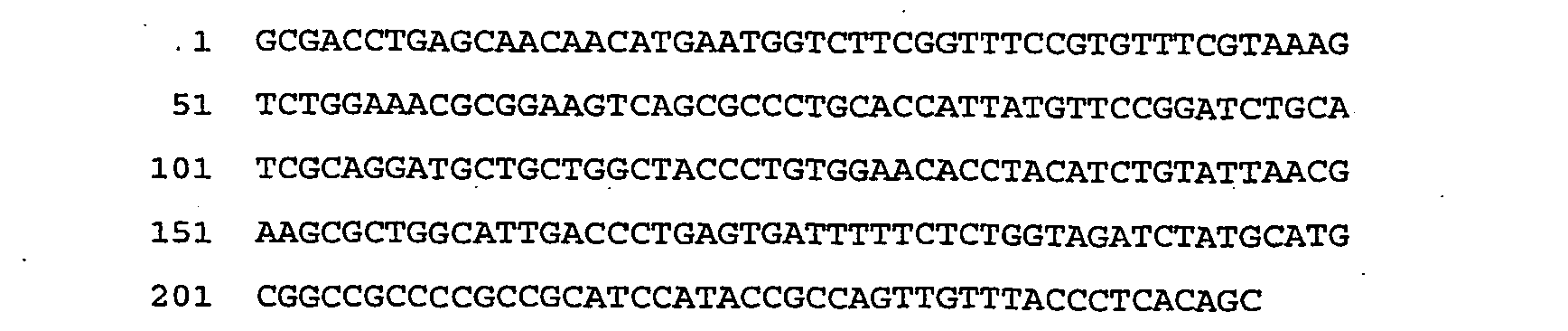
- The final two PCR fragments made as described above were cut with AlwNI, ligated together, and then amplified with PCR primers matching the tail regions outside the BspEI and BsaI sites (SEQ ID NO:2 and SEQ ID NO:8). The resulting PCR fragment was digested with BspEI and BsaI and inserted into pBR322.
- The resulting plasmid is pXT988, as shown in
Figure 5E , has the pBR322 (pMB1) origin of replication region fromcoordinates 1766 to 3148 replaced by the corresponding region from the ColEl origin of replication, and also has the ColEl origin of replication region flanked by multiple cloning sites, creating a replaceable ColEl origin of replication region. The restriction sites in the two multiple cloning sites are also shown in theFigure 5E . The nucleotide sequence of pXT988 is described as SEQ ID NO:18. - The construction of plasmid pXT988, which is a modified pBR322-based plasmid with the pMB1 origin of replication region replaced by the ColEl origin of replication region, and flanked by multiple cloning sites, provides for the quick and easy replacement of this origin of replication with any desired alternative origin of replication. Since pXT988 has the ColEl origin of replication region, the obvious first choice in demonstrating the utility of this new tool was to replace the ColEl origin of replication region with the pBR322 (pMB1) origin of replication region.
- The first step to exchange the
pMB 1 origin of replication for the ColEl origin of replication was to use primers located just inside where the multiple cloning sites were located, to amplify the pMB1 origin of replication region of pBR322. The primers included tails with the same multiple cloning sites, and are given as SEQ ID NO:19 - 5'-AGGAAGATCTATGCATGCGGCCGCCCCGCCGCATCCATACCGCCAGTTG-3' and SEQ ID NO:20 5'-AGGAAGATCTACTAGTGAGCTCGTAGAAAAGATCAAAGGATCTTCTTG-3'
- The nucleotide sequence of the multiple cloning site (MCS) included on the primer SEQ ID NO:19 included recognition sites for the restriction endonucleases BglII (AGATCT), NsiI (ATGCAT), and NotI (GCGGCCGC). The nucleotide sequence of the multiple cloning site (MCS) included on the primer SEQ ID NO:20 included with recognition sites for the restriction endonucleases SacI (GAGCTC), SpeI (ACTAGT), and BglII (AGATCT).
- The resulting PCR fragment was digested with NotI and SpeI, and used to replace the ColE1 origin of replication region on pXT988 to yield the plasmid pXT995, as shown in
Figure 6A . Plasmid pXT995 has the pBR322 (pMB1) origin of replication region and also has the flanking multiple cloning sites, creating a pMB1 origin cassette. The nucleotide sequence for plasmid pXT995 is described in SEQ ID NO:21. - The plasmid pXT1000 was constructed by inserting the AlwNI-SpeI fragment from pXT996 (this fragment carries the origin of replication region of pBR322 from the AIwNI site to the MCS) into pXT988. This yielded a plasmid with a composite or hybrid origin of replication, with the region of the origin of replication from the MCS to the AIwNI site being from the ColE1 ORI, and the region of the origin of replication from the AlwNI site to the MCS being from the pMB1 ORI. The resulting plasmid is shown in
Figure 6C . The nucleotide sequence for plasmid pXT1000 is described in SEQ ID NO:22. - The plasmid pXT1001 was constructed by inserting the NsiI-AlwNI fragment from pXT996 (this fragment is the pMB1 origin of replication region from the MCS to the AlwNI site) into pXT988. This yielded a plasmid with a composite or hybrid origin of replication, with the region of the origin of replication from the MCS to the AlwNI site being from the pMB1 ori, and the region of the origin of replication from the AlwNI site to the MCS being from the ColE1 ORI. The hybrid plasmid pXT1001 is shown in
Figure 6B and pXT988 is shown inFigure 6D . The nucleotide sequence of plasmid pXT1001 is given as SEQ ID NO:23. - The construction of the pXT995, pXT1001, pXT1000, and pXT988 plasmids described above yielded plasmids containing the following homogeneous or hybrid/composite origin of replications, all flanked by MCS:
- pXT995: origin of replication region from 1766-3148 from pBR322, flanked by MCS (homogeneous origin of replication);
- pXT1001: origin of replication region from 1766 to AlwNI from pBR322, and from AlwNI to 3148 from ColE1, flanked by MCS (hybrid/chimeric origin of replication);
- pXT1000: origin of replication region from 1766 to AlwNI from ColEl, and from AlwNI to 3148 from pBR322, flanked by MCS (hybrid/chimeric origin of replication);
- pXT988: origin of replication region from 1766-3148 from ColEl, flanked by MCS (homogeneous origin of replication).
- Table 3 details the plasmid constructs with novel origin of replications.
TABLE 3 Plasmid constructs with novel origins of replication Cloning Vector Origin Of Replication (ORI) Plasmid SEQ ID No. pBR322 origin of replication region (positions 1766-3148) taken from pBR322 (pMB1) 1 pXT995 origin of replication region (positions 1766-3148) taken from pBR322 (pMB1), flanked by MCS 21 pXT975 hybrid origin of replication region with one part of the region (position 1766 to AlwNI restriction site) taken from pBR322, and the other part of the region (from AlwNI restriction site to position 3148) taken from ColE1 7 pXT1001 hybrid origin of replication region with one part of the region (position 1766 to AlwNI restriction site) taken from pBR322, and the other part of the region (from AlwNI restriction site to position 3148) taken from ColEl, flanked by MCS 23 pXT976 hybrid origin of replication region with one part of the region (position 1766 to AlwNI restriction site) taken from ColEl, and the other part of the region (from AlwNI restriction site to position 3148) taken from pBR322 12 pXT1000 hybrid origin of replication region with one part of the region (position 1766 to AlwNI) from ColEl, and the other part of the region (from AlwNI to 3148) from pBR322, flanked by MCS 22 pXT977 origin of replication region (positions 1766-3148) from ColEl 13 pXT988 origin of replication region (positions 1766-3148) from ColEl, flanked by MCS 18 pXT1092 inverted origin of replication region (positions 1766-3148) taken from pBR322 (pMB1), flanked by MCS (positions 1766-3148 are inverted compared to SEQ ID NO. 1 33 pXT1091 pACYC184 origin of replication region (BstZl7I-SacI restriction fragment from pXT1094) inserted into pXT995 28 pXT1094 pACYC184 origin of replication region (position 517-1464) inserted into MCS of pXT995 27 pXT1109 pACYC184 origin of replication region plus pBR322 rop gene sequence 34 - The copy numbers were determined in strain LBB427, which is the standard wild-type E. coli K-12 strain W3110 with a mutation inactivating the fhuA gene. The copy number measurements were made on two sets of shake flask cultures grown in L-broth plus ampicillin (100 micrograms per milliliter). The copy number measurements were made as described above. Table 4 shows the results of this experiment; at each time point, two plasmid copy numbers are given, showing the results from the duplicate cultures that were assayed.
TABLE 4 Plasmid copy number during mid-log phase of growth in shake flasks containing L-broth medium plus ampicillin Plasmid 7.5 hours (hours after inoculation) pBR322 32, 34 pXT995 30,34 pXT975 8,8 pXT1001 8, 12 pXT976 17, 23 pXT1000 24,24 pXT977 6, 9 pXT988 11,13 - The results from these experiments show that creating exchangeable origin of replication cassettes in modified pBR322 plasmids (i.e., the origin of replication region was flanked with MCS) did not alter the copy numbers of the plasmids, when compared with plasmids lacking the MCS. Also, a previously observed trend was observed again: when the origin of replication region from the AlwNI to 3148 is from ColEl (as on plasmids pXT975, pXT1001, pXT977, and pXT988), the copy number is reduced versus when that same origin of replication region is from pBR322 (as on the plasmids pBR322, pXT995, pXT976, and pXT1000). These results illustrate the utility of the present invention in providing new plasmid vectors with two ranges of plasmid copy numbers, namely plasmids pXT975, pXT977, pXT988, and pXT1001 with plasmid copy numbers of about 10, and plasmids pXT976, pXT995, and pXT1000 with plasmid copy numbers of about 20.
- Bovine somatotropin (bST) is a natural protein produced in the pituitary glands of all cattle and it helps adult cows produce milk. Known in the art are several plasmids that contain the genetic elements necessary for bST protein expression. The bST expression region from one such plasmid, pXT757 (identical to pXT709, described in Bogosian et al., United States Patent
6,828,124 , which is herby incorporated by reference in its entirety), was moved into each one of the modified pBR322-based plasmids: pXT975, pXT976, pXT977, pXT988, pXT995, pXT1000, and pXT1001. The plasmid pXT757 contains the synthetic cpex-20 promoter (described in Bogosian et al., United States Patent6,617,130 , which is herby incorporated by reference in its entirety) driving the expression of a synthetic bovine somatotropin (bST) gene. The cpex-20 promoter was designed to be regulated by the LexA repressor protein of the E. coli SOS regulon, and as such is inducible by the addition of nalidixic acid. The EcoRI-BamHI fragment of pXT757 (containing the complete bST expression region from pXT757) was inserted into each of plasmids pXT975, pXT976, and pXT977. A similar EcoRI-SalI fragment of pXT757 was inserted into each of plasmids pXT988, pXT995, pXT1000, and pXT1001. These constructions yielded the bST expression plasmids shown in Table 5 below.TABLE 5 bST expression plasmids Bst Expression Vector Cloning Vector Origin Of Replication (ORI) pXT757 pBR322 origin of replication region (positions 1766-3148) taken from pBR322 (pMB1) pXT996 pXT995 origin of replication region (positions 1766-3148) taken from pBR322 (pMB1), flanked by MCS pXT985 pXT975 hybrid origin of replication region with one part of the region (position 1766 to AlwNI restriction site) taken from pBR322, and the other part of the region (from AlwNI restriction site to position 3148) taken from ColE1 pXT1003 pXT1001 hybrid origin of replication region with one part of the region (position 1766 to AlwNI restriction site) taken from pBR322, and the other part of the region (from AlwNI restriction site to position 3148) taken from ColE1, flanked by MCS pXT986 pXT976 hybrid origin of replication region with one part of the region (position 1766 to AlwNI restriction site) taken from ColE1, and the other part of the region (from AlwNI restriction site to position 3148) taken from pBR322 pXT1002 pXT1000 hybrid origin of replication region with one part of the region (position 1766 to AlwNI) from ColE1, and the other part of the region (from AlwNI to 3148) from pBR322, flanked by MCS pXT987 pXT977 origin of replication region (positions 1766-3148) from ColE1 pXT1004 pXT988 origin of replication region (positions 1766-3148) from ColE1, flanked by MCS - The host strain LBB427 was used in experiments to determine the effect of hybrid ORI on the expression level of the protein bST. The level of bST protein expression was measured during culture in a fermenter containing a chemically defined inorganic salts and glucose minimal medium (without any antibiotics), with bST synthesis induced by the addition of 50 ppm nalidixic acid at an optical density at 660 nm of 23. The level of bST expression was measured using an HPLC assay with a limit of detection of 1 milligram of bST per liter. The fermentation growth conditions and the HPLC assay are described in Bogosian et al. 1989; as described in that paper, the fermenter contained a minimal medium without any antibiotics.
- An unexpected finding from these experiments was that when the plasmid origin of replication included ColE1-derived origin of replication nucleotide sequences from the AlwNI site to the end of the origin of replication region at coordinate 3148, bST expression was completely abolished. It would not have been predicted that subtle changes in the origin of replication would have such significant effects on the expression of genes elsewhere on the plasmid vector. This finding further illustrates the utility of the present invention, allowing the facile manipulation of plasmid origins of replication for the purpose of testing the effect of such manipulations on heterologous gene expression.
TABLE 6 Quantifying bST protein expression from plasmids containing the bST gene plasmid ORI bST expression mg per liter pXT757 origin of replication region (positions 1766-3148) taken from pBR322 6400 pXT996 origin of replication region (positions 1766-3148) taken from pBR322, flanked by MCS 5700 pXT985 hybrid origin of replication region with one part of the region (position 1766 to AlwNI restriction site) taken from pBR322, and the other part of the region (from AlwNI restriction site to position 3148) taken from ColE1 no detectable expression pXT1003 hybrid origin of replication region with one part of the region (position 1766 to AlwNI restriction site) taken from pBR322, and the other part of the region (from AlwNI restriction site to position 3148) taken from ColE1, flanked by MCS no detectable expression pXT986 hybrid origin of replication region with one part of the region (position 1766 to AlwNI restriction site) taken from ColE1, and the other part of the region (from AlwNI restriction site to position 3148) taken from pBR322 6200 pXT1002 hybrid origin of replication region with one part of the region (position 1766 to AlwNI) from ColEl, and the other part of the region (from AlwNI to 3148) from pBR322, flanked by MCS 6200 pXT987 origin of replication region (positions 1766-3148) from ColE1 no detectable expression pXT1004 origin of replication region (positions 1766-3148) from ColE1, flanked by MCS no detectable expression - The plasmid pXT995 is a modified pBR322 with a MCS cassette flanking the position of the origin of replication, as described: BglII-NsiI-NotI, origin of replication, SacI-SpeI-BglII. Inverting or flipping the origin of replication region of pXT995 was accomplished by digestion with BglII, followed by re-ligation. As a result of the re-ligation experiments, eight transformants were obtained and three contained an inverted origin of replication region. One of these transformants was designated pXT1092 (SEQ ID NO: 33) and is shown in
Figure 7 . - The plasmid pXT996 is a modified pXT757 with the pBR322 origin of replication flanked by MCS as described: BglII-NsiI-NotI, origin of replication, SacI-SpeI-BglII. Interestingly, numerous attempts to evaluate bST expression of pXT996 with a flipped or inverted origin of replication region by digesting with BglII followed by re-ligation all failed.
- These results suggested that flipping or inverting of the origin of replication region could not be done in a plasmid like pXT996 containing the bST expression elements. Thus, it appears that with plasmids containing the bST expression elements, the origin of replication region can only be tolerated in one orientation, i.e., that orientation found on the unmodified pBR322 plasmid. Again, this was an unexpected finding, further illustrating the utility of the present invention with regard to manipulation of the structure and orientation of plasmid origins of replication for the purposes of improving the expression of plasmid-borne heterologous genes.
- The plasmid pACYC184 was derived from the plasmid P15A (Chang and Cohen, 1978). The nucleotide sequence of plasmid pACYC184 is given as SEQ ID NO:24. The copy number of P15A was reported to be about 15 (Cozzarelli et al., 1968), and the copy number of pACYC184 has been variously reported to range from about 18 (Chang and Cohen, 1978), or about 30 (Ray and Skurray, 1984), or about 9 (Atlung et al., 1999). The 4245 base pair plasmid, pACYC184, is compatible with pMB1- or ColEl-related plasmids and can therefore be used together with a pMB1- or ColE1-derivative within the same cell. pACYC184 contains: (1) the replicon (rep) responsible for the replication of plasmid (this origin of replication is from the plasmid p15A); (2) the tetR gene, encoding tetracycline resistance protein; and (3) the cat gene, encoding for chloramphenicol acetyl transferase and thus conferring resistance to chloramphenicol.
- The rop gene encodes a protein that acts to lower the plasmids copy number when compared to plasmids without the rop gene. Therefore, if the rop gene could be added to the ORI of a high copy plasmid, one could alter the copy number of the plasmid inside a cell. The plasmid pACYC184 lacks the rop gene.
-
Figure 9 shows a linear map of the pACYC184 origin of replication containing a single BstZ17I restriction site. As shown inFigure 10 , the nucleotide sequence of pACYC184 (nucleotides 568-1407) reveals an origin of replication region with extensive homology to the origin of replication region on pBR322 (nucleotides 2222-3139). On pBR322, the rop gene lies just counterclockwise of the BstZl7I site, which is at coordinate 2249 on pBR322 and coordinate 596 on pACYC184. The region of homology between these two origins of replication regions begins just prior to this BstZl7I site. - The pACYC184, origin of replication, from coordinates 517 to 1464 (SEQ ID 24), was amplified as a 948 bp NotI-SacI PCR fragment and inserted into the MCS of pXT995. This yielded pXT1094 (SEQ ID 27), a plasmid with the pBR322 backbone of the bla and tetR genes, but with the pBR322 origin of replication replaced by the pACYC184 origin of replication (the plasmid p15A origin of replication), and flanked by MCS.
- The upstream primer (SEQ ID NO:25) 5'-GGCTCAGCAGCGGCCGCGCTGTCCCTCCTGTTCAGCTATTGACGGGG-3' contains a single nucleotide change in the region near the MCS, outside of the region of homology between the pBR322 and pACYC184 origin of replication regions, eliminating the AlwNI site there by changing the site from CAG-CTA-CTG to CAG-CTA-TTG.
- The downstream primer (SEQ ID NO:26) 5'-GGCTCTGACGAGCTCGGTGCTACATTTGAAGAGATAAATTGCACTGAAATCTAGG-3' contains a single nucleotide change in the corresponding region near that MCS, eliminating the XbaI site there by changing the site from TCTAGA to CCTAGA. The nucleotide sequence of plasmid pXT1094 is given as SEQ ID NO:27.
- The pACYC184 origin of replication was excised at a BstZ17I-SacI restriction fragment from pXT1094 and inserted into pXT995, creating pXT1091. The nucleotide sequence of pXT1091 is given as SEQ ID NO:28. It should be noted that on pBR322, the BstZ17I site lies between the rop gene and the origin of replication region. On pACYC184, the BstZ17I site lies in the same relative position with respect to the origin of replication region, in this case just inside the beginning of the region of homology between the two origin of replication regions (as shown in the alignment of
Figure 9 and the pACYC184 origin of replication region shown inFigure 8 ). The unmodified pACYC184 does not contain a rop gene. Thus, the new plasmid pXT1091 has the following genetic elements, in clockwise order, the pBR322 tetR gene, the first MCS, the pBR322 rop gene, the BstZ17I site, the pACYC184 origin of replication region, the second MCS, and then the pBR322 bla gene. The nucleotide sequence of plasmid pXT1091 is given as SEQ ID NO:28. - This construct was evaluated to determine whether the pBR322 rop gene product had any effect on the copy number of a plasmid with the pACYC184 origin of replication region (a p15A origin of replication). The copy number results are shown in Table 7 and are described below.
- As an example of the usefulness of the present invention, it can be shown that plasmids modified with hybrid ORI containing the rop gene can have their copy numbers in bacteria altered. The copy numbers for pACYC184, pXT1091, and pXT1094 were determined in strain DH5α, grown in one set of shake flask cultures grown in L-broth plus the appropriate antibiotic, specifically 10 micrograms per milliliter tetracycline for pACYC184, and 100 micrograms per milliliter ampicillin for pXT1091 and pXT1094. The copy number measurements were made as described above. Table 7 shows the results of this experiment.
TABLE 7 Plasmid copy number during growth in shake flasks with L-broth medium (plus tetracycline or ampicillin) Plasmid (hours after inoculation) 7 hours pACYC184 85 pXT1091 620 pXT1094 210 - These results suggest that the presence of the rop gene, on plasmid pXT1091, actually increased the plasmid copy number rather than lower it (as would have been expected). These findings further illustrate the utility of the present invention with regard to manipulation of the structure plasmid origins of replication for the purposes of improving the expression of plasmid-borne heterologous genes. These results illustrate the utility of the present invention in providing new plasmid vectors with two ranges of plasmid copy numbers, namely plasmid pXT1091 with a plasmid copy number of about 500, and plasmid pXT1094 with a plasmid copy number of about 200.
- The NotI-SpeI fragment from pXT1094, carrying the pACYC184 origin of replication flanked by MCS, was inserted into pXT996, thus replacing the pBR322 origin of replication region, and yielding plasmid pXT1110. The NotI-SpeI fragment from pXT1091, carrying the pACYC184 origin of replication and rop gene flanked by MCS, was inserted into pXT996, thus replacing the pBR322 origin of replication region, and yielding plasmid pXT1109 (SEQ IN NO: 34).
- Example 17. Expression of bST protein from modified pBR322-based plasmids containing either the pMB1, the pACYC184 origins of replication or the pACYC184 plus rop origin of replication.
- As an example of the usefulness of the present invention, it can be shown that plasmids modified with hybrid ORI can alter the level of expression of a target protein. The host strain LBB427 was used in experiments to determine the effect of hybrid ORI on the expression level of the protein bST (bovine somatotrophin). The level of bST protein expression was measured during culture in a fermenter containing a chemically defined inorganic salts and glucose minimal medium (without any antibiotics), with bST protein synthesis induced by the addition of 50 ppm nalidixic acid at an optical density at 660 nm of 23. The level of bST protein expression was measured using an HPLC assay with a limit of detection of 1 milligram of bST per liter. The fermentation growth conditions and the HPLC assay are described in Bogosian et al. 1989; as described in that paper, the fermenter contained a minimal medium without any antibiotics.
Table 8 Expression of bST protein from plasmids with the pACYC184 origins of replication or pACYC184 plus rop origin of replication plasmid ori bST expression mg per liter pXT757 pBR322 (pMB1) 6400 pXT1109 pACYC184 plus rop 2700 pXT1110 pACYC184 4700 - These results suggest that high plasmid copy numbers have a detrimental effect on this particular bST protein expression system. These findings further illustrate the utility of the present invention with regard to manipulation of the structure plasmid origins of replication for the purposes of improving the expression of plasmid-borne heterologous genes.
- The cer protein typically increases the stability of inheritance of a plasmid. Therefore, it may be useful to include the cer gene on a plasmid in order to increase the rate of retention of the plasmid within a cell. The present invention allows for the inclusion of the cer gene in a hybrid ORI, thereby demonstrating the advantage of being able to tailor the ORI of a plasmid to suit one's needs.
- The region of ColE1 carrying the cer site, and some flanking nucleotide sequence, was isolated as a 357 bp NsiI-NotI PCR fragment prepared from ColE1 plasmid DNA, and inserted into the MCS on pXT996 to yield the plasmid pXT1007. The nucleotide sequence of the NsiI-NotI fragment was determined, and is shown in
Figure 10 (SEQ ID 32). The nucleotide sequence given inFigure 10 is different from that found in the Genbank nucleotide sequence of ColE1, as more recent nucleotide sequencing of the plasmid ColE1 by the inventors has shown differences with the Genbank nucleotide sequence; the nucleotide sequence given here is believed by the inventors to be the correct nucleotide sequence of the cer site on the plasmid ColEl. The transcribed region giving rise to the RNA molecule RCD is underlined (Patient and Summers, 1993). - The stability of inheritance of strains LBB427 [pXT757] and LBB427 [pXT1007] were studied by culturing in LB without any antibiotics. The procedure was to start with a fresh overnight culture grown in LB plus ampicillin and tetracycline (where 100% of the cells would contain the plasmid) and sub-culture in LB without any antibiotics. For each sub-culture, 10 microliters of the previous full-density culture were transferred to 10 ml of LB. This is a 1000-fold dilution, requiring the culture to grow for 10 generations to reach full density again. That is, since 210 = 1024, 10 doublings of a 1000-fold diluted culture would be required for the culture to increase about 1000-fold back to full density. Since these E. coli strains grow in LB at 37°C with a doubling time of about 20 minutes, only a little over 3 hours of exponential growth would be required for the 10 doublings. To allow for any lag time, the sub-cultures were grown for at least 8 hours. The practice was to start a sub-culture in the morning, grow it for 8 hours, then sub-culture again for overnight growth. Thus, the passage of 20 generations was achieved in a 24 hour period. At the end of each ten generation growth cycle, the full density cultures were diluted and plated on LB and LB Amp to determine the percentage of cells that retained the plasmid.
Table 9 Percent of cells retaining the plasmid after successive generations Generations pXT757(-cer) pXT1007 (+cer) 0 100 100 10 89 95 20 92 100 30 67 97 40 33 94 50 24 100 60 21 99 70 3.5 95 80 2.2 96 90 1.0 100 100 0.34 91 - It is apparent that the addition of the cer gene to the pXT757 plasmid has improved the retention rate of the plasmid within the LBB427 cells.
- The host strain, LBB427, was used in experiments to determine the effect of hybrid ORI on the expression level of the protein bST. The level of bST protein expression was measured during culture in a fermenter containing a chemically defined inorganic salts and glucose minimal medium (without any antibiotics), with bST protein synthesis induced by the addition of 50 ppm nalidixic acid at an optical density at 660 nm of 23. The level of bST protein expression was measured using an HPLC assay with a limit of detection of 1 milligram of bST per liter. The fermentation growth conditions and the HPLC assay are described in Bogosian et al. 1989; as described in that paper, the fermenter contained a minimal medium without any antibiotics.
Table 10 Influence of cer site on bST expression Strain and plasmid fermentation bST expression mg per liter LBB427 [pXT1007] Run 16300 Run 2 6300 avg. = 6300 - As shown in Table 6, bST protein expression from pXT757 (lacking the cer site) was about 6400 mg per liter. The results here indicate that addition of the cer site to the origin of replication in pXT757 (thereby creating the plasmid pXT1007) did not lead to increased expression of bST protein. The lack of any beneficial effect of the increased plasmid retention associated with the addition of the cer site may reflect the fact that the fermentation culture was grown for a low number of generations in the absence of antibiotic selection for plasmid retention. Under the fermentation culture conditions used here, the inoculum was grown in L-broth plus antibiotics, and thus 100% of the cells in the inoculum would contain plasmid. However, after inoculation of the fermenter vessel, there were only about 7-8 generations of growth in the fermentation medium in the absence of antibiotics. It would be expected that there would be no detectable loss of plasmid-bearing cells, even without the cer site, in only 7-8 generations. Indeed, as shown in Table 9, pXT757 was retained in over 90% of the cells for at least 20 generations.
- The NsiI-SpeI fragment of pXT1007 was inserted into pXT995 (which is pBR322 with the origin of replication flanked by MCS) to yield pXT1221 as shown in
Figure 11 . The cer site and pBR322 origin of replication arrangement on pXT1221 with respect to the MCS is: - BglII - NsiI - cer - NotI - pBR322 origin of replication - SacI - SpeI - BglII
- The stability of DH5α [pXT1221] was tested as described above for plasmids with and without the cer site, the results shown in Table 11. Remarkably, the plasmid stability was virtually unchanged for greater than 300 generations for constructs containing the cer site.
Table 11 Percent of cells retaining the plasmid (+/- cer site) after successive generations Generations pXT757 (-cer) pXT1007 (+ cer) pXT1221 (+ cer) 0 100 100 100 10 89 95 100 20 92 100 100 30 67 97 100 40 33 94 100 50 24 100 100 60 21 99 85 70 3.5 95 100 80 2.2 96 100 90 1.0 100 100 100 0.34 91 98 110 95 120 97 130 100 140 100 150 98 160 100 170 100 180 83 190 100 200 100 250 98 300 100 350 95 - This finding indicates that the inclusion of a cer site on a plasmid, an addition made straightforward by the present invention, would be worthy of consideration for culture conditions requiring high plasmid retention for an extended number (greater than 20) of generations of growth in the absence of antibiotic selection.
- As the preceding examples have illustrated, the present invention enables the construction of a variety of new types of plasmid vectors with modified origins of replication. The utility of the present invention is partially illustrated by the construction of new plasmid vectors with a wide range of plasmid copy numbers, ranging from 10 to 500 plasmid copies per cell. The utility of the present invention is also illustrated by the ease with which plasmids could be constructed containing the cer site and exhibiting increased plasmid retention during prolonged growth (>20 generations) in the absence of antibiotic selections. Such modified plasmids will also provide useful cloning tools that allow for regulation of the level of expression of desired or target gene products.
- Based on the examples in the specification, one should be able to create useful hybrid ORI that can alter the copy number of plasmid. One should also be able to create exchangeable ORI or ORI that can have genetic elements added in order to alter the characteristics of the plasmid. With the aid of the present invention, one should be able to customize a plasmid to suit one's needs.
- All of the compositions and/or methods and/or processes and/or apparatus disclosed and claimed herein can be made and executed without undue experimentation in light of the present disclosure.
- Atlung, T., B. B. Christensen, and F. G. Hansen. 1999. Role of the Rom protein in copy number control of plasmid pBR322 at different growth rates in Escherichia coli K12. Plasmid 41: 110-119.
- Blakely, G., G. May, R. McCulloch, L.K. Arciszewska, M. Burke, S.T. Lovett, and D.J. Sherratt. 1993. Two related recombinases are required for site-specific recombination at dif and cer in Escherichia coli K-12. Cell 75: 351-361.
- Bogosian, G., B.N. Violand, E.J. Dorward-King, W.E. Workman, P.E. Jung, and J.F. Kane. 1989. Biosynthesis and incorporation into protein of norleucine by Escherichia coli. J. Biol. Chem. 264: 531-539.
- Bogosian, G., J.P. O'Neil, and K.C. Terlesky. DNA construct for regulating the expression of a polypeptide coding sequence in a transformed bacterial host cell. United States Patent
6,617,130 - Bogosian, G., J.P. O'Neil, and N.D. Aardema. Recombinant DNA vectors for expression of somatotropins. United States Patent
6,828,124 - Bolivar, F., Rodriguez, R.L., Greene, P.J., Betlach, M.C., Heyneker. H,L. and Boyer, H.W. 1977. Construction and characterization of new cloning vehicles. II. A multipurpose cloning system, Gene 2: 95-113.
- Chang, A. C., and S. N. Cohen. 1978. Construction and characterization of amplifiable multicopy DNA cloning vehicles derived from the P15A cryptic miniplasmid. J. Bacteriol. 134: 1141-1156.
- Colloms, S.D., P. Sykora, G. Szatmari, and D.J. Sherratt. 1990. Recombination at ColEl cer requires the Escherichia coli xerC gene product, a member of the lambda integrase family of site-specific recombinases. J. Bacteriol. 172: 6973-6980.
- Covarrubias, L., Cervantes, L., Covarrubias, A., Soberon, X., Vichido, I., Blanco, A., Kupersztoch-Portnoy, Y.M. and Bolivar, F. 1981. Construction and characterization of new cloning vehicles. V. Mobilization and coding properties of pBR322 and several deletion derivatives including pBR327 and pBR328, Gene 13: 25-35.
- Cozzarelli, N. R., R. B. Kelly, and A. Kornberg. 1968. A minute circular DNA from Escherichia coli. Proc. Natl. Acad. Sci. USA 60: 992-999.
- Funnell, B.E., and G.J. Phillips 2004. Plasmid biology. American Society for Microbiology Press, Washington, DC
- Guhathakurta, A., and D. Summers. 1995. Involvement of ArgR and PepA in the pairing of ColEl dimer resolution sites. Microbiology 141: 1163-1171.
- Guhathakurta, A., I. Viney, and D. Summers. 1996. Accessory proteins impose site selectivity during ColEl dimer resolution. Mol. Microbiol. 20: 613-620.
- Hodgman, T.C., H. Griffiths, and D.K. Summers. 1998. Nucleoprotein architecture and ColEl dimer resolution: a hypothesis. Mol. Microbiol. 29: 545-558.
- Horton, R.M., H.D. Hunt, S.N. Ho, J.K. Pullen, and L.R. Pease. 1989. Engineering hybrid genes without the use of restriction enzymes: gene splicing by overlap extension. Gene 77: 61-68.
- Patient, M.E., and D.K. Summers. 1993. ColEl multimer formation triggers inhibition of Escherichia coli division. Mol. Microbiol. 9: 1089-1095.
- Peden, K.W., Revised sequence of the tetracycline-resistance gene of pBR322. 1983. Gene 22: 277-280.
- Ray, A., and R. Skurray. 1984. Stabilization of the cloning vector pACYC184 by insertion of F plasmid leading region sequences. Plasmid 11: 272-275.
- Sambrook et al., 1989. Molecular Cloning. A Laboratory Manual, 2nd ed. Cold Spring Harbor Laboratory Press, Cold Spring Harbor, NY.
- Stirling, C.J., S.D. Colloms, J.F. Collins, G. Szatmari, and D.J. Sherratt. 1989. xerB, an Escherichi coli gene required for plasmid ColE1 site specific recombination is identical to pepA, encoding aminopeptidase A, a protein with substantial similarity to bovine lens leucine aminopeptidase. EMBO J. 8: 1623-1627.
- Stirling, C.J. G. Szatmari, G. Stewart, MC.M. Smith, and D.J. Sherratt. 1988. The arginine repressor is essential for plasmid stabilising site-specific recombination at the ColE1 cer locus. EMBO J. 7: 4389-4395.
- Summers, D.K. 1989. Derivatives of ColEl cer show altered topological specificity in site-specific recombination. EMBO J. 8: 309-316.
- Summers, D.K. 1991. The kinetics of plasmid loss. TIBTECH 9: 273-278.
- Summers, D.K. 1996. The biology of plasmids. Blackwell Science Ltd., London
- Summers, D.K., and D.C.D. Rowe. 2001. Methods and means relating to quiescent cells and uses thereof. United States Patent
6,190,867 . - Summers, D.K., and D.J. Sherratt. 1988. Resolution of ColEl dimers requires a DNA sequence implicated in the three-dimensional organization of the cer site. EMBO J. 7: 851-858.
- Summers, D.K., C.W.H. Beton, and H.L. Withers. 1993. Multicopy plasmid instability-the dimer catastrophe hypothesis. Mol. Microbiol. 8: 1031-1038.
- Summers, D., S. Yaish, J. Archer, and D. Sherratt. 1985. Multimer resolution systems of ColEl and ColK: localisation of the crossover site. Mol. Gen. Genet. 201: 334-338.
- Sutcliffe, J.G. 1978. Nucleotide sequence of the ampicillin resistance gene of Escherichia coli plasmid pBR322. Proc. Natl. Acad. Sci. U.S.A., 75: 3737-3741.
- Sutcliffe, J.G. 1979. Complete nucleotide sequence of the Escherichia coli plasmid pBR322. Cold Spring Harb. Symp. Quant. Biol., 43: 77-90.
- Watson, N. 1988. A new revision of the sequence of plasmid pBR322. Gene 70: 399-403.
-
- <110> Bogosian, Gregg
O'Neil, Julia
Smith, Hong Q. - <120> Hybrid Portable Origin of Replication Plasmids
- <130> 11916.0063.00PC00
- <140> 60/718,083
- <141> 2005-09-16
- <160> 34
- <170> PatentIn version 3.3
- <210> 1
<211> 4361
<212> DNA
<213> Recombinant plasmid pBR322 - <400> 1


- <210> 2
<211> 20
<212> DNA
<213> Artificial sequence - <220>
<223> Primer - <400> 2
gctcggccct tccggctggc 20 - <210> 3
<211> 50
<212> DNA
<213> Artificial sequence - <220>
<223> Primer - <400> 3
ttacgcgcag aaaaaaagga tctcaagaag atcctttaat cttttctacg 50 - <210> 4
<211> 399
<212> DNA
<213> Artificial sequence - <220>
<223> Primer - <400> 4

- <210> 5
<211> 26
<212> DNA
<213> Artificial sequence - <220>
<223> Primer - <400> 5
ccttctagtg tagccgtagt cgggcc 26 - <210> 6
<211> 6647
<212> DNA
<213> Recombinant plasmid ColE1 - <400> 6


- <210> 7
<211> 4363
<212> DNA
<213> Recombinant plasmid pXT975 - <400> 7


- <210> 8
<211> 25
<212> DNA
<213> Artificial sequence - <220>
<223> Primer - <400> 8
gcgacctgag caacaacatg aatgg 25 - <210> 9
<211> 50
<212> DNA
<213> Artificial sequence - <220>
<223> Primer - <400> 9
ttacttgaac gctgtgaggg taaacaactg gcggtatgga tgcggcggga 50 - <210> 10
<211> 236
<212> DNA
<213> Artificial sequence - <220>
<223> Primer - <400> 10

- <210> 11
<211> 24
<212> DNA
<213> Artificial sequence - <220>
<223> Primer - <400> 11
gcccgaccgc tgcgccttat ccgg 24 - <210> 12
<211> 4349
<212> DNA
<213> Recombinant plasmid pXT976 - <400> 12


- <210> 13
<211> 4351
<212> DNA
<213> Recombinant plasmid pXT977 - <400> 13


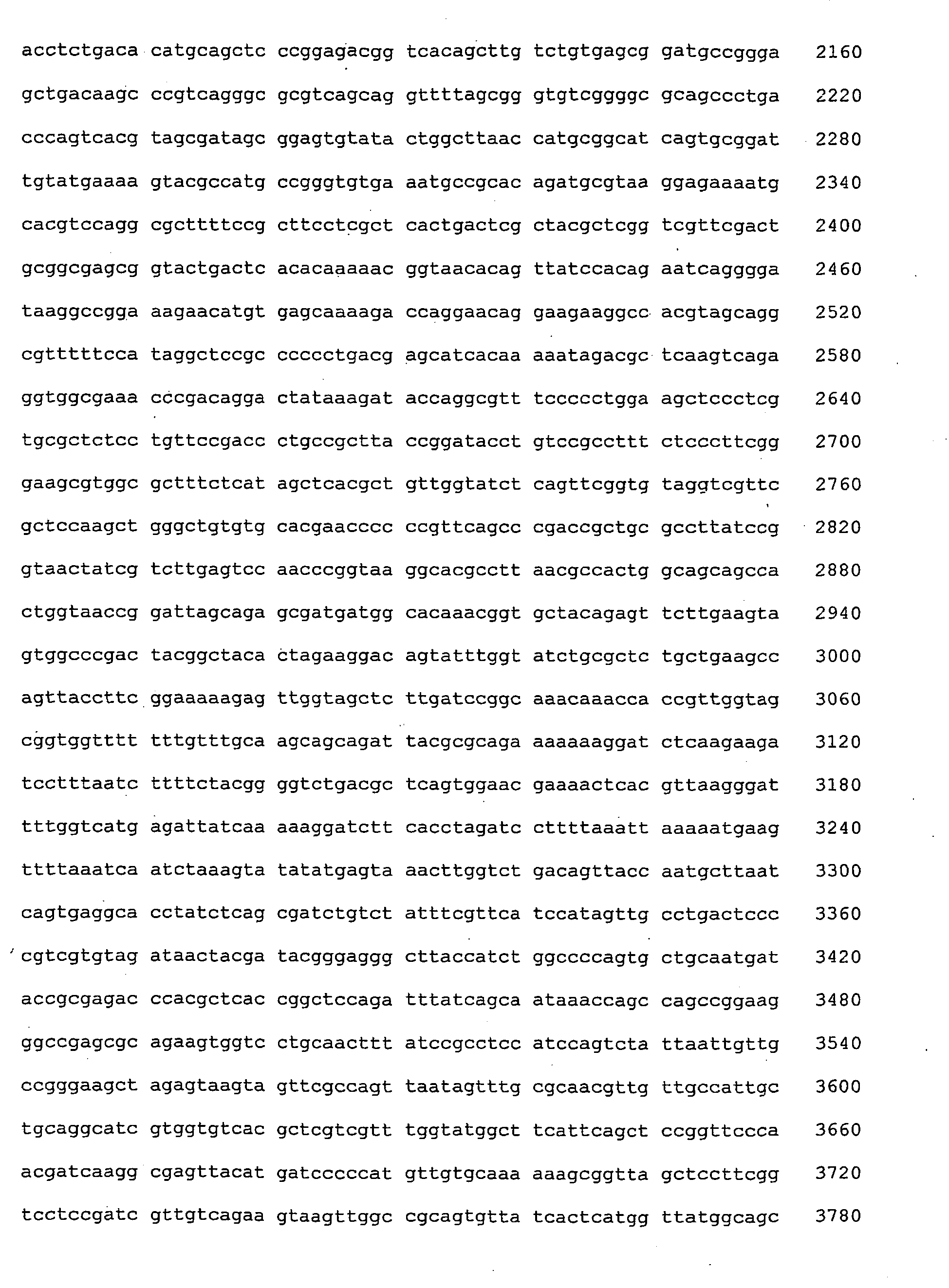

- <210> 14
<211> 50
<212> DNA
<213> Artificial sequence - <220>
<223> Primer - <400> 14
gctgtgaggg taaacaactg gcggtatgga tgcggcgggg cggccgcatg 50 - <210> 15
<211> 50
<212> DNA
<213> Artificial sequence - <220>
<223> Primer - <400> 15
agaaaaaaag gatctcaaga agatccttta atcttttcta cgagctcact 50 - <210> 16
<211> 409
<212> DNA
<213> Artificial sequence - <220>
<223> Primer - <400> 16


- <210> 17
<211> 246
<212> DNA
<213> Artificial sequence - <220>
<223> Primer - <400> 17

- <210> 18
<211> 4389
<212> DNA
<213> Recombinant plasmid pXT988 - <400> 18


- <210> 19
<211> 49
<212> DNA
<213> Artificial sequence - <220>
<223> Primer - <400> 19
aggaagatct atgcatgcgg ccgccccgcc gcatccatac cgccagttg 49 - <210> 20
<211> 48
<212> DNA
<213> Artificial sequence - <220>
<223> Primer - <400> 20
aggaagatct actagtgagc tcgtagaaaa gatcaaagga tcttcttg 48 - <210> 21
<211> 4399
<212> DNA
<213> Recombinant plasmid pXT995 - <400> 21


- <210> 22
<211> 4387
<212> DNA
<213> Recombinant plasmid pXT1000 - <400> 22


- <210> 23
<211> 4401
<212> DNA
<213> Recombinant plasmid pXT1001 - <400> 23

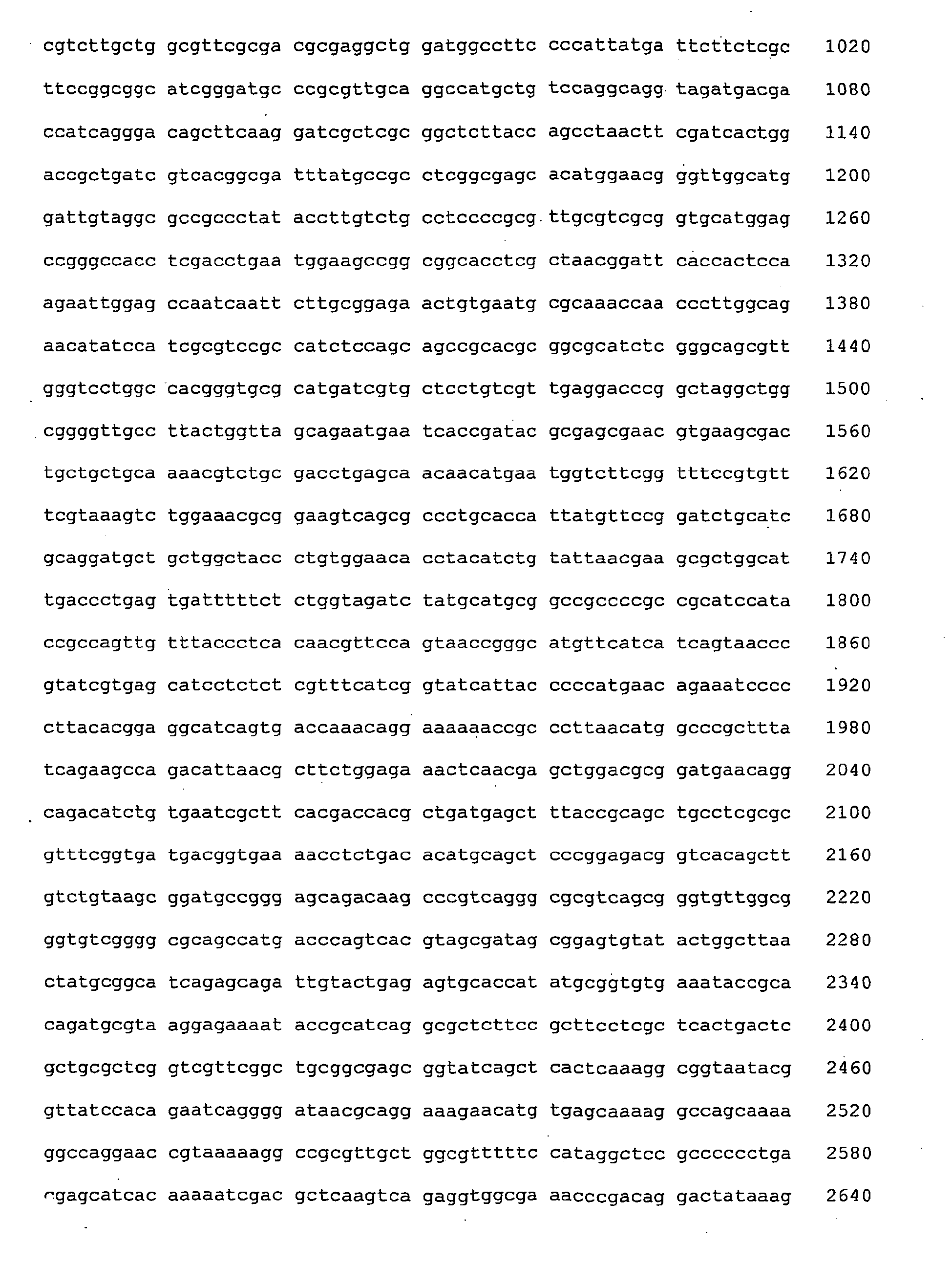


- <210> 24
<211> 4245
<212> DNA
<213> Recombinant plasmid pACYC184 - <400> 24


- <210> 25
<211> 47
<212> DNA
<213> Artificial sequence - <220>
<223> Primer - <400> 25
ggctcagcag cggccgcgct gtccctcctg ttcagctatt gacgggg 47 - <210> 26
<211> 55
<212> DNA
<213> Artificial sequence - <220>
<223> Primer - <400> 26
ggctctgacg agctcggtgc tacatttgaa gagataaatt gcactgaaat ctagg 55 - <210> 27
<211> 3964
<212> DNA
<213> Recombinant plasmid pXT1094 - <400> 27


- <210> 28
<211> 4368
<212> DNA
<213> Recombinant plasmid pXT1091 - <400> 28


- <210> 29
<211> 4742
<212> DNA
<213> Recombinant plasmid pXT1221 - <400> 29


- <210> 30
<211> 20
<212> DNA
<213> BglII NsiI NotI multiple cloning site - <400> 30
agatctatgc atgcggccgc 20 - <210> 31
<211> 18
<212> DNA
<213> SacI SpeI BglII multiple cloning site - <400> 31
gagctcacta gtagatct 18 - <210> 32
<211> 398
<212> DNA
<213> cer site on the plasmid pXT1007 - <400> 32


- <210> 33
<211> 4399
<212> DNA
<213> Recombinant plasmid pXT1092 - <400> 33


- <210> 34
<211> 5308
<212> DNA
<213> Recombinant plasmid pXT1109 - <400> 34


Claims (50)
- A functional hybrid origin of replication comprising nucleotide sequences from an origin of replication from at least two different plasmids, the hybrid origin of replication comprising at least 200 nucleotides from nucleotide sequences from the origin of replication selected from the group consisting of pBR322, pMB1, p15A, pACYC184, pACYC177, ColE1, pBR3286, pl, pBR26, pBR313, pBR327, pBR328, pPIGDM1, pPVUI, pF, pSC101 or pC101p-157.
- The functional hybrid origin of replication from claim 1 comprising at least 200 nucleotides from nucleotide sequences from a pACYC 184 origin of replication and the other nucleotides are from pBR322.
- The functional hybrid origin of replication from claim 1 comprising at least 200 nucleotides from nucleotide sequences from a pBR322 origin of replication and the other nucleotides are from pACYC184.
- The functional hybrid origin of replication from claim 1 comprising at least 200 nucleotides from nucleotide sequences from a pBR322 origin of replication and the other nucleotides are from ColE1.
- The functional hybrid origin of replication from claim 1 comprising at least 200 nucleotides from nucleotide sequences from a ColEl origin of replication and the other nucleotides are from pACYC184.
- The functional hybrid origin of replication from claim 1 comprising at least 200 nucleotides s from nucleotide sequences from a pACYC 184 origin of replication and the other nucleotides are from ColEl.
- The functional hybrid origin of replication from claim 1 comprising at least 250 nucleotides from nucleotide sequences from a pBR322 origin of replication.
- The functional hybrid origin of replication from claim 1 comprising at least 250 nucleotides from nucleotide sequences from a ColEl origin of replication.
- The functional hybrid origin of replication from claim 1 comprising at least 250 nucleotides from nucleotide sequences from a pACYC184 origin of replication.
- The functional hybrid origin of replication from claim 1 comprising at least 250 nucleotides from nucleotide sequences from the origin of replication selected from the group consisting of pBR322, pMB1, p15A, pACYC184, pACYC177, ColE1, pBR3286, pl, pBR26, pBR313, pBR327, pBR328, pPIGDM1, pPVUI, pF, pSC101 or pC101p-157.
- The functional hybrid origin of replication from claim 1 comprising at least 250 nucleotides from nucleotide sequences from a pACYC 184 origin of replication and the other nucleotides are from pBR322.
- The functional hybrid origin of replication from claim 1 comprising at least 250 nucleotides from nucleotide sequences from a pBR322 origin of replication and the other nucleotides are from pACYC184.
- The functional hybrid origin of replication from claim 1 comprising at least 250 nucleotides from nucleotide sequences from a pBR322 origin of replication and the other nucleotides are from ColE1.
- The functional hybrid origin of replication from claim 1 comprising at least 250 nucleotides from nucleotide sequences from a ColE1 origin of replication and the other nucleotides are from pACYC184.
- The functional hybrid origin of replication from claim 1 comprising at least 250 nucleotides from nucleotide sequences from a pACYC 184 origin of replication and the other nucleotides are from ColEl.
- The functional hybrid origin of replication from claim 1 comprising nucleotide sequences from an origin of replication from at least two different plasmids, wherein the nucleotide sequences from a first origin of replication exhibits at least 70% nucleotide sequence identity with the nucleotide sequences from a second origin of replication.
- A functional hybrid origin of replication comprising nucleotide sequences from an origin of replication from at least two different plasmids, wherein the nucleotide sequences from an origin of replication from a first plasmid exhibits at least 70% nucleotide sequence identity with the nucleotide sequences from the origin of replication from pBR322.
- The functional hybrid origin of replication of claim 17 comprising SEQ ID NO: 7 or 12.
- A functional hybrid origin of replication comprising nucleotide sequences from pBR322 and nucleotide sequences from ColEl.
- The functional hybrid origin of replication of claim 2 wherein a portion of sequence between nucleotide 1766 to 3148 of pBR322 (SEQ ID NO: 1) is replaced with at least 200 contiguous nucleotide sequences from ColEl (SEQ ID NO: 6).
- The functional hybrid origin of replication of claim 19 comprising nucleotide sequences from position 1766 to AlwNi restriction site in a pBR322 (SEQ ID NO: 1) plasmid linked to nucleotide sequences from an AlwNi restriction site to position 3148 in a ColEl plasmid (SEQ ID NO: 6)
- The functional hybrid origin of replication of claim 19 comprising nucleotide sequences from position 1766 to AlwNi restriction site in a ColE1 plasmid (SEQ ID NO: 6) linked to nucleotide sequences from an AlwNi restriction site to position 3148 in a pBr322 plasmid (SEQ ID NO: 1).
- A functional hybrid origin of replication comprising sequences from the origin of replication from pBR322 and any of the origins of replication selected from the group consisting ColEl, p15A or pACYC184.
- A functional hybrid origin of replication comprising nucleotide sequences from an origin of replication from at least two different plasmids, wherein the nucleotide sequences from an origin of replication from a first plasmid exhibits at least 70% nucleotide sequence identity with the nucleotide sequences from the origin of replication from pACYC184.
- A functional hybrid origin of replication comprising nucleotide sequences from pACYC 184 and nucleotide sequences from ColE1.
- A functional hybrid origin of replication from Claim 1 comprising nucleotide sequences from an origin of replication from at least two different plasmids wherein the hybrid origin of replication is flanked on each side by nucleotide sequences coding for at least one cloning site.
- The functional hybrid origin of replication from claim 1 comprising nucleotide sequences from an origin of replication from at least two different plasmids wherein the hybrid origin of replication is flanked on each side by nucleotide sequences coding for multiple cloning sites.
- An exchangeable origin of replication cassette comprising a nucleotide sequence of a functional hybrid origin of replication from claim 1 flanked on each side by nucleotide sequences coding for at least one cloning site; said cloning sites not within a regulatory or structural coding region.
- An exchangeable origin of replication cassette comprising a nucleotide sequence of a functional hybrid origin of replication from claim 1 flanked on each side by nucleotide sequences coding for multiple cloning sites; said cloning sites not within a regulatory or structural coding region.
- The exchangeable origin of replication cassette of claim 28, wherein said flanking cloning sites comprise restriction endonuclease sites.
- The exchangeable origin of replication cassette of claim 29, wherein said multiple cloning sites comprise at least one BspEI, BglII, NsiI, NotI, SacI, SpeI or AlwNI restriction endonuclease site.
- The exchangeable origin of replication cassette of claim 28, wherein said sequence of origin of replication comprise functional hybrids of pMB1, ColE1, p15A, pBR322, or pACYC184.
- A modified plasmid comprising a sequence of the functional hybrid origin of replication from claim 1 flanked by cloning sites; said cloning sites not within a regulatory or coding sequence.
- The modified plasmid of claim 33, wherein the plasmid is pBR322, pMB1, p15A, pACYC184, pACYC177, ColEl, pBR3286, p1, pBR26, pBR313, pBR327, pBR328, pPIGDM1, pPVUI, pF, pSC101or pC101p-157.
- The modified plasmid of claim 33, wherein the plasmid is any pUC plasmid.
- The modified plasmid of claim 33, wherein the plasmid is pACYC184.
- The modified plasmid of claim 33, wherein the plasmid is pBR322.
- The modified plasmid of claim 33, wherein the plasmid is ColE1.
- The modified plasmid of claim 33, wherein the plasmid is SEQ ID NO: 18, 21, 22 or 23.
- The modified plasmid of claim 33 comprising a functional hybrid origin of replication, wherein the functional hybrid origin of replication comprises pMB1 sequences and ColEl sequences.
- The modified plasmid of claim 33, wherein the plasmid is SEQ ID NO: 7, 13 or 21.
- The modified plasmid claim 33 comprising a functional hybrid origin of replication, wherein the functional hybrid origin of replication comprises a p15A origin of replication.
- The modified plasmid of claim 33, wherein the plasmid is SEQ ID NO: 24, 27 or 28.
- A bacterial host cell transformed with a modified plasmid of any one of claims 33 to 43.
- A method of creating an exchangeable hybrid origin of replication cassette within a first plasmid comprising:(a) using primers to amplify the existing functional hybrid origin of replication within the first plasmid, wherein the primers comprise an annealing region and a region comprising at least one cloning site that corresponds to a cloning site in a second plasmid;(b) isolating the PCR amplicons, said amplicons containing an origin of replication region, an annealing region and at least one cloning site.
- A method of exchanging a functional hybrid origin of replication region between a first plasmid and a second plasmid comprising:(a) using primers to amplify the existing origin of replication within the first plasmid, wherein the primers comprise an annealing region and a region comprising at least one cloning site that corresponds to a cloning site in a second plasmid;(b) isolating the PCR amplicons, said amplicons containing an origin of replication region, an annealing region and at least one cloning site;(c) digesting the PCR amplicons with a restriction enzyme that recognizes the at least one cloning site;(d) digesting the second plasmid with a restriction enzyme that recognizes the at least one cloning site so as to cut out the existing origin of replication;(e) ligating the PCR amplicons of the first plasmid into the second plasmid.
- A method of producing a recombinant protein of interest comprising:(a) transforming a suitable host cell compatible with the plasmid of any one of claims 33 to 43 containing a gene encoding a recombinant protein of interest, operatively linked to expression control sequences; and(b) growing a culture of said suitable host transformed with said plasmid under suitable conditions for expression of said recombinant protein; and(c) recovering and purifying the protein of interest.
- A method of producing plasmid DNA in bacteria comprising:(a) transforming a suitable bacteria strain with the plasmid of any one of claims 33 to 43; and(b) growing a culture of said bacteria transformed with said plasmid under conditions which allow replication of said plasmid.
- The functional hybrid origin of replication from claim 1 comprising nucleotides from a first origin of replication replaced with nucleotides from a second origin of replication.
- A method of creating the functional hybrid origin of replication from claim 1 comprising replacing nucleotides from a first origin of replication with nucleotides from a second origin of replication.
Applications Claiming Priority (2)
| Application Number | Priority Date | Filing Date | Title |
|---|---|---|---|
| US71808305P | 2005-09-16 | 2005-09-16 | |
| PCT/US2006/035433 WO2007035323A1 (en) | 2005-09-16 | 2006-09-13 | Hybrid portable origin of replication plasmids |
Publications (2)
| Publication Number | Publication Date |
|---|---|
| EP1924693A1 EP1924693A1 (en) | 2008-05-28 |
| EP1924693B1 true EP1924693B1 (en) | 2010-04-07 |
Family
ID=37441121
Family Applications (1)
| Application Number | Title | Priority Date | Filing Date |
|---|---|---|---|
| EP06803399A Not-in-force EP1924693B1 (en) | 2005-09-16 | 2006-09-13 | Hybrid portable origin of replication plasmids |
Country Status (7)
| Country | Link |
|---|---|
| US (1) | US9187752B2 (en) |
| EP (1) | EP1924693B1 (en) |
| KR (1) | KR101440159B1 (en) |
| AT (1) | ATE463577T1 (en) |
| CA (1) | CA2622710C (en) |
| DE (1) | DE602006013479D1 (en) |
| WO (1) | WO2007035323A1 (en) |
Cited By (1)
| Publication number | Priority date | Publication date | Assignee | Title |
|---|---|---|---|---|
| WO2016095211A1 (en) * | 2014-12-19 | 2016-06-23 | Adagene Inc. | Methods and systems for autoinduction of protein expression |
Families Citing this family (6)
| Publication number | Priority date | Publication date | Assignee | Title |
|---|---|---|---|---|
| WO2008128076A1 (en) | 2007-04-13 | 2008-10-23 | Monsanto Technology Llc | Use of glyphosate to produce shikimic acid in microorganisms |
| ATE541942T1 (en) | 2007-10-16 | 2012-02-15 | Monsanto Technology Llc | METHOD FOR RECOVERING SHIKIMIC ACID |
| US20090120106A1 (en) * | 2007-11-12 | 2009-05-14 | Milton Chin | Temperature Alert Device for Cryopreservation |
| CN101939631A (en) * | 2008-01-17 | 2011-01-05 | 库克泌尿科学公司万斯产品公司 | Rapid cooling equipment for vitrification |
| CN110373421A (en) * | 2019-06-28 | 2019-10-25 | 浙江工业大学 | A kind of tyrosine phenol lyase gene recombination plasmid and application |
| EP4168557A1 (en) | 2020-06-17 | 2023-04-26 | Basf Se | Plasmid copy number regulation and integration |
Family Cites Families (16)
| Publication number | Priority date | Publication date | Assignee | Title |
|---|---|---|---|---|
| JPS58192900A (en) * | 1982-05-04 | 1983-11-10 | Ajinomoto Co Inc | Complex plasmid |
| HU194307B (en) * | 1983-09-16 | 1988-01-28 | Richter Gedeon Vegyeszet | Process for producing plasmidvectors of high copy number |
| US5593860A (en) * | 1987-08-14 | 1997-01-14 | Bio-Technology General Corp. | Expression plasmids containing the deo promoter, and bacterial hosts containing the plasmids |
| US5023171A (en) * | 1989-08-10 | 1991-06-11 | Mayo Foundation For Medical Education And Research | Method for gene splicing by overlap extension using the polymerase chain reaction |
| FR2678947B1 (en) | 1991-07-12 | 1993-11-05 | Institut Recherche Agronomique | ORIGIN OF PLASMIDIC REPLICATION INCREASING THE NUMBER OF COPIES OF THE PLASMID INCLUDING SAID ORIGIN. |
| US5589364A (en) * | 1994-07-29 | 1996-12-31 | Magainin Pharmaceuticals Inc. | Recombinant production of biologically active peptides and proteins |
| GB9605453D0 (en) | 1996-03-15 | 1996-05-15 | Univ Cambridge Tech | Cultured cells |
| US6271255B1 (en) * | 1996-07-05 | 2001-08-07 | Biotica Technology Limited | Erythromycins and process for their preparation |
| US6333187B1 (en) * | 1998-09-30 | 2001-12-25 | Centrum Voor Plantenveredelings-En | Collection of phagemids, and a collection of E. coli cells carrying the phagemids |
| US6221630B1 (en) * | 1999-03-24 | 2001-04-24 | The Penn State Research Foundation | High copy number recombinant expression construct for regulated high-level production of polypeptides in yeast |
| WO2000060103A2 (en) | 1999-04-01 | 2000-10-12 | Monsanto Technology Llc | Dna construct comprising a cyanophage of cyanobacteria promoter and its use |
| EP1195436A1 (en) * | 2000-10-04 | 2002-04-10 | BOEHRINGER INGELHEIM INTERNATIONAL GmbH | Expression vectors with modified ColE1 origin of replication for control of plasmid copy number |
| US6544782B1 (en) * | 2000-11-13 | 2003-04-08 | Synthegen Systems | pREM: a positive selection vector system for direct PCR cloning |
| US6569678B1 (en) * | 2000-11-27 | 2003-05-27 | Synthegen Systems, Inc. | pRGR: a positive selection vector system for direct cloning of PCR amplified DNA fragments |
| AU2002232758A1 (en) | 2000-12-26 | 2002-07-08 | Monsanto Technology Llc | Recombinant dna vectors for expression of somatotropins |
| US20060073574A1 (en) * | 2001-05-31 | 2006-04-06 | Caffrey John P | Engineered biosynthesis of novel polyenes |
-
2006
- 2006-09-13 AT AT06803399T patent/ATE463577T1/en active
- 2006-09-13 EP EP06803399A patent/EP1924693B1/en not_active Not-in-force
- 2006-09-13 KR KR1020087008940A patent/KR101440159B1/en not_active Expired - Fee Related
- 2006-09-13 US US11/990,660 patent/US9187752B2/en active Active
- 2006-09-13 DE DE602006013479T patent/DE602006013479D1/en active Active
- 2006-09-13 CA CA2622710A patent/CA2622710C/en active Active
- 2006-09-13 WO PCT/US2006/035433 patent/WO2007035323A1/en not_active Ceased
Non-Patent Citations (3)
| Title |
|---|
| IORDANESCU, S. AND PROJAN, S.J.: "REPLICATION TERMINATION FOR STAPHYLOCOCCAL PLASMIDS PLASMIDS PT181 AND PC221 CROSS-REACT IN THE TERMINATION PROCESS", J. BACT., vol. 170, no. 8, August 1988 (1988-08-01), pages 3427 - 3434 * |
| LANGER, U. ET AL.: "A comprehensive set of DnaA-box mutations in the replication origin, oriC, of Escherichia coli.", MOLECULAR MICROBIOLOGY, vol. 21, no. 2, 1996, pages 301 - 311 * |
| RAKONJAC ET AL.: "Sequence Diversity and Functional Conservation of the Origin of Replication in Lactococcal Prolate Phages", APP. ENC. MICROBIOL., vol. 69, no. 9, September 2003 (2003-09-01), pages 5104 - 5114 * |
Cited By (1)
| Publication number | Priority date | Publication date | Assignee | Title |
|---|---|---|---|---|
| WO2016095211A1 (en) * | 2014-12-19 | 2016-06-23 | Adagene Inc. | Methods and systems for autoinduction of protein expression |
Also Published As
| Publication number | Publication date |
|---|---|
| KR20080049107A (en) | 2008-06-03 |
| US20090123966A1 (en) | 2009-05-14 |
| ATE463577T1 (en) | 2010-04-15 |
| DE602006013479D1 (en) | 2010-05-20 |
| KR101440159B1 (en) | 2014-09-15 |
| EP1924693A1 (en) | 2008-05-28 |
| US9187752B2 (en) | 2015-11-17 |
| CA2622710A1 (en) | 2007-03-29 |
| CA2622710C (en) | 2016-10-18 |
| WO2007035323A1 (en) | 2007-03-29 |
Similar Documents
| Publication | Publication Date | Title |
|---|---|---|
| JP4303597B2 (en) | Construction of novel strains containing minimized genomes by Tn5-binding Cre / loxP excision system | |
| Platt et al. | Genetic system for reversible integration of DNA constructs and lacZ gene fusions into the Escherichia coli chromosome | |
| US9297014B2 (en) | Host-vector system antibiotic-free ColE1 plasmid propagation | |
| EP1501947B1 (en) | Method of creating a library of bacterial clones with varying levels of gene expression | |
| EP0946711B1 (en) | Improved expression vectors | |
| US20030022373A1 (en) | Novel system for the sequential, directional cloning of multiple DNA sequences | |
| US4806471A (en) | Plasmids with conditional uncontrolled replication behavior | |
| EP0109150B1 (en) | Plasmids with conditional uncontrolled replication behaviour | |
| CA2622710C (en) | Hybrid portable origin of replication plasmids | |
| US20250333714A1 (en) | Artificial dna replisome and methods of use thereof | |
| Ritzenthaler et al. | Construction and expression of hybrid plasmids containing Escherichia coli K-12 uxu genes | |
| Ritzenthaler et al. | Use of in vitro gene fusions to study the uxuR regulatory gene in Escherichia coli K-12: direction of transcription and regulation of its expression | |
| EP1196613A1 (en) | Novel vectors for improving cloning and expression in low copy number plasmids | |
| Feinbaum | Introduction to plasmid biology | |
| US20100323400A1 (en) | Compositions and Methods for Controlling Copy Number for a Broad Range of Plasmids and Uses Thereof | |
| Skogman et al. | Molecular cloning and characterization of the gene for Escherichia coli valyl-tRNA synthetase | |
| US6818441B1 (en) | Vectors for improving cloning and expression in low copy number plasmids | |
| Nash et al. | DNA sequence analysis of host range mutants of the promiscuous IncP-1 plasmids R18 and R68 with Tn7 insertions in oriV | |
| CN119662685A (en) | Engineered EcN endogenous secret plasmid and expression method thereof | |
| JP2002199887A (en) | METHOD FOR EFFICIENTLY TRANSDUCING FOREIGN DNA TO lys1 POSITION ON GENOME OF FISSION YEAST AND VECTOR THEREFOR | |
| HK40131948A (en) | Genome editing technique | |
| EP0309961A1 (en) | Plasmid vector containing streptomycin-sensitivity gene | |
| CA2044876A1 (en) | Tryptophan promoters | |
| HANSEN | Interaction of the Bacillus subtilis DnaA-Like Protein with the Escherichia coli DnaA Protein |
Legal Events
| Date | Code | Title | Description |
|---|---|---|---|
| PUAI | Public reference made under article 153(3) epc to a published international application that has entered the european phase |
Free format text: ORIGINAL CODE: 0009012 |
|
| 17P | Request for examination filed |
Effective date: 20080213 |
|
| AK | Designated contracting states |
Kind code of ref document: A1 Designated state(s): AT BE BG CH CY CZ DE DK EE ES FI FR GB GR HU IE IS IT LI LT LU LV MC NL PL PT RO SE SI SK TR |
|
| 17Q | First examination report despatched |
Effective date: 20080912 |
|
| GRAP | Despatch of communication of intention to grant a patent |
Free format text: ORIGINAL CODE: EPIDOSNIGR1 |
|
| DAX | Request for extension of the european patent (deleted) | ||
| GRAS | Grant fee paid |
Free format text: ORIGINAL CODE: EPIDOSNIGR3 |
|
| GRAA | (expected) grant |
Free format text: ORIGINAL CODE: 0009210 |
|
| AK | Designated contracting states |
Kind code of ref document: B1 Designated state(s): AT BE BG CH CY CZ DE DK EE ES FI FR GB GR HU IE IS IT LI LT LU LV MC NL PL PT RO SE SI SK TR |
|
| REG | Reference to a national code |
Ref country code: GB Ref legal event code: FG4D |
|
| REG | Reference to a national code |
Ref country code: CH Ref legal event code: EP |
|
| REG | Reference to a national code |
Ref country code: IE Ref legal event code: FG4D |
|
| REF | Corresponds to: |
Ref document number: 602006013479 Country of ref document: DE Date of ref document: 20100520 Kind code of ref document: P |
|
| REG | Reference to a national code |
Ref country code: NL Ref legal event code: VDEP Effective date: 20100407 |
|
| PG25 | Lapsed in a contracting state [announced via postgrant information from national office to epo] |
Ref country code: SI Free format text: LAPSE BECAUSE OF FAILURE TO SUBMIT A TRANSLATION OF THE DESCRIPTION OR TO PAY THE FEE WITHIN THE PRESCRIBED TIME-LIMIT Effective date: 20100407 |
|
| LTIE | Lt: invalidation of european patent or patent extension |
Effective date: 20100407 |
|
| PG25 | Lapsed in a contracting state [announced via postgrant information from national office to epo] |
Ref country code: ES Free format text: LAPSE BECAUSE OF FAILURE TO SUBMIT A TRANSLATION OF THE DESCRIPTION OR TO PAY THE FEE WITHIN THE PRESCRIBED TIME-LIMIT Effective date: 20100718 Ref country code: LT Free format text: LAPSE BECAUSE OF FAILURE TO SUBMIT A TRANSLATION OF THE DESCRIPTION OR TO PAY THE FEE WITHIN THE PRESCRIBED TIME-LIMIT Effective date: 20100407 Ref country code: NL Free format text: LAPSE BECAUSE OF FAILURE TO SUBMIT A TRANSLATION OF THE DESCRIPTION OR TO PAY THE FEE WITHIN THE PRESCRIBED TIME-LIMIT Effective date: 20100407 Ref country code: SE Free format text: LAPSE BECAUSE OF FAILURE TO SUBMIT A TRANSLATION OF THE DESCRIPTION OR TO PAY THE FEE WITHIN THE PRESCRIBED TIME-LIMIT Effective date: 20100407 |
|
| PG25 | Lapsed in a contracting state [announced via postgrant information from national office to epo] |
Ref country code: FI Free format text: LAPSE BECAUSE OF FAILURE TO SUBMIT A TRANSLATION OF THE DESCRIPTION OR TO PAY THE FEE WITHIN THE PRESCRIBED TIME-LIMIT Effective date: 20100407 Ref country code: LV Free format text: LAPSE BECAUSE OF FAILURE TO SUBMIT A TRANSLATION OF THE DESCRIPTION OR TO PAY THE FEE WITHIN THE PRESCRIBED TIME-LIMIT Effective date: 20100407 Ref country code: IS Free format text: LAPSE BECAUSE OF FAILURE TO SUBMIT A TRANSLATION OF THE DESCRIPTION OR TO PAY THE FEE WITHIN THE PRESCRIBED TIME-LIMIT Effective date: 20100807 |
|
| PG25 | Lapsed in a contracting state [announced via postgrant information from national office to epo] |
Ref country code: PL Free format text: LAPSE BECAUSE OF FAILURE TO SUBMIT A TRANSLATION OF THE DESCRIPTION OR TO PAY THE FEE WITHIN THE PRESCRIBED TIME-LIMIT Effective date: 20100407 Ref country code: GR Free format text: LAPSE BECAUSE OF FAILURE TO SUBMIT A TRANSLATION OF THE DESCRIPTION OR TO PAY THE FEE WITHIN THE PRESCRIBED TIME-LIMIT Effective date: 20100708 Ref country code: CY Free format text: LAPSE BECAUSE OF FAILURE TO SUBMIT A TRANSLATION OF THE DESCRIPTION OR TO PAY THE FEE WITHIN THE PRESCRIBED TIME-LIMIT Effective date: 20100526 |
|
| PG25 | Lapsed in a contracting state [announced via postgrant information from national office to epo] |
Ref country code: DK Free format text: LAPSE BECAUSE OF FAILURE TO SUBMIT A TRANSLATION OF THE DESCRIPTION OR TO PAY THE FEE WITHIN THE PRESCRIBED TIME-LIMIT Effective date: 20100407 Ref country code: EE Free format text: LAPSE BECAUSE OF FAILURE TO SUBMIT A TRANSLATION OF THE DESCRIPTION OR TO PAY THE FEE WITHIN THE PRESCRIBED TIME-LIMIT Effective date: 20100407 Ref country code: PT Free format text: LAPSE BECAUSE OF FAILURE TO SUBMIT A TRANSLATION OF THE DESCRIPTION OR TO PAY THE FEE WITHIN THE PRESCRIBED TIME-LIMIT Effective date: 20100809 |
|
| PLBE | No opposition filed within time limit |
Free format text: ORIGINAL CODE: 0009261 |
|
| STAA | Information on the status of an ep patent application or granted ep patent |
Free format text: STATUS: NO OPPOSITION FILED WITHIN TIME LIMIT |
|
| PG25 | Lapsed in a contracting state [announced via postgrant information from national office to epo] |
Ref country code: RO Free format text: LAPSE BECAUSE OF FAILURE TO SUBMIT A TRANSLATION OF THE DESCRIPTION OR TO PAY THE FEE WITHIN THE PRESCRIBED TIME-LIMIT Effective date: 20100407 Ref country code: BE Free format text: LAPSE BECAUSE OF FAILURE TO SUBMIT A TRANSLATION OF THE DESCRIPTION OR TO PAY THE FEE WITHIN THE PRESCRIBED TIME-LIMIT Effective date: 20100407 Ref country code: SK Free format text: LAPSE BECAUSE OF FAILURE TO SUBMIT A TRANSLATION OF THE DESCRIPTION OR TO PAY THE FEE WITHIN THE PRESCRIBED TIME-LIMIT Effective date: 20100407 Ref country code: CZ Free format text: LAPSE BECAUSE OF FAILURE TO SUBMIT A TRANSLATION OF THE DESCRIPTION OR TO PAY THE FEE WITHIN THE PRESCRIBED TIME-LIMIT Effective date: 20100407 |
|
| 26N | No opposition filed |
Effective date: 20110110 |
|
| PG25 | Lapsed in a contracting state [announced via postgrant information from national office to epo] |
Ref country code: IT Free format text: LAPSE BECAUSE OF FAILURE TO SUBMIT A TRANSLATION OF THE DESCRIPTION OR TO PAY THE FEE WITHIN THE PRESCRIBED TIME-LIMIT Effective date: 20100407 |
|
| PG25 | Lapsed in a contracting state [announced via postgrant information from national office to epo] |
Ref country code: MC Free format text: LAPSE BECAUSE OF NON-PAYMENT OF DUE FEES Effective date: 20100930 |
|
| REG | Reference to a national code |
Ref country code: CH Ref legal event code: PL |
|
| GBPC | Gb: european patent ceased through non-payment of renewal fee |
Effective date: 20100913 |
|
| REG | Reference to a national code |
Ref country code: FR Ref legal event code: ST Effective date: 20110531 |
|
| PG25 | Lapsed in a contracting state [announced via postgrant information from national office to epo] |
Ref country code: CH Free format text: LAPSE BECAUSE OF NON-PAYMENT OF DUE FEES Effective date: 20100930 Ref country code: LI Free format text: LAPSE BECAUSE OF NON-PAYMENT OF DUE FEES Effective date: 20100930 Ref country code: FR Free format text: LAPSE BECAUSE OF NON-PAYMENT OF DUE FEES Effective date: 20100930 Ref country code: IE Free format text: LAPSE BECAUSE OF NON-PAYMENT OF DUE FEES Effective date: 20100913 |
|
| PG25 | Lapsed in a contracting state [announced via postgrant information from national office to epo] |
Ref country code: GB Free format text: LAPSE BECAUSE OF NON-PAYMENT OF DUE FEES Effective date: 20100913 |
|
| PG25 | Lapsed in a contracting state [announced via postgrant information from national office to epo] |
Ref country code: HU Free format text: LAPSE BECAUSE OF FAILURE TO SUBMIT A TRANSLATION OF THE DESCRIPTION OR TO PAY THE FEE WITHIN THE PRESCRIBED TIME-LIMIT Effective date: 20101008 Ref country code: BG Free format text: LAPSE BECAUSE OF FAILURE TO SUBMIT A TRANSLATION OF THE DESCRIPTION OR TO PAY THE FEE WITHIN THE PRESCRIBED TIME-LIMIT Effective date: 20100407 Ref country code: LU Free format text: LAPSE BECAUSE OF NON-PAYMENT OF DUE FEES Effective date: 20100913 |
|
| PG25 | Lapsed in a contracting state [announced via postgrant information from national office to epo] |
Ref country code: TR Free format text: LAPSE BECAUSE OF FAILURE TO SUBMIT A TRANSLATION OF THE DESCRIPTION OR TO PAY THE FEE WITHIN THE PRESCRIBED TIME-LIMIT Effective date: 20100407 |
|
| PG25 | Lapsed in a contracting state [announced via postgrant information from national office to epo] |
Ref country code: BG Free format text: LAPSE BECAUSE OF FAILURE TO SUBMIT A TRANSLATION OF THE DESCRIPTION OR TO PAY THE FEE WITHIN THE PRESCRIBED TIME-LIMIT Effective date: 20100707 |
|
| PGFP | Annual fee paid to national office [announced via postgrant information from national office to epo] |
Ref country code: AT Payment date: 20230825 Year of fee payment: 18 |
|
| PGFP | Annual fee paid to national office [announced via postgrant information from national office to epo] |
Ref country code: DE Payment date: 20230822 Year of fee payment: 18 |
|
| REG | Reference to a national code |
Ref country code: DE Ref legal event code: R119 Ref document number: 602006013479 Country of ref document: DE |
|
| REG | Reference to a national code |
Ref country code: AT Ref legal event code: MM01 Ref document number: 463577 Country of ref document: AT Kind code of ref document: T Effective date: 20240913 |
|
| PG25 | Lapsed in a contracting state [announced via postgrant information from national office to epo] |
Ref country code: DE Free format text: LAPSE BECAUSE OF NON-PAYMENT OF DUE FEES Effective date: 20250401 |
|
| PG25 | Lapsed in a contracting state [announced via postgrant information from national office to epo] |
Ref country code: AT Free format text: LAPSE BECAUSE OF NON-PAYMENT OF DUE FEES Effective date: 20240913 |