EP1924558B1 - An antimalarial baylis-hillman adducts and a process for the preparation thereof - Google Patents
An antimalarial baylis-hillman adducts and a process for the preparation thereof Download PDFInfo
- Publication number
- EP1924558B1 EP1924558B1 EP05824305A EP05824305A EP1924558B1 EP 1924558 B1 EP1924558 B1 EP 1924558B1 EP 05824305 A EP05824305 A EP 05824305A EP 05824305 A EP05824305 A EP 05824305A EP 1924558 B1 EP1924558 B1 EP 1924558B1
- Authority
- EP
- European Patent Office
- Prior art keywords
- chloro
- methyl
- hydroxy
- pyridine
- phenyl
- Prior art date
- Legal status (The legal status is an assumption and is not a legal conclusion. Google has not performed a legal analysis and makes no representation as to the accuracy of the status listed.)
- Expired - Lifetime
Links
- 0 Cc(cc1C(*)O)c(*)nc1Cl Chemical compound Cc(cc1C(*)O)c(*)nc1Cl 0.000 description 8
Classifications
-
- C—CHEMISTRY; METALLURGY
- C07—ORGANIC CHEMISTRY
- C07D—HETEROCYCLIC COMPOUNDS
- C07D213/00—Heterocyclic compounds containing six-membered rings, not condensed with other rings, with one nitrogen atom as the only ring hetero atom and three or more double bonds between ring members or between ring members and non-ring members
- C07D213/02—Heterocyclic compounds containing six-membered rings, not condensed with other rings, with one nitrogen atom as the only ring hetero atom and three or more double bonds between ring members or between ring members and non-ring members having three double bonds between ring members or between ring members and non-ring members
- C07D213/04—Heterocyclic compounds containing six-membered rings, not condensed with other rings, with one nitrogen atom as the only ring hetero atom and three or more double bonds between ring members or between ring members and non-ring members having three double bonds between ring members or between ring members and non-ring members having no bond between the ring nitrogen atom and a non-ring member or having only hydrogen or carbon atoms directly attached to the ring nitrogen atom
- C07D213/60—Heterocyclic compounds containing six-membered rings, not condensed with other rings, with one nitrogen atom as the only ring hetero atom and three or more double bonds between ring members or between ring members and non-ring members having three double bonds between ring members or between ring members and non-ring members having no bond between the ring nitrogen atom and a non-ring member or having only hydrogen or carbon atoms directly attached to the ring nitrogen atom with hetero atoms or with carbon atoms having three bonds to hetero atoms with at the most one bond to halogen, e.g. ester or nitrile radicals, directly attached to ring carbon atoms
- C07D213/78—Carbon atoms having three bonds to hetero atoms, with at the most one bond to halogen, e.g. ester or nitrile radicals
- C07D213/79—Acids; Esters
- C07D213/80—Acids; Esters in position 3
-
- A—HUMAN NECESSITIES
- A61—MEDICAL OR VETERINARY SCIENCE; HYGIENE
- A61P—SPECIFIC THERAPEUTIC ACTIVITY OF CHEMICAL COMPOUNDS OR MEDICINAL PREPARATIONS
- A61P33/00—Antiparasitic agents
- A61P33/02—Antiprotozoals, e.g. for leishmaniasis, trichomoniasis, toxoplasmosis
- A61P33/06—Antimalarials
-
- C—CHEMISTRY; METALLURGY
- C07—ORGANIC CHEMISTRY
- C07D—HETEROCYCLIC COMPOUNDS
- C07D213/00—Heterocyclic compounds containing six-membered rings, not condensed with other rings, with one nitrogen atom as the only ring hetero atom and three or more double bonds between ring members or between ring members and non-ring members
- C07D213/02—Heterocyclic compounds containing six-membered rings, not condensed with other rings, with one nitrogen atom as the only ring hetero atom and three or more double bonds between ring members or between ring members and non-ring members having three double bonds between ring members or between ring members and non-ring members
- C07D213/04—Heterocyclic compounds containing six-membered rings, not condensed with other rings, with one nitrogen atom as the only ring hetero atom and three or more double bonds between ring members or between ring members and non-ring members having three double bonds between ring members or between ring members and non-ring members having no bond between the ring nitrogen atom and a non-ring member or having only hydrogen or carbon atoms directly attached to the ring nitrogen atom
- C07D213/60—Heterocyclic compounds containing six-membered rings, not condensed with other rings, with one nitrogen atom as the only ring hetero atom and three or more double bonds between ring members or between ring members and non-ring members having three double bonds between ring members or between ring members and non-ring members having no bond between the ring nitrogen atom and a non-ring member or having only hydrogen or carbon atoms directly attached to the ring nitrogen atom with hetero atoms or with carbon atoms having three bonds to hetero atoms with at the most one bond to halogen, e.g. ester or nitrile radicals, directly attached to ring carbon atoms
- C07D213/61—Halogen atoms or nitro radicals
-
- C—CHEMISTRY; METALLURGY
- C07—ORGANIC CHEMISTRY
- C07D—HETEROCYCLIC COMPOUNDS
- C07D213/00—Heterocyclic compounds containing six-membered rings, not condensed with other rings, with one nitrogen atom as the only ring hetero atom and three or more double bonds between ring members or between ring members and non-ring members
- C07D213/02—Heterocyclic compounds containing six-membered rings, not condensed with other rings, with one nitrogen atom as the only ring hetero atom and three or more double bonds between ring members or between ring members and non-ring members having three double bonds between ring members or between ring members and non-ring members
- C07D213/04—Heterocyclic compounds containing six-membered rings, not condensed with other rings, with one nitrogen atom as the only ring hetero atom and three or more double bonds between ring members or between ring members and non-ring members having three double bonds between ring members or between ring members and non-ring members having no bond between the ring nitrogen atom and a non-ring member or having only hydrogen or carbon atoms directly attached to the ring nitrogen atom
- C07D213/60—Heterocyclic compounds containing six-membered rings, not condensed with other rings, with one nitrogen atom as the only ring hetero atom and three or more double bonds between ring members or between ring members and non-ring members having three double bonds between ring members or between ring members and non-ring members having no bond between the ring nitrogen atom and a non-ring member or having only hydrogen or carbon atoms directly attached to the ring nitrogen atom with hetero atoms or with carbon atoms having three bonds to hetero atoms with at the most one bond to halogen, e.g. ester or nitrile radicals, directly attached to ring carbon atoms
- C07D213/78—Carbon atoms having three bonds to hetero atoms, with at the most one bond to halogen, e.g. ester or nitrile radicals
- C07D213/79—Acids; Esters
-
- Y—GENERAL TAGGING OF NEW TECHNOLOGICAL DEVELOPMENTS; GENERAL TAGGING OF CROSS-SECTIONAL TECHNOLOGIES SPANNING OVER SEVERAL SECTIONS OF THE IPC; TECHNICAL SUBJECTS COVERED BY FORMER USPC CROSS-REFERENCE ART COLLECTIONS [XRACs] AND DIGESTS
- Y02—TECHNOLOGIES OR APPLICATIONS FOR MITIGATION OR ADAPTATION AGAINST CLIMATE CHANGE
- Y02A—TECHNOLOGIES FOR ADAPTATION TO CLIMATE CHANGE
- Y02A50/00—TECHNOLOGIES FOR ADAPTATION TO CLIMATE CHANGE in human health protection, e.g. against extreme weather
- Y02A50/30—Against vector-borne diseases, e.g. mosquito-borne, fly-borne, tick-borne or waterborne diseases whose impact is exacerbated by climate change
Definitions
- the present invention relate to a novel Bayllis Hillman adduct which are having a remarkable in vitro anti-malarial activity against chloroquine sensitive and chloroquine resistance Plasmodium falciparum and a process for the preparation thereof.
- Malaria is one of the world's leading killer infectious diseases. Although almost a third of the Earth's population is considered to be at risk from this disease, about 90% of infections and deaths occur in Africa ( Trigg, P.I., and Wernsdorfer, W.H., Parasitologia: (1999) 41, 329-332 ), contributing significantly to underdevelopment and poverty on this continent ( Gallup, J.L., and Sachs, J.D., Am.J. Trop.Med. Hyg: (2001) 64s, 85-96 ). The estimated 300 million cases that occur per year result in considerable morbidity (e. g. fever, malaise, anorexia, anemia) and mortality of over 2 million children under age group of five (World malaria situation in 1994 part I.
- morbidity e. g. fever, malaise, anorexia, anemia
- the malarial parasite having a unique heme detoxication mechanism that the heme is converted to non-toxic heme polymer hemozoin (malaria pigment) within the food vacuole ( Rudzinska, M.A., Trager, W. and Bray, R.S. Pinocytic uptake and the digestion of hemoglobin in malaria parasites. J. Protozool: (1965) 12(4), 563-576 ). Trager, W; Jensen, J. B. Science, (1976), 193, 674 ) that serves to protect the parasite from potentially toxic free heme, as well as to induce pathology in the infected host. Overtime, the intraerythrocytic parasite exhausts this energy and protein supply and then begins next stage of life cycle.
- trophozoites converted to mature schizonts.
- Schizonts-containing erythrocytes rupture, each releasing 6 to 24 merozoites and one large ' garbage bag ' containing polymerized hemozoin. It is this process that produces febrile clinical attack.
- the released merozoites invade more erythrocytes to continue the cycle, which proceeds until death of the host or modulation by drugs or acquired immunity.
- the 2-chloropyridine based Baylis Hillman adducts and 4-quinolino-methanols are reported to be antimalarial agents. These classes of compounds are particularly acting on erythrocytic stage of the parasite.
- WO 94/02465 discloses the pharmaceutical use of phenyl compounds which are linked to an aryl moiety by various linkages, for inhibiting tumor necrosis factor and which can be used to treat malaria.
- the main object of the present invention is to provide Baylis Hillman adducts based on the chloropyridine skeleton as anti malarial agents.
- Another object of the present invention is to provide pharmaceutical composition comprising Baylis Hillman adducts as antimalarial agents.
- Still another object of the present invention is to provide a process for the preparation of Baylis Hillman adduct based on the chloropyridine skeleton, as anti malarial agent.
- the present invention is directed towards the synthesis of novel chloropyridine skeleton based compounds and these are Bayllis Hillman adducts having a remarkable in vitro anti-malarial activity. These compounds have been found to possess anti-malarial activity against chloroquine sensitive and chloroquine resistance Plasmodium falciparum .
- the anti-malarial compounds of the present invention inhibit the mature schizonts in vitro.
- This invention meets the need for more efficient compounds against malaria, in particularly chloroquine resistance plasmodium falciparum .
- present invention provides compounds based on chloropyridine skeleton of general structural formula 1. These are the Baylis Hillman reaction adducts having the general structure of formula I & II indicates total thirty seven (37) compounds which is represented below.
- the present invention provides a chloro pyridine skelton based Baylis-Hillman adduct having the general formula wherein
- R1 is selected from the group consisting of hydrogen, phenyl and carbomethoxy
- R2 is selected from the group consisting of hydrogen, alkyl, CH 3 , C 2 H 5 , phenyl, n-C 5 H 11 , carboethoxy and p-OMe-Ph
- EWG is an electron withdrawing group selected from the group consisting of CN, COOMe and COOEt.
- chloro pyridine skelton based Baylis-Hillman adduct used comprising the compounds of general formula I &II
- R1 is selected from the group consisting of hydrogen, phenyl and carbomethoxy
- R2 is selected from the group consisting of hydrogen, alkyl, CH 3 , C 2 H 5 , phenyl, n-C 5 H 11 , carboethoxy and p-OMe-Ph
- EWG is an electron withdrawing group selected from the group consisting of CN, COOMe and COOEt.
- the chloro pyridine skelton based Baylis-Hillman adduct obtained is in the form of derivatives, analogues or salt thereof.
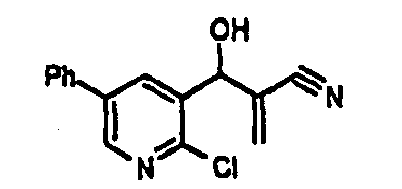
- the chloro pyridine skelton based Baylis-Hillman adduct obtained is selected from the group consisting of 2-[(2-Chloro-5-methyl pyridine-3-yl)(hydroxy) methyl] acrylonitrile (Ia), 2-[(2-Chloro-5-ethyl pyridine-3-yl)(hydroxy) methyl] acrylonitrile (Ib), 2-[(2-Chloro-5-phenylpyridine-3-yl) (hydroxy) methyl] acrylonitrile (Ic), methyl 6-chloro-5-(2-cyano-1-hydroxy allyl) 2-pyridine carboxylate (Id), Methyl 2-[(2-chloro-5-methylpyridine-3-)(hydroxy)methyl] acrylate (Ie), Methyl 2-[(2-chloro-5-phenylpyridine-3-y1)(hydroxy) methyl] acrylate (If), 2-[(2-chloro-5-n-pentylpyridine-3-yl)(
- chloro pyridine skelton based Baylis-Hillman adduct is active against chloroquine sensitive and chloroquine resistant plasmodium falciparum strains.
- chloro pyridine skelton based Baylis-Hillman adduct exhibits an anti malarial activity against the erythrocytic stage of the malarial parasite.
- the present invention further provides a pharmaceutical composition
- a pharmaceutical composition comprising anti malarial chloro pyridine skelton based Baylis-Hillman adduct, its salts thereof optionally with pharmaceutically acceptable carriers, adjuvant and additives.
- the present invention further provides compounds which can be used for the treatment of malaria in a subject wherein a dose of 1-45 ⁇ g/ml and 1-115 ⁇ g/ml drug is administered for IC50 against chloroquine sensitive (CQS) P.falciparum strain to such subject for schizont maturation inhibition (SMI) and total parasite growth inhibition (PGI), for at least 24 and 48 hrs, respectively.
- CQS chloroquine sensitive
- P.falciparum strain P.falciparum strain
- SMI schizont maturation inhibition
- PPI total parasite growth inhibition
- a dose of 25-125 ⁇ g/ml and 85-350 ⁇ g/ml drug is administered for IC90 against chloroquine sensitive (CQS) P.falciparum strain to such subject for schizont maturation inhibition (SMI) and total parasite growth inhibition (PGI), for at least 24 and 48 hrs, respectively.
- CQS chloroquine sensitive
- P.falciparum strain to such subject for schizont maturation inhibition (SMI) and total parasite growth inhibition (PGI), for at least 24 and 48 hrs, respectively.
- a dose of 0.2-30 ⁇ g/ml and 5-15 ⁇ g/ml drug is administered for IC50 against chloroquine resistant plasmodium falciparum strain to such subject for schizont maturation inhibition (SMI) and total parasite growth inhibition (PGI), for at least 24 and 48 hrs, respectively.
- SI schizont maturation inhibition
- PKI total parasite growth inhibition
- a dose of 1-125 ⁇ g/ml and 25-300 ⁇ g/ml drug is administered for IC90 against chloroquine resistant plasmodium falciparum strain to such subject for schizont maturation inhibition (SMI) and total parasite growth inhibition (PGI), for at least 24 and 48 hrs, respectively.
- SMI schizont maturation inhibition
- PKI total parasite growth inhibition
- the present invention further provides a process for the preparation of chloro pyridine skelton based Baylis-Hillman adduct having the general formula werein
- R1 is selected from the group consisting of hydrogen, phenyl and carbomethoxy
- R2 is selected from the group consisting of hydrogen, alkyl, CH 3 , C 2 H 5 , phenyl, n-C 5 H 11 , carboethoxy and p-OMe-Ph
- EWG is an electron withdrawing group selected from the group consisting of CN, COOMe and COOEt, which comprises reacting 2-chloro-5 and / or 6-substituted 3-pyridine carboxyaldehyde with an activated alkene or cyclic enone, optiomally in the presence of aqueous or non aqueous organic solvent, in the presence of a catalyst, at a temperature in the range of 20-30 °C, washing the organic layer of the above said reaction mixture with water or brine solution, followed by drying and purification by known method to obtain the desired product.
- the 2-chloro-5 and / or 6-substituted 3-pyridine carboxyaldehyde used is selected from the group consisting of 2-Chloro-5-methylpyridinecarboxaldehyde, 2-Chloro-5-ethylnicotinaldehyde, 2-Chloro-5-phenyl nicotinaldehyde, methyl6-chloro-5-formyl-2-pyridincarboxylate ,2-chloro-5-methyl nicotinaldehyde, 2-Chloro-5-phenylnicotinaldehyde, 2-chloro-5-pentylnicotinaldehyde, 2-Chloro-5-methyl-6-phenylnicotinaldehyde, 2-Chloro-5-ethoxyacetate)-6-phenylnicotin aldehyde,2-Chloro-5-(4-methoxyphenyl)-nicotinaldehyde, 2-Chloro-5-ethyl
- the activated alkene used is selected from the group consisting of acrylonitrile, methyl acrylate and ethyl acrylate.
- the cyclic enone used is selected from 2-cyclopenten-1-one and 2-cyclohexen-1-one.
- the catalyst used is selected from di azabicylooctane (DABCO) and imidazole.
- the organic solvent used is selected from the group consisting of methanol, ethanol, acetonitrile, tetrahydrofuran, dimethylsulphoxide (DMSO) and dimethylformamide(DMF) 1,4-dioxane, chloroform and sulpholane.
- the molar ratio of 2-chloro-5 and / or 6-substituted 3-pyridine carboxyaldehyde to activated alkene or cyclic enone used is in the range of 1:1 to 1:8.
- the molar ratio of 2-chloro-5 and / or 6-substituted 3-pyridine carboxyaldehyde to activated alkene in the reaction mixture used is in the range of 1:5 to 1:8.
- the molar ratio of 2-chloro-5 and / or 6-substituted 3-pyridine carboxyaldehyde to cyclic enone used is preferably in the range of 1:1 to 1:2.
- the molar ratio of 2-chloro-5 and / or 6-substituted 3-pyridine carboxyaldehyde to catalyst used is in the range of 1:1 to 1:2.
- the molar ratio of activated alkene to catalyst used is in the range of 1:1 to 1:2.
- reaction mixture of aldehyde and alkene used is diluted with diethyl ether and is followed by washing with water and drying the resultant organic layer over sodium sulphate before subjected to purification by column chromatography.
- reaction mixture of aldehyde and cyclic-enone is taken into chloroform and the organic layer is washed with brine solution before drying and purification by known method to obtain the desired product.
- reaction time between aldehyde and cyclic-enone used is in the range of 20-40 minutes.
- the yield of the product chloro pyridine skelton based Baylis-Hillman adduct is in the range of 85-98% without forming side products.
- a process as claimed in claim 12, wherein the product chloro pyridine skelton based Baylis-Hillman adduct obtained is selected from the group consisting of 2-[(2-Chloro-5-methyl pyridine-3-yl)(hydroxy) methyl] acrylonitrile (Ia), 2-[(2-Chloro-5-ethyl pyridine-3-yl)(hydroxy) methyl] acrylonitrile (Ib), 2-[(2-Chloro-5-phenylpyridine-3-yl) (hydroxy) methyl] acrylonitrile (Ic), methyl 6-chloro-5-(2-cyano-1-hydroxy allyl) 2-pyridine carboxylate (Id), Methyl 2-[(2-chloro-5-methylpyridine-3-)(hydroxy) methyl] acrylate (Ie), Methyl 2-[(2-chloro-5-phenylpyridine-3-yl)(hydroxy) methyl] acrylate (If), 2-[(2-chloro-5-n-penty
- the chloro pyridine skelton based Baylis-Hillman adduct obtained exhibits an anti malarial activity against the erythrocytic stage of the malarial parasite.
- the Hillman adduct obtained is used in a pharmaceutical composition
- a pharmaceutical composition comprising novel anti malarial chloro pyridine skelton based Baylis-Hillman adduct, its derivatives, analogues or salt thereof optionally with pharmaceutically acceptable carriers, adjuvant and additives.
- the present invention is predicted on the discovery that certain Baylis Hillman adducts, preferably in substantially pure form has invitro antimalarial activity and therefore is useful for malaria treatment.
- the following preferred embodiments are given by way of illustration of the present invention and therefore should not be constructed to limit the scope of the present invention. Synthetic procedures for representative Baylis Hillman adducts Ia-If are disclosed in the present invention are described bellow.
- EWG CN
- the activated alkene is called as acrylonitrile
- EWG COOMe
- the activated alkene is called as methylacrylate
- EWG COOEt
- the activated alkene is called as ethylacrylate
- Parasites were cultured in O (+) erythrocytes in RPMI-1640 media supplemented with 25mM HEPES buffer and 10% AB (+) serum by candlejar technique.
- 9 Initial culture was maintained in small vials (2.5 cm dia.) with 10% haematocrit, i.e. 10 ⁇ l erythrocytes containing 1.5% ring stage parasite in 100 ⁇ l complete media. The culture volume per well for the assay was 100 ⁇ l. Parasitamia was determined for each set of culture, number of parasites for the assay were adjusted at 1 to 1.5% by diluting with fresh O(+) RBC. Assay was done in 96 well microtitre flat-bottomed tissue culture plates.
- Parasite culture was synchronized at ring forms using density gradient method 10 and cultured for 24h. in the presence of various doses of compounds and chloroquine for their effect in schizont maturation. Test was done in duplicate wells for each dose of the drugs. Control culture was done with RPMI-164 containing 10% AB (+) serum. Growth of the parasites from duplicate wells of each concentration was monitored in JSB stained 11 blood smears by counting number of schizont per 200 asexual parasites. Percent schizont maturation inhibition was calculated by the formula: (1-N t /N c ) x100 where, N t and N c represent the number of schizont in the test and control well respectively.
- Table 1 Antimalarial activities, IC 50 and IC 90 of compounds Ia-If against Chloroquine sensitive (CQS) P.falciparum strain Inhibitory activity in ⁇ g/ml
- CQS Chloroquine sensitive
- IC50 IC90 SMI PGI SMI PGI Ia 1.25 1.3 25.5 85 Ib 1.8 4 15.5 31 Ic 3.6 8 25.5 23 Id 3.4 7 22 29 Ie 18 28.5
- SMI Schizont maturation inhibition determined after 24hr.
- PGI Total parasite growth inhibition determined after 48hr.
- Table 2 Antimalarial activities, IC 50 and IC 90 of compounds Ia-If against Chloroquine resistant (CQR) P.falciparum strain Inhibitory activity in ⁇ g / ml Compounds IC50 IC90 SMI PGI SMI PGI Ia 22.5 10.5 125 300 Ib 2.5 5.5 6.5 26 Ic 0.9 2.2 1.5 6.75 Id 5.75 6.75 25.5 29 Ie 3.05 5.75 7 27.5 If 5 10.75 30 77.5 SMI: Schizont maturation inhibition determined after 24hr. PGI: Total parasite growth inhibition determined after 48hr.
Landscapes
- Organic Chemistry (AREA)
- Chemical & Material Sciences (AREA)
- Health & Medical Sciences (AREA)
- Tropical Medicine & Parasitology (AREA)
- Veterinary Medicine (AREA)
- Chemical Kinetics & Catalysis (AREA)
- Medicinal Chemistry (AREA)
- Nuclear Medicine, Radiotherapy & Molecular Imaging (AREA)
- General Chemical & Material Sciences (AREA)
- Pharmacology & Pharmacy (AREA)
- Life Sciences & Earth Sciences (AREA)
- Animal Behavior & Ethology (AREA)
- General Health & Medical Sciences (AREA)
- Public Health (AREA)
- Pyridine Compounds (AREA)
- Pharmaceuticals Containing Other Organic And Inorganic Compounds (AREA)
Abstract
Description
- The present invention relate to a novel Bayllis Hillman adduct which are having a remarkable in vitro anti-malarial activity against chloroquine sensitive and chloroquine resistance Plasmodium falciparum and a process for the preparation thereof.
- Malaria is one of the world's leading killer infectious diseases. Although almost a third of the Earth's population is considered to be at risk from this disease, about 90% of infections and deaths occur in Africa (Trigg, P.I., and Wernsdorfer, W.H., Parasitologia: (1999) 41, 329-332), contributing significantly to underdevelopment and poverty on this continent (Gallup, J.L., and Sachs, J.D., Am.J. Trop.Med. Hyg: (2001) 64s, 85-96). The estimated 300 million cases that occur per year result in considerable morbidity (e. g. fever, malaise, anorexia, anemia) and mortality of over 2 million children under age group of five (World malaria situation in 1994 part I. Wkly Epidemiol rec: (1997) 72, 269-274. The intracellular protozoal parasite Plasmodium falciparum, accounts for greater than 95% of the malarial deaths. An important contributor to the increase in incidence of malaria over the past 30 years has been the development of resistance of the malarial parasite to quinoline containing antimalarials such as chloroquine and quinine (Barat, L.M., and Boland, P.B., Drug resistance among malaria and other parasites. Infct Dis Clin North Am: (1997) 11 (4), 969-987). In addition, it has been recognized that a number of complications, such as anemia, failure to gain weight and immunosuppression associated with malaria infection continue to occur for weeks and over months after the parasites are cleared from the body (Ho, M., Webster, H.K., and Looareesuwan, S. Antigen-specific immunosuppression in human malaria due to plasmodium falciparum. J. Infect Dis: (1986) 153, 763-771; McGregor, A., and Barr, M. Antibody response to tetanus toxoid inoculation in malarious and non-malarious Gambian children. Trans R Soc Trop Med hyg: (1962) 56, 364-367; Bradley-Moore, A.M., Greenwood, B.M. and Bradley, A.K. Malaria chemoprophylaxis with chloroquine in young Nigerian children. II. Effect on immune response to vaccination. Ann Trop Med Parasitol: (1985) 79, 563-573). For the majority of their life-cycle in humans, malaria parasites live in red blood cells. Within the erythrocytes, the parasites feed on hemoglobin, digesting the protein and releasing the heme. The heme which is released as the byproduct of hemoglobin is toxic compound to the parasite. The malarial parasite having a unique heme detoxication mechanism that the heme is converted to non-toxic heme polymer hemozoin (malaria pigment) within the food vacuole (Rudzinska, M.A., Trager, W. and Bray, R.S. Pinocytic uptake and the digestion of hemoglobin in malaria parasites. J. Protozool: (1965) 12(4), 563-576). Trager, W; Jensen, J. B. Science, (1976), 193, 674) that serves to protect the parasite from potentially toxic free heme, as well as to induce pathology in the infected host. Overtime, the intraerythrocytic parasite exhausts this energy and protein supply and then begins next stage of life cycle. Through a series of DNA and membrane divisions, trophozoites converted to mature schizonts. Schizonts-containing erythrocytes rupture, each releasing 6 to 24 merozoites and one large 'garbage bag' containing polymerized hemozoin. It is this process that produces febrile clinical attack. The released merozoites invade more erythrocytes to continue the cycle, which proceeds until death of the host or modulation by drugs or acquired immunity. The 2-chloropyridine based Baylis Hillman adducts and 4-quinolino-methanols are reported to be antimalarial agents. These classes of compounds are particularly acting on erythrocytic stage of the parasite.
-
WO 94/02465 - The following references are examples for the synthesis of and biological evaluation of some of the antimalarial agents. These prior arts contain useful information and discussion on the preparation and properties of antimalarial agents.
-
U.S.Pat.No.6,627,641(2003 ) reported the synthesis and use of naphthylisoquinoline alkaloids' and their pharmaceutical formulation as efficient antmalarial agents. -
U.S.Pat.No.6,479,660 (2000 ) reported the synthesis and use of quinoline compounds as antimalarial drugs. - Sujatha, V.B. et.al. Bioorg & Med Chem. Lett, 9, 731-736 (1999) reported the antimalarial activity of 3-hydroxy alkyl-2-methylene-propionic acid derivatives.
-
U.S.Pat.No. 6,689,777 (2004 ) reported the synthesis of novel substituted naphthothiozolium, aromatic guanylhydrazones and other compounds and compositions having antimalarial activity. Donald J.Krogstad. et al., Science, 238, 1283-1285 (1987) reported the mechanism of chloroquine resistance in plasmodium. -
U.S.Pat.No. 6,693,217 (2004 ) reported the synthesis of N, N1- substituted asymmetrical imidodicarbonimidic diamides as antimalarial agents. - Arnulf Dorn et al., Nature 374, 269-371 (1995) reported the process of heme polymerization and mechanism of action of chloroquine.
-
U.S.Pat.No. 180913 (2004 ) reported the synthesis of 2,4-diaminopyrimidine derivatives and their use as antimalarial agents by inhibiting dihydrofolate reductase (DHFR-Inhibitors) - Christian Segheraert. et al. J.Med.Chem. 46,542-547(2003) reported the synthesis and antimalarial activity of N1-(7-chloro-4quinolyl)-1,4 bis(3-aminopropyl) piperazine derivatives.
- The main object of the present invention is to provide Baylis Hillman adducts based on the chloropyridine skeleton as anti malarial agents. Another object of the present invention is to provide pharmaceutical composition comprising Baylis Hillman adducts as antimalarial agents.
- Still another object of the present invention is to provide a process for the preparation of Baylis Hillman adduct based on the chloropyridine skeleton, as anti malarial agent.
- The present invention is directed towards the synthesis of novel chloropyridine skeleton based compounds and these are Bayllis Hillman adducts having a remarkable in vitro anti-malarial activity. These compounds have been found to possess anti-malarial activity against chloroquine sensitive and chloroquine resistance Plasmodium falciparum. The anti-malarial compounds of the present invention inhibit the mature schizonts in vitro.
- This invention meets the need for more efficient compounds against malaria, in particularly chloroquine resistance plasmodium falciparum. Accordingly present invention provides compounds based on chloropyridine skeleton of general structural formula 1. These are the Baylis Hillman reaction adducts having the general structure of formula I & II indicates total thirty seven (37) compounds which is represented below.

Ia: R1=H, R2= CH3, X=acrylonitrile; IIa: R1=H, R2=CH3, X=2-cyclopenten-1-one Ib: R1=H, R2= C2H5, X=acrylonitrile IIb: R1=H, R2=C2H5, X=2-cyclopenten-1-one Ic: R1=H, R2= Ph, X= acrylonitrile IIc: R1=H, R2=Ph, X=2-cyclopenten-1-one Id: R1=COOMe, R2=H, X=acrylonitrile IId: R1= Ph, R2=CH3, X=2-cyclopenten-1-one Ie: R1=H, R2=CH3, X=methyl acrylate IIe: R1= COOMe, R2=H, X=2-cyclopenten-1-one If: R1=H, R2=Ph, X=methyl acrylate IIf: R1= Ph, R2=COOEt, X=2-cyclopenten-1-one Ig: R1=H, R2=n-C5H11, X=acrylonitrile IIg: R1=H, R2=4-OMe-Ph, X=2-cyclopenten-1-one Ih:R1=Ph, R2=CH3, X=acrylonitrile IIh: R1=H, R2=CH3, X=2-cyclohexen-1-one Ii: R1=Ph, R2=COOEt, X=acrylonitrile IIi: R1=H, R2=C2H5, X=2-cyclohexen-1-one Ij: R1=H, R2=4-OMe-Ph, X=acrylonitrile IIj: R1=H, R2=Ph, X=2-cyclohexen-1-one Ik:R1=H, R2=C2H5, X=methylacrylate IIk: R1=Ph, R2=CH3, X=2-cyclohexen-1-one Il: R1=H, R2=n-C5H11, X=methylacrylate IIl: R1=COOMe, R2=H, X=2-cyclohexen-1-one Im: R1=Ph, R2=CH3, X=methylacrylate IIm: R1=Ph, R2=COOEt, X=2-cyclohexen-1-one In: R1=COOMe, R2=H, X=methylacrylate IIn: R1=H, R2=4-OMe-Ph, X=cyclohexen-1-one Io: R1=Ph, R2=COOEt, X=methylacrylate Ip: R1=H, R2=4-OMe-Ph, X=methylacrylate Iq: R1=H, R2=CH3, X=ethylacrylate Ir: R1=H, R2=C2H5, X=ethylacrylate Is: R1=H, R2=Ph, X=ethylacrylate It: R1=Ph, R2=CH3, X=ethylacrylate Iu: R1=COOMe, R2=H, X=ethylacrylate Iv: R1=Ph, R2=COOEt, X=ethylacrylate Iw: R1=H, R2=4-OMe-Ph, X=ethylacrylate - Accordingly the present invention provides a chloro pyridine skelton based Baylis-Hillman adduct having the general formula


- R1 is selected from the group consisting of hydrogen, phenyl and carbomethoxy; R2 is selected from the group consisting of hydrogen, alkyl, CH3, C2H5, phenyl, n-C5H11, carboethoxy and p-OMe-Ph; EWG is an electron withdrawing group selected from the group consisting of CN, COOMe and COOEt.
- In an embodiment of the present invention the chloro pyridine skelton based Baylis-Hillman adduct used comprising the compounds of general formula I &II

- R1 is selected from the group consisting of hydrogen, phenyl and carbomethoxy; R2 is selected from the group consisting of hydrogen, alkyl, CH3, C2H5, phenyl, n-C5H11, carboethoxy and p-OMe-Ph; EWG is an electron withdrawing group selected from the group consisting of CN, COOMe and COOEt.
- In yet another embodiment the chloro pyridine skelton based Baylis-Hillman adduct obtained is in the form of derivatives, analogues or salt thereof.
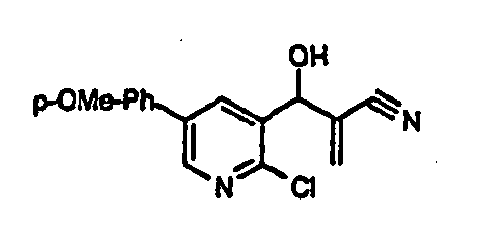
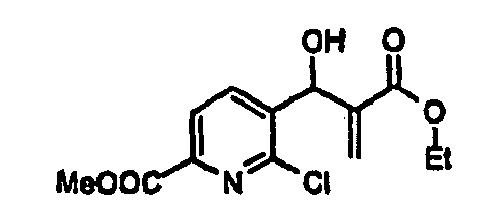
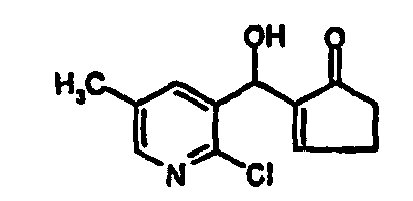
- In yet another embodiment the chloro pyridine skelton based Baylis-Hillman adduct obtained is selected from the group consisting of 2-[(2-Chloro-5-methyl pyridine-3-yl)(hydroxy) methyl] acrylonitrile (Ia), 2-[(2-Chloro-5-ethyl pyridine-3-yl)(hydroxy) methyl] acrylonitrile (Ib), 2-[(2-Chloro-5-phenylpyridine-3-yl) (hydroxy) methyl] acrylonitrile (Ic), methyl 6-chloro-5-(2-cyano-1-hydroxy allyl) 2-pyridine carboxylate (Id), Methyl 2-[(2-chloro-5-methylpyridine-3-)(hydroxy)methyl] acrylate (Ie), Methyl 2-[(2-chloro-5-phenylpyridine-3-y1)(hydroxy) methyl] acrylate (If), 2-[(2-chloro-5-n-pentylpyridine-3-yl)(hydroxy) methyl] acrylonitrile (1g), 2-[(2-Chloro-5-methyl-6-phenyl pyridine-3-yl)(hydroxy) methyl] acrylonitrle (Ih), Ethyl 6-chloro-5-(2-cyano-1-hydroxyallyl)-2-phenyl-nicotinate (Ii), 2-[(2-Chloro-5-(4-methoxyphenyl)pyridine-3-yl) (hydroxy)methyl] acrylonitrile (Ij), Methyl 2-[(2-chloro-5-ethyl pyridine-3-yl)(hydroxy) methyl] acrylate (Ik), Methyl 2-[(2-chloro-5-n-pentyl pyridine-3-yl)(hydroxy) methyl] acrylate (Il), Methyl 2-[(2-chloro-5-methyl-6-phenyl pyridine-3-yl)(hydroxy) methyl] acrylate (Im), Methyl 6-chloro-5- [1-hydroxy-2- (methoxycarbonyl) allyl] pyridine-2-carboxylate (I n), Ethyl 6-chloro-5- (1-hydroxy-2- (methoxycarbonyl) allyl)-2-phenyl-nicotinate (Io), Methyl 2-[(2-chloro-5- (4-methoxyphenyl) pyridine-3-yl)(hydroxy) methyl] acrylate (Ip), Ethyl 2-[(2-chloro-5-methyl pyridine-3-)(hydroxy) methyl] acrylate (Iq), Ethyl 2-[(2-chloro-5-ethyl pyridine-3-yl)(hydroxy) methyl] acrylate (Ir), Ethyl 2-[(2-chloro-5-phenyl pyridine-3-yl)(hydroxy) methyl] acrylate (Is), Ethyl 2-[(2-chloro-5-methyl-6-phenyl pyridine-3-yl)(hydroxy)methyl]acrylate (It), Methy-6-chloro-5-[1-hydroxy-2-(ethoxycarbonyl)allyl]pyridine-2-carboxylate (Iu), Ethyl 6-chloro-5-(1-hydroxy-2-(ethoxycarbonyl)allyl)-2-phenyl-nicotinate (Iv), Ethyl 2-[(2-chloro-5- (4-meth oxyphenyl) pyridine-3-yl)(hydroxy) methyl] acrylate (Iw), 2-[(2-Chloro-5-methyl pyridine-3-yl)(hydroxy) methyl] cyclopent-2-en-1-one (IIa), 2-[(2-Chloro-5-ethyl pyridine-3-yl)(hydroxy) methyl] cyclopent-2-en-1-one (IIb), 2-[(2-Chloro-5-phenyl pyridine-3-yl)(hydroxy) methyl] cyclopent-2-en-1-one (IIc), 2-[(2-Chloro-5-methyl-6-phenyl pyridine-3-yl)(hydroxy) methyl] cyclopent-2-en-1-one (IId), Methyl-6-chloro-5-[hydroxy(5-oxo-1-cyclopentenyl)methyl]-2-pyridine carboxyl ate(IIe), Ethyl 6-chloro-5-[hydroxy(5-oxo-1-cyclopentenyl)methyl]-2-phenyl nicotinate (II f), 2-[(2-Chloro-5- (4-methoxyphenyl)pyridine-3-yl)(hydroxy) methyl]cyclopent-2-en-1-one(IIg), 2-[(2-Chloro-5-methyl pyridine-3-yl)(hydroxy) methyl] 2-cyclohexene1-one (II h), 2-[(2-Chloro-5-ethylpyridine-3-yl)(hydroxy)methyl]cyclohex-2-ene-1-one(IIi), 2-[(2-Chloro-5-phenyl pyridine-3-yl)(hydroxy)methyl] cyclohex-2-ene-1-one (IIj), Methyl 2-[(2-chloro-5-ethyl pyridine-3-yl)(hydroxy)methyl] acrylate (Ik), Methyl 6-chloro-5-[hydroxy (5-oxo-1-cyclohexenyl)methyl]-2-pyridine carboxylate (IIl), Ethyl 6-chloro-5-[hydroxy(5-oxo-1-cyclohexenyl)methyl]-2-phenylnicotinate (IIm) and 2-[(2-Chloro-5-(4-methoxyphenyl)pyridine-3-yl)(hydroxy) methyl] cyclohex-2-en-1-one (II n). In yet another embodiment the chloro pyridine skelton based Baylis-Hillman adduct is active against chloroquine sensitive and chloroquine resistant plasmodium falciparum strains. In yet another embodiment chloro pyridine skelton based Baylis-Hillman adduct exhibits an anti malarial activity against the erythrocytic stage of the malarial parasite.
- The present invention further provides a pharmaceutical composition comprising anti malarial chloro pyridine skelton based Baylis-Hillman adduct, its salts thereof optionally with pharmaceutically acceptable carriers, adjuvant and additives.
- The present invention further provides compounds which can be used for the treatment of malaria in a subject wherein a dose of 1-45 µg/ml and 1-115 µg/ml drug is administered for IC50 against chloroquine sensitive (CQS) P.falciparum strain to such subject for schizont maturation inhibition (SMI) and total parasite growth inhibition (PGI), for at least 24 and 48 hrs, respectively.
- In yet another embodiment a dose of 25-125 µg/ml and 85-350 µg/ml drug is administered for IC90 against chloroquine sensitive (CQS) P.falciparum strain to such subject for schizont maturation inhibition (SMI) and total parasite growth inhibition (PGI), for at least 24 and 48 hrs, respectively.
- In yet another embodiment a dose of 0.2-30 µg/ml and 5-15 µg/ml drug is administered for IC50 against chloroquine resistant plasmodium falciparum strain to such subject for schizont maturation inhibition (SMI) and total parasite growth inhibition (PGI), for at least 24 and 48 hrs, respectively.
- In yet another embodiment a dose of 1-125 µg/ml and 25-300 µg/ml drug is administered for IC90 against chloroquine resistant plasmodium falciparum strain to such subject for schizont maturation inhibition (SMI) and total parasite growth inhibition (PGI), for at least 24 and 48 hrs, respectively.
- The present invention further provides a process for the preparation of chloro pyridine skelton based Baylis-Hillman adduct having the general formula


- R1 is selected from the group consisting of hydrogen, phenyl and carbomethoxy; R2 is selected from the group consisting of hydrogen, alkyl, CH3, C2H5, phenyl, n-C5H11, carboethoxy and p-OMe-Ph; EWG is an electron withdrawing group selected from the group consisting of CN, COOMe and COOEt, which comprises reacting 2-chloro-5 and / or 6-substituted 3-pyridine carboxyaldehyde with an activated alkene or cyclic enone, optiomally in the presence of aqueous or non aqueous organic solvent, in the presence of a catalyst, at a temperature in the range of 20-30 °C, washing the organic layer of the above said reaction mixture with water or brine solution, followed by drying and purification by known method to obtain the desired product.
- In yet another embodiment the 2-chloro-5 and / or 6-substituted 3-pyridine carboxyaldehyde used is selected from the group consisting of 2-Chloro-5-methylpyridinecarboxaldehyde, 2-Chloro-5-ethylnicotinaldehyde, 2-Chloro-5-phenyl nicotinaldehyde, methyl6-chloro-5-formyl-2-pyridincarboxylate ,2-chloro-5-methyl nicotinaldehyde, 2-Chloro-5-phenylnicotinaldehyde, 2-chloro-5-pentylnicotinaldehyde, 2-Chloro-5-methyl-6-phenylnicotinaldehyde, 2-Chloro-5-ethoxyacetate)-6-phenylnicotin aldehyde,2-Chloro-5-(4-methoxyphenyl)-nicotinaldehyde, 2-Chloro-5-ethylnicotin aldehyde, 2-Chloro-5-pentonicotinaldehyde, 2-Chloro-5-methyl-6-phenylnicotin aldehyde, Methyl6-chloro-5-formyl-2-pyridin carboxylate, 2-Chloro-5-ethoxyacetate)-6-phenylnicotin aldehyde, 2-Chloro-5-(4-methoxyphenyl)-nicotinaldehyde, 2-Chloro-5-methyl nicotinaldehyde, 2-Chloro-5-ethylnicotinaldehyde, 2-Chloro-5-phenylnicotin aldehyde, 2-Chloro-5-methyl-6-phenylnicotinaldehyde, Methyl 6-chloro-5-formyl-2-pyridincarboxylate, 2-Chloro-5-ethoxyacetate)-6-phenylnicotin aldehyde,2-Chloro-5-(4-methoxyphenyl)-nicotinaidehyde, 2-Chloro-5-methyl nicotinaldehyde, 2-Chloro-5-ethylnicotin aldehyde, 2-Chloro-5-phenylnicotinaldehyde, 2-Chloro-5-methyl-6-phenylnicotin aldehyde, Methyl 6-chloro-5-formyl-2-pyridincarboxylate, 2-Chloro-5-ethoxyacetate)-6-phenyl nicotinaldehyde, 2-Chloro-5-(4-methoxyphenyl)-nicotin aldehyde, 2-Chloro-5-methylnicotinaldehyde, 2-Chloro-5-ethymicotinaldehyde, 2-Chloro-5-phenylnicotinaldehyde, 2-chloro-substituted-3-pyridinecarboxy aldehyde, methyl 6-chloro-5-formyl-2-pyridincarboxylate, 2-Chloro-5-ethoxyacetate)-6-phenyl nicotinaldehyde and 2-Chloro-5-(4-methoxyphenyl)-nicotinaldehyde.
- In yet another embodiment the activated alkene used is selected from the group consisting of acrylonitrile, methyl acrylate and ethyl acrylate.
- In yet another embodiment the cyclic enone used is selected from 2-cyclopenten-1-one and 2-cyclohexen-1-one.
- In yet another embodiment the catalyst used is selected from di azabicylooctane (DABCO) and imidazole.
- In yet another embodiment the organic solvent used is selected from the group consisting of methanol, ethanol, acetonitrile, tetrahydrofuran, dimethylsulphoxide (DMSO) and dimethylformamide(DMF) 1,4-dioxane, chloroform and sulpholane.
- In yet another embodiment the molar ratio of 2-chloro-5 and / or 6-substituted 3-pyridine carboxyaldehyde to activated alkene or cyclic enone used is in the range of 1:1 to 1:8.
- In yet another embodiment the molar ratio of 2-chloro-5 and / or 6-substituted 3-pyridine carboxyaldehyde to activated alkene in the reaction mixture used is in the range of 1:5 to 1:8.
- In yet another embodiment the molar ratio of 2-chloro-5 and / or 6-substituted 3-pyridine carboxyaldehyde to cyclic enone used is preferably in the range of 1:1 to 1:2.
- In yet another embodiment the molar ratio of 2-chloro-5 and / or 6-substituted 3-pyridine carboxyaldehyde to catalyst used is in the range of 1:1 to 1:2.
- In yet another embodiment the molar ratio of activated alkene to catalyst used is in the range of 1:1 to 1:2.
- In yet another embodiment the reaction mixture of aldehyde and alkene used is diluted with diethyl ether and is followed by washing with water and drying the resultant organic layer over sodium sulphate before subjected to purification by column chromatography.
- In yet another embodiment the reaction mixture of aldehyde and cyclic-enone is taken into chloroform and the organic layer is washed with brine solution before drying and purification by known method to obtain the desired product.
- In yet another embodiment the reaction time between aldehyde and cyclic-enone used is in the range of 20-40 minutes.
- In yet another embodiment the yield of the product chloro pyridine skelton based Baylis-Hillman adduct is in the range of 85-98% without forming side products.
- A process as claimed in claim 12, wherein the product chloro pyridine skelton based Baylis-Hillman adduct obtained is selected from the group consisting of 2-[(2-Chloro-5-methyl pyridine-3-yl)(hydroxy) methyl] acrylonitrile (Ia), 2-[(2-Chloro-5-ethyl pyridine-3-yl)(hydroxy) methyl] acrylonitrile (Ib), 2-[(2-Chloro-5-phenylpyridine-3-yl) (hydroxy) methyl] acrylonitrile (Ic), methyl 6-chloro-5-(2-cyano-1-hydroxy allyl) 2-pyridine carboxylate (Id), Methyl 2-[(2-chloro-5-methylpyridine-3-)(hydroxy) methyl] acrylate (Ie), Methyl 2-[(2-chloro-5-phenylpyridine-3-yl)(hydroxy) methyl] acrylate (If), 2-[(2-chloro-5-n-pentylpyridine-3-yl)(hydroxy) methyl] acrylonitrile (1g), 2-[(2-Chloro-5-methyl-6-phenyl pyridine-3-yl)(hydroxy) methyl] acrylonitrle (Ih), Ethyl 6-chloro-5-(2-cyano-1-hydroxy allyl)-2-phenyl-nicotinate (Ii), 2-[(2-Chloro-5-(4-methoxyphenyl)pyridine-3-yl) (hydroxy)methyl] acrylonitrile (Ij), Methyl 2-[(2-chloro-5-ethyl pyridine-3-yl)(hydroxy) methyl] acrylate (Ik), Methyl 2-[(2-chloro-5-n-pentyl pyridine-3-yl)(hydroxy) methyl] acrylate (Il), Methyl 2-[(2-chloro-5-methyl-6-phenyl pyridine-3-yl)(hydroxy) methyl] acrylate (Im), Methyl 6-chloro-5- [1-hydroxy-2- (methoxycarbonyl) allyl] pyridine-2-carboxylate (I n), Ethyl 6-chloro-5- (1-hydroxy-2-(methoxycarbonyl) allyl)-2-phenyl-nicotinate (Io), Methyl 2-[(2-chloro-5- (4-methoxyphenyl) pyridine-3-yl)(hydroxy) methyl] acrylate (Ip), Ethyl 2-[(2-chloro-5-methyl pyridine-3-)(hydroxy) methyl] acrylate (Iq), Ethyl 2-[(2-chloro-5-ethyl pyridine-3-yl)(hydroxy) methyl] acrylate (Ir), Ethyl 2-[(2-chloro-5-phenyl pyridine-3-yl)(hydroxy) methyl] acrylate (Is), Ethyl 2-[(2-chloro-5-methyl-6-phenyl pyridine-3-yl)(hydroxy)methyl]acrylate (It), Methy-6-chloro-5-[1-hydroxy-2-(ethoxycarbonyl)allyl]pyridine-2-carboxylate (Iu), Ethyl 6-chloro-5-(1-hydroxy-2-(ethoxycarbonyl)allyl)-2-phenyl-nicotinate (Iv), Ethyl 2-[(2-chloro-5- (4-meth oxyphenyl) pyridine-3-yl)(hydroxy) methyl] acrylate (Iw), 2-[(2-Chloro-5-methyl pyridine-3-yl)(hydroxy) methyl] cyclopent-2-en-1-one (IIa), 2-[(2-Chloro-5-ethyl pyridine-3-yl)(hydroxy) methyl] cyclopent-2-en-1-one (IIb), 2-[(2-Chloro-5-phenyl pyridine-3-yl)(hydroxy) methyl] cyclopent-2-en-1-one (IIc), 2-[(2-Chloro-5-methyl-6-phenyl pyridine-3-yl)(hydroxy) methyl] cyclopent-2-en-1-one(IId), Methyl-6-chloro-5-[hydroxy(5-oxo-1-cyclopentenyl) methyl]-2-pyridine carboxyl ate(IIe), Ethyl 6-chloro-5-[hydroxy(5-oxo-1-cyclopentenyl)methyl]-2-phenyl nicotinate (II f), 2-[(2-Chloro-5- (4-methoxyphenyl)pyridine-3-yl)(hydroxy) methyl]cyclopent-2-en-1-one(IIg), 2-[(2-Chloro-5-methyl pyridine-3-yl)(hydroxy) methyl] 2-cyclohexene1-one (II h), 2-[(2-Chloro-5-ethyl pyridine-3-yl)(hydroxy) methyl]cyclohex-2-ene-1-one(IIi), 2-[(2-Chloro-5-phenyl pyridine-3-yl)(hydroxy) methyl] cyclohex-2-ene-1-one (IIj), Methyl 2-[(2-chloro-5-ethyl pyridine-3-yl)(hydroxy) methyl] acrylate (Ik), Methyl 6-chloro-5-[hydroxy (5-oxo-1 cyclohexenyl)methyl]-2-pyridine carboxylate (II l), Ethyl 6-chloro-5-[hydroxy(5-oxo-1-cyclohexenyl)methyl]-2-phenylnicotinate (IIm) and 2-[(2-Chloro-5-(4-methoxyphenyl)pyridine-3-yl)(hydroxy) methyl] cyclohex-2-en-1-one (II n). In yet another embodiment the chloro pyridine skelton based Baylis-Hillman adduct obtained is active against chloroquine sensitive and chloroquine resistant plasmodium falciparum strains.
- In yet another embodiment the chloro pyridine skelton based Baylis-Hillman adduct obtained exhibits an anti malarial activity against the erythrocytic stage of the malarial parasite.
- In yet another embodiment the Hillman adduct obtained is used in a pharmaceutical composition comprising novel anti malarial chloro pyridine skelton based Baylis-Hillman adduct, its derivatives, analogues or salt thereof optionally with pharmaceutically acceptable carriers, adjuvant and additives.
- The present invention is predicted on the discovery that certain Baylis Hillman adducts, preferably in substantially pure form has invitro antimalarial activity and therefore is useful for malaria treatment. The following preferred embodiments are given by way of illustration of the present invention and therefore should not be constructed to limit the scope of the present invention. Synthetic procedures for representative Baylis Hillman adducts Ia-If are disclosed in the present invention are described bellow.
-

If EWG = COOMe, the activated alkene is called as methylacrylate
If EWG = COOEt, the activated alkene is called as ethylacrylate -

If n = 2, then the cyclic-enone is called as 2-cyclohexen-1-one
The following examples are given by the way of illustration and therefore should not be construed to limit the scope of the invention - To a mixture of 2-Chloro-5-methylpyridinecarboxaldehyde (10 mmol, 1.55 g) and DABCO (10 mmol. 1.12 g) was added an acrylonitrile (60 mmol.) under neat conditions [solvent free conditions] at room temperature and the reaction progress was monitored by TLC. Upon completion of the reaction mixture (∼4-5 min.) was diluted with diethyl ether (300 mL) and washed with water 3 x 50 mL. The organic layer was dried over Na2SO4 and concentrated, the residue was subjected to column chromatography over silica gel, eluting with ethyl acetate and hexane (2:8,v/v) to give the desired product in almost quantitative (2.05 g).
- To a mixture of 2-Chloro-5-ethylnicotinaldehyde (10 mmol, 1.69 g) and DABCO (10 mmol. 1.12 g) was added an acrylonitrile (60 mmol.) under neat conditions [solvent free conditions] at room temperature and the reaction progress was monitored by TLC. Upon completion of the reaction mixture (∼4-5min.) was diluted with diethyl ether (300 ml.) and washed with water 3 x 50ml. The organic layer was dried over Na2SO4 and concentrated, the residue was subjected to column chromatography over silica gel, eluting with ethyl acetate and hexane (2:8,v/v) to give the desired product in almost quantitative (2.20 g.).
- To a mixture of 2-Chloro-5-phenylnicotinaldehyde (10 mmol, 2.17 g) and DABCO (10 mmol. 1.12g) was added an acrylonitrile (60 mmol.) under neat conditions [solvent free conditions] at room temperature and the reaction progress was monitored by TLC. Upon completion of the reaction mixture (∼4-5min.) was diluted with diethyl ether (300ml.) and washed with water 3x50ml. The organic layer was dried over Na2SO4 and concentrated, the residue was subjected to column chromatography over silica gel, eluting with ethyl acetate and hexane (2:8,v/v) to give the desired product in almost quantitative (2.68g.).
- To a mixture of Methyl 6-chloro-5-formyl-2-pyridincarboxylate (10 mmol, 1.99 g) and DABCO (10 mmol. 1.12g) was added an acrylonitrile (60 mmol.) under neat conditions [solvent free conditions] at room temperature and the reaction progress was monitored by TLC. Upon completion of the reaction mixture (∼4-5min.) was diluted with diethyl ether (300ml.) and washed with water 3x50ml. The organic layer was dried over Na2SO4 and concentrated, the residue was subjected to column chromatography over silica gel, eluting with ethyl acetate and hexane (2:8,v/v) to give the desired product in almost quantitative (2.50g.).
- To a mixture of 2-Chloro-5-methylnicotinaldehyde (10 mmol, 1.55g) and DABCO (10 mmol. 1.12 g) was added an methyl/ethyl acrylate (60 mmol.) under neat conditions [solvent free conditions] at room temperature and the reaction progress was monitored by TLC. Upon completion of the reaction mixture (∼5min.) was diluted with diethyl ether (300ml.) and washed with water 3x50ml. The organic layer was dried over Na2SO4 and concentrated, the residue was subjected to column chromatography over silica gel, eluting with ethyl acetate and hexane (2:8,v/v) to give the desired product in almost quantitative (2.40g.).
- To a mixture of 2-Chloro-5-phenylnicotinaldehyde (10 mmol, 2.17 g) and DABCO (10 mmol. 1.12 g) was added an methyl/ethyl acrylate (60 mmol.) under neat conditions [solvent free conditions] at room temperature and the reaction progress was monitored by TLC. Upon completion of the reaction mixture (∼5min.) was diluted with diethyl ether (300 ml.) and washed with water 3 x 50ml. The organic layer was dried over Na2SO4 and concentrated, the residue was subjected to column chromatography over silica gel, eluting with ethyl acetate and hexane (2:8,v/v) to give the desired product in almost quantitative (3.01 g.).
- To a mixture of 2-Chloro-5-pentylnicotinaldehyde (10 mmol, 2.11 g) and DABCO (10 mmol. 1.12 g) was added an acrylonitrile (60 mmol.) under neat conditions [solvent free conditions] at room temperature and the reaction progress was monitored by TLC. Upon completion of the reaction mixture (∼4-5min.) was diluted with diethyl ether (300ml.) and washed with water 3 x 50ml. The organic layer was dried over Na2SO4 and concentrated, the residue was subjected to column chromatography over silica gel, eluting with ethyl acetate and hexane (2:8,v/v) to give the desired product in almost quantitative (2.62g.).
- To a mixture of 2-Chloro-5-methyl-6-phenylnicotinaldehyde (10 mmol, 2.31 g) and DABCO (10 mmol. 1.12g) was added an acrylonitrile (60 mmol) under neat conditions [solvent free conditions] at room temperature and the reaction progress was monitored by TLC. Upon completion of the reaction mixture (∼4-5min.) was diluted with diethyl ether (300ml.) and washed with water 3x50ml. The organic layer was dried over Na2SO4 and concentrated, the residue was subjected to column chromatography over silica gel, eluting with ethyl acetate and hexane (2:8,v/v) to give the desired product in almost quantitative (2.83g.).
- To a mixture of 2-Chloro-5-ethoxyacetate)-6-phenylnicotinaldehyde (10 mmol, 2.89g) and DABCO (10 mmol. 1.12 g) was added an acrylonitrile (60 mmol.) under neat conditions [solvent free conditions] at room temperature and the reaction progress was monitored by TLC. Upon completion of the reaction mixture (∼4-5min.) was diluted with diethyl ether (300ml.) and washed with water 3x50ml. The organic layer was dried over Na2SO4 and concentrated, the residue was subjected to column chromatography over silica gel, eluting with ethyl acetate and hexane (2:8,v/v) to give the desired product in almost quantitative (3.41 g.).
- To a mixture of 2-Chloro-5-(4-methoxyphenyl)-nicotinaldehyde (10 mmol, 2.45g) and DABCO (10 mmol. 1.12 g) was added an acrylonitrile (60 mmol.) under neat conditions [solvent free conditions] at room temperature and the reaction progress was monitored by TLC. Upon completion of the reaction mixture (∼4-5min.) was diluted with diethyl ether (300ml.) and washed with water 3x50ml. The organic layer was dried over Na2SO4 and concentrated, the residue was subjected to column chromatography over silica gel, eluting with ethyl acetate and hexane (2:8,v/v) to give the desired product in almost quantitative (2.99g.).
- To a mixture of 2-Chloro-5-ethylnicotinaldehyde (10 mmol, 1.69 g) and DABCO (10 mmol. 1.12g) was added an methyl/ethyl acrylate (60 mmol.) under neat conditions [solvent free conditions] at room temperature and the reaction progress was monitored by TLC. Upon completion of the reaction mixture (∼5min.) was diluted with diethyl ether (300ml.) and washed with water 3x50ml. The organic layer was dried over Na2SO4 and concentrated, the residue was subjected to column chromatography over silica gel, eluting with ethyl acetate and hexane (2:8,v/v) to give the desired product in almost quantitative (2.54g.).
- To a mixture of 2-Chloro-5-pentylnicotinaldehyde (10 mmol, 2.11g) and DABCO (10 mmol. 1.12g) was added an methyl/ethyl acrylate (60 mmol.) under neat conditions [solvent free conditions] at room temperature and the reaction progress was monitored by TLC. Upon completion of the reaction mixture (∼5min.) was diluted with diethyl ether (300ml.) and washed with water 3x50ml. The organic layer was dried over Na2SO4 and concentrated, the residue was subjected to column chromatography over silica gel, eluting with ethyl acetate and hexane (2:8,v/v) to give the desired product in almost quantitative (2.96g.).
- To a mixture of 2-Chloro-5-methyl-6-phenylnicotinaldehyde (10 mmol, 2.31g) and DABCO (10 mmol. 1.12 g) was added an methyl/ethyl acrylate (60 mmol.) under neat conditions [solvent free conditions] at room temperature and the reaction progress was monitored by TLC. Upon completion of the reaction mixture (∼5min.) was diluted with diethyl ether (300ml.) and washed with water 3x50ml. The organic layer was dried over Na2SO4 and concentrated, the residue was Subjected to column chromatography over silica gel, eluting with ethyl acetate and hexane (2:8,v/v) to give the desired product in almost quantitative (3.16 g.).
- To a mixture of Methyl 6-chloro-5-formyl-2-pyridincarboxylate (10 mmol, 1.99 g) and DABCO (10 mmol. 1.12 g) was added an methyl/ethyl acrylate (60 mmol.) under neat conditions [solvent free conditions] at room temperature and the reaction progress was monitored by TLC. Upon completion of the reaction mixture (∼5min.) was diluted with diethyl ether (300ml.) and washed with water 3x50ml. The organic layer was dried over Na2SO4 and concentrated, the residue was subjected to column chromatography over silica gel, eluting with ethyl acetate and hexane (2:8,v/v) to give the desired product in almost quantitative (2.84g.).
- To a mixture of 2-Chloro-5-ethoxyacetate)-6-phenylnicotinaldehyde (10 mmol, 2.89g) and DABCO (10 mmol. 1.12 g) was added an methyl/ethyl acrylate (60 mmol.) under neat conditions [solvent free conditions] at room temperature and the reaction progress was monitored by TLC. Upon completion of the reaction mixture (∼5min.) was diluted with diethyl ether (300ml.) and washed with water 3x50ml. The organic layer was dried over Na2SO4 and concentrated, the residue was subjected to column chromatography over silica gel, eluting with ethyl acetate and hexane (2:8,v/v) to give the desired product in almost quantitative (3.74g.).
- To a mixture of 2-Chloro-5-(4-methoxyphenyl)-nicotinaldehyde (10 mmol, 2.45 g) and DABCO (10 mmol. 1.12g) was added an methyl/ethyl acrylate (60 mmol.) under neat conditions [solvent free conditions] at room temperature and the reaction progress was monitored by TLC. Upon completion of the reaction mixture (∼5min.) was diluted with diethyl ether (300ml.) and washed with water 3x50ml. The organic layer was dried over Na2SO4 and concentrated, the residue was subjected to column chromatography over silica gel, eluting with ethyl acetate and hexane (2:8,v/v) to give the desired product in almost quantitative (3.32g.).
- To a mixture of 2-Chloro-5-methylnicotinaldehyde (10 mmol, 1.55 g) and DABCO (10 mmol. 1.12 g) was added an methyl/ethyl acrylate (60 mmol.) under neat conditions [solvent free conditions] at room temperature and the reaction progress was monitored by TLC. Upon completion of the reaction mixture (∼5min.) was diluted with diethyl ether (300ml.) and washed with water 3x50ml. The organic layer was dried over Na2SO4 and concentrated, the residue was subjected to column chromatography over silica gel, eluting with ethyl acetate and hexane (2:8,v/v) to give the desired product in almost quantitative (2.54g.).
- To a mixture of 2-Chloro-5-ethylnicotinaldehyde (10 mmol, 1.69 g) and DABCO (10 mmol. 1.12 g) was added an methyl/ethyl acrylate (60 mmol.) under neat conditions [solvent free conditions] at room temperature and the reaction progress was monitored by TLC. Upon completion of the reaction mixture (∼5min.) was diluted with diethyl ether (300ml.) and washed with water 3x50ml. The organic layer was dried over Na2SO4 and concentrated, the residue was subjected to column chromatography over silica gel, eluting with ethyl acetate and hexane (2:8,v/v) to give the desired product in almost quantitative (2.68g.).
- To a mixture of 2-Chloro-5-phenylnicotinaldehyde (10 mmol, 2.17 g) and DABCO (10 mmol. 1.12 g) was added an methyl/ethyl acrylate (60 mmol.) under neat conditions [solvent free conditions] at room temperature and the reaction progress was monitored by TLC. Upon completion of the reaction mixture (∼5min.) was diluted with diethyl ether (300ml.) and washed with water 3x50ml. The organic layer was dried over Na2SO4 and concentrated, the residue was subjected to column chromatography over silica gel, eluting with ethyl acetate and hexane (2:8,v/v) to give the desired product in almost quantitative (316.5g.).
- To a mixture of 2-Chloro-5-methyl-6-phenylnicotinaldehyde (10 mmol, 2.31 g) and DABCO (10 mmol. 1.12 g) was added an methyl/ethyl acrylate (60 mmol.) under neat conditions [solvent free conditions] at room temperature and the reaction progress was monitored by TLC. Upon completion of the reaction mixture (∼5min.) was diluted with diethyl ether (300ml.) and washed with water 3x50ml. The organic layer was dried over Na2SO4 and concentrated, the residue was subjected to column chromatography over silica gel, eluting with ethyl acetate and hexane (2:8,v/v) to give the desired product in almost quantitative (3.30g.).
- To a mixture of Methyl 6-chloro-5-formyl-2-pyridincarboxylate (10 mmol, 1.99 g) and DABCO (10 mmol. 1.12g) was added an methyl/ethyl acrylate (60 mmol.) under neat conditions [solvent free conditions] at room temperature and the reaction progress was monitored by TLC. Upon completion of the reaction mixture (∼5min.) was diluted with diethyl ether (300ml.) and washed with water 3x50ml. The organic layer was dried over Na2SO4 and concentrated, the residue was subjected to column chromatography over silica gel, eluting with ethyl acetate and hexane (2:8,v/v) to give the desired product in almost quantitative (2.98g.).
- To a mixture of 2-Chlom-5-ethoxyacetate)-6-phenylnicotinaldehyde (10 mmol, 2.89g) and DABCO (10 mmol. 1.12g) was added an methyl/ethyl acrylate (60 mmol.) under neat conditions [solvent free conditions] at room temperature and the reaction progress was monitored by TLC. Upon completion of the reaction mixture (∼5min.) was diluted with diethyl ether (300ml.) and washed with water 3x50ml. The organic layer was dried over Na2SO4 and concentrated, the residue was subjected to column chromatography over silica gel, eluting with ethyl acetate and hexane (2:8,v/v) to give the desired product in almost quantitative (3.88 g).
- To a mixture of 2-Chloro-5-(4-methoxyphenyl)-rucotinaldehyde (10 mmol, 2.45 g) and DABCO (10 mmol. 1.12g) was added an methyl/ethyl acrylate (60 mmol.) under neat conditions [solvent free conditions] at room temperature and the reaction progress was monitored by TLC. Upon completion of the reaction mixture (∼5min.) was diluted with diethyl ether (300ml.) and washed with water 3x50ml. The organic layer was dried over Na2SO4 and concentrated, the residue was subjected to column chromatography over silica gel, eluting with ethyl acetate and hexane (2:8,v/v) to give the desired product in almost quantitative (346 g).
- The clear solution of 2-Chloro-5-methylnicotinaldehyde (10 mmol, 1.55 g) and imidazole (10 mmol, 0.68 g) in 50ml.of MeOH was slowly charged with 50ml.of deionized water. To a stirred homogeneous reaction mixture was added 2-cyclopenten-1-one (10.2 mmol., 0.88 g) at room temperature and reaction progress was monitored by TLC. Upon completion of the reaction, excess MeOH was removed under reduced pressure, washed with water and extracted with CHCl3 thrice. Combined organic layers were washed with brine solution twice. The organic layer was concentrated and column chromatography of the crude product on silica gel, using 30%EtOAC in hexane as eluent, gave pure Baylis-Hillman adduct in 98% yield (2.32 g)
- The clear solution of 2-Chloro-5-ethylnicotinaldehyde (10 mmol, 1.69) and imidazole (10 mmol, 0.68 g) in 50ml.of MeOH was slowly charged with 50ml.of deionized water. To a stirred homogeneous reaction mixture was added 2-cyclopenten-1-one (10.2 mmol., 0.88 g) at room temperature and reaction progress was monitored by TLC. Upon completion of the reaction, excess MeOH was removed under reduced pressure, washed with water and extracted with CHCl3 thrice. Combined organic layers were washed with brine solution twice. The organic layer was concentrated and column chromatography of the crude product on silica gel, using 30%EtOAC in hexane as eluent, gave pure Baylis-Hillman adduct in 97% yield (2.47g).
- The clear solution of 2-Chloro-5-phenylnicotinaldehyde (10 mmol, 2.17 g) and imidazole (10 mmol) in 50ml.of MeOH was slowly charged with 50ml.of deionized water. To a stirred homogeneous reaction mixture was added 2-cyclopenten-1-one (10.2 mmol., 0.88 g) at room temperature and reaction progress was monitored by TLC. Upon completion of the reaction, excess MeOH was removed under reduced pressure, washed with water and extracted with CHCl3 thrice. Combined organic layers were washed with brine solution twice. The organic layer was concentrated and column chromatography of the crude product on silica gel; using 30%EtOAC in hexane as eluent, gave pure Baylis-Hillman adduct in 95% yield (2.84g).
- The clear solution of 2-Chloro-5-methyl-6-phenylnicotinaldehyde (10 mmol, 2.31 g) and imidazole (10 mmol) in 50ml.of MeOH was slowly charged with 50ml.of deionized water. To a stirred homogeneous reaction mixture was added 2-cyclopenten-1-one (10.2 mmol., 0.88 g) at room temperature and reaction progress was monitored by TLC. Upon completion of the reaction, excess MeOH was removed under reduced pressure, washed with water and extracted with CHCl3 thrice. Combined organic layers were washed with brine solution twice. The organic layer was concentrated and column chromatography of the crude product on silica gel, using 30%EtOAC in hexane as eluent, gave pure Baylis-Hillman adduct in 93% yield (2.84 g).
- The clear solution of Methyl 6-chloro-5-formyl-2-pyridincarboxylate (10 mmol, 1.99 g) and imidazole (10 mmol) in 50ml.of MeOH was slowly charged with 50ml.of deionized water. To a stirred homogeneous reaction mixture was added 2-cyclopenten-1-one (10.2 mmol., 0.88 g) at room temperature and reaction progress was monitored by TLC. Upon completion of the reaction excess MeOH was removed under reduced pressure, washed with water and extracted with CHCl3 thrice. Combined organic layers were washed with brine solution twice. The organic layer was concentrated and column chromatography of the crude product on silica gel, using 30%EtOAC in hexane as eluent, gave pure Baylis-Hillman adduct in 90% yield (2.53 g).
- The clear solution of 2-Chloro-5-ethoxyacetate)-6-phenylnicotinaldehyde (10 mmol, 2.89 g) and imidazole (10 mmol) in 50ml.of MeOH was slowly charged with 50ml.of deionized water. To a stirred homogeneous reaction mixture was added 2-cyclopenten-1-one (10.2 mmol. 0.88 g) at room temperature and reaction progress was monitored by TLC. Upon completion of the reaction, excess MeOH was removed under reduced pressure, washed with water and extracted with CHCl3 thrice. Combined organic layers were washed with brine solution twice. The organic layer was concentrated and column chromatography of the crude product on silica gel, using 30% EtOAC in hexane as eluent, gave pure Baylis-Hillman adduct in 88% yield (3.26 g).
- The clear solution of 2-Chloro-5-(4-methoxyphenyl)-nicotinaldehyde (10 mmol, 2.45 g) and imidazole (10 mmol) in 50ml.of MeOH was slowly charged with 50 ml.of deionized water. To a stirred homogeneous reaction mixture was added 2-cyclopenten-1-one (10.2 mmol.0.88 g) at room temperature and reaction progress was monitored by TLC. Upon completion of the reaction, excess MeOH was removed under reduced pressure, washed with water and extracted with CHCl3 thrice. Combined organic layers were washed with brine solution twice. The organic layer was concentrated and column chromatography of the crude product on silica gel, using 30% EtOAC in hexane as eluent, gave pure Baylis-Hillman adduct in 90% yield (2.97 g).
- The clear solution of 2-Chloro-5-methylnicotinaldehyde (10 mmol, 1.55 g) and imidazole (10 mmol) in 50 ml.of MeOH was slowly charged with 50 ml.of deionized water. To a stirred homogeneous reaction mixture was added 2-cyclohexen-1-one (10.2 mmol., 1 g) at room temperature and reaction progress was monitored by TLC. Upon completion of the reaction, excess MeOH was removed under reduced pressure, washed with water and extracted with CHCl3 thrice. Combined organic layers were washed with brine solution twice. The organic layer was concentrated and column chromatography of the crude product on silica gel, using 30% EtOAC in hexane as eluent, gave pure Baylis-Hillman adduct in 92% yield (2.22 g).
- The clear solution of 2-Chloro-5-ethylnicotinaldehyde (10 mmol, 1.69 g) and imidazole (10 mmol) in 50 ml.of MeOH was slowly charged with 50 ml.of deionized water. To a stirred homogeneous reaction mixture was added 2-cyclohexen-1-one (10.2 mmol., 1.0 g) at room temperature and reaction progress was monitored by TLC. Upon completion of the reaction, excess MeOH was removed under reduced pressure, washed with water and extracted with CHCl3 thrice. Combined organic layers were washed with brine solution twice. The organic layer was concentrated and column chromatography of the crude product on silica gel, using 30% EtOAC in hexane as eluent, gave pure Baylis-Hillman adduct in 95% yield (2.43 g).
- The clear solution of 2-Chloro-5-phenylnicotinaldehyde (10 mmol, 2.17 g) and imidazole (10 mmol) in 50 ml.of MeOH was slowly charged with 50 ml.of deionized water. To a stirred homogeneous reaction mixture was added 2-cyclohexen-1-one (10.2 mmol.,1.0 g) at room temperature and reaction progress was monitored by TLC. Upon completion of the reaction, excess MeOH was removed under reduced pressure, washed with water and extracted with CHCl3 thrice. Combined organic layers were washed with brine solution twice. The organic layer was concentrated and column chromatography of the crude product on silica gel, using 30% EtOAC in hexane as eluent, gave pure Baylis-Hillman adduct in 95% yield (2.25 g).
- The clear solution of 2-chloro-substituted-3-pyridinecarboxyaldehyde (10 mmol 2.31g ) and imidazole (10 mmol) in 50 ml.of MeOH was slowly charged with 50ml.of deionized water. To a stirred homogeneous reaction mixture was added 2-cyclohexen-1-one (10.2 mmol.,1.0 g) at room temperature and reaction progress was monitored by TLC. Upon completion of the reaction, excess MeOH was removed under reduced pressure, washed with water and extracted with CHCl3 thrice. Combined organic layers were washed with brine solution twice. The organic layer was concentrated and column chromatography of the crude product on silica gel, using 30% EtOAC in hexane as eluent, gave pure Baylis-Hillman adduct in 90% yield (2.93 g).
- The clear solution of Methyl 6-chloro-5-formyl-2-pyridincarboxylate (10 mmol, 1.99 g) and imidazole (10 mmol, 0.68 g) in 50 ml.of MeOH was slowly charged with 50 ml.of deionized water. To a stirred homogeneous reaction mixture was added 2-cyclohexen-1-one (10.2 mmol.,1.0 g) at room temperature and reaction progress was monitored by TLC. Upon completion of the reaction, excess MeOH was removed under reduced pressure, washed with water and extracted with CHCl3 thrice. Combined organic layers were washed with brine solution twice. The organic layer was concentrated and column chromatography of the crude product on silica gel, using 30% EtOAC in hexane as eluent, gave pure Baylis-Hillman adduct in 87% yield (2.56 g).
- The clear solution of 2-Chloro-5-ethoxyacetate)-6-phenylnicotinaldehyde (10 mmol, 2.89 g) and imidazole (10 mmol) in 50 ml.of MeOH was slowly charged with 50 ml.of deionized water. To a stirred homogeneous reaction mixture was added 2-cyclohexen-1-one (10.2 mmol., 1.0 g) at room temperature and reaction progress was monitored by TLC. Upon completion of the reaction, excess MeOH was removed under reduced pressure, washed with water and extracted with CHCl3 thrice. Combined organic layers were washed with brine solution twice. The organic layer was concentrated and column chromatography of the crude product on silica gel, using 30% EtOAC in hexane as eluent, gave pure Baylis-Hillman adduct in 92% yield (3.5 g).
- The clear solution of 2-Chloro-5-(4-methoxyphenyl)-nicotinaldehyde (10 mmol, 2.45 g) and imidazole (10 mmol) in 50 ml.of MeOH was slowly charged with 50 ml.of deionized water. To a stirred homogeneous reaction mixture was added 2-cyclohexen-1-one (10.2 mmol., 1.0 g) at room temperature and reaction progress was monitored by TLC. Upon completion of the reaction, excess MeOH was removed under reduced pressure, washed with water and extracted with CHCl3 thrice. Combined organic layers were washed with brine solution twice. The organic layer was concentrated and column chromatography of the crude product on silica gel, using 30% EtOAc in hexane as eluent, gave pure Baylis-Hillman adduct in 91% yield (3.13 g). 2-[(2-Chloro-5-methyl pyridine-3-yl)(hydroxy) methyl] acrylonitrile(Ia)

-

-
-

-

-

-

-

-

-
-

-

-

-

-

-

-

-

-

-

-
-

-

-
-

-

-

-

-

-

-

-

-

-

-

-

-

- The present invention may be better understood by reference to the following non-limiting Examples, which are provided as exemplary of the invention. The following examples are presented in order to more fully illustrate the preferred embodiments of the invention. Synthetic procedures for representative Baylis Hillman adducts Ia-Iw and IIa-IIn were described below.
- To a stirred solution of substrate aldehyde (substituted 2-chloro-pyridine-3-carboxyaldehyde) (1mmol) and DABCO (1,4-diaza bicyclo [2.2.2] ocatane; 100 mol%) in 5 mL of ethanol was added an activated alkene (1.2 mmol) at room temparature and the reaction progress was monitored by TLC. After completion (10 min) of the reaction, the excess solvent was removed under reduced pressure. The obtained residue was diluted with diethyl ether (150 ml.) and brine (50 ml.). After partition, the aqueous layer was extracted with chloroform (2 x 50 ml.). The combined organic layer was concentrated and the residue was subjected to column chromatography over silicagel, eluting with ethyl acetate and hexane to give the desired product.
- To a stirred solution of substrate aldehyde (substituted 2-chloro-pyridine-3-carboxyaldehyde) (1 mmol) and DABCO [1,4-diaza bicyclo (2.2.2) ocatane](100 mol%) in 5 mL of acetonitrile was added an activated alkene (1.2 mmol) at room temparature and the reaction progress was monitored by TLC. After completion (25 min) of the reaction, the excess solvent was removed under reduced pressure. The obtained residue was diluted with diethyl ether (150 ml.) and brine (50 ml.). After partition, the aqueous layer was extracted with chloroform (2 x 50 ml.). The combined organic layer was concentrated and the residue was subjected to column chromatography over silica gel, eluting with ethyl acetate and hexane to give the desired product in almost quantitative yield.
- To a stirred solution of substrate aldehyde (substituted 2-chloro-pyridine-3-carboxyaldehyde) (1mmol) and DABCO [1,4-diaza bicyclo (2.2.2) ocatane](100 mol%) in 5 mL of 1,4-dioxane was added an activated alkene (1.2 mmol) at room temparature and the reaction progress was monitored by TLC. After completion (12 min) of the reaction, the excess solvent was removed under reduced pressure. The obtained residue was diluted with diethyl ether (150 ml.) and brine (50 ml.). After partition, the aqueous layer was extracted with chloroform (2 x 50 ml.). The combined organic layer was concentrated and the residue was subjected to column chromatography over silicagel, eluting with ethyl acetate and hexane to give the desired product in almost quantitative yield.
- To a stirred solution of substrate aldehyde (substituted 2-chloro-pyridine-3-carboxyaldehyde) (1 mmol) and DABCO [1,4-diaza bicyclo (2.2.2) ocatane](100 mol%) in 5 mL of THF solvent was added an activated alkene (1.2 mmol) at room temparature and the reaction progress was monitored by TLC. Ater completion (20 min), of the reaction, the excess solvent was removed under reduced pressure. The obtained residue was diluted with diethyl ether (150 ml.) and brine (50 ml.). After partition, the aqueous layer was extracted with chloroform (2 x 50 ml.). The combined organic layer was concentrated and the residue was subjected to column chromatography over silicagel, eluting with ethyl acetate and hexane to give the desired product in almost quantitative yield.
- To a stirred solution of substrate aldehyde (substituted 2-chloro-pyridine-3-carboxyaldehyde) (1mmol) and DABCO [1,4-diaza bicyclo (2.2.2) ocatane] (100 mol%) in 5 mL of DMF solvent was added an activated alkene (1.2 mmol) at room temparature and the reaction progress was monitored by TLC. After completion of the reaction, the excess solvent was removed under reduced pressure. The obtained residue was diluted with diethyl ether (150 ml.) and brine (50 ml.). After partition (12 min), the aqueous layer was extracted with chloroform (2 x 50 ml.). The combined organic layer was concentrated and the residue was subjected to column chromatography over silicagel, eluting with ethyl acetate and hexane to give the desired product in almost quantitative yield.
- To a stirred solution of substrate aldehyde (substituted 2-chloro-pyridine-3-carboxyaldehyde) (1mmol) and DABCO [1,4-diaza bicyclo (2.2.2) ocatane] (100mol%) in 5 mL of chloroform was added an activated alkene (1.2 mmol) at room temparature and the reaction progress was monitored by TLC. Ater completion (25 min) of the reaction, the excess solvent was removed under reduced pressure. The obtained residue was diluted with diethyl ether (150 ml.) and brine (50 ml.). After partition, the aqueous layer was extracted with chloroform (2 x 50 ml.). The combined organic layer was concentrated and the residue was subjected to column chromatography over silica gel, eluting with ethyl acetate and hexane to give the desired product in almost quantitative yield.
- The clear solution of aldehyde (1 mmol) and imidazole (100 mol%) in 5 ml.of MeOH was slowly charged with 5 ml.of deionized water. To a stirred homogeneous reaction mixture was added cyclic-enone (1.2 mmol.) at room temperature and reaction progress was monitored by TLC for every 5 mins. After completion of the reaction (within 28-30 min), the excess solvent was removed under reduced pressure. The obtained residue was subjected to column chromatography over silica gel using ethylacetate, hexane (30:70, v/v) as eluting solvent system. The desired product was obtained in 82-98% yield.
- To a stirred and clear homogeneous solution of aldehyde (1mmol) and imidazole (100 mol%) in 5 ml.of MeOH was added with cyclic-enone (1.2mmol.) at room temperature and reaction progress was monitored by TLC for every 5 mins. After completion of the reaction (within 90-120 min), the excess solvent was removed under reduced pressure. The obtained residue was subjected to column chromatography over silica gel using ethylacetate, hexane (30:70, v/v) as eluting solvent system. The desired product was obtained in 82-98% yield.
- The clear solution of aldehyde (1 mmol) and imidazole (100 mol%) in 5 ml.of THF was slowly charged with 5 ml.of deionized water. To a stirred homogeneous reaction mixture was added cyclic-enone (1.2 mmol.) at room temperature and reaction progress was monitored by TLC for every 5 mins. After completion of the reaction (within 40-60 min), the excess solvent was removed under reduced pressure. The obtained residue was subjected to column chromatography over silica gel using ethylacetate, hexane (30:70, v/v) as eluting solvent system. The desired product was obtained in 82-98% yield.
- The clear solution of aldehyde (1 mmol) and imidazole (100 mol%) in 5 ml.of DMF was slowly charged with 5 ml.of deionized water. To a stirred homogeneous reaction mixture was added cyclic-enone (1.2 mmol.) at room temperature and reaction progress was monitored by TLC for every 5 mins. After completion of the reaction (within 45-60 min), the excess solvent was removed under reduced pressure. The obtained residue was subjected to column chromatography over silica gel using ethylacetate, hexane (30:70, v/v) as eluting solvent system. The desired product was obtained in 82-98% yield.
- 1H-NMR (CDCl3, 200MHz): δ 8.2 (d, 1H), 7.78 (d, 1H), 6.08 (s, 1H), 6.09 (s, 1H), 5.64 (s, 1H), 2.40 ( s,1H );13C-NMR: (CDCl3, 50MHz):148.36, 145.29, 136.96, 132.98, 132.19, 130.29, 124.12, 115.85, 68.60, 16.80; MS (m/z, %): 208, 156, 120, 93, 65, 39. Anal.calcd.for C10H9ClN2O: C, 57.57%; H, 4.34%; N, 13.43%. Found: C, 57.85%; H, 4.68%; N, 13.52%.
- 1H-NMR (CDCl3, 200MHz): δ 8.18 (d, 1H), 7.82 (d, 1H), 6.1 (s, 1H), 6.08 (s, 1H), 5.66 (s, 1H), 2.72 (q, 2H), 1.3 (t, 3H); 13C-NMR: (CDCl3, 50MHz): δ 148.67, 146.36, 139.52, 136.92, 133.34, 131.59, 124.47, 116.22, 70.06, 25.34, 14.80; MS (EI) m/z: 222 (M+), 170, 134, 106, 77, 51. Anal.calcd.for C11H11ClN2O: C, 59.31%; H, 5.02%; N, 12.58%. Found: C, 59.70%; H, 5.33%; N, 12.75%.
- 1H-NMR (CDCl3, 200MHz): δ 8.58 (d, 1H), 8.2 (d, 1H), 7.4-7.6 (m, 5H), 6.14 (s, 1H), 6.1 (s, 1H), 5.66 (s, 1H). 13C-NMR: (CDCl3, 50MHz): δ 70.37, 116.18, 124.13, 127.18, 128.78, 129.27, 132.05, 133.33, 135.57, 135.94, 136.82, 147.68; MS (EI) m/z: 270(M+), 245, 218, 182, 154, 141, 77.; Anal.calcd.for C15H11ClN2O: C, 66.53%; H, 4.13%; N, 10.34%. Found: C, 66.67%; H, 4.38%; N,10.70%.
- 1H-NMR (CDCl3, 200MHz): δ 8.15 (d, 1H), 8.22 (d, 1H), 6.1 (d, 2H), 5.73 (d, 1H), 3.98 (s, 3H); 13C-NMR: (CDCl3, 50MHz): δ 164.05, 149.01, 147.33, 138.36, 137.96, 132.63, 124.42, 123.52, 115.98, 69.99, 53.19; MS (EI) m/z: 252 (M+), 222, 200, 194, 164, 112, 76, 59. Anal.calcd.for C11H9ClN2O3: C, 52.29%; H, 3.59%; N, 11.09%; Found: C, 52.56%; H, 3.68%; N, 11.34%.;
- 1H-NMR (CDCl3, 200MHz): δ 8.11 (d, 1H), 7.71 (d, 1H), 6.32 (s,1H), 5.8 (s, 1H), 5.56 (s,1H), 3.8 (s, 3H), 2.35 (s,3H ); 13C-NMR (CDCl3, 50MHz): δ 166.06, 148.17, 146.52, 140.25, 137.85, 134.85, 132.44, 126.73, 67.89, 51.70, 17.34; MS (m/z, %): 241, 206, 156, 120, 92, 65. Anal.calcd.for C11H12ClNO3: C, 54.68%; H, 4.99%; N, 5.80%. Found: C, 54.86%; H, 5.10%; N, 5.98%.
- 1H-NMR (CDCl3, 200MHz): δ 8.48 (d, 1H), 8.12 (d, 1H), 7.34-7.58 (m, 5H), 6.34 (s, 1H), 5.88 (s 1H), 5.62 (s, 1H), 4.18 (b, 1H), 3.77 (s, 3H); 13C-NMR: (CDCl3, 50MHz): δ 166.60, 148.39, 146.67, 139.91, 136.23, 136.06, 135.70, 135.13, 129.08, 128.44, 127.49, 127.00, 68.98, 52.13; MS (EI) m/z: 303 (M+), 268, 236, 218, 182, 153, 127, 115, 77, 55. Anal.calcd.for C16H14ClNO3: C, 63.24%; H, 4.68%; N, 4.61%. Found: C, 63.42%; H, 4.88%; N, 4.86%. Ig:
- 1H-NMR (CDCl3, 200MHz): δ 8.18 (s, 1H), 7.8 (s, 1H), 6.45 (s, 1H), 6.5 (s, 1H), 5.62 (s, 1H), 2.62 (t, 2H), 1.23-1.65 (m, 6H), 0.95 (t, 3H); MS EI (m/z): 264 (M+), 212,176,41; Anal.calcd.for C14H17ClN2O: C, 63.51%; H, 6.47%; N, 10.58%; Found: C, 63.96%; H, 6.88%; N, 10.92%.
- 2-[(2-Chloro-5-methyl-6-phenylpyridine-3-yl)(hydroxy) methyl] acrylonitrile: 1H-NMR (CDCl3, 200MHz): δ 7.82 (s, 1H), 7.35-7.55 (m, 5H), 6.07 (s, 1H), 6.1 (s, 1H), 5.62 (s, 1H), 2.4 (s, 3H); 13C-NMR: (CDCl3, 50 MHz): δ 158.71, 145.64, 139.69, 138.23, 131.72, 130.98, 128.81, 128.64, 128.25, 124.19, 116.36, 69.67, 19.27; MS (EI) m/z :284 (M+), 232, 196, 168, 119, 77, 52, 39. Anal.calcd.for C16H13ClN2O: C, 67.48%; H, 4.60%; N, 9.84%. Found: C, 67.69%; H, 4.82%; N, 10.01%.
- 1H-NMR (CDCl3, 200MHz): δ 8.82 (s, 1H), 7.6 (m, 2H), 7.42 (m, 3H), 6.04 (s, 2H), 5.63 (s, 1H), 5.4 (b, 1H), 4.21 (q, 2H), 1.25 (t, 3H); MS (EI) m/z: 342(M+), 307, 262,254, 179,77; Anal.calcd.for C18H15ClN2O3 : C, 63.07%; H, 4.41%; N, 8.17%; Found: C, 62.88%; H, 4.65%; N, 8.47%.;
- 1H-NMR (CDCl3, 200MHz): δ 8.5 (s, 1H), 8.12 (s, 1H), 7.5 (m, 2H), 6.95 (m, 2H), 6.11 (d, 2H), 5.71 (s, 1H), 3.84 (s, 3H); 13C-NMR: (CDCl3, 50 MHz): δ 160.23, 147.08, 136.39, 135.00,133.34, 131.96, 128.26, 124.15, 116.26, 114.72, 70.23, 55.38; MS (EI) m/z: 300(M+), 248, 212, 185, 107, 65; Anal.calcd.for C16H13ClN2O2 : C, 63.90%; H, 4.36%; N, 9.31%; Found: C, 64.01%; H, 4.54%; N, 9.46%.;
- 1H-NMR (CDCl3, 200MHz): δ 8.15 (d, 1H), 7.77 (d, 1H), 6.32 (s, 1H), 5.81 (s, 1H), 5.51 (s, 1H), 3.81 (s, 3H), 2.7(q, 3H), 1.3 (t, 3H); 13C-NMR: (CDCl3, 50MHz): δ 167.39, 149.27, 146.78, 140.28, 139.62, 137.77, 129.62, 126.34, 69.79, 51.60, 25.76, 14.72; MS (EI) m/z: 222 (M+), 187, 173, 102, 65; Anal.calcd.for C12H14ClNO3: C, 56.37%, H, 5.52%, N, 5.19%, Found: C, 56.78%, H, 5.89%, N, 5.62%.;
- 1H-NMR (CDCl3, 200MHz): δ 8.1 (s, 1H), 7.68 (s, 1H), 6.22 (s, 1H), 5.78 (s, 1H), 5.23 (s, 1H), 3.78 (s, 3H), 2.58 (t, 2H), 1.2-1.65 (m, 6H), 0.9 (t, 3H); 13C-NMR: (CDCl3, 50 MHz): δ 166.59, 148.29, 146.86, 140.06, 137.50, 134.62, 127.19, 68.80, 52.02, 32.11, 31.12, 30.46, 22.24, 13.93, 13.80; MS (EI) m/z: 297 (M+), 282, 224, 189, 155, 71; Anal.calcd.for.C15H20ClNO3: C, 60.50%; H, 6.77%; N, 4.70%; Found: C, 60.56%; H, 6.89%; N, 4.85%;
- 1H-NMR (CDCl3, 200MHz): δ 7.78 (s, 1H), 7.35-7.55 (m, 5H), 6.37 (s, 1H), 5.82 (s, 1H), 5.65 (s, 1H), 3.82 (b, 1H), 2.4 (s, 3H); 13C-NMR: (CDCl3, 50MHz): δ166.69, 157.90, 146.34, 139.94, 139.77, 138.68, 133.03, 130.22, 128.94, 128.35, 128.12, 127.34, 68.91, 52.11, 19.33; MS (EI) m/z: 317 (M+), 302, 2282, 250, 230, 196, 167, 141, 117; Anal.calcd.for C17H16ClNO3 : C, 64.26%; H, 5.07%; N, 4.41%; Found: C, 64.77%; H, 5.24%; N, 4.52%;
- 1H-NMR (CDCl3, 200MHz): δ 8.12 (m, 2H), 6.32 (s, 1H), 5.82 (s, 1H), 5.52 (s, 1H), 3.98 (s, 3H), 3.78 (s, 3H); 13C-NMR: (CDCl3, 50MHz): δ 166.44, 164.30, 149.60, 147.02, 139.43, 138.26, 127.81, 124.00, 69.09, 52.99, 52.21; MS (EI) m/z: 285 (M+), 250, 217, 197, 164, 140, 115, 83, 59; Anal.calcd.for C12H12ClNO5: C, 50.45%; H, 4.23%; N, 4.41%; Found: C, 50.89%; H, 4.44%; N, 4.67%;
- 1H-NMR (CDCl3, 200MHz): δ 8.8 (s, 1H), 7.62 (m, 2H), 7.4 (m, 3H), 6.41 (s, 1H), 5.98 (s, 1H), 5.78 (s, 1H), 4.2 (q, 2H), 3.68 (s, 3H), 1.25 (t, 3H); 13C-NMR: (CDCl3, 50 MHz): δ 166.28, 165.57, 156.43, 149.39, 140.64, 139.61, 137.86, 133.07, 129.35, 128.99, 128.38, 128.28, 127.65, 67.95, 62.17, 52.14, 29.58, 13.55; MS (EI) m/z: 375 (M+), 330, 313, 299, 257, 165, 77; Anal.calcd.for: C19H18ClNO5: C, 60.73%; H, 4.83%; N, 3.72%; Found: C, 60.89%; H, 4.99%; N, 3.87%.;
- 1H-NMR (CDCl3, 200 MHz): δ 8.49 (s, 1H), 8.1 (s, 1H), 7.5 (m, 2H), 6.98 (m, 2H), 6.38 (s, 1H), 5.9 (s, 1H), 5.65 (s, 1H), 3.85 (s, 3H), 3.8 (s, 3H); 13C-NMR: (CDCl3, 50 MHz): δ 166.61, 160.00, 147.58, 146.17, 139.88, 135.70, 135.19, 135.00, 128.12, 127.48, 114.80, 114.57, 68.96, 60.33, 55.30, 52.14, 24.58; MS (EI) m/z: 333 (M+), 299, 273, 248, 212, 170, 141, 99, 43; Anal.calcd.for C17H16ClNO4: C, 61.18%; H, 4.83%; N, 4.20%; Found: C, 61.45%; H, 4.99%; N, 4.67%.;
- 1H-NMR (CDCl3, 200 MHz):8.06 (d,1H), 7.66 (d,1H), 6.28 (s,1H), 5.76 (s,1H), 5.55 (s,1H 4.16 (q,2H), 2.30 (s,3H), 1.25 (t,3H ); 13C-NMR: (CDCl3, 50 MHz): δ 166.30, 148.83, 146.89, 140.15, 137.98, 134.49, 132.70, 127.37, 127.08, 69.08, 61.23, 17.70, 14.06; MS EI (m/z): 255 (M+), 220, 192, 154, 146, 120, 92, 65. Anal.calcd.for C12H14ClNO3: C, 56.35%; H, 5.55%; N, 5.48%. Found: C, 56.66%; H, 5.74%; N, 5.62%.
- 1H-NMR (CDCl3, 200MHz): δ 8.13 (d, 1H), 7.66 (d, 1H), 6.28 (s,1H), 5.75 (s,1H), 5.28. (s,1H), 4.25 (q, 2H), 2.64 (q, 2H), 1.20 (t, 3H); 13C-NMR: (CDCl3, 50 MHz): δ 167.65, 151.26, 147.68, 140.32, 139.62, 136.73, 128.75, 125.36, 70.78, 60.92, 25.96, 17.12, 14.12; MS EI (m/z): 269 (M+), 234, 204, 166, 132, 104, 79; Anal.calcd.for C13H16ClNO3: C, 57.89%; H, 5.98%; N, 4.2%; found: C, 58.12%; H, 6.22%; N, 4.36%.;
- 1H-NMR (CDCl3, 200 MHz): δ 8.5 (d, 1H), 8.12 (s, 1H), 7.35-7.6 (m, 5H), 6.34 (s, 1H), 5.88 (s, 1H), 5.62 (s, 1H), 4.3 (q, 2H), 3.88 (b, 1H), 1.3 (t, 3H); 13C-NMR: (CDCl3, 50 MHz): δ 166.65, 148.89, 147.12, 140.62, 136.74, 136.54, 136.18, 135.65, 129.55, 128.90, 127.61, 127.47, 69.61, 61.68, 14.43; MS (EI) m/z: 317 (M+), 302, 282, 268, 254, 216, 182, 153, 127, 115, 77, 55. Anal.calcd.for C17H16ClNO3: C, 64.26%; H, 5.07%; N, 4.40%. Found: C, 64.53%; H, 5.25; N, 4.62%.
- 1H-NMR (CDCl3, 200 MHz): 7.78 (s, 1H), 7.35-7.55 (m, 5H), 6.38 (s, 1H), 5.82 (s, 1H), 5.62 (s, 1H), 4.25 (q, 2H), 2.4 (s, 3H), 1.33 (t, 3H); δ 13C-NMR: (CDCl3, 50MHz): δ 167.65, 156.35, 145.87, 140.87, 138.67, 137.67, 135.42, 129.87, 127.93, 127.56, 124.42, 70.91, 54.64, 20.12, 14.56; MS (EI) m/z: 331(M+), 302, 231, 165, 77; Anal.calcd.for C18H18ClNO3: C, 65.16%; H, 5.47%; N, 4.22%; Found: C, 65.45%; H, 4.56%; N, 4.44%.;
- 1H-NMR (CDCl3, 200MHz): δ 8.12 (sharp q, 2H), 6.32, (s, 1H), 5.85 (s, 1H), 5.52 (s, 1H), 4.25 (q, 2H), 3.98 (s, 1H), 3.70 (b, 1H), 1.32 (t, 3H); 13C-NMR: (CDCl3, 50 MHz):
δ 165.79, 164.20, 149.58, 146.75, 139.81, 139.75, 138.20, 127.32, 123.89, 68.77, 61.16,52.89,13.85;
MS (EI) m/z: 299 (M+), 264, 219, 178, 129; Anal.calcd.for C13H14ClNO5 : C, 52.10%; H, 4.71%; N, 4.67%; Found: C, 52.43%; H, 4.97%; N, 4.86%.; - 1H-NMR (CDCl3, 200 MHz): δ 8.8 (s, 1H), 7.61 (m, 2H), 7.4 (m, 3H), 6.40 (s, 1H), 5.99 (s, 1H), 5.77 (s, 1H), 4.25 (q, 2H), 4.2 (q, 2H), 1.32 (t, 3H), 1.25 (t, 3H); MS (EI) m/z: 389 (M+), 354, 306, 209, 165, 77; Anal.calcd.for C20H20ClNO5 : C, 61.61%; H, 5.17%; N, 3.59%; Found: C, 61.89%; H, 5.64%; N, 3.82%.;
- 1H-NMR (CDCl3, 200 MHz): δ 8.48 (s, 1H), 8.12 (s, 1H), 7.5 (m, 2H), 6.98 (m, 2H), 6.39 (s, 1H), 5.91 (s, 1H), 5.66 (s, 1H), 4.25 (q, 2H), 1.32 (t, 3H); MS (EI) m/z: 347(M+); 312, 213, 239, 181, 176, 107, 65; Anal.calcd.for C18H18ClNO4: C, 62.16%; H, 5.22%; N, 4.03%; Found: C, 62.28%; H, 5.56%; N, 4.23%.;
- 1H-NMR (CDCl3, 200 MHz): δ 8.16 (d, 1H), 7.82 (d, 1H), 7.14 (sharp t, 1H), 5.78 (s, 1H), 4.18 (d, 1H), 2.65 (m, 2H), 2.52 (m, 2H), 2.4 (s, 3H); 13C-NMR: (CDCl3, 50 MHz): δ 209.59, 160.53, 148.72, 146.06, 144.98, 137.62, 134.93, 132.85, 65.65, 35.07, 26.69, 17.73; MS EI (m/z): 237 (M+), 202, 156, 117, 92, 39. Anal.calcd.for C12H12ClNO2: C, 60.61%; H, 5.13%; N, 5.89%. Found: C, 60.80%; H, 5.23%; N, 5.98%.
- 1H-NMR (CDCl3, 200 MHz): δ 8.18 (d, 1H), 7.78 (d, 1H), 7.21 (t, 1H), 5.58 (s, 1H), 4:25 (b, 1H), 2.66 (q, 2H), 2.4 (m, 2H), 2.54 (m, 2H), 1.29 (t, 3H); 13C-NMR: (CDCl3, 50 MHz): δ 207.82, 150.62, 149.74, 148.54, 139.76, 138.28, 133.21, 128.66, 65.42, 38.92, 25.88, 23.25, 14.95; MS EI (m/z): 251 (M+), 216, 170, 131, 104, 53; Anal.calcd.for C13H14ClNO2: C, 62.03%; H, 5.61%; N, 5.56%; found: C, 62.44%, H, 5.98%; N, 14.56%.;
- 1H-NMR (CDCl3, 200 MHz): δ 8.53 (s, 1H), 8.21 (s, 1H), 7.36-7.55 (m, 5H), 7.19 (sharp t, 1H), 5.85 (s, 1H), 2.46-2.72 (m, 4H); 13C-NMR: (CDCl3, 50 MHz): δ 205.82, 152.12, 149.75, 138.92, 138.48, 136.18, 130.14, 125.51, 124.91, 59.77, 45.08, 23.55; MS (EI) m/z: 299(M+), 264, 236, 153, 77; Anal.calcd.for C17H14ClNO2: C, 68.18%; H, 4.70%; N, 4.67%. Found: C, 68.24%; H, 4.83%; N, 4.87%.
- 1H-NMR (CDCl3, 200 MHz): δ 7.85 (s, 1H), 7.35-7.55 (m, 5H), 7.25 (sharp t, 1H), 5.82 (s, 1H ), 4.09 (d,1H), 2.62-2.68 (m,2H), 2.48-2.55 (m,2H), 2.4 (s,3H); 13C-NMR: (CDCl3, 50 MHz): δ 210.02, 160.43, 157.93, 145.54, 144.70, 139.45, 138.81, 133.34, 130.44, 128.97, 128.39, 128.19, 66.19, 35.11, 26.72, 19.39; MS (EI) m/z: 313 (M+), 278, 50, 235, 193, 115, 77; Anal.calcd.for C18H16ClNO2 : C, 68.90%; H, 5.14%; N, 4.46%; Found: C, 69.12%; H, 5.43%; N, 4.76%.;
- 1H-NMR (CDCl3, 200 MHz): δ 8.13 (d, 1H), 8.25 (d, 1H), 7.22 (sharp t, 1H), 5.88 (s, 1H), 3.98 (s, 3H), 2.65 (m, 2H), 2.5 (m, 2H); 13C-NMR: (CDCl3, 50 MHz): δ 199.93, 164.33, 149.16, 148.69, 146.77, 139.95, 138.26, 123.94, 68.52, 52.93, 38.23, 25.74, 22.25; MS (EI) m/z: 281 (M+), 246, 218, 202, 188, 122, 69; Anal.calcd.for C13H12ClNO4 : C, 55.43%; H, 4.29%; N, 4.97%; Found: C, 55.67%; H, 4.67%; N, 5.14%.;
- 1H-NMR (CDCl3, 200 MHz): δ 8.9 (s, 1H), 7.6 (m, 2H), 7.42 (m, 3H), 7.22 (t, 1H), 5.92 (s, 1H), 4.2 (q, 2H), 2.65 (m, 2H), 2.5 (t, 2H), 1.1 (t, 3H); 13C-NMR: (CDCl3, 50 MHz): δ 205.82,167.64, 149.25, 149.18, 139.80, 139.22, 136.43, 134.40, 132.7, 129.11, 128.36, 123.26, 117.75, 60.49, 57.2, 45.02, 23.25, 14.35; MS (EI) m/z: 371(M+), 336, 318, 275, 263, 178, 77; Anal.calcd.for C20H18ClNO4: C, 64.61%; H, 4.88%; N, 3.77%; Found: C, 64.92%; H, 5.09%; N, 3.78%.;
- 1H-NMR (CDCl3, 200 MHz): δ 8.43 (d, 1H), 8.13 (d, 1H), 7.49 (m, 2H), 7.18 (t, 1H), 6.92 (m, 3H), 5.8 (s, 1H), 3.82 (s, 3H), 2.53 (m, 2H), 2.45 (m, 2H); MS (EI) m/z: 329 (M+), 294, 276, 251, 107, 65; Anal.calcd.for C18H16ClNO3: C, 65.56%; H, 4.89%; N, 4.25%; Found: C, 65.87%; H, 5.12%; N, 4.45%.;
- 1H-NMR (CDCl3, 200 MHz): δ 8.1 (d, 1H), 7.78 (d, 1H), 6.46 (t, 1H), 5.72 (s, 1H), 2.5 (m, 2H), 2.36 (s, 3H), 2.38 (m, 2H), 2.03 (m, 2H); 13C-NMR: (CDCl3, 50 MHz): δ 200.24, 148.49, 148.22, 138.70, 137.95, 134.73, 132.55, 68.37, 38.34, 25.74, 22.35, 17.70; MS EI (m/z): 251 (M+), 216, 198, 116, 84, 65, 48. Anal.calcd.for C13H14ClNO2: C, 62.01%; H, 5.64%; N, 5.56%. Found: C, 62.24%; H, 5.74%; N, 5.68%.
- 1H-NMR (CDCl3, 200 MHz): δ 8.14 (d, 1H), 7.76 (d, 1H), 6.5 (t, 1H), 5.72 (s, 1H), 4.22 (b, 1H), 2.64 (q, 2H), 2.5 (m, 2H), 2.38 (m, 2H), 2.02 (m, 2H), 1.18 (t, 3H); 13C-NMR (CDCl3, 50 MHz): δ 200.23, 149.42, 148.86, 139.06, 138.76, 135.32, 134.17, 128.13, 67.75, 38.03, 25.86, 25.78, 22.34, 14.95; MS (m/z,%): 265, 230, 212, 130, 98, 79, 62; Anal.calcd.for C14H16ClNO2: C, 63.28%; H, 6.07%; N, 5.27%; Found: C, 63.54%, H, 6.42%; N, 5.44%.;
- 1H-NMR (CDCl3, 200 MHz): δ 8.5 (s, 1H), 8.2 (s, 1H), 7.34-7.64 (m, 5H), 6.5 (t, 1H), 5.8 (s, 1H), 3.85(b, 1H), 2.05 (m, 2H), 2.35-2.6 (m, 4H); 13C-NMR: (CDCl3, 50 MHz): δ 200.29, 148.46, 148.00, 146.42, 138.64, 136.41, 136.01, 135.79, 135.39, 129.07, 128.39, 127.06, 68.53, 38.33,25.76,22.34. MS (EI) m/z: 313 (M+), 278, 260, 217, 71, 57; Anal.calcd.for C18H16ClNO2: C, 68.90%; H, 5.14%; N, 4.46%. Found: C, 69.12%; H, 5.27%; N, 4.48%.
- 1H-NMR (CDCl3, 200 MHz): δ 7.85 (s, 1H), 7.35-7.55 (m, 5H), 6.66 (t, 1H), 5.75 (s, 1H), 3.86 (d, 1H), 2.5 (m, 2H), 2.4 (m, 2H), 2.4 (s, 3H), 2.0 (m, 2H); 13C-NMR: (CDCl3, 50 MHz): δ 200.29, 148.46, 148.00, 146.42, 138.64, 136.41, 136.01, 135.79, 135.39, 129.07, 128.39, 127.06, 68.53, 38.33, 25.76, 22.34; MS (EI) m/z: 327 (M+), 311, 291, 273, 249, 218, 117; Anal.calcd.for C19H18ClNO2: C, 69.62%; H, 5.53%; N, 4.27%; Found: C, 70.07%; H, 5.74%; N, 4.56%.;
- 1H-NMR (CDCl3, 200 MHz): δ 8.12 (d, 2H), 8.02 (d, 1H), 6.52 (t, 1H), 5.83 (s, 1H), 3.98 (s, 3H), 2.5 (m, 2H), 2.4 (m, 2H), 2.05 (m, 2H); 13C-NMR: (CDCl3, 50 MHz): δ 1199.93, 164.33, 149.16, 148.69, 146.77, 139.95, 138.26, 123.94, 68.53, 52.93, 38.23, 25.74, 22.25;
MS (EI) m/z: 295(M+), 260, 232, 229, 201, 160, 112, 59; Anal.calcd.for C14H14ClNO4: C, 56.86%; H, 4.77%; N, 4.74%; Found: C, 57.12%; H, 4.98%; N, 4.98%.; - 1H-NMR (CDCl3, 200 MHz): δ 8.92 (s, 1H), 7.6 (m, 2H), 7.4 (m, 3H), 6.59 (t, 1H), 5.98 (s, 1H), 4.2 (q, 2H), 2.38-2.57 (m, 4H), 2.02 (m, 2H), 1.1 (t, 3H); MS (EI) m/z: 385(M+), 350, 332, 321, 278, 165, 73; Anal.calcd.for C21H20ClNO4: C, 65.37%; H, 5.22%; N, 3.63%; Found: C, 65.78%; H, 5.67%; N, 3.78%.;
- 1H-NMR (CDCl3, 200 MHz): δ 8.45 (s, 1H), 8.13 (s, 1H), 7.5 (d, 2H), 6.95 (d, 2H), 6.55 (t, 1H), 5.78 (s, 1H), 3.82 (s, 3H), 2.3-2.6 (m, 4H), 2.02 (m, 2H); MS (EI) m/z: 343(M+), 308, 290, 247, 107, 65; Anal.calcd.for C19H18ClNO3: C, 66.38%; H, 5.28%; N, 4.07%; Found: C, 66.97%; H, 5.56%; N, 4.34%.;
- Parasites were cultured in O (+) erythrocytes in RPMI-1640 media supplemented with 25mM HEPES buffer and 10% AB (+) serum by candlejar technique.9 Initial culture was maintained in small vials (2.5 cm dia.) with 10% haematocrit, i.e. 10µl erythrocytes containing 1.5% ring stage parasite in 100µl complete media. The culture volume per well for the assay was 100µl. Parasitamia was determined for each set of culture, number of parasites for the assay were adjusted at 1 to 1.5% by diluting with fresh O(+) RBC. Assay was done in 96 well microtitre flat-bottomed tissue culture plates. Parasite culture was synchronized at ring forms using density gradient method10 and cultured for 24h. in the presence of various doses of compounds and chloroquine for their effect in schizont maturation. Test was done in duplicate wells for each dose of the drugs. Control culture was done with RPMI-164 containing 10% AB (+) serum. Growth of the parasites from duplicate wells of each concentration was monitored in JSB stained11 blood smears by counting number of schizont per 200 asexual parasites. Percent schizont maturation inhibition was calculated by the formula: (1-Nt/Nc) x100 where, Nt and Nc represent the number of schizont in the test and control well respectively. The effects on parasite growth by the compounds (Ia-If) of the present invention, together with data are shown in tables 1 and 2 respectively.
Table 1: Antimalarial activities, IC50 and IC90 of compounds Ia-If against Chloroquine sensitive (CQS) P.falciparum strain Inhibitory activity in µg/ml Compounds IC50 IC90 SMI PGI SMI PGI Ia 1.25 1.3 25.5 85 Ib 1.8 4 15.5 31 Ic 3.6 8 25.5 23 Id 3.4 7 22 29 Ie 18 28.5 32 115 If 45 115 125 350 SMI: Schizont maturation inhibition determined after 24hr.
PGI: Total parasite growth inhibition determined after 48hr.Table 2: Antimalarial activities, IC50 and IC90 of compounds Ia-If against Chloroquine resistant (CQR) P.falciparum strain Inhibitory activity in µg / ml Compounds IC50 IC90 SMI PGI SMI PGI Ia 22.5 10.5 125 300 Ib 2.5 5.5 6.5 26 Ic 0.9 2.2 1.5 6.75 Id 5.75 6.75 25.5 29 Ie 3.05 5.75 7 27.5 If 5 10.75 30 77.5 SMI: Schizont maturation inhibition determined after 24hr.
PGI: Total parasite growth inhibition determined after 48hr.
Claims (13)
- A chloro pyridine skeleton based Baylis-Hillman adduct having the general formula


- A chloro pyridine skeleton based Baylis-Hillman adduct as claimed in claim 1, comprising the compound of general formula I or II

- A Baylis-Hillman adduct obtained as claimed in claim 1 comprising chloro pyridine skeleton based Baylis-Hillman adduct of general formula I and II or a salt thereof.
- A chloro pyridine skeleton based Baylis-Hillman adduct as claimed in claims 1 and 3 selected from the group consisting of 2-[(2-Chloro-5-methyl pyridine-3-yl)(hydroxy) methyl] acrylonitrile (Ia), methyl 6-chloro-5-(2-cyano-1-hydroxy allyl) 2-pyridine carboxylate (Id), Methyl 2-[(2-chloro-5-methylpyridine-3-)(hydroxy) methyl] acrylate (Ie), Methyl 2-[(2-chloro-5-phenylpyridine-3-yl)(hydroxy) methyl] acrylate (If), 2-[(2-chloro-5-n-pentylpyridine-3-yl)(hydroxy) methyl] acrylonitrile (1g), 2-[(2-Chloro-5-methyl-6-phenyl pyridine-3-yl)(hydroxy) methyl] acrylonitrile (Ih), Ethyl 6-chloro-5-(2-cyano-1-hydroxy allyl)-2-phenyl-nicotinate (Ii), 2-[(2-Chloro-5-(4-methoxyphenyl)pyridine-3-yl) (hydroxy)methyl] acrylonitrile (Ij), Methyl 2-[(2-chloro-5-ethyl pyridine-3-yl)(hydroxy) methyl] acrylate (Ik), Methyl 2-[(2-chloro-5-n-pentyl pyridine-3-yl)(hydroxy) methyl] acrylate (Il), Methyl 2-[(2-chloro-5-methyl-6-phenyl pyridine-3-yl)(hydroxy) methyl] acrylate (Im), Methyl 6-chloro-5- [1-hydroxy-2-(methoxycarbonyl) allyl] pyridine-2-carboxylate (In), Ethyl 6-chloro-5-(1-hydroxy-2-(methoxycarbonyl) allyl)-2-phenyl-nicotinate (Io), Methyl 2-[(2-chloro-5- (4-methoxyphenyl) pyridine-3-yl)(hydroxy) methyl] acrylate (Ip), Ethyl 2-[(2-chloro-5-methyl pyridine-3-)(hydroxy) methyl] acrylate (Iq), Ethyl 2-[(2-chloro-5-ethyl pyridine-3-yl)(hydroxy) methyl] acrylate (Ir), Ethyl 2-[(2-chloro-5-phenyl pyridine-3-yl)(hydroxy) methyl] acrylate (Is), Ethyl 2-[(2-chloro-5-methyl-6-phenyl pyridine-3-yl)(hydroxy) methyl] acrylate (It), Methyl 6-chloro-5-[1-hydroxy-2-(ethoxycarbonyl)allyl] pyridine-2-carboxylate (Iu), Ethyl 6-chloro-5-(1-hydroxy-2-(ethoxycarbonyl)allyl)-2-phenyl-nicotinate (Iv), Ethyl 2-[(2-chloro-5- (4-methoxyphenyl) pyridine-3-yl)(hydroxy) methyl] acrylate (Iw), 2-[(2-Chloro-5-methyl pyridine-3-yl)(hydroxy) methyl] cyclopent-2-en-1-one (IIa), 2-[(2-Chloro-5-ethyl pyridine-3-yl)(hydroxy) methyl] cyclopent-2-en-1-one (IIb), 2-[(2-Chloro-5-phenyl pyridine-3-yl)(hydroxy) methyl] cyclopent-2-en-1-one (IIc), 2-[(2-Chloro-5-methyl-6-phenyl pyridine-3-yl)(hydroxy) methyl] cyclopent-2-en-1- one (IId), Methyl 6-chloro-5-[hydroxy(5-oxo-1-cyclopentenyl)methyl]-2-pyridine carboxylate (IIe), Ethyl 6-chloro-5-[hydroxy(5-oxo-1-cyclopentenyl)methyl]-2-phenyl nicotinate (IIf), 2-[(2-Chloro-5-(4-methoxyphenyl)pyridine-3-yl)(hydroxy) methyl]cyclopent-2-en-1-one (IIg), 2-[(2-Chloro-5-methyl pyridine-3-yl)(hydroxy) methyl] 2-cyclohexen-1-one (IIh), 2-[(2-Chloro-5-ethyl pyridine-3-yl)(hydroxy) methyl]cyclohex-2-ene-1-one (IIi), 2-[(2-Chloro-5-phenyl pyridine-3-yl)(hydroxy) methyl] cyclohex-2-ene-1-one (IIj), Methyl 2-[(2-chloro-5-ethyl pyridine-3-yl)(hydroxy) methyl] acrylate (Ik), Methyl 6-chloro-5-[hydroxy (5-oxo-1-cyclohexenyl)methyl]-2-pyridine carboxylate (IIl), Ethyl 6-chloro-5-[hydroxy(5-oxo-1-cyclohexenyl)methyl]-2-phenyl nicotinate (IIm) and 2-[(2-Chloro-5-(4-methoxyphenyl)pyridine-3-yl)(hydroxy) methyl] cyclohex-2-en-1-one (IIn).
- A pharmaceutical composition comprising a chloro pyridine skeleton based Baylis-Hillman adduct having the general formula


- A pharmaceutical composition comprising a chloro pyridine skeleton based Baylis-Hillman adduct having the general formula
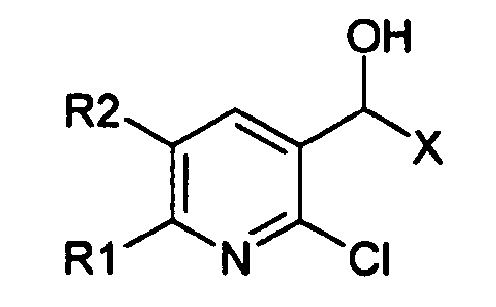

- A pharmaceutical composition as claimed in claim 6, wherein the anti malarial chloro pyridine skeleton based Baylis-Hillman adduct used comprises the compound of general formula I or II

- A pharmaceutical composition comprising a chloro pyridine skeleton based Baylis-Hillman adduct as claimed in claims 5 to 7 selected from the group consisting of 2-[(2-Chloro-5-methyl pyridine-3-yl)(hydroxy) methyl] acrylonitrile (Ia), 2-[(2-Chloro-5-ethyl pyridine-3-yl)(hydroxy) methyl] acrylonitrile (Ib), 2-[(2-Chloro-5-phenylpyridine-3-yl)(hydroxy) methyl] acrylonitrile (Ic), methyl 6-chloro-5-(2-cyano-1-hydroxy allyl) 2-pyridine carboxylate (Id), Methyl 2-[(2-chloro-5-methylpyridine-3-)(hydroxy) methyl] acrylate (Ie), Methyl 2-[(2-chloro-5-phenylpyridine-3-yl)(hydroxy) methyl] acrylate (If), 2-[(2-chloro-5-n-pentylpyridine-3-yl)(hydroxy) methyl] acrylonitrile (1g), 2-[(2-Chloro-5-methyl-6-phenyl pyridine-3-yl)(hydroxy) methyl] acrylonitrile (Ih), Ethyl 6-chloro-5-(2-cyano-1-hydroxy allyl)-2-phenyl-nicotinate (Ii), 2-[(2-Chloro-5-(4-methoxyphenyl)pyridine-3-yl) (hydroxy)methyl] acrylonitrile (Ij), Methyl 2-[(2-chloro-5-ethyl pyridine-3-yl)(hydroxy) methyl] acrylate (Ik), Methyl 2-[(2-chloro-5-n-pentyl pyridine-3-yl)(hydroxy) methyl] acrylate (Il), Methyl 2-[(2-chloro-5-methyl-6-phenyl pyridine-3-yl)(hydroxy) methyl] acrylate (Im), Methyl 6-chloro-5- [1-hydroxy-2- (methoxycarbonyl) allyl] pyridine-2-carboxylate (In), Ethyl 6-chloro-5- (1-hydroxy-2- (methoxycarbonyl) allyl)-2-phenyl-nicotinate (Io), Methyl 2-[(2-chloro-5- (4-methoxyphenyl) pyridine-3-yl)(hydroxy) methyl] acrylate (Ip), Ethyl 2-[(2-chloro-5-methyl pyridine-3-)(hydroxy) methyl] acrylate (Iq), Ethyl 2-[(2-chloro-5-ethyl pyridine-3-yl)(hydroxy) methyl] acrylate (Ir), Ethyl 2-[(2-chloro-5-phenyl pyridine-3-yl)(hydroxy) methyl] acrylate (Is), Ethyl 2-[(2-chloro-5-methyl-6-phenyl pyridine-3-yl)(hydroxy) methyl] acrylate (It), Methyl 6-chloro-5-[1-hydroxy-2-(ethoxycarbonyl)allyl] pyridine-2-carboxylate (Iu), Ethyl 6-chloro-5-(1-hydroxy-2-(ethoxycarbonyl)allyl)-2-phenyl-nicotinate (Iv), Ethyl 2-[(2-chloro-5- (4-methoxyphenyl) pyridine-3-yl)(hydroxy) methyl] acrylate (Iw), 2-[(2-Chloro-5-methyl pyridine-3-yl)(hydroxy) methyl] cyclopent-2-en-1-one (IIa), 2-[(2-Chloro-5-ethyl pyridine-3-yl)(hydroxy) methyl] cyclopent-2-en-1-one (IIb), 2-[(2-Chloro-5-phenyl pyridine-3-yl)(hydroxy) methyl] cyclopent-2-en-1-one (IIc), 2-[(2-Chloro-5-methyl-6-phenyl pyridine-3-yl)(hydroxy) methyl] cyclopent-2-en-1- one (IId), Methyl 6-chloro-5-[hydroxy(5-oxo-1-cyclopentenyl)methyl]-2-pyridine carboxylate (IIe), Ethyl 6-chloro-5-[hydroxy(5-oxo-1-cyclopentenyl)methyl]-2-phenyl nicotinate (IIf), 2-[(2-Chloro-5-(4-methoxyphenyl)pyridine-3-yl)(hydroxy) methyl]cyclopent-2-en-1-one (IIg), 2-[(2-Chloro-5-methyl pyridine-3-yl)(hydroxy) methyl] 2-cyclohexen-1-one (IIh), 2-[(2-Chloro-5-ethyl pyridine-3-yl)(hydroxy) methyl]cyclohex-2-ene-1-one (IIi), 2-[(2-Chloro-5-phenyl pyridine-3-yl)(hydroxy) methyl] cyclohex-2-ene-1-one (IIj), Methyl 2-[(2-chloro-5-ethyl pyridine-3-yl)(hydroxy) methyl] acrylate (Ik), Methyl 6-chloro-5-[hydroxy (5-oxo-1-cyclohexenyl)methyl]-2-pyridine carboxylate (IIl), Ethyl 6-chloro-5-[hydroxy(5-oxo-1-cyclohexenyl)methyl]-2-phenyl nicotinate (IIm) and 2-[(2-Chloro-5-(4-methoxyphenyl)pyridine-3-yl)(hydroxy) methyl] cyclohex-2-en-1-one (IIn).
- A pharmaceutical composition comprising a chloro pyridine skeleton based Baylis-Hillman adduct as claimed in claims 6-8, wherein the medicament is active against chloroquine sensitive and chloroquine resistant plasmodium falciparum strains.
- A pharmaceutical composition comprising a chloro pyridine skeleton based Baylis-Hillman adduct as claimed in claims 6-9 for the manufacture of a medicament which exhibits an anti malarial activity against the erythrocytic stage of the malarial parasite.
- A pharmaceutical composition comprising a chloro pyridine skeleton based Baylis-Hillman adduct as claimed in claims 6-10 for the manufacture of a medicament which exhibits an schizont maturation inhibition (SMI) and a total parasite growth inhibition (PGI).
- A process for the preparation of chloro pyridine skeleton based Baylis-Hillman adduct having the general formula


- A process as claimed in claim 12, wherein the 2-chloro-5 and / or 6-substituted 3-pyridine carboxyaldehyde used is selected from the group consisting of 2-Chloro-5-methylpyridinecarboxaldehyde, 2-Chloro-5-ethylnicotinaldehyde, 2-Chloro-5-phenylnicotinaldehyde,methyl6-chloro-5-formyl-2-pyridincarboxylate, 2-chloro-5-methylnicotinaldehyde, 2-Chloro-5-phenylnicotinaldehyde, 2-chloro-5-pentylnicotinaldehyde, 2-Chloro-5-methyl-6-phenylnicotinaldehyde, 2-Chloro-5-ethoxyacetate)-6-phenylnicotinaldehyde, 2-Chloro-5-(4-methoxy phenyl)-nicotinaldehyde, 2-Chloro-5-ethylnicotinaldehyde, 2-Chloro-5-pentyl nicotinaldehyde, 2-Chloro-5-methyl-6-phenylnicotinaldehyde, Methyl6-chloro-5-formyl-2-pyridin carboxylate, 2-Chloro-5-ethoxyacetate)-6-phenylnicotin aldehyde, 2-Chloro-5-(4-methoxyphenyl)-nicotinaldehyde, 2-Chloro-5-methyl nicotinaldehyde, 2-Chloro-5-ethylnicotinaldehyde, 2-Chloro-5-phenylnicotin aldehyde, 2-Chloro-5-methyl-6-phenylnicotinaldehyde, Methyl 6-chloro-5-formyl-2-pyridincarboxylate, 2-Chloro-5-ethoxyacetate)-6-phenylnicotin aldehyde,2-Chloro-5-(4-methoxyphenyl)-nicotinaldehyde, 2-Chloro-5-methyl nicotinaldehyde, 2-Chloro-5-ethylnicotin aldehyde, 2-Chloro-5-phenylnicotinaldehyde, 2-Chloro-5-methyl-6-phenylnicotin aldehyde, Methyl 6-chloro-5-formyl-2-pyridincarboxylate, 2-Chloro-5-ethoxyacetate)-6-phenyl nicotinaldehyde, 2-Chloro-5-(4-methoxyphenyl)-nicotin aldehyde, 2-Chloro-5-methylnicotinaldehyde, 2-Chloro-5-ethylnicotinaldehyde, 2-Chloro-5-phenylnicotinaldehyde, 2-chloro-substituted-3-pyridinecarboxy aldehyde, methyl 6-chloro-5-formyl-2-pyridincarboxylate, 2-Chloro-5-ethoxyacetate)-6-phenyl nicotinaldehyde and 2-Chloro-5-(4-methoxyphenyl)-nicotinaldehyde.
Priority Applications (1)
| Application Number | Priority Date | Filing Date | Title |
|---|---|---|---|
| PL05824305T PL1924558T3 (en) | 2005-09-12 | 2005-12-02 | An antimalarial baylis-hillman adducts and a process for the preparation thereof |
Applications Claiming Priority (2)
| Application Number | Priority Date | Filing Date | Title |
|---|---|---|---|
| IN2462DE2005 | 2005-09-12 | ||
| PCT/IN2005/000397 WO2007032016A1 (en) | 2005-09-12 | 2005-12-02 | An antimalarial baylis-hillman adducts and a process for the preparation thereof |
Publications (2)
| Publication Number | Publication Date |
|---|---|
| EP1924558A1 EP1924558A1 (en) | 2008-05-28 |
| EP1924558B1 true EP1924558B1 (en) | 2010-01-13 |
Family
ID=36741336
Family Applications (1)
| Application Number | Title | Priority Date | Filing Date |
|---|---|---|---|
| EP05824305A Expired - Lifetime EP1924558B1 (en) | 2005-09-12 | 2005-12-02 | An antimalarial baylis-hillman adducts and a process for the preparation thereof |
Country Status (5)
| Country | Link |
|---|---|
| US (1) | US7666883B2 (en) |
| EP (1) | EP1924558B1 (en) |
| JP (1) | JP2009507824A (en) |
| PL (1) | PL1924558T3 (en) |
| WO (1) | WO2007032016A1 (en) |
Families Citing this family (3)
| Publication number | Priority date | Publication date | Assignee | Title |
|---|---|---|---|---|
| MD4062C1 (en) * | 2010-01-16 | 2011-03-31 | Институт Химии Академии Наук Молдовы | Catalytic composition for the Morita-Baylis-Hillman reaction |
| PL2526090T3 (en) * | 2010-01-18 | 2016-04-29 | Medicines For Malaria Venture Mmv | New anti-malarial agents |
| US11220482B2 (en) | 2017-11-03 | 2022-01-11 | Universite Amiens Picardie Jules Verne | Aminopyridinemethanol compounds and their use |
Family Cites Families (1)
| Publication number | Priority date | Publication date | Assignee | Title |
|---|---|---|---|---|
| GB9521004D0 (en) * | 1995-10-13 | 1995-12-13 | Smithkline Beecham Plc | Process |
-
2005
- 2005-12-02 JP JP2008529789A patent/JP2009507824A/en active Pending
- 2005-12-02 PL PL05824305T patent/PL1924558T3/en unknown
- 2005-12-02 EP EP05824305A patent/EP1924558B1/en not_active Expired - Lifetime
- 2005-12-02 WO PCT/IN2005/000397 patent/WO2007032016A1/en not_active Ceased
-
2006
- 2006-03-03 US US11/366,672 patent/US7666883B2/en not_active Expired - Fee Related
Also Published As
| Publication number | Publication date |
|---|---|
| JP2009507824A (en) | 2009-02-26 |
| WO2007032016A1 (en) | 2007-03-22 |
| PL1924558T3 (en) | 2010-07-30 |
| EP1924558A1 (en) | 2008-05-28 |
| US7666883B2 (en) | 2010-02-23 |
| US20070117822A1 (en) | 2007-05-24 |
Similar Documents
| Publication | Publication Date | Title |
|---|---|---|
| RU2245881C2 (en) | Dihydropyrimidines, intermediate products and medicinal agent | |
| EP2411368A1 (en) | Nicotinamide derivatives, preparation thereof, and therapeutic use thereof as anticancer drugs | |
| JPH0466571A (en) | Improver for brain and heart functional disorder | |
| Krake et al. | Novel inhibitors of Plasmodium falciparum based on 2, 5-disubstituted furans | |
| Vlahakis et al. | The anti-malarial activity of bivalent imidazolium salts | |
| EP4572800B1 (en) | Tetrazines with improved properties | |
| CN113563310A (en) | 4- (1-methylindol-3-yl) pyrimidine derivative and application thereof | |
| JP2002541246A (en) | Antiviral pyrimidinedione derivatives and methods for their production | |
| US7666883B2 (en) | Antimalarial Baylis-Hillman adducts and a process for the preparation thereof | |
| Delarue et al. | “One-Pot” Synthesis and Antimalarial Activity of Formamidine Derivatives of 4-Anilinoquinoline | |
| CN101195597A (en) | 1-substituted-4,4-disubstituted thiosemicarbazide compounds, their preparation method and their use | |
| JP2008531638A (en) | Antimalarial pyridinone derivatives | |
| EP3275881A1 (en) | Compound of 5-hydroxyl-1,7-naphthyridine substituted by aryloxy or heterooxy, preparation method thereof and pharmaceutical use thereof | |
| CZ395592A3 (en) | 4-aryl-3-(heteroarylureido)quinoline derivatives, process of their preparation and use | |
| CN109912576A (en) | Cyclic annular or loop coil Diamines pyrimidine-hydroxamic acid and application thereof | |
| JP2024531693A (en) | AHR agonists | |
| EP3093020A1 (en) | Anti-malarial agent | |
| EP1914235A1 (en) | Chiral tetra-hydro beta-carboline derivatives and applications thereof as antiparasitic compounds | |
| JP4294469B2 (en) | PDEIV inhibitor | |
| CN103709144A (en) | Pyrimidine derivatives substituted picolyl sulfoxide compound and preparation method thereof | |
| Oyatsi et al. | Synthesis of Quinoline-Chemosensitizer Hybrid Molecule for the Management of Plasmodium falciparum | |
| US4639457A (en) | Benzocycloheptapyridone compounds for treating congestive heart failure | |
| KR101257378B1 (en) | Antiviral pyrimidinedione derivatives and method for the preparation thereof | |
| KR20230103526A (en) | Preparation of the alkyne derivatives of ginger-derived minor components and use thereof | |
| JP2009221166A (en) | Cyclic peroxide derivative |
Legal Events
| Date | Code | Title | Description |
|---|---|---|---|
| PUAI | Public reference made under article 153(3) epc to a published international application that has entered the european phase |
Free format text: ORIGINAL CODE: 0009012 |
|
| 17P | Request for examination filed |
Effective date: 20080129 |
|
| AK | Designated contracting states |
Kind code of ref document: A1 Designated state(s): AT BE BG CH CY CZ DE DK EE ES FI FR GB GR HU IE IS IT LI LT LU LV MC NL PL PT RO SE SI SK TR |
|
| DAX | Request for extension of the european patent (deleted) | ||
| 17Q | First examination report despatched |
Effective date: 20080716 |
|
| GRAP | Despatch of communication of intention to grant a patent |
Free format text: ORIGINAL CODE: EPIDOSNIGR1 |
|
| GRAS | Grant fee paid |
Free format text: ORIGINAL CODE: EPIDOSNIGR3 |
|
| GRAA | (expected) grant |
Free format text: ORIGINAL CODE: 0009210 |
|
| AK | Designated contracting states |
Kind code of ref document: B1 Designated state(s): AT BE BG CH CY CZ DE DK EE ES FI FR GB GR HU IE IS IT LI LT LU LV MC NL PL PT RO SE SI SK TR |
|
| REG | Reference to a national code |
Ref country code: GB Ref legal event code: FG4D |
|
| REG | Reference to a national code |
Ref country code: CH Ref legal event code: EP |
|
| REG | Reference to a national code |
Ref country code: IE Ref legal event code: FG4D |
|
| REF | Corresponds to: |
Ref document number: 602005018971 Country of ref document: DE Date of ref document: 20100304 Kind code of ref document: P |
|
| REG | Reference to a national code |
Ref country code: RO Ref legal event code: EPE |
|
| REG | Reference to a national code |
Ref country code: NL Ref legal event code: VDEP Effective date: 20100113 |
|
| LTIE | Lt: invalidation of european patent or patent extension |
Effective date: 20100113 |
|
| PG25 | Lapsed in a contracting state [announced via postgrant information from national office to epo] |
Ref country code: AT Free format text: LAPSE BECAUSE OF FAILURE TO SUBMIT A TRANSLATION OF THE DESCRIPTION OR TO PAY THE FEE WITHIN THE PRESCRIBED TIME-LIMIT Effective date: 20100113 |
|
| PG25 | Lapsed in a contracting state [announced via postgrant information from national office to epo] |
Ref country code: LT Free format text: LAPSE BECAUSE OF FAILURE TO SUBMIT A TRANSLATION OF THE DESCRIPTION OR TO PAY THE FEE WITHIN THE PRESCRIBED TIME-LIMIT Effective date: 20100113 Ref country code: NL Free format text: LAPSE BECAUSE OF FAILURE TO SUBMIT A TRANSLATION OF THE DESCRIPTION OR TO PAY THE FEE WITHIN THE PRESCRIBED TIME-LIMIT Effective date: 20100113 Ref country code: ES Free format text: LAPSE BECAUSE OF FAILURE TO SUBMIT A TRANSLATION OF THE DESCRIPTION OR TO PAY THE FEE WITHIN THE PRESCRIBED TIME-LIMIT Effective date: 20100424 Ref country code: PT Free format text: LAPSE BECAUSE OF FAILURE TO SUBMIT A TRANSLATION OF THE DESCRIPTION OR TO PAY THE FEE WITHIN THE PRESCRIBED TIME-LIMIT Effective date: 20100513 Ref country code: IS Free format text: LAPSE BECAUSE OF FAILURE TO SUBMIT A TRANSLATION OF THE DESCRIPTION OR TO PAY THE FEE WITHIN THE PRESCRIBED TIME-LIMIT Effective date: 20100513 |
|
| REG | Reference to a national code |
Ref country code: PL Ref legal event code: T3 |
|
| PG25 | Lapsed in a contracting state [announced via postgrant information from national office to epo] |
Ref country code: SI Free format text: LAPSE BECAUSE OF FAILURE TO SUBMIT A TRANSLATION OF THE DESCRIPTION OR TO PAY THE FEE WITHIN THE PRESCRIBED TIME-LIMIT Effective date: 20100113 Ref country code: LV Free format text: LAPSE BECAUSE OF FAILURE TO SUBMIT A TRANSLATION OF THE DESCRIPTION OR TO PAY THE FEE WITHIN THE PRESCRIBED TIME-LIMIT Effective date: 20100113 Ref country code: FI Free format text: LAPSE BECAUSE OF FAILURE TO SUBMIT A TRANSLATION OF THE DESCRIPTION OR TO PAY THE FEE WITHIN THE PRESCRIBED TIME-LIMIT Effective date: 20100113 |
|
| REG | Reference to a national code |
Ref country code: HU Ref legal event code: AG4A Ref document number: E007884 Country of ref document: HU |
|
| PG25 | Lapsed in a contracting state [announced via postgrant information from national office to epo] |
Ref country code: EE Free format text: LAPSE BECAUSE OF FAILURE TO SUBMIT A TRANSLATION OF THE DESCRIPTION OR TO PAY THE FEE WITHIN THE PRESCRIBED TIME-LIMIT Effective date: 20100113 Ref country code: GR Free format text: LAPSE BECAUSE OF FAILURE TO SUBMIT A TRANSLATION OF THE DESCRIPTION OR TO PAY THE FEE WITHIN THE PRESCRIBED TIME-LIMIT Effective date: 20100414 Ref country code: SE Free format text: LAPSE BECAUSE OF FAILURE TO SUBMIT A TRANSLATION OF THE DESCRIPTION OR TO PAY THE FEE WITHIN THE PRESCRIBED TIME-LIMIT Effective date: 20100113 Ref country code: CY Free format text: LAPSE BECAUSE OF FAILURE TO SUBMIT A TRANSLATION OF THE DESCRIPTION OR TO PAY THE FEE WITHIN THE PRESCRIBED TIME-LIMIT Effective date: 20100113 |
|
| PLBE | No opposition filed within time limit |
Free format text: ORIGINAL CODE: 0009261 |
|
| STAA | Information on the status of an ep patent application or granted ep patent |
Free format text: STATUS: NO OPPOSITION FILED WITHIN TIME LIMIT |
|
| PG25 | Lapsed in a contracting state [announced via postgrant information from national office to epo] |
Ref country code: BG Free format text: LAPSE BECAUSE OF FAILURE TO SUBMIT A TRANSLATION OF THE DESCRIPTION OR TO PAY THE FEE WITHIN THE PRESCRIBED TIME-LIMIT Effective date: 20100413 Ref country code: SK Free format text: LAPSE BECAUSE OF FAILURE TO SUBMIT A TRANSLATION OF THE DESCRIPTION OR TO PAY THE FEE WITHIN THE PRESCRIBED TIME-LIMIT Effective date: 20100113 |
|
| 26N | No opposition filed |
Effective date: 20101014 |
|
| PG25 | Lapsed in a contracting state [announced via postgrant information from national office to epo] |
Ref country code: DK Free format text: LAPSE BECAUSE OF FAILURE TO SUBMIT A TRANSLATION OF THE DESCRIPTION OR TO PAY THE FEE WITHIN THE PRESCRIBED TIME-LIMIT Effective date: 20100113 |
|
| PGFP | Annual fee paid to national office [announced via postgrant information from national office to epo] |
Ref country code: PL Payment date: 20101129 Year of fee payment: 6 Ref country code: RO Payment date: 20101129 Year of fee payment: 6 |
|
| PG25 | Lapsed in a contracting state [announced via postgrant information from national office to epo] |
Ref country code: IT Free format text: LAPSE BECAUSE OF FAILURE TO SUBMIT A TRANSLATION OF THE DESCRIPTION OR TO PAY THE FEE WITHIN THE PRESCRIBED TIME-LIMIT Effective date: 20100113 |
|
| PG25 | Lapsed in a contracting state [announced via postgrant information from national office to epo] |
Ref country code: MC Free format text: LAPSE BECAUSE OF NON-PAYMENT OF DUE FEES Effective date: 20101231 |
|
| REG | Reference to a national code |
Ref country code: CH Ref legal event code: PL |
|
| GBPC | Gb: european patent ceased through non-payment of renewal fee |
Effective date: 20101202 |
|
| PG25 | Lapsed in a contracting state [announced via postgrant information from national office to epo] |
Ref country code: LI Free format text: LAPSE BECAUSE OF NON-PAYMENT OF DUE FEES Effective date: 20101231 Ref country code: CH Free format text: LAPSE BECAUSE OF NON-PAYMENT OF DUE FEES Effective date: 20101231 Ref country code: IE Free format text: LAPSE BECAUSE OF NON-PAYMENT OF DUE FEES Effective date: 20101202 |
|
| REG | Reference to a national code |
Ref country code: DE Ref legal event code: R119 Ref document number: 602005018971 Country of ref document: DE Effective date: 20110701 |
|
| PG25 | Lapsed in a contracting state [announced via postgrant information from national office to epo] |
Ref country code: DE Free format text: LAPSE BECAUSE OF NON-PAYMENT OF DUE FEES Effective date: 20110701 Ref country code: GB Free format text: LAPSE BECAUSE OF NON-PAYMENT OF DUE FEES Effective date: 20101202 |
|
| PGFP | Annual fee paid to national office [announced via postgrant information from national office to epo] |
Ref country code: CZ Payment date: 20111129 Year of fee payment: 7 |
|
| PGFP | Annual fee paid to national office [announced via postgrant information from national office to epo] |
Ref country code: BE Payment date: 20111205 Year of fee payment: 7 |
|
| PGFP | Annual fee paid to national office [announced via postgrant information from national office to epo] |
Ref country code: HU Payment date: 20120224 Year of fee payment: 7 |
|
| PG25 | Lapsed in a contracting state [announced via postgrant information from national office to epo] |
Ref country code: LU Free format text: LAPSE BECAUSE OF NON-PAYMENT OF DUE FEES Effective date: 20101202 |
|
| PG25 | Lapsed in a contracting state [announced via postgrant information from national office to epo] |
Ref country code: TR Free format text: LAPSE BECAUSE OF FAILURE TO SUBMIT A TRANSLATION OF THE DESCRIPTION OR TO PAY THE FEE WITHIN THE PRESCRIBED TIME-LIMIT Effective date: 20100113 |
|
| REG | Reference to a national code |
Ref country code: FR Ref legal event code: ST Effective date: 20121019 |
|
| PG25 | Lapsed in a contracting state [announced via postgrant information from national office to epo] |
Ref country code: FR Free format text: LAPSE BECAUSE OF NON-PAYMENT OF DUE FEES Effective date: 20110103 |
|
| BERE | Be: lapsed |
Owner name: COUNCIL OF SCIENTIFIC AND INDUSTRIAL RESEARCH Effective date: 20121231 |
|
| PG25 | Lapsed in a contracting state [announced via postgrant information from national office to epo] |
Ref country code: CZ Free format text: LAPSE BECAUSE OF NON-PAYMENT OF DUE FEES Effective date: 20121202 |
|
| PG25 | Lapsed in a contracting state [announced via postgrant information from national office to epo] |
Ref country code: BE Free format text: LAPSE BECAUSE OF NON-PAYMENT OF DUE FEES Effective date: 20121231 |
|
| PG25 | Lapsed in a contracting state [announced via postgrant information from national office to epo] |
Ref country code: HU Free format text: LAPSE BECAUSE OF NON-PAYMENT OF DUE FEES Effective date: 20121203 Ref country code: RO Free format text: LAPSE BECAUSE OF NON-PAYMENT OF DUE FEES Effective date: 20121202 |
|
| PG25 | Lapsed in a contracting state [announced via postgrant information from national office to epo] |
Ref country code: PL Free format text: LAPSE BECAUSE OF NON-PAYMENT OF DUE FEES Effective date: 20121202 |