EP1916307B1 - Plant enzymes for bioconversion - Google Patents
Plant enzymes for bioconversion Download PDFInfo
- Publication number
- EP1916307B1 EP1916307B1 EP07121764.0A EP07121764A EP1916307B1 EP 1916307 B1 EP1916307 B1 EP 1916307B1 EP 07121764 A EP07121764 A EP 07121764A EP 1916307 B1 EP1916307 B1 EP 1916307B1
- Authority
- EP
- European Patent Office
- Prior art keywords
- germacrene
- plant
- chicory
- sesquiterpene
- enzymes
- Prior art date
- Legal status (The legal status is an assumption and is not a legal conclusion. Google has not performed a legal analysis and makes no representation as to the accuracy of the status listed.)
- Expired - Lifetime
Links
- 102000004190 Enzymes Human genes 0.000 title claims description 50
- 108090000790 Enzymes Proteins 0.000 title claims description 50
- 244000298479 Cichorium intybus Species 0.000 claims description 46
- 235000007542 Cichorium intybus Nutrition 0.000 claims description 43
- 238000006243 chemical reaction Methods 0.000 claims description 27
- 230000015572 biosynthetic process Effects 0.000 claims description 26
- 150000001875 compounds Chemical class 0.000 claims description 25
- HMTAHNDPLDKYJT-CBBWQLFWSA-N amorpha-4,11-diene Chemical compound C1=C(C)CC[C@H]2[C@H](C)CC[C@@H](C(C)=C)[C@H]21 HMTAHNDPLDKYJT-CBBWQLFWSA-N 0.000 claims description 19
- HMTAHNDPLDKYJT-UHFFFAOYSA-N amorphadiene Natural products C1=C(C)CCC2C(C)CCC(C(C)=C)C21 HMTAHNDPLDKYJT-UHFFFAOYSA-N 0.000 claims description 19
- BLUAFEHZUWYNDE-NNWCWBAJSA-N artemisinin Chemical compound C([C@](OO1)(C)O2)C[C@H]3[C@H](C)CC[C@@H]4[C@@]31[C@@H]2OC(=O)[C@@H]4C BLUAFEHZUWYNDE-NNWCWBAJSA-N 0.000 claims description 19
- 229930101531 artemisinin Natural products 0.000 claims description 18
- 229960004191 artemisinin Drugs 0.000 claims description 18
- JYGAZEJXUVDYHI-DGTMBMJNSA-N dihydroartemisinic acid Chemical compound C1CC(C)=C[C@@H]2[C@H]([C@@H](C)C(O)=O)CC[C@@H](C)[C@@H]21 JYGAZEJXUVDYHI-DGTMBMJNSA-N 0.000 claims description 18
- 238000000034 method Methods 0.000 claims description 18
- PLQMEXSCSAIXGB-SAXRGWBVSA-N (+)-artemisinic acid Chemical compound C1=C(C)CC[C@H]2[C@H](C)CC[C@@H](C(=C)C(O)=O)[C@H]21 PLQMEXSCSAIXGB-SAXRGWBVSA-N 0.000 claims description 14
- 241000723343 Cichorium Species 0.000 claims description 13
- 238000004519 manufacturing process Methods 0.000 claims description 13
- 108090000623 proteins and genes Proteins 0.000 claims description 11
- 238000003786 synthesis reaction Methods 0.000 claims description 10
- JYGAZEJXUVDYHI-UHFFFAOYSA-N dihydroartemisininic acid Natural products C1CC(C)=CC2C(C(C)C(O)=O)CCC(C)C21 JYGAZEJXUVDYHI-UHFFFAOYSA-N 0.000 claims description 9
- 238000007254 oxidation reaction Methods 0.000 claims description 9
- 230000003647 oxidation Effects 0.000 claims description 8
- LZMOBPWDHUQTKL-RWMBFGLXSA-N artemisinic acid Natural products CC1=C[C@@H]2[C@@H](CCC[C@H]2C(=C)C(=O)O)CC1 LZMOBPWDHUQTKL-RWMBFGLXSA-N 0.000 claims description 7
- PLQMEXSCSAIXGB-UHFFFAOYSA-N artemisininic acid Natural products C1=C(C)CCC2C(C)CCC(C(=C)C(O)=O)C21 PLQMEXSCSAIXGB-UHFFFAOYSA-N 0.000 claims description 7
- 240000000011 Artemisia annua Species 0.000 claims description 5
- 230000009261 transgenic effect Effects 0.000 claims description 5
- 238000013518 transcription Methods 0.000 claims 3
- 230000035897 transcription Effects 0.000 claims 3
- 238000012258 culturing Methods 0.000 claims 2
- 229940088598 enzyme Drugs 0.000 description 43
- 241000196324 Embryophyta Species 0.000 description 41
- 238000005805 hydroxylation reaction Methods 0.000 description 33
- 230000033444 hydroxylation Effects 0.000 description 32
- 229930004725 sesquiterpene Natural products 0.000 description 32
- XMRKUJJDDKYUHV-DEKOOOMZSA-N (+)-Germacrene A Natural products CC(=C)[C@@H]1CC\C(C)=C/CC\C(C)=C/C1 XMRKUJJDDKYUHV-DEKOOOMZSA-N 0.000 description 31
- XMRKUJJDDKYUHV-OAHLLOKOSA-N (+)-germacrene A Chemical compound CC(=C)[C@@H]1CCC(C)=CCCC(C)=CC1 XMRKUJJDDKYUHV-OAHLLOKOSA-N 0.000 description 31
- LFQSCWFLJHTTHZ-UHFFFAOYSA-N Ethanol Chemical compound CCO LFQSCWFLJHTTHZ-UHFFFAOYSA-N 0.000 description 26
- 239000000758 substrate Substances 0.000 description 24
- -1 C13 Chemical class 0.000 description 23
- 239000000047 product Substances 0.000 description 21
- 229930009674 sesquiterpene lactone Natural products 0.000 description 21
- 150000002107 sesquiterpene lactone derivatives Chemical class 0.000 description 21
- YOVSPTNQHMDJAG-QLFBSQMISA-N β-eudesmene Chemical compound C1CCC(=C)[C@@H]2C[C@H](C(=C)C)CC[C@]21C YOVSPTNQHMDJAG-QLFBSQMISA-N 0.000 description 18
- 238000011534 incubation Methods 0.000 description 17
- 150000004354 sesquiterpene derivatives Chemical class 0.000 description 17
- DPQYOKVMVCQHMY-TUVASFSCSA-N (1s,4ar,7r,8ar)-1,4a-dimethyl-7-prop-1-en-2-yl-2,3,4,5,6,7,8,8a-octahydronaphthalen-1-ol Chemical compound C1CC[C@](C)(O)[C@@H]2C[C@H](C(=C)C)CC[C@]21C DPQYOKVMVCQHMY-TUVASFSCSA-N 0.000 description 16
- RTZKZFJDLAIYFH-UHFFFAOYSA-N Diethyl ether Chemical compound CCOCC RTZKZFJDLAIYFH-UHFFFAOYSA-N 0.000 description 16
- WTOYNNBCKUYIKC-JMSVASOKSA-N (+)-nootkatone Chemical compound C1C[C@@H](C(C)=C)C[C@@]2(C)[C@H](C)CC(=O)C=C21 WTOYNNBCKUYIKC-JMSVASOKSA-N 0.000 description 15
- WTOYNNBCKUYIKC-UHFFFAOYSA-N dl-nootkatone Natural products C1CC(C(C)=C)CC2(C)C(C)CC(=O)C=C21 WTOYNNBCKUYIKC-UHFFFAOYSA-N 0.000 description 15
- DUYRYUZIBGFLDD-AAVRWANBSA-N (1r,3ar,4r,7r)-1,4-dimethyl-7-prop-1-en-2-yl-1,2,3,3a,4,5,6,7-octahydroazulene Chemical compound C[C@@H]1CC[C@@H](C(C)=C)C=C2[C@H](C)CC[C@@H]21 DUYRYUZIBGFLDD-AAVRWANBSA-N 0.000 description 12
- 102000002004 Cytochrome P-450 Enzyme System Human genes 0.000 description 12
- 230000000694 effects Effects 0.000 description 12
- 241000208838 Asteraceae Species 0.000 description 11
- 108010015742 Cytochrome P-450 Enzyme System Proteins 0.000 description 11
- 125000000555 isopropenyl group Chemical group [H]\C([H])=C(\*)C([H])([H])[H] 0.000 description 11
- WCTNXGFHEZQHDR-UHFFFAOYSA-N valencene Natural products C1CC(C)(C)C2(C)CC(C(=C)C)CCC2=C1 WCTNXGFHEZQHDR-UHFFFAOYSA-N 0.000 description 11
- CZSSHKCZSDDOAH-UNQGMJICSA-N (+)-artemisinic alcohol Chemical compound C1=C(C)CC[C@H]2[C@H](C)CC[C@@H](C(=C)CO)[C@H]21 CZSSHKCZSDDOAH-UNQGMJICSA-N 0.000 description 10
- QEBNYNLSCGVZOH-NFAWXSAZSA-N (+)-valencene Chemical compound C1C[C@@H](C(C)=C)C[C@@]2(C)[C@H](C)CCC=C21 QEBNYNLSCGVZOH-NFAWXSAZSA-N 0.000 description 10
- YOVSPTNQHMDJAG-UHFFFAOYSA-N beta-helmiscapene Natural products C1CCC(=C)C2CC(C(=C)C)CCC21C YOVSPTNQHMDJAG-UHFFFAOYSA-N 0.000 description 10
- 238000002451 electron ionisation mass spectrometry Methods 0.000 description 10
- IEICDHBPEPUHOB-UHFFFAOYSA-N ent-beta-selinene Natural products C1CCC(=C)C2CC(C(C)C)CCC21C IEICDHBPEPUHOB-UHFFFAOYSA-N 0.000 description 10
- 239000000796 flavoring agent Substances 0.000 description 10
- 235000019634 flavors Nutrition 0.000 description 10
- 230000003228 microsomal effect Effects 0.000 description 10
- 150000003505 terpenes Chemical class 0.000 description 10
- 102000008109 Mixed Function Oxygenases Human genes 0.000 description 9
- 108010074633 Mixed Function Oxygenases Proteins 0.000 description 9
- 239000008188 pellet Substances 0.000 description 9
- 241000894007 species Species 0.000 description 9
- 150000001299 aldehydes Chemical class 0.000 description 8
- OZQAPQSEYFAMCY-UHFFFAOYSA-N alpha-selinene Natural products C1CC=C(C)C2CC(C(=C)C)CCC21C OZQAPQSEYFAMCY-UHFFFAOYSA-N 0.000 description 8
- WGTRJVCFDUCKCM-UHFFFAOYSA-N ent-ledene Natural products C1CC2C(C)(C)C2C2C(C)CCC2=C1C WGTRJVCFDUCKCM-UHFFFAOYSA-N 0.000 description 8
- 239000000203 mixture Substances 0.000 description 8
- WGTRJVCFDUCKCM-FMKGYKFTSA-N viridiflorene Chemical compound C1C[C@H]2C(C)(C)[C@H]2[C@@H]2[C@H](C)CCC2=C1C WGTRJVCFDUCKCM-FMKGYKFTSA-N 0.000 description 8
- HRYLQFBHBWLLLL-UHFFFAOYSA-N (+)-costunolide Natural products C1CC(C)=CCCC(C)=CC2OC(=O)C(=C)C21 HRYLQFBHBWLLLL-UHFFFAOYSA-N 0.000 description 7
- GXEGJTGWYVZSNR-UHFFFAOYSA-N (1E,4Z)-germacrene B Chemical compound CC(C)=C1CCC(C)=CCCC(C)=CC1 GXEGJTGWYVZSNR-UHFFFAOYSA-N 0.000 description 7
- 239000001890 (2R)-8,8,8a-trimethyl-2-prop-1-en-2-yl-1,2,3,4,6,7-hexahydronaphthalene Substances 0.000 description 7
- 108020005199 Dehydrogenases Proteins 0.000 description 7
- XMRKUJJDDKYUHV-UHFFFAOYSA-N Helminthogermacrene Natural products CC(=C)C1CCC(C)=CCCC(C)=CC1 XMRKUJJDDKYUHV-UHFFFAOYSA-N 0.000 description 7
- VYPSYNLAJGMNEJ-UHFFFAOYSA-N Silicium dioxide Chemical compound O=[Si]=O VYPSYNLAJGMNEJ-UHFFFAOYSA-N 0.000 description 7
- XJLXINKUBYWONI-DQQFMEOOSA-N [[(2r,3r,4r,5r)-5-(6-aminopurin-9-yl)-3-hydroxy-4-phosphonooxyoxolan-2-yl]methoxy-hydroxyphosphoryl] [(2s,3r,4s,5s)-5-(3-carbamoylpyridin-1-ium-1-yl)-3,4-dihydroxyoxolan-2-yl]methyl phosphate Chemical compound NC(=O)C1=CC=C[N+]([C@@H]2[C@H]([C@@H](O)[C@H](COP([O-])(=O)OP(O)(=O)OC[C@@H]3[C@H]([C@@H](OP(O)(O)=O)[C@@H](O3)N3C4=NC=NC(N)=C4N=C3)O)O2)O)=C1 XJLXINKUBYWONI-DQQFMEOOSA-N 0.000 description 7
- HRYLQFBHBWLLLL-AHNJNIBGSA-N costunolide Chemical compound C1CC(/C)=C/CC\C(C)=C\[C@H]2OC(=O)C(=C)[C@@H]21 HRYLQFBHBWLLLL-AHNJNIBGSA-N 0.000 description 7
- DUYRYUZIBGFLDD-UHFFFAOYSA-N gamma-gurjunene Natural products CC1CCC(C(C)=C)C=C2C(C)CCC21 DUYRYUZIBGFLDD-UHFFFAOYSA-N 0.000 description 7
- GXEGJTGWYVZSNR-OMQMMEOVSA-N germacrene-B Natural products CC(C)=C1CC\C(C)=C/CC\C(C)=C/C1 GXEGJTGWYVZSNR-OMQMMEOVSA-N 0.000 description 7
- IJGRMHOSHXDMSA-UHFFFAOYSA-N Atomic nitrogen Chemical compound N#N IJGRMHOSHXDMSA-UHFFFAOYSA-N 0.000 description 6
- 240000006740 Cichorium endivia Species 0.000 description 6
- 238000005952 Cope rearrangement reaction Methods 0.000 description 6
- PEDCQBHIVMGVHV-UHFFFAOYSA-N Glycerine Chemical compound OCC(O)CO PEDCQBHIVMGVHV-UHFFFAOYSA-N 0.000 description 6
- CSNNHWWHGAXBCP-UHFFFAOYSA-L Magnesium sulfate Chemical compound [Mg+2].[O-][S+2]([O-])([O-])[O-] CSNNHWWHGAXBCP-UHFFFAOYSA-L 0.000 description 6
- 101150053185 P450 gene Proteins 0.000 description 6
- 238000003556 assay Methods 0.000 description 6
- UHOVQNZJYSORNB-MZWXYZOWSA-N benzene-d6 Chemical compound [2H]C1=C([2H])C([2H])=C([2H])C([2H])=C1[2H] UHOVQNZJYSORNB-MZWXYZOWSA-N 0.000 description 6
- 235000003733 chicria Nutrition 0.000 description 6
- 239000000284 extract Substances 0.000 description 6
- 239000003205 fragrance Substances 0.000 description 6
- 238000002290 gas chromatography-mass spectrometry Methods 0.000 description 6
- 239000002676 xenobiotic agent Substances 0.000 description 6
- MTBNHGFRLZSOTC-UHFFFAOYSA-N Alloisolongifolene Natural products CC12CCCC3(C(=C)C)C2CCC1(C)C3 MTBNHGFRLZSOTC-UHFFFAOYSA-N 0.000 description 5
- 102000018832 Cytochromes Human genes 0.000 description 5
- 108010052832 Cytochromes Proteins 0.000 description 5
- YMWUJEATGCHHMB-UHFFFAOYSA-N Dichloromethane Chemical compound ClCCl YMWUJEATGCHHMB-UHFFFAOYSA-N 0.000 description 5
- 240000008415 Lactuca sativa Species 0.000 description 5
- 235000003228 Lactuca sativa Nutrition 0.000 description 5
- 241000196323 Marchantiophyta Species 0.000 description 5
- FQJRQKXSGHUMRO-SHWKFHJASA-N alloisolongifolene alcohol Chemical compound C1CC[C@@]2(C(=C)CO)C[C@@]3(C)C1(C)C2CC3 FQJRQKXSGHUMRO-SHWKFHJASA-N 0.000 description 5
- 235000014113 dietary fatty acids Nutrition 0.000 description 5
- 239000000194 fatty acid Substances 0.000 description 5
- 229930195729 fatty acid Natural products 0.000 description 5
- 229930001612 germacrene Natural products 0.000 description 5
- 125000000654 isopropylidene group Chemical group C(C)(C)=* 0.000 description 5
- 244000005700 microbiome Species 0.000 description 5
- 229930027945 nicotinamide-adenine dinucleotide Natural products 0.000 description 5
- XMRKUJJDDKYUHV-DFSVIBJJSA-N (+)-germacrene A Chemical compound CC(=C)[C@@H]1CC\C(C)=C\CC\C(C)=C\C1 XMRKUJJDDKYUHV-DFSVIBJJSA-N 0.000 description 4
- XMGQYMWWDOXHJM-JTQLQIEISA-N (+)-α-limonene Chemical compound CC(=C)[C@@H]1CCC(C)=CC1 XMGQYMWWDOXHJM-JTQLQIEISA-N 0.000 description 4
- XMGQYMWWDOXHJM-SNVBAGLBSA-N (-)-α-limonene Chemical compound CC(=C)[C@H]1CCC(C)=CC1 XMGQYMWWDOXHJM-SNVBAGLBSA-N 0.000 description 4
- MTBNHGFRLZSOTC-AJNGGQMLSA-N (1S,2S,6R,8S)-2,8-dimethyl-6-prop-1-en-2-yltricyclo[4.4.0.02,8]decane Chemical compound C([C@]12C)CC[C@]3(C(=C)C)[C@H]2CC[C@@]1(C)C3 MTBNHGFRLZSOTC-AJNGGQMLSA-N 0.000 description 4
- 238000005160 1H NMR spectroscopy Methods 0.000 description 4
- KNLJFYVIVVSUNJ-QLFBSQMISA-N 2-[(1r,3s,4s)-4-ethenyl-4-methyl-3-prop-1-en-2-ylcyclohexyl]prop-2-en-1-ol Chemical compound CC(=C)[C@@H]1C[C@H](C(=C)CO)CC[C@@]1(C)C=C KNLJFYVIVVSUNJ-QLFBSQMISA-N 0.000 description 4
- 235000016626 Agrimonia eupatoria Nutrition 0.000 description 4
- 235000019106 Cynara scolymus Nutrition 0.000 description 4
- 241000208818 Helianthus Species 0.000 description 4
- 235000003222 Helianthus annuus Nutrition 0.000 description 4
- 240000008892 Helianthus tuberosus Species 0.000 description 4
- 235000003230 Helianthus tuberosus Nutrition 0.000 description 4
- OFBQJSOFQDEBGM-UHFFFAOYSA-N Pentane Chemical compound CCCCC OFBQJSOFQDEBGM-UHFFFAOYSA-N 0.000 description 4
- 244000272264 Saussurea lappa Species 0.000 description 4
- 235000006784 Saussurea lappa Nutrition 0.000 description 4
- 150000001298 alcohols Chemical class 0.000 description 4
- 125000000746 allylic group Chemical group 0.000 description 4
- XUEHVOLRMXNRKQ-KHMAMNHCSA-N alpha-cubebene Chemical compound CC(C)[C@@H]([C@H]12)CC[C@@H](C)[C@]32[C@@H]1C(C)=CC3 XUEHVOLRMXNRKQ-KHMAMNHCSA-N 0.000 description 4
- 230000001851 biosynthetic effect Effects 0.000 description 4
- 210000004027 cell Anatomy 0.000 description 4
- CRQQGFGUEAVUIL-UHFFFAOYSA-N chlorothalonil Chemical compound ClC1=C(Cl)C(C#N)=C(Cl)C(C#N)=C1Cl CRQQGFGUEAVUIL-UHFFFAOYSA-N 0.000 description 4
- 238000000605 extraction Methods 0.000 description 4
- 150000004665 fatty acids Chemical class 0.000 description 4
- 229930002882 germacranolide Natural products 0.000 description 4
- 150000003073 germacranolide derivatives Chemical class 0.000 description 4
- IBJVPIJUFFVDBS-UHFFFAOYSA-N germacrene A Natural products CC1=CCC(C(=C)C(O)=O)CCC(C)=CCC1 IBJVPIJUFFVDBS-UHFFFAOYSA-N 0.000 description 4
- 238000002347 injection Methods 0.000 description 4
- 239000007924 injection Substances 0.000 description 4
- 239000002932 luster Substances 0.000 description 4
- NUJOXMJBOLGQSY-UHFFFAOYSA-N manganese dioxide Chemical compound O=[Mn]=O NUJOXMJBOLGQSY-UHFFFAOYSA-N 0.000 description 4
- 229930003658 monoterpene Natural products 0.000 description 4
- 150000002773 monoterpene derivatives Chemical class 0.000 description 4
- 239000011541 reaction mixture Substances 0.000 description 4
- 238000007363 ring formation reaction Methods 0.000 description 4
- JPJALAQPGMAKDF-UHFFFAOYSA-N selenium dioxide Chemical compound O=[Se]=O JPJALAQPGMAKDF-UHFFFAOYSA-N 0.000 description 4
- 239000000243 solution Substances 0.000 description 4
- 239000000126 substance Substances 0.000 description 4
- FQTLCLSUCSAZDY-UHFFFAOYSA-N (+) E(S) nerolidol Natural products CC(C)=CCCC(C)=CCCC(C)(O)C=C FQTLCLSUCSAZDY-UHFFFAOYSA-N 0.000 description 3
- OPFTUNCRGUEPRZ-QLFBSQMISA-N (-)-beta-elemene Chemical compound CC(=C)[C@@H]1CC[C@@](C)(C=C)[C@H](C(C)=C)C1 OPFTUNCRGUEPRZ-QLFBSQMISA-N 0.000 description 3
- XMRKUJJDDKYUHV-HNNXBMFYSA-N (1E,4E,7betaH)-germacra-1(10),4,11(12)-triene Chemical compound CC(=C)[C@H]1CCC(C)=CCCC(C)=CC1 XMRKUJJDDKYUHV-HNNXBMFYSA-N 0.000 description 3
- CAULGCQHVOVVRN-UHFFFAOYSA-N (3Z,9E)-Germacra-3,7(11),9-trien-6-on Natural products CC(C)=C1CC=C(C)CCC=C(C)CC1=O CAULGCQHVOVVRN-UHFFFAOYSA-N 0.000 description 3
- FQTLCLSUCSAZDY-KAMYIIQDSA-N (6Z)-nerolidol Chemical compound CC(C)=CCC\C(C)=C/CCC(C)(O)C=C FQTLCLSUCSAZDY-KAMYIIQDSA-N 0.000 description 3
- CAULGCQHVOVVRN-SWZPTJTJSA-N (E,E)-germacrone Chemical compound CC(C)=C1C\C=C(C)\CC\C=C(C)\CC1=O CAULGCQHVOVVRN-SWZPTJTJSA-N 0.000 description 3
- FQTLCLSUCSAZDY-ATGUSINASA-N (Z)-Nerolidol Natural products CC(C)=CCC\C(C)=C\CC[C@](C)(O)C=C FQTLCLSUCSAZDY-ATGUSINASA-N 0.000 description 3
- FKWGZOFNSIESOX-QLFBSQMISA-N 2-[(2r,4ar,8as)-4a-methyl-8-methylidene-1,2,3,4,5,6,7,8a-octahydronaphthalen-2-yl]prop-2-en-1-ol Chemical compound C1CCC(=C)[C@@H]2C[C@H](C(=C)CO)CC[C@]21C FKWGZOFNSIESOX-QLFBSQMISA-N 0.000 description 3
- 235000001405 Artemisia annua Nutrition 0.000 description 3
- 241000894006 Bacteria Species 0.000 description 3
- 240000000560 Citrus x paradisi Species 0.000 description 3
- 244000019459 Cynara cardunculus Species 0.000 description 3
- ZVSZHMFUICOVPY-UHFFFAOYSA-N Germacrone Natural products CC(=C)C1CC=C(/C)CCC=C(/C)CC1=O ZVSZHMFUICOVPY-UHFFFAOYSA-N 0.000 description 3
- RRHGJUQNOFWUDK-UHFFFAOYSA-N Isoprene Chemical compound CC(=C)C=C RRHGJUQNOFWUDK-UHFFFAOYSA-N 0.000 description 3
- WGTRJVCFDUCKCM-ASEORRQLSA-N Ledene Natural products C[C@@H]1[C@H]2[C@H]3C(C)(C)[C@@H]3CCC(C)=C2CC1 WGTRJVCFDUCKCM-ASEORRQLSA-N 0.000 description 3
- CKZXONNJVHXSQM-UHFFFAOYSA-N Ledol Natural products CC(C)C1CCC(C)(O)C2C3CC(C)CC123 CKZXONNJVHXSQM-UHFFFAOYSA-N 0.000 description 3
- 239000002253 acid Substances 0.000 description 3
- 239000003430 antimalarial agent Substances 0.000 description 3
- 229930010846 beta-costol Natural products 0.000 description 3
- 239000011942 biocatalyst Substances 0.000 description 3
- 239000003153 chemical reaction reagent Substances 0.000 description 3
- 235000020971 citrus fruits Nutrition 0.000 description 3
- 238000001784 detoxification Methods 0.000 description 3
- 229940079593 drug Drugs 0.000 description 3
- 239000003814 drug Substances 0.000 description 3
- 239000011536 extraction buffer Substances 0.000 description 3
- IBJVPIJUFFVDBS-JBMXZMKISA-N germacra-1(10),4,11(13)-trien-12-oic acid Chemical compound C\C1=C/C[C@H](C(=C)C(O)=O)CC\C(C)=C\CC1 IBJVPIJUFFVDBS-JBMXZMKISA-N 0.000 description 3
- 150000003278 haem Chemical class 0.000 description 3
- 230000005764 inhibitory process Effects 0.000 description 3
- 150000002596 lactones Chemical class 0.000 description 3
- 229910052943 magnesium sulfate Inorganic materials 0.000 description 3
- 238000001819 mass spectrum Methods 0.000 description 3
- 239000000463 material Substances 0.000 description 3
- 239000002207 metabolite Substances 0.000 description 3
- 229910052757 nitrogen Inorganic materials 0.000 description 3
- 239000003921 oil Substances 0.000 description 3
- 235000019198 oils Nutrition 0.000 description 3
- 239000012074 organic phase Substances 0.000 description 3
- 230000009467 reduction Effects 0.000 description 3
- 239000000377 silicon dioxide Substances 0.000 description 3
- 239000002904 solvent Substances 0.000 description 3
- 210000001519 tissue Anatomy 0.000 description 3
- 231100000331 toxic Toxicity 0.000 description 3
- 230000002588 toxic effect Effects 0.000 description 3
- YMBFCQPIMVLNIU-UHFFFAOYSA-N trans-alpha-bergamotene Natural products C1C2C(CCC=C(C)C)(C)C1CC=C2C YMBFCQPIMVLNIU-UHFFFAOYSA-N 0.000 description 3
- WGTRJVCFDUCKCM-SCUASFONSA-N viridiflorene Natural products C1C[C@@H]2C(C)(C)[C@H]2[C@@H]2[C@@H](C)CCC2=C1C WGTRJVCFDUCKCM-SCUASFONSA-N 0.000 description 3
- XLYOFNOQVPJJNP-UHFFFAOYSA-N water Substances O XLYOFNOQVPJJNP-UHFFFAOYSA-N 0.000 description 3
- FKWGZOFNSIESOX-UHFFFAOYSA-N β-costol Chemical compound C1CCC(=C)C2CC(C(=C)CO)CCC21C FKWGZOFNSIESOX-UHFFFAOYSA-N 0.000 description 3
- 229940099369 (+)- limonene Drugs 0.000 description 2
- OPFTUNCRGUEPRZ-UHFFFAOYSA-N (+)-beta-Elemen Natural products CC(=C)C1CCC(C)(C=C)C(C(C)=C)C1 OPFTUNCRGUEPRZ-UHFFFAOYSA-N 0.000 description 2
- 229930000700 (+)-beta-selinene Natural products 0.000 description 2
- 229960003595 (-)- limonene Drugs 0.000 description 2
- JEPRHCQQNHNKJV-LGBFMXSASA-N (2z)-2-[(3e,7z)-4,8-dimethylcyclodeca-3,7-dien-1-ylidene]propan-1-ol Chemical compound OCC(/C)=C1/CC\C(C)=C/CC\C(C)=C\C1 JEPRHCQQNHNKJV-LGBFMXSASA-N 0.000 description 2
- 239000001706 (4R)-4-methyloctanoic acid Substances 0.000 description 2
- JGINTSAQGRHGMG-SCSKSZFBSA-N (e)-5-[(1s,5s)-4,6-dimethyl-6-bicyclo[3.1.1]hept-3-enyl]-2-methylpent-2-en-1-ol Chemical compound C1[C@@H]2C(CC\C=C(CO)/C)(C)[C@H]1CC=C2C JGINTSAQGRHGMG-SCSKSZFBSA-N 0.000 description 2
- KBPLFHHGFOOTCA-UHFFFAOYSA-N 1-Octanol Chemical compound CCCCCCCCO KBPLFHHGFOOTCA-UHFFFAOYSA-N 0.000 description 2
- 238000001644 13C nuclear magnetic resonance spectroscopy Methods 0.000 description 2
- UJQGVDNQDFTTLZ-VNHYZAJKSA-N 2-[(2r,4ar,8as)-4a-methyl-8-methylidene-1,2,3,4,5,6,7,8a-octahydronaphthalen-2-yl]prop-2-enoic acid Chemical compound C1CCC(=C)[C@@H]2C[C@H](C(=C)C(O)=O)CC[C@]21C UJQGVDNQDFTTLZ-VNHYZAJKSA-N 0.000 description 2
- LEGGANXCVQPIAI-UHFFFAOYSA-N 4-methyl-octanoic acid Chemical compound CCCCC(C)CCC(O)=O LEGGANXCVQPIAI-UHFFFAOYSA-N 0.000 description 2
- XKRFYHLGVUSROY-UHFFFAOYSA-N Argon Chemical compound [Ar] XKRFYHLGVUSROY-UHFFFAOYSA-N 0.000 description 2
- CIWBSHSKHKDKBQ-JLAZNSOCSA-N Ascorbic acid Chemical compound OC[C@H](O)[C@H]1OC(=O)C(O)=C1O CIWBSHSKHKDKBQ-JLAZNSOCSA-N 0.000 description 2
- 240000007154 Coffea arabica Species 0.000 description 2
- 240000001879 Digitalis lutea Species 0.000 description 2
- WDJUZGPOPHTGOT-OAXVISGBSA-N Digitoxin Natural products O([C@H]1[C@@H](C)O[C@@H](O[C@@H]2C[C@@H]3[C@@](C)([C@@H]4[C@H]([C@]5(O)[C@@](C)([C@H](C6=CC(=O)OC6)CC5)CC4)CC3)CC2)C[C@H]1O)[C@H]1O[C@@H](C)[C@H](O[C@H]2O[C@@H](C)[C@@H](O)[C@@H](O)C2)[C@@H](O)C1 WDJUZGPOPHTGOT-OAXVISGBSA-N 0.000 description 2
- 235000009417 Helenium Nutrition 0.000 description 2
- 241000521915 Helenium Species 0.000 description 2
- 241000238631 Hexapoda Species 0.000 description 2
- UMVSOHBRAQTGQI-UPZYVNNASA-N Lactucopicrin Natural products O=C(O[C@@H]1[C@H]2C(=C)C(=O)O[C@@H]2[C@@H]2C(CO)=CC(=O)C2=C(C)C1)Cc1ccc(O)cc1 UMVSOHBRAQTGQI-UPZYVNNASA-N 0.000 description 2
- 229910010084 LiAlH4 Inorganic materials 0.000 description 2
- TWRXJAOTZQYOKJ-UHFFFAOYSA-L Magnesium chloride Chemical compound [Mg+2].[Cl-].[Cl-] TWRXJAOTZQYOKJ-UHFFFAOYSA-L 0.000 description 2
- 241001465754 Metazoa Species 0.000 description 2
- 239000007832 Na2SO4 Substances 0.000 description 2
- 235000002637 Nicotiana tabacum Nutrition 0.000 description 2
- 244000061176 Nicotiana tabacum Species 0.000 description 2
- AVFIYMSJDDGDBQ-UHFFFAOYSA-N Parthenium Chemical compound C1C=C(CCC(C)=O)C(C)CC2OC(=O)C(=C)C21 AVFIYMSJDDGDBQ-UHFFFAOYSA-N 0.000 description 2
- 241001495454 Parthenium Species 0.000 description 2
- 101710093888 Pentalenene synthase Proteins 0.000 description 2
- 244000292071 Scorzonera hispanica Species 0.000 description 2
- 235000018704 Scorzonera hispanica Nutrition 0.000 description 2
- 229910018162 SeO2 Inorganic materials 0.000 description 2
- 101710115850 Sesquiterpene synthase Proteins 0.000 description 2
- PMZURENOXWZQFD-UHFFFAOYSA-L Sodium Sulfate Chemical compound [Na+].[Na+].[O-]S([O-])(=O)=O PMZURENOXWZQFD-UHFFFAOYSA-L 0.000 description 2
- 235000012363 Tragopogon porrifolius Nutrition 0.000 description 2
- 244000300530 Tragopogon porrifolius Species 0.000 description 2
- HEDRZPFGACZZDS-MICDWDOJSA-N Trichloro(2H)methane Chemical compound [2H]C(Cl)(Cl)Cl HEDRZPFGACZZDS-MICDWDOJSA-N 0.000 description 2
- IGODOXYLBBXFDW-UHFFFAOYSA-N alpha-Terpinyl acetate Chemical compound CC(=O)OC(C)(C)C1CCC(C)=CC1 IGODOXYLBBXFDW-UHFFFAOYSA-N 0.000 description 2
- 230000000078 anti-malarial effect Effects 0.000 description 2
- 230000000845 anti-microbial effect Effects 0.000 description 2
- 235000016520 artichoke thistle Nutrition 0.000 description 2
- 230000004071 biological effect Effects 0.000 description 2
- 235000019658 bitter taste Nutrition 0.000 description 2
- 230000015556 catabolic process Effects 0.000 description 2
- 238000004113 cell culture Methods 0.000 description 2
- 235000013351 cheese Nutrition 0.000 description 2
- 230000006957 competitive inhibition Effects 0.000 description 2
- 239000000470 constituent Substances 0.000 description 2
- 239000012084 conversion product Substances 0.000 description 2
- QTCANKDTWWSCMR-UHFFFAOYSA-N costic aldehyde Natural products C1CCC(=C)C2CC(C(=C)C=O)CCC21C QTCANKDTWWSCMR-UHFFFAOYSA-N 0.000 description 2
- 229930016889 costol Natural products 0.000 description 2
- WDJUZGPOPHTGOT-XUDUSOBPSA-N digitoxin Chemical compound C1[C@H](O)[C@H](O)[C@@H](C)O[C@H]1O[C@@H]1[C@@H](C)O[C@@H](O[C@@H]2[C@H](O[C@@H](O[C@@H]3C[C@@H]4[C@]([C@@H]5[C@H]([C@]6(CC[C@@H]([C@@]6(C)CC5)C=5COC(=O)C=5)O)CC4)(C)CC3)C[C@@H]2O)C)C[C@@H]1O WDJUZGPOPHTGOT-XUDUSOBPSA-N 0.000 description 2
- 229960000648 digitoxin Drugs 0.000 description 2
- 238000001035 drying Methods 0.000 description 2
- 230000002255 enzymatic effect Effects 0.000 description 2
- 238000001952 enzyme assay Methods 0.000 description 2
- 239000012259 ether extract Substances 0.000 description 2
- DLLJVQNYBYOKGS-UHFFFAOYSA-N ethoxyethane;pentane Chemical compound CCCCC.CCOCC DLLJVQNYBYOKGS-UHFFFAOYSA-N 0.000 description 2
- 238000002474 experimental method Methods 0.000 description 2
- 239000000706 filtrate Substances 0.000 description 2
- 235000013305 food Nutrition 0.000 description 2
- ITRHZWKEZJYJQO-UHFFFAOYSA-N gamma-costol Natural products C1C(C(=C)CO)CCC2(C)CCCC(C)=C21 ITRHZWKEZJYJQO-UHFFFAOYSA-N 0.000 description 2
- AXUADEXBLHHYAJ-OAHLLOKOSA-N germacra-1(10),4,11(13)-trien-12-al Chemical compound CC1=CC[C@H](C(=C)C=O)CCC(C)=CCC1 AXUADEXBLHHYAJ-OAHLLOKOSA-N 0.000 description 2
- AXUADEXBLHHYAJ-UHFFFAOYSA-N germacra-1(10),4,11(13)-trien-12-al Natural products CC1=CCC(C(=C)C=O)CCC(C)=CCC1 AXUADEXBLHHYAJ-UHFFFAOYSA-N 0.000 description 2
- 150000004273 guaianolide derivatives Chemical class 0.000 description 2
- 239000000543 intermediate Substances 0.000 description 2
- ISTFUJWTQAMRGA-UHFFFAOYSA-N iso-beta-costal Natural products C1C(C(=C)C=O)CCC2(C)CCCC(C)=C21 ISTFUJWTQAMRGA-UHFFFAOYSA-N 0.000 description 2
- 150000002576 ketones Chemical class 0.000 description 2
- VJQAFLAZRVKAKM-QQUHWDOBSA-N lactucin Chemical compound O[C@@H]1CC(C)=C2C(=O)C=C(CO)[C@@H]2[C@H]2OC(=O)C(=C)[C@@H]21 VJQAFLAZRVKAKM-QQUHWDOBSA-N 0.000 description 2
- VJQAFLAZRVKAKM-UHFFFAOYSA-N lactucine Natural products OC1CC(C)=C2C(=O)C=C(CO)C2C2OC(=O)C(=C)C21 VJQAFLAZRVKAKM-UHFFFAOYSA-N 0.000 description 2
- QCDLLIUTDGNCPO-UHFFFAOYSA-N lactupicrin Natural products C12OC(=O)C(=C)C2C(O)CC(C)=C(C(C=2)=O)C1C=2COC(=O)CC1=CC=C(O)C=C1 QCDLLIUTDGNCPO-UHFFFAOYSA-N 0.000 description 2
- XMGQYMWWDOXHJM-UHFFFAOYSA-N limonene Chemical compound CC(=C)C1CCC(C)=CC1 XMGQYMWWDOXHJM-UHFFFAOYSA-N 0.000 description 2
- 239000012280 lithium aluminium hydride Substances 0.000 description 2
- 230000014759 maintenance of location Effects 0.000 description 2
- 239000012528 membrane Substances 0.000 description 2
- 150000004702 methyl esters Chemical class 0.000 description 2
- SNVLJLYUUXKWOJ-UHFFFAOYSA-N methylidenecarbene Chemical compound C=[C] SNVLJLYUUXKWOJ-UHFFFAOYSA-N 0.000 description 2
- 238000002156 mixing Methods 0.000 description 2
- 235000002577 monoterpenes Nutrition 0.000 description 2
- BQJCRHHNABKAKU-KBQPJGBKSA-N morphine Chemical compound O([C@H]1[C@H](C=C[C@H]23)O)C4=C5[C@@]12CCN(C)[C@@H]3CC5=CC=C4O BQJCRHHNABKAKU-KBQPJGBKSA-N 0.000 description 2
- NUJGJRNETVAIRJ-UHFFFAOYSA-N octanal Chemical compound CCCCCCCC=O NUJGJRNETVAIRJ-UHFFFAOYSA-N 0.000 description 2
- WWZKQHOCKIZLMA-UHFFFAOYSA-N octanoic acid Chemical compound CCCCCCCC(O)=O WWZKQHOCKIZLMA-UHFFFAOYSA-N 0.000 description 2
- DDBREPKUVSBGFI-UHFFFAOYSA-N phenobarbital Chemical compound C=1C=CC=CC=1C1(CC)C(=O)NC(=O)NC1=O DDBREPKUVSBGFI-UHFFFAOYSA-N 0.000 description 2
- 229960002695 phenobarbital Drugs 0.000 description 2
- 150000003097 polyterpenes Chemical class 0.000 description 2
- 239000002243 precursor Substances 0.000 description 2
- 238000002360 preparation method Methods 0.000 description 2
- 230000008569 process Effects 0.000 description 2
- 102000004169 proteins and genes Human genes 0.000 description 2
- YGSDEFSMJLZEOE-UHFFFAOYSA-N salicylic acid Chemical compound OC(=O)C1=CC=CC=C1O YGSDEFSMJLZEOE-UHFFFAOYSA-N 0.000 description 2
- 230000024053 secondary metabolic process Effects 0.000 description 2
- 229910052938 sodium sulfate Inorganic materials 0.000 description 2
- 239000007787 solid Substances 0.000 description 2
- 238000003756 stirring Methods 0.000 description 2
- 239000006228 supernatant Substances 0.000 description 2
- 239000000725 suspension Substances 0.000 description 2
- 235000019640 taste Nutrition 0.000 description 2
- 235000007586 terpenes Nutrition 0.000 description 2
- 230000009466 transformation Effects 0.000 description 2
- 235000013311 vegetables Nutrition 0.000 description 2
- 239000000341 volatile oil Substances 0.000 description 2
- DGZBGCMPRYFWFF-SOUVJXGZSA-N (+)-exo-beta-bergamotene Chemical compound C1[C@@H]2[C@@](CCC=C(C)C)(C)[C@H]1CCC2=C DGZBGCMPRYFWFF-SOUVJXGZSA-N 0.000 description 1
- 150000004506 (+)-germacrene A derivatives Chemical class 0.000 description 1
- SPCXZDDGSGTVAW-XIDUGBJDSA-N (-)-alpha-gurjunene Chemical compound C[C@@H]1CC[C@H]2C(C)(C)[C@H]2C2=C(C)CC[C@H]12 SPCXZDDGSGTVAW-XIDUGBJDSA-N 0.000 description 1
- 229930014548 (-)-alpha-gurjunene Natural products 0.000 description 1
- NMQLKXNABMBXMS-UHFFFAOYSA-N (-)-beta-elemene Natural products CC(=C)C1CCC(C)(C=C)C(C=C)C1 NMQLKXNABMBXMS-UHFFFAOYSA-N 0.000 description 1
- 239000001306 (7E,9E,11E,13E)-pentadeca-7,9,11,13-tetraen-1-ol Substances 0.000 description 1
- RUJPNZNXGCHGID-UHFFFAOYSA-N (Z)-beta-Terpineol Natural products CC(=C)C1CCC(C)(O)CC1 RUJPNZNXGCHGID-UHFFFAOYSA-N 0.000 description 1
- QXRKIZKJLNNMNC-UHFFFAOYSA-N 11,13-Dihydrocostic acid Natural products CC(C1CCC2(C)CCCC(=C)C2C1)C(=O)O QXRKIZKJLNNMNC-UHFFFAOYSA-N 0.000 description 1
- SNIFBMIPCYBVSS-LMVZTGKYSA-N 11beta,13-dihydro-8-deoxylactucin Chemical compound C1CC(C)=C2C(=O)C=C(CO)[C@@H]2[C@H]2OC(=O)[C@@H](C)[C@@H]21 SNIFBMIPCYBVSS-LMVZTGKYSA-N 0.000 description 1
- NDZJCEAHBZKIDU-OAHLLOKOSA-N 2-[(1R,3E,7E)-4,8-dimethylcyclodeca-3,7-dien-1-yl]prop-2-en-1-ol Chemical compound CC1=CC[C@H](C(=C)CO)CCC(C)=CCC1 NDZJCEAHBZKIDU-OAHLLOKOSA-N 0.000 description 1
- DJZHNAGRSWMVPA-QLFBSQMISA-N 2-[(1r,3s,4s)-4-ethenyl-4-methyl-3-prop-1-en-2-ylcyclohexyl]prop-2-enal Chemical compound CC(=C)[C@@H]1C[C@H](C(=C)C=O)CC[C@@]1(C)C=C DJZHNAGRSWMVPA-QLFBSQMISA-N 0.000 description 1
- GFNWRKNVTHDNPV-UHFFFAOYSA-N 2alpha-hydroxyvalencene Natural products C1CC(C(C)=C)CC2(C)C(C)CC(O)C=C21 GFNWRKNVTHDNPV-UHFFFAOYSA-N 0.000 description 1
- NUFBIAUZAMHTSP-UHFFFAOYSA-N 3-(n-morpholino)-2-hydroxypropanesulfonic acid Chemical compound OS(=O)(=O)CC(O)CN1CCOCC1 NUFBIAUZAMHTSP-UHFFFAOYSA-N 0.000 description 1
- XQVSREKNQZKAKU-UHFFFAOYSA-N 4'-demethuylpodophyllotoxin-7-Deoxy Natural products C1CC(C)=CCC(O)C(C)=CC2OC(=O)C(=C)C21 XQVSREKNQZKAKU-UHFFFAOYSA-N 0.000 description 1
- MWWKESKJRHQWEF-UHFFFAOYSA-N 4-Methyloctan-1-ol Chemical compound CCCCC(C)CCCO MWWKESKJRHQWEF-UHFFFAOYSA-N 0.000 description 1
- GRRNPXSTCFOUCZ-UHFFFAOYSA-N 4-methyloctanal Chemical compound CCCCC(C)CCC=O GRRNPXSTCFOUCZ-UHFFFAOYSA-N 0.000 description 1
- 102100031126 6-phosphogluconolactonase Human genes 0.000 description 1
- 108010029731 6-phosphogluconolactonase Proteins 0.000 description 1
- NIYXMGSLECQTQT-UHFFFAOYSA-N 8-deoxylactucin Natural products C1CC(C)=C2C(=O)C=C(CO)C2C2OC(=O)C(=C)C21 NIYXMGSLECQTQT-UHFFFAOYSA-N 0.000 description 1
- QTBSBXVTEAMEQO-UHFFFAOYSA-M Acetate Chemical compound CC([O-])=O QTBSBXVTEAMEQO-UHFFFAOYSA-M 0.000 description 1
- 241000722941 Achillea Species 0.000 description 1
- 240000000073 Achillea millefolium Species 0.000 description 1
- 235000007754 Achillea millefolium Nutrition 0.000 description 1
- 244000307697 Agrimonia eupatoria Species 0.000 description 1
- 241001472919 Anthemideae Species 0.000 description 1
- NNDHDYDFEDRMGH-CAEIVAEBSA-N Anthranoyllycoctonine Chemical compound C([C@]12CN(C3[C@@]4(O)[C@]5(O)[C@H]6[C@@H](OC)[C@@H]([C@H](C5)OC)C[C@H]6[C@@]3([C@@H]1[C@@H]4OC)[C@@H](OC)CC2)CC)OC(=O)C1=CC=CC=C1N NNDHDYDFEDRMGH-CAEIVAEBSA-N 0.000 description 1
- 241000208173 Apiaceae Species 0.000 description 1
- 240000007087 Apium graveolens Species 0.000 description 1
- 235000015849 Apium graveolens Dulce Group Nutrition 0.000 description 1
- 235000010591 Appio Nutrition 0.000 description 1
- 244000105624 Arachis hypogaea Species 0.000 description 1
- 241000086254 Arnica montana Species 0.000 description 1
- 235000003826 Artemisia Nutrition 0.000 description 1
- 235000003261 Artemisia vulgaris Nutrition 0.000 description 1
- 241000132092 Aster Species 0.000 description 1
- 241001473000 Astereae Species 0.000 description 1
- 240000005343 Azadirachta indica Species 0.000 description 1
- 239000005878 Azadirachtin Substances 0.000 description 1
- FMMWHPNWAFZXNH-UHFFFAOYSA-N Benz[a]pyrene Chemical compound C1=C2C3=CC=CC=C3C=C(C=C3)C2=C2C3=CC=CC2=C1 FMMWHPNWAFZXNH-UHFFFAOYSA-N 0.000 description 1
- 235000018185 Betula X alpestris Nutrition 0.000 description 1
- 235000018212 Betula X uliginosa Nutrition 0.000 description 1
- PIERQEACFZYTLW-JALIKCBVSA-N CC(CN)[C@H](CC[C@@]1(C)CCC2)C[C@H]1C2=C Chemical compound CC(CN)[C@H](CC[C@@]1(C)CCC2)C[C@H]1C2=C PIERQEACFZYTLW-JALIKCBVSA-N 0.000 description 1
- ODQJAVKGDMHFSX-UHFFFAOYSA-N CC1CCC2C(C)CCC(C=C12)C(C)=C.CC1CCC2C(C)CCC(C=C12)C(C)=C Chemical compound CC1CCC2C(C)CCC(C=C12)C(C)=C.CC1CCC2C(C)CCC(C=C12)C(C)=C ODQJAVKGDMHFSX-UHFFFAOYSA-N 0.000 description 1
- 241000132570 Centaurea Species 0.000 description 1
- 235000000509 Chenopodium ambrosioides Nutrition 0.000 description 1
- 244000098897 Chenopodium botrys Species 0.000 description 1
- 235000005490 Chenopodium botrys Nutrition 0.000 description 1
- 235000007516 Chrysanthemum Nutrition 0.000 description 1
- 240000005250 Chrysanthemum indicum Species 0.000 description 1
- 241001643144 Cichorieae Species 0.000 description 1
- 241000207199 Citrus Species 0.000 description 1
- 244000155563 Cnicus benedictus Species 0.000 description 1
- 235000007856 Cnicus benedictus Nutrition 0.000 description 1
- 235000007460 Coffea arabica Nutrition 0.000 description 1
- 241001133184 Colletotrichum agaves Species 0.000 description 1
- CUGKULNFZMNVQI-UHFFFAOYSA-N Costunolid I Natural products CC1=CCC=C(/C)CCC2C(C1)OC(=O)C2=C CUGKULNFZMNVQI-UHFFFAOYSA-N 0.000 description 1
- 240000001689 Cyanthillium cinereum Species 0.000 description 1
- 108050008072 Cytochrome c oxidase subunit IV Proteins 0.000 description 1
- 102000000634 Cytochrome c oxidase subunit IV Human genes 0.000 description 1
- NBSCHQHZLSJFNQ-GASJEMHNSA-N D-Glucose 6-phosphate Chemical compound OC1O[C@H](COP(O)(O)=O)[C@@H](O)[C@H](O)[C@H]1O NBSCHQHZLSJFNQ-GASJEMHNSA-N 0.000 description 1
- 235000012040 Dahlia pinnata Nutrition 0.000 description 1
- 244000033273 Dahlia variabilis Species 0.000 description 1
- YXHKONLOYHBTNS-UHFFFAOYSA-N Diazomethane Chemical compound C=[N+]=[N-] YXHKONLOYHBTNS-UHFFFAOYSA-N 0.000 description 1
- LTMHDMANZUZIPE-AMTYYWEZSA-N Digoxin Natural products O([C@H]1[C@H](C)O[C@H](O[C@@H]2C[C@@H]3[C@@](C)([C@@H]4[C@H]([C@]5(O)[C@](C)([C@H](O)C4)[C@H](C4=CC(=O)OC4)CC5)CC3)CC2)C[C@@H]1O)[C@H]1O[C@H](C)[C@@H](O[C@H]2O[C@@H](C)[C@H](O)[C@@H](O)C2)[C@@H](O)C1 LTMHDMANZUZIPE-AMTYYWEZSA-N 0.000 description 1
- MYMOFIZGZYHOMD-UHFFFAOYSA-N Dioxygen Chemical compound O=O MYMOFIZGZYHOMD-UHFFFAOYSA-N 0.000 description 1
- 241000409203 Doronicum Species 0.000 description 1
- 244000148064 Enicostema verticillatum Species 0.000 description 1
- 241000588914 Enterobacter Species 0.000 description 1
- 241000735527 Eupatorium Species 0.000 description 1
- 229920002670 Fructan Polymers 0.000 description 1
- 241000371710 Frullania Species 0.000 description 1
- 241000233866 Fungi Species 0.000 description 1
- 241000735332 Gerbera Species 0.000 description 1
- 108030004951 Germacrene-A synthases Proteins 0.000 description 1
- VFRROHXSMXFLSN-UHFFFAOYSA-N Glc6P Natural products OP(=O)(O)OCC(O)C(O)C(O)C(O)C=O VFRROHXSMXFLSN-UHFFFAOYSA-N 0.000 description 1
- 108010018962 Glucosephosphate Dehydrogenase Proteins 0.000 description 1
- MCNAURNYDFSEML-UHFFFAOYSA-N Guaiane Natural products CC1CCC(C(C)=C)C(O)C2=C(C)C(=O)CC12 MCNAURNYDFSEML-UHFFFAOYSA-N 0.000 description 1
- 241001472926 Heliantheae Species 0.000 description 1
- 244000020551 Helianthus annuus Species 0.000 description 1
- 241000610693 Hymenoxys Species 0.000 description 1
- 235000002598 Inula helenium Nutrition 0.000 description 1
- 244000116484 Inula helenium Species 0.000 description 1
- 241001473010 Inuleae Species 0.000 description 1
- UXOXDDUEWZOAIW-UHFFFAOYSA-N Inuline Natural products CCN1CC2(CC(=O)Oc3ccccc3N)CCC(OC)C45C6CC7C(CC(O)(C6C7OC)C(O)(C(OC)C24)C15)OC UXOXDDUEWZOAIW-UHFFFAOYSA-N 0.000 description 1
- SGZOYHLQNUSAIL-UHFFFAOYSA-N Ioscostussaeure Natural products C1C(C(=C)C(O)=O)CCC2(C)CCCC(C)=C21 SGZOYHLQNUSAIL-UHFFFAOYSA-N 0.000 description 1
- 241000085532 Iva axillaris Species 0.000 description 1
- BVQAARKEKMVAKI-UHFFFAOYSA-N Khusimol Natural products CC1(C)C2CCC(=C)C3CCC(CO)C13C2 BVQAARKEKMVAKI-UHFFFAOYSA-N 0.000 description 1
- 108010023244 Lactoperoxidase Proteins 0.000 description 1
- 102000045576 Lactoperoxidases Human genes 0.000 description 1
- 241000208822 Lactuca Species 0.000 description 1
- 241001293495 Lactuca virosa Species 0.000 description 1
- VMOFNEIWZSLTBX-UHFFFAOYSA-N Laurenobiolide Natural products COC(=O)C1C=C(/C)CCC=C(/C)CC2OC(=O)C(=C)C12 VMOFNEIWZSLTBX-UHFFFAOYSA-N 0.000 description 1
- 235000007279 Lewisia rediviva Nutrition 0.000 description 1
- 244000228367 Lewisia rediviva Species 0.000 description 1
- 108010054320 Lignin peroxidase Proteins 0.000 description 1
- 241001635500 Linzia glabra Species 0.000 description 1
- 244000042664 Matricaria chamomilla Species 0.000 description 1
- 235000007232 Matricaria chamomilla Nutrition 0.000 description 1
- 235000013500 Melia azadirachta Nutrition 0.000 description 1
- 241001472928 Mutisieae Species 0.000 description 1
- WHNWPMSKXPGLAX-UHFFFAOYSA-N N-Vinyl-2-pyrrolidone Chemical compound C=CN1CCCC1=O WHNWPMSKXPGLAX-UHFFFAOYSA-N 0.000 description 1
- 101710198130 NADPH-cytochrome P450 reductase Proteins 0.000 description 1
- 102000004316 Oxidoreductases Human genes 0.000 description 1
- 108090000854 Oxidoreductases Proteins 0.000 description 1
- 235000011096 Papaver Nutrition 0.000 description 1
- 240000001090 Papaver somniferum Species 0.000 description 1
- 241001494479 Pecora Species 0.000 description 1
- 241000222393 Phanerochaete chrysosporium Species 0.000 description 1
- ZJPGOXWRFNKIQL-JYJNAYRXSA-N Phe-Pro-Pro Chemical compound C([C@H](N)C(=O)N1[C@@H](CCC1)C(=O)N1[C@@H](CCC1)C(O)=O)C1=CC=CC=C1 ZJPGOXWRFNKIQL-JYJNAYRXSA-N 0.000 description 1
- 102000004160 Phosphoric Monoester Hydrolases Human genes 0.000 description 1
- 108090000608 Phosphoric Monoester Hydrolases Proteins 0.000 description 1
- IHPVFYLOGNNZLA-UHFFFAOYSA-N Phytoalexin Natural products COC1=CC=CC=C1C1OC(C=C2C(OCO2)=C2OC)=C2C(=O)C1 IHPVFYLOGNNZLA-UHFFFAOYSA-N 0.000 description 1
- 240000000513 Santalum album Species 0.000 description 1
- 235000008632 Santalum album Nutrition 0.000 description 1
- 241001472923 Senecioneae Species 0.000 description 1
- 241000208292 Solanaceae Species 0.000 description 1
- 235000019486 Sunflower oil Nutrition 0.000 description 1
- 241001643138 Tageteae Species 0.000 description 1
- 241000736851 Tagetes Species 0.000 description 1
- 235000012308 Tagetes Nutrition 0.000 description 1
- 241000404542 Tanacetum Species 0.000 description 1
- 240000001949 Taraxacum officinale Species 0.000 description 1
- 235000006754 Taraxacum officinale Nutrition 0.000 description 1
- 235000005187 Taraxacum officinale ssp. officinale Nutrition 0.000 description 1
- 241000202349 Taxus brevifolia Species 0.000 description 1
- 241001454295 Tetranychidae Species 0.000 description 1
- 235000004478 Tragopogon dubius Nutrition 0.000 description 1
- OOYRHNIVDZZGQV-UHFFFAOYSA-N Tricyclovetivenol Natural products C=C1C(C)(C)C(C2)CCC32C(CO)CCC31 OOYRHNIVDZZGQV-UHFFFAOYSA-N 0.000 description 1
- 239000007983 Tris buffer Substances 0.000 description 1
- 241001472918 Vernonieae Species 0.000 description 1
- 241000251539 Vertebrata <Metazoa> Species 0.000 description 1
- 241001506766 Xanthium Species 0.000 description 1
- 238000010521 absorption reaction Methods 0.000 description 1
- TUFPZQHDPZYIEX-UHFFFAOYSA-N alpha-Santonin Natural products C1CC2(C)C=CC(=O)C=C2C2C1C(C)C(=O)O2 TUFPZQHDPZYIEX-UHFFFAOYSA-N 0.000 description 1
- IGODOXYLBBXFDW-NSHDSACASA-N alpha-Terpinyl acetate Natural products CC(=O)OC(C)(C)[C@@H]1CCC(C)=CC1 IGODOXYLBBXFDW-NSHDSACASA-N 0.000 description 1
- OBETXYAYXDNJHR-UHFFFAOYSA-N alpha-ethylcaproic acid Natural products CCCCC(CC)C(O)=O OBETXYAYXDNJHR-UHFFFAOYSA-N 0.000 description 1
- FJNHFUOCVLERHW-UHFFFAOYSA-N alpha-gurjunene Natural products CC1CCC2C(C3=CCCC13)C2(C)C FJNHFUOCVLERHW-UHFFFAOYSA-N 0.000 description 1
- GSLDEZOOOSBFGP-UHFFFAOYSA-N alpha-methylene-gamma-butyrolactone Natural products C=C1CCOC1=O GSLDEZOOOSBFGP-UHFFFAOYSA-N 0.000 description 1
- XJHDMGJURBVLLE-BOCCBSBMSA-N alpha-santonin Chemical compound C([C@]1(C)CC2)=CC(=O)C(C)=C1[C@@H]1[C@@H]2[C@H](C)C(=O)O1 XJHDMGJURBVLLE-BOCCBSBMSA-N 0.000 description 1
- 125000000539 amino acid group Chemical group 0.000 description 1
- 230000000202 analgesic effect Effects 0.000 description 1
- VNRZCPPHNPEBFC-UHFFFAOYSA-N anthranoyllycoctonine Natural products CCN1CC2(COC(=O)c3ccccc3N)CCC(OC)C45C2C(OC)C(O)(C14)C6(O)CC(OC)C7CC5(O)C6C7OC VNRZCPPHNPEBFC-UHFFFAOYSA-N 0.000 description 1
- 230000003217 anti-cancerogenic effect Effects 0.000 description 1
- 230000000843 anti-fungal effect Effects 0.000 description 1
- 239000004599 antimicrobial Substances 0.000 description 1
- 239000002246 antineoplastic agent Substances 0.000 description 1
- 229940041181 antineoplastic drug Drugs 0.000 description 1
- 239000008346 aqueous phase Substances 0.000 description 1
- 229910052786 argon Inorganic materials 0.000 description 1
- 244000030166 artemisia Species 0.000 description 1
- 235000009052 artemisia Nutrition 0.000 description 1
- 235000010323 ascorbic acid Nutrition 0.000 description 1
- 239000011668 ascorbic acid Substances 0.000 description 1
- 229960005070 ascorbic acid Drugs 0.000 description 1
- 239000012131 assay buffer Substances 0.000 description 1
- 125000004429 atom Chemical group 0.000 description 1
- 239000005667 attractant Substances 0.000 description 1
- VEHPJKVTJQSSKL-UHFFFAOYSA-N azadirachtin Natural products O1C2(C)C(C3(C=COC3O3)O)CC3C21C1(C)C(O)C(OCC2(OC(C)=O)C(CC3OC(=O)C(C)=CC)OC(C)=O)C2C32COC(C(=O)OC)(O)C12 VEHPJKVTJQSSKL-UHFFFAOYSA-N 0.000 description 1
- FTNJWQUOZFUQQJ-NDAWSKJSSA-N azadirachtin A Chemical compound C([C@@H]([C@]1(C=CO[C@H]1O1)O)[C@]2(C)O3)[C@H]1[C@]23[C@]1(C)[C@H](O)[C@H](OC[C@@]2([C@@H](C[C@@H]3OC(=O)C(\C)=C\C)OC(C)=O)C(=O)OC)[C@@H]2[C@]32CO[C@@](C(=O)OC)(O)[C@@H]12 FTNJWQUOZFUQQJ-NDAWSKJSSA-N 0.000 description 1
- FTNJWQUOZFUQQJ-IRYYUVNJSA-N azadirachtin A Natural products C([C@@H]([C@]1(C=CO[C@H]1O1)O)[C@]2(C)O3)[C@H]1[C@]23[C@]1(C)[C@H](O)[C@H](OC[C@@]2([C@@H](C[C@@H]3OC(=O)C(\C)=C/C)OC(C)=O)C(=O)OC)[C@@H]2[C@]32CO[C@@](C(=O)OC)(O)[C@@H]12 FTNJWQUOZFUQQJ-IRYYUVNJSA-N 0.000 description 1
- 229940125717 barbiturate Drugs 0.000 description 1
- 235000013405 beer Nutrition 0.000 description 1
- UTXMCYDEIZPGME-UHFFFAOYSA-N beta-Isocostic acid Natural products C1CC(C(=C)C(O)=O)CC2C(C)=CCCC21C UTXMCYDEIZPGME-UHFFFAOYSA-N 0.000 description 1
- UJQGVDNQDFTTLZ-UHFFFAOYSA-N beta-costic acid Natural products C1CCC(=C)C2CC(C(=C)C(O)=O)CCC21C UJQGVDNQDFTTLZ-UHFFFAOYSA-N 0.000 description 1
- GFNWRKNVTHDNPV-UXOAXIEHSA-N beta-nootkatol Chemical compound C1C[C@@H](C(C)=C)C[C@@]2(C)[C@H](C)C[C@H](O)C=C21 GFNWRKNVTHDNPV-UXOAXIEHSA-N 0.000 description 1
- 235000013361 beverage Nutrition 0.000 description 1
- 230000000975 bioactive effect Effects 0.000 description 1
- 230000003115 biocidal effect Effects 0.000 description 1
- 239000003139 biocide Substances 0.000 description 1
- 230000006696 biosynthetic metabolic pathway Effects 0.000 description 1
- 230000036983 biotransformation Effects 0.000 description 1
- 239000012267 brine Substances 0.000 description 1
- 239000000872 buffer Substances 0.000 description 1
- 150000001721 carbon Chemical group 0.000 description 1
- 229910052799 carbon Inorganic materials 0.000 description 1
- 125000004432 carbon atom Chemical group C* 0.000 description 1
- 239000011203 carbon fibre reinforced carbon Substances 0.000 description 1
- 125000002915 carbonyl group Chemical group [*:2]C([*:1])=O 0.000 description 1
- 150000001732 carboxylic acid derivatives Chemical class 0.000 description 1
- 150000001735 carboxylic acids Chemical class 0.000 description 1
- 229940097217 cardiac glycoside Drugs 0.000 description 1
- 239000002368 cardiac glycoside Substances 0.000 description 1
- 239000003054 catalyst Substances 0.000 description 1
- 238000006555 catalytic reaction Methods 0.000 description 1
- BLUAFEHZUWYNDE-XRNKLDBLSA-N chembl77 Chemical class C([C@@](OO1)(C)O2)C[C@H]3[C@H](C)CC[C@@H]4C31[C@@H]2OC(=O)[C@@H]4C BLUAFEHZUWYNDE-XRNKLDBLSA-N 0.000 description 1
- 239000007795 chemical reaction product Substances 0.000 description 1
- 230000031902 chemoattractant activity Effects 0.000 description 1
- QABCGOSYZHCPGN-UHFFFAOYSA-N chloro(dimethyl)silicon Chemical compound C[Si](C)Cl QABCGOSYZHCPGN-UHFFFAOYSA-N 0.000 description 1
- 229940117975 chromium trioxide Drugs 0.000 description 1
- WGLPBDUCMAPZCE-UHFFFAOYSA-N chromium trioxide Inorganic materials O=[Cr](=O)=O WGLPBDUCMAPZCE-UHFFFAOYSA-N 0.000 description 1
- GAMDZJFZMJECOS-UHFFFAOYSA-N chromium(6+);oxygen(2-) Chemical compound [O-2].[O-2].[O-2].[Cr+6] GAMDZJFZMJECOS-UHFFFAOYSA-N 0.000 description 1
- 239000002131 composite material Substances 0.000 description 1
- 239000002537 cosmetic Substances 0.000 description 1
- MMTZAJNKISZWFG-UHFFFAOYSA-N costunolide Natural products CC1CCC2C(CC(=C/C=C1)C)OC(=O)C2=C MMTZAJNKISZWFG-UHFFFAOYSA-N 0.000 description 1
- 125000004122 cyclic group Chemical group 0.000 description 1
- 125000001559 cyclopropyl group Chemical group [H]C1([H])C([H])([H])C1([H])* 0.000 description 1
- 230000020335 dealkylation Effects 0.000 description 1
- 238000006900 dealkylation reaction Methods 0.000 description 1
- 230000009615 deamination Effects 0.000 description 1
- 238000006481 deamination reaction Methods 0.000 description 1
- 238000005695 dehalogenation reaction Methods 0.000 description 1
- 238000006477 desulfuration reaction Methods 0.000 description 1
- 238000011161 development Methods 0.000 description 1
- 230000018109 developmental process Effects 0.000 description 1
- USPLDBATMHXKKD-UHFFFAOYSA-N dichloromethane;pentane Chemical compound ClCCl.CCCCC USPLDBATMHXKKD-UHFFFAOYSA-N 0.000 description 1
- LTMHDMANZUZIPE-PUGKRICDSA-N digoxin Chemical compound C1[C@H](O)[C@H](O)[C@@H](C)O[C@H]1O[C@@H]1[C@@H](C)O[C@@H](O[C@@H]2[C@H](O[C@@H](O[C@@H]3C[C@@H]4[C@]([C@@H]5[C@H]([C@]6(CC[C@@H]([C@@]6(C)[C@H](O)C5)C=5COC(=O)C=5)O)CC4)(C)CC3)C[C@@H]2O)C)C[C@@H]1O LTMHDMANZUZIPE-PUGKRICDSA-N 0.000 description 1
- 229960005156 digoxin Drugs 0.000 description 1
- LTMHDMANZUZIPE-UHFFFAOYSA-N digoxine Natural products C1C(O)C(O)C(C)OC1OC1C(C)OC(OC2C(OC(OC3CC4C(C5C(C6(CCC(C6(C)C(O)C5)C=5COC(=O)C=5)O)CC4)(C)CC3)CC2O)C)CC1O LTMHDMANZUZIPE-UHFFFAOYSA-N 0.000 description 1
- 150000002009 diols Chemical class 0.000 description 1
- 229930004069 diterpene Natural products 0.000 description 1
- 125000000567 diterpene group Chemical group 0.000 description 1
- 229920001971 elastomer Polymers 0.000 description 1
- 239000003480 eluent Substances 0.000 description 1
- 210000002472 endoplasmic reticulum Anatomy 0.000 description 1
- 239000002375 environmental carcinogen Substances 0.000 description 1
- 230000007613 environmental effect Effects 0.000 description 1
- 238000006735 epoxidation reaction Methods 0.000 description 1
- 230000032050 esterification Effects 0.000 description 1
- 238000005886 esterification reaction Methods 0.000 description 1
- SRCZQMGIVIYBBJ-UHFFFAOYSA-N ethoxyethane;ethyl acetate Chemical compound CCOCC.CCOC(C)=O SRCZQMGIVIYBBJ-UHFFFAOYSA-N 0.000 description 1
- CHDFNIZLAAFFPX-UHFFFAOYSA-N ethoxyethane;oxolane Chemical compound CCOCC.C1CCOC1 CHDFNIZLAAFFPX-UHFFFAOYSA-N 0.000 description 1
- DYEQPYSFRWUNNV-XQLPTFJDSA-N eudesmane group Chemical group [C@H]12C[C@H](CC[C@]1(C)CCC[C@@H]2C)C(C)C DYEQPYSFRWUNNV-XQLPTFJDSA-N 0.000 description 1
- 229930000731 eudesmanolide Natural products 0.000 description 1
- 150000000551 eudesmanolide derivatives Chemical class 0.000 description 1
- 238000001704 evaporation Methods 0.000 description 1
- 230000008020 evaporation Effects 0.000 description 1
- 230000029142 excretion Effects 0.000 description 1
- 238000003818 flash chromatography Methods 0.000 description 1
- FVTCRASFADXXNN-SCRDCRAPSA-N flavin mononucleotide Chemical compound OP(=O)(O)OC[C@@H](O)[C@@H](O)[C@@H](O)CN1C=2C=C(C)C(C)=CC=2N=C2C1=NC(=O)NC2=O FVTCRASFADXXNN-SCRDCRAPSA-N 0.000 description 1
- 238000007306 functionalization reaction Methods 0.000 description 1
- 244000053095 fungal pathogen Species 0.000 description 1
- 238000004817 gas chromatography Methods 0.000 description 1
- 230000002496 gastric effect Effects 0.000 description 1
- NDZJCEAHBZKIDU-UHFFFAOYSA-N germacra-1(10),4,11(13)-trien-12-ol Natural products CC1=CCC(C(=C)CO)CCC(C)=CCC1 NDZJCEAHBZKIDU-UHFFFAOYSA-N 0.000 description 1
- 108010024445 germacrene A hydroxylase Proteins 0.000 description 1
- 150000001297 germacrene derivatives Chemical class 0.000 description 1
- 229910052732 germanium Inorganic materials 0.000 description 1
- GNPVGFCGXDBREM-UHFFFAOYSA-N germanium atom Chemical compound [Ge] GNPVGFCGXDBREM-UHFFFAOYSA-N 0.000 description 1
- 239000011491 glass wool Substances 0.000 description 1
- 230000013595 glycosylation Effects 0.000 description 1
- 238000006206 glycosylation reaction Methods 0.000 description 1
- QAQCPAHQVOKALN-RMEBNNNOSA-N guaiane Chemical compound C1[C@H](C(C)C)CC[C@H](C)[C@@H]2CC[C@H](C)[C@@H]21 QAQCPAHQVOKALN-RMEBNNNOSA-N 0.000 description 1
- 238000003306 harvesting Methods 0.000 description 1
- 230000000640 hydroxylating effect Effects 0.000 description 1
- 238000000338 in vitro Methods 0.000 description 1
- 238000000099 in vitro assay Methods 0.000 description 1
- 239000000411 inducer Substances 0.000 description 1
- 230000006698 induction Effects 0.000 description 1
- 208000015181 infectious disease Diseases 0.000 description 1
- 239000004615 ingredient Substances 0.000 description 1
- 239000003112 inhibitor Substances 0.000 description 1
- 230000000749 insecticidal effect Effects 0.000 description 1
- 230000003993 interaction Effects 0.000 description 1
- XEEYBQQBJWHFJM-UHFFFAOYSA-N iron Substances [Fe] XEEYBQQBJWHFJM-UHFFFAOYSA-N 0.000 description 1
- 229910052742 iron Inorganic materials 0.000 description 1
- 230000001788 irregular Effects 0.000 description 1
- 238000002955 isolation Methods 0.000 description 1
- OOYRHNIVDZZGQV-BHPKHCPMSA-N khusimol Chemical compound C=C1C(C)(C)[C@@H](C2)CC[C@]32[C@@H](CO)CC[C@@H]31 OOYRHNIVDZZGQV-BHPKHCPMSA-N 0.000 description 1
- 229940057428 lactoperoxidase Drugs 0.000 description 1
- 239000004816 latex Substances 0.000 description 1
- 229920000126 latex Polymers 0.000 description 1
- 230000003902 lesion Effects 0.000 description 1
- 229940087305 limonene Drugs 0.000 description 1
- 235000001510 limonene Nutrition 0.000 description 1
- 239000007788 liquid Substances 0.000 description 1
- 210000004185 liver Anatomy 0.000 description 1
- 229910001629 magnesium chloride Inorganic materials 0.000 description 1
- 238000005259 measurement Methods 0.000 description 1
- 238000002483 medication Methods 0.000 description 1
- 230000004060 metabolic process Effects 0.000 description 1
- 125000002496 methyl group Chemical group [H]C([H])([H])* 0.000 description 1
- 230000000813 microbial effect Effects 0.000 description 1
- 230000002906 microbiologic effect Effects 0.000 description 1
- 230000002438 mitochondrial effect Effects 0.000 description 1
- 229960005181 morphine Drugs 0.000 description 1
- 229930014626 natural product Natural products 0.000 description 1
- 239000006225 natural substrate Substances 0.000 description 1
- JRZJOMJEPLMPRA-UHFFFAOYSA-N olefin Natural products CCCCCCCC=C JRZJOMJEPLMPRA-UHFFFAOYSA-N 0.000 description 1
- 210000000056 organ Anatomy 0.000 description 1
- 150000002894 organic compounds Chemical class 0.000 description 1
- LPMXVESGRSUGHW-HBYQJFLCSA-N ouabain Chemical compound O[C@@H]1[C@H](O)[C@@H](O)[C@H](C)O[C@H]1O[C@@H]1C[C@@]2(O)CC[C@H]3[C@@]4(O)CC[C@H](C=5COC(=O)C=5)[C@@]4(C)C[C@@H](O)[C@@H]3[C@@]2(CO)[C@H](O)C1 LPMXVESGRSUGHW-HBYQJFLCSA-N 0.000 description 1
- 230000001590 oxidative effect Effects 0.000 description 1
- 150000002924 oxiranes Chemical class 0.000 description 1
- FJKROLUGYXJWQN-UHFFFAOYSA-N papa-hydroxy-benzoic acid Natural products OC(=O)C1=CC=C(O)C=C1 FJKROLUGYXJWQN-UHFFFAOYSA-N 0.000 description 1
- GGHMUJBZYLPWFD-CUZKYEQNSA-N patchouli alcohol Chemical compound C1C[C@]2(C)[C@@]3(O)CC[C@H](C)[C@@H]2C[C@@H]1C3(C)C GGHMUJBZYLPWFD-CUZKYEQNSA-N 0.000 description 1
- 230000037361 pathway Effects 0.000 description 1
- 235000020232 peanut Nutrition 0.000 description 1
- 239000003208 petroleum Substances 0.000 description 1
- 239000008177 pharmaceutical agent Substances 0.000 description 1
- 239000000280 phytoalexin Substances 0.000 description 1
- 239000004033 plastic Substances 0.000 description 1
- 229920003023 plastic Polymers 0.000 description 1
- 235000013809 polyvinylpolypyrrolidone Nutrition 0.000 description 1
- 229920000523 polyvinylpolypyrrolidone Polymers 0.000 description 1
- 230000003389 potentiating effect Effects 0.000 description 1
- 239000002244 precipitate Substances 0.000 description 1
- 244000062645 predators Species 0.000 description 1
- 238000012746 preparative thin layer chromatography Methods 0.000 description 1
- GGHMUJBZYLPWFD-UHFFFAOYSA-N rac-patchouli alcohol Natural products C1CC2(C)C3(O)CCC(C)C2CC1C3(C)C GGHMUJBZYLPWFD-UHFFFAOYSA-N 0.000 description 1
- 238000006722 reduction reaction Methods 0.000 description 1
- 230000001172 regenerating effect Effects 0.000 description 1
- 230000008929 regeneration Effects 0.000 description 1
- 238000011069 regeneration method Methods 0.000 description 1
- 239000005871 repellent Substances 0.000 description 1
- 230000002940 repellent Effects 0.000 description 1
- 238000011160 research Methods 0.000 description 1
- 239000005060 rubber Substances 0.000 description 1
- 229910001927 ruthenium tetroxide Inorganic materials 0.000 description 1
- 229960004889 salicylic acid Drugs 0.000 description 1
- 210000003296 saliva Anatomy 0.000 description 1
- 239000000523 sample Substances 0.000 description 1
- 229940074353 santonin Drugs 0.000 description 1
- 239000001290 saussurea lappa clarke root oil Substances 0.000 description 1
- 229930000044 secondary metabolite Natural products 0.000 description 1
- RXHIKAIVEMAPRU-JRIGQVHBSA-N sequiterpene Natural products C1=C(C)[C@@H](OC(C)=O)[C@H](O)[C@@]2(O)[C@H](C)CC[C@@H](C(C)=C)[C@H]21 RXHIKAIVEMAPRU-JRIGQVHBSA-N 0.000 description 1
- 230000011664 signaling Effects 0.000 description 1
- 239000000741 silica gel Substances 0.000 description 1
- 229910002027 silica gel Inorganic materials 0.000 description 1
- 239000002002 slurry Substances 0.000 description 1
- 239000000779 smoke Substances 0.000 description 1
- 235000010378 sodium ascorbate Nutrition 0.000 description 1
- PPASLZSBLFJQEF-RKJRWTFHSA-M sodium ascorbate Substances [Na+].OC[C@@H](O)[C@H]1OC(=O)C(O)=C1[O-] PPASLZSBLFJQEF-RKJRWTFHSA-M 0.000 description 1
- 229960005055 sodium ascorbate Drugs 0.000 description 1
- PPASLZSBLFJQEF-RXSVEWSESA-M sodium-L-ascorbate Chemical compound [Na+].OC[C@H](O)[C@H]1OC(=O)C(O)=C1[O-] PPASLZSBLFJQEF-RXSVEWSESA-M 0.000 description 1
- HPALAKNZSZLMCH-UHFFFAOYSA-M sodium;chloride;hydrate Chemical compound O.[Na+].[Cl-] HPALAKNZSZLMCH-UHFFFAOYSA-M 0.000 description 1
- 239000002689 soil Substances 0.000 description 1
- 238000001256 steam distillation Methods 0.000 description 1
- 230000000707 stereoselective effect Effects 0.000 description 1
- 229930002534 steroid glycoside Natural products 0.000 description 1
- 239000003270 steroid hormone Substances 0.000 description 1
- 210000002784 stomach Anatomy 0.000 description 1
- 238000003860 storage Methods 0.000 description 1
- 239000002600 sunflower oil Substances 0.000 description 1
- QJVXKWHHAMZTBY-GCPOEHJPSA-N syringin Chemical compound COC1=CC(\C=C\CO)=CC(OC)=C1O[C@H]1[C@H](O)[C@@H](O)[C@H](O)[C@@H](CO)O1 QJVXKWHHAMZTBY-GCPOEHJPSA-N 0.000 description 1
- RCINICONZNJXQF-XAZOAEDWSA-N taxol® Chemical compound O([C@@H]1[C@@]2(CC(C(C)=C(C2(C)C)[C@H](C([C@]2(C)[C@@H](O)C[C@H]3OC[C@]3(C21)OC(C)=O)=O)OC(=O)C)OC(=O)[C@H](O)[C@@H](NC(=O)C=1C=CC=CC=1)C=1C=CC=CC=1)O)C(=O)C1=CC=CC=C1 RCINICONZNJXQF-XAZOAEDWSA-N 0.000 description 1
- 238000012360 testing method Methods 0.000 description 1
- 150000003535 tetraterpenes Chemical class 0.000 description 1
- 235000009657 tetraterpenes Nutrition 0.000 description 1
- 229960000278 theophylline Drugs 0.000 description 1
- ZFXYFBGIUFBOJW-UHFFFAOYSA-N theophylline Chemical compound O=C1N(C)C(=O)N(C)C2=C1NC=N2 ZFXYFBGIUFBOJW-UHFFFAOYSA-N 0.000 description 1
- 238000004809 thin layer chromatography Methods 0.000 description 1
- LENZDBCJOHFCAS-UHFFFAOYSA-N tris Chemical compound OCC(N)(CO)CO LENZDBCJOHFCAS-UHFFFAOYSA-N 0.000 description 1
- IHIXIJGXTJIKRB-UHFFFAOYSA-N trisodium vanadate Chemical compound [Na+].[Na+].[Na+].[O-][V]([O-])([O-])=O IHIXIJGXTJIKRB-UHFFFAOYSA-N 0.000 description 1
- 150000003648 triterpenes Chemical class 0.000 description 1
- 150000001378 valencene derivatives Chemical class 0.000 description 1
- QEBNYNLSCGVZOH-UHFFFAOYSA-N valencene group Chemical group CC1CCC=C2CCC(CC12C)C(C)=C QEBNYNLSCGVZOH-UHFFFAOYSA-N 0.000 description 1
- 239000002699 waste material Substances 0.000 description 1
- 239000002023 wood Substances 0.000 description 1
Classifications
-
- C—CHEMISTRY; METALLURGY
- C12—BIOCHEMISTRY; BEER; SPIRITS; WINE; VINEGAR; MICROBIOLOGY; ENZYMOLOGY; MUTATION OR GENETIC ENGINEERING
- C12N—MICROORGANISMS OR ENZYMES; COMPOSITIONS THEREOF; PROPAGATING, PRESERVING, OR MAINTAINING MICROORGANISMS; MUTATION OR GENETIC ENGINEERING; CULTURE MEDIA
- C12N9/00—Enzymes; Proenzymes; Compositions thereof; Processes for preparing, activating, inhibiting, separating or purifying enzymes
- C12N9/0004—Oxidoreductases (1.)
- C12N9/0071—Oxidoreductases (1.) acting on paired donors with incorporation of molecular oxygen (1.14)
- C12N9/0077—Oxidoreductases (1.) acting on paired donors with incorporation of molecular oxygen (1.14) with a reduced iron-sulfur protein as one donor (1.14.15)
-
- A—HUMAN NECESSITIES
- A61—MEDICAL OR VETERINARY SCIENCE; HYGIENE
- A61P—SPECIFIC THERAPEUTIC ACTIVITY OF CHEMICAL COMPOUNDS OR MEDICINAL PREPARATIONS
- A61P43/00—Drugs for specific purposes, not provided for in groups A61P1/00-A61P41/00
-
- C—CHEMISTRY; METALLURGY
- C12—BIOCHEMISTRY; BEER; SPIRITS; WINE; VINEGAR; MICROBIOLOGY; ENZYMOLOGY; MUTATION OR GENETIC ENGINEERING
- C12N—MICROORGANISMS OR ENZYMES; COMPOSITIONS THEREOF; PROPAGATING, PRESERVING, OR MAINTAINING MICROORGANISMS; MUTATION OR GENETIC ENGINEERING; CULTURE MEDIA
- C12N15/00—Mutation or genetic engineering; DNA or RNA concerning genetic engineering, vectors, e.g. plasmids, or their isolation, preparation or purification; Use of hosts therefor
- C12N15/09—Recombinant DNA-technology
- C12N15/63—Introduction of foreign genetic material using vectors; Vectors; Use of hosts therefor; Regulation of expression
- C12N15/79—Vectors or expression systems specially adapted for eukaryotic hosts
- C12N15/82—Vectors or expression systems specially adapted for eukaryotic hosts for plant cells, e.g. plant artificial chromosomes (PACs)
- C12N15/8241—Phenotypically and genetically modified plants via recombinant DNA technology
- C12N15/8242—Phenotypically and genetically modified plants via recombinant DNA technology with non-agronomic quality (output) traits, e.g. for industrial processing; Value added, non-agronomic traits
- C12N15/8243—Phenotypically and genetically modified plants via recombinant DNA technology with non-agronomic quality (output) traits, e.g. for industrial processing; Value added, non-agronomic traits involving biosynthetic or metabolic pathways, i.e. metabolic engineering, e.g. nicotine, caffeine
-
- C—CHEMISTRY; METALLURGY
- C12—BIOCHEMISTRY; BEER; SPIRITS; WINE; VINEGAR; MICROBIOLOGY; ENZYMOLOGY; MUTATION OR GENETIC ENGINEERING
- C12N—MICROORGANISMS OR ENZYMES; COMPOSITIONS THEREOF; PROPAGATING, PRESERVING, OR MAINTAINING MICROORGANISMS; MUTATION OR GENETIC ENGINEERING; CULTURE MEDIA
- C12N9/00—Enzymes; Proenzymes; Compositions thereof; Processes for preparing, activating, inhibiting, separating or purifying enzymes
-
- C—CHEMISTRY; METALLURGY
- C12—BIOCHEMISTRY; BEER; SPIRITS; WINE; VINEGAR; MICROBIOLOGY; ENZYMOLOGY; MUTATION OR GENETIC ENGINEERING
- C12N—MICROORGANISMS OR ENZYMES; COMPOSITIONS THEREOF; PROPAGATING, PRESERVING, OR MAINTAINING MICROORGANISMS; MUTATION OR GENETIC ENGINEERING; CULTURE MEDIA
- C12N9/00—Enzymes; Proenzymes; Compositions thereof; Processes for preparing, activating, inhibiting, separating or purifying enzymes
- C12N9/14—Hydrolases (3)
- C12N9/78—Hydrolases (3) acting on carbon to nitrogen bonds other than peptide bonds (3.5)
-
- C—CHEMISTRY; METALLURGY
- C12—BIOCHEMISTRY; BEER; SPIRITS; WINE; VINEGAR; MICROBIOLOGY; ENZYMOLOGY; MUTATION OR GENETIC ENGINEERING
- C12N—MICROORGANISMS OR ENZYMES; COMPOSITIONS THEREOF; PROPAGATING, PRESERVING, OR MAINTAINING MICROORGANISMS; MUTATION OR GENETIC ENGINEERING; CULTURE MEDIA
- C12N9/00—Enzymes; Proenzymes; Compositions thereof; Processes for preparing, activating, inhibiting, separating or purifying enzymes
- C12N9/88—Lyases (4.)
-
- C—CHEMISTRY; METALLURGY
- C12—BIOCHEMISTRY; BEER; SPIRITS; WINE; VINEGAR; MICROBIOLOGY; ENZYMOLOGY; MUTATION OR GENETIC ENGINEERING
- C12P—FERMENTATION OR ENZYME-USING PROCESSES TO SYNTHESISE A DESIRED CHEMICAL COMPOUND OR COMPOSITION OR TO SEPARATE OPTICAL ISOMERS FROM A RACEMIC MIXTURE
- C12P17/00—Preparation of heterocyclic carbon compounds with only O, N, S, Se or Te as ring hetero atoms
- C12P17/02—Oxygen as only ring hetero atoms
- C12P17/04—Oxygen as only ring hetero atoms containing a five-membered hetero ring, e.g. griseofulvin, vitamin C
-
- C—CHEMISTRY; METALLURGY
- C12—BIOCHEMISTRY; BEER; SPIRITS; WINE; VINEGAR; MICROBIOLOGY; ENZYMOLOGY; MUTATION OR GENETIC ENGINEERING
- C12P—FERMENTATION OR ENZYME-USING PROCESSES TO SYNTHESISE A DESIRED CHEMICAL COMPOUND OR COMPOSITION OR TO SEPARATE OPTICAL ISOMERS FROM A RACEMIC MIXTURE
- C12P7/00—Preparation of oxygen-containing organic compounds
- C12P7/24—Preparation of oxygen-containing organic compounds containing a carbonyl group
- C12P7/26—Ketones
-
- C—CHEMISTRY; METALLURGY
- C12—BIOCHEMISTRY; BEER; SPIRITS; WINE; VINEGAR; MICROBIOLOGY; ENZYMOLOGY; MUTATION OR GENETIC ENGINEERING
- C12P—FERMENTATION OR ENZYME-USING PROCESSES TO SYNTHESISE A DESIRED CHEMICAL COMPOUND OR COMPOSITION OR TO SEPARATE OPTICAL ISOMERS FROM A RACEMIC MIXTURE
- C12P7/00—Preparation of oxygen-containing organic compounds
- C12P7/40—Preparation of oxygen-containing organic compounds containing a carboxyl group including Peroxycarboxylic acids
Definitions
- the invention relates to the field of bioconversion, using plant enzymes for the production of pharmaceutical from less valuable substrates. More specifically it relates to a process for production of artemisin compounds by the use of plant enzymes.
- biocatalysts enzymes, cells
- the most important features of biocatalysts are (Faber, 2000):
- Sesquiterpene lactones may constitute up to 5% of the dry weight of the plant and occur mainly in members of the Asteraceae (in about 450 species), the largest of all plant families, but also occur in other higher plant families such as the Apiaceae (12 species) and lower plants such as liverworts, for example the genus Frullania (Harborne et al., 1999). Sesquiterpene lactones may occur throughout a plant, but are most commonly associated with leaves, flower parts and taproots.
- the Asteraceae contain 1317 genera and 21000 species. They are mainly herbaceous plants, sometimes shrubs or trees, usually with a taproot, sometimes with tubers. Many of the Asteraceae contain (essential) oil bearing organs, such as ducts or trichomes, some of them contain latex.
- the Asteraceae contain many economic and ornamental plants, such as Sunflower ( Helianthus annuus; for the production of seeds and sunflower oil), Jerusalem Artichoke ( Helianthus tuberosus; of which the tubers are eaten and that is also used for the fructan production), and Artemisia annua (for the production of the effective anti-malarial artemisinin.
- Salsify Tragopogon porrifolius
- Scorzonera Scorzonera hispanica
- the young flower-heads of Globe Artichoke Cynara scolymus
- Lettuce Lactuca sativa
- Endive Cichorium endiva
- Radicchio and Brussels Endive Cichorium intybus
- sesquiterpene lactones in the tribes of the Asteraceae is of taxonomic interest. They are common in the Heliantheae, occur frequently in the Anthemideae, Cichorieae, Cynareae, Senecioneae, Inuleae and Vernonieae, only infrequently in the Eupatoriaea and not in the Astereae, Mutisieae, Tageteae and Arcoteae-Calenduleae (Seigler, 1995 ).
- Crop species that have been shown to contain sesquiterpene lactones are for example: Artichoke, Lettuce, Endive, Radicchio, Brussels Endive, Sunflower, Jerusalem Artichoke, Artemisia annua, Matricaria recutita.
- Some wild (or ornamental) Asteracea species containing sesquiterpene lactones are: Lactuca virosa, Achillea spp., Ambrosia spp.
- Cnicus benedictus Artemisia spp., Xanthium spp., Iva axillaris, Parthenium spp., Helenium spp., Hymenoxys odorata, Vernonia spp., Vanillosmopsis spp., Eremauthus spp., Moquinea spp., Parthenium spp., Arnica spp., Atractylodis macrocephala , Eupatorium cannabium , Achillea millefolium, Tanacetum (Chrysanthemum) vulgare, Inula helenium and Taraxacum officinale (Seigler, 1995 ; Van Genderen et al., 1996 ).
- Asteraceous species that contains large amounts of sesquiterpene lactones is Chicory.
- the roots of chicory are extremely bitter, due to these sesquiterpene lactones.
- Chicory is a blue-flowered composite plant that has spread all over the world from the Mediterranean and east Asia. Since the seventeenth century it has been cultivated (var. sativum ) for its bitter roots that were roasted and used in hot 'coffee-like' beverages. While the use of its roots was displaced by genuine coffee from Coffea arabica, sprouts of chicory (var. foliosum ) that are grown in the dark became popular as a vegetable (Belgian endive) halfway through the nineteenth century. Today it is a common crop in Belgium, northern France and The Netherlands (Weeda et al., 1991; Vogel et al., 1996).
- the plant During the first year of growth, the plant develops a deep taproot and produces a rosette of leaves on a short stem. Following a period of cold exposure, the plant develops a floral meristem.
- Commercial production involves harvesting the plant following the attainment of a proper stage of maturity of the root, followed by floral bud induction (cold storage) and then an accelerated but controlled development of the floral axis and surrounding basal leaves in the dark (forcing).
- the end product of forcing is a chicon, a small white head of leaves ringed with regions of yellow-green.
- This Belgian endive is known for its slightly bitter taste originating from sesquiterpene lactones (Pyrek, 1985; Seto et al., 1988; van Beek et al., 1990; Price et al., 1990).
- the major sesquiterpene lactones of chicory are guaianolides, but smaller amounts of eudesmanolides and germacranolides are also present.
- the bitter taste of chicory is in particular associated with the presence of the guaianolides lactucin, 8-deoxylactucin, and lactucopicrin.
- sesquiterpene lactones Although a lot of information is available about the structural aspects and biological activities of the sesquiterpene lactones, little is known about their biosynthesis. By far the largest group of naturally occurring sesquiterpene lactones is the group of germacranolides, and the majority of sesquiterpene lactones are thought to evolve from this group. The simplest member of the germacranolides, (+)-costunolide, is generally accepted as the common intermediate of all germacranolide-derived lactones (Geissman, 1973 ; Herz, 1977 ; Fischer et al., 1979 ; Seaman, 1982; Song et al., 1995 ).
- (+)-Costunolide was first isolated from costus roots ( Saussurea lappa Clarke) by Paul et al. (1960) and Somasekar Rao et al. (1960), and has since been found with other sesquiterpene lactones in various plants (Fischer et al., 1979). Amongst them is lettuce ( Lactuca saliva ), a species that is closely related to chicory and also contains the bitter tasting compounds lactucin and lactucopicrin (Takasugi et al, 1985; Price et al., 1990).
- the sesquiterpenoid backbone of the sesquiterpene lactones in chicory is formed by a (+)-germacrene A synthase which cyclizes FPP to (+)-germacrene A (de Kraker et al., 1998; Bouwmeester et al., 1999b).
- This (+)-germacrene A is not further transformed into a guaiane or a eudesmane skeleton, indicating that functionalization of the molecule precedes its cyclization.
- (+)-germacrene A is hydroxylated to germacra-1(10),4,11(13)-trien-12-ol that is further oxidized via germacra-1(10),4,11(13)-trien-12-al to germacra-1(10),4,11(13)-trien-12-oic acid.
- the germacrene acid is thought to be hydroxylated at the C 6 -position and subsequent loss of water leads to the formation of a lactone ring such as present in (+)-costunolide.
- germacrenes are notoriously unstable compounds, susceptible to proton-induced cyclizations and heat induced (e.g . steam distillation, GC-analysis) Cope rearrangement (Takeda, 1974; Bohlman et al., 1983; Reichardt et al., 1988; Teisseire, 1994; de Kraker et al, 1998). None of the intermediates between (+)-germacrene A and (+)-costunolide has ever been isolated, apart from germacra-1(10),4,11(13)-trien-12-al that was isolated with greatest difficulty from Vernonia glabra and could not be separated from its cyclization product costal (Bohlman et al, 1983).
- (+)-costunolide has merely been based on the isolation from costus roots of the Cope-rearrangement products (-)-elema-1,3,11(13)-trien-12-ol and (-)-elema-1,3,11(13)-trien-12-al, and the proton-induced cyclization products costol, costal and costic acid (Bawdekar and Kelkar, 1965; Bawdekar et al., 1967; Maurer and Grieder, 1977).
- Most vertebrate genomes contain more than 30 different structural genes for cytochromes P450 (Mathews and van Holde, 1996), making this a large and diverse protein family. These proteins resemble mitochondrial cytochrome oxidase in being able to bind both O 2 and CO. Cytochromes P450, however, strongly absorb light at 450nm when they are in the reduced state and complexed with CO.
- Plant cytochrome P450 monooxygenase systems are associated with the endoplasmic reticulum or a prevacuole, and consequently are located in the light membrane (microsomal) fraction of the cell.
- Cytochrome P450 enzymes are involved in the hydroxylation of a large variety of compounds.
- cytochrome P450 activities There are two classes of cytochrome P450 activities known: those involved in biosynthetic routes and those involved in detoxification of xenobiotics (Donaldson and Luster, 1991; Mihaliak et al., 1993; Schuler, 1996). These reactions include the hydroxylation of steroid hormone biosynthesis, and the synthesis of hydroxylated fatty acids and fatty acid epoxides.
- cytochromes P450 act upon thousands of xenobiotics, including drugs such as phenobarbital and environmental carcinogens such as benzopyrene, a constituent of tobacco smoke. Hydroxylation of foreign substances usually increases their solubility and is a step in their detoxification, or metabolism and excretion.
- Cytochrome P450 systems participate in a wide variety of additional reactions, including epoxidation, peroxygenation, desulfuration, dealkylation, deamination, and dehalogenation. These reactions are particularly active in the liver, where a number of cytochromes P450 are xenobiotic-inducible; that is, their synthesis is stimulated by substrates that are metabolized by these enzymes (Mathews and van Holde, 1996). Inducers include drugs such as phenobarbital and other barbiturates.
- the amino acid residues that constitute the active site of the enzyme determine the specificity of a given P450. They can vary widely between different cytochromes P450; however, the principal component of the active site of all these enzymes is a heme moiety.
- the iron ion of the heme moiety is the site of the catalytic reaction, and is also responsible for the strong 450 nm absorption peak in combination with CO ( http://www.tcm.phy.cam.ac.uk/ ⁇ mds21/report/node34.html ).
- the substrate specificity of cytochrome P450 enzymes depends on their function in the organism: the biosynthesis of metabolites or the breakdown of xenobiotics in animals.
- the enzymes that take care of the breakdown of xenobiotics have a low specificity, so that a few enzymes can protect the organism against a large diversity of xenobiotics. How the detoxification of xenobiotics in plants is accomplished is not clear yet. Enzymes that are involved in biosynthetic routes of metabolites in plants or animals in general have a very high substrate specificity (Donaldson and Luster, 1991; Mihaliak et al., 1993; Schuler, 1996).
- the enzymes catalyse, among others, stereo- and regioselective hydroxylations, (ep)oxidations, reductions, glycosylations, esterifications and cyclisations.
- the enzymes that are involved in hydroxylations and oxidations have great potential in chemistry, since the corresponding chemical transformations involve the use of toxic reagents and halogenated solvents, which is undesirable because of safety and environmental reasons (March, 2001).
- allylic hydroxylations are usually performed using selenium dioxide in methylene chloride (Jerussi, 1970).
- Digitoxin is a cardiac glycoside from Digitalis sp. Its ß-hydroxylation on the 11-position yields the more potent digoxin. This has been achieved by purified, reconstituted and immobilized digitoxin 12B-hydroxylase (a cytochrome P450 enzyme complex) from Digitalis lanata in a bioreactor (Petersen and Seitz, 1988; Petersen et al., 1987).
- Sesquiterpene alcohols and ketones are an interesting group of compounds for a number of reasons. Sesquiterpene alcohols, for example have been shown to be involved in resistance against micro-organisms: the Solanaceae for example produce sesquiterpene alcohol phytoalexins upon infection with pathogenic fungi and in vitro assays have shown that these sequiterpene alcohols have a strong antifungal activity. Also a number of sesquiterpene alcohols are important in the flavor and fragrance industry, for example santalol, typical for the very expensive sandalwood essential oil, and khusimol, patchoulol, etc. Also the sesquiterpene ketone, nootkatone is a commercially important compound.
- nootkatone is a widely used ingredient in perfumery and the flavor industry. Nootkatone was also shown to inhibit gastric lesion which explains that it is a constituent of some stomach medications (Yamahara et al., 1990). Although nootkatone can be obtained from valencene or other substrates using chemical synthesis (Hunter and Brogden, 1965; Wilson and Shaw, 1978; Canadian patent n° 901601 ; M. Pesaro et al., 1968; Birch, 1974; US patent 5847226 ) there is a large demand for natural nootkatone.
- the invention relates to the field of bioconversion, for the production of pharmaceutical agents from less valuable substrates. More specifically it relates to a process for production of artemisinin compounds by the use of plant enzymes.
- the invention provides the use of enzymes derived from a plant, in biocatalysis.
- the regio- and stereoselective oxidation of organic compounds is still a largely unresolved challenge to organic chemistry (Faber, 2000).
- Faber, 2000 organic chemistry
- liverworts are another good example of a cheap and widely available source for these oxidising enzymes and several families of the liverworts have been reported to contain sesquiterpene lactones.
- Sesquiterpene lactones isolated from higher plants contain, essentially without exception, ⁇ -methylene- ⁇ -lactone groups in which H-7 is ⁇ -oriented.
- the liverworts produce sesquiterpene lactones of the enantiomeric series.
- the oxidising enzymes from these organisms can carry out similar reactions as the enzymes from higher plants and are a valuable addition to the higher-plant enzymes.
- the invention provides a method for converting trans-farnesyl-PP and generating a stereo- and regioselective conversion product comprising subjecting said substrate to enzymes derived from a plant species producing sesquiterpene lactones, especially. Also, the conversion products can be further modified.
- the invention provides an inexpensive resource of biocatalysts (cells, explants, tissue, hairy roots or cell cultures) for bioconversion.
- a particularly useful crop is Cichorium spp.
- a method is provided wherein the substrate amorpha-4,11-dien-12-ol, is converted to the antimalarial artemisinin or a precursor thereof.
- Amorphadiene is converted to two products, at 74.0 and 18.7%; the first is amorpha-4,11-dien-12-ol the precursor of artemi sinin and the identity of the latter is unknown.
- Table I Conversion of sesquiterpenes by a microsomal pellet of chicory in the presence of NADPH.
- Substrate Product(s) Relative conversion a Structure KI Structure KI 1409 1688 1.5 ⁇ 0.1 1482 1650 74.0 ⁇ 2.8 1720 18.7 ⁇ 1.2 1440 1720 13.5 ⁇ 0.2 1397 1673 56.2 ⁇ 2.6 1512 b 1673-1806 b 110.0 ⁇ 5.1 c 1566 b 1694 d and 1700 d 3.1 ⁇ 0.1 8.6 ⁇ 0.8 1479 1760 54.9 ⁇ 1.5 1504 1787 7.2 ⁇ 0.4 1631 1909 6.9 ⁇ 2.4 1492 1778 100 ⁇ 4.5 a 100% conversion corresponds to the hydroxylation rate of ⁇ -selinene that yields a ⁇ -costol peak-size of 6.3 x the internal standard (2.5 nmol cis-nerolidol in each assay).
- the Kovats' indices of these germacrene are determined at an injection port temperature of 150°C; quantitative measurements are done on the basis of their Cope-rearrangements products measured at an injection port temperature of 250°C.
- This conversion rate is a summation of the peaks of elematrien-12-ol, costol, elematrien-12-al and elematrien-12-oic acid.
- Kovats' indices were determined at an injection port temperature of 250°C and probably belong to the Cope-rearrangement products. ⁇ Hydroxylation probably occurs at one of these allylic positions. Table II .
- (+)-Germacrene A was isolated from costus roots (De Kraker et al, 2001b). Alloisolongifolene, (-)- ⁇ -gurjunene, (+)- ⁇ -gurjunene, and (+)-ledene were purchased from Fluka. ICN Biomedicals furnished (-)- ⁇ -cubebene. The compounds (-)-limonene and (+)-limonene were purchased from Merck and Janssen, respectively. Amorpha-4,11-diene was synthesised by Dr. B. J. M. Jansen (Bouwmeester et al., 1999a). Germacrone was isolated from the natural oil of Germanium macrorrhizum and germacrene B was synthesised by Dr. D.
- Alloisolongifolene alcohol was prepared from alloisolongifolene via its corresponding aldehyde by SeO 2 , according to the protocol of Umbreit and Sharpless (1977).
- SeO 2 SeO 2
- 68 mg salicylic acid 100 mg alloisolongifolene was added. Stirring at room temperature turned the reaction mixture yellow and a red solid precipitated in the first few hours.
- the reaction was monitored by GC-MS along with TLC and was stopped by the addition of 60 mL demineralised water after 2.5 days. The reaction mixture was extracted with 45 mL ether, and the organic phase was subsequently washed with 30 mL brine.
- the grey suspension was stirred for 17.5 hours at room temperature and for an additional half our after the careful addition of one spatula Na 2 SO 4 ⁇ 10H 2 O.
- One and a half millilitre of demineralised water was added to the mixture that was subsequently 3 times extracted with 1 mL of ether.
- the ether was passed through glasswool-plugged Pasteur pipette filled with silica and a spatula tip of MgSO 4 .
- the solvent was evaporated yielding 17 mg of alloisolongifolene alcohol.
- Amorpha-4,11-diene-12-ol was prepared from 100 mg artemisinic acid.
- the acid was dissolved in 6 mL of dry ether and esterified by adding diazomethane and mixing for 1 hour.
- GC-MS analyses of the reaction mixture showed the methyl ester and another compound (3: 1), probably the methyl ester that was not connected to a cyclopropyl group.
- 8.6 mg of the mixture was dissolved in 20 mL of ether-THF (1:1) and cooled at-60°C under a flow of dry nitrogen for 2 hours. The mixture was subsequently stirred for 1 hour at -30°C with an excess of LiAlH 4 , after which the reaction was stopped by the addition of Na 2 SO 4 . 10H 2 O.
- the filtrate was divided over 8 ml centrifuge tubes and subsequently centrifuged (Centrikon T-2070, Kontron Instruments) for 90 minutes at 150,000 g and 4°C.
- the resulting microsomal pellets (about 6) were stored under argon at-80°C.
- assay buffer consisting of 25 mM Tris (pH 7.5), 2 mM DTT, 1 mM ascorbic acid, 5 ⁇ M FAD, 5 ⁇ M FMN and 10 % (v/v) glycerol.
- the enzyme suspension was divided in 1 mL aliquots and incubated with 5 ⁇ L substrate solution in the presence of a 1 mM NADPH-regenerating system that consisted of 1 mM NADPH, 5 mM glucose-6-phosphate, and 1.2 IU glucose-6-phosphate dehydrogenase (all from Sigma).
- the initial concentration of substrate in each assay was 45 ⁇ M and all were done in duplicate.
- cytochrome P450 enzymes including the (+)-germacrene A hydroxylase
- the enzyme assays were extracted 2 times with 1 mL 20% (v/v) ether in pentane, after the addition of 5 ⁇ M cis-nerolidol (Fluka).
- the organic phase was filtered through a glasswool-plugged (dimethyl chlorosilane-treated, Chrompack) Pasteur pipette that contained 0.4 gram of silica and a little anhydrous MgSO 4 .
- the pipette was rinsed with 1.5 mL ether and the extract was concentrated to approximately 50 ⁇ L under a stream of nitrogen.
- the concentrated extracts were analysed by GC-MS as described by De Kraker et al (2001a).
- the sesquiterpenes are depicted that were converted into sesquiterpene alcohols in the presence of NADPH and the microsomal pellet that contains the (+)-germacrene A hydroxylase.
- the conversion rates of the various reactions are expressed relatively to the hydroxylation of ⁇ -selinene that is set at 100% and corresponds to a ⁇ -costol peak-size of 6.3 ⁇ the internal standard (2.5 nmol cis- nerolidol in each assay).
- Approximately 30% of the added 50 nmol ⁇ -selinene was hydroxylated.Not all formed hydroxylation products could be identified, since reference samples or mass spectra of the expected sesquiterpene alcohols were not available.
- (+)-Germacrene A was, according to previous results, converted into germacra-1(10),4,11-trien-12-ol, but somewhat unexpected the subsequent oxidations (approx. 15% of the produced germacrene alcohol) into germacra-1(10),4,11-trien-12-al and germacra-1(10),4,11-trien-12-oic were also clearly detected. This indicated that the microsomal pellet is not completely free of active dehydrogenases. Apparently the amount of produced germacrene alcohol is sufficient to enable these subsequent reactions. Moreover the dehydrogenases are active despite the used pH of 7.5 and the presence of the NADPH-regenerating system that reduces any NADP + present.
- both methyl groups in the isopropenyl side chain of germacrene B are hydroxylated yielding almost identical products. Hydroxylation at any other position is unlikely, because they would probably also have been observed for (+)-germacrene A.
- the products are measured as their Cope-rearrangement products and lowering the injection port temperature from 250°C to 150°C yielded faint broadened peaks due to on-column Cope-rearrangement.
- Neointermedeol is presumably hydroxylated in the isopropenyl side chain,like ⁇ -selinene, yielding 4 ⁇ -H-eudesm-11(13)-ene,4,12-diol.
- microsomal pellets that were used in the experiments do not exclusively contain the (+)-germacrene A hydroxylase, but also other membrane bound enzymes that are present in chicory roots. Hence, some of the conversion described in Table I might as well be catalysed by other oxidising enzymes than the (+)-germacrene A hydroxylase.
- incubations of the different substrates were done in the presence of 50 ⁇ m (+)-germacrene A. Incubations were also carried out with 50 ⁇ M (-)-a-cubebene instead, a sesquiterpene that is not hydroxylated (Fig. 6), to test the effect of the addition of any arbitrary sesquiterpene olefin on enzyme activity (see Table II).
- Hydroxylation of the sesquiterpenes is not dramatically influenced by the addition of (-)-a-cubebene, except for the formation of alloisolongifolene alcohol, a product that already under normal assay conditions is only formed in small quantities.
- a microsomal enzyme preparation from chicory roots can hydroxylate sesquiterpene olefins that are not present in chicory in the presence of NADPH (Table I). Most of these hydroxylations occur at the isopropenyl or isopropylidene side chain, yielding in some cases sesquiterpene alcohols that have not previously been described, e.g. amorpha-4,11-dien-12-ol and alloisolongifolene alcohol.
- the novelty of the formed sesquiterpene alcohols in some cases hampered their identification, and the structure assignment of the hydroxylation products of germacrene B, (+)- ⁇ -gurjunene and neointermedeol is tentative or, like for (+)-ledene, not possible at all.
- these compounds were not yet produced in sufficient amount to isolate them for structure elucidation by 1 H NMR.
- the substrates for hydroxylation preferably do not contain any polar group, according the observation that neointermedeol is 15-fold less efficiently hydroxylated than ⁇ -selinene and the observation that germacrone is not hydroxylated whereas germacrene B is.
- the size of the substrate is also of importance as hydroxylation of limonene, a smaller monoterpene, did hardly occur. In the case of amorpha-4,11-diene two distinct sesquiterpene alcohol products were formed.
- Carboxylic acids are important flavours and fragrances. For instance, fatty acids of various chain lengths are very characteristic for the flavour of cheese (West, 1996), whereas higher fatty acids contribute to the taste and smell of peanuts (Hashim et al., 1993). Branched chain fatty acids are important flavour notes in mutton and sheep cheese (Heinsman, 2000; Heinsman et al., submitted).
- the chicory dehydrogenases responsible for the conversion of germacrene alcohol to germacrene acid have a rather low substrate specificity. Therefore we have investigated whether these dehydrogenases are capable of oxidising other kinds of terpene alcohols and aldehydes as well as linear and branched aliphatic alcohols and aldehydes.
- a chicory enzyme preparation or extract containing the dehydrogenases is made according to De Kraker et al. (2001a). Incubation with an alcohol or aldehyde, for instance amorpha-4,11-diene-12-ol or the corresponding aldehyde, in the presence of NADP + at pH 10 leads to the formation of the corresponding carboxylic acid in high yield. In case of amorpha-4,11-diene-12-ol, a mixture of artemisinic and dihydroartemisinic acid are produced.
- the dehydrogenases are not only capable of oxidising amorphadiene to artemisinic acid but also the reductase responsible for the reduction of the double bond in the isopropenyl group in the pathway after costunolide is capable of reducing artemisinic acid to dihydroartemisinic acid.
- chicory may be a suitable production organism for artemisinin, or a source of genes that can be used to produce artemisinin in other organisms.
- octanol or octanal and 4-methyloctanol or 4-methyloctanal are oxidised to the corresponding octanoic acid and 4-methyloctanoic acid, respectively. Since 4-methyloctanoic acid is chiral, we checked the stereochemical composition of the product, which appears to contain the R-enantiomer in preference.
- Example 3 Transformation of chicory with the valencene or amorphadiene synthase gene to obtain nootkatone or artemisinin producing chicory
- Chicory transformation Chicory is transformed as described in PCT/EP00/02130 (Bouwmeester et al., 1999b ) with a construct harboring the valencene or amorphadiene synthase. After regeneration, transgenic plants are screened for the activity of the introduced gene by examining sesquiterpene synthase activity in enzyme extracts.
- 100 mg of tissue, ground in liq N 2 is extracted in a 2-ml Eppendorf vial, using a plastic probe to further homogenize the tissue, in 1.0 ml of extraction buffer containing containing 50 mM Mopso (pH 6.8), 20% (v/v) glycerol, 50 mM sodium ascorbate, 50 mM NaHSOs, 1% PVP-40, 10 mM MgCl 2 and 5 mM DTT. After extraction, the samples are centrifuged for 20 min at 20,000g at 4 °C.
- Example 7 0.5 mL of the supernatant are diluted 2-fold with buffer A (Example 7) also containing 6 mM sodium orthovanadate (an inhibitor of phosphohydrolase activity). After addition of 20 ⁇ M 3 H-FPP and a 1 mL redistilled pentane overlay, the tubes are carefully mixed and incubated for 1 h at 30°C. The assays are extracted and analysed using radio-GC and GC-MS as described for Example 7.
- the wildtype and GUS-construct controls all exhibit a similar sesquiterpene synthase activity, which is due to the presence of endogenous germacrene A synthase activity.
- the transformants exhibit an altered sesquiterpene profile, with varying amounts of valencene and amorphadiene, respectively in addition to germacrene A.
- 90% of the in vitro produced.sesquiterpene is valencene.
- Extracts of the transgenic plants that were analysed using GC-MS showed the presence of valencene, nootkatol and nootkatone on the one hand and artemisinic acid, dihydroartemisinic acid and artemisinin on the other hand, respectively.
Landscapes
- Life Sciences & Earth Sciences (AREA)
- Chemical & Material Sciences (AREA)
- Health & Medical Sciences (AREA)
- Organic Chemistry (AREA)
- Engineering & Computer Science (AREA)
- Genetics & Genomics (AREA)
- Wood Science & Technology (AREA)
- Zoology (AREA)
- Bioinformatics & Cheminformatics (AREA)
- Biotechnology (AREA)
- General Engineering & Computer Science (AREA)
- General Health & Medical Sciences (AREA)
- Microbiology (AREA)
- Biochemistry (AREA)
- Molecular Biology (AREA)
- Biomedical Technology (AREA)
- Medicinal Chemistry (AREA)
- General Chemical & Material Sciences (AREA)
- Chemical Kinetics & Catalysis (AREA)
- Nutrition Science (AREA)
- Cell Biology (AREA)
- Physics & Mathematics (AREA)
- Biophysics (AREA)
- Plant Pathology (AREA)
- Pharmacology & Pharmacy (AREA)
- Nuclear Medicine, Radiotherapy & Molecular Imaging (AREA)
- Animal Behavior & Ethology (AREA)
- Public Health (AREA)
- Veterinary Medicine (AREA)
- Preparation Of Compounds By Using Micro-Organisms (AREA)
- Enzymes And Modification Thereof (AREA)
- Micro-Organisms Or Cultivation Processes Thereof (AREA)
- Medicines That Contain Protein Lipid Enzymes And Other Medicines (AREA)
- Heterocyclic Carbon Compounds Containing A Hetero Ring Having Oxygen Or Sulfur (AREA)
Description
- The invention relates to the field of bioconversion, using plant enzymes for the production of pharmaceutical from less valuable substrates. More specifically it relates to a process for production of artemisin compounds by the use of plant enzymes.
- Modern chemistry strongly depends on the use of catalysts in order to have efficient and clean reactions with a minimum of waste. Especially the use of biocatalysts (enzymes, cells) is strongly increasing, also in industry. The most important features of biocatalysts are (Faber, 2000):
- 1. they are very efficient;
- 2. they are environmentally acceptable;
- 3. they operate under mild conditions;
- 4. they are selective.
- Sesquiterpene lactones may constitute up to 5% of the dry weight of the plant and occur mainly in members of the Asteraceae (in about 450 species), the largest of all plant families, but also occur in other higher plant families such as the Apiaceae (12 species) and lower plants such as liverworts, for example the genus Frullania (Harborne et al., 1999). Sesquiterpene lactones may occur throughout a plant, but are most commonly associated with leaves, flower parts and taproots.
- The Asteraceae contain 1317 genera and 21000 species. They are mainly herbaceous plants, sometimes shrubs or trees, usually with a taproot, sometimes with tubers. Many of the Asteraceae contain (essential) oil bearing organs, such as ducts or trichomes, some of them contain latex. The Asteraceae contain many economic and ornamental plants, such as Sunflower (Helianthus annuus; for the production of seeds and sunflower oil), Jerusalem Artichoke (Helianthus tuberosus; of which the tubers are eaten and that is also used for the fructan production), and Artemisia annua (for the production of the effective anti-malarial artemisinin. Also used as food are the roots of Salsify (Tragopogon porrifolius) and Scorzonera (Scorzonera hispanica), the young flower-heads of Globe Artichoke (Cynara scolymus), and the leaves of Lettuce (Lactuca sativa), Endive (Cichorium endiva) and Radicchio and Brussels Endive (Cichorium intybus). In addition, there are many ornamental Asteraceae, for example in the genera Dahlia, Doronicum, Helenium, Tagetes, Helianthus, Aster, Centaurea, Gerbera, etc.
- The occurrence of sesquiterpene lactones in the tribes of the Asteraceae is of taxonomic interest. They are common in the Heliantheae, occur frequently in the Anthemideae, Cichorieae, Cynareae, Senecioneae, Inuleae and Vernonieae, only infrequently in the Eupatoriaea and not in the Astereae, Mutisieae, Tageteae and Arcoteae-Calenduleae (Seigler, 1995). Crop species that have been shown to contain sesquiterpene lactones are for example: Artichoke, Lettuce, Endive, Radicchio, Brussels Endive, Sunflower, Jerusalem Artichoke, Artemisia annua, Matricaria recutita. Some wild (or ornamental) Asteracea species containing sesquiterpene lactones are: Lactuca virosa, Achillea spp., Ambrosia spp. Cnicus benedictus, Artemisia spp., Xanthium spp., Iva axillaris, Parthenium spp., Helenium spp., Hymenoxys odorata, Vernonia spp., Vanillosmopsis spp., Eremauthus spp., Moquinea spp., Parthenium spp., Arnica spp., Atractylodis macrocephala, Eupatorium cannabium, Achillea millefolium, Tanacetum (Chrysanthemum) vulgare, Inula helenium and Taraxacum officinale (Seigler, 1995; Van Genderen et al., 1996).
- One example of an Asteraceous species that contains large amounts of sesquiterpene lactones is Chicory. The roots of chicory are extremely bitter, due to these sesquiterpene lactones.
- Chicory is a blue-flowered composite plant that has spread all over the world from the Mediterranean and east Asia. Since the seventeenth century it has been cultivated (var. sativum) for its bitter roots that were roasted and used in hot 'coffee-like' beverages. While the use of its roots was displaced by genuine coffee from Coffea arabica, sprouts of chicory (var. foliosum) that are grown in the dark became popular as a vegetable (Belgian endive) halfway through the nineteenth century. Nowadays it is a common crop in Belgium, northern France and The Netherlands (Weeda et al., 1991; Vogel et al., 1996). During the first year of growth, the plant develops a deep taproot and produces a rosette of leaves on a short stem. Following a period of cold exposure, the plant develops a floral meristem. Commercial production involves harvesting the plant following the attainment of a proper stage of maturity of the root, followed by floral bud induction (cold storage) and then an accelerated but controlled development of the floral axis and surrounding basal leaves in the dark (forcing). The end product of forcing is a chicon, a small white head of leaves ringed with regions of yellow-green. This Belgian endive is known for its slightly bitter taste originating from sesquiterpene lactones (Pyrek, 1985; Seto et al., 1988; van Beek et al., 1990; Price et al., 1990). The major sesquiterpene lactones of chicory are guaianolides, but smaller amounts of eudesmanolides and germacranolides are also present. The bitter taste of chicory is in particular associated with the presence of the guaianolides lactucin, 8-deoxylactucin, and lactucopicrin.
- Although a lot of information is available about the structural aspects and biological activities of the sesquiterpene lactones, little is known about their biosynthesis. By far the largest group of naturally occurring sesquiterpene lactones is the group of germacranolides, and the majority of sesquiterpene lactones are thought to evolve from this group. The simplest member of the germacranolides, (+)-costunolide, is generally accepted as the common intermediate of all germacranolide-derived lactones (Geissman, 1973; Herz, 1977; Fischer et al., 1979; Seaman, 1982; Song et al., 1995).
- (+)-Costunolide was first isolated from costus roots (Saussurea lappa Clarke) by Paul et al. (1960) and Somasekar Rao et al. (1960), and has since been found with other sesquiterpene lactones in various plants (Fischer et al., 1979). Amongst them is lettuce (Lactuca saliva), a species that is closely related to chicory and also contains the bitter tasting compounds lactucin and lactucopicrin (Takasugi et al, 1985; Price et al., 1990).
- Recently we have demonstrated that the sesquiterpenoid backbone of the sesquiterpene lactones in chicory is formed by a (+)-germacrene A synthase which cyclizes FPP to (+)-germacrene A (de Kraker et al., 1998; Bouwmeester et al., 1999b). This (+)-germacrene A is not further transformed into a guaiane or a eudesmane skeleton, indicating that functionalization of the molecule precedes its cyclization. Studies on the biosynthesis of santonin (Barton et al., 1968) suggested that lactone formation precedes any other oxidation of the sesquiterpenoid ring system (Cordell, 1976), and various authors have proposed a biosynthetic route from (+)-germacrene A (8) toward (+)-costunolide ((Geissman, 1973; Herz; 1977; Seaman, 1982; Fischer, 1990; Song et al., 1995). In this hypothetical route (+)-germacrene A is hydroxylated to germacra-1(10),4,11(13)-trien-12-ol that is further oxidized via germacra-1(10),4,11(13)-trien-12-al to germacra-1(10),4,11(13)-trien-12-oic acid. The germacrene acid is thought to be hydroxylated at the C6-position and subsequent loss of water leads to the formation of a lactone ring such as present in (+)-costunolide.
- Unfortunately, germacrenes are notoriously unstable compounds, susceptible to proton-induced cyclizations and heat induced (e.g. steam distillation, GC-analysis) Cope rearrangement (Takeda, 1974; Bohlman et al., 1983; Reichardt et al., 1988; Teisseire, 1994; de Kraker et al, 1998). None of the intermediates between (+)-germacrene A and (+)-costunolide has ever been isolated, apart from germacra-1(10),4,11(13)-trien-12-al that was isolated with greatest difficulty from Vernonia glabra and could not be separated from its cyclization product costal (Bohlman et al, 1983). Probably as a result of this instability, the hypothetical biosynthetic route for (+)-costunolide has merely been based on the isolation from costus roots of the Cope-rearrangement products (-)-elema-1,3,11(13)-trien-12-ol and (-)-elema-1,3,11(13)-trien-12-al, and the proton-induced cyclization products costol, costal and costic acid (Bawdekar and Kelkar, 1965; Bawdekar et al., 1967; Maurer and Grieder, 1977).
- The next step in the biosynthesis of sesquiterpene lactones is catalysed by a cytochrome P450 enzyme (De Kraker et al., 2001). Cytochrome P450 enzymes (Mr = ±50,000) mostly catalyzes oxidation reactions, but also reductions. Most vertebrate genomes contain more than 30 different structural genes for cytochromes P450 (Mathews and van Holde, 1996), making this a large and diverse protein family. These proteins resemble mitochondrial cytochrome oxidase in being able to bind both O2 and CO. Cytochromes P450, however, strongly absorb light at 450nm when they are in the reduced state and complexed with CO. Light of 450 nm displaces CO from the heme, hence CO binding is photoreversible. For this reason, cytochrome P450 enzymes exhibit photoreversible inhibition by CO (Donaldson and Luster, 1991). Plant cytochrome P450 monooxygenase systems are associated with the endoplasmic reticulum or a prevacuole, and consequently are located in the light membrane (microsomal) fraction of the cell.
- Cytochrome P450 enzymes are involved in the hydroxylation of a large variety of compounds. There are two classes of cytochrome P450 activities known: those involved in biosynthetic routes and those involved in detoxification of xenobiotics (Donaldson and Luster, 1991; Mihaliak et al., 1993; Schuler, 1996). These reactions include the hydroxylation of steroid hormone biosynthesis, and the synthesis of hydroxylated fatty acids and fatty acid epoxides. In addition, cytochromes P450 act upon thousands of xenobiotics, including drugs such as phenobarbital and environmental carcinogens such as benzopyrene, a constituent of tobacco smoke. Hydroxylation of foreign substances usually increases their solubility and is a step in their detoxification, or metabolism and excretion.
- Cytochrome P450 systems participate in a wide variety of additional reactions, including epoxidation, peroxygenation, desulfuration, dealkylation, deamination, and dehalogenation. These reactions are particularly active in the liver, where a number of cytochromes P450 are xenobiotic-inducible; that is, their synthesis is stimulated by substrates that are metabolized by these enzymes (Mathews and van Holde, 1996). Inducers include drugs such as phenobarbital and other barbiturates.
- The amino acid residues that constitute the active site of the enzyme determine the specificity of a given P450. They can vary widely between different cytochromes P450; however, the principal component of the active site of all these enzymes is a heme moiety. The iron ion of the heme moiety is the site of the catalytic reaction, and is also responsible for the strong 450 nm absorption peak in combination with CO (http://www.tcm.phy.cam.ac.uk/~mds21/report/node34.html). The substrate specificity of cytochrome P450 enzymes depends on their function in the organism: the biosynthesis of metabolites or the breakdown of xenobiotics in animals. The enzymes that take care of the breakdown of xenobiotics have a low specificity, so that a few enzymes can protect the organism against a large diversity of xenobiotics. How the detoxification of xenobiotics in plants is accomplished is not clear yet. Enzymes that are involved in biosynthetic routes of metabolites in plants or animals in general have a very high substrate specificity (Donaldson and Luster, 1991; Mihaliak et al., 1993; Schuler, 1996).
- Many different enzymes are involved in the biosynthetic pathways of complex plant metabolites. The enzymes catalyse, among others, stereo- and regioselective hydroxylations, (ep)oxidations, reductions, glycosylations, esterifications and cyclisations. Especially the enzymes that are involved in hydroxylations and oxidations have great potential in chemistry, since the corresponding chemical transformations involve the use of toxic reagents and halogenated solvents, which is undesirable because of safety and environmental reasons (March, 2001). For example, allylic hydroxylations are usually performed using selenium dioxide in methylene chloride (Jerussi, 1970). The direct introduction of a carbonyl function next to a carbon-carbon double bond requires the use of toxic chromium trioxide (March, 2001) or the expensive and highly toxic ruthenium tetroxide (e.g., Petit and Furstoss, 1995). Furthermore, hydroxylating and oxidizing enzymes usually have far greater regioand stereoselectivity than the chemical reagents. A few examples are given below.
- Partly on account of their importance in fragrance and flavour industries, the hydroxylation and further biotransformation of terpenoids has been particularly well studied, using cell cultures of essential oil producing species and of other plants, such as Nicotiana tabacum (Suga and Hirata, 1990). Stereospecificity was shown, for example, by the formation of only trans isomers from hydroxylation occurring at C4 of ß-terpineol and its acetate and by the predominant formation of a trans-diol as a result of hydroxylation of the endocyclic double bond of α-terpinyl acetate (Fig. 4).
- Digitoxin is a cardiac glycoside from Digitalis sp. Its ß-hydroxylation on the 11-position yields the more potent digoxin. This has been achieved by purified, reconstituted and immobilized digitoxin 12B-hydroxylase (a cytochrome P450 enzyme complex) from Digitalis lanata in a bioreactor (Petersen and Seitz, 1988; Petersen et al., 1987).
- Sesquiterpene alcohols and ketones are an interesting group of compounds for a number of reasons. Sesquiterpene alcohols, for example have been shown to be involved in resistance against micro-organisms: the Solanaceae for example produce sesquiterpene alcohol phytoalexins upon infection with pathogenic fungi and in vitro assays have shown that these sequiterpene alcohols have a strong antifungal activity. Also a number of sesquiterpene alcohols are important in the flavor and fragrance industry, for example santalol, typical for the very expensive sandalwood essential oil, and khusimol, patchoulol, etc. Also the sesquiterpene ketone, nootkatone is a commercially important compound. Because of its excellent organoleptic qualities and in particular its typical grapefruit taste, nootkatone is a widely used ingredient in perfumery and the flavor industry. Nootkatone was also shown to inhibit gastric lesion which explains that it is a constituent of some stomach medications (Yamahara et al., 1990). Although nootkatone can be obtained from valencene or other substrates using chemical synthesis (Hunter and Brogden, 1965; Wilson and Shaw, 1978; Canadian patent n°
901601 ; M. Pesaro et al., 1968; Birch, 1974;US patent 5847226 ) there is a large demand for natural nootkatone. At present, such a quality can only be obtained by extraction of natural products containing nootkatone, in particular grapefruit, a method which is hardly economic. With the enzymes lignin peroxidase (from Phanerochaete chrysosporium) and lactoperoxidase it is possible to convert (+)-valencene into nootkatone under certain conditions. In this way, the conversion is very low and is most probably due to singlet oxygen that is formed by these two enzymes (Willershausen and Graf, 1991). Several microorganisms, bacteria and fungi, were also screened for their capability to transform (+)-valencene into nootkatone all without much success. (Balfoort, 1994). Two bacteria of the genus Enterobacter from a Dutch soil and an infected local beer were isolated by enrichment cultures on (+)-valencene. These bacteria transformed (+)-valencene into nootkatone (12% yield) and many other valencene derivatives (Dhavlikar and Albroscheit, 1973). Also other methods for the bioconversion of valencene to nootkatone using micro-organisms have been studied, but none of these methods have proven commercially viable (Dhavlikar et al., 1973; Drawert et al., 1984). - The invention relates to the field of bioconversion, for the production of pharmaceutical agents from less valuable substrates. More specifically it relates to a process for production of artemisinin compounds by the use of plant enzymes.
The invention provides the use of enzymes derived from a plant, in biocatalysis. The regio- and stereoselective oxidation of organic compounds is still a largely unresolved challenge to organic chemistry (Faber, 2000). We investigated whether the oxidising enzymes of a sesquiterpene containing organism such as an Asteraceae species, are capable of converting for example sesquiterpene olefins to commercially interesting products. We found useful enzymes with a surprisingly broad application. Asteraceae, but also plant species from other families, that contain sesquiterpene lactones also contain the enzymes required for their biosyntheis, and thus can be used as a source for these enzymes. Described is provides an enzyme that is useful for nootkatone synthesis. Nootkatone is a compound mainly founds in grapefruits and other citrus fruits. Surprisingly, however, we provide here evidence that nootkatone synthesis can also occur with an enzyme that is not derived from a citrus fruit, but from another sesquiterpene containing species instead. Considering the large availability of non-citrus derived enzymes, for example from the large amounts of chicory taproots that remain after the growing of the chicory vegetable or inuline chicory, or from other Asteraceae species, such as lettuces, sunflower, artichoke, radicchio, etc, etc, that can easily and abundantly be grown, we have provided here useful enzymes for for example the flavor, aroma, pharmaceutical or biocide industry. In addition to the Asteraceae, the liverworts (Hepaticae) are another good example of a cheap and widely available source for these oxidising enzymes and several families of the liverworts have been reported to contain sesquiterpene lactones. Sesquiterpene lactones isolated from higher plants contain, essentially without exception, α-methylene-γ-lactone groups in which H-7 is α-oriented. The liverworts produce sesquiterpene lactones of the enantiomeric series. Nevertheless, the oxidising enzymes from these organisms can carry out similar reactions as the enzymes from higher plants and are a valuable addition to the higher-plant enzymes. In particular, the invention provides a method for converting trans-farnesyl-PP and generating a stereo- and regioselective conversion product comprising subjecting said substrate to enzymes derived from a plant species producing sesquiterpene lactones, especially. Also, the conversion products can be further modified. Considering that useful Asteraceae and liverwort species can easily be grown, the invention provides an inexpensive resource of biocatalysts (cells, explants, tissue, hairy roots or cell cultures) for bioconversion. A particularly useful crop is Cichorium spp. A method is provided wherein the substrate amorpha-4,11-dien-12-ol, is converted to the antimalarial artemisinin or a precursor thereof. Amorphadiene is converted to two products, at 74.0 and 18.7%; the first is amorpha-4,11-dien-12-ol the precursor of artemi sinin and the identity of the latter is unknown.Table I. Conversion of sesquiterpenes by a microsomal pellet of chicory in the presence of NADPH. Alcohols marked with an asterisk were identified using reference compounds. Substrate Product(s) Relative conversiona Structure KI Structure KI 
1409 
1688 1.5 ± 0.1 
1482 
1650 74.0 ± 2.8 
1720 18.7 ± 1.2 
1440 
1720 13.5 ± 0.2 
1397 
1673 56.2 ± 2.6 
1512b 
1673-1806b 110.0± 5.1c 
1566b 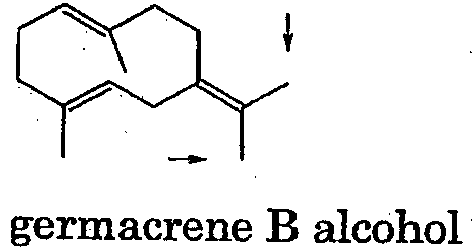
1694d and 1700d 3.1 ± 0.1 8.6 ± 0.8 
1479 
1760 54.9 ± 1.5 
1504 
1787 7.2 ± 0.4 
1631 
1909 6.9 ± 2.4 
1492 
1778 100 ± 4.5 a100% conversion corresponds to the hydroxylation rate of β-selinene that yields a β-costol peak-size of 6.3 x the internal standard (2.5 nmol cis-nerolidol in each assay).
bThe Kovats' indices of these germacrene are determined at an injection port temperature of 150°C; quantitative measurements are done on the basis of their Cope-rearrangements products measured at an injection port temperature of 250°C.
cThis conversion rate is a summation of the peaks of elematrien-12-ol, costol, elematrien-12-al and elematrien-12-oic acid.
dKovats' indices were determined at an injection port temperature of 250°C and probably belong to the Cope-rearrangement products.
→Hydroxylation probably occurs at one of these allylic positions.Table II. Effect of the addition of 50 µM (+)-germacrene A or 50 µm (+)-α-Cubebene upon hydroxylation. Substrate Producta Inhibition (%) ± SD Germacrene A α-Cubebene alloisolongifolene alloisolongifolene alcohol 100.0 100.0 amorpha-4,11-diene amorpha-4,11-diene-12-ol 84.9 ± 0.1 -9.2 ± 2.5 amorpha-4,11-diene alcohol (KI 1720) 84.9 ± 1.0 -2.3 ± 1.5 (-)-β-trans-bergamotene (E)-trans-bergamota-2,12-dien-14-ol 89.2 ± 1.8 30.2 ± 4.5 (-)-β-elemene (-)-elema-1,3,11(13)-trien-12-ol 90.4 + 1.2 19.5 ± 1.8 germacrene B germacrene B alcohol (KI 1694) 100.0 32.6 ± 3.6 germacrene B alcohol (KI 1700) 100.0 27.3 ± 10 (+)-γ-gurjunene (+)-γ-gurjunene alcohol 88.0 ± 0.9 - 5.6 ± 0.2 (+)-ledene ledene alcohol 100.0 35.5 ± 1.9 neointermedeol 4β-H-eudesm-11(13)-ene-4,12-diol 67.5 ± 1.9 3.4 ± 4.5 (+)-β-selinene (+)-β-costol 60.3 ± 3.4 0.4 ± 2.0 aThe amount of sesquiterpene alcohol produced in control incubations is set at 100% and is comparable with those of Table I. - The ability of the germacrene A hydroxylase present in chicory roots to hydroxylate other substrates in addition to germacrene A was investigated. Fresh roots of cultivated chicory (Cichorium intybus L., cv Focus) harvested during late summer were obtained from a grower in Veenendaal, The Netherlands. The chicory roots were cut into small pieces, frozen in liquid nitrogen, and stored at -80°C.
- (+)-Germacrene A was isolated from costus roots (De Kraker et al, 2001b). Alloisolongifolene, (-)-α-gurjunene, (+)-γ-gurjunene, and (+)-ledene were purchased from Fluka. ICN Biomedicals furnished (-)-α-cubebene. The compounds (-)-limonene and (+)-limonene were purchased from Merck and Janssen, respectively. Amorpha-4,11-diene was synthesised by Dr. B. J. M. Jansen (Bouwmeester et al., 1999a). Germacrone was isolated from the natural oil of Germanium macrorrhizum and germacrene B was synthesised by Dr. D. P. Piet (Piet et al., 1995). (-)-α-trans-Bergamotene and (-)-β-element were a gift from Prof. W. A. König (Hamburg University). Neointermedeol was synthesised by Dr. R. P. W. Kesselmans (Kesselmans, 1992). (+)-β-Selinene was isolated from celery oil and was a gift from Dr. T. A. van Beek. Substrates were dissolved at 10 mM concentrations in ethanol.
- Alloisolongifolene alcohol was prepared from alloisolongifolene via its corresponding aldehyde by SeO2, according to the protocol of Umbreit and Sharpless (1977). To a solution of 77 mg SeO2 and 68 mg salicylic acid in 30 mL CH2Cl2, 100 mg alloisolongifolene was added. Stirring at room temperature turned the reaction mixture yellow and a red solid precipitated in the first few hours. The reaction was monitored by GC-MS along with TLC and was stopped by the addition of 60 mL demineralised water after 2.5 days. The reaction mixture was extracted with 45 mL ether, and the organic phase was subsequently washed with 30 mL brine. The red precipitate remained in the aqueous phase during extraction. After drying and evaporation, the organic phase yielded 214 mg of a crude solid that after flash chromatography on silica with pentane-CH2Cl2 (3:1) yielded 31 mg of alloisolongifolene aldehyde, a strong odorous compound (cedar-wood like). 1H NMR (200 MHz, C2D6) δ 0.71 (s, 3H, Me) δ 0.90 (s, 3H, Me), δ 0.93-2.04 (m, 13H), δ 5.42 (s, 1H, CH2=C), δ 5.73 (s, 1H, CH2=C), δ 9.35 (s, 1H, CH=O). 13C NMR (50 MHz,C6D6) δ 15.0 (q), δ 19.6 (q), δ 20.5 (t), δ 22.2 (t), 8 32.3 (t), δ 36.3 (t), δ 38.7 (t), δ 45.1 (t), δ 46.1 (s), δ 47.1 (s), δ 47.7 (s), δ 50.8 (d), δ 133.5 (t), δ 157.0 (s), δ 193.9 (d). EIMS (70 eV) m/z: 218 [M]+ (41), 203 (48), 189 (32), 185 (30), 175 (42), 161 (68), 147 (53), 145 (37), 133 (35), 119 (46), 107 (42), 105 (80), 95 (33), 93 (46), 91 (100), 81 (37), 79 (65), 77 (64), 55 (43), 53 (34), 41 (74), 39 (45). Fifteen milligrams of the aldehyde was added to a solution of 1.8 mg LiAlH4 in 0.5 mL ether. The grey suspension was stirred for 17.5 hours at room temperature and for an additional half our after the careful addition of one spatula Na2SO4·10H2O. One and a half millilitre of demineralised water was added to the mixture that was subsequently 3 times extracted with 1 mL of ether. The ether was passed through glasswool-plugged Pasteur pipette filled with silica and a spatula tip of MgSO4. The solvent was evaporated yielding 17 mg of alloisolongifolene alcohol. 1H NMR (200 MHz, C6D6) δ 0.77 (s, 3H, Me), δ 0.91 (s, 3H, Me), 0.96-1.63 .(m, 13H), δ 3.96 (m, 2H), δ 4.95 (d, 1H, J=1.3 Hz) δ 5.30 (dd, 1H, J= 3.26 Hz, 1.55 Hz). 13C NMR (50 MHz, C6D6) δ 15.1 (q), δ 19.7 (q), δ 20.7 (t), δ 22.3 (t), δ 32.4 (t), 37.5 (t), 38.7 (t), 44.0 (t), δ 46.1 (s), δ 47.8 (s), δ 48.2 (s), δ 51.6 (d), δ 63.4 (t), δ 107.9 (t), δ 155.9 (s). EIMS (70 eV) m/z: 220 [M]+ (5), 189 (35), 187 (36), 163 (30), 161 (56), 160 (37), 159 (30), 147 (36), 145 (38), 133 (32), 131 (37), 119 (44), 107 (61), 105 (91), 95 (94), 93 (57), 91 (100), 81 (53), 79 (60), 77 (52), 67 (39), 55 (45), 41 (62).
- Amorpha-4,11-diene-12-ol was prepared from 100 mg artemisinic acid. The acid was dissolved in 6 mL of dry ether and esterified by adding diazomethane and mixing for 1 hour. GC-MS analyses of the reaction mixture showed the methyl ester and another compound (3: 1), probably the methyl ester that was not connected to a cyclopropyl group. After removal of ether, 8.6 mg of the mixture was dissolved in 20 mL of ether-THF (1:1) and cooled at-60°C under a flow of dry nitrogen for 2 hours. The mixture was subsequently stirred for 1 hour at -30°C with an excess of LiAlH4, after which the reaction was stopped by the addition of Na2SO4. 10H2O. The temperature was raised to room temperature, and the reaction mixture was stirred an additional half hour. After drying with MgSO4 overnight, the mixture was filtered through a Büchner funnel and the solvent removed. The desired alcohol was isolated and purified by preparative thin layer chromatography performed on silica gel plates, using a mixture of petroleum ether-ethyl acetate (3:1) as an eluent (Rf 0.7). Amorpha-4,11-diene-12-ol was obtained in an overall yield of 14% as a mixture with 4-amorphene-12-ol (9:1). 1H NMR (400 MHz, CDCl3): δ 0.87 (d, 3H, Me15, J= 6.0 Hz), δ 1.50 (br s, 3H, Me14), δ 1.0-2.2 (m, 11H), δ 2.47 (m, 1H, H6), δ 4.10 (s, 2H, H12), δ 4.83 (br s, 1H; H13'), δ 5.04 (br s, 1H, H13), δ 5.18 (br s, 1H, H4). EIMS (70 eV) mlz: 220 [M]+ (6), 202 (35), 189 (66), 187 (34), 145 (40), 132 (52), 131 (36), 121 (100), 119 (81), 105 (51), 93 (74), 91 (70), 81 (47), 79 (77), 77 (50), 55 (41), 41 (47).
- To prepare a crude enzyme extract that contains the cytochrome P450 enzymes including the (+)-germacrene A hydroxylase (de Kraker et al., 2001a), 25 grams of deep frozen (-80°C) cubes of chicory roots were mixed by means of a Sorvall mixer together with 2.5 grams PVPP and 40 ml extraction buffer. During the whole procedure the plant material was kept on ice as much as possible. After 5 times several seconds of mixing, the slurry was transferred to the cheesecloth with an additional 10 ml of extraction buffer. The cheesecloth was squeezed out and the filtrate was centrifuged (Sigma 2K15) for 20 minutes at 20,000 g and 4°C. The supernatant was poured over a funnel filled with glass wool. The filtrate was divided over 8 ml centrifuge tubes and subsequently centrifuged (Centrikon T-2070, Kontron Instruments) for 90 minutes at 150,000 g and 4°C. The resulting microsomal pellets (about 6) were stored under argon at-80°C.
- Before incubation, 10 pellets were pottered in 30 mL of assay buffer consisting of 25 mM Tris (pH 7.5), 2 mM DTT, 1 mM ascorbic acid, 5 µM FAD, 5µM FMN and 10 % (v/v) glycerol. The enzyme suspension was divided in 1 mL aliquots and incubated with 5 µL substrate solution in the presence of a 1 mM NADPH-regenerating system that consisted of 1 mM NADPH, 5 mM glucose-6-phosphate, and 1.2 IU glucose-6-phosphate dehydrogenase (all from Sigma). The initial concentration of substrate in each assay was 45 µM and all were done in duplicate. To the blank assays no NADPH regenerating system was added, so that cytochrome P450 enzymes (including the (+)-germacrene A hydroxylase) were not active. After 60 minutes the incubations were stopped by storing them at -20°C in a freezer.
- The enzyme assays were extracted 2 times with 1 mL 20% (v/v) ether in pentane, after the addition of 5 µM cis-nerolidol (Fluka). The organic phase was filtered through a glasswool-plugged (dimethyl chlorosilane-treated, Chrompack) Pasteur pipette that contained 0.4 gram of silica and a little anhydrous MgSO4. The pipette was rinsed with 1.5 mL ether and the extract was concentrated to approximately 50 µL under a stream of nitrogen. The concentrated extracts were analysed by GC-MS as described by De Kraker et al (2001a).
- To investigate whether enzymatic hydroxylations of the substrates were catalysed by the (+)-germacrene A hydroxylase, standard incubations of the various substrates (50 µM) were carried out in the presence of 50 µM (+)-germacrene A, or 50 µM (-)-(a)-cubebene to exclude any possible general negative effect of sesquiterpene olefins on enzyme activity. To the control incubations 5 µL of ethanol was added, instead of the ethanol solution of either (+)-germacrene A or (-)-(α)-cubebene.
- Most of the tested substrates were hydroxylated (see Table 1) and their molecular mass was correspondingly raised with 16 amu. (-)-(α)-Cubebene and (-)-(α)-gurjunene which do not contain an isopropenyl or isopropylidene side chain were not converted (Fig. 6). Also germacrone was not accepted as a substrate. Some conversion of (+)-limonene and (-)-limonene occurred, but in such small amounts that it was not further investigated.
- In Table I the sesquiterpenes are depicted that were converted into sesquiterpene alcohols in the presence of NADPH and the microsomal pellet that contains the (+)-germacrene A hydroxylase. The conversion rates of the various reactions are expressed relatively to the hydroxylation of β-selinene that is set at 100% and corresponds to a β-costol peak-size of 6.3 × the internal standard (2.5 nmol cis-nerolidol in each assay). Approximately 30% of the added 50 nmol β-selinene was hydroxylated.Not all formed hydroxylation products could be identified, since reference samples or mass spectra of the expected sesquiterpene alcohols were not available.
- Incubation of amorpha-4,11-diene yielded two alcohols. The major product was identified as amorpha-4,11-diene-12-ol that results from hydroxylation of the isopropenyl side chain. The structure of the earlier eluting alcohol is unknown; though assuming an allylic hydroxylation that does not take place at a bridgehead atom, it is either amorpha-4,11-diene-2-ol or amorpha-4,11-diene-14-ol. EIMS (70 eV) m/z: 220 [M]+(12), 189 (77), 162 (46), 147 (38), 121 (45), 119 (60), 107 (58), 105 (68), 95 (41) 93 (75), 91 (72), 81 (100), 79 (70), 77 (48), 55 (52), 43 (49), 41 (52).
- Incubation of (-)-α-trans-bergamotene yielded (E)-trans-bergamota-2,12-dien-14-ol, EIMS (70 eV) m/z: 220 [M]+ (<1), 145 (10); 132 (28), 131 (10),121 (11), 120 (14), 119 (75), 107 (29), 105 (22), 95 (10), 94 (15), 93 (100),81 (14), 79 (33), 77 (31), 68 (17), 67 (11), 55 (29), 53 (11), 43 (36), 41 (28), 39 (14). Shaking the pentane-ether extract of the incubation with MnO2 overnight yielded a compound that has the same retention time and mass spectrum as (E)-trans-bergamota-2,12-dien-14-al, present in costus root oil (Maurer and Grieder 1977).
- Incubation of (+)-γ-gurjunene yielded an unknown sesquiterpene alcohol. EIMS (70 eV) m/z: 220 [M]+ (35), 189 (36), 187 (37), 161 (39), 147 (31), 146 (35), 145 (55), 133 (33), 131 (64), 121 (41), 119 (54), 117 (31), 105 (81), 95 (41), 93 (58), 91 (100), 81 (92), 79 (71), 77 (54), 67 (38), 55 (49), 41 (59). Stirring the pentane-ether extract of the enzyme assay overnight with a spatula of MnO2 gave complete conversion into an aldehyde or ketone ([M+] 218). Because this reagent is specific for α,β-unsaturated alcohols (March, 1992) and the only other available allylic position are at a tertiary carbon-atom, the biochemical hydroxylation must have occurred in the isopropenyl side chain of (+)-γ-gurjunene yielding 1S,4S,7R,10R)- 5,11(13)-guaiadiene-12-ol.
- (+)-Germacrene A was, according to previous results, converted into germacra-1(10),4,11-trien-12-ol, but somewhat unexpected the subsequent oxidations (approx. 15% of the produced germacrene alcohol) into germacra-1(10),4,11-trien-12-al and germacra-1(10),4,11-trien-12-oic were also clearly detected. This indicated that the microsomal pellet is not completely free of active dehydrogenases. Apparently the amount of produced germacrene alcohol is sufficient to enable these subsequent reactions. Moreover the dehydrogenases are active despite the used pH of 7.5 and the presence of the NADPH-regenerating system that reduces any NADP+ present. In the incubations with β-selinene and β-elemene only minute quantities of aldehyde and/or acid were measured. For this reason the conversion of β-selinene was set at 100% and not that of (+)-germacrene A.
- GC-MS analyses of the incubation of germacrene B yielded two products with an almost identical mass spectrum and retention time. Kovats' index 1694, EIMS (70 eV) m/z: 220 [M]+ (<1), 202 (15), 187 (24), 159 (20), 147 (20), 145 (24), 134 (22), 133 (26), 131 (22), 123 (19), 121 (75), 120 (27), 119 (100), 109 (34), 108 (15), 107 (48), 106 (22), 105 (66), 95 (38), 94 (20), 93 (65), 92 (17), 91 (73), 81 (50), 79 (52), 77 (44), 71 (17), 69 (28), 68 (15), 67 (48), 65 (17), 57 (19), 55 (94), 53 (34), 43 (46), 41 (73), 39 (32). Kovats' index 1700, EIMS (70 eV) m/z: 220 [M]+ (<1), 202 (15), 189 (15), 187 (21), 159 (20), 147 (22), 145 (23), 137 (17), 134 (21), 133 (28), 131 (26), 123 (22), 122 (15), 121 (100), 120 (28), 119 (91), 117 (15), 109 (36), 108 (18), 107 (52), 106 (23), 105 (77), 95 (45), 94 (24), 93 (86), 92 (21), 91 (80), 81 (61), 79 (66), 77 (53), 71 (21), 69 (32), 68 (18), 67 (55), 65 (21), 57 (32), 55 (69), 53 .(43), 43 (62), 41 (91), 39 (42). Presumably both methyl groups in the isopropenyl side chain of germacrene B are hydroxylated yielding almost identical products. Hydroxylation at any other position is unlikely, because they would probably also have been observed for (+)-germacrene A. The products are measured as their Cope-rearrangement products and lowering the injection port temperature from 250°C to 150°C yielded faint broadened peaks due to on-column Cope-rearrangement.
- Incubation of (+)-ledene yielded an unknown sesquiterpene alcohol. EIMS (70 eV) m/z: 220 [M]+ (12), 187 (25), 159 (42), 151 (29), 147 (32), 145 (32), 133 (26), 131 (25), 121 (31), 119 (62), 107 (86), 105 (100), 95 (40), 93 (74), 91 (82), 81 (53), 79 (54), 77 (39), 55 (38), 43 (33), 41 (47).
- Neointermedeol is presumably hydroxylated in the isopropenyl side chain,like β-selinene, yielding 4β-H-eudesm-11(13)-ene,4,12-diol. EIMS (70 ev) m/z: 238 [M]+ (<1), 223 (46), 135 (76), 93 (47), 81 (39), 79 (47), 71 (47), 55 (39), 43 (100), 41 (40).
- The microsomal pellets that were used in the experiments do not exclusively contain the (+)-germacrene A hydroxylase, but also other membrane bound enzymes that are present in chicory roots. Hence, some of the conversion described in Table I might as well be catalysed by other oxidising enzymes than the (+)-germacrene A hydroxylase. To investigate this, incubations of the different substrates were done in the presence of 50 µm (+)-germacrene A. Incubations were also carried out with 50 µM (-)-a-cubebene instead, a sesquiterpene that is not hydroxylated (Fig. 6), to test the effect of the addition of any arbitrary sesquiterpene olefin on enzyme activity (see Table II).
- The results presented in Table II show that all enzymatic hydroxylations were inhibited to 90% by the addition of (+)-germacrene A, except for β-selinene and neointermedeol whose hydroxylation was inhibited by 60 and 68%, respectively. The relatively small inhibition of β-costol formation agrees with the observation that it is nearly as well hydroxylated as (+)-germacrene A (Table I); the structural correlation between β-sehnene and neointermedeol possibly also explains the small effect of (+)-germacrene A upon the formation of 4β-H-eudesm-11(13)-ene-4,12-diol. More surprisingly is that (+)-germacrene A also inhibitsthe formation of sesquiterpene alcohols in which no isopropenyl or isopropylidene side chain is involved, like ledene alcohol.
- Hydroxylation of the sesquiterpenes is not dramatically influenced by the addition of (-)-a-cubebene, except for the formation of alloisolongifolene alcohol, a product that already under normal assay conditions is only formed in small quantities.
- A microsomal enzyme preparation from chicory roots can hydroxylate sesquiterpene olefins that are not present in chicory in the presence of NADPH (Table I). Most of these hydroxylations occur at the isopropenyl or isopropylidene side chain, yielding in some cases sesquiterpene alcohols that have not previously been described, e.g. amorpha-4,11-dien-12-ol and alloisolongifolene alcohol. The novelty of the formed sesquiterpene alcohols in some cases hampered their identification, and the structure assignment of the hydroxylation products of germacrene B, (+)-γ-gurjunene and neointermedeol is tentative or, like for (+)-ledene, not possible at all. Unfortunately, these compounds were not yet produced in sufficient amount to isolate them for structure elucidation by 1H NMR. The substrates for hydroxylation preferably do not contain any polar group, according the observation that neointermedeol is 15-fold less efficiently hydroxylated than β-selinene and the observation that germacrone is not hydroxylated whereas germacrene B is. The size of the substrate is also of importance as hydroxylation of limonene, a smaller monoterpene, did hardly occur. In the case of amorpha-4,11-diene two distinct sesquiterpene alcohol products were formed.
- Hydroxylations occurring at isopropenyl side chains and -less efficiently- at isopropylidene side chains are catalysed by the (+)-germacrene A hydroxylase that is present in the microsomal pellet of chicory roots. Accordingly, these hydroxylations could be competitively inhibited by (+)-germacrene A (Table II). Hydroxylations of various non-natural substrates by a cytochrome P450 enzyme of plant secondary metabolism contradicts the common belief that enzymes of plant secondary metabolism have a narrow substrate specificity. (Donaldson and Luster, 1991; Halkier, 1996; Schuler, 1996; Mihaliak et al., 1993; Karp et al., 1990).
- Formation of the unknown ledene alcohol and the unknown amorpha-4,11-diene alcohol (KI 1720) cannot have occurred in an isopropenyl/isopropylidene side chain, nevertheless these reactions are also inhibited by (+)-germacrene A. Although hard to understand, it suggests the involvement of the (+)-germacrene A hydroxylase in these reaction as well. Notably, the rate of competitive inhibition by (+)-germacrene A of the formation of amorpha-4,11-diene-12-ol and the unknown amorpha-4,11-diene alcohol is the same.
- The hydroxylation of amorphadiene-4,11-diene in the isopropenyl side chain is interesting as well. It was hypothesised to be an important step in the formation of the anti-malarial drug artemisinin in Artemisia annua but has not yet been reported for this plant (Bouwmeester et al., 1999a).
- Generally, the production of new materials for the flavor and fragrance industry has been a powerful driving force in the research on the hydroxylation of terpenes by micro-organisms. Although in some cases successful, these microbiological conversions often yield a broad spectrum of products, including epoxides and diols (Lamare and Furstoss, 1990; Drauz and Waldmann, 1995; Faber, 2000) and the oxidations often occur at double bonds.In contrast, the hydroxylations catalysed by the microsomal pellet of chicory yield one, sometimes two products, and occur more regiospecifically. Illustrative is the case of (+)-γ-gurjunene: incubation with the plant pathogenic fungus Glomerella cingulata yields (1S,4S,7R,10R)-5-guaien-11,13-diol and (1S,4S,7R,10S)-5-guaien-10,11,13-triol (Miyazawa et al., 1998), whereas incubation with the microsomal pellet of chicory yielded (1S,4S,7R,10R)-5,11(13)-guaiadien-12-ol (Fig. 7).
- Carboxylic acids are important flavours and fragrances. For instance, fatty acids of various chain lengths are very characteristic for the flavour of cheese (West, 1996), whereas higher fatty acids contribute to the taste and smell of peanuts (Hashim et al., 1993). Branched chain fatty acids are important flavour notes in mutton and sheep cheese (Heinsman, 2000; Heinsman et al., submitted). The chicory dehydrogenases responsible for the conversion of germacrene alcohol to germacrene acid have a rather low substrate specificity. Therefore we have investigated whether these dehydrogenases are capable of oxidising other kinds of terpene alcohols and aldehydes as well as linear and branched aliphatic alcohols and aldehydes.
- A chicory enzyme preparation or extract containing the dehydrogenases is made according to De Kraker et al. (2001a). Incubation with an alcohol or aldehyde, for instance amorpha-4,11-diene-12-ol or the corresponding aldehyde, in the presence of NADP+ at pH 10 leads to the formation of the corresponding carboxylic acid in high yield. In case of amorpha-4,11-diene-12-ol, a mixture of artemisinic and dihydroartemisinic acid are produced. Apparently, the dehydrogenases are not only capable of oxidising amorphadiene to artemisinic acid but also the reductase responsible for the reduction of the double bond in the isopropenyl group in the pathway after costunolide is capable of reducing artemisinic acid to dihydroartemisinic acid. As the conversion of dihydroartemisinic acid to artemisinin is supposed to proceed non-enzymatically, chicory may be a suitable production organism for artemisinin, or a source of genes that can be used to produce artemisinin in other organisms.
- In the same way, octanol or octanal and 4-methyloctanol or 4-methyloctanal are oxidised to the corresponding octanoic acid and 4-methyloctanoic acid, respectively. Since 4-methyloctanoic acid is chiral, we checked the stereochemical composition of the product, which appears to contain the R-enantiomer in preference.
- Chicory transformation. Chicory is transformed as described in
PCT/EP00/02130 (Bouwmeester et al., 1999b ) with a construct harboring the valencene or amorphadiene synthase. After regeneration, transgenic plants are screened for the activity of the introduced gene by examining sesquiterpene synthase activity in enzyme extracts. Hereto, 100 mg of tissue, ground in liq N2, is extracted in a 2-ml Eppendorf vial, using a plastic probe to further homogenize the tissue, in 1.0 ml of extraction buffer containing containing 50 mM Mopso (pH 6.8), 20% (v/v) glycerol, 50 mM sodium ascorbate, 50 mM NaHSOs, 1% PVP-40, 10 mM MgCl2 and 5 mM DTT. After extraction, the samples are centrifuged for 20 min at 20,000g at 4 °C. 0.5 mL of the supernatant are diluted 2-fold with buffer A (Example 7) also containing 6 mM sodium orthovanadate (an inhibitor of phosphohydrolase activity). After addition of 20 µM 3H-FPP and a 1 mL redistilled pentane overlay, the tubes are carefully mixed and incubated for 1 h at 30°C. The assays are extracted and analysed using radio-GC and GC-MS as described for Example 7. - The wildtype and GUS-construct controls all exhibit a similar sesquiterpene synthase activity, which is due to the presence of endogenous germacrene A synthase activity. The transformants exhibit an altered sesquiterpene profile, with varying amounts of valencene and amorphadiene, respectively in addition to germacrene A. For some transformants 90% of the in vitro produced.sesquiterpene is valencene.
- Extracts of the transgenic plants that were analysed using GC-MS showed the presence of valencene, nootkatol and nootkatone on the one hand and artemisinic acid, dihydroartemisinic acid and artemisinin on the other hand, respectively.
-
- Ando M, Ibayashi K, Minami N, Nakamura T, Isogai K (1994) Studies on the synthesis of sesquiterpene lactones, 16. The synthesis of 11β,13-dihydrokauniolide, estafiatin, isodehydrocostuslactone, 2-oxodesoxyligustrin, arborescin, 1,10-epiaborescin, 11β,13-dihydroludartin, 8-desoxy-11β,13-dihydrorupicolin B, 8-deoxyrupicolin B, 3,4-epiludartin, ludartin, kauniolide, dehydroleucodin and leucodin. J Nat Prod 57: 443-445
- Aharoni A, Keizer LCP, Bouwmeester HJ, Zhongkui Sun, Alvarez-Huerta M, Verhoeven HA, Blaas J, van Houwelingen AMML, de Vos RCH, van der Voet H, Jansen RC, Guis M, Davis RW, Schena M, van Tunen AJ, O'Connell AP (2000) Identification of the SAAT gene involved in strawberry flavor biogenesis by using DNA microarrays. The Plant Cell 12: 1-16.
- Asakawa Y (1982) Chemical constituents of hepaticae. In W Herz, H Grisebach, GW Kirby, eds, Progress in the Chemistry of Organic Natural Products Vol. 42. Springer Verlag, Wien-New York
- Asakawa Y, Matsuda R, Takemoto T (1980) Mono and sesquiterpenoids from Wiesnerella denudate. Phytochemistry 19: 567-569.
- Balkrishna BL, Childers WE, Pinnick JR, Pinnick HW (1981) Oxidation of α,β-unsaturated aldehydes. Tetrahedron 37: 2091-2096
- Barton DHR, Moss GP, Whittle JA (1968) Investigations on the biosynthesis of steroids and terpenoids part I: A preliminary study of the biosynthesis of santonin. J Chem Soc (C) 1813-1818
- Bawdekar AS, Kelkar GR (1965) Terpenoids-LXVIII: Structure and absolute configuration of costic acid-a new sesquiterpene acid from costus root oil. Tetrahedron 21: 1521-1528
- Bawdekar AS, Kelkar GR, Bhattacharyya SC (1967) Terpenoids-CIV: Costol fraction of costus root oil. Tetrahedron 23: 1993-1996
- Birch AJ (1974) Dihydrobenzenes in synthesis in terpenen related areas. J Agric Food Chem 22: 162-167
- Bohlman F, Ates N, Jakupovic J (1983) Hirsutinolides from South African Vernonia species. Phytochemistry 22: 1159-1162
- Bohlmann. J, Meyer-Gauen G, Croteau R (1998) Plant terpenoid synthases: Molecular biology and phylogenetic analysis. Proceedings of the National Academy of Science, USA 95: 4126-4133
- Bouwmeester HJ, Wallaart TE, Janssen MHA, van Loo B, Jansen BJM, Posthumus MA, Schmidt CO, de Kraker J-W, König WA, Franssen MCR (1999a) Amorpha-4,11-diene synthase catalyses the first probable step in artemisinin biosynthesis. Phytochemistry 52: 843-854
- Bouwmeester HJ, Kodde J, de Kraker JW (1999b) Sesquiterpenoid synthase genes and their use for influencing bitterness and resistance in plants. Patent
PCT/EP00/02130 - Brown ED, Sutherland JK, Sam TW (1975) Medium-ring 1,5-dienes. Part III. Cyclization of germacra-1(10),4,7-(11)-triene oxides. J Chem Soc Perkin Trans I, 2332-2336
- Caliezi A, Schinz H (1947) Zur Kenntnis der Sesquiterpene und Azulene: die Cyclisation der Farnesylsäure. Helv Chim Acta 32: 2556-2560
- Chayet L, Pont-Lezica R, George-Nascimiento C, Cori O (1973) Biosynthesis of sesquiterpene alcohols and aldehydes by cell free extracts from orange flavedo. Phytochemistry 12: 95-101
- Cordell GA (1976) Biosynthesis of sesquiterpenes. Chem Rev 76: 425-460
- De Kraker JW, Franssen MCR, de Groot Ae, König WA, Bouwmeester HJ (1998) (+)-Germacrene A biosynthesis. The committed step in the biosynthesis of bitter sesquiterpene lactones in chicory. Plant Physiol. 117: 1381-1392.
- De Kraker. JW, Franssen MCR, Dalm MCF, de Groot Ae, Bouwmeester HJ (2001a) Biosynthesis of germacrene A carboxylic acid in chicory: Demonstration of a cytochrome P450 (+)-germacrene A hydroxylase and NADP+/NAD+-dependent sesquiterpenoid dehydrogenase(s) involved in sesquiterpene lactone biosynthesis. Plant Physiol. 125: 1930-1940.
- De Kraker JW, Franssen MCR, de Groot Ae, Shibata T, Bouwmeester HJ (2001b) Germacrenes from fresh costus roots. Phytochemistry, 58:481-487.
- del Río JA, Ortuño A, Garcia-Puig D, Porras I, García-Lidón A, Sabater F (1992) Variations of nootkatone and valencene levels during the development of grapefruit. J Agric Food Chem 40: 1488-1490 '
- Dhavalikar RS, Rangachari PN, Bhattacharyya PK (1966) Microbiological transformations of terpenes: Part IX-Pathways of degradation of limonene in a soil pseudomonad. Indian J Biochem 3: 158-164
- Dhavlikar RS, Albroscheit G (1973) Microbiologische Umsetzung von Terpenen: Valencen. Dragoco Report 12: 250- 258
- Donaldson RP, Luster DG (1991) Multiple forms of plant cytochromes P-450. Plant Physiol 96: 669-674
- Drauz K, Waldmann H (1995) Enzyme Catalysis in Organic Synthesis-A Comprehensive Handbook. VCH, Weinheim, 667-701
- Faber K (2000) Biotransformations in Organic Chemistry. 4nd ed, Springer-Verlag, Berlin, 453 pages.
- Fischer NH (1990) Sesquiterpene lactones: Biogenesis and biomimetic transformations. In G Towers and H Towers, eds, Biochemistry of the Mevalonic Acid Pathway to Terpenoids. Plenum Press, New York, pp 161-201
- Fischer NH, Olivier EJ, Fischer HD (1979) The biogenesis and chemistry of sesquiterpene lactones. In W Herz, H Grisebach, GW Kirby, eds, Progress in the Chemistry of Organic Natural Products Vol. 38. Springer Verlag, Wien-New York
- Franssen MCR, Walton NJ (1999) Biotransformations. In NJ Walton, DE Brown eds, Chemicals from Plants, World Scientific Publishers, London, 277-325
- Geissman TA (1973) The biogenesis of sesquiterpene lactones of the compositae. In VC Runeckles, TJ Marby, eds, Recent Advances in Phytochemistry, Vol 6, Academic Press, New York and Londen, pp 65-95
- Genderen, H van, Schoonhoven LM, Fuchs A (1996) Chemisch-ecologische flora van Nederland en België. Een inleiding over aard en ecologische betekenis van secundaire plantenstoffen, H van Genderen, LM Schoonhoven, A Fuchs, eds. KNNV Uitgeverij, Utrecht, 298 pp
- Grieco PA, Nishazawa M (1977) Total synthesis of (+)-costunolide. J Org Chem 42: 1717-1720
- Halkier BA (1996) Catalytic reactivities and structure/function relationships of cytochrome P450 enzymes. Phytochemistry 34: 1-21
- Harborne JB, Baxter H, Moss GP (1999) Phytochemical Dictionary. A handbook of bioactive compounds from plants, 2nd edition. Taylor & Francis
- Hashim IB, Koehler PE, Kvien CK (1993) Fatty acid composition, mineral content, and flavor quality of southern runner peanuts treated with herbicides and fungicides. Peanut Sci. 20: 106-111
- Heinsman NWTJ (2000) Lipase-catalyzed kinetic resolution of branched chain fatty acids and their esters. PhD thesis, Wageningen University
- Heinsman NWJT, Franssen MCR, van der Padt A, Boom RM, van 't Riet K, de Groot Ae Lipase-mediated resolution of branched chain fatty acids.Biocatal. Biotransform., submitted
- Herz W (1977) Sesquiterpene lactones in the compositae. In VH Heywood, JB Harborne, BL Turner, eds, The Biology and Chemistry of the Compositae. Academic Press, London, pp 337-357
- Ho C, Choi EJ, Yoo GS, Kim KM, Ryu SY (1998) Desacetylmatricin, an anti-allergic component from Taraxacum platycarpum. Planta Med 64: 577-578
- Holland HL (1992) Organic Synthesis with Enzymes. VCH Publishers, New York, pp 29-31
- Hunter GLK, Brogden WB Jr (1965) Conversion of valencene to nootkatone. J Food Sci 30: 876-878
- Jain TC, Banks CM, McCloskey JE (1970) Dehydrosaussurea lactone and reversibility in the germacranolide-cope reaction. Tetrahedron Lett 11: 841-844
- Jerussi AR (1970) Selective oxidations with selenium dioxide. In Selective Organic Transformations. Wiley-Interscience, p. 301-313.
- Karp F, Mihaliak CA, Harris JL, Croteau R (1990) Monoterpene biosynthesis: specificity of the hydroxylations of (-)-limonene by enzyme preparations from peppermint (Mentha piperita), spearmint (Mentha spicata) and perilla (Perilla frutescens) leaves. Arch Biochem Biophys 276: 219-226
- Kesselmans RPW (1992) Total synthesis of all stereoisomers of eudesm-11-en-14-ol. PhD thesis, Wageningen University
- Könst WMB, van der Linde LM, Witteveen JG (1975) Recent developments in the chemistry of eremophilanes. International Flavours and Food Additives 6: 121-125
- Kupchan SM, Fessler DC, Eakin MA, Giacobbe TJ (1970) Reactions of alpha methylene lactone tumor inhibitors with model biological nucleophils. Science 168: 376-377
- Lamare V, Furstoss R (1990) Bioconversion of sesquiterpenes. Tetrahedron 46: 4109-4132
- March J (2001) Advanced Organic Chemistry: reactions, mechanisms and structure. 5th ed, Wiley-Interscience, New York, NY, 2083 pages
- Martínez M, Muñoz-Zamora A, Joseph-Nathan P (1988)- Conformational analysis of achillin and leukodin. J Nat Prod 51: 221-228
- Mathews CK, Van Holde KE (1996) Biochemistry. 2nd ed, Oregon State University, The Benjamin/ Cummings Publishing Company
- Maurer B, Grieder A (1977) Sesquiterpenoids from costus root oil (Saussurea lappa Clarke). Helv Chim Acta 60: 2177-2190
- Meijer AH (1993) Cytochrome P-450 and secondary metabolism in Catharanthus roseus. Ph.D. thesis, Leiden University
- Mihaliak CA, Karp F, Croteau (1993) Cytochrome P-450 terpene hydroxylases. In P.J. Lea ed, Methods in Plant Biochemistry, Enzymes of Secondary Metabolism, Vol 9. Academic Press, Londen, pp 261-279
- Minnaard (1997) Germacrene sesquiterpenes: synthesis and role in biosynthesis. PhD thesis. Wageningen University.
- Miyazawa M, Honjo Y, Kameoka H (1998) Bioatransforamtion of the sesquiterpenoid (+)-γ-gurjunene using a plant pathogenic fungus Glomerella cingulata, as a biocatalyst. Phytochemstry 49: 1283-1285
- Overton KH, Roberts FM (1974) Interconversion of trans,trans and cis,trans farnesol by enzymes from Andographis. Phytochemistry 13: 95-101
- Paul A, Bawdekar AS, Joshi RS, Somesekar Roa A, Kelkar GR, Bhattacharyya SC (1960) Terpenoids XX: examination of costus root oil. Perf and Ess Oil Rec 15: 115-120
- Pesaro M, Bozzato G, Schudel P (1968) The total synthesis of racemic nootkatone. Chem Commun 1152-1154
- Petersen M, Seitz HU (1988) Reconstitution of cytochrome P-450-dependent digitoxin 12β-hydroxylase from cell cultures of foxglove (Digitolis lanata EHRH.). Biochem J 252: 537-543
- Petersen M, Alfermann AW, Reinhard E, Seitz HU (1987) Immobilization of digitoxin 12ß-hydroxylase, a cytochrome P-45-dependent enzyme from cell cultures of Digitalis lanata EHRH. Plant Cell Rep 6: 200-203
- Petit F, Furstoss R (1995) Synthesis of (1S,5R)-2,8-dioxabicyclo[3.3.0]octan-3-one from its enantiomer: a subunit of clerodane derivatives. Synthesis 1517-1520
- Picman AK (1986) Review article number 7: biological activities of sesquiterpene lactones. Biochem Syst Ecol 14: 255-281
- Piet DP, Franssen MCR, de Groot Ae (1996) Biotransformation of allylically activated (E,E)-cyclodeca-1,6-dienols by Cichorium intybus. Tetrahedron 52: 11273-11280
- Piet DP, Schrijvers R, Franssen MCR, de Groot Ae (1995) Biotransformation of germacrene epoxides by Cichorium intybus L. Tetrahedron 51: 6303-6314
- Price KR, DuPont MS, Shepherd R, Chan HW-S, Fenwick GR (1990) Relationship between the chemical and sensory properties of exotic salad crops-colored lettuce (Lactuca sativa) and chicory (Cichorium intybus). J Sci Food Agric 53: 185-192
- Pyrek JST (1985) Sesquiterpene lactones of Cichorium intybus and Leontodon autumnalis. Phytochemistry 24: 186-188
- Reichardt PB, Anderson BJ, Clausen TP, Hoskins LC (1988) Thermal instability of germacrone: implications for gas chromatographic analysis of thermally unstable analytes. Can J Chem 67: 1174-1177
- Rissom S, Schwarz-Linek U, Vogel M, Tishkov VI, Kragl U (1997) Synthesis of chiral ε-lactones in a two-enzyme system of cyclohexanone mono-oxygenase and formate dehydrogenase with integrated bubble-free aeration. Tetrahedron: Asymmetry 8: 2523-2526
- Sannai A, Fujimori T, Kato K (1982) Studies on flavor components of roasted chicory root. Agric Biol Chem 46: 429-433
- Schuler MA (1996) Plant cytochrome P450 monooxygenases. Crit Rev Plant Sci 15: 235-284
- Seaman FC (1982) Sesquiterpene lactones as taxonomic characters in the Asteraceae. Bot Rev 48: 124-145
- Seelbach K, Riebel B, Hummel W, Kula MR, Tishkov VI, Egorov AM, Wandrey C, Kragl U (1996) A Novel, Efficient Regenerating Method of NADPH Using a New Formate Dehydrogenase. Tetrahedron Lett 37: 1377-1380
- Seigler DS (1995) Plant Secondary Metabolism. Kluwer Academic Publishers, Boston/Dordrecht/London, 759 pp
- Seto M, Miyase T, Umehara K, Ueno A, Hirano Y, Otani N (1988) Sesquiterpene lactones from Cichorium endivia L and C. intybus L and cytotoxic activity. Chem Pharm Bull 36: 2423-2429
- Shoji N, Umeyama A, Asakawa Y, Takemoto T, Nomoto K, Ohizumi Y (1984) Structural determination of nootkatol, a new sesquiterpene isolated from Alpina oxyphylla Miquel possessing calcium-antagonistic activity. J Pharm Sc 73: 843-844
- Somasekar Roa A, Kelkar GR, Bhattacharyya SC (1960) Terpenoids-XXI: the structure of costunolide, a new sesquiterpene lactone from costus root oil. Tetrahedron 9: 275-283
- Song Q, Gomez-Barrios ML, Hopper EL, Hjortso MA, Fischer NH (1995) Biosynthetic studies of lactucin derivatives in hairy root cultures of Lactuca floridana. Phytochemistry 40: 1659-1665
- Suga, T. and Hirata, T. (1990) Biotransformation of exogenous substrates by plant cell cultures. Phytochemistry 29 : 2393-2406.
- Takasugi M, Okinaka S, Katsui N, Masamune T, Shirata A, Ohuchi M (1985) Isolation and structure of lettucinin A, a novel guaianolide phytoalexin from Lactuca sativa var. capitata (Compositae). J Chem Soc Chem Commun 621-622
- Takeda, K (1974) Stereospecific Cope rearrangement of the germacrene-type sesquiterpenes. Tetrahedron 30: 1525-1534
- Teisseire PJ (1994) Chemistry of Fragrant Substances. VCH Publishers Inc., New York, pp 193-289
- Umbreit MA. Sharpless KB (1977) Allylic oxidation of olefins by catalytic and stoichiometric selenium dioxide with tert-butyl hydroperoxide. J Am Chem Soc 99: 5526-5528
- van Beek TA, Maas P, King BM, Leclercq E, Voragen AGJ, de Groot Ae (1990) Bitter sesquiterpene lactones from chicory roots. J Agric Food Chem 38: 1035-1038
- Vogel G, Hartrman HD, Krahnstöver K (1994) Handbuch des speziellen Gemüsebaues. Ulmer, Stuttgart, pp 84-144
- Wallaart TE, Bouwmeester HJ, Hille J, Poppinga L, Maijers NCA (2001) Amorpha-4,11-diene synthase: cloning and functional expression of a key enzyme in the biosynthetic pathway of the novel antimalarial drug artemisinin. Planta 212: 460-465.
- Walton NJ, Brown DE (1999) eds, Chemicals from plants: perspectives on plant secondary metabolism. World Scientific Publishers, Singapore, 425 pages
- Weeda EJ, Westra R, Westra CH, Westra C (1991) Nederlandse oecologische flora: wilde planten en hun relaties 4. IVN, Amsterdam, pp 152-154
- West CA (1980) Hydroxylases, monooxygenases, and cytochrome P-450. In DD Davis, ed, The Biochemistry of Plants, Vol 2. Academic Press, Londen, pp 317-342
- West S (1996) Flavour production with enzymes. In: Industrial Enzymology, Godfrey T and West S, eds, 2nd ed, Macmillan Press Ltd, London, UK, p. 209-225.
- Wilson CW III, Shaw PE (1978) Synthesis of nootkatone from valencene. J Agric Food Chem 26: 1430-1432
- Yamahara J, Hao Y, Tamai Y (1990) Anti-ulcer effect in rats of bitter cardamom constituents. Chem Pharm Bull 38: 3053-3054
The terpenoids consist of a.o. monoterpenes, sesquiterpenes, diterpenes, triterpenes, tetraterpenes and polyterpenes (rubbers), etc. Mono- and sesquiterpenes, the C10 and C15 branch of the isoprenoid family, are economically interesting as flavor and fragrance compounds in foods and cosmetics, and can have anti-carcinogenic effects and antimicrobial properties. Mono- and sesquiterpenes have also been shown to be of ecological significance, for instance in the interaction and signaling between plants, plants and insects/spider mites and plants and microorganisms. The sesquiterpene lactones are an important subgroup of the sesquiterpenes, and over 4000 different structures have been identified. A wealth of information is available about the structural aspects and biological activities of these type of compounds (e.g. Picman, 1986; Harborne et al., 1999; Seigler, 1995).
Claims (11)
- Method for the production of one or more downstream of amorpha-4,11-diene intermediate compounds of the artemisinin synthesis route, comprising:- providing a transgenic amorpha-4,11,-diene producing chicory plant (Cichorium intybus) said chicory plant (Cichorium intybusi) comprises a gene, operably linked to suitable transcription and translation sequences, encoding the enzyme amorphadiene synthase;- culturing said chicory plant (Cichorium intybus)- isolating said one or more downstream of amorpha-4,11-diene intermediate compounds of the artemisinin synthesis route from said chicory plant (Cichorium intybus).
- Method according to claim 1, wherein the intermediate compounds of the artemisinin synthesis route are selected from the group consisting of artemisinic acid and dihydroartemisinic acid.
- Method according to claim 2, wherein the intermediate compound is dihydroartemisinic acid.
- Method according to claim 1, wherein the gene is derived from A.annua.
- Use of a chicory plant (Cichorium intybus) as defined in any of the claims 1 to 4 for the production of artemisinin.
- Method for the production of artemisinin, comprising:- providing a transgenic amorpha-4,11,-diene producing chicory plant (Cichorium intybus), said chicory plant (Cichorium intybus) comprises a gene, operably linked to suitable transcription and translation sequences, encoding the enzyme amorphadiene synthase;- culturing said chicory plant (Cichorium intybus);- isolating said one or more downstream of amorpha-4,11-diene intermediate compounds of the artemisinin synthesis route from said chicory plant (Cichorium intybus);- converting the one or more intermediate compounds into artemisinin.
- Method according to claim 6, wherein the intermediate compounds of the artemisinin synthesis route are selected from the group consisting of artemisinic acid and dihydroartemisinic acid.
- Method according to claim 7, wherein the intermediate compound is dihydroartemisinic acid.
- Method according to claim 6, wherein the gene is derived from A.annua.
- Method according to any of the claims 6 to 9, wherein the conversion comprises an oxidation of dihydroartemisinic acid into artemisinin.
- Transgenic chicory plant (Cichorium intybus) comprising a gene, operably linked to suitable transcription and translation sequences, encoding the enzyme amorphadiene synthase.
Priority Applications (1)
| Application Number | Priority Date | Filing Date | Title |
|---|---|---|---|
| EP07121764.0A EP1916307B1 (en) | 2001-09-17 | 2002-09-17 | Plant enzymes for bioconversion |
Applications Claiming Priority (3)
| Application Number | Priority Date | Filing Date | Title |
|---|---|---|---|
| EP01203519 | 2001-09-17 | ||
| EP02758947A EP1427838A1 (en) | 2001-09-17 | 2002-09-17 | Plant enzymes for bioconversion |
| EP07121764.0A EP1916307B1 (en) | 2001-09-17 | 2002-09-17 | Plant enzymes for bioconversion |
Related Parent Applications (1)
| Application Number | Title | Priority Date | Filing Date |
|---|---|---|---|
| EP02758947A Division EP1427838A1 (en) | 2001-09-17 | 2002-09-17 | Plant enzymes for bioconversion |
Publications (2)
| Publication Number | Publication Date |
|---|---|
| EP1916307A1 EP1916307A1 (en) | 2008-04-30 |
| EP1916307B1 true EP1916307B1 (en) | 2014-02-26 |
Family
ID=8180937
Family Applications (2)
| Application Number | Title | Priority Date | Filing Date |
|---|---|---|---|
| EP02758947A Withdrawn EP1427838A1 (en) | 2001-09-17 | 2002-09-17 | Plant enzymes for bioconversion |
| EP07121764.0A Expired - Lifetime EP1916307B1 (en) | 2001-09-17 | 2002-09-17 | Plant enzymes for bioconversion |
Family Applications Before (1)
| Application Number | Title | Priority Date | Filing Date |
|---|---|---|---|
| EP02758947A Withdrawn EP1427838A1 (en) | 2001-09-17 | 2002-09-17 | Plant enzymes for bioconversion |
Country Status (5)
| Country | Link |
|---|---|
| US (3) | US7214507B2 (en) |
| EP (2) | EP1427838A1 (en) |
| JP (1) | JP2005503163A (en) |
| CN (1) | CN1589327A (en) |
| WO (1) | WO2003025193A1 (en) |
Families Citing this family (22)
| Publication number | Priority date | Publication date | Assignee | Title |
|---|---|---|---|---|
| CN1589327A (en) * | 2001-09-17 | 2005-03-02 | 植物研究国际公司 | Plant enzymes for bioconversion |
| US7442785B2 (en) | 2003-07-24 | 2008-10-28 | The University Of Kentucky Research Foundation | Sesquiterpene synthase gene and protein |
| DE602004019811D1 (en) | 2003-11-26 | 2009-04-16 | Firmenich & Cie | SQUESTRIAN SYNTHESIS FROM PATCHOULI |
| WO2006065126A2 (en) * | 2004-10-14 | 2006-06-22 | Plant Research International B.V. | Terpene hydroxylation |
| DK1919514T3 (en) | 2005-07-05 | 2012-08-20 | Univ California | Polynucleotides encoding isoprenoid-modifying enzymes and methods for their use |
| JP5148970B2 (en) * | 2007-11-02 | 2013-02-20 | 学校法人近畿大学 | Novel β-serinene derivative and acetylcholinesterase activity inhibitor containing the derivative |
| DE102010000168A1 (en) * | 2010-01-22 | 2011-07-28 | Universität des Saarlandes Campus Saarbrücken Gebäude A1 1, 66123 | Biocatalyst for hydroxylation and / or epoxidation |
| WO2011121456A2 (en) * | 2010-03-16 | 2011-10-06 | Uti Limited Partnership | Nucleic acids and protein sequences of costunolide synthase |
| CN103282492A (en) | 2010-10-29 | 2013-09-04 | 奥利里克斯股份有限公司 | Modified valencene synthase polypeptides, encoding nucleic acid molecules and uses thereof |
| EP2537926A1 (en) * | 2011-06-21 | 2012-12-26 | Isobionics B.V. | Valencene synthase |
| MX352318B (en) * | 2011-11-01 | 2017-11-21 | Firmenich & Cie | Cytochrome p450 and use thereof for the enzymatic oxidation of terpenes. |
| WO2014031790A1 (en) | 2012-08-23 | 2014-02-27 | Allylix, Inc. | Nootkatone as an insecticide and insect repellent |
| HUE035866T2 (en) | 2013-03-14 | 2018-05-28 | Evolva Inc | Valencene synthase polypeptides, encoding nucleic acid molecules and uses thereof |
| CA2924541A1 (en) * | 2013-09-19 | 2015-03-26 | Firmenich Sa | Method for producing fragrant alcohols |
| US10785982B2 (en) | 2015-10-05 | 2020-09-29 | Philip Morris Products S.A. | Crisps and syrup made from low bitter chicory products |
| MA40995A (en) | 2014-10-06 | 2017-09-26 | Blue Prairie Brands Inc | LOW BITTER CHICORY PRODUCTS |
| CN108714117B (en) * | 2018-07-06 | 2021-04-27 | 浙江丽芙秀化妆品有限公司 | Long-acting perfume and preparation method thereof |
| CN111995629B (en) * | 2019-05-11 | 2021-06-01 | 普济生物科技(台州)有限公司 | Germacrene leaf derivative, pharmaceutical composition thereof and application thereof in medicine |
| JP7638911B2 (en) | 2019-07-10 | 2025-03-04 | フイルメニツヒ ソシエテ アノニム | Biocatalytic methods for the controlled degradation of terpene compounds. |
| KR102261069B1 (en) | 2019-12-17 | 2021-06-04 | 건국대학교 산학협력단 | Decomposing enzyme fixation device using nickel and zeolite and its method |
| CN118064392B (en) * | 2024-02-28 | 2025-04-18 | 四川大学 | Application of Cytochrome P450 Monooxygenase LsDHLS |
| CN118773150B (en) * | 2024-06-03 | 2025-06-17 | 上海大学 | A guayule C2 hydroxylase and its encoding gene, preparation method and application |
Family Cites Families (4)
| Publication number | Priority date | Publication date | Assignee | Title |
|---|---|---|---|---|
| US6265639B1 (en) * | 1998-01-22 | 2001-07-24 | Washington State University Foundation | Gymnosperm nucleic acid molecules encoding sesquiterpene synthases and methods of use |
| EP0982404A1 (en) * | 1998-08-27 | 2000-03-01 | Wallaart, Thorvald Eelco | DNA encoding amorpha-4,11-diene synthase |
| US6200786B1 (en) * | 1999-09-08 | 2001-03-13 | Givaudan S.A. | Process for the preparation of nootkatone by laccase catalysis |
| CN1589327A (en) * | 2001-09-17 | 2005-03-02 | 植物研究国际公司 | Plant enzymes for bioconversion |
-
2002
- 2002-09-17 CN CNA028228227A patent/CN1589327A/en active Pending
- 2002-09-17 EP EP02758947A patent/EP1427838A1/en not_active Withdrawn
- 2002-09-17 US US10/489,762 patent/US7214507B2/en not_active Expired - Fee Related
- 2002-09-17 JP JP2003529966A patent/JP2005503163A/en active Pending
- 2002-09-17 WO PCT/NL2002/000591 patent/WO2003025193A1/en not_active Ceased
- 2002-09-17 EP EP07121764.0A patent/EP1916307B1/en not_active Expired - Lifetime
-
2007
- 2007-04-27 US US11/796,503 patent/US20070300327A1/en not_active Abandoned
- 2007-11-28 US US11/998,036 patent/US20080124772A1/en not_active Abandoned
Also Published As
| Publication number | Publication date |
|---|---|
| US20070300327A1 (en) | 2007-12-27 |
| EP1427838A1 (en) | 2004-06-16 |
| EP1916307A1 (en) | 2008-04-30 |
| US20080124772A1 (en) | 2008-05-29 |
| US20050019882A1 (en) | 2005-01-27 |
| CN1589327A (en) | 2005-03-02 |
| WO2003025193A1 (en) | 2003-03-27 |
| JP2005503163A (en) | 2005-02-03 |
| US7214507B2 (en) | 2007-05-08 |
Similar Documents
| Publication | Publication Date | Title |
|---|---|---|
| US20070300327A1 (en) | Plant enzymes for bioconversion | |
| Hansen et al. | Plant cytochrome P450 plasticity and evolution | |
| de Kraker et al. | Biosynthesis of germacrene A carboxylic acid in chicory roots. Demonstration of a cytochrome P450 (+)-germacrene a hydroxylase and NADP+-dependent sesquiterpenoid dehydrogenase (s) involved in sesquiterpene lactone biosynthesis | |
| Gershenzon et al. | Terpenoid biosynthesis: the basic pathway and formation of monoterpenes, sesquiterpenes, and diterpenes | |
| Lanier et al. | Plant terpene specialized metabolism: complex networks or simple linear pathways? | |
| Hallahan | Monoterpenoid biosynthesis in glandular trichomes of labiate plants | |
| Ilc et al. | Monoterpenol oxidative metabolism: role in plant adaptation and potential applications | |
| Croteau et al. | Natural products (secondary metabolites) | |
| Bouwmeester et al. | Biosynthesis of the monoterpenes limonene and carvone in the fruit of caraway: I. Demonstration of enzyme activities and their changes with development | |
| Pateraki et al. | Cytochromes P450 for terpene functionalisation and metabolic engineering | |
| Croteau et al. | (−)-Menthol biosynthesis and molecular genetics | |
| Nugroho et al. | Secondary metabolism in tobacco | |
| Ramirez et al. | Biosynthesis of sesquiterpene lactones in pyrethrum (Tanacetum cinerariifolium) | |
| Tissier et al. | Specialized plant metabolites: diversity and biosynthesis | |
| de Kraker et al. | Hydroxylation of sesquiterpenes by enzymes from chicory (Cichorium intybus L.) roots | |
| Aleu et al. | Biotransformations by Botrytis species | |
| Crocoll | Biosynthesis of the phenolic monoterpenes, thymol and carvacrol, by terpene synthases and cytochrome P450s in oregano and thyme | |
| AU766764B2 (en) | Transgenic amorpha-4,11-diene synthesis | |
| Iijima et al. | Biosynthesis of geranial, a potent aroma compound in ginger rhizome (Zingiber officinale): molecular cloning and characterization of geraniol dehydrogenase | |
| Villa-Ruano et al. | Cytochrome P450 from Plants: Platforms for Valuable Phytopharmaceuticals. | |
| Keeling et al. | Plant terpenoids | |
| Dewick | The biosynthesis of C 5–C 20 terpenoid compounds | |
| Maffei et al. | Anatomy, physiology, biosynthesis, molecular biology, tissue culture, and biotechnology of mint essential oil production | |
| Banthorpe et al. | The biosynthesis of C 5—C 20 terpenoid compounds | |
| Sangwan et al. | Recent developments on secondary metabolite biosynthesis in Artemisia annua L |
Legal Events
| Date | Code | Title | Description |
|---|---|---|---|
| PUAI | Public reference made under article 153(3) epc to a published international application that has entered the european phase |
Free format text: ORIGINAL CODE: 0009012 |
|
| 17P | Request for examination filed |
Effective date: 20071128 |
|
| AC | Divisional application: reference to earlier application |
Ref document number: 1427838 Country of ref document: EP Kind code of ref document: P |
|
| AK | Designated contracting states |
Kind code of ref document: A1 Designated state(s): AT BE BG CH CY CZ DE DK EE ES FI FR GB GR IE IT LI LU MC NL PT SE SK TR |
|
| RIN1 | Information on inventor provided before grant (corrected) |
Inventor name: DE GROOT, AEDE Inventor name: BOUWMEESTER, HENDRIK JAN Inventor name: DE KRAKER, JAN-WILLEM Inventor name: SCHURINK, MARLOES Inventor name: BINO, RAOUL JOHN |
|
| RAP1 | Party data changed (applicant data changed or rights of an application transferred) |
Owner name: DAFRA PHARMA RESEARCH & DEVELOPMENT BVBA |
|
| AKX | Designation fees paid |
Designated state(s): AT BE BG CH CY CZ DE DK EE ES FI FR GB GR IE IT LI LU MC NL PT SE SK TR |
|
| 17Q | First examination report despatched |
Effective date: 20090807 |
|
| GRAP | Despatch of communication of intention to grant a patent |
Free format text: ORIGINAL CODE: EPIDOSNIGR1 |
|
| INTG | Intention to grant announced |
Effective date: 20130523 |
|
| GRAS | Grant fee paid |
Free format text: ORIGINAL CODE: EPIDOSNIGR3 |
|
| GRAA | (expected) grant |
Free format text: ORIGINAL CODE: 0009210 |
|
| AC | Divisional application: reference to earlier application |
Ref document number: 1427838 Country of ref document: EP Kind code of ref document: P |
|
| AK | Designated contracting states |
Kind code of ref document: B1 Designated state(s): AT BE BG CH CY CZ DE DK EE ES FI FR GB GR IE IT LI LU MC NL PT SE SK TR |
|
| REG | Reference to a national code |
Ref country code: GB Ref legal event code: FG4D |
|
| REG | Reference to a national code |
Ref country code: CH Ref legal event code: EP |
|
| REG | Reference to a national code |
Ref country code: AT Ref legal event code: REF Ref document number: 653637 Country of ref document: AT Kind code of ref document: T Effective date: 20140315 |
|
| REG | Reference to a national code |
Ref country code: IE Ref legal event code: FG4D |
|
| REG | Reference to a national code |
Ref country code: DE Ref legal event code: R096 Ref document number: 60246026 Country of ref document: DE Effective date: 20140410 |
|
| REG | Reference to a national code |
Ref country code: NL Ref legal event code: T3 |
|
| REG | Reference to a national code |
Ref country code: AT Ref legal event code: MK05 Ref document number: 653637 Country of ref document: AT Kind code of ref document: T Effective date: 20140226 |
|
| PG25 | Lapsed in a contracting state [announced via postgrant information from national office to epo] |
Ref country code: SE Free format text: LAPSE BECAUSE OF FAILURE TO SUBMIT A TRANSLATION OF THE DESCRIPTION OR TO PAY THE FEE WITHIN THE PRESCRIBED TIME-LIMIT Effective date: 20140226 Ref country code: AT Free format text: LAPSE BECAUSE OF FAILURE TO SUBMIT A TRANSLATION OF THE DESCRIPTION OR TO PAY THE FEE WITHIN THE PRESCRIBED TIME-LIMIT Effective date: 20140226 Ref country code: PT Free format text: LAPSE BECAUSE OF FAILURE TO SUBMIT A TRANSLATION OF THE DESCRIPTION OR TO PAY THE FEE WITHIN THE PRESCRIBED TIME-LIMIT Effective date: 20140626 Ref country code: CY Free format text: LAPSE BECAUSE OF FAILURE TO SUBMIT A TRANSLATION OF THE DESCRIPTION OR TO PAY THE FEE WITHIN THE PRESCRIBED TIME-LIMIT Effective date: 20140226 Ref country code: FI Free format text: LAPSE BECAUSE OF FAILURE TO SUBMIT A TRANSLATION OF THE DESCRIPTION OR TO PAY THE FEE WITHIN THE PRESCRIBED TIME-LIMIT Effective date: 20140226 |
|
| PG25 | Lapsed in a contracting state [announced via postgrant information from national office to epo] |
Ref country code: DK Free format text: LAPSE BECAUSE OF FAILURE TO SUBMIT A TRANSLATION OF THE DESCRIPTION OR TO PAY THE FEE WITHIN THE PRESCRIBED TIME-LIMIT Effective date: 20140226 Ref country code: EE Free format text: LAPSE BECAUSE OF FAILURE TO SUBMIT A TRANSLATION OF THE DESCRIPTION OR TO PAY THE FEE WITHIN THE PRESCRIBED TIME-LIMIT Effective date: 20140226 Ref country code: CZ Free format text: LAPSE BECAUSE OF FAILURE TO SUBMIT A TRANSLATION OF THE DESCRIPTION OR TO PAY THE FEE WITHIN THE PRESCRIBED TIME-LIMIT Effective date: 20140226 |
|
| REG | Reference to a national code |
Ref country code: DE Ref legal event code: R097 Ref document number: 60246026 Country of ref document: DE |
|
| PG25 | Lapsed in a contracting state [announced via postgrant information from national office to epo] |
Ref country code: ES Free format text: LAPSE BECAUSE OF FAILURE TO SUBMIT A TRANSLATION OF THE DESCRIPTION OR TO PAY THE FEE WITHIN THE PRESCRIBED TIME-LIMIT Effective date: 20140226 Ref country code: SK Free format text: LAPSE BECAUSE OF FAILURE TO SUBMIT A TRANSLATION OF THE DESCRIPTION OR TO PAY THE FEE WITHIN THE PRESCRIBED TIME-LIMIT Effective date: 20140226 |
|
| PLBE | No opposition filed within time limit |
Free format text: ORIGINAL CODE: 0009261 |
|
| STAA | Information on the status of an ep patent application or granted ep patent |
Free format text: STATUS: NO OPPOSITION FILED WITHIN TIME LIMIT |
|
| 26N | No opposition filed |
Effective date: 20141127 |
|
| REG | Reference to a national code |
Ref country code: DE Ref legal event code: R097 Ref document number: 60246026 Country of ref document: DE Effective date: 20141127 |
|
| PG25 | Lapsed in a contracting state [announced via postgrant information from national office to epo] |
Ref country code: IT Free format text: LAPSE BECAUSE OF FAILURE TO SUBMIT A TRANSLATION OF THE DESCRIPTION OR TO PAY THE FEE WITHIN THE PRESCRIBED TIME-LIMIT Effective date: 20140226 |
|
| REG | Reference to a national code |
Ref country code: DE Ref legal event code: R119 Ref document number: 60246026 Country of ref document: DE |
|
| PG25 | Lapsed in a contracting state [announced via postgrant information from national office to epo] |
Ref country code: LU Free format text: LAPSE BECAUSE OF FAILURE TO SUBMIT A TRANSLATION OF THE DESCRIPTION OR TO PAY THE FEE WITHIN THE PRESCRIBED TIME-LIMIT Effective date: 20140917 Ref country code: MC Free format text: LAPSE BECAUSE OF FAILURE TO SUBMIT A TRANSLATION OF THE DESCRIPTION OR TO PAY THE FEE WITHIN THE PRESCRIBED TIME-LIMIT Effective date: 20140226 |
|
| REG | Reference to a national code |
Ref country code: CH Ref legal event code: PL |
|
| GBPC | Gb: european patent ceased through non-payment of renewal fee |
Effective date: 20140917 |
|
| REG | Reference to a national code |
Ref country code: IE Ref legal event code: MM4A |
|
| REG | Reference to a national code |
Ref country code: FR Ref legal event code: ST Effective date: 20150529 |
|
| PG25 | Lapsed in a contracting state [announced via postgrant information from national office to epo] |
Ref country code: BE Free format text: LAPSE BECAUSE OF NON-PAYMENT OF DUE FEES Effective date: 20140930 Ref country code: NL Free format text: LAPSE BECAUSE OF NON-PAYMENT OF DUE FEES Effective date: 20150401 |
|
| PG25 | Lapsed in a contracting state [announced via postgrant information from national office to epo] |
Ref country code: DE Free format text: LAPSE BECAUSE OF NON-PAYMENT OF DUE FEES Effective date: 20150401 Ref country code: GB Free format text: LAPSE BECAUSE OF NON-PAYMENT OF DUE FEES Effective date: 20140917 Ref country code: CH Free format text: LAPSE BECAUSE OF NON-PAYMENT OF DUE FEES Effective date: 20140930 Ref country code: LI Free format text: LAPSE BECAUSE OF NON-PAYMENT OF DUE FEES Effective date: 20140930 |
|
| PG25 | Lapsed in a contracting state [announced via postgrant information from national office to epo] |
Ref country code: FR Free format text: LAPSE BECAUSE OF NON-PAYMENT OF DUE FEES Effective date: 20140930 Ref country code: IE Free format text: LAPSE BECAUSE OF NON-PAYMENT OF DUE FEES Effective date: 20140917 |
|
| PG25 | Lapsed in a contracting state [announced via postgrant information from national office to epo] |
Ref country code: BG Free format text: LAPSE BECAUSE OF FAILURE TO SUBMIT A TRANSLATION OF THE DESCRIPTION OR TO PAY THE FEE WITHIN THE PRESCRIBED TIME-LIMIT Effective date: 20140226 |
|
| PG25 | Lapsed in a contracting state [announced via postgrant information from national office to epo] |
Ref country code: GR Free format text: LAPSE BECAUSE OF FAILURE TO SUBMIT A TRANSLATION OF THE DESCRIPTION OR TO PAY THE FEE WITHIN THE PRESCRIBED TIME-LIMIT Effective date: 20140527 |
|
| PG25 | Lapsed in a contracting state [announced via postgrant information from national office to epo] |
Ref country code: TR Free format text: LAPSE BECAUSE OF FAILURE TO SUBMIT A TRANSLATION OF THE DESCRIPTION OR TO PAY THE FEE WITHIN THE PRESCRIBED TIME-LIMIT Effective date: 20140226 |