EP1914010B1 - System and method for optimized gas turbine compressor cleaning and performance measurement - Google Patents
System and method for optimized gas turbine compressor cleaning and performance measurement Download PDFInfo
- Publication number
- EP1914010B1 EP1914010B1 EP07019671.2A EP07019671A EP1914010B1 EP 1914010 B1 EP1914010 B1 EP 1914010B1 EP 07019671 A EP07019671 A EP 07019671A EP 1914010 B1 EP1914010 B1 EP 1914010B1
- Authority
- EP
- European Patent Office
- Prior art keywords
- turbine
- washing
- contaminates
- data
- wash
- Prior art date
- Legal status (The legal status is an assumption and is not a legal conclusion. Google has not performed a legal analysis and makes no representation as to the accuracy of the status listed.)
- Revoked
Links
Images




Classifications
-
- B—PERFORMING OPERATIONS; TRANSPORTING
- B08—CLEANING
- B08B—CLEANING IN GENERAL; PREVENTION OF FOULING IN GENERAL
- B08B3/00—Cleaning by methods involving the use or presence of liquid or steam
-
- B—PERFORMING OPERATIONS; TRANSPORTING
- B08—CLEANING
- B08B—CLEANING IN GENERAL; PREVENTION OF FOULING IN GENERAL
- B08B3/00—Cleaning by methods involving the use or presence of liquid or steam
- B08B3/02—Cleaning by the force of jets or sprays
-
- B—PERFORMING OPERATIONS; TRANSPORTING
- B08—CLEANING
- B08B—CLEANING IN GENERAL; PREVENTION OF FOULING IN GENERAL
- B08B9/00—Cleaning hollow articles by methods or apparatus specially adapted thereto
-
- F—MECHANICAL ENGINEERING; LIGHTING; HEATING; WEAPONS; BLASTING
- F01—MACHINES OR ENGINES IN GENERAL; ENGINE PLANTS IN GENERAL; STEAM ENGINES
- F01D—NON-POSITIVE DISPLACEMENT MACHINES OR ENGINES, e.g. STEAM TURBINES
- F01D25/00—Component parts, details, or accessories, not provided for in, or of interest apart from, other groups
- F01D25/002—Cleaning of turbomachines
-
- F—MECHANICAL ENGINEERING; LIGHTING; HEATING; WEAPONS; BLASTING
- F04—POSITIVE - DISPLACEMENT MACHINES FOR LIQUIDS; PUMPS FOR LIQUIDS OR ELASTIC FLUIDS
- F04D—NON-POSITIVE-DISPLACEMENT PUMPS
- F04D29/00—Details, component parts, or accessories
- F04D29/70—Suction grids; Strainers; Dust separation; Cleaning
- F04D29/701—Suction grids; Strainers; Dust separation; Cleaning especially adapted for elastic fluid pumps
- F04D29/705—Adding liquids
-
- Y—GENERAL TAGGING OF NEW TECHNOLOGICAL DEVELOPMENTS; GENERAL TAGGING OF CROSS-SECTIONAL TECHNOLOGIES SPANNING OVER SEVERAL SECTIONS OF THE IPC; TECHNICAL SUBJECTS COVERED BY FORMER USPC CROSS-REFERENCE ART COLLECTIONS [XRACs] AND DIGESTS
- Y02—TECHNOLOGIES OR APPLICATIONS FOR MITIGATION OR ADAPTATION AGAINST CLIMATE CHANGE
- Y02T—CLIMATE CHANGE MITIGATION TECHNOLOGIES RELATED TO TRANSPORTATION
- Y02T50/00—Aeronautics or air transport
- Y02T50/60—Efficient propulsion technologies, e.g. for aircraft
Definitions
- the present invention relates to cleaning and performance measurement of turbines. More specifically, the present invention relates to a system and method for optimized cleaning and performance measurement of gas turbine compressors.
- Gas turbines play a predominate role in a number of applications, namely in aircraft propulsion, marine propulsion, power generation, and driving processes such as pumps and compressors.
- a gas turbine includes a compressor, a combustor, and a turbine.
- air is fed into the system where it is compressed by a compressor and further mixed with fuel.
- the compressed air and fuel mixture are then burned to cause an expansion, which is responsible for driving the turbine.
- gas turbines require large quantities of air to create the torque driving the turbine.
- a typical gas turbine may devote up to 65% of its available energy to compress the air being fed into the turbine. Consequently, any loss in compressor effectiveness will cause degradation and a significant loss in lost performance.
- a conventional means for removing fouling is to wash the particles that have already adhered system.
- washing the gas turbine is performed by injecting a wash solution upstream of the compressor inlet. By allowing the gas turbine rotor to rotate during wash, the solution is forced through the compressor and exits at the rear of the gas turbine.
- the solution may include water, various chemical agents, detergents, solvents, or any combination thereof.
- fouling does not have a defined composition and typically any number of factors may influence its composition.
- types of contaminates and quantities of contaminates may vary from location to location; one location may have a higher concentration of a certain contaminate, whereas a different location may have a lower concentration of that contaminate.
- different locations may have completely different contaminates from another location.
- contamination may have a seasonal variation due to such things as local vegetation, industrial process, prevailing weather, or other ambient factors.
- Fouling can include generally any combination of contaminates and consequently, the various compositions of fouling are almost endless. As a result, washing procedures must also vary to cope with the variation in contaminates.
- Document US 6 491 048 B1 is directed to a manifold for temporarily blocking the air intake of the compressor section of a combustion turbine to facilitate cleaning.
- a manifold suitable for providing a temporary seal about the air intake of the compressor section and through which a foamed cleaning solution can be pumped is disclosed.
- the manifold is conveniently provided as a flexible manifold body having an inflatable tubular member along the periphery thereof for sealing with the air intake and a plurality of hose connections through which a foamed cleaning solution can be delivered to the compressor section of the combustion turbine.
- Particulate films and contaminants adhering to the internal components of the compressor section of a turbine are readily removed by pumping a foamed cleaning solution such as a foamed, aqueous surfactant solution through the manifold and into the compressor section.
- a foamed cleaning solution such as a foamed, aqueous surfactant solution
- Contaminants resulting from fuel combustion and deposited in the combustion and turbine sections are removed by pumping a second, foamed cleaning solution through those sections.
- the second solution typically comprises a foamed, aqueous acid solution optionally including a corrosion inhibitor.
- the compressor section must be isolated from such acid solutions, e.g. by pumping the foamed surfactant solution through the manifold and compressor section prior to and simultaneously with pumping the foamed acid solution through the combustion section.
- the mechanical and thermochemical method for removing hydrocarbon pollutants from objects of document WO 02/36713 A2 relates to a cleaning of objects from the hydrocarbon pollutants such as petroleum products, lubricants, greases and oils and can be used for cleaning transport and technological reservoirs, parts and assemblies of machine and the soil.
- Said method consists of a stage in which the object is cleaned and a stage in which a cleaning agent is retrieved.
- the cleaning of the object is carried out in three following stages: in the first stage, a sampling of pollutants and analysis thereof is performed prior to cleaning, technological cleaning parameters being chosen.
- a thermal preparation of the cleaning agent is carried out, the cleaning agent is pressure fed for mechanical removal of surface impurities and afterwards, the cleaned object is treated with said cleaning agent.
- the produced mixture is divided into an organic phase, an aqueous phase and solid impurities.
- the content of components in the cleaning agent is checked and the concentration thereof is corrected in order to obtain required values are carried out prior to the return of the agent to the cleaning cycle.
- the present invention provides a system according to claim 1.
- the present invention provides a method according to claim 14.
- the present invention relates to sampling and identify fouling to determine its composition, selecting a washing product comprising one or more detergents and/or wetting agents based on the fouling composition, cleaning a gas turbine compressor using the selected cleaner, and monitoring ambient conditions, turbine performance, and/or other factors to assess the effectiveness of the selected cleaner. Based on this assessment, the selected washing product may be re-selected and/or adjusted as appropriate.
- FIG. 1A a cross-sectional view of an exemplary turbine 100 is shown. Arrows depict the direction of the air flow. Ambient air enters the duct 101 via the weather louver 102, via the trash screen 103, and via the air filter 104 to the inlet of the gas turbine 100. Washing a gas turbine 100 may be performed by injecting a wash solution 121 from a nozzle 111, upstream of the compressor 141, which is then forced through the compressor 141, thereby washing off and removing residual build up of fouling from the compressor 141.
- This solution 121 may include, for example, water, various chemical agents, detergents, solvents, or any combination thereof.
- a mixture 151 comprising the washing solution 121 and fouling removed during the wash is formed.
- Some of this mixture 151 is forced out of a rear portion (not shown) of the gas turbine 100, while the rest of the mixture 151 collects in a discharge drain 131.
- a sample of the discharged mixture 151 i.e., a wash and rinse sample', may be utilized to determine the composition of the fouling comprised therein.
- Fig. 1B a side view of an exemplary turbine 100 is shown having a sample of the discharged mixture 151 being collected therefrom.
- the wash optimization system 200 includes a computer 210.
- the computer 210 may include a storage means (not shown).
- the storage means may include a random access memory (RAM) and/or a non-volatile memory such as read-only memory (ROM).
- RAM random access memory
- ROM read-only memory
- a storage means can include various types of physical devices for temporary and/or persistent storage of data including, but not limited to, solid state, magnetic, optical and combination devices.
- the storage means may be implemented using one or more physical devices such as DRAM, PROMS, EPROMS, EEPROMS, flash memory, and the like.
- the storage means may further comprise a computer program product including software code portions for performing optimization steps in accordance with embodiments of the present invention when the computer program product is run on the computer, as further discussed below.
- the computer 210 may be connected to a plurality of external devices such as, for example, databases such as 251 and 252, monitoring units 261 and 262, networks, I/O, external memories, sensors, measuring devices, and other appropriate peripheral devices.
- the wash optimization system 200 further includes an identification unit 230, which may be used to isolate the one or more contaminates from a collection means (not shown), of sample 151 and/or analyze and identify the one or more contaminates.
- the collection means may be, for example, solution, detergent, solvent, chemical agent, and the like.
- the identification unit 230 is used to separate the one or more contaminates from the sample 151 provided by the collection means, thereby producing a sample of one or more contaminates, hereinafter a 'contaminate sample' 220.
- the identification unit 230 is preferably a mass spectrometer.
- mass spectrometers are commonly used to measure the electron shell spectrum of chemical elements that make up a solution and allow identification of compounds that make up the solution.
- the identification unit 230 or in a preferred embodiment, mass spectrometer, is then used to identify the one or more contaminates of sample 220.
- data regarding the identified contaminates is produced.
- the identified data intends to accomplish two tasks. First, the total dissolved particles read out will provide an indication of compressor cleanliness; the lower total dissolved solids indicates, the higher degree of cleaning. Second, the composition of the resulting rinse and fouling removed indicates what the contaminate is.
- the data produced may be displayed by identification unit 230, printed, etc. or, preferably, the computer 210 is connected to the identification unit 230 and the resulting identified contaminate data is displayed by the computer 210. Referring briefly to Figure 3 , exemplary identified data 311 is shown.
- the wash optimization system 200 may also include a washing product database 251.
- This database 251 comprises a computer readable product.
- the washing product database 251 is preferably connected to the computer 210, but is not limited thereto.
- the term 'washing products', as described herein, may be, but is not limited to, any appropriate detergent, chemical agent, solvent, wetting agent, or any other appropriate washing products, or any combination thereof.
- the washing product database 251 preferably includes a plurality of commercially available washing products and information relating to the solubility of known contaminates in each of the plurality of washing products.
- washing products are preferably categorized according to their respective ability to remove various contaminates. More specifically, each washing product within the washing product database 251, preferably comprises a listing of contaminates that the respective product can remove and an established scale rating of how effective the product is in removing the contaminate.
- the database 251 may be searched by any appropriate means.
- the computer 210 is preferably programmed to compare the one or more identified contaminates to washing products of database 251.
- the computer 210 may be used to perform a manual or automated search of washing products in database 251 wherein one or more contaminates are compared to the solubility of the one or more washing products.
- washing products of database 251 are searched using a search engine feature and as a result, a list of commercially available washing products may be produced. The resulting list is categorized according to the ability of the washing product to remove various contaminates.
- each washing product within the populated list comprises a listing of contaminates that the respective washing products can remove, and an established scale rating of how well the products can remove particular contaminates.
- the database 251 comprises data regarding an optimal amount of time with which to apply the washing product to each contaminate. More specifically, for each washing product, listed is the amount of time required for that washing product to remove an amount of a given contaminate. As discussed further, these times are preferably utilized in predetermining the amount of time to apply the one or more selected washing products.
- the computer 210 is then programmed to and used to plot the listed washing products on a solubility index, in order to determine the best washing product to use for removing a specific contaminate or combination of contaminates.
- solubility index is a measure of how soluble a chemical compound is in a solution, which is expressed as a time to achieve so much of the material into solution. Referring briefly to Figure 3 , an exemplary solubility index 312 is shown.
- the wash optimization system 200 may also include an ambient condition database 252.
- the ambient condition database 252 is a computer readable product connected to the computer 210, although the ambient condition database 252 may comprise any manually searchable document, but is not limited thereto.
- fouling does not have a defined composition and typically any number of factors may influence its composition.
- types of contaminates and quantities of contaminates may vary from location to location, as one location may have a higher concentration of a certain contaminate, whereas a different location may have a lower concentration of that contaminate or no trace of the contaminate at all.
- contamination may have a seasonal variation due to such things as local vegetation, industrial process, prevailing weather.
- ambient condition database 252 preferably includes data relating to such ambient conditions.
- the ambient conditions may include, but are not limited to, weather temperature, weather humidity, weather pressure, season, and location.
- ambient conditions are preferably categorized according to their respective contaminate composition. More specifically, each ambient condition comprises a listing of contaminates associated with the condition. For example, and solely for illustrative purposes, if the ambient condition was the season of Spring, then one of the listed conditions might be pollen.
- the wash optimization system 200 may also include an ambient condition monitoring unit 261 which may monitor ambient conditions to allow the turbine performance to be corrected to a common ambient reference point. This will allow performance data to be used as the second check of cleaning effectiveness in order to more effectively help identify other factors with the equipment that may be hindering turbine performance.
- the ambient condition monitoring unit 261 may be connected to computer 210 or may be connected to the ambient condition database 252 or preferably both. Additionally, information relating to conditions collected by the ambient condition monitoring unit 261 may be transmitted directly to the computer 210 or to the ambient condition database 252 or preferably both.
- the ambient condition monitoring unit 261 is a weather monitoring unit that collects ambient weather conditions.
- the ambient conditions may comprise environmental factors that possibly influence the operation of the gas turbine, including but limited to, weather temperature, weather humidity, and weather air pressure.
- the computer 210 may further be programmed to formulate a wash procedure.
- the computer 210 preferably formulates the wash procedure by selecting the best washing products according to the results obtained from the identification unit 230 as cross-referenced with the washing product database 251, the ambient condition database 252, and by monitoring ambient conditions, as well as by calculating the optimal time for application of the selected washing product.
- the optimal time may be calculated according data contained in washing product database 251.
- the wash optimization system 200 may include a turbine monitoring unit 262.
- the turbine monitoring unit 262 may include, but is not limited to, sensors, gauges, measuring devices, and other appropriate devices, and may monitor, for example, such things as fuel flow, thrust, output, and turbine pressure. Data may be collected from the turbine monitoring unit 262 manually or automatically and preferably is transferred to computer 210. Preferably, the computer 210 is used to display a plurality of information regarding the performance data collected.
- the effectiveness of a particular washing procedure used may be determined by comparing the performance of the turbine before and after being washed.
- the washing procedure selected acts to improve and preferably maximize performance of a turbine by removing all, but trace amounts of contaminates, therefrom.
- an ideal performance benchmark is preferably determined such that the benchmark represents an expected level of performance of the turbine. Therefore, in a preferred embodiment, the computer 210 is further programmed to (a) compare first and second data sets collected before the turbine is washed with first and second data sets collected after the turbine is washed; and (b) formulate an optimized wash procedure.
- the computer 210 is used to display a plurality of information regarding the compared performance data collected. Referring briefly to Figure 4 , an exemplary screen shot of the compared performance data 400 is shown.
- the computer 210 is programmed to compare the turbine performance data collected after the wash procedure to the performance data collected before the wash, to determine the increase, or lack thereof, in turbine performance.
- the increase may be compared using the computer 210 to a benchmark performance level.
- the increase is compared by computer 210 to the benchmark performance level, to determine if the selected washing procedure resulted in an optimal wash, thereby resulting in a restoration of maximum turbine performance.
- the computer 210 is preferably configured to reformulate the selected washing procedure, in ways already discussed, so as to optimally wash the turbine, thus providing maximum performance to the turbine.
- wash optimization system 200 may be used in conjunction with any conventional washing system, in accordance with the present invention.
- any conventional washing system for example, US Patent 5,868,860, issued February 9, 1999 , and in PCT/SE Patent Application 2004/000194, filed Feb 16, 2004 discloses examples of the washing of gas turbine compressors are herein incorporated by reference.
- wash optimization system 200 is connected to a turbine washing unit or system, such as the system described in the aforementioned patents, and furthermore directly connected to the computer 210 such that the computer 210 may control the washing unit.
- the formulated and reformulated washing procedures may be controlled by the computer 210 and implemented in a washing system.
- the wash optimization system 200 may be used repeatedly, as many times as desired. Preferably, the wash optimization system 200 is used two or more times and the ambient and performance data collected before and after each wash may tracked and saved. Using the tracked data, a performance trend may be developed. The computer 210 may be further programmed to track, save, develop, and display such a performance trend, based on the sets of collected data. Referring to Figure 4 , graph 410 illustrates an exemplary performance trend plot, in accordance with the present invention.
- wash optimization method 500 begins at step 510, wherein a fouling sample is collected.
- a fouling sample is collected.
- a large amount of airborne contaminates are fed into the compressor and as a result, fouling adheres to and collects in the compressor of the turbine. Therefore, in order to maintain optimum performance of the turbine, the fouling should be removed.
- the solution may include water, various chemical agents, detergents, solvents, or any combination thereof, but is not limited thereto.
- Conventional turbines typically include a discharge drain or an equivalent discharge apparatus, wherein deposits of discharge from the compressor collect. While washing a turbine system, the solution, forced through the compressor, washes off and removes the residual build up of fouling. Thus, a mixture comprising the washing solution used in the washing procedure and the fouling removed during the wash is formed. Some of this mixture is forced out of the rear of the gas turbine, while the rest of the mixture collects in the discharge drain.
- a sample of the discharged mixture is taken from the discharge drain after a turbine is washed. This is referred to as 'a water wash and rinse sample'.
- the water wash and rinse sample preferably comprises one or more contaminates and the original washing solution.
- the sample of fouling may include a physical sample taken directly from a blade of the turbine. This may be done using any appropriate means such as, for example, using a solvent, a fine abrasive paper, or any other appropriate means, as will be understood by one of ordinary skill in the art.
- the contaminates are isolated from the solution using a spectral analysis system, namely a mass spectrometer.
- mass spectrometers are commonly used measure the electron shell spectrum of chemical elements that make up the solution and allow identification of the compounds that make up the solution are devices, and therefore are preferably used in embodiments of the present invention.
- the mass spectrometer is preferably used to filter out contaminates from the washing solution comprising, for example, solvents, chemical agents, detergents, and the like. As a result, an isolated sample of the one or more contaminates is produced. Additionally, the same technique may be applied when using a solvent to obtain a fouling sample.
- a first set of data is collected.
- fouling does not have a defined composition and typically any number of factors may influence its composition.
- types of contaminates and quantities of contaminates may vary from location to location; one location may have a higher concentration of a certain contaminate, whereas a different location may have a lower concentration of that contaminate or even no trace of that contaminate.
- contamination may have a seasonal variation due to such things as local vegetation, industrial process, prevailing weather, etc. Other ambient factors may also vary.
- considerations are preferably taken into account in formulating a wash procedure, as further discussed in step 513.
- the first set of collected data may be data relating to ambient conditions.
- the ambient conditions may comprise environmental factors that may influence the operation of the gas turbine, including but limited to, weather temperature, weather humidity and weather air pressure.
- the collection of ambient conditions is used as a secondary measure of turbine cleaning effectiveness and aids in defining the optimal timing for performing a turbine wash.
- the first set of collected data may be data relating to turbine performance parameters.
- evaluating the performance of a turbine before and after washing acts to provide a better gauge of the effectiveness of the selected washing procedure. Therefore, in another embodiment, a turbine monitoring unit collects turbine performance parameters.
- the turbine performance parameters may comprise, for example, fuel flow, thrust, output, and turbine pressure.
- the first set of collected data comprises both ambient conditions and turbine parameters.
- step 512 the sample of one or more contaminates is analyzed, to identify the contaminates comprising the fouling. Any conventional means for identifying contaminates may be utilized.
- the mass spectrometer such as the one previously discussed, is used to identify the one or more contaminates.
- wash procedure refers to the selecting of one or more washing products and determining the amount of time to apply the products to the turbine.
- the washing product or combination of washing products may be selected. However, selecting an appropriate solution involves evaluating various criteria.
- solubility of the contamination will be greater for specific washing products; hence having identified the specific type of contaminates, it is desirable to select the most effective washing product(s) to best remove the contaminates.
- one of the criteria involved in selecting a washing product may be to evaluate the product's ability to remove the identified contaminates.
- the selection of appropriate washing products may be done using a computer, such as the computer 210 previously described or may be done manually by referencing data relating to contaminate solubility in various washing products.
- a computer is used, wherein the computer is connected to a database comprising washing products, including those that are commercially available.
- the database may further includes information relating to the solubility of known contaminates.
- washing products are preferably categorized according to their respective ability to remove various contaminates. Additionally, each washing product comprises an optimal amount of time with which to apply the washing product to each contaminate. More specifically, for each washing product, listed is the amount of time required for that washing product to remove an amount of a given contaminate. As discussed further, these times are preferably utilized in predetermining the amount of time to apply the one or more selected washing products.
- the computer may be used to perform a manual or automated search of the database.
- the database is searched using a search engine feature and which generates a list of commercially available washing products. The listed products are then plotted against a solubility index, in order to determine the best product or products to use for removing a specific contaminates. Together with the ambient factor data collected, one or more washing products may then be selected to remove the contaminates from the turbine according to the solubility index.
- step 514 the turbine from which the sample of fouling was taken, is then washed using the selected one or more washing products for a predetermined amount of time.
- Any conventional washing system and method may be utilized, in accordance with the present invention.
- a second set of data is collected.
- the second set of collected data comprises information relating to both ambient conditions and turbine performance parameters.
- the ambient conditions may comprise environmental factors that may influence the operation of the gas turbine, such as temperature, humidity and air pressure.
- a turbine monitoring unit collects turbine performance parameters.
- the turbine performance parameters may comprise, for example, fuel flow, thrust, turbine output, and turbine pressure.
- the first and second sets of data are compared.
- optimal performance of a turbine maximizes production, while minimizing the amount of fuel used. Contaminates act to reduce the compressor efficiency, and therefore the collection of contaminates is preferably collected in a manner other than by washing the turbine.
- data is preferably collected both before and after washing.
- the effectiveness may be determined by comparing the performance of the turbine before and after the wash.
- the washing products and application time selected result in improved and preferably maximized performance of the turbine.
- an ideal performance benchmark is determined such that the benchmark represents an expected level of performance of the turbine.
- the turbine performance data collected after the wash is compared to the performance data collected before the wash, to determine the increase, or lack thereof, in turbine performance.
- performance may and, preferably will, increase substantially. Therefore, it is also preferred that the increase also be compared to the benchmark performance level, to determine if the selected washing products and application time resulted in an optimal wash.
- Step 517 it is preferable to reformulate the selected washing procedure so as to optimally wash the turbine, thus providing maximum turbine performance. Therefore, the ambient conditions are again evaluated after the wash and are further compared to the conditions before the wash. In addition to the compared performance data and ambient condition data, the contaminate solubility is again evaluated and a subsequent washing procedure, of washing products and application time, is formulated accordingly.
Landscapes
- Engineering & Computer Science (AREA)
- Mechanical Engineering (AREA)
- General Engineering & Computer Science (AREA)
- Cleaning By Liquid Or Steam (AREA)
- Structures Of Non-Positive Displacement Pumps (AREA)
- Sampling And Sample Adjustment (AREA)
Description
- The present invention relates to cleaning and performance measurement of turbines. More specifically, the present invention relates to a system and method for optimized cleaning and performance measurement of gas turbine compressors.
- Gas turbines play a predominate role in a number of applications, namely in aircraft propulsion, marine propulsion, power generation, and driving processes such as pumps and compressors. Typically, a gas turbine includes a compressor, a combustor, and a turbine. In operation, air is fed into the system where it is compressed by a compressor and further mixed with fuel. The compressed air and fuel mixture are then burned to cause an expansion, which is responsible for driving the turbine. Thus, gas turbines require large quantities of air to create the torque driving the turbine. A typical gas turbine may devote up to 65% of its available energy to compress the air being fed into the turbine. Consequently, any loss in compressor effectiveness will cause degradation and a significant loss in lost performance.
- Due to the large quantities of air utilized by the turbines, a large amount of airborne contaminates, pollen, insects, and dust just to name a few, are fed into the compressor. Thus, an issue arises wherein contaminates or foreign particles, commonly referred to as fouling, collect and build up in the turbine, particularly in the compressor. Fouling of the compressor reduces the compressor efficiency. Reduced compressor efficiency means that the compressor requires more power for compressing the same amount of air. As a result, the power required for driving the compressor increases and thus, the surplus power decreases, meaning less available power to drive the turbine. Furthermore, a decrease in available power may lead to a lower overall power output. As it will be recognized by one of ordinary skill in the art, it is desirable to provide maximum power to the turbine in order to produce a higher output, and thus compressor degradation should be avoided.
- Conventional turbine systems, in some cases, provide filters in an attempt to prevent fouling from entering the system, namely the compressor. In other cases, air is fed directly into the compressor without filtering. However, in either case, contaminates are passed into the system and eventually, the compressor is fouled by the contamination. As previously discussed, the result of the compressor fouling is a significant loss in performance and a significant increase in fuel consumption. Therefore, it is desirable to avoid such consequences.
- As it will be recognized by one of ordinary skill in the art, maintaining gas turbine performance is an important consideration and therefore the removal of the compressor fouling is a standard best practice to regain any lost performance. Typically, the removal of fouling requires the use of compressor washing to maintain compressor efficiency. If compressor fouling is not addressed, compressor efficiency may decrease and as a result, system output will decrease, while fuel consumption will increase. A conventional means for removing fouling is to wash the particles that have already adhered system. In practice, washing the gas turbine is performed by injecting a wash solution upstream of the compressor inlet. By allowing the gas turbine rotor to rotate during wash, the solution is forced through the compressor and exits at the rear of the gas turbine. The solution may include water, various chemical agents, detergents, solvents, or any combination thereof.
- However, fouling does not have a defined composition and typically any number of factors may influence its composition. For example, types of contaminates and quantities of contaminates may vary from location to location; one location may have a higher concentration of a certain contaminate, whereas a different location may have a lower concentration of that contaminate. Additionally, different locations may have completely different contaminates from another location. Furthermore, contamination may have a seasonal variation due to such things as local vegetation, industrial process, prevailing weather, or other ambient factors. Fouling can include generally any combination of contaminates and consequently, the various compositions of fouling are almost endless. As a result, washing procedures must also vary to cope with the variation in contaminates.
- Accordingly, there is a need for a system and method for sampling and analysis of fouling composition such that washing may be optimized to cope with the varying compositions of fouling. Furthermore, there is a need for a system and method for continuous assessment of the ambient conditions, turbine parameters, turbine performance, and namely, the affect of the optimized washing on performance of the turbine. Application of an optimized wash process and such system and ambient condition assessment can ascertain the fullest recovery due to fouling and furthermore, identify other causes for performance degradation, thus, providing a means for optimized overall performance and fuel utilization.
- Document
US 6 491 048 B1 is directed to a manifold for temporarily blocking the air intake of the compressor section of a combustion turbine to facilitate cleaning. A manifold suitable for providing a temporary seal about the air intake of the compressor section and through which a foamed cleaning solution can be pumped is disclosed. The manifold is conveniently provided as a flexible manifold body having an inflatable tubular member along the periphery thereof for sealing with the air intake and a plurality of hose connections through which a foamed cleaning solution can be delivered to the compressor section of the combustion turbine. Particulate films and contaminants adhering to the internal components of the compressor section of a turbine are readily removed by pumping a foamed cleaning solution such as a foamed, aqueous surfactant solution through the manifold and into the compressor section. Contaminants resulting from fuel combustion and deposited in the combustion and turbine sections are removed by pumping a second, foamed cleaning solution through those sections. The second solution typically comprises a foamed, aqueous acid solution optionally including a corrosion inhibitor. The compressor section must be isolated from such acid solutions, e.g. by pumping the foamed surfactant solution through the manifold and compressor section prior to and simultaneously with pumping the foamed acid solution through the combustion section. - The mechanical and thermochemical method for removing hydrocarbon pollutants from objects of document
WO 02/36713 A2 - Viewed from a first aspect, the present invention provides a system according to
claim 1. - Viewed from a second aspect, the present invention provides a method according to claim 14.
-
-
Figure 1A illustrates a cutaway view of an exemplary turbine, in accordance with the present invention. -
Figure 1B illustrates a side view of the exemplary turbine, in accordance with the present invention. -
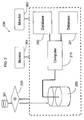
Figure 2 illustrates a wash optimization system, in accordance with embodiments of the present invention. -
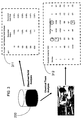
Figure 3 illustrates exemplary identified contaminate data used for selecting an optimized wash procedure, in accordance with embodiments of the present invention. -
Figure 4 illustrates an exemplary screen shot of compared performance data, in accordance with embodiments of the present invention.. -
Figure 5 illustratingwash optimization method 500, in accordance with the present invention. - Described herein is a system and method for cleaning and monitoring gas turbine compressors. To this end, the present invention relates to sampling and identify fouling to determine its composition, selecting a washing product comprising one or more detergents and/or wetting agents based on the fouling composition, cleaning a gas turbine compressor using the selected cleaner, and monitoring ambient conditions, turbine performance, and/or other factors to assess the effectiveness of the selected cleaner. Based on this assessment, the selected washing product may be re-selected and/or adjusted as appropriate.
- As previously discussed, due to the large quantities of air utilized by gas turbine compressors, a large amount of airborne contaminates are fed into turbine compressors, resulting in fouling adhering to and collecting in such compressors. In order to remove this fouling, so as to maintain optimal turbine performance, a sample of the fouling must first be collected. Once collected, the fouling may be identified to determine its composition, which as discussed below, is useful in selecting one or washing products for use in the removal of such fouling.
- Referring now to
Figure 1A , a cross-sectional view of anexemplary turbine 100 is shown. Arrows depict the direction of the air flow. Ambient air enters theduct 101 via theweather louver 102, via thetrash screen 103, and via theair filter 104 to the inlet of thegas turbine 100. Washing agas turbine 100 may be performed by injecting awash solution 121 from anozzle 111, upstream of thecompressor 141, which is then forced through thecompressor 141, thereby washing off and removing residual build up of fouling from thecompressor 141. Thissolution 121 may include, for example, water, various chemical agents, detergents, solvents, or any combination thereof. - As a result of forcing the
solution 121 through thecompressor 141, amixture 151 comprising thewashing solution 121 and fouling removed during the wash is formed. Some of thismixture 151 is forced out of a rear portion (not shown) of thegas turbine 100, while the rest of themixture 151 collects in adischarge drain 131. As further described below, a sample of the dischargedmixture 151, i.e., a wash and rinse sample', may be utilized to determine the composition of the fouling comprised therein. Referring briefly toFig. 1B , a side view of anexemplary turbine 100 is shown having a sample of the dischargedmixture 151 being collected therefrom. - Referring now to
Figure 2 , awash optimization system 200, in accordance with embodiments of the present invention is shown. In a preferred embodiment, thewash optimization system 200 includes acomputer 210. As will be recognized by those skilled in the art, any one or multiple appropriate computers, computing devices, processors, controllers, microcontrollers, etc., or combination thereof may be used. Thecomputer 210 may include a storage means (not shown). The storage means may include a random access memory (RAM) and/or a non-volatile memory such as read-only memory (ROM). One of ordinary skill in the art readily understands that a storage means can include various types of physical devices for temporary and/or persistent storage of data including, but not limited to, solid state, magnetic, optical and combination devices. For example, the storage means may be implemented using one or more physical devices such as DRAM, PROMS, EPROMS, EEPROMS, flash memory, and the like. The storage means may further comprise a computer program product including software code portions for performing optimization steps in accordance with embodiments of the present invention when the computer program product is run on the computer, as further discussed below. Thecomputer 210 may be connected to a plurality of external devices such as, for example, databases such as 251 and 252, monitoringunits - The
wash optimization system 200 further includes anidentification unit 230, which may be used to isolate the one or more contaminates from a collection means (not shown), ofsample 151 and/or analyze and identify the one or more contaminates. The collection means (not shown) may be, for example, solution, detergent, solvent, chemical agent, and the like. Theidentification unit 230 is used to separate the one or more contaminates from thesample 151 provided by the collection means, thereby producing a sample of one or more contaminates, hereinafter a 'contaminate sample' 220. In the case where the collection means is a wash and thesample 151 comprises a mixture of washing solution and contaminates,
theidentification unit 230 is preferably a mass spectrometer. As will be recognized by those skilled in the art, mass spectrometers are commonly used to measure the electron shell spectrum of chemical elements that make up a solution and allow identification of compounds that make up the solution. Theidentification unit 230, or in a preferred embodiment, mass spectrometer, is then used to identify the one or more contaminates ofsample 220. As a result, data regarding the identified contaminates is produced. The identified data intends to accomplish two tasks. First, the total dissolved particles read out will provide an indication of compressor cleanliness; the lower total dissolved solids indicates, the higher degree of cleaning. Second, the composition of the resulting rinse and fouling removed indicates what the contaminate is. The data produced may be displayed byidentification unit 230, printed, etc. or, preferably, thecomputer 210 is connected to theidentification unit 230 and the resulting identified contaminate data is displayed by thecomputer 210. Referring briefly toFigure 3 , exemplary identifieddata 311 is shown. - Referring back to
Figure 2 , thewash optimization system 200 may also include awashing product database 251. Thisdatabase 251 comprises
a computer readable product.
Thewashing product database 251 is preferably connected to thecomputer 210, but is not limited thereto. The term 'washing products', as described herein, may be, but is not limited to, any appropriate detergent, chemical agent, solvent, wetting agent, or any other appropriate washing products, or any combination thereof. Thewashing product database 251 preferably includes a plurality of commercially available washing products and information relating to the solubility of known contaminates in each of the plurality of washing products. In thewashing product database 251, washing products are preferably categorized according to their respective ability to remove various contaminates. More specifically, each washing product within thewashing product database 251, preferably comprises a listing of contaminates that the respective product can remove and an established scale rating of how effective the product is in removing the contaminate. - Additionally, the
database 251 may be searched by any appropriate means. Thecomputer 210 is preferably programmed to compare the one or more identified contaminates to washing products ofdatabase 251. In practice, preferably thecomputer 210 may be used to perform a manual or automated search of washing products indatabase 251 wherein one or more contaminates are compared to the solubility of the one or more washing products. In a preferred implementation, washing products ofdatabase 251 are searched using a search engine feature and as a result, a list of commercially available washing products may be produced. The resulting list is categorized according to the ability of the washing product to remove various contaminates. More specifically, each washing product within the populated list comprises a listing of contaminates that the respective washing products can remove, and an established scale rating of how well the products can remove particular contaminates. Additionally, thedatabase 251 comprises data regarding an optimal amount of time with which to apply the washing product to each contaminate. More specifically, for each washing product, listed is the amount of time required for that washing product to remove an amount of a given contaminate. As discussed further, these times are preferably utilized in predetermining the amount of time to apply the one or more selected washing products. Thecomputer 210 is then programmed to and used to plot the listed washing products on a solubility index, in order to determine the best washing product to use for removing a specific contaminate or combination of contaminates. As will be recognized by those skilled in the art, a solubility index is a measure of how soluble a chemical compound is in a solution, which is expressed as a time to achieve so much of the material into solution. Referring briefly toFigure 3 , anexemplary solubility index 312 is shown. - Referring back to
Figure 2 , thewash optimization system 200 may also include anambient condition database 252. Preferably, theambient condition database 252 is a computer readable product connected to thecomputer 210, although theambient condition database 252 may comprise any manually searchable document, but is not limited thereto. As will be recognized by one of ordinary skill in the art, fouling does not have a defined composition and typically any number of factors may influence its composition. For example, types of contaminates and quantities of contaminates may vary from location to location, as one location may have a higher concentration of a certain contaminate, whereas a different location may have a lower concentration of that contaminate or no trace of the contaminate at all. Furthermore, contamination may have a seasonal variation due to such things as local vegetation, industrial process, prevailing weather. Other ambient factors may also vary. As a result, to cope with the variation in contaminates, such considerations are preferably taken into account, in selecting an appropriate washing product. Thus,ambient condition database 252 preferably includes data relating to such ambient conditions. The ambient conditions may include, but are not limited to, weather temperature, weather humidity, weather pressure, season, and location. Additionally, in theambient condition database 252, ambient conditions are preferably categorized according to their respective contaminate composition. More specifically, each ambient condition comprises a listing of contaminates associated with the condition. For example, and solely for illustrative purposes, if the ambient condition was the season of Spring, then one of the listed conditions might be pollen. - The
wash optimization system 200 may also include an ambientcondition monitoring unit 261 which may monitor ambient conditions to allow the turbine performance to be corrected to a common ambient reference point. This will allow performance data to be used as the second check of cleaning effectiveness in order to more effectively help identify other factors with the equipment that may be hindering turbine performance. The ambientcondition monitoring unit 261 may be connected tocomputer 210 or may be connected to theambient condition database 252 or preferably both. Additionally, information relating to conditions collected by the ambientcondition monitoring unit 261 may be transmitted directly to thecomputer 210 or to theambient condition database 252 or preferably both. In one embodiment, the ambientcondition monitoring unit 261 is a weather monitoring unit that collects ambient weather conditions. The ambient conditions may comprise environmental factors that possibly influence the operation of the gas turbine, including but limited to, weather temperature, weather humidity, and weather air pressure. - The
computer 210 may further be programmed to formulate a wash procedure. Thecomputer 210 preferably formulates the wash procedure by selecting the best washing products according to the results obtained from theidentification unit 230 as cross-referenced with thewashing product database 251, theambient condition database 252, and by monitoring ambient conditions, as well as by calculating the optimal time for application of the selected washing product. The optimal time may be calculated according data contained inwashing product database 251. - As previously mentioned, optimal performance of a turbine maximizes production, while minimizing the amount of fuel used. Contaminates act to reduce the turbine's compressor efficiency, and therefore the collection of contaminates is preferably avoided by washing the turbine. However, in order to effectively gauge the effectiveness of the washing procedure, data is preferably collected both before and after washing. The term 'washing procedure' used throughout describes the selected washing products and the application of those products for a predetermined amount of time. Preferably, the collected data includes ambient data, as previously discussed, as well as turbine performance data. The
computer 210 may be further programmed to collect data relating to ambient conditions and/or turbine performance. In order to collect turbine performance data, thewash optimization system 200 may include aturbine monitoring unit 262. Theturbine monitoring unit 262 may include, but is not limited to, sensors, gauges, measuring devices, and other appropriate devices, and may monitor, for example, such things as fuel flow, thrust, output, and turbine pressure. Data may be collected from theturbine monitoring unit 262 manually or automatically and preferably is transferred tocomputer 210. Preferably, thecomputer 210 is used to display a plurality of information regarding the performance data collected. - In order to achieve optimal turbine performance, the effectiveness of a particular washing procedure used may be determined by comparing the performance of the turbine before and after being washed. Ideally, the washing procedure selected acts to improve and preferably maximize performance of a turbine by removing all, but trace amounts of contaminates, therefrom. Furthermore, an ideal performance benchmark is preferably determined such that the benchmark represents an expected level of performance of the turbine. Therefore, in a preferred embodiment, the
computer 210 is further programmed to (a) compare first and second data sets collected before the turbine is washed with first and second data sets collected after the turbine is washed; and (b) formulate an optimized wash procedure. Preferably, thecomputer 210 is used to display a plurality of information regarding the compared performance data collected. Referring briefly toFigure 4 , an exemplary screen shot of the comparedperformance data 400 is shown. - Referring back to
Figure 2 , preferably, thecomputer 210 is programmed to compare the turbine performance data collected after the wash procedure to the performance data collected before the wash, to determine the increase, or lack thereof, in turbine performance. As will be recognized by one of ordinary skill in the art, after washing the turbine, performance may and preferably will increase substantially. Therefore, the increase may be compared using thecomputer 210 to a benchmark performance level. Preferably, the increase is compared bycomputer 210 to the benchmark performance level, to determine if the selected washing procedure resulted in an optimal wash, thereby resulting in a restoration of maximum turbine performance. - In the case where optimal performance of the turbine is not achieved, the
computer 210 is preferably configured to reformulate the selected washing procedure, in ways already discussed, so as to optimally wash the turbine, thus providing maximum performance to the turbine. - The
wash optimization system 200 may be used in conjunction with any conventional washing system, in accordance with the present invention. For example,US Patent 5,868,860, issued February 9, 1999 , and inPCT/SE Patent Application 2004/000194, filed Feb 16, 2004 wash optimization system 200 is connected to a turbine washing unit or system, such as the system described in the aforementioned patents, and furthermore directly connected to thecomputer 210 such that thecomputer 210 may control the washing unit. Thus, the formulated and reformulated washing procedures may be controlled by thecomputer 210 and implemented in a washing system. - The
wash optimization system 200 may be used repeatedly, as many times as desired. Preferably, thewash optimization system 200 is used two or more times and the ambient and performance data collected before and after each wash may tracked and saved. Using the tracked data, a performance trend may be developed. Thecomputer 210 may be further programmed to track, save, develop, and display such a performance trend, based on the sets of collected data. Referring toFigure 4 ,graph 410 illustrates an exemplary performance trend plot, in accordance with the present invention. - Referring now to
Figure 5 , a flow illustratingwash optimization method 500 in accordance with the present invention is shown. The method begins atstep 510, wherein a fouling sample is collected. As previously discussed, due to the large quantities of air utilized by turbines, a large amount of airborne contaminates are fed into the compressor and as a result, fouling adheres to and collects in the compressor of the turbine. Therefore, in order to maintain optimum performance of the turbine, the fouling should be removed. The removal of such fouling may be done by washing. Washing a gas turbine may be performed by injecting a wash solution upstream of a compressor inlet, which is then forced through the compressor. For example, the solution may include water, various chemical agents, detergents, solvents, or any combination thereof, but is not limited thereto. Conventional turbines typically include a discharge drain or an equivalent discharge apparatus, wherein deposits of discharge from the compressor collect. While washing a turbine system, the solution, forced through the compressor, washes off and removes the residual build up of fouling. Thus, a mixture comprising the washing solution used in the washing procedure and the fouling removed during the wash is formed. Some of this mixture is forced out of the rear of the gas turbine, while the rest of the mixture collects in the discharge drain. In a preferred embodiment, a sample of the discharged mixture is taken from the discharge drain after a turbine is washed. This is referred to as 'a water wash and rinse sample'. The water wash and rinse sample preferably comprises one or more contaminates and the original washing solution. Alternatively, the sample of fouling may include a physical sample taken directly from a blade of the turbine. This may be done using any appropriate means such as, for example, using a solvent, a fine abrasive paper, or any other appropriate means, as will be understood by one of ordinary skill in the art. - In a preferred embodiment, wherein the water wash and rinse sample taken from the discharge drain comprises the one or more contaminates and the washing solution, the contaminates are isolated from the solution using a spectral analysis system, namely a mass spectrometer. As will be recognized by those skilled in the art, mass spectrometers are commonly used measure the electron shell spectrum of chemical elements that make up the solution and allow identification of the compounds that make up the solution are devices, and therefore are preferably used in embodiments of the present invention. In this case, the mass spectrometer is preferably used to filter out contaminates from the washing solution comprising, for example, solvents, chemical agents, detergents, and the like. As a result, an isolated sample of the one or more contaminates is produced. Additionally, the same technique may be applied when using a solvent to obtain a fouling sample.
- In a preferred implementation, in an
optional step 511, a first set of data is collected. As will be recognized by one of ordinary skill in the art, fouling does not have a defined composition and typically any number of factors may influence its composition. For example, types of contaminates and quantities of contaminates may vary from location to location; one location may have a higher concentration of a certain contaminate, whereas a different location may have a lower concentration of that contaminate or even no trace of that contaminate. Furthermore, contamination may have a seasonal variation due to such things as local vegetation, industrial process, prevailing weather, etc. Other ambient factors may also vary. As a result, to cope with the variation in contaminates, such considerations are preferably taken into account in formulating a wash procedure, as further discussed instep 513. Thus, the first set of collected data may be data relating to ambient conditions. The ambient conditions may comprise environmental factors that may influence the operation of the gas turbine, including but limited to, weather temperature, weather humidity and weather air pressure. Primarily, the collection of ambient conditions is used as a secondary measure of turbine cleaning effectiveness and aids in defining the optimal timing for performing a turbine wash. - Alternatively, the first set of collected data may be data relating to turbine performance parameters. As further discussed below, evaluating the performance of a turbine before and after washing acts to provide a better gauge of the effectiveness of the selected washing procedure. Therefore, in another embodiment, a turbine monitoring unit collects turbine performance parameters. The turbine performance parameters may comprise, for example, fuel flow, thrust, output, and turbine pressure. In a preferred embodiment, the first set of collected data comprises both ambient conditions and turbine parameters.
- Next, in
step 512, the sample of one or more contaminates is analyzed, to identify the contaminates comprising the fouling. Any conventional means for identifying contaminates may be utilized. In a preferred embodiment, the mass spectrometer, such as the one previously discussed, is used to identify the one or more contaminates. - Next, in
step 513, a wash procedure is formulated according to the identified contaminates. Again, wash procedure refers to the selecting of one or more washing products and determining the amount of time to apply the products to the turbine. In a preferred embodiment, once the contaminates in the sample have been identified, the washing product or combination of washing products may be selected. However, selecting an appropriate solution involves evaluating various criteria. - As will be recognized by one of ordinary skill in the art, solubility of the contamination will be greater for specific washing products; hence having identified the specific type of contaminates, it is desirable to select the most effective washing product(s) to best remove the contaminates. Thus, in a preferred embodiment, one of the criteria involved in selecting a washing product may be to evaluate the product's ability to remove the identified contaminates. The selection of appropriate washing products may be done using a computer, such as the
computer 210 previously described or may be done manually by referencing data relating to contaminate solubility in various washing products. Preferably, a computer is used, wherein the computer is connected to a database comprising washing products, including those that are commercially available. The database may further includes information relating to the solubility of known contaminates. In the database, washing products are preferably categorized according to their respective ability to remove various contaminates. Additionally, each washing product comprises an optimal amount of time with which to apply the washing product to each contaminate. More specifically, for each washing product, listed is the amount of time required for that washing product to remove an amount of a given contaminate. As discussed further, these times are preferably utilized in predetermining the amount of time to apply the one or more selected washing products. In practice, the computer may be used to perform a manual or automated search of the database. In a preferred implementation, the database is searched using a search engine feature and which generates a list of commercially available washing products. The listed products are then plotted against a solubility index, in order to determine the best product or products to use for removing a specific contaminates. Together with the ambient factor data collected, one or more washing products may then be selected to remove the contaminates from the turbine according to the solubility index. - Next, in
step 514, the turbine from which the sample of fouling was taken, is then washed using the selected one or more washing products for a predetermined amount of time. Any conventional washing system and method may be utilized, in accordance with the present invention. - In a preferred implementation, in an
optional step 515, a second set of data is collected. Preferably, the second set of collected data comprises information relating to both ambient conditions and turbine performance parameters. The ambient conditions may comprise environmental factors that may influence the operation of the gas turbine, such as temperature, humidity and air pressure. Additionally, a turbine monitoring unit collects turbine performance parameters. The turbine performance parameters may comprise, for example, fuel flow, thrust, turbine output, and turbine pressure. - In a preferred implementation, in an
optional step 516, the first and second sets of data are compared. As previously mentioned, optimal performance of a turbine maximizes production, while minimizing the amount of fuel used. Contaminates act to reduce the compressor efficiency, and therefore the collection of contaminates is preferably collected in a manner other than by washing the turbine. However, in order to effectively gauge the effectiveness of the selected washing products and the application of those products for a predetermined amount of time, data is preferably collected both before and after washing. Thus, the effectiveness may be determined by comparing the performance of the turbine before and after the wash. Ideally, the washing products and application time selected result in improved and preferably maximized performance of the turbine. Furthermore, preferably an ideal performance benchmark is determined such that the benchmark represents an expected level of performance of the turbine. Therefore, in a preferred embodiment, the turbine performance data collected after the wash is compared to the performance data collected before the wash, to determine the increase, or lack thereof, in turbine performance. As will be recognized by those skilled in the art, after washing the turbine, performance may and, preferably will, increase substantially. Therefore, it is also preferred that the increase also be compared to the benchmark performance level, to determine if the selected washing products and application time resulted in an optimal wash. - In the case where optimal performance of the turbine is not achieved, it is preferable to reformulate the selected washing procedure (Step 517) so as to optimally wash the turbine, thus providing maximum turbine performance. Therefore, the ambient conditions are again evaluated after the wash and are further compared to the conditions before the wash. In addition to the compared performance data and ambient condition data, the contaminate solubility is again evaluated and a subsequent washing procedure, of washing products and application time, is formulated accordingly.
Claims (24)
- A system for optimizing a washing procedure for a gas turbine compressor, the compressor having an inlet and an outlet, the system comprising:means for collecting a sample of fouling contained in a wash and rinse sample that has exited the outlet as a result of the washing procedure, wherein the sample of fouling comprises one or more contaminates;an identification unit (230) for identifying the one or more contaminates; anda computer-readable database (251) for selecting one or more washing products for removing the one or more contaminates from a turbine (100) of the gas turbine compressor.
- The system of Claim 1, further comprising:means for washing the turbine (100) using the selected one or more washing products for a predetermined amount of time.
- The system of Claim 1, wherein the collecting means comprises a solvent.
- The system of Claim 1, wherein the identifying unit (230) comprises a mass spectrometer.
- The system of Claim 1, wherein the one or more washing products are identified according to a contaminate solubility index of the identified one or more contaminates.
- The system of Claim 2, further comprising:means for collecting a first set of data regarding one or more turbine parameters.
- The system of Claim 6, wherein the one or more turbine parameters comprises turbine thrust, turbine output, turbine pressure, or fuel flow.
- The system of Claim 6, further comprising:means for collecting a second set of data regarding one or more ambient conditions.
- The system of Claim 8, wherein the one or more ambient conditions includes ambient weather temperature data, ambient weather humidity data, ambient weather pressure data, location data, or season data.
- The system of Claim 8, further comprising:means for comparing first and second data sets before the turbine (100) is washed with first and second data sets collected after the turbine (100) is washed; andmeans for formulating an optimized wash procedure.
- The system of Claim 10, further comprising:a turbine washing unit.
- The system of Claim 11, wherein the system controls the turbine washing unit.
- The system of Claim 12, further comprising:means for formulating a performance trend of the turbine (100).
- A method of optimizing a washing procedure for a gas turbine compressor with an inlet and an outlet, the method comprising:collecting a sample of fouling contained in a wash and rinse sample, that has exited the outlet as a result of the washing procedure, wherein the sample of fouling comprises one or more contaminates;identifying the one or more contaminates using an identification unit (230); andusing a computer-readable database (251) to select one or more washing products for removing the one or more contaminates from a turbine (100) of the gas turbine engine.
- The method of Claim 14, further comprising:washing the turbine (100) using the selected one or more washing products for a predetermined amount of time.
- The method of Claim 14, wherein the one or more contaminates are identified using a mass spectrometer as the identification unit.
- The method of Claim 14, wherein the one or more washing products are identified according to a contaminate solubility index of the identified one or more contaminates.
- The method of Claim 14, further comprising:collecting a first set of data regarding one or more turbine parameters.
- The method of Claim 18, wherein the one or more turbine parameters comprises turbine thrust, turbine output, turbine pressure, or fuel flow.
- The method of Claim 18 further comprising:collecting a second set of data regarding one or more ambient conditions.
- The method of Claim 20, wherein the one or more ambient conditions includes ambient weather temperature data, ambient weather humidity data, ambient weather pressure data, location data, or season data.
- The method of Claim 20 further comprising:comparing first and second data sets collected before the turbine (100) is washed with first and second data sets collected after the turbine (100) is washed; andformulating an optimized wash procedure.
- The method of Claim 22, further comprising:controlling a turbine washing unit using the formulated wash procedure.
- The method of Claim 23, further comprising:formulating a performance trend of the turbine (100).
Applications Claiming Priority (1)
| Application Number | Priority Date | Filing Date | Title |
|---|---|---|---|
| US85204106P | 2006-10-16 | 2006-10-16 |
Publications (3)
| Publication Number | Publication Date |
|---|---|
| EP1914010A2 EP1914010A2 (en) | 2008-04-23 |
| EP1914010A3 EP1914010A3 (en) | 2010-09-15 |
| EP1914010B1 true EP1914010B1 (en) | 2016-08-17 |
Family
ID=38955196
Family Applications (1)
| Application Number | Title | Priority Date | Filing Date |
|---|---|---|---|
| EP07019671.2A Revoked EP1914010B1 (en) | 2006-10-16 | 2007-10-08 | System and method for optimized gas turbine compressor cleaning and performance measurement |
Country Status (3)
| Country | Link |
|---|---|
| US (2) | US8685176B2 (en) |
| EP (1) | EP1914010B1 (en) |
| SG (2) | SG142238A1 (en) |
Cited By (1)
| Publication number | Priority date | Publication date | Assignee | Title |
|---|---|---|---|---|
| US11371385B2 (en) | 2018-04-19 | 2022-06-28 | General Electric Company | Machine foam cleaning system with integrated sensing |
Families Citing this family (42)
| Publication number | Priority date | Publication date | Assignee | Title |
|---|---|---|---|---|
| US8524010B2 (en) | 2007-03-07 | 2013-09-03 | Ecoservices, Llc | Transportable integrated wash unit |
| US8277647B2 (en) | 2007-12-19 | 2012-10-02 | United Technologies Corporation | Effluent collection unit for engine washing |
| DE102008019892A1 (en) * | 2008-04-21 | 2009-10-29 | Mtu Aero Engines Gmbh | Method for cleaning an aircraft engine |
| US20100102835A1 (en) * | 2008-10-27 | 2010-04-29 | General Electric Company | Method and system for detecting a corrosive deposit in a compressor |
| US20100242994A1 (en) * | 2009-03-30 | 2010-09-30 | Gas Turbine Efficiency Sweden Ab | Device and method for collecting waste water from turbine engine washing |
| DE102009033944A1 (en) * | 2009-07-14 | 2011-01-20 | Alfred Kärcher Gmbh & Co. Kg | Cleaning device and method for controlling access to a cleaning device |
| US20110106680A1 (en) * | 2009-10-30 | 2011-05-05 | General Electric Company | Turbine operation degradation determination system and method |
| US8751423B2 (en) | 2010-11-30 | 2014-06-10 | General Electric Company | Turbine performance diagnostic system and methods |
| US10272475B2 (en) * | 2012-11-07 | 2019-04-30 | General, Electric Company | Offline compressor wash systems and methods |
| US20140174163A1 (en) * | 2012-12-20 | 2014-06-26 | General Electric Company | Systems and Methods For Measuring Fouling in a Turbine System |
| FR3005108B1 (en) * | 2013-04-30 | 2018-01-05 | Safran Helicopter Engines | TURBOMACHINE AIR INTAKE CASTER WASHING DEVICE |
| US9951646B2 (en) * | 2013-07-01 | 2018-04-24 | General Electric Company | Gas turbine on-line water wash system and method |
| EP2853970B1 (en) | 2013-09-30 | 2019-03-13 | MTU Aero Engines GmbH | Method for carrying out maintenance on an engine |
| US11643946B2 (en) | 2013-10-02 | 2023-05-09 | Aerocore Technologies Llc | Cleaning method for jet engine |
| BR112016007366B1 (en) | 2013-10-02 | 2021-05-18 | Aerocore Technologies Llc | cleaning method for gas turbine engine |
| WO2015102718A2 (en) | 2013-10-10 | 2015-07-09 | Ecoservices, Llc | Radial passage engine wash manifold |
| US20150121888A1 (en) * | 2013-11-05 | 2015-05-07 | General Electric Company | Gas turbine online wash control |
| US9874108B2 (en) * | 2014-07-08 | 2018-01-23 | Rolls-Royce Corporation | Cleaning system for a turbofan gas turbine engine |
| US20160076457A1 (en) * | 2014-09-12 | 2016-03-17 | General Electric Company | System and method for providing a film treatment to a surface |
| EP3478940B1 (en) * | 2016-06-29 | 2023-02-15 | General Electric Company | Methods for effluent based condition assessment |
| US11143056B2 (en) * | 2016-08-17 | 2021-10-12 | General Electric Company | System and method for gas turbine compressor cleaning |
| US10807738B2 (en) | 2016-12-01 | 2020-10-20 | General Electric Company | Maintenance operation analytics |
| US10227891B2 (en) | 2017-03-29 | 2019-03-12 | General Electric Company | Gas turbine engine wash system |
| US20180313225A1 (en) | 2017-04-26 | 2018-11-01 | General Electric Company | Methods of cleaning a component within a turbine engine |
| SG10201707125YA (en) * | 2017-08-31 | 2019-03-28 | United Technologies Corp | Directional water jet cleaning of engine blades |
| US11268449B2 (en) * | 2017-09-22 | 2022-03-08 | General Electric Company | Contamination accumulation modeling |
| US11707819B2 (en) | 2018-10-15 | 2023-07-25 | General Electric Company | Selectively flexible extension tool |
| US12194620B2 (en) | 2018-10-15 | 2025-01-14 | Oliver Crisipin Robotics Limited | Selectively flexible extension tool |
| US10809673B2 (en) * | 2018-11-07 | 2020-10-20 | International Business Machines Corporation | Wash related to contaminant exposure time |
| US11702955B2 (en) | 2019-01-14 | 2023-07-18 | General Electric Company | Component repair system and method |
| US12405187B2 (en) | 2019-10-04 | 2025-09-02 | General Electric Company | Insertion apparatus for use with rotary machines |
| US11752622B2 (en) | 2020-01-23 | 2023-09-12 | General Electric Company | Extension tool having a plurality of links |
| US11692650B2 (en) | 2020-01-23 | 2023-07-04 | General Electric Company | Selectively flexible extension tool |
| US11613003B2 (en) | 2020-01-24 | 2023-03-28 | General Electric Company | Line assembly for an extension tool having a plurality of links |
| US11371437B2 (en) | 2020-03-10 | 2022-06-28 | Oliver Crispin Robotics Limited | Insertion tool |
| US12091981B2 (en) | 2020-06-11 | 2024-09-17 | General Electric Company | Insertion tool and method |
| US12504616B2 (en) | 2021-01-08 | 2025-12-23 | General Electric Company | Insertion tool |
| US12416800B2 (en) | 2021-01-08 | 2025-09-16 | General Electric Company | Insertion tool |
| US11654547B2 (en) | 2021-03-31 | 2023-05-23 | General Electric Company | Extension tool |
| CN113988480B (en) * | 2021-12-21 | 2022-03-15 | 北京太阳宫燃气热电有限公司 | Gas equipment filter life prediction method and computer readable storage medium |
| JP7717000B2 (en) * | 2022-02-01 | 2025-08-01 | 三菱重工コンプレッサ株式会社 | Compressor System |
| US12460581B2 (en) * | 2022-11-29 | 2025-11-04 | Pratt & Whitney Canada Corp. | Method and system for mitigating corrosion and/or erosion in an aircraft engine |
Citations (2)
| Publication number | Priority date | Publication date | Assignee | Title |
|---|---|---|---|---|
| US6491048B1 (en) | 2000-05-26 | 2002-12-10 | Hydrochem Industrial Services, Inc. | Manifold for use in cleaning combustion turbines |
| US20040159342A1 (en) | 2003-02-14 | 2004-08-19 | Murray Ewing | Customizable vehicle wash blending system and method |
Family Cites Families (37)
| Publication number | Priority date | Publication date | Assignee | Title |
|---|---|---|---|---|
| US2807961A (en) * | 1954-04-05 | 1957-10-01 | Standard Oil Co | Automatic liquid sampler |
| DE2154594A1 (en) * | 1971-11-03 | 1973-05-17 | Fraunhofer Ges Forschung | Aerosol ejection evaluation - using activated particles in respiratory simulator |
| CH603383A5 (en) | 1976-01-29 | 1978-08-15 | Laszlo Arato | |
| JPS5937026B2 (en) * | 1978-12-05 | 1984-09-07 | 東洋インキ製造株式会社 | Resin composition for aqueous coating |
| US4467640A (en) * | 1982-05-26 | 1984-08-28 | Chandler Evans, Inc. | Gas turbine engine power availability measurement |
| SU1076642A1 (en) * | 1982-08-13 | 1984-02-29 | Предприятие П/Я Р-6603 | Method of quality control of compressor passage section cleaning |
| US5011540A (en) | 1986-12-24 | 1991-04-30 | Mcdermott Peter | Method and apparatus for cleaning a gas turbine engine |
| JP2635836B2 (en) * | 1991-02-28 | 1997-07-30 | 株式会社東芝 | Fully automatic washing machine |
| US5318254A (en) | 1991-06-28 | 1994-06-07 | Conceptual Solutions, Inc. | Aircraft maintenance robot |
| US5454533A (en) | 1993-06-11 | 1995-10-03 | Spar Aerospace Limited | Robot arm and method of its use |
| KR950011609B1 (en) * | 1993-06-19 | 1995-10-06 | 엘지전자주식회사 | Washing control method and the device of washer |
| JPH07174714A (en) * | 1993-12-20 | 1995-07-14 | Mitsubishi Heavy Ind Ltd | Apparatus for detecting defect of cloth piece |
| DE9420362U1 (en) | 1994-12-20 | 1995-03-30 | Hanrath, Rita, 52525 Heinsberg | Detergent catcher for compressor cleaning of aircraft engines |
| SE504323C2 (en) | 1995-06-07 | 1997-01-13 | Gas Turbine Efficiency Ab | Procedures for washing objects such as turbine compressors |
| KR19980017193A (en) | 1996-08-30 | 1998-06-05 | 이영리 | The antibacterial water purifier and the metal ion water produced in this water purifier |
| US5899217A (en) | 1998-02-10 | 1999-05-04 | Testman, Jr.; Frank L. | Engine wash recovery system |
| JP2000274206A (en) * | 1999-03-24 | 2000-10-03 | Hitachi Ltd | gas turbine |
| US6675437B1 (en) | 1999-12-15 | 2004-01-13 | Shawn L. York | Portable high-temperature, high-pressure washing plant |
| CA2404707A1 (en) | 2000-04-05 | 2001-10-18 | Advanced Concrete Innovations Inc. | Portable concrete plant |
| RU2176936C1 (en) | 2000-10-31 | 2001-12-20 | Печерских Павел Борисович | Mechanothermochemical cleaning of objects from hydrocarbon contaminations |
| US6630198B2 (en) * | 2001-01-19 | 2003-10-07 | General Electric Co. | Methods and apparatus for washing gas turbine engines |
| US6966994B2 (en) * | 2001-04-17 | 2005-11-22 | Caterpillar Inc | Contamination control for engines |
| GB0129668D0 (en) * | 2001-12-12 | 2002-01-30 | Procter & Gamble | Method for cleaning a soiled article |
| JP2003297848A (en) * | 2002-04-01 | 2003-10-17 | Matsushita Electric Ind Co Ltd | Method for manufacturing semiconductor device |
| US20030209256A1 (en) * | 2002-05-13 | 2003-11-13 | Shahin Tadayon | Jet wet suit cover system for gaspath cleaning |
| US6694804B1 (en) * | 2002-09-23 | 2004-02-24 | Ppg Industries Ohio, Inc. | Method and device for evaluating and/or adjusting the cleaning performance of a cleaning liquid |
| FR2846221B1 (en) * | 2002-10-28 | 2005-07-15 | Oreal | DEVICE FOR CARRYING OUT A SAMPLING OF DRY MATERIAL |
| RU2249119C2 (en) * | 2003-04-09 | 2005-03-27 | Открытое акционерное общество "Техприбор" | Aircraft engine monitoring method |
| US20040220817A1 (en) * | 2003-04-29 | 2004-11-04 | Katherine Sanville | Monitoring and controlling processes at a vehicle wash facility |
| JP2005133583A (en) | 2003-10-29 | 2005-05-26 | Hitachi Ltd | Gas turbine cleaning time determination device and determination method |
| DE10355353A1 (en) * | 2003-11-25 | 2005-07-21 | Alstom Technology Ltd | Method for cooling a gas stream supplied to a turbomachine, e.g. a gas turbine being used for electricity generation, includes controlling purity of cooling liquid by discharge of polluted fluid and supply of fresh fluid |
| JP4351705B2 (en) | 2004-02-16 | 2009-10-28 | ガス・タービン・エフィシェンシー・アクチボラゲット | Method and apparatus for cleaning a turbofan gas turbine engine |
| EP1574674A1 (en) * | 2004-03-03 | 2005-09-14 | Siemens Aktiengesellschaft | Method and device for detecting contaminants on turbine components |
| EP1756399B1 (en) * | 2004-06-14 | 2010-03-31 | Gas Turbine Efficiency AB | System and devices for collecting and treating waste water from engine washing |
| JP4707348B2 (en) * | 2004-08-24 | 2011-06-22 | シャープ株式会社 | dishwasher |
| US9790808B2 (en) * | 2005-04-04 | 2017-10-17 | Ecoservices, Llc | Mobile on-wing engine washing and water reclamation system |
| US20090050183A1 (en) | 2007-08-22 | 2009-02-26 | Rice Robert M | Integrated wash unit for a turbine engine |
-
2007
- 2007-10-03 US US11/866,530 patent/US8685176B2/en active Active
- 2007-10-08 EP EP07019671.2A patent/EP1914010B1/en not_active Revoked
- 2007-10-11 SG SG200716805-7A patent/SG142238A1/en unknown
- 2007-10-11 SG SG2011075231A patent/SG175631A1/en unknown
-
2010
- 2010-01-14 US US12/687,594 patent/US8273184B2/en not_active Expired - Fee Related
Patent Citations (2)
| Publication number | Priority date | Publication date | Assignee | Title |
|---|---|---|---|---|
| US6491048B1 (en) | 2000-05-26 | 2002-12-10 | Hydrochem Industrial Services, Inc. | Manifold for use in cleaning combustion turbines |
| US20040159342A1 (en) | 2003-02-14 | 2004-08-19 | Murray Ewing | Customizable vehicle wash blending system and method |
Non-Patent Citations (3)
| Title |
|---|
| J. M. THAMES ET AL.: "Compressor Washing Practices and Benefits", THE AMERICAN SOCIETY OF MECHANICAL ENGINEERS, June 1989 (1989-06-01), 345 E. 47 St.. New York, N.Y. 10017, XP055382939 |
| LEUSDEN ET AL.: "Performance Benefits Using Siemens Advanced Com- pressor Cleaning System", JOURNAL OF ENGINEERING FOR GAS TURBINES AND POWER, vol. 126, October 2004 (2004-10-01), pages 763 - 769, XP055382917 |
| STALDER: "GAS TURBINE COMPRESSOR WASHING STATE OF THE ART-FIELD EXPERIENCES", THE AMERICAN SOCIETY OF MECHANICAL ENGINEERS, June 1998 (1998-06-01), 345 E. 47th St., New York, N.Y. 10017, pages 1 - 10, XP008045842 |
Cited By (3)
| Publication number | Priority date | Publication date | Assignee | Title |
|---|---|---|---|---|
| US11371385B2 (en) | 2018-04-19 | 2022-06-28 | General Electric Company | Machine foam cleaning system with integrated sensing |
| US11952906B2 (en) | 2018-04-19 | 2024-04-09 | General Electric Company | Machine foam cleaning system with integrated sensing |
| US12577887B2 (en) | 2018-04-19 | 2026-03-17 | General Electric Company | Machine foam cleaning system with integrated sensing |
Also Published As
| Publication number | Publication date |
|---|---|
| US20080173330A1 (en) | 2008-07-24 |
| EP1914010A2 (en) | 2008-04-23 |
| US20100116292A1 (en) | 2010-05-13 |
| EP1914010A3 (en) | 2010-09-15 |
| US8273184B2 (en) | 2012-09-25 |
| US8685176B2 (en) | 2014-04-01 |
| SG175631A1 (en) | 2011-11-28 |
| SG142238A1 (en) | 2008-05-28 |
Similar Documents
| Publication | Publication Date | Title |
|---|---|---|
| US8685176B2 (en) | System and method for optimized gas turbine compressor cleaning and performance measurement | |
| JP5354400B2 (en) | Automatic detection and control system and method for high pressure water cleaning application and collection applied to aircraft compressor cleaning | |
| Meher-Homji et al. | The fouling of axial flow compressors: Causes, effects, susceptibility, and sensitivity | |
| Stalder | Gas turbine compressor washing state of the art: Field experiences | |
| Meher-Homji et al. | Gas Turbine Performance Deterioration. | |
| US6503334B2 (en) | Forced mist cleaning of combustion turbines | |
| Aretakis et al. | Compressor washing economic analysis and optimization for power generation | |
| JP5449975B2 (en) | Method and system for detecting corrosion deposits in a compressor | |
| Kurz et al. | Gas turbine degradation | |
| JP2000274206A (en) | gas turbine | |
| Schneider et al. | Analysis of compressor on-line washing to optimize gas turbine power plant performance | |
| US10906670B2 (en) | Methods for effluent based condition assessment | |
| Sánchez et al. | Determining compressor wash programmes for fouled gas turbines | |
| Vulpio et al. | Washing effectiveness assessment of different cleaners on a small-scale multistage compressor | |
| Brun et al. | Impact of continuous inlet fogging and overspray operation on ge 5002 gas turbine life and performance | |
| Rao et al. | An optimal maintenance policy for compressor of a gas turbine power plant | |
| CN114021283A (en) | Gas turbine compressor detection and water washing optimization method | |
| Dominizi et al. | Comparative Life Cycle Assessment of Different Gas Turbine Axial Compressor Water Washing Systems | |
| Leusden et al. | Performance benefits using Siemens advanced compressor cleaning system | |
| Boyce et al. | A study of on-line and off-line turbine washing to optimize the operation of a gas turbine | |
| Hovland et al. | Economic optimization of gas turbine compressor washing | |
| Watson et al. | Cleaning Turbomachinery Without Disassembly, Online And Offline. | |
| Shaharuddin et al. | Case Study on Retrofitted HEPA Filtration to Offshore Gas Turbine Inlet House and its Benefit | |
| Linden | Know Your Turbomachinery’s Operating Environment! | |
| CN118294153A (en) | Engine injector stuck repair method and repair device, computer readable storage medium, computer program product |
Legal Events
| Date | Code | Title | Description |
|---|---|---|---|
| PUAI | Public reference made under article 153(3) epc to a published international application that has entered the european phase |
Free format text: ORIGINAL CODE: 0009012 |
|
| AK | Designated contracting states |
Kind code of ref document: A2 Designated state(s): AT BE BG CH CY CZ DE DK EE ES FI FR GB GR HU IE IS IT LI LT LU LV MC MT NL PL PT RO SE SI SK TR |
|
| AX | Request for extension of the european patent |
Extension state: AL BA HR MK RS |
|
| PUAL | Search report despatched |
Free format text: ORIGINAL CODE: 0009013 |
|
| AK | Designated contracting states |
Kind code of ref document: A3 Designated state(s): AT BE BG CH CY CZ DE DK EE ES FI FR GB GR HU IE IS IT LI LT LU LV MC MT NL PL PT RO SE SI SK TR |
|
| AX | Request for extension of the european patent |
Extension state: AL BA HR MK RS |
|
| 17P | Request for examination filed |
Effective date: 20110225 |
|
| 17Q | First examination report despatched |
Effective date: 20110419 |
|
| AKX | Designation fees paid |
Designated state(s): AT BE BG CH CY CZ DE DK EE ES FI FR GB GR HU IE IS IT LI LT LU LV MC MT NL PL PT RO SE SI SK TR |
|
| RAP1 | Party data changed (applicant data changed or rights of an application transferred) |
Owner name: PRATT & WHITNEY LINE MAINTENANCE SERVICES, INC. |
|
| RAP1 | Party data changed (applicant data changed or rights of an application transferred) |
Owner name: ECOSERVICES, LLC |
|
| RAP1 | Party data changed (applicant data changed or rights of an application transferred) |
Owner name: ECOSERVICES, LLC |
|
| GRAP | Despatch of communication of intention to grant a patent |
Free format text: ORIGINAL CODE: EPIDOSNIGR1 |
|
| INTG | Intention to grant announced |
Effective date: 20160323 |
|
| GRAS | Grant fee paid |
Free format text: ORIGINAL CODE: EPIDOSNIGR3 |
|
| GRAA | (expected) grant |
Free format text: ORIGINAL CODE: 0009210 |
|
| AK | Designated contracting states |
Kind code of ref document: B1 Designated state(s): AT BE BG CH CY CZ DE DK EE ES FI FR GB GR HU IE IS IT LI LT LU LV MC MT NL PL PT RO SE SI SK TR |
|
| REG | Reference to a national code |
Ref country code: GB Ref legal event code: FG4D |
|
| REG | Reference to a national code |
Ref country code: CH Ref legal event code: EP |
|
| REG | Reference to a national code |
Ref country code: IE Ref legal event code: FG4D |
|
| REG | Reference to a national code |
Ref country code: AT Ref legal event code: REF Ref document number: 820556 Country of ref document: AT Kind code of ref document: T Effective date: 20160915 |
|
| REG | Reference to a national code |
Ref country code: NL Ref legal event code: FP |
|
| REG | Reference to a national code |
Ref country code: DE Ref legal event code: R096 Ref document number: 602007047461 Country of ref document: DE |
|
| REG | Reference to a national code |
Ref country code: SE Ref legal event code: TRGR |
|
| REG | Reference to a national code |
Ref country code: FR Ref legal event code: PLFP Year of fee payment: 10 |
|
| REG | Reference to a national code |
Ref country code: LT Ref legal event code: MG4D |
|
| REG | Reference to a national code |
Ref country code: AT Ref legal event code: MK05 Ref document number: 820556 Country of ref document: AT Kind code of ref document: T Effective date: 20160817 |
|
| PG25 | Lapsed in a contracting state [announced via postgrant information from national office to epo] |
Ref country code: LT Free format text: LAPSE BECAUSE OF FAILURE TO SUBMIT A TRANSLATION OF THE DESCRIPTION OR TO PAY THE FEE WITHIN THE PRESCRIBED TIME-LIMIT Effective date: 20160817 Ref country code: IT Free format text: LAPSE BECAUSE OF FAILURE TO SUBMIT A TRANSLATION OF THE DESCRIPTION OR TO PAY THE FEE WITHIN THE PRESCRIBED TIME-LIMIT Effective date: 20160817 |
|
| PG25 | Lapsed in a contracting state [announced via postgrant information from national office to epo] |
Ref country code: BE Free format text: LAPSE BECAUSE OF NON-PAYMENT OF DUE FEES Effective date: 20161031 Ref country code: ES Free format text: LAPSE BECAUSE OF FAILURE TO SUBMIT A TRANSLATION OF THE DESCRIPTION OR TO PAY THE FEE WITHIN THE PRESCRIBED TIME-LIMIT Effective date: 20160817 Ref country code: LV Free format text: LAPSE BECAUSE OF FAILURE TO SUBMIT A TRANSLATION OF THE DESCRIPTION OR TO PAY THE FEE WITHIN THE PRESCRIBED TIME-LIMIT Effective date: 20160817 Ref country code: GR Free format text: LAPSE BECAUSE OF FAILURE TO SUBMIT A TRANSLATION OF THE DESCRIPTION OR TO PAY THE FEE WITHIN THE PRESCRIBED TIME-LIMIT Effective date: 20161118 Ref country code: AT Free format text: LAPSE BECAUSE OF FAILURE TO SUBMIT A TRANSLATION OF THE DESCRIPTION OR TO PAY THE FEE WITHIN THE PRESCRIBED TIME-LIMIT Effective date: 20160817 Ref country code: PL Free format text: LAPSE BECAUSE OF FAILURE TO SUBMIT A TRANSLATION OF THE DESCRIPTION OR TO PAY THE FEE WITHIN THE PRESCRIBED TIME-LIMIT Effective date: 20160817 Ref country code: PT Free format text: LAPSE BECAUSE OF FAILURE TO SUBMIT A TRANSLATION OF THE DESCRIPTION OR TO PAY THE FEE WITHIN THE PRESCRIBED TIME-LIMIT Effective date: 20161219 |
|
| PG25 | Lapsed in a contracting state [announced via postgrant information from national office to epo] |
Ref country code: RO Free format text: LAPSE BECAUSE OF FAILURE TO SUBMIT A TRANSLATION OF THE DESCRIPTION OR TO PAY THE FEE WITHIN THE PRESCRIBED TIME-LIMIT Effective date: 20160817 Ref country code: EE Free format text: LAPSE BECAUSE OF FAILURE TO SUBMIT A TRANSLATION OF THE DESCRIPTION OR TO PAY THE FEE WITHIN THE PRESCRIBED TIME-LIMIT Effective date: 20160817 |
|
| REG | Reference to a national code |
Ref country code: DE Ref legal event code: R026 Ref document number: 602007047461 Country of ref document: DE |
|
| PLBI | Opposition filed |
Free format text: ORIGINAL CODE: 0009260 |
|
| PG25 | Lapsed in a contracting state [announced via postgrant information from national office to epo] |
Ref country code: DK Free format text: LAPSE BECAUSE OF FAILURE TO SUBMIT A TRANSLATION OF THE DESCRIPTION OR TO PAY THE FEE WITHIN THE PRESCRIBED TIME-LIMIT Effective date: 20160817 Ref country code: SK Free format text: LAPSE BECAUSE OF FAILURE TO SUBMIT A TRANSLATION OF THE DESCRIPTION OR TO PAY THE FEE WITHIN THE PRESCRIBED TIME-LIMIT Effective date: 20160817 Ref country code: BE Free format text: LAPSE BECAUSE OF FAILURE TO SUBMIT A TRANSLATION OF THE DESCRIPTION OR TO PAY THE FEE WITHIN THE PRESCRIBED TIME-LIMIT Effective date: 20160817 Ref country code: CZ Free format text: LAPSE BECAUSE OF FAILURE TO SUBMIT A TRANSLATION OF THE DESCRIPTION OR TO PAY THE FEE WITHIN THE PRESCRIBED TIME-LIMIT Effective date: 20160817 Ref country code: BG Free format text: LAPSE BECAUSE OF FAILURE TO SUBMIT A TRANSLATION OF THE DESCRIPTION OR TO PAY THE FEE WITHIN THE PRESCRIBED TIME-LIMIT Effective date: 20161117 |
|
| REG | Reference to a national code |
Ref country code: CH Ref legal event code: PL |
|
| 26 | Opposition filed |
Opponent name: LUFTHANSA TECHNIK AG Effective date: 20170517 |
|
| PLAX | Notice of opposition and request to file observation + time limit sent |
Free format text: ORIGINAL CODE: EPIDOSNOBS2 |
|
| REG | Reference to a national code |
Ref country code: IE Ref legal event code: MM4A |
|
| PG25 | Lapsed in a contracting state [announced via postgrant information from national office to epo] |
Ref country code: LI Free format text: LAPSE BECAUSE OF NON-PAYMENT OF DUE FEES Effective date: 20161031 Ref country code: CH Free format text: LAPSE BECAUSE OF NON-PAYMENT OF DUE FEES Effective date: 20161031 |
|
| PG25 | Lapsed in a contracting state [announced via postgrant information from national office to epo] |
Ref country code: LU Free format text: LAPSE BECAUSE OF NON-PAYMENT OF DUE FEES Effective date: 20161008 Ref country code: SI Free format text: LAPSE BECAUSE OF FAILURE TO SUBMIT A TRANSLATION OF THE DESCRIPTION OR TO PAY THE FEE WITHIN THE PRESCRIBED TIME-LIMIT Effective date: 20160817 |
|
| REG | Reference to a national code |
Ref country code: FR Ref legal event code: PLFP Year of fee payment: 11 |
|
| PLBB | Reply of patent proprietor to notice(s) of opposition received |
Free format text: ORIGINAL CODE: EPIDOSNOBS3 |
|
| PG25 | Lapsed in a contracting state [announced via postgrant information from national office to epo] |
Ref country code: IE Free format text: LAPSE BECAUSE OF NON-PAYMENT OF DUE FEES Effective date: 20161008 |
|
| PG25 | Lapsed in a contracting state [announced via postgrant information from national office to epo] |
Ref country code: HU Free format text: LAPSE BECAUSE OF FAILURE TO SUBMIT A TRANSLATION OF THE DESCRIPTION OR TO PAY THE FEE WITHIN THE PRESCRIBED TIME-LIMIT; INVALID AB INITIO Effective date: 20071008 Ref country code: CY Free format text: LAPSE BECAUSE OF FAILURE TO SUBMIT A TRANSLATION OF THE DESCRIPTION OR TO PAY THE FEE WITHIN THE PRESCRIBED TIME-LIMIT Effective date: 20160817 |
|
| PG25 | Lapsed in a contracting state [announced via postgrant information from national office to epo] |
Ref country code: MT Free format text: LAPSE BECAUSE OF NON-PAYMENT OF DUE FEES Effective date: 20161031 Ref country code: IS Free format text: LAPSE BECAUSE OF FAILURE TO SUBMIT A TRANSLATION OF THE DESCRIPTION OR TO PAY THE FEE WITHIN THE PRESCRIBED TIME-LIMIT Effective date: 20160817 Ref country code: MC Free format text: LAPSE BECAUSE OF FAILURE TO SUBMIT A TRANSLATION OF THE DESCRIPTION OR TO PAY THE FEE WITHIN THE PRESCRIBED TIME-LIMIT Effective date: 20160817 Ref country code: TR Free format text: LAPSE BECAUSE OF FAILURE TO SUBMIT A TRANSLATION OF THE DESCRIPTION OR TO PAY THE FEE WITHIN THE PRESCRIBED TIME-LIMIT Effective date: 20160817 |
|
| REG | Reference to a national code |
Ref country code: FR Ref legal event code: PLFP Year of fee payment: 12 |
|
| PGFP | Annual fee paid to national office [announced via postgrant information from national office to epo] |
Ref country code: NL Payment date: 20181019 Year of fee payment: 12 |
|
| PGFP | Annual fee paid to national office [announced via postgrant information from national office to epo] |
Ref country code: SE Payment date: 20181016 Year of fee payment: 12 Ref country code: FI Payment date: 20181019 Year of fee payment: 12 Ref country code: DE Payment date: 20181019 Year of fee payment: 12 |
|
| RDAF | Communication despatched that patent is revoked |
Free format text: ORIGINAL CODE: EPIDOSNREV1 |
|
| STAA | Information on the status of an ep patent application or granted ep patent |
Free format text: STATUS: THE PATENT HAS BEEN GRANTED |
|
| PGFP | Annual fee paid to national office [announced via postgrant information from national office to epo] |
Ref country code: GB Payment date: 20181018 Year of fee payment: 12 Ref country code: FR Payment date: 20181022 Year of fee payment: 12 |
|
| REG | Reference to a national code |
Ref country code: DE Ref legal event code: R064 Ref document number: 602007047461 Country of ref document: DE Ref country code: DE Ref legal event code: R103 Ref document number: 602007047461 Country of ref document: DE |
|
| RDAG | Patent revoked |
Free format text: ORIGINAL CODE: 0009271 |
|
| STAA | Information on the status of an ep patent application or granted ep patent |
Free format text: STATUS: PATENT REVOKED |
|
| 27W | Patent revoked |
Effective date: 20190307 |
|
| GBPR | Gb: patent revoked under art. 102 of the ep convention designating the uk as contracting state |
Effective date: 20190307 |
|
| REG | Reference to a national code |
Ref country code: SE Ref legal event code: ECNC |