EP1913135B1 - Extracellular polyhydroxyalkanoates produced by genetically engineered microorganisms - Google Patents
Extracellular polyhydroxyalkanoates produced by genetically engineered microorganisms Download PDFInfo
- Publication number
- EP1913135B1 EP1913135B1 EP06763024.4A EP06763024A EP1913135B1 EP 1913135 B1 EP1913135 B1 EP 1913135B1 EP 06763024 A EP06763024 A EP 06763024A EP 1913135 B1 EP1913135 B1 EP 1913135B1
- Authority
- EP
- European Patent Office
- Prior art keywords
- pha
- microorganism
- gene
- thioesterase
- genetically engineered
- Prior art date
- Legal status (The legal status is an assumption and is not a legal conclusion. Google has not performed a legal analysis and makes no representation as to the accuracy of the status listed.)
- Expired - Lifetime
Links
Images



















Classifications
-
- C—CHEMISTRY; METALLURGY
- C12—BIOCHEMISTRY; BEER; SPIRITS; WINE; VINEGAR; MICROBIOLOGY; ENZYMOLOGY; MUTATION OR GENETIC ENGINEERING
- C12P—FERMENTATION OR ENZYME-USING PROCESSES TO SYNTHESISE A DESIRED CHEMICAL COMPOUND OR COMPOSITION OR TO SEPARATE OPTICAL ISOMERS FROM A RACEMIC MIXTURE
- C12P7/00—Preparation of oxygen-containing organic compounds
- C12P7/62—Carboxylic acid esters
- C12P7/625—Polyesters of hydroxy carboxylic acids
-
- C—CHEMISTRY; METALLURGY
- C12—BIOCHEMISTRY; BEER; SPIRITS; WINE; VINEGAR; MICROBIOLOGY; ENZYMOLOGY; MUTATION OR GENETIC ENGINEERING
- C12N—MICROORGANISMS OR ENZYMES; COMPOSITIONS THEREOF; PROPAGATING, PRESERVING, OR MAINTAINING MICROORGANISMS; MUTATION OR GENETIC ENGINEERING; CULTURE MEDIA
- C12N9/00—Enzymes; Proenzymes; Compositions thereof; Processes for preparing, activating, inhibiting, separating or purifying enzymes
- C12N9/10—Transferases (2.)
- C12N9/1025—Acyltransferases (2.3)
- C12N9/1029—Acyltransferases (2.3) transferring groups other than amino-acyl groups (2.3.1)
-
- C—CHEMISTRY; METALLURGY
- C12—BIOCHEMISTRY; BEER; SPIRITS; WINE; VINEGAR; MICROBIOLOGY; ENZYMOLOGY; MUTATION OR GENETIC ENGINEERING
- C12N—MICROORGANISMS OR ENZYMES; COMPOSITIONS THEREOF; PROPAGATING, PRESERVING, OR MAINTAINING MICROORGANISMS; MUTATION OR GENETIC ENGINEERING; CULTURE MEDIA
- C12N9/00—Enzymes; Proenzymes; Compositions thereof; Processes for preparing, activating, inhibiting, separating or purifying enzymes
- C12N9/10—Transferases (2.)
- C12N9/12—Transferases (2.) transferring phosphorus containing groups, e.g. kinases (2.7)
- C12N9/1205—Phosphotransferases with an alcohol group as acceptor (2.7.1), e.g. protein kinases
-
- C—CHEMISTRY; METALLURGY
- C12—BIOCHEMISTRY; BEER; SPIRITS; WINE; VINEGAR; MICROBIOLOGY; ENZYMOLOGY; MUTATION OR GENETIC ENGINEERING
- C12N—MICROORGANISMS OR ENZYMES; COMPOSITIONS THEREOF; PROPAGATING, PRESERVING, OR MAINTAINING MICROORGANISMS; MUTATION OR GENETIC ENGINEERING; CULTURE MEDIA
- C12N9/00—Enzymes; Proenzymes; Compositions thereof; Processes for preparing, activating, inhibiting, separating or purifying enzymes
- C12N9/10—Transferases (2.)
- C12N9/13—Transferases (2.) transferring sulfur containing groups (2.8)
-
- C—CHEMISTRY; METALLURGY
- C12—BIOCHEMISTRY; BEER; SPIRITS; WINE; VINEGAR; MICROBIOLOGY; ENZYMOLOGY; MUTATION OR GENETIC ENGINEERING
- C12N—MICROORGANISMS OR ENZYMES; COMPOSITIONS THEREOF; PROPAGATING, PRESERVING, OR MAINTAINING MICROORGANISMS; MUTATION OR GENETIC ENGINEERING; CULTURE MEDIA
- C12N9/00—Enzymes; Proenzymes; Compositions thereof; Processes for preparing, activating, inhibiting, separating or purifying enzymes
- C12N9/14—Hydrolases (3)
- C12N9/16—Hydrolases (3) acting on ester bonds (3.1)
-
- C—CHEMISTRY; METALLURGY
- C12—BIOCHEMISTRY; BEER; SPIRITS; WINE; VINEGAR; MICROBIOLOGY; ENZYMOLOGY; MUTATION OR GENETIC ENGINEERING
- C12N—MICROORGANISMS OR ENZYMES; COMPOSITIONS THEREOF; PROPAGATING, PRESERVING, OR MAINTAINING MICROORGANISMS; MUTATION OR GENETIC ENGINEERING; CULTURE MEDIA
- C12N9/00—Enzymes; Proenzymes; Compositions thereof; Processes for preparing, activating, inhibiting, separating or purifying enzymes
- C12N9/88—Lyases (4.)
Definitions
- the present invention is in the field of biosynthesis of polyhydroxyalkanoates (PHA).
- PHA polyhydroxyalkanoates
- the invention relates to a genetically engineered microorganism as defined in claim 1 having at least one gene involved in the metabolism, preferably in the production, of polyhydroxyalkanoates (PHA). This microorganism is useful in commercial production of polyhydroxyalkanoates.
- the present invention further relates to a method for the production of polyhydroxyalkanoates (PHA).
- Polyhydroxyalkanoates are polymers that are biodegradable and biocompatible thermoplastic materials (polyesters of 3-hydroxy fatty acids), produced from renewable resources, with a broad range of industrial and biomedical applications (Williams and Peoples, 1996). Polyhydroxyalkanoates (PHA) are synthesized by a broad range of bacteria and have been extensively studied due to their potential use to substitute conventional petrochemical plastics to protect the environment from harmful effects of plastic wastes.
- PHA can be divided into two groups according to the length of their side chains and their biosynthetic pathways. Those with short side chains, such as PHB, a homopolymer of (R)-3-hydroxybutyric acid units, are crystalline thermoplastics, whereas PHA with long side chains are more elastomeric.
- the former have been known for about seventy years (Lemoigne and Roukhelman, 1925), whereas the latter materials were discovered relatively recently ( deSmet et al., 1983, J. Bacteriol. 154: 870-78 ).
- copolymers can be referred to as PHB-co-HX (wherein X is a 3-hydroxyalkanoate or alkanoate or alkenoate of 6 or more carbons).
- X is a 3-hydroxyalkanoate or alkanoate or alkenoate of 6 or more carbons.
- PHB-co-3HH PHB-co-3-hydroxyhexanoate
- the object of the present invention is to provide a system permitting production of commercially significant levels of PHA while reducing the costs for recovering produced PHA.
- the invention relates in its first embodiment to a genetically engineered microorganism having at least one modification in at least one gene encoding a thioesterase which interferes in the metabolism of the microorganism with the production of PHA and competes with enzymes of the PHA synthesis pathway for intermediates of the PHA synthesis pathway, wherein the at least one modification causes extracellular deposition. e.g excretion, and/or overproduction of medium or long chain polyhydroxyalkanoate(s) (PHA), produced by the microorganism, preferably in/ into the culture medium.
- PHA medium or long chain polyhydroxyalkanoate
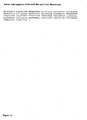
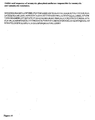
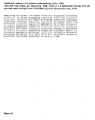
- the microorganism comprises one of the nucleic acid sequences shown in Figures 11 , 12 , 14 , 16 und 18 to 25 or a functional fragment or variant thereof. More preferably, the microorganism may comprise nucleic acids No. 180 to No. 680, preferably No. 230 to No. 640, more preferably No. 310 to No. 550, most preferably No. 350 to No. 510, according to one of the nucleic acid sequences shown in Figures 11 , 12 , 14 , 16 und 18 to 25 , or a functional fragment or variant thereof
- a genetically engineered microorganism according to the invention produces extracellular PHA by extracellularly depositing, e.g. excreting PHA (produced intracellularly) in/into the culture medium.
- the deposition, e.g. excretion of PHA by a microorganism has not been described before in the art.
- the microorganism of the present invention produces large amounts of PHA and deposits a large proportion of its PHA product in the extracellular medium, unlike the microorganisms known in the art.
- Extracellular deposition e.g.
- polypeptide according to the invention also encompasses the terms "peptide”, “protein” or "enzyme”.
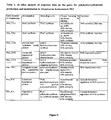
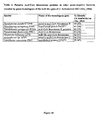
- polypeptides are involved in the metabolism of PHA. Several of these genes are specified in Table 1 as represented by Figure 5 . Such genes encode PHA synthase, poly(3-hydroxyalkanoate) synthase, enyol-CoA hydratase, and PHB synthase.
- fatty acid metabolism e.g. fatty acid synthesis or beta-oxidation (poly(3-hydroxybutyrate)depolymerase, acyl-CoA transferase, reductase, or thioiase)
- beta-oxidation poly(3-hydroxybutyrate)depolymerase
- acyl-CoA transferase acyl-CoA transferase
- reductase or thioiase
- the set of genes required for PHA production is not compromised in a microorganism of the invention.
- Any modification introduced into any of the PHA production genes is preferably intended not to reduce, but to enhance their enzymatic activity.
- the microorganism according to the invention is allowed to provide a higher yield of PHA than microorganisms known in the art.
- a microorganism according to the invention contains at least one modification in at least one gene encoding for a thioesterase which compromises the production of PHA.
- a microorganism according to the invention is modified in a gene encoding a thioesterase which cleaves Acyl-CoA molecules by a thioesterase function, e.g. Acyl-CoA thioesterases.
- a thioesterase function e.g. Acyl-CoA thioesterases.
- Acyl-CoA thioesterases Depending on the specific microorganisms one or more Acyl-CoA thioesterases are acting on the fatty acid metabolism. Acyl-CoA thioesterases were especially studied in E .
- acyl-CoA thioesterase I encoded by tesA gene
- acyl-CoA thioesterase II encoded by tesB gene
- Thioesterase I exhibits specificity towards C12 to C18 acyl-CoA esters ( Bonner, WM et al., 1972, J. Biol. Chem. 247, 3123-3133 ), while thioesterase 11 cleaves C6 to C18 acyl-CoA esters as well as ß-hydroxyacyl-CoA esters of chain length C12 to C18 ( Barnes et al., 1970, The Journal of Biological Chemistry, vol. 245, No. 12, issue of June 25, 3122-3128 ).
- TesA is implicated in chain termination of de novo biosynthesis of fatty acids and mediates acyl-ACP intermediates from the fatty acid de novo biosynthesis pathway to fatty acid ß-oxidation in E . coli ( Klinke, SQ et al., 1999, Appl. Environ. Microbiol. 65: 540-548 ). Up to now, little was known on physiological role of tesB in bacterial metabolism.
- thioesterase II plays an important role in 3-hydroxyalkanoic acid (3-HAA) production ( Zheng, Z et al., 2004, Appl. Environ. Microbiol. 70(7): 3807-3813 ) by cleaving 3-hydroxyacyl-CoA thioester bonds thereby converting them into free 3-HAA.
- various microorganisms express thioesterases which act with a high specific activity on the cleavage of 3-hydroxyacyl-CoAs which forms the building block of PHA synthesis. These thioesterases allow to release free 3-HAAs.
- the conversion to 3-HAA is a reaction which competes with the synthesis of PHA by PHA-synthase, which acts on the same cellular intermediate (namely 3-hydroxyacyl-CoAs).
- PHA-synthase which acts on the same cellular intermediate (namely 3-hydroxyacyl-CoAs).
- the release of free 3-HAAs and the synthesis of PHA are interfering metabolic pathways and (ii) that functional knock-out of the specific thioesterase, herein termed tesB-like thioesterase, provides for deposition of PHA in the extracellular medium.
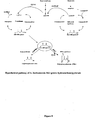
- a functional knock-out mutation in a tesB-like gene was identified to increase the intracellular amount of 3-hydroxyacyl-CoA in a number of microorganism, thereby guiding the metabolism of 3-hydroxyacyl-CoA (as PHA precursor) towards PHA synthesis (see Figure 8 ).
- the present invention is based on the general finding that (knock-out) modifications of thioesterases using (R)-3-OH-acyl-CoA as substrate allow PHA producing microorganisms to deposit PHA in the extracellular medium. While e.g. in Alkanivorax, Pseudomonas putida.
- acyl-CoA thioesterase tesB-like other PHA producing microorganism being based on a slightly different metabolism use other thioesterase, e.g. acyl-CoA thioesterase tesB or tesA, to produce 3-HAA.
- a modification of an thioesterase specifically using (R)-3-OH-acyl-CoA to produce 3-HAA is expected to reduce the thioesterase activity, e.g. of acyl-CoA thioesterase tesB-like, considerably, e.g. by at least 50%, more preferably by at least 60%, even more preferably by at least 80%, more preferably by at least 90%.
- the enzymatic activity of this thioesterase e.g. acyl-CoA thioesterase tesB-like, is completely switched off.
- the present invention also encompasses tesB-like homologs of thieoesterases disclosed herein.
- tesB-like homologs of thioesterases as disclosed herein is meant to include any protein or peptide sequence, occurring in a different microorganism than a tesB- / i / oe homolog of thioesterases as disclosed herein, which preferably show a (significant) homology to this tesB-like thioesterase and display similar or even identical biological function.
- a (significant) homology to a tesB-like thioesterase as shown herein may be easily determined by a skilled person using method well known in the art, e.g. methods for determining sequence identities as also disclosed herein or by activity assays.
- Alkanivorax is characterized by two TesB thioesterases, namely acyl-CoA thioesterase tesB-like specifically acting on (R)-3-OH-acyl-CoA to produce 3-HAA and acyl-CoA thioesterase tesB, which is involved in the production of fatty acids.
- BLAST searches homology searches
- the inventors have screened for other microorganisms showing the same or a similar metabolic structure as in Alkanivorax (with a homologue of the highly specific acyl-CoA thioesterase tesB-like and another thioesterase (tesB)).
- Both types of thioesterases being present in Alcanivorax borkumensis SK2 are also expressed in a number of closely related PHA producing gamma-proteobacteria (e.g, Pseudomonas putida, P. aeruginosa, P. aeruginosa, P. syringae, P. fluorescens, Idiomarina loihiensis. Acinetobacter sp. Caulobacter crescentus).
- the homologues of the Alkanivorax tesB-like thioesterase are named differently in the other microorganisms, e.g.
- tesB-like thioesterase putative acyl-CoA thioesterase II or hypothetical protein.
- tesB like is intended to encompass all these thioesterases of the aforementioned microorganism with deviating nomenclature.
- These homologues of the Alkanivorax tesb-like thioesterase are presented in Table 4 (see Table 4 of Figure 10 ). The presence of two thioesterases in Alkanivorax and the other aforementioned microorganisms, namely the tesB and tesB-lie proteins, is explained by the present inventors by different functions of tesB and tesB-like proteins.
- tesB protein exclusively acts on C6 to C18 acyl-CoA derivatives, whereas the tesB-like protein exclusively cleaves hydroxyacyl-CoAs.
- tesB thioesterase II of PHA-producing Rhodobacter sphaeroides Wieczorek, RA et al., 1996, FEMS Microbiology Letters 135: 23-30 ) is not able to hydrolyze 3-hydroxyacyl-CoA substrates ( Seay, T et al., 1982, Biochemistry May 6, 25(9): 2480-2485 ).
- the microorganism of the present invention typically contains at least one modified gene as outlined above, wherein the modified gene is integrated into its chromosome.
- the modification of at least one of said genes encoding a thioesterase, which interferes in the metabolism which the induction of PHA by degradation of preferably (R)-3-0H-acyl-CoA is achieved by inserting a mutation in the nucleic acid sequence of the gene using genetic engineering techniques.
- genetic engineering techniques or genetically modified means the artificial manipulation of a microorganism of the invention, its gene(s) and/or gene product(s) (polypeptide). Subsequently, the modification (mutation) was confirmed by sequence analysis (see e.g. nucleic acid and amino acid sequences of Fig 11 to 14 and 15 to 33 as well as Examples).
- modification encompasses any manipulation and mutation of a microorganism of the invention, especially of at least one gene of said microorganism of the invention.
- the modification results in an alteration of the nucleic acid sequence(s) of said at least one gene and is typically expressed on the amino acid sequence level accordingly or may be due to a modification in the regulatory regions, e.g. promotor regions of the gene.
- the modification resulting in an alteration of said nucleic acid sequence(s) is carried out by addition, substitution, deletion or insertion of one or more nucleotide(s).
- the modification may encompass one or more additional copies of a gene in a microorganism and/or (complete) deletion of a gene.
- Deletion may also be due to a disruption of the gene by recombination or insertion of e.g. a transposon.
- the modification within a microorganism according to the present invention causes a complete or partial inactivation of at least one gene encoding a thiosesterase which is involved th metabolism interfering with the production of PHA (e.g. by biochemically converting intermediates of the PHA synthesis pathway), preferably a thioesterase, which degrades intermediates of the PHA synthesis pathway, and most preferably a thioesterase, which converts (specifically) (R)-3-OH-acyl-CoA to 3-HAA.
- the microorganism is defective with regard to the TesB-like thioesterase (Alkanivorax) or a homologue thereof (in other microorganisms).
- the defective character may be due to various modification on the genetic level or may be due to posttranscriptional modifications reducing or abolishing the enzymatic activity of the relevant thioesterase.
- modifications in one or more of the genes involved in the PHA synthesis may occur in the microorganism according to the invention. These modifications may be directed to PHA synthase, poly(3-hydroxyalkanoate)synthase, enyol-CoA hydratase, and/or PHB synthase and/or other enzymes involved in the fatty acid metabolism.
- Genes encoding for enoyl-CoA hydratase in Alcanivorax are e.g. ABO 2240; ABO_0526: ABO - 1238; ABO_0987; ABO_0148; or ABO_1645.
- Enoyl-CoA hydratase links beta-oxidation with PHA biosynthesis catalyzing production of 3-hydroxy-acyl-CoA from 5 enoyl-CoA, an intermediate of beta-oxidation.
- 3-hydroxy-acyl-CoA is a precursor of PHA and is incorporated by phaC synthase to PHA.
- PHA synthases There are two genes encoding PHA synthases in Alcanivorax: ABO_22!4 and ABO_1 418. PHA synthases catalyze the crucial last step in biosynthesis of PHA. Generally, the enzymatic activity of these enzymes is enhanced due to the modification(s) introduced.
- the genetically engineered microorganism has at least one modification in at least one gene encoding a thioesterase which is involved in the metabolism interfering with the production of PHA and, optionally, at least one modifications of a gene involved in PHA metabolism.
- the microorganism has only one modification in one gene encoding a thioesterase which is involved in the metabolism interfering with the production of PHA.
- the microorganism has more than one (two or more) modification(s) in the same gene or in two (or more) different genes involved in the relevant metabolism of the microorganism according to the invention.
- the more than one modification causes different results or phenotypes. For example, one of these modifications results in PHA excretion whereas another modification results in PHA overproduction (as mentioned below).
- the microorganism according to the present invention has more than one modification in different genes with differing functions, namely (at least) one modification occurs in (at least) one gene encoding a thioesterase which is involved in the metabolism interfering with the production of PHA, whereas (at least) one other modification occurs in (at least) one gene which is involved in PHA metabolism.
- further genes may be modified, e.g. genes encoding for a protein involved in secretion mechanisms. In such a case, it is also possible that (at least) one of these modifications results in (increased) PHA excretion whereas (at least) one other modification results in PHA overproduction (as mentioned below).
- genes from any source can be broken into pieces and modified in various ways, using microorganisms and their enzymes or transposable elements as molecular tools. It is even possible to construct at least one completely artificial gene which either involved in the metabolism of PHA by a microorganism of the invention (e.g. increasing the amount of PHA produced) and/or involved e.g. in the inhibition of 3-HAA production using genetic engineering techniques.
- the desired gene Once the desired gene has been selected or created, it can be inserted into a microorganism of the invention where it can be expressed to produce the desired gene products.
- a wide range of genetic engineering methods are based on molecular cloning.
- cloning a DNA fragment from essentially any type of genetic element composed of double-stranded DNA is recombined with a vector and introduced into a suitable host.
- cloning vectors include, e.g., plasmids and bacteriophages (e.g., plasmid pBR322, bacteriophage lambda, also see below).
- plasmids and bacteriophages e.g., plasmid pBR322, bacteriophage lambda, also see below.
- the microorganism of the invention may e.g. contain an artificial or native gene (operably coupled to a strong promoter), which expresses a protein of the PHA synthesis pathway in excess, thereby increasing the amount of PHA pathway intermediates.
- the additional gene is inserted into the cell and may be located on a separate DNA molecule, e.g. a vector (e.g. a plasmid) or my be incorporated into the chromosome of the cell.
- Another preferred technique to alter a nucleic acid sequence relates to oligonucleotide site-directed mutagenesis whereby a specific base pair in a gene can be changed to another base pair (see, e.g., Comack B, CURRENT PROTOCOLS IN MOLECULAR BIOLOGY, 8.01-8.5.9, Ausubel F, et al., eds. 1991 ).
- an oligonucleotide whose sequence contains a mutation of interest, is synthesized as described supra.
- This oligonucleotide is then hybridized to a template containing the wild-type nucleic acid sequence.
- the template is a single-stranded template.
- plasmids which contain regions such as the fl intergenic region. This region allows the generation of single-stranded templates when a helper phage is added to the culture harboring the phagemid.
- a DNA-dependent DNA polymerase is used to synthesize the second strand from the oliognucleotide, complementary to the template DNA.
- the resulting product is a heteroduplex molecule containing a mismatch due to the mutation in the oligonucleotide.
- DNA replication by the host cell a mixture of two types of plasmid are present, the wild-type and the newly constructed mutant.
- This technique permits the introduction of convenient restriction sites such that the coding nucleic acid sequence may be placed immediately adjacent to whichever transcriptional or translational regulatory elements are employed by the practitioner.
- the construction protocols utilized for E . coli can be followed to construct analogous vectors for other organisms, merely by substituting, if necessary, the appropriate regulatory elements using techniques well known to skilled artisans.
- transposon mutagenesis a type of random recombination. This procedure usually involves breakage reactions at the ends of the mobile DNA segments embedded in chromosomes and the attachment of those ends at one of many different non-homologous target DNA sites. It does not involve the formation of heteroduplex DNA.
- Transposons can be used as mutagenic agents without the use of chemical or physical agents. Transposons (also called transposable elements) can be integrated in the chromosome (e.g.
- transposon mutagenesis is one containing an antibiotic resistance gene. Clones containing the transposon can then be selected by isolation of antibiotic-resistance colonies.
- Two transposons widely used for mutagenesis are Tn10, which contains a marker for tetracycline resistance, and TnS, which confers neomycin and kanamycin resistance.
- a preferred embodiment relates to a microorganism of the invention, wherein the at least one modification is performed by transposon mutagenesis, preferably based on miniTn5 kanamycin element (miniTn5 Km element) (sequences see Figures 14 and 15 ), more preferably miniTn5 streptomycin element (miniTn Str/Sp element) (see Example 1).
- miniTn5 Km element miniTn5 Km element
- miniTn5 streptomycin element miniTn Str/Sp element
- the microorganism contains a modification, which causes polar effects subsequent to transposon insertion, preferably Tn-5 insertion, on the gene downstream to the modified gene as described below.
- Another useful technique relates to conservative site-specific recombination involving the production of very short heteroduplex joint and therefore requiring a short DNA sequence that is the same on both donor and recipient DNA molecules.
- breakage and joining occur at two special sites, one on each participating DNA molecule.
- the double-stranded molecule obtained is inserted into a cloning host by transformation and mutants are selected.
- DNA integration, DNA excision or DNA inversion can occur.
- Conservative site-specific recombination is especially usable to turn genes on or off.
- the at least one modification of at least one gene encoding a thioesterase which is involved in the metabolism interfering with the production of PHA and optionally a gene encoding a protein involved, in PHA metabolism leads to extracelluar deposition, e.g. excretion, and/or of overproduction of medium or long chain polyhydroxyalkanoate(s) (PHA), produced by the microorganism, preferably into the surrounding medium.
- PHA medium or long chain polyhydroxyalkanoate
- microorganism of the invention typically deposits, e.g. excretes, polyhydroxyalkanoates (PHA), preferably medium or long chain polyhydroxyalkanoates (PHA), preferably into the surrounding natural or culture medium.
- the term “deposition” or “deposited” means that the microorganism releases the (intracellular) produced PHA, preferably into the surrounding medium which is a culture medium containing all necessary components and suitable conditions (nutrients, buffer, pH, temperature) for existence and growth of the microorganism.
- the deposition may be due to an active process of living cells (“excretion") and/or due to the release of PHA from microorganisms dying subsequent to PHA (over)production.
- a typically polyester of hydroxyacid units (PHA) contains side chain hydroxyacid units [(R)-3-hydroxyacid units] from 5 to 16 carbon atoms.
- the term “long chain PHA” is intended to encompass PHA containing at least 12, preferably at least 14 carbon atoms per monomer (molecule), whereas 5 to 12 carbon atoms are intended to be meant by "medium chain PHA”.
- microorganisms having at least one modification of at least one gene encoding a thioesterase which is involved in the metabolism interfering with the production of PHA, wherein the modification leads to a (partially) defective thioesterase; more particularly to a (partially) thioesterase using (R)-3-OH-acyl-CoA as a substrate with high specificity show generally (in addition to deposition of PHA in the culture medium) an overproduction of medium and/or long chain polyhydroxyalkanoates (PHA).
- PHA medium and/or long chain polyhydroxyalkanoates
- overproduction means a PHA production by a microorganism of the invention which is at least 5 times, preferably at least 10 times, more preferably at least 15 times, more preferably at least 25 times, even more preferably at least 40 times, even more preferably at least 50 times, most preferably at least 60 times, most preferably at least 80 times, even most preferably at least 100 times higher than the PHA production of the corresponding wild type microorganism.
- Wild type microorganism means a PHA producing microorganism which is not genetically engineered and which genes are not artificially modified (mutated). Wild type microorganisms produce normal levels of PHA, but do not show deposition propertied.
- the microorganism according to invention may contain at least one modification in a gene encoding a protein which is involved in PHA synthesis.
- This modification may be due to e.g. overexpression of the protein by a modified promoter or another modified regulatory element of the PHA synthesis gene or by additional copies of the PHA synthesis gene (achieved by e.g. transformation of the microorganism) or by a mutation within the coding region of the gene, which increases the activity and/or specificity of the PHA synthesis enzyme.
- microorganism means a large and diverse group of microscopic organisms that exist as single cells or cell dusters of procaryotic (e.g. bacteria, cyanobacteria) and eucaryotic (e.g. protozoa, fungi) microorganisms.
- a microorganism according to the present invention is a PHA producing bacterium.
- the inventive microorganism to be used according to the present invention is preferably selected from the group consisting of PHA producing bacteria Alcanivorax borkumensis, Pseudomonas putida.
- Pseudomomas aeruginosa Pseudomonas syringae, Pseudomonas fluorescens, Idiomarina loihiensis, Acinetobacter sp., Caulobacter crescentus.
- any other PHA producing microorganism e.g., Alcaligenes eutrophus, Alcaligenes latus, Azotobacter vinlandii, Pseudomonas acitophila, Pseudomonas oleovarans, Rhodococcus eutropha, Chromobacterium violaceum, Chromatium vinosum may be used as well.
- An especially preferred microorganism according to the present invention is an oligotrophic bacterium, more preferably halophilic oligotroph bacterium, even more preferably marine oil-degrading bacterium, especially of the strain Alcanivorax, preferably Alcanivorax borkunrensis, more preferably Alcanivorax borkumensis SK2.
- borkumensis is a marine oil-degrading bacterium widely distributed in the aquatic environments. It is a moderately halophilic oligotroph bacterium which is able to use essentially only petroleum hydrocarbons as carbon and energy sources.
- borkumensis is of particular interest because it is mostly found as predominant species in oil polluted sea water (Harayama et al., 1999; Kasai et al., 2001; 2002; Syutsubo et al., 2001) and, accordingly, has key applications for bioremediation purposes.
- oligotrophic marine bacteria including Alcanivorax oil pollution constitutes temporary conditions of nutrient abundance, characterized by high C/N ratio. Under such conditions the microorganism will store excess of carbon for the use as energy source when lack of nitrogen will not more he a limiting factor. These conditions of high C/N ratio indeed favor microbial intracellular storage inclusions.
- borkumensis is a PHA producing bacterium. Further amino acid sequence alignments of the proteins revealed low sequence homology with the proteins involved in PHA synthesis metabolism in other bacterial species (see Fig. 5 , Table 1) suggesting a characteristic metabolic root of PHA production in A . borkumensis.
- a microorganism of the present invention contains at least one modified gene encoding a thioesterase interfering with PHA production, preferably a thioesterase synthesizing 3-HAA encoding a protein involved in the metabolism of PHA synthesis.
- the present invention provides a thioesterase gene modified by at least one modification, rendering the enzymatic activity of the en encoded thioesterase at least partially defective, whereby the gene is preferably acyl-CoA thioesterase tesB-like , more preferably acyl-CoA thioesterase tesB-like of Alcanivorax borkumensis, more preferably acyl-CoA thioesterase lesB-like of Alcanivorax borkumensis SK2 or homologues of this enzyme in other microorganisms, especially as shown by table 4 ( Figure 10 ).
- An especially preferred microorganism of the present invention has been deposited according to the Budapest Treaty on the International Recognition of the Deposit of Microorganisms for the Purpose of Patent Procedure at Deutsche Sammlung von Mikroorganismen und Zellkulturen GmbH (DSMZ), Mascheroder Weg 1b, 38124 Braunschweig, Germany with the identification reference SK2 C9 mutant and the Accession Number DSM17483.
- a microorganism of the present application may comprise a nucleic acid sequence comprising or consisting of one of the nucleic acid sequences shown in Figures 11 , 12 , 16 and 18 to 25 or a functional fragment or variant thereof.
- PHA polyhydroxyalkanoates
- PHA can be isolated from the culture medium by conventional procedures including separating the cells from the medium by centrifugation or filtration, precipitating or filtrating the components (PHA) of the supernatant, followed by purification, e.g., by chromatographic procedures, e.g., ion exchange chromatography, affinity chromatography or similar art recognized procedures (see also Example 4).
- Another aspect of the invention relates to the use of the microorganism as described above for the production and deposition, e.g. excretion, and/or overproduction of medium and/or long chain polyhydroxyalkanoates (PHA).
- PHA medium and/or long chain polyhydroxyalkanoates
- the invention relates to a genetically engineered microorganism as defined in claim 1 having at least one modification in at least one gene encoding for a thioesterase which interferes in the metabolism of the microorganism with the production of PHA, wherein the at least one modification causes extracellular deposition, e.g. excretion, of medium and/or long chain polyhydroxyalkanoate(s) (PHA), produced by the microorganism, preferably in/into the culture medium.
- PHA medium and/or long chain polyhydroxyalkanoate(s)
- Transposon mutagenesis based on miniTn5 Str/Sp element (see Example 1) as well as miniTn5 Km element, was used for introducing the at least one modification into at least one gene encoding for a thioesterase, which interferes in the metabolism of the microorganism with the production of PHA.
- a screening for miniTn5 mutants deficient in biofilm formation as measured by a deficiency of attachment of mutant cells to plastic surfaces, was performed (see Example 2).
- a mutant hereinafter indicated with "C9” or "C9 mutant" was isolated showing a clear deficiency in biofilm formation due to excessive production of secreted polymeric material, later identified as PHA (see Example 4).
- production and extracellular deposition, e.g. excretion, of PHA by applying an inventive genetically engineered microorganism, e.g., as derived from A . borkumensis, as well as intracellular PHA accumulation in form of granula by these microorganisms, especially by A . borkumensis, was confirmed by chemical analysis. It has been analyzed that by use of these genetically engineered microorganism microorganisms, especially A .
- borkumensis grown e.g., on octadecane under conditions of a high C to N ratio, a mixture of different PHA (hydroxyhexanoate, hydroxyoctanoate, hydroxydecanoate, hydroxydodecanoate) can be produced in form of intracellular granula as storage material.
- PHA hydroxyhexanoate, hydroxyoctanoate, hydroxydecanoate, hydroxydodecanoate
- the isolation and characterization of genetically engineered microorganisms having at least one modification in at least one gene encoding for a thioesterase, which interferes in the metabolism of the microorganism with the production of PHA, wherein the at least one modification causes extracellular deposition was achieved.
- This invention will bypass the problem of costly recovery of intracellular produced PHA and will lead to a higher yield of PHA.
- A. borkumensis SK2 was used as the wild type for all experiments.
- the bacteria were grown at 30 °C in modified ONR7a medium (Yakimov et al 1998) where 0.27 g/l of NH 4 Cl was used as the source of nitrogen instead of KNO 3 .
- Pyruvate (2%) or octadecane (1.5%) were used as a carbon and energy source.
- E. coli was grown at 37 °C in Luria-Bertani medium supplemented with streptomycin (50 ⁇ g/ml), chloramphenicol (12,5 ⁇ g/ml), kanamycin (50 ⁇ g/ml), nalidixic acid (10 ⁇ g/ml) as necessary. Plasmids were introduced into A. borkumensis by conjugation with E. coli strain S17-1.
- Transposon mutagenesis was based on miniTn5 Str/Sp element (and miniTn5 Km element) developed by de Lorenzo et al (1998).
- A.borkumensis SK2 was grown at 30 °C on ONR7a media till stationary phase of growth, the cells were centrifuged.
- the donor and helper cultures of E.coli were grown overnight at 37 °C on LB with either streptomycin or chloramphenicol respectively, washed with fresh LB and centrifuged. The pellets of A.borkumensis and E.
- coli donor and helper strains were mixed in proportion 4:1:1 and placed on a membrane filter on a plate with LB agar and salts (Na 2 HPO 4 .2H 2 O, 0.45 g/l; NaNO 3 , 2.5 g/l; NaCl, 11.5 g/l; KCl, 0.38 g/l; CaCl 2 .2H 2 O, 0.7 g/l) and 2% pyruvate as carbon and energy source.
- the plate was incubated for 24 hours at 30°C.
- the cells were then washed with 10mM MgSO 4 and the transconjugants were selected on ONR7a with nalidixic acid and streptomycin.
- mini-Tn5 insertion sites of the strains were determined by inverse PCR as described previously (Ochman et al 1988). Shortly, total DNA of mutants was isolated and digested with ClaI which does not cut mini-Tn5 element. The resulted DNA fragments were circularised and the flanking regions of the inserted mini-Tn5 were amplified with two primers: OTR End (GGC CGC ACT TGT GTA TAA GAG TCA G) and 1 TR End (GCG GCC AGA TCT GAT CAA GAG ACA G). The conditions for the PCR were : 94 °C for 1,5 min; 48 °C for 1 min; 70 °C for 4 min, 30 cycles.
- PCR products were gel purified and used for automate DNA sequencing with BigDye terminators on an ABI Prism 377 sequencer (AP Biosystems).
- primers which would read the flanking regions of the disrupted gene: 1086F (TTA CTG GCT TCG CAG GAA TGG) and IntSM160 (CTT GGC ACC CAG CAT GCG CGA GCA GG9).
- Biofilm formation was quantified by the addition of 2 x 200 ⁇ l of 95% ethanol to each CV-stained microtitre dish well.
- CV-stained biofilm was solubilized in 200 ⁇ l of 95% ethanol, of which 125 ml were transferred to a new polysterene microtitre dish, and the adsorbance was determined with a plate reader at 600 nm (series 700 microplate reader; Cambridge Technology).
- a Str-resistance cassette was excised from Tn5 Str/Sp plasmid (de Lorenzo et al., 1998) and inserted into the unique site inside of the gene.
- the non-functional "putative acetyltransferase" gene was then re-introduced into A.borkumensis SK2 genome by homologous recombination via conjugation.
- To confirm loss of vector associated DNA Str R colonies were then plated in parallel on ONR7A agar containing streptomycin, nalidixic acid and ONT7A agar containing ampicillin to identify isolates that had lost the Amp R marker associated with the TopoCloning vector. The growth characteristics and PHA accumulation of the knockout mutant were measured and compared with the mini-Tn5 mutant and the wild type.
- the bacteria were cultured in ONR7a medium containing either 2% of pyruvate or 1.5% octadecane as carbon sources (storage conditions). The bacteria were incubated in a rotary shaker (100rpm) at 30 °C until late stationary phase of growth. The bacteria were harvested by centrifugation (60' 12,000) and the supernatant and the pellet were collected separately, lyophilized and used for the subsequent chemical analysis of PHA.
- PHA composition approximately 2 mg of PHA were let to react in a small flask with a mixture containing chloroforms:methanol:sulphuric acid (1:0.85:0.15 ml) for 2 h at 100 °C in thermostatically regulated bath.
- This method degrades PHA by methanolysis to its constituent ⁇ -hydroxycarboxylic acid methyl esters (FAME).
- FAME ⁇ -hydroxycarboxylic acid methyl esters
- FAMEs were analyzed with gas chromatograph-mass spectrometer (GC/MS, model Varian 3400CX, Varian Chromatography Systems, Sugar Land, TX, and VG Autospec spectrometer), equipped with a 30 m x 0.25 mm HP-5 (5% diphenyl and 95% dimethylpolysiloxane) fused silica capillary column; flow rate 1 ml/min; sample input temperature to 230 °C at a rate of 8 °C/min; interface temperature 250 °C; ion source temperature 175 °C; electron impact mode 70 eV; scanning from 45 to 450 amu at 0.5 s/scan. The degree of purity of the PHA samples taken for investigation was up to 99.5%. No trace amounts of proteins, carbohydrates and lipids were registered in them. See data in Table 1.
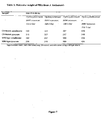
- Example 6 The samples of Example 6 were analyzed in a HPLC system with a Spectra-Physics pump and an Aminex HPX-87H column (Bio-Rad, Hercules, Calif.) under the following conditions: column temperature, 50 °C; gradient, isocratic; mobile phase, 5 mM sulfuric acid; flow rate, 0.5 ml/min; detector, light scattering. See data in Table 2.
- Cells were cultivated in ONR7a containing 1.5% (w/v) octadecane and NH 4 Cl (storage conditions) and were harvested in the stationary phase of growth.
- Cells for scanning electron microscopy were grown in the same conditions with the only difference that octadecane was embedded on Permanox cell culture slides (Nalge Nunc). The cells were shadow-casted according to Golyshina et al. (2000), embedding and ultrathin sections were done as described by Yakimov et al. (1998) and scanning electron microscopy was performed as described by Lünsdorf et al. (2001).
Landscapes
- Chemical & Material Sciences (AREA)
- Life Sciences & Earth Sciences (AREA)
- Health & Medical Sciences (AREA)
- Organic Chemistry (AREA)
- Zoology (AREA)
- Engineering & Computer Science (AREA)
- Wood Science & Technology (AREA)
- Genetics & Genomics (AREA)
- Bioinformatics & Cheminformatics (AREA)
- Microbiology (AREA)
- Biotechnology (AREA)
- Biochemistry (AREA)
- General Engineering & Computer Science (AREA)
- General Health & Medical Sciences (AREA)
- Molecular Biology (AREA)
- Biomedical Technology (AREA)
- Medicinal Chemistry (AREA)
- Chemical Kinetics & Catalysis (AREA)
- General Chemical & Material Sciences (AREA)
- Micro-Organisms Or Cultivation Processes Thereof (AREA)
- Preparation Of Compounds By Using Micro-Organisms (AREA)
- Enzymes And Modification Thereof (AREA)
Description
- The present invention is in the field of biosynthesis of polyhydroxyalkanoates (PHA). The invention relates to a genetically engineered microorganism as defined in
claim 1 having at least one gene involved in the metabolism, preferably in the production, of polyhydroxyalkanoates (PHA). This microorganism is useful in commercial production of polyhydroxyalkanoates. The present invention further relates to a method for the production of polyhydroxyalkanoates (PHA). - Polyhydroxyalkanoates (PHA) are polymers that are biodegradable and biocompatible thermoplastic materials (polyesters of 3-hydroxy fatty acids), produced from renewable resources, with a broad range of industrial and biomedical applications (Williams and Peoples, 1996). Polyhydroxyalkanoates (PHA) are synthesized by a broad range of bacteria and have been extensively studied due to their potential use to substitute conventional petrochemical plastics to protect the environment from harmful effects of plastic wastes.
- PHA can be divided into two groups according to the length of their side chains and their biosynthetic pathways. Those with short side chains, such as PHB, a homopolymer of (R)-3-hydroxybutyric acid units, are crystalline thermoplastics, whereas PHA with long side chains are more elastomeric. The former have been known for about seventy years (Lemoigne and Roukhelman, 1925), whereas the latter materials were discovered relatively recently (deSmet et al., 1983, J. Bacteriol. 154: 870-78). Before this designation, however, PHA of microbial origin containing both (R)-3-hydroxybutyric acid units and longer side chain (R)-3-hydroxyacid units from 5 to 16 carbon atoms had been identified (Wallen, Rohweder, 1974, Environ. Sci. Technol. 8: 576-79). A number of bacteria which produce copolymers of (R)-3-hydroxybutyric acid and one or more long side chain hydroxyacid units containing from 5 to 16 carbon atoms have been identified (Steinbuchel, Wiese, 1992, Appl. Microbiol. Biotechnol. 37: 691 97; Valentin et al., 1992, Appl. Microbiol. Biotechnol. 36: 507-14; Valentin et al., Appl. Microbiol. Biotechnol. 1994, 40: 710-16; Abe et al., 1994, Int. J. Biol. Macromol. 16: 115-19; Lee et al., 1995, Appl. Microbiol. Biotechnol. 42: 901-09; Kato et al., 1996, Appl. Microbiol. Biotechnol. 45: 363-70; Valentin et al., 1996, Appl. Microbiol. Biotechnol. 46: 261-67;
US Patent No. 4,876,331 ). These copolymers can be referred to as PHB-co-HX (wherein X is a 3-hydroxyalkanoate or alkanoate or alkenoate of 6 or more carbons). A useful example of specific two-component copolymers is PHB-co-3-hydroxyhexanoate (PHB-co-3HH) (Brandl et al., 1989, Int. J. Biol. Macromol. 11: 49-55; Amos & McInerey, 1991, Arch. Microbiol. 155: 103-06;US Patent No. 5,292,860 ). - However, although PHAs have been extensively studied because of their potential use as renewable resource for biodegradable thermoplastics and biopolymers (as mentioned above) and have been commercially developed and marketed (Hrabak, O. 1992), their production costs are much higher than those of conventional petrochemical-based plastics, thus presenting a major obstacle to their wider use (Choi and Lee 1997). As described above, many bacteria produce PHA, e.g. Alcaligenes eutrophus, Alcaligenes latus, Azotobacter vinlandii, Pseudomonas acitophila, Pseudomonas oleovarans, Eschericha coli, Rhodococcus eutropha, Chromobacterium violaceum, Chromatium vinosum, Alcanivorax borkumensis etc.. All PHA producing bacteria known in the art produce intracellular PHA and accumulate it in PHA granules (Steinbüchel, 1991). The main aspect which renders PHA production expensive and therefore unfavorable as compared to petrochemical-based plastic, is the difficulty to recover produced PHA from within the bacterial cells where it is accumulated. In order to reduce the total production costs of PHA the development of an efficient recovery process was considered to be necessary generally aiming at cell disruption (Lee 1996) by
- i) an appropriate solvent,
- ii) hypochlorite extraction of PHA and/or
- iii) digestion of non-PHA cellular materials.
- However, at an industrial scale, all methods known in the art require large amounts of chemical reagents and/or enzymes which is an obstacle to reducing the recovery cost. Therefore, alternative strategies for PHA recovery are in urgent need.
- The object of the present invention is to provide a system permitting production of commercially significant levels of PHA while reducing the costs for recovering produced PHA.
- This technical problem is solved by the invention, especially in providing a microorganism that complies with the aforementioned requirements and is applicable in said system.
- The invention relates in its first embodiment to a genetically engineered microorganism having at least one modification in at least one gene encoding a thioesterase which interferes in the metabolism of the microorganism with the production of PHA and competes with enzymes of the PHA synthesis pathway for intermediates of the PHA synthesis pathway, wherein the at least one modification causes extracellular deposition. e.g excretion, and/or overproduction of medium or long chain polyhydroxyalkanoate(s) (PHA), produced by the microorganism, preferably in/ into the culture medium. The at least one modification causes a complete or partial inactivation of the modified gene. Preferably the microorganism comprises one of the nucleic acid sequences shown in
Figures 11 ,12 ,14 ,16 und18 to 25 or a functional fragment or variant thereof. More preferably, the microorganism may comprise nucleic acids No. 180 to No. 680, preferably No. 230 to No. 640, more preferably No. 310 to No. 550, most preferably No. 350 to No. 510, according to one of the nucleic acid sequences shown inFigures 11 ,12 ,14 ,16 und18 to 25 , or a functional fragment or variant thereof - It has been found by the inventors that a genetically engineered microorganism according to the invention produces extracellular PHA by extracellularly depositing, e.g. excreting PHA (produced intracellularly) in/into the culture medium. The deposition, e.g. excretion of PHA by a microorganism has not been described before in the art. Preferably, the microorganism of the present invention produces large amounts of PHA and deposits a large proportion of its PHA product in the extracellular medium, unlike the microorganisms known in the art. Extracellular deposition, e.g. excretion, and overproduction of large amounts PHA into the culture medium was achieved by introducing at least one modification in a gene encoding a thioesterase which interferes with the production of PHA. The term "polypeptide" according to the invention also encompasses the terms "peptide", "protein" or "enzyme".
- Various genes encoding polypeptides are involved in the metabolism of PHA. Several of these genes are specified in Table 1 as represented by
Figure 5 . Such genes encode PHA synthase, poly(3-hydroxyalkanoate) synthase, enyol-CoA hydratase, and PHB synthase. - Other enzymes, which are also involved in the fatty acid metabolism, e.g. fatty acid synthesis or beta-oxidation (poly(3-hydroxybutyrate)depolymerase, acyl-CoA transferase, reductase, or thioiase), may be modified in addition to the thioesterase gene. However, these enzymes do not specifically influence PHA synthesis and are, therefore, less preferred for a modification allowing to increase PHA synthesis.
- Preferably, the set of genes required for PHA production is not compromised in a microorganism of the invention. Any modification introduced into any of the PHA production genes (see above) is preferably intended not to reduce, but to enhance their enzymatic activity. Thereby, the microorganism according to the invention is allowed to provide a higher yield of PHA than microorganisms known in the art.
- A microorganism according to the invention contains at least one modification in at least one gene encoding for a thioesterase which compromises the production of PHA. In particular, a microorganism according to the invention is modified in a gene encoding a thioesterase which cleaves Acyl-CoA molecules by a thioesterase function, e.g. Acyl-CoA thioesterases. Depending on the specific microorganisms one or more Acyl-CoA thioesterases are acting on the fatty acid metabolism. Acyl-CoA thioesterases were especially studied in E. coli possessing two of such enzymes called acyl-CoA thioesterase I (encoded by tesA gene) and acyl-CoA thioesterase II (encoded by tesB gene). Thioesterase I exhibits specificity towards C12 to C18 acyl-CoA esters (Bonner, WM et al., 1972, J. Biol. Chem. 247, 3123-3133), while thioesterase 11 cleaves C6 to C18 acyl-CoA esters as well as ß-hydroxyacyl-CoA esters of chain length C12 to C18 (Barnes et al., 1970, The Journal of Biological Chemistry, vol. 245, No. 12, issue of June 25, 3122-3128). TesA is implicated in chain termination of de novo biosynthesis of fatty acids and mediates acyl-ACP intermediates from the fatty acid de novo biosynthesis pathway to fatty acid ß-oxidation in E. coli (Klinke, SQ et al., 1999, Appl. Environ. Microbiol. 65: 540-548). Up to now, little was known on physiological role of tesB in bacterial metabolism.
- A very recent report described that thioesterase II plays an important role in 3-hydroxyalkanoic acid (3-HAA) production (Zheng, Z et al., 2004, Appl. Environ. Microbiol. 70(7): 3807-3813) by cleaving 3-hydroxyacyl-CoA thioester bonds thereby converting them into free 3-HAA. According to the invention, it was found that various microorganisms express thioesterases which act with a high specific activity on the cleavage of 3-hydroxyacyl-CoAs which forms the building block of PHA synthesis. These thioesterases allow to release free 3-HAAs. However, the conversion to 3-HAA is a reaction which competes with the synthesis of PHA by PHA-synthase, which acts on the same cellular intermediate (namely 3-hydroxyacyl-CoAs). According to the invention, it was found that (i) the release of free 3-HAAs and the synthesis of PHA are interfering metabolic pathways and (ii) that functional knock-out of the specific thioesterase, herein termed tesB-like thioesterase, provides for deposition of PHA in the extracellular medium. A functional knock-out mutation in a tesB-like gene (as described below in more detail) was identified to increase the intracellular amount of 3-hydroxyacyl-CoA in a number of microorganism, thereby guiding the metabolism of 3-hydroxyacyl-CoA (as PHA precursor) towards PHA synthesis (see
Figure 8 ). - As explained above, the present invention is based on the general finding that (knock-out) modifications of thioesterases using (R)-3-OH-acyl-CoA as substrate allow PHA producing microorganisms to deposit PHA in the extracellular medium. While e.g. in Alkanivorax, Pseudomonas putida. Pseudomonas aeruginosa, Pseudomonas syringae, Pseudomonas fluorescens, Acinetobacter sp., Caulobacter crescentus the thioesterase found to act specifically on (R)-3-OH-acyl-CoA, is acyl-CoA thioesterase tesB-like, other PHA producing microorganism being based on a slightly different metabolism use other thioesterase, e.g. acyl-CoA thioesterase tesB or tesA, to produce 3-HAA.
- In any case, a modification of an thioesterase specifically using (R)-3-OH-acyl-CoA to produce 3-HAA is expected to reduce the thioesterase activity, e.g. of acyl-CoA thioesterase tesB-like, considerably, e.g. by at least 50%, more preferably by at least 60%, even more preferably by at least 80%, more preferably by at least 90%. In a particularly preferred embodiment, the enzymatic activity of this thioesterase, e.g. acyl-CoA thioesterase tesB-like, is completely switched off.
- The present invention also encompasses tesB-like homologs of thieoesterases disclosed herein. In the context of the present invention tesB-like homologs of thioesterases as disclosed herein is meant to include any protein or peptide sequence, occurring in a different microorganism than a tesB-/i/oe homolog of thioesterases as disclosed herein, which preferably show a (significant) homology to this tesB-like thioesterase and display similar or even identical biological function. A (significant) homology to a tesB-like thioesterase as shown herein may be easily determined by a skilled person using method well known in the art, e.g. methods for determining sequence identities as also disclosed herein or by activity assays.
- According to the finding of the present invention Alkanivorax is characterized by two TesB thioesterases, namely acyl-CoA thioesterase tesB-like specifically acting on (R)-3-OH-acyl-CoA to produce 3-HAA and acyl-CoA thioesterase tesB, which is involved in the production of fatty acids. By performing homology searches (BLAST searches) in several PHA producing bacteria the inventors have screened for other microorganisms showing the same or a similar metabolic structure as in Alkanivorax (with a homologue of the highly specific acyl-CoA thioesterase tesB-like and another thioesterase (tesB)).
- Both types of thioesterases being present in Alcanivorax borkumensis SK2 are also expressed in a number of closely related PHA producing gamma-proteobacteria (e.g, Pseudomonas putida, P. aeruginosa, P. aeruginosa, P. syringae, P. fluorescens, Idiomarina loihiensis. Acinetobacter sp. Caulobacter crescentus). The homologues of the Alkanivorax tesB-like thioesterase are named differently in the other microorganisms, e.g. as tesB-like thioesterase, putative acyl-CoA thioesterase II or hypothetical protein. However, it is to be understood that the term "tesB like" is intended to encompass all these thioesterases of the aforementioned microorganism with deviating nomenclature. These homologues of the Alkanivorax tesb-like thioesterase are presented in Table 4 (see Table 4 of
Figure 10 ). The presence of two thioesterases in Alkanivorax and the other aforementioned microorganisms, namely the tesB and tesB-lie proteins, is explained by the present inventors by different functions of tesB and tesB-like proteins. Most likely, the tesB protein exclusively acts on C6 to C18 acyl-CoA derivatives, whereas the tesB-like protein exclusively cleaves hydroxyacyl-CoAs. This conclusion was supported by an earlier study of tesB protein showing that unlike similar thioesterase II in E.coli (Barnes et al., supra), tesB thioesterase II of PHA-producing Rhodobacter sphaeroides (Wieczorek, RA et al., 1996, FEMS Microbiology Letters 135: 23-30) is not able to hydrolyze 3-hydroxyacyl-CoA substrates (Seay, T et al., 1982, Biochemistry May 6, 25(9): 2480-2485). - In a preferred embodiment, the microorganism of the present invention typically contains at least one modified gene as outlined above, wherein the modified gene is integrated into its chromosome.
- The modification of at least one of said genes encoding a thioesterase, which interferes in the metabolism which the induction of PHA by degradation of preferably (R)-3-0H-acyl-CoA is achieved by inserting a mutation in the nucleic acid sequence of the gene using genetic engineering techniques. The term "genetically engineered" (or genetically modified) means the artificial manipulation of a microorganism of the invention, its gene(s) and/or gene product(s) (polypeptide). Subsequently, the modification (mutation) was confirmed by sequence analysis (see e.g. nucleic acid and amino acid sequences of
Fig 11 to 14 and15 to 33 as well as Examples). - The term "modification" encompasses any manipulation and mutation of a microorganism of the invention, especially of at least one gene of said microorganism of the invention. Preferably, the modification results in an alteration of the nucleic acid sequence(s) of said at least one gene and is typically expressed on the amino acid sequence level accordingly or may be due to a modification in the regulatory regions, e.g. promotor regions of the gene. Preferably, the modification resulting in an alteration of said nucleic acid sequence(s) is carried out by addition, substitution, deletion or insertion of one or more nucleotide(s). Furthermore, the modification may encompass one or more additional copies of a gene in a microorganism and/or (complete) deletion of a gene. Deletion may also be due to a disruption of the gene by recombination or insertion of e.g. a transposon. The modification within a microorganism according to the present invention causes a complete or partial inactivation of at least one gene encoding a thiosesterase which is involved th metabolism interfering with the production of PHA (e.g. by biochemically converting intermediates of the PHA synthesis pathway), preferably a thioesterase, which degrades intermediates of the PHA synthesis pathway, and most preferably a thioesterase, which converts (specifically) (R)-3-OH-acyl-CoA to 3-HAA. In the most preferred embodiment of the present invention the microorganism is defective with regard to the TesB-like thioesterase (Alkanivorax) or a homologue thereof (in other microorganisms). The defective character may be due to various modification on the genetic level or may be due to posttranscriptional modifications reducing or abolishing the enzymatic activity of the relevant thioesterase.
- Additionally, modifications in one or more of the genes involved in the PHA synthesis may occur in the microorganism according to the invention. These modifications may be directed to PHA synthase, poly(3-hydroxyalkanoate)synthase, enyol-CoA hydratase, and/or PHB synthase and/or other enzymes involved in the fatty acid metabolism. Genes encoding for enoyl-CoA hydratase in Alcanivorax are e.g. ABO 2240; ABO_0526: ABO-1238; ABO_0987; ABO_0148; or ABO_1645. Enoyl-CoA hydratase links beta-oxidation with PHA biosynthesis catalyzing production of 3-hydroxy-acyl-CoA from 5 enoyl-CoA, an intermediate of beta-oxidation. 3-hydroxy-acyl-CoA is a precursor of PHA and is incorporated by phaC synthase to PHA. There are two genes encoding PHA synthases in Alcanivorax: ABO_22!4 and ABO_1 418. PHA synthases catalyze the crucial last step in biosynthesis of PHA. Generally, the enzymatic activity of these enzymes is enhanced due to the modification(s) introduced.
- According to the invention the genetically engineered microorganism has at least one modification in at least one gene encoding a thioesterase which is involved in the metabolism interfering with the production of PHA and, optionally, at least one modifications of a gene involved in PHA metabolism. Thus, it is possible that the microorganism has only one modification in one gene encoding a thioesterase which is involved in the metabolism interfering with the production of PHA. However, it is also possible that the microorganism has more than one (two or more) modification(s) in the same gene or in two (or more) different genes involved in the relevant metabolism of the microorganism according to the invention. In this case, it is possible that the more than one modification causes different results or phenotypes. For example, one of these modifications results in PHA excretion whereas another modification results in PHA overproduction (as mentioned below).
- Moreover, it is also possible that the microorganism according to the present invention has more than one modification in different genes with differing functions, namely (at least) one modification occurs in (at least) one gene encoding a thioesterase which is involved in the metabolism interfering with the production of PHA, whereas (at least) one other modification occurs in (at least) one gene which is involved in PHA metabolism. In addition, further genes may be modified, e.g. genes encoding for a protein involved in secretion mechanisms. In such a case, it is also possible that (at least) one of these modifications results in (increased) PHA excretion whereas (at least) one other modification results in PHA overproduction (as mentioned below).
- Several suitable genetic engineering technique known in the art can be used to generate a microorganism of the invention. In general, genes from any source can be broken into pieces and modified in various ways, using microorganisms and their enzymes or transposable elements as molecular tools. It is even possible to construct at least one completely artificial gene which either involved in the metabolism of PHA by a microorganism of the invention (e.g. increasing the amount of PHA produced) and/or involved e.g. in the inhibition of 3-HAA production using genetic engineering techniques. Once the desired gene has been selected or created, it can be inserted into a microorganism of the invention where it can be expressed to produce the desired gene products. For example, a wide range of genetic engineering methods are based on molecular cloning. In molecular cloning, a DNA fragment from essentially any type of genetic element composed of double-stranded DNA is recombined with a vector and introduced into a suitable host. Commonly employed cloning vectors include, e.g., plasmids and bacteriophages (e.g., plasmid pBR322, bacteriophage lambda, also see below). Molecular cloning can be divided in single steps:
- 1. isolation and fragmentation of the source DNA (e.g. genomic DNA, cDNA, synthetic DNA etc.)
- 2. joining DNA fragments to a cloning vector with DNA ligase and
- 3. introduction and maintenance in a host organism (microorganism), e.g., by transformation.
- Thereby, the microorganism of the invention may e.g. contain an artificial or native gene (operably coupled to a strong promoter), which expresses a protein of the PHA synthesis pathway in excess, thereby increasing the amount of PHA pathway intermediates. As a result, PHA is produced in larger amounts than naturally. The additional gene is inserted into the cell and may be located on a separate DNA molecule, e.g. a vector (e.g. a plasmid) or my be incorporated into the chromosome of the cell.
Another preferred technique to alter a nucleic acid sequence relates to oligonucleotide site-directed mutagenesis whereby a specific base pair in a gene can be changed to another base pair (see, e.g., Comack B, CURRENT PROTOCOLS IN MOLECULAR BIOLOGY, 8.01-8.5.9, Ausubel F, et al., eds. 1991). In this technique an oligonucleotide, whose sequence contains a mutation of interest, is synthesized as described supra. This oligonucleotide is then hybridized to a template containing the wild-type nucleic acid sequence. In a preferred embodiment of this technique, the template is a single-stranded template. Particularly preferred are plasmids which contain regions such as the fl intergenic region. This region allows the generation of single-stranded templates when a helper phage is added to the culture harboring the phagemid. After annealing of the oligonucleotide to the template, a DNA-dependent DNA polymerase is used to synthesize the second strand from the oliognucleotide, complementary to the template DNA. The resulting product is a heteroduplex molecule containing a mismatch due to the mutation in the oligonucleotide. After DNA replication by the host cell a mixture of two types of plasmid are present, the wild-type and the newly constructed mutant. This technique permits the introduction of convenient restriction sites such that the coding nucleic acid sequence may be placed immediately adjacent to whichever transcriptional or translational regulatory elements are employed by the practitioner. The construction protocols utilized for E. coli can be followed to construct analogous vectors for other organisms, merely by substituting, if necessary, the appropriate regulatory elements using techniques well known to skilled artisans. - An especially preferred technique according to the invention relates to transposon mutagenesis, a type of random recombination. This procedure usually involves breakage reactions at the ends of the mobile DNA segments embedded in chromosomes and the attachment of those ends at one of many different non-homologous target DNA sites. It does not involve the formation of heteroduplex DNA. Transposons can be used as mutagenic agents without the use of chemical or physical agents. Transposons (also called transposable elements) can be integrated in the chromosome (e.g. of a bacterium) at various locations and causes mutations (mutations are defined as inherited or artificial changes in the base sequence of nucleic acids and/or in the amino acid sequence of peptides or polypeptides), wherein an insertion within a gene generally results in the loss of gene function. Thus, they provide facile means of creating mutants throughout the chromosome. The most convenient element for transposon mutagenesis is one containing an antibiotic resistance gene. Clones containing the transposon can then be selected by isolation of antibiotic-resistance colonies. Two transposons widely used for mutagenesis are Tn10, which contains a marker for tetracycline resistance, and TnS, which confers neomycin and kanamycin resistance. Accordingly, a preferred embodiment relates to a microorganism of the invention, wherein the at least one modification is performed by transposon mutagenesis, preferably based on miniTn5 kanamycin element (miniTn5 Km element) (sequences see
Figures 14 and15 ), more preferably miniTn5 streptomycin element (miniTn Str/Sp element) (see Example 1). - In a preferred embodiment of the present invention, the microorganism contains a modification, which causes polar effects subsequent to transposon insertion, preferably Tn-5 insertion, on the gene downstream to the modified gene as described below.
- Another useful technique relates to conservative site-specific recombination involving the production of very short heteroduplex joint and therefore requiring a short DNA sequence that is the same on both donor and recipient DNA molecules. In this pathway, breakage and joining occur at two special sites, one on each participating DNA molecule. The double-stranded molecule obtained is inserted into a cloning host by transformation and mutants are selected. Depending on the orientation of the two recombination sites, DNA integration, DNA excision or DNA inversion can occur. Conservative site-specific recombination is especially usable to turn genes on or off.
- As mentioned above, the at least one modification of at least one gene encoding a thioesterase which is involved in the metabolism interfering with the production of PHA and optionally a gene encoding a protein involved, in PHA metabolism leads to extracelluar deposition, e.g. excretion, and/or of overproduction of medium or long chain polyhydroxyalkanoate(s) (PHA), produced by the microorganism, preferably into the surrounding medium. Thus, microorganism of the invention typically deposits, e.g. excretes, polyhydroxyalkanoates (PHA), preferably medium or long chain polyhydroxyalkanoates (PHA), preferably into the surrounding natural or culture medium. According to the invention the term "deposition" or "deposited" means that the microorganism releases the (intracellular) produced PHA, preferably into the surrounding medium which is a culture medium containing all necessary components and suitable conditions (nutrients, buffer, pH, temperature) for existence and growth of the microorganism. The deposition may be due to an active process of living cells ("excretion") and/or due to the release of PHA from microorganisms dying subsequent to PHA (over)production. A typically polyester of hydroxyacid units (PHA) contains side chain hydroxyacid units [(R)-3-hydroxyacid units] from 5 to 16 carbon atoms. The term "long chain PHA" is intended to encompass PHA containing at least 12, preferably at least 14 carbon atoms per monomer (molecule), whereas 5 to 12 carbon atoms are intended to be meant by "medium chain PHA".
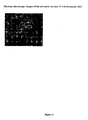
- According to the invention, overproduction of PHA by the microorganism of the invention has been shown (see
Figures 1 ,4 ,6 and7 ), Thus, microorganisms having at least one modification of at least one gene encoding a thioesterase which is involved in the metabolism interfering with the production of PHA, wherein the modification leads to a (partially) defective thioesterase; more particularly to a (partially) thioesterase using (R)-3-OH-acyl-CoA as a substrate with high specificity show generally (in addition to deposition of PHA in the culture medium) an overproduction of medium and/or long chain polyhydroxyalkanoates (PHA). The term "overproduction" means a PHA production by a microorganism of the invention which is at least 5 times, preferably at least 10 times, more preferably at least 15 times, more preferably at least 25 times, even more preferably at least 40 times, even more preferably at least 50 times, most preferably at least 60 times, most preferably at least 80 times, even most preferably at least 100 times higher than the PHA production of the corresponding wild type microorganism. Wild type microorganism means a PHA producing microorganism which is not genetically engineered and which genes are not artificially modified (mutated). Wild type microorganisms produce normal levels of PHA, but do not show deposition propertied. In addition, the microorganism according to invention may contain at least one modification in a gene encoding a protein which is involved in PHA synthesis. This modification may be due to e.g. overexpression of the protein by a modified promoter or another modified regulatory element of the PHA synthesis gene or by additional copies of the PHA synthesis gene (achieved by e.g. transformation of the microorganism) or by a mutation within the coding region of the gene, which increases the activity and/or specificity of the PHA synthesis enzyme. - In general, the term "microorganism" means a large and diverse group of microscopic organisms that exist as single cells or cell dusters of procaryotic (e.g. bacteria, cyanobacteria) and eucaryotic (e.g. protozoa, fungi) microorganisms. A microorganism according to the present invention is a PHA producing bacterium. The inventive microorganism to be used according to the present invention is preferably selected from the group consisting of PHA producing bacteria Alcanivorax borkumensis, Pseudomonas putida. Pseudomomas aeruginosa, Pseudomonas syringae, Pseudomonas fluorescens, Idiomarina loihiensis, Acinetobacter sp., Caulobacter crescentus. Nevertheless, any other PHA producing microorganism, e.g., Alcaligenes eutrophus, Alcaligenes latus, Azotobacter vinlandii, Pseudomonas acitophila, Pseudomonas oleovarans, Rhodococcus eutropha, Chromobacterium violaceum, Chromatium vinosum may be used as well.
- An especially preferred microorganism according to the present invention is an oligotrophic bacterium, more preferably halophilic oligotroph bacterium, even more preferably marine oil-degrading bacterium, especially of the strain Alcanivorax, preferably Alcanivorax borkunrensis, more preferably Alcanivorax borkumensis SK2. A. borkumensis is a marine oil-degrading bacterium widely distributed in the aquatic environments. It is a moderately halophilic oligotroph bacterium which is able to use essentially only petroleum hydrocarbons as carbon and energy sources. A. borkumensis is of particular interest because it is mostly found as predominant species in oil polluted sea water (Harayama et al., 1999; Kasai et al., 2001; 2002; Syutsubo et al., 2001) and, accordingly, has key applications for bioremediation purposes. For oligotrophic marine bacteria including Alcanivorax oil pollution constitutes temporary conditions of nutrient abundance, characterized by high C/N ratio. Under such conditions the microorganism will store excess of carbon for the use as energy source when lack of nitrogen will not more he a limiting factor. These conditions of high C/N ratio indeed favor microbial intracellular storage inclusions. Correspondingly, carbon excess allows PHA producing bacterial species to be accumulated in form of polyhydroxyalkanoate (PHA) granules (Steinbüchel 1991). Previously, it was described that A. borkumensis was not able to produce PHA (Yakimov et all. 1998). However, culturing conditions were not favorable for PHA accumulation due to relatively high nitrogen concentration in the culture medium (5g/l). According to the invention, the complete genome of A. borkumensis was sequenced. Functional analysis of A. borkumensis genome revealed the presence of genes encoding proteins for polyhydroxyalkanoate (PHA) production (as shown by homology studies with other organisms). Therefore, according to the invention, it was shown that A. borkumensis is a PHA producing bacterium. Further amino acid sequence alignments of the proteins revealed low sequence homology with the proteins involved in PHA synthesis metabolism in other bacterial species (see
Fig. 5 , Table 1) suggesting a characteristic metabolic root of PHA production in A. borkumensis. - As mentioned above, a microorganism of the present invention contains at least one modified gene encoding a thioesterase interfering with PHA production, preferably a thioesterase synthesizing 3-HAA encoding a protein involved in the metabolism of PHA synthesis. The present invention provides a thioesterase gene modified by at least one modification, rendering the enzymatic activity of the en encoded thioesterase at least partially defective, whereby the gene is preferably acyl-CoA thioesterase tesB-like, more preferably acyl-CoA thioesterase tesB-like of Alcanivorax borkumensis, more preferably acyl-CoA thioesterase lesB-like of Alcanivorax borkumensis SK2 or homologues of this enzyme in other microorganisms, especially as shown by table 4 (
Figure 10 ). - An especially preferred microorganism of the present invention has been deposited according to the Budapest Treaty on the International Recognition of the Deposit of Microorganisms for the Purpose of Patent Procedure at Deutsche Sammlung von Mikroorganismen und Zellkulturen GmbH (DSMZ), Mascheroder Weg 1b, 38124 Braunschweig, Germany with the identification reference SK2 C9 mutant and the Accession Number DSM17483.
- A microorganism of the present application may comprise a nucleic acid sequence comprising or consisting of one of the nucleic acid sequences shown in
Figures 11 ,12 ,16 and18 to 25 or a functional fragment or variant thereof. - Another aspect of the invention relates to a method for producing polyhydroxyalkanoates (PHA) comprising the following steps:
- cultivating a microorganism or a cell of the invention and
- recovering polyhydroxyalkanoates (PHA) from the culture medium.
- Standard methods for cultivating a microorganism or a cell under suitable conditions are well known in the art See, e.g. below under Examples, Materials and also Sambrook J, Maniatis T (2001) supra.
- PHA can be isolated from the culture medium by conventional procedures including separating the cells from the medium by centrifugation or filtration, precipitating or filtrating the components (PHA) of the supernatant, followed by purification, e.g., by chromatographic procedures, e.g., ion exchange chromatography, affinity chromatography or similar art recognized procedures (see also Example 4).
- Another aspect of the invention relates to the use of the microorganism as described above for the production and deposition, e.g. excretion, and/or overproduction of medium and/or long chain polyhydroxyalkanoates (PHA).
- In summary, the invention relates to a genetically engineered microorganism as defined in
claim 1 having at least one modification in at least one gene encoding for a thioesterase which interferes in the metabolism of the microorganism with the production of PHA, wherein the at least one modification causes extracellular deposition, e.g. excretion, of medium and/or long chain polyhydroxyalkanoate(s) (PHA), produced by the microorganism, preferably in/into the culture medium. Transposon mutagenesis, based on miniTn5 Str/Sp element (see Example 1) as well as miniTn5 Km element, was used for introducing the at least one modification into at least one gene encoding for a thioesterase, which interferes in the metabolism of the microorganism with the production of PHA. Subsequently, a screening for miniTn5 mutants deficient in biofilm formation, as measured by a deficiency of attachment of mutant cells to plastic surfaces, was performed (see Example 2). A mutant (hereinafter indicated with "C9" or "C9 mutant") was isolated showing a clear deficiency in biofilm formation due to excessive production of secreted polymeric material, later identified as PHA (see Example 4). - According to the invention production and extracellular deposition, e.g. excretion, of PHA, by applying an inventive genetically engineered microorganism, e.g., as derived from A. borkumensis, as well as intracellular PHA accumulation in form of granula by these microorganisms, especially by A. borkumensis, was confirmed by chemical analysis. It has been analyzed that by use of these genetically engineered microorganism microorganisms, especially A. borkumensis, grown e.g., on octadecane under conditions of a high C to N ratio, a mixture of different PHA (hydroxyhexanoate, hydroxyoctanoate, hydroxydecanoate, hydroxydodecanoate) can be produced in form of intracellular granula as storage material. Beyond that, the isolation and characterization of genetically engineered microorganisms having at least one modification in at least one gene encoding for a thioesterase, which interferes in the metabolism of the microorganism with the production of PHA, wherein the at least one modification causes extracellular deposition, was achieved. This invention will bypass the problem of costly recovery of intracellular produced PHA and will lead to a higher yield of PHA.
- The following Figures and Examples are thought to illustrate the invention. They should not be constructed to limit the scope of the invention thereon.
-
-
Figure 1 shows PHA production in wild type A. borkumensis SK2 (hereinafter also referred to as "SK2" or ,,SK2 wild type") and mutant A. borkumensis SK2 (hereinafter also referred to as "C9 mutant") on either 2% pyruvate or 1.5% octadecane as carbon source. Cells and corresponding supernatants were checked for PHA content, indicated in g/l. The production of Pha was in the following order: C9 mutant supernatant octadecane > C9 mutant supernatant pyruvate > SK2 wild type cells + supernatant octadecane > SK2 wild type cells + supernatant pyruvate. The amount of Pha isolated from C9 mutant cells grown on either pyruvate or octadecane was too low for quantification (third and fifth probe in the diagram). C9 mutants grown on pyruvate produced almost 10 times more PHA than SK2 wild type grown on pyruvate. Moreover, C9 mutants grown on octadecane produced almost 10 times more PHA than SK2 wild type grown on octadecane. Therefore, according to the invention, a genetically engineered microorganism is provided that deposites, e.g. excretes, and overproduces PHA. -
Figure 2 shows electron microscopic images of ultrathin sections of A. borkumensis SK2 strain. Cells were cultivated in ONR7a containing 1.5% (w/v) octadecane and 0.27 g/l of NH4Cl (storage conditions) and harvested in stationary phase of growth. These ultrathin sections prepared from the cells confirmed presence of intracellular granula. -
Figure 3 shows scanning electron microscopy images (Fig. 3A and 3B ) and electron microscopic images (Fig. 3C and D ) of SK2 wild type cells and C9 mutant cells, grown on Permanox hydrophobic slides covered with octadecane.Fig. 3A and 3C show results for SK2 wild type cells.Fig. 3B and 3D show results for C9 mutant cells confirming the production of extracellular PHA and the excretion of PHA into the surrounding culture medium, respectively. Although both images contain rod-shaped cells, it is obvious that C9 mutant cells are embedded in extracellular network of some deposited, e.g. excreted material, whereas the SK2 wild type cells are not. These results support the hypothesis that C9 mutant strain is involved in the production of some polymeric extracellular material proved by chemical analysis to be PHA. Further EM images of shadow casting technique of SK2 wild type and C9 mutant cells grown on octadecane in storage conditions provided additional support for the hypothesis that the PHA produced by the mutant strain is deposited, e.g. excreted in the culture medium. The EM pictures for the shadow-casted cells of the C9 mutant strain revealed the perforations on the surface of the C9 mutant cells which are probably involved in excretion of intracellular produced PHA. -
Figure 4 shows in a diagram the comparison of growth characteristics of C9 mutants and SK2 wild type. As can be seen, C9 mutant did have growth characteristics comparable with SK2 wild type when pyruvate was used as a carbon source. In case of octadecane C9 mutant even showed better growth compared with SK2 wild type. SK2 wild type had some deficiency in growth on octadecane in these conditions compared with C9 mutant. The explanation for this could be that the high intracellular PHA content inhibits cell division of SK2 wild type. Cell counts also show the domination in growth on octadecane for C9 mutant (data not shown) which under the conditions of high C/N ratio releases the synthesized PHA into the medium and is still able for cell division. In conclusion, the microorganism according to the invention is absolutely usable for biotechnological, commercial and industrial purposes. -
Figure 5 shows Table 1 representing the results of in silico analysis of sequences data of the genes for polyhydroxyalkanoate production and mobilization in A. borkumensis SK2. -
Figure 6 shows Table 2 representing the analysis of PHA and its composition.
To confirm that the substance deposited, e.g. excreted by wild type A. borkumensis SK2 (hereinafter also referred to as "SK2" or "SK2 wild type") and mutant A. borkumensis SK2 (hereinafter also referred to as "C9 mutant") is in fact PHA, further chemical analysis were conducted and revealed the presence of PHA. The cells were grown on either pyruvate or octadecane as carbon and energy source in PHA accumulating conditions (PHA storage conditions), i.e., high C/N ratio (C:N ratio 100:1) and were separated from the medium. Cells and corresponding supernatants were checked for PHA content. Pha from C9 mutant and SK2 wild type cells or supernatants were purified by sodium hypochlorite digestion and subsequent solvent extraction with acetone/diethylether (Solaiman et al., 1999). The production of Pha was in the following order:- C9 mutant supernatant octadecane > C9 mutant supernatant pyruvate >
- SK2 wild type cells + supernatant octadecane > SK2 wild type cells + supernatant pyruvate.
The amount of Pha isolated from C9 mutant cells grown on either pyruvate or octadecane was too low for quantification (see alsoFigure 1 ). SK2 wild type cells grown on octadecane produced almost 3 times more PHA compared with the cells grown on pyruvate (18 mg/l vs. 6.5 mg/l). The amount of PHA isolated from C9 mutant supernatant grown on octadecane produced 22 times more PHA compared with the cells grown on pyruvate (2,960 mg/l vs. 134 mg/l).
As shown in Table 2, the amount of PHA produced by SK2 wild type was rather low (6.5 mg/l on pyruvate and 18mg/l on octadecane) and was dependent on the carbon source with more PHA produced on alkanes. The PHA produced by SK2 wild type was consisting of hydroxyhexanoate (C6), hydroxyoctanoate (C8), hydroxydecanoate (C10) and hydroxydodecanoate (C12) with hydroxydecanoate as the dominant monomer compound. Thus, it was shown despite previous findings (Yakimov et al. 1998) that under conditions of high C/N ratio Alcanivorax borkumensis SK2 strain produces a mixture of polyhydroxyalkanoates mostly from alkanes. Moreover, later growth of A. borkumenis SK2 under high C/N ratio indeed showed granula visible under light microscope consisting of PHA (see alsoFig. 2 ).
Table 2 also shows that PHA of SK2 wild type were accumulated inside the cells (no extracellular production), whereas the all PHA produced by C9 mutant was deposited, e.g. excreted to the medium cells (extracellular production). The monomer repeat-unit composition and molecular mass of the polymer (from all the batches) were determined by gas chromatography / mass spectroscopic analysis and gel permeation chromatography, respectively. -
Figure 7 shows Table 3 representing the molecular weights of PHA from A. borkumensis. Results for C9 mutant supernatants growing on pyruvate and octadecane and for SK2 wild type growing on pyruvate and octadecane are shown. The A. borkumensis SK2 polymer had repeat unit composition ranging from C6 to C12. The molecular weight of the polymers varied from 180,000 to 540,000 Da (up to 2500 monomers per molecule). This corresponds to a monomer repetition of 1,027 to 2,246 units, depending on the polymer. Similar composition and/or molecular weight was observed for C9 mutant, although the PHA molecular weights of the components were slightly lower in SK2 wild type cells. The molecular weight of the monomers also was not dependent on the carbon source. These data strongly suggest that the mutation affected the way of PHA production, but not the composition of the produced polymer. -
Figure 8 shows a scheme of the hypothetical pathway of PHA biosynthesis in A. borkumensis SK2 grown on hydrocarbons/pyruvate (Modified version of Klinke et al. 1999 Hypothetical pathway of MCL PHA biosynthesis of PHA polymerase- and thioesterase I-containing E. coli JMU193 grown on gluconate). Hydrocarbons are degraded via terminal oxidation step by consequent action of a monooxygenase, alcohol dehydrogenase and aldehyde dehydrogenase resulting in free fatty acids which are activated by acyl-CoA synthase and enter b-oxidation in form of acyl-CoA. The (S)-3-OH-acyl-CoA produced in beta oxidation are isomerised into (R)-3-OH-acyl-CoAs by action of an isomerase. Pyruvate enters fatty acid biosynthesis in form of acetyl-CoA. Acyl-ACP produced in fatty acid biosynthesis is converted to free fatty acids by action of tes A and tes B. Tree fatty acids produced in fatty acid biosynthesis are activated by acyl-CoA synthase and entered beta-oxidation cycle. (R)-3-OH-acyl-CoAs produced in beta-oxidation are used for biosynthesis for either 3-hydroxyalkanoic acids (3-HAA) via action of tesB-like acyl-CoA thioesterase and/or polyhydroxyalkanoate acids (PHA) via action of phaC snthase. The mutation in the tesB-like acyl-CoA thioesterase abolishes production of 3-HAA and results in uncontrolled production of PHA.
Thus, in other words, according to the invention, the mutation of tesB-like gene abolishing release of free 3-HAA from 3-HAA-CoA, would contribute to increasing the pool of the PHA precursor 3-hydroxyacyl-CoA, leading to uncontrolled PHA formation and its following excretion. -
Figure 9 shows the operon structure of the two genes tesB-like and "putative acetyltransferase" forming a single operon.
The determination of the site of insertion of the transposon (see Example 1) revealed that mini-Tn5 is inserted in acyl-CoA thioesterase tesB-like gene (Abo_1044), which is one of the genes which encodes a protein which interferes with metabolism/production/synthesis of PHA, and likely to disrupt function of the gene, thus inactivating the gene. The tesB-like gene is followed by a downstream 1-acyl-sn-glycerol-3-phosphate acyltransferase "putative acetyltransferase" gene (Abo_1045). The ORF of "putative acetyltransferase" gene comprises 645 bp, exhibiting an overlap of 3 bp with the last codon of the preceding ORF of tesB-like gene and is predicted to encode a 214-amino-acid protein with a predicted molecular mass of 23.7 kDa. TesB-like gene and "putative acetyltransferase" gene are arranged in one operon as shown inFigure 9 .
To assess that the PHA excretion and overproduction phenotype, as described herein, was the result of the modification (mutation) in a gene encoding a protein which interferes with metabolism/production/synthesis of PHA, especially tesB-like acyl-CoA thioesterase gene, and to estimate the possibility of polar effect of the transposon mutation on the downstream gene, a site-directed mutant of the downstream gene was constructed and its phenotype compared with C9 mutant (see Example 3). To construct the knockout mutant the wild type copy of this gene was amplified and cloned in a vector that does not replicate in A.borkumensis. A Str resistance cassette was inserted into a unique site inside of this gene and the resulted construct was used to replace the wild type copy of the gene. The results were confirmed by light microscopy and chemical analysis of the culture medium (data not shown). They showed that the knockout mutant was deposited, e.g. excreted PHA in the medium which means that the mini-Tn5 insertion had polar effect on "putative acetyltransferase" gene. Therefore, taking into account the known positive contribution of tesB-like into PHA production, the PHA excretion and overproduction phenotype can beside tesB-like inactivation also be caused by a polar effect of the Tn-5 insertion on the downstream "putative acetyltransferase" gene. -
Figure 10 represents Table 4 showing acyl-CoA thioesterase proteins of several closely related gram-negative bacteria encoded by genes homologous of the tesB-like gene of Alcanivorax borkumensis SK2 (Abo_1044). These data are results of corresponding homology searches (BLAST searches) of putative acyl-CoA thioesterase proteins. As can be seen from Table 4 the tesB-like protein nominated differently, namely as putative acyl-CoA thioesterase II, hypothetical protein or tesB-like thioesterase. Bacteria of these searches were the species Pseudomonas putida KT2440, Pseudomonas aeruginosa PA01, Pseudomonas syringae pv B728a, Pseudomonas fluorescens PfO-1, Idiomarina loihiensis L2TR, Acinetobacter sp. ADP1 and Caulobacter crescentus CB15. However, it is to be understood that the terms "tesB-like", "tesB-like gene" and/or "tesB-like protein" and description thereof is intended to relate to all these mentioned different nominations. The proteins presented in Table 4 show a high homology to the tesB-like gene of A. borkumensis SK2 (Abo_1044). -
Figure 11 shows nucleic acid sequences of the two genes tesB-like (Abo_1044). (underlined) and "putative acetyltransferase" (Abo_1045) forming a single operon. The first line is the region upstream from the tesB-like gene. The start codon of the tesB-like gene is atg and marked in bold letters. The Tn5 insertion took place at position 527 within tesB-like gene and marked with //. Downstream from the tesB-like gene is the "putative acetyltransferase" gene. There is overlap in 3 bp of the end of tesB-like (Abo_1044), and the start site of "putative acetyltransferase" (Abo_1045). -
Figure 12 shows the nucleic acid sequence of tesB-like of A.borkumensis. The Tn5 insertion took place at position 557.and is indicated with //. Start and stop codons are marked in bold letters. -
Figure 13 shows the amino acid sequence of tesB-like of A.borkumensis. -
Figure 14 shows the nucleic acid sequence of miniTn5 Km element. -
Figure 15 shows the amino acid sequence of neomycin phosphotransferase responsible for neomycin and kanamycin resistance. -
Figure 16 shows the nucleic acid sequence of "putative acetyltransferase" of A.borkumensis. Start and stop codons are marked in bold letters. -
Figure 17 shows the amino acid sequence of "putative acetyltransferase" of A. borkumensis. -
Figure 18 shows the nucleic acid sequence of putative acyl-CoA thiosterase II of Pseudomonas putida KT2440. -
Figure 19 shows the nucleic acid sequence of hypothetical protein PA2871 of Pseudomonas aeruginosa PA01. -
Figure 20 shows the nucleic acid sequences of acyl-CoA thioesterase II, putative, of Pseudomonas syringae pv B728a. -
Figure 21 shows the nucleic acid sequence of acyl-CoA thiosterase of Pseudomonas fluorescens PfO-1. -
Figure 22 shows the nucleic acid sequence of tesB-like acyl-CoA thiosterase of Idiomarina loihiensis L2TR. -
Figure 23 shows the nucleic acid sequence of putative acyl-CoA thioesterase II of Acinetobacter sp. ADP1. -
Figure 24 shows the nucleic acid sequence of hypothetical protein CC2472 ofCaulobacter crescentus CB 15. -
Figure 25 shows the nucleic acid sequence of hypothetical protein ELI0992 of Erythrobacter litoralis HTCC2594. -
Figure 26 shows the amino acid sequence of putative acyl-CoA thiosterase II of Pseudomonas putida KT2440. -
Figure 27 shows the amino acid sequence of hypothetical protein PA2871 of Pseudomonas aeruginosa PA01. -
Figure 28 shows the amino acid sequence of acyl-CoA thioesterase II, putative, of Pseudomonas syringae pv B728a. -
Figure 29 shows the amino acid sequence of acyl-CoA thiosterase of Pseudomonas fluorescens PfO-1. -
Figure 30 shows the amino acid sequence of tesB-like acyl-CoA thiosterase of Idiomarina loihiensis L2TR. -
Figure 31 shows the amino acid sequence of putative acyl-CoA thioesterase II of Acinetobacter sp. ADP1. -
Figure 32 shows the amino acid sequence of hypothetical protein CC2472 of Caulobacter crescentus CB15. -
Figure 33 shows the amino acid sequence of hypothetical protein ELI0992 of Erythrobacter litoralis HTCC2594. - A. borkumensis SK2 was used as the wild type for all experiments. The bacteria were grown at 30 °C in modified ONR7a medium (Yakimov et al 1998) where 0.27 g/l of NH4Cl was used as the source of nitrogen instead of KNO3. Pyruvate (2%) or octadecane (1.5%) were used as a carbon and energy source.
- E. coli was grown at 37 °C in Luria-Bertani medium supplemented with streptomycin (50µg/ml), chloramphenicol (12,5µg/ml), kanamycin (50µg/ml), nalidixic acid (10µg/ml) as necessary. Plasmids were introduced into A. borkumensis by conjugation with E. coli strain S17-1.
- Transposon mutagenesis was based on miniTn5 Str/Sp element (and miniTn5 Km element) developed by de Lorenzo et al (1998). A.borkumensis SK2 was grown at 30 °C on ONR7a media till stationary phase of growth, the cells were centrifuged. The donor and helper cultures of E.coli were grown overnight at 37 °C on LB with either streptomycin or chloramphenicol respectively, washed with fresh LB and centrifuged. The pellets of A.borkumensis and E. coli donor and helper strains were mixed in proportion 4:1:1 and placed on a membrane filter on a plate with LB agar and salts (Na2HPO4.2H2O, 0.45 g/l; NaNO3, 2.5 g/l; NaCl, 11.5 g/l; KCl, 0.38 g/l; CaCl2.2H2O, 0.7 g/l) and 2% pyruvate as carbon and energy source. The plate was incubated for 24 hours at 30°C. The cells were then washed with 10mM MgSO4 and the transconjugants were selected on ONR7a with nalidixic acid and streptomycin.
- mini-Tn5 insertion sites of the strains were determined by inverse PCR as described previously (Ochman et al 1988). Shortly, total DNA of mutants was isolated and digested with ClaI which does not cut mini-Tn5 element. The resulted DNA fragments were circularised and the flanking regions of the inserted mini-Tn5 were amplified with two primers: OTR End (GGC CGC ACT TGT GTA TAA GAG TCA G) and 1 TR End (GCG GCC AGA TCT GAT CAA GAG ACA G). The conditions for the PCR were : 94 °C for 1,5 min; 48 °C for 1 min; 70 °C for 4 min, 30 cycles. The PCR products were gel purified and used for automate DNA sequencing with BigDye terminators on an ABI Prism 377 sequencer (AP Biosystems). To determine the precise site of transposon mutation for the tesB-like mutant we designed primers which would read the flanking regions of the disrupted gene: 1086F (TTA CTG GCT TCG CAG GAA TGG) and IntSM160 (CTT GGC ACC CAG CAT GCG CGA GCA GG9).
- In order to screen for mini-Tn5 mutants defective in biofilm formation, an assay described by O'Toole and Kolter (1998) was employed. This assay scores the ability of bacterial cells to adhere to the wells of 96-well microtitre dishes made of polyvinylchloride (PVC) plastic. The ONR7A medium (100 µl/well) was inoculated using replicator device. After inoculation, plates were incubated at 30 °C for 48 h, then 25 µl of a 1% solution of crystal violet (CV) was added to each well (this dye stains the cells but not the PVC), the plates were incubated at room temperature for approximately 15 min, rinsed thoroughly and repeatedly with water and scored for the formation of a biofilm.
- Biofilm formation was quantified by the addition of 2 x 200 µl of 95% ethanol to each CV-stained microtitre dish well. CV-stained biofilm was solubilized in 200 µl of 95% ethanol, of which 125 ml were transferred to a new polysterene microtitre dish, and the adsorbance was determined with a plate reader at 600 nm (series 700 microplate reader; Cambridge Technology).
- To analyze, if the phenotype observed with strain C9 was the result of tesB-like inactivation or of polar effect of the mini-transposon mutation on the downstream gene, a targeted "putative acetyltransferase" mutant was constructed. A 769 bp fragment of the downstream "putative acetyltransferase" gene was amplified from A.borkumensis SK2 DNA with primers 1087F: (CAGTGATGGCTATGGTCAAAG) and 1087R: (CTTTGATCAGTCCGGCAAAAC) and cloned into pCR 2.1 TOPO Cloning vector (Invitrogen) containing ampicillin resistance gene for counterselection. A Str-resistance cassette was excised from Tn5 Str/Sp plasmid (de Lorenzo et al., 1998) and inserted into the unique site inside of the gene. The non-functional "putative acetyltransferase" gene was then re-introduced into A.borkumensis SK2 genome by homologous recombination via conjugation. To confirm loss of vector associated DNA StrR colonies were then plated in parallel on ONR7A agar containing streptomycin, nalidixic acid and ONT7A agar containing ampicillin to identify isolates that had lost the AmpR marker associated with the TopoCloning vector. The growth characteristics and PHA accumulation of the knockout mutant were measured and compared with the mini-Tn5 mutant and the wild type.
- To analyze the PHA released into the medium by the wild type A.borkumensis SK2 and by the mutant strain, the bacteria were cultured in ONR7a medium containing either 2% of pyruvate or 1.5% octadecane as carbon sources (storage conditions). The bacteria were incubated in a rotary shaker (100rpm) at 30 °C until late stationary phase of growth. The bacteria were harvested by centrifugation (60' 12,000) and the supernatant and the pellet were collected separately, lyophilized and used for the subsequent chemical analysis of PHA.
- Aliquots of the cells and of the supernatant were washed with ice-cold water and dried overnight at 80 °C under vacuum. Polyhydroxyalkanoates (PHA) were purified from the cells by sodium hypochlorite digestion and subsequent solvent extraction with acetone/diethylether (Solamain et al., 1999).
- To determine the PHA composition, approximately 2 mg of PHA were let to react in a small flask with a mixture containing chloroforms:methanol:sulphuric acid (1:0.85:0.15 ml) for 2 h at 100 °C in thermostatically regulated bath. This method degrades PHA by methanolysis to its constituent β-hydroxycarboxylic acid methyl esters (FAME). After the reaction, 0.5 ml of destilled water was added and the tube was shaken for 1 min. After phase separation, the organic phase was removed, transferred into a vial and used for analysis. FAMEs were analyzed with gas chromatograph-mass spectrometer (GC/MS, model Varian 3400CX, Varian Chromatography Systems, Sugar Land, TX, and VG Autospec spectrometer), equipped with a 30 m x 0.25 mm HP-5 (5% diphenyl and 95% dimethylpolysiloxane) fused silica capillary column; flow
rate 1 ml/min; sample input temperature to 230 °C at a rate of 8 °C/min;interface temperature 250 °C; ion source temperature 175 °C; electron impact mode 70 eV; scanning from 45 to 450 amu at 0.5 s/scan. The degree of purity of the PHA samples taken for investigation was up to 99.5%. No trace amounts of proteins, carbohydrates and lipids were registered in them. See data in Table 1. - The samples of Example 6 were analyzed in a HPLC system with a Spectra-Physics pump and an Aminex HPX-87H column (Bio-Rad, Hercules, Calif.) under the following conditions: column temperature, 50 °C; gradient, isocratic; mobile phase, 5 mM sulfuric acid; flow rate, 0.5 ml/min; detector, light scattering. See data in Table 2.
- Cells were cultivated in ONR7a containing 1.5% (w/v) octadecane and NH4Cl (storage conditions) and were harvested in the stationary phase of growth. Cells for scanning electron microscopy were grown in the same conditions with the only difference that octadecane was embedded on Permanox cell culture slides (Nalge Nunc). The cells were shadow-casted according to Golyshina et al. (2000), embedding and ultrathin sections were done as described by Yakimov et al. (1998) and scanning electron microscopy was performed as described by Lünsdorf et al. (2001).
-
- Abe et al. 1994. Int. J. Biol. Macromol, 16: 115-19;
- Amos & McInerey, 1991, Arch. Microbiol. 155: 103-06
- Bagdasarian, M., R. Lurz, B. Ruckert, F. C. H. Franklin, M. M. Bagdasarian,J. Frey, and K. N. Timmis. 1981. Gene 16:237-247.
- Brandl et al., 1989, Int. J. Biol. Macromol. 11: 49-55
- Cho, H., and J. E. Cronan, Jr. 1995. J. Biol. Chem. 270:4216-4219.
- Choi J., Lee., S.Y. 1997. Bioprocess Eng. 17: 335-342.
- Cooper, C.L., Jackowski, S., and Rock C.O. 1987. J.Bacteriology, Feb., p. 605-611.
- Cronan, J. E., Jr. 1968. J. Bacteriol. 95:2054-2061.
- de Lorenzo V, Herrero M, Jakubzik U, Timmis KN. 1990. J Bacteriology Nov; 172(11):6568-72.
- deSmet et al. 1983. J. Bacteriol. 154: 870-78
- Harayama, S., Kishira, H., Kasai, Y., and Shutsubo, K. 1999. J. Mol. Microbiol. Biotechnol. 1 : 63-70.
- Hocking, P. J. & Marchessault, R. H. 1994. Biopolyesters. Regulation of phasin and granule formation Chemistry and Technology of Biodegradable Polymers, pp. 48-96. Edited by G. J. L. Griffin. London: Chapman & Hall.
- Holmes, P.A., Lim, G.B. 1990. Separation process.
US patent 4,910,145 . - Hrabak, O. 1992. FEMS Microbiol. Rev. 103:251-256.
- Huijberts, G. N. M., T. C. de Rijk, P. de Waard, and G. Eggink. 1995. J. Bacteriol. 176:1661-1666
- Huijberts, G. N. M., G. Eggink, P. de Waard, G. W. Huisman, and B. Witholt. 1992. Appl. Environ. Microbiol. 58:536-544.
- Golyshina, O.V., Pivovarova, T.A., Karavaiko, G-I., Kondrat'eva, T.F., Moore, E.R.B., Abraham, W.-R., Lunsdorf, H., Timmis, K.N., Yakimov, M.M., Golyshin, P.N. 2000. Int. J. System. Evol. Microbiol. 50: 997-1006.
- Kasai, Y., Kishira, H., Syutsubo, K., and Harayama, S. 2001. Environ. Microbiol. 3: 246-255.
- Kasai, Y., Kishira, H., Sasaki, T., Syutsubo, K., Watanabe, K., and Harayama, S. 2002. Environ. Microbiol.4:141-147.
- Kato et al., 1996, Appl. Microbiol. Biotechnol. 45: 363-70
- Klinke, S., Q. Ren, B. Witholt, and B. Kessler. 1999. Appl. Environ. Microbiol. 65:540-548
- Lai, JS., W.M.Philbrick, and H.C.Wu. 1980. J.Biol.Chem. 255:5384-5387.
- Lai, J.S., and H.C. Wu. 1980. J.Bacteriology 144:451-453.
- Lee et al., 1995, Appl. Microbiol. Biotechnol. 42: 901-09
- Lee, S.Y. 1996. Biotechnol. Bioeng. 49: 1-14.
- Lünsdorf. H., Strömpl, C., Osborn, A.M., Moore, E.R.B., Abraham, W.-R., Timmis, K.N. 2001. Methods Enzymol., 336: 317-331.
- Madison, L.L., and Huisman, G.W. 1999. Microbiol. Mol. Biol. Rev. 63:21-53.
- Ochman H., Gerber AS, Hartl DL. 1988. Genetics. Nov, 120 (3):621-3.
- Poirrier, Y., Ventre, G., Caldelari, D. 1999. Plant Physiology, December, Vol. 121, pp. 1359-1366.
- O'Toole, R. Kolter. 1999. Molecular Microbiology. .
- Rock, C.O., Goelz, S.E., and Cronan, J.E., Jr. 1981. J. Biol. Chem. 256, 736-742.
- Rock, C.O., and S.Jackowski. 1982. J.Biol. Chem. 257: 10759-10765.
- Steinbuchel, A. "Polyhydroxyalkanoic acids", in: Biomaterials, D. Byrom, Ed., MacMillan Publishers, Basingstoke 1991, p. 123 ff.
- Steinbuchel and Wiese. 1992. Appl. Microbiol. Biotechnol. 37: 691 97
- Steinbuchel and Valentin. 1995. FEMS Microbiol. Lett. 28: 219-28).
- Syutsubo, K., Kishira, H., and Harayama, S. 2001. Environ. Microbiol. 3: 371-379.
- Valentin et al. 1992. Appl. Microbiol. Biotechnol, 36: 507-14.
- Valentin et al. 1994. Appl. Microbiol. Biotechnol, 40: 710-16;
- Valentin et al, 1996, Appl. Microbiol. Biotechnol. 46: 261-67
- Wallen and Rohweder. 1974. Environ. Sci. Technol, 8: 576-79
- Williams and Peoples. 1996. Chemtech26, 38-44
- Yakimov MM, Golyshin PN, Lang S, Moore ER, Abraham WR, Lunsdorf H, Timmis KN. 1998. Int. J. Syst. Bacteriol. Apr; 48:339-48.
-
- <110> GBF - Gesellschaft für Biotechnologische Forschung
- <120> Extracellular polyhydroxyalkanoates produced by genetically engineered microorganisms
- <130> GB01P004WO
- <140>
<141> 2006-07-18 - <160> 29
- <170> PatentIn Ver. 2.1
- <210> 1
<211> 1547
<212> DNA
<213> Alcanivorax borkumensis - <220>
<223> Nucleotide sequences of the genes tesB-like (Abo_1044) and plsC (Abo_1045) consisting an operon in Alcanivorax borkumensis and inserted Tn5 (marked with n) (fig. 11 ) - <220>
<221> misc_feature
<222> (1)..(60)
<223> Region upstream from the tesB-like gene - <220>
<221> misc_feature.
<222> (61)..(63)
<223> Start codon of tesB-like gene - <220>
<221> gene
<222> (61)..(847)
<223> tesB-like acyl-coA thioesterase (Abo_1044) (position 588 excluded) - <220>
<221> repeat_unit
<222> (588)
<223> Each repeated n represents at least one nuclotide of the inserted nucleic acid sequence of Tn5 - <220>
<221> misc_feature
<222> (844)..(847)
<223> 4 nucleotides overlap of the two genes - <220>
<221> misc_feature
<222> (844)..(846)
<223> Start codon of plsc - <220>
<221> gene
<222> (844)..(1547)
<223> plsc (Abo_1045) - <400> 1


- <210> 2
<211> 787
<212> DNA
<213> Alcanivorax borkumensis - <220>
<223> Nucleotide sequence of tesB-like acyl-CoA thioesterase from Alcanivorax borkumensis (Abo_1044). The inserted transposon Tn5 is indicated with n (fig. 12 ) - <220>
<221> misc_feature
<222> (1)..(3)
<223> Start cordon - <220>
<221> misc_feature
<222> (785)..(787)
<223> Stop codon - <220>
<221> repeat_unit
<222> (558)
<223> Each repeated n represents at least one nucleotide of the inserted nucleic acid sequence of Tn5. - <400> 2

- <210> 3
<211> 261
<212> PRT
<213> Alcanivorax borkumensis - <220>
<223> Amino acid sequence of tesB-like acyl-coA thioesterase (figure 13 ) - <400> 3

- <210> 4
<211> 2356
<212> DNA
<213> Artificial - <220>
<223> Nucleic acid sequence of miniTn5 Km element, coding repeats functional in transposition and neomycin phosphotransferase (figure 14 ) - <220>
<221> misc_feature
<222> (1)..(19)
<223> Tn5 I end, functional in transposition - <220>
<221> misc_feature
<222> (2338)..(2356),
<223> Tn5 O end, functional in transposition - <400> 4

- <210> 5
<211> 264
<212> PRT
<213> Artificial - <220>
<223> Amino acid sequence of neomycin phosphotransferase responsible for neomycin and kanamycin resistance, (figure 15 ) - <400> 5


- <210> 6
<211> 645
<212> DNA
<213> Alcanivorax borkumensis - <220>
<223> Nucleotide sequence of putative acyltransfrase plsc (Abo_1045) (figure 16 ) - <220>
<221> misc_feature
<222> (1)..(3)
<223> Start codon - <220>
<221> misc_feature
<222> (643)..(645)
<223> Stop codon - <400> 6


- <210> 7
<211> 214
<212> PRT
<213> Alcanivorax borkumensis - <220>
<223> Amino acid sequence of putative acyltransferase plsc (figure 17 ) - <400> 7

- <210> 8
<211> 798
<212> DNA
<213> Pseudomonas putida KT2440 - <220>
<223> Nucleotide sequence of putative acyl-CoA thioesterase II (GeneID:1045294) (figure 18 ) - <400> 8

- <210> 9
<211> 798
<212> DNA
<213> Pseudomonas aeruginosa PA01 - <220>
<223> Nucleotide sequence of hypothetical protein PA2871 (GeneID:882599) (figure 19 ) - <400> 9

- <210> 10
<211> 798
<212> DNA
<213> Pseudomonas syringae pv B728a - <220>
<223> Nucleotide sequence of acyl-coA thioesterase II, putative of p. syringae pv B728a (GeneID:3367571) (figure 20 ) - <400> 10


- <210> 11
<211> 795
<212> DNA
<213> Pseudomonas fluorescens Pfo-1 - <220>
<223> Nucleotide sequence of acyl-CoA thioesterase (locus_tag=pflu02003109) (figure 21 ) - <400> 11

- <210> 12
<211> 795
<212> DNA
<213> Idiomarina loihiensis L2TR - <220>
<223> Nucleotide sequence of tesB-like acyl-COA thioesterase (locus_tag="IL0656") (figure 22 ) - <400> 12

- <210> 13
<211> 804
<212> DNA
<213> Acinetobacter sp. ADP1 - <220>
<223> Nucleotide sequence of putative acyl-coA. thioesterase II (locus_tag="ACIAD0341) (figure 23 ) - <400> 13


- <210> 14
<211> 789
<212> DNA
<213> Caulobacter crescentus CB15 - <220>
<223> Nucleotide sequence of hypothetical protein CC2472 (GeneID:943632) (figure 24 ) - <400> 14
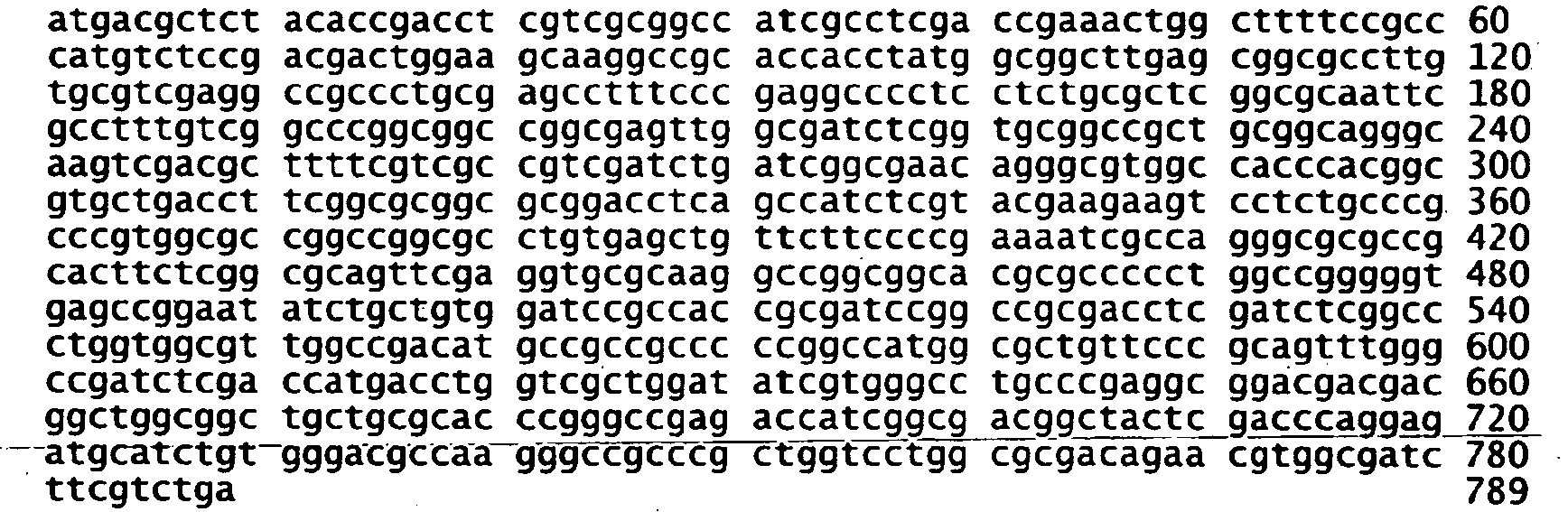
- <210> 15
<211> 777
<212> DNA
<213> Erythrobacter litoralis HTCC2594 - <220>
<223> Nucleotide sequence of hypothetical protein ELI0992 (locus_tag=ELI0992) (figure 25 ), - <400> 15

- <210> 16
<211> 265
<212> PRT
<213> Pseudomonas putida KT2440 - <220>
<223> Amino acid sequence of putative acyl-coA thioesterase II (protein_id="NP_744457.1) (figure 26 ) - <400> 16

- <210> 17
<211> 265
<212> PRT
<213> Pseudomonas aeruginosa PA01 - <220>
<223> Amino acid sequence of hypothetical protein PA2871 (protein_id="NP_251561.1) (figure 27 ) - <400> 17

- <210> 18
<211> 265
<212> PRT
<213> Pseudomonas syringae pv B728a - <220>
<223> Amino acid sequence of acyl-COA thioesterase II, putative of p. syringae pv B728a (protein_id="YP_235138.1) (figure 28 ) - <400> 18

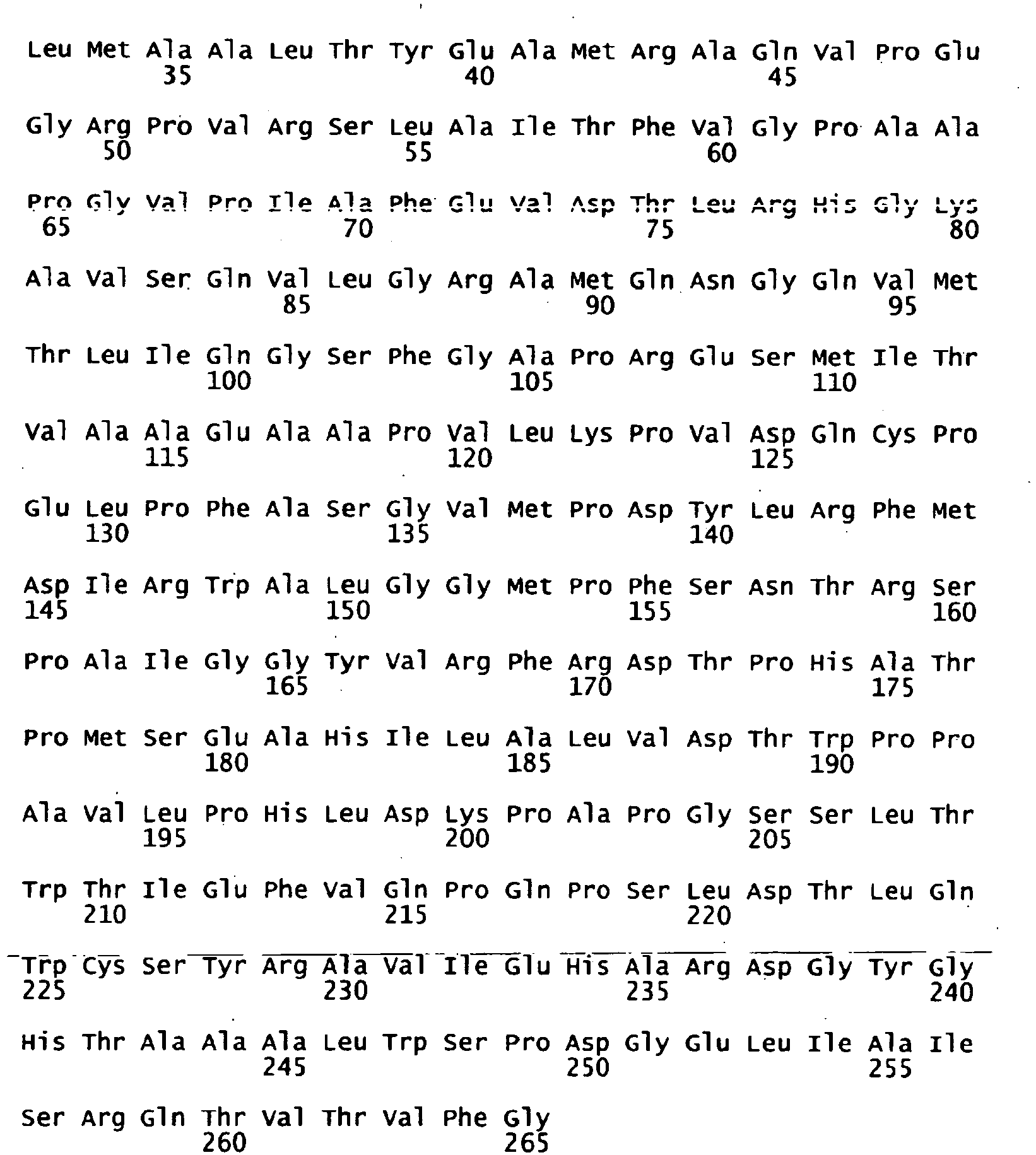
- <210> 19
<211> 264
<212> PRT
<213> Pseudomonas fluorescens Pfo-1 - <220>
<223> Amino acid sequence of acyl-COA thioesterase (protein_id="ZP_00264181.1) (figure 29 ) - <400> 19


- <210> 20
<211> 264
<212> PRT
<213> Idiomarina loihiensis L2TR - <220>
<223> amino acid sequence of tesB-like acyl-COA thioesterase (protein_id=AAv81497.1) (figure 30 ) - <400> 20


- <210> 21
<211> 267
<212> PRT
<213> Acinetobacter sp. ADP1 - <220>
<223> Amino acid sequence of putative acyl-CoA thioesterase II (protein_id=CAG67294.1) (figure 31 ) - <400> 21


- <210> 22
<211> 262
<212> PRT
<213> caulobacter crescentus CB15 - <220>
<223> Amino acid sequence of hypothetical protein CC2472 (protein_id="NP_421275.1) (figure 32 ) - <400> 22


- <210> 23
<211> 258
<212> PRT
<213> Erythrobacter litoralis HTCC2594 - <220>
<223> Amino acid sequence of hypothetical protein ELI0992 (protein_id=ZP_00375750.1) (figure 33 ) - <400> 23

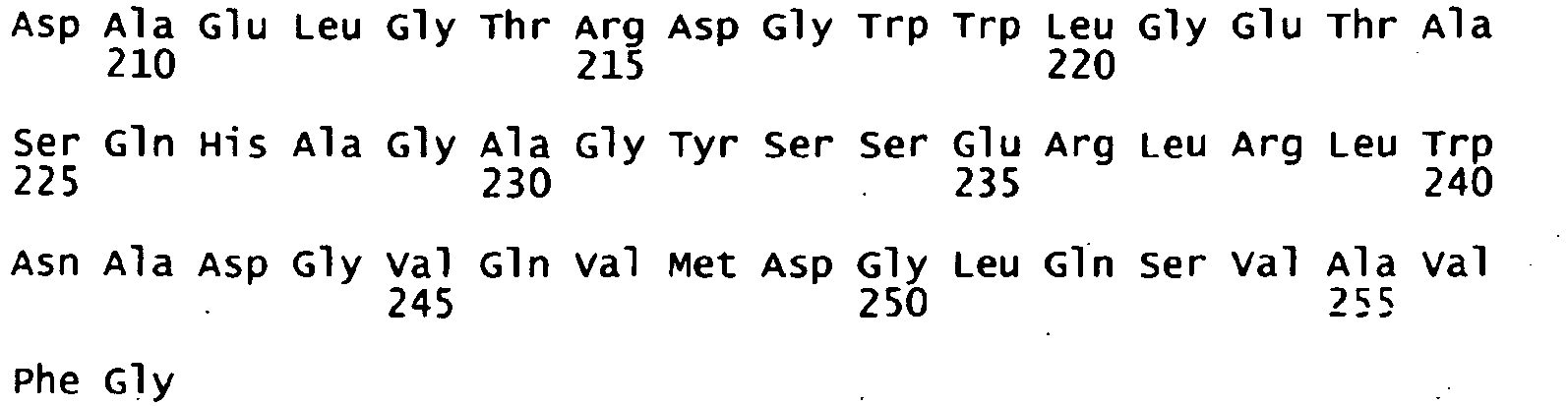
- <210> 24
<211> 25
<212> DNA
<213> Artificial Sequence - <220>
<223> Description of Artificial sequence: Primer (OTR End) used in example 1 - <400> 24
ggccgcactt gtgtataaga gtcag 25 - <210> 25
<211> 25
<212> DNA
<213> Artificial sequence - <220>
<223> Description of Artificial Sequence: Primer (1TR End) used in example 1 - <400> 25
gcggccagat ctgatcaaga gacag 25 - <210> 26
<211> 21
<212> DNA
<213> Artificial Sequence - <220>
<223> Description of Artificial Sequence: Primer 1086F used in example 1 - <400> 26
ttactggctt cgcaggaatg g 21 - <210> 27
<211> 26
<212> DNA
<213> Artificial Sequence - <220>
<223> Description of Artificial sequence: Primer IntSM160 used in example 1 - <400> 27
cttggcaccc agcatgcgcg agcagg 26 - <210> 28
<211> 21
<212> DNA
<213> Artificial sequence - <220>
<223> Description of Artificial sequence: Primer 1087F used in example 3 - <400> 28
cagtgatggc tatggtcaaa g 21 - <210> 29
<211> 21
<212> DNA
<213> Artificial sequence - <220>
<223> Description of Artificial Sequence: Primer 1087R used in example 3 - <400> 29
ctttgatcag tccggcaaaa c 21
Claims (14)
- A genetically engineered microorganism having at least one modification in at least one gene encoding a thioesterase, which interferes in the metabolism of the microoganism with the production of PHA and said thioesterase competes with enzymes of the PHA synthesis pathway for intermediates of the PHA synthesis pathway,
wherein the at least one modification causes a complete or partial inactivation of the modified gene and causes extracellular deposition and/or overproduction of medium or long-chain polyhydroxyalkanoate(s) PHA produced by the microorganism. - The genetically engineered microorganism of claim 1, wherein the thioesterase acts on (R)-3-OH-acyl-CoA as a substrate.
- The microorganism of claim 1, wherein the thioesterase is acyl-CoA thioesterase tesB-like.
- The genetically engineered microorganism of any of claims 1 to 3, wherein the enzyme is encoded by a nucleic acid sequence comprising a nucleic acid sequence as shown in any of Figures 11 and 12, or a homolog thereof.
- The genetically engineered microorganism of claim 1, wherein the enzyme is encoded by a nucleic acid sequence comprising a nucleic acid sequence as shown in any of Figures 14, 16 and 18 to 25, or a homolog thereof, wherein the native nucleic acid sequence is modified by the at least one modification.
- The genetically engineered microorganism of any of claims 1 to 5, wherein the at least one modification is effected by a transposon insertion selected from the group consisting of Tn5 and Tn10 transposons, preferably by a Tn5 insertion, and more preferably causes polar effects on the gene downstream to the modified gene.
- The genetically engineered microorganism of any of claims 1 to 6, wherein the at least one modification is effected by transposon mutagenesis, preferably based on miniTn5 Km element, more preferably based on miniTn5 Str/Sp element.
- The genetically engineered microorganism of any of claims 1 to 7, wherein the gene is integrated into the chromosome of the microorganism.
- The genetically engineered microorganism of claim 1, wherein the extracellular deposition or overproduction of polyhydroxyalkanoate(s) PHA, results in a PHA production which is at least 5 times, preferably at least 10 times, more preferably at least 15 times, more preferably at least 25, times, even more preferably at least 40 times, even more preferably at least 50 times, most preferably at least 60 times, most preferably at least 80 times, even most preferably at least 100 times higher than the PHA production of the corresponding wild type microorganism.
- The genetically engineered microorganism of any of claims 1 to 9, wherein the microorganism is selected from the group consisting of Alcanivorax borkumensis, Pseudomonas putida, Pseudomonas aeruginosa, Pseudomonas syringae, Pseudomonas fluorescens, Pseudomonas acitophila, Pseudomonas oleovarans, Idiomarina loihiensis, Acinetobacter sp., Caulobacter crescentus, Alcaligenes eutrophus, Alcaligenes latus, Azotobacter vinlandii, Rhodococcus eutropha, Chromobacterium violaceum, Chromatlum vlnosum.
- The genetically engineered microorganism of any of claims 1 to 10, wherein the microorganism is selected from the group consisting of Alcanivorax, preferably Alcanivorax borkumensis, more preferably Alcanivorax borkumensis SK2.
- A method for producing polyhydroxyalkanoates (PHA) comprising the following steps:a. cultivating a microorganism of any of claims 1 to 11 andb. recovering polyhydroxyalkanoates (PHA) from the culture medium.
- Use of a microorganism of any of claims 1 to 11 for the production and extracellular deposition of medium and/or long chain polyhydroxyalkanoates (PHA).
- Use of a microorganism of any of claims 1 to 11 for the overproduction of medium and/or long chain polyhydroxyalkanoates (PHA).
Priority Applications (1)
| Application Number | Priority Date | Filing Date | Title |
|---|---|---|---|
| EP06763024.4A EP1913135B9 (en) | 2005-08-09 | 2006-08-09 | Extracellular polyhydroxyalkanoates produced by genetically engineered microorganisms |
Applications Claiming Priority (3)
| Application Number | Priority Date | Filing Date | Title |
|---|---|---|---|
| EP05017308A EP1752532A1 (en) | 2005-08-09 | 2005-08-09 | Extracellular polyhydroxyalkanoates produced by genetically engineered microorganisms |
| PCT/EP2006/007888 WO2007017270A1 (en) | 2005-08-09 | 2006-08-09 | Extracellular polyhydroxyalkanoates produced by genetically engineered microorganisms |
| EP06763024.4A EP1913135B9 (en) | 2005-08-09 | 2006-08-09 | Extracellular polyhydroxyalkanoates produced by genetically engineered microorganisms |
Publications (3)
| Publication Number | Publication Date |
|---|---|
| EP1913135A1 EP1913135A1 (en) | 2008-04-23 |
| EP1913135B1 true EP1913135B1 (en) | 2013-04-10 |
| EP1913135B9 EP1913135B9 (en) | 2014-04-16 |
Family
ID=35285615
Family Applications (2)
| Application Number | Title | Priority Date | Filing Date |
|---|---|---|---|
| EP05017308A Withdrawn EP1752532A1 (en) | 2005-08-09 | 2005-08-09 | Extracellular polyhydroxyalkanoates produced by genetically engineered microorganisms |
| EP06763024.4A Expired - Lifetime EP1913135B9 (en) | 2005-08-09 | 2006-08-09 | Extracellular polyhydroxyalkanoates produced by genetically engineered microorganisms |
Family Applications Before (1)
| Application Number | Title | Priority Date | Filing Date |
|---|---|---|---|
| EP05017308A Withdrawn EP1752532A1 (en) | 2005-08-09 | 2005-08-09 | Extracellular polyhydroxyalkanoates produced by genetically engineered microorganisms |
Country Status (9)
| Country | Link |
|---|---|
| US (2) | US8623632B2 (en) |
| EP (2) | EP1752532A1 (en) |
| JP (1) | JP2009504146A (en) |
| CN (1) | CN101297030A (en) |
| AU (1) | AU2006278136A1 (en) |
| CA (1) | CA2615305A1 (en) |
| DK (1) | DK1913135T3 (en) |
| SG (1) | SG178628A1 (en) |
| WO (1) | WO2007017270A1 (en) |
Families Citing this family (29)
| Publication number | Priority date | Publication date | Assignee | Title |
|---|---|---|---|---|
| BRPI0821508B1 (en) | 2007-12-11 | 2018-12-26 | Synthetic Genomics, Inc. | Cell culture comprising a recombinant cyanobacterium of synechococcus elongatus species and method for converting inorganic carbon to fatty acids. |
| JP2011024503A (en) * | 2009-07-27 | 2011-02-10 | Toyota Motor Corp | Recombinant microorganism and method for producing aliphatic polyester using the same |
| WO2011063304A1 (en) * | 2009-11-20 | 2011-05-26 | Opx Biotechnologies, Inc. | Methods, systems, and compositions for microbial bio-production of biomolecules using syngas components, or sugars, as feedstocks |
| JP5637711B2 (en) | 2010-03-25 | 2014-12-10 | トヨタ自動車株式会社 | Recombinant microorganism and method for producing aliphatic polyester using the same |
| JP5288007B2 (en) * | 2010-07-14 | 2013-09-11 | トヨタ自動車株式会社 | Mutant polyhydroxyalkanoate synthase gene and method for producing aliphatic polyester using the same |
| EP2655615A4 (en) * | 2010-12-23 | 2014-04-23 | Exxonmobil Res & Eng Co | ACYL-ACP PROKARYOTIC THIOESTERASES FOR THE PRODUCTION OF FATTY ACIDS IN GENETICALLY MODIFIED MICROORGANISMS |
| WO2013048557A1 (en) | 2011-09-27 | 2013-04-04 | Exxonmobil Research And Engineering Company | Acyl-acp wax ester synthases |
| EP2882843A4 (en) * | 2012-08-10 | 2016-04-06 | Opx Biotechnologies Inc | Microorganisms and methods for the production of fatty acids and fatty acid derived products |
| US20140073022A1 (en) * | 2012-09-10 | 2014-03-13 | Wisconsin Alumni Research Foundation | Production of polyhydroxyalkanoates with a defined composition from an unrelated carbon source |
| WO2014091991A1 (en) * | 2012-12-12 | 2014-06-19 | 昭和電工株式会社 | Method for manufacturing butanediols, method for production of microorganisms for manufacturing butanediols, and microorganisms |
| WO2014096276A1 (en) * | 2012-12-21 | 2014-06-26 | Carbios | Preparation of long-chain length poly(hydroxyfatty acids) |
| US20150057465A1 (en) | 2013-03-15 | 2015-02-26 | Opx Biotechnologies, Inc. | Control of growth-induction-production phases |
| EP2818561A1 (en) | 2013-06-25 | 2014-12-31 | Dritte Patentportfolio Beteiligungsgesellschaft mbH & Co. KG | Utilization of the novel, environmental isolates Pseudomonas sp. IPB-B26 and N-128 for the efficient high yield production of mcl/lcl-PHAs |
| EP2818562A1 (en) | 2013-06-25 | 2014-12-31 | Dritte Patentportfolio Beteiligungsgesellschaft mbH & Co. KG | Utilization of the novel, environmental isolate Pseudomonas sp. IPB-A36 for the efficient production of mcl/lcl-PHAs and specialty-PHAs |
| CN106795483A (en) | 2013-07-19 | 2017-05-31 | 嘉吉公司 | Microorganisms and methods for the production of fatty acids and fatty acid-derived products |
| US11408013B2 (en) | 2013-07-19 | 2022-08-09 | Cargill, Incorporated | Microorganisms and methods for the production of fatty acids and fatty acid derived products |
| US10266852B2 (en) | 2013-12-06 | 2019-04-23 | Alliance For Sustainable Energy, Llc | Lignin conversion to fuels, chemicals and materials |
| CN103757019B (en) * | 2013-12-23 | 2015-12-30 | 青岛蔚蓝生物集团有限公司 | The recombinant expression system of a kind of promotor and expression foreign protein |
| US10017792B2 (en) | 2014-07-18 | 2018-07-10 | Alliance For Sustainable Energy, Llc | Biomass conversion to fuels and chemicals |
| EP2993228B1 (en) | 2014-09-02 | 2019-10-09 | Cargill, Incorporated | Production of fatty acid esters |
| CN104671367B (en) * | 2015-01-20 | 2016-08-10 | 河南城建学院 | An algaecide that effectively removes algae and allows algae to settle |
| WO2018144701A2 (en) | 2017-02-02 | 2018-08-09 | Cargill Incorporated | Genetically modified cells that produce c6-c10 fatty acid derivatives |
| US11541105B2 (en) | 2018-06-01 | 2023-01-03 | The Research Foundation For The State University Of New York | Compositions and methods for disrupting biofilm formation and maintenance |
| US11136601B2 (en) | 2018-08-02 | 2021-10-05 | Alliance For Sustainable Energy, Llc | Conversion of S-lignin compounds to useful intermediates |
| CN109266597B (en) * | 2018-09-30 | 2021-07-16 | 清华大学 | A kind of method of microorganism producing short-medium-long-chain polyhydroxyalkanoic acid copolymer |
| CN111909952B (en) * | 2020-08-04 | 2024-04-26 | 北京大学深圳研究院 | Method for constructing knockout acyl-CoA thioesterase gene of Alkanophage and its application |
| CN113046287A (en) * | 2021-03-23 | 2021-06-29 | 辽宁大学 | Construction method and application of PHA synthase N-terminal deletion mutant |
| IT202100017333A1 (en) | 2021-07-01 | 2023-01-01 | Irides S R L | PRODUCTION OF BIOMATERIALS FROM FOOD WASTE PRODUCTS BY ANTARCTIC BACTERIAL STRAIN |
| US20250092429A1 (en) * | 2021-12-24 | 2025-03-20 | Cj Cheiljedang Corporation | 5'utr variant sequence of gene encoding phosphoenolpyruvate carboxylase, and uses thereof |
Family Cites Families (6)
| Publication number | Priority date | Publication date | Assignee | Title |
|---|---|---|---|---|
| SG119177A1 (en) | 1994-12-09 | 2006-02-28 | Imp College Innovations Ltd | Identification of genes |
| US6194168B1 (en) * | 1997-09-30 | 2001-02-27 | Human Genome Sciences, Inc. | Expression control sequences |
| US6159736A (en) | 1998-09-23 | 2000-12-12 | Wisconsin Alumni Research Foundation | Method for making insertional mutations using a Tn5 synaptic complex |
| EP1278876A2 (en) | 2000-05-01 | 2003-01-29 | Midwest Research Institute | STABLE i ZYMOMONAS MOBILIS /i XYLOSE AND ARABINOSE FERMENTING STRAINS |
| ES2340915T3 (en) * | 2000-11-17 | 2010-06-11 | Metabolix, Inc. | PRODUCTION OF AVERAGE CHAIN LENGTH POLYHYDROXIALCANOATES BY ROADS OF BIOSYNTHESIS OF FATTY ACIDS. |
| EP1592654A2 (en) | 2003-01-17 | 2005-11-09 | E.I. du Pont de Nemours and Company | Pet family of efflux proteins |
-
2005
- 2005-08-09 EP EP05017308A patent/EP1752532A1/en not_active Withdrawn
-
2006
- 2006-08-09 JP JP2008525479A patent/JP2009504146A/en not_active Withdrawn
- 2006-08-09 US US11/989,909 patent/US8623632B2/en not_active Expired - Fee Related
- 2006-08-09 EP EP06763024.4A patent/EP1913135B9/en not_active Expired - Lifetime
- 2006-08-09 SG SG2010058147A patent/SG178628A1/en unknown
- 2006-08-09 DK DK06763024.4T patent/DK1913135T3/en active
- 2006-08-09 WO PCT/EP2006/007888 patent/WO2007017270A1/en not_active Ceased
- 2006-08-09 AU AU2006278136A patent/AU2006278136A1/en not_active Withdrawn
- 2006-08-09 CA CA002615305A patent/CA2615305A1/en not_active Abandoned
- 2006-08-09 CN CNA2006800291284A patent/CN101297030A/en active Pending
-
2014
- 2014-01-07 US US14/148,820 patent/US20140193868A1/en not_active Abandoned
Non-Patent Citations (1)
| Title |
|---|
| KLINKE STEFAN ET AL: "Production of medium-chain-length poly(3-hydroxyalkanoates) from gluconate by recombinant Escherichia coli", APPLIED AND ENVIRONMENTAL MICROBIOLOGY, AMERICAN SOCIETY FOR MICROBIOLOGY, US, vol. 65, no. 2, 1 February 1999 (1999-02-01), pages 540 - 548, XP002211663, ISSN: 0099-2240 * |
Also Published As
| Publication number | Publication date |
|---|---|
| EP1752532A1 (en) | 2007-02-14 |
| US20110183388A1 (en) | 2011-07-28 |
| EP1913135B9 (en) | 2014-04-16 |
| EP1913135A1 (en) | 2008-04-23 |
| CA2615305A1 (en) | 2007-02-15 |
| JP2009504146A (en) | 2009-02-05 |
| AU2006278136A1 (en) | 2007-02-15 |
| WO2007017270A1 (en) | 2007-02-15 |
| DK1913135T3 (en) | 2013-06-24 |
| US8623632B2 (en) | 2014-01-07 |
| SG178628A1 (en) | 2012-03-29 |
| CN101297030A (en) | 2008-10-29 |
| US20140193868A1 (en) | 2014-07-10 |
Similar Documents
| Publication | Publication Date | Title |
|---|---|---|
| EP1913135B9 (en) | Extracellular polyhydroxyalkanoates produced by genetically engineered microorganisms | |
| Reinecke et al. | Ralstonia eutropha strain H16 as model organism for PHA metabolism and for biotechnological production of technically interesting biopolymers | |
| Sabirova et al. | Mutation in a “tesB-like” hydroxyacyl-coenzyme A-specific thioesterase gene causes hyperproduction of extracellular polyhydroxyalkanoates by Alcanivorax borkumensis SK2 | |
| KR101211767B1 (en) | Mutants of PHA Synthases and Method for Preparing PLA and PLA Copolymer Using the Same | |
| Füchtenbusch et al. | Production of polyhydroxyalkanoic acids by Ralstonia eutropha and Pseudomonas oleovorans from an oil remaining from biotechnological rhamnose production | |
| JP2006204255A (en) | Acetyl-CoA acyltransferase gene disrupted polyhydroxyalkanoate-producing bacterium, and polyhydroxyalkanoate production method using the same | |
| US20130288323A1 (en) | Microbial production of polyhydroxyalkanoates | |
| Steinbüchel | Recent advances in the knowledge of the metabolism of bacterial polyhydroxyalkanoic acids and potential impacts on the production of biodegradable thermoplastics | |
| Christensen et al. | High natural PHA production from acetate in Cobetia sp. MC34 and Cobetia marina DSM 4741T and in silico analyses of the genus specific PhaC2 polymerase variant | |
| MXPA00009561A (en) | Microbial strains and processes for the manufacture of biomaterials. | |
| Liu et al. | Unsterile production of a polyhydroxyalkanoate copolymer by Halomonas cupida J9 | |
| EP1172438B1 (en) | Polyhydroxyalkanoate synthase and gene encoding the same enzyme | |
| KR100479943B1 (en) | Polyhydroxyalkanoate Synthase and Gene Encoding the Same Enzyme | |
| Manoli et al. | Molecular basis of medium-chain length-PHA metabolism of Pseudomonas putida | |
| KR100481125B1 (en) | Polyhydroxyalkanoate synthase and gene encoding the same | |
| EP1154021B1 (en) | Polyhydroxyalkanoate synthase and gene encoding the same enzyme | |
| US7101696B2 (en) | Polyhydroxyalkanoate synthase and gene encoding the same enzyme | |
| US6972192B2 (en) | Polyhydroxyalkanoate synthase and gene encoding the same enzyme | |
| US6875596B2 (en) | Polyhydroxyalkanoate synthase and gene encoding the same enzyme | |
| TWI404799B (en) | The application of pha synthetase gene phar and its gene product from extreme halophilic archaea in bioplastic production | |
| TWI395814B (en) | The application of pha synthetase gene maoc and its enzyme from extreme halophilic archaea in bioplastic production | |
| TWI404800B (en) | The application of pha synthetase gene phat and its gene product from extreme halophilic archaea in bioplastic production | |
| TWI395815B (en) | The application of pha synthetase gene phab and its enzyme from extreme halophilic archaea in bioplastic production | |
| Mahan et al. | Running title: Gene Expression Microarray Analysis of Ralstonia eutropha H16 7 8 9 | |
| TWI386486B (en) | The application of pha synthetase gene cluster and enzymes from extreme halophilic archaea in bioplastic production |
Legal Events
| Date | Code | Title | Description |
|---|---|---|---|
| PUAI | Public reference made under article 153(3) epc to a published international application that has entered the european phase |
Free format text: ORIGINAL CODE: 0009012 |
|
| 17P | Request for examination filed |
Effective date: 20080108 |
|
| AK | Designated contracting states |
Kind code of ref document: A1 Designated state(s): AT BE BG CH CY CZ DE DK EE ES FI FR GB GR HU IE IS IT LI LT LU LV MC NL PL PT RO SE SI SK TR |
|
| RIN1 | Information on inventor provided before grant (corrected) |
Inventor name: ABRAHAM, WOLF-RAINER Inventor name: GOLYSHIN, PETER Inventor name: LUENSDORF, HEINRICH Inventor name: TIMMIS, KENNETH Inventor name: FERRER, MANUEL, DR. Inventor name: SABIROVA, JULIALAB. OF INDUSTRIAL MICROBIOLOGY AND |
|
| 17Q | First examination report despatched |
Effective date: 20090820 |
|
| DAX | Request for extension of the european patent (deleted) | ||
| GRAP | Despatch of communication of intention to grant a patent |
Free format text: ORIGINAL CODE: EPIDOSNIGR1 |
|
| GRAS | Grant fee paid |
Free format text: ORIGINAL CODE: EPIDOSNIGR3 |
|
| GRAA | (expected) grant |
Free format text: ORIGINAL CODE: 0009210 |
|
| AK | Designated contracting states |
Kind code of ref document: B1 Designated state(s): AT BE BG CH CY CZ DE DK EE ES FI FR GB GR HU IE IS IT LI LT LU LV MC NL PL PT RO SE SI SK TR |
|
| REG | Reference to a national code |
Ref country code: GB Ref legal event code: FG4D |
|
| REG | Reference to a national code |
Ref country code: CH Ref legal event code: EP Ref country code: AT Ref legal event code: REF Ref document number: 606037 Country of ref document: AT Kind code of ref document: T Effective date: 20130415 |
|
| REG | Reference to a national code |
Ref country code: IE Ref legal event code: FG4D |
|
| REG | Reference to a national code |
Ref country code: DE Ref legal event code: R096 Ref document number: 602006035590 Country of ref document: DE Effective date: 20130606 |
|
| REG | Reference to a national code |
Ref country code: DK Ref legal event code: T3 |
|
| REG | Reference to a national code |
Ref country code: CH Ref legal event code: NV Representative=s name: ISLER AND PEDRAZZINI AG, CH |
|
| REG | Reference to a national code |
Ref country code: SE Ref legal event code: TRGR |
|
| REG | Reference to a national code |
Ref country code: NL Ref legal event code: T3 |
|
| PG25 | Lapsed in a contracting state [announced via postgrant information from national office to epo] |
Ref country code: SI Free format text: LAPSE BECAUSE OF FAILURE TO SUBMIT A TRANSLATION OF THE DESCRIPTION OR TO PAY THE FEE WITHIN THE PRESCRIBED TIME-LIMIT Effective date: 20130410 |
|
| REG | Reference to a national code |
Ref country code: LT Ref legal event code: MG4D |
|
| RIN2 | Information on inventor provided after grant (corrected) |
Inventor name: SABIROVA, JULIA LAB. OF INDUSTRIAL MICROBIOLOGY AN Inventor name: GOLYSHIN, PETER Inventor name: ABRAHAM, WOLF-RAINER Inventor name: TIMMIS, KENNETH Inventor name: LUENSDORF, HEINRICH Inventor name: FERRER, MANUEL, DR. |
|
| PG25 | Lapsed in a contracting state [announced via postgrant information from national office to epo] |
Ref country code: ES Free format text: LAPSE BECAUSE OF FAILURE TO SUBMIT A TRANSLATION OF THE DESCRIPTION OR TO PAY THE FEE WITHIN THE PRESCRIBED TIME-LIMIT Effective date: 20130721 Ref country code: LT Free format text: LAPSE BECAUSE OF FAILURE TO SUBMIT A TRANSLATION OF THE DESCRIPTION OR TO PAY THE FEE WITHIN THE PRESCRIBED TIME-LIMIT Effective date: 20130410 Ref country code: BE Free format text: LAPSE BECAUSE OF FAILURE TO SUBMIT A TRANSLATION OF THE DESCRIPTION OR TO PAY THE FEE WITHIN THE PRESCRIBED TIME-LIMIT Effective date: 20130410 Ref country code: PT Free format text: LAPSE BECAUSE OF FAILURE TO SUBMIT A TRANSLATION OF THE DESCRIPTION OR TO PAY THE FEE WITHIN THE PRESCRIBED TIME-LIMIT Effective date: 20130812 Ref country code: IS Free format text: LAPSE BECAUSE OF FAILURE TO SUBMIT A TRANSLATION OF THE DESCRIPTION OR TO PAY THE FEE WITHIN THE PRESCRIBED TIME-LIMIT Effective date: 20130810 |
|
| PG25 | Lapsed in a contracting state [announced via postgrant information from national office to epo] |
Ref country code: BG Free format text: LAPSE BECAUSE OF FAILURE TO SUBMIT A TRANSLATION OF THE DESCRIPTION OR TO PAY THE FEE WITHIN THE PRESCRIBED TIME-LIMIT Effective date: 20130710 Ref country code: LV Free format text: LAPSE BECAUSE OF FAILURE TO SUBMIT A TRANSLATION OF THE DESCRIPTION OR TO PAY THE FEE WITHIN THE PRESCRIBED TIME-LIMIT Effective date: 20130410 Ref country code: CY Free format text: LAPSE BECAUSE OF FAILURE TO SUBMIT A TRANSLATION OF THE DESCRIPTION OR TO PAY THE FEE WITHIN THE PRESCRIBED TIME-LIMIT Effective date: 20130410 Ref country code: PL Free format text: LAPSE BECAUSE OF FAILURE TO SUBMIT A TRANSLATION OF THE DESCRIPTION OR TO PAY THE FEE WITHIN THE PRESCRIBED TIME-LIMIT Effective date: 20130410 |
|
| PG25 | Lapsed in a contracting state [announced via postgrant information from national office to epo] |
Ref country code: CZ Free format text: LAPSE BECAUSE OF FAILURE TO SUBMIT A TRANSLATION OF THE DESCRIPTION OR TO PAY THE FEE WITHIN THE PRESCRIBED TIME-LIMIT Effective date: 20130410 Ref country code: SK Free format text: LAPSE BECAUSE OF FAILURE TO SUBMIT A TRANSLATION OF THE DESCRIPTION OR TO PAY THE FEE WITHIN THE PRESCRIBED TIME-LIMIT Effective date: 20130410 Ref country code: EE Free format text: LAPSE BECAUSE OF FAILURE TO SUBMIT A TRANSLATION OF THE DESCRIPTION OR TO PAY THE FEE WITHIN THE PRESCRIBED TIME-LIMIT Effective date: 20130410 |
|
| PLBE | No opposition filed within time limit |
Free format text: ORIGINAL CODE: 0009261 |
|
| STAA | Information on the status of an ep patent application or granted ep patent |
Free format text: STATUS: NO OPPOSITION FILED WITHIN TIME LIMIT |
|
| PG25 | Lapsed in a contracting state [announced via postgrant information from national office to epo] |
Ref country code: RO Free format text: LAPSE BECAUSE OF FAILURE TO SUBMIT A TRANSLATION OF THE DESCRIPTION OR TO PAY THE FEE WITHIN THE PRESCRIBED TIME-LIMIT Effective date: 20130410 |
|
| 26N | No opposition filed |
Effective date: 20140113 |
|
| REG | Reference to a national code |
Ref country code: DE Ref legal event code: R097 Ref document number: 602006035590 Country of ref document: DE Effective date: 20140113 |
|
| PG25 | Lapsed in a contracting state [announced via postgrant information from national office to epo] |
Ref country code: MC Free format text: LAPSE BECAUSE OF FAILURE TO SUBMIT A TRANSLATION OF THE DESCRIPTION OR TO PAY THE FEE WITHIN THE PRESCRIBED TIME-LIMIT Effective date: 20130410 |
|
| REG | Reference to a national code |
Ref country code: IE Ref legal event code: MM4A |
|
| PG25 | Lapsed in a contracting state [announced via postgrant information from national office to epo] |
Ref country code: IE Free format text: LAPSE BECAUSE OF NON-PAYMENT OF DUE FEES Effective date: 20130809 |
|
| REG | Reference to a national code |
Ref country code: FR Ref legal event code: PLFP Year of fee payment: 9 |
|
| PGFP | Annual fee paid to national office [announced via postgrant information from national office to epo] |
Ref country code: NL Payment date: 20150126 Year of fee payment: 9 |
|
| PGFP | Annual fee paid to national office [announced via postgrant information from national office to epo] |
Ref country code: DE Payment date: 20150114 Year of fee payment: 9 Ref country code: FI Payment date: 20150129 Year of fee payment: 9 Ref country code: DK Payment date: 20150123 Year of fee payment: 9 Ref country code: IT Payment date: 20150129 Year of fee payment: 9 Ref country code: CH Payment date: 20150124 Year of fee payment: 9 |
|
| PGFP | Annual fee paid to national office [announced via postgrant information from national office to epo] |
Ref country code: SE Payment date: 20150131 Year of fee payment: 9 Ref country code: GB Payment date: 20150114 Year of fee payment: 9 Ref country code: AT Payment date: 20150128 Year of fee payment: 9 Ref country code: FR Payment date: 20150130 Year of fee payment: 9 |
|
| PG25 | Lapsed in a contracting state [announced via postgrant information from national office to epo] |
Ref country code: TR Free format text: LAPSE BECAUSE OF FAILURE TO SUBMIT A TRANSLATION OF THE DESCRIPTION OR TO PAY THE FEE WITHIN THE PRESCRIBED TIME-LIMIT Effective date: 20130410 |
|
| PG25 | Lapsed in a contracting state [announced via postgrant information from national office to epo] |
Ref country code: HU Free format text: LAPSE BECAUSE OF FAILURE TO SUBMIT A TRANSLATION OF THE DESCRIPTION OR TO PAY THE FEE WITHIN THE PRESCRIBED TIME-LIMIT; INVALID AB INITIO Effective date: 20060809 Ref country code: LU Free format text: LAPSE BECAUSE OF NON-PAYMENT OF DUE FEES Effective date: 20130809 |
|
| PG25 | Lapsed in a contracting state [announced via postgrant information from national office to epo] |
Ref country code: GR Free format text: LAPSE BECAUSE OF NON-PAYMENT OF DUE FEES Effective date: 20130410 |
|
| REG | Reference to a national code |
Ref country code: DE Ref legal event code: R119 Ref document number: 602006035590 Country of ref document: DE |
|
| REG | Reference to a national code |
Ref country code: DK Ref legal event code: EBP Effective date: 20150831 |
|
| REG | Reference to a national code |
Ref country code: SE Ref legal event code: EUG |
|
| REG | Reference to a national code |
Ref country code: CH Ref legal event code: PL |
|
| REG | Reference to a national code |
Ref country code: AT Ref legal event code: MM01 Ref document number: 606037 Country of ref document: AT Kind code of ref document: T Effective date: 20150809 |
|
| GBPC | Gb: european patent ceased through non-payment of renewal fee |
Effective date: 20150809 |
|
| PG25 | Lapsed in a contracting state [announced via postgrant information from national office to epo] |
Ref country code: IT Free format text: LAPSE BECAUSE OF NON-PAYMENT OF DUE FEES Effective date: 20150809 Ref country code: CH Free format text: LAPSE BECAUSE OF NON-PAYMENT OF DUE FEES Effective date: 20150831 Ref country code: LI Free format text: LAPSE BECAUSE OF NON-PAYMENT OF DUE FEES Effective date: 20150831 |
|
| REG | Reference to a national code |
Ref country code: NL Ref legal event code: MM Effective date: 20150901 |
|
| PG25 | Lapsed in a contracting state [announced via postgrant information from national office to epo] |
Ref country code: AT Free format text: LAPSE BECAUSE OF NON-PAYMENT OF DUE FEES Effective date: 20150809 Ref country code: SE Free format text: LAPSE BECAUSE OF NON-PAYMENT OF DUE FEES Effective date: 20150810 Ref country code: FI Free format text: LAPSE BECAUSE OF NON-PAYMENT OF DUE FEES Effective date: 20150809 |
|
| REG | Reference to a national code |
Ref country code: FR Ref legal event code: ST Effective date: 20160429 |
|
| PG25 | Lapsed in a contracting state [announced via postgrant information from national office to epo] |
Ref country code: NL Free format text: LAPSE BECAUSE OF NON-PAYMENT OF DUE FEES Effective date: 20150901 |
|
| PG25 | Lapsed in a contracting state [announced via postgrant information from national office to epo] |
Ref country code: GB Free format text: LAPSE BECAUSE OF NON-PAYMENT OF DUE FEES Effective date: 20150809 Ref country code: DE Free format text: LAPSE BECAUSE OF NON-PAYMENT OF DUE FEES Effective date: 20160301 |
|
| PG25 | Lapsed in a contracting state [announced via postgrant information from national office to epo] |
Ref country code: FR Free format text: LAPSE BECAUSE OF NON-PAYMENT OF DUE FEES Effective date: 20150831 Ref country code: DK Free format text: LAPSE BECAUSE OF NON-PAYMENT OF DUE FEES Effective date: 20150831 |