EP1912420A1 - Ptt server, gate apparatus, communication system, program and communication method - Google Patents
Ptt server, gate apparatus, communication system, program and communication method Download PDFInfo
- Publication number
- EP1912420A1 EP1912420A1 EP06782101A EP06782101A EP1912420A1 EP 1912420 A1 EP1912420 A1 EP 1912420A1 EP 06782101 A EP06782101 A EP 06782101A EP 06782101 A EP06782101 A EP 06782101A EP 1912420 A1 EP1912420 A1 EP 1912420A1
- Authority
- EP
- European Patent Office
- Prior art keywords
- terminal
- group
- terminals
- ptt server
- accordance
- Prior art date
- Legal status (The legal status is an assumption and is not a legal conclusion. Google has not performed a legal analysis and makes no representation as to the accuracy of the status listed.)
- Withdrawn
Links
Images

Classifications
-
- H—ELECTRICITY
- H04—ELECTRIC COMMUNICATION TECHNIQUE
- H04W—WIRELESS COMMUNICATION NETWORKS
- H04W4/00—Services specially adapted for wireless communication networks; Facilities therefor
- H04W4/06—Selective distribution of broadcast services, e.g. multimedia broadcast multicast service [MBMS]; Services to user groups; One-way selective calling services
- H04W4/08—User group management
-
- H—ELECTRICITY
- H04—ELECTRIC COMMUNICATION TECHNIQUE
- H04L—TRANSMISSION OF DIGITAL INFORMATION, e.g. TELEGRAPHIC COMMUNICATION
- H04L65/00—Network arrangements, protocols or services for supporting real-time applications in data packet communication
- H04L65/10—Architectures or entities
- H04L65/1016—IP multimedia subsystem [IMS]
-
- H—ELECTRICITY
- H04—ELECTRIC COMMUNICATION TECHNIQUE
- H04L—TRANSMISSION OF DIGITAL INFORMATION, e.g. TELEGRAPHIC COMMUNICATION
- H04L65/00—Network arrangements, protocols or services for supporting real-time applications in data packet communication
- H04L65/40—Support for services or applications
- H04L65/4061—Push-to services, e.g. push-to-talk or push-to-video
-
- H—ELECTRICITY
- H04—ELECTRIC COMMUNICATION TECHNIQUE
- H04W—WIRELESS COMMUNICATION NETWORKS
- H04W4/00—Services specially adapted for wireless communication networks; Facilities therefor
- H04W4/06—Selective distribution of broadcast services, e.g. multimedia broadcast multicast service [MBMS]; Services to user groups; One-way selective calling services
- H04W4/10—Push-to-Talk [PTT] or Push-On-Call services
-
- H—ELECTRICITY
- H04—ELECTRIC COMMUNICATION TECHNIQUE
- H04W—WIRELESS COMMUNICATION NETWORKS
- H04W76/00—Connection management
- H04W76/40—Connection management for selective distribution or broadcast
- H04W76/45—Connection management for selective distribution or broadcast for Push-to-Talk [PTT] or Push-to-Talk over cellular [PoC] services
-
- H—ELECTRICITY
- H04—ELECTRIC COMMUNICATION TECHNIQUE
- H04W—WIRELESS COMMUNICATION NETWORKS
- H04W8/00—Network data management
- H04W8/18—Processing of user or subscriber data, e.g. subscribed services, user preferences or user profiles; Transfer of user or subscriber data
- H04W8/186—Processing of subscriber group data
Definitions
- the present invention pertains to a Push-to-Talk (PTT hereinbelow) server, a gate apparatus, a communication system, a program, and a communication method employing a cellular phone including a PTT function to implement a one-to-many communication between terminals.
- PTT Push-to-Talk
- PoC Push-to-Talk over Cellular
- the PoC service is implemented by a PoC server including management of PoC groups (group management function), registration of members, recognition of information of attendance or non-attendance such as "absence” or “presence” of a member (presence function), and assignment of the right to talk or floor (floor control; PoC function).
- group management function group management function
- Presence function recognition of information of attendance or non-attendance such as "absence” or "presence” of a member (presence function), and assignment of the right to talk or floor (floor control; PoC function).
- SIP session initiation Protocol
- VoIP Voice over IP
- the respective members stand on an equal footing with each other; in a released state of the floor (no one is speaking), a user pushes a call start button of a terminal to transmit a floor acquisition notification to the PoC server to resultantly get the floor.
- a call start button of a terminal to transmit a floor acquisition notification to the PoC server to resultantly get the floor.
- any one thereof can obtain the floor under the above condition to make a statement.
- the participants in the PoC group are able to equally attain information about the members participating therein in the system.
- Patent article 1 discloses a broadcast system adopting the PPT technique. Also in the document, the respective members are treated as equal; a server determines one of the wireless telephones in a button depression state to which a message allocation right is given and then transmits audio data from the determined wireless telephone to the other wireless telephones in the configuration.
- patent document 2 discloses a multipoint conference system which does not employ the PoC technique and in which the respective terminals are not treated as equal, the system including a terminal only for reception and a terminal for transmission and reception.
- a Push-to-Talk server (PTT server), a communication system (broadcast system/conference system) including the PTT server, and a program to implement the PTT server
- the PTT server is a PTT server for providing a half-duplex data transfer service wherein data is broadcast, from a terminal to terminals which are connected to a packet communication network and which are in a group to which the terminal belongs, at a time via the packet communication network characterized by including a module for classifying terminals joining in a group into terminals of first kind having authority to assign the transmission right and terminals of second kind not having authority to assign the transmission right and thereby managing the respective terminals joining in the group, and a module for assigning the transmission right to another terminal belonging to the group according to designation from the terminal of first kind.
- a communication method (broadcast method/conference method) to be implemented by use of a communication system including the Push-to-Talk server (PTT server) and a group of terminals connectable to the PTT server characterized by including a step of classifying, by the PTT server, terminals joining in a group into terminals of first kind having authority to assign the transmission right and terminals of second kind not having authority to assign the transmission right and thereby registering and managing the respective terminals joining in the group, and a step of assigning, by the PTT server, the transmission right to another terminal belonging to the group according to designation from the terminal of first kind.
- PTT server the Push-to-Talk server
- a gate apparatus characterized by including a module for automatically transmitting an address set to each group inherent to each area to a terminal including a contactless IC, the gate apparatus making the terminal issue a request to join in a group corresponding to the area to the PTT server.
- the communication system function as an area restricted information system for a particular area.
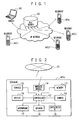
- FIG. 1 is a diagram showing a configuration of a broadcast system (PoC broadcast system) according to a first embodiment of the present invention in which the PoC technique is applied to the use of broadcast.
- a broadcast system in which an information terminal (sender; issuer) 10, cellulars (recipients; receivers) MS1 to MSn, and a PoC server 30 are connected via an IP network to each other.
- the information terminal 10 is an information processing apparatus such as a personal computer including an input and output device to allocate a floor and a microphone and speaker module to send and to receive audio data to and from the PoC server 30. Since only the information terminal 10 has authority to allocate the floor to lead the speaking of all members, the terminal will be called an issuer or sender terminal hereinbelow.
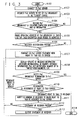
- FIG. 2 is a diagram showing a detailed configuration of the cellular MSn.
- the cellular MSn includes a controller 12 to control operation of each module thereof, a memory 13 to keep information therein, a wireless module 14 to wirelessly connect to a communication network, a console 15 to accept various operations, a display 16 to display various information, and a speaker 18 to output sound and voice.
- the cellulars MS1 to MSn do not have the authority to allocate the floor and hence will be also called receiver terminals hereinbelow.
- the cellular MSn includes, from a viewpoint of facilitation of PoC address acquisition, either one or both of a contactless IC 19 to receive a PoC address from a gate apparatus installed in a broadcast area, which will be described later, and a camera 20 to read a bar code from a print medium or the like such as a magazine.
- the PoC server 30 is an information processor in which a program is installed, the program implementing a group management function to manage a PoC group; a presence function including registration of a member, recognition of attendance and non-attendance information such as "absence” and "presence” of a member, and management in which the members are classified into an issuer (terminal of first kind) having authority to allocate the floor and a receiver (terminal of second kind) not having authority to allocate the floor; and a PoC function to allocate the floor according to designation from the issuer (terminal of first kind).
- SIP is adopted for call control; after a session is established for a communicating party, VoIP communication is conducted according to an IP address assigned to each cellular in the configuration.
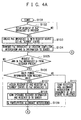
- FIG. 3 is a diagram showing operation of an information terminal 10 functioning as an information issuer (indicated as an issuer in FIGS. 3 to 5 ) in a PoC broadcast group (PoC broadcast Gr).
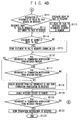
- FIG. 4 is a diagram showing operation of the PoC server 30.
- FIG. 5 is a diagram showing operation of the cellulars MS1 to MSn functioning as information receivers (indicated as receivers in FIGS. 3 to 5 ) in the PoC broadcast group (PoC broadcast Gr).
- FIG. 3 for the operation of the information terminal 10, FIG. 4 for the operation of the PoC server 30, and FIG. 5 for the operation of the cellulars MS1 to MSn.
- an issuer desiring to issue information in the PoC broadcast connects from the terminal 10 to the PoC server (step A102) and requests the PoC server 30 to set up a new PoC broadcast group in which the issuer has an "issuer" status (terminal of first kind) capable of allocating the floor (step A103).
- the PoC server 30 receives the setup request (yes in step B102) and then creates a PoC broadcast group in which the terminal of the setup request source has the issuer status (terminal of first kind; step B103). Next, the PoC server 30 sends to the information terminal 10 (issuer) a creation completion notification including information such as a PoC address and a broadcast name of the created PoC broadcast group (step B104).
- the information terminal 10 On receiving the creation completion notification (yes in step A104), the information terminal 10 makes the address (PoC address) of the PoC broadcast open to the public (step A105). Also in the operation, the terminal 10 sets a valid period in which the PoC broadcast is receivable and adds an item obtained by encrypting the valid period information to the PoC address.
- a mode thereof is selected on the basis of the receiver as the target; for example, if users of many and unspecified persons are the target, the operation is conducted in a form of a Uniform Resource Locator (URL) on a predetermined web site.
- a print item on which a bar code or the like obtained by converting the URL is printed is distributed thereto so that the users read the bar code by the camera, to thereby make the address public.
- a contactless IC system which can transmit the PoC address such as Felica (registered trademark) used as a part of the gate apparatus is installed at an entrance of the institute; by configuring the system such that when each of the cellulars MS1 to MSn including the contactless IC 19 passes through the entry, the PoC address is automatically fed to the side of the cellular (MS1 to MSn), and the PoC address is opened to the public.
- a contactless IC system which can transmit the PoC address such as Felica (registered trademark) used as a part of the gate apparatus is installed at an entrance of the institute; by configuring the system such that when each of the cellulars MS1 to MSn including the contactless IC 19 passes through the entry, the PoC address is automatically fed to the side of the cellular (MS1 to MSn), and the PoC address is opened to the public.
- the cellular accesses the PoC address and then transmits a joining or participation request (connection request) to join in the PoC group (step C103) and sends, to the PoC server, information which can be made open to the other terminals (step C104).
- releasable information which can be made open to other terminals is information useful for other users desiring to join in the PoC broadcast group to obtain a property of a speaker such as his or her handle name, gender, age, and the like, and the information does not include information which identifies the cellular (MS1 to MSn).
- the step C104 may be omitted in consideration of anonymity of the user and easiness of participation in the PoC broadcast group.
- the PoC server 30 determines, on receiving the request to join in the PoC group (yes in step B105), whether or not the valid period information contained in the participation request is valid (step B106). In this situation, if the valid period information contained in the participation request is not valid, the PoC server 30 sends a reception non-allowance notification to the cellular having issued the participation request (step B110).
- the valid period set by the information terminal 10 is confirmed on the side of the PoC server 30, and hence it is possible to limit the reception of the PoC broadcast to a fixed period. Also, for example, if the system is installed as a substitute for a broadcast in a building such as an institute, the period of time in which the PoC broadcast is receivable can be limited like the valid period of the conventional admission ticket.
- the PoC server 30 assigns a receiver ID number to the cellular as the participation request source to join in the PoC group and registers the terminal as a member of the PoC broadcast group, the terminal having a receiver status (terminal of second kind; step B107).
- the PoC server 30 inhibits information having high secrecy such as the address of the member with the receiver status (terminal of second kind) from being browsed by the information terminal 10 and the cellulars, and sends the releasable information inputted in step C104 and the receiver ID number to the information terminal 10 (step B108). Moreover, the PoC server 30 transmits a group participation allowance notification (Gr participation allowance notification) of the PoC broadcast including the assigned receiver ID number to the cellular having issued the participation request (step B109).
- Gr participation allowance notification group participation allowance notification of the PoC broadcast including the assigned receiver ID number to the cellular having issued the participation request
- the Information terminal 10 receives the releasable information and the receiver ID number and then notifies that the participant has been registered to the PoC broadcast group (step A106); in this state, two or more terminals have participated in the PoC broadcast group. Thereafter, the information terminal 10 transfers, to the PoC server 30, the designation of the floor to the own terminal (information terminal 10) and transmits a statement to the PoC server 30 (step A107).
- the PoC server 30 On receiving the designation of the floor to the information terminal 10 (setting the floor to the sender in step B111), the PoC server 30 sets the floor to the information terminal 10 (step B112) and sends the statement from the gainer of the floor (information terminal 10) to all of the members joining in the PoC broadcast group (steps B114 and B115).
- the cellular participating therein outputs, if the cellular has not the floor, sound and voice of the statement received from the PoC server 30 from the speaker 18 (steps C107 and C110).
- the information terminal 10 displays the ID number, releasable information, PoC key depression information, the number of members joining in the group for each of the cellulars participating in the group, which can be monitored (step A108). If the PoC broadcast is not terminated (no in step A109), step A107 (statement) and the step A108 (member status monitoring) described above are repeatedly executed unless the floor is assigned to another terminal (setting of the floor to a sender in step A110).
- the floor exists primarily in the information sender (information terminal 10) and the statement from the information sender (information terminal 10) is sent to the all PoC group members.
- the information sender (information terminal 10) also can designate an arbitrary information receiver (cellular joining in the group) to thereby assign the floor to the receiver.
- the information terminal 10 notifies the PoC server 30 of the receiver ID number to which the floor is to be assigned (step A111).
- the PoC server 30 to which the receiver ID number has been notified sets the floor to the designated receiver ID number (steps B111 and B113).
- the cellular assigned the floor in the step B113 is set to a state in which a statement can be made if the user depresses the PoC key assigned to PoC in the console 15 (yes in step C108); the cellular transmits sound and voice received by the microphone 17 to the PoC server 30 (step C109). Naturally, unless the PoC key is depressed, the statement is not broadcast (no in step C108).
- the PoC server 30 broadcasts the statement of the gainer of the floor (cellular) to all members of the PoC broadcast group (steps B114 and B115); the information terminal 10 also outputs sound and voice (steps A112 and A113).
- PoC key depression information in the cellular thereafter is sent to the PoC server 30 in any situation (step C111); in the information terminal 10, by monitoring the PoC key depression information in the cellular assigned the floor and by confirming the status of the cellular user (step A108), it is possible to obtain timing at which the floor is to be returned to the own terminal.
- the PoC server 30 is managing the valid period of each cellular joining in the group; if the PoC broadcast termination notification is received (yes in step B116) or if a receiver whose validity period is invalid is present (yes in step B117), the PoC server 30 deletes the cellular from the PoC broadcast group and delivers a termination notification to the cellular (step B118). Also, the PoC server 30 notifies the receiver status reflecting the deletion processing to delete the terminal from the PoC broadcast group to the information terminal 10 (step B119).
- the cellular On receiving the termination notification (step C113), the cellular displays the reason for the termination (PoC broadcast termination, valid period expiration, etc.) and terminates the reception of the PoC broadcast (steps C 114 and C115).
- a gate apparatus may be arranged at an exit of the broadcast area so that the PoC broadcast reception is automatically terminated by the passage of the contactless IC system through the exit gate.
- the PoC server 30 transmits the termination notification to all cellulars participating in the group (step B121) and terminates the PoC broadcast (steps A114 and B122).
- the members of the PoC group are classified into senders and receivers and the right to assign the floor is given to the information sender (terminal of first kind) to thereby make it possible to control the floor, leading to construction of a PoC system equivalent to a broadcast system in which the information sender (terminal of first kind) primarily makes a statement and the information receivers (terminals of second kind) primarily receive the statement. Furthermore, depending on situations, the information sender (terminal of first kind) assigns the floor to a particular information receiver (terminal of second kind), and hence it is possible to appropriately obtain information from the information receiver (terminal of second kind).
- the present invention is suitably applicable to a broadcast of the type in which the chairperson passes the microphone to reporters in turn; additionally, the present invention is suitably applicable also to a conference of the type in which the chairperson sequentially requires the attendants to make a statement and to a business system or the like in which the manager sequentially requires the members to report the situations.
- the information of the cellulars joining in the PoC broadcast group is basically kept secret is also a property suitable for the broadcast like the radio broadcast in which it is assumed that many and unspecified members participate therein (receive).
- the provision of information useful for the operation of the PoC broadcast is achieved by opening only releasable information from members arbitrarily.
- a plurality of PoC broadcast areas can be arranged and a gate apparatus is disposed between the respective PoC broadcast areas, the gate apparatus transmitting a PoC address to the contactless IC.
- the PoC broadcast address is automatically changed, and hence it is possible to receive a PoC broadcast of the area suitable for the location of the user regardless of whether or not the user pay attention to the automatic change.
- the system may be modified into a communication system to communicate data other than the sound and voice under supervision of a predetermined person.
- the present invention is applicable to other communication systems where a half-duplex service is provided by use of the PTT technique under a condition that the members joining in the group are classified into two types for management thereof and the authority to assign the transmission right data is assigned to either one of the two types.
Landscapes
- Engineering & Computer Science (AREA)
- Multimedia (AREA)
- Computer Networks & Wireless Communication (AREA)
- Signal Processing (AREA)
- Databases & Information Systems (AREA)
- Mobile Radio Communication Systems (AREA)
- Telephonic Communication Services (AREA)
Abstract
Description
- The present invention pertains to a Push-to-Talk (PTT hereinbelow) server, a gate apparatus, a communication system, a program, and a communication method employing a cellular phone including a PTT function to implement a one-to-many communication between terminals.
- Recently, a Push-to-Talk over Cellular (PoC hereinbelow) service in which the PTT function is installed in cellular phones or cellulars to implement one-to-many calls is about to be broadly used. As a feature of this PoC service, distinct from the call service of line switching type, there is a service in which one-to-many calls can be carried out. However, due to the restriction on the bandwidth or the like, two or more persons cannot simultaneously speak; a half-duplex call service is being considered in which, like in a call service of a transceiver, after a first speaker finishes a talk, another speaker obtains the right to speak and then starts talking.
- The PoC service is implemented by a PoC server including management of PoC groups (group management function), registration of members, recognition of information of attendance or non-attendance such as "absence" or "presence" of a member (presence function), and assignment of the right to talk or floor (floor control; PoC function). For the call control in the PoC server, there is employed the session initiation Protocol (SIP) as in the IP telephone and the like. After establishing a session with a communicating party, Voice over IP (VoIP hereinbelow) communication of sound and voice is conducted according to an IP address assigned to a terminal in the configuration.
- In the configuration of the present PoC communication, the respective members stand on an equal footing with each other; in a released state of the floor (no one is speaking), a user pushes a call start button of a terminal to transmit a floor acquisition notification to the PoC server to resultantly get the floor. In a case where many and unspecified persons join in a PoC group, any one thereof can obtain the floor under the above condition to make a statement. In addition, the participants in the PoC group are able to equally attain information about the members participating therein in the system.
- Patent article 1 discloses a broadcast system adopting the PPT technique. Also in the document, the respective members are treated as equal; a server determines one of the wireless telephones in a button depression state to which a message allocation right is given and then transmits audio data from the determined wireless telephone to the other wireless telephones in the configuration.
- Additionally, patent document 2 discloses a multipoint conference system which does not employ the PoC technique and in which the respective terminals are not treated as equal, the system including a terminal only for reception and a terminal for transmission and reception.
- Patent document 1: Published Japanese Translations of PCT International Publication for Patent Applications No.
2002-536928 - Patent document 2:
Japanese Patent Laid-Open Publication No. 2004-187108 - Incidentally, in a situation where the PTT or PoC technique is applied to a broadcast system, a conference system, or the like to which an arbitrary terminal may attend, there exists a request that it be avoided for unspecified members to freely make a statement, or that even if the statement is allowed, a chairperson or the like have authority to allow the floor.
- In this point, according to the technique of patent document 1, since all wireless telephones may make a statement in the configuration, it is considered that those who are not desirable are to be removed at a stage in which they attempt to join in the group. Also, in the technique of patent document 2, under authority of the terminal of the conference organizer, a state (status) of a terminal having issued a statement request can be changed such that a plurality of terminals become senders (reference is to be made to steps d to k of
FIG. 2 andFIG. 3 of the publication). However, with the restriction of the half duplex, it is not possible to allocate the data transmission right to a plurality of terminals. - It is an object of the present invention, which has been devised in consideration of the situation described above, to provide a communication system, an apparatus, a program, and a communication method wherein assignment of a data transmission right is under authority of a predetermined person in a half-duplex data transfer service in which transmission data from a terminal to which a PTT server has given a transmission right via the packet communication network is broadcast to the other terminals.
- In accordance with a first aspect of the present invention, there are provided a Push-to-Talk server (PTT server), a communication system (broadcast system/conference system) including the PTT server, and a program to implement the PTT server wherein the PTT server is a PTT server for providing a half-duplex data transfer service wherein data is broadcast, from a terminal to terminals which are connected to a packet communication network and which are in a group to which the terminal belongs, at a time via the packet communication network characterized by including a module for classifying terminals joining in a group into terminals of first kind having authority to assign the transmission right and terminals of second kind not having authority to assign the transmission right and thereby managing the respective terminals joining in the group, and a module for assigning the transmission right to another terminal belonging to the group according to designation from the terminal of first kind.
- Also, in accordance with a second aspect of the present invention, there is provided a communication method (broadcast method/conference method) to be implemented by use of a communication system including the Push-to-Talk server (PTT server) and a group of terminals connectable to the PTT server characterized by including a step of classifying, by the PTT server, terminals joining in a group into terminals of first kind having authority to assign the transmission right and terminals of second kind not having authority to assign the transmission right and thereby registering and managing the respective terminals joining in the group, and a step of assigning, by the PTT server, the transmission right to another terminal belonging to the group according to designation from the terminal of first kind.
- Also, in accordance with a third aspect of the present invention, there are provided a gate apparatus, a communication system including the gate transmission, and a communication method wherein the gate apparatus is a gate apparatus characterized by including a module for automatically transmitting an address set to each group inherent to each area to a terminal including a contactless IC, the gate apparatus making the terminal issue a request to join in a group corresponding to the area to the PTT server.
- In accordance with the present invention, it is possible to distribute data in a mode in which transmission from a terminal of a person having the leadership of the PoC group with the restriction of the half duplex and transmission by interruption from a second terminal designated by the terminal are mixed with each other.
- Moreover, in accordance with the gate apparatus of the present invention, it is possible to make the communication system function as an area restricted information system for a particular area.
- Subsequently, description will be given in detail of a best mode for carrying out the present invention by referring to drawings.
FIG. 1 is a diagram showing a configuration of a broadcast system (PoC broadcast system) according to a first embodiment of the present invention in which the PoC technique is applied to the use of broadcast. Referring toFIG. 1 , there is shown a broadcast system in which an information terminal (sender; issuer) 10, cellulars (recipients; receivers) MS1 to MSn, and aPoC server 30 are connected via an IP network to each other. - The
information terminal 10 is an information processing apparatus such as a personal computer including an input and output device to allocate a floor and a microphone and speaker module to send and to receive audio data to and from thePoC server 30. Since only theinformation terminal 10 has authority to allocate the floor to lead the speaking of all members, the terminal will be called an issuer or sender terminal hereinbelow. -
FIG. 2 is a diagram showing a detailed configuration of the cellular MSn. Referring toFIG. 2 , the cellular MSn includes acontroller 12 to control operation of each module thereof, amemory 13 to keep information therein, a wireless module 14 to wirelessly connect to a communication network, aconsole 15 to accept various operations, adisplay 16 to display various information, and aspeaker 18 to output sound and voice. The cellulars MS1 to MSn do not have the authority to allocate the floor and hence will be also called receiver terminals hereinbelow. - Furthermore, more desirably, the cellular MSn includes, from a viewpoint of facilitation of PoC address acquisition, either one or both of a
contactless IC 19 to receive a PoC address from a gate apparatus installed in a broadcast area, which will be described later, and acamera 20 to read a bar code from a print medium or the like such as a magazine. - The
PoC server 30 is an information processor in which a program is installed, the program implementing a group management function to manage a PoC group; a presence function including registration of a member, recognition of attendance and non-attendance information such as "absence" and "presence" of a member, and management in which the members are classified into an issuer (terminal of first kind) having authority to allocate the floor and a receiver (terminal of second kind) not having authority to allocate the floor; and a PoC function to allocate the floor according to designation from the issuer (terminal of first kind). SIP is adopted for call control; after a session is established for a communicating party, VoIP communication is conducted according to an IP address assigned to each cellular in the configuration. - Next, description will be given in detail of operation of the embodiment by referring to
FIGS. 3 to 5 .FIG. 3 is a diagram showing operation of aninformation terminal 10 functioning as an information issuer (indicated as an issuer inFIGS. 3 to 5 ) in a PoC broadcast group (PoC broadcast Gr).FIG. 4 is a diagram showing operation of thePoC server 30.FIG. 5 is a diagram showing operation of the cellulars MS1 to MSn functioning as information receivers (indicated as receivers inFIGS. 3 to 5 ) in the PoC broadcast group (PoC broadcast Gr). Reference is made hereinbelow toFIG. 3 for the operation of theinformation terminal 10,FIG. 4 for the operation of thePoC server 30, andFIG. 5 for the operation of the cellulars MS1 to MSn. - To achieve the PoC broadcast, in a state before the setup of the PoC broadcast (step A101; Start), an issuer desiring to issue information in the PoC broadcast connects from the
terminal 10 to the PoC server (step A102) and requests thePoC server 30 to set up a new PoC broadcast group in which the issuer has an "issuer" status (terminal of first kind) capable of allocating the floor (step A103). - The
PoC server 30 receives the setup request (yes in step B102) and then creates a PoC broadcast group in which the terminal of the setup request source has the issuer status (terminal of first kind; step B103). Next, thePoC server 30 sends to the information terminal 10 (issuer) a creation completion notification including information such as a PoC address and a broadcast name of the created PoC broadcast group (step B104). - On receiving the creation completion notification (yes in step A104), the
information terminal 10 makes the address (PoC address) of the PoC broadcast open to the public (step A105). Also in the operation, theterminal 10 sets a valid period in which the PoC broadcast is receivable and adds an item obtained by encrypting the valid period information to the PoC address. - For the opening method, a mode thereof is selected on the basis of the receiver as the target; for example, if users of many and unspecified persons are the target, the operation is conducted in a form of a Uniform Resource Locator (URL) on a predetermined web site. Moreover, if users of the cellulars MS1 to MSn including the
camera 20 are the target, a print item on which a bar code or the like obtained by converting the URL is printed is distributed thereto so that the users read the bar code by the camera, to thereby make the address public. In addition, if the system is installed as a substitute for a broadcast in a building such as an institute, a contactless IC system which can transmit the PoC address such as Felica (registered trademark) used as a part of the gate apparatus is installed at an entrance of the institute; by configuring the system such that when each of the cellulars MS1 to MSn including thecontactless IC 19 passes through the entry, the PoC address is automatically fed to the side of the cellular (MS1 to MSn), and the PoC address is opened to the public. - On the other hand, after receiving the opened PoC address (step C102), the cellular (MS1 to MSn) accesses the PoC address and then transmits a joining or participation request (connection request) to join in the PoC group (step C103) and sends, to the PoC server, information which can be made open to the other terminals (step C104).
- In this situation, releasable information which can be made open to other terminals is information useful for other users desiring to join in the PoC broadcast group to obtain a property of a speaker such as his or her handle name, gender, age, and the like, and the information does not include information which identifies the cellular (MS1 to MSn). Naturally, the step C104 may be omitted in consideration of anonymity of the user and easiness of participation in the PoC broadcast group.
- The
PoC server 30 determines, on receiving the request to join in the PoC group (yes in step B105), whether or not the valid period information contained in the participation request is valid (step B106). In this situation, if the valid period information contained in the participation request is not valid, thePoC server 30 sends a reception non-allowance notification to the cellular having issued the participation request (step B110). - In this fashion, at request of the participation in the PoC group, the valid period set by the
information terminal 10 is confirmed on the side of thePoC server 30, and hence it is possible to limit the reception of the PoC broadcast to a fixed period. Also, for example, if the system is installed as a substitute for a broadcast in a building such as an institute, the period of time in which the PoC broadcast is receivable can be limited like the valid period of the conventional admission ticket. - On the other hand, if the valid period information is valid in step B106, the
PoC server 30 assigns a receiver ID number to the cellular as the participation request source to join in the PoC group and registers the terminal as a member of the PoC broadcast group, the terminal having a receiver status (terminal of second kind; step B107). - Subsequently, the
PoC server 30 inhibits information having high secrecy such as the address of the member with the receiver status (terminal of second kind) from being browsed by theinformation terminal 10 and the cellulars, and sends the releasable information inputted in step C104 and the receiver ID number to the information terminal 10 (step B108). Moreover, thePoC server 30 transmits a group participation allowance notification (Gr participation allowance notification) of the PoC broadcast including the assigned receiver ID number to the cellular having issued the participation request (step B109). - When the group participation allowance notification (Gr participation allowance notification) is received (yes in step C105), the cellular displays on the
display 16 the PoC broadcast name, the receiver ID number, the valid period, the public information of the own terminal, and presence or absence of the floor (step C106). These information items are updated at an appropriate point of time according to the contents of the change information delivered from thePoC server 30. - On the other hand, the
Information terminal 10 receives the releasable information and the receiver ID number and then notifies that the participant has been registered to the PoC broadcast group (step A106); in this state, two or more terminals have participated in the PoC broadcast group. Thereafter, theinformation terminal 10 transfers, to thePoC server 30, the designation of the floor to the own terminal (information terminal 10) and transmits a statement to the PoC server 30 (step A107). - On receiving the designation of the floor to the information terminal 10 (setting the floor to the sender in step B111), the
PoC server 30 sets the floor to the information terminal 10 (step B112) and sends the statement from the gainer of the floor (information terminal 10) to all of the members joining in the PoC broadcast group (steps B114 and B115). - The cellular participating therein outputs, if the cellular has not the floor, sound and voice of the statement received from the
PoC server 30 from the speaker 18 (steps C107 and C110). - The
information terminal 10 displays the ID number, releasable information, PoC key depression information, the number of members joining in the group for each of the cellulars participating in the group, which can be monitored (step A108). If the PoC broadcast is not terminated (no in step A109), step A107 (statement) and the step A108 (member status monitoring) described above are repeatedly executed unless the floor is assigned to another terminal (setting of the floor to a sender in step A110). - As above, in the PoC broadcast according to the embodiment, the floor exists primarily in the information sender (information terminal 10) and the statement from the information sender (information terminal 10) is sent to the all PoC group members. However, the information sender (information terminal 10) also can designate an arbitrary information receiver (cellular joining in the group) to thereby assign the floor to the receiver.
- For example, if an operation is carried out by the information sender to assign the floor to the receiver side (setting of the floor to the receiver in step A110), the
information terminal 10 notifies thePoC server 30 of the receiver ID number to which the floor is to be assigned (step A111). - The
PoC server 30 to which the receiver ID number has been notified sets the floor to the designated receiver ID number (steps B111 and B113). - The cellular assigned the floor in the step B113 is set to a state in which a statement can be made if the user depresses the PoC key assigned to PoC in the console 15 (yes in step C108); the cellular transmits sound and voice received by the
microphone 17 to the PoC server 30 (step C109). Naturally, unless the PoC key is depressed, the statement is not broadcast (no in step C108). - Next, the
PoC server 30 broadcasts the statement of the gainer of the floor (cellular) to all members of the PoC broadcast group (steps B114 and B115); theinformation terminal 10 also outputs sound and voice (steps A112 and A113). - PoC key depression information in the cellular thereafter is sent to the
PoC server 30 in any situation (step C111); in theinformation terminal 10, by monitoring the PoC key depression information in the cellular assigned the floor and by confirming the status of the cellular user (step A108), it is possible to obtain timing at which the floor is to be returned to the own terminal. - Moreover, the
PoC server 30 is managing the valid period of each cellular joining in the group; if the PoC broadcast termination notification is received (yes in step B116) or if a receiver whose validity period is invalid is present (yes in step B117), thePoC server 30 deletes the cellular from the PoC broadcast group and delivers a termination notification to the cellular (step B118). Also, thePoC server 30 notifies the receiver status reflecting the deletion processing to delete the terminal from the PoC broadcast group to the information terminal 10 (step B119). - On receiving the termination notification (step C113), the cellular displays the reason for the termination (PoC broadcast termination, valid period expiration, etc.) and terminates the reception of the PoC broadcast (steps C 114 and C115).
- Furthermore, there are two termination triggers including the user operation and the validity period expiration in the description; however, if the cellular includes the
contactless IC 19, a gate apparatus may be arranged at an exit of the broadcast area so that the PoC broadcast reception is automatically terminated by the passage of the contactless IC system through the exit gate. - In addition, if the PoC broadcast termination is notified from the
information terminal 10 to the PoC server 30 (yes in step A109) and thePoC server 30 receives the termination notification (step B120), thePoC server 30 transmits the termination notification to all cellulars participating in the group (step B121) and terminates the PoC broadcast (steps A114 and B122). - As above, the members of the PoC group are classified into senders and receivers and the right to assign the floor is given to the information sender (terminal of first kind) to thereby make it possible to control the floor, leading to construction of a PoC system equivalent to a broadcast system in which the information sender (terminal of first kind) primarily makes a statement and the information receivers (terminals of second kind) primarily receive the statement. Furthermore, depending on situations, the information sender (terminal of first kind) assigns the floor to a particular information receiver (terminal of second kind), and hence it is possible to appropriately obtain information from the information receiver (terminal of second kind).
- Therefore, the present invention is suitably applicable to a broadcast of the type in which the chairperson passes the microphone to reporters in turn; additionally, the present invention is suitably applicable also to a conference of the type in which the chairperson sequentially requires the attendants to make a statement and to a business system or the like in which the manager sequentially requires the members to report the situations.
- Moreover, as described above, that the information of the cellulars joining in the PoC broadcast group is basically kept secret is also a property suitable for the broadcast like the radio broadcast in which it is assumed that many and unspecified members participate therein (receive). In addition, the provision of information useful for the operation of the PoC broadcast is achieved by opening only releasable information from members arbitrarily.
- Furthermore, if it is assumed that the present invention is applied to a use in a wider area, a plurality of PoC broadcast areas can be arranged and a gate apparatus is disposed between the respective PoC broadcast areas, the gate apparatus transmitting a PoC address to the contactless IC. In this situation, if the member passes through a point near the gate apparatus, the PoC broadcast address is automatically changed, and hence it is possible to receive a PoC broadcast of the area suitable for the location of the user regardless of whether or not the user pay attention to the automatic change.
- There is also obtained a configuration wherein at acquisition of a PoC address, the PoC address is automatically registered to a memory in the cellular so that the address is read therefrom as a bookmark; therefore, within the valid period of the PoC address, it is possible to easily access the PoC server to receive the PoC broadcast.
- Although description has been given of suitable embodiments of the present invention, by replacing the floor and the statement with a transmission right and data (multimedia data), the system may be modified into a communication system to communicate data other than the sound and voice under supervision of a predetermined person.
- Moreover, although description has been given of embodiments using an example in which only the
information terminal 10 is the information sender (terminal of first kind), other information terminals connected to the IP network may join in the group as terminals of first kind or the authority as the information sender (terminal of first kind) may be assigned to a predetermined cellular. - Moreover, although description has been given of embodiments using an example of the PoC broadcast system in which only a cellular is a receiver terminal, the present invention is applicable to other communication systems where a half-duplex service is provided by use of the PTT technique under a condition that the members joining in the group are classified into two types for management thereof and the authority to assign the transmission right data is assigned to either one of the two types.
-
- [
FIG. 1 ] is a diagram showing a configuration of a broadcast system (PoC broadcast system) in accordance with a first embodiment of the present invention. - [
FIG. 2 ] is a diagram showing a detailed configuration of a cellular employed in a broadcast system (PoC broadcast system) in accordance with the first embodiment of the present invention. - [
FIG. 3 ] is a diagram for explaining operation of an information terminal in a broadcast system (PoC broadcast system) in accordance with the first embodiment of the present invention. - [
FIG. 4 ] is a diagram for explaining operation of a PoC server in a broadcast system (PoC broadcast system) in accordance with the first embodiment of the present invention. - [
FIG. 5 ] is a diagram for explaining operation of a cellular in a broadcast system (PoC broadcast system) in accordance with the first embodiment of the present invention. -
- 10
- Information terminal (sender; issuer)
- 12
- Controller
- 13
- Memory
- 14
- Wireless module
- 15
- Console
- 16
- Display
- 17
- Microphone
- 18
- Speaker
- 19
- Contactless IC
- 20
- Camera
- 30
- PoC server
- MS1 to MSn
- Cellular (recipient)
Claims (21)
- A Push-to-Talk server (PTT server) for providing a half-duplex data transfer service where transmission data from a terminal which is connected to a packet communication network and which is assigned a transmission right is broadcast at once via the packet communication network to terminals of a group to which the terminal belongs, comprising:means for classifying terminals joining in a group into terminals of first kind having authority to assign the transmission right and terminals of second kind not having authority to assign the transmission right and thereby managing the respective terminals joining in the group; andmeans for assigning the transmission right to another terminal belonging to the group according to designation from the terminal of first kind.
- The PTT server in accordance with claim 1, wherein only a terminal having issued an open request of the group is regarded as the terminal of first kind and the authority to assign the transmission right is assigned to the terminal.
- The PTT server in accordance with claim 1 or 2, wherein only releasable information sent from the terminal of second kind is notified to other terminals.
- The PTT server in accordance with one of claims 1 to 3, further comprising means for determining whether or not each of the terminals is allowed to join in the group based on a valid period given to the terminal.
- A gate apparatus comprising means for automatically transmitting an address given to each group inherent to each area to a terminal comprising a contactless IC, wherein
the terminal issues a request that a PTT server in accordance with one of claims 1 to 3 join in a group corresponding to the area. - A communication system comprising a Push-to-Talk server (PTT server) connected to a packet communication network and a group of terminals connectable to the PTT server for providing a half-duplex data transfer service where transmission data from a terminal to which a transmission right is assigned by the PTT server is broadcast all at once via the packet communication network to terminals of a group to which the terminal belongs, wherein
the PTT server comprises:means for classifying terminals joining in an arbitrary group into terminals of first kind having authority to assign the transmission right and terminals of second kind not having authority to assign the transmission right and thereby managing the respective terminals joining in the group; andmeans for assigning the transmission right to another terminal belonging to the group according to designation from the terminal of first kind. - The communication system in accordance with claim 6, wherein only a terminal having issued an open request of the group is designated as the terminal of first kind.
- The communication system in accordance with claim 6 or 7, wherein the PTT server notifies only releasable information sent from the terminal of second kind to the other terminals and the terminal of first kind makes a list of the releasable information open.
- The communication system in accordance with one of claims 6 to 8, wherein
an address set to each group is made to be open with valid period information added thereto; and
the PTT server comprises means for determining whether or not each of the terminals is allowed to join in the group on the basis of valid period information transmitted from the terminal. - The communication system in accordance with one of claims 6 to 9, wherein a gate apparatus comprising means for automatically transmitting an address set to each group inherent to each area to a terminal comprising a contactless IC is further disposed for each predetermined area, the gate apparatus making the terminal issue a request to join in a group corresponding to the area to the PTT server.
- A program to be executed by a computer constituting a Push-to-Talk server (PTT server) for providing a half-duplex data transfer service where transmission data from a terminal which is connected to a packet communication network and which is assigned a transmission right is broadcast at a time via the packet communication network to terminals of a group to which the terminal belongs, the program causing the PTT server to perform:processing for classifying terminals joining in a group into terminals of first kind having authority to assign the transmission right and terminals of second kind not having authority to assign the transmission right and thereby registering and managing the respective terminals joining in the group; andprocessing for assigning the transmission right to another terminal belonging to the group according to designation from the terminal of first kind.
- The program in accordance with claim 11, wherein only a terminal having issued an open request of the group is registered as the terminal of first kind and terminals joining in the group are registered as terminals of second kind.
- The program in accordance with claim 11 or 12, further causing the PTT server to perform
processing for notifying releasable information sent from the terminal of second kind to the other terminals. - The program in accordance with one of claims 11 to 13, further causing the PTT server to perform
processing for determining whether or not each of the terminals is allowed to join in the group based on a valid period given to the terminal. - A communication method to be implemented by use of a communication system comprising a Push-to-Talk server (PTT server) connected to a packet communication network and a group of terminals connectable to the PTT server for providing a half-duplex data transfer service wherein transmission data from a terminal to which a transmission right is assigned by the PTT server is broadcast at a time via the packet communication network to terminals of a group to which the terminal belongs, the method comprising:a step of classifying, by the PTT server, terminals joining in a group into terminals of first kind having authority to assign the transmission right and terminals of second kind not having authority to assign the transmission right and thereby registering and managing the respective terminals joining in the group; anda step of assigning, by the PTT server, the transmission right to another terminal belonging to the group according to designation from the terminal of first kind.
- The communication method in accordance with claim 15, wherein only a terminal having issued an open request of the group is registered as the terminal of first kind and terminals joining in the group are registered as terminals of second kind.
- The communication method in accordance with claim 15 or 16, further comprising:a step of notifying, by the PTT server, releasable information sent from the terminal of second kind to the other terminals; anda step of making by the terminal of first kind a list of the releasable information open.
- The communication method in accordance with one of claims 15 to 17, wherein
an address set to each group is made open with valid period information added thereto, the method further comprising
a step of determining by the PTT server whether or not each of the terminals is allowed to join in the group on the basis of valid period information transmitted from the terminal. - The communication method in accordance with one of claims 15 to 18, comprising:a step of acquiring by an arbitrary terminal an address set to each group from a web site; anda step of issuing by the terminal a request to join in the group to the PTT server by use of the address.
- The communication method in accordance with one of claims 15 to 19, comprising:a step of acquiring by an arbitrary terminal an address set to each group from a bar code, by use of a bar code disposed in the terminal; anda step of issuing by the terminal a request to join in the group to the PTT server by use of the address.
- The communication method in accordance with one of claims 15 to 20, comprising:a step of acquiring by an arbitrary terminal an address set to each group from a gate apparatus disposed in a predetermined area, by use of a contactless IC disposed in the terminal; anda step of issuing by the terminal a request to join in the group corresponding to the area to the PTT server by use of the address.
Applications Claiming Priority (2)
| Application Number | Priority Date | Filing Date | Title |
|---|---|---|---|
| JP2005224172 | 2005-08-02 | ||
| PCT/JP2006/315224 WO2007015488A1 (en) | 2005-08-02 | 2006-08-01 | Ptt server, gate apparatus, communication system, program and communication method |
Publications (2)
| Publication Number | Publication Date |
|---|---|
| EP1912420A1 true EP1912420A1 (en) | 2008-04-16 |
| EP1912420A4 EP1912420A4 (en) | 2013-04-17 |
Family
ID=37708769
Family Applications (1)
| Application Number | Title | Priority Date | Filing Date |
|---|---|---|---|
| EP06782101.7A Withdrawn EP1912420A4 (en) | 2005-08-02 | 2006-08-01 | PTT SERVER, DOOR APPARATUS, COMMUNICATION SYSTEM, PROGRAM, AND COMMUNICATION METHOD |
Country Status (5)
| Country | Link |
|---|---|
| US (1) | US8229487B2 (en) |
| EP (1) | EP1912420A4 (en) |
| JP (1) | JPWO2007015488A1 (en) |
| CN (1) | CN101238708A (en) |
| WO (1) | WO2007015488A1 (en) |
Families Citing this family (13)
| Publication number | Priority date | Publication date | Assignee | Title |
|---|---|---|---|---|
| DE102005037569B4 (en) * | 2005-08-09 | 2011-03-03 | Infineon Technologies Ag | Method for assigning a communication right, communication conference session server and communication conference session server arrangement |
| KR101181001B1 (en) * | 2005-11-02 | 2012-09-07 | 삼성전자주식회사 | Method and system for Joining Chat PoC Group Session by Invitation Reservation |
| US7792899B2 (en) * | 2006-03-24 | 2010-09-07 | Cisco Technology, Inc. | Automatically providing announcements for a push-to-talk communication session |
| CN101631277A (en) * | 2009-07-20 | 2010-01-20 | 中兴通讯股份有限公司 | Method, server and client for optional selection of call object by PoC user |
| JP5583944B2 (en) * | 2009-10-01 | 2014-09-03 | ソフトバンクBb株式会社 | Small base station and control method |
| CN101894404B (en) * | 2010-07-29 | 2012-06-13 | 深圳市戴文科技有限公司 | Method for realizing access control, terminal, access control device and access control system |
| US8538396B2 (en) * | 2010-09-02 | 2013-09-17 | Mitel Networks Corporaton | Wireless extensions for a conference unit and methods thereof |
| CN102143436B (en) | 2010-09-17 | 2015-05-06 | 华为软件技术有限公司 | Urgent call processing method in PoC service, server and system |
| KR101820739B1 (en) * | 2011-10-04 | 2018-01-23 | 삼성전자 주식회사 | Method and apparatus for providing push to talk over cellular service |
| JP2013239798A (en) * | 2012-05-12 | 2013-11-28 | Marusei Co Ltd | Remote communication method and network server and potable terminal therefor |
| JP6063686B2 (en) * | 2012-09-27 | 2017-01-18 | 京セラ株式会社 | COMMUNICATION DEVICE, PROGRAM, AND CALL CONTROL METHOD |
| KR101943989B1 (en) | 2015-06-05 | 2019-01-30 | 삼성전자주식회사 | Method, server and terminal for transmitting and receiving data |
| JP6634549B2 (en) * | 2017-01-04 | 2020-01-22 | 株式会社マルセイ | Remote communication method, network server and mobile terminal therefor |
Family Cites Families (14)
| Publication number | Priority date | Publication date | Assignee | Title |
|---|---|---|---|---|
| US5862329A (en) * | 1996-04-18 | 1999-01-19 | International Business Machines Corporation | Method system and article of manufacture for multi-casting audio visual material |
| US6360093B1 (en) | 1999-02-05 | 2002-03-19 | Qualcomm, Incorporated | Wireless push-to-talk internet broadcast |
| JP3609291B2 (en) | 1999-07-19 | 2005-01-12 | 日本電信電話株式会社 | Multi-point communication multicast relay device |
| ES2379863T3 (en) * | 2000-03-03 | 2012-05-04 | Qualcomm Incorporated | Procedure, system and apparatus for participating in group communications services in an existing communications system |
| JP2001298545A (en) | 2000-04-11 | 2001-10-26 | Ntt Communications Kk | Multimedia conference service providing system using telephone |
| JP2002009765A (en) | 2000-06-19 | 2002-01-11 | Hitachi Commun Syst Inc | Multipoint conference system via IP network using conference server |
| US7801953B1 (en) * | 2001-02-12 | 2010-09-21 | Nortel Networks Limited | Push-to-talk wireless telecommunications system utilizing an voice-over-IP network |
| JP2004187108A (en) | 2002-12-04 | 2004-07-02 | Nippon Telegr & Teleph Corp <Ntt> | Multipoint conference method, terminal status monitoring server and terminal |
| DE102004001013A1 (en) * | 2004-01-02 | 2005-07-28 | Siemens Ag | Procedure for conducting a survey among several participating communication devices, and associated communication devices |
| CN1774947B (en) * | 2004-02-05 | 2010-11-03 | 西门子公司 | Method for managing communication sessions |
| KR100641233B1 (en) * | 2004-07-28 | 2006-11-02 | 엘지전자 주식회사 | Method for managing talk burst of push-to-talk service |
| JP3938379B2 (en) * | 2004-08-10 | 2007-06-27 | 富士通株式会社 | Information processing method and program for speaker right in electronic voice conference, and wireless communication portable terminal |
| US7359725B2 (en) * | 2004-11-24 | 2008-04-15 | Gurvesh Bhutiani | Push-to-talk apparatus and method for communication between an application server and media resource function processor |
| JP4318651B2 (en) * | 2005-02-25 | 2009-08-26 | 富士通株式会社 | Output method, output device, and communication system |
-
2006
- 2006-08-01 EP EP06782101.7A patent/EP1912420A4/en not_active Withdrawn
- 2006-08-01 JP JP2007529274A patent/JPWO2007015488A1/en not_active Withdrawn
- 2006-08-01 US US11/994,948 patent/US8229487B2/en not_active Expired - Fee Related
- 2006-08-01 WO PCT/JP2006/315224 patent/WO2007015488A1/en not_active Ceased
- 2006-08-01 CN CNA2006800285419A patent/CN101238708A/en active Pending
Also Published As
| Publication number | Publication date |
|---|---|
| WO2007015488A1 (en) | 2007-02-08 |
| US8229487B2 (en) | 2012-07-24 |
| CN101238708A (en) | 2008-08-06 |
| EP1912420A4 (en) | 2013-04-17 |
| US20090131092A1 (en) | 2009-05-21 |
| JPWO2007015488A1 (en) | 2009-02-19 |
Similar Documents
| Publication | Publication Date | Title |
|---|---|---|
| CN1846401B (en) | Group business with information about group members | |
| DE602005004578T2 (en) | Handling speech bursts in a group communication system supporting the PTT service | |
| US20040082352A1 (en) | Enhanced group call implementation | |
| US8229487B2 (en) | PTT server, gate apparatus, communication system, program and communication method | |
| CN107006043B (en) | User equipment and method for communicating in a wireless communication system | |
| KR20080004572A (en) | System and method for forming ad hoc location based multicast group | |
| KR20070004103A (en) | Invite group | |
| KR20060067053A (en) | Push-To-Talk over cellular user talk time usage method and system | |
| EP1972078B1 (en) | Terminal apparatus and method for providing media transmission time information in a poc system and poc system for the same | |
| KR20070047640A (en) | Method and system for joining sessions through reservation of Chat PET group for push-to-talk over cellular system | |
| WO2008023926A2 (en) | Server and methods for communication service with multimedi content by mobile communication network and digital multimedia broadcasting network | |
| CN102474421A (en) | Group handling for push-to-talk services | |
| CN100464539C (en) | Communication server and method providing communication between different communication systems | |
| CN100450222C (en) | Method and device for an invited user to obtain group information in a session | |
| RU2382397C2 (en) | Method and system for determining server with control functions | |
| RU2388165C2 (en) | METHOD FOR SERVICE RESERVATION IN Push-to SYSTEM | |
| US7577454B2 (en) | Method and system for collecting opinions of push-to-talk over cellular participants in push-to-talk over cellular network | |
| CN100481770C (en) | Service system, information control apparatus, and information control method | |
| EP1739987B1 (en) | Character/data transmitting/receiving system, terminal management apparatus and character/data transmitting/receiving method used therein | |
| CN102204160A (en) | Method for determining active communication sessions, communication session information servers, method for providing information about active communication sessions and document management servers | |
| US8351969B2 (en) | Method and system for transmitting and receiving media according to importance of media burst | |
| CN102067594A (en) | Method for determining active communication sessions and communication session information server | |
| US7522932B2 (en) | Method and system for deleting floor in PoC system | |
| EP1791376B1 (en) | Method, system, repeating apparatus and communication apparatus for multi-address calling | |
| JP2007258889A (en) | Group information providing system and method therefor |
Legal Events
| Date | Code | Title | Description |
|---|---|---|---|
| PUAI | Public reference made under article 153(3) epc to a published international application that has entered the european phase |
Free format text: ORIGINAL CODE: 0009012 |
|
| 17P | Request for examination filed |
Effective date: 20080118 |
|
| AK | Designated contracting states |
Kind code of ref document: A1 Designated state(s): DE FR GB IT |
|
| RBV | Designated contracting states (corrected) |
Designated state(s): DE FR GB IT |
|
| DAX | Request for extension of the european patent (deleted) | ||
| A4 | Supplementary search report drawn up and despatched |
Effective date: 20130318 |
|
| RIC1 | Information provided on ipc code assigned before grant |
Ipc: H04W 4/08 20090101ALI20130312BHEP Ipc: H04W 8/18 20090101ALI20130312BHEP Ipc: H04W 76/00 20090101ALI20130312BHEP Ipc: H04L 29/06 20060101AFI20130312BHEP |
|
| RAP1 | Party data changed (applicant data changed or rights of an application transferred) |
Owner name: LENOVO INNOVATIONS LIMITED (HONG KONG) |
|
| GRAP | Despatch of communication of intention to grant a patent |
Free format text: ORIGINAL CODE: EPIDOSNIGR1 |
|
| STAA | Information on the status of an ep patent application or granted ep patent |
Free format text: STATUS: GRANT OF PATENT IS INTENDED |
|
| RIC1 | Information provided on ipc code assigned before grant |
Ipc: H04L 29/06 20060101AFI20170123BHEP Ipc: H04W 8/18 20090101ALI20170123BHEP Ipc: H04W 4/10 20090101ALI20170123BHEP Ipc: H04W 4/08 20090101ALI20170123BHEP Ipc: H04W 76/00 20090101ALI20170123BHEP |
|
| INTG | Intention to grant announced |
Effective date: 20170224 |
|
| RIN1 | Information on inventor provided before grant (corrected) |
Inventor name: KAIDA, SOU,C/O NEC CORPORATION |
|
| STAA | Information on the status of an ep patent application or granted ep patent |
Free format text: STATUS: THE APPLICATION IS DEEMED TO BE WITHDRAWN |
|
| 18D | Application deemed to be withdrawn |
Effective date: 20170707 |