EP1911763B1 - Compositions for the treatment of gastrointestinal disorders - Google Patents
Compositions for the treatment of gastrointestinal disorders Download PDFInfo
- Publication number
- EP1911763B1 EP1911763B1 EP07011869A EP07011869A EP1911763B1 EP 1911763 B1 EP1911763 B1 EP 1911763B1 EP 07011869 A EP07011869 A EP 07011869A EP 07011869 A EP07011869 A EP 07011869A EP 1911763 B1 EP1911763 B1 EP 1911763B1
- Authority
- EP
- European Patent Office
- Prior art keywords
- cys
- xaa
- tyr
- polypeptide
- amino acid
- Prior art date
- Legal status (The legal status is an assumption and is not a legal conclusion. Google has not performed a legal analysis and makes no representation as to the accuracy of the status listed.)
- Expired - Lifetime
Links
Images






Classifications
-
- C—CHEMISTRY; METALLURGY
- C07—ORGANIC CHEMISTRY
- C07K—PEPTIDES
- C07K7/00—Peptides having 5 to 20 amino acids in a fully defined sequence; Derivatives thereof
- C07K7/04—Linear peptides containing only normal peptide links
- C07K7/08—Linear peptides containing only normal peptide links having 12 to 20 amino acids
-
- A—HUMAN NECESSITIES
- A61—MEDICAL OR VETERINARY SCIENCE; HYGIENE
- A61K—PREPARATIONS FOR MEDICAL, DENTAL OR TOILETRY PURPOSES
- A61K38/00—Medicinal preparations containing peptides
- A61K38/04—Peptides having up to 20 amino acids in a fully defined sequence; Derivatives thereof
- A61K38/10—Peptides having 12 to 20 amino acids
-
- A—HUMAN NECESSITIES
- A61—MEDICAL OR VETERINARY SCIENCE; HYGIENE
- A61P—SPECIFIC THERAPEUTIC ACTIVITY OF CHEMICAL COMPOUNDS OR MEDICINAL PREPARATIONS
- A61P1/00—Drugs for disorders of the alimentary tract or the digestive system
-
- A—HUMAN NECESSITIES
- A61—MEDICAL OR VETERINARY SCIENCE; HYGIENE
- A61P—SPECIFIC THERAPEUTIC ACTIVITY OF CHEMICAL COMPOUNDS OR MEDICINAL PREPARATIONS
- A61P1/00—Drugs for disorders of the alimentary tract or the digestive system
- A61P1/04—Drugs for disorders of the alimentary tract or the digestive system for ulcers, gastritis or reflux esophagitis, e.g. antacids, inhibitors of acid secretion, mucosal protectants
-
- A—HUMAN NECESSITIES
- A61—MEDICAL OR VETERINARY SCIENCE; HYGIENE
- A61P—SPECIFIC THERAPEUTIC ACTIVITY OF CHEMICAL COMPOUNDS OR MEDICINAL PREPARATIONS
- A61P1/00—Drugs for disorders of the alimentary tract or the digestive system
- A61P1/08—Drugs for disorders of the alimentary tract or the digestive system for nausea, cinetosis or vertigo; Antiemetics
-
- A—HUMAN NECESSITIES
- A61—MEDICAL OR VETERINARY SCIENCE; HYGIENE
- A61P—SPECIFIC THERAPEUTIC ACTIVITY OF CHEMICAL COMPOUNDS OR MEDICINAL PREPARATIONS
- A61P1/00—Drugs for disorders of the alimentary tract or the digestive system
- A61P1/10—Laxatives
-
- A—HUMAN NECESSITIES
- A61—MEDICAL OR VETERINARY SCIENCE; HYGIENE
- A61P—SPECIFIC THERAPEUTIC ACTIVITY OF CHEMICAL COMPOUNDS OR MEDICINAL PREPARATIONS
- A61P1/00—Drugs for disorders of the alimentary tract or the digestive system
- A61P1/12—Antidiarrhoeals
-
- A—HUMAN NECESSITIES
- A61—MEDICAL OR VETERINARY SCIENCE; HYGIENE
- A61P—SPECIFIC THERAPEUTIC ACTIVITY OF CHEMICAL COMPOUNDS OR MEDICINAL PREPARATIONS
- A61P1/00—Drugs for disorders of the alimentary tract or the digestive system
- A61P1/14—Prodigestives, e.g. acids, enzymes, appetite stimulants, antidyspeptics, tonics, antiflatulents
-
- A—HUMAN NECESSITIES
- A61—MEDICAL OR VETERINARY SCIENCE; HYGIENE
- A61P—SPECIFIC THERAPEUTIC ACTIVITY OF CHEMICAL COMPOUNDS OR MEDICINAL PREPARATIONS
- A61P1/00—Drugs for disorders of the alimentary tract or the digestive system
- A61P1/16—Drugs for disorders of the alimentary tract or the digestive system for liver or gallbladder disorders, e.g. hepatoprotective agents, cholagogues, litholytics
-
- A—HUMAN NECESSITIES
- A61—MEDICAL OR VETERINARY SCIENCE; HYGIENE
- A61P—SPECIFIC THERAPEUTIC ACTIVITY OF CHEMICAL COMPOUNDS OR MEDICINAL PREPARATIONS
- A61P1/00—Drugs for disorders of the alimentary tract or the digestive system
- A61P1/18—Drugs for disorders of the alimentary tract or the digestive system for pancreatic disorders, e.g. pancreatic enzymes
-
- A—HUMAN NECESSITIES
- A61—MEDICAL OR VETERINARY SCIENCE; HYGIENE
- A61P—SPECIFIC THERAPEUTIC ACTIVITY OF CHEMICAL COMPOUNDS OR MEDICINAL PREPARATIONS
- A61P11/00—Drugs for disorders of the respiratory system
-
- A—HUMAN NECESSITIES
- A61—MEDICAL OR VETERINARY SCIENCE; HYGIENE
- A61P—SPECIFIC THERAPEUTIC ACTIVITY OF CHEMICAL COMPOUNDS OR MEDICINAL PREPARATIONS
- A61P11/00—Drugs for disorders of the respiratory system
- A61P11/06—Antiasthmatics
-
- A—HUMAN NECESSITIES
- A61—MEDICAL OR VETERINARY SCIENCE; HYGIENE
- A61P—SPECIFIC THERAPEUTIC ACTIVITY OF CHEMICAL COMPOUNDS OR MEDICINAL PREPARATIONS
- A61P13/00—Drugs for disorders of the urinary system
-
- A—HUMAN NECESSITIES
- A61—MEDICAL OR VETERINARY SCIENCE; HYGIENE
- A61P—SPECIFIC THERAPEUTIC ACTIVITY OF CHEMICAL COMPOUNDS OR MEDICINAL PREPARATIONS
- A61P13/00—Drugs for disorders of the urinary system
- A61P13/08—Drugs for disorders of the urinary system of the prostate
-
- A—HUMAN NECESSITIES
- A61—MEDICAL OR VETERINARY SCIENCE; HYGIENE
- A61P—SPECIFIC THERAPEUTIC ACTIVITY OF CHEMICAL COMPOUNDS OR MEDICINAL PREPARATIONS
- A61P13/00—Drugs for disorders of the urinary system
- A61P13/12—Drugs for disorders of the urinary system of the kidneys
-
- A—HUMAN NECESSITIES
- A61—MEDICAL OR VETERINARY SCIENCE; HYGIENE
- A61P—SPECIFIC THERAPEUTIC ACTIVITY OF CHEMICAL COMPOUNDS OR MEDICINAL PREPARATIONS
- A61P15/00—Drugs for genital or sexual disorders; Contraceptives
- A61P15/10—Drugs for genital or sexual disorders; Contraceptives for impotence
-
- A—HUMAN NECESSITIES
- A61—MEDICAL OR VETERINARY SCIENCE; HYGIENE
- A61P—SPECIFIC THERAPEUTIC ACTIVITY OF CHEMICAL COMPOUNDS OR MEDICINAL PREPARATIONS
- A61P25/00—Drugs for disorders of the nervous system
-
- A—HUMAN NECESSITIES
- A61—MEDICAL OR VETERINARY SCIENCE; HYGIENE
- A61P—SPECIFIC THERAPEUTIC ACTIVITY OF CHEMICAL COMPOUNDS OR MEDICINAL PREPARATIONS
- A61P25/00—Drugs for disorders of the nervous system
- A61P25/04—Centrally acting analgesics, e.g. opioids
-
- A—HUMAN NECESSITIES
- A61—MEDICAL OR VETERINARY SCIENCE; HYGIENE
- A61P—SPECIFIC THERAPEUTIC ACTIVITY OF CHEMICAL COMPOUNDS OR MEDICINAL PREPARATIONS
- A61P25/00—Drugs for disorders of the nervous system
- A61P25/18—Antipsychotics, i.e. neuroleptics; Drugs for mania or schizophrenia
-
- A—HUMAN NECESSITIES
- A61—MEDICAL OR VETERINARY SCIENCE; HYGIENE
- A61P—SPECIFIC THERAPEUTIC ACTIVITY OF CHEMICAL COMPOUNDS OR MEDICINAL PREPARATIONS
- A61P25/00—Drugs for disorders of the nervous system
- A61P25/20—Hypnotics; Sedatives
-
- A—HUMAN NECESSITIES
- A61—MEDICAL OR VETERINARY SCIENCE; HYGIENE
- A61P—SPECIFIC THERAPEUTIC ACTIVITY OF CHEMICAL COMPOUNDS OR MEDICINAL PREPARATIONS
- A61P25/00—Drugs for disorders of the nervous system
- A61P25/22—Anxiolytics
-
- A—HUMAN NECESSITIES
- A61—MEDICAL OR VETERINARY SCIENCE; HYGIENE
- A61P—SPECIFIC THERAPEUTIC ACTIVITY OF CHEMICAL COMPOUNDS OR MEDICINAL PREPARATIONS
- A61P25/00—Drugs for disorders of the nervous system
- A61P25/24—Antidepressants
-
- A—HUMAN NECESSITIES
- A61—MEDICAL OR VETERINARY SCIENCE; HYGIENE
- A61P—SPECIFIC THERAPEUTIC ACTIVITY OF CHEMICAL COMPOUNDS OR MEDICINAL PREPARATIONS
- A61P25/00—Drugs for disorders of the nervous system
- A61P25/28—Drugs for disorders of the nervous system for treating neurodegenerative disorders of the central nervous system, e.g. nootropic agents, cognition enhancers, drugs for treating Alzheimer's disease or other forms of dementia
-
- A—HUMAN NECESSITIES
- A61—MEDICAL OR VETERINARY SCIENCE; HYGIENE
- A61P—SPECIFIC THERAPEUTIC ACTIVITY OF CHEMICAL COMPOUNDS OR MEDICINAL PREPARATIONS
- A61P27/00—Drugs for disorders of the senses
- A61P27/16—Otologicals
-
- A—HUMAN NECESSITIES
- A61—MEDICAL OR VETERINARY SCIENCE; HYGIENE
- A61P—SPECIFIC THERAPEUTIC ACTIVITY OF CHEMICAL COMPOUNDS OR MEDICINAL PREPARATIONS
- A61P29/00—Non-central analgesic, antipyretic or antiinflammatory agents, e.g. antirheumatic agents; Non-steroidal antiinflammatory drugs [NSAID]
-
- A—HUMAN NECESSITIES
- A61—MEDICAL OR VETERINARY SCIENCE; HYGIENE
- A61P—SPECIFIC THERAPEUTIC ACTIVITY OF CHEMICAL COMPOUNDS OR MEDICINAL PREPARATIONS
- A61P3/00—Drugs for disorders of the metabolism
-
- A—HUMAN NECESSITIES
- A61—MEDICAL OR VETERINARY SCIENCE; HYGIENE
- A61P—SPECIFIC THERAPEUTIC ACTIVITY OF CHEMICAL COMPOUNDS OR MEDICINAL PREPARATIONS
- A61P3/00—Drugs for disorders of the metabolism
- A61P3/04—Anorexiants; Antiobesity agents
-
- A—HUMAN NECESSITIES
- A61—MEDICAL OR VETERINARY SCIENCE; HYGIENE
- A61P—SPECIFIC THERAPEUTIC ACTIVITY OF CHEMICAL COMPOUNDS OR MEDICINAL PREPARATIONS
- A61P3/00—Drugs for disorders of the metabolism
- A61P3/08—Drugs for disorders of the metabolism for glucose homeostasis
- A61P3/10—Drugs for disorders of the metabolism for glucose homeostasis for hyperglycaemia, e.g. antidiabetics
-
- A—HUMAN NECESSITIES
- A61—MEDICAL OR VETERINARY SCIENCE; HYGIENE
- A61P—SPECIFIC THERAPEUTIC ACTIVITY OF CHEMICAL COMPOUNDS OR MEDICINAL PREPARATIONS
- A61P3/00—Drugs for disorders of the metabolism
- A61P3/12—Drugs for disorders of the metabolism for electrolyte homeostasis
-
- A—HUMAN NECESSITIES
- A61—MEDICAL OR VETERINARY SCIENCE; HYGIENE
- A61P—SPECIFIC THERAPEUTIC ACTIVITY OF CHEMICAL COMPOUNDS OR MEDICINAL PREPARATIONS
- A61P35/00—Antineoplastic agents
-
- A—HUMAN NECESSITIES
- A61—MEDICAL OR VETERINARY SCIENCE; HYGIENE
- A61P—SPECIFIC THERAPEUTIC ACTIVITY OF CHEMICAL COMPOUNDS OR MEDICINAL PREPARATIONS
- A61P35/00—Antineoplastic agents
- A61P35/02—Antineoplastic agents specific for leukemia
-
- A—HUMAN NECESSITIES
- A61—MEDICAL OR VETERINARY SCIENCE; HYGIENE
- A61P—SPECIFIC THERAPEUTIC ACTIVITY OF CHEMICAL COMPOUNDS OR MEDICINAL PREPARATIONS
- A61P35/00—Antineoplastic agents
- A61P35/04—Antineoplastic agents specific for metastasis
-
- A—HUMAN NECESSITIES
- A61—MEDICAL OR VETERINARY SCIENCE; HYGIENE
- A61P—SPECIFIC THERAPEUTIC ACTIVITY OF CHEMICAL COMPOUNDS OR MEDICINAL PREPARATIONS
- A61P43/00—Drugs for specific purposes, not provided for in groups A61P1/00-A61P41/00
-
- A—HUMAN NECESSITIES
- A61—MEDICAL OR VETERINARY SCIENCE; HYGIENE
- A61P—SPECIFIC THERAPEUTIC ACTIVITY OF CHEMICAL COMPOUNDS OR MEDICINAL PREPARATIONS
- A61P5/00—Drugs for disorders of the endocrine system
- A61P5/48—Drugs for disorders of the endocrine system of the pancreatic hormones
- A61P5/50—Drugs for disorders of the endocrine system of the pancreatic hormones for increasing or potentiating the activity of insulin
-
- A—HUMAN NECESSITIES
- A61—MEDICAL OR VETERINARY SCIENCE; HYGIENE
- A61P—SPECIFIC THERAPEUTIC ACTIVITY OF CHEMICAL COMPOUNDS OR MEDICINAL PREPARATIONS
- A61P7/00—Drugs for disorders of the blood or the extracellular fluid
- A61P7/10—Antioedematous agents; Diuretics
-
- A—HUMAN NECESSITIES
- A61—MEDICAL OR VETERINARY SCIENCE; HYGIENE
- A61P—SPECIFIC THERAPEUTIC ACTIVITY OF CHEMICAL COMPOUNDS OR MEDICINAL PREPARATIONS
- A61P9/00—Drugs for disorders of the cardiovascular system
-
- A—HUMAN NECESSITIES
- A61—MEDICAL OR VETERINARY SCIENCE; HYGIENE
- A61P—SPECIFIC THERAPEUTIC ACTIVITY OF CHEMICAL COMPOUNDS OR MEDICINAL PREPARATIONS
- A61P9/00—Drugs for disorders of the cardiovascular system
- A61P9/04—Inotropic agents, i.e. stimulants of cardiac contraction; Drugs for heart failure
-
- A—HUMAN NECESSITIES
- A61—MEDICAL OR VETERINARY SCIENCE; HYGIENE
- A61P—SPECIFIC THERAPEUTIC ACTIVITY OF CHEMICAL COMPOUNDS OR MEDICINAL PREPARATIONS
- A61P9/00—Drugs for disorders of the cardiovascular system
- A61P9/10—Drugs for disorders of the cardiovascular system for treating ischaemic or atherosclerotic diseases, e.g. antianginal drugs, coronary vasodilators, drugs for myocardial infarction, retinopathy, cerebrovascula insufficiency, renal arteriosclerosis
-
- C—CHEMISTRY; METALLURGY
- C07—ORGANIC CHEMISTRY
- C07K—PEPTIDES
- C07K14/00—Peptides having more than 20 amino acids; Gastrins; Somatostatins; Melanotropins; Derivatives thereof
- C07K14/195—Peptides having more than 20 amino acids; Gastrins; Somatostatins; Melanotropins; Derivatives thereof from bacteria
- C07K14/24—Peptides having more than 20 amino acids; Gastrins; Somatostatins; Melanotropins; Derivatives thereof from bacteria from Enterobacteriaceae (F), e.g. Citrobacter, Serratia, Proteus, Providencia, Morganella, Yersinia
- C07K14/245—Escherichia (G)
-
- C—CHEMISTRY; METALLURGY
- C07—ORGANIC CHEMISTRY
- C07K—PEPTIDES
- C07K7/00—Peptides having 5 to 20 amino acids in a fully defined sequence; Derivatives thereof
- C07K7/04—Linear peptides containing only normal peptide links
- C07K7/06—Linear peptides containing only normal peptide links having 5 to 11 amino acids
-
- A—HUMAN NECESSITIES
- A61—MEDICAL OR VETERINARY SCIENCE; HYGIENE
- A61K—PREPARATIONS FOR MEDICAL, DENTAL OR TOILETRY PURPOSES
- A61K38/00—Medicinal preparations containing peptides
Definitions
- This disclosure relates to methods and compositions for treating various disorders, including gastrointestinal disorders, obesity, congestive heart failure and benign prostatic hyperplasia.
- IBS Irritable bowel syndrome
- IBS IBS
- c-IBS constipation-predominant
- d-IBS diarrhea-predominant
- a-IBS alternating between the two
- IBS is considered to be a "biopsychosocial" disorder resulting from a combination of three interacting mechanisms: altered bowel motility, an increased sensitivity of the intestine or colon to pain stimuli (visceral sensitivity) and psychosocial factors ( Camilleri 2001, Gastroenterology 120:652-668 ).
- IBS inducible nitric oxide (NO) and synthase (iNOS) and altered expression of inflammatory cytokines (reviewed by Talley 2000, Medscape Coverage of DDW week).
- NO inducible nitric oxide
- iNOS synthase
- the present invention provides a pharmaceutical composition comprising:
- compositions and related methods for treating IBS and other gastrointestinal disorders and conditions e.g., gastrointestinal motility disorders, functional gastrointestinal disorders, gastroesophageal reflux disease (GERD), Crohn's disease, ulcerative colitis, inflammatory bowel disease, functional heartburn, dyspepsia (including functional dyspepsia or nonulcer dyspepsia), gastroparesis, chronic intestinal pseudo-obstruction (or colonic pseudo-obstruction), and disorders and conditions associated with constipation, e.g., constipation associated with use of opiate pain killers, post-surgical constipation, and constipation associated with neuropathic disorders as well as other conditions and disorders.
- the compositions feature peptides that activate the guanylate cyclase C (GC-C) receptor.
- GC-C guanylate cyclase C
- the present disclosure also features compositions and related methods for treating obesity, congestive heart failure and benign prostatic hyperplasia (BPH).
- BPH benign prostatic hyperplasia
- the peptides are useful because they can increase gastrointestinal motility.
- the peptides are useful, in part, because they can decrease inflammation.
- the peptides are also useful because they can decrease gastrointestinal pain or visceral pain.
- compositions comprising certain peptides that are capable of activating the guanylate-cyclase C (GC-C) receptor.
- pharmaceutical compositions comprising a peptide of the disclosure as well as combination compositions comprising a peptide of the disclosure and a second therapeutic agent, e.g., an agent for treating constipation (e.g., SPI-0211; Sucampo Pharmaceuticals, Inc.; Bethesda, MD) or some other gastrointestinal disorder.
- a second therapeutic agent include: acid reducing agents such as proton pump inhibitors and H2 receptor blockers, pro-motility agents such as 5HT receptor agonists (e.g.
- Zelnorm ® anti-inflammatory agents
- antispasmodics antidepressants
- centrally-acting analgesic agents such as opiod receptor agonists, opiod receptor antagonists, agents for the treatment of inflammatory bowel disease, Crohn's disease and ulcerative colitis (e.g., Traficet-EN TM ; (ChemoCentryx, Inc.; San Carlos, CA) agents that treat gastrointestinal or visceral pain, and cGMP phosphodiesterase inhibitors (motapizone, zaprinast, and suldinac sulfone).
- the pharmaceutical compositions can include an analgesic agent selected from the group consisting of: Ca channel blockers (e.g., ziconotide), 5HT receptor antagonists (for example 5HT3, 5HT4 and 5HT1 receptor antagonists), opioid receptor agonists (e.g., loperamide, fedotozine, fentanyl, naloxone, naltrexone, methyl nalozone, nalmefene, cypridime, beta funaltrexamine, naloxonazine, naltrindole, nor-binaltorphimine, morphine, diphenyloxylate, enkephalin pentapeptide, and trimebutine), NK1 receptor antagonists (e.g., ezlopitant and SR-14033), CCK receptor agonists (e.g., loxiglumide), NK1 receptor antagonists, NK3 receptor antagonists (e.g., talnetant, and o
- the present disclosure also features methods for treating various gastrointestinal disorders by administering a peptide that acts as a partial or complete agonist of the GC-C receptor.
- the peptide includes at least six cysteines that form three disulfide bonds. In certain instances the disulfide bonds are replaced by other covalent cross-links and in some cases the cysteines are substituted by other residues to provide for alternative covalent cross-links.
- the peptides may also include at least one trypsin or chymotrypsin cleavage site and/or a carboxy-terminal analgesic peptide or small molecule, e.g., AspPhe or some other analgesic peptide.
- the analgesic peptide or small molecule may be preceded by a chymotrypsin or trypsin cleavage site that allows release of the analgesic peptide or small molecule.
- the peptides and methods of the present disclosure are also useful for treating pain and inflammation associated with various disorders, including gastrointestinal disorders.
- Certain peptides include a functional chymotrypsin or trypsin cleavage site located so as to allow inactivation of the peptide upon cleavage.
- Certain peptides having a functional cleavage site undergo cleavage and gradual inactivation in the digestive tract, and this is desirable in some circumstances.
- a functional chymotrypsin site is altered, increasing the stability of the peptide in vivo .
- the present disclosure also features methods for treating other disorders such as congestive heart failure and benign prostatic hyperplasia by administering a peptide or small molecule (parenterally or orally) that acts as an agonist of the GC-C receptor.
- a peptide or small molecule parenterally or orally
- Such agents can be used in combination with natriuretic peptides (e.g., atrial natriuretic peptide, brain natriuretic peptide or C-type natriuretic peptide), a diuretic, or an inhibitor of angiotensin converting enzyme.
- the present disclosure also features methods and compositions for increasing intestinal motility.
- Intestinal motility involves spontaneous coordinated dissentions and contractions of the stomach, intestines, colon and rectum to move food through the gastrointestinal tract during the digestive process.
- the peptides include either one or two or more contiguous negatively charged amino acids (e.g., Asp or Glu) or one or two or more contiguous positively charged residues (e.g., Lys or Arg) or one or two or more contiguous positively or negatively charged amino acids at the carboxy terminus.
- all of the flanking amino acids at the carboxy terminus are either positively or negatively charged.
- the carboxy terminal charged amino acids are preceded by a Leu.
- amino acid sequences can be added to the carboxy terminus of the peptide: Asp; Asp Lys; Lys Lys Lys Lys Lys Lys Lys; Asp Lys Lys Lys Lys Lys Lys; Leu Lys Lys; and Leu Asp. It is also possible to simply add Leu at the carboxy terminus.
- the present disclosure features a peptide comprising, consisting of, or consisting essentially of the amino acid sequence (I): Xaa 1 Xaa 2 Xaa 3 Xaa 4 Xaa 5 Cys 6 Cys 7 Xaa 8 Xaa 9 Cys 10 Cys 11 Xaa 12 Xaa 13 Xaa 14 Cys 15 Xaa 16 Xaa 17 Cys 18 Xaa 19 Xaa 20 Xaa 21 wherein: Xaa 1 Xaa 2 Xaa 3 Xaa 4 Xaa 5 is Asn Ser Ser Asn Tyr or is missing or Xaa 1 Xaa 2 Xaa 3 Xaa 4 is missing.
- Xaa 8 , Xaa 9 , Xaa 12 , Xaa 13 , Xaa 14 , Xaa 17 , and Xaa 19 can be any amino acid.
- Xaa 5 is Asn, Trp, Tyr, Asp, or Phe.
- Xaa 5 can also be Thr or Ile.
- Xaa 5 is Tyr, Asp or Trp.
- Xaa 8 is Glu, Asp, Gln, Gly or Pro.
- Xaa 8 is Glu; in some instances Xaa 9 is Leu, Ile, Val, Ala, Lys, Arg, Trp, Tyr or Phe; in some instances Xaa 9 is Leu, Ile, Val, Lys, Arg, Trp, Tyr or Phe.
- an amino acid can be replaced by a non-naturally occurring amino acid or a naturally or non-naturally occurring amino acid analog.
- an aromatic amino acid can be replaced by 3,4-dihydroxy-L-phenylalanine, 3-iodo-L-tyrosine, triiodothyronine, L-thyroxine, phenylglycine (Phg) or nor-tyrosine (norTyr).
- Phg and norTyr and other amino acids including Phe and Tyr can be substituted by, e.g., a halogen, -CH 3 , -OH, -CH 2 NH 3 , -C(O)H, -CH 2 CH 3 , -CN, -CH 2 CH 2 CH 3 , -SH, or another group.
- Xaa 12 is Asn, Tyr, Asp or Ala. In other instances Xaa 12 is Asn. In some instances Xaa 13 is Ala, Pro or Gly, and in other instances it is Pro. In some instances Xaa 14 is Ala, Leu, Ser, Gly, Val, Glu, Gln, Ile, Leu, Lys, Arg, or Asp, and in other instances it is Ala or Gly, and in still other instances it is Ala.
- the present disclosure also features methods for treating a gastrointestinal disorder (e.g., a gastrointestinal motility disorder, a functional gastrointestinal disorder, gastroesophageal reflux disease, functional heartburn, dyspepsia, functional dyspepsia, nonulcer dyspepsia, gastroparesis, chronic intestinal pseudo-obstruction, or colonic pseudo-obstruction), obesity, congestive heart failure or benign prostatic hyperplasia by administering a composition comprising an aforementioned peptide
- a gastrointestinal disorder e.g., a gastrointestinal motility disorder, a functional gastrointestinal disorder, gastroesophageal reflux disease, functional heartburn, dyspepsia, functional dyspepsia, nonulcer dyspepsia, gastroparesis, chronic intestinal pseudo-obstruction, or colonic pseudo-obstruction
- a gastrointestinal disorder e.g., a gastrointestinal motility disorder, a functional gastrointestinal disorder, gastroesophageal reflux disease,
- Xaa 9 When Xaa 9 is Trp, Tyr or Phe or when Xaa 16 is Trp the peptide has a potentially functional chymotrypsin cleavage site that is located at a position where cleavage will inactivate GC-C receptor binding by the peptide.
- Xaa 9 is Lys or Arg or when Xaa 16 is Lys or Arg, the peptide has a potentially functional trypsin cleavage site that is located at a position where cleavage will inactivate GC-C receptor binding by the peptide.
- the peptide When Xaa 19 is Trp, Tyr or Phe, the peptide has a chymotrypsin cleavage site that is located at a position where cleavage will liberate the portion of the peptide carboxy-terminal to Xaa 19 .
- the peptide can have a chymotrypsin cleavage site that is located at a position where cleavage will liberate the portion of the peptide amino-terminal to Xaa 19 .
- Xaa 19 is His.
- the peptide When Xaa 19 is Lys or Arg, the peptide has a trypsin cleavage site that is located at a position where cleavage will liberate the portion of the peptide carboxy-terminal to Xaa 19 .
- the peptide includes an analgesic peptide carboxy-terminal to Xaa 19 , the peptide will be liberated in the digestive tract upon exposure to the appropriate protease.
- analgesic peptides which can be included in the peptide are: AspPhe (as Xaa 20 Xaa 21 ), endomorphin-1, endomorphin-2, nocistatin, dalargin, lupron, and substance P and other analgesic peptides described herein. These peptides can, for example, be used to replace Xaa 20 Xaa 21 .
- the peptide has a chymotrypsin cleavage site that is located at a position where cleavage will liberate the portion of the peptide amino-terminal to Xaa 1 (or Xaa 2 or Xaa 3 ) along with Xaa 1 , Xaa 2 or Xaa 3 .
- the peptide has a trypsin cleavage site that is located at a position where cleavage will liberate portion of the peptide amino-terminal to Xaa 1 along with Xaa 1 , Xaa 2 or Xaa 3 ).
- the peptide can have a chymotrypsin cleavage site that is located at a position where cleavage will liberate the portion of the peptide amino-terminal to Xaa 1 .
- the peptide includes an analgesic peptide amino-terminal to Xaa 1 , the peptide will be liberated in the digestive tract upon exposure to the appropriate protease.
- analgesic peptides which can be included in the peptide are: AspPhe, endomorphin-1, endomorphin-2, nocistatin, dalargin, lupron, and substance P and other analgesic peptides described herein.
- the peptides of the present disclosure bear some sequence similarity to ST peptides. However, they include amino acid changes and/or additions that improve functionality. These changes can, for example, increase or decrease activity (e.g., increase or decrease the ability of the peptide to stimulate intestinal motility), alter the ability of the peptide to fold correctly, the stability of the peptide, the ability of the peptide to bind the GC-C receptor and/or decrease toxicity. In some cases the peptides may function more desirably than wild-type ST peptide. For example, they may limit undesirable side effects such as diarrhea and dehydration.
- one or both members of one or more pairs of Cys residues which normally form a disulfide bond can be replaced by homocysteine, 3-mercaptoproline ( Kolodziej et al. 1996 Int J Pept Protein Res 48:274 ); ⁇ , ⁇ dimethylcysteine ( Hunt et al. 1993 Int J Pept Protein Res 42:249 ) or diaminopropionic acid ( Smith et al. 1978 J Med Chem 21:117 ) to form alternative internal cross-links at the positions of the normal disulfide bonds.
- homocysteine 3-mercaptoproline
- ⁇ , ⁇ dimethylcysteine Hunt et al. 1993 Int J Pept Protein Res 42:249
- diaminopropionic acid Smith et al. 1978 J Med Chem 21:117
- one or more disulfide bonds can be replaced by alternative covalent cross-links, e.g., an amide bond, an ester linkage, an alkyl linkage, a thio ester linkage, a lactam bridge, a carbamoyl linkage, a urea linkage, a thiourea linkage, a phosphonate ester linkage, an alkyl linkage, an alkenyl linkage, an ether, a thioether linkage, or an amino linkage.
- alternative covalent cross-links e.g., an amide bond, an ester linkage, an alkyl linkage, a thio ester linkage, a lactam bridge, a carbamoyl linkage, a urea linkage, a thiourea linkage, a phosphonate ester linkage, an alkyl linkage, an alkenyl linkage, an ether, a thioether linkage, or an amino
- a peptide comprising the sequence (I): Xaa 1 Xaa 2 Xaa 3 Xaa 4 Xaa 5 Cys 6 Cys 7 Xaa 8 Xaa 9 Cys 10 Cys 11 Xaa 12 Xaa 13 Xaa 14 Cys 15 Xaa 16 Xaa 17 Cys 18 Xaa 19 Xaa 20 Xaa 21 wherein: Xaa 1 Xaa 2 Xaa 3 Xaa 4 Xaa 5 is missing and/or the sequence Xaa 19 Xaa 20 Xaa 21 is missing, the peptide can still contain additional carboxy terminal or amino terminal amino acids or both.
- the peptide can include an amino terminal sequence that facilitates recombinant production of the peptide and is cleaved prior to administration of the peptide to a patient.
- the peptide can also include other amino terminal or carboxyterminal amino acids.
- the additional amino acids protect the peptide, stabilize the peptide or alter the activity of the peptide.
- some or all of these additional amino acids are removed prior to administration of the peptide to a patient.
- the peptide can include 1, 2, 3, 4, 5, 10, 15, 20, 25, 30, 40, 50, 60, 70 80, 90, 100 or more amino acids at its amino terminus or carboxy terminus or both.
- the number of flanking amino acids need not be the same. For example, there can be 10 additional amino acids at the amino terminus of the peptide and none at the carboxy terminus.
- the peptide comprises the amino acid sequence (I): Xaa 1 Xaa 2 Xaa 3 Xaa 4 Xaa 5 Cys 6 Cys 7 Xaa 8 Xaa 9 Cys 10 Cys 11 Xaa 12 Xaa 13 Xaa 14 Cys 15 Xaa 16 Xaa 17 Cys 18 Xaa 19 Xaa 20 Xaa 21 wherein: Xaa 1 Xaa 2 Xaa 3 Xaa 4 Xaa 5 is missing; Xaa 8 is Glu; Xaa 9 is Leu, Ile, Lys, Arg, Trp, Tyr or Phe; Xaa 12 is Asn; Xaa 13 is Pro; Xaa 14 is Ala; Xaa 16 is Thr, Ala, Lys, Arg, Trp; Xaa 17 is Gly; Xaa 19 is Tyr or Leu; and Xaa 20 X
- peptides of the present disclosure that are in accordance with the present invention are the peptides that are recited in the appended claims.
- the present disclosure also features a therapeutic or prophylactic method comprising administering a peptide comprising the amino acid sequence (I): Xaa 1 Xaa 2 Xaa 3 Xaa 4 Xaa 5 Cys 6 Cys 7 Xaa 8 Xaa 9 Cys 10 Cys 11 Xaa 12 Xaa 13 Xaa 14 Cys 15 Xaa 16 Xaa 17 Cys 18 Xaa 19 Xaa 20 Xaa 21 wherein: Xaa 1 Xaa 2 Xaa 3 Xaa 4 Xaa 5 is Asn Ser Ser Asn Tyr or is missing or Xaa 1 Xaa 2 Xaa 3 Xaa 4 is missing and Xaa 5 is Asn, Trp, Tyr, Asp, Ile, Thr, or Phe; Xaa 8 is Glu, Asp, Gln, Gly or Pro; Xaa 9 is Leu, Ile, Val
- the peptide comprises the amino acid sequence (I): Xaa 1 Xaa 2 Xaa 3 Xaa 4 Xaa 5 Cys 6 Cys 7 Xaa 8 Xaa 9 Cys 10 Cys 11 Xaa 12 Xaa 13 Xaa 14 Cys 15 Xaa 16 Xaa 17 Cys 18 Xaa 19 Xaa 20 Xaa 21 wherein: Xaa 1 Xaa 2 Xaa 3 Xaa 4 Xaa 5 is missing; Xaa 8 is Glu; Xaa 9 is Leu, Ile, Lys, Arg, Trp, Tyr, or Phe; Xaa 12 is Asn; Xaa 13 is Pro; Xaa 14 is Ala; Xaa 16 is Thr, Ala, Lys, Arg, Trp or Xaa 16 is any amino acid or Xaa 16 is Thr, Ala, Ly
- the present disclosure features, a purified polypeptide comprising the amino acid sequence (II):
- the present disclosure features a purified polypeptide comprising the amino acid sequence (II): Xaa 1 Xaa 2 Xaa 3 Xaa 4 Xaa 5 Cys 6 Cys 7 Xaa 8 Xaa 9 Cys 10 Cys 11 Asn 12 Pro 13 Ala 14 Cys 15 Xaa 16 Gly 17 Cys 18 Xaa 19 Xaa 20 Xaa 21 wherein, Xaa 9 is Leu, Ile or Val and Xaa 16 is Trp, Tyr or Phe; Xaa 9 is Trp, Tyr or Phe, and Xaa 16 is Thr or Ala; Xaa 19 is Trp, Tyr, Phe and Xaa 20 Xaa 21 is AspPhe; and Xaa 1 Xaa 2 Xaa 3 Xaa 4 is missing and Xaa 5 is Asn; the peptide comprises fewer than 50, 40, 30 or 25 amino acids; or fewer than five amino acids; or
- peptides of the present disclosure can be co-administered with or linked, e.g., covalently linked to any of a variety of other peptides including analgesic peptides or analgesic compounds.
- a therapeutic peptide of the present disclosure can be linked to an analgesic agent selected from the group consisting of: Ca channel blockers (e.g., ziconotide), complete or partial 5HT receptor antagonists (for example 5HT3, 5HT4 and 5HT1 receptor antagonists), complete or partial 5HT receptor agonists including 5HT3, 5HT4 (for example tegaserod, mosapride and renzapride) and 5HT1 receptor agonists, CRF receptor agonists (NBI-34041), ⁇ -3 adrenoreceptor agonists, opioid receptor agonists (e.g., loperamide, fedotozine, fentanyl, naloxone, naltrexone, methyl nalozone,
- Amino acid, non-amino acid, peptide and non-peptide spacers can be interposed between a peptide that is a GC-C receptor agonist and a peptide that has some other biological function, e.g., an analgesic peptide or a peptide used to treat obesity.
- the linker can be one that is cleaved from the flanking peptides in vivo or one that remains linked to the flanking peptides in vivo.
- glycine, beta-alanine, glycylglycine, glycyl-beta-alanine, gamma-aminobutyric acid, 6-aminocaproic acid, L-phenylalanine, L-tryptophan and glycil-L-valil-L-phenylalanine can be used as a spacer ( Chaltin et al. 2003 Helvetica Chimica Acta 86:533-547 ; and Caliceti et al. 1993 FARMCO 48:919-32 ) as can polyethylene glycols ( Butterworth et al. 1987 J. Med.
- the peptides can include the amino acid sequence of a peptide that occurs naturally in a vertebrate (e.g., mammalian) species or in a bacterial species.
- the peptides can be partially or completely non-naturally occurring peptides.
- peptidomimetics corresponding to the peptides of the present disclosure.
- the patient is suffering from a gastrointestinal disorder; the patient is suffering from a disorder selected from the group consisting of: a gastrointestinal motility disorder, irritable bowel syndrome, chronic constipation, a functional gastrointestinal disorder, gastroesophageal reflux disease, functional heartburn, dyspepsia, functional dyspepsia, nonulcer dyspepsia, gastroparesis, chronic intestinal pseudo-obstruction, Crohn's disease, ulcerative colitis, irritable bowel syndrome, colonic pseudo-obstruction, obesity, congestive heart failure, and benign prostatic hyperplasia; the composition is administered orally; the peptide comprises 30 or fewer amino acids, the peptide comprises 20 or fewer amino acids, and the peptide comprises no more than 5 amino acids prior to Cys 6 ; or the peptide comprises 150, 140, 130, 120, 110, 100, 90, 80, 70, 60, 50, 40, or 30 or fewer amino acids.
- the peptide comprises 20 or fewer amino acids. In other instances the peptide comprises no more than 20, 15, 10, or 5 peptides subsequent to Cys 18 . In certain instances Xaa 19 is a chymotrypsin or trypsin cleavage site and an analgesic peptide is present immediately following Xaa 19 .
- the present disclosure features a method for treating a patient suffering from constipation.
- Clinically accepted criteria that define constipation range from the frequency of bowel movements, the consistency of feces and the ease of bowel movement.
- One common definition of constipation is less than three bowel movements per week.
- Other definitions include abnormally hard stools or defecation that requires excessive straining ( Schiller 2001, Aliment Pharmacol Ther 15:749-763 ).
- Constipation may be idiopathic (functional constipation or slow transit constipation) or secondary to other causes including neurologic, metabolic or endocrine disorders.
- Constipation may also be the result of surgery (postoperative ileus) or due to the use of drugs such as analgesics (like opioids), antihypertensives, anticonvulsants, antidepressants, antispasmodics and antipsychotics.
- the method comprises administering a composition comprising a purified polypeptide comprising the amino acid sequence (I): Xaa 1 Xaa 2 Xaa 3 Xaa 4 Xaa 5 Cys 6 Cys 7 Xaa 8 Xaa 9 Cys 10 Cys 11 Xaa 12 Xaa 13 Xaa 14 Cys 15 Xaa 16 Xaa 17 Cys 18 Xaa 19 Xaa 20 Xaa 21 wherein: Xaa 1 Xaa 2 Xaa 3 Xaa 4 Xaa 5 is Asn Ser SerAsn Tyr or is missing or Xaa 1 Xaa 2 Xaa 3 Xaa 4 is missing and Xaa 5 is Asn, Trp, Tyr, Asp, Ile, Thr, or Phe; Xaa 8 is Glu, Asp, Gln, Gly or Pro; Xaa 9 is Leu, Ile, Val, Ala, Lys, Arg
- the peptide comprises the amino acid sequence (I): Xaa 1 Xaa 2 Xaa 3 Xaa 4 Xaa 5 Cys 6 Cys 7 Xaa 8 Xaa 9 Cys 10 Cys 11 Xaa 12 Xaa 13 Xaa 14 Cys 15 Xaa 16 Xaa 17 Cys 18 Xaa 19 Xaa 20 Xaa 21 wherein: Xaa 1 Xaa 2 Xaa 3 Xaa 4 Xaa 5 is missing; Xaa 8 is Glu; Xaa 9 is Leu, Ile, Lys, Arg, Trp, Tyr or Phe; Xaa 12 is Asn; Xaa 13 is Pro; Xaa 14 is Ala; Xaa 16 is Thr, Ala, Lys, Arg, Trp; Xaa 17 is Gly; Xaa 19 is Tyr or Leu; Xaa 19 is Lys or
- the constipation is associated with use of a therapeutic agent; the constipation is associated with a neuropathic disorder; the constipation is post-surgical constipation (postoperative ileus); the constipation is associated with a gastrointestinal disorder; the constipation is idiopathic (functional constipation or slow transit constipation); or the constipation is associated with a neuropathic, metabolic or endocrine disorder (e.g., diabetes mellitus, hypothyroidism, hyperthyroidism, hypocalcaemia, multiple sclerosis, Parkinson's disease, spinal cord lesions, neurofibromatosis, autonomic neuropathy, Chagas disease, Hirschsprung's disease or cystic fibrosis).
- a neuropathic, metabolic or endocrine disorder e.g., diabetes mellitus, hypothyroidism, hyperthyroidism, hypocalcaemia, multiple sclerosis, Parkinson's disease, spinal cord lesions, neurofibromatosis, autonomic neuropathy, Chagas disease
- Constipation may also be the result of surgery (postoperative ileus) or due the use of drugs such as analgesics (e.g., opioids), antihypertensives, anticonvulsants, antidepressants, antispasmodics and antipsychotics.
- the present disclosure features a method for treating a patient suffering a gastrointestinal disorder, the method comprising administering to the patient a composition comprising a purified polypeptide comprising the amino acid sequence (I): Xaa 1 Xaa 2 Xaa 3 Xaa 4 Xaa 5 Cys 6 Cys 7 Xaa 8 Xaa 9 Cys 10 Cys 11 Xaa 12 Xaa 13 Xaa 14 Cys 15 Xaa 16 Xaa 17 Cys 18 Xaa 19 Xaa 20 Xaa 21 wherein: Xaa 1 Xaaz Xaa 3 Xaa 4 Xaa 5 is Asn Ser Ser Asn Tyr or is missing or Xaa 1 Xaa 2 Xaa 3 Xaa 4 is missing and Xaa 5 is Asn, Trp, Tyr, Asp, Ile, Thr, or Phe; Xaa 8 is Glu, Asp, Gln,
- the peptide comprises the amino acid sequence (I): Xaa 1 Xaa 2 Xaa 3 Xaa 4 Xaa 5 Cys 6 Cys 7 Xaa 8 Xaa 9 Cys 10 Cys 11 Xaa 12 Xaa 13 Xaa 14 Cys 15 Xaa 16 Xaa 17 Cys 18 Xaa 19 Xaa 20 Xaa 21 wherein: Xaa 1 Xaa 2 Xaa 3 Xaa 4 Xaa 5 is missing; Xaa 8 is Glu; Xaa 9 is Leu, Ile, Lys, Arg, Trp, Tyr or Phe; Xaa 12 is Asn; Xaa 13 is Pro; Xaa 14 is Ala; Xaa 16 is Thr, Ala, Lys, Arg, Trp; Xaa 17 is Gly; Xaa 19 is Tyr or Leu; Xaa 19 is Lys or
- the patient is suffering from a gastrointestinal disorder; or the patient is suffering from a disorder selected from the group consisting of: a gastrointestinal motility disorder, irritable bowel syndrome, chronic constipation, a functional gastrointestinal disorder, gastroesophageal reflux disease, functional heartburn, dyspepsia, functional dyspepsia, nonulcer dyspepsia, gastroparesis, chronic intestinal pseudo-obstruction, Crohn's disease, ulcerative colitis, inflammatory bowel disease, colonic pseudo-obstruction, obesity, congestive heart failure, and benign prostatic hyperplasia.
- a gastrointestinal motility disorder irritable bowel syndrome, chronic constipation
- a functional gastrointestinal disorder gastroesophageal reflux disease
- functional heartburn dyspepsia
- functional dyspepsia nonulcer dyspepsia
- gastroparesis chronic intestinal pseudo-obstruction
- Crohn's disease ulcerative colitis
- inflammatory bowel disease colonic pseudo-o
- Xaa 9 is Leu, Ile or Val and Xaa 16 is Trp, Tyr or Phe; Xaa 9 is Trp, Tyr or Phe and Xaa 16 is Thr or Ala; Xaa 19 is Trp, Tyr, Phe; Xaa 19 is Lys or Arg;Xaa 20 Xaa 21 is AspPhe; Xaa 1 Xaa 2 Xaa 3 Xaa 4 is missing and Xaa 5 is Asn.
- the present disclosure features a method for increasing gastrointestinal motility in a patient, the method comprising: administering to the patient a composition comprising a purified polypeptide comprising the amino acid sequence (I): Xaa 1 Xaa 2 Xaa 3 Xaa 4 Xaa 5 Cys 6 Cys 7 Xaa 8 Xaa 9 Cys 10 Cys 11 Xaa 12 Xaa 13 Xaa 14 Cys 15 Xaa 16 Xaa 17 Cys 18 Xaa 19 Xaa 20 Xaa 21 wherein: Xaa 1 Xaa 2 Xaa 3 Xaa 4 Xaa 5 is Asn Ser Ser Asn Tyr or is missing or Xaa 1 Xaa 2 Xaa 3 Xaa 4 is missing and Xaa 5 is Asn, Trp, Tyr, Asp, Ile, Thr, or Phe; Xaa 8 is Gln, Asp, Gln
- the peptide comprises the amino acid sequence (I): Xaa 1 Xaa 2 Xaa 3 Xaa 4 Xaa 5 Cys 6 Cys 7 Xaa 8 Xaa 9 Cys 10 Cys 11 Xaa 12 Xaa 13 Xaa 14 Cys 15 Xaa 16 Xaa 17 Cys 18 Xaa 19 Xaa 20 Xaa 21 wherein: Xaa 1 Xaa 2 Xaa 3 Xaa 4 Xaa 5 is missing; Xaa 8 is Glu; Xaa 9 is Leu, Ile, Lys, Arg, Trp, Tyr or Phe; Xaa 12 is Asn; Xaa 13 is Pro; Xaa 14 is Ala; Xaa 16 is Thr, Ala, Lys, Arg, Trp; Xaa 17 is Gly; Xaa 19 is Tyr or Leu; Xaa 19 is Lys or Arg;
- the present disclosure features a method for increasing the activity of an intestinal guanylate cyclase (GC-C) receptor in a patient, the method comprising: administering to the patient a composition comprising a purified polypeptide comprising the amino acid sequence (I): Xaa 1 Xaa 2 Xaa 3 Xaa 4 Xaa 5 Cys 6 Cys 7 Xaa 8 Xaa 9 Cys 10 Cys 11 Xaa 12 Xaa 13 Xaa 14 Cys 15 Xaa 16 Xaa 17 Cys 18 Xaa 19 Xaa 20 Xaa 21 wherein: Xaa 1 Xaa 2 Xaa 3 Xaa 4 Xaa 5 is Asn Ser Ser Asn Tyr or is missing or Xaa 1 Xaa 2 Xaa 3 Xaa 4 is missing and Xaa 5 is Asn, Trp, Tyr, Asp, Ile, Thr, or Phe;
- the peptide comprises the amino acid sequence (I): Xaa 1 Xaa 2 Xaa 3 Xaa 4 Xaa 5 Cys 6 Cys 7 Xaa 8 Xaa 9 Cys 10 Cys 11 Xaa 12 Xaa 13 Xaa 14 Cys 15 Xaa 16 Xaa 17 Cys 18 Xaa 19 Xaa 20 Xaa 21 wherein: Xaa 1 Xaa 2 Xaa 3 Xaa 4 Xaa 5 is missing; Xaa 8 is Glu; Xaa 9 is Leu, Ile, Lys, Arg, Trp, Tyr or Phe; Xaa 12 is Asn; Xaa 13 is Pro; Xaa 14 is Ala; Xaa 16 is Thr, Ala, Lys, Arg, Trp; Xaa 17 is Gly; Xaa 19 is Tyr or Leu; Xaa 19 is Lys or Arg;
- the present disclosure features an isolated nucleic acid molecule comprising a nucleotide sequence encoding a polypeptide comprising the amino acid sequence: (I): Xaa 1 Xaa 2 Xaa 3 Xaa 4 Xaa 5 Cys 6 Cys 7 Xaa 8 Xaa 9 Cys 10 Cys 11 Xaa 12 Xaa 13 Xaa 14 Cys 15 Xaa 16 Xaa 17 Cys 18 Xaa 19 Xaa 20 Xaa 21 wherein: Xaa 1 Xaa 2 Xaa 3 Xaa 4 Xaa 5 is Asn Ser Ser Asn Tyr or is missing or Xaa 1 Xaa 2 Xaa 3 Xaa 4 is missing and Xaa 5 is Asn; Trp, Tyr, Asp, Ile, Thr, or Phe; Xaa 8 is Glu, Asp, Gln, Gly or Pro; Xaa
- the peptide comprises the amino acid sequence (I): Xaa 1 Xaa 2 Xaa 3 Xaa 4 Xaa 5 Cys 6 Cys 7 Xaa 8 Xaa 9 Cys 10 Cys 11 Xaa 12 Xaa 13 Xaa 14 Cys 15 Xaa 16 Xaa 17 Cys 18 Xaa 19 Xaa 20 Xaa 21 wherein: Xaa 1 Xaa 2 Xaa 3 Xaa 4 Xaa 5 is missing; Xaa 8 is Glu; Xaa 9 is Leu, Ile, Lys, Arg, Trp, Tyr or Phe; Xaa 12 is Asn; Xaa 13 is Pro; Xaa 14 is Ala; Xaa 16 is Thr, Ala, Lys, Arg, Trp; Xaa 17 is Gly; Xaa 19 is Tyr or Leu; Xaa 19 is Lys or Arg;
- the present disclosure features a method for treating constipation, the method comprising administering an agonist of the intestinal guanylate cyclase (GC-C) receptor.
- the agonist is a peptide
- the peptide includes four Cys that form two disulfide bonds
- the peptide includes six Cys that form three disulfide bonds.
- the present disclosure features a method for treating a gastrointestinal disorder, a gastrointestinal motility disorder, irritable bowel syndrome, chronic constipation, a functional gastrointestinal disorder, gastroesophageal reflux disease, functional heartburn, dyspepsia, functional dyspepsia, nonulcer dyspepsia, gastroparesis, chronic intestinal pseudo-obstruction, colonic pseudo-obstruction, Crohn's disease, ulcerative colitis, inflammatory bowel disease, obesity, congestive heart failure, or benign prostatic hyperplasia, the method comprising administering an agonist of the intestinal guanylate cyclase (GC-C) receptor either orally, by rectal suppository, or parenterally.
- the agonist is a peptide
- the peptide includes four Cys that form two disulfide bonds
- the peptide includes six Cys that form three disulfide bonds.
- the present disclosure features a method for treating a gastrointestinal disorder selected from the group consisting of: a gastrointestinal motility disorder, irritable bowel syndrome, chronic constipation, a functional gastrointestinal disorder, gastroesophageal reflux disease, functional heartburn, dyspepsia, functional dyspepsia, nonulcer dyspepsia, gastroparesis, chronic intestinal pseudo-obstruction, colonic pseudo-obstruction, Crohn's disease, ulcerative colitis and inflammatory bowel disease, the method comprising administering an agonist of the intestinal guanylate cyclase (GC-C) receptor.
- a gastrointestinal motility disorder selected from the group consisting of: a gastrointestinal motility disorder, irritable bowel syndrome, chronic constipation, a functional gastrointestinal disorder, gastroesophageal reflux disease, functional heartburn, dyspepsia, functional dyspepsia, nonulcer dyspepsia, gastroparesis, chronic intestinal pseudo-obstruction, colon
- the agonist is a peptide
- the peptide includes four Cys that form two disulfide bonds
- the peptide includes six Cys that form three disulfide bonds.
- the present disclosure features a method for treating obesity, the method comprising administering an agonist of the intestinal guanylate cyclase (GC-C) receptor.
- the agonist is a peptide
- the peptide includes four Cys that form two disulfide bonds
- the peptide includes six Cys that form three disulfide bonds.
- the present disclosure features a method for treating obesity, the method comprising administering a polypeptide comprising the amino acid sequence: (I): Xaa 1 Xaa 2 Xaa 3 Xaa 4 Xaa 5 Cys 6 Cys 7 Xaa 8 Xaa 9 Cys 10 Cys 11 Xaa 12 Xaa 13 Xaa 14 Cys 15 Xaa 16 Xaa 17 Cys 18 Xaa 19 Xaa 20 Xaa 21 wherein: Xaa 1 Xaa 2 Xaa 3 Xaa 4 Xaa 5 is Asn Ser Ser Asn Tyr or is missing or Xaa 1 Xaa 2 Xaa 3 Xaa 4 is missing and Xaa 5 is Asn, Trp, Tyr, Asp, Ile, Thr, or Phe; Xaa 8 is Glu, Asp, Gln, Gly or Pro; Xaa 9 is Leu
- the peptide comprises the amino acid sequence (I): Xaa 1 Xaa 2 Xaa 3 Xaa 4 Xaa 5 Cys 6 Cys 7 Xaa 8 Xaa 9 Cys 10 Cys 11 Xaa 12 Xaa 13 Xaa 14 Cys 15 Xaa 16 Xaa 17 Cys 18 Xaa 19 Xaa 20 Xaa 21 wherein: Xaa 1 Xaa 2 Xaa 3 Xaa 4 Xaa 5 is missing; Xaa 8 is Glu; Xaa 9 is Leu, Ile, Lys, Arg, Trp, Tyr or Phe; Xaa 12 is Asn; Xaa 13 is Pro; Xaa 14 is Ala; Xaa 16 is Thr, Ala, Lys, Arg, Trp; Xaa 17 is Gly; Xaa 19 is Tyr or Leu; and Xaa 20 Xaa 21 is As
- the present disclosure features a pharmaceutical composition comprising a polypeptide described herein.
- the present disclosure features a method for treating congestive heart failure, the method comprising: administering to the patient a composition comprising a purified polypeptide comprising the amino acid sequence (I): Xaa 1 Xaa 2 Xaa 3 Xaa 4 Xaa 5 Cys 6 Cys 7 Xaa 8 Xaa 9 Cys 10 Cys 11 Xaa 12 Xaa 13 Xaa 14 Cys 15 Xaa 16 Xaa 17 Cys 18 Xaa 19 Xaa 20 Xaa 21 wherein: Xaa 1 Xaa 2 Xaa 3 Xaa 4 Xaa 5 is Asn Ser Ser Asn Tyr or is missing or Xaa 1 Xaa 2 Xaa 3 Xaa 4 is missing and Xaa 5 is Asn, Trp, Tyr, Asp, Ile, Thr, or Phe; Xaa 8 is Glu, Asp, Gln, Gly
- the peptide can be administered in combination with another agent for treatment of congestive heart failure, for example, a natriuretic peptide (such as atrial natriuretic peptide, brain natriuretic peptide or C-type natriuretic peptide), a diuretic, or an inhibitor of angiotensin converting enzyme.
- a natriuretic peptide such as atrial natriuretic peptide, brain natriuretic peptide or C-type natriuretic peptide
- diuretic such as atrial natriuretic peptide, brain natriuretic peptide or C-type natriuretic peptide
- an inhibitor of angiotensin converting enzyme for example, a natriuretic peptide (such as atrial natriuretic peptide, brain natriuretic peptide or C-type natriuretic peptide), a di
- the peptide comprises the amino acid sequence (I): Xaa 1 Xaa 2 Xaa 3 Xaa 4 Xaa 5 Cys 6 Cys 7 Xaa 8 Xaa 9 Cys 10 Cys 11 Xaa 12 Xaa 13 Xaa 14 Cys 15 Xaa 16 Xaa 17 Cys 18 Xaa 19 Xaa 20 Xaa 21 wherein: Xaa 1 Xaa 2 Xaa 3 Xaa 4 Xaa 5 is missing; Xaa 8 is Glu; Xaa 9 is Leu, Ile, Lys, Arg, Trp, Tyr or Phe; Xaa 12 is Asn; Xaa 13 is Pro; Xaa 14 is Ala; Xaa 16 is Thr, Ala, Lys, Arg, Trp; Xaa 17 is Gly; Xaa 19 is Tyr or Leu; Xaa 19 is Lys or Arg;
- the present disclosure features a method for treating benign prostatic hyperplasia, the method comprising: administering to the patient a composition comprising a purified polypeptide comprising the amino acid sequence (I): Xaa 1 Xaa 2 Xaa 3 Xaa 4 Xaa 5 Cys 6 Cys 7 Xaa 8 Xaa 9 Cys 10 Cys 11 Xaa 12 Xaa 13 Xaa 14 Cys 15 Xaa 16 Xaa 17 Cys 18 Xaa 19 Xaa 20 Xaa 21 wherein: Xaa 1 Xaa 2 Xaa 3 Xaa 4 Xaa 5 is Asn Ser Ser Asn Tyr or is missing or Xaa 1 Xaa 2 Xaa 3 Xaa 4 is missing and Xaa 5 is Asn, Trp, Tyr, Asp, Ile, Thr, or Phe; Xaa 8 is Glu, Asp, Gln,
- the peptide can be administered in combination with another agent for treatment of BPH, for example, a 5-alpha reductase inhibitor (e.g., finasteride) or an alpha adrenergic inhibitor (e.g., doxazosine).
- a 5-alpha reductase inhibitor e.g., finasteride
- an alpha adrenergic inhibitor e.g., doxazosine
- the peptide comprises the amino acid sequence (I): Xaa 1 Xaa 2 Xaa 3 Xaa 4 Xaa 5 Cys 6 Cys 7 Xaa 8 Xaa 9 Cys 10 Cys 11 Xaa 12 Xaa 13 Xaa 14 Cys 15 Xaa 16 Xaa 17 Cys 18 Xaa 19 Xaa 20 Xaa 21 wherein: Xaa 1 Xaa 2 Xaa 3 Xaa 4 Xaa 5 is missing; Xaa 8 is Glu; Xaa 9 is Leu, Ile, Lys, Arg, Trp, Tyr or Phe; Xaa 12 is Asn; Xaa 13 is Pro; Xaa 14 is Ala; Xaa 16 is Thr, Ala, Lys, Arg, Trp; Xaa 17 is Gly; Xaa 19 is Tyr or Leu; and Xaa 20 Xaa 21 is As
- the present disclosure features a method for treating or reducing pain, including visceral pain, pain associated with a gastrointestinal disorder or pain associated with some other disorder, the method comprising: administering to a patient a composition comprising a purified polypeptide comprising the amino acid sequence (I): Xaa 1 Xaa 2 Xaa 3 Xaa 4 Xaa 5 Cys 6 Cys 7 Xaa 8 Xaa 9 Cys 10 Cys 11 Xaa 12 Xaa 13 Xaa 14 Cys 15 Xaa 16 Xaa 17 Cys 18 Xaa 19 Xaa 20 Xaa 21 , e.g., a purified polypeptide comprising an amino acid sequence disclosed herein.
- a purified polypeptide comprising an amino acid sequence disclosed herein.
- the present disclosure features a method for treating inflammation, including inflammation of the gastrointestinal tract, e.g., inflammation associated with a gastrointestinal disorder or infection or some other disorder, the method comprising: administering to a patient a composition comprising a purified polypeptide comprising the amino acid sequence (I): Xaa 1 Xaa 2 Xaa 3 Xaa 4 Xaa 5 Cys 6 Cys 7 Xaa 8 Xaa 9 Cys 10 Cys 11 Xaa 12 Xaa 13 Xaa 14 Cys 15 Xaa 16 Xaa 17 Cys 18 Xaa 19 Xaa 20 Xaa 21 , e.g., a purified polypeptide comprising an amino acid sequence disclosed herein.
- a purified polypeptide comprising an amino acid sequence disclosed herein.
- the peptide includes a peptide comprising or consisting of the amino acid sequence Xaa 1 Xaa 2 Xaa 3 Xaa 4 Xaa 5 Cys Cys Glu Xaa 9 Cys Cys Asn Pro Ala Cys Thr Gly Cys Tyr Xaa 20 Xaa 21 (II) (SEQ ID NO:66) wherein Xaa 9 is any amino acid, wherein Xaa 9 is any amino acid other than Leu, wherein Xaa 9 is selected from Phe, Trp and Tyr; wherein Xaa 9 is selected from any other natural or non-natural aromatic amino acid, wherein Xaa 9 is Tyr; wherein Xaa 1 Xaa 2 Xaa 3 Xaa 4 Xaa 5 is Asn Ser Ser Asn Tyr; wherein Xaa 1 , Xaa 2 , Xaa 3 , Xaa 4 , and Xaa 5 are missing; wherein Xaa
- a peptide comprising the sequence (I): Xaa 1 Xaa 2 Xaa 3 Xaa 4 Xaa 5 Cys 6 Cys 7 Xaa 8 Xaa 9 Cys 10 Cys 11 Xaa 12 Xaa 13 Xaa 14 Cys 15 Xaa 16 Xaa 17 Cys 18 Xaa 19 Xaa 20 Xaa 21 wherein: Xaa 1 Xaa 2 Xaa 3 Xaa 4 Xaa 5 is missing and/or the sequence Xaa 19 Xaa 20 Xaa 21 is missing the peptide can still contain additional carboxyterminal or amino terminal amino acids or both Among the useful peptides are peptides comprising, consisting of or consisting essentially of the amino acid sequence Xaa 1 Xaa 2 Xaa 3 Xaa 4 Xaa 5 Cys Cys Glu Xaa 9 Cys Cys Asn Pro Ala
- the present disclosure features a method for treating congestive heart failure, the method comprising administering a complete or partial agonist of the intestinal guanylate cyclase (GC-C) receptor.
- the agonist can be administered in combination with another agent for treatment of congestive heart failure, for example, a natriuretic peptide such as atrial natriuretic peptide, brain natriuretic peptide or C-type natriuretic peptide), a diuretic, or an inhibitor of angiotensin converting enzyme.
- the present disclosure features a method for treating BPH, the method comprising administering a complete or partial agonist of the intestinal guanylate cyclase (GC-C) receptor.
- the agonist can be administered in combination with another agent for treatment of BPH, for example, a 5-alpha reductase inhibitor (e.g., finasteride) or an alpha adrenergic inhibitor (e.g., doxazosine).
- the present disclosure features a method for treating obesity, the method comprising administering a complete or partial agonist of the intestinal guanylate cyclase (GC-C) receptor.
- the agonist can be administered in combination with another agent for treatment of obesity, for example, gut hormone fragment peptide YY 3-36 (PYY 3-36 )( N. Engl. J. Med.
- a peptide useful for treating obesity can be administered as a co-therapy with a peptide of the present disclosure either as a distinct molecule or as part of a fusion protein with a peptide of the present disclosure.
- PYY 3-36 can be fused to the carboxy or amino terminus of a peptide of the present disclosure.
- Such a fusion protein can include a chymostrypsin or trypsin cleavage site that can permit cleavage to separate the two peptides.
- the peptides and agonist of the intestinal guanylate cyclase (GC-C) receptor can be used to treat constipation or decreased intestinal motility, slow digestion or slow stomach emptying.
- the peptides can be used to relieve one or more symptoms of IBS (bloating, pain, constipation), GERD (acid reflux into the esophagus), functional dyspepsia, or gastroparesis (nausea, vomiting, bloating, delayed gastric emptying) and other disorders described herein..
- the peptides of the present disclosure including the peptides that are in accordance with the invention, bind to the intestinal guanylate cyclase (GC-C) receptor, a key regulator of fluid and electrolyte balance in the intestine.
- GC-C intestinal guanylate cyclase
- this receptor which is located on the apical membrane of the intestinal epithelial surface, causes an increase in intestinal epithelial cyclic GMP (cGMP).
- cGMP intestinal epithelial cyclic GMP
- This increase in cGMP is believed to cause a decrease in water and sodium absorption and an increase in chloride and potassium ion secretion, leading to changes in intestinal fluid and electrolyte transport and increased intestinal motility.
- the intestinal GC-C receptor possesses an extracellular ligand binding region, a transmembrane region, an intracellular protein kinase-like region and a cyclase catalytic domain. Proposed functions for the GC-C receptor are fluid and electrolyte homeostasis, the regulation of epithelial cell proliferation and the induction of apoptosis ( Shalubhai 2002 Curr Opin Drug Dis Devel 5:261-268 ).
- GC-C In addition to being expressed in the intestine by gastrointestinal epithelial cells, GC-C is expressed in extra-intestinal tissues including kidney, lung, pancreas, pituitary, adrenal, developing liver (reviewed in Vaandrager 2002, Mol Cell Biochem 230:73-83 ) and male and female reproductive tissues (reviewed in Vaandrager 2002 Mol Cell Biochem 230:73-83 ))
- GC-C receptor agonists can be used in the treatment of disorders outside the GI tract, for example, congestive heart failure and benign prostatic hyperplasia.
- Ghrelin a peptide hormone secreted by the stomach, is a key regulator of appetite in humans. Ghrelin expression levels are regulated by fasting all by gastric emptying ( Kim et al., 2003, Neuroreprt 14:1317-20 ; Gualillo et al., 2003, FEBS Letts 552: 105-9 ). Thus, by increasing gastrointestinal motility, GC-C receptor agonists may also be used to regulate obesity.
- the GC-C receptor is activated by guanylin (Gn) ( U.S. Patent 5,96,097 ), uroguanylin (Ugn) ( U.S. Patent 5,140,102 ) and lymphoguanylin ( Forte et al., 1999, Endocrinology 140:1800-1806 ).
- Gn guanylin
- Ugn U.S. Patent 5,140,102
- lymphoguanylin Forte et al., 1999, Endocrinology 140:1800-1806
- these agents are 10-100 fold less potent than a class of bacterially derived peptides, termed ST (reviewed in Gianella 1995 J Lab Clin Med 125:173-181 ).
- ST peptides are considered super agonists of GC-C and are very resistant to proteolytic degradation.
- ST peptide is capable of stimulating the enteric nervous system ( Rolfe et al., 1994, J Physiolo 475: 531-537 ; Rolfe et al., 1999, Gut 44: 615-619 ; Nzegwu et al., 1996, Exp Physiol 81: 313-315 ).
- cGMP has been reported to have anitnociceptive effects in multiple animal models of pain ( Lazaro Ibanez et al., 2001, Eur J Pharmacol 426: 39-44 ; Soares et al., 2001, British J Pharmacol 134: 127-131 ; Jain et al., 2001, Brain Res 909:170-178 ; Amarante et al., 2002, Eur J Pharmacol 454:19-23 ).
- GC-C agonists may have both an analgesic as well an anti-inflammatory effect.
- ST peptides are derived from a preproprotein that generally has at least 70 amino acids.
- the pre and pro regions are cleaved as part of the secretion process, and the resulting mature protein, which generally includes fewer than 20 amino acids, is biologically active.
- E. coli ST Ib Moseley et al. (1983) Infect. Immun. 39:1167 ) having the mature amino acid sequence Asn Ser Ser Asn Tyr Cys Cys Glu Leu Cys Cys Asn Pro Ala Cys Thr Gly Cys Tyr (SEQ ID NO:1); E. coli ST Ia ( So and McCarthy (1980) Proc. Natl. Acad. Sci. USA 77:4011 ) having the mature amino acid sequence Asn Thr Phe Tyr Cys Cys Glu Leu Cys Cys Asn Pro Ala Cys Ala Gly Cys Tyr (SEQ ID NO:2); E. coli ST I* ( Chan and Giannella (1981) J.
- kristensenii ST peptide having the mature amino acid sequence Ser Asp Trp Cys Cys Glu Val Cys Cys Asn Pro Ala Cys Ala Gly Cys (SEQ ID NO:8); V. cholerae non-01 ST peptide ( Takao et al. (1985) FEBS lett. 193:250 ) having the mature amino acid sequence Ile Asp Cys Cys Glu Ile Cys Cys Asn Pro Ala Cys Phe Gly Cys Leu Asn (SEQ ID NO:9); and V. mimicus ST peptide ( Arita (1991) et al. FEMS Microbiol. Lett.
- coli ST-1A (ST-P) protein has the sequence: mkklmlaifisvlsfpsfsqstesldsskekitletkkedvvknnsekksenmnntfyccelccnpacagcy (SEQ ID NO:20; see GenBank ® Accession No. P01559 (gi:123711)).
- the pre sequence extends from aa 1-19.
- the pro sequence extends from aa 20-54.
- the mature protein extends from 55-72.
- coli ST-1B (ST-H) protein has the sequence: mkksilfiflsvlsfspfaqdakpvesskekitleskkcniakksnksgpesmnssnyccelccnpactgcy (SEQ ID NO:21; see GenBank ® Accession No. P07965 (gi:3915589)).
- enterocolitica ST protein has the sequence: mkkivfvlvlmlssfgafgqetvsgqfsdalstpitaevykqacdpplppaevssdwdccdvccnpacagc (SEQ ID NO:22; see GenBank ® Accession No. S25659 (gi:282047)).
- the peptides of the present disclosure including the peptides in accordance with the invention, like the bacterial ST peptides, have six Cys residues. These six Cys residues form three disulfide bonds in the mature and active form of the peptide. If the six Cys residues are identified, from the amino to carboxy terminus of the peptide, as A, B, C, D, E, and F, then the disulfide bonds form as follows: A-D, BE, and C-F. The formation of these bonds is thought to be important for GC-C receptor binding.
- Certain of the peptides of the present disclosure include a potentially functional chymotrypsin cleavage site, e.g., a Trp, Tyr or Phe located between either Cys B and Cys D or between Cys E and Cys F. Cleavage at either chymotrypsin cleavage site reduces or eliminates the ability of the peptide to bind to the GC-C receptor.
- a potentially functional chymotrypsin cleavage site e.g., a Trp, Tyr or Phe located between either Cys B and Cys D or between Cys E and Cys F.
- chymotrypsinogen is produced in the pancreas.
- this inactive enzyme reaches the small intestine it is converted to active chymotrypsin by the excision of two di-peptides.
- Active chymotrypsin can potentially cleave peptides at the peptide bond on the carboxy-terminal side of Trp, Tyr or Phe.
- the presence of active chymotrypsin in the intestinal tract can potentially lead to cleavage of certain of the peptides of the invention having an appropriately positioned functional chymotrypsin cleavage site. It is expected that chymotrypsin cleavage will moderate the action of a peptide of the disclosure having an appropriately positioned chymotrypsin cleavage site as the peptide passes through the intestinal tract.
- Trypsinogen like chymotrypsin, is a serine protease that is produced in the pancreas and is present in the digestive tract.
- the active form, trypsin will cleave peptides having a Lys or Arg.
- the presence of active trypsin in the intestinal tract can lead to cleavage of certain of the peptides of the present disclosure having an appropriately positioned functional trypsin cleavage site. It is expected that chymotrypsin cleavage will moderate the action of a peptide of the disclosure having an appropriately positioned trypsin cleavage site as the peptide passes through the intestinal tract.
- Certain of the peptides of the present disclosure include analgesic or antinociceptive tags such as the carboxy-terminal sequence AspPhe immediately following a Trp, Tyr or Phe that creates a functional chymotrypsin cleavage site or following Lys or Arg that creates a functional trypsin cleavage site.
- Chymotrypsin in the intestinal tract can potentially cleave such peptides immediately carboxy terminal to the Tip, Phe or Tyr residue, releasing the dipeptide, AspPhe. This dipeptide has been shown to have analgesic activity in animal models ( Abdikkahi et al.
- analgesic peptides can be present at the carboxy terminus of the peptide (following a functional cleavage site) including: endomotphin-1, endomorphin-2, nocistatin, dalargin, lupron, and substance P.
- a number of the useful peptides are based on the core sequence: Cys Cys Glu Leu Cys Cys Asn Pro Ala Cys Thr Gly Cys Tyr (SEQ ID NO: 29).
- the core sequence is followed by Asp Phe.
- the carboxy terminal Tyr in the core sequence can allow the Asp Phe dipeptide to be released by chymotrypsin in the digestive tract.
- the core sequence can be optionally be preceded by Asn Ser Ser Asn Tyr (SEQ ID NO: 123) or Asn.
- useful variants based on the core sequence include:
- the peptides of the present disclosure are produced as a prepro protein that includes the amino terminal leader sequence: mkksilfiflsvlsfspfaqdakpvesskekitleskkcniakksnksgpesmn (SEQ ID NO: 23).
- the peptide is produced by a bacterial cell, e.g., E. coli
- the forgoing leader sequence will be cleaved and the mature peptide will be efficiently secreted from the bacterial cell.
- U.S. Patent No. 5,395,490 describes vectors, expression systems and methods for the efficient production of ST peptides in bacterial cells and methods for achieving efficient secretion of mature ST peptides.
- the vectors, expression systems and methods described in U.S. Patent No. 5,395,490 can be used to produce the ST peptides and variant ST peptides of the present disclosure
- the present disclosure further includes variant peptides which can include one, two, three, four, five, six, seven, eight, nine, or ten (in some instances fewer than 5 or fewer than 3 or 2 or fewer) amino acid substitutions compared to specific peptides disclosed herein.
- the substitution(s) can be conservative or non-conservative.
- the naturally-occurring amino acids can be substituted by D-isomers of any amino acid, non-natural amino acids, and other groups.
- a conservative amino acid substitution results in the alteration of an amino acid for a similar acting amino acid, or amino acid of like charge, polarity, or hydrophobicity. At some positions, even conservative amino acid substitutions can reduce the activity of the peptide.
- a variant peptide that binds to and activates intestinal GC-C receptor but is less active than the non-variant form the peptide.
- This reduced activity can arise from reduced affinity for the receptor or a reduced ability to activate the receptor once bound or reduced stability of the peptide.
- pairs of Cys residues which normally form a disulfide bond one or both members of the pair can be replaced by homocysteine, 3-mercaptoproline ( Kolodziej et al. 1996 Int J Pept Protein Res 48:274 ); ⁇ , ⁇ dimethylcysteine ( Hunt et al. 1993 Int J Pept Protein Res 42:249 ) or diaminopropionic acid ( Smith et al. 1978 J Med Chem 21:117 ) to form alternative internal cross-links at the positions of the normal disulfide bonds.
- Useful peptides can be produced either in bacteria including, without limitation, E . coli, or in other existing systems for peptide or protein production (e.g., Bacillus subtilis, baculovirus expression systems using Drosophila Sf9 cells, yeast or filamentous fungal expression systems, mammalian cell expression systems), or they can be chemically synthesized.
- bacteria including, without limitation, E . coli, or in other existing systems for peptide or protein production (e.g., Bacillus subtilis, baculovirus expression systems using Drosophila Sf9 cells, yeast or filamentous fungal expression systems, mammalian cell expression systems), or they can be chemically synthesized.
- the nucleic acid molecule encoding the peptide will preferably also encode a leader sequence that permits the secretion of the mature peptide from the cell.
- the sequence encoding the peptide can include the pre sequence and the pro sequence of, for example, a naturally-occurring bacterial ST peptide.
- the secreted, mature peptide can be purified from the culture medium.
- the sequence encoding a peptide of the present disclosure is preferably inserted into a vector capable of delivering and maintaining the nucleic acid molecule in a bacterial cell.
- the DNA molecule may be inserted into an autonomously replicating vector (suitable vectors include, for example, pGEM3Z and pcDNA3, and derivatives thereof).
- the vector nucleic acid may be a bacterial or bacteriophage DNA such as bacteriophage lambda or M13 and derivatives thereof. Construction of a vector containing a nucleic acid described herein can be followed by transformation of a host cell such as a bacterium. Suitable bacterial hosts include but are not limited to, E.
- the genetic construct also includes, in addition to the encoding nucleic acid molecule, elements that allow expression, such as a promoter and regulatory sequences.
- the expression vectors may contain transcriptional control sequences that control transcriptional initiation, such as promoter, enhancer, operator, and repressor sequences. A variety of transcriptional control sequences are well known to those in the art.
- the expression vector can also include a translation regulatory sequence (e.g., an untranslated 5' sequence, an untranslated 3' sequence, or an internal ribosome entry site).
- the vector can be capable of autonomous replication or it can integrate into host DNA to ensure stability during peptide production.
- the protein coding sequence that includes a peptide of the present disclosure can also be fused to a nucleic acid encoding a polypeptide affinity tag, e.g., glutathione S-transferase (GST), maltose E binding protein, protein A, FLAG tag, hexa-histidine, myc tag or the influenza HA tag, in order to facilitate purification.
- GST glutathione S-transferase
- the affinity tag or reporter fusion joins the reading frame of the peptide of interest to the reading frame of the nucleic acid encoding the affinity tag such that a translational fusion is generated.
- Fusion gene results in translation of a single polypeptide that includes both the peptide of interest and the affinity tag.
- affinity tags are utilized, a DNA sequence encoding a protease recognition site will be fused between the reading frames for the affinity tag and the peptide of interest.
- Mature peptides and variants thereof can be synthesized by the solid-phase method using an automated peptide synthesizer.
- the peptide can be synthesized on Cyc(4-CH 2 Bxl)-OCH 2 -4-(oxymethyl)-phenylacetamidomethyl resin using a double coupling program.
- Protecting groups must be used appropriately to create the correct disulfide bond pattern.
- protecting groups can be used: t-butyloxycarbonyl (alpha-amino groups); acetamidomethyl (thiol groups of Cys residues B and E); 4-methylbenzyl (thiol groups of Cys residues C and F); benzyl (y-carboxyl of glutamic acid and the hydroxyl group of threonine, if present); and bromobenzyl (phenolic group of tyrosine, if present).
- Coupling is effected with symmetrical anhydride of t-butoxylcarbonylamino acids or hydroxybenzotriazole ester (for asparagine or glutamine residues), and the peptide is deprotected and cleaved from the solid support in hydrogen fluoride, dimethyl sulfide, anisole, and p-thiocresol using 8/1/1/0.5 ratio (v/v/v/w) at 0°C for 60 min.
- the disulfide bond between Cys residues C and F is formed by first dissolving the peptide in 50% acetic acid in water. Saturated iodine solution in glacial acetic acid is added (1 ml iodine solution per 100 ml solution). After incubation at room temperature for 2 days in an enclosed glass container, the solution is diluted five-fold with deionized water and extracted with ethyl ether four times for removal of unreacted iodine. After removal of the residual amount of ethyl ether by rotary evaporation the solution of crude product is lyophilized and purified by successive reverse-phase chromatography.
- peptides and other agents to bind to the intestinal GC-C receptor can be tested as follows.
- Cells of the T84 human colon carcinoma cell line (American Type Culture Collection (Bethesda, Md.) are grown to confluence in 24-well culture plates with a 1:1 mixture of Ham's F12 medium and Dulbecco's modified Eagle's medium (DMEM), supplemented with 5% fetal calf serum.
- DMEM Dulbecco's modified Eagle's medium
- T84 cell monolayers in 24-well plates are washed twice with 1 ml of binding buffer (DMEM containing 0.05% bovine serum albumin and 25 mM HEPES, pH 7.2), then incubated for 30 min at 37°C in the presence of mature radioactively labeled E. coli ST peptide and the test material at various concentrations.
- the cells are then washed four times with 1 ml of DMEM and solubilized with 0.5 ml/well 1N NaOH. The level of radioactivity in the solubilized material is then determined using standard methods.
- MD-915 A variant ST peptide, referred to as MD-915, was reproduced recombinantly and tested in an animal model.
- MD-915 has the sequence: Asn Ser Ser Asn Tyr Cys Cys Glu Tyr Cys Cys Asn Pro Ala Cys Thr Gly Cys Tyr (SEQ ID NO:28).
- SEQ ID NO:28 A peptide having the sequence of the wild-type ST peptide was also created (MM-416776).
- MD-915 and MM-416776 peptides were produced as preproproteins using vectors produced as follows.
- a sequence encoding a heat-stable enterotoxin pre-pro sequence was amplified from pGK51/pGSK51 (ATCC 67728) using oligonucleotide M03514 (5' CACACCATATGAAGAAATCAATATTATTTATTTTTCTTTCTG 3' (SEQ ID NO:60 )) and oligonucelotide MO3515 (5' CACACCTCGAGTTAGGTCTCCATGCTTTCAGGACCACTTTTATTAC 3' (SEQ ID NO:61)).
- the amplification product fragment was digested with NdeI/XhoI and ligated to the T7 expression vector, pET26b(+) (Novagen) digested with NdeI/XhoI thereby creating plasmid MB3976.
- the region encoding the pre-pro protein was sequenced and found to encode the amino acid sequence: mkksilfiflsvlsfspfaqdakpagsskekitleskkcnivkk s n k sgpesm (SEQ ID NO:24) which differs from the amino acid sequence of heat-stable enterotoxin a2 precursor (sta2; mkksilfiflsvlsfspfaqdakpagsskekitleskkcnivkknnesspesm (SEQ ID NO:25); GenBank ® Accession No. Q47185, GI: 3913876) at three positions (indicated by underlining and bold text) near the C-terminus.
- MB3976 complementary oligos encoding each ST peptide variant or wild-type ST peptide were annealed and cloned into the MB3976 expression vector.
- MB3984 encoding MM-416776 peptide full length wild-type ST peptide as a prepro protein
- MB 3976 was digested with BsaI/XhoI and ligated to annealed oligos MO3621 (5' GCATGAATAGTAGCAATTACTGCTGTGAATTGTGTTGTAATCCTGCTTGTAC CGGGTGCTATTAATAAC 3' (SEQ ID NO:62)) and MO3622 (5' TCGAGTTATTAATAGCACCCGGTACAAGCAGGATTACAACACAATTCACAG CAGTAATTGCTACTATTC 3'(SEQ ID NO:63)).
- MB 3985 (encoding MD-915 as a prepro protein) containing the following amino acid sequence, NSSNYCCEYCCNPACTGCY (SEQ ID NO: 28) fused downstream of the pre-pro sequence
- MB 3976 was digested with BsaI/XhoI and ligated to annealed oligos MO3529 (5' GCATGAATAGTAGCAATTACTGCTGTGAATATTGTTGTAATCCTGCTTGTACC GGGTGCTATTAATAAC 3' (SEQ ID NO:64)) and MO3530 (5' TCGAGTTATTAATAGCACCCGGTACAAGCAGGATTACAACAATATTCACAGC AGTAATTGCTACTATTC 3'(SEQ ID NO:65)).
- the MD-915 peptide and the MM-416776 peptide were produced as follows.
- the expression vectors were transformed into E. coli bacterial host BL21 ⁇ DE3 (Invitrogen). A single colony was innoculated and grown shaking overnight at 30°C in L broth + 25 mg/l kanamycin.
- the overnight culture was added to 3.2 L of batch medium (Glucose 25 g/l, Caseamino Acids 5 g/l, Yeast Extract 5 g/l, KH 2 PO 4 13.3 g/l, (NH 4 ) 2 HPO 4 4 g/l, MgSO 4 -7H 2 O 1.2 g/l, Citric Acid 1.7 g/l, EDTA 8.4 mg/l, CoCl 2 -6H 2 O 2.5 mg/l, MnCl 2 -4H 2 O 15 mg/l, CuCl 2 -4H 2 O 1.5 mg/l, H 3 BO 3 3 mg/l, Na 2 MoO 4 -2H 2 O 2.5 mg/l, Zn Acetate-2H 2 O 13 mg/l, Ferric Citrate 100 mg/l, Kanamycin 25 mg/l, Antifoam DF 204 1 ml/l) and fermented using the following process parameters : pH 6.7 - control with base only (28% NH 4 OH), 30°C, aer
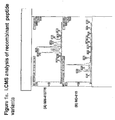
- MD-915 peptide and MM-416776 peptide fractions were analyzed by standard LCMS and HPLC. LCMS analysis revealed that MD-915 is more homogeneous than MM-416776 (see Figure 1a ; note that MD-915 peptide exhibits fewer peaks (Panel B) than MM-416776 (Panel A)).
- Peptides were chemically synthesized by a commercial peptide synthesis company. Varying yields of peptides were obtained depending on the efficiency of chemical synthesis. Thus, the four peptides, in decreasing order of yield were: Cys Cys Glu Tyr Cys Cys Asn Pro Ala Cys Thr Gly Cys Tyr (SEQ ID NO:31;MD-1100), 10-20% yield; Cys Cys Glu Leu Cys Cys Asn Pro Ala Cys Thr Gly Cys Tyr (SEQ ID NO:29 ; MM416774); Asn Ser Ser Asn Tyr Cys Cys Glu Tyr Cys Cys Asn Pro Ala Cys Thr Gly CysTyr (SEQ ID NO:28; MD-915); Asn Ser Ser Asn Tyr Cys Cys Glu Leu Cys Cys Asn Pro Ala Cys Thr Gly Cys Tyr (SEQ ID NO:26 ; MM-416776), ⁇ 5% yield.
- the specific amino acid changes introduced into the peptides can create
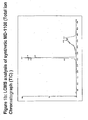
- Figure 1b shows the total ion chromatograph profile of synthetically manufactured MD-1100.
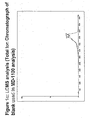
- Figure 1c shows the total ion chromatograph profile of the control blank sample. There is one major peak present in the MD-1100 sample that is not also present in the control sample. Quantitative analysis suggests the MD-1100 is >98% pure.
- Example 2 Activation of the intestinal GC-C receptor by a variant ST peptide and ST peptide
- the ability of MD-915, MM-416776, and MD-1100 to activate the intestinal GC-C receptor was assessed in an assay employing the T84 human colon carcinoma cell line (American Type Culture Collection (Bethesda, Md.). For the assays cells were grown to confluency in 24-well culture plates with a 1:1 mixture of Ham's F12 medium and Dulbecco's modified Eagle's medium (DMEM), supplemented with 5% fetal calf serum and were used at between passages 54 and 60.
- DMEM Dulbecco's modified Eagle's medium
- the dried samples were resuspended in 0.5ml of phosphate buffer provided in the Cayman Chemical Cyclic GMP EIA kit (Cayman Chemical, Ann Arbor, MI). Cyclic GMP was measured by EIA according to procedures outlined in the Cayman Chemical Cyclic GMP EIA kit.
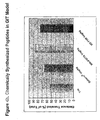
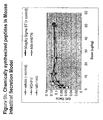
- Figure 2 shows the activity of chemically synthesized peptide variants in this GC-C receptor activity assay.
- MM-416776 and two different MD-1100 peptides (MD-1100(a) and MD-1 100(b), synthesized by two different methods) had activity comparable to MM-416776.
- MD-915 and MM-416776 peptide were chemically synthesized in a manner identical to that of MD-1100(b).
- Example 3 MD-915 and MM-416776 increase intestinal transit in mice
- GIT murine gastrointestinal transit
- mice In order to determine whether the peptides increase the rate of gastrointestinal transit, the peptides and controls were tested using a murine gastrointestinal transit (GIT) assay ( Moon et al. Infection and Immunity 25:127, 1979 ).
- GIT murine gastrointestinal transit
- charcoal which can be readily visualized in the gastrointestinal tract is administered to mice after the administration of a test compound. The distance traveled by the charcoal is measured and expressed as a percentage of the total length of the colon.
- mice were fasted with free access to water for 12 to 16 hours before the treatment with peptide or control buffer.
- the peptides were orally administered at 1 ⁇ g/kg-1mg/kg of peptide in buffer (20mM Tris pH 7.5) 7 minutes before being given an oral dose of 5% Activated Carbon (Aldrich 242276-250G).
- Control mice were administered buffer only before being given a dose of Activated Carbon.
- the mice were sacrificed and their intestines from the stomach to the cecum were dissected. The total length of the intestine as well as the distance traveled from the stomach to the charcoal front was measured for each animal and the results are expressed as the percent of the total length of the intestine traveled by the charcoal front.
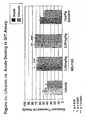
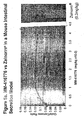
- FIG. 3a , b wild-type ST peptide (MM-416776; (Sigma-Aldrich, St Louis, MO; 0.1 mg/kg), synthetically manufactured MD-1100 and Zelnorm® (0.1 mg/kg), a drug approved for IBS that is an agonist for the serotonin receptor 5HT4, increase gastrointestinal transit rate in this model.
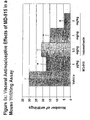
- Figure 4a shows the result of a study demonstrating that intestinal transit rate increases with an increasing dosage of either recombinantly synthesized MM-416776 or MD-915.
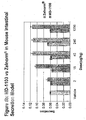
- Figure 4b shows the results of a study demonstrating both chemically synthesized MM-416776 or MD-1100 peptide increase intestinal transit rates more than either Tris buffer alone or an equivalent dose of Zelnorm®.
- Example 4 MD-915 peptide and MM-416776 peptide increase intestinal secretion in suckling mice (SuMi assay)
- MM-416776 peptide and MD-915 were tested for their ability to increase intestinal secretion using a suckling mouse model of intestinal secretion.
- a test compound is administered to suckling mice that are between 7 and 9 days old. After the mice are sacrificed, the gastrointestinal tract from the stomach to the cecum is dissected ("guts"). The remains ("carcass") as well as the guts are weighed and the ratio of guts to carcass weight is calculated. If the ratio is above 0.09, one can conclude that the test compound increases intestinal secretion.
- Figure 5a shows a dose response curve for wild-type ST peptide (MM-416776) in this model.
- Figure 5b shows dose response curve for the MD-1100 peptide in this model.
- FIG. 6a shows a dose response curve for the recombinant MM-416776 peptide described above and the recombinant MD-915 peptide described above. As can be seen from Figure 6a , both peptides increase intestinal secretion in this model.
- Figure 6b shows a dose response curve for chemically synthesized MD-915, MD-1100 and MM-416776 as well as wild-type ST peptide (purchased from Sigma-Aldrich, St Louis, MO).
- Hypersensitivity to colorectal distension is common in patients with IBS and may be responsible for the major symptom of pain.
- Both inflammatory and non-inflammatory animal models of visceral hyperalgesia to distension have been developed to investigate the effect of compounds on visceral pain in IBS.
- TBS Trinitrobenzenesulphonic acid
- Electromyographic (EMG) recordings were started 5 days after surgery. Electrical activity of abdominal striated muscle was recorded with an electroencephalograph machine (Mini VIII, Alvar, Paris, France) using a short time constant (0.03 sec.) to remove low-frequency signals ( ⁇ 3 Hz).
- TNBS trinitrobenzencsulphonic acid
- Rats Male Wistar Rats (200-250 g) are surgically implanted with nichrome wire electrodes as in the TNBS model. Ten days post surgical implantation, partial restraint stress (PRS), is performed as described by Williams et al. for two hours (Williams et al. 1988 Gastroenterology 64:611). Briefly, under light anesthesia with ethyl-ether, the foreshoulders, upper forelimbs and thoracic trunk are wrapped in a confining harness of paper tape to restrict, but not prevent body movements. Control sham-stress animals are anaesthetized but not wrapped. Thirty minutes before the end of the PRS session, the animals are administered test-compound or vehicle.
- PRS partial restraint stress
- the CRD distension procedure is performed as described above for the TNBS model with barostat at pressures of 15, 30, 45 and 60mm Hg.
- Statistical analysis on the number of bursts is determined and analyzed as in the TNBS model above.
- the PBQ-induced writhing model can be used to assess pain control activity of the peptides and GC-C receptor agonists of the present disclosure, e.g. of the peptides in accordance with the invention.
- This model is described by Siegmund et al. (1957 Proc. Soc. Exp. Bio. Med. 95:729-731 ). Briefly, one hour after oral dosing with a test compound, e.g., a peptide, morphine or vehicle, 0.02% phenylbenzoquinone (PBQ) solution (12.5 mL/kg) is injected by intraperitoneal route into the mouse.
- PBQ phenylbenzoquinone
- the number of stretches and writhings are recorded from the 5 th to the 10 th minute after PBQ injection, and can also be counted between the 35 th and 40 th minute and between the 60 th and 65 th minute to provide a kinetic assessment.
- the results are expressed as the number of stretches and writhings (mean ⁇ SEM) and the percentage of variation of the nociceptive threshold calculated from the mean value of the vehicle-treated group.
- the statistical significance of any differences between the treated groups and the control group is determined by a Dunnett's test using the residual variance after a one-way analysis of variance (P ⁇ 0.05) using SigmaStat Software.
- Figures 8a and 8b show the effect of different doses of MD-915 and MD-1100 in the PBQ writhing assay.
- Indomethacin an NSAID (nonsteroidal anti-inflammatory drug) with known pain control activity, was used as the positive control in the assay.
- Significant reductions in writhings were observed for MD-915 (1 mg/kg dose) and MD-1100 (2.5 mg/kg dose) compared to the vehicle control. Loss of efficacy at the highest dose tested has also been observed for multiple other compounds (such as 5HT-3 antagonists) tested in similar assays.
- the results of this study suggest that both MD-915 and MD-1100 have antinociceptive effects in this visceral pain model comparable to the intermediate doses of indomethacin.
- a competition binding assay was performed using rate intestinal epithelial cells.
- Epithelial cells from the small intestine of rats were obtained as described by Kessler et al. (J. Biol. Chem. 245: 5281-5288 (1970) ). Briefly, animals were sacrificed and their abdominal cavities exposed. The small intestine was rinsed with 300 ml ice cold saline or PBS. 10 cm of the small intestine measured at 10 cm from the pylorus was removed and cut into 1 inch segments.
- Intestinal mucosa was extruded from the intestine by gentle pressure between a piece of parafilm and a P-1000 pipette tip. Intestinal epithelial cells were placed in 2 ml PBS and pipetted up and down with a 5 ml pipette to make a suspension of cells. Protein concentration in the suspension was measured using the Bradford method (Anal. Biochem. 72: 248-254 (1976) ).
- a competition binding assay was performed based on the method of Giannella et al. (Am. J. Physiol. 245: G492-G498 ) between [ 125 I] labeled MM-416776 and MD-1100.
- the assay mixture contained: 0.5 ml of DME with 20 mM HEPES-KOH pH 7.0, 0.9 mg of the cell suspension listed above, 21.4 fmol [ 125 I]-MM-416776 (42.8 pM), and different concentrations of competitor MD-1100 (0.01 to 1000 nM).
- the mixture was incubated at room temperature for 1 hour, and the reaction stopped by applying the mixture to GF/B glass-fiber filters (Whatman).
- the sample was eluted from the analytical column with a reverse phase gradient (Mobile Phase A: 10 mM ammonium hydroxide in dH 2 O, Mobile Phase B: 10 mM ammonium hydroxide in 80% acetonitrile and 20% methanol; 20% B for the first 3 minutes then ramping to 95% B over 4 min. and holding for 2 min., all at a flow rate of 0.4 mL/min.). At 9.1 minutes, the gradient returns to the initial conditions of 20%B for 1 min.
- Mobile Phase A 10 mM ammonium hydroxide in dH 2 O
- Mobile Phase B 10 mM ammonium hydroxide in 80% acetonitrile and 20% methanol
- MRM triple-quadrapole mass spectrometry
- Figure 10b shows absorption data for IV and orally administered MD-1100 as detected by LCMS.
- MD-1100 appears similarly minimally systemically absorbed and is ⁇ 0.11 % bioavailable.
- the peptides and agonists of the present disclosure are preferably administered orally, e.g., as a tablet, gel, paste, slurry, liquid, powder or in some other form.
- Orally administered compositions can include binders, flavoring agents, and humectants.
- the peptides and agonists can be co-administered with other agents used to treat gastrointestinal disorders including but not limited to acid suppressing agents such as Histamine-2 receptor agonists (H2As) and proton pump inhibitors (PPIs).
- H2As Histamine-2 receptor agonists
- PPIs proton pump inhibitors
- the peptides and agonists can also be administered by rectal suppository.
- peptides and agonists are preferably administered parenterally or orally.
- the peptides described herein can be used alone or in combination with other agents.
- the peptides can be administered together with an analgesic peptide or compound.
- the analgesic peptide or compound can be covalently attached to a peptide described herein or it can be a separate agent that is administered together with or sequentially with a peptide described herein in a combination therapy.
- Combination therapy can be achieved by administering two or more agents, e.g., a peptide described herein and an analgesic peptide or compound, each of which is formulated and administered separately, or by administering two or more agents in a single formulation.
- agents e.g., a peptide described herein and an analgesic peptide or compound, each of which is formulated and administered separately, or by administering two or more agents in a single formulation.
- Other combinations are also encompassed by combination therapy.
- two agents can be formulated together and administered in conjunction with a separate formulation containing a third agent. While the two or more agents in the combination therapy can be administered simultaneously, they need not be.
- administration of a first agent (or combination of agents) can precede administration of a second agent (or combination of agents) by minutes, hours, days, or weeks.
- the two or more agents can be administered within minutes of each other or within 1, 2, 3, 6, 9, 12, 15, 18, or 24 hours of each other or within 1, 2, 3, 4, 5, 6, 7, 8, 9, 10, 12, 14 days of each other or within 2, 3, 4, 5, 6, 7, 8, 9, or 10 weeks of each other. In some cases even longer intervals are possible. While in many cases it is desirable that the two or more agents used in a combination therapy be present in within the patient's body at the same time, this need not be so.
- Combination therapy can also include two or more administrations of one or more of the agents used in the combination.
- agent X and agent Y are used in a combination, one could administer them sequentially in any combination one or more times, e.g., in the order X-Y-X, X-X-Y, Y-X-Y, Y-Y-X, X-X-Y-Y, etc.
- the agents can be combined with any pharmaceutically acceptable carrier or medium.
- any pharmaceutically acceptable carrier or medium can be combined with materials that do not produce an adverse, allergic or otherwise unwanted reaction when administered to a patient.
- the carriers or mediums used can include solvents, dispersants, coatings, absorption promoting agents, controlled release agents, etc.
- the agents either in their free form or as a salt can be combined with a polymer such as polylactic-glycoloic acid (PLGA), poly-(I)-lactic-glycolic-tartaric acid (P(I)LGT) ( WO 01/12233 ), polyglycolic acid ( U.S. 3,773,919 ), polylactic acid ( U.S. 4,767,628 ); poly( ⁇ -caprolactone) to create a sustained release formulation.
- PLGA polylactic-glycoloic acid
- P(I)LGT) poly-(I)-lactic-glycolic-tartaric acid
- P(I)LGT) WO 01/12233
- polyglycolic acid U.S. 3,773,919
- polylactic acid U.S. 4,767,628
- poly( ⁇ -caprolactone) poly( ⁇ -caprolactone)
- sustained release formulations are described in EP 0 467 389 A2 , WO 93/241150 , U.S. 5,612,052 ; WO 97/40085 , WO 94/155587 , U.S. 5,672,659 , U.S. 5,893,985 , U.S. 5,134,122 , U.S. 5,192,741 , U.S. 5,192,741 , and U.S. 5,445,832 .
- microparticles of peptide are combined with microparticles of polymer.
- One or more sustained release implants can be placed in the large intestine, the small intestine or both.
- the agents can be administered, e.g., by intravenous injection, intramuscular injection, subcutaneous injection, or by other routes.
- the agents can be administered orally, e.g., as a tablet, gel, paste, slurry, liquid, powder or in some other form.
- Orally administered compositions can include binders, flavoring agents, and humectants.
- the agents can be included in dentifrices or oral washes.
- oral formulations can include abrasives and foaming agents.
- the agents can also be administered transdermally or in the form a suppository.
- the agents can be a free acid or base, or a pharmacologically acceptable salt thereof Solids can be dissolved or dispersed immediately prior to administration or earlier. In some circumstances the preparations include a preservative to prevent the growth of microorganisms.
- the pharmaceutical forms suitable for injection can include sterile aqueous or organic solutions or dispersions which include, e.g., water, an alcohol, an organic solvent, an oil or other solvent or dispersant (e.g., glycerol, propylene glycol, polyethylene glycol, and vegetable oils). Pharmaceutical agents can be sterilized by filter sterilization or by other suitable means.
- Suitable pharmaceutical compositions in accordance with the present disclosure will generally include an amount of the active compound(s) with an acceptable pharmaceutical diluent or excipient, such as a sterile aqueous solution, to give a range of final concentrations, depending on the intended use.
- an acceptable pharmaceutical diluent or excipient such as a sterile aqueous solution.
- the techniques of preparation are generally well known in the art, as exemplified by Remington's Pharmaceutical Sciences (18th Edition, Mack Publishing Company, 1995 ).
- the agents described herein and combination therapy agents can be packaged as a kit that includes single or multiple doses of two or more agents, each packaged or formulated individually, or single or multiple doses of two or more agents packaged or formulated in combination.
- one or more agents can be present in a first container, and the kit can optionally include one or more agents in a second container.
- the container or containers are placed within a package, and the package can optionally include administration or dosage instructions.
- a kit can include additional components such as syringes or other means for administering the agents as well as diluents or other means for formulation.
- the peptides described herein can be used in combination therapy with an analgesic agent, e.g., an analgesic compound or an analgesic peptide.
- analgesic agent e.g., an analgesic compound or an analgesic peptide.
- the analgesic agent can optionally be covalently attached to a peptide described herein.
- analgesic agents are: Ca channel blockers, 5HT receptor antagonists (for example 5HT3, 5HT4 and 5HT1 receptor antagonists), opioid receptor agonists (loperamide, fedotozine, and fentanyl), NK1 receptor antagonists, CCK receptor agonists (e.g., loxiglumide), NK1 receptor antagonists, NK3 receptor antagonists, norepinephrine-serotonin reuptake inhibitors (NSRIs), vanilloid and cannabanoid receptor agonists, and sialorphin.
- 5HT receptor antagonists for example 5HT3, 5HT4 and 5HT1 receptor antagonists
- opioid receptor agonists loperamide, fedotozine, and fentanyl
- NK1 receptor antagonists e.g., CCK receptor agonists (e.g., loxiglumide)
- NK1 receptor antagonists e.g., loxiglumide
- NK1 receptor antagonists e.g.,
- sialorphin-related peptides including those comprising the amino acid sequence QHNPR (SEQ ID NO: 111 ), including: VQHNPR (SEQ ID NO: 112); VRQHNPR (SEQ ID NO: 113 ); VRGQHNPR (SEQ ID NO: 114 ); VRGPQHNPR (SEQ ID NO: 115); VRGPRQHNPR (SEQ ID NO: 116); VRGPRRQHNPR (SEQ ID NO: 117); and RQHNPR (SEQ ID NO: 118).
- Sialorphin-related peptides bind to neprilysin and inhibit neprilysin-mediated breakdown of substance P and Met-enkephalin.
- compounds or peptides that are inhibitors of neprilysin are useful analgesic agents which can be administered with the peptides of the present disclosure in a co-therapy or linked to the peptides of the present disclosure, e.g. to the peptides in accordance with the invention, e.g., by a covalent bond.
- Sialophin and related peptides are described in U.S. Patent 6,589,750 ; U.S. 20030078200 A1 ; and WO 02/051435 A2 .
- Opioid receptor antagonists and agonists can be administered with the peptides of the present disclosure, e.g. with the peptides in accordance with the invention in a co-therapy, or linked to the peptides of the present disclosure, e.g. to the peptides in accordance with the invention, e.g., by a covalent bond.
- opioid receptor antagonists such as naloxone, naltrexone, methyl nalozone, nalmefene, cypridime, beta funaltrexamine, naloxonazine, naltrindole, and nor-binaltorphimine are thought to be useful in the treatment of IBS.
- opioid antagonists of this type can be useful to formulate opioid antagonists of this type in a delayed and sustained release formulation such that initial release of the antagonist is in the mid to distal small intestine and/or ascending colon.
- Such antagonists are described in WO 01/32180 A2 .
- Enkephalin pentapeptide HOE825; Tyr-D-Lys-Gly-Phe-L-homoserine
- this peptide can be used in conjunction with the peptides of the present disclosure, e.g. with the peptides in accordance with the invention.
- trimebutine which is thought to bind to mu/delta/kappa opioid receptors and activate release of motilin and modulate the release of gastrin, vasoactive intestinal peptide, gastrin and glucagons.
- Kappa opioid receptor agonists such as fedotozine, ketocyclazocine, and compounds described in WO 03/097051 A2 can be used with or linked to the peptides of the present disclosure, e.g. the peptides in accordance with the invention.
- mu opioid receptor agonists such as morphine, diphenyloxylate, frakefamide (H-Tyr-D-Ala-Phe(F)-Phe-NH 2 ; WO 01/019849 A1 ) and loperamide can be used.
- Tyr-Arg is a dipeptide that acts by stimulating the release of metenkephalins to elicit an analgesic effect ( J. Biol. Chem 262:8165, 1987 ).
- Kyotorphin can be used with or linked to the peptides of the present disclosure.
- CCK receptor agonists such as caerulein from amphibians and other species are useful analgesic agents that can be used with or linked to the peptides of the present disclosure.
- Conotoxin peptides represent a large class of analgesic peptides that act at voltage gated Ca channels, NMDA receptors or nicotinic receptors. These peptides can be used with or linked to the peptides of the present disclosure.
- Peptide analogs of thymulin can have analgesic activity and can be used with or linked to the peptides of the present disclosure.
- CCK (CCKa or CCKb) receptor antagonists including loxiglumide and dexloxiglumide (the R-isomer of loxiglumide) ( WO 88/05774 ) can have analgesic activity and can be used with or linked to the peptides of the present disclosure.
- 5-HT4 agonists such as tegaserod/zelnorm and hydrogen agonists.
- 5-HT4 agonists such as tegaserod/zelnorm and hydrogen agonists.
- Such agonists are described in: EP1321142 A1 , WO 03/053432A1 , EP 505322 A1 , EP 505322 B1 , US 5,510,353 , EP 507672 A1 , EP 507672 B1 , and US 5,273,983 .
- Calcium channel blockers such as ziconotide and related compounds described in, for example, EP625162B1 , US 5,364,842 , US 5,587,454 , US 5,824,645 , US 5,859,186 , US 5,994,305 , US 6,087,091 , US 6,136,786 , WO 93/13128 A1 , EP 1336409 A1 , EP 835126 A1 , EP 835126 B1 , US 5,795,864 , US 5,891,849 , US 6,054,429 , WO 97/01351 A1 , can be used with or linked to the peptides of the present disclosure.
- NK-1, NK-2, and NK-3 receptors can be can be used with or linked to the peptides of the present disclosure.
- NK1 receptor antagonists such as: aprepitant (Merck & Co Inc), vofopitant, ezlopitant (Pfizer, Inc.), R-673 (Hoffmann-La Roche Ltd), SR-14033 and related compounds described in, for example, EP 873753 A1 , US 20010006972 A1 , US 20030109417 A1 , WO 01/52844 A1 , can be used with or linked to the peptides of the present disclosure.
- NK-2 receptor antagonists such as nepadutant (Menarini Ricerche SpA), saredutant (Sanofi-Synthelabo), SR-144190 (Sanofi-Synthelabo) and UK-290795 (Pfizer Inc) can be used with or linked to the peptides of the present disclosure.
- NK3 receptor antagonists such as osanetant (Sanofi-Synthelabo), talnetant and related compounds described in, for example, WO 02/094187 A2 , EP 876347 A1 , WO 97/21680 A1 , US 6,277,862 , WO 98/11090 , WO 95/28418 , WO 97/19927 , and Boden et al. (J Med Chem. 39:1664-75, 1996 ) can be used with or linked to the peptides of the present disclosure.
- Norepinephrine-serotonin reuptake inhibitors such as milnacipran and related compounds described in WO 03/07 7897 A1 can be used with or linked to the peptides of the present disclosure.
- Vanilloid receptor antagonists such as arvanil and related compounds described in WO 01/64212 A1 can be used with or linked to the peptides of the present disclosure.
- the resulting peptide may also include at least one trypsin or chymotrypsin cleavage site.
- the analgesic peptide may be preceded by (if it is at the carboxy terminus) or followed by (if it is at the amino terminus) a chymotrypsin or trypsin cleavage site that allows release of the analgesic peptide.
- analgesic peptides include: AspPhe, endomorphin-1, endomorphin-2, nocistatin, dalargin, lupron, zicnotide, and substance P.
- the peptides of the present disclosure can be used for the treatment or prevention of cancer, pre-cancerous growths, or metastatic growths.
- they can be used for the prevention or treatment of: colorectal/local metastasized colorectal cancer, gastrointestinal tract cancer, lung cancer, cancer or pre-cancerous growths or metastatic growths of epithelial cells, polyps, breast, colorectal, lung, ovarian, pancreatic, prostatic, renal, stomach, bladder, liver, esophageal and testicular carcinoma, carcinoma (e.g., basal cell, basosquamous, Brown-Pearce, ductal carcinoma, Ehrlich tumor, Krebs, Merkel cell, small or non-small cell lung, oat cell, papillary, bronchiolar, squamous cell, transitional cell, or Walker), leukemia (e.g., B-cell, T-cell, HTLV, acute or chronic lymphoc
- B-cell e.g., B-cell, T-cell
- osteosarcoma papilloma, paraganglioma, nonchroimaffin paragangliomia, , pinealoma, rhabdomyoma, rhabdomyosarcoma, Sertoli cell tumor, teratoma, theca cell tumor, and other diseases in which cells have become dysplastic, immortalized, or transformed.
- the peptides of the present disclosure can be used for the treatment or prevention of: Familial Adenomatous Polyposis (FAP) (autosomal dominant syndrome) that precedes colon cancer, hereditary nonpolyposis colorectal cancer (HNPCC), and inherited autosomal dominant syndrome.
- FAP Familial Adenomatous Polyposis
- HNPCC hereditary nonpolyposis colorectal cancer
- the peptides. can be used in combination therapy with radiation or chemotherapeutic agents, an inhibitor of a cGMP-dependent phosphodiesterase or a selective cyclooxygenase-2 inhibitor (a number of selective cyclooxygenase-2 inhibitors are described in WO02062369 ).
- the peptides can be for treatment or prevention of inflammation.
- they can be used alone or in combination with inhibitor of cGMP-dependent phosphodiesterase or a selective cyclooxygenase-2 inhibitor for treatment of: organ inflammation, IBD (e.g, Crohn's disease, ulcerative colitis), asthma, nephritis, hepatitis, pancreatitis, bronchitis, cystic fibrosis, ischemic bowel diseases, intestinal inflammations/allergies, coeliac disease, proctitis, eosinophilic gastroenteritis, mastocytosis, and other inflammatory disorders.
- IBD e.g, Crohn's disease, ulcerative colitis
- asthma e.g, Crohn's disease, ulcerative colitis
- nephritis hepatitis
- pancreatitis bronchitis
- cystic fibrosis ischemic bowel diseases
- intestinal inflammations/allergies coeliac disease
- the peptides can also be used to treat or prevent insulin-related disorders, for example: II diabetes mellitus, hyperglycemia, obesity, disorders associated with disturbances in glucose or electrolyte transport and insulin secretion in cells, or endocrine disorders. They can be also used in insulin resistance treatment and post-surgical and non-post surgery decrease in insulin responsiveness.
- the peptides can be used to prevent or treat respiratory disorders, including, inhalation, ventilation and mucus secretion disorders, pulmonary hypertension, chronic obstruction of vessels and airways, and irreversible obstructions of vessels and bronchi.
- the peptides can be used in combination therapy with a phosphodiesterase inhibitor (examples of such inhibitors can be found in US Patent No. 6,333,354 ).
- the peptides can also be used to prevent or treat: retinopathy, nephropathy, diabetic angiopathy, and edema formation
- the peptides can also be used to prevent or treat neurological disorders, for example, headache, anxiety, movement disorders, aggression, psychosis, seizures, panic attacks, hysteria, sleep disorders, depression, schizoaffective disorders, sleep apnea, attention deficit syndromes, memory loss, and narcolepsy. They may also be used as a sedative.
- neurological disorders for example, headache, anxiety, movement disorders, aggression, psychosis, seizures, panic attacks, hysteria, sleep disorders, depression, schizoaffective disorders, sleep apnea, attention deficit syndromes, memory loss, and narcolepsy. They may also be used as a sedative.
- the peptides and detectabley labeled peptides can be used as markers to identify, detect, stage, or diagnoses diseases and conditions of the small intestine, including: Crohn's disease, colitis, inflammatory bowel disease, tumors, benign tumors, such as benign stromal tumors, adenoma, angioma, adenomatous (pedunculated and sessile) polyps, malignant, carcinoid tumors, endocrine cell tumors, lymphoma, adenocarcinoma, foregut, midgut, and hindgut carcinoma, gastroinstestinal stromal tumor (GIST), such as leiomyoma, cellular leiomyoma, leiomyoblastoma, and leiomyosarcoma, gastrointestinal autonomic nerve tumor, malabsorption syndromes, celiac diseases, diverticulosis, Meckel's diverticulurn, colonic diverticula, megacolon, Hirschsprung's disease,
- the peptides can be conjugated to another molecule (e.g, a diagnostic or therapeutic molecule) to target cells bearing the GC-C receptor, e.g., cystic fibrosis lesions and specific cells lining the intestinal tract.
- a diagnostic or therapeutic molecule e.g., cystic fibrosis lesions and specific cells lining the intestinal tract.
- they can be used to target radioactive moieties or therapeutic moieties to the intestine to aid in imaging and diagnosing or treating colorectal/metastasized or local colorectal cancer and to deliver normal copies of the p53 tumor suppressor gene to the intestinal tract.
- the peptides can be used alone or in combination therapy to treat erectile dysfunction.
- the peptides can be used alone or in combination therapy to treat inner ear disorders, e.g., to treat Meniere's disease, including symptoms of the disease such as vertigo, hearing loss, tinnitus, sensation of fullness in the ear, and to maintain fluid homeostasis in the inner ear.
- the peptides can be used alone or in combination therapy to treat disorders associated with fluid and sodium retention, e.g., diseases of the electrolyte-water/electrolyte transport system within the kidney, gut and urogenital system, congestive heart failure, hypertension, hypotension, liver cirrhosis, and nephrotic syndrome. In addition they can be used to facilitate diuresis or control intestinal fluid.
- the peptides can be used alone or in combination therapy to treat disorders associated with bicarbonate secreion, e.g., Cystic Fibrosis.
- the peptides can be used alone or in combination therapy to treat disorders associated with liver cell regeneration.
Landscapes
- Health & Medical Sciences (AREA)
- Chemical & Material Sciences (AREA)
- Organic Chemistry (AREA)
- Life Sciences & Earth Sciences (AREA)
- General Health & Medical Sciences (AREA)
- Medicinal Chemistry (AREA)
- Engineering & Computer Science (AREA)
- Public Health (AREA)
- Veterinary Medicine (AREA)
- Bioinformatics & Cheminformatics (AREA)
- Pharmacology & Pharmacy (AREA)
- Animal Behavior & Ethology (AREA)
- Chemical Kinetics & Catalysis (AREA)
- General Chemical & Material Sciences (AREA)
- Nuclear Medicine, Radiotherapy & Molecular Imaging (AREA)
- Proteomics, Peptides & Aminoacids (AREA)
- Diabetes (AREA)
- Neurology (AREA)
- Biomedical Technology (AREA)
- Neurosurgery (AREA)
- Molecular Biology (AREA)
- Genetics & Genomics (AREA)
- Biophysics (AREA)
- Biochemistry (AREA)
- Hematology (AREA)
- Gastroenterology & Hepatology (AREA)
- Cardiology (AREA)
- Urology & Nephrology (AREA)
- Obesity (AREA)
- Endocrinology (AREA)
- Hospice & Palliative Care (AREA)
- Pain & Pain Management (AREA)
- Heart & Thoracic Surgery (AREA)
- Psychiatry (AREA)
- Pulmonology (AREA)
- Oncology (AREA)
- Epidemiology (AREA)
- Immunology (AREA)
- Vascular Medicine (AREA)
- Nutrition Science (AREA)
Abstract
Description
- This disclosure relates to methods and compositions for treating various disorders, including gastrointestinal disorders, obesity, congestive heart failure and benign prostatic hyperplasia.
- Irritable bowel syndrome (IBS) is a common chronic disorder of the intestine that affects 20 to 60 million individuals in the US alone (Lehman Brothers, Global Healthcare-Irritable bowel syndrome industry update, September 1999). IBS is the most common disorder diagnosed by gastroenterologists (28% of patients examined) and accounts for 12% of visits to primary care physicians (Camilleri 2001, Gastroenterology 120:652-668). In the US, the economic impact of IBS is estimated at $25 billion annually, through direct costs of health care use and indirect costs of absenteeism from work (Talley 1995, Gastroenterology 109:1736-1741). Patients with IBS have three times more absenteeism from work and report a reduced quality of life. Sufferers may be unable or unwilling to attend social events, maintain employment, or travel even short distances (Drossman 1993, Dig Dis Sci 38:1569-1580). There is a tremendous unmet medical need in this population since few prescription options exist to treat IBS.
- Patients with IBS suffer from abdominal pain and a disturbed bowel pattern. Three subgroups of IBS patients have been defined based on the predominant bowel habit: constipation-predominant (c-IBS), diarrhea-predominant (d-IBS) or alternating between the two (a-IBS). Estimates of individuals who suffer from c-IBS range from 20-50% of the IBS patients with 30% frequently cited. In contrast to the other two subgroups that have a similar gender ratio, c-IBS is more common in women (ratio of 3:1) (Talley et al. 1995, Am J Epidemiol 142:76-83).
- The definition and diagnostic criteria for IBS have been formalized in the "Rome Criteria"(Drossman et al. 1999, Gut 45:Suppl II: 1-81), which are well accepted in clinical practice. However, the complexity of symptoms has not been explained by anatomical abnormalities or metabolic changes. This has led to the classification of IBS as a functional GI disorder, which is diagnosed on the basis of the Rome criteria and limited evaluation to exclude organic disease (Ringel et al. 2001, Annu Rev Med 52: 319-338). IBS is considered to be a "biopsychosocial" disorder resulting from a combination of three interacting mechanisms: altered bowel motility, an increased sensitivity of the intestine or colon to pain stimuli (visceral sensitivity) and psychosocial factors (Camilleri 2001, Gastroenterology 120:652-668). Recently, there has been increasing evidence for a role of inflammation in etiology of IBS. Reports indicate that subsets of IBS patients have small but significant increases in colonic inflammatory and mast cells, increased inducible nitric oxide (NO) and synthase (iNOS) and altered expression of inflammatory cytokines (reviewed by Talley 2000, Medscape Coverage of DDW week).
- The present invention provides a pharmaceutical composition comprising:
- (a) a polypeptide selected from:
- (i) a polypeptide comprising the amino acid sequence:
- Cys Cys Glu Phe Cys Cys Asn Pro Ala Cys Thr Gly Cys Tyr;
- (ii) a polypeptide comprising the amino acid sequence:
- Cys Cys Glu Tyr Cys Cys Asn Pro Ala Cys Thr Gly Cys Tyr; and
- (iii) a polypeptide comprising the amino acid sequence:
- Cys Cys Glu Trp Cys Cys Asn Pro Ala Cys Thr Gly Cys Tyr;
- (i) a polypeptide comprising the amino acid sequence:
- (b) an agent selected from:
- (i) a proton pump inhibitor;
- (ii) an H2 receptor agonist;
- (iii) an opioid receptor antagonist; and
- (iv) an opioid receptor agonist; and
- (c) a pharmaceutically acceptable carrier.
- Further aspects and embodiments of the invention, including methods for producing the above-mentioned polypeptides, are set out in the appended claims.
- More generally, the present disclosure features compositions and related methods for treating IBS and other gastrointestinal disorders and conditions, e.g., gastrointestinal motility disorders, functional gastrointestinal disorders, gastroesophageal reflux disease (GERD), Crohn's disease, ulcerative colitis, inflammatory bowel disease, functional heartburn, dyspepsia (including functional dyspepsia or nonulcer dyspepsia), gastroparesis, chronic intestinal pseudo-obstruction (or colonic pseudo-obstruction), and disorders and conditions associated with constipation, e.g., constipation associated with use of opiate pain killers, post-surgical constipation, and constipation associated with neuropathic disorders as well as other conditions and disorders. The compositions feature peptides that activate the guanylate cyclase C (GC-C) receptor.
- The present disclosure also features compositions and related methods for treating obesity, congestive heart failure and benign prostatic hyperplasia (BPH).
- Without being bound by any particular theory, in the case of IBS and other gastrointestinal disorders the peptides are useful because they can increase gastrointestinal motility.
- Without being bound by any particular theory, in the case of IBS and other gastrointestinal disorders the peptides are useful, in part, because they can decrease inflammation.
- Without being bound by any particular theory, in the case of IBS and other gastrointestinal disorders the peptides are also useful because they can decrease gastrointestinal pain or visceral pain.
- The present disclosure features pharmaceutical compositions comprising certain peptides that are capable of activating the guanylate-cyclase C (GC-C) receptor. Within the disclosure are pharmaceutical compositions comprising a peptide of the disclosure as well as combination compositions comprising a peptide of the disclosure and a second therapeutic agent, e.g., an agent for treating constipation (e.g., SPI-0211; Sucampo Pharmaceuticals, Inc.; Bethesda, MD) or some other gastrointestinal disorder. Examples of a second therapeutic agent include: acid reducing agents such as proton pump inhibitors and H2 receptor blockers, pro-motility agents such as 5HT receptor agonists (e.g. Zelnorm®), anti-inflammatory agents, antispasmodics, antidepressants, centrally-acting analgesic agents such as opiod receptor agonists, opiod receptor antagonists, agents for the treatment of inflammatory bowel disease, Crohn's disease and ulcerative colitis (e.g., Traficet-EN™; (ChemoCentryx, Inc.; San Carlos, CA) agents that treat gastrointestinal or visceral pain, and cGMP phosphodiesterase inhibitors (motapizone, zaprinast, and suldinac sulfone). Thus, for example, the pharmaceutical compositions can include an analgesic agent selected from the group consisting of: Ca channel blockers (e.g., ziconotide), 5HT receptor antagonists (for example 5HT3, 5HT4 and 5HT1 receptor antagonists), opioid receptor agonists (e.g., loperamide, fedotozine, fentanyl, naloxone, naltrexone, methyl nalozone, nalmefene, cypridime, beta funaltrexamine, naloxonazine, naltrindole, nor-binaltorphimine, morphine, diphenyloxylate, enkephalin pentapeptide, and trimebutine), NK1 receptor antagonists (e.g., ezlopitant and SR-14033), CCK receptor agonists (e.g., loxiglumide), NK1 receptor antagonists, NK3 receptor antagonists (e.g., talnetant, and osanetant (SR-142801)), norepinephrine-serotonin reuptake inhibitors (NSRIs; e.g., milnacipran), vanilloid and cannabanoid receptor agonists (e.g., arvanil), sialorphin, sialorphin-related peptides comprising the amino acid sequence QHNPR (SEQ ID NO: 111) for example, VQHNPR (SEQ ID NO: 112); VRQHNPR (SEQ ID NO: 113 ); VRGQHNPR (SEQ ID NO: 114 ); VRGPQHNPR (SEQ ID NO: 115); VRGPRQHNPR (SEQ ID NO: 116); VRGPRRQHNPR (SEQ ID NO: 117); and RQHNPR (SEQ ID NO: 118 ), compounds or peptides that are inhibitors of neprilysin, frakefamide (H-Tyr-D-Ala-Phe(F)-Phe-NH2;
WO 01/019849 A1 WO 88/05774 - The present disclosure also features methods for treating various gastrointestinal disorders by administering a peptide that acts as a partial or complete agonist of the GC-C receptor. The peptide includes at least six cysteines that form three disulfide bonds. In certain instances the disulfide bonds are replaced by other covalent cross-links and in some cases the cysteines are substituted by other residues to provide for alternative covalent cross-links. The peptides may also include at least one trypsin or chymotrypsin cleavage site and/or a carboxy-terminal analgesic peptide or small molecule, e.g., AspPhe or some other analgesic peptide. When present within the peptide, the analgesic peptide or small molecule may be preceded by a chymotrypsin or trypsin cleavage site that allows release of the analgesic peptide or small molecule. The peptides and methods of the present disclosure are also useful for treating pain and inflammation associated with various disorders, including gastrointestinal disorders. Certain peptides include a functional chymotrypsin or trypsin cleavage site located so as to allow inactivation of the peptide upon cleavage. Certain peptides having a functional cleavage site undergo cleavage and gradual inactivation in the digestive tract, and this is desirable in some circumstances. In certain peptides, a functional chymotrypsin site is altered, increasing the stability of the peptide in vivo.
- The present disclosure also features methods for treating other disorders such as congestive heart failure and benign prostatic hyperplasia by administering a peptide or small molecule (parenterally or orally) that acts as an agonist of the GC-C receptor. Such agents can be used in combination with natriuretic peptides (e.g., atrial natriuretic peptide, brain natriuretic peptide or C-type natriuretic peptide), a diuretic, or an inhibitor of angiotensin converting enzyme.
- The present disclosure also features methods and compositions for increasing intestinal motility. Intestinal motility involves spontaneous coordinated dissentions and contractions of the stomach, intestines, colon and rectum to move food through the gastrointestinal tract during the digestive process.
- In certain instances the peptides include either one or two or more contiguous negatively charged amino acids (e.g., Asp or Glu) or one or two or more contiguous positively charged residues (e.g., Lys or Arg) or one or two or more contiguous positively or negatively charged amino acids at the carboxy terminus. In these instances all of the flanking amino acids at the carboxy terminus are either positively or negatively charged. In other instances the carboxy terminal charged amino acids are preceded by a Leu. For example, the following amino acid sequences can be added to the carboxy terminus of the peptide: Asp; Asp Lys; Lys Lys Lys Lys Lys Lys; Asp Lys Lys Lys Lys Lys Lys; Leu Lys Lys; and Leu Asp. It is also possible to simply add Leu at the carboxy terminus.
- In a first aspect, the present disclosure features a peptide comprising, consisting of, or consisting essentially of the amino acid sequence (I): Xaa1 Xaa2 Xaa3 Xaa4 Xaa5 Cys6 Cys7 Xaa8 Xaa9 Cys10 Cys11 Xaa12 Xaa13 Xaa14 Cys15 Xaa16 Xaa17 Cys18 Xaa19 Xaa20 Xaa21 wherein: Xaa1 Xaa2 Xaa3 Xaa4 Xaa5 is Asn Ser Ser Asn Tyr or is missing or Xaa1 Xaa2 Xaa3 Xaa4 is missing. In certain instances Xaa8, Xaa9, Xaa12, Xaa13, Xaa14, Xaa17, and Xaa19 can be any amino acid. In certain instances Xaa5 is Asn, Trp, Tyr, Asp, or Phe. In other instances, Xaa5 can also be Thr or Ile. In other instances Xaa5 is Tyr, Asp or Trp. In some instances Xaa8 is Glu, Asp, Gln, Gly or Pro. In other instances Xaa8 is Glu; in some instances Xaa9 is Leu, Ile, Val, Ala, Lys, Arg, Trp, Tyr or Phe; in some instances Xaa9 is Leu, Ile, Val, Lys, Arg, Trp, Tyr or Phe.
- In certain instances, an amino acid can be replaced by a non-naturally occurring amino acid or a naturally or non-naturally occurring amino acid analog. For example, an aromatic amino acid can be replaced by 3,4-dihydroxy-L-phenylalanine, 3-iodo-L-tyrosine, triiodothyronine, L-thyroxine, phenylglycine (Phg) or nor-tyrosine (norTyr). Phg and norTyr and other amino acids including Phe and Tyr can be substituted by, e.g., a halogen, -CH3, -OH, -CH2NH3, -C(O)H, -CH2CH3, -CN, -CH2CH2CH3, -SH, or another group.
- In some instances Xaa12 is Asn, Tyr, Asp or Ala. In other instances Xaa12 is Asn. In some instances Xaa13 is Ala, Pro or Gly, and in other instances it is Pro. In some instances Xaa14 is Ala, Leu, Ser, Gly, Val, Glu, Gln, Ile, Leu, Lys, Arg, or Asp, and in other instances it is Ala or Gly, and in still other instances it is Ala. In some instances Xaa16 is Thr, Ala, Asn, Lys, Arg, Trp; Xaa17 is Gly, Pro or Ala; Xaa19 is selected from Trp, Tyr, Phe, Asn and Leu or Xaa19 is selected from Trp, Tyr, and Phe or Xaa19 is selected from Leu, Ile and Val; or Xaa19 is His or Xaa19 is selected from Trp, Tyr, Phe, Asn, Ile, Val, His and Leu; and Xaa20 Xaa21 is AspPhe or is missing or Xaa20 is Asn or Glu and Xaa21 is missing or Xaa19 Xaa20 Xaa21 is missing. The present disclosure also features methods for treating a gastrointestinal disorder (e.g., a gastrointestinal motility disorder, a functional gastrointestinal disorder, gastroesophageal reflux disease, functional heartburn, dyspepsia, functional dyspepsia, nonulcer dyspepsia, gastroparesis, chronic intestinal pseudo-obstruction, or colonic pseudo-obstruction), obesity, congestive heart failure or benign prostatic hyperplasia by administering a composition comprising an aforementioned peptide
- When Xaa9 is Trp, Tyr or Phe or when Xaa16 is Trp the peptide has a potentially functional chymotrypsin cleavage site that is located at a position where cleavage will inactivate GC-C receptor binding by the peptide. When Xaa9 is Lys or Arg or when Xaa16 is Lys or Arg, the peptide has a potentially functional trypsin cleavage site that is located at a position where cleavage will inactivate GC-C receptor binding by the peptide.
- When Xaa19 is Trp, Tyr or Phe, the peptide has a chymotrypsin cleavage site that is located at a position where cleavage will liberate the portion of the peptide carboxy-terminal to Xaa19. When Xaa19 is Leu, Ile or Val, the peptide can have a chymotrypsin cleavage site that is located at a position where cleavage will liberate the portion of the peptide amino-terminal to Xaa19. At relatively high pH the same effect is seen when Xaa19 is His. When Xaa19 is Lys or Arg, the peptide has a trypsin cleavage site that is located at a position where cleavage will liberate the portion of the peptide carboxy-terminal to Xaa19. Thus, if the peptide includes an analgesic peptide carboxy-terminal to Xaa19, the peptide will be liberated in the digestive tract upon exposure to the appropriate protease. Among the analgesic peptides which can be included in the peptide are: AspPhe (as Xaa20Xaa21), endomorphin-1, endomorphin-2, nocistatin, dalargin, lupron, and substance P and other analgesic peptides described herein. These peptides can, for example, be used to replace Xaa20Xaa21.
- When Xaa1 or the amino-terminal amino acid of the peptide of the present disclosure (e.g., Xaa2 or Xaa3) is Trp, Tyr or Phe, the peptide has a chymotrypsin cleavage site that is located at a position where cleavage will liberate the portion of the peptide amino-terminal to Xaa1 (or Xaa2 or Xaa3) along with Xaa1, Xaa2 or Xaa3. When Xaa1 or the amino-terminal amino acid of the peptide of the present disclosure (e.g., Xaa2 or Xaa3) is Lys or Arg, the peptide has a trypsin cleavage site that is located at a position where cleavage will liberate portion of the peptide amino-terminal to Xaa1 along with Xaa1, Xaa2 or Xaa3). When Xaa1 or the ammo-terminal amino acid of the peptide of the present disclosure is Leu, Ile or Val, the peptide can have a chymotrypsin cleavage site that is located at a position where cleavage will liberate the portion of the peptide amino-terminal to Xaa1. At relatively high pH the same effect is seen when Xaa1 is His. Thus, for example, if the peptide includes an analgesic peptide amino-terminal to Xaa1, the peptide will be liberated in the digestive tract upon exposure to the appropriate protease. Among the analgesic peptides which can be included in the peptide are: AspPhe, endomorphin-1, endomorphin-2, nocistatin, dalargin, lupron, and substance P and other analgesic peptides described herein.
- When fully folded, disulfide bonds are present between: Cys6 and Cys11; Cys7 and Cys15; and Cys10 and Cys18. The peptides of the present disclosure bear some sequence similarity to ST peptides. However, they include amino acid changes and/or additions that improve functionality. These changes can, for example, increase or decrease activity (e.g., increase or decrease the ability of the peptide to stimulate intestinal motility), alter the ability of the peptide to fold correctly, the stability of the peptide, the ability of the peptide to bind the GC-C receptor and/or decrease toxicity. In some cases the peptides may function more desirably than wild-type ST peptide. For example, they may limit undesirable side effects such as diarrhea and dehydration.
- In some instances one or both members of one or more pairs of Cys residues which normally form a disulfide bond can be replaced by homocysteine, 3-mercaptoproline (Kolodziej et al. 1996 Int J Pept Protein Res 48:274); β, β dimethylcysteine (Hunt et al. 1993 Int J Pept Protein Res 42:249) or diaminopropionic acid (Smith et al. 1978 J Med Chem 21:117) to form alternative internal cross-links at the positions of the normal disulfide bonds.
- In addition one or more disulfide bonds can be replaced by alternative covalent cross-links, e.g., an amide bond, an ester linkage, an alkyl linkage, a thio ester linkage, a lactam bridge, a carbamoyl linkage, a urea linkage, a thiourea linkage, a phosphonate ester linkage, an alkyl linkage, an alkenyl linkage, an ether, a thioether linkage, or an amino linkage. For example, Ledu et al. (Proceedings Nat'1 Acad. Sci. 100:11263-78, 2003) describe methods for preparing lactam and amide cross-links. Schafmeister et al. (J. Am. Chem. Soc. 122:5891, 2000) describe stable, all carbon cross-links. In some cases, the generation of such alternative cross-links requires replacing the Cys residues with other residues such as Lys or Glu or non-naturally occurring amino acids.
- In the case of a peptide comprising the sequence (I): Xaa1 Xaa2 Xaa3 Xaa4 Xaa5 Cys6 Cys7 Xaa8 Xaa9 Cys10 Cys11 Xaa12 Xaa13 Xaa14 Cys15 Xaa16 Xaa17 Cys18 Xaa19 Xaa20 Xaa21 wherein: Xaa1 Xaa2 Xaa3 Xaa4 Xaa5 is missing and/or the sequence Xaa19 Xaa20 Xaa21 is missing, the peptide can still contain additional carboxy terminal or amino terminal amino acids or both. For example, the peptide can include an amino terminal sequence that facilitates recombinant production of the peptide and is cleaved prior to administration of the peptide to a patient. The peptide can also include other amino terminal or carboxyterminal amino acids. In some cases the additional amino acids protect the peptide, stabilize the peptide or alter the activity of the peptide. In some cases some or all of these additional amino acids are removed prior to administration of the peptide to a patient. The peptide can include 1, 2, 3, 4, 5, 10, 15, 20, 25, 30, 40, 50, 60, 70 80, 90, 100 or more amino acids at its amino terminus or carboxy terminus or both. The number of flanking amino acids need not be the same. For example, there can be 10 additional amino acids at the amino terminus of the peptide and none at the carboxy terminus.
- In one instance of the present disclosure, the peptide comprises the amino acid sequence (I): Xaa1 Xaa2 Xaa3 Xaa4 Xaa5 Cys6 Cys7 Xaa8 Xaa9 Cys10 Cys11 Xaa12 Xaa13 Xaa14 Cys15 Xaa16 Xaa17 Cys18 Xaa19 Xaa20 Xaa21 wherein: Xaa1 Xaa2 Xaa3 Xaa4 Xaa5 is missing; Xaa8 is Glu; Xaa9 is Leu, Ile, Lys, Arg, Trp, Tyr or Phe; Xaa12 is Asn; Xaa13 is Pro; Xaa14 is Ala; Xaa16 is Thr, Ala, Lys, Arg, Trp; Xaa17 is Gly; Xaa19 is Tyr or Leu; and Xaa20 Xaa21 is AspPhe or is missing. Where Xaa20 Xaa21 and/or Xaa1 Xaa2 Xaa3 Xaa4 Xaa5 are missing, there may be additional flanking amino acids in some instances.
- The peptides of the present disclosure that are in accordance with the present invention are the peptides that are recited in the appended claims.
- In a second aspect, the present disclosure also features a therapeutic or prophylactic method comprising administering a peptide comprising the amino acid sequence (I): Xaa1 Xaa2 Xaa3 Xaa4 Xaa5 Cys6 Cys7 Xaa8 Xaa9 Cys10 Cys11 Xaa12 Xaa13 Xaa14 Cys15 Xaa16 Xaa17 Cys18 Xaa19 Xaa20 Xaa21 wherein: Xaa1 Xaa2 Xaa3 Xaa4 Xaa5 is Asn Ser Ser Asn Tyr or is missing or Xaa1 Xaa2 Xaa3 Xaa4 is missing and Xaa5 is Asn, Trp, Tyr, Asp, Ile, Thr, or Phe; Xaa8 is Glu, Asp, Gln, Gly or Pro; Xaa9 is Leu, Ile, Val, Ala, Lys, Arg, Trp, Tyr or Phe; Xaa12 is Asn, Tyr, Asp or Ala; Xaa13 is Pro or Gly; Xaa14 is Ala, Leu, Ser, Gly, Val, Glu, Gln, Ile, Leu, Lys, Arg, or Asp; Xaa16 is Thr, Ala, Asn, Lys, Arg, Trp; Xaa17 is Gly, Pro or Ala; Xaa19 is Trp, Tyr, Phe or Leu; and Xaa20 Xaa21 is AspPhe or is missing or Xaa20 is Asn or Glu and Xaa21 is missing or Xaa19 Xaa20 Xaa21 is missing.
- In certain instances of the therapeutic or prophylactic methods: the peptide comprises the amino acid sequence (I): Xaa1 Xaa2 Xaa3 Xaa4 Xaa5 Cys6 Cys7 Xaa8 Xaa9 Cys10 Cys11 Xaa12 Xaa13 Xaa14 Cys15 Xaa16 Xaa17 Cys18 Xaa19 Xaa20Xaa21 wherein: Xaa1 Xaa2 Xaa3 Xaa4 Xaa5 is missing; Xaa8 is Glu; Xaa9 is Leu, Ile, Lys, Arg, Trp, Tyr, or Phe; Xaa12 is Asn; Xaa13 is Pro; Xaa14 is Ala; Xaa16 is Thr, Ala, Lys, Arg, Trp or Xaa16 is any amino acid or Xaa16 is Thr, Ala, Lys, Arg, Trp or Xaa16 is any non-aromatic amino acid; Xaa17 is Gly; Xaa19 is Tyr or Leu; and Xaa20Xaa21 is AspPhe or is missing.
- In certain instances, the present disclosure features, a purified polypeptide comprising the amino acid sequence (II):
- Xaa1 Xaa2 Xaa3 Xaa4 Xaa5 Cys6 Cys7 Xaa8 Xaa9 Cys10 Cys11 Asn12 Pro13 Ala14 Cys15 Xaa16 Gly17 Cys18 Xaa19 Xaa20 Xaa21 wherein
- Xaa1 Xaa2 Xaa3 Xaa4 Xaa5 is Asn Ser Ser Asn Tyr or is missing or Xaa1 Xaa2 Xaa3 Xaa4 is missing and Xaa5 is Asn;
- Xaa8 is Glu or Asp;
- Xaa9 is Leu, Ile, Val, Trp, Tyr or Phe;
- Xaa16 is Thr, Ala, Trp;
- Xaa19 is Trp, Tyr, Phe or Leu or is missing; and Xaa20 Xaa21 is AspPhe.
- In various preferred instances the present disclosure features a purified polypeptide comprising the amino acid sequence (II): Xaa1 Xaa2 Xaa3 Xaa4 Xaa5 Cys6 Cys7 Xaa8 Xaa9 Cys10 Cys11 Asn12 Pro13 Ala14 Cys15 Xaa16 Gly17 Cys18 Xaa19 Xaa20 Xaa21 wherein, Xaa9 is Leu, Ile or Val and Xaa16 is Trp, Tyr or Phe; Xaa9 is Trp, Tyr or Phe, and Xaa16 is Thr or Ala; Xaa19 is Trp, Tyr, Phe and Xaa20 Xaa21 is AspPhe; and Xaa1 Xaa2 Xaa3 Xaa4 is missing and Xaa5 is Asn; the peptide comprises fewer than 50, 40, 30 or 25 amino acids; or fewer than five amino acids precede Cys6.
- The peptides of the present disclosure can be co-administered with or linked, e.g., covalently linked to any of a variety of other peptides including analgesic peptides or analgesic compounds. For example, a therapeutic peptide of the present disclosure can be linked to an analgesic agent selected from the group consisting of: Ca channel blockers (e.g., ziconotide), complete or partial 5HT receptor antagonists (for example 5HT3, 5HT4 and 5HT1 receptor antagonists), complete or partial 5HT receptor agonists including 5HT3, 5HT4 (for example tegaserod, mosapride and renzapride) and 5HT1 receptor agonists, CRF receptor agonists (NBI-34041), β-3 adrenoreceptor agonists, opioid receptor agonists (e.g., loperamide, fedotozine, fentanyl, naloxone, naltrexone, methyl nalozone, nalmefene, cypridime, beta funaltrexamine, naloxonazine, naltrindole, nor-binaltorphimine, morphine, diphenyloxylate, enkephalin pentapeptide, asimadoline, and trimebutine), NK1 receptor antagonists (e.g., ezlopitant and SR-14033), CCK receptor agonists (e.g., loxiglumide), NK1 receptor antagonists, NK3 receptor antagonists (e.g., talnetant, and osanetant (SR-142801)), norepinephrine-serotonin reuptake inhibitors (NSRIs; e.g., milnacipran), vanilloid and cannabanoid receptor agonists (e.g., arvanil), sialorphin, sialorphin-related peptides comprising the amino acid sequence QHNPR (SEQ ID NO: 111) for example, VQHNPR (SEQ ID NO: 112); VRQHNPR (SEQ ID NO: 113); VRGQHNPR (SEQ ID NO: 114); VRGPQHNPR (SEQ ID NO: 115); VRGPRQHNPR (SEQ ID NO: 116 ); VRGPRRQHNPR (SEQ ID NO: 117); and RQHNPR (SEQ ID NO: 118), compounds or peptides that are inhibitors of neprilysin, frakefamide (H-Tyr-D-Ala-Phe(F)-Phe-NH2;
WO 01/019849 A1 WO 88/05774 - Amino acid, non-amino acid, peptide and non-peptide spacers can be interposed between a peptide that is a GC-C receptor agonist and a peptide that has some other biological function, e.g., an analgesic peptide or a peptide used to treat obesity. The linker can be one that is cleaved from the flanking peptides in vivo or one that remains linked to the flanking peptides in vivo. For example, glycine, beta-alanine, glycylglycine, glycyl-beta-alanine, gamma-aminobutyric acid, 6-aminocaproic acid, L-phenylalanine, L-tryptophan and glycil-L-valil-L-phenylalanine can be used as a spacer (Chaltin et al. 2003 Helvetica Chimica Acta 86:533-547; and Caliceti et al. 1993 FARMCO 48:919-32) as can polyethylene glycols (Butterworth et al. 1987 J. Med. Chem 30:1295-302) and maleimide derivatives (King et al. 2002 Tetrahedron Lett. 43:1987-1990). Various other linkers are described in the literature (Nestler 1996 Molecular Diversity 2:35-42; Finn et al. 1984 Biochemistry 23:2554-8; Cook et al. 1994 Tetrahedron Lett. 35:6777-80; Brokx et al. 2002 Journal of Controlled Release 78:115-123; Griffin et al. 2003 J. Am. Chem. Soc. 125:6517-6531; and Robinson et al. 1998 Proc. Natl. Acad. Sci. USA 95:5929-5934).
- The peptides can include the amino acid sequence of a peptide that occurs naturally in a vertebrate (e.g., mammalian) species or in a bacterial species. In addition, the peptides can be partially or completely non-naturally occurring peptides. Also within the present disclosure are peptidomimetics corresponding to the peptides of the present disclosure. In various instances, the patient is suffering from a gastrointestinal disorder; the patient is suffering from a disorder selected from the group consisting of: a gastrointestinal motility disorder, irritable bowel syndrome, chronic constipation, a functional gastrointestinal disorder, gastroesophageal reflux disease, functional heartburn, dyspepsia, functional dyspepsia, nonulcer dyspepsia, gastroparesis, chronic intestinal pseudo-obstruction, Crohn's disease, ulcerative colitis, irritable bowel syndrome, colonic pseudo-obstruction, obesity, congestive heart failure, and benign prostatic hyperplasia; the composition is administered orally; the peptide comprises 30 or fewer amino acids, the peptide comprises 20 or fewer amino acids, and the peptide comprises no more than 5 amino acids prior to Cys6; or the peptide comprises 150, 140, 130, 120, 110, 100, 90, 80, 70, 60, 50, 40, or 30 or fewer amino acids. In other instances, the peptide comprises 20 or fewer amino acids. In other instances the peptide comprises no more than 20, 15, 10, or 5 peptides subsequent to Cys18. In certain instances Xaa19 is a chymotrypsin or trypsin cleavage site and an analgesic peptide is present immediately following Xaa19.
- In a third aspect, the present disclosure features a method for treating a patient suffering from constipation. Clinically accepted criteria that define constipation range from the frequency of bowel movements, the consistency of feces and the ease of bowel movement. One common definition of constipation is less than three bowel movements per week. Other definitions include abnormally hard stools or defecation that requires excessive straining (Schiller 2001, Aliment Pharmacol Ther 15:749-763). Constipation may be idiopathic (functional constipation or slow transit constipation) or secondary to other causes including neurologic, metabolic or endocrine disorders. These disorders include diabetes mellitus, hypothyroidism, hyperthyroidism, hypocalcaemia, multiple sclerosis, Parkinson's disease, spinal cord lesions, neurofibromatosis, autonomic neuropathy, Chagas disease, Hirschsprung's disease and cystic fibrosis. Constipation may also be the result of surgery (postoperative ileus) or due to the use of drugs such as analgesics (like opioids), antihypertensives, anticonvulsants, antidepressants, antispasmodics and antipsychotics.
- The method comprises administering a composition comprising a purified polypeptide comprising the amino acid sequence (I): Xaa1 Xaa2 Xaa3 Xaa4 Xaa5 Cys6 Cys7 Xaa8 Xaa9 Cys10 Cys11 Xaa12 Xaa13 Xaa14 Cys15 Xaa16 Xaa17 Cys18 Xaa19 Xaa20 Xaa21 wherein: Xaa1 Xaa2 Xaa3 Xaa4 Xaa5 is Asn Ser SerAsn Tyr or is missing or Xaa1 Xaa2 Xaa3 Xaa4 is missing and Xaa5 is Asn, Trp, Tyr, Asp, Ile, Thr, or Phe; Xaa8 is Glu, Asp, Gln, Gly or Pro; Xaa9 is Leu, Ile, Val, Ala, Lys, Arg, Trp, Tyr or Phe; Xaa12 is Asn, Tyr, Asp or Ala; Xaa13 is Pro or Gly; Xaa14 is Ala, Leu, Ser, Gly, Val, Glu, Gln, Ile, Leu, Lys, Arg, or Asp; Xaa16 is Thr, Ala, Asn, Lys; Arg, Trp; Xaa17 is Gly, Pro or Ala; Xaa19 is Trp, Tyr, Phe or Leu; Xaa19 is Lys or Arg; Xaa20 Xaa21 is AspPhe or is missing or Xaa20 is Asn or Glu and Xaa21 is missing or Xaa19 Xaa20 Xaa21 is missing.
- In one instance of the method, the peptide comprises the amino acid sequence (I): Xaa1 Xaa2 Xaa3 Xaa4 Xaa5 Cys6 Cys7 Xaa8 Xaa9 Cys10 Cys11 Xaa12 Xaa13 Xaa14 Cys15 Xaa16 Xaa17 Cys18 Xaa19 Xaa20 Xaa21 wherein: Xaa1 Xaa2 Xaa3 Xaa4 Xaa5 is missing; Xaa8 is Glu; Xaa9 is Leu, Ile, Lys, Arg, Trp, Tyr or Phe; Xaa12 is Asn; Xaa13 is Pro; Xaa14 is Ala; Xaa16 is Thr, Ala, Lys, Arg, Trp; Xaa17 is Gly; Xaa19 is Tyr or Leu; Xaa19 is Lys or Arg; Xaa20 Xaa21 is AspPhe or is missing.
- In various preferred instances, the constipation is associated with use of a therapeutic agent; the constipation is associated with a neuropathic disorder; the constipation is post-surgical constipation (postoperative ileus); the constipation is associated with a gastrointestinal disorder; the constipation is idiopathic (functional constipation or slow transit constipation); or the constipation is associated with a neuropathic, metabolic or endocrine disorder (e.g., diabetes mellitus, hypothyroidism, hyperthyroidism, hypocalcaemia, multiple sclerosis, Parkinson's disease, spinal cord lesions, neurofibromatosis, autonomic neuropathy, Chagas disease, Hirschsprung's disease or cystic fibrosis). Constipation may also be the result of surgery (postoperative ileus) or due the use of drugs such as analgesics (e.g., opioids), antihypertensives, anticonvulsants, antidepressants, antispasmodics and antipsychotics.
- In a fourth aspect, the present disclosure features a method for treating a patient suffering a gastrointestinal disorder, the method comprising administering to the patient a composition comprising a purified polypeptide comprising the amino acid sequence (I): Xaa1 Xaa2 Xaa3 Xaa4 Xaa5 Cys6 Cys7 Xaa8 Xaa9 Cys10 Cys11 Xaa12 Xaa13 Xaa14 Cys15 Xaa16 Xaa17 Cys18 Xaa19 Xaa20 Xaa21 wherein: Xaa1 Xaaz Xaa3 Xaa4 Xaa5 is Asn Ser Ser Asn Tyr or is missing or Xaa1 Xaa2 Xaa3 Xaa4 is missing and Xaa5 is Asn, Trp, Tyr, Asp, Ile, Thr, or Phe; Xaa8 is Glu, Asp, Gln, Gly or Pro; Xaa9 is Leu, Ile, Val, Ala, Lys, Arg, Trp, Tyr or Phe; Xaa12 is Asn, Tyr, Asp or Ala; Xaa13 is Pro or Gly; Xaa14 is Ala, Leu, Ser, Gly, Val, Glu, Gln, Ile, Leu, Lys, Arg, or Asp; Xaa16 is Thr, Ala, Asn, Lys, Arg, Trp; Xaa17 is Gly, Pro or Ala; Xaa19 is Trp, Tyr, Phe or Leu; Xaa19 is Lys or Arg; Xaa20 Xaa21 is AspPhe or is missing or Xaa20 is Asn or Glu and Xaa21 is missing or Xaa19 Xaa20 Xaa21 is missing.
- In one instance of the method, the peptide comprises the amino acid sequence (I): Xaa1 Xaa2 Xaa3 Xaa4 Xaa5 Cys6 Cys7 Xaa8 Xaa9 Cys10 Cys11 Xaa12 Xaa13 Xaa14 Cys15 Xaa16 Xaa17 Cys18 Xaa19 Xaa20 Xaa21 wherein: Xaa1 Xaa2 Xaa3 Xaa4 Xaa5 is missing; Xaa8 is Glu; Xaa9 is Leu, Ile, Lys, Arg, Trp, Tyr or Phe; Xaa12 is Asn; Xaa13 is Pro; Xaa14 is Ala; Xaa16 is Thr, Ala, Lys, Arg, Trp; Xaa17 is Gly; Xaa19 is Tyr or Leu; Xaa19 is Lys or Arg; Xaa20 Xaa21 is AspPhe or is missing.
- In various instances, the patient is suffering from a gastrointestinal disorder; or the patient is suffering from a disorder selected from the group consisting of: a gastrointestinal motility disorder, irritable bowel syndrome, chronic constipation, a functional gastrointestinal disorder, gastroesophageal reflux disease, functional heartburn, dyspepsia, functional dyspepsia, nonulcer dyspepsia, gastroparesis, chronic intestinal pseudo-obstruction, Crohn's disease, ulcerative colitis, inflammatory bowel disease, colonic pseudo-obstruction, obesity, congestive heart failure, and benign prostatic hyperplasia.
- In various preferred instances, Xaa9 is Leu, Ile or Val and Xaa16 is Trp, Tyr or Phe; Xaa9 is Trp, Tyr or Phe and Xaa16 is Thr or Ala; Xaa19 is Trp, Tyr, Phe; Xaa19 is Lys or Arg;Xaa20 Xaa21 is AspPhe; Xaa1 Xaa2 Xaa3 Xaa4 is missing and Xaa5 is Asn.
- In a fifth aspect, the present disclosure features a method for increasing gastrointestinal motility in a patient, the method comprising: administering to the patient a composition comprising a purified polypeptide comprising the amino acid sequence (I): Xaa1 Xaa2 Xaa3 Xaa4 Xaa5 Cys6 Cys7 Xaa8 Xaa9 Cys10 Cys11 Xaa12 Xaa13 Xaa14 Cys15 Xaa16 Xaa17 Cys18 Xaa19 Xaa20 Xaa21 wherein: Xaa1 Xaa2 Xaa3 Xaa4 Xaa5 is Asn Ser Ser Asn Tyr or is missing or Xaa1 Xaa2 Xaa3 Xaa4 is missing and Xaa5 is Asn, Trp, Tyr, Asp, Ile, Thr, or Phe; Xaa8 is Gln, Asp, Gln, Gly or Pro; Xaa9 is Leu, Ile, Val, Ala, Lys, Arg, Trp, Tyr or Phe; Xaa12 is Asn, Tyr, Asp or Ala; Xaa13 is Pro or Gly; Xaa14 is Ala, Leu, Ser, Gly, Val, Glu, Gln, Ile, Leu, Lys, Arg, or Asp; Xaa16 is Thr, Ala, Asn, Lys, Arg, Trp; Xaa17 is Gly, Pro or Ala; Xaa19 is Trp, Tyr, Phe or Leu; Xaa19 is Lys or Arg; Xaa20 Xaa21 is AspPhe or is missing or Xaa20 is Asn or Glu and Xaa21 is missing or Xaa19 Xaa20 Xaa21 is missing.
- In one instance the peptide comprises the amino acid sequence (I): Xaa1 Xaa2 Xaa3 Xaa4Xaa5 Cys6 Cys7 Xaa8 Xaa9 Cys10 Cys11 Xaa12 Xaa13 Xaa14 Cys15 Xaa16 Xaa17 Cys18 Xaa19 Xaa20 Xaa21 wherein: Xaa1 Xaa2 Xaa3 Xaa4 Xaa5 is missing; Xaa8 is Glu; Xaa9 is Leu, Ile, Lys, Arg, Trp, Tyr or Phe; Xaa12 is Asn; Xaa13 is Pro; Xaa14 is Ala; Xaa16 is Thr, Ala, Lys, Arg, Trp; Xaa17 is Gly; Xaa19 is Tyr or Leu; Xaa19 is Lys or Arg; Xaa20 Xaa21 is AspPhe or is missing.
- In a sixth aspect, the present disclosure features a method for increasing the activity of an intestinal guanylate cyclase (GC-C) receptor in a patient, the method comprising: administering to the patient a composition comprising a purified polypeptide comprising the amino acid sequence (I): Xaa1 Xaa2 Xaa3 Xaa4 Xaa5 Cys6 Cys7 Xaa8 Xaa9 Cys10 Cys11 Xaa12 Xaa13 Xaa14 Cys15 Xaa16 Xaa17 Cys18 Xaa19 Xaa20 Xaa21 wherein: Xaa1 Xaa2 Xaa3 Xaa4 Xaa5 is Asn Ser Ser Asn Tyr or is missing or Xaa1 Xaa2 Xaa3 Xaa4 is missing and Xaa5 is Asn, Trp, Tyr, Asp, Ile, Thr, or Phe; Xaa8 is Glu, Asp, Gln, Gly or Pro; Xaa9 is Leu, Ile, Val, Ala, Lys, Arg, Trp, Tyr or Phe; Xaa12 is Asn, Tyr, Asp or Ala; Xaa13 is Pro or Gly; Xaa14 is Ala, Leu, Ser, Gly, Val, Glu, Gln, Ile, Leu, Lys, Arg, or Asp; Xaa16 is Thr, Ala, Asn, Lys, Arg, Trp; Xaa17 is Gly, Pro or Ala; Xaa19 is Trp, Tyr, Phe or Leu; Xaa19 is Lys or Arg; Xaa20 Xaa2 is AspPhe or is missing or Xaa20 is Asn or Glu and Xaa21 is missing or Xaa19 Xaa20 Xaa21 is missing.
- In one instance the peptide comprises the amino acid sequence (I): Xaa1 Xaa2 Xaa3 Xaa4Xaa5 Cys6 Cys7 Xaa8 Xaa9 Cys10 Cys11 Xaa12 Xaa13 Xaa14 Cys15 Xaa16 Xaa17 Cys18 Xaa19 Xaa20 Xaa21 wherein: Xaa1 Xaa2 Xaa3 Xaa4 Xaa5 is missing; Xaa8 is Glu; Xaa9 is Leu, Ile, Lys, Arg, Trp, Tyr or Phe; Xaa12 is Asn; Xaa13 is Pro; Xaa14 is Ala; Xaa16 is Thr, Ala, Lys, Arg, Trp; Xaa17 is Gly; Xaa19 is Tyr or Leu; Xaa19 is Lys or Arg; Xaa20 Xaa21 is AspPhe or is missing.
- In a seventh aspect, the present disclosure features an isolated nucleic acid molecule comprising a nucleotide sequence encoding a polypeptide comprising the amino acid sequence: (I): Xaa1 Xaa2 Xaa3 Xaa4 Xaa5 Cys6 Cys7 Xaa8 Xaa9 Cys10 Cys11 Xaa12 Xaa13 Xaa14 Cys15 Xaa16 Xaa17 Cys18 Xaa19 Xaa20 Xaa21 wherein: Xaa1 Xaa2 Xaa3 Xaa4 Xaa5 is Asn Ser Ser Asn Tyr or is missing or Xaa1 Xaa2 Xaa3 Xaa4 is missing and Xaa5 is Asn; Trp, Tyr, Asp, Ile, Thr, or Phe; Xaa8 is Glu, Asp, Gln, Gly or Pro; Xaa9 is Leu, Ile, Val, Ala, Lys, Arg, Trp, Tyr or Phe; Xaa12 is Asn, Tyr, Asp or Ala; Xaa13 is Pro or Gly; Xaa14 is Ala, Leu, Ser, Gly, Val, Glu, Gln, Ile, Leu, Lys, Arg, or Asp; Xaa16 is Thr, Ala, Asn, Lys, Arg, Trp; Xaa17 is Gly, Pro or Ala; Xaa19 is Trp, Tyr, Phe or Leu; Xaa19 is Lys or Arg; Xaa20 Xaa21 is AspPhe or is missing or Xaa20 is Asn or Glu and Xaa21 is missing or Xaa19 Xaa20 Xaa21 is missing.
- In one instance the peptide comprises the amino acid sequence (I): Xaa1 Xaa2 Xaa3 Xaa4 Xaa5 Cys6 Cys7 Xaa8 Xaa9 Cys10 Cys11 Xaa12 Xaa13 Xaa14 Cys15 Xaa16 Xaa17 Cys18 Xaa19 Xaa20Xaa21 wherein: Xaa1 Xaa2 Xaa3 Xaa4 Xaa5 is missing; Xaa8 is Glu; Xaa9 is Leu, Ile, Lys, Arg, Trp, Tyr or Phe; Xaa12 is Asn; Xaa13 is Pro; Xaa14 is Ala; Xaa16 is Thr, Ala, Lys, Arg, Trp; Xaa17 is Gly; Xaa19 is Tyr or Leu; Xaa19 is Lys or Arg; Xaa20 Xaa21 is AspPhe or is missing.
- In an eighth aspect, the present disclosure features a method for treating constipation, the method comprising administering an agonist of the intestinal guanylate cyclase (GC-C) receptor. In various instances: the agonist is a peptide, the peptide includes four Cys that form two disulfide bonds, and the peptide includes six Cys that form three disulfide bonds.
- In a ninth aspect, the present disclosure features a method for treating a gastrointestinal disorder, a gastrointestinal motility disorder, irritable bowel syndrome, chronic constipation, a functional gastrointestinal disorder, gastroesophageal reflux disease, functional heartburn, dyspepsia, functional dyspepsia, nonulcer dyspepsia, gastroparesis, chronic intestinal pseudo-obstruction, colonic pseudo-obstruction, Crohn's disease, ulcerative colitis, inflammatory bowel disease, obesity, congestive heart failure, or benign prostatic hyperplasia, the method comprising administering an agonist of the intestinal guanylate cyclase (GC-C) receptor either orally, by rectal suppository, or parenterally. In various instances: the agonist is a peptide, the peptide includes four Cys that form two disulfide bonds, and the peptide includes six Cys that form three disulfide bonds.
- In a tenth aspect, the present disclosure features a method for treating a gastrointestinal disorder selected from the group consisting of: a gastrointestinal motility disorder, irritable bowel syndrome, chronic constipation, a functional gastrointestinal disorder, gastroesophageal reflux disease, functional heartburn, dyspepsia, functional dyspepsia, nonulcer dyspepsia, gastroparesis, chronic intestinal pseudo-obstruction, colonic pseudo-obstruction, Crohn's disease, ulcerative colitis and inflammatory bowel disease, the method comprising administering an agonist of the intestinal guanylate cyclase (GC-C) receptor. In various instances the composition is administered orally; the peptide comprises 30 or fewer amino acids, the peptide comprises 20 or fewer amino acids, or the peptide comprises no more than 5 amino acids prior to Cys5.
- In various instances: the agonist is a peptide, the peptide includes four Cys that form two disulfide bonds, or the peptide includes six Cys that form three disulfide bonds.
- In an eleventh aspect, the present disclosure features a method for treating obesity, the method comprising administering an agonist of the intestinal guanylate cyclase (GC-C) receptor. In various instances: the agonist is a peptide, the peptide includes four Cys that form two disulfide bonds, or the peptide includes six Cys that form three disulfide bonds.
- In a twelfth aspect, the present disclosure features a method for treating obesity, the method comprising administering a polypeptide comprising the amino acid sequence: (I): Xaa1 Xaa2 Xaa3 Xaa4 Xaa5 Cys6 Cys7 Xaa8 Xaa9 Cys10 Cys11 Xaa12 Xaa13 Xaa14 Cys15 Xaa16 Xaa17 Cys18 Xaa19 Xaa20 Xaa21 wherein: Xaa1 Xaa2 Xaa3 Xaa4 Xaa5 is Asn Ser Ser Asn Tyr or is missing or Xaa1 Xaa2 Xaa3 Xaa4 is missing and Xaa5 is Asn, Trp, Tyr, Asp, Ile, Thr, or Phe; Xaa8 is Glu, Asp, Gln, Gly or Pro; Xaa9 is Leu, Ile, Val, Ala, Lys, Arg, Trp, Tyr or Phe; Xaa12 is Asn, Tyr, Asp or Ala; Xaa13 is Pro or Gly; Xaa14 is Ala, Leu, Ser, Gly, Val, Glu, Gln, Ile, Leu, Lys, Arg, or Asp; Xaa16 is Thr, Ala, Asn, Lys, Arg, Trp; Xaa17 is Gly, Pro or Ala; Xaa19 is Trp, Tyr, Phe or Leu; and Xaa20 Xaa21 is AspPhe or is missing or Xaa20 is Asn or Glu and Xaa21 is missing or Xaa19 Xaa20 Xaa21 is missing. The peptide can be administered alone or in combination with another agent for the treatment of obesity, e.g., sibutramine or another agent, e.g., an agent described herein..
- In one instance the peptide comprises the amino acid sequence (I): Xaa1 Xaa2 Xaa3 Xaa4Xaa5 Cys6 Cys7 Xaa8 Xaa9 Cys10 Cys11 Xaa12 Xaa13 Xaa14 Cys15 Xaa16 Xaa17 Cys18 Xaa19 Xaa20 Xaa21 wherein: Xaa1 Xaa2 Xaa3 Xaa4 Xaa5 is missing; Xaa8 is Glu; Xaa9 is Leu, Ile, Lys, Arg, Trp, Tyr or Phe; Xaa12 is Asn; Xaa13 is Pro; Xaa14 is Ala; Xaa16 is Thr, Ala, Lys, Arg, Trp; Xaa17 is Gly; Xaa19 is Tyr or Leu; and Xaa20 Xaa21 is AspPhe or is missing.
- In a thirteenth aspect, the present disclosure features a pharmaceutical composition comprising a polypeptide described herein.
- In a fourteenth aspect, the present disclosure features a method for treating congestive heart failure, the method comprising: administering to the patient a composition comprising a purified polypeptide comprising the amino acid sequence (I): Xaa1 Xaa2 Xaa3 Xaa4 Xaa5 Cys6 Cys7 Xaa8 Xaa9 Cys10 Cys11 Xaa12 Xaa13 Xaa14 Cys15 Xaa16 Xaa17 Cys18 Xaa19 Xaa20 Xaa21 wherein: Xaa1 Xaa2 Xaa3 Xaa4 Xaa5 is Asn Ser Ser Asn Tyr or is missing or Xaa1 Xaa2 Xaa3 Xaa4 is missing and Xaa5 is Asn, Trp, Tyr, Asp, Ile, Thr, or Phe; Xaa8 is Glu, Asp, Gln, Gly or Pro; Xaa9 is Leu, Ile, Val, Ala, Lys, Arg, Trp, Tyr or Phe; Xaa12 is Asn, Tyr, Asp or Ala; Xaa13 is Pro or Gly; Xaa14 is Ala, Leu, Ser, Gly, Val, Glu, Gln, Ile, Leu, Lys, Arg, or Asp; Xaa16 is Thr, Ala, Asn, Lys, Arg, Trp; Xaa17 is Gly, Pro or Ala; Xaa19 is Trp, Tyr, Phe or Leu; and Xaa20 Xaa21 is AspPhe or is missing or Xaa20 is Asn Or Glu and Xaa21 is missing or Xaa19 Xaa20 Xaa21 is missing. The peptide can be administered in combination with another agent for treatment of congestive heart failure, for example, a natriuretic peptide (such as atrial natriuretic peptide, brain natriuretic peptide or C-type natriuretic peptide), a diuretic, or an inhibitor of angiotensin converting enzyme.
- In one instance the peptide comprises the amino acid sequence (I): Xaa1 Xaa2 Xaa3 Xaa4 Xaa5 Cys6 Cys7 Xaa8 Xaa9 Cys10 Cys11 Xaa12 Xaa13 Xaa14 Cys15 Xaa16 Xaa17 Cys18 Xaa19 Xaa20 Xaa21 wherein: Xaa1 Xaa2 Xaa3 Xaa4 Xaa5 is missing; Xaa8 is Glu; Xaa9 is Leu, Ile, Lys, Arg, Trp, Tyr or Phe; Xaa12 is Asn; Xaa13 is Pro; Xaa14 is Ala; Xaa16 is Thr, Ala, Lys, Arg, Trp; Xaa17 is Gly; Xaa19 is Tyr or Leu; Xaa19 is Lys or Arg; Xaa20 Xaa21 is AspPhe or is missing.
- In a fifteenth aspect, the present disclosure features a method for treating benign prostatic hyperplasia, the method comprising: administering to the patient a composition comprising a purified polypeptide comprising the amino acid sequence (I): Xaa1 Xaa2 Xaa3 Xaa4 Xaa5 Cys6 Cys7 Xaa8 Xaa9 Cys10 Cys11 Xaa12 Xaa13 Xaa14 Cys15 Xaa16 Xaa17 Cys18 Xaa19 Xaa20 Xaa21 wherein: Xaa1 Xaa2 Xaa3 Xaa4 Xaa5 is Asn Ser Ser Asn Tyr or is missing or Xaa1 Xaa2 Xaa3 Xaa4 is missing and Xaa5 is Asn, Trp, Tyr, Asp, Ile, Thr, or Phe; Xaa8 is Glu, Asp, Gln, Gly or Pro; Xaa9 is Leu, Ile, Val, Ala, Lys, Arg, Trp, Tyr or Phe; Xaa12 is Asn, Tyr, Asp or Ala; Xaa13 is Pro or Gly; Xaa14 is Ala, Leu, Ser, Gly, Val, Glu, Gln, Ile, Leu, Lys, Arg, or Asp; Xaa16 is Thr, Ala, Asn, Lys, Arg, Trp; Xaa17 is Gly, Pro or Ala; Xaa19 is Trp, Tyr, Phe or Leu; Xaa19 is Lys or Arg; Xaa20 Xaa21 is AspPhe or is missing or Xaa20 is Asn or Glu and Xaa21 is missing or Xaa19 Xaa20 Xaa21 is missing.
- The peptide can be administered in combination with another agent for treatment of BPH, for example, a 5-alpha reductase inhibitor (e.g., finasteride) or an alpha adrenergic inhibitor (e.g., doxazosine).
- In one instance the peptide comprises the amino acid sequence (I): Xaa1 Xaa2 Xaa3 Xaa4 Xaa5 Cys6 Cys7 Xaa8 Xaa9 Cys10 Cys11 Xaa12 Xaa13 Xaa14 Cys15 Xaa16 Xaa17 Cys18 Xaa19 Xaa20 Xaa21 wherein: Xaa1 Xaa2 Xaa3 Xaa4 Xaa5 is missing; Xaa8 is Glu; Xaa9 is Leu, Ile, Lys, Arg, Trp, Tyr or Phe; Xaa12 is Asn; Xaa13 is Pro; Xaa14 is Ala; Xaa16 is Thr, Ala, Lys, Arg, Trp; Xaa17 is Gly; Xaa19 is Tyr or Leu; and Xaa20 Xaa21 is AspPhe or is missing.
- In a sixteenth aspect, the present disclosure features a method for treating or reducing pain, including visceral pain, pain associated with a gastrointestinal disorder or pain associated with some other disorder, the method comprising: administering to a patient a composition comprising a purified polypeptide comprising the amino acid sequence (I): Xaa1 Xaa2 Xaa3 Xaa4 Xaa5 Cys6 Cys7 Xaa8 Xaa9 Cys10 Cys11 Xaa12 Xaa13 Xaa14 Cys15 Xaa16 Xaa17 Cys18 Xaa19 Xaa20 Xaa21, e.g., a purified polypeptide comprising an amino acid sequence disclosed herein.
- In a seventeenth aspect, the present disclosure features a method for treating inflammation, including inflammation of the gastrointestinal tract, e.g., inflammation associated with a gastrointestinal disorder or infection or some other disorder, the method comprising: administering to a patient a composition comprising a purified polypeptide comprising the amino acid sequence (I): Xaa1 Xaa2 Xaa3 Xaa4 Xaa5 Cys6 Cys7 Xaa8 Xaa9 Cys10 Cys11 Xaa12 Xaa13 Xaa14 Cys15 Xaa16 Xaa17 Cys18 Xaa19 Xaa20Xaa21, e.g., a purified polypeptide comprising an amino acid sequence disclosed herein.
- In certain instances the peptide includes a peptide comprising or consisting of the amino acid sequence Xaa1 Xaa2 Xaa3 Xaa4 Xaa5 Cys Cys Glu Xaa9 Cys Cys Asn Pro Ala Cys Thr Gly Cys Tyr Xaa20 Xaa21 (II) (SEQ ID NO:66) wherein Xaa9 is any amino acid, wherein Xaa9 is any amino acid other than Leu, wherein Xaa9 is selected from Phe, Trp and Tyr; wherein Xaa9 is selected from any other natural or non-natural aromatic amino acid, wherein Xaa9 is Tyr; wherein Xaa1 Xaa2 Xaa3 Xaa4 Xaa5 is Asn Ser Ser Asn Tyr; wherein Xaa1, Xaa2, Xaa3, Xaa4, and Xaa5 are missing; wherein Xaa1, Xaa2, Xaa3 and Xaa4 are missing; wherein Xaa1, Xaa2 and Xaa3 are missing; wherein Xaa1 and Xaa2 are missing; wherein Xaa1 is missing; wherein Xaa20 Xaa21 is AspPhe or is missing or Xaa20 is Asn or Glu and Xaa21 is missing or Xaa19 Xaa20 Xaa21 is missing. In the case of a peptide comprising the sequence (I): Xaa1 Xaa2 Xaa3 Xaa4 Xaa5 Cys6 Cys7 Xaa8 Xaa9 Cys10 Cys11 Xaa12 Xaa13 Xaa14 Cys15 Xaa16 Xaa17 Cys18 Xaa19 Xaa20 Xaa21 wherein: Xaa1 Xaa2 Xaa3 Xaa4 Xaa5 is missing and/or the sequence Xaa19 Xaa20Xaa21 is missing the peptide can still contain additional carboxyterminal or amino terminal amino acids or both Among the useful peptides are peptides comprising, consisting of or consisting essentially of the amino acid sequence Xaa1 Xaa2 Xaa3 Xaa4 Xaa5 Cys Cys Glu Xaa9 Cys Cys Asn Pro Ala Cys Thr Gly Cys Tyr Xaa20 Xaa21 (II) (SEQ ID NO:66) are the following peptides:
- GIn Ser Ser Asn Tyr Cys Cys Glu Tyr Cys Cys Asn Pro Ala Cys Thr Gly Cys Tyr (SEQ ID NO:-67)
- Asn Thr Ser Asn Tyr Cys Cys Glu Tyr Cys Cys Asn Pro Ala Cys Thr Gly Cys Tyr (SEQ ID NO:68)
- Asn Leu Ser Asn Tyr Cys Cys Glu Tyr Cys Cys Asn Pro Ala Cys Thr Gly Cys Tyr (SEQ ID NO:69)
- Asn Ile Ser Asn Tyr Cys Cys Glu Tyr Cys Cys Asn Pro Ala Cys Thr Gly Cys Tyr (SEQ ID NO:70)
- Asn Ser Ser Gln Tyr Cys Cys Glu Tyr Cys Cys Asn Pro Ala Cys Thr Gly Cys Tyr (SEQ ID NO:71)
- Ser Ser Asn Tyr Cys Cys Glu Tyr Cys Cys Asn Pro Ala Cys Thr Gly Cys Tyr (SEQ ID NO:72) Gln Ser Ser Gln Tyr Cys Cys Glu Tyr Cys Cys Asn Pro Ala Cys Thr Gly Cys Tyr (SEQ ID NO:73)
- Ser Ser Gln Tyr Cys Cys Glu Tyr Cys Cys Asn Pro Ala Cys Thr Gly Cys Tyr (SEQ ID NO:74). Asn Ser Ser Asn Tyr Cys Cys Glu Ala Cys Cys Asn Pro Ala Cys Thr Gly Cys Tyr (SEQ ID NO:75)
- Asn Ser Ser Asn Tyr Cys Cys Glu Arg Cys Cys Asn Pro Ala Cys Thr Gly Cys Tyr (SEQ ED NO:76)
- Asn Ser Ser Asn Tyr Cys Cys Glu Asn Cys Cys Asn Pro Ala Cys Thr Gly Cys Tyr (SEQ ID NO:77)
- Asn Ser Ser Asn Tyr Cys Cys Glu Asp Cys Cys Asn Pro Ala Cys Thr Gly Cys Tyr (SEQ ID NO:78)
- Asn Ser Ser Asn yr Cys Cys Glu Cys Cys Cys Asn Pro Ala Cys Thr Gly Cys Tyr (SEQ ID NO:79)
- Asn Ser Ser Asn Tyr Cys Cys Glu Gln Cys Cys Asn Pro Ala Cys Thr Gly Cys Tyr (SEQ ID NO:80)
- Asn Ser Ser Asn Tyr Cys Cys Glu Glu Cys Cys Asn Pro Ala Cys Thr Gly Cys Tyr (SEQ ID NO:81)
- Asn Ser Ser Asn Tyr Cys Cys Glu Gly Cys Cys Asn Pro Ala Cys Thr Gly Cys Tyr (SEQ ID NO:82)
- Asn Ser Ser Asn Tyr Cys Cys Glu His Cys Cys Asn Pro Ala Cys Thr Gly Cys Tyr (SEQ ID NO:83)
- Asn Ser Ser Asn Tyr Cys Cys Glu Ile Cys Cys Asn Pro Ala Cys Thr Gly Cys Tyr (SEQ ID NO:84)
- Asn Ser Ser Asn Tyr Cys Cys Glu Lys Cys Cys Asn Pro Ala Cys Thr Gly Cys Tyr (SEQ ID NO: 85)
- Asn Ser Ser Asn Tyr Cys Cys Glu Met Cys Cys Asn Pro Ala Cys Thr Gly Cys Tyr (SEQ ID NO: 86)
- Asn Ser Ser Asn Tyr Cys Cys Glu Phe Cys Cys Asn Pro Ala Cys Thr Gly Cys Tyr (SEQ ID NO: 87)
- Asn Ser Ser Asn Tyr Cys Cys Glu Pro Cys Cys Asn Pro Ala Cys Thr Gly Cys Tyr (SEQ ID NO: 88 )
- Asn Ser Ser Asn Tyr Cys Cys Glu Ser Cys Cys Asn Pro Ala Cys Thr Gly Cys Tyr (SEQ ID NO: 89 )
- Asn Ser Ser Asn Tyr Cys Cys Glu Thr Cys Cys Asn Pro Ala Cys Thr Gly Cys Tyr (SEQ ID NO: 90 )
- Asn Ser Ser Asn Tyr Cys Cys Glu Trp Cys Cys Asn Pro Ala Cys Thr Gly Cys Tyr (SEQ ID NO: 91 )
- Asn Ser Ser Asn Tyr Cys Cys Glu Val Cys Cys Asn Pro Ala Cys Thr Gly Cys Tyr (SEQ ID NO: 92 )
- Cys Cys Glu Ala Cys Cys Asn Pro Ala Cys Thr Gly Cys Tyr (SEQ ID NO: 93 )
- Cys Cys Glu Arg Cys Cys Asn Pro Ala Cys Thr Gly Cys Tyr (SEQ ID NO: 94 )
- Cys Cys Glu Asn Cys Cys Asn Pro Ala Cys Thr Gly Cys Tyr (SEQ ID NO: 95 )
- Cys Cys Glu Asp Cys Cys Asn Pro Ala Cys Thr Gly Cys Tyr (SEQ ID NO: 96)
- Cys Cys Glu Cys Cys Cys Asn Pro Ala Cys Thr Gly Cys Tyr (SEQ ID NO: 97 )
- Cys Cys Glu Gln Cys Cys Asn Pro Ala Cys Thr Gly Cys Tyr (SEQ ID NO: 98)
- Cys Cys Glu Glu Cys Cys Asn Pro Ala Cys Thr Gly Cys Tyr (SEQ ID NO: 99 )
- Cys Cys Glu Gly Cys Cys Asn Pro Ala Cys Thr Gly Cys Tyr (SEQ ID NO: 100 )
- Cys Cys Glu His Cys Cys Asn Pro Ala Cys Thr Gly Cys Tyr (SEQ ID NO: 101)
- Cys Cys Glu Ile Cys Cys Asn Pro Ala Cys Thr Gly Cys Tyr (SEQ ID NO: 102)
- Cys Cys Glu Lys Cys Cys Asn Pro Ala Cys Thr Gly Cys Tyr (SEQ ED NO: 103)
- Cys Cys Glu Met Cys Cys Asn Pro Ala Cys Thr Gly Cys Tyr (SEQ ID NO: 104)
- Cys Cys Glu Phe Cys Cys Asn Pro Ala Cys Thr Gly Cys Tyr (SEQ ID NO: 105)
- Cys Cys Glu Pro Cys Cys Asn Pro Ala Cys Thr Gly Cys Tyr (SEQ ID NO:106)
- Cys Cys Glu Ser Cys Cys Asn Pro Ala Cys Thr Gly Cys Tyr (SEQ ID NO: 107)
- Cys Cys Glu Thr Cys Cys Asn Pro Ala Cys Thr Gly Cys Tyr (SEQ ID NO: 108)
- Cys Cys Glu Trp Cys Cys Asn Pro Ala Cys Thr Gly Cys Tyr (SEQ ID NO: 109)
- Cys Cys Glu Val Cys Cys Asn Pro Ala Cys Thr Gly Cys Tyr (SEQ ID NO: 110)
- In an eighteenth aspect, the present disclosure features a method for treating congestive heart failure, the method comprising administering a complete or partial agonist of the intestinal guanylate cyclase (GC-C) receptor. The agonist can be administered in combination with another agent for treatment of congestive heart failure, for example, a natriuretic peptide such as atrial natriuretic peptide, brain natriuretic peptide or C-type natriuretic peptide), a diuretic, or an inhibitor of angiotensin converting enzyme.
- In a nineteenth aspect, the present disclosure features a method for treating BPH, the method comprising administering a complete or partial agonist of the intestinal guanylate cyclase (GC-C) receptor. The agonist can be administered in combination with another agent for treatment of BPH, for example, a 5-alpha reductase inhibitor (e.g., finasteride) or an alpha adrenergic inhibitor (e.g., doxazosine).
- In a twentieth aspect, the present disclosure features a method for treating obesity, the method comprising administering a complete or partial agonist of the intestinal guanylate cyclase (GC-C) receptor. The agonist can be administered in combination with another agent for treatment of obesity, for example, gut hormone fragment peptide YY3-36 (PYY3-36)(N. Engl. J. Med. 349:941, 2003; ikpeapge daspeelnry yaslrhylnl vtrqry) glp-1 (glucagon-like peptide-1), exendin-4 (an inhibitor of glp-1), sibutramine, phentermine, phendimetrazine, benzphetamine hydrochloride (Didrex), orlistat (Xenical), diethylpropion hydrochloride (Tenuate), fluoxetine (Prozac), bupropion, ephedra, chromium, garcinia cambogia, benzocaine, bladderwrack (focus vesiculosus), chitosan, nomame herba, galega (Goat's Rue, French Lilac), conjugated linoleic acid, L-carnitine, fiber (psyllium, plantago, guar fiber), caffeine, dehydroepiandrosterone, germander (teucrium chamaedrys), B-hydroxy-β-methylbutyrate, and pyruvate. A peptide useful for treating obesity can be administered as a co-therapy with a peptide of the present disclosure either as a distinct molecule or as part of a fusion protein with a peptide of the present disclosure. Thus, for example, PYY3-36 can be fused to the carboxy or amino terminus of a peptide of the present disclosure. Such a fusion protein can include a chymostrypsin or trypsin cleavage site that can permit cleavage to separate the two peptides.
- The peptides and agonist of the intestinal guanylate cyclase (GC-C) receptor can be used to treat constipation or decreased intestinal motility, slow digestion or slow stomach emptying. The peptides can be used to relieve one or more symptoms of IBS (bloating, pain, constipation), GERD (acid reflux into the esophagus), functional dyspepsia, or gastroparesis (nausea, vomiting, bloating, delayed gastric emptying) and other disorders described herein..
- The details of one or more embodiments of the invention are set forth in the accompanying description.
-
-
Figure 1a depicts the results of LCMS analysis of recombinant MM-416776 peptide and MD-915 peptide. -
Figures 1b andc depict the results of LCMS analysis of synthetic MD-1100 peptide and the blank. -
Figure 2 depicts the results of the intestinal GC-C receptor activity assay of synthetic MM-416776 peptide, MD-915 peptide and two different MD-1100 peptides. -
Figure 3a depicts the effect of recombinant MM-416776 peptide and Zelnorm® in a murine gastrointestinal transit model. -
Figure 3b depicts the effect of synthetic MD-1100 peptide and Zelnorm® in an acute murine gastrointestinal transit model. -
Figure 3b depicts the effect of synthetic MD-1100 peptide and Zelnorm® in an chronic murine gastrointestinal transit model. -
Figures 4a and4b depict the effect ofpeptides MD-915, MD-1100, and MM-416776 in an acute murine gastrointestinal transit model. -
Figure 4c depicts the effect of MD-1100 peptide in a chronic murine gastrointestinal transit model. -
Figure 5a depicts the effect of MM-416776 peptide and Zelnorm® in a suckling mouse intestinal secretion model: -
Figure 5b depicts the effects of MD-1100 and Zelnorm® in a mouse intestinal secretion model. -
Figures 6a and6b depict the effects ofMM 416776, MD-1100 and MD-915 peptides in a mouse intestinal secretion model. -
Figure 7 shows the results of experiment in which MD-1100 activity was analyzed in the TNBS colonic distention model. -
Figures 8a and8b show the effects of differing doses of MD-915 and MD-1100 in the PBQ writhing assay. -
Figure 9 shows the results ofKd determination analysis using MD-1100 in a competitive radioligand binding assay. -
Figures 10a and10b show bioavailability data for IV and orally administered MD-1100 as detected by an ELISA assay and LCMS. - The peptides of the present disclosure including the peptides that are in accordance with the invention, bind to the intestinal guanylate cyclase (GC-C) receptor, a key regulator of fluid and electrolyte balance in the intestine. When stimulated, this receptor, which is located on the apical membrane of the intestinal epithelial surface, causes an increase in intestinal epithelial cyclic GMP (cGMP). This increase in cGMP is believed to cause a decrease in water and sodium absorption and an increase in chloride and potassium ion secretion, leading to changes in intestinal fluid and electrolyte transport and increased intestinal motility. The intestinal GC-C receptor possesses an extracellular ligand binding region, a transmembrane region, an intracellular protein kinase-like region and a cyclase catalytic domain. Proposed functions for the GC-C receptor are fluid and electrolyte homeostasis, the regulation of epithelial cell proliferation and the induction of apoptosis (Shalubhai 2002 Curr Opin Drug Dis Devel 5:261-268).
- In addition to being expressed in the intestine by gastrointestinal epithelial cells, GC-C is expressed in extra-intestinal tissues including kidney, lung, pancreas, pituitary, adrenal, developing liver (reviewed in Vaandrager 2002, Mol Cell Biochem 230:73-83) and male and female reproductive tissues (reviewed in Vaandrager 2002 Mol Cell Biochem 230:73-83)) This suggests that the GC-C receptor agonists can be used in the treatment of disorders outside the GI tract, for example, congestive heart failure and benign prostatic hyperplasia.
- Ghrelin, a peptide hormone secreted by the stomach, is a key regulator of appetite in humans. Ghrelin expression levels are regulated by fasting all by gastric emptying (Kim et al., 2003, Neuroreprt 14:1317-20; Gualillo et al., 2003, FEBS Letts 552: 105-9). Thus, by increasing gastrointestinal motility, GC-C receptor agonists may also be used to regulate obesity.
- In humans, the GC-C receptor is activated by guanylin (Gn) (
U.S. Patent 5,96,097U.S. Patent 5,140,102 ) and lymphoguanylin (Forte et al., 1999, Endocrinology 140:1800-1806). Interestingly, these agents are 10-100 fold less potent than a class of bacterially derived peptides, termed ST (reviewed in Gianella 1995 J Lab Clin Med 125:173-181). ST peptides are considered super agonists of GC-C and are very resistant to proteolytic degradation. ST peptide is capable of stimulating the enteric nervous system (Rolfe et al., 1994, J Physiolo 475: 531-537; Rolfe et al., 1999, Gut 44: 615-619; Nzegwu et al., 1996, Exp Physiol 81: 313-315). Also, cGMP has been reported to have anitnociceptive effects in multiple animal models of pain (Lazaro Ibanez et al., 2001, Eur J Pharmacol 426: 39-44; Soares et al., 2001, British J Pharmacol 134: 127-131; Jain et al., 2001, Brain Res 909:170-178; Amarante et al., 2002, Eur J Pharmacol 454:19-23). Thus, GC-C agonists may have both an analgesic as well an anti-inflammatory effect. - In bacteria, ST peptides are derived from a preproprotein that generally has at least 70 amino acids. The pre and pro regions are cleaved as part of the secretion process, and the resulting mature protein, which generally includes fewer than 20 amino acids, is biologically active.
- Among the known bacterial ST peptides are: E. coli ST Ib (Moseley et al. (1983) Infect. Immun. 39:1167) having the mature amino acid sequence Asn Ser Ser Asn Tyr Cys Cys Glu Leu Cys Cys Asn Pro Ala Cys Thr Gly Cys Tyr (SEQ ID NO:1); E. coli ST Ia (So and McCarthy (1980) Proc. Natl. Acad. Sci. USA 77:4011) having the mature amino acid sequence Asn Thr Phe Tyr Cys Cys Glu Leu Cys Cys Asn Pro Ala Cys Ala Gly Cys Tyr (SEQ ID NO:2); E. coli ST I* (Chan and Giannella (1981) J. Biol. Chem. 256:7744) having the mature amino acid sequence Asn Thr Phe Tyr Cys Cys Glu Leu Cys Cys Tyr Pro Ala Cys Ala Gly Cys Asn (SEQ ID NO:3); C. freundii ST peptide (Guarino et al. (1989) Infect. Immun. 57:649) having the mature amino acid sequence Asn Thr Phe Tyr Cys Cys Glu Leu Cys Cys Asn Pro Ala Cys Ala Gly Cys Tyr (SEQ ID NO:4); Y. enterocolitica ST peptides, Y-ST(Y-STa), Y-STb, and Y-STc (reviewed in Huang et al. (1997) Microb. Pathog. 22:89) having the following pro-form amino acid sequences: Gln Ala Cys Asp Pro Pro Ser Pro Pro Ala Glu Val Ser Ser Asp Trp Asp Cys Cys Asp Val Cys Cys Asn Pro Ala Cys Ala Gly Cys (SEQ ID NO:5) (as well as a Ser-7 to Leu-7 variant of Y-STa (SEQ ID NO:124), (Takao et al. (1985) Eur. J. Biochem. 152:199)); Lys Ala Cys Asp Thr Gln Thr Pro Ser Pro Ser Glu Glu Asn Asp Asp Trp Cys Cys Glu Val Cys Cys Asn Pro Ala Cys Ala Gly Cys (SEQ ID NO:6); Gln Glu Thr Ala Ser Gly Gln Val Gly Asp Val Ser Ser Ser Thr Ile Ala Thr Glu Val Ser Glu Ala Glu Cys Gly Thr Gln Ser Ala Thr Thr Gln Gly Glu Asn Asp Trp Asp Trp Cys Cys Glu Leu Cys Cys Asn Pro Ala Cys Phe Gly Cys (SEQ ID NO.7), respectively; Y. kristensenii ST peptide having the mature amino acid sequence Ser Asp Trp Cys Cys Glu Val Cys Cys Asn Pro Ala Cys Ala Gly Cys (SEQ ID NO:8); V. cholerae non-01 ST peptide (Takao et al. (1985) FEBS lett. 193:250) having the mature amino acid sequence Ile Asp Cys Cys Glu Ile Cys Cys Asn Pro Ala Cys Phe Gly Cys Leu Asn (SEQ ID NO:9); and V. mimicus ST peptide (Arita (1991) et al. FEMS Microbiol. Lett. 79:105) having the mature amino acid sequence Ile Asp Cys Cys Glu Ile Cys Cys Asn Pro Ala Cys Phe Gly Cys Leu Asn (SEQ ID NO:10). The Table below provides sequences of all or a portion of a number of mature ST peptides.
GenBank® Accession GenBank® GI Sequence QHECIB 69638 NSSNYCCELCCNPACTGCY (SEQ ID NO:1) P01559 123711 NTFYCCELCCNPACAGCY (SEQ ID NO:2) AAA24653 147878 NTFYCCELCCNPACAPCY (SEQ ID NO:11) P01560 123707 NTFYCCELCCYPACAGCN (SEQ ID NO:3) AAA27561 295439 IDCCEICCNPACFGCLN (SEQ ID NO:9) P04429 123712 IDCCEICCNPACFGCLN (SEQ ID NO:10) S34671 421286 IDCCEICCNPACF (SEQ ID NO:12) CAA52209 395161 IDCCEICCNPACFG (SEQ ID NO:13) A54534 628844 IDCCEICCNPACFGCLN (SEQ ID NO:14) AAL02159 15592919 IDRCEICCNPACFGCLN (SEQ ID NO:15) AAA18472 487395 DWDCCDVCCNPACAGC (SEQ ID NO:16) S25659 282047 DWDCCDVCCNPACAGC (SEQ ID NO:17) P74977 3913874 NDDWCCEVCCNPACAGC (SEQ ID NO:18) BAA23656 2662339 WDWCCELCCNPACFGC (SEQ ID NO:19) P31518 399947 SDWCCEVCCNPACAGC (SEQ ID NO:8)
mkklmlaifisvlsfpsfsqstesldsskekitletkkedvvknnsekksenmnntfyccelccnpacagcy (SEQ ID NO:20; see GenBank® Accession No. P01559 (gi:123711)). The pre sequence extends from aa 1-19. The pro sequence extends from aa 20-54. The mature protein extends from 55-72. The immature (including pre and pro regions) form of E. coli ST-1B (ST-H) protein has the sequence:
mkksilfiflsvlsfspfaqdakpvesskekitleskkcniakksnksgpesmnssnyccelccnpactgcy (SEQ ID NO:21; see GenBank® Accession No. P07965 (gi:3915589)). The immature (including pre and pro regions) form of Y. enterocolitica ST protein has the sequence:
mkkivfvlvlmlssfgafgqetvsgqfsdalstpitaevykqacdpplppaevssdwdccdvccnpacagc (SEQ ID NO:22; see GenBank® Accession No. S25659 (gi:282047)). - The peptides of the present disclosure, including the peptides in accordance with the invention, like the bacterial ST peptides, have six Cys residues. These six Cys residues form three disulfide bonds in the mature and active form of the peptide. If the six Cys residues are identified, from the amino to carboxy terminus of the peptide, as A, B, C, D, E, and F, then the disulfide bonds form as follows: A-D, BE, and C-F. The formation of these bonds is thought to be important for GC-C receptor binding. Certain of the peptides of the present disclosure include a potentially functional chymotrypsin cleavage site, e.g., a Trp, Tyr or Phe located between either Cys B and Cys D or between Cys E and Cys F. Cleavage at either chymotrypsin cleavage site reduces or eliminates the ability of the peptide to bind to the GC-C receptor.
- In the human body an inactive form of chymotrypsin, chymotrypsinogen is produced in the pancreas. When this inactive enzyme reaches the small intestine it is converted to active chymotrypsin by the excision of two di-peptides. Active chymotrypsin can potentially cleave peptides at the peptide bond on the carboxy-terminal side of Trp, Tyr or Phe. The presence of active chymotrypsin in the intestinal tract can potentially lead to cleavage of certain of the peptides of the invention having an appropriately positioned functional chymotrypsin cleavage site. It is expected that chymotrypsin cleavage will moderate the action of a peptide of the disclosure having an appropriately positioned chymotrypsin cleavage site as the peptide passes through the intestinal tract.
- Trypsinogen, like chymotrypsin, is a serine protease that is produced in the pancreas and is present in the digestive tract. The active form, trypsin, will cleave peptides having a Lys or Arg. The presence of active trypsin in the intestinal tract can lead to cleavage of certain of the peptides of the present disclosure having an appropriately positioned functional trypsin cleavage site. It is expected that chymotrypsin cleavage will moderate the action of a peptide of the disclosure having an appropriately positioned trypsin cleavage site as the peptide passes through the intestinal tract.
- Many gastrointestinal disorders, including IBS, are associated with abdominal or visceral pain. Certain of the peptides of the present disclosure include analgesic or antinociceptive tags such as the carboxy-terminal sequence AspPhe immediately following a Trp, Tyr or Phe that creates a functional chymotrypsin cleavage site or following Lys or Arg that creates a functional trypsin cleavage site. Chymotrypsin in the intestinal tract can potentially cleave such peptides immediately carboxy terminal to the Tip, Phe or Tyr residue, releasing the dipeptide, AspPhe. This dipeptide has been shown to have analgesic activity in animal models (Abdikkahi et al. 2001, Fundam Clin Pharmacol 15:117-23; Nikfar et al 1997, 29:583-6; Edmundson et al 1998, Clin Pharmacol Ther 63:580-93). In this manner such peptides can treat both pain and inflammation. Other analgesic peptides can be present at the carboxy terminus of the peptide (following a functional cleavage site) including: endomotphin-1, endomorphin-2, nocistatin, dalargin, lupron, and substance P. A number of the useful peptides are based on the core sequence: Cys Cys Glu Leu Cys Cys Asn Pro Ala Cys Thr Gly Cys Tyr (SEQ ID NO: 29). To create a variant having a potentially functional chymotrypsin cleavage site capable of inactivating the peptide, either the Leu (underlined) or the Thr (underlined) can be replaced by Trp, Phe or Tyr or both the Leu and the Thr can be replaced by (independently) Trp, Phe or Tyr. To create a variant having an analgesic di-peptide, the core sequence is followed by Asp Phe. The carboxy terminal Tyr in the core sequence can allow the Asp Phe dipeptide to be released by chymotrypsin in the digestive tract. The core sequence can be optionally be preceded by Asn Ser Ser Asn Tyr (SEQ ID NO: 123) or Asn.
- Thus, useful variants based on the core sequence include:
- Asn Ser Ser Asn Tyr Cys Cys Glu Leu Cys Cys Asn Pro Ala Cys Thr Gly Cys Tyr (SEQ ID NO:26; MM-416776)
- Asn Ser Ser Asn Tyr Cys Cys Glu Leu Cys Cys Asn Pro Ala Cys Trp Gly Cys Tyr (SEQ ID NO:-27)
- Asn Ser Ser Asn Tyr Cys Cys Glu Tyr Cys Cys Asn Pro Ala Cys Thr Gly Cys Tyr (SEQ ID NO:-28; MD-915)
- Cys Cys Glu Leu Cys Cys Asn Pro Ala Cys Thr Gly Cys Tyr (SEQ ID NO:29; MM416774)
- Cys Cys Glu Leu Cys Cys Asn Pro Ala Cys Trp Gly Cys Tyr (SEQ ID NO:30-)
- Cys Cys Glu Tyr Cys Cys Asn Pro Ala Cys Thr Gly Cys Tyr (SEQ ID NO:31; MD-1100)
- Asn Cys Cys Glu Leu Cys Cys Asn Pro Ala Cys Thr Gly Cys Tyr (SEQ ID NO:32) Asn Cys Cys Glu Leu Cys Cys Asn Pro Ala Cys Trp Gly Cys Tyr (SEQ ID NO:33)
- Asn Cys Cys Glu Phe Cys Cys Asn Pro Ala Cys Thr Gly Cys Tyr (SEQ ID NO:-34)
- Asn Cys Cys Glu Tyr Cys Cys Asn Pro Ala Cys Thr Gly Cys Tyr (SEQ ID NO:35)
- Asn Cys Cys Glu Trp Cys Cys Asn Pro Ala Cys Thr Gly Cys Tyr (SEQ ID NO:-36)
- Asn Cys Cys Glu Arg Cys Cys Asn Pro Ala Cys Thr Gly Cys Tyr (SEQ ID NO:37)
- Asn Cys Cys Glu Lys Cys Cys Asn Pro Ala Cys Thr Gly Cys Tyr (SEQ ID NO:38)


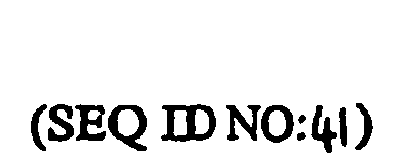


- Cys Cys Glu Leu Cys Cys Asn Pro Ala Cys Thr Gly Cys Tyr Asp Phe (SEQ ID NO:46)
- Cys Cys Glu Leu Cys Cys Asn Pro Ala Cys Trp Gly Cys Tyr Asp Phe (SEQ ID NO:47)
- Cys Cys Glu Phe Cys Cys Asn Pro Ala Cys Thr Gly Cys Tyr Asp Phe (SEQ ID NO:48)
- Cys Cys Glu Tyr Cys Cys Asn Pro Ala Cys Thr Gly Cys Tyr Asp Phe (SEQ ID NO:49)
- Cys Cys Glu Trp Cys Cys Asn Pro Ala Cys Thr Gly Cys Tyr Asp Phe (SEQ ID NO:50
- Cys Cys Glu Arg Cys Cys Asn Pro Ala Cys Thr Gly Cys Tyr Asp Phe (SEQ DO NO:51)
- Cys Cys Glu Lys Cys Cys Asn Pro Ala Cys Thr Gly Cys Tyr Asp Phe (SEQ ID NO:52)
- Asn Cys Cys Glu Leu Cys Cys Asn Pro Ala Cys Thr Gly Cys Tyr Asp Phe (SEQ ID NO:53)
- Asn Cys Cys Glu Leu Cys Cys Asn Pro Ala Cys Trp Gly Cys Tyr Asp Phe (SEQ ID NO:54)
- Asn Cys Cys Glu Phe Cys Cys Asn Pro Ala Cys Thr Gly Cys Tyr Asp Phe (SEQ ID NO:55)
- Asn Cys Cys Glu Tyr Cys Cys Asn Pro Ala Cys Thr Gly Cys Tyr Asp Phe (SEQ ID NO:56)
- Asn Cys Cys Glu Trp Cys Cys Asn Pro Ala Cys Thr Gly Cys Tyr Asp Phe (SEQ ID NO:57)
- Asn Cys Cys Glu Arg Cys Cys Asn Pro Ala Cys Thr Gly Cys Tyr Asp Phe (SEQ ID NO:58)
- Asn Cys Cys Glu Lys Cys Cys Asn Pro Ala Cys Thr Gly Cys Tyr Asp Phe (SEQ ID NO:59)
- In some cases, the peptides of the present disclosure are produced as a prepro protein that includes the amino terminal leader sequence:
mkksilfiflsvlsfspfaqdakpvesskekitleskkcniakksnksgpesmn (SEQ ID NO: 23). Where the peptide is produced by a bacterial cell, e.g., E. coli, the forgoing leader sequence will be cleaved and the mature peptide will be efficiently secreted from the bacterial cell.U.S. Patent No. 5,395,490 describes vectors, expression systems and methods for the efficient production of ST peptides in bacterial cells and methods for achieving efficient secretion of mature ST peptides. The vectors, expression systems and methods described inU.S. Patent No. 5,395,490 can be used to produce the ST peptides and variant ST peptides of the present disclosure - The present disclosure further includes variant peptides which can include one, two, three, four, five, six, seven, eight, nine, or ten (in some instances fewer than 5 or fewer than 3 or 2 or fewer) amino acid substitutions compared to specific peptides disclosed herein. The substitution(s) can be conservative or non-conservative. The naturally-occurring amino acids can be substituted by D-isomers of any amino acid, non-natural amino acids, and other groups. A conservative amino acid substitution results in the alteration of an amino acid for a similar acting amino acid, or amino acid of like charge, polarity, or hydrophobicity. At some positions, even conservative amino acid substitutions can reduce the activity of the peptide. Among the naturally occurring amino acid substitutions generally considered conservative are:
For Amino Acid Code Replace with any of Alanine Ala Gly, Cys, Ser Arginine Arg Lys, His Asparagine Asn Asp, Glu, Gln, Aspartic Acid Asp Asn, Glu, Gln Cysteine Cys Met, Thr, Ser Glutamine Gln Asn, Glu, Asp Glutamic Acid Glu Asp, Asn, Gln Glycine Gly Ala Histidine His Lys, Arg Isoleucine Ile Val, Leu, Met Leucine Leu Val, Ile, Met Lysine Lys Arg, His Methionine Met Ile, Leu, Val Phenylalanine Phe Tyr, His, Trp Proline Pro Serine Ser Thr, Cys, Ala Threonine Thr Ser, Met, Val Tryptophan Trp Phe, Tyr Tyrosine Tyr Phe, His Valine Val Leu, Ile, Met - In some circumstances it can be desirable to treat patients with a variant peptide that binds to and activates intestinal GC-C receptor, but is less active than the non-variant form the peptide. This reduced activity can arise from reduced affinity for the receptor or a reduced ability to activate the receptor once bound or reduced stability of the peptide.
In some peptides pairs of Cys residues which normally form a disulfide bond one or both members of the pair can be replaced by homocysteine, 3-mercaptoproline (Kolodziej et al. 1996 Int J Pept Protein Res 48:274); β, β dimethylcysteine (Hunt et al. 1993 Int J Pept Protein Res 42:249) or diaminopropionic acid (Smith et al. 1978 J Med Chem 21:117) to form alternative internal cross-links at the positions of the normal disulfide bonds. - Useful peptides can be produced either in bacteria including, without limitation, E. coli, or in other existing systems for peptide or protein production (e.g., Bacillus subtilis, baculovirus expression systems using Drosophila Sf9 cells, yeast or filamentous fungal expression systems, mammalian cell expression systems), or they can be chemically synthesized.
- If the peptide or variant peptide is to be produced in bacteria, e.g., E. coli, the nucleic acid molecule encoding the peptide will preferably also encode a leader sequence that permits the secretion of the mature peptide from the cell. Thus, the sequence encoding the peptide can include the pre sequence and the pro sequence of, for example, a naturally-occurring bacterial ST peptide. The secreted, mature peptide can be purified from the culture medium.
- The sequence encoding a peptide of the present disclosure, e.g. encoding a peptide in accordance with the invention, is preferably inserted into a vector capable of delivering and maintaining the nucleic acid molecule in a bacterial cell. The DNA molecule may be inserted into an autonomously replicating vector (suitable vectors include, for example, pGEM3Z and pcDNA3, and derivatives thereof). The vector nucleic acid may be a bacterial or bacteriophage DNA such as bacteriophage lambda or M13 and derivatives thereof. Construction of a vector containing a nucleic acid described herein can be followed by transformation of a host cell such as a bacterium. Suitable bacterial hosts include but are not limited to, E. coli, B. subtilis, Pseudomonas, Salmonella. The genetic construct also includes, in addition to the encoding nucleic acid molecule, elements that allow expression, such as a promoter and regulatory sequences. The expression vectors may contain transcriptional control sequences that control transcriptional initiation, such as promoter, enhancer, operator, and repressor sequences. A variety of transcriptional control sequences are well known to those in the art. The expression vector can also include a translation regulatory sequence (e.g., an untranslated 5' sequence, an untranslated 3' sequence, or an internal ribosome entry site). The vector can be capable of autonomous replication or it can integrate into host DNA to ensure stability during peptide production.
- The protein coding sequence that includes a peptide of the present disclosure, e.g. a peptide in accordance with the invention, can also be fused to a nucleic acid encoding a polypeptide affinity tag, e.g., glutathione S-transferase (GST), maltose E binding protein, protein A, FLAG tag, hexa-histidine, myc tag or the influenza HA tag, in order to facilitate purification. The affinity tag or reporter fusion joins the reading frame of the peptide of interest to the reading frame of the nucleic acid encoding the affinity tag such that a translational fusion is generated. Expression of the fusion gene results in translation of a single polypeptide that includes both the peptide of interest and the affinity tag. In some instances where affinity tags are utilized, a DNA sequence encoding a protease recognition site will be fused between the reading frames for the affinity tag and the peptide of interest.
- Genetic constructs and methods suitable for production of immature and mature forms of the peptides and variants of the present disclosure, e.g. of the peptides in accordance with the invention, in protein expression systems other than bacteria, and well known to those skilled in the art, can also be used to produce peptides in a biological system.
- Mature peptides and variants thereof can be synthesized by the solid-phase method using an automated peptide synthesizer. For example, the peptide can be synthesized on Cyc(4-CH2 Bxl)-OCH2-4-(oxymethyl)-phenylacetamidomethyl resin using a double coupling program. Protecting groups must be used appropriately to create the correct disulfide bond pattern. For example, the following protecting groups can be used: t-butyloxycarbonyl (alpha-amino groups); acetamidomethyl (thiol groups of Cys residues B and E); 4-methylbenzyl (thiol groups of Cys residues C and F); benzyl (y-carboxyl of glutamic acid and the hydroxyl group of threonine, if present); and bromobenzyl (phenolic group of tyrosine, if present). Coupling is effected with symmetrical anhydride of t-butoxylcarbonylamino acids or hydroxybenzotriazole ester (for asparagine or glutamine residues), and the peptide is deprotected and cleaved from the solid support in hydrogen fluoride, dimethyl sulfide, anisole, and p-thiocresol using 8/1/1/0.5 ratio (v/v/v/w) at 0°C for 60 min. After removal of hydrogen fluoride and dimethyl sulfide by reduced pressure and anisole and p-thiocresol by extraction with ethyl ether and ethyl acetate sequentially, crude peptides are extracted with a mixture of 0.5M sodium phosphate buffer, pH 8.0 and N, N-dimethylformamide using 1/1 ratio, v/v. The disulfide bond for Cys residues B and E is the formed using dimethyl sulfoxide (Tam et al. (1991) J. Am. Chem. Soc. 113:6657-62). The resulting peptide is purified by reverse-phase chromatography. The disulfide bond between Cys residues C and F is formed by first dissolving the peptide in 50% acetic acid in water. Saturated iodine solution in glacial acetic acid is added (1 ml iodine solution per 100 ml solution). After incubation at room temperature for 2 days in an enclosed glass container, the solution is diluted five-fold with deionized water and extracted with ethyl ether four times for removal of unreacted iodine. After removal of the residual amount of ethyl ether by rotary evaporation the solution of crude product is lyophilized and purified by successive reverse-phase chromatography.
- The ability of peptides and other agents to bind to the intestinal GC-C receptor can be tested as follows. Cells of the T84 human colon carcinoma cell line (American Type Culture Collection (Bethesda, Md.)) are grown to confluence in 24-well culture plates with a 1:1 mixture of Ham's F12 medium and Dulbecco's modified Eagle's medium (DMEM), supplemented with 5% fetal calf serum. Cells used in the assay are typically between passages 54-60. Briefly, T84 cell monolayers in 24-well plates are washed twice with 1 ml of binding buffer (DMEM containing 0.05% bovine serum albumin and 25 mM HEPES, pH 7.2), then incubated for 30 min at 37°C in the presence of mature radioactively labeled E. coli ST peptide and the test material at various concentrations. The cells are then washed four times with 1 ml of DMEM and solubilized with 0.5 ml/well 1N NaOH. The level of radioactivity in the solubilized material is then determined using standard methods.
- A variant ST peptide, referred to as MD-915, was reproduced recombinantly and tested in an animal model. MD-915 has the sequence: Asn Ser Ser Asn Tyr Cys Cys Glu Tyr Cys Cys Asn Pro Ala Cys Thr Gly Cys Tyr (SEQ ID NO:28). A peptide having the sequence of the wild-type ST peptide was also created (MM-416776).
- MD-915 and MM-416776 peptides were produced as preproproteins using vectors produced as follows. A sequence encoding a heat-stable enterotoxin pre-pro sequence was amplified from pGK51/pGSK51 (ATCC 67728) using oligonucleotide M03514 (5' CACACCATATGAAGAAATCAATATTATTTATTTTTCTTTCTG 3' (SEQ ID NO:60 )) and oligonucelotide MO3515 (5' CACACCTCGAGTTAGGTCTCCATGCTTTCAGGACCACTTTTATTAC 3' (SEQ ID NO:61)). The amplification product fragment was digested with NdeI/XhoI and ligated to the T7 expression vector, pET26b(+) (Novagen) digested with NdeI/XhoI thereby creating plasmid MB3976. The region encoding the pre-pro protein was sequenced and found to encode the amino acid sequence:
mkksilfiflsvlsfspfaqdakpagsskekitleskkcnivkksnksgpesm (SEQ ID NO:24) which differs from the amino acid sequence of heat-stable enterotoxin a2 precursor (sta2; mkksilfiflsvlsfspfaqdakpagsskekitleskkcnivkknnesspesm (SEQ ID NO:25); GenBank® Accession No. Q47185, GI: 3913876) at three positions (indicated by underlining and bold text) near the C-terminus. To create expression vectors with the pre-pro sequence, complementary oligos encoding each ST peptide variant or wild-type ST peptide were annealed and cloned into the MB3976 expression vector. To create MB3984 (encoding MM-416776 peptide full length wild-type ST peptide as a prepro protein), containing the amino acid sequence, NSSNYCCELCCNPACTGCY (SEQ ID NO:26) fused downstream of the pre-pro sequence, MB 3976 was digested with BsaI/XhoI and ligated to annealed oligos MO3621 (5' GCATGAATAGTAGCAATTACTGCTGTGAATTGTGTTGTAATCCTGCTTGTAC CGGGTGCTATTAATAAC 3' (SEQ ID NO:62)) and MO3622 (5' TCGAGTTATTAATAGCACCCGGTACAAGCAGGATTACAACACAATTCACAG CAGTAATTGCTACTATTC 3'(SEQ ID NO:63)). To create MB3985 (encoding MD-915 as a prepro protein) containing the following amino acid sequence, NSSNYCCEYCCNPACTGCY (SEQ ID NO: 28) fused downstream of the pre-pro sequence, MB 3976 was digested with BsaI/XhoI and ligated to annealed oligos MO3529 (5' GCATGAATAGTAGCAATTACTGCTGTGAATATTGTTGTAATCCTGCTTGTACC GGGTGCTATTAATAAC 3' (SEQ ID NO:64)) and MO3530 (5' TCGAGTTATTAATAGCACCCGGTACAAGCAGGATTACAACAATATTCACAGC AGTAATTGCTACTATTC 3'(SEQ ID NO:65)). - The MD-915 peptide and the MM-416776 peptide were produced as follows. The expression vectors were transformed into E. coli bacterial host BL21 λ DE3 (Invitrogen). A single colony was innoculated and grown shaking overnight at 30°C in L broth + 25 mg/l kanamycin. The overnight culture was added to 3.2 L of batch medium (Glucose 25 g/l, Caseamino Acids 5 g/l, Yeast Extract 5 g/l, KH2PO4 13.3 g/l, (NH4)2HPO4 4 g/l, MgSO4-7H2O 1.2 g/l, Citric Acid 1.7 g/l, EDTA 8.4 mg/l, CoCl2-6H2O 2.5 mg/l, MnCl2-4H2O 15 mg/l, CuCl2-4H2O 1.5 mg/l, H3BO3 3 mg/l, Na2MoO4-2H2O 2.5 mg/l, Zn Acetate-2H2O 13 mg/l,
Ferric Citrate 100 mg/l,Kanamycin 25 mg/l, Antifoam DF 204 1 ml/l) and fermented using the following process parameters : pH 6.7 - control with base only (28% NH4OH), 30°C, aeration : 5 liters per minute. After the initial consumption of batch glucose (based on monitoring dissolved oxygen (DO) levels), 1.5 L of feed medium (Glucose 700 g/l, Caseamino Acids 10 g/l, Yeast Extract 10 g/l, MgSO4-7H2O 4 g/l, EDTA 13 mg/l, CoCl2-6H2O 4 mg/l, MnCl2-4H2O 23.5 mg/l, CuCl2-4H2O 2.5 mg/l, H3BO3 5 mg/l, Na2MoO4-2H2O 4 mg/l, Zn Acetate-2H2O 16 mg/l,Ferric Citrate 40 mg/l, Antifoam DF 204 1 ml/l) was added at a feed rate controlled to maintain 20% DO. IPTG was added to 0.2mM 2 hours post feed start. The total run time was approximately 40-45 hours (until feed exhaustion). - Cells were collected by centrifugation at 5,000 g for 10 minutes. The cell pellet was discarded and the supernatant was passed through a 50 Kd ultrafiltration unit. The 50 Kd filtrate (0.6 liters) was loaded onto a 110 ml Q-Sepharose fast Flow column (Amersham Pharmacia, equilibrated with 20 mM Tris-HCl pH 7.5) at a flow rate of 400 ml/hour. The column was washed with six volumes of 20 mM Tris-HCl pH 7.5 and proteins were eluted with 50 mM acetic acid collecting 50 ml fractions. Fractions containing ST peptide variant or wild-type ST peptide were pooled and the solvent was removed by rotary evaporation. The dried proteins were resuspended in 10 ml of 8% acetic acid, 0.1% trifluoroacetic acid (TFA) and loaded onto a Varian Polaris C18-A column (250 X 21.2
mm 10 µm, equilibrated in the same buffer) at a flow rate of 20 ml/min. The column was washed with 100 ml of 8% methanol, 0.1% TFA and developed with a gradient (300 ml) of 24 to 48% methanol, 0.1% TFA, collecting 5-ml fractions. Fractions containing peptide were pooled and the solvent was removed by rotary evaporation. The peptides were dissolved in 0.1% TFA and lyophilized. - The MD-915 peptide and MM-416776 peptide fractions were analyzed by standard LCMS and HPLC. LCMS analysis revealed that MD-915 is more homogeneous than MM-416776 (see
Figure 1a ; note that MD-915 peptide exhibits fewer peaks (Panel B) than MM-416776 (Panel A)). - Peptides were chemically synthesized by a commercial peptide synthesis company. Varying yields of peptides were obtained depending on the efficiency of chemical synthesis. Thus, the four peptides, in decreasing order of yield were: Cys Cys Glu Tyr Cys Cys Asn Pro Ala Cys Thr Gly Cys Tyr (SEQ ID NO:31;MD-1100), 10-20% yield; Cys Cys Glu Leu Cys Cys Asn Pro Ala Cys Thr Gly Cys Tyr (SEQ ID NO:29 ; MM416774); Asn Ser Ser Asn Tyr Cys Cys Glu Tyr Cys Cys Asn Pro Ala Cys Thr Gly CysTyr (SEQ ID NO:28; MD-915); Asn Ser Ser Asn Tyr Cys Cys Glu Leu Cys Cys Asn Pro Ala Cys Thr Gly Cys Tyr (SEQ ID NO:26 ; MM-416776), <5% yield. Thus the specific amino acid changes introduced into the peptides can create improved manufacturing properties.
-
Figure 1b shows the total ion chromatograph profile of synthetically manufactured MD-1100.Figure 1c shows the total ion chromatograph profile of the control blank sample. There is one major peak present in the MD-1100 sample that is not also present in the control sample. Quantitative analysis suggests the MD-1100 is >98% pure. - The ability of MD-915, MM-416776, and MD-1100 to activate the intestinal GC-C receptor was assessed in an assay employing the T84 human colon carcinoma cell line (American Type Culture Collection (Bethesda, Md.). For the assays cells were grown to confluency in 24-well culture plates with a 1:1 mixture of Ham's F12 medium and Dulbecco's modified Eagle's medium (DMEM), supplemented with 5% fetal calf serum and were used at between
passages 54 and 60. - Briefly, monolayers of T84 cells in 24-well plates were washed twice with 1 ml/well DMEM, then incubated at 37°C for 10 min with 0.45 ml DMEM containing 1 mM isobutylmethylxanthine (IBMX), a cyclic nucleotide phosphodiesterase inhibitor. Test peptides (50µl) were then added and incubated for 30 minutes at 37°C. The media was aspirated and the reaction was then terminated by the addition of ice cold 0.5 ml of 0.1N HCl. The samples were held on ice for 20 minutes and then evaporated to dryness using a heat gun or vacuum centrifugation. The dried samples were resuspended in 0.5ml of phosphate buffer provided in the Cayman Chemical Cyclic GMP EIA kit (Cayman Chemical, Ann Arbor, MI). Cyclic GMP was measured by EIA according to procedures outlined in the Cayman Chemical Cyclic GMP EIA kit.
-
Figure 2 shows the activity of chemically synthesized peptide variants in this GC-C receptor activity assay. In this assay, MM-416776 and two different MD-1100 peptides (MD-1100(a) and MD-1 100(b), synthesized by two different methods) had activity comparable to MM-416776. MD-915 and MM-416776 peptide were chemically synthesized in a manner identical to that of MD-1100(b). - In order to determine whether the peptides increase the rate of gastrointestinal transit, the peptides and controls were tested using a murine gastrointestinal transit (GIT) assay (Moon et al. Infection and Immunity 25:127, 1979). In this assay, charcoal, which can be readily visualized in the gastrointestinal tract is administered to mice after the administration of a test compound. The distance traveled by the charcoal is measured and expressed as a percentage of the total length of the colon.
- Mice were fasted with free access to water for 12 to 16 hours before the treatment with peptide or control buffer. The peptides were orally administered at 1µg/kg-1mg/kg of peptide in buffer (20mM Tris pH 7.5) 7 minutes before being given an oral dose of 5% Activated Carbon (Aldrich 242276-250G). Control mice were administered buffer only before being given a dose of Activated Carbon. After 15 minutes, the mice were sacrificed and their intestines from the stomach to the cecum were dissected. The total length of the intestine as well as the distance traveled from the stomach to the charcoal front was measured for each animal and the results are expressed as the percent of the total length of the intestine traveled by the charcoal front. All results are reported as the average of 10 mice ± standard deviation. A comparison of the distance traveled by the charcoal between the mice treated with peptide versus the mice treated with vehicle alone was performed using a Student's t test and a statistically significant difference was considered for P<0.05. P-values are calculated using a two-sided T-Test assuming unequal variances.
- As can be seen in
Figure 3a ,b , wild-type ST peptide (MM-416776; (Sigma-Aldrich, St Louis, MO; 0.1 mg/kg), synthetically manufactured MD-1100 and Zelnorm® (0.1 mg/kg), a drug approved for IBS that is an agonist for the serotonin receptor 5HT4, increase gastrointestinal transit rate in this model.Figure 4a shows the result of a study demonstrating that intestinal transit rate increases with an increasing dosage of either recombinantly synthesized MM-416776 or MD-915.Figure 4b shows the results of a study demonstrating both chemically synthesized MM-416776 or MD-1100 peptide increase intestinal transit rates more than either Tris buffer alone or an equivalent dose of Zelnorm®. - The identical experiment was performed to determine if MD-1100 is effective in a chronic dosing treatment regimen. Briefly, 8 week old CDl female mice are dosed orally once a day for 5 days with either MD-1100 (0.06mg/kg or 0.25mg/kg in 20mM Tris pH 7.5) or vehicle alone (20mM Tris pH 7.5). On the 5th day, a GIT assay is performed identical to that above except 200µl of a 10% charcoal solution is administered.
Figure 4c shows the results of a study demonstrating both chemically synthesized MD-1100 or Zelnorm® are effective in a mouse gastrointestinal motility assay upon chronic dosing (daily for 5 days). The results are shown side by side with acute dosing (1 day). - MM-416776 peptide and MD-915 were tested for their ability to increase intestinal secretion using a suckling mouse model of intestinal secretion. In this model a test compound is administered to suckling mice that are between 7 and 9 days old. After the mice are sacrificed, the gastrointestinal tract from the stomach to the cecum is dissected ("guts"). The remains ("carcass") as well as the guts are weighed and the ratio of guts to carcass weight is calculated. If the ratio is above 0.09, one can conclude that the test compound increases intestinal secretion.
Figure 5a shows a dose response curve for wild-type ST peptide (MM-416776) in this model.Figure 5b shows dose response curve for the MD-1100 peptide in this model. These data show that wild-type ST peptide (purchased from TDT, Inc. West Chester, PA) and the MD-1100 peptide increase intestinal secretion. The effect of Zelnorm® was also studied. As can be seen fromFigure 5 , Zelnorm® at 0.2 mg/kg does not increase intestinal secretion in this model.Figure 6a shows a dose response curve for the recombinant MM-416776 peptide described above and the recombinant MD-915 peptide described above. As can be seen fromFigure 6a , both peptides increase intestinal secretion in this model. SimilarlyFigure 6b shows a dose response curve for chemically synthesized MD-915, MD-1100 and MM-416776 as well as wild-type ST peptide (purchased from Sigma-Aldrich, St Louis, MO). - Hypersensitivity to colorectal distension is common in patients with IBS and may be responsible for the major symptom of pain. Both inflammatory and non-inflammatory animal models of visceral hyperalgesia to distension have been developed to investigate the effect of compounds on visceral pain in IBS.
- Male Wistar rats (220-250 g) were premedicated with 0.5 mg/kg of acepromazine injected intraperitoneally (IP) and anesthetized by intramuscular administration of 100 mg/kg of ketamine. Pairs of nichrome wire electrodes (60 cm in length and 80 µm in diameter) were implanted in the striated muscle of the abdomen, 2 cm laterally from the white line. The free ends of electrodes were exteriorized on the back of the neck and protected by a plastic tube attached to the skin. Electromyographic (EMG) recordings were started 5 days after surgery. Electrical activity of abdominal striated muscle was recorded with an electroencephalograph machine (Mini VIII, Alvar, Paris, France) using a short time constant (0.03 sec.) to remove low-frequency signals (<3 Hz).
- Ten days post surgical implantation, trinitrobenzencsulphonic acid (TNBS) was administered to induce rectal inflammation. TNBS (80 mg kg-1 in 0.3
ml 50 % ethanol) was administered intrarectally through a silicone rubber catheter introduced at 3 cm from the anus under light diethyl-ether anesthesia, as described (Morteau et al. 1994 Dig Dis Sci 39:1239). Following TNBS administration, rats were placed in plastic tunnels where they were severely limited in mobility for several days before colorectal distension (CRD). Experimental compound was administered one hour before CRD which was performed by insertion into the rectum, at 1 cm of the anus, a 4 cm long balloon made from a latex condom (Gue et al, 1997 Neurogastroentenol. Motil. 9:271). The balloon was fixed on a rigid catheter taken from an embolectomy probe (Fogarty). The catheter attached balloon was fixed at the base of the tail. The balloon, connected to a barostat, was inflated progressively by step of 15 mmHg, from 0 to 60 mmHg, each step of inflation lasting 5 min. Evaluation of rectal sensitivity, as measured by EMG, was performed before (1-2 days) and 3 days following rectal instillation of TNBS. - The number of spike bursts that corresponds to abdominal contractions was determined per 5 min periods. Statistical analysis of the number of abdominal contractions and evaluation of the dose-effects relationships was performed by a one way analysis of variance (ANOVA) followed by a post-hoc (Student or Dunnett tests) and regression analysis for ED50 if appropriate.
Figure 7 shows the results of experiment in which MD-1100 activity was analyzed in the TNBS colorectal model. Significant decreases in abdominal response are observed at 0.3 µg/kg and 3 µg/kg MD-1100. These results demonstrate that MD-1100 reduces pain associated with colorectal distension in this animal model. - Male Wistar Rats (200-250 g) are surgically implanted with nichrome wire electrodes as in the TNBS model. Ten days post surgical implantation, partial restraint stress (PRS), is performed as described by Williams et al. for two hours (Williams et al. 1988 Gastroenterology 64:611). Briefly, under light anesthesia with ethyl-ether, the foreshoulders, upper forelimbs and thoracic trunk are wrapped in a confining harness of paper tape to restrict, but not prevent body movements. Control sham-stress animals are anaesthetized but not wrapped. Thirty minutes before the end of the PRS session, the animals are administered test-compound or vehicle. Thirty minutes to one hour after PRS completion, the CRD distension procedure is performed as described above for the TNBS model with barostat at pressures of 15, 30, 45 and 60mm Hg. Statistical analysis on the number of bursts is determined and analyzed as in the TNBS model above.
- The PBQ-induced writhing model can be used to assess pain control activity of the peptides and GC-C receptor agonists of the present disclosure, e.g. of the peptides in accordance with the invention. This model is described by Siegmund et al. (1957 Proc. Soc. Exp. Bio. Med. 95:729-731). Briefly, one hour after oral dosing with a test compound, e.g., a peptide, morphine or vehicle, 0.02% phenylbenzoquinone (PBQ) solution (12.5 mL/kg) is injected by intraperitoneal route into the mouse. The number of stretches and writhings are recorded from the 5th to the 10th minute after PBQ injection, and can also be counted between the 35th and 40th minute and between the 60th and 65th minute to provide a kinetic assessment. The results are expressed as the number of stretches and writhings (mean ± SEM) and the percentage of variation of the nociceptive threshold calculated from the mean value of the vehicle-treated group. The statistical significance of any differences between the treated groups and the control group is determined by a Dunnett's test using the residual variance after a one-way analysis of variance (P< 0.05) using SigmaStat Software.
-
Figures 8a and8b show the effect of different doses of MD-915 and MD-1100 in the PBQ writhing assay. Indomethacin, an NSAID (nonsteroidal anti-inflammatory drug) with known pain control activity, was used as the positive control in the assay. Significant reductions in writhings were observed for MD-915 (1 mg/kg dose) and MD-1100 (2.5 mg/kg dose) compared to the vehicle control. Loss of efficacy at the highest dose tested has also been observed for multiple other compounds (such as 5HT-3 antagonists) tested in similar assays. The results of this study suggest that both MD-915 and MD-1100 have antinociceptive effects in this visceral pain model comparable to the intermediate doses of indomethacin. - To determine the affinity of MD-1100 for GC-C receptors found in rat intestinal mucosa, a competition binding assay was performed using rate intestinal epithelial cells. Epithelial cells from the small intestine of rats were obtained as described by Kessler et al. (J. Biol. Chem. 245: 5281-5288 (1970)). Briefly, animals were sacrificed and their abdominal cavities exposed. The small intestine was rinsed with 300 ml ice cold saline or PBS. 10 cm of the small intestine measured at 10 cm from the pylorus was removed and cut into 1 inch segments. Intestinal mucosa was extruded from the intestine by gentle pressure between a piece of parafilm and a P-1000 pipette tip. Intestinal epithelial cells were placed in 2 ml PBS and pipetted up and down with a 5 ml pipette to make a suspension of cells. Protein concentration in the suspension was measured using the Bradford method (Anal. Biochem. 72: 248-254 (1976)).
- A competition binding assay was performed based on the method of Giannella et al. (Am. J. Physiol. 245: G492-G498) between [125I] labeled MM-416776 and MD-1100. The assay mixture contained: 0.5 ml of DME with 20 mM HEPES-KOH pH 7.0, 0.9 mg of the cell suspension listed above, 21.4 fmol [125I]-MM-416776 (42.8 pM), and different concentrations of competitor MD-1100 (0.01 to 1000 nM). The mixture was incubated at room temperature for 1 hour, and the reaction stopped by applying the mixture to GF/B glass-fiber filters (Whatman). The filters were washed with 5 ml ice-cold PBS and radioactivity was measured.
Figure 9 shows that the Kd for MD-1100 in this assay is 4.5 nM. %B/Bo is the percentage of the ratio of radioactivity trapped in each sample (B) compared to the radioactivity retained in a control sample with no cold competitor (Bo). Giannella et al. (Am. J. Physiol.245: G492-G498) observed that the Kd for wild-type ST peptide in this same assay was ~13 nM. - To study the pharmacokinetics of MD-1100, absorbability studies in mice were performed by administering MD-1100 intravaneously via tail vein injection or orally by gavage to 8-week-old CD1 mice. Serum was collected from the animals at various time points and tested for the presence of MD-1100 using a competitive enzyme-linked immunoabsorbent assay (Oxoid, ST EIA kit, Cat#TD0700). The assay utilized monoclonal antibodies against ST peptide (antibodies are provided in the Oxoid kit) and synthetically manufactured MD-1100.
Figure 10a show absorption data for intravenously and orally administered MD-1100 as detected by the ELISA assay. MD-1100 appears to be minimally systemically absorbed and is < 2.2% bioavailable. - A similar bioavailability study was performed in which LCMS rather than ELISA was used to detect MD-1100. Initially, serum samples were extracted from the whole blood of exposed and control mice, then injected directly (10mL) onto an in-line solid phase extraction (SPE) column (Waters Oasis HLB 25mm column, 2.0 x 15mm direct connect) without further processing. The sample on the SPE column was washed with a 5% methanol, 95% dH2O solution (2.1 mL/min, 1.0 minute), then loaded onto an analytical column using a valve switch that places the SPE column in an inverted flow path onto the analytical column (Waters Xterra MS C8 5mm IS column, 2.1 x 20mm). The sample was eluted from the analytical column with a reverse phase gradient (Mobile Phase A: 10 mM ammonium hydroxide in dH2O, Mobile Phase B: 10 mM ammonium hydroxide in 80% acetonitrile and 20% methanol; 20% B for the first 3 minutes then ramping to 95% B over 4 min. and holding for 2 min., all at a flow rate of 0.4 mL/min.). At 9.1 minutes, the gradient returns to the initial conditions of 20%B for 1 min. MD-1100 eluted from the analytical column at 1.45 minutes, and was detected by triple-quadrapole mass spectrometry (MRM, 764 (+2 charge state)>182 (+1 charge state) Da; cone voltage = 30V; collision = 20 eV; parent resolution = 2 Da at base peak; daughter resolution = 2 Da at base peak). Instrument response was converted into concentration units by comparison with a standard curve using known amounts of chemically synthesized MD-1100 prepared and injected in mouse serum using the same procedure.
-
Figure 10b shows absorption data for IV and orally administered MD-1100 as detected by LCMS. In this assay, MD-1100 appears similarly minimally systemically absorbed and is < 0.11 % bioavailable. - For treatment of gastrointestinal disorders, the peptides and agonists of the present disclosure, e.g. the peptides in accordance with the invention, are preferably administered orally, e.g., as a tablet, gel, paste, slurry, liquid, powder or in some other form. Orally administered compositions can include binders, flavoring agents, and humectants. The peptides and agonists can be co-administered with other agents used to treat gastrointestinal disorders including but not limited to acid suppressing agents such as Histamine-2 receptor agonists (H2As) and proton pump inhibitors (PPIs). The peptides and agonists can also be administered by rectal suppository. For the treatment of disorders outside the gastrointestinal tract such as congestive heart failure and benign prostatic hypertrophy, peptides and agonists are preferably administered parenterally or orally.
- The peptides described herein can be used alone or in combination with other agents. For example, the peptides can be administered together with an analgesic peptide or compound. The analgesic peptide or compound can be covalently attached to a peptide described herein or it can be a separate agent that is administered together with or sequentially with a peptide described herein in a combination therapy.
- Combination therapy can be achieved by administering two or more agents, e.g., a peptide described herein and an analgesic peptide or compound, each of which is formulated and administered separately, or by administering two or more agents in a single formulation. Other combinations are also encompassed by combination therapy. For example, two agents can be formulated together and administered in conjunction with a separate formulation containing a third agent. While the two or more agents in the combination therapy can be administered simultaneously, they need not be. For example, administration of a first agent (or combination of agents) can precede administration of a second agent (or combination of agents) by minutes, hours, days, or weeks. Thus, the two or more agents can be administered within minutes of each other or within 1, 2, 3, 6, 9, 12, 15, 18, or 24 hours of each other or within 1, 2, 3, 4, 5, 6, 7, 8, 9, 10, 12, 14 days of each other or within 2, 3, 4, 5, 6, 7, 8, 9, or 10 weeks of each other. In some cases even longer intervals are possible. While in many cases it is desirable that the two or more agents used in a combination therapy be present in within the patient's body at the same time, this need not be so.
- Combination therapy can also include two or more administrations of one or more of the agents used in the combination. For example, if agent X and agent Y are used in a combination, one could administer them sequentially in any combination one or more times, e.g., in the order X-Y-X, X-X-Y, Y-X-Y, Y-Y-X, X-X-Y-Y, etc.
- The agents, alone or in combination, can be combined with any pharmaceutically acceptable carrier or medium. Thus, they can be combined with materials that do not produce an adverse, allergic or otherwise unwanted reaction when administered to a patient. The carriers or mediums used can include solvents, dispersants, coatings, absorption promoting agents, controlled release agents, etc.
- The agents either in their free form or as a salt can be combined with a polymer such as polylactic-glycoloic acid (PLGA), poly-(I)-lactic-glycolic-tartaric acid (P(I)LGT) (
WO 01/12233 U.S. 3,773,919 ), polylactic acid (U.S. 4,767,628 ); poly(ε-caprolactone) to create a sustained release formulation. Such formulations can be used to implants that release a peptide or another agent over a period of a few days, a few weeks or several months depending on the polymer, the particle size of the polymer, and the size of the implant (see, e.g.,U.S. 6,620,422 ). Other sustained release formulations are described inEP 0 467 389 A2WO 93/241150 U.S. 5,612,052 ;WO 97/40085 WO 94/155587 U.S. 5,672,659 ,U.S. 5,893,985 ,U.S. 5,134,122 ,U.S. 5,192,741 ,U.S. 5,192,741 , andU.S. 5,445,832 . In such sustained release formulations microparticles of peptide are combined with microparticles of polymer. One or more sustained release implants can be placed in the large intestine, the small intestine or both. - The agents can be administered, e.g., by intravenous injection, intramuscular injection, subcutaneous injection, or by other routes. The agents can be administered orally, e.g., as a tablet, gel, paste, slurry, liquid, powder or in some other form. Orally administered compositions can include binders, flavoring agents, and humectants. The agents can be included in dentifrices or oral washes. Thus, oral formulations can include abrasives and foaming agents. The agents can also be administered transdermally or in the form a suppository.
- The agents can be a free acid or base, or a pharmacologically acceptable salt thereof Solids can be dissolved or dispersed immediately prior to administration or earlier. In some circumstances the preparations include a preservative to prevent the growth of microorganisms. The pharmaceutical forms suitable for injection can include sterile aqueous or organic solutions or dispersions which include, e.g., water, an alcohol, an organic solvent, an oil or other solvent or dispersant (e.g., glycerol, propylene glycol, polyethylene glycol, and vegetable oils). Pharmaceutical agents can be sterilized by filter sterilization or by other suitable means.
- Suitable pharmaceutical compositions in accordance with the present disclosure, e.g. pharmaceutical compositions in accordance with the invention, will generally include an amount of the active compound(s) with an acceptable pharmaceutical diluent or excipient, such as a sterile aqueous solution, to give a range of final concentrations, depending on the intended use. The techniques of preparation are generally well known in the art, as exemplified by Remington's Pharmaceutical Sciences (18th Edition, Mack Publishing Company, 1995).
- The agents described herein and combination therapy agents can be packaged as a kit that includes single or multiple doses of two or more agents, each packaged or formulated individually, or single or multiple doses of two or more agents packaged or formulated in combination. Thus, one or more agents can be present in a first container, and the kit can optionally include one or more agents in a second container. The container or containers are placed within a package, and the package can optionally include administration or dosage instructions. A kit can include additional components such as syringes or other means for administering the agents as well as diluents or other means for formulation.
- The peptides described herein can be used in combination therapy with an analgesic agent, e.g., an analgesic compound or an analgesic peptide. The analgesic agent can optionally be covalently attached to a peptide described herein. Among the useful analgesic agents are: Ca channel blockers, 5HT receptor antagonists (for example 5HT3, 5HT4 and 5HT1 receptor antagonists), opioid receptor agonists (loperamide, fedotozine, and fentanyl), NK1 receptor antagonists, CCK receptor agonists (e.g., loxiglumide), NK1 receptor antagonists, NK3 receptor antagonists, norepinephrine-serotonin reuptake inhibitors (NSRIs), vanilloid and cannabanoid receptor agonists, and sialorphin. Analgesics agents in the various classes are described in the literature.
- Among the useful analgesic peptides are sialorphin-related peptides, including those comprising the amino acid sequence QHNPR (SEQ ID NO: 111 ), including: VQHNPR (SEQ ID NO: 112); VRQHNPR (SEQ ID NO: 113 ); VRGQHNPR (SEQ ID NO: 114 ); VRGPQHNPR (SEQ ID NO: 115); VRGPRQHNPR (SEQ ID NO: 116); VRGPRRQHNPR (SEQ ID NO: 117); and RQHNPR (SEQ ID NO: 118). Sialorphin-related peptides bind to neprilysin and inhibit neprilysin-mediated breakdown of substance P and Met-enkephalin. Thus, compounds or peptides that are inhibitors of neprilysin are useful analgesic agents which can be administered with the peptides of the present disclosure in a co-therapy or linked to the peptides of the present disclosure, e.g. to the peptides in accordance with the invention, e.g., by a covalent bond. Sialophin and related peptides are described in
U.S. Patent 6,589,750 ;U.S. 20030078200 A1 ; andWO 02/051435 A2 - Opioid receptor antagonists and agonists can be administered with the peptides of the present disclosure, e.g. with the peptides in accordance with the invention in a co-therapy, or linked to the peptides of the present disclosure, e.g. to the peptides in accordance with the invention, e.g., by a covalent bond. For example, opioid receptor antagonists such as naloxone, naltrexone, methyl nalozone, nalmefene, cypridime, beta funaltrexamine, naloxonazine, naltrindole, and nor-binaltorphimine are thought to be useful in the treatment of IBS. It can be useful to formulate opioid antagonists of this type in a delayed and sustained release formulation such that initial release of the antagonist is in the mid to distal small intestine and/or ascending colon. Such antagonists are described in
WO 01/32180 A2 WO 03/097051 A2 WO 01/019849 A1 - Tyr-Arg (kyotorphin) is a dipeptide that acts by stimulating the release of metenkephalins to elicit an analgesic effect (J. Biol. Chem 262:8165, 1987). Kyotorphin can be used with or linked to the peptides of the present disclosure.
- CCK receptor agonists such as caerulein from amphibians and other species are useful analgesic agents that can be used with or linked to the peptides of the present disclosure.
- Conotoxin peptides represent a large class of analgesic peptides that act at voltage gated Ca channels, NMDA receptors or nicotinic receptors. These peptides can be used with or linked to the peptides of the present disclosure.
- Peptide analogs of thymulin (
FR Application 2830451 - CCK (CCKa or CCKb) receptor antagonists, including loxiglumide and dexloxiglumide (the R-isomer of loxiglumide) (
WO 88/05774 - Other useful analgesic agents include 5-HT4 agonists such as tegaserod/zelnorm and lirexapride. Such agonists are described in:
EP1321142 A1 ,WO 03/053432A1 EP 505322 A1 EP 505322 B1 US 5,510,353 ,EP 507672 A1 EP 507672 B1 US 5,273,983 . - Calcium channel blockers such as ziconotide and related compounds described in, for example,
EP625162B1 US 5,364,842 ,US 5,587,454 ,US 5,824,645 ,US 5,859,186 ,US 5,994,305 ,US 6,087,091 ,US 6,136,786 ,WO 93/13128 A1 EP 1336409 A1 ,EP 835126 A1 EP 835126 B1 US 5,795,864 ,US 5,891,849 ,US 6,054,429 ,WO 97/01351 A1 - Various antagonists of the NK-1, NK-2, and NK-3 receptors (for a review see Giardina et al. 2003 Drugs 6:758) can be can be used with or linked to the peptides of the present disclosure.
- NK1 receptor antagonists such as: aprepitant (Merck & Co Inc), vofopitant, ezlopitant (Pfizer, Inc.), R-673 (Hoffmann-La Roche Ltd), SR-14033 and related compounds described in, for example,
EP 873753 A1 US 20010006972 A1 ,US 20030109417 A1 ,WO 01/52844 A1 - NK-2 receptor antagonists such as nepadutant (Menarini Ricerche SpA), saredutant (Sanofi-Synthelabo), SR-144190 (Sanofi-Synthelabo) and UK-290795 (Pfizer Inc) can be used with or linked to the peptides of the present disclosure.
- NK3 receptor antagonists such as osanetant (Sanofi-Synthelabo), talnetant and related compounds described in, for example,
WO 02/094187 A2 EP 876347 A1 WO 97/21680 A1 US 6,277,862 ,WO 98/11090 WO 95/28418 WO 97/19927 - Norepinephrine-serotonin reuptake inhibitors such as milnacipran and related compounds described in
WO 03/07 7897 A1 - Vanilloid receptor antagonists such as arvanil and related compounds described in
WO 01/64212 A1 - Where the analgesic is a peptide and is covalently linked to a peptide described herein the resulting peptide may also include at least one trypsin or chymotrypsin cleavage site. When present within the peptide, the analgesic peptide may be preceded by (if it is at the carboxy terminus) or followed by (if it is at the amino terminus) a chymotrypsin or trypsin cleavage site that allows release of the analgesic peptide.
- In addition to sialorphin-related peptides, analgesic peptides include: AspPhe, endomorphin-1, endomorphin-2, nocistatin, dalargin, lupron, zicnotide, and substance P.
- The peptides of the present disclosure, e.g. the peptides in accordance with the invention, can be used for the treatment or prevention of cancer, pre-cancerous growths, or metastatic growths. For example, they can be used for the prevention or treatment of: colorectal/local metastasized colorectal cancer, gastrointestinal tract cancer, lung cancer, cancer or pre-cancerous growths or metastatic growths of epithelial cells, polyps, breast, colorectal, lung, ovarian, pancreatic, prostatic, renal, stomach, bladder, liver, esophageal and testicular carcinoma, carcinoma (e.g., basal cell, basosquamous, Brown-Pearce, ductal carcinoma, Ehrlich tumor, Krebs, Merkel cell, small or non-small cell lung, oat cell, papillary, bronchiolar, squamous cell, transitional cell, or Walker), leukemia (e.g., B-cell, T-cell, HTLV, acute or chronic lymphocytic, mast cell, or myeloid), histiocytonia, histiocytosis, Hodgkin's disease, non-Hodgkin's lymphoma, plasmacytoma, reticuloendotheliosis, adenoma, adeno-carcinoma, adenofibroma, adenolymphoma, ameloblastoma, angiokeratoma, angiolymphoid hyperplasia with eosinophilia, sclerosing angioma, angiomatosis, apudoma, branchionia, malignant carcinoid syndrome, carcinoid heart disease, carcinosarcoma, cementoma, cholangioma, cholesteatoma, chondrosarcoma, chondroblastoma, chondrosarcoma, chordoma, choristoma, craniopharyngioma, chrondrorna, cylindroma, cystadenocarcinoma, cystadenoma, cystosarconia phyllodes, dysgenninoma, ependymoma, Ewing sarcoma, fibroma, fibrosarcoma, giant cell tumor, ganglioneuroma, glioblastoma, glomangioma, granulosa cell tumor, gynandroblastoma, hamartoma, hemangioendothelioma, hemangioma, hemangio-pericytoma, hemangiosarcoma, hepatoma, islet cell tumor, Kaposi sarcoma, leiomyoma, leiomyosarcoma, leukosarcoma, Leydig cell tumor, lipoma, liposarcoma, lymphaugioma, lymphangiomyoma, lymphangiosarcoma, medulloblastoma, meningioma, mesenchymoma, mesonephroma, mesothelioma, myoblastoma, myoma, myosarcoma, myxoma, myxosarcoma, neurilemmoma, neuroma, neuroblastoma, neuroepithelioma, neurofibroma, neurofibromatosis, odontoma, osteoma. osteosarcoma, papilloma, paraganglioma, nonchroimaffin paragangliomia, , pinealoma, rhabdomyoma, rhabdomyosarcoma, Sertoli cell tumor, teratoma, theca cell tumor, and other diseases in which cells have become dysplastic, immortalized, or transformed.
- The peptides of the present disclosure, e.g. the peptides in accordance with the invention, can be used for the treatment or prevention of: Familial Adenomatous Polyposis (FAP) (autosomal dominant syndrome) that precedes colon cancer, hereditary nonpolyposis colorectal cancer (HNPCC), and inherited autosomal dominant syndrome.
- For treatment or prevention of cancer, pre-cancerous growths and metastatic growths, the peptides.can be used in combination therapy with radiation or chemotherapeutic agents, an inhibitor of a cGMP-dependent phosphodiesterase or a selective cyclooxygenase-2 inhibitor (a number of selective cyclooxygenase-2 inhibitors are described in
WO02062369 - The peptides can be for treatment or prevention of inflammation. Thus, they can be used alone or in combination with inhibitor of cGMP-dependent phosphodiesterase or a selective cyclooxygenase-2 inhibitor for treatment of: organ inflammation, IBD (e.g, Crohn's disease, ulcerative colitis), asthma, nephritis, hepatitis, pancreatitis, bronchitis, cystic fibrosis, ischemic bowel diseases, intestinal inflammations/allergies, coeliac disease, proctitis, eosinophilic gastroenteritis, mastocytosis, and other inflammatory disorders.
- The peptides can also be used to treat or prevent insulin-related disorders, for example: II diabetes mellitus, hyperglycemia, obesity, disorders associated with disturbances in glucose or electrolyte transport and insulin secretion in cells, or endocrine disorders. They can be also used in insulin resistance treatment and post-surgical and non-post surgery decrease in insulin responsiveness.
- The peptides can be used to prevent or treat respiratory disorders, including, inhalation, ventilation and mucus secretion disorders, pulmonary hypertension, chronic obstruction of vessels and airways, and irreversible obstructions of vessels and bronchi.
- The peptides can be used in combination therapy with a phosphodiesterase inhibitor (examples of such inhibitors can be found in
US Patent No. 6,333,354 ). - The peptides can also be used to prevent or treat: retinopathy, nephropathy, diabetic angiopathy, and edema formation
- The peptides can also be used to prevent or treat neurological disorders, for example, headache, anxiety, movement disorders, aggression, psychosis, seizures, panic attacks, hysteria, sleep disorders, depression, schizoaffective disorders, sleep apnea, attention deficit syndromes, memory loss, and narcolepsy. They may also be used as a sedative.
- The peptides and detectabley labeled peptides can be used as markers to identify, detect, stage, or diagnoses diseases and conditions of the small intestine, including: Crohn's disease, colitis, inflammatory bowel disease, tumors, benign tumors, such as benign stromal tumors, adenoma, angioma, adenomatous (pedunculated and sessile) polyps, malignant, carcinoid tumors, endocrine cell tumors, lymphoma, adenocarcinoma, foregut, midgut, and hindgut carcinoma, gastroinstestinal stromal tumor (GIST), such as leiomyoma, cellular leiomyoma, leiomyoblastoma, and leiomyosarcoma, gastrointestinal autonomic nerve tumor, malabsorption syndromes, celiac diseases, diverticulosis, Meckel's diverticulurn, colonic diverticula, megacolon, Hirschsprung's disease, irritable bowel syndrome, mesenteric ischemia, ischemic colitis, colorectal cancer, colonic polyposis, polyp syndrome, intestinal adenocarcinoma, Liddle syndrome, Brody myopathy, infantile convulsions, and choreoathetosis
- The peptides can be conjugated to another molecule (e.g, a diagnostic or therapeutic molecule) to target cells bearing the GC-C receptor, e.g., cystic fibrosis lesions and specific cells lining the intestinal tract. Thus, they can be used to target radioactive moieties or therapeutic moieties to the intestine to aid in imaging and diagnosing or treating colorectal/metastasized or local colorectal cancer and to deliver normal copies of the p53 tumor suppressor gene to the intestinal tract.
- The peptides can be used alone or in combination therapy to treat erectile dysfunction.
- The peptides can be used alone or in combination therapy to treat inner ear disorders, e.g., to treat Meniere's disease, including symptoms of the disease such as vertigo, hearing loss, tinnitus, sensation of fullness in the ear, and to maintain fluid homeostasis in the inner ear.
- The peptides can be used alone or in combination therapy to treat disorders associated with fluid and sodium retention, e.g., diseases of the electrolyte-water/electrolyte transport system within the kidney, gut and urogenital system, congestive heart failure, hypertension, hypotension, liver cirrhosis, and nephrotic syndrome. In addition they can be used to facilitate diuresis or control intestinal fluid.
- The peptides can be used alone or in combination therapy to treat disorders associated with bicarbonate secreion, e.g., Cystic Fibrosis.
- The peptides can be used alone or in combination therapy to treat disorders associated with liver cell regeneration.
-
- <110> Microbia, Inc
- <120> COMPOSITIONS FOR THE TREATMENT OF GASTROINTESTINAL DISORDERS
- <130> 114-148 T1
- <140>
EP 07 011 869.0
<141> 2004-01-28 - <150>
US 60/471288
<151> 2003-05-15 - <150>
US 60/519,460
<151> 2003-11-12 - <150>
US 60/443,098
<151> 2003-01-28 - <160> 124
- <170> FastSEQ for windows version 4.0
- <210> 1
<211> 19
<212> PRT
<213> Escherichia coli - <400> 1

- <210> 2
<211> 18
<212> PRT
<213> Escherichia coli - <400> 2

- <210> 3
<211> 18
<212> PRT
<213> Escherichia coli - <400> 3>

- <210> 4
<211> 18
<212> PRT
<213> Citrobacter freundii - <400> 4


- <210> 5
<211> 30
<212> PRT
<213> Yersinia enterocolitica - <400> 5

- <210> 6
<211> 30
<212> PRT
<213> Yersinia enterocolitica - <400> 6

- <210> 7
<211> 53
<212> PRT
<213> Yersinia enterocolitica - <400> 7

- <210> 8
<211> 16
<212> PRT
<213> Yersinia kristensenii - <400> 8

- <210> 9
<211> 17
<212> PRT
<213> vibrio cholerae - <400> 9

- <210> 10
<211> 17
<212> PRT
<213> vibrio mimicus - <400> 10


- <210> 11
<211> 18
<212> PRT
<213> Escherichia coli - <400> 11

- <210> 12
<211> 13
<212> PRT
<213> vibrio cholerae - <400> 12

- <210> 13
<211> 14
<212> PRT
<213> vibrio cholerae - <400> 13

- <210> 14
<211> 17
<212> PRT
<213> Vibrio mimicus - <400> 14

- <210> 15
<211> 17
<212> PRT
<213> vibrio mimicus - <400> 15

- <210> 16
<211> 16
<212> PRT
<213> Yersinia enterocolitica - <400> 16

- <210> 17
<211> 16
<212> PRT - <213> Yersinia enterocolitica
- <400> 17

- <210> 18
<211> 17
<212> PRT
<213> Yersinia enterocolitica - <400> 18

- <210> 19
<211> 16
<212> PRT
<213> Yersinia enterocolitica - <400> 19

- <210> 20
<211> 72
<212> PRT
<213> Escherichia coli - <400> 20

- <210> 21
<211> 72
<212> PRT
<213> Escherichia coli - <400> 21

- <210> 22
<211> 71
<212> PRT
<213> Yersinia enterocolitica - <400> 22


- <210> 23
<211> 54
<212> PRT
<213> Artificial Sequence - <220>
<223> Synthetically generated amino terminal leader sequence - <400> 23

- <210> 24
<211> 53
<212> PRT
<213> Artificial Sequence - <220>
<223> Synthetically generated peptide - <400> 24

- <210> 25
<211> 53
<212> PRT
<213> Escherichia coli - <400> 25

- <210> 26
<211> 19
<212> PRT
<213> Artificial Sequence - <220>
<223> Syntheticaly generated peptide - <400> 26

- <210> 27
<211> 19
<212> PRT
<213> Artificial sequence - <220>
<223> Syntheticaly generated peptide <400> 27
- <210> 28
<211> 19
<212> PRT
<213> Artificial Sequence - <220>
<223> Syntheticaly generated peptide - <400> 28

- <210> 29
<211> 14
<212> PRT
<213> Artificial Sequence - <220>
<223> Syntheticaly generated peptide - <400> 29

- <210> 30
<211> 14
<212> PRT
<213> Artificial Sequence - <220>
<223> Syntheticaly generated peptide - <400> 30

- <210> 31
<211> 14
<212> PRT
<213> Artificial sequence - <220>
<223> Syntheticaly generated peptide - <400> 31

- <210> 32
<211> 15
<212> PRT
<213> Artificial sequence - <220>
<223> Syntheticaly generated peptide <400> 32
- <210> 33
<211> 15
<212> PRT
<213> Artificial sequence - <220>
<223> Syntheticaly generated peptide <400> 33
- <210> 34
<211> 15
<212> PRT
<213> Artificial Sequence - <220>
<223> Syntheticaly generated peptide - <400> 34

- <210> 35
<211> 15
<212> PRT
<213> Artificial Sequence - <220>
<223> Syntheticaly generated peptide - <400> 35

- <210> 36
<211> 15
<212> PRT
<213> Artificial sequence - <220>
<223> Syntheticaly generated peptide <400> 36
- <210> 37
<211> 15
<212> PRT
<213> Artificial Sequence - <220>
<223> Syntheticaly generated peptide - <400> 37

- <210> 38
<211> 15
<212> PRT
<213> Artificial Sequence - <220>
<223> Syntheticaly generated peptide - <400> 38

- <210> 39
<211> 21
<212> PRT
<213> Artificial Sequence - <220>
<223> Syntheticaly generated peptide - <400> 39

- <210> 40
<211> 21
<212> PRT
<213> Artificial sequence - <220>
<223> Syntheticaly generated peptide - <400> 40

- <210> 41
<211> 21
<212> PRT
<213> Artificial Sequence - <220>
<223> Syntheticaly generated peptide - <400> 41

- <210> 42
<211> 21
<212> PRT
<213> Artificial sequence - <220>
<223> Syntheticaly generated peptide - <400> 42

- <210> 43
<211> 21
<212> PRT
<213> Artificial Sequence - <220>
<223> Syntheticaly generated peptide - <400> 43

- <210> 44
<211> 21
<212> PRT
<213> Artificial Sequence - <220>
<223> Syntheticaly generated peptide - <400> 44

- <210> 45
<211> 21
<212> PRT
<213> Artificial sequence - <220>
<223> Syntheticaly generated peptide - <400> 45
<210> 46

<211> 16
<212> PRT
<213> Artificial sequence - <220>
<223> Syntheticaly generated peptide <400> 46
- <210> 47
<211> 16
<212> PRT
<213> Artificial Sequence - <220>
<223> Syntheticaly generated peptide - <400> 47

- <210> 48
<211> 16
<212> PRT
<213> Artificial Sequence - <220>
<223> Syntheticaly generated peptide - <400> 48

- <210> 49
<211> 16
<212> PRT
<213> Artificial Sequence - <220>
<223> Syntheticaly generated peptide - <400> 49

- <210> 50
<211> 16
<212> PRT
<213> Artificial Sequence - <220>
<223> Syntheticaly generated peptide - <400> 50

- <210> 51
<211> 16
<212> PRT
<213> Artificial Sequence - <220>
<223> Syntheticaly generated peptide - <400> 51

- <210> 52
<211> 16
<212> PRT
<213> Artificial Sequence - <220>
<223> Syntheticaly generated peptide - <400> 52

- <210> 53
<211> 17
<212> PRT
<213> Artificial Sequence - <220>
<223> Syntheticaly generated peptide - <400> 53

- <210> 54
<211> 17
<212> PRT
<213> Artificial Sequence - <220>
<223> Syntheticaly generated peptide - <400> 54

- <210> 55
<211> 17
<212> PRT
<213> Artificial Sequence - <220>
<223> Syntheticaly generated peptide - <400> 55

- <210> 56
<211> 17
<212> PRT
<213> Artificial Sequence - <220>
<223> Syntheticaly generated peptide - <400> 56

- <210> 57
<211> 17
<212> PRT
<213> Artificial Sequence - <220>
<223> Syntheticaly generated peptide - <400> 57

- <210> 58
<211> 17
<212> PRT
<213> Artificial sequence - <220>
<223> Syntheticaly generated peptide - <400> 58

- <210> 59
<211> 17
<212> PRT
<213> Artificial Sequence - <220>
<223> Syntheticaly generated peptide - <400> 59

- <210> 60
<211> 42
<212> DNA
<213> Artificial Sequence - <220>
<223> Synthetically generated oligonucleotide - <400> 60
cacaccatat gaagaaatca atattattta tttttctttc tg 42 - <210> 61
<211> 46
<212> DNA
<213> Artificial Sequence - <220>
<223> Synthetically generated oligonucleotide - <400> 61
cacacctcga gttaggtctc catgctttca ggaccacttt tattac 46 - <210> 62
<211> 69
<212> DNA
<213> Artificial Sequence - <220>
<223> Synthetically generated oligonucleotide - <400> 62

- <210> 63
<211> 69
<212> DNA
<213> Artificial sequence - <220>
<223> Synthetically generated oligonucleotide - <400> 63

- <210> 64
<211> 69
<212> DNA
<213> Artificial sequence - <220>
<223> Synthetically generated oligonucleotide - <400> 64

- <210> 65
<211> 69
<212> DNA
<213> Artificial Sequence - <220>
<223> synthetically generated oligonucleotide - <400> 65

- <210> 66
<211> 21
<212> PRT
<213> Artificial sequence - <220>
<223> synthetically generated peptide - <220>
<221> VARIANT
<222> 1
<223> /replace="" - <220>
<221> VARIANT
<222> 1..2
<223> /replace="" - <220>
<221> VARIANT
<222> 1..3
<223> /replace="" - <220>
<221> VARIANT
<222> 1..4
<223> /replace="" - <220>
<221> VARIANT
<222> 1..5
<223> /replace="" - <220>
<221> VARIANT
<222> 9
<223> Xaa = any amino acid; or Xaa = any amino acid other than Leu; or Xaa = Phe, Trp or Tyr; or selected from from any other natural or non-natural aromatic amino acid; or Xaa = Tyr - <220>
<221> VARIANT
<222> 19..21
<223> /replace="" - <220>
<221> VARIANT
<222> 20..21
<223> /replace="" - <220>
<221> VARIANT
<222> 20
<223> /replace="Asn" or "Glu" /note="when xaa21 is missing, then xaa20 is Asn or Glu" - <220>
<221> VARIANT
<222> 21
<223> /replace="" /note="when xaa21 is missing, then Xaa20 is Asn or Glu" - <400> 66

- <210> 67
<211> 19
<212> PRT
<213> Artificial Sequence - <220>
<223> Synthetically generated peptide - <400> 67

- <210> 68
<211> 19
<212> PRT
<213> Artificial sequence - <220>
<223> Synthetically generated peptide - <400> 68

- <210> 69
<211> 19
<212> PRT
<213> Artificial sequence - <220>
<223> Synthetically generated peptide - <400> 69

- <210> 70
<211> 19
<212> PRT
<213> Artificial sequence - <220>
<223> synthetically generated peptide - <400> 70

- <210> 71
<211> 19
<212> PRT
<213> Artificial Sequence - <220>
<223> Synthetically generated peptide - <400> 71

- <210> 72
<211> 18
<212> PRT
<213> Artificial Sequence - <220>
<223> Synthetically generated peptide - <400> 72

- <210> 73
<211> 19
<212> PRT
<213> Artificial sequence - <220>
<223> Synthetically generated peptide - <400> 73

- <210> 74
<211> 18
<212> PRT
<213> Artificial sequence - <220>
<223> Synthetically generated peptide - <400> 74


- <210> 75
<211> 19
<212> PRT
<213> Artificial Sequence - <220>
<223> Synthetically generated peptide - <400> 75

- <210> 76
<211> 19
<212> PRT
<213> Artificial Sequence - <220>
<223> Synthetically generated peptide - <400> 76

- <210> 77
<211> 19
<212> PRT
<213> Artificial Sequence - <220>
<223> Synthetically generated peptide - <400> 77

- <210> 78
<211> 19
<212> PRT
<213> Artificial Sequence - <220>
<223> synthetically generated peptide - <400> 78

- <210> 79
<211> 19
<212> PRT
<213> Artificial Sequence - <220>
<223> Synthetically generated peptide - <400> 79

- <210> 80
<211> 19
<212> PRT
<213> Artificial Sequence - <220>
<223> Synthetically generated peptide - <400> 80

- <210> 81
<211> 19
<212> PRT
<213> Artificial Sequence - <220>
<223> Synthetically generated peptide - <400> 81

- <210> 82
<211> 19
<212> PRT
<213> Artificial Sequence - <220>
<223> Synthetically generated peptide - <400> 82

- <210> 83
<211> 19
<212> PRT
<213> Artificial Sequence - <220>
<223> Synthetically generated peptide - <400> 83

- <210> 84
<211> 19
<212> PRT
<213> Artificial Sequence - <220>
<223> Synthetically generated peptide - <400> 84

- <210> 85
<211> 19
<212> PRT
<213> Artificial Sequence - <220>
<223> Synthetically generated peptide - <400> 85

- <210> 86
<211> 19
<212> PRT
<213> Artificial Sequence - <220>
<223> Synthetically generated peptide - <400> 86

- <210> 87
<211> 19
<212> PRT
<213> Artificial Sequence - <220>
<223> synthetically generated peptide - <400> 87

- <210> 88
<211> 19
<212> PRT
<213> Artificial sequence - <220>
<223> synthetically generated peptide - <400> 88

- <210> 89
<211> 19
<212> PRT
<213> Artificial Sequence - <220>
<223> Synthetically generated peptide - <400> 89

- <210> 90
<211> 19
<212> PRT
<213> Artificial Sequence - <220>
<223> Synthetically generated peptide - <400> 90

- <210> 91
<211> 19
<212> PRT
<213> Artificial Sequence - <220>
<223> Synthetically generated peptide - <400> 91

- <210> 92
<211> 19
<212> PRT
<213> Artificial Sequence - <220>
<223> synthetically generated peptide - <400> 92

- <210> 93
<211> 14
<212> PRT
<213> Artificial Sequence - <220>
<223> synthetically generated peptide - <400> 93

- <210> 94
<211> 14
<212> PRT
<213> Artificial Sequence - <220>
<223> Synthetically generated peptide - <400> 94

- <210> 95
<211> 14
<212> PRT
<213> Artificial Sequence - <220>
<223> Synthetically generated peptide - <400> 95

- <210> 96
<211> 14
<212> PRT
<213> Artificial sequence - <220>
<223> Synthetically generated peptide - <400> 96

- <210> 97
<211> 14
<212> PRT
<213> Artificial sequence - <220>
<223> Synthetically generated peptide - <400> 97

- <210> 98
<211> 14
<212> PRT
<213> Artificial sequence - <220>
<223> synthetically generated peptide - <400> 98

- <210> 99
<211> 14
<212> PRT
<213> Artificial sequence - <220>
<223> Synthetically generated peptide - <400> 99

- <210> 100
<211> 14
<212> PRT
<213> Artificial Sequence - <220>
<223> Synthetically generated peptide - <400> 100

- <210> 101
<211> 14
<212> PRT
<213> Artificial Sequence - <220>
<223> Synthetically generated peptide - <400> 101

- <210> 102
<211> 14
<212> PRT
<213> Artificial Sequence - <220>
<223> Synthetically generated peptide - <400> 102

- <210> 103
<211> 14
<212> PRT
<213> Artificial Sequence - <220>
<223> synthetically generated peptide - <400> 103

- <210> 104
<211> 14
<212> PRT
<213> Artificial Sequence - <220>
<223> Synthetically generated peptide - <400> 104

- <210> 105
<211> 14
<212> PRT
<213> Artificial Sequence - <220>
<223> Synthetically generated peptide - <400> 105

- <210> 106
<211> 14
<212> PRT
<213> Artificial Sequence - <220>
<223> Synthetically generated peptide - <400> 106

- <210> 107
<211> 14
<212> PRT
<213> Artificial Sequence - <220>
<223> synthetically generated peptide - <400> 107

- <210> 108
<211> 14
<212> PRT
<213> Artificial Sequence - <220>
<223> Synthetically generated peptide - <400> 108

- <210> 109
<211> 14
<212> PRT
<213> Artificial Sequence - <220>
<223> Synthetically generated peptide - <400> 109

- <210> 110
<211> 14
<212> PRT
<213> Artificial Sequence - <220>
<223> Synthetically generated peptide - <400> 110

- <210> 111
<211> 5
<212> PRT
<213> Artificial Sequence - <220>
<223> Synthetically generated peptide - <400> 111

- <210> 112
<211> 6
<212> PRT
<213> Artificial sequence - <220>
<223> Synthetically generated peptide - <400> 112

- <210> 113
<211> 7
<212> PRT
<213> Artificial Sequence - <220>
<223> Synthetically generated peptide - <400> 113

- <210> 114
<211> 8
<212> PRT
<213> Artificial Sequence - <220>
<223> Synthetically generated peptide - <400> 114

- <210> 115
<211> 9
<212> PRT
<213> Artificial Sequence - <220>
<223> Synthetically generated peptide - <400> 115

- <210> 116
<211> 10
<212> PRT
<213> Artificial Sequence - <220>
<223> Synthetically generated peptide - <400> 116

- <210> 117
<211> 11
<212> PRT
<213> Artificial Sequence - <220>
<223> Synthetically generated peptide - <400> 117

- <210> 118
<211> 6
<212> PRT
<213> Artificial Sequence - <220>
<223> Synthetically generated peptide - <400> 118

- <210> 119
<211> 21
<212> PRT
<213> Artificial Sequence - <220>
<223> synthetically generated peptide - <220>
<221> VARIANT
<222> 1..4
<223> /replace="" /note="when xaa1 to xaa4 is missing, then xaa5 is any amino acid" - <220>
<221> VARIANT
<222> 5
<223> /replace="any amino acid" /note="when Xaa1 to Xaa4 is missing, then xaa5 is any amino acid" - <220>
<221> VARIANT
<222> 1..5
<223> /replace="" - <220>
<221> VARIANT
<222> 8, 9, 12, 13, 14, 16, 17, 19, 20, 21
<223> Xaa = any amino acid - <400> 119

- <210> 120
<211> 16
<212> PRT
<213> Artificial Sequence - <220>
<223> synthetically generated peptide - <220>
<221> VARIANT
<222> 4
<223> Xaa = Leu, Ile, Lys, Arg, Trp, Tyr or Phe - <220>
<221> VARIANT
<222> 11
<223> Xaa = Thr, Ala, Lys, Arg or Trp; or Xaa = any amino acid; or Xaa = Thr, Ala, Lys, Arg or Trp; or Xaa = any non-aromatic amino acid - <220>
<221> VARIANT
<222> 14
<223> Xaa = Tyr or Leu - <220>
<221> VARIANT
<222> 15..16
<223> /replace="" - <400> 120

- <210> 121
<211> 21
<212> PRT
<213> Artificial Sequence - <220>
<223> Synthetically generated peptide - <220>
<221> VARIANT
<222> 1..4
<223> /replace="" /note="when Xaa1 to Xaa4 is missing, then Xaa5 is Asn" - <220>
<221> VARIANT
<222> 5
<223> /replace="Asn" /note="when Xaa1 to xaa4 is missing, then Xaa5 is Asn" - <220>
<221> VARIANT
<222> 1..5
<223> /replace="" - <220>
<221> VARIANT
<222> 8
<223> Xaa = Glu or Asp - <220>
<221> VARIANT
<222> 9
<223> Xaa = Leu, Ile, Val, Trp, Tyr or Phe - <220>
<221> VARIANT
<222> 16
<223> Xaa = Thr, Ala or Trp - <220>
<221> VARIANT
<222> 19
<223> Xaa = Trp, Tyr or Leu - <220>
<221> VARIANT
<222> 19
<223> /replace="" - <400> 121

- <210> 122
<211> 21
<212> PRT
<213> Artificial Sequence - <220>
<223> Synthetically generated peptide - <220>
<221> VARIANT
<222> 1..4
<223> /replace="" /note="when Xaa1 to Xaa4 is missing, then Xaa5 is Asn, Trp, Tyr, Asp, Ile, Thr or Phe" - <220>
<221> VARIANT
<222> 5
<223> /replace="Asn", "Trp", "Asp", "Ile", "Thr" or "Phe" /note="When Xaa1 to Xaa4 is missing, then Xaa5 is Asn, Trp, Tyr, Asp, Ile, Thr or Phe" - <220>
<221> VARIANT
<222> 1..5
<223> /replace="" - <220>
<221> VARIANT
<222> 8
<223> Xaa = Glu, Asp, Gln, Gly or Pro - <220>
<221> VARIANT
<222> 9
<223> Xaa = Leu, Ile, Val, Ala, Lys, Arg, Trp, Tyr or Phe - <220>
<221> VARIANT
<222> 12
<223> Xaa = Asn, Tyr, Asp or Ala - <220>
<221> VARIANT
<222> 13
<223> Xaa = Pro or Gly - <220>
<221> VARIANT
<222> 14
<223> Xaa = Ala, Leu, Ser, Gly, Val, Glu, Gln, Ile, Leu, Lys, Arg or Asp - <220>
<221> VARIANT
<222> 16
<223> Xaa = Thr, Ala, Asn, Lys, Arg or Trp - <220>
<221> VARIANT
<222> 17
<223> Xaa = Gly, Pro or Ala - <220>
<221> VARIANT
<222> 19
<223> Xaa = Trp, Tyr, Phe or Leu; or Xaa = Lys or Arg - <220>
<221> VARIANT
<222> 19..21
<223> /replace="" - <220>
<221> VARIANT
<222> 20..21
<223> /replace="" - <220>
<221> VARIANT
<222> 20
<223> /replace="Asn" or "Glu" /note="when Xaa21 is missing, then Xaa20 is Asn or Glu" - <220>
<221> VARIANT
<222> 21
<223> /replace="" /note="when Xaa21 is missing, then Xaa20 is Asn or Glu" - <400> 122


- <210> 123
<211> 5
<212> PRT
<213> Artificial Sequence - <220>
<223> Synthetically generated peptide - <400> 123

- <210> 124
<211> 30
<212> PRT
<213> Yersinia enterocolitica - <400> 124

Claims (39)
- A pharmaceutical composition comprising:(a) a polypeptide selected from:(i) a polypeptide comprising the amino acid sequence:Cys Cys Glu Phe Cys Cys Asn Pro Ala Cys Thr Gly Cys Tyr;(ii) a polypeptide comprising the amino acid sequence:Cys Cys Glu Tyr Cys Cys Asn Pro Ala Cys Thr Gly Cys Tyr; and(iii) a polypeptide comprising the amino acid sequence:Cys Cys Glu Trp Cys Cys Asn Pro Ala Cys Thr Gly Cys Tyr;(b) an agent selected from:(i) a proton pump inhibitor;(ii) an H2 receptor agonist;(iii) an opioid receptor antagonist; and(iv) an opioid receptor agonist; and(c) a pharmaceutically acceptable carrier.
- The pharmaceutical composition of claim 1 wherein the opioid receptor agonist is fentanyl or morphine.
- The pharmaceutical composition of claim 1 or 2 wherein the polypeptide comprises the amino acid sequence: Cys Cys Glu Phe Cys Cys Asn Pro Ala Cys Thr Gly Cys Tyr.
- The pharmaceutical composition of claim 1 or 2 wherein the polypeptide consists essentially of the amino acid sequence: Cys Cys Glu Phe Cys Cys Asn Pro Ala Cys Thr Gly Cys Tyr.
- The pharmaceutical composition of claim 1 or 2 wherein the polypeptide consists of the amino acid sequence: Cys Cys Glu Phe Cys Cys Asn Pro Ala Cys Thr Gly Cys Tyr.
- The pharmaceutical composition of claim 1 or 2 wherein the polypeptide comprises the amino acid sequence: Cys Cys Glu Tyr Cys Cys Asn Pro Ala Cys Thr Gly Cys Tyr.
- The pharmaceutical composition of claim 1 or 2 wherein the polypeptide consists essentially of the amino acid sequence: Cys Cys Glu Tyr Cys Cys Asn Pro Ala Cys Thr Gly Cys Tyr.
- The pharmaceutical composition of claim 1 or 2 wherein the polypeptide consists of the amino acid sequence: Cys Cys Glu Tyr Cys Cys Asn Pro Ala Cys Thr Gly Cys Tyr.
- The pharmaceutical composition of claim 1 or 2 wherein the polypeptide comprises the amino acid sequence: Cys Cys Glu Trp Cys Cys Asn Pro Ala Cys Thr Gly Cys Tyr.
- The pharmaceutical composition of claim 1 or 2 wherein the polypeptide consists essentially of the amino acid sequence: Cys Cys Glu Trp Cys Cys Asn Pro Ala Cys Thr Gly Cys Tyr.
- The pharmaceutical composition of claim 1 or 2 wherein the polypeptide consists of the amino acid sequence: Cys Cys Glu Trp Cys Cys Asn Pro Ala Cys Thr Gly Cys Tyr.
- A method for producing a polypeptide selected from:(i) a polypeptide comprising the amino acid sequence:Cys Cys Glu Phe Cys Cys Asn Pro Ala Cys Thr Gly Cys Tyr;(ii) a polypeptide comprising the amino acid sequence:Cys Cys Glu Tyr Cys Cys Asn Pro Ala Cys Thr Gly Cys Tyr; and(iii) a polypeptide comprising the amino acid sequence:the method comprising:Cys Cys Glu Trp Cys Cys Asn Pro Ala Cys Thr Gly Cys Tyr;(a) chemically synthesizing the polypeptide; and(b) purifying the chemically synthesized polypeptide.
- A method for producing a pharmaceutical composition comprising a polypeptide selected from:(i) a polypeptide comprising the amino acid sequence:Cys Cys Glu Phe Cys Cys Asn Pro Ala Cys Thr Gly Cys Tyr;(ii) a polypeptide comprising the amino acid sequence:Cys Cys Glu Tyr Cys Cys Asn Pro Ala Cys Thr Gly Cys Tyr; and(iii) a polypeptide comprising the amino acid sequence:the method comprising:Cys Cys Glu Trp Cys Cys Asn Pro Ala Cys Thr Gly Cys Tyr;(a) chemically synthesizing the polypeptide;(b) purifying the chemically synthesized polypeptide; and(c) admixing the purified polypeptide with a pharmaceutically acceptable carrier.
- A method for producing a polypeptide selected from:(i) a polypeptide comprising the amino acid sequence:Cys Cys Glu Phe Cys Cys Asn Pro Ala Cys Thr Gly Cys Tyr;(ii) a polypeptide comprising the amino acid sequence:Cys Cys Glu Tyr Cys Cys Asn Pro Ala Cys Thr Gly Cys Tyr; and(iii) a polypeptide comprising the amino acid sequence:the method comprising:Cys Cys Glu Trp Cys Cys Asn Pro Ala Cys Thr Gly Cys Tyr;(a) providing a cell harboring a nucleic acid molecule encoding the polypeptide;(b) culturing the cell under conditions in which the polypeptide is expressed;
and(c) isolating the expressed polypeptide. - A method for producing a pharmaceutical composition comprising a polypeptide selected from:(i) a polypeptide comprising the amino acid sequence:Cys Cys Glu Phe Cys Cys Asn Pro Ala Cys Thr Gly Cys Tyr;(ii) a polypeptide comprising the amino acid sequence:Cys Cys Glu Tyr Cys Cys Asn Pro Ala Cys Thr Gly Cys Tyr; and(iii) a polypeptide comprising the amino acid sequence:the method comprising:Cys Cys Glu Trp Cys Cys Asn Pro Ala Cys Thr Gly Cys Tyr;(a) providing a cell harboring a nucleic acid molecule encoding the polypeptide;(b) culturing the cell under conditions in which the polypeptide is expressed;(c) isolating the expressed polypeptide; and(d) admixing the isolated polypeptide with a pharmaceutically acceptable carrier.
- The method of any one of claims 12 to 15 wherein the polypeptide comprises the amino acid sequence: Cys Cys Glu Phe Cys Cys Asn Pro Ala Cys Thr Gly Cys Tyr.
- The method of any one of claims 12 to 15 wherein the polypeptide consists essentially of the amino acid sequence: Cys Cys Glu Phe Cys Cys Asn Pro Ala Cys Thr Gly Cys Tyr.
- The method of any one of claims 12 to 15 wherein the polypeptide consists of the amino acid sequence: Cys Cys Glu Phe Cys Cys Asn Pro Ala Cys Thr Gly Cys Tyr.
- The method of any one of claims 12 to 15 wherein the polypeptide comprises the amino acid sequence: Cys Cys Glu Tyr Cys Cys Asn Pro Ala Cys Thr Gly Cys Tyr.
- The method of any one of claims 12 to 15 wherein the polypeptide consists essentially of the amino acid sequence: Cys Cys Glu Tyr Cys Cys Asn Pro Ala Cys Thr Gly Cys Tyr.
- The method of any one of claims 12 to 15 wherein the polypeptide consists of the amino acid sequence: Cys Cys Glu Tyr Cys Cys Asn Pro Ala Cys Thr Gly Cys Tyr.
- The method of any one of claims 12 to 15 wherein the polypeptide comprises the amino acid sequence: Cys Cys Glu Trp Cys Cys Asn Pro Ala Cys Thr Gly Cys Tyr.
- The method of any one of claims 12 to 15 wherein the polypeptide consists essentially of the amino acid sequence: Cys Cys Glu Trp Cys Cys Asn Pro Ala Cys Thr Gly Cys Tyr.
- The method of any one of claims 12 to 15 wherein the polypeptide consists of the amino acid sequence: Cys Cys Glu Trp Cys Cys Asn Pro Ala Cys Thr Gly Cys Tyr.
- A purified peptide comprising the amino acid sequence (I): Xaa1 Xaa2 Xaa3 Xaa4 Xaa5 Cys6 Cys7 Xaa8 Xaa9 Cys10 Cys11 Xaa12 Xaa13 Xaa14 Cys15 Xaa16 Xaa17 Cys18 Xaa19 Xaa20 Xaa21 wherein: Xaa1 Xaa2 Xaa3 Xaa4 Xaa5 is Asn Ser Ser Asn Tyr or is missing or Xaa1 Xaa2 Xaa3 Xaa4 is missing.
- The purified peptide of claim 25 wherein Xaa5 is Asn, Trp, Tyr, Asp, or Phe.
- The purified peptide of claim 25 wherein Xaa5 is Thr or Ile.
- The purified peptide of claim 25 wherein Xaa5 is Tyr, Asp or Trp.
- The purified peptide of claim 25 wherein Xaa8 is Glu, Asp, Gln, Gly or Pro.
- The purified peptide of claim 25 wherein Xaa9 is Leu, Ile, Val, Ala, Lys, Arg, Trp, Tyr or Phe.
- The purified peptide of claim 25 wherein Xaa9 is Leu, Ile, Val, Lys, Arg, Trp, Tyr or Phe.
- The purified peptide of claim 25 wherein Xaa12 is Asn, Tyr, Asp or Ala.
- The purified peptide of claim 25 wherein Xaa13 is Ala, Pro or Gly.
- The purified peptide of claim 25 wherein Xaa14 is Ala, Leu, Ser, Gly, Val, Glu, Gln, Ile, Leu, Lys, Arg, or Asp.
- The purified peptide of claim 25 wherein Xaa16 is Thr, Ala, Asn, Lys, Arg, or Trp.
- The purified peptide of claim 25 wherein Xaa17 is Gly, Pro or Ala.
- The purified peptide of claim 25 wherein Xaa19 is Trp, Tyr, Phe, Asn or Leu.
- The purified peptide of claim 25 wherein Xaa19 is Lys or Arg.
- The purified peptide of claim 25 wherein Xaa20 Xaa21 is AspPhe or Xaa20 is Asn or Glu and Xaa21 is missing.
Priority Applications (7)
| Application Number | Priority Date | Filing Date | Title |
|---|---|---|---|
| EP10170038A EP2246360B1 (en) | 2003-01-28 | 2004-01-28 | Compositions for the treatment of gastrointestinal disorders |
| SI200431521T SI1911763T1 (en) | 2003-01-28 | 2004-01-28 | Ingredients for the treatment of gastrointestinal disorders |
| DK10170038.3T DK2246360T3 (en) | 2003-01-28 | 2004-01-28 | Compositions for the treatment of gastrointestinal disorders |
| CY20101101000T CY1111058T1 (en) | 2003-01-28 | 2010-11-04 | COMPOSITIONS FOR THE TREATMENT OF Gastrointestinal Disorders |
| LU92201C LU92201I2 (en) | 2003-01-28 | 2013-05-22 | Linaclotide and any equivalent therapeutic form thereof, protected by the basic patent, including pharmaceutically acceptable salts |
| FR13C0030C FR13C0030I1 (en) | 2003-01-28 | 2013-05-23 | COMPOSITIONS FOR THE TREATMENT OF GASTROINTESTINAL DISORDERS |
| CY2013022C CY2013022I1 (en) | 2003-01-28 | 2025-01-28 | COMPOSITIONS FOR THE THERAPEUTIC TREATMENT OF GASTROINTESTINAL DISORDERS |
Applications Claiming Priority (4)
| Application Number | Priority Date | Filing Date | Title |
|---|---|---|---|
| US44309803P | 2003-01-28 | 2003-01-28 | |
| US47128803P | 2003-05-15 | 2003-05-15 | |
| US51946003P | 2003-11-12 | 2003-11-12 | |
| EP04706011A EP1594517B1 (en) | 2003-01-28 | 2004-01-28 | Compositions for the treatment of gastrointestinal disorders |
Related Parent Applications (2)
| Application Number | Title | Priority Date | Filing Date |
|---|---|---|---|
| EP04706011.6 Division | 2004-01-28 | ||
| EP04706011A Division EP1594517B1 (en) | 2003-01-28 | 2004-01-28 | Compositions for the treatment of gastrointestinal disorders |
Publications (3)
| Publication Number | Publication Date |
|---|---|
| EP1911763A2 EP1911763A2 (en) | 2008-04-16 |
| EP1911763A3 EP1911763A3 (en) | 2008-06-25 |
| EP1911763B1 true EP1911763B1 (en) | 2010-08-11 |
Family
ID=32854294
Family Applications (3)
| Application Number | Title | Priority Date | Filing Date |
|---|---|---|---|
| EP07011869A Expired - Lifetime EP1911763B1 (en) | 2003-01-28 | 2004-01-28 | Compositions for the treatment of gastrointestinal disorders |
| EP10170038A Expired - Lifetime EP2246360B1 (en) | 2003-01-28 | 2004-01-28 | Compositions for the treatment of gastrointestinal disorders |
| EP04706011A Expired - Lifetime EP1594517B1 (en) | 2003-01-28 | 2004-01-28 | Compositions for the treatment of gastrointestinal disorders |
Family Applications After (2)
| Application Number | Title | Priority Date | Filing Date |
|---|---|---|---|
| EP10170038A Expired - Lifetime EP2246360B1 (en) | 2003-01-28 | 2004-01-28 | Compositions for the treatment of gastrointestinal disorders |
| EP04706011A Expired - Lifetime EP1594517B1 (en) | 2003-01-28 | 2004-01-28 | Compositions for the treatment of gastrointestinal disorders |
Country Status (28)
| Country | Link |
|---|---|
| US (3) | US20040266989A1 (en) |
| EP (3) | EP1911763B1 (en) |
| JP (3) | JP4584911B2 (en) |
| KR (2) | KR101227627B1 (en) |
| CN (2) | CN100589839C (en) |
| AT (2) | ATE477268T1 (en) |
| AU (2) | AU2004210161B2 (en) |
| BE (1) | BE2013C032I2 (en) |
| BR (2) | BR122018074353B8 (en) |
| CA (1) | CA2514507C (en) |
| CY (5) | CY1110905T1 (en) |
| DE (2) | DE602004028678D1 (en) |
| DK (3) | DK1911763T3 (en) |
| ES (3) | ES2350123T3 (en) |
| FR (2) | FR13C0030I1 (en) |
| HU (1) | HUS1300022I1 (en) |
| IL (2) | IL169863A (en) |
| LT (1) | LTC1594517I2 (en) |
| LU (2) | LU92201I2 (en) |
| MX (1) | MXPA05008097A (en) |
| NL (1) | NL300593I2 (en) |
| NO (3) | NO334112B1 (en) |
| NZ (2) | NZ570134A (en) |
| PT (3) | PT2246360E (en) |
| RU (2) | RU2353383C2 (en) |
| SG (2) | SG168407A1 (en) |
| SI (3) | SI1911763T1 (en) |
| WO (1) | WO2004069165A2 (en) |
Families Citing this family (60)
| Publication number | Priority date | Publication date | Assignee | Title |
|---|---|---|---|---|
| WO2002078683A1 (en) | 2001-03-29 | 2002-10-10 | Synergy Pharmaceuticals, Inc. | Guanylate cyclase receptor agonists for the treatment of tissue inflammation and carcinogenesis |
| US7772188B2 (en) * | 2003-01-28 | 2010-08-10 | Ironwood Pharmaceuticals, Inc. | Methods and compositions for the treatment of gastrointestinal disorders |
| US7371727B2 (en) | 2003-01-28 | 2008-05-13 | Microbia, Inc. | Methods and compositions for the treatment of gastrointestinal disorders |
| US20060281682A1 (en) * | 2003-01-28 | 2006-12-14 | Currie Mark G | Methods and compositions for the treatment of gastrointestinal disorders |
| BR122018074353B8 (en) | 2003-01-28 | 2023-05-02 | Ironwood Pharmaceuticals Inc | pharmaceutical composition, polypeptide and methods for producing them |
| US7304036B2 (en) | 2003-01-28 | 2007-12-04 | Microbia, Inc. | Methods and compositions for the treatment of gastrointestinal disorders |
| US7494979B2 (en) * | 2003-06-13 | 2009-02-24 | Ironwood Pharmaceuticals, Inc. | Method for treating congestive heart failure and other disorders |
| PL1644021T3 (en) * | 2003-06-13 | 2013-01-31 | Ironwood Pharmaceuticals Inc | Methods and compositions for the treatment of gastrointestinal disorders |
| WO2005115412A2 (en) * | 2004-05-25 | 2005-12-08 | University Of Georgia Research Foundation, Inc. | Compositions and methods for modulating an immune response |
| EP1813271A4 (en) * | 2004-10-26 | 2008-05-21 | Ajinomoto Kk | Preventive/therapeutic agent for visceral pain |
| EP1940441A4 (en) * | 2005-08-19 | 2010-01-27 | Ironwood Pharmaceuticals Inc | Methods and compositions for the treatment of gastrointestinal disorders |
| DK1937262T3 (en) | 2005-09-29 | 2019-07-15 | Ipsen Pharma | COMPOSITION FOR USE IN TREATMENT OF GASTROINTESTINAL DYE MOTILITY |
| US20090305993A1 (en) * | 2006-02-24 | 2009-12-10 | Ironwood Pharmaceuticals, Inc. | Methods and composition for the treatment of gastrointestinal disorders |
| EP2650303A1 (en) * | 2007-02-26 | 2013-10-16 | Ironwood Pharmaceuticals, Inc. | Methods and compositions for the treatment of heart failure and other disorders |
| WO2008137318A1 (en) * | 2007-05-04 | 2008-11-13 | Ironwood Pharmaceuticals, Inc. | Compositions and methods for treating disorders associated with salt or fluid retention |
| US8969514B2 (en) | 2007-06-04 | 2015-03-03 | Synergy Pharmaceuticals, Inc. | Agonists of guanylate cyclase useful for the treatment of hypercholesterolemia, atherosclerosis, coronary heart disease, gallstone, obesity and other cardiovascular diseases |
| WO2008151257A2 (en) | 2007-06-04 | 2008-12-11 | Synergy Pharmaceuticals Inc. | Agonists of guanylate cyclase useful for the treatment of gastrointestinal disorders, inflammation, cancer and other disorders |
| ES2559840T3 (en) | 2008-06-04 | 2016-02-16 | Synergy Pharmaceuticals Inc. | Guanylate cyclase agonists useful for the treatment of gastrointestinal disorders, inflammation, cancer and other disorders |
| ES2627848T3 (en) | 2008-06-04 | 2017-07-31 | Synergy Pharmaceuticals Inc. | Guanylate cyclase agonists useful for the treatment of gastrointestinal disorders, inflammation, cancer and other disorders |
| US20110306125A1 (en) * | 2008-06-30 | 2011-12-15 | Ironwood Pharmaceuticals, Inc. | Protein Expression Methods |
| ES2624828T3 (en) | 2008-07-16 | 2017-07-17 | Synergy Pharmaceuticals Inc. | Guanylate cyclase agonists useful for the treatment of gastrointestinal disorders, inflammation, cancer and others |
| RS60101B1 (en) * | 2008-08-15 | 2020-05-29 | Ironwood Pharmaceuticals Inc | Linaclotide-containing formulations for oral administration |
| US8222201B2 (en) | 2008-11-19 | 2012-07-17 | Ritesh Sanghvi | Crystalline form of linaclotide |
| JP5964589B2 (en) * | 2008-12-03 | 2016-08-03 | シナジー ファーマシューティカルズ インコーポレイテッド | Preparation of guanylate cyclase C agonist and method of use thereof |
| CN102482326A (en) * | 2009-04-10 | 2012-05-30 | 科登制药科罗拉多公司 | Method for isolating peptides for therapeutic use |
| US8748573B2 (en) * | 2009-08-06 | 2014-06-10 | Ironwood Pharmaceuticals, Inc. | Formulations comprising linaclotide |
| RU2012109415A (en) | 2009-08-13 | 2013-09-20 | Айронвуд Фармасьютикалз, Инк. | METHOD FOR MODULATION OF PHARMACODYNAMIC EFFECT OF ORAL-INJECTED GUANILATICYCLASE RECEPTOR AGONISTS |
| MX350046B (en) | 2009-11-09 | 2017-08-24 | Ironwood Pharmaceuticals Inc | Treatments for gastrointestinal disorders. |
| KR20120103689A (en) * | 2009-12-07 | 2012-09-19 | 아이언우드 파마슈티컬스, 인코포레이티드 | Treatments for gastrointestinal disorders |
| CA2790213A1 (en) | 2010-02-17 | 2011-08-25 | Ironwood Pharmaceuticals, Inc. | Treatments for gastrointestinal disorders |
| WO2011145062A1 (en) | 2010-05-21 | 2011-11-24 | Link Research & Grants Corporation | Treatment of tinnitus and related auditory dysfunctions |
| EP2605786A4 (en) * | 2010-06-09 | 2014-03-12 | Combimab Inc | Therapeutic peptides |
| ES2763404T3 (en) | 2010-08-11 | 2020-05-28 | Ironwood Pharmaceuticals Inc | Stable linaclotide formulations |
| EP2621509A4 (en) | 2010-09-15 | 2016-08-03 | Synergy Pharmaceuticals Inc | PREPARATIONS OF GUANYLATE CYCLASE-C AGONISTS AND METHODS OF USE |
| US9616097B2 (en) | 2010-09-15 | 2017-04-11 | Synergy Pharmaceuticals, Inc. | Formulations of guanylate cyclase C agonists and methods of use |
| WO2012155101A1 (en) | 2011-05-11 | 2012-11-15 | Ironwood Pharmaceuticals, Inc. | Treatments for gastrointestinal disorders |
| US9303066B2 (en) | 2011-05-11 | 2016-04-05 | Ironwood Pharmaceuticals, Inc. | Treatments for gastrointestinal disorders |
| WO2012170804A1 (en) | 2011-06-08 | 2012-12-13 | Ironwood Pharmaceuticals, Inc. | Treatments for gastrointestinal disorders |
| US9527887B2 (en) | 2011-06-08 | 2016-12-27 | Ironwood Pharmaceutical, Inc. | Treatments for gastrointestinal disorders |
| MD480Z (en) * | 2011-07-07 | 2012-09-30 | Elvira Andon | Method for treating acute ulcerative nonspecific colitis |
| CN104053449B (en) | 2011-08-17 | 2016-12-07 | 硬木药品公司 | The treatment of gastrointestinal tract disease |
| EA022546B1 (en) * | 2011-09-28 | 2016-01-29 | Федеральное Государственное Бюджетное Учреждение Науки Институт Биоорганической Химии Им. Академиков М.М. Шемякина И Ю.А. Овчинникова Российской Академии Наук | Method for inhibiting growth of ehrlich carcinoma in laboratory animal |
| JP2016521249A (en) * | 2012-07-12 | 2016-07-21 | フォレスト ラボラトリーズ ホールディングス リミテッド | Linaclotide composition |
| RU2528641C2 (en) * | 2012-08-22 | 2014-09-20 | Государственное бюджетное образовательное учреждение высшего профессионального образования "Воронежская государственная медицинская академия им. Н.Н. Бурденко" Министерства здравоохранения и социального развития Российской Федерации | Method of treating patients with dyspepsia syndrome combined with overweight |
| CN102875655B (en) * | 2012-09-29 | 2014-12-17 | 深圳翰宇药业股份有限公司 | Linaclotide synthesis method |
| US20150361139A1 (en) | 2013-01-30 | 2015-12-17 | Sandoz Ag | Crystalline form of linaclotide |
| US9708367B2 (en) | 2013-03-15 | 2017-07-18 | Synergy Pharmaceuticals, Inc. | Agonists of guanylate cyclase and their uses |
| CA2920856C (en) | 2013-08-09 | 2026-03-03 | Ardelyx, Inc. | Ph modulating compounds for inhibiting gastrointestinal phosphate uptake |
| US10618938B2 (en) * | 2015-05-01 | 2020-04-14 | Ironwood Pharmaceuticals, Inc. | Compositions for colon cleansing and the treatment of gastrointestinal disorders |
| US20190071504A1 (en) * | 2016-03-15 | 2019-03-07 | The Regents Of The University Of California | Methods And Compositions For Treating And Preventing Disease Associated With Alpha 8 Beta 1 Integrin |
| CN107929718A (en) * | 2017-10-19 | 2018-04-20 | 南京星银药业集团有限公司 | 1 analogs of GLP and GC C receptor stimulating agent composition sustained-release preparations and preparation method thereof |
| CN117599320A (en) * | 2018-10-23 | 2024-02-27 | 艾比科生物医学公司 | Conveying device |
| CN109467606A (en) * | 2018-11-15 | 2019-03-15 | 大连理工大学 | A kind of Escherichia coli enterotoxin STa-LTB-STb fusion protein and its encoding gene and application |
| JP2022533251A (en) | 2019-05-21 | 2022-07-21 | アルデリックス, インコーポレイテッド | Combinations to lower serum phosphate in patients |
| RU2712761C1 (en) * | 2019-07-02 | 2020-01-31 | Федеральное государственное бюджетное научное учреждение "Томский национальный исследовательский медицинский центр Российской академии наук" (Томский НИМЦ) | Agent for pulmonary endothelial regeneration stimulation at metabolic syndrome combined with chronic obstructive pulmonary disease |
| CN111265653B (en) * | 2020-02-09 | 2023-05-09 | 华中科技大学同济医学院附属协和医院 | Application of atrial natriuretic peptide in preparation of medicine for treating inflammatory bowel disease |
| WO2021191865A1 (en) * | 2020-03-26 | 2021-09-30 | Dusa Pharmaceuticals, Inc. | Management of dermal neurofibromatosis lesions |
| RU2760133C1 (en) * | 2021-04-22 | 2021-11-22 | Федеральное государственное бюджетное учреждение науки "Научный центр биомедицинских технологий Федерального медико-биологического агентства". | Heptapeptide amides for the treatment of hmgb1-dependent diseases |
| EP4469468A1 (en) | 2022-01-28 | 2024-12-04 | Fresenius Kabi iPSUM S.r.l. | Process for the preparation of linaclotide |
| WO2025207484A1 (en) * | 2024-03-25 | 2025-10-02 | Merveille.Ai | Use of aprepitant and cyclic dipeptide for weight control |
Family Cites Families (69)
| Publication number | Priority date | Publication date | Assignee | Title |
|---|---|---|---|---|
| US121961A (en) * | 1871-12-19 | Improvement in devices for supporting pipe-cores | ||
| US73628A (en) * | 1868-01-21 | mitchell | ||
| US266989A (en) * | 1882-11-07 | Automatic fire | ||
| US152868A (en) * | 1874-07-07 | Improvement in type-setting machines | ||
| US232013A (en) * | 1880-09-07 | Henry h | ||
| US32684A (en) * | 1861-07-02 | Stump-extkactob | ||
| US258687A (en) * | 1882-05-30 | Grain-binder | ||
| US3773919A (en) | 1969-10-23 | 1973-11-20 | Du Pont | Polylactide-drug mixtures |
| IE52535B1 (en) | 1981-02-16 | 1987-12-09 | Ici Plc | Continuous release pharmaceutical compositions |
| US6342373B1 (en) * | 1983-11-21 | 2002-01-29 | Ucp Gen-Pharma Ag | Process for preparing recombinant eglin, protease inhibitor |
| IT1217123B (en) | 1987-02-05 | 1990-03-14 | Rotta Research Lab | OPTICALLY ACTIVE DERIVATIVES OF ACID 5 PENTILAMINE 5 OXO PENTANOIC R WITH ANTAGONIST ACTIVITY OF THE CHOLECISTOKININ AND PROCEDURE FOR THEIR PREPARATION |
| GB2209937B (en) | 1987-09-21 | 1991-07-03 | Depiopharm S A | Water insoluble polypeptides |
| CH679207A5 (en) | 1989-07-28 | 1992-01-15 | Debiopharm Sa | |
| CA2046830C (en) | 1990-07-19 | 1999-12-14 | Patrick P. Deluca | Drug delivery system involving inter-action between protein or polypeptide and hydrophobic biodegradable polymer |
| HUT64023A (en) | 1991-03-22 | 1993-11-29 | Sandoz Ag | Process for producing aminoguanidine derivatives and pharmaceutical compositions comprising such compounds |
| FR2674849B1 (en) | 1991-04-02 | 1994-12-23 | Logeais Labor Jacques | NOVEL N-CYCLOHEXYL BENZAMIDES OR THIOBENZAMIDES DERIVATIVES, THEIR PREPARATIONS AND THEIR THERAPEUTIC APPLICATIONS. |
| CH683149A5 (en) | 1991-07-22 | 1994-01-31 | Debio Rech Pharma Sa | Process for the preparation of microspheres of a biodegradable polymeric material. |
| US5140102A (en) | 1991-09-23 | 1992-08-18 | Monsanto Company | Pentadecapeptide, guanylin, which stimulates intestinal guanylate cyclase |
| EP0625162B1 (en) | 1991-12-30 | 1998-05-13 | Neurex Corporation | Methods of producing analgesia and enhancing opiate analgesia |
| US5824645A (en) | 1991-12-30 | 1998-10-20 | Neurex Corporation | Method of treating inflammation |
| GB9211268D0 (en) | 1992-05-28 | 1992-07-15 | Ici Plc | Salts of basic peptides with carboxyterminated polyesters |
| US5969097A (en) * | 1992-06-23 | 1999-10-19 | G. D. Searle & Co. | Human guanylin |
| US5672659A (en) | 1993-01-06 | 1997-09-30 | Kinerton Limited | Ionic molecular conjugates of biodegradable polyesters and bioactive polypeptides |
| PL174772B1 (en) | 1993-01-06 | 1998-09-30 | Kinerton Ltd | Ionic molecule conjugates from biodegradable polyesters and biologically active polypeptides |
| US5395490A (en) | 1993-05-14 | 1995-03-07 | Intertec, Ltd. | Method for treating materials by the application of electromagnetic energy at resonant absorption frequencies |
| WO1995011694A1 (en) * | 1993-10-26 | 1995-05-04 | Thomas Jefferson University | Compositions that specifically bind to colorectal cancer cells and methods of using the same |
| US5489670A (en) * | 1993-10-29 | 1996-02-06 | G. D. Searle & Co. | Human uroguanylin |
| US5610145A (en) | 1994-04-15 | 1997-03-11 | Warner-Lambert Company | Tachykinin antagonists |
| US5612052A (en) | 1995-04-13 | 1997-03-18 | Poly-Med, Inc. | Hydrogel-forming, self-solvating absorbable polyester copolymers, and methods for use thereof |
| US5795864A (en) | 1995-06-27 | 1998-08-18 | Neurex Corporation | Stable omega conopetide formulations |
| DE69627153T2 (en) | 1995-06-27 | 2003-12-04 | Elan Pharmaceuticals, Inc.(N.D.Ges.D.Staates Delaware) | COMPOSITIONS FOR ACHIEVING ANALGESIA AND INHIBITING THE PROGRESSION OF NEUROPATHIC PAIN DISEASES |
| US6054429A (en) | 1996-03-08 | 2000-04-25 | Elan Pharmaceuticals, Inc. | Epidural method of producing analgesia |
| GB9524104D0 (en) | 1995-11-24 | 1996-01-24 | Smithkline Beecham Spa | Novel compounds |
| ATE289994T1 (en) | 1995-11-24 | 2005-03-15 | Glaxosmithkline Spa | QUINOLINE DERIVATIVES |
| IL126422A (en) | 1996-04-23 | 2004-02-19 | Kinerton Ltd | Biodegradable acidic polylactic polymers and methods for their preparation |
| US6589750B2 (en) | 1997-02-20 | 2003-07-08 | Institut Pasteur | Therapeutic use of the SMR1 protein, the SMR1 maturation products, specifically the QHNPR pentapeptide as well as its biologically active derivatives |
| PT975347E (en) | 1997-02-28 | 2008-05-23 | Nycomed Gmbh | Synergistic combination of pde inhibitors and adenylate cyclase agonists or guanyl cyclyse agonists |
| US5893985A (en) | 1997-03-14 | 1999-04-13 | The Lincoln Electric Company | Plasma arc torch |
| NZ329807A (en) | 1997-04-23 | 2000-07-28 | Pfizer | NK-1 receptor antagonists and P receptor antagonists 2-Diarylmethyl-3-amino-1-azabicyclo[2.2.2]octane derivatives and amino substituted N-containing rings as agents for treating irritable bowel syndrome |
| WO1999014239A1 (en) | 1997-09-12 | 1999-03-25 | Wolf Georg Forssmann | Composition for treating diabetes mellitus and obesity |
| US20010006972A1 (en) | 1998-04-21 | 2001-07-05 | Stephen A. Williams | Nk-1 receptor antagonists for the treatment of symptoms of irritable bowel syndrome |
| IT1304152B1 (en) | 1998-12-10 | 2001-03-08 | Mediolanum Farmaceutici Srl | COMPOSITIONS INCLUDING A PEPTIDE AND POLYLACTIC-GLYCOLIC ACID FOR THE PREPARATION OF SUBCUTANEOUS IMPLANTS HAVING A PROLONGED |
| ATE414529T1 (en) | 1999-06-23 | 2008-12-15 | Pasteur Institut | COMPOSITIONS FOR THE TREATMENT OF INTERPERSONAL AND BEHAVIORAL DISORDERS |
| JP4303438B2 (en) | 1999-08-18 | 2009-07-29 | ソシエテ・ドゥ・コンセイユ・ドゥ・ルシェルシュ・エ・ダプリカーション・シャンティフィック・エス・ア・エス | Peptide sustained release formulation |
| SE9903291D0 (en) | 1999-09-15 | 1999-09-15 | Astra Ab | New process |
| AU7700400A (en) | 1999-10-06 | 2001-05-10 | Pharmacia Corporation | Uroguanylin as an intestinal cancer inhibiting agent |
| WO2001032180A2 (en) | 1999-11-01 | 2001-05-10 | Rodeva Limited | Composition for treatment of constipation and irritable bowel syndrome |
| AUPQ514600A0 (en) | 2000-01-18 | 2000-02-10 | James Cook University | Brain injury treatment |
| WO2001064212A1 (en) | 2000-03-01 | 2001-09-07 | University College London | Modulators of the endocannabinoid uptake and of the vallinoid receptors |
| DE60018085T2 (en) | 2000-12-22 | 2005-07-07 | Institut Pasteur | Process for screening molecules that specifically bind to the NEP binding site of the QHNPR pentapeptide |
| CA2435835A1 (en) | 2001-02-02 | 2002-08-15 | Pharmacia Corporation | Uroguanylin and cyclooxygenase-2 inhibitor combinations for inhibition of intestinal cancer |
| WO2002078683A1 (en) * | 2001-03-29 | 2002-10-10 | Synergy Pharmaceuticals, Inc. | Guanylate cyclase receptor agonists for the treatment of tissue inflammation and carcinogenesis |
| WO2002079235A2 (en) | 2001-03-30 | 2002-10-10 | University Of Copenhagen | Compositions and methods for modulating guanylyl cyclase signaling receptor (gc-c) activity and for treating meniere's disease |
| MY134211A (en) | 2001-05-18 | 2007-11-30 | Smithkline Beecham Corp | Novel use |
| CA2464511A1 (en) * | 2001-06-05 | 2002-12-12 | Yalcin Cetin | Guanylate-cyclase c ligand, administered via the airways, for the treatment of respiratory airway problems |
| FR2830451B1 (en) | 2001-10-09 | 2004-04-30 | Inst Nat Sante Rech Med | USE OF THYMULIN-LIKE PEPTIDES (PAT) FOR THE MANUFACTURE OF PAIN MEDICATIONS |
| EP1321142A1 (en) | 2001-12-21 | 2003-06-25 | Novartis AG | Solid pharmaceutical composition for oral administration of Tegaserod |
| US20040121961A1 (en) * | 2002-02-04 | 2004-06-24 | Jaime Masferrer | Uroguanylin and cyclooxygenase-2 inhibitor combinations for inhibition of intestinal cancer |
| US20030232013A1 (en) | 2002-02-22 | 2003-12-18 | Gary Sieckman | Therapeutic and diagnostic targeting of cancers cells with tumor homing peptides |
| WO2003072754A2 (en) | 2002-02-27 | 2003-09-04 | The Government Of The United States Of America, Represented By The Secretary, Department Of Health And Human Services | Conjugates of ligand, linker and cytotoxic agent and related compositions and methods of use |
| PT1485078E (en) | 2002-03-15 | 2013-01-14 | Cypress Bioscience Inc | Milnacipran for the treatment of irritable bowel syndrome |
| US20050176746A1 (en) | 2002-05-17 | 2005-08-11 | Frank Weber | Use of compounds that are effective as selective opiate receptor modulators |
| BR122018074353B8 (en) * | 2003-01-28 | 2023-05-02 | Ironwood Pharmaceuticals Inc | pharmaceutical composition, polypeptide and methods for producing them |
| US7371727B2 (en) * | 2003-01-28 | 2008-05-13 | Microbia, Inc. | Methods and compositions for the treatment of gastrointestinal disorders |
| US20060281682A1 (en) * | 2003-01-28 | 2006-12-14 | Currie Mark G | Methods and compositions for the treatment of gastrointestinal disorders |
| US7304036B2 (en) * | 2003-01-28 | 2007-12-04 | Microbia, Inc. | Methods and compositions for the treatment of gastrointestinal disorders |
| US7772188B2 (en) | 2003-01-28 | 2010-08-10 | Ironwood Pharmaceuticals, Inc. | Methods and compositions for the treatment of gastrointestinal disorders |
| EP1599165A4 (en) | 2003-02-10 | 2010-09-08 | Univ Jefferson | USE OF GCC LIGANDS |
| EP1940441A4 (en) * | 2005-08-19 | 2010-01-27 | Ironwood Pharmaceuticals Inc | Methods and compositions for the treatment of gastrointestinal disorders |
-
2004
- 2004-01-28 BR BR122018074353A patent/BR122018074353B8/en active IP Right Grant
- 2004-01-28 AT AT07011869T patent/ATE477268T1/en active
- 2004-01-28 US US10/766,735 patent/US20040266989A1/en not_active Abandoned
- 2004-01-28 CN CN200480008533A patent/CN100589839C/en not_active Expired - Lifetime
- 2004-01-28 SI SI200431521T patent/SI1911763T1/en unknown
- 2004-01-28 ES ES07011869T patent/ES2350123T3/en not_active Expired - Lifetime
- 2004-01-28 CA CA2514507A patent/CA2514507C/en not_active Expired - Lifetime
- 2004-01-28 JP JP2006503109A patent/JP4584911B2/en not_active Expired - Lifetime
- 2004-01-28 SG SG200705302-8A patent/SG168407A1/en unknown
- 2004-01-28 DK DK07011869.0T patent/DK1911763T3/en active
- 2004-01-28 NZ NZ570134A patent/NZ570134A/en not_active IP Right Cessation
- 2004-01-28 RU RU2005127058/15A patent/RU2353383C2/en active
- 2004-01-28 SI SI200430401T patent/SI1594517T1/en unknown
- 2004-01-28 MX MXPA05008097A patent/MXPA05008097A/en active IP Right Grant
- 2004-01-28 ES ES04706011T patent/ES2285417T3/en not_active Expired - Lifetime
- 2004-01-28 DK DK10170038.3T patent/DK2246360T3/en active
- 2004-01-28 PT PT10170038T patent/PT2246360E/en unknown
- 2004-01-28 DE DE602004028678T patent/DE602004028678D1/en not_active Expired - Lifetime
- 2004-01-28 ES ES10170038T patent/ES2387848T3/en not_active Expired - Lifetime
- 2004-01-28 KR KR1020117019764A patent/KR101227627B1/en not_active Expired - Lifetime
- 2004-01-28 WO PCT/US2004/002390 patent/WO2004069165A2/en not_active Ceased
- 2004-01-28 AT AT04706011T patent/ATE365174T1/en active
- 2004-01-28 KR KR1020057013966A patent/KR101227626B1/en not_active Expired - Lifetime
- 2004-01-28 PT PT07011869T patent/PT1911763E/en unknown
- 2004-01-28 EP EP07011869A patent/EP1911763B1/en not_active Expired - Lifetime
- 2004-01-28 DE DE602004007105T patent/DE602004007105T2/en not_active Expired - Lifetime
- 2004-01-28 DK DK04706011T patent/DK1594517T3/en active
- 2004-01-28 RU RU2008147983/15A patent/RU2543350C2/en active
- 2004-01-28 AU AU2004210161A patent/AU2004210161B2/en active Active
- 2004-01-28 PT PT04706011T patent/PT1594517E/en unknown
- 2004-01-28 CN CN2009102662250A patent/CN101787073B/en not_active Expired - Lifetime
- 2004-01-28 EP EP10170038A patent/EP2246360B1/en not_active Expired - Lifetime
- 2004-01-28 SG SG2012003802A patent/SG192300A1/en unknown
- 2004-01-28 EP EP04706011A patent/EP1594517B1/en not_active Expired - Lifetime
- 2004-01-28 SI SI200431918T patent/SI2246360T1/en unknown
- 2004-01-28 NZ NZ541595A patent/NZ541595A/en not_active IP Right Cessation
- 2004-01-28 BR BRPI0407071A patent/BRPI0407071B8/en not_active IP Right Cessation
-
2005
- 2005-07-25 IL IL169863A patent/IL169863A/en active IP Right Grant
- 2005-08-18 NO NO20053864A patent/NO334112B1/en not_active IP Right Cessation
-
2007
- 2007-08-09 CY CY20071101072T patent/CY1110905T1/en unknown
- 2007-10-31 US US11/930,696 patent/US7704947B2/en not_active Expired - Lifetime
-
2009
- 2009-11-10 AU AU2009235993A patent/AU2009235993B2/en active Active
-
2010
- 2010-04-05 US US12/754,138 patent/US8080526B2/en not_active Expired - Lifetime
- 2010-06-22 JP JP2010141519A patent/JP5563384B2/en not_active Expired - Lifetime
- 2010-11-04 CY CY20101101000T patent/CY1111058T1/en unknown
-
2012
- 2012-08-09 IL IL221380A patent/IL221380A0/en active IP Right Grant
- 2012-09-19 CY CY20121100859T patent/CY1113217T1/en unknown
-
2013
- 2013-02-28 JP JP2013038602A patent/JP5748791B2/en not_active Expired - Lifetime
- 2013-04-05 NO NO20130460A patent/NO336768B1/en not_active IP Right Cessation
- 2013-05-22 LU LU92201C patent/LU92201I2/en unknown
- 2013-05-22 LU LU92200C patent/LU92200I2/en unknown
- 2013-05-22 NL NL300593C patent/NL300593I2/en unknown
- 2013-05-22 HU HUS1300022 patent/HUS1300022I1/en unknown
- 2013-05-22 LT LTPA2013013C patent/LTC1594517I2/en unknown
- 2013-05-23 FR FR13C0030C patent/FR13C0030I1/en active Active
- 2013-05-23 FR FR13C0029C patent/FR13C0029I2/en active Active
- 2013-05-24 BE BE2013C032C patent/BE2013C032I2/nl unknown
- 2013-05-24 CY CY2013021C patent/CY2013021I2/en unknown
-
2014
- 2014-05-21 NO NO2014013C patent/NO2014013I1/en unknown
-
2025
- 2025-01-28 CY CY2013022C patent/CY2013022I1/en unknown
Also Published As
Similar Documents
| Publication | Publication Date | Title |
|---|---|---|
| EP2246360B1 (en) | Compositions for the treatment of gastrointestinal disorders | |
| US7745409B2 (en) | Methods and compositions for the treatment of gastrointestinal disorders | |
| US7910546B2 (en) | Methods and compositions for the treatment of gastrointestinal disorders | |
| US20060281682A1 (en) | Methods and compositions for the treatment of gastrointestinal disorders | |
| HK1078768B (en) | Compositions for the treatment of gastrointestinal disorders |
Legal Events
| Date | Code | Title | Description |
|---|---|---|---|
| PUAI | Public reference made under article 153(3) epc to a published international application that has entered the european phase |
Free format text: ORIGINAL CODE: 0009012 |
|
| AC | Divisional application: reference to earlier application |
Ref document number: 1594517 Country of ref document: EP Kind code of ref document: P |
|
| AK | Designated contracting states |
Kind code of ref document: A2 Designated state(s): AT BE BG CH CY CZ DE DK EE ES FI FR GB GR HU IE IT LI LU MC NL PT RO SE SI SK TR |
|
| AX | Request for extension of the european patent |
Extension state: AL LT LV MK |
|
| PUAL | Search report despatched |
Free format text: ORIGINAL CODE: 0009013 |
|
| AK | Designated contracting states |
Kind code of ref document: A3 Designated state(s): AT BE BG CH CY CZ DE DK EE ES FI FR GB GR HU IE IT LI LU MC NL PT RO SE SI SK TR |
|
| AX | Request for extension of the european patent |
Extension state: AL LT LV MK |
|
| RIC1 | Information provided on ipc code assigned before grant |
Ipc: A61P 1/00 20060101ALI20080519BHEP Ipc: C07K 14/245 20060101ALI20080519BHEP Ipc: A61K 38/16 20060101ALI20080519BHEP Ipc: A61P 3/04 20060101ALI20080519BHEP Ipc: A61P 29/00 20060101ALI20080519BHEP Ipc: A61P 13/08 20060101ALI20080519BHEP Ipc: A61P 11/00 20060101ALI20080519BHEP Ipc: C07K 7/08 20060101AFI20080304BHEP Ipc: A61P 9/00 20060101ALI20080519BHEP Ipc: A61K 38/10 20060101ALI20080519BHEP |
|
| RAP1 | Party data changed (applicant data changed or rights of an application transferred) |
Owner name: IRONWOOD PHARMACEUTICALS, INC. |
|
| 17P | Request for examination filed |
Effective date: 20081219 |
|
| 17Q | First examination report despatched |
Effective date: 20090128 |
|
| AKX | Designation fees paid |
Designated state(s): AT BE BG CH CY CZ DE DK EE ES FI FR GB GR HU IE IT LI LU MC NL PT RO SE SI SK TR |
|
| AXX | Extension fees paid |
Extension state: LV Payment date: 20081219 Extension state: AL Payment date: 20081219 Extension state: MK Payment date: 20081219 Extension state: LT Payment date: 20081219 |
|
| GRAP | Despatch of communication of intention to grant a patent |
Free format text: ORIGINAL CODE: EPIDOSNIGR1 |
|
| GRAS | Grant fee paid |
Free format text: ORIGINAL CODE: EPIDOSNIGR3 |
|
| GRAA | (expected) grant |
Free format text: ORIGINAL CODE: 0009210 |
|
| AC | Divisional application: reference to earlier application |
Ref document number: 1594517 Country of ref document: EP Kind code of ref document: P |
|
| AK | Designated contracting states |
Kind code of ref document: B1 Designated state(s): AT BE BG CH CY CZ DE DK EE ES FI FR GB GR HU IE IT LI LU MC NL PT RO SE SI SK TR |
|
| AX | Request for extension of the european patent |
Extension state: AL LT LV MK |
|
| REG | Reference to a national code |
Ref country code: GB Ref legal event code: FG4D |
|
| REG | Reference to a national code |
Ref country code: CH Ref legal event code: EP |
|
| REG | Reference to a national code |
Ref country code: IE Ref legal event code: FG4D |
|
| RAP2 | Party data changed (patent owner data changed or rights of a patent transferred) |
Owner name: IRONWOOD PHARMACEUTICALS, INC. |
|
| REF | Corresponds to: |
Ref document number: 602004028678 Country of ref document: DE Date of ref document: 20100923 Kind code of ref document: P |
|
| REG | Reference to a national code |
Ref country code: CH Ref legal event code: NV Representative=s name: SERVOPATENT GMBH |
|
| REG | Reference to a national code |
Ref country code: SE Ref legal event code: TRGR |
|
| REG | Reference to a national code |
Ref country code: RO Ref legal event code: EPE |
|
| REG | Reference to a national code |
Ref country code: DK Ref legal event code: T3 |
|
| REG | Reference to a national code |
Ref country code: PT Ref legal event code: SC4A Free format text: AVAILABILITY OF NATIONAL TRANSLATION Effective date: 20101111 |
|
| REG | Reference to a national code |
Ref country code: NL Ref legal event code: T3 |
|
| REG | Reference to a national code |
Ref country code: EE Ref legal event code: FG4A Ref document number: E004734 Country of ref document: EE Effective date: 20101101 |
|
| REG | Reference to a national code |
Ref country code: GR Ref legal event code: EP Ref document number: 20100402540 Country of ref document: GR |
|
| REG | Reference to a national code |
Ref country code: ES Ref legal event code: FG2A Effective date: 20110105 |
|
| REG | Reference to a national code |
Ref country code: SK Ref legal event code: T3 Ref document number: E 8173 Country of ref document: SK |
|
| REG | Reference to a national code |
Ref country code: HU Ref legal event code: AG4A Ref document number: E009234 Country of ref document: HU |
|
| PLBE | No opposition filed within time limit |
Free format text: ORIGINAL CODE: 0009261 |
|
| STAA | Information on the status of an ep patent application or granted ep patent |
Free format text: STATUS: NO OPPOSITION FILED WITHIN TIME LIMIT |
|
| 26N | No opposition filed |
Effective date: 20110512 |
|
| REG | Reference to a national code |
Ref country code: DE Ref legal event code: R097 Ref document number: 602004028678 Country of ref document: DE Effective date: 20110512 |
|
| REG | Reference to a national code |
Ref country code: FR Ref legal event code: PLFP Year of fee payment: 13 |
|
| REG | Reference to a national code |
Ref country code: FR Ref legal event code: PLFP Year of fee payment: 14 |
|
| REG | Reference to a national code |
Ref country code: FR Ref legal event code: PLFP Year of fee payment: 15 |
|
| REG | Reference to a national code |
Ref country code: CH Ref legal event code: PCAR Free format text: NEW ADDRESS: WANNERSTRASSE 9/1, 8045 ZUERICH (CH) |
|
| PGFP | Annual fee paid to national office [announced via postgrant information from national office to epo] |
Ref country code: SK Payment date: 20221213 Year of fee payment: 20 Ref country code: SE Payment date: 20221212 Year of fee payment: 20 Ref country code: RO Payment date: 20221227 Year of fee payment: 20 Ref country code: NL Payment date: 20221220 Year of fee payment: 20 Ref country code: MC Payment date: 20221229 Year of fee payment: 20 Ref country code: IE Payment date: 20221209 Year of fee payment: 20 Ref country code: GB Payment date: 20221208 Year of fee payment: 20 Ref country code: FR Payment date: 20221208 Year of fee payment: 20 Ref country code: EE Payment date: 20221221 Year of fee payment: 20 Ref country code: BG Payment date: 20221129 Year of fee payment: 20 |
|
| PGFP | Annual fee paid to national office [announced via postgrant information from national office to epo] |
Ref country code: GR Payment date: 20221213 Year of fee payment: 20 Ref country code: BE Payment date: 20221216 Year of fee payment: 20 |
|
| PGFP | Annual fee paid to national office [announced via postgrant information from national office to epo] |
Ref country code: LU Payment date: 20230113 Year of fee payment: 20 Ref country code: FI Payment date: 20230109 Year of fee payment: 20 Ref country code: ES Payment date: 20230216 Year of fee payment: 20 Ref country code: DK Payment date: 20230111 Year of fee payment: 20 Ref country code: CZ Payment date: 20230117 Year of fee payment: 20 Ref country code: CH Payment date: 20230106 Year of fee payment: 20 Ref country code: AT Payment date: 20221228 Year of fee payment: 20 |
|
| PGFP | Annual fee paid to national office [announced via postgrant information from national office to epo] |
Ref country code: TR Payment date: 20230125 Year of fee payment: 20 Ref country code: SI Payment date: 20221128 Year of fee payment: 20 Ref country code: PT Payment date: 20230127 Year of fee payment: 20 Ref country code: IT Payment date: 20221213 Year of fee payment: 20 Ref country code: HU Payment date: 20221212 Year of fee payment: 20 Ref country code: DE Payment date: 20221207 Year of fee payment: 20 Ref country code: CY Payment date: 20230113 Year of fee payment: 20 |
|
| P01 | Opt-out of the competence of the unified patent court (upc) registered |
Effective date: 20230522 |
|
| REG | Reference to a national code |
Ref country code: DE Ref legal event code: R071 Ref document number: 602004028678 Country of ref document: DE |
|
| REG | Reference to a national code |
Ref country code: DK Ref legal event code: EUP Expiry date: 20240128 |
|
| REG | Reference to a national code |
Ref country code: NL Ref legal event code: MK Effective date: 20240127 Ref country code: CH Ref legal event code: PL |
|
| REG | Reference to a national code |
Ref country code: ES Ref legal event code: FD2A Effective date: 20240202 |
|
| REG | Reference to a national code |
Ref country code: BE Ref legal event code: MK Effective date: 20240128 Ref country code: LT Ref legal event code: MM9A Effective date: 20240128 |
|
| REG | Reference to a national code |
Ref country code: GB Ref legal event code: PE20 Expiry date: 20240127 |
|
| REG | Reference to a national code |
Ref country code: IE Ref legal event code: MK9A Ref country code: SK Ref legal event code: MK4A Ref document number: E 8173 Country of ref document: SK Expiry date: 20240128 |
|
| REG | Reference to a national code |
Ref country code: SE Ref legal event code: EUG |
|
| REG | Reference to a national code |
Ref country code: AT Ref legal event code: MK07 Ref document number: 477268 Country of ref document: AT Kind code of ref document: T Effective date: 20240128 |
|
| PG25 | Lapsed in a contracting state [announced via postgrant information from national office to epo] |
Ref country code: ES Free format text: LAPSE BECAUSE OF EXPIRATION OF PROTECTION Effective date: 20240129 Ref country code: IE Free format text: LAPSE BECAUSE OF EXPIRATION OF PROTECTION Effective date: 20240128 |
|
| PG25 | Lapsed in a contracting state [announced via postgrant information from national office to epo] |
Ref country code: IE Free format text: LAPSE BECAUSE OF EXPIRATION OF PROTECTION Effective date: 20240128 Ref country code: ES Free format text: LAPSE BECAUSE OF EXPIRATION OF PROTECTION Effective date: 20240129 Ref country code: CZ Free format text: LAPSE BECAUSE OF EXPIRATION OF PROTECTION Effective date: 20240128 Ref country code: GB Free format text: LAPSE BECAUSE OF EXPIRATION OF PROTECTION Effective date: 20240127 Ref country code: SK Free format text: LAPSE BECAUSE OF EXPIRATION OF PROTECTION Effective date: 20240128 Ref country code: PT Free format text: LAPSE BECAUSE OF EXPIRATION OF PROTECTION Effective date: 20240207 |
|
| PG25 | Lapsed in a contracting state [announced via postgrant information from national office to epo] |
Ref country code: SI Free format text: LAPSE BECAUSE OF EXPIRATION OF PROTECTION Effective date: 20240129 |
|
| PG25 | Lapsed in a contracting state [announced via postgrant information from national office to epo] |
Ref country code: SI Free format text: LAPSE BECAUSE OF EXPIRATION OF PROTECTION Effective date: 20240129 |