EP1909527A1 - Secure user action request indicator - Google Patents
Secure user action request indicator Download PDFInfo
- Publication number
- EP1909527A1 EP1909527A1 EP08100962A EP08100962A EP1909527A1 EP 1909527 A1 EP1909527 A1 EP 1909527A1 EP 08100962 A EP08100962 A EP 08100962A EP 08100962 A EP08100962 A EP 08100962A EP 1909527 A1 EP1909527 A1 EP 1909527A1
- Authority
- EP
- European Patent Office
- Prior art keywords
- display
- display zone
- inquiry
- inquiries
- internally generated
- Prior art date
- Legal status (The legal status is an assumption and is not a legal conclusion. Google has not performed a legal analysis and makes no representation as to the accuracy of the status listed.)
- Granted
Links
Images
Classifications
-
- H—ELECTRICITY
- H04—ELECTRIC COMMUNICATION TECHNIQUE
- H04W—WIRELESS COMMUNICATION NETWORKS
- H04W12/00—Security arrangements; Authentication; Protecting privacy or anonymity
- H04W12/10—Integrity
- H04W12/106—Packet or message integrity
-
- H—ELECTRICITY
- H04—ELECTRIC COMMUNICATION TECHNIQUE
- H04W—WIRELESS COMMUNICATION NETWORKS
- H04W12/00—Security arrangements; Authentication; Protecting privacy or anonymity
- H04W12/12—Detection or prevention of fraud
- H04W12/121—Wireless intrusion detection systems [WIDS]; Wireless intrusion prevention systems [WIPS]
- H04W12/122—Counter-measures against attacks; Protection against rogue devices
-
- H—ELECTRICITY
- H04—ELECTRIC COMMUNICATION TECHNIQUE
- H04W—WIRELESS COMMUNICATION NETWORKS
- H04W12/00—Security arrangements; Authentication; Protecting privacy or anonymity
- H04W12/12—Detection or prevention of fraud
- H04W12/128—Anti-malware arrangements, e.g. protection against SMS fraud or mobile malware
-
- H—ELECTRICITY
- H04—ELECTRIC COMMUNICATION TECHNIQUE
- H04L—TRANSMISSION OF DIGITAL INFORMATION, e.g. TELEGRAPHIC COMMUNICATION
- H04L63/00—Network architectures or network communication protocols for network security
- H04L63/08—Network architectures or network communication protocols for network security for authentication of entities
- H04L63/083—Network architectures or network communication protocols for network security for authentication of entities using passwords
-
- H—ELECTRICITY
- H04—ELECTRIC COMMUNICATION TECHNIQUE
- H04W—WIRELESS COMMUNICATION NETWORKS
- H04W12/00—Security arrangements; Authentication; Protecting privacy or anonymity
- H04W12/06—Authentication
Definitions
- Communications devices such as mobile phones, pagers and the like, are being packed with more and more features.
- mobile equipment has been a closed environment namely, all of the features use software within the mobile equipment or SIM.
- WAP Wireless Application Protocol
- additional applications are accessible by the mobile device, from network servers.
- WAP Wireless Application Protocol
- Mobile equipment will soon be subject to queries designed to extract confidential security information from the user, such as a PIN or other identifier. It is therefore necessary to devise a reliable system in which requests for information originating from remote "hostile" sources can be readily identified, ignored.
- a mobile device In order to use applications accessible from a network server, a mobile device is designed for interactive use. This enables the mobile device to run such applications stored on a network server remote from the mobile device.
- a system is designed to identify externally generated inquiries. To this end, means are provided to segregate the display of remote information requests.
- the mobile device is equipped with a display that is divided into dynamic and static display zones. Externally generated inquiries can be written only to the dynamic zone. Internally generated inquiries will trigger an indicator in the static zone to advise the user of the authenticity of the inquiry. As a result hostile requests for information may be immediately recognized and ignored.
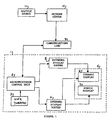
- a mobile device 1 is connected through a communications link 9 to a network server 10.
- the network server 10 does more than facilitate communications traffic, it also provides interactive applications such as banking, E-mail, investing and other features.
- Mobile device 1 includes a microprocessor control unit (MCU) 2 that is accessed by the user via a user interface 3, such as a keyboard.
- Display 5 communicates information from the MCU 2 to the user.
- the MCU 2 contains the required software or firmware to execute the functions on mobile device 2 required to operate the applications resident in the network server 10. Many of the applications will require the use of security identifiers, such as PINS and other confidential codes to be access the personal application files of the user.
- the mobile device 1 of this invention is equipped with a display 5, which is divided into two discrete zones, a static display zone 7 and a dynamic display zone 6.
- An internal display router 4 directs internally generated inquiries and information to either the static or dynamic displays.
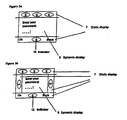
- the static display 7 may present menu icons, tool symbols, status indications, such as battery level, and other administrative references.
- the dynamic display 6 is for displaying interactive information relative to executing the activities of an application in progress. Information generated within the mobile device, may be displayed on either the static or dynamic displays.
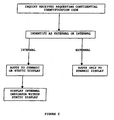
- Information transmitted to the mobile device 1 from, for example a hostile source 11 through the network server 10, will utilize browser protocols and be readily identifiable. This information is directed to the dynamic display 6 by a external display router 8. In this manner, information from the network server 10 is isolated from the internally generated information of the mobile device 1.
- an indicator symbol 12 for example a blinking icon, will be displayed in the static display 7, as shown in figures 3a and 3b .
- this symbol will indicate to the user that the request is internally generated. Since the MCU identifies the external inquiry and this information is only routed to the dynamic display 6, there is a reliable indication that a PIN number can be transmitted without appreciable risk of abuse.
Landscapes
- Engineering & Computer Science (AREA)
- Computer Security & Cryptography (AREA)
- Computer Networks & Wireless Communication (AREA)
- Signal Processing (AREA)
- Mobile Radio Communication Systems (AREA)
- Telephonic Communication Services (AREA)
- Measuring Pulse, Heart Rate, Blood Pressure Or Blood Flow (AREA)
- Telephone Function (AREA)
- Computer And Data Communications (AREA)
- Electrophonic Musical Instruments (AREA)
- Alarm Systems (AREA)
Abstract
Description
- Communications devices, such as mobile phones, pagers and the like, are being packed with more and more features. In the past such mobile equipment has been a closed environment namely, all of the features use software within the mobile equipment or SIM. With the advent of new technologies, which use wireless communications protocols, such as Wireless Application Protocol (WAP) or comparable protocols, additional applications are accessible by the mobile device, from network servers. As a result a new security threat arises for mobile equipment. Mobile equipment will soon be subject to queries designed to extract confidential security information from the user, such as a PIN or other identifier. It is therefore necessary to devise a reliable system in which requests for information originating from remote "hostile" sources can be readily identified, ignored.
- It is a purpose of this invention to provide a system for identifying remote inquiries which may precipitate a breach of security in the use of mobile equipment such as a mobile telephone, pager or other similar communications device.
- In order to use applications accessible from a network server, a mobile device is designed for interactive use. This enables the mobile device to run such applications stored on a network server remote from the mobile device. To reduce the risk of receiving bogus requests for confidential identifiers, a system is designed to identify externally generated inquiries. To this end, means are provided to segregate the display of remote information requests. The mobile device is equipped with a display that is divided into dynamic and static display zones. Externally generated inquiries can be written only to the dynamic zone. Internally generated inquiries will trigger an indicator in the static zone to advise the user of the authenticity of the inquiry. As a result hostile requests for information may be immediately recognized and ignored.
- The invention is described in more detail below with reference to the attached drawing in which:
-
Figure 1 is a block diagram of a communication system utilizing the subject invention; -
Figure 2 is a information flow diagram of the method of this invention; and -
Figures 3a and 3b illustrate embodiments of the segregated screen of this invention. - The basic components of the communications system of this invention are shown in the block diagram of
figure 1 . Amobile device 1 is connected through a communications link 9 to anetwork server 10. In this instance, thenetwork server 10 does more than facilitate communications traffic, it also provides interactive applications such as banking, E-mail, investing and other features. -
Mobile device 1 includes a microprocessor control unit (MCU) 2 that is accessed by the user via a user interface 3, such as a keyboard. Display 5 communicates information from the MCU 2 to the user. The MCU 2 contains the required software or firmware to execute the functions on mobile device 2 required to operate the applications resident in thenetwork server 10. Many of the applications will require the use of security identifiers, such as PINS and other confidential codes to be access the personal application files of the user. - In the early days of networked computers, there was a proliferation of bogus log-in procedures that generated inquiries to the personal computer for confidential information. If the information was supplied, it was stolen and used for criminal or other activities not authorized by the user. The risk of such security breaches is now becoming a problem for the user of mobile devices, especially those equipped to take advantage of the communications protocols such as WAP. Such protocols represent standard operating procedures for interactive transmittal of data used to execute an assortment of transactions. Although many of these transactions are secure because of the required digital signatures, such as PIN codes, it is essential that the code be maintained confidential. Bogus inquiries are a significant threat to the usefulness of these applications.
- The
mobile device 1 of this invention is equipped with a display 5, which is divided into two discrete zones, astatic display zone 7 and adynamic display zone 6. An internal display router 4 directs internally generated inquiries and information to either the static or dynamic displays. - As shown in
figures 3a and 3b , thestatic display 7 may present menu icons, tool symbols, status indications, such as battery level, and other administrative references. Thedynamic display 6 is for displaying interactive information relative to executing the activities of an application in progress. Information generated within the mobile device, may be displayed on either the static or dynamic displays. - Information transmitted to the
mobile device 1 from, for example a hostile source 11 through thenetwork server 10, will utilize browser protocols and be readily identifiable. This information is directed to thedynamic display 6 by a external display router 8. In this manner, information from thenetwork server 10 is isolated from the internally generated information of themobile device 1. - To inform the user of the authenticity of inquiries for identifier codes, an
indicator symbol 12, for example a blinking icon, will be displayed in thestatic display 7, as shown infigures 3a and 3b . When displayed, this symbol will indicate to the user that the request is internally generated. Since the MCU identifies the external inquiry and this information is only routed to thedynamic display 6, there is a reliable indication that a PIN number can be transmitted without appreciable risk of abuse. - As shown in
figure 2 , in operation, if a bogus log-in procedure from hostile source 11 is transmitted through thenetwork server 10, when it is received, it is identified by the MCU and routed only todynamic display 6. The externally generated inquiry may be written only to thedynamic display 6. When an inquiry is generated by the execution of internal software, an indication is prominently displayed in thestatic display 7. When responding to the inquiry displayed indynamic display 6, the user will be warned not to respond unless the internal indicator is displayed. - In this manner transmittal of confidential identification codes, restricted and the risk of unauthorized interception and use of PIN codes and the like may be significantly reduced.
Claims (9)
- A system for use within a mobile communications device (1) adapted to allow a user to communicate interactively with a remote network server (10), for indicating the authenticity of inquiries for confidential identity codes, the system comprising:a control processor (2) for operating said mobile device (1), said processor (2) adapted to identify said inquiries for confidential identity codes as externally generated or internally generated;a display (5) for presenting information to a user, said display (5) divided into a first display zone (6) to which internally generated and externally generated information is routed and second display zone (7) to which internally generated information is routed; andwherein said control processor (2) is configured to generate an internal indicator (12) in said second display zone (7) when the inquiry is identified as being internally generated and generate a warning not to respond to an enquiry displayed in the first display zone unless said internal indicator is displayed in the second display zone.
- A system according to claim 1, wherein the absence of the internal indicator in the second display zone indicates that an inquiry in the first display zone is a hostile request for information.
- A mobile communications device (1) adapted to allow a user to communicate interactively with a remote network server (10), the mobile communications device (1) including a system according to claim 1 or claim 2.
- A method for indicating the authenticity of an inquiry for a confidential identify code in a mobile communications device (1) adapted to communicate interactively with a remote network server (10), said mobile device (1) having a control processor (2), a user interface (3) and a display (5), the method comprising:identifying said inquiries for confidential identity codes as externally generated or internally generated;dividing said display (5) into a first display zone (6) to which internally generated and externally generated information is routed and a second display zone (7) to which internally generated information is routed;generating an internal indicator in said second display zone (7) when an inquiry is identified as being internally generated; andgenerating a warning not to respond to an inquiry displayed in the first display zone (6) unless the internal indicator is displayed in the second display zone (7).
- A method according to claim 4, wherein the absence of the internal indicator in the second display zone indicates than an inquiry in the first display zone is a hostile request for information.
- A method according to claim 4 or 5, comprising identifying externally generated information with the control processor (2).
- A computer program comprising code means for controlling a microprocessor control unit to perform all of the steps of the method of claims 4, 5 or 6.
- In a mobile communications device adapted to allow a user to communicate interactively with a remote network server, a system within said mobile device for indicating the authenticity of inquiries for confidential identity codes comprising:a control processor for operating said mobile device, said processor adapted to identify said inquiries for confidential identity codes as externally generated or internally generated;a display for presenting information to the user, said display divided into first and second display zones; androuting means constructed to send externally generated information only to said first display zone; wherein said control processor generates an indication symbol in said second display zone when the inquiry is internally generated to indicate to the user that said inquiry is authentic.
- In a mobile communications device adapted to communicate interactively with a remote network server, said mobile device having a control processor, a user interface and a display, a method for indicating the authenticity of inquiries for confidential identity codes comprising:identifying said inquiries for confidential identity codes as externally generated or internally generated;dividing said display into first and second display zones;routing externally generated inquiries only to said first display zone ; andgenerating an indication symbol in said second display zone when the inquiry is internally generated, to indicate to the user that said inquiry is authentic.
Applications Claiming Priority (2)
| Application Number | Priority Date | Filing Date | Title |
|---|---|---|---|
| US09/525,806 US7124439B1 (en) | 2000-03-15 | 2000-03-15 | Secure user action request indicator |
| EP01909142A EP1264500B1 (en) | 2000-03-15 | 2001-02-12 | Secure user action request indicator |
Related Parent Applications (2)
| Application Number | Title | Priority Date | Filing Date |
|---|---|---|---|
| EP01909142.0 Division | 2001-02-12 | ||
| EP01909142A Division EP1264500B1 (en) | 2000-03-15 | 2001-02-12 | Secure user action request indicator |
Publications (2)
| Publication Number | Publication Date |
|---|---|
| EP1909527A1 true EP1909527A1 (en) | 2008-04-09 |
| EP1909527B1 EP1909527B1 (en) | 2011-07-13 |
Family
ID=24094673
Family Applications (2)
| Application Number | Title | Priority Date | Filing Date |
|---|---|---|---|
| EP01909142A Expired - Lifetime EP1264500B1 (en) | 2000-03-15 | 2001-02-12 | Secure user action request indicator |
| EP08100962A Expired - Lifetime EP1909527B1 (en) | 2000-03-15 | 2001-02-12 | Secure user action request indicator |
Family Applications Before (1)
| Application Number | Title | Priority Date | Filing Date |
|---|---|---|---|
| EP01909142A Expired - Lifetime EP1264500B1 (en) | 2000-03-15 | 2001-02-12 | Secure user action request indicator |
Country Status (12)
| Country | Link |
|---|---|
| US (2) | US7124439B1 (en) |
| EP (2) | EP1264500B1 (en) |
| JP (2) | JP4567272B2 (en) |
| KR (1) | KR100752680B1 (en) |
| CN (1) | CN1216508C (en) |
| AT (2) | ATE390812T1 (en) |
| AU (1) | AU2001236927A1 (en) |
| BR (1) | BR0109132A (en) |
| CA (1) | CA2403016C (en) |
| DE (1) | DE60133371T2 (en) |
| ES (1) | ES2301532T3 (en) |
| WO (1) | WO2001069884A2 (en) |
Families Citing this family (2)
| Publication number | Priority date | Publication date | Assignee | Title |
|---|---|---|---|---|
| DE112009000164T5 (en) * | 2008-01-31 | 2011-02-24 | Hewlett-Packard Development Company, L.P., Houston | User access control system and method |
| CN102812431A (en) | 2010-03-22 | 2012-12-05 | Lrdc系统有限公司 | A method of identifying and protecting the integrity of a set of source data |
Citations (2)
| Publication number | Priority date | Publication date | Assignee | Title |
|---|---|---|---|---|
| WO1999059334A1 (en) | 1998-05-13 | 1999-11-18 | Clemens Croy | Personal navigator system |
| WO2000001180A1 (en) | 1998-06-30 | 2000-01-06 | Telefonaktiebolaget Lm Ericsson | Method for operational changes authorization on a mobile phone |
Family Cites Families (11)
| Publication number | Priority date | Publication date | Assignee | Title |
|---|---|---|---|---|
| JPH05336109A (en) * | 1992-05-29 | 1993-12-17 | Toshiba Corp | Wireless communication system |
| JPH08205237A (en) * | 1995-01-25 | 1996-08-09 | Toshiba Corp | Mobile wireless communication device |
| US5809415A (en) * | 1995-12-11 | 1998-09-15 | Unwired Planet, Inc. | Method and architecture for an interactive two-way data communication network |
| US5793866A (en) | 1995-12-13 | 1998-08-11 | Motorola, Inc. | Communication method and device |
| FR2742959B1 (en) * | 1995-12-21 | 1998-01-16 | Alcatel Mobile Comm France | METHOD FOR SECURING THE USE OF A TERMINAL OF A CELLULAR RADIOCOMMUNICATION SYSTEM, CORRESPONDING TERMINAL AND USER CARD |
| US6065120A (en) * | 1997-12-09 | 2000-05-16 | Phone.Com, Inc. | Method and system for self-provisioning a rendezvous to ensure secure access to information in a database from multiple devices |
| JPH11234189A (en) * | 1998-02-10 | 1999-08-27 | Toshiba Corp | Information transmitting device and information receiving device |
| US6366912B1 (en) * | 1998-04-06 | 2002-04-02 | Microsoft Corporation | Network security zones |
| JP3542494B2 (en) * | 1998-04-17 | 2004-07-14 | 株式会社ケンウッド | How to display received characters on the phone |
| US6647260B2 (en) * | 1999-04-09 | 2003-11-11 | Openwave Systems Inc. | Method and system facilitating web based provisioning of two-way mobile communications devices |
| US6334056B1 (en) * | 1999-05-28 | 2001-12-25 | Qwest Communications Int'l., Inc. | Secure gateway processing for handheld device markup language (HDML) |
-
2000
- 2000-03-15 US US09/525,806 patent/US7124439B1/en not_active Expired - Fee Related
-
2001
- 2001-02-12 ES ES01909142T patent/ES2301532T3/en not_active Expired - Lifetime
- 2001-02-12 AU AU2001236927A patent/AU2001236927A1/en not_active Abandoned
- 2001-02-12 WO PCT/US2001/004481 patent/WO2001069884A2/en not_active Ceased
- 2001-02-12 AT AT01909142T patent/ATE390812T1/en not_active IP Right Cessation
- 2001-02-12 DE DE60133371T patent/DE60133371T2/en not_active Expired - Lifetime
- 2001-02-12 EP EP01909142A patent/EP1264500B1/en not_active Expired - Lifetime
- 2001-02-12 AT AT08100962T patent/ATE516683T1/en not_active IP Right Cessation
- 2001-02-12 EP EP08100962A patent/EP1909527B1/en not_active Expired - Lifetime
- 2001-02-12 BR BR0109132-8A patent/BR0109132A/en not_active IP Right Cessation
- 2001-02-12 JP JP2001567208A patent/JP4567272B2/en not_active Expired - Fee Related
- 2001-02-12 KR KR1020027011911A patent/KR100752680B1/en not_active Expired - Fee Related
- 2001-02-12 CN CN018065422A patent/CN1216508C/en not_active Expired - Fee Related
- 2001-02-12 CA CA002403016A patent/CA2403016C/en not_active Expired - Fee Related
-
2006
- 2006-09-20 US US11/533,541 patent/US7478430B2/en not_active Expired - Fee Related
-
2008
- 2008-02-26 JP JP2008044739A patent/JP2008159082A/en active Pending
Patent Citations (2)
| Publication number | Priority date | Publication date | Assignee | Title |
|---|---|---|---|---|
| WO1999059334A1 (en) | 1998-05-13 | 1999-11-18 | Clemens Croy | Personal navigator system |
| WO2000001180A1 (en) | 1998-06-30 | 2000-01-06 | Telefonaktiebolaget Lm Ericsson | Method for operational changes authorization on a mobile phone |
Also Published As
| Publication number | Publication date |
|---|---|
| JP2003527044A (en) | 2003-09-09 |
| JP4567272B2 (en) | 2010-10-20 |
| CA2403016C (en) | 2009-11-17 |
| DE60133371D1 (en) | 2008-05-08 |
| DE60133371T2 (en) | 2009-05-20 |
| ATE516683T1 (en) | 2011-07-15 |
| CN1428061A (en) | 2003-07-02 |
| US7124439B1 (en) | 2006-10-17 |
| ATE390812T1 (en) | 2008-04-15 |
| EP1264500A2 (en) | 2002-12-11 |
| BR0109132A (en) | 2003-12-30 |
| US20070050847A1 (en) | 2007-03-01 |
| JP2008159082A (en) | 2008-07-10 |
| ES2301532T3 (en) | 2008-07-01 |
| EP1264500B1 (en) | 2008-03-26 |
| US7478430B2 (en) | 2009-01-13 |
| WO2001069884A3 (en) | 2002-01-17 |
| KR20030028455A (en) | 2003-04-08 |
| WO2001069884A2 (en) | 2001-09-20 |
| EP1909527B1 (en) | 2011-07-13 |
| CN1216508C (en) | 2005-08-24 |
| CA2403016A1 (en) | 2001-09-20 |
| KR100752680B1 (en) | 2007-08-29 |
| AU2001236927A1 (en) | 2001-09-24 |
Similar Documents
| Publication | Publication Date | Title |
|---|---|---|
| CN101827454B (en) | For observing the method and system of the level of trust that network communication operations is connected with server | |
| JP4954979B2 (en) | Systems and methods for fraud monitoring, detection, and hierarchical user authentication | |
| CA3024139C (en) | Secure collection of sensitive data | |
| IL211758A (en) | Authorization of server operations | |
| EP2030441A1 (en) | Method and apparatus for monitoring a user s activities | |
| US20030146931A1 (en) | Method and apparatus for inputting secret information using multiple screen pointers | |
| EP1307019A1 (en) | Method and apparatus for personal information access control | |
| US9208489B2 (en) | System for secure web-prompt processing on point sale devices | |
| WO2006010791A1 (en) | Method for the monitoring of system security in electronic devices | |
| CA2403016C (en) | Secure user action request indicator | |
| US10887345B1 (en) | Protecting users from phishing attempts | |
| US7441122B2 (en) | Method for providing secure access to a digital resource | |
| CN111711927B (en) | Method, device, equipment and storage medium for positioning terminal | |
| HK1110466A (en) | Secure user action request indicator | |
| CN109410048A (en) | Electronic device, customer information method for managing security and storage medium | |
| JPH04147361A (en) | System for processing for change of processing screen | |
| US12519803B2 (en) | Token-based message authentication | |
| CN113608629B (en) | Intelligent keyboard system, password input method and self-service equipment | |
| KR20020094788A (en) | Method for instant messenger interface display and system for instant messaging | |
| CN107153791B (en) | Data presentation method and electronic equipment | |
| CN121336204A (en) | Methods and corresponding devices for protecting the input of personal identification number digits | |
| CN106155795B (en) | Switching method, mobile terminal and the bluetooth equipment of operating mode | |
| WO2007063597A1 (en) | Information terminal device |
Legal Events
| Date | Code | Title | Description |
|---|---|---|---|
| PUAI | Public reference made under article 153(3) epc to a published international application that has entered the european phase |
Free format text: ORIGINAL CODE: 0009012 |
|
| AC | Divisional application: reference to earlier application |
Ref document number: 1264500 Country of ref document: EP Kind code of ref document: P |
|
| AK | Designated contracting states |
Kind code of ref document: A1 Designated state(s): AT BE CH CY DE DK ES FI FR GB GR IE IT LI LU MC NL PT SE TR |
|
| REG | Reference to a national code |
Ref country code: HK Ref legal event code: DE Ref document number: 1110466 Country of ref document: HK |
|
| AKX | Designation fees paid | ||
| 17P | Request for examination filed |
Effective date: 20080422 |
|
| RBV | Designated contracting states (corrected) |
Designated state(s): AT BE CH CY DE DK ES FI FR GB GR IE IT LI LU MC NL PT SE TR |
|
| 17Q | First examination report despatched |
Effective date: 20081210 |
|
| REG | Reference to a national code |
Ref country code: DE Ref legal event code: 8566 |
|
| GRAP | Despatch of communication of intention to grant a patent |
Free format text: ORIGINAL CODE: EPIDOSNIGR1 |
|
| RIC1 | Information provided on ipc code assigned before grant |
Ipc: H04W 12/12 20090101AFI20110124BHEP |
|
| GRAS | Grant fee paid |
Free format text: ORIGINAL CODE: EPIDOSNIGR3 |
|
| GRAA | (expected) grant |
Free format text: ORIGINAL CODE: 0009210 |
|
| AC | Divisional application: reference to earlier application |
Ref document number: 1264500 Country of ref document: EP Kind code of ref document: P |
|
| AK | Designated contracting states |
Kind code of ref document: B1 Designated state(s): AT BE CH CY DE DK ES FI FR GB GR IE IT LI LU MC NL PT SE TR |
|
| REG | Reference to a national code |
Ref country code: GB Ref legal event code: FG4D |
|
| REG | Reference to a national code |
Ref country code: CH Ref legal event code: EP |
|
| REG | Reference to a national code |
Ref country code: IE Ref legal event code: FG4D |
|
| REG | Reference to a national code |
Ref country code: DE Ref legal event code: R096 Ref document number: 60144979 Country of ref document: DE Effective date: 20110915 |
|
| REG | Reference to a national code |
Ref country code: NL Ref legal event code: VDEP Effective date: 20110713 |
|
| REG | Reference to a national code |
Ref country code: AT Ref legal event code: MK05 Ref document number: 516683 Country of ref document: AT Kind code of ref document: T Effective date: 20110713 |
|
| PG25 | Lapsed in a contracting state [announced via postgrant information from national office to epo] |
Ref country code: BE Free format text: LAPSE BECAUSE OF FAILURE TO SUBMIT A TRANSLATION OF THE DESCRIPTION OR TO PAY THE FEE WITHIN THE PRESCRIBED TIME-LIMIT Effective date: 20110713 Ref country code: NL Free format text: LAPSE BECAUSE OF FAILURE TO SUBMIT A TRANSLATION OF THE DESCRIPTION OR TO PAY THE FEE WITHIN THE PRESCRIBED TIME-LIMIT Effective date: 20110713 Ref country code: SE Free format text: LAPSE BECAUSE OF FAILURE TO SUBMIT A TRANSLATION OF THE DESCRIPTION OR TO PAY THE FEE WITHIN THE PRESCRIBED TIME-LIMIT Effective date: 20110713 Ref country code: PT Free format text: LAPSE BECAUSE OF FAILURE TO SUBMIT A TRANSLATION OF THE DESCRIPTION OR TO PAY THE FEE WITHIN THE PRESCRIBED TIME-LIMIT Effective date: 20111114 Ref country code: FI Free format text: LAPSE BECAUSE OF FAILURE TO SUBMIT A TRANSLATION OF THE DESCRIPTION OR TO PAY THE FEE WITHIN THE PRESCRIBED TIME-LIMIT Effective date: 20110713 |
|
| PG25 | Lapsed in a contracting state [announced via postgrant information from national office to epo] |
Ref country code: AT Free format text: LAPSE BECAUSE OF FAILURE TO SUBMIT A TRANSLATION OF THE DESCRIPTION OR TO PAY THE FEE WITHIN THE PRESCRIBED TIME-LIMIT Effective date: 20110713 Ref country code: CY Free format text: LAPSE BECAUSE OF FAILURE TO SUBMIT A TRANSLATION OF THE DESCRIPTION OR TO PAY THE FEE WITHIN THE PRESCRIBED TIME-LIMIT Effective date: 20110713 Ref country code: GR Free format text: LAPSE BECAUSE OF FAILURE TO SUBMIT A TRANSLATION OF THE DESCRIPTION OR TO PAY THE FEE WITHIN THE PRESCRIBED TIME-LIMIT Effective date: 20111014 |
|
| PLBE | No opposition filed within time limit |
Free format text: ORIGINAL CODE: 0009261 |
|
| STAA | Information on the status of an ep patent application or granted ep patent |
Free format text: STATUS: NO OPPOSITION FILED WITHIN TIME LIMIT |
|
| PG25 | Lapsed in a contracting state [announced via postgrant information from national office to epo] |
Ref country code: IT Free format text: LAPSE BECAUSE OF FAILURE TO SUBMIT A TRANSLATION OF THE DESCRIPTION OR TO PAY THE FEE WITHIN THE PRESCRIBED TIME-LIMIT Effective date: 20110713 |
|
| 26N | No opposition filed |
Effective date: 20120416 |
|
| PG25 | Lapsed in a contracting state [announced via postgrant information from national office to epo] |
Ref country code: DK Free format text: LAPSE BECAUSE OF FAILURE TO SUBMIT A TRANSLATION OF THE DESCRIPTION OR TO PAY THE FEE WITHIN THE PRESCRIBED TIME-LIMIT Effective date: 20110713 |
|
| REG | Reference to a national code |
Ref country code: DE Ref legal event code: R097 Ref document number: 60144979 Country of ref document: DE Effective date: 20120416 |
|
| PG25 | Lapsed in a contracting state [announced via postgrant information from national office to epo] |
Ref country code: MC Free format text: LAPSE BECAUSE OF NON-PAYMENT OF DUE FEES Effective date: 20120229 |
|
| REG | Reference to a national code |
Ref country code: CH Ref legal event code: PL |
|
| GBPC | Gb: european patent ceased through non-payment of renewal fee |
Effective date: 20120212 |
|
| PG25 | Lapsed in a contracting state [announced via postgrant information from national office to epo] |
Ref country code: LI Free format text: LAPSE BECAUSE OF NON-PAYMENT OF DUE FEES Effective date: 20120229 Ref country code: CH Free format text: LAPSE BECAUSE OF NON-PAYMENT OF DUE FEES Effective date: 20120229 |
|
| REG | Reference to a national code |
Ref country code: IE Ref legal event code: MM4A |
|
| REG | Reference to a national code |
Ref country code: FR Ref legal event code: ST Effective date: 20121031 |
|
| REG | Reference to a national code |
Ref country code: DE Ref legal event code: R119 Ref document number: 60144979 Country of ref document: DE Effective date: 20120901 |
|
| PG25 | Lapsed in a contracting state [announced via postgrant information from national office to epo] |
Ref country code: FR Free format text: LAPSE BECAUSE OF NON-PAYMENT OF DUE FEES Effective date: 20120229 Ref country code: GB Free format text: LAPSE BECAUSE OF NON-PAYMENT OF DUE FEES Effective date: 20120212 Ref country code: IE Free format text: LAPSE BECAUSE OF NON-PAYMENT OF DUE FEES Effective date: 20120212 |
|
| PG25 | Lapsed in a contracting state [announced via postgrant information from national office to epo] |
Ref country code: ES Free format text: LAPSE BECAUSE OF FAILURE TO SUBMIT A TRANSLATION OF THE DESCRIPTION OR TO PAY THE FEE WITHIN THE PRESCRIBED TIME-LIMIT Effective date: 20111024 |
|
| PG25 | Lapsed in a contracting state [announced via postgrant information from national office to epo] |
Ref country code: DE Free format text: LAPSE BECAUSE OF NON-PAYMENT OF DUE FEES Effective date: 20120901 |
|
| PG25 | Lapsed in a contracting state [announced via postgrant information from national office to epo] |
Ref country code: TR Free format text: LAPSE BECAUSE OF FAILURE TO SUBMIT A TRANSLATION OF THE DESCRIPTION OR TO PAY THE FEE WITHIN THE PRESCRIBED TIME-LIMIT Effective date: 20110713 |
|
| PG25 | Lapsed in a contracting state [announced via postgrant information from national office to epo] |
Ref country code: LU Free format text: LAPSE BECAUSE OF NON-PAYMENT OF DUE FEES Effective date: 20120212 |
|
| REG | Reference to a national code |
Ref country code: HK Ref legal event code: WD Ref document number: 1110466 Country of ref document: HK |