EP1908321B1 - Method to detect a user equipment stuck on a dedicated channel - Google Patents
Method to detect a user equipment stuck on a dedicated channel Download PDFInfo
- Publication number
- EP1908321B1 EP1908321B1 EP06771513A EP06771513A EP1908321B1 EP 1908321 B1 EP1908321 B1 EP 1908321B1 EP 06771513 A EP06771513 A EP 06771513A EP 06771513 A EP06771513 A EP 06771513A EP 1908321 B1 EP1908321 B1 EP 1908321B1
- Authority
- EP
- European Patent Office
- Prior art keywords
- dedicated channel
- stuck
- user equipment
- time period
- network
- Prior art date
- Legal status (The legal status is an assumption and is not a legal conclusion. Google has not performed a legal analysis and makes no representation as to the accuracy of the status listed.)
- Not-in-force
Links
- 238000000034 method Methods 0.000 title claims abstract description 39
- 230000011664 signaling Effects 0.000 claims description 25
- 230000001960 triggered effect Effects 0.000 claims 1
- 238000004590 computer program Methods 0.000 abstract description 7
- 238000004891 communication Methods 0.000 description 10
- 230000006870 function Effects 0.000 description 8
- 230000008901 benefit Effects 0.000 description 7
- 230000009471 action Effects 0.000 description 6
- 238000012360 testing method Methods 0.000 description 6
- 238000012546 transfer Methods 0.000 description 5
- 238000005516 engineering process Methods 0.000 description 3
- 230000008569 process Effects 0.000 description 3
- 238000010586 diagram Methods 0.000 description 2
- 238000005259 measurement Methods 0.000 description 2
- 238000010295 mobile communication Methods 0.000 description 2
- 238000012986 modification Methods 0.000 description 2
- 230000004048 modification Effects 0.000 description 2
- 238000004458 analytical method Methods 0.000 description 1
- 238000013459 approach Methods 0.000 description 1
- 230000001413 cellular effect Effects 0.000 description 1
- 238000013461 design Methods 0.000 description 1
- 238000001514 detection method Methods 0.000 description 1
Images


Classifications
-
- H—ELECTRICITY
- H04—ELECTRIC COMMUNICATION TECHNIQUE
- H04W—WIRELESS COMMUNICATION NETWORKS
- H04W76/00—Connection management
- H04W76/30—Connection release
- H04W76/38—Connection release triggered by timers
-
- H—ELECTRICITY
- H04—ELECTRIC COMMUNICATION TECHNIQUE
- H04B—TRANSMISSION
- H04B7/00—Radio transmission systems, i.e. using radiation field
- H04B7/24—Radio transmission systems, i.e. using radiation field for communication between two or more posts
- H04B7/26—Radio transmission systems, i.e. using radiation field for communication between two or more posts at least one of which is mobile
- H04B7/2628—Radio transmission systems, i.e. using radiation field for communication between two or more posts at least one of which is mobile using code-division multiple access [CDMA] or spread spectrum multiple access [SSMA]
- H04B7/2631—Radio transmission systems, i.e. using radiation field for communication between two or more posts at least one of which is mobile using code-division multiple access [CDMA] or spread spectrum multiple access [SSMA] for broadband transmission
-
- H—ELECTRICITY
- H04—ELECTRIC COMMUNICATION TECHNIQUE
- H04W—WIRELESS COMMUNICATION NETWORKS
- H04W52/00—Power management, e.g. Transmission Power Control [TPC] or power classes
- H04W52/02—Power saving arrangements
- H04W52/0209—Power saving arrangements in terminal devices
- H04W52/0225—Power saving arrangements in terminal devices using monitoring of external events, e.g. the presence of a signal
- H04W52/0229—Power saving arrangements in terminal devices using monitoring of external events, e.g. the presence of a signal where the received signal is a wanted signal
-
- Y—GENERAL TAGGING OF NEW TECHNOLOGICAL DEVELOPMENTS; GENERAL TAGGING OF CROSS-SECTIONAL TECHNOLOGIES SPANNING OVER SEVERAL SECTIONS OF THE IPC; TECHNICAL SUBJECTS COVERED BY FORMER USPC CROSS-REFERENCE ART COLLECTIONS [XRACs] AND DIGESTS
- Y02—TECHNOLOGIES OR APPLICATIONS FOR MITIGATION OR ADAPTATION AGAINST CLIMATE CHANGE
- Y02D—CLIMATE CHANGE MITIGATION TECHNOLOGIES IN INFORMATION AND COMMUNICATION TECHNOLOGIES [ICT], I.E. INFORMATION AND COMMUNICATION TECHNOLOGIES AIMING AT THE REDUCTION OF THEIR OWN ENERGY USE
- Y02D30/00—Reducing energy consumption in communication networks
- Y02D30/70—Reducing energy consumption in communication networks in wireless communication networks
Definitions
- This invention relates in general to communication networks. More specifically, the invention relates to the release of a User Equipment (UE) stuck on a dedicated channel.
- UE User Equipment
- Existing wireless communication systems include a User Equipment (UE), a Radio Access Network (RAN), and a Core Network (CN).
- the UE may be connected to the CN through a dedicated channel.
- the dedicated channel may be used for operations including circuit-switched voice transfer, packet-switched voice transfer or data transfer.
- CELL-DCH state refers to the state in which the UE is engaged in the dedicated channel.
- the Traffic Channel (TCH) state refers to the state in which the UE is on a dedicated channel.
- the GSM network uses the TCH channel for the transfer of voice, circuit-switched data and circuit-switched related signaling.
- a UE While it is engaged in a dedicated channel, however, a UE may get stuck on the dedicated channel. This may happen due to an error or a fault in at least one UE, RAN and CN.
- the UE and the RAN keep performing actions that are necessary to maintain the channel.
- the actions include UEs sending MEASUREMENT REPORT messages and RANs sending MEASUREMENT CONTROL messages and ACTIVE SET UPDATE messages on the relevant Radio Bearers (RBs).
- RBs Radio Bearers
- the UE When stuck on the dedicated channel, the UE can suffer from several problems. First, battery consumption is high in a UE stuck on the dedicated channel.
- the dedicated channel is the highest battery consumption mode for the UE. In the dedicated channel, the UE continually monitors the downlink and transmits on the uplink. Second, this situation also results in the wastage of network resources. Maintaining a dedicated channel for the UE requires a significant amount of RAN resources and bandwidth. When the UE is stuck on the dedicated channel, these RAN resources and bandwidth are wasted, without any useful data being exchanged.
- US patent no. 6,088,343 describes a GSM transceiver for use in a GSM network comprising a multilayer protocol stack for executing a plurality of asynchronous tasks and a mobility management entity for establishing and authenticating services provided by the GSM network to the transceiver. Only the mobility management entity makes decisions to establish channels between the transceiver and the GSM network. A function of the mobility management entity is to keep track of open connection management layer transactions of the third layer so that it can automatically disconnect the connection once all transactions are completed and also inform interested parties should the connection be interrupted.
- US patent application no. 2005/0054298 describes a UE that can detect a Radio Link Control (RLC) unrecoverable error and a Radio Link (RL) failure, when the UE is in a DCH state.
- RLC Radio Link Control
- RL Radio Link
- FIG. 1 shows a block diagram illustrating an exemplary wireless communication system, in accordance with an embodiment
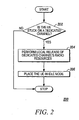
- FIG. 2 shows a flowchart illustrating steps involved in utilizing the resources of a User Equipment (UE) stuck on a dedicated channel, and of the corresponding network, in accordance with an embodiment.
- UE User Equipment
- FIG. 3 shows a flowchart illustrating steps involved in determining whether the UE is stuck on a dedicated channel, in accordance with an embodiment.
- Various embodiments of the present invention provide a method and a computer program product for resource utilization in a User Equipment (UE).
- UE User Equipment
- the method and the computer program product detects whether the UE is stuck on the dedicated channel.
- either the UE or the corresponding network carries out a release of the UE from the dedicated channel. This is done by performing a local release of the dedicated channel's radio resources alone or through executing a fatal error routine.
- FIG. 1 shows a block diagram illustrating an exemplary wireless communication system 100, in accordance with an embodiment.
- the wireless communication system 100 includes a User Equipment (UE) 102, a Radio Access Network (RAN) 104, and a Core Network (CN) 106.
- the UE 102 is sometimes also referred to as a Mobile Station (MS). Examples of the UE 102 include a cellular phone, a laptop computer, a Personal Digital Assistant (PDA), and so forth.
- the wireless communication system 100 may include a plurality of UEs. In this description, the wireless communication system 100 only shows a single UE 102.
- the UE 102 manages communications links with the CN 106 through the RAN 104.
- the RAN 104 includes base stations 108 and 110.
- the base stations 108 and 110 are wireless transmitting and receiving stations for the wireless communication system 100.
- the CN 106 further manages communications links between the UE 102, and fixed or mobile communication networks. Examples of fixed networks include a public-switched telephone network (PSTN), an Integrated Services Digital Network (ISDN), and the Internet.
- PSTN public-switched telephone network
- ISDN Integrated Services Digital Network
- PLMN Public Land Mobile Network
- FIG. 2 shows a flowchart 200 illustrating steps involved in utilizing the resources of a User Equipment (UE) stuck on a dedicated channel, and of the corresponding network, in accordance with an embodiment.
- Step 202 determines whether the UE 102 is stuck on the dedicated channel.
- the dedicated channel is accessed in a Wideband Code Division Multiple Access (WCDMA) network while the UE is in a CELL_DCH state.
- WCDMA Wideband Code Division Multiple Access
- the UE 102 is engaged in a dedicated channel while in a Traffic Channel (TCH) state in the GSM network.
- TCH Traffic Channel
- the UE 102 may get stuck on the dedicated channel while performing the General Packet Radio Service (GPRS) attach operation on WCDMA network.
- the UE 102 may set the 'follow on request flag' in the GPRS Attach message, which it sends to the CN 106 to indicate that it has additional data to send after the attach operation is complete.
- the UE 102 may then fail to send any additional data afterwards. If this occurs, the UE 102 may get stuck on the dedicated channel.
- GPRS General Packet Radio Service
- the UE 102 may also get stuck on the dedicated channel in WCDMA after failing to release a Circuit Switch (CS) signalling connection, once the transactions associated with the CS signalling connection are complete. Similarly in WCDMA, the UE 102 may get stuck on the dedicated channel after failing to release a Packet Switch (PS) signalling connection once the transactions associated with the PS signalling connection are complete.
- CS Circuit Switch
- PS Packet Switch
- the UE 102 may get stuck on the dedicated channel if the corresponding WCDMA network fails to release a Radio Resource Control (RRC) connection once all signalling connections have been successfully released.
- RRC Radio Resource Control
- RR Radio Resource
- the UE 102 performs the step 202.
- the RAN 104 triggers the UE to perform step 202.
- the RAN 104 may trigger the UE 102 to perform step 202 by broadcasting a message (which indicates that the check described in step 202 should be performed while the UE 102 is on the dedicate channel) to all, or a select group of LTEs, in its coverage area.
- the trigger message may be sent as a system information message or as a device-specific message to individual UEs in its coverage area.
- the RAN 104 performs the step 202 on its own, in which case no trigger needs to be sent to the UE.
- Step 204 performs a local release of the radio resources when it is determined that the UE 102 is stuck on a dedicated channel.
- the UE 102 performs the local release of the RRC connection.
- a corresponding RAN 104 of the UE 102 performs the local release of the RRC connection.
- the release may be controlled by a Non Volatile Memory (NVM) field.
- NVM Non Volatile Memory
- the NVM is a type of memory that retains its data even when the UE is switched off.
- Examples of NVM include Read-Only Memory (ROM), Programmable Read-Only Memory (PROM), and Erasable Programmable Read Only Memory (EPROM).
- ROM Read-Only Memory
- PROM Programmable Read-Only Memory
- EPROM Erasable Programmable Read Only Memory
- the UE 102 performs the local release of the RRC connection based on a pre-defined value of a field in the NVM. If the field in the NVM contains a pre-defined first value is, for example, a 0 bit, then the local release of the RRC connection will be performed with little notice to the user of the UE. (Note that "first” is used solely to distinguish this value from another value introduced in the next paragraph).
- a fatal error routine generally saves information regarding a failure of the UE (e.g., that the UE performed a local release due to a determination of being stuck on a dedicated channel, the time and date of the failure, etc.), forwards failure information to a remote server for analysis, and notifies the user of the UE (e.g., a tester) of the failure.
- the field of the NVM often contains a pre-defined second value when the UE is undergoing field testing, while the field of the NVM would often contain a pre-defined first value when the UE is a released product.
- the UE 102 is placed in an idle mode.
- FIG. 3 shows a flowchart 300 illustrating steps involved in determining whether the UE 102 is stuck on a dedicated channel, in accordance with an embodiment. This flowchart 300 provides details for implementing step 202 shown in FIG. 2 .
- Step 304 determines whether the UE 102 is sending or receiving higher layer signaling messages.
- higher layer signaling messages for both the WCDMA and GSM networks include signaling performed by the Mobility Management (MM), General Packet Radio Service Mobility Management (GMM), Call Control (CC), Supplementary Services (SS), Short Message Service (SMS), and Session Management (SM) layers.
- MM Mobility Management
- GMM General Packet Radio Service Mobility Management
- CC Call Control
- SS Supplementary Services
- SMS Short Message Service
- Session Management Session Management
- WCDMA higher layer signaling messages are sent and received over a Signaling Radio Bearer 3 and a Signaling Radio Bearer 4. If the UE 102 is sending or receiving at least one of the higher layer signaling messages, then the flow returns to step 302. If the UE 102 is not sending or receiving any higher layer signaling messages, then the flow continues to step 306.
- Step 306 determines whether the UE 102 is sending or receiving user data over non-signaling Radio Bearers (RBs). If the UE 102 is sending or receiving user data over non-signaling RBs, then the flow returns to step 302. If the UE 102 is not sending or receiving user data over non-signaling Radio Bearers (RBs), then the flow continues to step 308.
- Step 308 determines whether the UE 102 is sending or receiving signals over a voice RB. If the UE 102 is sending or receiving signals over a voice RB, then the flow returns to step 302. If the UE 102 is not sending or receiving signals over the voice RB, then the flow continues to step 310.
- RBs Radio Bearers
- Step 310 determines whether a DCH Loopback Mode is active.
- the DCH Loopback Mode is a WCDMA test mode in UEs.
- a similar test mode is available for GSM networks and UEs.
- UEs with the test mode enabled on their Subscriber Identity Module (SIM) can be commanded to enter the DCH Loopback Mode by the corresponding network.
- SIM Subscriber Identity Module
- the corresponding network commands the UE 102 to enter the DCH Loopback Mode through MM messages.
- the MM messages indicate when a test RB is to be activated, and also when the actual loopback of data sent on the test RB is to be enabled.
- the DCH Loopback Mode When the DCH Loopback Mode is active, a downlink DCH data is looped back in the UE 102, and the looped back downlink DCH data becomes an uplink DCH data.
- the DCH Loopback Mode When the DCH Loopback Mode is active, there is no guarantee about how often the corresponding network will send the useful data in this mode. Therefore, to determine that the UE 102 is stuck on the dedicated channel, the DCH Loopback Mode should be inactive. If the DCH Loopback Mode is active, then the flow returns to step 302. If the DCH Loopback Mode is not active, then the flow continues to step 312.
- a time period is determined from the timer that was started in step 302.
- the determined time period is checked against a pre-defined time period.
- the corresponding network controls the pre-defined time period by broadcasting information about the pre-defined time period to the UEs in its coverage area. The information about the pre-defined time period can be broadcast in a system information message.
- the corresponding network controls the pre-defined time period by sending pre-defined time period information in a device-specific message to one or more UEs in its coverage area. The UE 102 receives this message if it lies within the coverage area of the RAN 104.
- the flow goes to step 316.
- Step 316 determines whether the UE 102 is still engaged in the dedicated channel. If the UE 102 is still engaged in the dedicated channel, then the flow returns to step 304. If the UE 102 is not engaged in the dedicated channel, it is determined that the UE 102 is not stuck on the dedicated channel.
- the UE 102 performs steps 302 through 316. In another embodiment, the corresponding RAN 104 performs the steps 302 through 316.
- the method and computer program product for resource utilization in the UE 102 is applied in Radio Access Technologies (RATs) such as WCDMA and GSM, in accordance with various embodiments.
- RATs Radio Access Technologies
- WCDMA and GSM Radio Access Technologies
- the method and a computer program product for resource utilization in a UE reduce unnecessary battery consumption in the UE.
- the method and computer program product limits wastage of network resources and bandwidth by releasing the UE stuck on the dedicated channel.
- the methods described herein may be comprised of one or more conventional processors and unique stored program instructions that control the one or more processors to implement, in conjunction with certain non-processor circuits, some, most, or all of the functions of the methods described herein.
- the non-processor circuits may include, but are not limited to, a radio receiver, a radio transmitter, signal drivers, clock circuits, power source circuits, and user input devices. As such, these functions may be interpreted as steps of a method to perform detection and release of a UE stuck on a dedicated channel.
- program is defined as a sequence of instructions designed for execution on a computer system.
- a "program”, or “computer program”, may include a subroutine, a function, a procedure, an object method, an object implementation, an executable application, an applet, a servlet, a source code, an object code, a shared library/dynamic load library and/or other sequence of instructions designed for execution on a computer system.
Landscapes
- Engineering & Computer Science (AREA)
- Computer Networks & Wireless Communication (AREA)
- Signal Processing (AREA)
- Mobile Radio Communication Systems (AREA)
- Power Sources (AREA)
- Transceivers (AREA)
- Input Circuits Of Receivers And Coupling Of Receivers And Audio Equipment (AREA)
- Circuits Of Receivers In General (AREA)
Abstract
Description
- This invention relates in general to communication networks. More specifically, the invention relates to the release of a User Equipment (UE) stuck on a dedicated channel.
- Existing wireless communication systems include a User Equipment (UE), a Radio Access Network (RAN), and a Core Network (CN). The UE may be connected to the CN through a dedicated channel. The dedicated channel may be used for operations including circuit-switched voice transfer, packet-switched voice transfer or data transfer. In the Wideband Code Division Multiple Access (WCDMA) network, CELL-DCH state refers to the state in which the UE is engaged in the dedicated channel. In the Global System for Mobile Communications (GSM) network, the Traffic Channel (TCH) state refers to the state in which the UE is on a dedicated channel. The GSM network uses the TCH channel for the transfer of voice, circuit-switched data and circuit-switched related signaling.
- While it is engaged in a dedicated channel, however, a UE may get stuck on the dedicated channel. This may happen due to an error or a fault in at least one UE, RAN and CN. When the UE is stuck on the dedicated channel, the UE and the RAN keep performing actions that are necessary to maintain the channel. For the WCDMA Radio Access Technology (RAT), the actions include UEs sending MEASUREMENT REPORT messages and RANs sending MEASUREMENT CONTROL messages and ACTIVE SET UPDATE messages on the relevant Radio Bearers (RBs). In spite of the UE and the RAN performing the necessary actions, no useful data is exchanged between the UE and the CN for a significant period of time. In other words, there is no higher layer signaling and no data transfer over non-signaling RBs carrying user data or voice.
- When stuck on the dedicated channel, the UE can suffer from several problems. First, battery consumption is high in a UE stuck on the dedicated channel. The dedicated channel is the highest battery consumption mode for the UE. In the dedicated channel, the UE continually monitors the downlink and transmits on the uplink. Second, this situation also results in the wastage of network resources. Maintaining a dedicated channel for the UE requires a significant amount of RAN resources and bandwidth. When the UE is stuck on the dedicated channel, these RAN resources and bandwidth are wasted, without any useful data being exchanged.
-
US patent no. 6,088,343 describes a GSM transceiver for use in a GSM network comprising a multilayer protocol stack for executing a plurality of asynchronous tasks and a mobility management entity for establishing and authenticating services provided by the GSM network to the transceiver. Only the mobility management entity makes decisions to establish channels between the transceiver and the GSM network. A function of the mobility management entity is to keep track of open connection management layer transactions of the third layer so that it can automatically disconnect the connection once all transactions are completed and also inform interested parties should the connection be interrupted. -
US patent application no. 2005/0054298 describes a UE that can detect a Radio Link Control (RLC) unrecoverable error and a Radio Link (RL) failure, when the UE is in a DCH state. The RL failure leads to releasing the radio bearers and the RLC unrecoverable error is not permitted to release the radio bearers. - In accordance with the present invention there is provided a method of resource utilization in a UE as recited in the accompanying claims.
- The present invention is illustrated by way of example and not limitation in the accompanying figures, in which like references indicate similar elements, and in which:
-
FIG. 1 shows a block diagram illustrating an exemplary wireless communication system, in accordance with an embodiment -
FIG. 2 shows a flowchart illustrating steps involved in utilizing the resources of a User Equipment (UE) stuck on a dedicated channel, and of the corresponding network, in accordance with an embodiment. -
FIG. 3 shows a flowchart illustrating steps involved in determining whether the UE is stuck on a dedicated channel, in accordance with an embodiment. - Skilled artisans will appreciate that elements in the figures are illustrated for simplicity and clarity and have not necessarily been drawn to scale. For example, the dimensions of some of the elements in the figures may be exaggerated relative to other elements to help to improve understanding of embodiments of the present invention.
- Various embodiments of the present invention provide a method and a computer program product for resource utilization in a User Equipment (UE). When engaged in a dedicated channel, the UE may get stuck on it. The method and the computer program product detects whether the UE is stuck on the dedicated channel. When it is detected that the UE is stuck on the channel, either the UE or the corresponding network carries out a release of the UE from the dedicated channel. This is done by performing a local release of the dedicated channel's radio resources alone or through executing a fatal error routine.
- Before describing in detail the method of detecting and releasing a User Equipment stuck on a dedicated channel, it should be observed that the method can be implemented using software and/or circuitry in combination with conventional UE software and hardware. Accordingly, the method steps have been represented where appropriate by conventional symbols in the drawings, showing only those specific details that are pertinent so as not to obscure the disclosure with details that will be readily apparent to those of ordinary skill in the art having the benefit of the description herein.
-
FIG. 1 shows a block diagram illustrating an exemplarywireless communication system 100, in accordance with an embodiment. Thewireless communication system 100 includes a User Equipment (UE) 102, a Radio Access Network (RAN) 104, and a Core Network (CN) 106. The UE 102 is sometimes also referred to as a Mobile Station (MS). Examples of the UE 102 include a cellular phone, a laptop computer, a Personal Digital Assistant (PDA), and so forth. Thewireless communication system 100 may include a plurality of UEs. In this description, thewireless communication system 100 only shows a single UE 102. - The UE 102 manages communications links with the CN 106 through the RAN 104. The RAN 104 includes
base stations base stations wireless communication system 100. The CN 106 further manages communications links between the UE 102, and fixed or mobile communication networks. Examples of fixed networks include a public-switched telephone network (PSTN), an Integrated Services Digital Network (ISDN), and the Internet. An example of a mobile network is a Public Land Mobile Network (PLMN). -
FIG. 2 shows aflowchart 200 illustrating steps involved in utilizing the resources of a User Equipment (UE) stuck on a dedicated channel, and of the corresponding network, in accordance with an embodiment.Step 202 determines whether the UE 102 is stuck on the dedicated channel. In one embodiment, the dedicated channel is accessed in a Wideband Code Division Multiple Access (WCDMA) network while the UE is in a CELL_DCH state. In another embodiment, the UE 102 is engaged in a dedicated channel while in a Traffic Channel (TCH) state in the GSM network. - The UE 102 may get stuck on the dedicated channel while performing the General Packet Radio Service (GPRS) attach operation on WCDMA network. The UE 102 may set the 'follow on request flag' in the GPRS Attach message, which it sends to the
CN 106 to indicate that it has additional data to send after the attach operation is complete. The UE 102 may then fail to send any additional data afterwards. If this occurs, theUE 102 may get stuck on the dedicated channel. - The
UE 102 may also get stuck on the dedicated channel in WCDMA after failing to release a Circuit Switch (CS) signalling connection, once the transactions associated with the CS signalling connection are complete. Similarly in WCDMA, theUE 102 may get stuck on the dedicated channel after failing to release a Packet Switch (PS) signalling connection once the transactions associated with the PS signalling connection are complete. - Finally, the
UE 102 may get stuck on the dedicated channel if the corresponding WCDMA network fails to release a Radio Resource Control (RRC) connection once all signalling connections have been successfully released. Similarly, theUE 102 may get stuck on the dedicated channel if the corresponding GSM network fails to release a Radio Resource (RR) connection once all signalling connections have been successfully released. In addition to these specific examples, there may be other situations that present a risk of theUE 102 getting stuck on the dedicated channel. - In an embodiment, the
UE 102 performs thestep 202. In another embodiment, theRAN 104 triggers the UE to performstep 202. TheRAN 104 may trigger theUE 102 to performstep 202 by broadcasting a message (which indicates that the check described instep 202 should be performed while theUE 102 is on the dedicate channel) to all, or a select group of LTEs, in its coverage area. The trigger message may be sent as a system information message or as a device-specific message to individual UEs in its coverage area. In yet another embodiment, theRAN 104 performs thestep 202 on its own, in which case no trigger needs to be sent to the UE. - Step 204 performs a local release of the radio resources when it is determined that the
UE 102 is stuck on a dedicated channel. In one embodiment, theUE 102 performs the local release of the RRC connection. In another embodiment, a correspondingRAN 104 of theUE 102 performs the local release of the RRC connection. When theUE 102 performs a local release of the RRC connection, the release may be controlled by a Non Volatile Memory (NVM) field. - The NVM is a type of memory that retains its data even when the UE is switched off. Examples of NVM include Read-Only Memory (ROM), Programmable Read-Only Memory (PROM), and Erasable Programmable Read Only Memory (EPROM). The
UE 102 performs the local release of the RRC connection based on a pre-defined value of a field in the NVM. If the field in the NVM contains a pre-defined first value is, for example, a 0 bit, then the local release of the RRC connection will be performed with little notice to the user of the UE. (Note that "first" is used solely to distinguish this value from another value introduced in the next paragraph). - If the field in the NVM contains a pre-defined second value, for example, a 1 bit, then the local release of the RRC connection will be performed according to a fatal error routine. A fatal error routine generally saves information regarding a failure of the UE (e.g., that the UE performed a local release due to a determination of being stuck on a dedicated channel, the time and date of the failure, etc.), forwards failure information to a remote server for analysis, and notifies the user of the UE (e.g., a tester) of the failure. The field of the NVM often contains a pre-defined second value when the UE is undergoing field testing, while the field of the NVM would often contain a pre-defined first value when the UE is a released product.
- At
step 206, after the RRC is released, theUE 102 is placed in an idle mode. -
FIG. 3 shows aflowchart 300 illustrating steps involved in determining whether theUE 102 is stuck on a dedicated channel, in accordance with an embodiment. Thisflowchart 300 provides details for implementingstep 202 shown inFIG. 2 . - At
step 302, a timer is started.Step 304, determines whether theUE 102 is sending or receiving higher layer signaling messages. Examples of higher layer signaling messages for both the WCDMA and GSM networks include signaling performed by the Mobility Management (MM), General Packet Radio Service Mobility Management (GMM), Call Control (CC), Supplementary Services (SS), Short Message Service (SMS), and Session Management (SM) layers. - In a WCDMA implementation, WCDMA higher layer signaling messages are sent and received over a Signaling Radio Bearer 3 and a Signaling Radio Bearer 4. If the
UE 102 is sending or receiving at least one of the higher layer signaling messages, then the flow returns to step 302. If theUE 102 is not sending or receiving any higher layer signaling messages, then the flow continues to step 306. - Step 306 determines whether the
UE 102 is sending or receiving user data over non-signaling Radio Bearers (RBs). If theUE 102 is sending or receiving user data over non-signaling RBs, then the flow returns to step 302. If theUE 102 is not sending or receiving user data over non-signaling Radio Bearers (RBs), then the flow continues to step 308. Step 308 determines whether theUE 102 is sending or receiving signals over a voice RB. If theUE 102 is sending or receiving signals over a voice RB, then the flow returns to step 302. If theUE 102 is not sending or receiving signals over the voice RB, then the flow continues to step 310. - Step 310 determines whether a DCH Loopback Mode is active. The DCH Loopback Mode is a WCDMA test mode in UEs. A similar test mode is available for GSM networks and UEs. UEs with the test mode enabled on their Subscriber Identity Module (SIM) can be commanded to enter the DCH Loopback Mode by the corresponding network. The corresponding network commands the
UE 102 to enter the DCH Loopback Mode through MM messages. The MM messages indicate when a test RB is to be activated, and also when the actual loopback of data sent on the test RB is to be enabled. When the DCH Loopback Mode is active, a downlink DCH data is looped back in theUE 102, and the looped back downlink DCH data becomes an uplink DCH data. When the DCH Loopback Mode is active, there is no guarantee about how often the corresponding network will send the useful data in this mode. Therefore, to determine that theUE 102 is stuck on the dedicated channel, the DCH Loopback Mode should be inactive. If the DCH Loopback Mode is active, then the flow returns to step 302. If the DCH Loopback Mode is not active, then the flow continues to step 312. - At
step 312, a time period is determined from the timer that was started instep 302. Atstep 314, the determined time period is checked against a pre-defined time period. In an embodiment, the corresponding network controls the pre-defined time period by broadcasting information about the pre-defined time period to the UEs in its coverage area. The information about the pre-defined time period can be broadcast in a system information message. In another embodiment, the corresponding network controls the pre-defined time period by sending pre-defined time period information in a device-specific message to one or more UEs in its coverage area. TheUE 102 receives this message if it lies within the coverage area of theRAN 104. - If the determined time period is more than the pre-defined time period, then it is ascertained that the
UE 102 is stuck on the dedicated channel. If the determined time period is less than the pre-defined time period, then the flow goes to step 316. - Step 316 determines whether the
UE 102 is still engaged in the dedicated channel. If theUE 102 is still engaged in the dedicated channel, then the flow returns to step 304. If theUE 102 is not engaged in the dedicated channel, it is determined that theUE 102 is not stuck on the dedicated channel. - In an embodiment, the
UE 102 performssteps 302 through 316. In another embodiment, the correspondingRAN 104 performs thesteps 302 through 316. - The method and computer program product for resource utilization in the
UE 102 is applied in Radio Access Technologies (RATs) such as WCDMA and GSM, in accordance with various embodiments. It should be clear from the preceding disclosure that the method and a computer program product for resource utilization in a UE reduce unnecessary battery consumption in the UE. In addition, the method and computer program product limits wastage of network resources and bandwidth by releasing the UE stuck on the dedicated channel. - It will be appreciated the methods described herein may be comprised of one or more conventional processors and unique stored program instructions that control the one or more processors to implement, in conjunction with certain non-processor circuits, some, most, or all of the functions of the methods described herein. The non-processor circuits may include, but are not limited to, a radio receiver, a radio transmitter, signal drivers, clock circuits, power source circuits, and user input devices. As such, these functions may be interpreted as steps of a method to perform detection and release of a UE stuck on a dedicated channel. Alternatively, some or all functions could be implemented by a state machine that has no stored program instructions, or in one or more application specific integrated circuits (ASICs), in which each function or some combinations of certain of the functions are implemented as custom logic. Of course, a combination of the two approaches could be used. Thus, methods and means for these functions have been described herein.
- It is expected that one of ordinary skill, notwithstanding possibly significant effort and many design choices motivated by, for example, available time, current technology, and economic considerations, when guided by the concepts and principles disclosed herein will be readily capable of generating such software instructions and programs and ICs with minimal experimentation.
- In this document, relational terms such as first and second, and the like may be used solely to distinguish one entity or action from another entity or action, without necessarily requiring or implying any actual such relationship or order between such entities or actions. The terms "comprises," "comprising," or any other variation thereof, are intended to cover a non-exclusive inclusion, such that a process, method, article, or apparatus that comprises a list of elements does not include only those elements but may include other elements not expressly listed or inherent to such process, method, article, or apparatus. An element preceded by "comprises ...a" does not, without more constraints, preclude the existence of additional identical elements in the process, method, article, or apparatus that comprises the element.
- The term "another", as used herein, is defined as at least a second or more. The terms "including" and/or "having", as used herein, are defined as comprising. The term "program", as used herein, is defined as a sequence of instructions designed for execution on a computer system. A "program", or "computer program", may include a subroutine, a function, a procedure, an object method, an object implementation, an executable application, an applet, a servlet, a source code, an object code, a shared library/dynamic load library and/or other sequence of instructions designed for execution on a computer system.
- In the foregoing specification, the invention and its benefits and advantages have been described with reference to specific embodiments. However, one of ordinary skill in the art appreciates that various modifications and changes can be made without departing from the scope of the present invention as set forth in the claims below. Accordingly, the specification and figures are to be regarded in an illustrative rather than a restrictive sense, and all such modifications are intended to be included within the scope of present invention. The benefits, advantages, solutions to problems, and any element(s) that may cause any benefit, advantage, or solution to occur or become more pronounced are not to be construed as a critical, required, or essential features or elements of any or all the claims. The invention is defined solely by the appended claims including any amendments made during the pendency of this application and all equivalents of those claims as issued.
Claims (16)
- A method of resource utilization in a User Equipment, hereafter referred to as UE, engaged in a dedicated channel comprising:determining (202) that the UE is stuck on the dedicated channel by examining whether, for a pre-defined time period, the UE is (a) failing to send and receive higher layer signaling messages; (b) failing to send and receive user data over non-signaling Radio Bearers, hereafter referred to as RBs; (c) failing to send and receive signals over a voice RH; or (d) failing to determine that DCH Loopback Mode is active;performing (204) a local release of radio resources of the dedicated channel; andplacing (206) the UE in an idle mode.
- The method according to claim 1, wherein performing the local release comprises checking a field in a Non Volatile Memory, hereafter referred to as NVM.
- The method according to claim 2, comprising:executing a fatal error routine when the field contains a pre-defined value.
- The method according to claim 1, wherein the dedicated channel is accessed in a Wideband Code Division Multiple Access, hereafter referred to as WCDMA, network, and the UE is on the dedicated channel while in a CELL_DCH state.
- The method according to claim 1, wherein higher layer signaling messages are sent and received over Signaling RB 3 and Signaling RB 4 in a Wideband Code Division Multiple Access, hereafter referred to as WCDMA, network.
- The method according to claim 1, wherein a corresponding network controls the pre-defined time period by transmitting pre-defined time period information to at least one User Equipment in its coverage area.
- The method according to claim 6 wherein the pre-defined time period information is broadcast in a system information message.
- The method according to claim 6 wherein the pre-defined time period information is sent in a device-specific message to at least one User Equipment in its coverage area.
- The method according to claim 1, wherein the UE performs the step of examining.
- The method according to claim 1, wherein a corresponding network performs the step of examining.
- The method according to claim 1, wherein the step of determining whether the UE is stuck on the dedicated channel is triggered by a corresponding network.
- The method according to claim 11, wherein a corresponding network triggers the step of determining by transmitting a trigger to at least one User Equipment in its coverage area.
- The method according to claim 12 wherein the trigger is broadcast in a system information message.
- The method according to claim 12, wherein the trigger is sent in a device-specific message to at least one User Equipment in its coverage area.
- The method according to claim 1 wherein the UE performs the local release.
- The method according to claim 1 wherein a corresponding network performs the local release.
Applications Claiming Priority (2)
| Application Number | Priority Date | Filing Date | Title |
|---|---|---|---|
| US11/172,313 US7231213B2 (en) | 2005-06-30 | 2005-06-30 | Method to detect a user equipment stuck on a dedicated channel |
| PCT/US2006/020805 WO2007005153A1 (en) | 2005-06-30 | 2006-05-30 | Method to detect a user equipment stuck on a dedicated channel |
Publications (2)
| Publication Number | Publication Date |
|---|---|
| EP1908321A1 EP1908321A1 (en) | 2008-04-09 |
| EP1908321B1 true EP1908321B1 (en) | 2009-10-14 |
Family
ID=36940232
Family Applications (1)
| Application Number | Title | Priority Date | Filing Date |
|---|---|---|---|
| EP06771513A Not-in-force EP1908321B1 (en) | 2005-06-30 | 2006-05-30 | Method to detect a user equipment stuck on a dedicated channel |
Country Status (9)
| Country | Link |
|---|---|
| US (1) | US7231213B2 (en) |
| EP (1) | EP1908321B1 (en) |
| KR (1) | KR101236571B1 (en) |
| CN (1) | CN101194530B (en) |
| AT (1) | ATE445990T1 (en) |
| AU (1) | AU2006266373B2 (en) |
| BR (1) | BRPI0612540B1 (en) |
| DE (1) | DE602006009815D1 (en) |
| WO (1) | WO2007005153A1 (en) |
Families Citing this family (8)
| Publication number | Priority date | Publication date | Assignee | Title |
|---|---|---|---|---|
| US20040224684A1 (en) * | 2003-05-07 | 2004-11-11 | Dorsey Donald A. | Method for a radiotelephone to search for higher priority networks |
| US7904094B2 (en) * | 2004-10-27 | 2011-03-08 | Motorola Mobility, Inc. | Method for reducing wireless communication procedure failure |
| US20070123266A1 (en) * | 2005-11-28 | 2007-05-31 | Rohini Polisetty | Method for signalling and time reduction during connection release |
| CN101998422B (en) * | 2009-08-18 | 2015-07-22 | 中兴通讯股份有限公司 | Test method and system for data carrying in calling establishing process |
| US8838035B2 (en) * | 2010-06-29 | 2014-09-16 | Qualcomm Incorporated | Apparatus and method to control idle-mode radio measurements |
| US9049634B2 (en) * | 2012-09-18 | 2015-06-02 | Acer Incorporated | Apparatuses and methods for camping back to LTE-based network after finishing CSFB call with non-LTE network |
| US9544344B2 (en) | 2012-11-20 | 2017-01-10 | Google Technology Holdings LLC | Method and apparatus for streaming media content to client devices |
| CN105825155B (en) * | 2016-03-10 | 2019-01-29 | Oppo广东移动通信有限公司 | A kind of self-protecting method and device of CA terminal |
Family Cites Families (7)
| Publication number | Priority date | Publication date | Assignee | Title |
|---|---|---|---|---|
| US6088343A (en) * | 1997-03-11 | 2000-07-11 | Optimay Corporation | GSM transceiver controlling timing races in channel establishment in a GSM protocol stack and method of operation thereof |
| FI110352B (en) * | 2000-02-24 | 2002-12-31 | Nokia Corp | Method and arrangement to optimize the re-establishment of connections in a cellular radio system that supports real-time and non-real-time communications |
| US6963745B2 (en) * | 2002-01-23 | 2005-11-08 | Samsung Electronics Co., Ltd. | Method for performing inter system handovers in mobile telecommunication system |
| US7209747B2 (en) * | 2003-09-10 | 2007-04-24 | Asustek Computer Inc. | Handling of an unrecoverable error on a dedicated channel |
| US7333795B2 (en) * | 2003-10-24 | 2008-02-19 | Motorola Inc. | Emergency call placement method |
| FI20031912A0 (en) * | 2003-12-29 | 2003-12-29 | Nokia Corp | Procedure and system for controlling a real-time communication service |
| US7596379B2 (en) * | 2004-08-16 | 2009-09-29 | M-Stack Limited | Method for maintaining transparent mode radio bearers in a radio access network |
-
2005
- 2005-06-30 US US11/172,313 patent/US7231213B2/en not_active Expired - Lifetime
-
2006
- 2006-05-30 KR KR1020077030906A patent/KR101236571B1/en not_active Expired - Fee Related
- 2006-05-30 WO PCT/US2006/020805 patent/WO2007005153A1/en not_active Ceased
- 2006-05-30 EP EP06771513A patent/EP1908321B1/en not_active Not-in-force
- 2006-05-30 DE DE602006009815T patent/DE602006009815D1/en active Active
- 2006-05-30 CN CN2006800207655A patent/CN101194530B/en not_active Expired - Fee Related
- 2006-05-30 BR BRPI0612540-9A patent/BRPI0612540B1/en not_active IP Right Cessation
- 2006-05-30 AT AT06771513T patent/ATE445990T1/en not_active IP Right Cessation
- 2006-05-30 AU AU2006266373A patent/AU2006266373B2/en not_active Ceased
Also Published As
| Publication number | Publication date |
|---|---|
| BRPI0612540B1 (en) | 2020-10-06 |
| BRPI0612540A8 (en) | 2016-11-16 |
| CN101194530B (en) | 2012-06-27 |
| KR20080043745A (en) | 2008-05-19 |
| DE602006009815D1 (en) | 2009-11-26 |
| CN101194530A (en) | 2008-06-04 |
| US20070004417A1 (en) | 2007-01-04 |
| ATE445990T1 (en) | 2009-10-15 |
| BRPI0612540A2 (en) | 2010-11-23 |
| US7231213B2 (en) | 2007-06-12 |
| AU2006266373A1 (en) | 2007-01-11 |
| AU2006266373B2 (en) | 2009-08-13 |
| WO2007005153A1 (en) | 2007-01-11 |
| KR101236571B1 (en) | 2013-02-22 |
| EP1908321A1 (en) | 2008-04-09 |
Similar Documents
| Publication | Publication Date | Title |
|---|---|---|
| US9497730B2 (en) | Measurement gaps triggering for a multi SIM mobile device | |
| CA2771842C (en) | Method and system for acquisition of neighbour cell information | |
| US20070195731A1 (en) | Methods, systems and computer program products for establishing a point-to-point communication connection | |
| US9504010B2 (en) | Paging reading conflict management in dual standby handsets | |
| EP2432288A1 (en) | Paging reading conflict management in dual standby handsets. | |
| EP3358883B1 (en) | Method for enabling terminal access to cell, terminal and computer storage medium | |
| CN114245482A (en) | Call processing method, device, equipment and computer storage medium | |
| US7231213B2 (en) | Method to detect a user equipment stuck on a dedicated channel | |
| CN113727403B (en) | Network switching method, device, electronic equipment and readable storage medium | |
| US20130023266A1 (en) | Method for processing and testing of called terminal and long term evolution system | |
| US8009691B2 (en) | Method for transmitting/responding paging information for dual-mode access terminal and device and method for network switching according to network indication | |
| JP5035246B2 (en) | Mobile radio communication apparatus and control method thereof | |
| US9143953B1 (en) | Methods and devices for using silence intervals to enhance wireless communications | |
| EP2285047A1 (en) | Method and network element for tracking based on terminal ability | |
| US20100240374A1 (en) | method for reducing the risk of dropped calls in a mobile communications network | |
| WO2023010281A1 (en) | Methods and apparatuses for a trp related beam failure detection procedure and a mobility scenario | |
| CN110621054B (en) | Routing method, base station and communication system for multimedia broadcast multicast service | |
| US20060121909A1 (en) | Method for collecting diagnostic information with respect to a failed call in a wireless system | |
| CN112105044B (en) | Resident state detection method, device and equipment | |
| US20250344281A1 (en) | Service processing method and apparatus, indication sending method and apparatus, device, and storage medium | |
| US20050164698A1 (en) | Method of fallback from a multimedia connection set-up request to an audio connection set-up request by determining the capacity of the connection at the called end | |
| GB2640213A (en) | Apparatus, method, and computer program | |
| CN103108367B (en) | The method of different system switchback, system, different system switchback equipment and terminal |
Legal Events
| Date | Code | Title | Description |
|---|---|---|---|
| PUAI | Public reference made under article 153(3) epc to a published international application that has entered the european phase |
Free format text: ORIGINAL CODE: 0009012 |
|
| 17P | Request for examination filed |
Effective date: 20080129 |
|
| AK | Designated contracting states |
Kind code of ref document: A1 Designated state(s): AT BE BG CH CY CZ DE DK EE ES FI FR GB GR HU IE IS IT LI LT LU LV MC NL PL PT RO SE SI SK TR |
|
| RIN1 | Information on inventor provided before grant (corrected) |
Inventor name: PUTCHA, PADMAJA Inventor name: DORSEY, DONALD, A. Inventor name: GOPALAKRISHNAN, RAVI Inventor name: PUNYAPU, CHANDRA, K. Inventor name: RAGHURAM, SHARADA |
|
| RIN1 | Information on inventor provided before grant (corrected) |
Inventor name: GOPALAKRISHNAN, RAVI Inventor name: PUTCHA, PADMAJA Inventor name: PUNYAPU, CHANDRA, K. Inventor name: DORSEY, DONALD, A. Inventor name: RAGHURAM, SHARADA |
|
| 17Q | First examination report despatched |
Effective date: 20080723 |
|
| DAX | Request for extension of the european patent (deleted) | ||
| GRAP | Despatch of communication of intention to grant a patent |
Free format text: ORIGINAL CODE: EPIDOSNIGR1 |
|
| RIC1 | Information provided on ipc code assigned before grant |
Ipc: H04W 76/06 20090101AFI20090330BHEP |
|
| GRAS | Grant fee paid |
Free format text: ORIGINAL CODE: EPIDOSNIGR3 |
|
| GRAA | (expected) grant |
Free format text: ORIGINAL CODE: 0009210 |
|
| AK | Designated contracting states |
Kind code of ref document: B1 Designated state(s): AT BE BG CH CY CZ DE DK EE ES FI FR GB GR HU IE IS IT LI LT LU LV MC NL PL PT RO SE SI SK TR |
|
| REG | Reference to a national code |
Ref country code: GB Ref legal event code: FG4D |
|
| REG | Reference to a national code |
Ref country code: CH Ref legal event code: EP |
|
| REG | Reference to a national code |
Ref country code: IE Ref legal event code: FG4D |
|
| REF | Corresponds to: |
Ref document number: 602006009815 Country of ref document: DE Date of ref document: 20091126 Kind code of ref document: P |
|
| LTIE | Lt: invalidation of european patent or patent extension |
Effective date: 20091014 |
|
| NLV1 | Nl: lapsed or annulled due to failure to fulfill the requirements of art. 29p and 29m of the patents act | ||
| PG25 | Lapsed in a contracting state [announced via postgrant information from national office to epo] |
Ref country code: ES Free format text: LAPSE BECAUSE OF FAILURE TO SUBMIT A TRANSLATION OF THE DESCRIPTION OR TO PAY THE FEE WITHIN THE PRESCRIBED TIME-LIMIT Effective date: 20100125 Ref country code: FI Free format text: LAPSE BECAUSE OF FAILURE TO SUBMIT A TRANSLATION OF THE DESCRIPTION OR TO PAY THE FEE WITHIN THE PRESCRIBED TIME-LIMIT Effective date: 20091014 Ref country code: SE Free format text: LAPSE BECAUSE OF FAILURE TO SUBMIT A TRANSLATION OF THE DESCRIPTION OR TO PAY THE FEE WITHIN THE PRESCRIBED TIME-LIMIT Effective date: 20091014 Ref country code: IS Free format text: LAPSE BECAUSE OF FAILURE TO SUBMIT A TRANSLATION OF THE DESCRIPTION OR TO PAY THE FEE WITHIN THE PRESCRIBED TIME-LIMIT Effective date: 20100214 Ref country code: PT Free format text: LAPSE BECAUSE OF FAILURE TO SUBMIT A TRANSLATION OF THE DESCRIPTION OR TO PAY THE FEE WITHIN THE PRESCRIBED TIME-LIMIT Effective date: 20100215 Ref country code: LT Free format text: LAPSE BECAUSE OF FAILURE TO SUBMIT A TRANSLATION OF THE DESCRIPTION OR TO PAY THE FEE WITHIN THE PRESCRIBED TIME-LIMIT Effective date: 20091014 |
|
| PG25 | Lapsed in a contracting state [announced via postgrant information from national office to epo] |
Ref country code: LV Free format text: LAPSE BECAUSE OF FAILURE TO SUBMIT A TRANSLATION OF THE DESCRIPTION OR TO PAY THE FEE WITHIN THE PRESCRIBED TIME-LIMIT Effective date: 20091014 Ref country code: PL Free format text: LAPSE BECAUSE OF FAILURE TO SUBMIT A TRANSLATION OF THE DESCRIPTION OR TO PAY THE FEE WITHIN THE PRESCRIBED TIME-LIMIT Effective date: 20091014 Ref country code: SI Free format text: LAPSE BECAUSE OF FAILURE TO SUBMIT A TRANSLATION OF THE DESCRIPTION OR TO PAY THE FEE WITHIN THE PRESCRIBED TIME-LIMIT Effective date: 20091014 |
|
| PG25 | Lapsed in a contracting state [announced via postgrant information from national office to epo] |
Ref country code: BE Free format text: LAPSE BECAUSE OF FAILURE TO SUBMIT A TRANSLATION OF THE DESCRIPTION OR TO PAY THE FEE WITHIN THE PRESCRIBED TIME-LIMIT Effective date: 20091014 Ref country code: AT Free format text: LAPSE BECAUSE OF FAILURE TO SUBMIT A TRANSLATION OF THE DESCRIPTION OR TO PAY THE FEE WITHIN THE PRESCRIBED TIME-LIMIT Effective date: 20091014 |
|
| PG25 | Lapsed in a contracting state [announced via postgrant information from national office to epo] |
Ref country code: DK Free format text: LAPSE BECAUSE OF FAILURE TO SUBMIT A TRANSLATION OF THE DESCRIPTION OR TO PAY THE FEE WITHIN THE PRESCRIBED TIME-LIMIT Effective date: 20091014 Ref country code: EE Free format text: LAPSE BECAUSE OF FAILURE TO SUBMIT A TRANSLATION OF THE DESCRIPTION OR TO PAY THE FEE WITHIN THE PRESCRIBED TIME-LIMIT Effective date: 20091014 Ref country code: RO Free format text: LAPSE BECAUSE OF FAILURE TO SUBMIT A TRANSLATION OF THE DESCRIPTION OR TO PAY THE FEE WITHIN THE PRESCRIBED TIME-LIMIT Effective date: 20091014 Ref country code: BG Free format text: LAPSE BECAUSE OF FAILURE TO SUBMIT A TRANSLATION OF THE DESCRIPTION OR TO PAY THE FEE WITHIN THE PRESCRIBED TIME-LIMIT Effective date: 20100114 |
|
| PLBE | No opposition filed within time limit |
Free format text: ORIGINAL CODE: 0009261 |
|
| STAA | Information on the status of an ep patent application or granted ep patent |
Free format text: STATUS: NO OPPOSITION FILED WITHIN TIME LIMIT |
|
| PG25 | Lapsed in a contracting state [announced via postgrant information from national office to epo] |
Ref country code: CZ Free format text: LAPSE BECAUSE OF FAILURE TO SUBMIT A TRANSLATION OF THE DESCRIPTION OR TO PAY THE FEE WITHIN THE PRESCRIBED TIME-LIMIT Effective date: 20091014 Ref country code: SK Free format text: LAPSE BECAUSE OF FAILURE TO SUBMIT A TRANSLATION OF THE DESCRIPTION OR TO PAY THE FEE WITHIN THE PRESCRIBED TIME-LIMIT Effective date: 20091014 |
|
| 26N | No opposition filed |
Effective date: 20100715 |
|
| PG25 | Lapsed in a contracting state [announced via postgrant information from national office to epo] |
Ref country code: GR Free format text: LAPSE BECAUSE OF FAILURE TO SUBMIT A TRANSLATION OF THE DESCRIPTION OR TO PAY THE FEE WITHIN THE PRESCRIBED TIME-LIMIT Effective date: 20100115 |
|
| PG25 | Lapsed in a contracting state [announced via postgrant information from national office to epo] |
Ref country code: MC Free format text: LAPSE BECAUSE OF NON-PAYMENT OF DUE FEES Effective date: 20100531 |
|
| REG | Reference to a national code |
Ref country code: CH Ref legal event code: PL |
|
| REG | Reference to a national code |
Ref country code: GB Ref legal event code: 732E Free format text: REGISTERED BETWEEN 20110127 AND 20110202 |
|
| PG25 | Lapsed in a contracting state [announced via postgrant information from national office to epo] |
Ref country code: CH Free format text: LAPSE BECAUSE OF NON-PAYMENT OF DUE FEES Effective date: 20100531 Ref country code: LI Free format text: LAPSE BECAUSE OF NON-PAYMENT OF DUE FEES Effective date: 20100531 |
|
| PG25 | Lapsed in a contracting state [announced via postgrant information from national office to epo] |
Ref country code: IT Free format text: LAPSE BECAUSE OF FAILURE TO SUBMIT A TRANSLATION OF THE DESCRIPTION OR TO PAY THE FEE WITHIN THE PRESCRIBED TIME-LIMIT Effective date: 20091014 |
|
| PG25 | Lapsed in a contracting state [announced via postgrant information from national office to epo] |
Ref country code: IE Free format text: LAPSE BECAUSE OF NON-PAYMENT OF DUE FEES Effective date: 20100530 |
|
| REG | Reference to a national code |
Ref country code: DE Ref legal event code: R081 Ref document number: 602006009815 Country of ref document: DE Owner name: MOTOROLA MOBILITY, INC. ( N.D. GES. D. STAATES, US Free format text: FORMER OWNER: MOTOROLA, INC., SCHAUMBURG, US Effective date: 20110324 Ref country code: DE Ref legal event code: R081 Ref document number: 602006009815 Country of ref document: DE Owner name: MOTOROLA MOBILITY, INC. ( N.D. GES. D. STAATES, US Free format text: FORMER OWNER: MOTOROLA, INC., SCHAUMBURG, ILL., US Effective date: 20110324 Ref country code: DE Ref legal event code: R081 Ref document number: 602006009815 Country of ref document: DE Owner name: GOOGLE TECHNOLOGY HOLDINGS LLC, MOUNTAIN VIEW, US Free format text: FORMER OWNER: MOTOROLA, INC., SCHAUMBURG, ILL., US Effective date: 20110324 |
|
| PG25 | Lapsed in a contracting state [announced via postgrant information from national office to epo] |
Ref country code: CY Free format text: LAPSE BECAUSE OF FAILURE TO SUBMIT A TRANSLATION OF THE DESCRIPTION OR TO PAY THE FEE WITHIN THE PRESCRIBED TIME-LIMIT Effective date: 20091014 |
|
| PG25 | Lapsed in a contracting state [announced via postgrant information from national office to epo] |
Ref country code: NL Free format text: LAPSE BECAUSE OF FAILURE TO SUBMIT A TRANSLATION OF THE DESCRIPTION OR TO PAY THE FEE WITHIN THE PRESCRIBED TIME-LIMIT Effective date: 20091014 Ref country code: HU Free format text: LAPSE BECAUSE OF FAILURE TO SUBMIT A TRANSLATION OF THE DESCRIPTION OR TO PAY THE FEE WITHIN THE PRESCRIBED TIME-LIMIT Effective date: 20100415 Ref country code: LU Free format text: LAPSE BECAUSE OF NON-PAYMENT OF DUE FEES Effective date: 20100530 |
|
| PG25 | Lapsed in a contracting state [announced via postgrant information from national office to epo] |
Ref country code: TR Free format text: LAPSE BECAUSE OF FAILURE TO SUBMIT A TRANSLATION OF THE DESCRIPTION OR TO PAY THE FEE WITHIN THE PRESCRIBED TIME-LIMIT Effective date: 20091014 |
|
| REG | Reference to a national code |
Ref country code: FR Ref legal event code: PLFP Year of fee payment: 11 |
|
| REG | Reference to a national code |
Ref country code: FR Ref legal event code: PLFP Year of fee payment: 12 |
|
| REG | Reference to a national code |
Ref country code: GB Ref legal event code: 732E Free format text: REGISTERED BETWEEN 20170831 AND 20170906 |
|
| REG | Reference to a national code |
Ref country code: DE Ref legal event code: R079 Ref document number: 602006009815 Country of ref document: DE Free format text: PREVIOUS MAIN CLASS: H04W0076060000 Ipc: H04W0076300000 |
|
| REG | Reference to a national code |
Ref country code: FR Ref legal event code: CD Owner name: GOOGLE TECHNOLOGY HOLDINGS LLC, US Effective date: 20171214 Ref country code: FR Ref legal event code: TP Owner name: GOOGLE TECHNOLOGY HOLDINGS LLC, US Effective date: 20171214 |
|
| REG | Reference to a national code |
Ref country code: DE Ref legal event code: R082 Ref document number: 602006009815 Country of ref document: DE Representative=s name: BETTEN & RESCH PATENT- UND RECHTSANWAELTE PART, DE Ref country code: DE Ref legal event code: R081 Ref document number: 602006009815 Country of ref document: DE Owner name: GOOGLE TECHNOLOGY HOLDINGS LLC, MOUNTAIN VIEW, US Free format text: FORMER OWNER: MOTOROLA MOBILITY, INC. ( N.D. GES. D. STAATES DELAWARE ), LIBERTYVILLE, LLL., US |
|
| REG | Reference to a national code |
Ref country code: FR Ref legal event code: PLFP Year of fee payment: 13 |
|
| P01 | Opt-out of the competence of the unified patent court (upc) registered |
Effective date: 20230511 |
|
| PGFP | Annual fee paid to national office [announced via postgrant information from national office to epo] |
Ref country code: FR Payment date: 20230525 Year of fee payment: 18 Ref country code: DE Payment date: 20230530 Year of fee payment: 18 |
|
| PGFP | Annual fee paid to national office [announced via postgrant information from national office to epo] |
Ref country code: GB Payment date: 20230529 Year of fee payment: 18 |
|
| REG | Reference to a national code |
Ref country code: DE Ref legal event code: R119 Ref document number: 602006009815 Country of ref document: DE |
|
| GBPC | Gb: european patent ceased through non-payment of renewal fee |
Effective date: 20240530 |
|
| PG25 | Lapsed in a contracting state [announced via postgrant information from national office to epo] |
Ref country code: DE Free format text: LAPSE BECAUSE OF NON-PAYMENT OF DUE FEES Effective date: 20241203 |
|
| PG25 | Lapsed in a contracting state [announced via postgrant information from national office to epo] |
Ref country code: FR Free format text: LAPSE BECAUSE OF NON-PAYMENT OF DUE FEES Effective date: 20240531 |
|
| PG25 | Lapsed in a contracting state [announced via postgrant information from national office to epo] |
Ref country code: GB Free format text: LAPSE BECAUSE OF NON-PAYMENT OF DUE FEES Effective date: 20240530 |