EP1906183A1 - Method for analysis of metabolite difference between two biological samples using gas chromatography-mass spectrometry - Google Patents
Method for analysis of metabolite difference between two biological samples using gas chromatography-mass spectrometry Download PDFInfo
- Publication number
- EP1906183A1 EP1906183A1 EP07007252A EP07007252A EP1906183A1 EP 1906183 A1 EP1906183 A1 EP 1906183A1 EP 07007252 A EP07007252 A EP 07007252A EP 07007252 A EP07007252 A EP 07007252A EP 1906183 A1 EP1906183 A1 EP 1906183A1
- Authority
- EP
- European Patent Office
- Prior art keywords
- liquid
- analysis
- fraction
- extraction method
- difference
- Prior art date
- Legal status (The legal status is an assumption and is not a legal conclusion. Google has not performed a legal analysis and makes no representation as to the accuracy of the status listed.)
- Granted
Links
Images


Classifications
-
- G—PHYSICS
- G01—MEASURING; TESTING
- G01N—INVESTIGATING OR ANALYSING MATERIALS BY DETERMINING THEIR CHEMICAL OR PHYSICAL PROPERTIES
- G01N33/00—Investigating or analysing materials by specific methods not covered by groups G01N1/00 - G01N31/00
- G01N33/48—Biological material, e.g. blood, urine; Haemocytometers
- G01N33/50—Chemical analysis of biological material, e.g. blood, urine; Testing involving biospecific ligand binding methods; Immunological testing
- G01N33/68—Chemical analysis of biological material, e.g. blood, urine; Testing involving biospecific ligand binding methods; Immunological testing involving proteins, peptides or amino acids
- G01N33/6803—General methods of protein analysis not limited to specific proteins or families of proteins
- G01N33/6848—Methods of protein analysis involving mass spectrometry
-
- G—PHYSICS
- G01—MEASURING; TESTING
- G01N—INVESTIGATING OR ANALYSING MATERIALS BY DETERMINING THEIR CHEMICAL OR PHYSICAL PROPERTIES
- G01N30/00—Investigating or analysing materials by separation into components using adsorption, absorption or similar phenomena or using ion-exchange, e.g. chromatography or field flow fractionation
- G01N30/02—Column chromatography
- G01N30/62—Detectors specially adapted therefor
- G01N30/72—Mass spectrometers
- G01N30/7206—Mass spectrometers interfaced to gas chromatograph
-
- G—PHYSICS
- G01—MEASURING; TESTING
- G01N—INVESTIGATING OR ANALYSING MATERIALS BY DETERMINING THEIR CHEMICAL OR PHYSICAL PROPERTIES
- G01N30/00—Investigating or analysing materials by separation into components using adsorption, absorption or similar phenomena or using ion-exchange, e.g. chromatography or field flow fractionation
- G01N30/02—Column chromatography
- G01N30/86—Signal analysis
- G01N30/8675—Evaluation, i.e. decoding of the signal into analytical information
-
- G—PHYSICS
- G16—INFORMATION AND COMMUNICATION TECHNOLOGY [ICT] SPECIALLY ADAPTED FOR SPECIFIC APPLICATION FIELDS
- G16B—BIOINFORMATICS, i.e. INFORMATION AND COMMUNICATION TECHNOLOGY [ICT] SPECIALLY ADAPTED FOR GENETIC OR PROTEIN-RELATED DATA PROCESSING IN COMPUTATIONAL MOLECULAR BIOLOGY
- G16B40/00—ICT specially adapted for biostatistics; ICT specially adapted for bioinformatics-related machine learning or data mining, e.g. knowledge discovery or pattern finding
-
- G—PHYSICS
- G16—INFORMATION AND COMMUNICATION TECHNOLOGY [ICT] SPECIALLY ADAPTED FOR SPECIFIC APPLICATION FIELDS
- G16B—BIOINFORMATICS, i.e. INFORMATION AND COMMUNICATION TECHNOLOGY [ICT] SPECIALLY ADAPTED FOR GENETIC OR PROTEIN-RELATED DATA PROCESSING IN COMPUTATIONAL MOLECULAR BIOLOGY
- G16B40/00—ICT specially adapted for biostatistics; ICT specially adapted for bioinformatics-related machine learning or data mining, e.g. knowledge discovery or pattern finding
- G16B40/30—Unsupervised data analysis
-
- G—PHYSICS
- G01—MEASURING; TESTING
- G01N—INVESTIGATING OR ANALYSING MATERIALS BY DETERMINING THEIR CHEMICAL OR PHYSICAL PROPERTIES
- G01N30/00—Investigating or analysing materials by separation into components using adsorption, absorption or similar phenomena or using ion-exchange, e.g. chromatography or field flow fractionation
- G01N30/02—Column chromatography
- G01N30/88—Integrated analysis systems specially adapted therefor, not covered by a single one of the groups G01N30/04 - G01N30/86
- G01N2030/8809—Integrated analysis systems specially adapted therefor, not covered by a single one of the groups G01N30/04 - G01N30/86 analysis specially adapted for the sample
- G01N2030/8813—Integrated analysis systems specially adapted therefor, not covered by a single one of the groups G01N30/04 - G01N30/86 analysis specially adapted for the sample biological materials
-
- Y—GENERAL TAGGING OF NEW TECHNOLOGICAL DEVELOPMENTS; GENERAL TAGGING OF CROSS-SECTIONAL TECHNOLOGIES SPANNING OVER SEVERAL SECTIONS OF THE IPC; TECHNICAL SUBJECTS COVERED BY FORMER USPC CROSS-REFERENCE ART COLLECTIONS [XRACs] AND DIGESTS
- Y10—TECHNICAL SUBJECTS COVERED BY FORMER USPC
- Y10T—TECHNICAL SUBJECTS COVERED BY FORMER US CLASSIFICATION
- Y10T436/00—Chemistry: analytical and immunological testing
- Y10T436/25—Chemistry: analytical and immunological testing including sample preparation
- Y10T436/25375—Liberation or purification of sample or separation of material from a sample [e.g., filtering, centrifuging, etc.]
- Y10T436/255—Liberation or purification of sample or separation of material from a sample [e.g., filtering, centrifuging, etc.] including use of a solid sorbent, semipermeable membrane, or liquid extraction
Definitions
- the invention relates to a method of extracting all metabolites existing in a biological sample to detect a comprehensive difference between metabolites of a control group and a test group, thereby verifying significance thereof.
- the biological sample being analyzed by the invention includes all materials existing in an organism, such as blood, blood plasma, serum, urine, feces, cerebrospinal fluid, tissue, hair, serous fluid, gastric juice and the like.
- a research using metabolite is mainly concentrated on a targeted metabolomics research of quantitatively analyzing a reference standard of a specific metabolome in a cell under disease state or gene mutated state and then comparing changes in an amount or concentration of metabolites of a test group and a control group or a ratio of amounts or concentrations of metabolites related to a metabolic pathway, so as to clarify a defect occurring in the metabolic pathway when a disease or gene mutation occurs and to induce a disease diagnosis biomarker using it.
- an object of the invention is to provide a method for defining and using a standard extraction method so as to extract all metabolites from a biological sample as much as possible, obtaining a chromatogram with a chromatography analysis device, digitizing the chromatogram so that it can be statistically processed, and detecting a significant difference between a control group and a test group with a principle component analysis (PCA) and a discriminant analysis (DA).
- PCA principle component analysis
- DA discriminant analysis
- a method for detecting a difference between two biological sample groups comprising extracting a metabolite from a biological sample by applying sequentially (i) a solid phase extraction method, (ii) a liquid-liquid extraction method in a weak acid, (iii) a liquid-liquid extraction method in a weak acid after hydrolysis and (iv) a liquid-liquid extraction method in a base.
- the method for detecting additionally comprises analyzing the extracted metabolite with a chromatography analysis device; converting the chromatography analysis result into numerical values capable of being statistically processed; and statistically verifying a difference between the two biological sample groups with the converted numerical values.
- the weak acid of the (ii) and (iii) may mean pH 5 ⁇ 5.5 and the base of the (iv) may mean pH 13 ⁇ 13.5.
- the chromatography analysis device may have a mass spectrometry mounted to a gas chromatography.
- ⁇ -glucuronidase and arylsulfatase may be used in the hydrolysis of the (iii).
- a total analysis time may be divided by a unit time interval and the highest value of areas or heights of chromatogram peaks exhibited during the unit time period may be determined as a representative value during the unit time period.
- a standard extraction method of a sample according to the invention is as follows.
- a biological sample is extracted with a solid phase extraction method (fraction 1), the remaining solution is again extracted with a liquid-liquid extraction method (fraction 2), a remaining water layer is added with enzyme to hydrolyze the conjugate existing in the biological sample and then the resulting solution is extracted with a liquid-liquid extraction method under weak acid condition (fraction 3) and it is extracted with a liquid-liquid extraction method under base condition (fraction 4).
- the extracted fractions 1 to 4 are evaporized and dried to make derivatives thereof which are then analyzed with a gas chromatography-mass spectrometry.
- the resulting values are analyzed with a principle component analysis (PCA) and a discriminant analysis (DA), thereby verifying a difference between a control group and a test group.
- PCA principle component analysis
- DA discriminant analysis
- the principle component analysis is a statistical technique for finding out a new principle component, which is expressed with a linear connection of variables, for the purpose of the summing-up of the materials and an easy interpretation. In other words, it is an analysis method capable of providing a means for an analysis in future.
- the discriminant analysis is a statistical technique of using several variable materials obtained for two or more groups to deduce a linear connection of variables exhibiting characteristics of each group, analyzing whether there is a characteristic difference, which is statistically significant, between the respective groups, using the linear connection, and expecting what group a specific observation value belongs to.
- Strata X ® (Phenomenex, Torrance, Canada; styrene-divinyl benzene polymer having a surface specially treated for keeping an analysis material from being discharged from a cartridge using a ⁇ - ⁇ interaction) cartridge was mounted to a solid phase extraction vacuum manifold, which was added with methanol 1 ml to activate it and then washed with water 1 ml, thereby carrying out a pre-treatment.
- Urine 1 ml which was obtained from 10 prostatic hypertrophy patients (average age: 60 ⁇ 5 years) and 10 normal males (average age: 58 ⁇ 7 years) whose age is matched with that of the patients, was loaded to the cartridge, water 1 ml was again added to wash it and then methanol 4 ml was made to flow, thereby discharging an analysis-object material.
- the effluent remaining in the above 1-1 was evaporated and dried with the vacuum rotary evaporator and the remnant thereof was added with an acetic acid buffer solution (pH 5.2) 1 ml and then diethylether 5 ml, which was then shaken for 5 minutes, thereby carrying out a liquid-liquid extraction method.
- the extracted diethylether layer was centrifugally separated at 2500 rpm for 5 minutes, which was then again evaporated and dried with the vacuum rotary evaporator.
- MSTFA N-Methyl-N-(trimethylsilyl) trifluoroacetamide
- NH 4 I ammonium iodide
- dithiolerythritol in a ratio of 100:4:5 (v/v
- the water layer which remained after separating the diethylether in the above 1-2, was added with ⁇ -glucuronidase/arylsulfatase (Helix pomatia, Roche, Mannheim, Germany) 100 ⁇ l, which was then hydrolyzed at 55°C for 3 hours.
- ⁇ -glucuronidase/arylsulfatase Helix pomatia, Roche, Mannheim, Germany
- the solution was added with diethylether 5 ml and then shaken for 5 minutes, thereby conducting the liquid-liquid extraction method again.
- the extracted diethylether layer was centrifugally separated at 2500 rpm for 5 minutes, which solution was evaporated and dried with the vacuum rotary evaporator.
- MSTFA N-Methyl-N-(trimethylsilyl) trifluoroacetamide
- NH 4 I ammonium iodide
- dithiolerythritol in a ratio of 100:4:5 (v/v
- K 2 CO 3 100 mg was again added to the remaining water layer to make an alkaline condition of pH 13, which was then added with diethylether 5 ml and shaken for 5 minutes, thereby conducting the liquid-liquid extraction method.
- the extracted diethylether layer was centrifugally separated at 2500 rpm for 5 minutes, which solution was evaporated and dried with the vacuum rotary evaporator.
- MSTFA N-Methyl-N-(trimethylsilyl) trifluoroacetamide
- NH 4 I ammonium iodide
- dithiolerythritol in a ratio of 100:4:5 (v/v
- an oven temperature condition of the gas chromatograph was as follows: the initial temperature was adjusted to be 100°C and the temperature was increased to 300°C at a rate of 10°C per minute.
- Helium was used as an analyzer carrier gas and a flow rate thereof was 1 ml/minute.
- An introducing part of the analyzer was 250°C, a temperature of the detector was 280°C and a split ratio was 10:1 when introducing the sample. All the samples were analyzed in a scan mode in the mass spectrometry.
- the areas or heights of the peaks occurring in the chromatograms of the respective fractions represent the concentration or the quantity of the metabolites in the sample. Since the peaks are not always generated as a predetermined number at a fixed time, they cannot be applied to the statistical process in which the number of variables should be constant.
- the total analysis time of 30 minutes were divided at an interval of 1 minute so that the time interval was same, and one of the peaks, which occurred for 1 minute, having the largest area was determined as a representative value, thereby conducting a statistical process.
- the principal component analysis and the discriminant analysis were used.
- a leave-one out method (when the number of samples is assumed to be 100, a control group is made for the 99 samples and it is determined whether the remaining one sample belongs to a normal group or a disease group) was adopted for the discriminant analysis. It was measured an accuracy in discriminating the unknown sample as a normal person or a prostatic hypertrophy patients with the results obtained from the discriminant analysis.
- the sample is extracted as a method for obtaining the fraction 2 (liquid-liquid extraction at pH 5.2 after the solid phase extraction)
- the metabolic change of the prostatic hypertrophy can be detected best, so that the metabolic difference between the prostatic hypertrophy patient and the normal person can be discriminated in the high accuracy.
- the difference of the clustering patterns was remarkably decreased in the principal component analysis of the fraction 1 (fraction analyzed immediately after the solid phase extraction, Fig. 2) and the fraction 4 (fraction analyzed after the liquid-liquid extraction at pH 13 after the hydrolysis, Fig. 5) and the diagnosis accuracy of the discriminant analysis was not good (i.e., 57% or less).
- the whole metabolites included in the biological sample are effectively extracted and analyzed with a high-sensitive analysis device, so that the metabolite profile can be effectively measured.
- the statistical verification is conducted. Accordingly, when a disease appears or when administrating an extrinsic material, it is possible to measure the change of the metabolites in the organism, effectively and appropriately.
Landscapes
- Life Sciences & Earth Sciences (AREA)
- Engineering & Computer Science (AREA)
- Health & Medical Sciences (AREA)
- Physics & Mathematics (AREA)
- Medical Informatics (AREA)
- Bioinformatics & Computational Biology (AREA)
- General Health & Medical Sciences (AREA)
- Bioinformatics & Cheminformatics (AREA)
- Data Mining & Analysis (AREA)
- Molecular Biology (AREA)
- Spectroscopy & Molecular Physics (AREA)
- Biophysics (AREA)
- Biotechnology (AREA)
- Chemical & Material Sciences (AREA)
- Immunology (AREA)
- Epidemiology (AREA)
- Bioethics (AREA)
- Public Health (AREA)
- Evolutionary Biology (AREA)
- Evolutionary Computation (AREA)
- Databases & Information Systems (AREA)
- Theoretical Computer Science (AREA)
- Software Systems (AREA)
- Computer Vision & Pattern Recognition (AREA)
- Artificial Intelligence (AREA)
- Analytical Chemistry (AREA)
- General Physics & Mathematics (AREA)
- Biochemistry (AREA)
- Pathology (AREA)
- Hematology (AREA)
- Urology & Nephrology (AREA)
- Biomedical Technology (AREA)
- Microbiology (AREA)
- Cell Biology (AREA)
- Proteomics, Peptides & Aminoacids (AREA)
- Food Science & Technology (AREA)
- Medicinal Chemistry (AREA)
- Library & Information Science (AREA)
- Other Investigation Or Analysis Of Materials By Electrical Means (AREA)
- Investigating Or Analysing Biological Materials (AREA)
Abstract
Description
- This application claims all benefits of
Korean Patent Application No. 10-2006-0094002 filed on September 27, 2006 - The invention relates to a method of extracting all metabolites existing in a biological sample to detect a comprehensive difference between metabolites of a control group and a test group, thereby verifying significance thereof. The biological sample being analyzed by the invention includes all materials existing in an organism, such as blood, blood plasma, serum, urine, feces, cerebrospinal fluid, tissue, hair, serous fluid, gastric juice and the like.
- Until now, a research using metabolite is mainly concentrated on a targeted metabolomics research of quantitatively analyzing a reference standard of a specific metabolome in a cell under disease state or gene mutated state and then comparing changes in an amount or concentration of metabolites of a test group and a control group or a ratio of amounts or concentrations of metabolites related to a metabolic pathway, so as to clarify a defect occurring in the metabolic pathway when a disease or gene mutation occurs and to induce a disease diagnosis biomarker using it.
- However, there are various metabolites in the organism and it is very difficult in a test to acquire a reference standard of all the metabolites and to conduct a quantitative analysis of it. Accordingly, it has appeared a global metabolomics research as a non-targeted metabolomics, which is capable of verifying a change of the metabolites in the organism on the whole without the complicated analysis steps.
- Actually, such research has been much conducted for a bacteria or plant in which the number of the metabolites existing in the organism is relatively small [Phytochemistry, 62, 929-937(2002); Phytochemistry, 63, 817-836(2003); Phytochemistry, 63, 887-900(2003); Journal of Integrative Biology, 6, 217-234(2002); Electrophoresis, 23, 1642-1651(2002); Nature Biotechnology, 18, 1157-1161(2000); Anal. Chem., 76, 619-626(2004); Plant Cell, 14, 1437-1440(2002); Advan. Enzyme Regul. 43, 67-76(2003); International Immunopharmacology, 4, 1499-1514(2004)]. However, regarding all the animal samples including human, an extract method and an analysis are complicated, there are differences between the individual organisms and an analysis method which is an indicator does not exist, so that the above research has not been almost applied.
- Therefore, it is seriously needed to standardize a method of extracting a biological sample and to develop a method of connecting a device analysis and statistics enabling a metabolite profiling of a test group and a control group, which is obtained by a device analysis chromatogram, to be statistically analyzed.
- In order to solve the above problem, an object of the invention is to provide a method for defining and using a standard extraction method so as to extract all metabolites from a biological sample as much as possible, obtaining a chromatogram with a chromatography analysis device, digitizing the chromatogram so that it can be statistically processed, and detecting a significant difference between a control group and a test group with a principle component analysis (PCA) and a discriminant analysis (DA).
- In order to achieve the above object, there is provided a method for detecting a difference between two biological sample groups, the method comprising extracting a metabolite from a biological sample by applying sequentially (i) a solid phase extraction method, (ii) a liquid-liquid extraction method in a weak acid, (iii) a liquid-liquid extraction method in a weak acid after hydrolysis and (iv) a liquid-liquid extraction method in a base.
- According to the invention, the method for detecting additionally comprises analyzing the extracted metabolite with a chromatography analysis device; converting the chromatography analysis result into numerical values capable of being statistically processed; and statistically verifying a difference between the two biological sample groups with the converted numerical values.
- According to the invention, the weak acid of the (ii) and (iii) may mean pH 5~5.5 and the base of the (iv) may mean pH 13~13.5.
- According to the invention, the chromatography analysis device may have a mass spectrometry mounted to a gas chromatography.
- According to the invention, β-glucuronidase and arylsulfatase may be used in the hydrolysis of the (iii).
- According to the invention, for converting, a total analysis time may be divided by a unit time interval and the highest value of areas or heights of chromatogram peaks exhibited during the unit time period may be determined as a representative value during the unit time period.
- The above and other objects, features and advantages of the present invention will be more apparent from the following detailed description taken in conjunction with the accompanying drawings, in which:
- FIG. 1 is a view comparing chromatogram results so as to compare the effects of an acid hydrolysis and an enzyme hydrolysis in a step of obtaining a fraction 3;
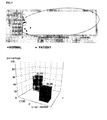
- FIG. 2 shows results of a principal component analysis and a discriminant analysis, which are obtained by analyzing a fraction (fraction 1) acquired after extracting a urine sample with a solid phase extraction method;
- FIG. 3 shows results of a principal component analysis and a discriminant analysis, which are obtained by analyzing a fraction (fraction 2) acquired with a liquid-liquid extraction method at pH 5.2 after extracting a urine sample with a solid phase extraction method;
- FIG. 4 shows results of a principal component analysis and a discriminant analysis, which are obtained by analyzing a fraction (fraction 3) acquired with an organic solvent extraction after hydrolyzing a water layer remained after obtaining the fraction 2; and
- FIG. 5 shows results of a principal component analysis and a discriminant analysis, which are obtained by analyzing a fraction (fraction 4) acquired with an organic solvent extraction after adjusting the fraction 3 to be pH 13 using K2CO3.
- Hereinafter, a preferred embodiment of the present invention will be described with reference to the accompanying drawings.
- First, a standard extraction method of a sample according to the invention is as follows. A biological sample is extracted with a solid phase extraction method (fraction 1), the remaining solution is again extracted with a liquid-liquid extraction method (fraction 2), a remaining water layer is added with enzyme to hydrolyze the conjugate existing in the biological sample and then the resulting solution is extracted with a liquid-liquid extraction method under weak acid condition (fraction 3) and it is extracted with a liquid-liquid extraction method under base condition (fraction 4).
- The extracted
fractions 1 to 4 are evaporized and dried to make derivatives thereof which are then analyzed with a gas chromatography-mass spectrometry. The resulting values are analyzed with a principle component analysis (PCA) and a discriminant analysis (DA), thereby verifying a difference between a control group and a test group. - The principle component analysis is a statistical technique for finding out a new principle component, which is expressed with a linear connection of variables, for the purpose of the summing-up of the materials and an easy interpretation. In other words, it is an analysis method capable of providing a means for an analysis in future. The discriminant analysis is a statistical technique of using several variable materials obtained for two or more groups to deduce a linear connection of variables exhibiting characteristics of each group, analyzing whether there is a characteristic difference, which is statistically significant, between the respective groups, using the linear connection, and expecting what group a specific observation value belongs to.
- Hereinafter, the invention will be more specifically described with reference to following embodiments. However, it should be noted that they are provided to illustrate the invention, not to limit it.
- Strata X® (Phenomenex, Torrance, Canada; styrene-divinyl benzene polymer having a surface specially treated for keeping an analysis material from being discharged from a cartridge using a π-π interaction) cartridge was mounted to a solid phase extraction vacuum manifold, which was added with
methanol 1 mℓ to activate it and then washed withwater 1 mℓ, thereby carrying out a pre-treatment.Urine 1 mℓ, which was obtained from 10 prostatic hypertrophy patients (average age: 60±5 years) and 10 normal males (average age: 58±7 years) whose age is matched with that of the patients, was loaded to the cartridge,water 1 mℓ was again added to wash it and then methanol 4 mℓ was made to flow, thereby discharging an analysis-object material. Among them, only 0.3 mℓ was taken and evaporated and dried with a vacuum rotary evaporator and the remnant thereof was added with a derivatizing reagent 50 µℓ having mixed MSTFA (N-Methyl-N-(trimethylsilyl) trifluoroacetamide), NH4I (ammonium iodide) and dithiolerythritol in a ratio of 100:4:5 (v/v), which was then subject to a reaction at 60°C for 15 minutes for the purpose of derivatization. - The effluent remaining in the above 1-1 was evaporated and dried with the vacuum rotary evaporator and the remnant thereof was added with an acetic acid buffer solution (pH 5.2) 1 mℓ and then diethylether 5 mℓ, which was then shaken for 5 minutes, thereby carrying out a liquid-liquid extraction method. The extracted diethylether layer was centrifugally separated at 2500 rpm for 5 minutes, which was then again evaporated and dried with the vacuum rotary evaporator. Then, the remnant thereof was added with a derivatizing reagent 50 µℓ having mixed MSTFA (N-Methyl-N-(trimethylsilyl) trifluoroacetamide), NH4I (ammonium iodide) and dithiolerythritol in a ratio of 100:4:5 (v/v), which was then subject to a reaction at 60°C for 15 minutes for the purpose of derivatization.
- In order to hydrolyze the glucuronide conjugate and sulfate conjugate, which most exist in the organism, thereby obtaining a conjugate form of metabolites in a free form, the water layer, which remained after separating the diethylether in the above 1-2, was added with β-glucuronidase/arylsulfatase (Helix pomatia, Roche, Mannheim, Germany) 100 µℓ, which was then hydrolyzed at 55°C for 3 hours.
- After the hydrolysis, the solution was added with diethylether 5 mℓ and then shaken for 5 minutes, thereby conducting the liquid-liquid extraction method again. The extracted diethylether layer was centrifugally separated at 2500 rpm for 5 minutes, which solution was evaporated and dried with the vacuum rotary evaporator. Then, the remnant thereof was added with a derivatizing reagent 50 µℓ having mixed MSTFA (N-Methyl-N-(trimethylsilyl) trifluoroacetamide), NH4I (ammonium iodide) and dithiolerythritol in a ratio of 100:4:5 (v/v), which was then subject to a reaction at 60°C for 15 minutes for the purpose of derivatization.
- There are acid hydrolysis and enzyme hydrolysis as a method for obtaining the conjugate form of metabolite, which exists in the urine sample, in a free form. A test was conducted to confirm which method was effective. For the enzyme hydrolysis, the method described in the above 1-3 was used. For the acid hydrolysis, the water layer, which remained after obtaining the fraction 2 in the above 1-2, was added with 0.1N
hydrochloric acid 1 mℓ, which was then subject to the hydrolysis at 80°C for 1 hour. Then, under cooled at the room temperature, pH thereof was adjusted to be 5.2 with 0.1N NaOH. According to a chromatogram result of the two fractions, approximately same chromatogram tendencies were exhibited as shown in Fig. 1. However, since the very small amount of metabolites is apt to be degenerated under acid condition, the enzyme hydrolysis was used finally. - K2CO3 100 mg was again added to the remaining water layer to make an alkaline condition of pH 13, which was then added with diethylether 5 mℓ and shaken for 5 minutes, thereby conducting the liquid-liquid extraction method. The extracted diethylether layer was centrifugally separated at 2500 rpm for 5 minutes, which solution was evaporated and dried with the vacuum rotary evaporator. Then, the remnant thereof was added with a derivatizing reagent 50 µℓ having mixed MSTFA (N-Methyl-N-(trimethylsilyl) trifluoroacetamide), NH4I (ammonium iodide) and dithiolerythritol in a ratio of 100:4:5 (v/v), which was then subject to a reaction at 60°C for 15 minutes for the purpose of derivatization.
- In order to analyze the metabolites, it was used a 6890 Plus gas chromatograph (Agilent Co., Tokyo, Japan) having a 5973 mass spectrometry (Agilent Co.) mounted thereto and a
ultra 1 column (Agilent Co.) having a length of 17m and an inner diameter of 0.2 mm and comprising a film having a thickness of 0.33 µm and coated in the column. In the analysis, an oven temperature condition of the gas chromatograph was as follows: the initial temperature was adjusted to be 100°C and the temperature was increased to 300°C at a rate of 10°C per minute. Helium was used as an analyzer carrier gas and a flow rate thereof was 1 mℓ/minute. An introducing part of the analyzer was 250°C, a temperature of the detector was 280°C and a split ratio was 10:1 when introducing the sample. All the samples were analyzed in a scan mode in the mass spectrometry. - The areas or heights of the peaks occurring in the chromatograms of the respective fractions represent the concentration or the quantity of the metabolites in the sample. Since the peaks are not always generated as a predetermined number at a fixed time, they cannot be applied to the statistical process in which the number of variables should be constant.
- In order to solve the problem, the total analysis time of 30 minutes were divided at an interval of 1 minute so that the time interval was same, and one of the peaks, which occurred for 1 minute, having the largest area was determined as a representative value, thereby conducting a statistical process.
- As the statistical process method for the global metabolomics, the principal component analysis and the discriminant analysis were used. A leave-one out method (when the number of samples is assumed to be 100, a control group is made for the 99 samples and it is determined whether the remaining one sample belongs to a normal group or a disease group) was adopted for the discriminant analysis. It was measured an accuracy in discriminating the unknown sample as a normal person or a prostatic hypertrophy patients with the results obtained from the discriminant analysis.
- As a result, clustering patterns discriminating between the group of the normal people and the group of patients were exhibited in the principal component analysis of the fraction 2 (fraction obtained by the liquid-liquid extraction at pH 5.2 after the solid phase extraction, Fig. 3) and the fraction 3 (fraction obtained by the liquid-liquid extraction at pH 5.2 after the hydrolysis, Fig. 4). In particular, according to the result of discriminant analysis, when the statistical analysis was conducted with the fraction 2, the prostatic hypertrophy patient and the normal person were discriminated in the high accuracy (77% or more). Therefore, it was judged as follows: when the sample is extracted as a method for obtaining the fraction 2 (liquid-liquid extraction at pH 5.2 after the solid phase extraction), the metabolic change of the prostatic hypertrophy can be detected best, so that the metabolic difference between the prostatic hypertrophy patient and the normal person can be discriminated in the high accuracy. In the mean time, the difference of the clustering patterns was remarkably decreased in the principal component analysis of the fraction 1 (fraction analyzed immediately after the solid phase extraction, Fig. 2) and the fraction 4 (fraction analyzed after the liquid-liquid extraction at pH 13 after the hydrolysis, Fig. 5) and the diagnosis accuracy of the discriminant analysis was not good (i.e., 57% or less).
- As described above, according to the invention, the whole metabolites included in the biological sample are effectively extracted and analyzed with a high-sensitive analysis device, so that the metabolite profile can be effectively measured. With the result, the statistical verification is conducted. Accordingly, when a disease appears or when administrating an extrinsic material, it is possible to measure the change of the metabolites in the organism, effectively and appropriately.
- While the invention has been shown and described with reference to certain preferred embodiments thereof, it will be understood by those skilled in the art that various changes in form and details may be made thereto without departing from the spirit and scope of the invention as defined by the appended claims.
Claims (6)
- A method for detecting a difference between metabolites of two biological sample groups, the method comprising extracting a metabolite from a biological sample by applying sequentially:(i) a solid phase extraction method;(ii) a liquid-liquid extraction method in a weak acid;(iii) a liquid-liquid extraction method in a weak acid after hydrolysis; and(iv) a liquid-liquid extraction method in a base
- The method according to claim 1, wherein the method for detecting additionally comprises:analyzing the extracted methabolite with a chromatography analysis device;converting the chromatography analysis result into numerical values capable of being statistically processed; andstatistically verifying a difference between the two biological sample groups with the converted numerical values.
- The method according to claim 1, wherein the weak acid of the (ii) and (iii) means pH 5~5.5 and the base of the (iv) means pH 13~13.5.
- The method according to claim 1, wherein β-glucuronidase and arylsulfatase are used in the hydrolysis of the (iii).
- The method according to claim 2, wherein the chromatography analysis device has a mass spectrometry mounted to a gas chromatography.
- The method according to claim 2, wherein for converting, a total analysis time is divided by a unit time interval and the highest value of areas or heights of chromatogram peaks exhibited during the unit time period is determined as a representative value during the unit time period.
Applications Claiming Priority (1)
| Application Number | Priority Date | Filing Date | Title |
|---|---|---|---|
| KR1020060094002A KR100740582B1 (en) | 2006-09-27 | 2006-09-27 | Analysis method of hepatic metabolism differentiation between two biological samples using gas chromatography-mass spectrometry |
Publications (2)
| Publication Number | Publication Date |
|---|---|
| EP1906183A1 true EP1906183A1 (en) | 2008-04-02 |
| EP1906183B1 EP1906183B1 (en) | 2013-02-13 |
Family
ID=38498968
Family Applications (1)
| Application Number | Title | Priority Date | Filing Date |
|---|---|---|---|
| EP07007252A Not-in-force EP1906183B1 (en) | 2006-09-27 | 2007-04-05 | Method for analysis of metabolite difference between two biological samples using gas chromatography-mass spectrometry |
Country Status (4)
| Country | Link |
|---|---|
| US (1) | US7678579B2 (en) |
| EP (1) | EP1906183B1 (en) |
| JP (1) | JP4758933B2 (en) |
| KR (1) | KR100740582B1 (en) |
Families Citing this family (15)
| Publication number | Priority date | Publication date | Assignee | Title |
|---|---|---|---|---|
| KR101068993B1 (en) | 2009-02-23 | 2011-09-30 | 한국과학기술연구원 | Assessment of Metabolic Differentiation between Urine Samples Using Quantitative Steroid Recognition |
| US20110207230A1 (en) * | 2010-02-25 | 2011-08-25 | Korea Institute Of Science And Technology | Evaluation of 24s-hydroxycholesterol in hair for metabolic biomarker of alzheimer's disease |
| KR101149236B1 (en) | 2010-04-09 | 2012-05-25 | 대한민국(농촌진흥청장) | Method for differentiation of ginseng roots according to ages using the chromatography-mass spectrometry |
| KR101145057B1 (en) * | 2010-04-29 | 2012-05-11 | 아주대학교산학협력단 | Method for simultaneous analysis of melatonin and its precursor by using gas chromatography-mass spectrometry |
| KR101152532B1 (en) | 2010-05-13 | 2012-06-01 | 고려대학교 산학협력단 | Method for classification of Artemisia spp. and differentiation of Aeyup from other Artemisia spp. using the chromatography-mass spectrometry |
| KR101445303B1 (en) * | 2011-06-30 | 2014-09-26 | 한국생명공학연구원 | Standard marker for determining place of origin or age of processed ginseng, establishing method thereof, or method for determining place of origin or age using the same |
| GB201310214D0 (en) * | 2013-06-07 | 2013-07-24 | Medical Res Council | Separation and Analysis Systems and Methods |
| CN103822964B (en) * | 2013-10-21 | 2016-02-24 | 南昌大学 | Chloromycetin in neutral desorb-electron spray extraction MALDI-MS direct-detection honey |
| KR101409848B1 (en) | 2014-03-03 | 2014-06-19 | 한국생명공학연구원 | Standard marker for determining place of origin or age of processed ginseng, establishing method thereof, or method for determining place of origin or age using the same |
| WO2016073547A1 (en) * | 2014-11-05 | 2016-05-12 | Metabolon, Inc. | System, method and apparatus for determining the effect of genetic variants |
| CN109374773B (en) * | 2018-11-22 | 2020-05-22 | 重庆医科大学 | Analysis method of panda fecal metabolome |
| RU190863U1 (en) * | 2019-02-15 | 2019-07-15 | Федеральное государственное бюджетное учреждение "Российский ордена Трудового Красного Знамени научно-исследовательский институт травматологии и ортопедии имени Р.Р. Вредена" Министерства здравоохранения Российской Федерации (ФГБУ "РНИИТО им. Р.Р. Вредена" Минздрава России) | DEVICE FOR COMPOUND CELLULAR CULTURE AND A Biodegradable Media |
| CN110057952B (en) * | 2019-04-28 | 2024-06-28 | 贵州中烟工业有限责任公司 | Peculiar smell identification method for cigarette label paper |
| CN113984935B (en) * | 2021-11-17 | 2024-04-02 | 东莞理工学院 | Methods to study the metabolic characteristics of acetoproteophilic bacteria based on metabolome analysis |
| CN117907512B (en) * | 2024-03-20 | 2024-05-31 | 杭州臻稀生物科技有限公司 | Wastewater detection method based on the relationship between solid phase extraction flow rate and internal standard selection |
Citations (1)
| Publication number | Priority date | Publication date | Assignee | Title |
|---|---|---|---|---|
| WO2002057989A2 (en) | 2001-01-18 | 2002-07-25 | Basf Aktiengesellschaft | Method for metabolic profiling |
Family Cites Families (4)
| Publication number | Priority date | Publication date | Assignee | Title |
|---|---|---|---|---|
| UA41884C2 (en) * | 1993-11-05 | 2001-10-15 | Амерікан Хоум Продактс Корпорейшн | method for the isolation of rapacimin from acid, basic and non polar neutral admixtures being present in the concentrate of extract of fermentation broth of mother liquors |
| WO2003102543A2 (en) * | 2002-05-31 | 2003-12-11 | Waters Investments Limited | A method of using data binning in the analysis of chromatograhpy/spectrometry data |
| CA2559596A1 (en) * | 2003-03-13 | 2004-11-25 | Universite De Moncton (Bureau De Soutien A L'innovation) | Antioxidant producing bacterium and uses thereof |
| JP2008504803A (en) * | 2004-01-09 | 2008-02-21 | ザ リージェンツ オブ ザ ユニバーシティ オブ カリフォルニア | Cell type-specific pattern of gene expression |
-
2006
- 2006-09-27 KR KR1020060094002A patent/KR100740582B1/en not_active Expired - Fee Related
-
2007
- 2007-04-02 JP JP2007096793A patent/JP4758933B2/en not_active Expired - Fee Related
- 2007-04-05 US US11/784,292 patent/US7678579B2/en not_active Expired - Fee Related
- 2007-04-05 EP EP07007252A patent/EP1906183B1/en not_active Not-in-force
Patent Citations (1)
| Publication number | Priority date | Publication date | Assignee | Title |
|---|---|---|---|---|
| WO2002057989A2 (en) | 2001-01-18 | 2002-07-25 | Basf Aktiengesellschaft | Method for metabolic profiling |
Non-Patent Citations (4)
Also Published As
| Publication number | Publication date |
|---|---|
| US20080076181A1 (en) | 2008-03-27 |
| JP2008083027A (en) | 2008-04-10 |
| US7678579B2 (en) | 2010-03-16 |
| EP1906183B1 (en) | 2013-02-13 |
| KR100740582B1 (en) | 2007-07-19 |
| JP4758933B2 (en) | 2011-08-31 |
Similar Documents
| Publication | Publication Date | Title |
|---|---|---|
| US7678579B2 (en) | Method for analysis metabolite difference between biological samples | |
| CN108414660B (en) | Application of group of plasma metabolism small molecule markers related to early diagnosis of lung cancer | |
| CN109884300B (en) | Marker for diagnosing colon cancer and application thereof | |
| Xie et al. | Comprehensive, robust, and sensitive UPLC-MS/MS analysis of free biogenic monoamines and their metabolites in urine | |
| CN101443663A (en) | Means and method for diagnosing diabetes | |
| CN113777209A (en) | Simultaneous detection and application of volatile pollutant exposure and effect markers in urine | |
| CN103592389A (en) | LC/MS (liquid chromatography-mass spectrometer) metabonomics analysis method based on serum of GDM (gestational diabetes mellitus) patient | |
| Guterstam et al. | A multicomponent LC-MS/MS method for drugs of abuse testing using volumetric DBS and a clinical evaluation by comparison with urine | |
| CN115684451B (en) | Metabolic-study-based esophageal squamous carcinoma lymph node metastasis diagnosis marker and application thereof | |
| CN109633142B (en) | Method for establishing acute myelocytic leukemia diagnosis model and application thereof | |
| CN117368347A (en) | A liquid chromatography-tandem mass spectrometry method for simultaneous determination of primary aldosteronism typing markers in plasma | |
| KR100330860B1 (en) | A method of analyzing a concentration of homocysteine in plasma | |
| CN114047263A (en) | Application of metabolic marker in preparation of detection reagent or detection object for diagnosing AIS (automatic identification system) and kit | |
| CN112964808A (en) | Biological body fluid total homocysteine detection kit and detection method | |
| Rootwelt et al. | Metabolomics–a new biochemical golden age for personalised medicine | |
| CN109187818A (en) | A kind of method and its detection kit for identifying chronic obstructive pulmonary disease biomarker | |
| CN112162049B (en) | Method for detecting sarcosine in urine for non-diagnosis purpose | |
| CN113552228A (en) | Combined markers for diagnosing childhood bronchiolitis and application and detection kit thereof | |
| CN109212099A (en) | A kind of method and its detection kit for identifying gastric ulcer biomarker | |
| Shi et al. | Utilization and validation of dried blood spot-based metabolomics in plasma-derived diagnostic models | |
| KR101026527B1 (en) | Detection method of 24S-hydroxycholesterol in hair and evaluation of dementia metabolic markers by biological metabolite array | |
| CN109187816A (en) | A kind of method and its detection kit for identifying pancreatitis biomarker | |
| Gowda et al. | Metabolomics | |
| CN109406658A (en) | A kind of method and its detection kit for identifying anaemia biomarker | |
| Tenorio-Salazar et al. | Volatile organic compound signatures in breast cancer: A pilot study on cell-based detection |
Legal Events
| Date | Code | Title | Description |
|---|---|---|---|
| PUAI | Public reference made under article 153(3) epc to a published international application that has entered the european phase |
Free format text: ORIGINAL CODE: 0009012 |
|
| 17P | Request for examination filed |
Effective date: 20070504 |
|
| AK | Designated contracting states |
Kind code of ref document: A1 Designated state(s): AT BE BG CH CY CZ DE DK EE ES FI FR GB GR HU IE IS IT LI LT LU LV MC MT NL PL PT RO SE SI SK TR |
|
| AX | Request for extension of the european patent |
Extension state: AL BA HR MK YU |
|
| 17Q | First examination report despatched |
Effective date: 20080922 |
|
| AKX | Designation fees paid |
Designated state(s): AT BE BG CH CY CZ DE DK EE ES FI FR GB GR HU IE IS IT LI LT LU LV MC MT NL PL PT RO SE SI SK TR |
|
| REG | Reference to a national code |
Ref country code: DE Ref legal event code: R079 Ref document number: 602007028360 Country of ref document: DE Free format text: PREVIOUS MAIN CLASS: G01N0033500000 Ipc: G01N0033680000 |
|
| RIC1 | Information provided on ipc code assigned before grant |
Ipc: G01N 1/28 20060101ALI20120124BHEP Ipc: G01N 33/50 20060101ALI20120124BHEP Ipc: G01N 33/68 20060101AFI20120124BHEP Ipc: G06F 19/24 20110101ALI20120124BHEP Ipc: G01N 30/02 20060101ALI20120124BHEP |
|
| GRAP | Despatch of communication of intention to grant a patent |
Free format text: ORIGINAL CODE: EPIDOSNIGR1 |
|
| GRAS | Grant fee paid |
Free format text: ORIGINAL CODE: EPIDOSNIGR3 |
|
| GRAA | (expected) grant |
Free format text: ORIGINAL CODE: 0009210 |
|
| AK | Designated contracting states |
Kind code of ref document: B1 Designated state(s): AT BE BG CH CY CZ DE DK EE ES FI FR GB GR HU IE IS IT LI LT LU LV MC MT NL PL PT RO SE SI SK TR |
|
| REG | Reference to a national code |
Ref country code: GB Ref legal event code: FG4D |
|
| REG | Reference to a national code |
Ref country code: AT Ref legal event code: REF Ref document number: 596753 Country of ref document: AT Kind code of ref document: T Effective date: 20130215 |
|
| REG | Reference to a national code |
Ref country code: IE Ref legal event code: FG4D |
|
| REG | Reference to a national code |
Ref country code: DE Ref legal event code: R096 Ref document number: 602007028360 Country of ref document: DE Effective date: 20130404 |
|
| REG | Reference to a national code |
Ref country code: AT Ref legal event code: MK05 Ref document number: 596753 Country of ref document: AT Kind code of ref document: T Effective date: 20130213 |
|
| REG | Reference to a national code |
Ref country code: NL Ref legal event code: VDEP Effective date: 20130213 |
|
| REG | Reference to a national code |
Ref country code: LT Ref legal event code: MG4D |
|
| PG25 | Lapsed in a contracting state [announced via postgrant information from national office to epo] |
Ref country code: AT Free format text: LAPSE BECAUSE OF FAILURE TO SUBMIT A TRANSLATION OF THE DESCRIPTION OR TO PAY THE FEE WITHIN THE PRESCRIBED TIME-LIMIT Effective date: 20130213 Ref country code: SE Free format text: LAPSE BECAUSE OF FAILURE TO SUBMIT A TRANSLATION OF THE DESCRIPTION OR TO PAY THE FEE WITHIN THE PRESCRIBED TIME-LIMIT Effective date: 20130213 Ref country code: LT Free format text: LAPSE BECAUSE OF FAILURE TO SUBMIT A TRANSLATION OF THE DESCRIPTION OR TO PAY THE FEE WITHIN THE PRESCRIBED TIME-LIMIT Effective date: 20130213 Ref country code: BG Free format text: LAPSE BECAUSE OF FAILURE TO SUBMIT A TRANSLATION OF THE DESCRIPTION OR TO PAY THE FEE WITHIN THE PRESCRIBED TIME-LIMIT Effective date: 20130513 Ref country code: IS Free format text: LAPSE BECAUSE OF FAILURE TO SUBMIT A TRANSLATION OF THE DESCRIPTION OR TO PAY THE FEE WITHIN THE PRESCRIBED TIME-LIMIT Effective date: 20130613 Ref country code: ES Free format text: LAPSE BECAUSE OF FAILURE TO SUBMIT A TRANSLATION OF THE DESCRIPTION OR TO PAY THE FEE WITHIN THE PRESCRIBED TIME-LIMIT Effective date: 20130524 |
|
| PG25 | Lapsed in a contracting state [announced via postgrant information from national office to epo] |
Ref country code: BE Free format text: LAPSE BECAUSE OF FAILURE TO SUBMIT A TRANSLATION OF THE DESCRIPTION OR TO PAY THE FEE WITHIN THE PRESCRIBED TIME-LIMIT Effective date: 20130213 Ref country code: GR Free format text: LAPSE BECAUSE OF FAILURE TO SUBMIT A TRANSLATION OF THE DESCRIPTION OR TO PAY THE FEE WITHIN THE PRESCRIBED TIME-LIMIT Effective date: 20130514 Ref country code: LV Free format text: LAPSE BECAUSE OF FAILURE TO SUBMIT A TRANSLATION OF THE DESCRIPTION OR TO PAY THE FEE WITHIN THE PRESCRIBED TIME-LIMIT Effective date: 20130213 Ref country code: PT Free format text: LAPSE BECAUSE OF FAILURE TO SUBMIT A TRANSLATION OF THE DESCRIPTION OR TO PAY THE FEE WITHIN THE PRESCRIBED TIME-LIMIT Effective date: 20130613 Ref country code: PL Free format text: LAPSE BECAUSE OF FAILURE TO SUBMIT A TRANSLATION OF THE DESCRIPTION OR TO PAY THE FEE WITHIN THE PRESCRIBED TIME-LIMIT Effective date: 20130213 Ref country code: SI Free format text: LAPSE BECAUSE OF FAILURE TO SUBMIT A TRANSLATION OF THE DESCRIPTION OR TO PAY THE FEE WITHIN THE PRESCRIBED TIME-LIMIT Effective date: 20130213 Ref country code: FI Free format text: LAPSE BECAUSE OF FAILURE TO SUBMIT A TRANSLATION OF THE DESCRIPTION OR TO PAY THE FEE WITHIN THE PRESCRIBED TIME-LIMIT Effective date: 20130213 |
|
| PG25 | Lapsed in a contracting state [announced via postgrant information from national office to epo] |
Ref country code: DK Free format text: LAPSE BECAUSE OF FAILURE TO SUBMIT A TRANSLATION OF THE DESCRIPTION OR TO PAY THE FEE WITHIN THE PRESCRIBED TIME-LIMIT Effective date: 20130213 Ref country code: RO Free format text: LAPSE BECAUSE OF FAILURE TO SUBMIT A TRANSLATION OF THE DESCRIPTION OR TO PAY THE FEE WITHIN THE PRESCRIBED TIME-LIMIT Effective date: 20130213 Ref country code: CZ Free format text: LAPSE BECAUSE OF FAILURE TO SUBMIT A TRANSLATION OF THE DESCRIPTION OR TO PAY THE FEE WITHIN THE PRESCRIBED TIME-LIMIT Effective date: 20130213 Ref country code: SK Free format text: LAPSE BECAUSE OF FAILURE TO SUBMIT A TRANSLATION OF THE DESCRIPTION OR TO PAY THE FEE WITHIN THE PRESCRIBED TIME-LIMIT Effective date: 20130213 Ref country code: NL Free format text: LAPSE BECAUSE OF FAILURE TO SUBMIT A TRANSLATION OF THE DESCRIPTION OR TO PAY THE FEE WITHIN THE PRESCRIBED TIME-LIMIT Effective date: 20130213 Ref country code: EE Free format text: LAPSE BECAUSE OF FAILURE TO SUBMIT A TRANSLATION OF THE DESCRIPTION OR TO PAY THE FEE WITHIN THE PRESCRIBED TIME-LIMIT Effective date: 20130213 |
|
| PG25 | Lapsed in a contracting state [announced via postgrant information from national office to epo] |
Ref country code: MC Free format text: LAPSE BECAUSE OF FAILURE TO SUBMIT A TRANSLATION OF THE DESCRIPTION OR TO PAY THE FEE WITHIN THE PRESCRIBED TIME-LIMIT Effective date: 20130213 |
|
| REG | Reference to a national code |
Ref country code: CH Ref legal event code: PL |
|
| PLBE | No opposition filed within time limit |
Free format text: ORIGINAL CODE: 0009261 |
|
| STAA | Information on the status of an ep patent application or granted ep patent |
Free format text: STATUS: NO OPPOSITION FILED WITHIN TIME LIMIT |
|
| PG25 | Lapsed in a contracting state [announced via postgrant information from national office to epo] |
Ref country code: IT Free format text: LAPSE BECAUSE OF FAILURE TO SUBMIT A TRANSLATION OF THE DESCRIPTION OR TO PAY THE FEE WITHIN THE PRESCRIBED TIME-LIMIT Effective date: 20130213 |
|
| 26N | No opposition filed |
Effective date: 20131114 |
|
| REG | Reference to a national code |
Ref country code: IE Ref legal event code: MM4A |
|
| PG25 | Lapsed in a contracting state [announced via postgrant information from national office to epo] |
Ref country code: LI Free format text: LAPSE BECAUSE OF NON-PAYMENT OF DUE FEES Effective date: 20130430 Ref country code: CH Free format text: LAPSE BECAUSE OF NON-PAYMENT OF DUE FEES Effective date: 20130430 |
|
| REG | Reference to a national code |
Ref country code: DE Ref legal event code: R097 Ref document number: 602007028360 Country of ref document: DE Effective date: 20131114 |
|
| PG25 | Lapsed in a contracting state [announced via postgrant information from national office to epo] |
Ref country code: IE Free format text: LAPSE BECAUSE OF NON-PAYMENT OF DUE FEES Effective date: 20130405 |
|
| PGFP | Annual fee paid to national office [announced via postgrant information from national office to epo] |
Ref country code: GB Payment date: 20140326 Year of fee payment: 8 |
|
| PGFP | Annual fee paid to national office [announced via postgrant information from national office to epo] |
Ref country code: DE Payment date: 20140327 Year of fee payment: 8 Ref country code: FR Payment date: 20140327 Year of fee payment: 8 |
|
| PG25 | Lapsed in a contracting state [announced via postgrant information from national office to epo] |
Ref country code: MT Free format text: LAPSE BECAUSE OF FAILURE TO SUBMIT A TRANSLATION OF THE DESCRIPTION OR TO PAY THE FEE WITHIN THE PRESCRIBED TIME-LIMIT Effective date: 20130213 |
|
| PG25 | Lapsed in a contracting state [announced via postgrant information from national office to epo] |
Ref country code: CY Free format text: LAPSE BECAUSE OF FAILURE TO SUBMIT A TRANSLATION OF THE DESCRIPTION OR TO PAY THE FEE WITHIN THE PRESCRIBED TIME-LIMIT Effective date: 20130213 Ref country code: TR Free format text: LAPSE BECAUSE OF FAILURE TO SUBMIT A TRANSLATION OF THE DESCRIPTION OR TO PAY THE FEE WITHIN THE PRESCRIBED TIME-LIMIT Effective date: 20130213 |
|
| PG25 | Lapsed in a contracting state [announced via postgrant information from national office to epo] |
Ref country code: LU Free format text: LAPSE BECAUSE OF NON-PAYMENT OF DUE FEES Effective date: 20130405 Ref country code: HU Free format text: LAPSE BECAUSE OF FAILURE TO SUBMIT A TRANSLATION OF THE DESCRIPTION OR TO PAY THE FEE WITHIN THE PRESCRIBED TIME-LIMIT; INVALID AB INITIO Effective date: 20070405 |
|
| REG | Reference to a national code |
Ref country code: DE Ref legal event code: R119 Ref document number: 602007028360 Country of ref document: DE |
|
| GBPC | Gb: european patent ceased through non-payment of renewal fee |
Effective date: 20150405 |
|
| PG25 | Lapsed in a contracting state [announced via postgrant information from national office to epo] |
Ref country code: GB Free format text: LAPSE BECAUSE OF NON-PAYMENT OF DUE FEES Effective date: 20150405 Ref country code: DE Free format text: LAPSE BECAUSE OF NON-PAYMENT OF DUE FEES Effective date: 20151103 |
|
| REG | Reference to a national code |
Ref country code: FR Ref legal event code: ST Effective date: 20151231 |
|
| PG25 | Lapsed in a contracting state [announced via postgrant information from national office to epo] |
Ref country code: FR Free format text: LAPSE BECAUSE OF NON-PAYMENT OF DUE FEES Effective date: 20150430 |