EP1905172B1 - Apparatus, method and computer program product providing closed loop transmit antenna operation for systems using multiple antennas - Google Patents
Apparatus, method and computer program product providing closed loop transmit antenna operation for systems using multiple antennas Download PDFInfo
- Publication number
- EP1905172B1 EP1905172B1 EP06795069.1A EP06795069A EP1905172B1 EP 1905172 B1 EP1905172 B1 EP 1905172B1 EP 06795069 A EP06795069 A EP 06795069A EP 1905172 B1 EP1905172 B1 EP 1905172B1
- Authority
- EP
- European Patent Office
- Prior art keywords
- information
- weights
- data signals
- antennas
- weight
- Prior art date
- Legal status (The legal status is an assumption and is not a legal conclusion. Google has not performed a legal analysis and makes no representation as to the accuracy of the status listed.)
- Active
Links
Images


Classifications
-
- H—ELECTRICITY
- H04—ELECTRIC COMMUNICATION TECHNIQUE
- H04B—TRANSMISSION
- H04B7/00—Radio transmission systems, i.e. using radiation field
- H04B7/02—Diversity systems; Multi-antenna system, i.e. transmission or reception using multiple antennas
- H04B7/04—Diversity systems; Multi-antenna system, i.e. transmission or reception using multiple antennas using two or more spaced independent antennas
- H04B7/0413—MIMO systems
-
- H—ELECTRICITY
- H04—ELECTRIC COMMUNICATION TECHNIQUE
- H04B—TRANSMISSION
- H04B7/00—Radio transmission systems, i.e. using radiation field
- H04B7/02—Diversity systems; Multi-antenna system, i.e. transmission or reception using multiple antennas
- H04B7/04—Diversity systems; Multi-antenna system, i.e. transmission or reception using multiple antennas using two or more spaced independent antennas
- H04B7/06—Diversity systems; Multi-antenna system, i.e. transmission or reception using multiple antennas using two or more spaced independent antennas at the transmitting station
- H04B7/0613—Diversity systems; Multi-antenna system, i.e. transmission or reception using multiple antennas using two or more spaced independent antennas at the transmitting station using simultaneous transmission
- H04B7/0615—Diversity systems; Multi-antenna system, i.e. transmission or reception using multiple antennas using two or more spaced independent antennas at the transmitting station using simultaneous transmission of weighted versions of same signal
- H04B7/0619—Diversity systems; Multi-antenna system, i.e. transmission or reception using multiple antennas using two or more spaced independent antennas at the transmitting station using simultaneous transmission of weighted versions of same signal using feedback from receiving side
- H04B7/0621—Feedback content
- H04B7/0632—Channel quality parameters, e.g. channel quality indicator [CQI]
-
- H—ELECTRICITY
- H04—ELECTRIC COMMUNICATION TECHNIQUE
- H04B—TRANSMISSION
- H04B7/00—Radio transmission systems, i.e. using radiation field
- H04B7/02—Diversity systems; Multi-antenna system, i.e. transmission or reception using multiple antennas
- H04B7/04—Diversity systems; Multi-antenna system, i.e. transmission or reception using multiple antennas using two or more spaced independent antennas
- H04B7/06—Diversity systems; Multi-antenna system, i.e. transmission or reception using multiple antennas using two or more spaced independent antennas at the transmitting station
- H04B7/0613—Diversity systems; Multi-antenna system, i.e. transmission or reception using multiple antennas using two or more spaced independent antennas at the transmitting station using simultaneous transmission
- H04B7/0615—Diversity systems; Multi-antenna system, i.e. transmission or reception using multiple antennas using two or more spaced independent antennas at the transmitting station using simultaneous transmission of weighted versions of same signal
- H04B7/0619—Diversity systems; Multi-antenna system, i.e. transmission or reception using multiple antennas using two or more spaced independent antennas at the transmitting station using simultaneous transmission of weighted versions of same signal using feedback from receiving side
- H04B7/0621—Feedback content
- H04B7/0634—Antenna weights or vector/matrix coefficients
-
- H—ELECTRICITY
- H04—ELECTRIC COMMUNICATION TECHNIQUE
- H04B—TRANSMISSION
- H04B7/00—Radio transmission systems, i.e. using radiation field
- H04B7/02—Diversity systems; Multi-antenna system, i.e. transmission or reception using multiple antennas
- H04B7/04—Diversity systems; Multi-antenna system, i.e. transmission or reception using multiple antennas using two or more spaced independent antennas
- H04B7/06—Diversity systems; Multi-antenna system, i.e. transmission or reception using multiple antennas using two or more spaced independent antennas at the transmitting station
- H04B7/0613—Diversity systems; Multi-antenna system, i.e. transmission or reception using multiple antennas using two or more spaced independent antennas at the transmitting station using simultaneous transmission
- H04B7/0615—Diversity systems; Multi-antenna system, i.e. transmission or reception using multiple antennas using two or more spaced independent antennas at the transmitting station using simultaneous transmission of weighted versions of same signal
- H04B7/0619—Diversity systems; Multi-antenna system, i.e. transmission or reception using multiple antennas using two or more spaced independent antennas at the transmitting station using simultaneous transmission of weighted versions of same signal using feedback from receiving side
- H04B7/0652—Feedback error handling
- H04B7/0654—Feedback error handling at the receiver, e.g. antenna verification at mobile station
-
- H—ELECTRICITY
- H04—ELECTRIC COMMUNICATION TECHNIQUE
- H04B—TRANSMISSION
- H04B7/00—Radio transmission systems, i.e. using radiation field
- H04B7/02—Diversity systems; Multi-antenna system, i.e. transmission or reception using multiple antennas
- H04B7/04—Diversity systems; Multi-antenna system, i.e. transmission or reception using multiple antennas using two or more spaced independent antennas
- H04B7/06—Diversity systems; Multi-antenna system, i.e. transmission or reception using multiple antennas using two or more spaced independent antennas at the transmitting station
- H04B7/0613—Diversity systems; Multi-antenna system, i.e. transmission or reception using multiple antennas using two or more spaced independent antennas at the transmitting station using simultaneous transmission
- H04B7/0615—Diversity systems; Multi-antenna system, i.e. transmission or reception using multiple antennas using two or more spaced independent antennas at the transmitting station using simultaneous transmission of weighted versions of same signal
- H04B7/0665—Feed forward of transmit weights to the receiver
-
- H—ELECTRICITY
- H04—ELECTRIC COMMUNICATION TECHNIQUE
- H04L—TRANSMISSION OF DIGITAL INFORMATION, e.g. TELEGRAPHIC COMMUNICATION
- H04L1/00—Arrangements for detecting or preventing errors in the information received
- H04L1/0001—Systems modifying transmission characteristics according to link quality, e.g. power backoff
- H04L1/0023—Systems modifying transmission characteristics according to link quality, e.g. power backoff characterised by the signalling
- H04L1/0025—Transmission of mode-switching indication
-
- H—ELECTRICITY
- H04—ELECTRIC COMMUNICATION TECHNIQUE
- H04L—TRANSMISSION OF DIGITAL INFORMATION, e.g. TELEGRAPHIC COMMUNICATION
- H04L1/00—Arrangements for detecting or preventing errors in the information received
- H04L1/02—Arrangements for detecting or preventing errors in the information received by diversity reception
- H04L1/06—Arrangements for detecting or preventing errors in the information received by diversity reception using space diversity
-
- H—ELECTRICITY
- H04—ELECTRIC COMMUNICATION TECHNIQUE
- H04L—TRANSMISSION OF DIGITAL INFORMATION, e.g. TELEGRAPHIC COMMUNICATION
- H04L1/00—Arrangements for detecting or preventing errors in the information received
- H04L1/12—Arrangements for detecting or preventing errors in the information received by using return channel
- H04L1/16—Arrangements for detecting or preventing errors in the information received by using return channel in which the return channel carries supervisory signals, e.g. repetition request signals
- H04L1/1607—Details of the supervisory signal
- H04L1/1671—Details of the supervisory signal the supervisory signal being transmitted together with control information
Definitions
- the examples of this invention relate generally to digital cellular communications systems, methods, terminals and computer programs and, more specifically, relate to techniques for providing antenna-related feedback information between user equipment and a base station.
- the DL packet data transmission in UTRA FDD is a feature included in Release 5 specifications (HSDPA) and is further enhanced in Release 6 with the support of fractional DPCH (F DPCH), and with the support of SRB mapping on the HS DSCH.
- HSDPA feature that is of most concern to this invention relates to the transmit and receive sub-systems of the Node-B and the UE.
- EP1392005 discloses a method for channel estimation in a downlink direction in a wireless communication system.
- the method involves a base station transmitting information to a subscriber station about a beam shaping vector used for the connection between the base station and the subscriber station, based on which the subscriber station carries out channel estimation.
- US 2003/148738 discloses a method of detecting and/or correcting errors in closed loop transmit diversity (CLTD) feedback signaling by a mobile station based on signals received from a base station.
- the mobile station is generally configured to compute antenna weights to be applied at the base station and feedback corresponding antenna control bits to the base station, as in conventional CLTD systems.
- the mobile station attempts to determine the antenna weights actually applied at the base station, and uses these determined antenna weights for processing the subsequent transmissions.
- an apparatus is provided as claimed in claim 10.
- an information bearing medium is provided as claimed in claim 18.
- an apparatus is provided as claimed in claim 27.
- an information bearing medium is provided as claimed in claim 36.
- a desirable HSDPA transmission scheme would be based on a closed loop antenna transmit technique with two transmit (Tx) and two receive (Rx) antennas (e.g., if used for HSDPA under realistic operating conditions in combination with fast packet scheduling).
- Tx transmit
- Rx receive
- problems associated with closed loop modes 1 and 2 schemes defined for HSDPA in 3GPP Release 5 are currently problems associated with closed loop modes 1 and 2 schemes defined for HSDPA in 3GPP Release 5.
- a 3GPP specification of particular interest in this regard is 3GPP TS 25.214, Physical layer procedures (FDD) (Release 5).
- FDD Physical layer procedures
- the problems are related to the resolution and update rate of the feedback from the UE, and antenna verification.
- the problem with antenna verification occurs because the UE does not have knowledge of the antenna weights that the Node B is using for transmission.
- the exemplary embodiments of this invention provide an enhancement to the closed loop transmit diversity scheme that is currently specified for HSDPA in 3GPP Releases 5 and 6.
- HSDPA closed loop transmit diversity scheme
- 3GPP Releases 5 and 6 3GPP Releases 5 and 6.
- these teachings are applicable to other types of wireless communications systems including, but not limited to EUTRAN.
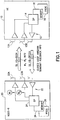
- FIG. 1 is a simplified block diagram showing the major elements used to implement this invention, specifically a HSDPA terminal 10, also referred to as User Equipment (UE) 10, and a BS, also referred to as a Node-B 20.
- UE User Equipment
- Node-B 20 a BS
- the Node-B may be assumed to be functionally equivalent to a 3GPP 25-series specification term Node-B.
- FIG. 1 shows that the HSDPA terminal 10 includes a suitable wireless transceiver 12 having first and second receive antennas 13A, 13B.
- the transceiver 12 is coupled to at least one data processor (DP) 14 that in turn includes or is coupled to a volatile and/or non-volatile memory 16.
- the memory 16 stores program code 18 that is executable by the DP 14 to operate with a Node-B 20, including program code that is provided to implement the UE 10 aspects of this invention.
- the Node-B 20 is constructed to include a transceiver 22 having first and second transmit antennas 23A, 23B. Associated with antennas 23A, 23B are assumed to be corresponding antenna weights (W1, W2).
- the Node-B 20 is also assumed to include at least one DP 24 that in turn includes or is coupled to a volatile and/or non-volatile memory 26.
- the memory 26 stores program code 28 that is executable by the DP 24 to operate with the UE 10, including program code that is provided to implement the Node-B 20 aspects of this invention.
- Figure 1 shows the use of separate transmit and receive antennas at the UE 10 and at the Node-B 20, in practice the same antenna(s) may used for both transmission and reception.
- the memories 16 and 26 may be of any type suitable to the local technical environment and may be implemented using any suitable data storage technology, such as semiconductor based memory devices, magnetic memory devices and systems, optical memory devices and systems, fixed memory and removable memory.
- the data processors 14 and 24 may be of any type suitable to the local technical environment, and may include one or more of general purpose computers, special purpose computers, microprocessors, digital signal processors (DSPs) and processors based on a multi core processor architecture, as non limiting examples.
- the various embodiments of the UE 10 can include, but are not limited to, cellular telephones, personal digital assistants (PDAs) having wireless communication capabilities, portable computers having wireless communication capabilities, image capture devices such as digital cameras having wireless communication capabilities, gaming devices having wireless communication capabilities, music storage and playback appliances having wireless communication capabilities, Internet appliances permitting wireless Internet access and browsing, as well as portable units or terminals that incorporate combinations of such functions.
- PDAs personal digital assistants
- portable computers having wireless communication capabilities
- image capture devices such as digital cameras having wireless communication capabilities
- gaming devices having wireless communication capabilities
- music storage and playback appliances having wireless communication capabilities
- Internet appliances permitting wireless Internet access and browsing, as well as portable units or terminals that incorporate combinations of such functions.
- the HSDPA to allow the UE 10 to send closed loop antenna transmit feedback information to the Node B 20, where the UE 10 sends the closed loop antenna transmit feedback information on the UL HS DPCCH, rather than sending FBI information on the DPCCH.
- This approach beneficially enables the use of more bits for sending feedback information to the Node B 20.
- the feedback rate may be made dynamic (e.g., corresponding to the CQI feed back rate).
- the feedback information may comprise information for specifying UE-recommended antenna weights to be used by the Node B 20 (e.g., BS or BTS), where an antenna weight may be expressed in terms of amplitude and phase.
- the transmission format for the DL HS SCCH is modified such that the HS SCCH also contains information on the applied transmit antenna scheme used at the Node B 20, including antenna weight (W1, W2) information. Sending this information on the HS SCCH to the UE 10 reduces or eliminates the problems referred to above regarding antenna verification (e.g., 3GPP Release '5).
- antenna verification e.g., 3GPP Release '5
- the closed loop transmit antenna feedback scheme in accordance with the exemplary embodiments of this invention supports antenna transmit diversity weights, and also MIMO multi stream closed loop feedback information. This is described in more detail in reference to Figures 2 and 3 .
- Wireless communication system 200 comprises a Node B 220 and a UE 210 communicating using the communication channels HS DSCH 240, the HS SSCH 245 and HS DPCCH 250.
- the Node B 220 comprises a DP 224, a memory 226, multipliers 296-1 and 296-2, and a transceiver 222.
- the memory 226 comprises program code 228, received weights 235, input data 260, and pilot symbols 265.
- the Node B 220 is coupled to or comprises antennas 230-1,230-2, and 230-3.
- the UE 210 comprises a DP 234, a memory 236, and a transceiver 232.
- the UE 210 is coupled to or comprises antennas 290-1, 290-2, and 290-3.
- the memory 236 includes program code 238, received weight information 280, determined weight information 282, feedback weight information 284, and output data DS1' 286 corresponding to the data in data signal DS1 225.
- Node B 220 communicates input data 260 by performing such functions as modulation, spreading, scrambling (e.g., encryption), and frequency shifting (e.g., from baseband to transmission band) to create data signal DS1 225.
- the data signal DS1 225 is coupled to both multipliers 296-1 and 296-2 and modified (e.g., multiplied) by a corresponding antenna weight W 1 , W 2 , respectively, to create modified data signals 297-1, 297-2 and communicated using antennas 230-1, 230-2, respectively.
- the DP 224 also causes the pilot symbols 265 to be transmitted as data signal DS1 225, although one or both antennas 230-1 and 230-2 may be used to transmit the data signal DS1 225 having the pilot symbols 265.
- the data signal DS 1 225 is transmitted using HS DSCH 240 to the UE 210. Additionally, the Node B 220 transmits (e.g., under control of the program code 228 and DP 224) weight information 270 on the HS SCCH 245 to the UE 210.
- the weight information 270 is "feed forward" indications of the weights W 1 , W 2 , and the weight information 270 can include information 271 corresponding to both antenna weights (i.e., W 1 , W 2 ) or information 272 corresponding to one of the weights (e.g., W 1 or W 2 ).
- the weight information 270 could include, e.g., a phase difference between the antenna weights W 1 and W 2 , values of W 1 , W 2 , or information that is mapped to give the W 1 and/or W 2 .
- information 272 e.g., corresponding to antenna weight W 2
- the UE would then be able to determine information corresponding to the other antenna weight (e.g., W 1 ) using the transmitted information 272.
- the UE 210 places the weight information 270 in received weight information 280, and if necessary determines determined weight information 282 from the received weight information 280.
- the received weight information 280 corresponds to both W 1 and W 2 and determined weight information 282 corresponds to both W 1 and W 2 .
- the received weight information 280 corresponds to W 2 (e.g., or W 1 ) and the UE 210 determines determined weight information 282 (e.g., corresponding to both W 1 and W 2 ) using the received weight information 280 of W 2 (e.g., or W 1 ).
- the UE 210 uses the determined weight information 282 during decoding of the received data signals 291-1 and 291-2 and determines output data (DS1') 286 corresponding to the data in data signal DS1 225.
- the UE 210 also uses this determined weight information 282 for channel estimation, including for estimating new antenna weights (i.e., feedback weight information 284) which are afterwards signaled back to the Node-B.
- the UE 210 e.g., again under control of the program code 238 and the DP 234) therefore determines feedback weight information 284 using, e.g., the pilot symbols 265 that are transmitted on the HS DSCH 240 and corresponding channel estimation determined using the determined weight information 282.
- the UE 210 communicates the feedback weight information 276 (corresponding to feedback weight information 284) to the Node B as part of closed loop transmit feedback information 275 on the HS DPCCH 250.
- the feedback weight information 276 includes one or more of feedback weight information W 1 ' 241 corresponding to a calculated W 1 and feedback weight information W 2 ' 242 corresponding to a calculated W 2 . Note also that the feedback weight information 276 could include differences, such as a phase difference, between the antenna weights W 1 and W 2 .
- the closed loop transmit feedback information 275 may also include CQI/CSI 278 and may also include Acknowledge (Ack)/No Acknowledge (Nack) from the current or previous transmissions.
- the Node B 220 uses the received weight information 235, which correspond to the feedback weight information 276, to revise antenna weights W 1 , W 2 .
- Exemplary techniques for determinations of antenna weights by the UE 210 and the revision of the antenna weights by the Node B 220 are described in, e.g., 3GPP TS 25.214, V5.0.0 (2002-03) and later documents. It is noted that the system 200 of FIG. 2 uses diversity transmission because the same signal (data signal DS1 225) is transmitted using different antennas 230-1, 230-2.
- Figure 3 shows another simplified block diagram showing exemplary elements used to implement multiple input, multiple output (MIMO) transmission and reception.
- System 300 in Figure 3 includes many of the same elements as in Figure 2 , and therefore only differences will be described herein.
- the communication system 300 includes a Node B 320 including DP 224 that is coupled to multipliers 336-1 through 336-4 and through transceiver 322 to the antennas 330-1 through 330-4.
- the DP 224 splits the input data 260 into the data signals DS1 325-1 to DS4 325-4, each of which is modified (e.g., multiplied) using the multipliers 336 by a corresponding weight W 1 through W 4 to create a modified data signal 337-1 through 337-4 that is then transmitted using the transceiver 322 and the antennas 330.
- the Node B 320 also communicates weight information 370, including one or more of the weight information 371 corresponding to W 1 , weight information 372 corresponding to W 2 , weight information 373 corresponding to W 3 , and weight information 374 corresponding to W 4 374, to the UE 210.
- the UE 210 receives the HS DSCH 240 using the antennas 390-1 through 390-4 and the transceiver 332 creates the received data signals 391-1 through 391-4.
- the DP 234 then creates output data DS1' 386-1, DS2' 386-2, DS3' 386-3, and DS4' 386-4, corresponding to data signals DS1 325-1, DS2 325-2, DS3 325-3, and DS4 325-4, respectively.
- N receive antennas 390 receive information from M transmit antennas 330, and there can be min(M,N) independent subchannels.
- M is not equal to N.
- the UE 310 communicates feedback weight information 376, including one or more of feedback weight information W 1 ' 341 corresponding to a calculated W 1 , including feedback weight information W 2 ' 342 corresponding to a calculated W 2 , including feedback weight information W 3 ' 343 corresponding to a calculated W 3 , including feedback weight information W 4 ' 344 corresponding to a calculated W 4 , using the HS DPCCH 250 to the Node B 320.
- the feedback weight information 376 (and also "feed forward" information 270, 370) can also include phase difference 345 ( ⁇ 1,2 ) between W 1 and W 2 , phase difference 346 ( ⁇ 3,4 ) between W 3 and W 4 , amplitude difference 347 ( A 1 , 2 ) between W 1 and W 2 , and amplitude difference 348 ( A 3 , 4 ) between W 3 and W 4 .
- each feedback weight information 341, 342, 343, 344 can include weight information 349 (A 1 , ⁇ 1 having an amplitude and a phase, in this example for W 1 . It is also noted that such feedback weight information 376 will typically be mapped from a set of bits to an appropriate amplitude and/or phase, as described below in reference to Figure 6 .
- the slot formats for the HS SCCH and HS DPCCH messaging that carries the aforementioned additional information may be arranged in any suitable manner.
- Method 400 starts in block 405 when the closed loop transmit feedback information 275, 375 is determined from data on the UL HS DPCCH 250.
- the antenna weights are determined using the closed loop transmit feedback information 275, 375 (e.g., feedback antenna weight information 276, 376).
- the feedback antenna weight information 276 would therefore include only information 242 corresponding to W 2 , and the information 242 includes two bits, e.g., 00 (corresponding to a phase of zero), 01 (corresponding to a phase of ⁇ /2), 10 (corresponding to a phase of ⁇ ), or 11 (corresponding to a phase of - ⁇ /2). This is shown in Figure 6 , wherein weight information 610-1 through 610-4 corresponds to antenna weight information 242.
- Each weight information 610-1 through 610-4 is mapped using the table 600 to a corresponding phase 620-1 through 620-2.
- the network node, Node B 220 for instance, could then set the antenna weight W 2 equivalent to the phase indicated by the information 242 as the amplitude is already known.
- the antenna weights are communicated to the UE 210, 310 on the DL HS SCCH 245.
- the network node uses two bits in the weight information 270 (including only weight information 272 corresponding to W 2 ) to indicate the phase of W 2 .
- one of the two-bit sequences in weight information 610-1 through 610-4 is transmitted by the network node to the UE. It is noted that the table 600 could also map bits to amplitudes or amplitudes and phase, if desired.
- the antenna weights are applied to the data signals 225, 235 being transmitted.
- Method 500 performed by a user equipment (UE 10, 210, 310) for providing closed loop transmit antenna operation.
- Method 500 is performed by a UE under direction, e.g., of the program code 18, 238.
- Method 500 begins in block 505 when the UE receives information corresponding to antenna weights (e.g., weight information 270, 370) in data from the DL HS SCCH 245.
- antenna weights are determined using the weight information.
- Block 510 is also performed when less the weight information corresponds to less than all antenna weights.
- antenna weight W 1 (and possibly antenna weights W 3 , W 4 ) can be determined based on information corresponding to the received antenna weight of W 2 .
- the antenna weight W 1 is fixed and the information 270 corresponding to the antenna weight W 2 includes two bits, as shown in Figure 6 as weight information 610-1 through 610-4.
- the two bits from weight information 610-1 through 610-4 select a phase 620-1 through 620-4 in the range the range ⁇ 0,- ⁇ /2, ⁇ /2, ⁇ ⁇ for the weight W 2 and the magnitude of the amplitude of W 2 is fixed.
- the bits are used to determine what the phase for W 2 should be.
- the antenna weights used by the Node-B 220 are used by the UE 210 when the UE 210 performs channel estimation (block 515, described below), and the channel estimation allows the UE 210 to estimate new antenna weights (e.g., corresponding to feedback weight information 276) to be signaled back to the Node-B 220.
- new antenna weights e.g., corresponding to feedback weight information 276
- the relative phase and/or amplitude difference between the antenna weights used for the two antennas needs to be estimated.
- this example assumes both the network node (e.g., Node B 220) and UE (e.g., UE 210) use the same number of bits to communicate antenna weight information.
- the network node and UE can use different numbers of bits for antenna weight information and can differ in the amount (e.g., bits per unit time) of antenna weight information transmitted.
- the determined antenna weights are used for decoding and channel estimation.
- feedback antenna weights e.g., feedback antenna weights 276, 376 are calculated based on the channel estimation.
- the amount of feedback information e.g., closed loop antenna transmit feedback information 275, 375
- the amount of closed loop antenna transmit feedback information 275, 375 can be made dynamic and can correspond, e.g., to the CQI/CSI feedback rate. For instance, in 3GPP Release 5, the CQI reporting is periodic, with a maximum reporting every 2 milliseconds (MS). Each CQI word is five bits. This is described in 3GPP TSs 25.214 and 25.215.
- the amount of closed loop antenna transmit feedback information 275, 375 can therefore also vary over time.
- the calculated antenna weights from step 520 are then encoded (e.g., as feedback weight information 276, 376) in block 545 and communicated from the UE to the network node on the UL HS DPCCH 250.
- the exemplary embodiments of this invention may be extended as well to the EUTRAN concept where OFDM will likely be used in the DL.
- those UEs 10 that support transmit diversity or closed loop MIMO are enabled to send transmit antenna feedback information in conjunction with sending UL Ack/Nack and CSI/CQI to the Node-B 20.
- an aspect of this invention relates to apparatus, methods and a computer program to operate a Node-B with a UE so as to transmit on the DL HS SCCH information descriptive of a transmit antenna scheme used by the Node B, the information comprising Node-B transmit antenna weight information.
- a further aspect of this invention relates to apparatus, methods and a computer program to operate a UE with a Node-B so as to transmit closed loop antenna transmit feedback information on the UL HS DPCCH.
- the functionality in the network node (e.g., Node B) and the UE can be performed as shown above, i.e., through software instructions that cause a corresponding DP to perform the functions described above.
- the embodiments may comprise a signal bearing medium tangibly embodying a program of machine-readable instructions executable by at least one data processor for carrying out functions described above.
- the various embodiments may be implemented in hardware such as special purpose circuits, software, logic or any combination thereof.
- some aspects may be implemented in hardware, while other aspects may be implemented in software (e.g., firmware) which may be executed by a data processor such as a controller, digital signal processor, general purpose microprocessor or other computing device, although the invention is not limited thereto.
- Embodiments of the inventions may be practiced in various components such as integrated circuit modules.
- the design of integrated circuits is by and large a highly automated process.
- Complex and powerful software tools are available for converting a logic level design into a semiconductor circuit design ready to be etched and formed on a semiconductor substrate.
- Programs such as those provided by Synopsys, Inc. of Mountain View, California and Cadence Design, of San Jose, California automatically route conductors and locate components on a semiconductor chip using well established rules of design as well as libraries of pre stored design modules.
- the resultant design in a standardized electronic format (e.g., Opus, GDSII, or the like) may be transmitted to a semiconductor fabrication facility or "fab" for fabrication.
Landscapes
- Engineering & Computer Science (AREA)
- Computer Networks & Wireless Communication (AREA)
- Signal Processing (AREA)
- Physics & Mathematics (AREA)
- Mathematical Physics (AREA)
- Quality & Reliability (AREA)
- Mobile Radio Communication Systems (AREA)
- Radio Transmission System (AREA)
Description
- The examples of this invention relate generally to digital cellular communications systems, methods, terminals and computer programs and, more specifically, relate to techniques for providing antenna-related feedback information between user equipment and a base station.
- The following abbreviations, at least some of which appear in the description below, are defined as follows:
- 3GPP
- Third Generation Partnership Project
- BS
- Base Station
- BTS
- Base Transceiver Station
- CLM
- Closed loop transmit diversity mode
- CSI
- Channel state information (the equivalent to CQI in EUTRAN)
- CQI
- Channel quality information
- DL
- Downlink
- DPCH
- Dedicated Physical Channel
- EUTRAN
- Evolved UTRAN
- FBI
- Feedback Information
- F-DPCH
- Fractional Dedicated Physical Channel
- HSDPA
- High Speed Downlink Packet Access
- HS DPCCH
- High Speed Dedicated Physical Control Channel
- HS DSCH
- High Speed Downlink Shared Channel
- HS SCCH
- High Speed Shared Control Channel
- MIMO
- Multiple Input, Multiple Output
- Node B
- Base station
- OFDM
- Orthogonal Frequency Division Duplex
- SRB
- Signaling Radio Bearer
- UE
- User Equipment
- UL
- Uplink
- UMTS
- Universal Mobile Telecommunications System C304
- UTRA FDD
- UMTS Terrestrial Radio Access-Frequency Division Duplex
- UTRAN
- UMTS Terrestrial Radio Access Network
- WCDMA
- Wideband Code Division Multiple Access
- The DL packet data transmission in UTRA FDD (WCDMA) is a feature included in Release 5 specifications (HSDPA) and is further enhanced in Release 6 with the support of fractional DPCH (F DPCH), and with the support of SRB mapping on the HS DSCH.
- Currently there is development work proceeding for Release 7. One HSDPA feature that is of most concern to this invention relates to the transmit and receive sub-systems of the Node-B and the UE.
-
EP1392005 discloses a method for channel estimation in a downlink direction in a wireless communication system. The method involves a base station transmitting information to a subscriber station about a beam shaping vector used for the connection between the base station and the subscriber station, based on which the subscriber station carries out channel estimation. -
US 2003/148738 discloses a method of detecting and/or correcting errors in closed loop transmit diversity (CLTD) feedback signaling by a mobile station based on signals received from a base station. The mobile station is generally configured to compute antenna weights to be applied at the base station and feedback corresponding antenna control bits to the base station, as in conventional CLTD systems. The mobile station attempts to determine the antenna weights actually applied at the base station, and uses these determined antenna weights for processing the subsequent transmissions. - In an exemplary embodiment, a method is provided as claimed in claim 1.
- In another exemplary embodiment, an apparatus is provided as claimed in
claim 10. - In an additional exemplary embodiment, an information bearing medium is provided as claimed in
claim 18. - In yet another exemplary embodiment, a method is provided as claimed in claim 19.
- In a further exemplary embodiment, an apparatus is provided as claimed in claim 27.
- In an additional exemplary embodiment, an information bearing medium is provided as claimed in claim 36.
- The foregoing and other aspects of embodiments of this invention are made more evident in the following Detailed Description of Exemplary Embodiments, when read in conjunction with the attached Drawing Figures, wherein:
-
Figure 1 is a simplified block diagram showing exemplary major elements used to implement an exemplary embodiment of this invention. -
Figure 2 is another simplified block diagram showing exemplary elements used to implement an exemplary embodiment of this invention using diversity transmission and reception. -
Figure 3 is another simplified block diagram showing exemplary elements used to implement an exemplary embodiment of this invention using multiple input, multiple output (MIMO) transmission and reception. -
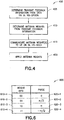
Figure 4 is a flowchart of an exemplary method performed by a network node for providing closed loop transmit antenna operation. -
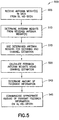
Figure 5 is a flowchart of an exemplary method performed by a user equipment for providing closed loop transmit antenna operation. -
Figure 6 is a table used to map antenna weight information to phase for a given antenna weight. - By way of introduction, it can be shown that a desirable HSDPA transmission scheme would be based on a closed loop antenna transmit technique with two transmit (Tx) and two receive (Rx) antennas (e.g., if used for HSDPA under realistic operating conditions in combination with fast packet scheduling). However, there are currently problems associated with closed loop modes 1 and 2 schemes defined for HSDPA in 3GPP Release 5. A 3GPP specification of particular interest in this regard is 3GPP TS 25.214, Physical layer procedures (FDD) (Release 5). The problems are related to the resolution and update rate of the feedback from the UE, and antenna verification. The problem with antenna verification occurs because the UE does not have knowledge of the antenna weights that the Node B is using for transmission. The problem with antenna verification is compounded with the introduction of F-DPCH in HSDPA, where it has been decided that it is no longer mandatory for the UE to support neither CLM1 nor CLM2 in the case of F-DPCH. Hence, closed loop transmit diversity is generally not usable for HSDPA in 3GPP Rel'6.
- As such, it can be appreciated that in order to have robust and attractive usage of a 2 Tx closed loop antenna scheme for HSDPA evolution a new approach is required.
- The exemplary embodiments of this invention provide an enhancement to the closed loop transmit diversity scheme that is currently specified for HSDPA in 3GPP Releases 5 and 6. However, and while the exemplary embodiments of this invention are described in the context of HSDPA, it should be kept in mind that these teachings are applicable to other types of wireless communications systems including, but not limited to EUTRAN.
-
Figure 1 is a simplified block diagram showing the major elements used to implement this invention, specifically aHSDPA terminal 10, also referred to as User Equipment (UE) 10, and a BS, also referred to as a Node-B 20. As used herein, but not as a limitation on the practice of this invention, the Node-B may be assumed to be functionally equivalent to a 3GPP 25-series specification term Node-B. -
Figure 1 shows that theHSDPA terminal 10 includes asuitable wireless transceiver 12 having first and second receiveantennas transceiver 12 is coupled to at least one data processor (DP) 14 that in turn includes or is coupled to a volatile and/ornon-volatile memory 16. Thememory 16stores program code 18 that is executable by theDP 14 to operate with a Node-B 20, including program code that is provided to implement theUE 10 aspects of this invention. The Node-B 20 is constructed to include atransceiver 22 having first and second transmitantennas antennas B 20 is also assumed to include at least oneDP 24 that in turn includes or is coupled to a volatile and/ornon-volatile memory 26. Thememory 26stores program code 28 that is executable by theDP 24 to operate with theUE 10, including program code that is provided to implement the Node-B 20 aspects of this invention. - Note that while
Figure 1 shows the use of separate transmit and receive antennas at theUE 10 and at the Node-B 20, in practice the same antenna(s) may used for both transmission and reception. - The
memories data processors - In general, the various embodiments of the
UE 10 can include, but are not limited to, cellular telephones, personal digital assistants (PDAs) having wireless communication capabilities, portable computers having wireless communication capabilities, image capture devices such as digital cameras having wireless communication capabilities, gaming devices having wireless communication capabilities, music storage and playback appliances having wireless communication capabilities, Internet appliances permitting wireless Internet access and browsing, as well as portable units or terminals that incorporate combinations of such functions. - In accordance with the teachings of this invention there is an enhancement to the HSDPA to allow the
UE 10 to send closed loop antenna transmit feedback information to theNode B 20, where theUE 10 sends the closed loop antenna transmit feedback information on the UL HS DPCCH, rather than sending FBI information on the DPCCH. This approach beneficially enables the use of more bits for sending feedback information to theNode B 20. Further, the feedback rate may be made dynamic (e.g., corresponding to the CQI feed back rate). - The feedback information may comprise information for specifying UE-recommended antenna weights to be used by the Node B 20 (e.g., BS or BTS), where an antenna weight may be expressed in terms of amplitude and phase. For instance, antenna weights are typically complex numbers of the type Wi = ai + jbi and the amplitude and phase can be determined using the weight.
- Further in accordance with exemplary embodiments of this invention, the transmission format for the DL HS SCCH is modified such that the HS SCCH also contains information on the applied transmit antenna scheme used at the
Node B 20, including antenna weight (W1, W2) information. Sending this information on the HS SCCH to theUE 10 reduces or eliminates the problems referred to above regarding antenna verification (e.g., 3GPP Release '5). - The closed loop transmit antenna feedback scheme in accordance with the exemplary embodiments of this invention supports antenna transmit diversity weights, and also MIMO multi stream closed loop feedback information. This is described in more detail in reference to
Figures 2 and3 . - Turning to
Figure 2 , a simplified block diagram is shown illustrating exemplary elements used to implement an exemplary embodiment of this invention using diversity transmission and reception.Wireless communication system 200 comprises aNode B 220 and aUE 210 communicating using the communicationchannels HS DSCH 240, theHS SSCH 245 andHS DPCCH 250. TheNode B 220 comprises aDP 224, amemory 226, multipliers 296-1 and 296-2, and atransceiver 222. Thememory 226 comprisesprogram code 228, receivedweights 235,input data 260, andpilot symbols 265. TheNode B 220 is coupled to or comprises antennas 230-1,230-2, and 230-3. TheUE 210 comprises aDP 234, amemory 236, and atransceiver 232. TheUE 210 is coupled to or comprises antennas 290-1, 290-2, and 290-3. Thememory 236 includesprogram code 238, receivedweight information 280,determined weight information 282,feedback weight information 284, and output data DS1' 286 corresponding to the data in data signal DS1 225. -
Node B 220 communicatesinput data 260 by performing such functions as modulation, spreading, scrambling (e.g., encryption), and frequency shifting (e.g., from baseband to transmission band) to create data signal DS1 225. In this example, the data signal DS1 225 is coupled to both multipliers 296-1 and 296-2 and modified (e.g., multiplied) by a corresponding antenna weight W1, W2, respectively, to create modified data signals 297-1, 297-2 and communicated using antennas 230-1, 230-2, respectively. Periodically, theDP 224 also causes thepilot symbols 265 to be transmitted as data signal DS1 225, although one or both antennas 230-1 and 230-2 may be used to transmit the data signal DS1 225 having thepilot symbols 265. - The data signal DS 1 225 is transmitted using
HS DSCH 240 to theUE 210. Additionally, theNode B 220 transmits (e.g., under control of theprogram code 228 and DP 224)weight information 270 on theHS SCCH 245 to theUE 210. Theweight information 270 is "feed forward" indications of the weights W1, W2, and theweight information 270 can includeinformation 271 corresponding to both antenna weights (i.e., W1, W2) orinformation 272 corresponding to one of the weights (e.g., W1 or W2). It is noted that theweight information 270 could include, e.g., a phase difference between the antenna weights W1 and W2, values of W1, W2, or information that is mapped to give the W1 and/or W2. When information 272 (e.g., corresponding to antenna weight W2) is transmitted, the UE would then be able to determine information corresponding to the other antenna weight (e.g., W1) using the transmittedinformation 272. The UE 210 (e.g., under control of theprogram code 238 and the DP 234) places theweight information 270 in receivedweight information 280, and if necessary determinesdetermined weight information 282 from the receivedweight information 280. In one embodiment, the receivedweight information 280 corresponds to both W1 and W2 anddetermined weight information 282 corresponds to both W1 and W2. In another embodiment, the receivedweight information 280 corresponds to W2 (e.g., or W1) and theUE 210 determines determined weight information 282 (e.g., corresponding to both W1 and W2) using the receivedweight information 280 of W2 (e.g., or W1). - The
UE 210 uses thedetermined weight information 282 during decoding of the received data signals 291-1 and 291-2 and determines output data (DS1') 286 corresponding to the data in data signal DS1 225. TheUE 210 also uses thisdetermined weight information 282 for channel estimation, including for estimating new antenna weights (i.e., feedback weight information 284) which are afterwards signaled back to the Node-B. The UE 210 (e.g., again under control of theprogram code 238 and the DP 234) therefore determinesfeedback weight information 284 using, e.g., thepilot symbols 265 that are transmitted on theHS DSCH 240 and corresponding channel estimation determined using thedetermined weight information 282. TheUE 210 communicates the feedback weight information 276 (corresponding to feedback weight information 284) to the Node B as part of closed loop transmitfeedback information 275 on theHS DPCCH 250. Thefeedback weight information 276 includes one or more of feedback weight information W1' 241 corresponding to a calculated W1 and feedback weight information W2' 242 corresponding to a calculated W2. Note also that thefeedback weight information 276 could include differences, such as a phase difference, between the antenna weights W1 and W2. The closed loop transmitfeedback information 275 may also include CQI/CSI 278 and may also include Acknowledge (Ack)/No Acknowledge (Nack) from the current or previous transmissions. - The
Node B 220 uses the receivedweight information 235, which correspond to thefeedback weight information 276, to revise antenna weights W1, W2. Exemplary techniques for determinations of antenna weights by theUE 210 and the revision of the antenna weights by theNode B 220 are described in, e.g., 3GPP TS 25.214, V5.0.0 (2002-03) and later documents. It is noted that thesystem 200 ofFIG. 2 uses diversity transmission because the same signal (data signal DS1 225) is transmitted using different antennas 230-1, 230-2. - By contrast,
Figure 3 shows another simplified block diagram showing exemplary elements used to implement multiple input, multiple output (MIMO) transmission and reception.System 300 inFigure 3 includes many of the same elements as inFigure 2 , and therefore only differences will be described herein. Thecommunication system 300 includes aNode B 320 includingDP 224 that is coupled to multipliers 336-1 through 336-4 and throughtransceiver 322 to the antennas 330-1 through 330-4. TheDP 224 splits theinput data 260 into the data signals DS1 325-1 to DS4 325-4, each of which is modified (e.g., multiplied) using the multipliers 336 by a corresponding weight W1 through W4 to create a modified data signal 337-1 through 337-4 that is then transmitted using thetransceiver 322 and the antennas 330. TheNode B 320 also communicatesweight information 370, including one or more of theweight information 371 corresponding to W1,weight information 372 corresponding to W2,weight information 373 corresponding to W3, andweight information 374 corresponding toW 4 374, to theUE 210. - The
UE 210 receives theHS DSCH 240 using the antennas 390-1 through 390-4 and thetransceiver 332 creates the received data signals 391-1 through 391-4. TheDP 234 then creates output data DS1' 386-1, DS2' 386-2, DS3' 386-3, and DS4' 386-4, corresponding to data signals DS1 325-1, DS2 325-2, DS3 325-3, and DS4 325-4, respectively. In MIMO, N receive antennas 390 receive information from M transmit antennas 330, and there can be min(M,N) independent subchannels. In an exemplary embodiment, M is not equal to N. In the example ofFigure 3 , there are four independent subchannels, although fewer subchannels could be used for this amount of transmit antennas 330. TheUE 310 communicatesfeedback weight information 376, including one or more of feedback weight information W1' 341 corresponding to a calculated W1, including feedback weight information W2' 342 corresponding to a calculated W2, including feedback weight information W3' 343 corresponding to a calculated W3, including feedback weight information W4' 344 corresponding to a calculated W4, using theHS DPCCH 250 to theNode B 320. The feedback weight information 376 (and also "feed forward"information 270, 370) can also include phase difference 345 (φ 1,2) between W1 and W2, phase difference 346 (φ3,4) between W3 and W4, amplitude difference 347 ( A 1,2) between W1 and W2, and amplitude difference 348 ( A 3,4) between W3 and W4. Furthermore, eachfeedback weight information feedback weight information 376 will typically be mapped from a set of bits to an appropriate amplitude and/or phase, as described below in reference toFigure 6 . - The slot formats for the HS SCCH and HS DPCCH messaging that carries the aforementioned additional information may be arranged in any suitable manner.
- Referring to
Figure 4 with appropriate reference to preceding figures, a flowchart is shown of anexemplary method 400 performed by a network node such as theNode B Node B method 400.Method 400 starts inblock 405 when the closed loop transmitfeedback information UL HS DPCCH 250. Inblock 410, the antenna weights are determined using the closed loop transmitfeedback information 275, 375 (e.g., feedbackantenna weight information 276, 376). For instance, there might be a situation where the W1 is fixed at
antenna weight information 276 would therefore includeonly information 242 corresponding to W2, and theinformation 242 includes two bits, e.g., 00 (corresponding to a phase of zero), 01 (corresponding to a phase of π/2), 10 (corresponding to a phase of π), or 11 (corresponding to a phase of -π/2). This is shown inFigure 6 , wherein weight information 610-1 through 610-4 corresponds toantenna weight information 242. Each weight information 610-1 through 610-4 is mapped using the table 600 to a corresponding phase 620-1 through 620-2. The network node,Node B 220 for instance, could then set the antenna weight W2 equivalent to the phase indicated by theinformation 242 as the amplitude is already known. - In
block 415, the antenna weights are communicated to theUE DL HS SCCH 245. In this example, the network node uses two bits in the weight information 270 (includingonly weight information 272 corresponding to W2) to indicate the phase of W2. In the example ofFigure 6 , one of the two-bit sequences in weight information 610-1 through 610-4 is transmitted by the network node to the UE. It is noted that the table 600 could also map bits to amplitudes or amplitudes and phase, if desired. Inblock 420, the antenna weights are applied to the data signals 225, 235 being transmitted. - Turning to
Figure 5 with appropriate reference to other figures, a flowchart is shown of anexemplary method 500 performed by a user equipment (UE Method 500 is performed by a UE under direction, e.g., of theprogram code Method 500 begins inblock 505 when the UE receives information corresponding to antenna weights (e.g.,weight information 270, 370) in data from theDL HS SCCH 245. Inblock 510, antenna weights are determined using the weight information.Block 510 is also performed when less the weight information corresponds to less than all antenna weights. For instance, if weight information corresponding to only antenna weight W2 is received, then antenna weight W1 (and possibly antenna weights W3, W4) can be determined based on information corresponding to the received antenna weight of W2. In the previously cited example, the antenna weight W1 is fixed and theinformation 270 corresponding to the antenna weight W2 includes two bits, as shown inFigure 6 as weight information 610-1 through 610-4. The two bits from weight information 610-1 through 610-4 select a phase 620-1 through 620-4 in the range the range {0,-π/2, π/2,π} for the weight W2 and the magnitude of the amplitude of W2 is fixed. Inblock 510, the bits are used to determine what the phase for W2 should be. The antenna weights used by the Node-B 220 (e.g., weights W1, W2 inFigure 2 , information about which is transmitted using the weight information 270) are used by theUE 210 when theUE 210 performs channel estimation (block 515, described below), and the channel estimation allows theUE 210 to estimate new antenna weights (e.g., corresponding to feedback weight information 276) to be signaled back to the Node-B 220. In case of two antennas, only the relative phase and/or amplitude difference between the antenna weights used for the two antennas needs to be estimated. It should be noted that this example assumes both the network node (e.g., Node B 220) and UE (e.g., UE 210) use the same number of bits to communicate antenna weight information. However, this is merely for example and the network node and UE can use different numbers of bits for antenna weight information and can differ in the amount (e.g., bits per unit time) of antenna weight information transmitted. - In
block 515, the determined antenna weights are used for decoding and channel estimation. Inblock 520, feedback antenna weights (e.g.,feedback antenna weights 276, 376) are calculated based on the channel estimation. The amount of feedback information (e.g., closed loop antenna transmitfeedback information 275, 375) is determined inblock 540. The amount of closed loop antenna transmitfeedback information feedback information step 520 are then encoded (e.g., asfeedback weight information 276, 376) inblock 545 and communicated from the UE to the network node on theUL HS DPCCH 250. - It should be realized that the exemplary embodiments of this invention may be extended as well to the EUTRAN concept where OFDM will likely be used in the DL. This implies that when the
Node B 20 sends a so called allocation table to theUE 10, information is also sent to specify which transmit diversity weights (or closed loop MIMO scheme) is being used (for thoseUEs 10 that are operable with such transmit diversity or MIMO schemes). Similarly, thoseUEs 10 that support transmit diversity or closed loop MIMO are enabled to send transmit antenna feedback information in conjunction with sending UL Ack/Nack and CSI/CQI to the Node-B 20. - Based on the foregoing description of non-limiting embodiments of this invention it can be appreciated that an aspect of this invention relates to apparatus, methods and a computer program to operate a Node-B with a UE so as to transmit on the DL HS SCCH information descriptive of a transmit antenna scheme used by the Node B, the information comprising Node-B transmit antenna weight information.
- Based on the foregoing description of non-limiting embodiments of this invention it can be appreciated that a further aspect of this invention relates to apparatus, methods and a computer program to operate a UE with a Node-B so as to transmit closed loop antenna transmit feedback information on the UL HS DPCCH.
- It is noted that the functionality in the network node (e.g., Node B) and the UE can be performed as shown above, i.e., through software instructions that cause a corresponding DP to perform the functions described above. As such the embodiments may comprise a signal bearing medium tangibly embodying a program of machine-readable instructions executable by at least one data processor for carrying out functions described above. Furthermore, in general, the various embodiments may be implemented in hardware such as special purpose circuits, software, logic or any combination thereof. For example, some aspects may be implemented in hardware, while other aspects may be implemented in software (e.g., firmware) which may be executed by a data processor such as a controller, digital signal processor, general purpose microprocessor or other computing device, although the invention is not limited thereto. While various aspects of the invention may be illustrated and described as block diagrams, flow charts, or using some other pictorial representation, it is well understood that these blocks, flowcharts, or other pictorial representation described herein may be implemented in, as non-limiting examples, hardware, software, some combination thereof.
- Embodiments of the inventions may be practiced in various components such as integrated circuit modules. The design of integrated circuits is by and large a highly automated process. Complex and powerful software tools are available for converting a logic level design into a semiconductor circuit design ready to be etched and formed on a semiconductor substrate.
- Programs, such as those provided by Synopsys, Inc. of Mountain View, California and Cadence Design, of San Jose, California automatically route conductors and locate components on a semiconductor chip using well established rules of design as well as libraries of pre stored design modules. Once the design for a semiconductor circuit has been completed, the resultant design, in a standardized electronic format (e.g., Opus, GDSII, or the like) may be transmitted to a semiconductor fabrication facility or "fab" for fabrication.
- Various modifications and adaptations may become apparent to those skilled in the relevant arts in view of the foregoing description, when read in conjunction with the accompanying drawing. As but some examples, the use of other similar or equivalent messages and/or signaling techniques may be attempted by those skilled in the art, and more that two transmit and/or receive antennas may be employed.
- Furthermore, some of the features of the examples of this invention may be used to advantage without the corresponding use of other features. As such, the foregoing description should be considered as merely illustrative of the principles, teachings, examples and embodiments of this invention, and not in limitation thereof.
Claims (36)
- A method comprising;
determining weights (W1-W4) corresponding to each of a plurality of antennas (230, 330) used to transmit data signals (225, 325) to a receiver (210, 310) based at least in part on recommended antenna weights (241, 242, 341-344) by the receiver (210, 310), wherein the recommended antenna weights (241, 242, 341-344) are received on feedback information (275) on a high speed dedicated physical control channel (250), wherein the feedback information comprises a plurality of bits, and each weight (W1-W4) is suitable to modify a corresponding one of the data signals (225, 325) prior to transmission from a transmitter (222, 322) using a corresponding one of the antennas (230, 330); each weight (W1-W4) capable of being different than the antenna weight (241,242, 341-344) recommended by the receiver (210,310), wherein an amount of feedback information for the recommended antenna weights (241, 242, 341-344) is dynamic and corresponds to a channel quality information feedback rate; and
transmitting information (270, 370) to the receiver (210, 310) corresponding to at least one applied weight (W1-W4) at the transmitter (222, 322), the information (270,370) allowing at least the at least one weight (W1-W4) as actually applied to be determined. - The method of claim 1, wherein transmitting further comprises transmitting the information (270, 370) using a High Speed Shared Control Channel (245).
- The method of claim 1, further comprising:modifying the data signals (225, 325) using corresponding ones of the weights; andtransmitting the modified data signals (297, 337) using the plurality of antennas.
- The method of claim 3, wherein modifying and transmitting maintains transmission diversity by modifying a single data signal (225) using corresponding ones of the weights (W1-W2) and by transmitting the modified data signals (297) of the single data signal using the plurality of antennas (230).
- The method of claim 3, wherein the recommended antenna weights are multiple input, multiple output multi-stream closed loop feedback information, and wherein modifying and transmitting uses multiple input, multiple output transmission by modifying at least two data signals (325) using corresponding ones of the weights (W1-W4) and by transmitting the modified data signals (337) of the at least two data signals (325) using the plurality of antennas (330).
- The method of claim 3, wherein transmitting further comprises transmitting the modified data signals (297, 337) using a High Speed Downlink Shared Channel (240).
- The method of claim 1, wherein at least an additional weight (345-348) other than the at least one weight (W1-W4) can be determined using the transmitted information (270, 370).
- The method claim 1, wherein the information (270, 370) is first information (270, 370) and wherein the method further comprises receiving second information (276, 376) calculated by the receiver (210,310), the second information (276, 376) corresponding to weights (W1-W4) to be used for each of the plurality of antennas (230, 330), and wherein determining weights (W1-W4) further comprises determining, using the second information (276, 376) calculated by the receiver (210, 310), the antenna weights (W1-W4) corresponding to each of the plurality of antennas (230, 330).
- The method of claim 8, wherein the information (276, 376) calculated by the receiver (210, 310) is received in amounts that vary over a period of time.
- An apparatus (220, 320) comprising:a transceiver (222, 322) configured to be coupled to a plurality of antennas (230, 330) used to transmit data signals (225, 325);one or more memories (226) comprising program code (228); andone or more data processors (224) coupled to the one or more memories (226) and to the transceiver (322), the one or more data processors (224) configured when the program code (228) is executed to perform the following operations:determining weights (W1-W4) corresponding to each of the plurality of antennas (230, 330) based at least in part on recommended antenna weights (241, 242, 341-344), wherein the recommended antenna weights (241, 242, 341-344) are received on feedback information (275) on a high speed dedicated physical control channel (250), wherein the feedback information comprises a plurality of bits, and each weight (W1-W4) is suitable to modify a corresponding one of the data signals (225, 325) prior to transmission from a transmitter of the transceiver (222, 322) using a corresponding one of the antennas (230, 330); each weight (W1-W4) capable of being different than the antenna weight (241, 242, 341-344) recommended by the receiver (210, 310), wherein an amount of feedback information for the recommended antenna weights (241, 242, 341-344) is dynamic and corresponds to a channel quality information feedback rate; andcausing the transceiver (222, 322) to transmit information (270, 370) corresponding to at least one applied weight (W1-W4) at the transceiver, the information (270, 370) allowing at least the at least one weight (W1-W4) as actually applied to be determined.
- The apparatus of claim 10, wherein transmitting further comprises transmitting the information (270, 370) using a High Speed Shared Control Channel (245).
- The apparatus of claim 10, wherein;
the apparatus (220, 320) further comprises a plurality of multipliers (296, 336) configured to multiply a corresponding one of the data signals (225, 325) by a corresponding weight (W1-W2) and to produce a plurality of modified data signals (297, 337); and
the operations further comprise causing the modified data signals (297, 337) to be transmitted by the transceiver (222, 322) using the plurality of antennas (230, 330). - The apparatus of claim 12, wherein each of the data signals (225) correspond to a single data signal (225) routed to each of the multipliers (296).
- The apparatus of claim 12, wherein the data signals (325) correspond to at least two different data signals (325-1 to 325-4) routed to each of the multipliers (336).
- The apparatus of claim 10, wherein transmitting further comprises transmitting the modified data signals (297, 337) using a High Speed Downlink Shared Channel (240).
- The apparatus of claim 10, wherein at least an additional weight (345-348) other than the at least one weight (W1-W4) can be determined using the transmitted information (270, 370).
- The apparatus of claim 10, wherein the information (270, 370) is first information (270, 370), wherein the transceiver (222, 322) receives second information (276, 376) calculated by the receiver (210, 310), the second information (276, 376) corresponding to weights (W1-W4) to be used for each of the plurality of antennas (230, 330), and wherein determining weights (W1-W4) further comprises determining, using the second information (276, 376) calculated by the receiver (210, 310), the weights (W1-W4) corresponding to each of the plurality of antennas (230, 330).
- An information bearing medium tangibly embodying a program of machine-readable instructions executable by at least one data processor to perform operations comprising:determining weights (W1-W4) corresponding to each of a plurality of antennas used to transmit data signals (225, 325) to a receiver (210, 310) based at least in part on recommended antenna weights (241, 242, 341-344) by a receiver (210, 310), wherein the recommended antenna weights (241, 242, 341-344) are received on feedback information (275) on a high speed dedicated physical control channel (250), wherein the feedback information comprises a plurality of bits, and each weight (W1-W4) is suitable to modify a corresponding one of the data signals (225, 325) prior to transmission from a transmitter (222, 322) using a corresponding one of the antennas (230, 330); each weight (W1-W4) capable of being different than the antenna weight (241, 242, 341-344) recommended by the receiver (210, 310), wherein an amount of feedback information for the recommended antenna weights (241, 242, 341-344) is dynamic and corresponds to a channel quality information feedback rate; andcausing information (270, 370) to be transmitted corresponding to at least one applied weight (W1-W4), the information (270, 370) allowing at least the at least one weight (W1-W4) as actually applied to be determined.
- A method comprising:transmitting feedback information (276, 376) for recommended antenna weights (241, 242, 341-344) by a receiver (210, 310), wherein the recommended antenna weights (241,242,341-344) are transmitted on feedback information (275) on a high speed dedicated physical control channel (250), wherein the feedback information comprises a plurality of bits, wherein an amount of feedback information for the recommended antenna weights (241, 242, 341-344) is dynamic and corresponds to a channel quality information feedback rate;receiving information (270, 370) corresponding to at least one of a plurality of applied weights (W1-W4) used at a transmitter (220, 320), the plurality of applied weights (W1-W4) corresponding to a plurality of first antennas (230, 330) used to transmit first data signals (225, 325), where each weight (W1-W4) was used to modify a corresponding one of the first data signals (225, 325) prior to transmission using a corresponding one of the first antennas (230, 330);using the received information (270, 370), determining the plurality of weights (W1-W4) corresponding to the plurality of first antennas (230, 330); andusing at least the plurality of weights (W1-W4), decoding second data signals (291, 391) received using a plurality of second antennas (290, 390) to create at least one output signal (286, 386).
- The method of claim 19, wherein decoding further comprises performing channel estimation using at least the plurality of weights (W1-W4).
- The method of claim 20, further comprising calculating second weights (241,242,341-344) for each of the plurality of first antennas (230, 330) using the channel estimation.
- The method of claim 21, further comprising transmitting second information (276, 376) corresponding to the calculated second weights (241, 242, 341-344) on a High Speed Dedicated Physical Control Channel (250).
- The method of claim 19, wherein receiving further comprises receiving the information (270, 370) on a High Speed Shared Control Channel (245).
- The method of claim 19, further comprising receiving the second data signals (291, 391) using a High Speed Downlink Shared Channel (240).
- The method of claim 19, wherein decoding further comprises decoding the second data signals (291, 391) received using the plurality of second antennas (290, 390) to create a single output signal (286), wherein each of the first data signals (225, 325) was determined using a single input signal (225), and wherein the single output signal (286) comprises a decoded version of the single input signal (225).
- The method of claim 19, wherein decoding further comprises decoding the second data signals (291, 391) received using the plurality of second antennas (290, 390) to create a plurality of output signals (386), wherein the first data signals (225, 325) were determined using a plurality of input signals (325), and wherein the plurality of output signals (386) comprise decoded versions of the plurality of input signals (325).
- An apparatus (210, 310) comprising:a transceiver (232, 332) configured to be coupled to a plurality of first antennas (290, 390) used to receive first data signals (291), the transceiver configured to transmit feedback information (276, 376) for recommended antenna weights (241, 242, 341-344),, wherein the recommended antenna weights (241, 242, 341-344) are transmitted on feedback information (275) on a high speed dedicated physical control channel (250), wherein the feedback information comprises a plurality of bits, wherein an amount of feedback information for the recommended antenna weights (241, 242, 341-344) is dynamic and corresponds to a channel quality information feedback rate, the transceiver (232, 332) configured to receive information (270, 370) corresponding to at least one of a plurality of applied weights (W1- W4) at a_transmitter (220, 320), the plurality of weights (W1-W4) corresponding to a plurality of second antennas (230, 330) used to transmit second data signals (225, 325), where each weight (W1-W4) was used to modify a corresponding one of the second data signals (225,325) prior to transmission using a corresponding one of the second antennas (230, 330);one or more memories (236) comprising program code (238); andone or more data processors (234) coupled to the one or more memories (236) and to the transceiver (232, 332), the one or more data processors (234) configured when the program code (238) is executed to perform the following operations:using the received information (270, 370), determining the plurality of weights (W1-W4) corresponding to the plurality of second antennas (230, 330); andusing at least the plurality of weights (W1-W4), decoding the first data signals (291, 391) to create at least one output signal (286, 386).
- The apparatus of claim 27, wherein the operation of decoding further comprises the operation of performing channel estimation using at least the plurality of weights (W1-W4).
- The apparatus of claim 28, wherein the operations further comprise calculating second weights (241, 242, 341-344) for each of the plurality of second antennas (230, 330) using the channel estimation,
- The apparatus of claim 29, further comprising the operation of causing second information (276, 376) corresponding to the calculated second weights (241, 242, 341-344) to be transmitted using the transceiver on a High Speed Dedicated Physical Control Channel (250).
- The apparatus of claim 30, wherein the operation of causing second information (276, 376) corresponding to the calculated second weights (241, 242, 341-344) to be transmitted further comprises causing the second information (276, 376) corresponding to the calculated second weights (241, 242, 341-344) to be transmitted based on an amount of information allowed to be transmitted during a time period.
- The apparatus of claim 27, wherein the transceiver (232, 332) is further configured to receive the information (270, 370) on a High Speed Shared Control Channel (245).
- The apparatus of claim 27, wherein the transceiver is further configured to receive the first data signals (291, 391) using a High Speed Downlink Shared Channel (240).
- The apparatus of claim 27, wherein operation of decoding further comprises the operation of decoding the second data signals (225) received using the plurality of first antennas (290) to create a single output signal (286), wherein each of the second data signals (225) was determined using a single input signal (225), and wherein the single output signal (286) comprises a decoded version of the single input signal.
- The apparatus of claim 27, wherein the operation of decoding further comprises the operation of decoding the second data signals (325) received using the plurality of first antennas (390) to create a plurality of output signals (386), wherein the second data signals (325) were determined using a plurality of input signals (325), and wherein the plurality of output signals (386) comprise decoded versions of the plurality of input signals (325).
- An information bearing medium tangibly embodying a program of machine-readable instructions executable by at least one data processor to perform operations comprising:transmitting feedback information (276, 376) for recommended antenna weights (241, 242, 341-344) by a receiver (210, 310), wherein the recommended antenna weights (241, 242, 341-344) are transmitted on feedback information (275) on a high speed dedicated physical control channel (250), wherein the feedback information comprises a plurality of bits, wherein an amount of feedback information for the recommended antenna weights (241, 242, 341-344) is dynamic and corresponds to a channel quality information feedback rate;causing information (270, 370) to be received, the information (270, 370) corresponding to at least one of a plurality of applied weights (W1-W4) used at a transmitter (220, 320), the plurality of weights (W1-W4) corresponding to a plurality of first antennas (230, 330) used to transmit first data signals (225, 325), where each weight (W1-W4) was used to modify a corresponding one of the first data signals (225, 325) prior to transmission using a corresponding one of the first antennas (230, 330) ; andusing the received information (270, 370), determining the plurality of weights (W1-W4) corresponding to the plurality of first antennas (230, 330); andusing at least the plurality of weights (W1-W4), decoding second data signals (291, 391) received using a plurality of second antennas (290, 390) to create at least one output signal (286, 386).
Applications Claiming Priority (2)
| Application Number | Priority Date | Filing Date | Title |
|---|---|---|---|
| US69635705P | 2005-06-30 | 2005-06-30 | |
| PCT/IB2006/001820 WO2007004027A2 (en) | 2005-06-30 | 2006-06-30 | Apparatus, method and computer program product providing closed loop transmit antenna operation for systems using multiple antennas |
Publications (3)
| Publication Number | Publication Date |
|---|---|
| EP1905172A2 EP1905172A2 (en) | 2008-04-02 |
| EP1905172A4 EP1905172A4 (en) | 2013-04-24 |
| EP1905172B1 true EP1905172B1 (en) | 2017-06-21 |
Family
ID=37604838
Family Applications (1)
| Application Number | Title | Priority Date | Filing Date |
|---|---|---|---|
| EP06795069.1A Active EP1905172B1 (en) | 2005-06-30 | 2006-06-30 | Apparatus, method and computer program product providing closed loop transmit antenna operation for systems using multiple antennas |
Country Status (10)
| Country | Link |
|---|---|
| US (1) | US7715488B2 (en) |
| EP (1) | EP1905172B1 (en) |
| JP (1) | JP5043005B2 (en) |
| KR (2) | KR101123219B1 (en) |
| CN (1) | CN101228711B (en) |
| BR (1) | BRPI0614224A2 (en) |
| MX (1) | MX2008000160A (en) |
| RU (1) | RU2382497C2 (en) |
| WO (1) | WO2007004027A2 (en) |
| ZA (1) | ZA200800808B (en) |
Families Citing this family (27)
| Publication number | Priority date | Publication date | Assignee | Title |
|---|---|---|---|---|
| KR101124932B1 (en) * | 2005-05-30 | 2012-03-28 | 삼성전자주식회사 | Apparatus and method for transmitting/receiving a data in mobile communication system with array antennas |
| US9184898B2 (en) * | 2005-08-01 | 2015-11-10 | Google Technology Holdings LLC | Channel quality indicator for time, frequency and spatial channel in terrestrial radio access network |
| WO2007129944A1 (en) * | 2006-05-09 | 2007-11-15 | Telefonaktiebolaget L M Ericsson (Publ) | Method and apparatus for improved single cell adaption due to change in environment. |
| US20150030058A9 (en) * | 2006-05-17 | 2015-01-29 | Texas Instruments Inc. | Cqi feedback for mimo deployments |
| ES2590357T3 (en) | 2006-08-22 | 2016-11-21 | Koninklijke Philips N.V. | Procedure for data transmission in a mobile system and radio stations for it |
| KR100957011B1 (en) * | 2006-09-13 | 2010-05-13 | 삼성전자주식회사 | Automatic Repeat Request Device and Method in Multiple Input Multiple Output System |
| US8369388B2 (en) * | 2007-06-15 | 2013-02-05 | Broadcom Corporation | Single-chip wireless tranceiver |
| US8199857B2 (en) * | 2007-06-15 | 2012-06-12 | Broadcom Corporation | Apparatus to reconfigure an 802.11a/n transceiver to support 802.11j/10 MHz mode of operation |
| US8194808B2 (en) | 2007-06-15 | 2012-06-05 | Broadcom Corporation | Carrier selection for multiple antennas |
| US8526525B2 (en) * | 2008-09-01 | 2013-09-03 | Arvind V. Keerthi | Interference avoiding MIMO |
| WO2010105439A1 (en) * | 2009-03-20 | 2010-09-23 | 华为技术有限公司 | Pre-coding control indication information receiving and feedback method, and the communication device thereof |
| US8895838B1 (en) | 2010-01-08 | 2014-11-25 | Magnolia Solar, Inc. | Multijunction solar cell employing extended heterojunction and step graded antireflection structures and methods for constructing the same |
| EP2609692B1 (en) * | 2010-08-23 | 2013-10-16 | Telefonaktiebolaget L M Ericsson (publ) | Devices and methods for transmitting / receiving instructions for uplink transmission in a wcdma system |
| EP2609691B1 (en) * | 2010-08-23 | 2015-04-15 | Telefonaktiebolaget L M Ericsson (publ) | Device and method for improved closed loop diversity |
| CN103081375B (en) * | 2010-08-24 | 2016-04-27 | 瑞典爱立信有限公司 | Apparatus and method for HSPA WCDMA uplink pilot |
| TW201233090A (en) * | 2011-01-07 | 2012-08-01 | Interdigital Patent Holdings | Method and apparatus for signaling for multi-antenna transmission with precoding |
| RU2473812C1 (en) * | 2011-07-28 | 2013-01-27 | Открытое Акционерное Общество "Центральный Научно-Исследовательский Институт "Курс" | Automated communication system |
| US9209950B2 (en) * | 2011-10-03 | 2015-12-08 | Qualcomm Incorporated | Antenna time offset in multiple-input-multiple-output and coordinated multipoint transmissions |
| CA2932387C (en) * | 2011-11-04 | 2018-10-02 | Apple Inc. | Coordination of self-optimization operations in a self organizing network |
| JP5865505B2 (en) | 2011-11-04 | 2016-02-17 | インテル・コーポレーション | Timing synchronization for downlink (DL) transmission in cooperative multipoint (CoMP) systems |
| CN103368629A (en) * | 2012-03-26 | 2013-10-23 | 中兴通讯股份有限公司 | Channel state information feedback method and device |
| WO2015135117A1 (en) * | 2014-03-10 | 2015-09-17 | 华为技术有限公司 | Signal processing apparatus and method |
| US10505765B2 (en) | 2016-04-28 | 2019-12-10 | Intel IP Corporation | Channel estimation fields for wireless networks |
| WO2018080586A1 (en) * | 2016-10-26 | 2018-05-03 | Intel Corporation | Channel estimation for wireless networks |
| CN118451364A (en) | 2022-01-04 | 2024-08-06 | 伊英克公司 | Electrophoretic medium comprising a combination of electrophoretic particles and a charge control agent |
| US12548529B2 (en) | 2022-10-25 | 2026-02-10 | E Ink Corporation | Methods for driving electro-optic displays |
| CN121385952B (en) * | 2025-12-25 | 2026-04-21 | 天津云圣智能科技有限责任公司 | Methods, devices, equipment and media for unmanned aerial vehicle (UAV) hangar positioning |
Family Cites Families (19)
| Publication number | Priority date | Publication date | Assignee | Title |
|---|---|---|---|---|
| IL120574A (en) * | 1996-05-17 | 2002-09-12 | Motorala Ltd | Method and devices for transmitter path weights |
| KR200176252Y1 (en) | 1997-11-18 | 2000-04-15 | 정몽규 | Tail gate damper for motor vehicle |
| US6888809B1 (en) | 2000-01-13 | 2005-05-03 | Lucent Technologies Inc. | Space-time processing for multiple-input, multiple-output, wireless systems |
| ATE330378T1 (en) | 2000-11-17 | 2006-07-15 | Nokia Corp | METHOD, DEVICES AND TELECOMMUNICATIONS NETWORK FOR CONTROLLING THE ANTENNA WEIGHTS OF A TRANSCEIVER |
| JP4298932B2 (en) * | 2001-03-27 | 2009-07-22 | 富士通株式会社 | Transmit diversity communication device |
| US6859503B2 (en) * | 2001-04-07 | 2005-02-22 | Motorola, Inc. | Method and system in a transceiver for controlling a multiple-input, multiple-output communications channel |
| US6785341B2 (en) * | 2001-05-11 | 2004-08-31 | Qualcomm Incorporated | Method and apparatus for processing data in a multiple-input multiple-output (MIMO) communication system utilizing channel state information |
| US7116944B2 (en) * | 2002-02-07 | 2006-10-03 | Lucent Technologies Inc. | Method and apparatus for feedback error detection in a wireless communications systems |
| WO2003081836A1 (en) * | 2002-03-22 | 2003-10-02 | Huawei Technologies Co., Ltd. | A self-adapting weighted space time transmitting diversity method and system thereof |
| KR100640470B1 (en) * | 2002-06-29 | 2006-10-30 | 삼성전자주식회사 | Apparatus and method for transmitting data using transmit antenna diversity scheme in packet service communication system |
| EP1392005A1 (en) | 2002-08-13 | 2004-02-25 | Siemens Aktiengesellschaft | Method for channel estimation and corresponding radio communications system |
| JP4413545B2 (en) * | 2003-07-08 | 2010-02-10 | 株式会社エヌ・ティ・ティ・ドコモ | Multi-input multi-output propagation path signal transmission apparatus and receiving station |
| US6927728B2 (en) * | 2003-03-13 | 2005-08-09 | Motorola, Inc. | Method and apparatus for multi-antenna transmission |
| KR100526542B1 (en) * | 2003-05-15 | 2005-11-08 | 삼성전자주식회사 | Apparatus for transmitting/receiving data using transmit diversity scheme with multiple antenna in mobile communication system and method thereof |
| KR100617843B1 (en) * | 2003-07-26 | 2006-08-28 | 삼성전자주식회사 | System and method for signal transmission / reception in mobile communication system using adaptive antenna array method |
| US7065144B2 (en) * | 2003-08-27 | 2006-06-20 | Qualcomm Incorporated | Frequency-independent spatial processing for wideband MISO and MIMO systems |
| JP2005184730A (en) * | 2003-12-24 | 2005-07-07 | Sony Corp | Wireless communication system, wireless communication apparatus, wireless communication method, and computer program |
| JP4433867B2 (en) * | 2004-04-28 | 2010-03-17 | ソニー株式会社 | Wireless communication system |
| US8340139B2 (en) * | 2004-10-06 | 2012-12-25 | Broadcom Corporation | Method and system for weight determination in a single channel (SC) multiple-input multiple-output (MIMO) system for WCDMA/HSDPA |
-
2006
- 2006-06-30 WO PCT/IB2006/001820 patent/WO2007004027A2/en not_active Ceased
- 2006-06-30 KR KR1020107010563A patent/KR101123219B1/en active Active
- 2006-06-30 EP EP06795069.1A patent/EP1905172B1/en active Active
- 2006-06-30 KR KR1020087002273A patent/KR101173527B1/en active Active
- 2006-06-30 US US11/479,842 patent/US7715488B2/en active Active
- 2006-06-30 JP JP2008519009A patent/JP5043005B2/en active Active
- 2006-06-30 MX MX2008000160A patent/MX2008000160A/en active IP Right Grant
- 2006-06-30 RU RU2008102880/09A patent/RU2382497C2/en active
- 2006-06-30 CN CN200680026630.XA patent/CN101228711B/en active Active
- 2006-06-30 BR BRPI0614224-9A patent/BRPI0614224A2/en not_active Application Discontinuation
-
2008
- 2008-01-28 ZA ZA200800808A patent/ZA200800808B/en unknown
Non-Patent Citations (1)
| Title |
|---|
| None * |
Also Published As
| Publication number | Publication date |
|---|---|
| WO2007004027A2 (en) | 2007-01-11 |
| EP1905172A4 (en) | 2013-04-24 |
| WO2007004027A3 (en) | 2007-03-22 |
| KR101173527B1 (en) | 2012-08-14 |
| EP1905172A2 (en) | 2008-04-02 |
| KR20080024219A (en) | 2008-03-17 |
| BRPI0614224A2 (en) | 2011-03-15 |
| JP5043005B2 (en) | 2012-10-10 |
| ZA200800808B (en) | 2009-02-25 |
| RU2008102880A (en) | 2009-08-10 |
| RU2382497C2 (en) | 2010-02-20 |
| CN101228711A (en) | 2008-07-23 |
| KR101123219B1 (en) | 2012-03-20 |
| CN101228711B (en) | 2016-08-03 |
| KR20100063824A (en) | 2010-06-11 |
| US20070002963A1 (en) | 2007-01-04 |
| US7715488B2 (en) | 2010-05-11 |
| MX2008000160A (en) | 2008-04-02 |
| JP2009500890A (en) | 2009-01-08 |
Similar Documents
| Publication | Publication Date | Title |
|---|---|---|
| US7715488B2 (en) | Apparatus, method and computer program product providing closed loop transmit antenna operation for systems using multiple antennas | |
| TWI435581B (en) | Method of transmitting and receiving signals for protecting false feedback information | |
| EP2052468B1 (en) | Feedback of precoding control indication (pci) and channel quality indication (cqi) in a wireless communication system | |
| US20080012764A1 (en) | Apparatus, method and computer program product providing protected feedback signaling transmission in uplink closed-loop MIMO | |
| WO2009063342A2 (en) | Method, apparatus and computer readable medium providing power allocation for beamforming with minimum bler in an mimo-ofdm system | |
| CN101507142A (en) | Method for transmitting data in a mobile system and radio station thereof | |
| US20100246697A1 (en) | Apparatus, Method and Computer Program Product Providing Feedback for Closed-Loop Wideband MIMO-OFDM System | |
| CN101233702B (en) | Mobile unit, mobile communication system, and antenna verification method | |
| AU2006200589A1 (en) | Method for antenna verification |
Legal Events
| Date | Code | Title | Description |
|---|---|---|---|
| PUAI | Public reference made under article 153(3) epc to a published international application that has entered the european phase |
Free format text: ORIGINAL CODE: 0009012 |
|
| 17P | Request for examination filed |
Effective date: 20080129 |
|
| AK | Designated contracting states |
Kind code of ref document: A2 Designated state(s): AT BE BG CH CY CZ DE DK EE ES FI FR GB GR HU IE IS IT LI LT LU LV MC NL PL PT RO SE SI SK TR |
|
| DAX | Request for extension of the european patent (deleted) | ||
| DAX | Request for extension of the european patent (deleted) | ||
| A4 | Supplementary search report drawn up and despatched |
Effective date: 20130322 |
|
| RIC1 | Information provided on ipc code assigned before grant |
Ipc: H04B 7/06 20060101AFI20130318BHEP |
|
| 17Q | First examination report despatched |
Effective date: 20130418 |
|
| RAP1 | Party data changed (applicant data changed or rights of an application transferred) |
Owner name: NOKIA CORPORATION |
|
| RAP1 | Party data changed (applicant data changed or rights of an application transferred) |
Owner name: NOKIA TECHNOLOGIES OY |
|
| GRAP | Despatch of communication of intention to grant a patent |
Free format text: ORIGINAL CODE: EPIDOSNIGR1 |
|
| INTG | Intention to grant announced |
Effective date: 20161128 |
|
| GRAJ | Information related to disapproval of communication of intention to grant by the applicant or resumption of examination proceedings by the epo deleted |
Free format text: ORIGINAL CODE: EPIDOSDIGR1 |
|
| GRAP | Despatch of communication of intention to grant a patent |
Free format text: ORIGINAL CODE: EPIDOSNIGR1 |
|
| INTC | Intention to grant announced (deleted) | ||
| INTG | Intention to grant announced |
Effective date: 20170323 |
|
| GRAS | Grant fee paid |
Free format text: ORIGINAL CODE: EPIDOSNIGR3 |
|
| GRAA | (expected) grant |
Free format text: ORIGINAL CODE: 0009210 |
|
| AK | Designated contracting states |
Kind code of ref document: B1 Designated state(s): AT BE BG CH CY CZ DE DK EE ES FI FR GB GR HU IE IS IT LI LT LU LV MC NL PL PT RO SE SI SK TR |
|
| REG | Reference to a national code |
Ref country code: GB Ref legal event code: FG4D |
|
| REG | Reference to a national code |
Ref country code: CH Ref legal event code: EP |
|
| REG | Reference to a national code |
Ref country code: IE Ref legal event code: FG4D |
|
| REG | Reference to a national code |
Ref country code: AT Ref legal event code: REF Ref document number: 903790 Country of ref document: AT Kind code of ref document: T Effective date: 20170715 |
|
| REG | Reference to a national code |
Ref country code: DE Ref legal event code: R096 Ref document number: 602006052855 Country of ref document: DE |
|
| REG | Reference to a national code |
Ref country code: NL Ref legal event code: MP Effective date: 20170621 |
|
| PG25 | Lapsed in a contracting state [announced via postgrant information from national office to epo] |
Ref country code: GR Free format text: LAPSE BECAUSE OF FAILURE TO SUBMIT A TRANSLATION OF THE DESCRIPTION OR TO PAY THE FEE WITHIN THE PRESCRIBED TIME-LIMIT Effective date: 20170922 Ref country code: FI Free format text: LAPSE BECAUSE OF FAILURE TO SUBMIT A TRANSLATION OF THE DESCRIPTION OR TO PAY THE FEE WITHIN THE PRESCRIBED TIME-LIMIT Effective date: 20170621 Ref country code: LT Free format text: LAPSE BECAUSE OF FAILURE TO SUBMIT A TRANSLATION OF THE DESCRIPTION OR TO PAY THE FEE WITHIN THE PRESCRIBED TIME-LIMIT Effective date: 20170621 |
|
| REG | Reference to a national code |
Ref country code: LT Ref legal event code: MG4D |
|
| REG | Reference to a national code |
Ref country code: AT Ref legal event code: MK05 Ref document number: 903790 Country of ref document: AT Kind code of ref document: T Effective date: 20170621 |
|
| PG25 | Lapsed in a contracting state [announced via postgrant information from national office to epo] |
Ref country code: SE Free format text: LAPSE BECAUSE OF FAILURE TO SUBMIT A TRANSLATION OF THE DESCRIPTION OR TO PAY THE FEE WITHIN THE PRESCRIBED TIME-LIMIT Effective date: 20170621 Ref country code: LV Free format text: LAPSE BECAUSE OF FAILURE TO SUBMIT A TRANSLATION OF THE DESCRIPTION OR TO PAY THE FEE WITHIN THE PRESCRIBED TIME-LIMIT Effective date: 20170621 Ref country code: NL Free format text: LAPSE BECAUSE OF FAILURE TO SUBMIT A TRANSLATION OF THE DESCRIPTION OR TO PAY THE FEE WITHIN THE PRESCRIBED TIME-LIMIT Effective date: 20170621 Ref country code: BG Free format text: LAPSE BECAUSE OF FAILURE TO SUBMIT A TRANSLATION OF THE DESCRIPTION OR TO PAY THE FEE WITHIN THE PRESCRIBED TIME-LIMIT Effective date: 20170921 |
|
| PG25 | Lapsed in a contracting state [announced via postgrant information from national office to epo] |
Ref country code: SK Free format text: LAPSE BECAUSE OF FAILURE TO SUBMIT A TRANSLATION OF THE DESCRIPTION OR TO PAY THE FEE WITHIN THE PRESCRIBED TIME-LIMIT Effective date: 20170621 Ref country code: EE Free format text: LAPSE BECAUSE OF FAILURE TO SUBMIT A TRANSLATION OF THE DESCRIPTION OR TO PAY THE FEE WITHIN THE PRESCRIBED TIME-LIMIT Effective date: 20170621 Ref country code: AT Free format text: LAPSE BECAUSE OF FAILURE TO SUBMIT A TRANSLATION OF THE DESCRIPTION OR TO PAY THE FEE WITHIN THE PRESCRIBED TIME-LIMIT Effective date: 20170621 Ref country code: CZ Free format text: LAPSE BECAUSE OF FAILURE TO SUBMIT A TRANSLATION OF THE DESCRIPTION OR TO PAY THE FEE WITHIN THE PRESCRIBED TIME-LIMIT Effective date: 20170621 Ref country code: RO Free format text: LAPSE BECAUSE OF FAILURE TO SUBMIT A TRANSLATION OF THE DESCRIPTION OR TO PAY THE FEE WITHIN THE PRESCRIBED TIME-LIMIT Effective date: 20170621 |
|
| REG | Reference to a national code |
Ref country code: CH Ref legal event code: PL |
|
| PG25 | Lapsed in a contracting state [announced via postgrant information from national office to epo] |
Ref country code: IS Free format text: LAPSE BECAUSE OF FAILURE TO SUBMIT A TRANSLATION OF THE DESCRIPTION OR TO PAY THE FEE WITHIN THE PRESCRIBED TIME-LIMIT Effective date: 20171021 Ref country code: IT Free format text: LAPSE BECAUSE OF FAILURE TO SUBMIT A TRANSLATION OF THE DESCRIPTION OR TO PAY THE FEE WITHIN THE PRESCRIBED TIME-LIMIT Effective date: 20170621 Ref country code: PL Free format text: LAPSE BECAUSE OF FAILURE TO SUBMIT A TRANSLATION OF THE DESCRIPTION OR TO PAY THE FEE WITHIN THE PRESCRIBED TIME-LIMIT Effective date: 20170621 Ref country code: ES Free format text: LAPSE BECAUSE OF FAILURE TO SUBMIT A TRANSLATION OF THE DESCRIPTION OR TO PAY THE FEE WITHIN THE PRESCRIBED TIME-LIMIT Effective date: 20170621 |
|
| REG | Reference to a national code |
Ref country code: DE Ref legal event code: R097 Ref document number: 602006052855 Country of ref document: DE |
|
| PG25 | Lapsed in a contracting state [announced via postgrant information from national office to epo] |
Ref country code: MC Free format text: LAPSE BECAUSE OF FAILURE TO SUBMIT A TRANSLATION OF THE DESCRIPTION OR TO PAY THE FEE WITHIN THE PRESCRIBED TIME-LIMIT Effective date: 20170621 |
|
| REG | Reference to a national code |
Ref country code: IE Ref legal event code: MM4A |
|
| PLBE | No opposition filed within time limit |
Free format text: ORIGINAL CODE: 0009261 |
|
| STAA | Information on the status of an ep patent application or granted ep patent |
Free format text: STATUS: NO OPPOSITION FILED WITHIN TIME LIMIT |
|
| PG25 | Lapsed in a contracting state [announced via postgrant information from national office to epo] |
Ref country code: DK Free format text: LAPSE BECAUSE OF FAILURE TO SUBMIT A TRANSLATION OF THE DESCRIPTION OR TO PAY THE FEE WITHIN THE PRESCRIBED TIME-LIMIT Effective date: 20170621 Ref country code: CH Free format text: LAPSE BECAUSE OF NON-PAYMENT OF DUE FEES Effective date: 20170630 Ref country code: LU Free format text: LAPSE BECAUSE OF NON-PAYMENT OF DUE FEES Effective date: 20170630 Ref country code: LI Free format text: LAPSE BECAUSE OF NON-PAYMENT OF DUE FEES Effective date: 20170630 Ref country code: IE Free format text: LAPSE BECAUSE OF NON-PAYMENT OF DUE FEES Effective date: 20170630 |
|
| REG | Reference to a national code |
Ref country code: FR Ref legal event code: ST Effective date: 20180404 |
|
| GBPC | Gb: european patent ceased through non-payment of renewal fee |
Effective date: 20170921 |
|
| 26N | No opposition filed |
Effective date: 20180322 |
|
| REG | Reference to a national code |
Ref country code: BE Ref legal event code: MM Effective date: 20170630 |
|
| PG25 | Lapsed in a contracting state [announced via postgrant information from national office to epo] |
Ref country code: GB Free format text: LAPSE BECAUSE OF NON-PAYMENT OF DUE FEES Effective date: 20170921 |
|
| PG25 | Lapsed in a contracting state [announced via postgrant information from national office to epo] |
Ref country code: BE Free format text: LAPSE BECAUSE OF NON-PAYMENT OF DUE FEES Effective date: 20170630 Ref country code: FR Free format text: LAPSE BECAUSE OF NON-PAYMENT OF DUE FEES Effective date: 20170821 Ref country code: SI Free format text: LAPSE BECAUSE OF FAILURE TO SUBMIT A TRANSLATION OF THE DESCRIPTION OR TO PAY THE FEE WITHIN THE PRESCRIBED TIME-LIMIT Effective date: 20170621 |
|
| PG25 | Lapsed in a contracting state [announced via postgrant information from national office to epo] |
Ref country code: HU Free format text: LAPSE BECAUSE OF FAILURE TO SUBMIT A TRANSLATION OF THE DESCRIPTION OR TO PAY THE FEE WITHIN THE PRESCRIBED TIME-LIMIT; INVALID AB INITIO Effective date: 20060630 |
|
| PG25 | Lapsed in a contracting state [announced via postgrant information from national office to epo] |
Ref country code: CY Free format text: LAPSE BECAUSE OF NON-PAYMENT OF DUE FEES Effective date: 20170621 |
|
| PG25 | Lapsed in a contracting state [announced via postgrant information from national office to epo] |
Ref country code: TR Free format text: LAPSE BECAUSE OF FAILURE TO SUBMIT A TRANSLATION OF THE DESCRIPTION OR TO PAY THE FEE WITHIN THE PRESCRIBED TIME-LIMIT Effective date: 20170621 |
|
| PG25 | Lapsed in a contracting state [announced via postgrant information from national office to epo] |
Ref country code: PT Free format text: LAPSE BECAUSE OF FAILURE TO SUBMIT A TRANSLATION OF THE DESCRIPTION OR TO PAY THE FEE WITHIN THE PRESCRIBED TIME-LIMIT Effective date: 20170621 |
|
| P01 | Opt-out of the competence of the unified patent court (upc) registered |
Effective date: 20230527 |
|
| PGFP | Annual fee paid to national office [announced via postgrant information from national office to epo] |
Ref country code: DE Payment date: 20250507 Year of fee payment: 20 |