EP1903993B1 - Improved osteosynthesis modular prosthesis, particularly for humerus osteosynthesis - Google Patents
Improved osteosynthesis modular prosthesis, particularly for humerus osteosynthesis Download PDFInfo
- Publication number
- EP1903993B1 EP1903993B1 EP06766301.3A EP06766301A EP1903993B1 EP 1903993 B1 EP1903993 B1 EP 1903993B1 EP 06766301 A EP06766301 A EP 06766301A EP 1903993 B1 EP1903993 B1 EP 1903993B1
- Authority
- EP
- European Patent Office
- Prior art keywords
- prosthesis according
- humerus
- prosthesis
- cup
- coupling
- Prior art date
- Legal status (The legal status is an assumption and is not a legal conclusion. Google has not performed a legal analysis and makes no representation as to the accuracy of the status listed.)
- Not-in-force
Links
- 210000002758 humerus Anatomy 0.000 title claims description 66
- 210000000988 bone and bone Anatomy 0.000 claims description 43
- 230000008878 coupling Effects 0.000 claims description 28
- 238000010168 coupling process Methods 0.000 claims description 28
- 238000005859 coupling reaction Methods 0.000 claims description 28
- 239000012634 fragment Substances 0.000 claims description 23
- 230000000903 blocking effect Effects 0.000 claims description 9
- 241001653121 Glenoides Species 0.000 claims description 7
- 239000000463 material Substances 0.000 claims description 7
- 238000011084 recovery Methods 0.000 claims description 7
- 239000003522 acrylic cement Substances 0.000 claims description 6
- 229910001069 Ti alloy Inorganic materials 0.000 claims description 3
- RTAQQCXQSZGOHL-UHFFFAOYSA-N Titanium Chemical compound [Ti] RTAQQCXQSZGOHL-UHFFFAOYSA-N 0.000 claims description 3
- 239000012781 shape memory material Substances 0.000 claims description 3
- 239000010936 titanium Substances 0.000 claims description 3
- 229910052719 titanium Inorganic materials 0.000 claims description 3
- 229910052751 metal Inorganic materials 0.000 claims description 2
- 239000002184 metal Substances 0.000 claims description 2
- 206010017076 Fracture Diseases 0.000 description 19
- 208000010392 Bone Fractures Diseases 0.000 description 7
- 210000003484 anatomy Anatomy 0.000 description 6
- 208000006670 Multiple fractures Diseases 0.000 description 3
- 238000000034 method Methods 0.000 description 3
- 208000001132 Osteoporosis Diseases 0.000 description 2
- 238000004873 anchoring Methods 0.000 description 2
- 210000000845 cartilage Anatomy 0.000 description 2
- 230000001737 promoting effect Effects 0.000 description 2
- 238000001356 surgical procedure Methods 0.000 description 2
- 210000001519 tissue Anatomy 0.000 description 2
- 241001350860 Glena Species 0.000 description 1
- 206010023204 Joint dislocation Diseases 0.000 description 1
- 239000004698 Polyethylene Substances 0.000 description 1
- 208000008877 Shoulder Dislocation Diseases 0.000 description 1
- 208000002103 Shoulder Fractures Diseases 0.000 description 1
- 229910045601 alloy Inorganic materials 0.000 description 1
- 239000000956 alloy Substances 0.000 description 1
- 239000004568 cement Substances 0.000 description 1
- 239000011248 coating agent Substances 0.000 description 1
- 238000000576 coating method Methods 0.000 description 1
- 230000000295 complement effect Effects 0.000 description 1
- 230000001054 cortical effect Effects 0.000 description 1
- 210000002745 epiphysis Anatomy 0.000 description 1
- 230000006870 function Effects 0.000 description 1
- 210000004095 humeral head Anatomy 0.000 description 1
- 239000007943 implant Substances 0.000 description 1
- 238000011065 in-situ storage Methods 0.000 description 1
- 208000014674 injury Diseases 0.000 description 1
- 238000012986 modification Methods 0.000 description 1
- 230000004048 modification Effects 0.000 description 1
- 230000007170 pathology Effects 0.000 description 1
- 230000000149 penetrating effect Effects 0.000 description 1
- -1 polyethylene Polymers 0.000 description 1
- 229920000573 polyethylene Polymers 0.000 description 1
- 230000000750 progressive effect Effects 0.000 description 1
- 210000002320 radius Anatomy 0.000 description 1
- 210000000513 rotator cuff Anatomy 0.000 description 1
- 210000001991 scapula Anatomy 0.000 description 1
- 229910001285 shape-memory alloy Inorganic materials 0.000 description 1
- 238000011477 surgical intervention Methods 0.000 description 1
- 230000008733 trauma Effects 0.000 description 1
- 210000000623 ulna Anatomy 0.000 description 1
Images

Classifications
-
- A—HUMAN NECESSITIES
- A61—MEDICAL OR VETERINARY SCIENCE; HYGIENE
- A61F—FILTERS IMPLANTABLE INTO BLOOD VESSELS; PROSTHESES; DEVICES PROVIDING PATENCY TO, OR PREVENTING COLLAPSING OF, TUBULAR STRUCTURES OF THE BODY, e.g. STENTS; ORTHOPAEDIC, NURSING OR CONTRACEPTIVE DEVICES; FOMENTATION; TREATMENT OR PROTECTION OF EYES OR EARS; BANDAGES, DRESSINGS OR ABSORBENT PADS; FIRST-AID KITS
- A61F2/00—Filters implantable into blood vessels; Prostheses, i.e. artificial substitutes or replacements for parts of the body; Appliances for connecting them with the body; Devices providing patency to, or preventing collapsing of, tubular structures of the body, e.g. stents
- A61F2/02—Prostheses implantable into the body
- A61F2/30—Joints
- A61F2/40—Joints for shoulders
- A61F2/4003—Replacing only the epiphyseal or metaphyseal parts of the humerus, i.e. endoprosthesis not comprising an entire humeral shaft
-
- A—HUMAN NECESSITIES
- A61—MEDICAL OR VETERINARY SCIENCE; HYGIENE
- A61F—FILTERS IMPLANTABLE INTO BLOOD VESSELS; PROSTHESES; DEVICES PROVIDING PATENCY TO, OR PREVENTING COLLAPSING OF, TUBULAR STRUCTURES OF THE BODY, e.g. STENTS; ORTHOPAEDIC, NURSING OR CONTRACEPTIVE DEVICES; FOMENTATION; TREATMENT OR PROTECTION OF EYES OR EARS; BANDAGES, DRESSINGS OR ABSORBENT PADS; FIRST-AID KITS
- A61F2/00—Filters implantable into blood vessels; Prostheses, i.e. artificial substitutes or replacements for parts of the body; Appliances for connecting them with the body; Devices providing patency to, or preventing collapsing of, tubular structures of the body, e.g. stents
- A61F2/02—Prostheses implantable into the body
- A61F2/28—Bones
-
- A—HUMAN NECESSITIES
- A61—MEDICAL OR VETERINARY SCIENCE; HYGIENE
- A61F—FILTERS IMPLANTABLE INTO BLOOD VESSELS; PROSTHESES; DEVICES PROVIDING PATENCY TO, OR PREVENTING COLLAPSING OF, TUBULAR STRUCTURES OF THE BODY, e.g. STENTS; ORTHOPAEDIC, NURSING OR CONTRACEPTIVE DEVICES; FOMENTATION; TREATMENT OR PROTECTION OF EYES OR EARS; BANDAGES, DRESSINGS OR ABSORBENT PADS; FIRST-AID KITS
- A61F2/00—Filters implantable into blood vessels; Prostheses, i.e. artificial substitutes or replacements for parts of the body; Appliances for connecting them with the body; Devices providing patency to, or preventing collapsing of, tubular structures of the body, e.g. stents
- A61F2/02—Prostheses implantable into the body
- A61F2/30—Joints
- A61F2/30721—Accessories
- A61F2/30734—Modular inserts, sleeves or augments, e.g. placed on proximal part of stem for fixation purposes or wedges for bridging a bone defect
-
- A—HUMAN NECESSITIES
- A61—MEDICAL OR VETERINARY SCIENCE; HYGIENE
- A61F—FILTERS IMPLANTABLE INTO BLOOD VESSELS; PROSTHESES; DEVICES PROVIDING PATENCY TO, OR PREVENTING COLLAPSING OF, TUBULAR STRUCTURES OF THE BODY, e.g. STENTS; ORTHOPAEDIC, NURSING OR CONTRACEPTIVE DEVICES; FOMENTATION; TREATMENT OR PROTECTION OF EYES OR EARS; BANDAGES, DRESSINGS OR ABSORBENT PADS; FIRST-AID KITS
- A61F2/00—Filters implantable into blood vessels; Prostheses, i.e. artificial substitutes or replacements for parts of the body; Appliances for connecting them with the body; Devices providing patency to, or preventing collapsing of, tubular structures of the body, e.g. stents
- A61F2/02—Prostheses implantable into the body
- A61F2/30—Joints
- A61F2/40—Joints for shoulders
- A61F2/4014—Humeral heads or necks; Connections of endoprosthetic heads or necks to endoprosthetic humeral shafts
-
- A—HUMAN NECESSITIES
- A61—MEDICAL OR VETERINARY SCIENCE; HYGIENE
- A61F—FILTERS IMPLANTABLE INTO BLOOD VESSELS; PROSTHESES; DEVICES PROVIDING PATENCY TO, OR PREVENTING COLLAPSING OF, TUBULAR STRUCTURES OF THE BODY, e.g. STENTS; ORTHOPAEDIC, NURSING OR CONTRACEPTIVE DEVICES; FOMENTATION; TREATMENT OR PROTECTION OF EYES OR EARS; BANDAGES, DRESSINGS OR ABSORBENT PADS; FIRST-AID KITS
- A61F2/00—Filters implantable into blood vessels; Prostheses, i.e. artificial substitutes or replacements for parts of the body; Appliances for connecting them with the body; Devices providing patency to, or preventing collapsing of, tubular structures of the body, e.g. stents
- A61F2/02—Prostheses implantable into the body
- A61F2/30—Joints
- A61F2/40—Joints for shoulders
- A61F2/4059—Humeral shafts
-
- A—HUMAN NECESSITIES
- A61—MEDICAL OR VETERINARY SCIENCE; HYGIENE
- A61B—DIAGNOSIS; SURGERY; IDENTIFICATION
- A61B17/00—Surgical instruments, devices or methods
- A61B17/56—Surgical instruments or methods for treatment of bones or joints; Devices specially adapted therefor
- A61B17/58—Surgical instruments or methods for treatment of bones or joints; Devices specially adapted therefor for osteosynthesis, e.g. bone plates, screws or setting implements
- A61B17/68—Internal fixation devices, including fasteners and spinal fixators, even if a part thereof projects from the skin
- A61B17/84—Fasteners therefor or fasteners being internal fixation devices
- A61B17/86—Pins or screws or threaded wires; nuts therefor
-
- A—HUMAN NECESSITIES
- A61—MEDICAL OR VETERINARY SCIENCE; HYGIENE
- A61F—FILTERS IMPLANTABLE INTO BLOOD VESSELS; PROSTHESES; DEVICES PROVIDING PATENCY TO, OR PREVENTING COLLAPSING OF, TUBULAR STRUCTURES OF THE BODY, e.g. STENTS; ORTHOPAEDIC, NURSING OR CONTRACEPTIVE DEVICES; FOMENTATION; TREATMENT OR PROTECTION OF EYES OR EARS; BANDAGES, DRESSINGS OR ABSORBENT PADS; FIRST-AID KITS
- A61F2/00—Filters implantable into blood vessels; Prostheses, i.e. artificial substitutes or replacements for parts of the body; Appliances for connecting them with the body; Devices providing patency to, or preventing collapsing of, tubular structures of the body, e.g. stents
- A61F2/02—Prostheses implantable into the body
- A61F2/28—Bones
- A61F2002/2853—Humerus
-
- A—HUMAN NECESSITIES
- A61—MEDICAL OR VETERINARY SCIENCE; HYGIENE
- A61F—FILTERS IMPLANTABLE INTO BLOOD VESSELS; PROSTHESES; DEVICES PROVIDING PATENCY TO, OR PREVENTING COLLAPSING OF, TUBULAR STRUCTURES OF THE BODY, e.g. STENTS; ORTHOPAEDIC, NURSING OR CONTRACEPTIVE DEVICES; FOMENTATION; TREATMENT OR PROTECTION OF EYES OR EARS; BANDAGES, DRESSINGS OR ABSORBENT PADS; FIRST-AID KITS
- A61F2/00—Filters implantable into blood vessels; Prostheses, i.e. artificial substitutes or replacements for parts of the body; Appliances for connecting them with the body; Devices providing patency to, or preventing collapsing of, tubular structures of the body, e.g. stents
- A61F2/02—Prostheses implantable into the body
- A61F2/30—Joints
- A61F2002/30001—Additional features of subject-matter classified in A61F2/28, A61F2/30 and subgroups thereof
- A61F2002/30003—Material related properties of the prosthesis or of a coating on the prosthesis
- A61F2002/3006—Properties of materials and coating materials
- A61F2002/30092—Properties of materials and coating materials using shape memory or superelastic materials, e.g. nitinol
-
- A—HUMAN NECESSITIES
- A61—MEDICAL OR VETERINARY SCIENCE; HYGIENE
- A61F—FILTERS IMPLANTABLE INTO BLOOD VESSELS; PROSTHESES; DEVICES PROVIDING PATENCY TO, OR PREVENTING COLLAPSING OF, TUBULAR STRUCTURES OF THE BODY, e.g. STENTS; ORTHOPAEDIC, NURSING OR CONTRACEPTIVE DEVICES; FOMENTATION; TREATMENT OR PROTECTION OF EYES OR EARS; BANDAGES, DRESSINGS OR ABSORBENT PADS; FIRST-AID KITS
- A61F2/00—Filters implantable into blood vessels; Prostheses, i.e. artificial substitutes or replacements for parts of the body; Appliances for connecting them with the body; Devices providing patency to, or preventing collapsing of, tubular structures of the body, e.g. stents
- A61F2/02—Prostheses implantable into the body
- A61F2/30—Joints
- A61F2002/30001—Additional features of subject-matter classified in A61F2/28, A61F2/30 and subgroups thereof
- A61F2002/30316—The prosthesis having different structural features at different locations within the same prosthesis; Connections between prosthetic parts; Special structural features of bone or joint prostheses not otherwise provided for
- A61F2002/30329—Connections or couplings between prosthetic parts, e.g. between modular parts; Connecting elements
- A61F2002/30331—Connections or couplings between prosthetic parts, e.g. between modular parts; Connecting elements made by longitudinally pushing a protrusion into a complementarily-shaped recess, e.g. held by friction fit
-
- A—HUMAN NECESSITIES
- A61—MEDICAL OR VETERINARY SCIENCE; HYGIENE
- A61F—FILTERS IMPLANTABLE INTO BLOOD VESSELS; PROSTHESES; DEVICES PROVIDING PATENCY TO, OR PREVENTING COLLAPSING OF, TUBULAR STRUCTURES OF THE BODY, e.g. STENTS; ORTHOPAEDIC, NURSING OR CONTRACEPTIVE DEVICES; FOMENTATION; TREATMENT OR PROTECTION OF EYES OR EARS; BANDAGES, DRESSINGS OR ABSORBENT PADS; FIRST-AID KITS
- A61F2/00—Filters implantable into blood vessels; Prostheses, i.e. artificial substitutes or replacements for parts of the body; Appliances for connecting them with the body; Devices providing patency to, or preventing collapsing of, tubular structures of the body, e.g. stents
- A61F2/02—Prostheses implantable into the body
- A61F2/30—Joints
- A61F2002/30001—Additional features of subject-matter classified in A61F2/28, A61F2/30 and subgroups thereof
- A61F2002/30316—The prosthesis having different structural features at different locations within the same prosthesis; Connections between prosthetic parts; Special structural features of bone or joint prostheses not otherwise provided for
- A61F2002/30329—Connections or couplings between prosthetic parts, e.g. between modular parts; Connecting elements
- A61F2002/30331—Connections or couplings between prosthetic parts, e.g. between modular parts; Connecting elements made by longitudinally pushing a protrusion into a complementarily-shaped recess, e.g. held by friction fit
- A61F2002/30332—Conically- or frustoconically-shaped protrusion and recess
-
- A—HUMAN NECESSITIES
- A61—MEDICAL OR VETERINARY SCIENCE; HYGIENE
- A61F—FILTERS IMPLANTABLE INTO BLOOD VESSELS; PROSTHESES; DEVICES PROVIDING PATENCY TO, OR PREVENTING COLLAPSING OF, TUBULAR STRUCTURES OF THE BODY, e.g. STENTS; ORTHOPAEDIC, NURSING OR CONTRACEPTIVE DEVICES; FOMENTATION; TREATMENT OR PROTECTION OF EYES OR EARS; BANDAGES, DRESSINGS OR ABSORBENT PADS; FIRST-AID KITS
- A61F2/00—Filters implantable into blood vessels; Prostheses, i.e. artificial substitutes or replacements for parts of the body; Appliances for connecting them with the body; Devices providing patency to, or preventing collapsing of, tubular structures of the body, e.g. stents
- A61F2/02—Prostheses implantable into the body
- A61F2/30—Joints
- A61F2002/30001—Additional features of subject-matter classified in A61F2/28, A61F2/30 and subgroups thereof
- A61F2002/30316—The prosthesis having different structural features at different locations within the same prosthesis; Connections between prosthetic parts; Special structural features of bone or joint prostheses not otherwise provided for
- A61F2002/30329—Connections or couplings between prosthetic parts, e.g. between modular parts; Connecting elements
- A61F2002/30476—Connections or couplings between prosthetic parts, e.g. between modular parts; Connecting elements locked by an additional locking mechanism
- A61F2002/30485—Connections or couplings between prosthetic parts, e.g. between modular parts; Connecting elements locked by an additional locking mechanism plastically deformable
-
- A—HUMAN NECESSITIES
- A61—MEDICAL OR VETERINARY SCIENCE; HYGIENE
- A61F—FILTERS IMPLANTABLE INTO BLOOD VESSELS; PROSTHESES; DEVICES PROVIDING PATENCY TO, OR PREVENTING COLLAPSING OF, TUBULAR STRUCTURES OF THE BODY, e.g. STENTS; ORTHOPAEDIC, NURSING OR CONTRACEPTIVE DEVICES; FOMENTATION; TREATMENT OR PROTECTION OF EYES OR EARS; BANDAGES, DRESSINGS OR ABSORBENT PADS; FIRST-AID KITS
- A61F2/00—Filters implantable into blood vessels; Prostheses, i.e. artificial substitutes or replacements for parts of the body; Appliances for connecting them with the body; Devices providing patency to, or preventing collapsing of, tubular structures of the body, e.g. stents
- A61F2/02—Prostheses implantable into the body
- A61F2/30—Joints
- A61F2002/30001—Additional features of subject-matter classified in A61F2/28, A61F2/30 and subgroups thereof
- A61F2002/30316—The prosthesis having different structural features at different locations within the same prosthesis; Connections between prosthetic parts; Special structural features of bone or joint prostheses not otherwise provided for
- A61F2002/30535—Special structural features of bone or joint prostheses not otherwise provided for
- A61F2002/30537—Special structural features of bone or joint prostheses not otherwise provided for adjustable
- A61F2002/3055—Special structural features of bone or joint prostheses not otherwise provided for adjustable for adjusting length
-
- A—HUMAN NECESSITIES
- A61—MEDICAL OR VETERINARY SCIENCE; HYGIENE
- A61F—FILTERS IMPLANTABLE INTO BLOOD VESSELS; PROSTHESES; DEVICES PROVIDING PATENCY TO, OR PREVENTING COLLAPSING OF, TUBULAR STRUCTURES OF THE BODY, e.g. STENTS; ORTHOPAEDIC, NURSING OR CONTRACEPTIVE DEVICES; FOMENTATION; TREATMENT OR PROTECTION OF EYES OR EARS; BANDAGES, DRESSINGS OR ABSORBENT PADS; FIRST-AID KITS
- A61F2/00—Filters implantable into blood vessels; Prostheses, i.e. artificial substitutes or replacements for parts of the body; Appliances for connecting them with the body; Devices providing patency to, or preventing collapsing of, tubular structures of the body, e.g. stents
- A61F2/02—Prostheses implantable into the body
- A61F2/30—Joints
- A61F2002/30001—Additional features of subject-matter classified in A61F2/28, A61F2/30 and subgroups thereof
- A61F2002/30316—The prosthesis having different structural features at different locations within the same prosthesis; Connections between prosthetic parts; Special structural features of bone or joint prostheses not otherwise provided for
- A61F2002/30535—Special structural features of bone or joint prostheses not otherwise provided for
- A61F2002/30604—Special structural features of bone or joint prostheses not otherwise provided for modular
-
- A—HUMAN NECESSITIES
- A61—MEDICAL OR VETERINARY SCIENCE; HYGIENE
- A61F—FILTERS IMPLANTABLE INTO BLOOD VESSELS; PROSTHESES; DEVICES PROVIDING PATENCY TO, OR PREVENTING COLLAPSING OF, TUBULAR STRUCTURES OF THE BODY, e.g. STENTS; ORTHOPAEDIC, NURSING OR CONTRACEPTIVE DEVICES; FOMENTATION; TREATMENT OR PROTECTION OF EYES OR EARS; BANDAGES, DRESSINGS OR ABSORBENT PADS; FIRST-AID KITS
- A61F2/00—Filters implantable into blood vessels; Prostheses, i.e. artificial substitutes or replacements for parts of the body; Appliances for connecting them with the body; Devices providing patency to, or preventing collapsing of, tubular structures of the body, e.g. stents
- A61F2/02—Prostheses implantable into the body
- A61F2/30—Joints
- A61F2/30721—Accessories
- A61F2/30734—Modular inserts, sleeves or augments, e.g. placed on proximal part of stem for fixation purposes or wedges for bridging a bone defect
- A61F2002/30736—Augments or augmentation pieces, e.g. wedges or blocks for bridging a bone defect
-
- A—HUMAN NECESSITIES
- A61—MEDICAL OR VETERINARY SCIENCE; HYGIENE
- A61F—FILTERS IMPLANTABLE INTO BLOOD VESSELS; PROSTHESES; DEVICES PROVIDING PATENCY TO, OR PREVENTING COLLAPSING OF, TUBULAR STRUCTURES OF THE BODY, e.g. STENTS; ORTHOPAEDIC, NURSING OR CONTRACEPTIVE DEVICES; FOMENTATION; TREATMENT OR PROTECTION OF EYES OR EARS; BANDAGES, DRESSINGS OR ABSORBENT PADS; FIRST-AID KITS
- A61F2/00—Filters implantable into blood vessels; Prostheses, i.e. artificial substitutes or replacements for parts of the body; Appliances for connecting them with the body; Devices providing patency to, or preventing collapsing of, tubular structures of the body, e.g. stents
- A61F2/02—Prostheses implantable into the body
- A61F2/30—Joints
- A61F2/40—Joints for shoulders
- A61F2/4003—Replacing only the epiphyseal or metaphyseal parts of the humerus, i.e. endoprosthesis not comprising an entire humeral shaft
- A61F2002/4007—Replacing only the epiphyseal or metaphyseal parts of the humerus, i.e. endoprosthesis not comprising an entire humeral shaft implanted without ablation of the whole natural humeral head
-
- A—HUMAN NECESSITIES
- A61—MEDICAL OR VETERINARY SCIENCE; HYGIENE
- A61F—FILTERS IMPLANTABLE INTO BLOOD VESSELS; PROSTHESES; DEVICES PROVIDING PATENCY TO, OR PREVENTING COLLAPSING OF, TUBULAR STRUCTURES OF THE BODY, e.g. STENTS; ORTHOPAEDIC, NURSING OR CONTRACEPTIVE DEVICES; FOMENTATION; TREATMENT OR PROTECTION OF EYES OR EARS; BANDAGES, DRESSINGS OR ABSORBENT PADS; FIRST-AID KITS
- A61F2/00—Filters implantable into blood vessels; Prostheses, i.e. artificial substitutes or replacements for parts of the body; Appliances for connecting them with the body; Devices providing patency to, or preventing collapsing of, tubular structures of the body, e.g. stents
- A61F2/02—Prostheses implantable into the body
- A61F2/30—Joints
- A61F2/40—Joints for shoulders
- A61F2/4059—Humeral shafts
- A61F2002/407—Intermediate parts of shafts
- A61F2002/4074—Connections of proximal or metaphyseal parts to distal or diaphyseal parts
-
- A—HUMAN NECESSITIES
- A61—MEDICAL OR VETERINARY SCIENCE; HYGIENE
- A61F—FILTERS IMPLANTABLE INTO BLOOD VESSELS; PROSTHESES; DEVICES PROVIDING PATENCY TO, OR PREVENTING COLLAPSING OF, TUBULAR STRUCTURES OF THE BODY, e.g. STENTS; ORTHOPAEDIC, NURSING OR CONTRACEPTIVE DEVICES; FOMENTATION; TREATMENT OR PROTECTION OF EYES OR EARS; BANDAGES, DRESSINGS OR ABSORBENT PADS; FIRST-AID KITS
- A61F2/00—Filters implantable into blood vessels; Prostheses, i.e. artificial substitutes or replacements for parts of the body; Appliances for connecting them with the body; Devices providing patency to, or preventing collapsing of, tubular structures of the body, e.g. stents
- A61F2/02—Prostheses implantable into the body
- A61F2/30—Joints
- A61F2/46—Special tools for implanting artificial joints
- A61F2002/4631—Special tools for implanting artificial joints the prosthesis being specially adapted for being cemented
-
- A—HUMAN NECESSITIES
- A61—MEDICAL OR VETERINARY SCIENCE; HYGIENE
- A61F—FILTERS IMPLANTABLE INTO BLOOD VESSELS; PROSTHESES; DEVICES PROVIDING PATENCY TO, OR PREVENTING COLLAPSING OF, TUBULAR STRUCTURES OF THE BODY, e.g. STENTS; ORTHOPAEDIC, NURSING OR CONTRACEPTIVE DEVICES; FOMENTATION; TREATMENT OR PROTECTION OF EYES OR EARS; BANDAGES, DRESSINGS OR ABSORBENT PADS; FIRST-AID KITS
- A61F2210/00—Particular material properties of prostheses classified in groups A61F2/00 - A61F2/26 or A61F2/82 or A61F9/00 or A61F11/00 or subgroups thereof
- A61F2210/0014—Particular material properties of prostheses classified in groups A61F2/00 - A61F2/26 or A61F2/82 or A61F9/00 or A61F11/00 or subgroups thereof using shape memory or superelastic materials, e.g. nitinol
-
- A—HUMAN NECESSITIES
- A61—MEDICAL OR VETERINARY SCIENCE; HYGIENE
- A61F—FILTERS IMPLANTABLE INTO BLOOD VESSELS; PROSTHESES; DEVICES PROVIDING PATENCY TO, OR PREVENTING COLLAPSING OF, TUBULAR STRUCTURES OF THE BODY, e.g. STENTS; ORTHOPAEDIC, NURSING OR CONTRACEPTIVE DEVICES; FOMENTATION; TREATMENT OR PROTECTION OF EYES OR EARS; BANDAGES, DRESSINGS OR ABSORBENT PADS; FIRST-AID KITS
- A61F2220/00—Fixations or connections for prostheses classified in groups A61F2/00 - A61F2/26 or A61F2/82 or A61F9/00 or A61F11/00 or subgroups thereof
- A61F2220/0025—Connections or couplings between prosthetic parts, e.g. between modular parts; Connecting elements
-
- A—HUMAN NECESSITIES
- A61—MEDICAL OR VETERINARY SCIENCE; HYGIENE
- A61F—FILTERS IMPLANTABLE INTO BLOOD VESSELS; PROSTHESES; DEVICES PROVIDING PATENCY TO, OR PREVENTING COLLAPSING OF, TUBULAR STRUCTURES OF THE BODY, e.g. STENTS; ORTHOPAEDIC, NURSING OR CONTRACEPTIVE DEVICES; FOMENTATION; TREATMENT OR PROTECTION OF EYES OR EARS; BANDAGES, DRESSINGS OR ABSORBENT PADS; FIRST-AID KITS
- A61F2220/00—Fixations or connections for prostheses classified in groups A61F2/00 - A61F2/26 or A61F2/82 or A61F9/00 or A61F11/00 or subgroups thereof
- A61F2220/0025—Connections or couplings between prosthetic parts, e.g. between modular parts; Connecting elements
- A61F2220/0033—Connections or couplings between prosthetic parts, e.g. between modular parts; Connecting elements made by longitudinally pushing a protrusion into a complementary-shaped recess, e.g. held by friction fit
-
- A—HUMAN NECESSITIES
- A61—MEDICAL OR VETERINARY SCIENCE; HYGIENE
- A61F—FILTERS IMPLANTABLE INTO BLOOD VESSELS; PROSTHESES; DEVICES PROVIDING PATENCY TO, OR PREVENTING COLLAPSING OF, TUBULAR STRUCTURES OF THE BODY, e.g. STENTS; ORTHOPAEDIC, NURSING OR CONTRACEPTIVE DEVICES; FOMENTATION; TREATMENT OR PROTECTION OF EYES OR EARS; BANDAGES, DRESSINGS OR ABSORBENT PADS; FIRST-AID KITS
- A61F2310/00—Prostheses classified in A61F2/28 or A61F2/30 - A61F2/44 being constructed from or coated with a particular material
- A61F2310/00005—The prosthesis being constructed from a particular material
- A61F2310/00011—Metals or alloys
- A61F2310/00023—Titanium or titanium-based alloys, e.g. Ti-Ni alloys
Definitions
- the present invention relates to an improved osteosynthesis modular prosthesis, particularly for humerus osteosynthesis.
- the invention concerns a modular prosthesis that can be applied for humerus osteosynthesis, permitting recover of damaged bone tissue and its vascularization.
- humerus is a longitudinal bone forming arm skeleton, and is articulated with scapula, radius and ulna. It has a substantially cylindrical shape in the diaphyseal portion, while in its upper part provides a head, inserting within the glenoid cavity.
- a “narrowing”, known as anatomical neck is present at the base of the head.
- Prostheses permitting replacing humerus head are usually endo-prosthesis, at least practically penetrating within the humerus diaphyseal channel. Further, they completely replace the humerus epiphysial portion, even in fractures where at least part of the bone tissue could be recovered or re-used, particularly, for example, for young patients.
- humerus bone upper end head is replaced by a metallic sphere mounted on a support.
- a polyethylene or metallic coating can replace glenoid cavity of scapular bone.
- the above support is usually comprised of a stem, introduced within the humerus diaphyseal portion. Said sphere, or metallic hemi-sphere, replacing the humerus head, is then fixed at the stem upper end by fixed joint or screw.
- stem element is fixed to the humerus only by the inner walls of the diaphyseal channel digged by the surgery. Therefore, for example for osteoporosis tissues, anchoring is often not sure, thus requiring the use of acrylic cement.
- inventions exist providing modular prosthesis, such as that described in patent n° US 6,783,549 , permitting a reduced invasivity with respect to the standard prosthesis. More specifically, said patent provides prosthesis comprised of two elements. First element is applied to the humerus epiphysis by suitable fixing means, mainly mechanical means. Said application is carried out by a partial removal of epiphysial bone tissue. Finally, furthermore, second element is applied on said first element, suitable to reproduce the humerus head profile. Said second element can conform to the glenoid cavity.
- this kind of prosthesis in any case requires removal of the bone tissue. Furthermore, it cannot be used universally. Thus, its dimensions and proportions must be often adapted case by case.
- a further problem of the above solutions is that they generally do not permit recomposition of the elements in case of multiple fractures.
- a first diaphyseal fragment while others are epiphysial fragments.
- epiphysial fragments generically provide two fragments at the base of the humerus head, in correspondence of the surgical neck, and a further fragment represented by the humerus head, suitable to insert within the glenoid cavity.
- the patent application EP 940126A further discloses an example of an osteosynthesis prosthesis, which forms part of the state of the art.
- Object of the present invention is therefore that of suggesting a prosthesis modular and osteosynthesis prosthesis system suitable to be used in most cases of humerus epiphysial fractures, permitting the most recovery of bone tissue.
- a second object of the present invention is that of permitting reconstruction of large and small tuberosity and preserving humeral head by original cartilage.
- a third object of the present invention is that of permitting application of the above mentioned system in most number of cases of humerus proximal bone reconstruction and of the glena complementary part.
- an improved osteosynthesis modular prosthesis particularly for humerus osteosynthesis, characterised in that it comprises a cup element having a convex surface suitable to be introduced within a bone cavity, particularly within the scapular glenoid cavity, and having a concave surface suitable to contain and keep joined all the bone fragments, particularly fragments of humerus epiphysial part, permitting vascularization and the consequent recovery of bone tissue, a stem element suitable to be introduced within a diaphyseal channel, particularly within humerus diaphyseal channel, a coupling element, and coupling means suitable to fix ends of said coupling element respectively at said cup element and at said stem element.
- said coupling element can provide a curvature corresponding to the surgical neck profile.
- said coupling means can fix said coupling element with the base of said cup element or with the concave surface of said coupling element.
- said coupling means can be comprised of a cavity and of an element suitable to engage with said cavity, said element preferably having a frusto-conical shape.
- said cavity can be comprised of a shape memory material and/or by titanium alloy and/or titanium.
- said stem element can have a cylindrical shape.
- said stem element can have a conical shape.
- said prosthesis can comprise containment means that can be comprised of a screw suitable to couple with the concave surface of said cup element, said cup element comprising a threading on its concave surface.
- said containment means can comprise a band suitable to tighten said epiphysial end, particularly humerus head.
- said band can be comprised of memory shape material and can provide a through hole, though which said screw can be passed.
- said containment means can comprise a wire having a first end fixed to the concave surface of said cup element and a second end fixed to a needle, so that said needle can be passed through the bone tissue and fixed to the humerus, maintaining bone fragments joined, particularly humerus epiphysial part fragments, cutting said wire and blocking the same by blocking means in the desired position.
- said wire can be a metallic wire.
- said containment means can comprise at least a wire, suitable to be introduced within the bone tissue, and blocking means, suitable to block said at least a wire in the desired position.
- said at least a wire can have a threading on at least an end.
- said blocking means can comprise griffes, preferably comprised of metal and/or at least a plate and at least a screw.
- said prosthesis can comprise anti-sliding means, provided on the lateral surface of said stem element, said anti-sliding means being suitable to create friction with the inner surface of said humerus diaphyseal channel.
- said anti-sliding means can comprise a paste and/or a further band, preferably comprised of memory shape material.
- said anti-sliding means can comprise acrylic cement.
- said stem element can be comprised of an inner element and of an outer element, said outer element being suitable to be fixed within said diaphyseal channel, particularly humerus diaphyseal channel.
- said outer element can have a cylindrical shape.
- said stem element can comprise fixing means for fixing said inner element and said outer element, and said fixing means can comprise a threading on said inner element coupling with a corresponding threading on the inner surface of said outer element, so that when said inner element is threaded within said outer element, introduction depth can be adjusted.
- said fixing means can comprise a fixing material, such as acrylic cement.
- said prosthesis can comprise a support element, suitable to be introduced at the base of the bone damaged epiphysial end, particularly at the humerus head base, said support element being integral with said coupling element or is an integral part of the same, and it can be coupled with said cup element.
- said support element can have a polyhedral shape, e.g. a parallelepipedal or triangular pyramid shape
- said support element can be comprised of a plurality of rods, forming the corners of a polyhedron.
- said support element can provide openings for realising guides for containment means and/or fixing means.
- said cup element can be applied within said bone cavity.
- a prosthesis that can be substantially adapted to all fractures and that can be comprised of a lower number of modular elements, as well as permitting an anatomical reconstruction promoting reconstruction of individual anatomic orientation of the humerus head.
- above prosthesis is mainly comprised of three elements: a cup 7, a stem element 8 and a bridge or coupling element 9. The latter is suitable to couple by its ends with said cup 7 and said shaft 8.
- Cup 7 has a concave shape. It has such a curvature to permit introduction of convex surface within glenoid cavity. Obviously, its measure and dimension will be a function of the patient anatomy.
- Concave surface is suitable to receive and contain fracture bone fragments, permitting at the same time to keep them joined after the fracture recomposition.
- Stem element 8 that is introduced by surgery within the humerus diaphysial channel can have a cylindrical or conical shape, according to the fixing needing, and that can have openings for fixing the same without cement (by screws).
- Said bridge 9 is provided with coupling means 10, 11, suitable to permit fixing to the stem element 8 and to the cup 7, respectively, as it will be described in greater detail in the following.
- Figure 4 shows application of prosthesis according to the present invention to a humerus head 2 with a multiple fracture.
- Stem element 8 is introduced within the humerus diaphyseal channel 5.
- Bridge 9 is coupled with said stem element 8 and said cup 7 by said means 10, 11. as already said, bridge 9 curvature is an anatomical constant, so that it is necessary providing a limited number of bridge element to adapt prosthesis to every anatomy.
- Cup is maintained in its position by bridge 9, thanks to its concave surface. This permits containing fragments of fracture permitting vascularization of bone tissue and its restoring.
- Figure 4 also shows two further containment elements, particularly a screw 12 and a band 13.
- Said screw 12 can be introduced in the rear part of the humerus head 2, coupling with a threading 14 realised on the concave surface of said cup 7.
- Band 13 is comprised of a shape memory alloy. It promotes coupling of the fracture fragment. It is directly applied on the bone and is fixed on the screw 12 head.
- Said projection can be made integral with the diaphysial cortical, by tightening the wire passed through a suitable hole and fixed to the humerus. Once said wire is passed through bone tissue, connecting and fixing its parts, in order to recomposing the fracture. Wire is then cut, disposing the needle. Free end of the wire is then fixed to the humerus by standard fixing means, such as plates and like.
- Figure 5 shows a second embodiment of the present invention.
- shaft 8 comprises a hollow cylinder 8' suitable to be introduced within the humerus diaphysial channel. This permits a higher mounting simplicity and replacing of the same prosthesis.
- Fixing of shaft 8 within cylinder 8' can occur by screwing. This permits adjusting depth of introduction.
- Coupling means 11 are preferably comprised of a housing 11', obtained on the cup 7 edge, and an element 11', connected, at one end of the bridge 9 and suitable to engage with said housing 11'.
- Said housing 11' is comprised of shape memory material, so as to fix with element 11 ".
- Said housing 11' can be also comprised of titanium alloy, or any other material.
- FIG. 6 A further embodiment of the present invention is shown in figures 6, 6a and 7 .
- figures 6 and 6a show support structures 15 and 15', that in the embodiment of figure 6 has the shape of a parallelepiped with triangular base, to be inserted under the humerus head 2.
- Said support structure 15 is comprised by an alloy network structure, wherein it is possible providing only elements along the main corners. Therefore, said prism 15 is hollow.
- Said support structure 15 permits replacing fragments at the base of the head 2, when they cannot be recovered, when bone fragments are much damaged or squashed, and in any case supporting humerus head.
- the above support structure 15 is thus used as additional support.
- said support structure 15 is placed under the cup 7, if necessary.
- Said osteosynthesis support structure can be advantageously used alone for particular fractures of humerus osteosynthesis.
- Support structure 15' of figure 6a has a more complex shape, to be possibly used for more serious fractures.
- it is provided a network and windows 15" aligned each other, in order to permit guided passage of containment screws.
- Said structures 15 or 15' permit replacing fragments at the base of the head 2, when they cannot be recovered, with bone fragments much damaged or squashed, and in any case supporting the humerus head.
- structures 15 or 15' are used as additional support.
- said structures 15 or 15' are placed under the cup 7, if necessary.
- Network structure permits using both the bridge 9 and screws 12 and band 13. particularly, screw 12 can also completely cross it, in case support structure 15, permitting its screwing with threading 14.
- support structure 15 preferably a triangular support structure, permitting supporting both large and small tuberosity, and after having positioned humerus head, from which cartilage has been removed, it is possible implanting, using said support structure 15, possibly integral or integrating the coupling element 9.
- Said support structure 15 thus permits reconstructing both bone proximal tertius and making a prosthesis of the partly destroyed cephalic prosthesis, with a prosthesis with a very small surface.
- support element 15, preferably comprised of titanium represents a small stem occupying only meta-diaphysis on which cup element 7 can be implanted.
- Said cup element 7 can have central or coupling means 10 - 11, or they can be offset of few millimetres, such as a frusto-conical implant of about 3 - 4 cm, suitable to be fixedly coupled with a corresponding cavity realised on support elements 15 with a different dimension suitable to receive the same. In this way it is possible implanting a surface prosthesis on a fracture by the original technique of reconstruction.
- Said structure 15 or 15' can be crossed by and fixed to said cylindrical stem 8 with its distal and proximal portions holed so as to be used as a nail blocked for treating plural-fragments fractures of humerus head 2.
- Figure 7 shows the use of parallelepiped 15. in case it is not necessary replacing head 2 by cup 7, it is in any case placing said parallelepiped 15, using it as the sole prosthesis element, always at the base of the humerus head, as support of the same bone and not of the prosthesis cup 7. Then, threaded or not wires of fiches 16 are applied, passing through the humerus head 2. they are fixed by anchoring means such as jaws 17, or jaws and plates 18, fixed by screws 19.
- said wires or fiches 16 can pass through the parallelepiped 15.
- a further embodiment of the present invention provides that support element 15 is integral with bridge 9, or is an integral part of the same. In this case, support element 15 is not a network.
- Said support element 15 can also be coupled with the cup 7 by a frusto-conical projection realised on the concave surface of the same, with a matching cavity.
- basic feature of the present invention is that it permits recovering damaged bone tissue, also due to disassembled fractures, promoting vascularization.
- a first advantage of the present invention is the fact that it permits faster recovery time.
- a second advantage of the present invention is that prosthesis, having the minimum dimension, permits an optimum view of where fixing on the rear part the rotator cuff, and proper orientation of cartilaginous surface.
- a third advantage of the present invention is that of permitting reconstruction of large and small tuberosity.
Landscapes
- Health & Medical Sciences (AREA)
- Orthopedic Medicine & Surgery (AREA)
- Cardiology (AREA)
- Oral & Maxillofacial Surgery (AREA)
- Transplantation (AREA)
- Engineering & Computer Science (AREA)
- Biomedical Technology (AREA)
- Heart & Thoracic Surgery (AREA)
- Vascular Medicine (AREA)
- Life Sciences & Earth Sciences (AREA)
- Animal Behavior & Ethology (AREA)
- General Health & Medical Sciences (AREA)
- Public Health (AREA)
- Veterinary Medicine (AREA)
- Prostheses (AREA)
Description
- The present invention relates to an improved osteosynthesis modular prosthesis, particularly for humerus osteosynthesis.
- More specifically, the invention concerns a modular prosthesis that can be applied for humerus osteosynthesis, permitting recover of damaged bone tissue and its vascularization.
- The specification will be in the following mainly addressed to the humerus osteosynthesis, but it is well evident that the same must not be considered limited to this specific use.
- As it is well known, a large number of humerus prosthesis exists. It has been noted that shoulder pathologies and traumas are characterised by remarkable surgical complications and variants.
- In fact, humerus is a longitudinal bone forming arm skeleton, and is articulated with scapula, radius and ulna. It has a substantially cylindrical shape in the diaphyseal portion, while in its upper part provides a head, inserting within the glenoid cavity. A "narrowing", known as anatomical neck is present at the base of the head.
- Finally, close to the anatomical neck two relieves are present, known as large and small tuberosity.
- Obviously, first aim of every shoulder surgical intervention is alleviating pain and giving mobility to the articulation.
- Prostheses permitting replacing humerus head are usually endo-prosthesis, at least practically penetrating within the humerus diaphyseal channel. Further, they completely replace the humerus epiphysial portion, even in fractures where at least part of the bone tissue could be recovered or re-used, particularly, for example, for young patients.
- Usually, during total or partial replacement of shoulder, worn out humerus bone upper end head is replaced by a metallic sphere mounted on a support. Also a polyethylene or metallic coating can replace glenoid cavity of scapular bone.
- The above support is usually comprised of a stem, introduced within the humerus diaphyseal portion. Said sphere, or metallic hemi-sphere, replacing the humerus head, is then fixed at the stem upper end by fixed joint or screw.
- This kind of solution mainly has the following drawbacks:
- needing of complete removal of humerus epiphysial bone fragments, not completely replaced by metallic sphere or hemi-sphere. This problem does not permit any bone tissue recovery;
- often the phenomenon occurs by which stem element, inserted along the humerus axis, without acrylic cement, slides with respect to the same humerus toward the distal part of the channel.
- Particularly the last phenomenon occurs since stem element is fixed to the humerus only by the inner walls of the diaphyseal channel digged by the surgery. Therefore, for example for osteoporosis tissues, anchoring is often not sure, thus requiring the use of acrylic cement.
- Techniques exist providing modular prosthesis, such as that described in patent n°
US 6,783,549 , permitting a reduced invasivity with respect to the standard prosthesis. More specifically, said patent provides prosthesis comprised of two elements. First element is applied to the humerus epiphysis by suitable fixing means, mainly mechanical means. Said application is carried out by a partial removal of epiphysial bone tissue. Finally, furthermore, second element is applied on said first element, suitable to reproduce the humerus head profile. Said second element can conform to the glenoid cavity. - Notwithstanding permitting a better compatibility and a bone tissue recovery higher, this kind of prosthesis in any case requires removal of the bone tissue. Furthermore, it cannot be used universally. Thus, its dimensions and proportions must be often adapted case by case.
- A further problem of the above solutions is that they generally do not permit recomposition of the elements in case of multiple fractures.
- In fact, main technical problems of the prosthesis presently used, as a direct consequence of the above, is the fact that it does not permits:
- perfectly oriented reconstruction of large and small tuberosity on the basis of anatomy;
- vascularization of still existing bone tissue and its restoring.
- Therefore, in presence of young tissue and of a multiple fracture, bone tissue is not completely recovered, but rather removed to apply prosthesis.
- Relevance of such a drawback is further underlined by the fact that it has been statistically revealed that shoulder dislocation and fractures, and particularly those concerning humerus, can be generically reduced at three or four fragments fractures. A first diaphyseal fragment, while others are epiphysial fragments. Particularly, epiphysial fragments generically provide two fragments at the base of the humerus head, in correspondence of the surgical neck, and a further fragment represented by the humerus head, suitable to insert within the glenoid cavity.
- Therefore, in many cases it would be possible making recomposition of the head recovering bone tissue.
- The patent application
EP 940126A - It is well evident that the above prosthesis and techniques are not satisfactory when applied in cases in which bone tissue could be recovered.
- Object of the present invention is therefore that of suggesting a prosthesis modular and osteosynthesis prosthesis system suitable to be used in most cases of humerus epiphysial fractures, permitting the most recovery of bone tissue.
- A second object of the present invention is that of permitting reconstruction of large and small tuberosity and preserving humeral head by original cartilage.
- A third object of the present invention is that of permitting application of the above mentioned system in most number of cases of humerus proximal bone reconstruction and of the glena complementary part.
- It is therefore specific object of the present invention an improved osteosynthesis modular prosthesis, particularly for humerus osteosynthesis, characterised in that it comprises a cup element having a convex surface suitable to be introduced within a bone cavity, particularly within the scapular glenoid cavity, and having a concave surface suitable to contain and keep joined all the bone fragments, particularly fragments of humerus epiphysial part, permitting vascularization and the consequent recovery of bone tissue, a stem element suitable to be introduced within a diaphyseal channel, particularly within humerus diaphyseal channel, a coupling element, and coupling means suitable to fix ends of said coupling element respectively at said cup element and at said stem element.
- Always according to the invention, said coupling element can provide a curvature corresponding to the surgical neck profile.
- Advantageously, according to the invention, said coupling means can fix said coupling element with the base of said cup element or with the concave surface of said coupling element.
- Still according to the invention, said coupling means can be comprised of a cavity and of an element suitable to engage with said cavity, said element preferably having a frusto-conical shape.
- Furthermore, according to the invention, said cavity can be comprised of a shape memory material and/or by titanium alloy and/or titanium.
- Advantageously, according to the invention, said stem element can have a cylindrical shape.
- Preferably, according to the invention, said stem element can have a conical shape.
- Still according to the invention, said prosthesis can comprise containment means that can be comprised of a screw suitable to couple with the concave surface of said cup element, said cup element comprising a threading on its concave surface.
- Furthermore, according to the invention, said containment means can comprise a band suitable to tighten said epiphysial end, particularly humerus head.
- Always according to the invention, said band can be comprised of memory shape material and can provide a through hole, though which said screw can be passed.
- Still according to the invention, said containment means can comprise a wire having a first end fixed to the concave surface of said cup element and a second end fixed to a needle, so that said needle can be passed through the bone tissue and fixed to the humerus, maintaining bone fragments joined, particularly humerus epiphysial part fragments, cutting said wire and blocking the same by blocking means in the desired position.
- Preferably, according to the invention, said wire can be a metallic wire.
- Furthermore, according to the invention, said containment means can comprise at least a wire, suitable to be introduced within the bone tissue, and blocking means, suitable to block said at least a wire in the desired position.
- Advantageously, according to the invention, said at least a wire can have a threading on at least an end.
- Still according to the invention, said blocking means can comprise griffes, preferably comprised of metal and/or at least a plate and at least a screw.
- Always according to the invention, said prosthesis can comprise anti-sliding means, provided on the lateral surface of said stem element, said anti-sliding means being suitable to create friction with the inner surface of said humerus diaphyseal channel.
- Still according to the invention, said anti-sliding means can comprise a paste and/or a further band, preferably comprised of memory shape material.
- Advantageously, according to the invention, said anti-sliding means can comprise acrylic cement.
- Always according to the invention, said stem element can be comprised of an inner element and of an outer element, said outer element being suitable to be fixed within said diaphyseal channel, particularly humerus diaphyseal channel.
- Furthermore, according to the invention, said outer element can have a cylindrical shape.
- Still according to the invention, said stem element can comprise fixing means for fixing said inner element and said outer element, and said fixing means can comprise a threading on said inner element coupling with a corresponding threading on the inner surface of said outer element, so that when said inner element is threaded within said outer element, introduction depth can be adjusted.
- Preferably, according to the invention, said fixing means can comprise a fixing material, such as acrylic cement.
- Always according to the invention, said prosthesis can comprise a support element, suitable to be introduced at the base of the bone damaged epiphysial end, particularly at the humerus head base, said support element being integral with said coupling element or is an integral part of the same, and it can be coupled with said cup element.
- Furthermore, according to the invention, said support element can have a polyhedral shape, e.g. a parallelepipedal or triangular pyramid shape
- Advantageously, according to the invention, said support element can be comprised of a plurality of rods, forming the corners of a polyhedron.
- Still according to the invention, said support element can provide openings for realising guides for containment means and/or fixing means.
- Always according to the invention, said cup element can be applied within said bone cavity.
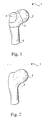
- The present invention will be now described, for illustrative but not limitative purposes, according to its preferred embodiments, with particular reference to the figures of the enclosed drawings, wherein:
-
figure 1 shows typical humerus epiphysial fractures; -
figure 2 shows a schematic section of humerus wherein a typical anatomical curvature; -
figure 3 shows an exploded section view of humerus modular prosthesis according to the present invention; -
figure 4 shows a prosthesis according tofigure 3 placed on a humerus; -
figure 5 shows a second embodiment of the prosthesis according to the present invention; -
figure 5a shows a section view of the shaft on which a spiral band is applied for fixing stem element to the humerus bone tissue; -
figure 6 shows a first embodiment of a prism shaped support element; -
figure 6a shows a second embodiment of the support element; and -
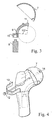
figure 7 shows a second embodiment of the prosthesis according to the present invention. - Making reference to
figure 1 , it is possible observing the parts where statistically it has been noted thathumerus 1 fractures. Analysing the figure it is evident that often, obviously if bone tissue, age and other specific features permit it, it is possible recomposing fracture, thus parts of thehead 2, ofsurgical neck 3 and 4 anddiaphysial 5. - It clearly indicates that it would be suitable having at disposal a prosthesis permitting a fast application, a low invasivity level, and that can promote a progressive vascularization of bone tissue with its consequent recovery.
- Making now reference to
figure 2 , always on the basis of statistic studies, it has been revealed that human anatomy provides thatcurvature 6 in the surgical neck, under thehead 2, is substantially constant independently from the age of the person. - On the basis of the above observation, it is possible realising a prosthesis that can be substantially adapted to all fractures and that can be comprised of a lower number of modular elements, as well as permitting an anatomical reconstruction promoting reconstruction of individual anatomic orientation of the humerus head.
- Making reference to
figure 3 , it is possible observing that above prosthesis is mainly comprised of three elements: acup 7, astem element 8 and a bridge orcoupling element 9. The latter is suitable to couple by its ends with saidcup 7 and saidshaft 8. - Nowadays, in fact, among prosthesis instruments destined to the humerus head it is not provided a surface prosthesis component for humerus head fractures and a very small prosthesis permitting a complete medial reconstruction of the fracture.
-
Cup 7 has a concave shape. It has such a curvature to permit introduction of convex surface within glenoid cavity. Obviously, its measure and dimension will be a function of the patient anatomy. - Concave surface is suitable to receive and contain fracture bone fragments, permitting at the same time to keep them joined after the fracture recomposition.
-
Stem element 8 that is introduced by surgery within the humerus diaphysial channel can have a cylindrical or conical shape, according to the fixing needing, and that can have openings for fixing the same without cement (by screws). - Said
bridge 9 is provided with coupling means 10, 11, suitable to permit fixing to thestem element 8 and to thecup 7, respectively, as it will be described in greater detail in the following. -
Figure 4 shows application of prosthesis according to the present invention to ahumerus head 2 with a multiple fracture. -
Stem element 8 is introduced within thehumerus diaphyseal channel 5.Bridge 9 is coupled with saidstem element 8 and saidcup 7 by saidmeans bridge 9 curvature is an anatomical constant, so that it is necessary providing a limited number of bridge element to adapt prosthesis to every anatomy. - Cup is maintained in its position by
bridge 9, thanks to its concave surface. This permits containing fragments of fracture permitting vascularization of bone tissue and its restoring. -
Figure 4 also shows two further containment elements, particularly ascrew 12 and aband 13. - Said
screw 12 can be introduced in the rear part of thehumerus head 2, coupling with a threading 14 realised on the concave surface of saidcup 7. -
Band 13 is comprised of a shape memory alloy. It promotes coupling of the fracture fragment. It is directly applied on the bone and is fixed on thescrew 12 head. - It is possible providing a projection on the concave surface of the
cup 7, in spite ofscrew 12 andband 13, and a flexible wire fixed to said projection (not shown in the figures). Said projection can be made integral with the diaphysial cortical, by tightening the wire passed through a suitable hole and fixed to the humerus. Once said wire is passed through bone tissue, connecting and fixing its parts, in order to recomposing the fracture. Wire is then cut, disposing the needle. Free end of the wire is then fixed to the humerus by standard fixing means, such as plates and like. -
Figure 5 shows a second embodiment of the present invention. - In this case,
shaft 8 comprises a hollow cylinder 8' suitable to be introduced within the humerus diaphysial channel. This permits a higher mounting simplicity and replacing of the same prosthesis. - Fixing of
shaft 8 within cylinder 8' can occur by screwing. This permits adjusting depth of introduction. - Furthermore, it is provided possibility of applying a paste or a
second band 8" on the cylinder 8' outer surface, as it can be observed fromfigure 5a . It permits more safely fixing cylinder 8', mainly in cases delicate or osteoporosis bones are involved. - Coupling means 11 are preferably comprised of a housing 11', obtained on the
cup 7 edge, and an element 11', connected, at one end of thebridge 9 and suitable to engage with said housing 11'. Said housing 11' is comprised of shape memory material, so as to fix withelement 11 ". Said housing 11' can be also comprised of titanium alloy, or any other material. - A further embodiment of the present invention is shown in
figures 6, 6a and 7 . - More specifically,
figures 6 and 6a showsupport structures 15 and 15', that in the embodiment offigure 6 has the shape of a parallelepiped with triangular base, to be inserted under thehumerus head 2. - Said
support structure 15 is comprised by an alloy network structure, wherein it is possible providing only elements along the main corners. Therefore, saidprism 15 is hollow. - Said
support structure 15 permits replacing fragments at the base of thehead 2, when they cannot be recovered, when bone fragments are much damaged or squashed, and in any case supporting humerus head. Theabove support structure 15 is thus used as additional support. In other words, saidsupport structure 15 is placed under thecup 7, if necessary. - Its network structure permits employing both the
bridge 9 and thescrews 12 and theband 13. particularly, screw 12 can even completely cross it, permitting its screwing with threading 14. - Said osteosynthesis support structure can be advantageously used alone for particular fractures of humerus osteosynthesis.
- Support structure 15' of
figure 6a has a more complex shape, to be possibly used for more serious fractures. In this case, it is provided a network andwindows 15" aligned each other, in order to permit guided passage of containment screws. - Said
structures 15 or 15' permit replacing fragments at the base of thehead 2, when they cannot be recovered, with bone fragments much damaged or squashed, and in any case supporting the humerus head. - Above-mentioned
structures 15 or 15' are used as additional support. In other words, saidstructures 15 or 15' are placed under thecup 7, if necessary. Network structure permits using both thebridge 9 and screws 12 andband 13. particularly, screw 12 can also completely cross it, incase support structure 15, permitting its screwing with threading 14. - After having reconstructed anatomy of humerus proximal tertius, placing in situ the
support structure 15, preferably a triangular support structure, permitting supporting both large and small tuberosity, and after having positioned humerus head, from which cartilage has been removed, it is possible implanting, using saidsupport structure 15, possibly integral or integrating thecoupling element 9. Saidsupport structure 15 thus permits reconstructing both bone proximal tertius and making a prosthesis of the partly destroyed cephalic prosthesis, with a prosthesis with a very small surface. In other words,support element 15, preferably comprised of titanium, represents a small stem occupying only meta-diaphysis on whichcup element 7 can be implanted. Saidcup element 7 can have central or coupling means 10 - 11, or they can be offset of few millimetres, such as a frusto-conical implant of about 3 - 4 cm, suitable to be fixedly coupled with a corresponding cavity realised onsupport elements 15 with a different dimension suitable to receive the same. In this way it is possible implanting a surface prosthesis on a fracture by the original technique of reconstruction. - It is possible using the above cup provided with projection and tension wire. Said wire can be passed through the network.
- Said
structure 15 or 15' can be crossed by and fixed to saidcylindrical stem 8 with its distal and proximal portions holed so as to be used as a nail blocked for treating plural-fragments fractures ofhumerus head 2. - Thus use of a network structure is preferred since it permits:
- reducing weight of the same support structure and thus of the whole prosthesis;
- - - permitting the passage through its volume of further fixing elements.
-
Figure 7 shows the use ofparallelepiped 15. in case it is not necessary replacinghead 2 bycup 7, it is in any case placing saidparallelepiped 15, using it as the sole prosthesis element, always at the base of the humerus head, as support of the same bone and not of theprosthesis cup 7. Then, threaded or not wires offiches 16 are applied, passing through thehumerus head 2. they are fixed by anchoring means such asjaws 17, or jaws andplates 18, fixed byscrews 19. - Obviously, said wires or
fiches 16 can pass through theparallelepiped 15. - A further embodiment of the present invention provides that
support element 15 is integral withbridge 9, or is an integral part of the same. In this case,support element 15 is not a network. - Said
support element 15 can also be coupled with thecup 7 by a frusto-conical projection realised on the concave surface of the same, with a matching cavity. - On the basis of the previous specification, it can be noted that basic feature of the present invention is that it permits recovering damaged bone tissue, also due to disassembled fractures, promoting vascularization.
- A first advantage of the present invention is the fact that it permits faster recovery time.
- A second advantage of the present invention is that prosthesis, having the minimum dimension, permits an optimum view of where fixing on the rear part the rotator cuff, and proper orientation of cartilaginous surface.
- - Furthermore, providing a reduced number of elements permits a quick choice and assembling of prosthesis elements better conforming to the patient anatomy, with a high adaptability to different patients.
- A third advantage of the present invention is that of permitting reconstruction of large and small tuberosity.
- The present invention has been described for illustrative but not limitative purposes, according to its preferred embodiments, but it is to be understood that modifications and/or changes can be introduced by those skilled in the art without departing from the relevant scope as defined in the enclosed claims.
Claims (34)
- Improved osteosynthesis modular prosthesis, particularly for humerus osteosynthesis, comprising
a stem element (8) insertable within a diaphyseal channel of a bone, particularly within humerus diaphyseal channel;
a cup element (7) having a convex surface suitable to be introduced within a joint cavity, particularly within a scapular glenoid cavity, said cup element (7) having a concave surface suitable to contain and keep joined bone fragments, particularly fragments of humerus epiphysial part, permitting vascularization and the consequent recovery of bone tissue;
a coupling element (9) having a first and a second end and comprising first coupling means (11), suitable to couple said first end to said cup element (7) and second coupling means (10) suitable to couple said first end to said stem element (8);
characterised in that
said coupling element (9) has a curvature (6) corresponding to the surgical neck profile of said bone and is coupled to a portion of the lower edge of said cup element (7). - Prosthesis according to claim 1, characterized in that said coupling means (10, 11) fix said coupling element (9) with the base of said cup element (7).
- Prosthesis according to one of the preceding claims 1 or 2, characterized in that said first coupling means (11) couple said coupling element (9) with the concave surface of said cup element (7).
- Prosthesis according to one of the preceding claims, characterized in that said first coupling means (11) are comprised of a cavity (11 ") and of an element (11') suitable to engage with said cavity (11 ").
- Prosthesis according to claim 4, characterized in that said element (11') has a frusto-conical shape.
- Prosthesis according to one of the preceding claims 4 or 5, characterized in that said cavity is comprised of a shape memory material and/or by titanium alloy and/or titanium.
- Prosthesis according to one of the preceding claims, characterized in that said stem element (8) has a cylindrical shape.
- Prosthesis according to one of the preceding claims 1 - 6, characterized in that said stem element (8) has a conical shape.
- Prosthesis according to one of the preceding claims, characterized in that said prosthesis comprises containment means (12, 13).
- Prosthesis according to claim 9, characterized in that said containment means are comprised of a screw (12) suitable to couple with the concave surface of said cup element (7), said cup element (7) comprising a threading (14) on its concave surface.
- Prosthesis according to one of the preceding claims 9 or 10, characterized in that said containment means comprise a band (13) suitable to tighten said epiphysial end, particularly humerus head.
- Prosthesis according to claim 11, characterized in that said band (13) is comprised of memory shape material.
- Prosthesis according to one of the preceding claims 11 or 12, characterized in that said band (13) provides a through hole, though which said screw (12) is passed.
- Prosthesis according to one of the preceding claims 9 - 13, characterized in that said containment means comprise a wire having a first end fixed to the concave surface of said cup element (7) and a second end fixed to a needle , so that said needle can be passed through the bone tissue and fixed to the humerus, maintaining bone fragments joined, particularly humerus epiphysial part fragments, cutting said wire and blocking the same by blocking means in the desired position.
- Prosthesis according to claim 14, characterized in that said wire is a metallic wire.
- Prosthesis according to one of the preceding claims 9 - 15, characterized in that said containment means comprise at least a wire, suitable to be introduced within the bone tissue, and blocking means, suitable to block said at least a wire in the desired position.
- Prosthesis according to claim 16, characterized in that said at least a wire has a threading on at least an end.
- Prosthesis according to one of the preceding claims 14 - 17, characterized in that said blocking means comprise jaws (17), preferably comprised of metal.
- Prosthesis according to one of the preceding claims 14 - 18, characterized in that said blocking means comprise at least a plate (18) and at least a screw (19).
- Prosthesis according to one of the preceding claims, characterized in that said prosthesis comprises anti-sliding means, provided on the lateral surface of said stem element, said anti-sliding means being suitable to create friction with the inner surface of said humerus diaphyseal channel.
- Prosthesis according to claim 20, characterized in that said anti-sliding means comprise a paste and/or a further band, preferably comprised of memory shape material.
- Prosthesis according to one of the preceding claims 20 or 21, characterized in that said anti-sliding means comprise acrylic cement.
- Prosthesis according to one of the preceding claims, characterized in that said stem element is comprised of an inner element (8) and of an outer element (8'), said outer element (8') being suitable to be fixed within said diaphyseal channel, particularly humerus diaphyseal channel.
- Prosthesis according to claim 23, characterized in that said outer element (8') has a cylindrical shape.
- Prosthesis according to one of the preceding claims 23 or 24, characterized in that said stem element (8) comprises fixing means for fixing said inner element and said outer element (8').
- Prosthesis according to claims 25, characterized in that said fixing means comprise a threading on said inner element (8) coupling with a corresponding threading on the inner surface of said outer element (8'), so that when said inner element (8) is threaded within said outer element (8'), introduction depth can be adjusted.
- Prosthesis according to one of the preceding claims 25 or 26, characterized in that said fixing means comprise a fixing material, such as acrylic cement.
- Prosthesis according to one of the preceding claims, characterized in that said prosthesis comprises a support element (15; 15') suitable to be introduced at the base of the bone damaged epiphysial end, particularly at the humerus head base.
- Prosthesis according to claim 28, characterized in that said support element is integral with said coupling element (9) or is an integral part of the same, and can be coupled with said cup element (7).
- Prosthesis according to one of the preceding claims 28 - 29, characterized in that said support element (15, 15') has a polyhedral shape.
- Prosthesis according to one of the preceding claims 28 - 30, characterized in that said polyhedron is a parallelepipedal or triangularly shaped pyramid.
- Prosthesis according to one of the preceding claims 28 - 31, characterized in that said support element is comprised of a plurality of rods, forming the corners of a polyhedron.
- Prosthesis according to one of the preceding claims 28 - 32, characterized in that said support element provides openings (15") for realising guides for containment means and/or fixing means.
- Prosthesis according to one of the preceding claims, characterized in that said cup element (7) is suited for being applied within said bone cavity.
Applications Claiming Priority (2)
| Application Number | Priority Date | Filing Date | Title |
|---|---|---|---|
| IT000265A ITRM20050265A1 (en) | 2005-05-27 | 2005-05-27 | MODULAR PROSTHESIS REFINED FOR OSTEOSYNTHESIS, IN PARTICULAR FOR THE OSTEOSYNTHESIS OF THE HUMERUS. |
| PCT/IT2006/000396 WO2006126238A2 (en) | 2005-05-27 | 2006-05-26 | Improved osteosynthesis modular prosthesis, particularly for humerus osteosynthesis |
Publications (2)
| Publication Number | Publication Date |
|---|---|
| EP1903993A2 EP1903993A2 (en) | 2008-04-02 |
| EP1903993B1 true EP1903993B1 (en) | 2013-07-17 |
Family
ID=36943794
Family Applications (1)
| Application Number | Title | Priority Date | Filing Date |
|---|---|---|---|
| EP06766301.3A Not-in-force EP1903993B1 (en) | 2005-05-27 | 2006-05-26 | Improved osteosynthesis modular prosthesis, particularly for humerus osteosynthesis |
Country Status (4)
| Country | Link |
|---|---|
| US (1) | US8097040B2 (en) |
| EP (1) | EP1903993B1 (en) |
| IT (1) | ITRM20050265A1 (en) |
| WO (1) | WO2006126238A2 (en) |
Families Citing this family (55)
| Publication number | Priority date | Publication date | Assignee | Title |
|---|---|---|---|---|
| EP2314257B9 (en) | 2000-05-01 | 2013-02-27 | ArthroSurface, Inc. | System for joint resurface repair |
| US7678151B2 (en) | 2000-05-01 | 2010-03-16 | Ek Steven W | System and method for joint resurface repair |
| US6610067B2 (en) | 2000-05-01 | 2003-08-26 | Arthrosurface, Incorporated | System and method for joint resurface repair |
| US7163541B2 (en) | 2002-12-03 | 2007-01-16 | Arthrosurface Incorporated | Tibial resurfacing system |
| US8177841B2 (en) | 2000-05-01 | 2012-05-15 | Arthrosurface Inc. | System and method for joint resurface repair |
| US7914545B2 (en) | 2002-12-03 | 2011-03-29 | Arthrosurface, Inc | System and method for retrograde procedure |
| US7901408B2 (en) | 2002-12-03 | 2011-03-08 | Arthrosurface, Inc. | System and method for retrograde procedure |
| US8388624B2 (en) | 2003-02-24 | 2013-03-05 | Arthrosurface Incorporated | Trochlear resurfacing system and method |
| WO2005051231A2 (en) | 2003-11-20 | 2005-06-09 | Arthrosurface, Inc. | Retrograde delivery of resurfacing devices |
| JP2008504107A (en) * | 2004-06-28 | 2008-02-14 | アースロサーフィス・インコーポレーテッド | Joint surface replacement system |
| US7828853B2 (en) | 2004-11-22 | 2010-11-09 | Arthrosurface, Inc. | Articular surface implant and delivery system |
| US20070225821A1 (en) | 2006-03-21 | 2007-09-27 | Axiom Orthopaedics, Inc. | Femoral and humeral stem geometry and implantation method for orthopedic joint reconstruction |
| AU2007332787A1 (en) | 2006-12-11 | 2008-06-19 | Arthrosurface Incorporated | Retrograde resection apparatus and method |
| US8308806B2 (en) * | 2007-01-11 | 2012-11-13 | Depuy Products, Inc. | Orthopaedic stem with protrusion and associated surgical procedure |
| WO2009111481A1 (en) | 2008-03-03 | 2009-09-11 | Arthrosurface Incorporated | Bone resurfacing system and method |
| WO2009114389A2 (en) | 2008-03-10 | 2009-09-17 | Eduardo Gonzalez-Hernandez | Bone fixation system |
| WO2009128846A1 (en) | 2008-04-17 | 2009-10-22 | Mgh Meddesign, Llc | Soft tissue attachment system and clip |
| US10945743B2 (en) | 2009-04-17 | 2021-03-16 | Arthrosurface Incorporated | Glenoid repair system and methods of use thereof |
| WO2010121250A1 (en) | 2009-04-17 | 2010-10-21 | Arthrosurface Incorporated | Glenoid resurfacing system and method |
| CA3064646C (en) | 2009-04-17 | 2023-01-03 | Arthrosurface Incorporated | Glenoid resurfacing system and method |
| GB2471290A (en) * | 2009-06-23 | 2010-12-29 | Keith Borowsky | Joint repair apparatus |
| BR112012022482A2 (en) | 2010-03-05 | 2016-07-19 | Arthrosurface Inc | tibial surface recomposition system and method. |
| US8961573B2 (en) | 2010-10-05 | 2015-02-24 | Toby Orthopaedics, Inc. | System and method for facilitating repair and reattachment of comminuted bone portions |
| WO2012058448A2 (en) | 2010-10-27 | 2012-05-03 | Toby Orthopaedics, Llc | System and method for fracture replacement of comminuted bone fractures or portions thereof adjacent bone joints |
| GB201101896D0 (en) | 2011-02-04 | 2011-03-23 | Depuy Ireland Ltd | Arthroplasty plate |
| US9254154B2 (en) | 2011-03-03 | 2016-02-09 | Toby Orthopaedic, Inc. | Anterior lesser tuberosity fixed angle fixation device and method of use associated therewith |
| GB201105243D0 (en) | 2011-03-29 | 2011-05-11 | Depuy Ireland | An implant |
| US9066716B2 (en) | 2011-03-30 | 2015-06-30 | Arthrosurface Incorporated | Suture coil and suture sheath for tissue repair |
| US9364333B1 (en) * | 2011-04-01 | 2016-06-14 | The Lonnie and Shannon Paulos Trust | Transosseous methods and systems for joint repair |
| US9271772B2 (en) * | 2011-10-27 | 2016-03-01 | Toby Orthopaedics, Inc. | System and method for fracture replacement of comminuted bone fractures or portions thereof adjacent bone joints |
| US9730797B2 (en) | 2011-10-27 | 2017-08-15 | Toby Orthopaedics, Inc. | Bone joint replacement and repair assembly and method of repairing and replacing a bone joint |
| EP2604226A1 (en) | 2011-10-31 | 2013-06-19 | Tornier Orthopedics Ireland Ltd. | Modular reverse shoulder prosthesis |
| US9402667B2 (en) | 2011-11-09 | 2016-08-02 | Eduardo Gonzalez-Hernandez | Apparatus and method for use of the apparatus for fracture fixation of the distal humerus |
| EP2804565B1 (en) | 2011-12-22 | 2018-03-07 | Arthrosurface Incorporated | System for bone fixation |
| US9078673B2 (en) * | 2012-01-18 | 2015-07-14 | Ortho Innovations, Inc. | Method of humeral head resurfacing and/or replacement and system for accomplishing the method |
| DE112013003358T5 (en) | 2012-07-03 | 2015-03-19 | Arthrosurface, Inc. | System and procedure for joint surface replacement and repair |
| US9398928B2 (en) | 2012-09-28 | 2016-07-26 | DePuy Synthes Products, Inc. | Adjustable height arthroplasty plate |
| CN104755047B (en) | 2012-10-29 | 2017-05-24 | 东尼尔矫形爱尔兰有限公司 | Systems for Reverse Shoulder Implants |
| US9283008B2 (en) | 2012-12-17 | 2016-03-15 | Toby Orthopaedics, Inc. | Bone plate for plate osteosynthesis and method for use thereof |
| US8968409B2 (en) | 2013-03-13 | 2015-03-03 | DePuy Synthes Products, LLC | Orthopaedic implant and method of installing same |
| US9333014B2 (en) | 2013-03-15 | 2016-05-10 | Eduardo Gonzalez-Hernandez | Bone fixation and reduction apparatus and method for fixation and reduction of a distal bone fracture and malunion |
| US9492200B2 (en) | 2013-04-16 | 2016-11-15 | Arthrosurface Incorporated | Suture system and method |
| US9931219B2 (en) | 2014-03-07 | 2018-04-03 | Arthrosurface Incorporated | Implant and anchor assembly |
| US11607319B2 (en) | 2014-03-07 | 2023-03-21 | Arthrosurface Incorporated | System and method for repairing articular surfaces |
| US10624748B2 (en) | 2014-03-07 | 2020-04-21 | Arthrosurface Incorporated | System and method for repairing articular surfaces |
| WO2016057919A1 (en) * | 2014-10-10 | 2016-04-14 | Encore Medical, Lp Dba Djo Surgical | Shoulder proximal centralizer and method to use the same |
| CA2991475A1 (en) * | 2015-07-06 | 2017-01-12 | Da Vinci S.R.L. | Improved prosthesis for osteosynthesis |
| WO2017184792A1 (en) | 2016-04-19 | 2017-10-26 | Imascap Sas | Pre-operatively planned humeral implant and planning method |
| CA3108761A1 (en) | 2017-08-04 | 2019-02-07 | Arthrosurface Incorporated | Multicomponent articular surface implant |
| EP3520738B1 (en) * | 2018-01-31 | 2021-01-06 | Tornier | Prosthesis for a fractured long bone |
| GB2609338B (en) | 2019-03-12 | 2023-06-14 | Arthrosurface Inc | Humeral and glenoid articular surface implant systems and methods |
| AU2021202801A1 (en) | 2020-05-07 | 2021-11-25 | Howmedica Osteonics Corp. | Stemless metaphyseal humeral implant |
| CN111603270B (en) * | 2020-06-22 | 2024-07-30 | 北京爱康宜诚医疗器材有限公司 | Humerus prosthesis |
| CN112603607A (en) * | 2020-12-28 | 2021-04-06 | 北京市春立正达医疗器械股份有限公司 | Joint prosthesis |
| US11813169B1 (en) * | 2021-04-27 | 2023-11-14 | Zarija Djurovic | Anatomy preserving shoulder joint replacement device with narrow spherical bearing articulator-interpolation segment |
Family Cites Families (12)
| Publication number | Priority date | Publication date | Assignee | Title |
|---|---|---|---|---|
| US4064567A (en) * | 1976-09-15 | 1977-12-27 | The Sampson Corporation | Prosthesis-to-bone interface system |
| FR2579454A1 (en) * | 1985-03-28 | 1986-10-03 | Rambert Andre | Glenohumeral prosthesis |
| US5609635A (en) * | 1988-06-28 | 1997-03-11 | Michelson; Gary K. | Lordotic interbody spinal fusion implants |
| FR2669528B1 (en) * | 1990-11-23 | 1993-02-05 | Doursounian Levon | IMPLANT FOR THE OSTEOSYNTHESIS OF FRACTURES OF THE UPPER END OF THE HUMERUS. |
| FR2727005B1 (en) | 1994-11-18 | 1997-04-18 | Euros Sa | ANTERIOR STABILIZATION DEVICE OF THE CERVICAL RACHIS |
| IT1273952B (en) * | 1995-02-22 | 1997-07-11 | Francesco Caracciolo | TOTAL ANATOMICAL PROSTHESIS OF THE HIP |
| KR100392090B1 (en) | 1995-10-20 | 2004-02-05 | 신테스 아게 츄어 | Intervertebral implant with cage and rotor |
| US5776194A (en) * | 1996-04-25 | 1998-07-07 | Nuvana Medical Innovations, Llc | Intermedullary rod apparatus and methods of repairing proximal humerus fractures |
| EP0940126A1 (en) * | 1998-03-03 | 1999-09-08 | Lieven De Wilde | An improved modular joint prosthesis |
| US6783549B1 (en) | 2001-07-27 | 2004-08-31 | Biomet, Inc. | Modular humeral head resurfacing system |
| US7186269B2 (en) * | 2003-05-16 | 2007-03-06 | Jean-Maxwell Cyprien | Composite shoulder prosthesis |
| ES2332789T3 (en) * | 2004-02-05 | 2010-02-12 | Exactech, Inc. | SHOULDER PROTESIS WITH HUMERAL FRACTURE SIZE. |
-
2005
- 2005-05-27 IT IT000265A patent/ITRM20050265A1/en unknown
-
2006
- 2006-05-26 US US11/920,753 patent/US8097040B2/en not_active Expired - Fee Related
- 2006-05-26 WO PCT/IT2006/000396 patent/WO2006126238A2/en not_active Ceased
- 2006-05-26 EP EP06766301.3A patent/EP1903993B1/en not_active Not-in-force
Also Published As
| Publication number | Publication date |
|---|---|
| ITRM20050265A1 (en) | 2006-11-28 |
| WO2006126238A3 (en) | 2007-05-18 |
| WO2006126238A2 (en) | 2006-11-30 |
| US8097040B2 (en) | 2012-01-17 |
| EP1903993A2 (en) | 2008-04-02 |
| US20090105838A1 (en) | 2009-04-23 |
Similar Documents
| Publication | Publication Date | Title |
|---|---|---|
| US8097040B2 (en) | Osteosynthesis modular prosthesis, particularly for humerus osteosynthesis | |
| RU2461365C2 (en) | Instruments for joint surgery | |
| TW299228B (en) | ||
| RU2344792C2 (en) | Spine division devise with modular fixation | |
| US8685069B2 (en) | Bone plate and plating system for use of same | |
| US8945234B2 (en) | Prosthesis having a metaphyseal element | |
| US20230414261A1 (en) | Platform fracture fixation implants | |
| US20120185057A1 (en) | Malleolar replacement devices | |
| US20120179268A1 (en) | Metatarsal Implant | |
| US20070185582A1 (en) | Methods and Devices for Resurfacing the Wrist Joint | |
| US20070173842A1 (en) | Device and Method for the Placement of Spinal Fixators | |
| GB2338652A (en) | Vertebral body replacement | |
| JP2001511389A (en) | Intramedullary nail system for use in fracture treatment or bone lengthening in all bones of humans and animals | |
| EP3531982B1 (en) | Prosthesis for reconstruction of distal and proximal radioulnar joints. | |
| CN215018778U (en) | Intelligent orthopedic implant based on optical fiber sensor and monitoring system thereof | |
| Katzer et al. | Component exchange in treatment of periprosthetic femoral fractures | |
| WO2021260616A1 (en) | Humeral repair implant | |
| KR20180050285A (en) | Improved prosthesis for bone fusion | |
| AU2005304745A1 (en) | Metatarsal implant | |
| WO2003075801A1 (en) | Improved socket prosthesis | |
| US12472072B2 (en) | Joint implant apparatus, system, and method | |
| RU2201174C2 (en) | Cotyloid cavity endoprosthesis | |
| CN215079517U (en) | Intelligent orthopedic implant based on induction wire and monitoring system thereof | |
| SU1082423A1 (en) | Endoprosthesis of hip joint | |
| Green | External fixation mounting strategies for difficult locations |
Legal Events
| Date | Code | Title | Description |
|---|---|---|---|
| PUAI | Public reference made under article 153(3) epc to a published international application that has entered the european phase |
Free format text: ORIGINAL CODE: 0009012 |
|
| AK | Designated contracting states |
Kind code of ref document: A2 Designated state(s): AT BE BG CH CY CZ DE DK EE ES FI FR GB GR HU IE IS IT LI LT LU LV MC NL PL PT RO SE SI SK TR |
|
| 17P | Request for examination filed |
Effective date: 20071129 |
|
| RAP1 | Party data changed (applicant data changed or rights of an application transferred) |
Owner name: ARTHREX, INC. |
|
| DAX | Request for extension of the european patent (deleted) | ||
| 17Q | First examination report despatched |
Effective date: 20120210 |
|
| GRAP | Despatch of communication of intention to grant a patent |
Free format text: ORIGINAL CODE: EPIDOSNIGR1 |
|
| GRAS | Grant fee paid |
Free format text: ORIGINAL CODE: EPIDOSNIGR3 |
|
| RAP1 | Party data changed (applicant data changed or rights of an application transferred) |
Owner name: RUSSO, ENRICO |
|
| GRAA | (expected) grant |
Free format text: ORIGINAL CODE: 0009210 |
|
| AK | Designated contracting states |
Kind code of ref document: B1 Designated state(s): AT BE BG CH CY CZ DE DK EE ES FI FR GB GR HU IE IS IT LI LT LU LV MC NL PL PT RO SE SI SK TR |
|
| REG | Reference to a national code |
Ref country code: GB Ref legal event code: FG4D |
|
| REG | Reference to a national code |
Ref country code: CH Ref legal event code: EP |
|
| REG | Reference to a national code |
Ref country code: IE Ref legal event code: FG4D |
|
| REG | Reference to a national code |
Ref country code: AT Ref legal event code: REF Ref document number: 621693 Country of ref document: AT Kind code of ref document: T Effective date: 20130815 |
|
| REG | Reference to a national code |
Ref country code: DE Ref legal event code: R096 Ref document number: 602006037381 Country of ref document: DE Effective date: 20130912 |
|
| REG | Reference to a national code |
Ref country code: AT Ref legal event code: MK05 Ref document number: 621693 Country of ref document: AT Kind code of ref document: T Effective date: 20130717 |
|
| REG | Reference to a national code |
Ref country code: NL Ref legal event code: VDEP Effective date: 20130717 |
|
| REG | Reference to a national code |
Ref country code: LT Ref legal event code: MG4D |
|
| PG25 | Lapsed in a contracting state [announced via postgrant information from national office to epo] |
Ref country code: LT Free format text: LAPSE BECAUSE OF FAILURE TO SUBMIT A TRANSLATION OF THE DESCRIPTION OR TO PAY THE FEE WITHIN THE PRESCRIBED TIME-LIMIT Effective date: 20130717 Ref country code: BE Free format text: LAPSE BECAUSE OF FAILURE TO SUBMIT A TRANSLATION OF THE DESCRIPTION OR TO PAY THE FEE WITHIN THE PRESCRIBED TIME-LIMIT Effective date: 20130717 Ref country code: SE Free format text: LAPSE BECAUSE OF FAILURE TO SUBMIT A TRANSLATION OF THE DESCRIPTION OR TO PAY THE FEE WITHIN THE PRESCRIBED TIME-LIMIT Effective date: 20130717 Ref country code: CY Free format text: LAPSE BECAUSE OF FAILURE TO SUBMIT A TRANSLATION OF THE DESCRIPTION OR TO PAY THE FEE WITHIN THE PRESCRIBED TIME-LIMIT Effective date: 20130703 Ref country code: AT Free format text: LAPSE BECAUSE OF FAILURE TO SUBMIT A TRANSLATION OF THE DESCRIPTION OR TO PAY THE FEE WITHIN THE PRESCRIBED TIME-LIMIT Effective date: 20130717 Ref country code: PT Free format text: LAPSE BECAUSE OF FAILURE TO SUBMIT A TRANSLATION OF THE DESCRIPTION OR TO PAY THE FEE WITHIN THE PRESCRIBED TIME-LIMIT Effective date: 20131118 Ref country code: IS Free format text: LAPSE BECAUSE OF FAILURE TO SUBMIT A TRANSLATION OF THE DESCRIPTION OR TO PAY THE FEE WITHIN THE PRESCRIBED TIME-LIMIT Effective date: 20131117 |
|
| PG25 | Lapsed in a contracting state [announced via postgrant information from national office to epo] |
Ref country code: LV Free format text: LAPSE BECAUSE OF FAILURE TO SUBMIT A TRANSLATION OF THE DESCRIPTION OR TO PAY THE FEE WITHIN THE PRESCRIBED TIME-LIMIT Effective date: 20130717 Ref country code: NL Free format text: LAPSE BECAUSE OF FAILURE TO SUBMIT A TRANSLATION OF THE DESCRIPTION OR TO PAY THE FEE WITHIN THE PRESCRIBED TIME-LIMIT Effective date: 20130717 Ref country code: FI Free format text: LAPSE BECAUSE OF FAILURE TO SUBMIT A TRANSLATION OF THE DESCRIPTION OR TO PAY THE FEE WITHIN THE PRESCRIBED TIME-LIMIT Effective date: 20130717 Ref country code: SI Free format text: LAPSE BECAUSE OF FAILURE TO SUBMIT A TRANSLATION OF THE DESCRIPTION OR TO PAY THE FEE WITHIN THE PRESCRIBED TIME-LIMIT Effective date: 20130717 Ref country code: GR Free format text: LAPSE BECAUSE OF FAILURE TO SUBMIT A TRANSLATION OF THE DESCRIPTION OR TO PAY THE FEE WITHIN THE PRESCRIBED TIME-LIMIT Effective date: 20131018 Ref country code: ES Free format text: LAPSE BECAUSE OF FAILURE TO SUBMIT A TRANSLATION OF THE DESCRIPTION OR TO PAY THE FEE WITHIN THE PRESCRIBED TIME-LIMIT Effective date: 20131028 Ref country code: PL Free format text: LAPSE BECAUSE OF FAILURE TO SUBMIT A TRANSLATION OF THE DESCRIPTION OR TO PAY THE FEE WITHIN THE PRESCRIBED TIME-LIMIT Effective date: 20130717 |
|
| PG25 | Lapsed in a contracting state [announced via postgrant information from national office to epo] |
Ref country code: CY Free format text: LAPSE BECAUSE OF FAILURE TO SUBMIT A TRANSLATION OF THE DESCRIPTION OR TO PAY THE FEE WITHIN THE PRESCRIBED TIME-LIMIT Effective date: 20130717 |
|
| PG25 | Lapsed in a contracting state [announced via postgrant information from national office to epo] |
Ref country code: CZ Free format text: LAPSE BECAUSE OF FAILURE TO SUBMIT A TRANSLATION OF THE DESCRIPTION OR TO PAY THE FEE WITHIN THE PRESCRIBED TIME-LIMIT Effective date: 20130717 Ref country code: RO Free format text: LAPSE BECAUSE OF FAILURE TO SUBMIT A TRANSLATION OF THE DESCRIPTION OR TO PAY THE FEE WITHIN THE PRESCRIBED TIME-LIMIT Effective date: 20130717 Ref country code: SK Free format text: LAPSE BECAUSE OF FAILURE TO SUBMIT A TRANSLATION OF THE DESCRIPTION OR TO PAY THE FEE WITHIN THE PRESCRIBED TIME-LIMIT Effective date: 20130717 Ref country code: EE Free format text: LAPSE BECAUSE OF FAILURE TO SUBMIT A TRANSLATION OF THE DESCRIPTION OR TO PAY THE FEE WITHIN THE PRESCRIBED TIME-LIMIT Effective date: 20130717 Ref country code: DK Free format text: LAPSE BECAUSE OF FAILURE TO SUBMIT A TRANSLATION OF THE DESCRIPTION OR TO PAY THE FEE WITHIN THE PRESCRIBED TIME-LIMIT Effective date: 20130717 |
|
| PLBE | No opposition filed within time limit |
Free format text: ORIGINAL CODE: 0009261 |
|
| STAA | Information on the status of an ep patent application or granted ep patent |
Free format text: STATUS: NO OPPOSITION FILED WITHIN TIME LIMIT |
|
| 26N | No opposition filed |
Effective date: 20140422 |
|
| REG | Reference to a national code |
Ref country code: DE Ref legal event code: R097 Ref document number: 602006037381 Country of ref document: DE Effective date: 20140422 |
|
| PG25 | Lapsed in a contracting state [announced via postgrant information from national office to epo] |
Ref country code: LU Free format text: LAPSE BECAUSE OF FAILURE TO SUBMIT A TRANSLATION OF THE DESCRIPTION OR TO PAY THE FEE WITHIN THE PRESCRIBED TIME-LIMIT Effective date: 20140526 |
|
| REG | Reference to a national code |
Ref country code: CH Ref legal event code: PL |
|
| PG25 | Lapsed in a contracting state [announced via postgrant information from national office to epo] |
Ref country code: LI Free format text: LAPSE BECAUSE OF NON-PAYMENT OF DUE FEES Effective date: 20140531 Ref country code: CH Free format text: LAPSE BECAUSE OF NON-PAYMENT OF DUE FEES Effective date: 20140531 Ref country code: MC Free format text: LAPSE BECAUSE OF FAILURE TO SUBMIT A TRANSLATION OF THE DESCRIPTION OR TO PAY THE FEE WITHIN THE PRESCRIBED TIME-LIMIT Effective date: 20130717 |
|
| REG | Reference to a national code |
Ref country code: IE Ref legal event code: MM4A |
|
| PG25 | Lapsed in a contracting state [announced via postgrant information from national office to epo] |
Ref country code: IE Free format text: LAPSE BECAUSE OF NON-PAYMENT OF DUE FEES Effective date: 20140526 |
|
| REG | Reference to a national code |
Ref country code: FR Ref legal event code: PLFP Year of fee payment: 11 |
|
| PG25 | Lapsed in a contracting state [announced via postgrant information from national office to epo] |
Ref country code: BG Free format text: LAPSE BECAUSE OF FAILURE TO SUBMIT A TRANSLATION OF THE DESCRIPTION OR TO PAY THE FEE WITHIN THE PRESCRIBED TIME-LIMIT Effective date: 20130717 |
|
| PG25 | Lapsed in a contracting state [announced via postgrant information from national office to epo] |
Ref country code: HU Free format text: LAPSE BECAUSE OF FAILURE TO SUBMIT A TRANSLATION OF THE DESCRIPTION OR TO PAY THE FEE WITHIN THE PRESCRIBED TIME-LIMIT; INVALID AB INITIO Effective date: 20060526 Ref country code: TR Free format text: LAPSE BECAUSE OF FAILURE TO SUBMIT A TRANSLATION OF THE DESCRIPTION OR TO PAY THE FEE WITHIN THE PRESCRIBED TIME-LIMIT Effective date: 20130717 |
|
| REG | Reference to a national code |
Ref country code: DE Ref legal event code: R081 Ref document number: 602006037381 Country of ref document: DE Owner name: DA VINCI S.R.L., IT Free format text: FORMER OWNER: RUSSO, ENRICO, ROMA, IT |
|
| REG | Reference to a national code |
Ref country code: GB Ref legal event code: 732E Free format text: REGISTERED BETWEEN 20170427 AND 20170503 |
|
| REG | Reference to a national code |
Ref country code: FR Ref legal event code: PLFP Year of fee payment: 12 |
|
| REG | Reference to a national code |
Ref country code: FR Ref legal event code: TP Owner name: DA VINCI S.R.L., IT Effective date: 20170801 |
|
| REG | Reference to a national code |
Ref country code: FR Ref legal event code: PLFP Year of fee payment: 13 |
|
| PGFP | Annual fee paid to national office [announced via postgrant information from national office to epo] |
Ref country code: GB Payment date: 20180329 Year of fee payment: 13 |
|
| PGFP | Annual fee paid to national office [announced via postgrant information from national office to epo] |
Ref country code: DE Payment date: 20180524 Year of fee payment: 13 |
|
| PGFP | Annual fee paid to national office [announced via postgrant information from national office to epo] |
Ref country code: FR Payment date: 20180411 Year of fee payment: 13 |
|
| PGFP | Annual fee paid to national office [announced via postgrant information from national office to epo] |
Ref country code: IT Payment date: 20180917 Year of fee payment: 13 |
|
| REG | Reference to a national code |
Ref country code: DE Ref legal event code: R119 Ref document number: 602006037381 Country of ref document: DE |
|
| GBPC | Gb: european patent ceased through non-payment of renewal fee |
Effective date: 20190526 |
|
| PG25 | Lapsed in a contracting state [announced via postgrant information from national office to epo] |
Ref country code: DE Free format text: LAPSE BECAUSE OF NON-PAYMENT OF DUE FEES Effective date: 20191203 Ref country code: GB Free format text: LAPSE BECAUSE OF NON-PAYMENT OF DUE FEES Effective date: 20190526 Ref country code: IT Free format text: LAPSE BECAUSE OF NON-PAYMENT OF DUE FEES Effective date: 20190526 |
|
| PG25 | Lapsed in a contracting state [announced via postgrant information from national office to epo] |
Ref country code: FR Free format text: LAPSE BECAUSE OF NON-PAYMENT OF DUE FEES Effective date: 20190531 |