EP1903575A2 - Datenaufzeichnungsvorrichtung, Datenaufzeichnungsverfahren und Datenaufzeichnungsprogramm - Google Patents
Datenaufzeichnungsvorrichtung, Datenaufzeichnungsverfahren und Datenaufzeichnungsprogramm Download PDFInfo
- Publication number
- EP1903575A2 EP1903575A2 EP07017976A EP07017976A EP1903575A2 EP 1903575 A2 EP1903575 A2 EP 1903575A2 EP 07017976 A EP07017976 A EP 07017976A EP 07017976 A EP07017976 A EP 07017976A EP 1903575 A2 EP1903575 A2 EP 1903575A2
- Authority
- EP
- European Patent Office
- Prior art keywords
- section
- talking
- music
- data
- part section
- Prior art date
- Legal status (The legal status is an assumption and is not a legal conclusion. Google has not performed a legal analysis and makes no representation as to the accuracy of the status listed.)
- Withdrawn
Links
Images











Classifications
-
- G—PHYSICS
- G11—INFORMATION STORAGE
- G11B—INFORMATION STORAGE BASED ON RELATIVE MOVEMENT BETWEEN RECORD CARRIER AND TRANSDUCER
- G11B27/00—Editing; Indexing; Addressing; Timing or synchronising; Monitoring; Measuring tape travel
- G11B27/10—Indexing; Addressing; Timing or synchronising; Measuring tape travel
- G11B27/19—Indexing; Addressing; Timing or synchronising; Measuring tape travel by using information detectable on the record carrier
- G11B27/28—Indexing; Addressing; Timing or synchronising; Measuring tape travel by using information detectable on the record carrier by using information signals recorded by the same method as the main recording
-
- G—PHYSICS
- G11—INFORMATION STORAGE
- G11B—INFORMATION STORAGE BASED ON RELATIVE MOVEMENT BETWEEN RECORD CARRIER AND TRANSDUCER
- G11B20/00—Signal processing not specific to the method of recording or reproducing; Circuits therefor
- G11B20/10—Digital recording or reproducing
-
- G—PHYSICS
- G11—INFORMATION STORAGE
- G11B—INFORMATION STORAGE BASED ON RELATIVE MOVEMENT BETWEEN RECORD CARRIER AND TRANSDUCER
- G11B27/00—Editing; Indexing; Addressing; Timing or synchronising; Monitoring; Measuring tape travel
-
- G—PHYSICS
- G11—INFORMATION STORAGE
- G11B—INFORMATION STORAGE BASED ON RELATIVE MOVEMENT BETWEEN RECORD CARRIER AND TRANSDUCER
- G11B27/00—Editing; Indexing; Addressing; Timing or synchronising; Monitoring; Measuring tape travel
- G11B27/02—Editing, e.g. varying the order of information signals recorded on, or reproduced from, record carriers
- G11B27/031—Electronic editing of digitised analogue information signals, e.g. audio or video signals
-
- H—ELECTRICITY
- H04—ELECTRIC COMMUNICATION TECHNIQUE
- H04B—TRANSMISSION
- H04B1/00—Details of transmission systems, not covered by a single one of groups H04B3/00 - H04B13/00; Details of transmission systems not characterised by the medium used for transmission
- H04B1/06—Receivers
- H04B1/16—Circuits
-
- H—ELECTRICITY
- H04—ELECTRIC COMMUNICATION TECHNIQUE
- H04H—BROADCAST COMMUNICATION
- H04H60/00—Arrangements for broadcast applications with a direct linking to broadcast information or broadcast space-time; Broadcast-related systems
- H04H60/27—Arrangements for recording or accumulating broadcast information or broadcast-related information
-
- H—ELECTRICITY
- H04—ELECTRIC COMMUNICATION TECHNIQUE
- H04H—BROADCAST COMMUNICATION
- H04H60/00—Arrangements for broadcast applications with a direct linking to broadcast information or broadcast space-time; Broadcast-related systems
- H04H60/35—Arrangements for identifying or recognising characteristics with a direct linkage to broadcast information or to broadcast space-time, e.g. for identifying broadcast stations or for identifying users
- H04H60/37—Arrangements for identifying or recognising characteristics with a direct linkage to broadcast information or to broadcast space-time, e.g. for identifying broadcast stations or for identifying users for identifying segments of broadcast information, e.g. scenes or extracting programme ID
-
- H—ELECTRICITY
- H04—ELECTRIC COMMUNICATION TECHNIQUE
- H04H—BROADCAST COMMUNICATION
- H04H60/00—Arrangements for broadcast applications with a direct linking to broadcast information or broadcast space-time; Broadcast-related systems
- H04H60/56—Arrangements characterised by components specially adapted for monitoring, identification or recognition covered by groups H04H60/29-H04H60/54
- H04H60/58—Arrangements characterised by components specially adapted for monitoring, identification or recognition covered by groups H04H60/29-H04H60/54 of audio
Definitions
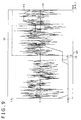
- the musical piece likelihood MS at a present point in time is equal to or higher than the determination threshold value, and accordingly a part corresponding to the musical piece likelihood MS in the program data is determined as a music part section (that is, music in the radio program).
- a part corresponding to the musical piece likelihood MS in the program data is determined as a music part section (that is, music in the radio program).
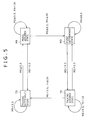
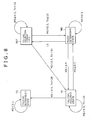
- the fourth state is thus a temporary processing state (this state will hereinafter be referred to as a talking assumed state TK) to which a transition is made from the music determined state MD to determine whether there is a boundary between the sections.
- the section identifying control unit 31 changes the processing state when the musical piece likelihood MS overpasses the determination threshold value in the talking determined state TD and the music determined state MD, and thereby identifies a music part section and a talking part section of the program data.
- the musical piece likelihood MS changes to become equal to or higher than the determination threshold value in the talking determined state TD and a case where the musical piece likelihood MS changes to become lower than the determination threshold value in the music determined state MD will be described separately.
- the section identifying control unit 31 can set a section of the program data which section corresponds to the inserted short-duration speech as a part of the music part section without identifying the section of the program data as a talking part section.
- the section identifying control unit 31 can identify the talking part section and the music part section of the program data such that the music part section and the talking part section form significant units as music and talking in the radio program.
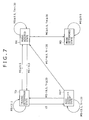
- the other state is thus a temporary state (this state will hereinafter be referred to as a talking assumption standby state) TKT to which a transition is made, as a preliminary stage for making a transition from the music determined state MD to the talking assumed state TK (FIG. 8).
- the section identifying control unit 31 performs the same process as the above-described first range detection and section identification process, and thereby identifies the talking part section and the music part section of the program data.
- the section identifying control unit 31 then changes the processing state from the music assumed state MK to the music determined state MD, and ends the first silence detection and section identification process.
- the section identifying control unit 31 generates section identifying information DI as a result of identifying the sections, and then sends the section identifying information DI to the dividing unit 21 via the output processing unit 35.
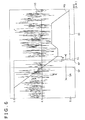
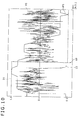
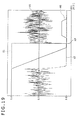
- the section identifying control unit 31 detects the rising edge position of the silence section LS detected by the sound volume level analysis processing unit 34 as the section boundary candidate position KP. It is therefore possible to minimize a silence part included at a start of the finally identified music part section, and thereby improve a listening feeling when the music part section is reproduced afterward.
- the section identifying control unit 31 determines that there is a possibility of music being ended and talking starting to be aired in the radio program. The section identifying control unit 31 thus changes the processing state from the talking assumption standby state TKT to the talking assumed state TK.
- the section identifying control unit 31 detects the section boundary candidate position KP in response to the detection of the silence section LS on the basis of the sound volume level VS, and thereafter identifies the position (that is, the section boundary) at which the music part section changes to the talking part section in the program data according to the changing of the musical piece likelihood MS to a value lower than the determination threshold value. Therefore, in the case where the silence section LS is inserted between the music and the talking in the radio program, the section identifying control unit 31 can identify the music part section and the talking part section of the program data with high accuracy by detecting the silence section LS and then checking the value of the musical piece likelihood MS.
- the section identifying control unit 31 detects the rising edge position of the silence section LS detected by the sound volume level analysis processing unit 34 as the section boundary candidate position KP. It is therefore possible to minimize a silence part included at a start of the finally identified talking part section, and thereby improve a listening feeling when the talking part section is reproduced afterward.
- the section identifying control unit 31 can detect each piece of music as one significant musical piece without erroneously detecting the plurality of consecutive pieces of music as one piece of music.
- the one state is thus a temporary state (this state will hereinafter be referred to as a talking determination standby state) TDT to which a transition is made, as a preliminary stage for returning from the music assumed state MK to the talking determined state TD (FIG. 12).
- this state it is assumed that when a silence section LS is detected in the talking assumed state TK, there is a possibility that the musical piece likelihood MS will hereafter change back to become equal to or higher than the determination threshold value (that is, there is a possibility of a silence part inserted during music in the radio program being detected).
- the section identifying control unit 31 starts the first range detection and section identification process.
- the processing state of the section identifying control unit 31 in the first range detection and section identification process is the music assumed state MK
- the section identifying control unit 31 detects the silence section LS by the sound volume level analysis processing unit 34
- the section identifying control unit 31 starts a first silence section determination process for determining whether the detected silence section LS is a part of the talking part section of the program data.
- This third standby determination time is set shorter than the music assumption determination time (30 seconds) in the music assumed state MK (for example 20 seconds in this case) because the talking determination standby state TDT is a state to which a transition is made so as to suspend the music assumed state MK temporarily.
- the section identifying control unit 31 in the talking determination standby state TDT clocks a time (this time will hereinafter be referred to as a talking determination standby time) Tt during which the talking determination standby state TDT is continued.
- a talking determination standby time Tt during which the talking determination standby state TDT is continued.
- the section identifying control unit 31 reserves determination and continues the talking determination standby state TDT.
- the talking determination standby time Tt is the third standby determination time or more
- the music assumption continuation time Tm clocked from the start of the music assumed state MK is less than the music assumption determination time, and the musical piece likelihood MS equal to or higher than the determination threshold value continues being supplied from the musical piece likelihood analysis processing unit 33 to the section identifying control unit 31 in the talking determination standby state TDT
- the section identifying control unit 31 determines that there is a possibility of talking being ended and music starting to be aired in the radio program.
- the section identifying control unit 31 thus changes the processing state from the talking determination standby state TDT to the music assumed state MK.
- the section identifying control unit 31 performs the same process as the above-described first range detection and section identification process, and thereby identifies the talking part section and the music part section of the program data.
- the section identifying control unit 31 then changes the processing state from the music assumed state MK to the music determined state MD, and ends the first silence section determination process.
- the section identifying control unit 31 generates section identifying information DI as a result of identifying the sections, and then sends the section identifying information DI to the dividing unit 21 via the output processing unit 35.
- the section identifying control unit 31 determines that the detected silence section LS is inserted as a part of talking in the radio program when the musical piece likelihood MS changes to become lower than the determination threshold value in the talking determination standby state TDT. Therefore, when a silence part is inserted during talking in the radio program, for example, the section identifying control unit 31 can continue processing without being misled by the inserted silence part, and properly identify the music part section and the talking part section of the program data.
- the section identifying control unit 31 starts the second range detection and section identification process.
- the processing state of the section identifying control unit 31 in the second range detection and section identification process is the talking assumed state TK
- the section identifying control unit 31 detects the silence section LS by the sound volume level analysis processing unit 34
- the section identifying control unit 31 starts a second silence section determination process for determining whether the detected silence section LS is a part of the music part section of the program data.
- the section identifying control unit 31 reserves determination and continues the music determination standby state MDT.
- the music determination standby time Tu is the fourth standby determination time or more
- the talking assumption continuation time Tn clocked from a start of the talking assumed state TK is the talking assumption determination time or more
- the musical piece likelihood MS lower than the determination threshold value continues being supplied from the musical piece likelihood analysis processing unit 33 to the section identifying control unit 31 in the music determination standby state MDT
- the section identifying control unit 31 determines that music is ended temporarily and talking starts to be aired in the radio program.
- the section identifying control unit 31 thus identifies the section change candidate position KP as a section boundary, identifies a side preceding the section boundary in time series in the program data as the music part section, and identifies a side succeeding the section boundary in time series in the program data as the talking part section.
- the section identifying control unit 31 then changes the processing state from the music determination standby state MDT to the talking determined state TD.
- the section identifying control unit 31 performs the same process as the above-described second range detection and section identification process, and thereby identifies the music part section and the talking part section of the program data.
- the section identifying control unit 31 then changes the processing state from the talking assumed state TK to the talking determined state TD, and ends the second silence section determination process.
- the section identifying control unit 31 generates section identifying information DI as a result of identifying the sections, and then sends the section identifying information DI to the dividing unit 21 via the output processing unit 35.
- the one state is thus a temporary state (this state will hereinafter be referred to as a music assumption reserving state) MKH in which a transition from the talking determined state TD to the music assumed state MK is temporarily reserved (FIG. 16).
- a music assumption reserving state MKH in which a transition from the talking determined state TD to the music assumed state MK is temporarily reserved (FIG. 16).
- the other state it is assumed that when the musical piece likelihood MS changes to become lower than the determination threshold value while a silence section LS is detected in the music determined state MD, it is not known when silence changes to sound (that is, there is a possibility of a time being taken before talking starts to be aired in the radio program).
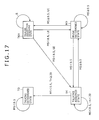
- the other state is thus a temporary state (this state will hereinafter be referred to as a talking assumption reserving state) TKH in which a transition from the music determined state MD to the talking assumed state TK is temporarily reserved (FIG. 17).
- the section identifying control unit 31 changes the processing state from the talking determined state TD to the music assumption reserving state MKH.
- the section identifying control unit 31 in the music assumption reserving state MKH waits for the sound volume level VS to rise from a silence level to a sound level. While the silence section LS is continued, the section identifying control unit 31 maintains the music assumption reserving state MKH.
- the section identifying control unit 31 in the music assumption reserving state MKH detects that the sound volume level VS rises to a sound level, and the musical piece likelihood MS immediately after the detection of the rising edge of the sound level is lower than the determination threshold value, the section identifying control unit 31 determines that there is simply silence during talking (for example no voice sound during talking) in the radio program, for example.
- the section identifying control unit 31 thus makes a transition so as to return the processing state from the music assumption reserving state MKH to the talking determined state TD.
- the section identifying control unit 31 performs the same process as the above-described first range detection and section identification process, and thereby identifies the talking part section and the music part section of the program data.
- the section identifying control unit 31 then changes the processing state from the music assumed state MK to the music determined state MD, and ends the first state transition reserving process.
- the section identifying control unit 31 generates section identifying information DI as a result of identifying the sections, and then sends the section identifying information DI to the dividing unit 21 via the output processing unit 35.
- the section identifying control unit 31 determines that the musical piece likelihood MS indicates music in a radio program.
- the section identifying control unit 31 changes the processing state to the music determined state MD, and continues the music determined state MD as long as the musical piece likelihood MS newly sent from the musical piece likelihood analysis processing unit 33 is equal to or higher than the determination threshold value.
- the section identifying control unit 31 detects that the musical piece likelihood MS becomes lower than the determination threshold value while detecting a silence section LS by the sound volume level analysis processing unit 34 in the music determined state MD, there is a possibility of a time being taken before talking is started in the radio program, and accordingly the section identifying control unit 31 starts a second state transition reserving process for reserving a transition to the talking assumed state TK until the detected silence section LS is ended.
- the section identifying control unit 31 changes the processing state from the music determined state MD to the talking assumption reserving state TKH.
- the section identifying control unit 31 in the talking assumption reserving state TKH waits for the sound volume level VS to rise from a silence level to a sound level. While the silence section LS is continued, the section identifying control unit 31 maintains the talking assumption reserving state TKH.
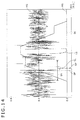
- the section identifying control unit 31 reserves the transition to the talking assumed state TK or the music determined state MD until the section identifying control unit 31 detects the sound rising edge position LE in the talking assumption reserving state TKH. Therefore, when a relatively long silence part is inserted between music and talking in the radio program, for example, the section identifying control unit 31 can avoid changing the processing state from the music determined state MD to the talking assumed state TK even when the silence section LS is detected according to the musical piece likelihood MS, whose value becomes lower than the determination threshold value at the time of the silence part depending on a setting, and consequently erroneously identifying the silence section LS as the talking part section of the program data.
- step SP2 when a negative result is obtained in step SP2, this indicates that a bell sound or a part of music is simply inserted for a short time during talking in the radio program. Therefore, the section identifying control unit 31 returns the processing state from the music assumed state MK to the talking determined state TD, and proceeds to step SP5. The first range detection and section identification process procedure RT1 is thereby ended.
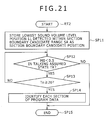
- the data recording device 10 starts a second range detection and section identification process procedure RT2 as represented in FIG. 21.
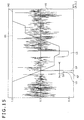
- the section identifying control unit 31 in step SP11 detects a section boundary candidate range SA with a reference position where the musical piece likelihood MS becomes lower than the determination threshold value as a center, and stores a lowest sound volume level position LL detected within the section boundary candidate range SA as a section boundary candidate position KP. Then, the section identifying control unit 31 makes a transition from the music determined state MD to the talking assumed state TK, and proceeds to next step SP12.
- step SP12 the section identifying control unit 31 determines whether the musical piece likelihood MS continues being lower than the determination threshold value in the talking assumed state TK. When a positive result is obtained in step SP12, this indicates that there is a strong possibility of music being ended and talking being started in the radio program. The section identifying control unit 31 therefore proceeds to next step SP13.
- step SP13 when a positive result is obtained in step SP13, this indicates that music is ended and talking is started in the radio program.
- the section identifying control unit 31 therefore proceeds to next step SP14.
- the data recording device 10 distinguishes music and talking in the radio program from each other.
- step SP32 the section identifying control unit 31 determines whether the musical piece likelihood MS becomes equal to or higher than the determination threshold value in the music assumption standby state MKT. When a negative result is obtained in step SP32, this indicates that it is not yet known whether talking is ended and music is started in the radio program. The section identifying control unit 31 therefore proceeds to next step SP33.
- step SP33 when a positive result is obtained in step SP33, this indicates that silence during talking in the radio program is simply detected. Therefore, the section identifying control unit 31 returns the processing state from the music assumption standby state MKT to the talking determined state TD, and proceeds to step SP37.
- step SP35 when a positive result is obtained in step SP35, this indicates that talking is ended and music is started in the radio program.
- the section identifying control unit 31 therefore proceeds to next step SP36.
- step SP34 when a negative result is obtained in step SP34, this indicates that a bell sound or a part of music is simply inserted for a short time during talking in the radio program. Therefore, the section identifying control unit 31 returns the processing state from the music assumed state MK to the talking determined state TD, and proceeds to step SP37. The first silence detection and section identification process procedure RT3 is thereby ended.
- step SP42 the section identifying control unit 31 determines whether the musical piece likelihood MS becomes lower than the determination threshold value in the talking assumption standby state TKT. When a negative result is obtained in step SP42, this indicates that it is not yet known whether music is ended and talking is started in the radio program. The section identifying control unit 31 therefore proceeds to next step SP43.
- step SP44 the section identifying control unit 31 identifies the section change candidate position KP as a section boundary, and identifies a side preceding the section boundary and a side succeeding the section boundary in time series in program data as separate music part sections, respectively. Then, the section identifying control unit 31 changes the processing state from the talking assumption standby state TKT to the music determined state MD, and proceeds to step SP48.
- step SP42 when a positive result is obtained in step SP42, this indicates that there is a possibility of music being ended and talking being started in the radio program. Therefore, the section identifying control unit 31 changes the processing state from the talking assumption standby state TKT to the talking assumed state TK, and proceeds to step SP45.
- step SP45 the section identifying control unit 31 determines whether the musical piece likelihood MS continues being lower than the determination threshold value in the talking assumed state TK. When a positive result is obtained in step SP45, this indicates that there is a strong possibility of music being ended and talking being started in the radio program. The section identifying control unit 31 therefore proceeds to next step SP46.
- step SP46 the section identifying control unit 31 determines whether or not the talking assumption continuation time Tn from the transition to the talking assumed state TK is the talking assumption determination time or more. When a negative result is obtained in step SP46, this indicates that a time necessary to determine whether music is ended and talking is started in the radio program has not elapsed. The section identifying control unit 31 therefore returns to step SP45.
- step SP47 the section identifying control unit 31 identifies the section change candidate position KP as a section boundary, identifies a side preceding the section boundary in time series in program data as a music part section, and identifies a side succeeding the section boundary in time series in the program data as a talking part section. Then, the section identifying control unit 31 changes the processing state from the talking assumed state TK to the talking determined state TD, and proceeds to step SP48.
- step SP52 the section identifying control unit 31 determines whether the musical piece likelihood MS changes to become lower than the determination threshold value in the talking determination standby state TDT. When a positive result is obtained in step SP52, this indicates that a silence part inserted in talking in a radio program is detected. Therefore, the section identifying control unit 31 changes the processing state from the talking determination standby state TDT to the talking determined state TD, and proceeds to step SP58.
- step SP52 When a negative result is obtained in step SP52, on the other hand, this indicates that it is not yet known whether a silence part inserted in talking in the radio program is detected.
- the section identifying control unit 31 therefore proceeds to next step SP53.
- step SP53 the section identifying control unit 31 determines whether or not the talking determination standby time Tt from the transition to the talking determination standby state TDT is the third standby determination time or more. When a negative result is obtained in step SP53, this indicates that a time necessary to determine whether a silence part inserted in talking in the radio program is detected has not elapsed. The section identifying control unit 31 therefore returns to step SP52.
- step SP55 the section identifying control unit 31 determines whether the musical piece likelihood MS continues being equal to or higher than the determination threshold value in the music assumed state MK. When a positive result is obtained in step SP55, this indicates that there is a strong possibility of talking being ended and music being started in the radio program. The section identifying control unit 31 therefore proceeds to next step SP56.
- step SP56 the section identifying control unit 31 determines whether or not the music assumption continuation time Tm from the transition to the music assumed state MK is the music assumption determination time or more. When a negative result is obtained in step SP56, this indicates that a time necessary to determine whether talking is ended and music is started in the radio program has not elapsed. The section identifying control unit 31 therefore returns to step SP55.
- step SP56 when a positive result is obtained in step SP56, this indicates that talking is ended and music is started in the radio program.
- the section identifying control unit 31 therefore proceeds to next step SP57.
- step SP54 When a positive result is obtained in step SP54, on the other hand, this indicates that talking is ended and music is started in the radio program.
- the section identifying control unit 31 therefore proceeds to next step SP57.
- the data recording device 10 distinguishes the talking including the silence part in the radio program as one significant unit of talking.
- the data recording device 10 detects a silence section LS in the talking assumed state TK
- the data recording device 10 starts a second silence section determination process procedure RT6 as represented in FIG. 25.
- the section identifying control unit 31 in step SP61 changes the processing state from the talking assumed state TK to the music determination standby state MDT.
- the section identifying control unit 31 then proceeds to next step SP62.
- step SP62 the section identifying control unit 31 determines whether the musical piece likelihood MS changes to become equal to or higher than the determination threshold value in the music determination standby state MDT.
- step SP62 the section identifying control unit 31 changes the processing state from the music determination standby state MDT to the music determined state MD, and proceeds to step SP68.
- step SP62 When a negative result is obtained in step SP62, on the other hand, this indicates that it is not yet known whether a silence part inserted in music in the radio program is detected.
- the section identifying control unit 31 therefore proceeds to next step SP63.
- step SP63 the section identifying control unit 31 determines whether or not the music determination standby time Tu from the transition to the music determination standby state MDT is the fourth standby determination time or more. When a negative result is obtained in step SP63, this indicates that a time necessary to determine whether a silence part as a part of a musical piece inserted in the music in the radio program is detected has not elapsed. The section identifying control unit 31 therefore returns to step SP62.
- step SP64 the section identifying control unit 31 in the music determination standby state MDT determines whether or not the talking assumption continuation time Tn clocked from a start of the talking assumed state TK is the talking assumption determination time or more.
- the section identifying control unit 31 changes the processing state from the music determination standby state MDT to the talking assumed state TK, and proceeds to next step SP65.
- step SP65 the section identifying control unit 31 determines whether the musical piece likelihood MS continues being lower than the determination threshold value in the talking assumed state TK. When a positive result is obtained in step SP65, this indicates that there is a strong possibility of music being ended and talking being started in the radio program. The section identifying control unit 31 therefore proceeds to next step SP66.
- step SP66 the section identifying control unit 31 determines whether or not the talking assumption continuation time Tn from the transition to the talking assumed state TK is the talking assumption determination time or more. When a negative result is obtained in step SP66, this indicates that a time necessary to determine whether music is ended and talking is started in the radio program has not elapsed. The section identifying control unit 31 therefore returns to step SP65.
- step SP65 when a negative result is obtained in step SP65, this indicates that speech of a singer is simply inserted for a short time during music in the radio program. Therefore, the section identifying control unit 31 returns the processing state from the talking assumed state TK to the music determined state MD, and proceeds to step SP68.
- step SP64 When a positive result is obtained in step SP64, on the other hand, this indicates that music is ended and talking is started in the radio program.
- the section identifying control unit 31 therefore proceeds to next step SP67.
- the data recording device 10 distinguishes the music including the silence part in the radio program as one significant piece of music.
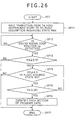
- the data recording device 10 detects that the musical piece likelihood MS changes to become equal to or higher than the determination threshold value while detecting a silence section LS in the talking determined state TD, the data recording device 10 starts a first state transition reserving process procedure RT7 as represented in FIG. 26.
- the section identifying control unit 31 in step SP71 changes the processing state from the talking determined state TD to the music assumption reserving state MKH.
- the section identifying control unit 31 then proceeds to next step SP72.
- step SP73 the section identifying control unit 31 in the music assumption reserving state MKH determines whether the musical piece likelihood MS immediately after the detection of the rising edge of the sound level is equal to or higher than the determination threshold value. When a negative result is obtained in step SP73, this indicates that talking is resumed after a silence state in the radio program. The section identifying control unit 31 therefore proceeds to step SP77.
- step SP74 the section identifying control unit 31 determines whether the musical piece likelihood MS continues being equal to or higher than the determination threshold value in the music assumed state MK. When a positive result is obtained in step SP74, this indicates that there is a strong possibility of talking being ended and music being started in the radio program. The section identifying control unit 31 therefore proceeds to next step SP75.
- step SP75 when a positive result is obtained in step SP75, this indicates that talking is ended and music is started in the radio program.
- the section identifying control unit 31 therefore proceeds to next step SP76.
- step SP76 the section identifying control unit 31 identifies the section change candidate position KP as a section boundary, identifies a side preceding the section boundary in time series in program data as a talking part section, and identifies a side succeeding the section boundary in time series in the program data as a music part section. Then, the section identifying control unit 31 changes the processing state from the music assumed state MK to the music determined state MD, and proceeds to step SP77. The first state transition reserving process procedure RT7 is thereby ended.
- the data recording device 10 detects that the musical piece likelihood MS changes to become lower than the determination threshold value while detecting a silence section LS in the music determined state MD, the data recording device 10 starts a second state transition reserving process procedure RT8 as represented in FIG. 27.
- the section identifying control unit 31 in step SP81 changes the processing state from the music determined state MD to the talking assumption reserving state TKH.
- the section identifying control unit 31 then proceeds to next step SP82.
- step SP83 the section identifying control unit 31 in the talking assumption reserving state TKH determines whether the musical piece likelihood MS immediately after the detection of the rising edge of the sound level is lower than the determination threshold value. When a negative result is obtained in step SP83, this indicates that music is simply resumed after a silence part inserted as a part of the musical piece in the radio program. The section identifying control unit 31 therefore proceeds to step SP87.
- step SP84 the section identifying control unit 31 determines whether the musical piece likelihood MS continues being lower than the determination threshold value in the talking assumed state TK. When a positive result is obtained in step SP84, this indicates that there is a strong possibility of music being ended and talking being started in the radio program. The section identifying control unit 31 therefore proceeds to next step SP85.
- step SP85 the section identifying control unit 31 determines whether or not the talking assumption continuation time Tn is the talking assumption determination time or more. When a negative result is obtained in step SP85, this indicates that a time necessary to determine whether music is ended and talking is started in the radio program has not elapsed. The section identifying control unit 31 therefore returns to step SP84.
- step SP85 when a positive result is obtained in step SP85, this indicates that music is ended and talking is started in the radio program.
- the section identifying control unit 31 therefore proceeds to next step SP86.
- the data recording device 10 reserves processing until a sound part appears when there is a relatively long silence part in the radio program.
- the section identifying control unit 31 can thus identify the talking part section and the music part section of the program data. In addition, in this case, the section identifying control unit 31 can avoid including a tail end of the talking part section in a start of the finally identified music part section in the program data.
- the section identifying control unit 31 detects a range in which the switching from the music to the talking is performed without interruption in the radio program according to the changing of the musical piece likelihood MS to a value lower than the determination threshold value, and detects the position at which the airing of the talking starts in the radio program (that is, the position at which the section for airing only the music is ended in the radio program) according to the lowering of the sound volume level VS in the detected range.
- the section identifying control unit 31 can thus identify the music part section and the talking part section of the program data. In addition, in this case, the section identifying control unit 31 can avoid including a start of the talking part section in a tail end of the finally identified music part section in the program data.
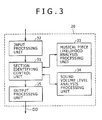
- the data recording device 10 detects, from program data formed by mixing a music part and a talking part with each other, musical piece likelihood MS indicating a degree of likelihood of the program data being music, and detects sound volume level VS of the program data. According to a result of the detections of the musical piece likelihood MS and the sound volume level VS, the data recording device 10 identifies a music part section corresponding to the music part and a talking part section corresponding to the talking part in the program data. The data recording device 10 records the thus identified program data.
- the data recording device 10 can identify and record the music part section and the talking part section of the program data, which sections are difficult to identify finally with high accuracy with the musical piece likelihood MS, in such a manner as to compensate for the difficulty by the sound volume level VS, and identify and record the music part section and the talking part section of the program data, which sections are difficult to identify finally with high accuracy with the sound volume level VS, in such a manner as to compensate for the difficulty by the musical piece likelihood MS.
- the data recording device 10 can identify music data from program data including the music data with high accuracy, and record the music data.
- the data recording device 10 identifies a section boundary candidate range SA as a range including the boundary between the talking part section and the music part section in the program data according to the musical piece likelihood MS, and identifies a section boundary candidate position KP as a candidate for a position where the switching between the talking part section and the music part section is performed in the section boundary candidate range SA according to the sound volume level VS.
- the data recording device 10 identifies a position at which switching between a music part section and a talking part section occurs according to the detected silence section LS. Therefore, in the case where the silence section LS is inserted between the talking and the music in the radio program, the data recording device 10 can identify the talking part section and the music part section of the program data with high accuracy by detecting the silence section LS and then checking the value of the musical piece likelihood MS.
- the data recording device 10 can identify the talking part section and the music part section of the program data as long as a silence section LS is included at a start of the music.
- the data recording device 10 when a radio program is listened to, the data recording device 10 outputs the radio program from the outputting unit 14, and temporarily stores program data corresponding to the output radio program in the temporary storage unit 16.
- the data recording device 10 subjects the program data corresponding to an output for a predetermined time which program data is read from the temporary storage unit 16 to analog processing by the data processing unit 13, and thereby obtains a program signal.
- the data recording device 10 outputs the radio program corresponding to the program signal again via the outputting unit 14.
- the data recording device 10 can output the already output part of the radio program after going back in time series by the predetermined time in response to a request by the user so that the user can listen to the part.
- usability can be improved.
- the data recording device 10 when the data recording device 10 identifies a music part section and a talking part section of program data, the data recording device 10 divides the program data into music part section data and talking part section data according to section identifying information DI as a result of the identification, and records the music part section data and the talking part section data. Therefore, when reproducing the recorded program data, the data recording device 10 can allow the user to check the contents by directly accessing and reproducing the music part section data and the talking part section data recorded in a state of being divided from each other without sequentially reproducing the program data from a start of the program data to allow the user to check the contents. Thus, usability can be improved.
- the radio broadcast wave of a radio station is received, and program data corresponding to a radio program is generated
- the present invention is not limited to this, and may be applied to program data generated when a television broadcast of a television station is received, data in a streaming format which data is obtained via a communication line, program data or streaming data already stored in the recording unit, and the like, as long as mixed data in which a music part section and a talking part section are mixed is obtained. In this case, similar effects can be obtained.
- the program data when a music part section and a talking part section of program data are identified, the program data is divided into music part section data and talking part section data according to section identifying information DI as a result of the identification, and the music part section data and the talking part section data are recorded as a data file.
- the program data may be recorded together with the section identifying information DI without the program data being divided.
- the program data and the section identifying information DI may be associated with each other and recorded as another data file, or the section identifying information DI may be stored as header information of the program data and recorded.
- a predetermined tag may be added to a corresponding position of the program data according to the section identifying information DI.
- the determination threshold value is applied as a determination threshold value for the musical piece likelihood MS normalized to a value of 0 to 1.
- the determination threshold value may be any value of 0 to 1 according to a condition.
- the value of the musical piece likelihood MS does not need to be normalized, and the same is true for the corresponding determination threshold value.
- the musical piece likelihood MS becoming equal to or higher than the determination threshold value or the musical piece likelihood MS becoming lower than the determination threshold value is expressed as the musical piece likelihood MS overpassing the determination threshold value.
- the present invention is not limited to this.
- the musical piece likelihood MS exceeding the determination threshold value or the musical piece likelihood MS becoming equal to or lower than the determination threshold value is expressed as the musical piece likelihood MS overpassing the determination threshold value.
- the determination threshold value may be included in either side according to a setting.
- a position at which a silence state changes to a sound state in the silence section LS is set as a section boundary candidate position KP.
- the present invention is not limited to this.
- a position at which a first sound state changes to the silence state in the silence section LS may be detected and set as a section boundary candidate position KP.
- program data is identified as a music part section and a talking part section, that is, a radio program is identified as a music part and a talking part.
- a radio program may be divided into parts such as a music part, a talking part, a commercial part, a news part, a traffic information part, and the like according to contents of the radio program, and identified as these parts.
- the musical piece likelihood detecting unit 18 detects the musical piece likelihood MS
- the sound volume level detecting unit 19 detects the sound volume level VS.
- the musical piece likelihood analysis processing unit 33 may detect the musical piece likelihood MS
- the sound volume level analysis processing unit 34 may detect the sound volume level VS. In this case, when the section identifying control unit 31 has the functions of the section identifying control unit 31, the musical piece likelihood analysis processing unit 33, and the sound volume level analysis processing unit 34, similar effects to those of the foregoing first embodiment can be obtained.
- the above-described first embodiment has the first to fourth section identifying methods, and a selection is made from among the first to fourth section identifying methods, whereby an arbitrary section identifying method can be carried out.
- the present invention is not limited to this.
- a plurality of arbitrary section identifying methods among the first to fourth section identifying methods may be combined with each other and carried out.
- the data processing unit 57 subjects the program signal supplied from the tuner 59 to digital processing, and sends program data obtained as a result of the digital processing to the central processing unit 50. Then, the central processing unit 50 sends the program data to the hard disk drive 53 to record the program data as a data file.
- the central processing unit 50 can thus record the radio program broadcast by the desired radio station.
- the central processing unit 50 When the reproduction of program data is requested via the operating key 55, the central processing unit 50 reads the program data requested to be reproduced from the hard disk drive 53, and then sends the program data to the data processing unit 57.
- the data processing unit 57 subjects the program data supplied from the central processing unit 50 to predetermined digital processing, and thereafter subjects the program data resulting from the digital processing to analog processing such as digital-to-analog processing, amplification processing and the like.
- the data processing unit 57 obtains a program signal by performing such analog processing, and sends the program signal to the speaker 58. Thereby the audio of a radio program based on the program signal is output from the speaker 58 to be listened to by the user.
- the central processing unit 50 can thus allow the user to listen to the radio program recorded on the hard disk drive 53.
- the operating key 55 can be made to function in the same manner as the above-described operating unit 12 (FIG. 2), and the central processing unit 50 and the hard disk drive 53 can be made to function in the same manner as the above-described recording unit 15 (FIG. 2).
- the central processing unit 50, the tuner 59, and the antenna 60 can be made to function in the same manner as the above-described receiving unit 11 (FIG. 2), and the central processing unit 50 and a display unit 61 can be made to function in the same manner as the above-described display unit 17 (FIG. 2).
- the central processing unit 50 can be made to function in the same manner as each of the musical piece likelihood detecting unit 18 (FIG. 2), the sound volume level detecting unit 19 (FIG. 2), the section identifying unit 20 (FIG. 2), and the dividing unit 21 (FIG. 2) described above.
- the ROM 52 corresponds to the above-described temporary storage unit 16 (FIG. 2).
- the speaker 58 corresponds to the above-described outputting unit 14 (FIG. 2).
- the data recording device 100 can perform similar processes to the above-described processes of the data recording device 10, and thus provide similar effects to those of the foregoing first embodiment.
- a data recording device according to the present invention is applied to the data recording device 100 described above with reference to FIG. 28, the present invention is not limited to this, and is widely applicable to various other data recording devices such as HDD (Hard Disk Drive) video recorders, optical disk recorders, semiconductor memory type recorders, portable telephones having a radio recording function, portable audio players having a radio recording function, personal computers and the like.
- HDD Hard Disk Drive
- the central processing unit 50 described above with reference to FIG. 28 is applied as a musical piece likelihood detecting unit for detecting, from mixed data formed by mixing a music part and a talking part with each other, musical piece likelihood indicating a degree of likelihood of the mixed data being music.
- the present invention is not limited to this. It is possible to widely apply various other musical piece likelihood detecting units, such for example as a musical piece likelihood detecting circuit of a hardware configuration for detecting, from mixed data formed by mixing a music part and a talking part with each other, musical piece likelihood indicating a degree of likelihood of the mixed data being music.
- the central processing unit 50 described above with reference to FIG. 28 is applied as a sound volume level detecting unit for detecting the sound volume level of the mixed data.
- the present invention is not limited to this. It is possible to widely apply various other sound volume level detecting units, such for example as a sound volume level detecting circuit of a hardware configuration for detecting the sound volume level of the mixed data.
- the central processing unit 50 described above with reference to FIG. 28 is applied as a section identifying unit for identifying a music part section corresponding to a music part and a talking part section corresponding to a talking part in mixed data according to the musical piece likelihood detected by the musical piece likelihood detecting unit and the sound volume level detected by the sound volume level detecting unit.
- the present invention is not limited to this.
- the hard disk drive 53 described above with reference to FIG. 28 is applied as a recording unit for recording mixed data in which a music part section and a talking part section are identified by the section identifying unit.
- the present invention is not limited to this. It is possible to widely apply recording units for recording the mixed data on various other recording media, such as optical disk recorders, cassette tape recorders, semiconductor memory type recorders, and the like.
- the central processing unit 50 and the data processing unit 57 described above with reference to FIG. 28 are applied as a data processing unit for generating mixed data from the received signal generated by the receiving unit.
- the present invention is not limited to this. It is possible to widely apply various other data processing units, such for example as a data processing circuit of a hardware configuration for generating mixed data from the received signal generated by the receiving unit.
- the central processing unit 50 described above with reference to FIG. 28 is applied as a dividing unit for dividing mixed data whose music part section and talking part section are identified by the section identifying unit into music part section data of the music part section and talking part section data of the talking part section.
- the present invention is not limited to this. It is possible to widely apply various other dividing units, such for example as a dividing circuit of a hardware configuration for dividing mixed data whose music part section and talking part section are identified by the section identifying unit into music part section data of the music part section and talking part section data of the talking part section.
- the program data of a radio program broadcast from a radio station as described above with reference to FIGS. 1 to 28 is applied as mixed data formed by mixing a music part and a talking part with each other.
- the present invention is not limited to this.
- Various mixed data such as video data of a television program broadcast from a television station, audio content data and moving image content data on the Internet, and the like, may be applied.
- program data or the like recorded on another recording medium may be read to perform the above-described processes.
- kinds of mixed data and methods for obtaining mixed data are not specifically limited.
- the present invention can be applied to a data recording device that records the program data of a radio program broadcast from a radio station.
Landscapes
- Engineering & Computer Science (AREA)
- Signal Processing (AREA)
- Multimedia (AREA)
- Physics & Mathematics (AREA)
- Acoustics & Sound (AREA)
- Computer Networks & Wireless Communication (AREA)
- Signal Processing For Digital Recording And Reproducing (AREA)
- Auxiliary Devices For Music (AREA)
- Management Or Editing Of Information On Record Carriers (AREA)
- Signal Processing Not Specific To The Method Of Recording And Reproducing (AREA)
- Indexing, Searching, Synchronizing, And The Amount Of Synchronization Travel Of Record Carriers (AREA)
Applications Claiming Priority (1)
| Application Number | Priority Date | Filing Date | Title |
|---|---|---|---|
| JP2006256501A JP2008076776A (ja) | 2006-09-21 | 2006-09-21 | データ記録装置、データ記録方法及びデータ記録プログラム |
Publications (2)
| Publication Number | Publication Date |
|---|---|
| EP1903575A2 true EP1903575A2 (de) | 2008-03-26 |
| EP1903575A3 EP1903575A3 (de) | 2009-03-25 |
Family
ID=38896871
Family Applications (1)
| Application Number | Title | Priority Date | Filing Date |
|---|---|---|---|
| EP07017976A Withdrawn EP1903575A3 (de) | 2006-09-21 | 2007-09-13 | Datenaufzeichnungsvorrichtung, Datenaufzeichnungsverfahren und Datenaufzeichnungsprogramm |
Country Status (5)
| Country | Link |
|---|---|
| US (1) | US20080077263A1 (de) |
| EP (1) | EP1903575A3 (de) |
| JP (1) | JP2008076776A (de) |
| KR (1) | KR20080027165A (de) |
| CN (1) | CN101166033B (de) |
Families Citing this family (9)
| Publication number | Priority date | Publication date | Assignee | Title |
|---|---|---|---|---|
| JP4864847B2 (ja) * | 2007-09-27 | 2012-02-01 | 株式会社東芝 | 音楽検出装置および音楽検出方法 |
| WO2009090705A1 (ja) * | 2008-01-16 | 2009-07-23 | Panasonic Corporation | 記録再生装置 |
| EP2604064B1 (de) * | 2010-08-12 | 2016-10-26 | LG Electronics Inc. | Vorrichtung und verfahren zur meldung protokollierter messungen in einem drahtlosen kommunikationssystem |
| GB2520877B (en) | 2010-10-10 | 2015-09-09 | Lg Electronics Inc | Method and Device for Performing a logged measurement in a wireless communication system |
| CN102956230B (zh) * | 2011-08-19 | 2017-03-01 | 杜比实验室特许公司 | 对音频信号进行歌曲检测的方法和设备 |
| US10121471B2 (en) * | 2015-06-29 | 2018-11-06 | Amazon Technologies, Inc. | Language model speech endpointing |
| US9852721B2 (en) | 2015-09-30 | 2017-12-26 | Apple Inc. | Musical analysis platform |
| US9804818B2 (en) | 2015-09-30 | 2017-10-31 | Apple Inc. | Musical analysis platform |
| US9824719B2 (en) * | 2015-09-30 | 2017-11-21 | Apple Inc. | Automatic music recording and authoring tool |
Family Cites Families (20)
| Publication number | Priority date | Publication date | Assignee | Title |
|---|---|---|---|---|
| KR940001861B1 (ko) * | 1991-04-12 | 1994-03-09 | 삼성전자 주식회사 | 오디오 대역신호의 음성/음악 판별장치 |
| BE1007355A3 (nl) * | 1993-07-26 | 1995-05-23 | Philips Electronics Nv | Spraaksignaaldiscriminatieschakeling alsmede een audio-inrichting voorzien van een dergelijke schakeling. |
| KR100304092B1 (ko) * | 1998-03-11 | 2001-09-26 | 마츠시타 덴끼 산교 가부시키가이샤 | 오디오 신호 부호화 장치, 오디오 신호 복호화 장치 및 오디오 신호 부호화/복호화 장치 |
| US6542869B1 (en) * | 2000-05-11 | 2003-04-01 | Fuji Xerox Co., Ltd. | Method for automatic analysis of audio including music and speech |
| JP2002116784A (ja) * | 2000-10-06 | 2002-04-19 | Sony Corp | 情報信号処理装置、情報信号処理方法、情報信号記録再生装置及び情報信号記録媒体 |
| US7461002B2 (en) * | 2001-04-13 | 2008-12-02 | Dolby Laboratories Licensing Corporation | Method for time aligning audio signals using characterizations based on auditory events |
| US7610205B2 (en) * | 2002-02-12 | 2009-10-27 | Dolby Laboratories Licensing Corporation | High quality time-scaling and pitch-scaling of audio signals |
| KR100472904B1 (ko) * | 2002-02-20 | 2005-03-08 | 안호성 | 음악 부분을 자동으로 선별해 저장하는 디지털 음악 재생장치 및 그 방법 |
| US7383508B2 (en) * | 2002-06-19 | 2008-06-03 | Microsoft Corporation | Computer user interface for interacting with video cliplets generated from digital video |
| US7222300B2 (en) * | 2002-06-19 | 2007-05-22 | Microsoft Corporation | System and method for automatically authoring video compositions using video cliplets |
| JP2005538634A (ja) * | 2002-09-13 | 2005-12-15 | コーニンクレッカ フィリップス エレクトロニクス エヌ ヴィ | コンテンツ提示の方法及び装置 |
| JP3973572B2 (ja) * | 2003-02-07 | 2007-09-12 | 日本電信電話株式会社 | データ分析装置及びデータ分析プログラム |
| US7376553B2 (en) * | 2003-07-08 | 2008-05-20 | Robert Patel Quinn | Fractal harmonic overtone mapping of speech and musical sounds |
| US7179980B2 (en) * | 2003-12-12 | 2007-02-20 | Nokia Corporation | Automatic extraction of musical portions of an audio stream |
| JP4882746B2 (ja) * | 2004-08-10 | 2012-02-22 | ソニー株式会社 | 情報信号処理方法、情報信号処理装置及びコンピュータプログラム記録媒体 |
| JP2006236446A (ja) * | 2005-02-23 | 2006-09-07 | Pioneer Electronic Corp | コンテンツ取得装置、その方法、そのプログラム、および、そのプログラムを記録した記録媒体 |
| JP4201204B2 (ja) * | 2005-05-26 | 2008-12-24 | Kddi株式会社 | オーディオ情報分類装置 |
| US8086168B2 (en) * | 2005-07-06 | 2011-12-27 | Sandisk Il Ltd. | Device and method for monitoring, rating and/or tuning to an audio content channel |
| US20070217626A1 (en) * | 2006-03-17 | 2007-09-20 | University Of Rochester | Watermark Synchronization System and Method for Embedding in Features Tolerant to Errors in Feature Estimates at Receiver |
| US20100198760A1 (en) * | 2006-09-07 | 2010-08-05 | Agency For Science, Technology And Research | Apparatus and methods for music signal analysis |
-
2006
- 2006-09-21 JP JP2006256501A patent/JP2008076776A/ja active Pending
-
2007
- 2007-09-06 US US11/851,018 patent/US20080077263A1/en not_active Abandoned
- 2007-09-13 EP EP07017976A patent/EP1903575A3/de not_active Withdrawn
- 2007-09-20 KR KR1020070095702A patent/KR20080027165A/ko not_active Withdrawn
- 2007-09-21 CN CN2007101528842A patent/CN101166033B/zh not_active Expired - Fee Related
Also Published As
| Publication number | Publication date |
|---|---|
| CN101166033B (zh) | 2011-07-06 |
| JP2008076776A (ja) | 2008-04-03 |
| CN101166033A (zh) | 2008-04-23 |
| US20080077263A1 (en) | 2008-03-27 |
| EP1903575A3 (de) | 2009-03-25 |
| KR20080027165A (ko) | 2008-03-26 |
Similar Documents
| Publication | Publication Date | Title |
|---|---|---|
| EP1903575A2 (de) | Datenaufzeichnungsvorrichtung, Datenaufzeichnungsverfahren und Datenaufzeichnungsprogramm | |
| EP1968043B1 (de) | Verfahren zur detektion eines musikkompositionsabschnitts und einrichtung dafür und datenaufzeichnungsverfahren und einrichtung dafür | |
| EP1821225A1 (de) | Programm, Vorrichtung und Verfahren zur Musikstückextraktion | |
| EP2017827B1 (de) | Musikteil-detektionsverfahren und einrichtung dafür, datenaufzeichnungsverfahren und einrichtung dafür | |
| US20050273321A1 (en) | Audio signal time-scale modification method using variable length synthesis and reduced cross-correlation computations | |
| CN103077734A (zh) | 录制的音频信号的时间对准 | |
| US9153241B2 (en) | Signal processing apparatus | |
| JP2009015119A (ja) | サビ位置検出装置 | |
| CN100583274C (zh) | 音频输入/输出控制装置和音频输入/输出控制方法 | |
| US20100046908A1 (en) | Video editing system | |
| EP1881498A1 (de) | Datenaufzeichnungsvorrichtung, Datenaufzeichnungsverfahren und Datenaufzeichnungsprogramm | |
| EP2026482A1 (de) | Verfahren zur Steuerung der Wiedergabe eines Radioprogramms | |
| JP2008079047A (ja) | データ再生装置、データ再生方法及びデータ再生プログラム | |
| JP4278667B2 (ja) | 楽曲結合装置、楽曲結合方法、及び楽曲結合プログラム | |
| JP4362775B2 (ja) | 放送録音装置 | |
| JP2010027115A (ja) | 音楽記録再生装置 | |
| JP4127799B2 (ja) | 復号再生装置 | |
| WO2006093195A1 (ja) | 再生装置及び再生方法 | |
| EP1514270A1 (de) | Vorrichtung und verfahren zum getrennten abspielen eines in einer video-cd-rom gespeicherten audiopakets | |
| UA28630U (en) | Method for tracing audio records | |
| HK1122893B (en) | Musical composition section detecting method and its device, and data recording method and its device | |
| JP2009053297A (ja) | 楽曲記録装置 | |
| WO2005059915A1 (en) | Recording songs from radio |
Legal Events
| Date | Code | Title | Description |
|---|---|---|---|
| PUAI | Public reference made under article 153(3) epc to a published international application that has entered the european phase |
Free format text: ORIGINAL CODE: 0009012 |
|
| AK | Designated contracting states |
Kind code of ref document: A2 Designated state(s): AT BE BG CH CY CZ DE DK EE ES FI FR GB GR HU IE IS IT LI LT LU LV MC MT NL PL PT RO SE SI SK TR |
|
| AX | Request for extension of the european patent |
Extension state: AL BA HR MK YU |
|
| PUAL | Search report despatched |
Free format text: ORIGINAL CODE: 0009013 |
|
| AK | Designated contracting states |
Kind code of ref document: A3 Designated state(s): AT BE BG CH CY CZ DE DK EE ES FI FR GB GR HU IE IS IT LI LT LU LV MC MT NL PL PT RO SE SI SK TR |
|
| AX | Request for extension of the european patent |
Extension state: AL BA HR MK RS |
|
| RIC1 | Information provided on ipc code assigned before grant |
Ipc: H04H 60/27 20080101ALI20090218BHEP Ipc: G11B 27/031 20060101ALI20090218BHEP Ipc: G10L 11/00 20060101ALI20090218BHEP Ipc: G11B 27/28 20060101AFI20080116BHEP |
|
| 17P | Request for examination filed |
Effective date: 20090921 |
|
| AKX | Designation fees paid |
Designated state(s): DE FR GB |
|
| 17Q | First examination report despatched |
Effective date: 20100112 |
|
| STAA | Information on the status of an ep patent application or granted ep patent |
Free format text: STATUS: THE APPLICATION IS DEEMED TO BE WITHDRAWN |
|
| 18D | Application deemed to be withdrawn |
Effective date: 20120306 |