EP1902138B1 - Tetrahymena heat inducible promoters and their use - Google Patents
Tetrahymena heat inducible promoters and their use Download PDFInfo
- Publication number
- EP1902138B1 EP1902138B1 EP06777773A EP06777773A EP1902138B1 EP 1902138 B1 EP1902138 B1 EP 1902138B1 EP 06777773 A EP06777773 A EP 06777773A EP 06777773 A EP06777773 A EP 06777773A EP 1902138 B1 EP1902138 B1 EP 1902138B1
- Authority
- EP
- European Patent Office
- Prior art keywords
- tetrahymena
- promoter
- heat
- thermophila
- protein
- Prior art date
- Legal status (The legal status is an assumption and is not a legal conclusion. Google has not performed a legal analysis and makes no representation as to the accuracy of the status listed.)
- Not-in-force
Links
Images

Classifications
-
- C—CHEMISTRY; METALLURGY
- C12—BIOCHEMISTRY; BEER; SPIRITS; WINE; VINEGAR; MICROBIOLOGY; ENZYMOLOGY; MUTATION OR GENETIC ENGINEERING
- C12N—MICROORGANISMS OR ENZYMES; COMPOSITIONS THEREOF; PROPAGATING, PRESERVING, OR MAINTAINING MICROORGANISMS; MUTATION OR GENETIC ENGINEERING; CULTURE MEDIA
- C12N15/00—Mutation or genetic engineering; DNA or RNA concerning genetic engineering, vectors, e.g. plasmids, or their isolation, preparation or purification; Use of hosts therefor
- C12N15/09—Recombinant DNA-technology
- C12N15/63—Introduction of foreign genetic material using vectors; Vectors; Use of hosts therefor; Regulation of expression
- C12N15/79—Vectors or expression systems specially adapted for eukaryotic hosts
- C12N15/85—Vectors or expression systems specially adapted for eukaryotic hosts for animal cells
-
- C—CHEMISTRY; METALLURGY
- C07—ORGANIC CHEMISTRY
- C07K—PEPTIDES
- C07K14/00—Peptides having more than 20 amino acids; Gastrins; Somatostatins; Melanotropins; Derivatives thereof
- C07K14/435—Peptides having more than 20 amino acids; Gastrins; Somatostatins; Melanotropins; Derivatives thereof from animals; from humans
- C07K14/44—Peptides having more than 20 amino acids; Gastrins; Somatostatins; Melanotropins; Derivatives thereof from animals; from humans from protozoa
-
- C—CHEMISTRY; METALLURGY
- C12—BIOCHEMISTRY; BEER; SPIRITS; WINE; VINEGAR; MICROBIOLOGY; ENZYMOLOGY; MUTATION OR GENETIC ENGINEERING
- C12N—MICROORGANISMS OR ENZYMES; COMPOSITIONS THEREOF; PROPAGATING, PRESERVING, OR MAINTAINING MICROORGANISMS; MUTATION OR GENETIC ENGINEERING; CULTURE MEDIA
- C12N15/00—Mutation or genetic engineering; DNA or RNA concerning genetic engineering, vectors, e.g. plasmids, or their isolation, preparation or purification; Use of hosts therefor
- C12N15/09—Recombinant DNA-technology
-
- C—CHEMISTRY; METALLURGY
- C12—BIOCHEMISTRY; BEER; SPIRITS; WINE; VINEGAR; MICROBIOLOGY; ENZYMOLOGY; MUTATION OR GENETIC ENGINEERING
- C12N—MICROORGANISMS OR ENZYMES; COMPOSITIONS THEREOF; PROPAGATING, PRESERVING, OR MAINTAINING MICROORGANISMS; MUTATION OR GENETIC ENGINEERING; CULTURE MEDIA
- C12N2830/00—Vector systems having a special element relevant for transcription
- C12N2830/001—Vector systems having a special element relevant for transcription controllable enhancer/promoter combination
- C12N2830/002—Vector systems having a special element relevant for transcription controllable enhancer/promoter combination inducible enhancer/promoter combination, e.g. hypoxia, iron, transcription factor
Definitions
- the present invention addresses fields of recombinant molecular biology; the main topic are strong inducible promoters to be used for product synthesis in biological systems.
- Tetrahymena is a ciliated eukaryotic unicellular organism belonging to the regnum of Protozoa and bearing two nuclei, a transcriptionally silent, diploid germline micronucleus (MIC) and a transcriptionally active, polyploid somatic macronucleus (MAC).
- MIC diploid germline micronucleus
- MAC polyploid somatic macronucleus
- Tetrahymena DNA sequences have been characterised up to a useful extend to work with in molecular biology. These comprise the rather weak and moreover cellcycle dependent histone- 1 and beta-tubulin-promoter 2 and also heavy-metall-inducible metallothionein-promoters. 3,4 Metallothioneins; that are upregulated upon stress, are metal binding proteins playing a role in detoxification of the cell. In Tetrahymena metallothioneins are known, the promoters of which can be induced quite well by the presence of Cadmium, Copper, Zinc - induction becoming less in this order - but barely with other stress factors like peroxides or heat.
- HSPs Heat shock proteins
- Heat shock proteins are evolutionary conserved stress response proteins with multiple protective functions within the cell. These proteins are ubiquitous, found in all eucaryotic organisms studied to date, and are inducible by heat stress as well as by a variety of other external agents. Thus, cells respond to these inducers, such as elevated growth temperatures, by synthesizing high levels of HSPs and coordinately reducing the rate of synthesis of other cellular proteins. HSPs are divided into several groups on the basis of size. Their occurrence in Tetrahymena has been described more than 20 years ago, too.
- thermophila four proteins belonging to the HSP70 (accession # AAK29100) and HSP90 (accession # AAD41357) family have been described and characterized in terms of partial amino acid sequences, 6 yet the promoter active sequences have not been elucidated.
- HSP70 of Drosophila it is known that also the 3'-untranslated regions of hsp70 gene transcripts are responsible for regulating the level of protein and mRNA synthesis in the cell in both the induced and uninduced state.
- a heat shock element HSE is found 5' of the start ATG of eucaryotic heat shock genes 7 . This region includes the sequences nGAAn and nTTCn, repeated at least two times in head-to-head or tail-to-tail orientation.
- HSEs on HSP-genes differ among species, but the binding of a positive transactivating factor, the heat shock factor (HSF) to the heat shock elements is about a hundred fold higher than that of any other known mammalian transcription factor to its respective binding site, rendering these promoters among the strongest known so far.
- HSF heat shock factor
- HSP promoters of various organisms have been used in heterologous expression systems for many proteins 8,9 .
- the present disclosure shows that promoters of the Tetrahymena heat shock protein family can be used for controlled foreign gene expression at high levels.
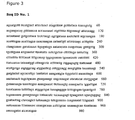
- the heat-inducible promoter according to the invention has the nucleotide sequence of Seq ID No. 1, also referred to as the HSP90 promoter, or promoter-effective fragments thereof.
- the present invention is also directed to the use of the heat-inducible promoters according to the invention for the expression of homologous and/or heterologous proteins in the ciliate Tetrahymena thermophila.
- the heat-inducible promoter according to the invention is integrated into an expression vector containing the nucleotide sequence of the protein of interest.
- This vector preferably contains Tetrahymena thermophila 's ⁇ -tubulin 2 terminator sequence flanking the 3' position of the coding sequence of the protein of interest.
- promoters are inducible just by heat and do not need chemical substances to be added.
- the induction of product is manifold.
- the background level of transcriptional activity is low thereby showing it to be ideal promoters for elsewhere toxic or lethal products and to serve as very good tools for conditional knock-outs and knock-ins.
- During fermentation the synthesis process can be stopped easily by just lowering the temperature: cells will recover and the biosynthesis can be re-induced again. This offers higher yields than other systems: As continuous fermentation is a well established method for ciliates and as thermal stress can be taken away from the culture easily, the production cycle can be repeated over and over again.
- heterologous mRNAs are more stable than the endogenous HSP-mRNAs: This is achieved by the use of a 3' terminator of T . thermophila's ⁇ -tubulin 2. For this reason the target gene's mRNA is still present and translated in the recovery phase of the culture.
- thermophila cells All strains used were derived from Tetrahymena thermophila and have been described in detail previously. The transformation of T . thermophila cells was performed with modifications as published earlier. 10,11 Cultivation was carried out at 30 °C. Target gene expression was induced by heat shock at 41 °C (HSPs) or by addition of 20 nM Cd 2+ (MTT1).
- Seq. ID 1 was amplified from genomic T. thermophila DNA by two primers HSP90_F ATATCTCGAGAG CATGCTTTTTCATGTACTATTCC and HSP90_R ATCCAT TTCTTATGATATATAATTAATTGC, underlined bases bearing primer extensions. Obtained pcr fragment was subjected to gel electrophoresis, purified, cut by XhoI and ligated into the vector pPT Cilian, yielding a functional Tetrahymena vector pPT HSP90, expressing a gene coding for EGFP under control of aforementioned sequence. The 3' region of the EGFP gene's cds is flanked by the terminator sequence of T.
- thermophila's ⁇ -tubulin 2 gene (see figure 1 ).
- a control vector (pPT MTT1) making use of the MTT1 promoter was constructed in the same way by the primer pair MTT1_F ATATCTCGAG GATAAGTAATATATTTAGTGCACAATGTTTGAATG and MTT1_R ATCCAT TATTTTAAGTTTAGATTTATTATTTATTTTATTAG.
- thermophila transformands were boiled in SDS-sample buffer and subjected to SDS-gel-electrophoresis. Separated proteins were blotted onto nitrocellulose membranes and EGFP was detected by a specific first antibody followed by a horseradish peroxidase conjugated secondary antibody in combination with Pierce SuperSignal on a raytest AIDA.
- thermophila cell cultures transfected with pPT HSP90 were divided; one half was grown at 30 °C, the other half heat shocked.
- Foreign gene expression driven by the MTT1 promoter was induced in pPT MTT1 transformed cells by the addition of Cadmium.
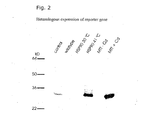
- Figure 2 shows a western blot of cell lysates of these cultures. Only pPT transformed cells show detectable bands running at the same molecular weight as the control. The wildtype control (lane2) is all blank. A strong induction of expression by heat (lane 4) or by Cadmium (lane 6) is obvious compared to non induced cells (lane 3 and 5). Yet non induced cells show very low basal activity in both promoter systems.
- heat-inducible promoters according to the invention can be used in all biotechnological applications like listed for the MTT1 promoter in 12 while still being superior and favourable because of their non toxic inducibility.
Landscapes
- Health & Medical Sciences (AREA)
- Life Sciences & Earth Sciences (AREA)
- Chemical & Material Sciences (AREA)
- Genetics & Genomics (AREA)
- Organic Chemistry (AREA)
- Engineering & Computer Science (AREA)
- Zoology (AREA)
- General Health & Medical Sciences (AREA)
- Biomedical Technology (AREA)
- Biophysics (AREA)
- General Engineering & Computer Science (AREA)
- Molecular Biology (AREA)
- Biotechnology (AREA)
- Biochemistry (AREA)
- Bioinformatics & Cheminformatics (AREA)
- Wood Science & Technology (AREA)
- Physics & Mathematics (AREA)
- Proteomics, Peptides & Aminoacids (AREA)
- Medicinal Chemistry (AREA)
- Plant Pathology (AREA)
- Gastroenterology & Hepatology (AREA)
- Microbiology (AREA)
- Toxicology (AREA)
- Micro-Organisms Or Cultivation Processes Thereof (AREA)
- Preparation Of Compounds By Using Micro-Organisms (AREA)
- Organic Low-Molecular-Weight Compounds And Preparation Thereof (AREA)
- Polyurethanes Or Polyureas (AREA)
- Polymers With Sulfur, Phosphorus Or Metals In The Main Chain (AREA)
- Investigating Or Analysing Materials By Optical Means (AREA)
Abstract
Description
- The present invention addresses fields of recombinant molecular biology; the main topic are strong inducible promoters to be used for product synthesis in biological systems.
- Tetrahymena is a ciliated eukaryotic unicellular organism belonging to the regnum of Protozoa and bearing two nuclei, a transcriptionally silent, diploid germline micronucleus (MIC) and a transcriptionally active, polyploid somatic macronucleus (MAC). In 1923, when Nobel Laureate Andre Lwoff succeeded in growing Tetrahymena in pure culture, the basis for exploiting this Alveolate as a model organism was laid. Milestone discoveries made in Tetrahymena are the discovery of dynein motors, telomeres, RNA-mediated catalysis, telomerase and the function of histone acetyltransferases in transcription regulation. Within the last decades molecular biological techniques have been developed to alter Tetrahymena's genome and proteome: DNA transfection methods range from microinjection into the MAC, over electroporation into the MAC to biolistic bombardment of MIC and MAC. Episomal plasmids based on an rDNA-replicon are available, as well as knock-out/-in techniques based on homologous recombination. On protein level heterologous expression of related species has been performed and also endogenous proteins were silenced by a novel antisense-ribosome-technique. The biotechnological potential of Tetrahymena has been proven in numerous publications, demonstrating fast growth, high biomass, fermentation in ordinary bacterial/yeast equipment, up-scalability, existence of cheap and chemical defined media.
- So far, only a few promoter active Tetrahymena DNA sequences have been characterised up to a useful extend to work with in molecular biology. These comprise the rather weak and moreover cellcycle dependent histone-1 and beta-tubulin-promoter2 and also heavy-metall-inducible metallothionein-promoters.3,4 Metallothioneins; that are upregulated upon stress, are metal binding proteins playing a role in detoxification of the cell. In Tetrahymena metallothioneins are known, the promoters of which can be induced quite well by the presence of Cadmium, Copper, Zinc - induction becoming less in this order - but barely with other stress factors like peroxides or heat. As heavy metals are toxic, inhibit cell growth and lead - at higher concentrations - to cell death, a different system with less impact on the health of the system and an inducer that can be removed tracelessly would be favourable. Furthermore due to the heavy impact on the environment by heavy metal cations the disposal of contaminated media is time and resource consuming. As the financial effort in commercial bioproduction processes have to be minimal, Metallothionein promoters do not seem to be the inducible system of choice.
- Heat shock proteins, HSPs, are evolutionary conserved stress response proteins with multiple protective functions within the cell. These proteins are ubiquitous, found in all eucaryotic organisms studied to date, and are inducible by heat stress as well as by a variety of other external agents. Thus, cells respond to these inducers, such as elevated growth temperatures, by synthesizing high levels of HSPs and coordinately reducing the rate of synthesis of other cellular proteins. HSPs are divided into several groups on the basis of size. Their occurrence in Tetrahymena has been described more than 20 years ago, too.5 In Tetrahymena thermophila four proteins belonging to the HSP70 (accession # AAK29100) and HSP90 (accession # AAD41357) family have been described and characterized in terms of partial amino acid sequences,6 yet the promoter active sequences have not been elucidated.
- Regulation of HSPs in other systems has been studied extensively by various authors and it has been shown that promoter strength is not solely responsible for the level of protein expression: For HSP70 of Drosophila it is known that also the 3'-untranslated regions of hsp70 gene transcripts are responsible for regulating the level of protein and mRNA synthesis in the cell in both the induced and uninduced state. In the promoter region a heat shock element HSE is found 5' of the start ATG of eucaryotic heat shock genes7. This region includes the sequences nGAAn and nTTCn, repeated at least two times in head-to-head or tail-to-tail orientation. Number and orientation of HSEs on HSP-genes differ among species, but the binding of a positive transactivating factor, the heat shock factor (HSF) to the heat shock elements is about a hundred fold higher than that of any other known mammalian transcription factor to its respective binding site, rendering these promoters among the strongest known so far.
- Therefore HSP promoters of various organisms have been used in heterologous expression systems for many proteins 8,9.
- As organisms' genomes do not only vary in their codon usage but also in their AT-content, it is obvious that promoters of more distant related species will not work if exchanged among these systems. In the regnum of protists the genomes are very AT rich and as mentioned above only few promoters have been characterised. Well known and widely used promoters of yeast, E. coli, mammals and viruses have not been found to work in ciliates (own unpublished observation).
- The present disclosure however shows that promoters of the Tetrahymena heat shock protein family can be used for controlled foreign gene expression at high levels. The heat-inducible promoter according to the invention has the nucleotide sequence of Seq ID No. 1, also referred to as the HSP90 promoter, or promoter-effective fragments thereof.
- The present invention is also directed to the use of the heat-inducible promoters according to the invention for the expression of homologous and/or heterologous proteins in the ciliate Tetrahymena thermophila.
- It can be preferred that the heat-inducible promoter according to the invention is integrated into an expression vector containing the nucleotide sequence of the protein of interest. This vector preferably contains Tetrahymena thermophila 's β-tubulin 2 terminator sequence flanking the 3' position of the coding sequence of the protein of interest.
- These promoters are inducible just by heat and do not need chemical substances to be added. The induction of product is manifold. The background level of transcriptional activity is low thereby showing it to be ideal promoters for elsewhere toxic or lethal products and to serve as very good tools for conditional knock-outs and knock-ins. During fermentation the synthesis process can be stopped easily by just lowering the temperature: cells will recover and the biosynthesis can be re-induced again. This offers higher yields than other systems: As continuous fermentation is a well established method for ciliates and as thermal stress can be taken away from the culture easily, the production cycle can be repeated over and over again. In the example presented below the produced heterologous mRNAs are more stable than the endogenous HSP-mRNAs: This is achieved by the use of a 3' terminator of T. thermophila's β-tubulin 2. For this reason the target gene's mRNA is still present and translated in the recovery phase of the culture. These properties of the invention lead to a new, efficient production process yet undescribed.
-
-
Figure 1
Figure 1 shows the used expression plasmid to verify a foreign gene's protein biosynthesis driven by different promoter active sequences. The vector consists of a bacterial backbone for amplification in E. coli (dark grey box), a T. thermophila specific origin (light grey box) for plasmid stability in T. thermophila, a Neomycin based selection cassette (white arrow) for identification of transformed Ciliates and an openreading frame of a reporter protein (black arrow) followed by T. thermophila's β-tubulin 2 terminator sequence (white box). Putative promoter sequences (black box) can be cloned into this vector by single cutting restriction endonucleases XhoI and EcoRV. -
Figure 2
Westernblot of different T. thermophila transformands showing expression of recombinant EGFP (enhanced green fluorescent protein) upon induction.
Lane 1: positive control, lane 2: 1,000 cells negative control (wildtype), lane 3: 1,000 cells pPT HSP90 non induced, lane 4: 1,000 cells pPT HSP90 induced for 4 h, lane 5: 1,000 cells pPT MTT non induced, lane 6: 1,000 cells pPT MTT induced for 4 h
The invention will now be described in more detail by way of the following example. -
Figure 3 shows the nucleotide sequence of the HSP90 promoter (Seq Id No.1) - The following example is provided to illustrate the embodiments of the present invention but is not intended to limit its scope.
- All strains used were derived from Tetrahymena thermophila and have been described in detail previously. The transformation of T. thermophila cells was performed with modifications as published earlier.10,11 Cultivation was carried out at 30 °C. Target gene expression was induced by heat shock at 41 °C (HSPs) or by addition of 20 nM Cd2+ (MTT1).
- Seq.
ID 1 was amplified from genomic T. thermophila DNA by two primers HSP90_F ATATCTCGAGAGCATGCTTTTTCATGTACTATTCC and HSP90_R ATCCATTTCTTATGATATATAATTAATTGC, underlined bases bearing primer extensions. Obtained pcr fragment was subjected to gel electrophoresis, purified, cut by XhoI and ligated into the vector pPT Cilian, yielding a functional Tetrahymena vector pPT HSP90, expressing a gene coding for EGFP under control of aforementioned sequence. The 3' region of the EGFP gene's cds is flanked by the terminator sequence of T. thermophila's β-tubulin 2 gene (seefigure 1 ). A control vector (pPT MTT1) making use of the MTT1 promoter was constructed in the same way by the primer pair MTT1_F ATATCTCGAGGATAAGTAATATATTTAGTGCACAATGTTTGAATG and MTT1_R ATCCATTATTTTAAGTTTAGATTTATTATTTATTTTATTAG. - Harvested T. thermophila transformands were boiled in SDS-sample buffer and subjected to SDS-gel-electrophoresis. Separated proteins were blotted onto nitrocellulose membranes and EGFP was detected by a specific first antibody followed by a horseradish peroxidase conjugated secondary antibody in combination with Pierce SuperSignal on a raytest AIDA.
- To test whether the identified HSP promoter is capable of expressing foreign genes, exponentially growing T. thermophila cell cultures transfected with pPT HSP90 were divided; one half was grown at 30 °C, the other half heat shocked. Foreign gene expression driven by the MTT1 promoter was induced in pPT MTT1 transformed cells by the addition of Cadmium.
-
Figure 2 shows a western blot of cell lysates of these cultures. Only pPT transformed cells show detectable bands running at the same molecular weight as the control. The wildtype control (lane2) is all blank. A strong induction of expression by heat (lane 4) or by Cadmium (lane 6) is obvious compared to non induced cells (lane 3 and 5). Yet non induced cells show very low basal activity in both promoter systems. - From the data shown in
figure 2 it can be concluded, that the promoter activity of Seq ID 1 (HSP90) can be controlled as tightly as the already published MTT1-promoter activity and that it is comparably strong. - Therefore the heat-inducible promoters according to the invention can be used in all biotechnological applications like listed for the MTT1 promoter in12 while still being superior and favourable because of their non toxic inducibility.
-
- 1. Kahn, R. W., Andersen, B. H. & Brunk, C. F. Transformation of Tetrahymena thermophila by microinjection of a foreign gene. Proc. Natl. Acad. Sci. U. S. A 90, 9295-9299 (1993).
- 2. Peterson, D. S., Gao, Y., Asokan, K. & Gaertig, J. The circumsporozoite protein of Plasmodium falciparum is expressed and localized to the cell surface in the free-living ciliate Tetrahymena thermophila. Mol. Biochem. Parasitol. 122, 119-126 (2002).
- 3. Shang, Y. et al. A robust inducible-repressible promoter greatly facilitates gene knockouts, conditional expression, and overexpression of homologous and heterologous genes in Tetrahymena thermophila. Proc. Natl. Acad. Sci. U. S. A 99, 3734-3739 (2002).
- 4. Boldrin, F., Santovito, G., Negrisolo, E. & Piccinni, E. Cloning and sequencing of four new metallothionein genes from Tetrahymena thermophila and T. pigmentosa: evolutionary relationships in Tetrahymena MT family. Protist. 154, 431-442 (2003).
- 5. Fink, K. & Zeuthen, E. Heat shock proteins in Tetrahymena studied under growth conditions. Exp. Cell Res. 128, 23-30 (1980).
- 6. Williams, N. E. & Nelsen, E. M. HSP70 and HSP90 homologs are associated with tubulin in hetero-oligomeric complexes, cilia and the cortex of Tetrahymena. J. Cell Sci. 110 (Pt 14), 1665-1672 (1997).
- 7. Sorger, P. K. Heat shock factor and the heat shock response. Cell 65, 363-366 (1991).
- 8. Asano, M., Nagashima, H., Iwakura, Y. & Kawade, Y. Interferon production under the control of heterologous inducible enhancers and promoters. Microbiol. Immunol. 32, 589-596 (1988).
- 9. Maggi, R. G. & Govind, N. S. Regulated expression of green fluorescent protein in Debaryomyces hansenii. J. Ind. Microbiol. Biotechnol. 31, 301-310 (2004).
- 10. Gaertig, J., Thatcher, T. H., Gu, L. & Gorovsky, M. A. Electroporation-mediated replacement of a positively and negatively selectable beta-tubulin gene in Tetrahymena thermophila. Proc. Natl. Acad. Sci. U. S. A 91, 4549-4553 (1994).
- 11. Gaertig, J. & Gorovsky, M. A. Efficient mass transformation of Tetrahymena thermophila by electroporation of conjugants. Proc. Natl. Acad. Sci. U. S. A 89, 9196-9200 (1992).
- 12. Gorovsky, M. A., Shang, Y. & Song, X. Tetrahymena Metallothionein gene promoter and its use.
PCT/US02/22595. 7-15-2002 . Ref Type: Patent -
- <110> Cillian AG
- <120> Tetrahymena heat inducible promoters and their use
- <130> 061725wo Me/FM
- <140>
<141> 2005-07-13 - <160> 1
- <170> PatentIn Ver. 2.1
- <210> 1
<211> 980
<212> DNA
<231> Tetrahymena thermophila - <400> 1

Claims (4)
- Heat-inducible promoter of the heat shock protein family of the ciliate Tetrahymena thermophila, whereby the promoter has the nucleotide sequence of Seq. ID No.1 or promoter-effective fragments thereof.
- Use of the heat-inducible promoter of claim 1 for the expression of heterologous proteins in the ciliate Tetrahymena thermophila.
- Use according to claim 2, whereby the heat-inducible promoter is integrated into an expression vector containing the nucleotide sequence of the protein of interest.
- Use according to claim 2 and/or 3, whereby the vector contains Tetrahymena thermophila's β-tubulin 2 terminator sequence flanking the 3'position of the coding sequence of the protein of interest.
Priority Applications (1)
| Application Number | Priority Date | Filing Date | Title |
|---|---|---|---|
| EP06777773A EP1902138B1 (en) | 2005-07-13 | 2006-07-13 | Tetrahymena heat inducible promoters and their use |
Applications Claiming Priority (3)
| Application Number | Priority Date | Filing Date | Title |
|---|---|---|---|
| EP05106423 | 2005-07-13 | ||
| PCT/EP2006/064244 WO2007006812A1 (en) | 2005-07-13 | 2006-07-13 | Tetrahymena heat inducible promoters and their use |
| EP06777773A EP1902138B1 (en) | 2005-07-13 | 2006-07-13 | Tetrahymena heat inducible promoters and their use |
Publications (2)
| Publication Number | Publication Date |
|---|---|
| EP1902138A1 EP1902138A1 (en) | 2008-03-26 |
| EP1902138B1 true EP1902138B1 (en) | 2011-02-16 |
Family
ID=34940297
Family Applications (1)
| Application Number | Title | Priority Date | Filing Date |
|---|---|---|---|
| EP06777773A Not-in-force EP1902138B1 (en) | 2005-07-13 | 2006-07-13 | Tetrahymena heat inducible promoters and their use |
Country Status (10)
| Country | Link |
|---|---|
| US (1) | US7723506B2 (en) |
| EP (1) | EP1902138B1 (en) |
| JP (1) | JP5010598B2 (en) |
| KR (1) | KR101301560B1 (en) |
| AT (1) | ATE498690T1 (en) |
| AU (1) | AU2006268587A1 (en) |
| CA (1) | CA2615075A1 (en) |
| DE (1) | DE602006020140D1 (en) |
| ES (1) | ES2359512T3 (en) |
| WO (1) | WO2007006812A1 (en) |
Cited By (1)
| Publication number | Priority date | Publication date | Assignee | Title |
|---|---|---|---|---|
| WO2022214705A1 (en) | 2021-04-09 | 2022-10-13 | Cilian Ag | Purification of proteins |
Families Citing this family (8)
| Publication number | Priority date | Publication date | Assignee | Title |
|---|---|---|---|---|
| WO2010108183A1 (en) | 2009-03-20 | 2010-09-23 | Tetragenetics, Inc. | Polypeptide expression in ciliates |
| GB2471093A (en) | 2009-06-17 | 2010-12-22 | Cilian Ag | Viral protein expression in ciliates |
| GB201003701D0 (en) | 2010-03-05 | 2010-04-21 | Cilian Ag | System for the expression of a protein |
| US9127285B2 (en) | 2012-02-22 | 2015-09-08 | The University Of Chicago | Genetically altered ciliates and uses thereof |
| GB201501081D0 (en) | 2015-01-22 | 2015-03-11 | Cilian Ag | Use of enzymes with a wide pH activity range as medicaments for promoting digestion |
| TR201813880A2 (en) | 2018-09-25 | 2020-04-21 | Anadolu Üniversitesi̇ | ARTIFICIAL CHROMOSOME OF TETRAHYMENA THERMOPHILA (TtAC1) AND ITS USE FOR RECOMBINANT PROTEIN PRODUCTION |
| TR201904291A2 (en) | 2019-03-22 | 2020-10-21 | Anadolu Ueniversitesi | TETRAHYMENA THERMOPHILA ARTIFICIAL CHROMOSOME 2 (TtAC2) AND ITS USE IN PRODUCTION OF RECOMBINANT PROTEIN |
| EP4172325A1 (en) | 2020-06-24 | 2023-05-03 | Cilian AG | New lipase enzyme |
-
2006
- 2006-07-13 KR KR1020087000758A patent/KR101301560B1/en not_active Expired - Fee Related
- 2006-07-13 DE DE602006020140T patent/DE602006020140D1/en active Active
- 2006-07-13 JP JP2008520887A patent/JP5010598B2/en not_active Expired - Fee Related
- 2006-07-13 CA CA002615075A patent/CA2615075A1/en not_active Abandoned
- 2006-07-13 AU AU2006268587A patent/AU2006268587A1/en not_active Abandoned
- 2006-07-13 AT AT06777773T patent/ATE498690T1/en not_active IP Right Cessation
- 2006-07-13 WO PCT/EP2006/064244 patent/WO2007006812A1/en not_active Ceased
- 2006-07-13 ES ES06777773T patent/ES2359512T3/en active Active
- 2006-07-13 US US11/922,348 patent/US7723506B2/en not_active Expired - Fee Related
- 2006-07-13 EP EP06777773A patent/EP1902138B1/en not_active Not-in-force
Cited By (1)
| Publication number | Priority date | Publication date | Assignee | Title |
|---|---|---|---|---|
| WO2022214705A1 (en) | 2021-04-09 | 2022-10-13 | Cilian Ag | Purification of proteins |
Also Published As
| Publication number | Publication date |
|---|---|
| JP2009501015A (en) | 2009-01-15 |
| KR101301560B1 (en) | 2013-09-04 |
| US7723506B2 (en) | 2010-05-25 |
| CA2615075A1 (en) | 2007-01-18 |
| DE602006020140D1 (en) | 2011-03-31 |
| EP1902138A1 (en) | 2008-03-26 |
| WO2007006812A1 (en) | 2007-01-18 |
| US20080261290A1 (en) | 2008-10-23 |
| JP5010598B2 (en) | 2012-08-29 |
| KR20080028923A (en) | 2008-04-02 |
| ES2359512T3 (en) | 2011-05-24 |
| AU2006268587A1 (en) | 2007-01-18 |
| ATE498690T1 (en) | 2011-03-15 |
Similar Documents
| Publication | Publication Date | Title |
|---|---|---|
| CN102119215B (en) | Improved protein expression system | |
| US20100015107A1 (en) | Expression elements | |
| US20090311749A1 (en) | Method for methanol independent induction from methanol inducible promoters in Pichia | |
| CN113337502B (en) | gRNA and its use | |
| EP3666287A1 (en) | Construct and sequence for enhanced gene expression | |
| US7723506B2 (en) | Tetrahymena heat inducible promoters and their use | |
| EP2300615A2 (en) | Pichia pastoris das promoter variants | |
| CN104630255A (en) | Carrier for coexpression of multiple genes of chlamydomonas reinhardtii and construction method thereof | |
| CN121343990A (en) | A method for constructing and applying sgRNAs specifically targeting the RIOK3 gene in grass carp and RIOK3 gene knockout cell lines. | |
| CN112980848B (en) | A rice sugar-inducible promoter SRN1 and its application | |
| CN1055314C (en) | Cloning and overexpression of glucose-6-phosphate dehydrogenase from leuconostoc dextranicus | |
| EP1930423A1 (en) | Expression vector, transformant having the expression vector introduced therein, and process for production of heterologous protein | |
| CN112592954B (en) | Application of gene GliT as screening marker gene in resistance screening | |
| WO2018196881A1 (en) | Glucose oxidase cngoda and gene and application thereof | |
| WO2020197518A1 (en) | Tetrahymena thermophila artificial chromosome 2 (ttac2) and its use in the recombinant protein production | |
| EP1801221A1 (en) | Promoter sequences | |
| CN102634538A (en) | Red fluorescence protein yeast cell expression vector and construction method thereof | |
| WO2020068014A2 (en) | Tetrahymena thermophila artificial chromosome 1 (ttac1) and its use for the production of recombinant proteins | |
| WO2004035771A1 (en) | Mutated nucleic acid of a cel i-endonuclease and method for producing the recombinant, full-length cel i-protein | |
| CN112725337B (en) | GliT promoter of deep-sea fungus FS140 oxidoreductase gene and application thereof | |
| JP4671394B2 (en) | Promoter DNA from Candida utilis | |
| Sathyan et al. | The ARF-AID system: Methods that preserve endogenous protein levels and facilitate rapidly inducible protein degradation | |
| KR100320347B1 (en) | The recombinant plasmid and transformant of pyruvate decarboxylase promoter gene from Aspergillus oryzae | |
| CN120192993A (en) | Universal vector system for knocking out the cpxA gene | |
| US20050266562A1 (en) | Myeloid cell promoter and constructs containing same |
Legal Events
| Date | Code | Title | Description |
|---|---|---|---|
| PUAI | Public reference made under article 153(3) epc to a published international application that has entered the european phase |
Free format text: ORIGINAL CODE: 0009012 |
|
| 17P | Request for examination filed |
Effective date: 20080115 |
|
| AK | Designated contracting states |
Kind code of ref document: A1 Designated state(s): AT BE BG CH CY CZ DE DK EE ES FI FR GB GR HU IE IS IT LI LT LU LV MC NL PL PT RO SE SI SK TR |
|
| DAX | Request for extension of the european patent (deleted) | ||
| RIN1 | Information on inventor provided before grant (corrected) |
Inventor name: WEIDE, THOMAS,C/O CILIAN AG Inventor name: HERRMANN, LUTZ,C/O CILIAN AG Inventor name: HARTMANN, MARCUS Inventor name: NIEBUR, NADINE |
|
| 17Q | First examination report despatched |
Effective date: 20091120 |
|
| GRAP | Despatch of communication of intention to grant a patent |
Free format text: ORIGINAL CODE: EPIDOSNIGR1 |
|
| DAX | Request for extension of the european patent (deleted) | ||
| GRAS | Grant fee paid |
Free format text: ORIGINAL CODE: EPIDOSNIGR3 |
|
| GRAA | (expected) grant |
Free format text: ORIGINAL CODE: 0009210 |
|
| AK | Designated contracting states |
Kind code of ref document: B1 Designated state(s): AT BE BG CH CY CZ DE DK EE ES FI FR GB GR HU IE IS IT LI LT LU LV MC NL PL PT RO SE SI SK TR |
|
| REG | Reference to a national code |
Ref country code: GB Ref legal event code: FG4D |
|
| REG | Reference to a national code |
Ref country code: CH Ref legal event code: EP |
|
| REG | Reference to a national code |
Ref country code: IE Ref legal event code: FG4D |
|
| REF | Corresponds to: |
Ref document number: 602006020140 Country of ref document: DE Date of ref document: 20110331 Kind code of ref document: P |
|
| REG | Reference to a national code |
Ref country code: DE Ref legal event code: R096 Ref document number: 602006020140 Country of ref document: DE Effective date: 20110331 |
|
| REG | Reference to a national code |
Ref country code: ES Ref legal event code: FG2A Ref document number: 2359512 Country of ref document: ES Kind code of ref document: T3 Effective date: 20110524 |
|
| REG | Reference to a national code |
Ref country code: NL Ref legal event code: VDEP Effective date: 20110216 |
|
| LTIE | Lt: invalidation of european patent or patent extension |
Effective date: 20110216 |
|
| PG25 | Lapsed in a contracting state [announced via postgrant information from national office to epo] |
Ref country code: LT Free format text: LAPSE BECAUSE OF FAILURE TO SUBMIT A TRANSLATION OF THE DESCRIPTION OR TO PAY THE FEE WITHIN THE PRESCRIBED TIME-LIMIT Effective date: 20110216 Ref country code: SE Free format text: LAPSE BECAUSE OF FAILURE TO SUBMIT A TRANSLATION OF THE DESCRIPTION OR TO PAY THE FEE WITHIN THE PRESCRIBED TIME-LIMIT Effective date: 20110216 Ref country code: LV Free format text: LAPSE BECAUSE OF FAILURE TO SUBMIT A TRANSLATION OF THE DESCRIPTION OR TO PAY THE FEE WITHIN THE PRESCRIBED TIME-LIMIT Effective date: 20110216 Ref country code: PT Free format text: LAPSE BECAUSE OF FAILURE TO SUBMIT A TRANSLATION OF THE DESCRIPTION OR TO PAY THE FEE WITHIN THE PRESCRIBED TIME-LIMIT Effective date: 20110616 Ref country code: GR Free format text: LAPSE BECAUSE OF FAILURE TO SUBMIT A TRANSLATION OF THE DESCRIPTION OR TO PAY THE FEE WITHIN THE PRESCRIBED TIME-LIMIT Effective date: 20110517 |
|
| PG25 | Lapsed in a contracting state [announced via postgrant information from national office to epo] |
Ref country code: CY Free format text: LAPSE BECAUSE OF FAILURE TO SUBMIT A TRANSLATION OF THE DESCRIPTION OR TO PAY THE FEE WITHIN THE PRESCRIBED TIME-LIMIT Effective date: 20110216 Ref country code: FI Free format text: LAPSE BECAUSE OF FAILURE TO SUBMIT A TRANSLATION OF THE DESCRIPTION OR TO PAY THE FEE WITHIN THE PRESCRIBED TIME-LIMIT Effective date: 20110216 Ref country code: BG Free format text: LAPSE BECAUSE OF FAILURE TO SUBMIT A TRANSLATION OF THE DESCRIPTION OR TO PAY THE FEE WITHIN THE PRESCRIBED TIME-LIMIT Effective date: 20110516 Ref country code: SI Free format text: LAPSE BECAUSE OF FAILURE TO SUBMIT A TRANSLATION OF THE DESCRIPTION OR TO PAY THE FEE WITHIN THE PRESCRIBED TIME-LIMIT Effective date: 20110216 Ref country code: AT Free format text: LAPSE BECAUSE OF FAILURE TO SUBMIT A TRANSLATION OF THE DESCRIPTION OR TO PAY THE FEE WITHIN THE PRESCRIBED TIME-LIMIT Effective date: 20110216 Ref country code: PL Free format text: LAPSE BECAUSE OF FAILURE TO SUBMIT A TRANSLATION OF THE DESCRIPTION OR TO PAY THE FEE WITHIN THE PRESCRIBED TIME-LIMIT Effective date: 20110216 Ref country code: NL Free format text: LAPSE BECAUSE OF FAILURE TO SUBMIT A TRANSLATION OF THE DESCRIPTION OR TO PAY THE FEE WITHIN THE PRESCRIBED TIME-LIMIT Effective date: 20110216 Ref country code: BE Free format text: LAPSE BECAUSE OF FAILURE TO SUBMIT A TRANSLATION OF THE DESCRIPTION OR TO PAY THE FEE WITHIN THE PRESCRIBED TIME-LIMIT Effective date: 20110216 |
|
| PG25 | Lapsed in a contracting state [announced via postgrant information from national office to epo] |
Ref country code: EE Free format text: LAPSE BECAUSE OF FAILURE TO SUBMIT A TRANSLATION OF THE DESCRIPTION OR TO PAY THE FEE WITHIN THE PRESCRIBED TIME-LIMIT Effective date: 20110216 Ref country code: DK Free format text: LAPSE BECAUSE OF FAILURE TO SUBMIT A TRANSLATION OF THE DESCRIPTION OR TO PAY THE FEE WITHIN THE PRESCRIBED TIME-LIMIT Effective date: 20110216 |
|
| PG25 | Lapsed in a contracting state [announced via postgrant information from national office to epo] |
Ref country code: CZ Free format text: LAPSE BECAUSE OF FAILURE TO SUBMIT A TRANSLATION OF THE DESCRIPTION OR TO PAY THE FEE WITHIN THE PRESCRIBED TIME-LIMIT Effective date: 20110216 Ref country code: RO Free format text: LAPSE BECAUSE OF FAILURE TO SUBMIT A TRANSLATION OF THE DESCRIPTION OR TO PAY THE FEE WITHIN THE PRESCRIBED TIME-LIMIT Effective date: 20110216 Ref country code: SK Free format text: LAPSE BECAUSE OF FAILURE TO SUBMIT A TRANSLATION OF THE DESCRIPTION OR TO PAY THE FEE WITHIN THE PRESCRIBED TIME-LIMIT Effective date: 20110216 |
|
| PLBE | No opposition filed within time limit |
Free format text: ORIGINAL CODE: 0009261 |
|
| STAA | Information on the status of an ep patent application or granted ep patent |
Free format text: STATUS: NO OPPOSITION FILED WITHIN TIME LIMIT |
|
| 26N | No opposition filed |
Effective date: 20111117 |
|
| REG | Reference to a national code |
Ref country code: DE Ref legal event code: R082 Ref document number: 602006020140 Country of ref document: DE Representative=s name: MICHALSKI HUETTERMANN & PARTNER PATENTANWAELTE, DE |
|
| PG25 | Lapsed in a contracting state [announced via postgrant information from national office to epo] |
Ref country code: MC Free format text: LAPSE BECAUSE OF NON-PAYMENT OF DUE FEES Effective date: 20110731 |
|
| REG | Reference to a national code |
Ref country code: CH Ref legal event code: PL |
|
| REG | Reference to a national code |
Ref country code: DE Ref legal event code: R097 Ref document number: 602006020140 Country of ref document: DE Effective date: 20111117 |
|
| REG | Reference to a national code |
Ref country code: IE Ref legal event code: MM4A |
|
| PG25 | Lapsed in a contracting state [announced via postgrant information from national office to epo] |
Ref country code: CH Free format text: LAPSE BECAUSE OF NON-PAYMENT OF DUE FEES Effective date: 20110731 Ref country code: LI Free format text: LAPSE BECAUSE OF NON-PAYMENT OF DUE FEES Effective date: 20110731 |
|
| REG | Reference to a national code |
Ref country code: CH Ref legal event code: AEN Free format text: DAS PATENT IST AUFGRUND DES WEITERBEHANDLUNGSANTRAGS VOM 30.04.2012 REAKTIVIERT WORDEN. |
|
| PG25 | Lapsed in a contracting state [announced via postgrant information from national office to epo] |
Ref country code: IE Free format text: LAPSE BECAUSE OF NON-PAYMENT OF DUE FEES Effective date: 20110713 |
|
| PGRI | Patent reinstated in contracting state [announced from national office to epo] |
Ref country code: LI Effective date: 20120501 Ref country code: CH Effective date: 20120501 |
|
| PG25 | Lapsed in a contracting state [announced via postgrant information from national office to epo] |
Ref country code: LU Free format text: LAPSE BECAUSE OF NON-PAYMENT OF DUE FEES Effective date: 20110713 |
|
| PG25 | Lapsed in a contracting state [announced via postgrant information from national office to epo] |
Ref country code: IS Free format text: LAPSE BECAUSE OF FAILURE TO SUBMIT A TRANSLATION OF THE DESCRIPTION OR TO PAY THE FEE WITHIN THE PRESCRIBED TIME-LIMIT Effective date: 20110216 |
|
| PG25 | Lapsed in a contracting state [announced via postgrant information from national office to epo] |
Ref country code: TR Free format text: LAPSE BECAUSE OF FAILURE TO SUBMIT A TRANSLATION OF THE DESCRIPTION OR TO PAY THE FEE WITHIN THE PRESCRIBED TIME-LIMIT Effective date: 20110216 |
|
| PG25 | Lapsed in a contracting state [announced via postgrant information from national office to epo] |
Ref country code: HU Free format text: LAPSE BECAUSE OF FAILURE TO SUBMIT A TRANSLATION OF THE DESCRIPTION OR TO PAY THE FEE WITHIN THE PRESCRIBED TIME-LIMIT Effective date: 20110216 |
|
| REG | Reference to a national code |
Ref country code: FR Ref legal event code: PLFP Year of fee payment: 11 |
|
| REG | Reference to a national code |
Ref country code: FR Ref legal event code: PLFP Year of fee payment: 12 |
|
| REG | Reference to a national code |
Ref country code: FR Ref legal event code: PLFP Year of fee payment: 13 |
|
| PGFP | Annual fee paid to national office [announced via postgrant information from national office to epo] |
Ref country code: FR Payment date: 20200619 Year of fee payment: 15 Ref country code: CH Payment date: 20200617 Year of fee payment: 15 |
|
| PGFP | Annual fee paid to national office [announced via postgrant information from national office to epo] |
Ref country code: GB Payment date: 20200630 Year of fee payment: 15 |
|
| PGFP | Annual fee paid to national office [announced via postgrant information from national office to epo] |
Ref country code: ES Payment date: 20200803 Year of fee payment: 15 Ref country code: DE Payment date: 20200615 Year of fee payment: 15 |
|
| PGFP | Annual fee paid to national office [announced via postgrant information from national office to epo] |
Ref country code: IT Payment date: 20200717 Year of fee payment: 15 |
|
| REG | Reference to a national code |
Ref country code: DE Ref legal event code: R119 Ref document number: 602006020140 Country of ref document: DE |
|
| REG | Reference to a national code |
Ref country code: CH Ref legal event code: PL |
|
| GBPC | Gb: european patent ceased through non-payment of renewal fee |
Effective date: 20210713 |
|
| PG25 | Lapsed in a contracting state [announced via postgrant information from national office to epo] |
Ref country code: LI Free format text: LAPSE BECAUSE OF NON-PAYMENT OF DUE FEES Effective date: 20210731 Ref country code: GB Free format text: LAPSE BECAUSE OF NON-PAYMENT OF DUE FEES Effective date: 20210713 Ref country code: DE Free format text: LAPSE BECAUSE OF NON-PAYMENT OF DUE FEES Effective date: 20220201 Ref country code: CH Free format text: LAPSE BECAUSE OF NON-PAYMENT OF DUE FEES Effective date: 20210731 |
|
| PG25 | Lapsed in a contracting state [announced via postgrant information from national office to epo] |
Ref country code: FR Free format text: LAPSE BECAUSE OF NON-PAYMENT OF DUE FEES Effective date: 20210731 |
|
| PG25 | Lapsed in a contracting state [announced via postgrant information from national office to epo] |
Ref country code: IT Free format text: LAPSE BECAUSE OF NON-PAYMENT OF DUE FEES Effective date: 20210713 |
|
| REG | Reference to a national code |
Ref country code: ES Ref legal event code: FD2A Effective date: 20220902 |
|
| PG25 | Lapsed in a contracting state [announced via postgrant information from national office to epo] |
Ref country code: ES Free format text: LAPSE BECAUSE OF NON-PAYMENT OF DUE FEES Effective date: 20210714 |