EP1901218A1 - Method and apparatus for verifying content reuse rights and resolving rights in the presence of multiple licenses - Google Patents
Method and apparatus for verifying content reuse rights and resolving rights in the presence of multiple licenses Download PDFInfo
- Publication number
- EP1901218A1 EP1901218A1 EP07010860A EP07010860A EP1901218A1 EP 1901218 A1 EP1901218 A1 EP 1901218A1 EP 07010860 A EP07010860 A EP 07010860A EP 07010860 A EP07010860 A EP 07010860A EP 1901218 A1 EP1901218 A1 EP 1901218A1
- Authority
- EP
- European Patent Office
- Prior art keywords
- rights
- applicable
- publication
- agreements
- organization
- Prior art date
- Legal status (The legal status is an assumption and is not a legal conclusion. Google has not performed a legal analysis and makes no representation as to the accuracy of the status listed.)
- Withdrawn
Links
Images




Classifications
-
- G—PHYSICS
- G06—COMPUTING OR CALCULATING; COUNTING
- G06Q—INFORMATION AND COMMUNICATION TECHNOLOGY [ICT] SPECIALLY ADAPTED FOR ADMINISTRATIVE, COMMERCIAL, FINANCIAL, MANAGERIAL OR SUPERVISORY PURPOSES; SYSTEMS OR METHODS SPECIALLY ADAPTED FOR ADMINISTRATIVE, COMMERCIAL, FINANCIAL, MANAGERIAL OR SUPERVISORY PURPOSES, NOT OTHERWISE PROVIDED FOR
- G06Q30/00—Commerce
Definitions
- This invention relates to digital rights display and methods and apparatus for determining reuse rights for content to which multiple licenses and subscriptions apply.
- Works, or "content” created by an author is generally subject to legal restrictions on reuse. For example, most content is protected by copyright.
- content users often obtain content reuse licenses.
- a content reuse license is actually a "bundle" of rights, including rights to present the content in different formats, rights to reproduce the content in different formats, rights to produce derivative works, etc. Thus, depending on a particular reuse, a specific license to that reuse may have to be obtained.
- the worker can communicate with the rights advisor to purchase rights for a specific reuse for which the organization does not have rights.
- variables that are used to filter workers include the country where the worker is located, the location within that country and other attributes defined by the organization to which the worker belongs.
- the text of terms associated with each right are also presented to the worker along with the predetermined set of rights.
- publications in the rights database can be grouped into collections and a set of rights can be associated with a collection so that all publications in that collection inherit the rights associated with that collection.
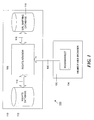
- Figure 1 is a block schematic diagram illustrating in a high level form the basic architecture of the inventive rights resolving system.
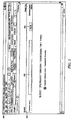
- Figure 2 is a typical screen display presented by a conventional search engine in a web browser.
- Figure 3 is a typical display of content located by the search engine when the keywords "nature methods" have been entered into the text box. This figure shows the hyperlinks to a rights advisor web page generated in accordance with the principles of the invention.
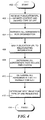
- Figure 4 is a flowchart showing the steps in an illustrative process for determining and resolving rights for a requested type of use.
- Figure 5 is a block schematic diagram illustrating the components of an agreement.
- Figure 6 is a block schematic diagram illustrating the components in a URL to publication identifier mapping apparatus.
- FIGS 7A and 7B when placed together, form a flowchart showing the steps in an illustrative process for mapping a URL to a publication identifier which process is performed by the apparatus shown in Figure 6.
- Figure 8 is a flowchart showing the steps in an illustrative process for determining rights and resolving conflicts between agreements for a particular requested type of use.
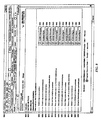
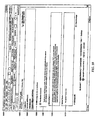
- Figure 9 is a screen display generated in accordance with one embodiment after a member has requested rights for a publication in which the best available rights are display for fourteen pre-defined rights.
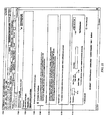
- Figure 10 is a screen display generated in accordance with one embodiment, which screen display is generated when a member selects the right command button for the first displayed type of use in which the right to that type of use is granted.
- Figure 11 is a screen display generated in accordance with one embodiment, which screen display is generated when a member selects the right command button for the second displayed type of use in which the right to that type of use can be purchased.
- Figure 12 is a screen display generated in accordance with one embodiment, which screen display is generated when a member selects the "shopping cart" button display in Figure 11.
- FIG 1 is a block schematic diagram illustrating one embodiment 100 constructed in accordance with the principles of the present invention.
- a customer uses a conventional search engine in a web browser 102 to search for content.
- Figure 2 shows a typical screen display presented by such a search engine.
- the web browser 200 includes a search field 202 that, in turn, includes a text box 204 for receiving a search phrase and a command button 206 for initiating a search for publications whose text includes the search phrase.
- the web browser 200 has been modified to include a small executable program called a "bookmarklet" that causes the browser to interact with a "rights advisor" program in accordance with the principles of the invention.
- Figure 3 shows a typical display of content located by the search engine when the keywords "nature methods" have been entered into the text box 304 in the search field 302 of the browser 300 and the command button 306 has been selected.
- the search results are shown as a plurality of rows 308-318 in the list box 307.
- Each row includes information concerning a publication located in the search, including as is well-known, the Universal Resource Locator (URL) of the publication.
- each row includes a hyperlink generated by the bookmarklet that enables a user to locate and display rights associated with that publication.
- row 308 includes a hyperlink 320 that enables a user to locate and display rights for the "Nature Methods" publication displayed in that row.
- rows 310-318 have hyperlinks 322-330 for locating and viewing rights associated with the publications displayed in those rows.
- the bookmarklet 104 when a hyperlink is selected, the bookmarklet 104 causes the web browser 102 to access a rights advisor web page 108 hosted by a server in a rights clearinghouse location.
- the bookmarklet sends the URL of the publication with which it is associated to the rights advisor web page 108.
- the right advisor web page 108 uses the publication URL to locate rights associated with the publication.
- the process performed by the rights advisor web page 108 to locate and resolve rights is set forth in Figure 4.
- This process begins with step 400 and proceeds to step 402 where the rights advisor 108 receives a publication URL, the organization member context and a desired type of use from the bookmarklet 104.
- Rights that are available for an organization are defined by agreements that are stored in the rights database 112.
- Rights database 112 is arranged as a plurality of tables where rights are stored in a table separate from the content identifiers. Such a database is described in detail in U.S. Patent No. 5,991,876 , the content of which is incorporated in its entirety by reference.
- the rights database 112 contains information regarding agreements.
- An agreement is any construct under which an organization obtains or expresses rights related to secondary use of content.
- Such agreements could include a copyright license for an entire collection of publications obtained from a rights clearinghouse.
- An example of such an agreement is an annual copyright license obtained from the Copyright Clearance Center.
- Agreements may also be made directly with a publisher, such as the Pharmaceutical Documentation Ring agreement made with the publisher Elsevier.
- Another type of agreement could be made with other Reproductive Rights Organizations such as a contract with the Copyright Licensing Agency in the United Kingdom.
- Agreements can also be obtained from various content aggregators. Such an agreement might be a Factiva license.
- Agreements can also be implied by statutory law, for example, Swiss law allows Swiss companies to share content without royalties. Still other agreements may involve company policy.
- the rights advisor 108 accesses the rights database as indicated schematically by arrow 114 and retrieves all agreements that apply to the organization.
- the components of an agreement 500 as represented in the rights database 112 are shown in Figure 5. These components include boundaries 502, titles included 510, rights 520 and terms 521.
- Boundaries 502 specify the member context or various constraints an organization member must meet in order to be covered by the agreement and are defined by three variables: country, location and organization defined attributes.
- the country variable has values corresponding to global nationalities, such as United States or France.
- the location variable has values that correspond to various site location of the organization, such as the Waltham site or the Wilmington site.
- the organization defined variable may have any values that determine, within that organization, whether the agreement applies to a member of that organization.
- variable may specify that a member of the organization must be part of the marketing department or part of the research and development department, etc. to be covered by the agreement.
- the country, location and organization defined variables may be assigned the value "any" which indicates that the agreement would apply to any member context which meets the other boundary variables.
- the organization defined variable may be assigned a value of "any.” In this case the agreement would apply to any member who meets the country and location boundary variables.
- An agreement 500 also includes a designation 510 of the publications or titles that it covers.
- the agreement 500 may apply to collections 512, which are any grouping of publications. For example, an agreement may apply to all the titles that are included in an EBSCO subscription package. This would be considered a "public" collection; the titles included are defined by the information provider and are standard for all purchasers of the package. Another alternative would be a "private" collection. For example, an organization may create an "a la carte" subscription from a provider like EBSCO.
- the agreement 500 may also apply to separate publications 516 in addition to, or as an alternative to, collections 512
- the third component of an agreement is the rights 520 associated with the agreement.
- Each right is associated with a specific type of use.
- a set of distinct rights are predefined.
- a set of distinct types of use have been predefined for publications.
- the set of predefined rights could include more or less distinct rights as would be understood by those skilled in the art.
- an illustrative set of predefined rights could include (1) emailing a copy of the publication to a member of the organization, (2) emailing a copy of the publication to a person who is not a member of the organization, (3) storing a copy of the publication on a local hard drive, (4) storing a copy of the publication on a shared network drive, (5) scan and then email a copy of the publication to a member of the organization, (6) scan and then email a copy of the publication to a person who is not a member of the organization, (7) photocopy publication and share with a member of the organization, (8) photocopy publication and share with a person who is not a member of the organization, (9) share a printed copy of the publication with a member of the organization, (10) share a printed copy of the publication with a person who is not a member of the organization, (11) share a copy of the publication using Lotus NotesTM, (12) upload a copy of the publication to an Internet site, (13) post a copy of the publication for advertising purposes and
- Rights may be associated with each type of use.
- rights can be specified for the agreement 500 as indicated schematically by arrow 522, for a collection covered by the agreement as indicated schematically by arrow 524 or for individual publications within that collection as indicated schematically by arrow 526.
- Rights can also be assigned to separate publications that are covered individually by the agreement as indicated schematically by arrow 528.
- Terms 521 may also be associated with each agreement. Terms include rights holder terms, contract terms that cannot be expressed programmatically as a right, certain statutory laws, such as Swiss law allowing publication sharing with other Swiss employees and company policies. Terms may be assigned at the publication, collection and agreement levels. In general, terms associated with rights are tagged as “Restrictive” or “Nonrestrictive”. The “Restrictive” tag indicates that the associated right (such as a right to photocopy a publication) is limited by the text of the terms (for example, a restrictive term might be "only internal distribution is allowed”). The “Nonrestrictive” tag indicates the terms do not limit the applicability of the right, perhaps because they extend the scope of the permitted activity (for example, nonrestrictive terms might include "There are no restrictions on the distribution of photocopies of this content").
- the rights advisor determines which agreements apply to the publication for which rights are requested.
- the rights advisor uses the publication URL that it receives from the member's browser.
- publication URLs are often arbitrary, and by themselves provide no consistent means to determine whether a given article belongs to a publication with a recognized standard identifier such as an ISSN or an ISBN.
- the rights advisor web page 108 maps, or translates, the URL into a standard identifier, where such an identifier is available. Using this standard identifier, the rights advisor web page 108 can check the retrieved agreements for the organization to determine which agreements apply to the specified publication.
- URL mapping performed by the rights advisor relies on a variety of URL parsers, each of which uses a parsing algorithm, and a supporting database of URL formats 118.
- the rights advisor program 108 has a set of rules for determining which parsers are applicable to a particular URL and a set of parsers that are each able to separate a particular URL into web-site specific identifiers useful for the URL mapping task. Once these specific identifiers have been obtained, they are applied, as schematically indicated by arrow 116, to a database 118 of rules for translating the web-site specific identifiers into standard identifiers such as ISSN or ISBN identifiers.
- Apparatus 600 for mapping a URL to standard identifiers is illustrated in Figure 6 and the steps in the mapping process are illustrated in Figures 7A and 7B.
- the mapping process begins in step 700 and proceeds to step 702 where a URL 602 is received from the user web browser 102.
- the URL is used to query a set of parser rules 604 to determine the most applicable parser as well as configuration settings to determine how parsers will be used in the cases that the rules identify.
- the domain name in the URL is matched against the set of parser rules to select rules that apply to that domain. The selected rules are then used to select and configure the parsers.
- XML extended Markup Language
- This rule matches the URL domain name "emis.ams.org” and is invoked for publications from the European Mathematical Information Service.
- the parser associated with this rule is a "TwoDigitJKeyDateParser” type that looks for a journal key (jkey) field and a two digit date field that follows the journal key value.
- the jkey field is located by the parser by an identifier character string that precedes the field. In the file above, this identifier character string is "journals/”.
- the date and jkey fields are defined by a terminator character string. As noted in the file, the terminator for both the date and the jkey fields is a forward slash, "/".
- the parser will scan the URL for the string "journals/” and extract the character string that follows this identifier up to the terminator string "/". As indicated in the test URL, this latter character string is the string "CMUC", which the parser will extract. The string in then converted to all lowercase “cmuc” and returned as the jkey or the derived publication identifier. The parser then examines the URL using the jkey value as an identifier for the date field. In the above test URL, the parser will find the character string "cmuc9404" and the date is the two digit year following the jkey "cmuc" or "94” indicating a date of 1994. This date is also extracted by the parser and returned.
- This rule matches the URL domain name "sciencedirect.com” and is invoked for publications from the Science Direct information service.
- the parser associated with this rule is a "JKeyTagDateTagParser" type that looks for a journal key field and a date field.
- the date field is located by the parser by an identifier character string that precedes the field. In the file above, this identifier character string is "_coverDate”.
- the date and jkey fields are defined by a terminator character string. As noted in the file, the terminator for both the date and the jkey fields is the character string "&_”.
- the parser rule the jkey identifier is "www.ams.org".
- the jkey field terminator is the forward slash "/”.
- the date identifier is the jkey value and the date field terminator is the dash "-”. Using these values the parser would extract from the test URL the jkey value "jams" and the four digit date value is 2006.
- parser rule operates with a parser that extracts the jkey and the volume number from a URL. This parser rule is shown below:
- the parser would extract from the test URL the jkey value "ECT" and the volume value 21.
- Still another parser rule operates with a parser that uses the URL domain identifier as the jkey and extracts the volume number from a URL. Additional information that is coded directly into the parser rule includes the volume begin year and the number of volumes per year. This parser rule is shown below:
- the jkey identifier is the domain identifier, "biochemj.org".
- the jkey field terminator is the forward slash "/”.
- the volume identifier is the character string "bj/” and the volume field terminator is the forward slash "/”.
- the jkey is determined by a subdomain that is part of the overall URL domain. In general, the subdomain precedes the domain identifier and is separated by a period ".”.
- a parser rule for a parser of this type is listed below. It extracts the subdomain as the jkey and a volume number.
- the parser would extract the sub domain "jme” which becomes the jkey.
- the extracted volume number which follows the identifier "cgi/reprint/" is 35.
- the URL itself contains a standard identifier, such as the ISSN number.
- the parser rule is particularly simple. The following is such as parser rule.
- the jkey is the ISSN number.
- the jkey identifier is the character string "/j.” and the terminator is a period ".” so that, in the test URL, the jkey is 1467-6281 which is also the ISSN number. The date follows the jkey and is 2004.
- a parser consists of the instructions for extracting from a URL the data fields necessary to use translation rules to determine a standard identifier.
- One such set of data fields includes three members: the key base, the journal key and the publication date.
- the key base specifies a context in which the derived identifier is meaningful; in other words, a particular publisher may give all of the publications on its web site unique, proprietary numbers, and use this numbering system in the URLs for the articles on its web site.
- the key base in this case can be any string that specifies the publisher's web site, such as 'PUB 1 '; the journal key is then the publisher's own proprietary identifier.
- Parsers such as parsers 606-608, are defined to extract data in particular formats. For instance, many publishers follow an informal convention in which the URL for an article contains the concatenation of a unique string identifying the publication with four numeric digits signifying the year and month of publication of the article. An example is the underlined string in the following URL: "www.emis.ams.org/journals/CMUC/pdf/ cmuc9404 /john.pdf"
- parser rules such as those set forth above, to perform the same task for URLs of any publisher that follows this convention. Any selected parsing technology must be able to implement at least the following capabilities: within a given string, locate a specified prefix string; extract characters following the prefix string until a specified suffix string is located; and split an extracted string into multiple substrings according to simple format specifications. Conventional UNIX- or Perl-like regular expressions are easily capable of performing these parsing and extraction tasks. In general new parser rules and parsers can be added to support new URL formats.
- the extracted data field values are presented to the translation rule database 614 as indicated schematically by arrows 610 and 612.
- the translation database includes a plurality of entries, each entry constituting a translation rule that, in turn, includes at least three fields: the key base, the journal key and the standard identifier and may include other fields, such as date fields.
- the key base and journal keys are used as key fields. If the data field values presented to the translation rule database match these fields, the associated standard identifier is returned.
- the entry depicted in the row of data can be used to translate the key base and journal key data fields extracted by parsing a URL, such as "www.emis.ams.org/journals/CMUC/cmuc0601/abs/abuosba.htrn", which identifies the abstract page for a scholarly mathematical article, into an ISSN for its publication.
- the key base used here is the domain name of the website where the publication appears; the journal key is part of the URL and differs from publication to publication on the web site.
- Different database entries can be created to store different types of key bases resulting from different kinds of URLs and parsers.
- a standard identifier such as an ISSN 616 results from the database query.
- step 710 If, in step 710, it is determined that such a standard identifier results from the database query, then the URL mapping process finishes in step 712. However, if it is determined, in step 710, that querying the translation rule database with the extracted data field values does not yield a standard identifier, then in step 714, a human operator 626 is provided with the given URL and the extracted field values as indicated schematically by arrows 618, 620 and 622. The process then proceeds, via off-page connectors 716 and 718 to step 720 where a determination is made whether the received URL has been parsed correctly.
- step 720 If it is determined in step 720 that the URL has been parsed correctly, then the problem is that the extracted data fields do not map to a known standard identifier. This may occur, for example, when the URL identifies an article from a brand-new publication.
- the operator 626 can consult the publisher of the publication for the correct standard identifier and add its value to the set of translation rules in the translation rule database 614, as indicated schematically by arrow 624. The operator then provides the standard identifier as the output of the process and the process finishes in step 734.
- step 724 a determination is made whether the URL is from a currently-supported web site - that is, a web site whose top-level domain is stored in the set of parser rules and used to select a parser. If so, the problem is that the selected parser could not parse the remainder of the URL or could only extract partial fields.
- the operator 626 can add a new parser rule to the parser rule set 604 as indicated schematically by arrow 628, to specify a different parser for URLs matching the new format. Again, the operator will supply the standard identifier and the process ends in step 734.
- step 728 the operator 626 can define a new parser and add it to the set of URL parsers as indicated by arrow 628, then define new rules for when to apply this new kind of parser, and add these to the parser rule set 614 as indicated schematically by arrow 630.
- the operator 626 can define new translation rules that map the data field values extracted by the new parser to the standard identifier for the new publication, and add these to the list of translation rules in the translation rule database 614 as indicated schematically by arrow 624.
- the operator 626 then provides the standard identifier as an output and the process finishes in step 734. In this manner future queries of the translation rule database with the previously unsupported rule will then be able to be mapped successfully.
- step 408 the rights advisor uses that identifier to determine all retrieved agreements that apply to the identified publication.
- step 410 a determination is made of all agreements that fit the member context. This determination is made by examining the boundaries of each agreement to then determining whether that agreement covers the member country and location and that the member meets any organization defined attributes.
- step 412 the best right for the type of use requested is determined. The process then finishes in step 414.
- step 800 begins in step 800 and proceeds to step 802 where, if user specified types of use are used in the system, they are mapped into one or more the pre-defined types of use discussed above.
- step 806 the most applicable rights from all agreements are collected and ordered.
- rights are placed into a hierarchy with a specific "best" to "worst” order based on the type of right and whether any terms are associated with the right.
- rights with terms tagged as "Nonrestrictive” are treated as rights without terms - that is, at the highest level of applicability.
- step 808 it is determined that no "clear winner” exists, then a "tie” exists between two or more agreements. Ties among two or more rights can take several forms. For example, a tie between two or more rights without terms indicates that identical rights are available from two different agreements. Since the rights are identical and indistinguishable, one agreement is selected by a variety of techniques (for example, arbitrarily) and the rights and terms of that agreement are displayed.
- a tie between two or more rights with terms results in the display of all such rights together with the terms, so that the end user can make an informed judgment as to the permissibility of the requested activity.
- Another example is a tie between two or more rights with "Purchase" status. Such a tie results in the display of a list of the purchase information or capability for all such rights.
- terms associated with rights may be informational.
- An informational term is a term that presents information to the member without overriding another term or being overridden by another term. Examples of informational terms include statements of company policy for a given type of use or other statements that would give guidance to the user as to how to proceed. Specifying an informational term for an agreement will create a tie condition with other terms on the same agreement, so that the additional information will always be displayed in a list with the terms specified by that agreement.
- step 812 one of the agreements that has the best available right is selected in step 812 and the rights and terms for this agreement are displayed to the member. Again, the process finishes in step 816.
- Figure 9 is a screen display of a set of fourteen use types with the accompanying best available right displayed.
- the display shows a browser screen 900.
- This screen display shows the member context 902, including the country, location and organization-specified attributes and the selected publication 904.
- the fourteen types of use that are available to members are displayed in a list with one type of use in each row 906-930 of the list. Opposite each type of use, the best available right is displayed. For example, for the use “E-mail a copy of the publication to my co-workers" 906, the best available right is "Confirm Permission” 932. However, for the use “E-mail a copy of the publication to non-Pro-Global employees” 908, the best available right is "Purchase Rights" 934. Other rights may also be displayed. For example, the type of use "Post to Bill Board for Advertising Purposes" 928 has the right "Contact Library” 954 displayed.
- Each right is display as the caption of one of command buttons 932-956.
- commands buttons 932-956 When one of commands buttons 932-956 is selected, further information concerning the associated rights is displayed.
- the screen display shown in Figure 9 changes to that shown in Figure 10.
- This browser display 1000 includes the same member context information 1002 and publication information 1004 as shown in the screen display shown in Figure 9, but the type of use and right display has been replaced with information 1006 indicating the type of use selected and the right granted 1008. Further information 1010 is displayed specifically describing the use allowed. If special terms are associated with the right, they are displayed in section 1012.
- buttons 934 in Figure 9 When button 934 in Figure 9 is selected, the screen display shown in Figure 9 changes to that shown in Figure 11.
- This browser display 1100 includes the same member context information 1102 and publication information 1104 as shown in the screen display shown in Figure 9, but the type of use and right display has been replaced with information 1106 indicating the type of use selected and the right granted 1108.
- Further information 1110 is displayed specifically describing the use allowed. In this case, special terms are displayed in section 1112. Since the right is available for purchase, a further purchasing section 1114 is also displayed. This section includes information relevant to the purchase and areas to add additional information. For example, a text box 1116 may be provided to allow the member to indicate how many recipients will receive the publication. The unit price 1118 is displayed.
- a further command button 1120 allows the purchase to be added to a conventional "shopping cart" metaphor.
- Selection of the shopping cart command button 1120 causes the screen display in Figure 11 to change to that shown in Figure 12.
- This browser display 1200 displays the publication selected 1202 along with its standard identifier 1204 and additional information, such as the publication year.
- the selected type of use 1208 is also displayed along with the number of recipients 1210 entered by the member and the total price 1212. Conventional sales mechanisms allow the member to purchase the rights.
- a software implementation of the above-described embodiment may comprise a series of computer instructions either fixed on a tangible medium, such as a computer readable media, for example, a diskette, a CD-ROM, a ROM, or a fixed disk, or transmittable to a computer system via a modem or other interface device over a transmission path.
- the transmission path either may be tangible lines, including but not limited to, optical or analog communications lines, or may be implemented with wireless techniques, including but not limited to microwave, infrared or other transmission techniques.
- the transmission path may also be the Internet.
- the series of computer instructions embodies all or part of the functionality previously described herein with respect to the invention.
- Such computer instructions can be written in a number of programming languages for use with many computer architectures or operating systems. Further, such instructions may be stored using any memory technology, present or future, including, but not limited to, semiconductor, magnetic, optical or other memory devices, or transmitted using any communications technology, present or future, including but not limited to optical, infrared, microwave, or other transmission technologies. It is contemplated that such a computer program product may be distributed as a removable medium with accompanying printed or electronic documentation, e.g., shrink wrapped software, preloaded with a computer system, e.g., on system ROM or fixed disk, or distributed from a server or electronic bulletin board over a network, e.g., the Internet or World Wide Web.
- a removable medium with accompanying printed or electronic documentation, e.g., shrink wrapped software, preloaded with a computer system, e.g., on system ROM or fixed disk, or distributed from a server or electronic bulletin board over a network, e.g., the Internet or World Wide Web.
Landscapes
- Business, Economics & Management (AREA)
- Strategic Management (AREA)
- Development Economics (AREA)
- Economics (AREA)
- Finance (AREA)
- Marketing (AREA)
- Accounting & Taxation (AREA)
- Physics & Mathematics (AREA)
- General Business, Economics & Management (AREA)
- General Physics & Mathematics (AREA)
- Engineering & Computer Science (AREA)
- Theoretical Computer Science (AREA)
- Management, Administration, Business Operations System, And Electronic Commerce (AREA)
- Information Retrieval, Db Structures And Fs Structures Therefor (AREA)
Abstract
Description
- This invention relates to digital rights display and methods and apparatus for determining reuse rights for content to which multiple licenses and subscriptions apply. Works, or "content", created by an author is generally subject to legal restrictions on reuse. For example, most content is protected by copyright. In order to conform to copyright law, content users often obtain content reuse licenses. A content reuse license is actually a "bundle" of rights, including rights to present the content in different formats, rights to reproduce the content in different formats, rights to produce derivative works, etc. Thus, depending on a particular reuse, a specific license to that reuse may have to be obtained.
- Many organizations use content for a variety of purposes, including research and knowledge work. These organizations obtain that content through many channels, including purchasing content directly from publishers and purchasing content via subscriptions from subscription resellers. Subscriptions generally include some reuse rights that are conveyed to the subscriber. A given subscription service will generally try to offer a standard set of rights across its subscriptions, but large customers will often negotiate with the service to purchase additional rights. Thus, reuse rights may vary from subscription to subscription and the reuse rights available for a particular subscription may vary even across publications within that subscription. In addition, the reuse rights conveyed in these subscriptions often overlap with other rights and licenses purchased from license clearinghouses, or from other sources.
- Many knowledge workers attempt to determine which rights are available for particular content before using that content in order to avoid infringing legitimate rights of rightsholders. However, at present, determining what reuse rights an organization has for any given publication is a time-consuming, manual procedure, generally requiring a librarian or legal counsel to review in advance of the use, all license agreements obtained from content providers and purchased from other sources which may pertain to the content and its reuse. The difficulty of this determination means that sometimes an organization will overspend to purchase rights for which it already has paid. Alternatively, knowledge workers may run the risk of infringing a reuse right for which they believe that the organization has a license, but which, in actuality, the organization does not.
- In accordance with the principles of the invention, a small program in a browser that a knowledge worker uses to search for content can be activated when the worker wants to determine available rights for a publication that has been found. When activated, the program accesses a rights advisor website and extracts all agreements stored therein that are applicable to the organization to which the worker belongs. The rights advisor then converts the URL of the publication in the browser to a standard publication identifier. The publication identifier is then used to determine agreements that are applicable to that publication. The agreements are further filtered based on selected characteristics of the worker and the organization to which the worker belongs and an applicable right is selected from each agreement, if available. The rights are then ordered from the most permissive to the most restrictive. The tree is then traversed from its lowest level upward and the resulting rights are presented to the worker via the browser.
- In one embodiment, the worker can communicate with the rights advisor to purchase rights for a specific reuse for which the organization does not have rights.
- In another embodiment, variables that are used to filter workers include the country where the worker is located, the location within that country and other attributes defined by the organization to which the worker belongs.
- In still another embodiment, the rights database contains a predetermined set of reuse rights for each publication in the database and this predetermined set of rights is presented to the worker.
- In yet another embodiment, the text of terms associated with each right are also presented to the worker along with the predetermined set of rights.
- In another embodiment, publications in the rights database can be grouped into collections and a set of rights can be associated with a collection so that all publications in that collection inherit the rights associated with that collection.
- Figure 1 is a block schematic diagram illustrating in a high level form the basic architecture of the inventive rights resolving system.
- Figure 2 is a typical screen display presented by a conventional search engine in a web browser.
- Figure 3 is a typical display of content located by the search engine when the keywords "nature methods" have been entered into the text box. This figure shows the hyperlinks to a rights advisor web page generated in accordance with the principles of the invention.
- Figure 4 is a flowchart showing the steps in an illustrative process for determining and resolving rights for a requested type of use.
- Figure 5 is a block schematic diagram illustrating the components of an agreement.
- Figure 6 is a block schematic diagram illustrating the components in a URL to publication identifier mapping apparatus.
- Figures 7A and 7B, when placed together, form a flowchart showing the steps in an illustrative process for mapping a URL to a publication identifier which process is performed by the apparatus shown in Figure 6.
- Figure 8 is a flowchart showing the steps in an illustrative process for determining rights and resolving conflicts between agreements for a particular requested type of use.
- Figure 9 is a screen display generated in accordance with one embodiment after a member has requested rights for a publication in which the best available rights are display for fourteen pre-defined rights.
- Figure 10 is a screen display generated in accordance with one embodiment, which screen display is generated when a member selects the right command button for the first displayed type of use in which the right to that type of use is granted.
- Figure 11 is a screen display generated in accordance with one embodiment, which screen display is generated when a member selects the right command button for the second displayed type of use in which the right to that type of use can be purchased.
- Figure 12 is a screen display generated in accordance with one embodiment, which screen display is generated when a member selects the "shopping cart" button display in Figure 11.
- Figure 1 is a block schematic diagram illustrating one
embodiment 100 constructed in accordance with the principles of the present invention. In this embodiment, a customer uses a conventional search engine in aweb browser 102 to search for content. Figure 2 shows a typical screen display presented by such a search engine. Theweb browser 200 includes asearch field 202 that, in turn, includes atext box 204 for receiving a search phrase and acommand button 206 for initiating a search for publications whose text includes the search phrase. Theweb browser 200 has been modified to include a small executable program called a "bookmarklet" that causes the browser to interact with a "rights advisor" program in accordance with the principles of the invention. - In particular, Figure 3 shows a typical display of content located by the search engine when the keywords "nature methods" have been entered into the
text box 304 in thesearch field 302 of the browser 300 and thecommand button 306 has been selected. The search results are shown as a plurality of rows 308-318 in thelist box 307. Each row includes information concerning a publication located in the search, including as is well-known, the Universal Resource Locator (URL) of the publication. In accordance with the invention, each row includes a hyperlink generated by the bookmarklet that enables a user to locate and display rights associated with that publication. For example,row 308 includes ahyperlink 320 that enables a user to locate and display rights for the "Nature Methods" publication displayed in that row. Similarly, rows 310-318 have hyperlinks 322-330 for locating and viewing rights associated with the publications displayed in those rows. - Returning to Figure 1, when a hyperlink is selected, the
bookmarklet 104 causes theweb browser 102 to access a rightsadvisor web page 108 hosted by a server in a rights clearinghouse location. When theweb page 108 is accessed, the bookmarklet sends the URL of the publication with which it is associated to the rightsadvisor web page 108. The rightadvisor web page 108 uses the publication URL to locate rights associated with the publication. - The process performed by the rights
advisor web page 108 to locate and resolve rights is set forth in Figure 4. This process begins withstep 400 and proceeds tostep 402 where therights advisor 108 receives a publication URL, the organization member context and a desired type of use from thebookmarklet 104. Rights that are available for an organization are defined by agreements that are stored in therights database 112.Rights database 112 is arranged as a plurality of tables where rights are stored in a table separate from the content identifiers. Such a database is described in detail inU.S. Patent No. 5,991,876 , the content of which is incorporated in its entirety by reference. In particular, therights database 112 contains information regarding agreements. - An agreement is any construct under which an organization obtains or expresses rights related to secondary use of content. Such agreements could include a copyright license for an entire collection of publications obtained from a rights clearinghouse. An example of such an agreement is an annual copyright license obtained from the Copyright Clearance Center. Agreements may also be made directly with a publisher, such as the Pharmaceutical Documentation Ring agreement made with the publisher Elsevier. Another type of agreement could be made with other Reproductive Rights Organizations such as a contract with the Copyright Licensing Agency in the United Kingdom. Agreements can also be obtained from various content aggregators. Such an agreement might be a Factiva license. Agreements can also be implied by statutory law, for example, Swiss law allows Swiss companies to share content without royalties. Still other agreements may involve company policy.
- In
step 404, therights advisor 108 accesses the rights database as indicated schematically byarrow 114 and retrieves all agreements that apply to the organization. The components of anagreement 500 as represented in therights database 112 are shown in Figure 5. These components includeboundaries 502, titles included 510,rights 520 andterms 521.Boundaries 502 specify the member context or various constraints an organization member must meet in order to be covered by the agreement and are defined by three variables: country, location and organization defined attributes. The country variable has values corresponding to global nationalities, such as United States or France. The location variable has values that correspond to various site location of the organization, such as the Waltham site or the Wilmington site. The organization defined variable may have any values that determine, within that organization, whether the agreement applies to a member of that organization. For example, the variable may specify that a member of the organization must be part of the marketing department or part of the research and development department, etc. to be covered by the agreement. The country, location and organization defined variables may be assigned the value "any" which indicates that the agreement would apply to any member context which meets the other boundary variables. For example, the organization defined variable may be assigned a value of "any." In this case the agreement would apply to any member who meets the country and location boundary variables. - An
agreement 500 also includes adesignation 510 of the publications or titles that it covers. Theagreement 500 may apply tocollections 512, which are any grouping of publications. For example, an agreement may apply to all the titles that are included in an EBSCO subscription package. This would be considered a "public" collection; the titles included are defined by the information provider and are standard for all purchasers of the package. Another alternative would be a "private" collection. For example, an organization may create an "a la carte" subscription from a provider like EBSCO. Theagreement 500 may also apply to separatepublications 516 in addition to, or as an alternative to,collections 512 - The third component of an agreement is the
rights 520 associated with the agreement. Each right is associated with a specific type of use. In order to standardize agreements, a set of distinct rights are predefined. In the discussion below, a set of distinct types of use have been predefined for publications. However, the set of predefined rights could include more or less distinct rights as would be understood by those skilled in the art. For example, an illustrative set of predefined rights could include (1) emailing a copy of the publication to a member of the organization, (2) emailing a copy of the publication to a person who is not a member of the organization, (3) storing a copy of the publication on a local hard drive, (4) storing a copy of the publication on a shared network drive, (5) scan and then email a copy of the publication to a member of the organization, (6) scan and then email a copy of the publication to a person who is not a member of the organization, (7) photocopy publication and share with a member of the organization, (8) photocopy publication and share with a person who is not a member of the organization, (9) share a printed copy of the publication with a member of the organization, (10) share a printed copy of the publication with a person who is not a member of the organization, (11) share a copy of the publication using Lotus Notes™, (12) upload a copy of the publication to an Internet site, (13) post a copy of the publication for advertising purposes and (14) upload a copy of the publication to an electronic paper (soft billboard.) Customers can define their own type of use, but these custom use types must map to one of the fourteen predefined use types. - Rights may be associated with each type of use. In addition, rights can be specified for the
agreement 500 as indicated schematically byarrow 522, for a collection covered by the agreement as indicated schematically byarrow 524 or for individual publications within that collection as indicated schematically byarrow 526. Rights can also be assigned to separate publications that are covered individually by the agreement as indicated schematically byarrow 528. -
Terms 521 may also be associated with each agreement. Terms include rights holder terms, contract terms that cannot be expressed programmatically as a right, certain statutory laws, such as Swiss law allowing publication sharing with other Swiss employees and company policies. Terms may be assigned at the publication, collection and agreement levels. In general, terms associated with rights are tagged as "Restrictive" or "Nonrestrictive". The "Restrictive" tag indicates that the associated right (such as a right to photocopy a publication) is limited by the text of the terms (for example, a restrictive term might be "only internal distribution is allowed"). The "Nonrestrictive" tag indicates the terms do not limit the applicability of the right, perhaps because they extend the scope of the permitted activity (for example, nonrestrictive terms might include "There are no restrictions on the distribution of photocopies of this content"). - Next, in
steps step 406, the rightsadvisor web page 108 maps, or translates, the URL into a standard identifier, where such an identifier is available. Using this standard identifier, the rightsadvisor web page 108 can check the retrieved agreements for the organization to determine which agreements apply to the specified publication. - URL mapping performed by the rights advisor relies on a variety of URL parsers, each of which uses a parsing algorithm, and a supporting database of URL formats 118. In particular, the
rights advisor program 108 has a set of rules for determining which parsers are applicable to a particular URL and a set of parsers that are each able to separate a particular URL into web-site specific identifiers useful for the URL mapping task. Once these specific identifiers have been obtained, they are applied, as schematically indicated byarrow 116, to adatabase 118 of rules for translating the web-site specific identifiers into standard identifiers such as ISSN or ISBN identifiers. Once the standard identifiers have been obtained, they are applied, as indicated schematically byarrow 114 to adatabase 112 that is keyed by the standard identifiers for publications. Thisdatabase 112 enumerates publication titles and the rights under which the publications can be used. -
Apparatus 600 for mapping a URL to standard identifiers is illustrated in Figure 6 and the steps in the mapping process are illustrated in Figures 7A and 7B. The mapping process begins instep 700 and proceeds to step 702 where aURL 602 is received from theuser web browser 102. Instep 704 and, as indicated byarrow 603, the URL is used to query a set ofparser rules 604 to determine the most applicable parser as well as configuration settings to determine how parsers will be used in the cases that the rules identify. In particular, the domain name in the URL is matched against the set of parser rules to select rules that apply to that domain. The selected rules are then used to select and configure the parsers. - One example of a parser rule is illustrated below as a sample extended Markup Language (XML) configuration file. XML is a well-known language that uses tags to distinguish particular pieces of computer-readable data.
  <parser name="EMIS" activated="Yes">
  <parser_type>TwoDigitJKeyDateParser</parser_type>
  <domain_identifier>emis.ams.org</domain_identifier>
  <jkey_identifier>journals/</jkey_identifier>
  <terminator>/</terminator>
  <date_terminator>/</date_terminator>
  <key_base>european mathematical_info_servicel</key_base>
  <test_url>http://www.emis.ams.org/journals/CMUC/pdf/
                 cmuc9404/john.pdf</test_url>
  </parser>
<parser name="SCIENCE_DIRECT" activated="Yes">
<parser_type>JKeyTagDateTagParser</parser_type>
<domain_identifier>sciencedirect.com</domain_identifier>
<jkey_identifier>_cdi=</jkey_identifier>
<terminator>&_</terminator>
<date_identifier>_coverDate</date_identifier>
<date_terminator>& </date terminator>
<key_base>science_direct|</key_base>
<test-url>http://www.sciencedirect.com/science?_ob=Mlmg&_imagekey=B7
GWV-4HD8DMF-1-F2&_cdi=20468&_user=10&_
orig=browse&_coverDate=12%2F31 %2F2005&_
sk=999979995&view=c&wchp=dGLbVlbzSkzS&
md5=3b739f8dffc223711 a8ea64a897da4d0&
ie=/sdarticle.pdf</test_url>
</parser>
  <parser name="AMS" activated="Yes">
  <parser_type>JKeyDateParser</parser_type>
  <domain_identifier>ams.org</domain_identifier>
  <jkey_identifier>www.ams.org/</jkey_identifier>
  <terminator>/</terminator>
  <date_terminator>-</date_terminator>
  <key_base>american_mathematical_society|</key_base>
  <test_url>http://www.ams.org/jams/2006-19-01/50894-0347-05-00505-9/50894-
                0347-05-00505-9.pdf</test_url>
  </parser>
<parser name="CAMBRIDGE" activated="Yes">
<parser_type>JKeyTagVolumeTagParser</parser_type>
<domain_identifier>journals.cambridge.org</domain identifier>
<jkey_identifier>?jid=</jkey_identifier>
<date_identifier>volumeld=</date_identifier>
<terminator>&</terminator>
<date_terminator>&</date_terminator>
<key_base>cambridge_journalsl</key_base>
<test url>http://www.journals.cambridge.org/action/displaylssue?jid=ECT&
volumeld=21 &issueld=05</test_url>
</parser>
  <parser name="BIOCHEM_JOURNAL" activated="Yes">
  <parser_type>DomainPublicationVolumeTagParser</parser_type>
  <domain_identifier>biochemj.org</domain_identifier>
  <volume_identifier>bj/</volume_identifier>
  <terminator>/</terminator>
  <volume_terminator>/</volume_terminator>
  <volume_begin_year>1956</votume_begin_year>
  <volumes_per_annum>8</volumes_per_annum>
  <key_base>biochem_journall</key_base>
  <test_url>http://www.biochemj.org/bj/392/0271/3920271.pdf</test_url>
  </parser>
  <parser name="ENDOCRINOLOGY_JOURNALS" activated="Yes">
  <parser_type>SubdomainPublicationVolumeTagParser</parser_type>
  <domain_identifier>endocrinology-journals.org</domain_identifier>
  <volume_identifier>cgi/reprint/</volume_identifier>
  <terminator>/</terminator>
  <volume_terminator>/</volume_terminator>
  <key_base>endocrinology_journalsl</key_base>
  <test_url>http://jme.endocrinology-journals.org/cgi/reprint/35/2/283</test_url>
  </parser>
  <parser name="BLACKWELL" activated="Yes">
  <parser_type>URLISSNAndDateParser</parser_type>
  <domain_identifier>blackwell-synergy.com</domain_identifier>
  <jkey_identifier>/j.</jkey_identifier>
  <terminator>.</terminator>
  <date_terminator>.</date_terminator>
  <key_base>blackwell_synergy|</key_base>
  <test_url>http://www.blackwell-synergy.com/doi/pdf/10.1111/j.1467-
                6281.2004.00159.x</test_url>
  </parser>
"www.emis.ams.org/journals/CMUC/pdf/cmuc9404/john.pdf"
| KEY BASE | JOURNAL KEY | STANDARD IDENTIFIER |
| emis.ams.org | CMUC | 0010-2628 |
Claims (27)
- A method operable in response to a request by a knowledge worker in an organization for verifying and resolving rights to reuse content in a publication having a URL, the method comprising:(a) obtaining all rights agreements that are applicable to the organization;(b) using the URL of the publication to determine rights set forth in the obtained rights agreements that are applicable to the publication;(c) ordering the rights in a hierarchy from a least applicable level to a most applicable level; and(d) traversing the hierarchy from the most applicable to the least applicable level and presenting the resulting rights to the knowledge worker.
- The method of claim 1 wherein step (a) comprises accessing a rights advisor website via a browser and extracting all agreements stored therein that are applicable to the organization.
- The method of claim 2 further comprising:(e) accessing the rights advisor website to purchase rights for a specific reuse for which the organization does not have rights.
- The method of claim 2 wherein agreements stored in the rights advisor website are stored in a rights database that contains a predetermined set of reuse rights for each publication in the rights database.
- The method of claim 4 wherein step (d) comprises presenting the most applicable selections form the predetermined set of rights to the knowledge worker via the browser.
- The method of claim 4 wherein step (d) further comprises presenting a textual display of terms associated with each right to the knowledge worker along with the most applicable selections from the predetermined set of rights.
- The method of claim 4 wherein step (a) comprises grouping publications in the rights database into collections and associating a set of rights with a collection so that all publications in that collection inherit the rights associated with that collection.
- The method of claim 1 wherein step (b) comprises converting the URL of the publication to a standard publication identifier and using the standard publication identifier to determine rights set forth in the obtained rights agreements that are applicable to the publication.
- The method of claim 1 wherein step (b) further comprises filtering the obtained agreements based on selected characteristics of the knowledge worker and the organization and selecting applicable rights from the filtered agreements.
- The method of claim 9 wherein variables that are used to filter agreements include a country where the worker is located, a location within that country and other attributes defined by the organization to which the worker belongs.
- The method of claim 10 wherein step (b) further comprises selecting the most specific right in each filtered agreement.
- The method of claim 1 wherein step (d) comprises selecting a right when the ordering in step (c) yields an agreement that includes a right that is more applicable than rights in other agreements.
- The method of claim 12 wherein step (d) further comprises displaying at least two rights to the knowledge worker when no agreement includes a right that is more applicable than rights in other agreements.
- Apparatus operable in response to a request by a knowledge worker in an organization for verifying and resolving rights to reuse content in a publication having a URL, the apparatus comprising:a mechanism that obtains all rights agreements that are applicable to the organization;a mechanism that uses the URL of the publication to determine rights set forth in the obtained rights agreements that are applicable to the publication;a mechanism that orders the rights in a hierarchy from a least applicable level to a most applicable level; anda mechanism that traverses the hierarchy from the most applicable to the least applicable level and presents the resulting rights to the knowledge worker.
- The apparatus of claim 14 wherein the mechanism that obtains all rights agreements that are applicable to the organization comprises a mechanism that accesses a rights advisor website via a browser and extracts all agreements stored therein that are applicable to the organization.
- The apparatus of claim 15 further comprising a mechanism that accesses the rights advisor website to purchase rights for a specific reuse for which the organization does not have rights.
- The apparatus of claim 15 wherein agreements stored in the rights advisor website are stored in a rights database that contains a predetermined set of reuse rights for each publication in the rights database.
- The apparatus of claim 17 wherein the mechanism that presents the rights to the knowledge worker comprises a mechanism that presents the predetermined set of rights to the knowledge worker via the browser.
- The apparatus of claim 17 wherein the mechanism that presents the rights to the knowledge worker further comprises a mechanism that presents a textual display of terms associated with each right to the knowledge worker along with the predetermined set of rights.
- The apparatus of claim 17 wherein the mechanism that obtains all rights agreements that are applicable to the organization comprises a mechanism that groups publications in the rights database into collections and associates a set of rights with a collection so that all publications in that collection inherit the rights associated with that collection.
- The apparatus of claim 14 wherein the mechanism that determines rights set forth in the obtained rights agreements that are applicable to the publication comprises a mechanism that converts the URL of the publication to a standard publication identifier and uses the standard publication identifier to determine rights set forth in the obtained rights agreements that are applicable to the publication.
- The apparatus of claim 14 wherein the mechanism that determines rights set forth in the obtained rights agreements that are applicable to the publication further comprises a mechanism that filters the obtained agreements based on selected characteristics of the knowledge worker and the organization and selects applicable rights from the filtered agreements.
- The apparatus of claim 22 wherein variables that are used to filter agreements include a country where the worker is located, a location within that country and other attributes defined by the organization to which the worker belongs.
- The method of claim 23 wherein the mechanism that determines rights set forth in the obtained rights agreements that are applicable to the publication further comprises a mechanism that selects the most specific right in each filtered agreement.
- The apparatus of claim 14 wherein the mechanism that traverses the hierarchy comprises a mechanism that selects a right when the ordering mechanism yields an agreement that includes a right that is more applicable than rights in other agreements.
- The apparatus of claim 25 wherein the mechanism that traverses the hierarchy further comprises a mechanism that displays at least two rights to the knowledge worker when no agreement includes a right that is more applicable than rights in other agreements.
- Apparatus operable in response to a request by a knowledge worker in an organization for verifying and resolving rights to reuse content in a publication having a URL, the apparatus comprising:means for obtaining all rights agreements that are applicable to the organization;means for using the URL of the publication to determine rights set forth in the obtained rights agreements that are applicable to the publication;means for ordering the rights in a hierarchy from a least applicable level to a most applicable level; andmeans for traversing the hierarchy from the most applicable to the least applicable level and presenting the resulting rights to the knowledge worker.
Applications Claiming Priority (2)
| Application Number | Priority Date | Filing Date | Title |
|---|---|---|---|
| US81236206P | 2006-06-09 | 2006-06-09 | |
| US11/733,417 US8201242B2 (en) | 2006-06-09 | 2007-04-10 | Method and apparatus for verifying content reuse rights and resolving rights in the presence of multiple licenses |
Publications (1)
| Publication Number | Publication Date |
|---|---|
| EP1901218A1 true EP1901218A1 (en) | 2008-03-19 |
Family
ID=38823109
Family Applications (1)
| Application Number | Title | Priority Date | Filing Date |
|---|---|---|---|
| EP07010860A Withdrawn EP1901218A1 (en) | 2006-06-09 | 2007-06-01 | Method and apparatus for verifying content reuse rights and resolving rights in the presence of multiple licenses |
Country Status (4)
| Country | Link |
|---|---|
| US (1) | US8201242B2 (en) |
| EP (1) | EP1901218A1 (en) |
| AU (1) | AU2007202632B2 (en) |
| CA (1) | CA2590878A1 (en) |
Cited By (1)
| Publication number | Priority date | Publication date | Assignee | Title |
|---|---|---|---|---|
| WO2008151221A3 (en) * | 2007-06-05 | 2009-03-19 | Copyright Clearance Ct Inc | Method an apparatus for obtaining content license rights via a document link resolver |
Families Citing this family (4)
| Publication number | Priority date | Publication date | Assignee | Title |
|---|---|---|---|---|
| US8190569B2 (en) * | 2009-04-03 | 2012-05-29 | Wishlist Holdings Limited | System and method for site cloning |
| US9838457B2 (en) * | 2010-12-30 | 2017-12-05 | Jesse Lakes | Redirection service mechanism |
| US9330093B1 (en) * | 2012-08-02 | 2016-05-03 | Google Inc. | Methods and systems for identifying user input data for matching content to user interests |
| US20140229393A1 (en) * | 2013-02-11 | 2014-08-14 | James E. Malackowski | Ip content discovery platform |
Citations (1)
| Publication number | Priority date | Publication date | Assignee | Title |
|---|---|---|---|---|
| WO2001035279A2 (en) | 1999-11-10 | 2001-05-17 | Openly Informatics, Inc. | Retrieval of digital objects by redirection of controlled vocabulary searches |
Family Cites Families (4)
| Publication number | Priority date | Publication date | Assignee | Title |
|---|---|---|---|---|
| US20050119975A1 (en) * | 1999-02-05 | 2005-06-02 | O'donnell Michael | Automated licensing and access to distribution information for works of authorship |
| US6526438B1 (en) * | 1999-07-12 | 2003-02-25 | Divine, Inc. | Method for distributing information to subscribers over a network |
| US20040254884A1 (en) * | 2002-12-20 | 2004-12-16 | Sap Aktiengesellschaft | Content catalog and application designer framework |
| US20050149549A1 (en) * | 2003-12-31 | 2005-07-07 | Jos Jaspers | Content management in web environments |
-
2007
- 2007-04-10 US US11/733,417 patent/US8201242B2/en active Active
- 2007-05-30 CA CA002590878A patent/CA2590878A1/en not_active Abandoned
- 2007-06-01 EP EP07010860A patent/EP1901218A1/en not_active Withdrawn
- 2007-06-08 AU AU2007202632A patent/AU2007202632B2/en active Active
Patent Citations (1)
| Publication number | Priority date | Publication date | Assignee | Title |
|---|---|---|---|---|
| WO2001035279A2 (en) | 1999-11-10 | 2001-05-17 | Openly Informatics, Inc. | Retrieval of digital objects by redirection of controlled vocabulary searches |
Non-Patent Citations (6)
| Title |
|---|
| BENNETT, GERARD ET AL: "A JISC Project - Open Linking in a Virtual Learning Environment, (OLIVE)", INTERNET CITATION, 30 January 2004 (2004-01-30), XP002465923, Retrieved from the Internet <URL:http://www.jisc.ac.uk/uploaded_documents/OLIVE_Project_Report.pdf> [retrieved on 20080123] * |
| BENNETT; GERARD ET AL.: "A JISC Project - Open Linking in a Virtual Leaming Environment, (OLIVE", INTERNET CITATION, 30 January 2004 (2004-01-30), Retrieved from the Internet <URL:URL:hftp://www.*isc.ac.uk/uploaded-documents/OLIVE Project Report.pdf> |
| COLLINS, MARIA ET AL: "Context-Sensitive Linking: It's a Small World After All", SERIALS REVIEW, vol. 28, no. 4, 2002, pages 267 - 282, XP002465924 * |
| COLLINS; MARIA: "Context-Sensitive Linking: It's a Small World After All", SERIALS REVIEW, vol. 28, no. 4, 2002, pages 267 - 282 |
| SHAW, SANDY: "JISC Core Middleware and Shared Services Studies", INTERNET CITATION, 22 September 2004 (2004-09-22), XP002465925, Retrieved from the Internet <URL:http://www.jisc.ac.uk/uploaded_documents/CMSS-Shaw1.pdf> [retrieved on 20080121] * |
| SISIS INFORMATIONSSYSTEME GMBH: "SISIS-Elektra V4.0 Administrationshandbuch", INTERNET CITATION, 26 April 2005 (2005-04-26), XP002465926, Retrieved from the Internet <URL:http://w3.ub.uni-konstanz.de/v13/volltexte/2006/1841//pdf/elektra_admin_40.pdf> [retrieved on 20010123] * |
Cited By (1)
| Publication number | Priority date | Publication date | Assignee | Title |
|---|---|---|---|---|
| WO2008151221A3 (en) * | 2007-06-05 | 2009-03-19 | Copyright Clearance Ct Inc | Method an apparatus for obtaining content license rights via a document link resolver |
Also Published As
| Publication number | Publication date |
|---|---|
| AU2007202632B2 (en) | 2012-08-16 |
| CA2590878A1 (en) | 2007-12-09 |
| US8201242B2 (en) | 2012-06-12 |
| AU2007202632A1 (en) | 2008-01-03 |
| US20070288434A1 (en) | 2007-12-13 |
Similar Documents
| Publication | Publication Date | Title |
|---|---|---|
| CA2590523C (en) | Method and apparatus for converting a document universal resource locator to a standard document identifier | |
| US6424980B1 (en) | Integrated retrieval scheme for retrieving semi-structured documents | |
| US6381597B1 (en) | Electronic shopping agent which is capable of operating with vendor sites which have disparate formats | |
| US7287214B1 (en) | System and method for providing a searchable library of electronic documents to a user | |
| CN100409185C (en) | ERP package import operation support system | |
| US8301631B2 (en) | Methods and systems for annotation of digital information | |
| JP2006512693A (en) | A knowledge management system for law firms. | |
| CA2695252A1 (en) | Systems and methods for creating a customized website | |
| US8201242B2 (en) | Method and apparatus for verifying content reuse rights and resolving rights in the presence of multiple licenses | |
| US9015166B2 (en) | Methods and systems for annotation of digital information | |
| CA2689087C (en) | Method and apparatus for obtaining content license rights via a document link resolver | |
| JP2013016176A (en) | Method and apparatus for performing search for article content at a plurality of content sites | |
| JP5438112B2 (en) | Method and apparatus for generating a standard document identifier from a content reference | |
| WO2010124334A1 (en) | System and method for providing computer-enabled employment search services | |
| EP2181385A1 (en) | Processing digitally hosted volumes | |
| Krämer et al. | A data discovery index for the social sciences | |
| US8131752B2 (en) | Breaking documents | |
| US20130007585A1 (en) | Methods and systems for annotation of digital information | |
| Morais | Desenvolvimento de um Portal de Dados Abertos e de uma Plataforma" Data Space" para o Data Lake do Município da Maia | |
| Lyal et al. | Releasing the content of taxonomic papers: solutions to access and data mining | |
| JPWO2006080072A1 (en) | Information processing method and information processing apparatus | |
| GB2405497A (en) | Search engine |
Legal Events
| Date | Code | Title | Description |
|---|---|---|---|
| PUAI | Public reference made under article 153(3) epc to a published international application that has entered the european phase |
Free format text: ORIGINAL CODE: 0009012 |
|
| AK | Designated contracting states |
Kind code of ref document: A1 Designated state(s): AT BE BG CH CY CZ DE DK EE ES FI FR GB GR HU IE IS IT LI LT LU LV MC MT NL PL PT RO SE SI SK TR |
|
| AX | Request for extension of the european patent |
Extension state: AL BA HR MK YU |
|
| 17P | Request for examination filed |
Effective date: 20080919 |
|
| AKX | Designation fees paid |
Designated state(s): AT BE BG CH CY CZ DE DK EE ES FI FR GB GR HU IE IS IT LI LT LU LV MC MT NL PL PT RO SE SI SK TR |
|
| 17Q | First examination report despatched |
Effective date: 20081230 |
|
| APBK | Appeal reference recorded |
Free format text: ORIGINAL CODE: EPIDOSNREFNE |
|
| APBN | Date of receipt of notice of appeal recorded |
Free format text: ORIGINAL CODE: EPIDOSNNOA2E |
|
| APBR | Date of receipt of statement of grounds of appeal recorded |
Free format text: ORIGINAL CODE: EPIDOSNNOA3E |
|
| APAV | Appeal reference deleted |
Free format text: ORIGINAL CODE: EPIDOSDREFNE |
|
| APBT | Appeal procedure closed |
Free format text: ORIGINAL CODE: EPIDOSNNOA9E |
|
| STAA | Information on the status of an ep patent application or granted ep patent |
Free format text: STATUS: THE APPLICATION HAS BEEN WITHDRAWN |
|
| 18W | Application withdrawn |
Effective date: 20190326 |