EP1901165A2 - System und Verfahren zur Generierung eines Objektcodes für Map-Reduce-Idiome in einem Multiprozessorsystem - Google Patents
System und Verfahren zur Generierung eines Objektcodes für Map-Reduce-Idiome in einem Multiprozessorsystem Download PDFInfo
- Publication number
- EP1901165A2 EP1901165A2 EP07253458A EP07253458A EP1901165A2 EP 1901165 A2 EP1901165 A2 EP 1901165A2 EP 07253458 A EP07253458 A EP 07253458A EP 07253458 A EP07253458 A EP 07253458A EP 1901165 A2 EP1901165 A2 EP 1901165A2
- Authority
- EP
- European Patent Office
- Prior art keywords
- code
- reduction
- reductions
- implicit
- array
- Prior art date
- Legal status (The legal status is an assumption and is not a legal conclusion. Google has not performed a legal analysis and makes no representation as to the accuracy of the status listed.)
- Withdrawn
Links
Images


Classifications
-
- G—PHYSICS
- G06—COMPUTING OR CALCULATING; COUNTING
- G06F—ELECTRIC DIGITAL DATA PROCESSING
- G06F8/00—Arrangements for software engineering
- G06F8/40—Transformation of program code
- G06F8/41—Compilation
- G06F8/45—Exploiting coarse grain parallelism in compilation, i.e. parallelism between groups of instructions
- G06F8/456—Parallelism detection
Definitions
- Embodiments are in the field of computer programs, and particularly in the field of compilers for generating executable code for multiprocessor computer systems.
- multiprocessor system and multicore processor or processing system refer interchangeably to a computer system that includes at least one microprocessor or CPU with more than one processing unit.
- map-reduce idioms which map specific compute processes to specific processor cores, should be exploited.
- applications must themselves be parallelized. This requires the use of compilers that can effectively generate such parallel application code that can take advantage of all of the processing cores on a die, as well as the capabilities of map-reduce idioms and parallelized languages.
- the tasks of a parallel job compute sets of values that are reduced to a single value or gathered to build an aggregate structure.
- reduction operations are an important aspect of data parallelism in which each processing thread contributes a value and the values are reduced using a function to obtain and return a reduced value to each of the threads.
- Fortran 90 and HPF High Performance Fortran may provide a rich set of predefined (explicit) reduction functions, but only for certain data structures. Often, reductions for important multiprocessing functions, such as complex index arrays, are not provided.
- Implicit reductions are also prevalent in the high performance computing (HPC) domain. Recognizing implicit reductions in traditional languages and parallelizing them is essential for achieving high performance on multiprocessors.
- Present compiler or code generation systems generally do not optimally handle both explicit and implicit reductions that may be present in languages, such as Brook, C and Fortran.
- present compilers may provide some degree of parallelization, such compilers perform dependency analysis, which requires knowledge of every memory access. This allows only rudimentary parallelization.
- Present compilers typically only recognize linear patterns (affine groups), and cannot effectively process non-linear patterns.
- present methods of generating parallelized application code typically do not take advantage of some of the inherent parallel structures present in map-reduced languages or languages that employ map-reduce idioms.
- present reduction methods typically lack the ability to locate reduction in array regions, even in the presence of arbitrarily complex data dependences, such as reductions on indirect array references through index arrays.
- Present reduction methods also typically cannot locate interprocedural reductions, that is, reduction operations that span multiple procedures, such as those that might occur in certain computationally-intensive loops.
- Embodiments described herein disclose a compiler, or similar code generator, for recognizing and processing reduction operations to optimize the generated binary code for execution in a multiprocessor computer system.
- reduction operations are an important aspect of data parallelism in which each processing thread contributes a value and the values are reduced using a function to obtain and return a reduced value to each of the threads.
- Embodiments of an idiom-based interprocedural compiler provide a unified framework for processing both implicit and user-defined reductions.
- Disclosed embodiments are generally able to integrate explicit reductions and to parallelize interprocedural and sparse reductions.
- Reduction operations are typically common in streaming applications, financial computing, and applications in the High Productivity Computing (HPC) domain.
- languages such as Fortran and C
- the ability to recognize implicit reductions is important for parallelization in multiprocessor systems.
- Some recently developed languages, such as the Brook Streaming language and the Chapel language allow users to specify reduction functions.
- Such implicit and explicit parallel languages can include many idioms (or patterns), including map-reduce idioms.
- Embodiments of a compiler, or similar code generator provide a unified framework for processing both implicit and user-defined reductions. Both types of reductions are propagated and analyzed interprocedurally. Methods within an embodiment can enhance the scope of user-defined reductions and parallelize coarser-grained reductions.
- FIG. 1 is a block diagram of a multicore computer system executing a map-reduced application generated by a compiler, according to an embodiment.
- a multicore or multiprocessor computer system is a computer system that includes more than one processing unit or core per CPU.
- multiprocessor computer 118 includes a number of separate microprocessor components denoted microprocessor A, 120, microprocessor B, 122, and microprocessor C, 124.
- Each microprocessor component 120, 122, and 124 is a fully functioning processing unit that can be configured or programmed to execute by itself, or in conjunction with any of the other microprocessors.
- Parallelized code is program code that is configured to run on more than one processor at the same time in order to reduce overall program execution time. It should be noted that although three microprocessing units are shown, any number of different microprocessing units, such as between two and 32 could be included in the multiprocessor computer 118.
- the multiprocessor computer 118 of Figure 1 represents a portion of a computer, and may be embodied on one or more motherboards, or integrated circuit devices comprising at least some other components.
- computer 118 may include a memory controller, an interface controller, a bus coupling the components of the computer, as well as a number of buffers and similar circuitry for coupling the computer directly or indirectly to one or more on-board or off-board peripheral devices or networks.
- user defined code 102 representing a program or a portion of a program written in a high-level computer program such as Fortran, C, and so on, is transformed into one or more executable modules through a compiler 104.
- Compiler 104 generally represents a computer program, set of programs, or logic circuit that is configured to transform high level source code into executable binary code 108.
- the compiler 104 of Figure 1 includes subcomponents, such as parser 110, intermediate representation generator 112, and parallelizer 114. Other compiler components, not shown, can also be included, such as a pre-processor, semantic analyzer, code optimizer, and so on.
- Parser 110 takes as input the user-defined code and determines its grammatical structure with respect to a given formal grammar, as defined by the high level language.
- One or more lines of the user-defined code 102 can include one or more user-defined, explicit, or implicit reduction operations.
- the intermediate representation generator 112 processes the reduction operations to provide a uniform representation for the reduction operations, and the parallelizer component 114 processes the reduction operations and produces parallelized code for optimum execution in multiprocessor computer 118.
- the compiler 104 generates binary code 108 that is generally stored in a memory of the computer system 118, such as random access memory (RAM) 106, or similar memory.
- This binary code can include distinct executable threads that can be separately executed on the different microprocessor units 120, 122, and 124 of the computer 118.
- the compiler 104 optimizes the binary code so that reduction operations within the user-defined code 102 are parallelized for execution on different microprocessor components, thus allowing simultaneous, near-simultaneous or overlapping processing of certain segments of the program.
- a reduction is the application of an associative operation to combine a data set.
- Associative operations include addition, multiplication, and finding maxima and minima, among other operations. Because of the associative property of a reduction operation, embodiments of a compiler or similar code generator are configured to reorder the computation, and in particular, to execute portions of the computation in parallel.
- a reduction operation also needs to be a read-modify-write (RMW) operation, which is an operation in which a variable is read, modified, and written back.
- RMW read-modify-write
- a reduction can be explicit or implicit.
- An explicit reduction is usually specified in the computer language itself, or in a library Application Program Interface (API), while an implicit reduction requires detection by the compiler or a runtime analysis process.
- Certain languages such as OpenMP support reduction clauses (idioms), while other languages, such as MPI and HPF provide reduction libraries.
- Other languages such as the Brook Streaming language and the Chapel language allow users to specify reduction functions. For example, identity, accumulating, and combining functions can be specified in Chapel, which is used for High Productivity Computing (HPC) Systems.
- embodiments include a compiler that detects implicit reductions, checks explicit reductions, and represents both implicit and user-defined reductions uniformly in an intermediate representation (IR). Both implicit and user-defined reductions are propagated and analyzed globally.
- the intermediate representation comprises a set of address fields that specifies a first source address, a second source address, and a destination address, as well as a field that specifies an operation or a set of sequences based on one or more operations.
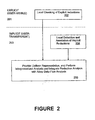
- Figure 2 is a flow diagram that illustrates the main processes of parallelizing implicit and explicit reductions for use in multiprocessing computer systems, under an embodiment.
- a process under an embodiment operates on explicit reductions 201 that are user-defined or defined by the language itself (user-visible), as well as implicit reductions 203, which are transparent to the user.
- a compiler, or similar code generator is configured to perform three main operations.
- the process performs a local check of explicit reductions, block 202.
- User-defined and explicit reductions are annotated and represented in an intermediate representation.
- the process locally detects and annotates implicit reductions, block 204. Implicit reductions are represented in the same intermediate representation format as the user-defined and explicit reductions.
- the process performs an interprocedural analysis and checking to obtain the best granularity for the parallelization, block 206.
- parallelism coverage gives the percentage of the sequential execution time spent in parallelized regions of code
- parallelism granularity is the average length of computation between synchronizations in the parallel regions.
- coarse granularity is more desirable to improve computing performance in multiprocessor systems.
- the reduction detection process finds reductions on both scalar and array variables, as well as reduction operations that span multiple procedures, such as those that might be present in computationally-intensive loops.
- Figure 3 is a flow diagram that illustrates and summarizes a method of generating parallelized binary code in a compiler, under an embodiment.
- the process starts with the parsing of the user code in parser 110 of compiler 104, and the generation or definition of an intermediate representation, block 304.
- the process then performs local checking of explicit reductions, block 306.
- any explicit reductions are annotated and transformed into the intermediate representation defined in 304.
- the process next performs local detection of implicit reductions, as well as a verification of the associative and read-modify-write characteristics of the implicit reductions, block 310.
- the implicit reductions are verified to be both associative and read-modify-write operations, the implicit reductions are annotated to conform to the intermediate format corresponding to the explicit reductions, block 314. If the implicit reductions are not associative or read-modify-write operations, then they are not annotated and represented in an intermediate format.
- the process performs an interprocedural array data-flow analysis, generally in a bottom-up manner to check for dependencies within the code.
- dependencies within a processing loop indicate a reliance on other processing threads, and thus, if dependencies exist, the code may not be directly parallelizable.
- One method is to privatize the array so that each processor has its own copy of the array. This allows the array to be processed in parallel by the processors.
- the other method is to parallelize the reductions.
- the process generates parallelized code for the one or more loops of the parsed code if there are no dependencies, or if the dependencies can be resolved by privatization or parallelizing the reductions; otherwise the process generates sequential code.
- the code generation system first performs local checking on user-defined or explicit reductions to parallelize the associative functions such as addition, multiplication, and finding minimums and maximums.
- the parameter reduce is a keyword (such as in the Brook language)
- foo is a first function
- bar is another function.
- the function foo is a reduction, but compiling bar will produce an error message that identifies bar as a non-associative function (since it is a division operation).
- the result is a reduction variable at the inner loop level, but not at the outer loop level.
- the compiler recognizes that the read access to result in the statement S2 makes the variable no longer reducible at the outer loop level. Even if the programmer removes S2, the result is still not reducible at the outer loop level because the statement S I is not reducible.
- reductions may span across multiple loops or functions. By propagating reduction summaries across program region boundaries, large amounts of code can be parallelized, with lower parallelism overhead. Note that implicit reductions may also span across multiple program regions. In general, parallelizing multiple reductions on the same array interprocedurally is important for achieving scalability and speed improvements on multiprocessors.
- embodiments can analyze both scalar reductions and array reductions, as well as multiple updates (read-modify-write operations) to the same variable.
- a summation of an array A[0:N-1] is typically coded as:
- the reduction may write to the entire or a section of an array, as follows:
- sparse computations generally pose a difficult construct for parallelizing compilers.
- a compiler usually cannot determine the location of the array being read or written.
- loops containing sparse computations can still be parallelized if the computation is recognized as a reduction.
- the only accesses to the sparse vector HISTOGRAM are commutative and associative updates to the same location, so it is safe to transform this reduction to a parallelizable form.
- the method After the process of checking and representing explicit and implicit reductions in a uniform format (intermediate representation), the method then performs a process of reduction recognition, in which it locates reductions and performs interprocedural analysis as part of an array data-flow analysis, as shown in block 316 of Figure 3.
- a reduction occurs when a location is updated on each loop iteration, where a commutative and associative operation is applied to that location's previous contents and some data value.
- a reduction recognition process recognizes reductions for both scalar and array variables is similar, by taking advantage of the fact that scalar reductions are a degenerate version of array reductions.
- the reduction recognition process models a reduction operation as a series of commutative updates.
- An update operation consists of reading from a location, performing some operation with it, and writing the result back to the same location.
- a (dynamic) series of instructions contains a reduction operation to a data section r, if all the accesses to locations in r are updates that can commute with each other without changing the program's semantics. Under this definition, it can been seen that the examples above contain a reduction to, respectively, the regions SUM, B[J], B[1:3] and HISTOGRAM[1:M] where M is the size of the array HISTOGRAM.
- this analysis technique is integrated with an interprocedural array data-flow analysis.
- the reduction analysis is a simple extension of array data-flow analysis.
- the representation of array sections is common to both array data-flow analysis and array reduction analysis.
- the basic unit of data representation is a system of integer linear inequalities, whose integer solutions determine array indices of accessed elements.
- descriptor are added all the relationships among scalar variables that involve any of the variables used in the array index calculation.
- the denoted index tuples can also be viewed as a set of integral points within a polyhedron.
- the accessed region of an array is represented as a set of such polyhedra.
- n-dimensional loop there would be an n-dimensional polyhedron.
- Each processor will keep a local copy of the polyhedron and write results back to a global copy.
- the simplest case of a polyhedron (1-dimension) is a scalar variable.
- the set of such operations includes +, *, MIN, and MAX.
- a bottom-up phase of the array data-flow analysis summarizes the data that has been read and data that has been written within each loop and procedure.
- the bottom-up algorithm analyzes the program starting from the leaf procedures in the call graph and analyzes a region only after analyzing all its subregions (this part of reduction recognition algorithm may apply best to Fortran programs, and this propagation and analysis can only be applied to a subset of non-Fortran programs where one can disambiguate function pointers and the memory aliases on commutative updates). Simple recursions are handled via fixed point calculations.
- the bottom-up process proceeds from an innermost loop and proceeds outward to the outermost loop, or from a function callee to a caller.
- the process computes the union of the array sections to represent the data accessed in a sequence of statements, with or without conditional flow.
- a loop summary is derived by performing the closure operation, which projects away the loop index variables in the array regions.
- the sections of data accessed in a loop are summarized to eliminate the need to perform n 2 (pairwise) dependence tests for a loop containing n array accesses.
- the process performs parameter mapping, and reshaping the array from formal to actual parameter if necessary.
- a data dependence test and privatization test is applied to the read and written data summaries. If any part of the loop cannot be parallelized, no attempt to parallelize the loop is made if data dependence is indicated, such as if two processors attempting to write to the same location, and no privatization is allowed.
- reduction recognition requires only a flow insensitive examination of each loop and each procedure body. This examination is statement-by-statement, without regard to conditional flow.
- Array reduction recognition is integrated into the array data-flow analysis. Whenever an array element is involved in a commutative update, the array analysis derives the union of the summaries for the read and written sub-arrays and marks the system of inequalities as a reduction of the type described by the operation (op), where op is either +, *, MIN, MAX, or user-specified reductions. When meeting two systems of inequalities during the interval analysis, the resulting system of inequalities will only be marked as a reduction if both reduction types are identical.
- an interprocedural process starts by detecting statements that update a location via an addition, multiplication, minimum, maximum, or user-specified operator.
- the process keeps track of the operator and the reduction region, which is calculated in the same manner as described above if an array element has been updated.
- the process finds the union of the reduction regions for each array and each reduction operation type. The result of the union represents the reduction region for the sequence of statements if it does not overlap with other data regions accessed via non-commutative operations or other commutative operations.
- the process derives a summary of the reduction region by projecting away the loop index variables in the array region. Again, the summary represents the reduction region for the entire loop if it does not overlap with other data regions accessed.
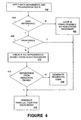
- Figure 4 is a flow diagram that illustrates a method of performing an interprocedural analysis in order to generate parallelized code, under an embodiment, and expands on the process of block 316 in Figure 3.
- the process determines if a loop is parallelizable by first applying a data dependence test and a privatization test on the read and write summaries to determine whether there is any dependence, block 402. If, in block 404 it is determined that there is no dependence, the loop is parallelizable and reductions are not necessary, block 406. The process then proceeds to generate parallel code for each array, block 416. If, in block 404 it is determined that there is dependence within the processing loop, the result of the privatization test is used to check if the dependence can be resolved through privatization, as shown in block 408.
- the loop is parallelizable and parallel code is generated, block 416. If there is data dependence and no privatization, the process checks if all data dependences on an array result from its reduction idioms, block 410. If, in block 412 it is determined that the dependencies do result from the reduction regions, the loop is parallelized by generating parallel reduction code for each such array, block 416; otherwise, the process generates sequential code instead of parallelized code, as shown in block 414.
- a process automatically parallelizes the reduction operations in sequential applications without relying on user directives.
- Parallel programs generated by a compiler that incorporates embodiments described herein can be executed on cache-coherent, shared address-spaced multiprocessors, as well as any other type of multiprocessor computer system.
- one or more elements of compiler 104 may be implemented as hardware logic, software modules, or combined hardware-software components. These components may be distributed in one or more functional units that together perform the tasks of translating a high-level user defined program 102 into binary object code 108 capable of being executed on computer 118.
- processor or “CPU” refers to any machine that is capable of executing a sequence of instructions and should be taken to include, but not be limited to, general purpose microprocessors, special purpose microprocessors, application specific integrated circuits (ASICs), multi-media controllers, digital signal processors, and micro-controllers, etc.
- ASICs application specific integrated circuits
- the memory associated with the system illustrated in Figure 1 may be embodied in a variety of different types of memory devices adapted to store digital information, such as static random access memory (SRAM), dynamic random access memory (DRAM), synchronous dynamic random access memory (SDRAM), and/or double data rate (DDR) SDRAM or DRAM, and also non-volatile memory such as read-only memory (ROM).
- the memory devices may further include other storage devices such as hard disk drives, floppy disk drives, optical disk drives, etc., and appropriate interfaces.
- the system may include suitable interfaces to interface with I/O devices such as disk drives, monitors, keypads, a modem, a printer, or any other type of suitable I/O devices.
- aspects of the methods and systems described herein may be implemented as functionality programmed into any of a variety of circuitry, including programmable logic devices ("PLDs”), such as field programmable gate arrays (“FPGAs”), programmable array logic (“PAL”) devices, electrically programmable logic and memory devices and standard cell-based devices, as well as application specific integrated circuits. Implementations may also include microcontrollers with memory (such as EEPROM), embedded microprocessors, firmware, software, etc. Furthermore, aspects may be embodied in microprocessors having software-based circuit emulation, discrete logic (sequential and combinatorial), custom devices, fuzzy (neural) logic, quantum devices, and hybrids of any of the above device types.
- MOSFET metal-oxide semiconductor field-effect transistor
- CMOS complementary metal-oxide semiconductor
- ECL emitter-coupled logic
- polymer technologies mixed analog and digital, etc.
- component includes circuitry, components; modules, and/or any combination of circuitry, components, and/or modules as the terms are known in the art.
- the various components and/or functions disclosed herein may be described using any number of combinations of hardware, firmware, and/or as data and/or instructions embodied in various machine-readable or computer-readable media, in terms of their behavioral, register transfer, logic component, and/or other characteristics.
- Computer-readable media in which such formatted data and/or instructions may be embodied include, but are not limited to, non-volatile storage media in various forms (e.g., optical, magnetic or semiconductor storage media) and carrier waves that may be used to transfer such formatted data and/or instructions through wireless, optical, or wired signaling media or any combination thereof. Examples of transfers of such formatted data and/or instructions by carrier waves include, but are not limited to, transfers (uploads, downloads, e-mail, etc.) over the Internet and/or other computer networks via one or more data transfer protocols.
Landscapes
- Engineering & Computer Science (AREA)
- General Engineering & Computer Science (AREA)
- Theoretical Computer Science (AREA)
- Software Systems (AREA)
- Physics & Mathematics (AREA)
- General Physics & Mathematics (AREA)
- Devices For Executing Special Programs (AREA)
Applications Claiming Priority (1)
| Application Number | Priority Date | Filing Date | Title |
|---|---|---|---|
| US11/516,292 US20080127146A1 (en) | 2006-09-06 | 2006-09-06 | System and method for generating object code for map-reduce idioms in multiprocessor systems |
Publications (2)
| Publication Number | Publication Date |
|---|---|
| EP1901165A2 true EP1901165A2 (de) | 2008-03-19 |
| EP1901165A3 EP1901165A3 (de) | 2009-04-29 |
Family
ID=38819820
Family Applications (1)
| Application Number | Title | Priority Date | Filing Date |
|---|---|---|---|
| EP07253458A Withdrawn EP1901165A3 (de) | 2006-09-06 | 2007-08-31 | System und Verfahren zur Generierung eines Objektcodes für Map-Reduce-Idiome in einem Multiprozessorsystem |
Country Status (2)
| Country | Link |
|---|---|
| US (1) | US20080127146A1 (de) |
| EP (1) | EP1901165A3 (de) |
Cited By (5)
| Publication number | Priority date | Publication date | Assignee | Title |
|---|---|---|---|---|
| EP2453355A1 (de) * | 2010-11-10 | 2012-05-16 | Src Computers, Inc. | System und Verfahren zur computergestützten Vereinheitlichung verschiedenartiger impliziter und expliziter Verarbeitungselemente |
| US8990791B2 (en) | 2011-07-29 | 2015-03-24 | International Business Machines Corporation | Intraprocedural privatization for shared array references within partitioned global address space (PGAS) languages |
| US9747089B2 (en) | 2014-10-21 | 2017-08-29 | International Business Machines Corporation | Automatic conversion of sequential array-based programs to parallel map-reduce programs |
| CN112445492A (zh) * | 2020-12-02 | 2021-03-05 | 青岛海洋科学与技术国家实验室发展中心 | 一种基于antlr4的源码翻译方法 |
| CN115409187A (zh) * | 2022-08-03 | 2022-11-29 | 中国人民解放军战略支援部队信息工程大学 | 基于OpenMP并行模型下的量子机器学习模拟方法及系统 |
Families Citing this family (60)
| Publication number | Priority date | Publication date | Assignee | Title |
|---|---|---|---|---|
| US20080022079A1 (en) * | 2006-07-24 | 2008-01-24 | Archer Charles J | Executing an allgather operation with an alltoallv operation in a parallel computer |
| US8423979B2 (en) * | 2006-10-12 | 2013-04-16 | International Business Machines Corporation | Code generation for complex arithmetic reduction for architectures lacking cross data-path support |
| US8260602B1 (en) | 2006-11-02 | 2012-09-04 | The Math Works, Inc. | Timer analysis and identification |
| US8161480B2 (en) * | 2007-05-29 | 2012-04-17 | International Business Machines Corporation | Performing an allreduce operation using shared memory |
| US8140826B2 (en) * | 2007-05-29 | 2012-03-20 | International Business Machines Corporation | Executing a gather operation on a parallel computer |
| US20090007115A1 (en) * | 2007-06-26 | 2009-01-01 | Yuanhao Sun | Method and apparatus for parallel XSL transformation with low contention and load balancing |
| US20090006663A1 (en) * | 2007-06-27 | 2009-01-01 | Archer Charles J | Direct Memory Access ('DMA') Engine Assisted Local Reduction |
| JP5067425B2 (ja) * | 2007-09-21 | 2012-11-07 | 富士通株式会社 | 翻訳装置と翻訳方法および翻訳プログラムとプロセッサコアの制御方法およびプロセッサ |
| US8181165B2 (en) * | 2007-10-30 | 2012-05-15 | International Business Machines Corporation | Using annotations to reuse variable declarations to generate different service functions |
| US8261249B2 (en) * | 2008-01-08 | 2012-09-04 | International Business Machines Corporation | Distributed schemes for deploying an application in a large parallel system |
| US8473904B1 (en) * | 2008-01-16 | 2013-06-25 | Xilinx, Inc. | Generation of cache architecture from a high-level language description |
| US8468510B1 (en) | 2008-01-16 | 2013-06-18 | Xilinx, Inc. | Optimization of cache architecture generated from a high-level language description |
| US8122228B2 (en) * | 2008-03-24 | 2012-02-21 | International Business Machines Corporation | Broadcasting collective operation contributions throughout a parallel computer |
| US8422402B2 (en) | 2008-04-01 | 2013-04-16 | International Business Machines Corporation | Broadcasting a message in a parallel computer |
| US8484440B2 (en) | 2008-05-21 | 2013-07-09 | International Business Machines Corporation | Performing an allreduce operation on a plurality of compute nodes of a parallel computer |
| US8161268B2 (en) * | 2008-05-21 | 2012-04-17 | International Business Machines Corporation | Performing an allreduce operation on a plurality of compute nodes of a parallel computer |
| US8375197B2 (en) * | 2008-05-21 | 2013-02-12 | International Business Machines Corporation | Performing an allreduce operation on a plurality of compute nodes of a parallel computer |
| US8281053B2 (en) | 2008-07-21 | 2012-10-02 | International Business Machines Corporation | Performing an all-to-all data exchange on a plurality of data buffers by performing swap operations |
| US8645933B2 (en) * | 2008-08-01 | 2014-02-04 | Leon Schwartz | Method and apparatus for detection and optimization of presumably parallel program regions |
| US20110087670A1 (en) * | 2008-08-05 | 2011-04-14 | Gregory Jorstad | Systems and methods for concept mapping |
| AU2009298151B2 (en) * | 2008-10-03 | 2015-07-16 | Benefitfocus.Com, Inc. | Systems and methods for automatic creation of agent-based systems |
| US7917463B2 (en) * | 2008-10-10 | 2011-03-29 | Business.Com, Inc. | System and method for data warehousing and analytics on a distributed file system |
| US20100228951A1 (en) * | 2009-03-05 | 2010-09-09 | Xerox Corporation | Parallel processing management framework |
| US7689977B1 (en) | 2009-04-15 | 2010-03-30 | International Business Machines Corporation | Open multi-processing reduction implementation in cell broadband engine (CBE) single source compiler |
| US8448155B2 (en) * | 2009-06-01 | 2013-05-21 | National Instruments Corporation | Automatically creating parallel iterative program code in a graphical data flow program |
| US8561041B1 (en) * | 2009-06-22 | 2013-10-15 | The Mathworks, Inc. | Parallel execution of function calls in a graphical model |
| US8949852B2 (en) * | 2009-06-29 | 2015-02-03 | Oracle America, Inc. | Mechanism for increasing parallelization in computer programs with read-after-write dependencies associated with prefix operations |
| US9378003B1 (en) | 2009-07-23 | 2016-06-28 | Xilinx, Inc. | Compiler directed cache coherence for many caches generated from high-level language source code |
| US8468508B2 (en) * | 2009-10-09 | 2013-06-18 | International Business Machines Corporation | Parallelization of irregular reductions via parallel building and exploitation of conflict-free units of work at runtime |
| US8874600B2 (en) | 2010-01-30 | 2014-10-28 | International Business Machines Corporation | System and method for building a cloud aware massive data analytics solution background |
| US8565089B2 (en) * | 2010-03-29 | 2013-10-22 | International Business Machines Corporation | Performing a scatterv operation on a hierarchical tree network optimized for collective operations |
| US8332460B2 (en) | 2010-04-14 | 2012-12-11 | International Business Machines Corporation | Performing a local reduction operation on a parallel computer |
| US8959496B2 (en) * | 2010-04-21 | 2015-02-17 | Microsoft Corporation | Automatic parallelization in a tracing just-in-time compiler system |
| US9424087B2 (en) | 2010-04-29 | 2016-08-23 | International Business Machines Corporation | Optimizing collective operations |
| US8346883B2 (en) | 2010-05-19 | 2013-01-01 | International Business Machines Corporation | Effecting hardware acceleration of broadcast operations in a parallel computer |
| US8949577B2 (en) | 2010-05-28 | 2015-02-03 | International Business Machines Corporation | Performing a deterministic reduction operation in a parallel computer |
| US8489859B2 (en) | 2010-05-28 | 2013-07-16 | International Business Machines Corporation | Performing a deterministic reduction operation in a compute node organized into a branched tree topology |
| US11726955B2 (en) | 2010-06-19 | 2023-08-15 | Hewlett Packard Enterprise Development Lp | Methods and apparatus for efficient container location database snapshot operation |
| US9323775B2 (en) | 2010-06-19 | 2016-04-26 | Mapr Technologies, Inc. | Map-reduce ready distributed file system |
| US8572760B2 (en) | 2010-08-10 | 2013-10-29 | Benefitfocus.Com, Inc. | Systems and methods for secure agent information |
| US8930954B2 (en) | 2010-08-10 | 2015-01-06 | International Business Machines Corporation | Scheduling parallel data tasks |
| US9489183B2 (en) | 2010-10-12 | 2016-11-08 | Microsoft Technology Licensing, Llc | Tile communication operator |
| US8566841B2 (en) | 2010-11-10 | 2013-10-22 | International Business Machines Corporation | Processing communications events in parallel active messaging interface by awakening thread from wait state |
| US9430204B2 (en) | 2010-11-19 | 2016-08-30 | Microsoft Technology Licensing, Llc | Read-only communication operator |
| US9507568B2 (en) | 2010-12-09 | 2016-11-29 | Microsoft Technology Licensing, Llc | Nested communication operator |
| US8589901B2 (en) | 2010-12-22 | 2013-11-19 | Edmund P. Pfleger | Speculative region-level loop optimizations |
| US9395957B2 (en) | 2010-12-22 | 2016-07-19 | Microsoft Technology Licensing, Llc | Agile communication operator |
| US8793675B2 (en) * | 2010-12-24 | 2014-07-29 | Intel Corporation | Loop parallelization based on loop splitting or index array |
| US8640112B2 (en) * | 2011-03-30 | 2014-01-28 | National Instruments Corporation | Vectorizing combinations of program operations |
| US8949777B2 (en) * | 2011-04-22 | 2015-02-03 | Intel Corporation | Methods and systems for mapping a function pointer to the device code |
| US8935705B2 (en) * | 2011-05-13 | 2015-01-13 | Benefitfocus.Com, Inc. | Execution of highly concurrent processing tasks based on the updated dependency data structure at run-time |
| US8893083B2 (en) | 2011-08-09 | 2014-11-18 | International Business Machines Coporation | Collective operation protocol selection in a parallel computer |
| US8910178B2 (en) | 2011-08-10 | 2014-12-09 | International Business Machines Corporation | Performing a global barrier operation in a parallel computer |
| US9495135B2 (en) | 2012-02-09 | 2016-11-15 | International Business Machines Corporation | Developing collective operations for a parallel computer |
| US8949809B2 (en) | 2012-03-01 | 2015-02-03 | International Business Machines Corporation | Automatic pipeline parallelization of sequential code |
| US8910137B2 (en) * | 2012-04-13 | 2014-12-09 | International Business Machines Corporation | Code profiling of executable library for pipeline parallelization |
| US20140365404A1 (en) * | 2013-06-11 | 2014-12-11 | Palo Alto Research Center Incorporated | High-level specialization language for scalable spatiotemporal probabilistic models |
| DE102016122324A1 (de) * | 2016-11-21 | 2018-05-24 | Weidmüller Interface GmbH & Co. KG | Steuerung für eine industrielle Automatisierungsanlage und Verfahren zum Programmieren und Betreiben einer derartigen Steuerung |
| CN115599507B (zh) * | 2021-07-07 | 2024-11-05 | 清华大学 | 数据处理方法、执行工作站、电子设备和存储介质 |
| US12236218B2 (en) * | 2022-08-02 | 2025-02-25 | Nvidia Corporation | Software code verification using call graphs for autonomous systems and applications |
Family Cites Families (2)
| Publication number | Priority date | Publication date | Assignee | Title |
|---|---|---|---|---|
| US7089545B2 (en) * | 2002-12-17 | 2006-08-08 | International Business Machines Corporation | Detection of reduction variables in an assignment statement |
| US7620945B1 (en) * | 2005-08-16 | 2009-11-17 | Sun Microsystems, Inc. | Parallelization scheme for generic reduction |
-
2006
- 2006-09-06 US US11/516,292 patent/US20080127146A1/en not_active Abandoned
-
2007
- 2007-08-31 EP EP07253458A patent/EP1901165A3/de not_active Withdrawn
Non-Patent Citations (2)
| Title |
|---|
| LU B ET AL: "Compiler optimization of implicit reductions for distributed memory multiprocessors" PARALLEL PROCESSING SYMPOSIUM, 1998. IPPS/SPDP 1998. PROCEEDINGS OF TH E FIRST MERGED INTERNATIONAL ... AND SYMPOSIUM ON PARALLEL AND DISTRIB UTED PROCESSING 1998 ORLANDO, FL, USA 30 MARCH-3 APRIL 1998, LOS ALAMITOS, CA, USA,IEEE COMPUT. SOC, US, 30 March 1998 (1998-03-30), pages 42-51, XP010276701 ISBN: 978-0-8186-8404-3 * |
| SHIH-WEI LIAO ED - CHRIS JESSHOPE ET AL: "Parallelizing User-Defined and Implicit Reductions Globally on Multiprocessors" ADVANCES IN COMPUTER SYSTEMS ARCHITECTURE LECTURE NOTES IN COMPUTER SCIENCE;;LNCS, SPRINGER, BERLIN, DE, vol. 4186, 27 August 2006 (2006-08-27), pages 189-202, XP019040589 ISBN: 978-3-540-40056-1 * |
Cited By (9)
| Publication number | Priority date | Publication date | Assignee | Title |
|---|---|---|---|---|
| EP2453355A1 (de) * | 2010-11-10 | 2012-05-16 | Src Computers, Inc. | System und Verfahren zur computergestützten Vereinheitlichung verschiedenartiger impliziter und expliziter Verarbeitungselemente |
| US8713518B2 (en) | 2010-11-10 | 2014-04-29 | SRC Computers, LLC | System and method for computational unification of heterogeneous implicit and explicit processing elements |
| US8930892B2 (en) | 2010-11-10 | 2015-01-06 | SRC Computers, LLC | System and method for computational unification of heterogeneous implicit and explicit processing elements |
| US8990791B2 (en) | 2011-07-29 | 2015-03-24 | International Business Machines Corporation | Intraprocedural privatization for shared array references within partitioned global address space (PGAS) languages |
| US9747089B2 (en) | 2014-10-21 | 2017-08-29 | International Business Machines Corporation | Automatic conversion of sequential array-based programs to parallel map-reduce programs |
| US9753708B2 (en) | 2014-10-21 | 2017-09-05 | International Business Machines Corporation | Automatic conversion of sequential array-based programs to parallel map-reduce programs |
| CN112445492A (zh) * | 2020-12-02 | 2021-03-05 | 青岛海洋科学与技术国家实验室发展中心 | 一种基于antlr4的源码翻译方法 |
| CN112445492B (zh) * | 2020-12-02 | 2024-03-29 | 青岛海洋科技中心 | 一种基于antlr4的源码翻译方法 |
| CN115409187A (zh) * | 2022-08-03 | 2022-11-29 | 中国人民解放军战略支援部队信息工程大学 | 基于OpenMP并行模型下的量子机器学习模拟方法及系统 |
Also Published As
| Publication number | Publication date |
|---|---|
| EP1901165A3 (de) | 2009-04-29 |
| US20080127146A1 (en) | 2008-05-29 |
Similar Documents
| Publication | Publication Date | Title |
|---|---|---|
| EP1901165A2 (de) | System und Verfahren zur Generierung eines Objektcodes für Map-Reduce-Idiome in einem Multiprozessorsystem | |
| Campanoni et al. | HELIX: Automatic parallelization of irregular programs for chip multiprocessing | |
| Sujeeth et al. | OptiML: an implicitly parallel domain-specific language for machine learning | |
| Nicolau | Run-time disambiguation: Coping with statically unpredictable dependencies | |
| US8645935B2 (en) | Automatic parallelization using binary rewriting | |
| US8677331B2 (en) | Lock-clustering compilation for software transactional memory | |
| Chatarasi et al. | An extended polyhedral model for SPMD programs and its use in static data race detection | |
| Shajii et al. | Seq: a high-performance language for bioinformatics | |
| Deiana et al. | Unconventional parallelization of nondeterministic applications | |
| Lee et al. | OpenMPC: extended OpenMP for efficient programming and tuning on GPUs | |
| Phulia et al. | OOElala: Order-of-evaluation based alias analysis for compiler optimization | |
| Lehr et al. | Tool-supported mini-app extraction to facilitate program analysis and parallelization | |
| El-Shobaky et al. | Automatic vectorization using dynamic compilation and tree pattern matching technique in Jikes RVM | |
| Muller et al. | Modeling and analyzing evaluation cost of CUDA kernels | |
| Aguilar et al. | Towards parallelism extraction for heterogeneous multicore android devices | |
| Economo et al. | A toolchain to verify the parallelization of ompss-2 applications | |
| Kwon et al. | Automatic scaling of OpenMP beyond shared memory | |
| Tournavitis | Profile-driven parallelisation of sequential programs | |
| Ngo | Parallel loop transformation techniques for vector-based multiprocessor systems | |
| Liao et al. | Automatic parallelization using OpenMP based on STL semantics | |
| Chandraiah et al. | Designer-controlled generation of parallel and flexible heterogeneous MPSoC specification | |
| Royuela Alcázar | High-level compiler analysis for OpenMP | |
| Liao | Parallelizing user-defined and implicit reductions globally on multiprocessors | |
| Larsen et al. | Compiler driven code comments and refactoring | |
| Lau | Enabling Heterogeneous Computing for Software Developers |
Legal Events
| Date | Code | Title | Description |
|---|---|---|---|
| PUAI | Public reference made under article 153(3) epc to a published international application that has entered the european phase |
Free format text: ORIGINAL CODE: 0009012 |
|
| AK | Designated contracting states |
Kind code of ref document: A2 Designated state(s): AT BE BG CH CY CZ DE DK EE ES FI FR GB GR HU IE IS IT LI LT LU LV MC MT NL PL PT RO SE SI SK TR |
|
| AX | Request for extension of the european patent |
Extension state: AL BA HR MK YU |
|
| 17P | Request for examination filed |
Effective date: 20080325 |
|
| RIN1 | Information on inventor provided before grant (corrected) |
Inventor name: HUANG, BO Inventor name: CHEN, GUILIN Inventor name: LIAO, SHIH-WEI |
|
| PUAL | Search report despatched |
Free format text: ORIGINAL CODE: 0009013 |
|
| AK | Designated contracting states |
Kind code of ref document: A3 Designated state(s): AT BE BG CH CY CZ DE DK EE ES FI FR GB GR HU IE IS IT LI LT LU LV MC MT NL PL PT RO SE SI SK TR |
|
| AX | Request for extension of the european patent |
Extension state: AL BA HR MK RS |
|
| 17Q | First examination report despatched |
Effective date: 20090706 |
|
| STAA | Information on the status of an ep patent application or granted ep patent |
Free format text: STATUS: THE APPLICATION HAS BEEN WITHDRAWN |
|
| 18W | Application withdrawn |
Effective date: 20090818 |