EP1900945A1 - Screw and screw fastening structure - Google Patents
Screw and screw fastening structure Download PDFInfo
- Publication number
- EP1900945A1 EP1900945A1 EP06766589A EP06766589A EP1900945A1 EP 1900945 A1 EP1900945 A1 EP 1900945A1 EP 06766589 A EP06766589 A EP 06766589A EP 06766589 A EP06766589 A EP 06766589A EP 1900945 A1 EP1900945 A1 EP 1900945A1
- Authority
- EP
- European Patent Office
- Prior art keywords
- screw
- chemical conversion
- trivalent chromium
- conversion coating
- bolt
- Prior art date
- Legal status (The legal status is an assumption and is not a legal conclusion. Google has not performed a legal analysis and makes no representation as to the accuracy of the status listed.)
- Granted
Links
Images




Classifications
-
- C—CHEMISTRY; METALLURGY
- C23—COATING METALLIC MATERIAL; COATING MATERIAL WITH METALLIC MATERIAL; CHEMICAL SURFACE TREATMENT; DIFFUSION TREATMENT OF METALLIC MATERIAL; COATING BY VACUUM EVAPORATION, BY SPUTTERING, BY ION IMPLANTATION OR BY CHEMICAL VAPOUR DEPOSITION, IN GENERAL; INHIBITING CORROSION OF METALLIC MATERIAL OR INCRUSTATION IN GENERAL
- C23C—COATING METALLIC MATERIAL; COATING MATERIAL WITH METALLIC MATERIAL; SURFACE TREATMENT OF METALLIC MATERIAL BY DIFFUSION INTO THE SURFACE, BY CHEMICAL CONVERSION OR SUBSTITUTION; COATING BY VACUUM EVAPORATION, BY SPUTTERING, BY ION IMPLANTATION OR BY CHEMICAL VAPOUR DEPOSITION, IN GENERAL
- C23C28/00—Coating for obtaining at least two superposed coatings either by methods not provided for in a single one of groups C23C2/00 - C23C26/00 or by combinations of methods provided for in subclasses C23C and C25C or C25D
- C23C28/02—Coating for obtaining at least two superposed coatings either by methods not provided for in a single one of groups C23C2/00 - C23C26/00 or by combinations of methods provided for in subclasses C23C and C25C or C25D only coatings only including layers of metallic material
- C23C28/023—Coating for obtaining at least two superposed coatings either by methods not provided for in a single one of groups C23C2/00 - C23C26/00 or by combinations of methods provided for in subclasses C23C and C25C or C25D only coatings only including layers of metallic material only coatings of metal elements only
-
- C—CHEMISTRY; METALLURGY
- C23—COATING METALLIC MATERIAL; COATING MATERIAL WITH METALLIC MATERIAL; CHEMICAL SURFACE TREATMENT; DIFFUSION TREATMENT OF METALLIC MATERIAL; COATING BY VACUUM EVAPORATION, BY SPUTTERING, BY ION IMPLANTATION OR BY CHEMICAL VAPOUR DEPOSITION, IN GENERAL; INHIBITING CORROSION OF METALLIC MATERIAL OR INCRUSTATION IN GENERAL
- C23C—COATING METALLIC MATERIAL; COATING MATERIAL WITH METALLIC MATERIAL; SURFACE TREATMENT OF METALLIC MATERIAL BY DIFFUSION INTO THE SURFACE, BY CHEMICAL CONVERSION OR SUBSTITUTION; COATING BY VACUUM EVAPORATION, BY SPUTTERING, BY ION IMPLANTATION OR BY CHEMICAL VAPOUR DEPOSITION, IN GENERAL
- C23C28/00—Coating for obtaining at least two superposed coatings either by methods not provided for in a single one of groups C23C2/00 - C23C26/00 or by combinations of methods provided for in subclasses C23C and C25C or C25D
- C23C28/02—Coating for obtaining at least two superposed coatings either by methods not provided for in a single one of groups C23C2/00 - C23C26/00 or by combinations of methods provided for in subclasses C23C and C25C or C25D only coatings only including layers of metallic material
- C23C28/023—Coating for obtaining at least two superposed coatings either by methods not provided for in a single one of groups C23C2/00 - C23C26/00 or by combinations of methods provided for in subclasses C23C and C25C or C25D only coatings only including layers of metallic material only coatings of metal elements only
- C23C28/025—Coating for obtaining at least two superposed coatings either by methods not provided for in a single one of groups C23C2/00 - C23C26/00 or by combinations of methods provided for in subclasses C23C and C25C or C25D only coatings only including layers of metallic material only coatings of metal elements only with at least one zinc-based layer
-
- F—MECHANICAL ENGINEERING; LIGHTING; HEATING; WEAPONS; BLASTING
- F16—ENGINEERING ELEMENTS AND UNITS; GENERAL MEASURES FOR PRODUCING AND MAINTAINING EFFECTIVE FUNCTIONING OF MACHINES OR INSTALLATIONS; THERMAL INSULATION IN GENERAL
- F16B—DEVICES FOR FASTENING OR SECURING CONSTRUCTIONAL ELEMENTS OR MACHINE PARTS TOGETHER, e.g. NAILS, BOLTS, CIRCLIPS, CLAMPS, CLIPS OR WEDGES; JOINTS OR JOINTING
- F16B33/00—Features common to bolt and nut
- F16B33/06—Surface treatment of parts furnished with screw-thread, e.g. for preventing seizure or fretting
-
- C—CHEMISTRY; METALLURGY
- C23—COATING METALLIC MATERIAL; COATING MATERIAL WITH METALLIC MATERIAL; CHEMICAL SURFACE TREATMENT; DIFFUSION TREATMENT OF METALLIC MATERIAL; COATING BY VACUUM EVAPORATION, BY SPUTTERING, BY ION IMPLANTATION OR BY CHEMICAL VAPOUR DEPOSITION, IN GENERAL; INHIBITING CORROSION OF METALLIC MATERIAL OR INCRUSTATION IN GENERAL
- C23C—COATING METALLIC MATERIAL; COATING MATERIAL WITH METALLIC MATERIAL; SURFACE TREATMENT OF METALLIC MATERIAL BY DIFFUSION INTO THE SURFACE, BY CHEMICAL CONVERSION OR SUBSTITUTION; COATING BY VACUUM EVAPORATION, BY SPUTTERING, BY ION IMPLANTATION OR BY CHEMICAL VAPOUR DEPOSITION, IN GENERAL
- C23C2222/00—Aspects relating to chemical surface treatment of metallic material by reaction of the surface with a reactive medium
- C23C2222/10—Use of solutions containing trivalent chromium but free of hexavalent chromium
-
- Y—GENERAL TAGGING OF NEW TECHNOLOGICAL DEVELOPMENTS; GENERAL TAGGING OF CROSS-SECTIONAL TECHNOLOGIES SPANNING OVER SEVERAL SECTIONS OF THE IPC; TECHNICAL SUBJECTS COVERED BY FORMER USPC CROSS-REFERENCE ART COLLECTIONS [XRACs] AND DIGESTS
- Y10—TECHNICAL SUBJECTS COVERED BY FORMER USPC
- Y10S—TECHNICAL SUBJECTS COVERED BY FORMER USPC CROSS-REFERENCE ART COLLECTIONS [XRACs] AND DIGESTS
- Y10S411/00—Expanded, threaded, driven, headed, tool-deformed, or locked-threaded fastener
- Y10S411/914—Coated bolt
Definitions
- the present invention relates to a screw and a screw fastening structure, the surface of which is provided with the treatment of plating and is provided with the treatment of a trivalent chromium-containing and hexavalent chromium-free chemical conversion coating on top of the layer thereof.
- a surface is provided with the treatment of plating and also provided with a chromate conversion coating thereon for preventing screws from corroding.
- chromate conversion coatings especially a hexavalent chromate conversion coating presents high moisture content, comparatively soft and has excellent corrosion resistance because of a self-healing action which is a characteristic feature thereof.
- a hexavalent chromium is hazardous to human bodies, and results in the environmental pollution and the like, the use of a hexavalent chromium is substantially restricted in the world. Consequently, it has been under review to replace the conventional hexavalent chromium-containing chromate treatment with the hexavalent chromium-free alternative treatment.
- a generally acceptable alternative is chemical conversion treatment containing trivalent chromium compounds.
- a patent document disclosing such alternatives is for example Japanese Translation of Unexamined PCT Appln. No. 2000-509434 .
- a screw provided with the treatment of general trivalent chromium-containing chemical conversion coatings has a problem that a torque characteristic drops in fastening and, especially, a loosening torque decreases greatly because a chromate conversion coating of trivalent chromium is harder than a hexavalent chromate conversion coating.
- a considerable difference is generated between a torque characteristic in the treatment of chemical conversion coatings of trivalent chromium and hexavalent chromate treatment especially in the case of the application of a bolt to a high axial force range among other screws, for example a crank pulley bolt and the like.
- the loosening torque of the bolt by the treatment of chemical conversion coatings of trivalent chromium declines by 10 % to 30 % compared to the bolt by the hexavalent chromate treatment. This is nothing less than a decrease in a fastening force of the bolt applied for fixing a structure member. Therefore, functions guaranteed by a bolt of the conventional hexavalent chromate treatment could not be satisfied.
- a general treatment of chemical conversion coatings of trivalent chromium has adopted a multilayer structure in which other metal compositions are contained in the coating, a SiO 2 -containing layer or coating is added on the surface, and the like, in order to compensate corrosion resistance properties originally inferior to hexavalent chromium. Consequently, a chemical conversion coating of trivalent chromium becomes harder and exerts such a great influence to the torque characteristic of the screw as especially a loosening characteristic is made deteriorating and the like.
- An object of the present invention is to provide a screw and a screw fastening structure treated by a chemical conversion coating of trivalent chromium having a torque characteristic approximately equivalent to the screw of a hexavalent chromate treatment.
- a screw including a zinc-based plating layer formed on the surface of the screw and a hexavalent chromium-free chemical conversion coating of trivalent chromium formed on the zinc-based plating layer, wherein a layer thickness of the chemical conversion coating of trivalent chromium at least at a contact portion to a member fastened by the screw is thinly formed so that the zinc-based plating layer can be exposed due to rubbing off of the chemical conversion coating of trivalent chromium at a contact portion of the screw by tightening the screw to make the screw contact the fastened member.
- the layer thickness of the chemical conversion coating of trivalent chromium is set to be within a range of 50 nanometers (abbreviated as nm hereinafter) or more to less than 100 nm.
- a screw fastening structure in which metal members are fastened between themselves by tightening a screw, wherein a zinc-based plating layer is formed on at least a contact portion of either the metal member or the screw, and a hexavalent chromium-free chemical conversion coating of trivalent chromium is formed on the zinc-based plating layer, and a layer thickness of the chemical conversion coating of trivalent chromium is thinly formed so that the zinc-based plating layer can be exposed due to rubbing off of the chemical conversion coating of trivalent chromium at the contact portion by tightening the screw.
- the layer thickness of the chemical conversion coating of trivalent chromium is set to be within a range of 50 nm or more to less than 100 nm.
- the chemical conversion coating of trivalent chromium is rubbed off at the contact portion of the screw to a member fastened by tightening the screw to cause the zinc-based plating layer to be exposed. Therefore, there is provided a screw which can achieve a high torque characteristic approximately equivalent to a screw of a conventional hexavalent chromate treatment because of a friction force higher than a chemical conversion coating of trivalent chromium formed on a zinc-based plating.
- the chemical conversion coating of trivalent chromium is rubbed off in at least the contact portion of either a metal member or the screw by tightening the screw to cause the zinc-based plating layer to be exposed. Therefore, there is provided a screw fastening structure which can achieve a high torque characteristic approximately equivalent to a screw fastening structure of a conventional hexavalent chromate treatment because of a friction force higher than a chemical conversion coating of trivalent chromium formed on a zinc-based plating.
- FIG. 1 is a side view illustrating a screw, that is to say, a bolt, according to an embodiment of the present invention.
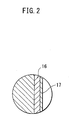
- FIG. 2 is a partial sectional view illustrating the screw according to the above embodiment.
- a bolt 1 is a crank pulley bolt applied for an automobile engine and includes a head 11, a flange 12 formed at the undersurface of the head 11 and a shank 15 processed by a thread 14 extending in the direction perpendicular to a bearing surface 13 of the flange 12 at the central portion of the bearing surface 13.
- FIG. 2 illustrates a magnified view of the portion of P in FIG. 2 .
- a zinc plating treatment forms a zinc plating layer 16 on the (metallic) surface of the bolt 1.
- the thickness of the zinc plating layer 16 is set to be within the range of an appropriate thickness necessary for general application so that sufficient corrosion resistance can be ensured.
- a treatment of a chemical conversion coating of trivalent chromium forms also a chemical conversion coating 17 of trivalent chromium on top of the zinc plating layer 16.
- a conventional general processing solution with processing conditions is modified to dilute the concentration of the processing solution. Consequently, the thin and soft chemical conversion coating 17 of trivalent chromium is generated.
- the chemical conversion coating 17 of trivalent chromium contains trivalent chromium as the substantial component thereof and no other metal compositions. Also, no SiO 2 -containing layer or coating is added on the surface of the chemical conversion coating 17 of trivalent chromium.
- the layer thickness of the chemical conversion coating 17 of trivalent chromium is selected from within the range of 50 nm or more to less than 100 nm and is set to 80 nm in this case.
- the chemical conversion coating 17 of trivalent chromium is modified so as to have the equivalent characteristic to a conventional hexavalent chromate conversion coating.
- a bolt of a hexavalent chromate treatment is tightened, the bolt contacts with a fastened member and generates high contact pressure at the bolt contact portion in the application of the bolt to a high axial force range.
- the hexavalent chromate conversion coating is rubbed off at the contact portion to cause the zinc plating layer thereunder to be exposed.
- the zinc plating layer presents a friction 10 % to 50 % higher than the hexavalent chromate conversion coating, so that the loosening torque of the bolt with an exposed zinc plating layer presents a torque 10 % to 50 % higher than the bolt without an exposed zinc plating layer.
- the chemical conversion coating 17 of trivalent chromium is formed to be thin and soft so that the zinc-based plating layer 16 can be exposed on the surface because the chemical conversion coating 17 of trivalent chromium is rubbed off at the contact portion of the bolt 1, especially the bearing surface 13, at the contact pressure enough to rub off a hexavalent chromate conversion coating by tightening the bolt 1 to make the bolt 1 contact the fastened member.
- the modified chemical conversion coating 17 of trivalent chromium may be formed only on the contact portion of the bolt 1, especially the head 11, the bearing surface 13 of the flange 12, the shank 15 or a part of the thread 14 to the fastened member. In this case, it is preferable to select the contact portion at which higher contact pressure is generated.
- the chemical conversion coating 17 of trivalent chromium has the hardness characteristic equivalent to the conventional hexavalent chromate conversion coatings.
- the bolt 1 When the bolt 1 is tightened with a fastened member, the bolt 1 generates high contact pressure at the bearing surface 13 thereof in the application of the bolt to a high axial force range because of the same mechanism as the bolt of the hexavalent chromate treatment.
- the chemical conversion coating 17 of trivalent chromium is rubbed off to cause the zinc plating layer 16 thereunder to be exposed.
- the torque characteristic approximately equivalent to the hexavalent chromate conversion coatings 17 because of a friction force of the zinc plating layer 16 which is 10 % to 50 % higher than the chemical conversion coating of trivalent chromium and, especially, to improve greatly the loosening torque of the bolt 1.
- the contact pressure enough to rub off the hexavalent chromate conversion coatings is generated in the bolt treated by conventional general chemical conversion coatings of trivalent chromium, the chemical conversion coatings of trivalent chromium are not rubbed off, so that the zinc plating is not exposed.
- the loosening torque of the bolt 1 treated by the chemical conversion coating of trivalent chromium according to the embodiment is 10 % to 50 % higher than the bolt treated by general chemical conversion coatings of trivalent chromium.
- FIG. 3 shows a screw fastening structure using the bolt 1.
- a crank sprocket (not shown in the figure) and a crank pulley 20 are installed in sequence on the end of a crankshaft (not shown in the figure).
- the bolt 1 is screwed into a threaded hole on the end of the crankshaft for tightening.
- the chemical conversion coating 17 of trivalent chromium is rubbed off at the bearing surface 13 to cause the zinc plating layer 16 thereunder to be exposed.
- the zinc plating layer 16 has a higher friction force than the chemical conversion coating 17 of trivalent chromium, it is possible to achieve the torque characteristic approximately equivalent to the hexavalent chromate conversion coatings.
- the loosening torque of the bolt 1 it is possible to achieve a torque characteristic 10 % to 50 % higher than the hard-plated bolt treated by the conventional chemical conversion coatings of trivalent chromium.
- the modified chemical conversion coating 17 of trivalent chromium may be formed only on the contact portion of the bolt 1 to the fastened member, especially the head 11, the bearing surface 13 of the flange 12, the shank 15 or a part of the thread 14. In this case, it is preferable to select the contact portion at which higher contact pressure is generated.
- the torque characteristic approximately equivalent to the hexavalent chromate conversion coatings.
- the loosening torque of the bolt 1 it is possible to achieve a torque characteristic 10 % to 50 % higher than the hard-plated bolt treated by the conventional chemical conversion coatings of trivalent chromium.
- the screw fastening structure 2 it may be allowed to form the zinc-based plating layer 16 and then the chemical conversion coating 17 of trivalent chromium thereon at least at the contact portion of the metal member side in place of the bolt 1 in a similar way.
- the chemical conversion coating 17 of trivalent chromium thereon at least at the contact portion of the metal member side in place of the bolt 1 in a similar way.
- a bolt is exemplified as a screw and a screw fastening structure according to the present invention. It may be allowed to adopt the same constitution to a nut, or a male screw member or a female screw member assembled in machine parts. Thus, it is also possible to achieve the same operation and effect.
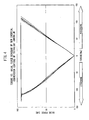
- FIG. 4 shows the confirmation results on specifications of the bolt treated by the modified chemical conversion coating of trivalent chromium.
- FIG. 5 shows a Torque vs. Axial Force diagram of the bolt treated by a conventional general chemical conversion coating of trivalent chromium.
- FIG. 6 shows a Torque vs. Axial Force diagram of the bolt of a conventional hexavalent chromate treatment.
Landscapes
- Chemical & Material Sciences (AREA)
- Engineering & Computer Science (AREA)
- Mechanical Engineering (AREA)
- Chemical Kinetics & Catalysis (AREA)
- Materials Engineering (AREA)
- Metallurgy (AREA)
- Organic Chemistry (AREA)
- General Engineering & Computer Science (AREA)
- Chemical Treatment Of Metals (AREA)
- Laminated Bodies (AREA)
- Other Surface Treatments For Metallic Materials (AREA)
Abstract
Description
- The present invention relates to a screw and a screw fastening structure, the surface of which is provided with the treatment of plating and is provided with the treatment of a trivalent chromium-containing and hexavalent chromium-free chemical conversion coating on top of the layer thereof.
- Conventionally, a surface is provided with the treatment of plating and also provided with a chromate conversion coating thereon for preventing screws from corroding. Among the chromate conversion coatings, especially a hexavalent chromate conversion coating presents high moisture content, comparatively soft and has excellent corrosion resistance because of a self-healing action which is a characteristic feature thereof. However, since a hexavalent chromium is hazardous to human bodies, and results in the environmental pollution and the like, the use of a hexavalent chromium is substantially restricted in the world. Consequently, it has been under review to replace the conventional hexavalent chromium-containing chromate treatment with the hexavalent chromium-free alternative treatment. A generally acceptable alternative is chemical conversion treatment containing trivalent chromium compounds. A patent document disclosing such alternatives is for example
Japanese Translation of Unexamined PCT Appln. No. 2000-509434 - However, a screw provided with the treatment of general trivalent chromium-containing chemical conversion coatings has a problem that a torque characteristic drops in fastening and, especially, a loosening torque decreases greatly because a chromate conversion coating of trivalent chromium is harder than a hexavalent chromate conversion coating. A considerable difference is generated between a torque characteristic in the treatment of chemical conversion coatings of trivalent chromium and hexavalent chromate treatment especially in the case of the application of a bolt to a high axial force range among other screws, for example a crank pulley bolt and the like. To be more specific, the loosening torque of the bolt by the treatment of chemical conversion coatings of trivalent chromium declines by 10 % to 30 % compared to the bolt by the hexavalent chromate treatment. This is nothing less than a decrease in a fastening force of the bolt applied for fixing a structure member. Therefore, functions guaranteed by a bolt of the conventional hexavalent chromate treatment could not be satisfied. In addition, a general treatment of chemical conversion coatings of trivalent chromium has adopted a multilayer structure in which other metal compositions are contained in the coating, a SiO2-containing layer or coating is added on the surface, and the like, in order to compensate corrosion resistance properties originally inferior to hexavalent chromium. Consequently, a chemical conversion coating of trivalent chromium becomes harder and exerts such a great influence to the torque characteristic of the screw as especially a loosening characteristic is made deteriorating and the like.
- The present invention has been devised to solve the above-mentioned conventional problems. An object of the present invention is to provide a screw and a screw fastening structure treated by a chemical conversion coating of trivalent chromium having a torque characteristic approximately equivalent to the screw of a hexavalent chromate treatment.
- To achieve the above-mentioned object, according to the present invention, there is provided a screw including a zinc-based plating layer formed on the surface of the screw and a hexavalent chromium-free chemical conversion coating of trivalent chromium formed on the zinc-based plating layer, wherein a layer thickness of the chemical conversion coating of trivalent chromium at least at a contact portion to a member fastened by the screw is thinly formed so that the zinc-based plating layer can be exposed due to rubbing off of the chemical conversion coating of trivalent chromium at a contact portion of the screw by tightening the screw to make the screw contact the fastened member. Here, the layer thickness of the chemical conversion coating of trivalent chromium is set to be within a range of 50 nanometers (abbreviated as nm hereinafter) or more to less than 100 nm.
- In addition, according to the present invention, there is provided a screw fastening structure in which metal members are fastened between themselves by tightening a screw, wherein a zinc-based plating layer is formed on at least a contact portion of either the metal member or the screw, and a hexavalent chromium-free chemical conversion coating of trivalent chromium is formed on the zinc-based plating layer, and a layer thickness of the chemical conversion coating of trivalent chromium is thinly formed so that the zinc-based plating layer can be exposed due to rubbing off of the chemical conversion coating of trivalent chromium at the contact portion by tightening the screw. Here, the layer thickness of the chemical conversion coating of trivalent chromium is set to be within a range of 50 nm or more to less than 100 nm.
- According to the above-mentioned constitution of the present invention, the chemical conversion coating of trivalent chromium is rubbed off at the contact portion of the screw to a member fastened by tightening the screw to cause the zinc-based plating layer to be exposed. Therefore, there is provided a screw which can achieve a high torque characteristic approximately equivalent to a screw of a conventional hexavalent chromate treatment because of a friction force higher than a chemical conversion coating of trivalent chromium formed on a zinc-based plating.
- According to the above-mentioned constitution of the present invention, the chemical conversion coating of trivalent chromium is rubbed off in at least the contact portion of either a metal member or the screw by tightening the screw to cause the zinc-based plating layer to be exposed. Therefore, there is provided a screw fastening structure which can achieve a high torque characteristic approximately equivalent to a screw fastening structure of a conventional hexavalent chromate treatment because of a friction force higher than a chemical conversion coating of trivalent chromium formed on a zinc-based plating.
-
-
Fig. 1 is a side view of a screw according to an embodiment of the invention; -
Fig. 2 is a partial sectional view of the screw according to the embodiment of the invention; -
Fig. 3 is a partial sectional side view of a screw fastening structure using the screw according to the embodiment of the invention; -
Fig. 4 is a diagram representing Torque vs. Axial Force in a bolt of the new modified treatment of the chemical conversion coating of trivalent chromium according to the present invention; -
Fig. 5 is a diagram representing Torque vs. Axial Force in a bolt of a conventional general treatment of chemical conversion coatings of trivalent chromium; and -
Fig. 6 is a diagram representing Torque vs. Axial Force in a bolt of a conventional hexavalent chromate treatment. - A preferred embodiment of the present invention will be described with reference to the accompanying drawings.
FIG. 1 is a side view illustrating a screw, that is to say, a bolt, according to an embodiment of the present invention.FIG. 2 is a partial sectional view illustrating the screw according to the above embodiment. As shown inFIG. 1 , a bolt 1 is a crank pulley bolt applied for an automobile engine and includes ahead 11, aflange 12 formed at the undersurface of thehead 11 and ashank 15 processed by athread 14 extending in the direction perpendicular to abearing surface 13 of theflange 12 at the central portion of thebearing surface 13. -
FIG. 2 illustrates a magnified view of the portion of P inFIG. 2 . As shown inFIG. 2 , a zinc plating treatment forms azinc plating layer 16 on the (metallic) surface of the bolt 1. Here, the thickness of thezinc plating layer 16 is set to be within the range of an appropriate thickness necessary for general application so that sufficient corrosion resistance can be ensured. - A treatment of a chemical conversion coating of trivalent chromium forms also a
chemical conversion coating 17 of trivalent chromium on top of thezinc plating layer 16. In this treatment of the chemical conversion coating of trivalent chromium, a conventional general processing solution with processing conditions is modified to dilute the concentration of the processing solution. Consequently, the thin and softchemical conversion coating 17 of trivalent chromium is generated. In this case, thechemical conversion coating 17 of trivalent chromium contains trivalent chromium as the substantial component thereof and no other metal compositions. Also, no SiO2-containing layer or coating is added on the surface of thechemical conversion coating 17 of trivalent chromium. The layer thickness of thechemical conversion coating 17 of trivalent chromium is selected from within the range of 50 nm or more to less than 100 nm and is set to 80 nm in this case. According to the above treatment, thechemical conversion coating 17 of trivalent chromium is modified so as to have the equivalent characteristic to a conventional hexavalent chromate conversion coating. To be more specific, when a bolt of a hexavalent chromate treatment is tightened, the bolt contacts with a fastened member and generates high contact pressure at the bolt contact portion in the application of the bolt to a high axial force range. Thus, the hexavalent chromate conversion coating is rubbed off at the contact portion to cause the zinc plating layer thereunder to be exposed. The zinc plating layer presents a friction 10 % to 50 % higher than the hexavalent chromate conversion coating, so that the loosening torque of the bolt with an exposed zinc plating layer presents a torque 10 % to 50 % higher than the bolt without an exposed zinc plating layer. Thus, thechemical conversion coating 17 of trivalent chromium is formed to be thin and soft so that the zinc-basedplating layer 16 can be exposed on the surface because thechemical conversion coating 17 of trivalent chromium is rubbed off at the contact portion of the bolt 1, especially thebearing surface 13, at the contact pressure enough to rub off a hexavalent chromate conversion coating by tightening the bolt 1 to make the bolt 1 contact the fastened member. - In addition, the modified
chemical conversion coating 17 of trivalent chromium may be formed only on the contact portion of the bolt 1, especially thehead 11, thebearing surface 13 of theflange 12, theshank 15 or a part of thethread 14 to the fastened member. In this case, it is preferable to select the contact portion at which higher contact pressure is generated. - Thus, the
chemical conversion coating 17 of trivalent chromium has the hardness characteristic equivalent to the conventional hexavalent chromate conversion coatings. When the bolt 1 is tightened with a fastened member, the bolt 1 generates high contact pressure at thebearing surface 13 thereof in the application of the bolt to a high axial force range because of the same mechanism as the bolt of the hexavalent chromate treatment. And thechemical conversion coating 17 of trivalent chromium is rubbed off to cause thezinc plating layer 16 thereunder to be exposed. Consequently, it is possible to achieve the torque characteristic approximately equivalent to the hexavalentchromate conversion coatings 17 because of a friction force of thezinc plating layer 16 which is 10 % to 50 % higher than the chemical conversion coating of trivalent chromium and, especially, to improve greatly the loosening torque of the bolt 1. In addition, even if the contact pressure enough to rub off the hexavalent chromate conversion coatings is generated in the bolt treated by conventional general chemical conversion coatings of trivalent chromium, the chemical conversion coatings of trivalent chromium are not rubbed off, so that the zinc plating is not exposed. In comparison between same axial forces, the loosening torque of the bolt 1 treated by the chemical conversion coating of trivalent chromium according to the embodiment is 10 % to 50 % higher than the bolt treated by general chemical conversion coatings of trivalent chromium. -
FIG. 3 shows a screw fastening structure using the bolt 1. In thisscrew fastening structure 2 shown inFIG. 3 , a crank sprocket (not shown in the figure) and acrank pulley 20 are installed in sequence on the end of a crankshaft (not shown in the figure). Then, the bolt 1 is screwed into a threaded hole on the end of the crankshaft for tightening. In this case, since high contact pressure is generated in the bearingsurface 13 of the bolt 1, thechemical conversion coating 17 of trivalent chromium is rubbed off at the bearingsurface 13 to cause thezinc plating layer 16 thereunder to be exposed. Consequently, since thezinc plating layer 16 has a higher friction force than thechemical conversion coating 17 of trivalent chromium, it is possible to achieve the torque characteristic approximately equivalent to the hexavalent chromate conversion coatings. Especially, with respect to the loosening torque of the bolt 1, it is possible to achieve a torque characteristic 10 % to 50 % higher than the hard-plated bolt treated by the conventional chemical conversion coatings of trivalent chromium. - In addition, also in the
screw fastening structure 2, the modifiedchemical conversion coating 17 of trivalent chromium may be formed only on the contact portion of the bolt 1 to the fastened member, especially thehead 11, the bearingsurface 13 of theflange 12, theshank 15 or a part of thethread 14. In this case, it is preferable to select the contact portion at which higher contact pressure is generated. Thus, it is also possible to achieve the torque characteristic approximately equivalent to the hexavalent chromate conversion coatings. Especially, with respect to the loosening torque of the bolt 1, it is possible to achieve a torque characteristic 10 % to 50 % higher than the hard-plated bolt treated by the conventional chemical conversion coatings of trivalent chromium. In addition, in thescrew fastening structure 2, it may be allowed to form the zinc-basedplating layer 16 and then thechemical conversion coating 17 of trivalent chromium thereon at least at the contact portion of the metal member side in place of the bolt 1 in a similar way. Thus, it is also possible to achieve the same effect. - In addition, in the above-mentioned embodiments, a bolt is exemplified as a screw and a screw fastening structure according to the present invention. It may be allowed to adopt the same constitution to a nut, or a male screw member or a female screw member assembled in machine parts. Thus, it is also possible to achieve the same operation and effect.
- A Torque vs. Axial Force diagram of the new chemical conversion coating of trivalent chromium in
FIG. 4 shows the confirmation results on specifications of the bolt treated by the modified chemical conversion coating of trivalent chromium. In addition,FIG. 5 shows a Torque vs. Axial Force diagram of the bolt treated by a conventional general chemical conversion coating of trivalent chromium.FIG. 6 shows a Torque vs. Axial Force diagram of the bolt of a conventional hexavalent chromate treatment. As obvious fromFIG. 4 to FIG. 6 , it is possible to achieve the torque characteristic approximately equivalent to the bolt of a conventional hexavalent chromate treatment with respect to the bolt treated by the modified chemical conversion coating of trivalent chromium and the high loosening torque characteristic equivalent to the bolt of a hexavalent chromate treatment especially with respect to the bolt applied to a high axial force with a demand for a high fastening force. In addition, in a corrosion resistance test after the subjection of heat deterioration which simulates such environment as is exposed to elevated temperatures (80 degrees centigrade or above) in an engine room like a crank pulley bolt, it has been confirmed that the bolt treated by the modified chemical conversion coating of trivalent chromium presents superior corrosion resistance characteristic to the bolt of a conventional hexavalent chromate treatment. - While the preferred embodiments shown in the figures according to the present invention have been illustrated and described, it is apparent that those of ordinary skill in the art could easily change and modify the invention. Accordingly, any variations and modifications thereof should be covered in the scope of the present invention.
Claims (4)
- A screw, comprising:a zinc-based plating layer formed on a surface of the screw; anda hexavalent chromium-free chemical conversion coating of trivalent chromium formed on the zinc-based plating layer;wherein a layer thickness of the chemical conversion coating of trivalent chromium at least at a contact portion to a member fastened by the screw is thinly formed so that the zinc-based plating layer can be exposed due to rubbing off of the chemical conversion coating of trivalent chromium at a contact portion of the screw by tightening the screw to make the screw contact the fastened member.
- The screw according to claim 1, wherein the layer thickness of the chemical conversion coating of trivalent chromium is set to be within a range of 50 nm or more to less than 100 nm.
- A screw fastening structure in which metal members are fastened between themselves by tightening a screw,
wherein a zinc-based plating layer is formed on at least a contact portion of either the metal member or the screw, and a hexavalent chromium-free chemical conversion coating of trivalent chromium is formed on the zinc-based plating layer; and
a layer thickness of the chemical conversion coating of trivalent chromium is thinly formed so that the zinc-based plating layer can be exposed due to rubbing off of the chemical conversion coating of trivalent chromium at the contact portion by tightening the screw. - The screw fastening structure according to claim 3, wherein the layer thickness of the chemical conversion coating of trivalent chromium is set to be within a range of 50 nm or more to less than 100 nm.
Applications Claiming Priority (2)
| Application Number | Priority Date | Filing Date | Title |
|---|---|---|---|
| JP2005172263A JP4851121B2 (en) | 2005-06-13 | 2005-06-13 | Screw and screw fastening structure |
| PCT/JP2006/311727 WO2006134857A1 (en) | 2005-06-13 | 2006-06-12 | Screw and screw fastening structure |
Publications (3)
| Publication Number | Publication Date |
|---|---|
| EP1900945A1 true EP1900945A1 (en) | 2008-03-19 |
| EP1900945A4 EP1900945A4 (en) | 2010-06-30 |
| EP1900945B1 EP1900945B1 (en) | 2011-12-28 |
Family
ID=37532219
Family Applications (1)
| Application Number | Title | Priority Date | Filing Date |
|---|---|---|---|
| EP06766589A Ceased EP1900945B1 (en) | 2005-06-13 | 2006-06-12 | Screw and screw fastening structure |
Country Status (5)
| Country | Link |
|---|---|
| US (1) | US7976258B2 (en) |
| EP (1) | EP1900945B1 (en) |
| JP (1) | JP4851121B2 (en) |
| CN (1) | CN100580259C (en) |
| WO (1) | WO2006134857A1 (en) |
Cited By (1)
| Publication number | Priority date | Publication date | Assignee | Title |
|---|---|---|---|---|
| EP3486504A1 (en) | 2017-11-15 | 2019-05-22 | HILTI Aktiengesellschaft | Fastening element having a particle coating |
Families Citing this family (13)
| Publication number | Priority date | Publication date | Assignee | Title |
|---|---|---|---|---|
| JP5036411B2 (en) * | 2007-06-04 | 2012-09-26 | 株式会社島津製作所 | Method of tightening male screw parts and torque wrench |
| US20110070429A1 (en) * | 2009-09-18 | 2011-03-24 | Thomas H. Rochester | Corrosion-resistant coating for active metals |
| DE102010002579A1 (en) * | 2010-03-04 | 2011-09-08 | Robert Bosch Gmbh | Fasteners and associated manufacturing method |
| JP6283857B2 (en) * | 2013-08-28 | 2018-02-28 | ディップソール株式会社 | Black fastening member for vehicles with excellent corrosion resistance and black appearance |
| US10344894B2 (en) * | 2013-10-02 | 2019-07-09 | Parker-Hannifin Corporation | Retention and anti-rotation for bulkhead fittings |
| US9908637B2 (en) * | 2014-05-23 | 2018-03-06 | The Boeing Company | Modified shank fasteners for electromagnetic effect (EME) technology |
| CN104482034B (en) * | 2014-09-28 | 2017-04-19 | 长城汽车股份有限公司 | Ball connecting rod, connecting rod assembly and processing method of ball connecting rod |
| US9738792B2 (en) | 2015-02-03 | 2017-08-22 | Nylok Llc | Articles having thermoset coatings and coating methods |
| EP3104025A1 (en) | 2015-06-11 | 2016-12-14 | HILTI Aktiengesellschaft | Expansion dowel having double coating |
| DE102015211626A1 (en) * | 2015-06-23 | 2017-01-19 | Richard Bergner Verbindungstechnik Gmbh & Co. Kg | Method for producing a connecting element and connecting element |
| ES2786191T3 (en) * | 2016-07-29 | 2020-10-09 | Kamax Holding Gmbh & Co Kg | High strength screw with an annealed coating |
| US11137014B2 (en) | 2019-01-08 | 2021-10-05 | The Boeing Company | Conductive fastening system and method for improved EME performance |
| JP7774273B1 (en) * | 2025-03-26 | 2025-11-21 | 木田精工株式会社 | Screws and method for forming corrosion-resistant coatings on the surfaces of screws |
Family Cites Families (13)
| Publication number | Priority date | Publication date | Assignee | Title |
|---|---|---|---|---|
| JPS5783710A (en) | 1980-11-10 | 1982-05-25 | Nippon Pillar Packing | Corrosion proof bolt and nut for strongly fastening |
| CN1049873A (en) * | 1989-08-30 | 1991-03-13 | 世丰螺丝厂股份有限公司 | Surface treatment of fixed components |
| US5415702A (en) * | 1993-09-02 | 1995-05-16 | Mcgean-Rohco, Inc. | Black chromium-containing conversion coatings on zinc-nickel and zinc-iron alloys |
| SE9403773L (en) | 1994-11-02 | 1996-05-03 | Faestsystem I Karlskoga Ab | Screw as well as ways to manufacture and process a screw |
| DE19615664A1 (en) * | 1996-04-19 | 1997-10-23 | Surtec Produkte Und Systeme Fu | Chromium (VI) free chromate layer and process for its production |
| JP2000219975A (en) * | 1999-01-28 | 2000-08-08 | Nippon Parkerizing Co Ltd | Surface-treated Mg alloy and surface treatment method |
| JP3344960B2 (en) | 1999-02-25 | 2002-11-18 | 日本特殊陶業株式会社 | Spark plug and its manufacturing method |
| JP4418586B2 (en) * | 2000-12-14 | 2010-02-17 | 日本特殊陶業株式会社 | Spark plug and manufacturing method thereof |
| JP2002188616A (en) | 2000-12-19 | 2002-07-05 | Honda Motor Co Ltd | Bolt fastening structure of magnesium alloy member |
| JP2003213448A (en) | 2001-11-13 | 2003-07-30 | Ngk Spark Plug Co Ltd | Metal member with chromate coating and method of manufacturing the same |
| JP3620510B2 (en) | 2002-04-05 | 2005-02-16 | ユケン工業株式会社 | Substrate, manufacturing method thereof and automobile parts |
| JP2004263240A (en) | 2003-02-28 | 2004-09-24 | Nitto Seiko Co Ltd | Black hexavalent chrome-free plating system |
| US20070243397A1 (en) * | 2006-04-17 | 2007-10-18 | Ludwig Robert J | Chromium(VI)-free, aqueous acidic chromium(III) conversion solutions |
-
2005
- 2005-06-13 JP JP2005172263A patent/JP4851121B2/en not_active Expired - Lifetime
-
2006
- 2006-06-12 WO PCT/JP2006/311727 patent/WO2006134857A1/en not_active Ceased
- 2006-06-12 US US11/917,412 patent/US7976258B2/en active Active
- 2006-06-12 EP EP06766589A patent/EP1900945B1/en not_active Ceased
- 2006-06-12 CN CN200680021183.9A patent/CN100580259C/en active Active
Cited By (3)
| Publication number | Priority date | Publication date | Assignee | Title |
|---|---|---|---|---|
| EP3486504A1 (en) | 2017-11-15 | 2019-05-22 | HILTI Aktiengesellschaft | Fastening element having a particle coating |
| WO2019096602A1 (en) | 2017-11-15 | 2019-05-23 | Hilti Aktiengesellschaft | Fastening element with particle coating |
| US12209603B2 (en) | 2017-11-15 | 2025-01-28 | Hilti Aktiengesellschaft | Fastening element with particle coating |
Also Published As
| Publication number | Publication date |
|---|---|
| CN101198799A (en) | 2008-06-11 |
| EP1900945A4 (en) | 2010-06-30 |
| US20090290953A1 (en) | 2009-11-26 |
| WO2006134857A1 (en) | 2006-12-21 |
| US7976258B2 (en) | 2011-07-12 |
| CN100580259C (en) | 2010-01-13 |
| EP1900945B1 (en) | 2011-12-28 |
| JP2006348314A (en) | 2006-12-28 |
| JP4851121B2 (en) | 2012-01-11 |
Similar Documents
| Publication | Publication Date | Title |
|---|---|---|
| US7976258B2 (en) | Screw and screw fastening structure | |
| TWI423881B (en) | Antifriction coatings, methods of producing such coatings and articles including such coatings | |
| US8944735B2 (en) | Sealer, fastener, bolt and method of fabricating bolt | |
| CN103097748A (en) | Fixing device and corresponding manufacturing method | |
| CN104204558A (en) | Self-drilling screw and use thereof | |
| Ma | An experimental study on factors affecting the friction coefficients in electroplated bolts | |
| US20070254760A1 (en) | Corrosion resistant roller chain | |
| WO2002061174A1 (en) | Rustproofing agent for zinc plated steel sheet | |
| EP1490602B1 (en) | Plated fastener inserts and method of producing the same | |
| US7192639B2 (en) | Chromate free corrosion resistant coating | |
| EP3040447B1 (en) | Black coupling member for vehicles, having excellent corrosion resistance and black appearance | |
| US6312821B1 (en) | Coating structure having corrosion resistance | |
| JP6799424B2 (en) | Tappin screw | |
| CN114060383A (en) | Zn-Ni as a coating on self-drilling screws of austenitic stainless steel | |
| KR101103661B1 (en) | Metal surface treatment composition | |
| CN223708222U (en) | Threaded fastener | |
| JP3099119B2 (en) | Stainless steel bolts and nuts | |
| CN207513724U (en) | Oil injector body and its fuel injector | |
| JP3239618U (en) | locking nut | |
| JP4822179B2 (en) | Manufacturing method of high strength washers | |
| JP5840278B1 (en) | Corrosion-resistant film formation method | |
| JP5728732B1 (en) | Friction-controlled member and liquid composition | |
| JPH0754165A (en) | Sliding parts | |
| JPH09112521A (en) | Aluminum parts tightening bolts | |
| Pfeifer | Fastener coating trends |
Legal Events
| Date | Code | Title | Description |
|---|---|---|---|
| PUAI | Public reference made under article 153(3) epc to a published international application that has entered the european phase |
Free format text: ORIGINAL CODE: 0009012 |
|
| 17P | Request for examination filed |
Effective date: 20080110 |
|
| AK | Designated contracting states |
Kind code of ref document: A1 Designated state(s): DE GB |
|
| DAX | Request for extension of the european patent (deleted) | ||
| RBV | Designated contracting states (corrected) |
Designated state(s): DE GB |
|
| DAX | Request for extension of the european patent (deleted) | ||
| A4 | Supplementary search report drawn up and despatched |
Effective date: 20100528 |
|
| RIC1 | Information provided on ipc code assigned before grant |
Ipc: F16B 33/06 20060101AFI20110601BHEP Ipc: C23C 22/30 20060101ALI20110601BHEP |
|
| GRAP | Despatch of communication of intention to grant a patent |
Free format text: ORIGINAL CODE: EPIDOSNIGR1 |
|
| GRAS | Grant fee paid |
Free format text: ORIGINAL CODE: EPIDOSNIGR3 |
|
| GRAA | (expected) grant |
Free format text: ORIGINAL CODE: 0009210 |
|
| AK | Designated contracting states |
Kind code of ref document: B1 Designated state(s): DE GB |
|
| REG | Reference to a national code |
Ref country code: GB Ref legal event code: FG4D |
|
| REG | Reference to a national code |
Ref country code: DE Ref legal event code: R096 Ref document number: 602006026722 Country of ref document: DE Effective date: 20120301 |
|
| PLBE | No opposition filed within time limit |
Free format text: ORIGINAL CODE: 0009261 |
|
| STAA | Information on the status of an ep patent application or granted ep patent |
Free format text: STATUS: NO OPPOSITION FILED WITHIN TIME LIMIT |
|
| 26N | No opposition filed |
Effective date: 20121001 |
|
| REG | Reference to a national code |
Ref country code: DE Ref legal event code: R097 Ref document number: 602006026722 Country of ref document: DE Effective date: 20121001 |
|
| GBPC | Gb: european patent ceased through non-payment of renewal fee |
Effective date: 20120612 |
|
| PG25 | Lapsed in a contracting state [announced via postgrant information from national office to epo] |
Ref country code: GB Free format text: LAPSE BECAUSE OF NON-PAYMENT OF DUE FEES Effective date: 20120612 |
|
| PGFP | Annual fee paid to national office [announced via postgrant information from national office to epo] |
Ref country code: DE Payment date: 20200917 Year of fee payment: 15 |
|
| REG | Reference to a national code |
Ref country code: DE Ref legal event code: R119 Ref document number: 602006026722 Country of ref document: DE |
|
| PG25 | Lapsed in a contracting state [announced via postgrant information from national office to epo] |
Ref country code: DE Free format text: LAPSE BECAUSE OF NON-PAYMENT OF DUE FEES Effective date: 20220101 |