EP1896044B1 - Bone formation composition composed of mixture of osteoblast and bio-matrix and its manufacturing method - Google Patents
Bone formation composition composed of mixture of osteoblast and bio-matrix and its manufacturing method Download PDFInfo
- Publication number
- EP1896044B1 EP1896044B1 EP05765896A EP05765896A EP1896044B1 EP 1896044 B1 EP1896044 B1 EP 1896044B1 EP 05765896 A EP05765896 A EP 05765896A EP 05765896 A EP05765896 A EP 05765896A EP 1896044 B1 EP1896044 B1 EP 1896044B1
- Authority
- EP
- European Patent Office
- Prior art keywords
- osteoblast
- bone
- bio
- matrix
- bone formation
- Prior art date
- Legal status (The legal status is an assumption and is not a legal conclusion. Google has not performed a legal analysis and makes no representation as to the accuracy of the status listed.)
- Expired - Lifetime
Links
Images

Classifications
-
- A—HUMAN NECESSITIES
- A61—MEDICAL OR VETERINARY SCIENCE; HYGIENE
- A61K—PREPARATIONS FOR MEDICAL, DENTAL OR TOILETRY PURPOSES
- A61K35/00—Medicinal preparations containing materials or reaction products thereof with undetermined constitution
- A61K35/12—Materials from mammals; Compositions comprising non-specified tissues or cells; Compositions comprising non-embryonic stem cells; Genetically modified cells
- A61K35/32—Bones; Osteocytes; Osteoblasts; Tendons; Tenocytes; Teeth; Odontoblasts; Cartilage; Chondrocytes; Synovial membrane
-
- A—HUMAN NECESSITIES
- A61—MEDICAL OR VETERINARY SCIENCE; HYGIENE
- A61K—PREPARATIONS FOR MEDICAL, DENTAL OR TOILETRY PURPOSES
- A61K38/00—Medicinal preparations containing peptides
- A61K38/16—Peptides having more than 20 amino acids; Gastrins; Somatostatins; Melanotropins; Derivatives thereof
- A61K38/17—Peptides having more than 20 amino acids; Gastrins; Somatostatins; Melanotropins; Derivatives thereof from animals; from humans
- A61K38/36—Blood coagulation or fibrinolysis factors
- A61K38/363—Fibrinogen
-
- A—HUMAN NECESSITIES
- A61—MEDICAL OR VETERINARY SCIENCE; HYGIENE
- A61K—PREPARATIONS FOR MEDICAL, DENTAL OR TOILETRY PURPOSES
- A61K38/00—Medicinal preparations containing peptides
- A61K38/16—Peptides having more than 20 amino acids; Gastrins; Somatostatins; Melanotropins; Derivatives thereof
- A61K38/17—Peptides having more than 20 amino acids; Gastrins; Somatostatins; Melanotropins; Derivatives thereof from animals; from humans
- A61K38/39—Connective tissue peptides, e.g. collagen, elastin, laminin, fibronectin, vitronectin, cold insoluble globulin [CIG]
-
- A—HUMAN NECESSITIES
- A61—MEDICAL OR VETERINARY SCIENCE; HYGIENE
- A61K—PREPARATIONS FOR MEDICAL, DENTAL OR TOILETRY PURPOSES
- A61K38/00—Medicinal preparations containing peptides
- A61K38/16—Peptides having more than 20 amino acids; Gastrins; Somatostatins; Melanotropins; Derivatives thereof
- A61K38/43—Enzymes; Proenzymes; Derivatives thereof
- A61K38/46—Hydrolases (3)
- A61K38/48—Hydrolases (3) acting on peptide bonds (3.4)
- A61K38/482—Serine endopeptidases (3.4.21)
- A61K38/4833—Thrombin (3.4.21.5)
-
- A—HUMAN NECESSITIES
- A61—MEDICAL OR VETERINARY SCIENCE; HYGIENE
- A61L—METHODS OR APPARATUS FOR STERILISING MATERIALS OR OBJECTS IN GENERAL; DISINFECTION, STERILISATION OR DEODORISATION OF AIR; CHEMICAL ASPECTS OF BANDAGES, DRESSINGS, ABSORBENT PADS OR SURGICAL ARTICLES; MATERIALS FOR BANDAGES, DRESSINGS, ABSORBENT PADS OR SURGICAL ARTICLES
- A61L27/00—Materials for grafts or prostheses or for coating grafts or prostheses
- A61L27/36—Materials for grafts or prostheses or for coating grafts or prostheses containing ingredients of undetermined constitution or reaction products thereof, e.g. transplant tissue, natural bone, extracellular matrix
- A61L27/38—Materials for grafts or prostheses or for coating grafts or prostheses containing ingredients of undetermined constitution or reaction products thereof, e.g. transplant tissue, natural bone, extracellular matrix containing added animal cells
- A61L27/3804—Materials for grafts or prostheses or for coating grafts or prostheses containing ingredients of undetermined constitution or reaction products thereof, e.g. transplant tissue, natural bone, extracellular matrix containing added animal cells characterised by specific cells or progenitors thereof, e.g. fibroblasts, connective tissue cells, kidney cells
- A61L27/3821—Bone-forming cells, e.g. osteoblasts, osteocytes, osteoprogenitor cells
-
- A—HUMAN NECESSITIES
- A61—MEDICAL OR VETERINARY SCIENCE; HYGIENE
- A61L—METHODS OR APPARATUS FOR STERILISING MATERIALS OR OBJECTS IN GENERAL; DISINFECTION, STERILISATION OR DEODORISATION OF AIR; CHEMICAL ASPECTS OF BANDAGES, DRESSINGS, ABSORBENT PADS OR SURGICAL ARTICLES; MATERIALS FOR BANDAGES, DRESSINGS, ABSORBENT PADS OR SURGICAL ARTICLES
- A61L27/00—Materials for grafts or prostheses or for coating grafts or prostheses
- A61L27/36—Materials for grafts or prostheses or for coating grafts or prostheses containing ingredients of undetermined constitution or reaction products thereof, e.g. transplant tissue, natural bone, extracellular matrix
- A61L27/38—Materials for grafts or prostheses or for coating grafts or prostheses containing ingredients of undetermined constitution or reaction products thereof, e.g. transplant tissue, natural bone, extracellular matrix containing added animal cells
- A61L27/3839—Materials for grafts or prostheses or for coating grafts or prostheses containing ingredients of undetermined constitution or reaction products thereof, e.g. transplant tissue, natural bone, extracellular matrix containing added animal cells characterised by the site of application in the body
- A61L27/3843—Connective tissue
- A61L27/3847—Bones
-
- A—HUMAN NECESSITIES
- A61—MEDICAL OR VETERINARY SCIENCE; HYGIENE
- A61L—METHODS OR APPARATUS FOR STERILISING MATERIALS OR OBJECTS IN GENERAL; DISINFECTION, STERILISATION OR DEODORISATION OF AIR; CHEMICAL ASPECTS OF BANDAGES, DRESSINGS, ABSORBENT PADS OR SURGICAL ARTICLES; MATERIALS FOR BANDAGES, DRESSINGS, ABSORBENT PADS OR SURGICAL ARTICLES
- A61L27/00—Materials for grafts or prostheses or for coating grafts or prostheses
- A61L27/36—Materials for grafts or prostheses or for coating grafts or prostheses containing ingredients of undetermined constitution or reaction products thereof, e.g. transplant tissue, natural bone, extracellular matrix
- A61L27/38—Materials for grafts or prostheses or for coating grafts or prostheses containing ingredients of undetermined constitution or reaction products thereof, e.g. transplant tissue, natural bone, extracellular matrix containing added animal cells
- A61L27/3895—Materials for grafts or prostheses or for coating grafts or prostheses containing ingredients of undetermined constitution or reaction products thereof, e.g. transplant tissue, natural bone, extracellular matrix containing added animal cells using specific culture conditions, e.g. stimulating differentiation of stem cells, pulsatile flow conditions
-
- A—HUMAN NECESSITIES
- A61—MEDICAL OR VETERINARY SCIENCE; HYGIENE
- A61P—SPECIFIC THERAPEUTIC ACTIVITY OF CHEMICAL COMPOUNDS OR MEDICINAL PREPARATIONS
- A61P19/00—Drugs for skeletal disorders
-
- A—HUMAN NECESSITIES
- A61—MEDICAL OR VETERINARY SCIENCE; HYGIENE
- A61P—SPECIFIC THERAPEUTIC ACTIVITY OF CHEMICAL COMPOUNDS OR MEDICINAL PREPARATIONS
- A61P19/00—Drugs for skeletal disorders
- A61P19/02—Drugs for skeletal disorders for joint disorders, e.g. arthritis, arthrosis
-
- C—CHEMISTRY; METALLURGY
- C12—BIOCHEMISTRY; BEER; SPIRITS; WINE; VINEGAR; MICROBIOLOGY; ENZYMOLOGY; MUTATION OR GENETIC ENGINEERING
- C12N—MICROORGANISMS OR ENZYMES; COMPOSITIONS THEREOF; PROPAGATING, PRESERVING, OR MAINTAINING MICROORGANISMS; MUTATION OR GENETIC ENGINEERING; CULTURE MEDIA
- C12N5/00—Undifferentiated human, animal or plant cells, e.g. cell lines; Tissues; Cultivation or maintenance thereof; Culture media therefor
- C12N5/06—Animal cells or tissues; Human cells or tissues
- C12N5/0602—Vertebrate cells
- C12N5/0652—Cells of skeletal and connective tissues; Mesenchyme
- C12N5/0654—Osteocytes, Osteoblasts, Odontocytes; Bones, Teeth
-
- A—HUMAN NECESSITIES
- A61—MEDICAL OR VETERINARY SCIENCE; HYGIENE
- A61K—PREPARATIONS FOR MEDICAL, DENTAL OR TOILETRY PURPOSES
- A61K35/00—Medicinal preparations containing materials or reaction products thereof with undetermined constitution
- A61K35/12—Materials from mammals; Compositions comprising non-specified tissues or cells; Compositions comprising non-embryonic stem cells; Genetically modified cells
-
- A—HUMAN NECESSITIES
- A61—MEDICAL OR VETERINARY SCIENCE; HYGIENE
- A61L—METHODS OR APPARATUS FOR STERILISING MATERIALS OR OBJECTS IN GENERAL; DISINFECTION, STERILISATION OR DEODORISATION OF AIR; CHEMICAL ASPECTS OF BANDAGES, DRESSINGS, ABSORBENT PADS OR SURGICAL ARTICLES; MATERIALS FOR BANDAGES, DRESSINGS, ABSORBENT PADS OR SURGICAL ARTICLES
- A61L2430/00—Materials or treatment for tissue regeneration
- A61L2430/02—Materials or treatment for tissue regeneration for reconstruction of bones; weight-bearing implants
-
- C—CHEMISTRY; METALLURGY
- C12—BIOCHEMISTRY; BEER; SPIRITS; WINE; VINEGAR; MICROBIOLOGY; ENZYMOLOGY; MUTATION OR GENETIC ENGINEERING
- C12N—MICROORGANISMS OR ENZYMES; COMPOSITIONS THEREOF; PROPAGATING, PRESERVING, OR MAINTAINING MICROORGANISMS; MUTATION OR GENETIC ENGINEERING; CULTURE MEDIA
- C12N2533/00—Supports or coatings for cell culture, characterised by material
- C12N2533/50—Proteins
- C12N2533/56—Fibrin; Thrombin
Definitions
- the present invention relates to a composition for bone formation using a mixture of osteoblasts and bio-matrix, and a method for preparing the same. More specifically, the present invention relates to a composition for bone formation using a mixture of osteoblasts and a bio-matrix, which can be transplanted for bone formation upon treating bone defects or into a region in need thereof, and a method for preparing the same.
- a simple (closed) bone fracture may be sufficiently healed by casting the bone fracture for several weeks, but a severe bone fracture or bone defect requires bone grafting.
- allografting also suffers from fatal disadvantages such as weakening of bone strength during a sterilization process, occurrence of graft rejection, and possibility of transmission with contagious diseases such as hepatitis and AIDS.
- metals on which biologically active or biologically non-active ceramic materials are coated are widely used as supporting materials in the orthopedic surgery, but there is a great deal of difficulty to use metals as bone transplants due to problems such as corrosion of metals, wear of the ceramic-metal surface, and severe formation of fibrose tissues at surfaces of the bones and transplants.
- bone marrow injection is a technique based on an assertion, proposed by Huggins (1931), Friedenstein (1973), and Ashton (1980), wherein osteoprogenitor cells from bone marrow induce and facilitate bone formation.
- Bone marrow injection is generally carried out alone for healing bone fractures, but is also carried out in combination with bone grafting. Unlike other bone grafting techniques, this bone marrow injection does not involve surgical skin incision for donor parts and thus is significantly advantageous due to no problems associated with securing of donor parts and no complications or adverse side effects.
- bone marrow injection is disadvantageous due to its unsound theoretical basis, by the reasons that considerable numbers of results obtained are not consistent therebetween, the amount of bone marrow collectable from one site is limited and further, there is a significantly limited number of osteoprogenitor cells contained in bone marrow.
- a novel bone formation and transplantation method by culturing and amplifying osteoprogenitor cells into sufficient numbers of osteoblast cells, mixing the cultured cells with a bio-matrix and injecting the resulting mixture into a bone-formation region to be sought is a highly effective method, implies significant advantages and beneficial effects, as compared to conventional autografting or allografting and bone marrow injection, and thus is a tissue engineering field receiving a great deal of attention in bone regeneration therapies.
- the present invention has been made in view of the problems associated with implants and conventional bone grafting techniques as discussed above, and it is an object of the present invention to provide a composition for bone formation using a mixture of osteoblasts and bio-matrix, and a method for preparing the same, resulting in no clinical graft rejection via injection of osteoblasts and bio-matrix mixture for bone formation into a site where bone formation is sought, and being capable of achieving effective and rapid bone formation via injection of a composition which was shaped to a certain extent, so as to alleviate problems associated with probability of bone tissue formation in unwanted regions resulting from escape of injected osteoblasts from the desired site for bone formation and then propagation thereof to other sites via the blood stream, which may be caused by injection of an osteoblast suspension.
- a method for preparing a composition for bone formation comprising:
- the preparation step of the therapeutic agent further includes mixing the osteoblast mixed solution, in which the bio-matrix was mixed in the osteoblast suspension, with a coagulant.
- the mixing step includes mixing the osteoblast mixed solution with 10 to 100 IU/mL of thrombin as a coagulant; and mixing the resulting mixed solution containing thrombin mixed therein with 20 to 100 mg/mL of fibrinogen as the coagulant.
- the bio-matrix is collagen, hydroxyapatite or a mixture thereof.
- collagen may be added in an amount of 67 ⁇ g/mL to 20 mg/mL to the osteoblast suspension, and hydroxyapatite may be added in an amount of 30 ⁇ g/mL to 3.4 mg/mL to the osteoblast suspension.
- Collagen is neutralized to a neutral pH by addition of a neutralization solution prior to mixing with the osteoblast suspension.
- lyophilized thrombin as thrombin Prior to adding to the mixed solution of the osteoblast and bio-matrix, lyophilized thrombin as thrombin is dissolved in liquid DMEM or ⁇ -MEM to which phosphate (PO 4 3- ) ions were added as a bone mineral component, and is added to be double an amount of thrombin contained in the culture medium to which (PO 4 3- ) ions were added.
- lyophilized fibrinogen as fibrinogen is dissolved in liquid DMEM or ⁇ -MEM to which calcium (Ca 2+ ) ions were added as a bone mineral component, and is added to be double an amount of fibrinogen contained in the culture medium to which calcium (Ca 2+ ) ions were added.
- composition for bone formation prepared by the above method for preparing a composition for bone formation using a mixture of an osteoblast and a bio-matrix.
- composition for bone formation using a mixture of an osteoblast and a bio-matrix and a method for preparing the same, having a construction as described above, it is possible to achieve bone formation, resulting in no clinical graft rejection via injection of an osteoblast and bio-matrix mixture for bone formation into a site where bone formation is sought, and being capable of achieving effective and rapid bone formation via injection of a composition which was shaped to a certain extent, so as to alleviate problems associated with probability of bone tissue formation in unwanted regions resulting from escape of injected osteoblasts from the desired site for bone formation and then propagation thereof to other sites via the blood stream, which are caused by injection of an osteoblast suspension.
- the osteoblast therapeutic agent which is a mixture of an osteoblast and a bio-matrix
- the conventional injection method of a liquid osteoblast suspension which involves transplanting osteoblasts alone, can only treat limited types of bone defects and also suffers from problems associated with probability of bone tissue formation in unwanted regions resulting from escape of injected osteoblasts from desired bone-forming sites and then propagation thereof to other sites via the blood stream.
- the osteoblast therapeutic agent which is a mixture of an osteoblast and a bio-matrix, in accordance with the present invention, is made up of the osteoblast and bio-matrix mixture and therefore, can also more rapidly and effectively treat a broader range of bone defects and severe bone diseases.
- Bones are composed of bone cells and large quantities of bone matrices present between cells. Most parts of bone matrices are comprised of organic components (35%) made up of collagen fibers and inorganic components (65%) made up of calcium and phosphate.
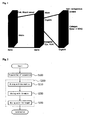
- Bones as shown in Fig. 1 , are biosynthetic substances and are composed of minerals, collagen, moisture, non-collagenous proteins, lipids, vascular components and cells, in order of the highest composition ratio to the lowest.
- the inorganic matter taking the largest portions of bone composition is an analogue of hydroxyapatite (HA) that is a geological mineral.
- HA hydroxyapatite
- Bone apatite is generally deficient in calcium and hydroxyl groups, which are replaced by numerous impurities including carbonate and other magnesium, potassium, boron, phosphate and citrate, the most abundant of which is carbonate.
- a content of carbonate in the bone minerals increases with maturation of bones. Carbonate replaces hydroxyl or phosphate groups, or may be adsorbed on the surface of bone apatite.
- the second most abundant constituent of bones is collagen, mainly type I collagen.
- Collagen imparts elasticity and flexibility to bones and offers direction for matrix constitution.
- osteoblasts are mixed with the bio-matrix and the resulting mixture should be injected into regions suffering from bone diseases, and collagen and hydroxyapatite, which are bone components, are mixed and injected into lesions. Therefore, it is possible to secure physical properties of bones in advance and thereby realize faster bone formation and adequately mineralized bones.
- the osteoblasts In mixing the osteoblasts, a main component of the bone matrix, with the bio-matrix, one of the most crucial factors is stability. In order to ensure sufficient numbers of the cells within the matrix, the survival rate of cells should be enhanced. In addition, it is also important to increase the engrafting rate of the cells after performing transplantation thereof.
- Fig. 2 is a process flow chart illustrating a method for preparing a composition for bone formation using a mixture of an osteoblast and a bio-matrix in accordance with the present invention.
- the method for preparing a composition for bone formation in accordance with the present invention comprises the steps of isolating osteoblasts from a bone tissue and culturing/proliferating the isolated osteoblasts in DMEM (Dulbecco's Modified Eagle's Medium) or ⁇ -MEM (Minimum Essential Medium, Alpha Modification) to prepare an osteoblast suspension (S100); and mixing the resulting osteoblast suspension with a bio-matrix to prepare an osteoblast therapeutic agent (S200).
- DMEM Dynamic Eagle's Medium
- ⁇ -MEM Minimum Essential Medium, Alpha Modification
- the number of osteoblasts in the osteoblast suspension may significantly vary depending upon sizes and locations of lesions of interest.
- the number of osteoblasts is preferably in a range of 10 6 to 1.2 x 10 7 cells, although a higher number of cells may be used.
- the preparation step (S200) of the therapeutic agent further includes mixing the osteoblast/bio-matrix mixed solution, in which the bio-matrix was mixed in the osteoblast suspension, with a coagulant.
- the mixing step includes mixing the osteoblast/bio-matrix mixed solution with 10 to 100 IU/mL of thrombin as the coagulant (S220), and mixing the resulting mixed solution containing thrombin mixed therein with 20 to 100 mg/mL of fibrinogen as the coagulant (S230).
- bio-matrix collagen, hydroxyapatite or a mixture thereof may be used.
- the mixture of collagen and hydroxyapatite is used as the bio-matrix, 67 ⁇ g/mL to 20 mg/mL of collagen is mixed with 30 ⁇ g/mL to 3.4 mg/mL of hydroxyapatite.
- a minimal concentration of collagen was an optimal culture concentration inducing cell differentiation and proliferation when collagen was used as a coating material for coating a culture vessel in culturing osteoblasts.
- the collagen concentration applied at this time was applied as the matrix component, it could be confirmed that in injecting the composition in which osteoblasts and bio-matrix were mixed with each other, the collagen components, which were injected before osteoblasts expressed collagen, form a basic matrix network, resulting in cell differentiation and rapid mineralization which consequently leads to rapid bone formation with a minimal amount of collagen.
- the collagen concentration equal to or higher than 3 mg/mL (0.3%) leads to gelation under predetermined conditions, thereby forming a matrix.
- a maximal concentration of 20 mg/mL of collagen results in a sharp decrease of fluidity thereof and thus osteoblasts are not homogeneously dispersed in the collagen matrix and it is thus difficult to apply the collagen as a cell matrix.
- hydroxyapatite should be added in a concentration such that hydroxyapatite promotes mineralization in a matrix mixture. Where an excess amount of hydroxyapatite is contained, this may inhibit cell differentiation due to spatial restriction which occurs due to occupation of hydroxyapatite in the cell matrix mixture. Therefore, in the present invention, hydroxyapatite was applied in a minimal concentration at which hydroxyapatite can serve as a nucleus for mineralization in the matrix component, and in an optimal concentration to promote mineralization.
- collagen is neutralized to a neutral pH by addition of a neutralization solution prior to mixing with the osteoblast suspension.
- lyophilized thrombin as thrombin is dissolved in liquid DMEM or ⁇ -MEM to which phosphate (PO 4 3- ) ions were added, and is added to be double an amount of thrombin contained in the culture medium to which (PO 4 3- ) ions were added.
- lyophilized fibrinogen as fibrinogen is dissolved in liquid DMEM or ⁇ -MEM to which calcium (Ca 2+ ) ions were added, and is added to be double an amount of fibrinogen contained in the culture medium to which calcium (Ca 2+ ) ions were added.
- phosphate ions and calcium ions exhibit no cytotoxic effects on osteoblasts and supplement bone mineral components.
- Thrombin as the coagulant is mixed in an amount of 10 to 100 IU/mL in the mixed solution, and fibrinogen as the coagulant is mixed in an amount of 20 to 100 mg/mL in the resulting mixture containing thrombin mixed therein.
- a concentration of thrombin determines a polymerization time of fibrin. Therefore, the polymerization time of fibrin can be reduced within a range of 4 hours to 3 sec, depending upon the concentration of thrombin.
- Thrombin was applied to the concentration such that the composition of the present invention is shaped to prevent a mixed composition of osteoblasts and bio-matrix from leaking from lesion sites of interest when injected into a site for bone formation, injection of the composition into the affected site leads to rapid polymerization, and an optimal fibrin pore matrix for bone formation by osteoblasts is formed.
- osteoblasts and their precursor cells were isolated from the corresponding tissues, and cultured and proliferated in DMEM or ⁇ -MEM for 4 weeks, thereby preparing an osteoblast suspension composed of DMEM or ⁇ -MEM.
- DMEM or ⁇ -MEM As a bio-matrix to be mixed therein, collagen was prepared.
- the resulting osteoblast suspension was mixed with collagen, to thereby prepare a total 1 mL of a composition for bone formation.
- Osteoblasts and their precursor cells were isolated from the corresponding tissues, and cultured and proliferated in DMEM or ⁇ -MEM for 4 weeks, thereby preparing an osteoblast suspension composed of DMEM or ⁇ -MEM.
- bio-matrices collagen and hydroxyapatite were prepared. A 1/10 volume of hydroxyapatite was added to the osteoblast suspension and mixed well. As the bio-matrix to be mixed therein, 2/5 volumes of collagen were prepared.
- the osteoblast suspension was mixed with collagen to prepare a total 1 mL of a composition for bone formation.
- Osteoblasts and their precursor cells were isolated from the corresponding tissues, and cultured and proliferated in DMEM or ⁇ -MEM for 4 weeks, thereby preparing an osteoblast suspension composed of DMEM or ⁇ -MEM.
- As bio-matrices collagen and hydroxyapatite were prepared. 2/5 volumes of collagen and a 1/10 volume of hydroxyapatite were added to the osteoblast suspension and mixed well, thereby forming an osteoblast therapeutic agent mixed with bio-matrices.
- fibrinogen was dissolved by adding a proper quantity of liquid DMEM or ⁇ -MEM to a vial containing lyophilized fibrinogen.
- thrombin was also dissolved by adding a proper quantity of liquid DMEM or ⁇ -MEM to a vial containing the lyophilized thrombin.
- the osteoblast suspension mixed with thrombin and bio-matrices was mixed with an equal amount of dissolved fibrinogen to prepare a total 1 mL of a composition for bone formation.
- Osteoblasts and their precursor cells were isolated from the corresponding tissues, and cultured and proliferated in DMEM or ⁇ -MEM for 4 weeks, thereby preparing an osteoblast suspension composed of DMEM or ⁇ -MEM.
- As bio-matrices collagen and hydroxyapatite were prepared. 2/5 volumes of collagen and a 1 /10 volume of hydroxyapatite were added to the osteoblast suspension and mixed well, thereby forming an osteoblast therapeutic agent mixed with the bio-matrices.
- fibrinogen was dissolved by adding a proper quantity of liquid DMEM or ⁇ -MEM to a vial containing lyophilized fibrinogen.
- thrombin was also dissolved by adding a proper quantity of liquid DMEM or ⁇ -MEM to a vial containing the lyophilized thrombin.
- the liquid DMEM or ⁇ -MEM was used to which phosphate (PO 4 3- ) ions were added to a concentration of 2 mg/mL.
- a proper quantity of liquid DMEM or ⁇ -MEM was added to a vial containing the lyophilized thrombin, thereby dissolving the thrombin.
- the liquid DMEM or ⁇ -MEM was used to which calcium (Ca 2+ ) ions were added to a concentration of 4 mg/mL.
- Amounts of phosphate ions (PO 4 3- ) and calcium ions (Ca 2+ ) used herein are optimal amounts which do not exhibit cytotoxic effects on osteoblasts and serve as additives for the culture solution to thereby supplement bone mineral components.
- the dissolved thrombin was added in a 1/10 volume to the liquid osteoblast suspension mixed with bio-matrices and mixed well.
- the osteoblast suspension containing thrombin and bio-matrices mixed therein was mixed with an equal amount of dissolved fibrinogen to prepare a total 1 mL of a composition for bone formation.
- Table 1 shows respective osteoblast therapeutic agents having the same bio-matrix composition but different numbers of osteoblasts, which are mixtures of osteoblasts and bio-matrices, transplanted into immunodeficient mice.
- Table 2 Group 1 Group 2 Group 3 Size volume (cc) 0.26 0.24 0.25 Bone formation Good Good Good Here, a bone formation grade is rated in order of excellent/good/fair/poor.
- Table 3 shows respective osteoblast therapeutic agents having different amounts of bio-matrices added, which are mixtures of osteoblasts and bio-matrices, transplanted into immunodeficient mice.
- Table 4 Group 4 Group 5 Group 6 Size volume(cc) 0.24 0.52 0.50 Bone formation Good Excellent Excellent Here, a bone formation grade is rated in order of excellent/good/fair/poor.
- Fig. 3 is a photograph illustrating subcutaneous injection of an osteoblast therapeutic agent, which is a mixture of an osteoblast and a bio-matrix, into an immunodeficient mouse.
- Fig. 4 is a photograph of bone formation (observed as a bulged portion circumscribed by a dotted line) in an immunodeficient mouse taken 4 weeks after transplantation of an osteoblast therapeutic agent, which is a mixture of an osteoblast and a bio-matrix.
- Fig. 5 is a photograph of a bone-formation transplant taken 4 weeks after transplantation of an osteoblast therapeutic agent, which is a mixture of an osteoblast and a bio-matrix, into an immunodeficient mouse, thus confirming that formation of blood vessels was induced around the transplant.
- Fig. 6 is an autoradiograph of an immunodeficient mouse taken 4 weeks after transplantation of an osteoblast therapeutic agent, which is a mixture of an osteoblast and a bio-matrix and it was observed that a new bone was formed on the backbone, as circumscribed by a dotted-line circle.
- Fig. 7 is a photograph of a tissue section stained with Hematoxylin-Eosin capable of confirming bone formation, taken 8 weeks after transplantation of an osteoblast therapeutic agent, which is a mixture of an osteoblast and a bio-matrix, into an immunodeficient mouse.
- an osteoblast therapeutic agent which is a mixture of an osteoblast and a bio-matrix
- osteoid represented by a block arrow
- osteoblasts distributed within Lacuna represented by a white arrow
- Fig. 8 is a photograph of a tissue section stained with Masson's Trichrome, taken 8 weeks after transplantation of an osteoblast therapeutic agent, which is a mixture of an osteoblast and a bio-matrix, into an immunodeficient mouse, and it can be confirmed that bone formation occurred in conjunction with collagen along predetermined patterns, thus showing penetration of blood vessels between matrices.
- an osteoblast therapeutic agent which is a mixture of an osteoblast and a bio-matrix
- a bone formation method resulting in no clinical graft rejection via injection of an osteoblast and bio-matrix mixture into a site where bone formation is sought, and being capable of achieving effective and rapid bone formation via injection of a composition which was shaped to a certain extent.
- a composition for bone formation using a mixture of an osteoblast and a bio-matrix and a method for preparing the same, having a construction as described above, enable realization of bone formation, resulting in no clinical graft rejection via injection of an osteoblast and bio-matrix mixture for bone formation into a site where bone formation is sought, and being capable of achieving effective and rapid bone formation via injection of a composition which was shaped to a certain extent, so as to alleviate problems associated with probability of bone tissue formation in unwanted regions resulting from escape of injected osteoblasts from the targeted site for bone formation and then propagation thereof to other sites via the blood stream, which are caused by injection of an osteoblast suspension.
Landscapes
- Health & Medical Sciences (AREA)
- Life Sciences & Earth Sciences (AREA)
- Engineering & Computer Science (AREA)
- Chemical & Material Sciences (AREA)
- Biomedical Technology (AREA)
- General Health & Medical Sciences (AREA)
- Medicinal Chemistry (AREA)
- Animal Behavior & Ethology (AREA)
- Veterinary Medicine (AREA)
- Public Health (AREA)
- Zoology (AREA)
- Epidemiology (AREA)
- Cell Biology (AREA)
- Bioinformatics & Cheminformatics (AREA)
- Pharmacology & Pharmacy (AREA)
- Orthopedic Medicine & Surgery (AREA)
- Immunology (AREA)
- Chemical Kinetics & Catalysis (AREA)
- Biotechnology (AREA)
- Oral & Maxillofacial Surgery (AREA)
- Organic Chemistry (AREA)
- Rheumatology (AREA)
- Transplantation (AREA)
- Botany (AREA)
- Dermatology (AREA)
- Gastroenterology & Hepatology (AREA)
- Proteomics, Peptides & Aminoacids (AREA)
- Developmental Biology & Embryology (AREA)
- Wood Science & Technology (AREA)
- Genetics & Genomics (AREA)
- Virology (AREA)
- Nuclear Medicine, Radiotherapy & Molecular Imaging (AREA)
- Vascular Medicine (AREA)
- General Engineering & Computer Science (AREA)
- Microbiology (AREA)
- Urology & Nephrology (AREA)
- General Chemical & Material Sciences (AREA)
- Physical Education & Sports Medicine (AREA)
- Biochemistry (AREA)
- Hematology (AREA)
Abstract
Description
- The present invention relates to a composition for bone formation using a mixture of osteoblasts and bio-matrix, and a method for preparing the same. More specifically, the present invention relates to a composition for bone formation using a mixture of osteoblasts and a bio-matrix, which can be transplanted for bone formation upon treating bone defects or into a region in need thereof, and a method for preparing the same.
- According to the reports issued by the World Health Organization (WHO), over half of the aged over the age of 65 suffer from chronic bone diseases, and the incidence of bone fracture related to osteoporosis has doubled over the past decade. These figures correspond to approximately 40% of women 50 and older.
- In the USA, roughly 5.60 million people suffer bone fractures a year and 3.10 million of them have surgical operations. According to a statistical report of the Medical Data International (MDI) in 1995, about 426,000 cases of bone graft surgeries were conducted. Costs for bone grafting are estimated to be approximately 800 million US dollars a year throughout the world. For just one year of 1995, bone grafting including 58% of autografting, 34% of allografting and 8% of synthetic material transplantation was conducted.
- Generally, a simple (closed) bone fracture may be sufficiently healed by casting the bone fracture for several weeks, but a severe bone fracture or bone defect requires bone grafting.
- However, such autografting disadvantageously may cause strong pain in a bone-harvested region and require a long period of time for recovery after surgical operation for bone grafting, and has suffered from a great deal of difficulty to secure donor parts for providing bone for bone transplantation.
- Meanwhile, allografting also suffers from fatal disadvantages such as weakening of bone strength during a sterilization process, occurrence of graft rejection, and possibility of transmission with contagious diseases such as hepatitis and AIDS.
- As other available methods for bone grafting, metals on which biologically active or biologically non-active ceramic materials are coated are widely used as supporting materials in the orthopedic surgery, but there is a great deal of difficulty to use metals as bone transplants due to problems such as corrosion of metals, wear of the ceramic-metal surface, and severe formation of fibrose tissues at surfaces of the bones and transplants.
- For bone-formation factors, although a great deal of studies have been made on various factors after Urist and Mclean (1952) have issued a publication of effects of bone formation proteins on bone-formation, the production process thereof is very complicated and expensive, and has low efficiency, thus resulting in a low yield and ultimately limiting application thereof to a practical clinical use.
- Meanwhile, bone marrow injection is a technique based on an assertion, proposed by Huggins (1931), Friedenstein (1973), and Ashton (1980), wherein osteoprogenitor cells from bone marrow induce and facilitate bone formation. Bone marrow injection is generally carried out alone for healing bone fractures, but is also carried out in combination with bone grafting. Unlike other bone grafting techniques, this bone marrow injection does not involve surgical skin incision for donor parts and thus is significantly advantageous due to no problems associated with securing of donor parts and no complications or adverse side effects.
- Thereafter, even though some excellent results are published through a great deal of clinical application cases, bone marrow injection is disadvantageous due to its unsound theoretical basis, by the reasons that considerable numbers of results obtained are not consistent therebetween, the amount of bone marrow collectable from one site is limited and further, there is a significantly limited number of osteoprogenitor cells contained in bone marrow.
- As such, a novel bone formation and transplantation method by culturing and amplifying osteoprogenitor cells into sufficient numbers of osteoblast cells, mixing the cultured cells with a bio-matrix and injecting the resulting mixture into a bone-formation region to be sought is a highly effective method, implies significant advantages and beneficial effects, as compared to conventional autografting or allografting and bone marrow injection, and thus is a tissue engineering field receiving a great deal of attention in bone regeneration therapies.
- Therefore, the present invention has been made in view of the problems associated with implants and conventional bone grafting techniques as discussed above, and it is an object of the present invention to provide a composition for bone formation using a mixture of osteoblasts and bio-matrix, and a method for preparing the same, resulting in no clinical graft rejection via injection of osteoblasts and bio-matrix mixture for bone formation into a site where bone formation is sought, and being capable of achieving effective and rapid bone formation via injection of a composition which was shaped to a certain extent, so as to alleviate problems associated with probability of bone tissue formation in unwanted regions resulting from escape of injected osteoblasts from the desired site for bone formation and then propagation thereof to other sites via the blood stream, which may be caused by injection of an osteoblast suspension.
- In accordance with an aspect of the present invention, the above and other objects can be accomplished by the provision of a method for preparing a composition for bone formation, comprising:
- isolating osteoblasts and their precursor cells from a bone tissue and culturing/proliferating the isolated osteoblasts and their precursor cells in DMEM (Dulbecco's Modified Eagle's Medium) or α-MEM (Minimum Essential Medium, Alpha Modification) to prepare an osteoblast suspension; and
- mixing the resulting osteoblast suspension with a bio-matrix to prepare an osteoblast therapeutic agent.
- Herein, the preparation step of the therapeutic agent further includes mixing the osteoblast mixed solution, in which the bio-matrix was mixed in the osteoblast suspension, with a coagulant.
- Herein, the mixing step includes mixing the osteoblast mixed solution with 10 to 100 IU/mL of thrombin as a coagulant; and mixing the resulting mixed solution containing thrombin mixed therein with 20 to 100 mg/mL of fibrinogen as the coagulant.
- Herein, the bio-matrix is collagen, hydroxyapatite or a mixture thereof.
- Herein, collagen may be added in an amount of 67 µg/mL to 20 mg/mL to the osteoblast suspension, and hydroxyapatite may be added in an amount of 30 µg/mL to 3.4 mg/mL to the osteoblast suspension.
- Collagen is neutralized to a neutral pH by addition of a neutralization solution prior to mixing with the osteoblast suspension.
- Prior to adding to the mixed solution of the osteoblast and bio-matrix, lyophilized thrombin as thrombin is dissolved in liquid DMEM or α-MEM to which phosphate (PO4 3-) ions were added as a bone mineral component, and is added to be double an amount of thrombin contained in the culture medium to which (PO4 3-) ions were added. Then, prior to adding to the resulting osteoblast mixed solution, lyophilized fibrinogen as fibrinogen is dissolved in liquid DMEM or α-MEM to which calcium (Ca2+) ions were added as a bone mineral component, and is added to be double an amount of fibrinogen contained in the culture medium to which calcium (Ca2+) ions were added.
- In accordance with another aspect of the present invention, there is provided a composition for bone formation prepared by the above method for preparing a composition for bone formation using a mixture of an osteoblast and a bio-matrix.
- In accordance with a composition for bone formation using a mixture of an osteoblast and a bio-matrix, and a method for preparing the same, having a construction as described above, it is possible to achieve bone formation, resulting in no clinical graft rejection via injection of an osteoblast and bio-matrix mixture for bone formation into a site where bone formation is sought, and being capable of achieving effective and rapid bone formation via injection of a composition which was shaped to a certain extent, so as to alleviate problems associated with probability of bone tissue formation in unwanted regions resulting from escape of injected osteoblasts from the desired site for bone formation and then propagation thereof to other sites via the blood stream, which are caused by injection of an osteoblast suspension.
- The above and other objects, features and other advantages of the present invention will be more clearly understood from the following detailed description taken in conjunction with the accompanying drawings, in which:
-
Fig. 1 is a bar graph showing a composition ratio of bone; -
Fig. 2 is a process flow chart illustrating a method for preparing a composition for bone formation using a mixture of an osteoblast and a bio-matrix in accordance with the present invention; -
Fig. 3 is a photograph illustrating subcutaneous injection of an osteoblast therapeutic agent, which is a mixture of an osteoblast and a bio-matrix, into an immunodeficient mouse; -
Fig. 4 is a photograph of an immunodeficient mouse taken 4 weeks after transplantation of an osteoblast therapeutic agent, which is a mixture of an osteoblast and a bio-matrix; -
Fig. 5 is a photograph of a transplant taken 4 weeks after transplantation of an osteoblast therapeutic agent, which is a mixture of an osteoblast and a bio-matrix, into an immunodeficient mouse; -
Fig. 6 is an autoradiograph of an immunodeficient mouse taken 4 weeks after transplantation of an osteoblast therapeutic agent, which is a mixture of an osteoblast and a bio-matrix; -
Fig. 7 is a photograph of a tissue section stained with Hematoxylin-Eosin capable of confirming bone formation, taken 8 weeks after transplantation of an osteoblast therapeutic agent, which is a mixture of an osteoblast and a bio-matrix, into an immunodeficient mouse; and -
Fig. 8 is a photograph of a tissue section stained with Masson's Trichrome, taken 8 weeks after transplantation of an osteoblast therapeutic agent, which is a mixture of an osteoblast and a bio-matrix, into an immunodeficient mouse. - Hereinafter, a method for preparing a composition for bone formation using a mixture of an osteoblast and a bio-matrix in accordance with the present invention will be described in more detail with reference to the accompanying drawings.
- In order to overcome disadvantages exhibited by conventional therapies for treating bone-related disorders and diseases, such as implants and bone grafting, a technique of transplanting autologous osteoblasts having no adverse side effects on an affected part, via culturing of osteoblasts, as an ultimate treatment method, has been developed, in conjunction with improvement in conventional therapies.
- However, for achieving faster bone formation, it is necessary to mix osteoblasts with a matrix through which more diverse lesions can be treated, and thereby it is possible to treat more bone diseases that do not achieve therapeutic benefits by injection of a liquid osteoblast suspension consisting of osteoblasts only.
- It can be said that the osteoblast therapeutic agent, which is a mixture of an osteoblast and a bio-matrix, is a more advanced version of an injection method of a liquid osteoblast suspension which is based on cell therapy. The conventional injection method of a liquid osteoblast suspension, which involves transplanting osteoblasts alone, can only treat limited types of bone defects and also suffers from problems associated with probability of bone tissue formation in unwanted regions resulting from escape of injected osteoblasts from desired bone-forming sites and then propagation thereof to other sites via the blood stream. In contrast, the osteoblast therapeutic agent, which is a mixture of an osteoblast and a bio-matrix, in accordance with the present invention, is made up of the osteoblast and bio-matrix mixture and therefore, can also more rapidly and effectively treat a broader range of bone defects and severe bone diseases.
- Bones are composed of bone cells and large quantities of bone matrices present between cells. Most parts of bone matrices are comprised of organic components (35%) made up of collagen fibers and inorganic components (65%) made up of calcium and phosphate.
- Bones, as shown in
Fig. 1 , are biosynthetic substances and are composed of minerals, collagen, moisture, non-collagenous proteins, lipids, vascular components and cells, in order of the highest composition ratio to the lowest. - The inorganic matter taking the largest portions of bone composition is an analogue of hydroxyapatite (HA) that is a geological mineral.
- Bone apatite is generally deficient in calcium and hydroxyl groups, which are replaced by numerous impurities including carbonate and other magnesium, potassium, boron, phosphate and citrate, the most abundant of which is carbonate.
- A content of carbonate in the bone minerals increases with maturation of bones. Carbonate replaces hydroxyl or phosphate groups, or may be adsorbed on the surface of bone apatite.
- The second most abundant constituent of bones is collagen, mainly type I collagen. Collagen imparts elasticity and flexibility to bones and offers direction for matrix constitution.
- According to the embodiment of the present invention, osteoblasts are mixed with the bio-matrix and the resulting mixture should be injected into regions suffering from bone diseases, and collagen and hydroxyapatite, which are bone components, are mixed and injected into lesions. Therefore, it is possible to secure physical properties of bones in advance and thereby realize faster bone formation and adequately mineralized bones.
- In mixing the osteoblasts, a main component of the bone matrix, with the bio-matrix, one of the most crucial factors is stability. In order to ensure sufficient numbers of the cells within the matrix, the survival rate of cells should be enhanced. In addition, it is also important to increase the engrafting rate of the cells after performing transplantation thereof.
-
Fig. 2 is a process flow chart illustrating a method for preparing a composition for bone formation using a mixture of an osteoblast and a bio-matrix in accordance with the present invention. - Referring to
Fig. 2 , the method for preparing a composition for bone formation in accordance with the present invention comprises the steps of isolating osteoblasts from a bone tissue and culturing/proliferating the isolated osteoblasts in DMEM (Dulbecco's Modified Eagle's Medium) or α-MEM (Minimum Essential Medium, Alpha Modification) to prepare an osteoblast suspension (S100); and mixing the resulting osteoblast suspension with a bio-matrix to prepare an osteoblast therapeutic agent (S200). - Herein, the number of osteoblasts in the osteoblast suspension may significantly vary depending upon sizes and locations of lesions of interest. Typically, the number of osteoblasts is preferably in a range of 106 to 1.2 x 10⁷ cells, although a higher number of cells may be used.
- Herein, the preparation step (S200) of the therapeutic agent further includes mixing the osteoblast/bio-matrix mixed solution, in which the bio-matrix was mixed in the osteoblast suspension, with a coagulant.
- Herein, the mixing step includes mixing the osteoblast/bio-matrix mixed solution with 10 to 100 IU/mL of thrombin as the coagulant (S220), and mixing the resulting mixed solution containing thrombin mixed therein with 20 to 100 mg/mL of fibrinogen as the coagulant (S230).
- As the bio-matrix, collagen, hydroxyapatite or a mixture thereof may be used. When the mixture of collagen and hydroxyapatite is used as the bio-matrix, 67 µg/mL to 20 mg/mL of collagen is mixed with 30 µg/mL to 3.4 mg/mL of hydroxyapatite.
- Meanwhile, a minimal concentration of collagen was an optimal culture concentration inducing cell differentiation and proliferation when collagen was used as a coating material for coating a culture vessel in culturing osteoblasts. When the collagen concentration applied at this time was applied as the matrix component, it could be confirmed that in injecting the composition in which osteoblasts and bio-matrix were mixed with each other, the collagen components, which were injected before osteoblasts expressed collagen, form a basic matrix network, resulting in cell differentiation and rapid mineralization which consequently leads to rapid bone formation with a minimal amount of collagen. Meanwhile, where collagen was used as a sole matrix, the collagen concentration equal to or higher than 3 mg/mL (0.3%) leads to gelation under predetermined conditions, thereby forming a matrix. In contrast, a maximal concentration of 20 mg/mL of collagen results in a sharp decrease of fluidity thereof and thus osteoblasts are not homogeneously dispersed in the collagen matrix and it is thus difficult to apply the collagen as a cell matrix.
- Further, hydroxyapatite should be added in a concentration such that hydroxyapatite promotes mineralization in a matrix mixture. Where an excess amount of hydroxyapatite is contained, this may inhibit cell differentiation due to spatial restriction which occurs due to occupation of hydroxyapatite in the cell matrix mixture. Therefore, in the present invention, hydroxyapatite was applied in a minimal concentration at which hydroxyapatite can serve as a nucleus for mineralization in the matrix component, and in an optimal concentration to promote mineralization.
- On the other hand, collagen is neutralized to a neutral pH by addition of a neutralization solution prior to mixing with the osteoblast suspension.
- In addition, prior to adding to the mixed solution of the osteoblasts and bio-matrix, lyophilized thrombin as thrombin is dissolved in liquid DMEM or α-MEM to which phosphate (PO4 3-) ions were added, and is added to be double an amount of thrombin contained in the culture medium to which (PO4 3-) ions were added. Then, prior to adding to the resulting osteoblast mixed solution, lyophilized fibrinogen as fibrinogen is dissolved in liquid DMEM or α-MEM to which calcium (Ca2+) ions were added, and is added to be double an amount of fibrinogen contained in the culture medium to which calcium (Ca2+) ions were added. Herein, phosphate ions and calcium ions exhibit no cytotoxic effects on osteoblasts and supplement bone mineral components.
- Thrombin as the coagulant is mixed in an amount of 10 to 100 IU/mL in the mixed solution, and fibrinogen as the coagulant is mixed in an amount of 20 to 100 mg/mL in the resulting mixture containing thrombin mixed therein.
- Meanwhile, a concentration of thrombin determines a polymerization time of fibrin. Therefore, the polymerization time of fibrin can be reduced within a range of 4 hours to 3 sec, depending upon the concentration of thrombin. Thrombin was applied to the concentration such that the composition of the present invention is shaped to prevent a mixed composition of osteoblasts and bio-matrix from leaking from lesion sites of interest when injected into a site for bone formation, injection of the composition into the affected site leads to rapid polymerization, and an optimal fibrin pore matrix for bone formation by osteoblasts is formed.
- Hereinafter, effects of a composition for bone formation using a mixture of an osteoblast and a bio-matrix in accordance with an example of the present invention will be described in more detail with reference to the accompanying drawings.
- Firstly, osteoblasts and their precursor cells were isolated from the corresponding tissues, and cultured and proliferated in DMEM or α-MEM for 4 weeks, thereby preparing an osteoblast suspension composed of DMEM or α-MEM. As a bio-matrix to be mixed therein, collagen was prepared.
- Then, the resulting osteoblast suspension was mixed with collagen, to thereby prepare a total 1 mL of a composition for bone formation.
- Osteoblasts and their precursor cells were isolated from the corresponding tissues, and cultured and proliferated in DMEM or α-MEM for 4 weeks, thereby preparing an osteoblast suspension composed of DMEM or α-MEM. As bio-matrices, collagen and hydroxyapatite were prepared. A 1/10 volume of hydroxyapatite was added to the osteoblast suspension and mixed well. As the bio-matrix to be mixed therein, 2/5 volumes of collagen were prepared.
- The osteoblast suspension was mixed with collagen to prepare a total 1 mL of a composition for bone formation.
- Osteoblasts and their precursor cells were isolated from the corresponding tissues, and cultured and proliferated in DMEM or α-MEM for 4 weeks, thereby preparing an osteoblast suspension composed of DMEM or α-MEM. As bio-matrices, collagen and hydroxyapatite were prepared. 2/5 volumes of collagen and a 1/10 volume of hydroxyapatite were added to the osteoblast suspension and mixed well, thereby forming an osteoblast therapeutic agent mixed with bio-matrices.
- After preparing a medical-grade fibrin glue set at room temperature, fibrinogen was dissolved by adding a proper quantity of liquid DMEM or α-MEM to a vial containing lyophilized fibrinogen. In addition, thrombin was also dissolved by adding a proper quantity of liquid DMEM or α-MEM to a vial containing the lyophilized thrombin.
- Then, a 1/10 volume of the dissolved thrombin was added to the liquid osteoblast suspension in which bio-matrices were mixed, and the resulting mixture was mixed well.
- The osteoblast suspension mixed with thrombin and bio-matrices was mixed with an equal amount of dissolved fibrinogen to prepare a total 1 mL of a composition for bone formation.
- Osteoblasts and their precursor cells were isolated from the corresponding tissues, and cultured and proliferated in DMEM or α-MEM for 4 weeks, thereby preparing an osteoblast suspension composed of DMEM or α-MEM. As bio-matrices, collagen and hydroxyapatite were prepared. 2/5 volumes of collagen and a 1 /10 volume of hydroxyapatite were added to the osteoblast suspension and mixed well, thereby forming an osteoblast therapeutic agent mixed with the bio-matrices.
- After preparing a medical-grade fibrin glue set at room temperature, fibrinogen was dissolved by adding a proper quantity of liquid DMEM or α-MEM to a vial containing lyophilized fibrinogen. In addition, thrombin was also dissolved by adding a proper quantity of liquid DMEM or α-MEM to a vial containing the lyophilized thrombin.
- At this time, the liquid DMEM or α-MEM was used to which phosphate (PO4 3-) ions were added to a concentration of 2 mg/mL. In addition, a proper quantity of liquid DMEM or α-MEM was added to a vial containing the lyophilized thrombin, thereby dissolving the thrombin. At this time, the liquid DMEM or α-MEM was used to which calcium (Ca2+) ions were added to a concentration of 4 mg/mL. Amounts of phosphate ions (PO4 3-) and calcium ions (Ca2+) used herein are optimal amounts which do not exhibit cytotoxic effects on osteoblasts and serve as additives for the culture solution to thereby supplement bone mineral components.
- Then, the dissolved thrombin was added in a 1/10 volume to the liquid osteoblast suspension mixed with bio-matrices and mixed well.
- The osteoblast suspension containing thrombin and bio-matrices mixed therein was mixed with an equal amount of dissolved fibrinogen to prepare a total 1 mL of a composition for bone formation.
- 15 immunodeficient mice were divided into 6 groups (triple trial). Then, an osteoblast therapeutic agent, which is a mixture of an osteoblast and a bio-matrix, was prepared and injected into the scapula of nude mice via subcutaneous injection. 1 mL of the osteoblast therapeutic agent was injected into the hypoderm of each immunodeficient mouse. The results were confirmed 4 weeks and 8 weeks after injection.
Table 1 Group 1 Group 2 Group 3 Cell number (cells) 1×10⁶ cells 6×10⁶ cells 1.2×10⁷ cells Injection volume (cc) 1 mL 1 mL 1 mL - Table 1 shows respective osteoblast therapeutic agents having the same bio-matrix composition but different numbers of osteoblasts, which are mixtures of osteoblasts and bio-matrices, transplanted into immunodeficient mice.
Table 2 Group 1 Group 2 Group 3 Size volume (cc) 0.26 0.24 0.25 Bone formation Good Good Good - 8 weeks after transplanting the osteoblast therapeutic agents as given in Table 1, the results for bone formation thus obtained are shown in Table 2.
Table 3 Group 4 Group 5 Group 6 Cell number (cells) 6×10⁶ cells 6×10⁶ cells 6×10⁶ cells Collagen vol. 1/5 2/5 1 Injection volume (cc) 1 mL 1 mL 1 mL - Table 3 shows respective osteoblast therapeutic agents having different amounts of bio-matrices added, which are mixtures of osteoblasts and bio-matrices, transplanted into immunodeficient mice.
Table 4 Group 4 Group 5 Group 6 Size volume(cc) 0.24 0.52 0.50 Bone formation Good Excellent Excellent - 8 weeks after transplanting the osteoblast therapeutic agents as given in Table 3, the results for bone formation thus obtained are shown in Table 4.
-
Fig. 3 is a photograph illustrating subcutaneous injection of an osteoblast therapeutic agent, which is a mixture of an osteoblast and a bio-matrix, into an immunodeficient mouse.Fig. 4 is a photograph of bone formation (observed as a bulged portion circumscribed by a dotted line) in an immunodeficient mouse taken 4 weeks after transplantation of an osteoblast therapeutic agent, which is a mixture of an osteoblast and a bio-matrix. -
Fig. 5 is a photograph of a bone-formation transplant taken 4 weeks after transplantation of an osteoblast therapeutic agent, which is a mixture of an osteoblast and a bio-matrix, into an immunodeficient mouse, thus confirming that formation of blood vessels was induced around the transplant.Fig. 6 is an autoradiograph of an immunodeficient mouse taken 4 weeks after transplantation of an osteoblast therapeutic agent, which is a mixture of an osteoblast and a bio-matrix and it was observed that a new bone was formed on the backbone, as circumscribed by a dotted-line circle. -
Fig. 7 is a photograph of a tissue section stained with Hematoxylin-Eosin capable of confirming bone formation, taken 8 weeks after transplantation of an osteoblast therapeutic agent, which is a mixture of an osteoblast and a bio-matrix, into an immunodeficient mouse. As can be seen, osteoid (represented by a block arrow) is observed and osteoblasts distributed within Lacuna (represented by a white arrow) can also be confirmed. -
Fig. 8 is a photograph of a tissue section stained with Masson's Trichrome, taken 8 weeks after transplantation of an osteoblast therapeutic agent, which is a mixture of an osteoblast and a bio-matrix, into an immunodeficient mouse, and it can be confirmed that bone formation occurred in conjunction with collagen along predetermined patterns, thus showing penetration of blood vessels between matrices. - Thus, in accordance with the present invention, there is provided a bone formation method, resulting in no clinical graft rejection via injection of an osteoblast and bio-matrix mixture into a site where bone formation is sought, and being capable of achieving effective and rapid bone formation via injection of a composition which was shaped to a certain extent.
- In accordance with the present invention, a composition for bone formation using a mixture of an osteoblast and a bio-matrix, and a method for preparing the same, having a construction as described above, enable realization of bone formation, resulting in no clinical graft rejection via injection of an osteoblast and bio-matrix mixture for bone formation into a site where bone formation is sought, and being capable of achieving effective and rapid bone formation via injection of a composition which was shaped to a certain extent, so as to alleviate problems associated with probability of bone tissue formation in unwanted regions resulting from escape of injected osteoblasts from the targeted site for bone formation and then propagation thereof to other sites via the blood stream, which are caused by injection of an osteoblast suspension.
- Although the preferred embodiments of the present invention have been disclosed for illustrative purposes, those skilled in the art will appreciate that various modifications, additions and substitutions are possible.
Claims (5)
- A composition for bone formation prepared by the method for preparing a composition for bone formation using a mixture of an osteoblast and a bio-matrix, comprising:culturing/proliferating isolated osteoblasts and their precursor cells in alpha-MEM (Minimum Essential Medium, from a bone tissue Alpha Modification) to prepare an osteoblast suspension; andmixing the resulting osteoblast suspension with a bio-matrix to prepare an osteoblast therapeutic agent,wherein the bio-matrix is a mixture of collagen and hydroxyapatite,wherein collagen is added in an amount of 67 µg/mL to 20 mg/mL to the osteoblast suspension, and hydroxyapatite is added in an amount of 30 µg/mL to 3.4 mg/mL to the osteoblast suspension.
- The composition for bone formation according to claim 1, wherein the preparation step of the therapeutic agent further includes mixing the osteoblast mixed solution, in which the bio-matrix was mixed in the osteoblast suspension, with a coagulant.
- The composition for bone formation according to claim 2, wherein the mixing step includes:mixing the osteoblast mixed solution with 10 to 100 IU/mL of thrombin as the coagulant; andmixing the resulting mixed solution containing thrombin mixed therein with 20 to 100 mg/mL of fibrinogen as the coagulant.
- The composition for bone formation according to claim 1, wherein collagen is neutralized to a neutral pH by addition of a neutralization solution prior to mixing with the osteoblast suspension.
- The composition for bone formation according to claim 3, wherein
prior to adding to the mixture of the osteoblast and bio-matrix, lyophilized thrombin as thrombin is dissolved in liquid alpha-MEM to which phosphate (PO4 3-) ions were added as a bone mineral component, and is added to be double an amount of thrombin contained in the culture medium to which phosphate (PO4 3-) ions were added; and
prior to adding to the resulting osteoblast mixed solution, lyophilized fibrinogen as fibrinogen is dissolved in liquid alpha-MEM to which calcium (Ca2+) ions were added as a bone mineral component , and is added to be double an amount of fibrinogen contained in the culture medium to which calcium (Ca2+) ions were added.
Priority Applications (3)
| Application Number | Priority Date | Filing Date | Title |
|---|---|---|---|
| SI200531298T SI1896044T1 (en) | 2005-06-13 | 2005-06-27 | Bone formation composition composed of mixture of osteoblast and bio-matrix and its manufacturing method |
| PL05765896T PL1896044T3 (en) | 2005-06-13 | 2005-06-27 | Bone formation composition composed of mixture of osteoblast and bio-matrix and its manufacturing method |
| CY20111100592T CY1111582T1 (en) | 2005-06-13 | 2011-06-22 | BONE FORMATION COMPOSITION CONSISTING OF A MIX OF BONE AND BIO-FOUNDRY SUBSTANCE |
Applications Claiming Priority (2)
| Application Number | Priority Date | Filing Date | Title |
|---|---|---|---|
| KR1020050050447A KR100751690B1 (en) | 2005-06-13 | 2005-06-13 | Bone-producing composition using a mixture of osteoblasts and biological matrix components and a method for producing the same |
| PCT/KR2005/002006 WO2006135123A1 (en) | 2005-06-13 | 2005-06-27 | Bone formation composition composed of mixture of osteoblast and bio-matrix and its manufacturing method |
Publications (3)
| Publication Number | Publication Date |
|---|---|
| EP1896044A1 EP1896044A1 (en) | 2008-03-12 |
| EP1896044A4 EP1896044A4 (en) | 2009-07-15 |
| EP1896044B1 true EP1896044B1 (en) | 2011-03-23 |
Family
ID=37532458
Family Applications (1)
| Application Number | Title | Priority Date | Filing Date |
|---|---|---|---|
| EP05765896A Expired - Lifetime EP1896044B1 (en) | 2005-06-13 | 2005-06-27 | Bone formation composition composed of mixture of osteoblast and bio-matrix and its manufacturing method |
Country Status (16)
| Country | Link |
|---|---|
| US (1) | US20090311220A1 (en) |
| EP (1) | EP1896044B1 (en) |
| JP (1) | JP2008542362A (en) |
| KR (1) | KR100751690B1 (en) |
| CN (1) | CN101227915A (en) |
| AT (1) | ATE503005T1 (en) |
| CY (1) | CY1111582T1 (en) |
| DE (1) | DE602005027129D1 (en) |
| DK (1) | DK1896044T3 (en) |
| ES (1) | ES2361754T3 (en) |
| HR (1) | HRP20110354T1 (en) |
| PL (1) | PL1896044T3 (en) |
| PT (1) | PT1896044E (en) |
| RS (1) | RS51942B (en) |
| SI (1) | SI1896044T1 (en) |
| WO (1) | WO2006135123A1 (en) |
Families Citing this family (6)
| Publication number | Priority date | Publication date | Assignee | Title |
|---|---|---|---|---|
| JP2008212265A (en) * | 2007-03-01 | 2008-09-18 | Niigata Univ | Cultured artificial bone and method for producing the same |
| KR20100007180A (en) * | 2008-07-11 | 2010-01-22 | 세원셀론텍(주) | Method manufacture of bone recovery collagen gel composition |
| CN103124492A (en) * | 2010-05-28 | 2013-05-29 | 加内特生物治疗学股份有限公司 | Compositions and methods of using living and non-living bioactive devices with components derived from self-renewing colony forming cells cultured and expanded in vitro |
| KR102648746B1 (en) * | 2020-05-13 | 2024-03-18 | 한국기초과학지원연구원 | Bone tissue mimetics and method for preparing the same |
| CN112708592A (en) * | 2021-01-12 | 2021-04-27 | 赵彬 | 3D structure of osteoblast protein |
| WO2024092300A1 (en) * | 2022-11-04 | 2024-05-10 | Royal Melbourne Institute Of Technology | Method of differentiating stem cells |
Family Cites Families (19)
| Publication number | Priority date | Publication date | Assignee | Title |
|---|---|---|---|---|
| US4837379A (en) * | 1988-06-02 | 1989-06-06 | Organogenesis Inc. | Fibrin-collagen tissue equivalents and methods for preparation thereof |
| JP2984176B2 (en) * | 1993-12-30 | 1999-11-29 | 新田ゼラチン株式会社 | Method for culturing bone marrow cells, culture mixture and material for transplantation into hard tissue defect |
| JPH07213598A (en) * | 1994-02-07 | 1995-08-15 | Terumo Corp | Bone cement |
| US5942496A (en) * | 1994-02-18 | 1999-08-24 | The Regent Of The University Of Michigan | Methods and compositions for multiple gene transfer into bone cells |
| JPH07242564A (en) * | 1994-03-02 | 1995-09-19 | Sagami Chem Res Center | Bone formation accelerator |
| JPH08112341A (en) * | 1994-10-12 | 1996-05-07 | Japan Steel Works Ltd:The | Bone filler and manufacturing method thereof |
| US6599515B1 (en) * | 1995-01-16 | 2003-07-29 | Baxter International Inc. | Fibrin porous structure |
| JPH10243996A (en) * | 1997-03-07 | 1998-09-14 | Kagaku Gijutsu Shinko Jigyodan | Biomaterial for promoting hard tissue calcification |
| US20030180263A1 (en) * | 2002-02-21 | 2003-09-25 | Peter Geistlich | Resorbable extracellular matrix for reconstruction of bone |
| JP2003513682A (en) * | 1998-07-24 | 2003-04-15 | ファーマカル、バイオテクノロジーズ、インコーポレーテッド | Bone tissue restoration system and method |
| DE19949290A1 (en) * | 1999-10-12 | 2001-04-26 | Albrecht Bettermann | Particulate construct for use in transplantation medicine |
| JP2001129073A (en) * | 1999-11-02 | 2001-05-15 | Olympus Optical Co Ltd | Bone prosthesis material and tool for implanting bone prosthesis material |
| DE19956503A1 (en) * | 1999-11-24 | 2001-06-21 | Universitaetsklinikum Freiburg | Sprayable bone replacement material |
| IL144446A0 (en) * | 2001-07-19 | 2002-05-23 | Prochon Biotech Ltd | Plasma protein matrices and methods for their preparation |
| JP2003081869A (en) * | 2001-09-17 | 2003-03-19 | Asahi Kasei Corp | Bone marrow or osteoblast transplantation adjuvant |
| KR100522457B1 (en) * | 2002-04-13 | 2005-10-18 | 주식회사 셀론텍 | Cultivation method of Osteoblast and The composition |
| EP1635887A2 (en) * | 2003-06-12 | 2006-03-22 | Interface Biotech A/S | A method for cell implantation |
| US7316822B2 (en) * | 2003-11-26 | 2008-01-08 | Ethicon, Inc. | Conformable tissue repair implant capable of injection delivery |
| KR100531922B1 (en) * | 2003-12-23 | 2005-11-29 | 주식회사 셀론텍 | a composition for cartilage therapeutics and a using method thereof |
-
2005
- 2005-06-13 KR KR1020050050447A patent/KR100751690B1/en not_active Expired - Fee Related
- 2005-06-27 US US11/921,217 patent/US20090311220A1/en not_active Abandoned
- 2005-06-27 ES ES05765896T patent/ES2361754T3/en not_active Expired - Lifetime
- 2005-06-27 JP JP2008514538A patent/JP2008542362A/en active Pending
- 2005-06-27 DK DK05765896.5T patent/DK1896044T3/en active
- 2005-06-27 AT AT05765896T patent/ATE503005T1/en active
- 2005-06-27 SI SI200531298T patent/SI1896044T1/en unknown
- 2005-06-27 EP EP05765896A patent/EP1896044B1/en not_active Expired - Lifetime
- 2005-06-27 PT PT05765896T patent/PT1896044E/en unknown
- 2005-06-27 HR HR20110354T patent/HRP20110354T1/en unknown
- 2005-06-27 CN CNA2005800499663A patent/CN101227915A/en active Pending
- 2005-06-27 RS RS20110204A patent/RS51942B/en unknown
- 2005-06-27 PL PL05765896T patent/PL1896044T3/en unknown
- 2005-06-27 WO PCT/KR2005/002006 patent/WO2006135123A1/en not_active Ceased
- 2005-06-27 DE DE602005027129T patent/DE602005027129D1/en not_active Expired - Lifetime
-
2011
- 2011-06-22 CY CY20111100592T patent/CY1111582T1/en unknown
Non-Patent Citations (4)
| Title |
|---|
| BELL R; BEIRNE O R: "Effect of hydroxylapatite, tricalcium phosphate, and collagen on the healing of defects in the rat mandible", JOURNAL OF ORAL AND MAXILLOFACIAL SURGERY, vol. 46, 1988, pages 589 - 594 * |
| DU C; ET AL: "FORMATION OF CALCIUM PHOSPHATE/COLLAGEN COMPOSITES THROUGH MINERALIZATION OF COLLAGEN MATRIX", JOURNAL OF BIOMEDICAL MATERIALS RESEARCH, vol. 50, 2000, pages 518 - 527 * |
| DU C; ET AL: "THREE-DIMENSIONAL NANO-HAP/COLLAGEN MATRIX LOADING WITH OSTEOGENIC CELLS IN ORGAN CULTURE", JOURNAL OF BIOMEDICAL MATERIALS RESEARCH, vol. 44, 1999, pages 407 - 415 * |
| LIAO S S; CUI F Z; ZHANG W; FENG Q L: "Hierarchically biomimetic bone scaffold materials: nano-HA/collagen/PLA composite", JOURNAL OF BIOMEDICAL MATERIALS RESEARCH, vol. 69, 2004, pages 158 - 165 * |
Also Published As
| Publication number | Publication date |
|---|---|
| JP2008542362A (en) | 2008-11-27 |
| EP1896044A1 (en) | 2008-03-12 |
| ES2361754T3 (en) | 2011-06-21 |
| KR100751690B1 (en) | 2007-08-23 |
| SI1896044T1 (en) | 2011-07-29 |
| HRP20110354T1 (en) | 2011-06-30 |
| DK1896044T3 (en) | 2011-06-20 |
| CN101227915A (en) | 2008-07-23 |
| KR20060129792A (en) | 2006-12-18 |
| WO2006135123A1 (en) | 2006-12-21 |
| DE602005027129D1 (en) | 2011-05-05 |
| US20090311220A1 (en) | 2009-12-17 |
| CY1111582T1 (en) | 2015-10-07 |
| PT1896044E (en) | 2011-05-31 |
| EP1896044A4 (en) | 2009-07-15 |
| PL1896044T3 (en) | 2011-08-31 |
| RS51942B (en) | 2012-02-29 |
| ATE503005T1 (en) | 2011-04-15 |
Similar Documents
| Publication | Publication Date | Title |
|---|---|---|
| Song et al. | The homing of bone marrow MSCs to non-osseous sites for ectopic bone formation induced by osteoinductive calcium phosphate | |
| US6277151B1 (en) | Cartilage growth from cell seeded ceramic compositions | |
| JP2007513730A (en) | Cartilage therapeutic agent composition and method of using the same | |
| US20040101960A1 (en) | Injectable bone substitute material | |
| KR100846836B1 (en) | Bone regeneration promoting composition | |
| JP2013508067A (en) | Cartilage tissue repair composition and method for producing the same | |
| US20220249736A1 (en) | Foraminifera-derived bone graft material | |
| KR102458881B1 (en) | A porous scaffold comprising a collagen and a polycarprolacton for regenerating the periodontal complex having improved healing characteristics, and method for preparing the same | |
| RU2380105C1 (en) | Biotransplant, method for making thereof and method of treating degenerative and traumatic diseases of maxillofacial bone tissue | |
| KR102729200B1 (en) | Biomaterial containing adipose-derived stem cells and method for producing the same | |
| Ma et al. | Optimization of a concentrated growth factor/mesoporous bioactive glass composite scaffold and its application in rabbit mandible defect regeneration | |
| US20090311220A1 (en) | Bone forming compound composed of a mixture of osteoblast and biomatrix and method for producing the same | |
| CN108404206A (en) | A kind of preparation method of bone renovating material | |
| CN104027849B (en) | Biocomposite porous scaffold loaded with soybean isoflavones and its preparation | |
| EP1890713B1 (en) | Osteoblast composition of semi-solidified mixed fibrin for bone fracture agglutination and its manufacturing method | |
| CN109331222B (en) | Bone repair material capable of forming 3D porous scaffold in situ and preparation and application thereof | |
| Zhang et al. | Repair of segmental rabbit radial defects with Cu/Zn co-doped calcium phosphate scaffolds incorporating GDF-5 carrier | |
| RU2385727C1 (en) | Biocompatible composition for replacement (treatment) of partial and total defects of cartilaginous and bone tissue and method for preparing biocompatible composition for replacement (treatment) of partial and total defects of cartilaginous and bone tissue | |
| EP1432461B1 (en) | Injectable calcium salt bone filler comprising cells | |
| Zang et al. | Synergistic bone regeneration via dual growth factor-loaded chitosan/anorganic bovine xenograft scaffolds with different pore structures | |
| Wu et al. | Wang Z, Liu Y, Zhao X, Fang C, Leung F, Yeung KWK and Wong TM (2022) The Development of a Magnesium-Releasing and Long-Term Mechanically Stable Calcium Phosphate Bone Cement Possessing Osteogenic and Immunomodulation Effects for Promoting Bone Fracture Regeneration | |
| Luo et al. | Hierarchical biomimetic scaffold with directional guidance and photothermal properties for the repair of critical-sized bone defects | |
| TWI414326B (en) | Bone cement with osteoinductive capacity | |
| He | Mediation of Stem Cell Behavior by Composite Substrates for Bone Repair | |
| AL-Ghaban et al. | Histomorphometric evaluation of the effects of local application of red cloveroil |
Legal Events
| Date | Code | Title | Description |
|---|---|---|---|
| PUAI | Public reference made under article 153(3) epc to a published international application that has entered the european phase |
Free format text: ORIGINAL CODE: 0009012 |
|
| 17P | Request for examination filed |
Effective date: 20071116 |
|
| AK | Designated contracting states |
Kind code of ref document: A1 Designated state(s): AT BE BG CH CY CZ DE DK EE ES FI FR GB GR HU IE IS IT LI LT LU MC NL PL PT RO SE SI SK TR |
|
| AX | Request for extension of the european patent |
Extension state: AL BA HR LV MK YU |
|
| A4 | Supplementary search report drawn up and despatched |
Effective date: 20090616 |
|
| 17Q | First examination report despatched |
Effective date: 20091007 |
|
| RIC1 | Information provided on ipc code assigned before grant |
Ipc: C12N 5/071 20100101AFI20100809BHEP |
|
| GRAP | Despatch of communication of intention to grant a patent |
Free format text: ORIGINAL CODE: EPIDOSNIGR1 |
|
| GRAS | Grant fee paid |
Free format text: ORIGINAL CODE: EPIDOSNIGR3 |
|
| GRAA | (expected) grant |
Free format text: ORIGINAL CODE: 0009210 |
|
| AK | Designated contracting states |
Kind code of ref document: B1 Designated state(s): AT BE BG CH CY CZ DE DK EE ES FI FR GB GR HU IE IS IT LI LT LU MC NL PL PT RO SE SI SK TR |
|
| AX | Request for extension of the european patent |
Extension state: AL BA HR LV MK YU |
|
| REG | Reference to a national code |
Ref country code: GB Ref legal event code: FG4D |
|
| REG | Reference to a national code |
Ref country code: CH Ref legal event code: EP |
|
| REG | Reference to a national code |
Ref country code: IE Ref legal event code: FG4D |
|
| REF | Corresponds to: |
Ref document number: 602005027129 Country of ref document: DE Date of ref document: 20110505 Kind code of ref document: P |
|
| REG | Reference to a national code |
Ref country code: DE Ref legal event code: R096 Ref document number: 602005027129 Country of ref document: DE Effective date: 20110505 |
|
| REG | Reference to a national code |
Ref country code: HR Ref legal event code: TUEP Ref document number: P20110354 Country of ref document: HR |
|
| REG | Reference to a national code |
Ref country code: CH Ref legal event code: NV Representative=s name: BOHEST AG |
|
| REG | Reference to a national code |
Ref country code: PT Ref legal event code: SC4A Free format text: AVAILABILITY OF NATIONAL TRANSLATION Effective date: 20110523 |
|
| REG | Reference to a national code |
Ref country code: DK Ref legal event code: T3 |
|
| REG | Reference to a national code |
Ref country code: ES Ref legal event code: FG2A Ref document number: 2361754 Country of ref document: ES Kind code of ref document: T3 Effective date: 20110621 |
|
| REG | Reference to a national code |
Ref country code: RO Ref legal event code: EPE |
|
| REG | Reference to a national code |
Ref country code: NL Ref legal event code: T3 |
|
| REG | Reference to a national code |
Ref country code: HR Ref legal event code: T1PR Ref document number: P20110354 Country of ref document: HR |
|
| REG | Reference to a national code |
Ref country code: SE Ref legal event code: TRGR |
|
| REG | Reference to a national code |
Ref country code: GR Ref legal event code: EP Ref document number: 20110401389 Country of ref document: GR Effective date: 20110714 |
|
| REG | Reference to a national code |
Ref country code: PL Ref legal event code: T3 |
|
| REG | Reference to a national code |
Ref country code: SK Ref legal event code: T3 Ref document number: E 9491 Country of ref document: SK |
|
| REG | Reference to a national code |
Ref country code: HU Ref legal event code: AG4A Ref document number: E011522 Country of ref document: HU |
|
| PLBE | No opposition filed within time limit |
Free format text: ORIGINAL CODE: 0009261 |
|
| STAA | Information on the status of an ep patent application or granted ep patent |
Free format text: STATUS: NO OPPOSITION FILED WITHIN TIME LIMIT |
|
| 26N | No opposition filed |
Effective date: 20111227 |
|
| REG | Reference to a national code |
Ref country code: DE Ref legal event code: R097 Ref document number: 602005027129 Country of ref document: DE Effective date: 20111227 |
|
| REG | Reference to a national code |
Ref country code: CH Ref legal event code: PCAR Free format text: NEW ADDRESS: HOLBEINSTRASSE 36-38, 4051 BASEL (CH) |
|
| REG | Reference to a national code |
Ref country code: FR Ref legal event code: PLFP Year of fee payment: 12 |
|
| REG | Reference to a national code |
Ref country code: FR Ref legal event code: PLFP Year of fee payment: 13 |
|
| REG | Reference to a national code |
Ref country code: FR Ref legal event code: PLFP Year of fee payment: 14 |
|
| REG | Reference to a national code |
Ref country code: HR Ref legal event code: ODRP Ref document number: P20110354 Country of ref document: HR Payment date: 20190619 Year of fee payment: 15 |
|
| REG | Reference to a national code |
Ref country code: HR Ref legal event code: ODRP Ref document number: P20110354 Country of ref document: HR Payment date: 20200617 Year of fee payment: 16 |
|
| REG | Reference to a national code |
Ref country code: HR Ref legal event code: ODRP Ref document number: P20110354 Country of ref document: HR Payment date: 20210621 Year of fee payment: 17 |
|
| PGFP | Annual fee paid to national office [announced via postgrant information from national office to epo] |
Ref country code: SK Payment date: 20210615 Year of fee payment: 17 Ref country code: PT Payment date: 20210618 Year of fee payment: 17 Ref country code: RO Payment date: 20210622 Year of fee payment: 17 Ref country code: GR Payment date: 20210622 Year of fee payment: 17 Ref country code: LU Payment date: 20210624 Year of fee payment: 17 Ref country code: NL Payment date: 20210624 Year of fee payment: 17 Ref country code: LT Payment date: 20210615 Year of fee payment: 17 Ref country code: MC Payment date: 20210623 Year of fee payment: 17 Ref country code: CZ Payment date: 20210616 Year of fee payment: 17 Ref country code: EE Payment date: 20210625 Year of fee payment: 17 Ref country code: FI Payment date: 20210622 Year of fee payment: 17 |
|
| PGFP | Annual fee paid to national office [announced via postgrant information from national office to epo] |
Ref country code: AT Payment date: 20210622 Year of fee payment: 17 Ref country code: BE Payment date: 20210624 Year of fee payment: 17 Ref country code: TR Payment date: 20210623 Year of fee payment: 17 Ref country code: SI Payment date: 20210618 Year of fee payment: 17 Ref country code: PL Payment date: 20210616 Year of fee payment: 17 Ref country code: IE Payment date: 20210622 Year of fee payment: 17 Ref country code: SE Payment date: 20210623 Year of fee payment: 17 Ref country code: HU Payment date: 20210615 Year of fee payment: 17 Ref country code: BG Payment date: 20210622 Year of fee payment: 17 Ref country code: DK Payment date: 20210623 Year of fee payment: 17 Ref country code: CH Payment date: 20210623 Year of fee payment: 17 |
|
| PGFP | Annual fee paid to national office [announced via postgrant information from national office to epo] |
Ref country code: IS Payment date: 20210624 Year of fee payment: 17 |
|
| PGFP | Annual fee paid to national office [announced via postgrant information from national office to epo] |
Ref country code: CY Payment date: 20210625 Year of fee payment: 17 |
|
| PGFP | Annual fee paid to national office [announced via postgrant information from national office to epo] |
Ref country code: GB Payment date: 20220623 Year of fee payment: 18 Ref country code: DE Payment date: 20220328 Year of fee payment: 18 |
|
| PGFP | Annual fee paid to national office [announced via postgrant information from national office to epo] |
Ref country code: FR Payment date: 20220621 Year of fee payment: 18 |
|
| PGFP | Annual fee paid to national office [announced via postgrant information from national office to epo] |
Ref country code: IT Payment date: 20220630 Year of fee payment: 18 Ref country code: ES Payment date: 20220719 Year of fee payment: 18 |
|
| REG | Reference to a national code |
Ref country code: HR Ref legal event code: PBON Ref document number: P20110354 Country of ref document: HR Effective date: 20220627 |
|
| REG | Reference to a national code |
Ref country code: FI Ref legal event code: MAE |
|
| REG | Reference to a national code |
Ref country code: EE Ref legal event code: MM4A Ref document number: E005545 Country of ref document: EE Effective date: 20220630 |
|
| REG | Reference to a national code |
Ref country code: DK Ref legal event code: EBP Effective date: 20220630 |
|
| REG | Reference to a national code |
Ref country code: LT Ref legal event code: MM4D Effective date: 20220627 |
|
| PG25 | Lapsed in a contracting state [announced via postgrant information from national office to epo] |
Ref country code: RO Free format text: LAPSE BECAUSE OF NON-PAYMENT OF DUE FEES Effective date: 20220627 Ref country code: PT Free format text: LAPSE BECAUSE OF NON-PAYMENT OF DUE FEES Effective date: 20221227 Ref country code: MC Free format text: LAPSE BECAUSE OF NON-PAYMENT OF DUE FEES Effective date: 20220630 Ref country code: FI Free format text: LAPSE BECAUSE OF NON-PAYMENT OF DUE FEES Effective date: 20220627 Ref country code: CZ Free format text: LAPSE BECAUSE OF NON-PAYMENT OF DUE FEES Effective date: 20220627 Ref country code: CY Free format text: LAPSE BECAUSE OF NON-PAYMENT OF DUE FEES Effective date: 20220627 |
|
| REG | Reference to a national code |
Ref country code: CH Ref legal event code: PL Ref country code: SE Ref legal event code: EUG |
|
| REG | Reference to a national code |
Ref country code: NL Ref legal event code: MM Effective date: 20220701 Ref country code: SK Ref legal event code: MM4A Ref document number: E 9491 Country of ref document: SK Effective date: 20220627 |
|
| REG | Reference to a national code |
Ref country code: AT Ref legal event code: MM01 Ref document number: 503005 Country of ref document: AT Kind code of ref document: T Effective date: 20220627 |
|
| REG | Reference to a national code |
Ref country code: BE Ref legal event code: MM Effective date: 20220630 |
|
| PG25 | Lapsed in a contracting state [announced via postgrant information from national office to epo] |
Ref country code: NL Free format text: LAPSE BECAUSE OF NON-PAYMENT OF DUE FEES Effective date: 20220701 |
|
| REG | Reference to a national code |
Ref country code: SI Ref legal event code: KO00 Effective date: 20230215 |
|
| PG25 | Lapsed in a contracting state [announced via postgrant information from national office to epo] |
Ref country code: SE Free format text: LAPSE BECAUSE OF NON-PAYMENT OF DUE FEES Effective date: 20220628 Ref country code: LU Free format text: LAPSE BECAUSE OF NON-PAYMENT OF DUE FEES Effective date: 20220627 Ref country code: LT Free format text: LAPSE BECAUSE OF NON-PAYMENT OF DUE FEES Effective date: 20220627 Ref country code: LI Free format text: LAPSE BECAUSE OF NON-PAYMENT OF DUE FEES Effective date: 20220630 Ref country code: IE Free format text: LAPSE BECAUSE OF NON-PAYMENT OF DUE FEES Effective date: 20220627 Ref country code: CH Free format text: LAPSE BECAUSE OF NON-PAYMENT OF DUE FEES Effective date: 20220630 Ref country code: AT Free format text: LAPSE BECAUSE OF NON-PAYMENT OF DUE FEES Effective date: 20220627 |
|
| PG25 | Lapsed in a contracting state [announced via postgrant information from national office to epo] |
Ref country code: SK Free format text: LAPSE BECAUSE OF NON-PAYMENT OF DUE FEES Effective date: 20220627 Ref country code: SI Free format text: LAPSE BECAUSE OF NON-PAYMENT OF DUE FEES Effective date: 20220628 Ref country code: HU Free format text: LAPSE BECAUSE OF NON-PAYMENT OF DUE FEES Effective date: 20220628 Ref country code: GR Free format text: LAPSE BECAUSE OF NON-PAYMENT OF DUE FEES Effective date: 20230109 Ref country code: EE Free format text: LAPSE BECAUSE OF NON-PAYMENT OF DUE FEES Effective date: 20220630 Ref country code: BE Free format text: LAPSE BECAUSE OF NON-PAYMENT OF DUE FEES Effective date: 20220630 |
|
| PG25 | Lapsed in a contracting state [announced via postgrant information from national office to epo] |
Ref country code: DK Free format text: LAPSE BECAUSE OF NON-PAYMENT OF DUE FEES Effective date: 20220630 |
|
| PG25 | Lapsed in a contracting state [announced via postgrant information from national office to epo] |
Ref country code: PL Free format text: LAPSE BECAUSE OF NON-PAYMENT OF DUE FEES Effective date: 20220627 |
|
| REG | Reference to a national code |
Ref country code: DE Ref legal event code: R119 Ref document number: 602005027129 Country of ref document: DE |
|
| GBPC | Gb: european patent ceased through non-payment of renewal fee |
Effective date: 20230627 |
|
| PG25 | Lapsed in a contracting state [announced via postgrant information from national office to epo] |
Ref country code: DE Free format text: LAPSE BECAUSE OF NON-PAYMENT OF DUE FEES Effective date: 20240103 Ref country code: GB Free format text: LAPSE BECAUSE OF NON-PAYMENT OF DUE FEES Effective date: 20230627 |
|
| PG25 | Lapsed in a contracting state [announced via postgrant information from national office to epo] |
Ref country code: FR Free format text: LAPSE BECAUSE OF NON-PAYMENT OF DUE FEES Effective date: 20230630 |
|
| PG25 | Lapsed in a contracting state [announced via postgrant information from national office to epo] |
Ref country code: IT Free format text: LAPSE BECAUSE OF NON-PAYMENT OF DUE FEES Effective date: 20230627 Ref country code: BG Free format text: LAPSE BECAUSE OF NON-PAYMENT OF DUE FEES Effective date: 20220627 |
|
| REG | Reference to a national code |
Ref country code: ES Ref legal event code: FD2A Effective date: 20240801 |
|
| PG25 | Lapsed in a contracting state [announced via postgrant information from national office to epo] |
Ref country code: TR Free format text: LAPSE BECAUSE OF NON-PAYMENT OF DUE FEES Effective date: 20220627 |
|
| PG25 | Lapsed in a contracting state [announced via postgrant information from national office to epo] |
Ref country code: ES Free format text: LAPSE BECAUSE OF NON-PAYMENT OF DUE FEES Effective date: 20230628 |
|
| PG25 | Lapsed in a contracting state [announced via postgrant information from national office to epo] |
Ref country code: ES Free format text: LAPSE BECAUSE OF NON-PAYMENT OF DUE FEES Effective date: 20230628 |
|
| PG25 | Lapsed in a contracting state [announced via postgrant information from national office to epo] |
Ref country code: IS Free format text: LAPSE BECAUSE OF NON-PAYMENT OF DUE FEES Effective date: 20230105 |