EP1893795B1 - Natural or synthetic yarns with high absorption property obtained by introduction of superabsorbent hydrogel - Google Patents
Natural or synthetic yarns with high absorption property obtained by introduction of superabsorbent hydrogel Download PDFInfo
- Publication number
- EP1893795B1 EP1893795B1 EP06756294A EP06756294A EP1893795B1 EP 1893795 B1 EP1893795 B1 EP 1893795B1 EP 06756294 A EP06756294 A EP 06756294A EP 06756294 A EP06756294 A EP 06756294A EP 1893795 B1 EP1893795 B1 EP 1893795B1
- Authority
- EP
- European Patent Office
- Prior art keywords
- hydrogel
- sweat
- super absorbent
- absorb
- introduction
- Prior art date
- Legal status (The legal status is an assumption and is not a legal conclusion. Google has not performed a legal analysis and makes no representation as to the accuracy of the status listed.)
- Expired - Lifetime
Links
Images


Classifications
-
- D—TEXTILES; PAPER
- D02—YARNS; MECHANICAL FINISHING OF YARNS OR ROPES; WARPING OR BEAMING
- D02G—CRIMPING OR CURLING FIBRES, FILAMENTS, THREADS, OR YARNS; YARNS OR THREADS
- D02G3/00—Yarns or threads, e.g. fancy yarns; Processes or apparatus for the production thereof, not otherwise provided for
- D02G3/22—Yarns or threads characterised by constructional features, e.g. blending, filament/fibre
- D02G3/40—Yarns in which fibres are united by adhesives; Impregnated yarns or threads
- D02G3/404—Yarns or threads coated with polymeric solutions
-
- D—TEXTILES; PAPER
- D02—YARNS; MECHANICAL FINISHING OF YARNS OR ROPES; WARPING OR BEAMING
- D02G—CRIMPING OR CURLING FIBRES, FILAMENTS, THREADS, OR YARNS; YARNS OR THREADS
- D02G3/00—Yarns or threads, e.g. fancy yarns; Processes or apparatus for the production thereof, not otherwise provided for
- D02G3/44—Yarns or threads characterised by the purpose for which they are designed
- D02G3/448—Yarns or threads for use in medical applications
Definitions
- super absorbent hydrogel are used in bio-medicine as controlled release medicine, artificial muscles and the similar; in cosmetic as absorbents; in agriculture for dry fields cultivation; in advanced technologies as actuators; in building for production of gum - super absorbent compounds, which are used, for example, to prevent water infiltrations between adjacent concrete blocks (as in the Eurotunnel between United Kingdom and Europe); in the production of artificial snow (by using super absorbents, the first indoor track has been open in 1991 near Tokyo).
- a very interesting hydrogel subclass comprises polyelectrolyte hydrogel characterised by the presence of ionic groups (or ionizzable, under certain equilibrium conditions) in the macromolecular structure.
- ionic groups or ionizzable, under certain equilibrium conditions
- the ionic groups are connected to the gel network, forming a real macromolecular poly-ion.
- hydrogel and polyelectrolyte hydrogel due to the presence of fixed charges, the latter are still able to absorb a large quantity of the solvent (water). Often they are called hydrogel with ionizable groups.
- Polyelectrolyte gel can have either anionic or cationic character, according to the presence of carboxylic or tertiary amino groups in the polymeric structure. For this reason, polyelectrolyte gels are very attractive for all the applications requiring a behaviour related with the external conditions under which the gel operates. These conditions (temperature, pH, composition, ionic strength) are the same features of the solution, which the gel is in chemical equilibrium with. In fact, a solvophile gel with pending acid groups has a good polymer-solvent affinity, and shows an absorbent capacity which grows with the increase of the external pH solution. On the contrary, a solvophile gel, having pending basic groups, shows an absorbent capacity which grows with the decrease of the pH.
- the polyelectrolyte gel exhibits a discontinuous behaviour of the swelling grade versus pH. In other words, the gel passes from a collapsed state to a swollen state when pH reaches a critical value, which produces a sudden change of the swelling grade.
- a polyester fiber is covered on the surface by a water-absorbing polymer layer, which is not swollen by water, and by an hydrogel layer. At least a part of the water-absorbing polymer is coated with the hydrogel layer. In this way, the hydrogel gives to the fabric the properties above listed.
- the invention aims at solving the discomfort deriving from the direct contact between sweat and skin, and the bad smell produced during sport as well as daily like activities.
- the sweat is absorbed by the gel which releases, in turn, a fragrance, previously added in the fabric washing or to the gel.
- the invention relates to yarns, fabrics or end products, like socks or stockings, characterized in that they ensure very high sweat absorption property, given by the addition of super absorbent hydrogel.
- super absorbent hydrogel are prepared by free radical polymerization of the acrylic acid and salts with a cross-linking agent, in water solution or in drops suspension of water solution in hydrocarbons.
- These two processes namely "bulk” solution polymerization and suspension polymerization, have several features in common: the monomer and cross-linking agent concentrations, the initiator and its concentration monomers relative reactivity, the polymerization kinetics and reaction temperatures.
- Monomer concentration in the reactive solution affects the resulting polymer properties, the reaction kinetic and the process economy.
- High monomer concentrations cause an increase of the polymer gel stiffness during polymerization. Gel stiffness has an effect on the design of the production tools, on the gel particles size produced during the reacting mass stirring, and the heat removal technique.
- the chain transfer reactions increase with the monomer concentration; and this happens especially at high conversion degrees, causing more "braching" and self-reticulating reactions, which influence the final product properties.
- Monomer concentration also influences the cross-linking agent efficiency.
- said cross-linking agents are water unsoluble, but soluble in organic solvents; therefore, by making a more organic solution, the increase of the monomer concentration also improves the cross-linking agent solubility.
- the network cycling reactions decrease by increasing the cross-linking agent concentration, as reported by Flory. Small quantities of cross-linking agent play an important role in altering the super absorbent properties. For these substances/ material, the typically used cross-linking agents are bi- and tri-acrylate esters. The cross-linking agents influence the quantity of soluble polymer formed during polymerization and the mechanic and swelling properties as well.
- fibers In textile applications, it can be used either powder hydrogel, dispersed on natural or synthetic fibers, or fiber-shaped hydrogel.
- fibers whose length is suitable for textile applications (40-70mm) are produced by spinning.
- the spinning technique makes possible the polymerization of a fiber-shaped hydrogel, by acting on both the section and the length of the single fiber.
- the spinning has been carried out using a homogeneous mix of fibers in bulk, in other words, the material from each lot is opened into small elements, forming a small cloth; said cloth is made by small tufts comprising two or more components, randomly distributed but in precise ratios.
- weaving follows.
- the absorption test confirms an absorption of salt solution by a hydrogel-containing fabric higher than a 100% cotton fabric; the washing test confirms a low hydrogel loss during washings.
- Mixed spinning technique can be carried out by using either cellulose hydrogel or acrylic one.
- An alternative procedure is to use the same hydrogel and bind them to the yarn surface by means of a bonding agent.
- the fabric containing 20% hydrogel effectively absorbs much more than a 100% cotton fabric.
- hydrogel-yarn absorbs sweat and in turn releases fragrance previously added to the hydrogel. Once washed and dried, this fabric is ready for reuse, keeping the same absorption properties.
- Natural cross-linkable polymers are derived by cellulose, like carboxyl-methyl-cellulose (CMC) hydroxyl-ethyl-cellulose (HEC) sodium salt. Once reticulated, CMC has all the features to be used as super absorbent material. First of all, such polymer is biodegradable and available on the market at reasonable price. Furthermore, thanks to the ionic group, the carboxyl-methyl group, bounded by an ether bond with the cellulose structure, CMC has all the polyelectrolyte characteristics, which are needed to develop a Donnan equilibrium with the external solution. Moreover, CMC is watersoluble, therefore has great affinity with the external solution.
- HEC is also derived from cellulose and is highly hydrophilic, but, unlike CMC, has not any charge group connected to the polymeric network, therefore, does not provide support the "Donnan effect", which improves the absorption. HEC is employed in many applications, even industrial ones, as for example detergent agent for hair shampoo.
- CMC and HEC The root structure of CMC and HEC is shown in Figure 4 .
- cross-linking agent agent to produce the polymeric network bi-vinyl- sulphonal (DVS) has been used.
- DVS molecular scheme is represented in Figure 5 .
- Double bonds CH 2 CH are very reactive: once opened, they can bind both sides of the molecule to other reactive groups, like the cellulose ones, creating the polymeric network.
- natural hydrogel is polymerized as short fiber, by spinning technique.
Landscapes
- Engineering & Computer Science (AREA)
- Mechanical Engineering (AREA)
- Textile Engineering (AREA)
- Artificial Filaments (AREA)
- Absorbent Articles And Supports Therefor (AREA)
- Solid-Sorbent Or Filter-Aiding Compositions (AREA)
- Lubricants (AREA)
- Spinning Methods And Devices For Manufacturing Artificial Fibers (AREA)
- Treatments For Attaching Organic Compounds To Fibrous Goods (AREA)
Abstract
Description
- At the present, super absorbent hydrogel are used in bio-medicine as controlled release medicine, artificial muscles and the similar; in cosmetic as absorbents; in agriculture for dry fields cultivation; in advanced technologies as actuators; in building for production of gum - super absorbent compounds, which are used, for example, to prevent water infiltrations between adjacent concrete blocks (as in the Eurotunnel between United Kingdom and Europe); in the production of artificial snow (by using super absorbents, the first indoor track has been open in 1991 near Tokyo).
- A very interesting hydrogel subclass comprises polyelectrolyte hydrogel characterised by the presence of ionic groups (or ionizzable, under certain equilibrium conditions) in the macromolecular structure. Actually, the ionic groups are connected to the gel network, forming a real macromolecular poly-ion. In fact, there is no clear distinction between hydrogel and polyelectrolyte hydrogel: due to the presence of fixed charges, the latter are still able to absorb a large quantity of the solvent (water). Often they are called hydrogel with ionizable groups.
- Polyelectrolyte gel can have either anionic or cationic character, according to the presence of carboxylic or tertiary amino groups in the polymeric structure. For this reason, polyelectrolyte gels are very attractive for all the applications requiring a behaviour related with the external conditions under which the gel operates. These conditions (temperature, pH, composition, ionic strength) are the same features of the solution, which the gel is in chemical equilibrium with. In fact, a solvophile gel with pending acid groups has a good polymer-solvent affinity, and shows an absorbent capacity which grows with the increase of the external pH solution. On the contrary, a solvophile gel, having pending basic groups, shows an absorbent capacity which grows with the decrease of the pH. A remarkable attention has been given at the solvophobic reticulated polymeric systems, which have a poor affinity with the solvent. In this case, the polyelectrolyte gel exhibits a discontinuous behaviour of the swelling grade versus pH. In other words, the gel passes from a collapsed state to a swollen state when pH reaches a critical value, which produces a sudden change of the swelling grade.
- This special behaviour encourages the use of polyelectrolyte gel in several applications, like components of chemical separation systems, devices for medicine release, artificial muscles and the similar.
- In textile application hydrogel as super absorbent material has rarely been employed. The best comfort is reached by adding synthetic hollow fibers, like Coolmax ®, to the textile which ensures a better transpiration. Document
JP000009158049 A - The invention aims at solving the discomfort deriving from the direct contact between sweat and skin, and the bad smell produced during sport as well as daily like activities. In fact, by using hydrogels, the sweat is absorbed by the gel which releases, in turn, a fragrance, previously added in the fabric washing or to the gel. For this reason, the invention relates to yarns, fabrics or end products, like socks or stockings, characterized in that they ensure very high sweat absorption property, given by the addition of super absorbent hydrogel.
- These and other advantages will be pointed out in the detailed description of the invention that will refer to the figures of the tables 1/5, 2/5, 3/5, 4/5 and 5/5. Both are examplifying and not restrictive.
- With reference to the above mentioned tables:
-
Figure 1 represents the spinning cycle -
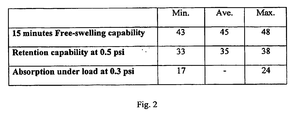
Figure 2 shows the absorption values in salt solution of the acrylic hydrogel -
Figure 3 shows the absorption tests in salt solution 0.9wg% on a cotton fabric and on a fabric made by 80% cotton and 20%; -
Figure 4 is the chemical structure of the cellulose based macromolecule; -
Figure 5 shows the scheme of the DVS molecule - Typically, super absorbent hydrogel are prepared by free radical polymerization of the acrylic acid and salts with a cross-linking agent, in water solution or in drops suspension of water solution in hydrocarbons. These two processes, namely "bulk" solution polymerization and suspension polymerization, have several features in common: the monomer and cross-linking agent concentrations, the initiator and its concentration monomers relative reactivity, the polymerization kinetics and reaction temperatures. Monomer concentration in the reactive solution affects the resulting polymer properties, the reaction kinetic and the process economy. High monomer concentrations cause an increase of the polymer gel stiffness during polymerization. Gel stiffness has an effect on the design of the production tools, on the gel particles size produced during the reacting mass stirring, and the heat removal technique. Moreover, the chain transfer reactions increase with the monomer concentration; and this happens especially at high conversion degrees, causing more "braching" and self-reticulating reactions, which influence the final product properties. Monomer concentration also influences the cross-linking agent efficiency. In fact, said cross-linking agents are water unsoluble, but soluble in organic solvents; therefore, by making a more organic solution, the increase of the monomer concentration also improves the cross-linking agent solubility. Moreover, the network cycling reactions decrease by increasing the cross-linking agent concentration, as reported by Flory. Small quantities of cross-linking agent play an important role in altering the super absorbent properties. For these substances/ material, the typically used cross-linking agents are bi- and tri-acrylate esters. The cross-linking agents influence the quantity of soluble polymer formed during polymerization and the mechanic and swelling properties as well.
- There are several techniques for preparing super absorbent. In the graft copolymerization, hydro-soluble polymers (like amid or polyvinyl alcohol), are grafted to the super absorbent to modify its properties. In suspension polymerization, on the contrary, small drops of water-monomer solution are dispersed into another phase, generally aromatic or aliphatic hydrocarbons, before polymerization. Generally, the neutralization degree is higher in the second procedure, because of the acrylic acid solubility in the hydrocarbon phase, which makes the reaction and the manipulation more difficult.
- In textile applications, it can be used either powder hydrogel, dispersed on natural or synthetic fibers, or fiber-shaped hydrogel. In particular, fibers, whose length is suitable for textile applications (40-70mm) are produced by spinning. The spinning technique makes possible the polymerization of a fiber-shaped hydrogel, by acting on both the section and the length of the single fiber.
- To manufacture the yarn, cotton has been mixed with acrylic short fiber hydrogel, varying the percentages according to the absorption properties desired.
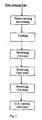
- The spinning process is schematized in
Figure 1 . The working flowchart shows 5 basic operations: - Bale opening, containing a homogeneous mix of the several fibers forming the yarn;
- opening of the tangled tufts to clean the raw material by eliminating impurities;
- creation of a fiber band, without any applied twisting. In this step, the reciprocal adherence between the fibers is enough to provide a uniform cohesion, together with a certain orientation of the fibers towards the band axis (substantially obtained by carding operation);
- band refining and normalization, together with improved fiber parallelism, obtained by following couplings and stretching, until the sliver is reached;
- the spinning itself, consisting of a further stretch and cohesion to the yam (generally, by twisting), and winding the yarn around a suitable support.
- The spinning has been carried out using a homogeneous mix of fibers in bulk, in other words, the material from each lot is opened into small elements, forming a small cloth; said cloth is made by small tufts comprising two or more components, randomly distributed but in precise ratios. After spinning, weaving follows. The absorption test confirms an absorption of salt solution by a hydrogel-containing fabric higher than a 100% cotton fabric; the washing test confirms a low hydrogel loss during washings.
- Mixed spinning technique can be carried out by using either cellulose hydrogel or acrylic one. An alternative procedure is to use the same hydrogel and bind them to the yarn surface by means of a bonding agent.
- Tests on hydrogel fibers give the following results:
- Absorption (g/g): 0.9 wg% salt solution
- In
Figure 2 , the absorption values in salt solution of the acrylic hydrogel under different measurement conditions have been reported. - The tests have been carried out with a salt solution, to best simulate the typical conditions of sweat absorption. As shown in
Figure 2 , absorption properties are also exceptional under load, typical operating condition for some cloths, socks or stockings for example. Retention property is also excellent, meaning that the sweat, once absorbed by the hydrogel-containing fabric is not released, until the fabric itself dries. - Absorption tests in salt solution 0.9wg% have been carried out on a cotton fabric and on a fabric made by 80% cotton and 20% hydrogel; the results are summarized in
Figure 3 . - As shown in Table 2, the fabric containing 20% hydrogel effectively absorbs much more than a 100% cotton fabric.
- Adding hydrogel to the yam allows producing ideal fabrics for all applications in which sweat and bad smells can cause discomfort; hydrogel-yarn absorbs sweat and in turn releases fragrance previously added to the hydrogel. Once washed and dried, this fabric is ready for reuse, keeping the same absorption properties.
- According to the described processes, it is also possible to add natural hydrogel to the yam. Natural cross-linkable polymers are derived by cellulose, like carboxyl-methyl-cellulose (CMC) hydroxyl-ethyl-cellulose (HEC) sodium salt. Once reticulated, CMC has all the features to be used as super absorbent material. First of all, such polymer is biodegradable and available on the market at reasonable price. Furthermore, thanks to the ionic group, the carboxyl-methyl group, bounded by an ether bond with the cellulose structure, CMC has all the polyelectrolyte characteristics, which are needed to develop a Donnan equilibrium with the external solution. Moreover, CMC is watersoluble, therefore has great affinity with the external solution. HEC is also derived from cellulose and is highly hydrophilic, but, unlike CMC, has not any charge group connected to the polymeric network, therefore, does not provide support the "Donnan effect", which improves the absorption. HEC is employed in many applications, even industrial ones, as for example detergent agent for hair shampoo.
- The root structure of CMC and HEC is shown in
Figure 4 . As cross-linking agent agent to produce the polymeric network, bi-vinyl- sulphonal (DVS) has been used. DVS molecular scheme is represented inFigure 5 . Double bonds CH2=CH are very reactive: once opened, they can bind both sides of the molecule to other reactive groups, like the cellulose ones, creating the polymeric network. In this case too, natural hydrogel is polymerized as short fiber, by spinning technique.
Claims (7)
- Yam having high sweat absorption, obtained by super absorbent hydrogel integration characterized in that hydrogel fibre is integrated by spinning.
- Yam according to claim 1 containing natural (cotton or wool) or polymeric fibre.
- Yarn according to claim 1 wherein the super absorbent hydrogel is acrylic.
- Yarn according to claim 1 wherein the super absorbent hydrogel is cellulose.
- Yam according to one of the claim from 1 to 4 wherein said hydrogel comprises perfumed substances, which can be released during absorption with a controlled kinetic.
- Yam as in claim 5, wherein the perfume absorption and release is a reversible and repeatable process.
- Sock or stocking characterized in that it contains the yam of claims from 1 to 6.
Applications Claiming Priority (2)
| Application Number | Priority Date | Filing Date | Title |
|---|---|---|---|
| IT000007A ITLE20050007A1 (en) | 2005-05-24 | 2005-05-24 | YARNS OF NATURAL AND SYNTHETIC ORIGIN WITH PROPERTIES OF HIGH ABSORPTION OBTAINED THROUGH THE INTRODUCTION OF SUPER-ABSORBENT HYDROGEL. |
| PCT/IT2006/000386 WO2006126233A1 (en) | 2005-05-24 | 2006-05-22 | Natural or synthetic yarns with high absorption property obtained by introduction of superabsorbent hydrogel |
Publications (2)
| Publication Number | Publication Date |
|---|---|
| EP1893795A1 EP1893795A1 (en) | 2008-03-05 |
| EP1893795B1 true EP1893795B1 (en) | 2010-08-11 |
Family
ID=36838505
Family Applications (1)
| Application Number | Title | Priority Date | Filing Date |
|---|---|---|---|
| EP06756294A Expired - Lifetime EP1893795B1 (en) | 2005-05-24 | 2006-05-22 | Natural or synthetic yarns with high absorption property obtained by introduction of superabsorbent hydrogel |
Country Status (5)
| Country | Link |
|---|---|
| EP (1) | EP1893795B1 (en) |
| AT (1) | ATE477359T1 (en) |
| DE (1) | DE602006016120D1 (en) |
| IT (1) | ITLE20050007A1 (en) |
| WO (1) | WO2006126233A1 (en) |
Families Citing this family (2)
| Publication number | Priority date | Publication date | Assignee | Title |
|---|---|---|---|---|
| US9675501B2 (en) * | 2011-12-19 | 2017-06-13 | Kimberly-Clark Worldwide, Inc. | Absorbent article including superabsorbent yarn |
| CN114351335B (en) * | 2021-12-22 | 2024-03-15 | 安丹达工业技术(上海)有限公司 | Hydrogel three-dimensional interval textile material, application thereof and mask comprising hydrogel three-dimensional interval textile material |
Family Cites Families (7)
| Publication number | Priority date | Publication date | Assignee | Title |
|---|---|---|---|---|
| JPS5598915A (en) * | 1979-01-16 | 1980-07-28 | Japan Exlan Co Ltd | Production of fiber swelling with water |
| JPS6456142A (en) * | 1987-08-24 | 1989-03-03 | Japan Exlan Co Ltd | Deodorizing sheet |
| US5596770A (en) * | 1995-11-01 | 1997-01-28 | Kunesh; J. Denise | Two-ply inflatable sock |
| JPH09158049A (en) * | 1995-12-07 | 1997-06-17 | Teijin Ltd | Anti-static sweat-absorbent anti-fouling fabric with improved washing durability |
| US6293080B1 (en) * | 1996-06-28 | 2001-09-25 | Teijin Limited | Sewing thread for leather products and leather products produced by using the same |
| JPH10273881A (en) * | 1997-03-28 | 1998-10-13 | Teijin Ltd | Antistatic, sweat-absorbing and antibacterial double woven structure |
| GB2337444B (en) * | 1998-05-23 | 2002-01-09 | H J Sock Group Ltd | Stockings and socks |
-
2005
- 2005-05-24 IT IT000007A patent/ITLE20050007A1/en unknown
-
2006
- 2006-05-22 EP EP06756294A patent/EP1893795B1/en not_active Expired - Lifetime
- 2006-05-22 DE DE602006016120T patent/DE602006016120D1/en not_active Expired - Lifetime
- 2006-05-22 AT AT06756294T patent/ATE477359T1/en not_active IP Right Cessation
- 2006-05-22 WO PCT/IT2006/000386 patent/WO2006126233A1/en not_active Ceased
Also Published As
| Publication number | Publication date |
|---|---|
| ATE477359T1 (en) | 2010-08-15 |
| EP1893795A1 (en) | 2008-03-05 |
| DE602006016120D1 (en) | 2010-09-23 |
| ITLE20050007A1 (en) | 2006-11-25 |
| WO2006126233A1 (en) | 2006-11-30 |
Similar Documents
| Publication | Publication Date | Title |
|---|---|---|
| TWI295683B (en) | Binder systems for microcapsule treatments to fibers, fabrics and garments | |
| US5166231A (en) | Resin composition having biodegradability and high absorbency, nonwoven fabric made of the same and pads comprising said fabric | |
| GB2039826A (en) | Water-swellable fibres having multiple layer structure | |
| CN105133076B (en) | It is suitble to fishing net and clothes high anti-hydrolysis acid fiber by polylactic and preparation method thereof | |
| Roberts et al. | A study of the influence of structure on the effectiveness of chitosan as an anti-felting treatment for wool | |
| CN108938091A (en) | A kind of preparation method of polypropylene non-woven fabric surgical operation towel | |
| CN103306136B (en) | Crosslinker composition, antigen fibrillation solution spin cellulose fibre and their preparation methods | |
| JPS6037202B2 (en) | water absorbent acrylic fiber | |
| CN105966022A (en) | High water locking ultrafine flexible fiber nonwoven material and preparation method thereof | |
| CN101392455B (en) | A kind of method for preparing superabsorbent fiber by modifying acrylic fiber | |
| EP1893795A1 (en) | Natural or synthetic yarns with high absorption property obtained by introduction of superabsorbent hydrogel | |
| CN103703180A (en) | Binder and process for producing fabrics containing cyclodextrins fixed by the binder | |
| CN105002588A (en) | Preparation method for imitating cotton polyester-PET/PA6 copolymer fiber | |
| CN111875742A (en) | Preparation method of hydrophilic bacterial cellulose, hydrophilic bacterial cellulose and application | |
| CN105113222A (en) | Superabsorbent fibers prepared from polyvinyl alcohol fibers and preparing method and application thereof | |
| CN113293480A (en) | Antibacterial and anti-static fabric and preparation method thereof | |
| CN112359601A (en) | Preparation method of formaldehyde-free high-count high-density pure cotton ready-to-wear shirt | |
| EP0644958A1 (en) | Fibre and film | |
| CN113529210B (en) | Lignin fiber for textile material and preparation method thereof | |
| US5210117A (en) | Resin composition having biodegradability and high absorbency, nonwoven fabric made of the same and pads comprising said fabric | |
| CN212560640U (en) | Biaxial warp-knitted fabric | |
| JPS6262174B2 (en) | ||
| CN111074665A (en) | Production process of colorful wood pulp composite cloth | |
| KR102819663B1 (en) | Antibacterial agent with moisturizing properties using collagen peptides | |
| KR910007972B1 (en) | The garment made from carboxymethylalginate fibre |
Legal Events
| Date | Code | Title | Description |
|---|---|---|---|
| PUAI | Public reference made under article 153(3) epc to a published international application that has entered the european phase |
Free format text: ORIGINAL CODE: 0009012 |
|
| 17P | Request for examination filed |
Effective date: 20071210 |
|
| AK | Designated contracting states |
Kind code of ref document: A1 Designated state(s): AT BE BG CH CY CZ DE DK EE ES FI FR GB GR HU IE IS IT LI LT LU LV MC NL PL PT RO SE SI SK TR |
|
| 17Q | First examination report despatched |
Effective date: 20080626 |
|
| DAX | Request for extension of the european patent (deleted) | ||
| GRAP | Despatch of communication of intention to grant a patent |
Free format text: ORIGINAL CODE: EPIDOSNIGR1 |
|
| GRAC | Information related to communication of intention to grant a patent modified |
Free format text: ORIGINAL CODE: EPIDOSCIGR1 |
|
| GRAS | Grant fee paid |
Free format text: ORIGINAL CODE: EPIDOSNIGR3 |
|
| GRAA | (expected) grant |
Free format text: ORIGINAL CODE: 0009210 |
|
| AK | Designated contracting states |
Kind code of ref document: B1 Designated state(s): AT BE BG CH CY CZ DE DK EE ES FI FR GB GR HU IE IS IT LI LT LU LV MC NL PL PT RO SE SI SK TR |
|
| REG | Reference to a national code |
Ref country code: GB Ref legal event code: FG4D |
|
| REG | Reference to a national code |
Ref country code: CH Ref legal event code: EP |
|
| REG | Reference to a national code |
Ref country code: IE Ref legal event code: FG4D |
|
| REF | Corresponds to: |
Ref document number: 602006016120 Country of ref document: DE Date of ref document: 20100923 Kind code of ref document: P |
|
| REG | Reference to a national code |
Ref country code: NL Ref legal event code: VDEP Effective date: 20100811 |
|
| LTIE | Lt: invalidation of european patent or patent extension |
Effective date: 20100811 |
|
| PG25 | Lapsed in a contracting state [announced via postgrant information from national office to epo] |
Ref country code: LT Free format text: LAPSE BECAUSE OF FAILURE TO SUBMIT A TRANSLATION OF THE DESCRIPTION OR TO PAY THE FEE WITHIN THE PRESCRIBED TIME-LIMIT Effective date: 20100811 Ref country code: NL Free format text: LAPSE BECAUSE OF FAILURE TO SUBMIT A TRANSLATION OF THE DESCRIPTION OR TO PAY THE FEE WITHIN THE PRESCRIBED TIME-LIMIT Effective date: 20100811 Ref country code: FI Free format text: LAPSE BECAUSE OF FAILURE TO SUBMIT A TRANSLATION OF THE DESCRIPTION OR TO PAY THE FEE WITHIN THE PRESCRIBED TIME-LIMIT Effective date: 20100811 Ref country code: AT Free format text: LAPSE BECAUSE OF FAILURE TO SUBMIT A TRANSLATION OF THE DESCRIPTION OR TO PAY THE FEE WITHIN THE PRESCRIBED TIME-LIMIT Effective date: 20100811 |
|
| PG25 | Lapsed in a contracting state [announced via postgrant information from national office to epo] |
Ref country code: SI Free format text: LAPSE BECAUSE OF FAILURE TO SUBMIT A TRANSLATION OF THE DESCRIPTION OR TO PAY THE FEE WITHIN THE PRESCRIBED TIME-LIMIT Effective date: 20100811 Ref country code: PT Free format text: LAPSE BECAUSE OF FAILURE TO SUBMIT A TRANSLATION OF THE DESCRIPTION OR TO PAY THE FEE WITHIN THE PRESCRIBED TIME-LIMIT Effective date: 20101213 Ref country code: BG Free format text: LAPSE BECAUSE OF FAILURE TO SUBMIT A TRANSLATION OF THE DESCRIPTION OR TO PAY THE FEE WITHIN THE PRESCRIBED TIME-LIMIT Effective date: 20101111 Ref country code: IS Free format text: LAPSE BECAUSE OF FAILURE TO SUBMIT A TRANSLATION OF THE DESCRIPTION OR TO PAY THE FEE WITHIN THE PRESCRIBED TIME-LIMIT Effective date: 20101211 Ref country code: PL Free format text: LAPSE BECAUSE OF FAILURE TO SUBMIT A TRANSLATION OF THE DESCRIPTION OR TO PAY THE FEE WITHIN THE PRESCRIBED TIME-LIMIT Effective date: 20100811 Ref country code: CY Free format text: LAPSE BECAUSE OF FAILURE TO SUBMIT A TRANSLATION OF THE DESCRIPTION OR TO PAY THE FEE WITHIN THE PRESCRIBED TIME-LIMIT Effective date: 20100811 |
|
| PG25 | Lapsed in a contracting state [announced via postgrant information from national office to epo] |
Ref country code: SE Free format text: LAPSE BECAUSE OF FAILURE TO SUBMIT A TRANSLATION OF THE DESCRIPTION OR TO PAY THE FEE WITHIN THE PRESCRIBED TIME-LIMIT Effective date: 20100811 Ref country code: GR Free format text: LAPSE BECAUSE OF FAILURE TO SUBMIT A TRANSLATION OF THE DESCRIPTION OR TO PAY THE FEE WITHIN THE PRESCRIBED TIME-LIMIT Effective date: 20101112 Ref country code: LV Free format text: LAPSE BECAUSE OF FAILURE TO SUBMIT A TRANSLATION OF THE DESCRIPTION OR TO PAY THE FEE WITHIN THE PRESCRIBED TIME-LIMIT Effective date: 20100811 Ref country code: BE Free format text: LAPSE BECAUSE OF FAILURE TO SUBMIT A TRANSLATION OF THE DESCRIPTION OR TO PAY THE FEE WITHIN THE PRESCRIBED TIME-LIMIT Effective date: 20100811 |
|
| PG25 | Lapsed in a contracting state [announced via postgrant information from national office to epo] |
Ref country code: DK Free format text: LAPSE BECAUSE OF FAILURE TO SUBMIT A TRANSLATION OF THE DESCRIPTION OR TO PAY THE FEE WITHIN THE PRESCRIBED TIME-LIMIT Effective date: 20100811 |
|
| PG25 | Lapsed in a contracting state [announced via postgrant information from national office to epo] |
Ref country code: CZ Free format text: LAPSE BECAUSE OF FAILURE TO SUBMIT A TRANSLATION OF THE DESCRIPTION OR TO PAY THE FEE WITHIN THE PRESCRIBED TIME-LIMIT Effective date: 20100811 Ref country code: EE Free format text: LAPSE BECAUSE OF FAILURE TO SUBMIT A TRANSLATION OF THE DESCRIPTION OR TO PAY THE FEE WITHIN THE PRESCRIBED TIME-LIMIT Effective date: 20100811 Ref country code: SK Free format text: LAPSE BECAUSE OF FAILURE TO SUBMIT A TRANSLATION OF THE DESCRIPTION OR TO PAY THE FEE WITHIN THE PRESCRIBED TIME-LIMIT Effective date: 20100811 Ref country code: RO Free format text: LAPSE BECAUSE OF FAILURE TO SUBMIT A TRANSLATION OF THE DESCRIPTION OR TO PAY THE FEE WITHIN THE PRESCRIBED TIME-LIMIT Effective date: 20100811 |
|
| PLBE | No opposition filed within time limit |
Free format text: ORIGINAL CODE: 0009261 |
|
| STAA | Information on the status of an ep patent application or granted ep patent |
Free format text: STATUS: NO OPPOSITION FILED WITHIN TIME LIMIT |
|
| PG25 | Lapsed in a contracting state [announced via postgrant information from national office to epo] |
Ref country code: ES Free format text: LAPSE BECAUSE OF FAILURE TO SUBMIT A TRANSLATION OF THE DESCRIPTION OR TO PAY THE FEE WITHIN THE PRESCRIBED TIME-LIMIT Effective date: 20101122 |
|
| 26N | No opposition filed |
Effective date: 20110512 |
|
| PGFP | Annual fee paid to national office [announced via postgrant information from national office to epo] |
Ref country code: MC Payment date: 20110531 Year of fee payment: 6 Ref country code: LU Payment date: 20110606 Year of fee payment: 6 Ref country code: FR Payment date: 20110614 Year of fee payment: 6 Ref country code: CH Payment date: 20110601 Year of fee payment: 6 |
|
| PGFP | Annual fee paid to national office [announced via postgrant information from national office to epo] |
Ref country code: GB Payment date: 20110607 Year of fee payment: 6 |
|
| REG | Reference to a national code |
Ref country code: DE Ref legal event code: R097 Ref document number: 602006016120 Country of ref document: DE Effective date: 20110512 |
|
| PGFP | Annual fee paid to national office [announced via postgrant information from national office to epo] |
Ref country code: DE Payment date: 20110531 Year of fee payment: 6 Ref country code: IT Payment date: 20110527 Year of fee payment: 6 |
|
| REG | Reference to a national code |
Ref country code: IE Ref legal event code: MM4A |
|
| PG25 | Lapsed in a contracting state [announced via postgrant information from national office to epo] |
Ref country code: IE Free format text: LAPSE BECAUSE OF NON-PAYMENT OF DUE FEES Effective date: 20110522 |
|
| PG25 | Lapsed in a contracting state [announced via postgrant information from national office to epo] |
Ref country code: MC Free format text: LAPSE BECAUSE OF NON-PAYMENT OF DUE FEES Effective date: 20120531 |
|
| REG | Reference to a national code |
Ref country code: CH Ref legal event code: PL |
|
| GBPC | Gb: european patent ceased through non-payment of renewal fee |
Effective date: 20120522 |
|
| PG25 | Lapsed in a contracting state [announced via postgrant information from national office to epo] |
Ref country code: CH Free format text: LAPSE BECAUSE OF NON-PAYMENT OF DUE FEES Effective date: 20120531 Ref country code: LI Free format text: LAPSE BECAUSE OF NON-PAYMENT OF DUE FEES Effective date: 20120531 |
|
| PG25 | Lapsed in a contracting state [announced via postgrant information from national office to epo] |
Ref country code: IT Free format text: LAPSE BECAUSE OF NON-PAYMENT OF DUE FEES Effective date: 20120522 |
|
| REG | Reference to a national code |
Ref country code: FR Ref legal event code: ST Effective date: 20130131 |
|
| REG | Reference to a national code |
Ref country code: DE Ref legal event code: R119 Ref document number: 602006016120 Country of ref document: DE Effective date: 20121201 |
|
| PG25 | Lapsed in a contracting state [announced via postgrant information from national office to epo] |
Ref country code: FR Free format text: LAPSE BECAUSE OF NON-PAYMENT OF DUE FEES Effective date: 20120531 Ref country code: GB Free format text: LAPSE BECAUSE OF NON-PAYMENT OF DUE FEES Effective date: 20120522 |
|
| PG25 | Lapsed in a contracting state [announced via postgrant information from national office to epo] |
Ref country code: DE Free format text: LAPSE BECAUSE OF NON-PAYMENT OF DUE FEES Effective date: 20121201 |
|
| PG25 | Lapsed in a contracting state [announced via postgrant information from national office to epo] |
Ref country code: TR Free format text: LAPSE BECAUSE OF FAILURE TO SUBMIT A TRANSLATION OF THE DESCRIPTION OR TO PAY THE FEE WITHIN THE PRESCRIBED TIME-LIMIT Effective date: 20100811 |
|
| PG25 | Lapsed in a contracting state [announced via postgrant information from national office to epo] |
Ref country code: HU Free format text: LAPSE BECAUSE OF FAILURE TO SUBMIT A TRANSLATION OF THE DESCRIPTION OR TO PAY THE FEE WITHIN THE PRESCRIBED TIME-LIMIT Effective date: 20100811 |
|
| PG25 | Lapsed in a contracting state [announced via postgrant information from national office to epo] |
Ref country code: LU Free format text: LAPSE BECAUSE OF NON-PAYMENT OF DUE FEES Effective date: 20120522 |