EP1893654B1 - Preparation of soluble and colloidal molecularly imprinted polymers by living polymerization - Google Patents
Preparation of soluble and colloidal molecularly imprinted polymers by living polymerization Download PDFInfo
- Publication number
- EP1893654B1 EP1893654B1 EP06744047A EP06744047A EP1893654B1 EP 1893654 B1 EP1893654 B1 EP 1893654B1 EP 06744047 A EP06744047 A EP 06744047A EP 06744047 A EP06744047 A EP 06744047A EP 1893654 B1 EP1893654 B1 EP 1893654B1
- Authority
- EP
- European Patent Office
- Prior art keywords
- polymer
- template
- polymerisation
- process according
- living
- Prior art date
- Legal status (The legal status is an assumption and is not a legal conclusion. Google has not performed a legal analysis and makes no representation as to the accuracy of the status listed.)
- Active
Links
Images

Classifications
-
- C—CHEMISTRY; METALLURGY
- C08—ORGANIC MACROMOLECULAR COMPOUNDS; THEIR PREPARATION OR CHEMICAL WORKING-UP; COMPOSITIONS BASED THEREON
- C08F—MACROMOLECULAR COMPOUNDS OBTAINED BY REACTIONS ONLY INVOLVING CARBON-TO-CARBON UNSATURATED BONDS
- C08F293/00—Macromolecular compounds obtained by polymerisation on to a macromolecule having groups capable of inducing the formation of new polymer chains bound exclusively at one or both ends of the starting macromolecule
- C08F293/005—Macromolecular compounds obtained by polymerisation on to a macromolecule having groups capable of inducing the formation of new polymer chains bound exclusively at one or both ends of the starting macromolecule using free radical "living" or "controlled" polymerisation, e.g. using a complexing agent
-
- B—PERFORMING OPERATIONS; TRANSPORTING
- B01—PHYSICAL OR CHEMICAL PROCESSES OR APPARATUS IN GENERAL
- B01J—CHEMICAL OR PHYSICAL PROCESSES, e.g. CATALYSIS OR COLLOID CHEMISTRY; THEIR RELEVANT APPARATUS
- B01J20/00—Solid sorbent compositions or filter aid compositions; Sorbents for chromatography; Processes for preparing, regenerating or reactivating thereof
- B01J20/22—Solid sorbent compositions or filter aid compositions; Sorbents for chromatography; Processes for preparing, regenerating or reactivating thereof comprising organic material
- B01J20/26—Synthetic macromolecular compounds
-
- B—PERFORMING OPERATIONS; TRANSPORTING
- B01—PHYSICAL OR CHEMICAL PROCESSES OR APPARATUS IN GENERAL
- B01J—CHEMICAL OR PHYSICAL PROCESSES, e.g. CATALYSIS OR COLLOID CHEMISTRY; THEIR RELEVANT APPARATUS
- B01J20/00—Solid sorbent compositions or filter aid compositions; Sorbents for chromatography; Processes for preparing, regenerating or reactivating thereof
- B01J20/22—Solid sorbent compositions or filter aid compositions; Sorbents for chromatography; Processes for preparing, regenerating or reactivating thereof comprising organic material
- B01J20/26—Synthetic macromolecular compounds
- B01J20/268—Polymers created by use of a template, e.g. molecularly imprinted polymers
-
- C—CHEMISTRY; METALLURGY
- C08—ORGANIC MACROMOLECULAR COMPOUNDS; THEIR PREPARATION OR CHEMICAL WORKING-UP; COMPOSITIONS BASED THEREON
- C08F—MACROMOLECULAR COMPOUNDS OBTAINED BY REACTIONS ONLY INVOLVING CARBON-TO-CARBON UNSATURATED BONDS
- C08F2/00—Processes of polymerisation
- C08F2/38—Polymerisation using regulators, e.g. chain terminating agents, e.g. telomerisation
-
- C—CHEMISTRY; METALLURGY
- C08—ORGANIC MACROMOLECULAR COMPOUNDS; THEIR PREPARATION OR CHEMICAL WORKING-UP; COMPOSITIONS BASED THEREON
- C08F—MACROMOLECULAR COMPOUNDS OBTAINED BY REACTIONS ONLY INVOLVING CARBON-TO-CARBON UNSATURATED BONDS
- C08F4/00—Polymerisation catalysts
-
- C—CHEMISTRY; METALLURGY
- C08—ORGANIC MACROMOLECULAR COMPOUNDS; THEIR PREPARATION OR CHEMICAL WORKING-UP; COMPOSITIONS BASED THEREON
- C08F—MACROMOLECULAR COMPOUNDS OBTAINED BY REACTIONS ONLY INVOLVING CARBON-TO-CARBON UNSATURATED BONDS
- C08F2438/00—Living radical polymerisation
- C08F2438/03—Use of a di- or tri-thiocarbonylthio compound, e.g. di- or tri-thioester, di- or tri-thiocarbamate, or a xanthate as chain transfer agent, e.g . Reversible Addition Fragmentation chain Transfer [RAFT] or Macromolecular Design via Interchange of Xanthates [MADIX]
Definitions
- the present invention relates to the field of organic synthesis and polymer chemistry, and particularly to the area concerned with the methodology for the preparation of organic molecules by template-directed synthesis and template polymerization.
- template-directed synthesis includes the formation of a new substance by chemical modification of a substrate, or by the coupling of two or more molecules in the presence of a template which serves as a pattern for new structure formation.
- the most well-known example of this process is gene transcription.
- a particular example of template-directed synthesis is template polymerization, where formation of polymeric receptor (replica) proceeds in the presence of another polymer or small molecular weight organic substance-template.
- the monomers Prior to the initiation of polymerization, and during polymerization, the monomers spatially distribute themselves (self-assembling process) around the template molecules in accordance with the size, polarity and functionality of the template. The monomers are polymerized into either linear chains or rigid three-dimensional networks.
- template polymerization is molecular imprinting, based on polymerization of vinyl or acrylic monomers in the presence of template (see ref. 1, 2).
- the traditional approach involves the production of highly cross-linked imprinted polymers, which are insoluble in water and organic solvents. Because of their inherent insolubility, the possibility to use molecularly imprinted polymers (MIPs) in pharmacology and medicine is restricted.
- MIPs molecularly imprinted polymers
- MIP molecules were synthesized by a polycondensation of amino acids and nucleotides around a biological receptor, enzyme, nucleic acid, cell, virus, micro organism, tissue sample or drug (see USA patent 6852818 ).
- different methods were used to produce oligomeric and polymeric MIPs (see USA patent 6127154 )
- Most of the examples in the prior art describe preparation of high-molecular weight cross-linked polymers which require hydrolysis for delivering soluble or colloidal particles stable in solution.
- researchers used specially designed compounds containing photoactive perfluorophenylazido groups capable of coupling upon illumination. In this case oligomers could be synthesised as soluble particles.
- the living free-radical polymerization techniques such as iniferter polymerization, nitroxide-mediated radical polymerization, atom-transfer radical polymerization (ATRP) and reversible addition-fragmentation chain-transfer (RAFT) polymerization, open new routes for the synthesis of polymers with controlled relatively low-molecular weights (see ref. 3-9).
- Controlled/living polymerization techniques are based on a delicate balance between dormant and active species that effectively reduces the concentration of free radicals in the system and minimizes the extent of termination. Living polymerization could be free of side reactions such as termination and chain transfer and thus can generate polymers with well defined molecular weight distribution and structure. The same approach can be applied to copolymers, thus making it possible to produce block copolymers by free radical polymerisation by proper sequencing of the monomer additions.
- Living polymerization has been used previously in producing bulk grafted MIPs (see ref. 10, 11).
- the soluble polymers were also produced by living polymerization and used later in MIP production (see ref. 12). However, no one so far has developed soluble MIPs by living polymerization.
- the present invention describes the application of living polymerization for producing soluble or colloidal MIP particles.
- the invention provides a process for the preparation of a solution or colloidal suspension of a polymer.
- a synthesis step comprising template-directed living polymerisation of functional monomers performed in the presence of a template, preferably a molecular template, thereby producing a complementary polymer at least a part of which is complementary to at least a part of the template, the step including terminating the living polymerisation when complementary polymer particles suitable for preparation of the solution or colloidal suspension have formed.
- a separation step using a chromatography medium having template immobilised on it to perform affinity chromatography on the product of the synthesis step, to isolate a complementary polymer fraction having a specific affinity to the template.
- the process may includes a step of modifying the complementary polymer particles to produce derived polymer particles, at least a part of which is complementary to at least a part of the template, for preparation of the solution or colloidal suspension.
- the living polymerisation technique is preferably selected from iniferter polymerisation, stable free radical-mediated polymerisation, atom transfer radical polymerisation (ATRP), and reversible addition-fragmentation chain transfer (RAFT) polymerisation, and is preferably a nitroxide-mediated radical polymerisation.
- the iniferter is preferably selected from: photo iniferters bearing a dithiocarbamyl group; and thermal iniferters bearing an azo group.
- the process may include the steps of: separating from the polymerisation system a complex comprising the template and complementary polymer; and subsequent removal of the template.
- this separation of the template from the polymer is by means of one or more of: change in pH of the solution; change in the ionic strength of the solution; and adding urea, guanidine, or a substance which interacts with the template stronger than does the polymer.
- the removal of the template may employ one or more of filtration, electrophoresis, chromatographic separation, washing, centrifugation, and dialysis.
- the living polymerisation process may include the steps of:
- the process may further comprise the step of cross-linking the functional monomers.
- the present invention provides the use of polymer prepared according to the process of the present invention as a receptor-specific ligand in analytical chemistry, or for use in performing separations in biotechnology, or the pharmaceutical or food industries, contrasting agent, catalyst, or sensor element.
- the polymer prepared according to the invention may also be usable as a drug.
- the present invention includes the use of a solution or colloidal suspension prepared according to the process of the invention to attach the polymer to a surface, comprising the steps of: contacting the solution or colloidal suspension of a polymer with a surface; and restarting the living polymerisation to effect reaction between the polymer and the surface.
- the present invention also includes products having a surface with an attached polymer, the polymer being attached to the surface in this manner, and their use as a receptor-specific ligand in analytical chemistry, or for use in performing separations in biotechnology, or the pharmaceutical or food industries. Such products may also be usable as drugs.
- a method for the synthesis of a wide variety of biologically active molecules is disclosed.
- the MIPs are produced in the presence of a template using living polymerization techniques.
- the polymerization reaction is terminated at early stage when the size of synthesized molecules is relatively small.
- the product of such a process could exist in soluble or colloidal form stable in solution. This is of course distinctive from a gelled form that would normally arise from allowing the polymerisation to run its full course.
- the colloidal suspensions or solutions of MIPs prepared according to this invention may be in either aqueous or organic liquids.
- the synthesized molecules have a structure complementary to that of the original template and have the ability to bind it with reasonably high affinity.
- These synthetic molecules (polymers and oligomers) have predetermined affinities and specificities, superior activity to randomly synthesized polymers and can be prepared much more easily than specifically designed discrete organic structures.
- Molecules synthesized as described in this invention can be used as drugs in pharmacology and medicine, as receptor-specific ligands in analytical chemistry (sensors, assays), and for separation in the biotechnology, pharmaceutical and food industries. Previous efforts in drug design have typically been based upon the cumbersome investigation of structure-activity relationships of large numbers of chemical structures.
- the present invention describes a simpler and direct method - living imprinting polymerization to design a biologically-active substance, which should be of great benefit (in comparison with traditional drug design and discovery methods) as well as useful ligands for affinity separation, sensors and catalysis.
- the present invention describes the formation of soluble MIPs, prepared in the presence of templates which may be small or large molecules such as receptors, enzymes or nucleic acids.
- templates which may be small or large molecules such as receptors, enzymes or nucleic acids.
- polymers prepared in this way resemble effectors (activator, inhibitor or substrate) of the template, and can have biological activity.
- Such polymers can be used, for example, as drugs in pharmacology and medicine.
- the present invention relates to the synthesis of biologically-active molecules by living radical polymerization (LRP) or living anionic or cationic polymerizations in the presence of a template which can be a biological receptor, nucleic acid, cell, virus, microorganism, tissue sample, carbohydrate, oligosaccharide, polysaccharide, nucleoprotein, mucoprotein, lipoprotein, synthetic protein, glycoprotein, glucosaminoglycan, steroid, immunosuppressant, hormone, heparin, antibiotic, vitamin, or drug.
- a template soluble in an appropriate organic solvent or water is mixed together with functional monomers, one of which can be a cross-linker, and a living initiator.
- Polymerization can be initiated by heating, or preferably by UV irradiation and normally takes minutes or hours depending on the reactivity of the species.
- controlled/"living" polymerisations are covered by the present invention. They all are based on reversible transformations by thermal, chemical, or photochemical stimuli of dormant species into reactive free-radicals or ions acting as chain propagators. For this the equilibrium constant of the reactions is shifted in favour of the dormant species and should allow a fast exchange between the dormant species and the free radicals. Thus the concentrations of radicals will be very low and their residence time very short, which reduces the probability of side reactions that lead to the termination of the growing polymer chain.
- Examples of living polymerization include nitroxide-mediated polymerisation (NMP), atom-transfer radical polymerisation (ATRP) and reversible addition-fragmentation chain-transfer polymerisation (RAFT).
- NMP nitroxide-mediated polymerisation
- ATRP atom-transfer radical polymerisation
- RAFT reversible addition-fragmentation chain-transfer polymerisation
- NMP for example, a very fast coupling reaction of nitroxide radicals with polymer chain-end radicals is combined with a slow, thermally driven fragmentation of the temporarily capped living polymer to regenerate the nitroxide and the polymer radical P* (see e.g., Figure 1 ).
- the RAFT polymerisation is based on reversible addition-fragmentation chain transfer equilibrium, where there is an exchange between active and dormant species.
- the generated radicals start to grow and when a molecule, acting as a chain transfer agent, is encountered, they add to it in a revers
- iniferters initiator transfer-agent terminator
- iniferters can be photo-iniferters bearing a dithiocarbamyl group or thermal-iniferters carrying carbon-carbon or azo groups (see e.g., ref. 13).
- the preferred kind of iniferters are those that yield different radicals, one carbon radical which is reactive and another one less reactive or non reactive, which is, e.g., a dithiocarbamyl radical.
- the carbon radical which is usually a benzyl radical, can react with a vinyl monomer to initiate the polymerisation.
- the dithiocarbamyl radical is one that can terminate the polymerisation by recombining with a growing polymer chain (see e.g., ref. 14).
- living polymerization in contrast to traditional radical polymerization is that the former proceeds with a low rate and with no observable autoacceleration, while the latter frequently proceeds with a strong autoacceleration (see e.g., ref. 15).
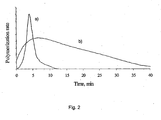
- the typical polymerization rate profiles for free radical polymerization which proceeds through normal and living mechanisms are presented in Figure 2 . It is clear that it is much easier to control living polymerization than normal free radical polymerization in bulk.
- the present invention takes advantage of this by performing living polymerization in conditions which favour formation of polymers with relatively low-molecular weight. Typically the reaction is stopped at an early stage producing polymers with molecular weight 500-1,000,000 Da.
- the present invention can employ optimization of the conditions of the reaction in order to generate particles with relatively small size.
- An important part of the process is selection of an appropriate living initiator and optimization of the conditions of the polymerization reaction.
- a popular example of LRP involves nitroxide-mediated living free radical polymerization of olefins.
- Another example includes systems of CuCl/bpy and benzenesulfonyl chloride.
- Living radical polymerisation initiators can be prepared from discrete organic molecules or from macromolecules. In reality, most compounds that contain a hydroxyl, carboxylic or amino groups can be converted into an initiator, and thus incorporated easily into the polymer. This can either be at the terminus of the polymer in the case of a mono-functional initiator, or in the middle of the polymer in the case of a multi-functional initiator.
- the reaction conditions favouring formation of relatively low-molecular weight polymers include, but are not limited to: (i) using stoichiometric ratio between initiator and monomers; (ii) cooling the reaction or stopping UV or other irradiation, which will terminate the radical formation at early stage of the reaction; (iii) removal of the monomers from contact with the growing polymer chain e.g., by filtration or chromatography; (iv) adding inhibitors to the reaction; (v) performing polymerization in very dilute solution. The preferable option would be stopping irradiation.
- MIP particles can be formed with the size 500-1000000 Da which could exist in soluble or at least colloidal forms.
- Monomers which can be used for MIP preparation include: vinyl monomers, allyl monomers, acetylenes, acrylates, methacrylates, derivatives of amino acids, nucleosides, nucleotides, and carbohydrates.
- Cross-linking monomers can also be used if it is necessary to fix or stabilize the structure of the resulting replica molecule, so that it remains complementary to that of the template.
- Typical examples of cross-linkers suitable for MIPs include ethylene glycol dimethacrylate, methylene bisacrylamide, and N,N'-bisacryloylpiperazine.
- Those skilled in the art could select monomers and cross-linkers suitable for a particular system. Alternatively a variety of combinatorial and computational methods could be used to assist in this selection.
- Particles synthesized by living polymerization may be separated by chromatography, filtration and electrophoresis.
- the invention makes use of affinity chromatography, with immobilized template used for the purification of polymer fraction with the highest affinity to the template. Use may be made of change in solution pH, in ionic strength, or the addition of urea, guanidine, or substances which interact with the template more strongly than does the polymer, by filtration, electrophoresis, chromatographic separation, washing, centrifugation or dialysis.
- the affinity chromatography is a powerful tool because it allows preparation of MIPs with narrow distribution of affinities to the template. This is currently impossible to achieve with traditional MIPs.
- Alternatively growing polymer chains can be modified with another polymer or functional group with the intention of introducing a specific property to the MIPs which would facilitate its extraction or other form of separation.
- An example of this again could be a polymer with a hydrophobic tail which would allow, e.g., extraction of the polymer from aqueous solution by organic solvent.
- a specific binding group e.g., biotin, which would allow selective removal of the polymer by affinity adsorbent.
- the present invention relates to sequential polymerization when the imprinted polymer is modified with other types of molecules in order to change properties or functions of synthesized molecules.
- the growing polymer chain can be modified with another polymer or functional group to facilitate its separation.
- One important property of living polymerization is the ability to stop a reaction and continue it later by simply stopping e.g., UV irradiation of the reaction mixture.
- the end of the growing polymer chain contains initiator which can be activated again to initiate a new round of polymerization.
- the new monomer could introduce a new functionality into the polymer.
- an extended polymer could have affinity to the second template introduced into the system.
- the extended block polymer could have fluorescent tags attached to end groups which would be useful in diagnostics.
- synthesized molecules includes uses as drugs in pharmacology and medicine, as receptor-specific ligands in analytical chemistry (sensors, assays), for separation in biotechnology, pharmacology and food industry.
- the soluble nature of synthesized polymers makes them ideal targets for use as drugs.
- the selective binding to the enzyme, receptor or other biological molecule could be used to affect biological functions of these molecules.
- the MIPs synthesized by living polymerization could be used in vivo for modulation of biological processes.
- MIPs could be used as selective contrasting agents or in other forms of diagnostics.
- MIPs integrated with ligands capable of producing in certain conditions e.g., single molecular oxygen could be used as selective biocide agents.
- a variety of other modifications could be proposed by those skilled in art to introduce antibiotic properties into MIPs prepared by living polymerization.
- the synthesized MIPs could be used as a substitute for natural antibodies and receptors in different forms of assays and sensors.
- Several features make MIPs prepared by living polymerization particularly attractive objects for the application in sensors.
- synthesized MIP molecules still contain initiator which can be used to covalently attach polymers to the solid surfaces.
- simple UV irradiation might be sufficient to bind MIPs to surfaces covered with double bonds.
- UVAPRINT 100 CVI UV source with 0.163 W/cm 2 intensity, Dr. Hönle UV radiation
- the resulting soluble polymer molecules were separated by gel permeation chromatography (GPC) using ToyoPearl HW55S adsorbent packed into a Buchi B-685 230 ⁇ 15 mm column. A mixture of acetonitrile/water 90/10 % was used as eluent, and supplied at a flow rate of 0.6 ml/min by HPLC pump (Hewlett Packard Series 1050). The column was loaded with the reaction mixture and fractions were collected every 5 min. Control (Blank) polymer was prepared the same way, but in the absence of template. The total weight of synthesized polymer was 0.034g (yield ⁇ 3%). Approximately the same yield was achieved also for Blank polymer.
- the molecular weight of fractions were determined using Agilent 1100 series HPLC equipped with size exclusion column (Phenomenex BioSep S 2000) calibrated with Phenomenex medium molecular weight polystyrene standards (range 13-104 kDa).
- the mobile phase used was THF at a flow rate 0.7 ml/min. Injection volume was 40 ⁇ l. Absorbance was measured at 256 nm for polystyrene and 230 nm for MIP particles.
- the fractions of synthesized polymer had average molecular weight:
- Example 2 Affinity separation of synthesized polymer.
- the polymer with immobilized template analogue was prepared by mixing 5 g DMF, 5 g EGDMA, 0.30 g 2,4-diamino-6-(methacryloyloxy)ethyl-1,3,5-triazine and 0.1 g 1,1'-Azobis(cyclohexanecarbonitrile).
- the 2,4-diamino-6-(methacryloyloxy)ethyl-1,3,5-triazine is a template analogue containing polymerizable double bonds. This mixture was purged with nitrogen and polymerized by UV (UVAPRINT 100 CVI UV source with 0.163 W/cm 2 intensity, Dr. Hönle) for 20 min.
- the resulting affinity polymer was ground and wet sieved in methanol. Particles with size 25-106 ⁇ m were collected and washed for 48 hours in a Soxhlet-extractor with methanol and packed into a Buchi B-685 230x15 mm column.
- the purified fractions of synthesized MIP were loaded on affinity column prepared as describe in Example 2a) and eluted with acetonitrile at a flow rate of 2 ml/min supplied by HPLC pump (Hewlett-Packard Series 1050). After 10 min the eluent was changed to solution of 0.05 % acetic acid in acetonitrile to elute the high affinity polymer.
- the MIP polymer was purified from the acetic acid and any residual template by additional separation by GPC as described in Example 1. Both MIP and Blank polymers were treated in the same way.
- Polymerization mixture was prepared as described in section Example 1 in the absence of template. The aliquots of monomer mixture were collected after 0, 20, 60, 90, 150 and 170 s of UV irradiation, diluted 200 times in THF and analyzed by GPC as described in Example 1. The results in Table 2 described the yield of predominant fraction (3-100 kDa). Table 2. The dependence of yield of the polymer on different irradiation time. Polymerization time, s Polymer concentration, mg/ml 0 0 20 0 60 0.13 90 0.37 150 0.38 170 0.46
Landscapes
- Chemical & Material Sciences (AREA)
- Chemical Kinetics & Catalysis (AREA)
- Organic Chemistry (AREA)
- Polymers & Plastics (AREA)
- Health & Medical Sciences (AREA)
- Medicinal Chemistry (AREA)
- Analytical Chemistry (AREA)
- Engineering & Computer Science (AREA)
- Materials Engineering (AREA)
- Addition Polymer Or Copolymer, Post-Treatments, Or Chemical Modifications (AREA)
- Colloid Chemistry (AREA)
- Polymerisation Methods In General (AREA)
- Polymerization Catalysts (AREA)
- Macromonomer-Based Addition Polymer (AREA)
Abstract
Description
- The present invention relates to the field of organic synthesis and polymer chemistry, and particularly to the area concerned with the methodology for the preparation of organic molecules by template-directed synthesis and template polymerization.
- The term "template-directed synthesis" includes the formation of a new substance by chemical modification of a substrate, or by the coupling of two or more molecules in the presence of a template which serves as a pattern for new structure formation. The most well-known example of this process is gene transcription. A particular example of template-directed synthesis is template polymerization, where formation of polymeric receptor (replica) proceeds in the presence of another polymer or small molecular weight organic substance-template. Prior to the initiation of polymerization, and during polymerization, the monomers spatially distribute themselves (self-assembling process) around the template molecules in accordance with the size, polarity and functionality of the template. The monomers are polymerized into either linear chains or rigid three-dimensional networks.
- The specific example of template polymerization is molecular imprinting, based on polymerization of vinyl or acrylic monomers in the presence of template (see ref. 1, 2). The traditional approach involves the production of highly cross-linked imprinted polymers, which are insoluble in water and organic solvents. Because of their inherent insolubility, the possibility to use molecularly imprinted polymers (MIPs) in pharmacology and medicine is restricted.
- Recently, several attempts have been made in order to develop protocols for the preparation of imprinted polymers with relatively low-molecular weights which could exist in soluble or at least colloidal forms. This format will allow polymers to be used as biologically active molecules (drugs, effectors, modulators, inhibitors) in pharmacology and medicine and as truly "plastic antibodies" in sensors and in affinity separation.
- In one such example, MIP molecules were synthesized by a polycondensation of amino acids and nucleotides around a biological receptor, enzyme, nucleic acid, cell, virus, micro organism, tissue sample or drug (see
USA patent 6852818 ). In another example, different methods were used to produce oligomeric and polymeric MIPs (seeUSA patent 6127154 ) Most of the examples in the prior art describe preparation of high-molecular weight cross-linked polymers which require hydrolysis for delivering soluble or colloidal particles stable in solution. In one such example (seeUS 6127154 ) researchers used specially designed compounds containing photoactive perfluorophenylazido groups capable of coupling upon illumination. In this case oligomers could be synthesised as soluble particles. In all of these cases, synthesized compounds have fractions with poorly controlled size and properties. Other approaches for synthesis of MIPs with biological activity are described inWO 96/40822 USA patent 5630978 , where biologically-active molecules were prepared in the presence of template-imprinted polymer, which in turn were prepared in the presence of another template, normally a drug such as heparin. The resulting replica resembles the structure of the original drug molecule. It can hardly be expected that the activity of molecules synthesized in this way can be more pronounced than that of original template. - The living free-radical polymerization techniques, such as iniferter polymerization, nitroxide-mediated radical polymerization, atom-transfer radical polymerization (ATRP) and reversible addition-fragmentation chain-transfer (RAFT) polymerization, open new routes for the synthesis of polymers with controlled relatively low-molecular weights (see ref. 3-9). Controlled/living polymerization techniques are based on a delicate balance between dormant and active species that effectively reduces the concentration of free radicals in the system and minimizes the extent of termination. Living polymerization could be free of side reactions such as termination and chain transfer and thus can generate polymers with well defined molecular weight distribution and structure. The same approach can be applied to copolymers, thus making it possible to produce block copolymers by free radical polymerisation by proper sequencing of the monomer additions.
- Living polymerization has been used previously in producing bulk grafted MIPs (see ref. 10, 11). The soluble polymers were also produced by living polymerization and used later in MIP production (see ref. 12). However, no one so far has developed soluble MIPs by living polymerization.
- Background material can be found in the following references.
- 1. Wulff, G. Makromol. Chem. Macromol. Symp., 1993, 70/71, 285.
- 2. Vlatakis, G.; et al. Nature, 1993, 361, 645.
- 3. Moad, G.; Rizzardo E.; Solomon, D.H. Macromolecules 1982, 15, 909;
- 4. Matyjaszewski, K.; Xia, J. Chem. Rev. 2001, 101, 2921.
- 5. Kamigaito, M.; Ando, T.; Sawamoto, M. Chem. Rev. 2001, 101, 3689.
- 6. Hawker, C. J.; Bosman, A. W.; Harth, E. Chem. Rev. 2001, 101, 3661.
- 7. Fischer, H. Chem. Rev. 2001, 101, 3581.
- 8. Otsu, T.; Matsumoto, A. Adv. Polym. Sci. 1998, 136, 75-137.
- 9. Moad, G.; et al. Polym. lnt. 2000, 49, 993-1001.
- 10. Ruckert, B.; Hall, A. J.; Sellergren B. J. Mater. Sci. 2002, 12, 2275.
- 11. Hattori, K.; et al. J. Membr. Sci. 2004, 233,169.
- 12. Li, Z.; Day, M.; Ding, J. F.; Faid, K. Macromolecules. 2005, 38, 2620.
- 13. Jagur-Grodzinski, J. Reactive & Functional Polymers. 2001, 1, 1.
- 14. Shim, S.E. et al. Macromolecules. 2003, 36, 7994-8000.
- 15. Yu, Q.; Zeng, F.; Zhu S. Macromolecules. 2005, 34, 1612.
- 16.
US 5994110 - 17.
WO 96141173 - The present invention describes the application of living polymerization for producing soluble or colloidal MIP particles.
- In one aspect, the invention provides a process for the preparation of a solution or colloidal suspension of a polymer. First there is a synthesis step comprising template-directed living polymerisation of functional monomers performed in the presence of a template, preferably a molecular template, thereby producing a complementary polymer at least a part of which is complementary to at least a part of the template, the step including terminating the living polymerisation when complementary polymer particles suitable for preparation of the solution or colloidal suspension have formed. Then there is a separation step using a chromatography medium having template immobilised on it to perform affinity chromatography on the product of the synthesis step, to isolate a complementary polymer fraction having a specific affinity to the template.
- The process may includes a step of modifying the complementary polymer particles to produce derived polymer particles, at least a part of which is complementary to at least a part of the template, for preparation of the solution or colloidal suspension.
- The living polymerisation technique is preferably selected from iniferter polymerisation, stable free radical-mediated polymerisation, atom transfer radical polymerisation (ATRP), and reversible addition-fragmentation chain transfer (RAFT) polymerisation, and is preferably a nitroxide-mediated radical polymerisation.
- In cases where the living polymerisation technique is an iniferter polymerisation, the iniferter is preferably selected from: photo iniferters bearing a dithiocarbamyl group; and thermal iniferters bearing an azo group.
- The process may include the steps of: separating from the polymerisation system a complex comprising the template and complementary polymer; and subsequent removal of the template. Preferably, this separation of the template from the polymer is by means of one or more of: change in pH of the solution; change in the ionic strength of the solution; and adding urea, guanidine, or a substance which interacts with the template stronger than does the polymer. For example, the removal of the template may employ one or more of filtration, electrophoresis, chromatographic separation, washing, centrifugation, and dialysis.
- The living polymerisation process may include the steps of:
- a) template-directed living polymerisation of a functional monomer in the presence of a template;
- b) stopping polymerisation;
- c) re-starting polymerisation in the presence of a different functional monomer; thereby producing a complementary polymer which is a block copolymer, at least a part of which is complementary to at least a part of the template; and
- d) optionally repeating steps a) to c).
- The process may further comprise the step of cross-linking the functional monomers.
- In another aspect, the present invention provides the use of polymer prepared according to the process of the present invention as a receptor-specific ligand in analytical chemistry, or for use in performing separations in biotechnology, or the pharmaceutical or food industries, contrasting agent, catalyst, or sensor element. The polymer prepared according to the invention may also be usable as a drug.
- The present invention includes the use of a solution or colloidal suspension prepared according to the process of the invention to attach the polymer to a surface, comprising the steps of: contacting the solution or colloidal suspension of a polymer with a surface; and restarting the living polymerisation to effect reaction between the polymer and the surface. The present invention also includes products having a surface with an attached polymer, the polymer being attached to the surface in this manner, and their use as a receptor-specific ligand in analytical chemistry, or for use in performing separations in biotechnology, or the pharmaceutical or food industries. Such products may also be usable as drugs.
- A method for the synthesis of a wide variety of biologically active molecules (drugs, effectors, modulators, inhibitors) is disclosed. In the method described here, the MIPs are produced in the presence of a template using living polymerization techniques. The polymerization reaction is terminated at early stage when the size of synthesized molecules is relatively small. The product of such a process could exist in soluble or colloidal form stable in solution. This is of course distinctive from a gelled form that would normally arise from allowing the polymerisation to run its full course. The colloidal suspensions or solutions of MIPs prepared according to this invention may be in either aqueous or organic liquids.
- The synthesized molecules have a structure complementary to that of the original template and have the ability to bind it with reasonably high affinity. These synthetic molecules (polymers and oligomers) have predetermined affinities and specificities, superior activity to randomly synthesized polymers and can be prepared much more easily than specifically designed discrete organic structures. Molecules synthesized as described in this invention (dimers, oligomers, polymers, or their mixture) can be used as drugs in pharmacology and medicine, as receptor-specific ligands in analytical chemistry (sensors, assays), and for separation in the biotechnology, pharmaceutical and food industries. Previous efforts in drug design have typically been based upon the cumbersome investigation of structure-activity relationships of large numbers of chemical structures. The present invention describes a simpler and direct method - living imprinting polymerization to design a biologically-active substance, which should be of great benefit (in comparison with traditional drug design and discovery methods) as well as useful ligands for affinity separation, sensors and catalysis.
- Important aspects of the invention include:
- (1). Synthesis of the biologically-active molecules by living polymerization in the presence of a template which can be a biological receptor, nucleic acid, cell, virus, microorganism, tissue sample, carbohydrate, oligosaccharide, polysaccharide, nucleoprotein, mucoprotein, lipoprotein, synthetic protein, glycoprotein, glucosaminoglycan, steroid, immunosuppressant, hormone, heparin, antibiotic, vitamin or drug.
- (2). Optimization of the conditions of the reaction in order to generate relatively small size of synthesized particles.
- (3). Synthesis of the biologically-active molecules from the functional monomers, which can include one or more of: vinyl monomers, allyl monomers, acetylenes, acrylates, methacrylates, derivatives of amino acids, nucleosides, nucleotides, and carbohydrates.
- (4). Separation of synthesized particles by chromatography, filtration and electrophoresis.
- (5). Sequential polymerization when imprinted polymer is modified with other types of molecules in order to change properties or functions of synthesized molecules.
- (6). The application of the synthesized molecules in the preparation of drugs in pharmacology and medicine, as receptor-specific ligands in analytical chemistry (sensors, assays), for separation in biotechnology, pharmacology and food industry.
-
-
Figure 1 depicts schematic model of nitroxi-mediated polymerisation and the structure of the nitroxi radical TEMPO-4-one. -
Figure 2 shows polymerization rate profiles for bulk radical polymerization (a) and living polymerization (b). - The present invention describes the formation of soluble MIPs, prepared in the presence of templates which may be small or large molecules such as receptors, enzymes or nucleic acids. In contrast to the traditional approach to MIP preparation, polymers prepared in this way resemble effectors (activator, inhibitor or substrate) of the template, and can have biological activity. Such polymers can be used, for example, as drugs in pharmacology and medicine.
- In one aspect, the present invention relates to the synthesis of biologically-active molecules by living radical polymerization (LRP) or living anionic or cationic polymerizations in the presence of a template which can be a biological receptor, nucleic acid, cell, virus, microorganism, tissue sample, carbohydrate, oligosaccharide, polysaccharide, nucleoprotein, mucoprotein, lipoprotein, synthetic protein, glycoprotein, glucosaminoglycan, steroid, immunosuppressant, hormone, heparin, antibiotic, vitamin, or drug. Normally a template soluble in an appropriate organic solvent or water is mixed together with functional monomers, one of which can be a cross-linker, and a living initiator.
- Polymerization can be initiated by heating, or preferably by UV irradiation and normally takes minutes or hours depending on the reactivity of the species. Several different forms of controlled/"living" polymerisations are covered by the present invention. They all are based on reversible transformations by thermal, chemical, or photochemical stimuli of dormant species into reactive free-radicals or ions acting as chain propagators. For this the equilibrium constant of the reactions is shifted in favour of the dormant species and should allow a fast exchange between the dormant species and the free radicals. Thus the concentrations of radicals will be very low and their residence time very short, which reduces the probability of side reactions that lead to the termination of the growing polymer chain.
- Examples of living polymerization include nitroxide-mediated polymerisation (NMP), atom-transfer radical polymerisation (ATRP) and reversible addition-fragmentation chain-transfer polymerisation (RAFT). In NMP for example, a very fast coupling reaction of nitroxide radicals with polymer chain-end radicals is combined with a slow, thermally driven fragmentation of the temporarily capped living polymer to regenerate the nitroxide and the polymer radical P* (see e.g.,
Figure 1 ). The RAFT polymerisation is based on reversible addition-fragmentation chain transfer equilibrium, where there is an exchange between active and dormant species. The generated radicals start to grow and when a molecule, acting as a chain transfer agent, is encountered, they add to it in a reversible way. - Generally the living polymerisation process allows the use of iniferters (initiator transfer-agent terminator) which optionally can be made in conjunction with conventional initiators to confer a living nature to the polymerisation. These iniferters can be photo-iniferters bearing a dithiocarbamyl group or thermal-iniferters carrying carbon-carbon or azo groups (see e.g., ref. 13). The preferred kind of iniferters are those that yield different radicals, one carbon radical which is reactive and another one less reactive or non reactive, which is, e.g., a dithiocarbamyl radical. The carbon radical, which is usually a benzyl radical, can react with a vinyl monomer to initiate the polymerisation. The dithiocarbamyl radical is one that can terminate the polymerisation by recombining with a growing polymer chain (see e.g., ref. 14).
- Other compounds which could be used as initiators for different types of living polymerisation (atom transfer, anionic, cationic etc.), covered by the scope of present invention include but are not limited to: 2-bromopropionitrile with Cu(I)Br complexed with N,N,N",N"N"-pentamethyldiethylenetriamine, polystyrene bromo macroinitiator with Cu(I)CI/PMDETA; ethyl 2-bromoisobutyrate with CuCI/bipyridine; 1,4-bis(2,6-diisopropylphenyl)acenaphatenediiminenickel (II) dibromide; 2,2-dimethoxy-2-phenylacephenone in combination with tetraethylthiuram disulfide; tetraphenyl biphosphine; tertiary peroxides such as di-tert-butyl peroxide; SmMe(C5Me5)2(THF); styrene-based epoxides in conjunction with TiCl4; methylstyrene tetramer disodium; MoOCl4-n-BuSn-EtOH; HCl/ZnCl2; methyl p-toluenesulphonate; 2,10,15,20-tetraphenylporphinato aluminium methyl; 3-methyl-1,1-diphenylpentyllithium; butyllithium in THF; molybdenum alkylidine compounds; bifunctional organolanthanide(III); Mo(CH-t-Bu)(NAr)(OCMe3)2 and Mo(CHCPhMe2)(NAr)(OCMe(CF3)2)2; Hl/l2; Zr, Ti and Hf complexes combined with either methylaluminoxane or phenyl borates; diimide complexes of Pd, Ni, Fe or Co; homogeneous Ta, Ti, Mo, W carbene complexes; rare earth metal complexes composed of metallocene type or non-metallocene type complexes; cationic monocyclopentadienyl zirconium acetamidinate complexes; esterified fluorinated telomers with one or two hydroxyl group as initiators for copper mediated living polymerisation; Yb[C(SiMe3)3]2.
- One advantage of living polymerization in contrast to traditional radical polymerization is that the former proceeds with a low rate and with no observable autoacceleration, while the latter frequently proceeds with a strong autoacceleration (see e.g., ref. 15). The typical polymerization rate profiles for free radical polymerization which proceeds through normal and living mechanisms are presented in
Figure 2 . It is clear that it is much easier to control living polymerization than normal free radical polymerization in bulk. The present invention takes advantage of this by performing living polymerization in conditions which favour formation of polymers with relatively low-molecular weight. Typically the reaction is stopped at an early stage producing polymers with molecular weight 500-1,000,000 Da. - The present invention can employ optimization of the conditions of the reaction in order to generate particles with relatively small size. An important part of the process is selection of an appropriate living initiator and optimization of the conditions of the polymerization reaction. A popular example of LRP involves nitroxide-mediated living free radical polymerization of olefins. Another example includes systems of CuCl/bpy and benzenesulfonyl chloride.
- Living radical polymerisation initiators can be prepared from discrete organic molecules or from macromolecules. In reality, most compounds that contain a hydroxyl, carboxylic or amino groups can be converted into an initiator, and thus incorporated easily into the polymer. This can either be at the terminus of the polymer in the case of a mono-functional initiator, or in the middle of the polymer in the case of a multi-functional initiator.
- The reaction conditions favouring formation of relatively low-molecular weight polymers include, but are not limited to: (i) using stoichiometric ratio between initiator and monomers; (ii) cooling the reaction or stopping UV or other irradiation, which will terminate the radical formation at early stage of the reaction; (iii) removal of the monomers from contact with the growing polymer chain e.g., by filtration or chromatography; (iv) adding inhibitors to the reaction; (v) performing polymerization in very dilute solution. The preferable option would be stopping irradiation. As a result of controlled living polymerization MIP particles can be formed with the size 500-1000000 Da which could exist in soluble or at least colloidal forms.
- Monomers which can be used for MIP preparation include: vinyl monomers, allyl monomers, acetylenes, acrylates, methacrylates, derivatives of amino acids, nucleosides, nucleotides, and carbohydrates.
- Cross-linking monomers can also be used if it is necessary to fix or stabilize the structure of the resulting replica molecule, so that it remains complementary to that of the template. Typical examples of cross-linkers suitable for MIPs include ethylene glycol dimethacrylate, methylene bisacrylamide, and N,N'-bisacryloylpiperazine. Those skilled in the art could select monomers and cross-linkers suitable for a particular system. Alternatively a variety of combinatorial and computational methods could be used to assist in this selection.
- Particles synthesized by living polymerization may be separated by chromatography, filtration and electrophoresis. The invention makes use of affinity chromatography, with immobilized template used for the purification of polymer fraction with the highest affinity to the template. Use may be made of change in solution pH, in ionic strength, or the addition of urea, guanidine, or substances which interact with the template more strongly than does the polymer, by filtration, electrophoresis, chromatographic separation, washing, centrifugation or dialysis.
- The affinity chromatography is a powerful tool because it allows preparation of MIPs with narrow distribution of affinities to the template. This is currently impossible to achieve with traditional MIPs.
- It is also possible to perform living polymerization using an initiator which has a specific property, e.g., high or low hydrophobicity, which would allow the use of extraction (liquid or solid phase) to separate the MIP from the non-reacted monomers and the template.
- Alternatively growing polymer chains can be modified with another polymer or functional group with the intention of introducing a specific property to the MIPs which would facilitate its extraction or other form of separation. An example of this again could be a polymer with a hydrophobic tail which would allow, e.g., extraction of the polymer from aqueous solution by organic solvent. It would be possible to introduce a specific binding group, e.g., biotin, which would allow selective removal of the polymer by affinity adsorbent. Those skilled in the art are familiar with the wealth of experimental protocols which allow this modification and corresponding separation.
- In one aspect, the present invention relates to sequential polymerization when the imprinted polymer is modified with other types of molecules in order to change properties or functions of synthesized molecules. It has been mentioned already that the growing polymer chain can be modified with another polymer or functional group to facilitate its separation. One important property of living polymerization is the ability to stop a reaction and continue it later by simply stopping e.g., UV irradiation of the reaction mixture. The end of the growing polymer chain contains initiator which can be activated again to initiate a new round of polymerization. Thus the growing polymer chain could be exposed to another monomer and the polymerization continues resulting in the formation of block polymers. The new monomer could introduce a new functionality into the polymer. Thus in addition to the affinity to the first template, provided by the first MIP, an extended polymer could have affinity to the second template introduced into the system. The extended block polymer could have fluorescent tags attached to end groups which would be useful in diagnostics.
- Other types of modification are also possible which would introduce other functionalities such as ability to generate active species with biocide properties, catalytic groups, isotope labels, groups useful for the immobilization, sensing etc. These functionalities could also be introduced into the polymer by using corresponding functionalized initiator.
- Applications of the synthesized molecules includes uses as drugs in pharmacology and medicine, as receptor-specific ligands in analytical chemistry (sensors, assays), for separation in biotechnology, pharmacology and food industry. The soluble nature of synthesized polymers makes them ideal targets for use as drugs. The selective binding to the enzyme, receptor or other biological molecule could be used to affect biological functions of these molecules. Thus the MIPs synthesized by living polymerization could be used in vivo for modulation of biological processes. When bound with isotopes or fluorescent tags MIPs could be used as selective contrasting agents or in other forms of diagnostics. MIPs integrated with ligands capable of producing in certain conditions e.g., single molecular oxygen, could be used as selective biocide agents. A variety of other modifications could be proposed by those skilled in art to introduce antibiotic properties into MIPs prepared by living polymerization.
- The synthesized MIPs could be used as a substitute for natural antibodies and receptors in different forms of assays and sensors. Several features make MIPs prepared by living polymerization particularly attractive objects for the application in sensors. Thus synthesized MIP molecules still contain initiator which can be used to covalently attach polymers to the solid surfaces. Thus simple UV irradiation might be sufficient to bind MIPs to surfaces covered with double bonds.
- The ability to use affinity chromatography to separate MIP ligands into several fractions with different affinities could be advantageous for the preparation of sensors/assays with varying detection ranges. The present invention will now be further described particularly with references to the following non-limiting examples.
- A mixture of 1.17 g acetonitrile, 0.32 g methacrylic acid, 0.046 g 6-Methyl-1,3,5-triazine-2,4-diamine (template), 0.36 g trimethylolpropane trimethacrylate (TRIM), 0.36 g ethylene glycol dimethacrylate (EGDMA) and 0.087 g diethyldithiocarbamic acid benzyl ester (living initiator) was purged with nitrogen and polymerized under UV radiation (UVAPRINT 100 CVI UV source with 0.163 W/cm2 intensity, Dr. Hönle) for 2.5 min in a closed glass bottle. The resulting soluble polymer molecules were separated by gel permeation chromatography (GPC) using ToyoPearl HW55S adsorbent packed into a Buchi B-685 230×15 mm column. A mixture of acetonitrile/water 90/10 % was used as eluent, and supplied at a flow rate of 0.6 ml/min by HPLC pump (Hewlett Packard Series 1050). The column was loaded with the reaction mixture and fractions were collected every 5 min. Control (Blank) polymer was prepared the same way, but in the absence of template. The total weight of synthesized polymer was 0.034g (yield ~3%). Approximately the same yield was achieved also for Blank polymer. The molecular weight of fractions were determined using Agilent 1100 series HPLC equipped with size exclusion column (Phenomenex BioSep S 2000) calibrated with Phenomenex medium molecular weight polystyrene standards (range 13-104 kDa). The mobile phase used was THF at a flow rate 0.7 ml/min. Injection volume was 40 µl. Absorbance was measured at 256 nm for polystyrene and 230 nm for MIP particles. The fractions of synthesized polymer had average molecular weight:
- 10-15 min fraction - 90 kDa;
- 15-20 min fraction - 67 kDa;
- 20-25 min fraction - 13 kDa.
- The polymer with immobilized template analogue was prepared by mixing 5 g DMF, 5 g EGDMA, 0.30 g 2,4-diamino-6-(methacryloyloxy)ethyl-1,3,5-triazine and 0.1 g 1,1'-Azobis(cyclohexanecarbonitrile). The 2,4-diamino-6-(methacryloyloxy)ethyl-1,3,5-triazine is a template analogue containing polymerizable double bonds. This mixture was purged with nitrogen and polymerized by UV (UVAPRINT 100 CVI UV source with 0.163 W/cm2 intensity, Dr. Hönle) for 20 min. The resulting affinity polymer was ground and wet sieved in methanol. Particles with size 25-106 µm were collected and washed for 48 hours in a Soxhlet-extractor with methanol and packed into a Buchi B-685 230x15 mm column.
- The purified fractions of synthesized MIP were loaded on affinity column prepared as describe in Example 2a) and eluted with acetonitrile at a flow rate of 2 ml/min supplied by HPLC pump (Hewlett-Packard Series 1050). After 10 min the eluent was changed to solution of 0.05 % acetic acid in acetonitrile to elute the high affinity polymer. The MIP polymer was purified from the acetic acid and any residual template by additional separation by GPC as described in Example 1. Both MIP and Blank polymers were treated in the same way.
- A mixture of 5 g TRIM, 5 g acetonitrile and 0.1 g 1,1'-azobis(cyclohexanecarbonitrile) was purged with nitrogen and polymerized under UV (UVAPRINT 100 CVI UV source with 0.163 W/cm2 intensity, Dr. Hönle) for 2.5 min to allow for a large number of non-reacted double bonds. The resulting polymer was then ground and wet sieved in methanol. Particles with size 25-106 µm were collected and washed in a Soxhlet extractor by methanol for 24 hours. The large amount of available double bonds (- 36 %) remained in the polymer as confirmed by FTIR. analysis.
- 4 ml of acetonitrile/water solution (90/10 %) containing 71 µg of MIP particles with size of fraction 90 kDa were added to 180 mg of TRIM polymer prepared as described above in a 10 ml glass bottle. The solution was degassed with nitrogen for one minute and placed under UV for 8 min. HPLC analysis of the liquid phase performed after the UV exposure demonstrated that 88.8 % of the MIP particles were immobilized giving density of immobilized polymer 0.35 mg/g TRIM. The resulting polymer was then placed in 1ml Phenomenex SPE tube and washed with 5 volumes of acetonitrile with 1 % acetic acid and 20 volumes of acetonitrile and dried at 80°C for 30 minutes. The procedure was repeated with non-imprinted particles.
- 70 mg of TRIM polymer with immobilized MIP and Blanks particles was placed in 2 ml HPLC vials. 1 ml template solution with concentration ranging from 1 to 125 ng/ml was added to the polymer and incubated for 12 hours. The template concentration in solution after incubation was analysed by HPLC-MS. The results from the binding experiments for MIP and Blank polymer were used to calculate the dissociation constants by a Double Reciprocal Plot. According to the calculation MIP possessed dissociation constant and the concentration of binding sites respectively 7.7 × 10⁻⁸ M and 0.97 × 10⁻⁶ moles/g. For Blank polymer the dissociation constant was determined 1.9 × 10⁻⁵ M and the concentration of binding sites 1.5 × 10⁻⁵ moles/g.
- These results clearly prove that the synthesized MIP possessed substantially higher affinity than Blank (-250 times).
- 70 mg of TRIM polymer with immobilized MIP and Blanks particles was placed in 2 ml HPLC vials. 1 ml analyte solution with
concentration 40 ng/ml was added to the polymer and incubated for 12 hours. The analyte concentration in solution after incubation was analysed by HPLC-MS. The analytes tested included 6-Methyl-1,3,5-triazine-2,4-diamine (template), and its analogues: atrazine, metribuzine and simazine. The amount of each compound adsorbed by the polymer is depicted in Table 1, in nmol/g polymer.Table 1. Adsorption of the analytes by MIP and Blank polymers and their cross-reactivity expressed as a percentage of binding compared with this of the template. Template Atrazine Metribuzine Simazine MIP Binding, nmol/g 1.62 0.12 0.11 0.07 Cross-reactivity (%) 100 7.4 6.8 4.3 Blank Binding, nmol/g 0.41 0.35 0.21 0.18 Cross-reactivity (%) 100 85 51 44 - The results clearly show that the imprinted polymer possesses much higher selectivity to the target template as compared to its structural analogues.
- Polymerization mixture was prepared as described in section Example 1 in the absence of template. The aliquots of monomer mixture were collected after 0, 20, 60, 90, 150 and 170 s of UV irradiation, diluted 200 times in THF and analyzed by GPC as described in Example 1. The results in Table 2 described the yield of predominant fraction (3-100 kDa).
Table 2. The dependence of yield of the polymer on different irradiation time. Polymerization time, s Polymer concentration, mg/ ml 0 0 20 0 60 0.13 90 0.37 150 0.38 170 0.46
Claims (20)
- A process for the preparation of a solution or colloidal suspension of a polymer having (i) a synthesis step comprising template-directed living polymerisation of functional monomers performed in the presence of a template, thereby producing a complementary polymer at least a part of which is complementary to at least a part of the template, and the step including terminating the living polymerisation when complementary polymer particles suitable for preparation of the solution or colloidal suspension have formed; and (ii) a separation step which comprises providing a chromatography medium having immobilised template, and performing affinity chromatography with it on the product of the synthesis step to isolate a complementary polymer fraction having a specific affinity to the template.
- A process according to claim 1, in which the process includes a step of modifying the complementary polymer particles to produce derived polymer particles, at least a part of which is complementary to at least a part of the template, for preparation of the solution or colloidal suspension.
- A process according to claim 1 or claim 2, wherein the living polymerisation technique is selected from iniferter polymerisation, stable free radical-mediated polymerisation, atom transfer radical polymerisation (ATRP), and reversible addition-fragmentation chain transfer (RAFT) polymerisation.
- A process according to claim 3, wherein the living polymerisation technique is a nitroxide-mediated radical polymerisation.
- A process according to claim 3, wherein the living polymerisation technique is an iniferter polymerisation and the iniferter is selected from:photo iniferters bearing a dithiocarbamyl group; andthermal iniferters bearing an azo group.
- A process according to any one of the preceding claims, wherein the living polymerisation is initiated by an initiator selected from:2-bromopropionitrile with Cu(I)Br complexed with N,N,N',N",N"-pentamethyldiethylenetriamine;polystyrene bromo macroinitiator with Cu(I)CI/PMDETA;ethyl 2-bromoisobutyrate with CuCI/bipyridine;1,4-bis(2,6-diisopropylphenyl)acenaphatenediiminenickel (II) dibromide;2,2-dimethoxy-2-phenylacephenone in combination with tetraethylthiuram disulfide;tetraphenyl biphosphine;tertiary peroxides (e.g., di-tert-butyl peroxide);SmMe(C5Me5)2(THF);styrene-based epoxides in conjunction with TiCl4;methylstyrene tetramer disodium;MoOCl4-n-BuSn-EtOH;HCl/ZnCl2;methyl p-toluenesulphonate;2,10,15,20-tetraphenylporphinato aluminium methyl;3-methyl-1,1-diphenylpentyllithium;butyllithium in THF;molybdenum alkylidine compounds;bifunctional organolanthanide(III);Mo(CH-t-Bu)(NAr)(OCMe3)2;Mo(CHCPhMe2)(NAr)(OCMe(CF3)2)2;Hl/I2;Zr, Ti and Hf complexes combined with either methylaluminoxane or phenyl borates;diimide complexes of Pd, Ni, Fe or Co;homogeneous Ta, Ti, Mo, W carbene complexes;rare earth metal complexes composed of metallocene type or non-metallocene type complexes;cationic monocyclopentadienyl zirconium acetamidinate complexes;esterified fluorinated telomers with one or two hydroxyl groups; andYb[C(SiMe3)3]2
- A process according to any one of the preceding claims, wherein the complementary polymer has a molecular weight of 500-1,000,000 Da.
- A process according to any one of the preceding claims, in which the process includes the steps of: separating from the polymerisation system a complex comprising the template and complementary polymer; and subsequent removal of the template.
- A process according to claim 8, wherein removal of the template involves separation of the template from the polymer by means of one or more of change in pH of the solution, change in the ionic strength of the solution, and adding urea, guanidine, or a substance which interacts with the template more strongly than does the polymer.
- A process according to any one of claims 8 or 9, wherein the removal of the template employs one or more of filtration, electrophoresis, chromatographic separation, washing, centrifugation, and dialysis.
- A process according to any one of the preceding claims, wherein the living polymerisation is performed under one or more of the following conditions:i) a stoichiometric ratio between initiator and monomers;ii) cooling the reaction or stopping irradiation of the reaction to terminate radical formation after an initial initiation period which is shorter than the duration of the polymerisation reaction;iii) removal of monomers from contact with the growing complementary polymer;iv) addition of inhibitors to the reaction; andv) a dilute reaction solution.
- A process according to any one of the preceding claims, wherein the functional monomers are selected from:vinyl monomers;allyl monomers;acetylenes;acrylates;methacrylates;derivatives of amino acids;nucleosides;nucleotides; andcarbohydrates.
- A process according to any one of the preceding claims, wherein the living polymerisation includes the steps of:a) template-directed living polymerisation of a functional monomer in the presence of a template;b) stopping polymerisation;c) re-starting polymerisation in the presence of a different functional monomer; thereby producing a complementary polymer which is a block copolymer, at least a part of which is complementary to at least a part of the template; andd) optionally repeating steps a) to c).
- A process according to any one of the preceding claims, further comprising the step of cross-linking the functional monomers.
- A process according to claim 14, wherein the cross-linking is effected by one or more cross linkers selected from:ethylene glycol dimethacrylate;methylene bisacrylamide; andN, N'-bisacryloylpiperazine.
- A process according to any one of the preceding claims including a further step of using the solution or colloidal suspension to attach the polymer to a surface, said further step comprising the steps of: contacting the solution or colloidal suspension of a polymer with a surface; and restarting the living polymerisation to effect reaction between the polymer and the surface.
- A process according to claim 16 including a step of using said surface-attached polymer as a receptor-specific ligand in analytical chemistry, or for performing separations in biotechnology, or the pharmaceutical or food industries.
- A process according to any of claims 1 to 16 including a step of using the solution or colloidal suspension of a polymer as produced by the process of any of claims 1-15 or the surface-attached polymer as produced by the process of claim 16 in the manufacture of a drug.
- A process according to any of claims 1 to 15 including a step of using the solution or colloidal suspension of a polymer as a receptor-specific ligand in analytical chemistry, or in performing separations in biotechnology, or the pharmaceutical or food industries.
- A process according to any of claims 1 to 15 including a step of using the solution or colloidal suspension of a polymer as a contrasting agent, catalyst, or sensor element.
Applications Claiming Priority (2)
| Application Number | Priority Date | Filing Date | Title |
|---|---|---|---|
| GBGB0511116.6A GB0511116D0 (en) | 2005-06-01 | 2005-06-01 | Preparation of soluble and collodial imprinted polymers by living polymerization |
| PCT/GB2006/001986 WO2006129088A1 (en) | 2005-06-01 | 2006-06-01 | Preparation of soluble and colloidal molecularly imprinted polymers by living polymerization |
Publications (2)
| Publication Number | Publication Date |
|---|---|
| EP1893654A1 EP1893654A1 (en) | 2008-03-05 |
| EP1893654B1 true EP1893654B1 (en) | 2011-11-09 |
Family
ID=34834926
Family Applications (1)
| Application Number | Title | Priority Date | Filing Date |
|---|---|---|---|
| EP06744047A Active EP1893654B1 (en) | 2005-06-01 | 2006-06-01 | Preparation of soluble and colloidal molecularly imprinted polymers by living polymerization |
Country Status (7)
| Country | Link |
|---|---|
| US (1) | US8192762B2 (en) |
| EP (1) | EP1893654B1 (en) |
| JP (1) | JP5237092B2 (en) |
| AT (1) | ATE532799T1 (en) |
| ES (1) | ES2374643T3 (en) |
| GB (1) | GB0511116D0 (en) |
| WO (1) | WO2006129088A1 (en) |
Cited By (1)
| Publication number | Priority date | Publication date | Assignee | Title |
|---|---|---|---|---|
| EP1988993B1 (en) * | 2006-02-21 | 2019-04-17 | Mipsalus Aps | Improved preparation of molecular imprinted polymers |
Families Citing this family (11)
| Publication number | Priority date | Publication date | Assignee | Title |
|---|---|---|---|---|
| GB0614992D0 (en) * | 2006-07-28 | 2006-09-06 | Univ Cranfield | Polymeric coatings in evanescent field |
| GB0700983D0 (en) * | 2007-01-18 | 2007-02-28 | Univ Kent Canterbury | Polymer inhibitors of quorum sensing |
| CA2685497A1 (en) * | 2007-03-27 | 2008-10-02 | University Of Maryland, College Park | Imprinted polymeric materials for binding various targets such as viruses |
| JP5370712B2 (en) | 2008-02-21 | 2013-12-18 | 日東電工株式会社 | Acidic water-soluble target substance adsorbing polymer and method for producing the same |
| EP2373707A4 (en) * | 2008-12-31 | 2012-09-26 | Rdi Holdings Llc | Molecularly-imprinted polymeric materials for visual detection of explosives |
| GB0921025D0 (en) * | 2009-12-01 | 2010-01-13 | Univ Cranfield | Preparation of soluble and colloidal molecularly imprinted polymers |
| GB201116312D0 (en) * | 2011-09-21 | 2011-11-02 | Univ Cranfield | Photoreactor for MIP nanoparticles |
| CN105542075B (en) * | 2015-11-27 | 2017-11-14 | 佛山科学技术学院 | The preparation method of AAO MIP nanotube films |
| US12312628B2 (en) | 2018-03-26 | 2025-05-27 | The Board Of Regents Of The University Of Texas System | Metabolic control over organometallic catalysts using electroactive bacteria |
| CN112745358B (en) * | 2019-10-31 | 2022-10-21 | 中国石油化工股份有限公司 | Diimine metal complex, preparation method and application thereof |
| CN113072710B (en) * | 2021-03-29 | 2022-09-09 | 佛山湘潭大学绿色智造研究院 | Gas response type resonance photon molecular imprinting sensor and preparation method thereof |
Family Cites Families (11)
| Publication number | Priority date | Publication date | Assignee | Title |
|---|---|---|---|---|
| US6127154A (en) | 1994-02-10 | 2000-10-03 | Mosbach; Klaus | Methods for direct synthesis of compounds having complementary structure to a desired molecular entity and use thereof |
| US5994110A (en) | 1995-02-10 | 1999-11-30 | Mosbach; Klaus | Methods for direct synthesis of compounds having complementary structure to a desired molecular entity and use thereof |
| US5630978A (en) | 1995-06-07 | 1997-05-20 | Yissum Research Development Co. Of The Hebrew University Of Jerusalem | Preparation of biologically active molecules by molecular imprinting |
| WO1996041173A1 (en) | 1995-06-07 | 1996-12-19 | Martinex R & D Inc. | Nanoparticles imprinted with recognition sites for target molecules |
| DE60035603T2 (en) * | 1999-09-17 | 2008-05-21 | Mip Technologies Ab | NEW MOLECULAR EMBOSSED POLYMERS PUT ON A SOLID CARRIER |
| GB9925056D0 (en) | 1999-10-23 | 1999-12-22 | Univ Cranfield | Preparation of biologically-active molecules by template polymerization |
| SE0300244D0 (en) * | 2003-01-30 | 2003-01-30 | Mip Technologies Ab Forsknings | Molecularly imprinted polymers for extraction of components from foodstuffs |
| US7799568B2 (en) | 2003-10-07 | 2010-09-21 | The Johns Hopkins University | Authentication of products using molecularly imprinted polymers |
| AU2004318862B2 (en) * | 2004-04-08 | 2010-09-16 | The Johns Hopkins University | Processable molecularly imprinted polymers |
| DE102004032430A1 (en) * | 2004-07-03 | 2006-02-09 | Universität Dortmund | Process for the preparation of molecularly imprinted polymers |
| ATE386061T1 (en) | 2004-10-13 | 2008-03-15 | Imec Inter Uni Micro Electr | CONJUGATED POLYMERS HAVING AT LEAST ONE MOLECULAR IMPRINTED POLYMER AND A METHOD FOR THE PRODUCTION THEREOF VIA CONJUGATED MACROINIFERTERS |
-
2005
- 2005-06-01 GB GBGB0511116.6A patent/GB0511116D0/en not_active Ceased
-
2006
- 2006-06-01 ES ES06744047T patent/ES2374643T3/en active Active
- 2006-06-01 AT AT06744047T patent/ATE532799T1/en active
- 2006-06-01 WO PCT/GB2006/001986 patent/WO2006129088A1/en not_active Ceased
- 2006-06-01 JP JP2008514189A patent/JP5237092B2/en active Active
- 2006-06-01 EP EP06744047A patent/EP1893654B1/en active Active
- 2006-06-01 US US11/916,178 patent/US8192762B2/en active Active
Cited By (1)
| Publication number | Priority date | Publication date | Assignee | Title |
|---|---|---|---|---|
| EP1988993B1 (en) * | 2006-02-21 | 2019-04-17 | Mipsalus Aps | Improved preparation of molecular imprinted polymers |
Also Published As
| Publication number | Publication date |
|---|---|
| ES2374643T3 (en) | 2012-02-20 |
| JP2008545846A (en) | 2008-12-18 |
| JP5237092B2 (en) | 2013-07-17 |
| US8192762B2 (en) | 2012-06-05 |
| US20080311072A1 (en) | 2008-12-18 |
| EP1893654A1 (en) | 2008-03-05 |
| ATE532799T1 (en) | 2011-11-15 |
| GB0511116D0 (en) | 2005-07-06 |
| WO2006129088A1 (en) | 2006-12-07 |
Similar Documents
| Publication | Publication Date | Title |
|---|---|---|
| EP2507278B1 (en) | Preparation of molecularly imprinted polymers | |
| Tucker et al. | Grafting-from proteins using metal-free PET–RAFT polymerizations under mild visible-light irradiation | |
| Tamayo et al. | Synthesis and evaluation of new propazine-imprinted polymer formats for use as stationary phases in liquid chromatography | |
| US8192762B2 (en) | Preparation of soluble and colloidal molecularly imprinted polymers by living polymerization | |
| EP1237936B1 (en) | Molecularly imprinted polymers produced by template polymerisation | |
| Kryscio et al. | Mimicking biological delivery through feedback‐controlled drug release systems based on molecular imprinting | |
| WO2006004536A1 (en) | Method for producing molecularly imprinted polymers | |
| EP2758164B1 (en) | Photoreactor and process for preparing mip nanoparticles | |
| Yemiş et al. | Molecularly imprinted polymers and their synthesis by different methods | |
| CN101747473A (en) | Surface-functionalized molecularly imprinted polymer microsphere and preparation method thereof | |
| Lucon et al. | Atom transfer radical polymerization on the interior of the P22 capsid and incorporation of photocatalytic monomer crosslinks | |
| CA2513429A1 (en) | Molecularly imprinted polymers for extraction of components from foodstuffs | |
| US20080033073A1 (en) | Polymer Films | |
| EP1516001B1 (en) | Polymeric support having pore structures | |
| Lim et al. | Advances and challenges in the design and synthesis of molecularly imprinted microspheres | |
| HK1176631B (en) | Preparation of molecularly imprinted polymers | |
| Kempe et al. | Molecularly imprinted polymers | |
| Rosiak et al. | Conventional and radiation synthesis of polymeric nano-and microgels and their possible applications | |
| Lewis et al. | SYNTHESIS AND EVALUATION OF NOVEL FORMATS IN MOLECULAR IMPRINTING | |
| Zhang | Application of controlled/“living” radical polymerization techniques in molecular imprinting | |
| Ivanova-Mitseva | Development of advanced nanosized molecularly inprinted polymers via surface-initiatied'living'radical polymerisation | |
| Maes | Investigation and optimization of surface modification protocols to attach sequence defined oligomers onto silica substrates |
Legal Events
| Date | Code | Title | Description |
|---|---|---|---|
| PUAI | Public reference made under article 153(3) epc to a published international application that has entered the european phase |
Free format text: ORIGINAL CODE: 0009012 |
|
| 17P | Request for examination filed |
Effective date: 20071210 |
|
| AK | Designated contracting states |
Kind code of ref document: A1 Designated state(s): AT BE BG CH CY CZ DE DK EE ES FI FR GB GR HU IE IS IT LI LT LU LV MC NL PL PT RO SE SI SK TR |
|
| DAX | Request for extension of the european patent (deleted) | ||
| 17Q | First examination report despatched |
Effective date: 20081007 |
|
| GRAP | Despatch of communication of intention to grant a patent |
Free format text: ORIGINAL CODE: EPIDOSNIGR1 |
|
| RIC1 | Information provided on ipc code assigned before grant |
Ipc: C08F 4/00 20060101ALI20110110BHEP Ipc: B01J 20/26 20060101ALI20110110BHEP Ipc: C08F 2/38 20060101AFI20110110BHEP |
|
| GRAS | Grant fee paid |
Free format text: ORIGINAL CODE: EPIDOSNIGR3 |
|
| GRAA | (expected) grant |
Free format text: ORIGINAL CODE: 0009210 |
|
| AK | Designated contracting states |
Kind code of ref document: B1 Designated state(s): AT BE BG CH CY CZ DE DK EE ES FI FR GB GR HU IE IS IT LI LT LU LV MC NL PL PT RO SE SI SK TR |
|
| REG | Reference to a national code |
Ref country code: GB Ref legal event code: FG4D |
|
| REG | Reference to a national code |
Ref country code: CH Ref legal event code: EP |
|
| RAP2 | Party data changed (patent owner data changed or rights of a patent transferred) |
Owner name: CRANFIELD UNIVERSITY |
|
| REG | Reference to a national code |
Ref country code: IE Ref legal event code: FG4D |
|
| REG | Reference to a national code |
Ref country code: DE Ref legal event code: R096 Ref document number: 602006025720 Country of ref document: DE Effective date: 20120209 |
|
| REG | Reference to a national code |
Ref country code: ES Ref legal event code: FG2A Ref document number: 2374643 Country of ref document: ES Kind code of ref document: T3 Effective date: 20120220 |
|
| REG | Reference to a national code |
Ref country code: NL Ref legal event code: VDEP Effective date: 20111109 |
|
| REG | Reference to a national code |
Ref country code: SE Ref legal event code: TRGR |
|
| LTIE | Lt: invalidation of european patent or patent extension |
Effective date: 20111109 |
|
| PG25 | Lapsed in a contracting state [announced via postgrant information from national office to epo] |
Ref country code: LT Free format text: LAPSE BECAUSE OF FAILURE TO SUBMIT A TRANSLATION OF THE DESCRIPTION OR TO PAY THE FEE WITHIN THE PRESCRIBED TIME-LIMIT Effective date: 20111109 Ref country code: IS Free format text: LAPSE BECAUSE OF FAILURE TO SUBMIT A TRANSLATION OF THE DESCRIPTION OR TO PAY THE FEE WITHIN THE PRESCRIBED TIME-LIMIT Effective date: 20120309 |
|
| PG25 | Lapsed in a contracting state [announced via postgrant information from national office to epo] |
Ref country code: SI Free format text: LAPSE BECAUSE OF FAILURE TO SUBMIT A TRANSLATION OF THE DESCRIPTION OR TO PAY THE FEE WITHIN THE PRESCRIBED TIME-LIMIT Effective date: 20111109 Ref country code: PL Free format text: LAPSE BECAUSE OF FAILURE TO SUBMIT A TRANSLATION OF THE DESCRIPTION OR TO PAY THE FEE WITHIN THE PRESCRIBED TIME-LIMIT Effective date: 20111109 Ref country code: NL Free format text: LAPSE BECAUSE OF FAILURE TO SUBMIT A TRANSLATION OF THE DESCRIPTION OR TO PAY THE FEE WITHIN THE PRESCRIBED TIME-LIMIT Effective date: 20111109 Ref country code: PT Free format text: LAPSE BECAUSE OF FAILURE TO SUBMIT A TRANSLATION OF THE DESCRIPTION OR TO PAY THE FEE WITHIN THE PRESCRIBED TIME-LIMIT Effective date: 20120309 Ref country code: LV Free format text: LAPSE BECAUSE OF FAILURE TO SUBMIT A TRANSLATION OF THE DESCRIPTION OR TO PAY THE FEE WITHIN THE PRESCRIBED TIME-LIMIT Effective date: 20111109 Ref country code: BE Free format text: LAPSE BECAUSE OF FAILURE TO SUBMIT A TRANSLATION OF THE DESCRIPTION OR TO PAY THE FEE WITHIN THE PRESCRIBED TIME-LIMIT Effective date: 20111109 Ref country code: GR Free format text: LAPSE BECAUSE OF FAILURE TO SUBMIT A TRANSLATION OF THE DESCRIPTION OR TO PAY THE FEE WITHIN THE PRESCRIBED TIME-LIMIT Effective date: 20120210 |
|
| PG25 | Lapsed in a contracting state [announced via postgrant information from national office to epo] |
Ref country code: CY Free format text: LAPSE BECAUSE OF FAILURE TO SUBMIT A TRANSLATION OF THE DESCRIPTION OR TO PAY THE FEE WITHIN THE PRESCRIBED TIME-LIMIT Effective date: 20111109 |
|
| PG25 | Lapsed in a contracting state [announced via postgrant information from national office to epo] |
Ref country code: EE Free format text: LAPSE BECAUSE OF FAILURE TO SUBMIT A TRANSLATION OF THE DESCRIPTION OR TO PAY THE FEE WITHIN THE PRESCRIBED TIME-LIMIT Effective date: 20111109 Ref country code: BG Free format text: LAPSE BECAUSE OF FAILURE TO SUBMIT A TRANSLATION OF THE DESCRIPTION OR TO PAY THE FEE WITHIN THE PRESCRIBED TIME-LIMIT Effective date: 20120209 Ref country code: SK Free format text: LAPSE BECAUSE OF FAILURE TO SUBMIT A TRANSLATION OF THE DESCRIPTION OR TO PAY THE FEE WITHIN THE PRESCRIBED TIME-LIMIT Effective date: 20111109 Ref country code: DK Free format text: LAPSE BECAUSE OF FAILURE TO SUBMIT A TRANSLATION OF THE DESCRIPTION OR TO PAY THE FEE WITHIN THE PRESCRIBED TIME-LIMIT Effective date: 20111109 Ref country code: CZ Free format text: LAPSE BECAUSE OF FAILURE TO SUBMIT A TRANSLATION OF THE DESCRIPTION OR TO PAY THE FEE WITHIN THE PRESCRIBED TIME-LIMIT Effective date: 20111109 |
|
| PG25 | Lapsed in a contracting state [announced via postgrant information from national office to epo] |
Ref country code: RO Free format text: LAPSE BECAUSE OF FAILURE TO SUBMIT A TRANSLATION OF THE DESCRIPTION OR TO PAY THE FEE WITHIN THE PRESCRIBED TIME-LIMIT Effective date: 20111109 |
|
| PLBE | No opposition filed within time limit |
Free format text: ORIGINAL CODE: 0009261 |
|
| STAA | Information on the status of an ep patent application or granted ep patent |
Free format text: STATUS: NO OPPOSITION FILED WITHIN TIME LIMIT |
|
| REG | Reference to a national code |
Ref country code: AT Ref legal event code: MK05 Ref document number: 532799 Country of ref document: AT Kind code of ref document: T Effective date: 20111109 |
|
| 26N | No opposition filed |
Effective date: 20120810 |
|
| REG | Reference to a national code |
Ref country code: DE Ref legal event code: R097 Ref document number: 602006025720 Country of ref document: DE Effective date: 20120810 |
|
| PG25 | Lapsed in a contracting state [announced via postgrant information from national office to epo] |
Ref country code: AT Free format text: LAPSE BECAUSE OF FAILURE TO SUBMIT A TRANSLATION OF THE DESCRIPTION OR TO PAY THE FEE WITHIN THE PRESCRIBED TIME-LIMIT Effective date: 20111109 Ref country code: MC Free format text: LAPSE BECAUSE OF NON-PAYMENT OF DUE FEES Effective date: 20120630 |
|
| REG | Reference to a national code |
Ref country code: CH Ref legal event code: PL |
|
| REG | Reference to a national code |
Ref country code: CH Ref legal event code: PL |
|
| REG | Reference to a national code |
Ref country code: IE Ref legal event code: MM4A |
|
| PG25 | Lapsed in a contracting state [announced via postgrant information from national office to epo] |
Ref country code: LI Free format text: LAPSE BECAUSE OF NON-PAYMENT OF DUE FEES Effective date: 20120630 Ref country code: CH Free format text: LAPSE BECAUSE OF NON-PAYMENT OF DUE FEES Effective date: 20120630 Ref country code: IE Free format text: LAPSE BECAUSE OF NON-PAYMENT OF DUE FEES Effective date: 20120601 |
|
| PG25 | Lapsed in a contracting state [announced via postgrant information from national office to epo] |
Ref country code: FI Free format text: LAPSE BECAUSE OF FAILURE TO SUBMIT A TRANSLATION OF THE DESCRIPTION OR TO PAY THE FEE WITHIN THE PRESCRIBED TIME-LIMIT Effective date: 20111109 |
|
| PG25 | Lapsed in a contracting state [announced via postgrant information from national office to epo] |
Ref country code: TR Free format text: LAPSE BECAUSE OF FAILURE TO SUBMIT A TRANSLATION OF THE DESCRIPTION OR TO PAY THE FEE WITHIN THE PRESCRIBED TIME-LIMIT Effective date: 20111109 |
|
| PG25 | Lapsed in a contracting state [announced via postgrant information from national office to epo] |
Ref country code: LU Free format text: LAPSE BECAUSE OF NON-PAYMENT OF DUE FEES Effective date: 20120601 |
|
| REG | Reference to a national code |
Ref country code: DE Ref legal event code: R082 Ref document number: 602006025720 Country of ref document: DE Representative=s name: LEINWEBER & ZIMMERMANN, DE |
|
| REG | Reference to a national code |
Ref country code: GB Ref legal event code: 732E Free format text: REGISTERED BETWEEN 20140703 AND 20140709 |
|
| PG25 | Lapsed in a contracting state [announced via postgrant information from national office to epo] |
Ref country code: HU Free format text: LAPSE BECAUSE OF FAILURE TO SUBMIT A TRANSLATION OF THE DESCRIPTION OR TO PAY THE FEE WITHIN THE PRESCRIBED TIME-LIMIT Effective date: 20060601 |
|
| REG | Reference to a national code |
Ref country code: DE Ref legal event code: R081 Ref document number: 602006025720 Country of ref document: DE Owner name: THE UNIVERSITY OF LEICESTER, GB Free format text: FORMER OWNER: CRANFIELD UNIVERSITY, MILTON KEYNES, BEDFORDSHIRE, GB Effective date: 20140721 Ref country code: DE Ref legal event code: R082 Ref document number: 602006025720 Country of ref document: DE Representative=s name: LEINWEBER & ZIMMERMANN, DE Effective date: 20140721 Ref country code: DE Ref legal event code: R081 Ref document number: 602006025720 Country of ref document: DE Owner name: MIP DIAGNOSTICS LIMITED, GB Free format text: FORMER OWNER: CRANFIELD UNIVERSITY, MILTON KEYNES, BEDFORDSHIRE, GB Effective date: 20140721 Ref country code: DE Ref legal event code: R081 Ref document number: 602006025720 Country of ref document: DE Owner name: MIP DIAGNOSTICS LTD., LEICESTER, US Free format text: FORMER OWNER: CRANFIELD UNIVERSITY, MILTON KEYNES, BEDFORDSHIRE, GB Effective date: 20140721 |
|
| REG | Reference to a national code |
Ref country code: ES Ref legal event code: PC2A Owner name: UNIVERSITY OF LEICESTER Effective date: 20140926 |
|
| REG | Reference to a national code |
Ref country code: FR Ref legal event code: TP Owner name: THE UNIVERSITY OF LEICESTER, GB Effective date: 20140916 |
|
| REG | Reference to a national code |
Ref country code: FR Ref legal event code: PLFP Year of fee payment: 11 |
|
| REG | Reference to a national code |
Ref country code: FR Ref legal event code: PLFP Year of fee payment: 12 |
|
| REG | Reference to a national code |
Ref country code: FR Ref legal event code: PLFP Year of fee payment: 13 |
|
| REG | Reference to a national code |
Ref country code: DE Ref legal event code: R082 Ref document number: 602006025720 Country of ref document: DE Representative=s name: LEINWEBER & ZIMMERMANN PATENTANWALTS-PARTG MBB, DE Ref country code: DE Ref legal event code: R082 Ref document number: 602006025720 Country of ref document: DE Representative=s name: LEINWEBER & ZIMMERMANN, DE Ref country code: DE Ref legal event code: R081 Ref document number: 602006025720 Country of ref document: DE Owner name: MIP DIAGNOSTICS LTD., LEICESTER, US Free format text: FORMER OWNER: THE UNIVERSITY OF LEICESTER, LEICESTER, GB Ref country code: DE Ref legal event code: R081 Ref document number: 602006025720 Country of ref document: DE Owner name: MIP DIAGNOSTICS LIMITED, GB Free format text: FORMER OWNER: THE UNIVERSITY OF LEICESTER, LEICESTER, GB |
|
| REG | Reference to a national code |
Ref country code: GB Ref legal event code: 732E Free format text: REGISTERED BETWEEN 20180517 AND 20180523 |
|
| REG | Reference to a national code |
Ref country code: ES Ref legal event code: PC2A Effective date: 20180813 Ref country code: ES Ref legal event code: PC2A Owner name: MIP DIAGNOSTICS LIMITED Effective date: 20180813 |
|
| REG | Reference to a national code |
Ref country code: DE Ref legal event code: R082 Ref document number: 602006025720 Country of ref document: DE Representative=s name: LEINWEBER & ZIMMERMANN PATENTANWALTS-PARTG MBB, DE Ref country code: DE Ref legal event code: R082 Ref document number: 602006025720 Country of ref document: DE Representative=s name: LEINWEBER & ZIMMERMANN, DE Ref country code: DE Ref legal event code: R081 Ref document number: 602006025720 Country of ref document: DE Owner name: MIP DIAGNOSTICS LIMITED, GB Free format text: FORMER OWNER: MIP DIAGNOSTICS LTD., LEICESTER, LEICESTERSHIRE, US |
|
| REG | Reference to a national code |
Ref country code: FR Ref legal event code: TP Owner name: MIP DIAGNOSTICS LIMITED, GB Effective date: 20180911 |
|
| P01 | Opt-out of the competence of the unified patent court (upc) registered |
Effective date: 20230413 |
|
| REG | Reference to a national code |
Ref country code: DE Ref legal event code: R081 Ref document number: 602006025720 Country of ref document: DE Owner name: TOZARO LTD., SHARNBROOK, GB Free format text: FORMER OWNER: MIP DIAGNOSTICS LIMITED, LEICESTER, GB |
|
| REG | Reference to a national code |
Ref country code: ES Ref legal event code: PC2A Owner name: TOZARO LIMITED Effective date: 20250317 |
|
| PGFP | Annual fee paid to national office [announced via postgrant information from national office to epo] |
Ref country code: DE Payment date: 20250623 Year of fee payment: 20 |
|
| PGFP | Annual fee paid to national office [announced via postgrant information from national office to epo] |
Ref country code: GB Payment date: 20250609 Year of fee payment: 20 |
|
| PGFP | Annual fee paid to national office [announced via postgrant information from national office to epo] |
Ref country code: FR Payment date: 20250612 Year of fee payment: 20 |
|
| PGFP | Annual fee paid to national office [announced via postgrant information from national office to epo] |
Ref country code: SE Payment date: 20250612 Year of fee payment: 20 |
|
| PGFP | Annual fee paid to national office [announced via postgrant information from national office to epo] |
Ref country code: ES Payment date: 20250702 Year of fee payment: 20 |
|
| PGFP | Annual fee paid to national office [announced via postgrant information from national office to epo] |
Ref country code: IT Payment date: 20250617 Year of fee payment: 20 |