EP1883189B1 - Mobiles Kommunikationsendgerät und Verfahren zum Abspielen einer Nachricht in Echtzeit dafür - Google Patents
Mobiles Kommunikationsendgerät und Verfahren zum Abspielen einer Nachricht in Echtzeit dafür Download PDFInfo
- Publication number
- EP1883189B1 EP1883189B1 EP07013529A EP07013529A EP1883189B1 EP 1883189 B1 EP1883189 B1 EP 1883189B1 EP 07013529 A EP07013529 A EP 07013529A EP 07013529 A EP07013529 A EP 07013529A EP 1883189 B1 EP1883189 B1 EP 1883189B1
- Authority
- EP
- European Patent Office
- Prior art keywords
- message
- server
- mobile communication
- communication terminal
- real
- Prior art date
- Legal status (The legal status is an assumption and is not a legal conclusion. Google has not performed a legal analysis and makes no representation as to the accuracy of the status listed.)
- Not-in-force
Links
- 238000010295 mobile communication Methods 0.000 title claims abstract description 101
- 238000000034 method Methods 0.000 title claims description 36
- 230000004044 response Effects 0.000 claims description 5
- 230000001360 synchronised effect Effects 0.000 claims description 4
- 238000012546 transfer Methods 0.000 claims description 4
- 238000012790 confirmation Methods 0.000 claims description 3
- 230000010354 integration Effects 0.000 claims description 3
- 230000001419 dependent effect Effects 0.000 claims 1
- 230000006870 function Effects 0.000 description 17
- 230000008569 process Effects 0.000 description 8
- 238000010586 diagram Methods 0.000 description 4
- 230000005540 biological transmission Effects 0.000 description 2
- 238000006243 chemical reaction Methods 0.000 description 2
- 238000004891 communication Methods 0.000 description 2
- 239000012092 media component Substances 0.000 description 2
- 230000005236 sound signal Effects 0.000 description 2
- 230000001413 cellular effect Effects 0.000 description 1
- 239000003795 chemical substances by application Substances 0.000 description 1
- 239000000284 extract Substances 0.000 description 1
- 239000004973 liquid crystal related substance Substances 0.000 description 1
- 238000012986 modification Methods 0.000 description 1
- 230000004048 modification Effects 0.000 description 1
Images




Classifications
-
- H—ELECTRICITY
- H04—ELECTRIC COMMUNICATION TECHNIQUE
- H04L—TRANSMISSION OF DIGITAL INFORMATION, e.g. TELEGRAPHIC COMMUNICATION
- H04L12/00—Data switching networks
- H04L12/64—Hybrid switching systems
- H04L12/6418—Hybrid transport
-
- H—ELECTRICITY
- H04—ELECTRIC COMMUNICATION TECHNIQUE
- H04L—TRANSMISSION OF DIGITAL INFORMATION, e.g. TELEGRAPHIC COMMUNICATION
- H04L51/00—User-to-user messaging in packet-switching networks, transmitted according to store-and-forward or real-time protocols, e.g. e-mail
- H04L51/21—Monitoring or handling of messages
- H04L51/224—Monitoring or handling of messages providing notification on incoming messages, e.g. pushed notifications of received messages
-
- H—ELECTRICITY
- H04—ELECTRIC COMMUNICATION TECHNIQUE
- H04L—TRANSMISSION OF DIGITAL INFORMATION, e.g. TELEGRAPHIC COMMUNICATION
- H04L51/00—User-to-user messaging in packet-switching networks, transmitted according to store-and-forward or real-time protocols, e.g. e-mail
- H04L51/04—Real-time or near real-time messaging, e.g. instant messaging [IM]
-
- H—ELECTRICITY
- H04—ELECTRIC COMMUNICATION TECHNIQUE
- H04L—TRANSMISSION OF DIGITAL INFORMATION, e.g. TELEGRAPHIC COMMUNICATION
- H04L65/00—Network arrangements, protocols or services for supporting real-time applications in data packet communication
- H04L65/60—Network streaming of media packets
- H04L65/61—Network streaming of media packets for supporting one-way streaming services, e.g. Internet radio
- H04L65/612—Network streaming of media packets for supporting one-way streaming services, e.g. Internet radio for unicast
Definitions
- the present invention relates to a mobile communication terminal and a method for playing a message in real-time in the mobile communication terminal.
- a Multimedia Message Service (MMS) utilized by a mobile communication terminal is a service more advanced than an existing Short Message Service (SMS).
- the MMS facilitates the sending/receiving of multimedia messages between mobile communication terminals using a wireless Internet data transfer service, and/or the sending/receiving of email messages via an Internet network in the mobile communication terminal.
- the SMS can only send/receive characters and numerals
- the MMS can send/receive various types of data, such as moving images, pictures and sounds, for example.
- MMSC Multimedia Message Service Center
- the MMSC then sends a notification message for notifying arrival of the multimedia message to a receiving-side mobile communication terminal.
- a user of the receiving-side mobile communication terminal can then display the multimedia message after completing a download of various media files included in the multimedia message sent from the sending-side mobile communication terminal.
- the multimedia message can not be displayed until previously-stored media files are deleted. Additionally, because the multimedia message can be displayed only after completing the download of the media files, a user of the mobile communication terminal must undesirably wait a period of time prior to viewing the multimedia message.
- WO 02/063849 A1 relates to the streaming of media content in a Multimedia Messaging Service (MMS) by disclosing a multimedia messaging method and system, wherein the same multimedia message can be used to encapsulate both non-streamable media components and descriptors relating to streamable media components.
- MMS Multimedia Messaging Service
- a recipient MMS user agent extracts the descriptors from the multimedia message and initiates streaming sessions for each corresponding descriptor.
- an object of the present invention is to provide a mobile communication terminal and a method for playing a message in real time in the mobile communication terminal, which can download and play media files included in the message in real time.
- a method for playing a message in real-time in a mobile communication terminal comprising receiving a notification message from a server for notifying arrival of a specific message in the server, determining whether the specific message is a message enabling real-time streaming by checking a specific field of the notification message, generating a reply message if the specific message is the message enabling real-time streaming enable message, the reply message comprising a specific field including streaming receiving mode information, sending the generated reply message to the server, requesting a connection with the server, receiving in real-time at least one media file included in the specific message from the server based on a sending level determined by the server in response to the reply message and according to a type of the at least one media file, and playing the received media file in real-time.
- a mobile communication terminal for playing a message in real-time comprises a wireless transceiver configured to receive a notification message from a server for notifying arrival of a specific message in the server, a processor configured to determine whether the specific message is a message enabling real-time streaming by checking a specific field of the notification message, and a controller configured to generate a reply message if the specific message is the message enabling real-time streaming, the reply message comprising a specific field including streaming receiving mode information, wherein the controller sends the generated reply message to the server via the wireless transceiver and requests a connection with the server, wherein the wireless transceiver receives in real-time at least one media file included in the specific message from the server based on a sending level determined by the server in response to the reply message and according to a type of the at least one media file, and the controller plays the received media file in real-time.
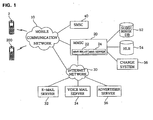
- FIG. 1 is a block diagram illustrating a network system, wherein a method for playing a message in real-time in a mobile communication terminal is applied in accordance with an exemplary embodiment of the present invention.
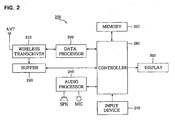
- FIG. 2 is a block diagram illustrating a mobile communication terminal in accordance with an exemplary embodiment of the present invention.
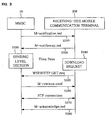
- FIG. 3 is a flow chart illustrating a method for playing a message in real-time in a mobile communication terminal in accordance with a n exemplary embodiment of the present invention.
- FIG. 4 illustrates a format of a header field of an M-notification.ind message in accordance with an exemplary embodiment of the present invention.
- FIG. 5 illustrates a flow chart of a process for sending an M-notification.ind message to a Multimedia Message Service Center (MMSC), as shown in FIG. 3 , in accordance with an exemplary embodiment of the present invention.
- MMSC Multimedia Message Service Center
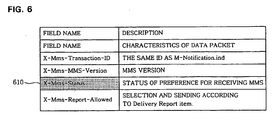
- FIG. 6 illustrates a format of a header field of an M-notifiyresp.ind message in accordance with an exemplary embodiment of the present invention.
- FIG. 7 illustrates a flow chart of a process for deciding a sending level, as shown in FIG. 3 , in accordance with an exemplary embodiment of the present invention.
- FIG. 8 illustrates a flow chart of a process for deciding a sending level of a moving image in accordance with an exemplary embodiment of the present invention.
- a mobile communication terminal includes a cellular phone, a personal communication system (PCS) phone, a personal data assistant (PDA) and an international mobile communication-2000 (IMT-2000) terminal, for example.
- PCS personal communication system
- PDA personal data assistant
- IMT-2000 international mobile communication-2000
- FIG. 1 is a block diagram illustrating a network system, wherein a method for playing a message in real-time in a mobile communication terminal may be applied in accordance with an exemplary embodiment of the present invention.
- a program for performing a multimedia message service is installed in a sending-side mobile communication terminal 2.
- a user can directly author a multimedia message using multimedia contents created by functions of the mobile communication terminal 2, such as a camera function, sound function, etc.
- the multimedia message authored by the sending-side mobile communication terminal 2 is sent to a receiving-side mobile communication terminal 200 via a multimedia message service center (MMSC) 20 using an email server 32 and a voice mail server 34.
- MMSC multimedia message service center
- a multimedia message sender authors the multimedia message with an email or voice mail function using the mobile communication terminal 2, and sends the authored multimedia message
- the e-mail server 32 and voice mail server 34 send the authored multimedia message to the MMSC 2 0.
- the MMSC 2 0 then s ends the multimedia message t o the receiving-side mobile communication terminal after converting a format of the message.
- the MMSC 20 sends and receives the multimedia message, performs a message format conversion and an address format conversion of the message, and performs an SMS sending function for notifying receipt of the multimedia message.
- the MMSC 20 includes an MMS relay 22 and an MMS server 24.
- the MMS relay 22 is an MMS message exchanger, and performs a real-time multimedia exchange function, a connection setting function between MMS message sending/receiving terminals, a resource management function, a resource release function, an MMS message notification function, and others.
- the MMS server 24 performs a real-time streaming function of the MMS message, a function for storing and managing the multimedia message in a database and a push function for notifying receipt of the MMS message.
- the MMSC 20 is connected with a short message service center (SMSC) 40, a subscriber database (DB) 52, a home location register (HLR) 54, and a charge system 56.
- the MMSC 20 is also connected with the e-mail server 32, the voice mail server 34 and an advertiser server 36, via an Internet network 30.
- the SMSC 40 notifies a multimedia message recipient of the receipt of the multimedia message using a character message.
- the subscriber DB 62 and HLR 64 manage and provide profile information of a multimedia message service subscriber.
- the subscriber DB 62 and HLR 64 also manage information related to the sending/receiving of the multimedia message.
- the charge system 66 generates and manages charge information according to details of multimedia contents and transmission details of the user of the mobile communication terminal 2 that authors and/or sends the multimedia message.
- FIG. 2 is a block diagram illustrating a mobile communication terminal in accordance with an exemplary embodiment of the present invention.
- the mobile communication terminal 200 includes a wireless transceiver 210, a buffer 220, a data processor 230, an audio processor 240, a memory 250, a display 260, an input device 270 and a controller 280.
- the wireless transceiver 210 performs a communication function of the mobile communication terminal 200.
- the wireless transceiver 210 includes an RF sender for up-converting and amplifying a frequency of a sending signal, and an RF receiver for low-noise amplifying a receiving signal and down-converting a frequency of the receiving signal.
- the wireless transceiver 210 receives a notification message from the MMSC 20 for notifying the arrival of the multimedia message.
- the wireless transceiver 210 then sends the notification message to the data processor 230.
- the wireless transceiver 210 establishes a Real-time Transport Protocol (RTP)/RTP Control Protocol (RTCP) connection with the MMSC 20 under the control of the controller 280 to receive media files in real time from the MMSC 20.
- RTP Real-time Transport Protocol
- RTCP Real-time Control Protocol
- the buffer 220 temporarily stores the media files received in real time based on the RTP/RTCP from the MMSC 20.
- the data processor 230 includes a sender for encoding and modulating a sending signal and a receiver for decoding and demodulating a receiving signal.
- the data processor 230 determines whether the multimedia message is a real-time streaming enable multimedia message, based on a specific field of the notification message, and sends the determined results to the controller 280.
- the audio processor 240 plays an audio signal that is decoded and outputted by the data processor 230, or sends the audio signal produced by a microphone (MIC) to the data processor 230.
- the audio processor 240 plays and outputs a sound file temporarily stored in the buffer 220 in real time under the control of the controller 280.
- the memory 250 includes at least one program memory and data memory.
- the program memory stores programs for controlling general operations of the mobile communication terminal 200.
- the memory 250 stores media files received from the buffer 220 under the control of the controller 280.
- the display 260 displays various kinds of display information and menu screens, all of which are outputted from the mobile communication terminal 200.
- the display 260 may include a Liquid Crystal Display (LCD) or an Organic Light Emitting Diode (OLED), for example.
- the display 260 may also include two or more displays including an external display and an internal display.
- the display 260 displays media files temporarily stored in the buffer 220 under the control of the controller 280.
- the input device 270 includes at least one button for inputting numerical and character information, and at least one function button for setting various functions.
- the input device 160 may be implemented as a keypad, a jog-dial, a touch screen, and a joystick, for example, all of which include a directional key.
- the input device 270 receives a download request for the multimedia message from the user and provides the received download request to the controller 280.
- the input device 270 also receives a streaming receiving mode of the multimedia message from the user a nd s ends the received streaming receiving mode to the controller 280.
- the controller 280 performs general control of the mobile communication terminal 200. Moreover, the controller 280 may include the data processor 220. Accordingly, a process for controlling the controller 280 is explained as follows.
- FIG. 3 illustrates a flow chart of a method for playing a message in real time in accordance with an exemplary embodiment of the present invention.
- the MMSC 20 which has received the multimedia message from the sending-side mobile communication terminal 2, sends a notification message (M-notification.ind) for notifying the receiving-side mobile communication terminal 200 of the arrival of the multimedia message (S310).
- M-notification.ind a notification message for notifying the receiving-side mobile communication terminal 200 of the arrival of the multimedia message (S310).
- the M-notification.ind message is sent via the SMSC 40 in a short message form.
- FIG. 4 illustrates a format of a header field of an M-notification.ind message in accordance with an exemplary embodiment of the present invention.
- an X-Mms-Message-Class field 410 exists in the header field of the M-notification.ind message.
- the X-Mms-Message-Class field 410 is a field that defines a classification item of a message.
- "streaming" may be added as a field value in the X-Mms-Message-Class field 410. Accordingly, if "streaming" is added in the X-Mms-Message-Class field 410, then the multimedia message is a real-time streaming enable multimedia message.
- the MMSC 20 adds "streaming" to the X-Mms-Message-Class field 410 of the notification message (M-notification.ind), and sends the notification message so that the receiving-side mobile communication terminal 200 can recognize the multimedia message as the real-time streaming enable message. If the notification message (M-notification.ind) is received from the MMSC 20, the receiving-side mobile communication terminal 200 sends a reply message (M-notifyresp.ind) to the MMSC 20 (S320 of FIG. 3 ).
- FIG. 5 illustrates a flow chart of a process for sending an M-notification.ind message to a Multimedia Message Service Center (MMSC), as shown in FIG. 3 , in accordance with an exemplary embodiment of the present invention.
- the controller 280 of the receiving-side mobile communication terminal 200 determines whether the X-Mms-Message-Class field 410 of the notification message (M-notification.ind) sent from the MMSC 20 exists (S510), and determines whether the multimedia message sent from the sending-side mobile communication terminal 2 is the real-time streaming enable message (S520).
- the controller 280 indicates a multimedia message receiving mode of the receiving-side mobile communication terminal 200, available size information of the buffer 220 and channel information in an X-Mms-Status field of a reply message (M-notifyresp.ind) (S530). Afterward, the reply message is generated and sent to the MMSC (S540).
- FIG. 6 illustrates a format of a header field of an M-notifyresp.ind message in accordance with an exemplary embodiment of the present invention.
- the header field of the M-notifyresp.ind message includes the X-Mms-Status field 610.
- the X-Mms-Status field 610 indicates a preference for receiving the multimedia message from the M MSC 20, and indicates a field value such as "retrieved", "rejected", and "deferred", for example.
- the field value "retrieved” represents a download request for the multimedia message.
- the field value "rejected” represents a preference for rejecting receipt of the multimedia message.
- the field value "deferred” represents a preference for deferring receipt of the multimedia message.
- a first streaming receiving mode "streamed 1" or a second streaming receiving mode "streamed 2" is added to the X-Mms-Status field 610 as multimedia message receiving mode information of the receiving-side mobile communication terminal 200 instead of the field value.
- the available size information of the buffer 220 and channel information are also indicated in the X-Mms-Status field 610.
- the controller 280 When the multimedia message receiving mode of the receiving-side mobile communication terminal 200 is the first streaming mode, the controller 280 indicates on the X-Mms-Status field of the M-notifyresp.ind message that the multimedia message receiving mode of the receiving-side mobile communication terminal 200 is the first streaming mode.
- the controller 280 also adds the available size information of the buffer 220 and channel information to the X-Mms-Status field.
- the channel information comprises channel band-width information measured from the receiving-side mobile communication terminal 200.
- the controller 280 indicates a field value such as "retrieved”, “rejected”, and “deferred”, for example, on the X-Mms-Status field 610 and generates the reply message (S540 of FIG. 5 ).
- the receiving-side mobile communication terminal 2 00 sends to the MMSC 20 the reply message (M-notifyresp.ind) in response to the notification message (M-notification.ind) (S540 of FIG. 5 ).
- the MMSC 20 receives the reply message (M-notifyresp.ind message) from the receiving-side mobile communication terminal 200, and thus can acknowledge a multimedia message receiving mode, a vailable size information for the buffer 220, channel information, and other information.
- the MMSC 20 When receiving the M-notifyresp.ind message from the receiving-side mobile communication terminal 200, the MMSC 20 preferably decides a sending level of a media file to be sent to the receiving-side mobile communication terminal 200 (S330 of FIG. 3 ).
- FIG. 7 illustrates a flow chart of a process for deciding a sending level, as shown in FIG. 3 , in accordance with an exemplary embodiment of the present invention.
- the MMSC 20 determines the multimedia message receiving mode indicated on the X-Mms-Status field 610 of the M-notifyresp.ind message (S710). If the multimedia message receiving mode is set to the streaming mode, i.e., the first streaming mode or the second streaming mode (S720), the MMSC 20 determines a type of the media file included in the multimedia message to be sent to the receiving-side mobile communication terminal 200 (S730).
- the sending level is determined according to the type of the media file, which will n ow be explained a s follows. If the media file included in the multimedia message is a moving image (S740), the MMSC 20 decides the sending level so that the moving image file can be played in real-time by considering channel information included in the M-notifyresp.ind message and a duration of the moving image file recorded in a synchronized multimedia integration language (SMIL) file sent from the sending-side mobile communication terminal 2 (S750).
- SMIL synchronized multimedia integration language
- FIG. 8 illustrates a flow chart of a process for deciding a sending level of a moving image in accordance with an exemplary embodiment of the present invention.
- an original moving image file comprises an I-frame and 12 P-frames following the I-frame.
- the MMSC 20 decides one of four sending levels by considering channel information and the duration of the moving image file.
- the original moving image file is originally sent at a sending level 1.
- a sending level 2 a series of two image frames is repeatedly sent after one image frame following the series of two image frames is not sent.
- every third image frame is sent.
- the I-frame is initially sent.
- the 3rd, 6th, 9th, and 12th P-frames are respectively sent.
- every sixth image frame is sent.
- the I-frame is initially sent, followed by the 6th and 12th P-frames, respectively.
- the channel band-width narrows from the sending level 1 to the sending level 4. Moreover, the duration of the moving image becomes greater from the sending level 1 to the sending level 4.
- the MMSC 20 decides the sending level according to the sending level of the moving image file, and sends each image frame together with the sound data.
- the MMSC 20 sends the image frames according to a sending level of a corresponding moving image file by lowering a bit rate of the sound data.
- the MMSC 20 decides the sending level by considering a duration and a channel state of the sound file (S770), similar to a method for deciding the sending level of the moving image file.
- the MMSC 20 sends the sound file to the receiving-side mobile communication terminal 200 by controlling the bit rate of the sound file so that all sound files may be sent through the corresponding channel in duration.
- the MMSC 20 decides each sending level of the moving image file and the sound file that will be sent to the receiving-side mobile communication terminal 200.
- the media file is an image file (S780)
- the MMSC 20 decides a sending method using a predetermined sending algorithm, regardless of the method for deciding the sending level of the moving image file or the sound file.
- the MMSC 20 generates black/white image data having only black/white information in the original image file, and sends the generated black/white image data to the receiving-side mobile communication terminal 200 in an 8x8 pixel unit. If the sending of the black/white image data is completed, the MMSC 20 sends color image data to the receiving-side mobile communication terminal 200 in an 8x8 pixel unit, similar to the black/white image data.
- the controller 280 sends a request message, such as a WSP/HTTP GET.req message, to the MMSC 20 through the wireless transceiver 210 (S350).
- a request message such as a WSP/HTTP GET.req message
- the WSP/HTTP GET.req message is a message for requesting a data connection to the MMSC 20, and more particularly, a message for requesting the MMSC 20 to send the multimedia message sent from the sending-side mobile communication terminal since the receiving-side mobile communication terminal 200 is ready to receive the multimedia message.
- the MMSC 20 sends a confirmation message, such as an M-retrieve.conf message, to the receiving-side mobile communication terminal 200 (S360).
- a confirmation message such as an M-retrieve.conf message
- the M-retrieve.conf message includes a SMIL file, and not any media files.
- the SMIL file is a text file including information regarding a method for playing media files attached to the multimedia message.
- the receiving-side mobile communication terminal 200 After the receiving-side mobile communication terminal 200 receives the M-retrieve.conf message from the MMSC 20, an RTP/RTCP connection or RT Streaming Protocol (RTSP) connection is established between the MMSC 20 and the receiving side mobile communication terminal 200 (S370). The MMSC 20 then sends the media files attached to the multimedia message to the receiving-side mobile communication terminal 20 using the RTP/RTCP-based or RTSP-based real-time transfer protocol.
- RTSP RT Streaming Protocol
- the MMSC 20 sends the media files according to the sending level decided in S330, and controls the flow of the media files sent by considering an available size of the buffer 220 in the mobile communication terminal 220.
- the receiving-side mobile communication terminal 200 temporarily stores the media files received in real-time from the MMSC 20 in the buffer 220.
- the receiving-side mobile communication terminal 200 displays the media files temporarily stored in the buffer 220 on the display 260.
- the receiving-side mobile communication terminal 200 does not separately store the media files temporarily stored in the buffer 220 in the memory 250, but displays the media files in real time on the display 260.
- the multimedia message receiving mode of the receiving s ide mobile communication terminal 200 is set to the second streaming mode, the receiving-side mobile communication terminal 200 stores the media files temporarily stored in the buffer 220 in the memory 250, and displays the media files received in real time on the display 260.
- the receiving side mobile communication terminal 200 sends an acknowledgment message, such as an M-acknowledge.ind message, to the MMSC 20 for acknowledging receipt of the media files (S380).
- an acknowledgment message such as an M-acknowledge.ind message
- the user of the mobile communication terminal can retrieve the multimedia message in real time. Furthermore, preferred embodiments of the present invention have been implemented by deciding the sending level of the media files, but they are not limited thereto.
- the MMSC 20 may send the SMIL file without the media files. Accordingly, the receiving-side mobile communication terminal 200 can analyze the SMIL file to acknowledge duration and type of the media files attached to the multimedia message.
- the decided sending level information is sent to the MMSC 20.
- the MMSC 20 then sends the media files according to the sending level information received from the receiving-side mobile communication terminal 200.
- the mobile communication terminal and method for playing messages in real time in the mobile communication terminal have the following advantages.
- a receiving-side mobile communication terminal can download and play media files attached to the multimedia message in real time. Therefore, even if storage space for the multimedia message is limited because previously-stored media files are not to be deleted, multimedia message contents received from a sending-side mobile communication terminal can still be retrieved.
Landscapes
- Engineering & Computer Science (AREA)
- Computer Networks & Wireless Communication (AREA)
- Signal Processing (AREA)
- Mobile Radio Communication Systems (AREA)
- Telephonic Communication Services (AREA)
- Telephone Function (AREA)
- Two-Way Televisions, Distribution Of Moving Picture Or The Like (AREA)
- Information Transfer Between Computers (AREA)
Claims (19)
- Verfahren zum Abspielen einer Nachricht in Echtzeit in einem Mobilkommunikationsendgerät (200), wobei das Verfahren umfasst:- Empfangen einer Benachrichtigungsnachricht von einem Server (20) zur Benachrichtigung über die Ankunft einer bestimmten Nachricht beim Server (20),- Ermitteln, ob die bestimmte Nachricht eine Nachricht ist, die ein Echtzeit-Streaming ermöglicht, durch Prüfen eines bestimmten Felds der Benachrichtigungsnachricht,- Erzeugen einer Antwortnachricht, falls die bestimmte Nachricht die das Echtzeit-Streaming ermöglichende Nachricht ist, wobei die Antwortnachricht ein bestimmtes Feld umfasst, das eine Information über einen Streaming-Empfangsmodus enthält,- Senden der erzeugten Antwortnachricht an den Server (20),- Anfordern einer Verbindung mit dem Server (20),- Empfangen wenigstens einer in der bestimmten Nachricht enthaltenen Mediendatei in Echtzeit von dem Server (20) auf Grundlage eines von dem Server (20) in Antwort auf die Antwortnachricht und nach Maßgabe eines Typs der wenigstens einen Mediendatei bestimmten Sendepegels, und- Abspielen der empfangenen Mediendatei in Echtzeit.
- Verfahren nach Anspruch 1, wobei der Server (20) ein Multimedianachrichtendienstcenter, kurz MMSC, ist.
- Verfahren nach Anspruch 1, wobei die bestimmte Nachricht eine Multimedianachricht ist, welche die mindestens eine Mediendatei enthält.
- Verfahren nach Anspruch 1, wobei das bestimmte Feld der Benachrichtigungsnachricht ein X-Mms-Nachrichtenklasse-Feld (410) ist, das eine Information enthält, die sich darauf bezieht, ob die bestimmte Nachricht die das Echtzeit-Streaming ermöglichende Nachricht ist, wobei das X-Mms-Nachrichtenklasse-Feld (410) ein Feld eines Kopffelds ist, welches ein Klassifikationselement der Benachrichtigungsnachricht definiert.
- Verfahren nach Anspruch 1, wobei das bestimmte Feld der Antwortnachricht ein X-Mms-Status-Feld (610) ist, welches wenigstens einen Streaming-Empfangsmodus des Mobilkommunikationsendgeräts (200), eine verfügbare Puffergröße sowie eine Information über eine Kanalbandbreite umfasst, wobei das XMms-Status-Feld (610) ein Feld eines Kopffelds ist, welches einen Präferenzstatus für den Empfang der bestimmten Nachricht von dem Server (20) definiert.
- Verfahren nach Anspruch 5, wobei der Streaming-Empfangsmodus des Mobilkommunikationsendgeräts (200) einen ersten Streaming-Empfangsmodus und einen zweiten Streaming-Empfangsmodus umfasst.
- Verfahren nach Anspruch 6, wobei die von dem Server (20) empfangene mindestens eine Mediendatei in dem ersten Streaming-Empfangsmodus nicht in einem Speicher (250) gespeichert wird und wobei die von dem Server (20) empfangene mindestens eine Mediendatei in dem zweiten Streaming-Empfangsmodus in dem Speicher (250) gespeichert wird.
- Verfahren nach Anspruch 1, wobei das Anfordern einer Verbindung mit dem Server (20) das Senden einer WSP/HTTP GET.req Nachricht an den Server (20) umfasst, wobei die WSP/HTTP GET.req Nachricht eine Anforderungsnachricht ist, wobei WSP für Wireless Session Protocol steht und HTTP für HyperText Transfer Protocol steht.
- Verfahren nach Anspruch 1, wobei dann, wenn die wenigstens eine Mediendatei eine Bewegbilddatei ist, der Sendepegel nach Maßgabe der Information über die Kanalbandbreite sowie einer Dauer der Bewegbilddatei ermittelt wird.
- Verfahren nach Anspruch 9, wobei dann, wenn die wenigstens eine Mediendatei eine Tondatei ist, der Sendepegel nach Maßgabe der Information über die Kanalbandbreite sowie einer Dauer der Tondatei ermittelt wird, wobei eine Bitrate der Tondatei von dem Sendepegel abhängt.
- Verfahren nach Anspruch 1, wobei das Empfangen der wenigstens einen Mediendatei in Echtzeit umfasst:- Empfangen einer Nachricht, welche eine Synchronized Multimedia Integration Language (SMIL) Datei umfasst, von dem Server (20), und- Empfangen der wenigstens einen Mediendatei über eine RTP/RTCP-Verbindung, welche zwischen dem Server (20) und dem Mobilkommunikationsendgerät (200) eingerichtet wurde.
- Mobilkommunikationsendgerät (200) zum Abspielen einer Nachricht in Echtzeit, wobei das Mobilkommunikationsendgerät (200) umfasst:- einen Drahtlos-Transceiver (210), welcher dazu eingerichtet ist, eine Benachrichtigungsnachricht von einem Server (20) zur Benachrichtigung über die Ankunft einer bestimmten Nachricht beim Server (20) zu empfangen,- einen Prozessor (230), welcher dazu eingerichtet ist, zu ermitteln, ob die bestimmte Nachricht eine Nachricht ist, welche ein Echtzeit-Streaming ermöglicht, durch Prüfen eines bestimmten Felds der Benachrichtigungsnachricht, und- einen Controller (280), welcher dazu eingerichtet ist, eine Antwortnachricht zu erzeugen, falls die bestimmte Nachricht die das Echtzeit-Streaming ermöglichende Nachricht ist, wobei die Antwortnachricht ein bestimmtes Feld umfasst, das eine Information über einen Streaming-Empfangsmodus enthält, wobei der Controller (280) die erzeugte Antwortnachricht an den Server (20) über den Drahtlos-Transceiver (210) sendet und eine Verbindung mit dem Server (20) anfordert,wobei der Drahtlos-Transceiver (210) dazu eingerichtet ist, wenigstens eine in der bestimmten Nachricht enthaltene Mediendatei von dem Server (20) auf Grundlage eines von dem Server in Antwort auf die Antwortnachricht und nach Maßgabe eines Typs der wenigstens einen Mediendatei bestimmten Sendepegels zu empfangen, und wobei der Controller (280) dazu ausgelegt ist, die empfangene Mediendatei in Echtzeit abzuspielen.
- Mobilkommunikationsendgerät nach Anspruch 12, wobei das bestimmte Feld der Benachrichtigungsnachricht ein X-Mms-Nachrichtenklasse-Feld (410) ist, das eine Information enthält, die sich darauf bezieht, ob die bestimmte Nachricht die das Echtzeit-Streaming ermöglichende Nachricht ist, wobei das X-Mms-Nachrichtenklasse-Feld (410) ein Feld eines Kopffelds ist, welches ein Klassifikationselement der Benachrichtigungsnachricht definiert.
- Mobilkommunikationsendgerät nach Anspruch 12, wobei das bestimmte Feld der Antwortnachricht ein X-Mms-Status-Feld (610) ist, welches wenigstens einen Streaming-Empfangsmodus des Mobilkommunikationsendgeräts (200), eine verfügbare Puffergröße sowie eine Information über eine Kanalbandbreite umfasst, wobei das XMms-Status-Feld (610) ein Feld eines Kopffelds ist, welches einen Präferenzstatus für den Empfang der bestimmten Nachricht von dem Server (20) definiert.
- Mobilkommunikationsendgerät nach Anspruch 12, ferner umfassend eine Eingabeeinrichtung (270), welche dazu eingerichtet ist, einen Streaming-Empfangsmodus des Mobilkommunikationsendgeräts (200) festzulegen, und einen Speicher, welcher dazu eingerichtet ist, die von dem Server (20) empfangene wenigstens eine Mediendatei zu speichern, wobei der Controller (280) dazu ausgelegt ist, die wenigstens eine Mediendatei in einem ersten Streaming-Empfangsmodus nicht in dem Speicher (250) zu speichern und die wenigstens eine Mediendatei in einem zweiten Streaming-Empfangsmodus in dem Speicher (250) zu speichern.
- Mobilkommunikationsendgerät nach Anspruch 12, wobei der Controller (280) dazu eingerichtet ist, eine Verbindung mit dem Server (20) durch Senden einer WSP/HTTP GET.req Nachricht an den Server (20) anzufordern, wobei die WSP/HTTP GET.req Nachricht eine Anforderungsnachricht ist, wobei WSP für Wireless Session Protocol steht und HTTP für HyperText Transfer Protocol steht.
- Mobilkommunikationsendgerät nach Anspruch 12, wobei der Drahtlos-Transceiver (210) dazu ausgelegt ist, eine Bestätigungsnachricht, welche eine Synchronized Multimedia Integration Language (SMIL) Datei umfasst, von dem Server (20) zu empfangen, um die empfangene Bestätigungsnachricht an den Controller (280) zu schicken, und wobei der Controller (280) dazu ausgelegt ist, den Sendepegel der wenigstens einen Mediendatei nach Maßgabe einer Information über eine Kanalbandbreite und einer Dauer der wenigstens einen Mediendatei, angegeben an der SMIL-Datei, zu bestimmen, wobei der Controller (280) dazu ausgelegt ist, den bestimmten Sendepegel über den Drahtlos-Transceiver (210) an den Server (20) zu schicken.
- Mobilkommunikationsendgerät nach Anspruch 12, wobei der Drahtlos-Transceiver (210) dazu ausgelegt ist, die wenigstens eine Mediendatei über eine zwischen dem Server (20) und dem Mobilkommunikationsendgerät (200) eingerichtete RTP/RTCP-Verbindung zu empfangen, wobei RTP für Real-Time Transport Protocol steht und RTCP für Real-Time Transport Control Protocol steht.
- Mobilkommunikationsendgerät nach Anspruch 12, ferner umfassend:- eine Anzeige (260), welche dazu eingerichtet ist, die wenigstens eine Mediendatei in Echtzeit anzuzeigen, wenn die wenigstens eine Mediendatei eine Bilddatei ist, und- einen Audioprozessor (240), welcher dazu eingerichtet ist, die wenigstens eine Mediendatei in Echtzeit abzuspielen, wenn die wenigstens eine Mediendatei eine Tondatei ist.
Applications Claiming Priority (1)
| Application Number | Priority Date | Filing Date | Title |
|---|---|---|---|
| KR1020060070091A KR101115955B1 (ko) | 2006-07-26 | 2006-07-26 | 이동통신단말기의 메시지 실시간 재생방법 및이동통신단말기 |
Publications (3)
| Publication Number | Publication Date |
|---|---|
| EP1883189A2 EP1883189A2 (de) | 2008-01-30 |
| EP1883189A3 EP1883189A3 (de) | 2010-11-03 |
| EP1883189B1 true EP1883189B1 (de) | 2011-10-26 |
Family
ID=38666931
Family Applications (1)
| Application Number | Title | Priority Date | Filing Date |
|---|---|---|---|
| EP07013529A Not-in-force EP1883189B1 (de) | 2006-07-26 | 2007-07-10 | Mobiles Kommunikationsendgerät und Verfahren zum Abspielen einer Nachricht in Echtzeit dafür |
Country Status (6)
| Country | Link |
|---|---|
| US (1) | US8965345B2 (de) |
| EP (1) | EP1883189B1 (de) |
| JP (1) | JP5254576B2 (de) |
| KR (1) | KR101115955B1 (de) |
| CN (1) | CN101115260B (de) |
| AT (1) | ATE531171T1 (de) |
Families Citing this family (7)
| Publication number | Priority date | Publication date | Assignee | Title |
|---|---|---|---|---|
| US20090047981A1 (en) * | 2007-08-14 | 2009-02-19 | Sunil Khanna | Method and system for delivering messages |
| US9705830B2 (en) | 2013-09-09 | 2017-07-11 | At&T Mobility Ii, Llc | Method and apparatus for distributing content to communication devices |
| US10291557B2 (en) | 2014-03-03 | 2019-05-14 | Telefonaktiebolaget Lm Ericsson (Publ) | Streaming media content to a user equipment in an internet protocol multimedia subsystem |
| US20150341301A1 (en) * | 2014-05-21 | 2015-11-26 | Lenovo (Singapore) Pte. Ltd. | Sender specified message notification |
| US10142832B2 (en) * | 2014-11-05 | 2018-11-27 | Huawei Technologies Co., Ltd. | Information sending and processing method and apparatus |
| CN105722041B (zh) * | 2016-03-02 | 2020-03-27 | 青岛海信移动通信技术股份有限公司 | 一种连接彩信代理的方法和终端 |
| US11146923B1 (en) * | 2020-04-01 | 2021-10-12 | Sprint Spectrum L.P. | Method and system to facilitate media-content delivery |
Family Cites Families (16)
| Publication number | Priority date | Publication date | Assignee | Title |
|---|---|---|---|---|
| US5907683A (en) * | 1996-12-02 | 1999-05-25 | International Business Machines Corporation | System for maintaining a quality of service in a multimedia datastream system by inhibiting blocking of real-time writes to a multimedia file system |
| US7003304B1 (en) * | 1997-09-19 | 2006-02-21 | Thompson Investment Group, Llc | Paging transceivers and methods for selectively retrieving messages |
| JP2000181838A (ja) | 1998-12-16 | 2000-06-30 | Yamaha Corp | 情報伝送再生方法及びシステム |
| FI112307B (fi) | 2000-08-02 | 2003-11-14 | Nokia Corp | Viestintäpalvelu |
| JP3999665B2 (ja) | 2001-02-07 | 2007-10-31 | シーメンス アクチエンゲゼルシヤフト | Mmsシステムからのメッセージ送信方法および該方法のための装置 |
| GB2397723A (en) * | 2002-11-14 | 2004-07-28 | Nokia Corp | Data transmission |
| FI115744B (fi) * | 2001-02-08 | 2005-06-30 | Nokia Corp | Kommunikaatiopalvelu |
| US7631037B2 (en) * | 2001-02-08 | 2009-12-08 | Nokia Corporation | Data transmission |
| US7116995B2 (en) * | 2002-05-31 | 2006-10-03 | Nokia Corporation | System and method for operating intravendor and intervendor messaging systems |
| KR20040059662A (ko) | 2002-12-28 | 2004-07-06 | 삼성전자주식회사 | 스트리밍 방식을 이용한 동영상메일 통신장치 및 방법 |
| EP1450514A1 (de) | 2003-02-18 | 2004-08-25 | Matsushita Electric Industrial Co., Ltd. | Serverbasierte Datenratensteuerung in einer Multimedia-Streaming-Umgebung |
| TW200509628A (en) * | 2003-04-15 | 2005-03-01 | Ericsson Telefon Ab L M | Bandwidth on demand for media services at stationary equipment unit |
| JP2005025627A (ja) | 2003-07-04 | 2005-01-27 | Seiko Epson Corp | 情報配信システムおよび情報配信方法ならびに情報配信処理装置 |
| US8087091B2 (en) * | 2004-07-08 | 2011-12-27 | Media Rights Technologies | Method and system for preventing unauthorized reproduction of electronic media |
| KR100631615B1 (ko) | 2004-12-31 | 2006-10-11 | 엘지전자 주식회사 | 멀티미디어 메세지 수신 방법 |
| US8473617B2 (en) * | 2004-12-31 | 2013-06-25 | Sony Corporation | Media client architecture for networked communication devices |
-
2006
- 2006-07-26 KR KR1020060070091A patent/KR101115955B1/ko not_active Expired - Fee Related
-
2007
- 2007-07-10 AT AT07013529T patent/ATE531171T1/de not_active IP Right Cessation
- 2007-07-10 EP EP07013529A patent/EP1883189B1/de not_active Not-in-force
- 2007-07-18 US US11/779,609 patent/US8965345B2/en active Active
- 2007-07-24 JP JP2007192115A patent/JP5254576B2/ja not_active Expired - Fee Related
- 2007-07-25 CN CN2007101402011A patent/CN101115260B/zh not_active Expired - Fee Related
Also Published As
| Publication number | Publication date |
|---|---|
| CN101115260B (zh) | 2012-09-05 |
| CN101115260A (zh) | 2008-01-30 |
| US20080026779A1 (en) | 2008-01-31 |
| JP5254576B2 (ja) | 2013-08-07 |
| KR20080010085A (ko) | 2008-01-30 |
| EP1883189A2 (de) | 2008-01-30 |
| ATE531171T1 (de) | 2011-11-15 |
| KR101115955B1 (ko) | 2012-03-08 |
| US8965345B2 (en) | 2015-02-24 |
| EP1883189A3 (de) | 2010-11-03 |
| JP2008035514A (ja) | 2008-02-14 |
Similar Documents
| Publication | Publication Date | Title |
|---|---|---|
| US8965345B2 (en) | Mobile communication terminal and method for playing message in real time thereof | |
| US8280418B2 (en) | System for supporting video message service and method thereof | |
| US20100151888A1 (en) | Method and system for transmitting and receiving multimedia message | |
| KR101155335B1 (ko) | 이동통신 단말기의 멀티미디어 메시지 동작방법 | |
| US8422996B2 (en) | Method and apparatus for providing advertisement in mobile terminal, and system therefor | |
| CN100385429C (zh) | 多媒体消息服务系统及其方法 | |
| KR100905411B1 (ko) | 이동통신 단말기에서 멀티미디어 메시지의 전송 장치 및방법 | |
| US8116790B2 (en) | Reply message of a mobile terminal | |
| KR101541547B1 (ko) | 이동 통신 단말에서 멀티미디어 데이터의 관리 방법 및 이를 위한 이동 통신 단말 | |
| CN101505225A (zh) | 数据传送方法及系统 | |
| KR101132611B1 (ko) | 이동통신단말기의 메시지 다운로드 방법, 메시지 포워딩방법, 및 이를 수행하기 위한 이동통신단말기 | |
| CN101222660A (zh) | 接收彩信的方法及装置 | |
| KR100466830B1 (ko) | 무선 인터넷상에서 단말정보에 의존하는 메시지 서비스의컨텐츠 변환방법 | |
| KR100600503B1 (ko) | 이동통신단말에서의 멀티미디어 메시지 수신방법 | |
| KR101739558B1 (ko) | 조건부 메시지 전송 시스템 및 그 방법 | |
| KR100807904B1 (ko) | 멀티미디어 메시징 서비스 릴레이 서버와 멀티미디어 제어서버간의 연동방법 | |
| KR101258594B1 (ko) | 이동통신단말기의 메시지 확인방법 및 이를 수행하기 위한이동통신단말기 | |
| KR100612684B1 (ko) | Tv 방송 연계 메시징 서비스 시스템 및 방법 | |
| KR100800448B1 (ko) | 이동통신단말기 및 이동통신단말기의 유해 미디어 차단방법 | |
| KR100805056B1 (ko) | 멀티미디어 데이터의 재전송을 위한 장치, 방법 및 시스템 | |
| KR100623289B1 (ko) | 방송국을 이용한 멀티미디어 메시지 전달방법 | |
| KR101323935B1 (ko) | 휴대단말기에 멀티미디어 광고 메시지를 제공하기 위한 방법 및 장치 | |
| KR100736549B1 (ko) | 멀티미디어 메시지 서비스 시스템 및 그 방법 | |
| KR100829253B1 (ko) | 분류항목이 설정된 메시지의 송신방법과 수신방법, 이를수행하기 위한 이동통신단말기 | |
| KR20050028767A (ko) | 메시지 서비스를 이용한 실시간 웹 사이트 구축 시스템 및그 방법 |
Legal Events
| Date | Code | Title | Description |
|---|---|---|---|
| PUAI | Public reference made under article 153(3) epc to a published international application that has entered the european phase |
Free format text: ORIGINAL CODE: 0009012 |
|
| AK | Designated contracting states |
Kind code of ref document: A2 Designated state(s): AT BE BG CH CY CZ DE DK EE ES FI FR GB GR HU IE IS IT LI LT LU LV MC MT NL PL PT RO SE SI SK TR |
|
| AX | Request for extension of the european patent |
Extension state: AL BA HR MK YU |
|
| RAP1 | Party data changed (applicant data changed or rights of an application transferred) |
Owner name: LG ELECTRONICS INC. |
|
| PUAL | Search report despatched |
Free format text: ORIGINAL CODE: 0009013 |
|
| AK | Designated contracting states |
Kind code of ref document: A3 Designated state(s): AT BE BG CH CY CZ DE DK EE ES FI FR GB GR HU IE IS IT LI LT LU LV MC MT NL PL PT RO SE SI SK TR |
|
| AX | Request for extension of the european patent |
Extension state: AL BA HR MK RS |
|
| RIC1 | Information provided on ipc code assigned before grant |
Ipc: H04L 29/06 20060101ALI20100930BHEP Ipc: H04L 12/64 20060101AFI20100930BHEP |
|
| REG | Reference to a national code |
Ref country code: DE Ref legal event code: R079 Ref document number: 602007018138 Country of ref document: DE Free format text: PREVIOUS MAIN CLASS: H04L0012560000 Ipc: H04L0012640000 |
|
| 17P | Request for examination filed |
Effective date: 20110210 |
|
| RIC1 | Information provided on ipc code assigned before grant |
Ipc: H04L 29/06 20060101ALI20110316BHEP Ipc: H04L 12/64 20060101AFI20110316BHEP |
|
| GRAP | Despatch of communication of intention to grant a patent |
Free format text: ORIGINAL CODE: EPIDOSNIGR1 |
|
| AKX | Designation fees paid |
Designated state(s): AT BE BG CH CY CZ DE DK EE ES FI FR GB GR HU IE IS IT LI LT LU LV MC MT NL PL PT RO SE SI SK TR |
|
| GRAS | Grant fee paid |
Free format text: ORIGINAL CODE: EPIDOSNIGR3 |
|
| GRAA | (expected) grant |
Free format text: ORIGINAL CODE: 0009210 |
|
| AK | Designated contracting states |
Kind code of ref document: B1 Designated state(s): AT BE BG CH CY CZ DE DK EE ES FI FR GB GR HU IE IS IT LI LT LU LV MC MT NL PL PT RO SE SI SK TR |
|
| REG | Reference to a national code |
Ref country code: GB Ref legal event code: FG4D |
|
| REG | Reference to a national code |
Ref country code: CH Ref legal event code: EP |
|
| REG | Reference to a national code |
Ref country code: IE Ref legal event code: FG4D |
|
| REG | Reference to a national code |
Ref country code: DE Ref legal event code: R096 Ref document number: 602007018138 Country of ref document: DE Effective date: 20111222 |
|
| REG | Reference to a national code |
Ref country code: NL Ref legal event code: VDEP Effective date: 20111026 |
|
| LTIE | Lt: invalidation of european patent or patent extension |
Effective date: 20111026 |
|
| REG | Reference to a national code |
Ref country code: AT Ref legal event code: MK05 Ref document number: 531171 Country of ref document: AT Kind code of ref document: T Effective date: 20111026 |
|
| PG25 | Lapsed in a contracting state [announced via postgrant information from national office to epo] |
Ref country code: IS Free format text: LAPSE BECAUSE OF FAILURE TO SUBMIT A TRANSLATION OF THE DESCRIPTION OR TO PAY THE FEE WITHIN THE PRESCRIBED TIME-LIMIT Effective date: 20120226 Ref country code: BE Free format text: LAPSE BECAUSE OF FAILURE TO SUBMIT A TRANSLATION OF THE DESCRIPTION OR TO PAY THE FEE WITHIN THE PRESCRIBED TIME-LIMIT Effective date: 20111026 Ref country code: LT Free format text: LAPSE BECAUSE OF FAILURE TO SUBMIT A TRANSLATION OF THE DESCRIPTION OR TO PAY THE FEE WITHIN THE PRESCRIBED TIME-LIMIT Effective date: 20111026 |
|
| PG25 | Lapsed in a contracting state [announced via postgrant information from national office to epo] |
Ref country code: PT Free format text: LAPSE BECAUSE OF FAILURE TO SUBMIT A TRANSLATION OF THE DESCRIPTION OR TO PAY THE FEE WITHIN THE PRESCRIBED TIME-LIMIT Effective date: 20120227 Ref country code: NL Free format text: LAPSE BECAUSE OF FAILURE TO SUBMIT A TRANSLATION OF THE DESCRIPTION OR TO PAY THE FEE WITHIN THE PRESCRIBED TIME-LIMIT Effective date: 20111026 Ref country code: PL Free format text: LAPSE BECAUSE OF FAILURE TO SUBMIT A TRANSLATION OF THE DESCRIPTION OR TO PAY THE FEE WITHIN THE PRESCRIBED TIME-LIMIT Effective date: 20111026 Ref country code: SE Free format text: LAPSE BECAUSE OF FAILURE TO SUBMIT A TRANSLATION OF THE DESCRIPTION OR TO PAY THE FEE WITHIN THE PRESCRIBED TIME-LIMIT Effective date: 20111026 Ref country code: GR Free format text: LAPSE BECAUSE OF FAILURE TO SUBMIT A TRANSLATION OF THE DESCRIPTION OR TO PAY THE FEE WITHIN THE PRESCRIBED TIME-LIMIT Effective date: 20120127 Ref country code: SI Free format text: LAPSE BECAUSE OF FAILURE TO SUBMIT A TRANSLATION OF THE DESCRIPTION OR TO PAY THE FEE WITHIN THE PRESCRIBED TIME-LIMIT Effective date: 20111026 Ref country code: LV Free format text: LAPSE BECAUSE OF FAILURE TO SUBMIT A TRANSLATION OF THE DESCRIPTION OR TO PAY THE FEE WITHIN THE PRESCRIBED TIME-LIMIT Effective date: 20111026 |
|
| PG25 | Lapsed in a contracting state [announced via postgrant information from national office to epo] |
Ref country code: CY Free format text: LAPSE BECAUSE OF FAILURE TO SUBMIT A TRANSLATION OF THE DESCRIPTION OR TO PAY THE FEE WITHIN THE PRESCRIBED TIME-LIMIT Effective date: 20111026 |
|
| PG25 | Lapsed in a contracting state [announced via postgrant information from national office to epo] |
Ref country code: EE Free format text: LAPSE BECAUSE OF FAILURE TO SUBMIT A TRANSLATION OF THE DESCRIPTION OR TO PAY THE FEE WITHIN THE PRESCRIBED TIME-LIMIT Effective date: 20111026 Ref country code: CZ Free format text: LAPSE BECAUSE OF FAILURE TO SUBMIT A TRANSLATION OF THE DESCRIPTION OR TO PAY THE FEE WITHIN THE PRESCRIBED TIME-LIMIT Effective date: 20111026 Ref country code: DK Free format text: LAPSE BECAUSE OF FAILURE TO SUBMIT A TRANSLATION OF THE DESCRIPTION OR TO PAY THE FEE WITHIN THE PRESCRIBED TIME-LIMIT Effective date: 20111026 Ref country code: SK Free format text: LAPSE BECAUSE OF FAILURE TO SUBMIT A TRANSLATION OF THE DESCRIPTION OR TO PAY THE FEE WITHIN THE PRESCRIBED TIME-LIMIT Effective date: 20111026 Ref country code: BG Free format text: LAPSE BECAUSE OF FAILURE TO SUBMIT A TRANSLATION OF THE DESCRIPTION OR TO PAY THE FEE WITHIN THE PRESCRIBED TIME-LIMIT Effective date: 20120126 |
|
| PG25 | Lapsed in a contracting state [announced via postgrant information from national office to epo] |
Ref country code: RO Free format text: LAPSE BECAUSE OF FAILURE TO SUBMIT A TRANSLATION OF THE DESCRIPTION OR TO PAY THE FEE WITHIN THE PRESCRIBED TIME-LIMIT Effective date: 20111026 Ref country code: IT Free format text: LAPSE BECAUSE OF FAILURE TO SUBMIT A TRANSLATION OF THE DESCRIPTION OR TO PAY THE FEE WITHIN THE PRESCRIBED TIME-LIMIT Effective date: 20111026 |
|
| PLBE | No opposition filed within time limit |
Free format text: ORIGINAL CODE: 0009261 |
|
| STAA | Information on the status of an ep patent application or granted ep patent |
Free format text: STATUS: NO OPPOSITION FILED WITHIN TIME LIMIT |
|
| 26N | No opposition filed |
Effective date: 20120727 |
|
| REG | Reference to a national code |
Ref country code: DE Ref legal event code: R097 Ref document number: 602007018138 Country of ref document: DE Effective date: 20120727 |
|
| PG25 | Lapsed in a contracting state [announced via postgrant information from national office to epo] |
Ref country code: AT Free format text: LAPSE BECAUSE OF FAILURE TO SUBMIT A TRANSLATION OF THE DESCRIPTION OR TO PAY THE FEE WITHIN THE PRESCRIBED TIME-LIMIT Effective date: 20111026 |
|
| PG25 | Lapsed in a contracting state [announced via postgrant information from national office to epo] |
Ref country code: MC Free format text: LAPSE BECAUSE OF NON-PAYMENT OF DUE FEES Effective date: 20120731 |
|
| REG | Reference to a national code |
Ref country code: CH Ref legal event code: PL |
|
| PG25 | Lapsed in a contracting state [announced via postgrant information from national office to epo] |
Ref country code: ES Free format text: LAPSE BECAUSE OF FAILURE TO SUBMIT A TRANSLATION OF THE DESCRIPTION OR TO PAY THE FEE WITHIN THE PRESCRIBED TIME-LIMIT Effective date: 20120206 Ref country code: CH Free format text: LAPSE BECAUSE OF NON-PAYMENT OF DUE FEES Effective date: 20120731 Ref country code: LI Free format text: LAPSE BECAUSE OF NON-PAYMENT OF DUE FEES Effective date: 20120731 |
|
| REG | Reference to a national code |
Ref country code: IE Ref legal event code: MM4A |
|
| PG25 | Lapsed in a contracting state [announced via postgrant information from national office to epo] |
Ref country code: FI Free format text: LAPSE BECAUSE OF FAILURE TO SUBMIT A TRANSLATION OF THE DESCRIPTION OR TO PAY THE FEE WITHIN THE PRESCRIBED TIME-LIMIT Effective date: 20111026 |
|
| PG25 | Lapsed in a contracting state [announced via postgrant information from national office to epo] |
Ref country code: IE Free format text: LAPSE BECAUSE OF NON-PAYMENT OF DUE FEES Effective date: 20120710 Ref country code: MT Free format text: LAPSE BECAUSE OF FAILURE TO SUBMIT A TRANSLATION OF THE DESCRIPTION OR TO PAY THE FEE WITHIN THE PRESCRIBED TIME-LIMIT Effective date: 20111026 |
|
| PG25 | Lapsed in a contracting state [announced via postgrant information from national office to epo] |
Ref country code: TR Free format text: LAPSE BECAUSE OF FAILURE TO SUBMIT A TRANSLATION OF THE DESCRIPTION OR TO PAY THE FEE WITHIN THE PRESCRIBED TIME-LIMIT Effective date: 20111026 |
|
| PG25 | Lapsed in a contracting state [announced via postgrant information from national office to epo] |
Ref country code: LU Free format text: LAPSE BECAUSE OF NON-PAYMENT OF DUE FEES Effective date: 20120710 |
|
| PG25 | Lapsed in a contracting state [announced via postgrant information from national office to epo] |
Ref country code: HU Free format text: LAPSE BECAUSE OF FAILURE TO SUBMIT A TRANSLATION OF THE DESCRIPTION OR TO PAY THE FEE WITHIN THE PRESCRIBED TIME-LIMIT Effective date: 20070710 |
|
| REG | Reference to a national code |
Ref country code: FR Ref legal event code: PLFP Year of fee payment: 10 |
|
| REG | Reference to a national code |
Ref country code: FR Ref legal event code: PLFP Year of fee payment: 11 |
|
| REG | Reference to a national code |
Ref country code: FR Ref legal event code: PLFP Year of fee payment: 12 |
|
| PGFP | Annual fee paid to national office [announced via postgrant information from national office to epo] |
Ref country code: FR Payment date: 20180607 Year of fee payment: 12 |
|
| PGFP | Annual fee paid to national office [announced via postgrant information from national office to epo] |
Ref country code: GB Payment date: 20180606 Year of fee payment: 12 Ref country code: DE Payment date: 20180605 Year of fee payment: 12 |
|
| REG | Reference to a national code |
Ref country code: DE Ref legal event code: R119 Ref document number: 602007018138 Country of ref document: DE |
|
| GBPC | Gb: european patent ceased through non-payment of renewal fee |
Effective date: 20190710 |
|
| PG25 | Lapsed in a contracting state [announced via postgrant information from national office to epo] |
Ref country code: GB Free format text: LAPSE BECAUSE OF NON-PAYMENT OF DUE FEES Effective date: 20190710 Ref country code: DE Free format text: LAPSE BECAUSE OF NON-PAYMENT OF DUE FEES Effective date: 20200201 |
|
| PG25 | Lapsed in a contracting state [announced via postgrant information from national office to epo] |
Ref country code: FR Free format text: LAPSE BECAUSE OF NON-PAYMENT OF DUE FEES Effective date: 20190731 |