EP1881009A1 - Chitosan derivative and method for producing same - Google Patents
Chitosan derivative and method for producing same Download PDFInfo
- Publication number
- EP1881009A1 EP1881009A1 EP06732509A EP06732509A EP1881009A1 EP 1881009 A1 EP1881009 A1 EP 1881009A1 EP 06732509 A EP06732509 A EP 06732509A EP 06732509 A EP06732509 A EP 06732509A EP 1881009 A1 EP1881009 A1 EP 1881009A1
- Authority
- EP
- European Patent Office
- Prior art keywords
- chitosan
- derivative
- chitosan derivative
- acid
- hours
- Prior art date
- Legal status (The legal status is an assumption and is not a legal conclusion. Google has not performed a legal analysis and makes no representation as to the accuracy of the status listed.)
- Granted
Links
- VCZQYTJRWNRPHF-UHFFFAOYSA-N C1=COOC=C1 Chemical compound C1=COOC=C1 VCZQYTJRWNRPHF-UHFFFAOYSA-N 0.000 description 1
- FZERHIULMFGESH-UHFFFAOYSA-N CC(Nc1ccccc1)=O Chemical compound CC(Nc1ccccc1)=O FZERHIULMFGESH-UHFFFAOYSA-N 0.000 description 1
- AQIZLFKSMIDMJE-UHFFFAOYSA-N CCC(CC(CO)OC1OC)(C1N1OC1C1=CC=CCC1C=O)O Chemical compound CCC(CC(CO)OC1OC)(C1N1OC1C1=CC=CCC1C=O)O AQIZLFKSMIDMJE-UHFFFAOYSA-N 0.000 description 1
- 0 C[C@@](C(*)C1)C(C*)*[C@]1(CNC(C1C(*)=CC=CC1)=O)OC Chemical compound C[C@@](C(*)C1)C(C*)*[C@]1(CNC(C1C(*)=CC=CC1)=O)OC 0.000 description 1
- QVAWRDXNHFBSAK-YVKWHVBHSA-N C[C@H](C(CO)O[C@H](C1N)OC)C1O Chemical compound C[C@H](C(CO)O[C@H](C1N)OC)C1O QVAWRDXNHFBSAK-YVKWHVBHSA-N 0.000 description 1
- XEFUJGURFLOFAN-UHFFFAOYSA-N O=C=Nc1cc(Cl)cc(Cl)c1 Chemical compound O=C=Nc1cc(Cl)cc(Cl)c1 XEFUJGURFLOFAN-UHFFFAOYSA-N 0.000 description 1
Classifications
-
- B—PERFORMING OPERATIONS; TRANSPORTING
- B01—PHYSICAL OR CHEMICAL PROCESSES OR APPARATUS IN GENERAL
- B01J—CHEMICAL OR PHYSICAL PROCESSES, e.g. CATALYSIS OR COLLOID CHEMISTRY; THEIR RELEVANT APPARATUS
- B01J20/00—Solid sorbent compositions or filter aid compositions; Sorbents for chromatography; Processes for preparing, regenerating or reactivating thereof
- B01J20/281—Sorbents specially adapted for preparative, analytical or investigative chromatography
- B01J20/282—Porous sorbents
- B01J20/285—Porous sorbents based on polymers
-
- B—PERFORMING OPERATIONS; TRANSPORTING
- B01—PHYSICAL OR CHEMICAL PROCESSES OR APPARATUS IN GENERAL
- B01J—CHEMICAL OR PHYSICAL PROCESSES, e.g. CATALYSIS OR COLLOID CHEMISTRY; THEIR RELEVANT APPARATUS
- B01J20/00—Solid sorbent compositions or filter aid compositions; Sorbents for chromatography; Processes for preparing, regenerating or reactivating thereof
- B01J20/22—Solid sorbent compositions or filter aid compositions; Sorbents for chromatography; Processes for preparing, regenerating or reactivating thereof comprising organic material
- B01J20/24—Naturally occurring macromolecular compounds, e.g. humic acids or their derivatives
-
- B—PERFORMING OPERATIONS; TRANSPORTING
- B01—PHYSICAL OR CHEMICAL PROCESSES OR APPARATUS IN GENERAL
- B01J—CHEMICAL OR PHYSICAL PROCESSES, e.g. CATALYSIS OR COLLOID CHEMISTRY; THEIR RELEVANT APPARATUS
- B01J20/00—Solid sorbent compositions or filter aid compositions; Sorbents for chromatography; Processes for preparing, regenerating or reactivating thereof
- B01J20/22—Solid sorbent compositions or filter aid compositions; Sorbents for chromatography; Processes for preparing, regenerating or reactivating thereof comprising organic material
- B01J20/26—Synthetic macromolecular compounds
-
- B—PERFORMING OPERATIONS; TRANSPORTING
- B01—PHYSICAL OR CHEMICAL PROCESSES OR APPARATUS IN GENERAL
- B01J—CHEMICAL OR PHYSICAL PROCESSES, e.g. CATALYSIS OR COLLOID CHEMISTRY; THEIR RELEVANT APPARATUS
- B01J20/00—Solid sorbent compositions or filter aid compositions; Sorbents for chromatography; Processes for preparing, regenerating or reactivating thereof
- B01J20/22—Solid sorbent compositions or filter aid compositions; Sorbents for chromatography; Processes for preparing, regenerating or reactivating thereof comprising organic material
- B01J20/26—Synthetic macromolecular compounds
- B01J20/262—Synthetic macromolecular compounds obtained otherwise than by reactions only involving carbon to carbon unsaturated bonds, e.g. obtained by polycondensation
-
- B—PERFORMING OPERATIONS; TRANSPORTING
- B01—PHYSICAL OR CHEMICAL PROCESSES OR APPARATUS IN GENERAL
- B01J—CHEMICAL OR PHYSICAL PROCESSES, e.g. CATALYSIS OR COLLOID CHEMISTRY; THEIR RELEVANT APPARATUS
- B01J20/00—Solid sorbent compositions or filter aid compositions; Sorbents for chromatography; Processes for preparing, regenerating or reactivating thereof
- B01J20/22—Solid sorbent compositions or filter aid compositions; Sorbents for chromatography; Processes for preparing, regenerating or reactivating thereof comprising organic material
- B01J20/26—Synthetic macromolecular compounds
- B01J20/265—Synthetic macromolecular compounds modified or post-treated polymers
-
- B—PERFORMING OPERATIONS; TRANSPORTING
- B01—PHYSICAL OR CHEMICAL PROCESSES OR APPARATUS IN GENERAL
- B01J—CHEMICAL OR PHYSICAL PROCESSES, e.g. CATALYSIS OR COLLOID CHEMISTRY; THEIR RELEVANT APPARATUS
- B01J20/00—Solid sorbent compositions or filter aid compositions; Sorbents for chromatography; Processes for preparing, regenerating or reactivating thereof
- B01J20/281—Sorbents specially adapted for preparative, analytical or investigative chromatography
- B01J20/29—Chiral phases
-
- C—CHEMISTRY; METALLURGY
- C08—ORGANIC MACROMOLECULAR COMPOUNDS; THEIR PREPARATION OR CHEMICAL WORKING-UP; COMPOSITIONS BASED THEREON
- C08B—POLYSACCHARIDES; DERIVATIVES THEREOF
- C08B37/00—Preparation of polysaccharides not provided for in groups C08B1/00 - C08B35/00; Derivatives thereof
- C08B37/0006—Homoglycans, i.e. polysaccharides having a main chain consisting of one single sugar, e.g. colominic acid
- C08B37/0024—Homoglycans, i.e. polysaccharides having a main chain consisting of one single sugar, e.g. colominic acid beta-D-Glucans; (beta-1,3)-D-Glucans, e.g. paramylon, coriolan, sclerotan, pachyman, callose, scleroglucan, schizophyllan, laminaran, lentinan or curdlan; (beta-1,6)-D-Glucans, e.g. pustulan; (beta-1,4)-D-Glucans; (beta-1,3)(beta-1,4)-D-Glucans, e.g. lichenan; Derivatives thereof
- C08B37/0027—2-Acetamido-2-deoxy-beta-glucans; Derivatives thereof
- C08B37/003—Chitin, i.e. 2-acetamido-2-deoxy-(beta-1,4)-D-glucan or N-acetyl-beta-1,4-D-glucosamine; Chitosan, i.e. deacetylated product of chitin or (beta-1,4)-D-glucosamine; Derivatives thereof
-
- B—PERFORMING OPERATIONS; TRANSPORTING
- B01—PHYSICAL OR CHEMICAL PROCESSES OR APPARATUS IN GENERAL
- B01J—CHEMICAL OR PHYSICAL PROCESSES, e.g. CATALYSIS OR COLLOID CHEMISTRY; THEIR RELEVANT APPARATUS
- B01J2220/00—Aspects relating to sorbent materials
- B01J2220/40—Aspects relating to the composition of sorbent or filter aid materials
- B01J2220/48—Sorbents characterised by the starting material used for their preparation
- B01J2220/4812—Sorbents characterised by the starting material used for their preparation the starting material being of organic character
- B01J2220/4825—Polysaccharides or cellulose materials, e.g. starch, chitin, sawdust, wood, straw, cotton
Definitions
- the present invention relates to a chitosan derivative suitable as a filler for high performance liquid chromatography (HPLC), a method of producing the same, and a separating agent for enantiomeric isomers using the chitosan derivative.
- HPLC high performance liquid chromatography
- the optical resolution by HPLC has been advanced as a method which can be used for both fractional analysis and microanalysis, and the development of various chiral fillers has been made so far.
- a substance obtained by converting a polysaccharide which abundantly exists in nature, such as cellulose, amylose, and the like to a phenylcarbamate derivative is widely used because such a substance has an excellent optical resolution performance of racemic bodies in a wide range including pharmaceuticals as a chiral stationary phase for HPLC.
- JP-A 5-163164 and JP-A 2005-17174 disclose separating agents for enantiomeric isomers using the chitosan derivative.
- JP-A 5-163164 and JP-A 2005-17174 have room for improvement in terms of the optical resolution performance.
- the present invention provides a chitosan derivative having high optical resolution performance, a method of producing the same, and a separating agent for enantiomeric isomers using the chitosan derivative.
- the present invention provides a chitosan derivative represented by Formula (I), where R 1 represents an aliphatic group or an aromatic group having a carbon number of 1 to 30 which may have a substituent, preferably an aliphatic group or an aromatic group having a carbon number of 1 to 15 which may have a substituent; R 2 represents a substituent originating from an isocyanic acid derivative, a carboxylic acid, an ester, an acid halide, an acid amide compound, a halide compound, an aldehyde or an alcohol; and n is an integer of 5 or more.
- R 1 represents an aliphatic group or an aromatic group having a carbon number of 1 to 30 which may have a substituent, preferably an aliphatic group or an aromatic group having a carbon number of 1 to 15 which may have a substituent
- R 2 represents a substituent originating from an isocyanic acid derivative, a carboxylic acid, an ester, an acid halide, an acid amide compound, a hal
- the present invention provides a method of producing a chitosan derivative, including the steps of: imidizing an amino group at the 2-position of chitosan and reacting hydroxyl groups at the 3- and 6-positions of chitosan with a compound selected from an isocyanic acid derivative, a carboxylic acid, an ester compound, an acid halide, an acid amide compound, a halide compound, an aldehyde and an alcohol.
- the present invention provides a separating agent for an enantiomeric isomer including the chitosan derivative, use thereof, and a method of separating an enantiomeric isomer using the chitosan derivative.
- the chitosan derivative of the present invention has high optical resolution performance.
- the chitosan derivative of the present invention is represented by the above Formula (I), and can be obtained by the following production methods.
- chitosan As a starting material and, for example, a deacetylated chitin or a commercially available chitosan may be used.
- chitosans available by Wako Pure Chemical Industries, Ltd., Sigma-Aldrich Corporation, or Tokyo Chemical Industry Co., Ltd can be mentioned, for example.
- an amino group at the 2-position of chitosan is imidized.
- imidization reaction There is no limitation on the imidization reaction, and a known imidization reaction can be applied.
- the imidization reaction can be performed by acting a known acid anhydride capable of introducing R 1 to the amino group at the 2-position.
- a known acid anhydride capable of introducing R 1 to the amino group at the 2-position.
- a method that the amino group at the 2-position is subjected to N-acylation by using an acylating agent (phthalic anhydride), and dehydrating the resultant by heating (method 1).
- hydroxyl groups at the 3- and 6-positions of chitosan are reacted with a compound selected from an isocyanic acid derivative, carboxylic acid, ester compound, acid halide, acid amide compound, halide compound, aldehyde, and alcohol.
- a compound selected from an isocyanic acid derivative, carboxylic acid, ester compound, acid halide, acid amide compound, halide compound, aldehyde, and alcohol it is desirable to react with carboxylic acid or an isocyanic acid derivative.
- carboxylic acid benzoic acid, 4-methylbenzoic acid, cinnamic acid, etc. can be used, for example.
- R represents: a hydrogen atom; an aliphatic group, an aromatic group or the like, whose carbon number is 1 to 30, and preferably 1 to 14.
- the chitosan derivative of the present invention is represented by Formula (I), and R 1 and R 2 are preferably selected from the following.
- n showing a degree of polymerization is 5 or more, and preferably 5 to 1000.
- R 1 is preferably any one of the following.
- R 2 be a carbamate derivative or an ester derivative. It is more preferable that R 2 be an aromatic carbamate derivative or an aromatic ester derivative.
- R 2 be a carbamate derivative represented by the following formula; where X is 3,5-dimethyl, 3,5-dichloro, or 3,4-dichloro.
- the chitosan derivative of the present invention may be used as it is or, if needed, the chitosan derivative physically or chemically carried on a carrier by a known method can be used as a separating agent for enantiomeric isomers for HPLC, etc.
- a known porous organic carrier or a porous inorganic carrier can be used, and a porous inorganic carrier is preferable.
- suitable porous organic carriers are polymers include polystyrene, polyacrylamide, polyacrylate, etc.
- suitable porous inorganic carriers include silica, alumina, magnesia, glass, kaolin, titanium oxide, silicate, hydroxyapatite, etc., and silica gel is particularly preferable.
- silica gel in order to eliminate the influence of the residual silanol on the silica gel surface and to improve the affinity with an optically active molecular compound, it is desirable to treat the surface of silica gel by silanizing (silanizing using aminoalkylsilane), plasma treatment, etc., but no problem arises even when no surface treatment is performed.
- the particle diameter of a porous carrier is preferably 1 to 300 ⁇ m, more preferably 1 to 100 ⁇ m, and still more preferably 1 to 50 ⁇ m.
- the average fine pore diameter thereof is preferably 200 to 8000 ⁇ , more preferably 200 to 4000 ⁇ , and still more preferably 300 to 2000 ⁇ .
- the particle diameter of the porous carrier is substantially the particle diameter of a separating agent.
- DMF N,N-Dimethylformamide
- Lithiun chloride (LiCl) manufactured by Wako Pure Chemical Industries, Ltd.
- DMA dry N,N-Dimethylacetamide
- Silica gel prepared by treating the surface of Daiso gel SP-1000 (grain size: 7 ⁇ m, pore size: 100 nm) with (3-Aminopropyl)triethoxysilane (manufactured by Tokyo Chemical Industry Co., Ltd.)
- a chitosan derivative was produced according to the above reaction formula. First, 0.85g of phthalic anhydride was added to 0.31g of chitosan in a methanol solution containing 2% of acetic acid (pH 4), and the mixture was reacted at 35°C for 12 hours.
- the chitosan whose 2-position had been acylated was dried by heating under reduced pressure at 200°C for 5 hours to complete cyclization by dehydration, thereby imidizing at the 2-position.
- the reaction was confirmed by IR.
- 0.20 g of the chitosan whose 2-position had been imidized was taken, and 6 ml of dehydratedpyridine and 0.29 g of 3,5-dimethylphenyl isocyanate were added thereto, and then heated at 80°C for 21 hours. Then, 21 hours later, the progress of the reaction was confirmed by IR.
- a chitosan derivative was produced according to the above reaction formula. 1.0 g of phthalic anhydride was dissolved in 20 ml of mix solvent at volume ratio of 95/5 (DMF/water), and 0.40 g of chitosan was added, followed by stirring at 120°C for 8 hours. The resultant was poured in cold water and obtaining 0.64 g (89%) yield.
- a chitosan derivative was produced according to the above reaction formula. 1.6 g of 4-methylphthalic anhydride was dissolved in 30 ml of DMF/water at volume ratio of 95/5, and 0.51 g of chitosan was added, followed by stirring at 120°C for 8 hours. The resultant was poured in cold water, and washed with methanol and collected, obtaining 0.89 g (90%) yield.
- a chitosan derivative was produced according to the above reaction formula. 1.1g of 4-methylphthalic anhydride was dissolved in 16 ml of DMF/water at volume ratio of 95/5, and 4. 1 g of chitosan was added, followed by stirring at 120°C for 8 hours. The resultant was poured in cold water, and washed with methanol and collected, obtaining 0.75 g (98%) yield.
- the chitosan derivatives obtained in Examples 1 to 4 were dissolved in THF, and were carried on silica gel subjected to a surface treatment, obtaining a separating agent for enantiomeric isomers. Those separating agents were separated by particle diameters with Hexane-2-propanol (9:1), and packed in a stainless steel column having a length of 25 cm and an inner diameter of 0.46 cm using Hexane-2-propanol (9:1) by the slurry method.
- Optical resolution of racemic bodies by HPLC was performed using each of the separating agents for enantiomeric isomers of Example 5.
- a pump (PU-980 manufactured by JASCO Corporation) was used for the measurement, and JASCO UV-970 and an optical rotation JASCO OR-990 were used for the detection.
- the following racemic bodies (2 to 19) were evaluated for the separation ability.
- Hexane-2-propanol (9:1) was mainly used as a mobile phase, and the flow rate was set as 0.5 ml/min in the column with an inner diameter of 0.46 cm. The measurement was performed at room temperature. A theoretical plate number was determined by benzene-eluent (1:10) and t 0 was determined by 1,3,5-tri-tert-buthylbenzene.
- a chitosan derivative was produced according to the above reaction formula.
- N-acylation of 0.20g of chitosan (which was obtained by repeatedly (three times) deacetylating chitosan of wako-100 (manufactured by Wako Pure Chemical Industries, Ltd.) at 120°C for 2 hours in an aqueous 50% NaOH solution)
- 0.54 g of cis-1,2-cyclohexanedicarboxylic anhydride was added under acidic conditions for reaction for 11 hours
- 0.51g of anhydride was added under basic conditions for reaction for 12 hours.
- the resultant was collected under acidic conditions, obtaining 0.26 g (68%) yield (MF2a-1).
- the resultant was heated at 220°C under reduced pressure for 5 hours, and then the progress of imidization was observed by IR (MF2b-1). 86 mg of the resultant was taken, and reacted with 0.24 g of 3,5-dimethylphenyl isocyanate in a dehydrated pyridine at 80°C. 21 hours later, 0.23 g of isocyanate was further added. The progress of the reaction was confirmed by IR after 27 hours and a methanol insoluble part was collected, but the reaction nonuniformly progressed to the end. The resultant was stirred and washed in DMSO, obtaining 62mg (37%yield) ofinsolublepart (MF2c-1).
- a chitosan derivative was produced according to the above reaction formula.
- the reaction was performed as shown in the scheme of the following Method 1. 0.36 g of maleic anhydride was added to 0.21 g of chitosan under acidic conditions for reaction for 12 hours, and then 0.35 g of anhydride was added under basic conditions. However, the white precipitate which was deposited remained insoluble even after 12 hours. When the insoluble part and the soluble part were separated and only the soluble part was made acidic, the reaction apparently progressed was confirmed by IRspectrum, and27mg (8%) yield was obtained (MF4a-1). In contrast, no reaction progressed in the insoluble part, and the reaction was further performed.
- a chitosan derivative was produced according to the above reaction formula. 0.34 g of maleic anhydride was dissolved in 10 ml of mix solvent of DMF and water, and 0.20 g of chitosan was added, followed by subjected to half-reaction at 120°C for 8 hours. The resultant was poured in cold water, obtaining 0.23 g (77%) yield (MF4b-2).
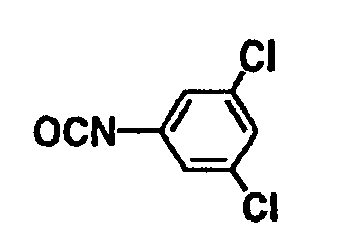
- MF9b-2 1.0 of MF9b-2 was dried in the same manner as in Example 9. Then, 15 ml of pyridine and 1.6 g of 3,5-diclorophenyl isocyanate were added, followed by stirring. 0.8 g of isocyanate was added again 6 hours later, and stirred for further 16 hours. The progress of the reaction was confirmed by IR, and then the resultant was re-precipitated in methanol and collected, obtaining 2.3 g (99%) yield (MF9d-2).
- MF9b-2 0.4 of MF9b-2 was dried in the same manner as in Example 9. Then, 8 ml of pyridine and 1.2 g of 3,4-diclorophenyl isocyanate were added, followed by stirring at 80°C. 0.8 g of isocyanate was added again 11 hours later, and stirred for further 10 hours. The progress of the reaction was confirmed by IR, and then the resultant was re-precipitated in methanol and collected, obtaining 0.80 g (95%) yield (MF9q-1).
- the chitosan derivatives obtained in Examples 9 to 13 were applied to silica gel in the same manner as in Example 5, and the resultant was packed in a column (inner diameter of 0.46 cm).
- the column was referred to as follows.
- Example 14 Each column of Example 14 was evaluated for the optical resolution performance of a chiral stationary phase in the same manner as in Application Example 1. The evaluation results are shown below. Table 2. Resolution of Racemates on N-Phthaloyl Chitosan 3,6-Bis(phenylcarbamate) MFp-25 MFp-26 MFp-27 MFp-18 MFp-19 k 1' ⁇ k 1' ⁇ k 1' ⁇ k 1' ⁇ k 1' ⁇ 2 1.21 1.00 2.39 (-) ⁇ 1 1.95 (-) ⁇ 1 1.67 (-) ⁇ 1 1.69 (-) ⁇ 1 3 1.02(+) 1.15 1.25(+) 1.23 0.92(+) 1.17 0.80(+) 1.09 0.71 (+) 1.18 4 0.42 (+) ⁇ 1 0.48 (+) 1.10 0.38 (+) ⁇ 1 0.30 (+) 1.15 0.33 (+) 3.26 5 1.03 (+) 1.08 0.84 (+) 1.26 0.76 (+) ⁇ 1 0.75 (+
Landscapes
- Chemical & Material Sciences (AREA)
- Analytical Chemistry (AREA)
- Organic Chemistry (AREA)
- Chemical Kinetics & Catalysis (AREA)
- Health & Medical Sciences (AREA)
- Life Sciences & Earth Sciences (AREA)
- Engineering & Computer Science (AREA)
- Molecular Biology (AREA)
- General Health & Medical Sciences (AREA)
- Biochemistry (AREA)
- Materials Engineering (AREA)
- Medicinal Chemistry (AREA)
- Polymers & Plastics (AREA)
- Polysaccharides And Polysaccharide Derivatives (AREA)
- Solid-Sorbent Or Filter-Aiding Compositions (AREA)
- Organic Low-Molecular-Weight Compounds And Preparation Thereof (AREA)
Abstract

Description
- The present invention relates to a chitosan derivative suitable as a filler for high performance liquid chromatography (HPLC), a method of producing the same, and a separating agent for enantiomeric isomers using the chitosan derivative.
- In recent years, the importance of an optically active compound has increased even more, and a method of selectively and efficiently producing a pure optically active chiral molecule from the viewpoint of research and development not only of pharmaceuticals but also of functional materials is indispensable.
- The optical resolution by HPLC has been advanced as a method which can be used for both fractional analysis and microanalysis, and the development of various chiral fillers has been made so far. Among those, a substance obtained by converting a polysaccharide which abundantly exists in nature, such as cellulose, amylose, and the like to a phenylcarbamate derivative is widely used because such a substance has an excellent optical resolution performance of racemic bodies in a wide range including pharmaceuticals as a chiral stationary phase for HPLC.
- Researches on polysaccharides other than cellulose or amylose have been made. However, substance having an optical resolution performance equal to or higher than that of cellulose or amylose has not been obtained.
-
JP-A 5-163164 JP-A 2005-17174 - The inventions disclosed in
JP-A 5-163164 JP-A 2005-17174 - The present invention provides a chitosan derivative having high optical resolution performance, a method of producing the same, and a separating agent for enantiomeric isomers using the chitosan derivative.
- The present invention provides a chitosan derivative represented by Formula (I),

- Further, the present invention provides a method of producing a chitosan derivative, including the steps of: imidizing an amino group at the 2-position of chitosan and reacting hydroxyl groups at the 3- and 6-positions of chitosan with a compound selected from an isocyanic acid derivative, a carboxylic acid, an ester compound, an acid halide, an acid amide compound, a halide compound, an aldehyde and an alcohol.
- Still further, the present invention provides a separating agent for an enantiomeric isomer including the chitosan derivative, use thereof, and a method of separating an enantiomeric isomer using the chitosan derivative.
- The chitosan derivative of the present invention has high optical resolution performance.
- The chitosan derivative of the present invention is represented by the above Formula (I), and can be obtained by the following production methods.
- There is no limitation on chitosan as a starting material and, for example, a deacetylated chitin or a commercially available chitosan may be used. As commercially available chitosan, chitosans available by Wako Pure Chemical Industries, Ltd., Sigma-Aldrich Corporation, or Tokyo Chemical Industry Co., Ltd can be mentioned, for example.
- First, an amino group at the 2-position of chitosan is imidized. There is no limitation on the imidization reaction, and a known imidization reaction can be applied.
- The imidization reaction can be performed by acting a known acid anhydride capable of introducing R1 to the amino group at the 2-position. For example, mentioned is a method that the amino group at the 2-position is subjected to N-acylation by using an acylating agent (phthalic anhydride), and dehydrating the resultant by heating (method 1). Or, mentioned is a method of acting an acylating agent (phthalic anhydride) on the amino group at the 2-position of chitosan in a mixed solvent of DMF/water at volume ratio of 95/5, and drying the same (method 2).
- Next, the hydroxyl groups at the 3- and 6-positions of chitosan are reacted with a compound selected from an isocyanic acid derivative, carboxylic acid, ester compound, acid halide, acid amide compound, halide compound, aldehyde, and alcohol. Among those, it is desirable to react with carboxylic acid or an isocyanic acid derivative.
- As carboxylic acid, benzoic acid, 4-methylbenzoic acid, cinnamic acid, etc. can be used, for example.
- The isocyanic acid derivative is represented by R-NH-C=O where, R represents: a hydrogen atom; an aliphatic group, an aromatic group or the like, whose carbon number is 1 to 30, and preferably 1 to 14. Specifically, isocyanic acid derivatives represented by R-NH-C=O (where, R represents a hydrogen atom, an isopropyl group, a phenyl group, a methylphenyl group, a 3,5-dimethylphenyl group, a chlorophenyl group, a dichlorophenyl group, a (S) - α-methylbenzyl group, etc.), can be used.
- The chitosan derivative of the present invention is represented by Formula (I), and R1 and R2 are preferably selected from the following. In the chitosan derivative of the present invention, n showing a degree of polymerization is 5 or more, and preferably 5 to 1000.
- R1 is preferably any one of the following.

- In Formula (I), it is preferable that R2 be a carbamate derivative or an ester derivative. It is more preferable that R2 be an aromatic carbamate derivative or an aromatic ester derivative.
- It is still more preferable that R2 be a carbamate derivative represented by the following formula;

- The chitosan derivative of the present invention may be used as it is or, if needed, the chitosan derivative physically or chemically carried on a carrier by a known method can be used as a separating agent for enantiomeric isomers for HPLC, etc.
- As the carrier, a known porous organic carrier or a porous inorganic carrier can be used, and a porous inorganic carrier is preferable. Examples of suitable porous organic carriers are polymers include polystyrene, polyacrylamide, polyacrylate, etc. Examples of suitable porous inorganic carriers include silica, alumina, magnesia, glass, kaolin, titanium oxide, silicate, hydroxyapatite, etc., and silica gel is particularly preferable.
- When using silica gel, in order to eliminate the influence of the residual silanol on the silica gel surface and to improve the affinity with an optically active molecular compound, it is desirable to treat the surface of silica gel by silanizing (silanizing using aminoalkylsilane), plasma treatment, etc., but no problem arises even when no surface treatment is performed.
- The particle diameter of a porous carrier, inparticular silica gel, is preferably 1 to 300 µm, more preferably 1 to 100 µm, and still more preferably 1 to 50 µm. The average fine pore diameter thereof is preferably 200 to 8000 Å, more preferably 200 to 4000 Å, and still more preferably 300 to 2000 Å. The particle diameter of the porous carrier is substantially the particle diameter of a separating agent.
- The following Examples describe the execution of the present invention. The following examples exemplify the present invention and do not limit the scope of the present invention.
- The details of the reagents used in the Examples are as follows.
- Chitosan prepared by deacetylating wako-100 (manufactured by Wako Pure Chemical Industries, Ltd.) in 50% NaOH three times in the condition at 120°C for 2 hours.
- Phthalic Anhydride manufactured by Wako Pure Chemical Industries, Ltd.
- cis-1,2-Cyclohexanedicarboxylic Anhydride manufactured by Tokyo Chemical Industry Co., Ltd.
- Succinic Anhydride manufactured by Tokyo Chemical Industry Co., Ltd.
- Maleic Anhydride manufactured by Tokyo Chemical Industry Co., Ltd.
- 4-Methylphtalic Anhydride manufactured by Tokyo Chemical Industry Co., Ltd.
- N,N-Dimethylformamide (DMF) manufactured by Tokyo Chemical Industry Co., Ltd.
- 3,5-Dimethylphenyl Isocyanate manufactured by Sigma-Aldrich Corporation
- Isocyanic Acid 3,5-Dichlorophenyl Ester manufactured by Tokyo Chemical Industry Co., Ltd.
- Lithiun chloride (LiCl) manufactured by Wako Pure Chemical Industries, Ltd.
- dry N,N-Dimethylacetamide (DMA) manufactured by Kanto Chemical Co., Inc.
- dry pyridine manufactured by Kanto Chemical Co., Inc.
- Silica gel prepared by treating the surface of Daiso gel SP-1000 (grain size: 7 µm, pore size: 100 nm) with (3-Aminopropyl)triethoxysilane (manufactured by Tokyo Chemical Industry Co., Ltd.)
- Synthetic racemates or commercially available racemates
-
- HPLC: PU-980, 970-UV, 990-OR, MD-2010 (all manufactured by JASCO Corporation)
- NMR: Varian Gemini-2000 (400 MHz)
- IR: FT/IR-620 manufactured by JASCO Corporation
- TG: SSC/5200 manufactured by Seiko Instruments Inc.
- CD: J-720-L manufactured by JASCO Corporation
-


- A chitosan derivative was produced according to the above reaction formula. First, 0.85g of phthalic anhydride was added to 0.31g of chitosan in a methanol solution containing 2% of acetic acid (pH 4), and the mixture was reacted at 35°C for 12 hours.
- Subsequently, the resultant reaction mixture was placed in an aqueous 2% of sodium bicarbonate solution (pH 8), and 0.76g of phthalic anhydride was added. The mixture was reacted at 35°C for 12 hours to complete the acylation of the 2-position of chitosan, thereby collecting the resultant as an acidic hydrochloride (0.60 g yield).
- Then, the chitosan whose 2-position had been acylated was dried by heating under reduced pressure at 200°C for 5 hours to complete cyclization by dehydration, thereby imidizing at the 2-position. The reaction was confirmed by IR. Then, 0.20 g of the chitosan whose 2-position had been imidized was taken, and 6 ml of dehydratedpyridine and 0.29 g of 3,5-dimethylphenyl isocyanate were added thereto, and then heated at 80°C for 21 hours. Then, 21 hours later, the progress of the reaction was confirmed by IR. Then, 0.11g of 3 , 5-dimethylphenyl isocyanate was added, and the mixture was further heated at 80°C for 5 hours to thereby complete the reaction. The reaction product was collected as an insoluble part of mixed solvents of MeOH and water at a volume ratio of 4/1. Since it was confirmed by IR that urea was contained therein, a THF soluble part was precipitated twice to remove urea, obtaining 0.24 g (62%) yield. The obtained chitosan derivative was soluble in acetone, DMSO, THF, DMF, DMA, chloroform, and pyridine.
-

- A chitosan derivative was produced according to the above reaction formula. 1.0 g of phthalic anhydride was dissolved in 20 ml of mix solvent at volume ratio of 95/5 (DMF/water), and 0.40 g of chitosan was added, followed by stirring at 120°C for 8 hours. The resultant was poured in cold water and obtaining 0.64 g (89%) yield.
- For complete imidization, 0.60 g of the resultant was dried by heating under reduced pressure at 200°C for 2 hours. Then, 8 ml of dehydrated pyridine and 0.99 g of 3,5-dichlorophenyl isocyanate were added, and the mixture was made to react by heating at 80°C. The progress of the reaction was confirmed by IR, and the resultant was collected over 27 hours as an insoluble part of mixed solvents of Methanol and water at a volume ratio of 4/1. A THF soluble part was re-precipitated, obtaining 0.81 g (67%) yield. The obtained chitosan derivative was soluble in THF, DMF, DMA, and pyridine.
-

- A chitosan derivative was produced according to the above reaction formula. 1.6 g of 4-methylphthalic anhydride was dissolved in 30 ml of DMF/water at volume ratio of 95/5, and 0.51 g of chitosan was added, followed by stirring at 120°C for 8 hours. The resultant was poured in cold water, and washed with methanol and collected, obtaining 0.89 g (90%) yield.
- 0.80 g of the resultant was dried under reduced pressure at 200°C for 2 hours, and then 12ml of pyridine and 1.2 g of 3, 5-dimethylphenyl isocyanate were added. The mixture was stirred at 80°C for 24 hours, and then was dissolved completely. The progress of the reaction was confirmed by IR, and the resultant was collected as a methanol insoluble part, obtaining 1.3 g (82%) yield. The obtained chitosan derivative was soluble in acetone, THF, DMF, DMA, chloroform, and pyridine.
-

- A chitosan derivative was produced according to the above reaction formula. 1.1g of 4-methylphthalic anhydride was dissolved in 16 ml of DMF/water at volume ratio of 95/5, and 4. 1 g of chitosan was added, followed by stirring at 120°C for 8 hours. The resultant was poured in cold water, and washed with methanol and collected, obtaining 0.75 g (98%) yield.
- 0.60 g of the resultant was dried under reduced pressure at 200°C for 2 hours, and then 12ml of pyridine and 1.1 g of 3,5-dichlorophenyl isocyanate were added. The mixture was stirred at 80°C for 24 hours, and then was dissolved completely. The progress of the reaction was confirmed by IR, and the resultant was collected as a methanol insoluble part, obtaining 1.1 g (84%) yield. The obtained chitosan derivative was soluble in THF, DMA, and pyridine.
- The chitosan derivatives obtained in Examples 1 to 4 were dissolved in THF, and were carried on silica gel subjected to a surface treatment, obtaining a separating agent for enantiomeric isomers. Those separating agents were separated by particle diameters with Hexane-2-propanol (9:1), and packed in a stainless steel column having a length of 25 cm and an inner diameter of 0.46 cm using Hexane-2-propanol (9:1) by the slurry method.
- Column 1 (inner diameter 0.46 cm) : Chitosan derivative of Example 1
- Column 2 (inner diameter 0.46 cm) : Chitosan derivative of Example 2
- Column 3 (inner diameter 0.46 cm) : Chitosan derivative of Example 3
- Column 4 (inner diameter 0.46 cm) : Chitosan derivative of Example 4
- Optical resolution of racemic bodies by HPLC was performed using each of the separating agents for enantiomeric isomers of Example 5. A pump (PU-980 manufactured by JASCO Corporation) was used for the measurement, and JASCO UV-970 and an optical rotation JASCO OR-990 were used for the detection. The following racemic bodies (2 to 19) were evaluated for the separation ability.
- Hexane-2-propanol (9:1) was mainly used as a mobile phase, and the flow rate was set as 0.5 ml/min in the column with an inner diameter of 0.46 cm. The measurement was performed at room temperature. A theoretical plate number was determined by benzene-eluent (1:10) and t0 was determined by 1,3,5-tri-tert-buthylbenzene.
- Volume ratio k1',k2': when a period of time during which a mobile phase passes through the column without any adsorption is defined as to and an elution time of each enantiomer is defined as t1 or t2, k1' or k2' shows the adsorbability of each enantiomer to a filler, which is determined by the following formula:

Resolution coefficient α= k2'/k1'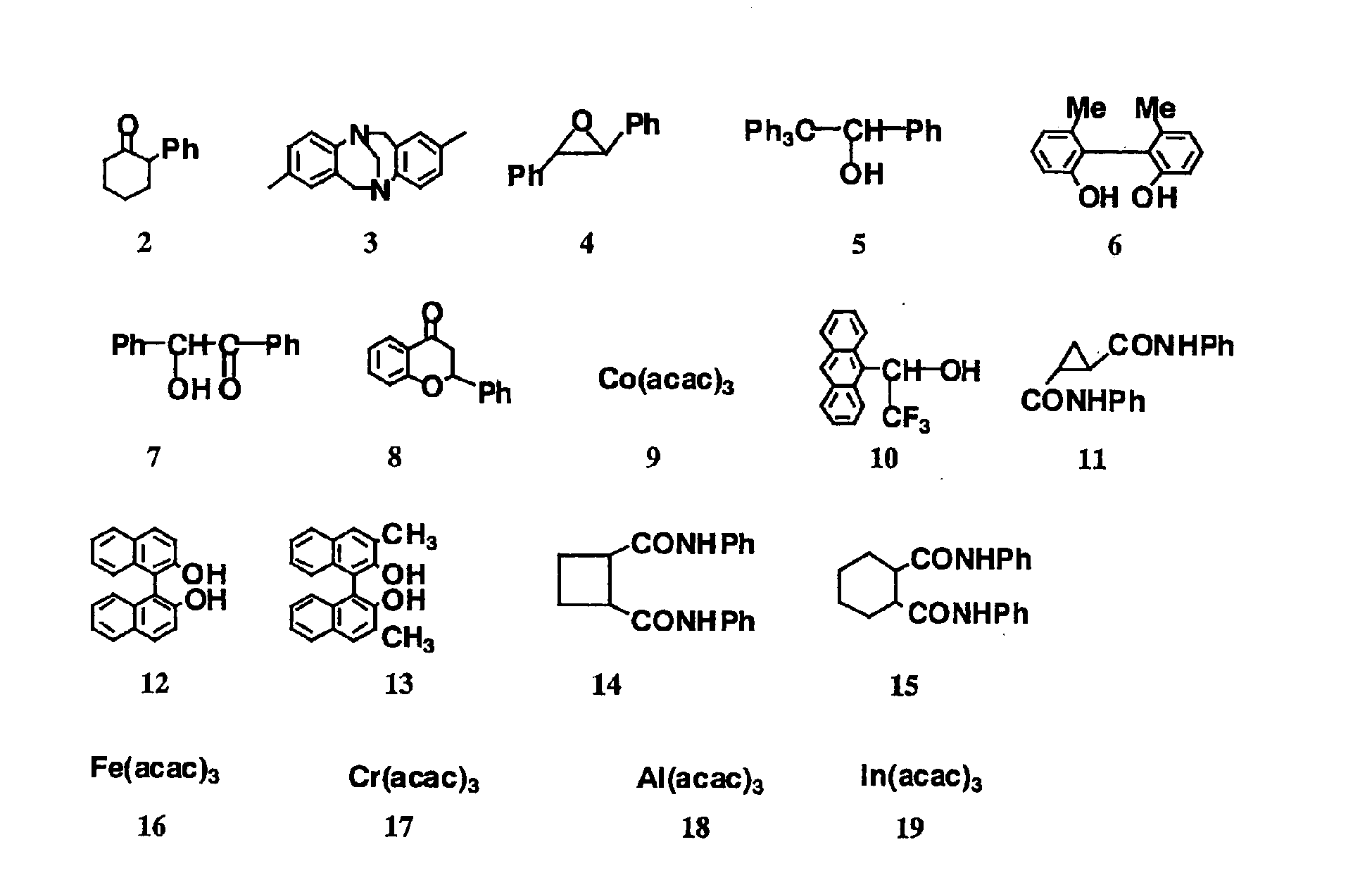
- The evaluation results of columns 1 to 4 are shown in Table 1, together with optical resolution abilities of derivatives whose 2-, 3-, and 6-positions were reacted with isocyanate (Comparative Examples 1 and 2), synthesized previously.
Table 1 Isocyanate to 3-,6-positions 


Anhydride to 2-position 


Column 1 Column 3 Com. Ex. 1 Column 2 Column 4 Com. Ex. 2 k1' α k1' α k1' α k1' α k1' α k1' α 2 
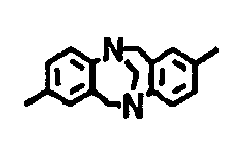
1.45(+) ~1 1.18(+) 1.07 0.53 (-) 1.10 1.25 (-) 1.11 1.01(-) 1.09 3.39 (-) 1 1.10 3 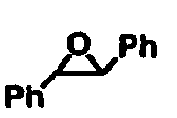
1.15(-) 1.23 0.88 (-) ~1 0.30 (+) ~1 0.82 (+) 1.22 0.64 (+) 1.28 1.53 (-) 1 1.08 4 0.5(+) ~1 0.34 (+) ~1 0.22 (+) -1 0.35 (-) -1 0.22 (+) 1.20 0.67 (+) - 5 

1.26(+) 1.19 1.14(+) ~1 0.56 (+) 1.27 0.98 (-) ~1 0.53 (+) 1.12 2.04 1 1.00 6 2.74 (+) 1.27 2.41 (+) 1.37 1.31 (-) 1.17 1.57 (+) ~1 2.01 (+) ~1 1.75 (-) 1 1.10 7 

3.72 (+) -1 3.65 (+) ~1 1.73 (-) 1.07 3.31 (-) 1.26 2.74 (-) 1.17 5.43 1 1.00 8 230 (-) 1.27 1.95(-) 1.30 0.65 (-) 1.11 2.32 (+) 1.11 1.56(-) 1.20 2.44 1 1.00 9 Co(acac)3 1.67(+) 1.12 0.83 (+) -1 0.39 (+) ~1 1.12 (+) 1.44 0.52(+) 1.84 2.61 (+) 1 1.06 10 

1.79(+) 1.12 1.81 (+) ~1 1.49 (-) 1.15 0.57 1.00 0.53 1.00 0.76 (-) 1 1.14 11 1.83(+) -1 1.56 1.00 0.90 (-) 1.33 0.75 (+) 1.46 0.80 (+) 1.38 0.92 (+) ~1 12 

10.2(+) 1.38 8.15(+) 1.61 - - - - 13 1.32 (+) 352 0.94 1.00 - - - - 14 
- - - 1.10 (+) 1.28 1.12 (+) 1.38 - 15 
- - - - 0.43 (+) 1.00 - 16 Fe(acac)3 - - - 0.51 1.00 0.48 1.00 - 17 Cr(acac)3 - - - 0.81(-) 1.23 0.44 (-) 1.51 - Eluent : Hexane/IPA=9/1, Flow rate : 0.5 ml/min, Column : 25 x 0.46 (i.d.) cm. -

- A chitosan derivative was produced according to the above reaction formula. First, for N-acylation of 0.20g of chitosan (which was obtained by repeatedly (three times) deacetylating chitosan of wako-100 (manufactured by Wako Pure Chemical Industries, Ltd.) at 120°C for 2 hours in an aqueous 50% NaOH solution), 0.54 g of cis-1,2-cyclohexanedicarboxylic anhydride was added under acidic conditions for reaction for 11 hours, and 0.51g of anhydride was added under basic conditions for reaction for 12 hours. The resultant was collected under acidic conditions, obtaining 0.26 g (68%) yield (MF2a-1). The resultant was heated at 220°C under reduced pressure for 5 hours, and then the progress of imidization was observed by IR (MF2b-1). 86 mg of the resultant was taken, and reacted with 0.24 g of 3,5-dimethylphenyl isocyanate in a dehydrated pyridine at 80°C. 21 hours later, 0.23 g of isocyanate was further added. The progress of the reaction was confirmed by IR after 27 hours and a methanol insoluble part was collected, but the reaction nonuniformly progressed to the end. The resultant was stirred and washed in DMSO, obtaining 62mg (37%yield) ofinsolublepart (MF2c-1).
- Since the reaction might not progress completely, 0.24 mg of a newly dried N-(1,2-cyclohexanedicarbonyl) chitosan was swollen in 0.75m1 of DMA. Then, 65 mg of LiCl, 0.4 ml of pyridine, and 0.21 g of isocyanate were added and reacted for 20 hours. Then, 0.22 g of isocyanate was newly added, but the reaction nonuniformly progressed. Then, 4 hours later, the resultant was collected as a methanol insoluble part, and 2.1 mg (40%) of the reaction product was obtained (MF2c-2).
-
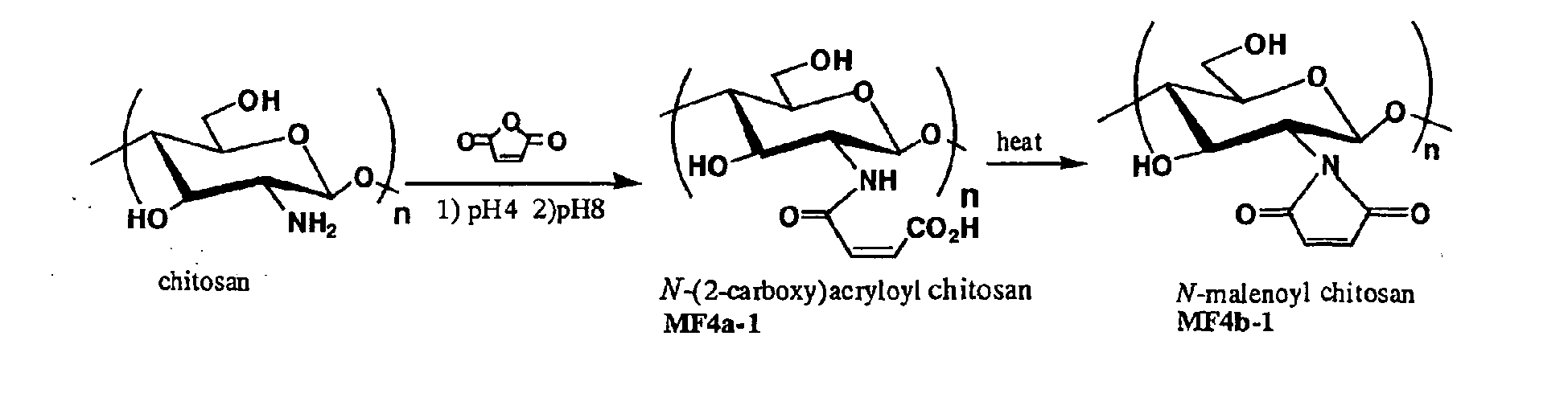
- A chitosan derivative was produced according to the above reaction formula. First, the reaction was performed as shown in the scheme of the following Method 1. 0.36 g of maleic anhydride was added to 0.21 g of chitosan under acidic conditions for reaction for 12 hours, and then 0.35 g of anhydride was added under basic conditions. However, the white precipitate which was deposited remained insoluble even after 12 hours. When the insoluble part and the soluble part were separated and only the soluble part was made acidic, the reaction apparently progressed was confirmed by IRspectrum, and27mg (8%) yield was obtained (MF4a-1). In contrast, no reaction progressed in the insoluble part, and the reaction was further performed. However, only a comparable yield was obtained from the soluble part and the insoluble part remained unreacted. Next, 17 mg of the resultant was heated under reduced pressure at 200°C for 5 hours, obtaining 15mg (95%) of a cyclic compound (MF4b-1).
-

- A chitosan derivative was produced according to the above reaction formula. 0.34 g of maleic anhydride was dissolved in 10 ml of mix solvent of DMF and water, and 0.20 g of chitosan was added, followed by subjected to half-reaction at 120°C for 8 hours. The resultant was poured in cold water, obtaining 0.23 g (77%) yield (MF4b-2).
- In this case, the progress of the reaction was confirmed. Thus, 98 mg of this derivative was dried at 200°C, and then 4 ml of pyridine and 240 mg of 3, 5-dimethylphenyl isocyanate were added for reaction. 21 hours later, due to a large amount of insoluble parts, 96 mg of isocyanate was added for reaction for a further 6 hours. However, the insoluble parts were not completely dissolved, and collected as an insoluble part of mixed solvents of methanol and water at a volume ratio of 5/1. The yield was 172 mg (80%) (MF4c-1).
- 3.6 g of 4-chlorolphthalic anhydride was dissolved in 30 ml of DMF/water at volume ratio of 95/5, and 1.0 g of chitosan was added. The mixture was stirred at 120°C for 8 hours, and thus a gel was formed. The resultant was poured in 200 mL of cold-water, and collected by centrifugal separation, followed by drying by heating using an oven at 200°C for 1.5 hours, obtaining 2.5 g (95%) yield (MF9b-2).
- 1.0 g of the resultant was dried, and then 15 ml of pyridine and 1.3 g of 3,5-dimethylphenyl isocyanate were added, followed by stirring. Since the viscosity increased 2 hours later, 7 mL of pyridine was added. 1.0 g of isocyanate was added again 4 hours later, and the mixture was stirred for further 16 hours. The progress of the reaction was confirmed by IR, and then the resultant was re-precipitated in methanol and collected, obtaining 1.7 g (92%) yield (MF9c-2).
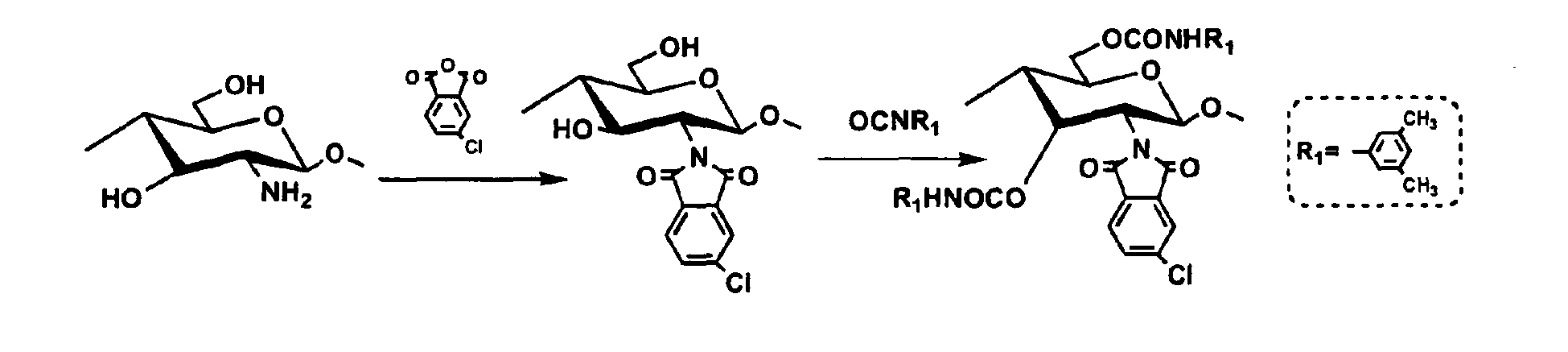
- 1.0 of MF9b-2 was dried in the same manner as in Example 9. Then, 15 ml of pyridine and 1.6 g of 3,5-diclorophenyl isocyanate were added, followed by stirring. 0.8 g of isocyanate was added again 6 hours later, and stirred for further 16 hours. The progress of the reaction was confirmed by IR, and then the resultant was re-precipitated in methanol and collected, obtaining 2.3 g (99%) yield (MF9d-2).

- 0.4 of MF9b-2 was dried in the same manner as in Example 9. Then, 8 ml of pyridine and 1.2 g of 3,4-diclorophenyl isocyanate were added, followed by stirring at 80°C. 0.8 g of isocyanate was added again 11 hours later, and stirred for further 10 hours. The progress of the reaction was confirmed by IR, and then the resultant was re-precipitated in methanol and collected, obtaining 0.80 g (95%) yield (MF9q-1).

- 5.7 g of phthalic anhydride was dissolved in 120 ml of DMF/water at volume ratio of 95/5, and 2.0 g of chitosan was added. The mixture was stirred at 120°C for 20 hours, and thus a gel was formed. The resultant was poured in 200 mL of cold-water, and collected by centrifugal separation, obtaining 3.3 g (90%) yield (MF1b-9).
- 1.0 g of the resultant was dried, and then 20 ml of pyridine and 1.7 g of 3,4-dimethylphenyl isocyanate were added, followed by stirring. 1.2 g of isocyanate was added again hours later, and the mixture was stirred for further 12 hours. The progress of the reaction was confirmed by IR, and then the resultant was re-precipitated in methanol and collected, obtaining 2.4 g (99%) yield (MF1q-1).

- 6.0 g of (4-methyl)phthalic anhydride was dissolved in 120 ml of DMF/water at volume ratio of 95/5, and 2.0 g of chitosan was added. The mixture was stirred at 120°C for 11 hours, and thus a gel was formed. A supernatant was removed, the resultant was poured in 200 mL of cold-water and collected by centrifugal separation, obtaining 3.3 g (86%) yield (MF5b-5).
- 1.0 g of the resultant was dried, and then 20 ml of pyridine and 1.7 g of 3,4-dimethylphenyl isocyanate were added, followed by stirring at 80°C. Then, the viscosity increased 14 hours later, and therefore 10 mL of pyridine and 0.5 g of isocyanate were added, followed by stirring for further 8 hours. The progress of the reaction was confirmed by IR, and then the resultant was re-precipitated in methanol and collected, obtaining 2.3 g yield. A DMSO insoluble part was removed, and then the resultant was precipitated again in methanol, followed by drying, thereby obtaining 1.6 g (72%) yield (MF5q-1-re).

- The chitosan derivatives obtained in Examples 9 to 13 were applied to silica gel in the same manner as in Example 5, and the resultant was packed in a column (inner diameter of 0.46 cm). The column was referred to as follows.
- N-(4-chloro)phthaloyl chitosan tris(3,5-dimethylphenylcarbamate) (MF9c-2) → MFp-25
- N-(4-chloro)phthaloyl chitosan tris(3,5-dichlorophenylcarbamate) (MF9d-2) → MFp-26
- N-(4-chloro)phthaloyl chitosan tris(3,4-dichlorophenylcarbamate) (MF9q-1) → MFp-27
- N-phthaloyl chitosan tris(3,4-dichlorophenylcarbamate) (MF1q-1) → MFp-18
- N-(4-methyl)phthaloyl chitosan tris(3,4-dichlorophenylcarbamate) (MF5q-1-re) → MFp-19
- Each column of Example 14 was evaluated for the optical resolution performance of a chiral stationary phase in the same manner as in Application Example 1. The evaluation results are shown below.
Table 2. Resolution of Racemates on N-Phthaloyl Chitosan 3,6-Bis(phenylcarbamate) MFp-25 MFp-26 MFp-27 MFp-18 MFp-19 k1' α k1' α k1' α k1' α k1' α 2 1.21 1.00 2.39 (-) ~1 1.95 (-) ~1 1.67 (-) ~1 1.69 (-) ~1 3 1.02(+) 1.15 1.25(+) 1.23 0.92(+) 1.17 0.80(+) 1.09 0.71 (+) 1.18 4 0.42 (+) ~1 0.48 (+) 1.10 0.38 (+) ~1 0.30 (+) 1.15 0.33 (+) 3.26 5 1.03 (+) 1.08 0.84 (+) 1.26 0.76 (+) ~1 0.76 (+) ~1 0.75 (+) ~1 6 2.67 (+) 1.13 1.94(+) 1.14 1.69 (+) 1.09 0.82 (+) 1.18 0.96 (+) 1.07 7 3.18 (-) 1.07 4.97(-) 1.57 3.69 (-) 1.12 2.92(-) 1.08 3.34(-) 1.14 8 1.89(-) 1.25 3.07 (-) 1.11 2.22 (-) 1.10 1.88(-) 1.05 1.92(-) 1.05 9 0.97 (+) 1.25 1.50 (+) 1.42 1.64 (+) 1.42 1.53 (+) 1.54 0.96 (+) 1.45 10 1.38 1.00 0.68 1.00 0.63 1.00 0.66 1.00 0.85 1.00 11 1.41 (+) -1 1.08 (+) 1.53 0.89 (+) 1.63 0.88 (+) 1.71 0.93 (+) 1.78 Column : 25 x 0.46 (i.d.)cm, Flow rate : 0.5ml/min, Eluent : Hex / IPA=90 /10. 
Claims (9)
- A chitosan derivative represented by Formula (I),

- The chitosan derivative according to Claim 1, wherein R1 in Formula (I) is selected from the following formulae.

- The chitosan derivative according to Claim 1 or 2, wherein R2 in Formula (I) is a carbamate derivative or an ester derivative.
- The chitosan derivative according to Claim 1 or 2, wherein R2 in Formula (I) is an aromatic carbamate derivative or an aromatic ester derivative.
- The chitosan derivative according to Claim 1 or 2, wherein R2 in Formula (I) is represented by the following formula,

- A method of producing the chitosan derivative according to any one of claims 1 to 5, comprising the steps of:imidizing an amino group at the 2-position of chitosan; andreacting hydroxyl groups at the 3- and 6-positions of the chitosan with a compound selected from an isocyanic acid derivative, a carboxylic acid, an ester compound, an acid halide, an acid amide compound, a halide compound, an aldehyde and an alcohol.
- A separating agent for an enantiomeric isomer, comprising the chitosan derivative according to any one of Claims 1 to 5.
- Use of the chitosan derivative according to any one of Claims 1 to 5 for a separating agent for an enantiomeric isomer.
- A method of separating an enantiomeric isomer using the chitosan derivative according to any one of Claims 1 to 5.
Applications Claiming Priority (2)
| Application Number | Priority Date | Filing Date | Title |
|---|---|---|---|
| JP2005135644 | 2005-05-09 | ||
| PCT/JP2006/309357 WO2006121059A1 (en) | 2005-05-09 | 2006-04-28 | Chitosan derivative and method for producing same |
Publications (3)
| Publication Number | Publication Date |
|---|---|
| EP1881009A1 true EP1881009A1 (en) | 2008-01-23 |
| EP1881009A4 EP1881009A4 (en) | 2013-04-24 |
| EP1881009B1 EP1881009B1 (en) | 2015-01-07 |
Family
ID=37396567
Family Applications (1)
| Application Number | Title | Priority Date | Filing Date |
|---|---|---|---|
| EP06732509.2A Expired - Lifetime EP1881009B1 (en) | 2005-05-09 | 2006-04-28 | Chitosan derivative and method for producing same |
Country Status (6)
| Country | Link |
|---|---|
| US (1) | US7772382B2 (en) |
| EP (1) | EP1881009B1 (en) |
| JP (1) | JP5070596B2 (en) |
| KR (1) | KR20080007312A (en) |
| CN (1) | CN101180318B (en) |
| WO (1) | WO2006121059A1 (en) |
Families Citing this family (13)
| Publication number | Priority date | Publication date | Assignee | Title |
|---|---|---|---|---|
| KR101122163B1 (en) * | 2009-12-01 | 2012-03-16 | (주)셀인바이오 | Hyaluronic acid derivative with atopic dermatitis treating effect and method of preparing the same |
| CN102351963A (en) * | 2011-10-25 | 2012-02-15 | 广东药学院 | Preparation method of galactosylated fatty acylchitosan |
| KR101331912B1 (en) * | 2012-04-06 | 2013-11-21 | 원광대학교산학협력단 | O-benzoyl chitosan derivative and method for preparing the same |
| CA2820236C (en) | 2012-06-15 | 2022-07-19 | The Royal Institution For The Advancement Of Learning/Mcgill University | Non-viral nanoparticle-based delivery system |
| IN2015DN02055A (en) | 2012-09-17 | 2015-08-14 | Grace W R & Co | |
| EP3137209B1 (en) | 2014-05-02 | 2022-10-05 | W.R. Grace & CO. - CONN. | Functionalized support material and methods of making and using functionalized support material |
| CN104311700B (en) * | 2014-10-29 | 2017-07-11 | 武汉工程大学 | Shitosan two (aromatic radical carbamate) (acid amides) and preparation method thereof |
| SG10201911134QA (en) | 2015-06-05 | 2020-01-30 | Grace W R & Co | Adsorbent bioprocessing clarification agents and methods of making and using the same |
| DE102016004432A1 (en) | 2016-04-12 | 2017-10-12 | Sartorius Stedim Biotech Gmbh | Multimodal adsorption medium with multimodal ligands, process for its preparation and its use |
| CN108559009A (en) * | 2017-09-26 | 2018-09-21 | 西南石油大学 | A kind of preparation method of phthaloyl chitosan |
| CN107619446A (en) * | 2017-09-26 | 2018-01-23 | 西南石油大学 | A kind of preparation method of maleylation phthalyl chitosan |
| CN112358554B (en) * | 2020-10-30 | 2022-09-09 | 苏州棠华纳米科技有限公司 | Cross-linking agent for water-repellent and oil-repellent finishing, and preparation method and application thereof |
| CN113786816A (en) * | 2021-09-30 | 2021-12-14 | 长江生态环保集团有限公司 | Preparation method and application of modified natural cellulose adsorbent for repairing cadmium-polluted soil |
Family Cites Families (11)
| Publication number | Priority date | Publication date | Assignee | Title |
|---|---|---|---|---|
| US4861872A (en) | 1986-03-20 | 1989-08-29 | Daicel Chemical Industries, Ltd. | Alkyl-phenylcarbamate derivative of polysaccharide |
| JPH0813844B2 (en) * | 1986-03-20 | 1996-02-14 | ダイセル化学工業株式会社 | Alkyl-substituted phenylcarbamate derivatives of polysaccharides |
| US4912205A (en) | 1986-03-20 | 1990-03-27 | Daicel Chemical Industries, Ltd. | Alkyl-substituted phenylcarbamate derivative of polysaccharide |
| JP2669554B2 (en) * | 1989-01-20 | 1997-10-29 | ダイセル化学工業株式会社 | Novel polysaccharide derivatives and separating agents |
| JP2983576B2 (en) * | 1990-03-30 | 1999-11-29 | 理化学研究所 | Chitooligosaccharide derivatives and synthetic intermediates thereof |
| JP3041116B2 (en) | 1991-12-17 | 2000-05-15 | ダイセル化学工業株式会社 | Separating agent |
| JP4441829B2 (en) | 1999-03-30 | 2010-03-31 | 日立化成工業株式会社 | Method for producing chitin derivatives |
| JP4750265B2 (en) | 2000-11-02 | 2011-08-17 | ダイセル化学工業株式会社 | Chitin derivatives containing fluorine in the substituent |
| JP4254120B2 (en) * | 2002-04-01 | 2009-04-15 | 凸版印刷株式会社 | Method for producing oxidized chitosan |
| JP2005017174A (en) | 2003-06-27 | 2005-01-20 | Daicel Chem Ind Ltd | Separating agent for optical isomers |
| JP4518804B2 (en) | 2004-01-15 | 2010-08-04 | 独立行政法人科学技術振興機構 | 6-amino-6-deoxychitosan, process for producing the same and nucleic acid introduction agent comprising the same |
-
2006
- 2006-04-28 EP EP06732509.2A patent/EP1881009B1/en not_active Expired - Lifetime
- 2006-04-28 US US11/887,521 patent/US7772382B2/en active Active
- 2006-04-28 KR KR1020077019401A patent/KR20080007312A/en not_active Ceased
- 2006-04-28 WO PCT/JP2006/309357 patent/WO2006121059A1/en not_active Ceased
- 2006-04-28 CN CN2006800160019A patent/CN101180318B/en not_active Expired - Fee Related
- 2006-04-28 JP JP2007528294A patent/JP5070596B2/en not_active Expired - Lifetime
Non-Patent Citations (3)
| Title |
|---|
| K. Deeleep Rout ET AL: "Cholesteric Mesophases Formed by the Modified Biological Macromolecule 3,6- 0- (Butyl Carbamate) -N-p ht halo yl Chi tosan", , vol. 27 1 March 1994 (1994-03-01), 1 May 1994 (1994-05-01), pages 2945-2950, XP055056643, Retrieved from the Internet: URL:http://pubs.acs.org/doi/pdf/10.1021/ma00089a009 [retrieved on 2013-03-14] * |
| OKAMOTO Y ET AL: "Enantioseparation on 3,5-dichloro- and 3,5-dimethylphenylcarbamates of polysaccharides as chiral stationary phases for high-performance liquid chromatography", REACTIVE & FUNCTIONAL POLYMERS, ELSEVIER SCIENCE PUBLISHERS BV, NL, vol. 37, no. 1-3, 1 June 1998 (1998-06-01) , pages 183-188, XP004127881, ISSN: 1381-5148, DOI: 10.1016/S1381-5148(97)00135-1 * |
| See also references of WO2006121059A1 * |
Also Published As
| Publication number | Publication date |
|---|---|
| US20090062519A1 (en) | 2009-03-05 |
| US7772382B2 (en) | 2010-08-10 |
| JPWO2006121059A1 (en) | 2008-12-18 |
| CN101180318A (en) | 2008-05-14 |
| KR20080007312A (en) | 2008-01-18 |
| JP5070596B2 (en) | 2012-11-14 |
| CN101180318B (en) | 2012-05-23 |
| EP1881009A4 (en) | 2013-04-24 |
| EP1881009B1 (en) | 2015-01-07 |
| WO2006121059A1 (en) | 2006-11-16 |
Similar Documents
| Publication | Publication Date | Title |
|---|---|---|
| EP1881009B1 (en) | Chitosan derivative and method for producing same | |
| EP0625524B1 (en) | Polysaccharides bonded to a porous carrier, process for preparing them and their use | |
| CN101632016B (en) | Optical isomer separating filler | |
| US8124712B2 (en) | Filler for optical isomer separation | |
| Le Dévédec et al. | Separation of chitosan oligomers by immobilized metal affinity chromatography | |
| US20090008329A1 (en) | Separating agent for enantiomeric isomers | |
| US5679572A (en) | Separation of chiral compounds on polysaccharide supports | |
| EP1632286B1 (en) | Separating agent for optical isomer | |
| EP2060588B1 (en) | Polysaccharide derivative and separating agent for optical isomer containing the same | |
| CN104311700A (en) | Chitosan-bi(aryl-carbamate)-(amide) and preparation method thereof | |
| EP0527235A1 (en) | Novel polysaccharide drivative and separating agent | |
| JP2751004B2 (en) | Novel polysaccharide derivative, its production method and its use | |
| EP2592095B1 (en) | Polysaccharide derivative, method for producing the same, and separating agent | |
| JP3041116B2 (en) | Separating agent | |
| JP2000297103A (en) | Method for producing chitin derivative | |
| JP7428706B2 (en) | Separating agent for chitosan compounds and optical isomers | |
| JP3148029B2 (en) | Method for producing polysaccharide derivative monomer | |
| JPH0725904A (en) | New substance, its production and use | |
| EP3296735B1 (en) | Separating agent for optical isomers | |
| JPH06206895A (en) | New oligosaccharide derivative, its production and its use |
Legal Events
| Date | Code | Title | Description |
|---|---|---|---|
| PUAI | Public reference made under article 153(3) epc to a published international application that has entered the european phase |
Free format text: ORIGINAL CODE: 0009012 |
|
| 17P | Request for examination filed |
Effective date: 20071029 |
|
| AK | Designated contracting states |
Kind code of ref document: A1 Designated state(s): DE FR GB IE SE |
|
| DAX | Request for extension of the european patent (deleted) | ||
| RBV | Designated contracting states (corrected) |
Designated state(s): DE FR GB IE SE |
|
| A4 | Supplementary search report drawn up and despatched |
Effective date: 20130325 |
|
| RIC1 | Information provided on ipc code assigned before grant |
Ipc: B01D 15/08 20060101ALI20130319BHEP Ipc: C08B 37/08 20060101AFI20130319BHEP Ipc: B01J 20/24 20060101ALI20130319BHEP |
|
| 17Q | First examination report despatched |
Effective date: 20140124 |
|
| GRAP | Despatch of communication of intention to grant a patent |
Free format text: ORIGINAL CODE: EPIDOSNIGR1 |
|
| INTG | Intention to grant announced |
Effective date: 20140828 |
|
| INTG | Intention to grant announced |
Effective date: 20140901 |
|
| RAP1 | Party data changed (applicant data changed or rights of an application transferred) |
Owner name: DAICEL CHEMICAL INDUSTRIES, LTD. Owner name: NATIONAL UNIVERSITY CORPORATION NAGOYA UNIVERSITY |
|
| GRAS | Grant fee paid |
Free format text: ORIGINAL CODE: EPIDOSNIGR3 |
|
| GRAA | (expected) grant |
Free format text: ORIGINAL CODE: 0009210 |
|
| AK | Designated contracting states |
Kind code of ref document: B1 Designated state(s): DE FR GB IE SE |
|
| REG | Reference to a national code |
Ref country code: GB Ref legal event code: FG4D |
|
| REG | Reference to a national code |
Ref country code: IE Ref legal event code: FG4D |
|
| REG | Reference to a national code |
Ref country code: DE Ref legal event code: R096 Ref document number: 602006044248 Country of ref document: DE Effective date: 20150226 |
|
| PG25 | Lapsed in a contracting state [announced via postgrant information from national office to epo] |
Ref country code: SE Free format text: LAPSE BECAUSE OF FAILURE TO SUBMIT A TRANSLATION OF THE DESCRIPTION OR TO PAY THE FEE WITHIN THE PRESCRIBED TIME-LIMIT Effective date: 20150107 |
|
| REG | Reference to a national code |
Ref country code: DE Ref legal event code: R097 Ref document number: 602006044248 Country of ref document: DE |
|
| PLBE | No opposition filed within time limit |
Free format text: ORIGINAL CODE: 0009261 |
|
| STAA | Information on the status of an ep patent application or granted ep patent |
Free format text: STATUS: NO OPPOSITION FILED WITHIN TIME LIMIT |
|
| 26N | No opposition filed |
Effective date: 20151008 |
|
| REG | Reference to a national code |
Ref country code: IE Ref legal event code: MM4A |
|
| REG | Reference to a national code |
Ref country code: FR Ref legal event code: PLFP Year of fee payment: 11 |
|
| PG25 | Lapsed in a contracting state [announced via postgrant information from national office to epo] |
Ref country code: IE Free format text: LAPSE BECAUSE OF NON-PAYMENT OF DUE FEES Effective date: 20150428 |
|
| REG | Reference to a national code |
Ref country code: FR Ref legal event code: PLFP Year of fee payment: 12 |
|
| REG | Reference to a national code |
Ref country code: FR Ref legal event code: PLFP Year of fee payment: 13 |
|
| PGFP | Annual fee paid to national office [announced via postgrant information from national office to epo] |
Ref country code: GB Payment date: 20220425 Year of fee payment: 17 Ref country code: FR Payment date: 20220425 Year of fee payment: 17 |
|
| GBPC | Gb: european patent ceased through non-payment of renewal fee |
Effective date: 20230428 |
|
| PG25 | Lapsed in a contracting state [announced via postgrant information from national office to epo] |
Ref country code: GB Free format text: LAPSE BECAUSE OF NON-PAYMENT OF DUE FEES Effective date: 20230428 |
|
| PG25 | Lapsed in a contracting state [announced via postgrant information from national office to epo] |
Ref country code: GB Free format text: LAPSE BECAUSE OF NON-PAYMENT OF DUE FEES Effective date: 20230428 Ref country code: FR Free format text: LAPSE BECAUSE OF NON-PAYMENT OF DUE FEES Effective date: 20230430 |
|
| PGFP | Annual fee paid to national office [announced via postgrant information from national office to epo] |
Ref country code: DE Payment date: 20240425 Year of fee payment: 19 |
|
| REG | Reference to a national code |
Ref country code: DE Ref legal event code: R119 Ref document number: 602006044248 Country of ref document: DE |
|
| PG25 | Lapsed in a contracting state [announced via postgrant information from national office to epo] |
Ref country code: DE Free format text: LAPSE BECAUSE OF NON-PAYMENT OF DUE FEES Effective date: 20251104 |