EP1878730A1 - Substituted isoxazolines, pharmaceutical compositions containing the same, methods of preparing the same, and uses of the same - Google Patents
Substituted isoxazolines, pharmaceutical compositions containing the same, methods of preparing the same, and uses of the same Download PDFInfo
- Publication number
- EP1878730A1 EP1878730A1 EP06090122A EP06090122A EP1878730A1 EP 1878730 A1 EP1878730 A1 EP 1878730A1 EP 06090122 A EP06090122 A EP 06090122A EP 06090122 A EP06090122 A EP 06090122A EP 1878730 A1 EP1878730 A1 EP 1878730A1
- Authority
- EP
- European Patent Office
- Prior art keywords
- alkyl
- hydroxy
- aryl
- heteroaryl
- substituent
- Prior art date
- Legal status (The legal status is an assumption and is not a legal conclusion. Google has not performed a legal analysis and makes no representation as to the accuracy of the status listed.)
- Withdrawn
Links
- 238000000034 method Methods 0.000 title claims abstract description 48
- 239000008194 pharmaceutical composition Chemical class 0.000 title claims abstract description 15
- 150000002547 isoxazolines Chemical class 0.000 title abstract description 18
- 208000037265 diseases, disorders, signs and symptoms Diseases 0.000 claims abstract description 55
- 201000010099 disease Diseases 0.000 claims abstract description 45
- 102000003964 Histone deacetylase Human genes 0.000 claims abstract description 33
- 108090000353 Histone deacetylase Proteins 0.000 claims abstract description 33
- 238000011282 treatment Methods 0.000 claims abstract description 23
- 150000003839 salts Chemical class 0.000 claims abstract description 14
- 238000004519 manufacturing process Methods 0.000 claims abstract description 4
- 125000004169 (C1-C6) alkyl group Chemical group 0.000 claims description 225
- -1 C1-C6-alkylsulfenyl Chemical group 0.000 claims description 219
- 125000003118 aryl group Chemical group 0.000 claims description 133
- 125000001072 heteroaryl group Chemical group 0.000 claims description 123
- 125000000882 C2-C6 alkenyl group Chemical group 0.000 claims description 110
- 125000000171 (C1-C6) haloalkyl group Chemical group 0.000 claims description 105
- 125000003601 C2-C6 alkynyl group Chemical group 0.000 claims description 104
- 125000004738 (C1-C6) alkyl sulfinyl group Chemical group 0.000 claims description 101
- 125000004739 (C1-C6) alkylsulfonyl group Chemical group 0.000 claims description 100
- 125000001424 substituent group Chemical group 0.000 claims description 92
- 125000000475 sulfinyl group Chemical group [*:2]S([*:1])=O 0.000 claims description 92
- 125000000472 sulfonyl group Chemical group *S(*)(=O)=O 0.000 claims description 92
- 150000001875 compounds Chemical class 0.000 claims description 90
- 125000004191 (C1-C6) alkoxy group Chemical group 0.000 claims description 79
- 125000004104 aryloxy group Chemical group 0.000 claims description 79
- 125000006700 (C1-C6) alkylthio group Chemical group 0.000 claims description 78
- 125000000449 nitro group Chemical group [O-][N+](*)=O 0.000 claims description 78
- 125000004890 (C1-C6) alkylamino group Chemical group 0.000 claims description 77
- 229910052739 hydrogen Inorganic materials 0.000 claims description 73
- 239000001257 hydrogen Substances 0.000 claims description 73
- 125000005553 heteroaryloxy group Chemical group 0.000 claims description 69
- 125000002924 primary amino group Chemical group [H]N([H])* 0.000 claims description 68
- UFHFLCQGNIYNRP-UHFFFAOYSA-N Hydrogen Chemical compound [H][H] UFHFLCQGNIYNRP-UHFFFAOYSA-N 0.000 claims description 52
- 125000005843 halogen group Chemical group 0.000 claims description 45
- 229910052799 carbon Inorganic materials 0.000 claims description 34
- 125000004646 sulfenyl group Chemical group S(*)* 0.000 claims description 24
- 125000004435 hydrogen atom Chemical group [H]* 0.000 claims description 22
- 229910052731 fluorine Inorganic materials 0.000 claims description 21
- GDTBXPJZTBHREO-UHFFFAOYSA-N bromine Chemical compound BrBr GDTBXPJZTBHREO-UHFFFAOYSA-N 0.000 claims description 17
- 206010028980 Neoplasm Diseases 0.000 claims description 15
- 201000011510 cancer Diseases 0.000 claims description 14
- 125000001153 fluoro group Chemical group F* 0.000 claims description 12
- 239000000460 chlorine Substances 0.000 claims description 10
- 125000004093 cyano group Chemical group *C#N 0.000 claims description 10
- 208000035475 disorder Diseases 0.000 claims description 10
- 229910052740 iodine Inorganic materials 0.000 claims description 10
- ZCYVEMRRCGMTRW-UHFFFAOYSA-N 7553-56-2 Chemical group [I] ZCYVEMRRCGMTRW-UHFFFAOYSA-N 0.000 claims description 9
- 201000004681 Psoriasis Diseases 0.000 claims description 9
- 229910052794 bromium Inorganic materials 0.000 claims description 9
- 229910052801 chlorine Inorganic materials 0.000 claims description 9
- 150000002148 esters Chemical class 0.000 claims description 9
- 239000011737 fluorine Substances 0.000 claims description 9
- KZBUYRJDOAKODT-UHFFFAOYSA-N Chlorine Chemical compound ClCl KZBUYRJDOAKODT-UHFFFAOYSA-N 0.000 claims description 8
- PXGOKWXKJXAPGV-UHFFFAOYSA-N Fluorine Chemical compound FF PXGOKWXKJXAPGV-UHFFFAOYSA-N 0.000 claims description 8
- 206010039073 rheumatoid arthritis Diseases 0.000 claims description 8
- 208000017442 Retinal disease Diseases 0.000 claims description 7
- 230000005764 inhibitory process Effects 0.000 claims description 7
- MZRVEZGGRBJDDB-UHFFFAOYSA-N N-Butyllithium Chemical compound [Li]CCCC MZRVEZGGRBJDDB-UHFFFAOYSA-N 0.000 claims description 6
- 230000004663 cell proliferation Effects 0.000 claims description 6
- 238000001727 in vivo Methods 0.000 claims description 6
- 208000027866 inflammatory disease Diseases 0.000 claims description 6
- 208000015122 neurodegenerative disease Diseases 0.000 claims description 6
- 206010003210 Arteriosclerosis Diseases 0.000 claims description 5
- 208000003495 Coccidiosis Diseases 0.000 claims description 5
- 206010012689 Diabetic retinopathy Diseases 0.000 claims description 5
- 206010017533 Fungal infection Diseases 0.000 claims description 5
- 208000010412 Glaucoma Diseases 0.000 claims description 5
- 208000023105 Huntington disease Diseases 0.000 claims description 5
- AVXURJPOCDRRFD-UHFFFAOYSA-N Hydroxylamine Chemical compound ON AVXURJPOCDRRFD-UHFFFAOYSA-N 0.000 claims description 5
- 206010020751 Hypersensitivity Diseases 0.000 claims description 5
- 206010023076 Isosporiasis Diseases 0.000 claims description 5
- 206010023335 Keratitis interstitial Diseases 0.000 claims description 5
- 208000031888 Mycoses Diseases 0.000 claims description 5
- 208000030852 Parasitic disease Diseases 0.000 claims description 5
- 206010037075 Protozoal infections Diseases 0.000 claims description 5
- 206010043395 Thalassaemia sickle cell Diseases 0.000 claims description 5
- 201000005485 Toxoplasmosis Diseases 0.000 claims description 5
- 206010067584 Type 1 diabetes mellitus Diseases 0.000 claims description 5
- 230000007815 allergy Effects 0.000 claims description 5
- 208000007502 anemia Diseases 0.000 claims description 5
- 230000033115 angiogenesis Effects 0.000 claims description 5
- 208000011775 arteriosclerosis disease Diseases 0.000 claims description 5
- 208000035269 cancer or benign tumor Diseases 0.000 claims description 5
- 208000019425 cirrhosis of liver Diseases 0.000 claims description 5
- 230000000893 fibroproliferative effect Effects 0.000 claims description 5
- 230000002538 fungal effect Effects 0.000 claims description 5
- 230000003394 haemopoietic effect Effects 0.000 claims description 5
- 230000008102 immune modulation Effects 0.000 claims description 5
- 201000006904 interstitial keratitis Diseases 0.000 claims description 5
- 206010025135 lupus erythematosus Diseases 0.000 claims description 5
- 208000002780 macular degeneration Diseases 0.000 claims description 5
- 201000004792 malaria Diseases 0.000 claims description 5
- 208000037803 restenosis Diseases 0.000 claims description 5
- 208000007056 sickle cell anemia Diseases 0.000 claims description 5
- 210000000329 smooth muscle myocyte Anatomy 0.000 claims description 5
- 206010020880 Hypertrophy Diseases 0.000 claims description 3
- 210000004413 cardiac myocyte Anatomy 0.000 claims description 3
- 150000002431 hydrogen Chemical class 0.000 claims 10
- 206010007559 Cardiac failure congestive Diseases 0.000 claims 2
- 206010019280 Heart failures Diseases 0.000 claims 2
- 230000007170 pathology Effects 0.000 claims 2
- 208000028172 protozoa infectious disease Diseases 0.000 claims 2
- 239000003085 diluting agent Substances 0.000 claims 1
- 239000003276 histone deacetylase inhibitor Substances 0.000 abstract description 25
- 230000000694 effects Effects 0.000 abstract description 11
- 230000001404 mediated effect Effects 0.000 abstract description 6
- 208000024891 symptom Diseases 0.000 abstract description 6
- XEKOWRVHYACXOJ-UHFFFAOYSA-N Ethyl acetate Chemical compound CCOC(C)=O XEKOWRVHYACXOJ-UHFFFAOYSA-N 0.000 description 41
- 125000004432 carbon atom Chemical group C* 0.000 description 26
- HEDRZPFGACZZDS-MICDWDOJSA-N Trichloro(2H)methane Chemical compound [2H]C(Cl)(Cl)Cl HEDRZPFGACZZDS-MICDWDOJSA-N 0.000 description 22
- VLKZOEOYAKHREP-UHFFFAOYSA-N n-Hexane Chemical compound CCCCCC VLKZOEOYAKHREP-UHFFFAOYSA-N 0.000 description 21
- 238000005160 1H NMR spectroscopy Methods 0.000 description 18
- 239000000243 solution Substances 0.000 description 18
- LFQSCWFLJHTTHZ-UHFFFAOYSA-N Ethanol Chemical compound CCO LFQSCWFLJHTTHZ-UHFFFAOYSA-N 0.000 description 16
- WYURNTSHIVDZCO-UHFFFAOYSA-N Tetrahydrofuran Chemical compound C1CCOC1 WYURNTSHIVDZCO-UHFFFAOYSA-N 0.000 description 16
- ZMXDDKWLCZADIW-UHFFFAOYSA-N N,N-Dimethylformamide Chemical compound CN(C)C=O ZMXDDKWLCZADIW-UHFFFAOYSA-N 0.000 description 15
- 239000011541 reaction mixture Substances 0.000 description 15
- 235000019439 ethyl acetate Nutrition 0.000 description 14
- DTQVDTLACAAQTR-UHFFFAOYSA-N Trifluoroacetic acid Chemical compound OC(=O)C(F)(F)F DTQVDTLACAAQTR-UHFFFAOYSA-N 0.000 description 13
- XLYOFNOQVPJJNP-UHFFFAOYSA-N water Substances O XLYOFNOQVPJJNP-UHFFFAOYSA-N 0.000 description 13
- 239000000203 mixture Substances 0.000 description 12
- NEAQRZUHTPSBBM-UHFFFAOYSA-N 2-hydroxy-3,3-dimethyl-7-nitro-4h-isoquinolin-1-one Chemical compound C1=C([N+]([O-])=O)C=C2C(=O)N(O)C(C)(C)CC2=C1 NEAQRZUHTPSBBM-UHFFFAOYSA-N 0.000 description 11
- 0 C*C(C(C)C)C(C(C)(C)NC(C)C(CC*CCC=C)C(C)(C)*)=O Chemical compound C*C(C(C)C)C(C(C)(C)NC(C)C(CC*CCC=C)C(C)(C)*)=O 0.000 description 11
- ZMANZCXQSJIPKH-UHFFFAOYSA-N Triethylamine Chemical compound CCN(CC)CC ZMANZCXQSJIPKH-UHFFFAOYSA-N 0.000 description 11
- WEVYAHXRMPXWCK-UHFFFAOYSA-N Acetonitrile Chemical compound CC#N WEVYAHXRMPXWCK-UHFFFAOYSA-N 0.000 description 9
- 102000004190 Enzymes Human genes 0.000 description 9
- 108090000790 Enzymes Proteins 0.000 description 9
- OKKJLVBELUTLKV-UHFFFAOYSA-N Methanol Chemical compound OC OKKJLVBELUTLKV-UHFFFAOYSA-N 0.000 description 9
- 239000012267 brine Substances 0.000 description 9
- 125000005842 heteroatom Chemical group 0.000 description 9
- HPALAKNZSZLMCH-UHFFFAOYSA-M sodium;chloride;hydrate Chemical compound O.[Na+].[Cl-] HPALAKNZSZLMCH-UHFFFAOYSA-M 0.000 description 9
- IJGRMHOSHXDMSA-UHFFFAOYSA-N Atomic nitrogen Chemical compound N#N IJGRMHOSHXDMSA-UHFFFAOYSA-N 0.000 description 8
- IAZDPXIOMUYVGZ-WFGJKAKNSA-N Dimethyl sulfoxide Chemical compound [2H]C([2H])([2H])S(=O)C([2H])([2H])[2H] IAZDPXIOMUYVGZ-WFGJKAKNSA-N 0.000 description 8
- 108010023925 Histone Deacetylase 6 Proteins 0.000 description 8
- 102100022537 Histone deacetylase 6 Human genes 0.000 description 8
- 239000007832 Na2SO4 Substances 0.000 description 8
- PMZURENOXWZQFD-UHFFFAOYSA-L Sodium Sulfate Chemical compound [Na+].[Na+].[O-]S([O-])(=O)=O PMZURENOXWZQFD-UHFFFAOYSA-L 0.000 description 8
- 239000002253 acid Substances 0.000 description 8
- 239000000543 intermediate Substances 0.000 description 8
- 239000012074 organic phase Substances 0.000 description 8
- 229910052938 sodium sulfate Inorganic materials 0.000 description 8
- 101001032118 Homo sapiens Histone deacetylase 8 Proteins 0.000 description 7
- 239000002246 antineoplastic agent Substances 0.000 description 7
- 238000003818 flash chromatography Methods 0.000 description 7
- 238000003756 stirring Methods 0.000 description 7
- NLXLAEXVIDQMFP-UHFFFAOYSA-N Ammonia chloride Chemical compound [NH4+].[Cl-] NLXLAEXVIDQMFP-UHFFFAOYSA-N 0.000 description 6
- 108010033040 Histones Proteins 0.000 description 6
- HEMHJVSKTPXQMS-UHFFFAOYSA-M Sodium hydroxide Chemical compound [OH-].[Na+] HEMHJVSKTPXQMS-UHFFFAOYSA-M 0.000 description 6
- RTKIYFITIVXBLE-UHFFFAOYSA-N Trichostatin A Natural products ONC(=O)C=CC(C)=CC(C)C(=O)C1=CC=C(N(C)C)C=C1 RTKIYFITIVXBLE-UHFFFAOYSA-N 0.000 description 6
- 125000000217 alkyl group Chemical group 0.000 description 6
- 238000003556 assay Methods 0.000 description 6
- 239000002585 base Substances 0.000 description 6
- 125000000753 cycloalkyl group Chemical group 0.000 description 6
- 238000000746 purification Methods 0.000 description 6
- 239000000758 substrate Substances 0.000 description 6
- 239000000725 suspension Substances 0.000 description 6
- RTKIYFITIVXBLE-QEQCGCAPSA-N trichostatin A Chemical compound ONC(=O)/C=C/C(/C)=C/[C@@H](C)C(=O)C1=CC=C(N(C)C)C=C1 RTKIYFITIVXBLE-QEQCGCAPSA-N 0.000 description 6
- RTZKZFJDLAIYFH-UHFFFAOYSA-N Diethyl ether Chemical compound CCOCC RTZKZFJDLAIYFH-UHFFFAOYSA-N 0.000 description 5
- 102100038715 Histone deacetylase 8 Human genes 0.000 description 5
- VEXZGXHMUGYJMC-UHFFFAOYSA-N Hydrochloric acid Chemical compound Cl VEXZGXHMUGYJMC-UHFFFAOYSA-N 0.000 description 5
- JUJWROOIHBZHMG-UHFFFAOYSA-N Pyridine Chemical group C1=CC=NC=C1 JUJWROOIHBZHMG-UHFFFAOYSA-N 0.000 description 5
- 239000007864 aqueous solution Substances 0.000 description 5
- 125000000732 arylene group Chemical group 0.000 description 5
- 125000004429 atom Chemical group 0.000 description 5
- 210000004027 cell Anatomy 0.000 description 5
- 239000013078 crystal Substances 0.000 description 5
- YMWUJEATGCHHMB-UHFFFAOYSA-N dichloromethane Natural products ClCCl YMWUJEATGCHHMB-UHFFFAOYSA-N 0.000 description 5
- 239000003814 drug Substances 0.000 description 5
- 229940079593 drug Drugs 0.000 description 5
- 229910052757 nitrogen Inorganic materials 0.000 description 5
- IRVTZKIIDQUXLU-UHFFFAOYSA-N 1-[3-(azidomethyl)phenyl]-4,4,4-trifluorobutane-1,3-dione Chemical compound FC(F)(F)C(=O)CC(=O)C1=CC=CC(CN=[N+]=[N-])=C1 IRVTZKIIDQUXLU-UHFFFAOYSA-N 0.000 description 4
- YGQKDCBOTGPUET-UHFFFAOYSA-N 3-[4-(aminomethyl)phenyl]-5-(trifluoromethyl)-4h-1,2-oxazol-5-ol Chemical compound C1=CC(CN)=CC=C1C1=NOC(O)(C(F)(F)F)C1 YGQKDCBOTGPUET-UHFFFAOYSA-N 0.000 description 4
- VHYFNPMBLIVWCW-UHFFFAOYSA-N 4-Dimethylaminopyridine Chemical compound CN(C)C1=CC=NC=C1 VHYFNPMBLIVWCW-UHFFFAOYSA-N 0.000 description 4
- HBAQYPYDRFILMT-UHFFFAOYSA-N 8-[3-(1-cyclopropylpyrazol-4-yl)-1H-pyrazolo[4,3-d]pyrimidin-5-yl]-3-methyl-3,8-diazabicyclo[3.2.1]octan-2-one Chemical class C1(CC1)N1N=CC(=C1)C1=NNC2=C1N=C(N=C2)N1C2C(N(CC1CC2)C)=O HBAQYPYDRFILMT-UHFFFAOYSA-N 0.000 description 4
- YLQBMQCUIZJEEH-UHFFFAOYSA-N Furan Chemical compound C=1C=COC=1 YLQBMQCUIZJEEH-UHFFFAOYSA-N 0.000 description 4
- NINIDFKCEFEMDL-UHFFFAOYSA-N Sulfur Chemical compound [S] NINIDFKCEFEMDL-UHFFFAOYSA-N 0.000 description 4
- 239000005864 Sulphur Substances 0.000 description 4
- STSCVKRWJPWALQ-UHFFFAOYSA-N TRIFLUOROACETIC ACID ETHYL ESTER Chemical compound CCOC(=O)C(F)(F)F STSCVKRWJPWALQ-UHFFFAOYSA-N 0.000 description 4
- 125000003545 alkoxy group Chemical group 0.000 description 4
- 229940041181 antineoplastic drug Drugs 0.000 description 4
- QVGXLLKOCUKJST-UHFFFAOYSA-N atomic oxygen Chemical compound [O] QVGXLLKOCUKJST-UHFFFAOYSA-N 0.000 description 4
- 230000003197 catalytic effect Effects 0.000 description 4
- 239000012039 electrophile Substances 0.000 description 4
- 125000005549 heteroarylene group Chemical group 0.000 description 4
- 238000000589 high-performance liquid chromatography-mass spectrometry Methods 0.000 description 4
- 229940121372 histone deacetylase inhibitor Drugs 0.000 description 4
- 125000002887 hydroxy group Chemical group [H]O* 0.000 description 4
- 239000003112 inhibitor Substances 0.000 description 4
- 229910052760 oxygen Inorganic materials 0.000 description 4
- 239000001301 oxygen Substances 0.000 description 4
- 125000001997 phenyl group Chemical group [H]C1=C([H])C([H])=C(*)C([H])=C1[H] 0.000 description 4
- 230000003389 potentiating effect Effects 0.000 description 4
- 108090000623 proteins and genes Proteins 0.000 description 4
- 238000011160 research Methods 0.000 description 4
- 239000012453 solvate Substances 0.000 description 4
- 239000002904 solvent Substances 0.000 description 4
- WAEXFXRVDQXREF-UHFFFAOYSA-N vorinostat Chemical compound ONC(=O)CCCCCCC(=O)NC1=CC=CC=C1 WAEXFXRVDQXREF-UHFFFAOYSA-N 0.000 description 4
- 229960000237 vorinostat Drugs 0.000 description 4
- PPJXFOOCUKFTMD-UHFFFAOYSA-N 1-[3-(azidomethyl)phenyl]ethanone Chemical compound CC(=O)C1=CC=CC(CN=[N+]=[N-])=C1 PPJXFOOCUKFTMD-UHFFFAOYSA-N 0.000 description 3
- TZVOWUZAOVUUBP-UHFFFAOYSA-N 1-[3-(bromomethyl)phenyl]ethanone Chemical compound CC(=O)C1=CC=CC(CBr)=C1 TZVOWUZAOVUUBP-UHFFFAOYSA-N 0.000 description 3
- HUIRZAIQNPLLJM-UHFFFAOYSA-N 1-[4-(azidomethyl)phenyl]-4,4,4-trifluorobutane-1,3-dione Chemical compound FC(F)(F)C(=O)CC(=O)C1=CC=C(CN=[N+]=[N-])C=C1 HUIRZAIQNPLLJM-UHFFFAOYSA-N 0.000 description 3
- HARITLZHGNEHDS-UHFFFAOYSA-N 1-[4-(bromomethyl)phenyl]ethanone Chemical compound CC(=O)C1=CC=C(CBr)C=C1 HARITLZHGNEHDS-UHFFFAOYSA-N 0.000 description 3
- PAQZWJGSJMLPMG-UHFFFAOYSA-N 2,4,6-tripropyl-1,3,5,2$l^{5},4$l^{5},6$l^{5}-trioxatriphosphinane 2,4,6-trioxide Chemical compound CCCP1(=O)OP(=O)(CCC)OP(=O)(CCC)O1 PAQZWJGSJMLPMG-UHFFFAOYSA-N 0.000 description 3
- OZAIFHULBGXAKX-UHFFFAOYSA-N 2-(2-cyanopropan-2-yldiazenyl)-2-methylpropanenitrile Chemical compound N#CC(C)(C)N=NC(C)(C)C#N OZAIFHULBGXAKX-UHFFFAOYSA-N 0.000 description 3
- CWONNYXZQIQLKC-UHFFFAOYSA-N 3-(4-hydroxyphenyl)-5-(trifluoromethyl)-4H-1,2-oxazol-5-ol Chemical compound C1=CC(O)=CC=C1C1=NOC(O)(C(F)(F)F)C1 CWONNYXZQIQLKC-UHFFFAOYSA-N 0.000 description 3
- IVXGLNYZQMCIJQ-UHFFFAOYSA-N 3-(4-phenylmethoxyphenyl)-5-(trifluoromethyl)-4h-1,2-oxazol-5-ol Chemical compound O1C(O)(C(F)(F)F)CC(C=2C=CC(OCC=3C=CC=CC=3)=CC=2)=N1 IVXGLNYZQMCIJQ-UHFFFAOYSA-N 0.000 description 3
- FPQQSJJWHUJYPU-UHFFFAOYSA-N 3-(dimethylamino)propyliminomethylidene-ethylazanium;chloride Chemical compound Cl.CCN=C=NCCCN(C)C FPQQSJJWHUJYPU-UHFFFAOYSA-N 0.000 description 3
- NUKYOTMTJYHPLZ-UHFFFAOYSA-N 3-[3-(azidomethyl)phenyl]-5-(trifluoromethyl)-4h-1,2-oxazol-5-ol Chemical compound O1C(O)(C(F)(F)F)CC(C=2C=C(CN=[N+]=[N-])C=CC=2)=N1 NUKYOTMTJYHPLZ-UHFFFAOYSA-N 0.000 description 3
- YNQTXCJLLJXMAN-UHFFFAOYSA-N 3-[4-(azidomethyl)phenyl]-5-(trifluoromethyl)-4h-1,2-oxazol-5-ol Chemical compound O1C(O)(C(F)(F)F)CC(C=2C=CC(CN=[N+]=[N-])=CC=2)=N1 YNQTXCJLLJXMAN-UHFFFAOYSA-N 0.000 description 3
- ICPXKFWSKKAXBH-UHFFFAOYSA-N 4,4,4-trifluoro-1-(4-phenylmethoxyphenyl)butane-1,3-dione Chemical compound C1=CC(C(=O)CC(=O)C(F)(F)F)=CC=C1OCC1=CC=CC=C1 ICPXKFWSKKAXBH-UHFFFAOYSA-N 0.000 description 3
- WFDIJRYMOXRFFG-UHFFFAOYSA-N Acetic anhydride Chemical compound CC(=O)OC(C)=O WFDIJRYMOXRFFG-UHFFFAOYSA-N 0.000 description 3
- IAZDPXIOMUYVGZ-UHFFFAOYSA-N Dimethylsulphoxide Chemical compound CS(C)=O IAZDPXIOMUYVGZ-UHFFFAOYSA-N 0.000 description 3
- DGAQECJNVWCQMB-PUAWFVPOSA-M Ilexoside XXIX Chemical compound C[C@@H]1CC[C@@]2(CC[C@@]3(C(=CC[C@H]4[C@]3(CC[C@@H]5[C@@]4(CC[C@@H](C5(C)C)OS(=O)(=O)[O-])C)C)[C@@H]2[C@]1(C)O)C)C(=O)O[C@H]6[C@@H]([C@H]([C@@H]([C@H](O6)CO)O)O)O.[Na+] DGAQECJNVWCQMB-PUAWFVPOSA-M 0.000 description 3
- 238000005481 NMR spectroscopy Methods 0.000 description 3
- 108010029485 Protein Isoforms Proteins 0.000 description 3
- 102000001708 Protein Isoforms Human genes 0.000 description 3
- VYPSYNLAJGMNEJ-UHFFFAOYSA-N Silicium dioxide Chemical compound O=[Si]=O VYPSYNLAJGMNEJ-UHFFFAOYSA-N 0.000 description 3
- BVLKIYRBJDQJKY-UHFFFAOYSA-N [4-[5-hydroxy-5-(trifluoromethyl)-4h-1,2-oxazol-3-yl]phenyl] benzenesulfonate Chemical compound O1C(O)(C(F)(F)F)CC(C=2C=CC(OS(=O)(=O)C=3C=CC=CC=3)=CC=2)=N1 BVLKIYRBJDQJKY-UHFFFAOYSA-N 0.000 description 3
- CSCPPACGZOOCGX-WFGJKAKNSA-N acetone d6 Chemical compound [2H]C([2H])([2H])C(=O)C([2H])([2H])[2H] CSCPPACGZOOCGX-WFGJKAKNSA-N 0.000 description 3
- 206010064930 age-related macular degeneration Diseases 0.000 description 3
- 125000003342 alkenyl group Chemical group 0.000 description 3
- 125000002947 alkylene group Chemical group 0.000 description 3
- 125000000304 alkynyl group Chemical group 0.000 description 3
- 235000019270 ammonium chloride Nutrition 0.000 description 3
- 125000005605 benzo group Chemical group 0.000 description 3
- 125000003178 carboxy group Chemical group [H]OC(*)=O 0.000 description 3
- 125000001995 cyclobutyl group Chemical group [H]C1([H])C([H])([H])C([H])(*)C1([H])[H] 0.000 description 3
- 125000000113 cyclohexyl group Chemical group [H]C1([H])C([H])([H])C([H])([H])C([H])(*)C([H])([H])C1([H])[H] 0.000 description 3
- 125000001559 cyclopropyl group Chemical group [H]C1([H])C([H])([H])C1([H])* 0.000 description 3
- 229910052736 halogen Inorganic materials 0.000 description 3
- 150000002367 halogens Chemical class 0.000 description 3
- 125000000623 heterocyclic group Chemical group 0.000 description 3
- 125000000592 heterocycloalkyl group Chemical group 0.000 description 3
- 235000018977 lysine Nutrition 0.000 description 3
- 125000002950 monocyclic group Chemical group 0.000 description 3
- SYSQUGFVNFXIIT-UHFFFAOYSA-N n-[4-(1,3-benzoxazol-2-yl)phenyl]-4-nitrobenzenesulfonamide Chemical class C1=CC([N+](=O)[O-])=CC=C1S(=O)(=O)NC1=CC=C(C=2OC3=CC=CC=C3N=2)C=C1 SYSQUGFVNFXIIT-UHFFFAOYSA-N 0.000 description 3
- 229920000155 polyglutamine Polymers 0.000 description 3
- 108010040003 polyglutamine Proteins 0.000 description 3
- 235000018102 proteins Nutrition 0.000 description 3
- 102000004169 proteins and genes Human genes 0.000 description 3
- 125000006413 ring segment Chemical group 0.000 description 3
- 229920006395 saturated elastomer Polymers 0.000 description 3
- 239000000741 silica gel Substances 0.000 description 3
- 229910002027 silica gel Inorganic materials 0.000 description 3
- 239000011734 sodium Substances 0.000 description 3
- 229910052708 sodium Inorganic materials 0.000 description 3
- 239000000126 substance Substances 0.000 description 3
- LENZDBCJOHFCAS-UHFFFAOYSA-N tris Chemical compound OCC(N)(CO)CO LENZDBCJOHFCAS-UHFFFAOYSA-N 0.000 description 3
- 125000006376 (C3-C10) cycloalkyl group Chemical group 0.000 description 2
- LMDZBCPBFSXMTL-UHFFFAOYSA-N 1-Ethyl-3-(3-dimethylaminopropyl)carbodiimide Substances CCN=C=NCCCN(C)C LMDZBCPBFSXMTL-UHFFFAOYSA-N 0.000 description 2
- IIKMOGOALQUZKA-UHFFFAOYSA-N 1-[4-(azidomethyl)phenyl]ethanone Chemical compound CC(=O)C1=CC=C(CN=[N+]=[N-])C=C1 IIKMOGOALQUZKA-UHFFFAOYSA-N 0.000 description 2
- GQHTUMJGOHRCHB-UHFFFAOYSA-N 2,3,4,6,7,8,9,10-octahydropyrimido[1,2-a]azepine Chemical compound C1CCCCN2CCCN=C21 GQHTUMJGOHRCHB-UHFFFAOYSA-N 0.000 description 2
- HZAXFHJVJLSVMW-UHFFFAOYSA-N 2-Aminoethan-1-ol Chemical compound NCCO HZAXFHJVJLSVMW-UHFFFAOYSA-N 0.000 description 2
- KSZYRDXHNJVILB-UHFFFAOYSA-N 2-[4-[5-hydroxy-5-(trifluoromethyl)-4h-1,2-oxazol-3-yl]phenoxy]-n-phenylacetamide Chemical compound O1C(O)(C(F)(F)F)CC(C=2C=CC(OCC(=O)NC=3C=CC=CC=3)=CC=2)=N1 KSZYRDXHNJVILB-UHFFFAOYSA-N 0.000 description 2
- KIDRZBGXDRVJER-UHFFFAOYSA-N 3-[3-(aminomethyl)phenyl]-5-(trifluoromethyl)-4h-1,2-oxazol-5-ol Chemical compound NCC1=CC=CC(C=2CC(O)(ON=2)C(F)(F)F)=C1 KIDRZBGXDRVJER-UHFFFAOYSA-N 0.000 description 2
- WEQPBCSPRXFQQS-UHFFFAOYSA-N 4,5-dihydro-1,2-oxazole Chemical compound C1CC=NO1 WEQPBCSPRXFQQS-UHFFFAOYSA-N 0.000 description 2
- XQLCRQUMRJTWGO-UHFFFAOYSA-N 4-(dimethylamino)-n-[[4-[5-hydroxy-5-(trifluoromethyl)-4h-1,2-oxazol-3-yl]phenyl]methyl]benzamide Chemical compound C1=CC(N(C)C)=CC=C1C(=O)NCC1=CC=C(C=2CC(O)(ON=2)C(F)(F)F)C=C1 XQLCRQUMRJTWGO-UHFFFAOYSA-N 0.000 description 2
- OZAIFHULBGXAKX-VAWYXSNFSA-N AIBN Substances N#CC(C)(C)\N=N\C(C)(C)C#N OZAIFHULBGXAKX-VAWYXSNFSA-N 0.000 description 2
- XKRFYHLGVUSROY-UHFFFAOYSA-N Argon Chemical compound [Ar] XKRFYHLGVUSROY-UHFFFAOYSA-N 0.000 description 2
- HEDRZPFGACZZDS-UHFFFAOYSA-N Chloroform Chemical compound ClC(Cl)Cl HEDRZPFGACZZDS-UHFFFAOYSA-N 0.000 description 2
- OKKJLVBELUTLKV-MZCSYVLQSA-N Deuterated methanol Chemical compound [2H]OC([2H])([2H])[2H] OKKJLVBELUTLKV-MZCSYVLQSA-N 0.000 description 2
- YCKRFDGAMUMZLT-UHFFFAOYSA-N Fluorine atom Chemical compound [F] YCKRFDGAMUMZLT-UHFFFAOYSA-N 0.000 description 2
- 102000003893 Histone acetyltransferases Human genes 0.000 description 2
- 108090000246 Histone acetyltransferases Proteins 0.000 description 2
- 102000006947 Histones Human genes 0.000 description 2
- 241000282412 Homo Species 0.000 description 2
- WTDHULULXKLSOZ-UHFFFAOYSA-N Hydroxylamine hydrochloride Chemical compound Cl.ON WTDHULULXKLSOZ-UHFFFAOYSA-N 0.000 description 2
- KDXKERNSBIXSRK-YFKPBYRVSA-N L-lysine Chemical compound NCCCC[C@H](N)C(O)=O KDXKERNSBIXSRK-YFKPBYRVSA-N 0.000 description 2
- KDXKERNSBIXSRK-UHFFFAOYSA-N Lysine Natural products NCCCCC(N)C(O)=O KDXKERNSBIXSRK-UHFFFAOYSA-N 0.000 description 2
- 241001465754 Metazoa Species 0.000 description 2
- PCLIMKBDDGJMGD-UHFFFAOYSA-N N-bromosuccinimide Chemical compound BrN1C(=O)CCC1=O PCLIMKBDDGJMGD-UHFFFAOYSA-N 0.000 description 2
- 150000001204 N-oxides Chemical class 0.000 description 2
- KYQCOXFCLRTKLS-UHFFFAOYSA-N Pyrazine Chemical compound C1=CN=CC=N1 KYQCOXFCLRTKLS-UHFFFAOYSA-N 0.000 description 2
- KAESVJOAVNADME-UHFFFAOYSA-N Pyrrole Chemical compound C=1C=CNC=1 KAESVJOAVNADME-UHFFFAOYSA-N 0.000 description 2
- UIIMBOGNXHQVGW-UHFFFAOYSA-M Sodium bicarbonate Chemical compound [Na+].OC([O-])=O UIIMBOGNXHQVGW-UHFFFAOYSA-M 0.000 description 2
- FEWJPZIEWOKRBE-UHFFFAOYSA-N Tartaric acid Natural products [H+].[H+].[O-]C(=O)C(O)C(O)C([O-])=O FEWJPZIEWOKRBE-UHFFFAOYSA-N 0.000 description 2
- YTPLMLYBLZKORZ-UHFFFAOYSA-N Thiophene Chemical compound C=1C=CSC=1 YTPLMLYBLZKORZ-UHFFFAOYSA-N 0.000 description 2
- 239000007983 Tris buffer Substances 0.000 description 2
- 230000021736 acetylation Effects 0.000 description 2
- 238000006640 acetylation reaction Methods 0.000 description 2
- 150000001412 amines Chemical class 0.000 description 2
- 125000003785 benzimidazolyl group Chemical class N1=C(NC2=C1C=CC=C2)* 0.000 description 2
- 125000003236 benzoyl group Chemical group [H]C1=C([H])C([H])=C(C([H])=C1[H])C(*)=O 0.000 description 2
- 230000015572 biosynthetic process Effects 0.000 description 2
- 210000004899 c-terminal region Anatomy 0.000 description 2
- 239000002775 capsule Substances 0.000 description 2
- 230000022131 cell cycle Effects 0.000 description 2
- 230000009087 cell motility Effects 0.000 description 2
- 238000006243 chemical reaction Methods 0.000 description 2
- 238000004587 chromatography analysis Methods 0.000 description 2
- KRKNYBCHXYNGOX-UHFFFAOYSA-N citric acid Natural products OC(=O)CC(O)(C(O)=O)CC(O)=O KRKNYBCHXYNGOX-UHFFFAOYSA-N 0.000 description 2
- 230000002860 competitive effect Effects 0.000 description 2
- 125000002993 cycloalkylene group Chemical group 0.000 description 2
- 125000000582 cycloheptyl group Chemical group [H]C1([H])C([H])([H])C([H])([H])C([H])([H])C([H])(*)C([H])([H])C1([H])[H] 0.000 description 2
- 125000006547 cyclononyl group Chemical group [H]C1([H])C([H])([H])C([H])([H])C([H])([H])C([H])([H])C([H])(*)C([H])([H])C([H])([H])C1([H])[H] 0.000 description 2
- 125000000640 cyclooctyl group Chemical group [H]C1([H])C([H])([H])C([H])([H])C([H])([H])C([H])(*)C([H])([H])C([H])([H])C1([H])[H] 0.000 description 2
- 125000001511 cyclopentyl group Chemical group [H]C1([H])C([H])([H])C([H])([H])C([H])(*)C1([H])[H] 0.000 description 2
- 125000000298 cyclopropenyl group Chemical group [H]C1=C([H])C1([H])* 0.000 description 2
- 230000001419 dependent effect Effects 0.000 description 2
- ZUOUZKKEUPVFJK-UHFFFAOYSA-N diphenyl Chemical compound C1=CC=CC=C1C1=CC=CC=C1 ZUOUZKKEUPVFJK-UHFFFAOYSA-N 0.000 description 2
- 239000008298 dragée Substances 0.000 description 2
- 238000000132 electrospray ionisation Methods 0.000 description 2
- 125000001188 haloalkyl group Chemical group 0.000 description 2
- 125000004836 hexamethylene group Chemical group [H]C([H])([*:2])C([H])([H])C([H])([H])C([H])([H])C([H])([H])C([H])([H])[*:1] 0.000 description 2
- 238000004128 high performance liquid chromatography Methods 0.000 description 2
- 102000054168 human HDAC8 Human genes 0.000 description 2
- 150000004677 hydrates Chemical class 0.000 description 2
- 150000002576 ketones Chemical class 0.000 description 2
- 239000007788 liquid Substances 0.000 description 2
- 238000004895 liquid chromatography mass spectrometry Methods 0.000 description 2
- 210000004072 lung Anatomy 0.000 description 2
- 150000002669 lysines Chemical class 0.000 description 2
- HQKMJHAJHXVSDF-UHFFFAOYSA-L magnesium stearate Chemical compound [Mg+2].CCCCCCCCCCCCCCCCCC([O-])=O.CCCCCCCCCCCCCCCCCC([O-])=O HQKMJHAJHXVSDF-UHFFFAOYSA-L 0.000 description 2
- 230000007246 mechanism Effects 0.000 description 2
- 230000037361 pathway Effects 0.000 description 2
- 125000004817 pentamethylene group Chemical group [H]C([H])([*:2])C([H])([H])C([H])([H])C([H])([H])C([H])([H])[*:1] 0.000 description 2
- 230000000144 pharmacologic effect Effects 0.000 description 2
- 239000012071 phase Substances 0.000 description 2
- 239000002798 polar solvent Substances 0.000 description 2
- 239000000047 product Substances 0.000 description 2
- ZMCTUXAAZIYXNI-UHFFFAOYSA-N pyridin-3-ylmethyl n-[[4-[5-hydroxy-5-(trifluoromethyl)-4h-1,2-oxazol-3-yl]phenyl]methyl]carbamate Chemical compound O1C(O)(C(F)(F)F)CC(C=2C=CC(CNC(=O)OCC=3C=NC=CC=3)=CC=2)=N1 ZMCTUXAAZIYXNI-UHFFFAOYSA-N 0.000 description 2
- UMJSCPRVCHMLSP-UHFFFAOYSA-N pyridine Natural products COC1=CC=CN=C1 UMJSCPRVCHMLSP-UHFFFAOYSA-N 0.000 description 2
- 125000004076 pyridyl group Chemical group 0.000 description 2
- 239000003642 reactive oxygen metabolite Substances 0.000 description 2
- 230000028617 response to DNA damage stimulus Effects 0.000 description 2
- 238000012552 review Methods 0.000 description 2
- FSYKKLYZXJSNPZ-UHFFFAOYSA-N sarcosine Chemical compound C[NH2+]CC([O-])=O FSYKKLYZXJSNPZ-UHFFFAOYSA-N 0.000 description 2
- 230000009758 senescence Effects 0.000 description 2
- 239000012321 sodium triacetoxyborohydride Substances 0.000 description 2
- 238000003786 synthesis reaction Methods 0.000 description 2
- 239000003826 tablet Substances 0.000 description 2
- 239000000454 talc Substances 0.000 description 2
- 235000012222 talc Nutrition 0.000 description 2
- 229910052623 talc Inorganic materials 0.000 description 2
- 125000000383 tetramethylene group Chemical group [H]C([H])([*:1])C([H])([H])C([H])([H])C([H])([H])[*:2] 0.000 description 2
- 238000002560 therapeutic procedure Methods 0.000 description 2
- 229930192474 thiophene Natural products 0.000 description 2
- 210000001519 tissue Anatomy 0.000 description 2
- 238000013518 transcription Methods 0.000 description 2
- 230000035897 transcription Effects 0.000 description 2
- 125000002827 triflate group Chemical group FC(S(=O)(=O)O*)(F)F 0.000 description 2
- 238000010792 warming Methods 0.000 description 2
- 238000010626 work up procedure Methods 0.000 description 2
- HFVMEOPYDLEHBR-UHFFFAOYSA-N (2-fluorophenyl)-phenylmethanol Chemical compound C=1C=CC=C(F)C=1C(O)C1=CC=CC=C1 HFVMEOPYDLEHBR-UHFFFAOYSA-N 0.000 description 1
- CUGDYSSBTWBKII-LXGUWJNJSA-N (2r,3r,4r,5s)-6-(dimethylamino)hexane-1,2,3,4,5-pentol Chemical compound CN(C)C[C@H](O)[C@@H](O)[C@H](O)[C@H](O)CO CUGDYSSBTWBKII-LXGUWJNJSA-N 0.000 description 1
- IKXCHOUDIPZROZ-LXGUWJNJSA-N (2r,3r,4r,5s)-6-(ethylamino)hexane-1,2,3,4,5-pentol Chemical compound CCNC[C@H](O)[C@@H](O)[C@H](O)[C@H](O)CO IKXCHOUDIPZROZ-LXGUWJNJSA-N 0.000 description 1
- 125000006717 (C3-C10) cycloalkenyl group Chemical group 0.000 description 1
- 125000005913 (C3-C6) cycloalkyl group Chemical group 0.000 description 1
- QRPSQQUYPMFERG-LFYBBSHMSA-N (e)-5-[3-(benzenesulfonamido)phenyl]-n-hydroxypent-2-en-4-ynamide Chemical compound ONC(=O)\C=C\C#CC1=CC=CC(NS(=O)(=O)C=2C=CC=CC=2)=C1 QRPSQQUYPMFERG-LFYBBSHMSA-N 0.000 description 1
- CRPTXKKKIGGDBX-UHFFFAOYSA-N (z)-but-2-ene Chemical group [CH2]C=CC CRPTXKKKIGGDBX-UHFFFAOYSA-N 0.000 description 1
- MKYMYZJJFMPDOA-UHFFFAOYSA-N 1-(4-phenylmethoxyphenyl)ethanone Chemical compound C1=CC(C(=O)C)=CC=C1OCC1=CC=CC=C1 MKYMYZJJFMPDOA-UHFFFAOYSA-N 0.000 description 1
- ZGCHLAJIRWDGFE-UHFFFAOYSA-N 1-aminopropane-1,1-diol Chemical compound CCC(N)(O)O ZGCHLAJIRWDGFE-UHFFFAOYSA-N 0.000 description 1
- 125000004973 1-butenyl group Chemical group C(=CCC)* 0.000 description 1
- 125000004972 1-butynyl group Chemical group [H]C([H])([H])C([H])([H])C#C* 0.000 description 1
- ABEXEQSGABRUHS-UHFFFAOYSA-N 16-methylheptadecyl 16-methylheptadecanoate Chemical compound CC(C)CCCCCCCCCCCCCCCOC(=O)CCCCCCCCCCCCCCC(C)C ABEXEQSGABRUHS-UHFFFAOYSA-N 0.000 description 1
- YBYIRNPNPLQARY-UHFFFAOYSA-N 1H-indene Natural products C1=CC=C2CC=CC2=C1 YBYIRNPNPLQARY-UHFFFAOYSA-N 0.000 description 1
- 125000004206 2,2,2-trifluoroethyl group Chemical group [H]C([H])(*)C(F)(F)F 0.000 description 1
- MSWZFWKMSRAUBD-IVMDWMLBSA-N 2-amino-2-deoxy-D-glucopyranose Chemical compound N[C@H]1C(O)O[C@H](CO)[C@@H](O)[C@@H]1O MSWZFWKMSRAUBD-IVMDWMLBSA-N 0.000 description 1
- KJJPLEZQSCZCKE-UHFFFAOYSA-N 2-aminopropane-1,3-diol Chemical compound OCC(N)CO KJJPLEZQSCZCKE-UHFFFAOYSA-N 0.000 description 1
- 125000004974 2-butenyl group Chemical group C(C=CC)* 0.000 description 1
- 125000000069 2-butynyl group Chemical group [H]C([H])([H])C#CC([H])([H])* 0.000 description 1
- VONWPEXRCLHKRJ-UHFFFAOYSA-N 2-chloro-n-phenylacetamide Chemical compound ClCC(=O)NC1=CC=CC=C1 VONWPEXRCLHKRJ-UHFFFAOYSA-N 0.000 description 1
- HNRNNYRSFNSBFD-UHFFFAOYSA-N 3-[4-[[(4-methylsulfanylphenyl)methylamino]methyl]phenyl]-5-(trifluoromethyl)-4h-1,2-oxazol-5-ol Chemical compound C1=CC(SC)=CC=C1CNCC1=CC=C(C=2CC(O)(ON=2)C(F)(F)F)C=C1 HNRNNYRSFNSBFD-UHFFFAOYSA-N 0.000 description 1
- BMYNFMYTOJXKLE-UHFFFAOYSA-N 3-azaniumyl-2-hydroxypropanoate Chemical compound NCC(O)C(O)=O BMYNFMYTOJXKLE-UHFFFAOYSA-N 0.000 description 1
- 125000000474 3-butynyl group Chemical group [H]C#CC([H])([H])C([H])([H])* 0.000 description 1
- MVQVNTPHUGQQHK-UHFFFAOYSA-N 3-pyridinemethanol Chemical compound OCC1=CC=CN=C1 MVQVNTPHUGQQHK-UHFFFAOYSA-N 0.000 description 1
- GNKZMNRKLCTJAY-UHFFFAOYSA-N 4'-Methylacetophenone Chemical compound CC(=O)C1=CC=C(C)C=C1 GNKZMNRKLCTJAY-UHFFFAOYSA-N 0.000 description 1
- YDIYEOMDOWUDTJ-UHFFFAOYSA-N 4-(dimethylamino)benzoic acid Chemical compound CN(C)C1=CC=C(C(O)=O)C=C1 YDIYEOMDOWUDTJ-UHFFFAOYSA-N 0.000 description 1
- XYWIPYBIIRTJMM-IBGZPJMESA-N 4-[[(2S)-2-[4-[5-chloro-2-[4-(trifluoromethyl)triazol-1-yl]phenyl]-5-methoxy-2-oxopyridin-1-yl]butanoyl]amino]-2-fluorobenzamide Chemical compound CC[C@H](N1C=C(OC)C(=CC1=O)C1=C(C=CC(Cl)=C1)N1C=C(N=N1)C(F)(F)F)C(=O)NC1=CC(F)=C(C=C1)C(N)=O XYWIPYBIIRTJMM-IBGZPJMESA-N 0.000 description 1
- WIFPJDJJFUSIFP-UHFFFAOYSA-N 4-aminobutane-1,2,3-triol Chemical compound NCC(O)C(O)CO WIFPJDJJFUSIFP-UHFFFAOYSA-N 0.000 description 1
- 229960000549 4-dimethylaminophenol Drugs 0.000 description 1
- QRVYABWJVXXOTN-UHFFFAOYSA-N 4-methylsulfanylbenzaldehyde Chemical compound CSC1=CC=C(C=O)C=C1 QRVYABWJVXXOTN-UHFFFAOYSA-N 0.000 description 1
- PXRKCOCTEMYUEG-UHFFFAOYSA-N 5-aminoisoindole-1,3-dione Chemical compound NC1=CC=C2C(=O)NC(=O)C2=C1 PXRKCOCTEMYUEG-UHFFFAOYSA-N 0.000 description 1
- JTDYUFSDZATMKU-UHFFFAOYSA-N 6-(1,3-dioxo-2-benzo[de]isoquinolinyl)-N-hydroxyhexanamide Chemical compound C1=CC(C(N(CCCCCC(=O)NO)C2=O)=O)=C3C2=CC=CC3=C1 JTDYUFSDZATMKU-UHFFFAOYSA-N 0.000 description 1
- 244000215068 Acacia senegal Species 0.000 description 1
- 208000031261 Acute myeloid leukaemia Diseases 0.000 description 1
- VHUUQVKOLVNVRT-UHFFFAOYSA-N Ammonium hydroxide Chemical compound [NH4+].[OH-] VHUUQVKOLVNVRT-UHFFFAOYSA-N 0.000 description 1
- WKBOTKDWSSQWDR-UHFFFAOYSA-N Bromine atom Chemical compound [Br] WKBOTKDWSSQWDR-UHFFFAOYSA-N 0.000 description 1
- 125000001313 C5-C10 heteroaryl group Chemical group 0.000 description 1
- AHMQOLROTUREJW-CKVIXIBTSA-N CC(/C(/C(NCc1cccc(C(C2)=NOC2(C(F)(F)F)O)c1)=O)=C(/C)\O)=N Chemical compound CC(/C(/C(NCc1cccc(C(C2)=NOC2(C(F)(F)F)O)c1)=O)=C(/C)\O)=N AHMQOLROTUREJW-CKVIXIBTSA-N 0.000 description 1
- WQEMHTOOHTVCGU-UHFFFAOYSA-N CC(Nc(cc1)ccc1C(NCc1cc(C(C2)=NOC2(C(F)(F)F)O)ccc1)=O)=O Chemical compound CC(Nc(cc1)ccc1C(NCc1cc(C(C2)=NOC2(C(F)(F)F)O)ccc1)=O)=O WQEMHTOOHTVCGU-UHFFFAOYSA-N 0.000 description 1
- ACQALRZNEYTDTJ-UHFFFAOYSA-N COC(c1cc(S(NCc2cc(C(C3)=NOC3(C(F)(F)F)O)ccc2)(=O)=O)ccc1)=O Chemical compound COC(c1cc(S(NCc2cc(C(C3)=NOC3(C(F)(F)F)O)ccc2)(=O)=O)ccc1)=O ACQALRZNEYTDTJ-UHFFFAOYSA-N 0.000 description 1
- RZMKAAGSXOSGNF-UHFFFAOYSA-N COc1c(CCC(NCc2cccc(C(C3)=NOC3(C(F)(F)F)O)c2)=O)cccc1 Chemical compound COc1c(CCC(NCc2cccc(C(C3)=NOC3(C(F)(F)F)O)c2)=O)cccc1 RZMKAAGSXOSGNF-UHFFFAOYSA-N 0.000 description 1
- KGQXDWUCXXRQRV-UHFFFAOYSA-N COc1ccc(CNCc(cc2)ccc2C(C2)=NOC2(C(F)(F)F)O)cc1OC Chemical compound COc1ccc(CNCc(cc2)ccc2C(C2)=NOC2(C(F)(F)F)O)cc1OC KGQXDWUCXXRQRV-UHFFFAOYSA-N 0.000 description 1
- OQPPNYXBBPEDCL-UHFFFAOYSA-N C[n]1cnc(S(NCc(cc2)ccc2C(C2)=NOC2(C(F)(F)F)O)(=O)=O)c1 Chemical compound C[n]1cnc(S(NCc(cc2)ccc2C(C2)=NOC2(C(F)(F)F)O)(=O)=O)c1 OQPPNYXBBPEDCL-UHFFFAOYSA-N 0.000 description 1
- OYPRJOBELJOOCE-UHFFFAOYSA-N Calcium Chemical compound [Ca] OYPRJOBELJOOCE-UHFFFAOYSA-N 0.000 description 1
- 239000004215 Carbon black (E152) Substances 0.000 description 1
- QSJHUASVNRSAIS-UHFFFAOYSA-N Cc1cc(C(NCc(cc2)ccc2C(C2)=NOC2(C(F)(F)F)O)=O)n[n]1C Chemical compound Cc1cc(C(NCc(cc2)ccc2C(C2)=NOC2(C(F)(F)F)O)=O)n[n]1C QSJHUASVNRSAIS-UHFFFAOYSA-N 0.000 description 1
- IHEAQFKWKHZJSC-UHFFFAOYSA-N Cc1ccc(CNCc2cc(C(C3)=NOC3(C(F)(F)F)O)ccc2)cc1 Chemical compound Cc1ccc(CNCc2cc(C(C3)=NOC3(C(F)(F)F)O)ccc2)cc1 IHEAQFKWKHZJSC-UHFFFAOYSA-N 0.000 description 1
- PXDFHPUJCQERPM-UHFFFAOYSA-N Cc1cccc(CNCc(cc2)ccc2C(C2)=NOC2(C(F)(F)F)O)n1 Chemical compound Cc1cccc(CNCc(cc2)ccc2C(C2)=NOC2(C(F)(F)F)O)n1 PXDFHPUJCQERPM-UHFFFAOYSA-N 0.000 description 1
- RCTSUEPUNIDUAM-UHFFFAOYSA-N Cc1ccccc1CC(NCc1cc(C(C2)=NOC2(C(F)(F)F)O)ccc1)=O Chemical compound Cc1ccccc1CC(NCc1cc(C(C2)=NOC2(C(F)(F)F)O)ccc1)=O RCTSUEPUNIDUAM-UHFFFAOYSA-N 0.000 description 1
- FAPUBHJUUTWZNV-UHFFFAOYSA-N Cc1n[o]c(C)c1C(NCc(cc1)ccc1C(C1)=NOC1(C(F)(F)F)O)=O Chemical compound Cc1n[o]c(C)c1C(NCc(cc1)ccc1C(C1)=NOC1(C(F)(F)F)O)=O FAPUBHJUUTWZNV-UHFFFAOYSA-N 0.000 description 1
- 206010008342 Cervix carcinoma Diseases 0.000 description 1
- GXGJIOMUZAGVEH-UHFFFAOYSA-N Chamazulene Chemical group CCC1=CC=C(C)C2=CC=C(C)C2=C1 GXGJIOMUZAGVEH-UHFFFAOYSA-N 0.000 description 1
- ZAMOUSCENKQFHK-UHFFFAOYSA-N Chlorine atom Chemical compound [Cl] ZAMOUSCENKQFHK-UHFFFAOYSA-N 0.000 description 1
- 108010077544 Chromatin Proteins 0.000 description 1
- 206010009944 Colon cancer Diseases 0.000 description 1
- 229920002261 Corn starch Polymers 0.000 description 1
- 101100365814 Danio rerio sirt2 gene Proteins 0.000 description 1
- VGGSQFUCUMXWEO-UHFFFAOYSA-N Ethene Chemical compound C=C VGGSQFUCUMXWEO-UHFFFAOYSA-N 0.000 description 1
- 239000005977 Ethylene Substances 0.000 description 1
- 108010037362 Extracellular Matrix Proteins Proteins 0.000 description 1
- 102000010834 Extracellular Matrix Proteins Human genes 0.000 description 1
- 206010016654 Fibrosis Diseases 0.000 description 1
- 108010010803 Gelatin Proteins 0.000 description 1
- 229920000084 Gum arabic Polymers 0.000 description 1
- 208000005176 Hepatitis C Diseases 0.000 description 1
- 241000238631 Hexapoda Species 0.000 description 1
- 102100039869 Histone H2B type F-S Human genes 0.000 description 1
- 101001035372 Homo sapiens Histone H2B type F-S Proteins 0.000 description 1
- 101000899330 Homo sapiens Histone deacetylase 6 Proteins 0.000 description 1
- 241001502974 Human gammaherpesvirus 8 Species 0.000 description 1
- 241000764238 Isis Species 0.000 description 1
- 108010044467 Isoenzymes Proteins 0.000 description 1
- JVTAAEKCZFNVCJ-UHFFFAOYSA-M Lactate Chemical compound CC(O)C([O-])=O JVTAAEKCZFNVCJ-UHFFFAOYSA-M 0.000 description 1
- GUBGYTABKSRVRQ-QKKXKWKRSA-N Lactose Natural products OC[C@H]1O[C@@H](O[C@H]2[C@H](O)[C@@H](O)C(O)O[C@@H]2CO)[C@H](O)[C@@H](O)[C@H]1O GUBGYTABKSRVRQ-QKKXKWKRSA-N 0.000 description 1
- 206010058467 Lung neoplasm malignant Diseases 0.000 description 1
- 239000004472 Lysine Substances 0.000 description 1
- 206010027476 Metastases Diseases 0.000 description 1
- AFVFQIVMOAPDHO-UHFFFAOYSA-M Methanesulfonate Chemical compound CS([O-])(=O)=O AFVFQIVMOAPDHO-UHFFFAOYSA-M 0.000 description 1
- AFVFQIVMOAPDHO-UHFFFAOYSA-N Methanesulfonic acid Chemical compound CS(O)(=O)=O AFVFQIVMOAPDHO-UHFFFAOYSA-N 0.000 description 1
- 241000699670 Mus sp. Species 0.000 description 1
- PTJGLFIIZFVFJV-UHFFFAOYSA-N N'-hydroxy-N-(3-pyridinyl)octanediamide Chemical compound ONC(=O)CCCCCCC(=O)NC1=CC=CN=C1 PTJGLFIIZFVFJV-UHFFFAOYSA-N 0.000 description 1
- MBBZMMPHUWSWHV-BDVNFPICSA-N N-methylglucamine Chemical compound CNC[C@H](O)[C@@H](O)[C@H](O)[C@H](O)CO MBBZMMPHUWSWHV-BDVNFPICSA-N 0.000 description 1
- BAWFJGJZGIEFAR-NNYOXOHSSA-O NAD(+) Chemical compound NC(=O)C1=CC=C[N+]([C@H]2[C@@H]([C@H](O)[C@@H](COP(O)(=O)OP(O)(=O)OC[C@@H]3[C@H]([C@@H](O)[C@@H](O3)N3C4=NC=NC(N)=C4N=C3)O)O2)O)=C1 BAWFJGJZGIEFAR-NNYOXOHSSA-O 0.000 description 1
- KIDRZBGXDRVJER-JTQLQIEISA-N NCc1cc(C(C2)=NO[C@@]2(C(F)(F)F)O)ccc1 Chemical compound NCc1cc(C(C2)=NO[C@@]2(C(F)(F)F)O)ccc1 KIDRZBGXDRVJER-JTQLQIEISA-N 0.000 description 1
- CPKKEQSLTRSVNK-UHFFFAOYSA-N OC(C1)(C(F)(F)F)ON=C1c1cc(CNCc2ccccn2)ccc1 Chemical compound OC(C1)(C(F)(F)F)ON=C1c1cc(CNCc2ccccn2)ccc1 CPKKEQSLTRSVNK-UHFFFAOYSA-N 0.000 description 1
- ALNTUOVHBCZXBU-UHFFFAOYSA-N OC(C1)(C(F)(F)F)ON=C1c1cc(CNCc2cccnc2)ccc1 Chemical compound OC(C1)(C(F)(F)F)ON=C1c1cc(CNCc2cccnc2)ccc1 ALNTUOVHBCZXBU-UHFFFAOYSA-N 0.000 description 1
- UQPRVRPWBGZGCQ-UHFFFAOYSA-N OC(C1)(C(F)(F)F)ON=C1c1cc(CNS(CCc2ccccc2F)(=O)=O)ccc1 Chemical compound OC(C1)(C(F)(F)F)ON=C1c1cc(CNS(CCc2ccccc2F)(=O)=O)ccc1 UQPRVRPWBGZGCQ-UHFFFAOYSA-N 0.000 description 1
- ROGZWGRFLYEZKD-UHFFFAOYSA-N OC(C1)(C(F)(F)F)ON=C1c1ccc(CNC(Cc2ccc[s]2)=O)cc1 Chemical compound OC(C1)(C(F)(F)F)ON=C1c1ccc(CNC(Cc2ccc[s]2)=O)cc1 ROGZWGRFLYEZKD-UHFFFAOYSA-N 0.000 description 1
- HESPSZHSTIKZER-UHFFFAOYSA-N OC(C1)(C(F)(F)F)ON=C1c1ccc(CNC(c2cc(cccc3)c3cc2)=O)cc1 Chemical compound OC(C1)(C(F)(F)F)ON=C1c1ccc(CNC(c2cc(cccc3)c3cc2)=O)cc1 HESPSZHSTIKZER-UHFFFAOYSA-N 0.000 description 1
- KPIAKGGEDMRHQF-UHFFFAOYSA-N OC(C1)(C(F)(F)F)ON=C1c1ccc(CNC(c2cccc(F)c2)=O)cc1 Chemical compound OC(C1)(C(F)(F)F)ON=C1c1ccc(CNC(c2cccc(F)c2)=O)cc1 KPIAKGGEDMRHQF-UHFFFAOYSA-N 0.000 description 1
- GNMABYIVOJFLMB-UHFFFAOYSA-N OC(C1)(C(F)(F)F)ON=C1c1ccc(CNC(c2ccccc2)=O)cc1 Chemical compound OC(C1)(C(F)(F)F)ON=C1c1ccc(CNC(c2ccccc2)=O)cc1 GNMABYIVOJFLMB-UHFFFAOYSA-N 0.000 description 1
- SQROYLZYTOTDBN-UHFFFAOYSA-N OC(C1)(C(F)(F)F)ON=C1c1cccc(CNC(COc2ccccc2)=O)c1 Chemical compound OC(C1)(C(F)(F)F)ON=C1c1cccc(CNC(COc2ccccc2)=O)c1 SQROYLZYTOTDBN-UHFFFAOYSA-N 0.000 description 1
- DEGFBDQFZCNOCT-UHFFFAOYSA-N OC(C1)(C(F)(F)F)ON=C1c1cccc(CNC(NCc2ccccc2)=O)c1 Chemical compound OC(C1)(C(F)(F)F)ON=C1c1cccc(CNC(NCc2ccccc2)=O)c1 DEGFBDQFZCNOCT-UHFFFAOYSA-N 0.000 description 1
- WPAXRWHIDLIUID-UHFFFAOYSA-N OC(C1)(C(F)(F)F)ON=C1c1cccc(CNCc2ccccc2)c1 Chemical compound OC(C1)(C(F)(F)F)ON=C1c1cccc(CNCc2ccccc2)c1 WPAXRWHIDLIUID-UHFFFAOYSA-N 0.000 description 1
- ZCQWOFVYLHDMMC-UHFFFAOYSA-N Oxazole Chemical compound C1=COC=N1 ZCQWOFVYLHDMMC-UHFFFAOYSA-N 0.000 description 1
- PCNDJXKNXGMECE-UHFFFAOYSA-N Phenazine Natural products C1=CC=CC2=NC3=CC=CC=C3N=C21 PCNDJXKNXGMECE-UHFFFAOYSA-N 0.000 description 1
- NBIIXXVUZAFLBC-UHFFFAOYSA-N Phosphoric acid Chemical compound OP(O)(O)=O NBIIXXVUZAFLBC-UHFFFAOYSA-N 0.000 description 1
- OFOBLEOULBTSOW-UHFFFAOYSA-N Propanedioic acid Natural products OC(=O)CC(O)=O OFOBLEOULBTSOW-UHFFFAOYSA-N 0.000 description 1
- CZPWVGJYEJSRLH-UHFFFAOYSA-N Pyrimidine Chemical compound C1=CN=CN=C1 CZPWVGJYEJSRLH-UHFFFAOYSA-N 0.000 description 1
- 238000012228 RNA interference-mediated gene silencing Methods 0.000 description 1
- 108010077895 Sarcosine Proteins 0.000 description 1
- 229920002472 Starch Polymers 0.000 description 1
- KDYFGRWQOYBRFD-UHFFFAOYSA-N Succinic acid Natural products OC(=O)CCC(O)=O KDYFGRWQOYBRFD-UHFFFAOYSA-N 0.000 description 1
- QAOWNCQODCNURD-UHFFFAOYSA-N Sulfuric acid Chemical compound OS(O)(=O)=O QAOWNCQODCNURD-UHFFFAOYSA-N 0.000 description 1
- FZWLAAWBMGSTSO-UHFFFAOYSA-N Thiazole Chemical compound C1=CSC=N1 FZWLAAWBMGSTSO-UHFFFAOYSA-N 0.000 description 1
- 102000004243 Tubulin Human genes 0.000 description 1
- 108090000704 Tubulin Proteins 0.000 description 1
- 208000006105 Uterine Cervical Neoplasms Diseases 0.000 description 1
- 208000036142 Viral infection Diseases 0.000 description 1
- 240000008042 Zea mays Species 0.000 description 1
- 235000016383 Zea mays subsp huehuetenangensis Nutrition 0.000 description 1
- 235000002017 Zea mays subsp mays Nutrition 0.000 description 1
- HCHKCACWOHOZIP-UHFFFAOYSA-N Zinc Chemical compound [Zn] HCHKCACWOHOZIP-UHFFFAOYSA-N 0.000 description 1
- PTFCDOFLOPIGGS-UHFFFAOYSA-N Zinc dication Chemical compound [Zn+2] PTFCDOFLOPIGGS-UHFFFAOYSA-N 0.000 description 1
- 239000000205 acacia gum Substances 0.000 description 1
- 235000010489 acacia gum Nutrition 0.000 description 1
- 238000009825 accumulation Methods 0.000 description 1
- 125000002777 acetyl group Chemical group [H]C([H])([H])C(*)=O 0.000 description 1
- 230000002378 acidificating effect Effects 0.000 description 1
- 125000000641 acridinyl group Chemical group C1(=CC=CC2=NC3=CC=CC=C3C=C12)* 0.000 description 1
- 125000005042 acyloxymethyl group Chemical group 0.000 description 1
- 239000000654 additive Substances 0.000 description 1
- 150000001299 aldehydes Chemical class 0.000 description 1
- 229910052783 alkali metal Inorganic materials 0.000 description 1
- 229910052784 alkaline earth metal Inorganic materials 0.000 description 1
- 125000004453 alkoxycarbonyl group Chemical group 0.000 description 1
- 125000004849 alkoxymethyl group Chemical group 0.000 description 1
- 125000003282 alkyl amino group Chemical group 0.000 description 1
- 125000004647 alkyl sulfenyl group Chemical group 0.000 description 1
- 125000004644 alkyl sulfinyl group Chemical group 0.000 description 1
- 125000004390 alkyl sulfonyl group Chemical group 0.000 description 1
- 125000004414 alkyl thio group Chemical group 0.000 description 1
- HSFWRNGVRCDJHI-UHFFFAOYSA-N alpha-acetylene Natural products C#C HSFWRNGVRCDJHI-UHFFFAOYSA-N 0.000 description 1
- 150000001408 amides Chemical class 0.000 description 1
- 235000001014 amino acid Nutrition 0.000 description 1
- 150000001413 amino acids Chemical class 0.000 description 1
- QGZKDVFQNNGYKY-UHFFFAOYSA-N ammonia Natural products N QGZKDVFQNNGYKY-UHFFFAOYSA-N 0.000 description 1
- 150000003863 ammonium salts Chemical class 0.000 description 1
- 230000003042 antagnostic effect Effects 0.000 description 1
- 125000002178 anthracenyl group Chemical group C1(=CC=CC2=CC3=CC=CC=C3C=C12)* 0.000 description 1
- 230000001093 anti-cancer Effects 0.000 description 1
- 230000003110 anti-inflammatory effect Effects 0.000 description 1
- 230000001028 anti-proliverative effect Effects 0.000 description 1
- 229910052786 argon Inorganic materials 0.000 description 1
- 239000012131 assay buffer Substances 0.000 description 1
- 238000003149 assay kit Methods 0.000 description 1
- 125000002393 azetidinyl group Chemical group 0.000 description 1
- 125000004069 aziridinyl group Chemical group 0.000 description 1
- 125000004931 azocinyl group Chemical group N1=C(C=CC=CC=C1)* 0.000 description 1
- 125000003828 azulenyl group Chemical group 0.000 description 1
- 230000008901 benefit Effects 0.000 description 1
- ZASRCLARMXVDQK-UHFFFAOYSA-N benzamide;benzene-1,2-diamine Chemical class NC1=CC=CC=C1N.NC(=O)C1=CC=CC=C1 ZASRCLARMXVDQK-UHFFFAOYSA-N 0.000 description 1
- CSKNSYBAZOQPLR-UHFFFAOYSA-N benzenesulfonyl chloride Chemical compound ClS(=O)(=O)C1=CC=CC=C1 CSKNSYBAZOQPLR-UHFFFAOYSA-N 0.000 description 1
- 125000000499 benzofuranyl group Chemical group O1C(=CC2=C1C=CC=C2)* 0.000 description 1
- 125000004196 benzothienyl group Chemical group S1C(=CC2=C1C=CC=C2)* 0.000 description 1
- 125000003354 benzotriazolyl group Chemical group N1N=NC2=C1C=CC=C2* 0.000 description 1
- 125000004541 benzoxazolyl group Chemical group O1C(=NC2=C1C=CC=C2)* 0.000 description 1
- 125000001797 benzyl group Chemical group [H]C1=C([H])C([H])=C(C([H])=C1[H])C([H])([H])* 0.000 description 1
- MSWZFWKMSRAUBD-UHFFFAOYSA-N beta-D-galactosamine Natural products NC1C(O)OC(CO)C(O)C1O MSWZFWKMSRAUBD-UHFFFAOYSA-N 0.000 description 1
- 125000002619 bicyclic group Chemical group 0.000 description 1
- 230000027455 binding Effects 0.000 description 1
- 239000011230 binding agent Substances 0.000 description 1
- 239000004305 biphenyl Substances 0.000 description 1
- 235000010290 biphenyl Nutrition 0.000 description 1
- 229920005557 bromobutyl Polymers 0.000 description 1
- 239000000872 buffer Substances 0.000 description 1
- 125000005510 but-1-en-2-yl group Chemical group 0.000 description 1
- FJDQFPXHSGXQBY-UHFFFAOYSA-L caesium carbonate Chemical compound [Cs+].[Cs+].[O-]C([O-])=O FJDQFPXHSGXQBY-UHFFFAOYSA-L 0.000 description 1
- 229910000024 caesium carbonate Inorganic materials 0.000 description 1
- 229910052791 calcium Inorganic materials 0.000 description 1
- 239000011575 calcium Substances 0.000 description 1
- 239000003560 cancer drug Substances 0.000 description 1
- 150000004657 carbamic acid derivatives Chemical class 0.000 description 1
- 235000013877 carbamide Nutrition 0.000 description 1
- 125000000609 carbazolyl group Chemical group C1(=CC=CC=2C3=CC=CC=C3NC12)* 0.000 description 1
- 125000001589 carboacyl group Chemical group 0.000 description 1
- 125000002915 carbonyl group Chemical group [*:2]C([*:1])=O 0.000 description 1
- PFKFTWBEEFSNDU-UHFFFAOYSA-N carbonyldiimidazole Chemical compound C1=CN=CN1C(=O)N1C=CN=C1 PFKFTWBEEFSNDU-UHFFFAOYSA-N 0.000 description 1
- 125000001721 carboxyacetyl group Chemical group 0.000 description 1
- 239000000969 carrier Substances 0.000 description 1
- 239000004359 castor oil Substances 0.000 description 1
- 235000019438 castor oil Nutrition 0.000 description 1
- 230000015556 catabolic process Effects 0.000 description 1
- 150000001768 cations Chemical class 0.000 description 1
- 230000001413 cellular effect Effects 0.000 description 1
- 201000010881 cervical cancer Diseases 0.000 description 1
- 238000000451 chemical ionisation Methods 0.000 description 1
- 239000013626 chemical specie Substances 0.000 description 1
- 239000003795 chemical substances by application Substances 0.000 description 1
- 238000002512 chemotherapy Methods 0.000 description 1
- 229940044683 chemotherapy drug Drugs 0.000 description 1
- 125000004218 chloromethyl group Chemical group [H]C([H])(Cl)* 0.000 description 1
- 210000003483 chromatin Anatomy 0.000 description 1
- 125000000259 cinnolinyl group Chemical group N1=NC(=CC2=CC=CC=C12)* 0.000 description 1
- 210000001072 colon Anatomy 0.000 description 1
- 208000029742 colonic neoplasm Diseases 0.000 description 1
- 230000001276 controlling effect Effects 0.000 description 1
- 238000002425 crystallisation Methods 0.000 description 1
- 125000001047 cyclobutenyl group Chemical group C1(=CCC1)* 0.000 description 1
- 125000001162 cycloheptenyl group Chemical group C1(=CCCCCC1)* 0.000 description 1
- 125000000596 cyclohexenyl group Chemical group C1(=CCCCC1)* 0.000 description 1
- 125000004090 cyclononenyl group Chemical group C1(=CCCCCCCC1)* 0.000 description 1
- 125000000522 cyclooctenyl group Chemical group C1(=CCCCCCC1)* 0.000 description 1
- 125000000058 cyclopentadienyl group Chemical group C1(=CC=CC1)* 0.000 description 1
- 125000002433 cyclopentenyl group Chemical group C1(=CCCC1)* 0.000 description 1
- DEZRYPDIMOWBDS-UHFFFAOYSA-N dcm dichloromethane Chemical compound ClCCl.ClCCl DEZRYPDIMOWBDS-UHFFFAOYSA-N 0.000 description 1
- 230000000850 deacetylating effect Effects 0.000 description 1
- 230000006196 deacetylation Effects 0.000 description 1
- 238000003381 deacetylation reaction Methods 0.000 description 1
- 230000003247 decreasing effect Effects 0.000 description 1
- 125000002704 decyl group Chemical group [H]C([H])([H])C([H])([H])C([H])([H])C([H])([H])C([H])([H])C([H])([H])C([H])([H])C([H])([H])C([H])([H])C([H])([H])* 0.000 description 1
- 238000011161 development Methods 0.000 description 1
- 230000018109 developmental process Effects 0.000 description 1
- 125000005117 dialkylcarbamoyl group Chemical group 0.000 description 1
- 125000001028 difluoromethyl group Chemical group [H]C(F)(F)* 0.000 description 1
- UXGNZZKBCMGWAZ-UHFFFAOYSA-N dimethylformamide dmf Chemical compound CN(C)C=O.CN(C)C=O UXGNZZKBCMGWAZ-UHFFFAOYSA-N 0.000 description 1
- 125000005883 dithianyl group Chemical group 0.000 description 1
- CETRZFQIITUQQL-UHFFFAOYSA-N dmso dimethylsulfoxide Chemical compound CS(C)=O.CS(C)=O CETRZFQIITUQQL-UHFFFAOYSA-N 0.000 description 1
- 238000001035 drying Methods 0.000 description 1
- 238000003379 elimination reaction Methods 0.000 description 1
- 239000003995 emulsifying agent Substances 0.000 description 1
- 239000000839 emulsion Substances 0.000 description 1
- ZSWFCLXCOIISFI-UHFFFAOYSA-N endo-cyclopentadiene Natural products C1C=CC=C1 ZSWFCLXCOIISFI-UHFFFAOYSA-N 0.000 description 1
- 238000006911 enzymatic reaction Methods 0.000 description 1
- 229940031098 ethanolamine Drugs 0.000 description 1
- 125000001495 ethyl group Chemical group [H]C([H])([H])C([H])([H])* 0.000 description 1
- 125000002534 ethynyl group Chemical group [H]C#C* 0.000 description 1
- 230000005284 excitation Effects 0.000 description 1
- 238000002474 experimental method Methods 0.000 description 1
- 230000004761 fibrosis Effects 0.000 description 1
- 238000001914 filtration Methods 0.000 description 1
- 125000003983 fluorenyl group Chemical group C1(=CC=CC=2C3=CC=CC=C3CC12)* 0.000 description 1
- 125000004216 fluoromethyl group Chemical group [H]C([H])(F)* 0.000 description 1
- 125000005816 fluoropropyl group Chemical group [H]C([H])(F)C([H])([H])C([H])([H])* 0.000 description 1
- 235000003599 food sweetener Nutrition 0.000 description 1
- 235000011389 fruit/vegetable juice Nutrition 0.000 description 1
- 125000002541 furyl group Chemical group 0.000 description 1
- 239000008273 gelatin Substances 0.000 description 1
- 229920000159 gelatin Polymers 0.000 description 1
- 235000019322 gelatine Nutrition 0.000 description 1
- 235000011852 gelatine desserts Nutrition 0.000 description 1
- 230000009368 gene silencing by RNA Effects 0.000 description 1
- 229960002442 glucosamine Drugs 0.000 description 1
- ZEMPKEQAKRGZGQ-XOQCFJPHSA-N glycerol triricinoleate Natural products CCCCCC[C@@H](O)CC=CCCCCCCCC(=O)OC[C@@H](COC(=O)CCCCCCCC=CC[C@@H](O)CCCCCC)OC(=O)CCCCCCCC=CC[C@H](O)CCCCCC ZEMPKEQAKRGZGQ-XOQCFJPHSA-N 0.000 description 1
- 230000012010 growth Effects 0.000 description 1
- 125000004438 haloalkoxy group Chemical group 0.000 description 1
- 210000002216 heart Anatomy 0.000 description 1
- 208000002672 hepatitis B Diseases 0.000 description 1
- 125000003187 heptyl group Chemical group [H]C([*])([H])C([H])([H])C([H])([H])C([H])([H])C([H])([H])C([H])([H])C([H])([H])[H] 0.000 description 1
- 125000006588 heterocycloalkylene group Chemical group 0.000 description 1
- 125000004051 hexyl group Chemical group [H]C([H])([H])C([H])([H])C([H])([H])C([H])([H])C([H])([H])C([H])([H])* 0.000 description 1
- 230000006195 histone acetylation Effects 0.000 description 1
- 102000054908 human HDAC6 Human genes 0.000 description 1
- 229930195733 hydrocarbon Natural products 0.000 description 1
- 150000002430 hydrocarbons Chemical class 0.000 description 1
- 230000007062 hydrolysis Effects 0.000 description 1
- 238000006460 hydrolysis reaction Methods 0.000 description 1
- 230000002209 hydrophobic effect Effects 0.000 description 1
- 238000005417 image-selected in vivo spectroscopy Methods 0.000 description 1
- 125000002883 imidazolyl group Chemical group 0.000 description 1
- 239000012535 impurity Substances 0.000 description 1
- 125000003453 indazolyl group Chemical group N1N=C(C2=C1C=CC=C2)* 0.000 description 1
- 125000003454 indenyl group Chemical group C1(C=CC2=CC=CC=C12)* 0.000 description 1
- 125000003406 indolizinyl group Chemical group C=1(C=CN2C=CC=CC12)* 0.000 description 1
- 125000001041 indolyl group Chemical group 0.000 description 1
- 230000006698 induction Effects 0.000 description 1
- 238000001802 infusion Methods 0.000 description 1
- 230000002401 inhibitory effect Effects 0.000 description 1
- 238000002347 injection Methods 0.000 description 1
- 239000007924 injection Substances 0.000 description 1
- 150000002485 inorganic esters Chemical class 0.000 description 1
- 238000012739 integrated shape imaging system Methods 0.000 description 1
- 230000003993 interaction Effects 0.000 description 1
- 238000007918 intramuscular administration Methods 0.000 description 1
- 238000001990 intravenous administration Methods 0.000 description 1
- 238000011835 investigation Methods 0.000 description 1
- 239000011630 iodine Substances 0.000 description 1
- 125000000959 isobutyl group Chemical group [H]C([H])([H])C([H])(C([H])([H])[H])C([H])([H])* 0.000 description 1
- 125000000904 isoindolyl group Chemical group C=1(NC=C2C=CC=CC12)* 0.000 description 1
- 125000001972 isopentyl group Chemical group [H]C([H])([H])C([H])(C([H])([H])[H])C([H])([H])C([H])([H])* 0.000 description 1
- 125000001449 isopropyl group Chemical group [H]C([H])([H])C([H])(*)C([H])([H])[H] 0.000 description 1
- 125000002183 isoquinolinyl group Chemical group C1(=NC=CC2=CC=CC=C12)* 0.000 description 1
- 125000001786 isothiazolyl group Chemical group 0.000 description 1
- CTAPFRYPJLPFDF-UHFFFAOYSA-N isoxazole Chemical compound C=1C=NOC=1 CTAPFRYPJLPFDF-UHFFFAOYSA-N 0.000 description 1
- 125000000842 isoxazolyl group Chemical group 0.000 description 1
- 210000003734 kidney Anatomy 0.000 description 1
- 239000008101 lactose Substances 0.000 description 1
- 231100000518 lethal Toxicity 0.000 description 1
- 230000001665 lethal effect Effects 0.000 description 1
- 239000003446 ligand Substances 0.000 description 1
- 230000000670 limiting effect Effects 0.000 description 1
- 239000002502 liposome Substances 0.000 description 1
- 210000004185 liver Anatomy 0.000 description 1
- 201000005202 lung cancer Diseases 0.000 description 1
- 208000020816 lung neoplasm Diseases 0.000 description 1
- FSPSELPMWGWDRY-UHFFFAOYSA-N m-Methylacetophenone Chemical compound CC(=O)C1=CC=CC(C)=C1 FSPSELPMWGWDRY-UHFFFAOYSA-N 0.000 description 1
- 159000000003 magnesium salts Chemical class 0.000 description 1
- 235000019359 magnesium stearate Nutrition 0.000 description 1
- 235000009973 maize Nutrition 0.000 description 1
- VZCYOOQTPOCHFL-UPHRSURJSA-N maleic acid Chemical compound OC(=O)\C=C/C(O)=O VZCYOOQTPOCHFL-UPHRSURJSA-N 0.000 description 1
- 239000011976 maleic acid Substances 0.000 description 1
- 230000003211 malignant effect Effects 0.000 description 1
- 238000004949 mass spectrometry Methods 0.000 description 1
- 239000000463 material Substances 0.000 description 1
- 238000005259 measurement Methods 0.000 description 1
- 208000037819 metastatic cancer Diseases 0.000 description 1
- 208000011575 metastatic malignant neoplasm Diseases 0.000 description 1
- 125000004184 methoxymethyl group Chemical group [H]C([H])([H])OC([H])([H])* 0.000 description 1
- 125000002496 methyl group Chemical group [H]C([H])([H])* 0.000 description 1
- 125000001570 methylene group Chemical group [H]C([H])([*:1])[*:2] 0.000 description 1
- 150000007522 mineralic acids Chemical class 0.000 description 1
- 125000002757 morpholinyl group Chemical group 0.000 description 1
- 210000000651 myofibroblast Anatomy 0.000 description 1
- PEECTLLHENGOKU-UHFFFAOYSA-N n,n-dimethylpyridin-4-amine Chemical compound CN(C)C1=CC=NC=C1.CN(C)C1=CC=NC=C1 PEECTLLHENGOKU-UHFFFAOYSA-N 0.000 description 1
- 125000004108 n-butyl group Chemical group [H]C([H])([H])C([H])([H])C([H])([H])C([H])([H])* 0.000 description 1
- WOOWBQQQJXZGIE-UHFFFAOYSA-N n-ethyl-n-propan-2-ylpropan-2-amine Chemical compound CCN(C(C)C)C(C)C.CCN(C(C)C)C(C)C WOOWBQQQJXZGIE-UHFFFAOYSA-N 0.000 description 1
- OYKBQNOPCSXWBL-SNAWJCMRSA-N n-hydroxy-3-[(e)-3-(hydroxyamino)-3-oxoprop-1-enyl]benzamide Chemical compound ONC(=O)\C=C\C1=CC=CC(C(=O)NO)=C1 OYKBQNOPCSXWBL-SNAWJCMRSA-N 0.000 description 1
- 125000004123 n-propyl group Chemical group [H]C([H])([H])C([H])([H])C([H])([H])* 0.000 description 1
- 125000001624 naphthyl group Chemical group 0.000 description 1
- 125000004957 naphthylene group Chemical group 0.000 description 1
- 125000004433 nitrogen atom Chemical group N* 0.000 description 1
- 125000001400 nonyl group Chemical group [H]C([*])([H])C([H])([H])C([H])([H])C([H])([H])C([H])([H])C([H])([H])C([H])([H])C([H])([H])C([H])([H])[H] 0.000 description 1
- 125000002347 octyl group Chemical group [H]C([*])([H])C([H])([H])C([H])([H])C([H])([H])C([H])([H])C([H])([H])C([H])([H])C([H])([H])[H] 0.000 description 1
- 150000007524 organic acids Chemical class 0.000 description 1
- 150000007530 organic bases Chemical class 0.000 description 1
- 150000002894 organic compounds Chemical class 0.000 description 1
- 239000012044 organic layer Substances 0.000 description 1
- 230000003204 osmotic effect Effects 0.000 description 1
- 230000001151 other effect Effects 0.000 description 1
- 125000001715 oxadiazolyl group Chemical group 0.000 description 1
- 125000002971 oxazolyl group Chemical group 0.000 description 1
- 125000003585 oxepinyl group Chemical group 0.000 description 1
- 125000003566 oxetanyl group Chemical group 0.000 description 1
- 230000004792 oxidative damage Effects 0.000 description 1
- 150000002923 oximes Chemical class 0.000 description 1
- 125000006340 pentafluoro ethyl group Chemical group FC(F)(F)C(F)(F)* 0.000 description 1
- BEZDDPMMPIDMGJ-UHFFFAOYSA-N pentamethylbenzene Chemical compound CC1=CC(C)=C(C)C(C)=C1C BEZDDPMMPIDMGJ-UHFFFAOYSA-N 0.000 description 1
- RGSFGYAAUTVSQA-UHFFFAOYSA-N pentamethylene Natural products C1CCCC1 RGSFGYAAUTVSQA-UHFFFAOYSA-N 0.000 description 1
- 125000001147 pentyl group Chemical group C(CCCC)* 0.000 description 1
- 239000000546 pharmaceutical excipient Substances 0.000 description 1
- 239000000825 pharmaceutical preparation Substances 0.000 description 1
- 229940127557 pharmaceutical product Drugs 0.000 description 1
- 238000009522 phase III clinical trial Methods 0.000 description 1
- 125000001791 phenazinyl group Chemical group C1(=CC=CC2=NC3=CC=CC=C3N=C12)* 0.000 description 1
- 125000001484 phenothiazinyl group Chemical group C1(=CC=CC=2SC3=CC=CC=C3NC12)* 0.000 description 1
- 125000001644 phenoxazinyl group Chemical group C1(=CC=CC=2OC3=CC=CC=C3NC12)* 0.000 description 1
- 125000003884 phenylalkyl group Chemical group 0.000 description 1
- 150000003014 phosphoric acid esters Chemical class 0.000 description 1
- 125000004592 phthalazinyl group Chemical group C1(=NN=CC2=CC=CC=C12)* 0.000 description 1
- 125000005633 phthalidyl group Chemical group 0.000 description 1
- 230000004962 physiological condition Effects 0.000 description 1
- 125000004193 piperazinyl group Chemical group 0.000 description 1
- XAEFZNCEHLXOMS-UHFFFAOYSA-M potassium benzoate Chemical compound [K+].[O-]C(=O)C1=CC=CC=C1 XAEFZNCEHLXOMS-UHFFFAOYSA-M 0.000 description 1
- 229920001592 potato starch Polymers 0.000 description 1
- 239000002244 precipitate Substances 0.000 description 1
- 238000002360 preparation method Methods 0.000 description 1
- 238000002953 preparative HPLC Methods 0.000 description 1
- 239000003755 preservative agent Substances 0.000 description 1
- 238000002203 pretreatment Methods 0.000 description 1
- 230000002265 prevention Effects 0.000 description 1
- 230000035755 proliferation Effects 0.000 description 1
- QQONPFPTGQHPMA-UHFFFAOYSA-N propylene Natural products CC=C QQONPFPTGQHPMA-UHFFFAOYSA-N 0.000 description 1
- 125000004805 propylene group Chemical group [H]C([H])([H])C([H])([*:1])C([H])([H])[*:2] 0.000 description 1
- 125000006239 protecting group Chemical group 0.000 description 1
- 125000001042 pteridinyl group Chemical group N1=C(N=CC2=NC=CN=C12)* 0.000 description 1
- 239000008213 purified water Substances 0.000 description 1
- 125000000561 purinyl group Chemical group N1=C(N=C2N=CNC2=C1)* 0.000 description 1
- 125000003373 pyrazinyl group Chemical group 0.000 description 1
- 125000003226 pyrazolyl group Chemical group 0.000 description 1
- PBMFSQRYOILNGV-UHFFFAOYSA-N pyridazine Chemical compound C1=CC=NN=C1 PBMFSQRYOILNGV-UHFFFAOYSA-N 0.000 description 1
- 125000002098 pyridazinyl group Chemical group 0.000 description 1
- 150000003230 pyrimidines Chemical class 0.000 description 1
- 125000000714 pyrimidinyl group Chemical group 0.000 description 1
- 125000000719 pyrrolidinyl group Chemical group 0.000 description 1
- 125000000168 pyrrolyl group Chemical group 0.000 description 1
- 125000002294 quinazolinyl group Chemical group N1=C(N=CC2=CC=CC=C12)* 0.000 description 1
- 125000002943 quinolinyl group Chemical group N1=C(C=CC2=CC=CC=C12)* 0.000 description 1
- 125000001567 quinoxalinyl group Chemical group N1=C(C=NC2=CC=CC=C12)* 0.000 description 1
- 238000010992 reflux Methods 0.000 description 1
- 230000001105 regulatory effect Effects 0.000 description 1
- 230000002441 reversible effect Effects 0.000 description 1
- 229940043230 sarcosine Drugs 0.000 description 1
- 125000002914 sec-butyl group Chemical group [H]C([H])([H])C([H])([H])C([H])(*)C([H])([H])[H] 0.000 description 1
- 150000003335 secondary amines Chemical class 0.000 description 1
- 230000019491 signal transduction Effects 0.000 description 1
- 210000003491 skin Anatomy 0.000 description 1
- 229910000030 sodium bicarbonate Inorganic materials 0.000 description 1
- 235000017557 sodium bicarbonate Nutrition 0.000 description 1
- 239000007787 solid Substances 0.000 description 1
- 238000010532 solid phase synthesis reaction Methods 0.000 description 1
- 238000000527 sonication Methods 0.000 description 1
- 238000001228 spectrum Methods 0.000 description 1
- 239000003381 stabilizer Substances 0.000 description 1
- 239000008107 starch Substances 0.000 description 1
- 235000019698 starch Nutrition 0.000 description 1
- 230000004960 subcellular localization Effects 0.000 description 1
- 238000007920 subcutaneous administration Methods 0.000 description 1
- 125000000547 substituted alkyl group Chemical group 0.000 description 1
- 125000005346 substituted cycloalkyl group Chemical group 0.000 description 1
- 238000006467 substitution reaction Methods 0.000 description 1
- 239000001384 succinic acid Substances 0.000 description 1
- 229940124530 sulfonamide Drugs 0.000 description 1
- 150000003456 sulfonamides Chemical class 0.000 description 1
- 239000000829 suppository Substances 0.000 description 1
- 239000004094 surface-active agent Substances 0.000 description 1
- 230000004083 survival effect Effects 0.000 description 1
- 239000003765 sweetening agent Substances 0.000 description 1
- 239000011975 tartaric acid Substances 0.000 description 1
- 125000000999 tert-butyl group Chemical group [H]C([H])([H])C(*)(C([H])([H])[H])C([H])([H])[H] 0.000 description 1
- 125000005931 tert-butyloxycarbonyl group Chemical group [H]C([H])([H])C(OC(*)=O)(C([H])([H])[H])C([H])([H])[H] 0.000 description 1
- 238000012360 testing method Methods 0.000 description 1
- WHRNULOCNSKMGB-UHFFFAOYSA-N tetrahydrofuran thf Chemical compound C1CCOC1.C1CCOC1 WHRNULOCNSKMGB-UHFFFAOYSA-N 0.000 description 1
- 125000003718 tetrahydrofuranyl group Chemical group 0.000 description 1
- WROMPOXWARCANT-UHFFFAOYSA-N tfa trifluoroacetic acid Chemical compound OC(=O)C(F)(F)F.OC(=O)C(F)(F)F WROMPOXWARCANT-UHFFFAOYSA-N 0.000 description 1
- 229940126585 therapeutic drug Drugs 0.000 description 1
- 230000001225 therapeutic effect Effects 0.000 description 1
- 125000001113 thiadiazolyl group Chemical group 0.000 description 1
- 125000000335 thiazolyl group Chemical group 0.000 description 1
- 125000001544 thienyl group Chemical group 0.000 description 1
- 125000004568 thiomorpholinyl group Chemical group 0.000 description 1
- 150000003577 thiophenes Chemical class 0.000 description 1
- 150000003585 thioureas Chemical class 0.000 description 1
- JOXIMZWYDAKGHI-UHFFFAOYSA-M toluene-4-sulfonate Chemical compound CC1=CC=C(S([O-])(=O)=O)C=C1 JOXIMZWYDAKGHI-UHFFFAOYSA-M 0.000 description 1
- JOXIMZWYDAKGHI-UHFFFAOYSA-N toluene-4-sulfonic acid Chemical compound CC1=CC=C(S(O)(=O)=O)C=C1 JOXIMZWYDAKGHI-UHFFFAOYSA-N 0.000 description 1
- 231100000419 toxicity Toxicity 0.000 description 1
- 230000001988 toxicity Effects 0.000 description 1
- 230000002110 toxicologic effect Effects 0.000 description 1
- 231100000723 toxicological property Toxicity 0.000 description 1
- VZCYOOQTPOCHFL-UHFFFAOYSA-N trans-butenedioic acid Natural products OC(=O)C=CC(O)=O VZCYOOQTPOCHFL-UHFFFAOYSA-N 0.000 description 1
- 230000002103 transcriptional effect Effects 0.000 description 1
- 125000004306 triazinyl group Chemical group 0.000 description 1
- 125000001425 triazolyl group Chemical group 0.000 description 1
- 125000003866 trichloromethyl group Chemical group ClC(Cl)(Cl)* 0.000 description 1
- ITMCEJHCFYSIIV-UHFFFAOYSA-M triflate Chemical compound [O-]S(=O)(=O)C(F)(F)F ITMCEJHCFYSIIV-UHFFFAOYSA-M 0.000 description 1
- 125000002023 trifluoromethyl group Chemical group FC(F)(F)* 0.000 description 1
- 230000001960 triggered effect Effects 0.000 description 1
- 125000003258 trimethylene group Chemical group [H]C([H])([*:2])C([H])([H])C([H])([H])[*:1] 0.000 description 1
- 125000005455 trithianyl group Chemical group 0.000 description 1
- 210000004881 tumor cell Anatomy 0.000 description 1
- 230000004614 tumor growth Effects 0.000 description 1
- 230000004222 uncontrolled growth Effects 0.000 description 1
- 150000003672 ureas Chemical class 0.000 description 1
- 235000015112 vegetable and seed oil Nutrition 0.000 description 1
- 239000008158 vegetable oil Substances 0.000 description 1
- 235000013311 vegetables Nutrition 0.000 description 1
- 125000000391 vinyl group Chemical group [H]C([*])=C([H])[H] 0.000 description 1
- 229920002554 vinyl polymer Polymers 0.000 description 1
- 230000009385 viral infection Effects 0.000 description 1
- 239000003643 water by type Substances 0.000 description 1
- 239000000080 wetting agent Substances 0.000 description 1
- 125000001834 xanthenyl group Chemical group C1=CC=CC=2OC3=CC=CC=C3C(C12)* 0.000 description 1
- 229910052725 zinc Inorganic materials 0.000 description 1
- 239000011701 zinc Substances 0.000 description 1
- 230000004572 zinc-binding Effects 0.000 description 1
Classifications
-
- C—CHEMISTRY; METALLURGY
- C07—ORGANIC CHEMISTRY
- C07D—HETEROCYCLIC COMPOUNDS
- C07D261/00—Heterocyclic compounds containing 1,2-oxazole or hydrogenated 1,2-oxazole rings
- C07D261/02—Heterocyclic compounds containing 1,2-oxazole or hydrogenated 1,2-oxazole rings not condensed with other rings
- C07D261/04—Heterocyclic compounds containing 1,2-oxazole or hydrogenated 1,2-oxazole rings not condensed with other rings having one double bond between ring members or between a ring member and a non-ring member
-
- A—HUMAN NECESSITIES
- A61—MEDICAL OR VETERINARY SCIENCE; HYGIENE
- A61P—SPECIFIC THERAPEUTIC ACTIVITY OF CHEMICAL COMPOUNDS OR MEDICINAL PREPARATIONS
- A61P1/00—Drugs for disorders of the alimentary tract or the digestive system
- A61P1/16—Drugs for disorders of the alimentary tract or the digestive system for liver or gallbladder disorders, e.g. hepatoprotective agents, cholagogues, litholytics
-
- A—HUMAN NECESSITIES
- A61—MEDICAL OR VETERINARY SCIENCE; HYGIENE
- A61P—SPECIFIC THERAPEUTIC ACTIVITY OF CHEMICAL COMPOUNDS OR MEDICINAL PREPARATIONS
- A61P17/00—Drugs for dermatological disorders
- A61P17/02—Drugs for dermatological disorders for treating wounds, ulcers, burns, scars, keloids, or the like
-
- A—HUMAN NECESSITIES
- A61—MEDICAL OR VETERINARY SCIENCE; HYGIENE
- A61P—SPECIFIC THERAPEUTIC ACTIVITY OF CHEMICAL COMPOUNDS OR MEDICINAL PREPARATIONS
- A61P17/00—Drugs for dermatological disorders
- A61P17/06—Antipsoriatics
-
- A—HUMAN NECESSITIES
- A61—MEDICAL OR VETERINARY SCIENCE; HYGIENE
- A61P—SPECIFIC THERAPEUTIC ACTIVITY OF CHEMICAL COMPOUNDS OR MEDICINAL PREPARATIONS
- A61P19/00—Drugs for skeletal disorders
- A61P19/02—Drugs for skeletal disorders for joint disorders, e.g. arthritis, arthrosis
-
- A—HUMAN NECESSITIES
- A61—MEDICAL OR VETERINARY SCIENCE; HYGIENE
- A61P—SPECIFIC THERAPEUTIC ACTIVITY OF CHEMICAL COMPOUNDS OR MEDICINAL PREPARATIONS
- A61P25/00—Drugs for disorders of the nervous system
-
- A—HUMAN NECESSITIES
- A61—MEDICAL OR VETERINARY SCIENCE; HYGIENE
- A61P—SPECIFIC THERAPEUTIC ACTIVITY OF CHEMICAL COMPOUNDS OR MEDICINAL PREPARATIONS
- A61P25/00—Drugs for disorders of the nervous system
- A61P25/14—Drugs for disorders of the nervous system for treating abnormal movements, e.g. chorea, dyskinesia
-
- A—HUMAN NECESSITIES
- A61—MEDICAL OR VETERINARY SCIENCE; HYGIENE
- A61P—SPECIFIC THERAPEUTIC ACTIVITY OF CHEMICAL COMPOUNDS OR MEDICINAL PREPARATIONS
- A61P27/00—Drugs for disorders of the senses
- A61P27/02—Ophthalmic agents
-
- A—HUMAN NECESSITIES
- A61—MEDICAL OR VETERINARY SCIENCE; HYGIENE
- A61P—SPECIFIC THERAPEUTIC ACTIVITY OF CHEMICAL COMPOUNDS OR MEDICINAL PREPARATIONS
- A61P27/00—Drugs for disorders of the senses
- A61P27/02—Ophthalmic agents
- A61P27/06—Antiglaucoma agents or miotics
-
- A—HUMAN NECESSITIES
- A61—MEDICAL OR VETERINARY SCIENCE; HYGIENE
- A61P—SPECIFIC THERAPEUTIC ACTIVITY OF CHEMICAL COMPOUNDS OR MEDICINAL PREPARATIONS
- A61P29/00—Non-central analgesic, antipyretic or antiinflammatory agents, e.g. antirheumatic agents; Non-steroidal antiinflammatory drugs [NSAID]
-
- A—HUMAN NECESSITIES
- A61—MEDICAL OR VETERINARY SCIENCE; HYGIENE
- A61P—SPECIFIC THERAPEUTIC ACTIVITY OF CHEMICAL COMPOUNDS OR MEDICINAL PREPARATIONS
- A61P3/00—Drugs for disorders of the metabolism
- A61P3/08—Drugs for disorders of the metabolism for glucose homeostasis
- A61P3/10—Drugs for disorders of the metabolism for glucose homeostasis for hyperglycaemia, e.g. antidiabetics
-
- A—HUMAN NECESSITIES
- A61—MEDICAL OR VETERINARY SCIENCE; HYGIENE
- A61P—SPECIFIC THERAPEUTIC ACTIVITY OF CHEMICAL COMPOUNDS OR MEDICINAL PREPARATIONS
- A61P31/00—Antiinfectives, i.e. antibiotics, antiseptics, chemotherapeutics
- A61P31/10—Antimycotics
-
- A—HUMAN NECESSITIES
- A61—MEDICAL OR VETERINARY SCIENCE; HYGIENE
- A61P—SPECIFIC THERAPEUTIC ACTIVITY OF CHEMICAL COMPOUNDS OR MEDICINAL PREPARATIONS
- A61P33/00—Antiparasitic agents
-
- A—HUMAN NECESSITIES
- A61—MEDICAL OR VETERINARY SCIENCE; HYGIENE
- A61P—SPECIFIC THERAPEUTIC ACTIVITY OF CHEMICAL COMPOUNDS OR MEDICINAL PREPARATIONS
- A61P33/00—Antiparasitic agents
- A61P33/02—Antiprotozoals, e.g. for leishmaniasis, trichomoniasis, toxoplasmosis
-
- A—HUMAN NECESSITIES
- A61—MEDICAL OR VETERINARY SCIENCE; HYGIENE
- A61P—SPECIFIC THERAPEUTIC ACTIVITY OF CHEMICAL COMPOUNDS OR MEDICINAL PREPARATIONS
- A61P33/00—Antiparasitic agents
- A61P33/02—Antiprotozoals, e.g. for leishmaniasis, trichomoniasis, toxoplasmosis
- A61P33/06—Antimalarials
-
- A—HUMAN NECESSITIES
- A61—MEDICAL OR VETERINARY SCIENCE; HYGIENE
- A61P—SPECIFIC THERAPEUTIC ACTIVITY OF CHEMICAL COMPOUNDS OR MEDICINAL PREPARATIONS
- A61P35/00—Antineoplastic agents
-
- A—HUMAN NECESSITIES
- A61—MEDICAL OR VETERINARY SCIENCE; HYGIENE
- A61P—SPECIFIC THERAPEUTIC ACTIVITY OF CHEMICAL COMPOUNDS OR MEDICINAL PREPARATIONS
- A61P37/00—Drugs for immunological or allergic disorders
-
- A—HUMAN NECESSITIES
- A61—MEDICAL OR VETERINARY SCIENCE; HYGIENE
- A61P—SPECIFIC THERAPEUTIC ACTIVITY OF CHEMICAL COMPOUNDS OR MEDICINAL PREPARATIONS
- A61P37/00—Drugs for immunological or allergic disorders
- A61P37/02—Immunomodulators
-
- A—HUMAN NECESSITIES
- A61—MEDICAL OR VETERINARY SCIENCE; HYGIENE
- A61P—SPECIFIC THERAPEUTIC ACTIVITY OF CHEMICAL COMPOUNDS OR MEDICINAL PREPARATIONS
- A61P37/00—Drugs for immunological or allergic disorders
- A61P37/08—Antiallergic agents
-
- A—HUMAN NECESSITIES
- A61—MEDICAL OR VETERINARY SCIENCE; HYGIENE
- A61P—SPECIFIC THERAPEUTIC ACTIVITY OF CHEMICAL COMPOUNDS OR MEDICINAL PREPARATIONS
- A61P43/00—Drugs for specific purposes, not provided for in groups A61P1/00-A61P41/00
-
- A—HUMAN NECESSITIES
- A61—MEDICAL OR VETERINARY SCIENCE; HYGIENE
- A61P—SPECIFIC THERAPEUTIC ACTIVITY OF CHEMICAL COMPOUNDS OR MEDICINAL PREPARATIONS
- A61P7/00—Drugs for disorders of the blood or the extracellular fluid
-
- A—HUMAN NECESSITIES
- A61—MEDICAL OR VETERINARY SCIENCE; HYGIENE
- A61P—SPECIFIC THERAPEUTIC ACTIVITY OF CHEMICAL COMPOUNDS OR MEDICINAL PREPARATIONS
- A61P7/00—Drugs for disorders of the blood or the extracellular fluid
- A61P7/06—Antianaemics
-
- A—HUMAN NECESSITIES
- A61—MEDICAL OR VETERINARY SCIENCE; HYGIENE
- A61P—SPECIFIC THERAPEUTIC ACTIVITY OF CHEMICAL COMPOUNDS OR MEDICINAL PREPARATIONS
- A61P9/00—Drugs for disorders of the cardiovascular system
-
- A—HUMAN NECESSITIES
- A61—MEDICAL OR VETERINARY SCIENCE; HYGIENE
- A61P—SPECIFIC THERAPEUTIC ACTIVITY OF CHEMICAL COMPOUNDS OR MEDICINAL PREPARATIONS
- A61P9/00—Drugs for disorders of the cardiovascular system
- A61P9/04—Inotropic agents, i.e. stimulants of cardiac contraction; Drugs for heart failure
-
- A—HUMAN NECESSITIES
- A61—MEDICAL OR VETERINARY SCIENCE; HYGIENE
- A61P—SPECIFIC THERAPEUTIC ACTIVITY OF CHEMICAL COMPOUNDS OR MEDICINAL PREPARATIONS
- A61P9/00—Drugs for disorders of the cardiovascular system
- A61P9/10—Drugs for disorders of the cardiovascular system for treating ischaemic or atherosclerotic diseases, e.g. antianginal drugs, coronary vasodilators, drugs for myocardial infarction, retinopathy, cerebrovascula insufficiency, renal arteriosclerosis
-
- A—HUMAN NECESSITIES
- A61—MEDICAL OR VETERINARY SCIENCE; HYGIENE
- A61P—SPECIFIC THERAPEUTIC ACTIVITY OF CHEMICAL COMPOUNDS OR MEDICINAL PREPARATIONS
- A61P9/00—Drugs for disorders of the cardiovascular system
- A61P9/14—Vasoprotectives; Antihaemorrhoidals; Drugs for varicose therapy; Capillary stabilisers
-
- C—CHEMISTRY; METALLURGY
- C07—ORGANIC CHEMISTRY
- C07D—HETEROCYCLIC COMPOUNDS
- C07D261/00—Heterocyclic compounds containing 1,2-oxazole or hydrogenated 1,2-oxazole rings
- C07D261/02—Heterocyclic compounds containing 1,2-oxazole or hydrogenated 1,2-oxazole rings not condensed with other rings
- C07D261/06—Heterocyclic compounds containing 1,2-oxazole or hydrogenated 1,2-oxazole rings not condensed with other rings having two or more double bonds between ring members or between ring members and non-ring members
- C07D261/08—Heterocyclic compounds containing 1,2-oxazole or hydrogenated 1,2-oxazole rings not condensed with other rings having two or more double bonds between ring members or between ring members and non-ring members with only hydrogen atoms, hydrocarbon or substituted hydrocarbon radicals, directly attached to ring carbon atoms
-
- C—CHEMISTRY; METALLURGY
- C07—ORGANIC CHEMISTRY
- C07D—HETEROCYCLIC COMPOUNDS
- C07D261/00—Heterocyclic compounds containing 1,2-oxazole or hydrogenated 1,2-oxazole rings
- C07D261/02—Heterocyclic compounds containing 1,2-oxazole or hydrogenated 1,2-oxazole rings not condensed with other rings
- C07D261/06—Heterocyclic compounds containing 1,2-oxazole or hydrogenated 1,2-oxazole rings not condensed with other rings having two or more double bonds between ring members or between ring members and non-ring members
- C07D261/10—Heterocyclic compounds containing 1,2-oxazole or hydrogenated 1,2-oxazole rings not condensed with other rings having two or more double bonds between ring members or between ring members and non-ring members with hetero atoms or with carbon atoms having three bonds to hetero atoms with at the most one bond to halogen, e.g. ester or nitrile radicals, directly attached to ring carbon atoms
-
- C—CHEMISTRY; METALLURGY
- C07—ORGANIC CHEMISTRY
- C07D—HETEROCYCLIC COMPOUNDS
- C07D261/00—Heterocyclic compounds containing 1,2-oxazole or hydrogenated 1,2-oxazole rings
- C07D261/02—Heterocyclic compounds containing 1,2-oxazole or hydrogenated 1,2-oxazole rings not condensed with other rings
- C07D261/06—Heterocyclic compounds containing 1,2-oxazole or hydrogenated 1,2-oxazole rings not condensed with other rings having two or more double bonds between ring members or between ring members and non-ring members
- C07D261/10—Heterocyclic compounds containing 1,2-oxazole or hydrogenated 1,2-oxazole rings not condensed with other rings having two or more double bonds between ring members or between ring members and non-ring members with hetero atoms or with carbon atoms having three bonds to hetero atoms with at the most one bond to halogen, e.g. ester or nitrile radicals, directly attached to ring carbon atoms
- C07D261/14—Nitrogen atoms
-
- C—CHEMISTRY; METALLURGY
- C07—ORGANIC CHEMISTRY
- C07D—HETEROCYCLIC COMPOUNDS
- C07D261/00—Heterocyclic compounds containing 1,2-oxazole or hydrogenated 1,2-oxazole rings
- C07D261/02—Heterocyclic compounds containing 1,2-oxazole or hydrogenated 1,2-oxazole rings not condensed with other rings
- C07D261/06—Heterocyclic compounds containing 1,2-oxazole or hydrogenated 1,2-oxazole rings not condensed with other rings having two or more double bonds between ring members or between ring members and non-ring members
- C07D261/10—Heterocyclic compounds containing 1,2-oxazole or hydrogenated 1,2-oxazole rings not condensed with other rings having two or more double bonds between ring members or between ring members and non-ring members with hetero atoms or with carbon atoms having three bonds to hetero atoms with at the most one bond to halogen, e.g. ester or nitrile radicals, directly attached to ring carbon atoms
- C07D261/18—Carbon atoms having three bonds to hetero atoms, with at the most one bond to halogen
-
- C—CHEMISTRY; METALLURGY
- C07—ORGANIC CHEMISTRY
- C07D—HETEROCYCLIC COMPOUNDS
- C07D413/00—Heterocyclic compounds containing two or more hetero rings, at least one ring having nitrogen and oxygen atoms as the only ring hetero atoms
- C07D413/02—Heterocyclic compounds containing two or more hetero rings, at least one ring having nitrogen and oxygen atoms as the only ring hetero atoms containing two hetero rings
- C07D413/12—Heterocyclic compounds containing two or more hetero rings, at least one ring having nitrogen and oxygen atoms as the only ring hetero atoms containing two hetero rings linked by a chain containing hetero atoms as chain links
Definitions
- the present invention relates to substituted isoxazoline compounds of general formula (I) and salts thereof, to pharmaceutical compositions comprising said substituted isoxazoline compounds, to methods of preparing said substituted isoxazolines, as well as to uses thereof.
- Cancer forms a group of different diseases which are characterized by uncontrolled growth of a highly heterogeneous malignant cell population.
- the estimated worldwide incidence of different types of cancer is around 10 million, roughly half of which is in developed countries. 1
- great efforts have been initiated for the identification of novel anticancer targets and the discovery of anticancer drugs.
- HDACs histone deacetylases
- HATs histone acetyltransferases
- HDACs 1 and 8 In humans there are three HDAC subclasses. 12 Class I enzymes, HDACs 1, 2, 3 and 8, are ranging in size from 42 - 55 kDa and share homology in their catalytic sites. Class II deacetylases (HDACs 4, 5, 6, 7, 9 and 10) are ranging in their molecular weights between 120 - 130 kDa and HDACs 4, 5, 7, 9 share homology in the C-terminal catalytic domain and a N-terminal regulatory domain. 13 HDAC 6 which is closely related to HDAC 10 has two HDAC domains and has been demonstrated to deacetylate tubulin as a substrate. 14 HDAC6 inhibition is also involved in the acetylation of other cellular targets like HSP90. 15 HDAC 11 is another member of the HDAC enzymes which was recently cloned and characterized. 16 It bears low similarity with class I or class II and therefore could not be classified in either class.
- SIR2 family of proteins is the third class of deacetylases. These enzmyes are dependent on NAD + for activity whereas class I and II HDACs are using zinc-dependent mechanisms.
- HDAC8 may play a role in one of the most frequent types of acute myeloid leukemia (AML). This crystal structure sheds light on the catalytic mechanism of the HDACs, and on differences in substrate specificity across the HDAC family. A comparison of the structures of the four HDAC8-inhibitor complexes demonstrated considerable structural differences in the protein surface in the vicinity of the opening to the active site. These differences suggest that this region is highly flexible and able to structure changes to accommodate binding to a variety of different ligands. From a physiological point of view, this flexibility suggests that HDAC8 might be able to bind to acetylated lysines that are presented in a variety of structural contexts.
- AML acute myeloid leukemia
- HDAC8 Another independent crystal structure elucidation study of HDAC8 came to similar results. 19 In addition this group demonstrated that knockdown of HDAC8 by RNA interference inhibits growth of human lung, colon, and cervical cancer cell lines, highlighting the importance of this HDAC subtype for tumor cell proliferation and therefore as a target for possible antitumor agents.
- Hydroxamic acids constitute the largest class of HDAC inhibitors which is still rapidly growing. Reviews on solution- and solid-phase synthesis methods as well as potential therapeutic applications of hydroxamic acids have appeared recently. 20,21,22 Besides trichostatin A (TSA, H1) other first generation hydroxamic acid HDAC inhibitors like suberoyl anilide hydroxamic acid (SAHA), H2, Pyroxamide, H3, CBHA, H4, Oxamflatin, H5, and Scriptaid, H6, have been playing important roles as pharmacological tool compounds with some of them undergoing clinical trials. 23,24 The most advanced of these compounds is SAHA which is currently in phase III clinical trials. 25
- SAHA suberoyl anilide hydroxamic acid
- HDAC inhibitors represent a prototype of molecularly targeted agents that perturb signal transduction, cell cycle-regulatory and survival-related pathways. Therefore it is not surprising that research activities surrounding HDAC inhibitors have been exponentially growing over the last couple of years and the field has developed into a highly competitive area. The by far biggest part of these research efforts is still dedicated to the compound classes of hydroxamic acids and o-phenylendiamine benzamides. Many highly potent compounds have been developed based on the early lead structures. Novel heterocyclic scaffolds like thiophenes, benzimidazoles and pyrimidines have been combined with components from existing HDAC inhibitors to increase potency and other pharmacological and physicochemical properties.
- HDAC inhibitors have been introduced into the clinics that are considerably more potent than their predecessors and are beginning to show early evidence of activity.
- the present invention thus relates to compounds of general formula (I) : in which :
- the present invention relates to compounds of formula I, supra, in which :
- the present invention relates to compounds of formula I, supra, in which :
- the present invention relates to compounds of formula I, supra, in which :
- the present invention relates to compounds of formula I, supra, in which :
- alkyl as used in the context of alkyl or alkylsulfonyl, alkylsulfinyl, alkylsulfenyl, alkylthio, alkylamino, for example, is to be understood as preferably meaning branched and unbranched alkyl, meaning e.g. methyl, ethyl, n -propyl, iso propyl, n -butyl, iso -butyl, tert -butyl, sec -butyl, pentyl, iso -pentyl, hexyl, heptyl, octyl, nonyl and decyl and the isomers thereof.
- haloalkyl is to be understood as preferably meaning branched and unbranched alkyl, as defined supra, in which one or more of the hydrogen substituents is replaced in the same way or differently with halogen.
- said haloalkyl is, e . g . chloromethyl, fluoropropyl, fluoromethyl, difluoromethyl, trichloromethyl, 2,2,2-trifluoroethyl, pentafluoroethyl, bromobutyl, trifluoromethyl, iodoethyl, and isomers thereof.
- alkoxy is to be understood as preferably meaning branched and unbranched alkoxy, meaning e.g. methoxy, ethoxy, propyloxy, iso -propyloxy, butyloxy, iso -butyloxy, tert -butyloxy, sec -butyloxy, pentyloxy, iso -pentyloxy, hexyloxy, heptyloxy, octyloxy, nonyloxy, decyloxy, undecyloxy and dodecyloxy and the isomers thereof.
- haloalkoxy is to be understood as preferably meaning branched and unbranched alkoxy, as defined supra, in which one or more of the hydrogen substituents is replaced in the same way or differently with halogen, e.g. chloromethoxy, fluoromethoxy, pentafluoroethoxy, fluoropropyloxy, difluoromethyloxy, trichloromethoxy, 2,2,2-trifluoroethoxy, bromobutyloxy, trifluoromethoxy, iodoethoxy, and isomers thereof.
- halogen e.g. chloromethoxy, fluoromethoxy, pentafluoroethoxy, fluoropropyloxy, difluoromethyloxy, trichloromethoxy, 2,2,2-trifluoroethoxy, bromobutyloxy, trifluoromethoxy, iodoethoxy, and isomers thereof.
- cycloalkyl is to be understood as preferably meaning a C 3 -C 10 cycloalkyl group, more particularly a saturated cycloalkyl group of the indicated ring size, meaning e.g. a cyclopropyl, cyclobutyl, cyclopentyl, cyclohexyl, cycloheptyl, cyclooctyl, cyclononyl, or cyclodecyl group ; and also as meaning an unsaturated cycloalkyl group containing one or more double bonds in the C-backbone, e.g.
- a C 3 -C 10 cycloalkenyl group such as, for example, a cyclopropenyl, cyclobutenyl, cyclopentenyl, cyclohexenyl, cycloheptenyl, cyclooctenyl, cyclononenyl, or cyclodecenyl group, wherein the linkage of said cyclolaklyl group to the rest of the molecule can be provided to the double or single bond.
- heterocycloalkyl is to be understood as preferably meaning a C 3 -C 10 cycloalkyl group, as defined supra , featuring the indicated number of ring atoms, wherein one or more ring atoms are heteroatoms such as NH, NR, oxygen or sulphur, or carbonyl groups, or, -otherwise stated - in a C n -cycloalkyl group one or more carbon atoms are replaced by these heteroatoms to give such C n cycloheteroalkyl group, and in addition in each case can be benzocondensed.
- heteroatoms such as NH, NR, oxygen or sulphur, or carbonyl groups
- heterocycloalkyls are oxetanyl (C 4 ), aziridinyl (C 3 ), azetidinyl (C 4 ), tetrahydrofuranyl (C 5 ), [1,3]dioxolanyl (C 5 ), pyrrolidinyl (C 5 ), morpholinyl (C 6 ), dithianyl (C 6 ), thiomorpholinyl (C 6 ), piperazinyl (C 6 ), trithianyl (C 6 ) and chinuclidinyl (C 8 ).
- C 4 oxetanyl
- aziridinyl C 3
- azetidinyl C 4
- tetrahydrofuranyl C 5
- [1,3]dioxolanyl C 5
- pyrrolidinyl C 5
- morpholinyl C 6
- dithianyl C 6
- thiomorpholinyl C 6
- halogen or "Hal” is to be understood as preferably meaning fluorine, chlorine, bromine, or iodine.
- alkenyl is to be understood as preferably meaning branched and unbranched alkenyl, e.g. a vinyl, propen-1-yl, propen-2-yl, but-1-en-1-yl, but-1-en-2-yl, but-2-en-1-yl, but-2-en-2-yl, but-1-en-3-yl, 2-methyl-prop-2-en-1-yl, or 2-methyl-prop-1-en-1-yl group.
- alkynyl is to be understood as preferably meaning branched and unbranched alkynyl, e.g. an ethynyl, prop-1-yn-1-yl, but-1-yn-1-yl, but-2-yn-1-yl,or but-3-yn-1-yl group.
- aryl as used in the context of aryl or aryloxy, for example, is defined in each case as having 3-12 carbon atoms, preferably 6-12 carbon atoms, such as, for example, cyclopropenyl, cyclopentadienyl, phenyl, tropyl, cyclooctadienyl, indenyl, naphthyl, azulenyl, biphenyl, fluorenyl, anthracenyl etc, phenyl being preferred. It is further understood that in the case in which said aryl group is substituted with one or more substituents, said substituent(s) may occupy any one or more positions on said aryl ring(s). Particularly, in the case of aryl being a phenyl group, said substituent(s) may occupy one or both ortho positions, one or both meta positions, or the para position, or any combination of these positions.
- heteroaryl as used in the context of heteroaryl or heteroaryloxy, for example, is understood as meaning an aromatic ring system which comprises 3-16 ring atoms, preferably 5 or 6 or 9 or 10 atoms, and which contains at least one heteroatom which may be identical or different, said heteroatom being such as oxygen, nitrogen or sulphur, and can be monocyclic, bicyclic, or tricyclic, and in addition in each case can be benzocondensed.
- heteroaryl is selected from thienyl, furanyl, pyrrolyl, oxazolyl, thiazolyl, imidazolyl, pyrazolyl, isoxazolyl, isothiazolyl, oxadiazolyl, triazolyl, thiadiazolyl, thia-4H-pyrazolyl etc., and benzo derivatives thereof, such as, e.g., benzofuranyl, benzothienyl, benzoxazolyl, benzimidazolyl, benzotriazolyl, indazolyl, indolyl, isoindolyl, etc.; or pyridyl, pyridazinyl, pyrimidinyl, pyrazinyl, triazinyl, etc., and benzo derivatives thereof, such as, for example, quinolinyl, isoquinolinyl, etc.; or azocinyl, indoliziny
- said substituent(s) may occupy any one or more positions on said heteroaryl ring(s).
- said substituent(s) may occupy any one or more of positions 2, 3, 4, 5, and/or 6 with respect to the nitrogen atom in the pyridine ring.
- alkylene as used herein in the context of the compounds of general formula (I) is to be understood as meaning an optionally substituted alkyl chain or "tether", having 1, 2, 3, 4, 5, or 6 carbon atoms, i.e. an optionally substituted - CH 2 - ("methylene” or “single membered tether” or e.g.
- alkylene tether is 1, 2, 3, 4, or 5 carbon atoms, more preferably 1 or 2 carbon atoms.
- cycloalkylene as used herein in the context of the compounds of general formula (I) is to be understood as meaning an optionally substituted cycloalkyl ring, having 3, 4, 5, 6, 7, 8, 9 or 10, preferably 3, 4, 5, or 6, carbon atoms, i.e. an optionally substituted cyclopropyl, cyclobutyl, cyclopenyl, cyclohexyl, cycloheptyl, cyclooctyl, cyclononyl, or cyclodecyl ring, preferably a cyclopropyl, cyclobutyl, cyclopentyl or cyclohexyl ring.
- heterocycloalkylene as used herein in the context of the compounds of general formula (I) is to be understood as meaning a cycloalkylene ring, as defined supra, but which contains at least one heteroatom which may be identical or different, said heteroatom being such as oxygen, nitrogen or sulphur.
- arylene as used herein in the context of the compounds of general formula (I) which include the groups D and E, is to be understood as meaning an optionally substituted monocyclic or polycyclic arylene aromatic system e.g. arylene, naphthylene and biarylene, preferably an optionally substituted phenyl ring or "tether", having 6 or 10 carbon atoms. More preferably, said arylene tether is a ring having 6 carbon atoms. If the term "arylene” is used it is to be understood that the linking residues can be arranged to each other in ortho-, para- and meta-position, e.g.an optionally substituted moiety of structure : in which linking positions on the rings are shown as non-attached bonds.
- heteroarylene as used herein in the context of the compounds of general formula (I) which include the groups D and E, is to be understood as meaning an optionally substituted monocyclic or polycyclic heteroarylene aromatic system, e.g. heteroarylene, benzoheteroarylene, preferably an optionally substituted 5-membered heterocycle, such as, for example, furan, pyrrole, thiazole, oxazole, isoxazole, or thiophene or "tether", or a 6-membered heterocycle, such as, for example, pyridine, pyrimidine, pyrazine, pyridazine.
- said heteroarylene tether is a ring having 6 carbon atoms, e.g. an optionally substituted structure as shown supra for the arylene moieties, but which contains at least one heteroatom which may be identical or different, said heteroatom being such as oxygen, nitrogen or sulphur. If the term "heteroarylene” is used it is to be understood that the linking residues can be arranged to each other in ortho-, para- and meta-position.
- C 1 -C 6 As used herein, the term "C 1 -C 6 ", as used throughout this text, e.g. in the context of the definition of "C 1 -C 6 -alkyl", or “C 1 -C 6 -alkoxy”, is to be understood as meaning an alkyl group having a finite number of carbon atoms of 1 to 6, i.e. 1, 2, 3, 4, 5, or 6 carbon atoms. It is to be understood further that said term “C 1 -C 6 " is to be interpreted as any sub-range comprised therein, e.g.
- C 2 -C 6 as used throughout this text, e.g. in the context of the definitions of "C 2 -C 6 -alkenyl” and “C 2 -C 6 -alkynyl”, is to be understood as meaning an alkenyl group or an alkynyl group having a finite number of carbon atoms of 2 to 6, i.e. 2, 3, 4, 5, or 6 carbon atoms. It is to be understood further that said term “C 2 -C 6 " is to be interpreted as any sub-range comprised therein, e.g. C 2 -C 6 , C 3 -C 5 , C 3 -C 4 , C 2 -C 3 , C 2 -C 4 , C 2 -C 5; preferably C 2 -C 3 .
- C 3 -C 10 As used herein, the term "C 3 -C 10 ", as used throughout this text, e.g. in the context of the definitions of "C 3 -C 10 -cycloalkyl” or “C 3 -C 10 -heterocycloalkyl”, is to be understood as meaning a cycloalkyl group having a finite number of carbon atoms of 3 to 10, i.e. 3, 4, 5, 6, 7, 8, 9 or 10 carbon atoms, preferably 3, 4, 5 or 6 carbon atoms. It is to be understood further that said term “C 3 -C 10 " is to be interpreted as any sub-range comprised therein, e.g. C 3 -C 10 , C 4 -C 9 , C 5 -C 8 , C 6 -C 7 ; preferably C 3 -C 6 .
- C 3 -C 6 As used herein, the term "C 3 -C 6 ", as used throughout this text, e.g. in the context of the definitions of "C 3 -C 6 -cycloalkyl” or “C 3 -C 6 -heterocycloalkyl”, is to be understood as meaning a cycloalkyl group having a finite number of carbon atoms of 3 to 6, i.e. 3, 4, 5, or 6 carbon atoms. It is to be understood further that said term “C 3 -C 6 " is to be interpreted as any sub-range comprised therein, e.g. C 3 -C 4 , C 4 -C 6 , C 5 -C 6 .
- C 6 -C 11 As used herein, the term "C 6 -C 11 ", as used throughout this text, e.g. in the context of the definitions of "C 6 -C 11 -aryl", is to be understood as meaning an aryl group having a finite number of carbon atoms of 5 to 11, i.e. 5, 6, 7, 8, 9, 10 or 11 carbon atoms, preferably 5, 6, or 10 carbon atoms. It is to be understood further that said term “C 6 -C 11 " is to be interpreted as any sub-range comprised therein, e.g. C 5 -C 10 , C 6 -C 9 , C 7 -C 8 ; Preferably C 5 -C 6 .
- C 5 -C 10 As used herein, the term "C 5 -C 10 ", as used throughout this text, e.g. in the context of the definitions of "C 5 -C 10 -heteroaryl", is to be understood as meaning a heteroaryl group having a finite number of carbon atoms of 5 to 10, in addition to the one or more heteroatoms present in the ring i.e. 5, 6, 7, 8, 9, or 10 carbon atoms, preferably 5, 6, or 10 carbon atoms. It is to be understood further that said term “C 5 -C 10 " is to be interpreted as any sub-range comprised therein, e.g. C 6 -C 9 , C 7 -C 8 , C 7 -C 8 ; preferably C 5 -C 6 .
- C 1 -C 3 As used herein, the term "C 1 -C 3 ", as used throughout this text, e.g. in the context of the definitions of "C 1 -C 3 -alkylene", is to be understood as meaning an alkylene group as defined supra having a finite number of carbon atoms of 1 to 3, i.e. 1, 2, or 3. It is to be understood further that said term “C 1 -C 3 " is to be interpreted as any sub-range comprised therein, e.g. C 1 -C 2 , or C 2 -C 3 .
- leaving group as used in the context of the method aspects of the present invention, is to be understood as meaning a group which is displaced from a compound in a substitution or an elimination reaction, for example a halogen atom, a trifluoromethanesulphonate ("triflate”) group, alkoxy, methanesulphonate, p-toluenesulphonate, etc..
- isomers is to be understood as meaning chemical compounds with the same number and types of atoms as another chemical species. There are two main classes of isomers, constitutional isomers and stereoisomers.
- substitutional isomers is to be understood as meaning chemical compounds with the same number and types of atoms, but they are connected in differing sequences. There are functional isomers, structural isomers, tautomers or valence isomers.
- stereoisomers the atoms are connected sequentially in the same way, such that condensed formulae for two isomeric molecules are identical.
- the isomers differ, however, in the way the atoms are arranged in space.
- conformational isomers which interconvert through rotations around single bonds
- configurational isomers which are not readily interconvertable.
- Configurational isomers are, in turn, comprised of enantiomers and diastereomers.
- Enantiomers are stereoisomers which are related to each other as mirror images. Enantiomers can contain any number of stereogenic centers, as long as each center is the exact mirror image of the corresponding center in the other molecule. If one or more of these centers differs in configuration, the two molecules are no longer mirror images.
- Stereoisomers which are not enantiomers are called diastereomers.
- Diastereomers which still have a different constitution are another sub-class of diastereomers, the best known of which are simple cis - trans isomers.
- the present invention covers single isomers, and any mixture, e.g. racemic mixtures, of such isomers, whether they be isolated or not.
- a suitably pharmaceutically acceptable salt of the isoxazolines of the present invention may be, for example, an acid-addition salt of an isoxazoline of the invention which is sufficiently basic, for example, an acid-addition salt with, for example, an inorganic or organic acid, for example hydrochloric, hydrobromic, sulphuric, phosphoric, trifluoroacetic, para-toluenesulphonic, methylsulphonic, citric, tartaric, succinic or maleic acid.
- an alkali metal salt for example a sodium or potassium salt
- an alkaline earth metal salt for example a calcium or magnesium salt
- an ammonium salt or a salt with an organic base which affords a physiologically acceptable cation, for example a salt with N-methyl-glucamine, dimethylglucamine, ethyl-glucamine, lysine, 1,6-hexadiamine, ethanolamine, glucosamine, sarcosine, serinol, tris-hydroxy-methyl-aminomethane, aminopropandiol, sovak-base, 1-amino-2,3,4-butantriol.
- the compound according to Formula (I) can exist as N-oxides which are defined in that at least one nitrogen of the compounds of the general Formula (I) may be oxidized.
- the compound according to Formula (I) can exist as solvates, in particular as hydrate, wherein the compound according to Formula (I) may contain polar solvents, in particular water, as structural element of the crystal lattice of the compounds.
- the amount of polar solvents, in particular water may exist in a stoichiometric or unstoichiometric ratio.
- stoichiometric solvates e.g. hydrate
- in vivo hydrolysable ester is understood as meaning an in vivo hydrolysable ester of a compound of formula (I) containing a carboxy or hydroxyl group, for example, a pharmaceutically acceptable ester which is hydrolysed in the human or animal body to produce the parent acid or alcohol.
- suitable pharmaceutically acceptable esters for carboxy include for example alkyl, cycloalkyl and optionally substituted phenylalkyl, in particular benzyl esters, C 1 -C 6 alkoxymethyl esters, e.g. methoxymethyl, C 1 -C 6 alkanoyloxymethyl esters, e.g.
- An in vivo hydrolysable ester of a compound of formula (I) containing a hydroxyl group includes inorganic esters such as phosphate esters and [alpha]-acyloxyalkyl ethers and related compounds which as a result of the in vivo hydrolysis of the ester breakdown to give the parent hydroxyl group.
- Examples of [alpha]-acyloxyalkyl ethers include acetoxymethoxy and 2,2-dimethylpropionyloxymethoxy.
- a selection of in vivo hydrolysable ester forming groups for hydroxyl include alkanoyl, benzoyl, phenylacetyl and substituted benzoyl and phenylacetyl, alkoxycarbonyl (to give alkyl carbonate esters), dialkylcarbamoyl and N-(dialkylaminoethyl)-N-alkylcarbamoyl (to give carbamates), dialkylaminoacetyl and carboxyacetyl.
- Another embodiment of the present invention relates to the use of the intermediate compounds, for example compounds of formulae A and B, as mentioned supra, for the preparation of a compound of general formula (I) as defined supra.
- the compounds of the present invention can be used in treating diseases known to be at least in part mediated by HDAC activity or whose symptoms are known to be alleviated by HDAC inhibitors ( vide supra for specific examples).
- another aspect of the present invention is a use of the compound of general formula (I) described supra for manufacturing a pharmaceutical composition for the treatment of diseases known to be at least in part mediated by HDAC activity or whose symptoms are known to be alleviated by HDAC inhibitors.
- the use is in the treatment of diseases caused by increased cell proliferation.
- diseases caused by increased cell proliferation include, but are not limited to, cancer, psoriasis, fibroproliferative disorders (e.g. liver fibrosis), smooth muscle cell proliferation disorders (e.g. arteriosclerosis, restenosis).
- diseases are inflammatory diseases and conditions treatable by immune modulation (e.g. rheumatoid arthritis, autoimmune diabetes, lupus, allergies).
- immune modulation e.g. rheumatoid arthritis, autoimmune diabetes, lupus, allergies.
- a further use is in the treatment of diseases caused by expanded polyglutamine repeats resulting in histone hypoacetylation including, but not limited to, neurodegenerative disorders (e.g. Huntington's disease).
- diseases caused by expanded polyglutamine repeats resulting in histone hypoacetylation including, but not limited to, neurodegenerative disorders (e.g. Huntington's disease).
- diseases involving angiogenesis are, but not limited to, cancer, psoriasis, rheumatoid arthritis, retinal diseases such as diabetic retinopathy, age-related macular degeneration, interstitial keratitis and rubeotic glaucoma.
- a further use is in the treatment of fungal and parasitic infections including, but not limited to, malaria, toxoplasmosis, coccidiosis and protozoal infections.
- haematopoietic disorders including, but not limited to, anaemia, sickle cell anaemia and thalassemia.
- Yet another aspect of the invention is a method of treating a disease known to be at least in part mediated by HDAC activity or whose symptoms are known to be alleviated by HDAC inhibitors, by administering an effective amount of a compound of general formula (I) described supra.
- the use is in the treatment of diseases caused by increased cell proliferation.
- diseases caused by increased cell proliferation include, but are not limited to, cancer, psoriasis, fibroproliferative disorders (e.g. liver fibrosis), smooth muscle cell proliferation disorders (e.g. arteriosclerosis, restenosis).
- diseases are inflammatory diseases and conditions treatable by immune modulation (e.g. rheumatoid arthritis, autoimmune diabetes, lupus, allergies).
- immune modulation e.g. rheumatoid arthritis, autoimmune diabetes, lupus, allergies.
- a further use is in the treatment of diseases caused by expanded polyglutamine repeats resulting in histone hypoacetylation including, but not limited to, neurodegenerative disorders (e.g. Huntington's disease).
- diseases caused by expanded polyglutamine repeats resulting in histone hypoacetylation including, but not limited to, neurodegenerative disorders (e.g. Huntington's disease).
- diseases involving angiogenesis are, but not limited to, cancer, psoriasis, rheumatoid arthritis, retinal diseases such as diabetic retinopathy, age-related macular degeneration, interstitial keratitis and rubeotic glaucoma.
- a further use is in the treatment of fungal and parasitic infections including, but not limited to, malaria, toxoplasmosis, coccidiosis and protozoal infections.
- haematopoietic disorders including, but not limited to, anaemia, sickle cell anaemia and thalassemia.
- the compounds of the present invention can thus be applied for the treatment of diseases caused by increased cell proliferation.
- diseases caused by increased cell proliferation include, but are not limited to, inflammatory diseases, cardiomyocyte hypertrophy, primary and metastatic cancers of different origin (including those triggered by viral infections such as EBV, HIV, hepatitis B and C and KSHV), fibrosis of the liver, lung, kidney, heart and skin caused by myofibroblast proliferation and increased production of extracellular matrix proteins.
- the compounds of the present invention can be used in particular in therapy and prevention of tumour growth and metastases, especially in solid tumours of all indications and stages with or without pre-treatment.
- tumour therapy is also of great value for the treatment of other diseases known to be at least in part mediated by HDAC activity or whose symptoms are known to be alleviated by HDAC inhibitors.
- diseases include, but are not limited to, cancer, psoriasis, fibroproliferative disorders (e.g. liver fibrosis), smooth muscle cell proliferation disorders (e.g. arteriosclerosis, restenosis).
- fibroproliferative disorders e.g. liver fibrosis
- smooth muscle cell proliferation disorders e.g. arteriosclerosis, restenosis
- inflammatory diseases and conditions treatable by immune modulation e.g.
- rheumatoid arthritis autoimmune diabetes, lupus, allergies
- a further use is in the treatment of diseases caused by expanded polyglutamine repeats resulting in histone hypoacetylation including, but not limited to, neurodegenerative disorders (e.g. Huntington's disease).
- Another use is in the treatment of diseases involving angiogenesis, wherein the diseases are, but not limited to, cancer, psoriasis, rheumatoid arthritis, retinal diseases such as diabetic retinopathy, age-related macular degeneration, interstitial keratitis and rubeotic glaucoma.
- Additional use is in the treatment of fungal and parasitic infections including, but not limited to, malaria, toxoplasmosis, coccidiosis and protozoal infections.
- Another use is in the treatment of diseases involving haematopoietic disorders including, but not limited to, anaemia, sickle cell anaemia and thalassemia. It is therapeutically valuable for diseases, whose treatment involves control over transcription, the cell cycle, cell motility, DNA damage response or senescence.
- Another aspect of the present invention is a pharmaceutical composition which contains a compound of Formula (I) or pharmaceutically acceptable salts thereof, N-oxides, solvates, hydrates, isomers or mixtures of isomers thereof, in admixture with one or more suitable excipients.
- This composition is particularly suited for the treatment of diseases known to be at least in part mediated by HDAC activity or whose symptoms are known to be alleviated by HDAC inhibitors as explained above.
- the compounds or mixtures thereof may be provided in a pharmaceutical composition, which, as well as the compounds of the present invention for enteral, oral or parenteral application contain suitably pharmaceutically acceptable organic or inorganic inert base material, e.g. purified water, gelatin, gum Arabic, lactate, starch, magnesium stearate, talcum, vegetable oils, polyalkylenglycol, etc.
- suitably pharmaceutically acceptable organic or inorganic inert base material e.g. purified water, gelatin, gum Arabic, lactate, starch, magnesium stearate, talcum, vegetable oils, polyalkylenglycol, etc.
- compositions of the present invention may be provided in a solid form, e.g. as tablets, dragées, suppositories, capsules or in liquid form, e.g. as a solution, suspension or emulsion.
- the pharmaceutical composition may additionally contain auxiliary substances, e.g. preservatives, stabilisers, wetting agents or emulsifiers, salts for adjusting the osmotic pressure or buffers.
- sterile injection solutions or suspensions are preferred, especially aqueous solutions of the compounds in polyhydroxyethoxy containing castor oil.
- compositions of the present invention may further contain surface active agents, e.g. salts of gallenic acid, phosphorlipids of animal or vegetable origin, mixtures thereof and liposomes and parts thereof.
- surface active agents e.g. salts of gallenic acid, phosphorlipids of animal or vegetable origin, mixtures thereof and liposomes and parts thereof.
- dragées or capsules with talcum and/or hydrocarbon-containing carriers and binders are preferred.
- Further application in liquid form is possible, for example as juice, which contains sweetener if necessary.
- the dosage will necessarily be varied depending upon the route of administration, age, weight of the patient, the kind and severity of the illness being treated and similar factors.
- the daily dose is in the range of 0.5 to 1,500 mg.
- a dose can be administered as unit dose or in part thereof and distributed over the day. Accordingly the optimum dosage may be determined by the practitioner who is treating any particular patient.
- compounds of general formula(I)of the present invention can be used alone or, indeed in combination with one or more further drugs, particularly anti-cancer drugs or compositions thereof.
- said combination it is possible for said combination to be a single pharmaceutical composition entity, e.g. a single pharmaceutical formulation containing one or more compounds according to general formula(I)together with one or more further drugs, particularly anti-cancer drugs, or in a form, e.g. a "kit of parts", which comprises, for example, a first distinct part which contains one or more compounds according to general formula I, and one or more further distinct parts each containing one or more further drugs, particularly anti-cancer drugs. More particularly, said first distinct part may be used concomitantly with said one or more further distinct parts, or sequentially.
- the additional drug(s) may or may not be HDAC inhibitors.
- Another aspect of the present invention is a method which may be used for preparing the compounds according to the present invention.
- the compounds and intermediates produced according to the methods of the invention may require purification. Purification of organic compounds is well known to the person skilled in the art and there may be several ways of purifying the same compound. In some cases, no purification may be necessary. In some cases, the compounds may be purified by crystallisation. In some cases, impurities may be stirred out using a suitable solvent. In some cases, the compounds may be purified by chromatography, particularly flash column chromatography, using for example prepacked silica gel cartridges, e.g.
- the compounds may be purified by preparative HPLC using for example a Waters autopurifier equipped with a diode array detector and/or on-line electrospray ionization mass spectrometer in combination with a suitable prepacked reverse phase column and eluants such as gradients of water and acetonitrile which may contain additives such as trifluoroacetic acid or aqueous ammonia.
- a Waters autopurifier equipped with a diode array detector and/or on-line electrospray ionization mass spectrometer in combination with a suitable prepacked reverse phase column and eluants such as gradients of water and acetonitrile which may contain additives such as trifluoroacetic acid or aqueous ammonia.
- Ketones of formula 1a may be reacted with a suitable base, preferably in a solvent, for example sodium in ethanol, followed by the addition of a fluoro-substituted acetyl electrophile, for example trifluoroacetic acid ethyl ester, to give intermediate substituted 1,3-diones of formula 1b. These, in turn, may be condensed with hydroxylamine to yield the substituted isoxazolines of formula I, for example by following literature procedures ( J. Org. Chem., 1995, 60, 3907-3909 ). Ketones of formula 1a may be condensed with hydroxylamine to generate oximes of formula 2a.
- a suitable base preferably in a solvent, for example sodium in ethanol
- a fluoro-substituted acetyl electrophile for example trifluoroacetic acid ethyl ester
- substituted isoxazolines of formula I may be reacted with a suitable base, preferably in a solvent, for example n-butyllithium in THF, followed by the addition of a fluoro-substituted acetyl electrophile, for example trifluoroacetic acid ethyl ester, to give substituted isoxazolines of formula I, for example by following literature procedures ( Bioorg. Med. Chem. Lett., 2005, 15, 5562-5566 ).
- a suitable base preferably in a solvent, for example n-butyllithium in THF
- a fluoro-substituted acetyl electrophile for example trifluoroacetic acid ethyl ester
- Monosubstituted acetylenes of formula 3a may be reacted with a suitable base, preferably in a solvent, for example n-butyllithium in THF, followed by the addition of a fluoro-substituted acetyl electrophile, for example trifluoroacetic acid ethyl ester, to give intermediate substituted alkynones of formula 3b.
- a suitable base preferably in a solvent, for example n-butyllithium in THF
- a fluoro-substituted acetyl electrophile for example trifluoroacetic acid ethyl ester
- 3-(4-Benzyloxy-phenyl)-5-trifluoromethyl-4,5-dihydro-isoxazol-5-ol By proceeding in a similar manner to the previous procedure but using 1-(3-Azidomethyl-phenyl)-4,4,4-trifluoro-butane-1,3-dione and working-up by addition of water, filtering off the precipitate and drying, 3-(4-Benzyloxy-phenyl)-5-trifluoromethyl-4,5-dihydro-isoxazol-5-ol was prepared.
- Triphenylphosphine (19.5g, 74.4 mmol) was added to a solution of crude 3-(4-Azidomethyl-phenyl)-5-trifluoromethyl-4,5-dihydro-isoxazol-5-ol in THF (93ml) and water (65 ml) and vigorously stirred.
- the present invention thus provides a method of preparing a compound of general formula (I) supra, said method comprising the step of allowing an intermediate amine compound of general formula A : in which R4 is -CH 2 NH 2 and m is 1, the remaining definitions being as given supra, to react with a compound of formula B : wherein
- Example Structure MW Mot. peak RT (min) 1 395.41 396.03 8.81 2 378.35 379.04 8.36 3 394.35 395.02 8.38 4 394.35 395.02 8.60 5 332.28 333.07 7.18 6 382.32 383.01 8.52 7 421.38 422.01 7.36 8 364.33 365.03 8.30 9 379.34 380.04 8.43 10 328.29 329.05 7.55 11 429.40 430.01 8.85 12 394.35 395.02 8.72 13 370.35 370.98 8.27 14 392.38 393.03 8.69 15 392.38 393.05 8.53 16 408.34 408.99 8.35 17 365.31 366.02 6.53 18 408.38 409.04 8.38 19 398.77 398.96 9.01 20 396.34 397.04 8.43 21 392.38 393.06 8.78 22 384.38 384.99 8.27 23 429.40 430.
- the present invention thus provides a method of preparing a compound of general formula (I) supra, said method comprising the step of allowing an intermediate amine compound of general formula A : in which R4 is -CH 2 NH 2 and m is 1, the remaining definitions being as given supra, to react with a compound of formula B : wherein
- reaction mixture was concentrated in vacuo and purified by flash column chromatography.(hexane/ethyl acetate to MeOH/ethyl acetate) to give [4-(5-Hydroxy-5-trifluoromethyl-4,5-dihydro-isoxazol-3-yl)-benzyl]-carbamic acid pyridin-3-ylmethyl ester (143 mg, 72% yield).
- Trifluoroacetic acid (2.5 ml) was added to pentamethylbenzene (317 mg, 2.14 mmol) and 3-(4-Benzyloxy-phenyl)-5-trifluoromethyl-4,5-dihydro-isoxazol-5-ol (180 mg, 0.53 mmol). After stirring for 15h, the reaction mixture was concentrated in vacuo and the residue washed with hexane and dried to give 3-(4-Hydroxy-phenyl)-5-trifluoromethyl-4,5-dihydro-isoxazol-5-ol (114 mg, 86% yield).
- Example 238 Benzenesulfonic acid 4-(5-hydroxy-5-trifluoromethyl-4,5-dihydro-isoxazol-3-yl)-phenyl ester
- Triethylamine (0.027 ml, 0.19 mmol) was added to a suspension of 3-(4-Hydroxyphenyl)-5-trifluoromethyl-4,5-dihydro-isoxazol-5-ol (43 mg, 0.17 mmol) in DCM (2 ml). The reaction mixture was cooled to -5°C and benzene sulfonyl chloride (0.024 ml, 0.19 mmol) was added. After warming to room temperature and stirring for 4h, the reaction mixture was quenched with a saturated aqueous solution of ammonium chloride and extracted with ethyl acetate.
- HDAC6 inhibitory activity of compounds of the present invention was quantified employing the HDAC6 assay as described in the following paragraphs.
- HDAC6 catalyzes the deacetylation of the FluordeLys substrate (purchased from Biomol #KI-104). This sensitizes the substrate to the developer which then generates a fluorophore. This fluorophore is excited with 360 nm light and the emitted light is detected on a fluorometric plate reader at 460 nm.
- HDAC6 was incubated for 90 min at 22°C in the presence of different concentrations of test compounds in 15 ⁇ l assay buffer [25 mM Tris/HCl pH 7.5, 10 mM KCl, 0.04% NP40, 0.2% BSA, 22.5 ⁇ M Fluor de Lys substrate, 1% DMSO].
- concentration of HDAC6 was adjusted depending of the activity of the enzyme lot and was chosen appropriate to have the assay in the linear range, typical concentrations were in the range of 20 nM.
- the reaction was stopped by the addition of 5 ⁇ l of a Stop/Developer solution [25 mM Tris/HCl pH 7.5, 1:20 diluted 20x Developer solution (purchased from Biomol #Kl- 105), 1 ⁇ M Trichostatin A].
- a fluorometric plate reader e.g. Acquest, molecular Devices
- the compounds of the present invention display IC50 values in the above-mentioned HDAC6 assay of less than 100 mM.
Landscapes
- Health & Medical Sciences (AREA)
- Organic Chemistry (AREA)
- Chemical & Material Sciences (AREA)
- Veterinary Medicine (AREA)
- Life Sciences & Earth Sciences (AREA)
- Pharmacology & Pharmacy (AREA)
- Chemical Kinetics & Catalysis (AREA)
- General Chemical & Material Sciences (AREA)
- Medicinal Chemistry (AREA)
- Nuclear Medicine, Radiotherapy & Molecular Imaging (AREA)
- Public Health (AREA)
- General Health & Medical Sciences (AREA)
- Animal Behavior & Ethology (AREA)
- Bioinformatics & Cheminformatics (AREA)
- Engineering & Computer Science (AREA)
- Diabetes (AREA)
- Immunology (AREA)
- Cardiology (AREA)
- Tropical Medicine & Parasitology (AREA)
- Heart & Thoracic Surgery (AREA)
- Hematology (AREA)
- Ophthalmology & Optometry (AREA)
- Neurosurgery (AREA)
- Vascular Medicine (AREA)
- Dermatology (AREA)
- Neurology (AREA)
- Biomedical Technology (AREA)
- Rheumatology (AREA)
- Pain & Pain Management (AREA)
- Hospice & Palliative Care (AREA)
- Psychology (AREA)
- Obesity (AREA)
- Endocrinology (AREA)
- Pulmonology (AREA)
- Urology & Nephrology (AREA)
- Communicable Diseases (AREA)
- Oncology (AREA)
- Gastroenterology & Hepatology (AREA)
- Orthopedic Medicine & Surgery (AREA)
- Physical Education & Sports Medicine (AREA)
Abstract
Description
- The present invention relates to substituted isoxazoline compounds of general formula (I) and salts thereof, to pharmaceutical compositions comprising said substituted isoxazoline compounds, to methods of preparing said substituted isoxazolines, as well as to uses thereof.
- Cancer forms a group of different diseases which are characterized by uncontrolled growth of a highly heterogeneous malignant cell population. The estimated worldwide incidence of different types of cancer is around 10 million, roughly half of which is in developed countries.1 In spite of the large number of currently available chemotherapeutic drugs the medical need is still largely unmet. Therefore great efforts have been initiated for the identification of novel anticancer targets and the discovery of anticancer drugs.
- The acetylation state of lysines of nucleosomal histones which modulates chromatin structure and regulates gene transcriptional activity is controlled by the antagonistic action of the two enzyme families histone deacetylases (HDACs) and histone acetyltransferases (HATs). Several structurally diverse HDAC inhibitors have now reached phase I and II clinical trials. Reviews on histone deacetylase as a new target for cancer chemotherapy 2,3,4,5 and the current status of HDAC inhibitors in clinical development have been published recently.6,7,8,9,10,11
- In humans there are three HDAC subclasses.12 Class I enzymes, HDACs 1, 2, 3 and 8, are ranging in size from 42 - 55 kDa and share homology in their catalytic sites. Class II deacetylases (HDACs 4, 5, 6, 7, 9 and 10) are ranging in their molecular weights between 120 - 130 kDa and HDACs 4, 5, 7, 9 share homology in the C-terminal catalytic domain and a N-terminal regulatory domain.13 HDAC 6 which is closely related to HDAC 10 has two HDAC domains and has been demonstrated to deacetylate tubulin as a substrate.14 HDAC6 inhibition is also involved in the acetylation of other cellular targets like HSP90.15 HDAC 11 is another member of the HDAC enzymes which was recently cloned and characterized.16 It bears low similarity with class I or class II and therefore could not be classified in either class.
- The SIR2 family of proteins is the third class of deacetylases. These enzmyes are dependent on NAD+ for activity whereas class I and II HDACs are using zinc-dependent mechanisms.
- From the X-ray crystal structures of complexes of Trichostatin A and SAHA bound to HDAC-like protein (HDLP), a homologue of class I/II HDAC with ca. 35 % sequence identity, a structural rationale for HDAC inhibition has been derived.17 The hydroxamic acid moiety of Trichostatin A (TSA, 1) occupies according to this structure a hydrophobic channel and binds a buried zinc ion. The first crystal structure of the human HDAC8 isoenzyme was published recently.18 Human HDAC8 structures complexed with four hydroxamate inhibitors have been determined. It was found that the inhibition of HDAC8 leads to the hyperacetylation of histones H3 and H4. From recent findings it was taken that HDAC8 may play a role in one of the most frequent types of acute myeloid leukemia (AML). This crystal structure sheds light on the catalytic mechanism of the HDACs, and on differences in substrate specificity across the HDAC family. A comparison of the structures of the four HDAC8-inhibitor complexes demonstrated considerable structural differences in the protein surface in the vicinity of the opening to the active site. These differences suggest that this region is highly flexible and able to structure changes to accommodate binding to a variety of different ligands. From a physiological point of view, this flexibility suggests that HDAC8 might be able to bind to acetylated lysines that are presented in a variety of structural contexts. Another independent crystal structure elucidation study of HDAC8 came to similar results.19 In addition this group demonstrated that knockdown of HDAC8 by RNA interference inhibits growth of human lung, colon, and cervical cancer cell lines, highlighting the importance of this HDAC subtype for tumor cell proliferation and therefore as a target for possible antitumor agents.
- Hydroxamic acids constitute the largest class of HDAC inhibitors which is still rapidly growing. Reviews on solution- and solid-phase synthesis methods as well as potential therapeutic applications of hydroxamic acids have appeared recently. 20,21,22 Besides trichostatin A (TSA, H1) other first generation hydroxamic acid HDAC inhibitors like suberoyl anilide hydroxamic acid (SAHA), H2, Pyroxamide, H3, CBHA, H4, Oxamflatin, H5, and Scriptaid, H6, have been playing important roles as pharmacological tool compounds with some of them undergoing clinical trials.23,24 The most advanced of these compounds is SAHA which is currently in phase III clinical trials.25


- Further histone deacetylase inhibitors are reviewed in an article in Expert Opin. Ther. Patents, 2005, 15, 1677-1690, by Hilmar Weinmann and Eckhard Ottow, and is hereby incorporated in its entirety by reference.
- HDAC inhibitors represent a prototype of molecularly targeted agents that perturb signal transduction, cell cycle-regulatory and survival-related pathways. Therefore it is not surprising that research activities surrounding HDAC inhibitors have been exponentially growing over the last couple of years and the field has developed into a highly competitive area. The by far biggest part of these research efforts is still dedicated to the compound classes of hydroxamic acids and o-phenylendiamine benzamides. Many highly potent compounds have been developed based on the early lead structures. Novel heterocyclic scaffolds like thiophenes, benzimidazoles and pyrimidines have been combined with components from existing HDAC inhibitors to increase potency and other pharmacological and physicochemical properties. Finally, newer generation HDAC inhibitors have been introduced into the clinics that are considerably more potent than their predecessors and are beginning to show early evidence of activity. Possible applications of HDAC inhibitors in psoriasis and neurodegenerative disorders,26,27 focussing especially on their anti-proliferative and anti-inflammatory activity reflect the growing recognition that HDAC inhibitors might be important therapeutic drugs in diseases other than cancer.
- Despite the great progress made in the last few years two important challenges in the HDAC inhibitor research field are still not solved.
- First of all the role of the various individual HDAC isoforms is still under investigation. It seems that each HDAC enzyme has a particular role in controlling transcription, the cell cycle, cell motility, DNA damage response, and senescence by deacetylating histone and non-histone proteins. Therefore enzyme sub-type specific inhibitors will be useful as tools for further studying the biology of these enzymes and eventually as new anticancer agents that control the specific function and the downstream pathway of HDACs with hopefully decreased toxicity. This is especially important as class II HDACs differ from class I HDACs depending on their tissue expression, subcellular localization, and biological roles. Class I HDACs are ubiquitously expressed, whereas class II enzymes display tissue-specific expression in humans and mice.28 From the recently published experiments it can be taken that the focus is shifting more and more towards isoform-selective HDAC inhibitors and the first examples of such compounds which are at least selective for a couple of HDAC isoforms are just beginning to emerge. Further experimental studies of other effects of HDAC inhibitors which are lethal to cancer cells and may be unrelated to histone acetylation e.g. induction of oxidative damage by accumulation of reactive oxygen species (ROS) will also give rise to a more comprehensive picture of the various roles of this enzyme class.29
- Secondly, most of the current HDAC inhibitors still belong to the hydroxamic acid class. Although several hydroxamic acid derivatives have entered clinical studies there are still some discussions remaining whether these compounds will finally reach the market due to their pharmacokinetics, physicochemical and toxicological properties. Therefore the search for new and potent non-hydroxamic acid HDAC inhibitors as follow-up compounds is a still unsolved problem. However, it seems that the hydroxamic acid moiety combines in a relatively unique manner excellent zinc binding properties with the necessary hydrogen bond interactions to the amino acids at the catalytic site of the enzyme and therefore replacing hydroxamic acids so far had only limited success. Despite these challenges the ongoing search for novel potent and under physiological conditions stable substitutes for hydroxamic acids is both a scientifically and commercially rewarding task as it will open up competitive advantage in the exciting field of HDAC inhibitor research.
- Surprisingly, it has been found unexpectedly by the inventors of the invention of the present patent application that the solution to the above-mentioned novel technical problem is achieved by providing compounds derived, in accordance with the present invention, from a class of substituted isoxazolines and salts thereof, methods of preparing substituted isoxazolines, a pharmaceutical composition containing said substituted isoxazolines, use of said substituted isoxazolines and a method for treating diseases with said substituted isoxazolines, all in accordance with the description, as defined in the claims of the present application.
- In accordance with a main aspect, the present invention thus relates to compounds of general formula (I) :

- R1
- represents a substituent selected from the group comprising, preferably consisting of, a hydrogen, sulfenyl, sulfinyl, sulfonyl, C1-C6-alkyl, C1-C6-alkylsulfenyl, C1-C6-alkylsulfinyl, C1-C6-alkylsulfonyl, C2-C6-alkenyl, C2-C6-alkynyl, C3-C10-cycloalkyl, C3-C10-heterocycloalkyl, C1-C6-haloalkyl, hydroxy-C1-C6-alkyl, aryl, heteroaryl, nitro, -C(=O)Ra, -C(=O)ORa, -C(=O)N(Ra)2, -C(=S)N(Ra)2, -S(=O)2Ra, -S(=O)2N(Ra)2,-P(=O)(ORa)2, wherein said sulfenyl, sulfinyl, sulfonyl, C1-C6-alkyl, C1-C6-alkylsulfenyl, C1-C6-alkylsulfinyl, C1-C6-alkylsulfonyl, C2-C6-alkenyl, C2-C6-alkynyl, C3-C10-cycloalkyl, C3-C10-heterocycloalkyl, C1-C6-haloalkyl, hydroxy-C1-C6-alkyl, aryl, heteroaryl, nitro, -C(=O)Ra,-C(=O)ORa, -C(=O)N(Ra)2, -C(=S)N(Ra)2, -S(=O)2Ra, -S(=O)2N(Ra)2,-P(=O)(ORa)2 substituent is itself optionally substituted, one or more times, in the same way or differently, with R5 ;
- R2 and R3,
- independently of each other, represent a substituent selected from the group comprising, preferably consisting of, a hydrogen or halogen atom, cyano, hydroxy, mercapto, sulfenyl, sulfinyl, sulfonyl, amino, C1-C6-alkyl, C1-C6-alkoxy, C1-C6-alkylthio, C1-C6-alkylsulfenyl, C1-C6-alkylsulfinyl, C1-C6-alkylsulfonyl, C1-C6-alkylamino, C2-C6-alkenyl, C2-C6-alkynyl, C3-C10-cycloalkyl, C3-C10-heterocycloalkyl, C1-C6-haloalkyl, hydroxy-C1-C6-alkyl, aryl, aryloxy, heteroaryl, heteroaryloxy, nitro,-C(=O)Ra, -C(=O)ORa, -C(=O)N(Ra)2, -C(=S)N(Ra)2, -NRaC(=O)ORa,-NRaC(=O)N(Ra)2, -NRaC(=O)Ra, -NRaC(=S)Ra, -OC(=O)N(Ra)2,-NRaS(=O)2Ra, -S(=O)2Ra, -S(=O)2N(Ra)2, -P(=O)(ORa)2, -C1-C6-alkyl-N(Ra)2, -C1-C6-alkyl-C(=O)Ra, -C1-C6-alkyl-C(=O)ORa, -C1-C6-alkyl-C(=O)N(Ra)2,-C1-C6-alkyl-C(=S)N(Ra)2, -C1-C6-alkyl-NRaC(=O)ORa, -C1-C6-alkyl-NRaC(=O)N(Ra)2, -C1-C6-alkyl-NRaC(=S)N(Ra)2, -C1-C6-alkyl-NRaC(=O)Ra,-C1-C6-alkyl-NRaC(=S)Ra, -C1-C6-alkyl-OC(=O)N(Ra)2, -C1-C6-alkyl-NRaS(=O)2Ra, -C1-C6-alkyl-S(=O)2Ra, -C1-C6-alkyl-S(=O)2N(Ra)2, -C1-C6-alkyl-P(=O)(ORa)2, wherein said hydroxy, mercapto, sulfenyl, sulfinyl, sulfonyl, amino, C1-C6-alkyl, C1-C6-alkoxy, C1-C6-alkylthio, C1-C6-alkylsulfenyl, C1-C6-alkylsulfinyl, C1-C6-alkylsulfonyl, C1-C6-alkylamino, C2-C6-alkenyl, C2-C6-alkynyl, C3-C10-cycloalkyl, C3-C10-heterocycloalkyl, C1-C6-haloalkyl, hydroxy-C1-C6-alkyl, aryl, aryloxy, heteroaryl, heteroaryloxy, nitro, -C(=O)Ra, -C(=O)ORa, -C(=O)N(Ra)2,-C(=S)N(Ra)2, -NRaC(=O)ORa, -NRaC(=O)N(Ra)2, -NRaC(=O)Ra,-NRaC(=S)Ra, -OC(=O)N(Ra)2, -NRaS(=O)2Ra, -S(=O)2Ra, -S(=O)2N(Ra)2,-P(=O)(ORa)2, -C1-C6-alkyl-N(Ra)2, -C1-C6-alkyl-C(=O)Ra, -C1-C6-alkyl-C(=0)ORa, -C1-C6-alkyl-C(=O)N(Ra)2, -C1-C6-alkyl-C(=S)N(Ra)2, -C1-C6-alkyl-NRaC(=O)ORa, -C1-C6-alkyl-NRaC(=O)N(Ra)2, -C1-C6-alkyl-NRaC(=S)N(Ra)2, -C1-C6-alkyl-NRaC(=O)Ra, -C1-C6-alkyl-NRaC(=S)Ra, -C1-C6-alkyl-OC(=O)N(Ra)2, -C1-C6-alkyl-NRaS(=O)2Ra, -C1-C6-alkyl-S(=O)2Ra,-C1-C6-alkyl-S(=O)2N(Ra)2, -C1-C6-alkyl-P(=O)(ORa)2 substituent is itself optionally substituted, one or more times, in the same way or differently, with R5 ;
or,
together, form a C3-C10-cycloalkyl or C3-C10-heterocycloalkyl ; - A
- represents an aryl or heteroaryl group ;
- X
- represents, independently of each other, a substituent selected from the group comprising, preferably consisting of, a hydrogen, fluorine, chlorine, bromine, and iodine atom, wherein at least one X substituent is a fluorine atom ;
- Z
- represents a C2-C6-alkenyl group, itself being optionally substituted, one or more times, in the same way or differently, with R5 ;
- R4
- represents a substituent selected from the group comprising, preferably consisting of, a hydrogen or halogen atom, cyano, hydroxy, mercapto, sulfenyl, sulfinyl, sulfonyl, amino, C1-C6-alkyl, C1-C6-alkoxy, C1-C6-alkylthio, C1-C6-alkylsulfenyl, C1-C6-alkylsulfinyl, C1-C6-alkylsulfonyl, C1-C6-alkylamino, C2-C6-alkenyl, C2-C6-alkynyl, C3-C10-cycloalkyl, C3-C10-heterocycloalkyl, C1-C6-haloalkyl, hydroxy-C1-C6-alkyl, aryl, aryloxy, heteroaryl, heteroaryloxy, nitro, -C(=O)Ra,-C(=O)ORa, -C(=O)N(Ra)2, -C(=S)N(Ra)2, -NRaC(=O)ORa, -NRaC(=O)N(Ra)2, -NRaC(=O)Ra, -NRaC(=S)Ra, -OC(=O)N(Ra)2, -NRaS(=O)2Ra, -S(=O)2Ra,-S(=O)2N(Ra)2, -P(=O)(ORa)2, -C1-C6-alkyl-N(Ra)2, -C1-C6-alkyl-C(=O)Ra,-C1-C6-alkyl-C(=O)ORa, -C1-C6-alkyl-C(=O)N(Ra)2, -C1-C6-alkyl-C(=S)N(Ra)2, -C1-C6-alkyl-NRaC(=O)ORa, -C1-C6-alkyl-NRaC(=O)N(Ra)2,-C1-C6-alkyl-NRaC(=S)N(Ra)2, -C1-C6-alkyl-NRaC(=O)Ra, -C1-C6-alkyl-NRaC(=S)Ra, -C1-C6-alkyl-OC(=O)N(Ra)2, -C1-C6-alkyl-NRaS(=O)2Ra, -C1-C6-alkyl-S(=O)2Ra, -C1-C6-alkyl-S(=O)2N(Ra)2, -C1-C6-alkyl-P(=O)(ORa)2, wherein said hydroxy, mercapto, sulfenyl, sulfinyl, sulfonyl, amino, C1-C6-alkyl, C1-C6-alkoxy, C1-C6-alkylthio, C1-C6-alkylsulfenyl, C1-C6-alkylsulfinyl, C1-C6-alkylsulfonyl, C1-C6-alkylamino, C2-C6-alkenyl, C2-C6-alkynyl, C3-C10-cycloalkyl, C3-C10-heterocycloalkyl, C1-C6-haloalkyl, hydroxy-C1-C6-alkyl, aryl, aryloxy, heteroaryl, heteroaryloxy, nitro,-C(=O)Ra, -C(=O)ORa, -C(=0)N(Ra)2, -C(=S)N(Ra)2, -NRaC(=O)ORa,-NRaC(=O)N(Ra)2, -NRaC(=O)Ra, -NRaC(=S)Ra, -OC(=O)N(Ra)2,-NRaS(=O)2Ra, -S(=O)2Ra, -S(=O)2N(Ra)2, -P(=O)(ORa)2, -C1-C6-alkyl-N(Ra)2, -C1-C6-alkyl-C(=O)Ra, -C1-C6-alkyl-C(=O)ORa, -C1-C6-alkyl-C(=O)N(Ra)2,-C1-C6-alkyl-C(=S)N(Ra)2, -C1-C6-alkyl-NRaC(=O)ORa, -C1-C6-alkyl-NRaC(=O)N(Ra)2, -C1-C6-alkyl-NRaC(=S)N(Ra)2, -C1-C6-alkyl-NRaC(=O)Ra,-C1-C6-alkyl-NRaC(=S)Ra, -C1-C6-alkyl-OC(=O)N(Ra)2, -C1-C6-alkyl-NRaS(=O)2Ra, -C1-C6-alkyl-S(=O)2Ra, -C1-C6-alkyl-S(=O)2N(Ra)2, -C1-C6-alkyl-P(=O)(ORa)2 substituent is itself optionally substituted, one or more times, in the same way or differently, with R5 ;
- R5
- represents a substituent selected from the group comprising, preferably consisting of, a hydrogen or halogen atom, cyano, hydroxy, mercapto, sulfenyl, sulfinyl, sulfonyl, amino, C1-C6-alkyl, C1-C6-alkoxy, C1-C6-alkylthio, C1-C6-alkylsulfenyl, C1-C6-alkylsulfinyl, C1-C6-alkylsulfonyl, C1-C6-alkylamino, C2-C6-alkenyl, C2-C6-alkynyl, C3-C10-cycloalkyl, C3-C10-heterocycloalkyl, C1-C6-haloalkyl, hydroxy-C1-C6-alkyl, aryl, aryloxy, heteroaryl, heteroaryloxy, nitro, -C(=O)Ra,-C(=O)ORa, -C(=O)N(Ra)2, -C(=S)N(Ra)2, -NRaC(=O)ORa, -NRaC(=O)N(Ra)2, -NRaC(=O)Ra, -NRaC(=S)Ra, -OC(=O)N(Ra)2, -NRaS(=O)2Ra, -S(=O)2Ra,-S(=O)2N(Ra)2, -P(=O)(ORa)2 ; wherein said hydroxy, mercapto, sulfenyl, sulfinyl, sulfonyl, amino, C1-C6-alkyl, C1-C6-alkoxy, C1-C6-alkylthio, C1-C6-alkylsulfenyl, C1-C6-alkylsulfinyl, C1-C6-alkylsulfonyl, C1-C6-alkylamino, C2-C6-alkenyl, C2-C6-alkynyl, C3-C10-cycloalkyl, C3-C10-heterocycloalkyl, C1-C6-haloalkyl, hydroxy-C1-C6-alkyl, aryl, aryloxy, heteroaryl, heteroaryloxy, -C(=O)Ra, -C(=O)ORa, -C(=O)N(Ra)2,-C(=S)N(Ra)2, -NRaC(=O)ORa, -NRaC(=O)N(Ra)2, -NRaC(=O)Ra,-NRaC(=S)Ra, -OC(=O)N(Ra)2, -NRaS(=O)2Ra, -S(=O)2Ra, -S(=O)2N(Ra)2,-P(=O)(ORa)2 substituent is itself optionally substituted, one or more times, in the same way or differently with Rb ;
- Ra
- represents, independently from each other, a substituent, which is identical or different, selected from the group comprising, preferably consisting of, a hydrogen or halogen atom, cyano, hydroxy, mercapto, sulfenyl, sulfinyl, sulfonyl, amino, C1-C6-alkyl, C1-C6-alkoxy, C1-C6-alkylthio, C1-C6-alkylsulfenyl, C1-C6-alkylsulfinyl, C1-C6-atkylsulfonyl, C1-C6-alkylamino, C2-C6-alkenyl, C2-C6-alkynyl, C3-C10-cycloalkyl, C3-C10-heterocyctoalkyl, C1-C6-haloalkyl, hydroxy-C1-C6-alkyl, aryl, aryloxy, heteroaryl, heteroaryloxy, nitro, -C(=O)Rb, -C(=O)ORb,-C(=O)N(Rb)2, -C(=S)N(Rb)2, -NRbC(=O)ORb, -NRbC(=O)N(Rb)2,-NRbC(=O)Rb, -NRbC(=S)Rb, -OC(=O)N(Rb)2, -NRbS(=O)2Rb, -S(=O)2Rb,-S(=O)2N(Rb)2, -P(=O)(ORb)2 ; wherein said hydroxy, mercapto, sulfenyl, sulfinyl, sulfonyl, amino, C1-C6-alkyl, C1-C6-alkoxy, C1-C6-alkylthio, C1-C6-alkylsulfenyl, C1-C6-alkylsulfinyl, C1-C6-alkylsulfonyl, C1-C6-alkylamino, C2-C6-alkenyl, C2-C6-alkynyl, C3-C10-cycloalkyl, C3-C10-heterocycloalkyl, C1-C6-haloalkyl, hydroxy-C1-C6-alkyl, aryl, aryloxy, heteroaryl, heteroaryloxy substituent is itself optionally substituted, one or more times, in the same way or differently with Rb ;
- Rb
- represents, independently from each other, a substituent, which is identical or different, selected from the group comprising, preferably consisting of, a hydrogen or halogen atom, cyano, -ORc, -N(Rc)2, -SRc, -S(=O)Rc, -S(=O)ORc, -S(=O)2Rc, -S(=O)2ORc, C1-C6-alkyl, C1-C6-alkoxy, C1-C6-alkylthio, C1-C6-alkylsulfenyl, C1-C6-alkylsulfinyl, C1-C6-alkylsulfonyl, C1-C6-alkylamino, C2-C6-alkenyt, C2-C6-alkynyl, C3-C10-cycloalkyl, C3-C10-heterocycloalkyl, C1-C6-haloalkyl, hydroxy-C1-C6-alkyl, aryl, aryloxy, heteroaryl, heteroaryloxy, nitro, -C(=O)Rc,-C(=O)ORc, -C(=O)N(Rc)2, -C(=S)N(Rc)2, -NRcC(=O)ORc, -NRcC(=O)N(Rc)2, -NRcC(=O)Rc, -NRcC(=S)Rc, -OC(=O)N(Rc)2, -NRcS(=O)2Rc, -S(=O)2N(Rc)2,-P(=O)(ORc)2 ;
- Rc
- represents, independently from each other, a substituent, which is identical or different, selected from the group comprising, preferably consisting of, a hydrogen, aryl and C1-C6-alkyl ;
- n
- represents an integer of 0, 1, 2, 3, 4, 5, or 6 ;
- m
- represents an integer of 0, 1, 2, 3, 4, or 5 ; and
- p
- represents an integer of 0, 1, 2, 3, 4, or 5.
- In accordance with a preferred embodiment, the present invention relates to compounds of formula I, supra, in which :
- R1
- represents a substituent selected from the group comprising, preferably consisting of, a hydrogen, sulfenyl, sulfinyl, sulfonyl, C1-C6-alkyl, C1-C6-alkylsulfenyl, C1-C6-alkylsulfinyl, C1-C6-alkylsulfonyl, C2-C6-alkenyl, C2-C6-alkynyl, C3-C10-cycloalkyl, C3-C10-heterocycloalkyl, C1-C6-haloalkyl, hydroxy-C1-C6-alkyl, aryl, heteroaryl, nitro, -C(=O)Ra, -C(=O)ORa, -C(=O)N(Ra)2, -C(=S)N(Ra)2, -S(=O)2Ra, -S(=O)2N(Ra)2,-P(=O)(ORa)2, wherein said sulfenyl, sulfinyl, sulfonyl, C1-C6-alkyl, C1-C6-alkylsulfenyl, C1-C6-alkylsulfinyl, C1-C6-alkylsulfonyl, C2-C6-alkenyl, C2-C6-alkynyl, C3-C10-cycloatkyl, C3-C10-heterocycloalkyl, C1-C6-haloalkyl, hydroxy-C1-C6-alkyl, aryl, heteroaryl, nitro, -C(=O)Ra,-C(=O)ORa, -C(=O)N(Ra)2, -C(=S)N(Ra)2, -S(=O)2Ra, -S(=O)2N(Ra)2,-P(=O)(ORa)2 substituent is itself optionally substituted, one or more times, in the same way or differently, with R5 ;
- R2
- represents a hydrogen atom ;
- R3
- represents a substituent selected from the group comprising, preferably consisting of, a hydrogen or halogen atom, cyano, hydroxy, mercapto, sulfenyl, sulfinyl, sulfonyl, amino, C1-C6-alkyl, C1-C6-alkoxy, C1-C6-alkylthio, C1-C6-alkylsulfenyl, C1-C6-alkylsulfinyl, C1-C6-alkylsulfonyl, C1-C6-alkylamino, C2-C6-alkenyl, C2-C6-alkynyl, C3-C10-cycloalkyl, C3-C10-heterocycloalkyl, C1-C6-haloalkyl, hydroxy-C1-C6-alkyl, aryl, aryloxy, heteroaryl, heteroaryloxy, nitro, -C(=O)Ra,-C(=O)ORa, -C(=O)N(Ra)2, -C(=S)N(Ra)2, -NRaC(=O)ORa, -NRaC(=O)N(Ra)2, -NRaC(=O)Ra, -NRaC(=S)Ra, -OC(=O)N(Ra)2, -NRaS(=O)2Ra, -S(=O)2Ra,-S(=O)2N(Ra)2, -P(=O)(ORa)2, -C1-C6-alkyl-N(Ra)2, -C1-C6-alkyl-C(=O)Ra,-C1-C6-alkyl-C(=O)ORa, -C1-C6-alkyl-C(=O)N(Ra)2, -C1-C6-alkyl-C(=S)N(Ra)2, -C1-C6-alkyl-NRaC(=O)ORa, -C1-C6-alkyl-NRaC(=O)N(Ra)2,-C1-C6-alkyl-NRaC(=S)N(Ra)2, -C1-C6-alkyl-NRaC(=O)Ra, -C1-C6-alkyl-NRaC(=S)Ra, -C1-C6-alkyl-OC(=O)N(Ra)2, -C1-C6-alkyl-NRaS(=O)2Ra, -C1-C6-alkyl-S(=O)2Ra, -C1-C6-alkyl-S(=O)2N(Ra)2, -C1-C6-alkyl-P(=O)(ORa)2, wherein said hydroxy, mercapto, sulfenyl, sulfinyl, sulfonyl, amino, C1-C6-alkyl, C1-C6-alkoxy, C1-C6-alkylthio, C1-C6-alkylsulfenyl, C1-C6-alkylsulfinyl, C1-C6-alkylsulfonyl, C1-C6-alkylamino, C2-C6-alkenyt, C2-C6-alkynyl, C3-C10-cycloalkyl, C3-C10-heterocycloalkyl, C1-C6-haloalkyl, hydroxy-C1-C6-alkyl, aryl, aryloxy, heteroaryl, heteroaryloxy, nitro,-C(=O)Ra, -C(=O)ORa, -C(=O)N(Ra)2, -C(=S)N(Ra)2, -NRaC(=O)ORa,-NRaC(=O)N(Ra)2, -NRaC(=O)Ra, -NRaC(=S)Ra, -OC(=O)N(Ra)2,-NRaS(=O)2Ra, -S(=O)2Ra, -S(=O)2N(Ra)2, -P(=O)(ORa)2, -C1-C6-alkyl-N(Ra)2, -C1-C6-alkyl-C(=O)Ra, -C1-C6-alkyl-C(=O)ORa, -C1-C6-alkyl-C(=O)N(Ra)2,-C1-C6-alkyl-C(=S)N(Ra)2, -C1-C6-alkyl-NRaC(=O)ORa, -C1-C6-alkyl-NRaC(=O)N(Ra)2, -C1-C6-alkyl-NRaC(=S)N(Ra)2, -C1-C6-alkyl-NRaC(=O)Ra,-C1-C6-alkyl-NRaC(=S)Ra, -C1-C6-alkyl-OC(=O)N(Ra)2, -C1-C6-alkyl-NRaS(=O)2Ra, -C1-C6-alkyl-S(=O)2Ra, -C1-C6-alkyl-S(=O)2N(Ra)2, -C1-C6-alkyl-P(=O)(ORa)2 substituent is itself optionally substituted, one or more times, in the same way or differently, with R5 ;
- A
- represents an aryl or heteroaryl group ;
- X
- represents, independently of each other, a substituent selected from the group comprising, preferably consisting of, a hydrogen, fluorine, chlorine, bromine, and iodine atom, wherein at least one X substituent is a fluorine atom ;
- Z
- represents a C2-C6-alkenyl group, itself being optionally substituted, one or more times, in the same way or differently, with R5 ;
- R4
- represents a substituent selected from the group comprising, preferably consisting of, a hydrogen or halogen atom, cyano, hydroxy, mercapto, sulfenyl, sulfinyl, sulfonyl, amino, C1-C6-alkyl, C1-C6-alkoxy, C1-C6-alkylthio, C1-C6-alkylsulfenyl, C1-C6-alkylsulfinyl, C1-C6-alkylsulfonyl, C1-C6-alkylamino, C2-C6-alkenyl, C2-C6-alkynyl, C3-C10-cycloalkyl, C3-C10-heterocycloalkyl, C1-C6-haloalkyl, hydroxy-C1-C6-alkyl, aryl, aryloxy, heteroaryl, heteroaryloxy, nitro, -C(=O)Ra,-C(=O)ORa, -C(=O)N(Ra)2, -C(=S)N(Ra)2, -NRaC(=O)ORa, -NRaC(=O)N(Ra)2, -NRaC(=O)Ra, -NRaC(=S)Ra, -OC(=O)N(Ra)2, -NRaS(=O)2Ra, -S(=O)2Ra,-S(=O)2N(Ra)2, -P(=O)(ORa)2, -C1-C6-alkyl-N(Ra)2, -C1-C6-alkyl-C(=O)Ra,-C1-C6-alkyl-C(=O)ORa, -C1-C6-alkyl-C(=O)N(Ra)2, -C1-C6-alkyl-C(=S)N(Ra)2, -C1-C6-alkyl-NRaC(=O)ORa, -C1-C6-alkyl-NRaC(=O)N(Ra)2,-C1-C6-alkyl-NRaC(=S)N(Ra)2, -C1-C6-alkyl-NRaC(=O)Ra, -C1-C6-alkyl-NRaC(=S)Ra, -C1-C6-alkyl-OC(=O)N(Ra)2, -C1-C6-alkyl-NRaS(=O)2Ra, -C1-C6-alkyl-S(=O)2Ra, -C1-C6-alkyl-S(=O)2N(Ra)2, -C1-C6-alkyl-P(=O)(ORa)2, wherein said hydroxy, mercapto, sulfenyl, sulfinyl, sulfonyl, amino, C1-C6-alkyl, C1-C6-alkoxy, C1-C6-alkylthio, C1-C6-alkylsulfenyl, C1-C6-alkylsulfinyl, C1-C6-alkylsulfonyl, C1-C6-alkylamino, C2-C6-alkenyl, C2-C6-alkynyl, C3-C10-cycloalkyl, C3-C10-heterocycloalkyl, C1-C6-haloalkyl, hydroxy-C1-C6-alkyl, aryl, aryloxy, heteroaryl, heteroaryloxy, nitro,-C(=O)Ra, -C(=O)ORa, -C(=O)N(Ra)2, -C(=S)N(Ra)2, -NRaC(=O)ORa,-NRaC(=O)N(Ra)2, -NRaC(=O)Ra, -NRaC(=S)Ra, -OC(=O)N(Ra)2,-NRaS(=O)2Ra, -S(=O)2Ra, -S(=O)2N(Ra)2, -P(=O)(ORa)2, -C1-C6-alkyl-N(Ra)2, -C1-C6-alkyl-C(=O)Ra, -C1-C6-alkyl-C(=O)ORa, -C1-C6-alkyl-C(=O)N(Ra)2,-C1-C6-alkyl-C(=S)N(Ra)2, -C1-C6-alkyl-NRaC(=O)ORa, -C1-C6-alkyl-NRaC(=O)N(Ra)2, -C1-C6-alkyl-NRaC(=S)N(Ra)2, -C1-C6-alkyl-NRaC(=O)Ra,-C1-C6-alkyl-NRaC(=S)Ra, -C1-C6-alkyl-OC(=O)N(Ra)2, -C1-C6-alkyl-NRaS(=O)2Ra, -C1-C6-alkyl-S(=O)2Ra, -C1-C6-alkyl-S(=O)2N(Ra)2, -C1-C6-alkyl-P(=O)(ORa)2 substituent is itself optionally substituted, one or more times, in the same way or differently, with R5 ;
- R5
- represents a substituent selected from the group comprising, preferably consisting of, a hydrogen or halogen atom, cyano, hydroxy, mercapto, sulfenyl, sulfinyl, sulfonyl, amino, C1-C6-alkyl, C1-C6-alkoxy, C1-C6-alkylthio, C1-C6-alkylsulfenyl, C1-C6-alkylsulfinyl, C1-C6-alkylsulfonyl, C1-C6-alkylamino, C2-C6-alkenyl, C2-C6-alkynyl, C3-C10-cycloalkyl, C3-C10-heterocycloalkyl, C1-C6-haloalkyl, hydroxy-C1-C6-alkyl, aryl, aryloxy, heteroaryl, heteroaryloxy, nitro, -C(=O)Ra,-C(=O)ORa, -C(=O)N(Ra)2, -C(=S)N(Ra)2, -NRaC(=O)ORa, -NRaC(=O)N(Ra)2, -NRaC(=O)Ra, -NRaC(=S)Ra, -OC(=O)N(Ra)2, -NRaS(=O)2Ra, -S(=O)2Ra,-S(=O)2N(Ra)2, -P(=O)(ORa)2 ; wherein said hydroxy, mercapto, sulfenyl, sulfinyl, sulfonyl, amino, C1-C6-alkyl, C1-C6-alkoxy, C1-C6-alkylthio, C1-C6-alkytsulfenyl, C1-C6-alkylsulfinyl, C1-C6-alkylsulfonyl, C1-C6-alkylamino, C2-C6-alkenyl, C2-C6-alkynyl, C3-C10-cycloalkyl, C3-C10-heterocycloalkyl, C1-C6-haloalkyl, hydroxy-C1-C6-alkyl, aryl, aryloxy, heteroaryl, heteroaryloxy, -C(=O)Ra, -C(=O)ORa, -C(=O)N(Ra)2,-C(=S)N(Ra)2, -NRaC(=O)ORa, -NRaC(=O)N(Ra)2, -NRaC(=O)Ra,-NRaC(=S)Ra, -OC(=O)N(Ra)2, -NRaS(=O)2Ra, -S(=O)2Ra, -S(=O)2N(Ra)2,-P(=O)(ORa)2 substituent is itself optionally substituted, one or more times, in the same way or differently with Rb ;
- Ra
- represents, independently from each other, a substituent, which is identical or different, selected from the group comprising, preferably consisting of, a hydrogen or halogen atom, cyano, hydroxy, mercapto, sulfenyl, sulfinyl, sulfonyl, amino, C1-C6-alkyl, C1-C6-alkoxy, C1-C6-alkylthio, C1-C6-alkylsulfenyl, C1-C6-alkylsulfinyl, C1-C6-alkylsulfonyl, C1-C6-alkylamino, C2-C6-alkenyl, C2-C6-alkynyl, C3-C10-cycloalkyl, C3-C10-heterocycloalkyl, C1-C6-haloalkyl, hydroxy-C1-C6-alkyl, aryl, aryloxy, heteroaryl, heteroaryloxy, nitro, -C(=O)Rb, -C(=O)ORb,-C(=O)N(Rb)2, -C(=S)N(Rb)2, -NRbC(=O)ORb, -NRbC(=O)N(Rb)2,-NRbC(=O)Rb, -NRbC(=S)Rb, -OC(=O)N(Rb)2, -NRbS(=O)2Rb, -S(=O)2Rb,-S(=O)2N(Rb)2, -P(=O)(ORb)2 ; wherein said hydroxy, mercapto, sulfenyl, sulfinyl, sulfonyl, amino, C1-C6-alkyl, C1-C6-alkoxy, C1-C6-alkylthio, C1-C6-alkylsulfenyl, C1-C6-alkylsulfinyl, C1-C6-alkylsulfonyl, C1-C6-alkylamino, C2-C6-alkenyl, C2-C6-alkynyl, C3-C10-cycloalkyl, C3-C10-heterocycloalkyl, C1-C6-haloalkyl, hydroxy-C1-C6-alkyl, aryl, aryloxy, heteroaryl, heteroaryloxy substituent is itself optionally substituted, one or more times, in the same way or differently with Rb ;
- Rb
- represents, independently from each other, a substituent, which is identical or different, selected from the group comprising, preferably consisting of, a hydrogen or halogen atom, cyano, -ORc, -N(Rc)2, -SRc, -S(=O)Rc, -S(=O)ORc, -S(=O)2Rc, -S(=O)2ORc, C1-C6-alkyl, C1-C6-alkoxy, C1-C6-alkylthio, C1-C6-alkylsulfenyl, C1-C6-alkylsulfinyl, C1-C6-alkylsulfonyl, C1-C6-alkylamino, C2-C6-alkenyl, C2-C6-alkynyl, C3-C10-cycloalkyl, C3-C10-heterocycloalkyl, C1-C6-haloalkyl, hydroxy-C1-C6-alkyl, aryl, aryloxy, heteroaryl, heteroaryloxy, nitro, -C(=O)Rc,-C(=O)ORc, -C(=O)N(Rc)2, -C(=S)N(Rc)2, -NRcC(=O)ORc, -NRcC(=O)N(Rc)2, -NRcC(=O)Rc, -NRcC(=S)Rc, -OC(=O)N(Rc)2, -NRcS(=O)2Rc, -S(=O)2N(Rc)2,-P(=O)(ORc)2;
- Rc
- represents, independently from each other, a substituent, which is identical or different, selected from the group comprising, preferably consisting of, a hydrogen, aryl and C1-C6-alkyl ;
- n
- represents an integer of 0, 1, 2, 3, 4, 5, or 6 ;
- m
- represents an integer of 0, 1, 2, 3, 4, or 5 ; and
- p
- represents an integer of 0, 1, 2, 3, 4, or 5.
- In accordance with a particularly preferred embodiment, the present invention relates to compounds of formula I, supra, in which :
- R1
- represents a substituent selected from the group comprising, preferably consisting of, a hydrogen, sulfenyl, sulfinyl, sulfonyl, C1-C6-alkyl, C1-C6-alkylsulfenyl, C1-C6-alkylsulfinyl, C1-C6-alkylsulfonyl, C2-C6-alkenyl, C2-C6-alkynyt, C3-C10-cycloalkyl, C3-C10-heterocyctoalkyl, C1-C6-haloalkyl, hydroxy-C1-C6-alkyl, aryl, heteroaryl, nitro, -C(=O)Ra, -C(=O)ORa, -C(=O)N(Ra)2, -C(=S)N(Ra)2, -S(=O)2Ra, -S(=O)2N(Ra)2,-P(=O)(ORa)2, wherein said sulfenyl, sulfinyl, sulfonyl, C1-C6-alkyl, C1-C6-alkylsulfenyl, C1-C6-alkylsulfinyl, C1-C6-alkylsulfonyl, C2-C6-alkenyl, C2-C6-alkynyl, C3-C10-cycloalkyl, C3-C10-heterocycloalkyl, C1-C6-haloalkyl, hydroxy-C1-C6-alkyl, aryl, heteroaryl, nitro, -C(=O)Ra,-C(=O)ORa, -C(=O)N(Ra)2, -C(=S)N(Ra)2, -S(=O)2Ra, -S(=O)2N(Ra)2,-P(=O)(ORa)2 substituent is itself optionally substituted, one or more times, in the same way or differently, with R5 ;
- R2 and R3
- represent a hydrogen atom ;
- A
- represents an aryl or heteroaryl group ;
- X
- represents, independently of each other, a substituent selected from the group comprising, preferably consisting of, a hydrogen, fluorine, chlorine, bromine, and iodine atom, wherein at least one X substituent is a fluorine atom ;
- Z
- represents a C2-C6-alkenyl group, itself being optionally substituted, one or more times, in the same way or differently, with R5 ;
- R4
- represents a substituent selected from the group comprising, preferably consisting of, a hydrogen or halogen atom, cyano, hydroxy, mercapto, sulfenyl, sulfinyl, sulfonyl, amino, C1-C6-alkyl, C1-C6-alkoxy, C1-C6-alkylthio, C1-C6-alkylsulfenyl, C1-C6-alkylsulfinyl, C1-C6-alkylsulfonyl, C1-C6-alkylamino, C2-C6-alkenyl, C2-C6-alkynyl, C3-C10-cycloalkyl, C3-C10-heterocycloalkyl, C1-C6-haloalkyl, hydroxy-C1-C6-alkyl, aryl, aryloxy, heteroaryl, heteroaryloxy, nitro, -C(=O)Ra,-C(=O)ORa, -C(=O)N(Ra)2, -C(=S)N(Ra)2, -NRaC(=O)ORa, -NRaC(=O)N(Ra)2, -NRaC(=O)Ra, -NRaC(=S)Ra, -OC(=O)N(Ra)2, -NRaS(=O)2Ra, -S(=O)2Ra,-S(=O)2N(Ra)2, -P(=O)(ORa)2, -C1-C6-alkyl-N(Ra)2, -C1-C6-alkyl-C(=O)Ra,-C1-C6-alkyl-C(=O)ORa, -C1-C6-alkyl-C(=O)N(Ra)2, -C1-C6-alkyl-C(=S)N(Ra)2, -C1-C6-alkyl-NRaC(=O)ORa, -C1-C6-alkyl-NRaC(=O)N(Ra)2,-C1-C6-alkyl-NRaC(=S)N(Ra)2, -C1-C6-alkyl-NRaC(=O)Ra, -C1-C6-alkyl-NRaC(=S)Ra, -C1-C6-alkyl-OC(=O)N(Ra)2, -C1-C6-alkyl-NRaS(=O)2Ra, -C1-C6-alkyl-S(=O)2Ra, -C1-C6-alkyl-S(=O)2N(Ra)2, -C1-C6-alkyl-P(=O)(ORa)2, wherein said hydroxy, mercapto, sulfenyl, sulfinyl, sulfonyl, amino, C1-C6-alkyl, C1-C6-alkoxy, C1-C6-alkylthio, C1-C6-alkylsulfenyl, C1-C6-alkylsulfinyl, C1-C6-alkylsulfonyl, C1-C6-alkylamino, C2-C6-alkenyl, C2-C6-alkynyl, C3-C10-cycloalkyl, C3-C10-heterocycloalkyl, C1-C6-hatoalkyl, hydroxy-C1-C6-alkyl, aryl, aryloxy, heteroaryl, heteroaryloxy, nitro,-C(=O)Ra, -C(=O)ORa, -C(=O)N(Ra)2, -C(=S)N(Ra)2, -NRaC(=O)ORa,-NRaC(=O)N(Ra)2, -NRaC(=O)Ra, -NRaC(=S)Ra, -OC(=O)N(Ra)2,-NRaS(=O)2Ra, -S(=O)2Ra, -S(=O)2N(Ra)2, -P(=O)(ORa)2, -C1-C6-alkyl-N(Ra)2, -C1-C6-alkyl-C(=O)Ra, -C1-C6-alkyl-C(=O)ORa, -C1-C6-alkyl-C(=O)N(Ra)2,-C1-C6-alkyl-C(=S)N(Ra)2, -C1-C6-alkyl-NRaC(=O)ORa, -C1-C6-alkyl-NRaC(=O)N(Ra)2, -C1-C6-alkyl-NRaC(=S)N(Ra)2, -C1-C6-alkyl-NRaC(=O)Ra,-C1-C6-alkyl-NRaC(=S)Ra, -C1-C6-alkyl-OC(=O)N(Ra)2, -C1-C6-alkyl-NRaS(=O)2Ra, -C1-C6-alkyl-S(=O)2Ra, -C1-C6-alkyl-S(=O)2N(Ra)2, -C1-C6-alkyl-P(=O)(ORa)2 substituent is itself optionally substituted, one or more times, in the same way or differently, with R5 ;
- R5
- represents a substituent selected from the group comprising, preferably consisting of, a hydrogen or halogen atom, cyano, hydroxy, mercapto, sulfenyl, sulfinyl, sulfonyl, amino, C1-C6-alkyl, C1-C6-alkoxy, C1-C6-alkylthio, C1-C6-alkylsulfenyl, C1-C6-alkylsulfinyl, C1-C6-alkylsulfonyl, C1-C6-alkylamino, C2-C6-alkenyl, C2-C6-alkynyl, C3-C10-cycloalkyl, C3-C10-heterocycloalkyl, C1-C6-haloalkyl, hydroxy-C1-C6-alkyl, aryl, aryloxy, heteroaryl, heteroaryloxy, nitro, -C(=O)Ra,-C(=O)ORa, -C(=O)N(Ra)2, -C(=S)N(Ra)2, -NRaC(=O)ORa, -NRaC(=O)N(Ra)2, -NRaC(=O)Ra, -NRaC(=S)Ra, -OC(=O)N(Ra)2, -NRaS(=O)2Ra, -S(=O)2Ra,-S(=O)2N(Ra)2, -P(=O)(ORa)2 ; wherein said hydroxy, mercapto, sulfenyl, sulfinyl, sulfonyl, amino, C1-C6-alkyl, C1-C6-alkoxy, C1-C6-alkylthio, C1-C6-alkylsulfenyl, C1-C6-alkylsulfinyl, C1-C6-alkylsulfonyl, C1-C6-alkylamino, C2-C6-alkenyl, C2-C6-alkynyl, C3-C10-cycloalkyl, C3-C10-heterocycloalkyl, C1-C6-haloalkyl, hydroxy-C1-C6-alkyl, aryl, aryloxy, heteroaryl, heteroaryloxy, -C(=O)Ra, -C(=O)ORa, -C(=O)N(Ra)2,-C(=S)N(Ra)2, -NRaC(=O)ORa, -NRaC(=O)N(Ra)2, -NRaC(=O)Ra,-NRaC(=S)Ra, -OC(=O)N(Ra)2, -NRaS(=O)2Ra, -S(=O)2Ra, -S(=O)2N(Ra)2,-P(=O)(ORa)2 substituent is itself optionally substituted, one or more times, in the same way or differently with Rb ;
- Ra
- represents, independently from each other, a substituent, which is identical or different, selected from the group comprising, preferably consisting of, a hydrogen or halogen atom, cyano, hydroxy, mercapto, sulfenyl, sulfinyl, sulfonyl, amino, C1-C6-alkyl, C1-C6-alkoxy, C1-C6-alkylthio, C1-C6-alkylsulfenyl, C1-C6-alkylsulfinyl, C1-C6-alkylsulfonyl, C1-C6-alkylamino, C2-C6-alkenyl, C2-C6-alkynyl, C3-C10-cycloalkyl, C3-C10-heterocycloalkyl, C1-C6-haloalkyl, hydroxy-C1-C6-alkyl, aryl, aryloxy, heteroaryl, heteroaryloxy, nitro, -C(=O)Rb, -C(=O)ORb, C(=O)N(Rb)2, -C(=S)N(Rb)2, -NRbC(=O)ORb, -NRbC(=O)N(Rb)2,-NRbC(=O)Rb, -NRbC(=S)Rb, -OC(=O)N(Rb)2, -NRbS(=O)2Rb, -S(=O)2Rb,-S(=O)2N(Rb)2, -P(=O)(ORb)2; wherein said hydroxy, mercapto, sulfenyl, sulfinyl, sulfonyl, amino, C1-C6-alkyl, C1-C6-alkoxy, C1-C6-alkylthio, C1-C6-alkylsulfenyl, C1-C6-alkylsulfinyl, C1-C6-alkylsulfonyl, C1-C6-alkylamino, C2-C6-alkenyl, C2-C6-alkynyl, C3-C10-cycloalkyl, C3-C10-heterocycloalkyt, C1-C6-haloalkyl, hydroxy-C1-C6-alkyl, aryl, aryloxy, heteroaryl, heteroaryloxy substituent is itself optionally substituted, one or more times, in the same way or differently with Rb ;
- Rb
- represents, independently from each other, a substituent, which is identical or different, selected from the group comprising, preferably consisting of, a hydrogen or halogen atom, cyano, -ORc, -N(Rc)2, -SRc, -S(=O)Rc, -S(=O)ORc, -S(=O)2Rc, -S(=O)2ORc, C1-C6-alkyl, C1-C6-alkoxy, C1-C6-alkylthio, C1-C6-alkylsulfenyl, C1-C6-alkylsulfinyl, C1-C6-alkylsulfonyl, C1-C6-alkylamino, C2-C6-alkenyl, C2-C6-alkynyl, C3-C10-cycloalkyl, C3-C10-heterocycloalkyl, C1-C6-haloalkyl, hydroxy-C1-C6-alkyl, aryl, aryloxy, heteroaryl, heteroaryloxy, nitro, -C(=O)Rc,-C(=O)ORc, -C(=O)N(Rc)2, -C(=S)N(Rc)2, -NRcC(=O)ORc, -NRcC(=O)N(Rc)2, -NRcC(=O)Rc, -NRcC(=S)Rc, -OC(=O)N(Rc)2, -NRcS(=O)2Rc, -S(=O)2N(Rc)2,-P(=O)(ORc)2;
- Rc
- represents, independently from each other, a substituent, which is identical or different, selected from the group comprising, preferably consisting of, a hydrogen, aryl and C1-C6-alkyl ;
- n
- represents an integer of 0, 1, 2, 3, 4, 5, or 6 ;
- m
- represents an integer of 0, 1, 2, 3, 4, or 5 ; and
- p
- represents an integer of 0, 1, 2, 3, 4, or 5.
- In accordance with a more particularly preferred embodiment, the present invention relates to compounds of formula I, supra, in which :
- R1
- represents a substituent selected from the group comprising, preferably consisting of, a hydrogen, sulfenyl, sulfinyl, sulfonyl, C1-C6-alkyl, C1-C6-alkylsulfenyl, C1-C6-alkylsulfinyl, C1-C6-alkylsulfonyl, C2-C6-alkenyl, C2-C6-alkynyl, C3-C10-cycloalkyl, C3-C10-heterocycloalkyl, C1-C6-haloalkyl, hydroxy-C1-C6-alkyl, aryl, heteroaryl, nitro, -C(=O)Ra, -C(=O)ORa, -C(=O)N(Ra)2, -C(=S)N(Ra)2, -S(=O)2Ra, -S(=O)2N(Ra)2,-P(=O)(ORa)2, wherein said sulfenyl, sulfinyl, sulfonyl, C1-C6-alkyl, C1-C6-alkylsulfenyl, C1-C6-alkylsulfinyl, C1-C6-alkylsulfonyl, C2-C6-alkenyl, C2-C6-alkynyl, C3-C10-cycloalkyl, C3-C10-heterocycloalkyl, C1-C6-haloalkyl, hydroxy-C1-C6-alkyl, aryl, heteroaryl, nitro, -C(=O)Ra,-C(=O)ORa, -C(=O)N(Ra)2, -C(=S)N(Ra)2, -S(=O)2Ra, -S(=O)2N(Ra)2,-P(=O)(ORa)2 substituent is itself optionally substituted, one or more times, in the same way or differently, with R5 ;
- R2 and R3
- represent a hydrogen atom ;
- A
- represents an aryl or heteroaryl group ;
- X
- represents, independently of each other, a substituent selected from the group comprising, preferably consisting of, a hydrogen, fluorine, chlorine, bromine, and iodine atom, wherein at least one X substituent is a fluorine atom ;
- R4
- represents a substituent selected from the group comprising, preferably consisting of, a hydrogen or halogen atom, cyano, hydroxy, mercapto, sulfenyl, sulfinyl, sulfonyl, amino, C1-C6-alkyl, C1-C6-alkoxy, C1-C6-alkylthio, C1-C6-alkylsulfenyl, C1-C6-alkylsulfinyl, C1-C6-alkylsulfonyl, C1-C6-alkylamino, C2-C6-alkenyl, C2-C6-alkynyl, C3-C10-cycloalkyl, C3-C10-heterocycloalkyl, C1-C6-haloalkyl, hydroxy-C1-C6-alkyl, aryl, aryloxy, heteroaryl, heteroaryloxy, nitro, -C(=O)Ra,-C(=O)ORa, -C(=O)N(Ra)2, -C(=S)N(Ra)2, -NRaC(=O)ORa, -NRaC(=O)N(Ra)2, -NRaC(=O)Ra, -NRaC(=S)Ra, -OC(=O)N(Ra)2, -NRaS(=O)2Ra, -S(=O)2Ra,-S(=O)2N(Ra)2, -P(=O)(ORa)2, -C1-C6-alkyl-N(Ra)2, -C1-C6-alkyl-C(=O)Ra,-C1-C6-alkyl-C(=O)ORa, -C1-C6-alkyl-C(=O)N(Ra)2, -C1-C6-alkyl-C(=S)N(Ra)2, -C1-C6-alkyl-NRaC(=O)ORa, -C1-C6-alkyl-NRaC(=O)N(Ra)2,-C1-C6-alkyl-NRaC(=S)N(Ra)2, -C1-C6-alkyl-NRaC(=O)Ra, -C1-C6-alkyl-NRaC(=S)Ra, -C1-C6-alkyl-OC(=O)N(Ra)2, -C1-C6-alkyl-NRaS(=O)2Ra, -C1-C6-alkyl-S(=O)2Ra, -C1-C6-alkyl-S(=O)2N(Ra)2, -C1-C6-alkyl-P(=O)(ORa)2, wherein said hydroxy, mercapto, sulfenyl, sulfinyl, sulfonyl, amino, C1-C6-alkyl, C1-C6-alkoxy, C1-C6-alkylthio, C1-C6-alkylsulfenyl, C1-C6-alkylsulfinyl, C1-C6-alkylsulfonyl, C1-C6-alkylamino, C2-C6-alkenyl, C2-C6-alkynyl, C3-C10-cycloalkyl, C3-C10-heterocycloalkyl, C1-C6-haloalkyl, hydroxy-C1-C6-alkyl, aryl, aryloxy, heteroaryl, heteroaryloxy, nitro,-C(=O)Ra, -C(=O)ORa, -C(=O)N(Ra)2, -C(=S)N(Ra)2, -NRaC(=O)ORa,-NRaC(=O)N(Ra)2, -NRaC(=O)Ra, -NRaC(=S)Ra, -OC(=O)N(Ra)2,-NRaS(=O)2Ra, -S(=O)2Ra, -S(=O)2N(Ra)2, -P(=O)(ORa)2, -C1-C6-alkyl-N(Ra)2, -C1-C6-alkyl-C(=O)Ra, -C1-C6-alkyl-C(=O)ORa, -C1-C6-alkyl-C(=O)N(Ra)2,-C1-C6-alkyl-C(=S)N(Ra)2, -C1-C6-alkyl-NRaC(=O)ORa, -C1-C6-alkyl-NRaC(=O)N(Ra)2, -C1-C6-alkyl-NRaC(=S)N(Ra)2, -C1-C6-alkyl-NRaC(=O)Ra,-C1-C6-alkyl-NRaC(=S)Ra, -C1-C6-alkyl-OC(=O)N(Ra)2, -C1-C6-alkyl-NRaS(=O)2Ra, -C1-C6-alkyl-S(=O)2Ra, -C1-C6-alkyl-S(=O)2N(Ra)2, -C1-C6-alkyl-P(=O)(ORa)2 substituent is itself optionally substituted, one or more times, in the same way or differently, with R5 ;
- R5
- represents a substituent selected from the group comprising, preferably consisting of, a hydrogen or halogen atom, cyano, hydroxy, mercapto, sulfenyl, sulfinyl, sulfonyl, amino, C1-C6-alkyl, C1-C6-alkoxy, C1-C6-alkylthio, C1-C6-alkylsulfenyl, C1-C6-alkylsulfinyl, C1-C6-alkylsulfonyl, C1-C6-alkylamino, C2-C6-alkenyl, C2-C6-alkynyl, C3-C10-cycloalkyl, C3-C10-heterocycloalkyl, C1-C6-haloalkyl, hydroxy-C1-C6-alkyl, aryl, aryloxy, heteroaryl, heteroaryloxy, nitro, -C(=O)Ra,-C(=O)ORa, -C(=O)N(Ra)2, -C(=S)N(Ra)2, -NRaC(=O)ORa, -NRaC(=O)N(Ra)2, -NRaC(=O)Ra, -NRaC(=S)Ra, -OC(=O)N(Ra)2, -NRaS(=O)2Ra, -S(=O)2Ra,-S(=O)2N(Ra)2, -P(=O)(ORa)2 ; wherein said hydroxy, mercapto, sulfenyl, sulfinyl, sulfonyl, amino, C1-C6-alkyl, C1-C6-alkoxy, C1-C6-alkylthio, C1-C6-alkylsulfenyl, C1-C6-alkylsulfinyl, C1-C6-alkylsulfonyl, C1-C6-alkylamino, C2-C6-alkenyl, C2-C6-alkynyl, C3-C10-cycloalkyl, C3-C10-heterocycloalkyl, C1-C6-haloalkyl, hydroxy-C1-C6-alkyl, aryl, aryloxy, heteroaryl, heteroaryloxy, -C(=O)Ra, -C(=O)ORa, -C(=O)N(Ra)2,-C(=S)N(Ra)2, -NRaC(=O)ORa, -NRaC(=O)N(Ra)2, -NRaC(=O)Ra,-NRaC(=S)Ra, -OC(=O)N(Ra)2, -NRaS(=O)2Ra, -S(=O)2Ra, -S(=O)2N(Ra)2,-P(=O)(ORa)2 substituent is itself optionally substituted, one or more times, in the same way or differently with Rb ;
- Ra
- represents, independently from each other, a substituent, which is identical or different, selected from the group comprising, preferably consisting of, a hydrogen or halogen atom, cyano, hydroxy, mercapto, sulfenyl, sulfinyl, sulfonyl, amino, C1-C6-alkyl, C1-C6-alkoxy, C1-C6-alkylthio, C1-C6-alkylsulfenyl, C1-C6-alkylsulfinyl, C1-C6-alkylsulfonyl, C1-C6-alkylamino, C2-C6-alkenyl, C2-C6-alkynyl, C3-C10-cycloalkyl, C3-C10-heterocycloalkyl, C1-C6-haloalkyl, hydroxy-C1-C6-alkyl, aryl, aryloxy, heteroaryl, heteroaryloxy, nitro, -C(=O)Rb, -C(=O)ORb,-C(=O)N(Rb)2, -C(=S)N(Rb)2, -NRbC(=O)ORb, -NRbC(=O)N(Rb)2,-NRbC(=O)Rb, -NRbC(=S)Rb, -OC(=O)N(Rb)2, -NRbS(=O)2Rb, -S(=O)2Rb,-S(=O)2N(Rb)2, -P(=O)(ORb)2 ; wherein said hydroxy, mercapto, sulfenyl, sulfinyl, sulfonyl, amino, C1-C6-alkyl, C1-C6-alkoxy, C1-C6-alkylthio, C1-C6-alkylsulfenyl, C1-C6-alkylsulfinyl, C1-C6-alkylsulfonyl, C1-C6-alkylamino, C2-C6-alkenyl, C2-C6-alkynyt, C3-C10-cycloalkyl, C3-C10-heterocycloalkyl, C1-C6-haloalkyl, hydroxy-C1-C6-alkyl, aryl, aryloxy, heteroaryl, heteroaryloxy substituent is itself optionally substituted, one or more times, in the same way or differently with Rb ;
- Rb
- represents, independently from each other, a substituent, which is identical or different, selected from the group comprising, preferably consisting of, a hydrogen or halogen atom, cyano, -ORc, -N(Rc)2, -SRc, -S(=O)Rc, -S(=O)ORc, -S(=O)2Rc, -S(=O)2ORc, C1-C6-alkyl, C1-C6-alkoxy, C1-C6-alkylthio, C1-C6-alkylsulfenyl, C1-C6-alkylsulfinyl, C1-C6-alkylsulfonyl, C1-C6-alkylamino, C2-C6-alkenyl, C2-C6-alkynyl, C3-C10-cycloalkyl, C3-C10-heterocycloalkyl, C1-C6-haloalkyl, hydroxy-C1-C6-alkyl, aryl, aryloxy, heteroaryl, heteroaryloxy, nitro, -C(=O)Rc,-C(=O)ORc, -C(=O)N(Rc)2, -C(=S)N(Rc)2, -NRcC(=O)ORc, -NRcC(=O)N(Rc)2, -NRcC(=O)Rc, -NRcC(=S)Rc, -OC(=O)N(Rc)2, -NRcS(=O)2Rc, -S(=O)2N(Rc)2,-P(=O)(ORc)2 ;
- Rc
- represents, independently from each other, a substituent, which is identical or different, selected from the group comprising, preferably consisting of, a hydrogen, aryl and C1-C6-alkyl ;
- n
- represents an integer of 0, 1, 2, 3, 4, 5, or 6 ;
- m
- represents an integer of 0, 1, 2, 3, 4, or 5 ; and
- p
- represents an integer of 0.
- In accordance with a yet more particularly preferred embodiment, the present invention relates to compounds of formula I, supra, in which :
- R1
- represents a substituent selected from the group comprising, preferably consisting of, a hydrogen, sulfenyl, sulfinyl, sulfonyl, C1-C6-alkyl, C1-C6-alkylsulfenyl, C1-C6-alkylsulfinyl, C1-C6-alkylsulfonyl, C2-C6-alkenyl, C2-C6-alkynyl, C3-C10-cycloalkyl, C3-C10-heterocycloalkyl, C1-C6-haloalkyl, hydroxy-C1-C6-alkyl, aryl, heteroaryl, nitro, -C(=O)Ra, -C(=O)ORa, -C(=O)N(Ra)2, -C(=S)N(Ra)2, -S(=O)2Ra, -S(=O)2N(Ra)2,-P(=O)(ORa)2, wherein said sulfenyl, sulfinyl, sulfonyl, C1-C6-alkyl, C1-C6-alkylsulfenyl, C1-C6-alkylsulfinyl, C1-C6-alkylsulfonyl, C2-C6-alkenyl, C2-C6-alkynyl, C3-C10-cycloalkyl, C3-C10-heterocycloalkyl, C1-C6-haloalkyl, hydroxy-C1-C6-alkyl, aryl, heteroaryl, nitro, -C(=O)Ra,-C(=O)ORa, -C(=O)N(Ra)2, -C(=S)N(Ra)2, -S(=O)2Ra, -S(=O)2N(Ra)2,-P(=O)(ORa)2 substituent is itself optionally substituted, one or more times, in the same way or differently, with R5 ;
- R2 and R3
- represent a hydrogen atom ;
- A
- represents an aryl or heteroaryl group ;
- X
- represents, independently of each other, a subsituent selected from the group comprising, preferably consisting of, a hydrogen atom, and a fluorine atom, wherein at least one X substituent is a fluorine atom ;
- R4
- represents a substituent selected from the group comprising, preferably consisting of, a hydrogen or halogen atom, cyano, hydroxy, mercapto, sulfenyl, sulfinyl, sulfonyl, amino, C1-C6-alkyl, C1-C6-alkoxy, C1-C6-alkylthio, C1-C6-alkylsulfenyl, C1-C6-alkylsulfinyl, C1-C6-alkylsulfonyl, C1-C6-alkylamino, C2-C6-alkenyl, C2-C6-alkynyl, C3-C10-cycloalkyl, C3-C10-heterocycloalkyl, C1-C6-haloalkyl, hydroxy-C1-C6-alkyl, aryl, aryloxy, heteroaryl, heteroaryloxy, nitro, -C(=O)Ra,-C(=O)ORa, -C(=O)N(Ra)2, -C(=S)N(Ra)2, -NRaC(=O)ORa, -NRaC(=O)N(Ra)2, -NRaC(=O)Ra, -NRaC(=S)Ra, -OC(=O)N(Ra)2, -NRaS(=O)2Ra, -S(=O)2Ra,-S(=O)2N(Ra)2, -P(=O)(ORa)2, -C1-C6-alkyl-N(Ra)2, -C1-C6-alkyl-C(=O)Ra,-C1-C6-alkyl-C(=O)ORa, -C1-C6-alkyl-C(=O)N(Ra)2, -C1-C6-alkyl-C(=S)N(Ra)2, -C1-C6-alkyl-NRaC(=O)ORa, -C1-C6-alkyl-NRaC(=O)N(Ra)2,-C1-C6-alkyl-NRaC(=S)N(Ra)2, -C1-C6-alkyl-NRaC(=O)Ra, -C1-C6-alkyl-NRaC(=S)Ra, -C1-C6-alkyl-OC(=O)N(Ra)2, -C1-C6-alkyl-NRaS(=O)2Ra, -C1-C6-alkyl-S(=O)2Ra, -C1-C6-alkyl-S(=O)2N(Ra)2, -C1-C6-alkyl-P(=O)(ORa)2, wherein said hydroxy, mercapto, sulfenyl, sulfinyl, sulfonyl, amino, C1-C6-alkyl, C1-C6-alkoxy, C1-C6-alkylthio, C1-C6-alkylsulfenyl, C1-C6-alkylsulfinyl, C1-C6-alkylsulfonyl, C1-C6-alkylamino, C2-C6-alkenyl, C2-C6-alkynyl, C3-C10-cycloalkyl, C3-C10-heterocycloalkyl, C1-C6-haloalkyl, hydroxy-C1-C6-alkyl, aryl, aryloxy, heteroaryl, heteroaryloxy, nitro,-C(=O)Ra, -C(=O)ORa, -C(=O)N(Ra)2, -C(=S)N(Ra)2, -NRaC(=O)ORa,-NRaC(=O)N(Ra)2, -NRaC(=O)Ra, -NRaC(=S)Ra, -OC(=O)N(Ra)2,-NRaS(=O)2Ra, -S(=O)2Ra, -S(=O)2N(Ra)2, -P(=O)(ORa)2, -C1-C6-alkyl-N(Ra)2, -C1-C6-alkyl-C(=O)Ra, -C1-C6-alkyl-C(=O)ORa, -C1-C6-alkyl-C(=O)N(Ra)2,-C1-C6-alkyl-C(=S)N(Ra)2, -C1-C6-alkyl-NRaC(=O)ORa, -C1-C6-alkyl-NRaC(=O)N(Ra)2, -C1-C6-alkyl-NRaC(=S)N(Ra)2, -C1-C6-alkyl-NRaC(=O)Ra,-C1-C6-alkyl-NRaC(=S)Ra, -C1-C6-alkyl-OC(=O)N(Ra)2, -C1-C6-alkyl-NRaS(=O)2Ra, -C1-C6-alkyl-S(=O)2Ra, -C1-C6-alkyl-S(=O)2N(Ra)2, -C1-C6-alkyl-P(=O)(ORa)2 substituent is itself optionally substituted, one or more times, in the same way or differently, with R5 ;
- R5
- represents a substituent selected from the group comprising, preferably consisting of, a hydrogen or halogen atom, cyano, hydroxy, mercapto, sulfenyl, sulfinyl, sulfonyl, amino, C1-C6-alkyl, C1-C6-alkoxy, C1-C6-alkylthio, C1-C6-alkylsulfenyl, C1-C6-alkylsulfinyl, C1-C6-alkylsulfonyl, C1-C6-alkylamino, C2-C6-alkenyl, C2-C6-alkynyl, C3-C10-cycloalkyl, C3-C10-heterocycloalkyl, C1-C6-haloalkyl, hydroxy-C1-C6-alkyl, aryl, aryloxy, heteroaryl, heteroaryloxy, nitro, -C(=O)Ra,-C(=O)ORa, -C(=O)N(Ra)2, -C(=S)N(Ra)2, -NRaC(=O)ORa, -NRaC(=O)N(Ra)2, -NRaC(=O)Ra, -NRaC(=S)Ra, -OC(=O)N(Ra)2, -NRaS(=O)2Ra, -S(=O)2Ra,-S(=O)2N(Ra)2, -P(=O)(ORa)2 ; wherein said hydroxy, mercapto, sulfenyl, sulfinyl, sulfonyl, amino, C1-C6-alkyl, C1-C6-alkoxy, C1-C6-alkylthio, C1-C6-alkylsulfenyl, C1-C6-alkylsulfinyl, C1-C6-alkylsulfonyl, C1-C6-alkylamino, C2-C6-alkenyl, C2-C6-alkynyl, C3-C10-cycloalkyl, C3-C10-heterocycloalkyl, C1-C6-haloalkyl, hydroxy-C1-C6-alkyl, aryl, aryloxy, heteroaryl, heteroaryloxy, -C(=O)Ra, -C(=O)ORa, -C(=O)N(Ra)2,-C(=S)N(Ra)2, -NRaC(=O)ORa, -NRaC(=O)N(Ra)2, -NRaC(=O)Ra,-NRaC(=S)Ra, -OC(=O)N(Ra)2, -NRaS(=O)2Ra, -S(=O)2Ra, -S(=O)2N(Ra)2,-P(=O)(ORa)2 substituent is itself optionally substituted, one or more times, in the same way or differently with Rb ;
- Ra
- represents, independently from each other, a substituent, which is identical or different, selected from the group comprising, preferably consisting of, a hydrogen or halogen atom, cyano, hydroxy, mercapto, sulfenyl, sulfinyl, sulfonyl, amino, C1-C6-alkyl, C1-C6-alkoxy, C1-C6-alkylthio, C1-C6-alkylsulfenyl, C1-C6-alkylsulfinyl, C1-C6-alkylsulfonyl, C1-C6-alkylamino, C2-C6-alkenyl, C2-C6-alkynyl, C3-C10-cycloalkyl, C3-C10-heterocycloalkyl, C1-C6-haloalkyl, hydroxy-C1-C6-alkyl, aryl, aryloxy, heteroaryl, heteroaryloxy, nitro, -C(=O)Rb, -C(=O)ORb,-C(=O)N(Rb)2, -C(=S)N(Rb)2, -NRbC(=O)ORb, -NRbC(=O)N(Rb)2,-NRbC(=O)Rb, -NRbC(=S)Rb, -OC(=O)N(Rb)2, -NRbS(=O)2Rb, -S(=O)2Rb,-S(=O)2N(Rb)2, -P(=O)(ORb)2 ; wherein said hydroxy, mercapto, sulfenyl, sulfinyl, sulfonyl, amino, C1-C6-alkyl, C1-C6-alkoxy, C1-C6-alkylthio, C1-C6-alkylsulfenyl, C1-C6-alkylsulfinyl, C1-C6-alkylsulfonyl, C1-C6-alkylamino, C2-C6-alkenyl, C2-C6-alkynyl, C3-C10-cycloalkyl, C3-C10-heterocycloalkyl, C1-C6-haloalkyl, hydroxy-C1-C6-alkyl, aryl, aryloxy, heteroaryl, heteroaryloxy substituent is itself optionally substituted, one or more times, in the same way or differently with Rb ;
- Rb
- represents, independently from each other, a substituent, which is identical or different, selected from the group comprising, preferably consisting of, a hydrogen or halogen atom, cyano, -ORc, -N(Rc)2, -SRc, -S(=O)Rc, -S(=O)ORc, -S(=O)2Rc, -S(=O)2ORc, C1-C6-alkyl, C1-C6-alkoxy, C1-C6-alkylthio, C1-C6-alkylsulfenyl, C1-C6-alkylsulfinyl, C1-C6-alkylsulfonyl, C1-C6-alkylamino, C2-C6-alkenyl, C2-C6-alkynyl, C3-C10-cycloalkyl, C3-C10-heterocycloalkyl, C1-C6-haloalkyl, hydroxy-C1-C6-alkyl, aryl, aryloxy, heteroaryl, heteroaryloxy, nitro, -C(=O)Rc,-C(=O)ORc, -C(=O)N(Rc)2, -C(=S)N(Rc)2, -NRcC(=O)ORc, -NRcC(=O)N(Rc)2, -NRcC(=O)Rc, -NRcC(=S)Rc, -OC(=O)N(Rc)2, -NRcS(=O)2Rc, -S(=O)2N(Rc)2,-P(=O)(ORc)2 ;
- Rc
- represents, independently from each other, a substituent, which is identical or different, selected from the group comprising, preferably consisting of, a hydrogen, aryl and C1-C6-alkyl ;
- n
- represents an integer of 0, 1, 2, 3, 4, 5, or 6 ;
- m
- represents an integer of 0, 1, 2, 3, 4, or 5 ; and
- p
- represents an integer of 0.
- The terms as mentioned herein below and in the claims have preferably the following meanings :
- The term "alkyl" as used in the context of alkyl or alkylsulfonyl, alkylsulfinyl, alkylsulfenyl, alkylthio, alkylamino, for example, is to be understood as preferably meaning branched and unbranched alkyl, meaning e.g. methyl, ethyl, n-propyl, isopropyl, n-butyl, iso-butyl, tert-butyl, sec-butyl, pentyl, iso-pentyl, hexyl, heptyl, octyl, nonyl and decyl and the isomers thereof.
- The term "haloalkyl" is to be understood as preferably meaning branched and unbranched alkyl, as defined supra, in which one or more of the hydrogen substituents is replaced in the same way or differently with halogen. Particularly preferably, said haloalkyl is, e.g. chloromethyl, fluoropropyl, fluoromethyl, difluoromethyl, trichloromethyl, 2,2,2-trifluoroethyl, pentafluoroethyl, bromobutyl, trifluoromethyl, iodoethyl, and isomers thereof.
- The term "alkoxy" is to be understood as preferably meaning branched and unbranched alkoxy, meaning e.g. methoxy, ethoxy, propyloxy, iso-propyloxy, butyloxy, iso-butyloxy, tert-butyloxy, sec-butyloxy, pentyloxy, iso-pentyloxy, hexyloxy, heptyloxy, octyloxy, nonyloxy, decyloxy, undecyloxy and dodecyloxy and the isomers thereof.
- The term "haloalkoxy" is to be understood as preferably meaning branched and unbranched alkoxy, as defined supra, in which one or more of the hydrogen substituents is replaced in the same way or differently with halogen, e.g. chloromethoxy, fluoromethoxy, pentafluoroethoxy, fluoropropyloxy, difluoromethyloxy, trichloromethoxy, 2,2,2-trifluoroethoxy, bromobutyloxy, trifluoromethoxy, iodoethoxy, and isomers thereof.
- The term "cycloalkyl" is to be understood as preferably meaning a C3-C10 cycloalkyl group, more particularly a saturated cycloalkyl group of the indicated ring size, meaning e.g. a cyclopropyl, cyclobutyl, cyclopentyl, cyclohexyl, cycloheptyl, cyclooctyl, cyclononyl, or cyclodecyl group ; and also as meaning an unsaturated cycloalkyl group containing one or more double bonds in the C-backbone, e.g. a C3-C10 cycloalkenyl group, such as, for example, a cyclopropenyl, cyclobutenyl, cyclopentenyl, cyclohexenyl, cycloheptenyl, cyclooctenyl, cyclononenyl, or cyclodecenyl group, wherein the linkage of said cyclolaklyl group to the rest of the molecule can be provided to the double or single bond.
- The term "heterocycloalkyl" is to be understood as preferably meaning a C3-C10 cycloalkyl group, as defined supra, featuring the indicated number of ring atoms, wherein one or more ring atoms are heteroatoms such as NH, NR, oxygen or sulphur, or carbonyl groups, or, -otherwise stated - in a Cn-cycloalkyl group one or more carbon atoms are replaced by these heteroatoms to give such Cn cycloheteroalkyl group, and in addition in each case can be benzocondensed. Thus such group refers e.g. to a three-membered heterocycloalkyl, expressed as -C3-heterocycloalkyl such as oxyranyl. Other examples of heterocycloalkyls are oxetanyl (C4), aziridinyl (C3), azetidinyl (C4), tetrahydrofuranyl (C5), [1,3]dioxolanyl (C5), pyrrolidinyl (C5), morpholinyl (C6), dithianyl (C6), thiomorpholinyl (C6), piperazinyl (C6), trithianyl (C6) and chinuclidinyl (C8).
- The term "halogen" or "Hal" is to be understood as preferably meaning fluorine, chlorine, bromine, or iodine.
- The term "alkenyl" is to be understood as preferably meaning branched and unbranched alkenyl, e.g. a vinyl, propen-1-yl, propen-2-yl, but-1-en-1-yl, but-1-en-2-yl, but-2-en-1-yl, but-2-en-2-yl, but-1-en-3-yl, 2-methyl-prop-2-en-1-yl, or 2-methyl-prop-1-en-1-yl group.
- The term "alkynyl" is to be understood as preferably meaning branched and unbranched alkynyl, e.g. an ethynyl, prop-1-yn-1-yl, but-1-yn-1-yl, but-2-yn-1-yl,or but-3-yn-1-yl group.
- The term "aryl" as used in the context of aryl or aryloxy, for example, is defined in each case as having 3-12 carbon atoms, preferably 6-12 carbon atoms, such as, for example, cyclopropenyl, cyclopentadienyl, phenyl, tropyl, cyclooctadienyl, indenyl, naphthyl, azulenyl, biphenyl, fluorenyl, anthracenyl etc, phenyl being preferred. It is further understood that in the case in which said aryl group is substituted with one or more substituents, said substituent(s) may occupy any one or more positions on said aryl ring(s). Particularly, in the case of aryl being a phenyl group, said substituent(s) may occupy one or both ortho positions, one or both meta positions, or the para position, or any combination of these positions.
- The term "heteroaryl" as used in the context of heteroaryl or heteroaryloxy, for example, is understood as meaning an aromatic ring system which comprises 3-16 ring atoms, preferably 5 or 6 or 9 or 10 atoms, and which contains at least one heteroatom which may be identical or different, said heteroatom being such as oxygen, nitrogen or sulphur, and can be monocyclic, bicyclic, or tricyclic, and in addition in each case can be benzocondensed. Preferably, heteroaryl is selected from thienyl, furanyl, pyrrolyl, oxazolyl, thiazolyl, imidazolyl, pyrazolyl, isoxazolyl, isothiazolyl, oxadiazolyl, triazolyl, thiadiazolyl, thia-4H-pyrazolyl etc., and benzo derivatives thereof, such as, e.g., benzofuranyl, benzothienyl, benzoxazolyl, benzimidazolyl, benzotriazolyl, indazolyl, indolyl, isoindolyl, etc.; or pyridyl, pyridazinyl, pyrimidinyl, pyrazinyl, triazinyl, etc., and benzo derivatives thereof, such as, for example, quinolinyl, isoquinolinyl, etc.; or azocinyl, indolizinyl, purinyl, etc., and benzo derivatives thereof; or cinnolinyl, phthalazinyl, quinazolinyl, quinoxalinyl, naphthpyridinyl, pteridinyl, carbazolyl, acridinyl, phenazinyl, phenothiazinyl, phenoxazinyl, xanthenyl, or oxepinyl, etc. It is further understood that in the case in which said heteroaryl group is substituted with one or more substituents, said substituent(s) may occupy any one or more positions on said heteroaryl ring(s). Particularly, in the case of heteroaryl being a pyridyl group, for example, said substituent(s) may occupy any one or more of positions 2, 3, 4, 5, and/or 6 with respect to the nitrogen atom in the pyridine ring.
- The term "alkylene", as used herein in the context of the compounds of general formula (I) is to be understood as meaning an optionally substituted alkyl chain or "tether", having 1, 2, 3, 4, 5, or 6 carbon atoms, i.e. an optionally substituted - CH2- ("methylene" or "single membered tether" or e.g. -C(Me)2-), -CH2-CH2-("ethylene", "dimethylene", or "two-membered tether"), -CH2-CH2-CH2-("propylene", "trimethylene", or "three-membered tether"), -CH2-CH2-CH2-CH2-("butylene", "tetramethylene", or "four-membered tether"), -CH2-CH2-CH2-CH2-CH2- ("pentylene", "pentamethylene" or "five-membered ether"), or -CH2-CH2-CH2-CH2-CH2-CH2- ("hexylene", "hexamethylene", or six-membered tether") group. Preferably, said alkylene tether is 1, 2, 3, 4, or 5 carbon atoms, more preferably 1 or 2 carbon atoms.
- The term "cycloalkylene", as used herein in the context of the compounds of general formula (I) is to be understood as meaning an optionally substituted cycloalkyl ring, having 3, 4, 5, 6, 7, 8, 9 or 10, preferably 3, 4, 5, or 6, carbon atoms, i.e. an optionally substituted cyclopropyl, cyclobutyl, cyclopenyl, cyclohexyl, cycloheptyl, cyclooctyl, cyclononyl, or cyclodecyl ring, preferably a cyclopropyl, cyclobutyl, cyclopentyl or cyclohexyl ring.
- The term "heterocycloalkylene", as used herein in the context of the compounds of general formula (I) is to be understood as meaning a cycloalkylene ring, as defined supra, but which contains at least one heteroatom which may be identical or different, said heteroatom being such as oxygen, nitrogen or sulphur.
- The term "arylene", as used herein in the context of the compounds of general formula (I) which include the groups D and E, is to be understood as meaning an optionally substituted monocyclic or polycyclic arylene aromatic system e.g. arylene, naphthylene and biarylene, preferably an optionally substituted phenyl ring or "tether", having 6 or 10 carbon atoms. More preferably, said arylene tether is a ring having 6 carbon atoms. If the term "arylene" is used it is to be understood that the linking residues can be arranged to each other in ortho-, para- and meta-position, e.g.an optionally substituted moiety of structure :


- The term "heteroarylene", as used herein in the context of the compounds of general formula (I) which include the groups D and E, is to be understood as meaning an optionally substituted monocyclic or polycyclic heteroarylene aromatic system, e.g. heteroarylene, benzoheteroarylene, preferably an optionally substituted 5-membered heterocycle, such as, for example, furan, pyrrole, thiazole, oxazole, isoxazole, or thiophene or "tether", or a 6-membered heterocycle, such as, for example, pyridine, pyrimidine, pyrazine, pyridazine. More preferably, said heteroarylene tether is a ring having 6 carbon atoms, e.g. an optionally substituted structure as shown supra for the arylene moieties, but which contains at least one heteroatom which may be identical or different, said heteroatom being such as oxygen, nitrogen or sulphur. If the term "heteroarylene" is used it is to be understood that the linking residues can be arranged to each other in ortho-, para- and meta-position.
- As used herein, the term "C1-C6", as used throughout this text, e.g. in the context of the definition of "C1-C6-alkyl", or "C1-C6-alkoxy", is to be understood as meaning an alkyl group having a finite number of carbon atoms of 1 to 6, i.e. 1, 2, 3, 4, 5, or 6 carbon atoms. It is to be understood further that said term "C1-C6" is to be interpreted as any sub-range comprised therein, e.g. C1-C6, C2-C5 , C3-C4 , C1-C2, C1-C3 , C1-C4, C1-C5 C1-C6; preferably C1-C2, C1-C3, C1-C4, C1-C5, C1-C6; more preferably C1-C4.
- Similarly, as used herein, the term "C2-C6", as used throughout this text, e.g. in the context of the definitions of "C2-C6-alkenyl" and "C2-C6-alkynyl", is to be understood as meaning an alkenyl group or an alkynyl group having a finite number of carbon atoms of 2 to 6, i.e. 2, 3, 4, 5, or 6 carbon atoms. It is to be understood further that said term "C2-C6" is to be interpreted as any sub-range comprised therein, e.g. C2-C6, C3-C5, C3-C4, C2-C3, C2-C4, C2-C5; preferably C2-C3.
- As used herein, the term "C3-C10", as used throughout this text, e.g. in the context of the definitions of "C3-C10-cycloalkyl" or "C3-C10-heterocycloalkyl", is to be understood as meaning a cycloalkyl group having a finite number of carbon atoms of 3 to 10, i.e. 3, 4, 5, 6, 7, 8, 9 or 10 carbon atoms, preferably 3, 4, 5 or 6 carbon atoms. It is to be understood further that said term "C3-C10" is to be interpreted as any sub-range comprised therein, e.g. C3-C10, C4-C9, C5-C8 , C6-C7 ; preferably C3-C6.
- As used herein, the term "C3-C6", as used throughout this text, e.g. in the context of the definitions of "C3-C6-cycloalkyl" or "C3-C6-heterocycloalkyl", is to be understood as meaning a cycloalkyl group having a finite number of carbon atoms of 3 to 6, i.e. 3, 4, 5, or 6 carbon atoms. It is to be understood further that said term "C3-C6" is to be interpreted as any sub-range comprised therein, e.g. C3-C4, C4-C6 , C5-C6 .
- As used herein, the term "C6-C11", as used throughout this text, e.g. in the context of the definitions of "C6-C11-aryl", is to be understood as meaning an aryl group having a finite number of carbon atoms of 5 to 11, i.e. 5, 6, 7, 8, 9, 10 or 11 carbon atoms, preferably 5, 6, or 10 carbon atoms. It is to be understood further that said term "C6-C11" is to be interpreted as any sub-range comprised therein, e.g. C5-C10, C6-C9, C7-C8; Preferably C5-C6.
- As used herein, the term "C5-C10", as used throughout this text, e.g. in the context of the definitions of "C5-C10-heteroaryl", is to be understood as meaning a heteroaryl group having a finite number of carbon atoms of 5 to 10, in addition to the one or more heteroatoms present in the ring i.e. 5, 6, 7, 8, 9, or 10 carbon atoms, preferably 5, 6, or 10 carbon atoms. It is to be understood further that said term "C5-C10" is to be interpreted as any sub-range comprised therein, e.g. C6-C9, C7-C8, C7-C8; preferably C5-C6.
- As used herein, the term "C1-C3", as used throughout this text, e.g. in the context of the definitions of "C1-C3-alkylene", is to be understood as meaning an alkylene group as defined supra having a finite number of carbon atoms of 1 to 3, i.e. 1, 2, or 3. It is to be understood further that said term "C1-C3" is to be interpreted as any sub-range comprised therein, e.g. C1-C2, or C2-C3.
- The term "one or more", used in the context of the present invention, e.g. in the phrase "substituted one or more times", is understood as meaning one, two, three, or four times.
- The term "leaving group" as used in the context of the method aspects of the present invention, is to be understood as meaning a group which is displaced from a compound in a substitution or an elimination reaction, for example a halogen atom, a trifluoromethanesulphonate ("triflate") group, alkoxy, methanesulphonate, p-toluenesulphonate, etc..
- The term "isomers" is to be understood as meaning chemical compounds with the same number and types of atoms as another chemical species. There are two main classes of isomers, constitutional isomers and stereoisomers.
- The term "constitutional isomers" is to be understood as meaning chemical compounds with the same number and types of atoms, but they are connected in differing sequences. There are functional isomers, structural isomers, tautomers or valence isomers.
- In stereoisomers, the atoms are connected sequentially in the same way, such that condensed formulae for two isomeric molecules are identical. The isomers differ, however, in the way the atoms are arranged in space. There are two major subclasses of stereoisomers; conformational isomers, which interconvert through rotations around single bonds, and configurational isomers, which are not readily interconvertable.
- Configurational isomers are, in turn, comprised of enantiomers and diastereomers. Enantiomers are stereoisomers which are related to each other as mirror images. Enantiomers can contain any number of stereogenic centers, as long as each center is the exact mirror image of the corresponding center in the other molecule. If one or more of these centers differs in configuration, the two molecules are no longer mirror images. Stereoisomers which are not enantiomers are called diastereomers. Diastereomers which still have a different constitution, are another sub-class of diastereomers, the best known of which are simple cis - trans isomers. Clearly, when it is possible for a compound of the present invention to exist in such isomeric forms, the present invention covers single isomers, and any mixture, e.g. racemic mixtures, of such isomers, whether they be isolated or not.
- In order to limit different types of isomers from each other reference is made to IUPAC Rules Section E (Pure Appl Chem 45, 11-30, 1976).
- The compound according to Fomula (I) can exist in free form or in a salt form. A suitably pharmaceutically acceptable salt of the isoxazolines of the present invention may be, for example, an acid-addition salt of an isoxazoline of the invention which is sufficiently basic, for example, an acid-addition salt with, for example, an inorganic or organic acid, for example hydrochloric, hydrobromic, sulphuric, phosphoric, trifluoroacetic, para-toluenesulphonic, methylsulphonic, citric, tartaric, succinic or maleic acid. In addition, another suitably pharmaceutically acceptable salt of an isoxazoline of the invention which is sufficiently acidic is an alkali metal salt, for example a sodium or potassium salt, an alkaline earth metal salt, for example a calcium or magnesium salt, an ammonium salt or a salt with an organic base which affords a physiologically acceptable cation, for example a salt with N-methyl-glucamine, dimethylglucamine, ethyl-glucamine, lysine, 1,6-hexadiamine, ethanolamine, glucosamine, sarcosine, serinol, tris-hydroxy-methyl-aminomethane, aminopropandiol, sovak-base, 1-amino-2,3,4-butantriol.
- The compound according to Formula (I) can exist as N-oxides which are defined in that at least one nitrogen of the compounds of the general Formula (I) may be oxidized.
- The compound according to Formula (I) can exist as solvates, in particular as hydrate, wherein the compound according to Formula (I) may contain polar solvents, in particular water, as structural element of the crystal lattice of the compounds. The amount of polar solvents, in particular water, may exist in a stoichiometric or unstoichiometric ratio. In case of stoichiometric solvates, e.g. hydrate, are possible hemi-, (semi-), mono-, sesqui-, di-, tri-, tetra-, penta- etc. solvates or hydrates, respectively.
- As used herein, the term "in vivo hydrolysable ester" is understood as meaning an in vivo hydrolysable ester of a compound of formula (I) containing a carboxy or hydroxyl group, for example, a pharmaceutically acceptable ester which is hydrolysed in the human or animal body to produce the parent acid or alcohol. Suitable pharmaceutically acceptable esters for carboxy include for example alkyl, cycloalkyl and optionally substituted phenylalkyl, in particular benzyl esters, C1-C6 alkoxymethyl esters, e.g. methoxymethyl, C1-C6 alkanoyloxymethyl esters, e.g. pivaloyloxymethyl, phthalidyl esters, C3-C8 cycloalkoxy-carbonyloxy-C1-C6 alkyl esters, e.g. 1-cyclohexylcarbonyloxyethyl ; 1,3-dioxolen-2-onylmethyl esters, e.g. 5-methyl-1,3-dioxolen-2-onylmethyl ; and C1-C6-alkoxycarbonyloxyethyl esters, e.g. 1-methoxycarbonyloxyethyl, and may be formed at any carboxy group in the compounds of this invention. An in vivo hydrolysable ester of a compound of formula (I) containing a hydroxyl group includes inorganic esters such as phosphate esters and [alpha]-acyloxyalkyl ethers and related compounds which as a result of the in vivo hydrolysis of the ester breakdown to give the parent hydroxyl group. Examples of [alpha]-acyloxyalkyl ethers include acetoxymethoxy and 2,2-dimethylpropionyloxymethoxy. A selection of in vivo hydrolysable ester forming groups for hydroxyl include alkanoyl, benzoyl, phenylacetyl and substituted benzoyl and phenylacetyl, alkoxycarbonyl (to give alkyl carbonate esters), dialkylcarbamoyl and N-(dialkylaminoethyl)-N-alkylcarbamoyl (to give carbamates), dialkylaminoacetyl and carboxyacetyl.
- Further, another embodiment of the present invention relates to the use of the intermediate compounds, for example compounds of formulae A and B, as mentioned supra, for the preparation of a compound of general formula (I) as defined supra.
- The compounds of the present invention can be used in treating diseases known to be at least in part mediated by HDAC activity or whose symptoms are known to be alleviated by HDAC inhibitors (vide supra for specific examples).
- Therefore, another aspect of the present invention is a use of the compound of general formula (I) described supra for manufacturing a pharmaceutical composition for the treatment of diseases known to be at least in part mediated by HDAC activity or whose symptoms are known to be alleviated by HDAC inhibitors.
- Preferably, the use is in the treatment of diseases caused by increased cell proliferation. These include, but are not limited to, cancer, psoriasis, fibroproliferative disorders (e.g. liver fibrosis), smooth muscle cell proliferation disorders (e.g. arteriosclerosis, restenosis).
- Another preferred use is in the treatment of diseases, wherein the diseases are inflammatory diseases and conditions treatable by immune modulation (e.g. rheumatoid arthritis, autoimmune diabetes, lupus, allergies).
- A further use is in the treatment of diseases caused by expanded polyglutamine repeats resulting in histone hypoacetylation including, but not limited to, neurodegenerative disorders (e.g. Huntington's disease).
- Another use is in the treatment of diseases involving angiogenesis, wherein the diseases are, but not limited to, cancer, psoriasis, rheumatoid arthritis, retinal diseases such as diabetic retinopathy, age-related macular degeneration, interstitial keratitis and rubeotic glaucoma.
- A further use is in the treatment of fungal and parasitic infections including, but not limited to, malaria, toxoplasmosis, coccidiosis and protozoal infections.
- Another use is in the treatment of diseases involving haematopoietic disorders including, but not limited to, anaemia, sickle cell anaemia and thalassemia.
- Yet another aspect of the invention is a method of treating a disease known to be at least in part mediated by HDAC activity or whose symptoms are known to be alleviated by HDAC inhibitors, by administering an effective amount of a compound of general formula (I) described supra.
- Preferably, the use is in the treatment of diseases caused by increased cell proliferation. These include, but are not limited to, cancer, psoriasis, fibroproliferative disorders (e.g. liver fibrosis), smooth muscle cell proliferation disorders (e.g. arteriosclerosis, restenosis).
- Another preferred use is in the treatment of diseases, wherein the diseases are inflammatory diseases and conditions treatable by immune modulation (e.g. rheumatoid arthritis, autoimmune diabetes, lupus, allergies).
- A further use is in the treatment of diseases caused by expanded polyglutamine repeats resulting in histone hypoacetylation including, but not limited to, neurodegenerative disorders (e.g. Huntington's disease).
- Another use is in the treatment of diseases involving angiogenesis, wherein the diseases are, but not limited to, cancer, psoriasis, rheumatoid arthritis, retinal diseases such as diabetic retinopathy, age-related macular degeneration, interstitial keratitis and rubeotic glaucoma.
- A further use is in the treatment of fungal and parasitic infections including, but not limited to, malaria, toxoplasmosis, coccidiosis and protozoal infections.
- Another use is in the treatment of diseases involving haematopoietic disorders including, but not limited to, anaemia, sickle cell anaemia and thalassemia.
- The compounds of the present invention can thus be applied for the treatment of diseases caused by increased cell proliferation. These include, but are not limited to, inflammatory diseases, cardiomyocyte hypertrophy, primary and metastatic cancers of different origin (including those triggered by viral infections such as EBV, HIV, hepatitis B and C and KSHV), fibrosis of the liver, lung, kidney, heart and skin caused by myofibroblast proliferation and increased production of extracellular matrix proteins.
- The compounds of the present invention can be used in particular in therapy and prevention of tumour growth and metastases, especially in solid tumours of all indications and stages with or without pre-treatment. However, it is not restricted to tumour therapy but is also of great value for the treatment of other diseases known to be at least in part mediated by HDAC activity or whose symptoms are known to be alleviated by HDAC inhibitors. These include, but are not limited to, cancer, psoriasis, fibroproliferative disorders (e.g. liver fibrosis), smooth muscle cell proliferation disorders (e.g. arteriosclerosis, restenosis). It also includes, but is not limited to, inflammatory diseases and conditions treatable by immune modulation (e.g. rheumatoid arthritis, autoimmune diabetes, lupus, allergies). A further use is in the treatment of diseases caused by expanded polyglutamine repeats resulting in histone hypoacetylation including, but not limited to, neurodegenerative disorders (e.g. Huntington's disease). Another use is in the treatment of diseases involving angiogenesis, wherein the diseases are, but not limited to, cancer, psoriasis, rheumatoid arthritis, retinal diseases such as diabetic retinopathy, age-related macular degeneration, interstitial keratitis and rubeotic glaucoma. Additional use is in the treatment of fungal and parasitic infections including, but not limited to, malaria, toxoplasmosis, coccidiosis and protozoal infections. Another use is in the treatment of diseases involving haematopoietic disorders including, but not limited to, anaemia, sickle cell anaemia and thalassemia. It is therapeutically valuable for diseases, whose treatment involves control over transcription, the cell cycle, cell motility, DNA damage response or senescence.
- Another aspect of the present invention is a pharmaceutical composition which contains a compound of Formula (I) or pharmaceutically acceptable salts thereof, N-oxides, solvates, hydrates, isomers or mixtures of isomers thereof, in admixture with one or more suitable excipients. This composition is particularly suited for the treatment of diseases known to be at least in part mediated by HDAC activity or whose symptoms are known to be alleviated by HDAC inhibitors as explained above.
- In order that the compounds of the present invention be used as pharmaceutical products, the compounds or mixtures thereof may be provided in a pharmaceutical composition, which, as well as the compounds of the present invention for enteral, oral or parenteral application contain suitably pharmaceutically acceptable organic or inorganic inert base material, e.g. purified water, gelatin, gum Arabic, lactate, starch, magnesium stearate, talcum, vegetable oils, polyalkylenglycol, etc.
- The pharmaceutical compositions of the present invention may be provided in a solid form, e.g. as tablets, dragées, suppositories, capsules or in liquid form, e.g. as a solution, suspension or emulsion. The pharmaceutical composition may additionally contain auxiliary substances, e.g. preservatives, stabilisers, wetting agents or emulsifiers, salts for adjusting the osmotic pressure or buffers.
- For parenteral applications, (including intravenous, subcutaneous, intramuscular, intravascular or infusion), sterile injection solutions or suspensions are preferred, especially aqueous solutions of the compounds in polyhydroxyethoxy containing castor oil.
- The pharmaceutical compositions of the present invention may further contain surface active agents, e.g. salts of gallenic acid, phosphorlipids of animal or vegetable origin, mixtures thereof and liposomes and parts thereof.
- For oral application tablets, dragées or capsules with talcum and/or hydrocarbon-containing carriers and binders, e.g. lactose, maize and potato starch, are preferred. Further application in liquid form is possible, for example as juice, which contains sweetener if necessary.
- The dosage will necessarily be varied depending upon the route of administration, age, weight of the patient, the kind and severity of the illness being treated and similar factors. The daily dose is in the range of 0.5 to 1,500 mg. A dose can be administered as unit dose or in part thereof and distributed over the day. Accordingly the optimum dosage may be determined by the practitioner who is treating any particular patient.
- It is possible for compounds of general formula(I)of the present invention to be used alone or, indeed in combination with one or more further drugs, particularly anti-cancer drugs or compositions thereof. Particularly, it is possible for said combination to be a single pharmaceutical composition entity, e.g. a single pharmaceutical formulation containing one or more compounds according to general formula(I)together with one or more further drugs, particularly anti-cancer drugs, or in a form, e.g. a "kit of parts", which comprises, for example, a first distinct part which contains one or more compounds according to general formula I, and one or more further distinct parts each containing one or more further drugs, particularly anti-cancer drugs. More particularly, said first distinct part may be used concomitantly with said one or more further distinct parts, or sequentially. The additional drug(s) may or may not be HDAC inhibitors.
- Another aspect of the present invention is a method which may be used for preparing the compounds according to the present invention.
- The following Table lists the abbreviations used in this paragraph and in the Examples section as far as they are not explained within the text body. NMR peak forms are stated as they appear in the spectra, possible higher order effects have not been considered.
- Chemical names were generated using AutoNom2000 as implemented in MDL ISIS Draw.
- The compounds and intermediates produced according to the methods of the invention may require purification. Purification of organic compounds is well known to the person skilled in the art and there may be several ways of purifying the same compound. In some cases, no purification may be necessary. In some cases, the compounds may be purified by crystallisation. In some cases, impurities may be stirred out using a suitable solvent. In some cases, the compounds may be purified by chromatography, particularly flash column chromatography, using for example prepacked silica gel cartridges, e.g. from Separtis such as Isolute® Flash silica gel or Isolute® Flash NH2 silica gel in combination with a Flashmaster II autopurifier (Argonaut/Biotage) and eluants such as gradients of hexane/EtOAc or DCM/ethanol. In some cases, the compounds may be purified by preparative HPLC using for example a Waters autopurifier equipped with a diode array detector and/or on-line electrospray ionization mass spectrometer in combination with a suitable prepacked reverse phase column and eluants such as gradients of water and acetonitrile which may contain additives such as trifluoroacetic acid or aqueous ammonia.
Abbreviation Meaning Ac acetyl AIBN α,α'-azobisisobutyronitrile Boc tert-butyloxycarbonyl br broad c- cyclo- Cl chemical ionisation d Doublet dd doublet of doublet dt double triplet DCM dichloromethane DIPEA N,N-diisopropylethyl amine DMAP N, N-dimethylaminopyridine DMF N,N-dimethylformamide DMSO dimethyl sulphoxide EDCI 1-(3-dimethylaminopropyl)-3-ethylcarbodiimide hydrochloride eq. equivalent ESI electrospray ionisation GP general procedure h hours HPLC high performance liquid chromatography LC-MS liquid chromatography mass spectrometry m multiplet mc centred multiplet MS mass spectrometry NMR nuclear magnetic resonance spectroscopy : chemical shifts (δ) are given in ppm. OTf trifluoromethylsulphonyl- Pg protecting group ppm parts per million q quartet rf at reflux r.t. or rt room temperature s singlet sept. septet t triplet T3P 1-propanephosphonic acid cyclic anhydride TEA triethylamine TFA trifluoroacetic acid THF tetrahydrofuran - The following General Synthetic Routes shown in the following Schemes and the following General Experimental Section giving general procedures illustrate general synthetic routes to the compounds of general formula I of the invention and are not intended to be limiting. Specific examples are described in the subsequent paragraph.
-


- In the subsequent paragraphs detailed procedures for the synthesis of key intermediates for compounds of the present invention are described.
- 1-(4-Bromomethyl-phenyl)-ethanone

1H-NMR (CDCl3): δ = 2.58 (m, 3H); 4.51 (s, 2H); 7.48 (d, 2H); 7.94 (d, 2H) ppm. - 1-(3-Bromomethyl-phenyl)-ethanone

1H-NMR (CDCl3): δ = 2.53 (m, 3H); 4.53 (s, 2H); 7.47 (m, 1 H); 7.60 (dt, 1 H); 7.88 (dt, 1H); 7.97 (s, 1 H) ppm. - 1-(4-Azidomethyl-phenyl)-ethanone

- 1-(3-Azidomethyl-phenyl)-ethanone

1H-NMR (CDCl3): δ = 2.65 (s, 3H); 4.43 (s, 2H); 7.46-7.57 (m, 2H); 7.89-7.96 (m, 2H) ppm. - 1-(4-Azidomethyl-phenyl)-4,4,4-trifluoro-butane-1,3-dione

1H-NMR (CDCl3): δ = 4.47 (s, 2H); 6.59 (s, 1 H); 7.47 (d, 2H); 7.97 (d, 2H) ppm. - 1-(3-Azidomethyl-phenyl)-4,4,4-trifluoro-butane-1,3-dione

1H-NMR (CDCl3): δ = 4.48 (s, 2H); 6.59 (s, 1H); 7.52-7.64 (m, 2H); 7.88-7.95 (m, 2H) ppm. - 1-(4-Benzyloxy-phenyl)-4,4,4-trifluoro-butane-1,3-dione

1H-NMR (CDCl3): δ = 5.27 (s, 2H); 6.53 (s, 1H); 7.08 (d, 2H); 7.34-7.47 (m, 5H); 7.95 (d, 2H) ppm. - 3-(4-Azidomethyl-phenyl)-5-trifluoromethyl-4,5-dihydro-isoxazol-5-ol

1H-NMR (CDCl3): δ = 3.52 (d, 1H); 3.74 (d, 1H); 4.41 (s, 2H); 7.42 (d, 2H); 7.70 (d, 2H) ppm. - 3-(3-Azidomethyl-phenyl)-5-trifluoromethyl-4,5-dihydro-isoxazol-5-ol

1H-NMR (CDCl3): δ = 3.55 (d, 1H); 3.75 (d, 1H); 4.42 (s, 2H); 7.43-7.50 (m, 2H); 7.60-7.67 (m, 2H) ppm. - 3-(4-Benzyloxy-phenyl)-5-trifluoromethyl-4,5-dihydro-isoxazol-5-ol

1H-NMR (CDCl3): δ = 3.50 (d, 1 H); 3.72 (d, 1 H); 5.13 (s, 2H); 7.04 (d, 2H); 7.32-7.47 (m, 5H); 7.63 (d, 2H) ppm. - 3-(4-Aminomethyl-phenyl)-5-trifluoromethyl-4,5-dihydro-isoxazol-5-ol

1H-NMR (DMSO-d6): δ = 3.49 (d, 1H); 3.74 (s, 2H); 3.87 (d, 1H); 7.41 (d, 2H); 7.63 (d, 2H) ppm. - 3-(3-Aminomethyl-phenyl)-5-trifluoromethyl-4,5-dihydro-isoxazol-5-ol

1H-NMR (DMSO-d6): δ = 3.52 (d, 1H); 3.71 (s, 2H); 3.87 (d, 1H); 7.34-7.39 (m, 1H); 7.42-7.45 (m, 1 H); 7.53 (m, 1 H); 7.67 (s, 1 H) ppm. - The present invention thus provides a method of preparing a compound of general formula (I) supra, said method comprising the step of allowing an intermediate amine compound of general formula A :

to react with a compound of formula B :
- R4
- represents a substituent selected from the group comprising, preferably consisting of sulfenyl, sulfinyl, sulfonyl, C1-C6-alkyl, C1-C6-alkylsulfenyl, C1-C6-alkylsulfinyl, C1-C6-alkylsulfonyl, C2-C6-alkenyl, C2-C6-alkynyl, C3-C10-cycloalkyl, C3-C10-heterocycloalkyl, C1-C6-haloalkyl, hydroxy-C1-C6-alkyl, aryl, heteroaryl, -C(=O)Ra, -C(=O)ORa,-C(=O)N(Ra)2 -C(=S)N(Ra)2, -S(=O)2Ra, -S(=O)2N(Ra)2, -C1-C6-alkyl-N(Ra)2, -C1-C6-alkyl-C(=O)Ra, -C1-C6-alkyl-C(=O)ORa, -C1-C6-alkyl-C(=O)N(Ra)2,-C1-C6-alkyl-C(=S)N(Ra)2, -C1-C6-alkyl-NRaC(=O)ORa, -C1-C6-alkyl-NRaC(=O)N(Ra)2, -C1-C6-alkyl-NRaC(=S)N(Ra)2, -C1-C6-alkyl-NRaC(=O)Ra,-C1-C6-alkyl-NRaC(=S)Ra, -C1-C6-alkyl-OC(=O)N(Ra)2, -C1-C6-alkyl-NRaS(=O)2Ra, -C1-C6-alkyl-S(=O)2Ra, -C1-C6-alkyl-S(=O)2N(Ra)2, -C1-C6-alkyl-P(=O)(ORa)2, wherein said sulfenyl, sulfinyl, sulfonyl, C1-C6-alkyl, C1-C6-alkylsulfenyl, C1-C6-alkylsulfinyl, C1-C6-alkylsulfonyl, C2-C6-alkenyl, C2-C6-alkynyl, C3-C10-cycloalkyl, C3-C10-heterocycloalkyl, C1-C6-haloalkyl, hydroxy-C1-C6-alkyl, aryl, heteroaryl, -C(=O)Ra,-C(=O)ORa, -C(=O)N(Ra)2, -C(=S)N(Ra)2, -S(=O)2Ra, -S(=O)2N(Ra)2, -C1-C6-alkyl-N(Ra)2, -C1-C6-alkyl-C(=O)Ra, -C1-C6-alkyl-C(=O)ORa, -C1-C6-alkyl-C(=O)N(Ra)2, -C1-C6-alkyl-C(=S)N(Ra)2, -C1-C6-alkyl-NRaC(=O)ORa, -C1-C6-alkyl-NRaC(=O)N(Ra)2, -C1-C6-alkyl-NRaC(=S)N(Ra)2, -C1-C6-alkyl-NRaC(=O)Ra, -C1-C6-alkyl-NRaC(=S)Ra, -C1-C6-alkyl-OC(=O)N(Ra)2, -C1-C6-alkyl-NRaS(=O)2Ra, -C1-C6-alkyl-S(=O)2Ra, -C1-C6-alkyl-S(=O)2N(Ra)2, -C1-C6-alkyl-P(=O)(ORa)2 substituent is itself optionally substituted, one or more times, in the same way or differently, with R5, wherein Ra and R5 are defined supra ;
- To the amine of formula A (0.15 mmol) in dimethylformamide (0.4 mL) the compound of formula B (0.165 mmol) in dimethylformamide (0.3 mL) and 4-dimethylaminopyridine (0.16 mmol) in dimethylformamide (0.2 mL) were sucessively added, and the mixture was stirred at 100 °C bath temperature for 12 h. For work-up, the mixture was cooled to room temperature, diluted with methanol (1 mL) and concentrated. The residue was purified using preparative HPLC-MS and the products were characterized using analytical HPLC-MS (column LiChroCart Purospher Star 125-4 (125x4.5 mm, RP18e, 5 µm); gradient 5-95% acetonitrile (0.1% trifluoroacetic acid) in water (0.1% trifluoroacetic acid) (10 min.); flow rate 1.2 mL/min; MS ES+).
- In accordance with this method, the following compounds were prepared :
Example Structure MW Mot. peak RT (min) 1 
395.41 396.03 8.81 2 
378.35 379.04 8.36 3 
394.35 395.02 8.38 4 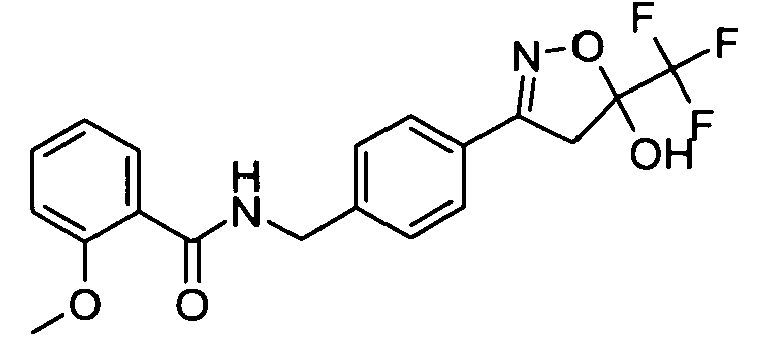
394.35 395.02 8.60 5 
332.28 333.07 7.18 6 
382.32 383.01 8.52 7 
421.38 422.01 7.36 8 
364.33 365.03 8.30 9 
379.34 380.04 8.43 10 
328.29 329.05 7.55 11 
429.40 430.01 8.85 12 
394.35 395.02 8.72 13 
370.35 370.98 8.27 14 
392.38 393.03 8.69 15 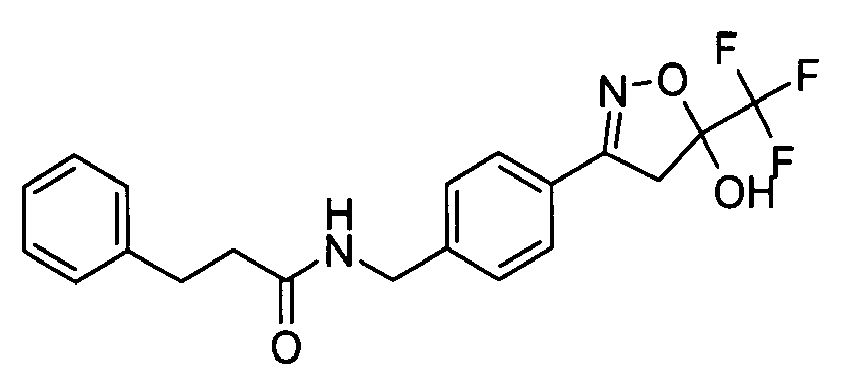
392.38 393.05 8.53 16 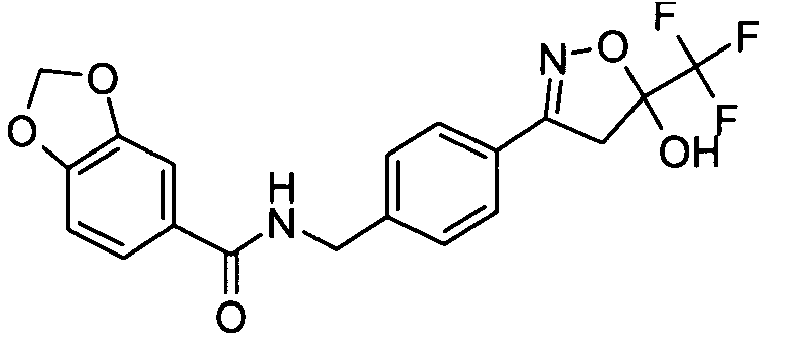
408.34 408.99 8.35 17 
365.31 366.02 6.53 18 
408.38 409.04 8.38 19 
398.77 398.96 9.01 20 
396.34 397.04 8.43 21 
392.38 393.06 8.78 22 
384.38 384.99 8.27 23 
429.40 430.01 9.18 24 
398.77 398.99 9.06 25 
422.36 423.01 8.49 26 
423.35 423.97 8.20 27 
425.39 425.93 8.66 28 
345.32 346.09 7.51 29 
447.34 447.99 9.28 30 
397.33 397.99 8.68 31 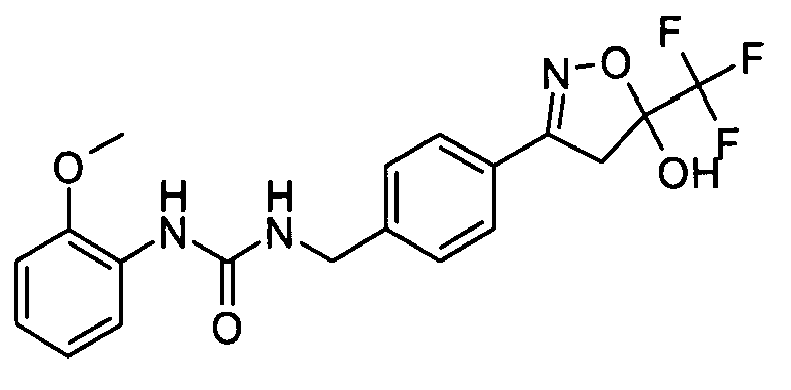
409.37 410.00 8.68 32 
447.34 447.95 8.99 33 
397.33 398.02 8.66 34 
409.37 410.01 8.50 35 
397.33 397.99 8.55 36 
413.79 413.96 9.05 37 
409.37 410.02 8.18 38 
447.34 447.98 9.40 39 
393.37 394.04 8.23 40 
404.35 405.01 8.46 41 
407.40 408.05 8.40 42 
413.42 413.98 8.33 43 
408.38 409.02 8.73 44 
432.33 432.96 8.68 45 
382.32 383.01 8.66 46 
394.35 395.02 8.52 47 
382.32 383.01 8.50 48 
414.39 415.03 9.06 49 
414.39 415.02 9.25 50 
451.43 451.97 8.70 51 
419.38 419.96 8.48 52 
422.41 423.03 5.90 53 
407.40 408.04 8.55 54 
407.40 408.05 8.56 55 
407.40 408.05 8.53 56 
411.36 412.01 8.38 57 
423.40 424.03 8.20 58 
404.37 404.96 7.13 59 
408.38 409.04 8.33 60 
383.33 384.01 7.91 61 
398.34 399.02 7.30 62 
415.38 416.01 9.40 63 
382.35 383.03 7.70 64 
500.50 501.00 8.05 65 
383.33 384.01 8.28 66 
416.36 416.99 8.68 67 
365.31 366.02 6.40 68 
366.30 367.03 7.51 69 
382.35 383.04 7.78 70 
445.38 445.94 8.78 71 
458.42 458.92 8.86 72 
392.38 393.05 8.75 73 
422.41 423.02 8.74 74 
458.42 458.95 8.78 75 
395.41 395.99 8.86 76 
430.41 430.99 8.78 77 
302.26 303.10 6.84 78 
378.35 379.04 8.45 79 
394.35 395.02 8.47 80 
394.35 395.02 8.71 81 
332.28 333.07 7.23 82 
409.32 409.99 8.25 83 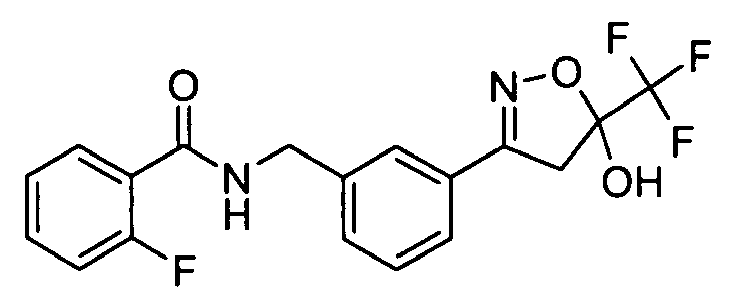
382.32 383.01 8.55 84 
421.38 422.01 7.35 85 
364.33 365.02 8.43 86 
338.31 338.99 7.43 87 
379.34 380.00 8.46 88 
328.29 329.05 7.57 89 
429.40 429.99 8.97 90 
394.35 395.01 8.72 91 
370.35 370.96 8.33 92 
392.38 393.01 8.70 93 
392.38 393.01 8.73 94 
407.35 407.99 8.75 95 
408.34 408.99 8.41 96 
365.31 366.02 6.53 97 
408.38 408.98 8.43 98 
398.77 398.93 9.11 99 
396.34 396.97 8.50 100 
392.38 392.95 8.85 101 
384.38 384.94 7.60 102 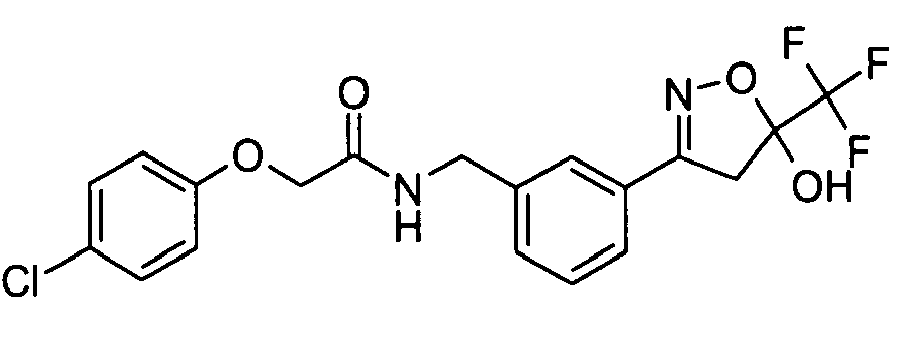
428.80 428.90 9.26 103 
429.40 429.93 9.38 104 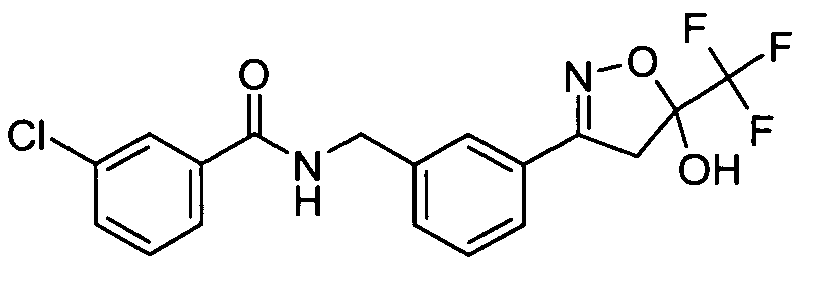
398.77 398.88 8.22 105 
432.33 432.90 9.40 106 
389.34 389.89 8.43 107 
422.36 422.91 8.65 108 
423.35 423.90 7.60 109 
450.44 450.88 9.49 110 
404.35 404.93 8.50 111 
345.32 346.01 7.70 112 
447.34 447.86 8.47 113 
397.33 397.94 8.80 114 
413.79 413.87 9.36 115 
409.37 409.96 8.77 116 
447.34 447.92 8.11 117 
397.33 397.94 8.80 118 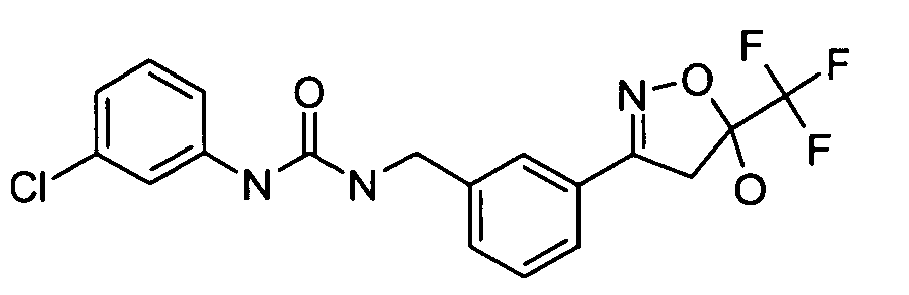
413.79 413.91 9.11 119 
409.37 410.00 8.53 120 
397.33 397.98 7.76 121 
413.79 413.92 9.11 122 
409.37 410.00 8.27 123 
447.34 447.93 9.45 124 
393.37 394.02 8.30 125 
404.35 405.01 8.53 126 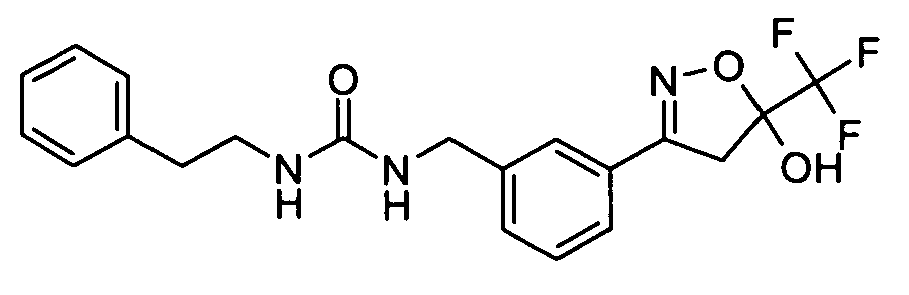
407.40 408.01 8.50 127 
404.35 404.96 6.20 128 
413.42 413.96 8.40 129 
408.38 409.01 8.80 130 
432.33 432.96 8.73 131 
382.32 383.00 8.72 132 
394.35 395.01 8.58 133 
382.32 382.99 8.58 134 
414.39 415.01 9.08 135 
414.39 415.00 9.30 136 
389.34 390.02 8.43 137 
406.41 406.93 8.70 138 
451.43 451.93 8.65 139 
418.37 418.94 8.83 140 
418.37 418.95 8.71 141 
418.37 418.96 9.90 142 
434.82 434.91 8.95 143 
419.38 419.94 8.53 144 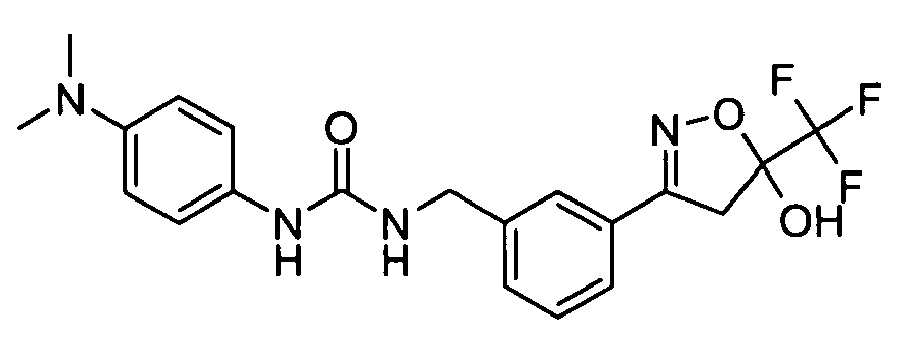
422.41 423.02 7.57 145 
407.40 408.03 8.61 146 
407.40 408.02 8.61 147 
407.40 408.05 8.61 148 
411.36 412.01 9.53 149 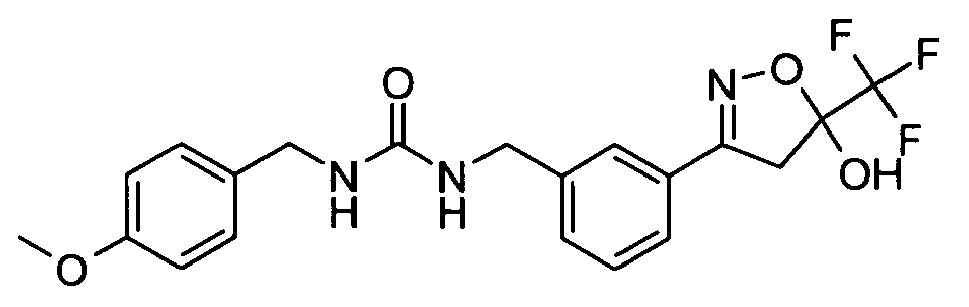
423.40 424.01 8.27 150 
404.37 404.96 7.12 151 
383.33 384.01 9.17 152 
398.34 399.03 7.40 153 
415.38 415.98 10.35 154 
382.35 383.02 7.82 155 
500.50 500.95 8.10 156 
383.33 384.01 9.50 157 
416.36 416.98 9.90 158 
365.31 366.02 8.22 159 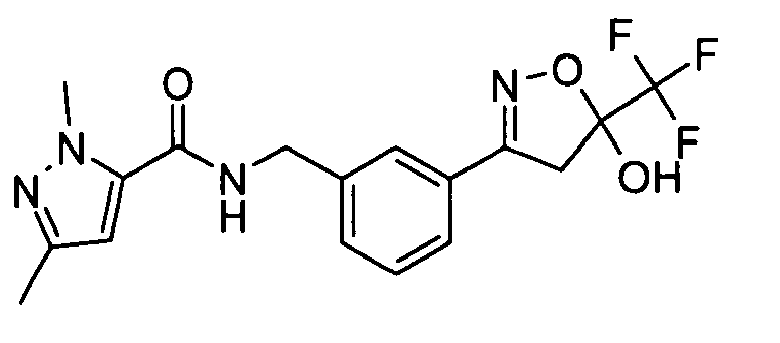
382.35 383.02 7.81 160 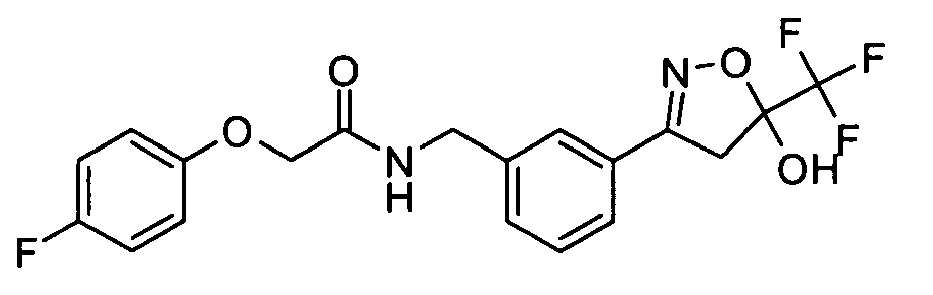
412.34 412.98 9.92 161 
430.41 430.97 8.86 162 
422.41 423.02 8.83 163 
462.88 462.92 10.52 164 
446.42 446.96 9.18 165 
446.42 446.98 9.17 166 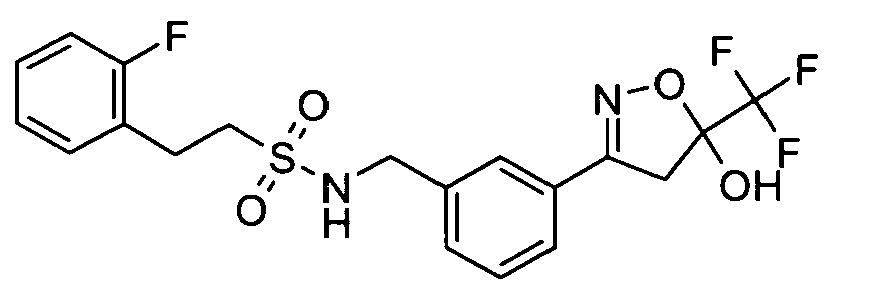
446.42 446.97 9.14 167 
458.42 458.94 9.98 - Further, the present invention thus provides a method of preparing a compound of general formula (I) supra, said method comprising the step of allowing an intermediate amine compound of general formula A :

to react with a compound of formula B :
- R4
- represents a substituent selected from the group comprising, preferably consisting of C1-C6-alkyl, C2-C6-alkenyl, C2-C6-alkynyl, C3-C10-cycloalkyl, C3-C10-heterocycloalkyl, C1-C6-haloalkyl, hydroxy-C1-C6-alkyl, aryl, heteroaryl, -C(=O)Ra, -C(=O)ORa, -C(=O)N(Ra)2,-C(=S)N(Ra)2, -S(=O)2Ra, -S(=O)2N(Ra)2, -C1-C6-alkyl-N(Ra)2, -C1-C6-alkyl-C(=O)Ra, -C1-C6-alkyl-C(=O)ORa, -C1-C6-alkyl-C(=O)N(Ra)2, -C1-C6-alkyl-C(=S)N(Ra)2, -C1-C6-alkyl-NRaC(=O)ORa, -C1-C6-alkyl-NRaC(=O)N(Ra)2,-C1-C6-alkyl-NRaC(=S)N(Ra)2, -C1-C6-alkyl-NRaC(=O)Ra, -C1-C6-alkyl-NRaC(=S)Ra, -C1-C6-alkyl-OC(=O)N(Ra)2, -C1-C6-alkyl-NRaS(=O)2Ra, -C1-C6-alkyl-S(=O)2Ra, -C1-C6-alkyl-S(=O)2N(Ra)2, -C1-C6-alkyl-P(=O)(ORa)2, wherein said C1-C6-alkyl, C2-C6-alkenyl, C2-C6-alkynyl, C3-C10-cycloalkyl, C3-C10-heterocycloalkyl, C1-C6-haloalkyl, hydroxy-C1-C6-alkyl, aryl, heteroaryl, -C(=O)Ra, -C(=O)ORa, -C(=O)N(Ra)2,-C(=S)N(Ra)2, -S(=O)2Ra, -S(=O)2N(Ra)2, -C1-C6-alkyl-N(Ra)2, -C1-C6-alkyl-C(=O)Ra, -C1-C6-alkyl-C(=O)ORa, -C1-C6-alkyl-C(=O)N(Ra)2, -C1-C6-alkyl-C(=S)N(Ra)2, -C1-C6-alkyl-NRaC(=O)ORa, -C1-C6-alkyl-NRaC(=O)N(Ra)2,-C1-C6-alkyl-NRaC(=S)N(Ra)2, -C1-C6-alkyl-NRaC(=O)Ra, -C1-C6-alkyl-NRaC(=S)Ra, -C1-C6-alkyl-OC(=O)N(Ra)2, -C1-C6-alkyl-NRaS(=O)2Ra, -C1-C6-alkyl-S(=O)2Ra, -C1-C6-alkyl-S(=O)2N(Ra)2, -C1-C6-alkyl-P(=O)(ORa)2 substituent is itself optionally substituted, one or more times, in the same way or differently, with R5, wherein Ra and R5 are defined supra ;
- To the amine of formula A (0.10 mmol), the aldehyde of formula B (0.20 mmol) in tetrahydrofuran (0.5 mL) and sodium triacetoxyborohydride (0.12 mmol) in tetrahydrofuran (0.5 mL) were successively added, and the mixture was stirred at room temperature for 12 h. For work-up ethyl acetate (4 mL) and sodium hydroxide solution (10% in water) were successively added, the mixture was extracted and the organic layer was isolated and concentrated. The residue was purified using preparative HPLC-MS and the products were characterized using analytical HPLC-MS (column LiChroCart Purospher Star 125-4 (125x4.5 mm, RP18e, 5 µm); gradient 5-95% acetonitrile (0.1% trifluoroacetic acid) in water (0.1% trifluoroacetic acid) (10 min.); flow rate 1.2 mL/min; MS ES+).
- In accordance with this method, the following compounds were prepared :
Example Structure MW Mol. peak RT (min) 168 
350.34 351.05 6.82 169 
366.34 367.05 6.30 170 
351.33 352.06 5.35 171 
351.33 352.06 5.10 172 
351.33 352.06 6.10 173 
421.47 422.08 5.54 174 
400.40 401.02 7.33 175 
400.40 401.04 7.55 176 
368.33 369.04 6.68 177 
364.37 365.08 7.10 178 
365.36 366.06 6.32 179 
410.40 411.04 7.05 180 
410.40 411.05 6.58 181 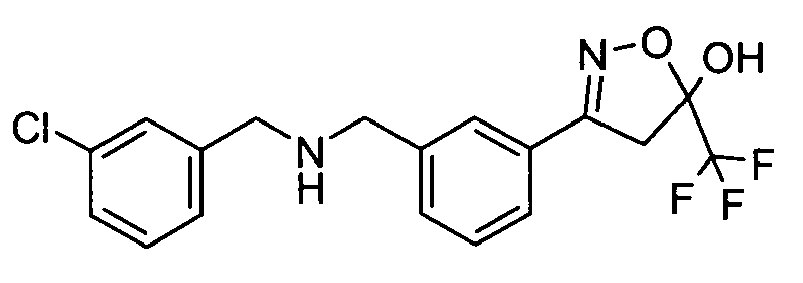
384.79 385.01 7.10 182 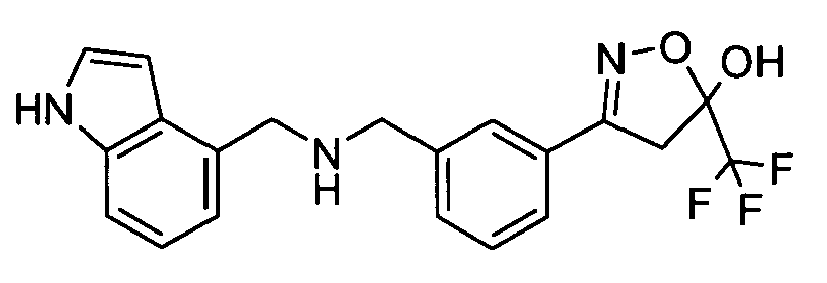
389.38 390.05 6.78 183 
416.41 417.04 6.78 184 
431.42 432.02 7.01 185 
417.39 418.05 6.18 186 
416.41 417.04 7.18 187 
427.43 428.02 5.35 188 
427.43 428.05 5.46 189 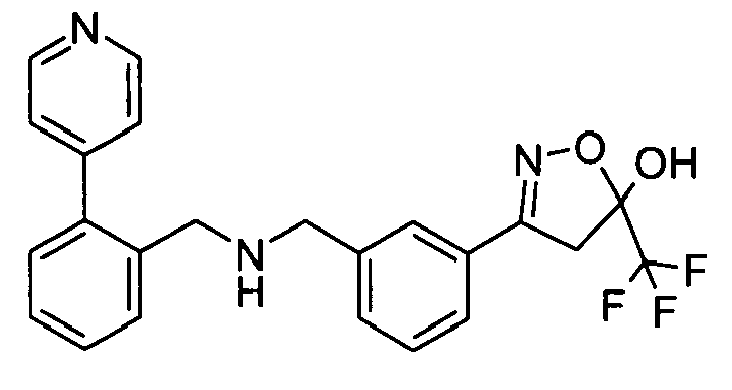
427.43 428.05 5.43 190 
396.43 397.02 7.18 191 
401.39 402.06 6.98 192 
410.40 411.07 7.15 193 
350.34 351.07 6.67 194 
442.44 443.03 7.76 195 
380.37 381.06 6.78 196 
380.37 381.06 6.85 197 
380.37 381.06 6.68 198 
392.42 393.07 7.65 199 
421.47 422.09 5.48 200 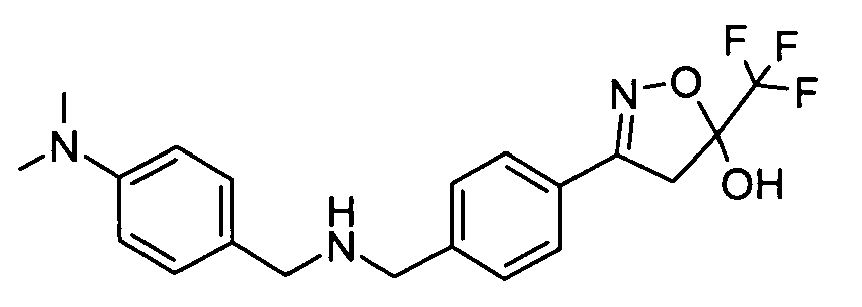
393.41 394.17 6.10 201 
400.40 401.06 7.23 202 
368.33 369.04 6.53 203 
366.34 367.03 6.37 204 
364.37 365.08 7.08 205 
365.36 366.09 6.23 206 
410.40 411.07 6.79 207 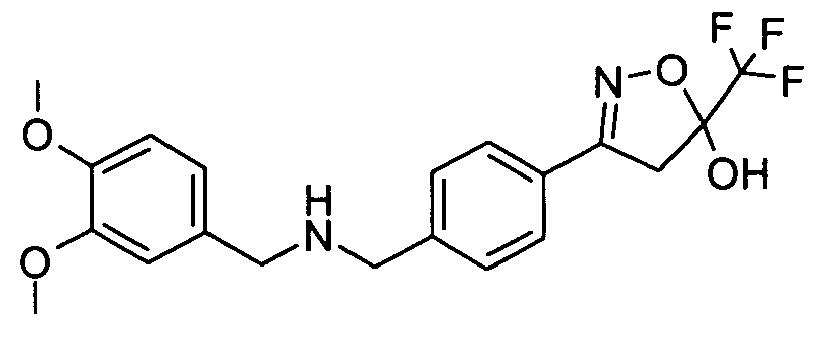
410.40 411.07 6.48 208 
384.79 385.02 7.08 209 
340.31 341.08 4.51 210 
378.40 379.09 7.26 211 
368.33 369.04 6.67 212 
378.40 379.10 7.18 213 
442.44 443.03 7.75 214 
389.38 390.05 6.65 215 
396.43 397.04 6.97 216 
364.37 365.08 6.83 217 
364.37 365.08 6.95 218 
368.33 369.04 6.85 219 
423.44 424.08 5.73 220 
416.41 417.04 6.68 221 
417.39 418.05 6.23 222 
416.41 417.04 7.07 223 
427.43 428.05 5.21 224 
427.43 428.05 5.23 225 
427.43 428.05 5.62 226 
427.43 428.05 5.47 227 
427.43 428.05 5.61 228 
427.43 428.05 5.37 229 
435.45 436.05 6.78 230 
401.39 402.04 6.90 231 
422.45 423.08 8.00 232 
410.40 411.07 7.08 -

1H-NMR (DMSO-d6): δ = 3.27 (s, 3H); 3.51 (d, 1 H); 3.60 (s, 2H); 3.68 (s, 2H); 3.89 (d, 1 H); 7.18 (d, 2H); 7.26 (d, 2H); 7.41 (d, 2H); 7.63 (d, 2H) ppm. -

1H-NMR (DMSO-d6): δ = 3.51 (d, 1H); 3.89 (d, 1H); 4.23 (d, 2H); 5.05 (s, 2H); 7.33 (d, 2H); 7.47 (q, 1 H); 7.65 (d, 2H); 7.76 (d, 1 H); 7.92 (t, 1 H); 8.51 (m, 1 H); 8.57 (s, 1 H) ppm. -

1H-NMR (CDCl3/CD3OD 4/1): δ = 2.98 (s, 6H); 3.38 (d, 1H); 3.62 (d, 1H); 4.54 (s, 2H); 6.73 (d, 2H); 7.36 (d, 2H); 7.55 (d, 2H); 7.68 (d, 2H) ppm. -

1H-NMR (acetone-d6): δ = 3.53 (d, 1H); 3.86 (d, 1H); 6.93 (d, 2H); 7.61 (d, 2H) ppm. -

1H-NMR (acetone-d6): δ = 3.58 (d, 1H); 3.90 (d, 1H); 4.74 (s, 2H); 7.04-7.15 (m, 3H); 7.28-7.34 (m, 3H); 7.67-7.75 (m, 4H); 9.33 (s, 1H) ppm. -

1H-NMR (acetone-d6): δ = 3.60 (d, 1H); 3.95 (d, 1H); 7.14 (d, 2H); 7.44 (s, 1H); 7.63-7.93 (m, 7H) ppm. - HDAC6 inhibitory activity of compounds of the present invention was quantified employing the HDAC6 assay as described in the following paragraphs.
- Recombinant full-length human HDAC6 with C-terminal His-tag was expressed in Sf-9 insect cells and purified using Nickel-NTA chromatography. The assay was performed using the HDAC-assay-kit purchased from Biomol (Hamburg, Germany). HDAC6 catalyzes the deacetylation of the FluordeLys substrate (purchased from Biomol #KI-104). This sensitizes the substrate to the developer which then generates a fluorophore. This fluorophore is excited with 360 nm light and the emitted light is detected on a fluorometric plate reader at 460 nm.
- HDAC6 was incubated for 90 min at 22°C in the presence of different concentrations of test compounds in 15 µl assay buffer [25 mM Tris/HCl pH 7.5, 10 mM KCl, 0.04% NP40, 0.2% BSA, 22.5 µM Fluor de Lys substrate, 1% DMSO]. The concentration of HDAC6 was adjusted depending of the activity of the enzyme lot and was chosen appropriate to have the assay in the linear range, typical concentrations were in the range of 20 nM. The reaction was stopped by the addition of 5 µl of a Stop/Developer solution [25 mM Tris/HCl pH 7.5, 1:20 diluted 20x Developer solution (purchased from Biomol #Kl- 105), 1 µM Trichostatin A].
- The resulting mixture was incubated for 1 h at 22°C to allow the developing reaction to proceed. Subsequently the amount of deacetylated substrate was evaluated on a fluorometric plate reader (e.g. Acquest, molecular Devices) by measurement of the emission at 460 nm after excitation with 360 nm light. The data were normalised (enzyme reaction without inhibitor = 0 % inhibition, all other assay components but no enzyme = 100 % inhibition) and IC50 values were calculated by a 4 parameter fit using an inhouse software.
- The compounds of the present invention display IC50 values in the above-mentioned HDAC6 assay of less than 100 mM.
-
- 1. GREENLEE RT, MURRAY T, BOLDEN S, WINGO PA: Cancer Statistics 2000. CA Cancer J. Clin. (2000) 50: 7-33.
- 2. MAI A, MASSA A, ROTILI D, CERBARA I, VALENTE S, PEZZI R, SIMEONI S, RAGNO R: Histone deacetylation in epigenetics: An attractive target for anticancer therapy. Med. Res. Rev. (2005) 25: 261-309.
- 3. MCLAUGHLIN F, LA THANGUE N: Histone deacetylase inhibitors open new doors in cancer therapy. Biochem. Pharmacol. (2004) 68: 1139-1144.
- 4. MEI S, HO AD, MAHLKNECHT U: Role of histone deacetylase inhibitors in the treatment of cancer. International Journal of Oncology (2004) 25: 1509-1519.
- 5. BHALLA KN: Epigenetic and chromatin modifiers as targeted therapy of hematologic malignancies. J. Clin. Oncol. (2005) 23(17): 3971-3993.
- 6. ROSATO R, GRANT S: Histone deacetylase inhibitors in clinical development. Expert. Opin. Invest. Drugs (2004) 13: 21-38.
- 7. MARKS PA, RICHON VM, BRESLOW R, RIFKIND RA: Histone deacetylase inhibitors as new cancer drugs. Curr. Opin. Oncol. (2001) 13: 477-483.
- 8. KELLY WK, O'CONNOR OA, MARKS PA: Histone deacetylase inhibitors: from target to clinical trial. Expert. Opin. Invest. Drugs (2002) 11: 1695-1713.
- 9. HESS-STUMPP H: Histone deacetylase inhibitors and cancer: from cell biology to the clinic, European Journal of Cell Biology (2005) 84: 109-121.
- 10. DRUMMOND DC, NOBLE CO, KIRPOTIN DB, GUO Z, SCOTT GK, BENZ CC: Clinical Development of Histone Deacetylase Inhibitors as Anticancer Agents. Annu Rev Pharmacol Toxicol (2005) 45: 495-528.
- 11. PIEKARTZ R, BATES S: A Review of Depsipeptide and Other Histone Deacetylase Inhibitors in Clinical Trials. Curr. Pharm. Des. (2004) 10(19): 2289-2298.
- 12. DE RUIJTER AJM, VAN GENNIP AH, CARON HN, KEMP S, VAN KUILENBURG ABP: Histone deacetylases (HDACs): characterization of the classical HDAC family. Biochem. J. (2003) 370: 737-749.
- 13. GRAY GG, EKSTROM TJ: The human histone deacetylase family. Exp. Cell. Res. (2001) 262: 75-83.
- 14. HAGGARTY SJ, KOELLER KM, WONG JC, GROZINGER CM, SCHREIBER SL: Domain-selective small molecule inhibitor of histone deacetylase 6 (HDAC6)-mediated tubulin deacetylation. Proc. Natl. Acad. Sci. USA (2003) 100(8): 4389-4394 .
- 15. BALI P, PRANPAT M, BRADNER J, BALASIS M, FISKUS W, GUO F, ROCHA K, KUMARASWAMY S, BOYAPALLE S, ATADJA P, SETO E, BHALLA K: Inhibition of histone deacetylase 6 acetylates and disrupts the chaperone function of heat shock protein 90: a novel basis for antileukemia activity of histone deacetylase inhibitors. J. Biol. Chem. (2005) 280(29): 26729-26734.
- 16. GAO L, CUETO MA, ASSELBERGS F, ATAOJA P: Cloning and Functional Characterization of HDAC11, a Novel Member of the Human Histone Deacetylase Family. J. Biol. Chem. (2002) 277: 25748-25755.
- 17. FINNIN MS, DONIGIAN JR, COHEN A, RICHON VM, RIFKIND, RA, MARKS P, BRESLOW R, PAVLETICH NP: Structures of a histone deacetylase homologue bound to the TSA and SAHA inhibitors. Nature (1999) 401: 188-193.
- 18. SOMOZA JR, SKENE RJ, KATZ BA, MOL C, HO JD, JENNINGS AJ, LUONG C, ARVAI A, BUGGY JJ, CHI E, TANG J, SANG BC, VERNER E, WYNANDS R, LEAHY EM, DOUGAN DR, SNELL G, NAVRE M, KNUTH MW, SWANSON RV, MCREE DE, TARI LW: Structural Snapshots of Human HDAC8 Provide Insights into the Class I Histone Deacetylases. Structure (2004) 12: 1325-1334.
- 19. VANNINI A, VOLPARI C, FILOCAMO G, CASAVOLA EC, BRUNETTI M, RENZONI D, CHAKRAVARTY P, PAOLINI C, DE FRANCESCO R, GALLINARI P, STEINKUHLER C, DI MARCO S: Crystal structure of a eukaryotic zinc-dependent histone deacetylase, human HDAC8, complexed with a hydroxamic acid inhibitor. Proceedings of the National Academy of the United States (2004) 101: 15064-15069.
- 20. YANG K, LOU B: Molecular Diversity of Hydroxamic Acids: Part I. Solution- and Solid-Phase Synthesis. Mini Reviews in Med. Chem. (2003) 3: 349-360.
- 21. LOU B, YANG K: Molecular Diversity of Hydroxamic Acids: Part II. Potential Therapeutic Applications. Mini Reviews in Med. Chem. (2003) 3: 609-620.
- 22. CURTIN ML: Synthesis of novel hydroxamate and non-hydroxamate histone deacetylase inhibitors. Curr. Opin. Drug Disc. Dev. (2004) 7: 848-868.
- 23. SHABBEER S, CARDUCCI MA: Focus on deacetylation for therapeutic benefit. Investigational Drugs (2005) 8: 144-154.
- 24. KELLY WK, CONNOR OA, KRUG L, CHIAO J, HEANEY M, CURLEY T: Phase I Study of the Oral Histone Deacetylase Inhibitor, Suberoylanilide Hydroxamic Acid (SAHA), in Patients with Advanced Cancer. J. Clin. Oncol. (2005) 23(17): 3923-3931 .
- 25. KELLY WK, MARKS PA: Drug Insight: Histone Deacetylase Inhibitors-Development of the New Targeted Anticancer agent Suberoylanilide Hydroxamic Acid. Nature Clinical Practice Oncology. (2005) 2(3): 150-157.
- 26. MCLAUGHLIN F, LA THANGUE NB: Histone Deacetylase Inhibitors in Psoriasis Therapy, Current Drug Targets - Inflammation & Allergy (2004) 3: 213-219.
- 27. ARTS J, DE SCHEPER S, VAN EMELEN, K: Histone Deacetylase Inhibitors: From Chromatin Remodeling to Experimental Cancer Therapeutics. Current Med. Chem. (2003) 10: 2343-2350.
- 28. BERTOS NR, WANG AH, YANG XJ: Class II histone deacetylases: structure, function, and regulation. Biochem Cell Biol. (2001) 79: 243-252.
- 29. UNGERSTEDT JS, SOWA Y, XU WS, SHAO Y, DOKMANOVIC M, PEREZ G, NGO L, HOLMGREN A, JIANG X, MARKS PA: Role of thioredoxin in the response of normal and transformed cells to histone deacetylase inhibitors. Proc. Natl. Acad. Sci. USA (2005) 102(3): 673-678.


Claims (26)
- A compound of general formula (I) :
 R1 represents a substituent selected from the group comprising, preferably consisting of, a hydrogen, sulfenyl, sulfinyl, sulfonyl, C1-C6-alkyl, C1-C6-alkylsulfenyl, C1-C6-alkylsulfinyl, C1-C6-alkylsulfonyl, C2-C6-alkenyl, C2-C6-alkynyl, C3-C10-cycloalkyl, C3-C10-heterocycloalkyl, C1-C6-haloalkyl, hydroxy-C1-C6-alkyl, aryl, heteroaryl, nitro, -C(=O)Ra, -C(=O)ORa, -C(=O)N(Ra)2, -C(=S)N(Ra)2, -S(=O)2Ra, -S(=O)2N(Ra)2,-P(=O)(ORa)2, wherein said sulfenyl, sulfinyl, sulfonyl, C1-C6-alkyl, C1-C6-alkylsulfenyl, C1-C6-alkylsulfinyl, C1-C6-alkylsulfonyl, C2-C6-alkenyl, C2-C6-alkynyl, C3-C10-cycloalkyl, C3-C10-heterocycloalkyl, C1-C6-haloalkyl, hydroxy-C1-C6-alkyl, aryl, heteroaryl, nitro, -C(=O)Ra,-C(=O)ORa, -C(=O)N(Ra)2, -C(=S)N(Ra)2, -S(=O)2Ra, -S(=O)2N(Ra)2,-P(=O)(ORa)2 substituent is itself optionally substituted, one or more times, in the same way or differently, with R5 ;R2 and R3, independently of each other, represent a substituent selected from the group comprising, preferably consisting of, a hydrogen or halogen atom, cyano, hydroxy, mercapto, sulfenyl, sulfinyl, sulfonyl, amino, C1-C6-alkyl, C1-C6-alkoxy, C1-C6-alkylthio, C1-C6-alkylsulfenyl, C1-C6-alkylsulfinyl, C1-C6-alkylsulfonyl, C1-C6-alkylamino, C2-C6-alkenyl, C2-C6-alkynyl, C3-C10-cycloalkyl, C3-C10-heterocycloalkyl, C1-C6-haloalkyl, hydroxy-C1-C6-alkyl, aryl, aryloxy, heteroaryl, heteroaryloxy, nitro,-C(=O)Ra, -C(=O)ORa, -C(=O)N(Ra)2, -C(=S)N(Ra)2, -NRaC(=O)ORa,-NRaC(=O)N(Ra)2, -NRaC(=O)Ra, -NRaC(=S)Ra, -OC(=O)N(Ra)2,-NRaS(=O)2Ra, -S(=O)2Ra, -S(=O)2N(Ra)2, -P(=O)(ORa)2, -C1-C6-alkyl-N(Ra)2, -C,-C6-alkyl-C(=0)Ra, -C1-C6-alkyl-C(=O)ORa, -C1-C6-alkyl-C(=O)N(Ra)2,-C1-C6-alkyl-C(=S)N(Ra)2, -C1-C6-alkyl-NRaC(=O)ORa, -C1-C6-alkyl-NRaC(=O)N(Ra)2, -C1-C6-alkyl-NRaC(=S)N(Ra)2, -C1-C6-alkyl-NRaC(=O)Ra,-C1-C6-alkyl-NRaC(=S)Ra, -C1-C6-alkyl-OC(=O)N(Ra)2, -C1-C6-alkyl-NRaS(=O)2Ra, -C1-C6-alkyl-S(=O)2Ra, -C1-C6-alkyl-S(=O)2N(Ra)2, -C1-C6-alkyl-P(=O)(ORa)2, wherein said hydroxy, mercapto, sulfenyl, sulfinyl, sulfonyl, amino, C1-C6-alkyl, C1-C6-alkoxy, C1-C6-alkylthio, C1-C6-alkylsulfenyl, C1-C6-alkylsulfinyl, C1-C6-alkylsulfonyl, C1-C6-alkylamino, C2-C6-alkenyl, C2-C6-alkynyl, C3-C10-cycloalkyl, C3-C10-heterocycloalkyl, C1-C6-haloalkyl, hydroxy-C1-C6-alkyl, aryl, aryloxy, heteroaryl, heteroaryloxy, nitro, -C(=O)Ra, -C(=O)ORa, -C(=O)N(Ra)2,-C(=S)N(Ra)2, -NRaC(=O)ORa, -NRaC(=O)N(Ra)2, -NRaC(=O)Ra,-NRaC(=S)Ra, -OC(=O)N(Ra)2, -NRaS(=O)2Ra, -S(=O)2Ra, -S(=O)2N(Ra)2,-P(=O)(ORa)2, -C1-C6-alkyl-N(Ra)2, -C1-C6-alkyl-C(=O)Ra, -C1-C6-alkyl-C(=O)ORa, -C1-C6-alkyl-C(=O)N(Ra)2, -C1-C6-alkyl-C(=S)N(Ra)2, -C1-C6-alkyl-NRaC(=O)ORa, -C1-C6-alkyl-NRaC(=O)N(Ra)2, -C1-C6-alkyl-NRaC(=S)N(Ra)2, -C1-C6-alkyl-NRaC(=O)Ra, -C1-C6-alkyl-NRaC(=S)Ra, -C1-C6-alkyl-OC(=O)N(Ra)2, -C1-C6-alkyl-NRaS(=O)2Ra, -C1-C6-alkyl-S(=O)2Ra,-C1-C6-alkyl-S(=O)2N(Ra)2, -C1-C6-alkyl-P(=O)(ORa)2 substituent is itself optionally substituted, one or more times, in the same way or differently, with R5 ;
or,
together, form a C3-C10-cycloalkyl or C3-C10-heterocydoalkyL;A represents an aryl or heteroaryl group ;X represents, independently of each other, a substituent selected from the group comprising, preferably consisting of, a hydrogen, fluorine, chlorine, bromine, and iodine atom, wherein at least one X substituent is a fluorine atom ;wherein : said -(CX2)nCX3 group is itself optionally substituted, one or more times, in the same way or differently, with R5 ;Z represents a C2-C6-alkenyl group, itself being optionally substituted, one or more times, in the same way or differently, with R5 ;R4 represents a substituent selected from the group comprising, preferably consisting of, a hydrogen or halogen atom, cyano, hydroxy, mercapto, sulfenyl, sulfinyl, sulfonyl, amino, C1-C6-alkyl, C1-C6-alkoxy, C1-C6-alkylthio, C1-C6-alkylsulfenyl, C1-C6-alkylsulfinyl, C1-C6-alkylsulfonyl, C1-C6-alkylamino, C2-C6-alkenyl, C2-C6-alkynyl, C3-C10-cycloalkyl, C3-C10-heterocycloalkyl, C1-C6-haloalkyl, hydroxy-C1-C6-alkyl, aryl, aryloxy, heteroaryl, heteroaryloxy, nitro, -C(=0)Ra,-C(=0)ORa, -C(=O)N(Ra)2, -C(=S)N(Ra)2, -NRaC(=O)ORa, -NRaC(=O)N(Ra)2, -NRaC(=O)Ra, -NRaC(=S)Ra, -OC(=O)N(Ra)2, -NRaS(=O)2Ra, -S(=O)2Ra,-S(=O)2N(Ra)2, -P(=O)(ORa)2, -C1-C6-alkyl-N(Ra)2, -C1-C6-alkyl-C(=O)Ra,-C1-C6-alkyl-C(=O)ORa, -C1-C6-alkyl-C(=O)N(Ra)2, -C1-C6-alkyl-C(=S)N(Ra)2, -C1-C6-alkyl-NRaC(=O)ORa, -C1-C6-alkyl-NRaC(=O)N(Ra)2,-C1-C6-alkyl-NRaC(=S)N(Ra)2, -C1-C6-alkyl-NRaC(=O)Ra, -C1-C6-alkyl-NRaC(=S)Ra, -C1-C6-alkyl-OC(=O)N(Ra)2, -C1-C6-alkyl-NRaS(=O)2Ra, -C1-C6-alkyl-S(=O)2Ra, -C1-C6-alkyl-S(=O)2N(Ra)2, -C1-C6-alkyl-P(=O)(ORa)2, wherein said hydroxy, mercapto, sulfenyl, sulfinyl, sulfonyl, amino, C1-C6-alkyl, C1-C6-alkoxy, C1-C6-alkylthio, C1-C6-alkylsulfenyl, C1-C6-alkylsulfinyl, C1-C6-alkylsulfonyl, C1-C6-alkylamino, C2-C6-alkenyl, C2-C6-alkynyl, C3-C10-cycloalkyl, C3-C10-heterocycloalkyl, C1-C6-haloalkyl, hydroxy-C1-C6-alkyl, aryl, aryloxy, heteroaryl, heteroaryloxy, nitro,-C(=O)Ra, -C(=O)ORa, -C(=O)N(Ra)2, -C(=S)N(Ra)2, -NRaC(=O)ORa,-NRaC(=O)N(Ra)2, -NRaC(=O)Ra, -NRaC(=S)Ra, -OC(=O)N(Ra)2,-NRaS(=O)2Ra, -S(=O)2Ra, -S(=O)2N(Ra)2, -P(=O)(ORa)2, -C1-C6-alkyl-N(Ra)2, -C1-C6-alkyl-C(=O)Ra, -C1-C6-alkyl-C(=O)ORa, -C1-C6-alkyl-C(=O)N(Ra)2,-C1-C6-alkyl-C(=S)N(Ra)2, -C1-C6-alkyl-NRaC(=O)ORa, -C1-C6-alkyl-NRaC(=O)N(Ra)2, -C1-C6-alkyl-NRaC(=S)N(Ra)2, -C1-C6-alkyl-NRaC(=O)Ra,-C1-C6-alkyl-NRaC(=S)Ra, -C1-C6-alkyl-OC(=O)N(Ra)2, -C1-C6-alkyl-NRaS(=O)2Ra, -C1-C6-alkyl-S(=O)2Ra, -C1-C6-alkyl-S(=O)2N(Ra)2, -C1-C6-alkyl-P(=O)(ORa)2 substituent is itself optionally substituted, one or more times, in the same way or differently, with R5 ;R5 represents a substituent selected from the group comprising, preferably consisting of, a hydrogen or halogen atom, cyano, hydroxy, mercapto, sulfenyl, sulfinyl, sulfonyl, amino, C1-C6-alkyl, C1-C6-alkoxy, C1-C6-alkylthio, C1-C6-alkylsulfenyl, C1-C6-alkylsulfinyl, C1-C6-alkylsulfonyl, C1-C6-alkylamino, C2-C6-alkenyl, C2-C6-alkynyl, C3-C10-cycloalkyl, C3-C10-heterocycloalkyl, C1-C6-haloalkyl, hydroxy-C1-C6-alkyl, aryl, aryloxy, heteroaryl, heteroaryloxy, nitro, -C(=O)Ra,-C(=O)ORa, -C(=O)N(Ra)2, -C(=S)N(Ra)2, -NRaC(=O)ORa, -NRaC(=O)N(Ra)2, -NRaC(=O)Ra, -NRaC(=S)Ra, -OC(=O)N(Ra)2, -NRaS(=O)2Ra, -S(=O)2Ra,-S(=O)2N(Ra)2, -P(=O)(ORa)2 ; wherein said hydroxy, mercapto, sulfenyl, sulfinyl, sulfonyl, amino, C1-C6-alkyl, C1-C6-alkoxy, C1-C6-alkylthio, C1-C6-alkylsulfenyl, C1-C6-alkylsulfinyl, C1-C6-alkylsulfonyl, C1-C6-alkylamino, C2-C6-alkenyl, C2-C6-alkynyl, C3-C10-cycloalkyl, C3-C10-heterocycloalkyl, C1-C6-haloalkyl, hydroxy-C1-C6-alkyl, aryl, aryloxy, heteroaryl, heteroaryloxy, -C(=O)Ra, -C(=O)ORa, -C(=O)N(Ra)2,-C(=S)N(Ra)2, -NRaC(=O)ORa, -NRaC(=O)N(Ra)2, -NRaC(=O)Ra,-NRaC(=S)Ra, -OC(=O)N(Ra)2, -NRaS(=O)2Ra, -S(=O)2Ra, -S(=O)2N(Ra)2,-P(=O)(ORa)2 substituent is itself optionally substituted, one or more times, in the same way or differently with Rb ;Ra represents, independently from each other, a substituent, which is identical or different, selected from the group comprising, preferably consisting of, a hydrogen or halogen atom, cyano, hydroxy, mercapto, sulfenyl, sulfinyl, sulfonyl, amino, C1-C6-alkyl, C1-C6-alkoxy, C1-C6-alkylthio, C1-C6-alkylsulfenyl, C1-C6-alkylsulfinyl, C1-C6-alkylsulfonyl, C1-C6-alkylamino, C2-C6-alkenyl, C2-C6-alkynyl, C3-C10-cycloalkyl, C3-C10-heterocycloalkyl, C1-C6-haloalkyl, hydroxy-C1-C6-alkyl, aryl, aryloxy, heteroaryl, heteroaryloxy, nitro, -C(=O)Rb, -C(=O)ORb,-C(=O)N(Rb)2, -C(=S)N(Rb)2, -NRbC(=O)ORb, -NRbC(=O)N(Rb)2,-NRbC(=O)Rb, -NRbC(=S)Rb, -OC(=O)N(Rb)2, -NRbS(=O)2Rb, -S(=O)2Rb,-S(=O)2N(Rb)2, -P(=O)(ORb)2 ; wherein said hydroxy, mercapto, sulfenyl, sulfinyl, sulfonyl, amino, C1-C6-alkyl, C1-C6-alkoxy, C1-C6-alkylthio, C1-C6-alkylsulfenyl, C1-C6-alkylsulfinyl, C1-C6-alkylsulfonyl, C1-C6-alkylamino, C2-C6-alkenyl, C2-C6-alkynyl, C3-C10-cycloalkyl, C3-C10-heterocycloalkyl, C1-C6-haloalkyl, hydroxy-C1-C6-alkyl, aryl, aryloxy, heteroaryl, heteroaryloxy substituent is itself optionally substituted, one or more times, in the same way or differently with Rb ;Rb represents, independently from each other, a substituent, which is identical or different, selected from the group comprising, preferably consisting of, a hydrogen or halogen atom, cyano, -ORc, -N(Rc)2, -SRc, -S(=O)Rc, -S(=O)ORc, -S(=O)2Rc, -S(=O)2ORc, C1-C6-alkyl, C1-C6-alkoxy, C1-C6-alkylthio, C1-C6-alkylsulfenyl, C1-C6-alkylsulfinyl, C1-C6-alkytsulfonyl, C1-C6-atkytamino, C2-C6-alkenyl, C2-C6-alkynyl, C3-C10-cycloalkyl, C3-C10-heterocycloalkyl, C1-C6-haloalkyl, hydroxy-C1-C6-alkyl, aryl, aryloxy, heteroaryl, heteroaryloxy, nitro, -C(=O)Rc,-C(=O)ORc, -C(=O)N(Rc)2, -C(=S)N(Rc)2, -NRcC(=O)ORc, -NRcC(=O)N(Rc)2, -NRcC(=O)Rc, -NRcC(=S)Rc, -OC(=O)N(Rc)2, -NRcS(=O)2Rc, -S(=O)2N(Rc)2,-P(=O)(ORc)2 ;Rc represents, independently from each other, a substituent, which is identical or different, selected from the group comprising, preferably consisting of, a hydrogen, aryl and C1-C6-alkyl;n represents an integer of 0, 1, 2, 3, 4, 5, or 6 ;m represents an integer of 0, 1, 2, 3, 4, or 5 ; andp represents an integer of 0, 1, 2, 3, 4, or 5. - The compound according to claim 1, wherein :R1 represents a substituent selected from the group comprising, preferably consisting of, a hydrogen, sulfenyl, sulfinyl, sulfonyl, C1-C6-alkyl, C1-C6-alkylsulfenyl, C1-C6-alkylsulfinyl, C1-C6-alkylsulfonyl, C2-C6-alkenyl, C2-C6-alkynyl, C3-C10-cycloalkyl, C3-C10-heterocycloalkyl, C1-C6-haloalkyl, hydroxy-C1-C6-alkyl, aryl, heteroaryl, nitro, -C(=O)Ra, -C(=O)ORa, -C(=O)N(Ra)2, -C(=S)N(Ra)2, -S(=O)2Ra, -S(=O)2N(Ra)2,-P(=O)(ORa)2, wherein said sulfenyl, sulfinyl, sulfonyl, C1-C6-alkyl, C1-C6-alkylsulfenyl, C1-C6-alkylsulfinyl, C1-C6-alkylsulfonyl, C2-C6-alkenyl, C2-C6-alkynyl, C3-C10-cycloalkyl, C3-C10-heterocycloalkyl, C1-C6-haloalkyl, hydroxy-C1-C6-alkyl, aryl, heteroaryl, nitro, -C(=O)Ra,-C(=O)ORa, -C(=O)N(Ra)2, -C(=S)N(Ra)2, -S(=O)2Ra, -S(=O)2N(Ra)2,-P(=O)(ORa)2 substituent is itself optionally substituted, one or more times, in the same way or differently, with R5 ;R2 represents a hydrogen atom ;R3 represents a substituent selected from the group comprising, preferably consisting of, a hydrogen or halogen atom, cyano, hydroxy, mercapto, sulfenyl, sulfinyl, sulfonyl, amino, C1-C6-alkyl, C1-C6-alkoxy, C1-C6-alkylthio, C1-C6-alkylsulfenyl, C1-C6-alkylsulfinyl, C1-C6-alkylsulfonyl, C1-C6-alkylamino, C2-C6-alkenyl, C2-C6-alkynyl, C3-C10-cycloalkyl, C3-C10-heterocycloalkyl, C1-C6-haloalkyl, hydroxy-C1-C6-alkyl, aryl, aryloxy, heteroaryl, heteroaryloxy, nitro, -C(=O)Ra,-C(=O)ORa, -C(=O)N(Ra)2, -C(=S)N(Ra)2, -NRaC(=O)ORa, -NRaC(=O)N(Ra)2, -NRaC(=O)Ra, -NRaC(=S)Ra, -OC(=O)N(Ra)2, -NRaS(=O)2Ra, -S(=O)2Ra,-S(=O)2N(Ra)2, -P(=O)(ORa)2, -C1-C6-alkyl-N(Ra)2, -C1-C6-alkyl-C(=O)Ra,-C1-C6-alkyl-C(=O)ORa, -C1-C6-alkyl-C(=O)N(Ra)2, -C1-C6-alkyl-C(=S)N(Ra)2, -C1-C6-alkyl-NRaC(=O)ORa, -C1-C6-alkyl-NRaC(=O)N(Ra)2,-C1-C6-alkyl-NRaC(=S)N(Ra)2, -C1-C6-alkyl-NRaC(=O)Ra, -C1-C6-alkyl-NRaC(=S)Ra, -C1-C6-alkyl-OC(=O)N(Ra)2, -C1-C6-alkyl-NRaS(=O)2Ra, -C1-C6-alkyl-S(=O)2Ra, -C1-C6-alkyl-S(=O)2N(Ra)2, -C1-C6-alkyl-P(=O)(ORa)2, wherein said hydroxy, mercapto, sulfenyl, sulfinyl, sulfonyl, amino, C1-C6-alkyl, C1-C6-alkoxy, C1-C6-alkylthio, C1-C6-alkylsulfenyl, C1-C6-alkylsulfinyl, C1-C6-alkylsulfonyl, C1-C6-alkylamino, C2-C6-alkenyl, C2-C6-alkynyl, C3-C10-cycloalkyl, C3-C10-heterocycloalkyl, C1-C6-haloalkyl, hydroxy-C1-C6-alkyl, aryl, aryloxy, heteroaryl, heteroaryloxy, nitro,-C(=O)Ra, -C(=O)ORa, -C(=O)N(Ra)2, -C(=S)N(Ra)2, -NRaC(=O)ORa,-NRaC(=O)N(Ra)2, -NRaC(=O)Ra, -NRaC(=S)Ra, -OC(=O)N(Ra)2,-NRaS(=O)2Ra, -S(=O)2Ra, -S(=O)2N(Ra)2, -P(=O)(ORa)2, -C1-C6-alkyl-N(Ra)2, -C1-C6-alkyl-C(=O)Ra, -C1-C6-alkyl-C(=O)ORa, -C1-C6-alkyl-C(=O)N(Ra)2,-C1-C6-alkyl-C(=S)N(Ra)2, -C1-C6-alkyl-NRaC(=O)ORa, -C1-C6-alkyl-NRaC(=O)N(Ra)2, -C1-C6-alkyl-NRaC(=S)N(Ra)2, -C1-C6-alkyl-NRaC(=O)Ra,-C1-C6-alkyl-NRaC(=S)Ra, -C1-C6-alkyl-OC(=O)N(Ra)2, -C1-C6-alkyl-NRaS(=O)2Ra, -C1-C6-alkyl-S(=O)2Ra, -C1-C6-alkyl-S(=O)2N(Ra)2, -C1-C6-alkyl-P(=O)(ORa)2 substituent is itself optionally substituted, one or more times, in the same way or differently, with R5 ;A represents an aryl or heteroaryl group ;X represents, independently of each other, a substituent selected from the group comprising, preferably consisting of, a hydrogen, fluorine, chlorine, bromine, and iodine atom, wherein at least one X substituent is a fluorine atom ;wherein : said -(CX2)nCX3 group is itself optionally substituted, one or more times, in the same way or differently, with R5 ;Z represents a C2-C6-alkenyl group, itself being optionally substituted, one or more times, in the same way or differently, with R5 ;R4 represents a substituent selected from the group comprising, preferably consisting of, a hydrogen or halogen atom, cyano, hydroxy, mercapto, sulfenyl, sulfinyl, sulfonyl, amino, C1-C6-alkyl, C1-C6-alkoxy, C1-C6-alkylthio, C1-C6-alkylsulfenyl, C1-C6-alkylsulfinyl, C1-C6-alkylsulfonyl, C1-C6-alkylamino, C2-C6-atkenyl, C2-C6-alkynyl, C3-C10-cycloalkyl, C3-C10-heterocycloalkyl, C1-C6-haloalkyl, hydroxy-C1-C6-alkyl, aryl, aryloxy, heteroaryl, heteroaryloxy, nitro, -C(=O)Ra,-C(=O)ORa, -C(=O)N(Ra)2, -C(=S)N(Ra)2, -NRaC(=O)ORa, -NRaC(=O)N(Ra)2, -NRaC(=O)Ra, -NRaC(=S)Ra, -OC(=O)N(Ra)2, -NRaS(=O)2Ra, -S(=O)2Ra,-S(=O)2N(Ra)2, -P(=O)(ORa)2, -C1-C6-alkyl-N(Ra)2, -C1-C6-alkyl-C(=O)Ra,-C1-C6-alkyl-C(=O)ORa, -C1-C6-alkyl-C(=O)N(Ra)2, -C1-C6-alkyl-C(=S)N(Ra)2, -C1-C6-alkyl-NRaC(=O)ORa, -C1-C6-alkyl-NRaC(=O)N(Ra)2,-C1-C6-alkyl-NRaC(=S)N(Ra)2, -C1-C6-alkyl-NRaC(=O)Ra, -C1-C6-alkyl-NRaC(=S)Ra, -C1-C6-alkyl-OC(=O)N(Ra)2, -C1-C6-alkyl-NRaS(=O)2Ra, -C1-C6-alkyl-S(=O)2Ra, -C1-C6-alkyl-S(=O)2N(Ra)2, -C1-C6-alkyl-P(=O)(ORa)2, wherein said hydroxy, mercapto, sulfenyl, sulfinyl, sulfonyl, amino, C1-C6-alkyl, C1-C6-alkoxy, C1-C6-alkylthio, C1-C6-alkylsulfenyl, C1-C6-alkylsulfinyl, C1-C6-alkylsulfonyl, C1-C6-alkylamino, C2-C6-alkenyl, C2-C6-alkynyl, C3-C10-cycloalkyl, C3-C10-heterocycloalkyl, C1-C6-haloalkyl, hydroxy-C1-C6-alkyl, aryl, aryloxy, heteroaryl, heteroaryloxy, nitro,-C(=O)Ra, -C(=O)ORa, -C(=O)N(Ra)2, -C(=S)N(Ra)2, -NRaC(=O)ORa,-NRaC(=O)N(Ra)2, -NRaC(=O)Ra, -NRaC(=S)Ra, -OC(=O)N(Ra)2,-NRaS(=O)2Ra, -S(=O)2Ra, -S(=O)2N(Ra)2, -P(=O)(ORa)2, -C1-C6-alkyl-N(Ra)2, -C1-C6-alkyl-C(=O)Ra, -C1-C6-alkyl-C(=O)ORa, -C1-C6-alkyl-C(=O)N(Ra)2,-C1-C6-alkyl-C(=S)N(Ra)2, -C1-C6-alkyl-NRaC(=O)ORa, -C1-C6-alkyl-NRaC(=O)N(Ra)2, -C1-C6-alkyl-NRaC(=S)N(Ra)2, -C1-C6-alkyl-NRaC(=O)Ra,-C1-C6-alkyl-NRaC(=S)Ra, -C1-C6-alkyl-OC(=O)N(Ra)2, -C1-C6-alkyl-NRaS(=O)2Ra, -C1-C6-alkyl-S(=O)2Ra, -C1-C6-alkyl-S(=O)2N(Ra)2, -C1-C6-alkyl-P(=O)(ORa)2 substituent is itself optionally substituted, one or more times, in the same way or differently, with R5 ;R5 represents a substituent selected from the group comprising, preferably consisting of, a hydrogen or halogen atom, cyano, hydroxy, mercapto, sulfenyl, sulfinyl, sulfonyl, amino, C1-C6-alkyl, C1-C6-alkoxy, C1-C6-alkylthio, C1-C6-alkylsulfenyl, C1-C6-alkylsulfinyl, C1-C6-alkylsulfonyl, C1-C6-alkylamino, C2-C6-alkenyl, C2-C6-alkynyl, C3-C10-cycloalkyl, C3-C10-heterocycloalkyl, C1-C6-haloalkyl, hydroxy-C1-C6-alkyl, aryl, aryloxy, heteroaryl, heteroaryloxy, nitro, -C(=O)Ra,-C(=O)ORa, -C(=O)N(Ra)2, -C(=S)N(Ra)2, -NRaC(=O)ORa, -NRaC(=O)N(Ra)2, -NRaC(=O)Ra, -NRaC(=S)Ra, -OC(=O)N(Ra)2, -NRaS(=O)2Ra, -S(=O)2Ra,-S(=O)2N(Ra)2, -P(=O)(ORa)2 ; wherein said hydroxy, mercapto, sulfenyl, sulfinyl, sulfonyl, amino, C1-C6-alkyl, C1-C6-alkoxy, C1-C6-alkylthio, C1-C6-alkylsulfenyl, C1-C6-alkylsulfinyl, C1-C6-alkylsulfonyl, C1-C6-alkylamino, C2-C6-alkenyl, C2-C6-alkynyl, C3-C10-cycloalkyl, C3-C10-heterocycloalkyl, C1-C6-haloalkyl, hydroxy-C1-C6-alkyl, aryl, aryloxy, heteroaryl, heteroaryloxy, -C(=O)Ra, -C(=O)ORa, -C(=O)N(Ra)2,-C(=S)N(Ra)2, -NRaC(=O)ORa, -NRaC(=O)N(Ra)2, -NRaC(=O)Ra,-NRaC(=S)Ra, -OC(=O)N(Ra)2, -NRaS(=O)2Ra, -S(=O)2Ra, -S(=O)2N(Ra)2,-P(=O)(ORa)2 substituent is itself optionally substituted, one or more times, in the same way or differently with Rb ;Ra represents, independently from each other, a substituent, which is identical or different, selected from the group comprising, preferably consisting of, a hydrogen or halogen atom, cyano, hydroxy, mercapto, sulfenyl, sulfinyl, sulfonyl, amino, C1-C6-alkyl, C1-C6-alkoxy, C1-C6-alkylthio, C1-C6-alkylsulfenyl, C1-C6-alkylsulfinyl, C1-C6-alkylsulfonyl, C1-C6-alkylamino, C2-C6-alkenyl, C2-C6-alkynyl, C3-C10-cycloalkyl, C3-C10-heterocycloalkyl, C1-C6-haloalkyl, hydroxy-C1-C6-alkyl, aryl, aryloxy, heteroaryl, heteroaryloxy, nitro, -C(=O)Rb, -C(=O)ORb,-C(=O)N(Rb)2, -C(=S)N(Rb)2, -NRbC(=O)ORb, -NRbC(=O)N(Rb)2,-NRbC(=O)Rb, -NRbC(=S)Rb, -OC(=O)N(Rb)2, -NRbS(=O)2Rb, -S(=O)2Rb,-S(=O)2N(Rb)2, -P(=O)(ORb)2 ; wherein said hydroxy, mercapto, sulfenyl, sulfinyl, sulfonyl, amino, C1-C6-alkyl, C1-C6-alkoxy, C1-C6-alkylthio, C1-C6-alkylsulfenyl, C1-C6-alkylsulfinyl, C1-C6-alkylsulfonyl, C1-C6-alkylamino, C2-C6-alkenyl, C2-C6-alkynyl, C3-C10-cycloalkyl, C3-C10-heterocycloalkyl, C1-C6-haloalkyl, hydroxy-C1-C6-alkyl, aryl, aryloxy, heteroaryl, heteroaryloxy substituent is itself optionally substituted, one or more times, in the same way or differently with Rb ;Rb represents, independently from each other, a substituent, which is identical or different, selected from the group comprising, preferably consisting of, a hydrogen or halogen atom, cyano, -ORc, -N(Rc)2, -SRc, -S(=O)Rc, -S(=O)ORc, -S(=O)2Rc, -S(=O)2ORc, C1-C6-alkyl, C1-C6-alkoxy, C1-C6-alkylthio, C1-C6-alkylsulfenyl, C1-C6-alkylsulfinyl, C1-C6-alkylsulfonyl, C1-C6-alkylamino, C2-C6-alkenyl, C2-C6-alkynyl, C3-C10-cycloalkyl, C3-C10-heterocycloalkyl, C1-C6-haloalkyl, hydroxy-C1-C6-alkyl, aryl, aryloxy, heteroaryl, heteroaryloxy, nitro, -C(=O)Rc,-C(=O)ORc, -C(=O)N(Rc)2, -C(=S)N(Rc)2, -NRcC(=O)ORc, -NRcC(=O)N(Rc)2, -NRcC(=O)Rc, -NRcC(=S)Rc, -OC(=O)N(Rc)2, -NRcS(=O)2Rc, -S(=O)2N(Rc)2,-P(=O)(ORc)2;Rc represents, independently from each other, a substituent, which is identical or different, selected from the group comprising, preferably consisting of, a hydrogen, aryl and C1-C6-alkyl ;n represents an integer of 0, 1, 2, 3, 4, 5, or 6 ;m represents an integer of 0, 1, 2, 3, 4, or 5 ; andp represents an integer of 0, 1, 2, 3, 4, or 5.
- The compound according to claim 1 or 2, wherein :R1 represents a substituent selected from the group comprising, preferably consisting of, a hydrogen, sulfenyl, sulfinyl, sulfonyl, C1-C6-alkyl, C1-C6-alkylsulfenyl, C1-C6-alkylsulfinyl, C1-C6-alkylsulfonyl, C2-C6-alkenyl, C2-C6-alkynyl, C3-C10-cycloalkyl, C3-C10-heterocycloalkyl, C1-C6-haloalkyl, hydroxy-C1-C6-alkyl, aryl, heteroaryl, nitro, -C(=O)Ra, -C(=O)ORa, -C(=O)N(Ra)2, -C(=S)N(Ra)2, -S(=O)2Ra, -S(=O)2N(Ra)2,-P(=O)(ORa)2, wherein said sulfenyl, sulfinyl, sulfonyl, C1-C6-alkyl, C1-C6-alkylsulfenyl, C1-C6-alkylsulfinyl, C1-C6-alkylsulfonyl, C2-C6-alkenyl, C2-C6-alkynyl, C3-C10-cycloalkyl, C3-C10-heterocycloalkyl, C1-C6-haloalkyl, hydroxy-C1-C6-alkyl, aryl, heteroaryl, nitro, -C(=O)Ra,-C(=O)ORa, -C(=O)N(Ra)2, -C(=S)N(Ra)2, -S(=O)2Ra, -S(=O)2N(Ra)2,-P(=O)(ORa)2 substituent is itself optionally substituted, one or more times, in the same way or differently, with R5 ;R2 and R3 represent a hydrogen atom ;A represents an aryl or heteroaryl group ;X represents, independently of each other, a substituent selected from the group comprising, preferably consisting of, a hydrogen, fluorine, chlorine, bromine, and iodine atom, wherein at least one X substituent is a fluorine atom ;wherein : said -(CX2)nCX3 group is itself optionally substituted, one or more times, in the same way or differently, with R5 ;Z represents a C2-C6-alkenyl group, itself being optionally substituted, one or more times, in the same way or differently, with R5 ;R4 represents a substituent selected from the group comprising, preferably consisting of, a hydrogen or halogen atom, cyano, hydroxy, mercapto, sulfenyl, sulfinyl, sulfonyl, amino, C1-C6-alkyl, C1-C6-alkoxy, C1-C6-alkylthio, C1-C6-alkylsulfenyl, C1-C6-alkylsulfinyl, C1-C6-alkylsulfonyl, C1-C6-alkylamino, C2-C6-alkenyl, C2-C6-alkynyl, C3-C10-cycloalkyl, C3-C10-heterocycloalkyl, C1-C6-haloalkyl, hydroxy-C1-C6-alkyl, aryl, aryloxy, heteroaryl, heteroaryloxy, nitro, -C(=O)Ra,-C(=O)ORa, -C(=O)N(Ra)2, -C(=S)N(Ra)2, -NRaC(=O)ORa, -NRaC(=O)N(Ra)2, -NRaC(=O)Ra, -NRaC(=S)Ra, -OC(=O)N(Ra)2, -NRaS(=O)2Ra, -S(=O)2Ra,-S(=O)2N(Ra)2, -F(=O)(ORa)2, -C1-C6-alkyl-N(Ra)2, -C1-C6-alkyl-C(=O)Ra,-C1-C6-alkyl-C(=O)ORa, -C1-C6-alkyl-C(=O)N(Ra)2, -C1-C6-alkyl-C(=S)N(Ra)2, -C1-C6-alkyl-NRaC(=O)ORa, -C1-C6-alkyl-NRaC(=O)N(Ra)2,-C1-C6-alkyl-NRaC(=S)N(Ra)2, -C1-C6-alkyl-NRaC(=O)Ra, -C1-C6-alkyl-NRaC(=S)Ra, -C1-C6-alkyl-OC(=O)N(Ra)2, -C1-C6-alkyl-NRaS(=O)2Ra, -C1-C6-alkyl-S(=O)2Ra, -C1-C6-alkyl-S(=O)2N(Ra)2, -C1-C6-alkyl-P(=O)(ORa)2, wherein said hydroxy, mercapto, sulfenyl, sulfinyl, sulfonyl, amino, C1-C6-alkyl, C1-C6-alkoxy, C1-C6-alkylthio, C1-C6-alkylsulfenyl, C1-C6-alkylsutfinyl, C1-C6-alkylsulfonyl, C1-C6-alkylamino, C2-C6-alkenyl, C2-C6-alkynyl, C3-C10-cycloalkyl, C3-C10-heterocycloalkyl, C1-C6-haloalkyl, hydroxy-C1-C6-alkyl, aryl, aryloxy, heteroaryl, heteroaryloxy, nitro,-C(=O)Ra, -C(=O)ORa, -C(=O)N(Ra)2, -C(=S)N(Ra)2, -NRaC(=O)ORa,-NRaC(=O)N(Ra)2, -NRaC(=O)Ra, -NRaC(=S)Ra, -OC(=O)N(Ra)2,-NRaS(=O)2Ra, -S(=O)2Ra, -S(=O)2N(Ra)2, -P(=O)(ORa)2, -C1-C6-alkyl-N(Ra)2, -C1-C6-alkyl-C(=O)Ra, -C1-C6-alkyl-C(=O)ORa, -C1-C6-alkyl-C(=O)N(Ra)2,-C1-C6-alkyl-C(=S)N(Ra)2, -C1-C6-alkyl-NRaC(=O)ORa, -C1-C6-alkyl-NRaC(=O)N(Ra)2, -C1-C6-alkyl-NRaC(=S)N(Ra)2, -C1-C6-alkyl-NRaC(=O)Ra,-C1-C6-alkyl-NRaC(=S)Ra, -C1-C6-alkyl-OC(=O)N(Ra)2, -C1-C6-alkyl-NRaS(=O)2Ra, -C1-C6-alkyl-S(=O)2Ra, -C1-C6-alkyl-S(=O)2N(Ra)2, -C1-C6-alkyl-P(=O)(ORa)2 substituent is itself optionally substituted, one or more times, in the same way or differently, with R5 ;R5 represents a substituent selected from the group comprising, preferably consisting of, a hydrogen or halogen atom, cyano, hydroxy, mercapto, sulfenyl, sulfinyl, sulfonyl, amino, C1-C6-alkyl, C1-C6-alkoxy, C1-C6-alkylthio, C1-C6-alkylsulfenyl, C1-C6-alkylsulfinyl, C1-C6-alkylsulfonyl, C1-C6-alkylamino, C2-C6-alkenyl, C2-C6-alkynyl, C3-C10-cycloalkyl, C3-C10-heterocycloalkyl, C1-C6-haloalkyl, hydroxy-C1-C6-alkyl, aryl, aryloxy, heteroaryl, heteroaryloxy, nitro, -C(=O)Ra,-C(=O)ORa, -C(=O)N(Ra)2, -C(=S)N(Ra)2, -NRaC(=O)ORa, -NRaC(=O)N(Ra)2, -NRaC(=O)Ra, -NRaC(=S)Ra, -OC(=O)N(Ra)2, -NRaS(=O)2Ra, -S(=O)2Ra,-S(=O)2N(Ra)2, -P(=O)(ORa)2 ; wherein said hydroxy, mercapto, sulfenyl, sulfinyl, sulfonyl, amino, C1-C6-alkyl, C1-C6-alkoxy, C1-C6-alkylthio, C1-C6-alkylsulfenyl, C1-C6-alkylsulfinyl, C1-C6-alkylsulfonyl, C1-C6-alkylamino, C2-C6-alkenyl, C2-C6-alkynyl, C3-C10-cycloalkyl, C3-C10-heterocycloalkyl, C1-C6-haloalkyl, hydroxy-C1-C6-alkyl, aryl, aryloxy, heteroaryl, heteroaryloxy, -C(=O)Ra, -C(=O)ORa, -C(=O)N(Ra)2,-C(=S)N(Ra)2, -NRaC(=O)ORa, -NRaC(=O)N(Ra)2, -NRaC(=O)Ra,-NRaC(=S)Ra, -OC(=O)N(Ra)2, -NRaS(=O)2Ra, -S(=O)2Ra, -S(=O)2N(Ra)2,-P(=O)(ORa)2 substituent is itself optionally substituted, one or more times, in the same way or differently with Rb ;Ra represents, independently from each other, a substituent, which is identical or different, selected from the group comprising, preferably consisting of, a hydrogen or halogen atom, cyano, hydroxy, mercapto, sulfenyl, sulfinyl, sulfonyl, amino, C1-C6-alkyl, C1-C6-alkoxy, C1-C6-alkylthio, C1-C6-alkylsulfenyl, C1-C6-alkylsulfinyl, C1-C6-alkylsulfonyl, C1-C6-alkylamino, C2-C6-alkenyl, C2-C6-alkynyl, C3-C10-cycloalkyl, C3-C10-heterocycloalkyl, C1-C6-haloalkyl, hydroxy-C1-C6-alkyl, aryl, aryloxy, heteroaryl, heteroaryloxy, nitro, -C(=O)R b, -C(=O)ORb,-C(=O)N(Rb)2, -C(=S)N(Rb)2, -NRbC(=O)ORb, -NRbC(=O)N(Rb)2,-NRbC(=O)Rb, -NRbC(=S)Rb, -OC(=O)N(Rb)2, -NRbS(=O)2Rb, -S(=O)2Rb,-S(=O)2N(Rb)2, -P(=O)(ORb)2 ; wherein said hydroxy, mercapto, sulfenyl, sulfinyl, sulfonyl, amino, C1-C6-alkyl, C1-C6-alkoxy, C1-C6-alkylthio, C1-C6-alkylsulfenyl, C1-C6-alkylsulfinyl, C1-C6-alkylsulfonyl, C1-C6-alkylamino, C2-C6-alkenyl, C2-C6-alkynyl, C3-C10-cycloalkyl, C3-C10-heterocycloalkyl, C1-C6-haloalkyl, hydroxy-C1-C6-alkyl, aryl, aryloxy, heteroaryl, heteroaryloxy substituent is itself optionally substituted, one or more times, in the same way or differently with Rb ;Rb represents, independently from each other, a substituent, which is identical or different, selected from the group comprising, preferably consisting of, a hydrogen or halogen atom, cyano, -ORc, -N(Rc)2, -SRc, -S(=O)Rc, -S(=O)ORc, -S(=O)2Rc, -S(=O)2ORc, C1-C6-alkyl, C1-C6-alkoxy, C1-C6-alkylthio, C1-C6-alkylsulfenyl, C1-C6-alkylsulfinyl, C1-C6-alkylsulfonyl, C1-C6-alkylamino, C2-C6-alkenyl, C2-C6-alkynyl, C3-C10-cycloalkyl, C3-C10-heterocycloalkyl, C1-C6-haloalkyl, hydroxy-C1-C6-alkyl, aryl, aryloxy, heteroaryl, heteroaryloxy, nitro, -C(=O)Rc,-C(=O)ORc, -C(=O)N(Rc)2, -C(=S)N(Rc)2, -NRcC(=O)ORc, -NRcC(=O)N(Rc)2, -NRcC(=O)Rc, -NRcC(=S)Rc, -OC(=O)N(Rc)2, -NRcS(=O)2Rc, -S(=O)2N(Rc)2,-P(=O)(ORc)2;Rc represents, independently from each other, a substituent, which is identical or different, selected from the group comprising, preferably consisting of, a hydrogen, aryl and C1-C6-alkyl ;n represents an integer of 0, 1, 2, 3, 4, 5, or 6 ;m represents an integer of 0, 1, 2, 3, 4, or 5 ; andp represents an integer of 0, 1, 2, 3, 4, or 5.
- The compound according to any one of claims 1 to 3, wherein :R1 represents a substituent selected from the group comprising, preferably consisting of, a hydrogen, sulfenyl, sulfinyl, sulfonyl, C1-C6-alkyl, C1-C6-alkylsulfenyl, C1-C6-alkylsulfinyl, C1-C6-alkylsulfonyl, C2-C6-alkenyl, C2-C6-alynyl, C3-C10-cycloalkyl, C3-C10-heterocycloalkyl, C1-C6-haloalkyl, hydroxy-C1-C6-alkyl, aryl, heteroaryl, nitro, -C(=O)Ra, -C(=O)ORa, -C(=O)N(Ra)2, -C(=S)N(Ra)2, -S(=O)2Ra, -S(=O)2N(Ra)2,-P(=O)(ORa)2, wherein said sulfenyl, sulfinyl, sulfonyl, C1-C6-alkyl, C1-C6-alkylsulfenyl, C1-C6-alkylsulfinyl, C1-C6-alkylsulfonyl, C2-C6-alkenyl, C2-C6-alkynyl, C3-C10-cycloalkyl, C3-C10-heterocycloalkyl, C1-C6-haloalkyl, hydroxy-C1-C6-alkyl, aryl, heteroaryl, nitro, -C(=O)Ra,-C(=O)ORa, -C(=O)N(Ra)2, -C(=S)N(Ra)2, -S(=O)2Ra, -S(=O)2N(Ra)2, P(=O)(ORa)2 substituent is itself optionally substituted, one or more times, in the same way or differently, with R5 ;R2 and R3 represent a hydrogen atom ;A represents an aryl or heteroaryl group ;X represents, independently of each other, a substituent selected from the group comprising, preferably consisting of, a hydrogen, fluorine, chlorine, bromine, and iodine atom, wherein at least one X substituent is a fluorine atom ;wherein : said -(CX2)nCX3 group is itself optionally substituted, one or more times, in the same way or differently, with R5 ;R4 represents a substituent selected from the group comprising, preferably consisting of, a hydrogen or halogen atom, cyano, hydroxy, mercapto, sulfenyl, sulfinyl, sulfonyl, amino, C1-C6-alkyl, C1-C6-alkoxy, C1-C6-alkylthio, C1-C6-alkylsulfenyl, C1-C6-alkylsulfinyl, C1-C6-alkylsulfonyl, C1-C6-alkylamino, C2-C6-alkenyl, C2-C6-alkynyl, C3-C10-cycloalkyl, C3-C10-heterocycloalkyl, C1-C6-haloalkyl, hydroxy-C1-C6-alkyl, aryl, aryloxy, heteroaryl, heteroaryloxy, nitro, -C(=O)Ra,-C(=O)ORa, -C(=O)N(Ra)2, -C(=S)N(Ra)2, -NRaC(=O)ORa, -NRaC(=O)N(Ra)2, -NRaC(=O)Ra, -NRaC(=S)Ra, -OC(=O)N(Ra)2, -NRaS(=O)2Ra, -S(=O)2Ra,-S(=O)2N(Ra)2, -P(=O)(ORa)2, -C1-C6-alkyl-N(Ra)2, -C1-C6-alkyl-C(=O)Ra,-C1-C6-alkyl-C(=O)ORa, -C1-C6-alkyl-C(=O)N(Ra)2, -C1-C6-alkyl-C(=S)N(Ra)2, -C1-C6-alkyl-NRaC(=O)ORa, -C1-C6-alkyl-NRaC(=O)N(Ra)2,-C1-C6-alkyl-NRaC(=S)N(Ra)2, -C1-C6-alkyl-NRaC(=O)Ra, -C1-C6-alkyl-NRaC(=S)Ra, -C1-C6-alkyl-OC(=O)N(Ra)2, -C1-C6-alkyl-NRaS(=O)2Ra, -C1-C6-alkyl-S(=O)2Ra, -C1-C6-alkyl-S(=O)2N(Ra)2, -C1-C6-alkyl-P(=O)(ORa)2, wherein said hydroxy, mercapto, sulfenyl, sulfinyl, sulfonyl, amino, C1-C6-alkyl, C1-C6-alkoxy, C1-C6-alkylthio, C1-C6-alkylsulfenyl, C1-C6-alkylsulfinyl, C1-C6-alkylsulfonyl, C1-C6-alkylamino, C2-C6-alkenyl, C2-C6-alkynyl, C3-C10-cycloalkyl, C3-C10-heterocycloalkyl, C1-C6-haloalkyl, hydroxy-C1-C6-alkyl, aryl, aryloxy, heteroaryl, heteroaryloxy, nitro,-C(=O)Ra, -C(=O)ORa, -C(=O)N(Ra)2, -C(=S)N(Ra)2, -NRaC(=O)ORa,-NRaC(=O)N(Ra)2, -NRaC(=O)Ra, -NRaC(=S)Ra, -OC(=O)N(Ra)2,-NRaS(=O)2Ra, -S(=O)2Ra, -S(=O)2N(Ra)2, -P(=O)(ORa)2, -C1-C6-alkyl-N(Ra)2, -C1-C6-alkyl-C(=O)Ra, -C1-C6-alkyl-C(=O)ORa, -C1-C6-alkyl-C(=O)N(Ra)2,-C1-C6-alkyl-C(=S)N(Ra)2, -C1-C6-alkyl-NRaC(=O)ORa, -C1-C6-alkyl-NRaC(=O)N(Ra)2, -C1-C6-alkyl-NRaC(=S)N(Ra)2, -C1-C6-alkyl-NRaC(=O)Ra,-C1-C6-alkyl-NRaC(=S)Ra, -C1-C6-alkyl-OC(=O)N(Ra)2, -C1-C6-alkyl-NRaS(=O)2Ra, -C1-C6-alkyl-S(=O)2Ra, -C1-C6-alkyl-S(=O)2N(Ra)2, -C1-C6-alkyl-P(=O)(ORa)2 substituent is itself optionally substituted, one or more times, in the same way or differently, with R5 ;R5 represents a substituent selected from the group comprising, preferably consisting of, a hydrogen or halogen atom, cyano, hydroxy, mercapto, sulfenyl, sulfinyl, sulfonyl, amino, C1-C6-alkyl, C1-C6-alkoxy, C1-C6-alkylthio, C1-C6-alkylsulfenyl, C1-C6-alkylsulfinyl, C1-C6-alkylsulfonyl, C1-C6-alkylamino, C2-C6-alkenyl, C2-C6-alkynyl, C3-C10-cycloalkyl, C3-C10-heterocycloalkyl, C1-C6-haloalkyl, hydroxy-C1-C6-alkyl, aryl, aryloxy, heteroaryl, heteroaryloxy, nitro, -C(=O)Ra,-C(=O)ORa, -C(=O)N(Ra)2, -C(=S)N(Ra)2, -NRaC(=O)ORa, -NRaC(=O)N(Ra)2, -NRaC(=O)Ra, -NRaC(=S)Ra, -OC(=O)N(Ra)2, -NRaS(=O)2Ra, -S(=O)2Ra,-S(=O)2N(Ra)2, -P(=O)(ORa)2 ; wherein said hydroxy, mercapto, sulfenyl, sulfinyl, sulfonyl, amino, C1-C6-alkyl, C1-C6-alkoxy, C1-C6-alkylthio, C1-C6-alkylsulfenyl, C1-C6-alkylsulfinyl, C1-C6-alkylsulfonyl, C1-C6-alkylamino, C2-C6-alkenyl, C2-C6-alkynyl, C3-C10-cycloalkyl, C3-C10-heterocycloalkyl, C1-C6-haloalkyl, hydroxy-C1-C6-alkyl, aryl, aryloxy, heteroaryl, heteroaryloxy, -C(=O)Ra, -C(=O)ORa, -C(=O)N(Ra)2,-C(=S)N(Ra)2, -NRaC(=O)ORa, -NRaC(=O)N(Ra)2, -NRaC(=O)Ra,-NRaC(=S)Ra, -OC(=O)N(Ra)2, -NRaS(=O)2Ra, -S(=O)2Ra, -S(=O)2N(Ra)2,-P(=O)(ORa)2 substituent is itself optionally substituted, one or more times, in the same way or differently with Rb ;Ra represents, independently from each other, a substituent, which is identical or different, selected from the group comprising, preferably consisting of, a hydrogen or halogen atom, cyano, hydroxy, mercapto, sulfenyl, sulfinyl, sulfonyl, amino, C1-C6-alkyl, C1-C6-alkoxy, C1-C6-alkylthio, C1-C6-alkylsulfenyl, C1-C6-alkylsulfinyl, C1-C6-alkylsulfonyl, C1-C6-alkylamino, C2-C6-alkenyl, C2-C6-alkynyl, C3-C10-cycloalkyl, C3-C10-heterocycloalkyl, C1-C6-haloalkyl, hydroxy-C1-C6-alkyl, aryl, aryloxy, heteroaryl, heteroaryloxy, nitro, -C(=O)Rb, -C(=O)ORb,-C(=O)N(Rb)2, -C(=S)N(Rb)2, -NRbC(=O)ORb, -NRbC(=O)N(Rb)2,-NRbC(=O)Rb, -NRbC(=S)Rb, -OC(=O)N(Rb)2, -NRbS(=O)2Rb, -S(=O)2Rb,-S(=O)2N(Rb)2, -P(=O)(ORb)2 ; wherein said hydroxy, mercapto, sulfenyl, sulfinyl, sulfonyl, amino, C1-C6-alkyl, C1-C6-alkoxy, C1-C6-alkylthio, C1-C6-alkylsulfenyl, C1-C6-alkylsulfinyl, C1-C6-alkylsulfonyl, C1-C6-alkylamino, C2-C6-alkenyl, C2-C6-alkynyl, C3-C10-cycloalkyl, C3-C10-heterocycloalkyl, C1-C6-haloalkyl, hydroxy-C1-C6-alkyl, aryl, aryloxy, heteroaryl, heteroaryloxy substituent is itself optionally substituted, one or more times, in the same way or differently with Rb ;Rb represents, independently from each other, a substituent, which is identical or different, selected from the group comprising, preferably consisting of, a hydrogen or halogen atom, cyano, -ORc, -N(Rc)2, -SRc, -S(=O)Rc, -S(=O)ORc, -S(=O)2Rc, -S(=O)2ORc, C1-C6-alkyl, C1-C6-alkoxy, C1-C6-alkylthio, C1-C6-alkylsulfenyl, C1-C6-alkylsulfinyl, C1-C6-alkylsulfonyl, C1-C6-alkylamino, C2-C6-alkenyl, C2-C6-alkynyl, C3-C10-cycloalkyl, C3-C10-heterocycloalkyl, C1-C6-haloalkyl, hydroxy-C1-C6-alkyl, aryl, aryloxy, heteroaryl, heteroaryloxy, nitro, -C(=O)Rc,-C(=O)ORc, -C(=O)N(Rc)2, -C(=S)N(Rc)2, -NRcC(=O)ORc, -NRcC(=O)N(Rc)2, -NRcC(=O)Rc, -NRcC(=S)Rc, -OC(=O)N(Rc)2, -NRcS(=O)2Rc, -S(=O)2N(Rc)2,-P(=O)(ORc)2 ;Rc represents, independently from each other, a substituent, which is identical or different, selected from the group comprising, preferably consisting of, a hydrogen, aryl and C1-C6-alkyl ;n represents an integer of 0, 1, 2, 3, 4, 5, or 6 ;m represents an integer of 0, 1, 2, 3, 4, or 5 ; andp represents an integer of 0.
- The compound according to any one of claims 1 to 4, wherein :R1 represents a substituent selected from the group comprising, preferably consisting of, a hydrogen, sulfenyl, sulfinyl, sulfonyl, C1-C6-alkyl, C1-C6-alkylsulfenyl, C1-C6-alkylsulfinyl, C1-C6-alkylsulfonyl, C2-C6-alkenyl, C2-C6-alkynyl, C3-C10-cycloalkyl, C3-C10-heterocycloalkyl, C1-C6-haloalkyl, hydroxy-C1-C6-alkyl, aryl, heteroaryl, nitro, -C(=O)Ra, -C(=O)ORa, -C(=O)N(Ra)2, -C(=S)N(Ra)2, -S(=O)2Ra, -S(=O)2N(Ra)2,-P(=O)(ORa)2, wherein said sulfenyl, sulfinyl, sulfonyl, C1-C6-alkyl, C1-C6-alkylsulfenyl, C1-C6-alkylsulfinyl, C1-C6-alkylsulfonyl, C2-C6-alkenyl, C2-C6-alkynyl, C3-C10-cycloalkyl, C3-C10-heterocycloalkyl, C1-C6-haloalkyl, hydroxy-C1-C6-alkyl, aryl, heteroaryl, nitro, -C(=O)Ra,-C(=O)ORa, -C(=O)N(Ra)2, -C(=S)N(Ra)2, -S(=O)2Ra, -S(=O)2N(Ra)2,-P(=O)(ORa)2 substituent is itself optionally substituted, one or more times, in the same way or differently, with R5 ;R2 and R3 represent a hydrogen atom ;A represents an aryl or heteroaryl group ;X represents, independently of each other, a subsituent selected from the group comprising, preferably consisting of, a hydrogen atom, and a fluorine atom, wherein at least one X substituent is a fluorine atom ;R4 represents a substituent selected from the group comprising, preferably consisting of, a hydrogen or halogen atom, cyano, hydroxy, mercapto, sulfenyl, sulfinyl, sulfonyl, amino, C1-C6-alkyl, C1-C6-alkoxy, C1-C6-alkylthio, C1-C6-alkylsulfenyl, C1-C6-alkylsulfinyl, C1-C6-alkylsulfonyl, C1-C6-alkylamino, C2-C6-alkenyl, C2-C6-alkynyl, C3-C10-cycloalkyl, C3-C10-heterocycloalkyl, C1-C6-haloalkyl, hydroxy-C1-C6-alkyl, aryl, aryloxy, heteroaryl, heteroaryloxy, nitro, -C(=O)Ra,-C(=O)ORa, -C(=O)N(Ra)2, -C(=S)N(Ra)2, -NRaC(=O)ORa, -NRaC(=O)N(Ra)2, -NRaC(=O)Ra, -NRaC(=S)Ra, -OC(=O)N(Ra)2, -NRaS(=O)2Ra, -S(=O)2Ra,-S(=O)2N(Ra)2, -P(=O)(ORa)2, -C1-C6-alkyl-N(Ra)2, -C1-C6-alkyl-C(=O)Ra,-C1-C6-alkyl-C(=O)ORa, -C1-C6-alkyl-C(=O)N(Ra)2, -C1-C6-alkyl-C(=S)N(Ra)2, -C1-C6-alkyl-NRaC(=O)ORa, -C1-C6-alkyl-NRaC(=O)N(Ra)2,-C1-C6-alkyl-NRaC(=S)N(Ra)2, -C1-C6-alkyl-NRaC(=O)Ra, -C1-C6-alkyl-NRaC(=S)Ra, -C1-C6-alkyl-OC(=O)N(Ra)2, -C1-C6-alkyl-NRaS(=O)2Ra, -C1-C6-alkyl-S(=O)2Ra, -C1-C6-alkyl-S(=O)2N(Ra)2, -C1-C6-alkyl-P(=O)(ORa)2, wherein said hydroxy, mercapto, sulfenyl, sulfinyl, sulfonyl, amino, C1-C6-alkyl, C1-C6-alkoxy, C1-C6-alkylthio, C1-C6-alkylsulfenyl, C1-C6-alkylsulfinyl, C1-C6-alkylsulfonyl, C1-C6-alkylamino, C2-C6-alkenyl, C2-C6-alkynyl, C3-C10-cycloalkyl, C3-C10-heterocycloalkyl, C1-C6-haloalkyl, hydroxy-C1-C6-alkyl, aryl, aryloxy, heteroaryl, heteroaryloxy, nitro,-C(=O)Ra, -C(=O)ORa, -C(=O)N(Ra)2, -C(=S)N(Ra)2, -NRaC(=O)ORa,-NRaC(=O)N(Ra)2, -NRaC(=O)Ra, -NRaC(=S)Ra, -OC(=O)N(Ra)2,-NRaS(=O)2Ra, -S(=O)2Ra, -S(=O)2N(Ra)2, -P(=O)(ORa)2, -C1-C6-alkyl-N(Ra)2, -C1-C6-alkyl-C(=O)Ra, -C1-C6-alkyl-C(=O)ORa, -C1-C6-alkyl-C(=O)N(Ra)2,-C1-C6-alkyl-C(=S)N(Ra)2, -C1-C6-alkyl-NRaC(=O)ORa, -C1-C6-alkyl-NRaC(=O)N(Ra)2, -C1-C6-alkyl-NRaC(=S)N(Ra)2, -C1-C6-alkyl-NRaC(=O)Ra,-C1-C6-alkyl-NRaC(=S)Ra, -C1-C6-alkyl-OC(=O)N(Ra)2, -C1-C6-alkyl-NRaS(=O)2Ra, -C1-C6-alkyl-S(=O)2Ra, -C1-C6-alkyl-S(=O)2N(Ra)2, -C1-C6-alkyl-P(=O)(ORa)2 substituent is itself optionally substituted, one or more times, in the same way or differently, with R5 ;R5 represents a substituent selected from the group comprising, preferably consisting of, a hydrogen or halogen atom, cyano, hydroxy, mercapto, sulfenyl, sulfinyl, sulfonyl, amino, C1-C6-alkyl, C1-C6-alkoxy, C1-C6-alkylthio, C1-C6-alkylsulfenyl, C1-C6-alkylsulfinyl, C1-C6-alkylsulfonyl, C1-C6-alkylamino, C2-C6-alkenyl, C2-C6-alkynyl, C3-C10-cycloalkyl, C3-C10-heterocycloalkyl, C1-C6-haloalkyl, hydroxy-C1-C6-alkyl, aryl, aryloxy, heteroaryl, heteroaryloxy, nitro, -C(=O)Ra,-C(=O)ORa, -C(=O)N(Ra)2, -C(=S)N(Ra)2, -NRaC(=O)ORa, -NRaC(=O)N(Ra)2, -NRaC(=O)Ra, -NRaC(=S)Ra, -OC(=O)N(Ra)2, -NRaS(=O)2Ra, -S(=O)2Ra,-S(=O)2N(Ra)2, -P(=O)(ORa)2 ; wherein said hydroxy, mercapto, sulfenyl, sulfinyl, sulfonyl, amino, C1-C6-alkyl, C1-C6-alkoxy, C1-C6-alkylthio, C1-C6-alkylsulfenyl, C1-C6-alkylsulfinyl, C1-C6-alkylsulfonyl, C1-C6-alkylamino, C2-C6-alkenyl, C2-C6-alkynyl, C3-C10-cycloalkyl, C3-C10-heterocycloalkyl, C1-C6-haloalkyl, hydroxy-C1-C6-alkyl, aryl, aryloxy, heteroaryl, heteroaryloxy, -C(=O)Ra, -C(=O)ORa, -C(=O)N(Ra)2,-C(=S)N(Ra)2, -NRaC(=O)ORa, -NRaC(=O)N(Ra)2, -NRaC(=O)Ra,-NRaC(=S)Ra, -OC(=O)N(Ra)2, -NRaS(=O)2Ra, -S(=O)2Ra, -S(=O)2N(Ra)2,-P(=O)(ORa)2 substituent is itself optionally substituted, one or more times, in the same way or differently with Rb ;Ra represents, independently from each other, a substituent, which is identical or different, selected from the group comprising, preferably consisting of, a hydrogen or halogen atom, cyano, hydroxy, mercapto, sulfenyl, sulfinyl, sulfonyl, amino, C1-C6-alkyl, C1-C6-alkoxy, C1-C6-alkylthio, C1-C6-alkylsulfenyl, C1-C6-alkylsulfinyl, C1-C6-alkylsulfonyl, C1-C6-alkylamino, C2-C6-alkenyl, C2-C6-alkynyl, C3-C10-cycloalkyl, C3-C10-heterocycloalkyl, C1-C6-haloalkyl, hydroxy-C1-C6-alkyl, aryl, aryloxy, heteroaryl, heteroaryloxy, nitro, -C(=O)Rb, -C(=O)ORb,-C(=O)N(Rb)2, -C(=S)N(Rb)2, -NRbC(=O)ORb, -NRbC(=O)N(Rb)2,-NRbC(=O)Rb, -NRbC(=S)Rb, -OC(=O)N(Rb)2, -NRbS(=O)2Rb, -S(=O)2Rb,-S(=O)2N(Rb)2, -P(=O)(ORb)2 ; wherein said hydroxy, mercapto, sulfenyl, sulfinyl, sulfonyl, amino, C1-C6-alkyl, C1-C6-alkoxy, C1-C6-alkylthio, C1-C6-alkylsulfenyl, C1-C6-alkylsulfinyl, C1-C6-alkylsulfonyl, C1-C6-alkylamino, C2-C6-alkenyl, C2-C6-alkynyl, C3-C10-cycloalkyl, C3-C10-heterocycloalkyl, C1-C6-haloalkyl, hydroxy-C1-C6-alkyl, aryl, aryloxy, heteroaryl, heteroaryloxy substituent is itself optionally substituted, one or more times, in the same way or differently with Rb ;Rb represents, independently from each other, a substituent, which is identical or different, selected from the group comprising, preferably consisting of, a hydrogen or halogen atom, cyano, -ORc, -N(Rc)2, -SRc, -S(=O)Rc, -S(=O)ORc, -S(=O)2Rc, -S(=O)2ORc, C1-C6-alkyl, C1-C6-alkoxy, C1-C6-alkylthio, C1-C6-alkylsulfenyl, C1-C6-alkylsulfinyl, C1-C6-alkylsulfonyl, C1-C6-alkylamino, C2-C6-alkenyl, C2-C6-alkynyl, C3-C10-cycloalkyl, C3-C10-heterocycloalkyl, C1-C6-haloalkyl, hydroxy-C1-C6-alkyl, aryl, aryloxy, heteroaryl, heteroaryloxy, nitro, -C(=O)Rc,-C(=O)ORc, -C(=O)N(Rc)2, -C(=S)N(Rc)2, -NRcC(=O)ORc, -NRcC(=O)N(Rc)2, -NRcC(=O)Rc, -NRcC(=S)Rc, -OC(=O)N(Rc)2, -NRcS(=O)2Rc, -S(=O)2N(Rc)2,-P(=O)(ORc)2;Rc represents, independently from each other, a substituent, which is identical or different, selected from the group comprising, preferably consisting of, a hydrogen, aryl and C1-C6-alkyl ;n represents an integer of 0, 1, 2, 3, 4, 5, or 6 ;m represents an integer of 0, 1, 2, 3, 4, or 5 ; andp represents an integer of 0.
- A method of preparing a compound of general formula (I) according to any one of claims 1 to 5, said method comprising the step of allowing an intermediate amine compound of general formula A :

to react with a compound of formula B : R4 represents a substituent selected from the group comprising, preferably consisting of sulfenyl, sulfinyl, sulfonyl, C1-C6-alkyl, C1-C6-alkylsulfenyl, C1-C6-alkylsulfinyl, C1-C6-alkylsulfonyl, C2-C6-alkenyl, C2-C6-alkynyl, C3-C10-cycloalkyl, C3-C10-heterocycloalkyl, C1-C6-haloalkyl, hydroxy-C1-C6-alkyl, aryl, heteroaryl, -C(=O)Ra, -C(=O)ORa,-C(=O)N(Ra)2, -C(=S)N(Ra)2, -S(=O)2Ra, -S(=O)2N(Ra)2, -C1-C6-alkyl-N(Ra)2, -C1-C6-alkyl-C(=O)Ra, -C1-C6-alkyl-C(=O)ORa, -C1-C6-alkyl(=O)N(Ra)2,-C1-C6-alkyl-C(=S)N(Ra)2, -C1-C6-alkyl-NRaC(=O)ORa, -C1-C6-alkyl-NRaC(=O)N(Ra)2, -C1-C6-alkyl-NRaC(=S)N(Ra)2, -C1-C6-alkyl-NRaC(=O)Ra,-C1-C6-alkyl-NRaC(=S)Ra, -C1-C6-alkyl-OC(=O)N(Ra)2, -C1-C6-alkyl-NRaS(=O)2Ra, -C1-C6-alkyl-S(=O)2Ra, -C1-C6-alkyl-S(=O)2N(Ra)2, -C1-C6-alkyl-P(=O)(ORa)2, wherein said sulfenyl, sulfinyl, sulfonyl, C1-C6-alkyl, C1-C6-alkylsulfenyl, C1-C6-alkylsulfinyl, C1-C6-alkylsulfonyl, C2-C6-alkenyl, C2-C6-alkynyl, C3-C10-cycloalkyl, C3-C10-heterocycloalkyl, C1-C6-haloalkyl, hydroxy-C1-C6-alkyl, aryl, heteroaryl, -C(=O)Ra,-C(=O)ORa, -C(=O)N(Ra)2, -C(=S)N(Ra)2, -S(=O)2Ra, -S(=O)2N(Ra)2, -C1-C6-alkyl-N(Ra)2, -C1-C6-alkyl-C(=O)Ra, -C1-C6-alkyl-C(=O)ORa, -C1-C6-alkyl-C(=O)N(Ra)2, -C1-C6-alkyl-C(=S)N(Ra)2, -C1-C6-alkyl-NRaC(=O)ORa, -C1-C6-alkyl-NRaC(=O)N(Ra)2, -C1-C6-alkyl-NRaC(=S)N(Ra)2, -C1-C6-alkyl-NRaC(=O)Ra, -C1-C6-alkyl-NRaC(=S)Ra, -C1-C6-alkyl-OC(=O)N(Ra)2, -C1-C6-alkyl-NRaS(=0)2Ra, -C1-C6-alkyl-S(=O)2Ra, -C1-C6-alkyl-S(=O)2N(Ra)2, -C1-C6-alkyl-P(=O)(ORa)2 substituent is itself optionally substituted, one or more times, in the same way or differently, with R5, wherein Ra and R5 are as defined in any one of claims 1 to 5 ; and E is a leaving group ;to provide a compound of general formula I :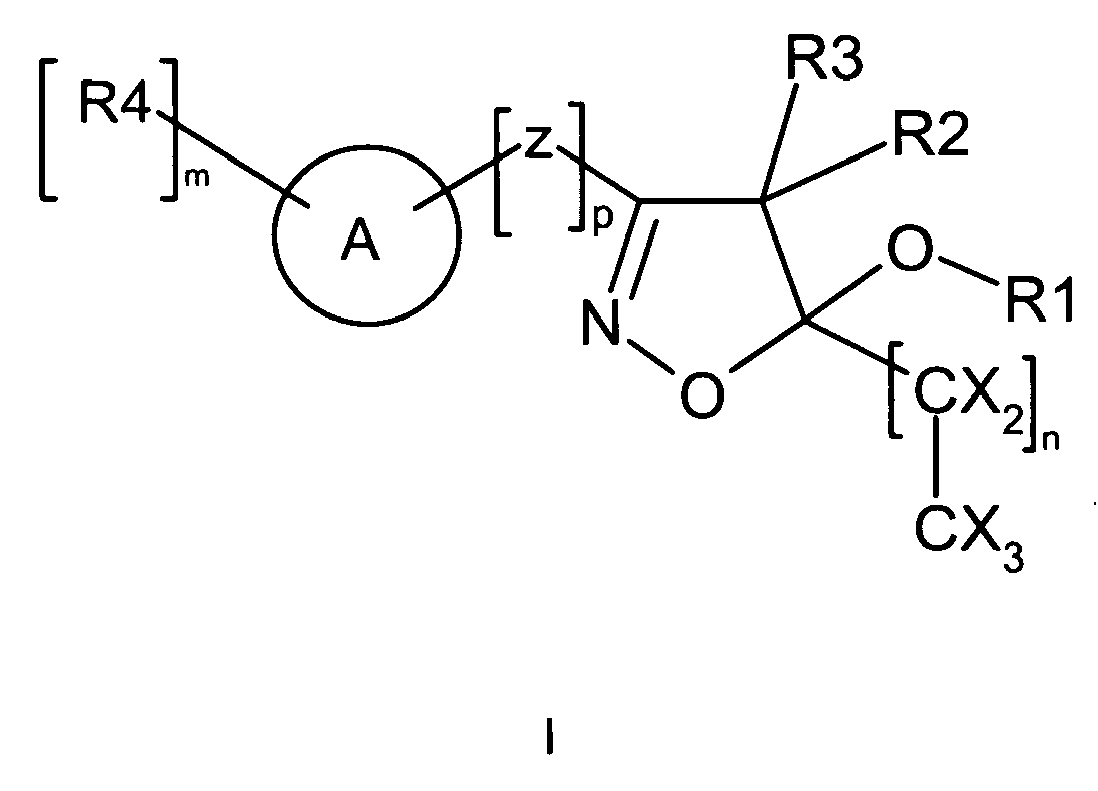
- A method of preparing a compound of general formula (I) according to any one of claims 1 to 5, said method comprising the step of allowing an intermediate amine compound of general formula A :

to react with a compound of formula B : R4 represents a substituent selected from the group comprising, preferably consisting of C1-C6-alkyl, C2-C6-alkenyl, C2-C6-alkynyl, C3-C10-cycloalkyl, C3-C10-heterocycloalkyl, C1-C6-haloalkyl, hydroxy-C1-C6-alkyl, aryl, heteroaryl, -C(=O)Ra, -C(=O)ORa, -C(=O)N(Ra)2,-C(=S)N(Ra)2, -S(=O)2Ra, -S(=O)2N(Ra)2, -C1-C6-alkyl-N(Ra)2, -C1-C6-alkyl-C(=O)Ra, -C1-C6-alkyl-C(=O)ORa, -C1-C6-alkyl-C(=O)N(Ra)2, -C1-C6-alkyl-C(=S)N(Ra)2, -C1-C6-alkyl-NRaC(=O)ORa, -C1-C6-alkyl-NRaC(=O)N(Ra)2,-C1-C6-alkyl-NRaC(=S)N(Ra)2, -C1-C6-alkyl-NRaC(=O)Ra, -C1-C6-alkyl-NRaC(=S)Ra, -C1-C6-atkyl-OC(=O)N(Ra)2, -C1-C6-alkyl-NRaS(=O)2Ra, -C1-C6-alkyl-S(=O)2Ra, -C1-C6-alkyl-S(=O)2N(Ra)2, -C1-C6-alkyl-R(=O)(ORa)2, wherein said C1-C6-alkyl, C2-C6-alkenyl, C2-C6-alkynyl, C3-C10-cycloalkyl, C3-C10-heterocycloalkyl, C1-C6-haloalkyl, hydroxy-C1-C6-alkyl, aryl, heteroaryl, -C(=O)Ra, -C(=O)ORa, -C(=O)N(Ra)2,-C(=S)N(Ra)2, -S(=O)2Ra, -S(=O)2N(Ra)2, -C1-C6-alkyl-N(Ra)2, -C1-C6-alkyl-C(=O)Ra, -C1-C6-alkyl-C(=O)ORa, -C1-C6-alkyl-C(=O)N(Ra)2, -C1-C6-alkyl-C(=S)N(Ra)2, -C1-C6-alkyl-NRaC(=O)ORa, -C1-C6-alkyl-NRaC(=O)N(Ra)2,-C1-C6-alkyl-NRaC(=S)N(Ra)2, -C1-C6-alkyl-NRaC(=O)Ra, -C1-C6-alkyl-NRaC(=S)Ra, -C1-C6-alkyl-OC(=O)N(Ra)2, -C1-C6-alkyl-NRaS(=O)2Ra, -C1-C6-alkyl-S(=O)2Ra, -C1-C6-alkyl-S(=O)2N(Ra)2, -C1-C6-alkyl-P(=O)(ORa)2 substituent is itself optionally substituted, one or more times, in the same way or differently, with R5, wherein Ra and R5 are as defined in any one of claims 1 to 5 ; and E is a -C(O)H group ;to provide a compound of general formula I :
- A method of preparing a compound of general formula (I) according to any one of claims 1 to 5, said method comprising the step of allowing an intermediate ketone compound of general formula 1 b :


- A method of preparing a compound of general formula (I) according to any one of claims 1 to 5, said method comprising the step of allowing an intermediate oxime compound of general formula 2a :


- A method of preparing a compound of general formula (I) according to any one of claims 1 to 5, said method comprising the step of allowing an intermediate ketone compound of general formula 3b :


- A method of preparing a compound of general formula (I) according to any one of claims 1 to 5, said method comprising the step of allowing an intermediate isoxazoline compound of general formula I :

E-R1 4a
to provide a compound of formula I :
- A pharmaceutical composition which comprises a compound of general formula (I) according to any one of claims 1 to 5, or a pharmaceutically acceptable salt or an in vivo hydrolysable ester thereof, and a pharmaceutically-acceptable diluent or carrier.
- Use of a compound of any one of claims 1 to 5 for manufacturing a pharmaceutical composition for the treatment of diseases in which inhibition of histone deacetylase can prevent, inhibit or ameliorate the pathology and/or symptomatology of the disease.
- Use according to claim 13, wherein said disease is a disease caused by increased cell proliferation.
- Use according to claim 13, wherein said diseases are cancer, psoriasis, fibroproliferative disorders, smooth muscle cell proliferation disorders, inflammatory diseases and conditions treatable by immune modulation, neurodegenerative disorders, diseases involving angiogenesis, fungal and parasitic infections and haematopoietic disorders.
- Use according to claim 13, wherein said diseases are liver fibrosis, arteriosclerosis, restenosis, rheumatoid arthritis, autoimmune diabetes, lupus, allergies, Huntington's disease, retinal diseases, protozoal infections, anaemia, sickle cell anaemia and thalassemia.
- Use of claim 16, wherein said protozoal infection is malaria, toxoplasmosis or coccidiosis.
- Use of claim 16, wherein said retinal disease is diabetic retinopathy, age-realted macular degeneration, interstitial keratitis or rubeotic glaucoma.
- Use according to claim 13, wherein said disease is congestive heart failure due to cardiomyocyte hypertrophy.
- A method of treating a disease in which inhibition of histone deacetylase can prevent, inhibit or ameliorate the pathology and/or symptomatology of the disease by administering an effective amount of a compound of general formula (I) according to any one of claims 1 to 5.
- The method according to claim 20, wherein said disease is a disease caused by increased cell proliferation.
- The method according to claim 20, wherein said diseases are cancer, psoriasis, fibroproliferative disorders, smooth muscle cell proliferation disorders, inflammatory diseases and conditions treatable by immune modulation, neurodegenerative disorders, diseases involving angiogenesis, fungal and parasitic infections and haematopoietic disorders.
- The method according to claim 20, wherein said diseases are liver fibrosis, arteriosclerosis, restenosis, rheumatoid arthritis, autoimmune diabetes, lupus, allergies, Huntington's disease, retinal diseases, protozoal infections, anaemia, sickle cell anaemia and thalassemia.
- The method according to claim 23, wherein said protozoal infection is malaria, toxoplasmosis or coccidiosis.
- The method according to claim 23, wherein said retinal disease is diabetic retinopathy, age-realted macular degeneration, interstitial keratitis or rubeotic glaucoma.
- The method according to claim 20, wherein said disease is congestive heart failure due to cardiomyocyte hypertrophy.
Priority Applications (10)
| Application Number | Priority Date | Filing Date | Title |
|---|---|---|---|
| EP06090122A EP1878730A1 (en) | 2006-07-12 | 2006-07-12 | Substituted isoxazolines, pharmaceutical compositions containing the same, methods of preparing the same, and uses of the same |
| JP2009518787A JP2009542752A (en) | 2006-07-12 | 2007-07-06 | Substituted isoxazolines, pharmaceutical compositions containing them, methods for preparing them, and uses thereof |
| EP07765167A EP2046764A1 (en) | 2006-07-12 | 2007-07-06 | Substituted isoxalines, pharmaceutical compositions containing same, methods of preparing same, and uses of same |
| CA002657336A CA2657336A1 (en) | 2006-07-12 | 2007-07-06 | Substituted isoxalines, pharmaceutical compositions containing same, methods of preparing same, and uses of same |
| PCT/EP2007/006147 WO2008006561A1 (en) | 2006-07-12 | 2007-07-06 | Substituted isoxalines, pharmaceutical compositions containing same, methods of preparing same, and uses of same |
| CL200702018A CL2007002018A1 (en) | 2006-07-12 | 2007-07-11 | COMPOUNDS DERIVED FROM SUBSTITUTED ISOXAZOLINS; PREPARATION PROCEDURE; PHARMACEUTICAL COMPOSITION; AND USE OF THE COMPOUND FOR THE TREATMENT OF A DISEASE CAUSED BY AN INCREASE IN THE CELL PROLIFERATION. |
| ARP070103078A AR061883A1 (en) | 2006-07-12 | 2007-07-11 | SUBSTITUTED ISOXAZOLINS, PHARMACEUTICAL COMPOSITIONS CONTAINING THEM, PREPARATION METHOD AND USES IN DISEASES CAUSED BY INCREASING THE CELL PROLIFERATION. |
| TW096125303A TW200812985A (en) | 2006-07-12 | 2007-07-11 | Substituted isoxazolines, pharmaceutical compositions containing same, methods of preparing same, and uses of same |
| US11/776,232 US20080027059A1 (en) | 2006-07-12 | 2007-07-11 | Substituted isoxazolines, pharmaceutical compositions containing same, methods of preparing same, and uses of same |
| UY30481A UY30481A1 (en) | 2006-07-12 | 2007-07-11 | SUBSTITUTED ISOXAZOLINS, PHARMACCUTIC COMPOSITIONS CONTAINING THE SAME, PREPARATION METHODS AND USES. |
Applications Claiming Priority (1)
| Application Number | Priority Date | Filing Date | Title |
|---|---|---|---|
| EP06090122A EP1878730A1 (en) | 2006-07-12 | 2006-07-12 | Substituted isoxazolines, pharmaceutical compositions containing the same, methods of preparing the same, and uses of the same |
Publications (1)
| Publication Number | Publication Date |
|---|---|
| EP1878730A1 true EP1878730A1 (en) | 2008-01-16 |
Family
ID=37441981
Family Applications (2)
| Application Number | Title | Priority Date | Filing Date |
|---|---|---|---|
| EP06090122A Withdrawn EP1878730A1 (en) | 2006-07-12 | 2006-07-12 | Substituted isoxazolines, pharmaceutical compositions containing the same, methods of preparing the same, and uses of the same |
| EP07765167A Withdrawn EP2046764A1 (en) | 2006-07-12 | 2007-07-06 | Substituted isoxalines, pharmaceutical compositions containing same, methods of preparing same, and uses of same |
Family Applications After (1)
| Application Number | Title | Priority Date | Filing Date |
|---|---|---|---|
| EP07765167A Withdrawn EP2046764A1 (en) | 2006-07-12 | 2007-07-06 | Substituted isoxalines, pharmaceutical compositions containing same, methods of preparing same, and uses of same |
Country Status (9)
| Country | Link |
|---|---|
| US (1) | US20080027059A1 (en) |
| EP (2) | EP1878730A1 (en) |
| JP (1) | JP2009542752A (en) |
| AR (1) | AR061883A1 (en) |
| CA (1) | CA2657336A1 (en) |
| CL (1) | CL2007002018A1 (en) |
| TW (1) | TW200812985A (en) |
| UY (1) | UY30481A1 (en) |
| WO (1) | WO2008006561A1 (en) |
Cited By (3)
| Publication number | Priority date | Publication date | Assignee | Title |
|---|---|---|---|---|
| KR101069175B1 (en) | 2009-04-19 | 2011-09-30 | 중앙대학교 산학협력단 | Novel aminosulfonylarylisoxazole compound and pharmaceutical composition for inhibiting multi-drug resistance comprising the same |
| WO2014079935A1 (en) * | 2012-11-21 | 2014-05-30 | Syngenta Participations Ag | Insecticidal compounds based on arylthioacetamide derivatives |
| US12173009B2 (en) | 2005-12-29 | 2024-12-24 | Celltaxis, Llc | Diamine derivatives as inhibitors of leukotriene A4 hydrolase |
Families Citing this family (32)
| Publication number | Priority date | Publication date | Assignee | Title |
|---|---|---|---|---|
| RU2412174C1 (en) * | 2009-06-19 | 2011-02-20 | Государственное образовательное учреждение высшего профессионального образования "Астраханский государственный университет" (АГУ) | 3-substituted 4,4(5h)-dicarbonitrile-5-phenylisoxazolines, having antifungal activity |
| JP6007417B2 (en) | 2011-05-31 | 2016-10-12 | レセプトス エルエルシー | Novel GLP-1 receptor stabilizer and modulator |
| US20130282891A1 (en) * | 2012-04-20 | 2013-10-24 | Kevin E. Davis | Resource Usage Pattern Matching |
| WO2014152536A2 (en) * | 2013-03-14 | 2014-09-25 | Celtaxsys, Inc. | Inhibitors of leukotriene a4 hydrolase |
| CN109867630A (en) | 2013-06-11 | 2019-06-11 | 赛尔基因第二国际有限公司 | - 1 receptor modulators of novel glp-1 |
| KR20150032018A (en) * | 2013-09-17 | 2015-03-25 | 삼성전자주식회사 | Electronic Device And Method For Information Transmitting Of The Same, Information Transmitting System |
| MX382659B (en) | 2014-05-28 | 2025-03-11 | Bayer Cropscience Ag | PROCESS FOR THE PREPARATION OF THIAZOLE DERIVATIVES. |
| TWI665192B (en) | 2014-05-28 | 2019-07-11 | 德商拜耳作物科學股份有限公司 | Process for preparing dihydroisoxazole derivatives |
| ES2844573T3 (en) | 2014-12-10 | 2021-07-22 | Receptos Llc | GLP-1 receptor modulators |
| PL3328843T3 (en) | 2015-07-27 | 2023-02-27 | Chong Kun Dang Pharmaceutical Corp. | 1,3,4-oxadiazole sulfonamide derivative compounds as histone deacetylase 6 inhibitor, and the pharmaceutical composition comprising the same |
| RU2695227C9 (en) | 2015-07-27 | 2020-03-04 | Чонг Кун Данг Фармасьютикал Корп. | 1,3,4-oxadiazole sulphamide derivatives as histone deacetylase 6 inhibitor and pharmaceutical composition containing them |
| CN108026056B (en) | 2015-07-27 | 2021-08-03 | 株式会社钟根堂 | 1,3,4-oxadiazolamide derivative compounds as histone deacetylase 6 inhibitors and their pharmaceutical compositions |
| JP6491393B2 (en) | 2015-08-04 | 2019-03-27 | チョン クン ダン ファーマシューティカル コーポレーション | 1,3,4-Oxadiazole derivative compounds as histone deacetylase 6 inhibitors and pharmaceutical compositions containing the same |
| CN105198824B (en) * | 2015-10-09 | 2018-08-31 | 苏州大学 | Dihydroisoxazoline compound and preparation method and application thereof |
| JP6697074B2 (en) | 2015-10-12 | 2020-05-20 | チョン クン ダン ファーマシューティカル コーポレーション | Oxadiazole amine derivative compound as histone deacetylase 6 inhibitor and pharmaceutical composition containing the same |
| JP7160487B2 (en) * | 2017-05-04 | 2022-10-25 | ビーエーエスエフ ソシエタス・ヨーロピア | Substituted 5-(haloalkyl)-5-hydroxy-isoxazoles for combating plant pathogens |
| CA3086792A1 (en) * | 2017-12-22 | 2019-06-27 | Bayer Aktiengesellschaft | Hydroxyisoxazolines and derivatives thereof |
| KR102104949B1 (en) * | 2018-06-20 | 2020-04-27 | 주식회사 체크메이트테라퓨틱스 | Novel compound for treating NAPRT negative cancer and composition comprising the same |
| KR102316234B1 (en) | 2018-07-26 | 2021-10-22 | 주식회사 종근당 | 1,3,4-Oxadiazole Derivative Compounds as Histone Deacetylase 6 Inhibitor, and the Pharmaceutical Composition Comprising the same |
| MY207444A (en) | 2019-05-31 | 2025-02-27 | Chong Kun Dang Pharmaceutical Corp | 1,3,4-oxadiazole homophthalimide derivative compounds as histone deacetylase 6 inhibitor, and the pharmaceutical composition comprising the same |
| EP3986891A1 (en) | 2019-06-21 | 2022-04-27 | Bayer Aktiengesellschaft | Hydroxyisoxazolines and derivatives thereof |
| WO2020254492A1 (en) | 2019-06-21 | 2020-12-24 | Bayer Aktiengesellschaft | Hydroxyisoxazolines and derivatives thereof |
| BR112021025317A2 (en) | 2019-06-21 | 2022-03-15 | Bayer Ag | Thienylhydroxyisoxazolines and derivatives thereof |
| BR112021025264A2 (en) * | 2019-06-21 | 2022-01-25 | Bayer Ag | Phenoxyphenyl hydroxyisoxazolines and analogues as new antifungal agents |
| EP3986877A1 (en) | 2019-06-21 | 2022-04-27 | Bayer Aktiengesellschaft | Hydroxyisoxazolines and derivatives thereof |
| WO2020254489A1 (en) * | 2019-06-21 | 2020-12-24 | Bayer Aktiengesellschaft | Benzylphenyl hydroxyisoxazolines and analogues as new antifungal agents |
| EP3986892A1 (en) | 2019-06-21 | 2022-04-27 | Bayer Aktiengesellschaft | Hydroxyisoxazolines and use thereof as fungicides |
| TW202304865A (en) | 2021-03-23 | 2023-02-01 | 美商百愛及生物醫藥公司 | Inhibitors of nlrp3 inflammasome |
| KR102905373B1 (en) * | 2021-04-08 | 2025-12-29 | 주식회사 종근당 | 1,3,4-Oxadiazole Thiocarbonyl Compounds as Histone Deacetylase 6 Inhibitor, and the Pharmaceutical Composition Comprising the same |
| CN119053602A (en) | 2022-01-28 | 2024-11-29 | 柏奥艾奇实验室公司 | N-oxide inhibitors of NLRP3 inflammasome |
| US12509459B2 (en) | 2024-03-26 | 2025-12-30 | BioAge Labs, Inc. | Inhibitors of NLRP3 inflammasome |
| CN118772136B (en) * | 2024-06-12 | 2025-04-11 | 海南大学 | Aryl isoxazole arecoline derivative or aryl isoxazoline arecoline derivative and application thereof |
Citations (4)
| Publication number | Priority date | Publication date | Assignee | Title |
|---|---|---|---|---|
| FR2230644A1 (en) * | 1973-05-22 | 1974-12-20 | Ugine Kuhlmann | |
| WO1999005130A1 (en) * | 1997-07-23 | 1999-02-04 | Basf Aktiengesellschaft | Substituted 3-phenyl isoxazolines |
| WO2004013130A1 (en) * | 2002-08-02 | 2004-02-12 | Argenta Discovery Limited | Substituted thienyl-hydroxamic acids as histone deacetylase inhibitors |
| WO2004028253A1 (en) * | 2002-09-28 | 2004-04-08 | Zheng Quan Wang | A series of herbicidal compounds of substituted phenyl-pyrazole |
Family Cites Families (1)
| Publication number | Priority date | Publication date | Assignee | Title |
|---|---|---|---|---|
| US471836A (en) * | 1892-03-29 | Combined starting and blow-off valve |
-
2006
- 2006-07-12 EP EP06090122A patent/EP1878730A1/en not_active Withdrawn
-
2007
- 2007-07-06 JP JP2009518787A patent/JP2009542752A/en active Pending
- 2007-07-06 WO PCT/EP2007/006147 patent/WO2008006561A1/en not_active Ceased
- 2007-07-06 EP EP07765167A patent/EP2046764A1/en not_active Withdrawn
- 2007-07-06 CA CA002657336A patent/CA2657336A1/en not_active Abandoned
- 2007-07-11 CL CL200702018A patent/CL2007002018A1/en unknown
- 2007-07-11 US US11/776,232 patent/US20080027059A1/en not_active Abandoned
- 2007-07-11 AR ARP070103078A patent/AR061883A1/en unknown
- 2007-07-11 TW TW096125303A patent/TW200812985A/en unknown
- 2007-07-11 UY UY30481A patent/UY30481A1/en not_active Application Discontinuation
Patent Citations (4)
| Publication number | Priority date | Publication date | Assignee | Title |
|---|---|---|---|---|
| FR2230644A1 (en) * | 1973-05-22 | 1974-12-20 | Ugine Kuhlmann | |
| WO1999005130A1 (en) * | 1997-07-23 | 1999-02-04 | Basf Aktiengesellschaft | Substituted 3-phenyl isoxazolines |
| WO2004013130A1 (en) * | 2002-08-02 | 2004-02-12 | Argenta Discovery Limited | Substituted thienyl-hydroxamic acids as histone deacetylase inhibitors |
| WO2004028253A1 (en) * | 2002-09-28 | 2004-04-08 | Zheng Quan Wang | A series of herbicidal compounds of substituted phenyl-pyrazole |
Non-Patent Citations (13)
| Title |
|---|
| BRAVO ET AL.: "Asymmetric 1,3-Dipolar Cycloadditions of Nitrile Oxides and Nitrones with Fluorosubstituted Chiral Vinyl Sulfoxides", J. CHEM. RESEARCH, vol. 8, 1996, pages 348 - 349, XP009075802 * |
| BRAVO ET AL.: "Synthesis of Optically Pure 5-Fluoroalkyl-4-sulfinyl-isoxazoles", J. CHEM. RESEARCH, vol. 8, 1993, pages 346347, XP009075803 * |
| CHESWORTH ET AL.: "Estrogen receptor beta selective ligands: Discovery and SAR of novel heterocyclic ligands", BIOORGANIC & MEDICINAL CHEMISTRY LETTERS, vol. 15, 2005, pages 5562 - 5566, XP002410452 * |
| CLERIN ET AL.: "Reaction of Hydroxylamine with 5-Aminooxazoles. A New Route to Isoxazoles", J. HETEROCYCLIC CHEM., vol. 13, no. 4, 1976, pages 825 - 828, XP002410455 * |
| FLORES A F C ET AL: "Synthesis of 1,1,1-trihalo-4-methoxy-4-[2-heteroaryl]-3-buten-2-ones, the corresponding butan-1,3-dione and azole derivatives", TETRAHEDRON LETTERS, ELSEVIER, AMSTERDAM, NL, vol. 43, no. 48, 25 November 2002 (2002-11-25), pages 8701 - 8705, XP004390465, ISSN: 0040-4039 * |
| HAGGARTY STEPHEN J ET AL: "Domain-selective small-molecule inhibitor of histone deacetylase 6 (HDAC6)-mediated tubulin deacetylation", PROCEEDINGS OF THE NATIONAL ACADEMY OF SCIENCES OF USA, NATIONAL ACADEMY OF SCIENCE, WASHINGTON, DC, US, vol. 100, no. 8, 15 April 2003 (2003-04-15), pages 4389 - 4394, XP002263858, ISSN: 0027-8424 * |
| MARTINS ET AL.: "Haloacetylated Enol Ethers. 7[7]. Synthesis of 3-Aryl-5-trihalo-methylisoxazoles and 3-Aryl-5-hydroxy-5-trihalo-methyl-4,5-dihydroisoxazoles", J. HETEROCYCLIC CHEM., vol. 33, no. 6, 1996, pages 1619 - 1622, XP002410454 * |
| MARTINS ET AL.: "Ultrasound promoted synthesis of 5-hydroxy-5-trihalomethyl-4,5-dihydroisoxazoles and beta-enamino trihalomethyl ketones in water", ULTRASONICS SONOCHEMISTRY, vol. 13, no. 4, May 2006 (2006-05-01), pages 364 - 370, XP002410451 * |
| MASSYN ET AL.: "Mise en édidence d'hydroxy 5,delta,2-isoxazolines intermédiaires dans la synthèse d'isoxazoles perfluoroalkylés", JOURNAL OF FLUORINE CHEMISTRY, vol. 5, 1975, pages 67 - 70, XP002410456 * |
| PAVLIK ET AL.: "Synthesis of 3-Phenyl-5-(trifluoromethyl)isoxazole and 5-Phenyl-3-(trifluroromethyl)isoxazole", J. HETEROCYCLIC CHEM., vol. 42, no. 7, 2005, pages 1253 - 1255, XP002410453 * |
| SANZ ET AL.: "Structure of the products of condensation of hydroxylamine with trifluoromethyl-beta-diketones: assignments of the diastereotopic protons of the 4-methylene group in 5-hydroxy-5-trifluoromethyl-delta2-isoxazolines", MAGNETIC RESONANCE IN CHEMISTRY, vol. 43, no. 12, 2005, pages 1040 - 1043, XP001248512 * |
| SOSNOVSKIKH ET AL.: "2-Polyfluoroalkylchromones", RUSSIAN CHEMICAL BULLETIN (INTERNATIONAL EDITION), vol. 51, no. 7, 2002, pages 1270 - 1279, XP009075777 * |
| USACHEV B I ET AL: "Synthesis and reactivity of 2-polyfluoroalkylchromene-4(4H)-thiones", RUSSIAN CHEMICAL BULLETIN, KLUWER ACADEMIC PUBLISHERS-PLENUM PUBLISHERS, NE, vol. 53, no. 10, 1 October 2004 (2004-10-01), pages 2285 - 2292, XP019224180, ISSN: 1573-9171 * |
Cited By (3)
| Publication number | Priority date | Publication date | Assignee | Title |
|---|---|---|---|---|
| US12173009B2 (en) | 2005-12-29 | 2024-12-24 | Celltaxis, Llc | Diamine derivatives as inhibitors of leukotriene A4 hydrolase |
| KR101069175B1 (en) | 2009-04-19 | 2011-09-30 | 중앙대학교 산학협력단 | Novel aminosulfonylarylisoxazole compound and pharmaceutical composition for inhibiting multi-drug resistance comprising the same |
| WO2014079935A1 (en) * | 2012-11-21 | 2014-05-30 | Syngenta Participations Ag | Insecticidal compounds based on arylthioacetamide derivatives |
Also Published As
| Publication number | Publication date |
|---|---|
| WO2008006561A1 (en) | 2008-01-17 |
| US20080027059A1 (en) | 2008-01-31 |
| CL2007002018A1 (en) | 2008-05-09 |
| TW200812985A (en) | 2008-03-16 |
| EP2046764A1 (en) | 2009-04-15 |
| CA2657336A1 (en) | 2008-01-17 |
| AR061883A1 (en) | 2008-10-01 |
| JP2009542752A (en) | 2009-12-03 |
| UY30481A1 (en) | 2008-02-29 |
Similar Documents
| Publication | Publication Date | Title |
|---|---|---|
| EP1878730A1 (en) | Substituted isoxazolines, pharmaceutical compositions containing the same, methods of preparing the same, and uses of the same | |
| JP7441264B2 (en) | Imidazopyrrolopyridines as inhibitors of JAK family kinases | |
| US9738630B2 (en) | Inhibitors of lysine methyl transferase | |
| JP2006518341A (en) | Hydroxamic acid derivatives as histone deacetylase (HDAC) inhibitors | |
| US20150239869A1 (en) | Pyrimidine hydroxy amide compounds as hdac6 selective inhibitors | |
| KR20190009369A (en) | 3-oxo-2,6-diphenyl-2,3-dihydropyridazine-4-carboxamide | |
| US9643938B2 (en) | Process for the preparation of substituted cycloserines | |
| KR20010075136A (en) | Oxazole Compounds as Prostaglandin E2 Agonists or Antagonists | |
| BR112015012571A2 (en) | Imidazopyridine compound | |
| TW201111374A (en) | Compounds which selectively modulate the CB2 receptor | |
| WO2004087693A1 (en) | Oxime derivatives and their use as pharmaceutically active agents | |
| CN102811998B (en) | New cyclophilin inhibitors and their use | |
| EA035120B1 (en) | Piperidine derivatives as hdac1/2 inhibitors | |
| WO2019191327A1 (en) | Ox2r compounds | |
| CA2681861A1 (en) | Ornithine derivative | |
| WO2014176258A1 (en) | Compounds useful as antibiotic tolerance inhibitors | |
| BR112019013001A2 (en) | histone deacetylase inhibitors | |
| RU2720678C2 (en) | Histone deacetylase inhibitors | |
| ES2370529T3 (en) | DERIVATIVES OF BENZAMIDE AND PIRILAMIDE AS ANTIBACTERIAL AGENTS. | |
| GB2640329A (en) | Hedgehog acyltransferase inhibitors | |
| Jakopin | Orthogonally protected oxadiazole-based building blocks: Synthesis and characterization | |
| WO2026033305A1 (en) | Fused bicyclic heterocyclic derivatives as hdac inhibitors | |
| WO2026020343A1 (en) | Il-17a modulator compound and use thereof | |
| ES2930814T3 (en) | Three-membered spiro ring or five-membered spiro ring peptide deformylase inhibitor and use thereof as an antitumor agent | |
| EA045414B1 (en) | SUBSTITUTED ALKYNYLENE COMPOUNDS AS ANTI-CANCER AGENTS |
Legal Events
| Date | Code | Title | Description |
|---|---|---|---|
| PUAI | Public reference made under article 153(3) epc to a published international application that has entered the european phase |
Free format text: ORIGINAL CODE: 0009012 |
|
| 17P | Request for examination filed |
Effective date: 20060712 |
|
| AK | Designated contracting states |
Kind code of ref document: A1 Designated state(s): AT BE BG CH CY CZ DE DK EE ES FI FR GB GR HU IE IS IT LI LT LU LV MC NL PL PT RO SE SI SK TR |
|
| AX | Request for extension of the european patent |
Extension state: AL BA HR MK YU |
|
| AKX | Designation fees paid | ||
| STAA | Information on the status of an ep patent application or granted ep patent |
Free format text: STATUS: THE APPLICATION IS DEEMED TO BE WITHDRAWN |
|
| 18D | Application deemed to be withdrawn |
Effective date: 20080717 |
|
| REG | Reference to a national code |
Ref country code: DE Ref legal event code: 8566 |