EP1876165A1 - Aromatic amine derivative and organic electroluminescent element using the same - Google Patents
Aromatic amine derivative and organic electroluminescent element using the same Download PDFInfo
- Publication number
- EP1876165A1 EP1876165A1 EP06731318A EP06731318A EP1876165A1 EP 1876165 A1 EP1876165 A1 EP 1876165A1 EP 06731318 A EP06731318 A EP 06731318A EP 06731318 A EP06731318 A EP 06731318A EP 1876165 A1 EP1876165 A1 EP 1876165A1
- Authority
- EP
- European Patent Office
- Prior art keywords
- group
- carbon atoms
- substituted
- unsubstituted
- independently represent
- Prior art date
- Legal status (The legal status is an assumption and is not a legal conclusion. Google has not performed a legal analysis and makes no representation as to the accuracy of the status listed.)
- Withdrawn
Links
- 0 CC=CC(N(c1ccccc1)c1c(cc(*)cc2N(c3ccccc3)c3ccccc3)c2cc(*)c1)=CC=C Chemical compound CC=CC(N(c1ccccc1)c1c(cc(*)cc2N(c3ccccc3)c3ccccc3)c2cc(*)c1)=CC=C 0.000 description 10
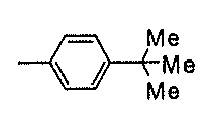
- HFPZCAJZSCWRBC-UHFFFAOYSA-N CC(C)c1ccc(C)cc1 Chemical compound CC(C)c1ccc(C)cc1 HFPZCAJZSCWRBC-UHFFFAOYSA-N 0.000 description 9
- GWHJZXXIDMPWGX-UHFFFAOYSA-N Cc1cc(C)c(C)cc1 Chemical compound Cc1cc(C)c(C)cc1 GWHJZXXIDMPWGX-UHFFFAOYSA-N 0.000 description 5
- QCWXDVFBZVHKLV-UHFFFAOYSA-N CC(C)(C)c1ccc(C)cc1 Chemical compound CC(C)(C)c1ccc(C)cc1 QCWXDVFBZVHKLV-UHFFFAOYSA-N 0.000 description 3
- BFIMMTCNYPIMRN-UHFFFAOYSA-N Cc1cc(C)c(C)c(C)c1 Chemical compound Cc1cc(C)c(C)c(C)c1 BFIMMTCNYPIMRN-UHFFFAOYSA-N 0.000 description 2
- KRVWMPNTAYTOGS-UHFFFAOYSA-N CC(C)c1cc2ccc(C)cc2cc1 Chemical compound CC(C)c1cc2ccc(C)cc2cc1 KRVWMPNTAYTOGS-UHFFFAOYSA-N 0.000 description 1
- XCYJPXQACVEIOS-UHFFFAOYSA-N CC(C)c1cccc(C)c1 Chemical compound CC(C)c1cccc(C)c1 XCYJPXQACVEIOS-UHFFFAOYSA-N 0.000 description 1
- UZDDXUMOXKDXNE-UHFFFAOYSA-N CC(c1ccc(C)cc1)N Chemical compound CC(c1ccc(C)cc1)N UZDDXUMOXKDXNE-UHFFFAOYSA-N 0.000 description 1
- DXSIFZLOUITCRR-UHFFFAOYSA-N CC1(C)c(cc(C)cc2)c2-c2ccccc12 Chemical compound CC1(C)c(cc(C)cc2)c2-c2ccccc12 DXSIFZLOUITCRR-UHFFFAOYSA-N 0.000 description 1
- SCNJGPVSCIWPJN-UHFFFAOYSA-N CC1C=C(C)C=C(C)C1 Chemical compound CC1C=C(C)C=C(C)C1 SCNJGPVSCIWPJN-UHFFFAOYSA-N 0.000 description 1
- CHLICZRVGGXEOD-UHFFFAOYSA-N Cc(cc1)ccc1OC Chemical compound Cc(cc1)ccc1OC CHLICZRVGGXEOD-UHFFFAOYSA-N 0.000 description 1
- KWVPRPSXBZNOHS-UHFFFAOYSA-N Cc(cc1C)cc(C)c1N Chemical compound Cc(cc1C)cc(C)c1N KWVPRPSXBZNOHS-UHFFFAOYSA-N 0.000 description 1
- LRLRAYMYEXQKID-UHFFFAOYSA-N Cc1ccc(C(F)(F)F)cc1 Chemical compound Cc1ccc(C(F)(F)F)cc1 LRLRAYMYEXQKID-UHFFFAOYSA-N 0.000 description 1
Images


Classifications
-
- H—ELECTRICITY
- H10—SEMICONDUCTOR DEVICES; ELECTRIC SOLID-STATE DEVICES NOT OTHERWISE PROVIDED FOR
- H10K—ORGANIC ELECTRIC SOLID-STATE DEVICES
- H10K85/00—Organic materials used in the body or electrodes of devices covered by this subclass
- H10K85/60—Organic compounds having low molecular weight
- H10K85/631—Amine compounds having at least two aryl rest on at least one amine-nitrogen atom, e.g. triphenylamine
- H10K85/633—Amine compounds having at least two aryl rest on at least one amine-nitrogen atom, e.g. triphenylamine comprising polycyclic condensed aromatic hydrocarbons as substituents on the nitrogen atom
-
- C—CHEMISTRY; METALLURGY
- C07—ORGANIC CHEMISTRY
- C07C—ACYCLIC OR CARBOCYCLIC COMPOUNDS
- C07C211/00—Compounds containing amino groups bound to a carbon skeleton
- C07C211/43—Compounds containing amino groups bound to a carbon skeleton having amino groups bound to carbon atoms of six-membered aromatic rings of the carbon skeleton
- C07C211/57—Compounds containing amino groups bound to a carbon skeleton having amino groups bound to carbon atoms of six-membered aromatic rings of the carbon skeleton having amino groups bound to carbon atoms of six-membered aromatic rings being part of condensed ring systems of the carbon skeleton
- C07C211/58—Naphthylamines; N-substituted derivatives thereof
-
- H—ELECTRICITY
- H10—SEMICONDUCTOR DEVICES; ELECTRIC SOLID-STATE DEVICES NOT OTHERWISE PROVIDED FOR
- H10K—ORGANIC ELECTRIC SOLID-STATE DEVICES
- H10K50/00—Organic light-emitting devices
- H10K50/10—OLEDs or polymer light-emitting diodes [PLED]
- H10K50/11—OLEDs or polymer light-emitting diodes [PLED] characterised by the electroluminescent [EL] layers
-
- H—ELECTRICITY
- H10—SEMICONDUCTOR DEVICES; ELECTRIC SOLID-STATE DEVICES NOT OTHERWISE PROVIDED FOR
- H10K—ORGANIC ELECTRIC SOLID-STATE DEVICES
- H10K50/00—Organic light-emitting devices
- H10K50/10—OLEDs or polymer light-emitting diodes [PLED]
- H10K50/14—Carrier transporting layers
-
- H—ELECTRICITY
- H10—SEMICONDUCTOR DEVICES; ELECTRIC SOLID-STATE DEVICES NOT OTHERWISE PROVIDED FOR
- H10K—ORGANIC ELECTRIC SOLID-STATE DEVICES
- H10K50/00—Organic light-emitting devices
- H10K50/10—OLEDs or polymer light-emitting diodes [PLED]
- H10K50/14—Carrier transporting layers
- H10K50/15—Hole transporting layers
- H10K50/157—Hole transporting layers between the light-emitting layer and the cathode
-
- H—ELECTRICITY
- H10—SEMICONDUCTOR DEVICES; ELECTRIC SOLID-STATE DEVICES NOT OTHERWISE PROVIDED FOR
- H10K—ORGANIC ELECTRIC SOLID-STATE DEVICES
- H10K50/00—Organic light-emitting devices
- H10K50/10—OLEDs or polymer light-emitting diodes [PLED]
- H10K50/14—Carrier transporting layers
- H10K50/16—Electron transporting layers
- H10K50/167—Electron transporting layers between the light-emitting layer and the anode
-
- H—ELECTRICITY
- H10—SEMICONDUCTOR DEVICES; ELECTRIC SOLID-STATE DEVICES NOT OTHERWISE PROVIDED FOR
- H10K—ORGANIC ELECTRIC SOLID-STATE DEVICES
- H10K85/00—Organic materials used in the body or electrodes of devices covered by this subclass
- H10K85/60—Organic compounds having low molecular weight
- H10K85/615—Polycyclic condensed aromatic hydrocarbons, e.g. anthracene
- H10K85/622—Polycyclic condensed aromatic hydrocarbons, e.g. anthracene containing four rings, e.g. pyrene
-
- H—ELECTRICITY
- H10—SEMICONDUCTOR DEVICES; ELECTRIC SOLID-STATE DEVICES NOT OTHERWISE PROVIDED FOR
- H10K—ORGANIC ELECTRIC SOLID-STATE DEVICES
- H10K85/00—Organic materials used in the body or electrodes of devices covered by this subclass
- H10K85/60—Organic compounds having low molecular weight
- H10K85/615—Polycyclic condensed aromatic hydrocarbons, e.g. anthracene
- H10K85/626—Polycyclic condensed aromatic hydrocarbons, e.g. anthracene containing more than one polycyclic condensed aromatic rings, e.g. bis-anthracene
-
- H—ELECTRICITY
- H10—SEMICONDUCTOR DEVICES; ELECTRIC SOLID-STATE DEVICES NOT OTHERWISE PROVIDED FOR
- H10K—ORGANIC ELECTRIC SOLID-STATE DEVICES
- H10K85/00—Organic materials used in the body or electrodes of devices covered by this subclass
- H10K85/60—Organic compounds having low molecular weight
- H10K85/631—Amine compounds having at least two aryl rest on at least one amine-nitrogen atom, e.g. triphenylamine
-
- H—ELECTRICITY
- H10—SEMICONDUCTOR DEVICES; ELECTRIC SOLID-STATE DEVICES NOT OTHERWISE PROVIDED FOR
- H10K—ORGANIC ELECTRIC SOLID-STATE DEVICES
- H10K85/00—Organic materials used in the body or electrodes of devices covered by this subclass
- H10K85/60—Organic compounds having low molecular weight
- H10K85/649—Aromatic compounds comprising a hetero atom
Definitions
- the present invention relates to a novel aromatic amine derivative and an organic electroluminescence (EL) device using the derivative, in particular, an organic EL device having high emission luminance, high luminous efficiency, and a long lifetime, and a novel aromatic amine derivative for realizing the device.
- EL organic electroluminescence
- an EL device is constituted of a light emitting layer and a pair of opposing electrodes between which the layer is interposed.
- Light emission is the following phenomenon: when an electric field is applied between both the electrodes, an electron is injected from a cathode side and a hole is injected from an anode side, and, furthermore, the electron recombines with the hole in the light emitting layer to produce an excited state, and energy generated upon return of the excited state to a ground state is emitted as light.
- a conventional organic EL device has been driven at a voltage higher than the voltage at which an inorganic light emitting diode is driven, and has had emission luminance and luminous efficiency lower than those of the diode.
- the properties of the device have deteriorated remarkably, so the device has not been put into practical use.
- a recent organic EL device has been gradually improved, additionally high luminous efficiency and an additionally long lifetime of the device are requested.
- Patent Document 1 a technology involving the use of a single monoanthracene compound as an organic light emitting material has been disclosed (Patent Document 1).
- the technology provides a luminance as low as 1, 650 cd/m 2 at a current density of, for example, 165 mA/cm 2 , and provides extremely low efficiency, specifically, 1 cd/A, so the technology is not practical.
- Patent Document 2 a technology involving the use of a single bisanthracene compound as an organic light emitting material has been disclosed (Patent Document 2).
- Patent Document 2 even the technology provides an efficiency as low as about 1 to 3 cd/A, so an improvement for putting the technology into practical use has been demanded.
- Patent Document 3 a long-lifetime organic EL device obtained by adding, for example, styrylamine to a distyryl compound to be used as an organic light emitting material.
- Patent Document 4 technologies each involving the use of each of a monoanthracene or bisanthracene compound and a distyryl compound in an organic light emitting medium layer have been disclosed (Patent Document 4).
- Patent Document 5 a device using a diaminonaphthalene compound as an emitting layer has been disclosed (Patent Document 5).
- the device does not have a sufficient half-lifetime, and the additional improvement of the device has been demanded.
- the present invention has been made with a view to solving the above problems, and an object of the present invention is to provide an organic EL device having high emission luminance, high luminous efficiency, and a long lifetime, and a novel aromatic amine derivative for realizing the device.
- the inventors of the present invention have made extensive studies with a view to developing an aromatic amine derivative having the above preferable nature and an organic EL device using the derivative. As a result, the inventors have found that the utilization of an aromatic amine derivative represented by any one of the following general formulae (1) to (7) in which a diphenylamino group having a substituent is bonded to a naphthalene structure can achieve the object.
- the present invention has been completed on the basis of such finding.
- the present invention provides an aromatic amine derivative represented by any one of the following general formulae (1) to (7):
- R 1 and R 2 each independently represent a substituted or unsubstituted aryl group having 5 to 50 carbon atoms, a substituted or unsubstituted aralkyl group having 1 to 50 carbon atoms, a substituted or unsubstituted cycloalkyl group having 3 to 50 carbon atoms, a substituted or unsubstituted alkoxyl group having 1 to 50 carbon atoms, a substituted or unsubstituted aryloxy group having 5 to 50 carbon atoms, a substituted or unsubstituted arylamino group having 5 to 50 carbon atoms, a substituted or unsubstituted alkylamino group having 1 to 20 carbon atoms, a substituted or unsubstituted heterocyclic group having 5 to 50 carbon atoms, a cyano group, or a halogen atom;
- a 1 to A 4 each independently represent a hydrogen atom, a substituted or unsubstituted
- R 1 , R 2 , A 1 to A 4 , and a to d each have the same meaning as that in the general formula (1), provided that a case where a substituent in each group represented by any one of A 1 to A 4 includes a group containing a vinyl group is excluded, and at least one of A 1 to A 4 represents a substituted or unsubstituted, secondary or tertiary alkyl group having 3 to 10 carbon atom;
- R 1 , R 2 , A 1 to A 4 , and a to d each have the same meaning as that in the general formula (1), provided that a case where a substituent in each group represented by any one of A 1 to A 4 includes a group containing a vinyl group is excluded, and at least one of A 1 to A 4 represents an integer of 2 or more;
- R 3 and R 4 each independently represent a hydrogen atom or an alkyl group having 1 to 20 carbon atoms provided that a case where both R 3 and R 4 each represent a hydrogen atom is excluded; and A 1 to A 4 , and a to d each have the same meaning as that in the general formula (1), provided that a case where a substituent in each group represented by any one of A 1 to A 4 includes a group containing a vinyl group is excluded, and a case where all of A 1 to A 4 each represent a hydrogen atom is excluded;
- R 3 , R 4 , A 1 to A 4 , and a to d each have the same meaning as that in the general formula (4), provided that a case where a substituent in each group represented by any one of A 1 to A 4 includes a group containing a vinyl group is excluded, and at least one of A 1 to A 4 represents a substituted or unsubstituted, secondary or tertiary alkyl group having 3 to 10 carbon atom;
- R 3 , R 4 , A 1 to A 4 , and a to d each have the same meaning as that in the general formula (4), provided that a case where a substituent in each group represented by any one of A 1 to A 4 includes a group containing a vinyl group is excluded, and at least one of a to d represents an integer of 2 or more; and
- R 3 , R 4 , A 1 to A 4 , and a to d each have the same meaning as that in the general formula (4), provided that a case where a substituent in each group represented by any one of A 1 to A 4 includes a group containing a vinyl group is excluded, and, when each one of a to d represents 2 or more, and A 1 s, A 2 s, A 3 s, or A 4 s are coupled with each other to form a saturated ring, a total number of carbon atoms in the ring is 12 or less.
- an organic EL device including an organic thin film layer composed of one or more layers including at least a light emitting layer and interposed between a cathode and an anode, in which at least one layer of the organic thin film layer contains the aromatic amine derivative alone or as a component of a mixture; and an organic EL device including an organic thin film layer composed of one or more layers including at least a light emitting layer and interposed between a cathode and an anode, in which an organic layer containing the aromatic amine derivative as a main component is present between the anode and the light emitting layer.
- An organic EL device using the aromatic amine derivative represented by any one of the general formulae (1) to (7) of the present invention has high emission luminance and high luminous efficiency, hardly deteriorates even after long-term use, and has a long lifetime.
- An aromatic amine derivative of the present invention is composed of an aromatic amine derivative represented by any one of the following general formulae (1) to (7).
- R 1 and R 2 represent a substituted or unsubstituted aryl group having 5 to 50 carbon atoms (preferably 5 to 20 carbon atoms), a substituted or unsubstituted aralkyl group having 1 to 50 carbon atoms (preferably 9 to 20 carbon atoms), a substituted or unsubstituted cycloalkyl group having 3 to 50 carbon atoms (preferably 5 to 12 carbon atoms), a substituted or unsubstituted alkoxyl group having 1 to 50 carbon atoms (preferably 1 to 6 carbon atoms), a substituted or unsubstituted aryloxy group having 5 to 50 carbon atoms (preferably 5 to 18 carbon atoms), a substituted or unsubstituted arylamino group having 5 to 50 carbon atoms (preferably 5 to 18 carbon atoms), a substituted or unsubstituted alkylamino group having 1 to 20 carbon atoms (preferably 1 to 6 carbon
- Examples of the aryl group represented by R 1 and R 2 above include a phenyl group, a 2-methylphenyl group, a 3-methylphenyl group, a 4-methylphenyl group, a 4-ethylphenyl group, a biphenyl group, a 4-methylbiphenyl group, a 4-ethylbiphenyl group, a 4-cyclohexylbiphenylgroup,a terphenylgroup,a3,5-dichlorophenyl group, a naphthyl group, 5-methylnaphthyl group, an anthryl group, and a pyrenyl group.
- Examples of the aralkyl group represented by R 1 and R 2 above include a benzyl group, a 1-phenylethyl group, a 2-phenylethyl group, a 1-phenylisopropyl group, a 2-phenylisopropyl group, a phenyl-t-butyl group, an ⁇ -naphtylmethyl group, a 1- ⁇ -naphtylethyl group, a 2- ⁇ -naphtylethyl group, a 1- ⁇ -naphtylisopropyl group, a 2- ⁇ -naphtylisopropyl group, a ⁇ -naphtylmethyl group, a 1- ⁇ -naphtylethyl group, a 2- ⁇ -naphtylethyl group, a 1- ⁇ -naphtylisopropyl group, a 2- ⁇ -naphtyl
- Examples of the cycloalkyl group represented by R 1 and R 2 above include a cyclopropyl group, a cyclobutyl group, a cyclopentyl group, a cyclohexyl group, a norbornene group, and an adamantyl group.
- Examples of the alkoxyl group represented by R 1 and R 2 above include a methoxy group, an ethoxy group, a propoxy group, an isopropoxy group, a butoxy group, an isobutoxy group, an s-butoxy group, a t-butoxy group, each kinds of pentyloxy groups, and each of hexyloxy groups.
- Examples of the aryloxy group represented by R 1 and R 2 above include a phenoxy group, a tolyloxy group, and a naphtyloxy group.
- Examples of the arylamino group represented by R 1 and R 2 above include a diphenylamino group, a ditolylamino group, an isopropyldiphenylamino group, t-butyldiphenylamino group, a diisopropyl diphenylamino group, a di-t-butyldiphenylamino group, a dinaphthylamino group, and a naphthylphenylamino group.
- Examples of the alkylamino group represented by R 1 and R 2 above include a dimethylamino group, a diethylamino group, and a dihexylamino group.
- Examples of the halogen atom represented by R 1 and R 2 above include a fluorine atom, a chlorine atom, and a bromine atom.
- R 3 and R 4 each represent a hydrogen atom, or a substituted or unsubstituted alkyl group having 1 to 50 carbon atoms (preferably 1 to 20 carbon atoms).
- alkyl group represented by R 3 and R 4 above include a methyl group, an ethyl group, a propyl group, an isopropyl group, a butyl group, an s-butyl group, a t-butyl group, a pentyl group, a hexyl group, a heptyl group, an octyl group, a stearyl group, a 2-phenylisopropyl group, a trichloromethyl group, a trifluoromethyl group, a benzyl group, an ⁇ -phenoxybenzyl group, an ⁇ , ⁇ -dimethylbenzyl group, an ⁇ , ⁇ -methylphenylbenzyl group, an
- a methyl group, an ethyl group, a propyl group, an isopropyl group, a butyl group, an s-butyl group, or a t-butyl is preferable, or a methyl group, an ethyl group, a propyl group, or an isopropyl group is more preferable for each of R 3 and R 4 .
- a 1 to A 4 each independently represent a hydrogen atom, a substituted or unsubstituted alkyl group having 1 to 50 carbon atoms (preferably 1 to 20 carbon atoms), a substituted or unsubstituted aryl group having 5 to 50 carbon atoms (preferably 5 to 20 carbon atoms), a substituted or unsubstituted aralkyl group having 1 to 50 carbon atoms (preferably 9 to 20 carbon atoms), a substituted or unsubstituted cycloalkyl group having 3 to 50 carbon atoms (preferably 5 to 12 carbon atoms), a substituted or unsubstituted alkoxyl group having 1 to 50 carbon atoms (preferably 1 to 6 carbon atoms), a substituted or unsubstituted aryloxy group having 5 to 50 carbon atoms (preferably 5 to 18 carbon atoms), a substituted or unsubstituted arylamino group having 5 to 50 carbon atom
- a hydrogen atom, a substituted or unsubstituted alkyl group having 1 to 10 carbon atoms, a substituted or unsubstituted aryl group having 5 to 20 carbon atoms, a substituted or unsubstituted aralkyl group having 1 to 20 carbon atoms, or a substituted or unsubstituted cycloalkyl group having 3 to 10 carbon atoms is preferable, and a hydrogen atom, a substituted or unsubstituted alkyl group having 1 to 4 carbon atoms, a substituted or unsubstituted aryl group having 5 to 18 carbon atoms, a substituted or unsubstituted aralkyl group having 1 to 18 carbon atoms, or a substituted or unsubstituted cycloalkyl group having 3 to 6 carbon atoms is more preferable.
- each of the alkyl group, the aryl group, the aralkyl group, the cycloalkyl group, the alkoxyl group, the aryloxy group, the arylamino group, the alkylamino group, and the halogen atom represented by any one of A 1 to A 4 include examples similar to those described for R 1 and R 2 described above.
- a to d each represent an integer of 0 to 5, preferably 0 to 3, or more preferably 0 to 2.
- multiple A 1 s, multiple A 2 s, multiple A 3 s, or multiple A 4 s may be identical to or different from each other, or may be coupled with each other to form a saturated or unsaturated ring.
- a 1 and A 2 , or A 3 and A 4 may be coupled with each other to form a saturated or unsaturated ring.
- a diaminonaphthalene structure as a light emitting center is coupled with a benzene ring having a substituent.
- the molecules of the compound are prevented from associating with each other, and hence the lifetime of an organic EL device using the compound is prolonged.
- a bulky substituent is introduced into a naphthalene skeleton at a position (3 or 7-position) distant from the position at which an amino group is bonded (1 or 5-position), whereby the molecules of the compound are prevented from associating with each other without the occurrence of steric repulsion in an amino group-naphthalene bond, and hence the lifetime of the organic EL device using the compound is additionally prolonged.
- the derivative is strongly fluorescent in a solid state, is excellent in electroluminescent property, and has a fluorescent quantum efficiency of 0.3 or more.
- the derivative brings together excellent properties with which a hole is injected and transported from a metal electrode or an organic thin film layer, and excellent properties with which an electron is injected and transported from the metal electrode or the organic thin film layer, whereby the derivative is effectively used as a light emitting material for an organic EL device, in particular, a doping material for an organic EL device. Further, any other hole transporting material, electron transporting material, or doping material may be used.
- An organic EL device of the present invention is a device having an organic thin film layer composed of one or more layers and formed between an anode and a cathode.
- a light emitting layer is provided between the anode and the cathode.
- the light emitting layer contains a light emitting material, and may contain a hole injecting material or an electron injecting material in addition to the light emitting material in order that a hole injected from the anode or an electron injected from the cathode may be transported to the light emitting material.
- the aromatic amine derivative represented by any one of the general formulae (1) to (7) can be used in the organic thin film layer because the derivative has high light emitting property, and has excellent hole injecting property, excellent hole transporting property, excellent electron injecting property, and excellent electron transporting property; the derivative is preferably used as the light emitting material in the light emitting layer.
- the light emitting layer contains the aromatic amine derivative of the present invention at a content of preferably 0.1 to 20 wt%, or more preferably 1 to 10 wt%.
- the light emitting layer can be formed only of the aromatic amine derivative represented by any one of the general formulae (1) to (7) of the present invention because the aromatic amine derivative brings together extremely high fluorescent quantum efficiency, a high hole transporting ability, and a high electron transporting ability, and can be formed into a uniform thin film.
- the organic EL device of the present invention is preferably an organic EL device having an organic thin film layer composed of two or more layers including at least a light emitting layer and interposed between a cathode and an anode, in which an organic layer mainly composed of the aromatic amine derivative represented by any one of the general formulae (1) to (7) is present between the anode and the light emitting layer.
- the organic layer examples include a hole injecting layer and a hole transporting layer.
- the organic EL device having multiple layers is a laminate having, for example, an (anode/hole injecting layer/light emitting layer/cathode), (anode/light emitting layer/electron injecting layer/cathode), or (anode/hole injecting layer/light emitting layer/electron injecting layer/cathode) multiple layer constitution.
- the organic EL device contains the aromatic amine derivative of the present invention as a doping material
- the device preferably contains at least one kind selected from an anthracene derivative represented by the following general formula (8), an anthracene derivative represented by the following general formula (9), and a pyrene derivative represented by the following general formula (10) as a host material:
- the organic EL device having multiple organic thin film layers is a laminate having, for example, an (anode/hole injecting layer/light emitting layer/cathode), (anode/light emitting layer/electron injecting layer/cathode), or (anode/hole injecting layer/light emitting layer/electron injecting layer/cathode) constitution.
- an additional known light emitting material, doping material, hole injecting material, or electron injecting material can be used as required in the multiple layers.
- a light emitting material, a doping material, a hole injecting material, and an electron injecting material can be used in combination.
- a doping material can provide improvements in emission luminance and luminous efficiency, and red or blue light emission.
- each of the hole injecting layer, the light emitting layer, and the electron injecting layer may be formed of a layer constitution having two or more layers. At that time, in the case of the hole injecting layer, a layer for injecting a hole from the electrode is referred to as a hole injecting layer, and a layer for receiving the hole from the hole injecting layer and transporting the hole to the light emitting layer is referred to as a hole transporting layer.
- a layer for injecting an electron from the electrode is referred to as an electron injecting layer
- a layer for receiving the electron from the electron injecting layer and transporting the electron to the light emitting layer is referred to as an electron transporting layer.
- Each of those layers is selected and used depending on factors such as the energy level of a material, heat resistance, and adhesiveness between the layer and an organic layer or a metal electrode.
- Examples of a host material or a doping material other than those in the above general formulae (3) to (5) which can be used in the light emitting layer together with the aromatic amine derivative of the present invention include, but are not limited to: large amounts of fused aromatic compounds such as naphthalene, phenanthrene, rubrene, anthracene, tetracene, pyrene, perylene, chrysene, decacyclene, coronene, tetraphenylcyclopentadiene, pentaphenylcyclopentadiene, fluorene, spirofluorene, 9,10-diphenylanthracene, 9,10-bis(phenylethynyl)anthracene, and 1,4-bis(9'-ethynylanthracene)benzene and derivatives thereof; organic metal complexs such as tris(8-quinolinolato)aluminum and bis-(2-methyl-8-quinolin
- a compound having an ability of transporting a hole, having hole injection efficiency from an anode and excellent hole injection efficiency to a light emitting layer or a light emitting material, preventing the migration of an exciton generated in the light emitting layer to an electron injecting layer or an electron injecting material, and having excellent thin film-formability is preferable as a hole injecting material.
- the compound include, but not limited to, a phthalocyanine derivative, a naphthalocyanine derivative, a porphyrin derivative, oxazole, oxadiazole, triazole, imidazole, imidazolone, imidazolethione, pyrazoline, pyrazolone, tetrahydroimidazole, oxazole, oxadiazole, hydrazone, acylhydrazone, polyarylalkane, stilbene, butadiene, benzidine type triphenylamine, styrylamine type triphenylamine, diamine type triphenylamine, derivatives thereof, and polymer materials such as polyvinyl carbazole, polysilane, and a conductive polymer.
- additional effective hole injecting materials are an aromatic tertiary amine derivative and a phthalocyanine derivative.
- aromatic tertiary amine derivative include, but not limited to, triphenylamine, tritolylamine, tolyldiphenylamine, N,N'-diphenyl-N,N'-(3-methylphenyl)-1,1'-biphenyl-4,4'-diamine, N,N,N',N'-(4-methylphenyl)-1,1'-phenyl-4,4'-diamine, N,N,N',N'-(4-methylphenyl)-1,1'-biphenyl-4,4'-diamine, N,N'-diphenyl-N,N'-dinaphthyl-1,1'-biphenyl-4,4'-diamine, N,N'-(methylphenyl)-
- phthalocyanine (Pc) derivative examples include, but not limited to, phthalocyanine derivatives such as H 2 Pc, CuPc, CoPc, NiPc, ZnPc, PdPc, FePc, MnPc, ClAlPc, ClGaPc, ClInPc, ClSnPc, Cl 2 SiPc, (HO)AlPc, (HO)GaPc, VOPc, TiOPc, MoOPc, and GaPc-O-GaPc, and naphthalocyanine derivatives.
- phthalocyanine derivatives such as H 2 Pc, CuPc, CoPc, NiPc, ZnPc, PdPc, FePc, MnPc, ClAlPc, ClGaPc, ClInPc, ClSnPc, Cl 2 SiPc, (HO)AlPc, (HO)GaPc, VOPc, TiOPc, MoOPc, and GaPc-O-
- the organic EL device of the present invention is preferably formed of a layer containing each of those aromatic tertiary amine derivatives and/or each of phthalocyanine derivatives, for example, the hole transporting layer or the hole injecting layer between the light emitting layer and the anode.
- a compound having an ability of transporting electrons, having electron injection efficiency from a cathode and excellent electron injection efficiency to a light emitting layer or a light emitting material, preventing the migration of an exciton generated in the light emitting layer to the hole injecting layer, and having excellent thin film-formability is preferable as an electron injecting material.
- the compound examples include fluorenone, anthraquinodimethane, diphenoquinone, thiopyrane-dioxide, oxazole, oxadiazole, triazole, imidazole, perylene-tetracarboxylic acid, fluorenylidenemethane, anthraquinodimethane, anthrone, and derivatives thereof, but the compound is not limited thereto.
- an electron-accepting substance can be added to the hole injecting material or an electron-donating substance can be added to the electron injecting material to thereby sensitize the hole injecting material or the electron injecting material, respectively.
- additional effective electron injecting materials are a metal complex compound and a nitrogen-containing five-membered ring derivative.
- the metal complex compound include, but not limited to, 8-hydroxyquinolinatolithium, bis(8-hydroxyquinolinato)zinc, bis(8-hydroxyquinolinato)copper, bis(8-hydroxyquinolinato)-manganese, tris(8-hydroxyquinolinato)aluminum, tris(2-methyl-8-hydroxyquinolinato)aluminum, tris(8-hydroxyquinolinato)gallium, bis(10-hydroxybenzo[h]quinolinato)beryllium, bis(10-hydroxybenzo[h]quinolinato)zinc, bis(2-methyl-8-quinolinato)chloro-gallium, bis(2-methyl-8-quinolinato)(o-cresolato)gallium, bis(2-methyl-8-quinolinato)(1-naphtholato)aluminum, and bis(2-methyl-8-quinolinatolithium, bis(8
- Examples of the preferred nitrogen-containing five-memebered derivative include an oxazole derivative, a thiazole derivative, an oxadiazole derivative, a thiadiazole derivative, and a triazole derivative.
- Specific examples of the derivative include, but not limited to, 2,5-bis(1-phenyl)-1,3,4-oxazole, dimethylPOPOP, 2,5-bis(1-phenyl)-1,3,4-thiazole, 2,5-bis(1-phenyl)-1,3,4-oxadiazole, 2-(4'-t-butylphenyl)-5-(4"-biphenyl)-1,3,4-oxadiazole, 2,5-bis(1-naphthyl)-1,3,4-oxadiazole, 1,4-bis[2-(5-phenyloxadiazolyl)]benzene, 1,4-bis[2-(5-phenyloxadiazolyl)-4-t-butylbenzene], 2-(
- the organic EL device of the present invention in addition to the aromatic amine derivative selected from the general formulae (1) to (7), at least one kind of a light emitting material, a doping material, a hole injecting material, and an electron injecting material may be incorporated into any one of the organic thin film layers, especially, the light emitting layers.
- the surface of the organic EL device obtained according to the present invention can be provided with a protective layer, or the entire device can be protected with silicone oil, a resin, or the like with a view to improving the stability of the device against temperature, humidity, an atmosphere, or the like.
- a conductive material having a work function larger than 4 eV is suitably used in the anode of the organic EL device.
- Examples of an available conductive material include: carbon, aluminum, vanadium, iron, cobalt, nickel, tungsten, silver, gold, platinum, and palladium, and alloys thereof; metal oxides such as tin oxide and indium oxide to be used in an ITO substrate and an NESA substrate; and organic conductive resins such as polythiophene and polypyrrole.
- a conductive substance having a work function smaller than 4 eV is suitably used in the cathode of the device.
- Examples of an available conductive substance include, but not limited to, magnesium, calcium, tin, lead, titanium, yttrium, lithium, ruthenium, manganese, aluminum, and lithium fluoride, and alloys thereof.
- Representative examples of the alloys include, but not limited to, a magnesium/silver alloy, a magnesium/indium alloy, and a lithium/aluminum alloy.
- a ratio between the components of an alloy is controlled depending on, for example, the temperature of a deposition source, an atmosphere, and the degree of vacuum, and is selected to be an appropriate ratio.
- Each of the anode and the cathode may be formed in a layer constitution having two or more layers if needed.
- a substrate is also desirably transparent.
- a transparent electrode is formed by any one of the above conductive materials, and is set by a method such as deposition or sputtering in such a manner that desired transparency is secured.
- the light transmittance of an electrode on a light emitting surface is desirably 10% or more.
- the substrate is not limited as long as it has mechanical strength, thermal strength, and transparency. Examples of the substrate include a glass substrate and a transparent resin film.
- the transparent resin film examples include polyethylene, an ethylene-vinyl acetate copolymer, an ethylene-vinyl alcohol copolymer, polypropylene, polystyrene, polymethyl methacrylate, polyvinyl chloride, polyvinyl alcohol, polyvinyl butyral, nylon, polyether ether ketone, polysulfone, polyether sulfone, a tetrafluoroethylene-perfluoroalkyl vinyl ether copolymer, polyvinyl fluoride, a tetrafluoroethylene-ethylene copolymer, a tetrafluoroethylene-hexafluoropropylene copolymer, polychlorotrifluoroethylene, polyvinylidene fluoride, polyester, polycarbonate, polyurethane, polyimide, polyether imide, polyimide, and polypropylene.
- each layer of the organic EL device is not particularly limited, but must be set to an appropriate thickness.
- An excessively large thickness requires an increased applied voltage for obtaining certain optical output, resulting in poor efficiency.
- An excessively small thickness causes a pin hole or the like, so sufficient emission luminance cannot be obtained even when an electric field is applied.
- the thickness is in the range of preferably 5 nm to 10 ⁇ m, or more preferably 10 nm to 0.2 ⁇ m.
- a material of which each layer is formed is dissolved or dispersed into an appropriate solvent such as ethanol, chloroform, tetrahydrofuran, or dioxane, to thereby form a thin film.
- an appropriate solvent such as ethanol, chloroform, tetrahydrofuran, or dioxane
- any one of the above solvents may be used.
- an appropriate resin or additive may be used in each of the organic thin film layers for, for example, improving film formability or preventing a pin hole in the layer.
- Examples of an available resin include: insulating resins such as polystyrene, polycarbonate, polyallylate, polyester, polyamide, polyurethane, polysulfone, polymethyl methacrylate, polymethyl acrylate, and cellulose, and copolymers thereof; photoconductive resins such as poly-N-vinylcarbazole and polysilane; and conductive resins such as polythiophene and polypyrrole.
- Examples of the additive include an antioxidant, a UV absorber, and a plasticizer.
- an organic EL device having a long lifetime and high luminous efficiency can be obtained by using the aromatic amine derivative of the present invention in the organic thin film layer of the organic EL device.
- the organic EL device of the present invention can find use in applications including: a flat luminous body such as the flat panel display of a wall hanging television; a light source for the backlight, meters, or the like of a copying machine, a printer, or a liquid crystal display; a display panel; and a signal lamp.
- the material of the present invention can be used in not only the field of an organic EL device but also the fields of an electrophotographic photosensitive member, a photoelectric conversion element, a solar cell, and an image sensor.
- Example 1 production of organic EL device
- a transparent electrode composed of an indium tin oxide and having a thickness of 120 nm was provided on a glass substrate measuring 25 mm wide by 75 mm long by 1. 1 mm thick.
- the glass substrate was washed by being irradiated with ultraviolet light and ozone, and was then placed in a vacuum vapor deposition device.
- N',N"-bis[4-(diphenylamino)phenyl]-N',N"-diphenylbiphenyl-4,4'-diamine was deposited from the vapor to serve as a hole injecting layer having a thickness of 60 nm.
- N,N,N',N'-tetrakis(4-biphenyl)-4,4'-benzidine was deposited from the vapor onto the layer to serve as a hole transporting layer having a thickness of 20 nm.
- 10,10'-bis[1,1',4',1"]terphenyl-2-yl-9,9'-bianthracenyl and Compound (D-66) described above were simultaneously deposited from the vapor at a weight ratio of 40 : 2 to form a light emitting layer having a thickness of 40 nm.
- tris(8-hydroxyquinolinato)aluminum was deposited from the vapor to serve as an electron injecting layer having a thickness of 20 nm.
- lithium fluoride was deposited from the vapor to have a thickness of 1 nm, and then aluminum was deposited from the vapor to have a thickness of 150 nm.
- the aluminum/lithium fluoride composite layer functions as a cathode.
- an organic EL device was produced.
- the resultant organic EL device was subjected to a current test.
- the device emitted blue light having a current efficiency of 3 cd/A and an emission luminance of 250 cd/m 2 at a voltage of 7.0 V and a current density of 10 mA/cm 2 .
- the device was subjected to a DC continuous current test with its initial luminance set to 1,000 cd/m 2 .
- the device had a half-lifetime of 1,200 hours.
- Example 2 production of organic EL device
- An organic EL device was produced in the same manner as in Example 1 except that Compound (D-142) was used instead of Compound (D-66).
- the resultant organic EL device was subjected to a current test.
- the device emitted blue light having a current efficiency of 2.8 cd/A and an emission luminance of 280 cd/m 2 at a voltage of 7.5 V and a current density of 10 mA/cm 2 .
- the device was subjected to a DC continuous current test with its initial luminance set to 1,000 cd/m 2 . As a result, the device had a half-lifetime of 1,000 hours.
- An organic EL device was produced in the same manner as in Example 1 except that 1,5-bis(2-naphthylamino)naphthalene was used instead of Compound (D-66).
- the resultant organic EL device was subjected to a current test.
- the device emitted blue light having a current efficiency of 1.0 cd/A and an emission luminance of 100 cd/m 2 at a voltage of 7. 5 V and a current density of 10 mA/cm 2 .
- the device was subjected to a DC continuous current test with its initial luminance set to 1,000 cd/m 2 . As a result, the device had a half-lifetime of 200 hours, which was short.
- the organic EL device using the aromatic amine derivative represented by any one of the general formulae (1) to (7) of the present invention has high emission luminance and high luminous efficiency, hardly deteriorates even after long-term use, and has a long lifetime. Therefore, the organic EL device is extremely useful as an organic EL device having high practical performance.
Landscapes
- Chemical & Material Sciences (AREA)
- Physics & Mathematics (AREA)
- Organic Chemistry (AREA)
- Spectroscopy & Molecular Physics (AREA)
- Engineering & Computer Science (AREA)
- Materials Engineering (AREA)
- Optics & Photonics (AREA)
- Electroluminescent Light Sources (AREA)
- Organic Low-Molecular-Weight Compounds And Preparation Thereof (AREA)
Abstract
The present invention provides an aromatic amine derivative having a specific structure including a substituted diphenylamino group attached to a naphthalene structure. This aromatic amine derivative can realize an organic electroluminescent element having high emission luminance and luminous efficiency and having a prolonged lifetime. The organic electroluminescent element includes an organic thin film layer provided between a cathode and an anode. The organic thin film layer has a single layer or multilayer structure including at least a light emitting layer. At least one layer in the organic thin film layer contains the aromatic amine derivative either solely or as a component of a mixture.
Description
- The present invention relates to a novel aromatic amine derivative and an organic electroluminescence (EL) device using the derivative, in particular, an organic EL device having high emission luminance, high luminous efficiency, and a long lifetime, and a novel aromatic amine derivative for realizing the device.
- A large number of organic EL devices each using an organic substance have been developed because of their potential to find applications in solid light emission type, inexpensive, large-area, full-color display devices. In general, an EL device is constituted of a light emitting layer and a pair of opposing electrodes between which the layer is interposed. Light emission is the following phenomenon: when an electric field is applied between both the electrodes, an electron is injected from a cathode side and a hole is injected from an anode side, and, furthermore, the electron recombines with the hole in the light emitting layer to produce an excited state, and energy generated upon return of the excited state to a ground state is emitted as light.
A conventional organic EL device has been driven at a voltage higher than the voltage at which an inorganic light emitting diode is driven, and has had emission luminance and luminous efficiency lower than those of the diode. In addition, the properties of the device have deteriorated remarkably, so the device has not been put into practical use. Although a recent organic EL device has been gradually improved, additionally high luminous efficiency and an additionally long lifetime of the device are requested.
For example, a technology involving the use of a single monoanthracene compound as an organic light emitting material has been disclosed (Patent Document 1). However, the technology provides a luminance as low as 1, 650 cd/m2 at a current density of, for example, 165 mA/cm2, and provides extremely low efficiency, specifically, 1 cd/A, so the technology is not practical. Inaddition, a technology involving the use of a single bisanthracene compound as an organic light emitting material has been disclosed (Patent Document 2). However, even the technology provides an efficiency as low as about 1 to 3 cd/A, so an improvement for putting the technology into practical use has been demanded. Meanwhile, a long-lifetime organic EL device obtained by adding, for example, styrylamine to a distyryl compound to be used as an organic light emitting material has been proposed (Patent Document 3). However, the device does not have a sufficient half-lifetime, and the additional improvement of the device has been demanded.
In addition, technologies each involving the use of each of a monoanthracene or bisanthracene compound and a distyryl compound in an organic light emitting medium layer have been disclosed (Patent Document 4). However, in each of those technologies, the conjugate structure of the styryl compound lengthens the wavelength of an emission spectrum, with the result that a color purity is deteriorated. Further, a device using a diaminonaphthalene compound as an emitting layer has been disclosed (Patent Document 5). However, the device does not have a sufficient half-lifetime, and the additional improvement of the device has been demanded. -
- Patent Document 1:
JP 11-3782 A - Patent Document 2:
JP 8-12600 A - Patent Document 3:
WO 94/06157 - Patent Document 4:
JP 2001-284050 A - Patent Document 5:
JP 11-273860 A - The present invention has been made with a view to solving the above problems, and an object of the present invention is to provide an organic EL device having high emission luminance, high luminous efficiency, and a long lifetime, and a novel aromatic amine derivative for realizing the device.
- The inventors of the present invention have made extensive studies with a view to developing an aromatic amine derivative having the above preferable nature and an organic EL device using the derivative. As a result, the inventors have found that the utilization of an aromatic amine derivative represented by any one of the following general formulae (1) to (7) in which a diphenylamino group having a substituent is bonded to a naphthalene structure can achieve the object. The present invention has been completed on the basis of such finding.
- In other words, the present invention provides an aromatic amine derivative represented by any one of the following general formulae (1) to (7):

- in the general formula (1): R1 and R2 each independently represent a substituted or unsubstituted aryl group having 5 to 50 carbon atoms, a substituted or unsubstituted aralkyl group having 1 to 50 carbon atoms, a substituted or unsubstituted cycloalkyl group having 3 to 50 carbon atoms, a substituted or unsubstituted alkoxyl group having 1 to 50 carbon atoms, a substituted or unsubstituted aryloxy group having 5 to 50 carbon atoms, a substituted or unsubstituted arylamino group having 5 to 50 carbon atoms, a substituted or unsubstituted alkylamino group having 1 to 20 carbon atoms, a substituted or unsubstituted heterocyclic group having 5 to 50 carbon atoms, a cyano group, or a halogen atom;
A1 to A4 each independently represent a hydrogen atom, a substituted or unsubstituted alkyl group having 1 to 50 carbon atoms, a substituted or unsubstituted aryl group having 5 to 50 carbon atoms, a substituted or unsubstituted aralkyl group having 1 to 50 carbon atoms, a substituted or unsubstituted cycloalkyl group having 3 to 50 carbon atoms, a substituted or unsubstituted alkoxyl group having 1 to 50 carbon atoms, a substituted or unsubstituted aryloxy group having 5 to 50 carbon atoms, a substituted or unsubstituted arylamino group having 5 to 50 carbon atoms, a substituted or unsubstituted alkylamino group having 1 to 20 carbon atoms, a substituted or unsubstituted heterocyclic group having 5 to 50 carbon atoms, or a halogen atom; and
a to d each independently represent an integer of 0 to 5, and, when each one of a to d represents 2 or more, A1s, A2s, A3s, or A4s may be identical to or different from each other, or may be coupled with each other to form a saturated or unsaturated ring, and A1 and A2, or A3 and A4 may be coupled with each other to form a saturated or unsaturated ring,
provided that a case where a substituent in each group represented by any one of A1 to A4 includes a group containing a vinyl group is excluded, and a case where all of A1 to A4 each represent a hydrogen atom is excluded; -

- in the general formula (2), R1, R2, A1 to A4, and a to d each have the same meaning as that in the general formula (1),
provided that a case where a substituent in each group represented by any one of A1 to A4 includes a group containing a vinyl group is excluded, and at least one of A1 to A4 represents a substituted or unsubstituted, secondary or tertiary alkyl group having 3 to 10 carbon atom; -

- in the general formula (3), R1, R2, A1 to A4, and a to d each have the same meaning as that in the general formula (1),
provided that a case where a substituent in each group represented by any one of A1 to A4 includes a group containing a vinyl group is excluded, and at least one of A1 to A4 represents an integer of 2 or more; -

- in the general formula (4) : R3 and R4 each independently represent a hydrogen atom or an alkyl group having 1 to 20 carbon atoms provided that a case where both R3 and R4 each represent a hydrogen atom is excluded; and
A1 to A4, and a to d each have the same meaning as that in the general formula (1),
provided that a case where a substituent in each group represented by any one of A1 to A4 includes a group containing a vinyl group is excluded, and a case where all of A1 to A4 each represent a hydrogen atom is excluded; -

- in the general formula (5), R3, R4, A1 to A4, and a to d each have the same meaning as that in the general formula (4),
provided that a case where a substituent in each group represented by any one of A1 to A4 includes a group containing a vinyl group is excluded, and at least one of A1 to A4 represents a substituted or unsubstituted, secondary or tertiary alkyl group having 3 to 10 carbon atom; -

- in the general formula (6), R3, R4, A1 to A4, and a to d each have the same meaning as that in the general formula (4),
provided that a case where a substituent in each group represented by any one of A1 to A4 includes a group containing a vinyl group is excluded, and at least one of a to d represents an integer of 2 or more; and -

- in the general formula (7), R3, R4, A1 to A4, and a to d each have the same meaning as that in the general formula (4),
provided that a case where a substituent in each group represented by any one of A1 to A4 includes a group containing a vinyl group is excluded, and, when each one of a to d represents 2 or more, and A1s, A2s, A3s, or A4s are coupled with each other to form a saturated ring, a total number of carbon atoms in the ring is 12 or less. - Further, the present invention also provides: an organic EL device including an organic thin film layer composed of one or more layers including at least a light emitting layer and interposed between a cathode and an anode, in which at least one layer of the organic thin film layer contains the aromatic amine derivative alone or as a component of a mixture; and
an organic EL device including an organic thin film layer composed of one or more layers including at least a light emitting layer and interposed between a cathode and an anode, in which an organic layer containing the aromatic amine derivative as a main component is present between the anode and the light emitting layer. - An organic EL device using the aromatic amine derivative represented by any one of the general formulae (1) to (7) of the present invention has high emission luminance and high luminous efficiency, hardly deteriorates even after long-term use, and has a long lifetime.
-
- Fig. 1 is a view showing the NMR spectrum of Compound (D-66) as an aromatic amine derivative of the present invention.
- Fig. 2 is a view showing the NMR spectrum of Compound (D-142) as the aromatic amine derivative of the present invention.
- Fig. 3 is a view showing the NMR spectrum of Compound (D-135) as the aromatic amine derivative of the present invention.
- An aromatic amine derivative of the present invention is composed of an aromatic amine derivative represented by any one of the following general formulae (1) to (7).
-


-


- In each of the general formulae (1) to (3), R1 and R2 represent a substituted or unsubstituted aryl group having 5 to 50 carbon atoms (preferably 5 to 20 carbon atoms), a substituted or unsubstituted aralkyl group having 1 to 50 carbon atoms (preferably 9 to 20 carbon atoms), a substituted or unsubstituted cycloalkyl group having 3 to 50 carbon atoms (preferably 5 to 12 carbon atoms), a substituted or unsubstituted alkoxyl group having 1 to 50 carbon atoms (preferably 1 to 6 carbon atoms), a substituted or unsubstituted aryloxy group having 5 to 50 carbon atoms (preferably 5 to 18 carbon atoms), a substituted or unsubstituted arylamino group having 5 to 50 carbon atoms (preferably 5 to 18 carbon atoms), a substituted or unsubstituted alkylamino group having 1 to 20 carbon atoms (preferably 1 to 6 carbon atoms), or a halogen atom.
- Examples of the aryl group represented by R1 and R2 above include a phenyl group, a 2-methylphenyl group, a 3-methylphenyl group, a 4-methylphenyl group, a 4-ethylphenyl group, a biphenyl group, a 4-methylbiphenyl group, a 4-ethylbiphenyl group, a 4-cyclohexylbiphenylgroup,a terphenylgroup,a3,5-dichlorophenyl group, a naphthyl group, 5-methylnaphthyl group, an anthryl group, and a pyrenyl group.
- Examples of the aralkyl group represented by R1 and R2 above include a benzyl group, a 1-phenylethyl group, a 2-phenylethyl group, a 1-phenylisopropyl group, a 2-phenylisopropyl group, a phenyl-t-butyl group, an α-naphtylmethyl group, a 1-α-naphtylethyl group, a 2-α-naphtylethyl group, a 1-α-naphtylisopropyl group, a 2-α-naphtylisopropyl group, a β-naphtylmethyl group, a 1-β-naphtylethyl group, a 2-β-naphtylethyl group, a 1-β-naphtylisopropyl group, a 2-β-naphtylisopropyl group, a 1-pyrrolylmethyl group, a 2-(1-pyrrolyl)ethyl group, a p-methylbenzyl group, a m-methylbenzyl group, an o-methylbenzyl group, a p-chlorobenzyl group, a m-chlorobenzyl group, an o-chlorobenzyl group, a p-bromobenzyl group, a m-bromobenzyl group, an o-bromobenzyl group, a p-iodobenzyl group, a m-iodobenzyl group, an o-iodobenzyl group, a p-hydroxybenzyl group, a m-hydroxybenzyl group, an o-hydroxybenzyl group, a p-aminobenzyl group, a m-aminobenzyl group, an o-aminobenzyl group, a p-nitrobenzyl group, a m-nitrobenzyl group, an o-nitrobenzyl group, a p-cyanobenzyl group, a m-cyanobenzyl group, an o-cyanobenzyl group, a 1-hydroxy-2-phenylisopropyl group, and a 1-chloro-2-phenylisopropyl group.
- Examples of the cycloalkyl group represented by R1 and R2 above include a cyclopropyl group, a cyclobutyl group, a cyclopentyl group, a cyclohexyl group, a norbornene group, and an adamantyl group.
Examples of the alkoxyl group represented by R1 and R2 above include a methoxy group, an ethoxy group, a propoxy group, an isopropoxy group, a butoxy group, an isobutoxy group, an s-butoxy group, a t-butoxy group, each kinds of pentyloxy groups, and each of hexyloxy groups.
Examples of the aryloxy group represented by R1 and R2 above include a phenoxy group, a tolyloxy group, and a naphtyloxy group.
Examples of the arylamino group represented by R1 and R2 above include a diphenylamino group, a ditolylamino group, an isopropyldiphenylamino group, t-butyldiphenylamino group, a diisopropyl diphenylamino group, a di-t-butyldiphenylamino group, a dinaphthylamino group, and a naphthylphenylamino group.
Examples of the alkylamino group represented by R1 and R2 above include a dimethylamino group, a diethylamino group, and a dihexylamino group.
Examples of the halogen atom represented by R1 and R2 above include a fluorine atom, a chlorine atom, and a bromine atom. - In each of the general formulae (4) to (7), R3 and R4 each represent a hydrogen atom, or a substituted or unsubstituted alkyl group having 1 to 50 carbon atoms (preferably 1 to 20 carbon atoms).
Examples of the alkyl group represented by R3 and R4 above include a methyl group, an ethyl group, a propyl group, an isopropyl group, a butyl group, an s-butyl group, a t-butyl group, a pentyl group, a hexyl group, a heptyl group, an octyl group, a stearyl group, a 2-phenylisopropyl group, a trichloromethyl group, a trifluoromethyl group, a benzyl group, an α-phenoxybenzyl group, an α,α-dimethylbenzyl group, an α,α-methylphenylbenzyl group, an α,α-ditrifluoromethylbenzyl group, a triphenylmethyl group, and an α-benzyloxybenzyl group.
Of the above alkyl groups, a methyl group, an ethyl group, a propyl group, an isopropyl group, a butyl group, an s-butyl group, or a t-butyl is preferable, or a methyl group, an ethyl group, a propyl group, or an isopropyl group is more preferable for each of R3 and R4. - In each of the general formulae (1) to (7), A1 to A4 each independently represent a hydrogen atom, a substituted or unsubstituted alkyl group having 1 to 50 carbon atoms (preferably 1 to 20 carbon atoms), a substituted or unsubstituted aryl group having 5 to 50 carbon atoms (preferably 5 to 20 carbon atoms), a substituted or unsubstituted aralkyl group having 1 to 50 carbon atoms (preferably 9 to 20 carbon atoms), a substituted or unsubstituted cycloalkyl group having 3 to 50 carbon atoms (preferably 5 to 12 carbon atoms), a substituted or unsubstituted alkoxyl group having 1 to 50 carbon atoms (preferably 1 to 6 carbon atoms), a substituted or unsubstituted aryloxy group having 5 to 50 carbon atoms (preferably 5 to 18 carbon atoms), a substituted or unsubstituted arylamino group having 5 to 50 carbon atoms (preferably 5 to 18 carbon atoms), a substituted or unsubstituted alkylamino group having 1 to 20 carbon atoms (preferably 1 to 6 carbon atoms), or a halogen atom.
Of those, a hydrogen atom, a substituted or unsubstituted alkyl group having 1 to 10 carbon atoms, a substituted or unsubstituted aryl group having 5 to 20 carbon atoms, a substituted or unsubstituted aralkyl group having 1 to 20 carbon atoms, or a substituted or unsubstituted cycloalkyl group having 3 to 10 carbon atoms is preferable, and a hydrogen atom, a substituted or unsubstituted alkyl group having 1 to 4 carbon atoms, a substituted or unsubstituted aryl group having 5 to 18 carbon atoms, a substituted or unsubstituted aralkyl group having 1 to 18 carbon atoms, or a substituted or unsubstituted cycloalkyl group having 3 to 6 carbon atoms is more preferable. - Specific examples of each of the alkyl group, the aryl group, the aralkyl group, the cycloalkyl group, the alkoxyl group, the aryloxy group, the arylamino group, the alkylamino group, and the halogen atom represented by any one of A1 to A4 include examples similar to those described for R1 and R2 described above. a to d each represent an integer of 0 to 5, preferably 0 to 3, or more preferably 0 to 2.
When each one of a to d represents 2 or more, multiple A1s, multiple A2s, multiple A3s, or multiple A4s may be identical to or different from each other, or may be coupled with each other to form a saturated or unsaturated ring. In addition, A1 and A2, or A3 and A4 may be coupled with each other to form a saturated or unsaturated ring. - It should be noted that, in the general formula (1), the case where a substituent in each group represented by any one of A1 to A4 is a group containing a vinyl group is excluded, and the case where all of A1 to A4 each represent a hydrogen atom is excluded.
In addition, in the general formula (2), the case where a substituent in each group represented by any one of A1 to A4 is a group containing a vinyl group is excluded, and at least one of A1 to A4 represents a substituted or unsubstituted, secondary or tertiary alkyl group having 3 to 10 carbon atoms.
In addition, in the general formula (3), the case where a substituent in each group represented by any one of A1 to A4 is a group containing a vinyl group is excluded, and at least one of a to d represents an integer of 2 or more.
In addition, in the general formula (4), the case where a substituent in each group represented by any one of A1 to A4 is a group containing a vinyl group is excluded, and the case where all of A1 to A4 each represent a hydrogen atom is excluded.
In addition, in the general formula (5), the case where a substituent in each group represented by any one of A1 to A4 is a group containing a vinyl group is excluded, and at least one of A1 to A4 represents a substituted or unsubstituted, secondary or tertiary alkyl group having 3 to 10 carbon atoms.
In addition, in the general formula (6), the case where a substituent in each group represented by any one of A1 to A4 is a group containing a vinyl group is excluded, and at least one of a to d represents an integer of 2 or more.
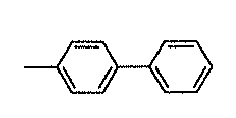
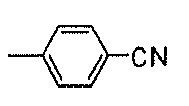
In addition, in the general formula (7), the case where a substituent in each group represented by any one of A1 to A4 is a group containing a vinyl group is excluded, and, when each one of a to d represents 2 or more, and A1s, A2s, A3s, or A4s are coupled with each other to form a saturated ring, the total number of carbon atoms in the ring is 12 or less. - Specific examples of the aromatic amine derivative represented by any one of the general formulae (1) to (7) of the present invention are shown below. However, the present invention is not limited to these exemplified compounds. Me represents a methyl group.
R1 R2 


D-1 Ethyl Ethyl 


D-2 Ethyl Ethyl 


D-3 Ethyl Ethyl 


D-4 Ethyl Ethyl 


D-5 Ethyl Ethyl 
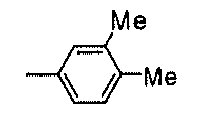


D-6 Ethyl Ethyl 
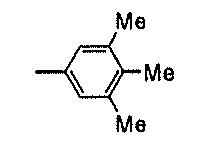
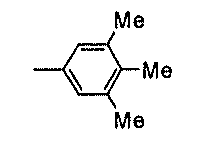

D-7 Ethyl Ethyl 


D-8 Ethyl Ethyl 


D-9 Ethyl Ethyl 


D-10 Ethyl Ethyl 


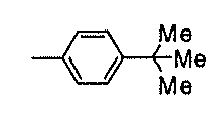
D-11 Ethyl Ethyl 

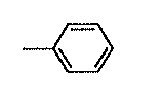

D-12 Ethyl Ethyl 


D-13 Ethyl Ethyl 


D-14 Ethyl Ethyl 


D-15 Ethyl Ethyl 


D-16 Ethyl Ethyl 


D-17 Ethyl Ethyl 


D-18 Ethyl Ethyl 


D-19 Isopropyl Isopropyl 


D-20 Isopropyl Isopropyl 


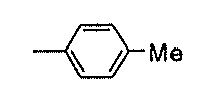
D-21 Isopropyl Isopropyl 
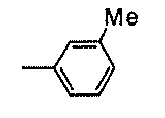

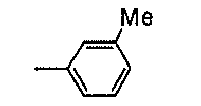
D-22 Isopropyl Isopropyl 


D-23 Isopropyl Isopropyl 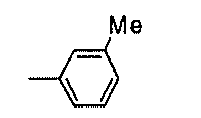


D-24 Isopropyl Isopropyl 


D-25 Isopropyl Isopropyl 


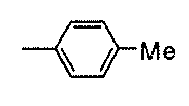
D-26 Isopropyl Isopropyl 


D-27 Isopropyl Isopropyl 

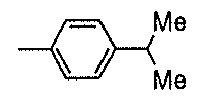

D-28 Isopropyl Isopropyl 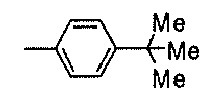


D-29 Isopropyl Isopropyl 


D-30 Isopropyl Isopropyl 


D-31 Isopropyl Isopropyl 
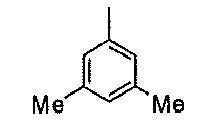


D-32 Isopropyl Isopropyl 


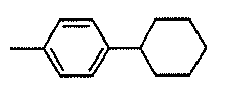
D-33 Isopropyl Isopropyl 


D-34 Isopropyl Isopropyl 


D-35 Isopropyl Isopropyl 
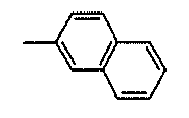


D-36 Isopropyl Isopropyl 


D-37 Isopropyl Isopropyl 


D-38 Isopropyl Isopropyl 


D-39 Isopropyl Isopropyl 


D-40 Isopropyl Isopropyl 


D-41 Isopropyl Isopropyl 


D-42 Isopropyl Isopropyl 


D-43 Isopropyl Isopropyl 
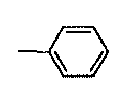


D-44 Isopropyl Isopropyl 
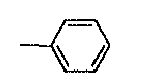


D-45 Isopropyl Isopropyl 


D-46 Isopropyl Isopropyl 


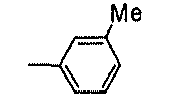
D-47 sec-Butyl sec-Butyl 
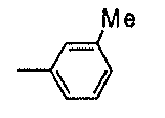


D-48 sec-Butyl sec-Butyl 


D-49 sec-Butyl sec-Butyl 


D-50 sec-Butyl sec-Butyl 


D-51 sec-Butyl sec-Butyl 


D-52 sec-Butyl sec-Butyl 


D-53 sec-Butyl sec-Butyl 


D-54 sec-Butyl sec-Butyl 


D-55 tert-Butyl tert-Butyl 


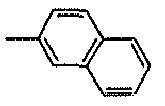
D-56 tert-Butyl tert-Butyl 


D-57 tert-Butyl tert-Butyl 


D-58 tert-Butyl tert-Butyl 


D-59 tert-Butyl tert-Butyl 


D-60 tert-Butyl tert-Butyl 


D-61 tert-Butyl tert-Butyl 

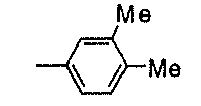

D-62 tert-Butyl tert-Butyl 
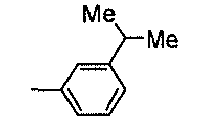

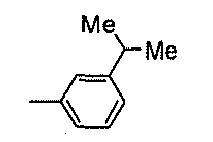
D-63 tert-Butyl tert-Butyl 


D-64 tert-Butyl tert-Butyl 


D-65 tert-Butyl tert-Butyl 


D-66 tert-Butyl tert-Butyl 


D-67 tert-Butyl tert-Butyl 


D-68 tert-Butyl tert-Butyl 


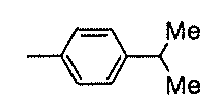
D-69 tert-Butyl tert-Butyl 


D-70 tert-Butyl tert-Butyl 


D-71 tert-Butyl tert-Butyl 


D-72 tert-Butyl tert-Butyl 


D-73 H Methyl 


D-74 H Methyl 


D-75 H Methyl 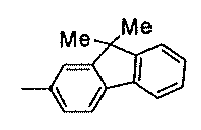


D-76 H Ethyl 


D-77 H Ethyl 


D-78 H Ethyl 

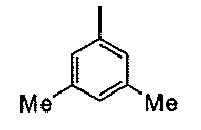

D-79 H Isopropyl 


D-80 H Isopropyl 


D-81 H Isopropyl 


D-82 Cyclohexyl Cyclohexyl 


D-83 Cyclohexyl Cyclohexyl 


D-84 Cyclohexyl Cyclohexyl 


D-85 Cyclohexyl Cyclohexyl 


D-86 Cyclohexyl Cyclohexyl 


D-87 Methyl Methyl 
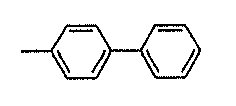


D-88 Methyl Methyl 


D-89 Methyl Methyl 


D-90 Methyl Methyl 


D-91 Phyenyl Phyenyl 


D-92 Phyenyl Phyenyl 


D-93 Phyenyl Phyenyl 
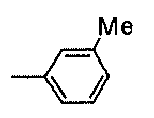


D-94 Phyenyl Phyenyl 


D-95 Phyenyl Phyenyl 


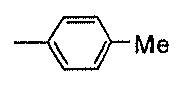
D-96 Phyenyl Phyenyl 

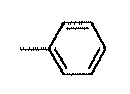

D-97 Phyenyl Phyenyl 


D-98 Phyenyl Phyenyl 


D-99 Phyenyl Phyenyl 


D-100 Phyenyl Phyenyl 
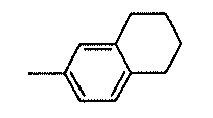


D-101 Phyenyl Phyenyl 


D-102 Phyenyl Phyenyl 


D-103 Phyenyl Phyenyl 


D-104 Phyenyl Phyenyl 


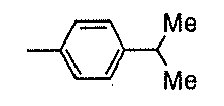
D-105 Phyenyl Phyenyl 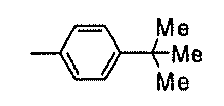


D-106 Phyenyl Phyenyl 


D-107 Phyenyl Phyenyl 


D-108 o-Biphenyl o-Biphenyl 


D-109 o-Biphenyl o-Biphenyl 


D-110 o-Biphenyl o-Biphenyl 


D-111 4-Methylphenyl 4-Methylphenyl 


D-112 4-Methylphenyl 4-Methylphenyl 


D-113 4-Methylphenyl 4-Methylphenyl 


D-114 4-Methylphenyl 4-Methylphenyl 


D-115 4-Methylphenyl 4-Methylphenyl 


D-116 α,α-Dimethylbenzyl α,α-Dimethylbenzyl 


D-117 α,α-Dimethylbenzyl α,α-Dimethylbenzyl 


D-118 Diphenylamino Diphenylamino 


D-119 Diphenylamino Diphenylamino 


D-120 Cyano Cyano 


D-121 Cyano Cyano 


D-122 4-Benzonitrile 4-Benzonitrile 


D-123 4-Benzonitrile 4-Benzonitrile 


D-124 2-Phenylethyl 2-Phenylethyl 


D-125 2-Phenylethyl 2-Phenylethyl 
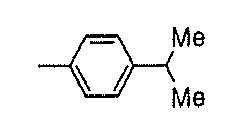


D-126 3,5-Dimethylphenyl 3,5-Dimethylphenyl 


D-127 3,5-Dimethylphenyl 3,5-Dimethylphenyl 


D-128 3,5-Dimethylphenyl 3,5-Dimethylphenyl 


D-129 3,5-Dimethylphenyl 3,5-Dimethylphenyl 


D-130 3,5-Dimethylphenyl 3,5-Dimethylphenyl 


D-131 3,5-Dimethylphenyl 3,5-Dimethylphenyl 


D-132 3,5-Dimethylphenyl 3,5-Dimethylphenyl 


D-133 3,5-Dimethylphenyl 3,5-Dimethylphenyl 


D-134 3,5-Dimethylphenyl 3,5-Dimethylphenyl 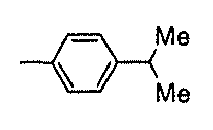


D-135 3,5-Dimethylphenyl 3,5-Dimethylphenyl 


D-136 3,5-Dimethylphenyl 3,5-Dimethylphenyl 


D-137 3,5-Dimethylphenyl 3,5-Dimethylphenyl 


D-138 3,5-Dimethylphenyl 3,5-Dimethylphenyl 


D-139 3,5-Dimethylphenyl 3,5-Dimethylphenyl 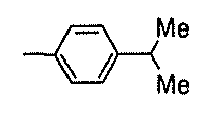


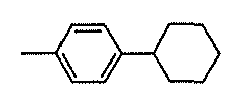
D-140 3,5-Dimethylphenyl 3,5-Dimethylphenyl 


D-141 3,5-Dimethylphenyl 3,5-Dimethylphenyl 


D-142 3,5-Dimethylphenyl 3,5-Dimethylphenyl 


D-143 1-Naphthyl 1-Naphthyl 


D-144 1-Naphthyl 1-Naphthyl 


D-145 1-Naphthyl 1-Naphthyl 


D-146 1-Naphthyl 1-Naphthyl 


D-147 1-Naphthyl 1-Naphthyl 


D-148 1-Naphthyl 1-Naphthyl 

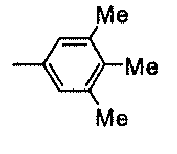

D-149 1-Naphthyl 1-Naphthyl 


D-150 1-Naphthyl 1-Naphthyl 


D-151 1-Naphthyl 1-Naphthyl 


D-152 1-Naphthyl 1-Naphthyl 

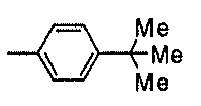

D-153 1-Naphthyl 1-Naphthyl 


D-154 1-Naphthyl 1-Naphthyl 


D-155 1-Naphthyl 1-Naphthyl 


D-156 1-Naphthyl 1-Naphthyl 


D-157 1-Naphthyl 1-Naphthyl 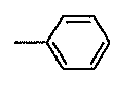


D-158 1-Naphthyl 1-Naphthyl 


D-159 1-Naphthyl 1-Naphthyl 


D-160 2-Naphthyl 2-Naphthyl 


D-161 2-Naphthyl 2-Naphthyl 


D-162 2-Naphthyl 2-Naphthyl 


D-163 2-Naphthyl 2-Naphthyl 


D-164 2-Naphthyl 2-Naphthyl 


D-165 2-Naphthyl 2-Naphthyl 
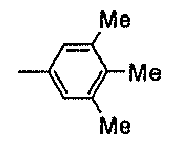

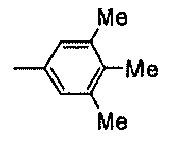
D-166 2-Naphthyl 2-Naphthyl 


D-167 2-Naphthyl 2-Naphthyl 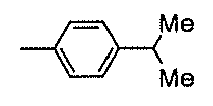

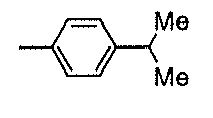
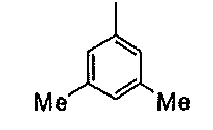
D-168 2-Naphthyl 2-Naphthyl 


D-169 2-Naphthyl 2-Naphthyl 


D-170 2-Naphthyl 2-Naphthyl 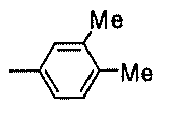


D-171 2-Naphthyl 2-Naphthyl 


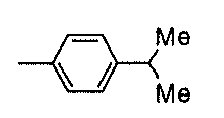
D-172 2-Naphthyl 2-Naphthyl 


D-173 2-Naphthyl 2-Naphthyl 


D-174 2-Naphthyl 2-Naphthyl 


D-175 2-Naphthyl 2-Naphthyl 


D-176 2-Naphthyl 2-Naphthyl 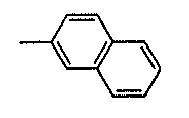


- In the aromatic amine derivative represented by any one of the general formulae (1) to (7) of the present invention, a diaminonaphthalene structure as a light emitting center is coupled with a benzene ring having a substituent. As a result, the molecules of the compound are prevented from associating with each other, and hence the lifetime of an organic EL device using the compound is prolonged. In addition, a bulky substituent is introduced into a naphthalene skeleton at a position (3 or 7-position) distant from the position at which an amino group is bonded (1 or 5-position), whereby the molecules of the compound are prevented from associating with each other without the occurrence of steric repulsion in an amino group-naphthalene bond, and hence the lifetime of the organic EL device using the compound is additionally prolonged.
In addition, the derivative is strongly fluorescent in a solid state, is excellent in electroluminescent property, and has a fluorescent quantum efficiency of 0.3 or more. Further, the derivative brings together excellent properties with which a hole is injected and transported from a metal electrode or an organic thin film layer, and excellent properties with which an electron is injected and transported from the metal electrode or the organic thin film layer, whereby the derivative is effectively used as a light emitting material for an organic EL device, in particular, a doping material for an organic EL device. Further, any other hole transporting material, electron transporting material, or doping material may be used. - An organic EL device of the present invention is a device having an organic thin film layer composed of one or more layers and formed between an anode and a cathode. When the organic thin film layer is composed of one layer, a light emitting layer is provided between the anode and the cathode. The light emitting layer contains a light emitting material, and may contain a hole injecting material or an electron injecting material in addition to the light emitting material in order that a hole injected from the anode or an electron injected from the cathode may be transported to the light emitting material. The aromatic amine derivative represented by any one of the general formulae (1) to (7) can be used in the organic thin film layer because the derivative has high light emitting property, and has excellent hole injecting property, excellent hole transporting property, excellent electron injecting property, and excellent electron transporting property; the derivative is preferably used as the light emitting material in the light emitting layer.
In the organic EL device of the present invention, the light emitting layer contains the aromatic amine derivative of the present invention at a content of preferably 0.1 to 20 wt%, or more preferably 1 to 10 wt%. In addition, the light emitting layer can be formed only of the aromatic amine derivative represented by any one of the general formulae (1) to (7) of the present invention because the aromatic amine derivative brings together extremely high fluorescent quantum efficiency, a high hole transporting ability, and a high electron transporting ability, and can be formed into a uniform thin film.
In addition, the organic EL device of the present invention is preferably an organic EL device having an organic thin film layer composed of two or more layers including at least a light emitting layer and interposed between a cathode and an anode, in which an organic layer mainly composed of the aromatic amine derivative represented by any one of the general formulae (1) to (7) is present between the anode and the light emitting layer. Examples of the organic layer include a hole injecting layer and a hole transporting layer.
The organic EL device having multiple layers is a laminate having, for example, an (anode/hole injecting layer/light emitting layer/cathode), (anode/light emitting layer/electron injecting layer/cathode), or (anode/hole injecting layer/light emitting layer/electron injecting layer/cathode) multiple layer constitution. - Further, when the organic EL device contains the aromatic amine derivative of the present invention as a doping material, the device preferably contains at least one kind selected from an anthracene derivative represented by the following general formula (8), an anthracene derivative represented by the following general formula (9), and a pyrene derivative represented by the following general formula (10) as a host material:

- in the general formula (8):
- X1 and X2 each independently represent a hydrogen atom, a substituted or unsubstituted alkyl group having 1 to 50 carbon atoms, a substituted or unsubstituted aryl group having 5 to 50 ring carbon atoms, a substituted or unsubstituted aralkyl group having 6 to 50 ring carbon atoms, a substituted or unsubstituted cycloalkyl group having 3 to 50 ring carbon atoms, a substituted or unsubstituted alkoxyl group having 1 to 50 carbon atoms, a substituted or unsubstituted aryloxy group having 5 to 50 ring carbon atoms, a substituted or unsubstituted arylamino group having 5 to 50 ring carbon atoms, a substituted or unsubstituted alkylamino group having 1 to 20 carbon atoms, a substituted or unsubstituted heterocyclic group having 5 to 50 ring carbon atoms, or a halogen atom, e and f each independently represent an integer of 0 to 4, and when e or f represents 2 or more, X1s or X2s may be identical to or different from each other;
- Ar1 and Ar2 each independently represent a substituted or unsubstituted aryl group having 5 to 50 ring carbon atoms, or a substituted or unsubstituted heterocyclic group having 5 to 50 ring carbon atoms, and at least one of Ar1 and Ar2 represents a substituted or unsubstituted, fused ring-containing aryl group having 10 to 50 ring carbon atoms; and m represents an integer of 1 to 3, and when m represents 2 or more, groups in [] may be identical to or different from each other.
-

- in the general formula (9):
- X1 to X3 each independently represent a hydrogen atom, a substituted or unsubstituted alkyl group having 1 to 50 carbon atoms, a substituted or unsubstituted aryl group having 5 to 50 ring carbon atoms, a substituted or unsubstituted aralkyl group having 6 to 50 ring carbon atoms, a substituted or unsubstituted cycloalkyl group having 3 to 50 ring carbon atoms, a substituted or unsubstituted alkoxyl group having 1 to 50 carbon atoms, a substituted or unsubstituted aryloxy group having 5 to 50 ring carbon atoms, a substituted or unsubstituted arylamino group having 5 to 50 ring carbon atoms, a substituted or unsubstituted alkylamino group having 1 to 20 carbon atoms, a substituted or unsubstituted heterocyclic group having 5 to 50 ring carbon atoms, or a halogen atom, e, f, and g each independently represent an integer of 0 to 4, and when e, f, or g represents 2 or more, X1s, X2s, or X3s may be identical to or different from each other;
- Ar1 represents a substituted or unsubstituted, fused ring-containing aryl group having 10 to 50 ring carbon atoms, and Ar3 represents a substituted or unsubstituted aryl group having 5 to 50 ring carbon atoms; and
- n represents an integer of 1 to 3, and when n represents 2 or more, groups in [] may be identical to or different from each other.)
- Specific examples of the anthracene derivative represented by each of the general formulae (8) and (9) are shown below. However, the present invention is not limited to these exemplified compounds:
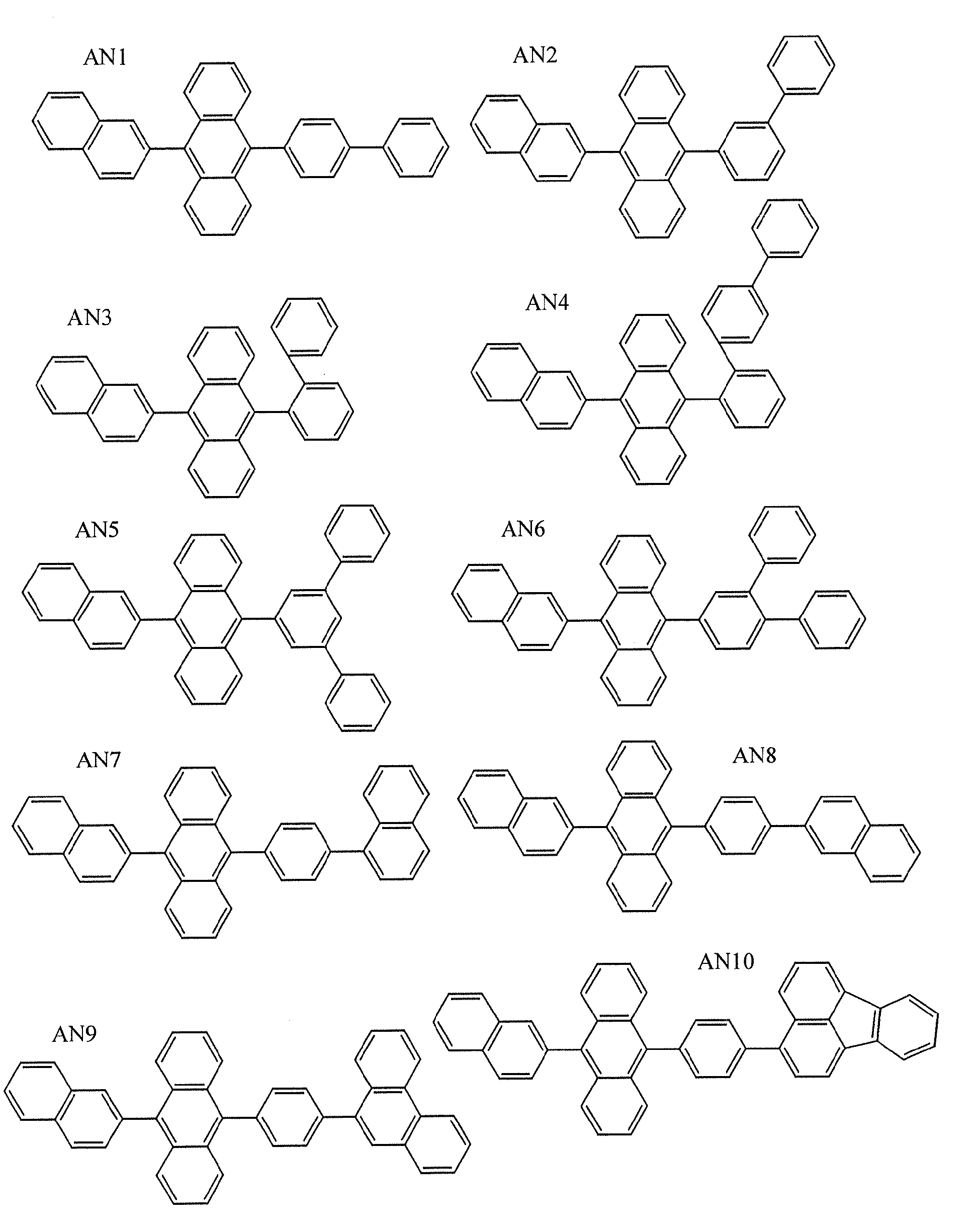
-
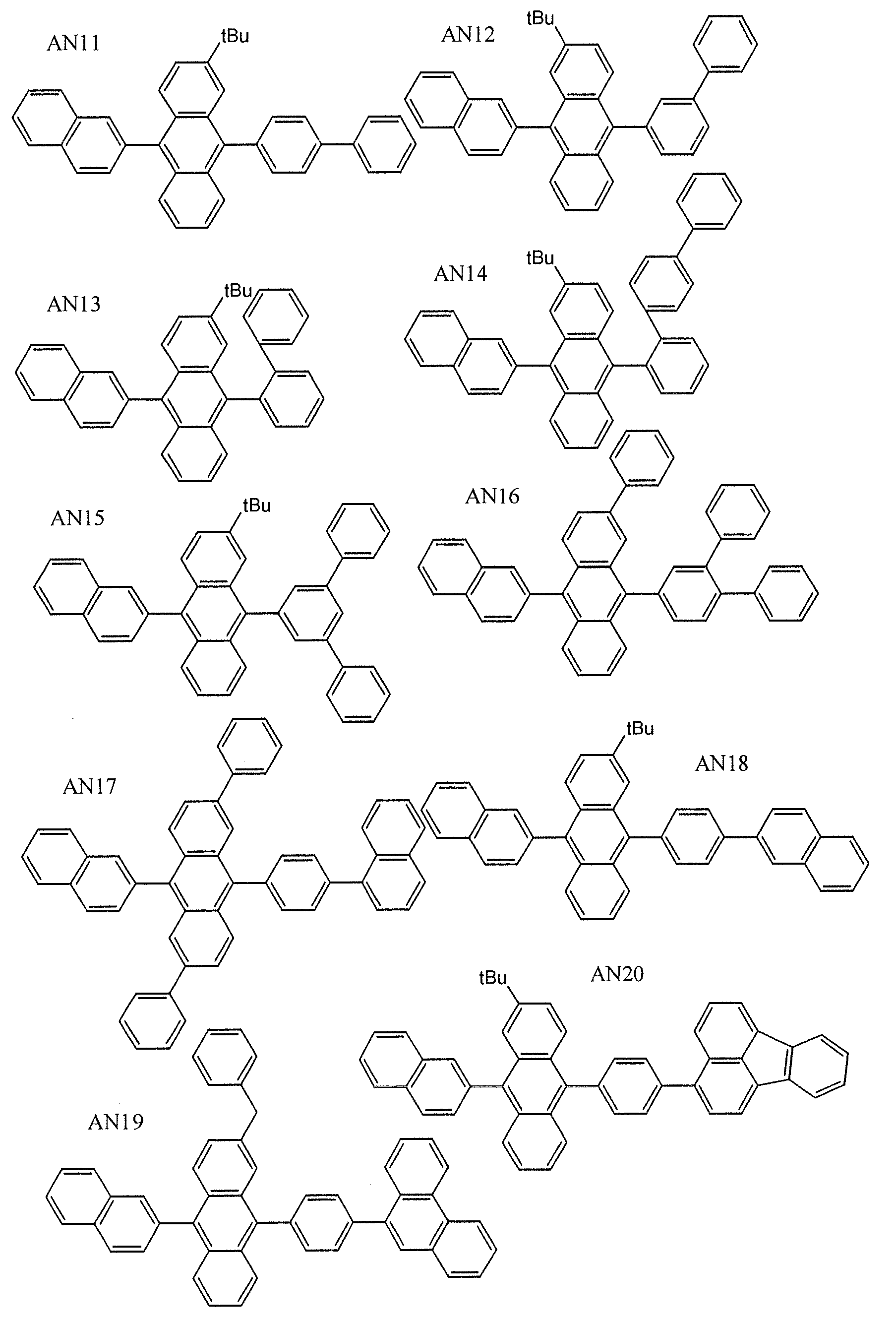
-

-

-
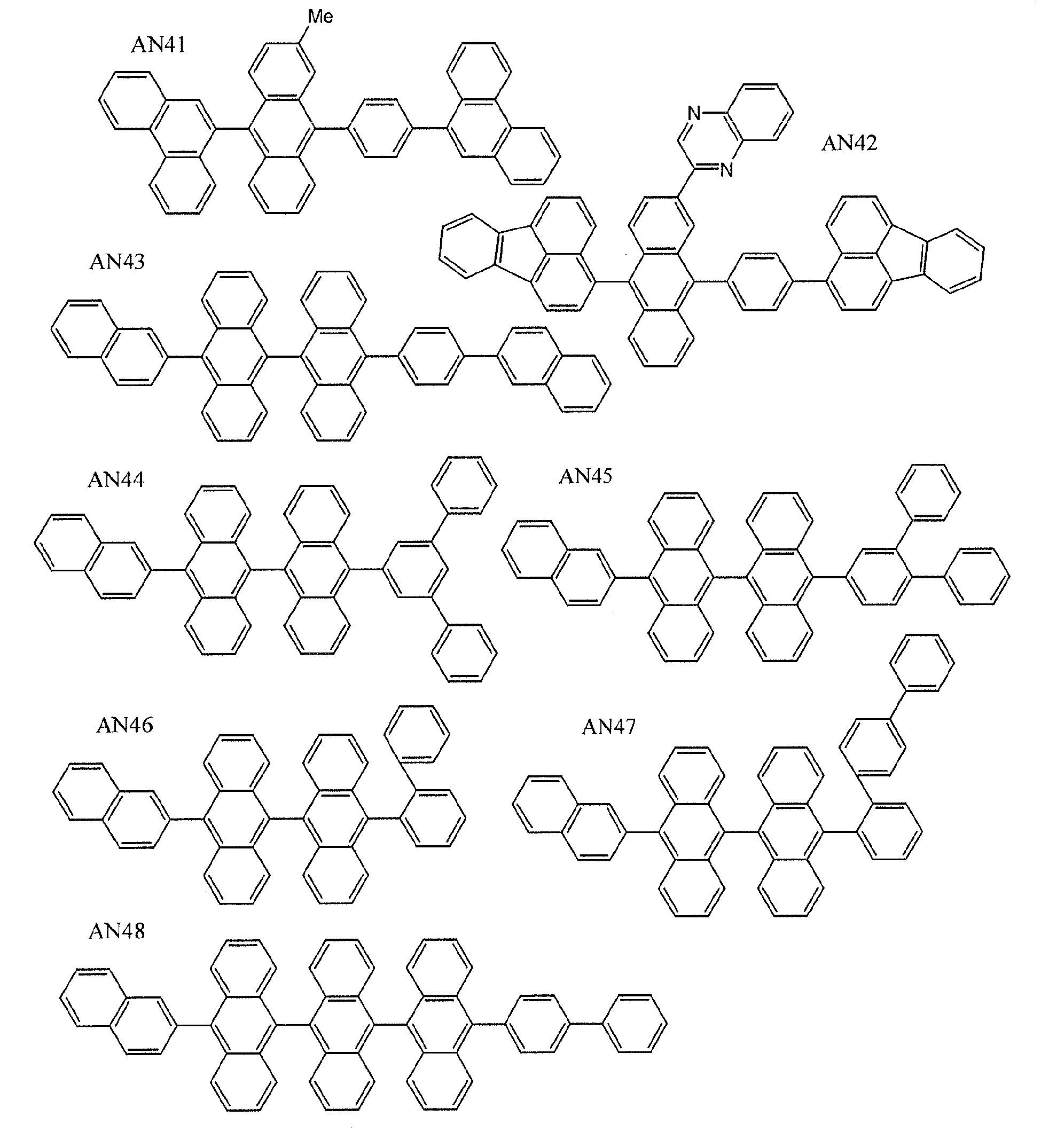
-

- in the general formula (10):
- Ar5 and Ar6 each independently represent a substituted or unsubstituted aryl group having 6 to 50 ring carbon atoms;
- L1 and L2 each independently represent a substituted or unsubstituted phenylene group, a substituted or unsubstituted naphthalenylene group, a substituted or unsubstituted fluorenylene group, or a substituted or unsubstituted dibenzosilolylene group;
- s represents an integer of 0 to 2, p represents an integer of 1 to 4, q represents an integer of 0 to 2, and r represents an integer of 0 to 4; and
- L1 or Ar5 is bonded to any one of 1- to 5-positions of pyrene, and L2 or Ar6 is bonded to any one of 6- to 10-positions of pyrene,
- provided that, when p + r represents an even number, Ar5, Ar6, L1, and L2 satisfy the following relationship (1) or (2):
- (1) Ar5 ≠ Ar6 and/or L1 # L2 (where # means that groups on both sides of the symbol are different from each other in structure); or
- (2) for Ar5 = Ar6 and L1 = L2,
- (2-1) when s ≠ q and/or p ≠ r, or
- (2-2) when s = q and p = r,
- (2-2-1) in the case where L1 and L2 are, or pyrene is, bonded to different bonding positions on Ar5 and Ar6, or
- (2-2-2) in the case where L1 and L2 are, or pyrene is, bonded to the same bonding position on Ar5 and Ar6,
- Specific examples of the pyrene derivative represented by the general formulae (5) are shown below. However, the present invention is not limited to these exemplified compounds.
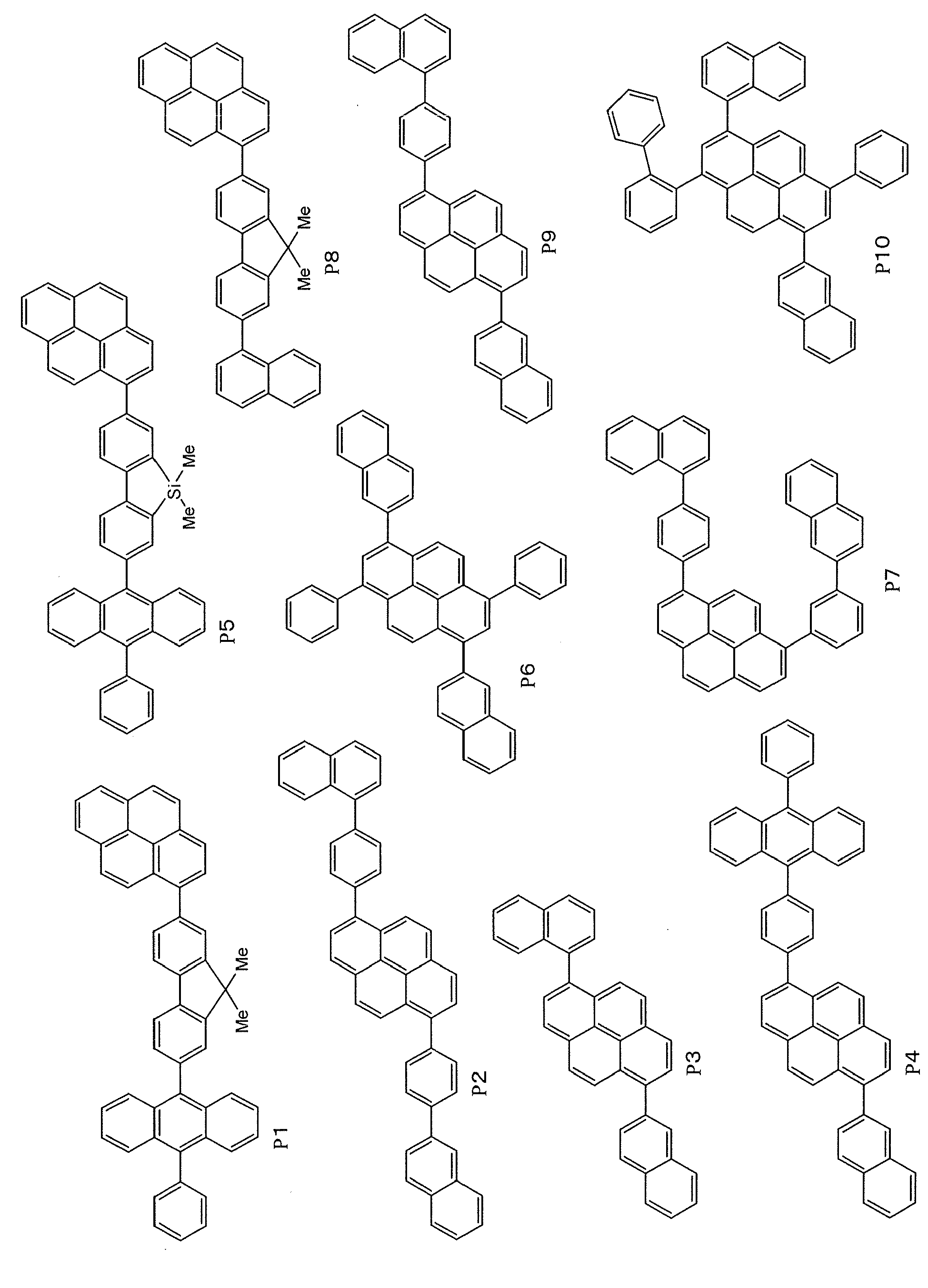
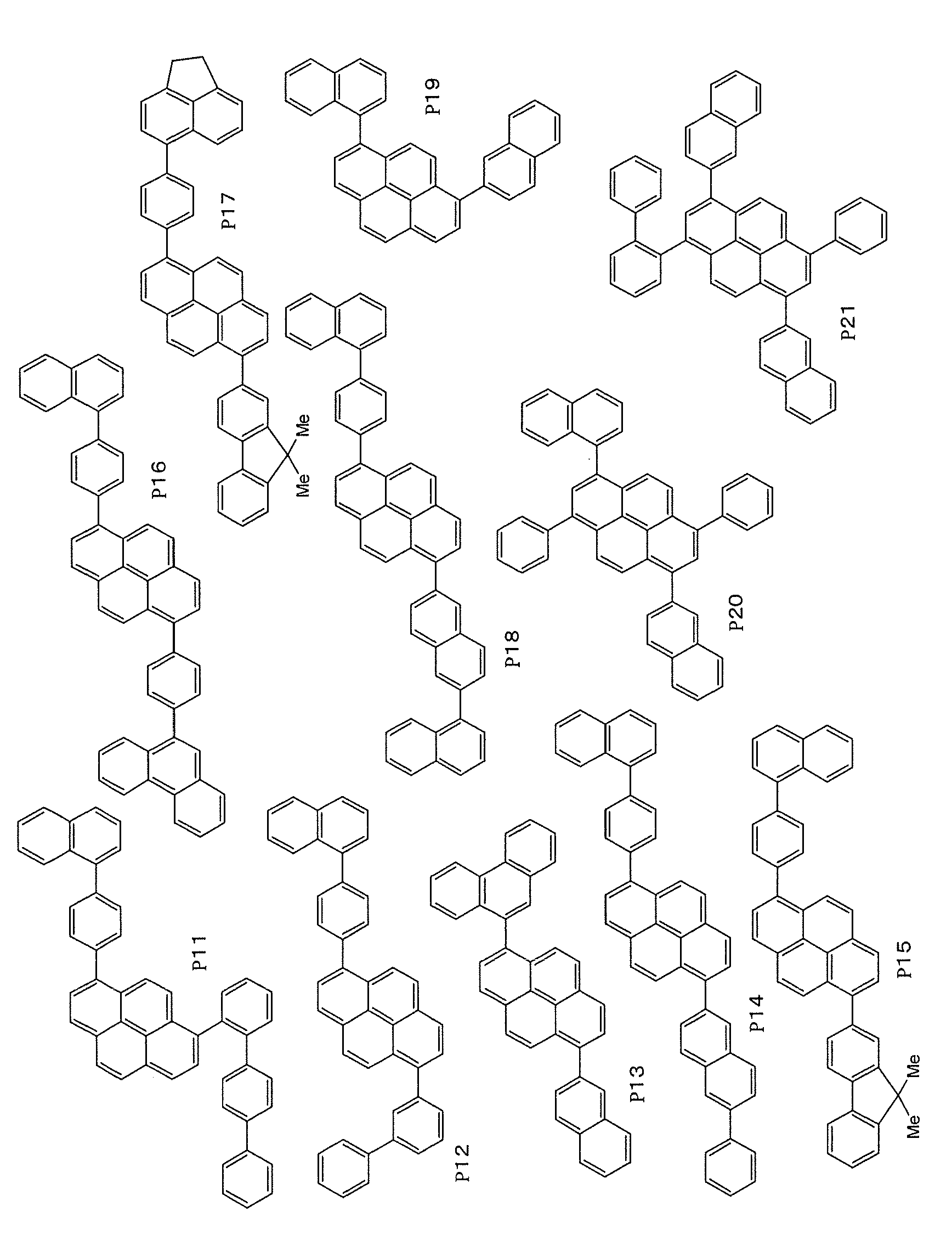
- In the present invention, the organic EL device having multiple organic thin film layers is a laminate having, for example, an (anode/hole injecting layer/light emitting layer/cathode), (anode/light emitting layer/electron injecting layer/cathode), or (anode/hole injecting layer/light emitting layer/electron injecting layer/cathode) constitution.
In addition to the aromatic amine derivative of the present invention, an additional known light emitting material, doping material, hole injecting material, or electron injecting material can be used as required in the multiple layers. When the organic EL device has the multiple organic thin film layers, a reduction in luminance or lifetime due to quenching can be prevented. If needed, a light emitting material, a doping material, a hole injecting material, and an electron injecting material can be used in combination. In addition, a doping material can provide improvements in emission luminance and luminous efficiency, and red or blue light emission. In addition, each of the hole injecting layer, the light emitting layer, and the electron injecting layer may be formed of a layer constitution having two or more layers. At that time, in the case of the hole injecting layer, a layer for injecting a hole from the electrode is referred to as a hole injecting layer, and a layer for receiving the hole from the hole injecting layer and transporting the hole to the light emitting layer is referred to as a hole transporting layer. In the same manner, in the case of the electron injecting layer, a layer for injecting an electron from the electrode is referred to as an electron injecting layer, and a layer for receiving the electron from the electron injecting layer and transporting the electron to the light emitting layer is referred to as an electron transporting layer. Each of those layers is selected and used depending on factors such as the energy level of a material, heat resistance, and adhesiveness between the layer and an organic layer or a metal electrode. - Examples of a host material or a doping material other than those in the above general formulae (3) to (5) which can be used in the light emitting layer together with the aromatic amine derivative of the present invention include, but are not limited to: large amounts of fused aromatic compounds such as naphthalene, phenanthrene, rubrene, anthracene, tetracene, pyrene, perylene, chrysene, decacyclene, coronene, tetraphenylcyclopentadiene, pentaphenylcyclopentadiene, fluorene, spirofluorene, 9,10-diphenylanthracene, 9,10-bis(phenylethynyl)anthracene, and 1,4-bis(9'-ethynylanthracene)benzene and derivatives thereof; organic metal complexs such as tris(8-quinolinolato)aluminum and bis-(2-methyl-8-quinolinolato)-4-(phenylphenolinato)aluminum; a triarylamine derivative; a styrylamine derivative; a stilbene derivative; a coumarin derivative; a pyrane derivative; an oxazone derivative; a benzothiazole derivative; a benzoxazole derivative; a benzoimidazole derivative; a pyrazine derivative; a cinnamate derivative; a diketopyrrolopyrrole derivative; an acridone derivative; and quinacridone derivative.
- A compound having an ability of transporting a hole, having hole injection efficiency from an anode and excellent hole injection efficiency to a light emitting layer or a light emitting material, preventing the migration of an exciton generated in the light emitting layer to an electron injecting layer or an electron injecting material, and having excellent thin film-formability is preferable as a hole injecting material. Specific examples of the compound include, but not limited to, a phthalocyanine derivative, a naphthalocyanine derivative, a porphyrin derivative, oxazole, oxadiazole, triazole, imidazole, imidazolone, imidazolethione, pyrazoline, pyrazolone, tetrahydroimidazole, oxazole, oxadiazole, hydrazone, acylhydrazone, polyarylalkane, stilbene, butadiene, benzidine type triphenylamine, styrylamine type triphenylamine, diamine type triphenylamine, derivatives thereof, and polymer materials such as polyvinyl carbazole, polysilane, and a conductive polymer.
- Of the hole injecting materials that can be used in the organic EL device of the present invention, additional effective hole injecting materials are an aromatic tertiary amine derivative and a phthalocyanine derivative.
Examples of the aromatic tertiary amine derivative include, but not limited to, triphenylamine, tritolylamine, tolyldiphenylamine, N,N'-diphenyl-N,N'-(3-methylphenyl)-1,1'-biphenyl-4,4'-diamine, N,N,N',N'-(4-methylphenyl)-1,1'-phenyl-4,4'-diamine, N,N,N',N'-(4-methylphenyl)-1,1'-biphenyl-4,4'-diamine, N,N'-diphenyl-N,N'-dinaphthyl-1,1'-biphenyl-4,4'-diamine, N,N'-(methylphenyl)-N,N'-(4-n-butylphenyl)-phenanthrene-9,10-diamine, N,N-bis(4-di-4-tolylaminophenyl)-4-phenyl-cyclohexane, and an oligomer or a polymer having those aromatic tertiary amine skeletons. - Examples of the phthalocyanine (Pc) derivative include, but not limited to, phthalocyanine derivatives such as H2Pc, CuPc, CoPc, NiPc, ZnPc, PdPc, FePc, MnPc, ClAlPc, ClGaPc, ClInPc, ClSnPc, Cl2SiPc, (HO)AlPc, (HO)GaPc, VOPc, TiOPc, MoOPc, and GaPc-O-GaPc, and naphthalocyanine derivatives.
In addition, the organic EL device of the present invention is preferably formed of a layer containing each of those aromatic tertiary amine derivatives and/or each of phthalocyanine derivatives, for example, the hole transporting layer or the hole injecting layer between the light emitting layer and the anode. - A compound having an ability of transporting electrons, having electron injection efficiency from a cathode and excellent electron injection efficiency to a light emitting layer or a light emitting material, preventing the migration of an exciton generated in the light emitting layer to the hole injecting layer, and having excellent thin film-formability is preferable as an electron injecting material. Specific examples of the compound include fluorenone, anthraquinodimethane, diphenoquinone, thiopyrane-dioxide, oxazole, oxadiazole, triazole, imidazole, perylene-tetracarboxylic acid, fluorenylidenemethane, anthraquinodimethane, anthrone, and derivatives thereof, but the compound is not limited thereto. In addition, an electron-accepting substance can be added to the hole injecting material or an electron-donating substance can be added to the electron injecting material to thereby sensitize the hole injecting material or the electron injecting material, respectively.
- In the organic EL device of the present invention, additional effective electron injecting materials are a metal complex compound and a nitrogen-containing five-membered ring derivative.
Examples of the metal complex compound include, but not limited to, 8-hydroxyquinolinatolithium, bis(8-hydroxyquinolinato)zinc, bis(8-hydroxyquinolinato)copper, bis(8-hydroxyquinolinato)-manganese, tris(8-hydroxyquinolinato)aluminum, tris(2-methyl-8-hydroxyquinolinato)aluminum, tris(8-hydroxyquinolinato)gallium, bis(10-hydroxybenzo[h]quinolinato)beryllium, bis(10-hydroxybenzo[h]quinolinato)zinc, bis(2-methyl-8-quinolinato)chloro-gallium, bis(2-methyl-8-quinolinato)(o-cresolato)gallium, bis(2-methyl-8-quinolinato)(1-naphtholato)aluminum, and bis(2-methyl-8-quinolinato)(2-naphtholato)gallium. - Examples of the preferred nitrogen-containing five-memebered derivative include an oxazole derivative, a thiazole derivative, an oxadiazole derivative, a thiadiazole derivative, and a triazole derivative. Specific examples of the derivative include, but not limited to, 2,5-bis(1-phenyl)-1,3,4-oxazole, dimethylPOPOP, 2,5-bis(1-phenyl)-1,3,4-thiazole, 2,5-bis(1-phenyl)-1,3,4-oxadiazole, 2-(4'-t-butylphenyl)-5-(4"-biphenyl)-1,3,4-oxadiazole, 2,5-bis(1-naphthyl)-1,3,4-oxadiazole, 1,4-bis[2-(5-phenyloxadiazolyl)]benzene, 1,4-bis[2-(5-phenyloxadiazolyl)-4-t-butylbenzene], 2-(4'-t-butylphenyl)-5-(4"-biphenyl)-1,3,4-thiadiazole, 2,5-bis(1-naphthyl)-1,3,4-thiadiazole, 1,4-bis[2-(5-phenylthiadiazolyl)]benzene, 2-(4'-t-butylphenyl)-5-(4"-biphenyl)-1,3,4-triazole, 2,5-bis(1-naphthyl)-1,3,4-triazole, and 1,4-bis[2-(5-phenyltriazolyl)]-benzene.
- In the organic EL device of the present invention, in addition to the aromatic amine derivative selected from the general formulae (1) to (7), at least one kind of a light emitting material, a doping material, a hole injecting material, and an electron injecting material may be incorporated into any one of the organic thin film layers, especially, the light emitting layers. In addition, the surface of the organic EL device obtained according to the present invention can be provided with a protective layer, or the entire device can be protected with silicone oil, a resin, or the like with a view to improving the stability of the device against temperature, humidity, an atmosphere, or the like.
- A conductive material having a work function larger than 4 eV is suitably used in the anode of the organic EL device. Examples of an available conductive material include: carbon, aluminum, vanadium, iron, cobalt, nickel, tungsten, silver, gold, platinum, and palladium, and alloys thereof; metal oxides such as tin oxide and indium oxide to be used in an ITO substrate and an NESA substrate; and organic conductive resins such as polythiophene and polypyrrole. A conductive substance having a work function smaller than 4 eV is suitably used in the cathode of the device. Examples of an available conductive substance include, but not limited to, magnesium, calcium, tin, lead, titanium, yttrium, lithium, ruthenium, manganese, aluminum, and lithium fluoride, and alloys thereof. Representative examples of the alloys include, but not limited to, a magnesium/silver alloy, a magnesium/indium alloy, and a lithium/aluminum alloy. A ratio between the components of an alloy is controlled depending on, for example, the temperature of a deposition source, an atmosphere, and the degree of vacuum, and is selected to be an appropriate ratio. Each of the anode and the cathode may be formed in a layer constitution having two or more layers if needed.
- It is desirable that at least one surface of the organic EL device is sufficiently transparent in the luminous wavelength region of the device so that the device can efficiently emit light. A substrate is also desirably transparent. A transparent electrode is formed by any one of the above conductive materials, and is set by a method such as deposition or sputtering in such a manner that desired transparency is secured. The light transmittance of an electrode on a light emitting surface is desirably 10% or more. The substrate is not limited as long as it has mechanical strength, thermal strength, and transparency. Examples of the substrate include a glass substrate and a transparent resin film. Examples of the transparent resin film include polyethylene, an ethylene-vinyl acetate copolymer, an ethylene-vinyl alcohol copolymer, polypropylene, polystyrene, polymethyl methacrylate, polyvinyl chloride, polyvinyl alcohol, polyvinyl butyral, nylon, polyether ether ketone, polysulfone, polyether sulfone, a tetrafluoroethylene-perfluoroalkyl vinyl ether copolymer, polyvinyl fluoride, a tetrafluoroethylene-ethylene copolymer, a tetrafluoroethylene-hexafluoropropylene copolymer, polychlorotrifluoroethylene, polyvinylidene fluoride, polyester, polycarbonate, polyurethane, polyimide, polyether imide, polyimide, and polypropylene.
- Any one of: dry film forming methods such as vacuum deposition, sputtering, plasma, and ion plating; and wet film forming methods such as spin coating, dipping, and flow coating is applicable to the formation of each layer of the organic EL device according to the present invention. The thickness of each layer is not particularly limited, but must be set to an appropriate thickness. An excessively large thickness requires an increased applied voltage for obtaining certain optical output, resulting in poor efficiency. An excessively small thickness causes a pin hole or the like, so sufficient emission luminance cannot be obtained even when an electric field is applied. In general, the thickness is in the range of preferably 5 nm to 10 µm, or more preferably 10 nm to 0.2 µm.
- In the case of a wet film forming method, a material of which each layer is formed is dissolved or dispersed into an appropriate solvent such as ethanol, chloroform, tetrahydrofuran, or dioxane, to thereby form a thin film. At that time, any one of the above solvents may be used. In addition, an appropriate resin or additive may be used in each of the organic thin film layers for, for example, improving film formability or preventing a pin hole in the layer. Examples of an available resin include: insulating resins such as polystyrene, polycarbonate, polyallylate, polyester, polyamide, polyurethane, polysulfone, polymethyl methacrylate, polymethyl acrylate, and cellulose, and copolymers thereof; photoconductive resins such as poly-N-vinylcarbazole and polysilane; and conductive resins such as polythiophene and polypyrrole. Examples of the additive include an antioxidant, a UV absorber, and a plasticizer.
- As described above, an organic EL device having a long lifetime and high luminous efficiency can be obtained by using the aromatic amine derivative of the present invention in the organic thin film layer of the organic EL device.
The organic EL device of the present invention can find use in applications including: a flat luminous body such as the flat panel display of a wall hanging television; a light source for the backlight, meters, or the like of a copying machine, a printer, or a liquid crystal display; a display panel; and a signal lamp. In addition, the material of the present invention can be used in not only the field of an organic EL device but also the fields of an electrophotographic photosensitive member, a photoelectric conversion element, a solar cell, and an image sensor. - Next, the present invention will be described in more detail by way of examples.
- In a stream of argon, 4.0 g (10 mmol) of 3,7-di-t-butyl-1,5-dibromonaphthalene, 6.7 g (25 mmol) of 2-dinaphthylamine, 0.03 g (1.5 mol%) of palladium acetate, 0.06 g (3mol%) of tri-t-butylphosphine, 2.4 g (25mmol) of t-butoxysodium, and 100 mL of dry toluene were added to a 300-mL three-necked flask provided with a cooling pipe, and then the whole was stirred under heat at 100°C overnight. After the completion of the reaction, the precipitated crystal was taken by filtration and washed with 50 mL of toluene and 100 mL of methanol, whereby 6.3 g of a pale yellow powder were obtained. The powder was identified as Compound (D-66) (in 82% yield) by NMR spectroscopy (Fig. 1) and field desorption mass spectroscopy (FD-MS).
A DRX500 manufactured by Buker was used in NMR. - In a stream of argon, 4.9 g (10 mmol) of 3,7-di(3,5-dimethylphenyl-1,5-dibromonaphthalene, 6.7 g (25 mmol) of 2-dinaphthylamine, 0.03 g (1.5 mol%) of palladium acetate, 0.06 g (3 mol%) of tri-t-butylphosphine, 2.4 g (25 mmol) of t-butoxysodium, and 100 mL of dry toluene were added to a 300-mL three-necked flask provided with a cooling pipe, and then the whole was stirred under heat at 100°C overnight. After the completion of the reaction, the precipitated crystal was taken by filtration and washed with 50 mL of toluene and 100 mL of methanol, whereby 8.2 g of a pale yellow powder were obtained. The powder was identified as Compound (9) (in 94% yield) by NMR spectroscopy (Fig. 2) and FD-MS.
- In a stream of argon, 4.9 g (10 mmol) of 3,7-di(3,5-dimethylphenyl-1,5-dibromonaphthalene, 6.7 g (25 mmol) of 4-isopropylphenyl-4'-t-butylphenylamine, 0.03 g (1.5 mol%) of palladium acetate, 0.06 g (3 mol%) of tri-t-butylphosphine, 2.4 g (25 mmol) of t-butoxysodium, and 100 mL of dry toluene were added to a 300-mL three-necked flask provided with a cooling pipe, and then the whole was stirred under heat at 100°C overnight. After the completion of the reaction, the precipitated crystal was taken by filtration and washed with 50 mL of toluene and 100 mL of methanol, whereby 7.4 g of a pale yellow powder were obtained. The powder was identified as Compound (D-135) (in 85% yield) by NMR spectroscopy (Fig. 3) and FD-MS.
- A transparent electrode composed of an indium tin oxide and having a thickness of 120 nm was provided on a glass substrate measuring 25 mm wide by 75 mm long by 1. 1 mm thick. The glass substrate was washed by being irradiated with ultraviolet light and ozone, and was then placed in a vacuum vapor deposition device.
First, N',N"-bis[4-(diphenylamino)phenyl]-N',N"-diphenylbiphenyl-4,4'-diamine was deposited from the vapor to serve as a hole injecting layer having a thickness of 60 nm. After that, N,N,N',N'-tetrakis(4-biphenyl)-4,4'-benzidine was deposited from the vapor onto the layer to serve as a hole transporting layer having a thickness of 20 nm. Next, 10,10'-bis[1,1',4',1"]terphenyl-2-yl-9,9'-bianthracenyl and Compound (D-66) described above were simultaneously deposited from the vapor at a weight ratio of 40 : 2 to form a light emitting layer having a thickness of 40 nm.
Next, tris(8-hydroxyquinolinato)aluminum was deposited from the vapor to serve as an electron injecting layer having a thickness of 20 nm. Next, lithium fluoride was deposited from the vapor to have a thickness of 1 nm, and then aluminum was deposited from the vapor to have a thickness of 150 nm. The aluminum/lithium fluoride composite layer functions as a cathode. Thus, an organic EL device was produced.
The resultant organic EL device was subjected to a current test. As a result, the device emitted blue light having a current efficiency of 3 cd/A and an emission luminance of 250 cd/m2 at a voltage of 7.0 V and a current density of 10 mA/cm2. In addition, the device was subjected to a DC continuous current test with its initial luminance set to 1,000 cd/m2. As a result, the device had a half-lifetime of 1,200 hours. - An organic EL device was produced in the same manner as in Example 1 except that Compound (D-142) was used instead of Compound (D-66).
The resultant organic EL device was subjected to a current test. As a result, the device emitted blue light having a current efficiency of 2.8 cd/A and an emission luminance of 280 cd/m2 at a voltage of 7.5 V and a current density of 10 mA/cm2. In addition, the device was subjected to a DC continuous current test with its initial luminance set to 1,000 cd/m2. As a result, the device had a half-lifetime of 1,000 hours. - An organic EL device was produced in the same manner as in Example 1 except that 1,5-bis(2-naphthylamino)naphthalene was used instead of Compound (D-66).
The resultant organic EL device was subjected to a current test. As a result, the device emitted blue light having a current efficiency of 1.0 cd/A and an emission luminance of 100 cd/m2 at a voltage of 7. 5 V and a current density of 10 mA/cm2. In addition, the device was subjected to a DC continuous current test with its initial luminance set to 1,000 cd/m2. As a result, the device had a half-lifetime of 200 hours, which was short.
The foregoing results show that, when a compound in which a diaminonaphthalene skeleton has no substituent is used as a material for an organic EL device, the molecules of the compound associate with each other, with the result that the wavelength of the luminescent color of the device is lengthened, and the current efficiency, emission luminance, and lifetime of the device deteriorate. - As described above in detail, the organic EL device using the aromatic amine derivative represented by any one of the general formulae (1) to (7) of the present invention has high emission luminance and high luminous efficiency, hardly deteriorates even after long-term use, and has a long lifetime. Therefore, the organic EL device is extremely useful as an organic EL device having high practical performance.
Claims (11)
- An aromatic amine derivative represented by the following general formula (1):
 R1 and R2 each independently represent a substituted or unsubstituted aryl group having 5 to 50 carbon atoms, a substituted or unsubstituted aralkyl group having 1 to 50 carbon atoms, a substituted or unsubstituted cycloalkyl group having 3 to 50 carbon atoms, a substituted or unsubstituted alkoxyl group having 1 to 50 carbon atoms, a substituted or unsubstituted aryloxy group having 5 to 50 carbon atoms, a substituted or unsubstituted arylamino group having 5 to 50 carbon atoms, a substituted or unsubstituted alkylamino group having 1 to 20 carbon atoms, a substituted or unsubstituted heterocyclic group having 5 to 50 carbon atoms, a cyano group, or a halogen atom;A1 to A4 each independently represent a hydrogen atom, a substituted or unsubstituted alkyl group having 1 to 50 carbon atoms, a substituted or unsubstituted aryl group having 5 to 50 carbon atoms, a substituted or unsubstituted aralkyl group having 1 to 50 carbon atoms, a substituted or unsubstituted cycloalkyl group having 3 to 50 carbon atoms, a substituted or unsubstituted alkoxyl group having 1 to 50 carbon atoms, a substituted or unsubstituted aryloxy group having 5 to 50 carbon atoms, a substituted or unsubstituted arylamino group having 5 to 50 carbon atoms, a substituted or unsubstituted alkylamino group having 1 to 20 carbon atoms, a substituted or unsubstituted heterocyclic group having 5 to 50 carbon atoms, or a halogen atom; anda to d each independently represent an integer of 0 to 5, and, when each one of a to d represents 2 or more, A1s, A2s, A3s, or A4s may be identical to or different from each other, or may be coupled with each other to form a saturated or unsaturated ring, and A1 and A2, or A3 and A4 may be coupled with each other to form a saturated or unsaturated ring,provided that a case where a substituent in each group represented by any one of A1 to A4 comprises a group containing a vinyl group is excluded, and a case where all of A1 to A4 each represent a hydrogen atom is excluded.
 - An aromatic amine derivative represented by the following general formula (2):
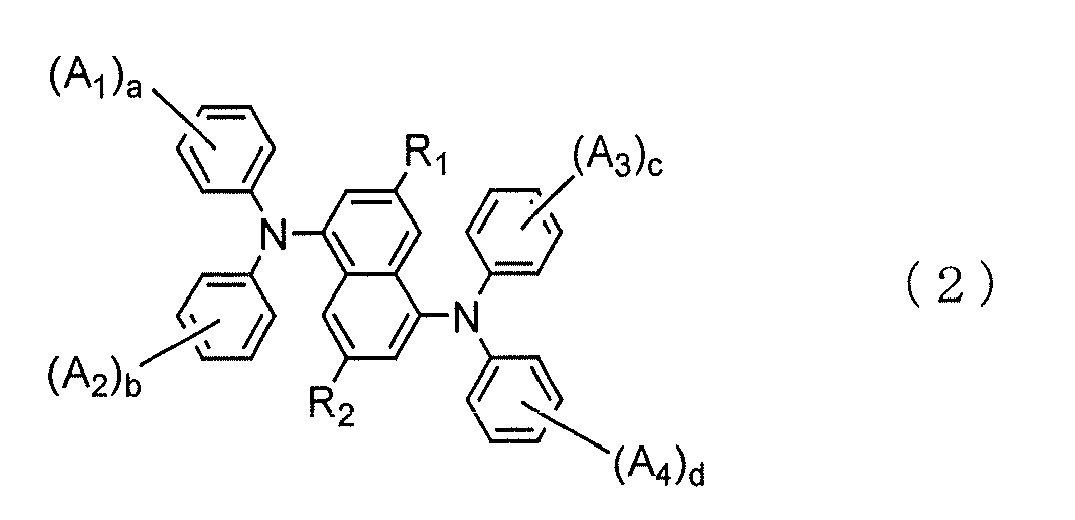 R1 and R2 each independently represent a substituted or unsubstituted aryl group having 5 to 50 carbon atoms, a substituted or unsubstituted aralkyl group having 1 to 50 carbon atoms, a substituted or unsubstituted cycloalkyl group having 3 to 50 carbon atoms, a substituted or unsubstituted alkoxyl group having 1 to 50 carbon atoms, a substituted or unsubstituted aryloxy group having 5 to 50 carbon atoms, a substituted or unsubstituted arylamino group having 5 to 50 carbon atoms, a substituted or unsubstituted alkylamino group having 1 to 20 carbon atoms, a substituted or unsubstituted heterocyclic group having 5 to 50 carbon atoms, a cyano group, or a halogen atom;A1 to A4 each independently represent a hydrogen atom, a substituted or unsubstituted alkyl group having 1 to 50 carbon atoms, a substituted or unsubstituted aryl group having 5 to 50 carbon atoms, a substituted or unsubstituted aralkyl group having 1 to 50 carbon atoms, a substituted or unsubstituted cycloalkyl group having 3 to 50 carbon atoms, a substituted or unsubstituted alkoxyl group having 1 to 50 carbon atoms, a substituted or unsubstituted aryloxy group having 5 to 50 carbon atoms, a substituted or unsubstituted arylamino group having 5 to 50 carbon atoms, a substituted or unsubstituted alkylamino group having 1 to 20 carbon atoms, a substituted or unsubstituted heterocyclic group having 5 to 50 carbon atoms, or a halogen atom; anda to d each independently represent an integer of 0 to 5, and, when each one of a to d represents 2 or more, A1s, A2s, A3s, or A4s may be identical to or different from each other, or may be coupled with each other to form a saturated or unsaturated ring, and A1 and A2, or A3 and A4 may be coupled with each other to form a saturated or unsaturated ring,provided that a case where a substituent in each group represented by any one of A1 to A4 comprises a group containing a vinyl group is excluded, and at least one of A1 to A4 represents a substituted or unsubstituted, secondary or tertiary alkyl group having 3 to 10 carbon atom.
 - An aromatic amine derivative represented by the following general formula (3):
 R1 and R2 each independently represent a substituted or unsubstituted aryl group having 5 to 50 carbon atoms, a substituted or unsubstituted aralkyl group having 1 to 50 carbon atoms, a substituted or unsubstituted cycloalkyl group having 3 to 50 carbon atoms, a substituted or unsubstituted alkoxyl group having 1 to 50 carbon atoms, a substituted or unsubstituted aryloxy group having 5 to 50 carbon atoms, a substituted or unsubstituted arylamino group having 5 to 50 carbon atoms, a substituted or unsubstituted alkylamino group having 1 to 20 carbon atoms, a substituted or unsubstituted heterocyclic group having 5 to 50 carbon atoms, a cyano group, or a halogen atom;A1 to A4 each independently represent a hydrogen atom, a substituted or unsubstituted alkyl group having 1 to 50 carbon atoms, a substituted or unsubstituted aryl group having 5 to 50 carbon atoms, a substituted or unsubstituted aralkyl group having 1 to 50 carbon atoms, a substituted or unsubstituted cycloalkyl group having 3 to 50 carbon atoms, a substituted or unsubstituted alkoxyl group having 1 to 50 carbon atoms, a substituted or unsubstituted aryloxy group having 5 to 50 carbon atoms, a substituted or unsubstituted arylamino group having 5 to 50 carbon atoms, a substituted or unsubstituted alkylamino group having 1 to 20 carbon atoms, a substituted or unsubstituted heterocyclic group having 5 to 50 carbon atoms, or a halogen atom; anda to d each independently represent an integer of 0 to 5, and, when each one of a to d represents 2 or more, A1s, A2s, A3s, or A4s may be identical to or different from each other, or may be coupled with each other to form a saturated or unsaturated ring, and A1 and A2, or A3 and A4 may be coupled with each other to form a saturated or unsaturated ring,provided that a case where a substituent in each group represented by any one of A1 to A4 comprises a group containing a vinyl group is excluded, and at least one of a to d represents an integer of 2 or more.
 - An aromatic amine derivative represented by the following general formula (4):
 R3 and R4 each independently represent a hydrogen atom or an alkyl group having 1 to 20 carbon atoms provided that a case where both R3 and R4 each represent a hydrogen atom is excluded;A1 to A4 each independently represent a hydrogen atom, a substituted or unsubstituted alkyl group having 1 to 50 carbon atoms, a substituted or unsubstituted aryl group having 5 to 50 carbon atoms, a substituted or unsubstituted aralkyl group having 1 to 50 carbon atoms, a substituted or unsubstituted cycloalkyl group having 3 to 50 carbon atoms, a substituted or unsubstituted alkoxyl group having 1 to 50 carbon atoms, a substituted or unsubstituted aryloxy group having 5 to 50 carbon atoms, a substituted or unsubstituted arylamino group having 5 to 50 carbon atoms, a substituted or unsubstituted alkylamino group having 1 to 20 carbon atoms, a substituted or unsubstituted heterocyclic group having 5 to 50 carbon atoms, or a halogen atom; anda to d each independently represent an integer of 0 to 5, and, when each one of a to d represents 2 or more, A1s, A2s, A3s, or A4s may be identical to or different from each other, or may be coupled with each other to form a saturated or unsaturated ring, and A1 and A2, or A3 and A4 may be coupled with each other to form a saturated or unsaturated ring,provided that a case where a substituent in each group represented by any one of A1 to A4 comprises a group containing a vinyl group is excluded, and a case where all of A1 to A4 each represent a hydrogen atom is excluded.
 - An aromatic amine derivative represented by the following general formula (5):
 R3 and R4 each independently represent a hydrogen atom or an alkyl group having 1 to 20 carbon atoms provided that a case where both R3 and R4 each represent a hydrogen atom is excluded;A1 to A4 each independently represent a hydrogen atom, a substituted or unsubstituted alkyl group having 1 to 50 carbon atoms, a substituted or unsubstituted aryl group having 5 to 50 carbon atoms, a substituted or unsubstituted aralkyl group having 1 to 50 carbon atoms, a substituted or unsubstituted cycloalkyl group having 3 to 50 carbon atoms, a substituted or unsubstituted alkoxyl group having 1 to 50 carbon atoms, a substituted or unsubstituted aryloxy group having 5 to 50 carbon atoms, a substituted or unsubstituted arylamino group having 5 to 50 carbon atoms, a substituted or unsubstituted alkylamino group having 1 to 20 carbon atoms, a substituted or unsubstituted heterocyclic group having 5 to 50 carbon atoms, or a halogen atom; anda to d each independently represent an integer of 0 to 5, and, when each one of a to d represents 2 or more, A1s, A2s, A3s, or A4s may be identical to or different from each other, or may be coupled with each other to form a saturated or unsaturated ring, and A1 and A2, or A3 and A4 may be coupled with each other to form a saturated or unsaturated ring,provided that a case where a substituent in each group represented by any one of A1 to A4 comprises a group containing a vinyl group is excluded, and at least one of A1 to A4 represents a substituted or unsubstituted, secondary or tertiary alkyl group having 3 to 10 carbon atom.
 - An aromatic amine derivative represented by the following general formula (6):
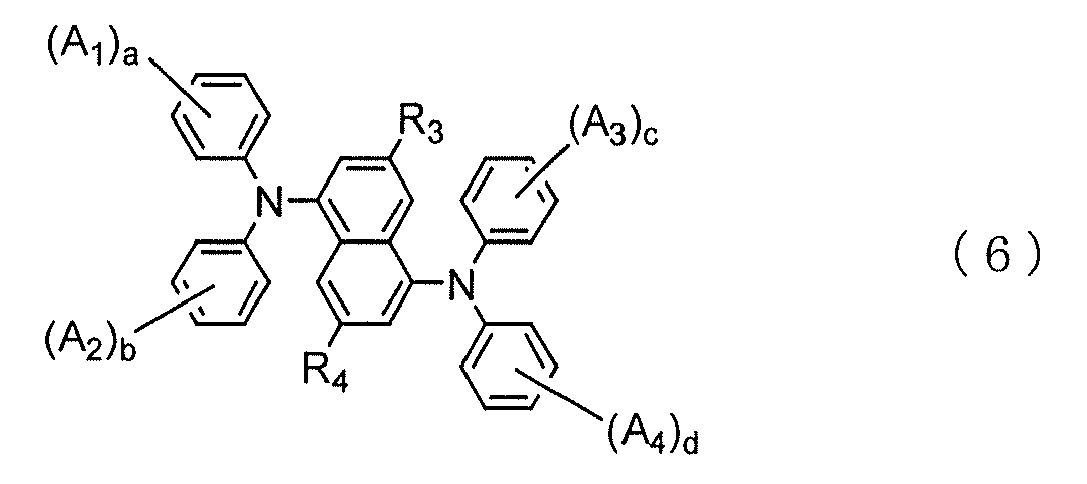 R3 and R4 each independently represent a hydrogen atom or an alkyl group having 1 to 20 carbon atoms provided that a case where both R3 and R4 each represent a hydrogen atom is excluded;A1 to A4 each independently represent a hydrogen atom, a substituted or unsubstituted alkyl group having 1 to 50 carbon atoms, a substituted or unsubstituted aryl group having 5 to 50 carbon atoms, a substituted or unsubstituted aralkyl group having 1 to 50 carbon atoms, a substituted or unsubstituted cycloalkyl group having 3 to 50 carbon atoms, a substituted or unsubstituted alkoxyl group having 1 to 50 carbon atoms, a substituted or unsubstituted aryloxy group having 5 to 50 carbon atoms, a substituted or unsubstituted arylamino group having 5 to 50 carbon atoms, a substituted or unsubstituted alkylamino group having 1 to 20 carbon atoms, a substituted or unsubstituted heterocyclic group having 5 to 50 carbon atoms, or a halogen atom; anda to d each independently represent an integer of 0 to 5, and, when each one of a to d represents 2 or more, A1s, A2s, A3s, or A4s may be identical to or different from each other, or may be coupled with each other to form a saturated or unsaturated ring, and A1 and A2, or A3 and A4 may be coupled with each other to form a saturated or unsaturated ring,provided that a case where a substituent in each group represented by any one of A1 to A4 comprises a group containing a vinyl group is excluded, and at least one of a to d represents an integer of 2 or more.
 - An aromatic amine derivative represented by the following general formula (7):
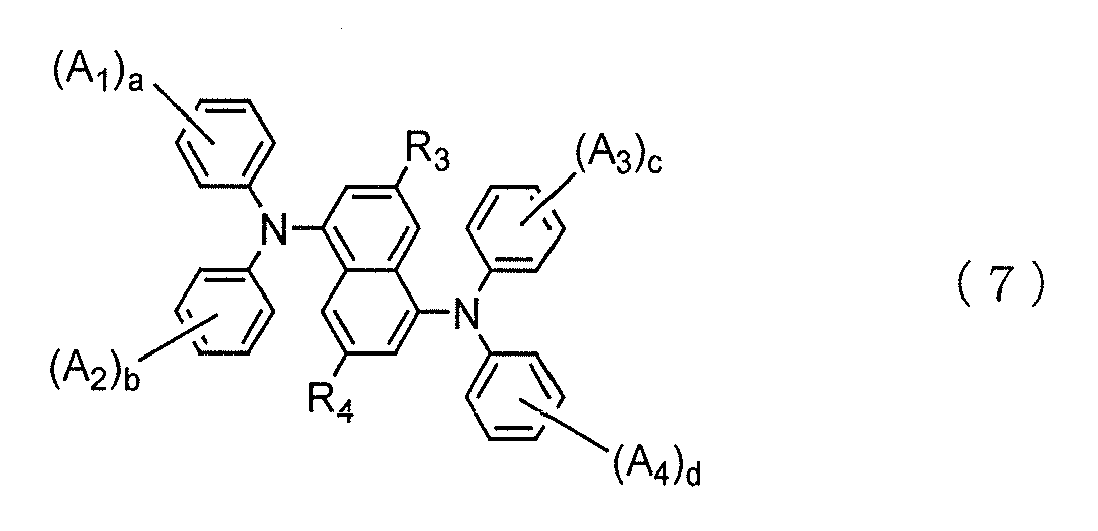 R3 and R4 each independently represent a hydrogen atom or an alkyl group having 1 to 20 carbon atoms provided that a case where both R3 and R4 each represent a hydrogen atom is excluded;A1 to A4 each independently represent a hydrogen atom, a substituted or unsubstituted alkyl group having 1 to 50 carbon atoms, a substituted or unsubstituted aryl group having 5 to 50 carbon atoms, a substituted or unsubstituted aralkyl group having 1 to 50 carbon atoms, a substituted or unsubstituted cycloalkyl group having 3 to 50 carbon atoms, a substituted or unsubstituted alkoxyl group having 1 to 50 carbon atoms, a substituted or unsubstituted aryloxy group having 5 to 50 carbon atoms, a substituted or unsubstituted arylamino group having 5 to 50 carbon atoms, a substituted or unsubstituted alkylamino group having 1 to 20 carbon atoms, a substituted or unsubstituted heterocyclic group having 5 to 50 carbon atoms, or a halogen atom; anda to d each independently represent an integer of 0 to 5, and, when each one of a to d represents 2 or more, A1s, A2s, A3s, or A4s may be identical to or different from each other, or may be coupled with each other to form a saturated or unsaturated ring, and A1 and A2, or A3 and A4 may be coupled with each other to form a saturated or unsaturated ring,provided that a case where a substituent in each group represented by any one of A1 to A4 comprises a group containing a vinyl group is excluded, and, when a to d represent 2 or more, and A1s, A2s, A3s, or A4s are coupled with each other to form a saturated ring, a total number of carbon atoms in the ring is 12 or less.
 - An organic electroluminescence device comprising an organic thin film layer composed of one or more layers including at least a light emitting layer and interposed between a cathode and an anode,
wherein at least one layer of the organic thin film layer contains the aromatic amine derivative according to any one of claims 1 to 7 alone or as a component of a mixture. - An organic electroluminescence device comprising an organic thin film layer composed of one or more layers including at least a light emitting layer and interposed between a cathode and an anode, wherein an organic layer containing the aromatic amine derivative according to any one of claims 1 to 7 as a main component is present between the anode and the light emitting layer.
- An organic electroluminescence device comprising an organic thin film layer composed of one or more layers including at least a light emitting layer and interposed between a cathode and an anode, wherein the light emitting layer has an organic layer containing the aromatic amine derivative according to any one of claims 1 to 7 at a content of 0.1 to 20 mass%.
- An aromatic amine derivative according to any one of claims 1 to 7, wherein the aromatic amine derivative comprises a doping material for an organic electroluminescence device.
Applications Claiming Priority (2)
| Application Number | Priority Date | Filing Date | Title |
|---|---|---|---|
| JP2005128653A JP2006306745A (en) | 2005-04-26 | 2005-04-26 | Aromatic amine derivative and organic electroluminescence device using the same |
| PCT/JP2006/307370 WO2006117974A1 (en) | 2005-04-26 | 2006-04-06 | Aromatic amine derivative and organic electroluminescent element using the same |
Publications (2)
| Publication Number | Publication Date |
|---|---|
| EP1876165A1 true EP1876165A1 (en) | 2008-01-09 |
| EP1876165A4 EP1876165A4 (en) | 2010-05-19 |
Family
ID=37307778
Family Applications (1)
| Application Number | Title | Priority Date | Filing Date |
|---|---|---|---|
| EP06731318A Withdrawn EP1876165A4 (en) | 2005-04-26 | 2006-04-06 | AROMATIC AMINE DERIVATIVE AND ORGANIC ELECTROLUMINESCENT ELEMENT USING THE SAME |
Country Status (7)
| Country | Link |
|---|---|
| US (1) | US8614009B2 (en) |
| EP (1) | EP1876165A4 (en) |
| JP (1) | JP2006306745A (en) |
| KR (1) | KR20080005227A (en) |
| CN (1) | CN101163664A (en) |
| TW (1) | TW200706634A (en) |
| WO (1) | WO2006117974A1 (en) |
Families Citing this family (11)
| Publication number | Priority date | Publication date | Assignee | Title |
|---|---|---|---|---|
| JP5088097B2 (en) * | 2006-11-02 | 2012-12-05 | 三菱化学株式会社 | Organic electroluminescent material, organic electroluminescent device composition, organic electroluminescent device, organic EL display and color display device |
| KR20100017832A (en) * | 2007-06-18 | 2010-02-16 | 이데미쓰 고산 가부시키가이샤 | Trinaphthyl monoamine or derivative thereof, organic electroluminescent device using the same, and organic electroluminescent material-containing solution |
| EP2213693A4 (en) | 2007-11-20 | 2011-11-09 | Idemitsu Kosan Co | POLYMERIC COMPOUND AND ORGANIC ELECTROLUMINESCENT ELEMENT COMPRISING SAME |
| WO2009075203A1 (en) | 2007-12-11 | 2009-06-18 | Idemitsu Kosan Co., Ltd. | Polymer compound and organic electroluminescent device using the same |
| US20100259163A1 (en) | 2007-12-11 | 2010-10-14 | Idemitsu Kosan Co., Ltd. | Polymer compound and organic electroluminescent device using the same |
| JP2010267612A (en) * | 2009-04-17 | 2010-11-25 | Konica Minolta Business Technologies Inc | Photoelectric conversion element and solar cell |
| US8668846B2 (en) * | 2009-04-28 | 2014-03-11 | Konica Minolta Business Technologies, Inc. | Photoelectric conversion element and solar cell |
| JP2010277991A (en) * | 2009-04-28 | 2010-12-09 | Konica Minolta Business Technologies Inc | Photoelectric conversion element and solar cell |
| KR101891773B1 (en) | 2011-10-18 | 2018-08-27 | 삼성디스플레이 주식회사 | Novel heterocyclic compound and organic light emitting device containing same |
| JP7193071B2 (en) * | 2017-02-08 | 2022-12-20 | 国立大学法人東海国立大学機構 | Fluorescent materials and UV absorbers |
| KR102844087B1 (en) * | 2020-02-20 | 2025-08-11 | 삼성디스플레이 주식회사 | Organic electroluminescence device and diamine compound for organic electroluminescence device |
Family Cites Families (14)
| Publication number | Priority date | Publication date | Assignee | Title |
|---|---|---|---|---|
| US5141671A (en) * | 1991-08-01 | 1992-08-25 | Eastman Kodak Company | Mixed ligand 8-quinolinolato aluminum chelate luminophors |
| US5536949A (en) | 1992-08-28 | 1996-07-16 | Idemistu Kosan Co., Ltd. | Charge injection auxiliary material and organic electroluminescence device containing the same |
| JP3816969B2 (en) | 1994-04-26 | 2006-08-30 | Tdk株式会社 | Organic EL device |
| JP3196568B2 (en) | 1995-05-12 | 2001-08-06 | 日本電気株式会社 | Electrophotographic photoreceptor |
| JP3588978B2 (en) | 1997-06-12 | 2004-11-17 | 凸版印刷株式会社 | Organic thin film EL device |
| JP4545243B2 (en) * | 1997-12-16 | 2010-09-15 | チッソ株式会社 | Diaminonaphthalene derivative and organic electroluminescence device using the same |
| JPH11273860A (en) * | 1998-03-23 | 1999-10-08 | Toyo Ink Mfg Co Ltd | Light-emitting material for organic electroluminescence and organic electroluminescence device using the same |
| JP4094203B2 (en) | 2000-03-30 | 2008-06-04 | 出光興産株式会社 | Organic electroluminescence device and organic light emitting medium |
| US6849345B2 (en) * | 2001-09-28 | 2005-02-01 | Eastman Kodak Company | Organic electroluminescent devices with high luminance |
| EP1541657B2 (en) * | 2002-07-19 | 2014-03-05 | Idemitsu Kosan Co., Ltd. | Organic electroluminescent devices and organic luminescent medium |
| US20050214567A1 (en) * | 2004-03-26 | 2005-09-29 | Eastman Kodak Company | Organic element for electroluminescent devices |
| EP1762562A4 (en) * | 2004-06-28 | 2007-10-31 | Idemitsu Kosan Co | AROMATIC AMINE DERIVATIVE AND ORGANIC ELECTROLUMINESCENT ELEMENT USING THE DERIVATIVE |
| JP2006253445A (en) * | 2005-03-11 | 2006-09-21 | Toyo Ink Mfg Co Ltd | Organic electroluminescence device |
| US9070884B2 (en) * | 2005-04-13 | 2015-06-30 | Universal Display Corporation | Hybrid OLED having phosphorescent and fluorescent emitters |
-
2005
- 2005-04-26 JP JP2005128653A patent/JP2006306745A/en active Pending
-
2006
- 2006-04-06 EP EP06731318A patent/EP1876165A4/en not_active Withdrawn
- 2006-04-06 WO PCT/JP2006/307370 patent/WO2006117974A1/en not_active Ceased
- 2006-04-06 KR KR1020077024594A patent/KR20080005227A/en not_active Withdrawn
- 2006-04-06 US US11/912,768 patent/US8614009B2/en not_active Expired - Fee Related
- 2006-04-06 CN CNA2006800137169A patent/CN101163664A/en active Pending
- 2006-04-11 TW TW095112851A patent/TW200706634A/en unknown
Also Published As
| Publication number | Publication date |
|---|---|
| WO2006117974A1 (en) | 2006-11-09 |
| CN101163664A (en) | 2008-04-16 |
| US20090072716A1 (en) | 2009-03-19 |
| KR20080005227A (en) | 2008-01-10 |
| JP2006306745A (en) | 2006-11-09 |
| TW200706634A (en) | 2007-02-16 |
| EP1876165A4 (en) | 2010-05-19 |
| US8614009B2 (en) | 2013-12-24 |
Similar Documents
| Publication | Publication Date | Title |
|---|---|---|
| US7425653B2 (en) | Aromatic amine derivative and organic electroluminescence device employing the same | |
| US7642380B2 (en) | Aromatic amine derivative and organic electroluminescence device using the same | |
| EP1847525B1 (en) | Aromatic amine derivative and organic electroluminescent device using same | |
| US8709613B2 (en) | Aromatic amine derivative, organic electroluminescent element employing the same, and process for producing aromatic amine derivative | |
| US8592051B2 (en) | Aromatic amine derivative and organic electroluminescent element made with the same | |
| US7816017B2 (en) | Aromatic amine derivative and organic electroluminescence device using the same | |
| US20070114917A1 (en) | Aromatic amine derivative and organic electroluminescence device employing the same | |
| KR20090035693A (en) | Material for organic electroluminescent device and organic electroluminescent device using same | |
| US8614009B2 (en) | Aromatic amine derivative and organic electroluminescent element using the same | |
| EP1790631A1 (en) | Aromatic amine derivative and organic electroluminescent device using same | |
| KR101173714B1 (en) | Aromatic amine derivative and organic electroluminescent element using the same | |
| KR20070053753A (en) | Aromatic Amine Derivatives and Organic Electroluminescent Devices Using The Same |
Legal Events
| Date | Code | Title | Description |
|---|---|---|---|
| PUAI | Public reference made under article 153(3) epc to a published international application that has entered the european phase |
Free format text: ORIGINAL CODE: 0009012 |
|
| 17P | Request for examination filed |
Effective date: 20071018 |
|
| AK | Designated contracting states |
Kind code of ref document: A1 Designated state(s): AT BE BG CH CY CZ DE DK EE ES FI FR GB GR HU IE IS IT LI LT LU LV MC NL PL PT RO SE SI SK TR |
|
| DAX | Request for extension of the european patent (deleted) | ||
| A4 | Supplementary search report drawn up and despatched |
Effective date: 20100416 |
|
| STAA | Information on the status of an ep patent application or granted ep patent |
Free format text: STATUS: THE APPLICATION HAS BEEN WITHDRAWN |
|
| 18W | Application withdrawn |
Effective date: 20100525 |