EP1874722B1 - Hydroxamic acid derivatives and the preparation method thereof - Google Patents
Hydroxamic acid derivatives and the preparation method thereof Download PDFInfo
- Publication number
- EP1874722B1 EP1874722B1 EP06716469.9A EP06716469A EP1874722B1 EP 1874722 B1 EP1874722 B1 EP 1874722B1 EP 06716469 A EP06716469 A EP 06716469A EP 1874722 B1 EP1874722 B1 EP 1874722B1
- Authority
- EP
- European Patent Office
- Prior art keywords
- phenyl
- methyl
- benzamide
- hydroxy
- hydroxycarbamoyl
- Prior art date
- Legal status (The legal status is an assumption and is not a legal conclusion. Google has not performed a legal analysis and makes no representation as to the accuracy of the status listed.)
- Expired - Lifetime
Links
Classifications
-
- C—CHEMISTRY; METALLURGY
- C07—ORGANIC CHEMISTRY
- C07C—ACYCLIC OR CARBOCYCLIC COMPOUNDS
- C07C259/00—Compounds containing carboxyl groups, an oxygen atom of a carboxyl group being replaced by a nitrogen atom, this nitrogen atom being further bound to an oxygen atom and not being part of nitro or nitroso groups
- C07C259/04—Compounds containing carboxyl groups, an oxygen atom of a carboxyl group being replaced by a nitrogen atom, this nitrogen atom being further bound to an oxygen atom and not being part of nitro or nitroso groups without replacement of the other oxygen atom of the carboxyl group, e.g. hydroxamic acids
- C07C259/06—Compounds containing carboxyl groups, an oxygen atom of a carboxyl group being replaced by a nitrogen atom, this nitrogen atom being further bound to an oxygen atom and not being part of nitro or nitroso groups without replacement of the other oxygen atom of the carboxyl group, e.g. hydroxamic acids having carbon atoms of hydroxamic groups bound to hydrogen atoms or to acyclic carbon atoms
-
- C—CHEMISTRY; METALLURGY
- C01—INORGANIC CHEMISTRY
- C01B—NON-METALLIC ELEMENTS; COMPOUNDS THEREOF; METALLOIDS OR COMPOUNDS THEREOF NOT COVERED BY SUBCLASS C01C
- C01B3/00—Hydrogen; Gaseous mixtures containing hydrogen; Separation of hydrogen from mixtures containing it; Purification of hydrogen; Reversible storage of hydrogen
- C01B3/02—Production of hydrogen; Production of gaseous mixtures containing hydrogen
- C01B3/22—Production of hydrogen; Production of gaseous mixtures containing hydrogen by decomposition of gaseous or liquid organic compounds
- C01B3/24—Production of hydrogen; Production of gaseous mixtures containing hydrogen by decomposition of gaseous or liquid organic compounds of hydrocarbons
- C01B3/26—Production of hydrogen; Production of gaseous mixtures containing hydrogen by decomposition of gaseous or liquid organic compounds of hydrocarbons using catalysts
-
- A—HUMAN NECESSITIES
- A61—MEDICAL OR VETERINARY SCIENCE; HYGIENE
- A61K—PREPARATIONS FOR MEDICAL, DENTAL OR TOILETRY PURPOSES
- A61K8/00—Cosmetics or similar toiletry preparations
- A61K8/18—Cosmetics or similar toiletry preparations characterised by the composition
- A61K8/30—Cosmetics or similar toiletry preparations characterised by the composition containing organic compounds
- A61K8/40—Cosmetics or similar toiletry preparations characterised by the composition containing organic compounds containing nitrogen
- A61K8/42—Amides
-
- A—HUMAN NECESSITIES
- A61—MEDICAL OR VETERINARY SCIENCE; HYGIENE
- A61P—SPECIFIC THERAPEUTIC ACTIVITY OF CHEMICAL COMPOUNDS OR MEDICINAL PREPARATIONS
- A61P17/00—Drugs for dermatological disorders
-
- A—HUMAN NECESSITIES
- A61—MEDICAL OR VETERINARY SCIENCE; HYGIENE
- A61P—SPECIFIC THERAPEUTIC ACTIVITY OF CHEMICAL COMPOUNDS OR MEDICINAL PREPARATIONS
- A61P17/00—Drugs for dermatological disorders
- A61P17/16—Emollients or protectives, e.g. against radiation
-
- A—HUMAN NECESSITIES
- A61—MEDICAL OR VETERINARY SCIENCE; HYGIENE
- A61Q—SPECIFIC USE OF COSMETICS OR SIMILAR TOILETRY PREPARATIONS
- A61Q19/00—Preparations for care of the skin
- A61Q19/08—Anti-ageing preparations
-
- C—CHEMISTRY; METALLURGY
- C07—ORGANIC CHEMISTRY
- C07C—ACYCLIC OR CARBOCYCLIC COMPOUNDS
- C07C259/00—Compounds containing carboxyl groups, an oxygen atom of a carboxyl group being replaced by a nitrogen atom, this nitrogen atom being further bound to an oxygen atom and not being part of nitro or nitroso groups
- C07C259/04—Compounds containing carboxyl groups, an oxygen atom of a carboxyl group being replaced by a nitrogen atom, this nitrogen atom being further bound to an oxygen atom and not being part of nitro or nitroso groups without replacement of the other oxygen atom of the carboxyl group, e.g. hydroxamic acids
- C07C259/10—Compounds containing carboxyl groups, an oxygen atom of a carboxyl group being replaced by a nitrogen atom, this nitrogen atom being further bound to an oxygen atom and not being part of nitro or nitroso groups without replacement of the other oxygen atom of the carboxyl group, e.g. hydroxamic acids having carbon atoms of hydroxamic groups bound to carbon atoms of six-membered aromatic rings
-
- C—CHEMISTRY; METALLURGY
- C01—INORGANIC CHEMISTRY
- C01B—NON-METALLIC ELEMENTS; COMPOUNDS THEREOF; METALLOIDS OR COMPOUNDS THEREOF NOT COVERED BY SUBCLASS C01C
- C01B2203/00—Integrated processes for the production of hydrogen or synthesis gas
- C01B2203/16—Controlling the process
- C01B2203/1628—Controlling the pressure
- C01B2203/1638—Adjusting the pressure
-
- C—CHEMISTRY; METALLURGY
- C01—INORGANIC CHEMISTRY
- C01B—NON-METALLIC ELEMENTS; COMPOUNDS THEREOF; METALLOIDS OR COMPOUNDS THEREOF NOT COVERED BY SUBCLASS C01C
- C01B2203/00—Integrated processes for the production of hydrogen or synthesis gas
- C01B2203/16—Controlling the process
- C01B2203/169—Controlling the feed
Definitions
- the present invention relates to hydroxamic acid derivatives represented by the following formula (1), and to a method for the preparation thereof: wherein,
- Reactive oxygen species work as a cause material of skin aging. When skin is exposed to UV light, photochemical reactions continually occur at the skin so as to produce reactive oxygen species. These reactive oxygen species may damage skin cells or tissue. They destroy an antioxidant defence layer, consisting of antioxidant enzymes and non-enzymatic antioxidants, thereby shifting the balance of oxidants/antioxidants to the oxidative state. Such oxidative stress may lead to damage of living body components, such as lipid peroxidation, protein oxidation, activation of protease that destroys skin components, chain scission of collagen and elastin, which are elastic fibers, and abnormal cross conjugation thereof, chain scission of hyaluronic acid, promotion of melanin synthesis, and DNA oxidation.
- the structural change of skin according to oxidative stress is that the thicknessess of the epidermis, dermis and subcutaneous are reduced.
- the ECM extracellular matrix
- the ECM consists of two components. One is elastic fiber, which comprises about 2-4% of the ECM, and the other is collagen, which comprises about 70-80% of the ECM. Under the influence of oxidative stress, collagen is decomposed so that collagen in the skin is reduced. As a person grows older, the ECM around skin pores is reduced; thereby skin pores widen.
- the best solution to prevent the widening of skin pores is to inhibit oxidative stress
- the best solution to reduce the size of the widened skin pores is to increase the production of collagen around skin pores.
- vitamin C and vitamin E are two antioxidants generally used.
- Vitamin C is a water soluble antioxidant
- vitamin E is a fat soluble antioxidant.
- these antioxdiants show strong antioxidant effects, they can easily deteriorate when exposed to air, due to their instability. Thus, there is much limitation on their use.
- Another possible antioxidant is polyphenol. However, it also shows instability.
- an object of the invention is to provide novel hydroxamic acid derivatives, which have radical elimination ability as an antioxidant, collagen biosynthesis ability, and also an ability to inhibit the widening of skin pores due to oxidative stress, and to provide a method for preparing the same.
- Hydroxamic acid is widely known as a metal chelator. Judging from the structural feature of hydroxamic acid, a hydroxy group of hydroxylamine adjacent to a carbonyl group forms chelation with metal cation.
- a hydroxy group of hydroxylamine can be easily converted into an anion, to be used in a similar manner to phenol.
- the present invention relates to hydroxamic acid derivatives represented by the following formula (1): wherein,
- the present invention relates to a method for preparing the hydroxamic acid derivative represented by the above formula (1), which comprises the steps of:
- the present hydroxamic acid derivative may be prepared by the method below, comprising the steps of:
- reaction scheme 1 The method of the present invention is described in more detail by the following reaction scheme.
- the method may be exemplified by the following reaction scheme 1: wherein,
- benzoic acid may be converted to an anhydride by employing ethyl chloroformate in an equivalent ratio of 1.2.
- a solvent employed herein may be pyridine, N-methylmorpholine and the like.
- the anhydride may then be reacted with methyl 4-aminobenzoate or 4-aminophenyl acetic acid methylester, to produce a benzamide compound.
- a solvent employed in this reaction may be pyridine, N-methylmorpholine and the like.
- the reaction may be performed by further employing trimethylamine, in an equivalent ratio of 1.2 to methyl 4-aminobenzoate or 4-aminophenyl acetic acid methylester. Most preferably, it may be pyridine. Further, the reaction may preferably be performed at a temperature of 10-20°C. At a temperature lower than 10°C, methyl 4-aminobenzoate or 4-aminophenyl acetic acid methylester may remain unreacted and be difficult to withdraw from the product, while, at a temperature higher than 20°C, the anhydride may be hydrolyzed, resulting in a decreased yield of the product.
- a solvent such as N,N-dimethylformamide, methylene chloride, chloroform and the like
- said methylester of benzamide formed may be hydrolyzed to an acid.
- the acid formed may then be converted to an anhydride by employing ethyl chloroformate.
- ethyl chloroformate may be employed in an equivalent ratio of 1.2 to the acid.
- a solvent employed herein may be pyridine, N-methylmorpholine and the like.
- the said anhydride formed may be reacted with hydroxylamine hydrochloride or N-methyl hydroxylamine hydrochloride, to produce a hydroxamic acid compound.
- a solvent employed in this reaction may be pyridine, N-methylmorpholine and the like.
- the reaction may be performed by further employing triethylamine, in an equivalent ratio of 1.2 to hydroxylamine hydrochloride or N-methyl hydroxylamine hydrochloride. Most preferably, it may be pyridine. Further, the reaction may preferably be performed at a temperature of 0-10°C. At a temperature lower than 0°C, hydroxylamine hydrochloride may remain unreacted, resulting in a decreased yield of the product, while at a temperature higher than 10°C, by-products reacting with hydroxyl group of hydroxylamine may be produced and be difficult to withdraw from the product.
- triethylamine in an equivalent ratio of 1.2 to hydroxylamine hydrochloride or N-methyl hydroxylamine hydrochloride. Most preferably, it may be pyridine. Further, the reaction may preferably be performed at a temperature of 0-10°C. At a temperature lower than 0°C, hydroxylamine hydrochloride may remain unreacted, resulting in a decreased yield of the product
- Hydroxamic acid derivatives of the formula (1) obtained in said method may include, but are not limited hereto,
- Hydroxamic acid derivatives of the formula (1) obtained in said method have effects as an antioxidant to remove radicals, and simultaneously to promote collagen biosynthesis. In addition, they have effects to contract skin pores. Therefore, hydroxamic acid derivatives of the formula (1) provided by the present invention may be incorporated into medicines or external applications for inhibiting the widening of skin pores as well as for the antioxidation and the improvement of skin wrinkle.
- hydroxamic acid derivatives of the formula (1) can be contained in an amount of 0.0001-20 wt% based on the total weight of the composition.
- Example 2 Except that 4-aminophenyl acetic acid methylester was used instead of methyl amino benzoate, the same procedure described in Example 1 was performed to give the title compound (10.4g, 42% yield) as a pale yellow solid.
- Example 3 Except that 4-aminophenyl acetic acid methylester was used instead of methyl amino benzoate, the same procedure described in Example 3 was performed to give the title compound (10.4g, 42% yield) as a pale yellow solid.
- Example 14 Except that N-methyl hydroxylamine hydrochloride was used instead of hydroxylamine hydrochloride, the same procedure described in Example 14 was performed to give the title compound (12.8g, 41% yield) as a pale yellow solid.
- Example 17 Except that N-methyl hydroxylamine hydrochloride was used instead of hydroxylamine hydrochloride, the same procedure described in Example 17 was performed to give the title compound (12.8g, 41% yield) as a pale yellow solid.
- Example 18 Except that N-methyl hydroxylamine hydrochloride was used instead of hydroxylamine hydrochloride, the same procedure described in Example 18 was performed to give the title compound (12.8g, 41% yield) as a pale yellow solid.
- This example illustrates the antioxidative effect of the hydroxamic acid derivatives obtained in Examples 1 to 24, in comparison with tocoperol and EGCG (EpiGalloCatechin Gallate).
- Human keratinocyte (HaCaT) cell line was divided into 1.0 x 10 6 per 60 mm dish, and was cultured for 1 day at 37°C, 5% CO 2 , using DMEM (FBS 10%) medium containing penicillin/streptomycin, and then was treated with 10 -4 mol% of hydroxamic acid derivatives. The same treatment was performed with tocoperol and EGCG, as positive controls, of the same concentration.
- HaCaT cells were treated with 4 mM of BHP (t-butyl hydroperoixe), and were cultured for 4 hours at 37°C, 5% CO 2 , and the cells were obtained. Lysis of the cells was performed on the cells by way of repeating the freeze/thawing process. The following experiment was performed according to the method presented in the assay kit.
- BHP t-butyl hydroperoixe
- Cabiochem Lipid peroxidation assay kit (Cat. No. 437634) was used as reagent in the present invention, and lipid peroxidation was measured using the principle that peroxidation products of ester which relate to long chain unsaturated fatty acid, such as malondialdehyde (MDA), and 4-hydroxyalkenal, i.e., 4-hydroxy-2(E)-nonenal (4-HNE), react with the reagent to form a stable compound at 586 nm.
- MDA malondialdehyde
- 4-hydroxyalkenal i.e., 4-hydroxy-2(E)-nonenal (4-HNE
- Example 11 Materials MDA, HNE Materials MDA, HNE Control (without treatment) 100
- Example 11 198 t-BHP 320
- Example 12 176 Tocoperol 250
- Example 13 150 EGCG 230
- Example 14 220
- Example 1 190
- Example 15 213
- Example 2 200
- Example 16 199
- Example 3 211
- Example 17 200
- Example 4 189
- Example 18 232
- Example 5 211
- Example 19 Example 6 231
- Example 20 Example 7 220
- Example 21 190
- Example 8 190
- Example 22 188
- Example 9 187
- Example 23 188
- Example 10 140
- Example 24 197
- hydroxamic acid derivatives obtained in Examples 1 to 24 can be regarded as antioxidants.
- This example illustrates the effect of the hydroxamic acid derivatives obtained in Examples 1 to 24 on collagen biosynthesis, in comparison with tocoperol and EGCG.
- Human fibroblasts were seeded into 24-well plates at 1x10 5 cells per well and then cultured to 90% of growth. The fibroblastes were then cultured in serum-free DMEM for 24 hours and treated with 10 -4 M of the hydroxamic acid derivatives of Examples 1-24, tocoperol and EGCG, in serum-free medium, and then incubated in a CO 2 incubator for 24 hours.
- hydroxamic acid derivatives obtained in Examples 1 to 24 have an effect on the promotion of collagen biosynthesis.
- This example illustrates the effect of the hydroxamic acid derivatives obtained in Examples 1 to 24 on the contraction of skin pores, in comparison with tocoperol and EGCG.
- mice 0.5ml of the test sample solution was applied for 1 day, 24 hours later, their back part was biopsied. The epidermis was separated, then soaked in 0.5% acetic acid, then fixed in 10% formalin, and cut vertically by 6 mM. After dying with hematoxylin and eosin, the size of skin pore was measured using Mechanical eyepiece micrometer.
- Hydroxamic acid derivatives according to the present invention may be incorporated into skin-care external compositions.
- the present composition may be formulated into, but not limited to, cosmetic compositions such as skin softeners, astringents, nutrient toilet water, nutrient creams, massage creams, essences, eye creams, eye essences, cleansing creams, cleansing foams, cleansing water, packs, powders, body lotions, body creams, body oils, body essences, make-up bases, foundations, hairdyes, shampoos, hair-conditioners and body cleansers; and pharmaceutical compositions such as ointment, gels, creams, patches, and sprays.
- each formulation may further contain bases and additives suitable for the preparation thereof, if necessary, whose kind and amount can be easily selected in this art.
- Nutrient toilet water containing said hydroxamic acid derivatives obtained in Examples 1 to 24 was prepared.
- Ingredients Amount (wt%) 1. Distilled water To 100 2.
- Glycerin 8.0 3.
- Butylene glycol 4.0 4. Extracts with hyaluronic acid 5.0 5.
- ⁇ -glucan 7.0 6.
- Carbomer 0.1 7.
- Caprylic/Capric triglyeride 8.0 9.
- Squalane 5.0 10. Cetearyl glucoside 1.5 11. Sorbitan stearate 0.4 12. Cetearyl alcohol 1.0 13.
- Nutrient cream containing said hydroxamic acid derivatives obtained in Examples 1 to 24 was prepared.
- Ingredients Amount (wt%) 1. Distilled water To 100 2. Glycerin 3.0 3. Butylene glycol 3.0 4. Liquid paraffin 7.0 5. ⁇ -glucan 7.0 6. Carbomer 0.1 7. Hydroxamic acid derivative q.s. 8. Caprylic/Capric triglyeride 3.0 9. Squalane 5.0 10. Cetearyl glucoside 1.5 11. Sorbitan stearate 0.4 12. Polysorbate 60 1.2 13. Preservative q.s. 14. Perfume q.s. 15. Pigments q.s. 16. Triethanolamine 0.1
- hydroxamic acid derivatives according to the present invention showed an antioxidation effect and collagen biosynthesis promotion effect, as well as a skin pore contraction effect.
- hydroxamic acid derivatives according to the present invention can be incorporated into medicines or skin-care external compositions for improving the widening of skin pore, which is a skin aging phenomenon.
Landscapes
- Health & Medical Sciences (AREA)
- Chemical & Material Sciences (AREA)
- Organic Chemistry (AREA)
- Life Sciences & Earth Sciences (AREA)
- General Health & Medical Sciences (AREA)
- Veterinary Medicine (AREA)
- Public Health (AREA)
- Animal Behavior & Ethology (AREA)
- Dermatology (AREA)
- Chemical Kinetics & Catalysis (AREA)
- Engineering & Computer Science (AREA)
- Birds (AREA)
- Gerontology & Geriatric Medicine (AREA)
- Pharmacology & Pharmacy (AREA)
- Medicinal Chemistry (AREA)
- General Chemical & Material Sciences (AREA)
- Bioinformatics & Cheminformatics (AREA)
- Nuclear Medicine, Radiotherapy & Molecular Imaging (AREA)
- Epidemiology (AREA)
- Combustion & Propulsion (AREA)
- Toxicology (AREA)
- Inorganic Chemistry (AREA)
- Organic Low-Molecular-Weight Compounds And Preparation Thereof (AREA)
- Acyclic And Carbocyclic Compounds In Medicinal Compositions (AREA)
- Cosmetics (AREA)
Description
- The present invention relates to hydroxamic acid derivatives represented by the following formula (1), and to a method for the preparation thereof:
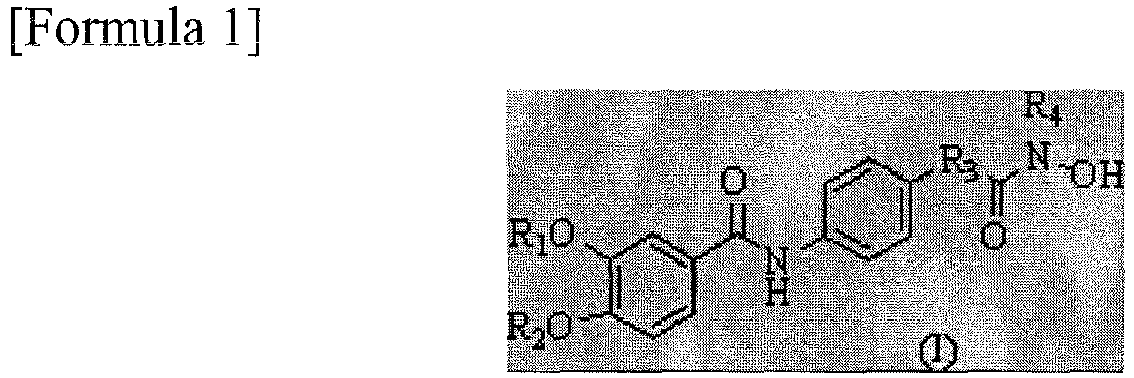
- R1 and R2 are alkyl groups having from 1 to 10 carbon atoms;
- R3 is -(CH)n-, wherein n = 0 or 1; and
- R4 is a hydrogen atom or methyl.
- Reactive oxygen species work as a cause material of skin aging. When skin is exposed to UV light, photochemical reactions continually occur at the skin so as to produce reactive oxygen species. These reactive oxygen species may damage skin cells or tissue. They destroy an antioxidant defence layer, consisting of antioxidant enzymes and non-enzymatic antioxidants, thereby shifting the balance of oxidants/antioxidants to the oxidative state. Such oxidative stress may lead to damage of living body components, such as lipid peroxidation, protein oxidation, activation of protease that destroys skin components, chain scission of collagen and elastin, which are elastic fibers, and abnormal cross conjugation thereof, chain scission of hyaluronic acid, promotion of melanin synthesis, and DNA oxidation. In addition, such damage of living body components may lead to various aging effects such as skin wrinkle formation, elasticity reduction and widening of skin pores. Although there have been many studies on skin aging such as skin wrinkle formation and skin elasticity reduction, few studies have been made of skin pores. However, the most important factor of skin pore widening is also oxidative stress.
- The structural change of skin according to oxidative stress is that the thicknessess of the epidermis, dermis and subcutaneous are reduced. In addition, the ECM (extracellular matrix) of the dermis, which relates to elasticity and tensility of skin, is changed. The ECM consists of two components. One is elastic fiber, which comprises about 2-4% of the ECM, and the other is collagen, which comprises about 70-80% of the ECM. Under the influence of oxidative stress, collagen is decomposed so that collagen in the skin is reduced. As a person grows older, the ECM around skin pores is reduced; thereby skin pores widen.
- Thus, the best solution to prevent the widening of skin pores is to inhibit oxidative stress, and the best solution to reduce the size of the widened skin pores is to increase the production of collagen around skin pores.
- Although not directly related to the widening of skin pores, there have been many studies on antioxidants to inhibit oxidative stress, and many antioxidants have been actually developed, however, not all of them are effective for increasing collagen biosynthesis or reducing skin pore size.
- Meanwhile, vitamin C and vitamin E are two antioxidants generally used. Vitamin C is a water soluble antioxidant, and vitamin E is a fat soluble antioxidant. Although these antioxdiants show strong antioxidant effects, they can easily deteriorate when exposed to air, due to their instability. Thus, there is much limitation on their use. Another possible antioxidant is polyphenol. However, it also shows instability.
- Under these circumstances, the present inventors conducted many studies in order to develop a novel compound showing antioxidant effects without showing instability, which is the problem of the prior developed antioxidant. As a result, a novel type of hydroxamic acid derivatives was synthesized. Furthermore, it was found that these hydroxamic acid derivatives have the same antioxidant effects as those of the vitamins (antioxidants) used until now. Based on these findings, the present invention was completed.
- Therefore, an object of the invention is to provide novel hydroxamic acid derivatives, which have radical elimination ability as an antioxidant, collagen biosynthesis ability, and also an ability to inhibit the widening of skin pores due to oxidative stress, and to provide a method for preparing the same.
- Hydroxamic acid is widely known as a metal chelator. Judging from the structural feature of hydroxamic acid, a hydroxy group of hydroxylamine adjacent to a carbonyl group forms chelation with metal cation.
- In an additional feature, a hydroxy group of hydroxylamine can be easily converted into an anion, to be used in a similar manner to phenol. These structural features of hydroxamic acid were utilized to synthesize a novel anitioxidant having radical elimination ability and also a skin pore contraction effect.
- The present invention relates to hydroxamic acid derivatives represented by the following formula (1):

- R1 and R2 is are alkyl group having from 1 to 10 carbon atoms;
- R3 is -(CH)n-, wherein n = 0 or 1; and
- R4 is a hydrogen atom or methyl.
- Further, the present invention relates to a method for preparing the hydroxamic acid derivative represented by the above formula (1), which comprises the steps of:
- 1) Reacting 3,4-dialkoxy benzoic acid with methyl 4-aminobenzoate or 4-aminophenyl acetic acid methylester to produce a benzamide compound;
- 2) Hydrolyzing the methylester of the benzamide compound formed in step 1) to produce an acid; and
- 3) Reacting said acid with hydroxylamine hydrochloride or N-methyl hydroxylamine hydrochloride to produce a hydroxamic acid derivative.
- Especially, in the last step of producing a hydroxamic acid derivative, one-step processing without protective/deprotective reactions is used to increase efficiency.
- The present hydroxamic acid derivative may be prepared by the method below, comprising the steps of:
- a) Converting 3,4-dialkoxy benzoic acid to anhydride by adding ethyl chloroformate thereto, and reacting the anhydride with methyl 4-aminobenzoate or 4-aminophenyl acetic acid methylester, to produce a benzamide compound;
- b) Hydrolyzing methylester of benzamide compounds formed in step a), to produce an acid; and
- c) Converting the acid formed in step b) to anhydride by adding ethyl chloroformate thereto, and reacting said anhydride with hydroxylamine hydrochloride or N-methyl hydroxylamine hydrochloride, to produce a hydroxamic acid derivative.
- The method of the present invention is described in more detail by the following reaction scheme. The method may be exemplified by the following reaction scheme 1:

- R1 and R2 are an alkyl groups having from 1 to 10 carbon atoms;
- R3 is -(CH)n-, wherein n = 0 or 1; and
- R4 is a hydrogen atom or methyl.
- Firstly, benzoic acid may be converted to an anhydride by employing ethyl chloroformate in an equivalent ratio of 1.2. A solvent employed herein may be pyridine, N-methylmorpholine and the like. The anhydride may then be reacted with methyl 4-aminobenzoate or 4-aminophenyl acetic acid methylester, to produce a benzamide compound. A solvent employed in this reaction may be pyridine, N-methylmorpholine and the like. Additionally, in a solvent such as N,N-dimethylformamide, methylene chloride, chloroform and the like, the reaction may be performed by further employing trimethylamine, in an equivalent ratio of 1.2 to methyl 4-aminobenzoate or 4-aminophenyl acetic acid methylester. Most preferably, it may be pyridine. Further, the reaction may preferably be performed at a temperature of 10-20°C. At a temperature lower than 10°C, methyl 4-aminobenzoate or 4-aminophenyl acetic acid methylester may remain unreacted and be difficult to withdraw from the product, while, at a temperature higher than 20°C, the anhydride may be hydrolyzed, resulting in a decreased yield of the product.
- Subsequently, said methylester of benzamide formed may be hydrolyzed to an acid.
- The acid formed may then be converted to an anhydride by employing ethyl chloroformate. Herein, ethyl chloroformate may be employed in an equivalent ratio of 1.2 to the acid. A solvent employed herein may be pyridine, N-methylmorpholine and the like. The said anhydride formed may be reacted with hydroxylamine hydrochloride or N-methyl hydroxylamine hydrochloride, to produce a hydroxamic acid compound. A solvent employed in this reaction may be pyridine, N-methylmorpholine and the like. Additionally, in a solvent such as N,N-dimethylformamide, methylene chloride, chloroform and the like, the reaction may be performed by further employing triethylamine, in an equivalent ratio of 1.2 to hydroxylamine hydrochloride or N-methyl hydroxylamine hydrochloride. Most preferably, it may be pyridine. Further, the reaction may preferably be performed at a temperature of 0-10°C. At a temperature lower than 0°C, hydroxylamine hydrochloride may remain unreacted, resulting in a decreased yield of the product, while at a temperature higher than 10°C, by-products reacting with hydroxyl group of hydroxylamine may be produced and be difficult to withdraw from the product.
- Hydroxamic acid derivatives of the formula (1) obtained in said method may include, but are not limited hereto,
- 1) N-[4-(N-hydroxycarbamoyl)phenyl][3,4-dimethoxyphenyl] carboxyamide,
- 2) N- [4-(N-hydroxycarbamoyl)phenyl] [3,4-diethoxyphenyl] carboxyamide,
- 3) N-[4-(N-hydroxycarbamoyl)phenyl][3,4-diisopropoxyphenyl] carboxyamide,
- 4) N-[4-(N-hydroxycarbamoyl)phenyl][3,4-dipropoxyphenyl] carboxyamide,
- 5) N-[4-(N-hydroxycarbamoyl)phenyl] [3,4-dibutoxyphenyl] carboxyamide,
- 6) N-[4-(N-hydroxycarbamoyl)phenyl][3,4-di-tert-butoxyphenyl] carboxyamide,
- 7) [4-((3,4-dimethoxyphenyl)carbonyl amino)phenyl]-N-hydroxy-N-methylcarboxyamide,
- 8) [4-((3,4-diethoxyphenyl)carbonyl amino)phenyl]-N-hydroxy-N-methylcarboxyamide,
- 9) [4-((3,4-diisopropoxyphenyl)carbonyl amino)phenyl] -N-hydroxy-N-methylcarboxyamide,
- 10) [4-((3,4-diprorpoxyphenyl)carbonyl amino)phenyl] -N-hydroxy-N-methylcarboxyamide,
- 11) [4-((3,4-dibutoxyphenyl)carbonyl amino)phenyl] -N-hydroxy-N-methylcarboxyamide,
- 12) [4-((3,4-di-tert-butoxyphenyl)carbonyl amino)phenyl]-N-hydroxy-N-methylcarboxyamide,
- 13) N-(4-((hydroxycarbamoyl)methyl)phenyl)-3,4-dimethoxy benzamide,
- 14) N-(4-((hydroxycarbamoyl)methyl)phenyl)-3,4-diethoxy benzamide,
- 15) N-(4-((hydroxycarbamoyl)methyl)phenyl)-3,4-diisopropoxy benzamide,
- 16) N-(4-((hydroxycarbamoyl) methyl)phenyl)-3,4-dipropoxy benzamide,
- 17) N-(4-((hydroxycarbamoyl) methyl)phenyl)-3,4-dibutoxy benzamide,
- 18) N-(4-((hydroxycarbamoyl)methyl)phenyl)-3,4-di-tert-butoxy benzamide,
- 19) N-(4-(N-hydroxy-N-methylcarbonyl)methyl)phenyl)-3,4-dimethoxy benzamide,
- 20) N-(4-(N-hydroxy-N-methylcarbonyl)methyl)phenyl)-3,4-diethoxy benzamide,
- 21) N-(4-(N-hydroxy-N-methylcarbonyl)methyl)phenyl)-3,4-diisopropoxy benzamide,
- 22) N-(4-(N-hydroxy-N-methylcarbonyl)methyl)phenyl)-3,4-dipropoxy benzamide,
- 23) N-(4-(N-hydroxy-N-methylcarbonyl)methyl)phenyl)-3,4-dibutoxy benzamide,
- 24) N-(4-(N-hydroxy-N-methylcarbonyl)methyl)phenyl)-3,4-di-tert-butoxy benzamide.
- Hydroxamic acid derivatives of the formula (1) obtained in said method have effects as an antioxidant to remove radicals, and simultaneously to promote collagen biosynthesis. In addition, they have effects to contract skin pores. Therefore, hydroxamic acid derivatives of the formula (1) provided by the present invention may be incorporated into medicines or external applications for inhibiting the widening of skin pores as well as for the antioxidation and the improvement of skin wrinkle. In the composition, hydroxamic acid derivatives of the formula (1) can be contained in an amount of 0.0001-20 wt% based on the total weight of the composition.
- The methods for preparing hydroxamic acid derivatives according to the present invention are described in more detail by way of the following examples. However, these examples are provided for the purpose of illustration only and should not be construed as limiting the scope of the invention, which will be apparent to one skilled in the art.
- 20.0g (0.16 mol) of 3,4-dimethoxy benzoic acid was dissolved in 250Mℓ of pyridine and then was cooled in an ice bath of 10°C. Thereto, 23.1g (0.21 mol) of ethyl chloroformate was added dropwise for 30 minutes. The mixture was stirred at room temperature for 2 hours and then filtered to remove salts, to give an anhydride (30.2g, 0.15 mol). 24.1g (0.16 mol) of methyl aminobenzoate was dissolved in 250Mℓ of pyridine and then was cooled in an ice bath of 10°C. Thereto, the anhydride formed in the previous step was added dropwise for 30 minutes. The mixture was stirred for another 2 hours. After distillation of the solvent, the residue was dissolved in 300Mℓ of ethyl acetate. The ethyl acetate solution was washed with 5% hydrochloric acid and with distilled water, dried over magnesium sulfate, decolorized with active charcoal, and then filtered. The filtrate was dried under reduced pressure, to give methyl (3,4-dimethoxycarbonylamino) benzoate (34.7g, 85% yield) as a pale yellow solid.
- Subsequently, 34.7g of methyl (3,4-dimethoxycarbonylamino) benzoate was dissolved in 500Mℓ of methanol, and thereto 50Mℓ of 10% KOH was added. After stirring for 3 hours, the mixture was neutralized with hydrochloric acid and then filtered, to give an acid compound, (3,4-dimethoxycarbonylamino) benzoic acid (26.2g, 80% yield).
- (3,4-dimethoxycarbonylamino) benzoic acid formed (24.1g, 0.10 mol) was dissolved in 200Mℓ of pyridine and then was cooled in an ice bath of 10°C. Thereto, 22.9g (0.13 mol) of ethyl chloroformate was added dropwise for 30 minutes. The mixture was stirred at room temperature for 2 hours and then filtered to remove salts, to give an anhydride (38.7g, 0.12 mol).
- 6.9g (0.10 mol) of hydroxylamine hydrochloride was dissolved in 100Mℓ of pyridine and then was cooled in an ice bath of 10°C. Thereto, the anhydride formed in the previous step was added dropwise for 30 minutes. The mixture was stirred for another 2 hours. After distillation of the solvent, the residue was dissolved in 300Mℓ of ethyl acetate. The ethyl acetate solution was washed with 5% hydrochloric acid and with distilled water, dried over magnesium sulfate, decolorized with active charcoal, and then filtered. The filtrate was dried under reduced pressure, to give a final product, N-[4-(N-hydroxycarbamoyl)phenyl][3,4-dimethoxyphenyl]carboxyamide (16.6g, 65% yield) as a pale yellow solid.
TLC (in ethyl acetate: hexane = 1:1); Rf = 0.51
1H-NMR(DMSO-d6): δ10.84(s, 1H), 10.01(s, 1H), 8.84(s, 1H), 7.10-7.63(m, 7H), 3.80(s, 6H). - Except that 3,4-diethoxy benzoic acid was used instead of 3,4-dimethoxy benzoic acid, the same procedure described in Example 1 was performed to give the title compound (11.9g, 44% yield) as a pale yellow solid.
TLC (in ethyl acetate: hexane = 1:1); Rf = 0.53
1H-NMR(DMSO-d6): δ10.83(s, 1H), 10.11(s, 1H), 8.87(s, 1H), 7.11-7.60(m, 7H), 4.20(m, 4H), 1.27(t, 6H, J = 5.4Hz). - Except that 3,4-diisopropoxy benzoic acid was used instead of 3,4-dimethoxy benzoic acid, the same procedure described in Example 1 was performed to give the title compound (11.2g, 43% yield) as a pale yellow solid.
TLC (in ethyl acetate: hexane = 1:1); Rf = 0.50
1H-NMR(DMSO-d6): δ10.82(s, 1H), 10.12(s, 1H), 8.86(s, 1H), 7.10-7.64(m, 7H), 3.41(m, 2H), 1.24(d, 12H, J = 6.9Hz). - Except that 3,4-dipropoxy benzoic acid was used instead of 3,4-dimethoxy benzoic acid, the same procedure described in Example 1 was performed to give the title compound (11.4g, 39% yield) as a pale yellow solid.
TLC (in ethyl acetate: hexane = 1:4); Rf=0.52
1H-NMR(DMSO-d6): δ10.82(s, 1H), 10.13(s, 1H), 8.86(s, 1H), 7.10-7.63(m, 7H), 4.02(m, 4H), 1.90(m, 4H), 1.06(m, 6H). - Except that 3,4-dibutoxy benzoic acid was used instead of 3,4-dimethoxy benzoic acid, the same procedure described in Example 1 was performed to give the title compound (12.5g, 42% yield) as a pale yellow solid.
TLC (in ethyl acetate: hexane = 1:1); Rf = 0.55
1H-NMR(DMSO-d6): δ10.80(s, 1H), 10.13(s, 1H), 8.84(s, 1H), 7.11-7.63(m, 7H), 4.05(m, 4H), 1.80(m, 4H), 1.48(m, 4H), 0.97(m, 6H). - Except that 3,4-di-tert-butoxy benzoic acid was used instead of 3,4-dimethoxy benzoic acid, the same procedure described in Example 1 was performed to give the title compound (14.3g, 48% yield) as a pale yellow solid.
TLC(in ethyl acetate : hexane = 1:1); Rf = 0.53
1H-NMR(DMSO-d6): δ10.83(s, 1H), 10.11(s, 1H), 8.87(s, 1H), 7.11-7.60(m, 7H), 1.32(s, 24H). - Except that N-methyl hydroxylamine hydrochloride was used instead of hydroxylamine hydrochloride, the same procedure described in Example 1 was performed to give the title compound (12.8g, 41% yield) as a pale yellow solid.
TLC (in ethyl acetate : hexane = 1:1); Rf=0.52
1H-NMR(DMSO-d6): δ10.84(s, 1H), 10.01(s, 1H), 7.10-7.63(m, 7H), 3.80(s, 6H), 3.20(s, 3H). - Except that N-methyl hydroxylamine hydrochloride was used instead of hydroxylamine hydrochloride, the same procedure described in Example 2 was performed to give the title compound (11.8g, 46% yield) as a pale yellow solid.
TLC (in ethyl acetate : hexane = 1:1); Rf = 0.53
1H-NMR(DMSO-d6): δ10.83(s, 1H), 10.11(s, 1H), 7.11-7.60(m, 7H), 4.20(m, 4H), 3.21 (s, 3H), 1.27(t, 6H, J = 5.4Hz). - Except that N-methyl hydroxylamine hydrochloride was used instead of hydroxylamine hydrochloride, the same procedure described in Example 3 was performed to give the title compound (11.9g, 44% yield) as a pale yellow solid.
TLC (in ethyl acetate : hexane = 1:1); Rf = 0.50
1H-NMR(DMSO-d6): δ10.82(s, 1H), 10.12(s, 1H), 7.10-7.64(m, 7H), 3.41(m, 2H), 3.21(s, 3H), 1.24(d, 12H, J = 6.9 Hz). - Except that N-methyl hydroxylamine hydrochloride was used instead of hydroxylamine hydrochloride, the same procedure described in Example 4 was performed to give the title compound (11.9g, 44% yield) as a pale yellow solid.
TLC (in ethyl acetate : hexane = 1:1); Rf=0.53
1H-NMR(DMSO-d6): δ10.82(s, 1H), 10.13(s, 1H), 7.10-7.63(m, 7H), 4.02(m, 4H), 3.21 (s, 3H), 1.90(m, 4H), 1.06(m, 6H). - Except that N-methyl hydroxylamine hydrochloride was used instead of hydroxylamine hydrochloride, the same procedure described in Example 5 was performed to give the title compound (11.9g, 44% yield) as a pale yellow solid.
TLC (in ethyl acetate : hexane = 1:1); Rf = 0.54
1H-NMR(DMSO-d6): δ10.80(s, 1H), 10.13(s, 1H), 7.11-7.63(m, 7H), 4.05(m, 4H), 3.21(s, 3H), 1.80(m, 4H), 1.48(m, 4H), 0.97(m, 6H). - Except that N-methyl hydroxylamine hydrochloride was used instead of hydroxylamine hydrochloride, the same procedure described in Example 6 was performed to give the title compound (11.9g, 44% yield) as a pale yellow solid.
TLC (in ethyl acetate : hexane = 1:1); Rf = 0.53
1H-NMR(DMSO-d6): δ10.83(s, 1H), 10.11(s, 1H), 7.11-7.60(m, 7H), 3.20(s, 3H), 1.32(s, 24H). - Except that 4-aminophenyl acetic acid methylester was used instead of methyl amino benzoate, the same procedure described in Example 1 was performed to give the title compound (10.4g, 42% yield) as a pale yellow solid.
TLC (in ethyl acetate : hexane = 1:1); Rf = 0.51
1H-NMR(DMSO-d6): δ10.84(s, 1H), 10.01(s, 1H), 8.84(s, 1H), 7.10-7.63(m, 7H), 3.80(s, 6H), 3.12(s, 2H). - Except that 4-aminophenyl acetic acid methylester was used instead of methyl amino benzoate, the same procedure described in Example 2 was performed to give the title compound (10.4g, 42% yield) as a pale yellow solid.
TLC (in ethyl acetate : hexane = 1:1); Rf=0.53
1H-NMR(DMSO-d6): δ10.83(s, 1H), 10.10(s, 1H), 8.87(s, 1H), 7.11-7.60(m, 7H), 4.20(m, 4H), 3.10(s, 2H), 1.27(t, 6H, J = 5.4 Hz). - Except that 4-aminophenyl acetic acid methylester was used instead of methyl amino benzoate, the same procedure described in Example 3 was performed to give the title compound (10.4g, 42% yield) as a pale yellow solid.
TLC (in ethyl acetate : hexane = 1:4); Rf = 0.50
1H-NMR(DMSO-d6): δ10.82(s, 1H), 10.12(s, 1H), 8.86(s, 1H), 7.10-7.64(m, 7H), 3.41(m, 2H), 3.12(s, 2H), 1.24(d, 12H, J = 6.9 Hz). - Except that 4-aminophenyl acetic acid methylester was used instead of methyl amino benzoate, the same procedure described in Example 4 was performed to give the title compound (10.4g, 42% yield) as a pale yellow solid.
TLC (in ethyl acetate : hexane = 1:1); Rf= 0.52
1H-NMR(DMSO-d6): δ10.82(s, 1H), 10.13(s, 1H), 8.86(s, 1H), 7.10-7.63(m, 7H), 4.02(m, 4H), 3.12(s, 2H), 1,90(m, 4H), 1.06(m, 6H). - Except that 4-aminophenyl acetic acid methylester was used instead of methyl amino benzoate, the same procedure described in Example 5 was performed to give the title compound (10.4g, 42% yield) as a pale yellow solid.
TLC (in ethyl acetate : hexane = 1:1); Rf=0.55
1H-NMR(DMSO-d6): δ10.80(s, 1H), 10.13(s, 1H), 8.84(s, 1H), 7.11-7.63(m, 7H), 4.05(m, 4H), 3.12(s, 2H), 1.80(m, 4H), 1.48(m, 4H), 0.97(m, 6H). - Except that 4-aminophenyl acetic acid methylester was used instead of methyl amino benzoate, the same procedure described in Example 6 was performed to give the title compound (10.4g, 42% yield) as a pale yellow solid.
TLC (in ethyl acetate : hexane = 1:1); Rf=0.53
1H-NMR(DMSO-d6): δ10.83(s, 1H), 10.11(s, 1H), 8.87(s, 1H), 7.11-7.60(m, 7H), 3.13(s, 2H), 1.32(s, 24H). - Except that N-methyl hydroxylamine hydrochloride was used instead of hydroxylamine hydrochloride, the same procedure described in Example 13 was performed to give the title compound (12.8g, 41% yield) as a pale yellow solid.
TLC (in ethyl acetate : hexane = 1:1); Rf = 0.51
1H-NMR(DMSO-d6): δ10.84(s, 1H), 10.01(s, 1H), 7.10-7.63(m, 7H), 3.80(s, 6H), 3.24(s, 3H), 3.12(s, 2H). - Except that N-methyl hydroxylamine hydrochloride was used instead of hydroxylamine hydrochloride, the same procedure described in Example 14 was performed to give the title compound (12.8g, 41% yield) as a pale yellow solid.
TLC (in ethyl acetate : hexane = 1:1); Rf= 0.53
1H-NMR(DMSO-d6): δ10.83(s, 1H), 10.10(s, 1H), 7.11-7.60(m, 7H), 4.20(m, 4H), 3.25(s, 3H), 3.10(s, 2H), 1.27(t, 6H, J= 5.4 Hz). - Except that N-methyl hydroxylamine hydrochloride was used instead of hydroxylamine hydrochloride, the same procedure described in Example 15 was performed to give the title compound (12.8g, 41% yield) as a pale yellow solid.
TLC (in ethyl acetate : hexane = 1:1); Rf=0.50
1H-NMR(DMSO-d6): δ10.82(s, 1H), 10.12(s, 1H), 7.10-7.64(m, 7H), 3.41(m, 2H), 3.24(s, 3H), 3.12(s, 2H), 1.24(d, 12H, J= 6.9 Hz). - Except that N-methyl hydroxylamine hydrochloride was used instead of hydroxylamine hydrochloride, the same procedure described in Example 16 was performed to give the title compound (12.8g, 41% yield) as a pale yellow solid.
TLC (in ethyl acetate : hexane = 1:1); Rf= 0.52
1H-NMR(DMSO-d6): δ10.82(s, 1H), 10.13(s, 1H), 7.10-7.63(m, 7H), 4.02(m, 4H), 3.21(s, 3H), 3.12(s, 2H), 1.90(m, 4H), 1.06(m, 6H). - Except that N-methyl hydroxylamine hydrochloride was used instead of hydroxylamine hydrochloride, the same procedure described in Example 17 was performed to give the title compound (12.8g, 41% yield) as a pale yellow solid.
TLC (in ethyl acetate : hexane = 1:1); Rf=0.55
1H-NMR(DMSO-d6): δ10.80(s, 1H), 10.13(s, 1H), 7.11-7.63(m, 7H), 4.05(m, 4H), 3.26(s, 3H), 3.12(s, 2H), 1.80(m, 4H), 1.48(m, 4H), 0.97(m, 6H). - Except that N-methyl hydroxylamine hydrochloride was used instead of hydroxylamine hydrochloride, the same procedure described in Example 18 was performed to give the title compound (12.8g, 41% yield) as a pale yellow solid.
TLC (in ethyl acetate : hexane=1:1); Rf= 0.53
1H-NMR(DMSO-d6): δ10.83(s, 1H), 10.11(s, 1H), 7.11-7.60(m, 7H), 3.24(s, 3H), 3.13(s, 2H), 1.32(s, 24H). - This example illustrates the antioxidative effect of the hydroxamic acid derivatives obtained in Examples 1 to 24, in comparison with tocoperol and EGCG (EpiGalloCatechin Gallate). Human keratinocyte (HaCaT) cell line was divided into 1.0 x 10⁶ per 60 mm dish, and was cultured for 1 day at 37°C, 5% CO2, using DMEM (FBS 10%) medium containing penicillin/streptomycin, and then was treated with 10-4 mol% of hydroxamic acid derivatives. The same treatment was performed with tocoperol and EGCG, as positive controls, of the same concentration. The next day, HaCaT cells were treated with 4 mM of BHP (t-butyl hydroperoixe), and were cultured for 4 hours at 37°C, 5% CO2, and the cells were obtained. Lysis of the cells was performed on the cells by way of repeating the freeze/thawing process. The following experiment was performed according to the method presented in the assay kit.
- Cabiochem Lipid peroxidation assay kit (Cat. No. 437634) was used as reagent in the present invention, and lipid peroxidation was measured using the principle that peroxidation products of ester which relate to long chain unsaturated fatty acid, such as malondialdehyde (MDA), and 4-hydroxyalkenal, i.e., 4-hydroxy-2(E)-nonenal (4-HNE), react with the reagent to form a stable compound at 586 nm. The results are shown in Table 1.
[Table 1] Materials MDA, HNE Materials MDA, HNE Control (without treatment) 100 Example 11 198 t-BHP 320 Example 12 176 Tocoperol 250 Example 13 150 EGCG 230 Example 14 220 Example 1 190 Example 15 213 Example 2 200 Example 16 199 Example 3 211 Example 17 200 Example 4 189 Example 18 232 Example 5 211 Example 19 212 Example 6 231 Example 20 196 Example 7 220 Example 21 190 Example 8 190 Example 22 188 Example 9 187 Example 23 188 Example 10 140 Example 24 197 - As can be seen in the above Table 1, hydroxamic acid derivatives obtained in Examples 1 to 24 can be regarded as antioxidants.
- This example illustrates the effect of the hydroxamic acid derivatives obtained in Examples 1 to 24 on collagen biosynthesis, in comparison with tocoperol and EGCG.
- Human fibroblasts were seeded into 24-well plates at 1x10⁵ cells per well and then cultured to 90% of growth. The fibroblastes were then cultured in serum-free DMEM for 24 hours and treated with 10-4 M of the hydroxamic acid derivatives of Examples 1-24, tocoperol and EGCG, in serum-free medium, and then incubated in a CO2 incubator for 24 hours.
- For each supernatant, procollagen production was measured with procollagen type (I) ELISA kit. The results are shown in Table 2, in which collagen biosynthesis was evaluated as a relative value, in consideration that the value of the control group with no material treated is 100.
[Table 2] Materials Collagen biosynthesis (%) Materials Collagen biosynthesis (%) Control group 100 Example 12 123 Tocopcrol 113 Example 13 111 EGCG 120 Example 14 121 Example 1 123 Example 15 134 Example 2 131 Example 16 131 Example 3 122 Example 17 123 Example 4 111 Example 18 122 Example 5 121 Example 19 142 Example 6 135 Example 20 123 Example 7 111 Example 21 121 Example 8 112 Example 22 122 Example 9 123 Example 23 123 Example 10 126 Example 24 131 Example 11 121 - As can be seen in Table 2, hydroxamic acid derivatives obtained in Examples 1 to 24 have an effect on the promotion of collagen biosynthesis.
- This example illustrates the effect of the hydroxamic acid derivatives obtained in Examples 1 to 24 on the contraction of skin pores, in comparison with tocoperol and EGCG.
- The compounds of Examples 1-24 were dissolved in solvent (1,3-butylene glycol: ethanol = 7:3) to give 1% solution of test samples. To forty-six (46) mice, 0.5ml of the test sample solution was applied for 1 day, 24 hours later, their back part was biopsied. The epidermis was separated, then soaked in 0.5% acetic acid, then fixed in 10% formalin, and cut vertically by 6 mM. After dying with hematoxylin and eosin, the size of skin pore was measured using Mechanical eyepiece micrometer.
[Table 3] Materials Size of skin pore (mM) Materials Size of skin pore (mM) Control group 65 Example 12 54 Tocoperol 64 Example 13 55 EGCG 60 Example 14 50 Example 1 56 Example 15 51 Example 2 50 Example 16 52 Example 3 54 Example 17 56 Example 4 52 Example 18 57 Example 5 53 Example 19 54 Example 6 54 Example 20 51 Example 7 55 Example 21 55 Example 8 50 Example 22 52 Example 9 51 Example 23 51 Example 10 52 Example 24 50 Example 11 56 - As shown in Table 3, the hydroxamic acid derivatives obtained in Examples 1 to 24 were confirmed to contract skin pores effectively, in comparison with tocoperol and EGCG. .
- Hydroxamic acid derivatives according to the present invention may be incorporated into skin-care external compositions. The present composition may be formulated into, but not limited to, cosmetic compositions such as skin softeners, astringents, nutrient toilet water, nutrient creams, massage creams, essences, eye creams, eye essences, cleansing creams, cleansing foams, cleansing water, packs, powders, body lotions, body creams, body oils, body essences, make-up bases, foundations, hairdyes, shampoos, hair-conditioners and body cleansers; and pharmaceutical compositions such as ointment, gels, creams, patches, and sprays. Also each formulation may further contain bases and additives suitable for the preparation thereof, if necessary, whose kind and amount can be easily selected in this art.
- Nutrient toilet water containing said hydroxamic acid derivatives obtained in Examples 1 to 24 was prepared.
[Table 4] Ingredients Amount (wt%) 1. Distilled water To 100 2. Glycerin 8.0 3. Butylene glycol 4.0 4. Extracts with hyaluronic acid 5.0 5. β-glucan 7.0 6. Carbomer 0.1 7. Hydroxamic acid derivative q.s. 8. Caprylic/Capric triglyeride 8.0 9. Squalane 5.0 10. Cetearyl glucoside 1.5 11. Sorbitan stearate 0.4 12. Cetearyl alcohol 1.0 13. Preservative q.s. 14. Perfume q.s. 15. Pigments q.s. 16. Triethanolamine 0.1 - Nutrient cream containing said hydroxamic acid derivatives obtained in Examples 1 to 24 was prepared.
[Table 5] Ingredients Amount (wt%) 1. Distilled water To 100 2. Glycerin 3.0 3. Butylene glycol 3.0 4. Liquid paraffin 7.0 5. β-glucan 7.0 6. Carbomer 0.1 7. Hydroxamic acid derivative q.s. 8. Caprylic/Capric triglyeride 3.0 9. Squalane 5.0 10. Cetearyl glucoside 1.5 11. Sorbitan stearate 0.4 12. Polysorbate 60 1.2 13. Preservative q.s. 14. Perfume q.s. 15. Pigments q.s. 16. Triethanolamine 0.1 - Massage cream containing said hydroxamic acid derivatives obtained in Examples 1 to 24 was prepared.
[Table 6] Ingredients Amount (wt%) 1. Distilled water To 100 2. Glycerin 8.0 3. Butylene glycol 4.0 4. Liquid paraffin 45.0 5. β-glucan 7.0 6. Carbomer 0.1 7. Hydroxamic acid derivative q.s. 8. Caprylic/Capric triglyeride 3.0 9. Beeswax 4.0 10. Cetearyl glucoside 1.5 11. Sorbitan sesquioleate 0.9 12. Vaseline 3.0 13. Preservative q.s. 14. Perfume q.s. 15. Pigments q.s. 16. Paraffin 1.5 - Ointment containing said hydroxamic acid derivatives obtained in Examples 1 to 24 was prepared.
[Table 7] Ingredients Amount (wt%) 1. Distilled water To 100 2. Glycerin 8.0 3. Butylene glycol 4.0 4. Liquid paraffin 15.0 5. β-glucan 7.0 6. Carbomer 0.1 7. Hydroxamic acid derivative q.s. 8. Caprylic/Capric triglyeride 3.0 9. Squalane 1.0 10. Cetearyl glucoside 1.5 11. Sorbitan stearate 0.4 12. Cetearyl alcohol 1.0 13. Preservative q.s. 14. Perfume q.s. 15. Pigments q.s. 16. Beeswax 4.0 - As described in the above, hydroxamic acid derivatives according to the present invention showed an antioxidation effect and collagen biosynthesis promotion effect, as well as a skin pore contraction effect. As a result, hydroxamic acid derivatives according to the present invention can be incorporated into medicines or skin-care external compositions for improving the widening of skin pore, which is a skin aging phenomenon.
Claims (6)
- A hydroxamic acid derivative represented by the following formula (1):
 R1 and R2 are an alkyl group having from 1 to 10 carbon atoms;R3 is -(CH)n-, wherein n = 0 or 1; andR4 is a hydrogen atom or methyl.
 - The hydroxamic acid derivative according to Claim 1, which is selected from the group consisting of:1) N-[4-(N-hydroxycarbamoyl)phenyl] [3,4-dimethoxyphenyl] carboxyamide,2) N-[4-(N-hydroxycarbamoyl)phenyl][3,4-diethoxyphenyl] carboxyamide,3) N-[4-(N-hydroxycarbamoyl)phenyl][3,4-diisopropoxyphenyl] carboxyamide,4) N-[4-(N-hydroxycarbamoyl)phenyl] [3,4-dipropoxyphenyl] carboxyamide,5) N-[4-(N-hydroxycarbamoyl)phenyl][3,4-dibutoxyphenyl]carboxyamide,6) N-[4-(N-hydroxycarbamoyl)phenyl][3,4-di-tert-butoxyphenyl] carboxyamide,7) [4-((3,4-dimethoxyphenyl)carbonylamino)phenyl]-N-hydroxy-N-methyl carboxyamide,8) [4-((3,4-diethoxyphenyl)carbonylamino)phenyl]-N-hydroxy-N-methyl carboxyamide,9) [4-((3,4-diisopropoxyphenyl)carbonylamino)phenyl]-N-hydroxy-N-mcthyl carboxyamide,10) [4-((3,4-dipropoxyphenyl)carbonylamino)phenyl]-N-hydroxy-N-methyl carboxyamide,11) [4-((3,4-dibutoxyphenyl)carbonylamino)phenyl]-N-hydroxy-N-methyl carboxyamide,12) [4-((3,4-di-tert-butoxyphenyl)carbonylamino)phenyl]-N-hydroxy-N-methylcarboxyamide,13) N-(4-((hydroxycarbamoyl)methyl)phenyl)-3,4-dimethoxy benzamide,14) N-(4-((hydroxycarbamoyl)methyl)phenyl)-3,4-diethoxy benzamide,15) N-(4-((hydroxycarbamoyl)methyl)phenyl)-3,4-diisopropoxy benzamide,16) N-(4-((hydroxycarbamoyl)methyl)phenyl)-3,4-dipropoxy benzamide,17) N-(4-((hydroxycarbamoyl)methyl)phenyl)-3,4-dibutoxy benzamide,18) N-(4-((hydroxycarbamoyl)methyl)phenyl)-3,4-di-tert-butoxy benzamide,19) N-(4-(N-hydroxy-N-methylcarbonyl)methyl)phenyl)-3,4-dimethoxy benzamide,20) N-(4-(N-hydroxy-N-methylcarbonyl)methyl)phenyl)-3,4-diethoxy benzamide,21) N-(4-(N-hydroxy-N-methylcarbonyl)methyl)phenyl)-3,4-diisopropoxy benzamide,22) N-(4-(N-hydroxy-N-methylcarbonyl)methyl)phenyl)-3,4-dipropoxy benzamide,23) N-(4-(N-hydroxy-N-methylcarbonyl)methyl)phenyl)-3,4-dibutoxy benzamide,24) N-(4-(N-hydroxy-N-methylcarbonyl)methyl)phenyl)-3,4-di-tert-butoxy benzamide.
- A method for preparing the hydroxamic acid derivative according to Claim 1, which comprises the steps of:1) Reacting 3,4-dialkoxy benzoic acid with methyl 4-aminobenzoate or 4-aminophenyl acetic acid methylester to produce a benzamide compound;2) Hydrolyzing the methylester of the benzamide compound formed in step 1) to produce an acid; and3) Reacting said acid with hydroxylamine hydrochloride or N-methyl hydroxylamine hydrochloride to produce a hydroxamic acid derivative.
- A skin-care external composition for preventing skin aging, containing the hydroxamic acid derivative according to Claim 1 as an active ingredient.
- The composition according to Claim 4, wherein said composition is for antioxidation, collagen biosynthesis promotion or skin pore contraction.
- The composition according to Claim 4 or 5, wherein said composition is a cosmetic composition.
Applications Claiming Priority (2)
| Application Number | Priority Date | Filing Date | Title |
|---|---|---|---|
| KR1020050035986A KR100844277B1 (en) | 2005-04-29 | 2005-04-29 | A hydroxamic acid derivative and the preparation method thereof |
| PCT/KR2006/001019 WO2006118380A1 (en) | 2005-04-29 | 2006-03-21 | Hydroxamic acid derivatives and the preparation method thereof |
Publications (3)
| Publication Number | Publication Date |
|---|---|
| EP1874722A1 EP1874722A1 (en) | 2008-01-09 |
| EP1874722A4 EP1874722A4 (en) | 2010-03-10 |
| EP1874722B1 true EP1874722B1 (en) | 2015-04-08 |
Family
ID=37308150
Family Applications (1)
| Application Number | Title | Priority Date | Filing Date |
|---|---|---|---|
| EP06716469.9A Expired - Lifetime EP1874722B1 (en) | 2005-04-29 | 2006-03-21 | Hydroxamic acid derivatives and the preparation method thereof |
Country Status (6)
| Country | Link |
|---|---|
| US (1) | US7485750B2 (en) |
| EP (1) | EP1874722B1 (en) |
| JP (1) | JP2008539227A (en) |
| KR (1) | KR100844277B1 (en) |
| CN (1) | CN101166712B (en) |
| WO (1) | WO2006118380A1 (en) |
Families Citing this family (9)
| Publication number | Priority date | Publication date | Assignee | Title |
|---|---|---|---|---|
| KR101349185B1 (en) * | 2006-12-05 | 2014-01-16 | (주)아모레퍼시픽 | Pharmaceutical composition for treating and preventing lipid metabolism-related diseases |
| KR100845511B1 (en) * | 2007-03-26 | 2008-07-10 | (주)아모레퍼시픽 | Hydroxamic Acid Derivatives Having an Anti-obesity Effect and a Method for Manufacturing the Same |
| KR101645937B1 (en) * | 2008-11-11 | 2016-08-08 | (주)아모레퍼시픽 | Method for assaying the degree of skin aging by the environmental elements and for screening materials of improving skin care by using the assay |
| JP4927206B2 (en) * | 2010-09-17 | 2012-05-09 | 株式会社ファンケル | Collagen production promoter, hyaluronic acid production promoter, wrinkle improving agent |
| JP4927205B2 (en) * | 2010-09-17 | 2012-05-09 | 株式会社ファンケル | Collagen production promoter, hyaluronic acid production promoter, wrinkle improving agent |
| JP2016079122A (en) * | 2014-10-15 | 2016-05-16 | 富士フイルム株式会社 | Method for increasing amount of collagen in outer corner of eye and method for reducing conspicuous pores in cheek |
| KR102100460B1 (en) * | 2018-07-16 | 2020-04-13 | 대봉엘에스 주식회사 | Syringic acid derivatives, and uses of the same |
| CN111349016A (en) * | 2018-12-20 | 2020-06-30 | 北京万全德众医药生物技术有限公司 | Synthetic method of betrixaban intermediate |
| FR3099702B1 (en) * | 2019-08-08 | 2022-03-25 | BASF Beauty Care Solutions FR | New cosmetic use of an extract of Epilobium angustifolium |
Family Cites Families (8)
| Publication number | Priority date | Publication date | Assignee | Title |
|---|---|---|---|---|
| DE3903988A1 (en) * | 1989-02-10 | 1990-08-30 | Basf Ag | OXIDIZED DIPHENYLHETEROALKANES, THEIR PREPARATION AND USE |
| US5700811A (en) * | 1991-10-04 | 1997-12-23 | Sloan-Kettering Institute For Cancer Research | Potent inducers of terminal differentiation and method of use thereof |
| GB9601041D0 (en) * | 1996-01-17 | 1996-03-20 | Smithkline Beecham Plc | Novel compounds |
| WO2002026696A1 (en) * | 2000-09-29 | 2002-04-04 | Prolifix Limited | Carbamic acid compounds comprising an amide linkage as hdac inhibitors |
| US20020172967A1 (en) * | 2001-02-13 | 2002-11-21 | Gadek Thomas R. | Identification of non-covalent complexes by mass spectrometry |
| JPWO2002074298A1 (en) * | 2001-03-21 | 2004-07-08 | 小野薬品工業株式会社 | IL-6 production inhibitor |
| WO2005019162A1 (en) * | 2003-08-26 | 2005-03-03 | Amorepacific Corporation | Hydroxamic acid derivatives and the method for preparing thereof |
| JP2008505969A (en) * | 2004-07-12 | 2008-02-28 | メルク エンド カムパニー インコーポレーテッド | Inhibitors of histone deacetylase |
-
2005
- 2005-04-29 KR KR1020050035986A patent/KR100844277B1/en not_active Expired - Fee Related
-
2006
- 2006-03-21 WO PCT/KR2006/001019 patent/WO2006118380A1/en not_active Ceased
- 2006-03-21 JP JP2008508738A patent/JP2008539227A/en not_active Withdrawn
- 2006-03-21 EP EP06716469.9A patent/EP1874722B1/en not_active Expired - Lifetime
- 2006-03-21 CN CN2006800143850A patent/CN101166712B/en not_active Expired - Fee Related
- 2006-03-21 US US11/919,131 patent/US7485750B2/en not_active Expired - Fee Related
Also Published As
| Publication number | Publication date |
|---|---|
| EP1874722A1 (en) | 2008-01-09 |
| US7485750B2 (en) | 2009-02-03 |
| KR20060113110A (en) | 2006-11-02 |
| WO2006118380A1 (en) | 2006-11-09 |
| US20080242730A1 (en) | 2008-10-02 |
| CN101166712B (en) | 2011-08-03 |
| JP2008539227A (en) | 2008-11-13 |
| KR100844277B1 (en) | 2008-07-07 |
| EP1874722A4 (en) | 2010-03-10 |
| CN101166712A (en) | 2008-04-23 |
Similar Documents
| Publication | Publication Date | Title |
|---|---|---|
| JP6131265B2 (en) | Nitron compounds and their use in personal care. | |
| EP1660437B1 (en) | Hydroxamic acid derivatives and the method for preparing thereof | |
| US7485750B2 (en) | Hydroxamic acid derivatives and the preparation method thereof | |
| KR101527280B1 (en) | Novel Peptide derivatives from Jellyfish Extract and Composition for Skin External Application Comprising the Same | |
| EP3142752B1 (en) | Nitrone compounds and their use in personal care | |
| JP3636423B2 (en) | Cosmetics containing hydrochalcone derivatives as active ingredients | |
| US9828335B2 (en) | Nitrone compounds and their use in personal care | |
| KR20040021724A (en) | Cosmetic Composition Comprising Novel Pseudo Ceramide for Preventing and Alleviating Atopic Dermatitis | |
| KR20110097576A (en) | Whitening composition containing benzaldehyde thiosemicarbazone derivative | |
| KR100680584B1 (en) | Hydroxybenzamide compound and preparation method thereof, and cosmetic composition containing the same as an active ingredient | |
| WO2018053706A1 (en) | Composition comprising paeoniflorin or albiflorin analogue, method of preparation thereof | |
| KR100851044B1 (en) | 3,5-dihydroxy benzamide derivative having a whitening effect, and a cosmetic composition containing the same | |
| KR100494535B1 (en) | Whitening composition for external application to the skin containing hydroxy pyranone derivatives | |
| KR100407640B1 (en) | Novel diphenyl amide derivatives, the process for preparing them and the pharmacological composition and the cosmetic composition containing them | |
| KR100643511B1 (en) | Hydroxamic Acid Derivatives and Methods for Preparing the Same | |
| KR102635194B1 (en) | Diaryl derivative compounds and compositions for skin whitening comprising the same | |
| KR101176524B1 (en) | Cosmetic Composition for Anti-Aging Comprising Flavonoid as Active Ingredients | |
| KR100682549B1 (en) | Sesamol derivatives and preparation methods thereof | |
| KR20200085036A (en) | Adamantanecarboxylic acid benzylamide derivative compounds and compositions for skin whitening comprising the same |
Legal Events
| Date | Code | Title | Description |
|---|---|---|---|
| PUAI | Public reference made under article 153(3) epc to a published international application that has entered the european phase |
Free format text: ORIGINAL CODE: 0009012 |
|
| 17P | Request for examination filed |
Effective date: 20071017 |
|
| AK | Designated contracting states |
Kind code of ref document: A1 Designated state(s): AT BE BG CH CY CZ DE DK EE ES FI FR GB GR HU IE IS IT LI LT LU LV MC NL PL PT RO SE SI SK TR |
|
| RIN1 | Information on inventor provided before grant (corrected) |
Inventor name: CHANG, IH SEOPNO. 102-1104, DONGBO APT Inventor name: PARK, CHANG MANNO. 57-109, JUGONG 1ST DANJI Inventor name: RHO, HO SIK Inventor name: LEE, OK SUBNO. 8-1002, LUCKY APT Inventor name: BAEK, HEUNG SOONO. 204-2502, LIMGWANG APT Inventor name: LEE, JEONG A314-1, BORA-RI Inventor name: KIM, DUCK HEENO. 2-902, JAMWONFAMILY APT |
|
| DAX | Request for extension of the european patent (deleted) | ||
| A4 | Supplementary search report drawn up and despatched |
Effective date: 20100205 |
|
| 17Q | First examination report despatched |
Effective date: 20100413 |
|
| REG | Reference to a national code |
Ref country code: DE Ref legal event code: R079 Ref document number: 602006045028 Country of ref document: DE Free format text: PREVIOUS MAIN CLASS: C07C0239180000 Ipc: C07C0259100000 |
|
| RIC1 | Information provided on ipc code assigned before grant |
Ipc: A61K 8/42 20060101ALI20140904BHEP Ipc: C07C 259/06 20060101ALI20140904BHEP Ipc: C07C 259/08 20060101ALI20140904BHEP Ipc: C07C 259/10 20060101AFI20140904BHEP Ipc: A61Q 19/08 20060101ALI20140904BHEP |
|
| GRAP | Despatch of communication of intention to grant a patent |
Free format text: ORIGINAL CODE: EPIDOSNIGR1 |
|
| INTG | Intention to grant announced |
Effective date: 20141013 |
|
| GRAS | Grant fee paid |
Free format text: ORIGINAL CODE: EPIDOSNIGR3 |
|
| GRAA | (expected) grant |
Free format text: ORIGINAL CODE: 0009210 |
|
| AK | Designated contracting states |
Kind code of ref document: B1 Designated state(s): AT BE BG CH CY CZ DE DK EE ES FI FR GB GR HU IE IS IT LI LT LU LV MC NL PL PT RO SE SI SK TR |
|
| REG | Reference to a national code |
Ref country code: GB Ref legal event code: FG4D |
|
| REG | Reference to a national code |
Ref country code: CH Ref legal event code: EP |
|
| REG | Reference to a national code |
Ref country code: IE Ref legal event code: FG4D |
|
| REG | Reference to a national code |
Ref country code: AT Ref legal event code: REF Ref document number: 720447 Country of ref document: AT Kind code of ref document: T Effective date: 20150515 |
|
| REG | Reference to a national code |
Ref country code: DE Ref legal event code: R096 Ref document number: 602006045028 Country of ref document: DE Effective date: 20150521 |
|
| REG | Reference to a national code |
Ref country code: AT Ref legal event code: MK05 Ref document number: 720447 Country of ref document: AT Kind code of ref document: T Effective date: 20150408 |
|
| REG | Reference to a national code |
Ref country code: NL Ref legal event code: VDEP Effective date: 20150408 |
|
| REG | Reference to a national code |
Ref country code: LT Ref legal event code: MG4D |
|
| PG25 | Lapsed in a contracting state [announced via postgrant information from national office to epo] |
Ref country code: NL Free format text: LAPSE BECAUSE OF FAILURE TO SUBMIT A TRANSLATION OF THE DESCRIPTION OR TO PAY THE FEE WITHIN THE PRESCRIBED TIME-LIMIT Effective date: 20150408 |
|
| PG25 | Lapsed in a contracting state [announced via postgrant information from national office to epo] |
Ref country code: LT Free format text: LAPSE BECAUSE OF FAILURE TO SUBMIT A TRANSLATION OF THE DESCRIPTION OR TO PAY THE FEE WITHIN THE PRESCRIBED TIME-LIMIT Effective date: 20150408 Ref country code: ES Free format text: LAPSE BECAUSE OF FAILURE TO SUBMIT A TRANSLATION OF THE DESCRIPTION OR TO PAY THE FEE WITHIN THE PRESCRIBED TIME-LIMIT Effective date: 20150408 Ref country code: FI Free format text: LAPSE BECAUSE OF FAILURE TO SUBMIT A TRANSLATION OF THE DESCRIPTION OR TO PAY THE FEE WITHIN THE PRESCRIBED TIME-LIMIT Effective date: 20150408 Ref country code: PT Free format text: LAPSE BECAUSE OF FAILURE TO SUBMIT A TRANSLATION OF THE DESCRIPTION OR TO PAY THE FEE WITHIN THE PRESCRIBED TIME-LIMIT Effective date: 20150810 |
|
| PG25 | Lapsed in a contracting state [announced via postgrant information from national office to epo] |
Ref country code: GR Free format text: LAPSE BECAUSE OF FAILURE TO SUBMIT A TRANSLATION OF THE DESCRIPTION OR TO PAY THE FEE WITHIN THE PRESCRIBED TIME-LIMIT Effective date: 20150709 Ref country code: LV Free format text: LAPSE BECAUSE OF FAILURE TO SUBMIT A TRANSLATION OF THE DESCRIPTION OR TO PAY THE FEE WITHIN THE PRESCRIBED TIME-LIMIT Effective date: 20150408 Ref country code: AT Free format text: LAPSE BECAUSE OF FAILURE TO SUBMIT A TRANSLATION OF THE DESCRIPTION OR TO PAY THE FEE WITHIN THE PRESCRIBED TIME-LIMIT Effective date: 20150408 Ref country code: IS Free format text: LAPSE BECAUSE OF FAILURE TO SUBMIT A TRANSLATION OF THE DESCRIPTION OR TO PAY THE FEE WITHIN THE PRESCRIBED TIME-LIMIT Effective date: 20150808 |
|
| REG | Reference to a national code |
Ref country code: DE Ref legal event code: R097 Ref document number: 602006045028 Country of ref document: DE |
|
| REG | Reference to a national code |
Ref country code: FR Ref legal event code: PLFP Year of fee payment: 11 |
|
| PG25 | Lapsed in a contracting state [announced via postgrant information from national office to epo] |
Ref country code: DK Free format text: LAPSE BECAUSE OF FAILURE TO SUBMIT A TRANSLATION OF THE DESCRIPTION OR TO PAY THE FEE WITHIN THE PRESCRIBED TIME-LIMIT Effective date: 20150408 Ref country code: EE Free format text: LAPSE BECAUSE OF FAILURE TO SUBMIT A TRANSLATION OF THE DESCRIPTION OR TO PAY THE FEE WITHIN THE PRESCRIBED TIME-LIMIT Effective date: 20150408 |
|
| PLBE | No opposition filed within time limit |
Free format text: ORIGINAL CODE: 0009261 |
|
| STAA | Information on the status of an ep patent application or granted ep patent |
Free format text: STATUS: NO OPPOSITION FILED WITHIN TIME LIMIT |
|
| PG25 | Lapsed in a contracting state [announced via postgrant information from national office to epo] |
Ref country code: RO Free format text: LAPSE BECAUSE OF NON-PAYMENT OF DUE FEES Effective date: 20150408 Ref country code: SK Free format text: LAPSE BECAUSE OF FAILURE TO SUBMIT A TRANSLATION OF THE DESCRIPTION OR TO PAY THE FEE WITHIN THE PRESCRIBED TIME-LIMIT Effective date: 20150408 Ref country code: PL Free format text: LAPSE BECAUSE OF FAILURE TO SUBMIT A TRANSLATION OF THE DESCRIPTION OR TO PAY THE FEE WITHIN THE PRESCRIBED TIME-LIMIT Effective date: 20150408 Ref country code: CZ Free format text: LAPSE BECAUSE OF FAILURE TO SUBMIT A TRANSLATION OF THE DESCRIPTION OR TO PAY THE FEE WITHIN THE PRESCRIBED TIME-LIMIT Effective date: 20150408 |
|
| 26N | No opposition filed |
Effective date: 20160111 |
|
| PG25 | Lapsed in a contracting state [announced via postgrant information from national office to epo] |
Ref country code: IT Free format text: LAPSE BECAUSE OF FAILURE TO SUBMIT A TRANSLATION OF THE DESCRIPTION OR TO PAY THE FEE WITHIN THE PRESCRIBED TIME-LIMIT Effective date: 20150408 |
|
| PG25 | Lapsed in a contracting state [announced via postgrant information from national office to epo] |
Ref country code: SI Free format text: LAPSE BECAUSE OF FAILURE TO SUBMIT A TRANSLATION OF THE DESCRIPTION OR TO PAY THE FEE WITHIN THE PRESCRIBED TIME-LIMIT Effective date: 20150408 |
|
| PG25 | Lapsed in a contracting state [announced via postgrant information from national office to epo] |
Ref country code: BE Free format text: LAPSE BECAUSE OF FAILURE TO SUBMIT A TRANSLATION OF THE DESCRIPTION OR TO PAY THE FEE WITHIN THE PRESCRIBED TIME-LIMIT Effective date: 20150408 |
|
| REG | Reference to a national code |
Ref country code: DE Ref legal event code: R119 Ref document number: 602006045028 Country of ref document: DE |
|
| PG25 | Lapsed in a contracting state [announced via postgrant information from national office to epo] |
Ref country code: LU Free format text: LAPSE BECAUSE OF FAILURE TO SUBMIT A TRANSLATION OF THE DESCRIPTION OR TO PAY THE FEE WITHIN THE PRESCRIBED TIME-LIMIT Effective date: 20160321 Ref country code: MC Free format text: LAPSE BECAUSE OF FAILURE TO SUBMIT A TRANSLATION OF THE DESCRIPTION OR TO PAY THE FEE WITHIN THE PRESCRIBED TIME-LIMIT Effective date: 20150408 |
|
| REG | Reference to a national code |
Ref country code: CH Ref legal event code: PL |
|
| GBPC | Gb: european patent ceased through non-payment of renewal fee |
Effective date: 20160321 |
|
| REG | Reference to a national code |
Ref country code: IE Ref legal event code: MM4A |
|
| REG | Reference to a national code |
Ref country code: FR Ref legal event code: PLFP Year of fee payment: 12 |
|
| PG25 | Lapsed in a contracting state [announced via postgrant information from national office to epo] |
Ref country code: CH Free format text: LAPSE BECAUSE OF NON-PAYMENT OF DUE FEES Effective date: 20160331 Ref country code: DE Free format text: LAPSE BECAUSE OF NON-PAYMENT OF DUE FEES Effective date: 20161001 Ref country code: LI Free format text: LAPSE BECAUSE OF NON-PAYMENT OF DUE FEES Effective date: 20160331 Ref country code: IE Free format text: LAPSE BECAUSE OF NON-PAYMENT OF DUE FEES Effective date: 20160321 Ref country code: GB Free format text: LAPSE BECAUSE OF NON-PAYMENT OF DUE FEES Effective date: 20160321 |
|
| PG25 | Lapsed in a contracting state [announced via postgrant information from national office to epo] |
Ref country code: SE Free format text: LAPSE BECAUSE OF FAILURE TO SUBMIT A TRANSLATION OF THE DESCRIPTION OR TO PAY THE FEE WITHIN THE PRESCRIBED TIME-LIMIT Effective date: 20150408 |
|
| REG | Reference to a national code |
Ref country code: FR Ref legal event code: PLFP Year of fee payment: 13 |
|
| PG25 | Lapsed in a contracting state [announced via postgrant information from national office to epo] |
Ref country code: CY Free format text: LAPSE BECAUSE OF FAILURE TO SUBMIT A TRANSLATION OF THE DESCRIPTION OR TO PAY THE FEE WITHIN THE PRESCRIBED TIME-LIMIT Effective date: 20150408 Ref country code: HU Free format text: LAPSE BECAUSE OF FAILURE TO SUBMIT A TRANSLATION OF THE DESCRIPTION OR TO PAY THE FEE WITHIN THE PRESCRIBED TIME-LIMIT; INVALID AB INITIO Effective date: 20060321 |
|
| PG25 | Lapsed in a contracting state [announced via postgrant information from national office to epo] |
Ref country code: TR Free format text: LAPSE BECAUSE OF FAILURE TO SUBMIT A TRANSLATION OF THE DESCRIPTION OR TO PAY THE FEE WITHIN THE PRESCRIBED TIME-LIMIT Effective date: 20150408 |
|
| PG25 | Lapsed in a contracting state [announced via postgrant information from national office to epo] |
Ref country code: BG Free format text: LAPSE BECAUSE OF FAILURE TO SUBMIT A TRANSLATION OF THE DESCRIPTION OR TO PAY THE FEE WITHIN THE PRESCRIBED TIME-LIMIT Effective date: 20150408 |
|
| PGFP | Annual fee paid to national office [announced via postgrant information from national office to epo] |
Ref country code: FR Payment date: 20210107 Year of fee payment: 16 |
|
| PG25 | Lapsed in a contracting state [announced via postgrant information from national office to epo] |
Ref country code: FR Free format text: LAPSE BECAUSE OF NON-PAYMENT OF DUE FEES Effective date: 20220331 |