EP1871781B1 - Volatile nickel aminoalkoxide complex and deposition of nickel thin film using same - Google Patents
Volatile nickel aminoalkoxide complex and deposition of nickel thin film using same Download PDFInfo
- Publication number
- EP1871781B1 EP1871781B1 EP05733385A EP05733385A EP1871781B1 EP 1871781 B1 EP1871781 B1 EP 1871781B1 EP 05733385 A EP05733385 A EP 05733385A EP 05733385 A EP05733385 A EP 05733385A EP 1871781 B1 EP1871781 B1 EP 1871781B1
- Authority
- EP
- European Patent Office
- Prior art keywords
- nickel
- compound
- formula
- thin film
- complex
- Prior art date
- Legal status (The legal status is an assumption and is not a legal conclusion. Google has not performed a legal analysis and makes no representation as to the accuracy of the status listed.)
- Expired - Lifetime
Links
Images







Classifications
-
- C—CHEMISTRY; METALLURGY
- C07—ORGANIC CHEMISTRY
- C07C—ACYCLIC OR CARBOCYCLIC COMPOUNDS
- C07C215/00—Compounds containing amino and hydroxy groups bound to the same carbon skeleton
- C07C215/02—Compounds containing amino and hydroxy groups bound to the same carbon skeleton having hydroxy groups and amino groups bound to acyclic carbon atoms of the same carbon skeleton
- C07C215/04—Compounds containing amino and hydroxy groups bound to the same carbon skeleton having hydroxy groups and amino groups bound to acyclic carbon atoms of the same carbon skeleton the carbon skeleton being saturated
- C07C215/06—Compounds containing amino and hydroxy groups bound to the same carbon skeleton having hydroxy groups and amino groups bound to acyclic carbon atoms of the same carbon skeleton the carbon skeleton being saturated and acyclic
- C07C215/08—Compounds containing amino and hydroxy groups bound to the same carbon skeleton having hydroxy groups and amino groups bound to acyclic carbon atoms of the same carbon skeleton the carbon skeleton being saturated and acyclic with only one hydroxy group and one amino group bound to the carbon skeleton
Definitions
- the present invention relates to a volatile nickel aminoalkoxide complex; a process of the preparation thereof; and a metal organic chemical vapor deposition (MOCVD) process for forming a nickel thin film on a substrate using said compound.
- MOCVD metal organic chemical vapor deposition
- Thin films of nickel, nickel alloys such as AuGeNi and NiP 2 , nickel silicides, nickel gallides or nickel aluminides are widely used for the manufacture of semiconductor devices, nano-structures, hydrogen storage alloys and microelectromechanical actuators.
- Ni(CO) 4 nickel tetracarbonyl
- nickelocene compounds such as bis(cyclopentadienyl) nickel [Ni( ⁇ 5 -C 5 H 5 ) 2 ] and bis(methylcyclopentadienyl) nickel [Ni( ⁇ 5 -CH 3 C 5 H 4 ) 2 ]
- Ni(CO) 4 is very toxic while the nickel ⁇ -ketoimine compound has relatively low volatility, and the above conventional precursors are known to give nickel thin films containing carbon and oxygen contaminants.
- a process for preparing said nickel aminoalkoxide complex of formula (I) comprising reacting a compound of formula (II) with a compound of formula (III) or reacting a compound of formula (IV) with a compound of formula (V), in an organic solvent: Ni(OY) 2 (II) HOCR 1 R 2 (CH 2 ) m NR 3 R 4 (III) Ni(NH 3 ) 6 X 2 (IV) MOCR 1 R 2 (CH 2 ) m NR 3 R 4 (V) wherein, X is halogen; Y is C 1-4 alkyl; M is Li or Na; and R 1 , R 2 , R 3 , R 4 and m are the same as previously defined.
- a process for depositing a nickel thin film on a substrate which comprises bringing the vapor of the nickel aminoalkoxide complex of formula (I) into contact with a substrate heated to a temperature ranging from 200 to 500 °C.
- the novel compound of formula (I) of the present invention is a complex formed between two aminoalkoxide ligands and one divalent nickel ion, wherein the coordination of the nickel ion is saturated, and the two C 1-4 alkyl groups at the ⁇ -carbon and the two C 1-4 alkyl groups bonded to the amino-nitrogen atom serve to shield the oxygen and nitrogen atoms of the aminoalkoxide ligand. This minimizes the compounds' intermolecular interactions and confers on the compound a high affinity toward an organic solvent such as diethyl ether, tetrahydrofuran, toluene, hexane and a mixture thereof.
- an organic solvent such as diethyl ether, tetrahydrofuran, toluene, hexane and a mixture thereof.
- the inventive nickel complex is either a liquid or solid at room temperature, can be vaporized or sublimed at a low temperature in the range of 30 to 100 °C, and undergoes facile and clean thermal decomposition to provide a contaminant-free nickel thin film under a mild condition when applied to an MOCVD process, while generating volatile hydrocarbon species through intramolecular ⁇ -hydrogen elimination.
- R 1 , R 2 , R 3 and R 4 are each independently CH 3 , C 2 H 5 , CH(CH 3 ) 2 or C(CH 3 ) 3 , and m is 1 or 2.
- the inventive complex of formula (I) may be prepared by reacting a compound of formula (II) with a compound of formula (III) in an organic solvent such as toluene under a refluxing condition, as shown in Reaction Scheme A: wherein, R 1 , R 2 , R 3 , R 4 , m and Y have the same meanings as defined above.
- inventive complex of formula (I) may be prepared by reacting a compound of formula (IV) with a compound of formula (V) in an organic solvent such as toluene under a refluxing condition, as shown in Reaction Scheme B: wherein, R 1 , R 2 , R 3 , R 4 , m, X and M have the same meanings as defined above.
- the compound of formula (III) or (V) is reacted with the compound of formula (II) or (IV) in a stoichiometric ratio, e.g., in an amount of 2 equivalents based on 1 equivalent of the compound of formula (II) or (IV) to prepare the inventive nickel complex of formula (I).
- a nickel thin film may be deposited on a substrate by bringing the vapor of the nickel aminoalkoxide complex of formula (I) into contact with a substrate heated to a temperature ranging from 200 to 500 °C, preferably from 250 to 350 °C.
- the inventive nickel complex converts to metallic nickel through intramolecular ⁇ -hydrogen elimination on decomposition, while generating volatile hydrocarbon species such as aminoalcohols, ketones and endiamines.
- the substrate which may be used in practicing the present invention is any inorganic solid that is stable at or above the film deposition temperature and examples thereof include glass, quartz, silicon, gallium arsenide, sapphire, alkali metal niobate and alkaline earth metal titanate, among which a TiN- or TaN-coated single crystal of silicon is preferred when the coated substrate is intended for use in electronic applications.
- the solid obtained was purified by sublimation at 60 °C under a reduced pressure of 1.33 Pa (10 -2 Torr), to give 3.20 g of the title compound in the form of a dark brown solid having a melting point of 118-119 °C (yield: 72.9%).
- Mass spectrometry (EI, 70 eV), m/z (ion, relative intensity): 290 ([Ni(L) 2 ] + , 38), 232 ([Ni(L) 2 - CH 2 NMe 2 ] + , 11), 217 ([Ni(L) 2 - CH 2 NMe 2 -Me] + , 14), 174 ([Ni(L)] + , 100), 159 ([Ni(L) - Me] + , 20), 116 ([Ni(L) - CH 2 NMe 2 ] + , 29), 58 ([CH 2 NMe 2 ] + , 77).
- the solid obtained was purified by sublimation at 60 °C under a reduced pressure of 1.33 Pa (10 -2 Torr), to give 1.85 g of the title compound in the form of a dark brown solid having a melting point of 54-55 °C (yield: 61.7%).
- Mass spectrometry (EI, 70 eV), m/z (ion, relative intensity): 346 ([Ni(L) 2 ] + , 16), 230 ([Ni(L) 2 - CH 2 NEt 2 - Me 2 ] + , 25), 202 ([Ni(L)] + , 39), 130 ([Ni(L)-NEt 2 ] + , 44), 86 ([L- Et 2 ] + , 100), 58 ([OCMe 2 ] + , 45).
- Mass spectrometry (EI, 70 eV), m/z (ion, relative intensity): 318 ([Ni(L) 2 ] + , 100), 289 ([Ni(L) 2 -CH 2 CH 3 ] + , 78), 231 ([Ni(L) 2 -CH 2 CH 3 -C(O)(Me)(Et)] + , 61), 188 ([Ni(L)] + , 74), 159 ([Ni(L)-CH 2 CH 3 ] + , 30), 58 ([CH 2 NMe 2 ] + , 79).
- Thermogravimetric / differential thermal analysis (TG/DTA) scans of the nickel aminoalkoxide complexes prepared in Examples 1 and 3 are shown in FIGs. 5 to 7 , respectively.
- the TGA results revealed that Ni(dmamp) 2 , Ni(deamp) 2 and Ni(dmamb) 2 each underwent an abrupt weight loss in the temperature range 100 to 200 °C, and also that T 1/2 (the temperature at which the weight of the sample was reduced to half) of Ni(dmamp) 2 , Ni(deamp) 2 and Ni(dmamb) 2 were 150 °C, 170 °C and 185 °C, respectively.
- DTA scans showed that they all have endothermic peaks due to decomposition around 200 °C.
- a Si(001) wafer having an oxide layer on its surface was heated to a temperature selected from 200, 250, 300 and 350 °C at an initial pressure of 1.33 mPa (10 -5 Torr).
- Ni(dmamp) 2 prepared in Example 1 was vaporized at 60 °C and the vapor was transported to the surface of the wafer using an argon carrier gas (flow rate 4 sccm) at a total pressure of 1.33 Pa (10 mTorr) to deposit a film thereon.
- X-ray photoelectron spectra of the deposited films showed that the films were pure metallic nickel. XRD patterns thereof showed that the films deposited at 250-350 °C were crystalline ( FIG. 8B : 250 °C), while the film deposited at 200 °C was non-crystalline ( FIG. 8A ). An SEM image of the film deposited at 250 °C shown in FIG 8C revealed that it was composed of grains having a grain size of 100 nm or less.
- a Si(001) wafer having an oxide layer on its surface was heated to a temperature selected from 250, 300, 350, 400, 450 and 500 °C at an initial pressure of 0.133 Pa (10 -3 Torr).
- Ni(dmamp) 2 prepared in Example 1 was vaporized at 60 °C and the vapor was transported to the surface of the wafer using an argon carrier gas (flow rate 4 sccm) at a total pressure of 13.33 Pa (100 mTorr) to deposit a film thereon.
- X-ray photoelectron spectra of the deposited films showed that the films were pure metallic nickel ( FIG. 9A : 400 °C). XRD patterns thereof showed that the film deposited at 250 °C was non-crystalline, the film deposited at 300 °C was composed of hexagonal crystals, the film deposited at 350 °C was composed of cubic and hexagonal crystals, and the films deposited at 400-500 °C were composed of cubic crystals ( FIG. 9B ). SEM images of the films shown in FIG. 9C revealed that the growth at 250-350 °C provided highly dense films composed of grains having a grain size of 30-50 nm.
- a Si(001) wafer having an oxide layer on its surface was heated to 300 °C at an initial pressure of 5.33 Pa (40 mTorr).
- Ni(dmamb) 2 prepared in Example 3 was vaporized at 40 °C and the vapor was transported to the surface of the wafer using an argon carrier gas (flow rate 10 sccm) together with a hydrogen gas flow (flow rate 10 sccm) at a total pressure of 9.33 Pa (70 mTorr) to deposit a film thereon.
- An X-ray photoelectron spectrum of the deposited film shown in FIG 10 confirms that the film was relatively pure metallic nickel containing carbon contaminants in a small amount of 8% or less.
- a Si(001) wafer having an oxide layer on its surface was heated to a temperature selected from 270, 280, 290, 300, 310, 330 and 350 °C at an initial pressure of 267 mPa (2 mTorr).
- Ni(dmamb) 2 prepared in Example 3 was vaporized at 70 °C and the vapor was transported to the surface of the wafer without using a carrier gas at a total pressure of 10.67 Pa (80 mTorr) to deposit a film thereon.
- X-ray photoelectron spectra of the deposited films showed that the films were pure metallic nickel.
- XRD patterns thereof shown in FIG. 11A confirm that the films deposited at 270-310 °C were composed of cubic crystals, and the films deposited at 330-350 °C, cubic and hexagonal crystals.
- SEM images of the films shown in FIG. 11B confirm that dense films were obtained.
- the nickel complex of the present invention can be vaporized at a low temperature and is thermally stable, and therefore, it may be effectively employed in MOCVD of a nickel thin film having an improved quality.
Landscapes
- Chemical & Material Sciences (AREA)
- Organic Chemistry (AREA)
- Chemical Vapour Deposition (AREA)
- Organic Low-Molecular-Weight Compounds And Preparation Thereof (AREA)
- Electrodes Of Semiconductors (AREA)
Description
- The present invention relates to a volatile nickel aminoalkoxide complex; a process of the preparation thereof; and a metal organic chemical vapor deposition (MOCVD) process for forming a nickel thin film on a substrate using said compound.
- Thin films of nickel, nickel alloys such as AuGeNi and NiP2, nickel silicides, nickel gallides or nickel aluminides are widely used for the manufacture of semiconductor devices, nano-structures, hydrogen storage alloys and microelectromechanical actuators.
- There have been reported studies of preparing such nickel-containing films by metal organic chemical vapor deposition (MOCVD) using nickel tetracarbonyl [Ni(CO)4]; nickelocene compounds such as bis(cyclopentadienyl) nickel [Ni(η5-C5H5)2] and bis(methylcyclopentadienyl) nickel [Ni(η5-CH3C5H4)2]; nickel β-diketonate compounds such as Ni(acac)2 (acac = 2,4-pentanedionato) and Ni(hfac)2 (hfac = 1,1,1,5,5,5-hexafluoro-2,4-pentanedionato). In addition, there have been disclosed reports regarding an organonickel precursor containing two β-ketoimine or aminoalkoxide ligands with nitrogen donor moieties which are capable of forming dative bonds with nickel [J. D. Martin, P. Hogan, K. A. Abboud, K.-H. Dahmen, Chem. Mater., 1998, 10, 2525; and L. G. Hubert-Pfalzgraf, H. Guillon, Appl. Organomet. Chem., 1998, 12, 221].
- However, Ni(CO)4 is very toxic while the nickel β-ketoimine compound has relatively low volatility, and the above conventional precursors are known to give nickel thin films containing carbon and oxygen contaminants.
- L. Brissonneau and C. Vahlas review in Ann. Chim. Sci. Mat., 200, 35 pp 81-90 the deposition condition and characteristics of films obtained from different precursors including Ni(MeCp)2, Ni(dmg)2 and Ni(den)2.
- Accordingly, it is an object of the present invention to provide a novel organonickel compound which has high volatility and high thermal stability, and can be advantageously used in forming a nickel thin film of improved quality under a mild condition.
- It is another object of the present invention to provide a process for preparing said compound.
- It is a further object of the present invention to provide a process for depositing a nickel thin film on a substrate using said compound.
- In accordance with one aspect of the present invention, there is provided a nickel aminoalkoxide complex of formula (I):

- In accordance with another aspect of the present invention, there is provided a process for preparing said nickel aminoalkoxide complex of formula (I) comprising reacting a compound of formula (II) with a compound of formula (III) or reacting a compound of formula (IV) with a compound of formula (V), in an organic solvent:
Ni(OY)2 (II)
HOCR1R2(CH2)mNR3R4 (III)
Ni(NH3)6X2 (IV)
MOCR1R2(CH2)mNR3R4 (V)
wherein, X is halogen; Y is C1-4alkyl; M is Li or Na; and R1, R2, R3, R4 and m are the same as previously defined. - In accordance with further another aspect of the present invention, there is provided a process for depositing a nickel thin film on a substrate which comprises bringing the vapor of the nickel aminoalkoxide complex of formula (I) into contact with a substrate heated to a temperature ranging from 200 to 500 °C.
- The above and other objects and features of the present invention will become apparent from the following description of the invention taken in conjunction with the following accompanying drawings, which respectively show:
-
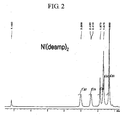
FIGs. 1 and2 : 1H nuclear magnetic resonance (1H NMR) spectra of the nickel aminoalkoxide complexes prepared in Examples 1 and 2, respectively; -
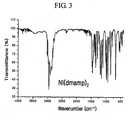
FIGs. 3 and4 : Fourier transform infrared (FT-IR) spectra of the nickel aminoalkoxide complexes prepared in Examples 1 and 2, respectively; -
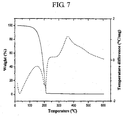
FIGs. 5 to 7 : Thermogravimetric / differential thermal analysis (TG/DTA) scans of the nickel aminoalkoxide complexes prepared in Examples 1 to 3, respectively; -
FIGs. 8A ,8B and8C : X-ray diffraction (XRD) patterns (FIGs. 8A and8B ) and a scanning electron microscopy (SEM) image (FIG. 8C ) of the nickel thin films obtained in Example 4, respectively; -
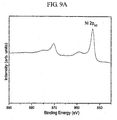
FIGs. 9A ,9B and9C : X-ray photoelectron spectrum, XRD patterns and SEM images of the nickel thin films obtained in Example 5, respectively; -
FIG. 10 : X-ray photoelectron spectrum of the nickel thin film obtained in Example 6; and -
FIGs. 11A and11B : XRD patterns and SEM images of the nickel thin films obtained in Example 7, respectively. - The novel compound of formula (I) of the present invention is a complex formed between two aminoalkoxide ligands and one divalent nickel ion, wherein the coordination of the nickel ion is saturated, and the two C1-4 alkyl groups at the α-carbon and the two C1-4 alkyl groups bonded to the amino-nitrogen atom serve to shield the oxygen and nitrogen atoms of the aminoalkoxide ligand. This minimizes the compounds' intermolecular interactions and confers on the compound a high affinity toward an organic solvent such as diethyl ether, tetrahydrofuran, toluene, hexane and a mixture thereof.
- The inventive nickel complex is either a liquid or solid at room temperature, can be vaporized or sublimed at a low temperature in the range of 30 to 100 °C, and undergoes facile and clean thermal decomposition to provide a contaminant-free nickel thin film under a mild condition when applied to an MOCVD process, while generating volatile hydrocarbon species through intramolecular β-hydrogen elimination.
- Among the compounds of formula (I) of the present invention, the preferred are those wherein R1, R2, R3 and R4 are each independently CH3, C2H5, CH(CH3)2 or C(CH3)3, and m is 1 or 2.
- The inventive complex of formula (I) may be prepared by reacting a compound of formula (II) with a compound of formula (III) in an organic solvent such as toluene under a refluxing condition, as shown in Reaction Scheme A:

- Alternatively, the inventive complex of formula (I) may be prepared by reacting a compound of formula (IV) with a compound of formula (V) in an organic solvent such as toluene under a refluxing condition, as shown in Reaction Scheme B:

- As shown in Reaction Schemes A and B, the compound of formula (III) or (V) is reacted with the compound of formula (II) or (IV) in a stoichiometric ratio, e.g., in an amount of 2 equivalents based on 1 equivalent of the compound of formula (II) or (IV) to prepare the inventive nickel complex of formula (I).
- In accordance with the present invention, a nickel thin film may be deposited on a substrate by bringing the vapor of the nickel aminoalkoxide complex of formula (I) into contact with a substrate heated to a temperature ranging from 200 to 500 °C, preferably from 250 to 350 °C.
- The decomposition mechanism for the conversion of the inventive nickel complex into metallic nickel in such MOCVD is shown in Reaction Scheme C:
Reaction Scheme C Ni[OCR1R2(CH2)mNR3R4]2 →Ni + HOCR1R2(CH2)mNR3R4 + R1R2CO + R3R4NC(H)=C(H)NR3R4
wherein, R1, R2, R3, R4 and m have the same meanings as defined above. - The inventive nickel complex converts to metallic nickel through intramolecular β-hydrogen elimination on decomposition, while generating volatile hydrocarbon species such as aminoalcohols, ketones and endiamines.
- The substrate which may be used in practicing the present invention is any inorganic solid that is stable at or above the film deposition temperature and examples thereof include glass, quartz, silicon, gallium arsenide, sapphire, alkali metal niobate and alkaline earth metal titanate, among which a TiN- or TaN-coated single crystal of silicon is preferred when the coated substrate is intended for use in electronic applications.
- The following Examples are given for the purpose of illustration only, and are not intended to limit the scope of the invention.
- 3.50 g (15.10 mmol) of Ni(NH3)6Cl2 was suspended in 50 mL of toluene in a 125 mL Schlenk flask and 4.62 g (33.20 mmol) of sodium dimethylamino-2-methyl-2-propoxide [Na(dmamp)] was slowly added thereto. The color of the mixed solution gradually changed to dark brown. The dark brown mixture was refluxed for 8 hours under a nitrogen atmosphere and filtered. The resulting filtrate was distilled in a vacuum to remove the solvent. The solid obtained was purified by sublimation at 60 °C under a reduced pressure of 1.33 Pa (10-2 Torr), to give 3.20 g of the title compound in the form of a dark brown solid having a melting point of 118-119 °C (yield: 72.9%).
- 1H NMR (ppm, C6D6): 1.379 (s, 6H, -C(CH 3)2), 1.728 (s, 2H, -CH 2), 2.317 (s, 6H, -N(CH 3)2) (see
FIG. 1 ). - Elemental analysis: Calculated for C12H28N2O2Ni: C, 49.52; H, 9.70; N, 9.62. Found: C, 49.08; H, 9.45; N, 9.47.
- FT-IR (cm-1, KBr pellet): ν(Ni-O) 551, 527, 453 (see
FIG. 3 ). - Mass spectrometry (EI, 70 eV), m/z (ion, relative intensity): 290 ([Ni(L)2]+, 38), 232 ([Ni(L)2 - CH2NMe2]+, 11), 217 ([Ni(L)2 - CH2NMe2 -Me]+, 14), 174 ([Ni(L)]+, 100), 159 ([Ni(L) - Me]+, 20), 116 ([Ni(L) - CH2NMe2]+, 29), 58 ([CH2NMe2]+, 77).
- 2.00 g (8.63 mmol) of Ni(NH3)6Cl2 was suspended in 50 mL of toluene in a 125 mL Schlenk flask and 2.90 g (17.34 mmol) of sodium diethylamino-2-methyl-2-propoxide [Na(deamp)] was slowly added thereto. The color of the mixed solution gradually changed to dark brown. The dark brown mixture was refluxed for 8 hours under a nitrogen atmosphere and filtered. The resulting filtrate was distilled in a vacuum to remove the solvent. The solid obtained was purified by sublimation at 60 °C under a reduced pressure of 1.33 Pa (10-2 Torr), to give 1.85 g of the title compound in the form of a dark brown solid having a melting point of 54-55 °C (yield: 61.7%).
- 1H NMR (ppm, C6D6): 1.335 (s, 6H, -C(CH 3)2), 1.675 (s, br, 6H, - N(CH2CH3)), 1.873 (s, 2H, -CH 2), 2.422, 3.009 (s, br 4H, -N(CH 2CH3)) (see
FIG. 2 ). - Elemental analysis: Calculated for C16H36N2O2Ni: C, 55.35; H, 10.45; N, 8.07. Found: C, 50.95; H, 9.69; N, 8.60.
- FT-IR (cm-1, KBr pellet): ν(Ni-O) 592, 531, 443 (see
FIG. 4 ). - Mass spectrometry (EI, 70 eV), m/z (ion, relative intensity): 346 ([Ni(L)2]+, 16), 230 ([Ni(L)2 - CH2NEt2 - Me2]+, 25), 202 ([Ni(L)]+, 39), 130 ([Ni(L)-NEt2]+, 44), 86 ([L- Et2]+, 100), 58 ([OCMe2]+, 45).
- 4.50 g (19.3 mmol) of Ni(NH3)6Cl2 was suspended in 50 mL of toluene in a 125 mL Schlenk flask and 6.00 g (38.6 mmol) of sodium dimethylamino-2-methyl-2-butoxide [Na(dmamb)] was slowly added thereto. The color of the mixed solution gradually changed to dark brown. The dark brown mixture was refluxed for 8 hours under a nitrogen atmosphere and filtered. The resulting filtrate was distilled in a vacuum to remove the solvent. The liquid residue was purified by sublimation at 80 °C under a reduced pressure of 1.33 Pa (10-2 Torr), to give 5.07 g of the title compound in the form of a green liquid (yield: 82.6%).
- 1H NMR (ppm, C6D6): 0.93 (t, J= 7.6 Hz, 6H, -CH2CH 3), 1.35 (d, J = 3.6 Hz, 6H, -C(CH 3)), 1.65 (m, 4H, -CH 2CH3), 1.81 (m, 4H, -NCH 2C-), 2.29 (d, J = 7.5 Hz, 6H, -N(CH 3)2), 2.38 (d, J = 8.7 Hz, 6H, -N(CH 3)2).
- 13C NMR (ppm, C6D6): 9.7, 28.9, 37.5, 51.1, 75.2, 75.9.
- Elemental analysis: Calculated for C14H32N2O2Ni: C, 52.69; H, 10.11; N, 8.78. Found: C, 52.33; H, 10.50; N, 9.84.
- FT-IR (cm-1, KBr pellet): ν(Ni-O) 555, 492, 451.
- Mass spectrometry (EI, 70 eV), m/z (ion, relative intensity): 318 ([Ni(L)2]+, 100), 289 ([Ni(L)2-CH2CH3]+, 78), 231 ([Ni(L)2-CH2CH3-C(O)(Me)(Et)]+, 61), 188 ([Ni(L)]+, 74), 159 ([Ni(L)-CH2CH3]+, 30), 58 ([CH2NMe2]+, 79).
- Thermogravimetric / differential thermal analysis (TG/DTA) scans of the nickel aminoalkoxide complexes prepared in Examples 1 and 3 are shown in
FIGs. 5 to 7 , respectively. The TGA results revealed that Ni(dmamp)2, Ni(deamp)2 and Ni(dmamb)2 each underwent an abrupt weight loss in thetemperature range 100 to 200 °C, and also that T1/2 (the temperature at which the weight of the sample was reduced to half) of Ni(dmamp)2, Ni(deamp)2 and Ni(dmamb)2 were 150 °C, 170 °C and 185 °C, respectively. DTA scans showed that they all have endothermic peaks due to decomposition around 200 °C. - These results suggest that the nickel complexes synthesized in Examples 1 to 3 have high volatility, are thermally stable and convert to relatively pure nickel on decomposition, and therefore, they are suitable MOCVD precursors for nickel deposition.
- A Si(001) wafer having an oxide layer on its surface was heated to a temperature selected from 200, 250, 300 and 350 °C at an initial pressure of 1.33 mPa (10-5 Torr). Ni(dmamp)2 prepared in Example 1 was vaporized at 60 °C and the vapor was transported to the surface of the wafer using an argon carrier gas (flow rate 4 sccm) at a total pressure of 1.33 Pa (10 mTorr) to deposit a film thereon.
- X-ray photoelectron spectra of the deposited films showed that the films were pure metallic nickel. XRD patterns thereof showed that the films deposited at 250-350 °C were crystalline (
FIG. 8B : 250 °C), while the film deposited at 200 °C was non-crystalline (FIG. 8A ). An SEM image of the film deposited at 250 °C shown inFIG 8C revealed that it was composed of grains having a grain size of 100 nm or less. - A Si(001) wafer having an oxide layer on its surface was heated to a temperature selected from 250, 300, 350, 400, 450 and 500 °C at an initial pressure of 0.133 Pa (10-3 Torr). Ni(dmamp)2 prepared in Example 1 was vaporized at 60 °C and the vapor was transported to the surface of the wafer using an argon carrier gas (flow rate 4 sccm) at a total pressure of 13.33 Pa (100 mTorr) to deposit a film thereon.
- X-ray photoelectron spectra of the deposited films showed that the films were pure metallic nickel (
FIG. 9A : 400 °C). XRD patterns thereof showed that the film deposited at 250 °C was non-crystalline, the film deposited at 300 °C was composed of hexagonal crystals, the film deposited at 350 °C was composed of cubic and hexagonal crystals, and the films deposited at 400-500 °C were composed of cubic crystals (FIG. 9B ). SEM images of the films shown inFIG. 9C revealed that the growth at 250-350 °C provided highly dense films composed of grains having a grain size of 30-50 nm. - A Si(001) wafer having an oxide layer on its surface was heated to 300 °C at an initial pressure of 5.33 Pa (40 mTorr). Ni(dmamb)2 prepared in Example 3 was vaporized at 40 °C and the vapor was transported to the surface of the wafer using an argon carrier gas (flow rate 10 sccm) together with a hydrogen gas flow (flow rate 10 sccm) at a total pressure of 9.33 Pa (70 mTorr) to deposit a film thereon.
- An X-ray photoelectron spectrum of the deposited film shown in
FIG 10 confirms that the film was relatively pure metallic nickel containing carbon contaminants in a small amount of 8% or less. - A Si(001) wafer having an oxide layer on its surface was heated to a temperature selected from 270, 280, 290, 300, 310, 330 and 350 °C at an initial pressure of 267 mPa (2 mTorr). Ni(dmamb)2 prepared in Example 3 was vaporized at 70 °C and the vapor was transported to the surface of the wafer without using a carrier gas at a total pressure of 10.67 Pa (80 mTorr) to deposit a film thereon.
- X-ray photoelectron spectra of the deposited films showed that the films were pure metallic nickel. XRD patterns thereof shown in
FIG. 11A confirm that the films deposited at 270-310 °C were composed of cubic crystals, and the films deposited at 330-350 °C, cubic and hexagonal crystals. SEM images of the films shown inFIG. 11B confirm that dense films were obtained. - As shown above, the nickel complex of the present invention can be vaporized at a low temperature and is thermally stable, and therefore, it may be effectively employed in MOCVD of a nickel thin film having an improved quality.
Claims (7)
- A nickel aminoalkoxide complex of formula (I):

- The compound of claim 1, wherein R1, R2, R3 and R4 are each independently CH3, C2H5, CH(CH3)2 or C(CH3)3, and m is 1 or 2.
- A process for preparing the compound of claim 1, comprising reacting a compound of formula (II) with a compound of formula (III) in an organic solvent:
Ni(OY)2 (II)
HOCR1R2(CH2)mNR3R4 (III)
wherein, R1, R2, R3, R4 and m are the same as defined in claim 1; and Y is C1-4 alkyl. - A process for preparing the compound of claim 1, comprising reacting a compound of formula (IV) with a compound of formula (V) in an organic solvent:
Ni(NH3)6X2 (IV)
MOCR1R2(CH2)mNR3R4 (V)
wherein, R1, R2, R3, R4 and m are the same as defined in claim 1; X is halogen; and M is Li or Na. - A process for depositing a nickel thin film on a substrate which comprises bringing the vapor of the compound of claim 1 into contact with a substrate heated to a temperature ranging from 200 to 500 °C.
- The process of claim 5, wherein the substrate is heated at a temperature ranging from 250 to 350 °C.
- The process of claim 5, wherein the compound is vaporized at a temperature ranging from 30 to 100 °C.
Applications Claiming Priority (1)
| Application Number | Priority Date | Filing Date | Title |
|---|---|---|---|
| PCT/KR2005/001002 WO2006107121A1 (en) | 2005-04-07 | 2005-04-07 | Volatile nickel aminoalkoxide complex and deposition of nickel thin film using same |
Publications (3)
| Publication Number | Publication Date |
|---|---|
| EP1871781A1 EP1871781A1 (en) | 2008-01-02 |
| EP1871781A4 EP1871781A4 (en) | 2009-08-12 |
| EP1871781B1 true EP1871781B1 (en) | 2012-10-31 |
Family
ID=37073649
Family Applications (1)
| Application Number | Title | Priority Date | Filing Date |
|---|---|---|---|
| EP05733385A Expired - Lifetime EP1871781B1 (en) | 2005-04-07 | 2005-04-07 | Volatile nickel aminoalkoxide complex and deposition of nickel thin film using same |
Country Status (6)
| Country | Link |
|---|---|
| US (1) | US7462732B2 (en) |
| EP (1) | EP1871781B1 (en) |
| JP (1) | JP4700103B2 (en) |
| CN (1) | CN101189250B (en) |
| CA (1) | CA2603749A1 (en) |
| WO (1) | WO2006107121A1 (en) |
Families Citing this family (22)
| Publication number | Priority date | Publication date | Assignee | Title |
|---|---|---|---|---|
| KR100954541B1 (en) * | 2008-03-20 | 2010-04-23 | 한국화학연구원 | Novel Tin Aminoalkoxide Compounds and Methods for Making the Same |
| CN101618314B (en) * | 2008-05-20 | 2013-03-06 | 中国石油化工股份有限公司 | Desulfurizing adsorbent, preparation method and application thereof |
| US8636845B2 (en) | 2008-06-25 | 2014-01-28 | L'Air Liquide, Société Anonyme pour l'Etude et l'Exploitation des Procédés Georges Claude | Metal heterocyclic compounds for deposition of thin films |
| CN101618313B (en) * | 2008-06-30 | 2012-11-14 | 中国石油化工股份有限公司 | Desulfurization adsorbent, preparation method and application thereof |
| US9379011B2 (en) | 2008-12-19 | 2016-06-28 | Asm International N.V. | Methods for depositing nickel films and for making nickel silicide and nickel germanide |
| JP2012532993A (en) | 2009-07-10 | 2012-12-20 | レール・リキード−ソシエテ・アノニム・プール・レテュード・エ・レクスプロワタシオン・デ・プロセデ・ジョルジュ・クロード | Bis-ketoiminate copper precursor for deposition of copper-containing films |
| US8871617B2 (en) | 2011-04-22 | 2014-10-28 | Asm Ip Holding B.V. | Deposition and reduction of mixed metal oxide thin films |
| JP5690684B2 (en) | 2011-08-02 | 2015-03-25 | 株式会社Adeka | Alkoxide compounds |
| KR20140085461A (en) | 2011-09-27 | 2014-07-07 | 레르 리키드 쏘시에떼 아노님 뿌르 레?드 에렉스뿔라따시옹 데 프로세데 조르즈 클로드 | Nickel bis diazabutadiene precursors, their synthesis, and their use for nickel containing film depositions |
| US9790238B2 (en) * | 2012-05-04 | 2017-10-17 | Korea Research Institute Of Chemical Technology | Strontium precursor, method for preparing same, and method for forming thin film by using same |
| US8692010B1 (en) | 2012-07-13 | 2014-04-08 | American Air Liquide, Inc. | Synthesis method for copper compounds |
| CN104470892B (en) | 2012-11-13 | 2017-05-17 | 株式会社艾迪科 | Metal alkoxide compound, thin film-forming starting material, method for producing thin film, and alcohol compound |
| JP2015036797A (en) * | 2013-08-15 | 2015-02-23 | ソニー株式会社 | Display device and electronic device |
| CN103590099B (en) * | 2013-12-03 | 2016-05-25 | 西安电子科技大学 | The controlled epitaxy method of wafer level Graphene based on MOCVD equipment |
| KR102198856B1 (en) | 2014-02-10 | 2021-01-05 | 삼성전자 주식회사 | Method of manufacturing semiconductor device including nickel-containing film |
| KR102168174B1 (en) | 2014-03-19 | 2020-10-20 | 삼성전자주식회사 | Ni compound and method of forming thin film |
| JP6343481B2 (en) | 2014-04-21 | 2018-06-13 | 株式会社Adeka | Thin film forming raw material, thin film manufacturing method and alcohol compound |
| JP6278827B2 (en) * | 2014-05-14 | 2018-02-14 | 株式会社Adeka | Copper compound, raw material for thin film formation, and method for producing thin film |
| EP3178808B1 (en) | 2014-08-05 | 2024-11-06 | Adeka Corporation | Alkoxide compound, thin film-forming starting material, thin film formation method and alcohol compound |
| US9607842B1 (en) | 2015-10-02 | 2017-03-28 | Asm Ip Holding B.V. | Methods of forming metal silicides |
| KR20200019608A (en) * | 2017-06-21 | 2020-02-24 | 가부시키가이샤 아데카 | Metal alkoxide compound, raw material for thin film formation, and method for producing thin film |
| KR102744268B1 (en) | 2017-10-14 | 2024-12-17 | 어플라이드 머티어리얼스, 인코포레이티드 | Integration of ald copper with high temperature pvd copper deposition for beol interconnect |
Family Cites Families (2)
| Publication number | Priority date | Publication date | Assignee | Title |
|---|---|---|---|---|
| JPH0971547A (en) * | 1995-09-05 | 1997-03-18 | Hitachi Maxell Ltd | Lubricating substance and magnetic recording medium using the same |
| JP2000204096A (en) * | 1999-01-08 | 2000-07-25 | Canon Inc | Metal composition, metal composition for manufacturing electron-emitting device using the same, method for manufacturing electron-emitting device, electron-emitting device, and image forming apparatus |
-
2005
- 2005-04-07 JP JP2008505217A patent/JP4700103B2/en not_active Expired - Fee Related
- 2005-04-07 US US11/910,693 patent/US7462732B2/en not_active Expired - Lifetime
- 2005-04-07 EP EP05733385A patent/EP1871781B1/en not_active Expired - Lifetime
- 2005-04-07 WO PCT/KR2005/001002 patent/WO2006107121A1/en not_active Ceased
- 2005-04-07 CA CA002603749A patent/CA2603749A1/en not_active Abandoned
- 2005-04-07 CN CN2005800499536A patent/CN101189250B/en not_active Expired - Fee Related
Also Published As
| Publication number | Publication date |
|---|---|
| CA2603749A1 (en) | 2006-10-12 |
| WO2006107121A1 (en) | 2006-10-12 |
| US20080171890A1 (en) | 2008-07-17 |
| US7462732B2 (en) | 2008-12-09 |
| JP4700103B2 (en) | 2011-06-15 |
| EP1871781A4 (en) | 2009-08-12 |
| CN101189250A (en) | 2008-05-28 |
| CN101189250B (en) | 2011-08-17 |
| EP1871781A1 (en) | 2008-01-02 |
| JP2008537947A (en) | 2008-10-02 |
Similar Documents
| Publication | Publication Date | Title |
|---|---|---|
| US7462732B2 (en) | Volatile nickel aminoalkoxide complex and deposition of nickel thin film using same | |
| US20190292659A1 (en) | Volatile dihydropyrazinly and dihydropyrazine metal complexes | |
| WO2012060428A1 (en) | (amide amino alkane) metal compound, method of manufacturing metal-containing thin film using said metal compound | |
| JP6773896B2 (en) | Metal complex containing allyl ligand | |
| KR101120065B1 (en) | Novel germanium complexes with amidine derivative ligand and process for preparing the same | |
| US7064224B1 (en) | Organometallic complexes and their use as precursors to deposit metal films | |
| TW201704511A (en) | Organometallic compounds useful for chemical phase deposition | |
| KR20230009325A (en) | Molybdenum precursor compound, method for preparing the same, and method for depositing molybdenum-containing thin film using the same | |
| JP2019056133A (en) | Atomic layer deposition method for metal thin films | |
| US8148564B2 (en) | Compounds for forming metal nitrides | |
| KR100897495B1 (en) | Novel gallium aminoalkoxide compound and preparation method thereof | |
| US6982341B1 (en) | Volatile copper aminoalkoxide complex and deposition of copper thin film using same | |
| KR102933354B1 (en) | Method for producing a metal or semimetal-containing film | |
| EP1061083B1 (en) | Adduct of a dialkylgalliumazide with hydrazine for MOCVD of GaN | |
| KR100576932B1 (en) | Volatile Nickel Amino Alkoxide Compositions, Their Preparation, and Methods of Forming Nickel Thin Films Using the same | |
| KR100965270B1 (en) | Gallium Complexes with New Electron Donor Ligands and Methods for their Preparation | |
| KR100704464B1 (en) | Copper aminoalkoxide compound, synthesis method thereof and formation method of copper thin film using same | |
| KR20180115382A (en) | Preparation of novel tungsten precursor and method of thin film using the same | |
| KR20100099322A (en) | Material for formation of nickel-containing film, and method for production thereof | |
| JP2768250B2 (en) | Organic silver compounds for forming silver thin films by metalorganic chemical vapor deposition with high vapor pressure | |
| KR20230050655A (en) | Halogen-free tungsten compounds, preparation method thereof and process for the formation of thin films using the same | |
| KR100554524B1 (en) | Tantalum nitride precursor and preparation method thereof | |
| JP2017222612A (en) | Silyldiamine compound and organometallic compound having this as a ligand | |
| JP2010229112A (en) | Cobalt complex having β-diketonato group as ligand and method for producing cobalt-containing thin film using the same |
Legal Events
| Date | Code | Title | Description |
|---|---|---|---|
| PUAI | Public reference made under article 153(3) epc to a published international application that has entered the european phase |
Free format text: ORIGINAL CODE: 0009012 |
|
| 17P | Request for examination filed |
Effective date: 20071105 |
|
| AK | Designated contracting states |
Kind code of ref document: A1 Designated state(s): AT BE BG CH CY CZ DE DK EE ES FI FR GB GR HU IE IS IT LI LT LU MC NL PL PT RO SE SI SK TR |
|
| DAX | Request for extension of the european patent (deleted) | ||
| A4 | Supplementary search report drawn up and despatched |
Effective date: 20090715 |
|
| RIC1 | Information provided on ipc code assigned before grant |
Ipc: H01L 21/316 20060101ALI20090708BHEP Ipc: C07C 215/08 20060101AFI20090708BHEP |
|
| 17Q | First examination report despatched |
Effective date: 20101011 |
|
| GRAP | Despatch of communication of intention to grant a patent |
Free format text: ORIGINAL CODE: EPIDOSNIGR1 |
|
| GRAS | Grant fee paid |
Free format text: ORIGINAL CODE: EPIDOSNIGR3 |
|
| GRAA | (expected) grant |
Free format text: ORIGINAL CODE: 0009210 |
|
| AK | Designated contracting states |
Kind code of ref document: B1 Designated state(s): AT BE BG CH CY CZ DE DK EE ES FI FR GB GR HU IE IS IT LI LT LU MC NL PL PT RO SE SI SK TR |
|
| REG | Reference to a national code |
Ref country code: GB Ref legal event code: FG4D Ref country code: CH Ref legal event code: EP |
|
| REG | Reference to a national code |
Ref country code: AT Ref legal event code: REF Ref document number: 581933 Country of ref document: AT Kind code of ref document: T Effective date: 20121115 |
|
| REG | Reference to a national code |
Ref country code: IE Ref legal event code: FG4D |
|
| REG | Reference to a national code |
Ref country code: DE Ref legal event code: R096 Ref document number: 602005036800 Country of ref document: DE Effective date: 20121227 |
|
| REG | Reference to a national code |
Ref country code: AT Ref legal event code: MK05 Ref document number: 581933 Country of ref document: AT Kind code of ref document: T Effective date: 20121031 |
|
| REG | Reference to a national code |
Ref country code: LT Ref legal event code: MG4D |
|
| REG | Reference to a national code |
Ref country code: NL Ref legal event code: VDEP Effective date: 20121031 |
|
| PG25 | Lapsed in a contracting state [announced via postgrant information from national office to epo] |
Ref country code: NL Free format text: LAPSE BECAUSE OF FAILURE TO SUBMIT A TRANSLATION OF THE DESCRIPTION OR TO PAY THE FEE WITHIN THE PRESCRIBED TIME-LIMIT Effective date: 20121031 Ref country code: ES Free format text: LAPSE BECAUSE OF FAILURE TO SUBMIT A TRANSLATION OF THE DESCRIPTION OR TO PAY THE FEE WITHIN THE PRESCRIBED TIME-LIMIT Effective date: 20130211 Ref country code: LT Free format text: LAPSE BECAUSE OF FAILURE TO SUBMIT A TRANSLATION OF THE DESCRIPTION OR TO PAY THE FEE WITHIN THE PRESCRIBED TIME-LIMIT Effective date: 20121031 Ref country code: FI Free format text: LAPSE BECAUSE OF FAILURE TO SUBMIT A TRANSLATION OF THE DESCRIPTION OR TO PAY THE FEE WITHIN THE PRESCRIBED TIME-LIMIT Effective date: 20121031 Ref country code: IS Free format text: LAPSE BECAUSE OF FAILURE TO SUBMIT A TRANSLATION OF THE DESCRIPTION OR TO PAY THE FEE WITHIN THE PRESCRIBED TIME-LIMIT Effective date: 20130228 Ref country code: SE Free format text: LAPSE BECAUSE OF FAILURE TO SUBMIT A TRANSLATION OF THE DESCRIPTION OR TO PAY THE FEE WITHIN THE PRESCRIBED TIME-LIMIT Effective date: 20121031 |
|
| PG25 | Lapsed in a contracting state [announced via postgrant information from national office to epo] |
Ref country code: CY Free format text: LAPSE BECAUSE OF FAILURE TO SUBMIT A TRANSLATION OF THE DESCRIPTION OR TO PAY THE FEE WITHIN THE PRESCRIBED TIME-LIMIT Effective date: 20121031 Ref country code: PT Free format text: LAPSE BECAUSE OF FAILURE TO SUBMIT A TRANSLATION OF THE DESCRIPTION OR TO PAY THE FEE WITHIN THE PRESCRIBED TIME-LIMIT Effective date: 20130228 Ref country code: SI Free format text: LAPSE BECAUSE OF FAILURE TO SUBMIT A TRANSLATION OF THE DESCRIPTION OR TO PAY THE FEE WITHIN THE PRESCRIBED TIME-LIMIT Effective date: 20121031 Ref country code: GR Free format text: LAPSE BECAUSE OF FAILURE TO SUBMIT A TRANSLATION OF THE DESCRIPTION OR TO PAY THE FEE WITHIN THE PRESCRIBED TIME-LIMIT Effective date: 20130201 Ref country code: BE Free format text: LAPSE BECAUSE OF FAILURE TO SUBMIT A TRANSLATION OF THE DESCRIPTION OR TO PAY THE FEE WITHIN THE PRESCRIBED TIME-LIMIT Effective date: 20121031 Ref country code: PL Free format text: LAPSE BECAUSE OF FAILURE TO SUBMIT A TRANSLATION OF THE DESCRIPTION OR TO PAY THE FEE WITHIN THE PRESCRIBED TIME-LIMIT Effective date: 20121031 |
|
| PG25 | Lapsed in a contracting state [announced via postgrant information from national office to epo] |
Ref country code: AT Free format text: LAPSE BECAUSE OF FAILURE TO SUBMIT A TRANSLATION OF THE DESCRIPTION OR TO PAY THE FEE WITHIN THE PRESCRIBED TIME-LIMIT Effective date: 20121031 |
|
| PG25 | Lapsed in a contracting state [announced via postgrant information from national office to epo] |
Ref country code: BG Free format text: LAPSE BECAUSE OF FAILURE TO SUBMIT A TRANSLATION OF THE DESCRIPTION OR TO PAY THE FEE WITHIN THE PRESCRIBED TIME-LIMIT Effective date: 20130131 Ref country code: DK Free format text: LAPSE BECAUSE OF FAILURE TO SUBMIT A TRANSLATION OF THE DESCRIPTION OR TO PAY THE FEE WITHIN THE PRESCRIBED TIME-LIMIT Effective date: 20121031 Ref country code: EE Free format text: LAPSE BECAUSE OF FAILURE TO SUBMIT A TRANSLATION OF THE DESCRIPTION OR TO PAY THE FEE WITHIN THE PRESCRIBED TIME-LIMIT Effective date: 20121031 Ref country code: SK Free format text: LAPSE BECAUSE OF FAILURE TO SUBMIT A TRANSLATION OF THE DESCRIPTION OR TO PAY THE FEE WITHIN THE PRESCRIBED TIME-LIMIT Effective date: 20121031 Ref country code: CZ Free format text: LAPSE BECAUSE OF FAILURE TO SUBMIT A TRANSLATION OF THE DESCRIPTION OR TO PAY THE FEE WITHIN THE PRESCRIBED TIME-LIMIT Effective date: 20121031 |
|
| PG25 | Lapsed in a contracting state [announced via postgrant information from national office to epo] |
Ref country code: RO Free format text: LAPSE BECAUSE OF FAILURE TO SUBMIT A TRANSLATION OF THE DESCRIPTION OR TO PAY THE FEE WITHIN THE PRESCRIBED TIME-LIMIT Effective date: 20121031 Ref country code: IT Free format text: LAPSE BECAUSE OF FAILURE TO SUBMIT A TRANSLATION OF THE DESCRIPTION OR TO PAY THE FEE WITHIN THE PRESCRIBED TIME-LIMIT Effective date: 20121031 |
|
| PLBE | No opposition filed within time limit |
Free format text: ORIGINAL CODE: 0009261 |
|
| STAA | Information on the status of an ep patent application or granted ep patent |
Free format text: STATUS: NO OPPOSITION FILED WITHIN TIME LIMIT |
|
| 26N | No opposition filed |
Effective date: 20130801 |
|
| REG | Reference to a national code |
Ref country code: DE Ref legal event code: R097 Ref document number: 602005036800 Country of ref document: DE Effective date: 20130801 |
|
| PG25 | Lapsed in a contracting state [announced via postgrant information from national office to epo] |
Ref country code: MC Free format text: LAPSE BECAUSE OF FAILURE TO SUBMIT A TRANSLATION OF THE DESCRIPTION OR TO PAY THE FEE WITHIN THE PRESCRIBED TIME-LIMIT Effective date: 20121031 |
|
| REG | Reference to a national code |
Ref country code: CH Ref legal event code: PL |
|
| REG | Reference to a national code |
Ref country code: IE Ref legal event code: MM4A |
|
| PG25 | Lapsed in a contracting state [announced via postgrant information from national office to epo] |
Ref country code: LI Free format text: LAPSE BECAUSE OF NON-PAYMENT OF DUE FEES Effective date: 20130430 Ref country code: CH Free format text: LAPSE BECAUSE OF NON-PAYMENT OF DUE FEES Effective date: 20130430 |
|
| PG25 | Lapsed in a contracting state [announced via postgrant information from national office to epo] |
Ref country code: IE Free format text: LAPSE BECAUSE OF NON-PAYMENT OF DUE FEES Effective date: 20130407 |
|
| REG | Reference to a national code |
Ref country code: FR Ref legal event code: PLFP Year of fee payment: 11 |
|
| PG25 | Lapsed in a contracting state [announced via postgrant information from national office to epo] |
Ref country code: TR Free format text: LAPSE BECAUSE OF FAILURE TO SUBMIT A TRANSLATION OF THE DESCRIPTION OR TO PAY THE FEE WITHIN THE PRESCRIBED TIME-LIMIT Effective date: 20121031 |
|
| PG25 | Lapsed in a contracting state [announced via postgrant information from national office to epo] |
Ref country code: HU Free format text: LAPSE BECAUSE OF FAILURE TO SUBMIT A TRANSLATION OF THE DESCRIPTION OR TO PAY THE FEE WITHIN THE PRESCRIBED TIME-LIMIT; INVALID AB INITIO Effective date: 20050407 Ref country code: LU Free format text: LAPSE BECAUSE OF NON-PAYMENT OF DUE FEES Effective date: 20130407 |
|
| PGFP | Annual fee paid to national office [announced via postgrant information from national office to epo] |
Ref country code: GB Payment date: 20150424 Year of fee payment: 11 Ref country code: DE Payment date: 20150428 Year of fee payment: 11 |
|
| PGFP | Annual fee paid to national office [announced via postgrant information from national office to epo] |
Ref country code: FR Payment date: 20150424 Year of fee payment: 11 |
|
| REG | Reference to a national code |
Ref country code: DE Ref legal event code: R119 Ref document number: 602005036800 Country of ref document: DE |
|
| GBPC | Gb: european patent ceased through non-payment of renewal fee |
Effective date: 20160407 |
|
| REG | Reference to a national code |
Ref country code: FR Ref legal event code: ST Effective date: 20161230 |
|
| PG25 | Lapsed in a contracting state [announced via postgrant information from national office to epo] |
Ref country code: FR Free format text: LAPSE BECAUSE OF NON-PAYMENT OF DUE FEES Effective date: 20160502 Ref country code: DE Free format text: LAPSE BECAUSE OF NON-PAYMENT OF DUE FEES Effective date: 20161101 Ref country code: GB Free format text: LAPSE BECAUSE OF NON-PAYMENT OF DUE FEES Effective date: 20160407 |