EP1868078A1 - Method and system for virtual screen management of multimedia content - Google Patents
Method and system for virtual screen management of multimedia content Download PDFInfo
- Publication number
- EP1868078A1 EP1868078A1 EP20060012289 EP06012289A EP1868078A1 EP 1868078 A1 EP1868078 A1 EP 1868078A1 EP 20060012289 EP20060012289 EP 20060012289 EP 06012289 A EP06012289 A EP 06012289A EP 1868078 A1 EP1868078 A1 EP 1868078A1
- Authority
- EP
- European Patent Office
- Prior art keywords
- multimedia content
- mobile device
- content element
- processing unit
- mobile
- Prior art date
- Legal status (The legal status is an assumption and is not a legal conclusion. Google has not performed a legal analysis and makes no representation as to the accuracy of the status listed.)
- Granted
Links
Images
Classifications
-
- G—PHYSICS
- G06—COMPUTING OR CALCULATING; COUNTING
- G06F—ELECTRIC DIGITAL DATA PROCESSING
- G06F3/00—Input arrangements for transferring data to be processed into a form capable of being handled by the computer; Output arrangements for transferring data from processing unit to output unit, e.g. interface arrangements
- G06F3/14—Digital output to display device ; Cooperation and interconnection of the display device with other functional units
- G06F3/1423—Digital output to display device ; Cooperation and interconnection of the display device with other functional units controlling a plurality of local displays, e.g. CRT and flat panel display
- G06F3/1446—Digital output to display device ; Cooperation and interconnection of the display device with other functional units controlling a plurality of local displays, e.g. CRT and flat panel display display composed of modules, e.g. video walls
-
- G—PHYSICS
- G06—COMPUTING OR CALCULATING; COUNTING
- G06F—ELECTRIC DIGITAL DATA PROCESSING
- G06F3/00—Input arrangements for transferring data to be processed into a form capable of being handled by the computer; Output arrangements for transferring data from processing unit to output unit, e.g. interface arrangements
- G06F3/14—Digital output to display device ; Cooperation and interconnection of the display device with other functional units
- G06F3/147—Digital output to display device ; Cooperation and interconnection of the display device with other functional units using display panels
Definitions
- the present invention relates to a method and a system for virtual screen management for multimedia content.
- US2004/0131043A1 suggests a method for the display of standardised large format internet pages on hand-held devices.
- the method provides that a virtual large image memory is maintained in the device and the device display can be freely displaced as a readable image section.
- the user can switch between a detailed sectional view of the image and a reduced quality display of the overall image:
- the drawback of the suggested method is that the user will only be able to see a part of the image in a resolution that allows clear recognition of the image. In some cases it may, however, be desirable or even necessary that the user is able to see the whole image in a clear resolution.
- the problem to be solved by the present invention is thus to provide a method and system wherein multimedia content can be easily published and viewed by users on mobile devices.
- the invention is based on the finding that at least two mobile devices are included in a system for publishing multimedia content.
- the problem is solved by a method for virtual screen management for multimedia content, wherein one multimedia content element is at least partially displayed on at least two mobile device screens.
- a multimedia content element may be for example a multimedia show, such as a slide show, individual pictures and/or a movie.
- a multimedia show such as a slide show, individual pictures and/or a movie.
- the number of mobile device screens used in the present invention may be selected according to the size and shape of the multimedia content element to be displayed. Since the multimedia content element will be split across the screens of the individual mobile devices, only part of the multimedia content element will be displayed on each of the mobile device screens. By arranging the mobile devices in the appropriate relative position to each other the original multimedia content element can be reassembled.
- the mobile devices may be mobile phones or terminals of a communication network. It is also possible to use any other IP devices, such as a PDA. In that case the IP device will be equipped with communication means or an interface for communicating over a network such as a mobile network or the internet. Possible networks to be used in the present invention are GPRS/UMTS networks.
- the multimedia content element is pre-edited before being displayed to include predetermined functions, entailing predetermined behaviours.
- the functions are operable by at least one control key of at least one of the mobile devices.
- the pre-editing of the multimedia content element is preferably effected in a processing unit, such as a computer, e.g. PC, or a server.
- the pre-editing is thus preferably effected prior to the publication, e.g. pushing of the multimedia content element to other components, such as a server or a mobile device.
- the pre-edited multimedia content element will hereinafter also be referred to as a multimedia content file.
- This file includes the multimedia content element to be displayed or rendered as well as the functions or behaviours, i.e. control or rendering information for the multimedia content element.
- Behaviours which might be included in the file are for example to start or stop the rendering of the multimedia content element. Also rewinding and fast forwarding or skipping to a predetermined point within the multimedia content element may be behaviours included within the file. If the content consists of individual events, such as slides, behaviours such as next event or previous event may be implemented. If several media shows are included in a multimedia content element, the behaviours may comprise the options of previous media show, next media show. The behaviours may also include control functions relating to the view of the multimedia content element on the mobile device. Further examples of behaviours will be described later.
- the multimedia content element can be controlled at the mobile device, where it is being rendered or displayed.
- a user who composed the multimedia content element will not have to be at the processing unit or computer, where the multimedia content element was originally created, when publishing it to third parties. Since according to the present invention, the multimedia content element is displayed at least partially on at least two mobile device screens, the user will be able to share the multimedia content with other people in a convenient way, as the presence of the other people at the processing unit is not necessary any longer.
- behaviours can be individualized. It will in particular be possible to include behaviours in the multimedia content file depending on the multimedia content to be rendered. If the multimedia content element for example only includes one event the behaviours of "next event” or "previous event” may be omitted. Thus, the file size of the multimedia content file can be kept to a minimum. It is, however, also possible that a predetermined set of behaviours is stored at the processing unit and will be embedded in the multimedia content element regardless of the structure of the multimedia content element.
- the functions or behaviours of the multimedia content that were pre-edited into the multimedia content file are preferably mapped to control keys on at least one of the mobile devices.
- mapping the behaviours to control keys on the mobile device it will be possible to control the rendering of the multimedia content element on different phones without the need to define specific settings at the mobile device.
- a behaviour such as "start” may for example be mapped to the up-arrow on the keyboard of a mobile device.
- one of the mobile devices acts as the master, whereas further mobile devices act as slaves to the master.
- the master mobile device will be able to control the rendering of the multimedia content element.
- the other mobile devices will receive the necessary rendering information and data from the master mobile device.
- the selection of which mobile device is designated to be the master may be done at the processing unit, where the mobile devices to which the multimedia content element is to be publish are selected.
- the functions and behaviours implemented in the multimedia content file may further include the ability to change the master, i.e. to transmit the control and rendering information to another mobile device.
- the multimedia content element is split before being transmitted to the at least two mobile devices for display.
- the processing unit will create respective control functions to assign individual sections of the multimedia content element to each of the mobile devices. These control functions will be made available at the master mobile device and the multimedia content element received or made available at the master mobile device can then be displayed across the different screens.
- the master mobile device will be provided with the information on the amount of mobile devices, which are available for display.
- the function of splitting the multimedia content element may be implemented in the multimedia content file as a function.
- the thus split multimedia content element can produce a replication of the original multimedia content element in the original size spread across various screens.
- a picture which is part of or represents the multimedia content element can be displayed in its original resolution.
- the picture can be re-assembled.
- the assigning of different sections of the multimedia content element to individual mobile devices for display may be performed at the processing unit, i.e. PC or server, or at the master mobile device.
- the master mobile device preferably interacts with at least one processing unit and also interacts with at least one other mobile device for forwarding control and rendering information or data to the at least one other mobile device.
- the remote processing unit may be a network server, for example a server of an IMS (IP Multimedia Subsystem). It may, however, also be that the master mobile device or any of the mobile devices used, interacts with a PC, in particular the originating and editing processing unit, from which the multimedia content element originally stemmed.
- IMS IP Multimedia Subsystem
- the multimedia content element can be controlled at the mobile device, but the application running the multimedia content element does not have to be installed at the mobile device. Also changes or annotations made to the multimedia content element at the mobile device may be recorded at the processing unit, if the mobile device interacts with an application on the processing unit.
- the originating, editing and publishing processing unit of the multimedia content element is part of a communication network with a wireless communication interface enabled between it and at least one mobile device.
- the processing unit By enabling a wireless communication between the processing unit and the mobile device, there is no limitation to the location of display. If the communication to the processing unit, in particular a PC is wired, the display can only be performed in the close proximity of the PC.
- a list of mobile devices is stored in the originating processing unit, i.e. the PC of the user, with a visual indicia of the capability to support mobile virtual screen display.
- the user can choose from this list the devices and thereby the people to whom the multimedia content element should be published.
- the list is preferably entered sorted by the user of the individual mobile device and includes the respective contact information, such as the mobile telephone number.
- the advantage of creating and storing such a list is, that the user may immediately derive from the list, which devices are capable of supporting mobile virtual screen display. If a person has not installed the necessary software on their device, the list will indicate that. In that case, the user may invite the other person to install the software.
- the software may then be either downloaded from a server on the internet by the invited party or may be pushed, e.g. via WAP push, to his mobile device.
- the processing unit i.e. a PC or a server
- the enhanced multimedia content element i.e. the multimedia content file
- the master mobile device can be used to render the multimedia content and to control the rendering.
- the multimedia content file remains on the processing unit, e.g. PC or server and only transmits signals representing the image to be displayed to the master mobile device and possibly the other mobile devices.
- any function activated at the master mobile device will be transmitted to the processing unit and the respective behaviour of the multimedia content element will be effected there.
- the mobile devices acting as slaves to the master mobile device as well as the master mobile device will then be provided with the data and information according to the chosen behaviour, e.g. will receive the data for the next event, if the respective function was activated.
- the at least one mobile device other than the designated master may receive control and rendering data at a resident or embedded virtual screen controller on the at least one mobile device from the processing unit, e.g. server or computer, or from the master mobile device. Once the data is received the display or rendering will occur according to the control or rendering data, which originates from the server, PC or from the master mobile device.
- the virtual screen controller may be a software installed at a mobile device, which enables the collaborative display of multimedia content element from a virtual screen.
- the multimedia content element may be pushed to at least one mobile device which sends control and caching control elements to the processing unit, i.e. PC or server, which acts to cache and render the specific parts of the multimedia content for the other mobile devices.
- the processing unit i.e. PC or server
- the content may for example be annotated while being rendered.
- the thus annotated content may then be published from the processing unit to other mobile devices at a later stage.
- a system for virtual screen management for multimedia content comprising at least one processing unit and at least one mobile device, wherein the processing unit is provided for embedding at least one function in at least one multimedia content element and one mobile device is provided for controlling the display of the multimedia content element on at least two mobile device screens.
- the at least one mobile device is communication connection with the processing unit while the multimedia content element is displayed at the at least two mobile devices.
- the mobile device which is designated to be the master to the other mobile devices, can obtain rendering and control information from the processing unit and can transmit control information and for example annotations to the processing unit.
- the communication connection does not have to be maintained while the multimedia content element is being displayed at the at least two mobile devices.
- the master mobile device will have obtained the enhanced multimedia content element, i.e. the multimedia content file, beforehand and will be able to provide the necessary data and information to the other mobile devices.
- the slaves may also be designed to allow for communication with the originating processing unit and another mobile device, in particular the master.
- the communication of a mobile device other than the master mobile device may be used to transmit annotations to the multimedia content element to the remote processing unit, where the annotations may be stored and transmitted to other mobile devices with the multimedia content element at a later stage.
- an originating processing unit which may be the PC of a user, comprises a register of enabled mobile devices which can collaboratively render the multimedia content element which is stored on one of the mobile devices or alternatively partially or wholly on a processing unit, i.e. the PC or a server.
- the register may in particular comprise entries indicative of the ability of a mobile device to collaboratively render multimedia content.
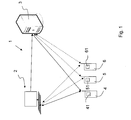
- a system 1 is shown.
- the system 1 comprises an originating and editing processing unit 2, such as a PC, a processing unit 3, in particular a network server, as well as three mobile phones 4, 5 and 6.
- Each mobile phone 4, 5 and 6 has a physical display in form of a screen 41, 51 and 61.
- the server 3 is preferably a network server, such as a server on an IMS.
- the computer 2 can at least temporarily be connected to the network server 3 via a communication network and the internet.
- the mobile phones 4, 5 and 6 may also be temporarily connected to the network server 3. This connection may be established via a communication network, which may for example be a GPRS / UMTS Standard network.
- a communication connection between the mobile phones 4, 5 and 6 and the PC 2 may be established.
- the connection will preferably also be established via the communication network and the Internet. If the mobile phones 4, 5 and 6 are in close proximity to the PC 2 the connection may alternatively be established via NFC-standards, Bluetooth or ZigBee.
- a user of the PC 2 who wishes to share content, in particular multimedia content, with other users may compile the respective multimedia content element and create for example a media show.
- Such media show which will also be referred to as a multimedia content element, may comprise images, movies, music and so on.
- the media show is created on the PC 2.
- the user may decide to only publish one multimedia content part, such as a single picture, in which case he may simply select the multimedia content part to be published. The selected picture will then be considered to be the multimedia content element.
- meta-keys are set up. These keys are preferably control functions mapped to the keys of a mobile phone 4, 5, 6. Each control function will be assigned an action or behaviour. Some examples of such behaviours are to stop the media show, to start the media show, to rewind the media show, to fast forward within the media show, to go to the previous event within the media show, which may be the previous slide or picture, to go to the next event, to go to a previous media show, to go to the next media show.
- the behaviours may also include control functions relating to the view of the multimedia content element on the mobile device, e.g. mobile phone 4, 5, 6.
- the multimedia content element or media show with the embedded functions will hereinafter also be referred to as a multimedia content file.
- the user can associate this file to a list of people, i.e. other users, to whom it shall be published.
- a list of potential recipients is stored in the PC 2.
- the list may be displayed at the computer 2 with the names of the individual users.
- the list will further comprise an indication of the status of the mobile device 4, 5, 6 of the respective user.
- the capabilities of the mobile phone 4, 5, 6 may be indicated.
- it may be indicated, whether the individuals have installed a software for collaboratively displaying the media show on their mobile phone 4, 5, 6.
- This application will hereinafter also be referred to as the visual screen software or controller.
- the user may then select the people, who should view the media show.
- the multimedia content file will be published to the mobile phones 4, 5, 6 of the user which have been selected.
- the publishing may be controlled from the PC 2.
- the multimedia file remains on the PC 2 and the user can control the media show via the Master controller on the PC.
- the multimedia content file is uploaded to the network server 3 (IMS Server) and the media show will be published form the server 3.
- the PC 2 may be turned off during the media show.
- the multimedia content file will be pushed to at least one of the mobile phones 4, 5, 6, which have been selected on the PC 2.
- the push may be initiated from either the PC 2 or the server 3, to which the multimedia content file had previously been uploaded.
- the multimedia content element or media show may be displayed on the screen 41, 51, 61 of the respective phone 4, 5, 6.
- the control of the display may be performed from the mobile phone 4, 5, 6, as the functions have been embedded into the multimedia content file.
- one of the mobile phones 4, 5, 6 which are selected at the computer 2 is designated to be the master 4 and the remaining mobile phones 5, 6, which are selected, will be slaves to the master 4.
- the meta-keys originally embedded in the multimedia content file will only be operable on the master mobile phone 4.
- the person operating the master mobile phone 4 will then be able to control the media show, for example to start or stop it, whereas the other mobile phones will merely display or render the media show.
- the designated master mobile phone 4 will communicate with the PC 2 or the server 3 to obtain rendering and control data and information and to transfer data and information to the respective processing unit 2, 3.
- the additional signalling between the other mobile phones 5, 6 and the PC 2 or the server 3, indicated by the dashed arrows in Figure 1, may be used for transmitting information such as annotations to a media show to the processing unit 2, 3.
- the signalling between the PC 2 or the server 3 may, however also include the transmission of data relating to a section of a multimedia content element to be displayed at the respective mobile phone 5, 6.
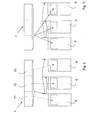
- the multimedia content element 7 with the control functions may be stored at the server 3 or the originating processing unit, i.e. PC 2. When it is to be published, it may either be pushed or at least be made available at the mobile devices 4, 5 and 6.
- the multimedia content element 7 is being pushed to the mobile device 4, which will act as the master mobile device.
- the whole multimedia content element 7 is received at the mobile device 4.
- the master mobile device 4 will transmit control and rendering data and information to the other mobile devices 5 and 6, which act as slaves to the master mobile device 4.
- the master mobile device 4 will transmit rendering data relating to the section 72 of the multimedia content element to the mobile device 5 and data relating to the section 73 to the mobile device 6.
- the multimedia content element 7 will, hence, be displayed across the screens 41, 51, 61 of the mobile devices 4, 5 and 6, wherein each mobile device 4, 5, 6 will display a section 71, 72 and 73 of the multimedia content element 7.
- the division of the multimedia content element 7 may have been performed at the processing unit 2, 3 before transmittal to the master mobile device 4. It is, however, also possible that the multimedia content element 7 and data or information relating to the amount of mobile devices 5, 6 serving as slaves will be transmitted to the master mobile device 4. In that case the master mobile device 4 will be able to divide the multimedia content element 7 in respective sections 71, 72, 73 and transmit the necessary data to the other mobile devices 5, 6.
- the respective sections 71, 72, 73 to be displayed at the individual mobile devices 4, 5 and 6 are being made available to the respective mobile devices 4, 5 and 6 directly from the processing unit 2 or 3.
- the master mobile device 4 will still be in control of the rendering of the multimedia content element 7, but will not have the multimedia content element 7 stored in it. This case is indicated by the dashed arrows in Figure 2.
- the control of the multimedia content element 7 will be performed by control signalling from the master mobile device 4 to the processing unit 2, 3.
- the enhanced multimedia content element 7 may comprise the function for the master mobile phone 4 to transfer or pass the control over the media show to other mobile phones 5, 6.
- FIG. 3 an alternative embodiment is shown.
- the whole multimedia content element 7 will be transmitted to or made available at each mobile device 4, 5 and 6.
- the master mobile device 4 will then transmit control data and information to the slave mobile devices 5 and 6, indicating which section 71, 72, 73 of the multimedia content element 7 is to be displayed.
- the present invention it is also possible to record voice or other MMI input while the media show is showing across the mobile devices 4, 5, 6.
- the respective data and information will be transmitted from the mobile devices 4, 5, 6 to the processing unit 2, 3.
- the annotated media show will be stored at the computer 2 or server 3 and the user may, after the media show, send the annotated media show to friends.
- the present invention it, hence, is possible to flexibly render multimedia content element on various mobile devices. It is in particular possible to display a multimedia content element on mobile devices in a resolution corresponding to the original resolution by collaboratively rendering multimedia content across physical screens of various mobile devices or terminals.
Landscapes
- Engineering & Computer Science (AREA)
- Theoretical Computer Science (AREA)
- Human Computer Interaction (AREA)
- Physics & Mathematics (AREA)
- General Engineering & Computer Science (AREA)
- General Physics & Mathematics (AREA)
- Multimedia (AREA)
- Information Transfer Between Computers (AREA)
Abstract
Description
- The present invention relates to a method and a system for virtual screen management for multimedia content.
- In order to provide flexibility to users of computers, while keeping the costs involved for individual components low, communication systems have been developed, wherein terminals are being used to access multimedia content stored on a server. However, a limitation is that display screen areas of existing terminals, such as mobile phones or other IP devices, are limited in their physical size. In most cases the display area is not sufficient to show the multimedia content in a large enough resolution that it is as meaningful as it could be on a larger mobile display.
- To address this problem,
US2004/0131043A1 suggests a method for the display of standardised large format internet pages on hand-held devices. The method provides that a virtual large image memory is maintained in the device and the device display can be freely displaced as a readable image section. The user can switch between a detailed sectional view of the image and a reduced quality display of the overall image: The drawback of the suggested method is that the user will only be able to see a part of the image in a resolution that allows clear recognition of the image. In some cases it may, however, be desirable or even necessary that the user is able to see the whole image in a clear resolution. - The problem to be solved by the present invention is thus to provide a method and system wherein multimedia content can be easily published and viewed by users on mobile devices.
- The invention is based on the finding that at least two mobile devices are included in a system for publishing multimedia content.
- According to a first aspect of the invention, the problem is solved by a method for virtual screen management for multimedia content, wherein one multimedia content element is at least partially displayed on at least two mobile device screens.
- A multimedia content element may be for example a multimedia show, such as a slide show, individual pictures and/or a movie. By using at least two mobile device screens to display the multimedia content element the original resolution can be maintained or at least a resolution allowing clear recognition of the multimedia content element on the screens can be achieved. The number of mobile device screens used in the present invention may be selected according to the size and shape of the multimedia content element to be displayed. Since the multimedia content element will be split across the screens of the individual mobile devices, only part of the multimedia content element will be displayed on each of the mobile device screens. By arranging the mobile devices in the appropriate relative position to each other the original multimedia content element can be reassembled.
- The mobile devices may be mobile phones or terminals of a communication network. It is also possible to use any other IP devices, such as a PDA. In that case the IP device will be equipped with communication means or an interface for communicating over a network such as a mobile network or the internet. Possible networks to be used in the present invention are GPRS/UMTS networks.
- According to one embodiment, the multimedia content element is pre-edited before being displayed to include predetermined functions, entailing predetermined behaviours. The functions are operable by at least one control key of at least one of the mobile devices.
- The pre-editing of the multimedia content element is preferably effected in a processing unit, such as a computer, e.g. PC, or a server. The pre-editing is thus preferably effected prior to the publication, e.g. pushing of the multimedia content element to other components, such as a server or a mobile device. By editing the multimedia content element in a processing unit the individual settings of different mobile devices can be taken into consideration and the multimedia content element can be published to various mobile devices of different kinds.
- The pre-edited multimedia content element will hereinafter also be referred to as a multimedia content file. This file includes the multimedia content element to be displayed or rendered as well as the functions or behaviours, i.e. control or rendering information for the multimedia content element.
- Behaviours which might be included in the file are for example to start or stop the rendering of the multimedia content element. Also rewinding and fast forwarding or skipping to a predetermined point within the multimedia content element may be behaviours included within the file. If the content consists of individual events, such as slides, behaviours such as next event or previous event may be implemented. If several media shows are included in a multimedia content element, the behaviours may comprise the options of previous media show, next media show. The behaviours may also include control functions relating to the view of the multimedia content element on the mobile device. Further examples of behaviours will be described later.
- By providing a multimedia content element, which is enhanced by control features, the multimedia content element can be controlled at the mobile device, where it is being rendered or displayed. A user who composed the multimedia content element will not have to be at the processing unit or computer, where the multimedia content element was originally created, when publishing it to third parties. Since according to the present invention, the multimedia content element is displayed at least partially on at least two mobile device screens, the user will be able to share the multimedia content with other people in a convenient way, as the presence of the other people at the processing unit is not necessary any longer.
- An additional advantage of embedding behaviours into the multimedia content file is that the behaviours can be individualized. It will in particular be possible to include behaviours in the multimedia content file depending on the multimedia content to be rendered. If the multimedia content element for example only includes one event the behaviours of "next event" or "previous event" may be omitted. Thus, the file size of the multimedia content file can be kept to a minimum. It is, however, also possible that a predetermined set of behaviours is stored at the processing unit and will be embedded in the multimedia content element regardless of the structure of the multimedia content element.
- The functions or behaviours of the multimedia content that were pre-edited into the multimedia content file are preferably mapped to control keys on at least one of the mobile devices. By mapping the behaviours to control keys on the mobile device, it will be possible to control the rendering of the multimedia content element on different phones without the need to define specific settings at the mobile device. A behaviour such as "start" may for example be mapped to the up-arrow on the keyboard of a mobile device.
- In a further preferred embodiment one of the mobile devices acts as the master, whereas further mobile devices act as slaves to the master. In that case only the master mobile device will be able to control the rendering of the multimedia content element. The other mobile devices will receive the necessary rendering information and data from the master mobile device. By limiting the control to only one mobile device and making the other mobile devices dependent of the master mobile device, conflicting control actions effected on different mobile devices can be avoided.
- The selection of which mobile device is designated to be the master may be done at the processing unit, where the mobile devices to which the multimedia content element is to be publish are selected. In this case, i.e. if one of the mobile devices is designated to be the master, the functions and behaviours implemented in the multimedia content file may further include the ability to change the master, i.e. to transmit the control and rendering information to another mobile device.
- In a further embodiment, the multimedia content element is split before being transmitted to the at least two mobile devices for display. By providing the option to divide the multimedia content element into sections, which can be displayed on different mobile device screens, before the transmission, i.e. preferably at the originating processing unit, e.g. PC, the amount of mobile devices selected for collaborative display can be taken into account and the multimedia content element may be split accordingly. The processing unit will create respective control functions to assign individual sections of the multimedia content element to each of the mobile devices. These control functions will be made available at the master mobile device and the multimedia content element received or made available at the master mobile device can then be displayed across the different screens.
- It, however, also lies within the scope of the present invention to perform the splitting of the multimedia content element at the master mobile device. In that case the master mobile device will be provided with the information on the amount of mobile devices, which are available for display. The function of splitting the multimedia content element may be implemented in the multimedia content file as a function.
- The thus split multimedia content element can produce a replication of the original multimedia content element in the original size spread across various screens.
- For example a picture, which is part of or represents the multimedia content element can be displayed in its original resolution. By arranging the different mobile devices close to each other, the picture can be re-assembled.
- The assigning of different sections of the multimedia content element to individual mobile devices for display may be performed at the processing unit, i.e. PC or server, or at the master mobile device.
- According to one embodiment the master mobile device preferably interacts with at least one processing unit and also interacts with at least one other mobile device for forwarding control and rendering information or data to the at least one other mobile device.
- The remote processing unit may be a network server, for example a server of an IMS (IP Multimedia Subsystem). It may, however, also be that the master mobile device or any of the mobile devices used, interacts with a PC, in particular the originating and editing processing unit, from which the multimedia content element originally stemmed.
- By establishing an interaction with an application on a processing unit from at least one of the mobile devices, the multimedia content element can be controlled at the mobile device, but the application running the multimedia content element does not have to be installed at the mobile device. Also changes or annotations made to the multimedia content element at the mobile device may be recorded at the processing unit, if the mobile device interacts with an application on the processing unit.
- In a preferred embodiment the originating, editing and publishing processing unit of the multimedia content element is part of a communication network with a wireless communication interface enabled between it and at least one mobile device.
- By enabling a wireless communication between the processing unit and the mobile device, there is no limitation to the location of display. If the communication to the processing unit, in particular a PC is wired, the display can only be performed in the close proximity of the PC.
- Preferably a list of mobile devices is stored in the originating processing unit, i.e. the PC of the user, with a visual indicia of the capability to support mobile virtual screen display. By storing a list of mobile devices in the processing unit, the user can choose from this list the devices and thereby the people to whom the multimedia content element should be published. The list is preferably entered sorted by the user of the individual mobile device and includes the respective contact information, such as the mobile telephone number.
- The advantage of creating and storing such a list is, that the user may immediately derive from the list, which devices are capable of supporting mobile virtual screen display. If a person has not installed the necessary software on their device, the list will indicate that. In that case, the user may invite the other person to install the software. The software may then be either downloaded from a server on the internet by the invited party or may be pushed, e.g. via WAP push, to his mobile device.
- In one embodiment, the processing unit, i.e. a PC or a server, will push the enhanced multimedia content element, i.e. the multimedia content file, to the master mobile device. At the master mobile device the enhanced multimedia content element, i.e. the multimedia content file, can be used to render the multimedia content and to control the rendering.
- It is, however also possible, that the multimedia content file remains on the processing unit, e.g. PC or server and only transmits signals representing the image to be displayed to the master mobile device and possibly the other mobile devices. In that case, any function activated at the master mobile device will be transmitted to the processing unit and the respective behaviour of the multimedia content element will be effected there. The mobile devices acting as slaves to the master mobile device as well as the master mobile device will then be provided with the data and information according to the chosen behaviour, e.g. will receive the data for the next event, if the respective function was activated.
- The at least one mobile device other than the designated master may receive control and rendering data at a resident or embedded virtual screen controller on the at least one mobile device from the processing unit, e.g. server or computer, or from the master mobile device. Once the data is received the display or rendering will occur according to the control or rendering data, which originates from the server, PC or from the master mobile device. The virtual screen controller may be a software installed at a mobile device, which enables the collaborative display of multimedia content element from a virtual screen.
- The multimedia content element may be pushed to at least one mobile device which sends control and caching control elements to the processing unit, i.e. PC or server, which acts to cache and render the specific parts of the multimedia content for the other mobile devices. With this embodiment it will become possible to interact with the multimedia content element while it is being displayed. The content may for example be annotated while being rendered. The thus annotated content may then be published from the processing unit to other mobile devices at a later stage.
- According to another object of the invention, the problem is solved by a system for virtual screen management for multimedia content, comprising at least one processing unit and at least one mobile device, wherein the processing unit is provided for embedding at least one function in at least one multimedia content element and one mobile device is provided for controlling the display of the multimedia content element on at least two mobile device screens.
- Preferably the at least one mobile device is communication connection with the processing unit while the multimedia content element is displayed at the at least two mobile devices. Via this connection the mobile device, which is designated to be the master to the other mobile devices, can obtain rendering and control information from the processing unit and can transmit control information and for example annotations to the processing unit.
- If the multimedia content element to be displayed is being pushed to the master mobile device, the communication connection does not have to be maintained while the multimedia content element is being displayed at the at least two mobile devices. In that case, the master mobile device will have obtained the enhanced multimedia content element, i.e. the multimedia content file, beforehand and will be able to provide the necessary data and information to the other mobile devices.
- The slaves may also be designed to allow for communication with the originating processing unit and another mobile device, in particular the master. The communication of a mobile device other than the master mobile device may be used to transmit annotations to the multimedia content element to the remote processing unit, where the annotations may be stored and transmitted to other mobile devices with the multimedia content element at a later stage.
- In one embodiment, an originating processing unit, which may be the PC of a user, comprises a register of enabled mobile devices which can collaboratively render the multimedia content element which is stored on one of the mobile devices or alternatively partially or wholly on a processing unit, i.e. the PC or a server.
- The register may in particular comprise entries indicative of the ability of a mobile device to collaboratively render multimedia content.
- With this embodiment it will be easy for the user wanting to publish multimedia content elements to select the mobile devices, where the rendering will be possible. If a mobile device is not in a status to collaboratively render the content, software to enable the device may be downloaded from the respective mobile device or may be pushed to the mobile device.
- Features and advantages which are described with reference to the inventive method also apply to the inventive system and vice versa.
- The invention will now be described again with reference to the enclosed figures, wherein:
- Figure 1 shows a schematic view of an system for the inventive method; and
- Figures 2 and 3 show schematic views of multimedia content being rendered at mobile devices.
- In Figure 1 a
system 1 is shown. In the embodiment depicted in Figure 1 thesystem 1 comprises an originating andediting processing unit 2, such as a PC, aprocessing unit 3, in particular a network server, as well as threemobile phones mobile phone screen 41, 51 and 61. - The
server 3 is preferably a network server, such as a server on an IMS. Thecomputer 2 can at least temporarily be connected to thenetwork server 3 via a communication network and the internet. Themobile phones network server 3. This connection may be established via a communication network, which may for example be a GPRS / UMTS Standard network. - Also a communication connection between the
mobile phones PC 2 may be established. The connection will preferably also be established via the communication network and the Internet. If themobile phones PC 2 the connection may alternatively be established via NFC-standards, Bluetooth or ZigBee. - One embodiment of the inventive method will now be described in detail. A user of the
PC 2 who wishes to share content, in particular multimedia content, with other users may compile the respective multimedia content element and create for example a media show. Such media show, which will also be referred to as a multimedia content element, may comprise images, movies, music and so on. The media show is created on thePC 2. Alternatively the user may decide to only publish one multimedia content part, such as a single picture, in which case he may simply select the multimedia content part to be published. The selected picture will then be considered to be the multimedia content element. - Once the media show has been created or the multimedia content part has been selected, meta-keys are set up. These keys are preferably control functions mapped to the keys of a
mobile phone mobile phone - The multimedia content element or media show with the embedded functions will hereinafter also be referred to as a multimedia content file. Once the thus created media content file, which comprises the multimedia element and the meta-keys, has been created, the user can associate this file to a list of people, i.e. other users, to whom it shall be published.
- A list of potential recipients is stored in the
PC 2. For easy reference the list may be displayed at thecomputer 2 with the names of the individual users. Preferably the list will further comprise an indication of the status of themobile device mobile phone mobile phone - The user may then select the people, who should view the media show. The multimedia content file will be published to the
mobile phones - In one embodiment the publishing may be controlled from the
PC 2. In this case the multimedia file remains on thePC 2 and the user can control the media show via the Master controller on the PC. It is, however, also possible that the multimedia content file is uploaded to the network server 3 (IMS Server) and the media show will be published form theserver 3. In the latter case thePC 2 may be turned off during the media show. - In a further embodiment the multimedia content file will be pushed to at least one of the
mobile phones PC 2. The push may be initiated from either thePC 2 or theserver 3, to which the multimedia content file had previously been uploaded. - With the multimedia content file being available at the mobile phone or
mobile phones screen 41, 51, 61 of therespective phone mobile phone - According to the present invention, one of the
mobile phones computer 2 is designated to be themaster 4 and the remainingmobile phones master 4. In that case, the meta-keys originally embedded in the multimedia content file will only be operable on the mastermobile phone 4. The person operating the mastermobile phone 4 will then be able to control the media show, for example to start or stop it, whereas the other mobile phones will merely display or render the media show. - As shown in Figure 1, preferably only the designated master
mobile phone 4, will communicate with thePC 2 or theserver 3 to obtain rendering and control data and information and to transfer data and information to therespective processing unit mobile phones PC 2 or theserver 3, indicated by the dashed arrows in Figure 1, may be used for transmitting information such as annotations to a media show to theprocessing unit PC 2 or theserver 3 may, however also include the transmission of data relating to a section of a multimedia content element to be displayed at the respectivemobile phone - The different ways of displaying the multimedia content element at the
mobile devices - The
multimedia content element 7 with the control functions may be stored at theserver 3 or the originating processing unit, i.e.PC 2. When it is to be published, it may either be pushed or at least be made available at themobile devices - In the embodiment shown in Figure 2, the
multimedia content element 7 is being pushed to themobile device 4, which will act as the master mobile device. In the case indicated by the continuous arrows in Figure 2, the wholemultimedia content element 7 is received at themobile device 4. According to functions embedded in the multimedia content file, the mastermobile device 4 will transmit control and rendering data and information to the othermobile devices mobile device 4. - In particular the master
mobile device 4 will transmit rendering data relating to thesection 72 of the multimedia content element to themobile device 5 and data relating to thesection 73 to themobile device 6. Themultimedia content element 7 will, hence, be displayed across thescreens 41, 51, 61 of themobile devices mobile device section multimedia content element 7. The division of themultimedia content element 7 may have been performed at theprocessing unit mobile device 4. It is, however, also possible that themultimedia content element 7 and data or information relating to the amount ofmobile devices mobile device 4. In that case the mastermobile device 4 will be able to divide themultimedia content element 7 inrespective sections mobile devices - It is also possible that the
respective sections mobile devices mobile devices processing unit mobile device 4 will still be in control of the rendering of themultimedia content element 7, but will not have themultimedia content element 7 stored in it. This case is indicated by the dashed arrows in Figure 2. The control of themultimedia content element 7 will be performed by control signalling from the mastermobile device 4 to theprocessing unit - The enhanced
multimedia content element 7 may comprise the function for the mastermobile phone 4 to transfer or pass the control over the media show to othermobile phones - In Figure 3 an alternative embodiment is shown. In this embodiment, the whole
multimedia content element 7 will be transmitted to or made available at eachmobile device mobile device 4 will then transmit control data and information to the slavemobile devices section multimedia content element 7 is to be displayed. - With the present invention it is also possible to record voice or other MMI input while the media show is showing across the
mobile devices mobile devices processing unit computer 2 orserver 3 and the user may, after the media show, send the annotated media show to friends. - With the present invention it, hence, is possible to flexibly render multimedia content element on various mobile devices. It is in particular possible to display a multimedia content element on mobile devices in a resolution corresponding to the original resolution by collaboratively rendering multimedia content across physical screens of various mobile devices or terminals.
Claims (13)
- Method for virtual screen management for multimedia content, characterized in that one multimedia content element (7) is at least partially displayed on at least two mobile device screens (41, 51, 61).
- Method according to claim 1, characterized in that the multimedia content element (7) is pre-edited before being displayed to include predetermined functions operable by at least one control key of at least one of the mobile devices (4, 5, 6).
- Method according to any of claims 1 or 2, characterized in that one of the at least two mobile devices (4, 5, 6) is designated as the master (4) and the predetermined behaviours are operable by control keys on this mobile device (4).
- Method according to any of claims 1 to 3, characterized in that the multimedia content element (7) is split before being transmitted to the at least two mobile devices (4, 5, 6) for display.
- Method according to any of claims 1 to 4, characterized in that the master mobile device (4) interacts with at least one processing unit (2, 3) and also interacts with at least one other mobile device (5, 6) for forwarding control and rendering information or data to the at least one other mobile device (5, 6).
- Method according to any of claims 1 to 5, characterized in that an originating processing unit (2) of the multimedia content element is part of a communication network with a wireless communication interface enabled between the originating processing unit (2) and at least one mobile device (4, 5, 6).
- Method according to any of claims 1 to 6, characterized in that a list of mobile devices is stored in the originating processing unit (2) with a visual indicia of the capability to support mobile virtual screen display.
- Method according to any of claims 1 to 7, characterized in that the processing unit (2, 3) pushes an enhanced multimedia content element (7) to the master mobile device (4).
- Method according to any of claims 1 to 8, characterized in that the at least one mobile device (5, 6) other than the designated master (4) receives control and rendering data at a resident or embedded virtual screen controller on the at least one mobile device (5, 6).
- Method according to any of claims 1 to 9, characterized in that the multimedia content (7) is being pushed to at least one mobile device (4, 5, 6) which sends control and caching control elements to the processing unit (2, 3) which acts to cache and render the specific parts of the multimedia content element (7) for the other mobile devices (4, 5, 6).
- System for virtual screen management for multimedia content, comprising at least one processing unit (2, 3) and at least one mobile device (4, 5, 6), characterized in that the processing unit (2, 3) is provided for embedding at least one function in at least one multimedia content element (7) and one mobile device (4) is provided for controlling the display of the multimedia content element (7) on at least two mobile device screens (41, 51, 61).
- System according to claim 11, characterized in that the at least one mobile device (4, 5, 6) is in communication connection with the processing unit (2, 3) while the multimedia content element (7) is being displayed at the at least two mobile devices (4, 5, 6).
- System according to claim 11 or 12, characterized in that an originating processing unit (2) comprises a register of enabled mobile devices (4, 5, 6) which can collaboratively render the multimedia content element (7) which is stored on a master mobile device (4) or alternatively partially or wholly on a processing unit (2, 3).
Priority Applications (1)
| Application Number | Priority Date | Filing Date | Title |
|---|---|---|---|
| EP06012289.2A EP1868078B1 (en) | 2006-06-14 | 2006-06-14 | Method and system for virtual screen management of multimedia content |
Applications Claiming Priority (1)
| Application Number | Priority Date | Filing Date | Title |
|---|---|---|---|
| EP06012289.2A EP1868078B1 (en) | 2006-06-14 | 2006-06-14 | Method and system for virtual screen management of multimedia content |
Publications (2)
| Publication Number | Publication Date |
|---|---|
| EP1868078A1 true EP1868078A1 (en) | 2007-12-19 |
| EP1868078B1 EP1868078B1 (en) | 2015-11-11 |
Family
ID=36933622
Family Applications (1)
| Application Number | Title | Priority Date | Filing Date |
|---|---|---|---|
| EP06012289.2A Expired - Lifetime EP1868078B1 (en) | 2006-06-14 | 2006-06-14 | Method and system for virtual screen management of multimedia content |
Country Status (1)
| Country | Link |
|---|---|
| EP (1) | EP1868078B1 (en) |
Cited By (13)
| Publication number | Priority date | Publication date | Assignee | Title |
|---|---|---|---|---|
| CN101291277B (en) * | 2008-05-27 | 2011-03-16 | 深圳市宏电技术股份有限公司 | Multimedia information publishing method based on wireless network |
| WO2013028202A1 (en) * | 2011-08-25 | 2013-02-28 | Intel Corporation | Collaborative graphics rendering using mobile devices to support remote display |
| CN103049234A (en) * | 2012-12-04 | 2013-04-17 | 深圳市金立通信设备有限公司 | Terminal, system and method for dual-unit cooperative work |
| WO2013123597A1 (en) * | 2012-02-21 | 2013-08-29 | Research In Motion Limited | Method, apparatus, and system for providing a shared user interface |
| CN103324419A (en) * | 2012-03-19 | 2013-09-25 | 联想(北京)有限公司 | Method and electronic device for determining display area and switching display mode |
| US8786517B2 (en) | 2012-02-21 | 2014-07-22 | Blackberry Limited | System and method for displaying a user interface across multiple electronic devices |
| CN104461420A (en) * | 2013-09-24 | 2015-03-25 | 奥派策划有限公司 | Mobile screen system and method |
| CN104978162A (en) * | 2015-08-04 | 2015-10-14 | Tcl新技术(惠州)有限公司 | Jointing display system and jointing display control method |
| US9197733B2 (en) | 2012-02-21 | 2015-11-24 | Blackberry Limited | System and method for transferring data between electronic devices |
| US9575710B2 (en) | 2012-03-19 | 2017-02-21 | Lenovo (Beijing) Co., Ltd. | Electronic device and information processing method thereof |
| CN107038991A (en) * | 2017-05-10 | 2017-08-11 | 西安诺瓦电子科技有限公司 | Spliced display screen screen configuration method and device and display screen control card |
| US10209942B2 (en) | 2014-07-16 | 2019-02-19 | Sony Interactive Entertainment LLC | Collaboratively displaying media content using plurality of display devices |
| WO2025039523A1 (en) * | 2023-08-18 | 2025-02-27 | 荣耀终端股份有限公司 | Virtual screen processing method and electronic device |
Families Citing this family (1)
| Publication number | Priority date | Publication date | Assignee | Title |
|---|---|---|---|---|
| CN117641036A (en) * | 2022-08-12 | 2024-03-01 | 广州三星通信技术研究有限公司 | Content sharing method and device, media and electronic equipment |
Citations (6)
| Publication number | Priority date | Publication date | Assignee | Title |
|---|---|---|---|---|
| EP1271841A2 (en) | 2001-06-25 | 2003-01-02 | Kabushiki Kaisha Toshiba | Server apparatus, mobile terminal, contents distribution method, content reception method, and program product |
| JP2004144822A (en) * | 2002-10-22 | 2004-05-20 | Nec Corp | Large screen display device and large screen display method |
| US20040131043A1 (en) | 2001-04-06 | 2004-07-08 | Walter Keller | Method for the display of standardised large-format internet pages with for exanple html protocol on hand-held devices a mobile radio connection |
| WO2005071530A1 (en) * | 2004-01-20 | 2005-08-04 | Koninklijke Philips Electronics, N.V. | Multiscreen display system |
| EP1612657A2 (en) * | 2004-07-02 | 2006-01-04 | Microsoft Corporation | System and method for determining display differences between monitors in multi-monitor computer systems |
| US20060088277A1 (en) | 2004-10-26 | 2006-04-27 | Pantech & Curitel Communications, Inc. | Image/audio playback device of mobile communication terminal |
-
2006
- 2006-06-14 EP EP06012289.2A patent/EP1868078B1/en not_active Expired - Lifetime
Patent Citations (6)
| Publication number | Priority date | Publication date | Assignee | Title |
|---|---|---|---|---|
| US20040131043A1 (en) | 2001-04-06 | 2004-07-08 | Walter Keller | Method for the display of standardised large-format internet pages with for exanple html protocol on hand-held devices a mobile radio connection |
| EP1271841A2 (en) | 2001-06-25 | 2003-01-02 | Kabushiki Kaisha Toshiba | Server apparatus, mobile terminal, contents distribution method, content reception method, and program product |
| JP2004144822A (en) * | 2002-10-22 | 2004-05-20 | Nec Corp | Large screen display device and large screen display method |
| WO2005071530A1 (en) * | 2004-01-20 | 2005-08-04 | Koninklijke Philips Electronics, N.V. | Multiscreen display system |
| EP1612657A2 (en) * | 2004-07-02 | 2006-01-04 | Microsoft Corporation | System and method for determining display differences between monitors in multi-monitor computer systems |
| US20060088277A1 (en) | 2004-10-26 | 2006-04-27 | Pantech & Curitel Communications, Inc. | Image/audio playback device of mobile communication terminal |
Non-Patent Citations (1)
| Title |
|---|
| PATENT ABSTRACTS OF JAPAN vol. 2003, no. 12 5 December 2003 (2003-12-05) * |
Cited By (23)
| Publication number | Priority date | Publication date | Assignee | Title |
|---|---|---|---|---|
| CN101291277B (en) * | 2008-05-27 | 2011-03-16 | 深圳市宏电技术股份有限公司 | Multimedia information publishing method based on wireless network |
| US9313228B2 (en) | 2011-08-25 | 2016-04-12 | Intel Corporation | Collaborative graphics rendering using mobile devices to support remote display |
| US8570318B2 (en) | 2011-08-25 | 2013-10-29 | Intel Corporation | Collaborative graphics rendering using mobile devices to support remote display |
| WO2013028202A1 (en) * | 2011-08-25 | 2013-02-28 | Intel Corporation | Collaborative graphics rendering using mobile devices to support remote display |
| US9898796B2 (en) | 2011-08-25 | 2018-02-20 | Intel Corporation | Collaborative graphics rendering using mobile devices to support remote display |
| US10873619B2 (en) | 2012-02-21 | 2020-12-22 | Blackberry Limited | System and method for transferring data between electronic devices |
| US8786517B2 (en) | 2012-02-21 | 2014-07-22 | Blackberry Limited | System and method for displaying a user interface across multiple electronic devices |
| US9197733B2 (en) | 2012-02-21 | 2015-11-24 | Blackberry Limited | System and method for transferring data between electronic devices |
| WO2013123597A1 (en) * | 2012-02-21 | 2013-08-29 | Research In Motion Limited | Method, apparatus, and system for providing a shared user interface |
| US9684434B2 (en) | 2012-02-21 | 2017-06-20 | Blackberry Limited | System and method for displaying a user interface across multiple electronic devices |
| US10237330B2 (en) | 2012-02-21 | 2019-03-19 | Blackberry Limited | System and method for transferring data between electronic devices |
| CN103324419A (en) * | 2012-03-19 | 2013-09-25 | 联想(北京)有限公司 | Method and electronic device for determining display area and switching display mode |
| US9575710B2 (en) | 2012-03-19 | 2017-02-21 | Lenovo (Beijing) Co., Ltd. | Electronic device and information processing method thereof |
| CN103324419B (en) * | 2012-03-19 | 2016-12-28 | 联想(北京)有限公司 | Determine viewing area and the method for display pattern switching, electronic equipment |
| CN103049234B (en) * | 2012-12-04 | 2016-09-14 | 深圳市金立通信设备有限公司 | A kind of method of terminal, system and dual-unit cooperative work |
| CN103049234A (en) * | 2012-12-04 | 2013-04-17 | 深圳市金立通信设备有限公司 | Terminal, system and method for dual-unit cooperative work |
| CN104461420A (en) * | 2013-09-24 | 2015-03-25 | 奥派策划有限公司 | Mobile screen system and method |
| US10209942B2 (en) | 2014-07-16 | 2019-02-19 | Sony Interactive Entertainment LLC | Collaboratively displaying media content using plurality of display devices |
| CN104978162B (en) * | 2015-08-04 | 2019-06-07 | Tcl新技术(惠州)有限公司 | Splice displaying system and its tiled display control method |
| CN104978162A (en) * | 2015-08-04 | 2015-10-14 | Tcl新技术(惠州)有限公司 | Jointing display system and jointing display control method |
| CN107038991A (en) * | 2017-05-10 | 2017-08-11 | 西安诺瓦电子科技有限公司 | Spliced display screen screen configuration method and device and display screen control card |
| CN107038991B (en) * | 2017-05-10 | 2019-12-24 | 西安诺瓦星云科技股份有限公司 | Splicing type display screen configuration method and device and display screen control card |
| WO2025039523A1 (en) * | 2023-08-18 | 2025-02-27 | 荣耀终端股份有限公司 | Virtual screen processing method and electronic device |
Also Published As
| Publication number | Publication date |
|---|---|
| EP1868078B1 (en) | 2015-11-11 |
Similar Documents
| Publication | Publication Date | Title |
|---|---|---|
| KR102470925B1 (en) | Video processing method and apparatus, device and storage medium | |
| EP1868078B1 (en) | Method and system for virtual screen management of multimedia content | |
| US10057731B2 (en) | Image and message integration system and method | |
| CN101192943B (en) | Method and system for role-based display of document renditions for Web conferencing | |
| US9807162B2 (en) | Method and system for communication between a server and a client device | |
| US8533284B2 (en) | Sharing of media and other content through a communication channel | |
| EP1453639B1 (en) | Selective media capture via a communication device | |
| JP6420342B2 (en) | System for publishing digital images | |
| EP2813953A1 (en) | Accessing data relating to topics | |
| JP2012141959A (en) | Method and apparatus for generating, updating, and sharing additional information for electronic book contents, and system using the same | |
| US20030081000A1 (en) | Method, program and computer system for sharing annotation information added to digital contents | |
| KR20130097970A (en) | Method and apparatus for providing chatting service | |
| CN114138146B (en) | Card recommendation method and electronic equipment | |
| KR20070098337A (en) | How to Support Personal Community Services on Your Network | |
| KR101463773B1 (en) | A method for displaying contents on transmitting and receiving terminals and the system thereof | |
| JPWO2005093593A1 (en) | Information processing apparatus, information processing system, and information processing method | |
| JP4803373B2 (en) | Operation history blog automatic generation system, portable terminal, and program | |
| WO2015050966A1 (en) | Image and message integration system and method | |
| KR101789331B1 (en) | Apparatus and method for sharing informaion in virtual space | |
| KR101621496B1 (en) | System and method of replaying presentation using touch event information | |
| KR100874337B1 (en) | How to share photos using a mobile terminal | |
| KR101650072B1 (en) | Terminal for providing service managing diary and schedule, and method for controlling the same | |
| JP2004064184A (en) | Broadcast program reception system and program video recording apparatus | |
| KR20160037470A (en) | Ceremony management system and method of using the same | |
| CN112527429B (en) | Page configuration method and device and readable storage medium |
Legal Events
| Date | Code | Title | Description |
|---|---|---|---|
| PUAI | Public reference made under article 153(3) epc to a published international application that has entered the european phase |
Free format text: ORIGINAL CODE: 0009012 |
|
| AK | Designated contracting states |
Kind code of ref document: A1 Designated state(s): AT BE BG CH CY CZ DE DK EE ES FI FR GB GR HU IE IS IT LI LT LU LV MC NL PL PT RO SE SI SK TR |
|
| AX | Request for extension of the european patent |
Extension state: AL BA HR MK YU |
|
| 17P | Request for examination filed |
Effective date: 20080320 |
|
| 17Q | First examination report despatched |
Effective date: 20080424 |
|
| AKX | Designation fees paid |
Designated state(s): AT BE BG CH CY CZ DE DK EE ES FI FR GB GR HU IE IS IT LI LT LU LV MC NL PL PT RO SE SI SK TR |
|
| RAP1 | Party data changed (applicant data changed or rights of an application transferred) |
Owner name: VODAFONE GMBH |
|
| REG | Reference to a national code |
Ref country code: DE Ref legal event code: R079 Ref document number: 602006047202 Country of ref document: DE Free format text: PREVIOUS MAIN CLASS: G06F0003140000 Ipc: G06F0003147000 |
|
| GRAP | Despatch of communication of intention to grant a patent |
Free format text: ORIGINAL CODE: EPIDOSNIGR1 |
|
| RIC1 | Information provided on ipc code assigned before grant |
Ipc: G06F 3/147 20060101AFI20150417BHEP Ipc: G06F 3/14 20060101ALI20150417BHEP |
|
| INTG | Intention to grant announced |
Effective date: 20150512 |
|
| GRAS | Grant fee paid |
Free format text: ORIGINAL CODE: EPIDOSNIGR3 |
|
| GRAP | Despatch of communication of intention to grant a patent |
Free format text: ORIGINAL CODE: EPIDOSNIGR1 |
|
| GRAA | (expected) grant |
Free format text: ORIGINAL CODE: 0009210 |
|
| INTG | Intention to grant announced |
Effective date: 20150930 |
|
| AK | Designated contracting states |
Kind code of ref document: B1 Designated state(s): AT BE BG CH CY CZ DE DK EE ES FI FR GB GR HU IE IS IT LI LT LU LV MC NL PL PT RO SE SI SK TR |
|
| REG | Reference to a national code |
Ref country code: GB Ref legal event code: FG4D |
|
| REG | Reference to a national code |
Ref country code: CH Ref legal event code: EP |
|
| REG | Reference to a national code |
Ref country code: IE Ref legal event code: FG4D |
|
| REG | Reference to a national code |
Ref country code: AT Ref legal event code: REF Ref document number: 760761 Country of ref document: AT Kind code of ref document: T Effective date: 20151215 |
|
| REG | Reference to a national code |
Ref country code: DE Ref legal event code: R096 Ref document number: 602006047202 Country of ref document: DE |
|
| REG | Reference to a national code |
Ref country code: LT Ref legal event code: MG4D |
|
| REG | Reference to a national code |
Ref country code: NL Ref legal event code: MP Effective date: 20160211 |
|
| REG | Reference to a national code |
Ref country code: AT Ref legal event code: MK05 Ref document number: 760761 Country of ref document: AT Kind code of ref document: T Effective date: 20151111 |
|
| PG25 | Lapsed in a contracting state [announced via postgrant information from national office to epo] |
Ref country code: ES Free format text: LAPSE BECAUSE OF FAILURE TO SUBMIT A TRANSLATION OF THE DESCRIPTION OR TO PAY THE FEE WITHIN THE PRESCRIBED TIME-LIMIT Effective date: 20151111 Ref country code: IT Free format text: LAPSE BECAUSE OF FAILURE TO SUBMIT A TRANSLATION OF THE DESCRIPTION OR TO PAY THE FEE WITHIN THE PRESCRIBED TIME-LIMIT Effective date: 20151111 Ref country code: LT Free format text: LAPSE BECAUSE OF FAILURE TO SUBMIT A TRANSLATION OF THE DESCRIPTION OR TO PAY THE FEE WITHIN THE PRESCRIBED TIME-LIMIT Effective date: 20151111 Ref country code: NL Free format text: LAPSE BECAUSE OF FAILURE TO SUBMIT A TRANSLATION OF THE DESCRIPTION OR TO PAY THE FEE WITHIN THE PRESCRIBED TIME-LIMIT Effective date: 20151111 Ref country code: IS Free format text: LAPSE BECAUSE OF FAILURE TO SUBMIT A TRANSLATION OF THE DESCRIPTION OR TO PAY THE FEE WITHIN THE PRESCRIBED TIME-LIMIT Effective date: 20160311 |
|
| PG25 | Lapsed in a contracting state [announced via postgrant information from national office to epo] |
Ref country code: GR Free format text: LAPSE BECAUSE OF FAILURE TO SUBMIT A TRANSLATION OF THE DESCRIPTION OR TO PAY THE FEE WITHIN THE PRESCRIBED TIME-LIMIT Effective date: 20160212 Ref country code: AT Free format text: LAPSE BECAUSE OF FAILURE TO SUBMIT A TRANSLATION OF THE DESCRIPTION OR TO PAY THE FEE WITHIN THE PRESCRIBED TIME-LIMIT Effective date: 20151111 Ref country code: PL Free format text: LAPSE BECAUSE OF FAILURE TO SUBMIT A TRANSLATION OF THE DESCRIPTION OR TO PAY THE FEE WITHIN THE PRESCRIBED TIME-LIMIT Effective date: 20151111 Ref country code: FI Free format text: LAPSE BECAUSE OF FAILURE TO SUBMIT A TRANSLATION OF THE DESCRIPTION OR TO PAY THE FEE WITHIN THE PRESCRIBED TIME-LIMIT Effective date: 20151111 Ref country code: SE Free format text: LAPSE BECAUSE OF FAILURE TO SUBMIT A TRANSLATION OF THE DESCRIPTION OR TO PAY THE FEE WITHIN THE PRESCRIBED TIME-LIMIT Effective date: 20151111 Ref country code: PT Free format text: LAPSE BECAUSE OF FAILURE TO SUBMIT A TRANSLATION OF THE DESCRIPTION OR TO PAY THE FEE WITHIN THE PRESCRIBED TIME-LIMIT Effective date: 20160311 Ref country code: LV Free format text: LAPSE BECAUSE OF FAILURE TO SUBMIT A TRANSLATION OF THE DESCRIPTION OR TO PAY THE FEE WITHIN THE PRESCRIBED TIME-LIMIT Effective date: 20151111 |
|
| REG | Reference to a national code |
Ref country code: FR Ref legal event code: PLFP Year of fee payment: 11 |
|
| PG25 | Lapsed in a contracting state [announced via postgrant information from national office to epo] |
Ref country code: CZ Free format text: LAPSE BECAUSE OF FAILURE TO SUBMIT A TRANSLATION OF THE DESCRIPTION OR TO PAY THE FEE WITHIN THE PRESCRIBED TIME-LIMIT Effective date: 20151111 |
|
| REG | Reference to a national code |
Ref country code: DE Ref legal event code: R097 Ref document number: 602006047202 Country of ref document: DE |
|
| PG25 | Lapsed in a contracting state [announced via postgrant information from national office to epo] |
Ref country code: SK Free format text: LAPSE BECAUSE OF FAILURE TO SUBMIT A TRANSLATION OF THE DESCRIPTION OR TO PAY THE FEE WITHIN THE PRESCRIBED TIME-LIMIT Effective date: 20151111 Ref country code: EE Free format text: LAPSE BECAUSE OF FAILURE TO SUBMIT A TRANSLATION OF THE DESCRIPTION OR TO PAY THE FEE WITHIN THE PRESCRIBED TIME-LIMIT Effective date: 20151111 Ref country code: DK Free format text: LAPSE BECAUSE OF FAILURE TO SUBMIT A TRANSLATION OF THE DESCRIPTION OR TO PAY THE FEE WITHIN THE PRESCRIBED TIME-LIMIT Effective date: 20151111 Ref country code: RO Free format text: LAPSE BECAUSE OF FAILURE TO SUBMIT A TRANSLATION OF THE DESCRIPTION OR TO PAY THE FEE WITHIN THE PRESCRIBED TIME-LIMIT Effective date: 20151111 |
|
| PLBE | No opposition filed within time limit |
Free format text: ORIGINAL CODE: 0009261 |
|
| STAA | Information on the status of an ep patent application or granted ep patent |
Free format text: STATUS: NO OPPOSITION FILED WITHIN TIME LIMIT |
|
| 26N | No opposition filed |
Effective date: 20160812 |
|
| PG25 | Lapsed in a contracting state [announced via postgrant information from national office to epo] |
Ref country code: SI Free format text: LAPSE BECAUSE OF FAILURE TO SUBMIT A TRANSLATION OF THE DESCRIPTION OR TO PAY THE FEE WITHIN THE PRESCRIBED TIME-LIMIT Effective date: 20151111 |
|
| PG25 | Lapsed in a contracting state [announced via postgrant information from national office to epo] |
Ref country code: BE Free format text: LAPSE BECAUSE OF FAILURE TO SUBMIT A TRANSLATION OF THE DESCRIPTION OR TO PAY THE FEE WITHIN THE PRESCRIBED TIME-LIMIT Effective date: 20151111 |
|
| PG25 | Lapsed in a contracting state [announced via postgrant information from national office to epo] |
Ref country code: MC Free format text: LAPSE BECAUSE OF FAILURE TO SUBMIT A TRANSLATION OF THE DESCRIPTION OR TO PAY THE FEE WITHIN THE PRESCRIBED TIME-LIMIT Effective date: 20151111 |
|
| REG | Reference to a national code |
Ref country code: CH Ref legal event code: PL |
|
| REG | Reference to a national code |
Ref country code: IE Ref legal event code: MM4A |
|
| PG25 | Lapsed in a contracting state [announced via postgrant information from national office to epo] |
Ref country code: LI Free format text: LAPSE BECAUSE OF NON-PAYMENT OF DUE FEES Effective date: 20160630 Ref country code: CH Free format text: LAPSE BECAUSE OF NON-PAYMENT OF DUE FEES Effective date: 20160630 |
|
| PG25 | Lapsed in a contracting state [announced via postgrant information from national office to epo] |
Ref country code: IE Free format text: LAPSE BECAUSE OF NON-PAYMENT OF DUE FEES Effective date: 20160614 |
|
| REG | Reference to a national code |
Ref country code: FR Ref legal event code: PLFP Year of fee payment: 12 |
|
| PG25 | Lapsed in a contracting state [announced via postgrant information from national office to epo] |
Ref country code: HU Free format text: LAPSE BECAUSE OF FAILURE TO SUBMIT A TRANSLATION OF THE DESCRIPTION OR TO PAY THE FEE WITHIN THE PRESCRIBED TIME-LIMIT; INVALID AB INITIO Effective date: 20060614 Ref country code: CY Free format text: LAPSE BECAUSE OF FAILURE TO SUBMIT A TRANSLATION OF THE DESCRIPTION OR TO PAY THE FEE WITHIN THE PRESCRIBED TIME-LIMIT Effective date: 20151111 |
|
| REG | Reference to a national code |
Ref country code: FR Ref legal event code: PLFP Year of fee payment: 13 |
|
| PG25 | Lapsed in a contracting state [announced via postgrant information from national office to epo] |
Ref country code: LU Free format text: LAPSE BECAUSE OF NON-PAYMENT OF DUE FEES Effective date: 20160614 Ref country code: TR Free format text: LAPSE BECAUSE OF FAILURE TO SUBMIT A TRANSLATION OF THE DESCRIPTION OR TO PAY THE FEE WITHIN THE PRESCRIBED TIME-LIMIT Effective date: 20151111 |
|
| PG25 | Lapsed in a contracting state [announced via postgrant information from national office to epo] |
Ref country code: BG Free format text: LAPSE BECAUSE OF FAILURE TO SUBMIT A TRANSLATION OF THE DESCRIPTION OR TO PAY THE FEE WITHIN THE PRESCRIBED TIME-LIMIT Effective date: 20151111 |
|
| REG | Reference to a national code |
Ref country code: DE Ref legal event code: R082 Ref document number: 602006047202 Country of ref document: DE Representative=s name: MUELLER, THOMAS, DIPL.-ING., DE |
|
| PGFP | Annual fee paid to national office [announced via postgrant information from national office to epo] |
Ref country code: GB Payment date: 20240619 Year of fee payment: 19 |
|
| PGFP | Annual fee paid to national office [announced via postgrant information from national office to epo] |
Ref country code: DE Payment date: 20240619 Year of fee payment: 19 |
|
| PGFP | Annual fee paid to national office [announced via postgrant information from national office to epo] |
Ref country code: FR Payment date: 20240628 Year of fee payment: 19 |
|
| REG | Reference to a national code |
Ref country code: DE Ref legal event code: R119 Ref document number: 602006047202 Country of ref document: DE |
|
| GBPC | Gb: european patent ceased through non-payment of renewal fee |
Effective date: 20250614 |
|
| PG25 | Lapsed in a contracting state [announced via postgrant information from national office to epo] |
Ref country code: GB Free format text: LAPSE BECAUSE OF NON-PAYMENT OF DUE FEES Effective date: 20250614 |
|
| PG25 | Lapsed in a contracting state [announced via postgrant information from national office to epo] |
Ref country code: DE Free format text: LAPSE BECAUSE OF NON-PAYMENT OF DUE FEES Effective date: 20260101 |
|
| PG25 | Lapsed in a contracting state [announced via postgrant information from national office to epo] |
Ref country code: FR Free format text: LAPSE BECAUSE OF NON-PAYMENT OF DUE FEES Effective date: 20250630 |