EP1859055B2 - Verwendung einer gruppe von zu reportergenen der zelldifferenzierung komplementären primerpaaren - Google Patents
Verwendung einer gruppe von zu reportergenen der zelldifferenzierung komplementären primerpaaren Download PDFInfo
- Publication number
- EP1859055B2 EP1859055B2 EP06723311.4A EP06723311A EP1859055B2 EP 1859055 B2 EP1859055 B2 EP 1859055B2 EP 06723311 A EP06723311 A EP 06723311A EP 1859055 B2 EP1859055 B2 EP 1859055B2
- Authority
- EP
- European Patent Office
- Prior art keywords
- cells
- hbs
- expression
- genes
- cell
- Prior art date
- Legal status (The legal status is an assumption and is not a legal conclusion. Google has not performed a legal analysis and makes no representation as to the accuracy of the status listed.)
- Expired - Lifetime
Links
Images



Classifications
-
- C—CHEMISTRY; METALLURGY
- C12—BIOCHEMISTRY; BEER; SPIRITS; WINE; VINEGAR; MICROBIOLOGY; ENZYMOLOGY; MUTATION OR GENETIC ENGINEERING
- C12Q—MEASURING OR TESTING PROCESSES INVOLVING ENZYMES, NUCLEIC ACIDS OR MICROORGANISMS; COMPOSITIONS OR TEST PAPERS THEREFOR; PROCESSES OF PREPARING SUCH COMPOSITIONS; CONDITION-RESPONSIVE CONTROL IN MICROBIOLOGICAL OR ENZYMOLOGICAL PROCESSES
- C12Q1/00—Measuring or testing processes involving enzymes, nucleic acids or microorganisms; Compositions therefor; Processes of preparing such compositions
- C12Q1/68—Measuring or testing processes involving enzymes, nucleic acids or microorganisms; Compositions therefor; Processes of preparing such compositions involving nucleic acids
- C12Q1/6876—Nucleic acid products used in the analysis of nucleic acids, e.g. primers or probes
- C12Q1/6881—Nucleic acid products used in the analysis of nucleic acids, e.g. primers or probes for tissue or cell typing, e.g. human leukocyte antigen [HLA] probes
-
- G—PHYSICS
- G16—INFORMATION AND COMMUNICATION TECHNOLOGY [ICT] SPECIALLY ADAPTED FOR SPECIFIC APPLICATION FIELDS
- G16B—BIOINFORMATICS, i.e. INFORMATION AND COMMUNICATION TECHNOLOGY [ICT] SPECIALLY ADAPTED FOR GENETIC OR PROTEIN-RELATED DATA PROCESSING IN COMPUTATIONAL MOLECULAR BIOLOGY
- G16B25/00—ICT specially adapted for hybridisation; ICT specially adapted for gene or protein expression
-
- G—PHYSICS
- G16—INFORMATION AND COMMUNICATION TECHNOLOGY [ICT] SPECIALLY ADAPTED FOR SPECIFIC APPLICATION FIELDS
- G16B—BIOINFORMATICS, i.e. INFORMATION AND COMMUNICATION TECHNOLOGY [ICT] SPECIALLY ADAPTED FOR GENETIC OR PROTEIN-RELATED DATA PROCESSING IN COMPUTATIONAL MOLECULAR BIOLOGY
- G16B25/00—ICT specially adapted for hybridisation; ICT specially adapted for gene or protein expression
- G16B25/10—Gene or protein expression profiling; Expression-ratio estimation or normalisation
-
- G—PHYSICS
- G16—INFORMATION AND COMMUNICATION TECHNOLOGY [ICT] SPECIALLY ADAPTED FOR SPECIFIC APPLICATION FIELDS
- G16B—BIOINFORMATICS, i.e. INFORMATION AND COMMUNICATION TECHNOLOGY [ICT] SPECIALLY ADAPTED FOR GENETIC OR PROTEIN-RELATED DATA PROCESSING IN COMPUTATIONAL MOLECULAR BIOLOGY
- G16B25/00—ICT specially adapted for hybridisation; ICT specially adapted for gene or protein expression
- G16B25/20—Polymerase chain reaction [PCR]; Primer or probe design; Probe optimisation
-
- C—CHEMISTRY; METALLURGY
- C12—BIOCHEMISTRY; BEER; SPIRITS; WINE; VINEGAR; MICROBIOLOGY; ENZYMOLOGY; MUTATION OR GENETIC ENGINEERING
- C12Q—MEASURING OR TESTING PROCESSES INVOLVING ENZYMES, NUCLEIC ACIDS OR MICROORGANISMS; COMPOSITIONS OR TEST PAPERS THEREFOR; PROCESSES OF PREPARING SUCH COMPOSITIONS; CONDITION-RESPONSIVE CONTROL IN MICROBIOLOGICAL OR ENZYMOLOGICAL PROCESSES
- C12Q2600/00—Oligonucleotides characterized by their use
- C12Q2600/158—Expression markers
Definitions
- the present invention relates to a kit as defined in the claims.
- the panel is suitable for use e.g. in a method for rapid and sensitive determination of the state of differentiation of hBS cells.
- the method is based on the analysis of mRNA levels of specifically selected genes using quantitative real time PCR (QPCR).
- hBS cells have been used previously for transplantation in a number of different applications, such as blood transfusion and in bone marrow, cartilage, skin and cornea transplants. However, these cells are limited in their potential to differentiate into other cell types.
- the hBS cells are pluripotent, which means that they have the potential to develop into any of the tissues and organs found in the body.
- the hBS cells are not totipotent. It is anticipated that the unique properties of hBS cells will make these cells useful in several different applications such as:
- blastocyst-derived stem cells derived from the blastocyst 4-5 days after fertilization and are therefore referred to as blastocyst-derived stem cells or hBS cells.
- the inner cell mass of the blastocyst is isolated by various methods including micro- or immunosurgery and plated on mitotically inactivated murine embryonic fibroblasts in a specific culture media.
- undifferentiated hBS cells can be propagated indefinitely in vitro.
- the hBS cells can also undergo spontaneous differentiation and it is important to monitor the hBS cell culture over time.
- Various markers and assays can be employed to monitor hBS cells and undifferentiated hBS cells can be identified based on the following characteristics:
- Oct-4 is a transcription factor expressed by undifferentiated hBS cells and it is known to be down-regulated upon differentiation into different precursor cells. Oct-4 can be analyzed either on the protein level (using for example immunohistochemistry or westen blot) or on the level of gene expression. However, it should be noted that Oct-4 is not exclusively expressed by undifferentiated hBS cells.
- hBS cells display a high activity of alkaline phosphatase, but it is also known that this enzyme is also active during differentiation of hBS cells and in other cell types.
- cytogenic analysis of hBS cells By cytogenic analysis of hBS cells, chromosomal abnormalities in the cells can be detected, which gives valuable information about the genetic integrity of the cells but it provides no indication of the state of differentiation of the cells.
- telomere activity in cells indicates their ability to proliferate, which is a key characteristic of hBS cells. Still, some variations in telomerase activity within and between different hBS cell lines have been reported and it remains to be determined if there is a direct quantitative relationship between telomerase activity and differentiation state of the hBS cells.
- Benign teratomas can be generated by injection of hBS cells into immuno-compromised experimental animals. If cells from all three embryonic germ layers are represented within the teratoma, this demonstrates the pluripotency of the injected hBS cells. This method is very time consuming and requires animal experiment, but apart from this, it is an excellent functional test of hBS cells. However, quantitative data are difficult to obtain.
- hBS cell Similar verification of the pluripotency of hBS cell can be performed in vitro.
- hBS cell are induced to differentiate, either spontaneously or in a directed fashion, into various mature cell types representing the three embryonic germ layers.
- this assay does not involve any animal experiments but it is still time and labour consuming and difficult to evaluate in a quantitative manner.
- the expression of certain genes can be analyzed using QPCR, a sensitive method for detecting mRNA species in biological samples.
- the specificity of the assay depends to a large extent on the design of specific primers and other reaction conditions that are necessary for the PCR-reaction to proceed.
- PCR it is possible to detect a single copy of template because of the exponential amplification during temperature cycling.
- a single copy of template will result in billions of copies after just 20 cycles (2 20 ), which can be readily detected using standard techniques.
- the obtained PCR products are detected using intercalator dyes such as ethidium bromide after separation on agarose gel by electrophoresis.
- a fluorescent dye is included in the PCR reaction and the fluorescent signal is monitored throughout the amplification. This way one can compare how many rounds (cycles) of amplification are necessary to reach a detectable signal and is indicatory of the initial amount of template in the sample. This signal level (threshold level) is always set in the exponential phase of amplification where samples can be directly compared.
- a target gene of interest has been compared to some kind of reference gene, to take into account differences in extraction yields, reverse transcription efficiencies and differences caused by inhibitors within the samples. The difficulty has been to find suitable reference genes with stable expression throughout the study intended. In many cases housekeeping genes such as GAPDH, ⁇ -lubulin and ⁇ -actin have been chosen, but it has been demonstrated that these gense are also regulated in merry situations and can therefore cause erroneous results.
- the present inventers have found that all known reporter genae are not equally suited for use se markers for determining the differentiation step of hBS cells, In particular, the inventors have found that it is advantageous to evaluate the expression level of a combination of reporter genes, each of which should have a similar expression profile in at least two different cell lines of the same kind of cells.
- the invention relates to a kit as defined in claim 1.
- panel refers to a combination of pairs of primers, each pair being complementary to a reporter gene, the expression of which is to be investigated.
- up-regulated is referring to a positive statistically significant (+/- 2SD) difference in gene expression. From the examples herein it is seen that e.g. AFP (alpha-feto-protein) is an example of a reporter gene, the expression of which is up-regulated.
- down-regulated is referring to a negative statistically significant (+/- 2SD) difference in gene expression.
- Oct-4, Nanog and Cripto are reporter genes, the expression of which are down-regulated.
- expression profile is referring to the expression of one or more specific genes either constantly increasing or decreasing within a certain amount of time.
- the present inventors have observed that even if the expression of some reporter genes are up- or down-regulated in a certain cell line this is not necessarily a stable feature, e.g., if the expression of a reporter gene is up-regulated in a certain cell line, then it cannot be expected that the expression of the same reporter gene is up-regulated in another cell line of the same type of cells.
- the present inventors have found that these reporter genes behave in the same manner irrespective of the cell line (provided that it is the same kind of cells). More specifically, the inventors have found that this applies for at least two, preferably at least three, at least four, at least five or at least six cell lines, cf. the examples herein.
- the present inventors have found that the expression of the reporter genes encoding Cripto, AFP, Oct-4 and Nanog are either up- or down-regulated upon differentiation and display similar expression profiles between cell lines of the same kind of cells.
- the expression of other reporter genes investigated did not comply with both of these criteria.
- the present invention is based on these results that provide new possibilities with respect to how to e.g. evaluate and determine the differentiation state of a cell population.
- Undifferentiated hBS cells will result in a high expression index, whereas differentiated hBS cells will result in a low expression index.
- a panel is used.
- the panel is used in assays for real-time PCR analysis.
- a panel described herein may be
- a panel described herein is a panel, wherein the at least two pairs of primers are selected from pairs of primers that are complementary to two or more of the reporter genes AFP, Cripto, Oct-4 and Nanog.
- the at least two pairs of primers such as, e.g. three pairs of primers or four pairs of primers, may be complementary to AFP whereas one or more of the other at least two pairs of primers is complementary to a reporter gene, the expression of which is down-regulated upon cell differentiation.
- reporter gene the expression of which is down-regulated upon cell differentiation, may be selected from the group consisting of Cripto, Oct-4 and Nanog.
- a panel comprising two pairs of primers that are complementary to two reporter genes, the expression of which are up-regulated and down-regulated upon cell differentiation, respectively. These two pairs of primers may be complementary to the reporter genes AFP and Cripto, respectively.
- Genes suitable as markers for undifferentiated hBS cells or their differentiated progenies can be selected by studying genetic profiles resulting from e.g. macro scale analysis and literature in the field, such as relevant public or private expression libraries. Results from PCR analysis (see Ct-values) further show that some genes are better suited as reporter genes than others.
- a reporter gene should have the following basic criteria: a) It should be either up or down regulated upon differentiation of the hBS cells and b) it should display a similar expression profile in several (e.g. more than two different hBS cell lines). Furthermore, when selecting a panel of reporter genes it is of importance that the combination of genes is chosen appropriately in order to maximize the sensitivity of the assay.
- a panel could comprise primers complementary to other genes as those listed below, provided that they are
- genes known to be down-regulated upon cell differentiation and as such may be used as reporter genes include the following genes: Tert (telomerase reverse transcriptase), Sox-2 (homeobox-domain transcription factor 2), Rex-1 (a zinc finger protein), Utf-1 (a transcriptional co-activator), Dppa-5 (developmental-pluripotency associated 5), Cx-43 and Cx-45 (gap junction proteins connexin-43 and -45), ABCG-2.
- genes known to be up-regulated upon cell differentiation and as such may be used as reporter genes include the following genes:_the early endodermal markers Brachyury, Sox-17, Goosecoid, Mixl-1, Foxa-2 (sometimes also referred to as HNF-3beta), and CXCR-4, the early mesodermal markers Brachyury (mesendodermal), Meox-1, Fox-F1, KDR, and Bmp-4 and early ectodermal markers such as Sox-1 and Zic-1.
- genes can be analyzed in all different combinations such as; Oct-4/AFP, Cripto/AFP, Nanog/AFP, Oct-4*Nanog*Cripto/AFP, Oct-4*Cripto/AFP, Nanog*CriptolAFP, or Oct-4*Nanog/AFP.
- a panel comprising at least two pairs of primers that are complementary to at least two different reporter genes, wherein the expression of one of the at least two reporter genes is up-regulated upon differentiation of cells and/or wherein the expression of one of the at least two reporter genes is down-regulated upon differentiation of cells.
- a panel comprising three or more, such as, e.g., four or more, pairs of primers, which are complementary to three or more, such as, e.g. four or more, reporter genes, wherein the expression of the three or more reporter genes are
- a panel comprising at least two reporter genes, each of which displaying a similar expression profile in at least three, such as, e.g., at least four, at least five or at least six different cell lines of the same kind.
- the expression levels of the reporter genes encoding AFP, Cripto, Oct-4 and Nanog are particularly suitable for evaluation of differentiation state of hBS cells.
- the Ct values obtained by QPCR in five different cell lines indicated consistent either up- or down-regulation and similar expression profiles of these reporter genes from cell line to cell line, which criteria were not met by the Ct values obtained for the reporter genes encoding DNMT3B, Sox-2, Gdf-3 and ⁇ -III-tubulin.
- RNA for use in as template in QPCR can be obtained from pluripotent/undifferentiated BS cells, especially hBS cells. These BS cells can be obtained from a BS cell line, especially an hBS cell line.
- RNA A hBS cell line for use to obtain RNA is described in WO 03/055992 .
- the cells may be in any stage of development.
- the hBS cells may be cultured with or without supporting material including, but not limited to mouse EF cells, human EF cells and extracellular matrices.
- Such suitable hBS cells have at least one of the following properties
- the hBS cells may have all the properties mentioned above.
- the expression of genes may be quantified using QPCR.
- the buffers and reagents used are, but not limited to, as described in "General description of the procedure”. Similar solutions and reagents may be used.
- QPCR reactions are preferably run in the Rotorgene 3000 (Corbett Research) but can also be run in any type of real time PCR machine.
- the temperature of the denaturation/activation step is normally 95°C
- the denaturation step is normally 95°C
- the annealing step is normally 60°C and the elongation step is normally 72°C.
- the time period of the denaturation/activation step is normally 3 min
- the denaturation step is normally 20 s
- the annealing step is normally 20 s
- the elongation step is normally 20 s.
- the total number of cycles is normally 45. It is emphasized that the skilled artisan will know that temperatures, time intervals and number of cycles can be varied.
- the expression index, I (also called ratio) may be determined by calculating the ratio of expression of different genes in one sample.
- the expression of at least two reporter genes can be compared for at least two cell lines by obtaining the ratio between their respective expression indexes.
- Performance of combinations of two or more reporter genes can be evaluated by obtaining the ratio between the expression index, I, of undifferentiated cells relative to differentiated cells. Accordingly, the performance of combinations of two or more reporter genes is evaluated by obtaining the ratio between the expression index, I, of undifferentiated cells relative to differentiated cells.
- the present disclosure relates to a panel of primers complementary to the reporter genes AFP and Cripto, respectively.
- the present disclosure relates to a panel of three pairs of primers, which are complementary to the reporter genes AFP, Cripto and Oct-4 and another embodiment of the present disclosure relates to a panel of four pairs of primers, which are complementary to the reporter genes AFP, Cripto, Oct-4 and Nanog.
- Gene sequences can be located and analysed and primers being designed and evaluated using any available software by a person skilled in the art. Genes were located and analysed using Ensembl (http://www.ensembl.org/). Primers were designed using the Primer3 web-based software (http://frodo.wi.mit.edu/cgi-bin/primer3/primer3_www.cgi) and obtained primers evaluated using Netprimer (http://www.premierbiosoft.com/netprimer/netprlaunch.html) and Beacon Designer 2.1 (Premier Biosoft).
- primers can be designed to span intron-exon boundaries to ensure that genomic DNA Is not quantified. Primers can further be designed for appropriate annealing temperatures, such as between 50°C and 70 °C , such as for 60°C annealing. To ensure specificity, all primer sequences can be searched in databases, such as the NCBI sequence database using a suitable search engine, such as BLAST (http://www.ncbi.nlm.nih.gov/BLAST/).
- Accessibility of the obtained primer sequences can be evaluated and resulting amplified sequence analysed using an evaluation tool such as mFold (http://www.bioinfo.rpi.edu/applications/mfoid/old/dna/form1.cgi) showing all probable secondary structures at certain conditions.
- the melting temperature can be analysed using a tool, such as the Oligonucleotide Properties Calculator (http://www.basic.nwu.edu/biotools/oligocalc.html).
- the primers used in the present invention includes, but are not limited to:
- BS cells undifferentiated BS cells and fully differentiated cells of endodermal, mesodermal and/or ectodermal origin, such as, e.g., hepatocytes, pancreatic cells, gut epithelial cells, cardiomyocytes, chondrocytes, osteocytes, keratinocytes, neurons, astrocytes and oligodendrocytes.
- the QPCR assay can be adjusted to suit different pathways.
- the most important aspect is to select and validate appropriate reporter genes.
- the assay of choice can be exemplified by an assay that can be used to screen extrinsic factors such as substances or growth factors for their ability to induce cardiac differentiation of hBS cells. It is clear that similar assays can be designed for other purposes.
- the reporter genes should have either of the following criteria: a) Down regulated upon differentiation of hBS cells or b) Up regulated upon differentiation of hBS cells to cardiomyocytes. Genes fulfilling either of these criteria can be identified by screening published data or by screening relevant public or private expression libraries.
- genes fulfilling criteria a) are Oct-4, Nanog, and Cripto
- genes fulfilling criteria b) are cardiac-specific alpha-cardiac myosin heavy chain (MHC), beta-MHC, sarcomeric myosin, alpha-actinin, and GATA4.
- MHC cardiac-specific alpha-cardiac myosin heavy chain
- beta-MHC beta-MHC
- sarcomeric myosin alpha-actinin
- GATA4 GATA4
- the individual QPCR assays for each gene should initially be optimized and the PCR efficiency determined.
- the usefulness of the potential reporter genes should also be validated through experimental testing using QPCR and control RNA prepared from undifferentiated hBS cells, differentiated hBS cells (at various stages of differentiation), and cardiomyocytes (adult cells or cells differentiated from hBS cells).
- reporter genes with expression patterns that are similar between different hBS cell lines. Once the reporter genes have been selected and validated, they can be used in the QPCR assay and the data evaluated using the Mathematical model in order to calculate the expression index, which quantitatively indicates the potency of each tested substance or factor.
- reporter genes such as neuron-specific ⁇ -III tubulin, NeuN, DoubleCortin, tyrosine hydroxylase, Map 2, NF-L, NH-H, NSE, DBH, GABA, synaptophysin, and serotonin and/or genes expressed in less differentiated neural lineages, such as Pax-6, EMX-2, Musashi can be tested and validated when differentiation of hBS cells towards neural cell types is preferable.
- genes such as alpha-antitrypsin, liver fatty acid binding protein, cytokeratin 18, and albumin can be tested and validated when differentiation of hBS cells towards hepatocytes is preferable.
- culture conditions such as oxygen stress and/or medium additives, such as growth factors, support-matrices and dissociation methods
- the assay can be designed after identification and validation of suitable reporter genes being up and down regulated during the process of interest. Up-regulated genes in the case of apoptosis could belong to the family of caspases and for metabolism belong to e.g. liver function related genes, such as different cytochromes.
- Down regulated genes can be any gene(s) showing a down regulated expression in the biological process of interest
- the reporter genes can be used in the QPCR assay and the data evaluated using the Mathematical model in order to calculate the expression index, which quantitatively indicates the potency of each tested substance or factor.
- the expression index quantitatively indicates the potency of each tested substance or factor.
- a panel of pairs of primers can be used to measure the response of cells upon addition of chemicals, drug candidates and/or drugs e.g. in a read out assay of hBS cell based methods for drug discovery, in a read out assay of hBS cell based methods in toxicity testing.
- one aspect of the present invention relates to a kit for use in real-time PCR to assess the state of hBS cell differentiation comprising:
- BS cell the term "blastocyst-derived stem cell” is denoted BS cell, and the human form is termed "hBS cells”.
- embryoid bodies is a term that is well-defined within the field of stem cells.
- EF cells means "embryonic fibroblast feeder". These cells could be derived from any mammal, such as mouse or human.
- feeder cells or “feeders” are intended to mean cells of one type that are co-cultured with cells of another type, to provide an environment in which the cells of the second type can grow.
- the feeder cells may optionally be from a different species as the cells they are supporting.
- the feeder cells may typically be inactivated when being co-cultured with other cells by irradiation or treatment with an anti-mitotic agent such as mitomycin c, to prevent them from outgrowing the cells they are supporting.
- QPCR quantitative real-time PCR
- E the PCR efficiency which can be derived as described in Example 5
- Ct the cycle of threshold
- K RS is referring to the relative sensitivity constant which among other things accounts for differences of fragment lengths of templates.
- two-gene ratio is referring to a ratio as calculated using Equation 1 or 2 herein described by the incorporation of one gene being down regulated and one gene being up regulated.
- the two-gene ratio or two-gene index used interchangeably, can be calculated for one cell line at different time points or for two or more individual cell lines at the same point enabling to compare and quantify the differentiation state.
- a "three-gene ratio” is referring to a ratio as calculated using Equation 1 herein described by the incorporation of at least one gene being down regulated and at least one gene being up regulated.
- the three-gene ratio or three-gene index used interchangeably, can be calculated for one cell line at different time points or for two or more individual cell lines at the same point enabling to compare and quantify the differentiation state.
- hBS cells are cultured on mouse EF cells in KO-DMEM media supplemented with 20 % serum replacement, 1 % penicillin, 1 % glutamax, 1 % nonessential amino acids, 0,1 mM ⁇ -mercaptoethanol and 4 ng/ml bFGF.
- the cells are passaged every 4-5 day by mechanically dissociation, using a stem cell cutting tool (Swemed Labs International, Billdal, Sweden). Spontaneously differentiated hBS colonies are obtained by culture the cells for up to 21 days without passaging.
- RNA is changed every 2 nd -3 rd day.
- Undifferentiated or differentiated hBS cell colonies are cut mechanically as whole colonies, using a stem cell cutting tool (Swemed Labs International, Billdal, Sweden), washed in PBS and stored in -80°C.
- Extraction of RNA is performed using Qiagen RNeasy Mini Kit according to the manufacturer's instructions. Quantification and quality control of RNA is performed using the NanoDrop ND-1000. 4.
- Reverse transcription is performed using Bio-Rad iScript First Strand Synthesis Kit (according to the manufacturer's instructions) in a Rotorgene 3000 (Corbett Research). 5.
- QPCR Is performed under following conditions. All genes are quantified in the same run.
- hBS cell colony of five different cell lines were cut in pieces with a size of 0,1-0,3 x 0,1-0,3 mm, using a stem cell cutting tool (Swemed Labs International, Billdal, Sweden) and placed on mouse EF cells in 20 dishes per cell line. Between 10 and 18 pieces were placed in each dish.
- the hBS cells were cultured in KO-DMEM media supplemented with 20 % serum replacement, 1 % penicillin, 1 % glutamax, 1 % nonessential amino acids, 0,1 mM ⁇ -mercaptoethanol and 4 ng/ml bFGF for 4-5 days (10 dishes per cell line), 14 days (5 dishes per cell line) and 21 days (5 dishes per cell line) respectively, without passaging.
- the hBS cell colonies were cut out mechanically (as above), transferred to 1,5 ml sterile tubes and washed in PBS. Cell pellets were stored in -80 °C.
- the 4-5 days old hBS cells display the morphology of tightly packed round shaped cells with a high nucleus to cytoplasm ratio, which are the typical characteristics for undifferentiated hBS cells.
- 14 and 21 days old hBS colonies displayed very different morphologies such as cystic-like structures, neuron-like structures and circle-like patterns within the colonies (see Figure 1 ).
- the colonies at day 14 and 21 after passage were considerably larger compared to after 4-5 days.
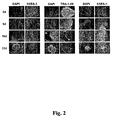
- hBS cells were cultured as in Example 1 for up to 24 days without passaging. Undifferentiated and spontaneously differentiated hBS cell colonies were fixed after 4-5 days, 9-10 days, 16 days and 22-24 days, in 4 % PFA for 15 minutes and subsequently permeabilized in 0,5 % Triton X-100 for 5 minutes.
- the cells were incubated with primary antibodies against following antigens: SSEA-1 (1 ⁇ g/ml), SSEA-3 (1 ⁇ g/ml), SSEA-4 (1 ⁇ g/ml), TRA-1-60 (1 ⁇ g/ml), TRA-1-81 (1 ⁇ g/ml), Oct-4 (1 ⁇ g/ml), Nanog (1 ⁇ g/ml), and AFP (1 ⁇ g/ml), for 20h in +4 °C.
- the cells were then washed in PBS and incubated with FITC- or Cy3-conjugated secondary antibodies mixed with DAPI (0,5 ⁇ g/ml, for nuclei visualization) for 1 h in room temperature, followed by washing in PBS and mounting.
- the stained hBS cell colonies were visualized in an inverted fluorescence microscope. For semi-quantitative evaluation, an hBS cell colony was scored as positive if >50 % of the cells in the colony were stained by the antibodies used.
- Undifferentiated and spontaneously differentiated hBS cells (SA001 and SA002) maintained on EF cells were mechanically dissociated into 1 x 1 mm clusters using a Stem Cell Tool.
- the hBS cell clusters were placed in suspension cultures and allowed to form and grow as embryoid bodies (EB) (Itskovitz-Eldor et al 2000 Mol Med) in KO-DMEM media supplemented with 20 % FBS, 1 % PEST, 1 % glutamax, 1 % nonessential amino acids and 0.1 mM ⁇ -mercaptoethanol. After 2 days the number and morphology of the EB formed were evaluated.
- EB embryoid bodies
- hBS cell clusters from undifferentiated and differentiated colonies were manually dissected and transferred to suspension cultures. After 2 days the number of EB formed and their morphology was evaluated and graded as described in above. Representative illustrations of the appearance of the EB of the various grades are shown in Figure 4 .
- PCR was performed under standard conditions to generate PCR product PCR product of 2 pooled reactions was purified using Qiagen Qiaquick PCR Purification Kit according to the manufacturer's instructions. Elution was performed in 30 ⁇ l of EB buffer. Determination of the DNA concentration in copies/ ⁇ l of the obtained PCR product was performed on the NanoDrop ND-1000 using absorbance at 260 nm. Using the amplicon size and the absorbance the concentration could be calculated. Using the purified PCR product of each PCR system, the PCR was optimized by varying the concentration of MgCl 2 , deoxynucleotides and primers to obtain a good PCR efficiency and as little primer-dimers as possible.
- PCR reactions were performed in the Rotorgene 3000 (Cobett Research) using SYBR Green I as a reporter dye to monitor amplification during the reaction. Threshold was set above the noise and in the exponential phase of the amplification. PCR efficiency was determined by making a serial dilution of PCR product. The Rotorgene software plots threshold cycle (the amplification round were the fluorescent signal crosses the threshold level) versus concentration and calculate the PCR efficiency, which is used in the mathematical model Eq. 1. Melt curve analysis and gel electrophoresis was performed to ensure that the correct product had been amplified.
- Reverse transcription was performed on 1 ⁇ g of total RNA in a final volume of 20 ⁇ l using Bio-Rad iScript First Strand Synthesis Kit according to the manufacturer's instructions. The reverse transcription was run in the Rotorgene 3000 (Corbett Research). The method described herein is not dependent on normalizing the input RNA amount and different RNA input for different samples has been used with success. Also, the reverse transcription reaction can be uniformly scaled down to 10 ⁇ l. No RT controls were performed on each cell line by adding water instead of RT enzyme to the reaction. This controls for the presence of genomic DNA.
- RNA sample was reverse transcribed in duplicate to evaluate the variability of the entire method.
- hBS cells from five different cell lines were cultured and spontaneously differentiated as described in example 1. Primer design, optimization, RNA extraction, reverse transcription and QPCR were performed as described in the examples above and the following Ct values were obtained: hBS cells Oct.4 Nanog Cripto DNMT3B AFP SA001 5d 16,38 ⁇ 0,48 20,29 ⁇ 0,36 17,35 ⁇ 0,23 - 25,99 ⁇ 0,53 SA001 14d 17,15 ⁇ 0,43 20,71 ⁇ 0,31 17.8 ⁇ 0,37 - 19,56 ⁇ 0,21 SA001 21d 18,64 ⁇ 0,18 21,73 ⁇ 0,23 19,77 ⁇ 0,22 - 20,84 ⁇ 0,40 SA002 5d 17,55 ⁇ 2,23 20,15 ⁇ 1,18 18,83 ⁇ 1,9 - 27,16 ⁇ 0,65 SA002 14d 20,40 ⁇ 0,11 23,31 ⁇ 0,05 21,98 ⁇ 0,69 - SA002 21d 22,54 ⁇ 0,49 23,87 ⁇ 0,62 23,51
- the Ct value of Oct-4, Nanog, Cripto, DNMT3B, AFP, Nestin, Desmin OC90 and Un28 for SA121 is the mean value ( ⁇ S.D) of one PCR reaction from 2 separate RT reactions.
- Plotting Ct shows that Oct-4, Nanog, and Cripto are genes that are expressed in undifferentiated hBS cells (low Ct), whereas they are down regulated upon differentiation (high Ct). It also shows that AFP is significantly up regulated in differentiated hBS cells compared to undifferentiated hBS cells. DNMNT3 is also expressed by undifferentiated hBS cells and is down regulated in differentiating hBS cells (see hBS cell line SA121).
- a reporter gene should have the following basic criteria: a) It should be either up or down regulated upon differentiation of the hBS cells and b) it should display a similar expression profile in several (e.g. more than 2) different hBS cell lines. Furthermore, when selecting a panel of reporter genes it is of importance that the combination of genes is chosen appropriately in order to maximize the sensitivity of the assay.
- the mathematical model (Eq. 1) was applied.
- the input in the equation is the Ct-values for each individual reporter gene (Oct-4, Nanog, Cripto, and AFP) and the corresponding PCR-efficiency, and the output is an index based on the geometric averages between the RNA levels of down- and up regulated genes.
- the assay becomes very robust, while maintaining a high precision, and less sensitive to minor fluctuations in the expression levels of the individual genes.
- Figure 6 shows the calculated expression indexes from the QPCR analyses of hBS cells maintained on EF cells.
- the expression indexes ranged between 150 and 350 for undifferentiated hBS cells (day 4-5) and they were between 0.6 and 10 for differentiating hBS cells at day 14. In differentiated progenies from hBS cells at day 21, the expression indexes were further decreased and ranged between 0.05 and 2. The quantitatively most striking changes in the expression indexes occurred during the first week of differentiation. The fold-changes observed in the expression indexes were between 26 and 415 when comparing cells at day 5 and 14, and the fold-changes ranged between 1.2 and 15 when comparing cells at day 14 and 21.
- the tables below show how many times higher the two-gene index is for undifferentiated material (4-5 days in culture) compared to after 14 days in culture.
- the last 5 genes were only tested on one of the cell lines.
- Beta-III-tubulin, nestin (both ectodermal) and desmin (mesodermal) are genes that genes that are being up-regulated according to the literature searches performed, whereas Gdf-3, OC90, Lin28 and DNM3TB are genes that are being down-regulated according to the literature searches (normally expressed in undifferentiated hESCs).
- AFP and Cripto is the combination generating the over-all highest index ratio.
- the diagonal values 1.0 are obtained by inserting e.g. AFP both in the numerator and the denominator, whereby the index both at day 5 and day 14 is 1.
- hBS cells were cultured as in example 1 for 7 days without passaging. Almost 300 colonies that by visual inspection appeared both morphologically undifferentiated and differentiated were cut out mechanically, using a stem cell cutting tool (Swemed Labs International, Billdal, Sweden), as whole colonies. The colonies were dissociated in 0.5 mM EDTA for 30 minutes into a single cell suspension and after centrifugation resuspended in PBS, (containing 0.1 % BSA), to a final concentration of 100 000 cells/ml. The cell suspension were mixed with SSEA-4 coated magnetic Dynabeads (CELLection Pan Mouse IgG, Dynal, Norway) in a cell to bead ratio of 1:25 and incubated for 1h at +4°C.
- SSEA-4 coated magnetic Dynabeads CELLection Pan Mouse IgG, Dynal, Norway
- the SSEA-4 positive cells bound to the beads were separated from the negative cells in a magnetic stand, and washed in PBS (containing 0, 1 % BSA). Positive and negative cell fractions were stored in -80°C. RNA extraction, reverse transcription, QPCR, and quantifications were performed as described in the examples above. Approximately 60% of the cells were captured by the SSEA-4-antibody coated beads. The results from the QPCR analysis are shown in Figure 7 and demonstrate that the expression index of SSEA-4+ cells is about 15-folds higher than the expression index of SSEA-4- cells.
Landscapes
- Life Sciences & Earth Sciences (AREA)
- Health & Medical Sciences (AREA)
- Physics & Mathematics (AREA)
- Chemical & Material Sciences (AREA)
- Genetics & Genomics (AREA)
- Engineering & Computer Science (AREA)
- General Health & Medical Sciences (AREA)
- Biophysics (AREA)
- Molecular Biology (AREA)
- Bioinformatics & Cheminformatics (AREA)
- Biotechnology (AREA)
- Theoretical Computer Science (AREA)
- Proteomics, Peptides & Aminoacids (AREA)
- Spectroscopy & Molecular Physics (AREA)
- Evolutionary Biology (AREA)
- Bioinformatics & Computational Biology (AREA)
- Medical Informatics (AREA)
- Organic Chemistry (AREA)
- Zoology (AREA)
- Analytical Chemistry (AREA)
- Immunology (AREA)
- Wood Science & Technology (AREA)
- Microbiology (AREA)
- Cell Biology (AREA)
- Chemical Kinetics & Catalysis (AREA)
- Biochemistry (AREA)
- General Engineering & Computer Science (AREA)
- Measuring Or Testing Involving Enzymes Or Micro-Organisms (AREA)
- Paints Or Removers (AREA)
Claims (2)
- Kit zur Verwendung in Real-Time PCR zur Bewertung des Zustands einer hBS-Zelldifferenzierung, umfassend ein Panel umfassend vier Paare von Primern, welche zu den Reportergenen AFP, Cripto, Oct-4 und Nanog komplementär sind.
- Kit nach Anspruch 1, umfassend:i) ein Panel von Primern wie in Anspruch 1 definiert,ii) wahlweise ein geeignetes PCR-Gemisch,iii) wahlweise eine oder mehrere Komponenten für die reverse Transkription,iv) wahlweise Gebrauchsanweisungen dafür.
Applications Claiming Priority (2)
| Application Number | Priority Date | Filing Date | Title |
|---|---|---|---|
| DKPA200500333 | 2005-03-04 | ||
| PCT/EP2006/002159 WO2006094798A2 (en) | 2005-03-04 | 2006-03-06 | Use of panel of pairs of primers complementary to reporter genes of cell differentiation |
Publications (3)
| Publication Number | Publication Date |
|---|---|
| EP1859055A2 EP1859055A2 (de) | 2007-11-28 |
| EP1859055B1 EP1859055B1 (de) | 2009-11-18 |
| EP1859055B2 true EP1859055B2 (de) | 2014-05-28 |
Family
ID=36582028
Family Applications (1)
| Application Number | Title | Priority Date | Filing Date |
|---|---|---|---|
| EP06723311.4A Expired - Lifetime EP1859055B2 (de) | 2005-03-04 | 2006-03-06 | Verwendung einer gruppe von zu reportergenen der zelldifferenzierung komplementären primerpaaren |
Country Status (5)
| Country | Link |
|---|---|
| US (1) | US20080280295A1 (de) |
| EP (1) | EP1859055B2 (de) |
| AT (1) | ATE449191T1 (de) |
| DE (1) | DE602006010521D1 (de) |
| WO (1) | WO2006094798A2 (de) |
Citations (1)
| Publication number | Priority date | Publication date | Assignee | Title |
|---|---|---|---|---|
| WO2003040255A1 (en) † | 2001-11-09 | 2003-05-15 | Sk Corporation | Blue light-emitting polymer containing 9,10-diphenylanthracene moiety and electroluminescent device using the same |
Family Cites Families (1)
| Publication number | Priority date | Publication date | Assignee | Title |
|---|---|---|---|---|
| US20030224411A1 (en) * | 2003-03-13 | 2003-12-04 | Stanton Lawrence W. | Genes that are up- or down-regulated during differentiation of human embryonic stem cells |
-
2006
- 2006-03-06 WO PCT/EP2006/002159 patent/WO2006094798A2/en not_active Ceased
- 2006-03-06 AT AT06723311T patent/ATE449191T1/de not_active IP Right Cessation
- 2006-03-06 EP EP06723311.4A patent/EP1859055B2/de not_active Expired - Lifetime
- 2006-03-06 DE DE602006010521T patent/DE602006010521D1/de not_active Expired - Lifetime
- 2006-03-06 US US11/885,556 patent/US20080280295A1/en not_active Abandoned
Patent Citations (1)
| Publication number | Priority date | Publication date | Assignee | Title |
|---|---|---|---|---|
| WO2003040255A1 (en) † | 2001-11-09 | 2003-05-15 | Sk Corporation | Blue light-emitting polymer containing 9,10-diphenylanthracene moiety and electroluminescent device using the same |
Non-Patent Citations (1)
| Title |
|---|
| M. J. ABEYTA ET AL.: "Unique gene expression signatures of independently-derived human embryonic stem cell lines", HUMAN MOLECULAR GENETICS, vol. 13, no. 6, 28 January 2004 (2004-01-28), pages 601 - 608 † |
Also Published As
| Publication number | Publication date |
|---|---|
| DE602006010521D1 (de) | 2009-12-31 |
| WO2006094798A9 (en) | 2006-10-26 |
| WO2006094798A3 (en) | 2006-12-07 |
| ATE449191T1 (de) | 2009-12-15 |
| EP1859055B1 (de) | 2009-11-18 |
| EP1859055A2 (de) | 2007-11-28 |
| WO2006094798A2 (en) | 2006-09-14 |
| US20080280295A1 (en) | 2008-11-13 |
Similar Documents
| Publication | Publication Date | Title |
|---|---|---|
| Bock et al. | Reference Maps of human ES and iPS cell variation enable high-throughput characterization of pluripotent cell lines | |
| Baghbaderani et al. | Detailed characterization of human induced pluripotent stem cells manufactured for therapeutic applications | |
| Josephson et al. | Qualification of embryonal carcinoma 2102Ep as a reference for human embryonic stem cell research | |
| Hrvatin et al. | MARIS: method for analyzing RNA following intracellular sorting | |
| Tirosh et al. | Single-cell RNA-seq supports a developmental hierarchy in human oligodendroglioma | |
| Bhattacharya et al. | Gene expression in human embryonic stem cell lines: unique molecular signature | |
| Jager et al. | Measuring mutation accumulation in single human adult stem cells by whole-genome sequencing of organoid cultures | |
| CN103459611B (zh) | 对多能干细胞的效用和安全性进行表征的功能基因组学研究 | |
| Roth et al. | 16p11. 2 microdeletion imparts transcriptional alterations in human iPSC-derived models of early neural development | |
| Chikhovskaya et al. | Mesenchymal origin of multipotent human testis-derived stem cells in human testicular cell cultures | |
| Pisal et al. | Directed reprogramming of comprehensively characterized dental pulp stem cells extracted from natal tooth | |
| Pitino et al. | STAMP: Single-cell transcriptomics analysis and multimodal profiling through imaging | |
| Glover et al. | Meta-analysis of differentiating mouse embryonic stem cell gene expression kinetics reveals early change of a small gene set | |
| Shan et al. | KMT2D deficiency leads to cellular developmental disorders and enhancer dysregulation in neural-crest-containing brain organoids | |
| Chin et al. | Genetic tagging during human mesoderm differentiation reveals tripotent lateral plate mesodermal progenitors | |
| CN113106160B (zh) | 评估肝谱系细胞成熟度的标志物、双组学试剂盒及构建方法 | |
| Isoda et al. | Mesenchymal properties of iPSC-derived neural progenitors that generate undesired grafts after transplantation | |
| EP1859055B1 (de) | Verwendung einer gruppe von zu reportergenen der zelldifferenzierung komplementären primerpaaren | |
| Pan et al. | A new FACS approach isolates hESC derived endoderm using transcription factors | |
| Luo et al. | Designing, testing, and validating a focused stem cell microarray for characterization of neural stem cells and progenitor cells | |
| LeBlanc et al. | Duplex sequencing identifies unique characteristics of ENU-induced mutations in male mouse germ cells | |
| Angulo et al. | Generation of a Friedreich’s Ataxia patient-derived iPSC line USFi001-A | |
| Perepelina et al. | Generation of iPSC line FAMRCi010-A from patient with restrictive cardiomyopathy carrying genetic variant FLNC p. Gly2011Arg | |
| Perepelina et al. | Generation of two iPSC lines (FAMRCi007-A and FAMRCi007-B) from patient with Emery–Dreifuss muscular dystrophy and heart rhythm abnormalities carrying genetic variant LMNA p. Arg249Gln | |
| Sequiera et al. | Generation of human induced pluripotent stem cell (hiPSC) line UOMi001-A from a patient with Leigh-like syndrome harbouring compound heterozygous variants in ECHS1 gene |
Legal Events
| Date | Code | Title | Description |
|---|---|---|---|
| PUAI | Public reference made under article 153(3) epc to a published international application that has entered the european phase |
Free format text: ORIGINAL CODE: 0009012 |
|
| 17P | Request for examination filed |
Effective date: 20071004 |
|
| AK | Designated contracting states |
Kind code of ref document: A2 Designated state(s): AT BE BG CH CY CZ DE DK EE ES FI FR GB GR HU IE IS IT LI LT LU LV MC NL PL PT RO SE SI SK TR |
|
| 17Q | First examination report despatched |
Effective date: 20080122 |
|
| DAX | Request for extension of the european patent (deleted) | ||
| RIN1 | Information on inventor provided before grant (corrected) |
Inventor name: ZORIC, NEVEN Inventor name: SARTIPY, PETER Inventor name: NOAKSSON, KARIN Inventor name: KUBISTA, MIKAEL |
|
| GRAP | Despatch of communication of intention to grant a patent |
Free format text: ORIGINAL CODE: EPIDOSNIGR1 |
|
| GRAS | Grant fee paid |
Free format text: ORIGINAL CODE: EPIDOSNIGR3 |
|
| GRAA | (expected) grant |
Free format text: ORIGINAL CODE: 0009210 |
|
| AK | Designated contracting states |
Kind code of ref document: B1 Designated state(s): AT BE BG CH CY CZ DE DK EE ES FI FR GB GR HU IE IS IT LI LT LU LV MC NL PL PT RO SE SI SK TR |
|
| REG | Reference to a national code |
Ref country code: GB Ref legal event code: FG4D |
|
| REG | Reference to a national code |
Ref country code: CH Ref legal event code: EP |
|
| REG | Reference to a national code |
Ref country code: IE Ref legal event code: FG4D |
|
| REF | Corresponds to: |
Ref document number: 602006010521 Country of ref document: DE Date of ref document: 20091231 Kind code of ref document: P |
|
| REG | Reference to a national code |
Ref country code: SE Ref legal event code: TRGR |
|
| REG | Reference to a national code |
Ref country code: CH Ref legal event code: NV Representative=s name: BOVARD AG PATENTANWAELTE |
|
| LTIE | Lt: invalidation of european patent or patent extension |
Effective date: 20091118 |
|
| PG25 | Lapsed in a contracting state [announced via postgrant information from national office to epo] |
Ref country code: LT Free format text: LAPSE BECAUSE OF FAILURE TO SUBMIT A TRANSLATION OF THE DESCRIPTION OR TO PAY THE FEE WITHIN THE PRESCRIBED TIME-LIMIT Effective date: 20091118 Ref country code: PT Free format text: LAPSE BECAUSE OF FAILURE TO SUBMIT A TRANSLATION OF THE DESCRIPTION OR TO PAY THE FEE WITHIN THE PRESCRIBED TIME-LIMIT Effective date: 20100318 Ref country code: ES Free format text: LAPSE BECAUSE OF FAILURE TO SUBMIT A TRANSLATION OF THE DESCRIPTION OR TO PAY THE FEE WITHIN THE PRESCRIBED TIME-LIMIT Effective date: 20100228 Ref country code: FI Free format text: LAPSE BECAUSE OF FAILURE TO SUBMIT A TRANSLATION OF THE DESCRIPTION OR TO PAY THE FEE WITHIN THE PRESCRIBED TIME-LIMIT Effective date: 20091118 Ref country code: IS Free format text: LAPSE BECAUSE OF FAILURE TO SUBMIT A TRANSLATION OF THE DESCRIPTION OR TO PAY THE FEE WITHIN THE PRESCRIBED TIME-LIMIT Effective date: 20100318 |
|
| PG25 | Lapsed in a contracting state [announced via postgrant information from national office to epo] |
Ref country code: CY Free format text: LAPSE BECAUSE OF FAILURE TO SUBMIT A TRANSLATION OF THE DESCRIPTION OR TO PAY THE FEE WITHIN THE PRESCRIBED TIME-LIMIT Effective date: 20091118 Ref country code: SI Free format text: LAPSE BECAUSE OF FAILURE TO SUBMIT A TRANSLATION OF THE DESCRIPTION OR TO PAY THE FEE WITHIN THE PRESCRIBED TIME-LIMIT Effective date: 20091118 Ref country code: PL Free format text: LAPSE BECAUSE OF FAILURE TO SUBMIT A TRANSLATION OF THE DESCRIPTION OR TO PAY THE FEE WITHIN THE PRESCRIBED TIME-LIMIT Effective date: 20091118 Ref country code: LV Free format text: LAPSE BECAUSE OF FAILURE TO SUBMIT A TRANSLATION OF THE DESCRIPTION OR TO PAY THE FEE WITHIN THE PRESCRIBED TIME-LIMIT Effective date: 20091118 |
|
| PG25 | Lapsed in a contracting state [announced via postgrant information from national office to epo] |
Ref country code: AT Free format text: LAPSE BECAUSE OF FAILURE TO SUBMIT A TRANSLATION OF THE DESCRIPTION OR TO PAY THE FEE WITHIN THE PRESCRIBED TIME-LIMIT Effective date: 20091118 Ref country code: BE Free format text: LAPSE BECAUSE OF FAILURE TO SUBMIT A TRANSLATION OF THE DESCRIPTION OR TO PAY THE FEE WITHIN THE PRESCRIBED TIME-LIMIT Effective date: 20091118 |
|
| PG25 | Lapsed in a contracting state [announced via postgrant information from national office to epo] |
Ref country code: EE Free format text: LAPSE BECAUSE OF FAILURE TO SUBMIT A TRANSLATION OF THE DESCRIPTION OR TO PAY THE FEE WITHIN THE PRESCRIBED TIME-LIMIT Effective date: 20091118 Ref country code: BG Free format text: LAPSE BECAUSE OF FAILURE TO SUBMIT A TRANSLATION OF THE DESCRIPTION OR TO PAY THE FEE WITHIN THE PRESCRIBED TIME-LIMIT Effective date: 20100218 Ref country code: DK Free format text: LAPSE BECAUSE OF FAILURE TO SUBMIT A TRANSLATION OF THE DESCRIPTION OR TO PAY THE FEE WITHIN THE PRESCRIBED TIME-LIMIT Effective date: 20091118 Ref country code: RO Free format text: LAPSE BECAUSE OF FAILURE TO SUBMIT A TRANSLATION OF THE DESCRIPTION OR TO PAY THE FEE WITHIN THE PRESCRIBED TIME-LIMIT Effective date: 20091118 |
|
| PLBI | Opposition filed |
Free format text: ORIGINAL CODE: 0009260 |
|
| PLBI | Opposition filed |
Free format text: ORIGINAL CODE: 0009260 |
|
| PG25 | Lapsed in a contracting state [announced via postgrant information from national office to epo] |
Ref country code: SK Free format text: LAPSE BECAUSE OF FAILURE TO SUBMIT A TRANSLATION OF THE DESCRIPTION OR TO PAY THE FEE WITHIN THE PRESCRIBED TIME-LIMIT Effective date: 20091118 Ref country code: CZ Free format text: LAPSE BECAUSE OF FAILURE TO SUBMIT A TRANSLATION OF THE DESCRIPTION OR TO PAY THE FEE WITHIN THE PRESCRIBED TIME-LIMIT Effective date: 20091118 |
|
| 26 | Opposition filed |
Opponent name: STRAWMAN LIMITED Effective date: 20100806 |
|
| PLAX | Notice of opposition and request to file observation + time limit sent |
Free format text: ORIGINAL CODE: EPIDOSNOBS2 |
|
| 26 | Opposition filed |
Opponent name: DR. LEO POLZ Effective date: 20100818 Opponent name: QIAGEN GMBH Effective date: 20100818 Opponent name: STRAWMAN LIMITED Effective date: 20100806 |
|
| PG25 | Lapsed in a contracting state [announced via postgrant information from national office to epo] |
Ref country code: MC Free format text: LAPSE BECAUSE OF NON-PAYMENT OF DUE FEES Effective date: 20100331 Ref country code: GR Free format text: LAPSE BECAUSE OF FAILURE TO SUBMIT A TRANSLATION OF THE DESCRIPTION OR TO PAY THE FEE WITHIN THE PRESCRIBED TIME-LIMIT Effective date: 20100219 |
|
| PLAF | Information modified related to communication of a notice of opposition and request to file observations + time limit |
Free format text: ORIGINAL CODE: EPIDOSCOBS2 |
|
| PG25 | Lapsed in a contracting state [announced via postgrant information from national office to epo] |
Ref country code: IE Free format text: LAPSE BECAUSE OF NON-PAYMENT OF DUE FEES Effective date: 20100306 |
|
| PG25 | Lapsed in a contracting state [announced via postgrant information from national office to epo] |
Ref country code: IT Free format text: LAPSE BECAUSE OF FAILURE TO SUBMIT A TRANSLATION OF THE DESCRIPTION OR TO PAY THE FEE WITHIN THE PRESCRIBED TIME-LIMIT Effective date: 20091118 |
|
| REG | Reference to a national code |
Ref country code: CH Ref legal event code: PFA Owner name: CELLARTIS AB Free format text: CELLARTIS AB#ARVID WALLGRENS BACKE 20#413 46 GOETEBORG (SE) -TRANSFER TO- CELLARTIS AB#ARVID WALLGRENS BACKE 20#413 46 GOETEBORG (SE) |
|
| PLAF | Information modified related to communication of a notice of opposition and request to file observations + time limit |
Free format text: ORIGINAL CODE: EPIDOSCOBS2 |
|
| PLBB | Reply of patent proprietor to notice(s) of opposition received |
Free format text: ORIGINAL CODE: EPIDOSNOBS3 |
|
| PLAB | Opposition data, opponent's data or that of the opponent's representative modified |
Free format text: ORIGINAL CODE: 0009299OPPO |
|
| R26 | Opposition filed (corrected) |
Opponent name: STRAWMAN LIMITED Effective date: 20100806 Opponent name: DR. LEO POLZ Effective date: 20100818 Opponent name: QIAGEN GMBH Effective date: 20100818 |
|
| APBM | Appeal reference recorded |
Free format text: ORIGINAL CODE: EPIDOSNREFNO |
|
| APBP | Date of receipt of notice of appeal recorded |
Free format text: ORIGINAL CODE: EPIDOSNNOA2O |
|
| APAH | Appeal reference modified |
Free format text: ORIGINAL CODE: EPIDOSCREFNO |
|
| APBM | Appeal reference recorded |
Free format text: ORIGINAL CODE: EPIDOSNREFNO |
|
| APBP | Date of receipt of notice of appeal recorded |
Free format text: ORIGINAL CODE: EPIDOSNNOA2O |
|
| APAW | Appeal reference deleted |
Free format text: ORIGINAL CODE: EPIDOSDREFNO |
|
| APAY | Date of receipt of notice of appeal deleted |
Free format text: ORIGINAL CODE: EPIDOSDNOA2O |
|
| APBM | Appeal reference recorded |
Free format text: ORIGINAL CODE: EPIDOSNREFNO |
|
| APBP | Date of receipt of notice of appeal recorded |
Free format text: ORIGINAL CODE: EPIDOSNNOA2O |
|
| APBQ | Date of receipt of statement of grounds of appeal recorded |
Free format text: ORIGINAL CODE: EPIDOSNNOA3O |
|
| PG25 | Lapsed in a contracting state [announced via postgrant information from national office to epo] |
Ref country code: HU Free format text: LAPSE BECAUSE OF FAILURE TO SUBMIT A TRANSLATION OF THE DESCRIPTION OR TO PAY THE FEE WITHIN THE PRESCRIBED TIME-LIMIT Effective date: 20100519 Ref country code: LU Free format text: LAPSE BECAUSE OF NON-PAYMENT OF DUE FEES Effective date: 20100306 |
|
| PG25 | Lapsed in a contracting state [announced via postgrant information from national office to epo] |
Ref country code: TR Free format text: LAPSE BECAUSE OF FAILURE TO SUBMIT A TRANSLATION OF THE DESCRIPTION OR TO PAY THE FEE WITHIN THE PRESCRIBED TIME-LIMIT Effective date: 20091118 |
|
| APBU | Appeal procedure closed |
Free format text: ORIGINAL CODE: EPIDOSNNOA9O |
|
| PUAH | Patent maintained in amended form |
Free format text: ORIGINAL CODE: 0009272 |
|
| STAA | Information on the status of an ep patent application or granted ep patent |
Free format text: STATUS: PATENT MAINTAINED AS AMENDED |
|
| 27A | Patent maintained in amended form |
Effective date: 20140528 |
|
| AK | Designated contracting states |
Kind code of ref document: B2 Designated state(s): AT BE BG CH CY CZ DE DK EE ES FI FR GB GR HU IE IS IT LI LT LU LV MC NL PL PT RO SE SI SK TR |
|
| REG | Reference to a national code |
Ref country code: DE Ref legal event code: R102 Ref document number: 602006010521 Country of ref document: DE |
|
| REG | Reference to a national code |
Ref country code: CH Ref legal event code: AELC |
|
| REG | Reference to a national code |
Ref country code: DE Ref legal event code: R102 Ref document number: 602006010521 Country of ref document: DE Effective date: 20140528 |
|
| REG | Reference to a national code |
Ref country code: SE Ref legal event code: RPEO |
|
| REG | Reference to a national code |
Ref country code: NL Ref legal event code: T3 |
|
| PG25 | Lapsed in a contracting state [announced via postgrant information from national office to epo] |
Ref country code: LV Free format text: LAPSE BECAUSE OF FAILURE TO SUBMIT A TRANSLATION OF THE DESCRIPTION OR TO PAY THE FEE WITHIN THE PRESCRIBED TIME-LIMIT Effective date: 20140528 |
|
| REG | Reference to a national code |
Ref country code: FR Ref legal event code: PLFP Year of fee payment: 10 |
|
| PGFP | Annual fee paid to national office [announced via postgrant information from national office to epo] |
Ref country code: DE Payment date: 20150305 Year of fee payment: 10 Ref country code: NL Payment date: 20150309 Year of fee payment: 10 Ref country code: CH Payment date: 20150313 Year of fee payment: 10 |
|
| PGFP | Annual fee paid to national office [announced via postgrant information from national office to epo] |
Ref country code: FR Payment date: 20150309 Year of fee payment: 10 Ref country code: GB Payment date: 20150304 Year of fee payment: 10 Ref country code: SE Payment date: 20150311 Year of fee payment: 10 |
|
| REG | Reference to a national code |
Ref country code: DE Ref legal event code: R119 Ref document number: 602006010521 Country of ref document: DE |
|
| REG | Reference to a national code |
Ref country code: CH Ref legal event code: PL |
|
| REG | Reference to a national code |
Ref country code: SE Ref legal event code: EUG |
|
| REG | Reference to a national code |
Ref country code: NL Ref legal event code: MM Effective date: 20160401 |
|
| GBPC | Gb: european patent ceased through non-payment of renewal fee |
Effective date: 20160306 |
|
| PG25 | Lapsed in a contracting state [announced via postgrant information from national office to epo] |
Ref country code: SE Free format text: LAPSE BECAUSE OF NON-PAYMENT OF DUE FEES Effective date: 20160307 |
|
| REG | Reference to a national code |
Ref country code: FR Ref legal event code: ST Effective date: 20161130 |
|
| PG25 | Lapsed in a contracting state [announced via postgrant information from national office to epo] |
Ref country code: NL Free format text: LAPSE BECAUSE OF NON-PAYMENT OF DUE FEES Effective date: 20160401 Ref country code: FR Free format text: LAPSE BECAUSE OF NON-PAYMENT OF DUE FEES Effective date: 20160331 Ref country code: CH Free format text: LAPSE BECAUSE OF NON-PAYMENT OF DUE FEES Effective date: 20160331 Ref country code: DE Free format text: LAPSE BECAUSE OF NON-PAYMENT OF DUE FEES Effective date: 20161001 Ref country code: LI Free format text: LAPSE BECAUSE OF NON-PAYMENT OF DUE FEES Effective date: 20160331 Ref country code: GB Free format text: LAPSE BECAUSE OF NON-PAYMENT OF DUE FEES Effective date: 20160306 |