EP1857459A2 - Pyrazolopyrimidine compound and a process for preparing the same - Google Patents
Pyrazolopyrimidine compound and a process for preparing the same Download PDFInfo
- Publication number
- EP1857459A2 EP1857459A2 EP07015684A EP07015684A EP1857459A2 EP 1857459 A2 EP1857459 A2 EP 1857459A2 EP 07015684 A EP07015684 A EP 07015684A EP 07015684 A EP07015684 A EP 07015684A EP 1857459 A2 EP1857459 A2 EP 1857459A2
- Authority
- EP
- European Patent Office
- Prior art keywords
- group
- apci
- amorphous powder
- lower alkyl
- amino
- Prior art date
- Legal status (The legal status is an assumption and is not a legal conclusion. Google has not performed a legal analysis and makes no representation as to the accuracy of the status listed.)
- Withdrawn
Links
- 0 *C=*1CCCC1 Chemical compound *C=*1CCCC1 0.000 description 40
- WUISKNCHCVXERE-UHFFFAOYSA-N CCCc1nc(C)c[s]1 Chemical compound CCCc1nc(C)c[s]1 WUISKNCHCVXERE-UHFFFAOYSA-N 0.000 description 4
- JTAUTNBVFDTYTI-UHFFFAOYSA-N Cc(cccc1C)c1F Chemical compound Cc(cccc1C)c1F JTAUTNBVFDTYTI-UHFFFAOYSA-N 0.000 description 4
- AHSPOVNPXMDIEL-UHFFFAOYSA-N Cc1nc(Nc2ccccc2)ccc1 Chemical compound Cc1nc(Nc2ccccc2)ccc1 AHSPOVNPXMDIEL-UHFFFAOYSA-N 0.000 description 3
- YZZYFRBPGIXHPD-UHFFFAOYSA-N CC(CN1CCCC1)=O Chemical compound CC(CN1CCCC1)=O YZZYFRBPGIXHPD-UHFFFAOYSA-N 0.000 description 2
- IEMMBWWQXVXBEU-UHFFFAOYSA-N CC(c1ccc[o]1)=O Chemical compound CC(c1ccc[o]1)=O IEMMBWWQXVXBEU-UHFFFAOYSA-N 0.000 description 2
- FVMCCWYUWHDLGS-UHFFFAOYSA-N CCCc1nc(C)ccc1 Chemical compound CCCc1nc(C)ccc1 FVMCCWYUWHDLGS-UHFFFAOYSA-N 0.000 description 2
- JIKCUGHIEOGWTB-UHFFFAOYSA-N CCOc1cccc(C)n1 Chemical compound CCOc1cccc(C)n1 JIKCUGHIEOGWTB-UHFFFAOYSA-N 0.000 description 2
- WGRPQCFFBRDZFV-UHFFFAOYSA-N Cc1cccc(C(N)=O)c1 Chemical compound Cc1cccc(C(N)=O)c1 WGRPQCFFBRDZFV-UHFFFAOYSA-N 0.000 description 2
- JOMMESUNTRWXSL-UHFFFAOYSA-N CC(C)(CNC)COC Chemical compound CC(C)(CNC)COC JOMMESUNTRWXSL-UHFFFAOYSA-N 0.000 description 1
- DUZHQYNUKCUJEP-UHFFFAOYSA-N CC(C)C(N(C)CCN(C)C)=O Chemical compound CC(C)C(N(C)CCN(C)C)=O DUZHQYNUKCUJEP-UHFFFAOYSA-N 0.000 description 1
- WFMUJLWWGDJDBF-UHFFFAOYSA-N CC(C)N(C)Cc1ccccc1 Chemical compound CC(C)N(C)Cc1ccccc1 WFMUJLWWGDJDBF-UHFFFAOYSA-N 0.000 description 1
- AJKVQEKCUACUMD-UHFFFAOYSA-N CC(c1ncccc1)=O Chemical compound CC(c1ncccc1)=O AJKVQEKCUACUMD-UHFFFAOYSA-N 0.000 description 1
- PDZTXSYBFSCTAV-UHFFFAOYSA-N CC/C=[O]/C1OCCCC1 Chemical compound CC/C=[O]/C1OCCCC1 PDZTXSYBFSCTAV-UHFFFAOYSA-N 0.000 description 1
- OAVDTRCBGZNDIN-UHFFFAOYSA-N CC1N(C)C(C)CC1 Chemical compound CC1N(C)C(C)CC1 OAVDTRCBGZNDIN-UHFFFAOYSA-N 0.000 description 1
- WANPGJVDCXZFSX-UHFFFAOYSA-N CC1N(Cc2ccc(C)cc2)C(C)CC1 Chemical compound CC1N(Cc2ccc(C)cc2)C(C)CC1 WANPGJVDCXZFSX-UHFFFAOYSA-N 0.000 description 1
- WHWJHWZMNNXEEW-UHFFFAOYSA-N CCCC(CC1)CCN1C(CN(CC)CC)=O Chemical compound CCCC(CC1)CCN1C(CN(CC)CC)=O WHWJHWZMNNXEEW-UHFFFAOYSA-N 0.000 description 1
- UHBFUPMBMAWLLS-UHFFFAOYSA-N CCCCC(N(CCCN)c1ccc(C)cc1)O Chemical compound CCCCC(N(CCCN)c1ccc(C)cc1)O UHBFUPMBMAWLLS-UHFFFAOYSA-N 0.000 description 1
- XRKOOHTZZDPJNE-UHFFFAOYSA-N CCCCCC(F)(F)F Chemical compound CCCCCC(F)(F)F XRKOOHTZZDPJNE-UHFFFAOYSA-N 0.000 description 1
- DJEQZVQFEPKLOY-UHFFFAOYSA-N CCCCN(C)C Chemical compound CCCCN(C)C DJEQZVQFEPKLOY-UHFFFAOYSA-N 0.000 description 1
- ORSUTASIQKBEFU-UHFFFAOYSA-N CCCCN(CC)CC Chemical compound CCCCN(CC)CC ORSUTASIQKBEFU-UHFFFAOYSA-N 0.000 description 1
- PMIYYESQWZHQKJ-UHFFFAOYSA-N CCCc1nc(CC)c[s]1 Chemical compound CCCc1nc(CC)c[s]1 PMIYYESQWZHQKJ-UHFFFAOYSA-N 0.000 description 1
- MDMZMPHCUUKFEV-UHFFFAOYSA-N CCN(C)CCN1CCCCC1 Chemical compound CCN(C)CCN1CCCCC1 MDMZMPHCUUKFEV-UHFFFAOYSA-N 0.000 description 1
- WYTNUKCLMKNNQR-UHFFFAOYSA-N CCN(CC)CCN(C(C1CC1)=O)c1ccc(C)cc1 Chemical compound CCN(CC)CCN(C(C1CC1)=O)c1ccc(C)cc1 WYTNUKCLMKNNQR-UHFFFAOYSA-N 0.000 description 1
- KKAYDAOAQKOMBN-UHFFFAOYSA-N CCN(CC)CCN(C1CC1)C1(CC1)C1CC1 Chemical compound CCN(CC)CCN(C1CC1)C1(CC1)C1CC1 KKAYDAOAQKOMBN-UHFFFAOYSA-N 0.000 description 1
- FKNYTRBBGNUNOX-UHFFFAOYSA-N CCN(CC)CCOc1ccc(C)cc1 Chemical compound CCN(CC)CCOc1ccc(C)cc1 FKNYTRBBGNUNOX-UHFFFAOYSA-N 0.000 description 1
- CBFQZNKLFHPLEW-UHFFFAOYSA-N CCN(CCN1CCCC1)C(N(C)C)=O Chemical compound CCN(CCN1CCCC1)C(N(C)C)=O CBFQZNKLFHPLEW-UHFFFAOYSA-N 0.000 description 1
- DTJOCIYKEFIORQ-UHFFFAOYSA-N CCN(CCOC)C(C)C Chemical compound CCN(CCOC)C(C)C DTJOCIYKEFIORQ-UHFFFAOYSA-N 0.000 description 1
- IAEOVWDULPWPSJ-UHFFFAOYSA-N CCc1c[s]c(CC)n1 Chemical compound CCc1c[s]c(CC)n1 IAEOVWDULPWPSJ-UHFFFAOYSA-N 0.000 description 1
- JMNXDKLWYKIJDH-UHFFFAOYSA-N CCc1nc(OCC)ccc1 Chemical compound CCc1nc(OCC)ccc1 JMNXDKLWYKIJDH-UHFFFAOYSA-N 0.000 description 1
- BENQOUPVQOJJMW-UHFFFAOYSA-N CN(C)CCCN(C)C(c(cc1)ccc1OC)=O Chemical compound CN(C)CCCN(C)C(c(cc1)ccc1OC)=O BENQOUPVQOJJMW-UHFFFAOYSA-N 0.000 description 1
- WOMNOVKEEOBOTB-UHFFFAOYSA-N CN(CCOC)CCOC Chemical compound CN(CCOC)CCOC WOMNOVKEEOBOTB-UHFFFAOYSA-N 0.000 description 1
- DQWZAGFXJVIOMU-ZETCQYMHSA-N CN1[C@H](COC)CCC1 Chemical compound CN1[C@H](COC)CCC1 DQWZAGFXJVIOMU-ZETCQYMHSA-N 0.000 description 1
- JCDWETOKTFWTHA-UHFFFAOYSA-N CS(c1ccccc1)(=O)=O Chemical compound CS(c1ccccc1)(=O)=O JCDWETOKTFWTHA-UHFFFAOYSA-N 0.000 description 1
- NJZGFLUDWRQZRI-BQBZGAKWSA-N C[C@@H]1N(C)[C@@H](C)COC1 Chemical compound C[C@@H]1N(C)[C@@H](C)COC1 NJZGFLUDWRQZRI-BQBZGAKWSA-N 0.000 description 1
- JNCUBGQRDQKPIN-JOCQHMNTSA-N C[C@H](CC1)CC[C@@H]1NC(CCN1CCCC1)=O Chemical compound C[C@H](CC1)CC[C@@H]1NC(CCN1CCCC1)=O JNCUBGQRDQKPIN-JOCQHMNTSA-N 0.000 description 1
- DMEDNTFWIHCBRK-UHFFFAOYSA-N Cc(c(Cl)ccc1)c1Cl Chemical compound Cc(c(Cl)ccc1)c1Cl DMEDNTFWIHCBRK-UHFFFAOYSA-N 0.000 description 1
- VATQZXPTMLAQEB-UHFFFAOYSA-N Cc(cc1)ccc1N(C)C(CCN(C)C)=O Chemical compound Cc(cc1)ccc1N(C)C(CCN(C)C)=O VATQZXPTMLAQEB-UHFFFAOYSA-N 0.000 description 1
- CWNWPPLXEYWYHP-UHFFFAOYSA-N Cc(cc1)ccc1N(C)C(CCN1CCCC1)=O Chemical compound Cc(cc1)ccc1N(C)C(CCN1CCCC1)=O CWNWPPLXEYWYHP-UHFFFAOYSA-N 0.000 description 1
- NRXQMUUBARVNQQ-UHFFFAOYSA-N Cc(cc1)ccc1N(C)C(CN1CCCC1)=O Chemical compound Cc(cc1)ccc1N(C)C(CN1CCCC1)=O NRXQMUUBARVNQQ-UHFFFAOYSA-N 0.000 description 1
- BGTUJVAUAGZQED-UHFFFAOYSA-N Cc(cc1)ccc1N(CC1=CC=CCC1)C(CCN1CCOCC1)=O Chemical compound Cc(cc1)ccc1N(CC1=CC=CCC1)C(CCN1CCOCC1)=O BGTUJVAUAGZQED-UHFFFAOYSA-N 0.000 description 1
- FIOWRFITMSXCPG-UHFFFAOYSA-N Cc(cc1)ccc1N(CC1CCCCC1)C(CN1CCCC1)=O Chemical compound Cc(cc1)ccc1N(CC1CCCCC1)C(CN1CCCC1)=O FIOWRFITMSXCPG-UHFFFAOYSA-N 0.000 description 1
- DGAOGCLOLQWCOH-UHFFFAOYSA-N Cc(cc1)ccc1N(CCCN(C)C)C(COC)=O Chemical compound Cc(cc1)ccc1N(CCCN(C)C)C(COC)=O DGAOGCLOLQWCOH-UHFFFAOYSA-N 0.000 description 1
- JTSSHBXZNZNJDC-UHFFFAOYSA-N Cc(cc1)ccc1N(CCN(C)C)C(CO)=O Chemical compound Cc(cc1)ccc1N(CCN(C)C)C(CO)=O JTSSHBXZNZNJDC-UHFFFAOYSA-N 0.000 description 1
- PXGZZWXOZKOTQB-UHFFFAOYSA-N Cc(cc1)ccc1N(CCN(C)C)C(COC)=O Chemical compound Cc(cc1)ccc1N(CCN(C)C)C(COC)=O PXGZZWXOZKOTQB-UHFFFAOYSA-N 0.000 description 1
- DKJQGWBLECNROG-UHFFFAOYSA-N Cc(cc1)ccc1N(CCN(C)C)C(c1ccc[s]1)=O Chemical compound Cc(cc1)ccc1N(CCN(C)C)C(c1ccc[s]1)=O DKJQGWBLECNROG-UHFFFAOYSA-N 0.000 description 1
- CXCMQFLZQKLNQA-UHFFFAOYSA-N Cc(cc1)ccc1OCCCNC Chemical compound Cc(cc1)ccc1OCCCNC CXCMQFLZQKLNQA-UHFFFAOYSA-N 0.000 description 1
- BKXZNKKZLXRTMG-UHFFFAOYSA-N Cc(cc1)ccc1OCCN1CCOCC1 Chemical compound Cc(cc1)ccc1OCCN1CCOCC1 BKXZNKKZLXRTMG-UHFFFAOYSA-N 0.000 description 1
- DKPMTUFMDBSNDB-UHFFFAOYSA-N Cc(cc1OC)cc(CN2CCN(C)CC2)c1O Chemical compound Cc(cc1OC)cc(CN2CCN(C)CC2)c1O DKPMTUFMDBSNDB-UHFFFAOYSA-N 0.000 description 1
- NTVCLKICUVTCND-UHFFFAOYSA-N Cc1c[s]c(Nc2ccccc2)n1 Chemical compound Cc1c[s]c(Nc2ccccc2)n1 NTVCLKICUVTCND-UHFFFAOYSA-N 0.000 description 1
- KKPCPGWGLHHNSW-UHFFFAOYSA-N Cc1cc(CN2CCOCC2)ccc1 Chemical compound Cc1cc(CN2CCOCC2)ccc1 KKPCPGWGLHHNSW-UHFFFAOYSA-N 0.000 description 1
- QZYHIOPPLUPUJF-UHFFFAOYSA-N Cc1cc([N+]([O-])=O)ccc1 Chemical compound Cc1cc([N+]([O-])=O)ccc1 QZYHIOPPLUPUJF-UHFFFAOYSA-N 0.000 description 1
- XQIAYBMWTWJJNH-UHFFFAOYSA-O Cc1ccc(C([NH+]2C=CN(C)CC2)O)[s]1 Chemical compound Cc1ccc(C([NH+]2C=CN(C)CC2)O)[s]1 XQIAYBMWTWJJNH-UHFFFAOYSA-O 0.000 description 1
- WCPNLLXEOITEPG-UHFFFAOYSA-N Cc1ccc(CN(C)CCOC)cc1 Chemical compound Cc1ccc(CN(C)CCOC)cc1 WCPNLLXEOITEPG-UHFFFAOYSA-N 0.000 description 1
- WRNXOOXIPSTAGJ-UHFFFAOYSA-N Cc1cccc(OC(F)(F)F)c1 Chemical compound Cc1cccc(OC(F)(F)F)c1 WRNXOOXIPSTAGJ-UHFFFAOYSA-N 0.000 description 1
- DDGYGBVGKHGWER-UHFFFAOYSA-N Cc1ccccc1OCCN1CCOCC1 Chemical compound Cc1ccccc1OCCN1CCOCC1 DDGYGBVGKHGWER-UHFFFAOYSA-N 0.000 description 1
Classifications
-
- C—CHEMISTRY; METALLURGY
- C07—ORGANIC CHEMISTRY
- C07D—HETEROCYCLIC COMPOUNDS
- C07D487/00—Heterocyclic compounds containing nitrogen atoms as the only ring hetero atoms in the condensed system, not provided for by groups C07D451/00 - C07D477/00
- C07D487/02—Heterocyclic compounds containing nitrogen atoms as the only ring hetero atoms in the condensed system, not provided for by groups C07D451/00 - C07D477/00 in which the condensed system contains two hetero rings
- C07D487/04—Ortho-condensed systems
-
- A—HUMAN NECESSITIES
- A61—MEDICAL OR VETERINARY SCIENCE; HYGIENE
- A61P—SPECIFIC THERAPEUTIC ACTIVITY OF CHEMICAL COMPOUNDS OR MEDICINAL PREPARATIONS
- A61P1/00—Drugs for disorders of the alimentary tract or the digestive system
-
- A—HUMAN NECESSITIES
- A61—MEDICAL OR VETERINARY SCIENCE; HYGIENE
- A61P—SPECIFIC THERAPEUTIC ACTIVITY OF CHEMICAL COMPOUNDS OR MEDICINAL PREPARATIONS
- A61P1/00—Drugs for disorders of the alimentary tract or the digestive system
- A61P1/04—Drugs for disorders of the alimentary tract or the digestive system for ulcers, gastritis or reflux esophagitis, e.g. antacids, inhibitors of acid secretion, mucosal protectants
-
- A—HUMAN NECESSITIES
- A61—MEDICAL OR VETERINARY SCIENCE; HYGIENE
- A61P—SPECIFIC THERAPEUTIC ACTIVITY OF CHEMICAL COMPOUNDS OR MEDICINAL PREPARATIONS
- A61P1/00—Drugs for disorders of the alimentary tract or the digestive system
- A61P1/06—Anti-spasmodics, e.g. drugs for colics, esophagic dyskinesia
-
- A—HUMAN NECESSITIES
- A61—MEDICAL OR VETERINARY SCIENCE; HYGIENE
- A61P—SPECIFIC THERAPEUTIC ACTIVITY OF CHEMICAL COMPOUNDS OR MEDICINAL PREPARATIONS
- A61P1/00—Drugs for disorders of the alimentary tract or the digestive system
- A61P1/10—Laxatives
-
- A—HUMAN NECESSITIES
- A61—MEDICAL OR VETERINARY SCIENCE; HYGIENE
- A61P—SPECIFIC THERAPEUTIC ACTIVITY OF CHEMICAL COMPOUNDS OR MEDICINAL PREPARATIONS
- A61P25/00—Drugs for disorders of the nervous system
Definitions
- This invention relates to a novel pyrazolopyrimidine compound, which has a small-conductance potassium channel (SK) blocking activity and is useful as a medicament and a method for preparing the same.
- SK small-conductance potassium channel
- Ca 2+ -activated potassium (K) channels consist of at least three subtypes: Big-(BK), Intermediate- (IK) and Small-conductance K channel. These channels are activated by increase in intracellular Ca 2+ level. Although BK and IK channels are sensitive to changes in membrane voltage and increase in intracellular Ca 2+ level, SK channels are not significantly sensitive to the change in membrane voltage. Besides, SK channels are characterized in that the channels have a low conductance of 6 to 20 pS to single channel and a higher sensitivity to apamin. SK channels are present not only in excitable cells such as nerve cells and muscle cells but also in other kinds of cells such as liver cells or blood cells, and may be responsible for various cell functions including chemokine release, muscle contraction and secretion.
- Apamin is a well-known selective SK channel blocker, and it has been reported that this agent activates gastrointestinal peristaltic function ( S. A. Waterman and M. Costa, J. Physiology 477, 459-468, 1994 ; N. Spencer et al., J. Physiology 517, 889-898, 1999 ), improves cognitive/acquisition deficits ( S. Ikonen et al., Eur. J. Pharmacol. 347, 13-21, 1998 ; C. Ghelardini et al., Br. J. Pharmacol. 123, 1079-1084, 1998 ) and decreases immobility time in mouse forced swimming test ( N. Galeotti et al., Br. J. Pharmacol.
- mice showed abnormal respiratory responses to hypoxia under conditional overexpression of SK subtype (SK3) ( C. T. Bond et al., Science 289, 1942-1946, 2000 ).
- SK3 SK subtype
- bis(benzimidazol) compounds such as 1,1'-( ⁇ , ⁇ '-p-xylene)-3,3'-( ⁇ , ⁇ '-m-xylene)-bis(benzimidazolium), cyclophan compounds such as 7,18-diaza-3,4(1,4)-dibenzena-1,6(1,4)-diquinolin-acyclooctadecaphan 3 trifluoroacetate hydrate, cross-linked bisquinoline compounds such as 1,4-bis-(2-methyl-quinolin-4-yl)-[1,4]-diazepane and compounds having a cyclohexane-1,1'(2'H)-spiroisoquinoline moiety are disclosed in International Patent Publication WO00/01676 , WO97/48705 , the United States Patent No.5,866,562 and WO02/79189 , respectively.
- the object of the present invention is to provide a novel pyrazolopyrimidine compound as a medicament having an excellent SK channel blocking activity and a method for preparing the same.
- the present invention relates to a pyrazolopyrimidine compound of the formula [I]: wherein R 1 is
- R 1 in the compound [I] is (A) a substituted aryl group
- the substituent may be the same or different one to three groups selected from the group consisting of
- R 1 in the compound [I] is (B) an optionally substituted nitrogen-containing aliphatic heteromonocyclic group
- the substituent may be the group(s) selected from a lower alkyl group, a nitrogen-containing aliphatic heteromonocyclic group-substituted lower alkanoyl group, a (mono- or di-lower alkyl)amino-lower alkanoyl group, a lower alkoxy-lower alkyl group, a (mono- or di-lower alkyl)amino-lower alkyl group, a cyclo-lower alkyl group, a heteroaryl group, a nitrogen-containing aliphatic heteromonocyclic group optionally containing one or more double bond in the ring and optionally substituted by a group(s) selected from a lower alkyl group, a lower alkoxy-lower alkyl group, a carbamoyl group and a lower alkanoyl-amin
- R 1 in the compound [I] is (C) a substituted cyclo-lower alkyl group
- the substituent may be a group(s) selected from a group consisting of (i) an amino group optionally substituted by a group selected from a lower alkyl group, a (mono- or di-lower alkyl)amino-lower alkanoyl group, a nitrogen-containing aliphatic heteromonocyclic group-substituted lower alkanoyl group, a (mono- or di-lower alkyl)amino-lower alkyl group, a lower alkanoyl group, a cyclo-lower alkylcarbonyl group, a lower alkenoyl group, a heteroarylcarbonyl group, an arylcarbonyl group optionally substituted by a halogen atom(s), a lower alkyl-thiocarbamoyl group, a lower alkoxycarbonyl group, a
- R 1 in the compound [I] is (D) an optionally substituted amino group
- the substituent may be a lower alkyl group
- R 1 in the compound [I] is (E) a substituted heteroaryl group
- the substituent may be a group(s) selected from (i) an amino-lower alkyl group optionally substituted by a group(s) selected from a lower alkyl group and a lower alkoxy-lower alkyl group; (ii) an amino group optionally substituted by a group selected from a cyclo-lower alkylcarbonyl group, a (mono- or di-lower alkyl)amino-lower alkyl group, a lower alkanoyl group, a lower alkenoyl group, a (mono- or di-lower alkyl)thiocarbamoyl group, a (mono- or di-lower alkyl)carbamoyl group and a lower alkyl group; (iii) a carbamoyl group optionally substituted by a group selected from a lower alkyl group, a nitrogen-containing
- R 2 in the compound [I] is (a) an optionally substituted heteroaryl group
- the substituent may be the same or different one to three groups selected from a lower alkyl group, a lower alkoxy group and a (mono- or di-lower alkyl)amino group.
- R 2 in the compound [I] is (b) an optionally substituted aryl group
- the substituent may be the same or different one to three groups selected from a lower alkyl group, a halogen atom, a halogeno-lower alkoxy group, a (mono- or di-lower alkyl)amino group, a lower alkoxy group, a nitro group, a lower alkoxy-lower alkyl group, a hydroxyl group, a lower alkanoyl group and a lower alkoxycarbonyl group.
- Examples of the aryl group in R 1 and R 2 include a 6- to 10-membered, mono-or bi-cyclic aryl group such as a phenyl group and a naphthyl group.
- Examples of the nitrogen-containing aliphatic heteromonocyclic group in R 1 and R 2 include a 4- to 8-membered (preferably 5- or 6-membered) nitrogen-containing aliphatic heteromonocyclic group (said cyclic group optionally contain one or more double bond in the ring) such as an azetidinyl group, a pyrrolidinyl group, an imidazolidinyl group, a pyrazolidinyl group, a piperidyl group, a piperazinyl group, an azepinyl group, a diazepinyl group, an azeocinyl group, a diazeocinyl group, a 3-pyrrolinyl group or a morpholinyl group.
- heteroaryl group in R 1 and R 2 examples include a 5- to 14-membered (preferably 5- to 10-membered) mono- or bi-cyclic heteroaryl group having at least one heteroatom selected from nitrogen atom, sulfur atom and oxygen atom.
- Such heteroaryl group may be a nitrogen-containing heteroaryl group selected from a pyrrolyl group, an imidazolyl group, a pyrazolyl group, an oxazolyl group, a thiazolyl group, an isothiazolyl group, an isoxazolyl group, a pyridyl group, a dihydropyridyl group, a pyrazinyl group, a pyrimidinyl group, a tetrahydropyrimidinyl group, a furopyrimidinyl group, a pyridazinyl group, an imidazolidinyl group, an indolyl group, a quinolyl group, an isoquinoly
- Examples of the lower alkylene group and the lower alkenylene group in Y includes an alkylene group having one to eight carbon atoms (e.g., methylene group, ethylene group or propylene group) and an alkenylene group having two to eight carbon atoms (e.g., vinylene group or propenylene group), respectively.
- an alkylene group having one to eight carbon atoms e.g., methylene group, ethylene group or propylene group
- an alkenylene group having two to eight carbon atoms e.g., vinylene group or propenylene group
- preferred examples are (1) those in which Y is a single bond, a lower alkylene group or a lower alkenylene group, Z is -CO-, R 2 is a phenyl group substituted by a group selected from a lower alkyl group, a lower alkoxy group and a halogen atom, a lower alkoxy-substituted heteroaryl group or a lower alkyl-substituted heteroaryl group and q is an integer of 0, or (2) those in which Y is a single bond, Z is -CH 2 -, R 2 is a lower alkoxyphenyl group and q is an integer of 0.
- R 1 is (a) a phenyl group substituted by a group selected from (i) a lower alkoxy group substituted by a group selected from a (mono- or di-lower alkyl)amino group and a nitrogen-containing aliphatic heteromonocyclic group, (ii) a lower alkyl group substituted by a group selected from a (mono- or di-lower alkyl)-amino group and a nitrogen-containing aliphatic heteromonocyclic group, and (iii) an amino group substituted by a group selected from a lower alkyl group, a cyclo-lower alkylcarbonyl group, a (mono- or di-lower alkyl)amino-lower alkyl group, a lower alkoxy-lower alkoxycarbonyl group, a nitrogen-containing aliphatic heteromonocyclic group-substitute
- R 1 -(O) q -Y-Z- is a 4-(mono- or di-lower alkylamino-lower alkyl)benzoyl group; a 4-(pyrrolidino-lower alkyl)benzoyl group; a 4-(di-lower alkylamino-lower alkoxy)benzoyl group; a 3-(di-lower alkylamino-lower alkoxy)-4-(di-lower alkylamino-lower alkoxy)benzoyl group; a 4-(piperidino-lower alkoxy)benzoyl group; a 4-[N-lower alkyl-N-(di-lower alkylamino-lower alkyl)-amino]benzoyl group; a 4-[N-lower alkanoyl-N-(di-lower alkyl)-amino]benzoyl group; a 4-[N-lower alkano
- R2 is 3-ethoxyphenyl group, 6-propylpyridin-2-yl group, 6-ethoxypyridin-2-yl group, 2-propyl-1,3-thiazol-4-yl group or 3-ethoxy-2-fluorophenyl group.
- the concrete examples of the particularly preferred compound include 1-(3-ethoxybenzyl)-4-[4-[4-[2-(dimethylamino)ethoxy]benzoyl]piperazin-1-yl]-1H-pyrazolo[3,4-d]pyrimidine; 1-(3-ethoxybenzyl)-4-[4-[4-[2-(1-piperidyl)ethoxy]benzoyl]piperazin-1-yl]-1H-pyrazolo[3,4-d]pyrimidine; 1-(3-ethoxybenzyl)-4-[4-[4-(dimethylaminomethyl)benzoyl]piperazin-1-yl]-1H-pyrazolo[3,4-d]pyrimidine; 1-(3-ethoxybenzyl)-4-[4-[4-(diethylaminomethyl)benzoyl]piperazin-1-yl]-1H-pyrazolo-[3,4-d]pyrimidine; 1-(
- the compound [I] of the present invention has an asymmetric carbon atom(s) at the substituent in R 1 and/or R 2 , it may exist in the form of a stereoisomer thereof (diastereoisomers, optical isomers) owing to said asymmetric carbon atom(s) thereof, and the present invention also includes these stereoisomers and a mixture thereof.
- a compound [I] of the present invention or a pharmaceutically acceptable salt thereof shows a significant antagonizing activity against apamin, which is known as a selective SK channel blocker, in a competitive binding assay.
- apamin which is known as a selective SK channel blocker
- a compound of the present invention 1-(3-ethoxybenzyl)-4-[4-[4-[N-(cyclopropylcarbonyl)-N-[2-(dimethylamino)ethyl)amino]benzoyl]piperazin-1-yl]-1H-pyrazolo[3,4-d]pyrimidine, showed an excellent apamin-binding inhibitory activity (IC 50 : 0.05 ⁇ M).
- the compound [I] or a pharmaceutically acceptable salt thereof is useful as a SK channel blocker which is applicable to treatment and/or prophylaxis of SK-channel-related diseases such as gastrointestinal motility disorders (e.g., constipation, irritable bowel syndrome, gastoroesophageal reflux disease, post-operative ileus), central nervous system disorders (e.g., memory and learning disorders including Arzheimer's disease, depression), emotional disorders, myotonic muscular dystrophy or sleep apnea.
- gastrointestinal motility disorders e.g., constipation, irritable bowel syndrome, gastoroesophageal reflux disease, post-operative ileus
- central nervous system disorders e.g., memory and learning disorders including Arzheimer's disease, depression
- emotional disorders e.g., myotonic muscular dystrophy or sleep apnea.
- the compound of the present invention shows a low toxicity and are safe as medicaments.
- the compound [I] of the present invention can be clinically used either in the free form or in the form of a pharmaceutically acceptable salt thereof.
- the pharmaceutically acceptable salt of the compound [I] includes a salt with an inorganic acid such as hydrochloride, sulfate, phosphate or hydrobromide, or a salt with an organic acid such as oxalate, citrate, methanesulfonate, benzenesulfonate, tosylate or maleate.
- examples of the pharmaceutically acceptable salt include, salts with a base such as alkaline metal (e.g., sodium salt, potassium salt), or alkaline earth metal (e.g., calcium salt).
- a base such as alkaline metal (e.g., sodium salt, potassium salt), or alkaline earth metal (e.g., calcium salt).
- the compound [I], a salt thereof, or its intermediate or a salt thereof includes either intramolecular salt or an additive thereof, and solvates or hydrates thereof.
- the present compound [I] or a pharmaceutically acceptable salt thereof can be administered either orally or parenterally, and can be formulated into a conventional pharmaceutical preparation such as tablets, granules, fine granules, capsules, powders, injections or inhalants.
- the dose of the compound [I] of the present invention or a pharmaceutically acceptable salt thereof may vary in accordance with the administration routes, and the ages, weights and conditions of the patients.
- it when administered in an injection preparation, it is usually in the range of about 0.0001 to 1 mg/kg/day, preferably in the range of about 0.001 to 0.1 mg/kg/day.
- When administered in an oral preparation it is usually in the range of about 0.001 to 100 mg/kg/day, preferably in the range of 0.01 to 10 mg/kg/day.
- the pyrazolopyrimidine compound [I] of the present invention may be prepared by the following manners.
- R 3 is a hydrogen atom
- the above-mentioned reaction can be carried out in a solvent in the presence of a condensing agent, and in the presence or absence of an activating agent and a base.
- the solvent include any solvent which does not disturb the reaction, such as methylene chloride, chloroform, N,N-dimethylformaide, N,N-dimethylacetamide, tetrahydrofuran, dioxane, toluene, benzene, 1,2-dichloroethane, 1-methyl-2-pyrrolidinone, 1,2-dimethoxyethane and the like.
- the condensing agent includes, for example, dicyclohexylcarbodiimide (DCC), 1-ethyl-3-(3-dimethylaminopropyl)carbodiimide • hydrochloride (WSC • HCl), diphenyl-phosphoryl azide (DPPA), carbonyldiimidazole (CDI), diethylcyanophosphonate (DEPC), diisopropylcarbodiimide (DIPCI), benzotriazol-1-yloxy-trispyrrolidinophosphonium hexafluorophosphate (PyBOP), carbonylditriazole, N-cyclohexylcarbodiimide-N'-propyloxymethylpolystylene (PS-carbodiimide), N-ethoxycarbonyl-2-ethoxy-1,2-dihydroquinoline (EEDQ), 2-(7-azabenzotriazol-1-yl)-1,1,3,3-tetramethylur
- activating agent examples include 1-hydroxybenzotriazole (HOBt), 1-hydroxysuccinimide (HOSu), dimethylaminopyridine (DMAP), 1-hydroxy-7-azabenzotriazole (HOAt), hydroxyphthalimide (HOPht), pentafluorophenol (Pfp-OH), 1-hydroxybenzotriazole-6-sulfonamidomethylpolystylene (PS-HOBt) and the like.
- the base includes, for example, pyridine, triethylamine, diisopropylethylamine, 4-methylmorpholine, 1,8-diazabicyclo[5,4,0]-7-undecene (DBU) and the like.
- DBU 1,8-diazabicyclo[5,4,0]-7-undecene
- the compound [II] can be used in an amount of 0.3 to 10 moles, preferably 0.5 to 2 moles per mole of the compound [III].
- the condensing agent can be used in an amount of 1 to 10 moles, preferably 1.5 to 4 moles per one mole of the compound [II] or [III].
- the base can be used in an amount of 1 to 10 moles, preferably 2 to 4 moles per one mole of the compound [II] or [III].
- the activating agent can be used in an amount of 1 to 10 moles, preferably 1.5 to 4 moles per one mole of the compound [II] or [III].
- the reaction can be carried out at -20 to 80°C, preferably 0 to 30°C.
- reaction process A to prepare the compound [I-A] can be carried out by converting the compound to a reactive derivative at the carboxyl group and the like (e.g., an acid halide, a mixed acid anhydride) and reacting the reactive derivative with the compound [II] in the presence of the base in the solvent or without solvent.
- a reactive derivative at the carboxyl group and the like e.g., an acid halide, a mixed acid anhydride
- reaction process A can be also carried out by converting the compound to a corresponding carboxylic acid (sulfonic acid or imino acid) compound by a conventional method such as hydrolysis, acidolysis using hydrochloric acid, formic acid, trifluoroacetic acid and the like or hydrogenation and reacting the carboxylic acid compound with the compound [II] by the above-mentioned method.
- carboxylic acid sulfonic acid or imino acid
- the reaction process A can be also carried out by directly reacting the ester compound [II] with the compound [III] in the presence of a base in a solvent or without solvent.
- the solvent includes any solvent which does not disturb the reaction, such as methylene chloride, chloroform, N,N-dimethylformamide, N,N-dimethylacetamide, tetrahydrofuran, dioxane, toluene, benzene, 1,2-dichloroethane, 1-methyl-2-pyrrolidinone, methanol, ethanol, isopropanol and the like.
- the base includes, for example, triethylamine, diisopropylethylamine, 4-methylmorpholine, 1,8-diazabicyclo-[5,4,0]undecene (DBU), dimethylaminopyridine (DMAP) and the like.
- DBU 1,8-diazabicyclo-[5,4,0]undecene
- DMAP dimethylaminopyridine
- the compound [III] can be used in an amount of 0.3 to 10 moles, preferably 0.5 to 2 moles per mole of the compound [II].
- the base can be used in an amount of 1 to 10 moles, preferably 1 to 4 moles per one mole of the compound [II] or [III].
- the reaction can be carried out at 25 to 150°C, preferably 60 to 100°C.
- the compound in which Z is -CH 2 - of the following formula [I-B]: wherein the symbols are the same as defined above can be prepared by reacting a compound [II] or a salt thereof with an aldehyde compound (a lower alkanal or an aryl-lower alkanal) of the formula [IV]: R 1 -(O) q -Y-CHO [IV] wherein the symbols are the same as defined above in the presence of a reducing agent in a solvent.
- the solvent includes any solvent which does not disturb the reaction, such as methylene chloride, chloroform, 1,2-dichloroethane, N,N-dimethylformamide, N,N-dimethylacetamide, 1-methyl-2-pyrrolidinone, tetrahydrofuran, 1,2-dimethoxyethane, dioxane, toluene, benzene, methanol, ethanol, isopropanol, acetic acid and the like.
- solvent includes any solvent which does not disturb the reaction, such as methylene chloride, chloroform, 1,2-dichloroethane, N,N-dimethylformamide, N,N-dimethylacetamide, 1-methyl-2-pyrrolidinone, tetrahydrofuran, 1,2-dimethoxyethane, dioxane, toluene, benzene, methanol, ethanol, isopropanol, acetic acid and the like.
- the reducing agent includes, for example, macroporous triethylammoniummethylpolystylene cyanoborohydride (MP-Cyanoborohydride), sodium borohydride, sodium triacetoxyborohydride, sodium cyanoborohydride and the like.
- the reducing agent can be used in an amount of 1 to 10 moles, preferably 1 to 4 moles per one mole of the compound [II].
- the reaction can be carried out at -20 to 100°C, preferably 0 to 40°C.
- the reaction can be carried out in a solvent in the presence of a condensing agent and in the presence or absence of an activating agent and a base.
- a solvent in the presence of a condensing agent and in the presence or absence of an activating agent and a base.
- the solvent, condensing agent, activating agent and base include those as exemplified in the Process A.
- the compound [V] can be used in an amount of 0.5 to 3 moles, preferably 1 to 2 moles per one mole of the compound [VI].
- the condensing agent can be used in an amount of 1 to 10 moles, preferably 1.5 to 4 moles per one mole of the compound [V] or [VI].
- the base can be used in an amount of 1 to 10 moles, preferably 2 to 4 moles per one mole of the compound [V] or [VI].
- the activating agent can be used in an amount of 1 to 10 moles, preferably 1.5 to 4 moles per one mole of the compound [V] or [VI].
- the reaction can be carried out at -20 to 80°C, preferably 0 to 30°C.
- the compound of the formula [I-D]: wherein R 12 is an optionally substituted nitrogen-containing aliphatic heteromonocyclic group or an optionally substituted amino group and other symbols are the same as defined above can be prepared by reacting a compound of the formula [VII]: wherein W 2 is a reactive residue and other symbols are the same as defined above with a compound of the formula [VIII]: wherein the symbol is the same as defined above or a salt thereof, or reacting a compound of the formula [II]: wherein the symbols are the same as defined above or a salt thereof with a compound of the formula [IX]: wherein the symbol is the same as defined above.
- the reaction for preparing the compound [I-D] from the compound [VII] and [VIII] or the compound [II] and [IX] can be carried out in a solvent in the presence of a base.
- the solvent includes any solvent which does not disturb the reaction, such as chloroform, methylene chloride, 1,2-dichloroethane, tetrahydrofuran, dioxane, ethyl acetate, N,N-dimethylformamide, N,N-dimethylacetamide, 1-methyl-2-pyrrolidinone, dimethylsulfoxide, toluene and the like.
- the base includes, for example, triethylamine, diisopropylethylamine, N-methylmorpholine, pyridine and the like.
- the compound [VIII] or [II] can be used in an amount of 0.8 to 3 moles, preferably 1 to 1.5 moles per one mole of the compound [VII] or [IX].
- the base can be used in an amount of 1 to 4 moles, preferably 2 to 3 moles per one mole of the compound [II] or [IX].
- the reaction can be carried out at 25 to 150°C, preferably 60 to 120°C.
- the compound [IX] can be prepared by reacting the compound [II] with a compound of the formula [X] (phosgen, a phosgen precursor, a phosgen equivalent and the like): wherein W 1 and W 2 are a reactive residue.
- a compound of the formula [X] phosgen, a phosgen precursor, a phosgen equivalent and the like
- the compound [IX] can be prepared by reacting the compound [VIII] with the compound [X].
- the reactive residue represented as W 1 or W 2 may be a halogen atom, phenoxy group, p-nitrophenoxy group, a lower alkoxy group or a nitrogen-containing aromatic heteromonocyclic group (e.g., a 5- or 6- membered heteroaryl group containing at least one nitrogen atom such as pyridyl group).
- the reaction for preparing the compound [VII] or [IX] can be carried out in a solvent in the presence of a base.
- the solvent and the base include those used in the reaction for preparing the compound [I-D] from the compound [VII] and [VIII] or the compound [II] and [IX].
- the phosgen precursor is, for example, triphosgen, diphosgen (phosgen dimer) and the like.
- the phosgen equivalent includes, for example, p-nitrophenyl chloroformate, diethyl carbonate, 1,1'-carbonyldiimidazole, diphenyl chlorocarbonate, diethyl carbonate, N,N'-disuccinimidyl carbonate, dipyridin-2-yl carbonate and the like.
- the compound [X] can be used in an amount of 0.2 to 4 moles, preferably 0.4 to 2 moles per one mole of the compound [II] or [VIII].
- the base can be used in an amount of 3 to 6 moles, preferably 3 to 4 moles per one mole of the compound [II] or [VIII].
- the reaction can be carried out at -4 to 60 °C, preferably 0 to 30 °C.
- the objective compound [I] of the present invention can be also prepared by intramolecularly converting the substituent(s) in R 1 of the compound [I] as obtained above to the other desired substituent(s) within the scope the present invention.
- the intramolecular conversion processes can be selected according to the kinds of the objective substituents, and may be carried out, for example, by the following methods (a) to (e).
- An objective compound [I] of the present invention having a substituent(s) containing a substituted lower alkoxy group in R 1 can be prepared by reacting a compound [I] having a substituent(s) containing a hydroxyl group in R 1 with a lower alkyl halide having a corresponding substituent(s) in the presence of a base (e.g., sodium hydride, potassium carbonate), or by reacting a compound [I] having a substituent(s) containing a hydroxyl group in R 1 with a lower alkanol having a corresponding substituent(s) in an appropriate solvent in the presence of triphenylphosphine and isopropyl azodicarboxylate.
- a base e.g., sodium hydride, potassium carbonate
- An objective compound [I] of the present invention having a substituent(s) containing a lower alkylamino group in R 1 can be prepared by reacting a corresponding compound [I] having a substituent(s) containing a primary or secondary amino group with a corresponding lower alkyl halide in an appropriate solvent in the presence of a base.
- An objective compound [I] of the present invention having a substituent(s) containing an acylamino group such as a lower alkanoylamino group in R 1 can be prepared by reacting a corresponding compound [I] having a substituent(s) containing a primary or secondary amino group in R 1 with a corresponding carboxylic acid or thiocarboxylic acid compound in the same manner as described in the above Process A.
- An objective compound [I] of the present invention having a substituent(s) containing a group of the formula: wherein R 13 is a hydrogen atom or a lower alkyl group, R 14 and R 15 are a lower alkyl group which may be combined each other to form a ring group and n is an integer of 1 or 2 in R 1 , can be prepared by reacting a corresponding compound [I] having a substituent(s) containing a primary or secondary amino group in R 1 with a compound of the formula [X']: wherein X 1 and X 2 is a halogen atom and the other symbols are the same as defined above in an appropriate solvent in the presence of a base and then reacting the resultant product with an amine compound of the formula [XI]: (R 14 )(R 15 )NH [XI] wherein the symbols are the same as defined above. Meanwhile, the reaction can be also carried out in a single reaction vessel without isolating an intermediate.
- An objective compound [I] of the present invention having a substituent(s) containing a group of the formula: wherein m is an integer of 5 or 6 in R 1 can be prepared by reacting a corresponding compound [I] having a substituent(s) containing an amino group(s) with a compound of the formula [XII]: X 3 -(CH 2 )m-X 4 [XII] wherein X 3 and X 4 are a halogen atom and the other symbols are the same as defined above in an appropriate solvent in the presence of a base.
- An intermediate compound [II] for preparation of the objective compound [I] of the present invention can be obtained, for example, in accordance with the following method as described in WO02/79189 , reacting a compound [XIII] with a compound [XIV] to prepare a compound [II-A], reacting the product with a compound [XV] to prepare a compound [II-B] and removing an amino-protecting group (G) from the resultant product in a conventional manner.
- G is an amino-protecting group and the other symbols are the same as defined above.
- the reaction process to prepare the compound [II-A] can be carried out in a solvent or without solvent in the presence or absence of an activating agent and an additive.
- the solvent includes any solvent which does not disturb the reaction, for example, xylene, chloroform and the like.
- the activating agent include hexamethyldisilazane, N,O-bistrimethylsilylacetamide, chlorotrimethylsilane.
- the additives include ammonium sulfate, chlorotrimethylsilane, triethylamine hydrochloride, pyridine hydrochloride, triethylamine and the like.
- the compound [II-B] can be prepared by reacting a compound [II-A] with a lower alkanol or a compound having a leaving group of the formula [XV]: R 2 -Q-X 5 [XV] wherein X 5 is hydroxyl group or a leaving group and the other symbols are the same as defined above in an appropriate solvent in the presence of an dehydrating agent or a base.
- the solvent includes, for example, methylene chloride, chloroform, 1,2-dichloroethane, N,N-dimethylformamide, N,N-dimethylacetamide, 1-methylpyrrolidinone, tetrahydrofuran, 1,2-dimethoxyethane, 1,4-dioxane, toluene, benzene and the like.
- the dehydrating agent for the compound in which X 5 is a hydroxyl group includes, for example, a combination of a diester of azodicarboxylic acid and a trisubstituted phosphine or phosphorane and the like.
- the base for the compound in which X 5 is a leaving group such as a halogen atom, a lower alkylsulfonyloxy group or an arylsulfonyloxy group includes, for example, an alkaline metal hydroxide such as lithium hydroxide, an alkali metal hydride, an alkali metal carbonate, an alkali metal lower alkoxide, lithium diisopropylamide (LDA) and the like.
- an alkaline metal hydroxide such as lithium hydroxide, an alkali metal hydride, an alkali metal carbonate, an alkali metal lower alkoxide, lithium diisopropylamide (LDA) and the like.
- amino-protecting group G includes, for example, benzyl group, a lower alkoxycarbonyl group and the protecting group can be removed in a conventional manner.
- the intermediate compound [V] of the present invention can be prepared by reacting a compound [II] with a compound of the formula [XVI]: R 16 -COOH [XVI] wherein R 16 is a phenyl group substituted by a protected or esterified carboxyl group or its reactive derivative such as a corresponding acid halide (e.g., an acid chloride) and removing the protecting group or ester residue from the resultant product in accordance with a conventional manner.
- a compound of the formula [XVI]: R 16 -COOH [XVI] wherein R 16 is a phenyl group substituted by a protected or esterified carboxyl group or its reactive derivative such as a corresponding acid halide (e.g., an acid chloride) and removing the protecting group or ester residue from the resultant product in accordance with a conventional manner.
- the objective compound [I] and the starting materilas [III] or [IV] of the present invention can be also prepared by intramolecularly converting the substituent(s) in R 1 and/or R 2 of the compound as obtained above to the other desired substituent(s) within the scope the present invention.
- the method of such conversion can be selected according to the kind of the desired substituent and includes, for example, O-alkylation, reductive amination and the like.
- the compounds [I] of the present invention obtained in the aforementioned Processes A to D or Methods (a) to (e) can be converted to a pharmaceutically acceptable salt thereof by a conventional manner.
- the "lower alkyl group” or “lower alkoxy group” means a straight or branched chain alkyl or alkoxy group having 1 to 6 carbon atoms, preferably 1 to 4 carbon atoms.
- the "lower alkanoyl group” means a straight or branched chain alkanoyl group having 2 to 7 carbon atoms, preferably 2 to 5 carbon atoms.
- the "cyclo-lower alkyl group” means a cycloalkyl having 3 to 8 carbon atoms, preferably 3 to 6 carbon atoms.
- the "lower alkenyl group” means a straight or branched chain alkenyl group having 2 to 8 carbon atoms, preferably 2 to 4 carbon atoms.
- the "lower alkynyl group” means a straight or branched chain alkynyl group having 2 to 8 carbon atoms, preferably 2 to 4 carbon atoms.
- the "lower alkylene group” means a straight or branched chain alkylene group having 1 to 6 carbon atoms, preferably 1 to 5 carbon atoms.
- the "lower alkenylene group” means a straight or branched chain alkenylene group having 2 to 8 carbon atoms, preferably 2 to 4 carbon atoms.
- halogen atom means fluorine, chlorine, bromine or iodine atom.
- the “lower alkenoyl group” means a straight or branched chain alkenoyl group having 2 to 8 carbon atoms, preferably 3 to 6 carbon atoms.
- the "heteroaryl group means a 5- to 14-membered heteroaryl group containing at least one heteroatom selected from nitrogen atom, sulfur atom or oxygen atom, particularly a 5- to 10-membered, mono- or bi-cyclic heteroaryl group containing at least one nitrogen atom as a heteroatom.
- the mixture is shaken at room temperature for 18 hours by using a parallel synthesizer (MiniBlock; Mettler Toledo).
- the reaction mixture is separated and the residual resin is washed with tetrahydrofuran (x 3). The washings and the reaction solution are combined and concentrated.
- 106 amorphous powder MS (APCI) 499 [M+H]+ 107 amorphous powder MS (APCI) 501 [M+H]+ 108 amorphous powder MS (APCI) 540 [M+H]+ 109 amorphous powder MS (APCI) 488 [M+H]+ 110 amorphous powder MS (APCI) 505 [M+H]+ Me: methyl group, Et: ethyl group, nPr: n-propyl group Table 3 (No.4) Ex. Nos. -Q-R 2 Physicochemical properties etc.
- R 1 -Y- Physicochemical properties etc. 146 amorphous powder MS (APCI) 500 [M+H]+ 147 amorphous powder MS (APCI) 536 [M+H]+ 148 amorphous powder MS (APCI) 512 [M+H]+ 149 amorphous powder MS (APCI) 530 [M+H]+ 150 amorphous powder MS (APCI) 528 [M+H]+ 151 colorless liquid MS (APCI) 478 [M+H]+ Table 6 (No.3) Ex. Nos. R 1 - Y- Physicochemical properties etc.
- Example 415 To a solution of the compound obtained in Example 415 (50 mg) and triethylamine (50 mg) in methylene chloride is added acetyl chloride (10 mg) and the mixture is stirred at room temperature for 18 hours. The reaction mixture is diluted with a saturated sodium hydrogencarbonate solution and extracted with chloroform.
- Example 410 To a suspension of the compound obtained in Example 410 (40 mg) in tetrahydrofuran (1 mL) is added successively potassium carbonate (35 mg) and ethyl iodide (9 ⁇ L), and the mixture is stirred at room temperature overnight. The reaction mixture is diluted with chloroform (5 mL) and thereto is added a saturated sodium hydrogencarbonate solution. After stirring, the organic layer is separated and concentrated.
- Table 20 (No. 1) Ex. Nos. R' Physicochemical properties etc. 568* amorphous powder MS (APCI) 600 [M+H]+ 569* amorphous powder MS (APCI) 556 [M+H]+ 570* amorphous powder MS (APCI) 558 [M+H]+ *: hydrochloride Me: methyl group, Et: ethyl group Table 20 (No. 2) Ex. Nos. R' Physicochemical properties etc.
- Table 27.2 (No. 1) Ex. Nos. R Physicochemical properties etc. 704** amorphous powder MS (APCI) 687 [M+H]+ 705** amorphous powder MS (APCI) 659 [M+H]+ 706** amorphous powder MS (APCI) 715 [M+H]+ 707** amorphous powder MS (APCI) 685 [M+H]+ 708** amorphous powder MS (APCI) 699 [M+H]+ 709** amorphous powder MS (APCI) 701 [M+H]+ 710** amorphous powder MS (APCI) 673 [M+H]+ **: dihydrochloride Me: methyl group, Et: ethyl group Table 27.2 (No.
- Example 441 The compound obtained in Example 441 (50 mg) is treated in the same manner as described in Example 6 to give 1-(3-ethoxybenzyl)-4-[4-[[trans-4-(N-ethyl-N-n-propylamino)cyclohexyl]carbonyl]piperazin-1-yl]-1H-pyrazolo[3,4-d]pyrimidine (59.3 mg; yield; 64 %) as an amorphous powder.
- Example 715 (2) The compound obtained in Example 715 (2) (57 mg) is treated in the same manner as described in Example 416 and Example 4 (3) to give 1-(3-ethoxybenzyl)-4-[4-[4-[N-acetyl-N-[2-(dimethylamino)ethyl]amino]benzenesulfonyl]piperazin-1-yl]-1H-pyrazolo[3,4-d]pyrimidine dihydrochloride (51 mg, yield; 75 %) as an amorphous powder.
- Example 441 The compound obtained in Example 441 is treated in the same manner as described in Example 422 (2) and then the resultant product is treated in the same manner as described in Example 4 (3) to give 1-(3-ethoxybenzyl)-4-[4-[[trans-4-[N-(2-dimethylamino)ethyl-N-propyl]amino]cyclohexyl]carbonyl]piperazin-1-yl]-1H-pyrazolo[3,4-d]pyrimidine dihydrochloride (3.4 mg, yield; 6.5 %) as an amorphous powder.
- Example 725 To a solution of the compound obtained in Example 725 (50 mg) in methylene chloride (3 mL) is added ethyl chloroformate (10 ⁇ L) and triethylamine (22 ⁇ L) and the mixture is stirred at room temperature overnight. The reaction mixture is diluted with a saturated sodium hydrogencarbonate solution and the mixture is extracted with chloroform.
- Example 726(2) (45 mg) is treated in the same manner as described in Example 416 to give 1-(3-ethoxybenzyl)-4-[trans-4-[[4-(4-acetyl-piperazin-1-yl)cyclohexyl]carbonyl]piperazin-1-yl]-1H-pyrazolo[3,4-d]pyrimidine as an yellow oil.
- lithium aluminum hydride (1.19 g) is suspended in tetrahydrofuran (50 mL) and thereto is added dropwise a solution of ethyl (I-isopropylpiperidin-4-yl)acetate (compound obtained in Reference Example 93(1), 6.43 g) in tetrahydrofuran (50 mL) over a period of 15 minutes under ice-cooling.
- the mixture is stirred at room temperature for 1.5 hours.
- To the reaction mixture is added successively water (1.2 mL), 2N sodium hydroxide solution (2.4 mL), and water (2.4 mL) under ice-cooling. The mixture is stirred at room temperature for 2 hours.
- lithium aluminum hydride (3.29 g) is suspended in tetrahydrofuran (160 mL) and thereto is added ethyl 1-isopropylpiperidin-4-carboxylate (compound obtained in Reference Example 94(1), 5.00 g) under ice-cooling. The mixture is stirred at room temperature for 14 hours. To the reaction mixture is added successively water (3.3 mL), 2N sodium hydroxide solution (6.6 mL) and water (6.6 mL) under ice-cooling. The mixture is stirred at room temperature for 1 hour. After addition of magnesium sulfate, the reaction mixture is stirred for 10 minutes and filtered.
- a mixture of ethyl p-aminobenzoate (25.2 g), triethyl orthoformate (80 g) and trifluoroacetic acid (0.2 mL) is refluxed under heating for 3 hours. After cooling, the reaction mixture is concentrated in vacuo and the residue is subjected to azeotropic distillation with ethanol. The residue is suspended in ethanol (400 mL) and thereto is added sodium borohydride (23 g), and the mixture is refluxed under heating for 3 hours. After cooling, to the reaction mixture is added ethyl acetate and water. The mixture is stirred at room temperature for 1 day. The organic layer is separated, dried over anhydrous sodium sulfate, and concentrated in vacuo.
- a suspension of tert-butyl 4-fluorobenzoate (300 mg), 2-(dimethylamino)-ethanethiol hydrochloride (420 mg), and potassium carbonate (620 mg) in dimethylsulfoxide (3.0 mL) is stirred at 80°C for 4 hours.
- the reaction mixture is diluted with water and extracted with ethyl acetate. The extract is concentrated in vacuo and to the residue is added 4N HCl-dioxane (1.5 mL). The mixture is stirred at room temperature overnight.
- Table 40 (No. 1) Ref.Ex.Nos. R Physicochemical properties etc. 315 colorless crystals MS (APCI) 337 [M+NH 4 ]+ 316 colorless crystals MS (APCI) 339 [M+NH 4 ]+ 317 colorless crystals MS (APCI) 335 [M+NH 4 ]+ Me: methyl group, Boc: tert-butoxycarbonyl group Table 40 (No. 2) Ref.Ex.Nos.. R Physicochemical properties etc.
Landscapes
- Chemical & Material Sciences (AREA)
- Health & Medical Sciences (AREA)
- Organic Chemistry (AREA)
- General Health & Medical Sciences (AREA)
- Pharmacology & Pharmacy (AREA)
- Veterinary Medicine (AREA)
- Public Health (AREA)
- Chemical Kinetics & Catalysis (AREA)
- General Chemical & Material Sciences (AREA)
- Medicinal Chemistry (AREA)
- Nuclear Medicine, Radiotherapy & Molecular Imaging (AREA)
- Bioinformatics & Cheminformatics (AREA)
- Engineering & Computer Science (AREA)
- Life Sciences & Earth Sciences (AREA)
- Animal Behavior & Ethology (AREA)
- Neurology (AREA)
- Biomedical Technology (AREA)
- Neurosurgery (AREA)
- Pharmaceuticals Containing Other Organic And Inorganic Compounds (AREA)
- Nitrogen Condensed Heterocyclic Rings (AREA)
Abstract

(A) a substituted aryl group,
(B) an optionally substituted nitrogen-containing aliphatic heteromonocyclic group,
(C) a substituted cyclo-lower alkyl group,
(D) an optionally substituted amino group, or
(E) a substituted heteroaryl group,
R2 is (a) an optionally substituted heteroaryl group or (b) an optionally substituted aryl group,
Y is a single bond, a lower alkylene group or a lower alkenylene group,
Z is a group of the formula: -CO-, -CH2-, -SO2 or a group of the formula:
Description
- This invention relates to a novel pyrazolopyrimidine compound, which has a small-conductance potassium channel (SK) blocking activity and is useful as a medicament and a method for preparing the same.
- Ca2+-activated potassium (K) channels consist of at least three subtypes: Big-(BK), Intermediate- (IK) and Small-conductance K channel. These channels are activated by increase in intracellular Ca2+ level. Although BK and IK channels are sensitive to changes in membrane voltage and increase in intracellular Ca2+ level, SK channels are not significantly sensitive to the change in membrane voltage. Besides, SK channels are characterized in that the channels have a low conductance of 6 to 20 pS to single channel and a higher sensitivity to apamin. SK channels are present not only in excitable cells such as nerve cells and muscle cells but also in other kinds of cells such as liver cells or blood cells, and may be responsible for various cell functions including chemokine release, muscle contraction and secretion.
- Apamin is a well-known selective SK channel blocker, and it has been reported that this agent activates gastrointestinal peristaltic function (S. A. Waterman and M. Costa, J. Physiology 477, 459-468, 1994; N. Spencer et al., J. Physiology 517, 889-898, 1999), improves cognitive/acquisition deficits (S. Ikonen et al., Eur. J. Pharmacol. 347, 13-21, 1998; C. Ghelardini et al., Br. J. Pharmacol. 123, 1079-1084, 1998) and decreases immobility time in mouse forced swimming test (N. Galeotti et al., Br. J. Pharmacol. 126, 1653-1659, 1999). Moreover, it is reported that a specific receptor for apamin exists in skeletal muscle cells and administration of this agent alleviates the symptoms in patients with myotonic muscle dystrophy (J. F. Renaud et al., Nature 319, 678-680, 1986; M. I. Behrens et al., Muscle & Nerve 17, 1264-1270, 1994). Furthermore, it was reported that mice showed abnormal respiratory responses to hypoxia under conditional overexpression of SK subtype (SK3) (C. T. Bond et al., Science 289, 1942-1946, 2000).
- As compounds having a SK channel-blocking activity, bis(benzimidazol) compounds such as 1,1'-(α, α'-p-xylene)-3,3'-(α, α'-m-xylene)-bis(benzimidazolium), cyclophan compounds such as 7,18-diaza-3,4(1,4)-dibenzena-1,6(1,4)-diquinolin-acyclooctadecaphan 3 trifluoroacetate hydrate, cross-linked bisquinoline compounds such as 1,4-bis-(2-methyl-quinolin-4-yl)-[1,4]-diazepane and compounds having a cyclohexane-1,1'(2'H)-spiroisoquinoline moiety are disclosed in
International Patent Publication WO00/01676 WO97/48705 United States Patent No.5,866,562 andWO02/79189 - The object of the present invention is to provide a novel pyrazolopyrimidine compound as a medicament having an excellent SK channel blocking activity and a method for preparing the same.
- The present invention relates to a pyrazolopyrimidine compound of the formula [I]:

- (A) a substituted aryl group,
- (B) an optionally substituted nitrogen-containing aliphatic heteromonocyclic group,
- (C) a substituted cyclo-lower alkyl group,
- (D) an optionally substituted amino group, or
- (E) a substituted heteroaryl group,
- In case that R1 in the compound [I] is (A) a substituted aryl group, the substituent may be the same or different one to three groups selected from the group consisting of
- (i) a hydroxyl group; (ii) a halogen atom; (iii) a lower alkyl group; (iv) an amino group optionally substituted by one or two groups selected from a lower alkyl group optionally substituted by a hydroxyl group, a lower alkoxy-lower alkyl group, an amino-lower alkanoyl group optionally substituted by a group selected from a lower alkyl group, a lower alkoxycarbonyl group and a group of the formula:


- In case that R1 in the compound [I] is (B) an optionally substituted nitrogen-containing aliphatic heteromonocyclic group, the substituent may be the group(s) selected from a lower alkyl group, a nitrogen-containing aliphatic heteromonocyclic group-substituted lower alkanoyl group, a (mono- or di-lower alkyl)amino-lower alkanoyl group, a lower alkoxy-lower alkyl group, a (mono- or di-lower alkyl)amino-lower alkyl group, a cyclo-lower alkyl group, a heteroaryl group, a nitrogen-containing aliphatic heteromonocyclic group optionally containing one or more double bond in the ring and optionally substituted by a group(s) selected from a lower alkyl group, a lower alkoxy-lower alkyl group, a carbamoyl group and a lower alkanoyl-amino group and an amino group optionally substituted by a group(s) selected from a lower alkyl group, a (mono- or di-lower alkyl)amino group, a cyclo-lower alkyl-carbonyl group, a lower alkenoyl group, a heteroarylcarbonyl group, a lower alkoxy-lower alkyl group, a lower alkanoyl group and a nitrogen-containing aliphatic heteromonocyclic group.
- In case that R1 in the compound [I] is (C) a substituted cyclo-lower alkyl group, the substituent may be a group(s) selected from a group consisting of (i) an amino group optionally substituted by a group selected from a lower alkyl group, a (mono- or di-lower alkyl)amino-lower alkanoyl group, a nitrogen-containing aliphatic heteromonocyclic group-substituted lower alkanoyl group, a (mono- or di-lower alkyl)amino-lower alkyl group, a lower alkanoyl group, a cyclo-lower alkylcarbonyl group, a lower alkenoyl group, a heteroarylcarbonyl group, an arylcarbonyl group optionally substituted by a halogen atom(s), a lower alkyl-thiocarbamoyl group, a lower alkoxycarbonyl group, a cyclo-lower alkyl group, a group of the formula:

- In case that R1 in the compound [I] is (D) an optionally substituted amino group, the substituent may be a lower alkyl group.
- In case that R1 in the compound [I] is (E) a substituted heteroaryl group, the substituent may be a group(s) selected from (i) an amino-lower alkyl group optionally substituted by a group(s) selected from a lower alkyl group and a lower alkoxy-lower alkyl group; (ii) an amino group optionally substituted by a group selected from a cyclo-lower alkylcarbonyl group, a (mono- or di-lower alkyl)amino-lower alkyl group, a lower alkanoyl group, a lower alkenoyl group, a (mono- or di-lower alkyl)thiocarbamoyl group, a (mono- or di-lower alkyl)carbamoyl group and a lower alkyl group; (iii) a carbamoyl group optionally substituted by a group selected from a lower alkyl group, a nitrogen-containing aliphatic heteromonocyclic group-substituted lower alkyl group and a (mono- or di-lower alkyl)amino-lower alkyl group; (iv) a lower alkyl group optionally substituted by a halogen atom(s); (v) a (mono- or di-lower alkyl)amino-lower alkoxy group; (vi) an oxo group; and (vii) a group of the formula:

- In case that R2 in the compound [I] is (a) an optionally substituted heteroaryl group, the substituent may be the same or different one to three groups selected from a lower alkyl group, a lower alkoxy group and a (mono- or di-lower alkyl)amino group. In case that R2 in the compound [I] is (b) an optionally substituted aryl group, the substituent may be the same or different one to three groups selected from a lower alkyl group, a halogen atom, a halogeno-lower alkoxy group, a (mono- or di-lower alkyl)amino group, a lower alkoxy group, a nitro group, a lower alkoxy-lower alkyl group, a hydroxyl group, a lower alkanoyl group and a lower alkoxycarbonyl group.
- Examples of the aryl group in R1 and R2 include a 6- to 10-membered, mono-or bi-cyclic aryl group such as a phenyl group and a naphthyl group.
- Examples of the nitrogen-containing aliphatic heteromonocyclic group in R1 and R2 include a 4- to 8-membered (preferably 5- or 6-membered) nitrogen-containing aliphatic heteromonocyclic group (said cyclic group optionally contain one or more double bond in the ring) such as an azetidinyl group, a pyrrolidinyl group, an imidazolidinyl group, a pyrazolidinyl group, a piperidyl group, a piperazinyl group, an azepinyl group, a diazepinyl group, an azeocinyl group, a diazeocinyl group, a 3-pyrrolinyl group or a morpholinyl group.
- Examples of the heteroaryl group in R1 and R2 include a 5- to 14-membered (preferably 5- to 10-membered) mono- or bi-cyclic heteroaryl group having at least one heteroatom selected from nitrogen atom, sulfur atom and oxygen atom. Such heteroaryl group may be a nitrogen-containing heteroaryl group selected from a pyrrolyl group, an imidazolyl group, a pyrazolyl group, an oxazolyl group, a thiazolyl group, an isothiazolyl group, an isoxazolyl group, a pyridyl group, a dihydropyridyl group, a pyrazinyl group, a pyrimidinyl group, a tetrahydropyrimidinyl group, a furopyrimidinyl group, a pyridazinyl group, an imidazolidinyl group, an indolyl group, a quinolyl group, an isoquinolyl group, a purinyl group, a 1H-indazolyl group, a quinazolinyl group, a cinnolinyl group, a quinoxalinyl group, a phthalazinyl group and a pteridinyl group or an oxygen- or sulfur-containing heteroaryl group selected from a furyl group, a pyranyl group, a thienyl group, a benzofuryl group and a benzothienyl group.
- Examples of the lower alkylene group and the lower alkenylene group in Y includes an alkylene group having one to eight carbon atoms (e.g., methylene group, ethylene group or propylene group) and an alkenylene group having two to eight carbon atoms (e.g., vinylene group or propenylene group), respectively.
- Among the objective compounds [I] of the present invention, preferred examples are (1) those in which Y is a single bond, a lower alkylene group or a lower alkenylene group, Z is -CO-, R2 is a phenyl group substituted by a group selected from a lower alkyl group, a lower alkoxy group and a halogen atom, a lower alkoxy-substituted heteroaryl group or a lower alkyl-substituted heteroaryl group and q is an integer of 0, or (2) those in which Y is a single bond, Z is -CH2-, R2 is a lower alkoxyphenyl group and q is an integer of 0.
- Among the objective compounds [I] of the present invention, more preferred examples are those in which R1 is (a) a phenyl group substituted by a group selected from (i) a lower alkoxy group substituted by a group selected from a (mono- or di-lower alkyl)amino group and a nitrogen-containing aliphatic heteromonocyclic group, (ii) a lower alkyl group substituted by a group selected from a (mono- or di-lower alkyl)-amino group and a nitrogen-containing aliphatic heteromonocyclic group, and (iii) an amino group substituted by a group selected from a lower alkyl group, a cyclo-lower alkylcarbonyl group, a (mono- or di-lower alkyl)amino-lower alkyl group, a lower alkoxy-lower alkoxycarbonyl group, a nitrogen-containing aliphatic heteromonocyclic group-substituted lower alkyl group, a lower alkanoyl group and a lower alkenoyl group, (b) a cyclo-lower alkyl group substituted by a group selected from (i) an amino-lower alkyl group optionally substituted by a group selected from a lower alkyl group, a hydroxy-lower alkyl group, a (mono- or di-lower alkyl)amino-lower alkyl group, a lower alkanoyl group, a cyclo-lower alkylcarbonyl group and a lower alkoxy-lower alkyl group; (ii) a nitrogen-containing aliphatic heteromonocyclic group optionally substituted by a hydroxyl group; and (iii) an amino group substituted by a group selected from a lower alkyl group, a cyclo-lower alkylcarbonyl group, a (mono- or di-lower alkyl)amino-lower alkyl group, a lower alkanoyl group, a heteroarylcarbonyl group, a lower alkylsulfonyl group and a lower alkyl-thiocarbamoyl group, or (c) a nitrogen-containing aliphatic heteromonocyclic group substituted by a group selected from (i) a lower alkyl group, (ii) an amino group optionally substituted by a group selected from a lower alkyl group, a (mono- or di-lower alkyl)amino-lower alkyl group and a cyclo-lower alkylcarbonyl group and (iii) a nitrogen-containing aliphatic heteromonocyclic group substituted by a lower alkyl group, R2 is a phenyl group substituted by a group selected from a halogen atom and a lower alkoxy group, a lower alkyl group-substituted heteroaryl group or a lower alkoxy-substituted heteroaryl group and Q is methylene group.
- Among the more preferred compounds [I] mentioned above, further preferred compound are those in which the group of the formula: R1-(O)q-Y-Z- is a 4-(mono- or di-lower alkylamino-lower alkyl)benzoyl group; a 4-(pyrrolidino-lower alkyl)benzoyl group; a 4-(di-lower alkylamino-lower alkoxy)benzoyl group; a 3-(di-lower alkylamino-lower alkoxy)-4-(di-lower alkylamino-lower alkoxy)benzoyl group; a 4-(piperidino-lower alkoxy)benzoyl group; a 4-[N-lower alkyl-N-(di-lower alkylamino-lower alkyl)-amino]benzoyl group; a 4-[N-lower alkanoyl-N-(di-lower alkylamino-lower alkyl)-amino]benzoyl group; a 4-[N-lower alkenoyl-N-(di-lower alkylamino-lower alkyl)-amino]benzoyl group; a 4-[N-(cyclo-lower alkylcarbonyl)-N-(di-lower alkylamino-lower alkyl)amino]benzoyl group; a 4-[N-(lower alkoxy-lower alkoxycarbonyl)-N-(di-lower alkylamino-lower alkyl)amino]benzoyl group; a 4-[N-lower alkanoyl-N-(pyrrolidino-lower alkyl)amino]benzoyl group; a [1-(lower alkyl)piperidin-4-yl]-carbonyl group; a 4-[N-lower alkyl-N-(di-lower alkylamino-lower alkyl)amino]-piperidinocarbonyl group; a 4-[N-(cyclo-lower alkylcarbonyl)-N-(di-lower alkylamino-lower alkyl)amino]- piperidinocarbonyl group; a 4-[4-(di-lower alkyl)piperidino]-piperidinocarbonyl group; a [1-(lower alkyl)piperidin-4-yl]lower alkanoyl group; a [1-(lower alkyl)piperidin-4-yl]lower alkenoyl group; a 4-(di-lower alkylamino-lower alkyl)cyclohexylcarbonyl group; a 4-(mono- or di-lower alkylamino)cyclohexylcarbonyl group; a 4-[N-lower alkanoyl-N-(di-lower alkylamino-lower alkyl)amino]-cyclohexylcarbonyl group; a 4-[N-lower alkenoyl-N-(di-lower alkylamino-lower alkyl)-amino]cyclohexylcarbonyl group; a 4-[N-heteroarylcarbonyl-N-(di-lower alkylamino-lower alkyl)amino]cyclohexyl-carbonyl group; a 4-[N-lower alkylthiocarbamoyl-N-(di-lower alkylamino-lower alkyl)amino]cyclohexylcarbonyl group; a 4-[N-(di-lower alkylamino-lower alkyl)-N-(lower alkylsulfonyl)amino]cyclohexylcarbonyl group; a 4-[[N-lower alkyl-N-(hydroxy-lower alkyl)amino]lower alkyl]cyclohexylcarbonyl group; a 4-[[N-lower alkyl-N-(lower alkoxy-lower alkyl)amino]lower alkyl]cyclohexylcarbonyl group; a 4-[[N-lower alkanoyl-N-(di-lower alkylamino-lower alkyl)amino]-lower alkyl]cyclohexylcarbonyl group; a 4-[[N-(cyclo-lower alkylcarbonyl)-N-(di-lower alkylamino-lower alkyl)amino]lower alkyl]cyclohexylcarbonyl group; a 4-(pyrrolidino)-cyclohexylcarbonyl group; a 4-(hydroxypyrrolidino)cyclohexylcarbonyl group; or a 4-(piperidino)cyclohexylcarbonyl group, and R2 is a phenyl group substituted by one or two groups selected from an ethoxy group and a fluorine atom, an ethoxypyridyl group, a propylpyridyl group or a propylthiazolyl group.
- Among the further preferred compounds [I] of the present invention mentioned above, particularly preferred examples are those in which R2 is 3-ethoxyphenyl group, 6-propylpyridin-2-yl group, 6-ethoxypyridin-2-yl group, 2-propyl-1,3-thiazol-4-yl group or 3-ethoxy-2-fluorophenyl group.
- The concrete examples of the particularly preferred compound include
1-(3-ethoxybenzyl)-4-[4-[4-[2-(dimethylamino)ethoxy]benzoyl]piperazin-1-yl]-1H-pyrazolo[3,4-d]pyrimidine;
1-(3-ethoxybenzyl)-4-[4-[4-[2-(1-piperidyl)ethoxy]benzoyl]piperazin-1-yl]-1H-pyrazolo[3,4-d]pyrimidine;
1-(3-ethoxybenzyl)-4-[4-[4-(dimethylaminomethyl)benzoyl]piperazin-1-yl]-1H-pyrazolo[3,4-d]pyrimidine;
1-(3-ethoxybenzyl)-4-[4-[4-(diethylaminomethyl)benzoyl]piperazin-1-yl]-1H-pyrazolo-[3,4-d]pyrimidine;
1-(3-ethoxybenzyl)-4-[4-[4-(1-pyrrolidinylmethyl)benzoyl]piperazin-1-yl]-1H-pyrazolo[3,4-d]pyrimidine;
1-(3-ethoxybenzyl)-4-[4-[4-[N-(cyclopropylcarbonyl)-N-[2-(dimethylamino)ethyl]-amino]benzoyl]piperazin-1-yl]-1 H-pyrazolo[3,4-d]pyrimidine;
1-(3-ethoxybenzyl)-4-[4-[4-[N-[(2-methoxyethoxy)carbonyl]-N-[2-(dimethylamino)-ethyl]amino]benzoyl]piperazin-1-yl]-1H-pyrazolo[3,4-d]pyrimidine;
1-(3-ethoxybenzyl)-4-[4-[4-[N-isobutyl-N-[2-(dimethylamino)ethyl]amino]benzoyl]-piperazin-1-yl]-1H-pyrazolo[3,4-d]pyrimidine;
1-(3-ethoxybenzyl)-4-[4-[(1-propylpiperidin-4-yl)carbonyl]piperazin-1-yl]-1H-pyrazolo[3,4-d]pyrimidine;
1-(3-ethoxybenzyl)-4-[4-[3-(1-isopropylpiperidin-4-yl)propionyl]piperazin-1-yl]-1H-pyrazolo[3,4-d]pyrimidine;
1-(3-ethoxybenzyl)-4-[4-[[trans-4-(dimethylaminomethyl)cyclohexyl]carbonyl]-piperazin-1-yl]-1H-pyrazolo[3,4-d]pyrimidine;
1-(3-ethoxybenzyl)-4-[4-[[trans-4-(1-pyrrolidinyl)cyclohexyl]carbonyl]piperazin-1-yl]-1H-pyrazolo[3,4-d]pyrimidine;
1-(3-ethoxybenzyl)-4-[4-[(E)-3-(1-isopropylpiperidin-4-yl)acryloyl]piperazin-1-yl]-1H-pyrazolo[3,4-d]pyrimidine;
1-(3-ethoxybenzyl)-4-[4-[4-[3-(dimethylamino)-2,2-dimethylpropyloxy]benzoyl]-piperazin-1-yl]-1H-pyrazolo[3,4-d]pyrimidine;
1-[(6-propylpyridin-2-yl)methyl]-4-[4-[4-[3-(dimethylamino)-2,2-dimethylpropyloxy]-benzoyl]piperazin-1-yl]-1H-pyrazolo[3,4-d]pyrimidine;
1-(3-ethoxybenzyl)-4-[4-[4-[N-acetyl-N-[2-(1-pyrrolidinyl)ethyl]amino]benzoyl]-piperazin-1-yl]-1H-pyrazolo[3,4-d]pyrimidine;
1-(3-ethoxybenzyl)-4-[4-[4-[N-acetyl-N-[2-(dimethylamino)ethyl]amino]benzoyl]-piperazin-1-yl]-1H-pyrazolo[3,4-d]pyrimidine;
1-(3-ethoxybenzyl)-4-[4-[4-(ethylaminomethyl)benzoyl]piperazin-1-yl]-1H-pyrazolo-[3,4-d]pyrimidine;
1-(3-ethoxybenzyl)-4-[4-[(trans-4-piperidinocyclohexyl)carbonyl]piperazin-1-yl]-1H-pyrazolo[3,4-d]pyrimidine;
1-(3-ethoxybenzyl)-4-[4-[[trans-4-((3S)-3-hydroxy-1-pyrrolidinyl)cyclohexyl]-carbonyl]piperazin-1-yl]-1H-pyrazolo[3,4-d]pyrimidine;
1-(3-ethoxybenzyl)-4-[4-[[trans-4-[N-acetyl-N-[2-(dimethylamino)ethyl]amino]-cyclohexyl]carbonyl]piperazin-1-yl]-1H-pyrazolo[3,4-d]pyrimidine;
1-(3-ethoxybenzyl)-4-[4-[[trans-4-[N-(2-furoyl)-N-[2-(dimethylamino)ethyl]amino]-cyclohexyl]carbonyl]piperazin-1-yl]-1H-pyrazolo[3,4-d]pyrimidine;
1-(3-ethoxybenzyl)-4-[4-[[trans-4-[N-(crotonoyl)-N-[2-(dimethylamino)ethyl]amino]-cyclohexyl]carbonyl]piperazin-1-yl]-1H-pyrazolo[3,4-d]pyrimidine;
1-(3-ethoxybenzyl)-4-[4-[[trans-4-[N-(methylthiocarbamoyl)-N-[2-(dimethylamino)-ethyl]amino]cyclohexyl]carbonyl]piperazin-1-yl]-1H-pyrazolo[3,4-d]pyrimidine;
1-[(2-propyl-1,3-thiazol-4-yl)methyl]-4-[4-[4-[N-crotonoyl-N-[2-(dimethylamino)-ethyl]amino]benzoyl]piperazin-1-yl]-1H-pyrazolo[3,4-d]pyrimidine;
1-[(6-ethoxypyridin-2-yl)methyl]-4-[4-[[trans-4-(1-pyrrolidinyl)cyclohexyl]carbonyl]-piperazin-1-yl]-1H-pyrazolo[3,4-d]pyrimidine;
1-[(6-propylpyridin-2-yl)methyl]-4-[4-[[trans-4-(1-pyrrolidinyl)cyclohexyl]carbonyl]-piperazin-1-yl]-1H-pyrazolo[3,4-d]pyrimidine;
1-[(6-propylpyridin-2-yl)methyl]-4-[4-[[trans-4-(diethylaminomethyl)cyclohexyl]-carbonyl]piperazin-1-yl]-1H-pyrazolo[3,4-d]pyrimidine;
1-[(6-propylpyridin-2-yl)methyl]-4-[4-[[trans-4-[N-isopropyl-N-(2-methoxyethyl)-aminomethyl]cyclohexyl]carbonyl]piperazin-l-yl]-1H-pyrazolo[3,4-d]pyrimidine;
11-[(2-propyl-1,3-thiazol-4-yl)methyl]-4-[4-[4-[2,2-dimethyl-3-(dimethylamino)-propyloxy]benzoyl]piperazin-1-yl]-1H-pyrazolo[3,4-d]pyrimidine;
1-[(6-propylpyridin-2-yl)methyl]-4-[4-[[trans-4-(dipropylamino)cyclohexyl]carbonyl]-piperazin-1-yl]-1H-pyrazolo[3,4-d]pyrimidine;
1-[(2-propyl-1,3-thiazol-4-yl)methyl]-4-[4-[[trans-4-(dipropylamino)cyclohexyl]-carbonyl]piperazin-1-yl]-1H-pyrazolo[3,4-d]pyrimidine ;
1-[(6-propylpyridin-2-yl)methyl]-4-[4-[[trans-4-(1-piperidyl)cyclohexyl]carbonyl]-piperazin-1-yl]-1H-pyrazolo[3,4-d]pyrimidine;
1-[(6-ethoxypyridin-2-yl)methyl]-4-[4-[[trans-4-(1-piperidyl)cyclohexyl]carbonyl]-piperazin-1-yl]-1H-pyrazolo[3,4-d]pyrimidine;
1-[(2-propyl-1,3-thiazol-4-yl)methyl]-4-[4-[[trans-4-(1-piperidyl)cyclohexyl]carbonyl]-piperazin-1-yl]-1H-pyrazolo[3,4-d]pyrimidine;
1-(3-ethoxybenzyl)-4-[4-[[trans-4-(ethylamino)cyclohexyl]carbonyl]piperazin-1-yl]-1H-pyrazolo[3,4-d]pyrimidine;
1-(3-ethoxybenzyl)-4-[4-[3-[2-(diisopropylamino)ethoxy]-4-[3-(dimethylamino)-2,2-(dimethyl)propyloxy]benzoyl]piperazin-1-yl]-1H-pyrazolo[3,4-d]pyrimidine;
1-(3-ethoxybenzyl)-4-[4-[4-[N-(cyclopropanecarbonyl)-N-[2-(dimethylamino)ethyl]-amino]piperidinocarbonyl]piperazin-1-yl]-1H-pyrazolo[3,4-d]pyrimidine;
1-(3-ethoxybenzyl)-4-[4-[4-(3,3-dimethylpiperadino)piperidinocarbonyl]piperazin-1-yl]-1H-pyrazolo[3,4-d]pyrimidine;
1-(3-ethoxybenzyl)-4-[4-[4-[N-ethyl-N-[2-(dimethylamino)ethyl]amino]piperidinocarbonyl]piperazin-1-yl]-1H-pyrazolo[3,4-d]pyrimidine;
1-[(6-propylpyridin-2-yl)methyl]-4-[4-[[trans-4-[[N-(t-butyl)-N-ethylamino]methyl]-cyclohexyl]carbonyl]piperazin-1-yl]-1H-pyrazolo[3,4-d]pyrimidine;
1-[(6-propylpyridin-2-yl)methyl]-4-[4-[[trans-4-[[N-(t-butyl)-N-[2-(methoxy)ethyl]-amino]methyl]cyclohexyl]carbonyl]piperazin-1-yl]-1H-pyrazolo[3,4-d]pyrimidine;
1-[(6-ethoxypyridin-2-yl)methyl]-4-[4-[[trans-4-[[N-(t-butyl)-N-[2-(methoxy)ethyl]-amino]methyl]cyclohexyl]carbonyl]piperazin-1-yl]-1H-pyrazolo[3,4-d]pyrimidine;
1-(3-ethoxybenzyl)-4-[4-[[trans-4-[[N-(t-butyl)-N-[2-(methoxy)ethyl]amino]methyl]-cyclohexyl]carbonyl]piperazin-1-yl]-1H-pyrazolo[3,4-d]pyrimidine;
1-[(2-propyl-1,3-thiazol-4-yl)methyl]-4-[4-[[trans-4-[[N-(t-butyl)-N-[2-(methoxy)ethyl]amino]methyl]yclohexyl]carbonyl]piperazin-1-yl]-1H-pyrazolo[3,4-d]-pyrimidine;
1-(3-ethoxybenzyl)-4-[4-[[trans-4-[[N-(t-butyl)-N-[2-(hydroxy)ethyl]amino]methyl]-cyclohexyl]carbonyl]piperazin-1-yl]-1H-pyrazolo[3,4-d]pyrimidine;
1-[(6-propylpyridin-2-yl)methyl]-4-[4-[[trans-4-[N-[2-(dimethylamino)ethyl]-N-(methanesulfonyl)amino]cyclohexyl]carbonyl]piperazin-1-yl]-1H-pyrazolo[3,4-d]-pyrimidine;
1-[(6-ethoxypyridin-2-yl)methyl]-4-[4-[[trans-4-[N-[2-(dimethylamino)ethyl]-N-(methanesulfonyl)amino]cyclohexyl]carbonyl]piperazin-1-yl]-1H-pyrazolo[3,4-d]pyrimidine;
1-[(2-propyl-1,3-thiazol-4-yl)methyl]-4-[4-[[trans-4-[N-[2-(dimethylamino)ethyl]-N-(methanesulfonyl)amino]cyclohexyl]carbonyl]piperazin-1-yl]-1H-pyrazolo[3,4-d]-pyrimidine;
1-[(6-propylpyridin-2-yl)methyl]-4-[4-[[trans-4-[[N-[2-(dimethylamino)ethyl]-N-pivaloylamino]methyl]cyclohexyl]carbonyl]piperazin-1-yl]-1H-pyrazolo[3,4-d]-pyrimidine;
1-[(6-propylpyridin-2-yl)methyl]-4-[4-[[trans-4-[[N-(cyclopropanecarbonyl)-N-[2-(dimethylamino)ethyl]amino]methyl]cyclohexyl]carbonyl]piperazin-1-yl]-1H-pyrazolo-[3,4-d]pyrimidine;
1-(3-ethoxybenzyl)-4-[4-[[trans-4-[N-[2-(dimethylamino)ethyl]-N-propionylamino]-cyclohexyl]carbonyl]piperazin-1-yl]-1H-pyrazolo[3,4-d]pyrimidine;
1-(3-ethoxy-2-fluorobenzyl)-4-[4-[(trans-4-piperidin-1-ylcyclohexyl)carbonyl]-piperazin-1-yl]-1H-pyrazolo[3,4-d]pyrimidine;
1-(3-ethoxy-2-fluorobenzyl)-4-[4-[[trans-4-[[N-(t-butyl)-N-[2-(methoxy)ethyl]amino]-methyl]cyclohexyl]carbonyl]piperazin-1-yl]-1H-pyrazolo[3,4-d]pyrimidine;
1-(3-ethoxy-2-fluorobenzyl)-4-[4-[4-(ethylaminomethyl)benzoyl]piperazin-1-yl]-1H-pyrazolo[3,4-d]pyrimidine;
1-(3-ethoxy-2-fluorobenzyl)-4-[4-[4-[N-acetyl-N-[2-(dimethylamino)ethyl]amino]-benzoyl]piperazin-1-yl]-1H-pyrazolo[3,4-d]pyrimidine;
or a pharmaceutically acceptable salt thereof. - When the compound [I] of the present invention has an asymmetric carbon atom(s) at the substituent in R1 and/or R2, it may exist in the form of a stereoisomer thereof (diastereoisomers, optical isomers) owing to said asymmetric carbon atom(s) thereof, and the present invention also includes these stereoisomers and a mixture thereof.
- A compound [I] of the present invention or a pharmaceutically acceptable salt thereof shows a significant antagonizing activity against apamin, which is known as a selective SK channel blocker, in a competitive binding assay. For example, as a result of the assay conducted in the same manner as described in
WO02/079189 - Moreover, the compound of the present invention shows a low toxicity and are safe as medicaments.
- The compound [I] of the present invention can be clinically used either in the free form or in the form of a pharmaceutically acceptable salt thereof. The pharmaceutically acceptable salt of the compound [I] includes a salt with an inorganic acid such as hydrochloride, sulfate, phosphate or hydrobromide, or a salt with an organic acid such as oxalate, citrate, methanesulfonate, benzenesulfonate, tosylate or maleate. Besides, when the compound [I] of the present invention has a carboxyl group(s) and the like in its molecule, examples of the pharmaceutically acceptable salt include, salts with a base such as alkaline metal (e.g., sodium salt, potassium salt), or alkaline earth metal (e.g., calcium salt).
- The compound [I], a salt thereof, or its intermediate or a salt thereof includes either intramolecular salt or an additive thereof, and solvates or hydrates thereof.
- The present compound [I] or a pharmaceutically acceptable salt thereof can be administered either orally or parenterally, and can be formulated into a conventional pharmaceutical preparation such as tablets, granules, fine granules, capsules, powders, injections or inhalants.
- The dose of the compound [I] of the present invention or a pharmaceutically acceptable salt thereof may vary in accordance with the administration routes, and the ages, weights and conditions of the patients. For example, when administered in an injection preparation, it is usually in the range of about 0.0001 to 1 mg/kg/day, preferably in the range of about 0.001 to 0.1 mg/kg/day. When administered in an oral preparation, it is usually in the range of about 0.001 to 100 mg/kg/day, preferably in the range of 0.01 to 10 mg/kg/day.
- The pyrazolopyrimidine compound [I] of the present invention may be prepared by the following manners.
- Among the compounds [I] of the present invention, the compound of the following formula [I-A]:


R1-(O)q-Y-Za-OR3 [III]
wherein R3 is a hydrogen atom, a lower alkyl group or benzyl group and other symbols are the same as defined above or a salt thereof. - When R3 is a hydrogen atom, the above-mentioned reaction can be carried out in a solvent in the presence of a condensing agent, and in the presence or absence of an activating agent and a base. Examples of the solvent include any solvent which does not disturb the reaction, such as methylene chloride, chloroform, N,N-dimethylformaide, N,N-dimethylacetamide, tetrahydrofuran, dioxane, toluene, benzene, 1,2-dichloroethane, 1-methyl-2-pyrrolidinone, 1,2-dimethoxyethane and the like.
- The condensing agent includes, for example, dicyclohexylcarbodiimide (DCC), 1-ethyl-3-(3-dimethylaminopropyl)carbodiimide • hydrochloride (WSC • HCl), diphenyl-phosphoryl azide (DPPA), carbonyldiimidazole (CDI), diethylcyanophosphonate (DEPC), diisopropylcarbodiimide (DIPCI), benzotriazol-1-yloxy-trispyrrolidinophosphonium hexafluorophosphate (PyBOP), carbonylditriazole, N-cyclohexylcarbodiimide-N'-propyloxymethylpolystylene (PS-carbodiimide), N-ethoxycarbonyl-2-ethoxy-1,2-dihydroquinoline (EEDQ), 2-(7-azabenzotriazol-1-yl)-1,1,3,3-tetramethyluronium hexafluorophosphate (HATU), 2-(1H-benzotriazol-1-yl-1,1,3,3-tetramethyluronium (HBTU), bromotrispyrrolidinophosphonium hexafluorophosphate (PyBroP), 2-(1H-benzotriazol-1-yl)-1,1,3,3-tetramethyluronium tetrafluoroborate (TBTU), chloro-1,1,3,3-tetramethyluronium chloroantimonate (ACTU) and the like.
- Examples of the activating agent include 1-hydroxybenzotriazole (HOBt), 1-hydroxysuccinimide (HOSu), dimethylaminopyridine (DMAP), 1-hydroxy-7-azabenzotriazole (HOAt), hydroxyphthalimide (HOPht), pentafluorophenol (Pfp-OH), 1-hydroxybenzotriazole-6-sulfonamidomethylpolystylene (PS-HOBt) and the like.
- The base includes, for example, pyridine, triethylamine, diisopropylethylamine, 4-methylmorpholine, 1,8-diazabicyclo[5,4,0]-7-undecene (DBU) and the like.
- In the above-mentioned process, the compound [II] can be used in an amount of 0.3 to 10 moles, preferably 0.5 to 2 moles per mole of the compound [III]. The condensing agent can be used in an amount of 1 to 10 moles, preferably 1.5 to 4 moles per one mole of the compound [II] or [III]. The base can be used in an amount of 1 to 10 moles, preferably 2 to 4 moles per one mole of the compound [II] or [III]. The activating agent can be used in an amount of 1 to 10 moles, preferably 1.5 to 4 moles per one mole of the compound [II] or [III]. The reaction can be carried out at -20 to 80°C, preferably 0 to 30°C.
- Concomitantly, when R3 in the compound [III] is hydrogen atom, the reaction process A to prepare the compound [I-A] can be carried out by converting the compound to a reactive derivative at the carboxyl group and the like (e.g., an acid halide, a mixed acid anhydride) and reacting the reactive derivative with the compound [II] in the presence of the base in the solvent or without solvent.
- When R3 in the compound [III] is a lower alkyl group or a benzyl group, the reaction process A can be also carried out by converting the compound to a corresponding carboxylic acid (sulfonic acid or imino acid) compound by a conventional method such as hydrolysis, acidolysis using hydrochloric acid, formic acid, trifluoroacetic acid and the like or hydrogenation and reacting the carboxylic acid compound with the compound [II] by the above-mentioned method.
- Furthermore, when R3 in the compound [III] is a lower alkyl group or a benzyl group, the reaction process A can be also carried out by directly reacting the ester compound [II] with the compound [III] in the presence of a base in a solvent or without solvent. The solvent includes any solvent which does not disturb the reaction, such as methylene chloride, chloroform, N,N-dimethylformamide, N,N-dimethylacetamide, tetrahydrofuran, dioxane, toluene, benzene, 1,2-dichloroethane, 1-methyl-2-pyrrolidinone, methanol, ethanol, isopropanol and the like. The base includes, for example, triethylamine, diisopropylethylamine, 4-methylmorpholine, 1,8-diazabicyclo-[5,4,0]undecene (DBU), dimethylaminopyridine (DMAP) and the like.
- In the above-mentioned process, the compound [III] can be used in an amount of 0.3 to 10 moles, preferably 0.5 to 2 moles per mole of the compound [II]. The base can be used in an amount of 1 to 10 moles, preferably 1 to 4 moles per one mole of the compound [II] or [III]. The reaction can be carried out at 25 to 150°C, preferably 60 to 100°C.
- Among the compounds [I] of the present invention, the compound in which Z is -CH2- of the following formula [I-B]:

R1-(O)q-Y-CHO [IV]
wherein the symbols are the same as defined above in the presence of a reducing agent in a solvent. - The solvent includes any solvent which does not disturb the reaction, such as methylene chloride, chloroform, 1,2-dichloroethane, N,N-dimethylformamide, N,N-dimethylacetamide, 1-methyl-2-pyrrolidinone, tetrahydrofuran, 1,2-dimethoxyethane, dioxane, toluene, benzene, methanol, ethanol, isopropanol, acetic acid and the like. The reducing agent includes, for example, macroporous triethylammoniummethylpolystylene cyanoborohydride (MP-Cyanoborohydride), sodium borohydride, sodium triacetoxyborohydride, sodium cyanoborohydride and the like. The reducing agent can be used in an amount of 1 to 10 moles, preferably 1 to 4 moles per one mole of the compound [II]. The reaction can be carried out at -20 to 100°C, preferably 0 to 40°C.
- Among the compounds [I] of the present invention, the compound of the formula [I-C]:


R11-H [VI]
wherein R11 is the same as defined above or a salt thereof. The reaction can be carried out in a solvent in the presence of a condensing agent and in the presence or absence of an activating agent and a base. Examples of the solvent, condensing agent, activating agent and base include those as exemplified in the Process A. - The compound [V] can be used in an amount of 0.5 to 3 moles, preferably 1 to 2 moles per one mole of the compound [VI]. The condensing agent can be used in an amount of 1 to 10 moles, preferably 1.5 to 4 moles per one mole of the compound [V] or [VI]. The base can be used in an amount of 1 to 10 moles, preferably 2 to 4 moles per one mole of the compound [V] or [VI]. The activating agent can be used in an amount of 1 to 10 moles, preferably 1.5 to 4 moles per one mole of the compound [V] or [VI]. The reaction can be carried out at -20 to 80°C, preferably 0 to 30°C.
- Among the compounds [I] of the present invention, the compound of the formula [I-D]:


reacting a compound of the formula [II]:

- The reaction for preparing the compound [I-D] from the compound [VII] and [VIII] or the compound [II] and [IX] can be carried out in a solvent in the presence of a base. The solvent includes any solvent which does not disturb the reaction, such as chloroform, methylene chloride, 1,2-dichloroethane, tetrahydrofuran, dioxane, ethyl acetate, N,N-dimethylformamide, N,N-dimethylacetamide, 1-methyl-2-pyrrolidinone, dimethylsulfoxide, toluene and the like. The base includes, for example, triethylamine, diisopropylethylamine, N-methylmorpholine, pyridine and the like. The compound [VIII] or [II] can be used in an amount of 0.8 to 3 moles, preferably 1 to 1.5 moles per one mole of the compound [VII] or [IX]. The base can be used in an amount of 1 to 4 moles, preferably 2 to 3 moles per one mole of the compound [II] or [IX]. The reaction can be carried out at 25 to 150°C, preferably 60 to 120°C.
- Meanwhile, the compound [IX] can be prepared by reacting the compound [II] with a compound of the formula [X] (phosgen, a phosgen precursor, a phosgen equivalent and the like):

- Besides, the compound [IX] can be prepared by reacting the compound [VIII] with the compound [X]. In the compound [X], the reactive residue represented as W1 or W2 may be a halogen atom, phenoxy group, p-nitrophenoxy group, a lower alkoxy group or a nitrogen-containing aromatic heteromonocyclic group (e.g., a 5- or 6- membered heteroaryl group containing at least one nitrogen atom such as pyridyl group).
- The reaction for preparing the compound [VII] or [IX] can be carried out in a solvent in the presence of a base. The solvent and the base include those used in the reaction for preparing the compound [I-D] from the compound [VII] and [VIII] or the compound [II] and [IX]. The phosgen precursor is, for example, triphosgen, diphosgen (phosgen dimer) and the like. The phosgen equivalent includes, for example, p-nitrophenyl chloroformate, diethyl carbonate, 1,1'-carbonyldiimidazole, diphenyl chlorocarbonate, diethyl carbonate, N,N'-disuccinimidyl carbonate, dipyridin-2-yl carbonate and the like.
- The compound [X] can be used in an amount of 0.2 to 4 moles, preferably 0.4 to 2 moles per one mole of the compound [II] or [VIII]. The base can be used in an amount of 3 to 6 moles, preferably 3 to 4 moles per one mole of the compound [II] or [VIII].The reaction can be carried out at -4 to 60 °C, preferably 0 to 30 °C.
- The aforementioned reactions for preparing the compound [I-D] from the compound [VIII] via the compound [VII] or [IX] can be also carried out without isolating the intermediate compound [VII] or [IX].
- The objective compound [I] of the present invention can be also prepared by intramolecularly converting the substituent(s) in R1 of the compound [I] as obtained above to the other desired substituent(s) within the scope the present invention. The intramolecular conversion processes can be selected according to the kinds of the objective substituents, and may be carried out, for example, by the following methods (a) to (e).
- An objective compound [I] of the present invention having a substituent(s) containing a substituted lower alkoxy group in R1 can be prepared by reacting a compound [I] having a substituent(s) containing a hydroxyl group in R1 with a lower alkyl halide having a corresponding substituent(s) in the presence of a base (e.g., sodium hydride, potassium carbonate), or by reacting a compound [I] having a substituent(s) containing a hydroxyl group in R1 with a lower alkanol having a corresponding substituent(s) in an appropriate solvent in the presence of triphenylphosphine and isopropyl azodicarboxylate.
- An objective compound [I] of the present invention having a substituent(s) containing a lower alkylamino group in R1 can be prepared by reacting a corresponding compound [I] having a substituent(s) containing a primary or secondary amino group with a corresponding lower alkyl halide in an appropriate solvent in the presence of a base.
- An objective compound [I] of the present invention having a substituent(s) containing an acylamino group such as a lower alkanoylamino group in R1 can be prepared by reacting a corresponding compound [I] having a substituent(s) containing a primary or secondary amino group in R1 with a corresponding carboxylic acid or thiocarboxylic acid compound in the same manner as described in the above Process A.
- An objective compound [I] of the present invention having a substituent(s) containing a group of the formula:


(R14)(R15)NH [XI]
wherein the symbols are the same as defined above. Meanwhile, the reaction can be also carried out in a single reaction vessel without isolating an intermediate. - An objective compound [I] of the present invention having a substituent(s) containing a group of the formula:

X3-(CH2)m-X4 [XII]
wherein X3 and X4 are a halogen atom and the other symbols are the same as defined above in an appropriate solvent in the presence of a base. - In conducting the above mentioned Processes A to C and Methods (a) to (e), when the starting materials or intermediate compounds have a functional group(s), if necessary, the protection of the functional groups and the following deprotection thereof may be carried out in accordance with a conventional method.
- An intermediate compound [II] for preparation of the objective compound [I] of the present invention can be obtained, for example, in accordance with the following method as described in
WO02/79189 
- In the above scheme, G is an amino-protecting group and the other symbols are the same as defined above.
- The reaction process to prepare the compound [II-A] can be carried out in a solvent or without solvent in the presence or absence of an activating agent and an additive. The solvent includes any solvent which does not disturb the reaction, for example, xylene, chloroform and the like. Examples of the activating agent include hexamethyldisilazane, N,O-bistrimethylsilylacetamide, chlorotrimethylsilane. The additives include ammonium sulfate, chlorotrimethylsilane, triethylamine hydrochloride, pyridine hydrochloride, triethylamine and the like.
- The compound [II-B] can be prepared by reacting a compound [II-A] with a lower alkanol or a compound having a leaving group of the formula [XV]:
R2-Q-X5 [XV]
wherein X5 is hydroxyl group or a leaving group and the other symbols are the same as defined above in an appropriate solvent in the presence of an dehydrating agent or a base. The solvent includes, for example, methylene chloride, chloroform, 1,2-dichloroethane, N,N-dimethylformamide, N,N-dimethylacetamide, 1-methylpyrrolidinone, tetrahydrofuran, 1,2-dimethoxyethane, 1,4-dioxane, toluene, benzene and the like. The dehydrating agent for the compound in which X5 is a hydroxyl group includes, for example, a combination of a diester of azodicarboxylic acid and a trisubstituted phosphine or phosphorane and the like. The base for the compound in which X5 is a leaving group such as a halogen atom, a lower alkylsulfonyloxy group or an arylsulfonyloxy group includes, for example, an alkaline metal hydroxide such as lithium hydroxide, an alkali metal hydride, an alkali metal carbonate, an alkali metal lower alkoxide, lithium diisopropylamide (LDA) and the like. - In the above compound [II-B], amino-protecting group G includes, for example, benzyl group, a lower alkoxycarbonyl group and the protecting group can be removed in a conventional manner.
- The intermediate compound [V] of the present invention can be prepared by reacting a compound [II] with a compound of the formula [XVI]:
R16-COOH [XVI]
wherein R16 is a phenyl group substituted by a protected or esterified carboxyl group or its reactive derivative such as a corresponding acid halide (e.g., an acid chloride) and removing the protecting group or ester residue from the resultant product in accordance with a conventional manner. - The objective compound [I] and the starting materilas [III] or [IV] of the present invention can be also prepared by intramolecularly converting the substituent(s) in R1 and/or R2 of the compound as obtained above to the other desired substituent(s) within the scope the present invention. The method of such conversion can be selected according to the kind of the desired substituent and includes, for example, O-alkylation, reductive amination and the like.
- If necessary, the compounds [I] of the present invention obtained in the aforementioned Processes A to D or Methods (a) to (e) can be converted to a pharmaceutically acceptable salt thereof by a conventional manner.
- Throughout the present description and claims, the "lower alkyl group" or "lower alkoxy group" means a straight or branched chain alkyl or alkoxy group having 1 to 6 carbon atoms, preferably 1 to 4 carbon atoms. The "lower alkanoyl group" means a straight or branched chain alkanoyl group having 2 to 7 carbon atoms, preferably 2 to 5 carbon atoms. The "cyclo-lower alkyl group" means a cycloalkyl having 3 to 8 carbon atoms, preferably 3 to 6 carbon atoms. The "lower alkenyl group" means a straight or branched chain alkenyl group having 2 to 8 carbon atoms, preferably 2 to 4 carbon atoms. The "lower alkynyl group" means a straight or branched chain alkynyl group having 2 to 8 carbon atoms, preferably 2 to 4 carbon atoms. The "lower alkylene group" means a straight or branched chain alkylene group having 1 to 6 carbon atoms, preferably 1 to 5 carbon atoms. The "lower alkenylene group" means a straight or branched chain alkenylene group having 2 to 8 carbon atoms, preferably 2 to 4 carbon atoms. Moreover, "halogen atom" means fluorine, chlorine, bromine or iodine atom. The "lower alkenoyl group" means a straight or branched chain alkenoyl group having 2 to 8 carbon atoms, preferably 3 to 6 carbon atoms. The "heteroaryl group means a 5- to 14-membered heteroaryl group containing at least one heteroatom selected from nitrogen atom, sulfur atom or oxygen atom, particularly a 5- to 10-membered, mono- or bi-cyclic heteroaryl group containing at least one nitrogen atom as a heteroatom.
- The present invention is illustrated in more detail by the following Examples and Reference Examples but should not be construed to be limited thereto.
- To a solution of ethyl 4-[N-(cyclopropylcarbonyl)-N-[2-(dimethylamino)ethyl]-amino]benzoate (106 mg; compound obtained in Reference Example 11) in ethanol (3 mL) is added 2N sodium hydroxide solution (21 µL) and the mixture is stirred at room temperature overnight. To the reaction mixture is added 2N HCl (42 µL) and the mixture is concentrated to give a crude carboxylic acid compound. To the compound is added successively methylene chloride (2 mL), 1-(3-ethoxybenzyl)-4-piperazin-1-yl-1H-pyrazolo[3,4-d]pyrimidine dihydrochloride (105 mg, compound described in
WO02/79189 - To trans-4-(1-pyrrolidinyl)cyclohexanecarboxylate hydrochloride (26 mg; compound obtained in Reference example 87(2)) is added successively methylene chloride (3.5 mL), 1-(3-ethoxybenzyl)-4-piperazin-1-yl-1H-pyrazolo[3,4-d]pyrimidine dihydrochloride (30 mg), 0.5M 1-hydroxybenzotriazole in N,N-dimethylformamide (219 µL), triethylamine (35.6 µL) and N-cyclohexylcarbodiimide-N'-propyloxymethylpolystylene (310.4 mg, PS-Carbodiimide, 0.94 mmol/g; Argonaut Technology) and the mixture is stirred at room temperature for 24 hours by using a parallel synthesizer (Quest 210; Argonaut Technology). To the reaction mixture is added macroporous triethylammoniummethylpolystylene carbonate (120 mg, MP-Carbonate 3.04 mmol/g; Argonaut Technology) and the mixture is stirred at room temperature for 3 hours. The liquid layer is separated from the reaction mixture and the residual resin is washed successively with chloroform and methanol. The liquid layer and the washings are combined and concentrated by centrifugal concentrator. The resultant crude product is purified by HPLC (XTerra PerpMS C18 column; Waters Inc., Solvent; 10 mM ammonium carbonate : methanol = 1 : 1 → 5 : 95) to give 1-(3-ethoxybenzyl)-4-[4-[[trans-4-(1-pyrrolidinyl)cyclohexyl]carbonyl]piperazin-1-yl]-1H-pyrazolo[3,4-d]-pyrimidine (27 mg, yield; 71 %) as an amorphous powder.
MS (APCI) m/z:518 [M+H]+
IR(Nujol)cm-1; 1634, 1596, 1555, 1459 - To 4-[2-(dimethylamino)ethoxy]benzoic acid hydrochloride (66 mg, compound obtained in Reference example 78(2)) is added successively methylene chloride (2 mL), 1-(3-ethoxybenzyl)-4-piperazin-1-y-1H-pyrazolo[3,4-d]pyrimidine dihydrochloride (100 mg), 1-hydroxybenzotriazole (49.3 mg), triethylamine (118.6 µL) and 1-ethyl-3-[3-, (dimethylamino)propyl]carbodiimide hydrochloride (70 mg) and the mixture is stirred at room temperature for 17 hours. The reaction mixture is diluted with chloroform (5 mL) and thereto is added a saturated sodium hydrogencarbonate solution (10 mL). After stirring, the organic layer is separated and concentrated. The resultant crude product is purified by flash column chromatography on NH-silica gel (Solvent; ethyl acetate : chloroform = 1 : 0 → 0 : 1) to give 1-(3-ethoxybenzyl)-4-[4-[4-[2-(dimethylamino)ethoxy]benzoyl]piperazin-1-yl]-1H-pyrazolo[3,4-d]pyrimidine (103 mg, yield; 69%) as an amorphous powder. MS (APCI) m/z: 530 [M+H]+
-
- (1) To a suspension of 1-(3-ethoxybenzyl)-4-piperazin-1-yl]-1H-pyrazolo[3,4-d]pyrimidine dihydrochloride (2 g) and triethylamine (mL) in methylene chloride (20 mL) is added dropwise a solution of terephthalic acid mono-methyl ester chloride (970 mg) in methylene chloride (10 mL) under ice-cooling and the mixture is stirred at room temperature for one day. The reaction mixture is diluted with water and stirred for 30 minutes. The methylene chloride layer is separated and the aqueous layer is extracted with chloroform. The chloroform layer and the methylene chloride layer are combined, washed with saturated brine, dried over anhydrous sodium sulfate, and concentrated. The crude product is purified by flash column chromatography on silica gel (Biotage Flush 40M; Solvent; ethyl acetate : n-hexane = 1 : 1) to give 1-(3-ethoxybenzyl)-4-[4-[4-(methoxycarbonyl)benzoyl]piperazin-1-yl]-1H-pyrazolo[3,4-d]-pyrimidine (2.4 g, yield; 98%) as an amorphous powder. MS (APCI) m/z: 501 [M+H]+
- (2) To a suspension of the compound obtained in the above step (1) (2.4 g) in ethanol/tetrahydofuran (1 : 1, 25 mL) is added dropwise 10% aqueous sodium hydroxide solution (10 mL) and the mixture is stirred at room temperature for 19 hours. The reaction mixture is diluted with chloroform, neutralized with 10% aqueous citric acid solution and extracted with chloroform (x 2). The extract is washed with saturated brine, dried over anhydrous sodium sulfate and concentrated. To the resultant crude carboxylic acid compound (50 mg) is added successively N,N-diethylethylenediamine (35.8 mg), 0.5 M 1-hydroxybenzotriazole in N,N-dimethylformamide (308 µL) and N-cyclohexylcarbodiimide-N'-propyloxymethylpolystylene (328 mg, PS-carbodiimide 0.94 mmol/g). The mixture is stirred at room temperature for 24 hour by using a parallel synthesizer (Quest 210). To the reaction mixture is added macroporous triethylammoniummethylpolystylenecarbonate (MP-Carbonate 3.04 mmol/g, 120 mg) and the mixture is stirred at room temperature for 1 hour. The liquid layer is separated and the resin is washed successively with chloroform and methanol. The washing and the reaction solution are combined and concentrated. The resultant crude product is purified by HPLC (XTerra PrepMS C18 column; Solvent; 10 mM ammonium carbonate : methanol = 80 : 20 → 5 : 95) to give 1-(3-ethoxybenzyl)-4-[4-[4-[2-(diethylamino)ethylcarbamoyl]benzoyl]piperazin-1-yl]-1H-pyrazolo[3,4-d]-pyrimidine (15.6 mg, yield; 19%) as an amorphous powder. MS (APCI) m/z: 585 [M+H]+
- (3) The compound obtained in the above step (2) is dissolved in ethanol (1 mL) and thereto is added 2N hydrochloric acid (16 µL). The mixture is evaporated to remove solvent and the residue is dissolved in water and lyophilized to give 1-(3-ethoxybenzyl)-4-[4-[4-[2-(diethylamino)ethylcarbamoyl]benzoyl]piperazin-1-yl]-1H-pyrazolo[3,4-d]pyrimidine hydrochloride as an amorphous powder. MS (APCI) m/z: 585 [M+H]+
-
- (1) The compound obtained in Reference Example 1(3) is treated in the same manner as described in Example 1 to give 1-(3-ethoxybenzyl)-4-[4-[4-[N-[3-(dimethylamino)propionyl]-N-[2-(dimethylamino)ethyl]amino]benzoyl]piperazin-1-yl]-1H-pyrazolo[3,4-d]pyrimidine as an amorphous powder.
- (2) A mixture of the compound obtained in the above step (1) (131 mg) and fumaric acid 24.2 mg is dissolved in water and lyophilized to give 1-(3-ethoxybenzyl)-4-[4-[4-[N-[3-(dimethylamino) propionyl]-N-[2-(dimethylaino)ethyl]amino]benzoyl]-piperazin-1-yl]-1H-pyrazolo[3,4-d]pyrimidine fumarate as powder.
MS (APCI) m/z: 628 [M+H]+ - To 4-[N-[(2-methoxyethoxy)carbonyl]-N-[2-(dimethylamino)ethyl]amino]-benzaldehyde (90 mg, compound obtained in Reference Example 97) is added successively tetrahydrofuran (1.5 mL), 1-(3-ethoxybenzyl)-4-(1-piperazinyl)-1H-pyrazolo[3,4-d]pyrimidine dihydrochloride (100 mg), triethylamine (90 µL), acetic acid (73 µL) and macroporous triethylammoniummethylpolystylenecyanoborohydride (MP-Cyanoborohydride 2.04 mmol/g, Argonaut Technology). The mixture is shaken at room temperature for 18 hours by using a parallel synthesizer (MiniBlock; Mettler Toledo). The reaction mixture is separated and the residual resin is washed with tetrahydrofuran (x 3). The washings and the reaction solution are combined and concentrated. The resultant crude product is purified by flash column chromatography on silica gel (Solvent; ethyl acetate : chloroform = 1 : 0 → 0 : 1) to give 1-(3-ethoxybenzyl)-4-[4-[4-[N-[(2-methoxyethoxy)carbonyl]-N-[2-(dimethylamino)ethyl]-amino]benzyl]piperazin-1-yl]-1H-pyrazolo[3,4-d]pyrimidine (159 mg, yield; 38%) as an amorphous powder. MS (APCI) m/z: 617 [M+H]+
- The corresponding materials are treated in the same manner as described in Example 1, or Examples 1 and 4(2) to give the compounds as shown in the following Table 1.
Table 1 (No.1) 
Ex. Nos. R1 Physicochemical properties etc. 7* 
amorphous powder
MS (APCI) 571 [M+H]+8* 
amorphous powder
MS (APCI) 599 [M+H]+9* 
amorphous powder
MS (APCI) 599 [M+H]+10* 
amorphous powder
MS (APCI) 613 [M+H]+11* 
amorphous powder
MS (APCI) 597 [M+H]+12* 
amorphous powder
MS (APCI) 587 [M+H]+*: hydrochloride
Me: methyl group, Et: ethyl group, t-Bu: tert-butyl groupTable 1 (No.2) 
Ex. Nos. R1 Physicochemical properties etc. 13* 
amorphous powder
MS (APCI) 611 [M+H]+14 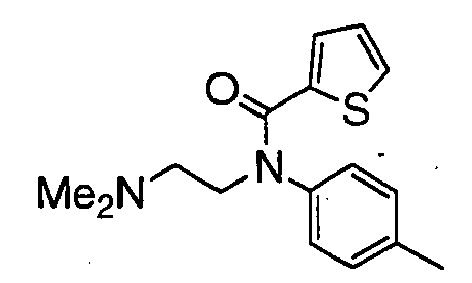
amorphous powder
MS (APCI) 639 [M+H]+15 
amorphous powder
MS (APCI) 623 [M+H]+16* 
amorphous powder
MS (APCI) 627 [M+H]+17* 
amorphous powder
MS (APCI) 625 [M+H]+*: hydrochloride
Me: methyl group, Et: ethyl group, t-Bu: tert-butyl groupTable 1 (No.3) 
Ex. Nos. R1 Physicochemical properties etc. 18* 
amorphous powder
MS (APCI) 602 [M+H]+19* 
amorphous powder
MS (APCI) 644 [M+H]+20* 
amorphous powder
MS (APCI) 644 [M+H]+21 
amorphous powder
MS (APCI) 656 [M+H]+22 
amorphous powder
MS (APCI) 529 [M+H]+23 
amorphous powder
MS (APCI) 585 [M+H]+*: hydrochloride
Me: methyl group, Et: ethyl groupTable 1 (No.4) 
Ex. Nos. R1 Physicochemical properties etc. 24 
amorphous powder
MS (APCI) 613 [M+H]+25 
amorphous powder
MS (APCI) 601 [M+H]+26 
amorphous powder
MS (APCI) 631 [M+H]+27 
amorphous powder
MS (APCI) 628 [M+H]+Me: methyl group, Et: ethyl group Table 1 (No.5) 
Ex. Nos. R1 Physicochemical properties etc. 28* 
amorphous powder
MS (APCI) 659 [M+H]+29* 
amorphous powder
MS (APCI) 661 [M+H]+30* 
amorphous powder
MS (APCI) 647 [M+H]+31* 
amorphous powder
MS (APCI) 673 [M+H]+32* 
amorphous powder
MS (APCI) 675 [M+H]+33* 
amorphous powder
MS (APCI) 633 [M+H]+*: hydrochloride
Me: methyl group, Et: ethyl groupTable 1 (No.6) 
Ex. Nos. R1 Physicochemical properties etc. 34* 
amorphous powder
MS (APCI) 625 [M+H]+35* 
amorphous powder
MS (APCI) 599 [M+H]+36* 
amorphous powder
MS (APCI) 627 [M+H]+37 
amorphous powder
MS (APCI) 629 [M+H]+38 
amorphous powder
MS (APCI) 657 [M+H]+39 
amorphous powder
MS (APCI) 615 [M+H]+*: hydrochloride
Me: methyl group, Et: ethyl groupTable 1 (No.7) 
Ex. Nos. R1 Physicochemical properties etc. 40 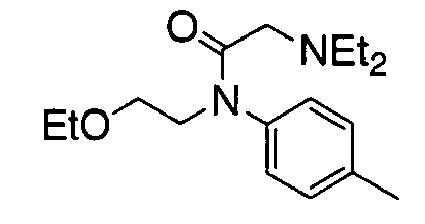
amorphous powder
MS (APCI) 643 [M+H]+41 
amorphous powder
MS (APCI) 557 [M+H]+42 
amorphous powder
MS (APCI) 585 [M+H]+43 
amorphous powder
MS (APCI) 599 [M+H]+44 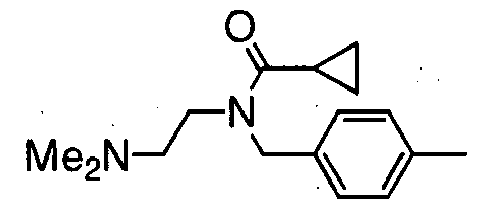
amorphous powder
MS (APCI) 611 [M+H]+Me: methyl group, Et: ethyl group Table 1 (No.8) 
Ex. Nos. R1 Physicochemical properties etc. 45 
amorphous powder
MS (APCI) 627 [M+H]+46 
amorphous powder
MS (APCI) 615 [M+H]+47 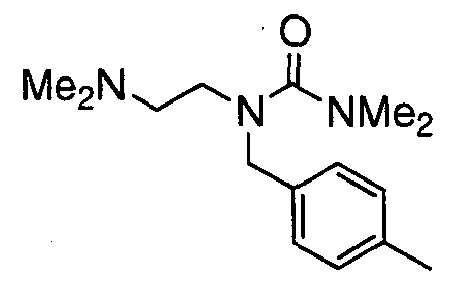
amorphous powder
MS (APCI) 614 [M+H]+48 
amorphous powder
MS (APCI) 645 [M+H]+49 
amorphous powder
MS (APCI) 642 [M+H]+Me: methyl group, Et: ethyl group Table 1 (No.9) 
Ex. Nos. R1 Physicochemical properties etc. 50 
amorphous powder
MS (APCI) 500 [M+H]+51 
amorphous powder
MS (APCI) 542 [M+H]+52 
amorphous powder
MS (APCI) 572 [M+H]+53 
amorphous powder
MS (APCI) 555 [M+H]+54 
amorphous powder
MS (APCI) 526 [M+H]+55 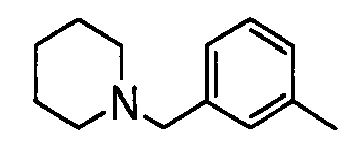
amorphous powder
MS (APCI) 540 [M+H]+Me: methyl group, Et: ethyl group Table 1 (No.10) 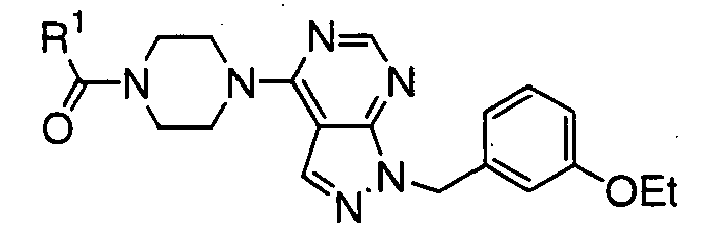
Ex. Nos. R1 Physicochemical properties etc. 56 
amorphous powder
MS (APCI) 571 [M+H]+57 
amorphous powder
MS (APCI) 585 [M+H]+58 
amorphous powder
MS (APCI) 625 [M+H]+Me: methyl group, Et: ethyl group Table 1 (No.11) 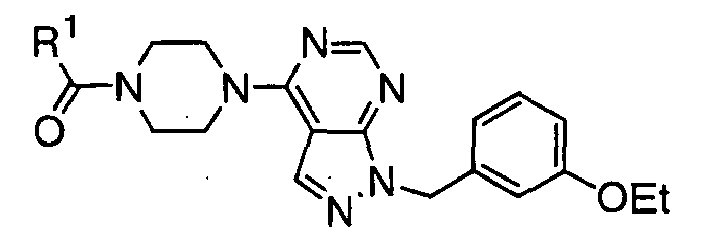
Ex. Nos. R1 Physicochemical properties etc. 59 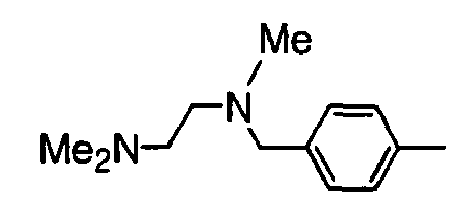
amorphous powder
MS (APCI) 557 [M+H]+60 
amorphous powder
MS (APCI) 585 [M+H]+61 
amorphous powder
MS (APCI) 599 [M+H]+62 
amorphous powder
MS (APCI) 639 [M+H]+63 
amorphous powder
MS (APCI) 528 [M+H]+Me: methyl group, Et: ethyl group Table 1 (No.12) 
Ex. Nos. R1 Physicochemical properties etc. 64 
amorphous powder
MS (APCI) 542 [M+H]+65 
amorphous powder
MS (APCI) 556 [M+H]+66 
amorphous powder
MS (APCI) 572 [M+H]+67 
amorphous powder
MS (APCI) 590 [M+H]+68 
amorphous powder
MS (APCI) 568 [M+H]+69 
amorphous powder
MS (APCI) 526 [M+H]+70 
amorphous powder
MS (APCI) 540 [M+H]+71 
amorphous powder
MS (APCI) 583 [M+H]+Me: methyl group, Et: ethyl group Table 1 (No. 13) 
Ex. Nos. R1 Physicochemical properties etc. 72 
amorphous powder
MS (APCI) 544 [M+H]+73 
amorphous powder
MS (APCI) 686 [M+H]+74 
amorphous powder
MS (APCI) 665 [M+H]+75 
amorphous powder
MS (APCI) 501 [M+H]+76* 
amorphous powder
MS (APCI) 515 [M+H]+*: hydrochloride, Me: methyl group, Et: ethyl group,
Boc: tert-butoxycarbonyl groupTable 1 (No.14) 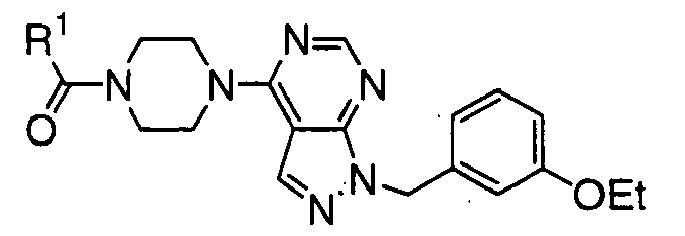
Ex. Nos. R1 Physicochemical properties etc. 77* 
amorphous powder
MS (APCI) 529 [M+H]+78* 
amorphous powder
MS (APCI) 527 [M+H]+79* 
amorphous powder
MS (APCI) 541 [M+H]+80* 
amorphous powder
MS (APCI) 556 [M+H]+81* 
amorphous powder
MS (APCI) 572 [M+H]+82* 
amorphous powder
MS (APCI) 529 [M+H]+83* 
amorphous powder
MS(APCI)575[M+H]+*: hydrochloride
Me: methyl group, Et: ethyl group - The corresponding materials are treated in the same manner as described in Example 2 to give the compounds as shown in the following Table 2.
Table 2 
Ex. Nos. R1-Y- Physicochemical properties etc. 84 
amorphous powder
MS (APCI) 492 [M+H]+85 
amorphous powder
MS (APCI) 492 [M+H]+86 
amorphous powder
MS (APCI) 541 [M+H]+87 
amorphous powder
MS (APCI) 452 [M+H]+88 
amorphous powder
MS (APCI) 506 [M+H]+89 
amorphous powder
MS (APCI) 520 [M+H]+90 
amorphous powder
MS (APCI) 506 [M+H]+91 
amorphous powder
MS (APCI) 492 [M+H]+92 
amorphous powder
MS (APCI) 534 [M+H]+Me: methyl group, Et: ethyl group - The corresponding materials are treated in the same manner as described in Example 3, or Examples 3 and 5(2) to give the compounds as shown in the following Table 3.
Table 3 (No.1) 
Ex. Nos. -Q-R2 Physicochemical properties etc. 93* 
amorphous powder
MS (APCI) 662 [M+H]+94* 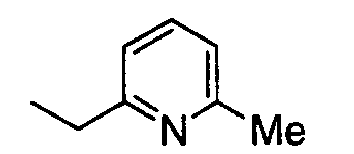
amorphous powder
MS (APCI) 643 [M+H]+95* 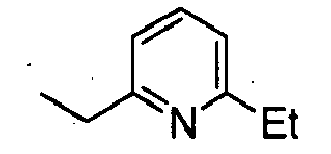
amorphous powder
MS (APCI) 657 [M+H]+96* 
amorphous powder
MS (APCI) 642 [M+H]+97* 
amorphous powder
MS (APCI) 673 [M+H]+98* 
amorphous powder
MS (APCI) 672 [M+H]+99* 
amorphous powder
MS (APCI) 712 [M+H]+*: fumarate
Me: methyl group, Et: ethyl groupTable 3 (No.2) 
Ex. Nos. -Q-R2 Physicochemical properties etc. 100* 
amorphous powder
MS (APCI) 660 [M+H]+101* 
amorphous powder
MS (APCI) 677 [M+H]+102* 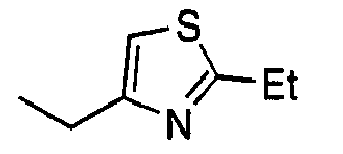
amorphous powder
MS (APCI) 663 [M+H]+103* 
amorphous powder
MS (APCI) 671 [M+H]+104* 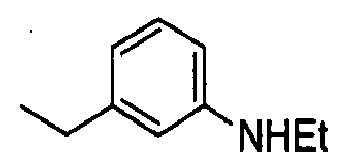
amorphous powder
MS (APCI) 671 [M+H]+105* 
amorphous powder
MS (APCI) 678 [M+H]+*: fumarate
Me: methyl group, Et: ethyl group, nPr: n-propyl groupTable 3 (No.3) 
Ex. Nos. -Q-R2 Physicochemical properties etc. 106 
amorphous powder
MS (APCI) 499 [M+H]+107 
amorphous powder
MS (APCI) 501 [M+H]+108 
amorphous powder
MS (APCI) 540 [M+H]+109 
amorphous powder
MS (APCI) 488 [M+H]+110 
amorphous powder
MS (APCI) 505 [M+H]+Me: methyl group, Et: ethyl group, nPr: n-propyl group Table 3 (No.4) 
Ex. Nos. -Q-R2 Physicochemical properties etc. 111* 
amorphous powder
MS (APCI) 618 [M+H]+112* 
amorphous powder
MS (APCI) 613 [M+H]+113* 
amorphous powder
MS (APCI) 599 [M+H]+114* 
amorphous powder
MS (APCI) 627 [M+H]+115* 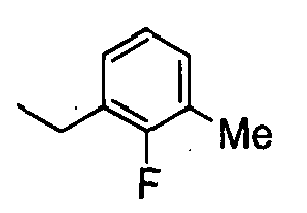
amorphous powder
MS (APCI) 616 [M+H]+116* 
amorphous powder
MS (APCI) 629 [M+H]+117* 
amorphous powder
MS (APCI) 598 [M+H]+*: fumarate
Me: methyl group, Et: ethyl group, nPr: n-propyl groupTable 3 (No.5) 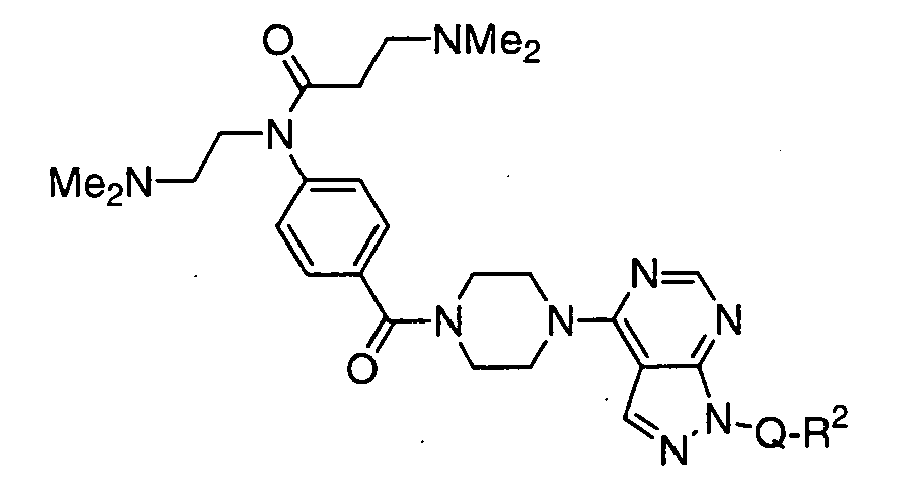
Ex. Nos. -Q-R2 Physicochemical properties etc. 118* 
amorphous powder
MS (APCI) 668 [M+H]+119* 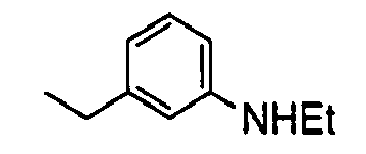
amorphous powder
MS (APCI) 627 [M+H]+120* 
amorphous powder
MS (APCI) 634 [M+H]+121* 
amorphous powder
MS (APCI) 619 [M+H]+122* 
amorphous powder
MS (APCI) 633 [M+H]+*: fumarate
Me: methyl group, Et: ethyl group, nPr: n-propyl groupTable 3 (No.6) 
Ex.Nos. R1-Y- Physicochemical properties etc. 123 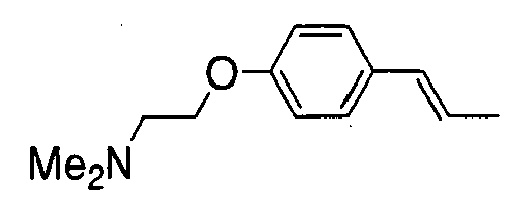
amorphous powder
MS (APCI) 556 [M+H]+124 
amorphous powder
MS (APCI) 570 [M+H]+125 
amorphous powder
MS (APCI) 628 [M+H]+126 
amorphous powder
MS (APCI) 530 [M+H]+127 
amorphous powder
MS (APCI) 570 [M+H]+128 
amorphous powder
MS (APCI) 500 [M+H]+129 
amorphous powder
MS (APCI) 541 [M+H]+Me: methyl group, Et: ethyl group - The corresponding materials are treated in the same manner as described in Examples 4 and 5(2) to give the compounds as shown in the following Table 4.
Table 4 
Ex. Nos. R1 Physicochemical properties etc. 130* 
amorphous powder
MS (APCI) 597 [M+H]+131* 
amorphous powder
MS (APCI) 583 [M+H]+132* 
amorphous powder
MS (APCI) 611 [M+H]+133* 
amorphous powder
MS (APCI) 599 [M+H]+*: hydrochloride
Me: methyl group, Et: ethyl group - The corresponding materials are treated in the same manner as described in Example 6 to give the compounds as shown in the following Table 5.
Table 5 
Ex. Nos. R1 Physicochemical properties etc. 134 
amorphous powder
MS (APCI) 527 [M+H]+135 
amorphous powder
MS (APCI) 529 [M+H]+136 
amorphous powder
MS (APCI) 557 [M+H]+137 
amorphous powder
MS (APCI) 530 [M+H]+138 
amorphous powder
MS (APCI) 560 [M+H]+139 
amorphous powder
MS (APCI) 587 [M+H]+Me: methyl group, Et: ethyl group - The corresponding materials are treated in the same manner as described in either one of Examples 1 to 6 to give the compounds as shown in the following Table 6.
Table 6 (No.1) 
Ex. Nos. R1-Y- Physicochemical properties etc. 140 
amorphous powder
MS (APCI) 628 [M+H]+141 
amorphous powder
MS (APCI) 598 [M+H]+142 
amorphous powder
MS (APCI) 530 [M+H]+143 
amorphous powder
MS (APCI) 602 [M+H]+144 
amorphous powder
MS (APCI) 486 [M+H]+145 
amorphous powder
MS (APCI) 486 [M+H]+Table 6 (No.2) 
Ex. Nos. R1-Y- Physicochemical properties etc. 146 
amorphous powder
MS (APCI) 500 [M+H]+147 
amorphous powder
MS (APCI) 536 [M+H]+148 
amorphous powder
MS (APCI) 512 [M+H]+149 
amorphous powder
MS (APCI) 530 [M+H]+150 
amorphous powder
MS (APCI) 528 [M+H]+151 
colorless liquid
MS (APCI) 478 [M+H]+Table 6 (No.3) 
Ex. Nos. R1- Y- Physicochemical properties etc. 152 
amorphous powder
MS (APCI) 542 [M+H]+153 
amorphous powder
MS (APCI) 544 [M+H]+154 
amorphous powder
MS (APCI) 542 [M+H]+155 
amorphous powder
MS (APCI) 542 [M+H]+Table 6 (No.4) 
Ex. Nos. R1- Y- Physicochemical properties etc. 156 
amorphous powder
MS (APCI) 556 [M+H]+157 
colorless liquid
MS (APCI) 675 [M+H]+158 
amorphous powder
MS (APCI) 689 [M+H]+159 
colorless liquid
MS (APCI) 641 [M+H]+160* 
amorphous powder
MS (APCI) 599 [M+H]+*: hydrochloride Table 6 (No.5) 
Ex. Nos. R2 Physicochemical properties etc. 161 
amorphous powder
MS (APCI) 471 [M+H]+162 
amorphous powder
MS (APCI) 485 [M+H]+163 
amorphous powder
MS (APCI) 470 [M+H]+164 
amorphous powder
MS (APCI) 491 [M+H]+Table 6 (No.6) 
Ex. Nos. R1 Physicochemical properties etc. 165 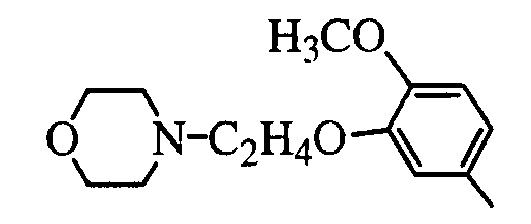
amorphous powder
MS (APCI) 587 [M+H]+166 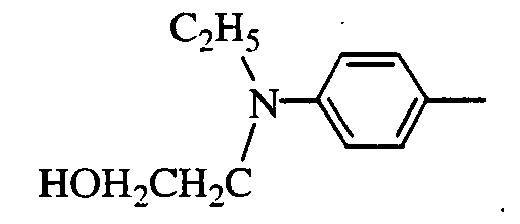
amorphous powder
MS (APCI) 516 [M+H]+167 
amorphous powder
MS (APCI) 614 [M+H]+168 
amorphous powder
MS (APCI) 516 [M+H]+169 
amorphous powder
MS (APCI) 502 [M+H]+Table 6 (No.7) 
Ex. Nos. R1 Physicochemical properties etc. 170 
amorphous powder
MS (APCI) 571 [M+H]+171 
amorphous powder
MS (APCI) 583 [M+H]+172 
amorphous powder
MS (APCI) 599 [M+H]+173 
amorphous powder
MS (APCI) 587 [M+H]+174 
amorphous powder
MS (APCI) 558 [M+H]+175 
amorphous powder
MS (APCI) 588 [M+H]+Table 6 (No.8) 
Ex. Nos. R1 Physicochemical properties etc. 176 
amorphous powder
MS (APCI) 558 [M+H]+177 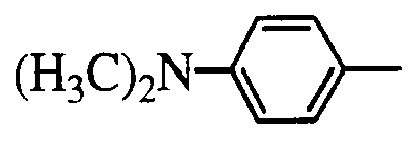
amorphous powder
MS (APCI) 472 [M+H]+178 
amorphous powder
MS (APCI) 500 [M+H]+179 
amorphous powder
MS (APCI) 514 [M+H]+180 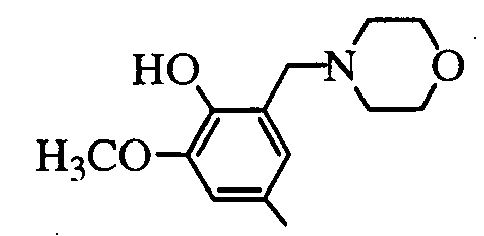
amorphous powder
MS (APCI) 574 [M+H]+181 
amorphous powder
MS (APCI) 532 [M+H]+ - The corresponding materials are treated in the same manner as described in Example 1, or Examples 1 and 4(3) to give the compounds as shown in the following Table 7.
Table 7 (No. 1) 
Ex. Nos. R1 Physicochemical properties etc. 182 
amorphous powder
MS (APCI) 557 [M+H]+183 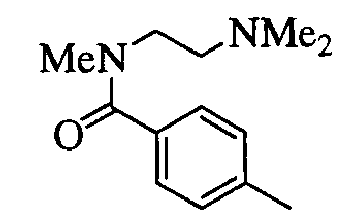
amorphous powder
MS (APCI) 571 [M+H]+184 
amorphous powder
MS (APCI) 571 [M+H]+185 
amorphous powder
MS (APCI) 594 [M+H]+Me: methyl group, Et: ethyl group Table 7 (No.2) 
Ex. Nos. R1 Physicochemical properties etc. 186 
amorphous powder
MS (APCI) 571 [M+H]+187 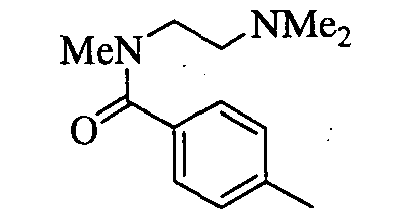
amorphous powder
MS (APCI) 585 [M+H]+188 
amorphous powder
MS (APCI) 585 [M+H]+189 
amorphous powder
MS (APCI) 608 [M+H]+Me: methyl group, nPr: n-propyl group Table 7 (No.3) 
Ex. Nos. R1 Physicochemical properties etc. 190* 
amorphous powder
MS (APCI) 665 [M+H]+191* 
amorphous powder
MS (APCI) 653 [M+H]+192* 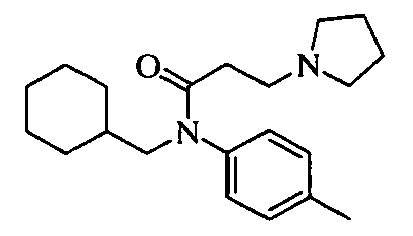
amorphous powder
MS (APCI) 679 [M+H]+193* 
amorphous powder
MS (APCI) 681 [M+H]+194* 
amorphous powder
MS (APCI) 557 [M+H]+195* 
amorphous powder
MS (APCI) 583 [M+H]+*: hydrochloride
Me: methyl group, Et: ethyl groupTable 7 (No.4) 
Ex. Nos. R1 Physicochemical properties etc. 196* 
amorphous powder
MS (APCI) 571 [M+H]+197* 
amorphous powder
MS (APCI) 597 [M+H]+198* 
amorphous powder
MS (APCI) 599 [M+H]+199 
amorphous powder
MS (APCI) 639 [M+H]+200* 
amorphous powder
MS (APCI) 667 [M+H]+*: hydrochloride
Me: methyl group, Et: ethyl groupTable 7 (No.5) 
Ex. Nos. R1 Physicochemical properties etc. 201** 
amorphous powder
MS (APCI) 578/580 [M+H]+202** 
amorphous powder
MS (APCI) 606/608 [M+H]+203** 
amorphous powder
MS (APCI) 604/606 [M+H]+204** 
amorphous powder
MS (APCI) 514 [M+H]+**: dihydrochloride
Me: methyl group, Et: ethyl groupTable 7 (No.6) 
Ex. Nos. R1-Y- Physicochemical properties etc. 205** 
amorphous powder
MS (APCI) 535 [M+H]+206 
amorphous powder
MS (APCI) 549 [M+H]+207** 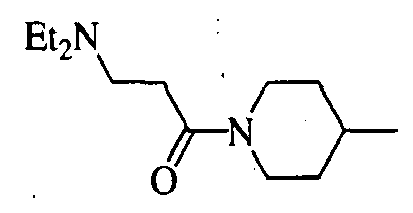
amorphous powder
MS (APCI) 577 [M+H]+208** 
amorphous powder
MS (APCI) 549 [M+H]+209** 
amorphous powder
MS (APCI) 577 [M+H]+210** 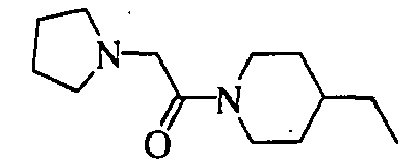
amorphous powder
MS (APCI) 575 [M+H]+211** 
amorphous powder
MS (APCI) 563 [M+H]+212** 
amorphous powder
MS (APCI) 591 [M+H]+**: dihydrochloride
Me: methyl group, Et: ethyl groupTable 7 (No.7) 
Ex. Nos. R1-Y- Physicochemical properties etc. 213 
amorphous powder
MS (APCI) 563 [M+H]+214 
amorphous powder
MS (APCI) 591 [M+H]+215 
amorphous powder
MS (APCI) 589 [M+H]+216** 
amorphous powder
MS (APCI) 603 [M+H]+217 
amorphous powder
MS (APCI) 563 [M+H]+218 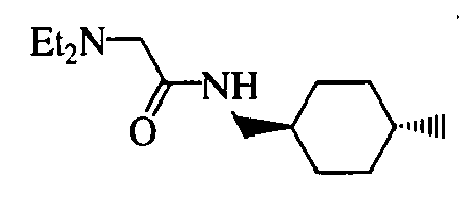
amorphous powder
MS (APCI) 591 [M+H]+219 
amorphous powder
MS (APCI) 589 [M+H]+**: dihydrochloride
Me: methyl group, Et: ethyl groupTable 7 (No.8) 
Ex. Nos. R1-Y- Physicochemical properties etc. 220** 
amorphous powder
MS (APCI) 542 [M+H]+221** 
amorphous powder
MS (APCI) 540 [M+H]+222** 
amorphous powder
MS (APCI) 554 [M+H]+223** 
amorphous powder
MS (APCI) 542 [M+H]+224** 
amorphous powder
MS (APCI) 514 [M+H]+225** 
amorphous powder
MS (APCI) 528 [M+H]+226** 
amorphous powder
MS (APCI) 542 [M+H]+**: dihydrochloride
Me: methyl group, Et: ethyl groupTable 7 (No.9) 
Ex. Nos. R1 Physicochemical properties etc. 227** 
amorphous powder
MS (APCI) 540 [M+H]+228** 
amorphous powder
MS (APCI) 554 [M+H]+229* 
amorphous powder
MS (APCI) 554 [M+H]+230* 
amorphous powder
MS (APCI) 556 [M+H]+231* 
amorphous powder
MS (APCI) 570 [M+H]+232* 
amorphous powder
MS (APCI) 556 [M+H]+233* 
amorphous powder
MS (APCI) 555 [M+H]+*: hydrochloride, **: dihydrochloride
Me: methyl group, Et: ethyl groupTable 7 (No. 10) 
Ex. Nos. R1 Physicochemical properties etc. 234* 
amorphous powder
MS (APCI) 629 [M+H]+235* 
amorphous powder
MS (APCI) 627 [M+H]+236** 
amorphous powder
MS (APCI) 540 [M+H]+237** 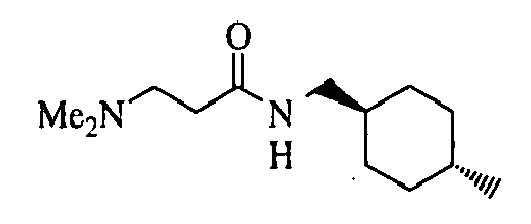
amorphous powder
MS (APCI) 577 [M+H]+238** 
amorphous powder
MS (APCI) 542 [M+H]+*: hydrochloride, **: dihydrochloride
Me: methyl group, Et: ethyl groupTable 7 (No.11) 
Ex. Nos. R1-Y- Physicochemical properties etc. 239* 
amorphous powder
MS (APCI) 478 [M+H]+240* 
amorphous powder
MS (APCI) 532 [M+H]+241* 
amorphous powder
MS (APCI) 520 [M+H]+242* 
amorphous powder
MS (APCI) 522 [M+H]+243* 
amorphous powder
MS (APCI) 534 [M+H]+244* 
amorphous powder
MS (APCI) 546 [M+H]+245* 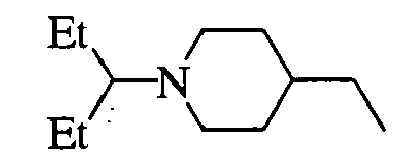
amorphous powder
MS (APCI) 534 [M+H]+*: hydrochloride
Me: methyl group, Et: ethyl group, nPr: n-propyl group, nBu: n-butyl groupTable 7 (No.12) 
Ex. Nos. R1-Y- Physicochemical properties etc. 246* 
amorphous powder
MS (APCI) 492 [M+H]+247* 
amorphous powder
MS (APCI) 506 [M+H]+248* 
amorphous powder
MS (APCI) 549 [M+H]+249* 
amorphous powder
MS (APCI) 536 [M+H]+250* 
amorphous powder
MS (APCI) 535 [M+H]+251* 
amorphous powder
MS (APCI) 535 [M+H]+252* 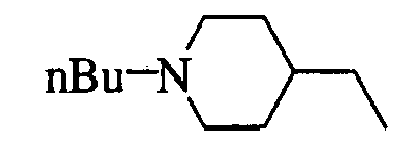
amorphous powder
MS (APCI) 520 [M+H]+*: hydrochloride
Me: methyl group, Et: ethyl group, nBu: n-butyl groupTable 7 (No.13) 
Ex. Nos. R1-Y- Physicochemical properties etc. 253* 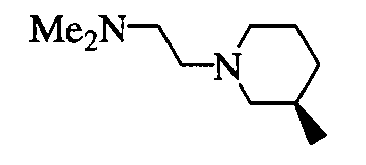
amorphous powder
MS (APCI) 521 [M+H]+254* 
amorphous powder
MS (APCI) 507 [M+H]+255* 
amorphous powder
MS (APCI) 533 [M+H]+256* 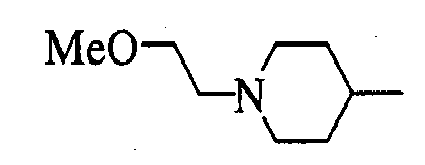
amorphous powder
MS (APCI) 508 [M+H]+257 
amorphous powder
MS (APCI) 635 [M+H]+*: hydrochloride
Me: methyl group, Et: ethyl group, Boc: tert-butoxycarbonyl groupTable 7 (No.14) 
Ex. Nos. R1-Y- Physicochemical properties etc. 258* 
amorphous powder
MS (APCI) 520 [M+H]+259* 
amorphous powder
MS (APCI) 508 [M+H]+260* 
amorphous powder
MS (APCI) 510 [M+H]+261* 
amorphous powder
MS (APCI) 536 [M+H]+262* 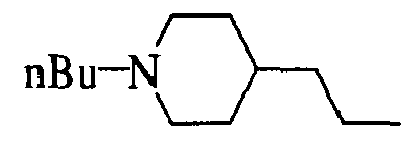
amorphous powder
MS (APCI) 522 [M+H]+263* 
amorphous powder
MS (APCI) 537 [M+H]+264* 
amorphous powder
MS (APCI) 522 [M+H]+265* 
amorphous powder
MS (APCI) 480 [M+H]+*: hydrochloride
Me: methyl group, Et: ethyl group, nPr: n-propyl group, nBu: n-butyl groupTable 7 (No.15) 
Ex. Nos. R1-Y- Physicochemical properties etc. 266* 
amorphous powder
MS (APCI) 494 [M+H]+267* 
amorphous powder
MS (APCI) 534 [M+H]+268* 
amorphous powder
MS (APCI) 524 [M+H]+269* 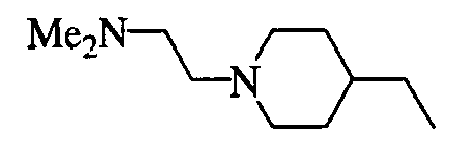
amorphous powder
MS (APCI) 523 [M+H]+270* 
amorphous powder
MS (APCI) 495 [M+H]+271* 
amorphous powder
MS (APCI) 523 [M+H]+272* 
amorphous powder
MS (APCI) 521 [M+H]+*: hydrochloride
Me: methyl group, Et: ethyl groupTable 7 (No.16) 
Ex. Nos. R1-Y Physicochemical properties etc. 273* 
amorphous powder
MS (APCI) 537 [M+H]+274* 
amorphous powder
MS (APCI) 525 [M+H]+275* 
amorphous powder
MS (APCI) 553 [M+H]+276* 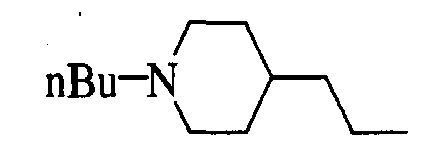
amorphous powder
MS (APCI) 539 [M+H]+277* 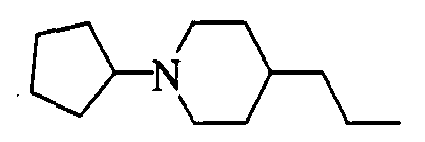
amorphous powder
MS (APCI) 551 [M+H]+278* 
amorphous powder
MS (APCI) 539 [M+H]+279* 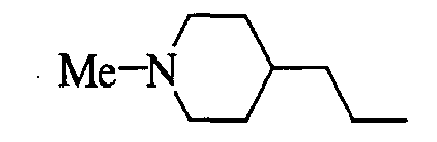
amorphous powder
MS (APCI) 497 [M+H]+280* 
amorphous powder
MS (APCI) 511 [M+H]+*: hydrochloride
Me: methyl group, Et: ethyl group, nPr: n-propyl group, nBu: n-butyl groupTable 7 (No.17) 
Ex. Nos. R1-Y Physicochemical properties etc. 281* 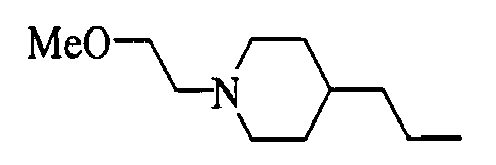
amorphous powder
MS (APCI) 541 [M+H]+282* 
amorphous powder
MS (APCI) 540 [M+H]+283* 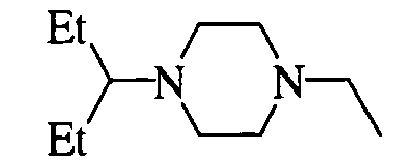
amorphous powder
MS (APCI) 540 [M+H]+284* 
amorphous powder
MS (APCI) 525 [M+H]+285* 
amorphous powder
MS (APCI) 512 [M+H]+286* 
amorphous powder
MS (APCI) 538 [M+H]+287* 
amorphous powder
MS (APCI) 554 [M+H]+*: hydrochloride
Me: methyl group, Et: ethyl group, nPr: n-propyl group, nBu: n-butyl groupTable 7 (No.18) 
Ex. Nos. R1-Y- Physicochemical properties etc. 288* 
amorphous powder
MS (APCI) 531 [M+H]+289* 
amorphous powder
MS (APCI) 547 [M+H]+290* 
amorphous powder
MS (APCI) 533 [M+H]+291* 
amorphous powder
MS (APCI) 519 [M+H]+292* 
amorphous powder
MS (APCI) 545 [M+H]+293* 
amorphous powder
MS (APCI) 533 [M+H]+294* 
amorphous powder
MS (APCI) 491 [M+H]+*: hydrochloride,
Me: methyl group, Et: ethyl group, nPr: n-propyl group, nBu: n-butyl groupTable 7 (No.19) 
Ex. Nos. R1-Y Physicochemical properties etc. 295* 
amorphous powder
MS (APCI) 505 [M+H]+296* 
amorphous powder
MS (APCI) 548 [M+H]+297* 
amorphous powder
MS (APCI) 535 [M+H]+298* 
amorphous powder
MS (APCI) 534 [M+H]+299* 
amorphous powder
MS (APCI) 519 [M+H]+300* 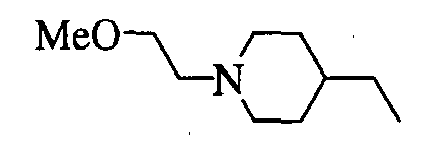
amorphous powder
MS (APCI) 521 [M+H]+301* 
amorphous powder
MS (APCI) 532 [M+H]+*: hydrochloride
Me: methyl group, Et: ethyl group, nPr: n-propyl group, nBu: n-butyl groupTable 7 (No. 20) 
Ex. Nos. R1 Physicochemical properties etc. 302* 
amorphous powder
MS (APCI) 556 [M+H]+303** 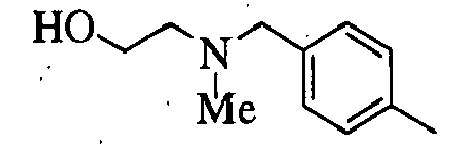
amorphous powder
MS (APCI) 530 [M+H]+304* 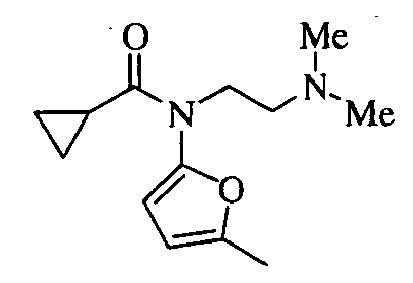
amorphous powder
MS (APCI) 587 [M+H]+305* 
amorphous powder
MS (APCI) 577 [M+H]+306* 
amorphous powder
MS (APCI) 603 [M+H]+*: hydrochloride, **: dihydrochloride
Me: methyl group, Et: ethyl groupTable 7 (No. 21) 
Ex. Nos. R1 Physicochemical properties etc. 307* 
amorphous powder
MS (APCI) 603 [M+H]+308* 
amorphous powder
MS (APCI) 634 [M+H]+309* 
amorphous powder
MS (APCI) 608 [M+H]+310* 
amorphous powder
MS (APCI) 617 [M+H]+311* 
amorphous powder
MS (APCI) 563 [M+H]+312* 
amorphous powder
MS (APCI) 577 [M+H]+*: hydrochloride
Me: methyl group, Et: ethyl groupTable 7 (No. 22) 
Ex. Nos. R1-Y- Physicochemical properties etc. 313* 
amorphous powder
MS (APCI) 575 [M+H]+314* 
amorphous powder
MS (APCI) 521 [M+H]+315 
amorphous powder
MS (APCI) 521 [M+H]+316* 
amorphous powder
MS (APCI) 506 [M+H]+317* 
amorphous powder
MS (APCI) 536.5 [M+H]+318 
amorphous powder
MS (APCI) 518 [M+H]+*: hydrochloride
Me: methyl group, Et: ethyl groupTable 7 (No. 23) 
Ex. Nos. R1 Physicochemical properties etc. 319* 
amorphous powder
MS (APCI) 602 [M+H]+320* 
amorphous powder
MS (APCI) 592 [M+H]+321* 
amorphous powder
MS (APCI) 628 [M+H]+322* 
amorphous powder
MS (APCI) 576 [M+H]+323* 
amorphous powder
MS (APCI) 607 [M+H]+324* 
amorphous powder
MS (APCI) 602 [M+H]+*: hydrochloride
Me: methyl group, Et: ethyl group, nPr: n-propyl groupTable 7 (No. 24) 
Ex. Nos. R1 Physicochemical properties etc. 325* 
amorphous powder
MS (APCI) 598 [M+H]+326* 
amorphous powder
MS (APCI) 588 [M+H]+327* 
amorphous powder
MS (APCI) 624 [M+H]+328* 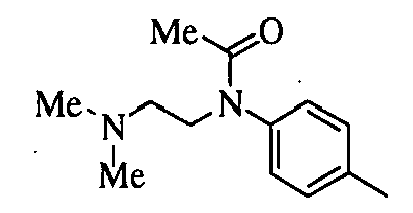
amorphous powder
MS (APCI) 572 [M+H]+329* 
amorphous powder
MS (APCI) 603 [M+H]+330* 
amorphous powder
MS (APCI) 598 [M+H]+*: hydrochloride
Me: methyl group, Et: ethyl groupTable 7 (No. 25) 
Ex. Nos. R1 Physicochemical properties etc. 331* 
amorphous powder
MS (APCI) 596 [M+H]+332* 
amorphous powder
MS (APCI) 586 [M+H]+333* 
amorphous powder
MS (APCI) 622 [M+H]+334* 
amorphous powder
MS (APCI) 570 [M+H]+335* 
amorphous powder
MS (APCI) 601 [M+H]+336* 
amorphous powder
MS (APCI) 596 [M+H]+*: hydrochloride
Me: methyl group, Et: ethyl group, nPr: n-propyl groupTable 7 (No. 26) 
Ex. Nos. R1 Physicochemical properties etc. 337* 
amorphous powder
MS (APCI) 585 [M+H]+338* 
amorphous powder
MS (APCI) 575 [M+H]+339* 
amorphous powder
MS (APCI) 559 [M+H]+340* 
amorphous powder
MS (APCI) 590 [M+H]+341* 
amorphous powder
MS (APCI) 585 [M+H]+*: hydrochloride
Me: methyl group - The corresponding materials are treated in the same manner as described in Example 2 to give the compound as shown in the following Table 8.
Table 8 
Ex. Nos. R1-Y- Physicochemical properties etc. 342 
amorphous powder
MS (APCI) 518 [M+H]+Me: methyl group, Et: ethyl group - The corresponding materials are treated in the same manner as described in Example 3, or Examples 3 and 4(3) to give the compounds as shown in the following Table 9.
Table 9 (No. 1) 
Ex. Nos. -Q-R2 Physicochemical properties etc. 343 
oil
MS (APCI) 529 [M+H]+344 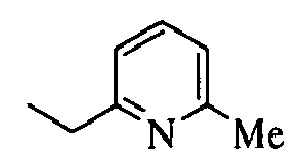
amorphous powder
MS (APCI) 501 [M+H]+345 
amorphous powder
MS (APCI) 515 [M+H]+346 
amorphous powder
MS (APCI) 500 [M+H]+347 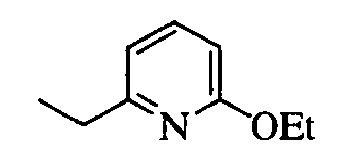
amorphous powder
MS (APCI) 531 [M+H]+348 
amorphous powder
MS (APCI) 570 [M+H]+349 
amorphous powder
MS (APCI) 518 [M+H]+Me: methyl group, Et: ethyl group, nPr: n-propyl group Table 9 (No. 2) 
Ex. Nos. -Q-R2 Physicochemical properties etc. 350 
amorphous powder
MS (APCI) 535 [M+H]+351 
oil
MS (APCI) 521 [M+H]+352 
oil
MS (APCI) 544 [M+H]+Me: methyl group, Et: ethyl group, nPr: n-propyl group Table 9 (No. 3) 
Ex. Nos. R1 Physicochemical properties etc. 353** 
amorphous powder
MS (APCI) 530 [M+H]+354** 
amorphous powder
MS (APCI) 544 [M+H]+355** 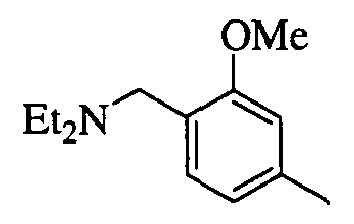
amorphous powder
MS (APCI) 558 [M+H]+356** 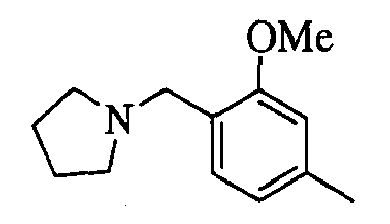
amorphous powder
MS (APCI) 556 [M+H]+357** 
amorphous powder
MS (APCI) 570 [M+H]+358** 
amorphous powder
MS (APCI) 558 [M+H]+**: dihydrochloride
Me: methyl group, Et: ethyl groupTable 9 (No. 4) 
Ex. Nos. R1 Physicochemical properties etc. 359** 
amorphous powder
MS (APCI) 506 [M+H]+360** 
amorphous powder
MS (APCI) 534 [M+H]+361** 
amorphous powder
MS (APCI) 532 [M+H]+362** 
amorphous powder
MS (APCI) 490 [M+H]+363** 
amorphous powder
MS (APCI) 518 [M+H]+364** 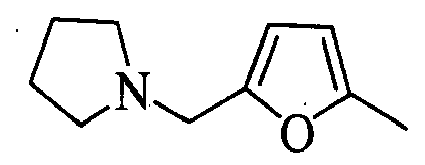
amorphous powder
MS (APCI) 516 [M+H]+**: dihydrochloride, Me: methyl group, Et: ethyl group Table 9 (No. 5) 
Ex. Nos. R1 Physicochemical properties etc. 365** 
amorphous powder
MS (APCI) 518 [M+H]+**: dihydrochloride, Me: methyl group - To a solution of tert-butyl 4-[N-acetyl-N-[2-(1-pyrrolidinyl)ethyl]amino]-benzoic acid (37 mg, compound obtained in Reference Example 107) in methylene chloride (0.2 mL) is added trifluoroacetic acid (0.2 mL), and the mixture is shaken at room temperature for one day. The reaction mixture is concentrated and the residue is subjected to azeotropic distillation successively with chloroform, 4N HCl-dioxane and chloroform to give 4-[N-acetyl-N-[2-(1-pyrrolidinyl)ethyl]amino]benzoate hydrochloride. The product and 1-(3-ethoxybenzyl)-4-piperazin-1-yl-1H-pyrazolo[3,4-d]pyrimidine dihydrochloride are treated in the same manner (condensation reaction) as described in Example 3 and then the resultant product is treated in the same manner as described in Example 4(3) to give 1-(3-ethoxybenzyl)-4-[4-[4-[N-acetyl-N-[2-(1-pyrrolidinyl)ethyl]amino]benzoyl]piperazin-1-yl]-1H-pyrazolo[3,4-d]pyrimidine hydrochloride (15 mg, yield; 21 %) as an amorphous powder. MS (APCI) m/z; 597 [M+H]+
- The corresponding materials are treated in the same manner as describe in Example 366 to give the compounds as shown in the following Table 9.1.
Table 9.1 (No. 1) 
Ex. Nos. R1 Physicochemical properties etc. 367 
amorphous powder
MS (APCI) 637 [M+H]+368* 
amorphous powder
MS (APCI) 627 [M+H]+369* 
amorphous powder
MS (APCI) 639 [M+H]+370* 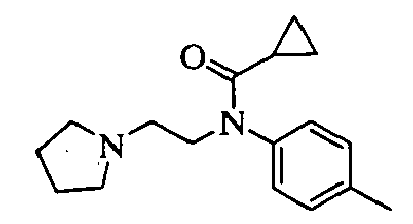
amorphous powder
MS (APCI) 623 [M+H]+371* 
amorphous powder
MS (APCI) 629 [M+H]+372* 
amorphous powder
MS (APCI) 599 [M+H]+*: hydrochloride
Me: methyl group, Et: ethyl groupTable 9.1 (No. 2) 
Ex. Nos. R1 Physicochemical properties etc. 373* 
amorphous powder
MS (APCI) 649 [M+H]+374* 
amorphous powder
MS (APCI) 585 [M+H]+375* 
amorphous powder
MS (APCI) 627 [M+H]+376* 
amorphous powder
MS (APCI) 611 [M+H]+377* 
amorphous powder
MS (APCI) 615 [M+H]+378* 
amorphous powder
MS (APCI) 641 [M+H]+*: hydrochloride
Me: methyl group, Et: ethyl groupTable 9.1 (No. 3) 
Ex. Nos. R1 Physicochemical properties etc. 379 
amorphous powder
MS (APCI) 625 [M+H]+380 
amorphous powder
MS (APCI) 651 [M+H]+Me: methyl group, Et: ethyl group -
- (1) To 4-hydroxybenzoic acid (1.06 g) is added successively methylene chloride (30 mL), 1-(3-ethoxybenzyl)-4-piperazin-1-yl-1H-pyrazolo[3,4-d]pyrimidine dihydrochloride (3.02 g), 1-hydroxybenzotriazole (1.25 g), triethylamine (3.7 mL) and 1-ethyl-3-(3-dimethylaminopropyl)carbodiimide hydrochloride (1.78 g). The mixture is stirred at room temperature for 17 hours. The reaction mixture is diluted with chloroform and thereto is added a saturated sodium hydrogencarbonate solution. After stirring, the organic layer is separated and evaporated to remove solvent. The resultant residue is purified by flash column chromatography on silica gel (Solvent; chloroform : methanol = 50 : 1) to give 1-(3-ethoxybenzyl)-4-[4-(4-hydroxybenzoyl)piperazin-1-yl]-1H-pyrazolo[3,4-d]pyrimidine (2.70 g, yield; 80%) as an amorphous powder. MS (APCI) m/z: 459 [M+H]+
- (2) To a solution of the compound obtained in the above step (1) (250 mg), 3-dimethylamino-2,2-dimethyl-1-propanol (215 mg), and triphenylphosphine (429 mg) in tetrahydrofuran (4.0 mL) is added dropwise diisopropyl azodicarboxylate (330 mg) under ice-cooling and the mixture is stirred at room temperature overnight. The reaction mixture is diluted with methylene chloride (4 mL) and treated with cation-exchange resin (ISOLUTE SCX; IST Ltd., Solvent; methanol : methylene chloride = 1 : 1 → 1N ammonia/methanol). The resultant crude product is purified by flash column chromatography on silica gel (Solvent; chloroform : methanol = 10 : 1) and then the product is treated in the same manner as described in Example 4(3) to give 1-(3-ethoxybenzyl)-4-[4-[4-[3-(dimethylamino)-2,2-dimethylpropyloxy]benzoyl]piperazin-1-yl]-1H-pyrazolo[3,4-d]pyrimidine hydrochloride (257 mg, yield; 78%) as an amorphous powder. MS (APCI) m/z: 572 [M+H]+
- The corresponding materials are treated in the same manner as described in Example 381 to give the compounds as shown in the following Table 10.
Table 10 (No. 1) 
Ex. Nos. R1 Physicochemical properties etc. 382* 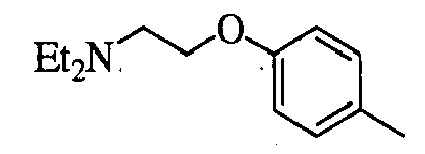
amorphous powder
MS (APCI) 558 [M+H]+383* 
amorphous powder
MS (APCI) 558 [M+H]+384* 
amorphous powder
MS (APCI) 572 [M+H]+385* 
amorphous powder
MS (APCI) 556 [M+H]+386* 
amorphous powder
MS (APCI) 572 [M+H]+387* 
amorphous powder
MS (APCI) 556 [M+H]+388* 
amorphous powder
MS (APCI) 612 [M+H]+*: hydrochloride
Me: methyl group, Et: ethyl groupTable 10 (No. 2) 
Ex. Nos. R1 Physicochemical properties etc. 389* 
amorphous powder
MS (APCI) 606 [M+H]+390* 
amorphous powder
MS (APCI) 570 [M+H]+391* 
amorphous powder
MS (APCI) 598 [M+H]+392* 
amorphous powder
MS (APCI) 553 [M+H]+393* 
amorphous powder
MS (APCI) 544 [M+H]+394* 
amorphous powder
MS (APCI) 586 [M+H]+395* 
amorphous powder
MS (APCI) 586 [M+H]+*: hydrochloride
Me: methyl group, Et: ethyl groupTable 10 (No. 3) 
Ex. Nos. R1 Physicochemical properties etc. 396* 
amorphous powder
MS (APCI) 557 [M+H]+397* 
amorphous powder
MS (APCI) 571 [M+H]+398* 
amorphous powder
MS (APCI) 585 [M+H]+399* 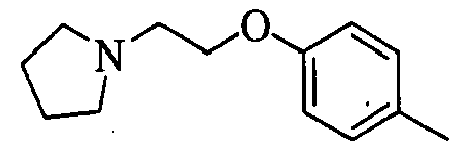
amorphous powder
MS (APCI) 555 [M+H]+400* 
amorphous powder
MS (APCI) 571 [M+H]+401* 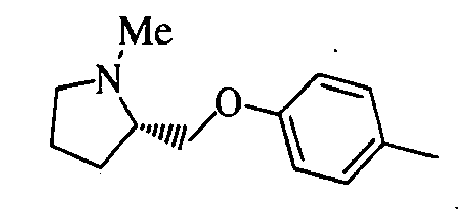
amorphous powder
MS (APCI) 555 [M+H]+*: hydrochloride
Me: methyl group, Et: ethyl group, nPr: n-propyl groupTable 10 (No. 4) 
Ex. Nos. R1 Physicochemical properties etc. 402* 
amorphous powder
MS (APCI) 557 [M+H]+403* 
amorphous powder
MS (APCI) 571 [M+H]+*: hydrochloride
Me: methyl group, nPr: n-propyl group -
- (1) The corresponding compound is treated in the same manner as described in Example 381 to give 1-(3-ethoxybenzyl)-4-[4-[4-[[1-(tert-butoxycarbonyl)piperidin-4-yl]oxy]benzoyl]piperazin-1-yl]-1H-pyrazolo[3,4-d]pyrimidine (34 mg, yield; 61%) as an amorphous powder. MS (APCI) m/z: 642 [M+H]+
- (2) To a solution of the compound obtained in the above step (1) (34 mg) in methanol (0.5 mL) is added 4N HCl-dioxane (0.1 mL) and the mixture is stirred at room temperature overnight. The reaction mixture is evaporated to remove solvent. The resultant residue is dissolved in water and lyophilized to give 1-(3-ethoxybenzyl)-4-[4-[4-(4-piperidyloxy)benzoyl]piperazin-1-yl]-1H-pyrazolo[3,4-d]pyrimidine 2hydrochloride (27 mg, yield; 79%) as an amorphous powder. MS (APCI) m/z: 542 [M+H]+
- The corresponding materials are treated in the same manner as described in Example 404 to give the compounds as shown in the following Table 11.
Table 11 
Ex. Nos. R1 Physicochemical properties etc. 405** 
amorphous powder
MS (APCI) 542 [M+H]+406** 
amorphous powder
MS (APCI) 530 [M+H]+**: dihydrochloride
Me: methyl group, Et: ethyl group -
- (1) Methyl 4-[[N-ethyl-N-(tert-butoxycarbonyl)]aminomethyl]benzoate (230 mg, compound obtained in Reference Example 81) is treated in the same manner as described in Example 1 to give 1-(3-ethoxybenzyl)-4-[4-[4-[[N-ethyl-N- (tert-butoxycarbonyl)]aminomethyl]benzoyl]piperazin-1-yl]-1H-pyrazolo[3,4-d]pyrimidine (330 mg, 2 steps yield; 70%) as an amorphous powder. MS (APCI) m/z: 600 [M+H]+
- (2) To a solution of the compound obtained in the above step (1) (330 mg) in dioxane (2 mL) is added 4N HCl-dioxane (4 mL) and the mixture is stirred at room temperature for 6 hours. To the reaction mixture is added diisopropylether (6 mL,), and after stirring, the supernatant is removed (Such washing procedure is repeated again). The precipitate is dissolved in water (2 mL) and thereto is added a saturated sodium hydrogencarbonate solution (3 mL) and chloroform (3 mL). After standing, the organic layer is separated and concentrated. The resultant crude product is purified by flash column chromatography on NH-silica gel (Purif 8 Hi-flush/L, MORITEX Inc.; Solvent; n-hexane : ethyl acetate = 65 : 35 → 0 : 100) to give 1-(3-ethoxybenzyl)-4-[4-[4-(ethylaminomethyl)benzoyl]piperazin-1-yl]-1H-pyrazolo[3,4-d]pyrimidine (121 mg, yield; 44 %) as an amorphous powder. MS (APCI) m/z: 500 [M+H]+
- (3) To a suspension of the compound obtained in the above step (2) (110 mg) in water (500 µL) is added 2N HCI (220 µL) and the mixture is lyophilized to give 1-(3-ethoxybenzyl)-4-[4-[4-(ethylaminomethyl)benzoyl]piperazin-1-yl]-1H-pyrazolo[3,4-d]-pyrimidine dihydrochloride as an amorphous powder. MS (APCI) m/z: 500 [M+H]+
- The corresponding materials are treated in the same manner as described in Example 407 to give the compounds as shown in the following Table 12.
Table 12 
Ex. Nos. R1-Y- Physicochemical properties etc. 408** 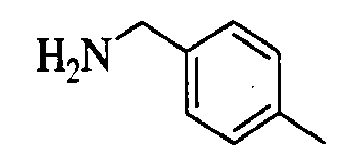
amorphous powder
MS (APCI) 472 [M+H]+409** 
amorphous powder
MS (APCI) 478 [M+H]+410** 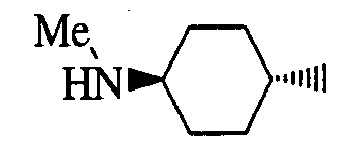
amorphous powder
MS (APCI) 478 [M+H]+411** 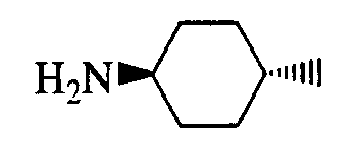
amorphous powder
MS (APCI) 464 [M+H]+412** 
amorphous powder
MS (APCI) 450 [M+H]+413** 
amorphous powder
MS (APCI) 464 [M+H]+414** 
amorphous powder
MS (APCI) 478 [M+H]+415*** 
amorphous powder
MS (APCI) 535 [M+H]+**: dihydrochloride, ***: trihydrochloride
Me: methyl group, Et: ethyl group - To a solution of the compound obtained in Example 415 (50 mg) and triethylamine (50 mg) in methylene chloride is added acetyl chloride (10 mg) and the mixture is stirred at room temperature for 18 hours. The reaction mixture is diluted with a saturated sodium hydrogencarbonate solution and extracted with chloroform. The extract is evaporated to remove solvent and the resultant crude product is purified by HPLC (Solvent; 10 mM ammonium carbonate : methanol = 80 : 20 → 5 : 95) and then the resultant product (1-(3-ethoxybenzyl)-4-[4-[[trans-4-[N-acetyl-N-[2-(dimethylamino)ethyl]amino]cyclohexyl]carbonyl]piperazin-1-yl]-1H-pyrazolo[3,4-d]pyrimidine) is treated in the same manner as described in Example 4(3) to give 1-(3-ethoxybenzyl)-4-[4-[[trans-4-(N-acetyl-N-[2-(dimethylamino)ethyl]amino]cyclohexyl]-carbonyl]piperazin-1-yl]-1H-pyrazolo[3,4-d]pyrimidine dihydrochloride (20 mg, yield; 40 %) as an amorphous powder. MS (APCI) m/z: 577 [M+H]+
- The corresponding materials are treated in the same manner as described in Example 416 to give the compounds as shown in the following Table 13.
Table 13 
EX. Nos. R1 Physicochemical properties etc. 417** 
amorphous powder
MS (APCI) 603 [M+H]+418** 
amorphous powder
MS (APCI) 603 [M+H]+419** 
amorphous powder
MS (APCI) 629 [M+H]+420** 
amorphous powder
MS (APCI) 639 [M+H]+421** 
amorphous powder
MS (APCI) 608 [M+H]+**: dihydrochloride
Me: methyl group, Et: ethyl group - To a suspension of the compound obtained in Example 410 (40 mg) in tetrahydrofuran (1 mL) is added successively potassium carbonate (35 mg) and ethyl iodide (9 µL), and the mixture is stirred at room temperature overnight. The reaction mixture is diluted with chloroform (5 mL) and thereto is added a saturated sodium hydrogencarbonate solution. After stirring, the organic layer is separated and concentrated. The resultant crude product is purified by HPLC (Solvent; 10 mM ammonium carbonate : methanol = 80 : 20 → 5 : 95) and then the resultant product is treated in the same manner as described in Example 4(3) to give 1-(3-ethoxybenzyl)-4-[4-[[trans-4-(N-ethyl-N-methylamino)cyclohexyl]carbonyl]piperazin-1-yl]-1H-pyrazolo[3,4-d]pyrimidine dihydrochloride (13 mg, yield; 31 %) as an amorphous powder. MS (APCI) m/z: 506 [M+H]+
- The corresponding materials are treated in the same manner as described in Example 422 to give the compounds as shown in the following Table 14.
Table 14 
Ex. Nos. R1 Physicochemical properties etc. 423** 
amorphous powder
MS (APCI) 520 [M+H]+424** 
amorphous powder
MS (APCI) 520 [M+H]+**: dihydrochloride
Me: methyl group, Et: ethyl group, nPr: n-propyl group, iPr: isopropyl group -
- (1) To a suspension of the compound obtained in Example 411 (50 mg) in dichloromethane (1 mL) is added successively triethylamine (44 µL) and chloroacetyl chloride (9 µL), and the mixture is stirred for 2 hours under ice-cooling. To the mixture is added 2M dimethylamine in tetrahydrofuran (0.3 mL) under ice-cooling and the mixture is stirred at room temperature overnight. The reaction mixture is diluted with chloroform (3 mL) and thereto is added a saturated sodium hydrogencarbonate solution (5 mL). After stirring, the organic layer is separated and concentrated. The resultant crude product is purified by HPLC (Solvent; 10 mM ammonium carbonate : methanol = 80 : 20 → 5 : 95) to give 1-(3-ethoxybenzyl)- 4-[4-[[trans-4-[N,N-(dimethylglycyl)amino]cyclohexyl]carbonyl]piperazin-1-yl]-1H-pyrazolo[3,4-d]-pyrimidine (20.4 mg, yield; 40 %) as an amorphous powder. MS (ESI) m/z: 549 [M+H]+
- (2) The compound obtained in the above step (1) is treated in the same manner as described in Example 4(3) to give 1-(3-ethoxybenzyl)-4-[4-[[trans-4-[N,N-(dimethylglycyl)amino]cyclohexyl]carbonyl]piperazin-1-yl]-1H-pyrazolo[3,4-d]pyrimidine 2 hydrochloride (21.5 mg, yield; 93 %) as an amorphous powder. MS (APCI) m/z: 549 [M+H]+
- The corresponding materials are treated in the same manner as described in Example 425 to give the compounds as shown in the following Table 15.
Table 15 (No. 1) 
Ex. Nos. R1 Physicochemical properties etc. 426** 
amorphous powder
MS (APCI) 577 [M+H]+427** 
amorphous powder
MS (APCI) 575 [M+H]+428** 
amorphous powder
MS (APCI) 563 [M+H]+429** 
amorphous powder
MS (APCI) 591 [M+H]+430** 
amorphous powder
MS (APCI) 589 [M+H]+**: dihydrochloride
Me: methyl group, Et: ethyl groupTable 15 (No. 2) 
Ex. Nos. R1 Physicochemical properties etc. 431 
amorphous powder
MS (ESI) 591 [M+H]+432 
amorphous powder
MS (ESI) 577 [M+H]+433 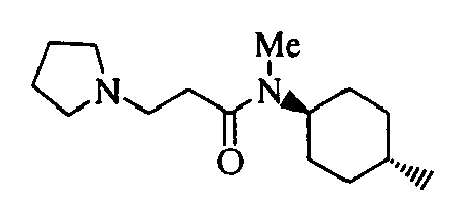
amorphous powder
MS (ESI) 603 [M+H]+Me: methyl group
Et: ethyl group -
- (1) To a suspension of the compound obtained in Example 411 (40 mg) in tetrahydrofuran (1 mL) is added successively dimetylacetamide (0.2 mL), 1,5-diiodopentane (16.6 µL), and sodium carbonate (28 mg). The mixture is stirred at 70°C for 23 hours. After cooling, the reaction mixture is diluted with chloroform (3 mL) and thereto is added a saturated sodium hydrogencarbonate solution (5 mL). After stirring, the organic layer is separated and concentrated. The resultant crude product is purified by HPLC (Solvent; 10 mM ammonium carbonate : methanol = 80 : 20 → 5 : 95) to give 1-(3-ethoxybenzyl)-4-[4-[[trans-4-(1-piperidyl)cyclohexyl]-carbonyl]piperazin-1-yl]-1H-pyrazolo[3,4-d]pyrimidine (12.9 mg, yield: 34 %). MS (ESI) m/z: 532 [M+H]+
- (2) The compound obtained in the above step (1) is treated in the same manner as described in Example 4(3) to give 1-(3-ethoxybenzyl)-4-[4-[[trans-4-(1-piperidyl)-cyclohexyl]carbonyl]piperazin-1-yl]-1H-pyrazolo[3,4-d]pyrimidine dihydrochloride (15.4 mg, yield; quantitatively) amorphous powder. MS (APCI) m/z: 532 [M+H]+.
- The corresponding materials are treated in the same manner as described in Example 434 to give the compound as shown in the following Table 16.
Table 16 
Ex. Nos. R1 Physicochemical properties etc. 435* 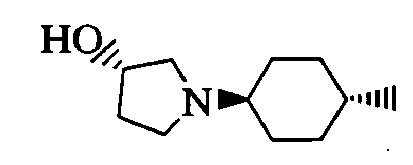
amorphous powder
MS (APCI) 534 [M+H]+*: fumarate
Et: ethyl group - The corresponding materials are treated in the same manner as described in Example 407 to give the compounds as shown in the following Table 17.
Table 17 (No. 1) 
Ex. Nos. R2 Physicochemical properties etc. 436** 
amorphous powder
MS (APCI) 505 [M+H]+437** 
amorphous powder
MS (APCI) 488 [M+H]+438** 
amorphous powder
MS (APCI) 499 [M+H]+**: dihydrochloride
Me: methyl group, Et: ethyl group, nPr: n-propyl groupTable 17 (No. 2) 
Ex. Nos. R Physicochemical properties etc. 439** 
amorphous powder
MS (APCI) 532 [M+H]+440** iPr amorphous powder
MS (APCI) 506 [M+H]+441** nPr amorphous powder
MS (APCI) 506 [M+H]+442** Et amorphous powder
MS (APCI) 492 [M+H]+**: dihydrochloride,
Et: ethyl group, nPr: n-propyl group, iPr: isopropyl group - The corresponding materials are treated in the same manner as described in Example 3 to give the compounds as shown in the following Table 18.
Table 18 (No. 1) 
Ex. Nos. R2 Physicochemical properties etc. 443 
amorphous powder
MS (ESI) 519 [M+H]+444 (1) 
amorphous powder
MS (APCI) 517 [M+H]+(2)* 445* 
amorphous powder
MS (APCI) 506 [M+H]+446* 
amorphous powder
MS (APCI) 558 [M+H]+447* 
amorphous powder
MS (APCI) 506 [M+H]+448* 
amorphous powder
MS (APCI) 508/510 [M+H]+449 
amorphous powder
MS (ESI) 509 [M+H]+450 
amorphous powder
MS (ESI) 532 [M+H]+451 
amorphous powder
MS (ESI) 532 [M+H]+*: hydrochloride
Me: methyl group,Et: ethyl group, nPr: n-propyl group, iPr: isopropyl groupTable 18 (No. 2) 
Ex. Nos. R2 Physicochemical properties etc. 452** 
amorphous powder
MS (APCI) 503 [M+H]+453** 
amorphous powder
MS (APCI) 488 [M+H]+454** 
amorphous powder
MS (APCI) 519 [M+H]+455** 
amorphous powder
MS (APCI) 519 [M+H]+**: dihydrochloride
Me: methyl group, Et: ethyl groupTable 18 (No. 3) 
Ex. Nos. R1 Physicochemical properties etc. 456 
amorphous powder
MS (APCI) 518 [M+H]+Et: ethyl group Table 18 (No. 4) 
Ex. Nos. R2 Physicochemical properties etc. 457** 
amorphous powder
MS (APCI) 543 [M+H]+458** 
amorphous powder
MS (APCI) 542 [M+H]+459** 
amorphous powder
MS (APCI) 548 [M+H]+460** 
amorphous powder
MS (APCI) 544 [M+H]+**: dihydrochloride
Me: methyl group, Et: ethyl group, nPr: n-propyl groupTable 18 (No. 5) 
Ex. Nos. R1-(O)q-Y- Physicochemical properties etc. 461* 
amorphous powder
MS (APCI) 588 [M+H]+462* 
amorphous powder
MS (APCI) 574 [M+H]+463* 
amorphous powder
MS (APCI) 609 [M+H]+464* 
E-isomer amorphous powder
MS (APCI) 554 [M+H]+465* 
E-isomer
amorphous powder
MS (APCI) 631 [M+H]+466* 
amorphous powder
MS (APCI) 529 [M+H]+*: hydrochloride
Me: methyl group, Et: ethyl groupTable 18 (No. 6) 
Ex. Nos. R1-Y- R2 Physicochemical properties etc. 467* 

amorphous powder
MS (APCI) 571 [M+H]+468* 

amorphous powder
MS (APCI) 546 [M+H]+469* 

amorphous powder
MS (APCI) 586 [M+H]+470* 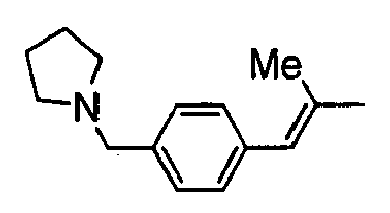

amorphous powder
MS (APCI) 566 [M+H]+471* 

amorphous powder
MS (APCI) 541 [M+H]+472* 

amorphous powder
MS (APCI) 585 [M+H]+473* 

amorphous powder
MS (APCI) 620 [M+H]+474* 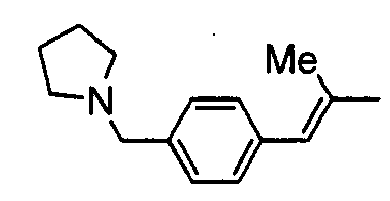

amorphous powder
MS (APCI) 565 [M+H]+*: hydrochloride
Me: methyl group, Et: ethyl group, nPr: n-propyl groupTable 18 (No. 7) 
Ex. Nos. R1-(O)q-Y- R2 Physicochemical properties etc. 475* 

amorphous powder
MS (APCI) 642 [M+H]+476* 

amorphous powder
MS (APCI) 540 [M+H]+477* 

amorphous powder
MS (APCI) 574 [M+H]+*: hydrochloride
Me: methyl group, Et: ethyl group, nPr: n-propyl groupTable 18 (No. 8) 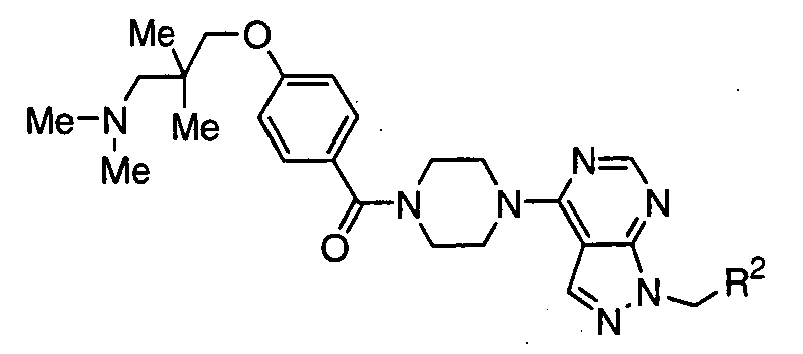
Ex. Nos. R2 Physicochemical properties etc. 478 
amorphous powder
MS (APCI) 573 [M+H]+479* 
amorphous powder
MS (APCI) 560 [M+H]+480 
amorphous powder
MS (APCI) 557 [M+H]+481 
amorphous powder
MS (APCI) 577 [M+H]+482* 
amorphous powder
MS (APCI) 576 [M+H]+*: hydrochloride
Me: methyl group, Et: ethyl group, nPr: n-propyl groupTable 18 (No 9) 
Ex. Nos. R2 Physicochemical properties etc. 483 
amorphous powder
MS (APCI) 534 [M+H]+484* 
amorphous powder
MS (APCI) 505 [M+H]+485 
amorphous powder
MS (APCI) 526 [M+H]+486* 
amorphous powder
MS (APCI) 508 [M+H]+487 
amorphous powder
MS (APCI) 521 [M+H]+488 
amorphous powder
MS (APCI) 508 [M+H]+489* 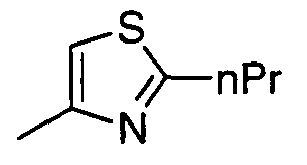
amorphous powder
MS (APCI) 525 [M+H]+490* 
amorphous powder
MS (APCI) 506 [M+H]+491 
amorphous powder
MS (APCI) 524 [M+H]+*: hydrochloride
Me: methyl group, Et: ethyl group, nPr: n-propyl group, iPr: isopropyl groupTable 18 (No.10) 
Ex. Nos. R2 Physicochemical properties etc. 492 
amorphous powder
MS (ESI) 531 [M+H]+493 
amorphous powder
MS (ESI) 533 [M+H]+494 
amorphous powder
MS (ESI) 572 [M+H]+495 
amorphous powder
MS (ESI) 520 [M+H]+496 
amorphous powder
MS (ESI) 537 [M+H]+497 
amorphous powder
MS (ESI) 546 [M+H]+498 
amorphous powder
MS (ESI) 522/524 [M+H]+499 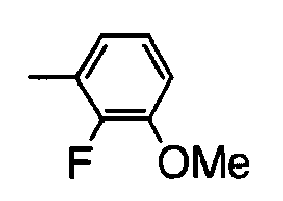
amorphous powder
MS (ESI) 536 [M+H]+Me: methyl group, Et: ethyl group, nPr: n-propyl group Table 18 (No.11) 
Ex. Nos. R Physicochemical properties etc. 500 
amorphous powder
MS (APCI) 546 [M+H]+**: dihydrochloride
Me: methyl group, Et: ethyl group - The corresponding materials are treated in the same manner as described in Example 1 to give the compounds as shown in the following Table 19.
Table 19 (No. 1) 
Ex. Nos. R R2 Physicochemical properties etc. 501 

amorphous powder
MS (ESI) 560 [M+H]+502 

amorphous powder
MS (ESI) 533 [M+H]+503 

amorphous powder
MS (ESI) 561 [M+H]+504 

amorphous powder
MS (ESI) 575 [M+H]+505 

amorphous powder
MS (ESI) 531 [M+H]+506 

amorphous powder
MS (ESI) 533 [M+H]+507 

amorphous powder
MS (ESI) 549 [M+H]+508 

amorphous powder
MS (ESI) 532 [M+H]+Me: methyl group, Et: ethyl group, n-Pr: n-propyl group Table 19 (No. 2) 
Ex. Nos. R Physicochemical properties etc. 509 
amorphous powder
MS (ESI) 602 [M+H]+510 
amorphous powder
MS (ESI) 562 [M+H]+511 
amorphous powder
MS (ESI) 590 [M+H]+512 
amorphous powder
MS (ESI) 596 [M+H]+513 
amorphous powder
MS (ESI) 574 [M+H]+514 
amorphous powder
MS (ESI) 577 [M+H]+515 
amorphous powder
MS (ESI) 588 [M+H]+Me: methyl group, Et: ethyl group, n-Pr: n-propyl group Table 19 (No. 3) 
Ex. Nos. R Physicochemical properties etc. 516 
amorphous powder
MS (ESI) 534 [M+H]+517 
amorphous powder
MS (ESI) 534 [M+H]+518 
amorphous powder
MS (ESI) 550 [M+H]+Me: methyl group, Et: ethyl group Table 19 (No.4) 
Ex. Nos. R Physicochemical properties etc. 519 
amorphous powder
MS (ESI) 603 [M+H]+520 
amorphous powder
MS (ESI) 591 [M+H]+521 
amorphous powder
MS (ESI) 597 [M+H]+522 
amorphous powder
MS (ESI) 578 [M+H]+523 
amorphous powder
MS (ESI) 589 [M+H]+Me: methyl group, Et: ethyl group Table 19 (No. 5) 
Ex. Nos. R2 Physicochemical properties etc. 524* 
amorphous powder
MS (APCI) 612 [M+H]+525* 
amorphous powder
MS (APCI) 613 [M+H]+526* 
amorphous powder
MS (APCI) 618 [M+H]+*: hydrochloride
Me: methyl group, Et: ethyl group, n-Pr: n-propyl groupTable 19 (No. 6) 
Ex. Nos. R' R2 Physicochemical properties etc. 527* 

amorphous powder
MS (APCI) 525 [M+H]+528* 

amorphous powder
MS (APCI) 526 [M+H]+529* 

amorphous powder
MS (APCI) 550 [M+H]+530* 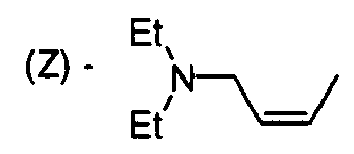
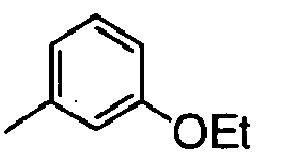
amorphous powder
MS (APCI) 554 [M+H]+531 * 

amorphous powder
MS (APCI) 552 [M+H]+*: hydrochloride
Me: methyl group, Et: ethyl group, n-Pr: n-propyl groupTable 19 (No. 7) 
Ex. Nos: R' R2 Physicochemical properties etc. 532* 

amorphous powder
MS (APCI) 527 [M+H]+533* 

amorphous powder
MS (APCI) 528 [M+H]+534* 

amorphous powder
MS (APCI) 533 [M+H]+535* 

amorphous powder
MS (APCI) 556 [M+H]+536* 

amorphous powder
MS (APCI) 554 [M+H]+*: hydrochloride
Me: methyl group, Et: ethyl group, n-Pr: n-propyl groupTable 19 (No. 8) 
Ex. Nos. R2 Physicochemical properties etc. 537 
amorphous powder
MS (ESI) 547 [M+H]+538* 
amorphous powder
MS (ESI) 548 [M+H]+539 
amorphous powder
MS (ESI) 553 [M+H]+*: hydrochloride
Et: ethyl group, n-Pr: n-propyl groupTable 19 (No. 9) 
Ex. Nos. R' Physicochemical properties etc. 540* Me2N- amorphous powder
MS (APCI) 656/658 [M+H]+541* Et2N- amorphous powder
MS (APCI) 684/686 [M+H]+542* 
amorphous powder
MS (APCI) 682/684 [M+H]+*: hydrochloride
Me: methyl group, Et: ethyl groupTable 19 (No. 10) 
Ex. Nos. R' R2 Physicochemical properties etc. 543** 

amorphous powder
MS (APCI) 513 [M+H]+544** 

amorphous powder
MS (APCI) 553 [M+H]+545** 

amorphous powder
MS (APCI) 514 [M+H]+546** 

amorphous powder
MS (APCI) 554 [M+H]+547** 

amorphous powder
MS (APCI) 502 [M+H]+548** 

amorphous powder
MS (APCI) 542 [M+H]+549** 

amorphous powder
MS (APCI) 519 [M+H]+550** 

amorphous powder
MS (APCI) 559 [M+H]+**: dihydrochloride
Me: methyl group, Et: ethyl group, n-Pr: n-propyl groupTable 19 (No. 11) 
Ex. Nos. R' R" Physicochemical properties etc. 551** Et2N- Me amorphous powder
MS (APCI) 585 [M+H]+552** 

amorphous powder
MS (APCI) 661 [M+H]+553** 

amorphous powder
MS (APCI) 687 [M+H]+554** 

amorphous powder
MS (APCI) 701 [M+H]+555** 

amorphous powder
MS (APCI) 689 [M+H]+**: dihydrochloride
Me: methyl group, Et: ethyl groupTable 19 (No. 12) 
Ex. Nos. R' R2 Physicochemical properties etc. 556* 
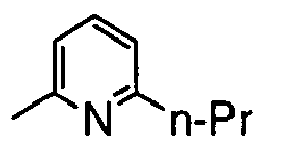
amorphous powder
MS (APCI) 701 [M+H]+557* 

amorphous powder
MS (APCI) 717 [M+H]+558* 

amorphous powder
MS (APCI) 689 [M+H]+559* 

amorphous powder
MS (APCI) 715 [M+H]+560* 

amorphous powder
MS (APCI) 702 [M+H]+561* 

amorphous powder
MS (APCI) 718 [M+H]+562* 

amorphous powder
MS (APCI) 690 [M+H]+563* 

amorphous powder
MS (APCI) 716 [M+H]+*: hydrochloride
Me: methyl group, Et: ethyl group, n-Pr: n-propyl groupTable 19 (No. 13) 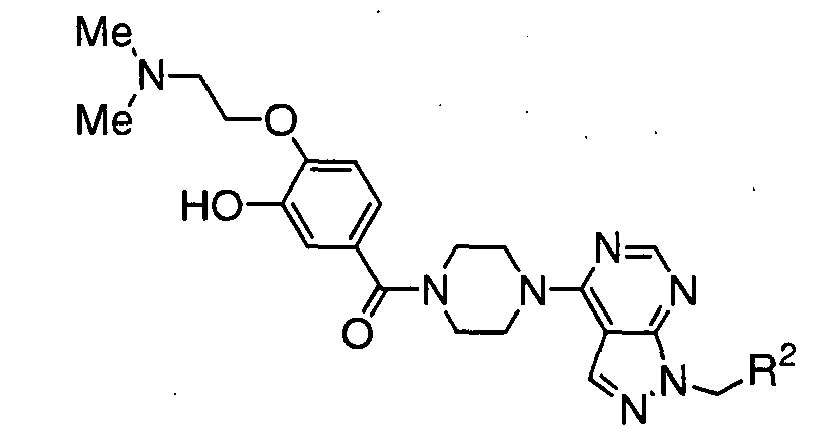
Ex. Nos. R2 Physicochemical properties etc. 564* 
amorphous powder
MS (APCI) 545 [M+H]+565* 
amorphous powder
MS (APCI) 546 [M+H]+*: hydrochloride
Me: methyl group, Et: ethyl group, n-Pr: n-propyl groupTable 19 (No. 14) 
Ex. Nos. R' Physicochemical properties etc. 566 
amorphous powder
MS (ESI) 548 [M+H]+567 
amorphous powder
MS (ESI) 546 [M+H]+Et: ethyl group - The corresponding materials are treated in the same manner as described in Example 381 to give the compounds as shown in the following Table 20.
Table 20 (No. 1) 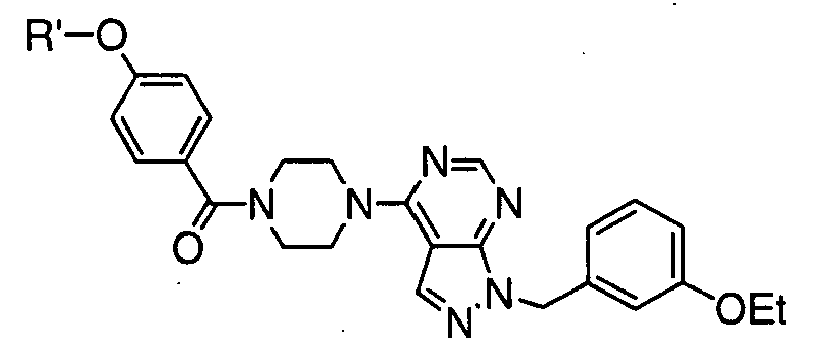
Ex. Nos. R' Physicochemical properties etc. 568* 
amorphous powder
MS (APCI) 600 [M+H]+569* 
amorphous powder
MS (APCI) 556 [M+H]+570* 
amorphous powder
MS (APCI) 558 [M+H]+*: hydrochloride
Me: methyl group, Et: ethyl groupTable 20 (No. 2) 
Ex. Nos. R' Physicochemical properties etc. 571* 
amorphous powder
MS (APCI) 558 [M+H]+572* 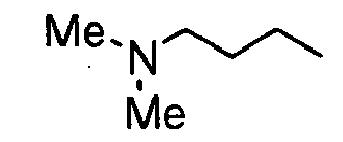
amorphous powder
MS (APCI) 572 [M+H]+573* 
amorphous powder
MS (APCI) 584 [M+H]+574* 
amorphous powder
MS (APCI) 600 [M+H]+*: hydrochloride
Me: methyl group, Et: ethyl groupTable 20 (No. 3) 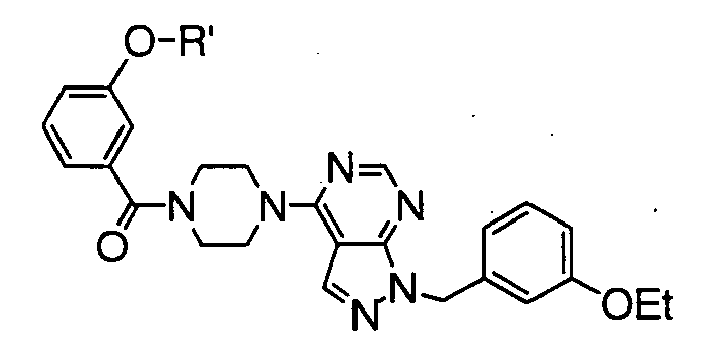
Ex. Nos. R' Physicochemical properties etc. 575* 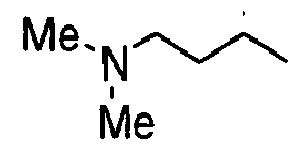
amorphous powder
MS (APCI) 544 [M+H]+576* 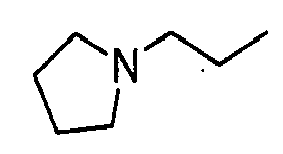
amorphous powder
MS (APCI) 556 [M+H]+577* 
amorphous powder
MS (APCI) 572 [M+H]+*: hydrochloride
Me: methyl group, Et: ethyl group - The corresponding materials are treated in the same manner as described in Example 366 to give the compounds as shown in the following Table 21.
Table 21 (No. 1) 
Ex. Nos. R R2 Physicochemical properties etc. 578 Me 
amorphous powder
MS (APCI) 618 [M+H]+579 Me 
amorphous powder
MS (APCI) 612 [M+H]+580* Me 
amorphous powder
MS (APCI) 613 [M+H]+581* Me 
amorphous powder
MS (APCI) 601 [M+H]+582* 

amorphous powder
MS (APCI) 638 [M+H]+583* 

amorphous powder
MS (APCI) 640 [M+H]+584* 

amorphous powder
MS (APCI) 639 [M+H]+585* 

amorphous powder
MS (APCI) 627 [M+H]+586* 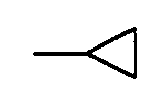

amorphous powder
MS (APCI) 644 [M+H]+*: hydrochloride
Me: methyl group, Et: ethyl group, n-Pr: n-propyl groupTable 21 (No. 2) 
Ex. Nos. R R2 Physicochemical properties etc. 587* 

amorphous powder
MS (APCI) 640 [M+H]+588* 

amorphous powder
MS (APCI) 639 [M+H]+589* 

amorphous powder
MS (APCI) 627 [M+H]+590 

amorphous powder
MS (APCI) 664 [M+H]+591* 

amorphous powder
MS (APCI) 666 [M+H]+592 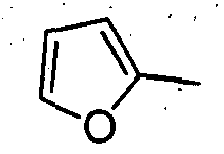

amorphous powder
MS (APCI) 665 [M+H]+593 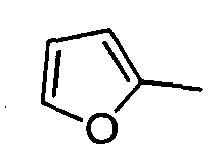

amorphous powder
MS (APCI) 653 [M+H]+594* 

amorphous powder
MS (APCI) 670 [M+H]+*: hydrochloride
Me: methyl group, Et: ethyl group, n-Pr: n-propyl groupTable 21 (No. 3) 
Ex. Nos. R' R2 Physicochemical properties etc. 595* Et 
amorphous powder
MS (APCI) 598 [M+H]+596* 

amorphous powder
MS (APCI) 524 [M+H]+597* n-Pr 
amorphous powder
MS (APCI) 613 [M+H]+598* Et 
amorphous powder
MS (APCI) 599 [M+H]+599* 

amorphous powder
MS (APCI) 625 [M+H]+600* i-Bu 
amorphous powder
MS (APCI) 627 [M+H]+*: hydrochloride
Me: methyl group, Et: ethyl group, n-Pr: n-propyl group, i-Bu: isobutyl groupTable 21 (No. 4) 
Ex. Nos. R' R2 Physicochemical properties etc. 601* Et 
amorphous powder
MS (APCI) 587 [M+H]+602* 

amorphous powder
MS (APCI) 613 [M+H]+603* Et 
amorphous powder
MS (APCI) 604 [M+H]+604* 

amorphous powder
MS (APCI) 630 [M+H]+*: hydrochloride
Me: methyl group, Et: ethyl group, n-Pr: n-propyl groupTable 21 (No. 5) 
Ex. Nos. R' R2 Physicochemical properties etc. 605* 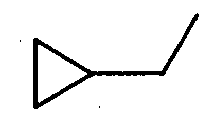

amorphous powder
MS (APCI) 588 [M+H]+606* 

amorphous powder
MS (APCI) 582 [M+H]+607* Et 
amorphous powder
MS (APCI) 556 [M+H]+608* Me 
amorphous powder
MS (APCI) 542 [M+H]+609* 

amorphous powder
MS (APCI) 583 [M+H]+610* Et 
amorphous powder
MS (APCI) 557 [M+H]+611* Me 
amorphous powder
MS (APCI) 543 [M+H]+612* 
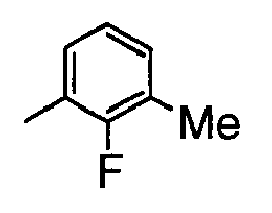
amorphous powder
MS (APCI) 571 [M+H]+*: hydrochloride
Me: methyl group, Et: ethyl group, n-Pr: n-propyl groupTable 21 (No. 6) 
Ex. Nos. R' R2 Physicochemical properties etc. 613* Et 
amorphous powder
MS (APCI) 545 [M+H]+614* Me 
amorphous powder
MS (APCI) 531 [M+H]+615* Et 
amorphous powder
MS (APCI) 562 [M+H]+616* Me 
amorphous powder
MS (APCI) 548 [M+H]+*: hydrochloride
Me: methyl group, Et: ethyl group, n-Pr: n-propyl group -
- (1) Trans-4-[N-methyl-N-(tert-butoxycarbonyl)aminoinethyl]cyclohexanecarboxylic acid (compound obtained in Reference Example 239) is treated in the same manner as described in Example 3 to give 1-(3-ethoxybenzyl)-4-[4-[[trans-4-[N-methyl-N-(tert-butoxycarbonyl)aminomethyl]cyclohexyl]carbonyl]piperazin-1-yl]-1H-pyrazolo[3,4-d]pyrimidine as an amorphous powder. MS (APCI) m/z; 592 [M+H]+
- (2) The compound obtained in the above step (1) is treated in the same manner as described in Example 404(2) to give 1-(3-ethoxybenzyl)-4-[4-[[trans-4-(methylaminomethyl)cyclohexyl]carbonyl]piperazin-1-yl]-1H-pyrazolo[3,4-d]pyrimidine dihydrochloride as an amorphous powder. MS (APCI) m/z; 492 [M+H]+
-
- (1) 4-[[2-(dimethylamino)ethyl]amino]-3-methylbenzoic acid hydrochloride (compound obtained in Reference Example 251) is treated in the same manner as described in Example 3 to give 1-(3-ethoxybenzyl)-4-[4-[3-methyl-4-[2-(dimethylamino)ethylamino]benzoyl]piperazin-1-yl]-1H-pyrazolo[3,4-d]pyrimidine as an amorphous powder. MS (APCI) m/z; 543 [M+H]+
- (2) To a solution of the compound obtained in the above step (1) (50 mg) in 1,2-dichloroethane (1 mL) is added successively acetaldehyde (10 µL), acetic acid (10 µL) and sodium triacetoxyborohydride (29 mg) under ice-cooling. The mixture is stirred at room temperature overnight. To the reaction mixture is further added successively acetaldehyde (10 µL), acetic acid (10 µL), and sodium triacetoxyborohydride (29 mg). The mixture is stirred at room temperature overnight. To the reaction mixture is added a saturated sodium hydrogencarbonate solution and the mixture is extracted with chloroform. The extract is concentrated and the residue is purified by HPLC (Solvent; 10 mM ammonium carbonate : methanol = 80 :20 → 5 : 95). The resultant product is treated in the same manner as described in Example 4(3) to give 1-(3-ethoxybenzyl)-4-[4-[3-methyl-4-[N-ethyl-N-[2-(dimethylamino)ethyl]-amino]benzoyl]piperazin-1-yl]-1H-pyrazolo[3,4-d]pyrimidine 2 hydrochloride (22 mg, yield; 37 %) as an amorphous powder. MS (APCI) m/z; 571 [M+H]+
- The corresponding materials are treated in the same manner as described in Example 618 to give the compounds as shown in the following Table 22.
Table 22 (No. 1) 
Ex. Nos. R' -R" Physicochemical properties etc. 619 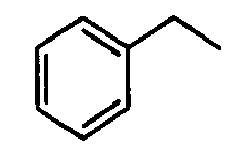
H amorphous powder
MS (ESI) 568 [M+H]+620 i-Pr H amorphous powder
MS (ESI) 520 [M+H]+621 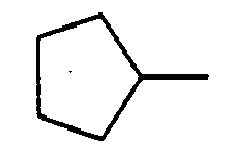
H amorphous powder
MS (ESI) 546 [M+H]+622 

amorphous powder
MS (ESI) 586 [M+H]+623 i-Bu H amorphous powder
MS (ESI) 534 [M+H]+624* Et H amorphous powder
MS (APCI) 506 [M+H]+*: hydrochloride, Et: ethyl group, i-Pr: isopropyl group, i-Bu: isobutyl group Table 22 (No. 2) 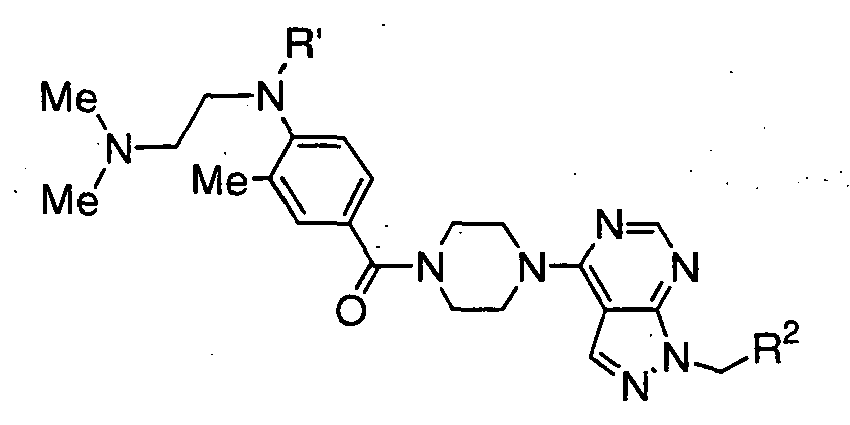
Ex. Nos. R' R2 Physicochemical properties etc. 625** i-Bu 
amorphous powder
MS (APCI) 599 [M+H]+626** 

amorphous powder
MS (APCI) 597 [M+H]+627** Me 
amorphous powder
MS (APCI) 556 [M+H]+628** Et 
amorphous powder
MS (APCI) 570 [M+H]+629** i-Bu 
amorphous powder
MS (APCI) 598 [M+H]+**: dihydrochloride
Me: methyl group, Et: ethyl group, n-Pr: n-propyl group, i-Bu: isobutyl group -
- (1) To a solution of 1-(3-ethoxybenzyl)-4-(1-piperadinyl)-1H-pyrazolo[3,4-d]pyrimidine dihydrochloride (60 mg) in methylene chloride (1.2 mL) is added N,N-diisopropylethylamine (85 µL) and 4-nitrophenyl chloroformate (49 mg) at 0°C, and the mixture is stirred at room temperature for 2.5 hours. The reaction mixture is diluted with chloroform (1 mL) and thereto is added a saturated sodium hydrogencarbonate solution (1.5 mL). After stirring, the organic layer is separated and the aqueous layer is extracted with chloroform. The organic layers are combined, dried over sodium sulfate, and filtered. The filtrate is concentrated and the residue is purified by column chromatography on silica gel (Solvent; n-hexane : ethyl acetate = 9 : 1 → 0 : 10) to give 1-(3-ethokybenzyl)-4-[4-[(4-nitrophenoxy)carbonyl]piperazin-1-yl]-1H-pyrazolo[3,4-d]pyrimidine (72 mg, yield; 100 %) as an amorphous powder. MS (APCI) m/z; 504 [M+H]+
- (2) To a solution of the compound obtained in the above step (1) (25 mg) in N,N-dimethylformamide (1.5 mL) is added N,N-diisopropylethylamine (51 µL) and 4-(1-pyrrolidinyl)piperidine (65 mg) at room temperature and the mixture is stirred at 70°C for 4 hours. After cooling, the reaction mixture is diluted with chloroform (1 mL) and thereto is added a saturated sodium hydrogencarbonate solution (1.5 mL). After stirring, the organic layer is separated and the aqueous layer is extracted with chloroform. The organic layers are combined, dried over sodium sulfate, and filtered. The filtrate is concentrated and the residue is purified by column chromatography on silica gel (Solvent; chloroform : methanol = 10 : 0 → 85 : 15) to give 1-(3-ethoxybenzyl)-4-[4-[[4-(1-pyrrolidinyl)piperidin-1-yl]carbonyl]piperazin-1-yl]-1H-pyrazolo-[3,4-d]pyrimidine (19 mg, yield; 73 %) as an amorphous powder. MS (APCI) m/z; 519 [M+H]+
- (3) The compound obtained in the above step (2) (19 mg) is treated in the same manner as described in Example 4(3) to give 1-(3-ethoxybenzyl)-4-[4-[[4-(1-pyrrolidinyl)piperidin-1-yl]carbonyl]piperazin-1-yl]-1H-pyrazolo[3,4-d]pyrimidine 2 hydrochloride as an amorphous powder. MS (APCI) m/z; 519 [M+H]+
- The corresponding materials are treated in the same manner as described in Example 630 to give the compounds as shown in the following Table 23.
Table 23 
Ex. Nos. R1 Physicochemical properties etc. 631** 
amorphous powder
MS (APCI) 533 [M+H]+632** 
amorphous powder
MS (APCI) 535 [M+H]+**: dihydrochloride
Et: ethyl group -
- (1) Methyl 4-[[1-(tert-butoxycarbonylaminomethyl)-1-cyclopropyl]methoxy]-benzoate (compound obtained in Reference Example 235, 245 mg) is treated in the same manner as described in Example 1 to give 1-(3-ethoxybenzyl)-4-[4-[4-[[1-(tert-butoxycarbonylaminomethyl)-1-cyclopropyl]methoxy]benzoyl]piperazin-1-yl]-1H-pyrazolo[3,4-d]pyrimidine (380 mg, yield; 98 %) as colorless liquid. MS (APCI) m/z; 642.5 [M+H]+
- (2) The compound obtained in the above step (1) (100 mg) is treated in the same manner as described in Example 404(2) to give 1-(3-ethoxybenzyl)-4-[4-[4-[[1-(aminomethyl)-1-cyclopropyl]methoxy]benzoyl]piperazin-1-yl]-1H-pyrazolo[3,4-d]-pyrimidine dihydrochloride (crude product) and the product is treated in the same manner as described in Example 618(2) 1-(3-ethoxybenzyl)-4-[4-[4-[[1-(dimethylaminomethyl)-1-cyclopropyl]methoxy]benzoyl]piperazin-1-yl]-1H-pyrazolo[3,4-d]-pyrimidine hydrochloride (33 mg, yield; 34 %) as an amorphous powder. MS (APCI) m/z; 570 [M+H]+
- The corresponding materials are treated in the same manner as described in Example 633 to give the compounds as shown in the following Table 24.
Table 24 
Ex. Nos. R' Physicochemical properties etc. 634* 
amorphous powder
MS (APCI) 584 [M+H]+635* 
amorphous powder
MS (APCI) 586 [M+H]+636* 
amorphous powder
MS (APCI) 558 [M+H]+*: hydrochloride
Me: methyl group, Et: ethyl group - 1-(3-Ethoxybenzyl)-4-[4-[3-methyl-4-[2-(dimethylamino)ethylamino]benzoyl]-piperazin-1-yl]-1H-pyrazolo[3,4-d]pyrimidine (compound obtained in Example 618(1)) is treated in the same manner as described in Example 416 to give 1-(3-Ethoxybenzyl)-4- [4-[3-methyl-4-[N-acetyl-N-[2-(dimethylamino)ethyl]amino]benzoyl]piperazin-1-yl]-1H-pyrazolo[3,4-d]pyrimidine (26 mg, yield; 42 %) as an amorphous powder. MS (APCI) m/z; 585 [M+H]+
- The corresponding materials are treated in the same manner as described in Example 637 to give the compounds as shown in the following Table 25.
Table 25 (No. 1) 
Ex. Nos. R' R2 Physicochemical properties etc. 638* 

amorphous powder
MS (APCI) 636 [M+H]+639* 

amorphous powder
MS (APCI) 611 [M+H]+640* 

E-isomer
amorphous powder
MS (APCI) 611 [M+H]+641* 

amorphous powder
MS (APCI) 637 [M+H]+642* 

amorphous powder
MS (APCI) 683 [M+H]+643* MeCO- 
amorphous powder
MS (APCI) 584 [M+H]+644* 

amorphous powder
MS (APCI) 610 [M+H]+*: hydrochloride
Me: methyl group, Et: ethyl group, n-Pr: n-propyl groupTable 25 (No. 2) 
Ex. Nos. R' R2 Physicochemical properties etc. 645* 

amorphous powder
MS (APCI) 610 [M+H]+646* 

amorphous powder
MS (APCI) 682 [M+H]+647* MeCO- 
amorphous powder
MS (APCI) 590 [M+H]+648* MeCO- 
amorphous powder
MS (APCI) 586 [M+H]+*: hydrochloride
Me: methyl group, Et: ethyl group, n-Pr: n-propyl groupTable 25 (No. 3) 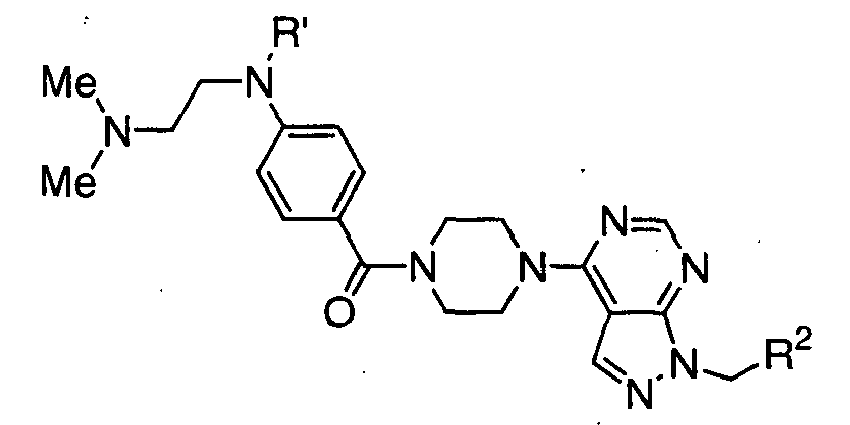
Ex. Nos. R' R2 Physicochemical properties etc. 649* 

amorphous powder
MS (APCI) 607 [M+H]+650* 

amorphous powder
MS (APCI) 669 [M+H]+*: hydrochloride
Me: methyl group, Et: ethyl group -
- (1) Ethyl trans-4-(methoxymethoxy)cyclohexanecarboxylate (compound obtained in Reference Example 237, 2.0 g) is treated in the same manner as described in Example 1 to give 1-(3-ethoxybenzyl)-4-[4-[[trans-4-(methoxymethoxy)cyclohexyl]-carbonyl]piperazin-1-yl]-1H-pyrazolo[3,4-d]pyrimidine (2.88 g, yield; 78 %) as an amorphous powder. MS (APCI) m/z; 509 [M+H]+
- (2) To a suspension of the compound obtained in the above step (1) (2.8 g) in ethanol (20 mL) is added conc. hydrochloric acid (2.0 mL) and water (0.2 mL), and the mixture is stirred at 80°C for 1 hour. The reaction mixture is diluted with ether and the resultant crystals are collected by filtration to give 1-(3-ethoxybenzyl)-4-[4-[(trans-4-hydroxycyclohexyl)carbonyl]piperazin-1-yl]-1H-pyrazolo[3,4-d]pyrimidine hydrochloride (2.81 g, yield; 99 %) as colorless crystals. MS (APCI) m/z; 465 [M+H]+
- (3) To a suspension of the compound obtained in the above step (2) (50 mg) in toluene (0.5 mL) is added 2-(dimethylamino)ethyl chloride hydrochloride (80 mg) and sodium hydride (60 % dispersion in mineral oil, 50 mg), and the mixture is stirred at 100°C for 2 days. To the reaction mixture is added water and the mixture is extracted with chloroform. The extract is concentrated in vacuo and the residue is purified by flash column chromatography on silica gel (Solvent; ethyl acetate) and then the resultant product is treated in the same manner as described in Example 4(3) to give 1-(3-ethoxybenzyl)-4-[4-[[trans-4-[2-(dimethylamino)ethoxy]cyclohexyl]carbonyl]-piperazin-1-yl]-1H-pyrazolo[3,4-d]pyrimidine hydrochloride (14 mg, yield; 24 %) as an amorphous powder. MS (APCI) m/z; 536 [M+H]+
- Methyl 4-[(2S)-2-(tert-butoxycarbonylamino)-4-methylpentyloxy]benzoate (compound obtained in Reference Example 285, 256 mg) is treated in the same manner as described in Example 1 to give 1-(3-ethoxybenzyl)-4-[4-[4-[(2S)-2-(tert-butoxycarbonylamino)-4-methylpentyloxy]benzoyl]piperazin-1-yl]-1H-pyrazolo[3,4-d]-pyrimidine (400 mg, yield; 99 %) as a colorless oil. MS (APCI) m/z; 659 [M+H]+
- (2) To a solution of the compound obtained in the above step (1) (50 mg) in tetrahydrofuran (3 mL) is added sodium hydride (60 % dispersion in mineral oil; 10 mg) under ice-cooling and the mixture is stirred for 0.5 hour. To the mixture is added dropwise methyl iodide (55 mg) and the mixture is stirred at room temperature for 3 hours. To the reaction mixture is added water and the mixture is extracted with ethyl acetate. The extract is concentrated and the residue is purified by flash column chromatography on NH-silica gel (Solvent; n-hexane : ethyl acetate = 9 : 1 → 1 : 9) to give 1-(3-ethoxybenzyl)-4-[4-[4-[(2S)-2-[N-methyl-N-(tert-butoxycarbonyl)amino]-4-methylpentyloxy]benzoyl]piperazin-1-yl]-1H-pyrazolo[3,4-d]pyrimidine (35 mg, yield; 67 %) as a colorless oil. MS (APCI) m/z; 672 [M+H]+
- (3) The compound obtained in the above step (2) is treated in the same manner as described in Example 404(2) to give 1-(3-ethoxybenzyl)-4-[4-[4-[(2S)-2-(methylamino)-4-methylpentyloxy]benzoyl]piperazin-1-yl]-1H-pyrazolo[3,4-d]pyrimidine (15 mg, yield; 46 %) as an amorphous powder. MS (APCI) m/z; 572 [M+H]+
- The corresponding materials are treated in the same manner as described in Example 652 to give the compound as shown in the following Table 26.
Table 26 
Ex. Nos. R' Physicochemical properties etc. 653** 
amorphous powder
MS (APCI) 558 [M+H]+**: dihydrochloride
Me: methyl group, Et: ethyl group -
- (1) To a solution of oxalyl chloride (4.48 mL) in methylene chloride (50 mL) is added dropwise dimethylsulfoxide (4.55 g) in methylene chloride (5 mL) at -60°C over a period of 15 minutes. To the mixture is added dropwise a solution of methyl trans-4-(hydroxymethyl)cyclohexanecarboxylate (compound obtained in Reference Example 238; 5.9 g) in methylene chloride (30 mL) over a period of 30 minutes. The mixture is stirred at the same temperature for 1 hour and thereto is added dropwise triethylamine (16.7 mL) at -60°C. The mixture is stirred at the same temperature for 30 minutes and at 0°C for 1 hour. The reaction mixture is diluted with chloroform , and washed successively with water, 5 % citric acid solution, water, and saturated brine. The organic layer is dried over anhydrous sodium sulfate and concentrated in vacuo to give methyl trans-4-formylcyclohexanecarboxylate (5.32 g, yield; 91 %) as an oil.
- (2) To a solution of the compound obtained in the above step (1) (500 mg) and 3-dimethylaminopropylamine (600 mg) in methylene chloride (10 mL) is added successively sodium triacetoxyborohydride (983 mg) and acetic acid (353 mg), and the mixture is stirred at room temperature for 5 days. The reaction mixture is neutralized carefully with a saturated sodium hydrogencarbonate solution and the mixture is extracted with chloroform (x 2). The extract is concentrated in vacuo and the residue is purified by flash column chromatography on silica gel (Solvent; chloroform : methanol : 28% aqueous ammonia solution = 9 : 1 : 0.1) to give methyl trans-4-[3-(dimethylamino)propylaminomethyl]cyclohexanecarboxylate (293 mg, yield; 32 %) as oil. MS (APCI) m/z; 257 [M+H]+
- (3) To a solution of the compound obtained in the above step (2) (92 mg) in chloroform (0.5 mL) is added a solution of 2-furoyl chloride (68 µL) in chloroform (0.5 mL) and pyridine (67 µL) under ice-cooling, and the mixture is stirred at room temperature for one day. To the reaction mixture is added a saturated sodium hydrogencarbonate solution and the mixture is extracted with chloroform (x 3). The organic layers are combined and concentrated in vacuo. The resultant crude product is purified by flash column chromatography on NH-silica gel (Solvent; n-hexane : ethyl acetate = 9 : 1 → 1 : 1) to give methyl trans-4-[[N-(2-furoyl)-N-[3-(dimethylamino)-propyl]amino]methylcyclohexanecarboxylate (102 mg, yield; 75 %) as oil. MS (APCI) m/z; 373 [M+H]+
- (4) The compound obtained in the above step (3) is treated in the same manner as described in Example 1 to give 1-(3-ethoxybenzyl)-4-[4-[[trans-4-[N-(2-furoyl)-N-[3-(dimethylamino)propyl]aminomethyl]cyclohexyl]carbonyl]piperazin-1-yl]-1H-pyrazolo[3,4-d]pyrimidine hydrochloride as an amorphous powder. MS (APCI) m/z; 657 [M+H]+
- The corresponding materials are treated in the same manner as described in Example 654 to give the compounds as shown in the following Table 27.
Table 27 (No.1) 
Ex. Nos. R Physicochemical properties etc. 655* 
amorphous powder
MS (APCI) 655 [M+H]+656 
amorphous powder
MS (ESI) 617 [M+H]+657 
amorphous powder
MS (ESI) 619 [M+H]+658 
amorphous powder
MS (ESI) 645 [M+H]+659 
amorphous powder
MS (ESI) 671 [M+H]+660 
amorphous powder
MS (ESI) 659 [M+H]+*: hydrochloride
Me: methyl group, Et: ethyl groupTable 27 (No. 2) 
Ex. Nos. R Physicochemical properties etc. 661 
amorphous powder
MS (ESI) 631 [M+H]+662* 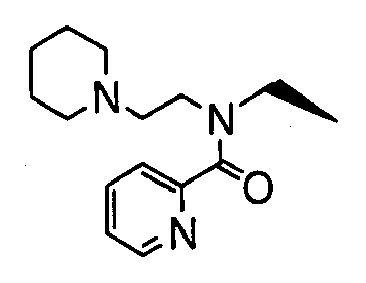
amorphous powder
MS (APCI) 694 [M+H]+663* 
amorphous powder
MS (APCI) 683 [M+H]+664* 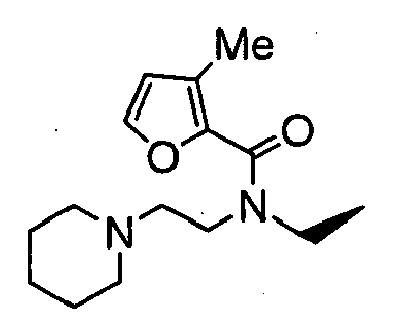
amorphous powder
MS (APCI) 697 [M+H]+665 
amorphous powder
MS (ESI) 605 [M+H]+666* 
amorphous powder
MS (APCI) 631 [M+H]+*: hydrochloride
Me: methyl group, Et: ethyl groupTable 27 (No. 3) 
Ex. Nos. R Physicochemical properties etc. 667* 
amorphous powder
MS (APCI) 628 [M+H]+668* 
amorphous powder
MS (APCI) 675 [M+H]+*: hydrochloride
Me: methyl group, Et: ethyl groupTable 27 (No. 4) 
Ex. Nos. R Physicochemical properties etc. 669* 
amorphous powder
MS (APCI) 646 [M+H]+670* 
amorphous powder
MS (APCI) 685 [M+H]+*: hydrochloride
Me: methyl group, Et: ethyl group - The corresponding materials are treated in the same manner as described in either one of the aforementioned Example 404, 407, 617 and 652 to give the compounds as shown in the following Table 27.1.
Table 27.1 (No.1) 
Ex. Nos. R R2 Physicochemical properties etc. 671** 

amorphous powder
MS (APCI) 516 [M+H]+672** 

amorphous powder
MS (APCI) 55.6 [M+H]+673** 

amorphous powder
MS (APCI) 544 [M+H]+674** 

amorphous powder
MS (APCI) 502 [M+H]+675** 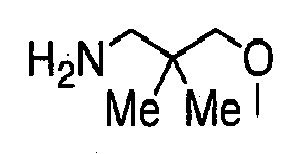

amorphous powder
MS (APCI) 544 [M+H]+676** 

amorphous powder
MS (APCI) 509 [M+H]+677** 

amorphous powder
MS (APCI) 525 [M+H]+678** 

amorphous powder
MS (APCI) 510 [M+H]+679** 

amorphous powder
MS (APCI) 526 [M+H]+680** 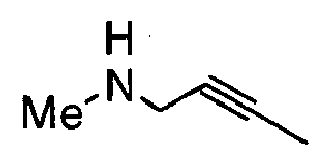

amorphous powder
MS (APCI) 515 [M+H]+**: dihydrochloride
Me: methyl group, Et: ethyl group, n-Pr: n-propyl groupTable 27.1 (No. 2) 
Ex. Nos. R R2 Physicochemical properties etc. 681** 

amorphous powder
MS (APCI) 531 [M+H]+682** 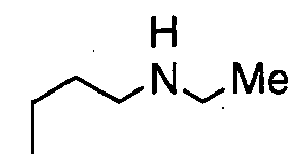

amorphous powder
MS (APCI) 527 [M+H]+683** 

amorphous powder
MS (APCI) 528 [M+H]+684** 

amorphous powder
MS (APCI) 533 [M+H]+685** 

amorphous powder
MS (APCI) 524 [M+H]+686** 

amorphous powder
MS (APCI) 512 [M+H]+687** 

amorphous powder
MS (APCI) 514 [M+H]+688* 

amorphous powder
MS (APCI) 528 [M+H]+689* 

amorphous powder
MS (APCI) 502 [M+H]+690* 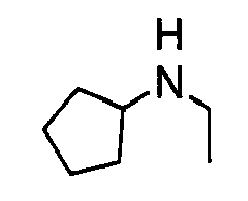

amorphous powder
MS (APCI) 540 [M+H]+*: hydrochloride, **: dihydrochloride
Me: methyl group, Et: ethyl group, n-Pr: n-propyl groupTable 27.1 (No. 3) 
Ex. Nos. R R2 Physicochemical properties etc. 691* 

amorphous powder
MS (APCI) 485 [M+H]+692* 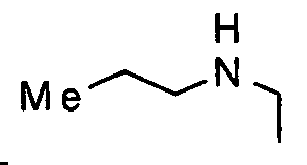
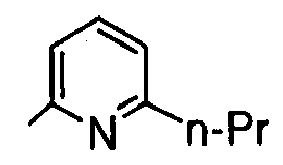
amorphous powder
MS(APCI)513 [M+H]+693* 

amorphous powder
MS (APCI) 513 [M+H]+694* 

amorphous powder
MS (APCI) 539[M+H]+695* 

amorphous powder
MS (APCI) 486[M+H]+696 

amorphous powder
MS (APCI) 514[M+H]+697* 

amorphous powder
MS (APCI) 514[M+H]+698* 

amorphous powder
MS (APCI) 474 [M+H]+699* 

amorphous powder
MS (APCI) 491 [M+H]+700* 

amorphous powder
MS (APCI) 519 [M+H]+*: hydrochloride
Me: methyl group, Et: ethyl group, n-Pr: n-propyl groupTable 27.1 (No. 4) 
Ex. Nos. R R2 Physicochemical properties etc. 701* 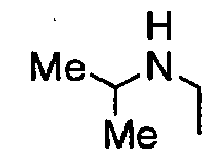

amorphous powder
MS (APCI) 519 [M+H]+702 

amorphous powder
MS (APCI) 545 [M+H]+703 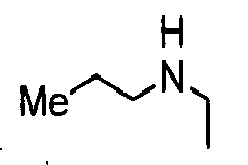

amorphous powder
MS (APCI) 502 [M+H]+*: hydrochloride
Me: methyl group, n-Pr: n-propyl group - The corresponding materials are treated in the same manner as described in Example 1 to give the compounds as shown in the following Table 27.2.
Table 27.2 (No. 1) 
Ex. Nos. R Physicochemical properties etc. 704** 
amorphous powder
MS (APCI) 687 [M+H]+705** 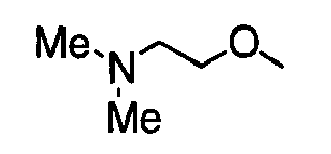
amorphous powder
MS (APCI) 659 [M+H]+706** 
amorphous powder
MS (APCI) 715 [M+H]+707** 
amorphous powder
MS (APCI) 685 [M+H]+708** 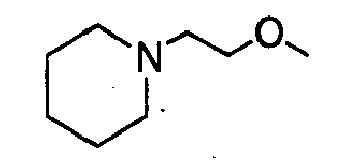
amorphous powder
MS (APCI) 699 [M+H]+709** 
amorphous powder
MS (APCI) 701 [M+H]+710** 
amorphous powder
MS (APCI) 673 [M+H]+**: dihydrochloride
Me: methyl group, Et: ethyl groupTable 27.2 (No. 2) 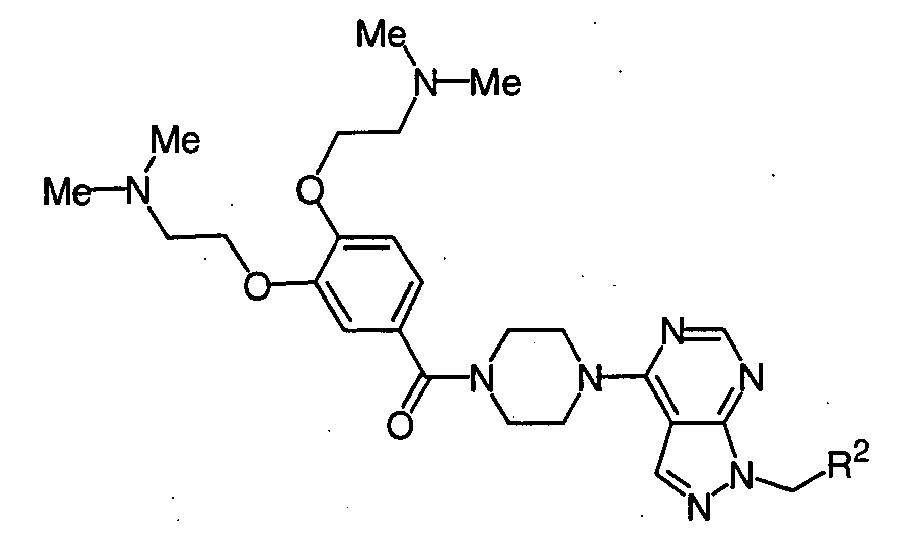
Ex. Nos. R2 Physicochemical properties etc. 711** 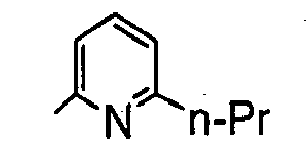
amorphous powder
MS (APCI) 616 [M+H]+712** 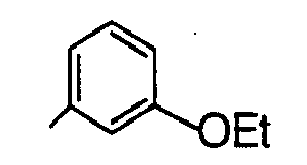
amorphous powder
MS (APCI) 617 [M+H]+**: dihydrochloride
Me: methyl group, Et: ethyl group, n-Pr: n-propyl group -
- (1) The compound obtained in Example 630 (1) (730 mg) and 4-piperidone monohydrate hydrochloride (1.05 g) are treated in the same manner as described in Example 630 (2) to give 1-(3-ethoxybenzyl)-4-[4-[[4-oxopiperidin-1-yl)carbonyl]-piperidin-1-yl]-1H-pyrazolo[3,4-d]pyrimidine (654 mg, yield: 97 %) as an amorphous powder. MS (APCI) m/z: 464 [M+H]+
- (2) The compound obtained in the above step (1) (50 mg) is treated in the same manner as described in Example 6 to give 1-(3-ethoxybenzyl)-4-[4-[[4-(dimethylamino)piperidin-1-yl]carbonyl]piperazin-1-yl]-1H-pyrazolo[3,4-d]pyrimidine (15.6 mg, yield; 30 %) as an amorphous powder. MS (APCI) m/z: 493 [M+H]+
- (3) The compound obtained in the above step (2) (13.8 mg) is treated in the same manner as described in Example 4 (3) to give 1-(3-ethoxybenzyl)-4-[4-[[4-(dimethylamino)piperidin-1-yl]carbonyl]piperazin-1-yl]-1H-pyrazolo[3,4-d]pyrimidine dihydrochloride (15.9 mg, yield; 99.6 %) as an amorphous powder. MS (APCI) m/z: 493 [M+H]+
- The compound obtained in Example 441 (50 mg) is treated in the same manner as described in Example 6 to give 1-(3-ethoxybenzyl)-4-[4-[[trans-4-(N-ethyl-N-n-propylamino)cyclohexyl]carbonyl]piperazin-1-yl]-1H-pyrazolo[3,4-d]pyrimidine (59.3 mg; yield; 64 %) as an amorphous powder. MS (APCI) m/z: 534 [M+H]+
-
- (1) To a solution of 4-fluorobenzenesulfonyl chloride (2.1 g) in methylene chloride (20 mL) is added pyridine (6 mL) and 1-(3-ethoxybenzyl)-4-piperazin-1-yl-1H-pyrazolo[3,4-d]pyrimidine dihydrochloride (3 g) under ice-cooling and the mixture is stirred at room temperature for 16 hours. The reaction mixture is diluted with chloroform (20 mL). Thereto is added a saturated sodium hydrogencarbonate solution. After stirring, the organic layer is separated and the aqueous layer is extracted with chloroform. The organic layers are combined, dried over anhydrous sodium sulfate and filtered. The filtrate is concentrated and the residue is purified by chromatography on silica gel (solvent; n-hexane : ethyl acetate = 1 : 1 → 1 : 3) to give 1-(3-ethoxybenzyl)-4-[4-(4-fluorobenesulfonyl)piperazin-1- yl]-1H-pyrazolo[3,4-d]pyrimidine (3.2 g, yield; 88 %) as an amorphous powder. MS (APCI) m/z: 497 [M+H]+
- (2) The compound obtained in the above step (1) (100 mg) is treated in the same manner as described in Reference Example 1 (1) to give 1-(3-ethoxybenzyl)-4-[4-[4-[[2-(dimethylamino)ethyl]amino]benzenesulfonyl]piperazin-1-yl]-1H-pyrazolo[3,4-d]pyrimidine (91 mg, yield; 80 %) as an amorphous powder. MS (APCI) m/z: 565 [M+H]+
- The compound obtained in Example 715 (2) (57 mg) is treated in the same manner as described in Example 416 and Example 4 (3) to give 1-(3-ethoxybenzyl)-4-[4-[4-[N-acetyl-N-[2-(dimethylamino)ethyl]amino]benzenesulfonyl]piperazin-1-yl]-1H-pyrazolo[3,4-d]pyrimidine dihydrochloride (51 mg, yield; 75 %) as an amorphous powder. MS (APCI) m/z: 607 [M+H]+
- The compound obtained in Example 441 is treated in the same manner as described in Example 422 (2) and then the resultant product is treated in the same manner as described in Example 4 (3) to give 1-(3-ethoxybenzyl)-4-[4-[[trans-4-[N-(2-dimethylamino)ethyl-N-propyl]amino]cyclohexyl]carbonyl]piperazin-1-yl]-1H-pyrazolo[3,4-d]pyrimidine dihydrochloride (3.4 mg, yield; 6.5 %) as an amorphous powder. MS (ESI) m/z: 577 [M+H]+
- The corresponding materials are treated in the same manner as described in Example 713 to give 1-(3-ethoxybenzyl)-4-[4-[[4-[[2-(dimethylamino)ethyl]amino]-piperidin-1-yl]carbonyl]piperazin-1-yl]-1H-pyrazolo[3,4-d]pyrimidine. The product (53 mg) is treated in the same manner as described in Example 416 to give 1-(3-ethoxybenzyl)-4-[4-[[4-[N-(cyclopropylcarbonyl)-N-[2-(dimethylamino)ethyl]amino]-piperidin-1-yl]carbonyl]piperazin--yl]-1H-pyrazolo[3,4-d]pyrimidine dihydrochloride (23 mg, yield; 34 %) as an amorphous powder. MS (APCI) m/z: 604 [M+H]+
-
- (1) To a solution of 4-piperidinopiperidine (1.0 g) in methylene chloride (5 mL) and isopropanol (15 mL) is added diphenylcyanocarbonimide (1.56 g) and the mixture is stirred at room temperature for 24 hours. The reaction mixture is diluted with ethyl acetate (20 mL) and thereto is added a saturated sodium hydrogencarbonate solution (30 mL). After stirring, the organic layer is separated and the aqueous layer is extracted with chloroform. The organic layers are combined, washed with saturated brine, dried over anhydrous sodium sulfate and filtered. The filtrate is concentrated and the residue is purified by column chromatography on silica gel (solvent; chloroform : methanol = 9 : 1 → 5 : 1) to give phenyl N-cyano-1,4-bipiperidine-1'-carboximidoate (2.5 g, yield; quantitative) as an amorphous powder. MS (APCI) m/z: 313 [M+H]+
- (2) To the solution of the compound obtained in the above step (1) (70 mg) in tetrahydrofuran (3 mL) is added sodium hydride (14.4 mg) and 1-(2-fluoro-3-methylbenzyl)-4-[4-(1-piperidyl)piperidin-1-yl]piperazin-1-yl]-1H-pyrazolo[3,4-d]pyrimidine (60 mg) and the mixture is stirred at 100°C for 24 hours. The reaction mixture is diluted with chloroform (3 mL) and thereto is added a saturated sodium hydrogencarbonate solution (5 mL). After stirring, the organic layer is separated and the aqueous layer is extracted with chloroform. The organic layers are combined, dried over anhydrous sodium sulfate, filtered and concentrated. The residue is purified by column chromatography on silica gel (Purif 8, Hi-flash/M, solvent; chloroform : methanol = 100 : 0 → 85 : 15) to give 1-(2-fluoro-3-methylbenzyl)-4-[4-[1,4'-bipiperidin-1'-yl(cyanoimino)methyl]-1H-pyrazolo[3,4-d]pyrimidine (77.4 mg, yield; 95 %) as an amorphous powder. MS (APCI) m/z: 545 [M+H]+
-
- (1) The compound obtained in Example 407 (282 mg) is treated in the same manner as described in Example 719 (1) to give 1-(3-ethoxybenzyl)-4-[4-[4-[N-[(cyanoimino)(phenoxy)methyl]-N-ethyl]amino]methyl]benzoyl]piperazin-l-yl]-1H-pyrazolo[3,4-d]pyrimidine (221 mg, yield; 69 %) as an amorphous powder. MS (APCI) m/z: 644 [M+H]+
- (2) To a solution of the compound obtained in the above step (1) (64 mg) in acetonitrile is added an aqueous dimethylamine solution (241 µL) and the mixture is stirred at 100°C for 16 hours. After cooling, the reaction mixture is concentrated and the residue is purified by column chromatography on silica gel (Purif 8, Hi-flash/M, solvent; chloroform : methanol = 100 : 0 → 90 : 10) to give 1-(3-ethoxybenzyl)-4-[4-[4-[[N-[(cyanoimino)(dimethylamino)methyl]-N-ethyl]amino]methyl]benzoyl]piperazin-1-yl]-1H-pyrazolo[3,4-d]pyrimidine (51 mg, yield; 86 %) as an amorphous powder. MS (APCI) m/z: 595 [M+H]+
- (3) The compound obtained in the above step (2) (51 mg) is treated in the same manner as described in Example 4 (3) to give 1-(3-ethoxybenzyl)-4-[4-[4-[[N-[(cyanoimino)(dimethylamino)methyl]-N-ethyl]amino]methyl]benzoyl]piperazin-1-yl]-1H-pyrazolo[3,4-d]pyrimidine dihydrochloride (45.8 mg, yield; 80 %) as an amorphous powder. MS (APCI) m/z: 595 [M+H]+
- The corresponding materials are treated in the same manner as described in Example 366 to give 1-(3-ethoxybenzyl)-4-[4-[4-[2-(dimethylamino)ethylamino]-benzoyl]piperazin-1-yl]-1H-pyrazolo[3,4-d]pyrimidine. To a solution of the resultant product (50 mg) in methylene chloride/isopropanol (1 : 1, 1 mL) is added diphenyl cyanocarbonimidate (25 mg) and the mixture is stirred at 50°C for 6 hours. The reaction mixture is diluted with chloroform (2 mL) and thereto is added a saturated sodium hydrogencarbonate solution (2 mL). After stirring, the organic layer is separated and the aqueous layer is extracted with chloroform. The organic layers are combined, dried over anhydrous sodium sulfate, filtered and concentrated. The residue is purified by column chromatography on silica gel (Purif 8, Hi-flash/M, solvent; chloroform : methanol = 100 : 0 → 90 : 10) to give 1-(3-ethoxybenzyl)-4-[4-[4-[N-[2-(dimethylamino)ethyl]-N-[(2-propyloxy)(cyanoimino)methyl]amino]benzoyl]-piperazin-1-yl]-1H-pyrazolo[3,4-d]pyrimidine (44.3 mg, yield; 69 %) as an amorphous powder. MS (APCI) m/z: 639 [M+H]+
-
- (1) Cyclohexane-1,4-dicarboxylic acid monomethyl ester (1.0 g) is treated in the same manner as described in Example 3 to give 1-(3-ethoxybenzyl)-4-[4-[[trans-4-(methoxycarbonyl)cyclohexyl]carbonyl]piperazin-1-yl]-1H-pyrazolo[3,4-d]pyrimidine (1.83 g, yield; 81 %) as an amorphous powder. MS (APCI) m/z: 507 [M+H]+
- (2) The compound obtained in the above step (1) and N,N,N'-triethyl-1,2-ethylenediamine are treated in the same manner as described in Example 4 (2) and (3) to give 1-(3-ethoxybenzyl)-4-[4-[[trans-4-[N-ethyl-N-[2-(diethylamino)ethyl]carbamoyl]-cyclohexyl]carbonyl]piperazin-1-yl]-1H-pyrazolo[3,4-d]pyrimidine dihydrochloride as an amorphous powder. MS (ESI) m/z: 619 [M+H]+
- Ethyl 4-(2-dimethylaminoethylamino)cyclohexanecarboxylate is treated in the same manner as described in Example 654 (3) and (4) to give 1-(6-propyl-2-pyridylmethyl)-4-[4-[[4-[N-naphthoyl-N-[2-(dimethylamino)ethyl]amino]cyclohexyl]-carbonyl]piperazin-1-yl]-1H-pyrazolo[3,4-d]pyrimidine as an amorphous powder. MS (ESI) m/z: 688 [M+H]+
-
- (1) To a solution of ethyl 6-chloropyridazine-3-carboxylate (37 mg) in tetrahydrofuran (1.5 mL) is added N,N,N'-trimethylpropane-1,3-diamine (46 mg) and the mixture is stirred at room temperature overnight. The reaction mixture is diluted with tetrahydrofuran (1.5 mL) and thereto is added MP-Isocyanate (polystyrene methylisocyanate, 1.43 mmol/g, 400 mg). The mixture is shaken at room temperature overnight. The reaction mixture is filtered to remove the resin and the filtrate is extracted with chloroform/methanol. The organic layer is concentrated to give crude ethyl 6-[N-(3-dimethylaminopropyl)-methylamino]-3-pyridazinecarboxylate. MS (ESI) m/z: 267 [M+H]+
- (2) The compound obtained in the above step (1) is treated in the same manner as described in Example 1 and Example 4 (3) to give 1-(3-ethoxybenzyl)-4-[4-[[6-[N-methyl-N-[3-(dimethylamino)propyl]amino]pyridazin-3-yl)carbonyl]piperazin-1-yl]-1H-pyrazolo[3,4-d]pyrimidine hydrochloride as an amorphous powder. MS (APCI) m/z: 559 [M+H]+
-
- (1) To a solution of the compound obtained in Example 22 (500 mg) and N-benzyloxycarbonyl-β-alanine (291 mg) in methylene chloride (5 mL) is added diethyl cyanophosphonate (230 µL) and the mixture is stirred at room temperature overnight. To the reaction mixture is added a saturated sodium hydrogencarbonate solution and the mixture is extracted with chloroform. The organic layer is evaporated to remove solvent and the residue is purified by column chromatography on silica gel (solvent; chloroform/methanol = 10 : 1) to 1-(3-ethoxybenzyl)-4-[4-[4-[N-[3-[N'-methyl-N'-(benzyloxycarbonyl)amino]propionyl]-N-[2-(dimethylamino)ethyl]amino]benzoyl]-piperazin-1-yl]-1H-pyrazolo[3,4-d]pyrimidine give (431 mg, yield; 61 %) as an yellow liquid. MA(APCI)m/z: 748 [M+H]+
- (2) A suspension of the compound obtained in the above step (1) (480 mg), ammonium formate (81 mg) and 10 % palladium-carbon (100 mg) in methanol (5 mL) is refluxed under heating for 2 hours. The reaction mixture is filtered and the filtrate is concentrated in vacuo. The residue is purified by column chromatography on silica gel (solvent; chloroform/methanol = 5 : 1), and then the resultant product is treated in the same manner as described in Example 4 (3) to give 1-(3-ethoxybenzyl)-4-[4-[4-[N-[3-(methylamino)propionyl]-N-[2-(dimethylamino)ethyl]amino]benzoyl]piperazin-1-yl]-1H-pyrazolo[3,4-d]pyrimidine hydrochloride (390 mg, yield; 99 %) as a yellow liquid. MA (APCI) m/z: 614 [M+H]+
-
- (1) Methyl 4-[trans-4-[(2-nitrophenyl)sulfonyl]piperazin-1-yl]cyclohexanecarboxylate (compound obtained in Reference Example 310, 1.29 g) treated in the same manner as described in Example 1 to give 1-(3-ethoxybenzyl)-4-[4-[[trans-4-[4-[(2-nitrophenyl)sulfonyl]piperazin-1-yl]cyclohexyl]carbonyl]piperazin-1-yl]-1 H-pyrazolo-[3,4-d]pyrimidin (1.91 g, yield; 85 %) as an yellow liquid. MS (APCI) m/z: 718 [M+H]+
- (2) A suspension of the compound obtained in the above step (1) (1.71 g), potassium carbonate (658 mg) and thiophenol (270 µL) in N,N-dimethylformamide (10 mL) is stirred at room temperature for 4 hours. The reaction mixture is diluted with water/ethyl acetate and the mixture is treated with cation-exchange resin (SCX-2, IST Ltd., solvent; methanol/water = 1 : 1 → 1N ammonia/methanol) to give 1-(3-ethoxy-benzyl)-4-[trans-4-[[4-(1-piperazinyl)cyclohexyl]carbonyl]piperazin-1-yl]-1H-pyrazolo-[3,4-d]pyrimidin (1.09 g, yield; 86 %) as a colorless solid. MS (APCI) m/z: 533 [M+H]+
- (3) To a solution of the compound obtained in the above step (2) (50 mg) in 1,2-dichloroethane (1 mL) is added successively formaldehyde solution (15 µL), acetic acid (11 µL) and sodium triacetoxyborohydride (30 mg) under ice-cooling and the mixture is stirred at room temperature overnight. To the reaction mixture is added a saturated sodium hydrogencarbonate solution and the mixture is extracted with chloroform. The organic layer is evaporated to remove solvent and the resultant crude product is purified by HPLC (solvent; 10 mM ammonium carbonate/methanol) to give 1-(3-ethoxybenzyl)-4-[4-[[trans-4-(4-methylpiperazin-1-yl)cyclohexyl]carbonyl]-piperazin-1-yl]-1H-pyrazolo[3,4-d]pyrimidin (47 mg, yield; 92 %) as a colorless solid. MS (APCI) m/z: 547 [M+H]+
- To a solution of the compound obtained in Example 725 (50 mg) in methylene chloride (3 mL) is added ethyl chloroformate (10 µL) and triethylamine (22 µL) and the mixture is stirred at room temperature overnight. The reaction mixture is diluted with a saturated sodium hydrogencarbonate solution and the mixture is extracted with chloroform. The organic layer is evaporated to remove solvent and the residue is purified by column chromatography on silica gel (solvent; chloroform/methanol = 10 : 1), and the resultant product is treated in the same manner as described in Example 4 (3) to give 1-(3-ethoxybenzyl)-4-[4-[4-[N-[3-[N'-methyl-N'-(ethoxycarbonyl)amino]-propionyl]-N-[2-(dimethylamino)ethyl]amino]benzoyl]piperazin-1-yl]-1H-pyrazolo-[3,4-d]pyrimidine hydrochloride (17 mg, yield; 30 %) as an amorphous powder. MS (APCI) m/z: 686 [M+H]+
- The corresponding materials are treated in the same manner as described in either one of Examples 416, 714, 715, 716 and 717 to give the compounds as shown in the following Table 27.3.
Table 27.3 (No. 1) 
Ex. Nos. R1 Physicochemical properties etc. 728 
amorphous powder
MS (APCI) 546 [M+H]+729 
amorphous powder
MS (APCI) 560 [M+H]+730 
amorphous powder
MS (APCI) 534 [M+H]+731** 
amorphous powder
MS (APCI) 520 [M+H]+732** 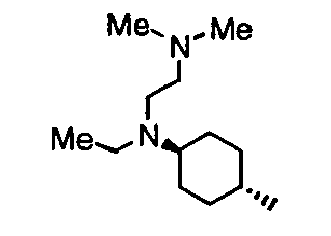
amorphous powder
MS (ESI) 563 [M+H]+**: dihydrochloride
Me: methyl group, Et: ethyl group, n-Pr: n-propyl groupTable 27.3 (No.2) 
Ex. Nos. R Physicochemical properties etc. 733** 
amorphous powder
MS (ESI) 635 [M+H]+734 
amorphous powder
MS (APCI) 579 [M+H]+735** 
amorphous powder
MS (APCI) 593 [M+H]+736** 
amorphous powder
MS (APCI) 593 [M+H]+737** 
amorphous powder
MS (APCI) 621 [M+H]+738** 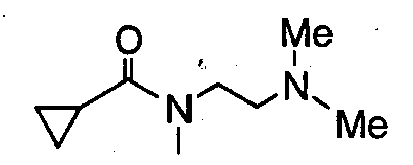
amorphous powder
MS (APCI) 633 [M+H]+**: dihydrochloride
Me: methyl group, Et: ethyl group - The corresponding materials are treated in the same manner as described in either one of Examples 1, 366 and 407 to give the compounds as shown in the following Table 27.4.
Table 27.4 (No. 1) 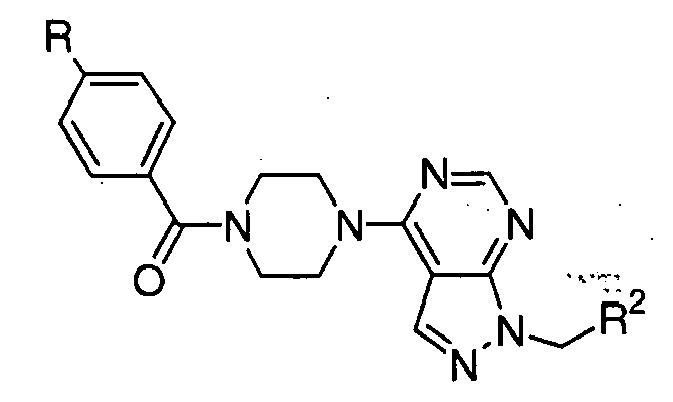
Ex. Nos. R R2 Physicochemical properties etc. 739** 

amorphous powder
MS (APCI) 571 [M+H]+740** 

amorphous powder
MS (APCI) 570 [M+H]+741** 

amorphous powder
MS (APCI) 559 [M+H]+742** 

amorphous powder
MS (APCI) 576 [M+H]+743** 

amorphous powder
MS (APCI) 588 [M+H]+**: dihydrochloride
Me: methyl group, Et: ethyl group, n-Pr: n-propyl groupTable 27.4 (No. 2) 
Ex. Nos. R Physicochemical properties etc. 744** 
amorphous powder
MS (APCI) 574 [M+H]+745** 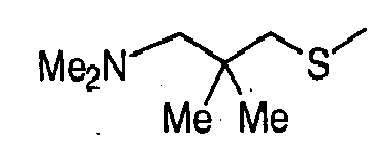
amorphous powder
MS (APCI) 588 [M+H]+**: dihydrochloride
Me: methyl group, Et: ethyl group - The corresponding materials are treated in the same manner as described in either one of Examples 3, 407 and 434 to give the compounds as shown in the following Table 27.5.
Table 27.5 
Ex. Nos. R1 R2 Physicochemical properties etc. 746** 

amorphous powder
MS (APCI) 534 [M+H]+747** 

amorphous powder
MS (APCI) 532 [M+H]+748 

amorphous powder
MS (APCI) 546 [M+H]+749 

amorphous powder
MS (APCI) 546 [M+H]+**: dihydrochloride
Me: methyl group, Et: ethyl group, n-Pr: n-propyl group - The corresponding materials are treated in the same manner as described in either one of Examples 713 and 718 to give the compounds as shown in the following Table 27.6.
Table 27.6 (No. 1) 
Ex. Nos. R Physicochemical properties etc. 750** 
amorphous powder
MS (APCI) 604 [M+H]+751** 
amorphous powder
MS (APCI) 630 [M+H]+752 
amorphous powder
MS (ESI) 576 [M+H]+753 
amorphous powder
MS (ESI) 551 [M+H]+754** 
amorphous powder
MS (APCI) 536 [M+H]+755* 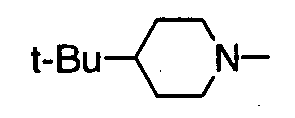
amorphous powder
MS (APCI) 589 [M+H]+756* 
amorphous powder
MS (APCI) 590 [M+H]+757* 
amorphous powder
MS (APCI) 517 [M+H]+*: hydrochloride, **: dihydrochloride
Me: methyl group, Et: ethyl group, t-Bu: tert-butyl group, n-Bu: n-butyl groupTable 27.6 (No. 2) 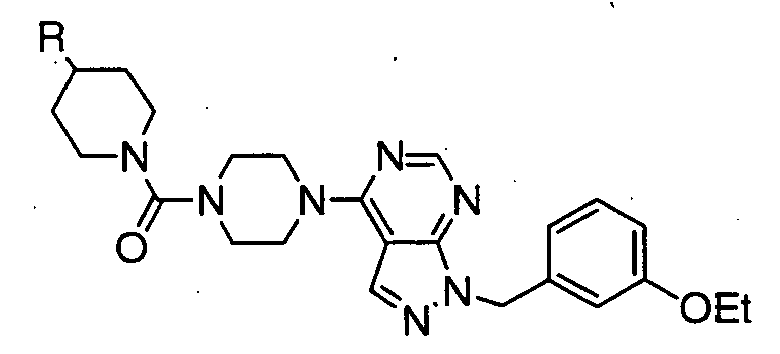
Ex. Nos. R Physicochemical properties etc. 758* 
amorphous powder
MS (APCI) 562 [M+H]+759* 
amorphous powder
MS (APCI) 561 [M+H]+760* 
amorphous powder
MS (APCI) 547 [M+H]+761* 
amorphous powder
MS (APCI) 507 [M+H]+762* 
amorphous powder
MS (APCI) 521 [M+H]+763* 
amorphous powder
MS (APCI) 564 [M+H]+764* 
amorphous powder
MS (APCI) 592 [M+H]+765* 
amorphous powder
MS (APCI) 563 [M+H]+766* 
amorphous powder
MS (APCI) 550 [M+H]+767* 
amorphous powder
MS (APCI) 563 [M+H]+*: hydrochloride
Me: methyl group, Et: ethyl groupTable 27.6 (No. 3) 
Ex. Nos. R Physicochemical properties etc. 768* 
amorphous powder
MS (APCI) 576 [M+H]+769* 
amorphous powder
MS (APCI) 537 [M+H]+770* 
amorphous powder
MS (APCI) 551 [M+H]+*: hydrochloride
Me: methyl group, Et: ethyl group - The corresponding materials are treated in the same manner as described in either one of Examples 720 and 724 to give the compounds as shown in the following Table 27.7.
Table 27.7 (No. 1) 
Ex. Nos. R Physicochemical properties etc. 771 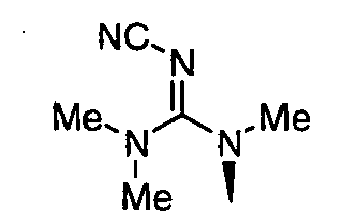
amorphous powder
MS (APCI) 573 [M+H]+Me: methyl group, Et: ethyl group Table 27.7 (No. 2) 
Ex. Nos. R' R" Physicochemical properties etc. 772* 
CF3 amorphous powder
MS (APCI) 598 [M+H]+773* 
H amorphous powder
MS (APCI) 530 [M+H]+774* 
CF3 amorphous powder
MS (APCI) 626 [M+H]+775* 
H amorphous powder
MS (APCI) 558 [M+H]+776* 
CF3 amorphous powder
MS (APCI) 640 [M+H]+777* 
H amorphous powder
MS (APCI) 572 [M+H]+778* 
H amorphous powder
MS (APCI) 544 [M+H]+779* 
CF3 amorphous powder
MS (APCI) 626 [M+H]+780* 
H amorphous powder
MS (APCI) 558 [M+H]+*: hydrochloride
Me: methyl group, n-Pr: n-propyl groupTable 27.7 (No. 3) 
Ex. Nos. R' R" Physicochemical properties etc. 781* 
CF3 amorphous powder
MS (APCI) 599 [M+H]+782* 
H amorphous powder
MS (APCI) 531 [M+H]+783* 
CF3 amorphous powder
MS (APCI) 627 [M+H]+784* 
H amorphous powder
MS (APCI) 559 [M+H]+785* 
CF3 amorphous powder
MS (APCI) 641 [M+H]+786* 
H amorphous powder
MS (APCI) 573 [M+H]+787* 
H amorphous powder
MS (APCI) 545 [M+H]+788* 
CF3 amorphous powder
MS (APCI) 627 [M+H]+789* 
H amorphous powder
MS (APCI) 559 [M+H]+*: hydrochloride
Me: methyl group, Et: ethyl groupTable 27.7 (No. 4) 
Ex. Nos. R' R" Physicochemical properties etc. 790* 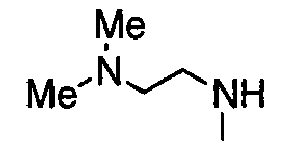
CF3 amorphous powder
MS (APCI) 604 [M+H]+791* 
H amorphous powder
MS (APCI) 536 [M+H]+792* 
CF3 amorphous powder
MS (APCI) 632 [M+H]+793* 
H amorphous powder
MS (APCI) 564 [M+H]+794* 
CF3 amorphous powder
MS (APCI) 646 [M+H]+795* 
H amorphous powder
MS (APCI) 578 [M+H]+796* 
H amorphous powder
MS (APCI) 550 [M+H]+797* 
CF3 amorphous powder
MS (APCI) 632 [M+H]+798* 
H amorphous powder
MS (APCI) 564 [M+H]+*: hydrochloride
Me: methyl group, n-Pr: n-propyl group - The corresponding materials are treated in the same manner as described in Example 1 to give the compounds as shown in the following Table 27.8.
Table 27.8 (No. 1) 
Ex. Nos. R R2 Physicochemical properties etc. 799** Me 
amorphous powder
MS (APCI) 597 [M+H]+800** 

amorphous powder
MS (APCI) 623 [M+H]+801** 

amorphous powder
MS (APCI) 622 [M+H]+802** 

amorphous powder
MS (APCI) 649 [M+H]+803** 

amorphous powder
MS (APCI) 648 [M+H]+804** 

amorphous powder
MS (APCI) 654 [M+H]+**: dihydrochloride
Me: methyl group, Et: ethyl group, n-Pr: n-propyl groupTable 27.8 (No. 2) 
Ex. Nos. R Physicochemical properties etc. 805 
amorphous powder
MS (ESI) 549 [M+H]+806 
amorphous powder
MS (ESI) 573 [M+H]+807 
amorphous powder
MS (ESI) 573 [M+H]+808 
amorphous powder
MS (ESI) 561 [M+H]+809 
amorphous powder
MS (ESI) 559 [M+H]+810 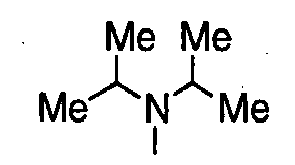
amorphous powder
MS (ESI) 561 [M+H]+811 
amorphous powder
MS (ESI) 609 [M+H]+812 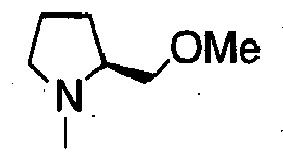
amorphous powder
MS (ESI) 575 [M+H]+813 
amorphous powder
MS (ESI) 547 [M+H]+814 
amorphous powder
MS (ESI) 593 [M+H]+Me: methyl group, n-Pr: n-propyl group Table 27.8 (No. 3) 
Ex. Nos. R Physicochemical properties etc. 815 
amorphous powder
MS (ESI) 563 [M+H]+816 
amorphous powder
MS (ESI) 547 [M+H]+817 
amorphous powder
MS (ESI) 588 [M+H]+818 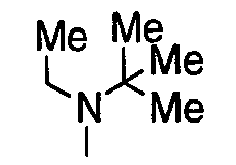
amorphous powder
MS (ESI) 561 [M+H]+819 
amorphous powder
MS (ESI) 575 [M+H]+820 
amorphous powder
MS (ESI) 591 [M+H]+821 
amorphous powder
MS (ESI) 588 [M+H]+822 
amorphous powder
MS (ESI) 579 [M+H]+823 
amorphous powder
MS (ESI) 618 [M+H]+824 
amorphous powder
MS (ESI) 574 [M+H]+Me: methyl group, Et: ethyl group, n-Pr: n-propyl group Table 27.8 (No. 4) 
Ex. Nos. R Physicochemical properties etc. 825 
amorphous powder
MS (ESI) 551 [M+H]+826 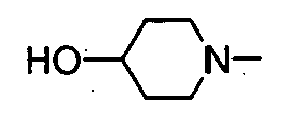
amorphous powder
MS (ESI) 563 [M+H]+827 
amorphous powder
MS (ESI) 563 [M+H]+828 
amorphous powder
MS (ESI) 611 [M+H]+829 
amorphous powder
MS (ESI) 577 [M+H]+830 
amorphous powder
MS (ESI) 549 [M+H]+831 
amorphous powder
MS (ESI) 595 [M+H]+832 
amorphous powder
MS (ESI) 565 [M+H]+833 
amorphous powder
MS (ESI) 549 [M+H]+834 
amorphous powder
MS (ESI) 593 [M+H]+Me: methyl group, Et: ethyl group Table 27.8 (No. 5) 
Ex. Nos. R Physicochemical properties etc. 835 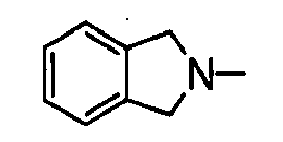
amorphous powder
MS (ESI) 581 [M+H]+836 
amorphous powder
MS (ESI) 593 [M+H]+Me: methyl group, Et: ethyl group Table 27.8 (No. 6) 
Ex. Nos. R Physicochemical properties etc. 837 
amorphous powder
MS (ESI) 550 [M+H]+838 
amorphous powder
MS (ESI) 574 [M+H]+839 
amorphous powder
MS (ESI) 574 [M+H]+840 
amorphous powder
MS (ESI) 562 [M+H]+841 
amorphous powder
MS (ESI) 560 [M+H]+842 
amorphous powder
MS (ESI) 562 [M+H]+843 
amorphous powder
MS (ESI) 576 [M+H]+844 
amorphous powder
MS (ESI) 548 [M+H]+845 
amorphous powder
MS (ESI) 594 [M+H]+846 
amorphous powder
MS (ESI) 564 [M+H]+Me: methyl group, Et: ethyl group Table 27.8 (No. 7) 
Ex. Nos. R Physicochemical properties etc. 847 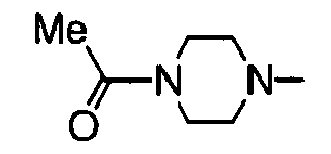
amorphous powder
MS (ESI) 589 [M+H]+848 
amorphous powder
MS (ESI) 576 [M+H]+849 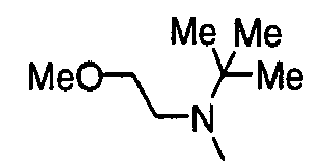
amorphous powder
MS (ESI) 592 [M+H]+850 
amorphous powder
MS (ESI) 589 [M+H]+851 
amorphous powder
MS (ESI) 580 [M+H]+852 
amorphous powder
MS (ESI) 619 [M+H]+853 
amorphous powder
MS (ESI) 575 [M+H]+854 
amorphous powder
MS (ESI) 592 [M+H]+Me: methyl group, Et: ethyl group Table 27.8 (No. 8) 
Ex. Nos. R Physicochemical properties etc. 855 
amorphous powder
MS (ESI) 579 [M+H]+856 
amorphous powder
MS (ESI) 579 [M+H]+857 
amorphous powder
MS (ESI) 567 [M+H]+858 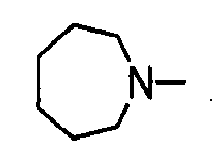
amorphous powder
MS (ESI) 565 [M+H]+859 
amorphous powder
MS (ESI) 567 [M+H]+860 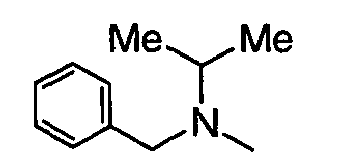
amorphous powder
MS (ESI) 615 [M+H]+861 
amorphous powder
MS (ESI) 581 [M+H]+862 
amorphous powder
MS (ESI) 553 [M+H]+863 
amorphous powder
MS (ESI) 599 [M+H]+864 
amorphous powder
MS (ESI) 553 [M+H]+Me: methyl group, n-Pr: n-propyl group Table 27.8 (No. 9) 
Ex. Nos. R R2 Physicochemical properties etc. 865 

amorphous powder
MS (ESI) 581 [M+H]+866 

amorphous powder
MS (ESI) 597 [M+H]+867 

amorphous powder
MS (ESI) 597 [M+H]+868* 

amorphous powder
MS (APCI) 578 [M+H]+869* 

amorphous powder
MS (APCI) 610 [M+H]+870* 

amorphous powder
MS (APCI) 548 [M+H]+871* 

amorphous powder
MS (APCI) 562 [M+H]+872* 
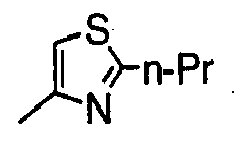
amorphous powder
MS (APCI) 555 [M+H]+873* 

amorphous powder
MS (APCI) 569 [M+H]+874* 

amorphous powder
MS (APCI) 585 [M+H]+*: hydrochloride
Me: methyl group, Et: ethyl group, n-Pr: n-propyl group - The corresponding materials are treated in the same manner as described in Example 3 to give the compound as shown in the following Table 27.9.
Table 27.9 
Ex. Nos. R Physicochemical properties etc. 875 
amorphous powder
MS (APCI) 546 [M+H]+Me: methyl group - The corresponding materials are treated in the same manner as described in Example 723 to give the compounds as shown in the following Table 27.10.
Table 27.10 (No: 1) 
Ex. Nos. R Physicochemical properties etc. 876 
amorphous powder
MS (ESI) 638 [M+H]+877 
amorphous powder
MS (ESI) 706 [M+H]+878** 
amorphous powder
MS (APCI) 604 [M+H]+879** Me amorphous powder
MS (APCI) 576 [M+H]+880** 
amorphous powder
MS (APCI) 602 [M+H]+881** 
amorphous powder
MS (APCI) 602 [M+H]+882 
amorphous powder
MS (ESI) 628 [M+H]+883 
amorphous powder
MS (ESI) 639 [M+H]+**: dihydrochloride
Me: methyl group, n-Pr: n-propyl groupTable 27.10 (No. 2) 
Ex. Nos. R Physicochemical properties etc. 884 
amorphous powder
MS (ESI) 639 [M+H]+885** 
amorphous powder
MS (APCI) 605 [M+H]+886 Me amorphous powder
MS (ESI) 577 [M+H]+887** 
amorphous powder
MS (APCI) 603 [M+H]+888 
amorphous powder
MS (ESI) 603 [M+H]+889 
amorphous powder
MS (ESI) 629 [M+H]+890** 
amorphous powder
MS (APCI) 689 [M+H]+891 
amorphous powder
MS (ESI) 640 [M+H]+**: dihydrochloride
Me: methyl group, Et: ethyl group - The corresponding materials are treated in the same manner as described in Example 633 or 726 to give the compounds as shown in the following Table 27.11.
Table 27.11 
Ex. Nos. R Physicochemical properties etc. 892 
amorphous powder
MS (APCI) 575 [M+H]+893 
amorphous powder
MS (APCI) 561 [M+H]+894* 
amorphous powder
MS (APCI) 547 [M+H]+895* 
amorphous powder
MS (APCI) 603 [M+H]+896 
amorphous powder
MS (APCI) 591 [M+H]+897 
amorphous powder
MS (APCI) 589 [M+H]+898 
amorphous powder
MS (APCI) 577 [M+H]+899 
amorphous powder
MS (APCI) 563 [M+H]+900 
amorphous powder
MS (APCI) 549 [M+H]+*: hydrochloride
Me: methyl group, Et: ethyl group - The corresponding materials are treated in the same manner as described in Example 366 to give the compounds as shown in the following Table 27.12.
Table 27.12 
Ex. Nos. R R2 Physicochemical Properties etc. 901** t-Bu 
amorphous powder
MS (ESI) 652 [M+H]+902** 

amorphous powder
MS (ESI) 640 [M+H]+903** 
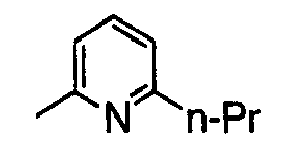
amorphous powder
MS (ESI) 662 [M+H]+904** Me 
amorphous powder
MS (ESI) 611 [M+H]+905** 

amorphous powder
MS (ESI) 641 [M+H]+906** 

amorphous powder
MS (ESI) 637 [M+H]+907** 

amorphous powder
MS (ESI) 637 [M+H]+908** 

amorphous powder
MS (ESI) 663 [M+H]+**: dihydrochloride
Me: methyl group, Et: ethyl group, n-Pr: n-propyl group, t-Bu: tert-butyl group - The corresponding materials are treated in the same manner as described in Example 719 to give the compounds as shown in the following Table 27.13.
Table 27.13 
Ex. Nos. R R2 Physicochemical properties etc. 909 

amorphous powder
MS (APCI) 545 [M+H]+910 

amorphous powder
MS (APCI) 562 [M+H]+911 

amorphous powder
MS (APCI) 543 [M+H]+912 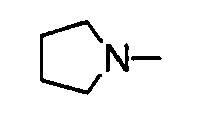
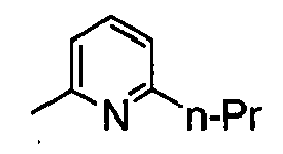
amorphous powder
MS (APCI) 542 [M+H]+913 

amorphous powder
MS (APCI) 531 [M+H]+914 
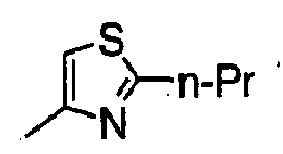
amorphous powder
MS (APCI) 548 [M+H]+915** 

amorphous powder
MS (APCI) 557 [M+H]+**: dihydrochloride
Me: methyl group, Et: ethyl group, n-Pr: n-propyl group - The corresponding materials are treated in the same manner as described in Example 720 to give the compounds as shown in the following Table 27.14.
Table 27.14 
Ex. Nos. R Physicochemical properties etc. 916** 
amorphous powder
MS (APCI) 638 [M+H]+**: dihydrochloride
Me: methyl group, Et: ethyl group - The corresponding materials are treated in the same manner as described in Example 722 to give the compounds as shown in the following Table 27.15.
Table 27.15 (No. 1) 
Ex. Nos. R Physicochemical properties etc. 917** 
amorphous powder
MS (ESI) 589 [M+H]+918** 
amorphous powder
MS (ESI) 563 [M+H]+919** 
amorphous powder
MS (ESI) 591 [M+H]+920** 
amorphous powder
MS (ESI) 591 [M+H]+921** 
amorphous powder
MS (ESI) 605 [M+H]+922** 
amorphous powder
MS (ESI) 603 [M+H]+923** 
amorphous powder
MS (ESI) 577 [M+H]+924** 
amorphous powder
MS (ESI) 591 [M+H]+**: dihydrochloride
Me: methyl group, Et: ethyl groupTable 27.15 (No. 2) 
Ex. Nos. R Physicochemical properties etc. 925** 
amorphous powder
MS (ESI) 619 [M+H]+926** 
amorphous powder
MS (ESI) 617 [M+H]+927** 
amorphous powder
MS (ESI) 603 [M+H]+**: dihydrochloride
Me: methyl group, Et: ethyl group - The corresponding materials are treated in the same manner as described in Example 723 to give the compounds as shown in the following Table 27.16.
Table 27.16 (No. 1) 
Ex. Nos. R R2 Physicochemical properties etc. 928** t-Bu 
amorphous powder
MS (ESI) 618 [M+H]+929** Me 
amorphous powder
MS (ESI) 576 [M+H]+930** 

amorphous powder
MS (ESI) 602 [M+H]+931** t-Bu 
amorphous powder
MS (ESI) 620 [M+H]+932** Me 
amorphous powder
MS (ESI) 578 [M+H]+933** 

amorphous powder
MS (ESI) 604 [M+H]+934** t-Bu 
amorphous powder
MS (ESI) 619 [M+H]+935** Me 
amorphous powder
MS (ESI) 577 [M+H]+936** 

amorphous powder
MS (ESI) 603 [M+H]+**: dihydrochloride
Me: methyl group, Et: ethyl group, n-Pr: n-propyl group, t-Bu: tert-butyl groupTable 27.16 (No. 2) 
Ex. Nos. R R2 Physicochemical properties etc. 937** t-Bu 
amorphous powder
MS (ESI) 624 [M+H]+938** Me 
amorphous powder
MS (ESI) 582 [M+H]+939** 

amorphous powder
MS (ESI) 608 [M+H]+**: dihydrochloride
Me: methyl group, n-Pr: n-propyl group, t-Bu: tert-butyl group - The corresponding materials are treated in the same manner as described in Example 727 to give the compounds as shown in the following Table 27.17.
Table 27.17 
Ex. Nos. R Physicochemical properties etc. 940* 
amorphous powder
MS (APCI) 700 [M+H]+941* 
amorphous powder
MS (APCI) 728 [M+H]+*: hydrochloride
Me: methyl group, Et: ethyl group - The corresponding materials are treated in the same manner as described in Example 630 to give the compounds as shown in the following Table 27.18.
Table 27.18 
Ex. Nos. R R2 Physicochemical properties etc. 942 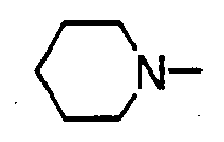

amorphous powder
MS (APCI) 532 [M+H]+943 

amorphous powder
MS (APCI) 521 [M+H]+944 

amorphous powder
MS (APCI) 534 [M+H]+945 

amorphous powder
MS (APCI) 518 [M+H]+946 

amorphous powder
MS (APCI) 507 [M+H]+947 

amorphous powder
MS (APCI) 520 [M+H]+Me: methyl group, Et: ethyl group, n-Pr: n-propyl group - The corresponding materials are treated in the same manner as described in Example 723 or 725 to give the compounds as shown in the following Table 27.19.
Table 27.19 (No. 1) 
Ex. Nos. R R2 Physicochemical properties etc. 948* 

amorphous powder
MS (APCI) 638 [M+H]+949* 

amorphous powder
MS (APCI) 640 [M+H]+950* 

amorphous powder
MS (APCI) 644 [M+H]+951* 

amorphous powder
MS (APCI) 604 [M+H]+952* 

amorphous powder
MS (APCI) 606 [M+H]+953* 

amorphous powder
MS (APCI) 610 [M+H]+954* 

amorphous powder
MS (APCI) 576 [M+H]+955* 

amorphous powder
MS (APCI) 578 [M+H]+956* 

amorphous powder
MS (APCI) 582 [M+H]+957* 

amorphous powder
MS (APCI) 602 [M+H]+*: hydrochloride
Me: methyl group, Et: ethyl group, n-Pr: n-propyl groupTable 27.19 (No. 2) 
Ex. Nos. R R2 Physicochemical properties etc. 958* 

amorphous powder
MS (APCI) 604 [M+H]+959* 

amorphous powder
MS (APCI) 608 [M+H]+960* 

amorphous powder
MS (APCI) 602 [M+H]+961* 

amorphous powder
MS (APCI) 608 [M+H]+962* 

amorphous powder
MS (APCI) 628 [M+H]+963* 

amorphous powder
MS (APCI) 634 [M+H]+964* 

amorphous powder
MS (APCI) 612 [M+H]+965* 

amorphous powder
MS (APCI) 639 [M+H]+966* 

amorphous powder
MS (APCI) 641 [M+H]+967* 

amorphous powder
MS (APCI) 645 [M+H]+*: hydrochloride
Me: methyl group, Et: ethyl group, n-Pr: n-propyl group - The corresponding materials are treated in the same manner as described in Example 720 or 727 to give the compounds as shown in the following Table 27.20.
Table 27.20 
Ex. Nos. R Physicochemical properties etc. 968 
amorphous powder
MS (APCI) 770 [M+H]+969** 
amorphous powder
MS (APCI) 567 [M+H]+**: dihydrochloride
Me: methyl group, Et: ethyl group - The corresponding materials are treated in the same manner as described in Example 723 or 724 to give the compounds as shown in the following Table 27.21.
Table 27.21 (No. 1) 
Ex. Nos. R R2 Physicochemical properties etc. 970* 

amorphous powder
MS (APCI) 529 [M+H]+971* 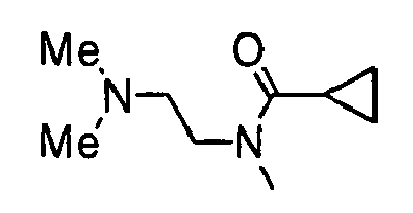

amorphous powder
MS (APCI) 597 [M+H]+972* 

amorphous powder
MS (APCI) 530 [M+H]+973* 

amorphous powder
MS (APCI) 598 [M+H]+974* 

amorphous powder
MS (APCI) 598 [M+H]+975* 

amorphous powder
MS (APCI) 535 [M+H]+976* 

amorphous powder
MS (APCI) 603 [M+H]+977* 

amorphous powder
MS (APCI) 599 [M+H]+*: hydrochloride
Me: methyl group, Et: ethyl group, n-Pr: n-propyl groupTable 27.21 (No. 2) 
Ex. Nos. R R2 Physicochemical properties etc. 978* 

amorphous powder
MS (APCI) 600 [M+H]+979* 

amorphous powder
MS (APCI) 605 [M+H]+*: hydrochloride
Me: methyl group, Et: ethyl group, n-Pr: n-propyl groupTable 27.21 (No. 3) 
Ex. Nos. R R2 Physicochemical properties etc. 980* 

amorphous powder
MS (APCI) 558 [M+H]+981* 

amorphous powder
MS (APCI) 572 [M+H]+982* 

amorphous powder
MS (APCI) 544 [M+H]+983* 

amorphous powder
MS (APCI) 558 [M+H]+984* 

amorphous powder
MS (APCI) 559 [M+H]+985* 

amorphous powder
MS (APCI) 536 [M+H]+986* 

amorphous powder
MS (APCI) 564 [M+H]+*: hydrochloride
Me: methyl group, Et: ethyl group, n-Pr: n-propyl groupTable 27.21 (No. 4) 
Ex. Nos. R R2 Physicochemical properties etc. 987* 

amorphous powder
MS (APCI) 578 [M+H]+988* 

amorphous powder
MS (APCI) 550 [M+H]+989* 
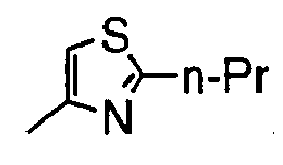
amorphous powder
MS (APCI) 564 [M+H]+*: hydrochloride
Me: methyl group, n-Pr: n-propyl group - The corresponding materials are treated in the same manner as described in Example 713 to give the compounds as shown in the following Table 27.22.
Table 27.22 
Ex. Nos. R R2 Physicochemical properties etc. 990* 

amorphous powder
MS (APCI) 495 [M+H]+991* 

amorphous powder
MS (APCI) 505 [M+H]+992* 
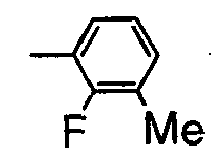
amorphous powder
MS (APCI) 509 [M+H]+993* 

amorphous powder
MS (APCI) 577 [M+H]+994* 

amorphous powder
MS (APCI) 508 [M+H]+*: hydrochloride
Me: methyl group, Et: ethyl group - The corresponding materials are treated in the same manner as described in Example 713 to give the compounds as shown in the following Table 27.23.
Table 27.23 (No. 1) 
Ex. Nos. R R2 Physicochemical properties etc. 995* 

amorphous powder
MS(APCI)590[M+H]+996* 
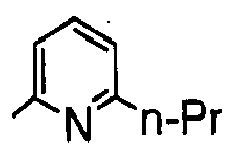
amorphous powder
MS(APCI)562[M+H]+997* 

amorphous powder
MS(APCI)546[M+H]+998* 
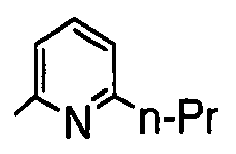
amorphous powder
MS(APCI)560[M+H]+999* 

amorphous powder
MS(APCI)551 [M+H]+1000* 

amorphous powder
MS(APCI)535 [M+H]+1001* 

amorphous powder
MS(APCI)549[M+H]+1002* 

amorphous powder
MS(APCI)564[M+H]+1003* 

amorphous powder
MS(APCI)548[M+H]+1004* 

amorphous powder
MS(APCI)562[M+H]+*: hydrochloride, Me: methyl group, Et: ethyl group, n-Pr: n-propyl group, t-Bu: tert-butyl group Table 27.23 (No. 2) 
Ex. Nos. R R2 Physicochemical properties etc. 1005* 

amorphous powder
MS(APCI)552[M+H]+1006* 

amorphous powder
MS(APCI)566[M+H]+1007* 

amorphous powder
MS(APCI)551[M+H]+1008* 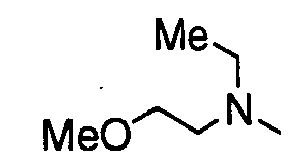

amorphous powder
MS(APCI)550[M+H]+1009* 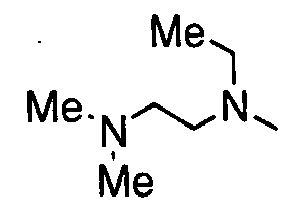

amorphous powder
MS(APCI)563[M+H]+1010* 

amorphous powder
MS(APCI)539[M+H]+1011* 

amorphous powder
MS(APCI)552[M+H]+1012* 

amorphous powder
MS(APCI)552[M+H]+*: hydrochloride, Me: methyl group, Et: ethyl group, n-Pr: n-propyl group, t-Bu: tert-butyl group Table 27.23 (No. 3) 
Ex. Nos. R R2 Physicochemical properties etc. 1013* 

amorphous powder
MS(APCI)565 [M+H]+1014* 

amorphous powder
MS(APCI)569[M+H]+1015* 

amorphous powder
MS(APCI)522[M+H]+1016* 

amorphous powder
MS(APCI)564[M+H]+1017* 

amorphous powder
MS (APCI)592[M+H]+1018* 

amorphous powder
MS(APCI)576[M+H]+*: hydrochloride, Me: methyl group, Et: ethyl group, n-Pr: n-propyl group - The corresponding materials are treated in the same manner as described in Example 718 to give the compounds as shown in the following Table 27.24.
Table 27.24 (No. 1) 
Ex. Nos. R R2 Physicochemical properties etc. 1019* 

amorphous powder
MS(APCI)603[M+H]+1020* 

amorphous powder
MS(APCI)603[M+H]+1021* 

amorphous powder
MS(APCI)592[M+H]+1022* 

amorphous powder
MS(APCI)592[M+H]+1023* 

amorphous powder
MS(APCI)605[M+H]+*: hydrochloride, Me: methyl group, Et: ethyl group, n-Pr: n-propyl group Table 27.24 (No. 2) 
Ex. Nos. R' R" Physicochemical properties etc. 1024* 
Et amorphous powder
MS(APCI)592[M+H]+1025* 

amorphous powder
MS(APCI)606[M+H]+1026* 
n-Pr amorphous powder
MS(APCI)606[M+H]+1027* 
Me amorphous powder
MS(APCI)606[M+H]+1028* 

amorphous powder
MS(APCI)632[M+H]+1029* 

amorphous powder
MS(APCI)632[M+H]+1030* 

amorphous powder
MS(APCI)658[M+H]+1031* 
Me amorphous powder
MS(APCI)634[M+H]+*: hydrochloride,
Me: methyl group, Et: ethyl group, n-Pr: n-propyl groupTable 27.24 (No. 3) 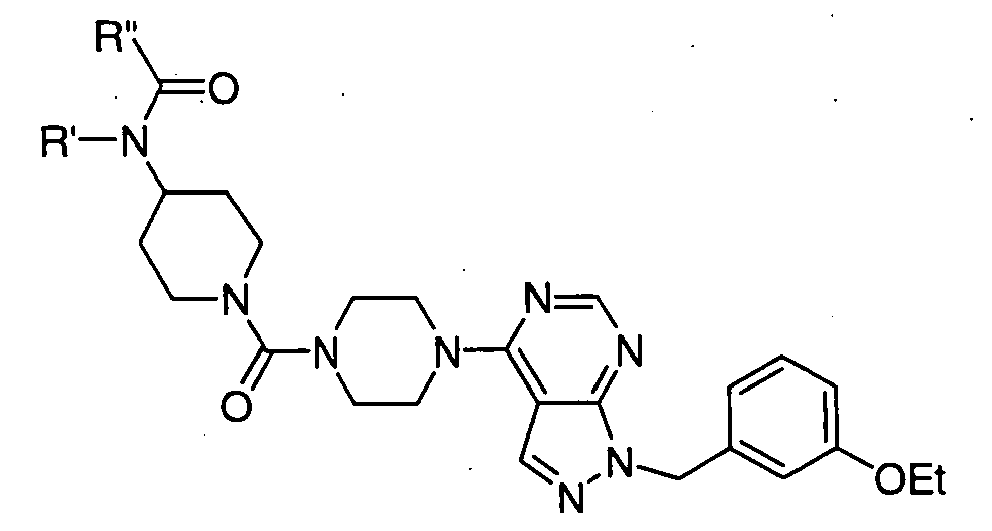
Ex. Nos. R' R" Physicochemical properties etc. 1032* 

amorphous powder
MS(APCI)660[M+H]+1033* 

amorphous powder
MS(APCI)660[M+H]+1034* 

amorphous powder
MS(APCI)686[M+H]+1035* 
Me amorphous powder
MS(APCI)618[M+H]+1036* 

amorphous powder
MS(APCI)644[M+H]+1037* 

amorphous powder
MS(APCI)644[M+H]+1038* 

amorphous powder
MS(APCI)670[M+H]+1039 

amorphous powder
MS(APCI)618[M+H]+1040 

amorphous powder
MS(APCI)644[M+H]+*: hydrochloride, Me: methyl group, Et: ethyl group - The corresponding materials are treated in the same manner as described in Example 1 to give the compounds as shown in the following Table 27.25.
Table 27.25 
Ex. Nos. R R2 Physicochemical properties etc. 1041 

amorphous powder
MS(APCI)562[M+H]+1042 

amorphous powder
MS(APCI)561[M+H]+1043 

amorphous powder
MS(APCI)563[M+H]+1044 

amorphous powder
MS(APCI)576[M+H]+1045 

amorphous powder
MS(APCI)575[M+H]+1046 

amorphous powder
MS(APCI)576[M+H]+1047 

amorphous powder
MS(APCI)575 [M+H]+1048 

amorphous powder
MS(APCI)577[M+H]+Me: methyl group, Et: ethyl group, n-Pr: n-propyl group - The corresponding materials are treated in the same manner as described in Example 654 to give the compounds as shown in the following Table 27.26.
Table 27.26 (No. 1) 
Ex. Nos. R R2 Physicochemical properties etc. 1049* t-Bu 
amorphous powder
MS(APCI)632[M+H]+1050* Me 
amorphous powder
MS(APCI)590[M+H]+1051* 

amorphous powder
MS(APCI)620[M+H]+1052* 

amorphous powder
MS(APCI)616[M+H]+1053* 
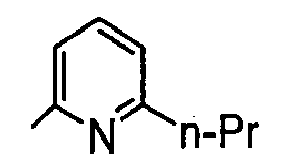
amorphous powder
MS(APCI)642[M+H]+1054* t-Bu 
amorphous powder
MS(APCI)633 [M+H]+1055* Me 
amorphous powder
MS(APCI)591[M+H]+1056* 

amorphous powder
MS(APCI)621[M+H]+1057* 

amorphous powder
MS(APCI)617[M+H]+1058* 

amorphous powder
MS(APCI)643 [M+H]+*: hydrochloride, Me: methyl group, Et: ethyl group, n-Pr: n-propyl group, t-Bu: tert-butyl group Table 27.26 (No. 2) 
Ex. Nos. R R2 Physicochemical properties etc. 1059* 

amorphous powder
MS(APCI)616[M+H]+1060* 

amorphous powder
MS(APCI)617[M+H]+*: hydrochloride, Me: methyl group, Et: ethyl group, n-Pr: n-propyl group, t-Bu: tert-butyl group Table 27.26 (No. 3) 
Ex. Nos. R Physicochemical properties etc. 1061* 
amorphous powder
MS(APCI)633 [M+H]+1062* 
amorphous powder
MS(APCI)661 [M+H]+1063* 
amorphous powder
MS(APCI)645 [M+H]+1064* 
amorphous powder
MS(APCI)697[M+H]+1065* 
amorphous powder
MS(APCI)631 [M+H]+1066* 
amorphous powder
MS(APCI)647[M+H]+*: hydrochloride, Me: methyl group, Et: ethyl group, t-Bu: tert-butyl group Table 27.26 (No. 4) 
Ex. Nos. R I Physicochemical properties etc. 1067* 
amorphous powder
MS(APCI)634[M+H]+1068* 
amorphous powder
MS(APCI)646[M+H]+1069* 
amorphous powder
MS(APCI)632[M+H]+1070* 
amorphous powder
MS(APCI)698 [M+H]+1071* 
amorphous powder
MS(APCI)648[M+H]+*: hydrochloride, Me: methyl group, Et: ethyl group, t-Bu: tert-butyl group - The corresponding materials are treated in the same manner as described in Example 416 to give the compounds as shown in the following Table 27.27.
Table 27.27 
Ex. Nos. R Physicochemical properties etc. 1072* 
amorphous powder
MS(APCI)591 [M+H]+1073* 
amorphous powder
MS(APCI)605[M+H]+1074* 
amorphous powder
MS(APCI)631 [M+H]+*: hydrochloride, Me: methyl group, Et: ethyl group - The compound obtained in Example 726(2) (45 mg) is treated in the same manner as described in Example 416 to give 1-(3-ethoxybenzyl)-4-[trans-4-[[4-(4-acetyl-piperazin-1-yl)cyclohexyl]carbonyl]piperazin-1-yl]-1H-pyrazolo[3,4-d]pyrimidine as an yellow oil. Subsequently, the compound is treated in the same manner as described in Example 4(3) to give 1-(3-ethoxybenzyl)-4-[trans-4-[[4-(4-acetyl-piperazin-1-yl)cyclohexyl]carbonyl]piperazin-1-yl]-1H-pyrazolo[3,4-d]pyrimidine hydrochloride (39.8 mg, yield: 78 %) as an amorphous powder.
MS(APCI)575[M+H]+ - The corresponding materials are treated in the same manner as described in Example 1075 to give the compounds as shown in the following Table 27.28.
Table 27.28 
Ex. Nos. R Physicochemical properties etc. 1076* 
amorphous powder
MS(APCI)589[M+H]+*: hydrochloride, Me: methyl group, Et: ethyl group - The corresponding materials are treated in the same manner as described in Example 637 to give the compounds as shown in the following Table 27.29.
Table 27.29 
Ex. Nos. R2 Physicochemical properties etc. 1077* 
amorphous powder
MS(APCI)557[M+H]+1078* 
amorphous powder
MS(APCI)589[M+H]+*: hydrochloride, Me: methyl group, Et: ethyl group - The corresponding materials are treated in the same manner as described in Example 407 to give the compounds as shown in the following Table 27.30.
Table 27.30 
Ex. Nos. R2 Physicochemical properties etc. 1079* 
amorphous powder
MS(APCI)486[M+H]+1080* 
amorphous powder
MS(APCI)518[M+H]+1081* 
amorphous powder
MS(APCI)512[M+H]+*: hydrochloride, Me: methyl group, Et: ethyl group - The corresponding materials are treated in the same manner as described in Example 1 or 3 to give the compounds as shown in the following Table 27.31.
Table 27.31 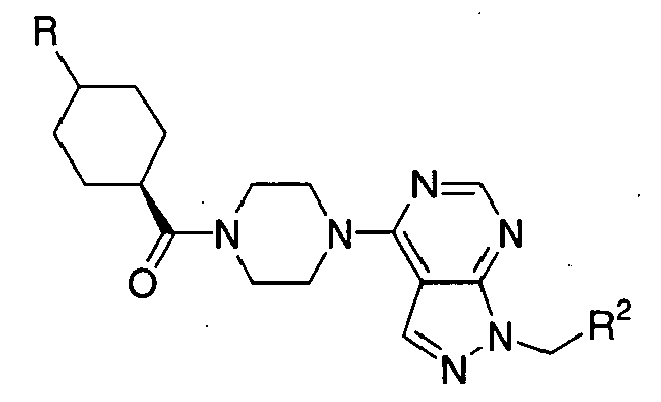
Ex. Nos. R R2 Physicochemical properties etc. 1082 

amorphous powder
MS(APCI)518[M+H]+1083* 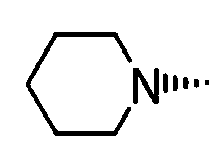

amorphous powder
MS(APCI)550[M+H]+1085* 

amorphous powder
MS (APCI)578 [M+H]+1086* 

amorphous powder
MS(APCI)610[M+H]+1087* 

amorphous powder
MS(APCI)604[M+H]+*: hydrochloride, Me: methyl group, Et: ethyl group, t-Bu: tert-butyl group - The corresponding materials are treated in the same manner as described in Example 637 to give the compounds as shown in the following Table. 27.32.
Table 27.32 
Ex. Nos. R R2 Physicochemical properties etc. 1088* Me 
amorphous powder
MS(APCI)583 [M+H]+1089* 

amorphous powder
MS(APCI)583[M+H]+1090* 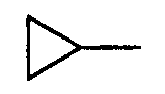

amorphous powder
MS(APCI)609[M+H]+1091* 

amorphous powder
MS(APCI)583[M+H]+1092* 

amorphous powder
MS(APCI)609[M+H]+*: hydrochloride, Me: methyl group, Et: ethyl group - The corresponding materials are treated in the same manner as described in Example 1 to give the compounds as shown in the following Table 27.33.
Table 27.33. 
Ex. Nos. R Physicochemical properties etc. 1093** 
amorphous powder
MS(APCI)645[M+H]+1094** 
amorphous powder
MS(APCI)673 [M+H]+**: dihydrochloride, Me: methyl group, Et: ethyl group - The corresponding materials are treated in the same manner as described in Example 1 to give the compounds as shown in the following Table. 27.34.
Table 27.34 (No.1) 
Ex. Nos. R R2 Physicochemical properties etc. 1095* 

amorphous powder
MS(APCI)605 [M+H]+1096* 

amorphous powder
MS(APCI)619[M+H]+1097* 

amorphous powder
MS(APCI)606[M+H]+1098* 

amorphous powder
MS(APCI)620[M+H]+*: hydrochloride, Me: methyl group, Et: ethyl group Table 27.34 (No. 2) 
Ex. Nos. R R2 Physicochemical properties etc. 1099** 

amorphous powder
MS(APCI) 591 [M+H]+1100** 

amorphous powder
MS(APCI) 605 [M+H]+1101** 

amorphous powder
MS(APCI) 592 [M+H]+1102** 

amorphous powder
MS(APCI) 606 [M+H]+**: dihydrochloride, Me: methyl group, Et: ethyl group - The corresponding materials are treated in the same manner as described in Example 1 or 637 to give the compounds as shown in the following Table. 27.35.
Table 27.35 (No. 1) 
Ex. Nos. R R2 Physicochemical properties etc. 1103* 

amorphous powder
MS(APCI)545 [M+H]+1104* 

amorphous powder
MS(APCI)559[M+H]+1105* 

amorphous powder
MS(APCI)601[M+H]+1106 

oil
MS(APCI)587[M+H]+1107 

oil
MS(APCI)613 [M+H]+1108* 

amorphous powder
MS(APCI)587[M+H]+1109* 

amorphous powder
MS(APCI)587[M+H]+1110* 

amorphous powder
MS(APCI)573 [M+H]+*: hydrochloride, Me: methyl group, Et: ethyl group, n-Pr: n-propyl group Table 27.35 (No. 2) 
Ex. Nos. R R2 Physicochemical properties etc. 1111* 

amorphous powder
MS(APCI)546[M+H]+1112* 

amorphous powder
MS(APCI)560[M+H]+1113* 

amorphous powder
MS(APCI)602[M+H]+1114* 

amorphous powder
MS(APCI)588[M+H]+1115* 

amorphous powder
MS(APCI)588 [M+H]+1116* 

amorphous powder
MS(APCI)550[M+H]+1117* 

amorphous powder
MS(APCI)564[M+H]+1118* 

amorphous powder
MS(APCI)606[M+H]+1119* 

amorphous powder
MS(APCI)592[M+H]+*: hydrochloride, Me: methyl group, Et: ethyl group, n-Pr: n-propyl group Table 27.35 (No. 3) 
Ex. Nos. R R2 Physicochemical properties etc. 1120* 

amorphous powder
MS(APCI)544[M+H]+1121* 

amorphous powder
MS(APCI)558[M+H]+1122* 

amorphous powder
MS(APCI)600[M+H]+1123* 

amorphous powder
MS(APCI)586[M+H]+*: hydrochloride, Me: methyl group, Et: ethyl group, n-Pr: n-propyl group - The corresponding materials are treated in the same manner as described in Example 723 to give the compounds as shown in the following Table. 27.36.
Table 27.36 
Ex. Nos. R R2 Physicochemical properties etc. 1124* MeSO2- 
amorphous powder
MS(APCI)614 [M+H]+1125* MeSO2- 
amorphous powder
MS(APCI) 618 [M+H]+*: hydrochloride, Me: methyl group, Et: ethyl group, n-Pr: n-propyl group -
- (1) A solution of ethyl 4-fluorobenzoate (20 g), N,N-dimethylethylenediamine (20 g) and potassium carbonate (32.9 g) in dimethylsulfoxide (200 mL) is stirred at 80°C for 3 days. After cooling to room temperature, to the reaction mixture is added ethyl acetate and water, and the mixture is stirred and extracted with ethyl acetate (x 2). The organic layer is treated with 10% HCl to transfer basic materials to the aqueous layer. The aqueous layer is washed with ethyl acetate, neutralized with 10% sodium hydroxide solution and extracted with ethyl acetate (x 3). The combined extract is dried over anhydrous sodium sulfate and concentrated in vacuo. The resultant crude product is purified by flash column chromatography on NH-silica gel (Solvent; n-hexane : ethyl acetate = 8 : 1 → 4 : 1) to give ethyl 4-[[2-(dimethylamino)ethyl]amino]-benzoate (12.45 g, yield; 44 %) as an oil. MS (APCI) m/z: 237 [M+H]+
- (2) To a solution of the compound obtained in the above step (1) (5 g) and pyridine (10 mL) in methylene chloride (20 mL) is added dropwise acryloyl chloride (2.55 mL) under ice-cooling and the mixture is stirred at room temperature for 3 hours. To the reaction mixture is added successively water and a saturated sodium hydrogencarbonate solution, and the mixture is stirred and extracted with chloroform. The extract is washed with a saturated brine, dried over anhydrous sodium sulfate, and concentrated in vacuo. The resultant crude product is purified by flash column chromatography on silica gel (Solvent; Chloroform : methanol = 1 : 0 → 50 : 1) to give ethyl 4-[N-acryloyl-N-[2-(dimethylamino)ethyl]amino]benzoate (1.62 g, yield; 26 %) as a red oil.
- (3) A mixture of the compound obtained in the above step (2) (1.62 g) and a 50 % aqueous dimethylamine solution (5 mL) in acetonitrile (20 mL) is stirred at room temperature for 1.5 hours and the reaction mixture is concentrated in vacuo. The resultant crude product is purified by flash column chromatography on silica gel (Solvent; chloroform : methanol = 1 : 0 → 50 : 1 → chloroform : methanol : aqueous ammonia = 25 : 1 : 0.1) to give ethyl 4-[N-[3-(dimethylamino)propionyl]-N-[2-(dimethylamino)ethyl]amino]benzoate (1.78 g, yield; 95 %) as a red oil. MS (APCI) m/z; 336 [M+H]+
- The corresponding materials are treated in the same manner as described in Reference Example 1 to give the compounds as shown in the following Table 28.
Table 28 
Ref.Ex.Nos. R' R" Physicochemical properties etc. 2 
NEt2 oil
MS (APCI) 364 [M+H]+3 
NMe2 oil
MS (APCI) 337 [M+H]+4 
NEt2 oil
MS (APCI) 365 [M+H]+5 
NMe2 oil
MS (APCI) 355 [M+H]+6 
NEt2 oil
MS (APCI) 383 [M+H]+7 

oil
MS (APCI) 381 [M+H]+8 nPr NMe2 oil
MS (APCI) 307 [M+H]+9 nPr NEt2 oil
MS (APCI) 335 [M+H]+10 nPr 
oil
MS (APCI) 333 [M+H]+Me: methyl group, Et: ethyl group, nPr: n-propyl group, Ph: phenyl group - To a solution of the compound obtained in Reference Example 1(1) (200 mg) and cyclopropanecarbonyl chloride (115 µL) in methylene chloride (4 mL) is added dropwise pyridine (137 µL) under ice-cooling and the mixture is stirred at room temperature for 23 hours. To the reaction mixture is added successively water and a saturated sodium hydrogencarbonate solution, and the mixture is stirred. The mixture is extracted with chloroform and the extract is concentrated. The resultant crude product is purified by flash column chromatography on NH-silica gel (Hi-Flash column; Yamazen, Solvent; chloroform : methanol = 1 : 0 → 89 : 11) to give ethyl 4-[N-(cyclopropylcarbonyl)-N-[2-(dimethylamino)ethyl]amino]benzoate (209 mg, yield; 81 %) as a yellow oil. MS (APCI) m/z:305 [M+H]+
- The corresponding materials are treated in the same manner as described in Reference Example 11 to give the compounds as shown in the following Table 29.
Table 29 (No. 1) 
Ref.Ex.Nos. R Physicochemical properties etc. 12 
oil
MS (APCI) 293 [M+H]+13 
oil
MS (APCI) 321 [M+H]+14 
oil
MS (APCI) 309 [M+H]+15 
oil
MS (APCI) 339 [M+H]+16 -Me oil
MS (APCI) 279 [M+H]+17 
oil
MS (APCI) 307 [M+H]+18 
oil
MS (APCI) 307 [M+H]+19 t-Bu- oil
MS (APCI) 321 [M+H]+Me: methyl group, Et: ethyl group, t-Bu: tert-butyl group Table 29 (No. 2) 
Ref.Ex.Nos. -R Physicochemical properties etc. 20 
oil
MS (APCI) 305 [M+H]+21 
oil
MS (APCI) 337 [M+H]+22 
oil
MS (APCI) 319 [M+H]+23 
oil
MS (APCI) 347 [M+H]+24 
amorphous powder
MS (APCI) 331 [M+H]+25 
oil
MS (APCI) 335 [M+H]+26 
oil
MS (APCI) 333 [M+H]+Me: methyl group, Et: ethyl group, tBu: tert-butyl group - A solution of the compound obtained in Reference Example 1(1) (200 mg) and n-butyl isocyanate (143 µL) in methylene chloride (4 mL) is stirred at room temperature for 23 hours. To the reaction mixture is further added n-butyl isocyanate (143 µL) and the mixture is stirred at 50°C for 17 hours. The reaction mixture is concentrated and the resultant crude product is purified by gel-permeation chromatography (JAI Gel-H column, Solvent; chloroform) to give ethyl 4-[N-(butylcarbamoyl)-N-[2-(dimethylamino)ethyl]amino]benzoate (179 mg, yield; 63 %) as a yellow resin. MS (APCI) m/z: 336 [M+H]+
- The corresponding materials are treated in the same manner as described in Reference Example 27 to give the compounds as shown in the following Table 30.
Table 30 
Ref.Ex.Nos. -R Physicochemical properties etc. 28 
oil
MS (APCI) 310 [M+H]+29 
oil
MS (APCI) 352 [M+H]+30 
oil
MS (APCI) 352 [M+H]+Me: methyl group, Et: ethyl group - To a solution of ethyl 4-benzylaminobenzoate (1.5 g) in methylene chloride (15 mL) is added dropwise successively chloroacetyl chloride (0.56 mL) and N,N-diisopropylethylamine (1.54 mL) under ice-cooling, and the mixture is stirred for 1 hour. To the reaction mixture is added diethylamine (3 mL) at the same temperature and the mixture is stirred at room temperature for 12 hours. To the reaction mixture is added water (10 mL) and the organic layer is separated. The aqueous layer is extracted with chloroform (5 mL). The organic layers are combined and concentrated. The resultant crude product is purified by flash column chromatography on NH-silica gel (Solvent; n-hexane : ethyl acetate = 6 : 1 → 3 : 1) to give ethyl 4-[N-(N',N'-diethyl-glycyl)-N-benzylamino]benzoate (2.0 g, yield; 92%) as a brown oil. MS (APCI) m/z; 369 [M+H]+
- The corresponding materials are treated in the same manner as described in Reference Example 31 to give the compounds as shown in the following Table 31.
Table 31 
Ref.Ex.Nos. R' R" Physicochemical properties etc. 32 
NMe2 oil
MS (APCI) 323 [M+H]+33 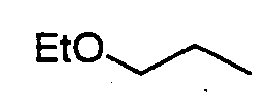
NEt2 oil
MS (APCI) 351 [M+H]+34 
NMe2 oil
MS (APCI) 341 [M+H]+35 

oil
MS (APCI) 367 [M+H]+Me: methyl group, Et: ethyl group, Ph: phenyl group -
- (1) To a solution of methyl 4-formylbenzoate (25 g) in methylene chloride (250 mL) is added successively N,N-dimethylethylenediamine (67 g), acetic acid (87 mL), and sodium triacetoxyborohydride (50.6 g). The mixture is stirred at room temperature overnight. The reaction mixture is concentrated in vacuo and to the residue is added a saturated potassium carbonate solution. The mixture is extracted with ethyl acetate, and the organic layer is dried over anhydrous sodium sulfate and concentrated in vacuo to give methyl 4-[[[2-(dimethylamino)ethyl]amino]methyl]-benzoate (31.9 g, yield; 89 %) as a colorless oil. MS (APCI) m/z: 237 [M+H]+
- (2) To a solution of p-nitrophenyl chloroformate (18.1 g) in methylene chloride (300 mL) is added dropwise 3-(dimethylamino)propanol (14.2 mL) and the mixture is stirred at room temperature for 4 hours. To the mixture is added successively methyl 4-[[[2-(dimethylamino)ethyl]amino]methyl]benzoate (13.7 g) and triethylamine (25 mL) and the mixture is stirred at room temperature for one day. The reaction mixture is washed with a saturated potassium carbonate solution, dried over anhydrous sodium sulfate and concentrated in vacuo. The resultant crude product is purified by flash column chromatography on NH-silica gel (Chromatorex NH silica gel, Solvent; ethyl acetate : n-hexane = 1 : 1) to give methyl 4-[[N-[2-(dimethylamino)ethyl]-N-[[3-(dimethylamino)propoxy]carbonyl]amino]methyl]benzoate (7.97 g, yield; 38 %) as a colorless oil. MS (APCI) m/z: 366 [M+H]+
- To a solution of the compound obtained in Reference Example 36(1) (200 mg) in methylene chloride (4 mL) is added propionyl chloride (110 µL) and thereto is added dropwise pyridine (137 µL) under ice-cooling. The mixture is stirred at room temperature for 4 hours. The reaction mixture is diluted with chloroform (5 mL) and thereto is added a saturated sodium hydrogencarbonate solution (10 mL). After stirring, the organic layer is separated and concentrated. The resultant crude product is purified by column chromatography on silica gel (Solvent; chloroform : methanol = 100 : 0 → 90 : 10) to give methyl 4-[[N-propionyl-N-[2-(dimethylamino)ethyl]amino]-methyl]benzoate (191 mg, yield; 78 %) as an amorphous powder. MS (APCI) m/z: 293 [M+H]+
- The corresponding materials are treated in the same manner as described in Reference Example 37 to give the compounds as shown in the following Table 32.
Table 32 
Ref.Ex.Nos. R Physicochemical properties etc. 38 
oil
MS (APCI) 305 [M+H]+39 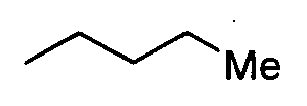
oil
MS (APCI) 321 [M+H]+40 
oil
MS (APCI) 309 [M+H]+41 -NMe2 oil
MS (APCI) 308 [M+H]+42 
oil
MS (APCI) 339 [M+H]+Me: methyl group - To a solution of methyl 4-[[[2-(dimethylamino)ethyl]amino]methyl]benzoate (compound obtained in Reference Example 36(1), 200 mg) in methylene chloride (4 mL) is added n-butyl isocyanate (143 µL) and the mixture is stirred at room temperature for 4 hours. The reaction mixture is diluted with chloroform (5 mL) and thereto is added a saturated sodium hydrogencarbonate solution (10 mL). After stirring, the organic layer is separated and concentrated. The resultant crude product is purified by column chromatography on silica gel (Solverit; chloroform : methanol = 100 : 0 → 90 : 10) to give methyl 4-[[N-(butylcarbamoyl)-N-[2-(dimethylamino)ethyl]amino]methyl]-benzoate (261 mg, yield; 92 %) as a pale yellow oil. MS (APCI) m/z: 336 [M+H]+
- To a solution of methyl 4-formylbenzoate (300 mg) in 1,2-dichloroethane (6 mL) is added diethylamine (113 µL), and thereto is added sodium triacetoxyborohydride (581 mg) and acetic acid (261 µL) under ice-cooling. The mixture is stirred at room temperature for 18 hours. The reaction mixture is diluted with chloroform (5 mL) and thereto is added a saturated sodium hydrogencarbonate solution (10 mL). After stirring, the organic layer is separated and concentrated. The resultant crude product is purified by column chromatography on NH-silica gel (Solvent; n-hexane : ethyl acetate = 70 : 30 → 40: 60) to give methyl 4- (diethylaminomethyl)benzoate (144 mg, yield; 60 %) as an oil. MS (APCI) m/z: 222 [M+H]+
- The corresponding materials are treated in the same manner as described in Reference Example 44 to give the compounds as shown in the following Table 33.
Table 33 (No. 1) 
Ref.Ex.Nos. -NRR' Physicochemical properties etc. 45 
oil
MS (APCI) 236 [M+H]+46 
oil
MS (APCI) 250 [M+H]+47 
oil
MS (APCI) 266 [M+H]+48 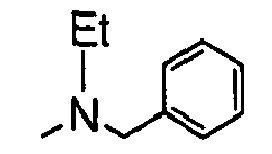
oil
MS (APCI) 284 [M+H]+49 
oil
MS (APCI) 262 [M+H]+50 
oil
MS (APCI) 220 [M+H]+51 
oil
MS (APCI) 234 [M+H]+52 
oil
MS (APCI) 277 [M+H]+53 
oil
MS (APCI) 238 [M+H]+Me: methyl group, Et: ethyl group Table 33 (No. 2) 
Ref.Ex.Nos. -NRR' Physicochemical properties etc. 54 -NMe2 oil
MS (APCI) 194 [M+H]+55 
oil
MS (APCI) 236 [M+H]+56 
oil
MS (APCI) 266 [M+H]+57 
oil
MS (APCI) 249 [M+H]+58 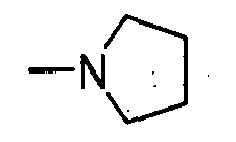
oil
MS (APCI) 220 [M+H]+59 
oil
MS (APCI) 234 [M+H]+Me: methyl group - To a solution of ethyl 4-[[2-(dimethylamino)ethyl]amino]benzoate (compound obtained in Reference example 1(1), 200 mg) in 1,2-dichloroethane (4 mL) is added isobutylaldehyde (384 µL) and thereto is added sodium triacetoxyborohydride (448 mg) and acetic acid (145 µL) under ice-cooling. The mixture is stirred at room temperature for 24 hours. The reaction mixture is diluted with chloroform (5 mL) and thereto is added a saturated sodium hydrogencarbonate solution (10 mL). After stirring, the organic layer is separated and concentrated. The resultant crude product is purified by column chromatography on NH-silica gel (Solvent; n-hexane : ethyl acetate = 80 : 20 → 50 : 50) to give ethyl 4- [N-[2-(dimethylamino)ethyl]-N-isobutylamino]benzoate (239 mg, yield; 97 %) as a pale yellow oil. MS (APCI) m/z: 293 [M+H]+
- The corresponding materials are treated in the same manner as described in Reference Example 60 to give the compounds as shown in the following Table 34.
Table 34 
Ref.Ex.Nos. R' R" Physicochemical properties etc. 61 
Et oil
MS (APCI) 279 [M+H]+62 
Et oil
MS (APCI) 333 [M+H]+63 
Me oil
MS (APCI) 251 [M+H]+64 
Me oil
MS (APCI) 279 [M+H]+65 
Me oil
MS (APCI) 293 [M+H]+66 
Me oil
MS (APCI) 333 [M+H]+Me: methyl group, Et: ethyl group - To a solution of ethyl 4-[[2-(dimethylamino)ethyl]amino]benzoate (compound obtained in Reference Example 1(1), 3.0 g) in methylene chloride (30 mL) is added N-(tert-butoxycarbonyl)glycine (2.89 g) and thereto is added diethyl cyanophosphonate (2.89 mL) under ice-cooling. The mixture is stirred at room temperature for 24 hours. The reaction mixture is diluted with chloroform (20 mL) and thereto is added a saturated sodium hydrogencarbonate solution (50 mL). After, stirring, the organic layer is separated, washed with a saturated brine, dried over anhydrous sodium sulfate and concentrated in vacuo. The resultant crude product is purified successively by column chromatography on silica gel (Solvent; chloroform : methanol : 28 % aqueous ammonia = 100 : 10 : 1) and gel-permeation chromatography (Nippon Bunseki Kogyo, Solvent; chloroform) to give ethyl 4-[N-[N'-(tert-butoxycarbonyl)glycyl]-N-[2-(dimethylamino)ethyl]amino]benzoate (4.2 g, yield; 84 %) as a pale yellow crystals. MS (APCI) m/z: 394 [M+H]+
-
- (1) To a solution of methyl 4-bromomethylbenzoate (22.8 g) in N,N-dimethylformamide (450 ml) is added dropwise 50 % aqueous dimethylamine solution (27 mL) and the mixture is stirred at room temperature for 3 hours. The reaction mixture is poured into water with ice and extracted with ethyl acetate. The extract is washed successively with water and saturated brine, dried over anhydrous sodium sulfate, and concentrated in vacuo. The resultant crude product is purified by flash column chromatography on silica gel (Solvent; chloroform : methanol = 10 : 1) to give methyl 4-[(dimethylamino) methyl]benzoate (27.5 g, yield; 99 %) as brown oil. MS (APCI) m/z: 194 [M+H]+
- (2) To the compound obtained in the above step (1) (19.2 g) is added conc. hydrochloric acid (66 mL) and water (167 mL) and the mixture is refluxed overnight. The reaction mixture is concentrated in vacuo. The resultant crude crystals are washed with ether to give 4-[(dimethylamino)methyl]benzoic acid hydrochloride (19.0 g, yield; 88 %) as a colorless powder. MS (APCI) m/z: 179 [M+H]+
-
- (1) To a solution of methyl 6-methylnicotinate (6.3 g) in carbon tetrachloride (100 mL) is added successively N-bromosuccinimide (8.9 g) and 2,2'-azobisisobutyronitrile (342 mg), and the mixture is refluxed under heating for 6 hours. After cooling to room temperature, to the reaction mixture is added n-hexane (300 mL) and the insoluble materials are removed by filtration. The filtrate is concentrated in vacuo and the resultant crude product is purified by column chromatography on silica gel (Solvent; n-hexane : ethyl acetate = 10 : 1) and stirred in n-hexane to give methyl 6-(bromomethyl)nicotinate (3.4 g, yield; 35 %) as colorless crystals.
- (2) To a solution of the compound obtained in the above step (1) (350 mg) in tetrahydrofuran (5 mL) is added 50 % aqueous dimethylamine solution (3 mL) and the mixture is stirred at room temperature for 10 minutes. To the reaction mixture is added ethyl acetate. The mixture is washed successively with water and saturated brine, dried over anhydrous sodium sulfate and purified by column chromatography on silica gel (Solvent; chloroform : methanol = 100 : 1) to give methyl 6-(dimethylaminomethyl)nicotinate (276 mg, yield; 93 %) as a colorless oil. MS (APCI) m/z: 195 [M+H]+
- The corresponding materials are treated in the same manner as described in Reference Example 69 to give the compounds as shown in the following Table 35.
Table 35 
Ref.Ex.Nos. -NRR' Physicochemical properties etc. 70 
oil
MS (APCI) 209 [M+H]+71 -NEt2 amorphous powder
MS (APCI) 223 [M+H]+72 
oil
MS (APCI) 221 [M+H]+73 
amorphous powder
MS (APCI) 235 [M+H]+74 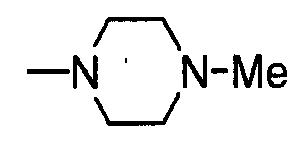
amorphous powder
MS (APCI) 250 [M+H]+75 
oil
MS (APCI) 267 [M+H]+76 
amorphous powder
MS (APCI) 223 [M+H]+77 
amorphous powder
MS (APCI) 269 [M+H]+Me: methyl group, Et: ethyl group -
- (1) To a solution of ethyl 4-hydroxybenzoate (15.3 g) in N,N-dimethylformamide (150 mL) is added successively 2-dimethylaminoethyl chloride hydrochloride (15.9 g) and potassium carbonate (43.2 g) and the mixture is stirred at 110°C overnight. To the reaction mixture is added water and the mixture is extracted with ethyl acetate. The organic layer is washed successively with a saturated sodium hydrogencarbonate solution and water, dried over anhydrous sodium sulfate, and concentrated in vacuo. The resultant crude product is purified by flash column chromatography on silica gel (Solvent; chloroform : methanol = 10 : 1) to give ethyl 4-[2-(dimethylamino)ethoxy]benzoate (14.1 g, yield; 65 %) as a brown oil. MS (APCI) m/z: 238 [M+H]+
- (2) To the compound obtained in the above step (1) (14.1 g) is added conc. hydrochloric acid (40 mL) and water (100 mL) and the mixture is refluxed overnight. The reaction mixture is concentrated in vacuo and the resultant crystals is washed with methanol/ether to give 4-[2-(dimethylamino)ethoxy]benzoic acid hydrochloride (14.1 g, yield; 56 %) as a brown powder. MS (APCI) m/z: 210 [M+H]+
- The corresponding materials are treated in the same manner as described in Reference Example 78 to give the compounds as shown in the following Table 36.
Table 36 
Ref.Ex.Nos. R Physicochemical properties etc. 79 
pale yellow amorphous powder
MS (APCI) 250 [M+H]Me: methyl group -
- (1) Thionyl chloride (1.33 mL) is added dropwise to methanol (30 mL) under ice-cooling and the solution is stirred for 10 minutes. To the solution is added 4-hydroxycinnamic acid (3.0 g) and the mixture is stirred at room temperature for 4 days. The reaction mixture is concentrated and the residue is diluted with ethyl acetate (50 mL), washed successively with a saturated sodium hydrogencarbonate solution and saturated brine, dried over anhydrous sodium sulfate, and concentrated in vacuo. The residue is re-crystallized from ethyl acetate/n-hexane to methyl 4-hydroxycinnamate (2.86 g, yield; 88 %) as pale yellow crystals. M.p. 136.5 - 137°C
- (2) To a solution of the compound obtained in the above step (1) (1.53 g) in N,N-dimethylformamide (25 mL) is added successively 3-chloropropyldimethylamine hydrochloride (1.69 g), potassium carbonate (3.12 g), and tetrabutylammonium iodide (105 mg). The mixture is stirred at 80°C for 17 hours. After cooling, to the reaction mixture is added water (100 mL) and the mixture is extracted with ethyl acetate (150 mL x 2). The organic layer is separated, washed successively with water (150 mL, x 2) and saturated brine, dried over anhydrous sodium sulfate, and concentrated in vacuo to give methyl trans-3-[4-[3-(dimethylamino)propyloxy]phenyl]acrylate (2.07 g, yield; 92 %) as a pale yellow oil. MS (APCI) m/z: 264 [M+H]+
- (3) To a solution of the compound obtained in the above step (2) (2.07 g) in methanol (15 mL) is added 1N sodium hydroxide solution (15 mL) and the mixture is stirred at room temperature for 15 hours. The reaction mixture is concentrated and the residue is neutralized (pH 7) with 1N HCI and thereto is added methanol. The mixture is stirred and the precipitated crystals are collected to give trans-3-[4-[3-(dimethylamino)propyloxy]phenyl]acrylic acid (1.93 g, yield; 98 %) as colorless crystals. M.p. 191 - 193°C
-
- (1) To a solution of methyl 4-(aminomethyl)benzoate (5.08 g) in methylene chloride (30 mL) is added di-tert-butyl dicarbonate (6.4 g) under ice-cooling and the mixture is stirred at room temperature for 24 hours. The reaction mixture is diluted with methylene chloride (20 mL) and thereto is added water (40 mL). After stirring, the organic layer is separated and concentrated to give methyl 4-[N-(tert-butoxycarbonyl)aminomethyl]benzoate.
- (2) To a solution of the compound obtained in the above step (1) (1.5 g) in tetrahydrofuran (15 mL) and thereto is added sodium hydride (60 % dispersion in mineral oil, 407 mg) under ice-cooling. The mixture is stirred at room temperature for 30 minutes. To the reaction mixture is added dropwise ethyl iodide (2.26 mL) under ice-cooling and the mixture is stirred at 60°C for 1 hour. After cooling to room temperature, the reaction mixture is diluted with ethyl acetate (10 mL) and thereto is added water. After standing, the organic layer is separated and concentrated. The resultant product is purified by flash column chromatography on NH-silica gel (Solvent; n-hexane : ethyl acetate = 20 : 1) to give methyl 4-[[N-ethyl-N-(tert-butoxycarbonyl)]-aminomethyl]benzoate (929 mg, yield; 56 %) as an amorphous powder. MS (APCI) m/z: 294 [M+H]+
-
- (1) To a solution of 4-hydroxybenzaldehyde (610 mg) in N,N-dimethylformamide (20 mL) is added successively 2-dimethylaminoethyl chloride hydrochloride (1.08 g) and potassium carbonate (2.0 g), and the mixture is stirred at room temperature for 18 hours. To the reaction mixture is added ethyl acetate, and the mixture is washed with water and saturated brine and dried over anhydrous sodium sulfate. The resultant crude product is purified by column chromatography in silica gel (Solvent; chloroform : methanol = 20 : 1 → 10 : 1) to give 4-[2-(dimethylamino)- ethoxy]benzaldehyde (640 mg, yield; 66 %) as a pale yellow oil. MS (APCI) m/z: 194 [M+H]+
- (2) To a solution of tert-butyl dimethylphosphonoacetate (807 mg) in tetrahydrofuran (20 mL) is added sodium hydride (60 % dispersion in mineral oil; 144 mg) under ice-cooling and the mixture is stirred for 30 minutes. To the reaction mixture is added a solution of the compound obtained in the above step (1) (580 mg) in tetrahydrofuran (10 mL) and the mixture is stirred at room temperature for 1 hour. To the reaction mixture is added ice-water. The mixture is extracted with ethyl acetate and the organic layer is washed with saturated brine and dried over anhydrous sodium sulfate. The resultant crude product is purified by column chromatography on silica gel (Solvent; chloroform : methanol = 20 : 1) to give tert-butyl trans-3-[4-[2-(dimethylamino)ethoxy]phenyl]acrylate (920 mg, yield; quantitative) as colorless crystals. MS (APCI) m/z: 292 [M+H]+
- (3) A solution of the compound obtained in the above step (2) (880 mg) in 4N HCl-dioxane (10 mL) is stirred at room temperature for 6 hours. The reaction mixture is diluted with diethylether, and the precipitated crystals are collected by filtration and washed with diethylether to give trans-3-[4-[2-(dimethylamino)ethoxy]phenyl]acrylic acid hydrochloride (750 mg, yield; 91 %) as colorless crystals. MS (APCI) m/z: 236 [M+H]+
-
- (1) Thionyl chloride (8.7 mL) is added dropwise to methanol (90 mL) at -30°C under argon gas atmosphere over a period of 15 minutes and a mixture is stirred at - 20°C for 30 minutes. To the mixture is added 3-amino-4-methoxybenzoic acid (5.0 g) and the solution is stirred at the same temperature for 15 minutes and at room temperature for 3 days. The reaction mixture is concentrated in vacuo and the resultant crystals are washed with methanol/ether to give methyl 3-amino-4-methoxybenzoate hydrochloride (6.25 g, yield; 96 %) as colorless crystals. M.p. 213 - 215°C, MS (APCI) m/z: 182 [M+H]+
- (2) To a suspension of the compound obtained in the above step (1) (1.08 g) in tetrahydrofuran (10 mL) is added pyridine (2.4 mL) and methanesulfonyl chloride (0.56 mL) and the mixture is stirred at room temperature for 30 minutes. To the reaction mixture is added water and the mixture is stirred. The mixture is extracted with ethyl acetate. The extract is treated by column chromatography on diatomite and concentrated in vacuo. The resultant residue is recrystallized from ether/hexane to give methyl 3-methanesulfonylamino-4-methoxybenzoate (1.08 g, yield; 69 %) as crystals. MS (APCI) m/z: 258 [M+H]+
- (3) A solution of the compound obtained in the above step (2) (260 mg), potassium carbonate (222 mg), and 2-chloroethyldiethylamine hydrochloride (414 mg) in dimethylsulfoxide (2 mL) is vigorously stirred. To the reaction mixture is added water. After stirring, the mixture is extracted with ethyl acetate. The extract is washed with saturated brine, filtered through NH-silica gel column and concentrated in vacuo. The resultant residue is purified by flash column chromatography on NH-silica gel (HI-flash column, Solvent; chloroform : methanol = 1 : 0 → 95 : 5) and treated with HCl/ethyl acetate to 3-[N-[2-(diethylamino)ethyl]-N-(methanesulfonyl)amino]-4-methoxybenzoate hydrochloride (228 mg, yield; 93 %) as colorless resin. MS (APCI) m/z: 359 [M+H]+
-
- (1) To a solution of vanilin (76.1 g) in N,N-dimethylformamide (500 mL) is added successively 4-(2-chloroethyl)morpholine hydrochloride (130 g), sodium iodide (7.5 g), and potassium carbonate (207 g). The mixture is stirred at 80°C for 15 hours. The reaction mixture is concentrated in vacuo. The residue is diluted with ethyl acetate, washed with saturated brine, dried over anhydrous sodium sulfate, and concentrated in vacuo. To the residue is added diisopropyl ether and the resultant crystals are collected by filtration to give 3-methoxy-4-(2-morpholinoethoxy)-benzaldehyde (112.6 g, yield; 85 %) as orange crystals. MS (APCI) m/z: 266 [M+H]+
- (2) To a solution of triethyl phosphonoacetate (37.0 g) in tetrahydrofuran (150 mL) is added sodium hydride (60 % dispersion in mineral oil, 6.4 g) with ice cooling and the mixture is stirred for 0.5 hour. To the mixture is added dropwise a solution of the compound obtained in the above step (1) (40.0 g) in tetrahydrofuan (140 mL) under ice-cooling and the mixture stirred at the same temperature for 2 hours. The reaction mixture is diluted with ethyl acetate (500 mL), washed with saturated brine, dried over anhydrous sodium sulfate, and concentrated in vacuo. To the precipitated product is added diisopropyl ether and the resultant crystals are collected by filtration to give ethyl trans-3-[3-methoxy-4-(2-morpholinoethoxy)phenyl]acrylate (46.2 g, yield; 91 %) as orange crystals. MS (APCI) m/z: 336 [M+H]+
- (3) To a solution of the compound obtained in the above step (2) (43.3 g) in methanol (250 mL) is added 2N sodium hydroxide solution (100 mL) and the mixture is stirred at room temperature overnight. The reaction mixture is concentrated in vacuo and neutralized. The precipitated crystals are collected by filtration and dissolved in ethanol. The insoluble materials are removed by filtration and the resultant crystals are recrystallized to give trans-3-[3-methoxy-4-(2-morpholinoethoxy)phenyl]acrylic acid (34.8 g, yield; 88 %) as yellow crystals. MS (APCI) m/z: 308 [M+H]+
-
- (1) To methanol (1500 mL) is added dropwise thionyl chloride (254 mL) at - 30°C over a period of one hour and the mixture is stirred at room temperature for 0.5 hour. To the mixture is added trans-cyclohexane-1,4-dicarboxylic acid (500.0 g) and the mixture is stirred at room temperature for 17 hours. The reaction mixture is concentrated in vacuo and the residue is diluted with chloroform, washed with a saturated sodium hydrogencarbonate solution and saturated brine, dried over anhydrous sodium sulfate and concentrated in vacuo. The residue is crystallized from n-hexane, collected by filtration, and dried to give dimethyl trans-cyclohexane-1,4-dicarboxylate (545.0 g). MS (APCI) m/z: 201 [M+H]+
- (2) To a solution of the compound obtained in the above step (1) (150.0 g) in tetrahydrofuran (1500 mL) is added dropwise a mixture of a solution of 28 % sodium methoxide-methanol (149 g) and water (13.2 g) under ice-cooling. The mixture is stirred at room temperature for 3.5 hours and thereto is added n-hexane (150 mL). The resultant precipitate is collected by filtration and added to a mixture of conc hydrochloric acid (50 mL), water (450 mL) and chloroform (1000 mL). The mixture is stirred at room temperature for 20 minutes. The chloroform layer is separated and the aqueous layer is extracted with chloroform. The organic layers are combined, dried over anhydrous sodium sulfate, and concentrated in vacuo. The residue is crystallized from n-hexane, collected by filtration, and dried to give mono-methyl trans-cyclohexane-1,4-dicarboxylate (106.0 g). MS (ESI) m/z: 185 [M-H]-
- (3) To a solution of the compound obtained in the above step (2) (100.0 g) in tert-butanol (1000 mL) is added diphenylphosphoryl azide (155 g) and triethylamine (78.6.mL). The mixture is stirred at 60°C for 1 hour and refluxed under heating for 17 hours. After cooling, ice-cooled water is poured into the reaction mixture and the mixture is extracted with ethyl acetate. The organic layer is washed with a saturated sodium hydrogencarbonate solution and saturated brine, dried over anhydrous sodium sulfate, and concentrated in vacuo. The residue is dissolved in methanol (250 mL) and thereto is added water (750 mL). The mixture is stirred for 0.5 hour under ice-cooling. The resultant precipitate is collected by filtration, washed with water/methanol (3 : 1, 1000 mL) and n-hexane, and dried over anhydrous sodium sulfate to give methyl trans-4-(tert-butoxycarbonylamino)cyclohexanecarboxylate (117.0 g). MS (APCI) m/z: 275 [M+NH4]+
-
- (1) To a solution of the compound obtained in Reference Example 85 (234.0 g) in dioxane (500 mL) is added 4N HCl-dioxane (500 mL) and the mixture is stirred at room temperature for 19 hours. The reaction mixture is concentrated in vacuo and the residue is suspended in diethyl ether. The precipitate is collected by filtration to give methyl trans-4-aminocyclohexanecarboxylate hydrochloride (121.9 g). MS (APCI) m/z: 158 [M+H]+
- (2) To a solution of the compound obtained in the above step (1) (93.0 g) in methanol (1000 mL) is added 35 % formaldehyde solution (95.4 mL), sodium acetate (39.4 g) and 10 % palladium-carbon (10 g) and the mixture is stirred at room temperature under atmospheric pressure of hydrogen for 3.5 hours. The insoluble materials are removed through Celite and the filtrate is concentrated in vacuo. To the residue is added 20 % potassium carbonate solution (500 mL) and the mixture is extracted with chloroform. The organic layer is dried over anhydrous sodium sulfate and potassium carbonate, and concentrated in vacuo. The residue is purified by column chromatography on NH-silica gel (Solvent; n-hexane : ethyl acetate = 2 : 1) to give methyl trans-4-(dimethylamino)cyclohexanecarboxylate (87.3 g). MS (APCI) m/z: 186 [M+H]+
- (3) To a solution of the compound obtained in the above step (2) (27.6 g) in dioxane (300 mL) and water (100 mL) is added 6N HCl (50 mL) and the mixture is refluxed under heating for 4 hours. To the reaction mixture is added 6N HCl (50 mL) and the mixture is further refluxed for 1 hour. The reaction mixture is concentrated in vacuo and the residue is subjected to azeotropic distillation with toluene. The residue is suspended in diisopropyl ether and the resultant precipitate is collected by filtration, washed with diisopropyl ether, and dried to give trans-4-(dimethylamino)cyclohexanecarboxylic acid (27.5 g). MS (APCI) m/z: 172 [M+H]+
-
- (1) A suspension of the compound obtained in Reference Example 86(1) (10 g), 1,4-diiodobuthane (19.2 g), and sodium carbonate (16.4 g) in tetrahydrofuran (300 mL) and N,N-dimethylacetamide (60 mL) is stirred at 70°C for 20 hours. The reaction mixture is concentrated in vacuo and the residue is dissolved in ethyl acetate/water. The organic layer is separated, washed with water and saturated brine, dried over anhydrous sodium sulfate, and concentrated in vacuo. The residue is purified by column chromatography on NH-silica gel (Solvent; ethyl acetate : n-hexane = 1 : 5) to give methyl trans-4-(1-pyrrolidinyl)cyclohexanecarboxylate (10.9 g). MS (APCI) m/z: 212 [M+H]+
- (2) To a solution of the compound obtained in the above step (1) (10.9 g) in dioxane (150 mL) is added 2N aqueous HCl (80 mL) and the mixture is stirred at 110°C for 3 hours while evaporating to remove methanol. The reaction mixture is concentrated in vacuo. The residue is triturated with diethyl ether and collected by filtration to give trans-4-(1-pyrrolidinyl)cyclohexanecarboxylic acid hydrochloride (11.1 g). MS (APCI) m/z: 198 [M+H]+
-
- (1) A suspension of the compound obtained in Reference Example 86(1) (47.5 g), bis(2-chloroethyl) ether (34.5 mL), sodium carbonate (77.9 g), and sodium iodide (88 g) in tetrahydrofuran (1400 mL) and N,N-dimethylacetamide (280 mL) is refluxed for 18 hours. To the reaction mixture is added bis(2-chloroethyl)ether (23 mL) and sodium iodide (22 g) and the mixture is refluxed for 6 hours. The reaction mixture is concentrated in vacuo and the residue is dissolved in ethyl acetate/water. The organic layer is separated, washed with water and saturated brine, dried over anhydrous sodium sulfate, and concentrated in vacuo. The residue is purified by column chromatography on NH-silica gel (Solvent; ethyl acetate : n-hexane = 1 : 30 → 1 : 5 → 1 : 3) to give methyl trans-4-morpholinocyclohexanecarboxylate (53.9 g). MS (APCI) m/z: 228 [M+H]+
- (2) To a solution of the compound obtained in the above step (1) (53.8 g) in dioxane (750 mL) is added 2N aqueous HCI (400 mL) and the mixture is stirred at 110°C for 4 hours while evaporating to remove methanol. The reaction mixture is concentrated in vacuo. The residue is suspended in diethyl ether and collected by filtration to give trans-4-morpholinocyclohexanecarboxylic acid hydrochloride (54.8 g). MS (APCI) m/z: 214 [M+H]+
-
- (1) To a suspension of trans-4-(aminomethyl)cyclohexanecarboxylic acid (6.29 g) in methanol (32 mL) is added dropwise thionyl chloride (6 mL) under ice-cooling and the mixture is stirred at room temperature overnight. The reaction mixture is concentrated in vacuo to give methyl trans-4-(aminomethyl)cyclohexanecarboxylate hydrochloride (8.69 g). MS (APCI) m/z: 172 [M+H]+
- (2) To a suspension of the compound obtained in the above step (1) (8.69 g) in dichloromethane (400 mL) is added triethylamine (11.2 mL). After stirring at room temperature for a few minutes, to the reaction mixture is added 35 % formaldehyde solution (15.9 mL) and sodium triacetoxyborohydride (25.43 g), and then the mixture is stirred at room temperature for 2 hours. To the reaction mixture is added a saturated sodium hydrogencarbonate solution and the mixture is extracted with chloroform. The organic layer is washed with water and saturated brine, dried over anhydrous sodium sulfate, and concentrated in vacuo to give methyl trans-4-(dimethylaminomethyl)-cyclohexanecarboxylate (7.42 g). MS (APCI) m/z: 200 [M+H]+
- (3) To a solution of the compound obtained in the above step (2) (7.41 g) in dioxane (140 mL) is added 2N aqueous HCI (70 mL), and the mixture is refluxed under heating for 3 hours. After cooling, the reaction mixture is concentrated in vacuo. The residue is subjected to azeotropic distillation with toluene and dried to give trans-4-(dimethylaminomethyl)cyclohexanecarboxylic acid hydrochloride (8.45 g) as an amorphous powder. MS (APCI) m/z: 186 [M+H]+
-
- (1) To a suspension of sodium hydride (60 % dispersion in mineral oil, 33.6 g) in tetrahydrofuran (600 mL) is added dropwise a solution of triethyl phosphonoacetate (188.4 g) in tetrahydrofuran (100 mL) under ice-cooling. The mixture is stirred at the same temperature for 0.5 hour and thereto is added dropwise a solution of pyridine 4-carboxaldehyde (75.00 g) in tetrahydrofuran (100 mL). The mixture is stirred for 1 hour. To the reaction mixture is added ice water (1000 mL) and the mixture is extracted with ethyl acetate. The organic layer is washed with water, a saturated sodium hydrogencarbonate solution and saturated brine, dried over anhydrous sodium sulfate and concentrated in vacuo. The residue is suspended in a small amount of diisopropyl ether under ice-cooling. The resultant precipitates are collected by filtration, washed with diisopropylether, and n-hexane and dried to give ethyl 3-(4-pyridyl)acrylate (77.53 g). MS (APCI) m/z: 178 [M+H]+
- (2) To a solution of the compound obtained in the above step (1) (28.00 g) in acetic acid (280 mL) is added platinum oxide (1.80 g), and the mixture is stirred at room temperature under hydrogen gas atmosphere for 24 hours. The reaction mixture is filtered to remove insoluble materials and the filtrate is concentrated in vacuo. The resultant residue is dissolved in dioxane (200 mL) and thereto is added 4N HCl-dioxane (200 mL). The mixture is concentrated in vacuo and the residue is suspended in diethyl ether/diisopropylether. The resultant precipitates are collected by filtration, washed with diisopropylether, and dried to give ethyl 3-(4-piperidyl)propionate hydrochloride (33.50 g). MS (APCI) m/z: 186 [M+H]+
- To a solution of ethyl (4-pyridyl)acetate (50.00 g) in acetic acid (500 mL) is added platinum oxide (3.44 g), and the mixture is shaken at room temperature under hydrogen gas atmosphere for 20 hours. The reaction mixture is filtered to remove insoluble materials and the filtrate is concentrated in vacuo. The resultant residue is dissolved in dioxane (200 mL) and thereto is added 4N HCl-dioxane (400 mL). The mixture is concentrated in vacuo and the residue is suspended in diethyl ether/diisopropylether. The resultant precipitate is collected by filtration, washed with diisopropylether and dried to give ethyl (4-piperidyl)acetate hydrochloride (61.80 g). MS (APCI) m/z: 172 [M+H]+
-
- (1) To a solution of the compound obtained in Reference Example 90 (70.83 g) in ethanol (700 mL) is added 2-iodopropane (38.2 mL) and potassium carbonate (132.3 g), and the mixture is refluxed under heating for 6 hours. The reaction mixture is filtered to remove insoluble materials and the filtrate is concentrated in vacuo. The residue is diluted with ethyl acetate (800 mL), washed with water and saturated brine, dried over anhydrous sodium sulfate, and concentrated in vacuo. The residue is purified by column chromatography on NH-silica gel (Solvent; n-hexane : ethyl acetate = 20 : 1 → 9 : 1) to give ethyl 3-(1-isopropylpiperidin-4-yl)propionate (57.13 g). MS (APCI) m/z: 228 [M+H]+
- (2) To a solution of the compound obtained in the above step (1) (57.12 g) in dioxane (1200 mL) is added 2N HCl (600 mL) and the mixture is refluxed under heating for 3 hours. The reaction mixture is concentrated in vacuo and subjected to azeotropic distillation with dioxane. The resultant residue is triturated with diethyl ether/diisopropylether (1 : 1, 500 mL). The precipitates are collected by filtration, washed with diisopropylether and dried to give 3-(isopropylpiperidin-4-yl)propionic acid hydrochloride (55.36 g). MS (APCI) m/z: 200 [M+H]+
- The corresponding materials are treated in the same manner as described in Reference Example 92(1) and (2) to give the compounds as shown in the following Table 37.
Table 37 
Ref.Ex.Nos. -Y-COO-R' Physicochemical properties etc. 93 (1) -CH2COOC2H5 MS (APCI) 214[M+H]+ (2) -CH2COOH hydrochloride
MS (APCI) 200[M+H]+94 (1) -COOC2H5 MS (APCI) 186[M+H]+ (2) -COOH hydrochloride
MS (APCI) 172[M+H]+ -
- (1) A suspension of the compound obtained in Reference Example 91 (5.00 g), 4-chloropyridine hydrochloride (3.62 g), and triethylamine (10.01 mL) in xylene (130 mL) is refluxed under heating for 20 hours. After cooling, the reaction mixture is filtered to remove insoluble materials and the filtrate is concentrated in vacuo. The residue is diluted with chloroform, washed with water, dried over anhydrous sodium sulfate, and concentrated in vacuo. The residue is purified by column chromatography on NH-silica gel (Solvent; chloroform : ethyl acetate = 4 : 1) to give ethyl [1-(4-pyridyl)piperidin-4-yl]acetate (4.15 g). MS (APCI) m/z: 249 [M+H]+
- (2) To a solution of the compound obtained in the above step (1) (4.15 g) in dioxane (200 mL) is added 1N aqueous HCl (70 mL), and the mixture is refluxed under heating for 4 hours. The reaction mixture is concentrated in vacuo and the residue is lyophilized to give [1-(4-pyridyl)piperidin-4-yl]acetic acid hydrochloride (3.90 g). MS (APCI) m/z: 221 [M+H]+
-
- (1) A mixture of ethyl isonipecotate (1.57 g), propionaldehyde (1.0 g), and 10 % palladium-carbon (500 mg) in methanol (20 mL) is vigorously stirred at room temperature under hydrogen gas atmosphere for 2 hours. After substituting the argon gas for hydrogen, the palladium-carbon is collected by filtration and washed with methanol (100 mL). The washing and the filtrate are combined and concentrated in vacuo. The residue is dissolved in ethanol (20 mL) and thereto is added 4N HCl-dioxane (20 mL). The mixture is concentrated in vacuo and the residue is crystallized from ethanol/ether to give ethyl 1-propylpiperidin-4-carboxylate hydrochloride (1.81 g, yield; 77 %) as colorless crystals. M.p. 114 - 117°C
- (2) A mixture of the compound obtained in the above step (1) (1.79 g) and conc. hydrochloric acid (20 mL) is refluxed under heating for 2 hours. After cooling, the reaction mixture is concentrated in vacuo and ether is added to the residue. The mixture is stirred and the supernatant is separated. The ether layer of the supernatant is removed and the residue is crystallized from ethanol/ether to give 1-propylpiperidin-4-carboxylic acid hydrochloride (1.11 g, yield; 70 %) as colorless crystals. M.p. 222 - 224°C
- To a solution of 4-[[2-(dimethylamino)ethyl]amino]benzaldehyde (300 mg) in methylene chloride (4 mL) is added 2-methoxyethyl chloroformate (234 µL) and thereto is added dropwise pyridine (252 µL) under ice-cooling. The mixture is stirred at 50°C for 2 days. The reaction mixture is diluted with chloroform (5 mL) and thereto is added a saturated sodium hydrogencarbonate solution (10 mL). After stirring, the organic layer is separated and concentrated. The residue is purified by column chromatography on silica gel (Solvent; chloroform : methanol = 100 : 0 → 90 : 10) to give 4-[N-[(2-methoxyethoxy)carbonyl]-N-[2-(dimethylamino)ethyl]amino]benzaldehyde (290 mg, yield; 63 %) as an amorphous powder. MS (APCI) m/z: 294 [M+H]+
- A solution of mono-methyl terephthaloyl chloride (500 mg), N,N-dimethylethylenediamine (178 mg) and diisoprpylethylamine (650 mg) in methylene chloride (5.0 mL) is stirred at room temperature overnight. The reaction mixture is diluted with ethyl acetate and thereto is added a saturated sodium hydrogencarbonate solution. After stirring, the organic layer is separated and concentrated in vacuo. The residue is purified by flash column chromatography on NH-silica gel (Solvent; n-hexane : ethyl acetate = 9 : 1) to give methyl 4-[[[2-(dimethylamino)-ethyl]amino]carbonyl]benzoate (355 mg, yield; 70 %) as yellow crystals. MS (APCI) m/z: 251 [M+H]+
- Under argon gas atmosphere, lithium aluminum hydride (1.19 g) is suspended in tetrahydrofuran (50 mL) and thereto is added dropwise a solution of ethyl (I-isopropylpiperidin-4-yl)acetate (compound obtained in Reference Example 93(1), 6.43 g) in tetrahydrofuran (50 mL) over a period of 15 minutes under ice-cooling. The mixture is stirred at room temperature for 1.5 hours. To the reaction mixture is added successively water (1.2 mL), 2N sodium hydroxide solution (2.4 mL), and water (2.4 mL) under ice-cooling. The mixture is stirred at room temperature for 2 hours. After addition of magnesium sulfate, the reaction mixture is stirred for 10 minutes and filtered. The filtrate is concentrated in vacuo and the residue is purified by flash column chromatography on NH-silica gel (Solvent; n-hexane : ethyl acetate = 1 : 1) to give 2-(1-isopropylpiperidin-4-yl)ethanol (5.09 g, yield; 99 %) as a colorless oil. MS (APCI) m/z: 172 [M+H]+
- Under argon gas atmosphere, lithium aluminum hydride (3.29 g) is suspended in tetrahydrofuran (160 mL) and thereto is added ethyl 1-isopropylpiperidin-4-carboxylate (compound obtained in Reference Example 94(1), 5.00 g) under ice-cooling. The mixture is stirred at room temperature for 14 hours. To the reaction mixture is added successively water (3.3 mL), 2N sodium hydroxide solution (6.6 mL) and water (6.6 mL) under ice-cooling. The mixture is stirred at room temperature for 1 hour. After addition of magnesium sulfate, the reaction mixture is stirred for 10 minutes and filtered. The filtrate is concentrated in vacuo and the residue is purified by flash column chromatography on NH-silica gel (Solvent; n-hexane : ethyl acetate = 1 : 1) to give (1-isopropylpiperidin-4-yl)methanol (3.75 g, yield; 99 %) as a colorless oil. MS (APCI) m/z: 158 [M+H]+
- To a solution of 1-methyl-2-imidazolecarboxaldehyde (10 g) in a mixture of ethanol (80 mL) and tatrahydrofuran (80 mL) is added sodium borohydride (4.2 g) under ice-cooling and the mixture is stirred at room temperature for 2 hours. The reaction mixture is concentrated in vacuo and the residue is dissolved in chloroform, washed with a saturated sodium hydrogencarbonate solution, dried over anhydrous sodium sulfate, and concentrated in vacuo. To the residue is added diisopropylether and the resultant crystals are collected by filtration to give (1-methyl-1H-imidazole-2-yl)methanol (9.9 g, yield; 98 %) as colorless crystals. MS (APCI) m/z: 113 [M+H]+
-
- (1) To a solution of methyl 4-[[(tert-butoxycarbonyl)amino]methyl]benzoate (compound obtained in Reference Example 81(1), 2.0 g) in tetrahydrofuran (20 mL) is added sodium hydride (60 % dispersion in mineral oil, 0.9 g) under ice-cooling. The mixture is stirred at room temperature for 30 minutes and then to the reaction mixture is added dropwise methyl iodide (2.3 mL). The mixture is stirred at room temperature for 3 hours. The reaction mixture is diluted with ethyl acetate, washed with water, and concentrated in vacuo to give methyl 4-[[N-methyl-N-(tert-butoxycarbonyl)amino]-methyl]benzoate (1.9 g, yield; 94 %) as a yellow oil. MS (APCI) m/z: 280 [M+H]+
- (2) To a solution of the compound obtained in the above step (1) (1.5 g) in methanol (5.0 mL) is added 4N HCl-dioxane (10.0 mL) and the mixture is stirred at room temperature for 1 hour. The reaction mixture is diluted with ether and the precipitated crystals are collected by filtration to give methyl 4-[(methylamino)-methyl]benzoate (0.89 g, yield; 78 %) as colorless crystals. MS (APCI) m/z: 180 [M+H]+
- (3) A suspension of the compound obtained in the above step (2) (100 mg), 2-(diethylamino)ethyl chloride hydrochloride (160 mg), and potassium carbonate (260 mg) in N,N-dimethylformamide (3.0 mL) is stirred at 80°C for 3 hours. The reaction mixture is diluted with water and extracted with ethyl acetate. The extract is concentrated in vacuo and the residue is purified by column chromatography on silica gel (Solvent; chloroform : methanol = 10 : 1) to give methyl 4-[[N-methyl-N-[[2-(diethylamino)ethoxy]carbonyl]amino]methyl]benzoate (94 mg, yield; 64 %) as a yellow oil. MS (APCI) m/z: 323 [M+H]+
-
- (1) To a solution of methyl 5-aminofuran-2-carboxylate (1.0 g) and pyridine (1.2 mL) in methylene chloride (6.0 mL) is added dropwise cyclopropanecarbonyl chloride (0.78 mL) under ice-cooling and the mixture is stirred at room temperature for 2 hours. To the reaction mixture is added a saturated sodium hydrogencarbonate solution and the mixture is extracted with chloroform. The extract is dried over anhydrous sodium sulfate and concentrated in vacuo. The residue is purified by column chromatography on silica gel (Solvent; n-hexane : ethyl acetate = 3 : 1) to give methyl 5-[(cyclopropylcarbonyl)amino]furan-2-carboxylate (0.82 g, yield; 56 %) as colorless crystals. MS (APCI) m/z: 210 [M+H]+
- (2) A suspension of the compound obtained in the above step (1) (200 mg), 2-(dimethylamino)ethyl chloride hydrochloride (275 mg) and potassium carbonate (530 mg) in N,N-dimethylformamide (3.0 mL) is stirred at 80°C for 3 hours. The reaction mixture is diluted with water and extracted with ethyl acetate. The extract is concentrated in vacuo and the residue is purified by column chromatography on silica gel (Solvent; chloroform : methanol = 10 : 1) to give methyl 5-[N-(cyclopropylcarbonyl)-N-[2-(dimethylamino)ethyl]amino]furan-2-carboxylate (196 mg, yield; 73 %) as a colorless oil. MS (APCI) m/z: 281 [M+H]+
-
- (1) To a solution of 2-nitorthiophen-4-carboxylic acid (10 g) in ethanol (50 mL) is added thionyl chloride (5.0 mL) under ice-cooling and the mixture is stirred at room temperature overnight. The reaction mixture is concentrated in vacuo and to the residue is added a saturated sodium hydrogencarbonate solution. The mixture is extracted with ethyl acetate and the extract is dried over anhydrous sodium sulfate and concentrated in vacuo. To the residue is added iron powder (16 g), ammonium chloride (16g), ethanol (100 mL) and water (100 mL) and the mixture is refluxed under heating for 2 hours. The reaction mixture is diluted with ethyl acetate and filtered to remove insoluble materials. The filtrate is washed with a saturated sodium hydrogencarbonate solution and saturated brine, dried over anhydrous sodium sulfate and concentrated in vacuo to give ethyl 5-aminothiophen-3-carboxylate (6.34 g, yield; 65 %) as a brown oil. MS (APCI) m/z: 172 [M+H]+
- (2) A solution of the compound obtained in the above step (1) (5.62 g), di-tert-butyl dicarbonate (15.8 g), pyridine (6.4 mL), and 4-(dimethylamino)pyridine (0.4 g) in methylene chloride (50 mL) is stirred at room temperature for 3 hours. The reaction mixture is washed with water, dried over anhydrous sodium sulfate, and concentrated in vacuo. To the residue is added cesium carbonate (22 g) and ethanol (50 mL), and the mixture is stirred at 80°C overnight. The reaction mixture is filtered to remove insoluble materials and the filtrate is diluted with water. The resultant crystals are collected by filtration to give ethyl 5-[(tert-butoxycarbonyl)amino]thiophen-3-carboxylate (6.07 g, yield; 68 %)as brown crystals. MS (APCI) m/z: 272 [M+H]+
- (3) A suspension of the compound obtained in the above step (2) (1.5 g), 2-(dimethylamino)ethyl chloride hydrochloride (1.5 g), and potassium carbonate (3.0 g) in N,N-dimethylfromamide (15 mL) is stirred at 80°C for 3 hours. The reaction mixture is diluted with water and extracted with ethyl acetate. The extract is concentrated in vacuo and the residue is purified by column chromatography on silica gel (Solvent; chloroform : methanol = 50 : 1) to give ethyl 5-[N-(tert-butoxycarbonyl)-N-[2-(dimethylamino)ethyl]amino]thiophen-3-carboxylate (1.53 g, yield; 81 %) as a brown oil. MS (APCI) m/z: 343 [M+H]+
- (4) To the compound obtained in the above step (3) is added methanol (5.0 mL) and 4N HCl-dioxane (10.0 mL), and the mixture is stirred at room temperature for 3 hours. The reaction mixture is concentrated in vacuo, neutralized with a saturated sodium hydrogencarbonate solution, and extracted with chloroform. The extract is dried over anhydrous sodium sulfate and concentrated in vacuo. The residue is purified by column chromatography on silica gel (Solvent; chloroform : methanol = 10 : 1) to give ethyl 5-[[2-(dimethylamino)ethyl]amino]thiophen-3-carboxylate (0.75 g, yield; 56 %) as a brown oil. MS (APCI) m/z: 243 [M+H]+
- (5) To a solution of the compound obtained in the above step (4) (50 mg) and pyridine (33 mg) in methylene chloride is added dropwise acetyl chloride (24 mg) under ice-cooling and the mixture is stirred at room temperature overnight. To the reaction mixture is added a saturated sodium hydrogencarbonate solution and the mixture is extracted with chloroform. The extract is dried over anhydrous sodium sulfate and concentrated in vacuo. The residue is purified by column chromatography on silica gel (Solvent; n-hexane : ethyl acetate = 1 : 1) to give ethyl 5-[N-acetyl-N-[2-(dimethylamino)ethyl]amino]thiophen-3-carboxylate (46 mg, yield; 79 %) as a yellow oil. MS (APCI) m/z: 285 [M+H]+
- A solution of the compound obtained in Reference Example 104(4) (50 mg) and n-butyl isocyanate (31 mg) in chloroform (3 mL) is stirred at 60°C overnight. To the reaction mixture is added a saturated sodium hydrogencarbonate solution and extracted with chloroform. The extract is dried over anhydrous sodium sulfate and concentrated in vacuo. The residue is purified by column chromatography on silica gel (Solvent; n-hexane : ethyl acetate = 1 : 1) to give ethyl 5-[N-(butylcarbamoyl)-N-[2-(dimethylamino)ethyl]amino]thiophen-3-carboxylate (58 mg, yield; 82 %) as a yellow oil. MS (APCI) m/z: 342 [M+H]+
- To 5-(ethoxycarbonyl)thiophen-2-carboxylic acid (250 mg) is added successively methylene chloride (3.0 mL), N,N-dimethylethylenediamine (100 mg), 1-hydroxybenzotriazole (205 mg), triethylamine (610 mg), and 1-ethyl-3-(3-dimethylaminopropyl)carbodiimide hydrochloride (290 mg). The mixture is stirred at room temperature overnight. The reaction mixture is diluted with chloroform and thereto is added a saturated sodium hydrogencarbonate solution. After stirring, the organic layer is separated and concentrated in vacuo. The residue is purified by flash column chromatography on NH-silica gel (Solvent; ethyl acetate) to give ethyl 5-[[[2-(dimethylamino)ethyl]amino]carbonyl]thiophen-2-carboxylate (160 mg, yield; 53 %) as brown crystals. MS (APCI) m/z: 271 [M+H]+
-
- (1) A mixture of tert-butyl 4-fluorobenzoate (2.14 g) and 1-(2-aminoethyl)pyrrolidine (1 mL) is stirred at 120°C for one day. After cooling, to the reaction mixture is added water and the mixture is extracted with ethyl acetate (x 2). The extract is concentrated by centrifugal concentrator and the residue is purified by flash column chromatography on NH-silica gel (Solvent; n-hexane : ethyl acetate = 8 : 1 → 4 : 1) to give tert-butyl 4-[[2-(1-pyrrolidinyl)ethyl]amino]benzoate (1.62 g, yield; 51 %) as an oil. MS (APCI) m/z: 291 [M+H]+
- (2) To a solution of the compound obtained in the above step (1) (96 mg) and pyridine (67 µL) in chloroform (1 mL) is added acetyl chloride (47 µL) under ice-cooling and the mixture is stirred at room temperature for one day. The reaction mixture is diluted with chloroform and washed with a saturated sodium hydrogencarbonate solution. The washing is extracted with chloroform (x 2), and the extracts are combined and concentrated by centrifugation. The residue is purified by flash column chromatography on NH-silica gel (Solvent; n-hexane : ethyl acetate = 4 : 1 → 2 : 3) to give tert-butyl 4-[N-acetyl-N-[2-(1-pyrrolidinyl)ethyl]amino]benzoate (37 mg, yield; 33 %) as a colorless oil. MS (APCI) m/z: 333 [M+H]+
-
- (1) To a solution of oxalyl chloride (2.0 mL) in dichloromethane (120 mL) is added dropwise a solution of dimethylsulfoxide (3.3 mL) in dichloromethane (15 mL) under cooling with dry ice-acetone bath and the mixture is stirred at the same temperature for 10 minutes. To the reaction mixture is added dropwise a solution of the compound obtained in Reference Example 100 ((1-isopropylpiperidin-4-yl)methanol) (3.00 g) in dichloromethane (30 mL) over a period of 15 minutes. The mixture is stirred at the same temperature for 2 hours and thereto is added dropwise triethylamine (13.3 mL) over a period of 10 minutes. The mixture is stirred at room temperature for 1 hour, poured into a saturated sodium hydrogencarbonate solution and extracted with dichloromethane. The extract is concentrated in vacuo and the aqueous layer is extracted with ethyl acetate. The extract and the dichloromethane layer are combined, washed with water and saturated brine, dried over anhydrous sodium sulfate, and concentrated in vacuo to give crude 1-isopropylpiperidin-4-carboxaldehyde (1.96 g). MS (APCI) m/z: 156 [M+H]+
- (2) To a solution of triethyl phosphonoacetate (7.96 g) in tetrahydrofuran (50 mL) is added portionwise sodium hydride (60 % dispersion in mineral oil, 1.45 g) under ice-cooling and the mixture is stirred at the same temperature for 20 minutes. To the mixture is added a solution of the compound obtained in the above step (1) (5.03 g) in tetrahydrofuran (25 mL). The mixture is stirred at the same temperature for 3 hours and diluted with diethyl ether. After addition of water, the reaction mixture is extracted with ethyl acetate. The organic layer is washed with water and saturated brine, dried over anhydrous sodium sulfate, and concentrated in vacuo. The residue is purified by flash column chromatography on NH-silica gel (Solvent; n-hexane : ethyl acetate = 9 : 1) to give ethyl 3-(1-isopropylpiperidin-4-yl)acrylate (6.87 g). MS (APCI) m/z: 226 [M+H]+
- (3) To a solution of the compound obtained in the above step (2) (1.01 g) in ethanol (20 mL) is added 2N sodium hydroxide solution (4.5 mL) and the mixture is stirred at room temperature for 24 hours. To the reaction mixture is added 2N HCl (9 mL) and the mixture is concentrated in vacuo. The residue is lyophilized to give 3-(1-isopropylpiperidin-4-yl)acrylic acid hydrochloride (1.43 g). MS (APCI) m/z: 198 [M+H]+
- A mixture of ethyl p-aminobenzoate (25.2 g), triethyl orthoformate (80 g) and trifluoroacetic acid (0.2 mL) is refluxed under heating for 3 hours. After cooling, the reaction mixture is concentrated in vacuo and the residue is subjected to azeotropic distillation with ethanol. The residue is suspended in ethanol (400 mL) and thereto is added sodium borohydride (23 g), and the mixture is refluxed under heating for 3 hours. After cooling, to the reaction mixture is added ethyl acetate and water. The mixture is stirred at room temperature for 1 day. The organic layer is separated, dried over anhydrous sodium sulfate, and concentrated in vacuo. The residue is purified by flash column chromatography on silica gel (Solvent; n-hexane : ethyl acetate = 4 : 1) to give ethyl 4-(methylamino)benzoate (12.7 g, yield; 46 %) as a pale yellow amorphous powder. MS (APCI) m/z: 180 [M+H]+
- To a suspension of trans-4-(aminomethyl)cyclohexanecarboxylic acid (8.35 g) in dioxane (100 mL) is added water (50 mL) and 1N sodium hydroxide solution (50 mL), and then added dropwise di-tert-butyl dicarbonate (12.7 g) under ice-cooling. The mixture is stirred at room temperature for 4 hours. The reaction mixture is concentrated in vacuo and the residue is diluted with ethyl acetate and thereto is added an aqueous citric acid solution to acidify the solution (pH 3 - 4). The mixture is extracted with ethyl acetate, and the organic layer is washed with water and saturated brine, dried over anhydrous sodium sulfate, and concentrated in vacuo. The residue is triturated with n-hexane, collected by filtration, and dried to give trans-4-(tert-butoxycarbonylaminomethyl)cyclohexanecarboxylic acid (13.30 g, yield; 97 %) as crystals. MS (APCI) m/z: 256 [M-H]-
-
- (1) To a solution of the compound obtained in Reference Example 85 (30.0 g) in N,N-dimethylformamide (150 mL) is added sodium hydride (60 % dispersion in mineral oil, 5.60 g) under ice-cooling. The mixture is stirred at the same temperature for 0.5 hour and thereto is added successively methyl iodide (14.5 mL) and methanol (0.15 mL). The mixture is stirred at room temperature for 4 hours. To the reaction mixture is added a saturated ammonium chloride solution and ice water, and the mixture is extracted with ethyl acetate. The organic layer is washed with water and saturated brine, dried over anhydrous sodium sulfate and concentrated in vacuo. The residue is purified by column chromatography on silica gel (Solvent; n-hexane : ethyl acetate = 10 : 1 → 7 : 1) to give methyl trans-4-[N-methyl-N-(tert-butoxycarbonyl)aminolcyclo-hexanecarboxylate (26.3 g, yield; 83 %) as an amorphous powder. MS (APCI) m/z: 272 [M+H]+
- (2) To a solution of the compound obtained in the above step (1) (44.78 g) in methanol (300 mL) is added 2N sodium hydroxide solution (100 mL), and the mixture is stirred at room temperature for 6 hours. The reaction mixture is concentrated in vacuo and to the residue is added ice water, ethyl acetate, and 10 % HCl. The mixture is extracted with ethyl acetate and the organic layer is washed with water and saturated brine, dried over anhydrous sodium sulfate and concentrated in vacuo. The residue is suspended in a small amount of ethyl acetate and thereto is added n-hexane. The precipitated crystals are collected by filtration, washed with n-hexane-diisopropylether in several times and dried to give trans-4-[n-methyl-N-(tert-butoxycarbonyl)amino]-cyclohexanecarboxylic acid (39.20 g, yield; 92 %) as crystals. MS (APCI) m/z: 256 [M-H]-
-
- (1) 3-Methoxy-4-methylbenzoic acid (1 g) is treated in the same manner as described in Reference Example 69 to give methyl 3-methoxy-4-[(dimethylamino)-methyl]benzoate (792 mg, yield; 64 %) as an oil. MS (APCI) m/z: 224 [M+H]+
- (2) To a solution of the compound obtained in the above step (1) (792 mg) in ethanol (10 mL) is added 2N sodium hydroxide solution (2.1 mL) and the mixture is stirred at 60°C for 2 hours. After cooling, to the reaction mixture is added 2N HCl (4.3 mL). The mixture is concentrated in vacuo and to the residue is added methanol. The mixture is filtered to remove insoluble materials and the filtrate is concentrated in vacuo to give 3-methoxy-4-[(dimethylamino)methyl]benzoate hydrochloride (890 mg, yield; quantitative) as an amorphous powder. MS (APCI) m/z: 210 [M+H]+
- To a solution of the compound obtained in Reference Example 156 (200 mg) in dimethylformamide (2 mL) is added successively methylboronic acid (132 mg), [1,1-bis(diphenylphophino)ferrocene]dichloropalladium(II) complex with dichloromethane (60 mg) and potassium carbonate (305 mg). The mixture is stirred at 115°C under argon gas atmosphere for 3 hours. The reaction mixture is diluted with ethyl acetate (10 mL) and thereto is added a saturated sodium hydrogencarbonate solution. After stirring, the organic layer is separated and concentrated by centrifugal concentrater. The residue is purified by column chromatography on silica gel (Solvent; chloroform : methanol = 100 : 0 → 90 : 10) to give methyl 3-methyl-4-[(dimethylamino)methyl]-benzoate (65 mg, yield; 43 %) as an amorphous powder. MS (APCI) m/z: 208 [M+H]+
- To a suspension of cesium hydroxide (24.5 g) in dimethylformamide (500 mL) is added successively Molecular sieve 4A (44.5g) and the compound obtained in Reference Example 86(1) (7.7 g), and the mixture is stirred at room temperature for 30 minutes. To the reaction mixture is added dimethylaminoethyl chloride hydrochloride (11 g), and the mixture is stirred for 22 hours. The reaction mixture is filtered to remove insoluble materials through Celite and washed with ethyl acetate. The filtrate and washing are combined and concentrated in vacuo. The residue is dissolved in chloroform (100 mL). To the solution is added a solution of di-tert-butyl dicarbonate (16 g) in chloroform (10 mL) under ice-cooling and the mixture is stirred at room temperature for 1.5 hours. The reaction mixture is washed with a saturated sodium hydrogencarbonate solution, dried over anhydrous sodium sulfate, and concentrated in vacuo. The residue is purified by column chromatography on silica gel (Solvent; chloroform : methanol = 100 : 0 → 50 : 1) to give methyl trans-4-[N-(tert-butoxycarbonyl)-N-[2-(dimethylamino)ethyl]amino]cyclohexanecarboxylate (1.7 g, yield; 11 %) as an amorphous powder. MS (APCI) m/z: 329 [M+H]+
- To a suspension of the compound obtained in Reference Example 90 (500 mg) in dichloromethane (10 mL) is added diethylketone (388 µL), triethylamine (471 µL) and sodium triacetoxyborohydride (956 mg) under ice-cooling, and the mixture is stirred at room temperature overnight. The reaction mixture is diluted with chloroform and thereto is added a saturated sodium hydrogencarbonate solution. After stirring, the organic layer is separated and concentrated in vacuo. The residue is purified by column chromatography on silica gel (Solvent; chloroform : methanol = 100 : 0 → 90 : 10) to give ethyl 3-[1-(3-pentyl)piperidin-4-yl]propionate (130 mg). MS (APCI) m/z: 256 [M+H]+
- The corresponding materials are treated in the same manner as described in either one of the aforementioned Reference Examples 1 to 115 to give the compounds as shown in the following Table 38.
Table 38 (No. 1) 
Ref.Ex.Nos. Ra Rb Physicochemical properties etc. 116 
NMe2 oil
MS (APCI) 361 [M+H]+117 

oil
MS (APCI) 387 [M+H]+118 
NEt2 oil
MS (APCI) 389 [M+H]+119 Me NMe2 oil
MS (APCI) 279 [M+H]+120 Me 
oil
MS (APCI) 305 [M+H]+121 Me NEt2 oil
MS (APCI) 307 [M+H]+Me: methyl group, Et: ethyl group Table 38 (No. 2) 
Ref.Ex.Nos. Ra Rb Physicochemical properties etc. 122 

oil
MS (APCI) 373 [M+H]+123 Me NMe2 oil
MS (APCI) 265 [M+H]+124 Me 
oil
MS (APCI) 291 [M+H]+125 
NMe2 oil
MS (APCI) 347 [M+H]+126 
NEt2 oil
MS (APCI) 375 [M+H]+Me: methyl group, Et: ethyl group Table 38 (No. 3) 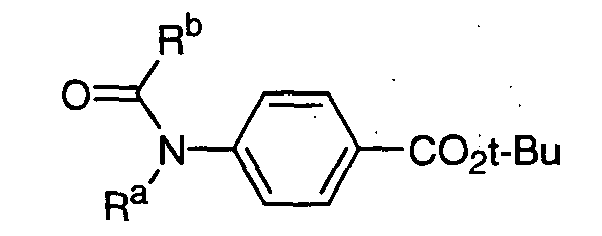
Ref.Ex.Nos. Ra Rb Physicochemical properties etc. 127 

oil
MS (APCI) 373 [M+H]+128 

oil
MS (APCI) 363 [M+H]+129 
n-Bu oil
MS (APCI) 375 [M+H]+130 
c-Pr oil
MS (APCI) 359 [M+H]+131 

oil
MS (APCI) 365 [M+H]+132 
Me oil
MS (APCI) 335 [M+H]+133 

oil
MS (APCI) 385 [M+H]+134 
Me oil
MS (APCI) 321 [M+H]+135 
n-Bu oil
MS (APCI) 363 [M+H]+136 
c-Pr oil
MS (APCI) 347 [M+H]+137 

oil
MS (APCI) 351 [M+H]+138 
n-Bu oil
MS (APCI) 377 [M+H]+139 
c-Pr oil
MS (APCI) 361 [M+H]+140 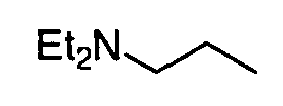

oil
MS (APCI) 387 [M+H]+Me: methyl group, Et: ethyl group, n-Pr: n-propyl group
c-Pr: cyclopropyl group, n-Bu: n-butyl groupTable 38 (No. 4) 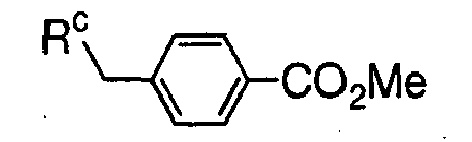
Ref.Ex.Nos. -Rc Physicochemical properties etc. 141 
oil
MS (APCI) 248 [M+H]+142 
oil
MS (APCI) 250 [M+H]+143 
oil
MS (APCI) 264 [M+H]+144 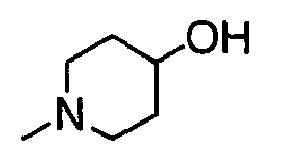
oil
MS (APCI) 250 [M+H]+145 
oil
MS (APCI) 249 [M+H]+146 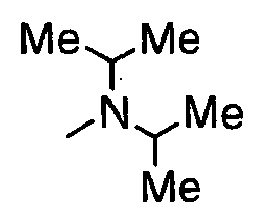
oil
MS (APCI) 249 [M+H]+Me: methyl group Table 38 (No. 5) 
Ref.Ex.Nos. -Rc Physicochemical properties etc. 147 
amorphous powder
MS (APCI) 236 [M+H)+148 
amorphous powder
MS (APCI) 234 [M+H]+149 
amorphous powder
MS (APCI) 248 [M+H]+150 
amorphous powder
MS (APCI) 236 [M+H]+Me: methyl group Table 38 (No. 6) 
Ref.Ex.Nos. -Rc Physicochemical properties etc. 151 
amorphous powder
MS (APCI) 208 [M+H]+152 
amorphous powder
MS (APCI) 222 [M+H]+153 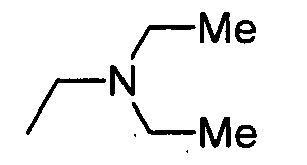
amorphous powder
MS (APCI) 236 [M+H]+154 
amorphous powder
MS (APCI) 234 [M+H]+155 
amorphous powder
MS (APCI) 248 [M+H]+Me: methyl group Table 38 (No. 7) 
Ref.Ex.Nos. -Rd Physicochemical properties etc. 156 
amorphous powder
MS (APCI) 272/274 [M+H]+157 
amorphous powder
MS (APCI) 300/302 [M+H]+158 
amorphous powder
MS (APCI) 298/300 [M+H]+Me: methyl group Table 38 (No. 8) 
Ref.Ex.Nos. -Re -Rf Physicochemical properties etc. 159 -Me 
oil
MS (APCI) 200 [M+H]+160 -Me 
oil
MS (APCI) 186 [M+H]+161 

oil
MS (APCI) 241 [M+H]+162 

oil
MS (APCI) 254 [M+H]+163 

oil
MS (APCI) 240 [M+H]+164 

oil
MS (APCI) 226 [M+H]+Me: methyl group, Ph: phenyl group Table 38 (No. 9) 
Ref.Ex.Nos. -Rg -Rh Physicochemical properties etc. 165 

oil
MS (APCI) 228 [M+H]+166 

oil
MS (APCI) 200 [M+H]+167 

oil
MS (APCI) 228 [M+H]+168 

oil
MS (APCI) 226 [M+H]+Me: methyl group Table 38 (No. 10) 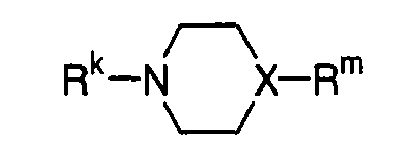
Ref.Ex.Nos. -Rk I -Rm X Physicochemical properties etc. 169 

oil
MS (APCI) 257 [M+H]+170 

oil
MS (APCI) 243 [M+H]+171 

oil
MS (APCI) 229 [M+H]+172 

oil
MS (APCI) 244 [M+H]+173 

oil
MS (APCI) 244 [M+H]+174 

oil
MS (APCI) 230 [M+H]+175 

oil
MS (APCI) 231 [M+H]+Me: methyl group Table 38 (No. 11) 
Ref.Ex.Nos. -Rk -Rm X Physicochemical properties etc. 176 

C oil
MS (APCI) 216 [M+H]+177 -n-Bu 
C oil
MS (APCI) 242 [M+H]+178 -n-Bu 
C oil
MS (APCI) 228 [M+H]+179 -n-Bu 
N oil
MS (APCI) 229 [M+H]+180 -n-Pr 
C oil
MS (APCI) 228 [M+H]+Me: methyl group Table 38 (No. 12) 
Ref.Ex.Nos. -Rk -Rm X Physicochemical properties etc. 181 -n-Pr 
C oil
MS (APCI) 214 [M+H]+182 -Et 
C oil
MS (APCI) 214 [M+H]+183 

N oil
MS (APCI) 243 [M+H]+184 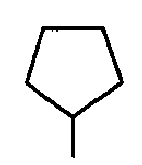
2 N oil
MS (APCI) 241 [M+H]+185 -i-Pr 
N oil
MS (APCI) 215 [M+H]+Et: ethyl group, i-Pr: isopropyl group, n-Pr: n-propyl group,
n-Bu: n-butyl groupTable 38 (No. 13) 
Ref.Ex.Nos. -Rn -Rp Physicochemical properties etc. 186 

oil
MS (APCI) 229 [M+H]+187 

oil
MS (APCI) 229 [M+H]+188 

oil
MS (APCI) 216 [M+H]+189 

oil
MS (APCI) 216 [M+H]+190 n-Bu 
oil
MS (APCI) 214 [M+H]+Me: methyl group, n-Bu: n-butyl group Table 38 (No. 14) 
Ref.Ex.Nos. Rq Physicochemical properties etc. 191 
amorphous powder
MS (APCI) 265 [M+H]+192 
oil
MS (APCI) 265 [M+H]+193 
oil
MS (APCI) 288 [M+H]+Me: methyl group Table 38 (No. 15) 
Ref.Ex.Nos. -Rs Physicochemical properties etc. 194 
oil
MS (APCI) 321 [M+H]+195 
oil
MS (APCI) 308 [M+H]+Me: methyl group Table 38 (No. 16) 
Ref.Ex.Nos. Rt Physicochemical properties etc. 196 
oil
MS (APCI) 311 [M+H]+197 
oil
MS (APCI) 311 [M+H]+Me: methyl group, Et: ethyl group Table 38 (No. 17) 
Ref.Ex.Nos. -Ru Physicochemical properties etc. 198 
oil
MS (APCI) 316 [M+H]+Me: methyl group, Et: ethyl group Table 38 (No. 18) 
Ref.Ex.Nos. Rv Physicochemical properties etc. 199 
oil
MS (APCI) 325 [M+H]+200 
oil
MS (APCI) 286 [M+H]+201 
oil
MS (APCI) 288 [M+H]+Me: methyl group, Et: ethyl group Table 38 (No. 19) 
Ref.Ex.Nos. -NR'R" Physicochemical properties etc. 202 
amorphous powder
MS (ESI) 242 [M-H]-203 
amorphous powder
MS (ESI) 228 [M-H]-204 
amorphous powder
MS (ESI) 242 [M-H]-205 
amorphous powder
MS (APCI) 256 [M-H]-Table 38 (No. 20) 
Ref.Ex.Nos. -NR'R" Physicochemical properties etc. 206 
amorphous powder
MS (APCI) 224 [M+H]+207 
amorphous powder
MS (APCI) 238 [M+H]+208 
amorphous powder
MS (APCI) 236 [M+H]+209 
amorphous powder
MS (APCI) 250 [M+H]+210 
amorphous powder
MS (APCI) 238 [M+H]+Table 38 (No. 21) 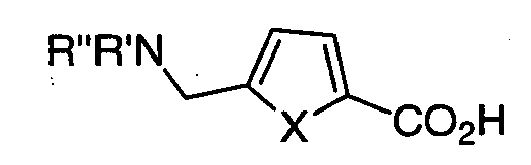
Ref.Ex.Nos. -NR'R" X Physicochemical properties etc. 211 
S amorphous powder
MS (APCI) 186 [M+H]+212 
S amorphous powder
MS (APCI) 214 [M+H]+213 
S amorphous powder
MS (APCI) 212 [M+H]+214 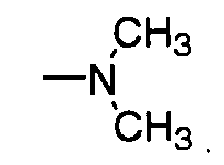
O amorphous powder
MS (APCI) 170 [M+H]+215 
O amorphous powder
MS (APCI) 198 [M+H]+216 
O amorphous powder
MS (APCI) 196 [M+H]+Table 38 (No. 22) 
Ref.Ex.Nos. -NR'R" Physicochemical properties etc. 217 
amorphous powder
MS (APCI) 236 [M+H]+218 
amorphous powder
MS (APCI) 234 [M+H]+Table 38 (No. 23) 
Ref.Ex.Nos. Rw n Physicochemical properties etc. 219 
0 oil
MS (APCI) 243 [M+H]+220 
0 oil
MS (APCI) 257 [M+H]+221 
0 oil
MS (APCI) 285 [M+H]+222 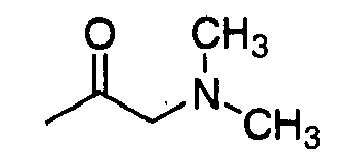
1 oil
MS (APCI) 257 [M+H]+223 
1 oil
MS (APCI) 285 [M+H]+224 
1 oil
MS (APCI) 283 [M+H]+225 
1 oil
MS (APCI) 271 [M+H]+226 
1 oil
MS (APCI) 299 [M+H]+Table 38 (No. 24) 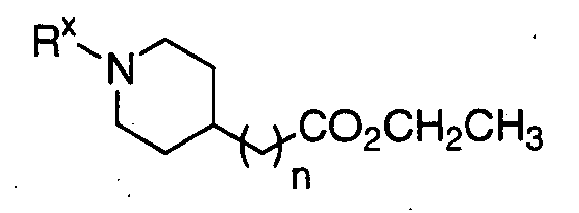
Ref.Ex.Nos. Rx I n Physicochemical properties etc. 227 
2 oil
MS (APCI) 271 [M+H]+228 
2 oil
MS (APCI) 299 [M+H]+229 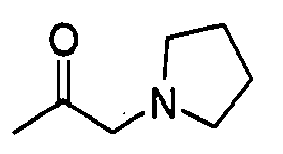
2 oil
MS (APCI) 297 [M+H]+230 
2 oil
MS (APCI) 311 [M+H]+Table 38 (No. 25) 
Ref.Ex.Nos. -Ry Physicochemical properties etc. 231 
amorphous powder
MS (APCI) 257 [M+H]+232 
amorphous powder
MS (APCI) 285 [M+H]+233 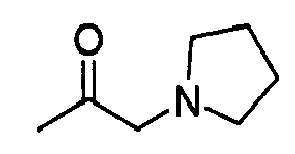
amorphous powder
MS (APCI) 283 [M+H]+234 
oil
MS (APCI) 271 [M+H]+ -
- (1) To a solution of 1-(carbamoyl)-1-cyclopropanecarboxylic acid (500 mg) in tetrahydrofuran (2.0 mL) is added dropwise 2M boran-dimethylsulfide complex solution in tetrahydrofuran (7.5 mL) and the mixture is refluxed under heating for 4 hours. To the reaction mixture is added 10 % HCl and the mixture is refluxed under heating for 30 minutes. After cooling, the reaction mixture is neutralized with a saturated sodium hydrogencarbonate solution, and thereto is added dioxane (10 mL) and di-tert-butyl dicarbonate (1.3 g). The mixture is stirred at room temperature for 3 hours. The reaction mixture is extracted with ethyl acetate and the extract is concentrated in vacuo. The residue is purified by flash column chromatography on silica gel (Solvent; n-hexane : ethyl acetate = 3 : 1) to give 1-hydroxymethyl-1-(tert-butoxycarbonylamiomethyl)cyclopropane (337 mg, yield; 45 %) as a yellow oil. MS (APCI) m/z; 202 [M+H]+
- (2) To a solution of the compound obtained in the above step (1) (337 mg), methyl 4-hidroxybenzoate (280 mg), and triphenylphosphine (650 mg) in tetrahydrofuran (3.0 mL) is added dropwise diisopropyl azodicarboxylate (510 mg) under ice-cooling and the mixture is stirred at room temperature overnight. The reaction mixture is concentrated in vacuo and the residue is purified by flash column chromatography on NH-silica gel (Solvent; n-hexane : ethyl acetate = 3 :2) to give methy 4-[[1-(tert-butoxycarbonylamiomethyl)cyclopropyl]methoxy]benzoate (515 mg, yield; 92 %) as a yellow oil. MS (APCI) m/z; 353 [M+H]+
- A suspension of tert-butyl 4-fluorobenzoate (300 mg), 2-(dimethylamino)-ethanethiol hydrochloride (420 mg), and potassium carbonate (620 mg) in dimethylsulfoxide (3.0 mL) is stirred at 80°C for 4 hours. The reaction mixture is diluted with water and extracted with ethyl acetate. The extract is concentrated in vacuo and to the residue is added 4N HCl-dioxane (1.5 mL). The mixture is stirred at room temperature overnight. The reaction mixture is diluted with ether and the precipitated crystals are collected by filtration to give 4-[2-(dimethylamino)ethylthio]-benzoic acid (380 mg, yield; 99 %) as colorless crystals. MS (APCI) m/z; 226 [M+H]+
- To a solution of ethyl 4-cyclohexanonecarboxylate (24 g) in methanol (200 mL) is added sodium borohydride (2.67 g) at -78°C and the mixture is stirred at the same temperature for 1 hour. To the reaction mixture is added water, and the mixture is evaporated to remove methanol and extracted with ethyl acetate. The organic layer is washed with saturated brine, dried over anhydrous sodium sulfate, and concentrated in vacuo. To a solution of the residue (20 g) in methylene chloride (200 mL) is added dropwise diisopropylethylamine (50 mL) and chloromethylmethylether (16 mL) under ice-cooling and the mixture is stirred at room temperature overnight. To the reaction mixture is added water and the mixture is extracted with ethyl acetate. The extract is concentrated and the residue is purified by flash column chromatography on silica gel (Solvent; n-hexane : ethyl acetate = 15 : 1) to give ethyl trans-4-(methoxymethoxy)-cyclohexanecarboxylate (12.3 g, yield; 40 %) as a colorless oil. MS (APCI) m/z; 234 [M+H]+
- The compound obtained in Reference Example 85(2) (mono-methyl trans-cyclohexane-1,4-dicarboxylate, 14.3 g) is dissolved in tetrahydrofuran (78 mL) and 1.0M boran-tetrahydrofuran complex solution in tetrahydrofuran (100 mL) is added dropwise thereto at -50°C under argon gas atmosphere over a period of 1 hour. The mixture is stirred at -10°C for 1 hour. To the reaction mixture is added water (160 mL) and a saturated sodium hydrogencarbonate solution (160 mL) under ice-cooling and the mixture is extracted with ethyl acetate (x 4). The extract is washed with saturated brine, dried over anhydrous sodium sulfate and concentrated in vacuo. The residue is purified by flash column chromatography on silica gel (Solvent; chloroform : methanol = 20 : 1) to give methyl trans-4-(hydroxymethyl)cyclohexanecarboxylate (13.25 g, yield; quantitative) as an oil. MS (APCI) m/z; 173 [M+H]+
-
- (1) To a solution of methyl trans-4-(aminomethyl)cyclohexanecarboxylate hydrochloride (5.86 g) and triethylamine (12 mL) in chloroform (100 mL) is added dropwise acetyl chloride (2.69 g) under ice-cooling and the mixture is stirred at room temperature for 2 hours. The reaction mixture is poured into water and the mixture is extracted with chloroform (x 2). The combined extracts are washed successively with 10 % HCl, saturated brine, a saturated sodium hydrogencarbonate solution, and saturated brine, dried over anhydrous sodium sulfate, and concentrated in vacuo. The residue is purified by flash column chromatography on silica gel (Solvent; n-hexane : ethyl acetate = 1 : 1 → 0 : 1) to give methyl trans-4-(acetylaminomethyl)cyclohexanecarboxylate (5.92 g, yield; 98 %) as an amorphous powder. MS (APCI) m/z; 214 [M+H]+
- (2) To a solution of the compound obtained in the above step (1) (4.32 g) in dimethylformamide (50 mL) is added successively sodium hydride (60 % dispersion in mineral oil, 1.0 g), methyl iodide (5.91 g) and methanol (5 drops) under ice-cooling and the mixture is stirred at room temperature for 8 hours. After addition of sodium hydride (60 % dispersion in mineral oil, 430 mg), methyl iodide (1.5 mL), and methanol (2 drops). The mixture is stirred for 2 hours. The reaction mixture is poured into water and extracted with ethyl acetate (x 3). The extract is washed with water (x 2), dried over anhydrous sodium sulfate and concentrated in vacuo. The residue is purified by flash column chromatography on silica gel (Solvent; n-hexane : ethyl acetate = 1 : 2 → 0 : 1) to give methyl trans-4-(N-methyl-N-acetylaminomethyl)cyclohexanecarboxylate (3.04 g, yield; 66 %) as an oil. MS (APCI) m/z; 228 [M+H]+
- (3) The compound obtained in the above step (2) (3.03 g) is hydrolyzed by 2N sodium hydroxide solution (14 mL) in methanol/tetrahydrofuran and the reaction mixture is concentrated in vacuo and nuetralized with diluted aqueous HCl. The mixture is extracted with chloroform and the extract is dried over anhydrous sodium sulfate and concentrated in vacuo to give a crude carboxylic acid compound (2.67 g, 94 %). The compound (500 mg) is refluxed under heating in 5N HCl for 2 days and the reaction mixture is concentrated to give a crude amino acid compound. To the compound is added a mixture of 1N sodium hydroxide solution (6 mL) and dioxane (4 mL) and di-tert-butyl dicarbonate (1.0 g). The mixture is stirred at room temperature for 12 hours. The reaction mixture is diluted with water and washed with ether. After neutralizing the aqueous layer with 10 % citric acid solution, the mixture is extracted with ethyl acetate. The extract is washed successively with water and saturated brine, dried over anhydrous sodium sulfate, and concentrated in vacuo to give trans-4-[N-methyl-N-(tert-butoxycarbonyl)aminomethyl]cyclohexanecarboxylic acid (680 mg, yield; 90 %) as an oil. MS (ESI) m/z; 270 [M-H]-
- The compound obtained in Reference Example 238 (500 mg) and isopropyl-(2-methoxyethyl)amine (689 mg) are treated in the same manner as described in Example 654(1) and (2) to give methyl trans-4-[N-isopropyl-N-(2-methoxyethyl)aminomethyl]-cyclohexanecarboxylate (445 mg, yield; 56 %) as oil. MS (APCI) m/z; 272 [M+H]+
-
- (1) To a solution of ethyl 4-benzylaminobenzoate (6.0 g) in methylene chloride (60 mL) is added dropwise chlorobutyryl chloride (3.95 mL) and N,N-diisopropylethylamine (6.14 mL) under ice-cooling, and the mixture is stirred for 12 hours. The reaction mixture is diluted with chloroform and thereto is added 10 % HCl. The organic layer is separated, washed successively with water, a saturated sodium hydrogencarbonate solution, water, and saturated brine, dried over anhydrous sodium sulfate, and concentrated in vacuo. The residue is purified by flash column chromatography on silica gel (Solvent; n-hexane : ethyl acetate = 4 : 1) to give ethyl 4-[N-benzyl-N-(4-chlorobutyryl)amino]benzoate (8.27 g, yield; quantitative) as an oil. MS (APCI) m/z; 360/362 [M+H]+
- (2) A solution of the compound obtained in the above step (1) (1.0 g), diethylamine (287 µL), and sodium iodide (417 mg) in dimethylsulfoxide (2.5 mL) is stirred at 100°C under argon gas atmosphere for 1 day. After cooling, to the reaction mixture is added a saturated sodium hydrogencarbonate solution and the mixture is extracted with chloroform (x 2). The extract is concentrated in vacuo and the residue is purified by flash column chromatography on NH-silica gel (Solvent; n-hexane : ethyl acetate = 4 : 1) to give ethyl 4-[N-benzyl-N-[4-(diethylamino)butyryl]amino]benzoate (280 mg, yield; 25 %) as an oil. MS (APCI) m/z; 397 [M+H]+
- To a solution of ethyl 3,4-dihydroxybenzoate (500 mg), N,N-dimethylethanolamine (565 µL), and triphenylphosphine (1.51 g) in methylene chloride (20 mL) is added dropwise diisopropyl azodicarboxylate (1.37 mL) under argon gas atmosphere and ice-cooling. The mixture is stirred at room temperature for 1 day. The reaction mixture is diluted with ethyl acetate, washed with water and treated with 10 % HCl to transfer basic materials in ethyl acetate layer to the aqueous layer. The aqueous layer is neutralized with saturated aqueous sodium hydrogencarbonate and extracted with chloroform/methanol/tetrahydrofuran (4 : 1 : 1, x 2). The extract is dried over anhydrous sodium sulfate and concentrated in vacuo. The residue is purified by flash column chromatography on NH-silica gel (Solvent; n-hexane : ethyl acetate = 1 : 1 → chloroform : methanol = 19 : 1) to give ethyl 4-[2-(dimethylamino)ethoxy]-3-hydroxybenzoate (240 mg, yield; 35 %) as oil. MS (APCI) m/z; 254 [M+H]+
- To a solution of ethyl 4-aminobenzoate (10 g) and 4-(dimethylamino)benzaldehyde (9.0 g) in methylene chloride (200 mL) is added sodium triacetoxyborohydride (18.9 g) and acetic acid (3.47 mL) under ice-cooling, and the mixture is stirred at room temperature for 2 days. To the reaction mixture is added a saturated sodium hydrogencarbonate solution and extracted with chloroform (x 2). The extract is concentrated in vacuo and the residue is triturated in n-hexane/ethyl acetate to give ethyl 4-[4-(dimethylamino)benzylamino]benzoate (11.6 g, yield; 64 %) as powder. MS (APCI) m/z; 299 [M+H]+
-
- (1) A solution of 4-(bromoinethyl)benzaldehyde (15.9 g) and (1-ethoxy-carbonylethylidene)triphenylphosphorane (29 g) in chloroform (290 mL) is refluxed under heating for 12 hours. After cooling, the reaction mixture is concentrated and the residue is purified by column chromatography on silica gel (Solvent; chloroform) to give ethyl 3-[4-(bromomethyl)phenyl]-2-methylacrylate (18 mg, yield; 79 %) as an oil.
- (2) To a solution of pyrrolidine (0.89 g) and potassium carbonate (1.38 g) in water (10 mL) is added dropwise a solution of the compound obtained in the above step (1) (2.83 g) in tetrahydrofuran (5 mL) and the mixture is stirred at room temperature overnight. The reaction mixture is diluted with ethyl acetate, washed with water, dried over anhydrous sodium sulfate, and concentrated in vacuo. The residue is dissolved in ether and filtered to remove insoluble materials. To the filtrate is added oxalic acid (0.9 g) and the resultant precipitate is collected by filtration to give ethyl 2-methyl-3-[4-[(1-pyrrolidinyl)methyl]phenyl]acrylate hemioxalate (2.67 g, yield; 83 %) as an amorphous powder.
- (3) The compound obtained in the above step (2) (2.2 g) is treated with ethyl acetate/10 % potassium carbonate solution and the ethyl acetate layer is concentrated in vacuo. The residue (2-methyl-3-[4-(pyrrolidin-l-yl)methylphenyl]acrylic acid) is dissolved in methanol (10mL) and thereto is added potassium hydroxide (1.38 g). The mixture is stirred at 50°C for 5 hours. After cooling, to the reaction mixture is added ethanol (5 mL) and the resultant crystals are collected by filtration to give potassium 2-methyl-3-[4-[(1-pyrrolidinyl)methyl]phenyl]acrylate (1.65 g, yield; 83 %) as a powder. M.p. 268°C (dec.)
-
- (1) To a solution of methyl 4-(bromomethyl)benzoate (500 mg) in tetrahydrofuran (5 mL) is added cyclopentylamine (929 mg) and the mixture is stirred at room temperature for 3 hours. The reaction mixture is diluted with chloroform (5 mL) and thereto is added a saturated sodium hydrogencarbonate solution. After stirring, the organic layer is separated, dried over anhydrous sodium sulfate, and filtered. The filtrate is concentrated and the residue is purified by column chromatography on silica gel (Solvent; n-hexane : ethyl acetate = 9 : 1 → 5 : 5) to give methyl 4-(cyclopentylaminomethyl)benzoate (469 mg, yield; 92 %) as a colorless oil. MS (APCI) m/z; 234 [M+H]+
- (2) The compound obtained in the above step (1) (480 mg) is treated in the same manner as described in Reference Example 89(2) to give methyl 4-[(N-cyclopentyl-N-methylamino)methyl]benzoate (420 mg, yield; 83 %) as a colorless oil. MS (APCI) m/z; 248 [M+H]+
-
- (1) The corresponding materials are treated in the same manner as described in Reference Example 107(1) to give tert-butyl 4-[[3-(dimethylamino)-2,2-dimethylpropyl]amino]benzoate.
- (2) The compound obtained in the above step (1) (500 mg) is treated in the same manner as described in Reference Example 89(2) to give tert-butyl 4-[N-[3-(dimethylamino)-2,2-dimethylpropyl]-N-ethylamino]benzoate (468 mg, yield; 85 %) as a colorless oil. MS (APCI) m/z; 335 [M+H]+
- The compound obtained in Reference Example 86(1) (1.00 g) is treated in the same manner as described in Reference Example 89(2) and the resultant product is treated in the same manner as described in Reference Example 81(1) to give methyl trans-4-[N-(tert-butoxycarbonyl)-N-ethylamino]cyclohexanecarboxylate (258.4 mg, yield; 14 %) as a colorless oil. MS (APCI) m/z; 303 [M+NH4]+
-
- (1) To a solution of malononitrile (28.2 g) in methanol (30 mL) is added a suspension of acetoin (25 g) in methanol (30 mL) and thereto is added dropwise diethylamine (11 mL) under ice-cooling (internal temp.: 10°C). The mixture is stirred at room temperature for 3 hours. The reaction mixture is poured into ice water (300 mL) and the precipitated crystals are collected by filtration to give 2-amino-4,5-dimethyl-3-furonitrile (28.91 g, yield; 75 %) as colorless crystals.
- (2) To a solution of the compound obtained in the above step (1) (13.6 g) in methylene chloride (200 mL) is added piperidine (18.9 g) and thereto is added dropwise a solution of ethyl chlorooxoacetate (16.3 g) in methylene chlorode (200 mL) under ice-cooling. The mixture is stirred at 0°C for 1.5 hours. The reaction mixture is diluted with chloroform (100 mL) and thereto is added water (300 mL). After stirring, the organic layer is separated and the aqueous layer is extracted with chloroform. The organic layers are combined and washed with saturated brine, dried over anhydrous sodium sulfate, and filtered. The filtrate is concentrated and the residue is purified by column chromatography on silica gel (Solvent; chloroform : ethyl acetate = 9 : 1) to give ethyl [(3-cyano-4,5-dimethylfuran-2-yl)amino](oxo)acetate (17 g, yield; 72 %) as a colorless powder. A mixture of formic acid (30 mL) and acetic anhydride (30 mL) is stirred at 60°C under argon gas atmosphere for 2 hours and thereto is added ethyl [(3-cyano-4,5-dimethylfuran-2-yl)amino](oxo)acetate (7.07 g). The mixture is refluxed for 14 hours. The reaction mixture is concentrated and the residue is purified by column chromatography on silica gel (Solvent; chloroform : ethyl acetate = 9 : 1 → chloroform : methanol = 19 : 1) to give ethyl 5,6-dimethyl-4-oxo-3,4-dihydrofuro[2,3-d]pyrimidine-2-carboxylate (4.30 g, yield; 61 %) as a colorless powder. M.p. 180 - 182°C
- (3) The compound obtained in the above step (2) (2.36 g) is dissolved in N,N-dimethylformamide (60 mL) and thereto is added dimethyaminoethyl chloride hydrochloride (2.16 g) and potassium carbonate (4.14 g). The mixture is stirred at 60°C for 14 hours. The reaction mixture is diluted with chloroform (50 mL) and thereto is added water (70 mL). After stirring, the organic layer is separated and the aqueous layer is extracted with chloroform. The organic layers are combined and washed with saturated brine, dried over anhydrous sodium sulfate, and filtered. The filtrate is concentrated and the residue is purified by column chromatography on silica gel (Solvent; chloroform : ethyl acetate : methanol = 6 : 2 : 1). The resultant product is treated in the same manner as described in Example 5(2) to give ethyl 4-[2-(dimethylamino)ethoxy]-5,6-dimethylfuro[2,3-d]pyrimidine-2-carboxylate fumarate (780 mg, yield; 18 %) as a colorless powder. M.p. 173 - 174°C
- (4) The compound obtained in the above step (3) (1.44 g) is dissolved in ethanol (20 mL) and thereto is added 2N sodium hydroxide solution (2.34 mL). The mixture is stirred at room temperature for 2 hours. The reaction mixture is concentrated and to the residue is added diethyl ether. The resultant crystals are collected by filtration and purified by reverse phase column chromatography (HP-20 column, Solvent; water : methanol = 1 : 0 → 1 : 1) to give 4-[2-(dimethylamino)-ethoxy]-5,6-dimethylfuro[2,3-d]pyrimidine-2-carboxylic acid (970 mg, yield; 74 %) as a colorless powder. M.p. 179 - 180°C
-
- (1) To a solution of 5-hydroxy-2-(hydroxymethyl)-4H-pyranone (1 g) in N,N-dimethylformamide (20 mL) is added potassium carbonate (1.95 g) and tert-butyl bromoacetate (1.37 g) and the mixture is stirred at room temperature for 16 hours. The reaction mixture is diluted with tetrahydrofuran (10 mL), and thereto is added water and saturated brine. After stirring, the organic layer is separated and the aqueous layer is extracted with tetrahydrofuran. The organic layers are combined and washed with saturated brine, dried over anhydrous sodium sulfate, and filtered. The filtrate is concentrated and the residue is washed with diethyl ether and collected by filtration to give tert-butyl [[6-(hydroxymethyl)-4-oxo-4H-pyran-3-yl]oxy]acetate (1.49 g, yield; 88 %) as a colorless powder. MS (ESI) m/z; 257 [M+H]+, M.p. 90 - 92°C
- (2) To a solution of the compound obtained in the above step (1) (50 g) in methylene chloride (600 mL) is added Dess-Martin periodinate (1,1,1-tris(acetyloxy)-1,1-dihydro-1,2-benziodoxol-3(1H)-one, 91.04 g) and the mixture is stirred at room temperature for 5 days. The reaction mixture is filtered through Celite, and the filtrate is extracted with ethyl acetate and concentrated. The residue is washed with diethyl ether and collected by filtration to give tert-butyl [(6-formyl-4-oxo-4H-pyran-3-yl)-oxy]acetate (17.1 g, 34.5 %) as a brown powder.
- (3) The compound (2.0 g) obtained in the above step (2) is treated in the same manner as described in Example 6 to give tert-butyl [[4-oxo-6-[(1-pyrrolidinyl)methyl]-4H-pyran-3-yl]oxy]acetate (1.06 g, yield; 44 %) as a yellow powder. MS (ESI) m/z; 310 [M+H]+, M.p. 93 - 94°C
- (4) To a solution of the compound obtained in the above step (3) (700 mg) in methylene chloride (5 mL) is added trifluoroacetic acid (2.5 mL) at 0°C and the mixture is stirred at room temperature for 24 hours. The reaction mixture is concentrated and thereto is added ethyl acetate and water. After stirring, the aqueous layer is separated and washed with ethyl acetate again. The aqueous layer is lyophilized to give [[4-oxo-6-[(1-pyrrolidinyl)methyl]-4H-pyran-3-yl]oxy]acetic acid (820 mg, yield; 99 %) as a colorless powder. MS (ESI) m/z; 254 [M+H]+
-
- (1) To a solution of tert-butyl [[4-oxo-6-[(1-pyrrolidinyl)methyl]-4H-pyran-3-yl]oxy]acetate (compound obtained in Reference Example 249(2), 12 g) in toluene is added (1-methoxycarbonylmethylidene)triphenylphosphoran (17.36 g) and the mixture is stirred at 60°C for 3 hours. The reaction mixture is concentrated and the residue is purified by flash column chromatography on silica gel (Solvent; n-hexane : ethyl acetate = 1 : 1) to give tert-butyl [2-[(1E)-2-(methoxycarbonyl)vinyl]-4-oxo-4H-pyran-3-yl]-oxyacetate (10.99 g, yield; 75 %) as colorless crystals. MS (ESI) m/z; 311 [M+H]+ , M.p. 115 - 116°C
- (2) To a solution of the compound obtained in the above step (1) (8.83 g) in tetrahydrofuran (100 mL) is added water (100 mL) and 2N sodium hydroxide solution (20.1 mL) and the mixture is stirred at room temperature for 4 hours. After addition of HCl (23 mL), the reaction mixture is concentrated and the residue (1.0 g) is dissolved in N,N-dimethylformamide (7 mL). To the solution is added N-methylmorpholine (3 mL) and polyphosphoric acid (3.9 mL) and the mixture is stirred at room temperature for 4 days. The reaction mixture is diluted with ethyl acetate and thereto is added a saturated sodium hydrogencarbonate solution and saturated brine. After stirring, the organic layer is separated and the aqueous layer is extracted with ethyl acetate. The organic layers are combined, washed with saturated brine, dried over anhydrous magnesium sulfate and filtered. The filtrate is concentrated and the residue is purified by flash column chromatography on silica gel (Solvent; chloroform : methanol = 19 : 1) to give tert-butyl [2-[(1E)-2-[(4-methylpiperazin-1-yl)carbonyl]vinyl]-4-oxo-4H-pyran-3-yl]oxyacetate (450 mg, yield; 35 %) as a yellow crystals. MS (ESI) m/z; 379 [M+H]+, M.p. 124 - 125°C
- (3) To a solution of the compound obtained in the above step (2) (390 mg) in methylene chloride (5 mL) is added trifluoroacetic acid (2 mL) at 0°C and the mixture is stirred at room temperature for 5 hours. The reaction mixture is concentrated and thereto is added water. The solution is lyophilized to give [2-[(1E)-2-[(4-methyl-piperazin-1-yl)carbonyl]vinyl]-4-oxo-4H-pyran-3-yl]oxyacetic acid (330 mg, yield; 73 %) as a colorless powder. MS (ESI) m/z; 323 [M+H]+
-
- (1) Tert butyl 4-fluoro-3-methylbenzoate (4 g) is treated in the same manner as described in Reference Example 1(1) to give tert-butyl 4-[[2-(dimethylamino)ethyl]-amino]-3-methylbenzoate (1.3 g, yield; 24 %) as an oil. MS (APCI) m/z; 279 [M+H]+
- (2) To a solution of the compound obtained in the above step (1) (1.3 g) in dioxane (5 mL) is added 4N HCl-dioxane (5 mL) and 5N HCl (3 mL) and the mixture is stirred at 60°C for 10 minutes. After cooling, the reaction mixture is concentrated in vacuo, and the residue is dissolved in water and lyophilized to give 4-[[2-(dimethylamino)ethyl]amino]-3-methylbenzoate dihydrochloride (1.35 g, yield; 98 %) as an amorphous powder. MS (APCI) m/z; 223 [M+H]+
-
- (1) A mixture of ethyl 4,4,4-trifluoroacetoacetate (23.1 g), urea (7.54 g) and ethyl orthoformate (18.6 g) is stirred at 130°C under argon gas atmosphere for 1.5 hours. To the reaction mixture is added xylene (100 mL) and the mixture is stirred at 140°C for 17 hours. The reaction mixture is evaporated to remove solvent and the residue is diluted with methanol. The solution is treated with an activated carbon powder, concentrated in vacuo, and triturated in diisopropylether to give ethyl 2-hydroxy-4-trifluoromethyl-5-pyrimidinecarboxylate (20.3 g, yield; 69 %) as crystals.
MS (ESI) m/z; 235 [M-H]- - (2) A solution of the compound obtained in the above step (1) (5.0 g) in phosphorus oxychloride (30 mL) is refluxed under heating for 2 hours. The reaction mixture is poured into water with ice and extracted with chloroform. The extract is washed with saturated brine, dried over anhydrous sodium sulfate and concentrated in vacuo. The residue is purified by column chromatography on silica gel (Solvent; n-hexane : ethyl acetate = 5 : 1) to give ethyl 2-chloro-4-trifluoromethyl-5-pyrimidinecarboxylate (4.3 g, yield; 80 %) as an oil. MS(GC-EI)m/z; 254 [M+]
- (3) To a solution of the compound obtained in the above step (2) (500 mg) in tetrahydrofuran (3 mL) is added a solution of N,N,N'-trimethylethylenediamine (421 mg) in tetrahydrofuran (2 mL) under argon gas atmosphere and the mixture is stirred at room temperature for 1 hour. The reaction mixture is diluted with ethyl acetate, washed successively with a saturated sodium hydrogencarbonate solution, water, and saturated brine. The organic layer is dried over anhydrous sodium sulfate and concentrated in vacuo. The residue is purified by column chromatography on silica gel (Solvent; chloroform : methanol = 100 : 0 → 50 : 1) to give ethyl 2-[N-methyl-N-[2-(dimethylamino)ethyl]amino]-4-trifluoromethyl-5-pyrimidinecarboxylate (540 mg, yield; 77 %) as an oil. MS (APCI) m/z; 321 [M+H]+
- To a solution of the compound obtained in Reference Example 86(1) (500 mg) in 1,2-dichloroethane (10 mL) is added triethylamine (665 µL), propionaldehyde (688 µL), sodium triacetoxyborohydride (1.68 g), and acetic acid (546 µL) under ice-cooling. The mixture is stirred at room temperature for 3 days. The reaction mixture is diluted with chloroform and thereto is added a saturated sodium hydrogencarbonate solution. The mixture is extracted with chloroform and the extract is concentrated in vacuo. The residue is dissolved in chloroform (6 mL) and thereto is added a solution of di-tert-butyl dicarbonate (690 mg) in chloroform (2 mL) under ice-cooling, and the mixture is stirred at room temperature for 2 hours. The reaction mixture is concentrated in vacuo and the residue is purified by column chromatography on silica gel (Solvent; chloroform : methanol = 100 : 0 → 90 : 10) to give methyl trans-4-(dipropylamino)cyclohexanecarboxylate (600 mg, yield; 78 %) as an oil. MS (APCI) m/z; 242 [M+H]+
-
- (1) To a solution of methyl 4-(3-hydroxy-1-propinyl)benzoate (2 g) in methanol (32 mL) is added Lindlar catalyst (238 mg) and the mixture is stirred under hydrogen gas atmosphere at room temperature for 18 hours. To the reaction mixture is added Lindlar catalyst (90 mg) and the mixture is stirred for 1 hour. The reaction mixture is filtered to remove insoluble materials through Celite. The filtrate is concentrated in vacuo and the residue is purified by column chromatography on silica gel (Solvent; n-hexane : ethyl acetate = 100 : 0 → 50 : 50) to give methyl 4-(3-hydroxy-1-propenyl)-benzoate (1.5 g, yield; 75 %) as an amorphous powder. MS (APCI) m/z; 175 [M+H-H2O]+
- (2) To a solution of the compound obtained in the above step (1) (200 mg) in tetrahydrofuran (4 mL) is added triethylamine (218 µL) and methanesulfonyl chloride (105 µL) under ice-cooling and the mixture is stirred for 30 minutes. The reaction mixture is diluted with ethyl acetate and thereto is added 10 % citric acid solution. The mixture is extracted with ethyl acetate and the extract is washed successively with water and saturated brine, dried over anhydrous sodium sulfate, and concentrated in vacuo. To the residue is dissolved in dimethylformamide (2 mL) and thereto is added 2M dimethylamine/tetrahydrofuran (2 mL). The mixture is stirred at room temperature for 2 days. The reaction mixture is diluted with ethyl acetate, washed with a saturated sodium hydrogencarbonate solution, and concentrated in vacuo. The residue purified by column chromatography on silica gel (Solvent; chloroform : methanol = 100 : 0 → 90 : 10) to give methyl 4-[3-(dimethylamino)-1-propenyl]-benzoate (198 mg, yield; 87 %) as an oil. MS (APCI) m/z; 220 [M+H]+
- To a solution of methyl 4-(3-tosyloxypropyl)benzoate (500 mg) in dimethylformamide (3 mL) is added 2M dimethylamine solution in tetrahydrofuran (2.2 mL) and the mixture is stirred at 50°C for 15 hours. The reaction mixture is diluted with ethyl acetate, washed with a saturated sodium hydrogencarbonate solution and concentrated in vacuo. The residue is purified by column chromatography on silica gel (Solvent; chloroform : methanol = 100 : 0 → 90 : 10) to give methyl 4-[3-(dimethylamino)-propyl]benzoate (357 mg, yield; quantitative) as an oil. MS (APCI) m/z; 222 [M+H]+
- Methyl 4-(3-hydroxy-1-propynyl)benzoate is treated in the same manner as described in Reference Example 254(2) to give methyl 4-[3-(1-pyrrolidinyl)-1-propynyl]benzoate (463 mg, yield; 91 %) as an oil. MS (APCI) m/z; 244 [M+H]+
- Tert-butyl 4-fluorobenzoate is treated in the same manner as described in Reference Example 251 to give 4-[2-(dimethylamino)ethyl]aminobenzoic acid dihydrochloride as an amorphous powder. MS (APCI) m/z; 209 [M+H]+
- The corresponding materials are treated in the same manner as described in either one of the aforementioned Reference Examples to give the compounds as shown in the following Table 39.
Table 39 (No. 1) 
Ref.Ex.Nos. R' R Physicochemical properties etc. 258* 
H amorphous powder
MS (APCI) 198 [M+H]+259 
Me oil
MS (APCI) 255 [M+H]+260 
Me oil
MS (APCI) 228 [M+H]+261 
Me oil
MS (APCI) 226 [M+H]+262 
Me oil
MS (APCI) 228 [M+H]+263 
Me oil
MS (APCI) 244 [M+H]+264 
Me amorphous powder
MS (APCI) 326 [M+H]+265 
Me amorphous powder
MS (APCI) 300 [M+H]+266 
Me amorphous powder
MS (APCI) 300 [M+H]+*: hydrochloride
Me: methyl group, Et: ethyl group, n-Pr: n-propyl group,
Boc: tert-butoxycarbonyl groupTable 39 (No. 2) 
Ref.Ex.Nos. R' Physicochemical properties etc. 267 
oil
MS (APCI) 269 [M+H]+268 
oil
MS (APCI) 297 [M+H]+269 
oil
MS (APCI) 257 [M+H]+270 
oil
MS (APCI) 291 [M+H]+271 
amorphous powder
MS (APCI) 283 [M+H]+272 
amorphous powder
MS (APCI) 226 [M+H]+273 
oil
MS (APCI) 242 [M+H]+274 
oil
MS (APCI) 240 [M+H]+Me: methyl group Table 39 (No. 3) 
Ref.Ex.Nos. R' R Physicochemical properties etc. 275 
Me amorphous powder
MS (APCI) 331 [M+H]+276 
t-Bu amorphous powder
MS (APCI) 349 [M+H]+277 
t-Bu amorphous powder
MS (APCI) 375 [M+H]+*: hydrochloride
Me: methyl group, Et: ethyl group, t-Bu: tert-butyl groupTable 39 (No. 4) 
Ref.Ex.Nos. R' Physicochemical properties etc. 278 
amorphous powder
MS (APCI) 375 [M+H]+279 
amorphous powder
MS (APCI) 401 [M+H]+280 
amorphous powder
MS (APCI) 361 [M+H]+281 n-Pr amorphous powder
MS (APCI) 349 [M+H]+282 i-Bu amorphous powder
MS (APCI) 363 [M+H]+Me: methyl group, n-Pr: n-propyl group, i-Bu: isobutyl group,
t-Bu: tert-butyl groupTable 39 (No. 5) 
Ref.Ex.Nos. I R' Physicochemical properties etc. 283 
brown oil
MS (APCI) 367 [M+NH4]+284 
brown oil
MS (APCI) 369 [M+NH4]+285 
amorphous powder
MS (APCI) 248 [M+H]+286 
amorphous powder
MS (APCI) 246 [M+H]+287 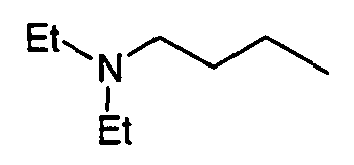
amorphous powder
MS (APCI) 249 [M+H]+288 
amorphous powder
MS (APCI) 248 [M+H]+289 
amorphous powder
MS (APCI) 208 [M+H]+Me: methyl group, Et: ethyl group, Bzl: benzyl group,
Boc: tert-butoxycarbonyl groupTable 39 (No. 6) 
Ref.Ex.Nos. R Physicochemical properties etc. 290 Me2N- amorphous powder
MS (APCI) 350/352 [M+H]+291 Et2N- amorphous powder
MS (APCI) 378/380 [M+H]+292 
amorphous powder
MS (APCI) 376/378 [M+H]+Me: methyl group, Et: ethyl group Table 39 (No. 7) 
Ref.Ex.Nos. R Physicochemical properties etc. 293 
amorphous powder
MS (APCI) 319 [M+H]+294 Me amorphous powder
MS (APCI) 279 [M+H]+295 Et amorphous powder
MS (APCI) 293 [M+H]+Me: methyl group, Et: ethyl group Table 39 (No. 8) 
Ref.Ex.Nos. R' R" Physicochemical properties etc. 296 Et2N- Me amorphous powder
MS (APCI) 293 [M+H]+297 

amorphous powder
MS (APCI) 369 [M+H]+298 

amorphous powder
MS (APCI) 395 [M+H]+299 

oil
MS (APCI) 409 [M+H]+Me: methyl group, Et: ethyl group Table 39 (No. 9) 
Ref.Ex.Nos. R' Physicochemical properties etc. 300 
oil
MS (APCI) 410 [M+H]+301 
oil
MS (APCI) 426 [M+H]+302 
oil
MS (APCI) 398 [M+H]+303 
oil
MS (APCI) 424 [M+H]+Me: methyl group, Et: ethyl group -
- (1) To a solution of 6-oxo-1,4,5,6-tetrahydropyridazine-3-carboxylic acid (20 g) in acetic acid (50 mL) is added 25 % hydrobromic acid/acetic acid (200 mL) and thereto is added dropwise dimethylsulfoxide (22.0 g) at room temperature. The mixture is stirred at room temperature for 3 days. The resultant precipitates are collected by filtration, washed successively with acetic acid and water and dried at 40°C overnight to give 6-oxo-1,6-dihydropyridazine-3-carboxylic acid (10.55 g, yield; 54 %) as colorless crystals. MS (ESI) m/z: 139 [M-H]-
- (2) To a solution of the compound obtained in the above step (1) (1.0 g) in toluene (5 mL) is added thionyl chloride (3 mL) and two drops of dimethylformamide under ice-cooling, and the mixture is stirred at 80°C for 3 hours. After cooling, the reaction mixture is concentrated and to the residue is added ether. The resultant crystals are collected by filtration, washed with ether and dried to give ethyl 6-chloro-1,6-dihydropyridazine-3-carboxylate (813 mg, yield; 61 %) as a colorless powder. MS (APCI) m/z: 187/189 [M+H]+
- To a solution of ethyl 4-cyclohexanonecarboxylate (5 g), N,N-dimethylethylene-1,2-diamine (6.45 mL) and acetic acid (3.36 mL) in chloroform (50 mL) is added sodium triacetoxyborohydride (9.8 g) under ice-cooling and the mixture is stirred at room temperature overnight. To the reaction mixture is added a saturated sodium hydrogencarbonate solution. After stirring, the mixture is basified with potassium carbonate and extracted with chloroform (x 2). The extract is dried and concentrated in vacuo. The resultant crude product is purified by flash column chromatography on silica gel (Biotage, Flash 75M, solvent; chloroform/methanol/aqueous ammonia = 19 : 1 : 0.3) to give ethyl 4-(2-dimethylaminoethylamino)cyclohexanecarboxylate (a mixture of cis- and trans-isomer, 6.63 g, yield; 94 %) as an oil. MS (APCI) m/z: 243 [M+H]+
- The corresponding compounds are treated in the same manner as described in Reference Example 242 to give ethyl 4-(3-dimethylamino-2,2-dimethylpropoxy)-3-hydroxybenzoate (MS (APCI) m/z: 296 [M+H]+). To a solution of the compound (80 mg) in dimethylformamide (1.5 mL) is added sodium hydride (60 % dispersion in mineral oil, 22.7 mg) and the mixture is stirred for 20 minutes. To the mixture is added 4-(2-chloroethyl)morpholine hydrochloride (55.4 mg) and the mixture is stirred at room temperature for one day. The reaction mixture is diluted with water and extracted with chloroform (x 3). The extract is concentrated in vacuo and the resultant product is purified by flash column chromatography on NH-silica gel (solvent; ethyl acetate/n-hexane = 5 : 95 → 25 : 75) to give ethyl 4-(3-dimethylamino-2,2-dimethyl-propoxy)-3-(2-morpholin-4-iyethoxy)benzoate (53 mg, yield; 70 %) as an oil. MS (APCI) m/z: 409 [M+H]+
- To a solution of methyl 6-chloronicotinate (10 g) in N,N-dimethylsulfoxide (15 mL) is added N,N-dimethylethylenediamine (10 mL) and the mixture is stirred at 75°C overnight. The reaction mixture is diluted with water and extracted with ethyl acetate. The extract is concentrated in vacuo and the resultant product is purified by flash column chromatography on NH-silica gel (solvent; n-hexane/ethyl acetate = 1 : 1) to give methyl 6-[(2-dimethlamino)ethyl]aminonicotinate (4.09 g, yield; 31 %) as a yellow liquid. MS (APCI) m/z: 224 [M+H]+
-
- (1) To a suspension of 1-amino-2-methyl-2-propanethiol hydrochloride (75 mg) in N,N-dimethylformamide (2 mL) is added sodium hydride (60 % dispersion in mineral oil, 50 mg) and the mixture is stirred at room temperature for 30 minutes. To the mixture is added tert-butyl 4-fluorobenzoate (50 mg) and the mixture is stirred at 70°C for 4 hours. The reaction mixture is diluted with water and extracted with ethyl acetate. The extract is concentrated in vacuo and the resultant product is purified by flash column chromatography on NH-silica gel (solvent; ethyl acetate) to give tert-butyl 4-[(2-amino-1,1-dimethylethyl)thio]benzoate (54 mg, yield; 75 %) as a colorless oil. MS (APCI) m/z: 282 [M+H]+
- (2) The compound obtained in the above step (1) (59 mg) is treated in the same manner as described in Example 618 (1) to give tert-butyl 4-[(2-dimethylamino-1,1-dimethylethyl)thio]benzoate (40 mg, yield; 62 %) as a yellow oil. MS (APCI) m/z: 310 [M+H]+
-
- (1) To a solution of 4-mercaptobenzoic acid (1.5 g) in methanol (20 mL) is added conc. sulfuric acid (0.5 mL) and the mixture is refluxed under heating overnight. The reaction mixture is evaporated to remove solvent and the residue is neutralized with a saturated sodium hydrogencarbonate solution. The mixture is extracted with ethyl acetate and the extract is concentrated in vacuo to give methyl 4-mercaptobenzoate (1.6 g, yield; 99 %) as a colorless oil. MS (APCI) m/z: 167 [M-H]-
- (2) The compound obtained in the above step (1) (50 mg) is treated in the same manner as described in Example 381 to give methyl 4-[(3-dimethylamino-2,2-dimethylpropyl)thio]benzoate (58 mg, yield; 69 %) as a brown oil. MS (APCI) m/z: 282 [M+H]+
-
- (1) To a solution of diethanolamine (5.0 g) and sodium carbonate (5.5 g) in water (25 mL) is added portionwise 2-nitrobenezenesulfonyl chloride (10.5 g) at 65°C and the mixture is stirred at 90°C for 3 hours. The reaction mixture is diluted with water and extracted with ethyl acetate. The extract is concentrated in vacuo and to the residue is added thionyl chloride (10 mL). The mixture is stirred at 90°C for 2 hours. The reaction mixture is poured into water and the mixture is extracted with chloroform. The extract is concentrated in vacuo and the residue is purified by flash column chromatography on silica gel (solvent; n-hexane/ethyl acetate = 4 : 1) to give N,N-di-(2-chloroethyl)-2-nitrobenzenesulfonamide (7.1 g, yield; 46 %) as a yellow liquid. MS (APCI) m/z: 327/329 [M+H]+
- (2) The compound obtained in the above step (1) (2.0 g) and methyl trans-4-aminocyclohexanecarboxylate (1.0 g) are treated in the same manner as described in Example 434 (1) to give methyl trans-4-[4-(2-nitrobenzenesulfonyl)piperazin-1-yl]-cyclohexanecarboxylate (1.29 g, yield; 61 %) as a yellow oil. MS (APCI) m/z: 412 [M+H]+
- Methyl trans-4-[N-(tert-butoxycarbonyl)-N-[2-(dimethylamino)ethyl]amino]-cyclohexanecarboxylate (compound obtained in Reference Example 114, 2.0 g) is treated in the same manner as described in Example 404 (2) to give methyl trans-4-[N-[2-(dimethylamino)ethyl]amino]cyclohexanecarboxylate (1.5 g, yield; 82 %) as colorless crystals. MS (APCI) m/z: 229 [M+H]+
- The corresponding compounds are treated in the same manner as described in Reference Example 256 to give methyl 4-[3-(methylamino)-1-propynyl]benzoate. To a solution of the compound (227 mg) in chloroform (4 mL) is added di-tert-butyl dicarbonate under ice-cooling and the mixture is stirred at room temperature overnight. The reaction mixture is concentrated in vacuo and the resultant product is purified by column chromatography on silica gel (solvent; n-hexane/ethyl acetate = 8 : 1) to give methyl 4-[3-(N-methy-N-tert-butoxycarbonylamino)-1-propynyl]benzoate (225 mg, yield; 86 %) as colorless crystals. MS (APCI) m/z: 321 [M+NH4]+
- The corresponding compounds are treated in the same manner as described in Reference Example 254 to give methyl 4-[3-(methylamino)-cis-1-propenyl]benzoate and then the compound (135 mg) is treated in the same manner as described in Reference Example 312 to give methyl 4-[3-(N-methy-N-tert-butoxycarbonylamino)-1-propenyl]benzoate (135 mg, yield; 86 %) as colorless crystals. MS (APCI) m/z: 323 [M+NH4]+
- The corresponding compounds are treated in the same manner as described in Reference Example 255 to give methyl 4-[3-(methylamino)propyl]benzoate and then the compound (117 mg) is treated in the same manner as described in Reference Example 312 to give methyl 4-[3-(N-methy-N-tert-butoxycarbonylamino)propyl]-benzoate (123 mg, yield; 90 %) as colorless crystals. MS (APCI) m/z: 325 [M+NH4]+
- The corresponding materials are treated in the same manner as described in either one of the aforementioned Reference Examples to give the compounds as shown in the following Table 40.
Table 40 (No. 1) 
Ref.Ex.Nos. R Physicochemical properties etc. 315 
colorless crystals
MS (APCI) 337 [M+NH4]+316 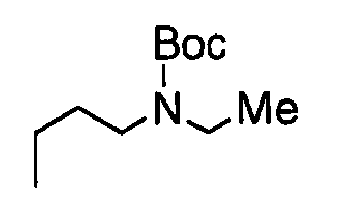
colorless crystals
MS (APCI) 339 [M+NH4]+317 
colorless crystals
MS (APCI) 335 [M+NH4]+Me: methyl group, Boc: tert-butoxycarbonyl group Table 40 (No. 2) 
Ref.Ex.Nos.. R Physicochemical properties etc. 318 
oil
MS (APCI) 395 [M+H]+319 
oil
MS (APCI) 367 [M+H]+320 
oil
MS (APCI) 423 [M+H]+321 
oil
MS (APCI) 393 [M+H]+322 
oil
MS (APCI) 407 [M+H]+323 
oil
MS (APCI) 381 [M+H]+Me: methyl group Table 40 (No. 3) 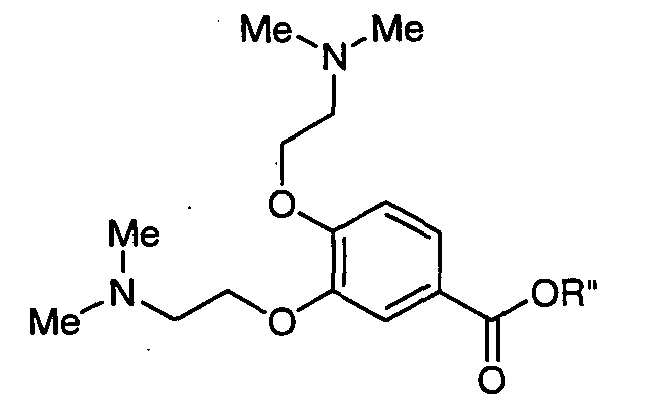
Ref.Ex.Nos. R" Physicochemical properties etc. 324 Et oil
MS (APCI) 325 [M+H]+Me: methyl group, Et: ethyl group Table 40 (No. 4) 
Ref.Ex.Nos. R R" Physicochemical properties etc. 325 Me Et amorphous powder
MS (APCI) 305 [M+H]+326 
Et oil
MS (APCI) 331 [M+H)+327 
Et amorphous powder
MS (APCI) 357 [M+H]+Me: methyl group, Et: ethyl group Table 40 (No. 5) 
Ref.Ex.Nos. R Physicochemical properties etc. 328 
oil
MS (ESI) 244 [M+H]+329 
oil
MS (ESI) 268 [M+H]+330 
oil
MS (ESI) 268 [M+H]+331 
oil
MS (ESI) 256 [M+H]+332 
oil
MS (ESI) 254 [M+H]+333 
oil
MS (ESI) 256 [M+H]+334 
oil
MS (ESI) 304 [M+H]+335 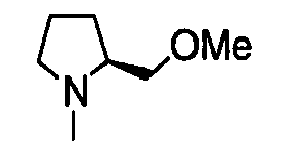
oil
MS (ESI) 270 [M+H]+336 
oil
MS (ESI) 242 [M+H]+337 
oil
MS (ESI) 288 [M+H]+338 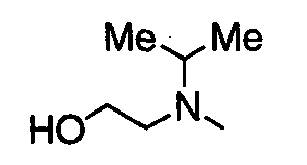
oil
MS (ESI) 258 [M+H]+Me: methyl group Table 40 (No. 6) 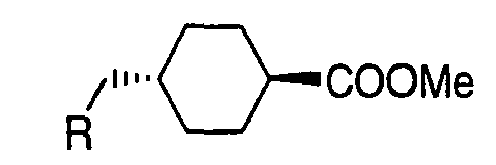
Ref.Ex.Nos. R Physicochemical properties etc. 339 
oil
MS (ESI) 242 [M+H]+340 
oil
MS (ESI) 283 [M+H]+341 
oil
MS (ESI) 256 [M+H]+342 
oil
MS (ESI) 270 [M+H]+343 
oil
MS (ESI) 286 [M+H]+344 
oil
MS (ESI) 283 [M+H]+345 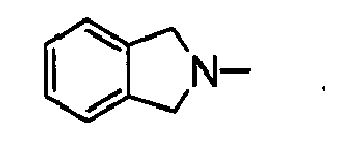
oil
MS (ESI) 274 [M+H]+346 
oil
MS (ESI) 313 [M+H]+347 
oil
MS (ESI) 269 [M+H]+348 
oil
MS (ESI) 286 [M+H]+349 
oil
MS (ESI) 272 [M+H]+Me: methyl group, Et: ethyl group Table 40 (No. 7) 
Ref.Ex.Nos. R Physicochemical properties etc. 350 t-Bu oil
MS (ESI) 389 [M+H]+351 
oil
MS (ESI) 377 [M+H]+352 
oil
MS (ESI) 399 [M+H]+353 Me oil
MS (ESI) 347 [M+H]+354 
oil
MS (ESI) 373 [M+H]+355 
oil
MS (ESI) 373 [M+H]+Me: methyl group, t-Bu: tert-butyl group - The corresponding materials are treated in the same manner as described in either one of the aforementioned Reference Examples to give the compounds as shown in the following Table 41.
Table 41 R1 COOR" Ref.Ex Nos. R1 R" Physicochemical properties etc. 356 
t-Bu oil
MS (APCI) 305 [M+H]+357 
Et oil
MS (APCI) 263 [M+H]+Me: methyl group, Et: ethyl group, t-Bu: tert-butyl group
Y is a single bond, a lower alkylene group or a lower alkenylene group,
Z is a group of the formula: -CO-, -CH2-, -SO2- or

Claims (18)
- A compound of the formula[ I ]:
 (A) an optionally substituted nitrogen-containing aliphatic heteromonocyclic group,(B) a substituted cyclo-lower alkyl group,(C) an optionally substituted amino group, or(D) a substituted heteroaryl group,R2 is (a) an optionally substituted heteroaryl group or (b) an optionally substituted aryl group,
Y is a single bond, a lower alkylene group or a lower alkenylene group,
Z is a group of the formula: -CO-, -CH2-, -SO2- or
- The compound according to Claim 1 in which R1 is(A) a nitrogen-containing aliphatic heteromonocyclic group optionally substituted by a group selected from a lower alkyl group, a nitrogen-containing aliphatic heteromonocyclic group-substituted lower alkanoyl group, a (mono- or di-lower alkyl)amino-lower alkanoyl group, a lower alkoxy-lower alkyl group, a (mono- or di-lower alkyl)amino-lower alkyl group, a cyclo-lower alkyl group, a heteroaryl group, a nitrogen-containing aliphatic heteromonocyclic group optionally containing one or more double bond in the ring moiety and optionally substituted by a group(s) selected from a lower alkyl group, a lower alkoxy-lower alkyl group, a carbamoyl group and a lower alkanoyl-amino group and an amino group optionally substituted by a group(s) selected from a lower alkyl group, a (mono- or di-lower alkyl)amino group, a cyclo-lower alkyl-carbonyl group, a lower alkenoyl group, a heteroarylcarbonyl group, a lower alkoxy-lower alkyl group, a lower alkanoyl group and a nitrogen-containing aliphatic heteromonocyclic group,(B) a cyclo-lower alkyl group substituted by a group selected from a group consisting of (i) an amino group optionally substituted by a group selected from a lower alkyl group, a (mono- or di-lower alkyl)amino-lower alkanoyl group, a nitrogen-containing aliphatic heteromonocyclic group-substituted lower alkanoyl group, a (mono- or di-lower alkyl)amino-lower alkyl group, a lower alkanoyl group, a cyclo-lower alkylcarbonyl group, a lower alkenoyl group, a heteroarylcarbonyl group, an arylcarbonyl group optionally substituted by a halogen atom(s), a lower alkyl-thiocarbamoyl group, a lower alkoxycarbonyl group, a cyclo-lower alkyl group, a group of the formula:
 (C) an amino group optionally substituted by a lower alkyl group, or(D) a heteroaryl group optionally substituted by a group selected from (i) an amino-lower alkyl group optionally substituted by a group(s) selected from a lower alkyl group and a lower alkoxy-lower alkyl group; (ii) an amino group optionally substituted by a group selected from a cyclo-lower alkylcarbonyl group, a (mono- or di-lower alkyl)amino-lower alkyl group, a lower alkanoyl group, a lower alkenoyl group, a (mono- or di-lower alkyl)thiocarbamoyl group, a (mono- or di-lower alkyl)carbamoyl group and a lower alkyl group; (iii) a carbamoyl group optionally substituted by a group selected from a lower alkyl group, a nitrogen-containing aliphatic heteromonocyclic group-substituted lower alkyl group and a (mono- or di-lower alkyl)amino-lower alkyl group; (iv) a lower alkyl group optionally substituted by a halogen atom(s); (v) a (mono- or di-lower alkyl)amino-lower alkoxy group; (vi) an oxo group; and (vii) a group of the following formula:wherein ring A is a nitrogen-containing aliphatic heteromonocyclic group optionally substituted by a lower alkyl group and optionally fused to a benzene ring, Ya is a single bond, a lower alkylene group or a lower alkenylene group and p is an integer of 0 or 1, and
R2 is (a) a heteroaryl group optionally substituted by the same or different one to three groups selected from a lower alkyl group, a lower alkoxy group and a (mono- or di-lower alkyl)amino group or (b) an aryl group optionally substituted by the same or different one to three groups selected from a lower alkyl group, a halogen atom, a halogeno-lower alkoxy group, a (mono- or di-lower alkyl)amino group, a lower alkoxy group, a nitro group, a lower alkoxy-lower alkyl group, a hydroxyl group, a lower alkanoyl group and a lower alkoxycarbonyl group. - The compound according to Claim 2 in which the aryl group in R1 and R2 is phenyl group or naphthyl group.
- The compound according to Claim 2 in which the nitrogen-containing aliphatic heteromonocyclic group in R1 and R2 is a 4- to 8-membered nitrogen-containing aliphatic heteromonocyclic group.
- The compound according to Claim 4 in which the nitrogen-containing aliphatic heteromonocyclic group is an azetidinyl group, a pyrrolidinyl group, an imidazolidinyl group, a pyrazolidinyl group, a piperidyl group, a piperazinyl group, an azepinyl group, a diazepinyl group, an azeocinyl group, a diazeocinyl group, a 3-pyrrolinyl group or a morpholinyl group.
- The compound according to Claim 2 in which the heteroaryl group in R1 and R2 is a 5- to 10-membered mono-or bicyclic heteroaryl group.
- The compound according to Claim 6 in which the heteroaryl group is a nitrogen-containing heteroaryl group selected from a pyrrolyl group, an imidazolyl group, a pyrazolyl group, an oxazolyl group, a thiazolyl group, an isothiazolyl group, an isoxazolyl group, a pyridyl group, a dihydropyridyl group, a pyrazinyl group, a pyrimidinyl group, a tetrahydropyrimidinyl group, a furopyrimidinyl group, a pyridazinyl group, an imidazolidinyl group, an indolyl group, a quinolyl group, an isoquinolyl group, a purinyl group, a 1H-indazolyl group, a quinazolinyl group, a cinnolinyl group, a quinoxalinyl group, a phthalazinyl group and a pteridinyl group or an oxygen- or sulfur-containing heteroaryl group selected from a furyl group, a pyranyl group, a thienyl group, a benzofuryl group and a benzothienyl group.
- The compound according to one of the Claims 2 to 7 in which Y is a single bond, a lower alkylene group or a lower alkenylene group, Z is -CO-, R2 is a phenyl group substituted by a group selected from a lower alkoxy group, a lower alkyl group and a halogen atom, a lower alkoxy group-substituted heteroaryl group or a lower alkyl group-substituted heteroaryl group and q is an integer of 0.
- The compound according to one of Claims 2 to 7 in which Y is a single bond, Z is -CH2- , R2 is a lower alkoxyphenyl group and q is an integer of 0.
- The compound according to Claim 8 or 9 in which R1 is(a) a cyclo-lower alkyl group substituted by a group selected from (i) an amino-lower alkyl group optionally substituted by a group(s) selected from a lower alkyl group, a hydroxy-lower alkyl group, a (mono- or di-lower alkyl)amino-lower alkyl) group, a lower alkanoyl group, a cyclo-lower alkylcarbonyl group and a lower alkoxy-lower alkyl group; (ii) a nitrogen-containing aliphatic heteromonocyclic group optionally substituted by a hydroxyl group; and (iii) an amino group substituted by a group selected from a lower alkyl group, a (mono- or di-lower alkyl )amino-lower alkyl group, a lower alkanoyl group, a heteroarylcarbonyl group, a lower alkylsulfonyl group and a lower alkyl-thiocarbamoyl group, or(b) a nitrogen-containing aliphatic heteromonocyclic group substituted by a group selected from (i) a lower alkyl group, (ii) an amino group optionally substituted by a group selected from a lower alkyl group, a (mono- or di-lower alkyl)amino-lower alkyl group and a cyclo-lower alkylcarbonyl group and (iii) a nitrogen-containing aliphatic heteromonocyclic group substituted by a lower alkyl group, R2 is a phenyl group substituted by a group selected from a halogen atom and a lower alkoxy group, a lower alkyl-substituted heteroaryl group or a lower alkoxy-substituted heteroaryl group and Q is methylene group.
- The compound according to Claim 8 in which the group of the formula: R1-(O)q-Y-Z- is a [1-(lower alkyl)piperidin-4-yl]carbonyl group; a 4-[N-lower alkyl-N-(di-lower alkylamino-lower alkyl)amino]piperidinocarbonyl group; a 4-[N-(cyclo-lower alkylcarbonyl)-N-(di-lower alkylamino-lower alkyl)amino]-piperidinocarbonyl group; a 4-[4-(di-lower alkyl)piperidino]piperidinocarbonyl group; a [1-(lower alkyl)piperidin-4-yl]lower alkanoyl group; a [1-(lower alkyl)piperidin-4-yl]lower alkenoyl group; a 4-(di-lower alkylamino-lower alkyl)cyclohexylcarbonyl group; a 4-(mono- or di-lower alkylamino)cyclohexylcarbonyl group; a 4-[N-lower alkanoyl-N-(di-lower alkylamino-lower alkyl)amino]cyclohexylcarbonyl group; a 4-[N-lower alkenoyl-N-(di-lower alkylamino-lower alkyl)amino]cyclohexylcarbonyl group; a 4-[N-heteroarylcarbonyl-N-(di-lower alkylamino-lower alkyl)amino]cyclohexylcarbonyl group; a 4-[N-lower alkylthiocarbamoyl-N-(di-lower alkylamino-lower alkyl)-amino]cyclohexylcarbonyl group; a 4-[N-(di-lower alkylamino-lower alkyl)-N-(lower alkylsulfonyl)amino]cyclohexylcarbonyl group; a 4-[[N-lower alkyl-N-(hydroxy-lower alkyl)amino]lower alkyl]cyclohexylcarbonyl group; a 4-[[N-lower alkyl-N-(lower alkoxy-lower alkyl)amino]-lower alkyl]cyclohexylcarbonyl group; a 4-[[N-lower alkanoyl-N-(di-lower alkylamino-lower alkyl)amino]lower alkyl]cyclohexylcarbonyl group; a 4-[[N-(cyclo-lower alkylcarbonyl)-N-(di-lower alkylamino-lower alkyl)-amino]lower alkyl]cyclohexylcarbonyl group; a 4-(pyrrolidino)cyclohexylcarbonyl group; a 4-(hydroxypyrrolidino)cyclohexylcarbonyl group; or a 4-(piperidino)-cyclohexylcarbonyl group, and R2 is a phenyl group substituted by one or two groups selected from an ethoxy group and a fluorine atom, an ethoxypyridyl group, a propylpyridyl group or a propylthiazolyl group.
- The compound according to Claim 10 or 11 in which R2 is 3-ethoxyphenyl group, 6-propylpyridin-2-yl group, 6-ethoxypyridin-2-yl group, 2-propyl-1,3-thiazol-4-yl group or 3-ethoxy-2-fluorophenyl group.
- A compound which is
1-(3-ethoxybenzyl)-4-[4-[(1-propylpiperidin-4-yl)carbonyl]piperazin-1-yl]-1H-pyrazolo[3,4-d]pyrimidime;
1-(3-ethoxybenzyl)-4-[4-[3-(1-isopropylpiperidin-4-yl)propionyl]piperazin-1-yl]-1H-pyrazolo[3,4-d]pyrimidine;
1-(3-ethoxybenzyl)-4-[4-[[trans-4-(dimethylaminomethyl)cyclohexyl]carbonyl]-piperazin-1-yl]-1H-pyrazolo[3,4-d]pyrimidine;
1-(3-ethoxybenzyl)-4-[4-[[trans-4-(1-pyrrolidinyl)cyclohexyl]carbonyl]piperazin-1-yl]-1H-pyrazolo[3,4-d]pyrimidine;
1-(3-ethoxybenzyl)-4-[4-[(E)-3-(1-isopropylpiperidin-4-yl)acryloyl]piperazin-1-yl]-1H-pyrazolo[3,4-d]pyrimidine;
1-(3-ethoxybenzyl)-4-[4-[(trans-4-piperidinocyclohexyl)carbonyl]piperazin-1-yl]-1H-pyrazolo[3,4-d]pyrimidine;
1-(3-ethoxybenzyl)-4-[4-[[trans-4-((3S)-3-hydroxy-1-pyrrolidinyl)cyclohexyl]-carbonyl]piperazin-1-yl]-1H-pyrazolo[3,4-d]pyrimidine;
1-(3-ethoxybenzyl)-4-[4-[[trans-4-[N-acetyl-N-[2-(dimethylamino)ethyl]amino]-cyclohexyl]carbonyl]piperazin-1-yl]-1H-pyrazolo[3,4-d]pyrimidine;
1-(3-ethoxybenzyl)-4-[4-[[trans-4-[N-(2-furoyl)-N-[2-(dimethylamino)ethyl]amino]-cyclohexyl]carbonyl]piperazin-1-yl]-1H-pyrazolo[3,4-d]pyrimidine;
1-(3-ethoxybenzyl)-4-[4-[[trans-4-[N-(crotonoyl)-N-[2-(dimethylamino)ethyl]amino]-cyclohexyl]carbonyl]piperazin-1-yl]-1H-pyrazolo[3,4-d]pyrimidine;
1-(3-ethoxybenzyl)-4-[4-[[trans-4-[N-(methylthiocarbamoyl)-N-[2-(dimethylamino)-ethyl]amino]cyclohexyl]carbonyl]piperazin-1-yl]-1H-pyrazolo[3,4-d]pyrimidine;
1-[(6-ethoxypyridin-2-yl)methyl]-4-[4-[[trans-4-(1-pyrrolidinyl)cyclohexyl]carbonyl]-piperazin-1-yl]-1H-pyrazolo[3,4-d]pyrimidine;
1-[(6-propylpyridin-2-yl)methyl]-4-[4-[[trans-4-(1-pyrrolidinyl)cyclohexyl]carbonyl]-piperazin-1-yl]-1H-pyrazolo[3,4-d]pyrimidine;
1-[(6-propylpyridin-2-yl)methyl]-4-[4-[[trans-4-(diethylaminomethyl)cyclohexyl]-carbonyl]piperazin-1-yl]-1H-pyrazolo[3,4-d]pyrimidine;
1-[(6-propylpyridin-2-yl)methyl]-4-[4-[[trans-4-[N-isopropyl-N-(2-methoxyethyl)-aminomethyl]cyclohexyl]carbonyl]piperazin-1-yl]-1H-pyrazolo[3,4-d]pyrimidine;
1-[(6-propylpyridin-2-yl)methyl]-4-[4-[[trans-4-(dipropylamino)cyclohexyl]carbonyl]-piperazin-1-yl]-1H-pyrazolo[3,4-d]pyrimidine;
1-[(2-propyl-1,3-thiazol-4-yl)methyl]-4-[4-[[trans-4-(dipropylamino)cydohexyl]-carbonyl]piperazin-1-yl]-1H-pyrazolo[3,4-d]pyrimidine;
1-[(6-propylpyridin-2-yl)methyl]-4-[4-[[trans-4-(1-piperidyl)cyclohexyl]carbonyl]-piperazin-1-yl]-1H-pyrazolo[3,4-d]pyrimidine;
1-[(6-ethoxypyridin-2-yl)methyl]-4-[4-[[trans-4-(1-piperidyl)cyclohexyl]carbonyl]-piperazin-1-yl]-1H-pyrazolo[3,4-d]pyrimidine;
1-[(2-propyl-1,3-thiazol-4-yl)methyl]-4-[4-[[trans-4-(1-piperidyl)cyclohexyl]-carbonyl]-piperazin-1-yl]-1H-pyrazolo[3,4-d]pyrimidine;
1-(3-ethoxybenzyl)-4-[4-[[trans-4-(ethylamino)cyclohexyl]carbonyl]piperazin-1-yl]-1H-pyrazolo[3,4-d]pyrimidine;
1-(3-ethoxybenzyl)-4-[4-[4-[N-(cyclopropanecarbonyl)-N-[2-(dimethylamino)ethyl]-amino]piperidinocarbonyl]piperazin-1-yl]-1H-pyrazolo[3,4-d]pyrimidine;
1-(3-ethoxybenzyl)-4-[4-[4-(3,3-dimethylpiperadino)piperidinocarbonyl]piperazin-1-yl]-1H-pyrazolo[3,4-d]pyrimidine;
1-(3-ethoxybenzyl)-4-[4-[4-[N-ethyl-N-[2-(dimethylamino)ethyl]amino]piperidinocarbonyl]piperazin-1-yl]-1H-pyrazolo[3,4-d]pyrimidine;
1-[(6-propylpyridin-2-yl)methyl]-4-[4-[[trans-4-[[N-(t-butyl)-N-ethylamino]methyl]-cyclohexyl]carbonyl]piperazin-1-yl]-1H-pyrazolo[3,4-d]pyrimidine;
1-[(6-propylpyridin-2-yl)methyl]-4-[4-[[trans-4-[[N-(t-butyl)-N-[2-(methoxy)ethyl]-amino]methyl]cyclohexyl]carbonyl]piperazin-1-yl]-1H-pyrazolo[3,4-d]pyrimidine;
1-[(6-ethoxypyridin-2-yl)methyl]-4-[4-[[trans-4-[[N-(t-butyl)-N-[2-(methoxy)ethyl]-amino]methyl]cyclohexyl]carbonyl]piperazin-1-yl]-1H-pyrazolo[3,4-d]pyrimidine;
1-(3-ethoxybenzyl)-4-[4-[[trans-4-[[N-(t-butyl)-N-[2-(methoxy)ethyl]amino]methyl]-cyclohexyl]carbonyl]piperazin-1-yl]-1H-pyrazolo[3,4-d]pyrimidine;
1-[(2-propyl-1,3-thiazol-4-yl)methyl]-4-[4-[[trans-4-[[N-(t-butyl)-N-[2-(methoxy)-ethyl]amino]methyl]cyclohexyl]carbonyl]piperazin-1-yl]-1H-pyrazolo[3,4-d]-pyrimidine;
1-(3-ethoxybenzyl)-4-[4-[[trans-4-[[N-(t-butyl)-N-[2-(hydroxy)ethyl]amino]methyl]-cyclohexyl]carbonyl]piperazin-1-yl]-1H-pyrazolo[3,4-d]pyrimidine;
1-[(6-propylpyridin-2-yl)methyl]-4-[4-[[trans-4-[N-[2-(dimethylamino)ethyl]-N-(methanesulfonyl)amino]cyclohexyl]carbonyl]piperazin-1-yl]-1H-pyrazolo[3,4-d]pyrimidine;
1-[(6-ethoxypyridin-2-yl)methyl]-4-[4-[[trans-4-[N-[2-(dimethylamino)ethyl]-N-(methanesulfonyl)amino]cyclohexyl]carbonyl]piperazin-1-yl]-1H-pyrazolo[3,4-d]-pyrimidine;
1-[(2-propyl-1,3-thiazol-4-yl)methyl]-4-[4-[[trans-4-[N-[2-(dimethylamino)ethyl]-N-(methanesulfonyl)amino]cyclohexyl]carbonyl]piperazin-1-yl]-1H-pyrazolo[3,4-d]-pyrimidine;
1-[(6-propylpyridin-2-yl)methyl]-4-[4-[[trans-4[[N-[2-(dimethylamino)ethyl]-N-pivaloylamino]methyl]cyclohexyl]carbonyl]piperazin-1-yl]-1H-pyrazolo[3,4-d]-pyrimidine;
1-[(6-propylpyridin-2-yl)methyl]-4-[4-[[trans-4-[[N-(cyclopropanecarbonyl)-N-[2-(dimethylamino)ethyl]amino]methyl]cyclohexyl]carbonyl]piperazin-1-yl]-1H-pyrazolo[3,4-d]pyrimidine;
1-(3-ethoxybenzyl)-4-[4-[[trans-4-[N-[2-(dimethylamino)ethyl]-N-propionylamino]-cyclohexyl]carbonyl]piperazin-l-yl]-1H-pyrazolo[3,4-d]pyrimidine;
1-(3-ethoxy-2-fluorobenzyl)-4-[4-[(trans-4-piperidin-1-ylcyclohexyl)carbonyl]-piperazin-1-yl]-1H-pyrazolo[3,4-d]pyrimidine;
1-(3-ethoxy-2-fluorobenzyl)-4-[4-[[trans-4-[[N-(t-butyl)-N-[2-(methoxy)ethyl]amino]-methyl]cyclohexyl]carbonyl]piperazin-1-yl]-1H-pyrazolo[3,4-d]pyrimidine;
or a pharmaceutically acceptable salt thereof. - A pharmaceutical composition which comprises as an active ingredient a compound claimed in any one of the Claims 1 to 13 or a pharmaceutically acceptable salt thereof and a pharmaceutically acceptable carrier therefor.
- A method for prophylaxis and/or treatment of small conductance potassium channel (SK channel)-related diseases which comprises administering a compound claimed in any one of Claims 1 to 13 or a pharmaceutically acceptable salt thereof to a subject in need of the prophylaxis and/or treatment of such diseases.
- The method according to Claim 15, in which the SK channel-related disease is one selected from gastrointestinal motility disorders, central nervous system disorders, emotional disorders, myotonic muscular dystrophy and sleep apnea.
- The method according to Claim 16, in which the gastrointestinal motility disorder is constipation, irritable bowel syndrome, gastoroesophageal reflux disease, or post operative ileus.
- The method according to Claim 16, in which the central nervous system disorders is memory and learning disorders including Arzheimer's disease or depression.
Applications Claiming Priority (4)
| Application Number | Priority Date | Filing Date | Title |
|---|---|---|---|
| JP2003016770 | 2003-01-24 | ||
| JP2003205341 | 2003-08-01 | ||
| JP2003385399 | 2003-11-14 | ||
| EP04704773A EP1585481A2 (en) | 2003-01-24 | 2004-01-23 | Pyrazolopyrimidine compound and process for preparing the same |
Related Parent Applications (1)
| Application Number | Title | Priority Date | Filing Date |
|---|---|---|---|
| EP04704773A Division EP1585481A2 (en) | 2003-01-24 | 2004-01-23 | Pyrazolopyrimidine compound and process for preparing the same |
Publications (2)
| Publication Number | Publication Date |
|---|---|
| EP1857459A2 true EP1857459A2 (en) | 2007-11-21 |
| EP1857459A3 EP1857459A3 (en) | 2007-11-28 |
Family
ID=32776814
Family Applications (2)
| Application Number | Title | Priority Date | Filing Date |
|---|---|---|---|
| EP04704773A Withdrawn EP1585481A2 (en) | 2003-01-24 | 2004-01-23 | Pyrazolopyrimidine compound and process for preparing the same |
| EP07015684A Withdrawn EP1857459A3 (en) | 2003-01-24 | 2004-01-23 | Pyrazolopyrimidine compound and a process for preparing the same |
Family Applications Before (1)
| Application Number | Title | Priority Date | Filing Date |
|---|---|---|---|
| EP04704773A Withdrawn EP1585481A2 (en) | 2003-01-24 | 2004-01-23 | Pyrazolopyrimidine compound and process for preparing the same |
Country Status (5)
| Country | Link |
|---|---|
| US (1) | US7384952B2 (en) |
| EP (2) | EP1585481A2 (en) |
| AR (1) | AR042910A1 (en) |
| TW (1) | TW200418835A (en) |
| WO (1) | WO2004064721A2 (en) |
Cited By (1)
| Publication number | Priority date | Publication date | Assignee | Title |
|---|---|---|---|---|
| WO2010112485A1 (en) * | 2009-04-01 | 2010-10-07 | Neurosearch A/S | SUBSTITUTED [1,2,4]TRIAZOLO[1,5-a]PYRIMIDINES AND THEIR USE AS POTASSIUM CHANNEL MODULATORS |
Families Citing this family (17)
| Publication number | Priority date | Publication date | Assignee | Title |
|---|---|---|---|---|
| ES2300613T3 (en) | 2002-06-28 | 2008-06-16 | Euro-Celtique S.A. | THERAPEUTIC DERIVATIVES OF PIPERACINA USEFUL TO TREAT THE PAIN. |
| EP1772454A4 (en) * | 2004-07-23 | 2009-02-25 | Mitsubishi Tanabe Pharma Corp | BICYCLIC NITROGEN COMPOUND |
| JP2008534472A (en) * | 2005-03-22 | 2008-08-28 | ノイロサーチ アクティーゼルスカブ | Pyrazolyl-pyrimidine and its medical use as potassium channel modulators |
| AU2007281212B8 (en) * | 2006-08-03 | 2013-02-28 | Trustees Of Tufts College | Non-flushing niacin analogues, and methods of use thereof |
| US10954231B2 (en) | 2006-10-16 | 2021-03-23 | Bionomics Limited | Anxiolytic compounds |
| ES2399071T3 (en) | 2006-10-16 | 2013-03-25 | Bionomics Limited | New anxiolytic compounds |
| PE20120593A1 (en) | 2009-01-30 | 2012-05-21 | Takeda Pharmaceutical | FUSED DERIVATIVES OF PIRIMIDIN-4-ONA AS ANTAGONISTS OF THE ANGIOTENSIN II RECEPTOR AND AS AGONISTS OF THE PPAR GAMMA RECEPTOR |
| AR081331A1 (en) | 2010-04-23 | 2012-08-08 | Cytokinetics Inc | AMINO- PYRIMIDINES COMPOSITIONS OF THE SAME AND METHODS FOR THE USE OF THE SAME |
| AR081626A1 (en) | 2010-04-23 | 2012-10-10 | Cytokinetics Inc | AMINO-PYRIDAZINIC COMPOUNDS, PHARMACEUTICAL COMPOSITIONS THAT CONTAIN THEM AND USE OF THE SAME TO TREAT CARDIAC AND SKELETIC MUSCULAR DISORDERS |
| EP2560488B1 (en) | 2010-04-23 | 2015-10-28 | Cytokinetics, Inc. | Certain amino-pyridines and amino-triazines, compositions thereof, and methods for their use |
| ES2677668T3 (en) | 2010-11-16 | 2018-08-06 | Texas Heart Institute | Agonists that improve the binding of cells expressing integrin to integrin receptors |
| JP2014510065A (en) | 2011-03-02 | 2014-04-24 | バイオノミックス リミテッド | Novel small molecules as therapeutic agents |
| JP6055817B2 (en) | 2011-05-12 | 2016-12-27 | バイオノミックス リミテッド | Method for preparing naphthyridine |
| CA2850757A1 (en) * | 2011-10-03 | 2013-04-11 | The Trustees Of Columbia University In The City Of New York | Novel molecules that selectively inhibit histone deacetylase 6 relative to histone deacetylase 1 |
| MX2014014308A (en) * | 2012-05-30 | 2015-02-12 | Hoffmann La Roche | Pyrrolidino heterocycles. |
| WO2013182612A1 (en) * | 2012-06-07 | 2013-12-12 | Bayer Pharma Aktiengesellschaft | Glucose transport inhibitors |
| WO2019185413A1 (en) | 2018-03-27 | 2019-10-03 | Basf Se | Pesticidal substituted cyclopropyl derivatives |
Citations (4)
| Publication number | Priority date | Publication date | Assignee | Title |
|---|---|---|---|---|
| WO1997048705A1 (en) | 1996-06-19 | 1997-12-24 | University College London | Potassium channel blockers |
| US5866562A (en) | 1996-10-25 | 1999-02-02 | Bayer Aktiengesellschaft | Ring-bridged bis-quinolines |
| WO2000001676A1 (en) | 1998-07-02 | 2000-01-13 | Neurosearch A/S | Potassium channel blocking agents |
| WO2002079189A2 (en) | 2001-03-29 | 2002-10-10 | Tanabe Seiyaku Co., Ltd. | Spiroisoquinoline compounds, methods for their preparation and intermediates |
-
2004
- 2004-01-19 TW TW093101341A patent/TW200418835A/en unknown
- 2004-01-23 EP EP04704773A patent/EP1585481A2/en not_active Withdrawn
- 2004-01-23 US US10/542,081 patent/US7384952B2/en not_active Expired - Fee Related
- 2004-01-23 AR ARP040100191A patent/AR042910A1/en unknown
- 2004-01-23 EP EP07015684A patent/EP1857459A3/en not_active Withdrawn
- 2004-01-23 WO PCT/JP2004/000617 patent/WO2004064721A2/en not_active Ceased
Patent Citations (4)
| Publication number | Priority date | Publication date | Assignee | Title |
|---|---|---|---|---|
| WO1997048705A1 (en) | 1996-06-19 | 1997-12-24 | University College London | Potassium channel blockers |
| US5866562A (en) | 1996-10-25 | 1999-02-02 | Bayer Aktiengesellschaft | Ring-bridged bis-quinolines |
| WO2000001676A1 (en) | 1998-07-02 | 2000-01-13 | Neurosearch A/S | Potassium channel blocking agents |
| WO2002079189A2 (en) | 2001-03-29 | 2002-10-10 | Tanabe Seiyaku Co., Ltd. | Spiroisoquinoline compounds, methods for their preparation and intermediates |
Non-Patent Citations (6)
| Title |
|---|
| C. GHELARDINI ET AL., BR. J. PHARMACOL., vol. 123, 1998, pages 1079 - 1084 |
| C. T. BOND ET AL., SCIENCE, vol. 289, 2000, pages 1942 - 1946 |
| J. F. RENAUD ET AL., NATURE, vol. 319, 1986, pages 678 - 680 |
| M. I. BEHRENS ET AL., MUSCLE & NERVE, vol. 17, 1994, pages 1264 - 1270 |
| N. GALEOTTI ET AL., BR. J. PHARMACOL., vol. 126, 1999, pages 1653 - 1659 |
| N. SPENCER ET AL., J. PHYSIOLOGY, vol. 517, 1999, pages 889 - 898 |
Cited By (2)
| Publication number | Priority date | Publication date | Assignee | Title |
|---|---|---|---|---|
| WO2010112485A1 (en) * | 2009-04-01 | 2010-10-07 | Neurosearch A/S | SUBSTITUTED [1,2,4]TRIAZOLO[1,5-a]PYRIMIDINES AND THEIR USE AS POTASSIUM CHANNEL MODULATORS |
| US8685987B2 (en) | 2009-04-01 | 2014-04-01 | Ataxion, Inc. | Substituted [1,2,4]triazolo[1,5-a]pyrimidines and their use as potassium channel modulators |
Also Published As
| Publication number | Publication date |
|---|---|
| TW200418835A (en) | 2004-10-01 |
| US7384952B2 (en) | 2008-06-10 |
| EP1857459A3 (en) | 2007-11-28 |
| AR042910A1 (en) | 2005-07-06 |
| WO2004064721A2 (en) | 2004-08-05 |
| WO2004064721A3 (en) | 2004-09-23 |
| EP1585481A2 (en) | 2005-10-19 |
| US20060135525A1 (en) | 2006-06-22 |
Similar Documents
| Publication | Publication Date | Title |
|---|---|---|
| US7384952B2 (en) | Pyrazolopyrimidine compound and a process for preparing the same | |
| EP2035427B1 (en) | Pyrazolo[1,5-a]pyrimidine compounds as cb1 receptor antagonist | |
| JP5702396B2 (en) | Benzodiazepine bromodomain inhibitor | |
| EP2207780B1 (en) | Thienopyrimidine compounds and compositions | |
| US8263598B2 (en) | Substituted sulfonamide compounds | |
| US20220388985A1 (en) | Targeted protein degradation of parp14 for use in therapy | |
| US8178535B2 (en) | Substituted sulfonamide compounds having bradykinin 1 receptor activity and use thereof as medicaments | |
| WO2005061466A9 (en) | Novel phenylalanine derivative | |
| EP1866286B1 (en) | Pyridine derivatives useful as inhibitors of pkc-theta | |
| JP2007217408A (en) | Pharmaceutical composition | |
| WO2002079189A2 (en) | Spiroisoquinoline compounds, methods for their preparation and intermediates | |
| CA2578370A1 (en) | Triazolobenzodiazepines and their use as vasopressin antagonists | |
| US20100305143A1 (en) | Pyrrolopyrimidine compounds | |
| US20080081817A1 (en) | Nitrogenous Fused Bicyclic Compound | |
| JP2005162726A (en) | Pyrazolopyrimidine compound and process for producing the same | |
| JP2006056884A (en) | Pharmaceutical composition | |
| WO2011058112A1 (en) | Fused bicyclic pyrazole derivatives as kinase inhibitors | |
| JP2004115450A (en) | Pharmaceutical composition | |
| HK1099932A (en) | Nitrogenous fused bicyclic compound | |
| TW202417434A (en) | Targeted protein degradation of parp14 for use in therapy | |
| JP2006056883A (en) | Nitrogen-containing fused bicyclic compound and process for producing the same | |
| JP2006056882A (en) | Pyrazolopyrimidine compounds | |
| AU2015203454A1 (en) | Benzodiazepine bromodomain inhibitor |
Legal Events
| Date | Code | Title | Description |
|---|---|---|---|
| PUAI | Public reference made under article 153(3) epc to a published international application that has entered the european phase |
Free format text: ORIGINAL CODE: 0009012 |
|
| PUAL | Search report despatched |
Free format text: ORIGINAL CODE: 0009013 |
|
| 17P | Request for examination filed |
Effective date: 20070809 |
|
| AC | Divisional application: reference to earlier application |
Ref document number: 1585481 Country of ref document: EP Kind code of ref document: P |
|
| AK | Designated contracting states |
Kind code of ref document: A2 Designated state(s): AT BE BG CH CY CZ DE DK EE ES FI FR GB GR HU IE IT LI LU MC NL PT RO SE SI SK TR |
|
| AX | Request for extension of the european patent |
Extension state: AL LT LV MK |
|
| AK | Designated contracting states |
Kind code of ref document: A3 Designated state(s): AT BE BG CH CY CZ DE DK EE ES FI FR GB GR HU IE IT LI LU MC NL PT RO SE SI SK TR |
|
| AX | Request for extension of the european patent |
Extension state: AL LT LV MK |
|
| RAP1 | Party data changed (applicant data changed or rights of an application transferred) |
Owner name: MITSUBISHI TANABE PHARMA CORPORATION |
|
| 17Q | First examination report despatched |
Effective date: 20080514 |
|
| AKX | Designation fees paid |
Designated state(s): AT BE BG CH CY CZ DE DK EE ES FI FR GB GR HU IE IT LI LU MC NL PT RO SE SI SK TR |
|
| AXX | Extension fees paid |
Extension state: MK Payment date: 20070809 Extension state: LV Payment date: 20070809 Extension state: LT Payment date: 20070809 Extension state: AL Payment date: 20070809 |
|
| STAA | Information on the status of an ep patent application or granted ep patent |
Free format text: STATUS: THE APPLICATION IS DEEMED TO BE WITHDRAWN |
|
| 18D | Application deemed to be withdrawn |
Effective date: 20100803 |