EP1855418A1 - Method and system for adaptive link monitoring in wireless sensor networks - Google Patents
Method and system for adaptive link monitoring in wireless sensor networks Download PDFInfo
- Publication number
- EP1855418A1 EP1855418A1 EP07009206A EP07009206A EP1855418A1 EP 1855418 A1 EP1855418 A1 EP 1855418A1 EP 07009206 A EP07009206 A EP 07009206A EP 07009206 A EP07009206 A EP 07009206A EP 1855418 A1 EP1855418 A1 EP 1855418A1
- Authority
- EP
- European Patent Office
- Prior art keywords
- monitoring period
- quality
- communications link
- beginning
- link
- Prior art date
- Legal status (The legal status is an assumption and is not a legal conclusion. Google has not performed a legal analysis and makes no representation as to the accuracy of the status listed.)
- Withdrawn
Links
- 238000012544 monitoring process Methods 0.000 title claims abstract description 110
- 238000000034 method Methods 0.000 title claims abstract description 39
- 230000003044 adaptive effect Effects 0.000 title description 3
- 238000004891 communication Methods 0.000 claims abstract description 53
- 230000003247 decreasing effect Effects 0.000 claims abstract description 6
- 230000007423 decrease Effects 0.000 claims description 8
- 230000005540 biological transmission Effects 0.000 claims description 7
- 230000007613 environmental effect Effects 0.000 claims description 3
- 238000012545 processing Methods 0.000 description 5
- 238000005259 measurement Methods 0.000 description 3
- 230000006978 adaptation Effects 0.000 description 1
- 238000013459 approach Methods 0.000 description 1
- 238000013461 design Methods 0.000 description 1
- 238000001514 detection method Methods 0.000 description 1
- 230000000694 effects Effects 0.000 description 1
- 238000005562 fading Methods 0.000 description 1
- 230000000737 periodic effect Effects 0.000 description 1
- 230000000135 prohibitive effect Effects 0.000 description 1
- 239000002699 waste material Substances 0.000 description 1
Images

Classifications
-
- H—ELECTRICITY
- H04—ELECTRIC COMMUNICATION TECHNIQUE
- H04W—WIRELESS COMMUNICATION NETWORKS
- H04W24/00—Supervisory, monitoring or testing arrangements
-
- H—ELECTRICITY
- H04—ELECTRIC COMMUNICATION TECHNIQUE
- H04W—WIRELESS COMMUNICATION NETWORKS
- H04W28/00—Network traffic management; Network resource management
- H04W28/16—Central resource management; Negotiation of resources or communication parameters, e.g. negotiating bandwidth or QoS [Quality of Service]
- H04W28/18—Negotiating wireless communication parameters
-
- H—ELECTRICITY
- H04—ELECTRIC COMMUNICATION TECHNIQUE
- H04W—WIRELESS COMMUNICATION NETWORKS
- H04W84/00—Network topologies
- H04W84/18—Self-organising networks, e.g. ad-hoc networks or sensor networks
Definitions
- the present invention relates to a method and system for adaptively monitoring a link in a wireless sensor network.
- a wireless sensor network may be implemented as a distributed system having several nodes, each equipped with a wireless radio transceiver, application-specific sensors/actuators, and signal processing hardware.
- the nodes in a wireless sensor network may need to be small and inexpensive, and therefore the amount of communication and computationaources included in each node may be limited.
- the sensor nodes may be equipped with relatively low-power transceivers whose transmission range is limited. Consequently, communication between nodes may occur via one or more neighboring nodes, sometimes referred to as "multi-hop" communications.
- the quality of a wireless communication link may generally depend on factors such as the distance between nodes, the frequency channel used, and the noise level. Moreover, the quality of a wireless communication link may change over time so that a link that is initially usable may be inaccessible over time.
- the quality of an RF communication link may be affected by many different factors, including factors such as multi-path fading and shadowing. For example, in an office environment, the movement of furniture or people may change the quality of a wireless link. Likewise, interference from a cordless phone, a wireless Local Area Network (LAN), or any other wireless network operating in the same frequency band, may affect the quality of data communication in a wireless sensor network.
- factors such as multi-path fading and shadowing. For example, in an office environment, the movement of furniture or people may change the quality of a wireless link.
- interference from a cordless phone, a wireless Local Area Network (LAN), or any other wireless network operating in the same frequency band may affect the quality of data communication in a wireless sensor network.
- LAN Local Area Network
- a more robust network may be achieved. For example, when a network node receives a message, it may send the message to its assigned parent node using a predetermined default frequency. If the transmission is unsuccessful, a backup frequency may be used instead. If the transmission using the backup frequency also fails, the sender node may then try to send the message via a different communications path of the network, which may involve initially sending the message to a different network node.
- the primary links may be those links, for example, which are used most frequently, and whose status may undergo change based on the periodically monitoring of the link.
- link monitoring may be a routine task of the network, or it may be combined with other tasks or operations performed by the network. Accordingly, a portion of a network node's resources may be reserved to monitor link quality. Ideally, the instantaneous link quality of all links in the network would be measured, however, this may involve very frequent monitoring requiring a prohibitive amount of the nodes resources and/or energy.
- the present invention provides an exemplary method and system for adaptively varying a link monitoring period based, for example, on an amount of change in link quality.
- the link monitoring rate is decreased such that the link monitoring is performed less often. Otherwise, if there is a significant change in link quality, as measured, for example, by two successive link quality measurements, then the link monitoring rate is increased such that the link monitoring occurs more often. Hence, such an adaptation of the link monitoring rate may conserve the network resources, while at the same time providing for a more rapid detection when the need arises.
- An exemplary embodiment and/or exemplary method of the present invention is directed to a method for adaptively monitoring a communication link of a wireless sensor network, in which a quality of the communications link is measured at a beginning of a monitoring period and at an end of the monitoring period, the monitoring period is decreased if a change in the quality of the communication link measured at the beginning and end of the monitoring period exceeds a predefined threshold value, and the monitoring period is increased if the measured quality is approximately the same at the beginning and end of the monitoring period.
- Another exemplary embodiment and/or exemplary method of the present invention is directed to a wireless sensor network having a plurality of nodes, the wireless sensor network including at least one node to measure a link quality of a communications link of the wireless sensor network at a beginning of a monitoring period and at an end of the monitoring period, in which the at least one node decreases the monitoring period if a change in the quality of the communications link measured at the beginning and end of the monitoring period exceeds a predefined threshold, and in which the at least one node further increases the monitoring period if the quality of the communications link measured at the beginning and end of the monitoring period remains approximately the same.
- Yet another exemplary embodiment and/or exemplary method of the present invention is directed to a wireless network node including a measuring arrangement to measure a quality of a communications link of a wireless network at a beginning of a monitoring period and at an end of the monitoring period, a determining arrangement to determine a change in the quality of the communications link measured at the beginning and at the end of the monitoring period, and an adjusting arrangement to decrease the monitoring period if the change in the quality of the communications link measures at the beginning and at the end of the monitoring period exceeds a predefined threshold, and to increase the monitoring period if the quality of the communications link measured at the beginning and at the end of the monitoring period remains essentially the same or decreases.
- the wireless network node further includes a sensor arrangement to sense an environmental condition, and/or an actuator arrangement for actuating a component of the wireless network node.
- the wireless network node is constrained to operate on limited resources, and/or the measured link quality of the communications link includes at least one of a packet success rate, a signal-to-noise ratio and a bit error rate.
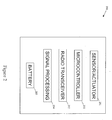
- Figure 2 shows an exemplary wireless network node according to the present invention.
- the present invention provides an exemplary method and system for adaptively determining the periodic interval between two link monitoring phases.
- two opposing forces may operate to determine an optimal period for link monitoring.
- First significant changes in the quality of links should be detected quickly, which may require frequent link monitoring.
- the link monitoring period may be determined adaptively based on feedback from the network on how often link quality is changing.
- the rate at which the link monitoring is performed is variable and is determined by the network.
- the link monitoring rate determines how often link monitoring is performed, which may encompass a wide range of values, such as, for example, once every 15 minutes to once each week.
- the link monitoring rate may be computed, for example, by a central node of the network (e.g., a base station), or the link monitoring may be computed by all nodes of the network in a distributed manner.
- the link monitoring rate is determined based on how much change is observed in the link quality as compared to previous measurements of the link quality. If the link quality remains essentially the same, then the monitoring rate is decreased so that link monitoring is performed less often, which may conserve resources, including, for example, power/battery resources. Otherwise, if there is a significant change in link quality, as measured, for example, over two successive measurements of link quality, then the link monitoring rate is increased so that future changes in the network are detected and reacted to more rapidly.
- other activities in the network may trigger a higher link monitoring rate. For example, if too many packets are lost within a certain period of time, or if an interferer (e.g., a jammer) is detected over certain frequency bands, the link monitoring rate may be increased.
- an interferer e.g., a jammer
- FIG. 1 shows an exemplary method 100 for adaptively monitoring a communication link of a wireless network, including, for example, a communication link between two or more nodes of a wireless sensor network.
- a quality of the communications link is measured at a beginning of the monitoring period and at an end of the monitoring period.
- the quality of the communications link may include, for example, a packet transmission success rate, a noise level, and/or a level of interference due to the transmissions of other wireless devices/networks.
- the communications link quality may be measured, for example, in a centralized manner by at least one node of the wireless sensor network (e.g., a base station), or alternatively in a distributed manner by a plurality of nodes of the wireless sensor network.
- step S102 the monitoring period is increased if a change in the quality of the communication link measured between two successive monitoring attempts exceeds a predefined threshold value.
- the change may include, for example, a marked decrease in the packet transmission success rate, an increased noise level, and/or increased interference from other networks/wireless devices.
- step S103 the monitoring period is decreased, or left unchanged, if the measured quality is essentially the same at the beginning and end of the monitoring period. Thereafter, steps S101 through S103 are repeated as necessary and/or required.
- the monitoring period may be limited within a certain range, as shown below.
- T mon_MIN is a minimum enforced interval between two link monitoring phases dictated by system energy requirements
- T mon_MAX is a maximum interval between two link monitoring phases dictated by the system requirements to ensure that topology information is not stale.
- T step i ⁇ min 2 ⁇ T step ( i - 1 ) , T mon_MAX ⁇ ⁇ ⁇ Th 0 ⁇ > ⁇ Th
- ⁇ is a parameter that measures the degree of "dynamicness" of the links in the network. Based on the feedback received from the network nodes between two link monitoring phases, the base station determines parameter ⁇ . If this parameter is greater than a certain threshold value, ⁇ Th , the inter-link monitoring period is set to the minimum. If, however, the parameter is less than the threshold, T mon is incremented by a standard step size until it approaches T mon_MAX .
- an exemplary embodiment of the present invention may be implemented as a closed feedback control system, where the link monitoring procedure is used to determine an optimum topology in the network.
- the determined optimum topology may then be used to perform certain functions of the network, including, for example, functions such as scheduling the distribution and/or collection of data within the network.
- the efficiency with which data is distributed and/or collected is then monitored by the network nodes, and a degree of "dynamicness" of the links is then determined therefrom, which, in turn, may be used to determine the next time to perform link monitoring.
- An exemplary embodiment and/or exemplary method of the present invention may be applied to different applications and network scenarios, where reliable communications is desired and/or required. Although additional overhead with respect to certain aspects of the network system may be required, it is believed that over time an overall improvement in performance may be achieved since the exemplary adaptive link monitoring method according to the present invention may provide improved link and frequency utilization. In particular, it is believed that the exemplary adaptive link monitoring method according to the present invention may provide a more robust network with better and more appropriate use of the best available links and/or frequencies, and at the same time conserves certain resources of the network, including, for example, energy and computational power.
- FIG. 2 shows an exemplary network node 200 according to the present invention.
- the exemplary network node 200 may be, for example, a wireless sensor node. That is, the exemplary network node 200 may be equipped with one or more sensors/actuators, and constrained to operate on limited energy resources.
- the exemplary network node 200 includes a sensor/actuator 201, a microcontroller 202, a radio transceiver 203, signal processing hardware 204 and a battery 205.
- the sensor/actuator 201 operates to sense an environmental condition and/or actuate upon an external or internal stimulus.
- the microcontroller 202 operates to perform overall control of the sensor/actuator 201, the radio transceiver 203, the signal processing hardware 204 and the battery 205.
- the microcontroller 202 may include, for example, a microprocessor and program instructions in accordance with the exemplary method 100 of Figure 1, described above.
- the radio transceiver 203 operates to communicate on a frequency channel of the wireless network.
- the signal processing hardware 204 operates to process signals detected on the frequency channel by the radio transceiver 203.
- the battery 304 provides power to the exemplary network node 200, including power to each of the individual components, i.e., the sensor/actuator 201, the microcontroller 202, the radio transceiver 203 and signal processing hardware 204.
Landscapes
- Engineering & Computer Science (AREA)
- Computer Networks & Wireless Communication (AREA)
- Signal Processing (AREA)
- Mobile Radio Communication Systems (AREA)
Abstract
Description
- The present invention relates to a method and system for adaptively monitoring a link in a wireless sensor network.
- A wireless sensor network may be implemented as a distributed system having several nodes, each equipped with a wireless radio transceiver, application-specific sensors/actuators, and signal processing hardware. The nodes in a wireless sensor network may need to be small and inexpensive, and therefore the amount of communication and computationaources included in each node may be limited. For example, the sensor nodes may be equipped with relatively low-power transceivers whose transmission range is limited. Consequently, communication between nodes may occur via one or more neighboring nodes, sometimes referred to as "multi-hop" communications.
- Designing a robust protocol for low power wireless sensor networks may be a challenging task since in many instances the wireless communication links may not always be reliable. In this regard, the quality of a wireless communication link may generally depend on factors such as the distance between nodes, the frequency channel used, and the noise level. Moreover, the quality of a wireless communication link may change over time so that a link that is initially usable may be inaccessible over time.
- The quality of an RF communication link may be affected by many different factors, including factors such as multi-path fading and shadowing. For example, in an office environment, the movement of furniture or people may change the quality of a wireless link. Likewise, interference from a cordless phone, a wireless Local Area Network (LAN), or any other wireless network operating in the same frequency band, may affect the quality of data communication in a wireless sensor network.
- By employing methods such as using multiple frequencies or multiple paths to send a data packet, a more robust network may be achieved. For example, when a network node receives a message, it may send the message to its assigned parent node using a predetermined default frequency. If the transmission is unsuccessful, a backup frequency may be used instead. If the transmission using the backup frequency also fails, the sender node may then try to send the message via a different communications path of the network, which may involve initially sending the message to a different network node.
- To design a robust protocol, it may be essential to monitor the link quality regularly, especially the quality of any primary links established by the protocol. Here, the primary links may be those links, for example, which are used most frequently, and whose status may undergo change based on the periodically monitoring of the link. In this regard, link monitoring may be a routine task of the network, or it may be combined with other tasks or operations performed by the network. Accordingly, a portion of a network node's resources may be reserved to monitor link quality. Ideally, the instantaneous link quality of all links in the network would be measured, however, this may involve very frequent monitoring requiring a prohibitive amount of the nodes resources and/or energy.
- A purported efficient method of link monitoring is discussed by Keshavarzian et al. in "Energy-efficient Link Assessment in Wireless Sensor Networks," In Proc. of INFOCOM 2004, Hong Kong, March 2004. A purported method for incorporating frequency channel assessment in link monitoring is discussed in
U.S. Patent Application Serial No. 11/293,491 , entitled "Link Assessment and Frequency Monitoring in Wireless Sensor Networks", which was filed on December 12, 2005. These purported methods, however, do not provide insight into how often the link monitoring needs to be performed. - The present invention provides an exemplary method and system for adaptively varying a link monitoring period based, for example, on an amount of change in link quality.
- According to an exemplary embodiment and/or exemplary method of the present invention, if the link quality remains the same over all links, or nearly all links, then the link monitoring rate is decreased such that the link monitoring is performed less often. Otherwise, if there is a significant change in link quality, as measured, for example, by two successive link quality measurements, then the link monitoring rate is increased such that the link monitoring occurs more often. Hence, such an adaptation of the link monitoring rate may conserve the network resources, while at the same time providing for a more rapid detection when the need arises.
- An exemplary embodiment and/or exemplary method of the present invention is directed to a method for adaptively monitoring a communication link of a wireless sensor network, in which a quality of the communications link is measured at a beginning of a monitoring period and at an end of the monitoring period, the monitoring period is decreased if a change in the quality of the communication link measured at the beginning and end of the monitoring period exceeds a predefined threshold value, and the monitoring period is increased if the measured quality is approximately the same at the beginning and end of the monitoring period.
- Another exemplary embodiment and/or exemplary method of the present invention is directed to a wireless sensor network having a plurality of nodes, the wireless sensor network including at least one node to measure a link quality of a communications link of the wireless sensor network at a beginning of a monitoring period and at an end of the monitoring period, in which the at least one node decreases the monitoring period if a change in the quality of the communications link measured at the beginning and end of the monitoring period exceeds a predefined threshold, and in which the at least one node further increases the monitoring period if the quality of the communications link measured at the beginning and end of the monitoring period remains approximately the same.
- Yet another exemplary embodiment and/or exemplary method of the present invention is directed to a wireless network node including a measuring arrangement to measure a quality of a communications link of a wireless network at a beginning of a monitoring period and at an end of the monitoring period, a determining arrangement to determine a change in the quality of the communications link measured at the beginning and at the end of the monitoring period, and an adjusting arrangement to decrease the monitoring period if the change in the quality of the communications link measures at the beginning and at the end of the monitoring period exceeds a predefined threshold, and to increase the monitoring period if the quality of the communications link measured at the beginning and at the end of the monitoring period remains essentially the same or decreases.
- According to still another exemplary embodiment and/or exemplary method of the present invention, the wireless network node further includes a sensor arrangement to sense an environmental condition, and/or an actuator arrangement for actuating a component of the wireless network node.
- According to yet another exemplary embodiment and/or exemplary method of the present invention, the wireless network node is constrained to operate on limited resources, and/or the measured link quality of the communications link includes at least one of a packet success rate, a signal-to-noise ratio and a bit error rate.
-
- Figure 1 shows an exemplary method for adaptively monitoring a communication link of a wireless network, including, for example, a communication link between two or more nodes of a wireless sensor network.
- Figure 2 shows an exemplary wireless network node according to the present invention.
- The present invention provides an exemplary method and system for adaptively determining the periodic interval between two link monitoring phases. In this regard, two opposing forces may operate to determine an optimal period for link monitoring. First, significant changes in the quality of links should be detected quickly, which may require frequent link monitoring. Second, where there is no significant change in link quality over a certain period of time, effort expended to monitor link quality may waste network resources. Accordingly, the link monitoring period may be determined adaptively based on feedback from the network on how often link quality is changing.
- According to an exemplary embodiment of the present invention, the rate at which the link monitoring is performed, that is, the periodicity of the link monitoring, is variable and is determined by the network. In this regard, the link monitoring rate determines how often link monitoring is performed, which may encompass a wide range of values, such as, for example, once every 15 minutes to once each week. The link monitoring rate may be computed, for example, by a central node of the network (e.g., a base station), or the link monitoring may be computed by all nodes of the network in a distributed manner.
- According to an exemplary embodiment of the present invention, the link monitoring rate is determined based on how much change is observed in the link quality as compared to previous measurements of the link quality. If the link quality remains essentially the same, then the monitoring rate is decreased so that link monitoring is performed less often, which may conserve resources, including, for example, power/battery resources. Otherwise, if there is a significant change in link quality, as measured, for example, over two successive measurements of link quality, then the link monitoring rate is increased so that future changes in the network are detected and reacted to more rapidly.
- According to an exemplary embodiment, other activities in the network may trigger a higher link monitoring rate. For example, if too many packets are lost within a certain period of time, or if an interferer (e.g., a jammer) is detected over certain frequency bands, the link monitoring rate may be increased.
- Figure 1 shows an
exemplary method 100 for adaptively monitoring a communication link of a wireless network, including, for example, a communication link between two or more nodes of a wireless sensor network. In step S101, a quality of the communications link is measured at a beginning of the monitoring period and at an end of the monitoring period. Here the quality of the communications link may include, for example, a packet transmission success rate, a noise level, and/or a level of interference due to the transmissions of other wireless devices/networks. In this regard, the communications link quality may be measured, for example, in a centralized manner by at least one node of the wireless sensor network (e.g., a base station), or alternatively in a distributed manner by a plurality of nodes of the wireless sensor network. - In step S102, the monitoring period is increased if a change in the quality of the communication link measured between two successive monitoring attempts exceeds a predefined threshold value. Here, the change may include, for example, a marked decrease in the packet transmission success rate, an increased noise level, and/or increased interference from other networks/wireless devices. Otherwise, in step S103, the monitoring period is decreased, or left unchanged, if the measured quality is essentially the same at the beginning and end of the monitoring period. Thereafter, steps S101 through S103 are repeated as necessary and/or required.
- According to an exemplary embodiment of the
exemplary method 100 for adaptively monitoring a communications link of a wireless network, the monitoring period may be limited within a certain range, as shown below.
- Here Tmon_MIN is a minimum enforced interval between two link monitoring phases dictated by system energy requirements, and Tmon_MAX is a maximum interval between two link monitoring phases dictated by the system requirements to ensure that topology information is not stale. In this regard, the monitoring period Tmon may be adjusted, for example, as follows:

- Where

- Here α is a parameter that measures the degree of "dynamicness" of the links in the network. Based on the feedback received from the network nodes between two link monitoring phases, the base station determines parameter α. If this parameter is greater than a certain threshold value, α Th, the inter-link monitoring period is set to the minimum. If, however, the parameter is less than the threshold, Tmon is incremented by a standard step size until it approaches Tmon_MAX .
- Hence, an exemplary embodiment of the present invention may be implemented as a closed feedback control system, where the link monitoring procedure is used to determine an optimum topology in the network. The determined optimum topology may then be used to perform certain functions of the network, including, for example, functions such as scheduling the distribution and/or collection of data within the network. In this regard, the efficiency with which data is distributed and/or collected is then monitored by the network nodes, and a degree of "dynamicness" of the links is then determined therefrom, which, in turn, may be used to determine the next time to perform link monitoring.
- An exemplary embodiment and/or exemplary method of the present invention may be applied to different applications and network scenarios, where reliable communications is desired and/or required. Although additional overhead with respect to certain aspects of the network system may be required, it is believed that over time an overall improvement in performance may be achieved since the exemplary adaptive link monitoring method according to the present invention may provide improved link and frequency utilization. In particular, it is believed that the exemplary adaptive link monitoring method according to the present invention may provide a more robust network with better and more appropriate use of the best available links and/or frequencies, and at the same time conserves certain resources of the network, including, for example, energy and computational power.
- Figure 2 shows an
exemplary network node 200 according to the present invention. Theexemplary network node 200 may be, for example, a wireless sensor node. That is, theexemplary network node 200 may be equipped with one or more sensors/actuators, and constrained to operate on limited energy resources. Here, theexemplary network node 200 includes a sensor/actuator 201, amicrocontroller 202, aradio transceiver 203,signal processing hardware 204 and abattery 205. The sensor/actuator 201 operates to sense an environmental condition and/or actuate upon an external or internal stimulus. Themicrocontroller 202 operates to perform overall control of the sensor/actuator 201, theradio transceiver 203, thesignal processing hardware 204 and thebattery 205. In this regard, themicrocontroller 202 may include, for example, a microprocessor and program instructions in accordance with theexemplary method 100 of Figure 1, described above. Theradio transceiver 203 operates to communicate on a frequency channel of the wireless network. Thesignal processing hardware 204 operates to process signals detected on the frequency channel by theradio transceiver 203. The battery 304 provides power to theexemplary network node 200, including power to each of the individual components, i.e., the sensor/actuator 201, themicrocontroller 202, theradio transceiver 203 andsignal processing hardware 204.
Claims (20)
- A method for adaptively monitoring a communication link of a wireless sensor network, the method comprising:(a) measuring a quality of the communications link at a beginning of a monitoring period and at an end of the monitoring period;(b) decreasing the monitoring period if a change in the quality of the communication link measured at the beginning and end of the monitoring period exceeds a predefined threshold value; and(c) increasing the monitoring period if the measured quality is approximately the same at the beginning and end of the monitoring period.
- The method of claim 1, further comprising:repeating operations (a) through (c).
- The method of claim 2, further comprising:providing a default monitoring period prior to performing operations (a).
- The method of claim 3, further comprising:providing a minimum monitoring period; andproviding a maximum monitoring period.
- The method of claim 4, further comprising:limiting the increase of the monitoring period to below the maximum monitoring period; andlimiting the decrease of the monitoring period to above the minimum monitoring period.
- The method of claim 4, further comprising:setting the monitoring period to equal a sum of the minimum monitoring period and an incremental step for the current monitoring period as defined by the following equation:wherein Tstep (i) is the incremental step for the current monitoring period, Tstep (i-1) is the incremental step for the previous monitoring period, Tmon_MAX is the maximum monitoring period, α is the measured quality of the communications link, and αTh is the predefined threshold.

- The method of claim 6, wherein α is the measured quality of the communications link with respect to at least one of the packet success rate, the signal-to-noise ratio and the bit error rate.
- The method of claim 1, wherein the quality of the communications link includes a packet transmission success rate.
- The method of claim 1, wherein the quality of the communications link includes a noise level.
- The method of claim 1, wherein the quality of the communications link includes a level of interference.
- The method of claim 1, wherein the quality of the communications link includes a bit error rate.
- The method of claim 1, wherein the communications link quality is measured in a centralized manner by at least one node of the wireless sensor network.
- The method of claim 1, wherein the communications link quality is measured in a distributed manner by a plurality of nodes of the wireless sensor network.
- A wireless sensor network having a plurality of nodes, comprising:at least one node to measure a link quality of a communications link of the wireless sensor network at a beginning of a monitoring period and at an end of the monitoring period,wherein the at least one node decreases the monitoring period if a change in the quality of the communications link measured at the beginning and end of the monitoring period exceeds a predefined threshold, andwherein the at least one node further increases the monitoring period if the quality of the communications link measured at the beginning and end of the monitoring period remains approximately the same.
- The wireless sensor network of claim 14, wherein the link quality of the communications link includes at least one of a packet success rate, a signal-to-noise ratio and a bit error rate.
- A wireless network node, comprising:a measuring arrangement to measure a quality of a communications link of a wireless network at a beginning of a monitoring period and at an end of the monitoring period;a determining arrangement to determine a change in the quality of the communications link measured at the beginning and at the end of the monitoring period; andan adjusting arrangement to decrease the monitoring period if the change in the quality of the communications link measures at the beginning and at the end of the monitoring period exceeds a predefined threshold, and to increase the monitoring period if the quality of the communications link measured at the beginning and at the end of the monitoring period remains essentially the same or decreases.
- The wireless network node of claim 16, further comprising:at least one of;
a sensor arrangement to sense an environmental condition, and
an actuator arrangement for actuating a component of the wireless network node. - The wireless network node of claim 17, wherein the wireless network node is constrained to operate on limited resources.
- The wireless network node of claim 18, further comprising:a battery.
- The wireless network node of claim 19, wherein the link quality of the communications link includes at least one of a packet success rate, a signal-to-noise ratio and a bit error rate.
Applications Claiming Priority (1)
| Application Number | Priority Date | Filing Date | Title |
|---|---|---|---|
| US11/432,139 US20070264938A1 (en) | 2006-05-10 | 2006-05-10 | Method and system for adaptive link monitoring in wireless sensor networks |
Publications (1)
| Publication Number | Publication Date |
|---|---|
| EP1855418A1 true EP1855418A1 (en) | 2007-11-14 |
Family
ID=38325468
Family Applications (1)
| Application Number | Title | Priority Date | Filing Date |
|---|---|---|---|
| EP07009206A Withdrawn EP1855418A1 (en) | 2006-05-10 | 2007-05-08 | Method and system for adaptive link monitoring in wireless sensor networks |
Country Status (2)
| Country | Link |
|---|---|
| US (1) | US20070264938A1 (en) |
| EP (1) | EP1855418A1 (en) |
Cited By (2)
| Publication number | Priority date | Publication date | Assignee | Title |
|---|---|---|---|---|
| GB2473896A (en) * | 2009-09-23 | 2011-03-30 | Avaya Inc | Testing quality of service at varying time intervals |
| CN111314405A (en) * | 2018-12-12 | 2020-06-19 | 上海建材集团节能环保科技有限公司 | Energy-saving monitoring method for glass curtain wall sensor, server and front end |
Families Citing this family (14)
| Publication number | Priority date | Publication date | Assignee | Title |
|---|---|---|---|---|
| EP1953959A1 (en) * | 2007-02-01 | 2008-08-06 | British Telecommunications Public Limited Company | Data communication |
| US7940177B2 (en) * | 2007-06-15 | 2011-05-10 | The Johns Hopkins University | System and methods for monitoring security zones |
| JP5487968B2 (en) * | 2007-09-26 | 2014-05-14 | 日本電気株式会社 | Wireless communication system and method |
| WO2009094264A2 (en) * | 2008-01-24 | 2009-07-30 | Firetide, Inc. | Channel assignment for wireless access networks |
| US8514789B2 (en) | 2008-10-10 | 2013-08-20 | Microsoft Corporation | Cognitive channel adaptation in wireless sensor networks |
| US7995487B2 (en) * | 2009-03-03 | 2011-08-09 | Robert Bosch Gmbh | Intelligent router for wireless sensor network |
| WO2011043411A1 (en) * | 2009-10-07 | 2011-04-14 | 住友電気工業株式会社 | Base station device |
| GB2498336A (en) * | 2012-01-04 | 2013-07-17 | Oclaro Technology Plc | Monitoring multiple optical channels |
| JP6706460B2 (en) * | 2014-06-02 | 2020-06-10 | 住友電気工業株式会社 | Sensor information management device, sensor information management method, and sensor information management program |
| US10630541B2 (en) * | 2016-07-28 | 2020-04-21 | General Electric Technology Gmbh | Systems and methods for configuration-less process bus with architectural redundancy in digital substations |
| EP4073767A4 (en) | 2019-12-10 | 2024-01-31 | Barnes Group Inc. | WIRELESS SENSOR WITH BEACON TECHNOLOGY |
| CN112304283A (en) * | 2020-10-21 | 2021-02-02 | 国网福建省电力有限公司莆田供电公司 | Pole tower state intelligent monitoring terminal and method based on Beidou and 4G dual-mode communication |
| CN113868157B (en) * | 2021-08-20 | 2024-06-28 | 山东云海国创云计算装备产业创新中心有限公司 | Arbitration method and device for AHB system bus, AHB system bus and medium |
| US20250031112A1 (en) * | 2023-07-20 | 2025-01-23 | Qualcomm Incorporated | Ai/ml model sharing and signaling for roaming in wireless networks |
Citations (2)
| Publication number | Priority date | Publication date | Assignee | Title |
|---|---|---|---|---|
| WO2000076233A1 (en) * | 1999-06-04 | 2000-12-14 | Telefonaktiebolaget Lm Ericsson (Publ) | Method and arrangement relating to mobile packet networks |
| GB2395398A (en) * | 2002-11-07 | 2004-05-19 | Motorola Inc | A communication unit and method of communicating measurement reports therefor |
Family Cites Families (4)
| Publication number | Priority date | Publication date | Assignee | Title |
|---|---|---|---|---|
| US5335356A (en) * | 1991-09-05 | 1994-08-02 | Telefonaktiebolaget L M Ericsson | Adaptive resource allocation in a mobile telephone system |
| US7152025B2 (en) * | 2002-02-28 | 2006-12-19 | Texas Instruments Incorporated | Noise identification in a communication system |
| US7016651B1 (en) * | 2002-12-17 | 2006-03-21 | Marvell International Ltd. | Apparatus and method for measuring signal quality of a wireless communications link |
| JP2006191455A (en) * | 2005-01-07 | 2006-07-20 | Nec Corp | Radio mobile communication method, radio mobile communication system, base station controller and radio mobile terminal |
-
2006
- 2006-05-10 US US11/432,139 patent/US20070264938A1/en not_active Abandoned
-
2007
- 2007-05-08 EP EP07009206A patent/EP1855418A1/en not_active Withdrawn
Patent Citations (2)
| Publication number | Priority date | Publication date | Assignee | Title |
|---|---|---|---|---|
| WO2000076233A1 (en) * | 1999-06-04 | 2000-12-14 | Telefonaktiebolaget Lm Ericsson (Publ) | Method and arrangement relating to mobile packet networks |
| GB2395398A (en) * | 2002-11-07 | 2004-05-19 | Motorola Inc | A communication unit and method of communicating measurement reports therefor |
Non-Patent Citations (2)
| Title |
|---|
| CARDELL-OLIVER R ET AL: "Field Testing a Wireless Sensor Network for Reactive Environmental Monitoring", INTELLIGENT SENSORS, SENSOR NETWORKS AND INFORMATION PROCESSING CONFERENCE, 2004. PROCEEDINGS OF THE 2004 MELBOURNE, AUSTRALIA 14-17 DEC. 2004, PISCATAWAY, NJ, USA,IEEE, 14 December 2004 (2004-12-14), pages 7 - 12, XP010783733, ISBN: 0-7803-8894-1 * |
| KESHAVARZIAN A ET AL: "Energy-efficient link assessment in wireless sensor networks", INFOCOM 2004. TWENTY-THIRD ANNUALJOINT CONFERENCE OF THE IEEE COMPUTER AND COMMUNICATIONS SOCIETIES HONG KONG, PR CHINA 7-11 MARCH 2004, PISCATAWAY, NJ, USA,IEEE, vol. 3, 7 March 2004 (2004-03-07), pages 1751 - 1761, XP010740538, ISBN: 0-7803-8355-9 * |
Cited By (5)
| Publication number | Priority date | Publication date | Assignee | Title |
|---|---|---|---|---|
| GB2473896A (en) * | 2009-09-23 | 2011-03-30 | Avaya Inc | Testing quality of service at varying time intervals |
| US8284259B2 (en) | 2009-09-23 | 2012-10-09 | Avaya Inc. | Policy-based video quality assessment |
| GB2473896B (en) * | 2009-09-23 | 2015-08-12 | Avaya Inc | Policy-based video quality assessment |
| CN111314405A (en) * | 2018-12-12 | 2020-06-19 | 上海建材集团节能环保科技有限公司 | Energy-saving monitoring method for glass curtain wall sensor, server and front end |
| CN111314405B (en) * | 2018-12-12 | 2022-04-08 | 上海建材集团节能环保科技有限公司 | Energy-saving monitoring method for glass curtain wall sensor, server and client |
Also Published As
| Publication number | Publication date |
|---|---|
| US20070264938A1 (en) | 2007-11-15 |
Similar Documents
| Publication | Publication Date | Title |
|---|---|---|
| EP1855418A1 (en) | Method and system for adaptive link monitoring in wireless sensor networks | |
| Sikora et al. | Coexistence of IEEE802. 15.4 with other Systems in the 2.4 GHz-ISM-Band | |
| Gomes et al. | Real-time link quality estimation for industrial wireless sensor networks using dedicated nodes | |
| Ares et al. | On power control for wireless sensor networks: System model, middleware component and experimental evaluation | |
| Liu et al. | Temporal adaptive link quality prediction with online learning | |
| Chowdhury et al. | TCP CRAHN: A transport control protocol for cognitive radio ad hoc networks | |
| Chang et al. | Accuracy-aware interference modeling and measurement in wireless sensor networks | |
| Liu et al. | TALENT: Temporal adaptive link estimator with no training | |
| US11949447B2 (en) | Smart scheduling of TSCH networks to avoid self-interference | |
| Jiang et al. | Delay optimization for industrial wireless control systems based on channel characterization | |
| Noda et al. | On packet size and error correction optimisations in low-power wireless networks | |
| Al Homssi et al. | Energy-efficient IoT for 5G: A framework for adaptive power and rate control | |
| US20070286102A1 (en) | Wireless Communication System Capable of Switching Protocol | |
| Broustis et al. | Implications of power control in wireless networks: A quantitative study | |
| Zhang et al. | Energy-aware topology control in heterogeneous wireless multi-hop networks | |
| Mabed et al. | A flexible medium access control protocol for dense terahertz nanonetworks | |
| Lin et al. | Receiver initiated rendezvous schemes for sensor networks | |
| Adi et al. | Development education of blind adaptive data rate LoRaWAN network on mobile node | |
| Papadimitratos et al. | A cross-layer design approach to enhance 802.15. 4 | |
| Michopoulos et al. | A new congestion control mechanism for WSNs | |
| Archasantisuk et al. | Transmission power control in WBAN using the context-specific temporal correlation model | |
| Zhang et al. | An adaptive distributed scheduling algorithm for ieee 802.15. 4e tsch protocol | |
| KR102564567B1 (en) | System and Method for Energy Sufficient way of 6P Protocols at 6TiSCH Network | |
| Che et al. | Adaptive instantiation of the protocol interference model in mission-critical wireless networks | |
| Alassery et al. | A low computational complexity statistical discrimination algorithm for collision detection in wireless sensor networks |
Legal Events
| Date | Code | Title | Description |
|---|---|---|---|
| PUAI | Public reference made under article 153(3) epc to a published international application that has entered the european phase |
Free format text: ORIGINAL CODE: 0009012 |
|
| AK | Designated contracting states |
Kind code of ref document: A1 Designated state(s): AT BE BG CH CY CZ DE DK EE ES FI FR GB GR HU IE IS IT LI LT LU LV MC MT NL PL PT RO SE SI SK TR |
|
| AX | Request for extension of the european patent |
Extension state: AL BA HR MK YU |
|
| RIN1 | Information on inventor provided before grant (corrected) |
Inventor name: LAL, DHANANJAY Inventor name: KESHAVARZIAN, ABTIN Inventor name: SRINIVASAN, BHASKAR |
|
| 17P | Request for examination filed |
Effective date: 20080514 |
|
| 17Q | First examination report despatched |
Effective date: 20080619 |
|
| AKX | Designation fees paid |
Designated state(s): AT BE BG CH CY CZ DE DK EE ES FI FR GB GR HU IE IS IT LI LT LU LV MC MT NL PL PT RO SE SI SK TR |
|
| STAA | Information on the status of an ep patent application or granted ep patent |
Free format text: STATUS: THE APPLICATION IS DEEMED TO BE WITHDRAWN |
|
| 18D | Application deemed to be withdrawn |
Effective date: 20081030 |