EP1852811A2 - Systeme und Verfahren zum Erkennen von Vorbedingungen und Widersprüchen - Google Patents
Systeme und Verfahren zum Erkennen von Vorbedingungen und Widersprüchen Download PDFInfo
- Publication number
- EP1852811A2 EP1852811A2 EP07107208A EP07107208A EP1852811A2 EP 1852811 A2 EP1852811 A2 EP 1852811A2 EP 07107208 A EP07107208 A EP 07107208A EP 07107208 A EP07107208 A EP 07107208A EP 1852811 A2 EP1852811 A2 EP 1852811A2
- Authority
- EP
- European Patent Office
- Prior art keywords
- packed
- premise
- conclusion
- entailment
- contradiction
- Prior art date
- Legal status (The legal status is an assumption and is not a legal conclusion. Google has not performed a legal analysis and makes no representation as to the accuracy of the status listed.)
- Withdrawn
Links
Images





Classifications
-
- G—PHYSICS
- G06—COMPUTING OR CALCULATING; COUNTING
- G06N—COMPUTING ARRANGEMENTS BASED ON SPECIFIC COMPUTATIONAL MODELS
- G06N5/00—Computing arrangements using knowledge-based models
- G06N5/02—Knowledge representation; Symbolic representation
Definitions
- This invention relates to information retrieval.
- Entailment describes a relationship indicating that one element can be derived from another element. Entailment between texts is complicated since word order and word co-occurrence can render a text susceptible to multiple readings. For example, in English, the placement of the same word or phrase at different locations within a sentence can result in several readings or interpretations. Some researchers have attempted to address these problems by encoding the text into packed knowledge representations.
- the packed knowledge representations provide an encoding of the multiple readings for the text within a single representation. Although packed knowledge representations can encode these multiple readings, conventional linguistic processing still requires unpacking to detect entailment and contradiction.
- the systems and methods according to this invention provide for operating on contexted unions of packed knowledge representations to detect entailment and contradiction.
- the systems and methods according to this invention determine packed structures for a premise and conclusion text. Rewrite rules are applied to the packed structures to determine packed knowledge representations.
- the knowledge representations comprise facts about the relationships between concept and/or context denoting terms.
- Concept alignments for the packed structures are determined. Alignment of context denoting terms is also performed and a union of the premise and conclusion packed knowledge representations is determined. The terms of the union are marked as to their origin in the premise or conclusion text.
- Comparison between the terms in the premise and conclusion are facilitated by, substituting the terms between the premise and conclusion, using an alignment table or the like.
- Various embodiments according to this invention replace conclusion terms by corresponding terms from the premise.
- Subsumption and specificity, instantiability, spatio-temporal and relationship based packed rewrite rules are applied in conjunction with the context denoting facts to remove entailed terms and to mark contradictory facts within the union.
- Fig. 1 shows an exemplary overview of an entailment and contradiction detection system according to this invention
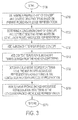
- Fig. 2 is a flowchart of an exemplary method for detecting entailment and detection according to this invention
- Fig. 3 is an expanded flowchart of a method for concept alignment according to one aspect of this invention.
- Fig. 4 is an exemplary first expanded flowchart for selecting sets of possible term pairings according to one aspect this invention.
- Fig. 5 is an exemplary second expanded flowchart for selecting sets of possible term pairings according to one aspect of this invention.
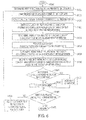
- Fig. 6 is a flowchart of an exemplary method of detecting entailment and contradiction according to one aspect of this invention.
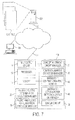
- Fig. 7 is an exemplary system for detecting entailment and contradiction according to one aspect of this invention.
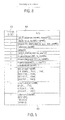
- Fig. 8 is an exemplary first sentence.
- Fig. 9 is an exemplary data structure for storing a packed knowledge representation of the first exemplary sentence according to one aspect of this invention.
- Fig. 10 is a second exemplary sentence.
- Fig. 11 is an exemplary data structure for storing a packed knowledge representation of the second exemplary sentence according to one aspect of this invention.
- Fig. 12 is a visualization of exemplary concept overlap according to one aspect of this invention.
- Fig. 13 is an exemplary data structure for storing alignment scores for the premise and conclusion packed knowledge representations according to one aspect of this invention
- Fig. 14 is an exemplary data structure for storing term pair scores according to one aspect of this invention.
- Fig. 15 is an exemplary data structure for storing content and context aligned packed knowledge representation according to one aspect of this invention.
- Fig. 16 is an exemplary set of subsumption facts according to one aspect of this invention.
- Fig. 17 is an exemplary data structure for storing packed rewrite rules 1100 according to one aspect of this invention.
- Fig. 1 shows an exemplary overview of an entailment and contradiction detection system 100 according to this invention.
- the entailment and contradiction detection system 100 is connected via communications links 99 to an information repository 200 providing access to documents 1000-1010 and to a communications enabled personal computer 300.
- a user of the communications-enabled personal computer 300 poses a question with respect to the document collection 1000-1010.
- the query is forwarded over the communications links 99 to the entailment and contradiction detection system 100.
- the entailment and contradiction detection system 100 acts as a proxy. It selects a sub-set of documents relevant to the question using a first search.
- the relevant documents from the search results 1000-1010 are retrieved over the communications links 99.
- the entailment and contradiction detection system 100 determines whether any sentences in the relevant documents 1000-1010 are entailed or contradicted by the question. That is, the entailment and contradiction detection system 100 determines entailment and contradiction between the packed structure associated with question and a plurality of packed structures associated with sentences or other structures within the search result documents 1000-1010.
- the relevance or ranking of a document containing text entailed to the question is given increased prominence as more likely indicating a relevant answer to the question.
- the relevance of contradictory terms is similarly adjusted.
- the ranked search results are then optionally displayed to the user.
- Fig. 2 is a flowchart of an exemplary method for detecting entailment and detection according to this invention.
- the process begins at step S100 and immediately continues to step S200.
- a premise text is selected.
- the premise text is usually a portion of a document or other element of an information repository.
- the premise text may be entered by a user, selected from document or entered using an input or selection method.
- control continues to step S300.
- step S300 the conclusion text is selected.
- the conclusion text is generally a question posed by a user, selected from a document or entered using any an input or selection method.
- a packed representation comprises a choice space and a choice labeled representation.
- the choice space is a Boolean and/or tree detailing how the choice labels are related to one another.
- Each part of the representation is labeled to indicate the parts of the choice space in which the representation applies.
- the choice space is maintained in a free-choice form in which the satisfiability of any boolean combination of choice labels can efficiently be checked.
- the packed structures are packed f-structures.
- any known or later developed method of determining a packed structure for the texts may be used without departing from the spirit or scope of this invention.
- step S500 packed knowledge representation rewrite rules are determined.
- the rules may be retrieved from a memory, a database or other storage medium.
- the packed knowledge representation rewrite rules transform the packed structures into packed knowledge representations by cross referencing concepts contained within the packed structures to hierarchical ontologies such as WordNet® and the like.
- the rewrite rules are thus production rules that in general consume input matching the left hand side of the arrow to produce output matching right hand side. Packed rewriting systems apply these rules to packed sets of input facts to produce packed sets of output facts. After the packed knowledge representation rewrite rules have been determined, control continues to step S600.
- the knowledge representation rewrite rules are applied to the packed structure to create packed knowledge representations in step S600.
- the packed knowledge representations may be CycL, Knowledge Machine, DAML+OIL or other knowledge representations.
- step S700 concept alignments are determined for the packed knowledge representations. Alignment ensures that similar terms are compared between knowledge representations.
- the concepts are aligned by extracting terms from the premise and conclusion texts. Each term from the premise knowledge representation is paired with a term from the conclusion knowledge representation. Lists of synonyms and/or hypernyms from WordNet® or other ontologies are used to determine alignment scores for each term pairing. The alignment scores of pairs that exceed a threshold alignment score are selected as probable alignments. In question answering embodiments, the information contained in the question or premise text may be exploited to refine or even determine the most probable term pairs. Probable term pairs are optionally ranked based on the number of roles with less probable term pairs considered later than more probable term pairs. After the concept alignments have been determined, control continues to step S800.
- Context alignments are determined for each packed knowledge representation in step S800. Context terms are associated with concepts, and the method of pairing and ranking concept terms is applied to the context terms. After the context alignments have been determined, control continues to step S900.
- step S900 a set of entailment and contradiction detection packed rewrite rules is selected.
- the rules may be retrieved from a memory, a database or any other storage structure. Once the rules have been determined, control continues to step S1000.
- the entailment and contradiction detection packed rewrite rules determined in step S900 are applied to the concept and context aligned packed knowledge representations in step S1000. A union of the premise and conclusion packed knowledge representations is determined.
- the packed entailment and contradiction rules determine subsumption, cardinality, instantiability and spatio-tempo relations among the terms and facts of the packed knowledge representations that are capable of reduction or elimination.
- One concept subsumes another if it refers to a more general class of objects. If the set of objects satisfying concept C1 includes the set of objects satisfying C2, then C1 subsumes C2. Alternative terminology: C2 is more specific than C1, C1 is more general than C2. One formula subsumes another if it refers to a more general set of circumstances in which it holds true. Entailment is indicated by a lack of any facts from the packed knowledge representation of the conclusion in the union after applying the packed entailment and contradiction detection rules.
- Contradiction markers are added to indicate contradictory terms in the packed knowledge representation.
- a premise text might be a candidate answer to the question. If the premise or candidate answer text is entailed, then it is more likely to be a positive answer to the question.
- a conventional tf-idf search is applied to initially select texts.
- Entailment and contradiction detection are applied to rank and/or order the search results. Texts in the search results that are marked as neither entailed nor contradictory are eliminated from consideration in the ranking. The re-ranked results are then returned to the user. After detecting entailment and contradiction, control continues to step S1100 and the process ends.
- Fig. 3 is an expanded flowchart of a method for concept alignment according to one aspect of this invention.
- the process begins at step S700 and immediately continues to step S710.
- step S710 a premise chart of concept and context denoting terms is determined.
- each concept in the premise packed knowledge representation is inserted into a chart.
- the context denoting terms are also inserted into the chart.
- step S720 the process is repeated with the second packed knowledge representation to create a conclusion chart. Control then continues to step S730.
- step S730 subconcept terms are added to the chart for each concept.
- WordNet or other ontological resources are used to determine a set of subconcepts based on hypernym lists associated with each term.
- the subconcepts are derived from external systems such as Cyc or the like.
- Sub-concept terms are added to the premise and conclusion charts for each context term in step S740.
- Each context term is associated with a characteristic concept term, typically derived from the verb that heads the clause introducing the context.
- the sub-context for the associated head concept term is used to mark the context term.
- step S750 a set of alignment scores for terms in the premise packed knowledge representation are computed against terms in the conclusion packed knowledge representation.
- the alignment scores indicate the degree to which the terms conceptually overlap.
- the overlap between a set of hypernyms associated with a term from the premise packed knowledge representation and a set of hypernyms associated with a term from the conclusion packed knowledge representation is used to determine a pair alignment score. Weighting of the overlapping items and other methods can also be used to determine and/or further adjust the alignment scores.
- Sets of term pairs are selected based on their alignment scores in step S760.
- a threshold value is determined from user input or retrieved from memory. Terms pairs associated with alignment scores above the threshold value are selected as aligned term pairs.
- Each set of term pairings will align every concept or context term from the premise text with some concept or context term from the conclusion text. Multiple sets of alignments are possible and alignment sets are ranked in a best-first order determined by the alignment scores of the individual term pairings. After the term pairs have been selected, control continues to step S770 and immediately jumps to step S700 of Fig. 2.
- Fig. 4 is an exemplary first expanded flowchart for selecting sets of possible term pairings according to one aspect this invention.
- the process begins at step S760 and immediately continues to step S761 where a threshold score value is selected.
- the threshold score indicates acceptable score values to be considered for term pairing. For example, a threshold alignment score value of 0.5 indicates that term pairs with an alignment score equal to or greater than 0.5 are selected.
- the threshold alignment score depends on the term alignment scoring method and is adjustable. After the threshold alignment score value has been specified, control continues to step S762.
- step S762 each term from the conclusion text is paired with a term from the premise text, starting with the individual term pairing that has the best alignment score. With the exception of terms derived from either proper names or pronouns, no two distinct terms from the premise text can be paired with the same term from the conclusion text. Individual alignments falling below the threshold alignment score value are excluded. Control then continues to step S769 and immediately returns step S760 of Fig. 3.
- Fig. 5 is an exemplary second expanded flowchart for selecting sets of possible term pairings according to one aspect of this invention.
- the process begins at step S760 and immediately continues to step S764.
- step S764 the terms originating in the conclusion packed knowledge representation and which have multiple role arguments are determined. For example, concept terms derived from verbs will often have multiple role arguments from the subject role, or the complement role. Terms having multiple role arguments are identified by the presence of role facts in the knowledge representation linking the term to the different arguments. Control then continues to step S765.
- step S765 the terms are ordered based on the number of roles. Thus, terms with a larger number of roles are selected first.
- step S766 the values of the arguments of each clause are determined. Control then continues to step S767.
- step S767 Each term with multiple role arguments in the packed knowledge representation of the conclusion is paired with a term in the packed knwoledge representation of the premise in step S767.
- the role facts for the paired terms are matched.
- the corresponding role argument terms in the premise and conclusion packed knowledge representations are also paired. Control then continues to step S768.
- step S768 a final best pass assigns remaining unaligned terms. Control then continues to step S769 and immediately returns to step S760 of Fig. 3.
- Fig. 6 is a flowchart of an exemplary method of detecting entailment and contradiction according to one aspect of this invention.
- the process begins at step S1000 and immediately continues to step S1005 where a first pair of content and context aligned packed knowledge representations terms are selected.
- the set of paired terms is selected from the list of concept and context aligned terms determined in the previous steps.
- the paired terms are ranked. For example, the information from a question can be used to rank the likelihood of the terms appearing in the text. This is repeated for each term pair in the premise and conclusion packed knowledge representations. After the premise packed knowledge representation term pair has been identified, control continues to step S1010.
- Facts from the premise and conclusion packed knowledge representations are labeled to explicitly mark whether the fact is from the premise or conclusion representation in step S1010.
- the facts originating in the premise text are marked with a premise representation marker while facts originating in the conclusion text are marked with a conclusion representation marker. After the facts have been marked, control continues to step S1015.
- step S1015 the facts and contexts marked as originating from the conclusion packed knowledge representation are replaced by the aligned terms originating from the premise packed knowledge representation as determined by the set of alignments selected in step S1005. Control then continues to step S1020.
- step S1020 The union of the facts and choice space of the premise and conclusion concept and context aligned packed knowledge representations is determined in step S1020. After the union has been determined, control continues to step S1025.
- step S1025 any subsumption relations that exist between terms in the content and context aligned packed knowledge representations are determined.
- the subsumption relations identify terms originating in the conclusion packed knowledge representation that are subsumed within a term originating in the packed knowledge representation of the premise.
- control continues to step S1030.
- the subsumption relation facts are then substituted into the union of the premise and conclusion packed knowledge representations.
- the subconcept terms originating in the packed knowledge representation of the conclusion are replaced by the facts of the subsumption relation.
- Instantiability relations in the concept and context aligned packed knowledge representation are determined in step S1035. For example, to say that a particular concept term is instantiable in a certain context is to assert the existence of some object satisfying the terms concept description. To say that a concept term is uninstantiable in a context is to say that there is no such object in that context that satisfies the term's concept description. After the instantiability relations have been determined, control continues to step S1040.
- step S1040 instantiable and uninstatiable facts originating in the packed knowledge representation of the conclusion are removed based on the instantiability rules.
- the instantiability rules determine for example, that the instantiability of a more specific term entails the instantiability of a more general term, and the uninstantiability of a more general term contradicts the instantiability of a more specific term. Entailed instantiability and uninstantiability originating from the packed representation of the conclusion are removed by the instantiability rules. Contradicted instantiability and uninstantiability facts are marked as such. Control then continues to step S1045.
- step S 1045 A determination is made as to whether any terms from the packed knowledge representation of the conclusion remain in the union in step S 1045. If any terms remain, control immediately continues to step S1055 an indication is then made to the user that the conclusion text is not entailed by the premise text. Otherwise, if no terms remain, control continues to step S1050 where entailment is indicated to the user. In various exemplary embodiments, dynamic indication to the user is accomplished via changes to the user's display or output device. However, it will be apparent that entailment indicators may be stored in memory for asnychronous indication to the user or used under programmatic control without departing from the scope of this invention. After any entailment is indicated, control continues to step S1060.
- step S1060 a determination is made as to whether any additional packed knowledge representations remain. If additional packed knowledge representation pairs remain, control continues to step S1065 where the next pair of content and context aligned knowledge representation terms is selected. Control then jumps immediately to step S1010. Steps S 1 01 0-S 1060 repeat until no additional content and context aligned packed knowledge representation term pairs remain to be processed. Control then continues to step S1070 and returns immediately to step S1000 of Fig. 2.
- Fig. 7 is an exemplary system for detecting entailment and contradiction according to one aspect of this invention.
- the entailment and contradiction detection system 100 is connected via communications links 99 to an information repository 200 providing access to documents 1000-1002 and to a communications enabled personal computer 300.
- the user of the communications-enabled personal computer 300 initiates a query against the document collection 1000-1010 served by the information repository 200.
- the query is forwarded over the communications links 99 to the information repository 200.
- the information repository selects the documents relevant to the query using term frequency inverse document frequency and/or other information retrieval systems.
- the search results are then forwarded to the input/output circuit 5 of the entailment and contradiction detection system 100.
- the processor 10 of the entailment and detection system 100 activates the packed memory determination circuit or manager 20 to determine packed structures associated with the query and each retrieved search result.
- the processor 10 activates the optional packed knowledge representation circuit or manager 25 to determine a packed knowledge representation using packed rewrite rules.
- the concept alignment circuit or manager 30 is activated to align the concept facts between the packed knowledge representation for the query expressed as a possible conclusion and the packed knowledge representation for the first search result or premise.
- the context alignment circuit or manager 25 aligns the context of the packed knowledge representation of the conclusion and the first premise.
- the concept alignment circuit or manager 30 ensures that similar terms are compared between packed knowledge representations.
- Each term from the premise knowledge representation is paired with a term from the conclusion knowledge representation. Lists of synonyms and/or hypernyms from WordNet® or other ontologies are used to determine alignment scores for each term pairing.
- the alignment scores of pairs that exceed a threshold alignment score are selected as probable alignments.
- the information contained in the conclusion or question text is exploited to determine the most probable term pairs.
- Probable term pairs are optionally ranked based on the number of roles with less probable term pairs considered later than more probable term pairs.
- the processor 10 forms the union of the facts and choice space for the packed representations of the conclusion and the premise and marks each term with its origin.
- the context terms are then associated with concepts.
- the method of pairing and ranking concept terms is then also applied to the context terms.
- the terms originating in the conclusion are substituted with corresponding terms from the premise.
- the entailment contradiction circuit or manager 45 retrieves the entailment /contradiction rules from the entailment/ contradiction rule memory 40 and applies them to the union.
- the packed entailment and contradiction rules determine subsumption, cardinality, instantiability and spatio-tempo relations among the terms and facts of the packed knowledge representations capable of reduction or elimination.
- entailment is indicated. Contradiction markers are added to indicate contradictory terms in the packed knowledge representation.
- the processor 10 activates the display circuit 50 to indicate the entailment and the contradictions. The process is then repeated between the conclusion and each additional search result as subsequent premises.
- the entailment and contradiction information is used to adjust the prominence of the documents in the search results.
- the processor 10 activates the input/output circuit 5 to forward the re-ranked search results to the user of communications-enabled computer 300 over communications links 99.
- Fig. 8 is an exemplary first sentence.
- the first sentence is short and unambiguous.
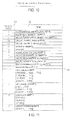
- Fig. 9 is an exemplary data structure for storing a packed knowledge representation 400 of the first exemplary sentence according to one aspect of this invention.
- the packed knowledge representation captures content and context information about the sentence.
- the packed knowledge representation is comprised of a top level choice portion 410 and a term portion 420.
- the values in the top level choice portion 410 are used to indicate top level choices between ambiguous readings of a sentence. However, in this case, each row is marked with the value "1" indicating that there is only one top level choice and therefore no alternate reading of the sentence.
- the first three rows of the exemplary data structure for storing packed knowledge indicate that a seeing event was experienced by a person.
- a temporal relation specifies the event occurs before now.
- the role relations specify in general terms that a seeing event took place, that what was seen was some kind of man and that the event was experienced by some kind of a person.
- the next three rows specify the context for the information.
- the values "context(cx_see##3)” and “context(t)” specify a first context called “cx_see##3” and a second "true” context.
- the sixth row specifies that the two contexts are incompatible.
- cx_see##3 is the negative context.
- the seventh through ninth rows claims instantiability for the terms "man##5", “person##0”, and “see##3” in the cx_see##3 context.
- the seeing event "see##3” is claimed to be uninstantiable in the "t” context.
- the rows eleven through thirteen contain facts associating lists of WordNet synonyms sets with the constants ''man##5", “person##0” and “see##3". In various other embodiments, other ontologies can be used without departing from the spirit or scope of this invention.
- Fig. 10 is a second exemplary sentence.
- the second exemplary sentence is capable of two readings and is therefore ambiguous. Thus, one reading might be that nobody saw a man who had a telescope. A second reading is that nobody saw a man by looking through a telescope.
- Fig. 11 is an exemplary data structure for storing a packed knowledge representation 500 of the second exemplary sentence according to one aspect of this invention.
- the packed knowledge representation is comprised of a top level choice portion 510 and a term portion 520.
- the values "A1" and "A2'' in the top level choice portion 510 indicate the two different possible readings of the sentence.
- This packed knowledge representation differs from the packed knowledge representation of the first exemplary sentence in the presence of the "telescope” term which is instantiable in the "cx_see##13" context.
- the "telescope” term is also affected by role restrictions appearing in row four through five.
- the subconcepts are described in terms of WordNet synsets as discussed above.
- the detection that the packed knowledge representation of the first exemplary sentence entails the packed knowledge representation of the second exemplary sentence is based on noticing that if there is no event of a person seeing a man, then there is no more specific event of a person seeing a man by means of a telescope (reading '"Al"'), nor is there any event of a person seeing a more specific kind of man in possession of a telescope (reading "A2").
- the concept "see##13" of the packed knowledge representation associated with the second exemplary sentence is more specific than the corresponding "see##3" concept in the packed knowledge representation associated with the first exemplary sentence.
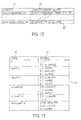
- Fig. 12 is a visualization of exemplary concept overlap according to one aspect of this invention.
- the exemplary subconcept represented by premise_sk overlaps with the exemplary subconcept represented by conclusion_sk for the terms "5, 6, 7 and 8". Thus, these terms are candidates for alignment.
- Fig. 13 is an exemplary data structure for storing alignment scores for the premise and conclusion packed knowledge representations 700 according to one aspect of this invention.
- the exemplary data structure for storing alignment scores for the premise and conclusion packed knowledge representations 700 is comprised of a terms portion 710 and a scores portion 720.
- the terms portion 710 of the first row contains the value "t:” indicating the alignment score values for the "true” context.
- the scores portion 720 contains the value pairs "1.0 - t" and ''0.0 -cx_see##3". These values indicate a high alignment score between the "true” context in the packed knowledge representation of the premise and the "true” context in the packed knowledge representation of the conclusion. However, a low alignment score is indicated between the t context of the packed knowledge representation of the premise and the "cx_see##3" context.
- the fifth row contains the value "cx_see##13” in the term portion 710 and the values "0.8 - cx_see##3" and "0.0 - t” in the scores portion 720. This indicates alignment between the "cx_see##13" context and the "cx_see##3” alignment is preferred.
- the contextual alignment allows the systems and methods of this invention to exploit the monotonicity constraints or relationships in determining entailment and contradiction.
- the second row contains the value "see##13” in the term portion 710 and the values "1.0 - see##3, 0.0 - person##0, 0.0 - man##5". These value indicate a preferred alignment between the concepts "see## 13" and "see##3".
- the third row indicates equally preferred alignments between the concept “man##15'' and "person##0” and “person##5", the fourth row equally preferred alignments between "person##10” and “person##0” and “man##5".
- the sixth row indicates that the concept "telescope##16” is not aligned with either "person##0", "man##5" or "see##3", since each alignment score is below the exemplary threshold alignment score value of "0.5''.
- Some rules of inference are applied based on the terms specificity, montonicity and existence / instantiability assertions.
- the packed rewrite entailment and contradiction rules provide for recognizing: 1) if term_p is more specific than term_c, then in an upward monotone context the existence of term_c is entailed by the existence of term_p.
- Rewrite rules recognize this configuration, and remove the existence assertion for term_c. Removal of this assertion is motivated by the fact that if the assertion is entailed by the premise representation, it can be removed without loss of information; 2) if term_p is less specific than term_c, then in a downward monotone context the existence of term_c is entailed by the existence of term_p.
- Rewrite rules recognize this configuration, and remove the existence assertion for term_c; 3) if term_p is less specific than term_c, then in an upward monotone context the non-existence of term_p contradicts the existence of term_c.
- Rewrite rules recognize this configuration, and instead of removing the existence assertion for term_c, they set a flag indicating that a contradiction has been found.
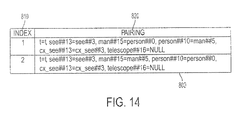
- Fig. 14 is an exemplary data structure for storing term pair scores 800 according to one aspect of this invention.
- the exemplary data structure for storing term pair scores 800 is comprised of an index portion 810 and a pairing portion 820.
- the pairings are scored or ranked by various methods. For example, in some embodiments, the format of a conclusion text that is a question informs the selection of the most likely term pairings for the answer to the question.
- Fig. 15 is an exemplary data structure for storing content and context aligned packed knowledge representation 900 according to one aspect of this invention.
- the exemplary data structure for storing a content and context aligned packed knowledge representation 900 is comprised of a top level choice portion 910 and a terms portion 920.
- the exemplary data structure for storing content and context aligned packed knowledge representation 900 is formed from the union of the packed knowledge representation for the premise and packed knowledge representation of he conclusion. The terms are marked with respect to their origin and the entailment and contradiction rules are applied.
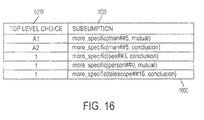
- Fig. 16 is an exemplary set of subsumption facts 1000 according to one aspect of this invention.
- the exemplary set of subsumption facts 1000 are comprised of a top level choice portion 1010 and a subsumption portion 1020.
- the first row contains "A1" in the top level choice portion 1010 and the value "more_specific(man##5, mutual)" in the subsumption portion 1020.
- the subsumption facts are determined by applying packed entailment and contradiction rewrite rules based on subsumption/specificity relations; cardinality; instantiability and spatio-temporal relationships.
- subsumption/specificity rules base subconcept assignments on concept inclusions, role restrictions from argument structure, cardinality and the like.
- terms “man##5", “person##0” and “see##3” occur in both the premise and the term substituted conclusion. They have identical assignments in both.
- Role restrictions are used to further refine this initial assessment.
- In the top level choice “see##3” has an additional conclusion role with “telescope##16”. This means that in the "A1" top level choice, “see##3” is more specific in the conclusion.
- "man##5" has an additional conclusion role, making it more specific in the conclusion.
- Instantiability rules are then applied to determine the consequences of these specificity relations on instantiability claims.
- instantiability of a specific concept entails instantiability of a more general concept
- uninstantiability of a general concept entails uninstantiability of a more specific concept
- instantiability of a specific concept contradicts uninstantiability of a more general concept and vice versa.
- the top level context, "t” is upward monotone.
- the embedded context, "cx_see##3" is recognized as being downward motonone through being linked to "t” via the context relation "not”.
- Rules encoding the instantiability relations eliminate all the instantiable and uninstantiable facts for the conclusion. When all the conclusion facts have been eliminated the premise entails the conclusion.
- Fig. 17 is an exemplary data structure for storing packed rewrite rules 1100 according to one aspect of this invention.
- the data structure for storing packed rewrite rules 1100 is comprised of an optional index portion 1110; an optional type portion 1110 and a rule portion 1130.
- the "1" value in the optional index portion 1110 indicates the number of the rule within the system providing a human readable label for the rule. Any unique identifier can be used as the index value.
- the "SUBSUMPTION" value in the optional type portion 1120 indicates the category or function of the rule.
- the left hand side of the rule looks for a concept term %Sk that is marked by an input facts as having the associated subconcept %QConcept in the query (Q) and is also marked by another input fact as having the associated subconcept %PConcept in the premise (P).
- a test is made to see is %QConcept is more specific the %PConcept. If the test succeeds, then the two matching input facts are removed, and a new fact added to the output: prelim_more_specific(%Sk, P). This states that the term %Sk has preliminarily been judged to denote a more specific concept in the premise P.
- the rule is activated by all pairs of input facts that match the left hand side.
- the second row contains the value "2" in the index portion 1110. This is a human readable unique reference number for accessing the rule.
- the type portion of the second row contains the value "SUBSUMPTION”. This indicates the classification or type of the rule in a human accessible format.
- the third row contains the value "3" in the index portion 1110 indicating the human readable reference number for the rule.
- the type portion contains the value "ROLE RESTRICTION” indicating that the rule is classified as a type of rule affecting role restrictions in the packed knowledge representations.
- the rule portion 1130 contains the value "prelim_morc_specific(%Sk, %PM), ⁇ member(%PM, [P, mutual]) ⁇ , P:role(%, %Sk, %), -- Q:role(%, %Sk, %) ⁇ more_specific(%Sk, P)."
- a fact asserting that the term is more specific in the premise is added, and the preliminary judgment of specificity removed.
- the fourth row contains the value "4" in the index portion 1110 indicating the human readable reference number for the rule.
- the type portion contains the value "ROLE RESTRICTION” indicating that the rule is classified as a type of rule affecting role restrictions in the packed knowledge representations.
- the fifth row contains the value "5" in the index portion 1110 indicating the human readable reference number for the rule.
- the type portion contains the value "INSTANTIATION” indicating that the rule is classified as a type of rule affecting instantiations in the packed knowledge representations.
- the sixth row contains the value "6" in the index portion 1110 indicating the human readable reference number for the rule.
- the type portion contains the value "INSTANTIATION” indicating that the rule is classified as a type of rule affecting instantiations in the packed knowledge representations.
- Term %Sk is more specific in the premise, is instantiable in context %Ctx in the premise, but uninstantiable in %Ctx in the query. This indicates a contradiction, and this is flaged by adding a new "contradiction" fact to the output
- the seventh row contains the value "7" in the index portion 1110 indicating the human readable reference number for the rule.
- the type portion contains the value "CLEANUP” indicating that the rule is classified as a type of rule affecting cleanup processing in the packed knowledge representations.
- the eighth row contains the value "8'' in the index portion 1110 indicating the human readable reference number for the rule.
- the type portion contains the value "CLEANUP” indicating that the rule is classified as a type of rule affecting cleanup processing in the packed knowledge representations.
- each of the circuits 10-60 outlined above can be implemented as portions of a suitably programmed general-purpose computer.
- 10-60 of the entailment and contradiction detection system 100 outlined above can be implemented as physically distinct hardware circuits within an ASIC, or using a FPGA, a PDL, a PLA or a PAL, or using discrete logic elements or discrete circuit elements.
- the particular form each of the circuits 10-60 of the entailment and contradiction detection system 100 outlined above will take is a design choice and will be obvious and predictable to those skilled in the art.
- the entailment and contradiction detection system 100 and/or each of the various circuits discussed above can each be implemented as software routines, managers or objects executing on a programmed general purpose computer, a special purpose computer, a microprocessor or the like.
- the entailment and contradiction detection system 100 and/or each of the various circuits discussed above can each be implemented as one or more routines embedded in the communications network, as a resource residing on a server, or the like.
- the entailment and contradiction detection system 100 and the various circuits discussed above can also be implemented by physically incorporating the entailment and contradiction detection system 100 into software and/or hardware system, such as the hardware and software systems of a web server or a client device.
- memory 15 and entailment/contradictions rule memory 40 can be implemented using any appropriate combination of alterable, volatile or non-volatile memory or non-alterable, or fixed memory.
- the alterable memory whether volatile or non-volatile, can be implemented using any one or more of static or dynamic RAM, a floppy disk and disk drive, a write-able or rewrite-able optical disk and disk drive, a hard drive, flash memory or the like.
- the non-alterable or fixed memory can be implemented using any one or more of ROM, PROM, EPROM, EEPROM, an optical ROM disk, such as a CD-ROM or DVD-ROM disk, and disk drive or the like.
- the communication links 99 shown in Figs. 1 & 6, can each be any known or later developed device or system for connecting a communication device to the entailment and contradiction detection system 100, including a direct cable connection, a connection over a wide area network or a local area network, a connection over an intranet, a connection over the Internet, or a connection over any other distributed processing network or system.
- the communication links 99 can be any known or later developed connection system or structure usable to connect devices and facilitate communication.
- the communication links 99 can be wired or wireless links to a network.
- the network can be a local area network, a wide area network, an intranet, the Internet, or any other distributed processing and storage network.
Landscapes
- Engineering & Computer Science (AREA)
- Theoretical Computer Science (AREA)
- General Physics & Mathematics (AREA)
- Mathematical Physics (AREA)
- Evolutionary Computation (AREA)
- Physics & Mathematics (AREA)
- Computing Systems (AREA)
- General Engineering & Computer Science (AREA)
- Computational Linguistics (AREA)
- Data Mining & Analysis (AREA)
- Software Systems (AREA)
- Artificial Intelligence (AREA)
- Information Retrieval, Db Structures And Fs Structures Therefor (AREA)
- Document Processing Apparatus (AREA)
- Machine Translation (AREA)
- Devices For Executing Special Programs (AREA)
- Exchange Systems With Centralized Control (AREA)
Applications Claiming Priority (1)
| Application Number | Priority Date | Filing Date | Title |
|---|---|---|---|
| US11/415,609 US7313515B2 (en) | 2006-05-01 | 2006-05-01 | Systems and methods for detecting entailment and contradiction |
Publications (2)
| Publication Number | Publication Date |
|---|---|
| EP1852811A2 true EP1852811A2 (de) | 2007-11-07 |
| EP1852811A3 EP1852811A3 (de) | 2008-02-06 |
Family
ID=38357589
Family Applications (1)
| Application Number | Title | Priority Date | Filing Date |
|---|---|---|---|
| EP07107208A Withdrawn EP1852811A3 (de) | 2006-05-01 | 2007-04-30 | Systeme und Verfahren zum Erkennen von Vorbedingungen und Widersprüchen |
Country Status (3)
| Country | Link |
|---|---|
| US (1) | US7313515B2 (de) |
| EP (1) | EP1852811A3 (de) |
| JP (1) | JP5121296B2 (de) |
Cited By (4)
| Publication number | Priority date | Publication date | Assignee | Title |
|---|---|---|---|---|
| US10942958B2 (en) | 2015-05-27 | 2021-03-09 | International Business Machines Corporation | User interface for a query answering system |
| US11030227B2 (en) | 2015-12-11 | 2021-06-08 | International Business Machines Corporation | Discrepancy handler for document ingestion into a corpus for a cognitive computing system |
| US11074286B2 (en) | 2016-01-12 | 2021-07-27 | International Business Machines Corporation | Automated curation of documents in a corpus for a cognitive computing system |
| US11308143B2 (en) | 2016-01-12 | 2022-04-19 | International Business Machines Corporation | Discrepancy curator for documents in a corpus of a cognitive computing system |
Families Citing this family (48)
| Publication number | Priority date | Publication date | Assignee | Title |
|---|---|---|---|---|
| EP1983444A1 (de) * | 2007-04-16 | 2008-10-22 | The European Community, represented by the European Commission | Verfahren zur Extraktion von Beziehungsstrukturen aus Artikeln |
| US8037086B1 (en) | 2007-07-10 | 2011-10-11 | Google Inc. | Identifying common co-occurring elements in lists |
| WO2009083966A2 (en) * | 2007-12-27 | 2009-07-09 | Asaf Rachamim | System, method and apparatus for solving constraint satisfaction problems for user interface and search engine |
| US8332394B2 (en) | 2008-05-23 | 2012-12-11 | International Business Machines Corporation | System and method for providing question and answers with deferred type evaluation |
| US8275803B2 (en) | 2008-05-14 | 2012-09-25 | International Business Machines Corporation | System and method for providing answers to questions |
| WO2011106776A2 (en) | 2010-02-26 | 2011-09-01 | Multimodal Technologies, Inc. | Clinical data reconciliation as part of a report generation solution |
| US9858338B2 (en) | 2010-04-30 | 2018-01-02 | International Business Machines Corporation | Managed document research domains |
| US8554542B2 (en) | 2010-05-05 | 2013-10-08 | Xerox Corporation | Textual entailment method for linking text of an abstract to text in the main body of a document |
| US20120078062A1 (en) | 2010-09-24 | 2012-03-29 | International Business Machines Corporation | Decision-support application and system for medical differential-diagnosis and treatment using a question-answering system |
| US8892550B2 (en) | 2010-09-24 | 2014-11-18 | International Business Machines Corporation | Source expansion for information retrieval and information extraction |
| US8738617B2 (en) * | 2010-09-28 | 2014-05-27 | International Business Machines Corporation | Providing answers to questions using multiple models to score candidate answers |
| WO2012053175A1 (ja) * | 2010-10-21 | 2012-04-26 | 日本電気株式会社 | 含意判定装置、方法、およびプログラム |
| US9594788B2 (en) * | 2011-02-25 | 2017-03-14 | International Business Machines Corporation | Displaying logical statement relationships between diverse documents in a research domain |
| DE102011079034A1 (de) | 2011-07-12 | 2013-01-17 | Siemens Aktiengesellschaft | Ansteuerung eines technischen Systems |
| US20130106894A1 (en) | 2011-10-31 | 2013-05-02 | Elwha LLC, a limited liability company of the State of Delaware | Context-sensitive query enrichment |
| CN102360346B (zh) * | 2011-10-31 | 2014-05-21 | 武汉大学 | 基于受限的语义依存分析的文本推理方法 |
| US10559380B2 (en) | 2011-12-30 | 2020-02-11 | Elwha Llc | Evidence-based healthcare information management protocols |
| US10475142B2 (en) | 2011-12-30 | 2019-11-12 | Elwha Llc | Evidence-based healthcare information management protocols |
| US10679309B2 (en) | 2011-12-30 | 2020-06-09 | Elwha Llc | Evidence-based healthcare information management protocols |
| US20130173294A1 (en) | 2011-12-30 | 2013-07-04 | Elwha LLC, a limited liability company of the State of Delaware | Evidence-based healthcare information management protocols |
| US10552581B2 (en) | 2011-12-30 | 2020-02-04 | Elwha Llc | Evidence-based healthcare information management protocols |
| US10340034B2 (en) | 2011-12-30 | 2019-07-02 | Elwha Llc | Evidence-based healthcare information management protocols |
| US10528913B2 (en) | 2011-12-30 | 2020-01-07 | Elwha Llc | Evidence-based healthcare information management protocols |
| US8560305B1 (en) * | 2012-05-16 | 2013-10-15 | Hristo Georgiev | Logifolg |
| US9015098B1 (en) | 2012-06-04 | 2015-04-21 | Amazon Technologies, Inc. | Method and system for checking the consistency of established facts within internal works |
| US10156956B2 (en) | 2012-08-13 | 2018-12-18 | Mmodal Ip Llc | Maintaining a discrete data representation that corresponds to information contained in free-form text |
| US10621880B2 (en) | 2012-09-11 | 2020-04-14 | International Business Machines Corporation | Generating secondary questions in an introspective question answering system |
| US9569425B2 (en) | 2013-03-01 | 2017-02-14 | The Software Shop, Inc. | Systems and methods for improving the efficiency of syntactic and semantic analysis in automated processes for natural language understanding using traveling features |
| US9262938B2 (en) | 2013-03-15 | 2016-02-16 | International Business Machines Corporation | Combining different type coercion components for deferred type evaluation |
| WO2014182820A2 (en) | 2013-05-07 | 2014-11-13 | Haley Paul V | System for knowledge acquisition |
| JP6008067B2 (ja) * | 2014-07-22 | 2016-10-19 | 日本電気株式会社 | テキスト処理システム、テキスト処理方法およびテキスト処理プログラム |
| CN105447609A (zh) * | 2014-08-29 | 2016-03-30 | 国际商业机器公司 | 用于处理案例管理模型的方法、装置和系统 |
| US9946763B2 (en) | 2014-11-05 | 2018-04-17 | International Business Machines Corporation | Evaluating passages in a question answering computer system |
| US9652799B2 (en) | 2014-12-18 | 2017-05-16 | Nuance Communications, Inc. | Product recommendation with product review analysis |
| US10783159B2 (en) | 2014-12-18 | 2020-09-22 | Nuance Communications, Inc. | Question answering with entailment analysis |
| US10303798B2 (en) * | 2014-12-18 | 2019-05-28 | Nuance Communications, Inc. | Question answering from structured and unstructured data sources |
| US9846901B2 (en) | 2014-12-18 | 2017-12-19 | Nuance Communications, Inc. | Product recommendation with ontology-linked product review |
| US10950329B2 (en) | 2015-03-13 | 2021-03-16 | Mmodal Ip Llc | Hybrid human and computer-assisted coding workflow |
| EP3571608A4 (de) | 2017-01-17 | 2020-10-28 | MModal IP LLC | Verfahren und systeme zur manifestation und übertragung von folgebenachrichtigungen |
| EP3566151A4 (de) * | 2017-03-16 | 2020-11-04 | Microsoft Technology Licensing, LLC | Erzeugung von antworten beim automatisierten chatten |
| CN107133212B (zh) * | 2017-05-05 | 2020-06-26 | 北京大学 | 一种基于集成学习和词句综合信息的文本蕴涵识别方法 |
| US10229195B2 (en) * | 2017-06-22 | 2019-03-12 | International Business Machines Corporation | Relation extraction using co-training with distant supervision |
| US10223639B2 (en) | 2017-06-22 | 2019-03-05 | International Business Machines Corporation | Relation extraction using co-training with distant supervision |
| US10776370B2 (en) * | 2017-09-15 | 2020-09-15 | International Business Machines Corporation | Cognitive counter-matching of mined data |
| CA3083087A1 (en) | 2017-11-22 | 2019-05-31 | Mmodal Ip Llc | Automated code feedback system |
| US11200452B2 (en) | 2018-01-30 | 2021-12-14 | International Business Machines Corporation | Automatically curating ground truth data while avoiding duplication and contradiction |
| CN109710943B (zh) * | 2018-12-29 | 2022-12-20 | 携程旅游信息技术(上海)有限公司 | 矛盾语句识别方法和系统及条款逻辑鉴别方法和系统 |
| US11443208B2 (en) | 2020-03-19 | 2022-09-13 | International Business Machines Corporation | Assessment of inconsistent statements to a recipient group |
Family Cites Families (5)
| Publication number | Priority date | Publication date | Assignee | Title |
|---|---|---|---|---|
| US5438511A (en) | 1988-10-19 | 1995-08-01 | Xerox Corporation | Disjunctive unification |
| JP3289304B2 (ja) * | 1992-03-10 | 2002-06-04 | 株式会社日立製作所 | 手話変換装置および方法 |
| US5642519A (en) * | 1994-04-29 | 1997-06-24 | Sun Microsystems, Inc. | Speech interpreter with a unified grammer compiler |
| US5748973A (en) * | 1994-07-15 | 1998-05-05 | George Mason University | Advanced integrated requirements engineering system for CE-based requirements assessment |
| US7171403B2 (en) | 2003-01-09 | 2007-01-30 | Palo Alto Research Center Incorporated | Systems and methods for efficient conjunction of Boolean variables |
-
2006
- 2006-05-01 US US11/415,609 patent/US7313515B2/en not_active Expired - Fee Related
-
2007
- 2007-04-25 JP JP2007116258A patent/JP5121296B2/ja not_active Expired - Fee Related
- 2007-04-30 EP EP07107208A patent/EP1852811A3/de not_active Withdrawn
Non-Patent Citations (2)
| Title |
|---|
| D CROUCH ET AL.: "Entailment, Intensionality, and Text Understanding", PROCEEDINGS OF THE HLT-NAACL 2003 WORKSHOP ON TEXT MEANING, vol. 9, 31 May 2003 (2003-05-31), pages 38 - 45, XP002460655 |
| D CROUCH: "Packed Rewriting for Mapping Semantics to KR", 6TH INTERNATIONAL WORKSHOP ON COMPUTATIONAL SEMANTICS IWCS-6, 14 January 2005 (2005-01-14) |
Cited By (4)
| Publication number | Priority date | Publication date | Assignee | Title |
|---|---|---|---|---|
| US10942958B2 (en) | 2015-05-27 | 2021-03-09 | International Business Machines Corporation | User interface for a query answering system |
| US11030227B2 (en) | 2015-12-11 | 2021-06-08 | International Business Machines Corporation | Discrepancy handler for document ingestion into a corpus for a cognitive computing system |
| US11074286B2 (en) | 2016-01-12 | 2021-07-27 | International Business Machines Corporation | Automated curation of documents in a corpus for a cognitive computing system |
| US11308143B2 (en) | 2016-01-12 | 2022-04-19 | International Business Machines Corporation | Discrepancy curator for documents in a corpus of a cognitive computing system |
Also Published As
| Publication number | Publication date |
|---|---|
| JP2007299398A (ja) | 2007-11-15 |
| EP1852811A3 (de) | 2008-02-06 |
| US7313515B2 (en) | 2007-12-25 |
| JP5121296B2 (ja) | 2013-01-16 |
| US20070255555A1 (en) | 2007-11-01 |
Similar Documents
| Publication | Publication Date | Title |
|---|---|---|
| US7313515B2 (en) | Systems and methods for detecting entailment and contradiction | |
| US7657546B2 (en) | Knowledge management system, program product and method | |
| CA2536265C (en) | System and method for processing a query | |
| US11100124B2 (en) | Systems and methods for similarity and context measures for trademark and service mark analysis and repository searches | |
| US8010539B2 (en) | Phrase based snippet generation | |
| US8751218B2 (en) | Indexing content at semantic level | |
| Moens | Innovative techniques for legal text retrieval | |
| US20060224379A1 (en) | Method of finding answers to questions | |
| US20060235870A1 (en) | System and method for generating an interlinked taxonomy structure | |
| EP1445713A1 (de) | Automatische Ermittlung von Anfragesprachenmerkmalen von Websiten | |
| Boese | Stereotyping the web: genre classification of web documents | |
| CN115098668B (zh) | 一种文档排序方法、排序装置、电子设备和存储介质 | |
| JP2006244262A (ja) | 質問回答検索システム、方法およびプログラム | |
| US20150269693A1 (en) | Method and System of querying patent information based on image interface | |
| CN121234941A (zh) | 基于人工智能的行业动态追踪语义分析方法及系统 | |
| Brummerloh et al. | Boromir at Touché 2022: Combining Natural Language Processing and Machine Learning Techniques for Image Retrieval for Arguments. | |
| Ko et al. | Combining evidence with a probabilistic framework for answer ranking and answer merging in question answering | |
| Secker et al. | AISIID: An artificial immune system for interesting information discovery on the web | |
| CN109977235A (zh) | 一种触发词的确定方法和装置 | |
| Geng | Legal text mining and analysis based on artificial intelligence | |
| KR101088483B1 (ko) | 이종 분류체계들을 매핑시키는 방법 및 장치 | |
| WO2015148410A1 (en) | Image interface for extracting patent features | |
| Valerio et al. | Automatically associating documents with concept map knowledge models | |
| Hao et al. | Bootstrap-based equivalent pattern learning for collaborative question answering | |
| Rajpal et al. | A Novel Techinque For Ranking of Documents Using Semantic Similarity |
Legal Events
| Date | Code | Title | Description |
|---|---|---|---|
| PUAI | Public reference made under article 153(3) epc to a published international application that has entered the european phase |
Free format text: ORIGINAL CODE: 0009012 |
|
| AK | Designated contracting states |
Kind code of ref document: A2 Designated state(s): AT BE BG CH CY CZ DE DK EE ES FI FR GB GR HU IE IS IT LI LT LU LV MC MT NL PL PT RO SE SI SK TR |
|
| AX | Request for extension of the european patent |
Extension state: AL BA HR MK YU |
|
| PUAL | Search report despatched |
Free format text: ORIGINAL CODE: 0009013 |
|
| AK | Designated contracting states |
Kind code of ref document: A3 Designated state(s): AT BE BG CH CY CZ DE DK EE ES FI FR GB GR HU IE IS IT LI LT LU LV MC MT NL PL PT RO SE SI SK TR |
|
| AX | Request for extension of the european patent |
Extension state: AL BA HR MK YU |
|
| 17P | Request for examination filed |
Effective date: 20080806 |
|
| AKX | Designation fees paid |
Designated state(s): DE FR GB |
|
| 17Q | First examination report despatched |
Effective date: 20081027 |
|
| STAA | Information on the status of an ep patent application or granted ep patent |
Free format text: STATUS: THE APPLICATION IS DEEMED TO BE WITHDRAWN |
|
| 18D | Application deemed to be withdrawn |
Effective date: 20151103 |