EP1852120A1 - Ointment - Google Patents
Ointment Download PDFInfo
- Publication number
- EP1852120A1 EP1852120A1 EP06713672A EP06713672A EP1852120A1 EP 1852120 A1 EP1852120 A1 EP 1852120A1 EP 06713672 A EP06713672 A EP 06713672A EP 06713672 A EP06713672 A EP 06713672A EP 1852120 A1 EP1852120 A1 EP 1852120A1
- Authority
- EP
- European Patent Office
- Prior art keywords
- formula
- ointment
- white petrolatum
- compound represented
- oleaginous base
- Prior art date
- Legal status (The legal status is an assumption and is not a legal conclusion. Google has not performed a legal analysis and makes no representation as to the accuracy of the status listed.)
- Withdrawn
Links
Images
Classifications
-
- A—HUMAN NECESSITIES
- A61—MEDICAL OR VETERINARY SCIENCE; HYGIENE
- A61K—PREPARATIONS FOR MEDICAL, DENTAL OR TOILETRY PURPOSES
- A61K47/00—Medicinal preparations characterised by the non-active ingredients used, e.g. carriers or inert additives; Targeting or modifying agents chemically bound to the active ingredient
- A61K47/06—Organic compounds, e.g. natural or synthetic hydrocarbons, polyolefins, mineral oil, petrolatum or ozokerite
-
- A—HUMAN NECESSITIES
- A61—MEDICAL OR VETERINARY SCIENCE; HYGIENE
- A61K—PREPARATIONS FOR MEDICAL, DENTAL OR TOILETRY PURPOSES
- A61K31/00—Medicinal preparations containing organic active ingredients
- A61K31/185—Acids; Anhydrides, halides or salts thereof, e.g. sulfur acids, imidic, hydrazonic or hydroximic acids
- A61K31/19—Carboxylic acids, e.g. valproic acid
-
- A—HUMAN NECESSITIES
- A61—MEDICAL OR VETERINARY SCIENCE; HYGIENE
- A61K—PREPARATIONS FOR MEDICAL, DENTAL OR TOILETRY PURPOSES
- A61K31/00—Medicinal preparations containing organic active ingredients
- A61K31/557—Eicosanoids, e.g. leukotrienes or prostaglandins
-
- A—HUMAN NECESSITIES
- A61—MEDICAL OR VETERINARY SCIENCE; HYGIENE
- A61K—PREPARATIONS FOR MEDICAL, DENTAL OR TOILETRY PURPOSES
- A61K31/00—Medicinal preparations containing organic active ingredients
- A61K31/557—Eicosanoids, e.g. leukotrienes or prostaglandins
- A61K31/5575—Eicosanoids, e.g. leukotrienes or prostaglandins having a cyclopentane, e.g. prostaglandin E2, prostaglandin F2-alpha
-
- A—HUMAN NECESSITIES
- A61—MEDICAL OR VETERINARY SCIENCE; HYGIENE
- A61K—PREPARATIONS FOR MEDICAL, DENTAL OR TOILETRY PURPOSES
- A61K47/00—Medicinal preparations characterised by the non-active ingredients used, e.g. carriers or inert additives; Targeting or modifying agents chemically bound to the active ingredient
- A61K47/06—Organic compounds, e.g. natural or synthetic hydrocarbons, polyolefins, mineral oil, petrolatum or ozokerite
- A61K47/24—Organic compounds, e.g. natural or synthetic hydrocarbons, polyolefins, mineral oil, petrolatum or ozokerite containing atoms other than carbon, hydrogen, oxygen, halogen, nitrogen or sulfur, e.g. cyclomethicone or phospholipids
-
- A—HUMAN NECESSITIES
- A61—MEDICAL OR VETERINARY SCIENCE; HYGIENE
- A61K—PREPARATIONS FOR MEDICAL, DENTAL OR TOILETRY PURPOSES
- A61K9/00—Medicinal preparations characterised by special physical form
- A61K9/0012—Galenical forms characterised by the site of application
- A61K9/0014—Skin, i.e. galenical aspects of topical compositions
-
- A—HUMAN NECESSITIES
- A61—MEDICAL OR VETERINARY SCIENCE; HYGIENE
- A61K—PREPARATIONS FOR MEDICAL, DENTAL OR TOILETRY PURPOSES
- A61K9/00—Medicinal preparations characterised by special physical form
- A61K9/06—Ointments; Bases therefor; Other semi-solid forms, e.g. creams, sticks, gels
-
- A—HUMAN NECESSITIES
- A61—MEDICAL OR VETERINARY SCIENCE; HYGIENE
- A61P—SPECIFIC THERAPEUTIC ACTIVITY OF CHEMICAL COMPOUNDS OR MEDICINAL PREPARATIONS
- A61P17/00—Drugs for dermatological disorders
-
- A—HUMAN NECESSITIES
- A61—MEDICAL OR VETERINARY SCIENCE; HYGIENE
- A61P—SPECIFIC THERAPEUTIC ACTIVITY OF CHEMICAL COMPOUNDS OR MEDICINAL PREPARATIONS
- A61P17/00—Drugs for dermatological disorders
- A61P17/04—Antipruritics
-
- A—HUMAN NECESSITIES
- A61—MEDICAL OR VETERINARY SCIENCE; HYGIENE
- A61P—SPECIFIC THERAPEUTIC ACTIVITY OF CHEMICAL COMPOUNDS OR MEDICINAL PREPARATIONS
- A61P29/00—Non-central analgesic, antipyretic or antiinflammatory agents, e.g. antirheumatic agents; Non-steroidal antiinflammatory drugs [NSAID]
-
- A—HUMAN NECESSITIES
- A61—MEDICAL OR VETERINARY SCIENCE; HYGIENE
- A61P—SPECIFIC THERAPEUTIC ACTIVITY OF CHEMICAL COMPOUNDS OR MEDICINAL PREPARATIONS
- A61P37/00—Drugs for immunological or allergic disorders
- A61P37/08—Antiallergic agents
-
- A—HUMAN NECESSITIES
- A61—MEDICAL OR VETERINARY SCIENCE; HYGIENE
- A61P—SPECIFIC THERAPEUTIC ACTIVITY OF CHEMICAL COMPOUNDS OR MEDICINAL PREPARATIONS
- A61P43/00—Drugs for specific purposes, not provided for in groups A61P1/00-A61P41/00
Definitions
- the present invention relates to an ointment containing a pharmaceutical agent having an antipruritic effect, which ointment has low skin irritancy and excellent storage stability.
- R 1 represents any group of:
- External preparations are available in numerous formulations such as ointment, cream, lotion, tape, and the like, and it is required to select a formulation and a base that are suitable for the use, depending on the skin condition.
- ointment is often selected from the fact that the patients originally have dry skin, or that ointment can be safely used even in those sites that have been wetted due to scratching or the like.
- Patent Document 1 International Patent Application Publication No. WO 2004/014394
- the inventors of the present invention have attempted, in order to provide a medicament having an excellent effect on the pruritus caused by atopy, to prepare an ointment containing the compound represented by formula (I).
- hydrophilic base In the case of preparing an ointment, use of a hydrophilic base would be contemplated as the prime choice in terms of the feasibility in blending with the main drug, which serves the role of the base, or the problem of percutaneous absorbability, however, as hydrophilic bases often require surfactants or preservatives, when those are causative of skin irritation, it is possible that application thereof to atopic dermatitis would be limited. Furthermore, the active ingredient of the invention could not attain sufficient storage stability in an ointment using a hydrophilic base.
- An object of the present invention is to provide an ointment in which the compound represented by formula (I) having an excellent effect is stably blended.
- an oleaginous ointment having excellent storage stability for the compound represented by formula (I) and low skin irritancy can be obtained by dispersing the compound represented by formula (I) in an oleaginous base which does not dissolve the compound represented by formula (I), in a solid state or in an oily state.
- the inventors also found that the ointment thus obtained was an ointment having excellent releasability of the active ingredient from the base, despite that the active ingredient is dispersed in a solid state or in an oily state, and thus completed the present invention.
- the present invention is an ointment containing a compound represented by formula (I):
- R 1 represents any group of
- the ointment of the present invention was found to have excellent storage stability with respect to the compound represented by formula (I) and low skin irritancy, as well as excellent drug releasability and sense of use.
- the family of compounds represented by formula (I), which is blended as an active ingredient in the present invention, is such that any member therefrom exhibits excellent effects and can be favorably prepared into the ointment of the present invention, but in particular, a compound represented by formula (II):
- the active ingredient of the present invention exhibits its effect even in low concentration ranges in the ointment, the present invention can be applied as long as the active ingredient is in an amount in the range where the effect is manifested.
- a preferred range is from 0.000001% to 0.1% of the ointment as a whole, while a more preferred range is from 0.00001% to 0.01%, and a particularly preferred range is from 0.0001 % to 0.001%.
- the base is preferably selected from hydrocarbons, fatty acid esters, or animal and plant oils, and is more preferably one or two or more selected from the group consisting of white petrolatum, gelated hydrocarbons, light liquid paraffin, liquid paraffin, diisopropyl adipate, isopropyl palmitate, isopropyl myristate, octyl dodecyl myristate and medium-chain fatty acid triglycerides.
- a composition containing saturated hydrocarbons is preferred, and in particular, white petrolatum, a combination of white petrolatum and light liquid paraffin, a combination of white petrolatum and liquid paraffin, a combination of white petrolatum and paraffin, a combination of white petrolatum and squalane, a combination of white petrolatum and methylpolysiloxane or gelated hydrocarbon is more preferred.
- the blending amount of the light liquid paraffin, liquid paraffin, paraffin, squalane or methylpolysiloxane is preferably 10% or less of the whole ointment.
- the oleaginous base of the present invention prefferably uses a material which has been purified by removing impurities, in terms of securing the stability of the component.
- a white petrolatum which has been purified by removing impurities that are adsorbable to silica gel through column chromatography or the like, is preferred.
- the ointment of the present invention is characterized in that the compound of formula (I) is dispersed in an oleaginous base in a solid state or in an oily state, and can be prepared as an ointment having excellent storage stability.
- the term "disperse in an oily state” means a state in which the compound of formula (I) is dispersed in the oleaginous base not as crystals but in an oily state. This state can be confirmed by observing with a microscope.
- the method for preparing an ointment as such is as follows.
- a dispersion medium for the compound of formula (I) white petrolatum, light liquid paraffin, liquid paraffin, paraffin, squalane, methylpolysiloxane, medium-chain fatty acid triglyceride, isopropyl myristate, isopropyl palmitate and the like are used, and they are added after heating, if necessary, to obtain a mixed dispersion.
- the resulting mixed dispersion is added to and mixed with an oleaginous base with stirring, thus to disperse the components homogeneously.
- the mixed dispersion while maintaining the temperature of the oleaginous base in a range which is lower than the melting point of the compound represented by formula (I), and higher than the melting point of the oleaginous base.
- the temperature is preferably maintained at 45°C to 55°C.
- optional components are added according to necessity, and mixed with stirring while cooling to room temperature, thus, an ointment having the components homogeneously dispersed can be obtained.
- the ointment of the present invention can appropriately contain, in addition to the compound represented by formula (I) and the oleaginous base, an antioxidant such as butylhydroxyanisole or dibutylhydroxytoluene, a stabilizer such as EDTA-2Na, and the like within the scope of not impairing the effect of the present invention.
- an antioxidant such as butylhydroxyanisole or dibutylhydroxytoluene
- a stabilizer such as EDTA-2Na
- the ointment preparation of the present invention By using the ointment preparation of the present invention, not only a preparation having low skin irritancy and good storage stability with regard to the compound could be obtained, but onset of the effect was also confirmed, as the ointment showed a drug releasability equivalent to that of a dissolved type preparation, even though the active ingredient was dispersed in the oleaginous base in a solid state or in an oily state.
- An ointment was prepared in the same manner as in Example 1, except that the medium-chain fatty acid triglyceride was replaced by isopropyl myristate.
- An ointment was prepared in the same manner as in Example 1, except that the medium-chain fatty acid triglyceride was replaced by isopropyl palmitate.
- Example 4 200 g of white petrolatum was heated to 80°C, and was purified by means of a column charged with 50 g of silica gel. An ointment was prepared in the same manner as in Example 4, except that the white petrolatum of Example 4 was replaced by this purified white petrolatum.
- Example 4 An ointment was prepared in the same manner as in Example 4, except that the white petrolatum of Example 4 was replaced by a commercially available hydrogenated purified white petrolatum (Sunwhite P-150, manufactured by Nikko Spain Corp.).
- Example 4 An ointment was prepared in the same manner as in Example 4, except that the white petrolatum of Example 4 was replaced by a commercially available purified white petrolatum (Crolatum V, manufactured by Croda Japan Co., Ltd.).
- Example 7 To evaluate the drug releasability from the ointments shown in Example 7 and Comparative Example 3, the preparations were filled in semi-permeable membranes, and were shaken in phosphate buffer solution at pH 7.4 at 37°C. The results are presented in Fig. 1. As is obvious from the figure, the compound represented by formula (II) was slowly released into the buffer solution, and the release rate from the ointment of Example 7 was equal to or greater than that of the ointment of Comparative Example 3. From this, it could be seen that although the active ingredient is dispersed in an oleaginous base in a solid state or in an oily state, the drug is released at a rate equal to or greater than that of a dissolved type preparation.
- a commercially available purified white petrolatum (Crolatum V, manufactured by Croda Japan Co., Ltd.) was heated to melt in a water bath, and was maintained at about 50°C.
- the present invention it is now possible to provide an ointment having an excellent effect on the pruritus caused by atopy, and thus the ointment can be used as a pharmaceutical product effective for the pruritus caused by atopy or the like.
Landscapes
- Health & Medical Sciences (AREA)
- Chemical & Material Sciences (AREA)
- Life Sciences & Earth Sciences (AREA)
- Pharmacology & Pharmacy (AREA)
- Veterinary Medicine (AREA)
- Public Health (AREA)
- General Health & Medical Sciences (AREA)
- Animal Behavior & Ethology (AREA)
- Medicinal Chemistry (AREA)
- Epidemiology (AREA)
- Chemical Kinetics & Catalysis (AREA)
- General Chemical & Material Sciences (AREA)
- Engineering & Computer Science (AREA)
- Nuclear Medicine, Radiotherapy & Molecular Imaging (AREA)
- Organic Chemistry (AREA)
- Bioinformatics & Cheminformatics (AREA)
- Dermatology (AREA)
- Oil, Petroleum & Natural Gas (AREA)
- Molecular Biology (AREA)
- Biophysics (AREA)
- Immunology (AREA)
- Rheumatology (AREA)
- Pulmonology (AREA)
- Pain & Pain Management (AREA)
- Medicinal Preparation (AREA)
- Pharmaceuticals Containing Other Organic And Inorganic Compounds (AREA)
Abstract
An ointment containing a compound represented by formula (I) :
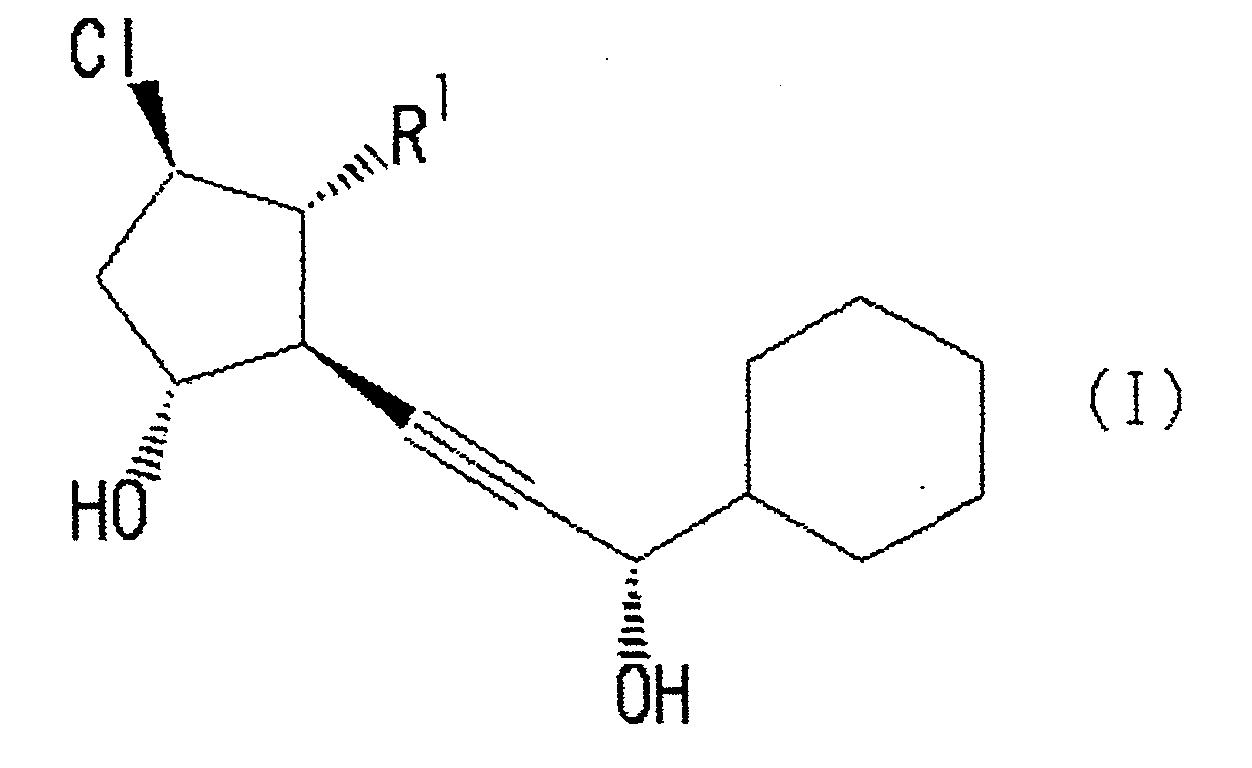
[wherein R1 represents any group of
a group represented by the formula: -(CH2)4-S-CH2-CO2H,
a group represented by the formula: -(CH2)4-S-CH2-CO2CH3,
a group represented by the formula: -(CH2)4-C≡C-CO2H,
a group represented by the formula:
-CH2-S-(CH2)2-S-CH2-CO2H, and
a group represented by the formula: -CH2-S-(CH2)4-CO2H],
and an oleaginous base, is an ointment containing a compound which is effective for atopic symptoms, and is an ointment having low skin irritancy and excellent storage stability, thus, can be used as a pharmaceutical product effective for the pruritus caused by atopy or the like.
a group represented by the formula: -(CH2)4-S-CH2-CO2H,
a group represented by the formula: -(CH2)4-S-CH2-CO2CH3,
a group represented by the formula: -(CH2)4-C≡C-CO2H,
a group represented by the formula:
-CH2-S-(CH2)2-S-CH2-CO2H, and
a group represented by the formula: -CH2-S-(CH2)4-CO2H],
and an oleaginous base, is an ointment containing a compound which is effective for atopic symptoms, and is an ointment having low skin irritancy and excellent storage stability, thus, can be used as a pharmaceutical product effective for the pruritus caused by atopy or the like.
Description
- The present invention relates to an ointment containing a pharmaceutical agent having an antipruritic effect, which ointment has low skin irritancy and excellent storage stability.
- In recent years, with an increasing number of patients suffering from allergic diseases including atopy, there is a demand on a medicine having excellent effects thereon.
- As therapeutic agents for atopy, steroid drugs, immunosuppressants and the like have been conventionally used. However, these medicaments do not have sufficient effect, and are not satisfactory even in terms of side effects or the like.
- Among them, a medicament containing a compound represented by formula (I), which has an excellent effect on the pruritus caused by atopy:
-


- [wherein R1 represents any group of:
- a group represented by the formula: -(CH2)4-S-CH2-CO2H,
- a group represented by the formula: - (CH2)4-S-CH2-CO2CH3,
- a group represented by the formula: -(CH2)4-C=C-CO2H,
- a group represented by the formula:
-CH2-S-(CH2)2-S-CH2-CO2H, and
- a group represented by the formula: -CH2-S-(CH2)4-CO2H],
- or the like as an active ingredient, has been disclosed (Patent Document 1).
- External preparations are available in numerous formulations such as ointment, cream, lotion, tape, and the like, and it is required to select a formulation and a base that are suitable for the use, depending on the skin condition. In the case of an external preparation applicable to atopic dermatitis, ointment is often selected from the fact that the patients originally have dry skin, or that ointment can be safely used even in those sites that have been wetted due to scratching or the like.
- [Patent Document 1] International Patent Application Publication No.
WO 2004/014394 - The inventors of the present invention have attempted, in order to provide a medicament having an excellent effect on the pruritus caused by atopy, to prepare an ointment containing the compound represented by formula (I).
- In the case of preparing an ointment, use of a hydrophilic base would be contemplated as the prime choice in terms of the feasibility in blending with the main drug, which serves the role of the base, or the problem of percutaneous absorbability, however, as hydrophilic bases often require surfactants or preservatives, when those are causative of skin irritation, it is possible that application thereof to atopic dermatitis would be limited. Furthermore, the active ingredient of the invention could not attain sufficient storage stability in an ointment using a hydrophilic base.
- Moreover, with regard to an oleaginous base, since the solubility of the compound represented by formula (I) therein is insufficient, it has been difficult to dissolve the compound represented by formula (I) in the preparation.
- An object of the present invention is to provide an ointment in which the compound represented by formula (I) having an excellent effect is stably blended.
- The inventors of the present invention have repeated investigation in various ways to solve the above problems, and as a result, found that an oleaginous ointment having excellent storage stability for the compound represented by formula (I) and low skin irritancy can be obtained by dispersing the compound represented by formula (I) in an oleaginous base which does not dissolve the compound represented by formula (I), in a solid state or in an oily state. In addition, the inventors also found that the ointment thus obtained was an ointment having excellent releasability of the active ingredient from the base, despite that the active ingredient is dispersed in a solid state or in an oily state, and thus completed the present invention.
- Thus, the present invention is an ointment containing a compound represented by formula (I):
-

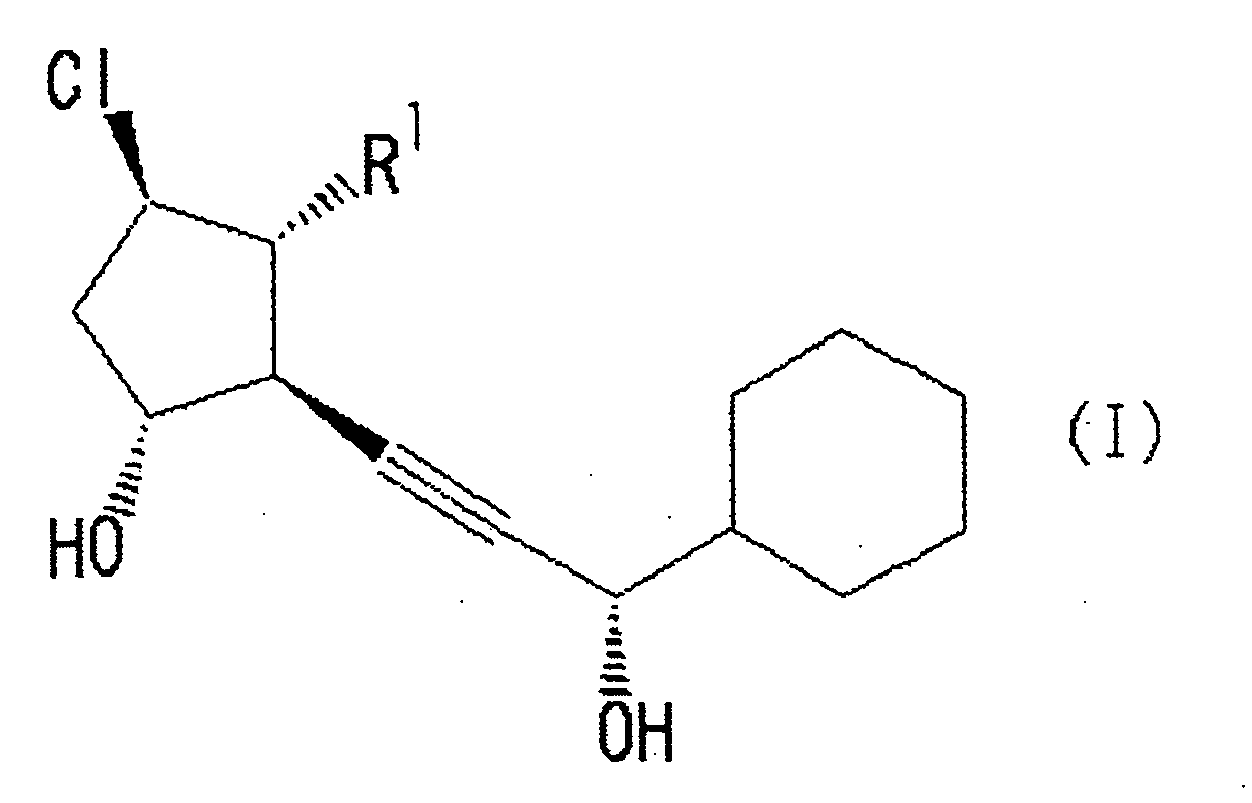
- [wherein R1 represents any group of
- a group represented by the formula: -(CH2)4-S-CH2-CO2H,
- a group represented by the formula: -(CH2)4-S-CH2-CO2CH3,
- a group represented by the formula: -(CH2)4-C≡C-CO2H,
- a group represented by the formula:
-CH2-S-(CH2)2-S-CH2-CO2H, and
- a group represented by the formula: -CH2-S-(CH2)4-CO2H],
- and an oleaginous base.
- The ointment of the present invention was found to have excellent storage stability with respect to the compound represented by formula (I) and low skin irritancy, as well as excellent drug releasability and sense of use.
-
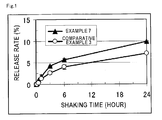
- [Fig. 1] A graph showing the rates of drug release from ointments at pH 7.4, which ointments were filled in semi-permeable membranes and shaken in phosphate buffer solution at 37°C. The vertical axis in the graph represents the drug release rate, while the horizontal axis represents time.
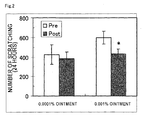
- [Fig. 2] A graph showing the number of scratching action (average value ± SE, n = 8) when a present ointment was applied to NC/Nga mice. The graph shows that in the case of the 0.001% ointment, the number of scratching significantly (P < 0.05) decreased after the application.
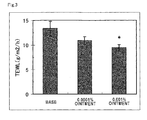
- [Fig. 3] A graph showing the amount of transdermal evaporation of water (TEWL, average value ± SE, n = 8) when a present ointment was applied to BALB/c mice having the skin barrier destroyed by chafing. It can be seen that when compared with the case where only the base was applied, applying a 0.001% ointment led to a significant (P < 0.05) decrease in TEWL.
- The family of compounds represented by formula (I), which is blended as an active ingredient in the present invention, is such that any member therefrom exhibits excellent effects and can be favorably prepared into the ointment of the present invention, but in particular, a compound represented by formula (II):
-

- is excellent in stability, skin irritation, drug releasability and the sense of use, thus it being particularly preferred.
- In general, drugs at their low concentrations frequently deteriorate in stability and homogeneity. According to the present invention, however, it is possible to provide preparations having excellent stability, homogeneity and drug releasability even at extremely low concentrations. Since the active ingredient of the present invention exhibits its effect even in low concentration ranges in the ointment, the present invention can be applied as long as the active ingredient is in an amount in the range where the effect is manifested. But, a preferred range is from 0.000001% to 0.1% of the ointment as a whole, while a more preferred range is from 0.00001% to 0.01%, and a particularly preferred range is from 0.0001 % to 0.001%.
- For the oleaginous base used in the present invention, those commonly used in oily ointments can be used, but the base is preferably selected from hydrocarbons, fatty acid esters, or animal and plant oils, and is more preferably one or two or more selected from the group consisting of white petrolatum, gelated hydrocarbons, light liquid paraffin, liquid paraffin, diisopropyl adipate, isopropyl palmitate, isopropyl myristate, octyl dodecyl myristate and medium-chain fatty acid triglycerides.
- Among these oleaginous bases, a composition containing saturated hydrocarbons is preferred, and in particular, white petrolatum, a combination of white petrolatum and light liquid paraffin, a combination of white petrolatum and liquid paraffin, a combination of white petrolatum and paraffin, a combination of white petrolatum and squalane, a combination of white petrolatum and methylpolysiloxane or gelated hydrocarbon is more preferred. In the case of using light liquid paraffin, liquid paraffin, paraffin, squalane or methylpolysiloxane in combination with white petrolatum for the oleaginous base, the blending amount of the light liquid paraffin, liquid paraffin, paraffin, squalane or methylpolysiloxane is preferably 10% or less of the whole ointment.
- It is preferable for the oleaginous base of the present invention to use a material which has been purified by removing impurities, in terms of securing the stability of the component. In particular, a white petrolatum which has been purified by removing impurities that are adsorbable to silica gel through column chromatography or the like, is preferred.
- The ointment of the present invention is characterized in that the compound of formula (I) is dispersed in an oleaginous base in a solid state or in an oily state, and can be prepared as an ointment having excellent storage stability.
- Here, the term "disperse in an oily state" means a state in which the compound of formula (I) is dispersed in the oleaginous base not as crystals but in an oily state. This state can be confirmed by observing with a microscope.
- The method for preparing an ointment as such is as follows.
- As a dispersion medium for the compound of formula (I), white petrolatum, light liquid paraffin, liquid paraffin, paraffin, squalane, methylpolysiloxane, medium-chain fatty acid triglyceride, isopropyl myristate, isopropyl palmitate and the like are used, and they are added after heating, if necessary, to obtain a mixed dispersion. The resulting mixed dispersion is added to and mixed with an oleaginous base with stirring, thus to disperse the components homogeneously. At this time, it is preferable to add the mixed dispersion while maintaining the temperature of the oleaginous base in a range which is lower than the melting point of the compound represented by formula (I), and higher than the melting point of the oleaginous base. Particularly, in the case of using the compound represented by formula (II), the temperature is preferably maintained at 45°C to 55°C. Subsequently, optional components are added according to necessity, and mixed with stirring while cooling to room temperature, thus, an ointment having the components homogeneously dispersed can be obtained. Additionally, it is also possible to prepare the ointment by dispersing the compound represented by formula (I) in an oleaginous base, without providing a separate dispersion medium.
- The ointment of the present invention can appropriately contain, in addition to the compound represented by formula (I) and the oleaginous base, an antioxidant such as butylhydroxyanisole or dibutylhydroxytoluene, a stabilizer such as EDTA-2Na, and the like within the scope of not impairing the effect of the present invention.
- By using the ointment preparation of the present invention, not only a preparation having low skin irritancy and good storage stability with regard to the compound could be obtained, but onset of the effect was also confirmed, as the ointment showed a drug releasability equivalent to that of a dissolved type preparation, even though the active ingredient was dispersed in the oleaginous base in a solid state or in an oily state.
- Hereinafter, the present invention will be described in more detail with reference to Examples and Test Examples.
- 90 g of white petrolatum (Perfecta, manufactured by Crompton Corp.) was heated to melt in a water bath, and was maintained at about 50°C. A homogeneous dispersion formed by adding in
advance 10 mg of the compound represented by formula (II) to 10 g of medium-chain fatty acid triglyceride, was homogeneously mixed with the molten white petrolatum. The mixture was gradually cooled and thoroughly stirred until hardened, thus to prepare an ointment. - An ointment was prepared in the same manner as in Example 1, except that the medium-chain fatty acid triglyceride was replaced by isopropyl myristate.
- An ointment was prepared in the same manner as in Example 1, except that the medium-chain fatty acid triglyceride was replaced by isopropyl palmitate.
- 90 g of white petrolatum was heated to melt in a water bath, and was maintained at about 50°C. A homogeneous dispersion formed by adding in
advance 10 mg of the compound represented by formula (II) to 10 g of white petrolatum, was homogeneously mixed with the molten white petrolatum. The mixture was gradually cooled and thoroughly stirred until hardened, thus to prepare an ointment. - 200 g of white petrolatum was heated to 80°C, and was purified by means of a column charged with 50 g of silica gel. An ointment was prepared in the same manner as in Example 4, except that the white petrolatum of Example 4 was replaced by this purified white petrolatum.
- An ointment was prepared in the same manner as in Example 4, except that the white petrolatum of Example 4 was replaced by a commercially available hydrogenated purified white petrolatum (Sunwhite P-150, manufactured by Nikko Rica Corp.).
- An ointment was prepared in the same manner as in Example 4, except that the white petrolatum of Example 4 was replaced by a commercially available purified white petrolatum (Crolatum V, manufactured by Croda Japan Co., Ltd.).
- 85 g of a commercially available purified white petrolatum (Crolatum V, manufactured by Croda Japan Co., Ltd.) and 5 g of solid paraffin were heated to melt in a water bath, and were maintained at about 50°C. A homogeneous dispersion formed by adding in
advance 10 mg of the compound represented by formula (II) to 10 g of purified white petrolatum, was homogeneously mixed with the molten white petrolatum mixture. The mixture was gradually cooled and thoroughly stirred until hardened, thus to prepare an ointment. - 85 g of a commercially available purified white petrolatum (Crolatum V, manufactured by Croda Japan Co., Ltd.) and 5 g of solid paraffin were heated to melt in a water bath, and were maintained at about 50°C. A homogeneous dispersion formed by adding in
advance 10 mg of the compound represented by formula (II) to 10 g of liquid paraffin, was homogeneously mixed with the molten white petrolatum mixture. The mixture was gradually cooled and thoroughly stirred until hardened, thus to prepare an ointment. - 25 g of white petrolatum, 20 g of stearyl alcohol, 40 g of polyoxyethylene hydrogenated castor oil 60, and 1 g of glyceryl monostearate were heated to melt in a water bath. The molten mixture was maintained at about 75°C while stirring, and to this, a liquid formed by dissolving in
advance 10 mg of the compound represented by formula (II), 0.01 g of methyl parahydroxybenzoate and 0.01 g of propyl parahydroxybenzoate in 12 g of propylene glycol, adding the resulting solution to 37.8 g of purified water, and heating the mixture to about 75°C, was added. The mixture was stirred to emulsify, subsequently cooled, and thoroughly stirred until hardened, thus to prepare an ointment. - 50 g of Macrogol 4000 and 50 g of
Macrogol 400 were heated to melt in a water bath at 65°C, and then 10 mg of the compound represented by formula (II) was added and melted therein. The mixture was cooled to room temperature and thoroughly stirred until hardened, thus to prepare an ointment. - 90 g of white petrolatum was heated to melt in a water bath, and was maintained at about 50°C. A liquid formed by dissolving in
advance 10 mg of the compound represented by formula (II) in 10 g of 1,3-butylene glycol, and heating the solution to about 50°C, was added to the molten white petrolatum. The mixture was homogeneously dispersed using a homomixer, cooled to room temperature, and thoroughly stirred until hardened, thus to prepare an ointment. - An ointment was obtained in the same manner as in Comparative Example 3, except that 1,3-butylene glycol of Comparative Example 3 was replaced by 10 g of propylene glycol.
- An ointment was obtained in the same manner as in Comparative Example 3, except that 1,3-butylene glycol of Comparative Example 3 was replaced by 10 g of glycerin.
- To confirm the storage stability of the compound represented by formula (II) in the preparation, the content (%) of the compound after a storage of 2 weeks at 50°C against the content at the time of initiation was determined. The results are presented in Table 1.
-
[Table 1] STORAGE AT 50°C UPON INITIATION 2 WEEKS EXAMPLE 1 100.0 92.1 EXAMPLE 4 100.0 98.1 EXAMPLE 7 100.0 98.3 COMPARATIVE EXAMPLE 1 100.0 77.0 COMPARATIVE EXAMPLE 2 100.0 23.9 COMPARATIVE EXAMPLE 3 100.0 38.2 - As is obvious from the table, the ointments of Comparative Example 1 and Comparative Example 2 using hydrophilic bases resulted in low values such as 77.0% and 23.9%, respectively, while the ointment of Comparative Example 3 which used an oleaginous base, but had the compound represented by formula (II) present in the base in a dissolved state, resulted in 38.2%. On the other hand, for the ointments of Example 1, Example 4 and Example 7, the values were as high as 92.1%, 98.1% and 98.3%, respectively. Thus, it was confirmed that storage stability was improved by dispersing the compound represented by formula (II) in an oleaginous base in an oily state or in a solid state.
- To more closely examine the storage stability of the ointments in which the compound represented by formula (II) was dispersed in oleaginous bases in an oily state or in a solid state, the ointments of Example 4, Example 5, Example 6 and Example 7 were prepared, and the content (%) of the compound after a storage of 4 weeks at 50°C and the content (%) of a degradation product, S-oxide form, were determined. The results are presented in Table 2.
-
[Table 2] CONTENT AGAINST INITIAL CONTENT (%) CONTENT OF S-OXIDE FORM (%) UPON 2WEEKS 4 WEEKS UPON 2 WEEKS 4 WEEKS EXAMPLE 4 100.0 98.1 96.1 1.03 2.81 3.41 EXAMPLE 5 100.0 102.6 103.1 0.71 0.96 1.34 EXAMPLE 6 100.0 95.0 94.2 1.19 4.25 4.04 EXAMPLE 7 100.0 98.3 95.7 0.68 1.22 2.24 - There were no large decreases in the content, and with regard to the S-oxide form, which is a degradation product causing problems in view of storage stability of the present ointment, the amount of increment was smaller in the ointments of Example 5 and Example 7 which used purified white petrolatum. Therefore, it was confirmed that the storage stability of the compound represented by formula (II) was further enhanced by purifying the saturated hydrocarbons.
- To evaluate the drug releasability from the ointments shown in Example 7 and Comparative Example 3, the preparations were filled in semi-permeable membranes, and were shaken in phosphate buffer solution at pH 7.4 at 37°C. The results are presented in Fig. 1. As is obvious from the figure, the compound represented by formula (II) was slowly released into the buffer solution, and the release rate from the ointment of Example 7 was equal to or greater than that of the ointment of Comparative Example 3. From this, it could be seen that although the active ingredient is dispersed in an oleaginous base in a solid state or in an oily state, the drug is released at a rate equal to or greater than that of a dissolved type preparation.
- According to the methods described in the literature (
Japanese Laid-open patent publication Nos. 2005-247843 2005-247842 - 95 g of a commercially available purified white petrolatum (Crolatum V, manufactured by Croda Japan Co., Ltd.) was heated to melt in a water bath, and was maintained at about 50°C. A homogeneous dispersion formed by adding in
advance 10 mg of the compound represented by formula (II) to 5 g of light liquid paraffin, was homogeneously mixed with the molten white petrolatum. The mixture was gradually cooled and thoroughly stirred until hardened, thus to prepare an ointment. - 92 g of a commercially available purified white petrolatum (Crolatum V, manufactured by Croda Japan Co., Ltd.) and 3 g of solid paraffin were heated to melt in a water bath, and were maintained at about 50°C. A homogeneous dispersion formed by adding in
advance 10 mg of the compound represented by formula (II) to 5 g of light liquid paraffin, was homogeneously mixed with the molten white petrolatum mixture. The mixture was gradually cooled and thoroughly stirred until hardened, thus to prepare an ointment. - 95 g of a commercially available purified white petrolatum (Crolatum V, manufactured by Croda Japan Co., Ltd.) was heated to melt in a water bath, and was maintained at about 50°C. A homogeneous dispersion formed by adding in
advance 10 mg of the compound represented by formula (II) to 5 g of liquid paraffin, was homogeneously mixed with the molten white petrolatum. The mixture was gradually cooled and thoroughly stirred until hardened, thus to prepare an ointment. - 95 g of a commercially available purified white petrolatum (Crolatum V, manufactured by Croda Japan Co., Ltd.) was heated to melt in a water bath, and was maintained at about 50°C. A homogeneous dispersion formed by adding in
advance 10 mg of the compound represented by formula (II) to 5 g of squalane was homogeneously mixed with the molten white petrolatum. The mixture was gradually cooled and thoroughly stirred until hardened, thus to prepare an ointment. - 92 g of a commercially available purified white petrolatum (Crolatum V, manufactured by Croda Japan Co., Ltd.) and 3 g of solid paraffin were heated to melt in a water bath, and were maintained at about 50°C. A homogeneous dispersion formed by adding in
advance 10 mg of the compound represented by formula (II) to 5 g of methylpolysiloxane, was homogeneously mixed with the molten white petrolatum mixture. The mixture was gradually cooled and thoroughly stirred until hardened, thus to prepare an ointment. - 95 g of a commercially available purified white petrolatum (Crolatum V, manufactured by Croda Japan Co., Ltd.) was heated to melt in a water bath, and was maintained at about 50°C. A homogeneous dispersion formed by adding in
advance 10 mg of the compound represented by formula (II) to 5 g of purified olive squalane, was homogeneously mixed with the molten white petrolatum. The mixture was gradually cooled and thoroughly stirred until hardened, thus to prepare an ointment. - 95 g of a commercially available purified white petrolatum (Crolatum V, manufactured by Croda Japan Co., Ltd.) and 3 g of solid paraffin were heated to melt in a water bath, and were maintained at about 50°C. A homogeneous dispersion formed by adding in
advance 10 mg of the compound represented by formula (II) to 5 g of squalane, was homogeneously mixed with the molten white petrolatum. The mixture was gradually cooled and thoroughly stirred until hardened, thus to prepare an ointment. - 92 g of a commercially available purified white petrolatum (Crolatum V, manufactured by Croda Japan Co., Ltd.) was heated to melt in a water bath, and was maintained at about 50°C. A homogeneous dispersion formed by adding in
advance 10 mg of the compound represented by formula (II) to 5 g of methylpolysiloxane, was homogeneously mixed with the molten white petrolatum. The mixture was gradually cooled and thoroughly stirred until hardened, thus to prepare an ointment. - 92 g of a commercially available purified white petrolatum (Crolatum V, manufactured by Croda Japan Co., Ltd.) and 3 g of solid paraffin were heated to melt in a water bath, and were maintained at about 50°C. A homogeneous dispersion formed by adding in
advance 10 mg of the compound represented by formula (II) to 5 g of methylpolysiloxane, was homogeneously mixed with the molten white petrolatum. The mixture was gradually cooled and thoroughly stirred until hardened, thus to prepare an ointment. - To confirm the storage stability of the compound represented by formula (II) in the preparation, the content (%) of the compound after a storage at 40°C and 75% RH against the content at the time of initiation, was determined. The results are presented in Table 3.
-
[Table 3] STORAGE AT 40°C AND 75% RH UPON INITIATION 1 MONTH 2 MONTHS 3 MONTHS 6 MONTHS EXAMPLE 10 100.0 100.4 100.7 104.8 98.2 EXAMPLE 11 100.0 97.7 100.1 102.3 97.4 EXAMPLE 12 100.0 96.4 98.7 97.7 - EXAMPLE 13 100.0 99.6 99.0 98.4 - EXAMPLE 14 100.0 100.6 98.6 99.1 - EXAMPLE 15 100.0 99.6 99.0 98.4 - EXAMPLE 16 100.0 99.6 99.0 98.4 - EXAMPLE 17 100.0 100.7 100.7 98.0 - EXAMPLE 18 100.0 100.6 98.6 99.1 - - As is obvious from the table, the respective samples of the Examples exhibited high stability. From this, it was confirmed that the storage stability of the compound represented by formula (II) was improved by dispersing the compound in oleaginous bases in a solid state.
- 92 g of a commercially available purified white petrolatum (Crolatum V, manufactured by Croda Japan Co., Ltd.) and 3 g of solid paraffin were heated to melt in a water bath, and were maintained at about 50°C. A homogeneous dispersion formed by adding in
advance 10 mg of the compound represented by formula (II) to the respective additives in their respective amounts of addition indicated in Table 4, was homogeneously mixed with the molten white petrolatum. The mixture was gradually cooled and thoroughly stirred until hardened, thus to prepare an ointment. - To confirm the storage stability of the compound represented by formula (II) in the preparation, the contents (%) of the compound after storages at 40°C and 75% RH, and at 50°C against the content at the time of initiation, was determined. The results are presented in Table 4.
-
[Table 4] TYPE OF ADDITIVE AMOUNT OF ADDITION UPON INITIATION STORAGE AT 40°C AND 75% RH STORAGE AT 50°C 1 MONTH 1 MONTH EXAMPLE 19 DIISOPROPYL ADIPATE 5 g 100.0 97.9 97.9 EXAMPLE 20 DIISOPROPYL MYRISTATE 10g 100.0 99.1 97.3 EXAMPLE 21 DIISOPROPYL PALMITATE 5 g 100.0 93.3 98.9 EXAMPLE 22 DIETHYL SEBACATE 5 g 100.0 98.9 93.9 - As is obvious from the table, it was confirmed that when the compound represented by formula (II) was dissolved in the oleaginous base, the respective additives resulted in high storage stability.
- 475 g of a commercially available purified white petrolatum (Crolatum V, manufactured by Croda Japan Co., Ltd.) was heated to melt in a water bath, and was maintained at about 50°C. A homogeneous dispersion formed by adding in
advance 5 mg of the compound represented by formula (II) to 25 g of light liquid paraffin, was homogeneously mixed with the molten white petrolatum. The mixture was gradually cooled and thoroughly stirred until hardened, thus to prepare an ointment. - 1620 g of a commercially available purified white petrolatum (Crolatum V, manufactured by Croda Japan Co., Ltd.) was heated to melt in a water bath, and was maintained at about 50°C. A homogeneous dispersion formed by adding in
advance 18 mg of the compound represented by formula (II) to 180 g of the same white petrolatum, was homogeneously mixed with the molten white petrolatum. The mixture was gradually cooled and thoroughly stirred until hardened, thus to prepare an ointment. - To confirm the storage stability of the compound represented by formula (II) in the preparation, the contents (%) of the compound after a storage at 40°C and 75% RH, or at 25°C against the content at the time of initiation, was determined. The results are presented in Table 5.
-

- As is obvious form the table, it was confirmed that the compound represented by formula (II) was stable in the drugs.
- 475 g of a commercially available purified white petrolatum (Crolatum V, manufactured by Croda Japan Co., Ltd.) was heated to melt in a water bath, and was maintained at about 50°C. A homogeneous dispersion formed by adding in advance 0.5 mg of the compound represented by formula (II) to 25 g of light liquid paraffin, was homogeneously mixed with the molten white petrolatum. The mixture was gradually cooled and thoroughly stirred until hardened, thus to prepare an ointment.
- 450 g of a commercially available purified white petrolatum (Crolatum V, manufactured by Croda Japan Co., Ltd.) was heated to melt in a water bath, and was maintained at about 50°C. A homogeneous dispersion formed by adding in advance 0.5 mg of the compound represented by formula (II) to 50 g of the same white petrolatum, was homogeneously mixed with the molten white petrolatum. The mixture was gradually cooled and thoroughly stirred until hardened, thus to prepare an ointment.
- According to the present invention, it is now possible to provide an ointment having an excellent effect on the pruritus caused by atopy, and thus the ointment can be used as a pharmaceutical product effective for the pruritus caused by atopy or the like.
Claims (9)
- An ointment containing a compound represented by formula (I) :
 a group represented by the formula: -(CH2)4-S-CH2-CO2H,a group represented by the formula: -(CH2)4-S-CH2-CO2CH3,a group represented by the formula: -(CH2)4-C≡C-CO2H,a group represented by the formula:
-CH2-S-(CH2)2-S-CH2-CO2H, and
a group represented by the formula: -CH2-S-(CH2)4-CO2H], and an oleaginous base. - An ointment containing a compound represented by formula (II):


- The ointment according to claim 1,
wherein the compound represented by formula (I) is dispersed in the oleaginous base in a solid state or in an oily state. - The ointment according to claim 1,
wherein the oleaginous base is at least one selected from the group consisting of hydrocarbons, fatty acid esters, and animal and plant oils. - The ointment according to claim 4,
wherein the oleaginous base is one or two or more selected from the group consisting of white petrolatum, a combination of white petrolatum and light liquid paraffin, a combination of white petrolatum and liquid paraffin, a combination of white petrolatum and paraffin, a combination of white petrolatum and squalane, a combination of white petrolatum and methylpolysiloxane, and gelated hydrocarbons. - The ointment according to claim 5,
wherein the white petrolatum is a white petrolatum purified by removing impurities. - The ointment according to claim 1, which is produced by adding a dispersion obtained by mixing the compound represented by formula (I) with an oleaginous base, to an oleaginous base maintained at a temperature in a range lower than the melting point of the compound represented by formula (I) and higher than the melting point of the oleaginous base, and mixing the components with stirring.
- The ointment according to claim 2, which is produced by adding a dispersion obtained by mixing the compound represented by formula (II) with an oleaginous base, to an oleaginous base maintained at a temperature of 45°C or higher and 55°C or lower, and mixing the components with stirring.
- A method for producing an ointment containing the compound represented by formula (I), the method comprising preparing a dispersion by mixing the compound represented by formula (I) with an oleaginous base; adding the dispersion to an oleaginous base maintained at a temperature in a range lower than the melting point of the compound represented by formula (I) and higher than the melting point of the oleaginous base; and mixing the components with stirring.
Applications Claiming Priority (2)
| Application Number | Priority Date | Filing Date | Title |
|---|---|---|---|
| JP2005036095 | 2005-02-14 | ||
| PCT/JP2006/302531 WO2006085655A1 (en) | 2005-02-14 | 2006-02-14 | Ointment |
Publications (1)
| Publication Number | Publication Date |
|---|---|
| EP1852120A1 true EP1852120A1 (en) | 2007-11-07 |
Family
ID=36793217
Family Applications (1)
| Application Number | Title | Priority Date | Filing Date |
|---|---|---|---|
| EP06713672A Withdrawn EP1852120A1 (en) | 2005-02-14 | 2006-02-14 | Ointment |
Country Status (6)
| Country | Link |
|---|---|
| US (1) | US7888392B2 (en) |
| EP (1) | EP1852120A1 (en) |
| JP (1) | JPWO2006085655A1 (en) |
| CN (1) | CN101119730A (en) |
| CA (1) | CA2597537A1 (en) |
| WO (1) | WO2006085655A1 (en) |
Cited By (1)
| Publication number | Priority date | Publication date | Assignee | Title |
|---|---|---|---|---|
| US8044104B2 (en) * | 2007-06-29 | 2011-10-25 | Taisho Pharmaceutical Co., Ltd | Prostaglandin derivative-containing aqueous liquid preparation |
Families Citing this family (2)
| Publication number | Priority date | Publication date | Assignee | Title |
|---|---|---|---|---|
| EP2055305A1 (en) * | 2006-08-11 | 2009-05-06 | Taisho Pharmaceutical Co. Ltd. | External preparation comprising prostaglandin derivative |
| CN112439071B (en) * | 2019-09-04 | 2022-05-20 | 武汉科福新药有限责任公司 | Transdermal penetration-promoting composition and application thereof in timolol preparation |
Family Cites Families (9)
| Publication number | Priority date | Publication date | Assignee | Title |
|---|---|---|---|---|
| JPS59128327A (en) * | 1983-01-10 | 1984-07-24 | Teijin Ltd | Drug for transcutaneous administration containing 7-thiaprostaglandin e1 compound |
| ES2099112T3 (en) * | 1990-09-04 | 1997-05-16 | Fujisawa Pharmaceutical Co | POMADES CONTAINING A TRICYCLIC COMPOUND. |
| JPH04243827A (en) * | 1991-01-25 | 1992-08-31 | Sumitomo Pharmaceut Co Ltd | Soluble ointment containing prostaglandin derivative |
| JP3579448B2 (en) * | 1993-12-29 | 2004-10-20 | 大正製薬株式会社 | Prostaglandin derivatives, salts thereof and uses thereof |
| AU778321B2 (en) * | 1999-11-24 | 2004-11-25 | Taisho Pharmaceutical Co., Ltd. | Preparation for nasal administration |
| CA2465103C (en) * | 2002-08-09 | 2011-04-26 | Taisho Pharmaceutical Co., Ltd. | Use of a prostaglandin derivative as an anti-pruritic agent |
| US7737182B2 (en) | 2002-08-09 | 2010-06-15 | Taisho Pharmaceutical Co., Ltd. | Pharmaceuticals for xerosis |
| JP5382898B2 (en) * | 2004-02-06 | 2014-01-08 | 大正製薬株式会社 | Dry skin treatment |
| JP4786192B2 (en) * | 2004-02-06 | 2011-10-05 | 大正製薬株式会社 | Itching treatment |
-
2006
- 2006-02-14 US US11/884,265 patent/US7888392B2/en not_active Expired - Fee Related
- 2006-02-14 CN CNA2006800048466A patent/CN101119730A/en active Pending
- 2006-02-14 WO PCT/JP2006/302531 patent/WO2006085655A1/en not_active Ceased
- 2006-02-14 EP EP06713672A patent/EP1852120A1/en not_active Withdrawn
- 2006-02-14 CA CA002597537A patent/CA2597537A1/en not_active Abandoned
- 2006-02-14 JP JP2007502675A patent/JPWO2006085655A1/en active Pending
Non-Patent Citations (1)
| Title |
|---|
| See references of WO2006085655A1 * |
Cited By (1)
| Publication number | Priority date | Publication date | Assignee | Title |
|---|---|---|---|---|
| US8044104B2 (en) * | 2007-06-29 | 2011-10-25 | Taisho Pharmaceutical Co., Ltd | Prostaglandin derivative-containing aqueous liquid preparation |
Also Published As
| Publication number | Publication date |
|---|---|
| JPWO2006085655A1 (en) | 2008-06-26 |
| WO2006085655A1 (en) | 2006-08-17 |
| US20080167379A1 (en) | 2008-07-10 |
| CN101119730A (en) | 2008-02-06 |
| US7888392B2 (en) | 2011-02-15 |
| CA2597537A1 (en) | 2006-08-17 |
Similar Documents
| Publication | Publication Date | Title |
|---|---|---|
| KR102607917B1 (en) | Inhibition of crystal growth by roflumilast | |
| TWI240635B (en) | Active vitamin D3 emulsion lotion | |
| KR100775803B1 (en) | Skin composition containing coenzyme Q as an active ingredient | |
| JPWO1999044617A1 (en) | Active Vitamin D ▲Bottom 3▼ Emulsion lotion | |
| US5612327A (en) | 1α,24-(OH)2 -cholecalciferol emulsion composition and method for treating psoriasis | |
| DE4345186A1 (en) | Corticosteroid-containing W / O lotion | |
| US20240325393A1 (en) | Tofacitinib-containing anhydrous elastomer-based gel formulations | |
| ES2360469T3 (en) | PHARMACEUTICAL COMPOSITION THAT INCLUDES AN OLEAGINOUS OIL AND TWO ACTIVE PRINCIPLES IN SOLUBILIZED FORM. | |
| CN115551478A (en) | Topical formulation of roflumilast with improved delivery and plasma half-life | |
| JPH0676328B2 (en) | Steroid cream formulation | |
| US7888392B2 (en) | Ointment | |
| JPH06247853A (en) | Stable eye drop having solubilized vitamin as and vitamin es | |
| JP5897299B2 (en) | Lotion preparation | |
| JP4060347B2 (en) | Oil-in-water emulsion lotion containing 22-oxa-1α, 25-dihydroxyvitamin D3 | |
| WO2007086582A1 (en) | OIL-IN-WATER TYPE EMULSION LOTION CONTAINING 22-OXA-1α,25-DIHYDROXYVITAMIN D3 AND METHOD OF TREATING SKIN DISEASE BY USING THE SAME | |
| TWI910890B (en) | Phenol derivative-based pharmaceutical composition with improved stability and use thereof | |
| AU669829B2 (en) | Stable dermatologic preparation containing mycophenolic acid | |
| HK1117051A (en) | Ointment | |
| JP5722364B2 (en) | Pharmaceutical composition | |
| JP7642361B2 (en) | External pharmaceutical composition | |
| EP2429490B1 (en) | Oil-in-water emulsion of mometasone | |
| JP6786252B2 (en) | Pharmaceutical composition for skin | |
| JPS6226210A (en) | Drug for external use | |
| MXPA05010457A (en) | Preparation for the treatment of inflammatory skin diseases, containing tacrolimus. | |
| WO2003092704A1 (en) | External preparation enhanced in systemic property of vidarabine |
Legal Events
| Date | Code | Title | Description |
|---|---|---|---|
| PUAI | Public reference made under article 153(3) epc to a published international application that has entered the european phase |
Free format text: ORIGINAL CODE: 0009012 |
|
| 17P | Request for examination filed |
Effective date: 20070906 |
|
| AK | Designated contracting states |
Kind code of ref document: A1 Designated state(s): AT BE BG CH CY CZ DE DK EE ES FI FR GB GR HU IE IS IT LI LT LU LV MC NL PL PT RO SE SI SK TR |
|
| DAX | Request for extension of the european patent (deleted) | ||
| STAA | Information on the status of an ep patent application or granted ep patent |
Free format text: STATUS: THE APPLICATION HAS BEEN WITHDRAWN |
|
| 18W | Application withdrawn |
Effective date: 20120207 |