EP1849504B1 - Portable electronic device and computer software product - Google Patents
Portable electronic device and computer software product Download PDFInfo
- Publication number
- EP1849504B1 EP1849504B1 EP07106694A EP07106694A EP1849504B1 EP 1849504 B1 EP1849504 B1 EP 1849504B1 EP 07106694 A EP07106694 A EP 07106694A EP 07106694 A EP07106694 A EP 07106694A EP 1849504 B1 EP1849504 B1 EP 1849504B1
- Authority
- EP
- European Patent Office
- Prior art keywords
- electronic device
- portable electronic
- active time
- predefined
- motion
- Prior art date
- Legal status (The legal status is an assumption and is not a legal conclusion. Google has not performed a legal analysis and makes no representation as to the accuracy of the status listed.)
- Active
Links
Images

Classifications
-
- A—HUMAN NECESSITIES
- A63—SPORTS; GAMES; AMUSEMENTS
- A63B—APPARATUS FOR PHYSICAL TRAINING, GYMNASTICS, SWIMMING, CLIMBING, OR FENCING; BALL GAMES; TRAINING EQUIPMENT
- A63B24/00—Electric or electronic controls for exercising apparatus of preceding groups; Controlling or monitoring of exercises, sportive games, training or athletic performances
- A63B24/0062—Monitoring athletic performances, e.g. for determining the work of a user on an exercise apparatus, the completed jogging or cycling distance
-
- A—HUMAN NECESSITIES
- A61—MEDICAL OR VETERINARY SCIENCE; HYGIENE
- A61B—DIAGNOSIS; SURGERY; IDENTIFICATION
- A61B5/00—Measuring for diagnostic purposes; Identification of persons
- A61B5/103—Measuring devices for testing the shape, pattern, colour, size or movement of the body or parts thereof, for diagnostic purposes
- A61B5/11—Measuring movement of the entire body or parts thereof, e.g. head or hand tremor or mobility of a limb
-
- A—HUMAN NECESSITIES
- A63—SPORTS; GAMES; AMUSEMENTS
- A63B—APPARATUS FOR PHYSICAL TRAINING, GYMNASTICS, SWIMMING, CLIMBING, OR FENCING; BALL GAMES; TRAINING EQUIPMENT
- A63B22/00—Exercising apparatus specially adapted for conditioning the cardio-vascular system, for training agility or co-ordination of movements
-
- A—HUMAN NECESSITIES
- A63—SPORTS; GAMES; AMUSEMENTS
- A63B—APPARATUS FOR PHYSICAL TRAINING, GYMNASTICS, SWIMMING, CLIMBING, OR FENCING; BALL GAMES; TRAINING EQUIPMENT
- A63B69/00—Training appliances or apparatus for special sports
- A63B69/0028—Training appliances or apparatus for special sports for running, jogging or speed-walking
-
- A—HUMAN NECESSITIES
- A63—SPORTS; GAMES; AMUSEMENTS
- A63B—APPARATUS FOR PHYSICAL TRAINING, GYMNASTICS, SWIMMING, CLIMBING, OR FENCING; BALL GAMES; TRAINING EQUIPMENT
- A63B71/00—Games or sports accessories not covered in groups A63B1/00 - A63B69/00
- A63B71/06—Indicating or scoring devices for games or players, or for other sports activities
- A63B71/0686—Timers, rhythm indicators or pacing apparatus using electric or electronic means
-
- A—HUMAN NECESSITIES
- A63—SPORTS; GAMES; AMUSEMENTS
- A63B—APPARATUS FOR PHYSICAL TRAINING, GYMNASTICS, SWIMMING, CLIMBING, OR FENCING; BALL GAMES; TRAINING EQUIPMENT
- A63B71/00—Games or sports accessories not covered in groups A63B1/00 - A63B69/00
- A63B71/06—Indicating or scoring devices for games or players, or for other sports activities
- A63B71/0619—Displays, user interfaces and indicating devices, specially adapted for sport equipment, e.g. display mounted on treadmills
- A63B71/0622—Visual, audio or audio-visual systems for entertaining, instructing or motivating the user
- A63B2071/0638—Displaying moving images of recorded environment, e.g. virtual environment
-
- A—HUMAN NECESSITIES
- A63—SPORTS; GAMES; AMUSEMENTS
- A63B—APPARATUS FOR PHYSICAL TRAINING, GYMNASTICS, SWIMMING, CLIMBING, OR FENCING; BALL GAMES; TRAINING EQUIPMENT
- A63B2220/00—Measuring of physical parameters relating to sporting activity
- A63B2220/17—Counting, e.g. counting periodical movements, revolutions or cycles, or including further data processing to determine distances or speed
-
- A—HUMAN NECESSITIES
- A63—SPORTS; GAMES; AMUSEMENTS
- A63B—APPARATUS FOR PHYSICAL TRAINING, GYMNASTICS, SWIMMING, CLIMBING, OR FENCING; BALL GAMES; TRAINING EQUIPMENT
- A63B2220/00—Measuring of physical parameters relating to sporting activity
- A63B2220/20—Distances or displacements
-
- A—HUMAN NECESSITIES
- A63—SPORTS; GAMES; AMUSEMENTS
- A63B—APPARATUS FOR PHYSICAL TRAINING, GYMNASTICS, SWIMMING, CLIMBING, OR FENCING; BALL GAMES; TRAINING EQUIPMENT
- A63B2220/00—Measuring of physical parameters relating to sporting activity
- A63B2220/40—Acceleration
-
- A—HUMAN NECESSITIES
- A63—SPORTS; GAMES; AMUSEMENTS
- A63B—APPARATUS FOR PHYSICAL TRAINING, GYMNASTICS, SWIMMING, CLIMBING, OR FENCING; BALL GAMES; TRAINING EQUIPMENT
- A63B2220/00—Measuring of physical parameters relating to sporting activity
- A63B2220/62—Time or time measurement used for time reference, time stamp, master time or clock signal
-
- A—HUMAN NECESSITIES
- A63—SPORTS; GAMES; AMUSEMENTS
- A63B—APPARATUS FOR PHYSICAL TRAINING, GYMNASTICS, SWIMMING, CLIMBING, OR FENCING; BALL GAMES; TRAINING EQUIPMENT
- A63B2220/00—Measuring of physical parameters relating to sporting activity
- A63B2220/80—Special sensors, transducers or devices therefor
- A63B2220/83—Special sensors, transducers or devices therefor characterised by the position of the sensor
- A63B2220/836—Sensors arranged on the body of the user
-
- A—HUMAN NECESSITIES
- A63—SPORTS; GAMES; AMUSEMENTS
- A63B—APPARATUS FOR PHYSICAL TRAINING, GYMNASTICS, SWIMMING, CLIMBING, OR FENCING; BALL GAMES; TRAINING EQUIPMENT
- A63B2225/00—Miscellaneous features of sport apparatus, devices or equipment
- A63B2225/50—Wireless data transmission, e.g. by radio transmitters or telemetry
-
- A—HUMAN NECESSITIES
- A63—SPORTS; GAMES; AMUSEMENTS
- A63B—APPARATUS FOR PHYSICAL TRAINING, GYMNASTICS, SWIMMING, CLIMBING, OR FENCING; BALL GAMES; TRAINING EQUIPMENT
- A63B2230/00—Measuring physiological parameters of the user
- A63B2230/04—Measuring physiological parameters of the user heartbeat characteristics, e.g. ECG, blood pressure modulations
- A63B2230/06—Measuring physiological parameters of the user heartbeat characteristics, e.g. ECG, blood pressure modulations heartbeat rate only
Definitions
- the invention relates to a portable electronic device and a computer software product.
- the portable electronic device and computer software product implement a process for determining the intensity of a performance.
- the performance may be interrupted for indefinable time periods or the intensity of the performance may decrease such that the person finds it difficult to estimate, whether the criteria set for the performance are met.
- US 2006/0064277 discloses an exercise amount measuring method using a mobile communication terminal. In the method, an exercise route which a user has covered from a start position to a current position is determined with a central processing unit.
- a first aspect of the invention presents a portable electronic device that comprises a motion detector for generating motion data characterising the local movement of the portable electronic device; a motion intensity determiner configured to determine a instantaneous motion intensity value for the user of the portable electronic device from the motion data; and an active time counter configured to determine an active time accumulation that sums up the time periods, during which the instantaneous motion intensity value meets predefined activity criteria.
- a second aspect of the invention presents a computer software product that comprises encoded instructions for executing in a digital processor a computer process that is suitable for determining the intensity of a performance and comprises the following process steps: inputting motion data characterising the local movement of a portable electronic device; determining an instantaneous motion intensity value of the user of the portable electronic device from the motion data; and determining an active time accumulation that sums up the time periods, during which the instantaneous motion intensity value meets predefined activity criteria.
- the invention is based on determining an active time accumulation from instantaneous motion intensity data, and the active time accumulation sums up the time periods, during which the instantaneous motion intensity value meets predefined activity criteria.
- the method and system of the invention provide several advantages.
- One advantage is that the invention provides an objective estimate on the time accumulation of the activity of the user.
- the portable electronic device (PED) 100 comprises a central processing unit (CPU) 106 and memory unit (MEM) 108.
- the central processing unit 106 comprises a digital processor and executes a computer process according to encoded instructions stored in the memory unit 108, the process being suitable for determining the intensity of a performance.
- the portable electronic device 100 is a mobile phone or pedometer, for instance.
- the portable electronic device 100 is a wrist device that may for instance be the wrist device 202 of a performance monitor shown in Figure 2 .
- a performance monitor may comprise not only the wrist device 202, but also one or more auxiliary devices 204, 206, such as a motion sensor 206 fastened to a limb of the user 200 of the portable electronic device and/or a pulse transmitter 204 indicating electric pulses induced by the heart.
- the auxiliary device 204, 206 may communicate over wire or wirelessly with the wrist device 202.
- the user 200 of the portable electronic device is referred to as the user 200.
- the portable electronic device 100 comprises a wrist device 202 and at least one auxiliary device 204, 206.
- the portable electronic device 100 also comprises a motion detector (MD) 102 that generates motion data characterising the local movement of the portable electronic device.
- MD motion detector
- the motion detector 102 is in the wrist device 202.
- the motion detector 102 is in the auxiliary device 204, 206.
- the local movement of the portable electronic device 100 is typically the movement of a limb or other body part of the user 200, with a motion component related to the step of the user 200 included therein.
- the amplitude of the local movement is typically in the range of the amplitude of the movement of the user's 200 limbs.
- the motion detector 102 comprises an acceleration sensor that measures the acceleration related to the movement of the user 200.
- the acceleration sensor transforms the acceleration caused by a movement or gravity into an electric signal.
- the acceleration sensor is based on piezo-resistor technology that uses a material whose resistance changes as the piezo resistor compresses as a result of the acceleration of the mass.
- the piezo resistor When directing a constant current through the piezo resistor, the voltage over the piezo resistor changes according to the compression caused by the acceleration.
- the acceleration sensor is based on piezoelectric technology, in which a piezoelectric sensor generates a charge when the acceleration sensor is accelerated.
- a piezoelectric sensor generates a charge when the acceleration sensor is accelerated.
- silicon-bridge technology a silicon chip is etched in such a manner that a silicon mass remains on the silicon chip at the end of a silicon beam. When acceleration is directed to the silicon chip, the silicon mass directs the force to the silicon beam, whereby the resistance of the silicon beam changes.
- the acceleration sensor may also be based on micromachined silicon technology that is based on the use of a differential capacitor.
- the acceleration sensor may be based on voice coil technology that is based on the same principle as a microphone. Examples of suitable motion detectors include Analog Devices ADXL105, Pewatron HW, and VTI Technologies SCA series.
- the motion data generated by the acceleration sensor may be brought to the central processing unit 106 or memory unit 108.
- the motion data may for instance comprise acceleration data and/or motion pulse data related to the movements of the user 200.
- the motion detector 102 may also be based on other technologies suitable for the purpose, such as a gyroscope integrated on a silicon chip or a micro-vibration switch placed in a surface-mounting component.
- the motion detector 102 may comprise a pre-processing unit for processing primary motion data, such as acceleration data and/or vibration data.
- the processing may comprise transforming primary motion data into secondary motion data, for instance transforming acceleration data related to a user-generated movement into motion pulse data.
- the processing may also comprise filtering primary and/or secondary motion data.
- the portable electronic device 100 may also comprise a user interface (UI) 104 that typically contains a display unit (DISP) 110 and display adapter.
- UI user interface
- the display unit 110 may contain LCD (Liquid Crystal Display) components, for instance.
- LCD Liquid Crystal Display
- the display unit 110 may display graphically and/or numerically the instantaneous motion intensity or active time accumulation, for instance, to the user 200.
- the user interface 102 may also contain a keypad (KP) 112, with which the user 200 may input commands into the performance monitor 100.
- KP keypad
- a motion intensity curve 310 that shows the time dependence of the instantaneous motion intensity value of the user 200.
- the horizontal axis shows time using a time unit, such as minute
- the vertical axis 304 shows the motion intensity value using a motion intensity unit, such as pulse/minute (p/min).
- the motion intensity value characterises the quantity of the user's 200 movement in a time unit. In one embodiment, the motion intensity value characterises the number of motion pulses per minute or per some other suitable time unit.
- An instantaneous motion intensity value is a motion intensity value calculated for a time instant.
- a instantaneous motion intensity value at a time instant may be determined for instance by calculating the motion pulses accumulated during a measuring period, such as minute, and dividing the number of motion pulses by the measuring period.
- the time instant associated with a determined instantaneous motion intensity value may for instance be the start time or end time of the measuring period, or a time instant in the middle of the measuring period.
- An active time accumulation is an accumulating time accumulation that contains summed-up time periods, during which the instantaneous motion intensity value meets predefined activity criteria.
- a predefined activity criterion is for instance a predefined motion intensity level that defines the low limit of the instantaneous motion intensity value.
- An active time accumulation is a quantity that, when presented to the user 200, helps the user 200 to estimate the intensity of the performance.
- the predefined activity criterion is for instance motion intensity level 314 marked with a dotted line, in which case the time periods meeting the activity criteria are T 4 , T 6 , T 7 , T 8 , T 9 , and T 10 .
- the active time accumulation is calculated for a specified time period that in the example of the figure may be the period between the start time 306 and end time 308.
- the active time accumulation during the specified time period is then T 4 +T 6 + T 7 + T 8 + T 9 +T 10 , when the predefined activity criterion is motion intensity level 314.
- the time periods may be implemented in such a manner that the periods overlap each other. For instance, let us examine 60-second time periods at 10-second intervals. Instantaneous motion intensity values are then added to the 60-second time period at 10-second time intervals for the most recent 10 seconds, and at the same time, the motion intensity values for the oldest 10 seconds are deleted. This arrangement provides advantages for instance when a person has a 60-second active period that does not occur on the minute.
- the start time 306 may be the turn of the day, or a time instant 24 hours before the current time.
- the end time 308 may be the turn of the day, without limiting the present solution to the present embodiment.
- the end time 308 may be the current time instant.
- the active time accumulation then indicates the active time accumulation from the start time 306 to the current time instant.
- the portable electronic device 100 determines an inactive time accumulation that contains the summed-up time periods, during which the instantaneous motion intensity value meets predefined inactivity criteria.
- a predefined inactivity criterion is for instance a predefined motion intensity level that defines the high limit of the instantaneous motion intensity value.
- the inactive time accumulation may be presented to the user with the display unit 110.
- the predefined inactivity criterion is for instance motion intensity level 314 that is marked with a dotted line, in which case the time periods meeting the inactivity criteria are T 1 , T 2 , T 3 , T 5 , T 11 , T 12 , and T 13 .
- the inactivity time accumulation for the time period between the start time 306 and end time 308 is thus T 1 +T 2 +T 3 +T 5 +T 11 +T 12 +T 13 .
- the portable electronic device 100 distributes the instantaneous motion intensity values into at least two intensity classes on the basis of predefined intensity class limits, and the active time accumulation is determined by intensity class.
- intensity class comprises the motion intensity values that are between motion intensity levels 312 and 314
- intensity class B comprises the motion intensity values that are between motion intensity levels 314 and 316
- intensity class A comprises the motion intensity values that are above motion intensity level 316.
- Intensity class D comprises motion intensity values that are below motion intensity level 312, and it may also be defined as an inactivity class.
- Motion intensity levels 312, 314, and 316 may be 2 p/min, 30 p/min, and 50 p/min, respectively.
- Intensity class D may then be defined as an idle, intensity class C as an extremely light, intensity class B as a light, and intensity class A as a moderate to high intensity class.
- Intensity class A may be applied to general exercises that require at least 30 minutes of moderate to high intensity class exercise daily, several days a week.
- Intensity classes C and D may also be referred to as inactivity classes.
- the criteria of intensity classes A and B depend on the height of the person.
- class-specific active time accumulations are as follows:
- the inactivity accumulation is T 1 + T 2 + T 3 + T 5 + T 11 + T 12 + T 13 .
- an intensity class is set according to a predefined physiological benefit effect that is obtained by the user's activity exceeding the predefined activity criterion.
- the predefined physiological benefit effect is a health benefit that sets an activity level, at which the user is expected to perform an activity in order to maintain or increase the current health.
- the activity criterion may be equivalent to 30 to 65 per cent of the maximum oxygen uptake (VO 2max ) during an exercise.
- the maximum oxygen uptake may also be referred to as the maximum aerobic fitness level.
- the health benefit may typically be obtained with continuous low intensity motion, such as walking, cleaning or gardening.
- the predefined physiological benefit effect is a fitness benefit that sets an activity level, at which the user is expected to perform an activity in order to maintain or increase the current fitness level.
- the activity criterion may be equivalent to more than 65 per cent of the maximum oxygen uptake (VO 2max ) during an exercise.
- the fitness benefit may typically be obtained with continuous intermediate or high intensity training, such as brisk walking and jogging.
- the predefined activity criterion is calculated from user parameters, such as age, gender, weight, length, and/or user-specific health indicators.
- a user-specific health indicator may indicate blood pressure level or a disease, such as diabetes.
- the user parameters may be input into the portable electronic device through the user interface 104.
- the central processing unit 106 may include encoded instructions for calculating the predefined activity criterion from the user parameters.
- the user parameters include heart rate variables obtained from heart rate measurement carried out by the pulse transmitter 204.
- the predefined activity criterion may then be proportional to a heart rate variable, such as resting heart rate of heart rate variation.
- the central processing unit 106 may include encoded instructions for calculating the predefined activity criterion from the heart rate variables.
- the active time counter 406 starts determining the active time accumulation after a time threshold that is proportional to a user parameter.
- a user having a high performance expectation indicated by the user parameters may have a longer time threshold than a person having a lower performance expectation.
- the time threshold defines a time of continuous activity which should precede the actual active time accumulation determination.
- PED portable electronic device 400 that comprises a motion detector (MD) 402, motion intensity determiner (MID) 404, and an active time counter (ATC) 406.
- MD motion detector
- MID motion intensity determiner
- ATC active time counter
- the motion detector 402 generates motion data 418 characterising the local movement of the portable electronic device 400 and inputs it into the motion intensity determiner 404.
- the motion intensity determiner 404 determines instantaneous motion intensity values 420 from the motion data 418.
- the motion intensity determiner 404 filters motion data 422 on the basis of predefined time properties.
- the motion intensity determiner 404 may accept motion pulses meeting predefined criteria and use the accepted motion pulses to determine the motion intensity values.
- the motion intensity determiner 404 determines a motion intensity value from motion pulses, the interval between which is within predefined limits. The determination of the motion intensity values is then focused on motion frequencies that are typical of the human body and typically 1 to 2 pulses per second. The filtration may be implemented by rejecting consecutive motion pulses whose time interval is below a predefined low limit or above a predefined high limit.
- the predefined high and low limits may depend on the location of the motion detector 402 on the user's 200 body. In the case of attachment to an upper limb, the predefined low limit may be 0.4 seconds, for example. The predefined high limit may be 2.0 seconds, for example.
- the motion intensity determiner 404 may be implemented by a computer process execute in the central processing unit 106, the computer process being encoded into encoded instructions stored in the memory unit 108.
- the motion intensity determiner 404 inputs instantaneous motion intensity values 420 into the active time counter 406.
- the motion intensity determiner 404 may also input into the active time counter the time instant associated with each instantaneous motion intensity value.
- the active time counter 406 compares the motion intensity values with a predefined motion intensity level 314 and calculates the active time accumulation and possibly also inactive time accumulation on the basis of the comparison.
- the inactive time accumulation information may be included in the active time accumulation information 424.
- the portable electronic device 400 comprises a classifier (CL) 412 that receives the motion intensity values 420 from the motion intensity determiner 404 and performs comparison between the motion intensity values 420 and motion intensity levels 312, 314, 316. Using the comparison, the classifier 412 divides the instantaneous motion intensity values into intensity classes.
- CL classifier
- the classifier 412 inputs the classified motion intensity values 422 into the active time counter 406 that calculates class-specific active time accumulations.
- the active time counter 406 may be implemented by a computer process execute in the central processing unit 106, the computer process being encoded into encoded instructions stored in the memory unit 108.
- the classifier 412 may be implemented by a computer process execute in the central processing unit 106, the computer process being encoded into encoded instructions stored in the memory unit 108.
- the active time accumulation may be presented to the user 200 with the display unit 110.
- the portable electronic device 400 comprises an active time indicator (ATI) 408 for indicating the active time accumulation time instant preceding the time period between the start time 306 and end time 308 to the user.
- ATI active time indicator
- the active time accumulations of earlier, such as day-specific, time periods may be stored into the memory unit 108 and shown graphically or numerically by means of the display unit 110 to the user 200. The user 200 may then follow the performance history and for instance compare the active time accumulation of the ongoing time period with the earlier values.
- the portable electronic device 400 comprises an intensity indicator (II) 410 for indicating the latest time instant of the motion intensity value meeting the activity criteria to the user 200.
- II intensity indicator
- the central processing unit 106 may input for storage into the memory unit 108 the latest time instant of the motion intensity value meeting the activity criteria.
- the display unit 110 may point the memory space of the memory unit 108 in such a manner that the contents of the memory are displayed in the display unit 108.
- the user 200 may determine the duration of the ongoing inactive time 322, for instance.
- the display unit may for instance display the text "inactive since T1:T2", wherein T1:T2 is the time instant when the activity criteria was last met.
- the portable electronic device 400 comprises a performance instruction generator (PIG) 414 for generating a performance instruction on the basis of the active time accumulation.
- PAG performance instruction generator
- the active time counter 406 inputs the active time accumulation data 424 into the performance instruction generator 414 that may compare the active time accumulation with reference values.
- the reference values may form ranges of variation that are associated with the performance instructions.
- the performance instruction may contain the following instructions: REST, LIGHT EXERCISE, and MODERATE TO HIGH EXERCISE. For instance, if the accumulation of the present day or the previous 24 hours in intensity classes A and B is less than 30 minutes, the user may be instructed to do light or moderate to heavy exercise. If the accumulation of intensity class A is less than 30 minutes for the previous three days, or the previous 72 hours, the performance instruction given may be moderate to high exercise.
- the intensity classification may be defined by exercise type.
- an E intensity class may be used, which defines the limits between walk and run.
- the performance instruction may also be determined by several day-specific activity time accumulations.
- the performance instruction generator 414 may be implemented by means of a computer process execute in the central processing unit 106, the computer process being encoded into encoded instruction stored in the memory unit 108.
- the portable electronic device 400 comprises at least one game application (GAPPL) 416 whose operation depends on at least one parameter proportional to the active time accumulation.
- a parameter proportional to the active time accumulation may be a control parameter that adjusts the operating time of the game application 416, 432.
- a high active time accumulation then may enable a longer use of the game application than a low active time accumulation would.
- the game application comprises an electronic figure, such as a pet, whose condition is dependent on the control parameter.
- the electronic figure may indicate satisfaction.
- the electronic figure may indicate dissatisfaction or switch to inactive.
- the game application 416 may be implemented by a computer process execute in the central processing unit 106, the computer process being encoded into encoded instructions stored in the memory unit 108.
- the game application 416 may be connected to the user interface 104, with which the user 200 may use the game application 416.
- the portable electronic device 400 comprises a motion detector controller 436 connected to a motion detector 402 and an active time counter 406.
- the motion detector controller 436 receives inactive time accumulation information with active time accumulation information 424 and compares the inactive time accumulation with a predefined threshold value. If the inactive time accumulation exceeds the predefined threshold value, the motion detector controller 436 switches with a mode change command 438 the motion detector 402 into a measuring mode, in which motion data is generated discontinuously at predefined time intervals.
- the predefined threshold value is for instance 15 minutes, whereby after a 15-minute inactive time accumulation, the motion detector 402 is switched to a discontinuous measuring mode.
- the motion detector 402 may be switched on at 5-minute intervals for 30 seconds, for instance. If the motion detector 402 detects activity, the motion detector controller 436 may switch the motion detector 402 into a continuous measuring mode. If the motion detector 402 does not detect activity, the discontinuous measuring mode may be continued.
- the above 15-minute, 5-minute and 30-second time values are examples, and the present solution is not restricted to them.
- the portable electronic device 400 may in one embodiment comprise a communication unit (COM1) 426 that connects the portable electronic device 400 to an application platform (AP) 428.
- the application platform 428 comprises an application platform communication unit (COM2) 430 that receives active time accumulation information 424 from the communication unit 426.
- the application platform communication unit 430 transmits the active time accumulation information 424 to an application platform game application 432.
- the application platform game application 432 may be controlled and/or monitored through a user interface 434. The operation of the game application 434 depends on at least one parameter proportional to the active time accumulation.
- the communication unit 426 and application platform communication unit 430 may be connected to each other wirelessly or over wire.
- the application platform 428 may be a PC (personal computer), portable computer (laptop), PDA (personal digital assistant), fixed or portable game console, mobile phone, or any other electronic device that comprises sufficient processing and memory capacity for executing the game application 432 and a user interface for using the game application 432.
- Controlling the game application 416, 432 with a parameter proportional to the active time accumulation makes it possible to motivate children and young people to exercise. It is known that game applications have an addictive effect on children and young people and a passivating effect on the sports activities of children and young people.
- the active time accumulation may directly affect the operating time of the game application 416, 432, points distributed in the game application 416, 432, performance of the electronic figure, quantity of commodities used in the game application 416, 432, such as virtual money, power and/or number of virtual weapons, or other features pursued in the game application 416, 432.
- the user of the game application 416, 432 then benefits from high active time accumulation in the use of the game application 416, 432 and is motivated to exercise so as to achieve an as high active time accumulation as possible.
- the computer process starts in step 500 of Figure 5 .
- step 502 motion data characterising the local movement of the portable electronic device is inputted.
- step 504 a instantaneous motion intensity value of the user of the portable electronic device is determined from the motion data.
- step 506 an active time accumulation is determined, which contains summed up time periods, during which the instantaneous motion intensity value meets predefined activity criteria.
- an inactive time accumulation is determined, which contains summed up time periods, during which the instantaneous motion intensity value meets predefined inactivity criteria.
- a performance instruction is generated on the basis of the active time accumulation.
- the computer process ends in step 512.
- step 600 the computer process starts in step 600.
- step 602 instantaneous motion intensity values are divided into at least two intensity classes based on predefined intensity class limits.
- step 604 a class-specific active time accumulation is determined.
- the computer process ends in step 606.
- step 700 the computer process starts in step 700.
- step 702 the time instant of the active time accumulation preceding the ongoing time period is communicated to the user.
- step 704 the latest time instant of the motion intensity value meeting the activity criteria is communicated to the user.
- the computer process ends in step 706.
- step 800 the method starts in step 800.
- step 802 an inactive time accumulation is determined, which contains summed up time periods, during which the instantaneous motion intensity value meets predefined inactivity criteria.
- step 804 the inactivity time accumulation is compared with a predefined threshold value.
- step 806 a decision is made on whether the threshold value is exceeded.
- step 808 a measuring mode is started, which generates motion data discontinuously at predefined time intervals.
- the computer process shown in Figures 5 , 6 , 7 , and 8 may be included into a computer software product as encoded instructions that may be execute in the central processing unit 106 of the portable electronic device 100.
- the encoded instructions may be stored in the memory unit 108 of the portable electronic device 100.
- the computer software product comprises encoded instructions for executing a game application 416, 432.
- the game application 416, 432 may be executed in the central processing unit 106 of the portable electronic device 100 and/or the central processing unit of the application platform 428.
- the encoded instructions may be transferred by means of a distribution medium.
- the distribution medium is an electronic, magnetic, or optic distribution medium, for instance.
- the distribution medium may be a physical distribution medium, such as a memory unit or optic disk, or a telecommunications signal.
Landscapes
- Health & Medical Sciences (AREA)
- General Health & Medical Sciences (AREA)
- Physical Education & Sports Medicine (AREA)
- Life Sciences & Earth Sciences (AREA)
- Vascular Medicine (AREA)
- Cardiology (AREA)
- Heart & Thoracic Surgery (AREA)
- Surgery (AREA)
- Biophysics (AREA)
- Pathology (AREA)
- Engineering & Computer Science (AREA)
- Biomedical Technology (AREA)
- Oral & Maxillofacial Surgery (AREA)
- Medical Informatics (AREA)
- Molecular Biology (AREA)
- Physics & Mathematics (AREA)
- Animal Behavior & Ethology (AREA)
- Public Health (AREA)
- Veterinary Medicine (AREA)
- Dentistry (AREA)
- Physiology (AREA)
- Measurement Of The Respiration, Hearing Ability, Form, And Blood Characteristics Of Living Organisms (AREA)
- Telephone Function (AREA)
- Input From Keyboards Or The Like (AREA)
- Devices For Executing Special Programs (AREA)
- Mobile Radio Communication Systems (AREA)
Abstract
Description
- The invention relates to a portable electronic device and a computer software product. The portable electronic device and computer software product implement a process for determining the intensity of a performance.
- Recommendations provided by international organisations and professionals exist on the suitable amount of daily exercise for boosting health. Examples of such organisations are ACSM (American College of Sports Medicine) and CDC (Centers for Disease Control).
- When doing normal daily routines or an irregular and longterm performance, such as a physical exercise, it is, however, difficult for an ordinary person to estimate the intensity and duration of the performance and whether the recommended amount of exercise is reached. The performance may be interrupted for indefinable time periods or the intensity of the performance may decrease such that the person finds it difficult to estimate, whether the criteria set for the performance are met.
- Thus, it is useful to examine techniques for reliably estimating the intensity of a performance.
US 2006/0064277 discloses an exercise amount measuring method using a mobile communication terminal. In the method, an exercise route which a user has covered from a start position to a current position is determined with a central processing unit. - It is an object of the invention as claimed to provide a portable electronic device and a computer software product in such a manner that the intensity of a performance may be estimated through measuring. A first aspect of the invention presents a portable electronic device that comprises a motion detector for generating motion data characterising the local movement of the portable electronic device; a motion intensity determiner configured to determine a instantaneous motion intensity value for the user of the portable electronic device from the motion data; and an active time counter configured to determine an active time accumulation that sums up the time periods, during which the instantaneous motion intensity value meets predefined activity criteria.
- A second aspect of the invention presents a computer software product that comprises encoded instructions for executing in a digital processor a computer process that is suitable for determining the intensity of a performance and comprises the following process steps: inputting motion data characterising the local movement of a portable electronic device; determining an instantaneous motion intensity value of the user of the portable electronic device from the motion data; and determining an active time accumulation that sums up the time periods, during which the instantaneous motion intensity value meets predefined activity criteria.
- Preferred embodiments of the invention are disclosed in the dependent claims.
- The invention is based on determining an active time accumulation from instantaneous motion intensity data, and the active time accumulation sums up the time periods, during which the instantaneous motion intensity value meets predefined activity criteria.
- The method and system of the invention provide several advantages. One advantage is that the invention provides an objective estimate on the time accumulation of the activity of the user.
- The invention will now be described in greater detail by means of preferred embodiments and with reference to the attached drawings, in which
-
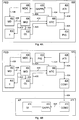
Figure 1 shows a first example of the structure of the portable electronic device, -
Figure 2 shows a second example of the structure of the portable electronic device, -
Figure 3 shows an example of a motion intensity curve, -
Figure 4A shows a third example the structure of the portable electronic device; -
Figure 4B shows an example of a system consisting of a portable electronic device and application platform, -
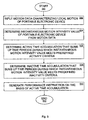
Figure 5 shows a first example of a method of an embodiment of the invention, -
Figure 6 shows a second example of a method of an embodiment of the invention, -
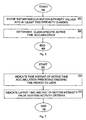
Figure 7 shows a third example of a method of an embodiment of the invention, -
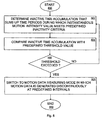
Figure 8 shows another example of a method of an embodiment of the invention. - With reference to the example of
Figure 1 , the portable electronic device (PED) 100 comprises a central processing unit (CPU) 106 and memory unit (MEM) 108. Thecentral processing unit 106 comprises a digital processor and executes a computer process according to encoded instructions stored in thememory unit 108, the process being suitable for determining the intensity of a performance. - The portable
electronic device 100 is a mobile phone or pedometer, for instance. In one embodiment, the portableelectronic device 100 is a wrist device that may for instance be thewrist device 202 of a performance monitor shown inFigure 2 . A performance monitor may comprise not only thewrist device 202, but also one or moreauxiliary devices motion sensor 206 fastened to a limb of theuser 200 of the portable electronic device and/or apulse transmitter 204 indicating electric pulses induced by the heart. Theauxiliary device wrist device 202. In this context, theuser 200 of the portable electronic device is referred to as theuser 200. - In one embodiment, the portable
electronic device 100 comprises awrist device 202 and at least oneauxiliary device - With reference to
Figure 1 , the portableelectronic device 100 also comprises a motion detector (MD) 102 that generates motion data characterising the local movement of the portable electronic device. - In one embodiment, the
motion detector 102 is in thewrist device 202. - In one embodiment, the
motion detector 102 is in theauxiliary device - The local movement of the portable
electronic device 100 is typically the movement of a limb or other body part of theuser 200, with a motion component related to the step of theuser 200 included therein. The amplitude of the local movement is typically in the range of the amplitude of the movement of the user's 200 limbs. - In one embodiment, the
motion detector 102 comprises an acceleration sensor that measures the acceleration related to the movement of theuser 200. The acceleration sensor transforms the acceleration caused by a movement or gravity into an electric signal. - In one embodiment, the acceleration sensor is based on piezo-resistor technology that uses a material whose resistance changes as the piezo resistor compresses as a result of the acceleration of the mass. When directing a constant current through the piezo resistor, the voltage over the piezo resistor changes according to the compression caused by the acceleration.
- In one embodiment, the acceleration sensor is based on piezoelectric technology, in which a piezoelectric sensor generates a charge when the acceleration sensor is accelerated. In silicon-bridge technology, a silicon chip is etched in such a manner that a silicon mass remains on the silicon chip at the end of a silicon beam. When acceleration is directed to the silicon chip, the silicon mass directs the force to the silicon beam, whereby the resistance of the silicon beam changes.
- The acceleration sensor may also be based on micromachined silicon technology that is based on the use of a differential capacitor. In addition, the acceleration sensor may be based on voice coil technology that is based on the same principle as a microphone. Examples of suitable motion detectors include Analog Devices ADXL105, Pewatron HW, and VTI Technologies SCA series.
- The motion data generated by the acceleration sensor may be brought to the
central processing unit 106 ormemory unit 108. The motion data may for instance comprise acceleration data and/or motion pulse data related to the movements of theuser 200. - The
motion detector 102 may also be based on other technologies suitable for the purpose, such as a gyroscope integrated on a silicon chip or a micro-vibration switch placed in a surface-mounting component. - The
motion detector 102 may comprise a pre-processing unit for processing primary motion data, such as acceleration data and/or vibration data. The processing may comprise transforming primary motion data into secondary motion data, for instance transforming acceleration data related to a user-generated movement into motion pulse data. The processing may also comprise filtering primary and/or secondary motion data. - The portable
electronic device 100 may also comprise a user interface (UI) 104 that typically contains a display unit (DISP) 110 and display adapter. Thedisplay unit 110 may contain LCD (Liquid Crystal Display) components, for instance. Thedisplay unit 110 may display graphically and/or numerically the instantaneous motion intensity or active time accumulation, for instance, to theuser 200. - The
user interface 102 may also contain a keypad (KP) 112, with which theuser 200 may input commands into theperformance monitor 100. - With reference to the example of
Figure 3 , let us examine amotion intensity curve 310 that shows the time dependence of the instantaneous motion intensity value of theuser 200. The horizontal axis shows time using a time unit, such as minute, and thevertical axis 304 shows the motion intensity value using a motion intensity unit, such as pulse/minute (p/min). - The motion intensity value characterises the quantity of the user's 200 movement in a time unit. In one embodiment, the motion intensity value characterises the number of motion pulses per minute or per some other suitable time unit.
- An instantaneous motion intensity value is a motion intensity value calculated for a time instant. A instantaneous motion intensity value at a time instant may be determined for instance by calculating the motion pulses accumulated during a measuring period, such as minute, and dividing the number of motion pulses by the measuring period. The time instant associated with a determined instantaneous motion intensity value may for instance be the start time or end time of the measuring period, or a time instant in the middle of the measuring period.
- An active time accumulation is an accumulating time accumulation that contains summed-up time periods, during which the instantaneous motion intensity value meets predefined activity criteria. A predefined activity criterion is for instance a predefined motion intensity level that defines the low limit of the instantaneous motion intensity value. An active time accumulation is a quantity that, when presented to the
user 200, helps theuser 200 to estimate the intensity of the performance. - In the example of
Figure 3 , the predefined activity criterion is for instancemotion intensity level 314 marked with a dotted line, in which case the time periods meeting the activity criteria are T4, T6, T7, T8, T9, and T10. - In one embodiment, the active time accumulation is calculated for a specified time period that in the example of the figure may be the period between the start time 306 and end
time 308. The active time accumulation during the specified time period is then T4+T6+ T7+ T8+ T9+T10, when the predefined activity criterion ismotion intensity level 314. The time periods may be implemented in such a manner that the periods overlap each other. For instance, let us examine 60-second time periods at 10-second intervals. Instantaneous motion intensity values are then added to the 60-second time period at 10-second time intervals for the most recent 10 seconds, and at the same time, the motion intensity values for the oldest 10 seconds are deleted. This arrangement provides advantages for instance when a person has a 60-second active period that does not occur on the minute. - The start time 306 may be the turn of the day, or a time instant 24 hours before the current time. The
end time 308 may be the turn of the day, without limiting the present solution to the present embodiment. - When active time determination is being done, the
end time 308 may be the current time instant. The active time accumulation then indicates the active time accumulation from the start time 306 to the current time instant. - In one embodiment, the portable
electronic device 100 determines an inactive time accumulation that contains the summed-up time periods, during which the instantaneous motion intensity value meets predefined inactivity criteria. A predefined inactivity criterion is for instance a predefined motion intensity level that defines the high limit of the instantaneous motion intensity value. - The inactive time accumulation may be presented to the user with the
display unit 110. - In the example of
Figure 3 , the predefined inactivity criterion is for instancemotion intensity level 314 that is marked with a dotted line, in which case the time periods meeting the inactivity criteria are T1, T2, T3, T5, T11, T12, and T13. The inactivity time accumulation for the time period between the start time 306 and endtime 308 is thus T1+T2+T3+T5+T11+T12+T13. - In one embodiment, the portable
electronic device 100 distributes the instantaneous motion intensity values into at least two intensity classes on the basis of predefined intensity class limits, and the active time accumulation is determined by intensity class. The example ofFigure 3 shows intensity classes A, B, and C. Intensity class C comprises the motion intensity values that are betweenmotion intensity levels motion intensity levels motion intensity level 316. - Intensity class D comprises motion intensity values that are below
motion intensity level 312, and it may also be defined as an inactivity class. -
Motion intensity levels - Activities that require that the user move belong to intensity classes A and B. They are suitable for providing performance instructions. Intensity class A may be applied to general exercises that require at least 30 minutes of moderate to high intensity class exercise daily, several days a week. Intensity classes C and D may also be referred to as inactivity classes.
- In one embodiment, the criteria of intensity classes A and B depend on the height of the person.
- In the present example, the class-specific active time accumulations are as follows:
- A intensity class: T7+T9
- B intensity class: T4+T6+T8+T10.
- In this case, the inactivity accumulation is T1+ T2+ T3+ T5+ T11+ T12+ T13.
- In an embodiment of the invention, an intensity class is set according to a predefined physiological benefit effect that is obtained by the user's activity exceeding the predefined activity criterion.
- In an embodiment of the invention, the predefined physiological benefit effect is a health benefit that sets an activity level, at which the user is expected to perform an activity in order to maintain or increase the current health. In this case, the activity criterion may be equivalent to 30 to 65 per cent of the maximum oxygen uptake (VO2max) during an exercise. The maximum oxygen uptake may also be referred to as the maximum aerobic fitness level.
- The health benefit may typically be obtained with continuous low intensity motion, such as walking, cleaning or gardening.
- In an embodiment of the invention, the predefined physiological benefit effect is a fitness benefit that sets an activity level, at which the user is expected to perform an activity in order to maintain or increase the current fitness level. In this case, the activity criterion may be equivalent to more than 65 per cent of the maximum oxygen uptake (VO2max) during an exercise.
- The fitness benefit may typically be obtained with continuous intermediate or high intensity training, such as brisk walking and jogging.
- In an embodiment of the invention, the predefined activity criterion is calculated from user parameters, such as age, gender, weight, length, and/or user-specific health indicators. A user-specific health indicator may indicate blood pressure level or a disease, such as diabetes. The user parameters may be input into the portable electronic device through the
user interface 104. Thecentral processing unit 106 may include encoded instructions for calculating the predefined activity criterion from the user parameters. - In an embodiment of the invention, the user parameters include heart rate variables obtained from heart rate measurement carried out by the
pulse transmitter 204. The predefined activity criterion may then be proportional to a heart rate variable, such as resting heart rate of heart rate variation. Thecentral processing unit 106 may include encoded instructions for calculating the predefined activity criterion from the heart rate variables. - In an embodiment of the invention, the
active time counter 406 starts determining the active time accumulation after a time threshold that is proportional to a user parameter. A user having a high performance expectation indicated by the user parameters may have a longer time threshold than a person having a lower performance expectation. The time threshold defines a time of continuous activity which should precede the actual active time accumulation determination. - With reference to the example of
Figure 4A , let us examine a portable electronic device (PED) 400 that comprises a motion detector (MD) 402, motion intensity determiner (MID) 404, and an active time counter (ATC) 406. - The
motion detector 402 generatesmotion data 418 characterising the local movement of the portableelectronic device 400 and inputs it into themotion intensity determiner 404. - The
motion intensity determiner 404 determines instantaneous motion intensity values 420 from themotion data 418. - In one embodiment, the
motion intensity determiner 404filters motion data 422 on the basis of predefined time properties. Themotion intensity determiner 404 may accept motion pulses meeting predefined criteria and use the accepted motion pulses to determine the motion intensity values. - In one embodiment, the
motion intensity determiner 404 determines a motion intensity value from motion pulses, the interval between which is within predefined limits. The determination of the motion intensity values is then focused on motion frequencies that are typical of the human body and typically 1 to 2 pulses per second. The filtration may be implemented by rejecting consecutive motion pulses whose time interval is below a predefined low limit or above a predefined high limit. - The predefined high and low limits may depend on the location of the
motion detector 402 on the user's 200 body. In the case of attachment to an upper limb, the predefined low limit may be 0.4 seconds, for example. The predefined high limit may be 2.0 seconds, for example. - The
motion intensity determiner 404 may be implemented by a computer process execute in thecentral processing unit 106, the computer process being encoded into encoded instructions stored in thememory unit 108. - In one embodiment, the
motion intensity determiner 404 inputs instantaneous motion intensity values 420 into theactive time counter 406. Themotion intensity determiner 404 may also input into the active time counter the time instant associated with each instantaneous motion intensity value. Theactive time counter 406 compares the motion intensity values with a predefinedmotion intensity level 314 and calculates the active time accumulation and possibly also inactive time accumulation on the basis of the comparison. The inactive time accumulation information may be included in the activetime accumulation information 424. - In one embodiment, the portable
electronic device 400 comprises a classifier (CL) 412 that receives the motion intensity values 420 from themotion intensity determiner 404 and performs comparison between the motion intensity values 420 andmotion intensity levels classifier 412 divides the instantaneous motion intensity values into intensity classes. - The
classifier 412 inputs the classified motion intensity values 422 into theactive time counter 406 that calculates class-specific active time accumulations. - The
active time counter 406 may be implemented by a computer process execute in thecentral processing unit 106, the computer process being encoded into encoded instructions stored in thememory unit 108. - The
classifier 412 may be implemented by a computer process execute in thecentral processing unit 106, the computer process being encoded into encoded instructions stored in thememory unit 108. - The active time accumulation may be presented to the
user 200 with thedisplay unit 110. - In one embodiment, the portable
electronic device 400 comprises an active time indicator (ATI) 408 for indicating the active time accumulation time instant preceding the time period between the start time 306 and endtime 308 to the user. The active time accumulations of earlier, such as day-specific, time periods may be stored into thememory unit 108 and shown graphically or numerically by means of thedisplay unit 110 to theuser 200. Theuser 200 may then follow the performance history and for instance compare the active time accumulation of the ongoing time period with the earlier values. - In one embodiment, the portable
electronic device 400 comprises an intensity indicator (II) 410 for indicating the latest time instant of the motion intensity value meeting the activity criteria to theuser 200. With reference toFigure 3 , let us assume that the current time instant is instant 318, and the activity criterion is determined frommotion intensity level 314. The latest time instant of the motion intensity value meeting the activity criteria with respect totime instant 318 istime instant 320. Thecentral processing unit 106 may input for storage into thememory unit 108 the latest time instant of the motion intensity value meeting the activity criteria. Thedisplay unit 110 may point the memory space of thememory unit 108 in such a manner that the contents of the memory are displayed in thedisplay unit 108. By detecting the latest time instant of the motion intensity value meeting the activity criteria, theuser 200 may determine the duration of the ongoinginactive time 322, for instance. The display unit may for instance display the text "inactive since T1:T2", wherein T1:T2 is the time instant when the activity criteria was last met. - With further reference to
Figure 4A , in one embodiment, the portableelectronic device 400 comprises a performance instruction generator (PIG) 414 for generating a performance instruction on the basis of the active time accumulation. - The
active time counter 406 inputs the activetime accumulation data 424 into theperformance instruction generator 414 that may compare the active time accumulation with reference values. The reference values may form ranges of variation that are associated with the performance instructions. The performance instruction may contain the following instructions: REST, LIGHT EXERCISE, and MODERATE TO HIGH EXERCISE. For instance, if the accumulation of the present day or the previous 24 hours in intensity classes A and B is less than 30 minutes, the user may be instructed to do light or moderate to heavy exercise. If the accumulation of intensity class A is less than 30 minutes for the previous three days, or the previous 72 hours, the performance instruction given may be moderate to high exercise. - In one embodiment, the intensity classification may be defined by exercise type. In addition to the above mentioned intensity classes, an E intensity class may be used, which defines the limits between walk and run.
- The performance instruction may also be determined by several day-specific activity time accumulations.
- The
performance instruction generator 414 may be implemented by means of a computer process execute in thecentral processing unit 106, the computer process being encoded into encoded instruction stored in thememory unit 108. - In one embodiment, the portable
electronic device 400 comprises at least one game application (GAPPL) 416 whose operation depends on at least one parameter proportional to the active time accumulation. A parameter proportional to the active time accumulation may be a control parameter that adjusts the operating time of thegame application - In one embodiment, the game application comprises an electronic figure, such as a pet, whose condition is dependent on the control parameter. With a high active time accumulation, the electronic figure may indicate satisfaction. With a low active time accumulation, the electronic figure may indicate dissatisfaction or switch to inactive.
- The
game application 416 may be implemented by a computer process execute in thecentral processing unit 106, the computer process being encoded into encoded instructions stored in thememory unit 108. In addition, thegame application 416 may be connected to theuser interface 104, with which theuser 200 may use thegame application 416. - In one embodiment, the portable
electronic device 400 comprises amotion detector controller 436 connected to amotion detector 402 and anactive time counter 406. Themotion detector controller 436 receives inactive time accumulation information with activetime accumulation information 424 and compares the inactive time accumulation with a predefined threshold value. If the inactive time accumulation exceeds the predefined threshold value, themotion detector controller 436 switches with amode change command 438 themotion detector 402 into a measuring mode, in which motion data is generated discontinuously at predefined time intervals. - Discontinuous measuring achieves power saving in the
motion detector 402. - The predefined threshold value is for instance 15 minutes, whereby after a 15-minute inactive time accumulation, the
motion detector 402 is switched to a discontinuous measuring mode. In the discontinuous measuring mode, themotion detector 402 may be switched on at 5-minute intervals for 30 seconds, for instance. If themotion detector 402 detects activity, themotion detector controller 436 may switch themotion detector 402 into a continuous measuring mode. If themotion detector 402 does not detect activity, the discontinuous measuring mode may be continued. The above 15-minute, 5-minute and 30-second time values are examples, and the present solution is not restricted to them. - With reference to
Figure 4B , the portableelectronic device 400 may in one embodiment comprise a communication unit (COM1) 426 that connects the portableelectronic device 400 to an application platform (AP) 428. Theapplication platform 428 comprises an application platform communication unit (COM2) 430 that receives activetime accumulation information 424 from thecommunication unit 426. The applicationplatform communication unit 430 transmits the activetime accumulation information 424 to an applicationplatform game application 432. The applicationplatform game application 432 may be controlled and/or monitored through auser interface 434. The operation of thegame application 434 depends on at least one parameter proportional to the active time accumulation. - The
communication unit 426 and applicationplatform communication unit 430 may be connected to each other wirelessly or over wire. - The
application platform 428 may be a PC (personal computer), portable computer (laptop), PDA (personal digital assistant), fixed or portable game console, mobile phone, or any other electronic device that comprises sufficient processing and memory capacity for executing thegame application 432 and a user interface for using thegame application 432. - Controlling the
game application game application game application game application game application game application game application - With reference to
Figures 5 ,6 ,7 , and8 , let us examine the computer processes of some embodiments shown by means of process steps. The process steps may also be interpreted as the method steps of the method. - The computer process starts in
step 500 ofFigure 5 . - In
step 502, motion data characterising the local movement of the portable electronic device is inputted. - In step 504, a instantaneous motion intensity value of the user of the portable electronic device is determined from the motion data.
- In
step 506, an active time accumulation is determined, which contains summed up time periods, during which the instantaneous motion intensity value meets predefined activity criteria. - In one embodiment, in
step 508, an inactive time accumulation is determined, which contains summed up time periods, during which the instantaneous motion intensity value meets predefined inactivity criteria. - In one embodiment, in
step 510, a performance instruction is generated on the basis of the active time accumulation. - The computer process ends in
step 512. - With reference to
Figure 6 , the computer process starts instep 600. - In
step 602, instantaneous motion intensity values are divided into at least two intensity classes based on predefined intensity class limits. - In
step 604, a class-specific active time accumulation is determined. - The computer process ends in step 606.
- With reference to
Figure 7 , the computer process starts instep 700. - In
step 702, the time instant of the active time accumulation preceding the ongoing time period is communicated to the user. - In
step 704, the latest time instant of the motion intensity value meeting the activity criteria is communicated to the user. - The computer process ends in
step 706. - With reference to
Figure 8 , the method starts instep 800. - In step 802, an inactive time accumulation is determined, which contains summed up time periods, during which the instantaneous motion intensity value meets predefined inactivity criteria.
- In
step 804, the inactivity time accumulation is compared with a predefined threshold value. - In
step 806, a decision is made on whether the threshold value is exceeded. - If the threshold value is exceeded, in
step 808, a measuring mode is started, which generates motion data discontinuously at predefined time intervals. - The method ends in
step 810. - The computer process shown in
Figures 5 ,6 ,7 , and8 may be included into a computer software product as encoded instructions that may be execute in thecentral processing unit 106 of the portableelectronic device 100. The encoded instructions may be stored in thememory unit 108 of the portableelectronic device 100. - In one embodiment, the computer software product comprises encoded instructions for executing a
game application game application central processing unit 106 of the portableelectronic device 100 and/or the central processing unit of theapplication platform 428. - The encoded instructions may be transferred by means of a distribution medium. The distribution medium is an electronic, magnetic, or optic distribution medium, for instance. The distribution medium may be a physical distribution medium, such as a memory unit or optic disk, or a telecommunications signal.
- Even though the invention is described above with reference to the example according to the drawings, it is clear that the invention is not limited thereto, but may be modified in many ways within the scope of the attached claims.
Claims (31)
- A portable electronic device, comprising:a motion detector (402) for generating motion data characterising the local movement of the portable electronic device; anda motion intensity determiner (404) configured to determine an instantaneous motion intensity value for the user of the portable electronic device from the motion data;characterised in that the portable electronic device further comprises:an active time counter (406) configured to determine an active time accumulation that sums up the time periods, during which the instantaneous motion intensity value meets predefined activity criteria.
- A portable electronic device as claimed in claim 1, wherein the active time counter (406) is configured to determine the active time accumulation for a predefined time period.
- A portable electronic device as claimed in claim 1, wherein the active time counter (406) is configured to start determining the active time accumulation after a time threshold that is proportional to a user parameter.
- A portable electronic device as claimed in claim 2, further comprising an active time indication means (408) for indicating the time instant of the active time accumulation preceding said time period.
- A portable electronic device as claimed in claim 1, further comprising at least one game application (416) whose operation depends on at least one parameter proportional to the active time accumulation.
- A portable electronic device as claimed in claim 1, further comprising a communicating unit (426) configured to communicate the active time accumulation information to a game application external to the portable electronic device, the operation of which game application depends on at least one parameter proportional to the active time accumulation.
- A portable electronic device as claimed in claim 6, wherein the communicating unit (426) is configured to communicate wirelessly.
- A portable electronic device as claimed in claim 1, wherein the active time counter (406) is configured to determine an inactive time accumulation that contains the summed-up time periods, during which the instantaneous motion intensity value meets predefined inactivity criteria.
- A portable electronic device as claimed in claim 8, further comprising a motion indicator controller (436) connected to the motion detector (402) and active time counter (406), wherein the motion indicator controller (436) is configured to compare the inactive time accumulation with a predefined threshold value and to switch the motion detector (402) into a measuring mode, if the inactivity time accumulation reaches a predefined threshold value, the measuring mode generating motion data discontinuously at predefined time intervals.
- A portable electronic device as claimed in claim 1, further comprising a classifier (412) configured to divide instantaneous motion intensity values into at least two intensity classes based on predefined intensity class limits; and
wherein the active time counter (406) is configured to determine a class-specific active time accumulation. - A portable electronic device as claimed in claim 1, further comprising an intensity indicator (410) configured to indicate to the user the latest time instant of a motion intensity value meeting activity criteria.
- A portable electronic device as claimed in claim 1, further comprising means (414) for generating a performance instruction on the basis of the active time accumulation.
- A portable electronic device as claimed in claim 1, wherein the portable electronic device is a wrist device.
- A portable electronic device as claimed in claim 1, wherein the predefined activity criterion is set according to a predefined physiological benefit effect that is obtained by exceeding the predefined activity criterion.
- A portable electronic device as claimed in claim 1, further comprising means for calculating the predefined activity criterion from user parameters.
- A computer software product comprising encoded instructions for executing a computer process in a digital processor, the computer process being suitable for determining the intensity of a performance, the computer process comprising the process steps of:inputting (502) motion data characterising the local movement of the portable electronic device; anddetermining (504) an instantaneous motion intensity value of the user of the portable electronic device from the motion data;characterised in that the computer process further comprises the process step of:determining (506) an active time accumulation that sums up the time periods, during which the instantaneous motion intensity value meets predefined activity criteria.
- A computer software product as claimed in claim 16, wherein determining an active time accumulation for a predefined time period.
- A computer software product as claimed in claim 16, further comprising determining the active time accumulation after a time threshold that is proportional to a user parameter.
- A computer software product as claimed in claim 16, wherein the computer process also comprises the step of indicating (702) the time instant of the active time accumulation preceding said time period to the user.
- A computer software product as claimed in claim 16, wherein the computer software product further comprises at least one game application whose operation depends on at least one parameter proportional to the active time accumulation.
- A computer software product as claimed in claim 16, wherein the computer process further comprises communicating the active time accumulation information to a game application external to the portable electronic device, the operation of which game application depends on at least one parameter proportional to the active time accumulation.
- A computer software product as claimed in claim 21, wherein the computer process further comprises communicating the active time accumulation information to the game application wirelessly.
- A computer software product as claimed in claim 16, wherein the computer process also comprises determining (508) an inactive time accumulation that sums up the time periods, during which the instantaneous motion intensity value meets predefined inactivity criteria.
- A computer software product as claimed in claim 23, wherein the computer process also comprises:comparing (804) the inactive time accumulation with a predefined threshold value; andswitching into a measuring mode, if the inactive time accumulation exceeds the predefined threshold value, the measuring mode generating motion data discontinuously at predefined time intervals.
- A computer software product as claimed in claim 16, wherein the computer process also comprises:dividing (602) instantaneous motion intensity values into at least two intensity classes based on predefined intensity class limits; anddetermining (604) a class-specific active time accumulation.
- A computer software product as claimed in claim 16, wherein the computer process also comprises indicating (704) the latest time instant of the motion intensity value meeting the activity criteria to the user.
- A computer software product as claimed in claim 16, wherein the computer process also comprises generating (510) for the user a performance instruction on the basis of the active time accumulation.
- A computer software product as claimed in claim 16, wherein at least a portion of the computer process is executed in a wrist device.
- A computer software product as claimed in claim 16, wherein the predefined activity criterion is set according to a predefined physiological benefit effect that is obtained by exceeding the predefined activity criterion.
- A computer software product as claimed in claim 16, further comprising calculating the predefined activity criterion from user parameters.
- A computer software distribution medium comprising the computer software product of claim 16.
Applications Claiming Priority (1)
| Application Number | Priority Date | Filing Date | Title |
|---|---|---|---|
| FI20065259A FI119619B (en) | 2006-04-24 | 2006-04-24 | Portable electronic device and computer software product |
Publications (2)
| Publication Number | Publication Date |
|---|---|
| EP1849504A1 EP1849504A1 (en) | 2007-10-31 |
| EP1849504B1 true EP1849504B1 (en) | 2008-11-19 |
Family
ID=36293853
Family Applications (1)
| Application Number | Title | Priority Date | Filing Date |
|---|---|---|---|
| EP07106694A Active EP1849504B1 (en) | 2006-04-24 | 2007-04-23 | Portable electronic device and computer software product |
Country Status (6)
| Country | Link |
|---|---|
| US (2) | US7728723B2 (en) |
| EP (1) | EP1849504B1 (en) |
| AT (1) | ATE414557T1 (en) |
| DE (1) | DE602007000254D1 (en) |
| ES (1) | ES2319339T3 (en) |
| FI (1) | FI119619B (en) |
Cited By (1)
| Publication number | Priority date | Publication date | Assignee | Title |
|---|---|---|---|---|
| US8159353B2 (en) | 2006-12-20 | 2012-04-17 | Polar Electro Oy | Portable electronic device, method, and computer-readable medium for determining user's activity level |
Families Citing this family (46)
| Publication number | Priority date | Publication date | Assignee | Title |
|---|---|---|---|---|
| US7894177B2 (en) | 2005-12-29 | 2011-02-22 | Apple Inc. | Light activated hold switch |
| US10569134B2 (en) * | 2005-01-26 | 2020-02-25 | K-Motion Interactive, Inc. | Method and system for athletic motion analysis and instruction |
| JP4872597B2 (en) * | 2006-10-27 | 2012-02-08 | オムロンヘルスケア株式会社 | Exercise support device |
| US20080182724A1 (en) * | 2007-01-25 | 2008-07-31 | Nicole Lee Guthrie | Activity Monitor with Incentive Features |
| JP5202933B2 (en) * | 2007-11-30 | 2013-06-05 | 株式会社タニタ | Body motion detection device |
| RU2399400C2 (en) * | 2008-03-04 | 2010-09-20 | Алексей Николаевич Мишин | System for monitoring of motion activity in football team players |
| US20090247368A1 (en) * | 2008-03-31 | 2009-10-01 | Boson Technology Co., Ltd. | Sports health care apparatus with physiological monitoring function |
| US8135392B2 (en) | 2008-06-06 | 2012-03-13 | Apple Inc. | Managing notification service connections and displaying icon badges |
| US9516116B2 (en) | 2008-06-06 | 2016-12-06 | Apple Inc. | Managing notification service connections |
| US8500604B2 (en) * | 2009-10-17 | 2013-08-06 | Robert Bosch Gmbh | Wearable system for monitoring strength training |
| US8726845B2 (en) | 2010-03-23 | 2014-05-20 | Woodstream Corporation | Radial-shape wireless dog fence system and method with temperature compensated crystal oscillator for reduced clock speed variation between base unit and collar |
| US8297233B2 (en) * | 2010-03-23 | 2012-10-30 | Woodstream Corporation | Radial-shape wireless dog fence system and method |
| US8701600B2 (en) | 2010-03-23 | 2014-04-22 | Woodstream Corporation | Radial-shape wireless dog fence system and method with reduced clock speed variation between base unit and collar |
| US10363453B2 (en) | 2011-02-07 | 2019-07-30 | New Balance Athletics, Inc. | Systems and methods for monitoring athletic and physiological performance |
| KR102009711B1 (en) | 2011-02-07 | 2019-08-12 | 뉴우바란스아스레틱스인코포레이팃드 | Systems and methods for monitoring athletic performance |
| JP5786361B2 (en) * | 2011-02-22 | 2015-09-30 | ヤマハ株式会社 | Notification signal control device |
| US9700222B2 (en) | 2011-12-02 | 2017-07-11 | Lumiradx Uk Ltd | Health-monitor patch |
| US10674709B2 (en) | 2011-12-05 | 2020-06-09 | Radio Systems Corporation | Piezoelectric detection coupling of a bark collar |
| US11553692B2 (en) | 2011-12-05 | 2023-01-17 | Radio Systems Corporation | Piezoelectric detection coupling of a bark collar |
| US11470814B2 (en) | 2011-12-05 | 2022-10-18 | Radio Systems Corporation | Piezoelectric detection coupling of a bark collar |
| US10154651B2 (en) | 2011-12-05 | 2018-12-18 | Radio Systems Corporation | Integrated dog tracking and stimulus delivery system |
| US10034624B2 (en) | 2012-01-18 | 2018-07-31 | Nike, Inc. | Activity points |
| EP2631830B1 (en) * | 2012-02-17 | 2021-09-08 | Polar Electro Oy | Monitoring accumulated activity |
| US8947239B1 (en) | 2012-03-05 | 2015-02-03 | Fitbit, Inc. | Near field communication system, and method of operating same |
| US9681836B2 (en) | 2012-04-23 | 2017-06-20 | Cyberonics, Inc. | Methods, systems and apparatuses for detecting seizure and non-seizure states |
| US20140073486A1 (en) | 2012-09-04 | 2014-03-13 | Bobo Analytics, Inc. | Systems, devices and methods for continuous heart rate monitoring and interpretation |
| US11185241B2 (en) | 2014-03-05 | 2021-11-30 | Whoop, Inc. | Continuous heart rate monitoring and interpretation |
| US10228447B2 (en) | 2013-03-15 | 2019-03-12 | Radio Systems Corporation | Integrated apparatus and method to combine a wireless fence collar with GPS tracking capability |
| US8900099B1 (en) | 2013-08-05 | 2014-12-02 | Robert B. Boyette | Systems and methods for optimizing muscle development |
| EP3366216A1 (en) * | 2014-02-19 | 2018-08-29 | Lumiradx Uk Ltd | Health monitor |
| US10045512B2 (en) | 2015-06-16 | 2018-08-14 | Radio Systems Corporation | Systems and methods for monitoring a subject in a premise |
| US12616173B2 (en) | 2015-06-16 | 2026-05-05 | Radio Systems Corporation | Apparatus and method for delivering an auditory stimulus |
| US10645908B2 (en) | 2015-06-16 | 2020-05-12 | Radio Systems Corporation | Systems and methods for providing a sound masking environment |
| US10231440B2 (en) | 2015-06-16 | 2019-03-19 | Radio Systems Corporation | RF beacon proximity determination enhancement |
| US10471299B2 (en) | 2016-07-01 | 2019-11-12 | Icon Health & Fitness, Inc. | Systems and methods for cooling internal exercise equipment components |
| US10268220B2 (en) | 2016-07-14 | 2019-04-23 | Radio Systems Corporation | Apparatus, systems and methods for generating voltage excitation waveforms |
| GB2573249B (en) | 2017-02-27 | 2022-05-04 | Radio Systems Corp | Threshold barrier system |
| US11394196B2 (en) | 2017-11-10 | 2022-07-19 | Radio Systems Corporation | Interactive application to protect pet containment systems from external surge damage |
| US10986813B2 (en) | 2017-12-12 | 2021-04-27 | Radio Systems Corporation | Method and apparatus for applying, monitoring, and adjusting a stimulus to a pet |
| US10842128B2 (en) | 2017-12-12 | 2020-11-24 | Radio Systems Corporation | Method and apparatus for applying, monitoring, and adjusting a stimulus to a pet |
| US11372077B2 (en) | 2017-12-15 | 2022-06-28 | Radio Systems Corporation | Location based wireless pet containment system using single base unit |
| US10514439B2 (en) | 2017-12-15 | 2019-12-24 | Radio Systems Corporation | Location based wireless pet containment system using single base unit |
| US11673024B2 (en) | 2018-01-22 | 2023-06-13 | Pg Tech, Llc | Method and system for human motion analysis and instruction |
| US11238889B2 (en) | 2019-07-25 | 2022-02-01 | Radio Systems Corporation | Systems and methods for remote multi-directional bark deterrence |
| WO2021178692A1 (en) | 2020-03-05 | 2021-09-10 | K-Motion Interactive, Inc. | Method and system for analyzing an athletic throwing motion by an individual |
| US11490597B2 (en) | 2020-07-04 | 2022-11-08 | Radio Systems Corporation | Systems, methods, and apparatus for establishing keep out zones within wireless containment regions |
Citations (1)
| Publication number | Priority date | Publication date | Assignee | Title |
|---|---|---|---|---|
| US6837827B1 (en) * | 2003-06-17 | 2005-01-04 | Garmin Ltd. | Personal training device using GPS data |
Family Cites Families (13)
| Publication number | Priority date | Publication date | Assignee | Title |
|---|---|---|---|---|
| JPS5674617A (en) * | 1979-11-22 | 1981-06-20 | Shimano & Co Ltd | Running type health promotion equipment |
| ES2229224T3 (en) | 1994-09-07 | 2005-04-16 | Omron Healthcare Co., Ltd. | DEVICE MEASURING AN AMOUNT OF EXERCISE, ABLE TO PRESENT THE AMOUNT OF EXERCISE THAT STILL MUST BE CARRIED OUT. |
| US5989157A (en) | 1996-08-06 | 1999-11-23 | Walton; Charles A. | Exercising system with electronic inertial game playing |
| US7145461B2 (en) | 2001-01-31 | 2006-12-05 | Ilife Solutions, Inc. | System and method for analyzing activity of a body |
| US7261690B2 (en) * | 2000-06-16 | 2007-08-28 | Bodymedia, Inc. | Apparatus for monitoring health, wellness and fitness |
| US20030017913A1 (en) * | 2001-07-19 | 2003-01-23 | Stewart Gail J. | Audio-visual education system actuated via physical activity device |
| US20040145493A1 (en) | 2001-08-08 | 2004-07-29 | O'connor Gerard | Activity monitoring device |
| DE60232547D1 (en) * | 2002-03-11 | 2009-07-16 | Kao Corp | COSMETICS |
| US20050197184A1 (en) * | 2003-12-30 | 2005-09-08 | Steven Ahlquist | System for regulating use of an electronic device |
| US20050172311A1 (en) | 2004-01-31 | 2005-08-04 | Nokia Corporation | Terminal and associated method and computer program product for monitoring at least one activity of a user |
| DE602005027638D1 (en) * | 2004-07-21 | 2011-06-09 | Panasonic Elec Works Co Ltd | System for measuring body activity |
| KR100635213B1 (en) | 2004-08-17 | 2006-10-16 | 엘지전자 주식회사 | How to measure exercise using mobile communication terminal |
| US20060052727A1 (en) * | 2004-09-09 | 2006-03-09 | Laurence Palestrant | Activity monitoring device and weight management method utilizing same |
-
2006
- 2006-04-24 FI FI20065259A patent/FI119619B/en active
-
2007
- 2007-04-23 DE DE602007000254T patent/DE602007000254D1/en active Active
- 2007-04-23 EP EP07106694A patent/EP1849504B1/en active Active
- 2007-04-23 US US11/789,024 patent/US7728723B2/en active Active
- 2007-04-23 AT AT07106694T patent/ATE414557T1/en not_active IP Right Cessation
- 2007-04-23 ES ES07106694T patent/ES2319339T3/en active Active
-
2010
- 2010-04-15 US US12/760,675 patent/US8169326B2/en active Active
Patent Citations (1)
| Publication number | Priority date | Publication date | Assignee | Title |
|---|---|---|---|---|
| US6837827B1 (en) * | 2003-06-17 | 2005-01-04 | Garmin Ltd. | Personal training device using GPS data |
Cited By (1)
| Publication number | Priority date | Publication date | Assignee | Title |
|---|---|---|---|---|
| US8159353B2 (en) | 2006-12-20 | 2012-04-17 | Polar Electro Oy | Portable electronic device, method, and computer-readable medium for determining user's activity level |
Also Published As
| Publication number | Publication date |
|---|---|
| DE602007000254D1 (en) | 2009-01-02 |
| US7728723B2 (en) | 2010-06-01 |
| EP1849504A1 (en) | 2007-10-31 |
| FI119619B (en) | 2009-01-30 |
| ATE414557T1 (en) | 2008-12-15 |
| US20070249470A1 (en) | 2007-10-25 |
| ES2319339T3 (en) | 2009-05-06 |
| FI20065259A0 (en) | 2006-04-24 |
| US20100197403A1 (en) | 2010-08-05 |
| FI20065259L (en) | 2007-10-25 |
| US8169326B2 (en) | 2012-05-01 |
Similar Documents
| Publication | Publication Date | Title |
|---|---|---|
| US7728723B2 (en) | Portable electronic device and computer software product | |
| US8159353B2 (en) | Portable electronic device, method, and computer-readable medium for determining user's activity level | |
| CN100518639C (en) | Device and method for determining physical activity level of human being | |
| EP1862117B1 (en) | Calibration of performance monitor | |
| KR100786703B1 (en) | Device and method for measuring physical exercise using acceleration sensor | |
| US7980999B2 (en) | Body motion discriminating apparatus and activity monitor | |
| RU2584459C2 (en) | Gesture control for monitoring vital body signs | |
| CN105210067B (en) | Calculate the user's physical state related to physical exercise | |
| US9113841B2 (en) | Biological information notifying apparatus, biological information notifying method, and computer-readable storage medium having biological information notifying program stored thereon | |
| EP1852062A1 (en) | Method, user-specific performance monitor, system, and computer software product | |
| KR20170073655A (en) | Methods and systems for training proper running of a user | |
| US11810040B2 (en) | Method and system for monitoring core body movements | |
| CN108888265A (en) | A kind of movement method for early warning and device | |
| CN109830277A (en) | A kind of rope skipping monitoring method, electronic device and storage medium | |
| US20220047222A1 (en) | Method for determining injury risk of user taking exercise | |
| US12370407B2 (en) | Fitness tracking system and method of operating a fitness tracking system | |
| JP3880260B2 (en) | Exercise level recording device | |
| CN214388650U (en) | Prevent intelligent rope skipping of practising fraud | |
| EP4494556A1 (en) | Method and technical device, especially smart device, in particular a smart watch, for determining at least one mass | |
| KR20030084601A (en) | Electronic device for providing exercise program for sports apparatus | |
| CN120570777B (en) | Head massage device and pressure adjusting method thereof | |
| JP2026006363A (en) | Biological information management device | |
| JP2026051748A (en) | Mathematical model generation device, fatigue estimation device, mathematical model generation method, fatigue estimation method, computer program, and fatigue estimation system | |
| KR20230073680A (en) | User's health condition-based exercise intensity setting device and method thereof | |
| HK1075597B (en) | Arrangement, method and computer program for determining physical activity level of human being |
Legal Events
| Date | Code | Title | Description |
|---|---|---|---|
| PUAI | Public reference made under article 153(3) epc to a published international application that has entered the european phase |
Free format text: ORIGINAL CODE: 0009012 |
|
| AK | Designated contracting states |
Kind code of ref document: A1 Designated state(s): AT BE BG CH CY CZ DE DK EE ES FI FR GB GR HU IE IS IT LI LT LU LV MC MT NL PL PT RO SE SI SK TR |
|
| AX | Request for extension of the european patent |
Extension state: AL BA HR MK YU |
|
| 17P | Request for examination filed |
Effective date: 20080205 |
|
| 17Q | First examination report despatched |
Effective date: 20080314 |
|
| GRAP | Despatch of communication of intention to grant a patent |
Free format text: ORIGINAL CODE: EPIDOSNIGR1 |
|
| AKX | Designation fees paid |
Designated state(s): AT BE BG CH CY CZ DE DK EE ES FI FR GB GR HU IE IS IT LI LT LU LV MC MT NL PL PT RO SE SI SK TR |
|
| GRAS | Grant fee paid |
Free format text: ORIGINAL CODE: EPIDOSNIGR3 |
|
| GRAA | (expected) grant |
Free format text: ORIGINAL CODE: 0009210 |
|
| AK | Designated contracting states |
Kind code of ref document: B1 Designated state(s): AT BE BG CH CY CZ DE DK EE ES FI FR GB GR HU IE IS IT LI LT LU LV MC MT NL PL PT RO SE SI SK TR |
|
| REG | Reference to a national code |
Ref country code: GB Ref legal event code: FG4D |
|
| REG | Reference to a national code |
Ref country code: CH Ref legal event code: EP |
|
| REG | Reference to a national code |
Ref country code: IE Ref legal event code: FG4D |
|
| REF | Corresponds to: |
Ref document number: 602007000254 Country of ref document: DE Date of ref document: 20090102 Kind code of ref document: P |
|
| LTIE | Lt: invalidation of european patent or patent extension |
Effective date: 20081119 |
|
| PG25 | Lapsed in a contracting state [announced via postgrant information from national office to epo] |
Ref country code: LT Free format text: LAPSE BECAUSE OF FAILURE TO SUBMIT A TRANSLATION OF THE DESCRIPTION OR TO PAY THE FEE WITHIN THE PRESCRIBED TIME-LIMIT Effective date: 20081119 Ref country code: AT Free format text: LAPSE BECAUSE OF FAILURE TO SUBMIT A TRANSLATION OF THE DESCRIPTION OR TO PAY THE FEE WITHIN THE PRESCRIBED TIME-LIMIT Effective date: 20081119 |
|
| NLV1 | Nl: lapsed or annulled due to failure to fulfill the requirements of art. 29p and 29m of the patents act | ||
| REG | Reference to a national code |
Ref country code: ES Ref legal event code: FG2A Ref document number: 2319339 Country of ref document: ES Kind code of ref document: T3 |
|
| PG25 | Lapsed in a contracting state [announced via postgrant information from national office to epo] |
Ref country code: NL Free format text: LAPSE BECAUSE OF FAILURE TO SUBMIT A TRANSLATION OF THE DESCRIPTION OR TO PAY THE FEE WITHIN THE PRESCRIBED TIME-LIMIT Effective date: 20081119 Ref country code: PL Free format text: LAPSE BECAUSE OF FAILURE TO SUBMIT A TRANSLATION OF THE DESCRIPTION OR TO PAY THE FEE WITHIN THE PRESCRIBED TIME-LIMIT Effective date: 20081119 Ref country code: SI Free format text: LAPSE BECAUSE OF FAILURE TO SUBMIT A TRANSLATION OF THE DESCRIPTION OR TO PAY THE FEE WITHIN THE PRESCRIBED TIME-LIMIT Effective date: 20081119 Ref country code: FI Free format text: LAPSE BECAUSE OF FAILURE TO SUBMIT A TRANSLATION OF THE DESCRIPTION OR TO PAY THE FEE WITHIN THE PRESCRIBED TIME-LIMIT Effective date: 20081119 Ref country code: IS Free format text: LAPSE BECAUSE OF FAILURE TO SUBMIT A TRANSLATION OF THE DESCRIPTION OR TO PAY THE FEE WITHIN THE PRESCRIBED TIME-LIMIT Effective date: 20090319 Ref country code: LV Free format text: LAPSE BECAUSE OF FAILURE TO SUBMIT A TRANSLATION OF THE DESCRIPTION OR TO PAY THE FEE WITHIN THE PRESCRIBED TIME-LIMIT Effective date: 20081119 |
|
| PG25 | Lapsed in a contracting state [announced via postgrant information from national office to epo] |
Ref country code: BE Free format text: LAPSE BECAUSE OF FAILURE TO SUBMIT A TRANSLATION OF THE DESCRIPTION OR TO PAY THE FEE WITHIN THE PRESCRIBED TIME-LIMIT Effective date: 20081119 Ref country code: RO Free format text: LAPSE BECAUSE OF FAILURE TO SUBMIT A TRANSLATION OF THE DESCRIPTION OR TO PAY THE FEE WITHIN THE PRESCRIBED TIME-LIMIT Effective date: 20081119 Ref country code: EE Free format text: LAPSE BECAUSE OF FAILURE TO SUBMIT A TRANSLATION OF THE DESCRIPTION OR TO PAY THE FEE WITHIN THE PRESCRIBED TIME-LIMIT Effective date: 20081119 Ref country code: BG Free format text: LAPSE BECAUSE OF FAILURE TO SUBMIT A TRANSLATION OF THE DESCRIPTION OR TO PAY THE FEE WITHIN THE PRESCRIBED TIME-LIMIT Effective date: 20090219 Ref country code: DK Free format text: LAPSE BECAUSE OF FAILURE TO SUBMIT A TRANSLATION OF THE DESCRIPTION OR TO PAY THE FEE WITHIN THE PRESCRIBED TIME-LIMIT Effective date: 20081119 |
|
| PG25 | Lapsed in a contracting state [announced via postgrant information from national office to epo] |
Ref country code: PT Free format text: LAPSE BECAUSE OF FAILURE TO SUBMIT A TRANSLATION OF THE DESCRIPTION OR TO PAY THE FEE WITHIN THE PRESCRIBED TIME-LIMIT Effective date: 20090420 Ref country code: CZ Free format text: LAPSE BECAUSE OF FAILURE TO SUBMIT A TRANSLATION OF THE DESCRIPTION OR TO PAY THE FEE WITHIN THE PRESCRIBED TIME-LIMIT Effective date: 20081119 Ref country code: SE Free format text: LAPSE BECAUSE OF FAILURE TO SUBMIT A TRANSLATION OF THE DESCRIPTION OR TO PAY THE FEE WITHIN THE PRESCRIBED TIME-LIMIT Effective date: 20090219 |
|
| PLBE | No opposition filed within time limit |
Free format text: ORIGINAL CODE: 0009261 |
|
| STAA | Information on the status of an ep patent application or granted ep patent |
Free format text: STATUS: NO OPPOSITION FILED WITHIN TIME LIMIT |
|
| PG25 | Lapsed in a contracting state [announced via postgrant information from national office to epo] |
Ref country code: SK Free format text: LAPSE BECAUSE OF FAILURE TO SUBMIT A TRANSLATION OF THE DESCRIPTION OR TO PAY THE FEE WITHIN THE PRESCRIBED TIME-LIMIT Effective date: 20081119 |
|
| 26N | No opposition filed |
Effective date: 20090820 |
|
| PG25 | Lapsed in a contracting state [announced via postgrant information from national office to epo] |
Ref country code: IE Free format text: LAPSE BECAUSE OF NON-PAYMENT OF DUE FEES Effective date: 20090423 Ref country code: MC Free format text: LAPSE BECAUSE OF NON-PAYMENT OF DUE FEES Effective date: 20090430 |
|
| PG25 | Lapsed in a contracting state [announced via postgrant information from national office to epo] |
Ref country code: GR Free format text: LAPSE BECAUSE OF FAILURE TO SUBMIT A TRANSLATION OF THE DESCRIPTION OR TO PAY THE FEE WITHIN THE PRESCRIBED TIME-LIMIT Effective date: 20090220 |
|
| PG25 | Lapsed in a contracting state [announced via postgrant information from national office to epo] |
Ref country code: IT Free format text: LAPSE BECAUSE OF NON-PAYMENT OF DUE FEES Effective date: 20100423 |
|
| PG25 | Lapsed in a contracting state [announced via postgrant information from national office to epo] |
Ref country code: LU Free format text: LAPSE BECAUSE OF NON-PAYMENT OF DUE FEES Effective date: 20090423 |
|
| PG25 | Lapsed in a contracting state [announced via postgrant information from national office to epo] |
Ref country code: HU Free format text: LAPSE BECAUSE OF FAILURE TO SUBMIT A TRANSLATION OF THE DESCRIPTION OR TO PAY THE FEE WITHIN THE PRESCRIBED TIME-LIMIT Effective date: 20090520 |
|
| PG25 | Lapsed in a contracting state [announced via postgrant information from national office to epo] |
Ref country code: TR Free format text: LAPSE BECAUSE OF FAILURE TO SUBMIT A TRANSLATION OF THE DESCRIPTION OR TO PAY THE FEE WITHIN THE PRESCRIBED TIME-LIMIT Effective date: 20081119 |
|
| PG25 | Lapsed in a contracting state [announced via postgrant information from national office to epo] |
Ref country code: CY Free format text: LAPSE BECAUSE OF FAILURE TO SUBMIT A TRANSLATION OF THE DESCRIPTION OR TO PAY THE FEE WITHIN THE PRESCRIBED TIME-LIMIT Effective date: 20081119 |
|
| REG | Reference to a national code |
Ref country code: CH Ref legal event code: PL |
|
| PG25 | Lapsed in a contracting state [announced via postgrant information from national office to epo] |
Ref country code: CH Free format text: LAPSE BECAUSE OF NON-PAYMENT OF DUE FEES Effective date: 20110430 Ref country code: LI Free format text: LAPSE BECAUSE OF NON-PAYMENT OF DUE FEES Effective date: 20110430 |
|
| REG | Reference to a national code |
Ref country code: FR Ref legal event code: PLFP Year of fee payment: 10 |
|
| REG | Reference to a national code |
Ref country code: FR Ref legal event code: PLFP Year of fee payment: 11 |
|
| REG | Reference to a national code |
Ref country code: FR Ref legal event code: PLFP Year of fee payment: 12 |
|
| REG | Reference to a national code |
Ref country code: FR Ref legal event code: PLFP Year of fee payment: 17 |
|
| PGFP | Annual fee paid to national office [announced via postgrant information from national office to epo] |
Ref country code: GB Payment date: 20260325 Year of fee payment: 20 |
|
| PGFP | Annual fee paid to national office [announced via postgrant information from national office to epo] |
Ref country code: ES Payment date: 20260508 Year of fee payment: 20 |
|
| PGFP | Annual fee paid to national office [announced via postgrant information from national office to epo] |
Ref country code: IT Payment date: 20260422 Year of fee payment: 20 |
|
| PGFP | Annual fee paid to national office [announced via postgrant information from national office to epo] |
Ref country code: DE Payment date: 20260417 Year of fee payment: 20 |
|
| PGFP | Annual fee paid to national office [announced via postgrant information from national office to epo] |
Ref country code: FR Payment date: 20260420 Year of fee payment: 20 |