-
The invention relates to hydroxyphenyl derivatives and a process for making the same. It also relates to the biological applications thereof, particularly as anti-bacterial and/or anti-parasites agents.
-
The invention more particularly relates to Triclosan derivatives. Triclosan (TCL) 5-chloro-2-(2,4-dichloro-phenoxy)-phenol (A) is a broad-spectrum biocide that has been in use for over 30 years, mainly as a component of antimicrobial wash products in health-care settings, of formula (A)
-
More recently, Triclosan has found extensive use in consumer products such as toothpaste, mouthwashes, deodorants, hand soaps, and lotions. It is also incorporated in children's toys, cutting boards, and the plastic film used to wrap meat products. Until recently, it was thought that Triclosan, being a small hydrophobic molecule, was absorbed via diffusion into the bacterial cell wall and that nonspecific disruption of the cell wall was the mechanism by which Triclosan exhibited its antibacterial activity. However, the first evidence that Triclosan inhibits fatty acid biosynthesis came when a strain of E.coli resistant to Triclosan was isolated, and the resistance was mapped to the fabI gene which codes for the E.coli trans enoyl-acyl carrier protein reductase (ENR). Fatty acid biosynthesis in bacteria is essential to the production of a number of lipid-containing components including the cell membrane. The bacterial fatty acid synthase system (FASII) utilizes discrete monofunctional enzymes that operate in conjunction with acyl carrier protein (ACP)-associated substrates. Mammalian fatty acid synthase (FASI) differs from FASII in that lipid biosynthesis is mediated by a single multifunctional enzyme-ACP complex. The differences in prokaryote and eukaryote fatty acid biosynthesis offer an attractive opportunity for selective FASII inhibition. FabI is an enoyl-ACP reductase that catalyzes the ultimate and rate-limiting step of the chain elongation process of FASII. The reaction involves the conjugate reduction of an enoyl-ACP to the corresponding acyl- ACP using the cofactor NAD(P)H as a hydride source.
-
Subsequently, extensive biochemical and structural studies have been performed to substantiate Triclosan as a specific E.coli FabI inhibitor. Two ENR isoforms, FabK and FabL, have been discovered in the gram-positive bacteria, Streptococcus pneumoniae and Bacillus subtillis, respectively. FabK is resistant to Triclosan, whereas FabL is reversibly inhibited by Triclosan. Triclosan also directly inhibits the FabI from Staphylococcus aureus, Haemophilus influenzae, the ENR from Mycobacterium tuberculosis, InhA, and the ENR from Plasmodium falciparium, the malarial parasite.
-
Since the discovery of FabI as the bacterial target of Triclosan, several specific inhibitors non structurally related to TCL have been reported, few of them displaying antibacterial activities.
-
Some analogues of Triclosan itself have been described in separate chemo-enzymatic studies of the Triclosan mode of action against FabI. Especially, the antibacterial activity of several 2-hydroxydiphenyl ethers hexachlorophene and 2-hydroxydiphenylmethanes as well as 5-alkylated, -fluorinated or -formylated derivatives have been determined. On the other hand, before the discovery of the potent inhibition of FabI by TCL, some modifications of the dichlorophenol part of TCL were also reported. For instance broad spectrum, but non specific antibacterial and antifungal derivatives were reported by introducing a pyridine instead of a phenyl ring.
-
In contrast to TCL, which displays a broad spectrum biocidal effect with no distinction between microorganisms, new TCL derivatives that would target only the microorganisms which carry the FabI enzyme such as S.aureus or E.coli would be selective antibacterial or antiparasitic agents of interest with no antibacterial effect or selective pressure against other bacterial species.
-
The inventors have found that specific substitutions of hydroxyphenyl derivatives having triclosan basic structure lead to derivatives that surprisingly display a selective and narrow spectrum of activity against relevant pathogens, particularly bacteria or parasites.
-
An object of the invention is then to provide new substituted hydroxyphenyl derivatives which selectively inhibit the growth of bacteria carrying Fab enzymes such as FabI, FabL, FabK, InhA.
-
Another object of the invention is to provide a process for the synthesis of said derivatives.
-
Still another object is to take advantage of the biological properties of said molecules to provide means, i.e. pharmaceutical compositions and methods, particularly useful for treating microbial infections.
-
The hydroxyphenyl derivatives of the invention have formula (I)
Wherein
- R1 is aryl, heterocycle, aliphatic heterocycle, cycloalkyl, all having one or several cycles ,alkyl, all substituted or not by one or several R identical or different, selected in the group comprising, H, alkyl, alkenyl, alkynyl, aryl, heterocycle, aliphatic heterocycle, fluoro-alkyl, halogen, COOH, CO2Ra, CORa, CONRaRb, OCORa, CN, ORa, aryloxy NRaRb, CRa=NORb, NRa-aryl, NRaCORb, NRaCOORb, OCONRaRb, NRaCONRbRc, SRa, SO2Ra, SO2NRaRb, NRaSO2Rb, NRaC(S)NRbRc,
- R2 is aryl, aryloxy, heterocycle, aliphatic heterocycle, cycloalkyl, all having one or several cycles, H, alkyl, alkenyl, alkynyl, halogen, fluoro-alkyl, fluoro-alkenyl, OCF3, OCHF2, NRaRb, CO2Ra CORa, ORa, CONRaRb, CRa=NORb, SRa,
- all being substituted or not by one or several R, identical or different, being such as above defined,
- Ra ,Rb and Rc, identical or different, being H or as above defined with respect to R,
- two adjacent R, or two adjacent Ra and/or Rb, and /or Rc optionally forming together a cycle
- X = O or S
- Y represents C(O)R, CO(O)R, C(S)R, C (S) OR, C(O)NRa,Rb, phosphate, P(O) (OR)2, CH2OR, or any labile group which may act as a prodrug to regenerate the free phenol,
- Z1, Z2, Z3, identical or different, are halogen or H,
and the pharmaceutically acceptable salts, the organic and mineral salts, as well as the racemic derivatives and each unique non racemic derivatives, in case the derivatives of formula (I) have one or more chiral centers, both the cis (Z) and trans (E) isomers in case the derivatives of formula (I) have unsaturated carbon=carbon double bonds, both forms of tautomers in cases the derivatives of formula (I) may exist in tautomeric forms, provided that with respect to formula (I), when R2 is H, C1 to C26 alkyl substituted or not by OH, NH2, SH, halo or CO2H or OR, SR, NHR, COOR, COR, CONHR, SO2NHR, R being H, C1 to C26 substituted or not by OH, NH2, SH, halo or CO2H; Y=H; X=O; Z1, Z2 Z3 are H;and R1 is a group of formula,
if T1 and T5 are independently N or C-R, R being H, methyl, ethyl, halo, then
- either
T2 or T4 are different from CH or N, - or
T3 is different from N or C-R, wherein R represent H, methyl, ethyl, halo, nitro, hydroxy, amino, amido or a methyl or an ethyl group substituted with halo, nitro, hydroxy, amino, amido;
if T2 and T4 are independently CH or N, then
T1 or T5 are different from N or C-R, R being H, Me, ethyl, halo,
- or
T3 is different from N or C-R, wherein R represent H, methyl, ethyl, halo, nitro, hydroxy, amino, amido or a methyl or an ethyl group substituted with halo, nitro, hydroxy, amino, amido;
if T3 represent N or C-R, wherein R represent H, methyl, ethyl, halo, nitro, hydroxy, amino, amido or a methyl or an ethyl group substituted with halo, nitro, hydroxy, amino, amido; then.
- either
T1 or T5 are different from N or C-R, R being H, Me, ethyl, halo, - or
T2 or T4 are different from CH or N.
-
When R1 is an heterocycle and more specifically a pyridine, the invention also includes the N-oxide form.
-
"Alkyl" as applied herein means an optionally substituted alkyl group and preferably methyl, ethyl, n-propyl, isopropyl, n-butyl, isobutyl and t-butyl, pentyl, n-pentyl, isopentyl, neopentyl,hexyl and octyl.
-
"Alkoxy" and "thioalkyl" mean any O or S atom substituted by a substituted or not alkyl group.
-
"Aryloxy", "thioaryl", "NH-aryl" mean any O, S, N substituted by a substituted or not aryl, or heterocyclic group.
-
"Aryl" (or "Ar") means phenyl or naphtyl optionally substituted by R.
-
"Alkenyl" and "alkynyl" mean optionally substituted C=C or C≡C groups.
-
"Halogen" or "halo" means F, Cl, Br, and I.
-
"Aliphatic heterocycle" or "heterocycle" indicates an optionally substituted five or six membered monocyclic ring, or a nine or ten-membered bicyclic ring containing one to three heteroatoms chosen from the group of nitrogen, oxygen and sulfur, which are stable and available by conventional chemical synthesis. Illustrative heterocycles are for example selected in the group comprising benzofuryl, benzimidazolyl, benzopyranyl, benzothienyl, furyl, imidazolyl, indolinyl, morpholinyl, piperidinyl, piperazinyl, pyrrolyl, pyrrolidinyl, tetrahydropyridinyl, pyridinyl, thiazolyl, thienyl, quinolinyl, isoquinolinyl, and tetra- and perhydro-quinolinyl and isoquinolinyl, pyrazinyl, pyrazidinyl, triazinyl, purine, indolyl, indazolyl, pyrimidinyl, pyridonyl, oxazolyl, tetrahydropyranyl, tetrahydrofuranyl.
-
Any alkyl, aliphatic heterocycle, heterocycle, aryl, may be optionally substituted with the group R or a non exclusive combination of different R values, which may be on any atom that result in a stable structure and are available by conventional synthetic techniques.
-
According to a first family, the invention particularly relates to derivatives of formula I wherein R1 is an heterocyclic group, particularly a substituted heterocyclic group such as above defined.
-
Especially suitable heteroaryl groups comprise substituted nitrogeneous heterocycles, more preferably pyridine.
-
According to a second family, the invention particularly relates to derivatives of formula I wherein R1 is an aryl group.
-
A preferred aryl group is a phenyl group.
-
Particularly preferred derivatives of said families are substituted by one or several substituents selected in the group comprising F or COORa, CORa, ORa, NRaRb, CONRaRb, alkynyl, CRa=NORb.
-
In more preferred derivatives, Y represents H.
-
The invention particularly relates to the above defined derivatives wherein X represents O.
-
Also included in this invention are prodrugs of the derivatives of this invention. Prodrugs are considered to be any covalently bonded carriers which release the active parent drug according to formula (I).
-
The invention also relates to a process for making the above defined derivatives.
-
Said process comprises the steps of
- a) reacting with AR1, a phenol derivative of formula (II)
wherein R1, R2 and X are as above defined, R3 represents an alkyl group, and A is a reactive group capable of reacting with XH to give XR1,
under conditions to give a derivative of formula (III)
- b) reacting the protected phenol derivative of formula (III) with any suitable Lewis acid such as BBr3, under conditions to give the desired derivatives of formula (I) wherein Y represents H.
To obtain derivatives wherein R2 represents a functional group, the desired function is introduced prior removal of R3.
Alternatively, the derivatives of formula (I) are obtained from the protected phenols of formula (II) according to a process comprising:
- a1) reacting the protected phenol derivative of formula (II) with TosCl under conditions to give a derivative of formula (IV)
- a2) reacting the derivative of formula (IV) with any suitable Lewis acid such as BBr3, under conditions to give a derivative of formula (V)
- a3) treating the derivative of formula (V) under suitable or acidic conditions, to introduce R4, R4 being a protecting group different from an alkyl, such as benzyl, BOM, SEM, MOM, MEM, TBDMS, THP or analogs, resulting in a derivative of formula (VI),
- a4) reacting said derivative of formula (VI) under conditions, to obtain the removal of Tos group, resulting in the obtention of a derivative of formula (VII)
- a5) reacting the derivative of formula (VII) thus obtained with AR1 such as above defined and deprotecting the phenol group to obtain the desired derivative of formula (I) with Y representing H, wherein R2 is functionalized if desired as above mentioned, optionally from derivative of formula (VI).
As illustrated by the examples given hereinafter, the above disclosed phenol derivatives of the invention have valuable biological properties.
-
They are particularly useful as antibacterial agents having a selective spectrum of activity in vitro against standard bacterial strains which are used to screen for activity against pathogenic bacteria. Notably, the derivatives of the present invention show a high activity against bacteria carrying Fab enzymes such as FabI, FabL, FabK, InhA. particularly against Staphyloccus aureus including multiresistant strains, Escherichia coli and also bacteria such as Mycobacterium tuberculosis carrying homologous Fab enzymes such as InhA. Said derivatives are then particularly suitable as active principle of drugs.
-
The invention thus also relates to compositions comprising an effective amount of at least a phenol derivative of formula (I) such as above defined or prodrug thereof, for use as drug.
-
It also relates to pharmaceutical compositions comprising an effective amount of at least a phenol derivative of formula (I) such as above defined or prodrug thereof, in combination with a pharmaceutically acceptable carrier.
-
Said pharmaceutical compositions are formulated to be administered under oral, injectable, parental routes, with individual doses appropriate for the patient to be treated.
-
Said compositions are particularly useful to treat human or animal infections by microbial pathogens such as E.coli or S.aureus or M. tuberculosis and parasites such as Plasmodium falciparium.
-
Said compositions are also useful in multitherapy, in combination with other drugs, for example with antibiotics.
-
The invention also relates to a method of treatment of microbial infections which comprises administering to a patient in need thereof an efficient amount of a pharmaceutical composition such as above defined.
-
Other characteristics and advantages of the invention are given hereafter.
-
Certain radical groups are abbreviated herein. t-Bu refers to the tertiary butyl radical, Boc refers to the t-butyloxycarbonyl radical, Fmoc refers to the fluorenylmethoxycarbonyl radical, Ph refers to the phenyl radical, Cbz refers to the benzyloxycarbonyl radical, Bn refers to the benzyl radical, Me refers to methyl, Et refers to ethyl, Ac refers to acetyl, Nph refers to 1- or 2-naphthyl and cHex refers to cyclohexyl. Tet refers to 5-tetrazolyl BOM refers to p-methoxybenzyl, MOM refers to methoxy-methyl, MEM refers to methoxy-ethoxymethyl, SEM refers to Trimethyl-silyl-ethoxymethyl, THP refers to Tetrahydropyranyl, TSI refers to Triethylsilyl, TBDMS refers to tButyl-dimethyl-silyl.
-
Proton nuclear magnetic resonance (.1H NMR) spectra were recorded at either 300 or 400 MHz, and chemical shifts are reported in parts per million (S) downfield from the internal standard tetramethylsilane (TMS). Abbreviations for NMR data are as follows: s=singlet, d=doublet, t=triplet, q=quadruplet, qt = quintuplet, se = sextuplet, m=multiplet, dd=doublet of doublets, dt=doublet of triplets, app=apparent, br=broad. J indicates the NMR coupling constant measured in Hertz. CDCl3 is deuteriochloroform, DMSO-d6 is hexadeuteriodimethylsulfoxide, and CD30D is tetradeuteriomethanol. Mass spectra were obtained using electrospray (ES) ionization techniques. Analtech Silica Gel GF and E. Merck Silica Gel 60 F-254 thin layer plates were used for thin layer chromatography. Flash chromatography was carried out on Flashsmartpack cartridge, irregular silica 40-60µm or spherical silica 20-40µm.
-
Certain reagents are abbreviated herein. DCC refers to dicyclohexylcarbodiimide, DMAP refers to 4-dimethylaminopyridine, EDC refers to 1-(3-dimethylaminopropyl)-3-ethylcarbodiimide, hydrochloride, HOBt refers to 1-hydroxybenzotriazole, THF refers to tetrahydrofuran, DIEA refers to diisopropylethylamine, DEAD refers to diethyl azodicarboxylate, PPh3 refers to triphenylphosphine, DIAD refers to diisopropyl azodicarboxylate, DME refers to dimethoxyethane, DMF refers to dimethylformamide, NBS refers to N-bromosuccinimide, Pd/C refers to a palladium on carbon catalyst, PPA refers to polyphosphoric acid, DPPA refers to diphenylphosphoryl azide, BOP refers to benzotriazol-1-yloxy-tris(dimethyl-amino)phosphonium hexafluorophosphate, KF refers to hydrofluoric acid, TEA refers to triethylamine, TFA refers to trifluoroacetic acid, PCC refers to pyridinium chlorochromate, TBAF refers to tetrabutyl ammonium fluoride, Tos refers to Tosyl and TosCl refers to tosyl Chloride, BOM refers to p-methoxybenzyl, MOM refers to methoxy-methyl, MEM refers to methoxy-ethoxymethyl, SEM refers to trimethyl-silyl-ethoxymethyl, THP refers to tetrahydropyranyl, TSI refers to triethylsilyl, TBDMS refers to tButyl-dimethyl-silyl.
-
TLC refers to thin layer Chromatography, MS refers to Mass spectra.
Example 1 : 2-[(3-amino-6-chloropyridin-2-yl)oxy]-5-propylphenol
a) 2-chloro-6-(2-methoxy-4-propylphenoxy)pyridin-3-amine (A) and 6-chloro-2-(2-methoxy-4-propylphenoxy)pyridin-3-amine (B).
-
-
To a suspension of K2CO3 (2.4 mmol; 331 mg) in anhydrous DMF (1 mL) under argon, was added 2-methoxy-4-propylphenol (1 mmol; 0.16ml) followed by 2.6-Dichloro-3-nitropyridine (1 mmol ; 176 mg). The reaction mixture was stirred at 40°C over 48H.
-
After quenching with NaOH (0.1N; 3 mL), the mixture was extracted with ethyl acetate (3*3 mL). Combined organic phases were dried over Na2SO4, concentrated in vacuo, to give a yellow solid (480 mg; 1.49 mmol; 74%), used without further purification. 240 mg of that solid (0.75 mmol) were dissolved in THF (3 mL) under argon. Palladium on activated carbon (50 mg) was added then the reaction was flushed twice with hydrogen, then left to stir overnight. The reaction mixture was then filtered on celite, and then rinsed with ethyl acetate (3*5mL), to give a mixture of regioisomers. After purification by preparative TLC (dichloromethane), the regioisomers were isolated as light yellow oils. ( A: 40 mg, 0.14 mmol, B: 30 mg, 0.1 mmol, global yield : 32%)
- A : 1H NMR (CDCl3) δ (ppm) : 7. 08 (d, 1H, J = 8.3 Hz); 6. 97 (d, 1H, J = 7.9 Hz); 6.76 (m, 2H);
6,59 (d, 1H, J = 8.5 Hz); 2.59 (t, 2H, J = 7.6 Hz,); 1.65 (se, 2H, J = 7.4 Hz) ; 0.98 (t, 3H, J = 7.2 Hz). - B : 1H NMR (CDCl3) δ (ppm) : 7.6 (d, 1H, J = 7.9 Hz) ; 6.98 (d, 1H, J = 7.9 Hz); 6.79 (m, 3H) ;
2.59 (t, 2H, J = 7.6 Hz,) ; 1.67 (se, 2H, J = 7.4 Hz) ; 0,97 (t, 3H, J = 7.2 Hz).
b) 2-[(3-amino-6-chloropyridin-2-yl)oxy]-5-propylphenol
-
To a solution of 6-chloro-2-(2-methoxy-4-propylphenoxy)pyridin-3-amine (0.1 mmol; 30mg) under argon, in dichloromethane (2 mL), cooled to -78°C, was added BBr
3 (0.5mmol;0.5mL) dropwise.
-
The reaction mixture was allowed to stir for 5hr, with gradual warming to -20°C. At -20°C, the reaction was hydrolysed with saturated NH4Cl (4 mL), extracted with dichoromethane (3*10 mL).
-
Combined organic phases dried over Na2SO4, concentrated in vacuo, to give the desired product as a light brown solid without further purification (27 mg ; 0.1 mmol ;97%).
- 1H NMR (CDCl3) δ (ppm) : 7.06 (d, 1H, J= 8.0Hz) ; 6.99 (d, 1H, J= 8,2Hz); 6.89(m, 2H);
- 6.69 (d, 1H, J=8.1Hz); 2.52 (t, 2H, J = 7.7Hz,); 1,64 (se, 2H, J=7.5Hz);
- 0.93 (t, 3H, J= 7.4Hz).
Example 2 : 2-[(5-amino-6-chloropyridin-2-yl)oxy]-5-propylphenol
-
-
According to the procedure of example 1 (b) except substituting 6-chloro-2-(2-methoxy-4-propylphenoxy)pyridin-3-amine for 2-chloro-6-(2-methoxy-4-propylphenoxy)pyridin-3-amine (0.14mmol ; 40mg) the title compound (30 mg ; 0.11 mmol ;77%).was prepared without any purification as a light brown solid.
- 1H NMR (CDCl3) δ (ppm) : 7.13 (d, 1H, J= 8.4 Hz), 6.94 (d, 1H, J= 8.2Hz); 6.88(s, 1H);
- 6.74 (d, 1H, J=8.4Hz); 6.66 (d, 1H, J=8.2Hz); 2.52 (t, 2H, J =7.6Hz,), 1.63 (se, 2H, J=7.5Hz); 0.95 (t, 3H, J= 7.3Hz).
Example 3 : 5-ethyl-2-[(6-fluoropyridin-2-yl)oxy]phenol
a) 2-(4-ethyl-2-methoxyphenoxy)-6-fluoropyridine.
-
-
To a suspension of NaH (1.2 mmol ; 50 mg) in anhydrous DMSO (1 mL) under argon, was added 4-ethyl-2-methoxyphenol (1 mmol;152.2 mg) followed by 2,6-difluoropyridine (1 mmol ; 0.1 ml). The reaction mixture was stirred at 120°C overnight. After quenching with NaOH (0.1N; 3 mL), the mixture was extracted with dichloromethane (3*5 mL). Combined organic phases were dried over Na2SO4, concentrated in vacuo, to give light yellow oil (250 mg ; 1 mmol ; 100%), used without further purification.
MS(ES): m/e 248 (M+H)+.
b) 5-ethyl-2-[(6-fluoropyridin-2-yl)oxy]phenol.
-
-
According to the procedure of example 1 (b) except substituting 6-chloro-2-(2-methoxy-4-propylphenoxy)pyridin-3-amine for 2-(4-ethyl-2-methoxyphenoxy)-6-fluoropyridine (250 mg, 1 mmol) the title compound (80 mg, 34%) was prepared as a white solid after purification by flash chromatography on silica gel (gradient dichloromethane/methanol).
MS(ES) : m/e 234 (M+H)+
- 1H NMR (CDCl3) δ (ppm) : 7.77 (q, 1H, J1 = 7.9 Hz, J2 = 8.0 Hz) ; 7.01 (d, 1H, J = 8.2 Hz,) ; 6.92 (d, 1H, J = 1.9 Hz); 6.75 (td, 2H, J1 = 8.2 Hz, J2 = 2.0 Hz) ; 6.64 (dd, 1H, J1 = 7.9 Hz, J2 = 2.4 Hz ) ; 2.62 (q, 2H, J1 = 7.6 Hz, J2 = 7.6 Hz) ; 1.23 (t, 3H, J = 7.6 Hz) .
Example 4 : 2-[(6-fluoropyridin-2-yl)oxy]-5-{2-[(6-fluoropyridin-2-yl)oxy]ethyl}phenol
a) 2-fluoro-6-(4-{2-[(6-fluoropyridin-2-yl)oxy]ethyl}-2-methoxyphenoxy)pyridine.
-
-
To a suspension of KOH (2 mmol ; 112 mg) in anhydrous DMF (1 mL) under argon, was added 4-(2-hydroxyethyl)-2-methoxyphenol (1 mmol ;168 mg) followed by 2,6-Difluoropyridine (1 mmol ; 0. 1 ml). The reaction mixture was stirred at 110°C for 20h.
-
After quenching with NaOH (0,1N ; 3 mL), the mixture was extracted with ethyl acetate (3*5 mL). Combined organic phases were dried over Na2SO4, concentrated in vacuo, to give a clear oil (50 mg ; 0.14 mmol ; 28 %), after purification by flash chromatography on silica gel (gradient cylohexane/dichloromethane). MS(ES): m/e 359 (M+H)+
b) 2-[(6-fluoropyridin-2-yl)oxy]-5-{2-[(6-fluoropyridin-2-yl)oxy]ethyl}phenol
-
-
According to the procedure of example 1 (b) except substituting 6-chloro-2-(2-methoxy-4-propylphenoxy)pyridin-3-amine for 2-fluoro-6-(4-{2-[(6-fluoropyridin-2-yl)oxy]ethyl}-2-methoxyphenoxy)pyridine (50 mg, 0.14 mmol) the title compound (20 mg, 30%) was prepared as a white solid after purification by preparative TLC (dichloromethane/methanol - 9/1).
-
MS(ES) : m/e 234 (M+H)+. 1H NMR (CDCl3) δ (ppm) : 7.76 (q, 1H, J1 = 7.9 Hz, J2 = 8.0 Hz) ; 7.62 (q, 1H, J1 = 8.3 Hz, J2 = 7.99) ; 7.02 (m, 2H) ; 6.83 (dd, 1H, J1 = 8.2 Hz, J2 = 2.0 Hz) ; 6.76 (d, 1H, J1 = 7.8 Hz,) ; 6.65 (dd, 1H, J1 = 7.7 Hz, J2 = 1.8 Hz) ; 6.59 (dd, 1H, J1 = 8.0 Hz, J2 = 1.1 Hz) ; 6.45 (dd, 1H , J1 = 7.7 Hz, J2 = 2.1 Hz) ; 6.09 ( s, 1H) ; 4.47 ( t, 2H, J = 6.9 Hz); 3.03 (t, 2H, J = 6.9 Hz).
Example 5 : 2-[(6-fluoropyridin-2-yl)oxy]-5-propylphenol
a) 2-fluoro-6-(2-methoxy-4-propylphenoxy)pyridine
-
-
To a suspension of KOH (2.8 mmol; 157 mg) under argon, in DMF (2 mL), were added 2-methoxy-4-propylphenol (2.1 mmol; 0,34 mL), and 2,6-difluoropyridine (2,0 mmol ; 0.18 mL). The reaction was heated to 110°C for 24hr. After quenching with NaOH (0,1N ; 3 mL), extractions with ethyl acetate (2*3 mL), drying over MgSO4, and concentration, the crude was purified by chromatography (gradient cylohexane/dichloromethane) to give the desired product as a white solid (449 mg ; 1.72 mmol ; 86%).
MS (ES) m/e 262 (M+H)+
b) 2-[(6-fluoropyridin-2-yl)oxy]-5-propylphenol
-
-
To a solution of 2-fluoro-6-(2-methoxy-4-propylphenoxy)pyridine (1.7 mmol ; 449 mg) under argon, in dichloromethane (1.5 mL), cooled to -78°C, was added BBr3 (17 mmol ; 1M in CH2Cl2 ; 17 mL). The reaction mixture was allowed to stir overnight, with gradual heating to room temperature. At -20°C, the reaction was hydrolysed with saturated NH4Cl (3 mL), extracted with ethyl acetate (3*10 mL). Combined organic phases were dried over MgSO4, concentrated in vacuo. The residue was chromatographed on silica gel (gradient cyclohexane/dichloromethane) to give the desired product as a white solid (160 mg ; 0.65 mmol ; 38%).
MS (ES) m/e 248 (M+H)+
NMR1H (CDCl3) δ (ppm) : 7.78 (q, 1H, J = 8 Hz); 7.02 (d, 1H, J = 8.4 Hz); 6.92 (d, 1H, J = 2 Hz); 6.76 (ta, 2H, J = 9.2 Hz); 6. 65 (dd, 1H, J1 = 8 Hz, J2= 2, 4 Hz); 2. 58 (t, 2H, J = 7.6 Hz) ; 1.67 (s, 2H, J = 7.6 Hz); 0.98 (t, 3H, J = 7.2 Hz).
Example 6 : 2-[(6-chloropyridin-2-yl)oxy]-5-propylphenol
a) 2-chloro-6-(2-methoxy-4-propylphenoxy)pyridine
-
-
According to the procedure of example 5 (a) except substituting 2,6-difluoropyridine for 2,6-dichlororopyridine (296 mg, 2 mmol), the title compound (450 mg; 81%) was prepared as a clear oil, after purification by silica gel chromatography (gradient cyclohexane/ethyl acetate).
MS (ES) m/e 278 (M+H)+
b) 2-[(6-chloropyridin-2-yl)oxy]-5-propylphenol
-
-
According to the procedure of example 5 (b), except substituting 2-fluoro-6-(2-methoxy-4-propylphenoxy)pyridine for 2-chloro-6-(2-methoxy-4-propylphenoxy)pyridine (450 mg, 1.62 mmol), the title compound (148 mg; 35%) was prepared as white solid after purification by silica gel chromatography (gradient cyclohexane/ethyl acetate).
MS (ES) m/e 264 (M+H)+
NMR1H (CD3OD) δ (ppm) : 7.70 (t, 1H, J = 8.0 Hz); 7.06 (d, 1H, J = 7.7 Hz); 6.93 (d, 1H, J = 8.1 Hz); 6.78 (s, 1H); 6.69 (m, 2H); 2.53 (t, 2H, J = 7.8 Hz) ; 1. 65 (se, 2H, J = 7.6 Hz); 0.95 (t, 3H, J = 7.4 Hz).
Example 7: 2-[(6-aminopyridin-2-yl)oxy]-5-propylphenol
a) 6-(2-methoxy-4-propylphenoxy)pyridin-2-amine
-
-
According to the procedure of example 5(a) except substituting 2,6-difluoropyridine for 2-amino-6-bromopyridine (173 mg, 1 mmol) the title compound (125 mg; 48%) was prepared as a clear oil, after purification by silica gel chromatography (gradient cyclohexane/dichloromethane).
MS (ES) m/e 259 (M+H)+
b) 2-[(6-aminopyridin-2-yl)oxy]-5-propylphenol
-
-
According to the procedure of example 5(b) except substituting 2-fluoro-6-(2-methoxy-4-propylphenoxy)pyridine for 6-(2-methoxy-4-propylphenoxy)pyridin-2-amine (125 mg, 0.48 mmol), the title compound (5 mg; 4%) was prepared as a clear oil, after preparative TLC (cyclohexane/dichloromethane).
MS (ES) m/e 245 (M+H)+
NMR1H (CDCl3) δ (ppm) : 7.45 (t, 1H, J = 7.9 Hz); 7.02 (d, 1H, J = 8.1 1 Hz) ; 6.90 (s, 1H) ; 6.70 (d, 1H, J = 8.0 Hz) ; 6.27 (d, 1H, J = 7.8 Hz); 6.22 (d, 1H, J = 7.9 Hz); 4.45 (br, 2H); 2.55 (t, 2H, J = 7.6 Hz) ; 1.66 (se, 2H, J = 7.6 Hz) ; 0.97 (t, 3H, J = 7.3 Hz).
Example 8 : 4-[(6-fluoropyridin-2-yl)oxy]-3-hydroxybenzaldehyde
a) 4-[(6-fluoropyridin-2-yl)oxy]-3-methoxybenzaldehyde
-
-
According to the procedure of example 5 (a), except substituting 2-methoxy-4-propylphenol for 4-hydroxy-3-methoxybenzaldehyde (304 mg, 2 mmol) the title compound (220 mg; 44%) was prepared as a white solid, after purification by silica gel chromatography (gradient cyclohexane/ethyl acetate).
MS (ES) m/e 248 (M+H)+
b) 4-[(6-fluoropyridin-2-yl)oxy]-3-hydroxybenzaldehyde
-
-
According to the procedure of example 5 (b) except substituting 2-fluoro-6-(2-methoxy-4-propylphenoxy)pyridine for 4-[(6-fluoropyridin-2-yl)oxy]-3-methoxybenzaldehyde (220 mg, 0.89 mmol), the title compound (10 mg; 7%) was prepared as a white solid, after purification by preparative TLC (cyclohexane/ethyl acetate).
MS (ES) m/e 234 (M+H)+
NMR1H (CD3OD) δ (ppm) : 9.95 (s, 1H); 7.88 (q, 1H, J1 = 8.0 Hz) ; 7.59 (d, 1H, J = 2.0 Hz); 7.49 (dd, 1H, J1 = 8.4 Hz, J2 = 2.0 Hz); 7.29 (da, 2H, J = 8.0 Hz); 6.93 (d, 1H, J = 7.6 Hz) ; 6.75 (dd, 1H, J1 = 8.0 Hz, J2 = 2.0 Hz).
Example 9 : 2-[(6-fluoropyridin-2-yl)oxy]-5-methylpheno
a) 2-fluoro-6-(2-methoxy-4-methylphenoxy)pyridine
-
-
According to the procedure of example 5 (a), except substituting 2-methoxy-4-propylphenol for 2-methoxy-4-methylphenol (0.25 mL, 2 mmol) the title compound (457 mg; 97%) was prepared as a white solid, after purification by silica gel chromatography (gradient cyclohexane/dichloromethane).
MS (ES) m/e 234 (M+H)+
b) 2-[(6-fluoropyridin-2-yl)oxy]-5-methylphenol
-
-
According to the procedure of example 5 (b) except substituting 2-fluoro-6-(2-methoxy-4-propylphenoxy)pyridine for 2-fluoro-6-(2-methoxy-4-methylphenoxy)pyridine (457 mg, 1.93 mmol), the title compound (71 mg; 16%) was prepared as a white solid, after washing with diethyl ether.
MS (ES) m/e 220 (M+H)+
NMR1H (CD3OD) δ (ppm) : 7.81 (q, 1H, J1 = 8.0 Hz); 6.79 (m, 2H); 6.63 (m, 3H); 2.28 (s, 3H).
Example 10 : 4-[(6-fluoropyridin-2-yl)oxy]-4'-methylbiphenyl-3-ol
a) 2-(4-chloro-2-methoxyphenoxy)-6-fluoropyridine
-
-
According to the procedure of example 5 (a) except substituting 2-methoxy-4-propylphenol for 2-methoxy-4-chlorophenol (0.24 mL, 2 mmol) the title compound compound (423 mg; 84%) was prepared as a white solid, after purification by silica gel chromatography (gradient cyclohexane/dichloromethane).
MS (ES) m/e 254 (M+H)+
b) 2-fluoro-6-[(3-methoxy-4'-methylbiphenyl-4-yl)oxy]pyridine
-
-
To a solution of 2-(4-chloro-2-methoxyphenoxy)-6-fluoropyridine (0.53 mmol; 135 mg) and 4-methylphenylboronic acid (0.94 mmol; 127 mg) in a degased DME/water mixture (1.5/0.5 mL), under argon were added K2CO3 (2.0 mmol; 276 mg), then tetrakis(triphenylphosphine)palladium (0.07 mmol; 47 mg). The reaction was stirred at 105°C for 48hr. After concentration, the residue was purified by flash chromatography (gradient cyclohexane/dichloromethane) to yield the desired product along with remaining starting material (160 mg; 0.53 mmol; 100% max) .
MS (ES) m/e 310 (M+H)+
c) 4-[(6-fluoropyridin-2-yl)oxy]-4'-methylbiphenyl-3-ol
-
-
According to the procedure of example 5 (b) except substituting 2-fluoro-6-(2-methoxy-4-propylphenoxy)pyridine for 2-fluoro-6-[(3-methoxy-4'-methyl-1,1'-biphenyl-4-yl)oxy]pyridine (160 mg, 0.53 mmol), the title compound (37 mg; 24%) was prepared as a white solid, after purification by preparative TLC (dichloromethane).
MS (ES) m/e 296 (M+H)+
NMR1H (CDCl3) δ (ppm) : 7.81 (q, 1H, J = 8.0 Hz); 7.50 (d, 2H, J = 8.1 Hz); 7.32 (d, 1H, J = 1.6 Hz); 7.27 (d, 2H, J = 8.0 Hz); 7.17 (m, 2H); 6.84 (d, 1H, J = 8.0 Hz); 6.68 (dd, 1H, J1 = 7.9 Hz, J2 = 2.2 Hz); 6.33 (sb, 1H) ; 2.42 (s, 3H).
Example 11 : 5-chloro-2-[(6-fluoropyridin-2-yl)oxy]phenol
-
-
The title compound (32 mg; 24%) was isolated from the example 10 (c) as a white solid, after purification by preparative TLC (dichloromethane).
MS (ES) m/e 240 (M+H)+
NMR1H (CDCl3) δ (ppm) : 7.81 (q, 1H, J = 8.0 Hz) ; 7.07 (m, 2H) ; 6. 91 (dd, 1H, J1 = 8. 6 Hz, J2 = 2.4 Hz); 6.80 (d, 1H, J = 8.0 Hz); 6.67 (dd, 1H, J1 = 8.0 Hz, J2 = 2.0 Hz).
Example 12 : 5-bromo-2-[(6-fluoropyridin-2-yl)oxy]phenol
a) 2-(4-bromo-2-methoxyphenoxy)-6-fluoropyridine
-
-
According to the procedure of example 5 (a) except substituting 2-methoxy-4-propylphenol for 2-methoxy-4-bromophenol (406 mg, 2 mmol) the title compound compound (540 mg; 90%) was prepared as a clear oil, after purification by silica gel chromatography (gradient cyclohexane/dichloromethane).
MS (ES) m/e 299 (M+H)+
NMR1H (CDCl3) δ (ppm) : 7.79 (q, 1H, J = 8.0 Hz); 7.16 (m, 2H) ; 7.06 (d, 1H, J = 9.0 Hz); 6.80 (d, 1H, J = 8.0 Hz); 6.62 (d, 1H, J=7.8 Hz); 3.81 (s, 3H).
b) 5-bromo-2-[(6-fluoropyridin-2-yl)oxy]phenol
-
-
According to the procedure of example 5 (b) except substituting 2-fluoro-6-(2-methoxy-4-propylphenoxy)pyridine for 2-(4-bromo-2-methoxyphenoxy)-6-fluoropyridine (145 mg, 0.48 mmol), the title compound (103 mg; 76%) was prepared as a white solid, after purification by preparative TLC (dichloromethane).
MS (ES) m/e 285 (M+H)+
NMR1H (CDCl3) δ (ppm) : 7. 82 (q, 1H, J = 8.0 Hz); 7.25 (d, 1H, J = 2.2 Hz); 7.07 (dd, 1H, J1 = 8.6 Hz, J2 = 2. 2 Hz); 7.00 (d, 1H, J = 8.6 Hz); 6. 83 (d, 1H, J = 8.0 Hz); ); 6.70 (dd, 1H, J1 = 7.9 Hz, J2 = 2.1 Hz) .
Example 13 : 2-{[5-(4-bromobut-1-yn-1-yl)pyridin-2-yl]oxy}-5-propylphenol
a) 4-[6-(2-methoxy-4-propylphenoxy)pyridin-3-yl]but-3-yn-1-ol
-
-
To a solution of 5-bromo-2-(2-methoxy-4-propylphenoxy)pyridine (0.19 mmol; 60 mg) under argon, in degased DME (1 mL) were added 3-butyn-l-ol (0.47 mmol; 33 mg), Pd/C (0.02 mmol; 42 mg), CuI (0.04 mmol; 7.6 mg), K2CO3 (0.47 mmol; 64 mg), and triphenylphosphine (0.08 mmol; 21 mg). The reaction mixture was stirred at 80°C overnight, then filtered on celite, washed with ether (3 mL) then ethyl acetate (3 mL). Combined organic phases were washed with saturated NH4Cl (3 mL), dried over MgSO4, concentrated. The residue was purified by preparative TLC (dichloromethane/ethyl acetate) to yield the desired compound as a clear oil (25 mg; 0.08 mmol; 42%).
MS (ES) m/e 312 (M+H)+
NMR1H (CDCl3) δ (ppm) : 8.21 (d, 1H, J = 1.8 Hz); 7.67 (dd, 1H, J1 = 8.6 Hz, J2 = 2.3 Hz); 7.04 (d, 1H, J = 7.9 Hz) ; 6.82 (m, 3H); 3.81 (t, 2H, J = 6.3 Hz); 3.75 (s, 3H); 2.68 (t, 2H, J = 6.3 Hz); 2.60 (t, 2H, J = 7.8 Hz); 2.07 (sb, 1H); 1.69 (se, 2H, J = 7.6 Hz); 0.98 (t, 3H, J = 7.4 Hz).
b) 2-{[5-(4-bromobut-1-yn-1-yl)pyridin-2-y1]oxy}-5-propylphenol
-
-
According to the procedure of example 5 (b) except substituting 2-fluoro-6-(2-methoxy-4-propylphenoxy)pyridine for 4-[6-(2-methoxy-4-propylphenoxy)pyridin-3-yl]but-3-yn-1-ol (25 mg, 0.08 mmol), the title compound (6 mg; 21%) was prepared as a clear oil, after purification by preparative TLC (dichloromethane).
MS (ES) m/e 361 (M+H)+
NMR1H (CDCl3) δ (ppm) : 8.24 (s, 1H) ; 7.75 (d, 1H, J = 8.5 Hz) ; 7.01 (d, 1H, J = 8.2 Hz); 6.93 (m, 2H); 6.74 (d, 1H, J = 8.1 Hz); 3.54 (t, 2H, J = 7.2 Hz); 2.99 (t, 2H, J = 7.2 Hz); 2.56 (t, 2H, J = 7.8 Hz); 1. 66 (se, 2H, J = 7. 6 Hz); 0. 96 (t, 3H, J = 7.4 Hz).
Example 14 : 2-{[5-(4-hydroxybut-1-yn-1-yl)pyridin-2-yl]oxy}-5-propylphenol
-
-
The title compound (1 mg; 4%) was isolated from the example 13 (b) as a white solid, after purification by preparative TLC (dichloromethane).
MS (ES) m/e 298 (M+H)+
NMR1H (CDCl3) δ (ppm) : 8.25 (s, 1H) ; 7.75 (d, 1H, J = 8.4 Hz); 7.02 (d, 1H, J = 8.5 Hz); 6.93 (m, 2H); 6.74 (d, 1H, J = 8.0 Hz); 3.84 (t, 2H, J = 6.2 Hz); 2.71 (t, 2H, J = 6.2 Hz); 2.56 (t, 2H, J = 7.9 Hz); 1.66 (se, 2H, J = 7.6 Hz); 0.96 (t, 3H, J = 7.4 Hz).
Example 15 : 2-[(6-fluoropyridin-2-yl)oxy]-5-isobutylphenol
a) 2-fluoro-6-(4-isobutyl-2-methoxyphenoxy)pyridine
-
-
To a suspension of Pd(PPh3)4 (0.025 mmol; 17 mg) under argon, in anhydrous, degased dioxane (2 mL), sheltered from light, were added 2-(4-bromo-2-methoxyphenoxy)-6-fluoropyridine (0.51 mmol; 151 mg), then isobutyl zinc bromide (1.0 mmol; 2.0 mL). The reaction was heated to 105°C for 24hr. The mixture was then hydrolysed with water (3 mL), extracted with ethyl acetate (3*3 mL). Combined organic phases were dried over MgSO4, concentrated under reduced pressure. The crude was then purified by preparative chromatography (cyclohexane/dichloromethane) to yield the desired product as a clear oil (28 mg; 0.10 mmol; 20%).
MS (ES) m/e 276 (M+H)+
NMR1H (CDCl3) δ (ppm) : 7.71 (q, 1H, J = 8.0 Hz); 7.04 (d, 1H, J = 7.9 Hz) ; 6.78 (m, 2H); 6.68 (d, 1H, J = 7.3 Hz); 6.56 (d, 1H, J = 7.8 Hz); 3.77 (s, 3H); 2.50 (d, 2H, J = 7.2 Hz); 1.90 (se, 1H, J = 6.7 Hz) ; 0.96 (d, 6H, J = 6. 6 Hz) .
b) 2-[(6-fluoropyridin-2-yl)oxy]-5-isobutylphenol
-
-
According to the procedure of example 5 (b) except substituting 2-fluoro-6-(2-methoxy-4-propylphenoxy)pyridine for 2-fluoro-6-(4-isobutyl-2-methoxyphenoxy)pyridine (25 mg, 0.1 mmol), the title compound (18 mg; 69%) was prepared as a clear oil, without purification.
MS (ES) m/e 262 (M+H)+
NMR1H (CDCl3) δ (ppm) : 7.78 (q, 1H, J = 8.0 Hz); 7.02 (d, 1H, J = 8.2 Hz); 6.89 (s, 1H); 6.77 (d, 1H, J = 8.0 Hz); 6.72 (d, 1H, J = 8.2 Hz); 6.66 (d, 1H, J = 7.9 Hz); 2.46 (d, 2H, J = 7.2 Hz); 1.88 (se, 1H, J = 6.7 Hz); 0.94 (d, 6H, J = 6.6 Hz).
Example 16 : 2-[(6-fluoropyridin-2-yl)oxy]-5-(hydroxymethyl) phenol
a) {4-[(6-fluoropyridin-2-yl)oxy]-3-methoxyphenyl}methanol
-
-
According to the procedure of example 5 (a) except substituting 2-methoxy-4-propylphenol for 4-(hydroxymethyl)-2-methoxyphenol (308 mg; 2 mmol) the title compound (200 mg; 40%) was prepared as a clear oil, after purification by silica gel chromatography (gradient cyclohexane/ethyl acetate).
MS (ES) m/e 250 (M+H)+
b) 2-[(6-fluoropyridin-2-yl)oxy]-5-(hydroxymethyl)phenol
-
-
According to the procedure of example 5 (b) except substituting 2-fluoro-6-(2-methoxy-4-propylphenoxy)pyridine for {4-[(6-fluoropyridin-2-yl)oxy]-3-methoxyphenyl}methanol (104 mg, 0.42 mmol), the title compound (98 mg; 98%) was prepared as a white solid, after washing with diethyl ether.
MS (ES) m/e 236 (M+H)+
NMR1H (CDCl3) δ (ppm) : 7.81 (q, 1H, J = 8.0 Hz); 7.11 (s, 1H); 7.08 (d, 1H, J = 8.3 Hz); 6.95 (d, 1H, J = 8.3 Hz); 6.83 (d, 1H, J = 7.9 Hz); 6.68 (d, 1H, J = 7.9 Hz); 4.46 (s, 2H).
Example 17 : 4-[(6-fluoropyridin-2-yl)oxy]-3-hydroxybenzyl acetate
-
-
To a solution of 2-[(6-fluoropyridin-2-yl)oxy]-5-(hydroxymethyl)phenol (0.42 mmol; 104 mg) under argon, in anhydrous DMF (0.8 mL), were added K2CO3 (0.5 mmol; 68 mg), DMAP (0.08 mmol; 12 mg), and acetic anhydride (0.41 mmol; 0.04 mL). The reaction was stirred at room temperature overnight. After dilution with ethyl acetate (4 mL), the organic phase was washed with saturated NaHCO3 (3*3 mL), dried (MgSO4), concentrated in vacuo, purified by preparative TLC (dichlorométhane) to yield the title compound as a clear oil (3 mg; 0.01 mmol; 3%).
MS (ES) m/e 278 (M+H)+
NMR1H (CDCl3) δ (ppm) : 7.82 (q, 1H, J = 8.0 Hz); 7.56 (m, 3H); 6.82 (d, 1H, J = 6.9 Hz); 6.68 (dd, 1H, J1 = 7.8 Hz, J2 = 2.6 Hz); 5.16 (s, 2H); 2.17 (s, 3H).
Example 18 : 3-{4-[(6-fluoropyridin-2-yl)oxy]-3-hydroxyphenyl} propanoic acid
a) 3-(4-hydroxy-3-methoxyphenyl)propanoic acid
-
-
Trans-3-methoxy-4-hydroxycinnamic acid (4 mmol; 784 mg) was dissolved in THF (25 mL) under Argon. Palladium on charcoal (0.4 mmol; 899 mg) was added then the reaction was flushed twice with hydrogen, then left to stir overnight. The reaction mixture was then filtered on celite, then rinsed with ethyl acetate (3*5mL). Concentration yielded the title compound as a light brown solid (785 mg; 4.0 mmol; quantitative yield) used without further purification in the following reactions.
MS (ES) m/e 197 (M+H)+
NMR1H (CDCl3) δ (ppm) : 6.84 (d, 1H, J= 7.6 Hz); 6.72 (s, 1H); 6.71 (d, 1H, J = 8.0 Hz); 3.87 (s, 3H); 2.90 (t, 2H, J = 7.6 Hz); 2.66 (t, 2H, J = 7.6 Hz).
b) methyl 3-(4-hydroxy-3-methoxyphenyl)propanoate
-
-
3-(4-hydroxy-3-methoxyphenyl)propanoic acid (0.765 mmol ; 150 mg) was dissolved in a mixture of anhydrous CH2Cl2 (5 mL) and MeOH (3 mL), under argon. Triméthylsilyldiazométhane (2.2 mmol; 2M in diethyl ether; 1.1 mL) was added dropwise at 0°C, then the reaction mixture was stirred at room temperature overnight. After drying over MgSO4, concentration in vacuo, the residue was purified by preparative TLC (cyclohexane/ethyle acetate - 6/4), to yield the title compound as a white solid (0.29 mmol; 61 mg; 38%).
NMR1H (CDCl3) δ (ppm) : 6.82 (d, 1 H, J = 7.6 Hz); 6.70 (s, 1H) ; 6.67 (d, 1H, J = 8.0 Hz); 3,84 (s, 3H); 3,66 (s, 3H); 2,87 (t, 2H, J = 7,6 Hz); 2,60 (t, 2H, J = 7.6 Hz) .
c) methyl 3-{4-[(6-fluoropyridin-2-yl)oxy]-3-methoxyphenyl} propanoate
-
-
To a suspension of K2CO3 (0.35 mmol; 48 mg) in DMSO (0.25 mL) under argon were added 2,6-difluoropyridine (0.26 mmol; 30 µL) followed by methyl 3-(4-hydroxy-3-methoxyphenyl)propanoate (0.29 mmol; 61 mg). The mixture was heated to 120°C for 24hr.
-
The crude mixture was directly purified by preparative TLC (cyclohexane/ethyl acetate - 2/8), to give the desired compound as a white solid (0.23 mmol; 69 mg; 78 %).
MS (ES) m/e 306 (M+H)+
NMR1H (CDCl3) δ (ppm) : 7.69 (q, 1H, J1 = 8.0 Hz, J2 = 8.0 Hz) ; 7.02 (d, 1H, J = 8. 0 Hz); 6.83 (s, 1H) ; 6.79 (dd, 1H, J = 8.0 Hz); 6.68 (dd, 1H, J = 8.0 Hz); 6.53 (dd, 1H, J = 7.6 Hz); 3.73 (s, 3H); 2.95 (t, 2H, J = 7.6 Hz); 2.65 (t, 2H, J = 7.2 Hz).
d) 3-{4-[(6-fluoropyridin-2-yl)oxy]-3-hydroxyphenyl}propanoic acid
-
-
Methyl 3-{4-[(6-fluoropyridin-2-yl)oxy]-3-methoxyphenyl}propanoate (0.23 mmol; 69 mg) was dissolved in anhydrous methylene chloride (1 mL) under Argon. After cooling to - 78°C, BBr3 (2.1 mmol; 2.1 mL) was added dropwise. The reaction mixture was allowed to stir overnight, with gradual heating to room temperature. The reaction was hydrolysed with saturated NH4Cl (3 mL), extracted with ethyl acetate (3*10 mL).
-
Combined organic phases were dried over MgSO4 concentrated in vacuo. The crude mixture was purified by preparative TLC (cyclohexane/ethyl acetate - 5/5) to give the title product as a yellow oil (0.08 mmol; 32 mg; 50%).
MS (ES) m/e 278 (M+H)+
NMR1H (CDCl3) δ (ppm) : 7.77 (q, 1H, J1 = 8.0 Hz); 7.02 (d, 1H, J = 8.4 Hz); 6.93 (s, 1H); 6.76 (d, 2H, J = 8.0 Hz); 6.64 (d, 1H, J = 8.0 Hz); 2.93 (t, 2H, J = 7.6 Hz); 2.69 (t, 2H, J = 7.6 Hz).
Example 19 : 2-(4-methoxyphenoxy)-5-propylphenol
a) 2-methoxy-1-(4-methoxyphenoxy)-4-propylbenzene
-
-
A mixture containing 2-methoxy-4-propylphenol (0.625 mmol ; 100 µl), copper(II) acetate (0.625 mmol ; 114 mg), 4-methoxyphenylboronic acid (1.25 mmol ; 190 mg), triethylamine (3.12 mmol ; 0.43 ml), some crushed molecular sieves 4Å in dichloromethane (3 ml) was stirred at rt under air for 24h. The residue is filtered with chloroform on Celite. The organic phase is washed with saturated NH4Cl, saturated NaHCO3 and brine. After drying (MgSO4), concentration and purification by preparative TLC on silica gel (ethyl acetate/cyclohexane - 20/80), the title compound is collected as a colorless oil (70 mg ; 0.26 mmol ; 41%) .
MS (ES) 273 [M+1]+ and 295 [M+Na]+
NMR1H (CDCl3) δ (ppm) : 6.94 (d, 2H, J = 9.1 1 Hz) ; 6.85 (d, 2H, J = 9.1 Hz) ; 6.82 (s, 1H) ; 6.80 (d, 1H, J = 8.1 Hz) ; 6.70 (d, 1H, J = 8.2 Hz) ; 3.87 (s, 3H) ; 3.80 (s, 3H) ; 2.58 (t, 2H, J = 7.7 Hz) ; 1.67 (se, 2H, J = 7.6 Hz) ; 0.98 (t, 3H, J = 7.3 Hz).
b) 2-(4-methoxyphenoxy)-5-propylphenol
-
-
According to the procedure of example 5 (b) except substituting 2-fluoro-6-(2-methoxy-4-propylphenoxy)pyridine for 2-methoxy-1-(4-methoxyphenoxy)-4-propylbenzene (0.18 mmol ; 50 mg) and adding 4 equivalents (0.735 mmol ; 735 µl) of boron tribromide, the title compound was prepared in 32% yield (0.06 mmol; 15 mg) after purification by preparative TLC on silica gel (ethyl acetate/cyclohexane - 20/80).
MS (ES) 257 [M-1]-
NMR1H (CDCl3) δ (ppm) : 6.99 (d, 2H, J = 9.0 Hz) ; 6.89 (d, 2H, J = 9.0 Hz) ; 6.87 (s, 1H) ; 6.72 (d, 1H, J = 8.2 Hz) ; 6.63 (d, 1H, J = 8.1 Hz) ; 5.57 (s br, 1H) ; 3.82 (s, 3H) ; 2.54 (t, 2H, J = 7.8 Hz) ; 1.64 (se, 2H, J = 7.5 Hz) ; 0.96 (t, 3H, J = 7.3 Hz). NOE observed between δ 3.82 and 6.89 ppm.
Example 20 : N-[3-(2-hydroxy-4-propylphenoxy)phenyl]acetamide
a) N-[3-(2-methoxy-4 propylphenoxy)phenyl] acetamide
-
-
According to the procedure of example 19 (a) except substituting 4-methoxyphenylboronic acid for 3-acetamidophenylboronic acid (1.25 mmol; 224 mg) the title compound was prepared in 10% yield (0.06 mmol ; 18 mg) after purification by preparative TLC on silica gel (ethyl acetate/cyclohexane - 70/30).
NMR1H (CDCl3) δ (ppm) : 7.28-7.16 (m, 3H) ; 7.05 (s, 1H) ; 6.92 (d, 1H, J = 8.0 Hz) ; 6.83 (s, 1H) ; 6.76 (d, 1H, J = 7.9 Hz) ; 6.68 (d, 1H, J = 7.4 Hz) ; 3.82 (s, 3H) ; 2.60 (t, 2H, J = 7.4 Hz) ; 2.15 (s, 3H) ; 1.68 (t, 3H, J = 7.4 Hz).
b) N-[3-(2-hydroxy-4-propylphenoxy)phenyl]acetamide
-
According to the procedure of example 5 (b) except substituting 2-fluoro-6-(2-methoxy-4-propylphenoxy)pyridine for N-[3-(2-methoxy-4-propylphenoxy)phenyl]acetamide (0.06 mmol; 17 mg), the title compound was prepared in 56% yield (0.03 mmol ; 9 mg) after purification by preparative TLC on silica gel (ethyl acetate/cyclohexane - 70/30).
MS (ES) 286 [M+1]+ and 308 [M+Na]+
NMR1H (DMSO) δ (ppm) : 9.90 (s, 1H) ; 9.37 (s, 1H) ; 7.28-7.19 (m, 3H) ; 6.86 (d, 1H, J = 8.1 Hz) ; 6.79 (s, 1H) ; ; 6.64 (d, 1H, J = 8.1 Hz) ; 6.52 (d, 1H, J = 7.9 Hz) ; 2.00 (s, 3H) ; 1.59 (se, 2H, J = 7.5 Hz) ; 0.92 (t, 3H, J = 7.3 Hz).
Example 21 : 2-{[6-(butylamino)pyridin-2-yl]oxy}-5-ethylphenol
a) N-butyl-6-(4-ethyl-2-methoxyphenoxy)pyridin-2-amine
-
-
To 2-(4-ethyl-2-methoxyphenoxy)-6-fluoropyridine (94 mg; 0.32 mmol), under argon, was added butylamine (0.5 mL). The reaction was heated to 80°C for 18 hours. The mixture was concentrated in vacuo. After quenching with saturated NaHCO3 (10 mL), extractions with dichloromethane (3*5 mL), the organic phase was dried over NaSO4, and concentrated in vacuo to give the title compound as a light brown oil used without further purification (87 mg; 0.29 mmol; 89%).
MS (ES) m/e 301 (M+H)+
b) 2-{[6-(butylamino)pyridin-2-yl]oxy}-5-ethylphenol
-
-
To a solution of N-butyl-6-(4-ethyl-2-methoxyphenoxy)pyridin-2-amine (87 mg; 0.29 mmol), under argon, in dichloromethane (2 mL), cooled to -78°C, was added BBr3 (0.87 mmol; 0.87 mL) dropwise. The reaction mixture was allowed to stir for 2 hr, with gradual warming to -20°C. At -20°C, the reaction was hydrolysed with saturated NH4Cl (4 mL), extracted with dichoromethane (3*2 mL). Combined organic phases were dried over Na2SO4, concentrated in vacuo, the title compound (36 mg; 43%) was obtained as a light brown oil, after purification by preparative TLC (cyclohexane/ethyl acetate: 8/2).
MS (ES) m/e 287 (M+H)+
1H NMR (CDCl3) δ (ppm): 7.41 (t, 1H, J = 7.9 Hz); 7.01 (d, 1H, J = 8.1 Hz); 6.91 (s, 1H); 6.69 (d, 1H, J = 8.0 Hz); 6.17 (d, 1H, J = 7.8 Hz); 6.06 (d, 1H, J = 8.1 Hz); 4.56 (sl, 1H) ; 3.18 (t, 2H, J = 7. 0 Hz) ; 2. 61 (q, 2H, J = 7.5 Hz); 1. 55 (qt, 2H, J = 7.5 Hz); 1.39 (se, 2H, J = 7.4 Hz) ; 1.23 (t, 3H, J = 7.6 Hz); 0.93 (t, 3H, J= 7.3 Hz).
Example 22 : 2-[(6-ethoxypyridin-2-yl)oxy]-5-ethylphenol
a) 2-ethoxy-6-(4-ethyl-2-methoxyphenoxy)pyridine
-
-
To a solution of sodium (55 mg; 2.39 mmol), under argon, in ethanol (2 mL), was added 2-(4-ethyl-2-methoxyphenoxy)-6-fluoropyridine (82 mg; 0.33 mmol). The reaction was heated to 80°C for 16 hours then to 90°C for 26 hours. The mixture was concentrated in vacuo. After quenching with saturated NaHCO3 (10 mL), extractions with ethyl acetate (3*5 mL), the organic phase was dried over NaSO4, and concentrated in vacuo to give the desired product as a light brown oil used without further purification (82 mg; 0.30 mmol; 90%).
MS (ES) m/e 274 (M+H)+
b) 2-[(6-ethoxypyridin-2-yl)oxy]-5-ethylphenol
-
-
According to the procedure of example 21 (b) except substituting N-butyl-6-(4-ethyl-2-methoxyphenoxy)pyridin-2-amine for 2-ethoxy-6-(4-ethyl-2-methoxyphenoxy)pyridine (82 mg; 0.30 mmol), the title compound (31 mg; 37%) was prepared as a light brown oil, after purification by preparative TLC (cyclohexane /ethyl acetate: 8/2).
MS (ES) m/e 260 (M+H)+
1H NMR (CDCl3) δ (ppm): 7.56 (t, 1H, J = 7.6 Hz); 7.01 (d, 1H, J = 8.2 Hz); 6.91 (d, 1H, J = 1. 8 Hz); 6. 70 (dd, 1H, J1 = 1. 9 Hz, J2 = 8.2 Hz); 6.46 (d, 1H, J = 5.1 Hz); 6.43 (d, 1H, J = 4.8 Hz) ; 4.22 (q, 2H, J = 7.0 Hz); 2.61 (q, 2H, J= 7.6 Hz); 1.33 (t, 3H, J = 7.1 Hz); 1.23 (t, 3H, J = 7.0 Hz).
Example 23 : 2-[4-amino-2-(trifluoromethyl)phenoxy]-5-ethyl phenol
a) 4-ethyl-2-methoxy-1-[4-nitro-2(trifluoromethyl)phenoxy] benzene
-
-
To a suspension of K2CO3 (2 mmol; 276 mg) in anhydrous acetonitrile (1 mL) under argon, was added 2-methoxy-4-ethylphenol (0.285 mL; 2 mmol) followed by 1-fluoro-4-nitro-2-(trifluoromethyl)benzene (418 mg; 2 mmol). The reaction mixture was stirred at 80°C overnight.
Concentrated under argon, washed with NaOH (0.1N; 3 mL), the mixture was extracted with ethyl acetate (2*3 mL). Combined organic phases were dried over MgSO4, concentrated in vacuo, to give the title product as a light brown oil (651 mg; 95%), used without further purification.
MS (ES) m/e 342 (M+H)+.
b) 4-(4-ethyl-2-methoxyphenoxy)-3-(trifluoromethyl)aniline
-
-
4-ethyl-2-methoxy-1-[4-nitro-2-(trifluoromethyl)phenoxy]benzene (1.90 mmol; 651 mg) was dissolved in anhydrous THF (8 mL) under argon. Palladium on charcoal (0.095 mmol; 20 mg) was added and the reaction was flushed twice with hydrogen, then left to stir overnight. The reaction mixture was filtered on celite, then rinsed with methanol (3*10mL). Concentration yielded a light brown oil (579 mg; 98%) without further purification.
MS (ES) m/e 312 (M+H)+.
c) 2-[4-amino-2-(trifluoromethyl)phenoxy]-5-ethylphenol
-
-
According to the procedure of example 21 (b) except substituting N-butyl-6-(4-ethyl-2-methoxyphenoxy)pyridin-2-amine for 4-(4-ethyl-2-methoxyphenoxy)-3-(trifluoromethyl) aniline (54 mg; 0.170 mmol), the title compound (24mg; 47%) was prepared as a light brown solid, after purification by preparative TLC (dichloromethane /methanol: 98/2).
MS (ES) m/e 298 (M+H)+
1H NMR (CDCl3) δ (ppm): 6.95 (d, 1H, J = 2.1 Hz); 6.88 (s, 1H); 6.81 (d, 1H, J = 8.7Hz); 6.75 (dd, 1H, J1 = 2.2 Hz, J2 = 8.4Hz); 6.70 (d, 1H, J = 8.2 Hz); 6.64 (d, 1H, 8.0 Hz); 2.59 (q, 2H, J = 7.6 Hz); 1.22 (t, 3H, 7.6 Hz).
Example 24 : 2-[(2-aminopyridin-3-yl)oxy]-5-ethylphenol
a) 3-(4-ethyl-2-methoxyphenoxy)-2-nitropyridine
-
To a suspension of K2CO3 (2 mmol; 276 mg) in anhydrous acetonitrile (2 mL) under argon, was added 3-bromo-2-nitropyridine (2 mmol; 406 mg) followed by 4-ethyl-2-methoxyphenol (2 mmol; 0.285 ml). The reaction mixture was stirred at 70°C overnight.
Concentrated, washed with water (4 mL), the mixture was extracted with ethyl acetate (2*3 mL). Combined organic phases were dried over NaSO4, concentrated in vacuo. The crude was purified over silica gel (gradient cyclohexane/ethyl acetate) to give the title compound. (73mg; 0.266 mmol; 13%)
MS (ES) m/e 275 (M+H)+
b) 3-(4-ethyl-2-methoxyphenoxy)pyridin-2-amine
-
-
According to the procedure of example 23 (b) except substituting 4-ethyl-2-methoxy-1-[4-nitro-2-(trifluoromethyl)phenoxy]benzene for 3-(4-ethyl-2-methoxyphenoxy)-2-nitropyridine (120 mg; 0.44 mmol), the title compound (119 mg; quantitative) was prepared as a light brown solid without further purification.
c) 2-[(2-aminopyridin-3-yl)oxy]-5-ethylphenol
-
-
To a solution of 3-(4-ethyl-2-methoxyphenoxy)pyridin-2-amine (63 mg; 0.26 mmol), under argon, in dichloromethane (2 mL), cooled to -78°C, was added BBr3 (0.78 mmol; 0.78 mL) dropwise. The reaction mixture was allowed to stir for 2 hr, with gradual warming to -20°C. At -20°C, the reaction was hydrolysed with saturated NH4Cl (4 mL), extracted with dichoromethane (3*2 mL). Combined organic phases were dried over Na2SO4, concentrated in vacuo, the title compound (13 mg; 22%) was obtained as a light brown oil, after two purifications by preparative TLC (dichloromethane/methanol: 9/1).
1H NMR (MeOD) δ (ppm) : 7.61 (m, 1H); 6.84 (m, 3H); 6.70 (d, 1H, J = 8.2 Hz); 6.55 (m, 1H); 2.60 (q, 2H, J = 7.5 Hz); 1.23 (t, 3H, J = 7.6 Hz)
Example 25 : N-[5-(2-hydroxy-4-propylphenoxy)pyridin-2-yl]methanesulfonamide
a) 5-(2-methoxy-4-propylphenoxy)-2-nitropyridine
-
-
According to the procedure of example 24(a), except substituting 3-bromo-2-nitropyridine for 5-bromo-2-nitropyridine (406 mg, 2 mmol), the title compound (220 mg; 38%) was prepared as a white solid, after chromatography on silica gel (gradient cyclohexane/dichloromethane), along with 5-bromo-2-(2-methoxy-4-propylphenoxy)pyridine (238 mg; 37%).
MS (ES) m/e 289 (M+H)+
b) 5-(2-methoxy-4-propylphenoxy)pyridin-2-amine
-
-
According to the procedure of example 23(b), except substituting 4-ethyl-2-methoxy-1-[4-nitro-2-(trifluoromethyl)phenoxy]benzene for 5-(2-methoxy-4-propylphenoxy)-2-nitropyridine (144 mg; 0,5 mmol), the title compound (130 mg; 100%) was prepared as a white solid, without purification.
MS (ES) m/e 259 (M+H)+
c) 2-[(6-aminopyridin-3-yl)oxy]-5-propylphenol
-
-
According to the procedure of example 21(b) except substituting N-butyl-6-(4-ethyl-2-methoxyphenoxy)pyridin-2-amine for 2-[(6-aminopyridin-3-yl)oxy]-5-propylphenol (130 mg, 0.50 mmol), the title compound (112 mg, 92%) was prepared as a white solid after washing with diethyl ether.
MS (ES) m/e 245 (M+H)+
1H NMR (CDCl3) δ (ppm): 7.92 (s, 1H) ; 7.22 (d, 1H, J = 8.8 Hz) ; 6.90 (s, 1H); 6.68 (q, 2H, J = 9.3 Hz); 6.54 (d, 1H, J = 8.8 Hz); 2.55 (t, 2H, J = 7.7 Hz) ; 1.66 (se, 2H, J = 7.4 Hz) ; 0.97 (t, 3H, J = 7.3 Hz).
d) 2-({6-[(methylsulfonyl)amino]pyridin-3-yl}oxy)-5-propylphenyl methanesulfonate
-
-
To a solution of 2-[(6-aminopyridin-3-yl)oxy]-5-propylphenol (0.12 mmol; 30 mg) under argon, in anhydrous dichlorométhane (0.5 mL), cooled to -40°C, were added pyridine (0.13 mmol; 0.01 mL) and MsCl (0.12 mmol; 0.01 mL). The reaction mixture was stirred overnight while progressively heating to room temperature. After quenching with NH4Cl (1 mL), extraction with ethyl acetate (3*3 mL), combined organic phases were washed with water (3 mL), dried over MgSO4, concentrated in vacuo. The crude was purified by preparative TLC (dichloromethane/ethyl acetate) to yield the title compound as a white solid (37 mg; 0.09 mmol; 77%).
MS (ES) m/e 401 (M+H)+
1H NMR (acetone-d6 ) δ (ppm): 8.16 (s, 1H) ; 7.52 (d, 1H, J = 8.7 Hz); 7.33 (s, 1H) ; 7.22 (t, 2H, J = 8.5 Hz); 7.04 (d, 1H, J = 7.7 Hz); 3.35 (s, 3H); 3.28 (s, 3H); 2.63 (m, 2H); 1.67 (m, 2H); 0.95 (m, 3H).
e) N-[5-(2-hydroxy-4-propylphenoxy)pyridin-2-yl]methane sulfonamide
-
-
To a solution of 2-({6-[(methylsulfonyl)amino]pyridin-3-yl}oxy)-5-propylphenyl methanesulfonate (0,09 mmol ; 30 mg), under argon, in water (0.5 mL), was added KOH (0.26 mmol; 15 mg). The reaction mixture was refluxed for 4hr. After quenching with NH4Cl (1 mL), extraction with ethyl acetate (3*3 mL), combined organic phases were washed with water (3 mL), dried over MgSO4 concentrated in vacuo, to yield the title compound as a white solid (37 mg; 0.09 mmol; 77%).
MS (ES) m/e 323 (M+H)+
1H NMR (acetone-d6 ) δ (ppm): 7.99 (d, 1H, J = 13.2 Hz) ; 7.31 (d, 1H, J = 9.1 Hz); 7.16 (d, 1H, J = 9.0 Hz); 6.94 (d, 1H, J = 7.8 Hz); 6.89 (s, 1H) ; 6.73 (d, 1H, J = 7.3 Hz); 3.24 (s, 3H); 2.80 (s, 3H); 2.54 (t, 2H, J = 6.8 Hz); 1.64 (se, 2H, J = 6.4 Hz); 0. 95 (t, 3, J = 6.3 Hz).
Example 26 : 2-[(4,6-difluoropyridin-2-yl)oxy]-5-propylphenol A and 2-[(2,6-difluoropyridin-4-yl)oxy]-5-propylphenol B
a) 2,4-difluoro-6-(2-methoxy-4-propylphenoxy)pyridine and 2,6-difluoro-4-(2-methoxy-4-propylphenoxy)pyridine
-
-
According to the procedure of example 5(a) except substituting 2,6-difluoropyridine for 2,4,6- trifluoropyridine (0.32 mL, 2 mmol), the title compounds (265 mg; 47%) were prepared together as a clear oil, after purification by silica gel chromatography (gradient cyclohexane/dichloromethane).
MS (ES) m/e 280 (M+H)+
b) 2-[(4,6-difluoropyridin-2-yl)oxy]-5-propylphenol A and 2-[(2,6-difluoropyridin-4-yl)oxy]-5-propylphenol B
-
-
According to the procedure of example 5 (b), except substituting 2-fluoro-6-(2-methoxy-4-propylphenoxy)pyridine for 2,4-difluoro-6-(2-methoxy-4-propylphenoxy)pyridine and 2,6-difluoro-4-(2-methoxy-4-propylphenoxy)pyridine (67 mg, 0.24 mmol), title compound A, as a white solid (11 mg; 17%), and title compound B as a clear oil (22 mg; 35%) were prepared after purification by preparative TLC (dichloromethane/ethyl acetate).
- A: MS (ES) m/e 266 (M+H)+
NMR1H (CDCl3) δ (ppm) : 7.01 (d, 1H, J = 8.2 Hz) ; 6.92 (s, 1H); 6.77 (d, 1H, J = 8.3 Hz); 6.49 (d, 1H, J = 8.7 Hz); 6.41 (d, 1H, J = 7.7 Hz); 5.72 (br, 1H); 2.57 (t, 2H, J = 7.8 Hz); 1.67 (se, 2H, J = 7.3 Hz); 0.97 (t, 3H, J = 7.3 Hz). - B: MS (ES) m/e 266 (M+H)+
NMR1H (CDCl3) δ (ppm) : 6.97 (d, 1H, J = 8.2 Hz) ; 6.92 (s, 1H) ; 6.80 (d, 1H, J = 8.3 Hz) ; 6.36 (s, 2H) ; 5.37 (br, 1H) ; 2.58 (t, 2H, J = 7.8 Hz) ; 1.68 (se, 2H, J = 7.6 Hz); 0.97 (t, 3H, J = 7.4 Hz).
Example 27 : 2-[(6-fluoropyridin-2-yl)oxy]-5-(2,2,2-trifluoro-1-hydroxyethyl)phenol
a) 2,2,2-trifluoro-1-{4-[(6-fluoropyridin-2-yl)oxy]-3-methoxyphenyl}ethanol
-
-
To a solution of 4-[(6-fluoropyridin-2-yl)oxy]-3-methoxybenzaldehyde (300 mg ; 1.2 mmol) with trifluoromethyltrimethylsilane (228 µl ; 1.46 mmol) in THF (3 ml) under argon at 0°C was added a molar solution of TBAF in THF (10 µl ; 0.012 mmol) . The reaction mixture was allowed to stir at rt for 2h and a molar aqueous solution of HCl was added dropwise (2.5 ml ; 2.5 mmol). The reaction mixture was stirred for another 2h. Partition (water / diethylether), extraction (2 x EtOAc). Combined organic phases were dried over MgSO4, concentrated in vacuo to afford the title compound as a white solid (333 mg ; 1.05 mmol ; 88 %).
1H NMR (CDCl3) δ (ppm) : 7.79 (q, 1H, J= 8.0Hz); 7.24-7.20 (m, 2H); 7.17-7.09 (m, 1H);
6.81 (d, 1H, J=8.0Hz); 6.64 (d, 1H, J=7.8Hz); 5.10 (m, 1H); 3.85 (s, 3H).
b) 2-[(6-fluoropyridin-2-yl)oxy]-5-(2,2,2-trifluoro-1-hydroxyethyl)phenol
-
-
According to the procedure of example 5 (b) except substituting 2-fluoro-6-(2-methoxy-4-propylphenoxy)pyridine by 2,2,2-trifluoro-1-{4-[(6-fluoropyridin-2-yl)oxy]-3 methoxyphenyl}ethanol (0.15 mmol ; 50 mg) and adding 3.5 equivalents (0.47 mmol ; 470 µl) of boron tribromide, the title compound was prepared in 84% yield (0.13 mmol; 38 mg) after purification by preparative TLC on silica gel (ethyl acetate/cyclohexane - 40/60).
MS (ES) 304 [M+1]+
1H NMR (DMSO) δ (ppm) : 9.79 (s, 1H) ; 7.97 (q, 1H, J = 8.3 Hz) ; 7.12 (s, 1H) ; 7.11 (d, 1H, J = 8.1 Hz) ; 6.96 (d, 1H, J = 9.1 Hz) ; 6.85 (d, 1H, J = 8.0 Hz) ; 6.81 (d, 2H, J = 5.4 Hz) ; 5.11 (qt, 1H).
Example 28: 2-[(6-fluoropyridin-2-yl)oxy]-5-(2,2,2-trifluoro-1-phenoxyethyl)phenol
-
-
According to the procedure of example 36 except substituting 2-methoxy-4-propylphenol by 5 equivalents of phenol (0.44 mmol ; 41 mg) and substituting 2-pyridylmethanol by 2-[(6-fluoropyridin-2-yl)oxy]-5-(2,2,2-trifluoro-1-hydroxyethyl)phenol (0.085 mmol ; 26 mg) , the title compound was prepared in 5% yield (0.0042 mmol; 1.6 mg) after purification by preparative TLC on silica gel (ethyl acetate/cyclohexane - 40/60).
MS (ES) 380 [M+1]+
1H NMR (CDCl3) δ (ppm) : 7.88 (q, 1H, J = 8.4 Hz) ; 7.31-7.28 (m, 2H) ; 7.21 (d, 1H, J = 7.9 Hz) ; 7.13 (d, 1H, J = 8.3 Hz) ; 7.05 (t, 1H, J = 7.7 Hz) ; 6.96 (d, 2H, J = 7.7 Hz) ; 6.91-6.82 (m, 2H) ; 6.75 (d, 1H, J = 8.0 Hz) ; 5.41 (q, 1H, J = 6.0 Hz).
Example 29 : 2-[(6-fluoropyridin-2-yl)oxy]-5-(2,2,2-trifluoroethyl)phenol
a) 2,2,2-trifluoro-1-{4-[(6-fluoropyridin-2-yl)oxy]-3-methoxyphenyl}ethyl 4-methylbenzenesulfonate
-
-
To a solution of 2,2,2-trifluoro-1-{4-[(6-fluoropyridin-2-yl)oxy]-3-methoxyphenyl}ethanol (0.52 mmol ; 165 mg) , tosyl chloride (0.57 mmol; 109 mg) and DMAP (0.01 mmol; 1.5 mg) under argon in dichloromethane (4 mL) at 0°C was added TEA (1.04 mmol; 145 µl). The reaction mixture was stirred at rt for 3h, then washed with brine (2x), dried over MgSO4, concentrated and purified by preparative TLC on silica gel (ethyl acetate/cyclohexane - 30/70) to yield the title compound (101 mg ; 0.21 mmol ; 41 %).
1H NMR (CDCl3) δ (ppm) : 7.78 (q, 1H, J = 8.6 Hz) ; 7.65 (d, 2H, J = 8.2 Hz) ; 7.29 (d, 2H, J = 8.6 Hz) ; 7.06 (d, 1H, J = 8.2 Hz) ; 6.92 (d, 1H, J = 9.7 Hz) ; 6.86 (s, 1H) ; 6.77 (d, 1H, J = 8.0 Hz) ; 6.63 (d, 1H, J = 8.1 Hz) ; 5.69 (q, 1H, J = 6.3 Hz) ; 3.67 (s, 3H) ; 2.40 (s, 3H).
b)2-fluoro-6-[2-methoxy-4-(2,2,2-trifluoroethyl)phenoxy] pyridine
-
-
A solution of 2,2,2-trifluoro-1-{4-[(6-fluoropyridin-2-yl)oxy]-3-methoxyphenyl}ethyl 4-methylbenzenesulfonate (0.2 mmol ; 96 mg) in ethanol (3 ml) containing a catalytic amount of Pd/C (10% wet ; 0.014 mmol ;30 mg) was stirred for 16h at rt under 2.5 atm of hydrogen. Purification by preparative TLC on silica gel (ethyl acetate/cyclohexane - 30/70) afforded the title compound (48 mg ; 0.16 mmol ; 80 %).
MS (ES) 302 [M+1]+
1H NMR (CDCl3) δ (ppm) : 7.75 (q, 1H, J = 7.9 Hz) ; 7.13 (d, 1H, J = 8.5 Hz) ; 6.96-6.90 (m, 2H) ; 6.76 (d, 1H, J = 7.3 Hz) ; 6.59 (d, 1H, J = 7.9 Hz) ; 3.80 (s, 3H) ; 3.40 (q, 1H, J = 10.9 Hz).
c) 2-[(6-fluoropyridin-2-yl)oxy]-5-(2,2,2-trifluoroethyl)phenol
-
-
According to the procedure of example 5 (b) except substituting 2-fluoro-6-(2-methoxy-4-propylphenoxy)pyridine by 2-fluoro-6-[2-methoxy-4-(2,2,2-trifluoroethyl)phenoxy]pyridine (0.14 mmol ; 43 mg) and adding 3.5 equivalents (0.5 mmol ; 500 µl) of boron tribromide, the title compound was prepared in 75% yield (0.11 mmol; 30 mg) after purification by preparative TLC on silica gel (ethyl acetate/cyclohexane - 30/70).
MS (ES) 288 [M+1]+
1H NMR (CDCl3) δ (ppm) : 7.84 (q, 1H, J = 7.6 Hz) ; 7.12 (d, 1H, J = 8.7 Hz) ; 7.05 (s, 1H) ; 6.89-6.82 (m, 2H) ; 6.71 (d, 1H, J = 6.3 Hz) ; 6.02 (s br, 1H) ; 3.36 (q, 1H, J = 10.3 Hz).
Example 30 : 2-[(6-fluoropyridin-2-yl)oxy]-5-(trifluorovinyl) phenol
a) 2-fluoro-6-[2-methoxy-4-(1,2,2,2 tetrafluoroethyl)phenoxy] pyridine
-
-
To a solution of 2,2,2-trifluoro-1-{4-[(6-fluoropyridin-2-yl)oxy]-3-methoxyphenyl}ethanol (0.22 mmol ; 70 mg) under argon in dichloromethane (2 mL) at -78°C was added dropwise DAST (0.22 mmol; 29 µl). The reaction mixture was let come back to rt for 2h and quenched with brine (3ml). The aqueous phase was collected, neutralized with sodium bicarbonate and extracted twice with chloroform. The organic phases were combined, dried over MgSO4, concentrated and purified by preparative TLC on silica gel (ethyl acetate/cyclohexane - 30/70) to yield the title compound (25 mg ; 0.08 mmol ; 37 %).
1H NMR (CDCl3) δ (ppm) : 7.78 (q, 1H, J = 8.1 Hz) ; 7.22 (d, 1H, J = 8.0 Hz) ; 7.10 (m, 2H) ; 6.80 (d, 1H, J = 8.0 Hz) ; 6.62 (d, 1H, J = 7.8 Hz) ; 5.62 (dq, 1H, J = 37.8 and 6.2 Hz) ; 3.82 (s, 3H).
b) 2-fluoro-6-[2-methoxy-4-(trifluorovinyl)phenoxy]pyridine
-
-
To a solution of 2-fluoro-6-[2-methoxy-4-(1,2,2,2-tetrafluoroethyl)phenoxy]pyridine (0.078 mmol ; 25 mg) under argon in THF (1 mL) at 0°C was added dropwise a one molar solution of LiHMDS in THF (0.094 mmol; 94 µl). The reaction mixture was let come back to rt for 16h. Concentration and purification by preparative TLC on silica gel (ethyl acetate/cyclohexane - 30/70) afforded the title compound (10 mg ; 0.033 mmol ; 43 %).
1H NMR (CDCl3) δ (ppm) : 7.73 (q, 1H, J = 7.9 Hz) ; 7.21 (d, 1H, J = 8.1 Hz) ; 7.12 (d, 1H, J = 9.9 Hz) ; 7.11 (s, 1H) ; 6.80 (d, 1H, J = 7.9 Hz) ; 6.61 (d, 1H, J = 7.7 Hz) ; 3.81 (s, 3H).
c) 2-[(6-fluoropyridin-2-yl)oxy]-5-(trifluorovinyl)phenol
-
-
According to the procedure of example 5 (b) except substituting 2-fluoro-6-(2-methoxy-4-propylphenoxy)pyridine by 2-fluoro-6-[2-methoxy-4-(trifluorovinyl)phenoxy]pyridine (0.033 mmol ; 10 mg) and adding 3.5 equivalents (0.117 mmol ; 117 µl) of boron tribromide, the title compound was prepared in 64% yield (0.021 mmol; 6 mg) after purification by preparative TLC on silica gel (ethyl acetate/cyclohexane - 30/70).
1H NMR (CDCl3) δ (ppm) : 7.76 (q, 1H, J = 8.0 Hz) ; 7.13 (d, 1H, J = 1.9 Hz) ; 7.11 (d, 1H, J = 8.6 Hz) ; 6.98 (d, 1H, J = 10.0 Hz) ; 6.80 (d, 1H, J = 8.0 Hz) ; 6.63 (d, 1H, J = 9.6 Hz) ; 6.00 (s br, 1H).
Example 31 : 1-[4-(4-ethyl-2-hydroxyphenoxy)-3-fluorophenyl] ethanone
a) 1-[4-(4-ethyl-2-methoxyphenoxy)-3-fluorophenyl]ethanone
-
-
To a suspension of KOH (0.84 mmol; 47 mg) in anhydrous DMF (1 mL) under argon, was added 4-ethyl-2-methoxyphenol (0.70 mmol; 0.10 mL) followed by 1-(3,4-difluorophenyl)ethanone (0.77 mmol; 0.97 ml). The reaction mixture was stirred at 110°C for 20h. After quenching with water (3 mL), the mixture was extracted with ethyl acetate (3*5 mL). Combined organic phases were dried over Na2SO4, concentrated in vacuo, to give a light brown oil used without further purification (244 mg; quantitative).
MS (ES): m/e 289 (M+H)+
b) 1-[4-(4-ethyl-2-hydroxyphenoxy)-3-fluorophenyl]ethanone
-
-
According to the procedure of example 21 (b) except substituting N-butyl-6-(4-ethyl-2-methoxyphenoxy)pyridin-2-amine for 1-[4-(4-ethyl-2-methoxyphenoxy)-3-fluorophenyl] ethanone (244 mg; 0.70 mmol), the title compound (11 mg; 5%) was prepared as a light brown oil, after purification by preparative TLC of a part of crude (cyclohexane /ethyl acetate: 7/3).
MS (ES) m/e 275 (M+H)+
1H NMR (CDCl3) δ (ppm): 9.38 (dd, 1H, J1 = 2.0 Hz, J2 = 11.6 Hz); 7.65 (d, 1H, J = 8.4 Hz); 6.95 (t, 2H, J = 8.0 Hz); 6.85 (d, 1H, J = 8.1 Hz); 6.72 (d, 1H, J = 8.0 Hz); 5.59 (sl, 1H); 2.62 (q, 2 H, J = 7.6 Hz); 2.56 (s, 3H); 1.24 (t, 3H,J = 7.5Hz).
Example 32 : (1E)-1-[4-(4-ethyl-2-hydroxyphenoxy)-3-fluorophenyl]ethanone-O-methyloxime
-
-
To a solution of 1-[4-(4-ethyl-2-hydroxyphenoxy)-3-fluorophenyl]ethanone (46 mg; 0.17 mmol), under argon, in ethanol (1 mL), was added O-methylhydroxylamine hydrochloride (14 mg; 0.17 mmol) and 0.05 mL of triethylamine. The reaction was stirred to room temperature overnight. The mixture was concentrated in vacuo to give the desired product as light brown oil after purification by preparative TLC (14.5 mg; 0.048 mmol; 28%).
1H NMR (CDCl3) δ (ppm): 7.53 (dd, 1H, J1= 1.9 Hz, J2 = 12.0 Hz) ; 7.33 (d, 1H, J = 8.5 Hz); 6.99 (t,
1H, J = 8.5 Hz); 6.90 (d, 1 H, J = 1.5 Hz); 6.75 (d, 1 H, J = 8.3 Hz); 6. 66 (dd, 1 H, J1= 1.4 Hz, J2 = 8.2 Hz); 5.54 (s, 1H) ; 3.99 (s, 3H); 2.60 (q, 2H, J = 7.6 Hz) ; 2.19 (s, 3H); 1.23 (t, 3H, J = 7.6 Hz).
Example 33 : 2-[4-(chloromethyl)-2-methoxyphenoxy]-6-fluoro pyridine
-
-
To a solution of {4-[(6-fluoropyridin-2-yl)oxy]-3-methoxyphenyl}methanol (367 mg; 1.47 mmol), under argon, in dichloromethane (6 mL), cooled to -40°C, was added pyridine (131 µL; 1.62 mmol) then methanesulfonyl chloride (115 µL; 1.47 mmol). The reaction mixture was allowed to stir for 6 hr, with gradual warming to room temperature. The mixture was cooled to -40°C, pyridine (50µL; 0.62 mmol) and methanesulfonyl chloride (40uL; 0.51 mmol) were added. The reaction was stirred overnight, with gradual warming to room temperature.
The reaction was hydrolysed with saturated NH4Cl (10 mL), extracted with ethyl acetate (2*5 mL). Combined organic phases were dried over Na2SO4, concentrated in vacuo. The title compound (185 mg; 47%) was obtained as a light oil, after purification on silica gel (cyclohexane / ethyl acetate : 95/5).
1H NMR (CDCl3) δ (ppm): 7.75 (q, 1H, J = 7.6 Hz); 7.10 (d, 1H, J = 7.9 Hz) ; 7.04 (s, 1H) ; 7.00 (d, 1H, J = 8.1 Hz); 6.74 (d, 1 H, J = 7.9 Hz); 6. 57 (dd, 1 H, J1 = 7.8 Hz, J2 = 1. 8 Hz) ; 4.60 (s, 2H); 3.79 (s, 3H).
Example 34 : 2-[(6-fluoropyridin-2-yl)oxy]-5-(1H-imidazol-1-ylmethyl)phenol
a)2-fluoro-6-[4-(1H-imidazol-1-ylmethyl)-2-methoxyphenoxy] pyridine
-
-
To a solution of imidazole (18 mg; 0.27 mmol) and NaH (12 mg; 0.30 mmol) in DMF (1 mL), under argon, was added a solution of 2-[4-(chloromethyl)-2-methoxyphenoxy]-6-fluoropyridine (65 mg; 0.24 mmol) in DMF (1 mL). The reaction mixture was allowed to stir overnight, to 40°C. After concentration, the reaction was hydrolysed with saturated NH4Cl (1 mL), extracted with AcOEt (2*1 mL). Combined organic phases were dried over Na2SO4, concentrated in vacuo, the title compound (68 mg; 93 %) was obtained.
b)2-[(6-fluoropyridin-2-yl)oxy]-5-(1H-imidazol-1-ylmethyl) phenol
-
-
To a solution of 2-fluoro-6-[4-(1H-imidazol-1-ylmethyl)-2-methoxyphenoxy]pyridine (68 mg; 0.23 mmol), under argon, in dichloromethane (2 mL), cooled to -78°C, was added BBr3 (0.69 mmol; 0.69 mL) dropwise. The reaction mixture was allowed to stir for 6 hr, with gradual warming to -20°C. At -78°C, the reaction was hydrolysed with saturated NH4Cl (2 mL), extracted with dichoromethane (2*2 mL). The aqueous phase was diluted in 10 mL of saturated NaHCO3 and extracted with 5 mL of dichloromethane. Combined organic phases were dried over Na2SO4, concentrated in vacuo, the title compound (16 mg; 24%) was obtained as a white solid, after purification by preparative TLC (dichloromethane/methanol: 9/1).
MS (ES) m/e 286 (M+H)+
1H NMR (MeOD) δ (ppm): 7.93 (m, 2H); 7.28 (sl, 1H); 7.12 (m, 2H); 6.84 (m, 3H) ; 6.72 (dd, 1H, J1 = 7.8 Hz, J2 = 2.0 Hz); 5.27 (s, 2H).
Example 35 : 2-[(6-fluoropyridin-2-yl)oxy]-5-(1H-1,2,4-triazol-1-ylmethyl)phenol
a)2-fluoro-6-[2-methoxy-4-(1H-1,2,4-triazol-l-ylmethyl) phenoxy]pyridine
-
-
To a solution of triazole (18 mg; 0.267 mmol) and NaH (10 mg; 0.25 mmol) in DMF (1 mL), under argon, was added a solution of 2-[4-(chloromethyl)-2-methoxyphenoxy]-6-fluoropyridine (65 mg; 0.243 mmol) in DMF (1 mL). The reaction mixture was allowed to stir overnight at 40°C. After concentration, the reaction was hydrolysed with saturated NH4Cl (1 mL), extracted with AcOEt (2*1 mL). Combined organic phases were dried over Na2SO4, concentrated in vacuo, the title compound (72 mg; quantitative) was obtained.
b)2-[(6-fluoropyridin-2-yl)oxy]-5-(1H-1,2,4-triazol-1-yl methyl)phenol
-
-
To a solution of 2-fluoro-6-[4-(1H-imidazol-1-ylmethyl)-2-methoxyphenoxy]pyridine (71 mg; 0.24 mmol), under argon, in dichloromethane (2 mL), cooled to -78°C, was added BBr3 (0.71 mmol; 0.71 mL) dropwise. The reaction mixture was allowed to stir for 6 hr, with gradual warming to -20°C. At -78°C, the reaction was hydrolysed with saturated NH4Cl (2 mL), extracted with dichoromethane (2*2 mL). Combined organic phases were washed with 10 mL of saturated NaHCO3, dried over Na2SO4, concentrated in vacuo, the title compound (37 mg; 54%) was obtained as a colourless oil, after purification by preparative TLC (dichloromethane/methanol: 9/1).
1H NMR (MeOD) δ (ppm): 8.75 (s, 1H); 8.08 (s, 1H); 7.74 (q, 1H, J = 7.7 Hz); 6.95 (d, 1H, J = 8.2 Hz); 6.82 (d, 1H, J = 1.8 Hz); 6.76 (dd, 1H, J1 = 8.1 Hz, J2 = 1. 8 Hz) ; 6. 64 (dd, 1H, J1 = 8.0 Hz, J2 = 1.0 Hz); 6.55 (dd, 1H, J1 = 7.8 Hz, J2 = 2.2 Hz); 5.32 (s, 2H).
Example 36 : 5-propyl-2-(pyridin-2-ylmethoxy)phenol
a) 2-[(2-methoxy-4-propylphenoxy)methyl]pyridine
-
-
A mixture containing 2-methoxy-4-propylphenol (1.24 mmol ; 200 µl), 2-pyridylmethanol (1.24 mmol ; 122 µl), triphenylphosphine (1.24 mmol ; 327 mg) and diisopropylazodicarboxylate (1.24 mmol ; 246 µl) in THF was stirred at rt under Ar for 24h. Concentration followed by purification by preparative TLC on silica gel (ethyl acetate/cyclohexane - 40/60) yielded the title compound (85 mg ; 0.33 mmol ; 21%).
NMR1H (CDCl3) δ (ppm) : 8.60 (d, 1H, J = 3.9 Hz) ; 7.73 (t, 1H, J = 7.7 Hz) ; 7.61 (d, 1H, J = 7.7 Hz) ; 7.23 (t, 1H, J = 5.6 Hz) ; 6.81 (d, 1H, J = 8.2 Hz) ; 6.76 (s, 1H) ; 6.67 (d, 1H, J = 8.0 Hz) ; 5.29 (s, 2H) ; 3.92 (s, 3H) ; 2.54 (t, 2H, J = 7.5 Hz) ; 1.63 (se, 2H, J = 7.5 Hz) ; 0.95 (t, 3H, J = 7.3 Hz).
b) 5-propyl-2-(pyridin-2-ylmethoxy)phenol
-
-
According to the procedure of example 5 (b) except substituting 2-fluoro-6-(2-methoxy-4-propylphenoxy)pyridine for -[(2-methoxy-4-propylphenoxy)methyl]pyridine (0.3 mmol ; 78 mg), the title compound was prepared in 39% yield (0.12 mmol ; 28 mg) from 2 and 3 equivalents of boron tribromide after purification by preparative TLC on silica gel (ethyl acetate/cyclohexane - 45/65).
MS (ES) 244 [M+1]+
NMR1H (CDCl3) δ (ppm) : 8.69 (d, 1H, J = 3.9 Hz) ; 7.80 (t, 1H, J = 6.9 Hz) ; 7.37-7.32 (m; 2H) ; 6.95 (d, 1H, J = 8.1 Hz) ; 6.83 (s, 1H) ; 6.62 (d, 1H, J = 9.2 Hz) ; 5.23 (s, 2H) ; 2.52 (t, 2H, J = 7.5 Hz) ; 1.63 (se, 2H, J = 7.6 Hz) ; 0.95 (t, 3H, J = 7.3 Hz).
Example 37 : 5-ethyl-2-[(6-fluoropyridin-2-yl)oxy]phenyl acetate
-
-
To a solution of 5-Ethyl-2-(6-fluoro-pyridin-2-yloxy)-phenol (20 mg; 0.09 mmol), under argon, in dimethylformamide (2 mL), cooled to 0°C, was added triethylamine (36 µL; 0.26 mmol) and acetic acid (10 µL; 0.18 mmol). The reaction mixture was allowed to stir overnight, with gradual warming to roomtemperature. The reaction was concentrated, diluted with saturated NaHCO3 (5 mL) and extracted with ethyl acetate (3*3 mL). Combined organic phases were dried over Na2SO4, concentrated in vacuo, the title compound (8 mg; 34%) was obtained as a translucide oil, after purification on neutral alumina gel (cyclohexane/ethyl acetate: 9/1).
1H RMN (CDCl3) (ppm) : 7.73 (q, 1H, J = 8.0 Hz); 7.11 (m, 2H); 6.72 (d, 1H, J = 8.0 Hz); 6.60 (dd, 1H, J1 = 7.8 Hz, J2 = 2.4 Hz); 2.67 (q, 2H, J = 7.6 Hz); 2.11 (s, 3H); 1.26 (t, 3H, J = 7.6Hz).
Example 38 : 2-(benzyloxy)-4-propylphenyl 4-methylbenzenesulfonate
a) 2-methoxy-4-propylphenyl 4-methylbenzenesulfonate
-
-
To a solution of 2-methoxy-4-propylphenol (10.0 mmol; 1.6 mL), NaI (1.0 mmol; 150 mg), and K2CO3 (11.0 mmol; 1.52 g), under argon, in acetonitrile (20 mL) was added tosyl chloride (10.5 mmol; 2.0 g). The reaction mixture was stirred at 70°C for 36hr, then quenched with NaOH (0.1N; 3 mL), and extracted with ethyl acetate (2*10 mL). Combined organic phases were washed with saturated NaHCO3 sat. (5 mL), dried over MgSO4, concentrated in vacuo. The crude was chromatographed on silica gel (gradient cyclohexane/dichloromethane) to yield the desired compound as a clear oil (2.13 g; 6.6 mmol; 66%).
MS (ES) m/e 321 (M+H)+
NMR1H (CDCl3) δ (ppm) : 7.77 (d, 2H, J = 8.2 Hz); 7.31 (d, 2H, J = 8.0 Hz); 7.03 (d, 1H, J = 8.2 Hz); 6.70 (m, 2H); 3.57 (s, 3H); 2.54 (t, 2H, J = 7.7 Hz); 2.46 (s, 3H) ; 1,63 (se, 2H, J = 7.6 Hz); 0.95 (t, 3H, J = 7.3 Hz).
b) 2-hydroxy-4-propylphenyl 4-methylbenzenesulfonate
-
-
According to the procedure of example 5 (b) except substituting 2-fluoro-6-(2-methoxy-4-propylphenoxy)pyridine for 2-methoxy-4-propylphenyl 4-methylbenzenesulfonate (64 mg, 0.2 mmol), the title compound (40 mg; 65%) was prepared as a clear oil, after purification by silica gel chromatography (gradient cyclohexane/dichloromethane).
MS (ES) m/e 305 (M-H)-
NMR1H (CDCl3) δ (ppm) : 7.80 (d, 2H, J = 8.3 Hz) ; 7.37 (d, 2H, J = 8.1 Hz) ; 6.85 (s, 1H) ; 6.71 (d, 1H, J = 8.3 Hz) ; 6.60 (d, 1H, J = 8.3 Hz) ; 6.11 (s, 1H) ; 2.53 (t, 2H, J = 7.6 Hz); 2.50 (s, 3H); 1.63 (se, 2H, J = 7.5 Hz); 0.95 (t, 3H, J = 7.3 Hz).
c) 2-(benzyloxy)-4-propylphenyl 4-methylbenzenesulfonate
-
-
To a solution of 2-hydroxy-4-propylphenyl 4-methylbenzenesulfonate (0.11 mmol; 33 mg) under argon, in acetone (0.2 mL), were added K2CO3 (0.13 mmol; 18 mg), NaI (0.02 mmol; 3 mg), and benzylbromide (0.12 mmol; 0.015 mL). The reaction was stirred at 40°C for 5hr. The reaction mixture was then hydrolysed with NH4Cl sat. (3 mL) and extracted with ethyl acetate (3*5 mL). Combined organic phases were washed with saturated NaHCO3 (3 mL), dried over MgSO4, concentrated. The residue was purified by preparative TLC (dichlorométhane) to yield the title compound as a clear oil (28 mg; 0.07 mmol; 64%).
MS (ES) m/e 397 (M+H)+
NMR1H (CDCl3) δ (ppm) : 7.71 (d, 2H, J = 8.1 Hz); 7.34 (m, 5H) ; 7.12 (d, 3H, J = 8.3 Hz); 6.74 (s, 2H) ; 4.88 (s, 2H); 2.54 (t, 2H, J = 7.6 Hz) ; 2.39 (s, 3H); 1.61 (se, 2H, J = 7.4 Hz) ; 0.92 (t, 3H, J = 7.3 Hz) .
Example 39 : 2-(benzyloxy)-4-propylphenol
-
-
To a solution of 2-(benzyloxy)-4-propylphenyl 4-methylbenzenesulfonate (0.07 mmol; 28 mg) under argon, in a mixture of ethanol (0.2 mL) and water (0.1 mL), was added KOH (0.09 mmol; 5 mg). The reaction was refluxed for 1hr, then hydrolysed with NH4Cl sat. (3 mL), and extracted with ethyl acetate (3*5 mL). Combined organic phases were washed with saturated NaHCO3 (3 mL), dried over MgSO4, concentrated. The residue was purified by preparative TLC (cyclohexane/dichlorométhane) to yield the title compound as a clear oil (16 mg; 0.06 mmol; 86%).
MS (ES) m/e 243 (M+H)+
NMR1H (CDCl3) δ (ppm) : 7.41 (m, 5H) ; 6.87 (d, 1H, J = 8.0 Hz); 6.79 (s, 1H); 6.71 (d, 1H, J = 8.0 Hz); 5.51 (s, 1H); 5.11 (s, 2H); 2.53 (t, 2H, J = 7.6 Hz) ; 1.61 (se, 2H, J = 7.5 Hz) ; 0.94 (t, 3H, J = 7.3 Hz).
Example 40 : 2-Benzyloxy-4-ethyl-phenol
a) 4-ethyl-2-hydroxyphenyl-4-methylbenzenesulfonate
-
- a') To a solution of 2-methoxy-4-ethylphenol (26.3 mmol; 4.0 g), NaI (5.25 mmol; 788 mg), and K2CO3 (28.9 mmol; 3.98 g), under argon, in acetonitrile (20 mL) was added tosyl chloride (27.6 mmol; 5.24 g). The reaction mixture was stirred at 70°C for 30 hr, then quenched with NaOH (0.1N; 50 mL), and extracted with ethyl acetate (3*20 mL). Combined organic phases were washed with saturated NaHCO3 sat. (50 mL) then water (50 mL), dried over MgSO4 and concentrated in vacuo. The crude was recristallized in cyclohexane (10 mL) to yield of a brown oil (5.53 g; 18.1 mmol; 68%) engaged without further purification in step b'.
- b') To a solution of 5 g;of step a ( 16.3 mmol), under argon, in dichloromethane (15 mL), cooled to -78°C, was added BBr3 (35 mmol; 35 mL) dropwise. The reaction mixture was allowed to stir for 6 hr, with gradual warming to -20°C. At -78°C, the reaction was hydrolysed with saturated NH4Cl (30 mL), extracted with dichoromethane (2*10 mL). Combined organic phases were washed with 100 mL of satured NaHCO3, dried over Na2SO4, concentrated in vacuo, the title compound (1.97 g; 41%) was obtained as a colourless oil, after purification on silica gel (dichloromethane/cyclohexane: gradient).
1H NMR (CDCl3) δ (ppm): 7.76 (d, 2H, J = 8.1 Hz); 7.34 (d, 2H, J = 7.9 Hz); 6.84 (s, 1H); 6.65 (d, 1 H, J = 8.4 Hz); 6.58 (d, 1H, J = 6.8 Hz); 5.86 (sl, 1H); 2.56 (q, 2H, J = 7.6 Hz); 2.46 (s, 3H); 1.18 (t, 3H, J = 7.6 Hz).
b) 2-(benzyloxy)-4-ethylphenyl-4-methylbenzenesulfonate
-
-
To a solution of 4-ethyl-2-hydroxyphenyl-4-methylbenzenesulfonate (5 mmol; 1.46 g) under argon, in acetone (10 mL), were added K2CO3 (6 mmol; 0.83 g), NaI (1 mmol; 0.15 g), and benzylbromide (5.5 mmol; 0.65 mL). The reaction was stirred at 40°C for 5hr. The reaction mixture was concentrated then hydrolysed with NH4Cl sat. (10 mL) and extracted with ethyl acetate (3*5 mL). Combined organic phases were washed with saturated NaHCO3 (10 mL), dried over Na2SO4, concentrated. The residue was purified on silica gel (dichloromethane/cyclohexane: gradient) to yield the title compound as a clear oil (1.68 g; 4.39 mmol; 87%).
1H NMR (CDCl3) δ (ppm): 7.69 (d, 2H, J = 8.3 Hz); 7.34 (m, 5H); 7.11 (m, 3H); 6.74 (m, 2H); 4.87 (s, 2H); 2.59 (q, 2H, J = 7.6 Hz); 2.37 (s, 3H); 1.19 (t, 3H, J = 7.6 Hz).
c) 2-Benzyloxy-4-ethyl-phenol
-
-
To a solution of 2-(benzyloxy)-4-ethylphenyl-4-methylbenzenesulfonate methylbenzenesulfonate (0.26 mmol; 100 mg) under argon, in methanol (2 mL), were added magnesium (2.61 mmol; 0.63 g). The reaction was stirred at room temperature overnight. The reaction mixture was hydrolysed with HCl 1N (3 mL) and extracted with ethyl acetate (3*5 mL). Combined organic phases were washed with saturated NaHCO3 (10 mL), dried over Na2SO4, concentrated. The residue was purified with preparative TLC (dichloromethane/cyclohexane: 9/1) to yield the title compound as a yellow oil (48 mg; 0.21mmol; 80%).
MS (ES) m/e 229 (M+H)+
1H NMR (CDCl3) δ (ppm): 7.43 (m, 5H); 6.90 (d, 1H, J = 8.0 Hz); 6.82 (s, 1H); 6.75 (d, 1H, J = 8.0 Hz); 5.55 (s, 1H); 5.12 (s, 2H); 2.61 (q, 2H, J = 7.6 Hz); 1.25 (t, 3H, J = 7.6 Hz).
Example 41 : 2-[2-(benzyloxy)-4-ethylphenoxy]-6-fluoropyridine
-
-
To a suspension of K2CO3 (0.25 mmol; 35 mg) in anhydrous acetonitrile (2 mL) under argon, was added 2-Benzyloxy-4-ethylphenol (48 mg; 0.21 mmol) followed by 2,6-difluoropyridine (100 µL; 1.10 mmol). The reaction mixture was stirred at 80°C overnight.
Concentrated under argon, washed with NH4Cl (0.1N; 3 mL), the mixture was extracted with ethyl acetate (3*3 mL). Combined organic phases were washed with NaHCO3 dried over MgSO4, concentrated in vacuo, to give the title product as a light oil (28.5mg; 42%), after purification by preparative TLC (cyclohexane / ethyl acetate: 9/1).
1H NMR (CDCl3) δ (ppm): 7.70 (q, 1H, J = 8.0 Hz); 7.27 (m, 3H); 7.17 (d, 2H, J = 5.8 Hz); 7.11 (d, 1H, J = 8.0 Hz); 6.90 (s, 1H) ; 6.86 (d, 1H, J = 8.1 Hz) ; 6.73 (d, 1H, J = 7.5 Hz); 6.56 (dd, 1H, J1 = 7.8 Hz, J2 = 2.4 Hz); 5.06 (s, 2H) ; 2. 66 (q, 2H, J = 7.6 Hz); 1.27 (t, 3H, J = 7.6 Hz).
Antibacterial activity
-
The compounds of the present invention are useful antibacterial agents having a selective spectrum of activity in vitro against standard bacterial strains which are used to screen for activity against pathogenic bacteria. Notably the compounds of the present invention show activity against Staphyloccus aureus including multiresistant strains and Echerichia coli. The activity is presented as Minimum Inhibitory Concentration (MIC) expressed in µg/ml.
Whole-cell antimicrobial activity was determined by broth microdilution method in microtiterplates. The compound was tested in serial 4-fold dilutions ranging from 0.06 to 64 mcg/mL. Test organisms were selected from the following laboratory strains: Staphylococcus aureus CIP 76.25, Staphylococcus aureus BAA39 MDR, Staphylococcus aureus NEM 14157 PeniR, Staphylococcus aureus CIP 54.146, Escherichia coli CIP 76.24. Bacteria were tested in Tryptic Soy (TS) or Mueller Hinton (MH) broth using an inoculum of 104 to 106 UFC/mL incubated at 37°C for 20h.
The minimum inhibitory concentration (MIC) was determined as the lowest concentration of compound at which no visible bacteria growth is observed (90% inhibition of absorbance of at 600nM.)
Representative examples of MIC (µg/ml)
-
| Compound Example N° |
E. coli CIP 76.24 |
S.aureus CIP 76.25 |
S.aureus BAA39MDR |
S.aureus NEM14157 |
|
Triclosan
|
0.25
|
0.125
|
|
|
|
1
|
16
|
1
|
1
|
0.25
|
|
2
|
64
|
4
|
|
|
|
3
|
2
|
0.25
|
0.25
|
0.25
|
|
5
|
2
|
0.25
|
0.25
|
0.25
|
|
6
|
8
|
1
|
1
|
1
|
|
7
|
>16
|
2
|
|
|
|
9
|
8
|
4
|
|
|
|
11
|
0.25
|
0.5
|
|
|
|
14
|
>16
|
4
|
|
|
|
15
|
4
|
1
|
|
|
|
19
|
4
|
0.25
|
0.25
|
0.25
|
|
26A
|
16
|
0.25
|
|
|
|
26B
|
4
|
0.062
|
|
|
|
29
|
4
|
0.25
|
|
|
|
30
|
16
|
1
|
|
|
|
31
|
1
|
<0.062
|
|
|


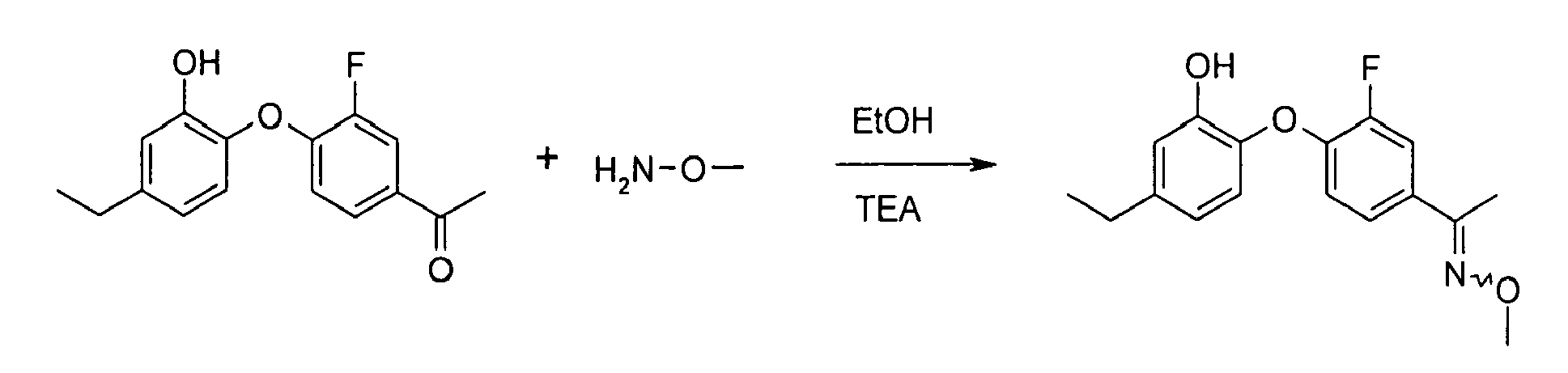


 - R1 is aryl, heterocycle, aliphatic heterocycle, cycloalkyl, all having one or several cycles ,alkyl, all substituted or not by one or several R identical or different, selected in the group comprising, H, alkyl, alkenyl, alkynyl, aryl, heterocycle, aliphatic heterocycle, fluoro-alkyl, halogen, COOH, CO2Ra, CORa, CONRaRb, OCORa, CN, ORa, aryloxy NRaRb, CRa=NORb, NRa-aryl, NRaCORb, NRaCOORb, OCONRaRb, NRaCONRbRc, SRa, SO2Ra, SO2NRaRb, NRaSO2Rb, NRaC(S)NRbRc,- R2 is aryl, aryloxy, heterocycle, aliphatic heterocycle, cycloalkyl, all having one or several cycles, H, alkyl, alkenyl, alkynyl, halogen, fluoro-alkyl, fluoro-alkenyl, OCF3, OCHF2, NRaRb, CO2Ra, CORa, ORa, CONRaRb, CRa=NORb, SRa,- all being substituted or not by one or several R, identical or different, being such as above defined,- Ra ,Rb and Rc, identical or different, being H or as above defined with respect to R,- two adjacent R, or two adjacent Ra and/or Rb, and /or Rc optionally forming together a cycle- X = O or S- Y represents C(O)R, CO(O)R, C(S)R, C(S)OR, C(O)NR, C(O)NRa,Rb, C(O)NHR, phosphate P(O)(OR)2, CH2OR, or any labile group which may act as a prodrug to regenerate the free phenol,- Z1, Z2, Z3, identical or different, are halogen or H,and the pharmaceutically acceptable salts, the organic and mineral salts, as well as the racemic derivatives and each unique non racemic derivatives, in case the derivatives of formula (I) have one or more chiral centers, both the cis (Z) and trans (E) isomers in cases the derivatives of formula (I) have unsaturated carbon=carbon double bonds, both forms of tautomers in cases the derivatives of formula (I) may exist in tautomeric forms, provided that with respect to formula (I), when R2 is H, C1 to C26 alkyl substituted or not by OH, NH2, SH, halo or CO2H or OR, SR, NHR, COOR, COR, CONHR, SO2NHR, R being H, C1 to C26 substituted or not by OH, NH2, SH, halo or CO2H; Y=H; X=O; Z1, Z2 Z3 are H;and R1 is a group of formula,
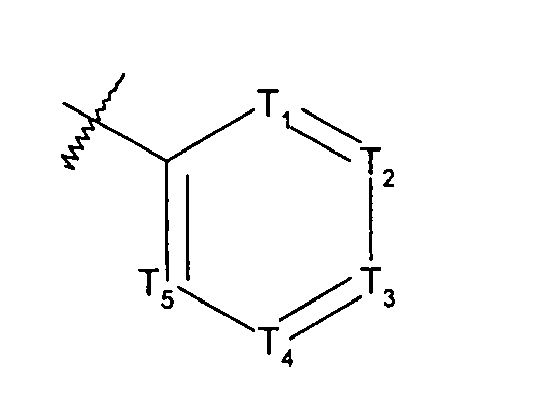 • either
 b) reacting the protected phenol derivative of formula (III) with any suitable Lewis acid such as BBr3, under conditions to give the desired derivatives of formula (I) wherein Y represents OH.
 a2) reacting the derivative of formula (IV) with any suitable Lewis acid such as BBr3, under conditions to give a derivative of formula (V)
 a3) treating the derivative of formula (V) under basic or acidic conditions, to introduce R4, R4 being a protecting group different from an alkyl, such as benzyl, BOM, SEM, MOM, MEM, TBDMS, THP or analogs, resulting in a derivative of formula (VI),
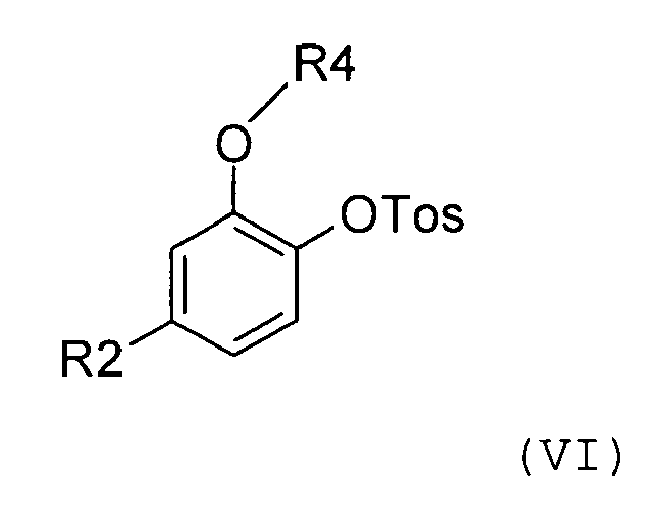 a4) reacting said derivative of formula (VI) under basic conditions, to obtain the removal of Tos group, resulting in the obtention of a derivative of formula (VII)
 a5) reacting the derivative of formula (VII) thus obtained with AR1 such as above defined and deprotecting the phenol group to obtain the desired derivative of formula (I) with Y representing H, wherein R2 is functionalized if desired as above mentioned, optionally from derivative of formula (VI).