EP1837879A2 - Dubbing method using a label for identifying the dubbing status - Google Patents
Dubbing method using a label for identifying the dubbing status Download PDFInfo
- Publication number
- EP1837879A2 EP1837879A2 EP06010081A EP06010081A EP1837879A2 EP 1837879 A2 EP1837879 A2 EP 1837879A2 EP 06010081 A EP06010081 A EP 06010081A EP 06010081 A EP06010081 A EP 06010081A EP 1837879 A2 EP1837879 A2 EP 1837879A2
- Authority
- EP
- European Patent Office
- Prior art keywords
- program
- storage medium
- transferring
- label
- controller
- Prior art date
- Legal status (The legal status is an assumption and is not a legal conclusion. Google has not performed a legal analysis and makes no representation as to the accuracy of the status listed.)
- Withdrawn
Links
- 238000000034 method Methods 0.000 title claims abstract description 184
- 238000011084 recovery Methods 0.000 claims description 42
- 238000012546 transfer Methods 0.000 claims description 10
- 238000013404 process transfer Methods 0.000 claims description 8
- 230000003287 optical effect Effects 0.000 claims description 7
- 239000002699 waste material Substances 0.000 description 2
- 230000006835 compression Effects 0.000 description 1
- 238000007906 compression Methods 0.000 description 1
- 230000001419 dependent effect Effects 0.000 description 1
- 238000011161 development Methods 0.000 description 1
- 230000018109 developmental process Effects 0.000 description 1
Images





Classifications
-
- G—PHYSICS
- G11—INFORMATION STORAGE
- G11B—INFORMATION STORAGE BASED ON RELATIVE MOVEMENT BETWEEN RECORD CARRIER AND TRANSDUCER
- G11B27/00—Editing; Indexing; Addressing; Timing or synchronising; Monitoring; Measuring tape travel
- G11B27/36—Monitoring, i.e. supervising the progress of recording or reproducing
-
- G—PHYSICS
- G11—INFORMATION STORAGE
- G11B—INFORMATION STORAGE BASED ON RELATIVE MOVEMENT BETWEEN RECORD CARRIER AND TRANSDUCER
- G11B27/00—Editing; Indexing; Addressing; Timing or synchronising; Monitoring; Measuring tape travel
- G11B27/10—Indexing; Addressing; Timing or synchronising; Measuring tape travel
- G11B27/11—Indexing; Addressing; Timing or synchronising; Measuring tape travel by using information not detectable on the record carrier
-
- G—PHYSICS
- G11—INFORMATION STORAGE
- G11B—INFORMATION STORAGE BASED ON RELATIVE MOVEMENT BETWEEN RECORD CARRIER AND TRANSDUCER
- G11B27/00—Editing; Indexing; Addressing; Timing or synchronising; Monitoring; Measuring tape travel
- G11B27/10—Indexing; Addressing; Timing or synchronising; Measuring tape travel
- G11B27/19—Indexing; Addressing; Timing or synchronising; Measuring tape travel by using information detectable on the record carrier
- G11B27/28—Indexing; Addressing; Timing or synchronising; Measuring tape travel by using information detectable on the record carrier by using information signals recorded by the same method as the main recording
- G11B27/32—Indexing; Addressing; Timing or synchronising; Measuring tape travel by using information detectable on the record carrier by using information signals recorded by the same method as the main recording on separate auxiliary tracks of the same or an auxiliary record carrier
Definitions
- the present invention relates to a method and related apparatus for transferring a program according to the pre-characterizing clauses of claims 1, 22, 25, and 42.
- Some error conditions and user operations may interrupt a dubbing process (i.e., transferring). Conditions such as a power failure, a power off (e.g., toggling a power switch), a writing failure, or a temporary stop by a user. After the dubbing is interrupted, if the user wants to dub again, the dubbing process must be re-started from the beginning. This results in a waste of time or waste of DVD disc space or both.
- the present invention aims at providing a method and related apparatus for transferring a program that do not require re-starting the transferring process if the transferring process is interrupted.
- the claimed method and related apparatus for transferring a program includes a controller that generates a label for identifying the transferring status of the program.
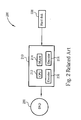
- Fig. 1 shows a conventional fast copy dubbing system 100.
- the controller 110 includes a CPU 1 12 and a DRAM 1 14.
- the CPU 1 12 first de-multiplexes the program in the hard disk 120 (i.e. the source storage medium) and then stores the temporarily de-multiplexed program in the DRAM 114.
- the CPU 112 then re-multiplexes the temporary program in the DRAM to the DVD disk 130 (i.e. the destination storage medium).
- Some program-related information initially stored in the hard disk 120 is also temporarily moved to the DRAM and then written to the DVD disk 130.
- the fast copy dubbing system 100 is also suitable for dubbing from the DVD disk 130 to the hard disk 120, in which case it is only necessary to exchange the DVD disk 130 and the hard disk 120.
- a transcoding dubbing process fully or partially decodes or encodes the original program in a source storage medium, and then writes the decoded or encoded program to a destination storage medium.
- Transcode dubbing also generates program information and stores the information in the destination storage medium. Since transcode dubbing fully or partially decodes or encodes the original program in a source storage medium, the characteristics of the duplicate in the destination storage medium may be different from the characteristics of the original program. Some of the characteristics are video quality, compression method, aspect ratio, bit-rate, video size, and TV system.
- transcode dubbing transcodes a program from high quality to low quality, making the program fit the capacity of a DVD disk, or transcodes a program of 720x480 picture size to a program of 352x288 picture size, making the transcoded program able to be viewed on portable video players.
- transcode dubbing fully or partially decodes or encodes the original program, transcode dubbing usually takes a long time to complete the dubbing process. For example, a 100-hour program may take 100 hours to finish the dubbing process.
- Fig. 2 shows a conventional transcode dubbing system 200.
- the controller 210 usually includes a CPU 212, a DRAM 214, an encoder 216, and a decoder 218.
- the CPU 212 first de-multiplexes the program in the hard disk 220 (i.e. the source storage medium) and then stores the temporary de-multiplexed program in the DRAM 214.
- the CPU 212 optionally controls the decoder 218 to fully or partially decode the temporary de-multiplexed program.
- the decoded program is stored in the DRAM.
- the CPU 212 further optionally controls the encoder 216 to re-encode the program in the DRAM 214 and then the CPU 212 re-multiplexes the re-encoded program to the DVD disk 230 (i.e. the destination storage medium).
- the CPU 212 also generates some program-related information and then stores the information in the DVD disk 230.
- the transcode dubbing system 200 is also suitable for dubbing from the DVD disk 230 to the hard disk 220, in which case it is only necessary to exchange the DVD disk 230 and the hard disk 220.
- dubbing can be categorized into two types: from a hard disk to a DVD disk and from a DVD disk to a hard disk.
- dubbing from a hard disk to a DVD disk because the size of the original program in the hard disk is usually larger than the capacity of one DVD disk, it is necessary to divide the original program into several pieces to fit the capacity of one DVD disk during fast copy dubbing, or to re-encode the original program to a lower quality during transcode dubbing such that the size of the re-encoded program fits the capacity of one DVD disk.
- Fig. 3 shows a dubbing flow of the fast copy dubbing system 100 or the transcode dubbing system 200.
- the controller 210 or 310 first determines which program has been selected by a user (S310). Next, for the transcode dubbing system 200, the controller 210 decodes and encodes the program (S320 and S330) if necessary. For the fast copy dubbing system 100, the controller 110 skips the decoding and encoding steps. When the dubbing is in progress, the controller 210 checks if a writing error occurs in the destination storage medium (S340) and checks if the user wants to stop the dubbing process (S350).
- the controller 110 or 210 stops reading the program from the source storage medium (S360) and then ends the dubbing process (S365). During the dubbing process, the controller 110 or 210 also checks if the destination storage medium is full (S370). If the destination storage medium is full, the controller 110 or 210 checks if it is required to change the destination storage medium (S375). If it is not required to change the destination storage medium, the controller 110 or 210 stops reading the program from the source destination (S360) and then ends the dubbing process (S365). However, if it is required to change the destination storage medium, the controller 110 or 210 pauses the playback of the program, and waits for the user to change the destination storage medium (S380).
- the controller 110 or 210 resumes reading the program from the source storage medium (S390). During the dubbing process, the controller 110 or 210 also checks if the program is completely dubbed (S395). If the program is completely dubbed, the controller 110 or 210 stops the dubbing process (S365). In some cases where the destination storage medium is not a removable storage medium such as a hard disk, the controller 110 or 210 stops the dubbing process when the destination storage medium is full. In such cases, the dubbing flow goes from step S370 to step S360 directly.
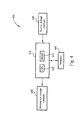
- Fig. 4 is a fast copy dubbing system 400 of a first embodiment
- Fig. 5 is a transcode dubbing system 500 of a second embodiment.
- the fast copy dubbing system 400 includes a controller 410, a source storage medium 420, a destination storage medium 430, and a memory 440.
- the controller 410 includes a CPU 412, and a DRAM 414.
- the CPU 412 first de-multiplexes the program in the source storage medium 420 and then stores the temporary de-multiplexed program in the DRAM 414.
- the CPU 412 re-multiplexes the temporary program in the DRAM 414 to the destination storage medium 430.
- the transcode dubbing system 500 includes a controller 510, a source storage medium 520, a destination storage medium 530, and a memory 540.
- the controller 510 includes a CPU 512, a DRAM 514, an encoder 516, and a decoder 518.
- the CPU 512 first de-multiplexes the program in the source storage medium 520 and then stores the temporarily de-multiplexed program in the DRAM 514.
- the CPU 512 optionally controls the decoder 518 to fully or partially decode the temporary de-multiplexed program.
- the decoded program is stored in the DRAM 514.
- the CPU 512 further optionally controls the encoder 516 to re-encode the program in the DRAM 514 and then the CPU 512 re-multiplexes the re-encoded program to the destination storage medium 530.
- the CPU 512 also generates some program-related information and then stores it in the destination storage medium 530.
- the source storage medium 420 or 520 and the destination storage medium 430 or 530 can be an optical disk, a magnetic disk, or a magnetic-optical disk.
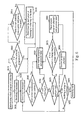
- a recovery method of a dubbing system is provided and illustrated in Fig. 6.
- the recovery method can be applied to both the fast copy dubbing system 400 and the transcode dubbing system 500.
- the symbol '/' is utilized to mean 'or'.
- the controller 410/510 transfers the program from the source storage medium 420 / 520 to the destination storage medium 430 / 530, or more specifically, when the controller 410 / 510 reads the program in the source storage medium 420 / 520, and then stores the program in the destination storage medium 430 / 530, the controller 410 / 510 generates a label for identifying a transferring status of the program.
- a detailed description of the recovery method is described below.
- the controller 410/510 determines which program in the source storage medium 420 / 520 is selected by a user (S61 0).
- the controller 410 / 510 checks if the label for the selected program exists (S61 2). If the label for the selected program exists, the controller 410/510 checks if the user wants to start the dubbing process from a point indicated by the label (S614); if not, the controller 410 / 510 will start to transfer the program. If the user wants to start the dubbing process from a point indicated by the label, the controller 410 / 510 determines the start point of the dubbing process by referring to the label (5616); if not, the controller 410/510 will start to transfer the program.
- the controller 410 skips the decoding and encoding steps (S620 and S630) and directly checks if a writing error occurs in the destination storage medium (S640); on the other hand, the controller 510 decodes and encodes the program (S620 and S630) if necessary, and then also checks if a writing error occurs in the destination storage medium (S640).
- the controller 410 / 510 checks if a writing error occurs in the destination storage medium (S640) and checks if the user wants to stop the dubbing process (S650) as well. If a writing error occurs or the user stops the dubbing process, the controller 410 / 510 stops reading the program from the source storage medium 420 / 520, generates a label to identify the transferring status of the program (S660), and then ends the dubbing process (S665).
- the label can be stored in the source storage medium 420 / 520, the destination storage medium 430 / 530, or the memory 440 / 540.
- the memory 440 / 540 can be a non-volatile memory, such as an EEPROM or a flash memory.
- the label can indicate time information, physical information, or logic position information of the program.
- the program can be an audio file, a video file, an audio/video file, or a multimedia file.
- a time axis is usually utilized to indicate at what time the file is now playing.
- the label indicates the time information of the program, it indicates a time point when the dubbing process is interrupted (e.g. 18 minutes 32 seconds or 2 hours 3 minutes).
- the physical information of the program indicates the physical position of the source storage medium or the destination storage medium. For example, the physical position can be a certain head of a hard disk.
- the logic position information indicates the logic position of the program where the program is interrupted.
- the logic position can indicate the relative position of the interrupted point with respect to the initial point of the program.
- the label further comprises information to identify the source storage medium that contains the program.
- the destination storage medium 430 / 530 is a removable storage medium, the label further comprises information to identify the destination storage medium that contains the program.
- the controller 410 510 can identify if the source storage medium 420 / 520 or the destination storage medium 430 / 530 contains the program by directly checking the label.
- the controller 410 / 510 also checks if the destination storage medium is full (S670). If the destination storage medium is full, the controller 410 / 510 checks if it is required to change the destination storage medium (S675); if not, the controller 410 / 510 checks if the dubbing process is completed (S695). If it is required to change the destination storage medium, the controller 410 / 510 pauses the playback of the program, waits for the user to change the destination storage medium, and generates the label (S680); if not, the controller 410/510 stops reading the program from the source storage medium, generates a label to identify the transferring status of the program (S660), and then ends the dubbing process (S665).
- the controller 410 / 510 resumes reading the program from the source storage medium (S690) to continue the dubbing process. Finally, if the program is completely transferred, the controller 410 / 510 stops the dubbing process (S665). In some cases where the destination storage medium 430 / 530 is not a removable storage medium such as a hard disk, the controller 410 / 510 stops the dubbing process when the destination storage medium 430 or 530 is full. In such cases, the dubbing flow goes directly from step S670 to step S660.
- the controller 510 utilizes the encoder 516 and the decoder 518 to optionally encode and decode the program.
- the controller 510 can utilize the decoder 518 to directly decode the program in the source storage medium 520 to generate a decoded program, and then store the decoded program in the destination storage medium 530.
- the controller 510 can utilize the encoder 516 to directly encode the program in the source storage medium 520 to generate an encoded program, and then store the encoded program in the destination storage medium 530.
- the controller 510 can utilize the decoder 518 and the encoder 516 together to first decode the program in the source storage medium 520 to generate a decoded program, and then encode the decoded program into an encoded program.
- the controller 510 further stores the encoded program in the destination storage medium 530.
- the first decoded and then encoded program has either a different coding scheme or coding rate, or both, from that of the original program.
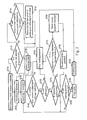
- a second recovery method of a dubbing system is provided and illustrated in Fig. 7.
- the controller 410 / 510 determines which program in the source storage medium 420 / 520 is selected by a user (S710).
- the controller 410 / 510 checks if the label for the selected program exists (S712). If the label for the selected program exists, the controller 410 / 510 checks if the user wants to start the dubbing process from a point indicated by the label (S714); if not, the controller 410 / 510 starts to transfer the program.
- the controller 410 / 510 determines the start point of the dubbing process by referring to the label (S716); if not, the controller 410 / 510 starts to transfer the program.
- the controller 410 skips the decode and encode steps (S720 and S730). Every time before checking if a writing error occurs in the destination storage medium (S740), the controller 410 generates the label to identify the transfer status of the program (S735). More specifically, every predetermined time interval, every predetermined recording length or any interval that determined by any method, a label is generated by the dubbing system.
- the controller 510 decodes and encodes the program (S720 and S730) if necessary, and then also generates the label to identify the transferring status of the program (S735) before checking if a writing error occurs in the destination storage medium (S740).
- the controller 410 / 510 checks if a writing error occurs in the destination storage medium (S740) and checks if the user wants to stop the dubbing process (S750) as well. If a writing error occurs or the user stops the dubbing process, the controller 410 / 510 stops reading the program from the source storage medium 420 / 520 (S760), and then ends the dubbing process (S765).
- the controller 410 / 510 also checks if the destination storage medium is full (S770). If the destination storage medium is full, the controller 410 / 510 checks if it is required to change the destination storage medium (S775); if not, the controller 410 / 510 checks if the dubbing process is completed (S795). If it is required to change the destination storage medium, the controller 410 / 510 pauses the playback of the program and waits for the user to change the destination storage medium (S780); if not, the controller 410 / 510 stops reading the program from the source storage medium (S760), and then ends the dubbing process (S765).
- S770 the destination storage medium is full
- the controller 410 / 510 checks if it is required to change the destination storage medium (S775); if not, the controller 410 / 510 checks if the dubbing process is completed (S795). If it is required to change the destination storage medium, the controller 410 / 510 pauses the playback of the program
- the controller 410 / 510 resumes reading the program from the source storage medium (S790) to continue the dubbing process. Finally, if the program is completely transferred, the controller 410 / 510 clears the label (S796) and then stops the dubbing process (S765). In some cases where the destination storage medium 430 / 530 is not a removable storage medium such as a hard disk, the controller 410 / 510 stops the dubbing process when the destination storage medium 430 / 530 is full. In such cases, the dubbing flow goes directly from step S770 to step S760.
- a third recovery method of a dubbing system is provided and illustrated in Fig. 8 and Fig. 9.
- the controller 410 / 510 checks the destination storage medium and determines if it is required to perform a recovery method, e.g. a title recovery method, to find a recovery information stored in the destination storage medium (S811). If it is not required to perform a recovery method, the dubbing process ends (S818).
- the title recovery method is a mechanism that can process audio data, video data, or audio/video data in the destination storage medium to find the whole title.
- the title recovery method is usually utilized to recover one title while a recording process or a dubbing process fails.
- the title recovery mechanism identifies a specific symbol in the destination storage medium to find the title end and then reconstructs the title integrity.
- a dubbing system can trace back the point where the dubbing process fails. Because the recovery information of the third recovery method is stored in the destination storage medium, the memory 440 / 540 of the dubbing system 400 / 500 is optional.
- the controller 410 / 510 performs the title recovery method on the destination storage medium 430 / 530 and generates the recovery method (S812).
- the controller 410 / 510 then checks if the recovered title failed in the previous dubbing process (S813). If the recovered title did not fail in the previous dubbing process, the dubbing process ends (S818), otherwise, the controller 410 / 510 checks if the source program related to the recovered title exists in the source storage medium 420 / 520 (S814). If the source program does not exist, the dubbing process ends (S81 8), otherwise, the controller 410/510 checks if the user wants to perform the dubbing process (S81 5).
- the dubbing process ends (S818), otherwise, the controller 410 / 510 checks if the user wants to perform the dubbing process from a start point indicated by the recovery information (S816). If the user does not want to perform the dubbing process from the start point, the controller 510 decodes and encodes the program (S820 and S830) if necessary; however, the controller 410 skips these two steps. If the user wants to perform the dubbing process from a start point, the controller 410 / 510 determines the start point of the dubbing process by referring to the recovery information (S817).
- the controller 410 / 510 stores not only the program but also the recovery information into the destination storage medium 430 / 530 (S835).
- the controller 410 / 510 checks if a writing error occurs in the destination storage medium (S840) and checks if the user wants to stop the dubbing process (S850) as well. If a writing error occurs or the user stops the dubbing process, the controller 410 / 510 stops reading the program from the source storage medium 420 /520 (S860), and then ends the dubbing process (S865).
- the controller 410 / 510 also checks if the destination storage medium is full (S870). If the destination storage medium is full, the controller 410 / 510 checks if it is required to change the destination storage medium (S875); if not, the controller 410 / 510 checks if the dubbing process is completed (S895). If it is required to change the destination storage medium, the controller 410 / 510 pauses the playback of the program and waits for the user to change the destination storage medium (S880); if not, the controller 410 / 510 stops reading the program from the source storage medium (S860), and then ends the dubbing process (S865).
- the controller 410 / 510 resumes reading the program from the source storage medium (S890) to continue the dubbing process. Finally, if the program is completely transferred, the controller 410 / 510 stores information in the destination storage medium 430 / 530 to indicate that the dubbing process is completed (S896) and then stops the dubbing process (S865). In some cases where the destination storage medium 430 /530 is not a removable storage medium such as a hard disk, the controller 410 /510 stops the dubbing process when the destination storage medium 430 / 530 is full. In such cases, the dubbing flow goes directly from step S870 to step S860.
- the first method generates a label to indicate the dubbing status when the user interrupts due to a writing error or the dubbing process.
- the second recovery method generates a label to indicate the dubbing status every predetermined time interval, every predetermined data length of recording, or any interval that determined by any method.
- the label is cleared.
- the third recovery method performs a recovery method to retrieve recovery information stored in the destination storage medium by checking the destination storage medium. By referring to the label or the recovery information, the dubbing process can be resumed from the last stop point where the dubbing process is interrupted instead of from the very beginning of the program.
Landscapes
- Signal Processing For Digital Recording And Reproducing (AREA)
- Television Signal Processing For Recording (AREA)
- Management Or Editing Of Information On Record Carriers (AREA)
Abstract
Description
- The present invention relates to a method and related apparatus for transferring a program according to the pre-characterizing clauses of claims 1, 22, 25, and 42.
- Some error conditions and user operations may interrupt a dubbing process (i.e., transferring). Conditions such as a power failure, a power off (e.g., toggling a power switch), a writing failure, or a temporary stop by a user. After the dubbing is interrupted, if the user wants to dub again, the dubbing process must be re-started from the beginning. This results in a waste of time or waste of DVD disc space or both.
- This in mind, the present invention aims at providing a method and related apparatus for transferring a program that do not require re-starting the transferring process if the transferring process is interrupted.
- This is achieved by a method and related apparatus for transferring a program according to claims 1, 22, 25, and 42. The dependent claims pertain to corresponding further developments and improvements.
- As will be seen more clearly from the detailed description following below, the claimed method and related apparatus for transferring a program includes a controller that generates a label for identifying the transferring status of the program.
- For completeness, various aspects of the invention are described in the following numbered clauses:
- 1. A program transferring method comprising:
- selecting a program in a first storage medium;
- transferring the program from the first storage medium to a second storage medium; and
- generating a label for identifying the transferring status of the program.
- 2. The method of clause 1, wherein the step of generating the label comprises:
- when the transferring process is interrupted, generating the label.
- 3. The method of clause 1, wherein the step of generating the label comprises:
- during the transferring process, repeatedly generating the label around a predetermined time interval.
- 4. The method of clause 1 further comprising:
- checking if the label corresponding to the program exists; and
- determining whether to resume the transferring process from an interrupted status.
- 5. The method of clause 1 further comprising:
- checking if the label corresponding to the program exists; and
- determining whether to resume the transferring process from an initial status.
- 6. The method of clause 1, wherein the step of transferring the program from the first storage medium to a second storage medium comprises:
- decoding the program to generate a decoded program;
- 7. The method of clause 1, wherein the step of transferring the program from the first storage medium to a second storage medium comprises:
- encoding the program to generate an encoded program;
- 8. The method of clause 1, wherein the step of transferring the program from the first storage medium to a second storage medium comprises:
- decoding the program and then encoding to generate an encoded program;
- 9. The method of clause 1, wherein the step of transferring the program from the first storage medium to a second storage medium comprises:
- decoding the program and then encoding to generate an encoded program;
- 10. The method of clause 1, wherein the label corresponds to a time information of the program.
- 11. The method of clause 1, wherein the label corresponds to a physical information of the program.
- 12. The method of clause 1, wherein the label corresponds to a logical position information of the program.
- 13. The method of clause 1 further comprising:
- saving the label into the first storage medium, the second storage medium, or an extra storage medium other than the first storage medium and the second storage medium.
- 14. The method of clause 13, wherein the extra storage medium is a non-volatile memory.
- 15. The method of clause 1, wherein the first storage medium is an optical disk.
- 16. The method of clause 1, wherein the first storage medium is a magnetic disk.
- 17. The method of clause 1, wherein the first storage medium is a magnetic-optical disk.
- 18. The method of clause 1, wherein the second storage medium is an optical disk or a magnetic disk.
- 19. The method of clause 1, wherein the second storage medium is a magnetic disk.
- 20. The method of clause 1, wherein the second storage medium is a magnetic-optical disk.
- 21. The method of clause 1, wherein if the first storage medium is a removable storage medium, the label further comprises information for identifying the first storage medium that contains the program; and if the second storage medium is a removable storage medium, the label further comprises information for identifying the second storage medium that contains the program.
- 22. A program transferring method comprising:
- retrieving a recovery information from a program, the recovery information being used for resuming a transferring process; and
- transferring the program from a first storage medium to a second storage medium according to the recovery information.
- 23. The method of clause 22 wherein the step of transferring the program from the first storage medium to the second storage medium comprises:
- determining whether to resume the transferring process from an interrupted status.
- 24. The method of clause 22 wherein the step of transferring the program from the first storage medium to a second storage medium comprises:
- determining whether to resume the transferring process from an initial status.
- 25. An apparatus for transferring a program, comprising:
- a first storage medium for storing a program;
- a second storage medium; and
- a controller, coupled to the first storage medium and the second storage medium, for transferring the program from the first storage medium to the second storage medium and generating a label for identifying the transferring status of the program.
- 26. The apparatus of clause 25, wherein when the transferring process is interrupted, the controller generates the label.
- 27. The apparatus of clause 25, wherein during the transferring process, the controller repeatedly generates the label around a predetermined time interval or a predetermined data length of recording.
- 28. The apparatus of clause 25, the controller further checking if the label corresponding to the program exists and determining whether to resume the transferring process from an interrupted status.
- 29. The apparatus of clause 25, the controller further checking if the label corresponding to the program exists and determining whether to resume the transferring process from an initial status.
- 30. The apparatus of clause 25, the controller further decoding the program to generate a decoded program, and transferring the decoded program to the second storage medium.
- 31. The apparatus of clause 25, the controller further encoding the program to generate an encoded program, and transferring the encoded program to the second storage medium.
- 32. The apparatus of clause 25, the controller further decoding and then encoding the program to generate an encoded program, and transferring the encoded program to the second storage medium, wherein the coding scheme of the encoded program is different from the coding scheme of the program.
- 33. The apparatus of clause 25, the controller further decoding and then encoding the program to generate an encoded program, and transferring the encoded program to the second storage medium, wherein the coding rate of the encoded program is different from the coding rate of the program.
- 34. The apparatus of clause 25, wherein the label corresponds to a time information of the program.
- 35. The apparatus of clause 25, wherein the label corresponds to a physical information of the program.
- 36. The apparatus of clause 25, wherein the label corresponds to a logical position information of the program.
- 37. The apparatus of clause 25, wherein the apparatus further comprises an extra storage medium that is coupled to the controller, and the controller further saves the label into the first storage medium, the second storage medium or the extra storage medium.
- 38. The apparatus of clause 37, wherein the extra storage medium is a non-volatile memory.
- 39. The apparatus of clause 35, wherein the first storage medium is an optical disk or a magnetic disk.
- 40. The apparatus of clause 25, wherein the second storage medium is an optical disk or a magnetic disk.
- 41. The apparatus of clause 25, wherein if the first storage medium is a removable storage medium, the label further comprises information for identifying the first storage medium that contains the program; and if the second storage medium is a removable storage medium, the label further comprises information for identifying the second storage medium that contains the program.
- 42. An apparatus for transferring a program, comprising:
- a first storage medium for storing a program;
- a second storage medium; and
- a controller, coupled to the first storage medium and the second storage medium, for retrieving a recovery information from the program and transferring the program from the first storage medium to the second storage medium according to the recovery information, wherein the recovery information is used for resuming a transferring process.
- 43. The apparatus of clause 42, wherein the controller further determines whether to resume the transferring process from an interrupted status.
- 44. The apparatus of clause 42, wherein the controller further determines whether to resume the transferring process from an initial status.
- In the following, the invention is further illustrated by way of example, taking reference to the accompanying drawings. Thereof
- Fig. 1 shows a fast copy dubbing system according to the related art,
- Fig. 2 shows a transcode dubbing system according to the related art,
- Fig. 3 shows a dubbing flow of the fast copy dubbing system of Fig. 1 or the transcode dubbing system of Fig. 2,
- Fig. 4 shows a fast copy dubbing system of a first embodiment,
- Fig. 5 shows a transcode dubbing system of a second embodiment,
- Fig. 6 is a flow chart illustrating a first recovery method of a dubbing system,
- Fig. 7 is a flow chart illustrating a second recovery method of a dubbing system,
- Fig. 8 is a flow chart illustrating a third recovery method of a dubbing system, and
- Fig. 9 is the continued flow chart of Fig. 8.
- Please refer to Fig. 1. Fig. 1 shows a conventional fast
copy dubbing system 100. Thecontroller 110 includes a CPU 1 12 and a DRAM 1 14. The CPU 1 12 first de-multiplexes the program in the hard disk 120 (i.e. the source storage medium) and then stores the temporarily de-multiplexed program in theDRAM 114. TheCPU 112 then re-multiplexes the temporary program in the DRAM to the DVD disk 130 (i.e. the destination storage medium). Some program-related information initially stored in thehard disk 120 is also temporarily moved to the DRAM and then written to theDVD disk 130. The fastcopy dubbing system 100 is also suitable for dubbing from theDVD disk 130 to thehard disk 120, in which case it is only necessary to exchange theDVD disk 130 and thehard disk 120. - A transcoding dubbing process fully or partially decodes or encodes the original program in a source storage medium, and then writes the decoded or encoded program to a destination storage medium. Transcode dubbing also generates program information and stores the information in the destination storage medium. Since transcode dubbing fully or partially decodes or encodes the original program in a source storage medium, the characteristics of the duplicate in the destination storage medium may be different from the characteristics of the original program. Some of the characteristics are video quality, compression method, aspect ratio, bit-rate, video size, and TV system. For example, transcode dubbing transcodes a program from high quality to low quality, making the program fit the capacity of a DVD disk, or transcodes a program of 720x480 picture size to a program of 352x288 picture size, making the transcoded program able to be viewed on portable video players. However, because transcode dubbing fully or partially decodes or encodes the original program, transcode dubbing usually takes a long time to complete the dubbing process. For example, a 100-hour program may take 100 hours to finish the dubbing process.
- Please refer to Fig. 2. Fig. 2 shows a conventional
transcode dubbing system 200. Thecontroller 210 usually includes aCPU 212, aDRAM 214, anencoder 216, and adecoder 218. TheCPU 212 first de-multiplexes the program in the hard disk 220 (i.e. the source storage medium) and then stores the temporary de-multiplexed program in theDRAM 214. TheCPU 212 optionally controls thedecoder 218 to fully or partially decode the temporary de-multiplexed program. The decoded program is stored in the DRAM. TheCPU 212 further optionally controls theencoder 216 to re-encode the program in theDRAM 214 and then theCPU 212 re-multiplexes the re-encoded program to the DVD disk 230 (i.e. the destination storage medium). TheCPU 212 also generates some program-related information and then stores the information in theDVD disk 230. Thetranscode dubbing system 200 is also suitable for dubbing from theDVD disk 230 to thehard disk 220, in which case it is only necessary to exchange theDVD disk 230 and thehard disk 220. - For a combo recorder comprising a hard disk and a DVD device, according to the types of source storage medium and destination storage medium, dubbing can be categorized into two types: from a hard disk to a DVD disk and from a DVD disk to a hard disk. In the case of dubbing from a hard disk to a DVD disk, because the size of the original program in the hard disk is usually larger than the capacity of one DVD disk, it is necessary to divide the original program into several pieces to fit the capacity of one DVD disk during fast copy dubbing, or to re-encode the original program to a lower quality during transcode dubbing such that the size of the re-encoded program fits the capacity of one DVD disk. On the other hand, in the case of dubbing from a DVD disk to a hard disk, most of the time there is no difficulty dubbing one original program from a DVD disk to a hard disk. Users can usually utilize the transcode dubbing to first copy the original program to a hard disk, edit the original program (e.g. decoding or encoding or both), and then dub the edited program back to another DVD disk.
- Please refer to Fig. 3. Fig. 3 shows a dubbing flow of the fast
copy dubbing system 100 or thetranscode dubbing system 200. Thecontroller 210 or 310 first determines which program has been selected by a user (S310). Next, for thetranscode dubbing system 200, thecontroller 210 decodes and encodes the program (S320 and S330) if necessary. For the fastcopy dubbing system 100, thecontroller 110 skips the decoding and encoding steps. When the dubbing is in progress, thecontroller 210 checks if a writing error occurs in the destination storage medium (S340) and checks if the user wants to stop the dubbing process (S350). If a writing error occurs or the user stops the dubbing process, thecontroller controller controller controller controller controller controller controller controller - Please refer to Figs. 4 and 5. Fig. 4 is a fast
copy dubbing system 400 of a first embodiment, and Fig. 5 is atranscode dubbing system 500 of a second embodiment. The fastcopy dubbing system 400 includes acontroller 410, asource storage medium 420, adestination storage medium 430, and amemory 440. Thecontroller 410 includes aCPU 412, and aDRAM 414. TheCPU 412 first de-multiplexes the program in thesource storage medium 420 and then stores the temporary de-multiplexed program in theDRAM 414. TheCPU 412 re-multiplexes the temporary program in theDRAM 414 to thedestination storage medium 430. Some program-related information initially stored in thesource storage medium 420 is also temporarily moved to theDRAM 414 and then written to thedestination storage medium 430. Thetranscode dubbing system 500 includes acontroller 510, asource storage medium 520, adestination storage medium 530, and amemory 540. Thecontroller 510 includes aCPU 512, aDRAM 514, anencoder 516, and adecoder 518. TheCPU 512 first de-multiplexes the program in thesource storage medium 520 and then stores the temporarily de-multiplexed program in theDRAM 514. TheCPU 512 optionally controls thedecoder 518 to fully or partially decode the temporary de-multiplexed program. The decoded program is stored in theDRAM 514. TheCPU 512 further optionally controls theencoder 516 to re-encode the program in theDRAM 514 and then theCPU 512 re-multiplexes the re-encoded program to thedestination storage medium 530. TheCPU 512 also generates some program-related information and then stores it in thedestination storage medium 530. Thesource storage medium destination storage medium - A recovery method of a dubbing system is provided and illustrated in Fig. 6. The recovery method can be applied to both the fast
copy dubbing system 400 and thetranscode dubbing system 500. Herein the symbol '/' is utilized to mean 'or'. When thecontroller 410/510 transfers the program from thesource storage medium 420 / 520 to thedestination storage medium 430 / 530, or more specifically, when thecontroller 410 / 510 reads the program in thesource storage medium 420 / 520, and then stores the program in thedestination storage medium 430 / 530, thecontroller 410 / 510 generates a label for identifying a transferring status of the program. A detailed description of the recovery method is described below. - Initially, the
controller 410/510 determines which program in thesource storage medium 420 / 520 is selected by a user (S61 0). Next, thecontroller 410 / 510 checks if the label for the selected program exists (S61 2). If the label for the selected program exists, thecontroller 410/510 checks if the user wants to start the dubbing process from a point indicated by the label (S614); if not, thecontroller 410 / 510 will start to transfer the program. If the user wants to start the dubbing process from a point indicated by the label, thecontroller 410 / 510 determines the start point of the dubbing process by referring to the label (5616); if not, thecontroller 410/510 will start to transfer the program. Thecontroller 410 skips the decoding and encoding steps (S620 and S630) and directly checks if a writing error occurs in the destination storage medium (S640); on the other hand, thecontroller 510 decodes and encodes the program (S620 and S630) if necessary, and then also checks if a writing error occurs in the destination storage medium (S640). - When the dubbing process is in progress, the
controller 410 / 510 checks if a writing error occurs in the destination storage medium (S640) and checks if the user wants to stop the dubbing process (S650) as well. If a writing error occurs or the user stops the dubbing process, thecontroller 410 / 510 stops reading the program from thesource storage medium 420 / 520, generates a label to identify the transferring status of the program (S660), and then ends the dubbing process (S665). The label can be stored in thesource storage medium 420 / 520, thedestination storage medium 430 / 530, or thememory 440 / 540. Thememory 440 / 540 can be a non-volatile memory, such as an EEPROM or a flash memory. The label can indicate time information, physical information, or logic position information of the program. As mentioned above, the program can be an audio file, a video file, an audio/video file, or a multimedia file. When these kinds of files are utilized during a playback process, a time axis is usually utilized to indicate at what time the file is now playing. When the label indicates the time information of the program, it indicates a time point when the dubbing process is interrupted (e.g. 18 minutes 32 seconds or 2 hours 3 minutes). The physical information of the program indicates the physical position of the source storage medium or the destination storage medium. For example, the physical position can be a certain head of a hard disk. The logic position information indicates the logic position of the program where the program is interrupted. For example, the logic position can indicate the relative position of the interrupted point with respect to the initial point of the program. Moreover, if thesource storage medium 420 / 520 is a removable storage medium, the label further comprises information to identify the source storage medium that contains the program. Similarly, if thedestination storage medium 430 / 530 is a removable storage medium, the label further comprises information to identify the destination storage medium that contains the program. In this case, thecontroller 410 510 can identify if thesource storage medium 420 / 520 or thedestination storage medium 430 / 530 contains the program by directly checking the label. - During the dubbing process, the
controller 410 / 510 also checks if the destination storage medium is full (S670). If the destination storage medium is full, thecontroller 410 / 510 checks if it is required to change the destination storage medium (S675); if not, thecontroller 410 / 510 checks if the dubbing process is completed (S695). If it is required to change the destination storage medium, thecontroller 410 / 510 pauses the playback of the program, waits for the user to change the destination storage medium, and generates the label (S680); if not, thecontroller 410/510 stops reading the program from the source storage medium, generates a label to identify the transferring status of the program (S660), and then ends the dubbing process (S665). After a new destination storage medium is connected, thecontroller 410 / 510 resumes reading the program from the source storage medium (S690) to continue the dubbing process. Finally, if the program is completely transferred, thecontroller 410 / 510 stops the dubbing process (S665). In some cases where thedestination storage medium 430 / 530 is not a removable storage medium such as a hard disk, thecontroller 410 / 510 stops the dubbing process when thedestination storage medium - As to the
transcode dubbing system 500, thecontroller 510 utilizes theencoder 516 and thedecoder 518 to optionally encode and decode the program. Thecontroller 510 can utilize thedecoder 518 to directly decode the program in thesource storage medium 520 to generate a decoded program, and then store the decoded program in thedestination storage medium 530. Alternatively, thecontroller 510 can utilize theencoder 516 to directly encode the program in thesource storage medium 520 to generate an encoded program, and then store the encoded program in thedestination storage medium 530. In addition, thecontroller 510 can utilize thedecoder 518 and theencoder 516 together to first decode the program in thesource storage medium 520 to generate a decoded program, and then encode the decoded program into an encoded program. Thecontroller 510 further stores the encoded program in thedestination storage medium 530. However, please note that the first decoded and then encoded program has either a different coding scheme or coding rate, or both, from that of the original program. - A second recovery method of a dubbing system is provided and illustrated in Fig. 7. Initially, the
controller 410 / 510 determines which program in thesource storage medium 420 / 520 is selected by a user (S710). Next, thecontroller 410 / 510 checks if the label for the selected program exists (S712). If the label for the selected program exists, thecontroller 410 / 510 checks if the user wants to start the dubbing process from a point indicated by the label (S714); if not, thecontroller 410 / 510 starts to transfer the program. If the user wants to start the dubbing process from a point indicated by the label, thecontroller 410 / 510 determines the start point of the dubbing process by referring to the label (S716); if not, thecontroller 410 / 510 starts to transfer the program. Thecontroller 410 skips the decode and encode steps (S720 and S730). Every time before checking if a writing error occurs in the destination storage medium (S740), thecontroller 410 generates the label to identify the transfer status of the program (S735). More specifically, every predetermined time interval, every predetermined recording length or any interval that determined by any method, a label is generated by the dubbing system. On the other hand, thecontroller 510 decodes and encodes the program (S720 and S730) if necessary, and then also generates the label to identify the transferring status of the program (S735) before checking if a writing error occurs in the destination storage medium (S740). - When the dubbing process is in progress, the
controller 410 / 510 checks if a writing error occurs in the destination storage medium (S740) and checks if the user wants to stop the dubbing process (S750) as well. If a writing error occurs or the user stops the dubbing process, thecontroller 410 / 510 stops reading the program from thesource storage medium 420 / 520 (S760), and then ends the dubbing process (S765). - During the dubbing process, the
controller 410 / 510 also checks if the destination storage medium is full (S770). If the destination storage medium is full, thecontroller 410 / 510 checks if it is required to change the destination storage medium (S775); if not, thecontroller 410 / 510 checks if the dubbing process is completed (S795). If it is required to change the destination storage medium, thecontroller 410 / 510 pauses the playback of the program and waits for the user to change the destination storage medium (S780); if not, thecontroller 410 / 510 stops reading the program from the source storage medium (S760), and then ends the dubbing process (S765). After a new destination storage medium is connected, thecontroller 410 / 510 resumes reading the program from the source storage medium (S790) to continue the dubbing process. Finally, if the program is completely transferred, thecontroller 410 / 510 clears the label (S796) and then stops the dubbing process (S765). In some cases where thedestination storage medium 430 / 530 is not a removable storage medium such as a hard disk, thecontroller 410 / 510 stops the dubbing process when thedestination storage medium 430 / 530 is full. In such cases, the dubbing flow goes directly from step S770 to step S760. - A third recovery method of a dubbing system is provided and illustrated in Fig. 8 and Fig. 9. When the
dubbing system controller 410 / 510 checks the destination storage medium and determines if it is required to perform a recovery method, e.g. a title recovery method, to find a recovery information stored in the destination storage medium (S811). If it is not required to perform a recovery method, the dubbing process ends (S818). The title recovery method is a mechanism that can process audio data, video data, or audio/video data in the destination storage medium to find the whole title. The title recovery method is usually utilized to recover one title while a recording process or a dubbing process fails. For example, the title recovery mechanism identifies a specific symbol in the destination storage medium to find the title end and then reconstructs the title integrity. By utilizing the title recovery method, a dubbing system can trace back the point where the dubbing process fails. Because the recovery information of the third recovery method is stored in the destination storage medium, thememory 440 / 540 of thedubbing system 400 / 500 is optional. - If performing a recovery method is necessary, the
controller 410 / 510 performs the title recovery method on thedestination storage medium 430 / 530 and generates the recovery method (S812). Thecontroller 410 / 510 then checks if the recovered title failed in the previous dubbing process (S813). If the recovered title did not fail in the previous dubbing process, the dubbing process ends (S818), otherwise, thecontroller 410 / 510 checks if the source program related to the recovered title exists in thesource storage medium 420 / 520 (S814). If the source program does not exist, the dubbing process ends (S81 8), otherwise, thecontroller 410/510 checks if the user wants to perform the dubbing process (S81 5). If the user does not want to perform the dubbing process, the dubbing process ends (S818), otherwise, thecontroller 410 / 510 checks if the user wants to perform the dubbing process from a start point indicated by the recovery information (S816). If the user does not want to perform the dubbing process from the start point, thecontroller 510 decodes and encodes the program (S820 and S830) if necessary; however, thecontroller 410 skips these two steps. If the user wants to perform the dubbing process from a start point, thecontroller 410 / 510 determines the start point of the dubbing process by referring to the recovery information (S817). - During the dubbing process, the
controller 410 / 510 stores not only the program but also the recovery information into thedestination storage medium 430 / 530 (S835). Thecontroller 410 / 510 checks if a writing error occurs in the destination storage medium (S840) and checks if the user wants to stop the dubbing process (S850) as well. If a writing error occurs or the user stops the dubbing process, thecontroller 410 / 510 stops reading the program from thesource storage medium 420 /520 (S860), and then ends the dubbing process (S865). - During the dubbing process, the
controller 410 / 510 also checks if the destination storage medium is full (S870). If the destination storage medium is full, thecontroller 410 / 510 checks if it is required to change the destination storage medium (S875); if not, thecontroller 410 / 510 checks if the dubbing process is completed (S895). If it is required to change the destination storage medium, thecontroller 410 / 510 pauses the playback of the program and waits for the user to change the destination storage medium (S880); if not, thecontroller 410 / 510 stops reading the program from the source storage medium (S860), and then ends the dubbing process (S865). After a new destination storage medium is connected, thecontroller 410 / 510 resumes reading the program from the source storage medium (S890) to continue the dubbing process. Finally, if the program is completely transferred, thecontroller 410 / 510 stores information in thedestination storage medium 430 / 530 to indicate that the dubbing process is completed (S896) and then stops the dubbing process (S865). In some cases where thedestination storage medium 430 /530 is not a removable storage medium such as a hard disk, thecontroller 410 /510 stops the dubbing process when thedestination storage medium 430 / 530 is full. In such cases, the dubbing flow goes directly from step S870 to step S860. - Three recovery methods are disclosed in the embodiments to facilitate the dubbing process. The first method generates a label to indicate the dubbing status when the user interrupts due to a writing error or the dubbing process. The second recovery method generates a label to indicate the dubbing status every predetermined time interval, every predetermined data length of recording, or any interval that determined by any method. After the dubbing process is completed, the label is cleared. The third recovery method performs a recovery method to retrieve recovery information stored in the destination storage medium by checking the destination storage medium. By referring to the label or the recovery information, the dubbing process can be resumed from the last stop point where the dubbing process is interrupted instead of from the very beginning of the program.
Claims (41)
- A program transferring method comprising:selecting a program in a first storage medium (420);transferring the program from the first storage medium (420) to a second storagemedium (430); andcharacterised by:generating a label for identifying the transferring status of the program.
- The method of claim 1, characterized in that the step of generating the label comprises:when the transferring process is interrupted, generating the label.
- The method of claim 1, characterized in that the step of generating the label comprises:during the transferring process, repeatedly generating the label around a predetermined time interval.
- The method of claim 1 characterized by:checking if the label corresponding to the program exists; anddetermining whether to resume the transferring process from an interrupted status.
- The method of claim 1 characterized by:checking if the label corresponding to the program exists; anddetermining whether to resume the transferring process from an initial status.
- The method of claim 1, characterized in that the step of transferring the program from the first storage medium (520) to a second storage medium (530) comprises:decoding the program to generate a decoded program;characterized in that the transferring process transfers the decoded program to the second storage medium (530).
- The method of claim 1, characterized in that the step of transferring the program from the first storage medium (520) to a second storage medium (530) comprises:encoding the program to generate an encoded program;characterized in that the transferring process transfers the encoded program to the second storage medium (530).
- The method of claim 1, characterized in that the step of transferring the program from the first storage medium (520) to a second storage medium (530) comprises:decoding the program and then encoding to generate an encoded program; characterized in that the coding scheme of the encoded program is different from the coding scheme of the program, and the transferring process transfers the encoded program to the second storage medium (530).
- The method of claim 1, characterized in that the step of transferring the program from the first storage medium (520) to a second storage medium (530) comprises:decoding the program and then encoding to generate an encoded program; characterized in that the coding rate of the encoded program is different from the coding rate of the program, and the transferring process transfers the encoded program to the second storage medium (530).
- The method of claim 1, characterized in that the label corresponds to a time information of the program.
- The method of claim 1, characterized in that the label corresponds to a physical information of the program.
- The method of claim 1, characterized in that the label corresponds to a logical position information of the program.
- The method of claim 1 characterized by:saving the label into the first storage medium (520), the second storage medium (530), or an extra storage medium other than the first storage medium (520) and the second storage medium (530).
- The method of claim 13, characterized in that the extra storage medium is a non-volatile memory.
- The method of claim 1, characterized in that the first storage medium is an optical disk.
- The method of claim 1, characterized in that the first storage medium is a magnetic disk.
- The method of claim 1, characterized in that the first storage medium is a magnetic-optical disk.
- The method of claim 1, characterized in that the second storage medium is an optical disk or a magnetic disk.
- The method of claim 1, characterized in that the second storage medium is a magnetic disk.
- The method of claim 1, characterized in that the second storage medium is a magnetic-optical disk.
- The method of claim 1, characterized in that if the first storage medium (520) is a removable storage medium, the label further comprises information for identifying the first storage medium (520) that contains the program; and if the second storage medium (530) is a removable storage medium, the label further comprises information for identifying the second storage medium (530) that contains the program.
- A program transferring method characterized by:retrieving a recovery information from a program, the recovery information being used for resuming a transferring process; andtransferring the program from a first storage medium (520) to a second storage medium (530) according to the recovery information.
- The method of claim 22 characterized in that the step of transferring the program from the first storage medium (520) to the second storage medium (530) comprises:determining whether to resume the transferring process from an interrupted status.
- The method of claim 22 characterized in that the step of transferring the program from the first storage medium (520) to a second storage medium (530) comprises:determining whether to resume the transferring process from an initial status.
- An apparatus for transferring a program, comprising:a first storage medium (520) for storing a program;a second storage medium (530); andcharacterized by:a controller (510), coupled to the first storage medium (520) and the second storage medium (530), for transferring the program from the first storage medium (520) to the second storage medium (530) and generating a label for identifying the transferring status of the program.
- The apparatus of claim 25, characterized in that when the transferring process is interrupted, the controller (510) generates the label.
- The apparatus of claim 25, characterized in that during the transferring process, the controller (510) repeatedly generates the label around a predetermined time interval or a predetermined data length of recording.
- The apparatus of claim 25, characterized in that the controller (510) further checks if the label corresponding to the program exists and determines whether to resume the transferring process from an interrupted status.
- The apparatus of claim 25, characterized in that the controller (510) further checks if the label corresponding to the program exists and determines whether to resume the transferring process from an initial status.
- The apparatus of claim 25, characterized in that the controller (510) further decodes the program to generate a decoded program, and transfers the decoded program to the second storage medium (530).
- The apparatus of claim 25, characterized in that the controller (510) further encodes the program to generate an encoded program, and transfers the encoded program to the second storage medium (530).
- The apparatus of claim 25, characterized in that the controller (510) further decodes and then encodes the program to generate an encoded program, and transfers the encoded program to the second storage medium (530), wherein the coding scheme of the encoded program is different from the coding scheme of the program.
- The apparatus of claim 25, characterized in that the controller (510) further decodes and then encodes the program to generate an encoded program, and transfers the encoded program to the second storage medium (530), wherein the coding rate of the encoded program is different from the coding rate of the program.
- The apparatus of claim 25, characterized in that the label corresponds to a time information of the program.
- The apparatus of claim 25, characterized in that the label corresponds to a physical information of the program.
- The apparatus of claim 25, characterized in that the label corresponds to a logical position information of the program.
- The apparatus of claim 25, characterized in that the apparatus further comprises an extra storage medium that is coupled to the controller (510), and the controller (510) further saves the label into the first storage medium (520), the second storage medium (530) or the extra storage medium.
- The apparatus of claim 25, characterized in that if the first storage medium (520) is a removable storage medium, the label further comprises information for identifying the first storage medium (520) that contains the program; and if the second storage medium (530) is a removable storage medium, the label further comprises information for identifying the second storage medium (530) that contains the program.
- An apparatus for transferring a program, comprising:a first storage medium (520) for storing a program;a second storage medium (530); andcharacterized by:a controller (510), coupled to the first storage medium (520) and the second storage medium (530), for retrieving a recovery information from the program and transferring the program from the first storage medium (520) to the second storage medium (530) according to the recovery information, wherein the recovery information is used for resuming a transferring process.
- The apparatus of claim 39, characterized in that the controller (510) further determines whether to resume the transferring process from an interrupted status.
- The apparatus of claim 39, characterized in that the controller (510) further determines whether to resume the transferring process from an initial status.
Applications Claiming Priority (1)
| Application Number | Priority Date | Filing Date | Title |
|---|---|---|---|
| US11/277,041 US20070223872A1 (en) | 2006-03-21 | 2006-03-21 | Dubbing method utilizing label for identifying dubbing status |
Publications (2)
| Publication Number | Publication Date |
|---|---|
| EP1837879A2 true EP1837879A2 (en) | 2007-09-26 |
| EP1837879A3 EP1837879A3 (en) | 2007-10-10 |
Family
ID=38265538
Family Applications (1)
| Application Number | Title | Priority Date | Filing Date |
|---|---|---|---|
| EP06010081A Withdrawn EP1837879A3 (en) | 2006-03-21 | 2006-05-16 | Dubbing method using a label for identifying the dubbing status |
Country Status (4)
| Country | Link |
|---|---|
| US (1) | US20070223872A1 (en) |
| EP (1) | EP1837879A3 (en) |
| CN (1) | CN100550165C (en) |
| TW (1) | TWI328804B (en) |
Families Citing this family (3)
| Publication number | Priority date | Publication date | Assignee | Title |
|---|---|---|---|---|
| US8254761B2 (en) * | 2007-03-07 | 2012-08-28 | Rovi Solutions Corporation | Copying digital content by emulating playing of a recording medium by a player |
| JP4902415B2 (en) * | 2007-04-23 | 2012-03-21 | キヤノン株式会社 | Recording / reproducing apparatus and control method thereof |
| JP4924633B2 (en) * | 2009-02-27 | 2012-04-25 | ソニー株式会社 | Information processing apparatus, information processing method, and program |
Citations (6)
| Publication number | Priority date | Publication date | Assignee | Title |
|---|---|---|---|---|
| JPH0963192A (en) | 1995-08-21 | 1997-03-07 | Canon Inc | Data recording device and data recording method |
| EP1059635A2 (en) | 1999-05-21 | 2000-12-13 | Sony Corporation | Recording apparatus, playback apparatus, recording method, and playback method |
| EP1130588A2 (en) | 2000-02-29 | 2001-09-05 | Pioneer Corporation | Data transfer with abnormality control |
| US20010054168A1 (en) * | 1998-05-01 | 2001-12-20 | Chung Hyun-Kwon | Recording medium for storing real time recording/reproduction information, method and apparatus for recording and reproducing in real time, and file operating method using the same |
| EP1262980A2 (en) | 2001-05-31 | 2002-12-04 | Pioneer Corporation | Information recording/reproducing apparatus |
| EP1434227A2 (en) | 2002-12-24 | 2004-06-30 | Funai Electric Co., Ltd. | Data storage and reproduction apparatus storing and reproducing multimedia data |
Family Cites Families (19)
| Publication number | Priority date | Publication date | Assignee | Title |
|---|---|---|---|---|
| JPH03108158A (en) * | 1989-09-22 | 1991-05-08 | Pioneer Electron Corp | Information recording and reproducing device |
| JP2944859B2 (en) * | 1993-07-22 | 1999-09-06 | シャープ株式会社 | High-speed data dubbing method |
| KR0180922B1 (en) * | 1993-10-15 | 1999-10-01 | 모리시타 요이찌 | How to record digital data |
| JPH09261583A (en) * | 1996-01-16 | 1997-10-03 | Canon Inc | Reproducing apparatus, recording apparatus, recording / reproducing system and recording / reproducing method |
| JPH09231665A (en) * | 1996-02-28 | 1997-09-05 | Sony Corp | Recording system and recording / reproducing system |
| JP3750278B2 (en) * | 1997-05-23 | 2006-03-01 | ソニー株式会社 | Recording apparatus, recording system, and dubbing method |
| US6430356B1 (en) * | 1997-06-27 | 2002-08-06 | Victor Company Of Japan, Ltd. | Information recording and reproducing apparatus for dubbing an audio-visual digital signal and auxiliary information recorded in a magnetic tape |
| US6064380A (en) * | 1997-11-17 | 2000-05-16 | International Business Machines Corporation | Bookmark for multi-media content |
| US6292852B1 (en) * | 1998-10-23 | 2001-09-18 | Computer Performance, Inc. | High-performance multiple-media duplicating system |
| EP1003301A3 (en) * | 1998-11-19 | 2000-06-07 | NEC Corporation | Program information providing apparatus and record/playback control apparatus |
| JP4169890B2 (en) * | 1999-11-12 | 2008-10-22 | 松下電器産業株式会社 | Recording apparatus and program recording medium |
| JP4304796B2 (en) * | 1999-11-30 | 2009-07-29 | ソニー株式会社 | Dubbing equipment |
| JP4304802B2 (en) * | 1999-12-17 | 2009-07-29 | ソニー株式会社 | Dubbing equipment |
| JP2001184785A (en) * | 1999-12-24 | 2001-07-06 | Sony Corp | Dubbing device |
| JP2003244642A (en) * | 2002-02-14 | 2003-08-29 | Funai Electric Co Ltd | Digital video recorder and video recording method thereof |
| ATE441181T1 (en) * | 2002-10-18 | 2009-09-15 | Panasonic Corp | INFORMATION RECORDING MEDIUM, INFORMATION RECORDING DEVICE AND INFORMATION REPRODUCTION DEVICE THEREFOR |
| US8355617B2 (en) * | 2003-12-26 | 2013-01-15 | Canon Kabushiki Kaisha | Recording apparatus |
| GB0412338D0 (en) * | 2004-06-03 | 2004-07-07 | Koninkl Philips Electronics Nv | Transfer of content between storage devices |
| JP3897258B2 (en) * | 2004-12-15 | 2007-03-22 | 船井電機株式会社 | Hard disk recorder connected to IEEE 1394 serial bus, and digital recording device connected to IEEE 1394 serial bus |
-
2006
- 2006-03-21 US US11/277,041 patent/US20070223872A1/en not_active Abandoned
- 2006-05-16 EP EP06010081A patent/EP1837879A3/en not_active Withdrawn
- 2006-08-14 TW TW095129779A patent/TWI328804B/en not_active IP Right Cessation
- 2006-09-01 CN CNB2006101264943A patent/CN100550165C/en not_active Expired - Fee Related
Patent Citations (6)
| Publication number | Priority date | Publication date | Assignee | Title |
|---|---|---|---|---|
| JPH0963192A (en) | 1995-08-21 | 1997-03-07 | Canon Inc | Data recording device and data recording method |
| US20010054168A1 (en) * | 1998-05-01 | 2001-12-20 | Chung Hyun-Kwon | Recording medium for storing real time recording/reproduction information, method and apparatus for recording and reproducing in real time, and file operating method using the same |
| EP1059635A2 (en) | 1999-05-21 | 2000-12-13 | Sony Corporation | Recording apparatus, playback apparatus, recording method, and playback method |
| EP1130588A2 (en) | 2000-02-29 | 2001-09-05 | Pioneer Corporation | Data transfer with abnormality control |
| EP1262980A2 (en) | 2001-05-31 | 2002-12-04 | Pioneer Corporation | Information recording/reproducing apparatus |
| EP1434227A2 (en) | 2002-12-24 | 2004-06-30 | Funai Electric Co., Ltd. | Data storage and reproduction apparatus storing and reproducing multimedia data |
Also Published As
| Publication number | Publication date |
|---|---|
| CN100550165C (en) | 2009-10-14 |
| CN101042911A (en) | 2007-09-26 |
| TW200737145A (en) | 2007-10-01 |
| TWI328804B (en) | 2010-08-11 |
| EP1837879A3 (en) | 2007-10-10 |
| US20070223872A1 (en) | 2007-09-27 |
Similar Documents
| Publication | Publication Date | Title |
|---|---|---|
| KR100694519B1 (en) | Data recording apparatus and method, data reproducing apparatus and method, data recording and reproducing apparatus and method, and transmission medium | |
| CN101336454B (en) | Device for reproducing compressed coded data and method for decoding/reproducing compressed coded data of the device | |
| WO2004036906A1 (en) | Data processing device | |
| US20040033059A1 (en) | Image recording/reproducing apparatus having enhanced ability to recover motion picture data in the event of recording error | |
| JP2005166168A (en) | Data reproducing apparatus, computer program therefor, and recording medium recording the computer program | |
| CN100550165C (en) | Program content copying method with mark to identify copying state and related device | |
| CN1774062A (en) | Method and device for recording and reproducing data | |
| JP5368550B2 (en) | Recording / reproducing method and recording / reproducing apparatus | |
| US20070003225A1 (en) | Method and apparatus for recording information and playback information | |
| JP2005072799A (en) | Recording apparatus and recording method | |
| JP4028246B2 (en) | Information recording and editing apparatus and information recording medium | |
| JP2002260332A (en) | Playback device, playback method, and storage medium | |
| US9812166B2 (en) | Recording and reproducing device for reconstructing user data | |
| KR100657703B1 (en) | How to play DivX files in internal hard disk media player | |
| JP3991228B2 (en) | MP3 audio data playback processing method | |
| JP3433810B2 (en) | Recording / reproducing apparatus and recording / reproducing method | |
| JP4367366B2 (en) | Recording / playback device | |
| JP4229092B2 (en) | Recording apparatus and method, reproducing apparatus and method | |
| JP3729261B2 (en) | Recording device | |
| CN1841543B (en) | Recording/playback control device, contents management method and recording/playback apparatus | |
| JP2006217126A (en) | Optical disc playback apparatus and video / audio playback apparatus | |
| KR100596867B1 (en) | Data playback method in optical disk device | |
| JP2007188592A (en) | Video signal recording controller and video signal recording control method | |
| JP2008269752A (en) | Disk recording device | |
| JP2006352180A (en) | Video information recording device |
Legal Events
| Date | Code | Title | Description |
|---|---|---|---|
| PUAI | Public reference made under article 153(3) epc to a published international application that has entered the european phase |
Free format text: ORIGINAL CODE: 0009012 |
|
| PUAL | Search report despatched |
Free format text: ORIGINAL CODE: 0009013 |
|
| AK | Designated contracting states |
Kind code of ref document: A2 Designated state(s): AT BE BG CH CY CZ DE DK EE ES FI FR GB GR HU IE IS IT LI LT LU LV MC NL PL PT RO SE SI SK TR |
|
| AX | Request for extension of the european patent |
Extension state: AL BA HR MK YU |
|
| AK | Designated contracting states |
Kind code of ref document: A3 Designated state(s): AT BE BG CH CY CZ DE DK EE ES FI FR GB GR HU IE IS IT LI LT LU LV MC NL PL PT RO SE SI SK TR |
|
| AX | Request for extension of the european patent |
Extension state: AL BA HR MK YU |
|
| RIC1 | Information provided on ipc code assigned before grant |
Ipc: G11B 27/32 20060101ALN20070831BHEP Ipc: G11B 27/11 20060101ALN20070831BHEP Ipc: G06F 11/14 20060101ALI20070831BHEP Ipc: G11B 27/36 20060101AFI20070726BHEP |
|
| RAP1 | Party data changed (applicant data changed or rights of an application transferred) |
Owner name: MEDIATEK, INC |
|
| 17P | Request for examination filed |
Effective date: 20080304 |
|
| AKX | Designation fees paid |
Designated state(s): DE FR GB |
|
| 17Q | First examination report despatched |
Effective date: 20151207 |
|
| STAA | Information on the status of an ep patent application or granted ep patent |
Free format text: STATUS: THE APPLICATION IS DEEMED TO BE WITHDRAWN |
|
| 18D | Application deemed to be withdrawn |
Effective date: 20160419 |