EP1837318A2 - Aluminium nitride sintered body, member for semiconductor manufacturing device, and method of manufacturing aluminum nitride sintered body - Google Patents
Aluminium nitride sintered body, member for semiconductor manufacturing device, and method of manufacturing aluminum nitride sintered body Download PDFInfo
- Publication number
- EP1837318A2 EP1837318A2 EP07251163A EP07251163A EP1837318A2 EP 1837318 A2 EP1837318 A2 EP 1837318A2 EP 07251163 A EP07251163 A EP 07251163A EP 07251163 A EP07251163 A EP 07251163A EP 1837318 A2 EP1837318 A2 EP 1837318A2
- Authority
- EP
- European Patent Office
- Prior art keywords
- aluminum nitride
- powder
- sintered body
- nitride sintered
- manufacturing
- Prior art date
- Legal status (The legal status is an assumption and is not a legal conclusion. Google has not performed a legal analysis and makes no representation as to the accuracy of the status listed.)
- Granted
Links
Images


Classifications
-
- C—CHEMISTRY; METALLURGY
- C04—CEMENTS; CONCRETE; ARTIFICIAL STONE; CERAMICS; REFRACTORIES
- C04B—LIME, MAGNESIA; SLAG; CEMENTS; COMPOSITIONS THEREOF, e.g. MORTARS, CONCRETE OR LIKE BUILDING MATERIALS; ARTIFICIAL STONE; CERAMICS; REFRACTORIES; TREATMENT OF NATURAL STONE
- C04B35/00—Shaped ceramic products characterised by their composition; Ceramics compositions; Processing powders of inorganic compounds preparatory to the manufacturing of ceramic products
- C04B35/515—Shaped ceramic products characterised by their composition; Ceramics compositions; Processing powders of inorganic compounds preparatory to the manufacturing of ceramic products based on non-oxide ceramics
- C04B35/58—Shaped ceramic products characterised by their composition; Ceramics compositions; Processing powders of inorganic compounds preparatory to the manufacturing of ceramic products based on non-oxide ceramics based on borides, nitrides, i.e. nitrides, oxynitrides, carbonitrides or oxycarbonitrides or silicides
- C04B35/581—Shaped ceramic products characterised by their composition; Ceramics compositions; Processing powders of inorganic compounds preparatory to the manufacturing of ceramic products based on non-oxide ceramics based on borides, nitrides, i.e. nitrides, oxynitrides, carbonitrides or oxycarbonitrides or silicides based on aluminium nitride
-
- C—CHEMISTRY; METALLURGY
- C04—CEMENTS; CONCRETE; ARTIFICIAL STONE; CERAMICS; REFRACTORIES
- C04B—LIME, MAGNESIA; SLAG; CEMENTS; COMPOSITIONS THEREOF, e.g. MORTARS, CONCRETE OR LIKE BUILDING MATERIALS; ARTIFICIAL STONE; CERAMICS; REFRACTORIES; TREATMENT OF NATURAL STONE
- C04B35/00—Shaped ceramic products characterised by their composition; Ceramics compositions; Processing powders of inorganic compounds preparatory to the manufacturing of ceramic products
- C04B35/01—Shaped ceramic products characterised by their composition; Ceramics compositions; Processing powders of inorganic compounds preparatory to the manufacturing of ceramic products based on oxide ceramics
- C04B35/44—Shaped ceramic products characterised by their composition; Ceramics compositions; Processing powders of inorganic compounds preparatory to the manufacturing of ceramic products based on oxide ceramics based on aluminates
-
- C—CHEMISTRY; METALLURGY
- C04—CEMENTS; CONCRETE; ARTIFICIAL STONE; CERAMICS; REFRACTORIES
- C04B—LIME, MAGNESIA; SLAG; CEMENTS; COMPOSITIONS THEREOF, e.g. MORTARS, CONCRETE OR LIKE BUILDING MATERIALS; ARTIFICIAL STONE; CERAMICS; REFRACTORIES; TREATMENT OF NATURAL STONE
- C04B35/00—Shaped ceramic products characterised by their composition; Ceramics compositions; Processing powders of inorganic compounds preparatory to the manufacturing of ceramic products
- C04B35/622—Forming processes; Processing powders of inorganic compounds preparatory to the manufacturing of ceramic products
- C04B35/626—Preparing or treating the powders individually or as batches ; preparing or treating macroscopic reinforcing agents for ceramic products, e.g. fibres; mechanical aspects section B
- C04B35/62605—Treating the starting powders individually or as mixtures
- C04B35/6261—Milling
- C04B35/6262—Milling of calcined, sintered clinker or ceramics
-
- C—CHEMISTRY; METALLURGY
- C04—CEMENTS; CONCRETE; ARTIFICIAL STONE; CERAMICS; REFRACTORIES
- C04B—LIME, MAGNESIA; SLAG; CEMENTS; COMPOSITIONS THEREOF, e.g. MORTARS, CONCRETE OR LIKE BUILDING MATERIALS; ARTIFICIAL STONE; CERAMICS; REFRACTORIES; TREATMENT OF NATURAL STONE
- C04B35/00—Shaped ceramic products characterised by their composition; Ceramics compositions; Processing powders of inorganic compounds preparatory to the manufacturing of ceramic products
- C04B35/622—Forming processes; Processing powders of inorganic compounds preparatory to the manufacturing of ceramic products
- C04B35/626—Preparing or treating the powders individually or as batches ; preparing or treating macroscopic reinforcing agents for ceramic products, e.g. fibres; mechanical aspects section B
- C04B35/62605—Treating the starting powders individually or as mixtures
- C04B35/62645—Thermal treatment of powders or mixtures thereof other than sintering
- C04B35/6268—Thermal treatment of powders or mixtures thereof other than sintering characterised by the applied pressure or type of atmosphere, e.g. in vacuum, hydrogen or a specific oxygen pressure
-
- C—CHEMISTRY; METALLURGY
- C04—CEMENTS; CONCRETE; ARTIFICIAL STONE; CERAMICS; REFRACTORIES
- C04B—LIME, MAGNESIA; SLAG; CEMENTS; COMPOSITIONS THEREOF, e.g. MORTARS, CONCRETE OR LIKE BUILDING MATERIALS; ARTIFICIAL STONE; CERAMICS; REFRACTORIES; TREATMENT OF NATURAL STONE
- C04B35/00—Shaped ceramic products characterised by their composition; Ceramics compositions; Processing powders of inorganic compounds preparatory to the manufacturing of ceramic products
- C04B35/622—Forming processes; Processing powders of inorganic compounds preparatory to the manufacturing of ceramic products
- C04B35/64—Burning or sintering processes
- C04B35/645—Pressure sintering
-
- H—ELECTRICITY
- H10—SEMICONDUCTOR DEVICES; ELECTRIC SOLID-STATE DEVICES NOT OTHERWISE PROVIDED FOR
- H10P—GENERIC PROCESSES OR APPARATUS FOR THE MANUFACTURE OR TREATMENT OF DEVICES COVERED BY CLASS H10
- H10P72/00—Handling or holding of wafers, substrates or devices during manufacture or treatment thereof
- H10P72/70—Handling or holding of wafers, substrates or devices during manufacture or treatment thereof for supporting or gripping
- H10P72/76—Handling or holding of wafers, substrates or devices during manufacture or treatment thereof for supporting or gripping using mechanical means, e.g. clamps or pinches
-
- C—CHEMISTRY; METALLURGY
- C04—CEMENTS; CONCRETE; ARTIFICIAL STONE; CERAMICS; REFRACTORIES
- C04B—LIME, MAGNESIA; SLAG; CEMENTS; COMPOSITIONS THEREOF, e.g. MORTARS, CONCRETE OR LIKE BUILDING MATERIALS; ARTIFICIAL STONE; CERAMICS; REFRACTORIES; TREATMENT OF NATURAL STONE
- C04B2235/00—Aspects relating to ceramic starting mixtures or sintered ceramic products
- C04B2235/02—Composition of constituents of the starting material or of secondary phases of the final product
- C04B2235/30—Constituents and secondary phases not being of a fibrous nature
- C04B2235/32—Metal oxides, mixed metal oxides, or oxide-forming salts thereof, e.g. carbonates, nitrates, (oxy)hydroxides, chlorides
- C04B2235/3205—Alkaline earth oxides or oxide forming salts thereof, e.g. beryllium oxide
- C04B2235/3206—Magnesium oxides or oxide-forming salts thereof
-
- C—CHEMISTRY; METALLURGY
- C04—CEMENTS; CONCRETE; ARTIFICIAL STONE; CERAMICS; REFRACTORIES
- C04B—LIME, MAGNESIA; SLAG; CEMENTS; COMPOSITIONS THEREOF, e.g. MORTARS, CONCRETE OR LIKE BUILDING MATERIALS; ARTIFICIAL STONE; CERAMICS; REFRACTORIES; TREATMENT OF NATURAL STONE
- C04B2235/00—Aspects relating to ceramic starting mixtures or sintered ceramic products
- C04B2235/02—Composition of constituents of the starting material or of secondary phases of the final product
- C04B2235/30—Constituents and secondary phases not being of a fibrous nature
- C04B2235/32—Metal oxides, mixed metal oxides, or oxide-forming salts thereof, e.g. carbonates, nitrates, (oxy)hydroxides, chlorides
- C04B2235/3217—Aluminum oxide or oxide forming salts thereof, e.g. bauxite, alpha-alumina
- C04B2235/3222—Aluminates other than alumino-silicates, e.g. spinel (MgAl2O4)
-
- C—CHEMISTRY; METALLURGY
- C04—CEMENTS; CONCRETE; ARTIFICIAL STONE; CERAMICS; REFRACTORIES
- C04B—LIME, MAGNESIA; SLAG; CEMENTS; COMPOSITIONS THEREOF, e.g. MORTARS, CONCRETE OR LIKE BUILDING MATERIALS; ARTIFICIAL STONE; CERAMICS; REFRACTORIES; TREATMENT OF NATURAL STONE
- C04B2235/00—Aspects relating to ceramic starting mixtures or sintered ceramic products
- C04B2235/02—Composition of constituents of the starting material or of secondary phases of the final product
- C04B2235/30—Constituents and secondary phases not being of a fibrous nature
- C04B2235/32—Metal oxides, mixed metal oxides, or oxide-forming salts thereof, e.g. carbonates, nitrates, (oxy)hydroxides, chlorides
- C04B2235/3224—Rare earth oxide or oxide forming salts thereof, e.g. scandium oxide
- C04B2235/3229—Cerium oxides or oxide-forming salts thereof
-
- C—CHEMISTRY; METALLURGY
- C04—CEMENTS; CONCRETE; ARTIFICIAL STONE; CERAMICS; REFRACTORIES
- C04B—LIME, MAGNESIA; SLAG; CEMENTS; COMPOSITIONS THEREOF, e.g. MORTARS, CONCRETE OR LIKE BUILDING MATERIALS; ARTIFICIAL STONE; CERAMICS; REFRACTORIES; TREATMENT OF NATURAL STONE
- C04B2235/00—Aspects relating to ceramic starting mixtures or sintered ceramic products
- C04B2235/02—Composition of constituents of the starting material or of secondary phases of the final product
- C04B2235/30—Constituents and secondary phases not being of a fibrous nature
- C04B2235/38—Non-oxide ceramic constituents or additives
- C04B2235/3817—Carbides
- C04B2235/3821—Boron carbides
-
- C—CHEMISTRY; METALLURGY
- C04—CEMENTS; CONCRETE; ARTIFICIAL STONE; CERAMICS; REFRACTORIES
- C04B—LIME, MAGNESIA; SLAG; CEMENTS; COMPOSITIONS THEREOF, e.g. MORTARS, CONCRETE OR LIKE BUILDING MATERIALS; ARTIFICIAL STONE; CERAMICS; REFRACTORIES; TREATMENT OF NATURAL STONE
- C04B2235/00—Aspects relating to ceramic starting mixtures or sintered ceramic products
- C04B2235/02—Composition of constituents of the starting material or of secondary phases of the final product
- C04B2235/30—Constituents and secondary phases not being of a fibrous nature
- C04B2235/38—Non-oxide ceramic constituents or additives
- C04B2235/3852—Nitrides, e.g. oxynitrides, carbonitrides, oxycarbonitrides, lithium nitride, magnesium nitride
- C04B2235/3886—Refractory metal nitrides, e.g. vanadium nitride, tungsten nitride
-
- C—CHEMISTRY; METALLURGY
- C04—CEMENTS; CONCRETE; ARTIFICIAL STONE; CERAMICS; REFRACTORIES
- C04B—LIME, MAGNESIA; SLAG; CEMENTS; COMPOSITIONS THEREOF, e.g. MORTARS, CONCRETE OR LIKE BUILDING MATERIALS; ARTIFICIAL STONE; CERAMICS; REFRACTORIES; TREATMENT OF NATURAL STONE
- C04B2235/00—Aspects relating to ceramic starting mixtures or sintered ceramic products
- C04B2235/02—Composition of constituents of the starting material or of secondary phases of the final product
- C04B2235/30—Constituents and secondary phases not being of a fibrous nature
- C04B2235/38—Non-oxide ceramic constituents or additives
- C04B2235/3895—Non-oxides with a defined oxygen content, e.g. SiOC, TiON
-
- C—CHEMISTRY; METALLURGY
- C04—CEMENTS; CONCRETE; ARTIFICIAL STONE; CERAMICS; REFRACTORIES
- C04B—LIME, MAGNESIA; SLAG; CEMENTS; COMPOSITIONS THEREOF, e.g. MORTARS, CONCRETE OR LIKE BUILDING MATERIALS; ARTIFICIAL STONE; CERAMICS; REFRACTORIES; TREATMENT OF NATURAL STONE
- C04B2235/00—Aspects relating to ceramic starting mixtures or sintered ceramic products
- C04B2235/02—Composition of constituents of the starting material or of secondary phases of the final product
- C04B2235/50—Constituents or additives of the starting mixture chosen for their shape or used because of their shape or their physical appearance
- C04B2235/54—Particle size related information
- C04B2235/5418—Particle size related information expressed by the size of the particles or aggregates thereof
- C04B2235/5436—Particle size related information expressed by the size of the particles or aggregates thereof micrometer sized, i.e. from 1 to 100 micron
-
- C—CHEMISTRY; METALLURGY
- C04—CEMENTS; CONCRETE; ARTIFICIAL STONE; CERAMICS; REFRACTORIES
- C04B—LIME, MAGNESIA; SLAG; CEMENTS; COMPOSITIONS THEREOF, e.g. MORTARS, CONCRETE OR LIKE BUILDING MATERIALS; ARTIFICIAL STONE; CERAMICS; REFRACTORIES; TREATMENT OF NATURAL STONE
- C04B2235/00—Aspects relating to ceramic starting mixtures or sintered ceramic products
- C04B2235/60—Aspects relating to the preparation, properties or mechanical treatment of green bodies or pre-forms
- C04B2235/604—Pressing at temperatures other than sintering temperatures
-
- C—CHEMISTRY; METALLURGY
- C04—CEMENTS; CONCRETE; ARTIFICIAL STONE; CERAMICS; REFRACTORIES
- C04B—LIME, MAGNESIA; SLAG; CEMENTS; COMPOSITIONS THEREOF, e.g. MORTARS, CONCRETE OR LIKE BUILDING MATERIALS; ARTIFICIAL STONE; CERAMICS; REFRACTORIES; TREATMENT OF NATURAL STONE
- C04B2235/00—Aspects relating to ceramic starting mixtures or sintered ceramic products
- C04B2235/65—Aspects relating to heat treatments of ceramic bodies such as green ceramics or pre-sintered ceramics, e.g. burning, sintering or melting processes
- C04B2235/652—Reduction treatment
-
- C—CHEMISTRY; METALLURGY
- C04—CEMENTS; CONCRETE; ARTIFICIAL STONE; CERAMICS; REFRACTORIES
- C04B—LIME, MAGNESIA; SLAG; CEMENTS; COMPOSITIONS THEREOF, e.g. MORTARS, CONCRETE OR LIKE BUILDING MATERIALS; ARTIFICIAL STONE; CERAMICS; REFRACTORIES; TREATMENT OF NATURAL STONE
- C04B2235/00—Aspects relating to ceramic starting mixtures or sintered ceramic products
- C04B2235/65—Aspects relating to heat treatments of ceramic bodies such as green ceramics or pre-sintered ceramics, e.g. burning, sintering or melting processes
- C04B2235/656—Aspects relating to heat treatments of ceramic bodies such as green ceramics or pre-sintered ceramics, e.g. burning, sintering or melting processes characterised by specific heating conditions during heat treatment
-
- C—CHEMISTRY; METALLURGY
- C04—CEMENTS; CONCRETE; ARTIFICIAL STONE; CERAMICS; REFRACTORIES
- C04B—LIME, MAGNESIA; SLAG; CEMENTS; COMPOSITIONS THEREOF, e.g. MORTARS, CONCRETE OR LIKE BUILDING MATERIALS; ARTIFICIAL STONE; CERAMICS; REFRACTORIES; TREATMENT OF NATURAL STONE
- C04B2235/00—Aspects relating to ceramic starting mixtures or sintered ceramic products
- C04B2235/65—Aspects relating to heat treatments of ceramic bodies such as green ceramics or pre-sintered ceramics, e.g. burning, sintering or melting processes
- C04B2235/658—Atmosphere during thermal treatment
- C04B2235/6581—Total pressure below 1 atmosphere, e.g. vacuum
-
- C—CHEMISTRY; METALLURGY
- C04—CEMENTS; CONCRETE; ARTIFICIAL STONE; CERAMICS; REFRACTORIES
- C04B—LIME, MAGNESIA; SLAG; CEMENTS; COMPOSITIONS THEREOF, e.g. MORTARS, CONCRETE OR LIKE BUILDING MATERIALS; ARTIFICIAL STONE; CERAMICS; REFRACTORIES; TREATMENT OF NATURAL STONE
- C04B2235/00—Aspects relating to ceramic starting mixtures or sintered ceramic products
- C04B2235/70—Aspects relating to sintered or melt-casted ceramic products
- C04B2235/72—Products characterised by the absence or the low content of specific components, e.g. alkali metal free alumina ceramics
- C04B2235/721—Carbon content
-
- C—CHEMISTRY; METALLURGY
- C04—CEMENTS; CONCRETE; ARTIFICIAL STONE; CERAMICS; REFRACTORIES
- C04B—LIME, MAGNESIA; SLAG; CEMENTS; COMPOSITIONS THEREOF, e.g. MORTARS, CONCRETE OR LIKE BUILDING MATERIALS; ARTIFICIAL STONE; CERAMICS; REFRACTORIES; TREATMENT OF NATURAL STONE
- C04B2235/00—Aspects relating to ceramic starting mixtures or sintered ceramic products
- C04B2235/70—Aspects relating to sintered or melt-casted ceramic products
- C04B2235/80—Phases present in the sintered or melt-cast ceramic products other than the main phase
- C04B2235/85—Intergranular or grain boundary phases
-
- C—CHEMISTRY; METALLURGY
- C04—CEMENTS; CONCRETE; ARTIFICIAL STONE; CERAMICS; REFRACTORIES
- C04B—LIME, MAGNESIA; SLAG; CEMENTS; COMPOSITIONS THEREOF, e.g. MORTARS, CONCRETE OR LIKE BUILDING MATERIALS; ARTIFICIAL STONE; CERAMICS; REFRACTORIES; TREATMENT OF NATURAL STONE
- C04B2235/00—Aspects relating to ceramic starting mixtures or sintered ceramic products
- C04B2235/70—Aspects relating to sintered or melt-casted ceramic products
- C04B2235/96—Properties of ceramic products, e.g. mechanical properties such as strength, toughness, wear resistance
- C04B2235/9607—Thermal properties, e.g. thermal expansion coefficient
Definitions
- the present invention relates to an aluminum nitride sintered body suitable for use in a member for a semiconductor-manufacturing device such as a substrate material for an electrostatic chuck, and a method of manufacturing the same.
- aluminum nitride exhibits high corrosion resistance to a halogen gas, it has been widely used as a material for a substrate of an electrostatic chuck.
- a material for the substrate desirably has volume resistivity of about 10 8 to 10 12 ⁇ cm in order to attain high adsorption force and high responsiveness of the electrostatic chuck.
- the volume resistivity of aluminum nitride decreases to 10 7 ⁇ cm or less at high temperature of 300°C or more. Therefore, aluminum nitride cannot be used as a material for the substrate of an electrostatic chuck at high temperatures.
- attempts have been made to improve the volume resistivity of aluminum nitride at high temperatures.
- the present invention has been achieved in order to solve the above problem, and an object of the invention is to provide an aluminum nitride sintered body that exhibits suitable volume resistivity when it is used in a substrate material for an electrostatic chuck at high temperatures, and low in temperature dependency of the volume resistivity, and a method of manufacturing the aluminum nitride sintered body.
- a feature of the aluminum nitride sintered body according to the present invention resides in that a conductive channel made of (Sm, Ce)Al 11 O 18 is interconnected in the grain boundaries of aluminum nitride particles; at the same time, an aluminum nitride particle forms a solid solution with at least one of C and Mg.
- a feature of a method of manufacturing an aluminum nitride sintered body according to a first aspect of the present invention resides in that the method comprises a step of blending at least either one of a B 4 C powder and a MgO powder, (Sm, Ce) Al 11 O 18 powder with an aluminum nitride powder to obtain a powder mixture and forming the powder mixture into a product; and a step of subjecting the formed product to hot press sintering in a nitrogen atmosphere of 1700°C or more, thereby manufacturing the aluminum nitride sintered body.
- a feature of a method of manufacturing an aluminum nitride sintered body according to a second aspect of the present invention resides in that the method comprises a step of raising the temperature of an aluminum nitride powder together with a metal oxide powder to a temperature of 2000°C or more in a carbon-reducing atmosphere, thereby heat treating the aluminum nitride powder; a step of blending at least a (Sm, Ce) Al 11 O 18 powder with the heat treated aluminum nitride powder to obtain a powder mixture and forming the powder mixture into a product; and a step of subjecting the formed product to hot press sintering in a nitrogen atmosphere of 1700°C or more, thereby manufacturing the aluminum nitride sintered body.
- a feature of a method of manufacturing an aluminum nitride sintered body according to a third aspect of the present invention resides in that the method comprises a step of raising the temperature of an aluminum nitride powder together with a metal oxide powder to a temperature of 2000°C or more in a carbon-reducing atmosphere, therebyheat-treating the aluminum nitride powder; a step of blending at least a non-heat-treated aluminum nitride powder, a MgO powder and a (Sm, Ce)Al 11 O 18 powder with the heat-treated aluminum nitride powder to obtain a powder mixture and forming the powder mixture into a product; and a step of subjecting the formed product to hot press sintering in a nitrogen atmosphere of 1700°C or more, thereby manufacturing the aluminum nitride sintered body.
- a feature of a method of manufacturing an aluminum nitride sintered body resides in that the method comprises a step of raising the temperature of an aluminum nitride powder together with a metal oxide powder to a temperature of 2000°C or more in a carbon-reducing atmosphere, therebyheat-treating the aluminumnitride powder; a step of blending at least a non-heat-treated aluminum nitride powder, a MgO powder, a Sm 2 O 3 powder, a CeO 2 powder and an Al 2 O 3 powder with the heat-treated aluminum nitride powder to obtain a powder mixture and forming the powder mixture into a product; and a step of subjecting the formed product to hot press sintering in a nitrogen atmosphere of 1700°C or more, thereby manufacturing the aluminum nitride sintered body.
- the molar ratio Sm/Ce (Sm content to Ce content) in the aluminum nitride sintered body desirably falls within the range of more than 0.05 to less than 0.3.
- the ratio of volume resistivity A at 100°C to volume resistivity A' at 300°C, that is, log (A/A'), in the aluminum nitride sintered body desirably falls within the range of more than 1. 5 to less than 2.2.
- the volume resistivity of the aluminum nitride sintered body at 300°C desirably falls within the range of more than 1 ⁇ 10 9 ⁇ cm to less than 2 ⁇ 10 12 ⁇ cm.
- the volume resistivity of the aluminum nitride sintered body at 500°C desirably falls within the range of 1 ⁇ 10 8 ⁇ cm to 1 ⁇ 10 11 ⁇ cm.
- the brightness of the aluminum nitride sintered body based on JIS Z8721 is desirably N4 or less.
- the aluminum nitride sintered body desirably contains at least one type of transition metal element selected from the group consisting of the IVA family, VA family, VIA family, VIIA family and VIIIA family of the periodical table within the range of more than 0.01 wt% to less than 1.0 wt%.
- the aluminum nitride powder and the method of manufacturing the same it is possible to provide an aluminum nitride sintered body that exhibits suitable volume resistivity when it is used in a substrate material for an electrostatic chuck in a high temperature atmosphere of 300°C or more, and low in temperature dependency of the volume resistivity.
- an aluminum nitride sintered body that exhibits suitable volume resistivity when it is used in an electrostatic chuck at a temperature of 300°C or more, and low in temperature dependency of the volume resistivity can be obtained by: (1) interconnecting a (Sm, Ce)Al 11 O 18 phase, which has volume resistivity low in temperature dependency, in the grain boundaries of aluminum nitride (AlN) particles 1 to form a conductive channel 2, thereby reducing temperature dependency of the volume resistivity of an aluminum nitride sintered body; and (2) forming a solid solution of the AlNparticles 1 with at least one of C (carbon) and Mg (magnesium) to maintain the volume resistivity of the AlN particles 1 at a high value even at high temperatures, thereby preventing the conductive channel to moving into the AlN particles 1.
- Example 1 In Example 1, first, a commercially available AlN powder (oxygen content: 0.9 wt%, average particle diameter: about 1 ⁇ m) manufactured by a reductive nitriding process, a commercially available MgOpowder (purity: 99%ormore, average particle diameter: about 1 ⁇ m) and a (Sm, Ce)Al 11 O 18 powder were weighed so as to satisfy a weight ratio of 34.1: 1.7: 64.2 (wt%). After that, they were subjected to wet blending using an IPA (isopropyl alcohol) as a solvent, nylon balls and nylon pot for 4 hours.
- IPA isopropyl alcohol
- the process for manufacturing the AlN powder is not limited to a reductive nitridingprocess, and a vapor phase synthetic method, a direct nitriding process and other processes can be employed.
- the (Sm, ce)Al 11 O 18 powder was prepared by: (1) blending Sm 2 O 3 , CeO 2 and Al 2 O 3 (each had a purity of 99% or more, an average particle diameter of about 1 ⁇ m) using an IPA as a solvent, nylon balls and nylon pot so as to satisfy a molar ratio of Sm:Ce:Al of 0.1:0.9:11; (2) drying the powder mixture and subjecting it to uniaxial pressing at a pressure of 200 kgf/cm 2 to form a disk-shaped product having a diameter ( ⁇ ) of about 50 mm and a thickness of about 20 mm; (3) applying heat treatment to the disk-shaped product in a nitrogen atmosphere at 1600°C for 12 hours; and (4) pulverizing the resultant sintered body by a ball mill using alumina balls,
- the powder mixture was then dried at 110°C and subjected to uniaxial pressing at a pressure of 200 kgf/cm 2 to form a disk-shaped product having a diameter ( ⁇ ) of about 50 mm and a thickness of about 20 mm.
- the disk-shaped product was housed in a graphite die for sintering and a sintering process was performed at a press pressure of 200 kgf/cm 2 and a sintering temperature of 1800°C to produce an aluminum nitride sintered body according to Example 1.
- the sintering process was carried out in a vacuum from room temperature to 1000°C, and in a nitrogen atmosphere of 0.15 MPa from 1000°C to the sintering temperature.
- Example 2 an aluminum nitride sintered body according to Example 2 was produced by performing the same process as in Example 1, except that the AlN powder, the MgO powder and the (Sm, Ce)Al 11 O 18 powder were weighed so as to satisfy a weight ratio of 53.0:2.6:44.4 (wt%).
- Example 3 an aluminum nitride sintered body according to Example 3 was produced by performing the same process as in Example 2, except that the sintering temperature was set at 1700°C.
- Example 4 an aluminum nitride sintered body according to Example 4 was produced by performing the same process as in Example 1, except that the AlN powder, the MgO powder and the (Sm, Ce)Al 11 O 18 powder were weighed so as to satisfy a weight ratio of 53.5:1.6:44.9 (wt%) .
- Example 5 an aluminum nitride sintered body according to Example 5 was produced by performing the same process as in Example 1, except that the AlN powder, the MgO powder and the (Sm, Ce)Al 11 O 8 powder were weighed so as to satisfy a weight ratio of 52.4:3.7:43.9 (wt%).
- Example 6 an aluminum nitride sintered body according to Example 6 was produced by performing the same process as in Example 2, except that the pressure of the nitrogen atmosphere was set at 0.9 MPa.
- Example 7 an aluminum nitride sintered body according to Example 7 was produced by first weighing an AlN powder, a commercially available B 4 C powder (purity: 98% or more, average particle diameter: about 1.5 ⁇ m) and a (Sm, Ce)Al 11 O 18 powder so as to satisfy a weight ratio of 53.8 :1.1: 45.1 (wt%), and blending these powders using an IPA as a solvent, nylon balls and nylon pot for 4 hours, followed by performing the same process as in Example 1.
- IPA a solvent
- nylon balls and nylon pot for 4 hours
- Example 8 an aluminum nitride sintered body according to Example 8 was produced by performing the same process as in Example 1, except that the AlN powder, the MgO powder and the (Sm,Ce)Al 11 O 18 powder were weighed so as to satisfy a weight ratio of 53.2:2.1:44.6 (wt%).
- Example 9 first, 80 g of an AlN powder and 4.0 g of an aluminum oxide powder (Al 2 O 3 ) were placed in a graphite crucible 11 and a graphite crucible 12a, 12b (shown in Fig. 2) respectively.
- the entire crucible 13 shown in Fig. 2 was then subjected to heat treatment in which the crucible was maintained in a nitrogen atmosphere containing carbon monoxide having a temperature of 2200°C and a pressure of 1.5 kgs/cm 2 for 2 hours.
- the resultant powder after heat-treatment was pulverized by a ball mill using alumina balls to until particles having an average diameter of 10 to 20 ⁇ m were obtained. In this manner, a heat-treated AlN powder was produced.
- the heat-treated AlN powder and a (Sm, Ce)Al 11 O 18 powder were weighed so as to satisfy a weight ratio of 76.1:23.9 (wt%). They were then placed in a flask together with camphene and alumina balls and set in a water bath of 75°C. After the camphene was melted and the materials in the flask were formed into slurry, a propeller was rotated to stir the slurry. After the stirring, the water bath was replaced with a container containing iced water and the slurry was cooled with stirring in the same manner. When the camphene was solidified and the rotation of the propeller was decreased, the rotation thereof was stopped.
- the substance in the flask was transferred to a tray and allowed to be still for 2 days to sublime the camphene. Since blended powder and alumina balls were left in the tray, the powders and the balls were separated by a sieve.
- the powder mixture was then subjected to uniaxial pressing at a pressure of 200 kgf/cm 2 to formadisk-shapedproduct having a diameter ( ⁇ ) of about 50 mm and a thickness of about 20 mm.
- the disk-shaped product was housed in a graphite die or sintering and a sintering process was performed at a press pressure of 200 kgf/cm 2 and a sintering temperature of 1900°C to obtain an aluminum nitride sintered body according to Example 9.
- the sintering process was carried out in a vacuum from room temperature to 1000°C, and in a nitrogen atmosphere of 0.15 MPa from 1000°C to the sintering temperature.
- Example 10 first, an AlN powder, a MgO powder, a heat-treated AlN powder and an (Sm, Ce) Al 11 O 18 powder were weighed so as to satisfy a weight ratio of 14.2:0.7:73.1:11.9 (wt%). They were then blended in the same manner as in Example 9.
- the powder mixture was subjected to uniaxial pressing at a pressure of 200 kgf/cm 2 to form a disk-shaped product having a diameter of about ⁇ 50 mm and a thickness of about 20 mm.
- the disk-shaped product was housed in a graphite die for sintering and a sintering process was performed at a press pressure of 200 kgf/cm 2 and a sintering temperature of 1900°C to obtain an aluminum nitride sintered body according to Example 10.
- Thesinteringprocess was carried out in a vacuum from room temperature to 1000°C, and in a nitrogen atmosphere of 0.15 MPa from 1000°C to the sintering temperature.
- Example 11 an aluminum nitride sintered body according to Example 11 was produced by performing the same process as in Example 10, except that the AlN powder, the MgO powder, the heat-treated AlN powder and the (Sm, Ce)Al 11 O 18 powder were weighed so as to satisfy a weight ratio of 8.6:0.4:83.7:7.2 (wt%).
- Example 12 first an AlN powder, a MgO powder, a-heat-treated AlN powder, a (Sm, Ce)Al 11 O 18 powder and a titanium nitride (TiN) powder were weighed so as to satisfy a weight ratio of 14.2:0.7:72.9:11.9:0.3 (wt%). These powders were then blended in the same manner as in Example 9.
- the powder mixture was subjected to uniaxial pressing at a pressure of 200 kgf/cm 2 to form a disk-shaped product having a diameter of about ⁇ 50 mm and a thickness of about 20 mm.
- the disk-shaped product was housed in a graphite die for sintering and a sintering process was performed at a press pressure of 200 kgf/cm 2 and a sintering temperature of 1875°C to obtain an aluminum nitride sintered body according to Example 12.
- the sintering process was carried out in a vacuum from room temperature to 1000°C, and in a nitrogen atmosphere of 0.15 MPa from 1000°C to the sintering temperature.
- Example 13 an aluminum nitride sintered body according to Example 13 was produced by performing the same process as in Example 12, except that the (Sm,Ce)Al 11 O 18 powder was produced by blending Sm 2 O 3 , CeO 2 and Al 2 O 3 in a IPA as a solvent so as to satisfy a molar ratio of Sm: Ce: Al of 0.15:0.85:11.
- Example 14 first an AlN powder, a MgO powder, aheat-treated AlN powder, a (Sm, Ce) Al 11 O 18 powder and a TiN powder were weighed so as to satisfy a weight ratio of 8.6:0.4:83.4:7.2:0. 3 (wt%). These powders were then blended in the same manner as in Example 9.
- the powder mixture was subjected to uniaxial pressing at a pressure of 200 kgf/cm 2 to form a disk-shaped product having a diameter ( ⁇ ) of about 50 mm and a thickness of about 20 mm.
- the disk-shaped product was housed in a graphite die for sintering and a sintering process was performed at a press pressure of 200 kgf/cm 2 and a sintering temperature of 1900°C to obtain an aluminum nitride sintered body according to Example 14.
- the sinteringprocess was carried out in a vacuum from room temperature to 1000°C, and in a nitrogen atmosphere of 0.15 MPa from 1000°C to the sintering temperature.
- Example 15 an aluminum nitride sintered body according to Example 15 was produced by performing the same process as in Example 14, except that the (Sm, Ce)Al 11 O 18 powder was produced by blending Sm 2 O 3 , CeO 2 and Al 2 O 3 in a IPA as a solvent so as to satisfy a molar ratio of Sm:Ce:Al of 0.2:0.8:11.
- Example 16 an aluminum nitride sintered body according to Example 16 was produced by performing the same process as in Example 9, except that the (Sm, Ce) Al 11 O 18 powder was produced by blending Sm 2 O 3 , CeO 2 and Al 2 O 3 in a IPA as a solvent so as to satisfy a molar ratio of Sm:Ce:Al of 0.15:0.85:11.
- Example 17 an aluminum nitride sintered body according to Example 17 was produced by performing the same process as in Example 9, except that the (Sm, Ce) Al 11 O 18 powder was produced by blending Sm 2 O 3 , CeO 2 and Al 2 O 3 in a IPA as a solvent so as to satisfy a molar ratio of Sm:Ce:Al of 0.2:0.8:11.
- Example 18 an AlN powder treated with heat, Sm 2 O 3 , CeO 2 and Al 2 O 3 were weighed so as to satisfy a weight ratio of 76.1:0.6:5.1:18.3 (wt%). These powders were then blended in the same manner as in Example 9.
- the powder mixture was subjected to uniaxial pressing at a pressure of 200 kgf/cm 2 to form a disk-shaped product having a diameter ( ⁇ ) of about 50 mm and a thickness of about 20 mm.
- the disk-shaped product was housed in a graphite die for sintering and a sintering process was performed at a press pressure of 200 kgf/cm 2 and a sintering temperature of 1900°C to obtain an aluminum nitride sintered body according to Example 18.
- the sinteringprocess was carried out in a vacuum from room temperature to 1000°C, and in a nitrogen atmosphere of 0.15 MPa from 1000°C to the sintering temperature.
- Comparative Example 1 First, an AlN powder was subjected to uniaxial pressing at a pressure of 200 kgf/cm 2 to form a disk-shaped product having a diameter ( ⁇ ) of about 50 mm and a thickness of about 20 mm. Next, the disk-shaped product was housed in a graphite die for sintering and a sintering process was performed at a press pressure of 200 kgf/cm 2 and a sintering temperature of 1900°C to obtain an aluminum nitride sintered body according to Comparative Example 1. The sintering process was carried out in a vacuum from room temperature to 1000°C, and in a nitrogen atmosphere of 0.15 MPa from 1000°C to the sintering temperature.
- Comparative Example 2 First, an AlN powder and a MgO powder were weighed so as to satisfy a weight ratio of 99.0:1.0 (wt%). These powders were blended using an IPA as a solvent, nylon balls and nylon pot for 4 hours. Next, the powder mixture was dried at 110°C and subjected to uniaxial pressing at a pressure of 200 kgf/cm 2 to form a disk-shaped product having a diameter ( ⁇ ) of about 50 mm and a thickness of about 20 mm.
- the disk-shaped product was housed in a graphite die for sintering and a sintering process was performed at a press pressure of 200 kgf/cm 2 and a sintering temperature of 1900°C to produce the aluminum nitride sintered body according to Comparative Example 2.
- the sintering process was carried out in a vacuum from room temperature to 1000°C, and in a nitrogen atmosphere of 0.15 MPa from 1000°C to the sintering temperature.
- Comparative Example 3 First, an AlN powder and a B 4 C powder were weighed so as to satisfy a weight ratio of 96.7:3.3 (wt%). These powders were blended using an IPA as a solvent, nylon balls and nylon pot for 4 hours. Next, the powder mixture was dried at 110°C and subjected to uniaxial pressing at a pressure of 200 kgf/cm 2 to form a disk-shaped product having a diameter ( ⁇ ) of about 50 mm and a thickness of about 20 mm.
- the disk-shaped product was housed in a graphite die for sintering and a sintering process was performed at a press pressure of 200 kgf/cm 2 and a sintering temperature of 2000°C to produce the aluminum nitride sintered body according to Comparative Example 3.
- the sintering process was carried out in a vacuum from room temperature to 1000°C, and in a nitrogen atmosphere of 0.15 MPa from 1000°C to the sintering temperature.
- Comparative Example 4 first, the AlN powder heat-treated in the same step as in Example 9 was subjected to uniaxial pressing at a pressure of 200 kgf/cm 2 to form a disk-shaped product having a diameter ( ⁇ ) of about 50 mm and a thickness of about 20 mm.
- the disk-shaped product was housed in a graphite die for sintering and a sintering process was performed at a press pressure of 200 kgf/cm 2 and a sintering temperature of 2000°C to produce the aluminum nitride sintered body according to Comparative Example 4.
- the sintering process was carried out in a vacuum from room temperature to 1000°C, and in a nitrogen atmosphere of 0.15 MPa from 1000°C to the sintering temperature.
- Comparative Example 5 In Comparative Example 5, first, an AlN powder, a Sm 2 O 3 powder and a CeO 2 powder were weighed so as to satisfy a weight ratio of 98.0:1.0:1.0 (wt%). These powders were then blended using an IPA as a solvent, nylon balls and nylon pot for 4 hours. Next, the powder mixture was dried at 110°C and subjected to uniaxial pressing at a pressure of 200 kgf/cm 2 to form a disk-shaped product having a diameter ( ⁇ ) of about 50 mm and a thickness of about 20 mm.
- the disk-shaped product was housed in a graphite die for sintering and a sintering process was performed at a press pressure of 200 kgf/cm 2 and a sintering temperature of 1800°C to produce the aluminum nitride sintered body according to Comparative Example 5.
- the sintering process was carried out in a vacuum from room temperature to 1000°C, and in a nitrogen atmosphere of 0.15 MPa from 1000°C to the sintering temperature.
- Comparative Example 6 an aluminum nitride sintered body according to Comparative Example 6 was produced by performing the same process as in Example 12, except that the sintering temperature was set at 1850°C.
- Comparative Example 7 an aluminum nitride sintered body according to Comparative Example 7 was produced by performing the same process as in Example 5, except that the AlN powder, the Sm 2 O 3 powder and the CeO 2 powder were weighed so as to satisfy a weight ratio of 98.96:0.99:0.05 (wt%).
- Aluminum nitride sintered bodies of Examples and Comparative Examples were individually measured for the content of a metal component (wt%), carbon amount (wt%), volume resistivity ( ⁇ cm) at 100, 300 and 500°C, variation of volume resistivity along with temperature increase from 100°C to 300°C, thermal conductivity (W/mK) and an Sm/Ce molar ratio.
- wt% metal component
- carbon amount wt%
- ⁇ cm volume resistivity
- W/mK thermal conductivity
- Sm/Ce molar ratio an Sm/Ce molar ratio
- Aluminum nitride sintered bodies of Examples 1 to 18 and Comparative Examples 1 to 7 were compared with respect to volume resistivity values at 300°C and 500°C. As shown in Figs. 3, 4 and 5, the aluminum nitride sinteredbodies of Examples 1 to 18 exhibited suitable volume resistivity values (10 8 to 10 12 ) at both 300°C and 500°C for use in a substrate material for an electrostatic chuck. In contrast, in the aluminum nitride sintered bodies of Comparative Examples 1 to 7, at least one of the volume resistivity values at 300°C and 500°C was unsuitable for use in a substrate material for an electrostatic chuck.
- an (Sm,Ce)Al 11 O 18 phase forms a conductive channel in the grain boundaries of aluminum nitride particles and contributes to reducing temperature dependency of the volume resistivity of an aluminumnitride sinteredbody. Furthermore, the inventors think that the solid solution of an aluminum nitride particle with at least one of C and Mg maintains the volume resistivity of the aluminum nitride particle at a high value even at a high temperature, and thereby contributes to preventing the conductive channel from moving in the aluminum nitride particle.
- the volume resistivity of an (Sm, Ce)Al 11 O 18 phase changes depending upon the molar ratio of Sm/Ce (Sm content/Ce content), as shown in Fig. 8.
- a molar ratio is 0.05 or less, the volume resistivity is too large for use in a substrate material for an electrostatic chuck.
- the molar ratio is 0.3 or more, the volume resistivity is too small for use in a substrate material for an electrostatic chuck. Therefore, the molar ratio of Sm/Ce content is desirably controlled within the range of more than 0.05 to less than 0.3.
- the molar ratio of Sm/Ce content falls within the above range.
- the aluminum nitride sintered bodies of Examples 1 to 18 has a common feature that log (A/A'), which was a ratio of volume resistivity A at 100°C to that at 300°C, falls within the range of more than 1.5 to less than 2.2.
- the volume resistivity at 300°C was found to fall within the range of more than 1 ⁇ 10 9 ⁇ cm to less than 2 ⁇ 10 12 ⁇ cm.
- the volume resistivity at 500°C was found to fall within the range of more than 1 ⁇ 10 9 ⁇ cm to less than 1 ⁇ 10 11 ⁇ cm.
- the aluminum nitride sintered bodies of Examples 12 to 15 exhibit brightness values (according to JIS Z8721) of N4 or less.
- Ti was contained as a transition metal element.
- the transition metal element of the present invention is not limited to Ti. Any transition metal element can be used as long as it is at least one type of transition metal element selected from the group consisting of the IVA family, VA family, VIA family, VIIA family and VIIIA family of the periodical table. Furthermore, it was found that the content of the transition metal element desirably falls within the range of more than 0.01 wt% to less than 1.0 wt%.
- the thermal conductivity of an aluminum nitride sintered body the more desirable. More specifically, the thermal conductivity thereof is preferably 30 W/mk or more and further preferably 50 W/mk or more.
- the thermal conductivity increases. As shown in Fig. 3, the aluminum nitride sintered bodies of Examples 2 to 7 exhibited higher thermal conductivity values than that of Example 1.
- the particle diameter of an aluminum nitride powder was set at larger than that of an (Sm, Ce) Al 11 O 18 powder in order to interconnect an (Sm, Ce)Al 11 O 18 phase after sintering even if the amount of (Sm, Ce)Al 11 O 18 powder was low. More specifically, the particle diameter of an aluminum nitride powder was set at 10 to 20 ⁇ m, although that of an (Sm, Ce)Al 11 O 18 powder was 1 ⁇ m or less. This aluminum nitride powder was heat-treated one. More specifically, solid solution with C was formed, and the particle diameter was increased during the heat treatment at the same time.
Landscapes
- Engineering & Computer Science (AREA)
- Chemical & Material Sciences (AREA)
- Ceramic Engineering (AREA)
- Manufacturing & Machinery (AREA)
- Materials Engineering (AREA)
- Structural Engineering (AREA)
- Organic Chemistry (AREA)
- Inorganic Chemistry (AREA)
- Physics & Mathematics (AREA)
- Thermal Sciences (AREA)
- Ceramic Products (AREA)
- Container, Conveyance, Adherence, Positioning, Of Wafer (AREA)
Abstract
Description
- This application is based upon and claims the benefit of priority from a
Japanese Patent Application No. TOKUGAN2006-76680, filed on March 20, 2006 - The present invention relates to an aluminum nitride sintered body suitable for use in a member for a semiconductor-manufacturing device such as a substrate material for an electrostatic chuck, and a method of manufacturing the same.
- Since aluminum nitride (AlN) exhibits high corrosion resistance to a halogen gas, it has been widely used as a material for a substrate of an electrostatic chuck. In the electrostatic chuck using a Johnson-Rahbek force, a material for the substrate desirably has volume resistivity of about 108 to 1012 Ω·cm in order to attain high adsorption force and high responsiveness of the electrostatic chuck. However, in general, the volume resistivity of aluminum nitride decreases to 107 Ω·cm or less at high temperature of 300°C or more. Therefore, aluminum nitride cannot be used as a material for the substrate of an electrostatic chuck at high temperatures. In view of these circumstances, as disclosed in
Japanese Patent Application Laid-open Nos.H9-315867 2003-55052 - However, because the volume resistivity of conventional aluminum nitride has high dependency upon temperature, when the conventional aluminum nitride is used as a substrate material for an electrostatic chuck, the workable temperature range for the electrostatic chuck is limited.
- The present invention has been achieved in order to solve the above problem, and an object of the invention is to provide an aluminum nitride sintered body that exhibits suitable volume resistivity when it is used in a substrate material for an electrostatic chuck at high temperatures, and low in temperature dependency of the volume resistivity, and a method of manufacturing the aluminum nitride sintered body.
- A feature of the aluminum nitride sintered body according to the present invention resides in that a conductive channel made of (Sm, Ce)Al11O18 is interconnected in the grain boundaries of aluminum nitride particles; at the same time, an aluminum nitride particle forms a solid solution with at least one of C and Mg.
- A feature of a method of manufacturing an aluminum nitride sintered body according to a first aspect of the present invention resides in that the method comprises a step of blending at least either one of a B4C powder and a MgO powder, (Sm, Ce) Al11O18 powder with an aluminum nitride powder to obtain a powder mixture and forming the powder mixture into a product; and a step of subjecting the formed product to hot press sintering in a nitrogen atmosphere of 1700°C or more, thereby manufacturing the aluminum nitride sintered body.
- A feature of a method of manufacturing an aluminum nitride sintered body according to a second aspect of the present invention resides in that the method comprises a step of raising the temperature of an aluminum nitride powder together with a metal oxide powder to a temperature of 2000°C or more in a carbon-reducing atmosphere, thereby heat treating the aluminum nitride powder; a step of blending at least a (Sm, Ce) Al11O18 powder with the heat treated aluminum nitride powder to obtain a powder mixture and forming the powder mixture into a product; and a step of subjecting the formed product to hot press sintering in a nitrogen atmosphere of 1700°C or more, thereby manufacturing the aluminum nitride sintered body.
- A feature of a method of manufacturing an aluminum nitride sintered body according to a third aspect of the present invention resides in that the method comprises a step of raising the temperature of an aluminum nitride powder together with a metal oxide powder to a temperature of 2000°C or more in a carbon-reducing atmosphere, therebyheat-treating the aluminum nitride powder; a step of blending at least a non-heat-treated aluminum nitride powder, a MgO powder and a (Sm, Ce)Al11O18 powder with the heat-treated aluminum nitride powder to obtain a powder mixture and forming the powder mixture into a product; and a step of subjecting the formed product to hot press sintering in a nitrogen atmosphere of 1700°C or more, thereby manufacturing the aluminum nitride sintered body.
- A feature of a method of manufacturing an aluminum nitride sintered body according to a fourth aspect of the present invention resides in that the method comprises a step of raising the temperature of an aluminum nitride powder together with a metal oxide powder to a temperature of 2000°C or more in a carbon-reducing atmosphere, therebyheat-treating the aluminumnitride powder; a step of blending at least a non-heat-treated aluminum nitride powder, a MgO powder, a Sm2O3 powder, a CeO2 powder and an Al2O3 powder with the heat-treated aluminum nitride powder to obtain a powder mixture and forming the powder mixture into a product; and a step of subjecting the formed product to hot press sintering in a nitrogen atmosphere of 1700°C or more, thereby manufacturing the aluminum nitride sintered body.
- The molar ratio Sm/Ce (Sm content to Ce content) in the aluminum nitride sintered body desirably falls within the range of more than 0.05 to less than 0.3. The ratio of volume resistivity A at 100°C to volume resistivity A' at 300°C, that is, log (A/A'), in the aluminum nitride sintered body desirably falls within the range of more than 1. 5 to less than 2.2. The volume resistivity of the aluminum nitride sintered body at 300°C desirably falls within the range of more than 1×10⁹ Ω·cm to less than 2×10¹² Ω·cm. The volume resistivity of the aluminum nitride sintered body at 500°C desirably falls within the range of 1×10⁸ Ω·cm to 1×10¹¹ Ω·cm.
- The brightness of the aluminum nitride sintered body based on JIS Z8721 is desirably N4 or less. The aluminum nitride sintered body desirably contains at least one type of transition metal element selected from the group consisting of the IVA family, VA family, VIA family, VIIA family and VIIIA family of the periodical table within the range of more than 0.01 wt% to less than 1.0 wt%.
- According to the aluminum nitride powder and the method of manufacturing the same, it is possible to provide an aluminum nitride sintered body that exhibits suitable volume resistivity when it is used in a substrate material for an electrostatic chuck in a high temperature atmosphere of 300°C or more, and low in temperature dependency of the volume resistivity.
- Exemplary embodiments of the invention will become more fully apparent from the following description and appended claims, taken in conjunction with the accompanying drawings. Understanding that these drawings depict only exemplary embodiments and are, therefore, not to be considered limiting of the invention's scope, the exemplary embodiments of the invention will be described with additional specificity and detail through use of the accompanying drawings in which:
- Fig. 1 is a schematic diagram showing a structure of an aluminum nitride sintered body according to the present invention;
- Fig. 2 is a schematic diagram showing a structure of a crucible used in a heat treatment of an aluminum nitride sintered body;
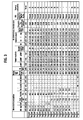
- Fig. 3 is a table showing evaluation results of aluminum nitride sintered bodies of Examples 1 to 18;
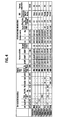
- Fig. 4 is a table showing evaluation results of aluminum nitride sintered bodies of Comparative Examples 1 to 7;
- Fig. 5 is a graph showing results of a change of volume resistivity along with a change of temperature, with respect to the aluminum nitride sintered bodies according to Examples 10 and Comparative Examples 1 to 7;
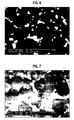
- Fig. 6 is a SEM photograph of the surface of the aluminum nitride sintered body according to Comparative Example 6;
- Fig. 7 is a SEM photograph of the surface of the aluminum nitride sintered body according to Example 12; and
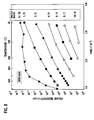
- Fig. 8 is a graph showing a change of volume resistivity of a (Sm, Ce)Al11O18 phase along with a change of a Sm/Ce ratio.
- As a result of intensive researches conducted by the present inventors, they have found that, as shown in Fig. 1, an aluminum nitride sintered body that exhibits suitable volume resistivity when it is used in an electrostatic chuck at a temperature of 300°C or more, and low in temperature dependency of the volume resistivity can be obtained by: (1) interconnecting a (Sm, Ce)Al11O18 phase, which has volume resistivity low in temperature dependency, in the grain boundaries of aluminum nitride (AlN)
particles 1 to form aconductive channel 2, thereby reducing temperature dependency of the volume resistivity of an aluminum nitride sintered body; and (2) forming a solid solution of theAlNparticles 1 with at least one of C (carbon) and Mg (magnesium) to maintain the volume resistivity of theAlN particles 1 at a high value even at high temperatures, thereby preventing the conductive channel to moving into theAlN particles 1. - The present invention will be explained below based on Examples.
- In Example 1, first, a commercially available AlN powder (oxygen content: 0.9 wt%, average particle diameter: about 1 µm) manufactured by a reductive nitriding process, a commercially available MgOpowder (purity: 99%ormore, average particle diameter: about 1 µm) and a (Sm, Ce)Al11O18 powder were weighed so as to satisfy a weight ratio of 34.1: 1.7: 64.2 (wt%). After that, they were subjected to wet blending using an IPA (isopropyl alcohol) as a solvent, nylon balls and nylon pot for 4 hours.
- The process for manufacturing the AlN powder is not limited to a reductive nitridingprocess, and a vapor phase synthetic method, a direct nitriding process and other processes can be employed. Furthermore, the (Sm, ce)Al11O18 powder was prepared by: (1) blending Sm2O3, CeO2 and Al2O3 (each had a purity of 99% or more, an average particle diameter of about 1 µm) using an IPA as a solvent, nylon balls and nylon pot so as to satisfy a molar ratio of Sm:Ce:Al of 0.1:0.9:11; (2) drying the powder mixture and subjecting it to uniaxial pressing at a pressure of 200 kgf/cm2 to form a disk-shaped product having a diameter (φ) of about 50 mm and a thickness of about 20 mm; (3) applying heat treatment to the disk-shaped product in a nitrogen atmosphere at 1600°C for 12 hours; and (4) pulverizing the resultant sintered body by a ball mill using alumina balls, followed by a jet mill until particles having an average diameter of 1 µm or less were obtained.
- The powder mixture was then dried at 110°C and subjected to uniaxial pressing at a pressure of 200 kgf/cm2 to form a disk-shaped product having a diameter (φ) of about 50 mm and a thickness of about 20 mm. Finally, the disk-shaped product was housed in a graphite die for sintering and a sintering process was performed at a press pressure of 200 kgf/cm2 and a sintering temperature of 1800°C to produce an aluminum nitride sintered body according to Example 1. The sintering process was carried out in a vacuum from room temperature to 1000°C, and in a nitrogen atmosphere of 0.15 MPa from 1000°C to the sintering temperature.
- In Example 2, an aluminum nitride sintered body according to Example 2 was produced by performing the same process as in Example 1, except that the AlN powder, the MgO powder and the (Sm, Ce)Al11O18 powder were weighed so as to satisfy a weight ratio of 53.0:2.6:44.4 (wt%).
- In Example 3, an aluminum nitride sintered body according to Example 3 was produced by performing the same process as in Example 2, except that the sintering temperature was set at 1700°C.
- In Example 4, an aluminum nitride sintered body according to Example 4 was produced by performing the same process as in Example 1, except that the AlN powder, the MgO powder and the (Sm, Ce)Al11O18 powder were weighed so as to satisfy a weight ratio of 53.5:1.6:44.9 (wt%) .
- In Example 5, an aluminum nitride sintered body according to Example 5 was produced by performing the same process as in Example 1, except that the AlN powder, the MgO powder and the (Sm, Ce)Al11O8 powder were weighed so as to satisfy a weight ratio of 52.4:3.7:43.9 (wt%).
- In Example 6, an aluminum nitride sintered body according to Example 6 was produced by performing the same process as in Example 2, except that the pressure of the nitrogen atmosphere was set at 0.9 MPa.
- In Example 7, an aluminum nitride sintered body according to Example 7 was produced by first weighing an AlN powder, a commercially available B4C powder (purity: 98% or more, average particle diameter: about 1.5 µm) and a (Sm, Ce)Al11O18 powder so as to satisfy a weight ratio of 53.8 :1.1: 45.1 (wt%), and blending these powders using an IPA as a solvent, nylon balls and nylon pot for 4 hours, followed by performing the same process as in Example 1.
- In Example 8, an aluminum nitride sintered body according to Example 8 was produced by performing the same process as in Example 1, except that the AlN powder, the MgO powder and the (Sm,Ce)Al11O18 powder were weighed so as to satisfy a weight ratio of 53.2:2.1:44.6 (wt%).
- In Example 9, first, 80 g of an AlN powder and 4.0 g of an aluminum oxide powder (Al2O3) were placed in a
graphite crucible 11 and agraphite crucible entire crucible 13 shown in Fig. 2 was then subjected to heat treatment in which the crucible was maintained in a nitrogen atmosphere containing carbon monoxide having a temperature of 2200°C and a pressure of 1.5 kgs/cm2 for 2 hours. Thereafter, the resultant powder after heat-treatment was pulverized by a ball mill using alumina balls to until particles having an average diameter of 10 to 20 µm were obtained. In this manner, a heat-treated AlN powder was produced. - Next, the heat-treated AlN powder and a (Sm, Ce)Al11O18 powder were weighed so as to satisfy a weight ratio of 76.1:23.9 (wt%). They were then placed in a flask together with camphene and alumina balls and set in a water bath of 75°C. After the camphene was melted and the materials in the flask were formed into slurry, a propeller was rotated to stir the slurry. After the stirring, the water bath was replaced with a container containing iced water and the slurry was cooled with stirring in the same manner. When the camphene was solidified and the rotation of the propeller was decreased, the rotation thereof was stopped. The substance in the flask was transferred to a tray and allowed to be still for 2 days to sublime the camphene. Since blended powder and alumina balls were left in the tray, the powders and the balls were separated by a sieve. The powder mixture was then subjected to uniaxial pressing at a pressure of 200 kgf/cm2 to formadisk-shapedproduct having a diameter (φ) of about 50 mm and a thickness of about 20 mm. Finally, the disk-shaped product was housed in a graphite die or sintering and a sintering process was performed at a press pressure of 200 kgf/cm2 and a sintering temperature of 1900°C to obtain an aluminum nitride sintered body according to Example 9. The sintering process was carried out in a vacuum from room temperature to 1000°C, and in a nitrogen atmosphere of 0.15 MPa from 1000°C to the sintering temperature.
- In Example 10, first, an AlN powder, a MgO powder, a heat-treated AlN powder and an (Sm, Ce) Al11O18 powder were weighed so as to satisfy a weight ratio of 14.2:0.7:73.1:11.9 (wt%). They were then blended in the same manner as in Example 9.
- Next, the powder mixture was subjected to uniaxial pressing at a pressure of 200 kgf/cm2 to form a disk-shaped product having a diameter of about φ 50 mm and a thickness of about 20 mm. Finally, the disk-shaped product was housed in a graphite die for sintering and a sintering process was performed at a press pressure of 200 kgf/cm2 and a sintering temperature of 1900°C to obtain an aluminum nitride sintered body according to Example 10. Thesinteringprocess was carried out in a vacuum from room temperature to 1000°C, and in a nitrogen atmosphere of 0.15 MPa from 1000°C to the sintering temperature.
- In Example 11, an aluminum nitride sintered body according to Example 11 was produced by performing the same process as in Example 10, except that the AlN powder, the MgO powder, the heat-treated AlN powder and the (Sm, Ce)Al11O18 powder were weighed so as to satisfy a weight ratio of 8.6:0.4:83.7:7.2 (wt%).
- In Example 12, first an AlN powder, a MgO powder, a-heat-treated AlN powder, a (Sm, Ce)Al11O18 powder and a titanium nitride (TiN) powder were weighed so as to satisfy a weight ratio of 14.2:0.7:72.9:11.9:0.3 (wt%). These powders were then blended in the same manner as in Example 9.
- Next, the powder mixture was subjected to uniaxial pressing at a pressure of 200 kgf/cm2 to form a disk-shaped product having a diameter of about φ 50 mm and a thickness of about 20 mm. Finally, the disk-shaped product was housed in a graphite die for sintering and a sintering process was performed at a press pressure of 200 kgf/cm2 and a sintering temperature of 1875°C to obtain an aluminum nitride sintered body according to Example 12. The sintering process was carried out in a vacuum from room temperature to 1000°C, and in a nitrogen atmosphere of 0.15 MPa from 1000°C to the sintering temperature.
- In Example 13, an aluminum nitride sintered body according to Example 13 was produced by performing the same process as in Example 12, except that the (Sm,Ce)Al11O18 powder was produced by blending Sm2O3, CeO2 and Al2O3 in a IPA as a solvent so as to satisfy a molar ratio of Sm: Ce: Al of 0.15:0.85:11.
- In Example 14, first an AlN powder, a MgO powder, aheat-treated AlN powder, a (Sm, Ce) Al11O18 powder and a TiN powder were weighed so as to satisfy a weight ratio of 8.6:0.4:83.4:7.2:0. 3 (wt%). These powders were then blended in the same manner as in Example 9.
- Next, the powder mixture was subjected to uniaxial pressing at a pressure of 200 kgf/cm2 to form a disk-shaped product having a diameter (φ) of about 50 mm and a thickness of about 20 mm. Finally, the disk-shaped product was housed in a graphite die for sintering and a sintering process was performed at a press pressure of 200 kgf/cm2 and a sintering temperature of 1900°C to obtain an aluminum nitride sintered body according to Example 14. The sinteringprocess was carried out in a vacuum from room temperature to 1000°C, and in a nitrogen atmosphere of 0.15 MPa from 1000°C to the sintering temperature.
- In Example 15, an aluminum nitride sintered body according to Example 15 was produced by performing the same process as in Example 14, except that the (Sm, Ce)Al11O18 powder was produced by blending Sm2O3, CeO2 and Al2O3 in a IPA as a solvent so as to satisfy a molar ratio of Sm:Ce:Al of 0.2:0.8:11.
- In Example 16, an aluminum nitride sintered body according to Example 16 was produced by performing the same process as in Example 9, except that the (Sm, Ce) Al11O18 powder was produced by blending Sm2O3, CeO2 and Al2O3 in a IPA as a solvent so as to satisfy a molar ratio of Sm:Ce:Al of 0.15:0.85:11.
- In Example 17, an aluminum nitride sintered body according to Example 17 was produced by performing the same process as in Example 9, except that the (Sm, Ce) Al11O18 powder was produced by blending Sm2O3, CeO2 and Al2O3 in a IPA as a solvent so as to satisfy a molar ratio of Sm:Ce:Al of 0.2:0.8:11.
- In Example 18, an AlN powder treated with heat, Sm2O3, CeO2 and Al2O3 were weighed so as to satisfy a weight ratio of 76.1:0.6:5.1:18.3 (wt%). These powders were then blended in the same manner as in Example 9.
- Next, the powder mixture was subjected to uniaxial pressing at a pressure of 200 kgf/cm2 to form a disk-shaped product having a diameter (φ) of about 50 mm and a thickness of about 20 mm. Finally, the disk-shaped product was housed in a graphite die for sintering and a sintering process was performed at a press pressure of 200 kgf/cm2 and a sintering temperature of 1900°C to obtain an aluminum nitride sintered body according to Example 18. The sinteringprocess was carried out in a vacuum from room temperature to 1000°C, and in a nitrogen atmosphere of 0.15 MPa from 1000°C to the sintering temperature.
- In Comparative Example 1, first, an AlN powder was subjected to uniaxial pressing at a pressure of 200 kgf/cm2 to form a disk-shaped product having a diameter (φ) of about 50 mm and a thickness of about 20 mm. Next, the disk-shaped product was housed in a graphite die for sintering and a sintering process was performed at a press pressure of 200 kgf/cm2 and a sintering temperature of 1900°C to obtain an aluminum nitride sintered body according to Comparative Example 1. The sintering process was carried out in a vacuum from room temperature to 1000°C, and in a nitrogen atmosphere of 0.15 MPa from 1000°C to the sintering temperature.
- In Comparative Example 2, first, an AlN powder and a MgO powder were weighed so as to satisfy a weight ratio of 99.0:1.0 (wt%). These powders were blended using an IPA as a solvent, nylon balls and nylon pot for 4 hours. Next, the powder mixture was dried at 110°C and subjected to uniaxial pressing at a pressure of 200 kgf/cm2 to form a disk-shaped product having a diameter (φ) of about 50 mm and a thickness of about 20 mm. Finally, the disk-shaped product was housed in a graphite die for sintering and a sintering process was performed at a press pressure of 200 kgf/cm2 and a sintering temperature of 1900°C to produce the aluminum nitride sintered body according to Comparative Example 2. The sintering process was carried out in a vacuum from room temperature to 1000°C, and in a nitrogen atmosphere of 0.15 MPa from 1000°C to the sintering temperature.
- In Comparative Example 3, first, an AlN powder and a B4C powder were weighed so as to satisfy a weight ratio of 96.7:3.3 (wt%). These powders were blended using an IPA as a solvent, nylon balls and nylon pot for 4 hours. Next, the powder mixture was dried at 110°C and subjected to uniaxial pressing at a pressure of 200 kgf/cm2 to form a disk-shaped product having a diameter (φ) of about 50 mm and a thickness of about 20 mm. Finally, the disk-shaped product was housed in a graphite die for sintering and a sintering process was performed at a press pressure of 200 kgf/cm2 and a sintering temperature of 2000°C to produce the aluminum nitride sintered body according to Comparative Example 3. The sintering process was carried out in a vacuum from room temperature to 1000°C, and in a nitrogen atmosphere of 0.15 MPa from 1000°C to the sintering temperature.
- In Comparative Example 4, first, the AlN powder heat-treated in the same step as in Example 9 was subjected to uniaxial pressing at a pressure of 200 kgf/cm2 to form a disk-shaped product having a diameter (φ) of about 50 mm and a thickness of about 20 mm. The disk-shaped product was housed in a graphite die for sintering and a sintering process was performed at a press pressure of 200 kgf/cm2 and a sintering temperature of 2000°C to produce the aluminum nitride sintered body according to Comparative Example 4. The sintering process was carried out in a vacuum from room temperature to 1000°C, and in a nitrogen atmosphere of 0.15 MPa from 1000°C to the sintering temperature.
- In Comparative Example 5, first, an AlN powder, a Sm2O3 powder and a CeO2 powder were weighed so as to satisfy a weight ratio of 98.0:1.0:1.0 (wt%). These powders were then blended using an IPA as a solvent, nylon balls and nylon pot for 4 hours. Next, the powder mixture was dried at 110°C and subjected to uniaxial pressing at a pressure of 200 kgf/cm2 to form a disk-shaped product having a diameter (φ) of about 50 mm and a thickness of about 20 mm. Finally, the disk-shaped product was housed in a graphite die for sintering and a sintering process was performed at a press pressure of 200 kgf/cm2 and a sintering temperature of 1800°C to produce the aluminum nitride sintered body according to Comparative Example 5. The sintering process was carried out in a vacuum from room temperature to 1000°C, and in a nitrogen atmosphere of 0.15 MPa from 1000°C to the sintering temperature.
- In Comparative Example 6, an aluminum nitride sintered body according to Comparative Example 6 was produced by performing the same process as in Example 12, except that the sintering temperature was set at 1850°C.
- In Comparative Example 7, an aluminum nitride sintered body according to Comparative Example 7 was produced by performing the same process as in Example 5, except that the AlN powder, the Sm2O3 powder and the CeO2 powder were weighed so as to satisfy a weight ratio of 98.96:0.99:0.05 (wt%).
- Aluminum nitride sintered bodies obtained by the processes in Examples and Comparative Examples above were evaluated, and the results are shown in Figs. 3 and 4.
- Aluminum nitride sintered bodies of Examples and Comparative Examples were individually measured for the content of a metal component (wt%), carbon amount (wt%), volume resistivity (Ω·cm) at 100, 300 and 500°C, variation of volume resistivity along with temperature increase from 100°C to 300°C, thermal conductivity (W/mK) and an Sm/Ce molar ratio. In addition, the presence or absence of an (Sm,Ce)Al11O18 phase in aluminum nitride sintered bodies of Examples and Comparative Examples was checked. Each value was determined according to the following methods.
- (1) The content of metal component
The content of a metal component was quantified by an ICP emission spectrometric analysis. - (2) Carbon amount
Carbon amount was quantified by high-frequency heating infrared absorption method. - (3) Volume resistivity
Volume resistivity was measured according to JIS C2141 in a vacuum at 100, 300 and 500°C. To explain more specifically, test pieces of φ 50 mm×1 mm were prepared. A main electrode having a diameter of 20 mm, a guard electrode having an inner diameter of 30 mm and an outer diameter of 40 mm, and an applying electrode having a diameter of 45 mm each were formed of silver. A voltage of 500 V/mm was applied. One minute after applying the voltage, a current was measured to calculate the volume resistivity. - (4) Variation of volume resistivity
variation of volume resistivity was calculated by substituting a value of volume resistivity A at 100°C and a value of volume resistivity A' at 300°C into the formula of: Log (volume resistivity A at 100°C/Volume resistivity A' at 300°C). - (5) Thermal conductivity
Thermal conductivity was measured by a laser flash method. - (6) Sm/Ce ratio
Sm/Ce ratio was calculated by substituting an Sm content (wt%) and a Ce content (wt%) into the formula of: Log (Sm content (wt%)/150.36/Ce content (wt%)/140.12). - (7) Presence or absence of (Sm, Ce)Al11O18 phase
The presence or absence of a (Sm, Ce) Al11O18 phase was determined based on whether an (Sm, Ce)Al11O18 phase was detected by a rotating-anode-type X-ray diffractometer (RINT by Rigaku Corporation). Note that there was no JCPDS card of (Sm, Ce)Al11O18. Instead, the peak of a CeAl11O18 was checked to confirm the presence or absence of an (Sm, Ce) Al11O18 phase. The measurement was performed in the conditions of X-ray source: CuKα beam, 50 kV, 300 mA, and a monochro-angle 2θ: 10 to 70°. - Aluminum nitride sintered bodies of Examples 1 to 18 and Comparative Examples 1 to 7 were compared with respect to volume resistivity values at 300°C and 500°C. As shown in Figs. 3, 4 and 5, the aluminum nitride sinteredbodies of Examples 1 to 18 exhibited suitable volume resistivity values (108 to 1012) at both 300°C and 500°C for use in a substrate material for an electrostatic chuck. In contrast, in the aluminum nitride sintered bodies of Comparative Examples 1 to 7, at least one of the volume resistivity values at 300°C and 500°C was unsuitable for use in a substrate material for an electrostatic chuck. Furthermore, when variation in volume resistivity with a temperature increase from 100°C to 300°C was compared, the variations in volume resistivity of the aluminum nitride sintered bodies of Comparative Examples except for Comparative Examples 2, 6 and 7 were larger than those of Examples 1 to 18. From this, it was found that the temperature dependency of volume resistivity was high.
- The aluminum nitride sintered bodies of Examples 1 to 18 and Comparative Examples 1 to 7 were then evaluated with respect to difference in composition. As a result, it was found that no (Sm, Ce)Al11O18 phase was present in the aluminum nitride sintered bodies of Comparative Examples 1 to 4. Even in the cases where a (Sm, Ce) Al11O18 phase was present as was in the cases of Comparative Examples 5 to 7, it was found, in Comparative Example 6, that the (Sm,Ce)Al11O18 phase (white region shown in Fig. 6) was discretely present, as shown in the SEM photograph of Fig. 6 (obtained from the aluminum nitride sintered body of Comparative Example 6) since the sintering temperature was low compared to those of aluminum nitride sintered bodies of Examples 1 to 18. In Comparative Example 5, since C and Mg materials were not added, no solid solutions of an aluminum nitride particle with C and Mg were not formed. Because of this, the volume resistivity thereof was lower than a suitable one for use in a substrate material for an electrostatic chuck in a high temperature atmosphere. In Comparative Example 7, since an Sm/Ce ratio was high, volume resistivity was low even at a low temperature, that is, lower than that suitable one for use in a substrate material for an electrostatic chuck.
- In contrast, it was found that an (Sm, ce)Al11O18 phase was present in the aluminum nitride sintered bodies of Examples 1 to 18 and interconnected as was shown in the SEM photograph of Fig. 7 (obtained from the aluminum nitride sintered body of Example 12) to form a conductive channel. Furthermore, when aluminum nitride sintered bodies of Examples 1 to 18 are compared to those of Comparative Examples 1 and 5, it was found that aluminum nitride particles form solid solutions with at least one of C and Mg in aluminum nitride sintered bodies of Examples 1 to 18.
- From the above results, it was apparent that a conductive channel formed of an (Sm, Ce)Al11O18 phase was interconnected in the grain boundaries of aluminum nitride particles and aluminum nitride particles form with at least one of C and Mg. Based on these facts, it was found that an aluminum nitride sintered body that exhibits suitable volume resistivity for use in a substrate material for an electrostatic chuck at a high temperature, and low in temperature dependency of the volume resistivity, can be provided.
- With respect to the above findings, the present inventors think that an (Sm,Ce)Al11O18 phase forms a conductive channel in the grain boundaries of aluminum nitride particles and contributes to reducing temperature dependency of the volume resistivity of an aluminumnitride sinteredbody. Furthermore, the inventors think that the solid solution of an aluminum nitride particle with at least one of C and Mg maintains the volume resistivity of the aluminum nitride particle at a high value even at a high temperature, and thereby contributes to preventing the conductive channel from moving in the aluminum nitride particle.
- The volume resistivity of an (Sm, Ce)Al11O18 phase changes depending upon the molar ratio of Sm/Ce (Sm content/Ce content), as shown in Fig. 8. When a molar ratio is 0.05 or less, the volume resistivity is too large for use in a substrate material for an electrostatic chuck. When the molar ratio is 0.3 or more, the volume resistivity is too small for use in a substrate material for an electrostatic chuck. Therefore, the molar ratio of Sm/Ce content is desirably controlled within the range of more than 0.05 to less than 0.3. As is apparent from Fig. 3, in the aluminumnitride sintered bodies of Examples 1 to 18, the molar ratio of Sm/Ce content falls within the above range.
- As is apparent from Fig. 3, it was found that the aluminum nitride sintered bodies of Examples 1 to 18 has a common feature that log (A/A'), which was a ratio of volume resistivity A at 100°C to that at 300°C, falls within the range of more than 1.5 to less than 2.2. The volume resistivity at 300°C was found to fall within the range of more than 1×10⁹ Ω·cm to less than 2×10¹² Ω·cm. The volume resistivity at 500°C was found to fall within the range of more than 1×10⁹ Ω·cm to less than 1×10¹¹ Ω·cm.
- Although not shown in Fig. 3, it was found that the aluminum nitride sintered bodies of Examples 12 to 15 exhibit brightness values (according to JIS Z8721) of N4 or less. In the aluminum nitride sintered bodies of Examples 12 to 15, Ti was contained as a transition metal element. However, the transition metal element of the present invention is not limited to Ti. Any transition metal element can be used as long as it is at least one type of transition metal element selected from the group consisting of the IVA family, VA family, VIA family, VIIA family and VIIIA family of the periodical table. Furthermore, it was found that the content of the transition metal element desirably falls within the range of more than 0.01 wt% to less than 1.0 wt%.
- The higher the thermal conductivity of an aluminum nitride sintered body, the more desirable. More specifically, the thermal conductivity thereof is preferably 30 W/mk or more and further preferably 50 W/mk or more. In the aluminum nitride sintered bodies of Examples, as the amount of (Sm, Ce)Al11O18 powder decreases, the thermal conductivity increases. As shown in Fig. 3, the aluminum nitride sintered bodies of Examples 2 to 7 exhibited higher thermal conductivity values than that of Example 1.
- In the aluminum nitride sintered bodies of Examples 9 to 18, the particle diameter of an aluminum nitride powder was set at larger than that of an (Sm, Ce) Al11O18 powder in order to interconnect an (Sm, Ce)Al11O18 phase after sintering even if the amount of (Sm, Ce)Al11O18 powder was low. More specifically, the particle diameter of an aluminum nitride powder was set at 10 to 20 µm, although that of an (Sm, Ce)Al11O18 powder was 1 µm or less. This aluminum nitride powder was heat-treated one. More specifically, solid solution with C was formed, and the particle diameter was increased during the heat treatment at the same time.
- The present invention is not limited to the description and the drawings which constitute a part of the disclosure of the present invention according to the embodiment. Specifically, it may be added that, needless to say, other embodiments, examples, operational technologies and the like, which are made by those skilled in the art based on the embodiment, are all included in the scope of the present invention.
Claims (12)
- An aluminum nitride sintered body, wherein an conductive channel formedof (Sm, Ce) Al11O18 is interconnected in grain boundaries (2) of aluminum nitride particles (1) and aluminum nitride particles (1) form solid solutions with at least one of C and Mg.
- The aluminum nitride sintered body according to claim 1, wherein a molar ratio of Sm/Ce content falls within a range of more than 0.05 to less than 0.3.
- The aluminum nitride sintered body according to claims 1 or 2, wherein a ratio of volume resistivity A at 100°C to volume resistivity A' at 300°c, that is, log (A/A'), desirably falls within a range of more than 1.5 to less than 2.2.
- The aluminum nitride sintered body according to any one of claims 1-3, wherein volume resistivity of the aluminum nitride sintered body at 300°C desirably falls within the range of more than 1×10⁹ Ω·cm to less than 2×10¹² Ω·cm.
- The aluminum nitride sintered body according to any one of claims 1-4, wherein volume resistivity of the aluminum nitride sintered body at 500°C desirably falls within the range of more than 1×10⁸ Ω·cm to less than 1×10¹¹ Ω·cm.
- The aluminum nitride sintered body according to any one of claims 1-5, wherein brightness according to JIS Z8721 is N4 or less.
- The aluminum nitride sintered body according to any one of claims 1-6, wherein at least one type of transition metal element selected from the group consisting of the IVA family, VA family, VIA family, VIIA family and VIIIA family of the periodical table is contained within the range of more than 0.01 wt% to less than 1.0 wt%.
- A member for a semiconductor manufacturing device wherein at least one portion of the member is formed of the aluminum nitride sintered body according to any one of claims 1-7.
- A method of manufacturing an aluminum nitride sintered body, comprising:a step of blending at least either one of a B4C powder and a MgO powder, a (Sm, Ce)Al11O18 powder with an aluminum nitride powder to obtain a powder mixture and forming the powder mixture into a product; anda step of subjecting the formed product to hot press sintering in a nitrogen atmosphere of 1700°C or more, thereby manufacturing the aluminum nitride sintered body.
- A method of manufacturing an aluminum nitride sintered body, comprising:a step of raising the temperature of an aluminum nitride powder together with a metal oxide powder to a temperature of 2000°C or more in a carbon-reducing atmosphere, thereby heat-treating the aluminum nitride powder;a step of blending at least an (Sm, Ce) Al11O18 powder with the heat-treated aluminum nitride powder to obtain a powder mixture and forming the powder mixture into a product; anda step of subjecting the formed product to hot press sintering in a nitrogen atmosphere of 1700°C or more, thereby manufacturing the aluminum nitride sintered body.
- A method of manufacturing an aluminum nitride sintered body, comprising:a step of raising the temperature of an aluminum nitride powder together with a metal oxide powder to a temperature of 2000°C or more in a carbon-reducing atmosphere, thereby heat-treating the aluminum nitride powder;a step of blending at least a non-heat-treatedaluminumnitride powder, a MgO powder and a (Sm, Ce) Al11O18 powder with the heat-treated aluminum nitride powder to obtain a powder mixture and forming the powder mixture into a product; anda step of subj ecting the formed product to hot press sintering in a nitrogen atmosphere of 1700°C or more, thereby manufacturing the aluminum nitride sintered body.
- A method of manufacturing an aluminum nitride sintered body, comprising:a step of raising the temperature of an aluminumnitride powder together with a metal oxide powder to a temperature of 2000°C or more in a carbon-reducing atmosphere, thereby heat-treating the aluminum nitride powder;a step of blending at least anon-heat-treatedaluminumnitride powder, a MgO powder, a Sm2O3 powder, a CeO2 powder and an Al2O3 powder with the heat-treated aluminum nitride powder to obtain a powder mixture and forming the powder mixture into a product; anda step of subjecting the formed product to hot press sintering in a nitrogen atmosphere of 1700°C or more, thereby manufacturing the aluminum nitride sintered body.
Applications Claiming Priority (1)
| Application Number | Priority Date | Filing Date | Title |
|---|---|---|---|
| JP2006076680A JP4740002B2 (en) | 2006-03-20 | 2006-03-20 | Aluminum nitride sintered body, member for semiconductor manufacturing apparatus, and method for manufacturing aluminum nitride sintered body |
Publications (3)
| Publication Number | Publication Date |
|---|---|
| EP1837318A2 true EP1837318A2 (en) | 2007-09-26 |
| EP1837318A3 EP1837318A3 (en) | 2010-04-21 |
| EP1837318B1 EP1837318B1 (en) | 2014-08-20 |
Family
ID=38042994
Family Applications (1)
| Application Number | Title | Priority Date | Filing Date |
|---|---|---|---|
| EP07251163.7A Ceased EP1837318B1 (en) | 2006-03-20 | 2007-03-20 | Aluminium nitride sintered body, member for semiconductor manufacturing device, and method of manufacturing aluminum nitride sintered body |
Country Status (5)
| Country | Link |
|---|---|
| US (1) | US7629282B2 (en) |
| EP (1) | EP1837318B1 (en) |
| JP (1) | JP4740002B2 (en) |
| KR (1) | KR100832389B1 (en) |
| TW (1) | TWI344948B (en) |
Families Citing this family (8)
| Publication number | Priority date | Publication date | Assignee | Title |
|---|---|---|---|---|
| JP5307671B2 (en) * | 2008-10-23 | 2013-10-02 | 日本碍子株式会社 | Aluminum nitride-based composite material, manufacturing method thereof, and member for semiconductor manufacturing apparatus |
| JP5345583B2 (en) * | 2009-04-07 | 2013-11-20 | 日本碍子株式会社 | Electrostatic chuck |
| KR101797232B1 (en) * | 2017-07-10 | 2017-11-13 | 주식회사 케이에스엠컴포넌트 | Electrostatic chuck |
| US11133212B2 (en) * | 2018-05-16 | 2021-09-28 | Applied Materials, Inc. | High temperature electrostatic chuck |
| JP7184712B2 (en) * | 2019-07-30 | 2022-12-06 | 日本特殊陶業株式会社 | Ceramic parts for semiconductor manufacturing equipment and electrostatic chucks |
| JP7763030B2 (en) * | 2020-09-23 | 2025-10-31 | 日本特殊陶業株式会社 | Aluminum nitride sintered body and electrostatic chuck |
| JP7628979B2 (en) | 2022-03-17 | 2025-02-12 | 日本碍子株式会社 | Highly resistive and highly corrosion-resistant ceramic material and wafer support |
| WO2025046824A1 (en) * | 2023-08-30 | 2025-03-06 | 日本碍子株式会社 | Ceramic raw material blending method and blending system |
Family Cites Families (10)
| Publication number | Priority date | Publication date | Assignee | Title |
|---|---|---|---|---|
| JP3457495B2 (en) | 1996-03-29 | 2003-10-20 | 日本碍子株式会社 | Aluminum nitride sintered body, metal buried product, electronic functional material and electrostatic chuck |
| JP4812144B2 (en) * | 1998-07-22 | 2011-11-09 | 住友電気工業株式会社 | Aluminum nitride sintered body and manufacturing method thereof |
| JP4447750B2 (en) * | 1999-09-30 | 2010-04-07 | 日本碍子株式会社 | Aluminum nitride sintered body and semiconductor manufacturing member |
| JP4458722B2 (en) * | 2000-10-23 | 2010-04-28 | 日本碍子株式会社 | Low volume resistance material, aluminum nitride sintered body and semiconductor manufacturing member |
| US6607836B2 (en) * | 2000-10-23 | 2003-08-19 | Ngk Insulators, Ltd. | Material of low volume resistivity, an aluminum nitride sintered body and a member used for the production of semiconductors |
| JP4245125B2 (en) * | 2001-11-26 | 2009-03-25 | 日本碍子株式会社 | Aluminum nitride ceramics, semiconductor manufacturing members, corrosion resistant members, and conductive members |
| JP4243943B2 (en) * | 2002-04-22 | 2009-03-25 | 日本碍子株式会社 | Aluminum nitride material and semiconductor manufacturing member |
| JP4386695B2 (en) * | 2002-11-14 | 2009-12-16 | 日本碍子株式会社 | Method for producing aluminum nitride sintered body |
| JP4424659B2 (en) * | 2003-02-28 | 2010-03-03 | 日本碍子株式会社 | Aluminum nitride material and member for semiconductor manufacturing equipment |
| KR100721780B1 (en) * | 2005-05-30 | 2007-05-25 | 주식회사 다이너머트리얼스 | Manufacturing method of high strength ultra fine / nano structured aluminum / aluminum nitride or aluminum alloy / aluminum nitride composite |
-
2006
- 2006-03-20 JP JP2006076680A patent/JP4740002B2/en not_active Expired - Lifetime
-
2007
- 2007-03-12 TW TW096108414A patent/TWI344948B/en active
- 2007-03-14 US US11/724,049 patent/US7629282B2/en active Active
- 2007-03-19 KR KR1020070026635A patent/KR100832389B1/en active Active
- 2007-03-20 EP EP07251163.7A patent/EP1837318B1/en not_active Ceased
Non-Patent Citations (1)
| Title |
|---|
| None |
Also Published As
| Publication number | Publication date |
|---|---|
| KR100832389B1 (en) | 2008-05-26 |
| JP4740002B2 (en) | 2011-08-03 |
| TW200736187A (en) | 2007-10-01 |
| US20070215840A1 (en) | 2007-09-20 |
| TWI344948B (en) | 2011-07-11 |
| EP1837318A3 (en) | 2010-04-21 |
| KR20070095223A (en) | 2007-09-28 |
| JP2007254164A (en) | 2007-10-04 |
| US7629282B2 (en) | 2009-12-08 |
| EP1837318B1 (en) | 2014-08-20 |
Similar Documents
| Publication | Publication Date | Title |
|---|---|---|
| EP1837318B1 (en) | Aluminium nitride sintered body, member for semiconductor manufacturing device, and method of manufacturing aluminum nitride sintered body | |
| Zhou et al. | Effects of yttria and magnesia on densification and thermal conductivity of sintered reaction‐bonded silicon nitrides | |
| EP0587119B1 (en) | High thermal conductive silicon nitride sintered body and method of producing the same | |
| EP1088801B1 (en) | Aluminum nitride sintered bodies and semiconductor-producing members including same | |
| EP2090557A2 (en) | Yttrium oxide material, member for use in semiconductor manufacturing apparatus, and method for producing yttrium oxide material | |
| WO2017030360A1 (en) | Silicon nitride sintered compact with high thermal conductivity, and method for manufacturing same | |
| US7915189B2 (en) | Yttrium oxide material, member for semiconductor-manufacturing apparatus, and method for producing yttrium oxide material | |
| EP0287841A2 (en) | Sintered body of aluminum nitride | |
| EP2189431B1 (en) | Aluminum nitride sintered product, method for producing the same and electrostatic chuck including the same | |
| US20160361900A1 (en) | Bonding material composition, aluminum nitride bonded body, and method for producing the same | |
| US5993699A (en) | Aluminum nitride based composite body electronic functional material, electrostatic chuck and method of producing aluminum nitride based composite body | |
| JP3565425B2 (en) | Method for producing silicon nitride-based powder and method for producing silicon nitride-based sintered body | |
| JP4514379B2 (en) | Aluminum nitride sintered body and member for semiconductor manufacturing apparatus | |
| KR20020050710A (en) | Aluminum nitride sintered bodies and members for semiconductor producing apparatus | |
| JP5159625B2 (en) | Aluminum nitride sintered body and method for producing the same | |
| JP2539018B2 (en) | Al Lower 2 O Lower 3 Base ceramics | |
| JP2004352572A (en) | Alumina ceramics and manufacturing method thereof | |
| JP3145519B2 (en) | Aluminum nitride sintered body | |
| JP3106160B2 (en) | Aluminum nitride sintered body and method for producing the same | |
| JPH01252584A (en) | Sintered composite ceramic compact and production thereof | |
| KR102299212B1 (en) | High Strength Aluminum Nitride Sintered Body | |
| JP2008156142A (en) | Aluminum nitride sintered body and method for producing the same | |
| EP0611739B1 (en) | Ceramic body | |
| JP2003146760A (en) | Aluminum nitride sintered body and its manufacturing method | |
| JPS62270468A (en) | Aluminum nitride base sintered body |
Legal Events
| Date | Code | Title | Description |
|---|---|---|---|
| PUAI | Public reference made under article 153(3) epc to a published international application that has entered the european phase |
Free format text: ORIGINAL CODE: 0009012 |
|
| AK | Designated contracting states |
Kind code of ref document: A2 Designated state(s): AT BE BG CH CY CZ DE DK EE ES FI FR GB GR HU IE IS IT LI LT LU LV MC MT NL PL PT RO SE SI SK TR |
|
| AX | Request for extension of the european patent |
Extension state: AL BA HR MK YU |
|
| PUAL | Search report despatched |
Free format text: ORIGINAL CODE: 0009013 |
|
| AK | Designated contracting states |
Kind code of ref document: A3 Designated state(s): AT BE BG CH CY CZ DE DK EE ES FI FR GB GR HU IE IS IT LI LT LU LV MC MT NL PL PT RO SE SI SK TR |
|
| AX | Request for extension of the european patent |
Extension state: AL BA HR MK RS |
|
| RIC1 | Information provided on ipc code assigned before grant |
Ipc: H01L 21/68 20060101ALI20100318BHEP Ipc: C04B 35/581 20060101AFI20070529BHEP |
|
| 17P | Request for examination filed |
Effective date: 20101020 |
|
| AKX | Designation fees paid |
Designated state(s): DE FR GB |
|
| 17Q | First examination report despatched |
Effective date: 20110823 |
|
| GRAP | Despatch of communication of intention to grant a patent |
Free format text: ORIGINAL CODE: EPIDOSNIGR1 |
|
| INTG | Intention to grant announced |
Effective date: 20140414 |
|
| GRAS | Grant fee paid |
Free format text: ORIGINAL CODE: EPIDOSNIGR3 |
|
| GRAA | (expected) grant |
Free format text: ORIGINAL CODE: 0009210 |
|
| AK | Designated contracting states |
Kind code of ref document: B1 Designated state(s): DE FR GB |
|
| REG | Reference to a national code |
Ref country code: GB Ref legal event code: FG4D |
|
| REG | Reference to a national code |
Ref country code: DE Ref legal event code: R096 Ref document number: 602007038189 Country of ref document: DE Effective date: 20140925 |
|
| REG | Reference to a national code |
Ref country code: DE Ref legal event code: R097 Ref document number: 602007038189 Country of ref document: DE |
|
| PLBE | No opposition filed within time limit |
Free format text: ORIGINAL CODE: 0009261 |
|
| STAA | Information on the status of an ep patent application or granted ep patent |
Free format text: STATUS: NO OPPOSITION FILED WITHIN TIME LIMIT |
|
| 26N | No opposition filed |
Effective date: 20150521 |
|
| REG | Reference to a national code |
Ref country code: FR Ref legal event code: PLFP Year of fee payment: 10 |
|
| REG | Reference to a national code |
Ref country code: FR Ref legal event code: PLFP Year of fee payment: 11 |
|
| REG | Reference to a national code |
Ref country code: FR Ref legal event code: PLFP Year of fee payment: 12 |
|
| PGFP | Annual fee paid to national office [announced via postgrant information from national office to epo] |
Ref country code: DE Payment date: 20180306 Year of fee payment: 12 Ref country code: GB Payment date: 20180314 Year of fee payment: 12 |
|
| PGFP | Annual fee paid to national office [announced via postgrant information from national office to epo] |
Ref country code: FR Payment date: 20180223 Year of fee payment: 12 |
|
| REG | Reference to a national code |
Ref country code: DE Ref legal event code: R119 Ref document number: 602007038189 Country of ref document: DE |
|
| GBPC | Gb: european patent ceased through non-payment of renewal fee |
Effective date: 20190320 |
|
| PG25 | Lapsed in a contracting state [announced via postgrant information from national office to epo] |
Ref country code: DE Free format text: LAPSE BECAUSE OF NON-PAYMENT OF DUE FEES Effective date: 20191001 Ref country code: GB Free format text: LAPSE BECAUSE OF NON-PAYMENT OF DUE FEES Effective date: 20190320 |
|
| PG25 | Lapsed in a contracting state [announced via postgrant information from national office to epo] |
Ref country code: FR Free format text: LAPSE BECAUSE OF NON-PAYMENT OF DUE FEES Effective date: 20190331 |