EP1837173A1 - Composite material, coating fluid and method for producing composite material - Google Patents
Composite material, coating fluid and method for producing composite material Download PDFInfo
- Publication number
- EP1837173A1 EP1837173A1 EP05814529A EP05814529A EP1837173A1 EP 1837173 A1 EP1837173 A1 EP 1837173A1 EP 05814529 A EP05814529 A EP 05814529A EP 05814529 A EP05814529 A EP 05814529A EP 1837173 A1 EP1837173 A1 EP 1837173A1
- Authority
- EP
- European Patent Office
- Prior art keywords
- radical
- base material
- coated section
- polymer particles
- coating liquid
- Prior art date
- Legal status (The legal status is an assumption and is not a legal conclusion. Google has not performed a legal analysis and makes no representation as to the accuracy of the status listed.)
- Withdrawn
Links
- 239000002131 composite material Substances 0.000 title claims abstract description 70
- 239000011248 coating agent Substances 0.000 title claims description 99
- 238000000576 coating method Methods 0.000 title claims description 99
- 238000004519 manufacturing process Methods 0.000 title claims description 22
- 239000012530 fluid Substances 0.000 title 1
- 239000000463 material Substances 0.000 claims abstract description 245
- 239000002245 particle Substances 0.000 claims abstract description 226
- 229920000642 polymer Polymers 0.000 claims abstract description 143
- 229920003023 plastic Polymers 0.000 claims abstract description 121
- 239000004033 plastic Substances 0.000 claims abstract description 121
- VYPSYNLAJGMNEJ-UHFFFAOYSA-N Silicium dioxide Chemical compound O=[Si]=O VYPSYNLAJGMNEJ-UHFFFAOYSA-N 0.000 claims abstract description 93
- 229910052731 fluorine Inorganic materials 0.000 claims abstract description 84
- 125000004435 hydrogen atom Chemical group [H]* 0.000 claims abstract description 65
- 239000000377 silicon dioxide Substances 0.000 claims abstract description 45
- 125000001153 fluoro group Chemical group F* 0.000 claims abstract description 41
- 239000000203 mixture Substances 0.000 claims abstract description 23
- 150000001875 compounds Chemical class 0.000 claims description 137
- 239000007788 liquid Substances 0.000 claims description 118
- IJGRMHOSHXDMSA-UHFFFAOYSA-N Atomic nitrogen Chemical compound N#N IJGRMHOSHXDMSA-UHFFFAOYSA-N 0.000 claims description 50
- 238000010438 heat treatment Methods 0.000 claims description 45
- OKTJSMMVPCPJKN-UHFFFAOYSA-N Carbon Chemical compound [C] OKTJSMMVPCPJKN-UHFFFAOYSA-N 0.000 claims description 25
- 229910052799 carbon Inorganic materials 0.000 claims description 25
- 229910052757 nitrogen Inorganic materials 0.000 claims description 25
- MDFFNEOEWAXZRQ-UHFFFAOYSA-N aminyl Chemical compound [NH2] MDFFNEOEWAXZRQ-UHFFFAOYSA-N 0.000 claims description 24
- 239000010703 silicon Substances 0.000 claims description 24
- 229910052710 silicon Inorganic materials 0.000 claims description 24
- 125000004430 oxygen atom Chemical group O* 0.000 claims description 19
- 229910001220 stainless steel Inorganic materials 0.000 claims description 16
- 239000010935 stainless steel Substances 0.000 claims description 16
- 230000001788 irregular Effects 0.000 claims description 9
- 229910052782 aluminium Inorganic materials 0.000 claims description 6
- XAGFODPZIPBFFR-UHFFFAOYSA-N aluminium Chemical compound [Al] XAGFODPZIPBFFR-UHFFFAOYSA-N 0.000 claims description 6
- 238000013461 design Methods 0.000 abstract description 84
- -1 alkyl radical Chemical class 0.000 description 181
- 150000003254 radicals Chemical class 0.000 description 132
- 229920005989 resin Polymers 0.000 description 64
- 239000011347 resin Substances 0.000 description 64
- YCKRFDGAMUMZLT-UHFFFAOYSA-N Fluorine atom Chemical compound [F] YCKRFDGAMUMZLT-UHFFFAOYSA-N 0.000 description 43
- 239000011737 fluorine Substances 0.000 description 43
- 238000000034 method Methods 0.000 description 30
- 238000011156 evaluation Methods 0.000 description 27
- 230000000052 comparative effect Effects 0.000 description 26
- 229920001577 copolymer Polymers 0.000 description 24
- 229910052681 coesite Inorganic materials 0.000 description 18
- 229910052906 cristobalite Inorganic materials 0.000 description 18
- 229910052682 stishovite Inorganic materials 0.000 description 18
- 229910052905 tridymite Inorganic materials 0.000 description 18
- 238000004140 cleaning Methods 0.000 description 15
- KPUWHANPEXNPJT-UHFFFAOYSA-N disiloxane Chemical class [SiH3]O[SiH3] KPUWHANPEXNPJT-UHFFFAOYSA-N 0.000 description 15
- 230000000717 retained effect Effects 0.000 description 15
- 230000001771 impaired effect Effects 0.000 description 14
- 229910052751 metal Inorganic materials 0.000 description 14
- 239000002184 metal Substances 0.000 description 14
- 229920001709 polysilazane Polymers 0.000 description 14
- XLYOFNOQVPJJNP-UHFFFAOYSA-N water Substances O XLYOFNOQVPJJNP-UHFFFAOYSA-N 0.000 description 14
- 239000000178 monomer Substances 0.000 description 11
- 239000007921 spray Substances 0.000 description 11
- 239000010410 layer Substances 0.000 description 7
- 238000012360 testing method Methods 0.000 description 7
- 230000000007 visual effect Effects 0.000 description 7
- XEEYBQQBJWHFJM-UHFFFAOYSA-N Iron Chemical compound [Fe] XEEYBQQBJWHFJM-UHFFFAOYSA-N 0.000 description 6
- PPBRXRYQALVLMV-UHFFFAOYSA-N Styrene Chemical compound C=CC1=CC=CC=C1 PPBRXRYQALVLMV-UHFFFAOYSA-N 0.000 description 6
- 230000003373 anti-fouling effect Effects 0.000 description 6
- 229910052571 earthenware Inorganic materials 0.000 description 6
- VNWKTOKETHGBQD-UHFFFAOYSA-N methane Chemical compound C VNWKTOKETHGBQD-UHFFFAOYSA-N 0.000 description 6
- 229920002554 vinyl polymer Polymers 0.000 description 6
- 229920002678 cellulose Polymers 0.000 description 5
- 239000004567 concrete Substances 0.000 description 5
- 230000007547 defect Effects 0.000 description 5
- 239000006185 dispersion Substances 0.000 description 5
- 229920001519 homopolymer Polymers 0.000 description 5
- 229920001225 polyester resin Polymers 0.000 description 5
- 239000004645 polyester resin Substances 0.000 description 5
- 238000005507 spraying Methods 0.000 description 5
- LYCAIKOWRPUZTN-UHFFFAOYSA-N Ethylene glycol Chemical compound OCCO LYCAIKOWRPUZTN-UHFFFAOYSA-N 0.000 description 4
- KFZMGEQAYNKOFK-UHFFFAOYSA-N Isopropanol Chemical compound CC(C)O KFZMGEQAYNKOFK-UHFFFAOYSA-N 0.000 description 4
- JUJWROOIHBZHMG-UHFFFAOYSA-N Pyridine Chemical compound C1=CC=NC=C1 JUJWROOIHBZHMG-UHFFFAOYSA-N 0.000 description 4
- 125000003118 aryl group Chemical group 0.000 description 4
- 238000005452 bending Methods 0.000 description 4
- 239000001913 cellulose Substances 0.000 description 4
- 238000006243 chemical reaction Methods 0.000 description 4
- 229910044991 metal oxide Inorganic materials 0.000 description 4
- 150000004706 metal oxides Chemical class 0.000 description 4
- 125000002496 methyl group Chemical group [H]C([H])([H])* 0.000 description 4
- PXHVJJICTQNCMI-UHFFFAOYSA-N nickel Substances [Ni] PXHVJJICTQNCMI-UHFFFAOYSA-N 0.000 description 4
- KDLHZDBZIXYQEI-UHFFFAOYSA-N palladium Substances [Pd] KDLHZDBZIXYQEI-UHFFFAOYSA-N 0.000 description 4
- 229920001296 polysiloxane Polymers 0.000 description 4
- 229920001567 vinyl ester resin Polymers 0.000 description 4
- 125000000391 vinyl group Chemical group [H]C([*])=C([H])[H] 0.000 description 4
- QTBSBXVTEAMEQO-UHFFFAOYSA-N Acetic acid Chemical compound CC(O)=O QTBSBXVTEAMEQO-UHFFFAOYSA-N 0.000 description 3
- 229920002126 Acrylic acid copolymer Polymers 0.000 description 3
- IMROMDMJAWUWLK-UHFFFAOYSA-N Ethenol Chemical compound OC=C IMROMDMJAWUWLK-UHFFFAOYSA-N 0.000 description 3
- OFOBLEOULBTSOW-UHFFFAOYSA-N Propanedioic acid Natural products OC(=O)CC(O)=O OFOBLEOULBTSOW-UHFFFAOYSA-N 0.000 description 3
- ZMANZCXQSJIPKH-UHFFFAOYSA-N Triethylamine Chemical compound CCN(CC)CC ZMANZCXQSJIPKH-UHFFFAOYSA-N 0.000 description 3
- IISBACLAFKSPIT-UHFFFAOYSA-N bisphenol A Chemical class C=1C=C(O)C=CC=1C(C)(C)C1=CC=C(O)C=C1 IISBACLAFKSPIT-UHFFFAOYSA-N 0.000 description 3
- 150000007942 carboxylates Chemical class 0.000 description 3
- 239000003054 catalyst Substances 0.000 description 3
- 239000000919 ceramic Substances 0.000 description 3
- 239000008119 colloidal silica Substances 0.000 description 3
- 230000000694 effects Effects 0.000 description 3
- RAXXELZNTBOGNW-UHFFFAOYSA-N imidazole Natural products C1=CNC=N1 RAXXELZNTBOGNW-UHFFFAOYSA-N 0.000 description 3
- 229910052742 iron Inorganic materials 0.000 description 3
- 239000007769 metal material Substances 0.000 description 3
- 239000000113 methacrylic resin Substances 0.000 description 3
- VLKZOEOYAKHREP-UHFFFAOYSA-N n-Hexane Chemical compound CCCCCC VLKZOEOYAKHREP-UHFFFAOYSA-N 0.000 description 3
- 229910052759 nickel Inorganic materials 0.000 description 3
- 229910052763 palladium Inorganic materials 0.000 description 3
- BASFCYQUMIYNBI-UHFFFAOYSA-N platinum Substances [Pt] BASFCYQUMIYNBI-UHFFFAOYSA-N 0.000 description 3
- 229920002492 poly(sulfone) Polymers 0.000 description 3
- PAMIQIKDUOTOBW-UHFFFAOYSA-N 1-methylpiperidine Chemical compound CN1CCCCC1 PAMIQIKDUOTOBW-UHFFFAOYSA-N 0.000 description 2
- GQHTUMJGOHRCHB-UHFFFAOYSA-N 2,3,4,6,7,8,9,10-octahydropyrimido[1,2-a]azepine Chemical compound C1CCCCN2CCCN=C21 GQHTUMJGOHRCHB-UHFFFAOYSA-N 0.000 description 2
- OISVCGZHLKNMSJ-UHFFFAOYSA-N 2,6-dimethylpyridine Chemical compound CC1=CC=CC(C)=N1 OISVCGZHLKNMSJ-UHFFFAOYSA-N 0.000 description 2
- BSKHPKMHTQYZBB-UHFFFAOYSA-N 2-methylpyridine Chemical compound CC1=CC=CC=N1 BSKHPKMHTQYZBB-UHFFFAOYSA-N 0.000 description 2
- FKNQCJSGGFJEIZ-UHFFFAOYSA-N 4-methylpyridine Chemical compound CC1=CC=NC=C1 FKNQCJSGGFJEIZ-UHFFFAOYSA-N 0.000 description 2
- CSCPPACGZOOCGX-UHFFFAOYSA-N Acetone Chemical compound CC(C)=O CSCPPACGZOOCGX-UHFFFAOYSA-N 0.000 description 2
- 239000004925 Acrylic resin Substances 0.000 description 2
- 229920000178 Acrylic resin Polymers 0.000 description 2
- FERIUCNNQQJTOY-UHFFFAOYSA-N Butyric acid Chemical compound CCCC(O)=O FERIUCNNQQJTOY-UHFFFAOYSA-N 0.000 description 2
- ROSDSFDQCJNGOL-UHFFFAOYSA-N Dimethylamine Chemical compound CNC ROSDSFDQCJNGOL-UHFFFAOYSA-N 0.000 description 2
- 239000004593 Epoxy Substances 0.000 description 2
- OTMSDBZUPAUEDD-UHFFFAOYSA-N Ethane Chemical compound CC OTMSDBZUPAUEDD-UHFFFAOYSA-N 0.000 description 2
- QUSNBJAOOMFDIB-UHFFFAOYSA-N Ethylamine Chemical compound CCN QUSNBJAOOMFDIB-UHFFFAOYSA-N 0.000 description 2
- VEXZGXHMUGYJMC-UHFFFAOYSA-N Hydrochloric acid Chemical compound Cl VEXZGXHMUGYJMC-UHFFFAOYSA-N 0.000 description 2
- MHAJPDPJQMAIIY-UHFFFAOYSA-N Hydrogen peroxide Chemical compound OO MHAJPDPJQMAIIY-UHFFFAOYSA-N 0.000 description 2
- CERQOIWHTDAKMF-UHFFFAOYSA-N Methacrylic acid Chemical compound CC(=C)C(O)=O CERQOIWHTDAKMF-UHFFFAOYSA-N 0.000 description 2
- BAPJBEWLBFYGME-UHFFFAOYSA-N Methyl acrylate Chemical compound COC(=O)C=C BAPJBEWLBFYGME-UHFFFAOYSA-N 0.000 description 2
- BAVYZALUXZFZLV-UHFFFAOYSA-N Methylamine Chemical compound NC BAVYZALUXZFZLV-UHFFFAOYSA-N 0.000 description 2
- NBIIXXVUZAFLBC-UHFFFAOYSA-N Phosphoric acid Chemical compound OP(O)(O)=O NBIIXXVUZAFLBC-UHFFFAOYSA-N 0.000 description 2
- NQRYJNQNLNOLGT-UHFFFAOYSA-N Piperidine Chemical compound C1CCNCC1 NQRYJNQNLNOLGT-UHFFFAOYSA-N 0.000 description 2
- 239000004721 Polyphenylene oxide Substances 0.000 description 2
- 239000004743 Polypropylene Substances 0.000 description 2
- 229920001328 Polyvinylidene chloride Polymers 0.000 description 2
- KYQCOXFCLRTKLS-UHFFFAOYSA-N Pyrazine Chemical compound C1=CN=CC=N1 KYQCOXFCLRTKLS-UHFFFAOYSA-N 0.000 description 2
- KAESVJOAVNADME-UHFFFAOYSA-N Pyrrole Chemical compound C=1C=CNC=1 KAESVJOAVNADME-UHFFFAOYSA-N 0.000 description 2
- SMWDFEZZVXVKRB-UHFFFAOYSA-N Quinoline Chemical compound N1=CC=CC2=CC=CC=C21 SMWDFEZZVXVKRB-UHFFFAOYSA-N 0.000 description 2
- 229910000831 Steel Inorganic materials 0.000 description 2
- QAOWNCQODCNURD-UHFFFAOYSA-N Sulfuric acid Chemical compound OS(O)(=O)=O QAOWNCQODCNURD-UHFFFAOYSA-N 0.000 description 2
- KKEYFWRCBNTPAC-UHFFFAOYSA-N Terephthalic acid Chemical compound OC(=O)C1=CC=C(C(O)=O)C=C1 KKEYFWRCBNTPAC-UHFFFAOYSA-N 0.000 description 2
- YRKCREAYFQTBPV-UHFFFAOYSA-N acetylacetone Chemical compound CC(=O)CC(C)=O YRKCREAYFQTBPV-UHFFFAOYSA-N 0.000 description 2
- 239000002253 acid Substances 0.000 description 2
- NIXOWILDQLNWCW-UHFFFAOYSA-N acrylic acid group Chemical group C(C=C)(=O)O NIXOWILDQLNWCW-UHFFFAOYSA-N 0.000 description 2
- WNLRTRBMVRJNCN-UHFFFAOYSA-N adipic acid Chemical compound OC(=O)CCCCC(O)=O WNLRTRBMVRJNCN-UHFFFAOYSA-N 0.000 description 2
- 125000001931 aliphatic group Chemical group 0.000 description 2
- 150000001336 alkenes Chemical class 0.000 description 2
- 230000005540 biological transmission Effects 0.000 description 2
- 238000009835 boiling Methods 0.000 description 2
- HQABUPZFAYXKJW-UHFFFAOYSA-N butan-1-amine Chemical compound CCCCN HQABUPZFAYXKJW-UHFFFAOYSA-N 0.000 description 2
- 239000011247 coating layer Substances 0.000 description 2
- 230000008602 contraction Effects 0.000 description 2
- 230000003247 decreasing effect Effects 0.000 description 2
- 230000006866 deterioration Effects 0.000 description 2
- JQVDAXLFBXTEQA-UHFFFAOYSA-N dibutylamine Chemical compound CCCCNCCCC JQVDAXLFBXTEQA-UHFFFAOYSA-N 0.000 description 2
- 239000003085 diluting agent Substances 0.000 description 2
- XBDQKXXYIPTUBI-UHFFFAOYSA-N dimethylselenoniopropionate Natural products CCC(O)=O XBDQKXXYIPTUBI-UHFFFAOYSA-N 0.000 description 2
- DMBHHRLKUKUOEG-UHFFFAOYSA-N diphenylamine Chemical compound C=1C=CC=CC=1NC1=CC=CC=C1 DMBHHRLKUKUOEG-UHFFFAOYSA-N 0.000 description 2
- 238000007598 dipping method Methods 0.000 description 2
- FWDBOZPQNFPOLF-UHFFFAOYSA-N ethenyl(triethoxy)silane Chemical compound CCO[Si](OCC)(OCC)C=C FWDBOZPQNFPOLF-UHFFFAOYSA-N 0.000 description 2
- NKSJNEHGWDZZQF-UHFFFAOYSA-N ethenyl(trimethoxy)silane Chemical compound CO[Si](OC)(OC)C=C NKSJNEHGWDZZQF-UHFFFAOYSA-N 0.000 description 2
- 229910052736 halogen Inorganic materials 0.000 description 2
- 150000002367 halogens Chemical class 0.000 description 2
- WGCNASOHLSPBMP-UHFFFAOYSA-N hydroxyacetaldehyde Natural products OCC=O WGCNASOHLSPBMP-UHFFFAOYSA-N 0.000 description 2
- WQYVRQLZKVEZGA-UHFFFAOYSA-N hypochlorite Chemical compound Cl[O-] WQYVRQLZKVEZGA-UHFFFAOYSA-N 0.000 description 2
- 150000007522 mineralic acids Chemical class 0.000 description 2
- JRZJOMJEPLMPRA-UHFFFAOYSA-N olefin Natural products CCCCCCCC=C JRZJOMJEPLMPRA-UHFFFAOYSA-N 0.000 description 2
- 150000007524 organic acids Chemical class 0.000 description 2
- DPBLXKKOBLCELK-UHFFFAOYSA-N pentan-1-amine Chemical compound CCCCCN DPBLXKKOBLCELK-UHFFFAOYSA-N 0.000 description 2
- 229910052697 platinum Inorganic materials 0.000 description 2
- 229920006122 polyamide resin Polymers 0.000 description 2
- 239000004417 polycarbonate Substances 0.000 description 2
- 229920000515 polycarbonate Polymers 0.000 description 2
- 229920005668 polycarbonate resin Polymers 0.000 description 2
- 239000004431 polycarbonate resin Substances 0.000 description 2
- 229920000728 polyester Polymers 0.000 description 2
- 229920000570 polyether Polymers 0.000 description 2
- 229920005672 polyolefin resin Polymers 0.000 description 2
- 229920006324 polyoxymethylene Polymers 0.000 description 2
- 229920001155 polypropylene Polymers 0.000 description 2
- WGYKZJWCGVVSQN-UHFFFAOYSA-N propylamine Chemical compound CCCN WGYKZJWCGVVSQN-UHFFFAOYSA-N 0.000 description 2
- UMJSCPRVCHMLSP-UHFFFAOYSA-N pyridine Natural products COC1=CC=CN=C1 UMJSCPRVCHMLSP-UHFFFAOYSA-N 0.000 description 2
- XSCHRSMBECNVNS-UHFFFAOYSA-N quinoxaline Chemical compound N1=CC=NC2=CC=CC=C21 XSCHRSMBECNVNS-UHFFFAOYSA-N 0.000 description 2
- 229910052703 rhodium Inorganic materials 0.000 description 2
- 239000010948 rhodium Substances 0.000 description 2
- 150000003377 silicon compounds Chemical class 0.000 description 2
- 239000002904 solvent Substances 0.000 description 2
- 239000010959 steel Substances 0.000 description 2
- GETQZCLCWQTVFV-UHFFFAOYSA-N trimethylamine Chemical compound CN(C)C GETQZCLCWQTVFV-UHFFFAOYSA-N 0.000 description 2
- QDOHRQCMIFOPEY-UHFFFAOYSA-N tripropoxy(2-tripropoxysilylethyl)silane Chemical compound CCCO[Si](OCCC)(OCCC)CC[Si](OCCC)(OCCC)OCCC QDOHRQCMIFOPEY-UHFFFAOYSA-N 0.000 description 2
- BZIXIRYKSIMLOB-UHFFFAOYSA-N tripropoxy(tripropoxysilylmethyl)silane Chemical compound CCCO[Si](OCCC)(OCCC)C[Si](OCCC)(OCCC)OCCC BZIXIRYKSIMLOB-UHFFFAOYSA-N 0.000 description 2
- NBAPKCYEEBMZDW-UHFFFAOYSA-N tripropoxy-(2-tripropoxysilylphenyl)silane Chemical compound CCCO[Si](OCCC)(OCCC)C1=CC=CC=C1[Si](OCCC)(OCCC)OCCC NBAPKCYEEBMZDW-UHFFFAOYSA-N 0.000 description 2
- YMAKWPVRMIUZBP-UHFFFAOYSA-N tripropoxy-(3-tripropoxysilylphenyl)silane Chemical compound CCCO[Si](OCCC)(OCCC)C1=CC=CC([Si](OCCC)(OCCC)OCCC)=C1 YMAKWPVRMIUZBP-UHFFFAOYSA-N 0.000 description 2
- FOUOZDXPXSKVEL-UHFFFAOYSA-N tripropoxy-(4-tripropoxysilylphenyl)silane Chemical compound CCCO[Si](OCCC)(OCCC)C1=CC=C([Si](OCCC)(OCCC)OCCC)C=C1 FOUOZDXPXSKVEL-UHFFFAOYSA-N 0.000 description 2
- 229960000834 vinyl ether Drugs 0.000 description 2
- IFNWESYYDINUHV-OLQVQODUSA-N (2s,6r)-2,6-dimethylpiperazine Chemical compound C[C@H]1CNC[C@@H](C)N1 IFNWESYYDINUHV-OLQVQODUSA-N 0.000 description 1
- WYTZZXDRDKSJID-UHFFFAOYSA-N (3-aminopropyl)triethoxysilane Chemical compound CCO[Si](OCC)(OCC)CCCN WYTZZXDRDKSJID-UHFFFAOYSA-N 0.000 description 1
- XBTRYWRVOBZSGM-UHFFFAOYSA-N (4-methylphenyl)methanediamine Chemical compound CC1=CC=C(C(N)N)C=C1 XBTRYWRVOBZSGM-UHFFFAOYSA-N 0.000 description 1
- PEVRKKOYEFPFMN-UHFFFAOYSA-N 1,1,2,3,3,3-hexafluoroprop-1-ene;1,1,2,2-tetrafluoroethene Chemical group FC(F)=C(F)F.FC(F)=C(F)C(F)(F)F PEVRKKOYEFPFMN-UHFFFAOYSA-N 0.000 description 1
- JYEUMXHLPRZUAT-UHFFFAOYSA-N 1,2,3-triazine Chemical compound C1=CN=NN=C1 JYEUMXHLPRZUAT-UHFFFAOYSA-N 0.000 description 1
- QVCUKHQDEZNNOC-UHFFFAOYSA-N 1,2-diazabicyclo[2.2.2]octane Chemical compound C1CC2CCN1NC2 QVCUKHQDEZNNOC-UHFFFAOYSA-N 0.000 description 1
- ITWBWJFEJCHKSN-UHFFFAOYSA-N 1,4,7-triazonane Chemical compound C1CNCCNCCN1 ITWBWJFEJCHKSN-UHFFFAOYSA-N 0.000 description 1
- VQFZKDXSJZVGDA-UHFFFAOYSA-N 1,5,9-triazacyclododecane Chemical compound C1CNCCCNCCCNC1 VQFZKDXSJZVGDA-UHFFFAOYSA-N 0.000 description 1
- SGUVLZREKBPKCE-UHFFFAOYSA-N 1,5-diazabicyclo[4.3.0]-non-5-ene Chemical compound C1CCN=C2CCCN21 SGUVLZREKBPKCE-UHFFFAOYSA-N 0.000 description 1
- PVOAHINGSUIXLS-UHFFFAOYSA-N 1-Methylpiperazine Chemical compound CN1CCNCC1 PVOAHINGSUIXLS-UHFFFAOYSA-N 0.000 description 1
- KXJGSNRAQWDDJT-UHFFFAOYSA-N 1-acetyl-5-bromo-2h-indol-3-one Chemical compound BrC1=CC=C2N(C(=O)C)CC(=O)C2=C1 KXJGSNRAQWDDJT-UHFFFAOYSA-N 0.000 description 1
- BMVXCPBXGZKUPN-UHFFFAOYSA-N 1-hexanamine Chemical compound CCCCCCN BMVXCPBXGZKUPN-UHFFFAOYSA-N 0.000 description 1
- JWOTWWORMYMZCR-UHFFFAOYSA-N 1-methyl-4-[3-(1-methylpiperidin-4-yl)propyl]piperidine Chemical compound C1CN(C)CCC1CCCC1CCN(C)CC1 JWOTWWORMYMZCR-UHFFFAOYSA-N 0.000 description 1
- OEPOKWHJYJXUGD-UHFFFAOYSA-N 2-(3-phenylmethoxyphenyl)-1,3-thiazole-4-carbaldehyde Chemical compound O=CC1=CSC(C=2C=C(OCC=3C=CC=CC=3)C=CC=2)=N1 OEPOKWHJYJXUGD-UHFFFAOYSA-N 0.000 description 1
- NOMOPRKYOOSZKV-UHFFFAOYSA-N 2-(diethoxymethylsilyl)ethyl-triethoxysilane Chemical compound CCOC(OCC)[SiH2]CC[Si](OCC)(OCC)OCC NOMOPRKYOOSZKV-UHFFFAOYSA-N 0.000 description 1
- VIKZXMQZDHWCNW-UHFFFAOYSA-N 2-(dipropoxymethylsilyl)ethyl-tripropoxysilane Chemical compound CCCOC(OCCC)[SiH2]CC[Si](OCCC)(OCCC)OCCC VIKZXMQZDHWCNW-UHFFFAOYSA-N 0.000 description 1
- ZSHXCNNCEOGSAN-UHFFFAOYSA-N 2-[bis[(2-methylpropan-2-yl)oxy]methylsilyl]ethyl-tris[(2-methylpropan-2-yl)oxy]silane Chemical compound CC(C)(C)OC(OC(C)(C)C)[SiH2]CC[Si](OC(C)(C)C)(OC(C)(C)C)OC(C)(C)C ZSHXCNNCEOGSAN-UHFFFAOYSA-N 0.000 description 1
- HITBDIPWYKTHIH-UHFFFAOYSA-N 2-[diethoxy(methyl)silyl]ethyl-diethoxy-methylsilane Chemical compound CCO[Si](C)(OCC)CC[Si](C)(OCC)OCC HITBDIPWYKTHIH-UHFFFAOYSA-N 0.000 description 1
- 125000003903 2-propenyl group Chemical group [H]C([*])([H])C([H])=C([H])[H] 0.000 description 1
- ZAMLGGRVTAXBHI-UHFFFAOYSA-N 3-(4-bromophenyl)-3-[(2-methylpropan-2-yl)oxycarbonylamino]propanoic acid Chemical compound CC(C)(C)OC(=O)NC(CC(O)=O)C1=CC=C(Br)C=C1 ZAMLGGRVTAXBHI-UHFFFAOYSA-N 0.000 description 1
- ITQTTZVARXURQS-UHFFFAOYSA-N 3-methylpyridine Chemical compound CC1=CC=CN=C1 ITQTTZVARXURQS-UHFFFAOYSA-N 0.000 description 1
- SJECZPVISLOESU-UHFFFAOYSA-N 3-trimethoxysilylpropan-1-amine Chemical compound CO[Si](OC)(OC)CCCN SJECZPVISLOESU-UHFFFAOYSA-N 0.000 description 1
- OXEZLYIDQPBCBB-UHFFFAOYSA-N 4-(3-piperidin-4-ylpropyl)piperidine Chemical compound C1CNCCC1CCCC1CCNCC1 OXEZLYIDQPBCBB-UHFFFAOYSA-N 0.000 description 1
- OGNCVVRIKNGJHQ-UHFFFAOYSA-N 4-(3-pyridin-4-ylpropyl)pyridine Chemical compound C=1C=NC=CC=1CCCC1=CC=NC=C1 OGNCVVRIKNGJHQ-UHFFFAOYSA-N 0.000 description 1
- 239000004953 Aliphatic polyamide Substances 0.000 description 1
- PAYRUJLWNCNPSJ-UHFFFAOYSA-N Aniline Chemical compound NC1=CC=CC=C1 PAYRUJLWNCNPSJ-UHFFFAOYSA-N 0.000 description 1
- YLFWBWMXGDKFKN-UHFFFAOYSA-N CC(C)(C)OC(OC(C)(C)C)[SiH2]C[SiH2]C(OC(C)(C)C)OC(C)(C)C Chemical compound CC(C)(C)OC(OC(C)(C)C)[SiH2]C[SiH2]C(OC(C)(C)C)OC(C)(C)C YLFWBWMXGDKFKN-UHFFFAOYSA-N 0.000 description 1
- DXPGPQOTKBQMME-UHFFFAOYSA-N CCCCOC(OCCCC)[SiH2]CC[SiH2]C(OCCCC)OCCCC Chemical compound CCCCOC(OCCCC)[SiH2]CC[SiH2]C(OCCCC)OCCCC DXPGPQOTKBQMME-UHFFFAOYSA-N 0.000 description 1
- FTSXNQAMKOCDOV-UHFFFAOYSA-N CCCCOC(OCCCC)[SiH2]CC[Si](OCCCC)(OCCCC)OCCCC Chemical compound CCCCOC(OCCCC)[SiH2]CC[Si](OCCCC)(OCCCC)OCCCC FTSXNQAMKOCDOV-UHFFFAOYSA-N 0.000 description 1
- XSQIIUIRFLIGDK-UHFFFAOYSA-N CCCOC(OCCC)[SiH2]C[SiH2]C(OCCC)OCCC Chemical compound CCCOC(OCCC)[SiH2]C[SiH2]C(OCCC)OCCC XSQIIUIRFLIGDK-UHFFFAOYSA-N 0.000 description 1
- YRUQEAHQMALSGC-UHFFFAOYSA-N CCCOC(OCCC)[SiH2]C[Si](OCCC)(OCCC)OCCC Chemical compound CCCOC(OCCC)[SiH2]C[Si](OCCC)(OCCC)OCCC YRUQEAHQMALSGC-UHFFFAOYSA-N 0.000 description 1
- ATYUKIGQFAGPOB-UHFFFAOYSA-N CCOC(OCC)[SiH2]C[Si](OCC)(OCC)OCC Chemical compound CCOC(OCC)[SiH2]C[Si](OCC)(OCC)OCC ATYUKIGQFAGPOB-UHFFFAOYSA-N 0.000 description 1
- 229920002134 Carboxymethyl cellulose Polymers 0.000 description 1
- DQEFEBPAPFSJLV-UHFFFAOYSA-N Cellulose propionate Chemical compound CCC(=O)OCC1OC(OC(=O)CC)C(OC(=O)CC)C(OC(=O)CC)C1OC1C(OC(=O)CC)C(OC(=O)CC)C(OC(=O)CC)C(COC(=O)CC)O1 DQEFEBPAPFSJLV-UHFFFAOYSA-N 0.000 description 1
- 229920001780 ECTFE Polymers 0.000 description 1
- VGGSQFUCUMXWEO-UHFFFAOYSA-N Ethene Chemical compound C=C VGGSQFUCUMXWEO-UHFFFAOYSA-N 0.000 description 1
- 239000005977 Ethylene Substances 0.000 description 1
- 229920000219 Ethylene vinyl alcohol Polymers 0.000 description 1
- KRHYYFGTRYWZRS-UHFFFAOYSA-N Fluorane Chemical compound F KRHYYFGTRYWZRS-UHFFFAOYSA-N 0.000 description 1
- WJYIASZWHGOTOU-UHFFFAOYSA-N Heptylamine Chemical compound CCCCCCCN WJYIASZWHGOTOU-UHFFFAOYSA-N 0.000 description 1
- UFHFLCQGNIYNRP-UHFFFAOYSA-N Hydrogen Chemical compound [H][H] UFHFLCQGNIYNRP-UHFFFAOYSA-N 0.000 description 1
- JHWNWJKBPDFINM-UHFFFAOYSA-N Laurolactam Chemical compound O=C1CCCCCCCCCCCN1 JHWNWJKBPDFINM-UHFFFAOYSA-N 0.000 description 1
- GRYLNZFGIOXLOG-UHFFFAOYSA-N Nitric acid Chemical compound O[N+]([O-])=O GRYLNZFGIOXLOG-UHFFFAOYSA-N 0.000 description 1
- 229920000571 Nylon 11 Polymers 0.000 description 1
- 229920000299 Nylon 12 Polymers 0.000 description 1
- 229920003189 Nylon 4,6 Polymers 0.000 description 1
- 229920002292 Nylon 6 Polymers 0.000 description 1
- 229920000305 Nylon 6,10 Polymers 0.000 description 1
- 229920002302 Nylon 6,6 Polymers 0.000 description 1
- 229920000572 Nylon 6/12 Polymers 0.000 description 1
- PCNDJXKNXGMECE-UHFFFAOYSA-N Phenazine Natural products C1=CC=CC2=NC3=CC=CC=C3N=C21 PCNDJXKNXGMECE-UHFFFAOYSA-N 0.000 description 1
- 239000004696 Poly ether ether ketone Substances 0.000 description 1
- 229930182556 Polyacetal Natural products 0.000 description 1
- 239000004695 Polyether sulfone Substances 0.000 description 1
- 239000004793 Polystyrene Substances 0.000 description 1
- 239000004372 Polyvinyl alcohol Substances 0.000 description 1
- CZPWVGJYEJSRLH-UHFFFAOYSA-N Pyrimidine Chemical compound C1=CN=CN=C1 CZPWVGJYEJSRLH-UHFFFAOYSA-N 0.000 description 1
- 229910018557 Si O Inorganic materials 0.000 description 1
- 229910007991 Si-N Inorganic materials 0.000 description 1
- 229910006294 Si—N Inorganic materials 0.000 description 1
- 235000021355 Stearic acid Nutrition 0.000 description 1
- 229920007962 Styrene Methyl Methacrylate Polymers 0.000 description 1
- BOTDANWDWHJENH-UHFFFAOYSA-N Tetraethyl orthosilicate Chemical compound CCO[Si](OCC)(OCC)OCC BOTDANWDWHJENH-UHFFFAOYSA-N 0.000 description 1
- BZHJMEDXRYGGRV-UHFFFAOYSA-N Vinyl chloride Chemical compound ClC=C BZHJMEDXRYGGRV-UHFFFAOYSA-N 0.000 description 1
- 229920002433 Vinyl chloride-vinyl acetate copolymer Polymers 0.000 description 1
- OUFYDWUSSNDJMC-UHFFFAOYSA-N [diethoxy(ethyl)silyl] triethyl silicate Chemical compound CCO[Si](CC)(OCC)O[Si](OCC)(OCC)OCC OUFYDWUSSNDJMC-UHFFFAOYSA-N 0.000 description 1
- CAGQGWQXRKAJFX-UHFFFAOYSA-N [diethoxy(ethyl)silyl]-diethoxy-ethylsilane Chemical compound CCO[Si](CC)(OCC)[Si](CC)(OCC)OCC CAGQGWQXRKAJFX-UHFFFAOYSA-N 0.000 description 1
- LTKGRHTYZMRFDC-UHFFFAOYSA-N [diethoxy(ethyl)silyl]oxy-diethoxy-ethylsilane Chemical compound CCO[Si](CC)(OCC)O[Si](CC)(OCC)OCC LTKGRHTYZMRFDC-UHFFFAOYSA-N 0.000 description 1
- RWJOZDOPYLCIII-UHFFFAOYSA-N [diethoxy(methyl)silyl] triethyl silicate Chemical compound CCO[Si](C)(OCC)O[Si](OCC)(OCC)OCC RWJOZDOPYLCIII-UHFFFAOYSA-N 0.000 description 1
- VPLIEAVLKBXZCM-UHFFFAOYSA-N [diethoxy(methyl)silyl]-diethoxy-methylsilane Chemical compound CCO[Si](C)(OCC)[Si](C)(OCC)OCC VPLIEAVLKBXZCM-UHFFFAOYSA-N 0.000 description 1
- OPHLEQJKSDAYRR-UHFFFAOYSA-N [diethoxy(methyl)silyl]oxy-diethoxy-methylsilane Chemical compound CCO[Si](C)(OCC)O[Si](C)(OCC)OCC OPHLEQJKSDAYRR-UHFFFAOYSA-N 0.000 description 1
- TUOVZLSNRINXRH-UHFFFAOYSA-N [diethoxy(phenyl)silyl] triethyl silicate Chemical compound CCO[Si](OCC)(OCC)O[Si](OCC)(OCC)C1=CC=CC=C1 TUOVZLSNRINXRH-UHFFFAOYSA-N 0.000 description 1
- DCEBXHSHURUJAY-UHFFFAOYSA-N [diethoxy(phenyl)silyl]-diethoxy-phenylsilane Chemical compound C=1C=CC=CC=1[Si](OCC)(OCC)[Si](OCC)(OCC)C1=CC=CC=C1 DCEBXHSHURUJAY-UHFFFAOYSA-N 0.000 description 1
- ADGIGASJNRINPY-UHFFFAOYSA-N [diethoxy(phenyl)silyl]oxy-diethoxy-phenylsilane Chemical compound C=1C=CC=CC=1[Si](OCC)(OCC)O[Si](OCC)(OCC)C1=CC=CC=C1 ADGIGASJNRINPY-UHFFFAOYSA-N 0.000 description 1
- KVOXQFWXJQZCJO-UHFFFAOYSA-N [diethyl(methoxy)silyl]-diethyl-methoxysilane Chemical compound CC[Si](CC)(OC)[Si](CC)(CC)OC KVOXQFWXJQZCJO-UHFFFAOYSA-N 0.000 description 1
- LPUZCHYKNYSFTM-UHFFFAOYSA-N [diethyl(methoxy)silyl]oxy-diethyl-methoxysilane Chemical compound CC[Si](CC)(OC)O[Si](CC)(CC)OC LPUZCHYKNYSFTM-UHFFFAOYSA-N 0.000 description 1
- ZXTUPVQBBCBASF-UHFFFAOYSA-N [diethyl(phenoxy)silyl]-diethyl-phenoxysilane Chemical compound C=1C=CC=CC=1O[Si](CC)(CC)[Si](CC)(CC)OC1=CC=CC=C1 ZXTUPVQBBCBASF-UHFFFAOYSA-N 0.000 description 1
- HCASOGIIUWUYBT-UHFFFAOYSA-N [diethyl(phenoxy)silyl]oxy-diethyl-phenoxysilane Chemical compound C=1C=CC=CC=1O[Si](CC)(CC)O[Si](CC)(CC)OC1=CC=CC=C1 HCASOGIIUWUYBT-UHFFFAOYSA-N 0.000 description 1
- KAYBCXGMQWDTPM-UHFFFAOYSA-N [dimethoxy(methyl)silyl] trimethyl silicate Chemical compound CO[Si](C)(OC)O[Si](OC)(OC)OC KAYBCXGMQWDTPM-UHFFFAOYSA-N 0.000 description 1
- BOXVSHDJQLZMFJ-UHFFFAOYSA-N [dimethoxy(methyl)silyl]-dimethoxy-methylsilane Chemical compound CO[Si](C)(OC)[Si](C)(OC)OC BOXVSHDJQLZMFJ-UHFFFAOYSA-N 0.000 description 1
- JWVHPGDCFVOYMQ-UHFFFAOYSA-N [dimethoxy(methyl)silyl]oxy-dimethoxy-methylsilane Chemical compound CO[Si](C)(OC)O[Si](C)(OC)OC JWVHPGDCFVOYMQ-UHFFFAOYSA-N 0.000 description 1
- ZEJSBRIMTYSOIH-UHFFFAOYSA-N [dimethoxy(phenyl)silyl]-dimethoxy-phenylsilane Chemical compound C=1C=CC=CC=1[Si](OC)(OC)[Si](OC)(OC)C1=CC=CC=C1 ZEJSBRIMTYSOIH-UHFFFAOYSA-N 0.000 description 1
- KCCVBXQGWAXUSD-UHFFFAOYSA-N [dimethoxy(phenyl)silyl]oxy-dimethoxy-phenylsilane Chemical compound C=1C=CC=CC=1[Si](OC)(OC)O[Si](OC)(OC)C1=CC=CC=C1 KCCVBXQGWAXUSD-UHFFFAOYSA-N 0.000 description 1
- FJBYKPPJPGSLFX-UHFFFAOYSA-N [dimethyl(phenoxy)silyl]-dimethyl-phenoxysilane Chemical compound C=1C=CC=CC=1O[Si](C)(C)[Si](C)(C)OC1=CC=CC=C1 FJBYKPPJPGSLFX-UHFFFAOYSA-N 0.000 description 1
- RJPCFFMEJWSVLK-UHFFFAOYSA-N [dimethyl(phenoxy)silyl]oxy-dimethyl-phenoxysilane Chemical compound C=1C=CC=CC=1O[Si](C)(C)O[Si](C)(C)OC1=CC=CC=C1 RJPCFFMEJWSVLK-UHFFFAOYSA-N 0.000 description 1
- KGRRVFJMOKKXHY-UHFFFAOYSA-N [diphenoxy(phenyl)silyl] triphenyl silicate Chemical compound C=1C=CC=CC=1O[Si](O[Si](OC=1C=CC=CC=1)(OC=1C=CC=CC=1)C=1C=CC=CC=1)(OC=1C=CC=CC=1)OC1=CC=CC=C1 KGRRVFJMOKKXHY-UHFFFAOYSA-N 0.000 description 1
- GWDZTOMELWYJAW-UHFFFAOYSA-N [diphenoxy(phenyl)silyl]-diphenoxy-phenylsilane Chemical compound C=1C=CC=CC=1O[Si]([Si](OC=1C=CC=CC=1)(OC=1C=CC=CC=1)C=1C=CC=CC=1)(C=1C=CC=CC=1)OC1=CC=CC=C1 GWDZTOMELWYJAW-UHFFFAOYSA-N 0.000 description 1
- JPMDJMXICBMIIB-UHFFFAOYSA-N [diphenoxy(phenyl)silyl]oxy-diphenoxy-phenylsilane Chemical compound C=1C=CC=CC=1O[Si](C=1C=CC=CC=1)(O[Si](OC=1C=CC=CC=1)(OC=1C=CC=CC=1)C=1C=CC=CC=1)OC1=CC=CC=C1 JPMDJMXICBMIIB-UHFFFAOYSA-N 0.000 description 1
- GTERMDKMZQCDRP-UHFFFAOYSA-N [ethyl(dimethoxy)silyl] trimethyl silicate Chemical compound CC[Si](OC)(OC)O[Si](OC)(OC)OC GTERMDKMZQCDRP-UHFFFAOYSA-N 0.000 description 1
- ZLFZYLXOXHCFLI-UHFFFAOYSA-N [ethyl(diphenoxy)silyl] triphenyl silicate Chemical compound C=1C=CC=CC=1O[Si](O[Si](OC=1C=CC=CC=1)(OC=1C=CC=CC=1)OC=1C=CC=CC=1)(CC)OC1=CC=CC=C1 ZLFZYLXOXHCFLI-UHFFFAOYSA-N 0.000 description 1
- OTEZVXDZQVSYNT-UHFFFAOYSA-N [methyl(diphenoxy)silyl] triphenyl silicate Chemical compound C=1C=CC=CC=1O[Si](O[Si](OC=1C=CC=CC=1)(OC=1C=CC=CC=1)OC=1C=CC=CC=1)(C)OC1=CC=CC=C1 OTEZVXDZQVSYNT-UHFFFAOYSA-N 0.000 description 1
- DHKHKXVYLBGOIT-UHFFFAOYSA-N acetaldehyde Diethyl Acetal Natural products CCOC(C)OCC DHKHKXVYLBGOIT-UHFFFAOYSA-N 0.000 description 1
- 150000001241 acetals Chemical class 0.000 description 1
- CUJRVFIICFDLGR-UHFFFAOYSA-N acetylacetonate Chemical compound CC(=O)[CH-]C(C)=O CUJRVFIICFDLGR-UHFFFAOYSA-N 0.000 description 1
- 229940081735 acetylcellulose Drugs 0.000 description 1
- 239000001361 adipic acid Substances 0.000 description 1
- 235000011037 adipic acid Nutrition 0.000 description 1
- 229920003231 aliphatic polyamide Polymers 0.000 description 1
- 229920003232 aliphatic polyester Polymers 0.000 description 1
- 229920013820 alkyl cellulose Polymers 0.000 description 1
- 229910000147 aluminium phosphate Inorganic materials 0.000 description 1
- 150000001412 amines Chemical class 0.000 description 1
- 150000008064 anhydrides Chemical class 0.000 description 1
- 239000004760 aramid Substances 0.000 description 1
- 229920003235 aromatic polyamide Polymers 0.000 description 1
- 150000005840 aryl radicals Chemical class 0.000 description 1
- 125000004429 atom Chemical group 0.000 description 1
- GEVFICDEOWFKDU-UHFFFAOYSA-N bis[(2-methylpropan-2-yl)oxy]-di(propan-2-yl)silane Chemical compound CC(C)(C)O[Si](C(C)C)(OC(C)(C)C)C(C)C GEVFICDEOWFKDU-UHFFFAOYSA-N 0.000 description 1
- UQFDPFMHQDISLB-UHFFFAOYSA-N bis[(2-methylpropan-2-yl)oxy]-diphenylsilane Chemical compound C=1C=CC=CC=1[Si](OC(C)(C)C)(OC(C)(C)C)C1=CC=CC=C1 UQFDPFMHQDISLB-UHFFFAOYSA-N 0.000 description 1
- NZJRLFDIDIUMPD-UHFFFAOYSA-N bis[(2-methylpropan-2-yl)oxy]-dipropylsilane Chemical compound CCC[Si](CCC)(OC(C)(C)C)OC(C)(C)C NZJRLFDIDIUMPD-UHFFFAOYSA-N 0.000 description 1
- DMAVYNCFCVFOQF-UHFFFAOYSA-N bis[(2-methylpropan-2-yl)oxy]methyl-[2-[bis[(2-methylpropan-2-yl)oxy]methylsilyl]ethyl]silane Chemical compound CC(C)(C)OC(OC(C)(C)C)[SiH2]CC[SiH2]C(OC(C)(C)C)OC(C)(C)C DMAVYNCFCVFOQF-UHFFFAOYSA-N 0.000 description 1
- LVTRKEHNNCDSFT-UHFFFAOYSA-N butan-2-yl(tributoxy)silane Chemical compound CCCCO[Si](OCCCC)(OCCCC)C(C)CC LVTRKEHNNCDSFT-UHFFFAOYSA-N 0.000 description 1
- LQJIYGHLYACICO-UHFFFAOYSA-N butan-2-yl(triethoxy)silane Chemical compound CCO[Si](OCC)(OCC)C(C)CC LQJIYGHLYACICO-UHFFFAOYSA-N 0.000 description 1
- AMSAPKJTBARTTR-UHFFFAOYSA-N butan-2-yl(trimethoxy)silane Chemical compound CCC(C)[Si](OC)(OC)OC AMSAPKJTBARTTR-UHFFFAOYSA-N 0.000 description 1
- RONSXPITPXQAOB-UHFFFAOYSA-N butan-2-yl(triphenoxy)silane Chemical compound C=1C=CC=CC=1O[Si](OC=1C=CC=CC=1)(C(C)CC)OC1=CC=CC=C1 RONSXPITPXQAOB-UHFFFAOYSA-N 0.000 description 1
- DNYVMXJXGNLANE-UHFFFAOYSA-N butan-2-yl(tripropoxy)silane Chemical compound CCCO[Si](OCCC)(OCCC)C(C)CC DNYVMXJXGNLANE-UHFFFAOYSA-N 0.000 description 1
- WZOUXCVLNZOLFT-UHFFFAOYSA-N butan-2-yl-tri(butan-2-yloxy)silane Chemical compound CCC(C)O[Si](OC(C)CC)(OC(C)CC)C(C)CC WZOUXCVLNZOLFT-UHFFFAOYSA-N 0.000 description 1
- TWWATCWHACTGNY-UHFFFAOYSA-N butan-2-yl-tri(propan-2-yloxy)silane Chemical compound CCC(C)[Si](OC(C)C)(OC(C)C)OC(C)C TWWATCWHACTGNY-UHFFFAOYSA-N 0.000 description 1
- MTJISXQZLVVFLZ-UHFFFAOYSA-N butan-2-yl-tris[(2-methylpropan-2-yl)oxy]silane Chemical compound CCC(C)[Si](OC(C)(C)C)(OC(C)(C)C)OC(C)(C)C MTJISXQZLVVFLZ-UHFFFAOYSA-N 0.000 description 1
- 125000004369 butenyl group Chemical group C(=CCC)* 0.000 description 1
- 125000000484 butyl group Chemical group [H]C([*])([H])C([H])([H])C([H])([H])C([H])([H])[H] 0.000 description 1
- XGZGKDQVCBHSGI-UHFFFAOYSA-N butyl(triethoxy)silane Chemical compound CCCC[Si](OCC)(OCC)OCC XGZGKDQVCBHSGI-UHFFFAOYSA-N 0.000 description 1
- SXPLZNMUBFBFIA-UHFFFAOYSA-N butyl(trimethoxy)silane Chemical compound CCCC[Si](OC)(OC)OC SXPLZNMUBFBFIA-UHFFFAOYSA-N 0.000 description 1
- OGCNPMTZBJEZKT-UHFFFAOYSA-N butyl(triphenoxy)silane Chemical compound C=1C=CC=CC=1O[Si](OC=1C=CC=CC=1)(CCCC)OC1=CC=CC=C1 OGCNPMTZBJEZKT-UHFFFAOYSA-N 0.000 description 1
- GNRBSDIBKIHSJH-UHFFFAOYSA-N butyl(tripropoxy)silane Chemical compound CCCC[Si](OCCC)(OCCC)OCCC GNRBSDIBKIHSJH-UHFFFAOYSA-N 0.000 description 1
- OOWHVJAPAMPBEX-UHFFFAOYSA-N butyl-tri(propan-2-yloxy)silane Chemical compound CCCC[Si](OC(C)C)(OC(C)C)OC(C)C OOWHVJAPAMPBEX-UHFFFAOYSA-N 0.000 description 1
- ZOKYFXXILHWZHP-UHFFFAOYSA-N butyl-tris[(2-methylpropan-2-yl)oxy]silane Chemical compound CCCC[Si](OC(C)(C)C)(OC(C)(C)C)OC(C)(C)C ZOKYFXXILHWZHP-UHFFFAOYSA-N 0.000 description 1
- 125000000480 butynyl group Chemical group [*]C#CC([H])([H])C([H])([H])[H] 0.000 description 1
- 150000004657 carbamic acid derivatives Chemical class 0.000 description 1
- 239000001768 carboxy methyl cellulose Substances 0.000 description 1
- 235000010948 carboxy methyl cellulose Nutrition 0.000 description 1
- 239000008112 carboxymethyl-cellulose Substances 0.000 description 1
- 229940105329 carboxymethylcellulose Drugs 0.000 description 1
- 229920002301 cellulose acetate Polymers 0.000 description 1
- 229920003086 cellulose ether Chemical class 0.000 description 1
- 229920006218 cellulose propionate Polymers 0.000 description 1
- 239000004568 cement Substances 0.000 description 1
- XTEGARKTQYYJKE-UHFFFAOYSA-N chloric acid Chemical compound OCl(=O)=O XTEGARKTQYYJKE-UHFFFAOYSA-N 0.000 description 1
- 229940005991 chloric acid Drugs 0.000 description 1
- 238000010411 cooking Methods 0.000 description 1
- 238000005336 cracking Methods 0.000 description 1
- 230000006378 damage Effects 0.000 description 1
- 125000003493 decenyl group Chemical group [H]C([*])=C([H])C([H])([H])C([H])([H])C([H])([H])C([H])([H])C([H])([H])C([H])([H])C([H])([H])C([H])([H])[H] 0.000 description 1
- 125000002704 decyl group Chemical group [H]C([H])([H])C([H])([H])C([H])([H])C([H])([H])C([H])([H])C([H])([H])C([H])([H])C([H])([H])C([H])([H])C([H])([H])* 0.000 description 1
- 230000006735 deficit Effects 0.000 description 1
- VTYMPZNKHJYGEH-UHFFFAOYSA-N di(butan-2-yl)-bis[(2-methylpropan-2-yl)oxy]silane Chemical compound CCC(C)[Si](OC(C)(C)C)(OC(C)(C)C)C(C)CC VTYMPZNKHJYGEH-UHFFFAOYSA-N 0.000 description 1
- ZDYWFCBPMBXAJR-UHFFFAOYSA-N di(butan-2-yl)-di(butan-2-yloxy)silane Chemical compound CCC(C)O[Si](C(C)CC)(C(C)CC)OC(C)CC ZDYWFCBPMBXAJR-UHFFFAOYSA-N 0.000 description 1
- SNEGIHORRGJSED-UHFFFAOYSA-N di(butan-2-yl)-di(propan-2-yloxy)silane Chemical compound CCC(C)[Si](OC(C)C)(OC(C)C)C(C)CC SNEGIHORRGJSED-UHFFFAOYSA-N 0.000 description 1
- RHPPDKHKHGQLHP-UHFFFAOYSA-N di(butan-2-yl)-dibutoxysilane Chemical compound CCCCO[Si](C(C)CC)(C(C)CC)OCCCC RHPPDKHKHGQLHP-UHFFFAOYSA-N 0.000 description 1
- VSLASQQLPGVYSK-UHFFFAOYSA-N di(butan-2-yl)-diethoxysilane Chemical compound CCO[Si](OCC)(C(C)CC)C(C)CC VSLASQQLPGVYSK-UHFFFAOYSA-N 0.000 description 1
- HVHRIKGOFGJBFM-UHFFFAOYSA-N di(butan-2-yl)-dimethoxysilane Chemical compound CCC(C)[Si](OC)(OC)C(C)CC HVHRIKGOFGJBFM-UHFFFAOYSA-N 0.000 description 1
- CUNCIGAMQTWZFC-UHFFFAOYSA-N di(butan-2-yl)-diphenoxysilane Chemical compound C=1C=CC=CC=1O[Si](C(C)CC)(C(C)CC)OC1=CC=CC=C1 CUNCIGAMQTWZFC-UHFFFAOYSA-N 0.000 description 1
- LAGUJICBGGFHSR-UHFFFAOYSA-N di(butan-2-yl)-dipropoxysilane Chemical compound CCCO[Si](C(C)CC)(C(C)CC)OCCC LAGUJICBGGFHSR-UHFFFAOYSA-N 0.000 description 1
- NTABREFATMHOMD-UHFFFAOYSA-N di(butan-2-yloxy)-di(propan-2-yl)silane Chemical compound CCC(C)O[Si](C(C)C)(C(C)C)OC(C)CC NTABREFATMHOMD-UHFFFAOYSA-N 0.000 description 1
- BRUBSFJFECVMDK-UHFFFAOYSA-N di(butan-2-yloxy)-dibutylsilane Chemical compound CCCC[Si](CCCC)(OC(C)CC)OC(C)CC BRUBSFJFECVMDK-UHFFFAOYSA-N 0.000 description 1
- UMFDNQISZRRQHX-UHFFFAOYSA-N di(butan-2-yloxy)-diethylsilane Chemical compound CCC(C)O[Si](CC)(CC)OC(C)CC UMFDNQISZRRQHX-UHFFFAOYSA-N 0.000 description 1
- DERJYZOBOMCDCS-UHFFFAOYSA-N di(butan-2-yloxy)-dimethylsilane Chemical compound CCC(C)O[Si](C)(C)OC(C)CC DERJYZOBOMCDCS-UHFFFAOYSA-N 0.000 description 1
- MCTLKEGMWAHKOY-UHFFFAOYSA-N di(butan-2-yloxy)-diphenylsilane Chemical compound C=1C=CC=CC=1[Si](OC(C)CC)(OC(C)CC)C1=CC=CC=C1 MCTLKEGMWAHKOY-UHFFFAOYSA-N 0.000 description 1
- RLSUVIXGIBHTCN-UHFFFAOYSA-N di(butan-2-yloxy)-ditert-butylsilane Chemical compound CCC(C)O[Si](C(C)(C)C)(C(C)(C)C)OC(C)CC RLSUVIXGIBHTCN-UHFFFAOYSA-N 0.000 description 1
- YYBOVRLSYSVAKE-UHFFFAOYSA-N di(butan-2-yloxy)methyl-[2-[di(butan-2-yloxy)methylsilyl]ethyl]silane Chemical compound CCC(C)OC(OC(C)CC)[SiH2]CC[SiH2]C(OC(C)CC)OC(C)CC YYBOVRLSYSVAKE-UHFFFAOYSA-N 0.000 description 1
- DQVIFXQWYJRMSX-UHFFFAOYSA-N di(butan-2-yloxy)methyl-[di(butan-2-yloxy)methylsilylmethyl]silane Chemical compound CCC(C)OC(OC(C)CC)[SiH2]C[SiH2]C(OC(C)CC)OC(C)CC DQVIFXQWYJRMSX-UHFFFAOYSA-N 0.000 description 1
- XVCNAZQXIVBYAD-UHFFFAOYSA-N di(propan-2-yl)-di(propan-2-yloxy)silane Chemical compound CC(C)O[Si](C(C)C)(C(C)C)OC(C)C XVCNAZQXIVBYAD-UHFFFAOYSA-N 0.000 description 1
- LLBLHAHQBJSHED-UHFFFAOYSA-N di(propan-2-yl)-dipropoxysilane Chemical compound CCCO[Si](C(C)C)(C(C)C)OCCC LLBLHAHQBJSHED-UHFFFAOYSA-N 0.000 description 1
- SHZPQCKUFYRFBI-UHFFFAOYSA-N di(propan-2-yloxy)-dipropylsilane Chemical compound CCC[Si](CCC)(OC(C)C)OC(C)C SHZPQCKUFYRFBI-UHFFFAOYSA-N 0.000 description 1
- URSLNVMUSKPBTL-UHFFFAOYSA-N dibutoxy(dibutyl)silane Chemical compound CCCCO[Si](CCCC)(CCCC)OCCCC URSLNVMUSKPBTL-UHFFFAOYSA-N 0.000 description 1
- MGQFVQQCNPBJKC-UHFFFAOYSA-N dibutoxy(diethyl)silane Chemical compound CCCCO[Si](CC)(CC)OCCCC MGQFVQQCNPBJKC-UHFFFAOYSA-N 0.000 description 1
- GQNWJCQWBFHQAO-UHFFFAOYSA-N dibutoxy(dimethyl)silane Chemical compound CCCCO[Si](C)(C)OCCCC GQNWJCQWBFHQAO-UHFFFAOYSA-N 0.000 description 1
- OSMIWEAIYFILPL-UHFFFAOYSA-N dibutoxy(diphenyl)silane Chemical compound C=1C=CC=CC=1[Si](OCCCC)(OCCCC)C1=CC=CC=C1 OSMIWEAIYFILPL-UHFFFAOYSA-N 0.000 description 1
- BKGSSPASYNBWRR-UHFFFAOYSA-N dibutoxy(dipropyl)silane Chemical compound CCCCO[Si](CCC)(CCC)OCCCC BKGSSPASYNBWRR-UHFFFAOYSA-N 0.000 description 1
- JKCIXCWGOYSFPF-UHFFFAOYSA-N dibutoxy(ditert-butyl)silane Chemical compound CCCCO[Si](C(C)(C)C)(C(C)(C)C)OCCCC JKCIXCWGOYSFPF-UHFFFAOYSA-N 0.000 description 1
- WOMDWSFYXGEOTE-UHFFFAOYSA-N dibutoxy-di(propan-2-yl)silane Chemical compound CCCCO[Si](C(C)C)(C(C)C)OCCCC WOMDWSFYXGEOTE-UHFFFAOYSA-N 0.000 description 1
- CMFFHNDRVNQUAX-UHFFFAOYSA-N dibutoxymethyl(dibutoxymethylsilylmethyl)silane Chemical compound CCCCOC(OCCCC)[SiH2]C[SiH2]C(OCCCC)OCCCC CMFFHNDRVNQUAX-UHFFFAOYSA-N 0.000 description 1
- DGPFXVBYDAVXLX-UHFFFAOYSA-N dibutyl(diethoxy)silane Chemical compound CCCC[Si](OCC)(OCC)CCCC DGPFXVBYDAVXLX-UHFFFAOYSA-N 0.000 description 1
- YPENMAABQGWRBR-UHFFFAOYSA-N dibutyl(dimethoxy)silane Chemical compound CCCC[Si](OC)(OC)CCCC YPENMAABQGWRBR-UHFFFAOYSA-N 0.000 description 1
- QDMXGHLVHDTPAA-UHFFFAOYSA-N dibutyl(diphenoxy)silane Chemical compound C=1C=CC=CC=1O[Si](CCCC)(CCCC)OC1=CC=CC=C1 QDMXGHLVHDTPAA-UHFFFAOYSA-N 0.000 description 1
- ZDJARFQAQIQMOG-UHFFFAOYSA-N dibutyl(dipropoxy)silane Chemical compound CCCC[Si](CCCC)(OCCC)OCCC ZDJARFQAQIQMOG-UHFFFAOYSA-N 0.000 description 1
- PYWGKTHCDIBIGL-UHFFFAOYSA-N dibutyl-bis[(2-methylpropan-2-yl)oxy]silane Chemical compound CCCC[Si](OC(C)(C)C)(OC(C)(C)C)CCCC PYWGKTHCDIBIGL-UHFFFAOYSA-N 0.000 description 1
- VNIJTNBFIJHUCJ-UHFFFAOYSA-N dibutyl-di(propan-2-yloxy)silane Chemical compound CCCC[Si](OC(C)C)(OC(C)C)CCCC VNIJTNBFIJHUCJ-UHFFFAOYSA-N 0.000 description 1
- ZMAPKOCENOWQRE-UHFFFAOYSA-N diethoxy(diethyl)silane Chemical compound CCO[Si](CC)(CC)OCC ZMAPKOCENOWQRE-UHFFFAOYSA-N 0.000 description 1
- ZZNQQQWFKKTOSD-UHFFFAOYSA-N diethoxy(diphenyl)silane Chemical compound C=1C=CC=CC=1[Si](OCC)(OCC)C1=CC=CC=C1 ZZNQQQWFKKTOSD-UHFFFAOYSA-N 0.000 description 1
- HZLIIKNXMLEWPA-UHFFFAOYSA-N diethoxy(dipropyl)silane Chemical compound CCC[Si](CCC)(OCC)OCC HZLIIKNXMLEWPA-UHFFFAOYSA-N 0.000 description 1
- ORLLLMPDVVUYCB-UHFFFAOYSA-N diethoxy-[ethoxy(diethyl)silyl]-ethylsilane Chemical compound CCO[Si](CC)(CC)[Si](CC)(OCC)OCC ORLLLMPDVVUYCB-UHFFFAOYSA-N 0.000 description 1
- FVGOIYGMTRNIMF-UHFFFAOYSA-N diethoxy-[ethoxy(diethyl)silyl]oxy-ethylsilane Chemical compound CCO[Si](CC)(CC)O[Si](CC)(OCC)OCC FVGOIYGMTRNIMF-UHFFFAOYSA-N 0.000 description 1
- XWXBXCRTPJXEEE-UHFFFAOYSA-N diethoxy-[ethoxy(dimethyl)silyl]-methylsilane Chemical compound CCO[Si](C)(C)[Si](C)(OCC)OCC XWXBXCRTPJXEEE-UHFFFAOYSA-N 0.000 description 1
- MSGQAOMQUPZKKZ-UHFFFAOYSA-N diethoxy-[ethoxy(dimethyl)silyl]oxy-methylsilane Chemical compound CCO[Si](C)(C)O[Si](C)(OCC)OCC MSGQAOMQUPZKKZ-UHFFFAOYSA-N 0.000 description 1
- ONVNYOKOCHEBLL-UHFFFAOYSA-N diethoxy-[ethoxy(diphenyl)silyl]-phenylsilane Chemical compound C=1C=CC=CC=1[Si](OCC)(C=1C=CC=CC=1)[Si](OCC)(OCC)C1=CC=CC=C1 ONVNYOKOCHEBLL-UHFFFAOYSA-N 0.000 description 1
- FUOAHWYJTIWPJN-UHFFFAOYSA-N diethoxy-[ethoxy(diphenyl)silyl]oxy-phenylsilane Chemical compound C=1C=CC=CC=1[Si](OCC)(OCC)O[Si](OCC)(C=1C=CC=CC=1)C1=CC=CC=C1 FUOAHWYJTIWPJN-UHFFFAOYSA-N 0.000 description 1
- VVKJJEAEVBNODX-UHFFFAOYSA-N diethoxy-di(propan-2-yl)silane Chemical compound CCO[Si](C(C)C)(C(C)C)OCC VVKJJEAEVBNODX-UHFFFAOYSA-N 0.000 description 1
- ACWCVISBUXZNGU-UHFFFAOYSA-N diethoxy-ethyl-triethoxysilylsilane Chemical compound CCO[Si](CC)(OCC)[Si](OCC)(OCC)OCC ACWCVISBUXZNGU-UHFFFAOYSA-N 0.000 description 1
- DJLPTEGQDXDGQC-UHFFFAOYSA-N diethoxy-methyl-triethoxysilylsilane Chemical compound CCO[Si](C)(OCC)[Si](OCC)(OCC)OCC DJLPTEGQDXDGQC-UHFFFAOYSA-N 0.000 description 1
- ZKIPWOVPMGZJAE-UHFFFAOYSA-N diethoxy-phenyl-triethoxysilylsilane Chemical compound CCO[Si](OCC)(OCC)[Si](OCC)(OCC)C1=CC=CC=C1 ZKIPWOVPMGZJAE-UHFFFAOYSA-N 0.000 description 1
- NYROPPYCYUGLLK-UHFFFAOYSA-N diethoxymethyl(diethoxymethylsilylmethyl)silane Chemical compound CCOC(OCC)[SiH2]C[SiH2]C(OCC)OCC NYROPPYCYUGLLK-UHFFFAOYSA-N 0.000 description 1
- VSYLGGHSEIWGJV-UHFFFAOYSA-N diethyl(dimethoxy)silane Chemical compound CC[Si](CC)(OC)OC VSYLGGHSEIWGJV-UHFFFAOYSA-N 0.000 description 1
- UFWOWQYGXPYINE-UHFFFAOYSA-N diethyl(diphenoxy)silane Chemical compound C=1C=CC=CC=1O[Si](CC)(CC)OC1=CC=CC=C1 UFWOWQYGXPYINE-UHFFFAOYSA-N 0.000 description 1
- BZCJJERBERAQKQ-UHFFFAOYSA-N diethyl(dipropoxy)silane Chemical compound CCCO[Si](CC)(CC)OCCC BZCJJERBERAQKQ-UHFFFAOYSA-N 0.000 description 1
- SVEAHWYNNUEDST-UHFFFAOYSA-N diethyl-[ethyl(dimethoxy)silyl]-methoxysilane Chemical compound CC[Si](CC)(OC)[Si](CC)(OC)OC SVEAHWYNNUEDST-UHFFFAOYSA-N 0.000 description 1
- DBOVDBUCEBDCHO-UHFFFAOYSA-N diethyl-[ethyl(dimethoxy)silyl]oxy-methoxysilane Chemical compound CC[Si](CC)(OC)O[Si](CC)(OC)OC DBOVDBUCEBDCHO-UHFFFAOYSA-N 0.000 description 1
- IBJXDSONJWUISJ-UHFFFAOYSA-N diethyl-[ethyl(diphenoxy)silyl]-phenoxysilane Chemical compound C=1C=CC=CC=1O[Si](CC)(OC=1C=CC=CC=1)[Si](CC)(CC)OC1=CC=CC=C1 IBJXDSONJWUISJ-UHFFFAOYSA-N 0.000 description 1
- BOYJSEYGDJFASU-UHFFFAOYSA-N diethyl-[ethyl(diphenoxy)silyl]oxy-phenoxysilane Chemical compound C=1C=CC=CC=1O[Si](CC)(OC=1C=CC=CC=1)O[Si](CC)(CC)OC1=CC=CC=C1 BOYJSEYGDJFASU-UHFFFAOYSA-N 0.000 description 1
- HKAGYJNZCWXVCS-UHFFFAOYSA-N diethyl-bis[(2-methylpropan-2-yl)oxy]silane Chemical compound CC(C)(C)O[Si](CC)(CC)OC(C)(C)C HKAGYJNZCWXVCS-UHFFFAOYSA-N 0.000 description 1
- ZWPNXHXXRLYCHZ-UHFFFAOYSA-N diethyl-di(propan-2-yloxy)silane Chemical compound CC(C)O[Si](CC)(CC)OC(C)C ZWPNXHXXRLYCHZ-UHFFFAOYSA-N 0.000 description 1
- HPNMFZURTQLUMO-UHFFFAOYSA-N diethylamine Chemical compound CCNCC HPNMFZURTQLUMO-UHFFFAOYSA-N 0.000 description 1
- AHUXYBVKTIBBJW-UHFFFAOYSA-N dimethoxy(diphenyl)silane Chemical compound C=1C=CC=CC=1[Si](OC)(OC)C1=CC=CC=C1 AHUXYBVKTIBBJW-UHFFFAOYSA-N 0.000 description 1
- JVUVKQDVTIIMOD-UHFFFAOYSA-N dimethoxy(dipropyl)silane Chemical compound CCC[Si](OC)(OC)CCC JVUVKQDVTIIMOD-UHFFFAOYSA-N 0.000 description 1
- YAMJSWINAOIAEK-UHFFFAOYSA-N dimethoxy(penta-1,4-dien-3-yloxy)silane Chemical compound C(=C)C(O[SiH](OC)OC)C=C YAMJSWINAOIAEK-UHFFFAOYSA-N 0.000 description 1
- ZYKMXPLFVHNTTQ-UHFFFAOYSA-N dimethoxy-[methoxy(dimethyl)silyl]-methylsilane Chemical compound CO[Si](C)(C)[Si](C)(OC)OC ZYKMXPLFVHNTTQ-UHFFFAOYSA-N 0.000 description 1
- OODQPDAIYZQAPM-UHFFFAOYSA-N dimethoxy-[methoxy(dimethyl)silyl]oxy-methylsilane Chemical compound CO[Si](C)(C)O[Si](C)(OC)OC OODQPDAIYZQAPM-UHFFFAOYSA-N 0.000 description 1
- UFVKUKOQUJOABJ-UHFFFAOYSA-N dimethoxy-[methoxy(diphenyl)silyl]-phenylsilane Chemical compound C=1C=CC=CC=1[Si](OC)(C=1C=CC=CC=1)[Si](OC)(OC)C1=CC=CC=C1 UFVKUKOQUJOABJ-UHFFFAOYSA-N 0.000 description 1
- ZBLIADCAEOVUFG-UHFFFAOYSA-N dimethoxy-[methoxy(diphenyl)silyl]oxy-phenylsilane Chemical compound C=1C=CC=CC=1[Si](OC)(OC)O[Si](OC)(C=1C=CC=CC=1)C1=CC=CC=C1 ZBLIADCAEOVUFG-UHFFFAOYSA-N 0.000 description 1
- VHPUZTHRFWIGAW-UHFFFAOYSA-N dimethoxy-di(propan-2-yl)silane Chemical compound CO[Si](OC)(C(C)C)C(C)C VHPUZTHRFWIGAW-UHFFFAOYSA-N 0.000 description 1
- ISRAHSWMKHSHAG-UHFFFAOYSA-N dimethoxy-methyl-trimethoxysilylsilane Chemical compound CO[Si](C)(OC)[Si](OC)(OC)OC ISRAHSWMKHSHAG-UHFFFAOYSA-N 0.000 description 1
- BRCDYPNDQTUZSL-UHFFFAOYSA-N dimethoxy-phenyl-trimethoxysilylsilane Chemical compound CO[Si](OC)(OC)[Si](OC)(OC)C1=CC=CC=C1 BRCDYPNDQTUZSL-UHFFFAOYSA-N 0.000 description 1
- ZPILIIPBPKDNTR-UHFFFAOYSA-N dimethoxymethyl(dimethoxymethylsilylmethyl)silane Chemical compound COC(OC)[SiH2]C[SiH2]C(OC)OC ZPILIIPBPKDNTR-UHFFFAOYSA-N 0.000 description 1
- CNMKFNVCPOVSIU-UHFFFAOYSA-N dimethoxymethyl-[2-(dimethoxymethylsilyl)ethyl]silane Chemical compound COC(OC)[SiH2]CC[SiH2]C(OC)OC CNMKFNVCPOVSIU-UHFFFAOYSA-N 0.000 description 1
- AKPOQTZQHIWYJM-UHFFFAOYSA-N dimethoxymethylsilylmethyl(trimethoxy)silane Chemical compound COC(OC)[SiH2]C[Si](OC)(OC)OC AKPOQTZQHIWYJM-UHFFFAOYSA-N 0.000 description 1
- SWLVAJXQIOKFSJ-UHFFFAOYSA-N dimethyl(diphenoxy)silane Chemical compound C=1C=CC=CC=1O[Si](C)(C)OC1=CC=CC=C1 SWLVAJXQIOKFSJ-UHFFFAOYSA-N 0.000 description 1
- ZIDTUTFKRRXWTK-UHFFFAOYSA-N dimethyl(dipropoxy)silane Chemical compound CCCO[Si](C)(C)OCCC ZIDTUTFKRRXWTK-UHFFFAOYSA-N 0.000 description 1
- OAXCVGVJXLYDKZ-UHFFFAOYSA-N dimethyl-[methyl(diphenoxy)silyl]-phenoxysilane Chemical compound C=1C=CC=CC=1O[Si](C)(OC=1C=CC=CC=1)[Si](C)(C)OC1=CC=CC=C1 OAXCVGVJXLYDKZ-UHFFFAOYSA-N 0.000 description 1
- JWXBGUAFHMLIRL-UHFFFAOYSA-N dimethyl-[methyl(diphenoxy)silyl]oxy-phenoxysilane Chemical compound C=1C=CC=CC=1O[Si](C)(OC=1C=CC=CC=1)O[Si](C)(C)OC1=CC=CC=C1 JWXBGUAFHMLIRL-UHFFFAOYSA-N 0.000 description 1
- BGPNEHJZZDIFND-UHFFFAOYSA-N dimethyl-bis[(2-methylpropan-2-yl)oxy]silane Chemical compound CC(C)(C)O[Si](C)(C)OC(C)(C)C BGPNEHJZZDIFND-UHFFFAOYSA-N 0.000 description 1
- BPXCAJONOPIXJI-UHFFFAOYSA-N dimethyl-di(propan-2-yloxy)silane Chemical compound CC(C)O[Si](C)(C)OC(C)C BPXCAJONOPIXJI-UHFFFAOYSA-N 0.000 description 1
- YYLGKUPAFFKGRQ-UHFFFAOYSA-N dimethyldiethoxysilane Chemical compound CCO[Si](C)(C)OCC YYLGKUPAFFKGRQ-UHFFFAOYSA-N 0.000 description 1
- HPYNZHMRTTWQTB-UHFFFAOYSA-N dimethylpyridine Natural products CC1=CC=CN=C1C HPYNZHMRTTWQTB-UHFFFAOYSA-N 0.000 description 1
- LAWOZCWGWDVVSG-UHFFFAOYSA-N dioctylamine Chemical compound CCCCCCCCNCCCCCCCC LAWOZCWGWDVVSG-UHFFFAOYSA-N 0.000 description 1
- YLDKQPMORVEBRU-UHFFFAOYSA-N diphenoxy(diphenyl)silane Chemical compound C=1C=CC=CC=1O[Si](C=1C=CC=CC=1)(C=1C=CC=CC=1)OC1=CC=CC=C1 YLDKQPMORVEBRU-UHFFFAOYSA-N 0.000 description 1
- JFCVQVCWZYWWPV-UHFFFAOYSA-N diphenoxy(dipropyl)silane Chemical compound C=1C=CC=CC=1O[Si](CCC)(CCC)OC1=CC=CC=C1 JFCVQVCWZYWWPV-UHFFFAOYSA-N 0.000 description 1
- ZCLLMMBZLXTPCO-UHFFFAOYSA-N diphenoxy-[phenoxy(diphenyl)silyl]-phenylsilane Chemical compound C=1C=CC=CC=1O[Si]([Si](OC=1C=CC=CC=1)(C=1C=CC=CC=1)C=1C=CC=CC=1)(C=1C=CC=CC=1)OC1=CC=CC=C1 ZCLLMMBZLXTPCO-UHFFFAOYSA-N 0.000 description 1
- RBAMITFFOYXHFR-UHFFFAOYSA-N diphenoxy-[phenoxy(diphenyl)silyl]oxy-phenylsilane Chemical compound C=1C=CC=CC=1O[Si](C=1C=CC=CC=1)(O[Si](OC=1C=CC=CC=1)(C=1C=CC=CC=1)C=1C=CC=CC=1)OC1=CC=CC=C1 RBAMITFFOYXHFR-UHFFFAOYSA-N 0.000 description 1
- JPKFEPIUGPNLAR-UHFFFAOYSA-N diphenoxy-di(propan-2-yl)silane Chemical compound C=1C=CC=CC=1O[Si](C(C)C)(C(C)C)OC1=CC=CC=C1 JPKFEPIUGPNLAR-UHFFFAOYSA-N 0.000 description 1
- MKRWTGXFGXJSKZ-UHFFFAOYSA-N diphenoxy-phenyl-triphenoxysilylsilane Chemical compound C=1C=CC=CC=1O[Si]([Si](OC=1C=CC=CC=1)(OC=1C=CC=CC=1)C=1C=CC=CC=1)(OC=1C=CC=CC=1)OC1=CC=CC=C1 MKRWTGXFGXJSKZ-UHFFFAOYSA-N 0.000 description 1
- SLAYMDSSGGBWQB-UHFFFAOYSA-N diphenyl(dipropoxy)silane Chemical compound C=1C=CC=CC=1[Si](OCCC)(OCCC)C1=CC=CC=C1 SLAYMDSSGGBWQB-UHFFFAOYSA-N 0.000 description 1
- QAPWZQHBOVKNHP-UHFFFAOYSA-N diphenyl-di(propan-2-yloxy)silane Chemical compound C=1C=CC=CC=1[Si](OC(C)C)(OC(C)C)C1=CC=CC=C1 QAPWZQHBOVKNHP-UHFFFAOYSA-N 0.000 description 1
- AVBCBOQFOQZNFK-UHFFFAOYSA-N dipropoxy(dipropyl)silane Chemical compound CCCO[Si](CCC)(CCC)OCCC AVBCBOQFOQZNFK-UHFFFAOYSA-N 0.000 description 1
- PCCKJULOKAICID-UHFFFAOYSA-N dipropoxymethyl-[2-(dipropoxymethylsilyl)ethyl]silane Chemical compound CCCOC(OCCC)[SiH2]CC[SiH2]C(OCCC)OCCC PCCKJULOKAICID-UHFFFAOYSA-N 0.000 description 1
- WEHWNAOGRSTTBQ-UHFFFAOYSA-N dipropylamine Chemical compound CCCNCCC WEHWNAOGRSTTBQ-UHFFFAOYSA-N 0.000 description 1
- 238000002845 discoloration Methods 0.000 description 1
- 238000010494 dissociation reaction Methods 0.000 description 1
- 230000005593 dissociations Effects 0.000 description 1
- GWCASPKBFBALDG-UHFFFAOYSA-N ditert-butyl(diethoxy)silane Chemical compound CCO[Si](C(C)(C)C)(C(C)(C)C)OCC GWCASPKBFBALDG-UHFFFAOYSA-N 0.000 description 1
- OANIYCQMEVXZCJ-UHFFFAOYSA-N ditert-butyl(dimethoxy)silane Chemical compound CO[Si](OC)(C(C)(C)C)C(C)(C)C OANIYCQMEVXZCJ-UHFFFAOYSA-N 0.000 description 1
- WOMHHBWXYINIPW-UHFFFAOYSA-N ditert-butyl(diphenoxy)silane Chemical compound C=1C=CC=CC=1O[Si](C(C)(C)C)(C(C)(C)C)OC1=CC=CC=C1 WOMHHBWXYINIPW-UHFFFAOYSA-N 0.000 description 1
- AUSJIUIFKLDCQZ-UHFFFAOYSA-N ditert-butyl(dipropoxy)silane Chemical compound CCCO[Si](C(C)(C)C)(C(C)(C)C)OCCC AUSJIUIFKLDCQZ-UHFFFAOYSA-N 0.000 description 1
- KDYNFDMKJXYFHQ-UHFFFAOYSA-N ditert-butyl-bis[(2-methylpropan-2-yl)oxy]silane Chemical compound CC(C)(C)O[Si](C(C)(C)C)(C(C)(C)C)OC(C)(C)C KDYNFDMKJXYFHQ-UHFFFAOYSA-N 0.000 description 1
- HZTYWQHBJNMFSW-UHFFFAOYSA-N ditert-butyl-di(propan-2-yloxy)silane Chemical compound CC(C)O[Si](C(C)(C)C)(C(C)(C)C)OC(C)C HZTYWQHBJNMFSW-UHFFFAOYSA-N 0.000 description 1
- 239000003822 epoxy resin Substances 0.000 description 1
- HDERJYVLTPVNRI-UHFFFAOYSA-N ethene;ethenyl acetate Chemical group C=C.CC(=O)OC=C HDERJYVLTPVNRI-UHFFFAOYSA-N 0.000 description 1
- FEHYCIQPPPQNMI-UHFFFAOYSA-N ethenyl(triphenoxy)silane Chemical compound C=1C=CC=CC=1O[Si](OC=1C=CC=CC=1)(C=C)OC1=CC=CC=C1 FEHYCIQPPPQNMI-UHFFFAOYSA-N 0.000 description 1
- NNBRCHPBPDRPIT-UHFFFAOYSA-N ethenyl(tripropoxy)silane Chemical compound CCCO[Si](OCCC)(OCCC)C=C NNBRCHPBPDRPIT-UHFFFAOYSA-N 0.000 description 1
- MABAWBWRUSBLKQ-UHFFFAOYSA-N ethenyl-tri(propan-2-yloxy)silane Chemical compound CC(C)O[Si](OC(C)C)(OC(C)C)C=C MABAWBWRUSBLKQ-UHFFFAOYSA-N 0.000 description 1
- BQRPSOKLSZSNAR-UHFFFAOYSA-N ethenyl-tris[(2-methylpropan-2-yl)oxy]silane Chemical compound CC(C)(C)O[Si](OC(C)(C)C)(OC(C)(C)C)C=C BQRPSOKLSZSNAR-UHFFFAOYSA-N 0.000 description 1
- 125000002573 ethenylidene group Chemical group [*]=C=C([H])[H] 0.000 description 1
- OFZOXQUFSGKMDQ-UHFFFAOYSA-N ethoxy-[ethoxy(diethyl)silyl]-diethylsilane Chemical compound CCO[Si](CC)(CC)[Si](CC)(CC)OCC OFZOXQUFSGKMDQ-UHFFFAOYSA-N 0.000 description 1
- VWDZMQBFSAGPQS-UHFFFAOYSA-N ethoxy-[ethoxy(diethyl)silyl]oxy-diethylsilane Chemical compound CCO[Si](CC)(CC)O[Si](CC)(CC)OCC VWDZMQBFSAGPQS-UHFFFAOYSA-N 0.000 description 1
- GWIVSKPSMYHUAK-UHFFFAOYSA-N ethoxy-[ethoxy(dimethyl)silyl]-dimethylsilane Chemical compound CCO[Si](C)(C)[Si](C)(C)OCC GWIVSKPSMYHUAK-UHFFFAOYSA-N 0.000 description 1
- NPOYZXWZANURMM-UHFFFAOYSA-N ethoxy-[ethoxy(dimethyl)silyl]oxy-dimethylsilane Chemical compound CCO[Si](C)(C)O[Si](C)(C)OCC NPOYZXWZANURMM-UHFFFAOYSA-N 0.000 description 1
- GPCIFOPQYZCLTR-UHFFFAOYSA-N ethoxy-[ethoxy(diphenyl)silyl]-diphenylsilane Chemical compound C=1C=CC=CC=1[Si]([Si](OCC)(C=1C=CC=CC=1)C=1C=CC=CC=1)(OCC)C1=CC=CC=C1 GPCIFOPQYZCLTR-UHFFFAOYSA-N 0.000 description 1
- QRZBTGCXOVMETC-UHFFFAOYSA-N ethoxy-[ethoxy(diphenyl)silyl]oxy-diphenylsilane Chemical compound C=1C=CC=CC=1[Si](C=1C=CC=CC=1)(OCC)O[Si](OCC)(C=1C=CC=CC=1)C1=CC=CC=C1 QRZBTGCXOVMETC-UHFFFAOYSA-N 0.000 description 1
- 125000001495 ethyl group Chemical group [H]C([H])([H])C([H])([H])* 0.000 description 1
- SBRXLTRZCJVAPH-UHFFFAOYSA-N ethyl(trimethoxy)silane Chemical compound CC[Si](OC)(OC)OC SBRXLTRZCJVAPH-UHFFFAOYSA-N 0.000 description 1
- HGWSCXYVBZYYDK-UHFFFAOYSA-N ethyl(triphenoxy)silane Chemical compound C=1C=CC=CC=1O[Si](OC=1C=CC=CC=1)(CC)OC1=CC=CC=C1 HGWSCXYVBZYYDK-UHFFFAOYSA-N 0.000 description 1
- IFIOAMBFOHEANZ-UHFFFAOYSA-N ethyl-[ethyl(dimethoxy)silyl]-dimethoxysilane Chemical compound CC[Si](OC)(OC)[Si](CC)(OC)OC IFIOAMBFOHEANZ-UHFFFAOYSA-N 0.000 description 1
- VRMVHGLYIBKVFI-UHFFFAOYSA-N ethyl-[ethyl(dimethoxy)silyl]oxy-dimethoxysilane Chemical compound CC[Si](OC)(OC)O[Si](CC)(OC)OC VRMVHGLYIBKVFI-UHFFFAOYSA-N 0.000 description 1
- ZNKNMONNHUJINA-UHFFFAOYSA-N ethyl-[ethyl(diphenoxy)silyl]-diphenoxysilane Chemical compound C=1C=CC=CC=1O[Si]([Si](CC)(OC=1C=CC=CC=1)OC=1C=CC=CC=1)(CC)OC1=CC=CC=C1 ZNKNMONNHUJINA-UHFFFAOYSA-N 0.000 description 1
- POASXXWXGJJVQL-UHFFFAOYSA-N ethyl-[ethyl(diphenoxy)silyl]oxy-diphenoxysilane Chemical compound C=1C=CC=CC=1O[Si](O[Si](CC)(OC=1C=CC=CC=1)OC=1C=CC=CC=1)(CC)OC1=CC=CC=C1 POASXXWXGJJVQL-UHFFFAOYSA-N 0.000 description 1
- WTPUCDKHSSJFKA-UHFFFAOYSA-N ethyl-dimethoxy-trimethoxysilylsilane Chemical compound CC[Si](OC)(OC)[Si](OC)(OC)OC WTPUCDKHSSJFKA-UHFFFAOYSA-N 0.000 description 1
- CJEBOFHQMBHCKC-UHFFFAOYSA-N ethyl-diphenoxy-triphenoxysilylsilane Chemical compound C=1C=CC=CC=1O[Si]([Si](OC=1C=CC=CC=1)(OC=1C=CC=CC=1)OC=1C=CC=CC=1)(CC)OC1=CC=CC=C1 CJEBOFHQMBHCKC-UHFFFAOYSA-N 0.000 description 1
- MYEJNNDSIXAGNK-UHFFFAOYSA-N ethyl-tri(propan-2-yloxy)silane Chemical compound CC(C)O[Si](CC)(OC(C)C)OC(C)C MYEJNNDSIXAGNK-UHFFFAOYSA-N 0.000 description 1
- ZVQNVYMTWXEMSF-UHFFFAOYSA-N ethyl-tris[(2-methylpropan-2-yl)oxy]silane Chemical compound CC(C)(C)O[Si](CC)(OC(C)(C)C)OC(C)(C)C ZVQNVYMTWXEMSF-UHFFFAOYSA-N 0.000 description 1
- 229920001038 ethylene copolymer Polymers 0.000 description 1
- 229920000840 ethylene tetrafluoroethylene copolymer Polymers 0.000 description 1
- 239000005038 ethylene vinyl acetate Substances 0.000 description 1
- 238000004299 exfoliation Methods 0.000 description 1
- 238000002474 experimental method Methods 0.000 description 1
- KTWOOEGAPBSYNW-UHFFFAOYSA-N ferrocene Chemical compound [Fe+2].C=1C=C[CH-]C=1.C=1C=C[CH-]C=1 KTWOOEGAPBSYNW-UHFFFAOYSA-N 0.000 description 1
- JKGQTAALIDWBJK-UHFFFAOYSA-N fluoro(trimethoxy)silane Chemical compound CO[Si](F)(OC)OC JKGQTAALIDWBJK-UHFFFAOYSA-N 0.000 description 1
- KXWNKQIEBQHIAV-UHFFFAOYSA-N fluoro(triphenoxy)silane Chemical compound C=1C=CC=CC=1O[Si](OC=1C=CC=CC=1)(F)OC1=CC=CC=C1 KXWNKQIEBQHIAV-UHFFFAOYSA-N 0.000 description 1
- 239000011521 glass Substances 0.000 description 1
- 229910052737 gold Inorganic materials 0.000 description 1
- 239000010931 gold Substances 0.000 description 1
- 125000006038 hexenyl group Chemical group 0.000 description 1
- 125000004051 hexyl group Chemical group [H]C([H])([H])C([H])([H])C([H])([H])C([H])([H])C([H])([H])C([H])([H])* 0.000 description 1
- 229910052739 hydrogen Inorganic materials 0.000 description 1
- 239000001257 hydrogen Substances 0.000 description 1
- 229920013821 hydroxy alkyl cellulose Polymers 0.000 description 1
- 229920000554 ionomer Polymers 0.000 description 1
- 150000002500 ions Chemical class 0.000 description 1
- 229910052741 iridium Inorganic materials 0.000 description 1
- 239000002648 laminated material Substances 0.000 description 1
- 239000002932 luster Substances 0.000 description 1
- VZCYOOQTPOCHFL-UPHRSURJSA-N maleic acid Chemical compound OC(=O)\C=C/C(O)=O VZCYOOQTPOCHFL-UPHRSURJSA-N 0.000 description 1
- 239000011976 maleic acid Substances 0.000 description 1
- 229910001510 metal chloride Inorganic materials 0.000 description 1
- 150000002736 metal compounds Chemical class 0.000 description 1
- CWGBHCIGKSXFED-UHFFFAOYSA-N methoxy-[methoxy(dimethyl)silyl]-dimethylsilane Chemical compound CO[Si](C)(C)[Si](C)(C)OC CWGBHCIGKSXFED-UHFFFAOYSA-N 0.000 description 1
- XKINWJBZPLWKCW-UHFFFAOYSA-N methoxy-[methoxy(dimethyl)silyl]oxy-dimethylsilane Chemical compound CO[Si](C)(C)O[Si](C)(C)OC XKINWJBZPLWKCW-UHFFFAOYSA-N 0.000 description 1
- CEXMDIMEZILRLH-UHFFFAOYSA-N methoxy-[methoxy(diphenyl)silyl]-diphenylsilane Chemical compound C=1C=CC=CC=1[Si]([Si](OC)(C=1C=CC=CC=1)C=1C=CC=CC=1)(OC)C1=CC=CC=C1 CEXMDIMEZILRLH-UHFFFAOYSA-N 0.000 description 1
- CDHRQJOOOVAAFQ-UHFFFAOYSA-N methoxy-[methoxy(diphenyl)silyl]oxy-diphenylsilane Chemical compound C=1C=CC=CC=1[Si](C=1C=CC=CC=1)(OC)O[Si](OC)(C=1C=CC=CC=1)C1=CC=CC=C1 CDHRQJOOOVAAFQ-UHFFFAOYSA-N 0.000 description 1
- ADFPJHOAARPYLP-UHFFFAOYSA-N methyl 2-methylprop-2-enoate;styrene Chemical compound COC(=O)C(C)=C.C=CC1=CC=CC=C1 ADFPJHOAARPYLP-UHFFFAOYSA-N 0.000 description 1
- DRXHEPWCWBIQFJ-UHFFFAOYSA-N methyl(triphenoxy)silane Chemical compound C=1C=CC=CC=1O[Si](OC=1C=CC=CC=1)(C)OC1=CC=CC=C1 DRXHEPWCWBIQFJ-UHFFFAOYSA-N 0.000 description 1
- RJMRIDVWCWSWFR-UHFFFAOYSA-N methyl(tripropoxy)silane Chemical compound CCCO[Si](C)(OCCC)OCCC RJMRIDVWCWSWFR-UHFFFAOYSA-N 0.000 description 1
- PFAPVFASCCOTID-UHFFFAOYSA-N methyl-[methyl(diphenoxy)silyl]-diphenoxysilane Chemical compound C=1C=CC=CC=1O[Si]([Si](C)(OC=1C=CC=CC=1)OC=1C=CC=CC=1)(C)OC1=CC=CC=C1 PFAPVFASCCOTID-UHFFFAOYSA-N 0.000 description 1
- GGTRGAJZTXLYAO-UHFFFAOYSA-N methyl-[methyl(diphenoxy)silyl]oxy-diphenoxysilane Chemical compound C=1C=CC=CC=1O[Si](O[Si](C)(OC=1C=CC=CC=1)OC=1C=CC=CC=1)(C)OC1=CC=CC=C1 GGTRGAJZTXLYAO-UHFFFAOYSA-N 0.000 description 1
- HLXDKGBELJJMHR-UHFFFAOYSA-N methyl-tri(propan-2-yloxy)silane Chemical compound CC(C)O[Si](C)(OC(C)C)OC(C)C HLXDKGBELJJMHR-UHFFFAOYSA-N 0.000 description 1
- AHQDZKRRVNGIQL-UHFFFAOYSA-N methyl-tris[(2-methylpropan-2-yl)oxy]silane Chemical compound CC(C)(C)O[Si](C)(OC(C)(C)C)OC(C)(C)C AHQDZKRRVNGIQL-UHFFFAOYSA-N 0.000 description 1
- BFXIKLCIZHOAAZ-UHFFFAOYSA-N methyltrimethoxysilane Chemical compound CO[Si](C)(OC)OC BFXIKLCIZHOAAZ-UHFFFAOYSA-N 0.000 description 1
- XTAZYLNFDRKIHJ-UHFFFAOYSA-N n,n-dioctyloctan-1-amine Chemical compound CCCCCCCCN(CCCCCCCC)CCCCCCCC XTAZYLNFDRKIHJ-UHFFFAOYSA-N 0.000 description 1
- OOHAUGDGCWURIT-UHFFFAOYSA-N n,n-dipentylpentan-1-amine Chemical compound CCCCCN(CCCCC)CCCCC OOHAUGDGCWURIT-UHFFFAOYSA-N 0.000 description 1
- NJWMENBYMFZACG-UHFFFAOYSA-N n-heptylheptan-1-amine Chemical compound CCCCCCCNCCCCCCC NJWMENBYMFZACG-UHFFFAOYSA-N 0.000 description 1
- PXSXRABJBXYMFT-UHFFFAOYSA-N n-hexylhexan-1-amine Chemical compound CCCCCCNCCCCCC PXSXRABJBXYMFT-UHFFFAOYSA-N 0.000 description 1
- SVEUVITYHIHZQE-UHFFFAOYSA-N n-methylpyridin-2-amine Chemical compound CNC1=CC=CC=N1 SVEUVITYHIHZQE-UHFFFAOYSA-N 0.000 description 1
- JACMPVXHEARCBO-UHFFFAOYSA-N n-pentylpentan-1-amine Chemical compound CCCCCNCCCCC JACMPVXHEARCBO-UHFFFAOYSA-N 0.000 description 1
- 125000001624 naphthyl group Chemical group 0.000 description 1
- 229910017604 nitric acid Inorganic materials 0.000 description 1
- QIQXTHQIDYTFRH-UHFFFAOYSA-N octadecanoic acid Chemical compound CCCCCCCCCCCCCCCCCC(O)=O QIQXTHQIDYTFRH-UHFFFAOYSA-N 0.000 description 1
- OQCDKBAXFALNLD-UHFFFAOYSA-N octadecanoic acid Natural products CCCCCCCC(C)CCCCCCCCC(O)=O OQCDKBAXFALNLD-UHFFFAOYSA-N 0.000 description 1
- IOQPZZOEVPZRBK-UHFFFAOYSA-N octan-1-amine Chemical compound CCCCCCCCN IOQPZZOEVPZRBK-UHFFFAOYSA-N 0.000 description 1
- 125000004365 octenyl group Chemical group C(=CCCCCCC)* 0.000 description 1
- 125000002347 octyl group Chemical group [H]C([*])([H])C([H])([H])C([H])([H])C([H])([H])C([H])([H])C([H])([H])C([H])([H])C([H])([H])[H] 0.000 description 1
- 230000003647 oxidation Effects 0.000 description 1
- 238000007254 oxidation reaction Methods 0.000 description 1
- 230000036961 partial effect Effects 0.000 description 1
- 125000002255 pentenyl group Chemical group C(=CCCC)* 0.000 description 1
- 125000001147 pentyl group Chemical group C(CCCC)* 0.000 description 1
- 229940100684 pentylamine Drugs 0.000 description 1
- 230000002093 peripheral effect Effects 0.000 description 1
- 150000002978 peroxides Chemical class 0.000 description 1
- ZVTLOJDICJWNPQ-UHFFFAOYSA-N phenoxy-[phenoxy(diphenyl)silyl]-diphenylsilane Chemical compound C=1C=CC=CC=1[Si]([Si](OC=1C=CC=CC=1)(C=1C=CC=CC=1)C=1C=CC=CC=1)(C=1C=CC=CC=1)OC1=CC=CC=C1 ZVTLOJDICJWNPQ-UHFFFAOYSA-N 0.000 description 1
- JULIZFWJALMDGQ-UHFFFAOYSA-N phenoxy-[phenoxy(diphenyl)silyl]oxy-diphenylsilane Chemical compound C=1C=CC=CC=1O[Si](C=1C=CC=CC=1)(C=1C=CC=CC=1)O[Si](C=1C=CC=CC=1)(C=1C=CC=CC=1)OC1=CC=CC=C1 JULIZFWJALMDGQ-UHFFFAOYSA-N 0.000 description 1
- 125000001997 phenyl group Chemical group [H]C1=C([H])C([H])=C(*)C([H])=C1[H] 0.000 description 1
- FABOKLHQXVRECE-UHFFFAOYSA-N phenyl(tripropoxy)silane Chemical compound CCCO[Si](OCCC)(OCCC)C1=CC=CC=C1 FABOKLHQXVRECE-UHFFFAOYSA-N 0.000 description 1
- VPLNCHFJAOKWBT-UHFFFAOYSA-N phenyl-tri(propan-2-yloxy)silane Chemical compound CC(C)O[Si](OC(C)C)(OC(C)C)C1=CC=CC=C1 VPLNCHFJAOKWBT-UHFFFAOYSA-N 0.000 description 1
- 229920002493 poly(chlorotrifluoroethylene) Polymers 0.000 description 1
- 229920001200 poly(ethylene-vinyl acetate) Polymers 0.000 description 1
- 229920003229 poly(methyl methacrylate) Polymers 0.000 description 1
- 229920002285 poly(styrene-co-acrylonitrile) Polymers 0.000 description 1
- 229920002037 poly(vinyl butyral) polymer Polymers 0.000 description 1
- 239000005023 polychlorotrifluoroethylene (PCTFE) polymer Substances 0.000 description 1
- 229920000647 polyepoxide Polymers 0.000 description 1
- 229920006393 polyether sulfone Polymers 0.000 description 1
- 229920002530 polyetherether ketone Polymers 0.000 description 1
- 239000004926 polymethyl methacrylate Substances 0.000 description 1
- 229920002223 polystyrene Polymers 0.000 description 1
- 239000011118 polyvinyl acetate Substances 0.000 description 1
- 229920002689 polyvinyl acetate Polymers 0.000 description 1
- 229920002451 polyvinyl alcohol Polymers 0.000 description 1
- 229920002620 polyvinyl fluoride Polymers 0.000 description 1
- 229920000131 polyvinylidene Polymers 0.000 description 1
- 229920002981 polyvinylidene fluoride Polymers 0.000 description 1
- 235000019353 potassium silicate Nutrition 0.000 description 1
- 238000003825 pressing Methods 0.000 description 1
- 235000019260 propionic acid Nutrition 0.000 description 1
- 125000001436 propyl group Chemical group [H]C([*])([H])C([H])([H])C([H])([H])[H] 0.000 description 1
- 229920005653 propylene-ethylene copolymer Polymers 0.000 description 1
- 239000011253 protective coating Substances 0.000 description 1
- PBMFSQRYOILNGV-UHFFFAOYSA-N pyridazine Chemical compound C1=CC=NN=C1 PBMFSQRYOILNGV-UHFFFAOYSA-N 0.000 description 1
- IUVKMZGDUIUOCP-BTNSXGMBSA-N quinbolone Chemical compound O([C@H]1CC[C@H]2[C@H]3[C@@H]([C@]4(C=CC(=O)C=C4CC3)C)CC[C@@]21C)C1=CCCC1 IUVKMZGDUIUOCP-BTNSXGMBSA-N 0.000 description 1
- 230000002829 reductive effect Effects 0.000 description 1
- MHOVAHRLVXNVSD-UHFFFAOYSA-N rhodium atom Chemical compound [Rh] MHOVAHRLVXNVSD-UHFFFAOYSA-N 0.000 description 1
- LIVNPJMFVYWSIS-UHFFFAOYSA-N silicon monoxide Inorganic materials [Si-]#[O+] LIVNPJMFVYWSIS-UHFFFAOYSA-N 0.000 description 1
- 229920002050 silicone resin Polymers 0.000 description 1
- 229910052709 silver Inorganic materials 0.000 description 1
- 239000010944 silver (metal) Substances 0.000 description 1
- NTHWMYGWWRZVTN-UHFFFAOYSA-N sodium silicate Chemical compound [Na+].[Na+].[O-][Si]([O-])=O NTHWMYGWWRZVTN-UHFFFAOYSA-N 0.000 description 1
- 239000007787 solid Substances 0.000 description 1
- 239000008117 stearic acid Substances 0.000 description 1
- 239000004575 stone Substances 0.000 description 1
- ASEHKQZNVUOPRW-UHFFFAOYSA-N tert-butyl(triethoxy)silane Chemical compound CCO[Si](OCC)(OCC)C(C)(C)C ASEHKQZNVUOPRW-UHFFFAOYSA-N 0.000 description 1
- HXLWJGIPGJFBEZ-UHFFFAOYSA-N tert-butyl(trimethoxy)silane Chemical compound CO[Si](OC)(OC)C(C)(C)C HXLWJGIPGJFBEZ-UHFFFAOYSA-N 0.000 description 1
- YBCWQJZHAOTDLY-UHFFFAOYSA-N tert-butyl(triphenoxy)silane Chemical compound C=1C=CC=CC=1O[Si](OC=1C=CC=CC=1)(C(C)(C)C)OC1=CC=CC=C1 YBCWQJZHAOTDLY-UHFFFAOYSA-N 0.000 description 1
- HVEXJEOBOQONBC-UHFFFAOYSA-N tert-butyl-tri(propan-2-yloxy)silane Chemical compound CC(C)O[Si](OC(C)C)(OC(C)C)C(C)(C)C HVEXJEOBOQONBC-UHFFFAOYSA-N 0.000 description 1
- ULXGRUZMLVGCGL-UHFFFAOYSA-N tert-butyl-tris[(2-methylpropan-2-yl)oxy]silane Chemical compound CC(C)(C)O[Si](OC(C)(C)C)(OC(C)(C)C)C(C)(C)C ULXGRUZMLVGCGL-UHFFFAOYSA-N 0.000 description 1
- 238000010998 test method Methods 0.000 description 1
- OQTSOKXAWXRIAC-UHFFFAOYSA-N tetrabutan-2-yl silicate Chemical compound CCC(C)O[Si](OC(C)CC)(OC(C)CC)OC(C)CC OQTSOKXAWXRIAC-UHFFFAOYSA-N 0.000 description 1
- UQMOLLPKNHFRAC-UHFFFAOYSA-N tetrabutyl silicate Chemical compound CCCCO[Si](OCCCC)(OCCCC)OCCCC UQMOLLPKNHFRAC-UHFFFAOYSA-N 0.000 description 1
- LFQCEHFDDXELDD-UHFFFAOYSA-N tetramethyl orthosilicate Chemical compound CO[Si](OC)(OC)OC LFQCEHFDDXELDD-UHFFFAOYSA-N 0.000 description 1
- ADLSSRLDGACTEX-UHFFFAOYSA-N tetraphenyl silicate Chemical compound C=1C=CC=CC=1O[Si](OC=1C=CC=CC=1)(OC=1C=CC=CC=1)OC1=CC=CC=C1 ADLSSRLDGACTEX-UHFFFAOYSA-N 0.000 description 1
- ZUEKXCXHTXJYAR-UHFFFAOYSA-N tetrapropan-2-yl silicate Chemical compound CC(C)O[Si](OC(C)C)(OC(C)C)OC(C)C ZUEKXCXHTXJYAR-UHFFFAOYSA-N 0.000 description 1
- ZQZCOBSUOFHDEE-UHFFFAOYSA-N tetrapropyl silicate Chemical compound CCCO[Si](OCCC)(OCCC)OCCC ZQZCOBSUOFHDEE-UHFFFAOYSA-N 0.000 description 1
- BCLLLHFGVQKVKL-UHFFFAOYSA-N tetratert-butyl silicate Chemical compound CC(C)(C)O[Si](OC(C)(C)C)(OC(C)(C)C)OC(C)(C)C BCLLLHFGVQKVKL-UHFFFAOYSA-N 0.000 description 1
- 150000003536 tetrazoles Chemical class 0.000 description 1
- 229910052719 titanium Inorganic materials 0.000 description 1
- 239000010936 titanium Substances 0.000 description 1
- 125000003944 tolyl group Chemical group 0.000 description 1
- VZCYOOQTPOCHFL-UHFFFAOYSA-N trans-butenedioic acid Natural products OC(=O)C=CC(O)=O VZCYOOQTPOCHFL-UHFFFAOYSA-N 0.000 description 1
- FTWJZZHBSKNAPN-UHFFFAOYSA-N tri(butan-2-yloxy)-[2-[di(butan-2-yloxy)methylsilyl]ethyl]silane Chemical compound CCC(C)OC(OC(C)CC)[SiH2]CC[Si](OC(C)CC)(OC(C)CC)OC(C)CC FTWJZZHBSKNAPN-UHFFFAOYSA-N 0.000 description 1
- KLPWIDSFARMZQW-UHFFFAOYSA-N tri(butan-2-yloxy)-[2-tri(butan-2-yloxy)silylethyl]silane Chemical compound CCC(C)O[Si](OC(C)CC)(OC(C)CC)CC[Si](OC(C)CC)(OC(C)CC)OC(C)CC KLPWIDSFARMZQW-UHFFFAOYSA-N 0.000 description 1
- IVRXTRZVBJSOLZ-UHFFFAOYSA-N tri(butan-2-yloxy)-[2-tri(butan-2-yloxy)silylphenyl]silane Chemical compound CCC(C)O[Si](OC(C)CC)(OC(C)CC)C1=CC=CC=C1[Si](OC(C)CC)(OC(C)CC)OC(C)CC IVRXTRZVBJSOLZ-UHFFFAOYSA-N 0.000 description 1
- SGZJOYFOVHWDFY-UHFFFAOYSA-N tri(butan-2-yloxy)-[3-tri(butan-2-yloxy)silylphenyl]silane Chemical compound CCC(C)O[Si](OC(C)CC)(OC(C)CC)C1=CC=CC([Si](OC(C)CC)(OC(C)CC)OC(C)CC)=C1 SGZJOYFOVHWDFY-UHFFFAOYSA-N 0.000 description 1
- OHGMZEITXQWDLR-UHFFFAOYSA-N tri(butan-2-yloxy)-[4-tri(butan-2-yloxy)silylphenyl]silane Chemical compound CCC(C)O[Si](OC(C)CC)(OC(C)CC)C1=CC=C([Si](OC(C)CC)(OC(C)CC)OC(C)CC)C=C1 OHGMZEITXQWDLR-UHFFFAOYSA-N 0.000 description 1
- FURAZISLABARIL-UHFFFAOYSA-N tri(butan-2-yloxy)-[di(butan-2-yloxy)methylsilylmethyl]silane Chemical compound CCC(C)OC(OC(C)CC)[SiH2]C[Si](OC(C)CC)(OC(C)CC)OC(C)CC FURAZISLABARIL-UHFFFAOYSA-N 0.000 description 1
- IKCSBNRFPJTRMT-UHFFFAOYSA-N tri(butan-2-yloxy)-[tri(butan-2-yloxy)silylmethyl]silane Chemical compound CCC(C)O[Si](OC(C)CC)(OC(C)CC)C[Si](OC(C)CC)(OC(C)CC)OC(C)CC IKCSBNRFPJTRMT-UHFFFAOYSA-N 0.000 description 1
- HKALKJRBIYJXJT-UHFFFAOYSA-N tri(butan-2-yloxy)-butylsilane Chemical compound CCCC[Si](OC(C)CC)(OC(C)CC)OC(C)CC HKALKJRBIYJXJT-UHFFFAOYSA-N 0.000 description 1
- MHQDJCZAQGWXBC-UHFFFAOYSA-N tri(butan-2-yloxy)-ethenylsilane Chemical compound CCC(C)O[Si](OC(C)CC)(OC(C)CC)C=C MHQDJCZAQGWXBC-UHFFFAOYSA-N 0.000 description 1
- SGHZCASSRKVVCL-UHFFFAOYSA-N tri(butan-2-yloxy)-ethylsilane Chemical compound CCC(C)O[Si](CC)(OC(C)CC)OC(C)CC SGHZCASSRKVVCL-UHFFFAOYSA-N 0.000 description 1
- RJNDDRZGJNVASH-UHFFFAOYSA-N tri(butan-2-yloxy)-methylsilane Chemical compound CCC(C)O[Si](C)(OC(C)CC)OC(C)CC RJNDDRZGJNVASH-UHFFFAOYSA-N 0.000 description 1
- PCDRXIBYKFIRQR-UHFFFAOYSA-N tri(butan-2-yloxy)-phenylsilane Chemical compound CCC(C)O[Si](OC(C)CC)(OC(C)CC)C1=CC=CC=C1 PCDRXIBYKFIRQR-UHFFFAOYSA-N 0.000 description 1
- ZARIZDBUWOPYMT-UHFFFAOYSA-N tri(butan-2-yloxy)-propylsilane Chemical compound CCC(C)O[Si](CCC)(OC(C)CC)OC(C)CC ZARIZDBUWOPYMT-UHFFFAOYSA-N 0.000 description 1
- JKJUOACCVYNCDI-UHFFFAOYSA-N tri(butan-2-yloxy)-tert-butylsilane Chemical compound CCC(C)O[Si](OC(C)CC)(OC(C)CC)C(C)(C)C JKJUOACCVYNCDI-UHFFFAOYSA-N 0.000 description 1
- COKLPZSYWJNYBJ-UHFFFAOYSA-N tri(butan-2-yloxy)silane Chemical compound CCC(C)O[SiH](OC(C)CC)OC(C)CC COKLPZSYWJNYBJ-UHFFFAOYSA-N 0.000 description 1
- MQVCTPXBBSKLFS-UHFFFAOYSA-N tri(propan-2-yloxy)-propylsilane Chemical compound CCC[Si](OC(C)C)(OC(C)C)OC(C)C MQVCTPXBBSKLFS-UHFFFAOYSA-N 0.000 description 1
- JGABXROLARSPEN-UHFFFAOYSA-N tri(propan-2-yloxy)silane Chemical compound CC(C)O[SiH](OC(C)C)OC(C)C JGABXROLARSPEN-UHFFFAOYSA-N 0.000 description 1
- 150000003852 triazoles Chemical class 0.000 description 1
- DWZGQVYXDVZBBB-UHFFFAOYSA-N tributoxy(2-tributoxysilylethyl)silane Chemical compound CCCCO[Si](OCCCC)(OCCCC)CC[Si](OCCCC)(OCCCC)OCCCC DWZGQVYXDVZBBB-UHFFFAOYSA-N 0.000 description 1
- DEKZKCDJQLBBRA-UHFFFAOYSA-N tributoxy(butyl)silane Chemical compound CCCCO[Si](CCCC)(OCCCC)OCCCC DEKZKCDJQLBBRA-UHFFFAOYSA-N 0.000 description 1
- CQLAZINSWMHWAQ-UHFFFAOYSA-N tributoxy(dibutoxymethylsilylmethyl)silane Chemical compound CCCCOC(OCCCC)[SiH2]C[Si](OCCCC)(OCCCC)OCCCC CQLAZINSWMHWAQ-UHFFFAOYSA-N 0.000 description 1
- SGCFZHOZKKQIBU-UHFFFAOYSA-N tributoxy(ethenyl)silane Chemical compound CCCCO[Si](OCCCC)(OCCCC)C=C SGCFZHOZKKQIBU-UHFFFAOYSA-N 0.000 description 1
- GIHPVQDFBJMUAO-UHFFFAOYSA-N tributoxy(ethyl)silane Chemical compound CCCCO[Si](CC)(OCCCC)OCCCC GIHPVQDFBJMUAO-UHFFFAOYSA-N 0.000 description 1
- GYZQBXUDWTVJDF-UHFFFAOYSA-N tributoxy(methyl)silane Chemical compound CCCCO[Si](C)(OCCCC)OCCCC GYZQBXUDWTVJDF-UHFFFAOYSA-N 0.000 description 1
- INUOIYMEJLOQFN-UHFFFAOYSA-N tributoxy(phenyl)silane Chemical compound CCCCO[Si](OCCCC)(OCCCC)C1=CC=CC=C1 INUOIYMEJLOQFN-UHFFFAOYSA-N 0.000 description 1
- MVXBTESZGSNIIB-UHFFFAOYSA-N tributoxy(tert-butyl)silane Chemical compound CCCCO[Si](OCCCC)(OCCCC)C(C)(C)C MVXBTESZGSNIIB-UHFFFAOYSA-N 0.000 description 1
- JXXQPVMVSMWLGZ-UHFFFAOYSA-N tributoxy(tributoxysilylmethyl)silane Chemical compound CCCCO[Si](OCCCC)(OCCCC)C[Si](OCCCC)(OCCCC)OCCCC JXXQPVMVSMWLGZ-UHFFFAOYSA-N 0.000 description 1
- ZYXLOEAJFSQDQG-UHFFFAOYSA-N tributoxy-(2-tributoxysilylphenyl)silane Chemical compound CCCCO[Si](OCCCC)(OCCCC)C1=CC=CC=C1[Si](OCCCC)(OCCCC)OCCCC ZYXLOEAJFSQDQG-UHFFFAOYSA-N 0.000 description 1
- UYZUVKDKSJFNIN-UHFFFAOYSA-N tributoxy-(3-tributoxysilylphenyl)silane Chemical compound CCCCO[Si](OCCCC)(OCCCC)C1=CC=CC([Si](OCCCC)(OCCCC)OCCCC)=C1 UYZUVKDKSJFNIN-UHFFFAOYSA-N 0.000 description 1
- YBNXDKRALACDIA-UHFFFAOYSA-N tributoxy-(4-tributoxysilylphenyl)silane Chemical compound CCCCO[Si](OCCCC)(OCCCC)C1=CC=C([Si](OCCCC)(OCCCC)OCCCC)C=C1 YBNXDKRALACDIA-UHFFFAOYSA-N 0.000 description 1
- UCSBCWBHZLSFGC-UHFFFAOYSA-N tributoxysilane Chemical compound CCCCO[SiH](OCCCC)OCCCC UCSBCWBHZLSFGC-UHFFFAOYSA-N 0.000 description 1
- IZRJPHXTEXTLHY-UHFFFAOYSA-N triethoxy(2-triethoxysilylethyl)silane Chemical compound CCO[Si](OCC)(OCC)CC[Si](OCC)(OCC)OCC IZRJPHXTEXTLHY-UHFFFAOYSA-N 0.000 description 1
- DENFJSAFJTVPJR-UHFFFAOYSA-N triethoxy(ethyl)silane Chemical compound CCO[Si](CC)(OCC)OCC DENFJSAFJTVPJR-UHFFFAOYSA-N 0.000 description 1
- XVYIJOWQJOQFBG-UHFFFAOYSA-N triethoxy(fluoro)silane Chemical compound CCO[Si](F)(OCC)OCC XVYIJOWQJOQFBG-UHFFFAOYSA-N 0.000 description 1
- CPUDPFPXCZDNGI-UHFFFAOYSA-N triethoxy(methyl)silane Chemical compound CCO[Si](C)(OCC)OCC CPUDPFPXCZDNGI-UHFFFAOYSA-N 0.000 description 1
- JCVQKRGIASEUKR-UHFFFAOYSA-N triethoxy(phenyl)silane Chemical compound CCO[Si](OCC)(OCC)C1=CC=CC=C1 JCVQKRGIASEUKR-UHFFFAOYSA-N 0.000 description 1
- NBXZNTLFQLUFES-UHFFFAOYSA-N triethoxy(propyl)silane Chemical compound CCC[Si](OCC)(OCC)OCC NBXZNTLFQLUFES-UHFFFAOYSA-N 0.000 description 1
- AKYUXYJGXHZKLL-UHFFFAOYSA-N triethoxy(triethoxysilyl)silane Chemical compound CCO[Si](OCC)(OCC)[Si](OCC)(OCC)OCC AKYUXYJGXHZKLL-UHFFFAOYSA-N 0.000 description 1
- NIINUVYELHEORX-UHFFFAOYSA-N triethoxy(triethoxysilylmethyl)silane Chemical compound CCO[Si](OCC)(OCC)C[Si](OCC)(OCC)OCC NIINUVYELHEORX-UHFFFAOYSA-N 0.000 description 1
- JIOGKDWMNMIDEY-UHFFFAOYSA-N triethoxy-(2-triethoxysilylphenyl)silane Chemical compound CCO[Si](OCC)(OCC)C1=CC=CC=C1[Si](OCC)(OCC)OCC JIOGKDWMNMIDEY-UHFFFAOYSA-N 0.000 description 1
- MRBRVZDGOJHHFZ-UHFFFAOYSA-N triethoxy-(3-triethoxysilylphenyl)silane Chemical compound CCO[Si](OCC)(OCC)C1=CC=CC([Si](OCC)(OCC)OCC)=C1 MRBRVZDGOJHHFZ-UHFFFAOYSA-N 0.000 description 1
- YYJNCOSWWOMZHX-UHFFFAOYSA-N triethoxy-(4-triethoxysilylphenyl)silane Chemical compound CCO[Si](OCC)(OCC)C1=CC=C([Si](OCC)(OCC)OCC)C=C1 YYJNCOSWWOMZHX-UHFFFAOYSA-N 0.000 description 1
- JXUKBNICSRJFAP-UHFFFAOYSA-N triethoxy-[3-(oxiran-2-ylmethoxy)propyl]silane Chemical compound CCO[Si](OCC)(OCC)CCCOCC1CO1 JXUKBNICSRJFAP-UHFFFAOYSA-N 0.000 description 1
- QQQSFSZALRVCSZ-UHFFFAOYSA-N triethoxysilane Chemical compound CCO[SiH](OCC)OCC QQQSFSZALRVCSZ-UHFFFAOYSA-N 0.000 description 1
- GYTROFMCUJZKNA-UHFFFAOYSA-N triethyl triethoxysilyl silicate Chemical compound CCO[Si](OCC)(OCC)O[Si](OCC)(OCC)OCC GYTROFMCUJZKNA-UHFFFAOYSA-N 0.000 description 1
- JCGDCINCKDQXDX-UHFFFAOYSA-N trimethoxy(2-trimethoxysilylethyl)silane Chemical compound CO[Si](OC)(OC)CC[Si](OC)(OC)OC JCGDCINCKDQXDX-UHFFFAOYSA-N 0.000 description 1
- ZNOCGWVLWPVKAO-UHFFFAOYSA-N trimethoxy(phenyl)silane Chemical compound CO[Si](OC)(OC)C1=CC=CC=C1 ZNOCGWVLWPVKAO-UHFFFAOYSA-N 0.000 description 1
- HQYALQRYBUJWDH-UHFFFAOYSA-N trimethoxy(propyl)silane Chemical compound CCC[Si](OC)(OC)OC HQYALQRYBUJWDH-UHFFFAOYSA-N 0.000 description 1
- LMQGXNPPTQOGDG-UHFFFAOYSA-N trimethoxy(trimethoxysilyl)silane Chemical compound CO[Si](OC)(OC)[Si](OC)(OC)OC LMQGXNPPTQOGDG-UHFFFAOYSA-N 0.000 description 1
- DJYGUVIGOGFJOF-UHFFFAOYSA-N trimethoxy(trimethoxysilylmethyl)silane Chemical compound CO[Si](OC)(OC)C[Si](OC)(OC)OC DJYGUVIGOGFJOF-UHFFFAOYSA-N 0.000 description 1
- KNYWDHFOQZZIDQ-UHFFFAOYSA-N trimethoxy-(2-trimethoxysilylphenyl)silane Chemical compound CO[Si](OC)(OC)C1=CC=CC=C1[Si](OC)(OC)OC KNYWDHFOQZZIDQ-UHFFFAOYSA-N 0.000 description 1
- KBFAHPBJNNSTGX-UHFFFAOYSA-N trimethoxy-(3-trimethoxysilylphenyl)silane Chemical compound CO[Si](OC)(OC)C1=CC=CC([Si](OC)(OC)OC)=C1 KBFAHPBJNNSTGX-UHFFFAOYSA-N 0.000 description 1
- YIRZROVNUPFFNZ-UHFFFAOYSA-N trimethoxy-(4-trimethoxysilylphenyl)silane Chemical compound CO[Si](OC)(OC)C1=CC=C([Si](OC)(OC)OC)C=C1 YIRZROVNUPFFNZ-UHFFFAOYSA-N 0.000 description 1
- HDXQPKVZKCTFOM-UHFFFAOYSA-N trimethoxy-[2-(methoxymethylsilyl)ethyl]silane Chemical compound COC[SiH2]CC[Si](OC)(OC)OC HDXQPKVZKCTFOM-UHFFFAOYSA-N 0.000 description 1
- YUYCVXFAYWRXLS-UHFFFAOYSA-N trimethoxysilane Chemical compound CO[SiH](OC)OC YUYCVXFAYWRXLS-UHFFFAOYSA-N 0.000 description 1
- XOAJIYVOSJHEQB-UHFFFAOYSA-N trimethyl trimethoxysilyl silicate Chemical compound CO[Si](OC)(OC)O[Si](OC)(OC)OC XOAJIYVOSJHEQB-UHFFFAOYSA-N 0.000 description 1
- IXJNGXCZSCHDFE-UHFFFAOYSA-N triphenoxy(phenyl)silane Chemical compound C=1C=CC=CC=1O[Si](C=1C=CC=CC=1)(OC=1C=CC=CC=1)OC1=CC=CC=C1 IXJNGXCZSCHDFE-UHFFFAOYSA-N 0.000 description 1
- AMUIJRKZTXWCEA-UHFFFAOYSA-N triphenoxy(propyl)silane Chemical compound C=1C=CC=CC=1O[Si](OC=1C=CC=CC=1)(CCC)OC1=CC=CC=C1 AMUIJRKZTXWCEA-UHFFFAOYSA-N 0.000 description 1
- MUCRQDBOUNQJFE-UHFFFAOYSA-N triphenoxy(triphenoxysilyl)silane Chemical compound C=1C=CC=CC=1O[Si]([Si](OC=1C=CC=CC=1)(OC=1C=CC=CC=1)OC=1C=CC=CC=1)(OC=1C=CC=CC=1)OC1=CC=CC=C1 MUCRQDBOUNQJFE-UHFFFAOYSA-N 0.000 description 1
- YRUALOZSEADDBR-UHFFFAOYSA-N triphenyl triphenoxysilyl silicate Chemical compound C=1C=CC=CC=1O[Si](O[Si](OC=1C=CC=CC=1)(OC=1C=CC=CC=1)OC=1C=CC=CC=1)(OC=1C=CC=CC=1)OC1=CC=CC=C1 YRUALOZSEADDBR-UHFFFAOYSA-N 0.000 description 1
- ODHXBMXNKOYIBV-UHFFFAOYSA-N triphenylamine Chemical compound C1=CC=CC=C1N(C=1C=CC=CC=1)C1=CC=CC=C1 ODHXBMXNKOYIBV-UHFFFAOYSA-N 0.000 description 1
- VUWVDNLZJXLQPT-UHFFFAOYSA-N tripropoxy(propyl)silane Chemical compound CCCO[Si](CCC)(OCCC)OCCC VUWVDNLZJXLQPT-UHFFFAOYSA-N 0.000 description 1
- OZWKZRFXJPGDFM-UHFFFAOYSA-N tripropoxysilane Chemical compound CCCO[SiH](OCCC)OCCC OZWKZRFXJPGDFM-UHFFFAOYSA-N 0.000 description 1
- YFTHZRPMJXBUME-UHFFFAOYSA-N tripropylamine Chemical compound CCCN(CCC)CCC YFTHZRPMJXBUME-UHFFFAOYSA-N 0.000 description 1
- GBGOZMPAPWGNGR-UHFFFAOYSA-N tris[(2-methylpropan-2-yl)oxy]-[2-[tris[(2-methylpropan-2-yl)oxy]silyl]ethyl]silane Chemical compound CC(C)(C)O[Si](OC(C)(C)C)(OC(C)(C)C)CC[Si](OC(C)(C)C)(OC(C)(C)C)OC(C)(C)C GBGOZMPAPWGNGR-UHFFFAOYSA-N 0.000 description 1
- ZZEMYLNHCSTIPH-UHFFFAOYSA-N tris[(2-methylpropan-2-yl)oxy]-[2-[tris[(2-methylpropan-2-yl)oxy]silyl]phenyl]silane Chemical compound CC(C)(C)O[Si](OC(C)(C)C)(OC(C)(C)C)C1=CC=CC=C1[Si](OC(C)(C)C)(OC(C)(C)C)OC(C)(C)C ZZEMYLNHCSTIPH-UHFFFAOYSA-N 0.000 description 1
- NNKMRNUOGTXRCM-UHFFFAOYSA-N tris[(2-methylpropan-2-yl)oxy]-[3-[tris[(2-methylpropan-2-yl)oxy]silyl]phenyl]silane Chemical compound CC(C)(C)O[Si](OC(C)(C)C)(OC(C)(C)C)C1=CC=CC([Si](OC(C)(C)C)(OC(C)(C)C)OC(C)(C)C)=C1 NNKMRNUOGTXRCM-UHFFFAOYSA-N 0.000 description 1
- PITXUFPLSLHXRV-UHFFFAOYSA-N tris[(2-methylpropan-2-yl)oxy]-[4-[tris[(2-methylpropan-2-yl)oxy]silyl]phenyl]silane Chemical compound CC(C)(C)O[Si](OC(C)(C)C)(OC(C)(C)C)C1=CC=C([Si](OC(C)(C)C)(OC(C)(C)C)OC(C)(C)C)C=C1 PITXUFPLSLHXRV-UHFFFAOYSA-N 0.000 description 1
- QJJZQRNPNLTSNS-UHFFFAOYSA-N tris[(2-methylpropan-2-yl)oxy]-[tris[(2-methylpropan-2-yl)oxy]silylmethyl]silane Chemical compound CC(C)(C)O[Si](OC(C)(C)C)(OC(C)(C)C)C[Si](OC(C)(C)C)(OC(C)(C)C)OC(C)(C)C QJJZQRNPNLTSNS-UHFFFAOYSA-N 0.000 description 1
- KGOOITCIBGXHJO-UHFFFAOYSA-N tris[(2-methylpropan-2-yl)oxy]-phenylsilane Chemical compound CC(C)(C)O[Si](OC(C)(C)C)(OC(C)(C)C)C1=CC=CC=C1 KGOOITCIBGXHJO-UHFFFAOYSA-N 0.000 description 1
- DIZPPYBTFPZSGK-UHFFFAOYSA-N tris[(2-methylpropan-2-yl)oxy]-propylsilane Chemical compound CCC[Si](OC(C)(C)C)(OC(C)(C)C)OC(C)(C)C DIZPPYBTFPZSGK-UHFFFAOYSA-N 0.000 description 1
- QCKKBOHAYRLMQP-UHFFFAOYSA-N tris[(2-methylpropan-2-yl)oxy]silane Chemical compound CC(C)(C)O[SiH](OC(C)(C)C)OC(C)(C)C QCKKBOHAYRLMQP-UHFFFAOYSA-N 0.000 description 1
- 229920006337 unsaturated polyester resin Polymers 0.000 description 1
- NQPDZGIKBAWPEJ-UHFFFAOYSA-N valeric acid Chemical compound CCCCC(O)=O NQPDZGIKBAWPEJ-UHFFFAOYSA-N 0.000 description 1
- 125000005023 xylyl group Chemical group 0.000 description 1
Images
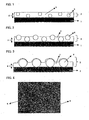
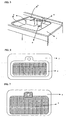
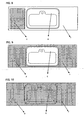
Classifications
-
- B—PERFORMING OPERATIONS; TRANSPORTING
- B32—LAYERED PRODUCTS
- B32B—LAYERED PRODUCTS, i.e. PRODUCTS BUILT-UP OF STRATA OF FLAT OR NON-FLAT, e.g. CELLULAR OR HONEYCOMB, FORM
- B32B15/00—Layered products comprising a layer of metal
- B32B15/04—Layered products comprising a layer of metal comprising metal as the main or only constituent of a layer, which is next to another layer of the same or of a different material
- B32B15/08—Layered products comprising a layer of metal comprising metal as the main or only constituent of a layer, which is next to another layer of the same or of a different material of synthetic resin
- B32B15/082—Layered products comprising a layer of metal comprising metal as the main or only constituent of a layer, which is next to another layer of the same or of a different material of synthetic resin comprising vinyl resins; comprising acrylic resins
-
- C—CHEMISTRY; METALLURGY
- C09—DYES; PAINTS; POLISHES; NATURAL RESINS; ADHESIVES; COMPOSITIONS NOT OTHERWISE PROVIDED FOR; APPLICATIONS OF MATERIALS NOT OTHERWISE PROVIDED FOR
- C09D—COATING COMPOSITIONS, e.g. PAINTS, VARNISHES OR LACQUERS; FILLING PASTES; CHEMICAL PAINT OR INK REMOVERS; INKS; CORRECTING FLUIDS; WOODSTAINS; PASTES OR SOLIDS FOR COLOURING OR PRINTING; USE OF MATERIALS THEREFOR
- C09D1/00—Coating compositions, e.g. paints, varnishes or lacquers, based on inorganic substances
-
- C—CHEMISTRY; METALLURGY
- C09—DYES; PAINTS; POLISHES; NATURAL RESINS; ADHESIVES; COMPOSITIONS NOT OTHERWISE PROVIDED FOR; APPLICATIONS OF MATERIALS NOT OTHERWISE PROVIDED FOR
- C09D—COATING COMPOSITIONS, e.g. PAINTS, VARNISHES OR LACQUERS; FILLING PASTES; CHEMICAL PAINT OR INK REMOVERS; INKS; CORRECTING FLUIDS; WOODSTAINS; PASTES OR SOLIDS FOR COLOURING OR PRINTING; USE OF MATERIALS THEREFOR
- C09D127/00—Coating compositions based on homopolymers or copolymers of compounds having one or more unsaturated aliphatic radicals, each having only one carbon-to-carbon double bond, and at least one being terminated by a halogen; Coating compositions based on derivatives of such polymers
- C09D127/02—Coating compositions based on homopolymers or copolymers of compounds having one or more unsaturated aliphatic radicals, each having only one carbon-to-carbon double bond, and at least one being terminated by a halogen; Coating compositions based on derivatives of such polymers not modified by chemical after-treatment
- C09D127/12—Coating compositions based on homopolymers or copolymers of compounds having one or more unsaturated aliphatic radicals, each having only one carbon-to-carbon double bond, and at least one being terminated by a halogen; Coating compositions based on derivatives of such polymers not modified by chemical after-treatment containing fluorine atoms
-
- C—CHEMISTRY; METALLURGY
- C09—DYES; PAINTS; POLISHES; NATURAL RESINS; ADHESIVES; COMPOSITIONS NOT OTHERWISE PROVIDED FOR; APPLICATIONS OF MATERIALS NOT OTHERWISE PROVIDED FOR
- C09D—COATING COMPOSITIONS, e.g. PAINTS, VARNISHES OR LACQUERS; FILLING PASTES; CHEMICAL PAINT OR INK REMOVERS; INKS; CORRECTING FLUIDS; WOODSTAINS; PASTES OR SOLIDS FOR COLOURING OR PRINTING; USE OF MATERIALS THEREFOR
- C09D183/00—Coating compositions based on macromolecular compounds obtained by reactions forming in the main chain of the macromolecule a linkage containing silicon, with or without sulfur, nitrogen, oxygen, or carbon only; Coating compositions based on derivatives of such polymers
- C09D183/04—Polysiloxanes
-
- C—CHEMISTRY; METALLURGY
- C09—DYES; PAINTS; POLISHES; NATURAL RESINS; ADHESIVES; COMPOSITIONS NOT OTHERWISE PROVIDED FOR; APPLICATIONS OF MATERIALS NOT OTHERWISE PROVIDED FOR
- C09D—COATING COMPOSITIONS, e.g. PAINTS, VARNISHES OR LACQUERS; FILLING PASTES; CHEMICAL PAINT OR INK REMOVERS; INKS; CORRECTING FLUIDS; WOODSTAINS; PASTES OR SOLIDS FOR COLOURING OR PRINTING; USE OF MATERIALS THEREFOR
- C09D183/00—Coating compositions based on macromolecular compounds obtained by reactions forming in the main chain of the macromolecule a linkage containing silicon, with or without sulfur, nitrogen, oxygen, or carbon only; Coating compositions based on derivatives of such polymers
- C09D183/16—Coating compositions based on macromolecular compounds obtained by reactions forming in the main chain of the macromolecule a linkage containing silicon, with or without sulfur, nitrogen, oxygen, or carbon only; Coating compositions based on derivatives of such polymers in which all the silicon atoms are connected by linkages other than oxygen atoms
-
- C—CHEMISTRY; METALLURGY
- C09—DYES; PAINTS; POLISHES; NATURAL RESINS; ADHESIVES; COMPOSITIONS NOT OTHERWISE PROVIDED FOR; APPLICATIONS OF MATERIALS NOT OTHERWISE PROVIDED FOR
- C09D—COATING COMPOSITIONS, e.g. PAINTS, VARNISHES OR LACQUERS; FILLING PASTES; CHEMICAL PAINT OR INK REMOVERS; INKS; CORRECTING FLUIDS; WOODSTAINS; PASTES OR SOLIDS FOR COLOURING OR PRINTING; USE OF MATERIALS THEREFOR
- C09D7/00—Features of coating compositions, not provided for in group C09D5/00; Processes for incorporating ingredients in coating compositions
- C09D7/40—Additives
- C09D7/65—Additives macromolecular
-
- C—CHEMISTRY; METALLURGY
- C09—DYES; PAINTS; POLISHES; NATURAL RESINS; ADHESIVES; COMPOSITIONS NOT OTHERWISE PROVIDED FOR; APPLICATIONS OF MATERIALS NOT OTHERWISE PROVIDED FOR
- C09D—COATING COMPOSITIONS, e.g. PAINTS, VARNISHES OR LACQUERS; FILLING PASTES; CHEMICAL PAINT OR INK REMOVERS; INKS; CORRECTING FLUIDS; WOODSTAINS; PASTES OR SOLIDS FOR COLOURING OR PRINTING; USE OF MATERIALS THEREFOR
- C09D7/00—Features of coating compositions, not provided for in group C09D5/00; Processes for incorporating ingredients in coating compositions
- C09D7/40—Additives
- C09D7/66—Additives characterised by particle size
- C09D7/68—Particle size between 100-1000 nm
-
- C—CHEMISTRY; METALLURGY
- C09—DYES; PAINTS; POLISHES; NATURAL RESINS; ADHESIVES; COMPOSITIONS NOT OTHERWISE PROVIDED FOR; APPLICATIONS OF MATERIALS NOT OTHERWISE PROVIDED FOR
- C09D—COATING COMPOSITIONS, e.g. PAINTS, VARNISHES OR LACQUERS; FILLING PASTES; CHEMICAL PAINT OR INK REMOVERS; INKS; CORRECTING FLUIDS; WOODSTAINS; PASTES OR SOLIDS FOR COLOURING OR PRINTING; USE OF MATERIALS THEREFOR
- C09D7/00—Features of coating compositions, not provided for in group C09D5/00; Processes for incorporating ingredients in coating compositions
- C09D7/40—Additives
- C09D7/66—Additives characterised by particle size
- C09D7/69—Particle size larger than 1000 nm
-
- C—CHEMISTRY; METALLURGY
- C23—COATING METALLIC MATERIAL; COATING MATERIAL WITH METALLIC MATERIAL; CHEMICAL SURFACE TREATMENT; DIFFUSION TREATMENT OF METALLIC MATERIAL; COATING BY VACUUM EVAPORATION, BY SPUTTERING, BY ION IMPLANTATION OR BY CHEMICAL VAPOUR DEPOSITION, IN GENERAL; INHIBITING CORROSION OF METALLIC MATERIAL OR INCRUSTATION IN GENERAL
- C23C—COATING METALLIC MATERIAL; COATING MATERIAL WITH METALLIC MATERIAL; SURFACE TREATMENT OF METALLIC MATERIAL BY DIFFUSION INTO THE SURFACE, BY CHEMICAL CONVERSION OR SUBSTITUTION; COATING BY VACUUM EVAPORATION, BY SPUTTERING, BY ION IMPLANTATION OR BY CHEMICAL VAPOUR DEPOSITION, IN GENERAL
- C23C26/00—Coating not provided for in groups C23C2/00 - C23C24/00
-
- C—CHEMISTRY; METALLURGY
- C23—COATING METALLIC MATERIAL; COATING MATERIAL WITH METALLIC MATERIAL; CHEMICAL SURFACE TREATMENT; DIFFUSION TREATMENT OF METALLIC MATERIAL; COATING BY VACUUM EVAPORATION, BY SPUTTERING, BY ION IMPLANTATION OR BY CHEMICAL VAPOUR DEPOSITION, IN GENERAL; INHIBITING CORROSION OF METALLIC MATERIAL OR INCRUSTATION IN GENERAL
- C23C—COATING METALLIC MATERIAL; COATING MATERIAL WITH METALLIC MATERIAL; SURFACE TREATMENT OF METALLIC MATERIAL BY DIFFUSION INTO THE SURFACE, BY CHEMICAL CONVERSION OR SUBSTITUTION; COATING BY VACUUM EVAPORATION, BY SPUTTERING, BY ION IMPLANTATION OR BY CHEMICAL VAPOUR DEPOSITION, IN GENERAL
- C23C26/00—Coating not provided for in groups C23C2/00 - C23C24/00
- C23C26/02—Coating not provided for in groups C23C2/00 - C23C24/00 applying molten material to the substrate
-
- C—CHEMISTRY; METALLURGY
- C23—COATING METALLIC MATERIAL; COATING MATERIAL WITH METALLIC MATERIAL; CHEMICAL SURFACE TREATMENT; DIFFUSION TREATMENT OF METALLIC MATERIAL; COATING BY VACUUM EVAPORATION, BY SPUTTERING, BY ION IMPLANTATION OR BY CHEMICAL VAPOUR DEPOSITION, IN GENERAL; INHIBITING CORROSION OF METALLIC MATERIAL OR INCRUSTATION IN GENERAL
- C23C—COATING METALLIC MATERIAL; COATING MATERIAL WITH METALLIC MATERIAL; SURFACE TREATMENT OF METALLIC MATERIAL BY DIFFUSION INTO THE SURFACE, BY CHEMICAL CONVERSION OR SUBSTITUTION; COATING BY VACUUM EVAPORATION, BY SPUTTERING, BY ION IMPLANTATION OR BY CHEMICAL VAPOUR DEPOSITION, IN GENERAL
- C23C30/00—Coating with metallic material characterised only by the composition of the metallic material, i.e. not characterised by the coating process
-
- E—FIXED CONSTRUCTIONS
- E03—WATER SUPPLY; SEWERAGE
- E03C—DOMESTIC PLUMBING INSTALLATIONS FOR FRESH WATER OR WASTE WATER; SINKS
- E03C1/00—Domestic plumbing installations for fresh water or waste water; Sinks
- E03C1/12—Plumbing installations for waste water; Basins or fountains connected thereto; Sinks
- E03C1/18—Sinks, whether or not connected to the waste-pipe
-
- B—PERFORMING OPERATIONS; TRANSPORTING
- B05—SPRAYING OR ATOMISING IN GENERAL; APPLYING FLUENT MATERIALS TO SURFACES, IN GENERAL
- B05D—PROCESSES FOR APPLYING FLUENT MATERIALS TO SURFACES, IN GENERAL
- B05D2602/00—Organic fillers
-
- B—PERFORMING OPERATIONS; TRANSPORTING
- B05—SPRAYING OR ATOMISING IN GENERAL; APPLYING FLUENT MATERIALS TO SURFACES, IN GENERAL
- B05D—PROCESSES FOR APPLYING FLUENT MATERIALS TO SURFACES, IN GENERAL
- B05D2701/00—Coatings being able to withstand changes in the shape of the substrate or to withstand welding
- B05D2701/30—Coatings being able to withstand changes in the shape of the substrate or to withstand welding withstanding bending
-
- C—CHEMISTRY; METALLURGY
- C08—ORGANIC MACROMOLECULAR COMPOUNDS; THEIR PREPARATION OR CHEMICAL WORKING-UP; COMPOSITIONS BASED THEREON
- C08K—Use of inorganic or non-macromolecular organic substances as compounding ingredients
- C08K3/00—Use of inorganic substances as compounding ingredients
- C08K3/34—Silicon-containing compounds
- C08K3/36—Silica
-
- C—CHEMISTRY; METALLURGY
- C08—ORGANIC MACROMOLECULAR COMPOUNDS; THEIR PREPARATION OR CHEMICAL WORKING-UP; COMPOSITIONS BASED THEREON
- C08K—Use of inorganic or non-macromolecular organic substances as compounding ingredients
- C08K5/00—Use of organic ingredients
- C08K5/54—Silicon-containing compounds
- C08K5/5406—Silicon-containing compounds containing elements other than oxygen or nitrogen
-
- Y—GENERAL TAGGING OF NEW TECHNOLOGICAL DEVELOPMENTS; GENERAL TAGGING OF CROSS-SECTIONAL TECHNOLOGIES SPANNING OVER SEVERAL SECTIONS OF THE IPC; TECHNICAL SUBJECTS COVERED BY FORMER USPC CROSS-REFERENCE ART COLLECTIONS [XRACs] AND DIGESTS
- Y10—TECHNICAL SUBJECTS COVERED BY FORMER USPC
- Y10T—TECHNICAL SUBJECTS COVERED BY FORMER US CLASSIFICATION
- Y10T428/00—Stock material or miscellaneous articles
- Y10T428/25—Web or sheet containing structurally defined element or component and including a second component containing structurally defined particles
- Y10T428/254—Polymeric or resinous material
Definitions
- the present invention relates to a composite material which retains a design property of a base material even in a case where the external force is applied thereto.
- a stainless sink which improves an antifouling property by forming a metal oxide film (for example, see Patent reference 1), an antifouling product which forms a glazed layer on a stainless surface (for example, see Patent reference 2), a molded compact which forms a coating layer consisting of colloidal silica and a silicon compound containing an epoxy radical (for example, see Patent reference 3), etc.
- the surface hardness is improved to a certain extent, but when contacting the earthenware of burned metal oxide, etc. flaws are easily generated for example by release of the colloidal silica, etc. so as not to be sufficient in the antifouling property.
- the present invention is made to solve the above mentioned problems and aims to provide the composite material which retains the design property of the base material even in a case where the external force is applied thereto.
- the present invention provides a composite material which retains the design property of a base material even in a case where the external force is applied thereto, comprising a base material and a coated section, wherein the coated section contains (A) silica or at least a kind selected from the group of an average composition formula R p SiO (4-p)/2 in which R is a hydrogen atom, a fluorine atom or a univalent organic radical, and p is a number which satisfies 0 ⁇ p ⁇ 4, and (B) plastic polymer particles, and wherein the plastic polymer particles are dispersed in the coated section without coming substantially in contact with each other.
- the coated section contains (A) silica or at least a kind selected from the group of an average composition formula R p SiO (4-p)/2 in which R is a hydrogen atom, a fluorine atom or a univalent organic radical, and p is a number which satisfies 0 ⁇ p ⁇ 4, and (B) plastic polymer particles, and where
- the present invention provides a composite material which retains the design property of a base material even in a case where the external force is applied thereto, comprising a base material, and a coated section, wherein the coated section contains (A) silica or at least a kind selected from the group of an average composition formula R p SiO (4-p)/2 in which R is a hydrogen atom, a fluorine atom or a univalent organic radical, and p is a number which satisfies 0 ⁇ p ⁇ 4, and (B) plastic polymer particles, and wherein the content of the plastic polymer particles in the coated section is not less than 1% by volume and less than 20% by volume.
- an irregular structure which has a convex portion corresponding to an idiomorphic form of the plastic polymer particle is formed on a surface of the coated section.
- an average particle size is larger than a film thickness of the coated section.
- the film thickness of the coated section is from 0.3 ⁇ m to 20 ⁇ m.
- the film thickness of the coated section is from 0.3 ⁇ m to 8 ⁇ m.
- the average particle size of the plastic polymer particles is from 0.1 ⁇ m to 20 ⁇ m.
- the average particle size is from 0.1 ⁇ m to 8 ⁇ m.
- the coated section is substantially transparent.
- the base material is a ductile base material.
- the ductile base material is stainless steel or aluminum.
- the ductile base material forms a sink and/or a counter, wherein at least a portion of a surface to be used is provided with any one of the above mentioned coated sections.
- the present invention provides a coating liquid which is applied to a base material and cured by heating to form a coated section on the base material, containing plastic polymer particles and (C) a compound represented by the following structural formula [-(SiR1R2)-(NR3)-] n in which each of R1, R2 and R3 is independently a hydrogen atom, an alkyl radical, an alkenyl radical, a cycloalkenyl radical, an amino radical, an alkylamino radical, an alkylsilyl radical, an alkoxy radical or another radical which has a carbon as a radical directly connected to a principal chain of silicon and nitrogen, and n is an integer, wherein the coating liquid contains the plastic polymer particles and (C) the compound represented by the following structural formula [-(SiR1R2)-(NR3)-] n in which each of R1, R2 and R3 is independently a hydrogen atom, an alkyl radical, an alkenyl radical, a cycloalkenyl radical, an amino radical
- an average particle size of the plastic polymer particles is from 0.1 ⁇ m to 20 ⁇ m.
- the average particle size is from 0.1 ⁇ m to 8 ⁇ m.
- the present invention provides a coating liquid which is applied to a base material and cured by heating to form a coated section on the base material, containing plastic polymer particles and at least a kind of compound selected from the group consisting of (D) (D-1) a compound represented by the following general formula (1), R a Si(OR4) 4-a (1) (in the formula, R is a hydrogen atom, a fluorine atom or a univalent organic radical, and "a” is an integer of from 1 to 2), (D-2) a compound represented by the following general formula (2), Si(OR5) 4 (2) (in the formula, R5 is a univalent organic radical), and (D-3) a compound represented by the following general formula (3), R6 b (R7O) 3-b Si-(R10) d -Si(OR8) 3-c R9 c (3) (in the formula, each of R6 through R9 is a univalent organic radical, "b” and "c” are integers of from 0 to 2, R10 is an oxygen atom,
- an average particle size is from 0.1 ⁇ m to 20 ⁇ m.
- the average particle size is from 0.1 ⁇ m to 8 ⁇ m.
- the present invention provides a manufacturing method of a composite material comprising the steps of applying to a base material a coating liquid which is applied to a base material and cured by heating to form a coated section on the base material and which contains plastic polymer particles and (C) a compound represented by the following structural formula [-(SiR1R2)-(NR3)-] n in which each of R1, R2 and R3 is independently a hydrogen atom, an alkyl radical, an alkenyl radical, a cycloalkenyl radical, an amino radical, an alkylamino radical, an alkylsilyl radical, an alkoxy radical or another radical which has a carbon as a radical directly connected to a principal chain of silicon and nitrogen, and n is an integer, wherein the coating liquid contains the plastic polymer particles and (C) the compound represented by the following structural formula [-(SiR1R2)-(NR3)-] n in which each of R1, R2 and R3 is independently a hydrogen atom, an alkyl radical, an
- the present invention provides a manufacturing method of a composite material comprising the steps of applying to a base material a coating liquid which is applied to a base material and cured by heating to form a coated section on the base material and which contains plastic polymer particles and at least a kind of compound selected from the group consisting of (D) (D-1) a compound represented by the following general formula (1), R a Si(OR4) 4-a (1) (in the formula, R is a hydrogen atom, a fluorine atom or a univalent organic radical, and "a” is an integer of from 1 to 2), (D-2) a compound represented by the following general formula (2), Si(OR5) 4 (2) (in the formula, R5 is a univalent organic radical), and (D-3) a compound represented by the following general formula (3), R6 b (R7O) 3-b Si-(R10) d -Si(OR8) 3-c R9 c (3) (in the formula, each of R6 through R9 is a univalent organic radical, "b” and "
- the present invention provides a manufacturing method of a composite material comprising the steps of drawing a ductile base material into the form of a sink and/or a counter, applying on the ductile base material a coating liquid which is applied to a base material and cured by heating to form a coated section on the base material and which contains plastic polymer particles and (C) a compound represented by the following structural formula [-(SiR1R2)-(NR3)-] n in which each of R1, R2 and R3 is independently a hydrogen atom, an alkyl radical, an alkenyl radical, a cycloalkenyl radical, an amino radical, an alkylamino radical, an alkylsilyl radical, an alkoxy radical or another radical which has a carbon as a radical directly connected to a principal chain of silicon and nitrogen, and n is an integer, wherein the coating liquid contains the plastic polymer particles and (C) the compound represented by the following structural formula [-(SiR1R2)-(NR3)-] n in which
- the present invention provides a manufacturing method of a composite material comprising the steps of drawing a ductile base material into the form of a sink and/or a counter, applying on the ductile base material a coating liquid which is applied to a base material and cured by heating to form a coated section on the base material and which contains plastic polymer particles and at least a kind of compound selected from the group consisting of (D) (D-1) a compound represented by the following general formula (1), R a Si(OR4) 4-a (1) (in the formula, R is a hydrogen atom, a fluorine atom or a univalent organic radical, and "a" is an integer of from 1 to 2), (D-2) a compound represented by the following general formula (2), Si(OR5) 4 (2) (in the formula, R5 is a univalent organic radical), and (D-3) a compound represented by the following general formula (3), R6 b (R7O) 3-b Si-(R10) d -Si(OR8) 3-c R9 c (3) (in
- the present invention provides a manufacturing method of a composite material comprising the steps of applying on a ductile base material a coating liquid which is applied to a base material and cured by heating to form a coated section on the base material and which contains plastic polymer particles and (C) a compound represented by the following structural formula [-(SiR1R2)-(NR3)-] n in which each of R1, R2 and R3 is independently a hydrogen atom, an alkyl radical, an alkenyl radical, a cycloalkenyl radical, an amino radical, an alkylamino radical, an alkylsilyl radical, an alkoxy radical or another radical which has a carbon as a radical directly connected to a principal chain of silicon and nitrogen, and n is an integer, wherein the coating liquid contains the plastic polymer particles and (C) the compound represented by the following structural formula [-(SiR1R2)-(NR3)-] n in which each of R1, R2 and R3 is independently a hydrogen atom, an alkyl
- the present invention provides a manufacturing method of a composite material comprising the steps of applying on a ductile base material a coating liquid which is applied to a base material and cured by heating to form a coated section on the base material and which contains plastic polymer particles and at least a kind of compound selected from the group consisting of (D) (D-1) a compound represented by the following general formula (1), R a Si(OR4) 4-a (1) (in the formula, R is a hydrogen atom, a fluorine atom or a univalent organic radical, and "a” is an integer of from 1 to 2), (D-2) a compound represented by the following general formula (2), Si(OR5) 4 (2) (in the formula, R5 is a univalent organic radical), and (D-3) a compound represented by the following general formula (3), R6 b (R7O) 3-b Si-(R10) d -Si(OR8) 3-c R9 c (3) (in the formula, each of R6 through R9 is a univalent organic radical, "b
- the composite material which retains the design property of the base material even in a case where the external force is applied thereto.
- a composite material comprises a base material, and a coated section arranged on the base material, wherein the coated section contains (A) silica or at least a kind selected from the group of an average composition formula R p SiO (4-p)/2 in which R is a hydrogen atom, a fluorine atom or a univalent organic radical, and p is a number which satisfies 0 ⁇ p ⁇ 4, and (B) plastic polymer particles, and wherein the plastic polymer particles are dispersed in the coated section without coming substantially in contact with each other.
- the composite material comprises the base material, and the coated section arranged on the base material, wherein the coated section contains (A) silica or at least a kind selected from the group of an average composition formula R p SiO (4-p)/2 in which R is a hydrogen atom, a fluorine atom or a univalent organic radical, and p is a number which satisfies 0 ⁇ p ⁇ 4, and (B) plastic polymer particles, and wherein the content of the plastic polymer particles in the coated section is not less than 1% by volume and less than 20% by volume.
- the plastic polymer particles give a certain extent of flexibility to the coated section, the follow-up characteristics to the base material are improved so as to effectively perform the function of retaining the design property of the base material.
- the flexibility of the plastic polymer particles is given to the coated section without disturbance of the siloxane network, so that the function of retaining the design property of the base material can be effectively performed.
- the plastic polymer particles exist excessively in the coated section and the plastic polymer particles are condensed, release of the plastic polymer particles and the like occurs by the application of the external force so as not to perform the function of retaining the design property of the base material.
- a percentage by volume of the plastic polymer particles is less than 1%, the function of retaining the design property of the base material is not performed sufficiently in the case where the external force is applied, while when being not less than 20%, the siloxane network in the coated section becomes coarse, so that also the function of retaining the design property of the base material is not performed sufficiently.
- the percentage by volume of the plastic polymer particles in the coated section is a percentage of the plastic polymer particles relative to a total volume of the coated section.
- the coated section may be formed in such a state that the plastic polymer particles are dispersed in the siloxane network.
- an irregular structure which has convex portions corresponding to an idiomorphic form of the plastic polymer particle may be formed on a surface of the coated section.
- the convex portions corresponding to the idiomorphic form of the plastic polymer particle prevent transmission of the external force to the siloxane network, so that the function of retaining the design property of the base material is remarkably performed under the application of the external force.
- an average particle size is larger than a film thickness of the coated section.
- the plastic polymer particles are formed of fluorine resin particles.
- the fluorine resin particles are superior in slipperiness and small in surface energy, whereby the function of retaining the design property of the base material is effectively performed.
- the film thickness of the coated section is from 0.3 ⁇ m to 20 ⁇ m.
- the film thickness in the present invention is a film thickness of the siloxane network and, in the case where the plastic polymer particles are partially exposed, means a thickness not including the exposed portions. It is possible to measure by cross-section observation with a scanning electron microscope, etc.
- the film thickness is less than 0.3 ⁇ m, the function of retaining the design property of the base material is not performed sufficiently in the case where the external force is applied, while when being more than 20 ⁇ m, cracking or the like occurs in the coated section so that similarly the function of retaining the design property of the base material is not performed sufficiently in the case where the external force is applied.
- the film thickness of the coated section is from 0.3 ⁇ m to 8 ⁇ m.
- the film thickness is 8 ⁇ m or less, it is possible to easily form the coated section by using various kinds of coat applying methods while the external appearance of the coated section is improved.
- the average particle size of the plastic polymer particles is from 0.1 ⁇ m to 20 ⁇ m.
- the average particle size is less than 0.1 ⁇ m, the function of retaining the design property of the base material is decreased in the case where the external force is applied, while when being more than 20 ⁇ m, the design property of the base material may be impaired.
- the average particle size is from 0.1 ⁇ m to 8 ⁇ m.
- the average particle size is 8 ⁇ m or less, it is possible to easily form the coated section by using various kinds of coat applying methods while an external appearance of the coated section is improved.
- the film thickness of the coated section is from 0.3 ⁇ m to 8 ⁇ m, and the average particle size of the plastic polymer particles is from 0.5 ⁇ m to 20 ⁇ m such that the average particle size of the plastic polymer particles is larger than the film thickness of the coated section.
- the base material is a ductile base material.
- the ductile base material is superior in workability and applied to various industrial products. Metal such as stainless steel, aluminum or the like is its typical example and is used for cooking utensils, kitchen sinks, kitchen counters, etc.
- the ductile base material because of its properties, is inferior in surface hardness and poor in antifouling property, effects of retaining the design property of the base material at the time of application of the external force as keeping the ductile property of the base material are obtained by forming the coated section of the present invention.
- the coated section of the present invention contains the plastic polymer particles, the flexibility is given to the coated section thereby to be superior in follow-up characteristics, so that the coated section has effects of retaining the design property of the base material when the external force is applied thereto as keeping the ductile property of the ductile base material.
- the composite material has the ductile base material to form a sink and/or a counter, wherein at least a portion of a surface to be used is provided with the coated section of the present invention, so that it has the function of retaining the design property of the base material when the external force such as sliding frictional wear and the like due to contact with tableware and the like is applied, so as to retain the design property of the base material.
- the coated section of the present invention contains the plastic polymer particles so as to be given a certain extent of flexibility, so that the follow-up characteristics to the base material are exerted even in the case where the heavy object dropped thereon or where the temperature of the base material changed due to successive exposure to boiling water and cold water, thereby to prevent exfoliation or release of the coated section.
- the coating liquid for forming the coated section of the present invention there is preferably used the coating liquid to be applied to the base material and cured by heating to form the coated section on the base material, which contains plastic polymer particles and (C) a compound represented by the following structural formula [-(SiR1R2)-(NR3)-] n in which each of R1, R2 and R3 is independently a hydrogen atom, an alkyl radical, an alkenyl radical, a cycloalkenyl radical, an amino radical, an alkylamino radical, an alkylsilyl radical, an alkoxy radical or another radical which has a carbon as a radical directly connected to a principal chain of silicon and nitrogen, and n is an integer, wherein the coating liquid contains the plastic polymer particles and (C) the compound represented by the following structural formula [-(SiR1R2)-(NR3)-] n in which each of R1, R2 and R3 is independently a hydrogen atom, an alkyl radical, an alkenyl radical, a
- the coating liquid for forming the coated section of the present invention there may be also preferably used the coating liquid to be applied to a base material and cured by heating to form a coated section on the base material, which contains plastic polymer particles and at least a kind of compound selected from the group consisting of (D) (D-1) a compound represented by the following general formula (1), R a Si(OR4) 4-a (1) (in the formula, R is a hydrogen atom, a fluorine atom or a univalent organic radical, and "a” is an integer of from 1 to 2), (D-2) a compound represented by the following general formula (2), Si(OR5) 4 (2) (in the formula, R5 is a univalent organic radical), and (D-3) a compound represented by the following general formula (3), R6 b (R7O) 3-b Si-(R10) d -Si(OR8) 3-c R9 c (3) (in the formula, each of R6 through R9 is a univalent organic radical, "b” and "c"
- an average particle size of the plastic polymer particles is from 0.1 ⁇ m to 20 ⁇ m.
- the average particle size is a dispersion particle size and can be measures with a particle size dispersion meter of laser diffraction type.
- the average particle size is less than 0.1 ⁇ m, the function of retaining the design property of the base material is decreased in the case where the external force is applied, while when being more than 20 ⁇ m, the design property of the base material may be impaired.
- the average particle size is from 0.1 ⁇ m to 8 ⁇ m.
- the average particle size is not more than 8 ⁇ m, it is possible to easily form the coated section with various kinds of coat applying methods. At the same time, the dispersion stability of the plastic polymer particles in the coating liquid is increased so that the external appearance of the coated section is improved.
- a method according to the present invention comprising the steps of applying to a base material a coating liquid which is applied to a base material and cured by heating to form a coated section on the base material and which contains plastic polymer particles and (C) a compound represented by the following structural formula [-(SiR1R2)-(NR3)-] n in which each of R1, R2 and R3 is independently a hydrogen atom, an alkyl radical, an alkenyl radical, a cycloalkenyl radical, an amino radical, an alkylamino radical, an alkylsilyl radical, an alkoxy radical or another radical which has a carbon as a radical directly connected to a principal chain of silicon and nitrogen, and n is an integer, wherein the coating liquid contains the plastic polymer particles and (C) the compound represented by the following structural formula [-(SiR1R2)-(NR3)-] n in which each of R1, R2 and R3 is independently a
- (C) the compound represented by the following structural formula [-(SiR1R2)-(NR3)-] n in which each of R1, R2 and R3 is independently a hydrogen atom, an alkyl radical, an alkenyl radical, a cycloalkenyl radical, an amino radical, an alkylamino radical, an alkylsilyl radical, an alkoxy radical or another radical which has a carbon as a radical directly connected to a principal chain of silicon and nitrogen, and n is an integer, is converted to silica by heating and cured to form the siloxine network on the base material.
- the conversion to silica it is preferable to heat at 100 or more degrees centigrade. More preferably, when heating at not less than 200 degrees centigrade, the reaction of conversion is accelerated. Also, it is possible to accelerate the convention by a catalyst.
- the catalyst being used in the present invention is (C) the compound which accelerates the conversion to silica, represented by the following structural formula [-(SiR1R2)-(NR3)-] n in which each of R1, R2 and R3 is independently a hydrogen atom, an alkyl radical, an alkenyl radical, a cycloalkenyl radical, an amino radical, an alkylamino radical, an alkylsilyl radical, an alkoxy radical or another radical which has a carbon as a radical directly connected to a principal chain of silicon and nitrogen.
- N-heterocyclic compounds such as 1-methylpiperazine, 1-methylpiperidine, 4,4'-trimethylenedipiperidine, 4,4'-trimethylenebis(1-methylpiperidine), diazabicyclo-[2,2,2]octane, cis-2,6-dimethylpiperazine, 4-(4-methylpiperidine)pyridine, pyridine, dipyridine, ⁇ -picoline, ⁇ -picoline, ⁇ -picoline, piperidine, lutidine, pyrimidine, pyridazine, 4,4-trimethylenedipyridine, 2-(methylamino)pyridine, pyrazine, quinoline, quinoxaline, triazine, pyrrole, 3-pyroline, imidazole, triazole, tetrazole, 1-methylpirrolidine and the like; amines such as methylamine, dimethylamine, trimethylamine, ethylamine, diethyl
- an organic acid there are given an organic acid, an inorganic acid, a metal carboxylate, an acetylacetona complex and a metal minute particle.
- the organic acid there are given an acetic acid, a propionic acid, a butyric acid, a valerianic acid, a maleic acid, a stearic acid, and the like while as the inorganic acid, there are given a hydrochloric acid, a nitric acid, a sulfuric acid, a phosphoric acid, a hydrogen peroxide, a chloric acid, a hypochlorite acid, and the like.
- the metal carboxylate is a compound represented by the formula: (RCOO)nM in which R represents a fatty radical or an alicyclic radical of from 1 to 22 in carbon number, M represents at least a kind of metal selected from the group consisting of Ni, Ti, Pt, Rh, Co, Fe, Os, Pd, Ir and AL, and "n" is a valence of M.
- the metal carboxylate may be either anhydride or hydrate.
- the acetylacetona complex is a complex that a negative ion, acac', generated from acetylacetone by acid dissociation is coordinated to a metal atom, and generally is represented by the formula (CH3COCHCOCH3)nM in which M represents metal whose inonic valency is "n".
- M metal whose inonic valency is "n".
- metal there are given, for example, nickel, platinum, palladium, aluminum, rhodium and the like.
- As the metal minute particle Au, Ag, Pd and Ni are preferable and particularly Ag is preferable. It is preferable that a particle size of the metal minute particle is less than 0.5 ⁇ m. 0.1 ⁇ m or less is more referable and less than 0.05 ⁇ m is most preferable.
- an organic metal compound and the like such as peroxide, metal chloride, ferrocene, ziconocene and the like may be used.
- a method comprising the steps of applying to a base material a coating liquid which is applied to a base material and cured by heating to form a coated section on the base material and which contains plastic polymer particles and at least a kind of compound selected from the group consisting of (D) (D-1) a compound represented by the following general formula (1), R a Si(OR4) 4-a (1) (in the formula, R is a hydrogen atom, a fluorine atom or a univalent organic radical, and "a” is an integer of from 1 to 2), (D-2) a compound represented by the following general formula (2), Si(OR5) 4 (2) (in the formula, R5 is a univalent organic radical), and (D-3) a compound represented by the following general formula (3), R6 b (R7O) 3-b Si-(R10) d -Si(OR8) 3-c R9 c (3) (in the formula, each of R6 through R9 is a uni
- the method comprising the steps of applying to a base material a coating liquid which is applied to a base material and cured by heating to form a coated section on the base material and which contains plastic polymer particles and (C) a compound represented by the following structural formula [-(SiR1R2)-(NR3)-] n in which each of R1, R2 and R3 is independently a hydrogen atom, an alkyl radical, an alkenyl radical, a cycloalkenyl radical, an amino radical, an alkylamino radical, an alkylsilyl radical, an alkoxy radical or another radical which has a carbon as a radical directly connected to a principal chain of silicon and nitrogen, and n is an integer, wherein the coating liquid contains the plastic polymer particles and (C) the compound represented by the following structural formula [-(SiR1R2)-(NR3)-] n in which each of R1, R2 and R3 is independently a hydrogen atom, an alkyl radical, an alkenyl radical, a cyclo
- (C) the compound represented by the following structural formula [-(SiR1R2)-(NR3)-] n in which each of R1, R2 and R3 is independently a hydrogen atom, an alkyl radical, an alkenyl radical, a cycloalkenyl radical, an amino radical, an alkylamino radical, an alkylsilyl radical, an alkoxy radical or another radical which has a carbon as a radical directly connected to a principal chain of silicon and nitrogen, and n is an integer, is converted to silica by heating and cured to form the siloxane network on the base material, the coated section which is small in contraction and fine in structure is formed, since the siloxane network is formed by coordination of Si-N to Si-O, so that the function of retaining the design property of the base material can be effectively performed when the external force is applied thereto.
- the composite material of the present invention which has a ductile base material to form a sink and/or a counter and, at least on a portion of a surface to be used, a coated section which contains (A) silica or at least a kind selected from the group of an average composition formula R p SiO (4-p)/2 in which R is a hydrogen atom, a fluorine atom or a univalent organic radical, and p is a number which satisfies 0 ⁇ p ⁇ 4, and (B) plastic polymer particles, there is provided a method comprising the steps of drawing the ductile base material into the form of a sink and/or a counter, applying on the ductile base material a coating liquid which is applied to the base material and cured by heating to form the coated section on the base material and which contains the plastic polymer particles and (C) a compound represented by the following structural formula [-(SiR1R2)-(NR3)-] n in which each of R1, R2 and R3 is independently
- the composite material of the present invention which has a ductile base material to form a sink and/or a counter and, at least on a portion of a surface to be used, a coated section which contains (A) silica or at least a kind selected from the group of an average composition formula R p SiO (4-p)/2 in which R is a hydrogen atom, a fluorine atom or a univalent organic radical, and p is a number which satisfies 0 ⁇ p ⁇ 4, and (B) plastic polymer particles, there is provided a method comprising the steps of drawing the ductile base material into the form of a sink and/or a counter, applying on the ductile base material a coating liquid which is applied to the base material and cured by heating to form the coated section on the base material and which contains the plastic polymer particles and at least a kind of compound selected from the group consisting of (D) (D-1) a compound represented by the following general formula (1), R a Si(OR4) 4-a
- the method of forming the coated section after drawing the ductile base material into the form of a sink and/or a counter, residual stresses on the coated section can be reduced so that the function of retaining the design property of the base material is effectively performed when the external force is applied.
- the composite material of the present invention which has a ductile base material to form a sink and/or a counter and, at least on a portion of a surface to be used, a coated section which contains (A) silica or at least a kind selected from the group of an average composition formula R p SiO (4-p)/2 in which R is a hydrogen atom, a fluorine atom or a univalent organic radical, and p is a number which satisfies 0 ⁇ p ⁇ 4, and (B) plastic polymer particles, there is given a method comprising the steps of applying on a ductile base material a coating liquid which is applied to the base material and cured by heating to form the coated section on the base material and which contains the plastic polymer particles and (C) a compound represented by the following structural formula [-(SiR1R2)-(NR3)-] n in which each of R1, R2 and R3 is independently a hydrogen atom, an alkyl radical, an alkenyl radical,
- the composite material of the present invention which has a ductile base material to form a sink and/or a counter and, at least on a portion of a surface to be used, a coated section which contains (A) silica or at least a kind selected from the group of an average composition formula R p SiO (4-p)/2 in which R is a hydrogen atom, a fluorine atom or a univalent organic radical, and p is a number which satisfies 0 ⁇ p ⁇ 4, and (B) plastic polymer particles, there is provided a method comprising the steps of applying on a ductile base material a coating liquid which is applied to the base material and cured by heating to form the coated section on the base material and which contains the plastic polymer particles and at least a kind of compound selected from the group consisting of (D) (D-1) a compound represented by the following general formula (1), R a Si(OR4) 4-a (1) (in the formula, R is a hydrogen atom, a fluorine
- the coating liquid is applied to the base material before being formed into the complicated form of sing and/or counter so that it is possible to easily manufacture the composite material which has the ductile base material to form a sink and/or a counter and, at least a portion of the surface to be used, the coated section which contains (A) silica or at least a kind selected from the group of an average composition formula R p SiO (4-p)/2 in which R is a hydrogen atom, a fluorine atom or a univalent organic radical, and p is a number which satisfies 0 ⁇ p ⁇ 4, and (B) plastic polymer particles.
- the base materials to be used are limited in relation to heat resistance.
- the steel has heat resistance but is not preferable in that the design property may be impaired at 400 degrees centigrade or more because discoloration occurs due to oxidation of surface.
- the temperature is 350 degrees centigrade or less.
- the base material there are used a metallic material such as iron, aluminum, stainless steel, etc., glass, ceramics, plastic, tree, stone, cement, concrete, combinations of these materials, laminated materials of these materials, etc.
- a metallic material such as iron, aluminum, stainless steel, etc., glass, ceramics, plastic, tree, stone, cement, concrete, combinations of these materials, laminated materials of these materials, etc.
- plastic polymer particle of the present invention there are included polymers such as a cellulose derivative, an olefin resin, a halogen contained resin, a vinyl alcohol resin, a vinyl ester resin, a (meta) acrylic resin, a styrene resin, a polyester resin, a polyamide resin, a polycarbonate resin, a polyether resin, a polysulfone resin and the like, and hardening materials such as an epoxy resin, an unsaturated polyester resin, a di-allyl phthalate resin, a silicone resin and the like. It is possible to use the one which has the heat resistance over a heating temperature in the case of forming the siloxine network. Bridging polymers may be used because it is superior in heat resistance.
- the plastic polymer particle is spherical in shape.
- a fluorine resin which is superior in slip property, small in surface energy and superior in heat resistance may be particularly preferably used.
- a fluorine resin particle there is given a fluoro radical contained polymer such as polytetrafluoroethyrene, poly(vinylidene fluoride), poly(vinyl fluoride), polychlorotrifluoroethylene, a tetrafluoroethylene-hexafluoropropylene polymer, an ethylene-chlorotrifluoroethylene polymer, a tetrafluoroethylene-parfluoroalkylvinylether copolymer, a parfluorocyclo polymer, a vinylether-fluoroolefin copolymer, a vinylester-fluoroolefin coplymer, a tetrafluoroethylene-vinylether copolymer, a chlorotrifluoroethylene-vinylether copolymer, a bridged tetrafluoroethyleneurethane compound, a bridged tetrafluoroehtyleneepoxy compound,
- cellulose derivative there are given a cellulose-ester class such as cellulose-acetate, cellulose-propionate, cellulose-butylate cellulose-phthalate and the like, a cellulose carbamate class, and a cellulose-ether class such as alkyl-cellulose, benzyl-cellulose, hydroxyalkyl-cellulose, carboxymethyl-cellulose and cyanoethyl-cellulose and the like.
- a cellulose-ester class such as cellulose-acetate, cellulose-propionate, cellulose-butylate cellulose-phthalate and the like
- a cellulose carbamate class such as alkyl-cellulose, benzyl-cellulose, hydroxyalkyl-cellulose, carboxymethyl-cellulose and cyanoethyl-cellulose and the like.
- the olefin resin there are given a homopolymer or a copolymer of C2-6 olefin (an ethylene resin such as an ethylene-propylene copolymer and the like, a polypropylene resin such as polypropylene, a propylene-ethylene copolymer, a propylene-butene copolymer and the like, poly(methyl-pentene-1), and the like), a copolymer between C2-6 olefin and copolymerized monomer (an ethylene-(meta)acrylic acid copolymer or an ionomer, an ethylene-(meta)acrylic ester copolymer, an ethylene-vinyl acetate copolymer and the like), and the like.
- C2-6 olefin an ethylene resin such as an ethylene-propylene copolymer and the like, a polypropylene resin such as polypropylene, a propylene-ethylene copolymer,
- halogen contained resin there are given a vinyl halogenide resin (a homopolymer or a copolymer of a monomer containing vinyl chloride such as poly(vinylidene chloride) and the like or of a fluorine contained monomer, a copolymer between a poly(vinylidene chloride) or fluorine contained monomer, such as a vinyl chloride-vinyl acetate copolymer, a vinyl chloride-(meta)acrylic ester copolymer, a tetrafluoroethylene-ethylene copolymer, etc., and a copolymerized monomer, and the like), a vinylidene halogenide resin (a copolymer between a polyvinylidene fluolide or a vinylidene chloride or fluorine contained monomer and other monomer), and the like.
- a vinyl halogenide resin a homopolymer or a copolymer of a monomer containing vinyl chloride such as
- vinyl alcohol resin and the derivative thereof there are included a vinyl alcohol resin such as polyvinyl alcohol, an ethylene-vinyl alcohol copolymer and the like, and derivatives thereof like polyvinyl acetal such as polyvinyl holmale, polyvinyl butyral and the like.
- a vinyl alcohol resin such as polyvinyl alcohol, an ethylene-vinyl alcohol copolymer and the like, and derivatives thereof like polyvinyl acetal such as polyvinyl holmale, polyvinyl butyral and the like.
- the vinyl ester resin there are given a homopolymer or a copolymer of a vinyl ester series monomer such as polyvinyl acetate, etc. , a copolymer between a vinyl ester series monomer and a copolymerized monomer, such as a vinyl acetate-ethylene copolymer, a vinyl acetate-vinyl chloride copolymer, a vinyl acetate-(meta)acrylic ester copolymer, etc., and the like.
- a vinyl ester series monomer such as polyvinyl acetate, etc.
- a copolymer between a vinyl ester series monomer and a copolymerized monomer such as a vinyl acetate-ethylene copolymer, a vinyl acetate-vinyl chloride copolymer, a vinyl acetate-(meta)acrylic ester copolymer, etc., and the like.
- the (meta) acrylic resin there are given, for example, poly(meta) acrylic ester such as poly(meta)methyl acrylate, etc., a methyl methacrylate-(meta) acrylic acid copolymer, a methyl methacrylate-(meta) acrylic ester-(meta) acrylic acid copolymer, a methyl methacrylate-(meta) acrylic ester copolymer, a (meta) acrylic ester-styrene copolymer (an MS resin, etc.), and the like.
- poly(meta) acrylic ester such as poly(meta)methyl acrylate, etc.
- a methyl methacrylate-(meta) acrylic acid copolymer a methyl methacrylate-(meta) acrylic ester-(meta) acrylic acid copolymer
- a methyl methacrylate-(meta) acrylic ester copolymer a (meta) acrylic ester-styrene copolymer (an MS resin
- styrene resin there are given a homopolymer or a copolymer of a styrene monomer such as polystyrene, a styrene- ⁇ -methylstyrene copolymer, etc., a copolymer between a styrene monomer and a copolymerized monomer, such as a styrene-acrylonitrile copolymer (an AS resin), a styrene-(meta) acrylic ester copolymer (a styrene-methyl methacrylate copolymer, etc.), a styrene-maleic anthydride copolymer, etc., and the like.
- a styrene monomer such as polystyrene, a styrene- ⁇ -methylstyrene copolymer, etc.
- polyester resin there are included aromatic polyester using an aromatic dicarboxylic acid such as a terephthalic acid, etc. and alkyleneglycol, aliphatic polyester using an aliphatic dicarboxylic acid such as an adipic acid, etc., a polyallylate resin, a liquid crystalline polyester, and the like.
- aromatic polyester using an aromatic dicarboxylic acid such as a terephthalic acid, etc. and alkyleneglycol
- aliphatic polyester using an aliphatic dicarboxylic acid such as an adipic acid, etc.
- a polyallylate resin such as an adipic acid, etc.
- liquid crystalline polyester resin such as an aromatic polyester resin and the like.
- polyamide resin there are given aliphatic polyamide such as nylon 46, nylon 6, nylon 66, nylon 610, nylon 612, nylon 11, nylon 12, etc., aromatic polyamide such as xylene diamine adipate (MXD-6), etc., and the like.
- polycarbonate resin there are included bisphenol class (bisphenol A, etc.) based aromatic polycarbonate, aliphatic polycarbonate such as polydiethylene glycol bis-allyl carbonate, etc., and the like.
- bisphenol class bisphenol A, etc.
- aliphatic polycarbonate such as polydiethylene glycol bis-allyl carbonate, etc., and the like.
- polyether resin there may be exemplified polyoxialkylene glycol, polyoximethylene such as polyacetal homopolymer or copolumer, etc., polyether-etherketone, and the like
- polysulfone resin there may be exemplified polysulfone, polyether-sulfone and the like.
- the coated section which contains (A) silica or at least a kind selected from the group of an average composition formula R p SiO (4-p)/2 in which R is a hydrogen atom, a fluorine atom or a univalent organic radical, and p is a number which satisfies 0 ⁇ p ⁇ 4, and (B) plastic polymer particles, may be formed in such a manner that the plastic polymer particles are dispersed in the siloxane network thereof and the irregular structure which has the convex portions corresponding to the idiomorphic form of the plastic polymer particle are formed thereon.
- the design property of the base material is retained even in the case where the external force applied means the function of preventing the decrease of the deign property due to flaws which are generated, for example, by coming in contact with solid objects, and to put it more concretely, it means the function of preventing the decrease of the design property due to scratches which are generated by a slide and the like of tableware, etc. for example, in the case of the sink and/or the counter.
- the ductile base material means the base material which has the property capable of being stretched beyond the elastic limit thereof without destruction.
- metallic materials such as iron and steel, cupper, aluminum, stainless steel, etc.
- the substantial transparence means transparency of such a level that the texture of the base material is not damaged and the transparency of such a level that the design property of the base material can be confirmed.
- the composite material which has the coated section on the base material of stainless steel it means that the luster, texture and color tone of the stainless steel can be confirmed.
- the transparency capable of confirming the patterns In a case where there are patterns on the base material, it means the transparency capable of confirming the patterns.
- the coated section may be formed only in the vicinity of a center of a sink bottom and on a peripheral portion of the sink of the counter with which the tableware and the like comes into contact particularly remarkably on the used surfaces of the sink and/or the counter.
- the coated section may be formed on the entire surfaces to be used.
- each of R1, R2 and R3 is independently a hydrogen atom, an alkyl radical, an alkenyl radical, a cycloalkenyl radical, an amino radical, an alkylamino radical, an alkylsilyl radical, an alkoxy radical or another radical which has a carbon as a radical directly connected to a principal chain of silicon and nitrogen, and n is an integer, as the alkyl radical there are given methyl, ethyl, propyl, butyl, pentyl, hexyl, octyl, decyl and the like.
- alkenyl radical there are given vinyl, allyl, butenyl, pentenyl, hexenyl, butynyl, octenyl, decenyl, etc.
- aryl radical there are given phenyl, tolyl, xylyl, naphthyl and the like.
- the coating liquid which contains at least a kind of the compound selected from the group consisting of (D) (D-1) the compound represented by the following general formula (1), R a Si(OR4) 4-a (1) (in the formula, R is a hydrogen atom, a fluorine atom or a univalent organic radical, and "a” is an integer of from 1 to 2), (D-2) the compound represented by the following general formula (2), Si(OR5) 4 (2) (in the formula, R5 is a univalent organic radical), and (D-3) the compound represented by the following general formula (3), R6 b (R70) 3-b Si-(R10) d -Si(OR8) 3-c R9 c (3) (in the formula, each of R6 through R9 is a univalent organic radical, "b” and “c” are integers of from 0 to 2, R10 is an oxygen atom, a phenylene radical or a radical represented by - (CH 2 ) m - (herein, "m"
- the known art such as a dipping method, a spin coat method, a spray method, a print method, a flow coat method, a roll coat method and simultaneous use of two or more of these methods may be suitably employed.
- the film thickness may be controlled by changing a taking out speed in the dipping method or a rotation speed of the base material in the spin coat method and by changing a concentration and/or a coefficient of viscosity of the coating liquid.
- FIG 1, FIG 2 and FIG.3 are cross sectional views showing the composite materials of various patterns according to the present invention.
- a coated section 2 comprises a siloxane network 3 and plastic polymer particles 4.
- the coated section 2 has a function of retaining a design property of the base material even in the case where the external force is applied thereto since the plastic polymer particles give a certain extent of flexibility to the coated section.
- Such composite material is capable of retaining the design property of the base material even in the case where the external force such as slide or the like of tableware, etc., for example, is applied thereto.
- the plastic polymer particles 4 contained in the coated section 2 may be dispersed in the siloxane network 3 as shown in FIG. 1. A portion of each of the plastic polymer particles 4 may be exposed as shown in FIG 2, and a convex portion formed by an idiomorphic form of each of the plastic polymer particles 4 may be covered by the siloxine network 3.
- the plasticity of the plastic polymer particles is exerted more effectively while the function of retaining the design property of the base material in the case where the external force applied is effectively performed since the convex portions corresponding to the idiomorphic forms of the plastic polymer particles prevent the transmission of the external force to the siloxane network.
- the film thickness of the coated section may be examined by the observation of the cross section thereof. Also, the film thickness corresponds to a thickness (in the drawing, shown by ⁇ t) of the siloxane network 3 and does not include a thickness of the convex portion formed by the plastic polymer particle.
- the dispersing state of the plastic polymer particles in the coated section is observed on the surface side. With respect to the irregular structure, the observation is made in the oblique direction on the surface side so as to confirm that the plastic polymer particles form the convex portions.
- the sizes of the plastic polymer particles are measured with a particle size dispersion meter SALD7000 of laser diffraction type of Shimazu Seisakusho Co. Ltd. make.
- the average particle size means a 50% center particle size of volume dispersion.
- a stainless steel plate SUS304 for use in a counter was used as the base material. After the base material was cleaned with hexane as pre-cleaning, the surface of the base material was further cleaned with acetone. After applying the coating liquid of a compound as listed in Table 1 to the base material by a spray coat method, it was heated at 250 degrees centigrade for 60 minutes thereby forming the coated section in which fluorine resin particles are dispersed. The average particle size of the fluorine resin particles used was 5 ⁇ m. The content of the fluorine resin particles in a non-volatile matter portion contained in the coating liquid (the non-volatile matter portion in a polysilazane liquid is shown by SiO 2 converted concentration) was 5.0% by weight.
- the base material was the same as in Example 1.
- the coating liquid of a compound as listed in Table 2 After applying the coating liquid of a compound as listed in Table 2 to the base material by the spray coat method, it was heated at 250 degrees centigrade for 60 minutes to form the coated section in which fluorine resin particles are dispersed.
- the average particle size of the used fluorine resin particles was 10 ⁇ m.
- the content of the fluorine resin particles in the non-volatile matter portion contained in the coating liquid (the non-volatile matter portion in the polysilazane liquid is shown by SiO 2 converted concentration) was 5.0% by weight.
- the film thickness of the coated section was 2.0 ⁇ m.
- Polysilazane liquid (SiO 2 converted concentration 10%) 100 parts by weight Fluorine resin particle 0.53 parts by weight
- the base material was the same as in Example 1.
- the coating liquid of a compound as listed in Table 3 After applying the coating liquid of a compound as listed in Table 3 to the base material by the spray coat method, it was heated at 250 degrees centigrade for 60 minutes to form the coated section in which the fluorine resin particles are dispersed.
- the average particle size of the used fluorine resin particles was 5 ⁇ m.
- the content of the fluorine resin particles in the non-volatile matter portion contained in the coating liquid (the non-volatile matter portion in the polysilazane liquid is shown by SiO 2 converted concentration) was 15.0% by weight.
- the base material was the same as in Example 1.
- the coating liquid of a compound as listed in Table 4 After applying the coating liquid of a compound as listed in Table 4 to the base material by the spray coat method, it was heated at 250 degrees centigrade for 60 minutes to form the coated section in which the fluorine resin particles are dispersed.
- the average particle size of the used fluorine resin particles was 0.3 ⁇ m.
- the content of the fluorine resin particles in the non-volatile matter portion contained in the coating liquid (the non-volatile matter portion in the polysilazane liquid is shown by SiO 2 converted concentration) was 5.0% by weight.
- the film thickness of the coated section was 2.0 ⁇ m.
- Polysilazane liquid (SiO 2 converted concentration 10%) 100 parts by weight Fluorine resin particle 1.32 parts by weight
- the base material was the same as in Example 1.
- the coating liquid of a compound as listed in Table 5 After applying the coating liquid of a compound as listed in Table 5 to the base material by the spray coat method, it was heated at 150 degrees centigrade for 60 minutes to form the coated section in which the fluorine resin particles are dispersed.
- the average particle size of the used fluorine resin particles was 5 ⁇ m.
- the content of the fluorine resin particles in the non-volatile matter portion contained in the coating liquid was 5.0% by weight.
- the base material was the same as in Example 1.
- the average particle size of the used fluorine resin particles was 22 ⁇ m.
- the content of the fluorine resin particles in the non-volatile matter portion contained in the coating liquid (the non-volatile matter portion in the polysilazane liquid is shown by SiO 2 converted concentration) was 10.0% by weight.
- the film thickness of the coated section was 2.0 ⁇ m.
- Polysilazane liquid (SiO 2 converted concentration 10%) 100 parts by weight Fluorine resin particle 1.11 parts by weight
- the base material was the same as in Example 1.
- the average particle size of the used methacrylic resin particles was 5 ⁇ m.
- the content of the methacrylic resin particles in the non-volatile matter portion contained in the coating liquid (the non-volatile matter portion in the polysilazane liquid is shown by SiO 2 converted concentration) was 2.5% by weight.
- the film thickness of the coated section was 3.0 ⁇ m.
- Polysilazane liquid (SiO 2 converted concentration 10%) 100 parts by weight Bridged poly(methyl methacrylate) resin particle 0.26 parts by weight
- an SUS304 stainless steel plate is used as a comparative example.
- the coated section was formed in the same manner as the one in Example 1.
- the film thickness of the coated section was 0.5 ⁇ m.
- the base material was identical with Example 1.
- the average particle size of the used fluorine resin particles was 0.3 ⁇ m.
- the content of the fluorine resin particles in the non-volatile matter portion contained in the coating liquid (the non-volatile matter portion in the polysilazane liquid is shown by SiO 2 converted concentration) was 0.1% by weight.
- the base material was identical with Example 1.
- the average particle size of the used fluorine resin particles was 5 ⁇ m.
- the content of the fluorine resin particles in the non-volatile matter portion contained in the coating liquid (the non-volatile matter portion in the polysiloxane oligomer liquid is shown by SiO 2 converted concentration) was 25.0% by weight.
- an enameled stainless steel formed with a glazed layer on the surface of the stainless steel was used.
- the external appearance was evaluated by visual observation.
- test specimens of 100mm x 60mm were used.
- a span of a supporting jig was 80mm and the specimens were bent up to 20mm by a pressing metal fitting. After the test, the observation of defects such as splits, flaws and the like on the outside of a bent portion was made.
- the evaluation was performed only for the ones that the evaluation results were good with respect to the external appearance and the ductility.
- a ceramic tile of 20mm x 20mm cut was used as a sliding means. After the ceramic tile was slid in a to-and-fro motion on the base material surface under such conditions that a load is further imposed on the base material surface, the change in design of the base material was judged by the visual observation.
- the evaluation was performed on each case of 100g load and 500g load, and the slide times were 100 times.
- the 100g load was determined on the assumption that a weight of a mug cup level contacts while the 500g load was determined on the assumption that a weight of an earthenware pot level contacts.
- FIG 4 is an observation photograph of the coated section of Example 2 taken from the surface side thereof.
- Examples 1 through 6 of the present invention as a result of the observation of the coated section by the scanning electron microscope from the surface side and in the oblique direction, it was able to be confirmed that the fluorine resin particles are dispersed in the coated section and the convex portions are formed on the surface of the coated section by the idiomorphic forms of the fluorine resin particles.
- Example 7 as a result of the observation of the coated section by the scanning electron microscope from the surface side and in the oblique direction, also it was able to be confirmed that the methacrylic acid resin particles are dispersed in the coated section and the convex portions are formed on the surface of the coated section by the idiomorphic forms of the methacrylic acid resin particles.
- Example 1 through 5 and 7 of the present invention the design property of the base material was completely retained even after forming the coated section.
- Example 6 was slightly inferior in transparency to Examples 1 through 5 but it was possible to confirm the design property.
- Examples 1 through 7 of the present invention each had no defects such as cracks and the like in the bent portions thereof even after the bending test, and maintained the ductility.
- the stress-strain characteristics at the time of the bending test were the same as the base material and no change was confirmed.
- the enameled stainless steel of Comparative example 5 formed with the glazed layer was not the one capable of confirming the design property of the base material, and the cracks were generated on the bent portion by the bending test.
- the glazed layer was completely peeled off the base material on the end of the test specimen.
- Comparative example 2 formed with the coated section not containing the fluorine resin particles developed the design retaining characteristics a little in comparison with Comparative example 1, but the deterioration of the design property was confirmed even in the case where the external force at the level of 100g and 100 times was applied while when the 500g load was imposed, flaws were generated markedly so that the design property of the base material was remarkably impaired.
- Comparative examples 3 and 4 developed the design retaining characteristics a little in comparison with Comparative example 1, but the deterioration of the design property was confirmed even in the case where the external force at the level of 100g and 100 times was applied while when the 500g load was imposed, flaws were generated markedly so that the design property of the base material was remarkably impaired.
- FIG. 5 is a schematic view of a kitchen with a sink provided with the composite material of the present invention.
- the sink 5 provided with the composite material of the present invention is fixedly fitted to a counter 7.
- a stopcock 8 is provided on the sink. The cleaning of the tableware or the like in the sink 5 is carried out by water spouted through the stopcock 8 and the water is drained from a drain outlet 9.
- FIG. 6 is an enlarged view of the kitchen sink 5 shown in FIG 5, wherein the coated section 2 is provided on a portion (the portion shown in a mesh pattern) of the sink bottom.
- the coated section 2 is formed on a portion of the sink bottom as shown in FIG 6.
- the used surface of the sink means the lateral wall surface and the bottom wall surface and in detail it means the surface to be used as a kitchen sink, as shown in FIG 5.
- Such a surface which is not shown as a back side surface hidden within a cabinet is not the used surface.
- the coated section is formed on the entire surface of the bottom wall of the sink 5, as shown in FIG. 7.
- a difference in level is not formed between an end of the coated section and an uncoated portion and the end of the coated section is not conspicuous by light reflection, so that it is more preferable.
- the coated section is formed on a portion of the counter 7 as shown in FIG. 8 and the one that the coated section is formed on an entire surface of the counter as shown in FIG 9.
- the coated section is formed both the sink 5 and the counter 7.
- the tableware or the like placed on the used surface 6 of the bottom wall in the sink 5 of this embodiment so as to carry out cleaning operations of the tableware or the like.
- the tableware once placed on the used surface 6 of the bottom wall is picked up, moved laterally within the sink and placed on the counter 7. Then, although there are cases where the tableware is rubbed on the used surface 6 of the bottom wall and the counter 7 thereby to generate flaws, in this embodiment the coated section 2 is formed on the used surface 6 of the bottom wall so as not to generate flaws, whereby the design property of the base material is retained.
- the composite material has the ductile base material forming the sink and the coated section being provided on the entire surface of the bottom wall as shown in FIG 7 will be explained by giving Examples.
- Example 1 As the base material there is used the same one as Example 1.
- the composite material being characterized in that the ductile base material forms the sink and the coated section is provided on the entire surface of the bottom wall as shown in FIG 7, is obtained by drawing the base material into the shape of the sink, cleaning the surface of the base material sufficiently, spray-coating the same coating liquid as Example 2, and heating the coated base material at 250 degrees centigrade for 60 minutes.
- the composite material being characterized in that the ductile base material forms the sink and the coated section is provided on the entire surface of the bottom wall as shown in FIG 7, is obtained by cleaning the surface of the base material sufficiently, spray-coating the same coating liquid as Example 2, heating the coated base material at 250 degrees centigrade for 60 minutes, and drawing the base material into the shape of the sink.
- the sink of stainless steel on the open market is used as a comparative example.
- the external appearance of the composite material was evaluated by the visual observation.
- Examples 8 and 9 of the present invention retained the design property of the base material even after forming the coated section.
- no flaw was generated and no change occurred in the design property, even when having the earthenware pot slid 100 times in a to-and-fro motion.
- no flaw was generated even in the case of 400 times slide in a to-and-fro motion.
- flaws were generated markedly so that the design property was remarkably impaired.
- the composite material of the present invention can be used for the kitchen sink or the like.
Landscapes
- Chemical & Material Sciences (AREA)
- Engineering & Computer Science (AREA)
- Materials Engineering (AREA)
- Organic Chemistry (AREA)
- Life Sciences & Earth Sciences (AREA)
- Wood Science & Technology (AREA)
- Chemical Kinetics & Catalysis (AREA)
- Mechanical Engineering (AREA)
- Metallurgy (AREA)
- Nanotechnology (AREA)
- Inorganic Chemistry (AREA)
- Environmental & Geological Engineering (AREA)
- Health & Medical Sciences (AREA)
- Hydrology & Water Resources (AREA)
- Public Health (AREA)
- Water Supply & Treatment (AREA)
- Laminated Bodies (AREA)
- Application Of Or Painting With Fluid Materials (AREA)
- Paints Or Removers (AREA)
- Other Surface Treatments For Metallic Materials (AREA)
- Sink And Installation For Waste Water (AREA)
Abstract
The object of the present invention is to provide a composite material which retains a design property of a base material even in a case where the external force is applied. The present invention provides a composite material comprising a base material and a coated section arranged on said base material, wherein the coated section contains (A) silica or at least a kind selected from the group of an average composition formula RpSiO(4-p)/2 in which R is a hydrogen atom, a fluorine atom or a univalent organic radical, and p is a number which satisfies 0<p<4, and (B) plastic polymer particles, and wherein the plastic polymer particles are dispersed in the coated section substantially without contacting with each other.
Description
- The present invention relates to a composite material which retains a design property of a base material even in a case where the external force is applied thereto.
- In recent years, there has been proposed a method which prevents the impairment of the design property due to generation of flaws on a base material by applying a protective coating to surfaces of various kinds of base materials.
- There have been disclosed a stainless sink which improves an antifouling property by forming a metal oxide film (for example, see Patent reference 1), an antifouling product which forms a glazed layer on a stainless surface (for example, see Patent reference 2), a molded compact which forms a coating layer consisting of colloidal silica and a silicon compound containing an epoxy radical (for example, see Patent reference 3), etc.
- Patent reference 1:
Japanese patent application publication No. 2004-76071 - Patent reference 2:
Japanese patent application publication No. 2001-152367 - Patent reference 3:
Japanese patent application publication No. H07-278496 - However, in the stainless sink formed with the metal oxide film as described in
Patent reference 1, the surface hardness is improved to a certain extent, but when contacting earthenware of burned metal oxide, etc. flaws are easily generated so as not to be sufficient in the antifouling property. - Also, in the antifouling product formed with the glazed layer as described in
Patent reference 2, there is a problem that the application is limited to the base materials having heat resistance because it is required to be burned at a temperature of not less than 800 degrees centigrade when forming the glazed layer by burning. Moreover, in the case of using metal for the base material, the surface is oxidized and discolored so as to spoil the external appearance. Therefore, there is a problem that it is required to form a colored opaque blazed layer and necessarily the texture of the base material is impaired. - Further, in the molded compact which forms the coating layer consisting of the colloidal silica and the silicon compound containing the epoxy radical, the surface hardness is improved to a certain extent, but when contacting the earthenware of burned metal oxide, etc. flaws are easily generated for example by release of the colloidal silica, etc. so as not to be sufficient in the antifouling property.
- The present invention is made to solve the above mentioned problems and aims to provide the composite material which retains the design property of the base material even in a case where the external force is applied thereto.
- In order to solve the above mentioned problem, the present invention provides a composite material which retains the design property of a base material even in a case where the external force is applied thereto, comprising a base material and a coated section, wherein the coated section contains (A) silica or at least a kind selected from the group of an average composition formula RpSiO(4-p)/2 in which R is a hydrogen atom, a fluorine atom or a univalent organic radical, and p is a number which satisfies 0<p<4, and (B) plastic polymer particles, and wherein the plastic polymer particles are dispersed in the coated section without coming substantially in contact with each other.
- Also, the present invention provides a composite material which retains the design property of a base material even in a case where the external force is applied thereto, comprising a base material, and a coated section, wherein the coated section contains (A) silica or at least a kind selected from the group of an average composition formula RpSiO(4-p)/2 in which R is a hydrogen atom, a fluorine atom or a univalent organic radical, and p is a number which satisfies 0<p<4, and (B) plastic polymer particles, and wherein the content of the plastic polymer particles in the coated section is not less than 1% by volume and less than 20% by volume.
- In a preferred embodiment of the present invention, an irregular structure which has a convex portion corresponding to an idiomorphic form of the plastic polymer particle is formed on a surface of the coated section.
- In a preferred embodiment of the present invention, an average particle size is larger than a film thickness of the coated section.
- In a preferred embodiment of the present invention, the film thickness of the coated section is from 0.3µm to 20µm.
- In a more preferred embodiment of the present invention, the film thickness of the coated section is from 0.3µm to 8µm.
- In a preferred embodiment of the present invention, the average particle size of the plastic polymer particles is from 0.1µm to 20µm.
- In a more preferred embodiment of the present invention, the average particle size is from 0.1µm to 8µm.
- In a preferred embodiment of the present invention, the coated section is substantially transparent.
- In a preferred embodiment of the present invention, the base material is a ductile base material.
- In a more preferred embodiment of the present invention, the ductile base material is stainless steel or aluminum.
- In a preferred embodiment of the present invention, the ductile base material forms a sink and/or a counter, wherein at least a portion of a surface to be used is provided with any one of the above mentioned coated sections.
- The present invention provides a coating liquid which is applied to a base material and cured by heating to form a coated section on the base material, containing plastic polymer particles and (C) a compound represented by the following structural formula [-(SiR1R2)-(NR3)-]n in which each of R1, R2 and R3 is independently a hydrogen atom, an alkyl radical, an alkenyl radical, a cycloalkenyl radical, an amino radical, an alkylamino radical, an alkylsilyl radical, an alkoxy radical or another radical which has a carbon as a radical directly connected to a principal chain of silicon and nitrogen, and n is an integer, wherein the coating liquid contains the plastic polymer particles and (C) the compound represented by the following structural formula [-(SiR1R2)-(NR3)-]n in which each of R1, R2 and R3 is independently a hydrogen atom, an alkyl radical, an alkenyl radical, a cycloalkenyl radical, an amino radical, an alkylamino radical, an alkylsilyl radical, an alkoxy radical or another radical which has a carbon as a radical directly connected to a principal chain of silicon and nitrogen, and n is an integer, in such a state that a content of the polymer particles in the coated section is not less than 1% by volume and less than 20% by volume.
- In a preferred embodiment of the present invention, an average particle size of the plastic polymer particles is from 0.1 µm to 20µm.
- In a more preferred embodiment of the present invention, the average particle size is from 0.1µm to 8µm.
- The present invention provides a coating liquid which is applied to a base material and cured by heating to form a coated section on the base material, containing plastic polymer particles and at least a kind of compound selected from the group consisting of (D) (D-1) a compound represented by the following general formula (1), RaSi(OR4)4-a (1) (in the formula, R is a hydrogen atom, a fluorine atom or a univalent organic radical, and "a" is an integer of from 1 to 2), (D-2) a compound represented by the following general formula (2), Si(OR5)4 (2) (in the formula, R5 is a univalent organic radical), and (D-3) a compound represented by the following general formula (3), R6b(R7O)3-bSi-(R10)d-Si(OR8)3-cR9c (3) (in the formula, each of R6 through R9 is a univalent organic radical, "b" and "c" are integers of from 0 to 2, R10 is an oxygen atom, a phenylene radical or a radical represented by - (CH2)m - (herein, "m" is an integer of from 1 to 6), and "d" is 0 or 1) or the hydrolyzed one of the aforementioned compound, wherein the coating liquid contains the plastic polymer particles and at least a kind of the compound selected from the group consisting of (D) (D-1) the compound represented by the following general formula (1), RaSi(OR4)4-a (1) (in the formula, R is a hydrogen atom, a fluorine atom or a univalent organic radical, and "a" is an integer of from 1 to 2), (D-2) the compound represented by the following general formula (2), Si(OR5)4 (2) (in the formula, R5 is a univalent organic radical), and (D-3) the compound represented by the following general formula (3), R6b(R7O)3-bSi-(R10)d-Si(OR8)3-cR9c (3) (in the formula, each of R6 through R9 is a univalent organic radical, "b" and "C" are integers of from 0 to 2, R10 is an oxygen atom, a phenylene radical or a radical represented by - (CH2)m - (herein, "m" is an integer of from 1 to 6), and "d" is 0 or 1) or the hydrolyzed one of the aforementioned compound in such a state that a content of the polymer particles in the coated section is not less than 1% by volume and less than 20% by volume.
- In a preferred embodiment of the present invention, an average particle size is from 0.1µm to 20µm.
- In a more preferred embodiment of the present invention, the average particle size is from 0.1µm to 8µm.
- The present invention provides a manufacturing method of a composite material comprising the steps of applying to a base material a coating liquid which is applied to a base material and cured by heating to form a coated section on the base material and which contains plastic polymer particles and (C) a compound represented by the following structural formula [-(SiR1R2)-(NR3)-]n in which each of R1, R2 and R3 is independently a hydrogen atom, an alkyl radical, an alkenyl radical, a cycloalkenyl radical, an amino radical, an alkylamino radical, an alkylsilyl radical, an alkoxy radical or another radical which has a carbon as a radical directly connected to a principal chain of silicon and nitrogen, and n is an integer, wherein the coating liquid contains the plastic polymer particles and (C) the compound represented by the following structural formula [-(SiR1R2)-(NR3)-]n in which each of R1, R2 and R3 is independently a hydrogen atom, an alkyl radical, an alkenyl radical, a cycloalkenyl radical, an amino radical, an alkylamino radical, an alkylsilyl radical, an alkoxy radical or another radical which has a carbon as a radical directly connected to a principal chain of silicon and nitrogen, and n is an integer, in such a state that a content of the polymer particles in the coated section is not less than 1% by volume and less than 20% by volume, and curing the coating liquid by heating together with the base material to form on the base material the coated section which contains (A) silica or at least a kind selected from the group of an average composition formula RpSiO(4-p)/2 in which R is a hydrogen atom, a fluorine atom or a univalent organic radical, and p is a number which satisfies 0<p<4, and (B) the plastic polymer particles.
- The present invention provides a manufacturing method of a composite material comprising the steps of applying to a base material a coating liquid which is applied to a base material and cured by heating to form a coated section on the base material and which contains plastic polymer particles and at least a kind of compound selected from the group consisting of (D) (D-1) a compound represented by the following general formula (1), RaSi(OR4)4-a (1) (in the formula, R is a hydrogen atom, a fluorine atom or a univalent organic radical, and "a" is an integer of from 1 to 2), (D-2) a compound represented by the following general formula (2), Si(OR5)4 (2) (in the formula, R5 is a univalent organic radical), and (D-3) a compound represented by the following general formula (3), R6b(R7O)3-bSi-(R10)d-Si(OR8)3-cR9c (3) (in the formula, each of R6 through R9 is a univalent organic radical, "b" and "c" are integers of from 0 to 2, R10 is an oxygen atom, a phenylene radical or a radical represented by - (CH2)m - (herein, "m" is an integer of from 1 to 6), and "d" is 0 or 1) or the hydrolyzed one of the aforementioned compound, wherein the coating liquid contains the plastic polymer particles and at least a kind of the compound selected from the group consisting of (D) (D-1) the compound represented by the following general formula (1), RaSi(OR4)4-a (1) (in the formula, R is a hydrogen atom, a fluorine atom or a univalent organic radical, and "a" is an integer of from 1 to 2), (D-2) the compound represented by the following general formula (2), Si(OR5)4 (2) (in the formula, R5 is a univalent organic radical), and (D-3) the compound represented by the following general formula (3), R6b(R7O)3-bSi-(R10)d-Si(OR8)3-cR9c (3) (in the formula, each of R6 through R9 is a univalent organic radical, "b" and "c" are integers of from 0 to 2, R10 is an oxygen atom, a phenylene radical or a radical represented by - (CH2)m - (herein, "m" is an integer of from 1 to 6), and "d" is 0 or 1) or the hydrolyzed one of the aforementioned compound in such a state that a content of the polymer particles in the coated section is not less than 1% by volume and less than 20% by volume, and curing the coating liquid by heating together with the base material to form on the base material the coated section which contains (A) silica or at least a kind selected from the group of an average composition formula RpSiO(4-p)/2 in which R is a hydrogen atom, a fluorine atom or a univalent organic radical, and p is a number which satisfies 0<p<4, and (B) the plastic polymer particles.
- The present invention provides a manufacturing method of a composite material comprising the steps of drawing a ductile base material into the form of a sink and/or a counter, applying on the ductile base material a coating liquid which is applied to a base material and cured by heating to form a coated section on the base material and which contains plastic polymer particles and (C) a compound represented by the following structural formula [-(SiR1R2)-(NR3)-]n in which each of R1, R2 and R3 is independently a hydrogen atom, an alkyl radical, an alkenyl radical, a cycloalkenyl radical, an amino radical, an alkylamino radical, an alkylsilyl radical, an alkoxy radical or another radical which has a carbon as a radical directly connected to a principal chain of silicon and nitrogen, and n is an integer, wherein the coating liquid contains the plastic polymer particles and (C) the compound represented by the following structural formula [-(SiR1R2)-(NR3)-]n in which each of R1, R2 and R3 is independently a hydrogen atom, an alkyl radical, an alkenyl radical, a cycloalkenyl radical, an amino radical, an alkylamino radical, an alkylsilyl radical, an alkoxy radical or another radical which has a carbon as a radical directly connected to a principal chain of silicon and nitrogen, and n is an integer, in such a state that a content of the polymer particles in the coated section is not less than 1% by volume and less than 20% by volume, and curing the coating liquid by heating together with the base material.
- The present invention provides a manufacturing method of a composite material comprising the steps of drawing a ductile base material into the form of a sink and/or a counter, applying on the ductile base material a coating liquid which is applied to a base material and cured by heating to form a coated section on the base material and which contains plastic polymer particles and at least a kind of compound selected from the group consisting of (D) (D-1) a compound represented by the following general formula (1), RaSi(OR4)4-a (1) (in the formula, R is a hydrogen atom, a fluorine atom or a univalent organic radical, and "a" is an integer of from 1 to 2), (D-2) a compound represented by the following general formula (2), Si(OR5)4 (2) (in the formula, R5 is a univalent organic radical), and (D-3) a compound represented by the following general formula (3), R6b(R7O)3-bSi-(R10)d-Si(OR8)3-cR9c (3) (in the formula, each of R6 through R9 is a univalent organic radical, "b" and "c" are integers of from 0 to 2, R10 is an oxygen atom, a phenylene radical or a radical represented by - (CH2)m - (herein, "m" is an integer of from 1 to 6), and "d" is 0 or 1) or the hydrolyzed one of the aforementioned compound, wherein the coating liquid contains the plastic polymer particles and at least a kind of the compound selected from the group consisting of (D) (D-1) the compound represented by the following general formula (1), RaSi(OR4)4-a (1) (in the formula, R is a hydrogen atom, a fluorine atom or a univalent organic radical, and "a" is an integer of from 1 to 2), (D-2) the compound represented by the following general formula (2), Si(OR5)4 (2) (in the formula, R5 is a univalent organic radical), and (D-3) the compound represented by the following general formula (3), R6b(R7O)3-bSi-(R10)d-Si(OR8)3-cR9c (3) (in the formula, each of R6 through R9 is a univalent organic radical, "b" and "c" are integers of from 0 to 2, R10 is an oxygen atom, a phenylene radical or a radical represented by - (CH2)m - (herein, "m" is an integer of from 1 to 6), and "d" is 0 or 1) or the hydrolyzed one of the aforementioned compound in such a state that a content of the polymer particles in the coated section is not less than 1% by volume and less than 20% by volume, and curing the coating liquid by heating.
- The present invention provides a manufacturing method of a composite material comprising the steps of applying on a ductile base material a coating liquid which is applied to a base material and cured by heating to form a coated section on the base material and which contains plastic polymer particles and (C) a compound represented by the following structural formula [-(SiR1R2)-(NR3)-]n in which each of R1, R2 and R3 is independently a hydrogen atom, an alkyl radical, an alkenyl radical, a cycloalkenyl radical, an amino radical, an alkylamino radical, an alkylsilyl radical, an alkoxy radical or another radical which has a carbon as a radical directly connected to a principal chain of silicon and nitrogen, and n is an integer, wherein the coating liquid contains the plastic polymer particles and (C) the compound represented by the following structural formula [-(SiR1R2)-(NR3)-]n in which each of R1, R2 and R3 is independently a hydrogen atom, an alkyl radical, an alkenyl radical, a cycloalkenyl radical, an amino radical, an alkylamino radical, an alkylsilyl radical, an alkoxy radical or another radical which has a carbon as a radical directly connected to a principal chain of silicon and nitrogen, and n is an integer, in such a state that a content of the polymer particles in the coated section is not less than 1% by volume and less than 20% by volume, curing the coating liquid by heating together with the base material, and drawing the coated base material into the form of a sink and/or a counter.
- The present invention provides a manufacturing method of a composite material comprising the steps of applying on a ductile base material a coating liquid which is applied to a base material and cured by heating to form a coated section on the base material and which contains plastic polymer particles and at least a kind of compound selected from the group consisting of (D) (D-1) a compound represented by the following general formula (1), RaSi(OR4)4-a (1) (in the formula, R is a hydrogen atom, a fluorine atom or a univalent organic radical, and "a" is an integer of from 1 to 2), (D-2) a compound represented by the following general formula (2), Si(OR5)4 (2) (in the formula, R5 is a univalent organic radical), and (D-3) a compound represented by the following general formula (3), R6b(R7O)3-bSi-(R10)d-Si(OR8)3-cR9c (3) (in the formula, each of R6 through R9 is a univalent organic radical, "b" and "c" are integers of from 0 to 2, R10 is an oxygen atom, a phenylene radical or a radical represented by - (CH2)m - (herein, "m" is an integer of from 1 to 6), and "d" is 0 or 1) or the hydrolyzed one of the aforementioned compound, wherein the coating liquid contains the plastic polymer particles and at least a kind of the compound selected from the group consisting of (D) (D-1) the compound represented by the following general formula (1), RaSi(OR4)4-a (1) (in the formula, R is a hydrogen atom, a fluorine atom or a univalent organic radical, and "a" is an integer of from 1 to 2), (D-2) the compound represented by the following general formula (2), Si(OR5)4 (2) (in the formula, R5 is a univalent organic radical), and (D-3) the compound represented by the following general formula (3), R6b(R7O)3-bSi-(R10)d-Si(OR8)3-cR9c (3) (in the formula, each of R6 through R9 is a univalent organic radical, "b" and "c" are integers of from 0 to 2, R10 is an oxygen atom, a phenylene radical or a radical represented by - (CH2)m - (herein, "m" is an integer of from 1 to 6), and "d" is 0 or 1) or the hydrolyzed one of the aforementioned compound in such a state that a content of the polymer particles in the coated section is not less than 1% by volume and less than 20% by volume, curing the coating liquid by heating, and drawing the coated base material into the form of a sink and/or a counter.
- According to the present invention, it is possible to provide the composite material which retains the design property of the base material even in a case where the external force is applied thereto.
-
- FIG 1 is a cross-sectional view of a composite material according to the present invention;
- FIG 2 is a cross-sectional view of the composite material according to the present invention;
- FIG 3 is a cross sectional view of the composite material according to the present invention;
- FIG. 4 is a surface observation photograph of a coated section of the composite material according to a second embodiment of the present invention;
- FIG 5 is a schematic view in perspective of a kitchen provided with a sink embodying the present invention;
- FIG 6 is a schematic view of a sink which has the composite material of the present invention on a portion of a bottom surface thereof;
- FIG 7 is a schematic view of a sink on an entire bottom surface of which the composite material of the present invention is provided;
- FIG 8 is a schematic view of a counter which has the composite material of the present invention on a portion of a surface thereof;
- FIG 9 is a schematic view of a counter on an entire surface of which the composite material of the present invention is provided; and
- FIG 10 is a schematic view of the sink and the counter on the entire surfaces of which the composite material of the present invention is provided.
- The best mode of the present invention will now be explained.
- In one embodiment of the present invention, a composite material comprises a base material, and a coated section arranged on the base material, wherein the coated section contains (A) silica or at least a kind selected from the group of an average composition formula RpSiO(4-p)/2 in which R is a hydrogen atom, a fluorine atom or a univalent organic radical, and p is a number which satisfies 0<p<4, and (B) plastic polymer particles, and wherein the plastic polymer particles are dispersed in the coated section without coming substantially in contact with each other. With this structure, it is possible to provide the composite material which retains the design property of the base material even in a case where the external force is applied thereto.
- In one embodiment of the present invention, the composite material comprises the base material, and the coated section arranged on the base material, wherein the coated section contains (A) silica or at least a kind selected from the group of an average composition formula RpSiO(4-p)/2 in which R is a hydrogen atom, a fluorine atom or a univalent organic radical, and p is a number which satisfies 0<p<4, and (B) plastic polymer particles, and wherein the content of the plastic polymer particles in the coated section is not less than 1% by volume and less than 20% by volume. With this structure, it is possible to provide the composite material which retains the design property of the base material even in a case where the external force is applied thereto.
- Herein, (A) silica or at least a kind selected from the group of an average composition formula RpSiO(4-p)/2 in which R is a hydrogen atom, a fluorine atom or a univalent organic radical, and p is a number which satisfies 0<p<4, is adapted to constitute a siloxane network on the base material and the partial existence of un-reactive residue which does not form the siloxane network may be permitted. Also, a minute amount of metal, nitrogen and hydrogen may be contained in silica, and what is called a water glass, etc may be included.
- Herein, since the plastic polymer particles give a certain extent of flexibility to the coated section, the follow-up characteristics to the base material are improved so as to effectively perform the function of retaining the design property of the base material.
- When the plastic polymer particles are dispersed in the coated section without coming substantially in contact with each other, the flexibility of the plastic polymer particles is given to the coated section without disturbance of the siloxane network, so that the function of retaining the design property of the base material can be effectively performed.
- When the plastic polymer particles exist excessively in the coated section and the plastic polymer particles are condensed, release of the plastic polymer particles and the like occurs by the application of the external force so as not to perform the function of retaining the design property of the base material. When a percentage by volume of the plastic polymer particles is less than 1%, the function of retaining the design property of the base material is not performed sufficiently in the case where the external force is applied, while when being not less than 20%, the siloxane network in the coated section becomes coarse, so that also the function of retaining the design property of the base material is not performed sufficiently. Herein, the percentage by volume of the plastic polymer particles in the coated section is a percentage of the plastic polymer particles relative to a total volume of the coated section.
- Herein, the coated section may be formed in such a state that the plastic polymer particles are dispersed in the siloxane network. Moreover, an irregular structure which has convex portions corresponding to an idiomorphic form of the plastic polymer particle may be formed on a surface of the coated section. When the irregular structure which has the convex portions corresponding to the idiomorphic form of the plastic polymer particle is formed on the surface of the coated section, the plasticity of the plastic polymer particles exerts remarkably. Moreover, in the case where the external force is applied, the convex portions corresponding to the idiomorphic form of the plastic polymer particle prevent transmission of the external force to the siloxane network, so that the function of retaining the design property of the base material is remarkably performed under the application of the external force.
- In the present invention, it is preferable that an average particle size is larger than a film thickness of the coated section. With this structure, the irregular structure which has the convex portions corresponding to the idiomorphic form of the plastic polymer particle is accurately formed on the surface of the coated section.
- In the present invention, it is preferable that the plastic polymer particles are formed of fluorine resin particles. The fluorine resin particles are superior in slipperiness and small in surface energy, whereby the function of retaining the design property of the base material is effectively performed.
- In the present invention, it is preferable that the film thickness of the coated section is from 0.3µm to 20µm. Herein, the film thickness in the present invention is a film thickness of the siloxane network and, in the case where the plastic polymer particles are partially exposed, means a thickness not including the exposed portions. It is possible to measure by cross-section observation with a scanning electron microscope, etc. When the film thickness is less than 0.3µm, the function of retaining the design property of the base material is not performed sufficiently in the case where the external force is applied, while when being more than 20µm, cracking or the like occurs in the coated section so that similarly the function of retaining the design property of the base material is not performed sufficiently in the case where the external force is applied.
- In the present invention, it is more preferable that the film thickness of the coated section is from 0.3µm to 8µm. When the film thickness is 8µm or less, it is possible to easily form the coated section by using various kinds of coat applying methods while the external appearance of the coated section is improved.
- In the present invention, the average particle size of the plastic polymer particles is from 0.1µm to 20µm. When the average particle size is less than 0.1µm, the function of retaining the design property of the base material is decreased in the case where the external force is applied, while when being more than 20µm, the design property of the base material may be impaired.
- Preferably, in the present invention, the average particle size is from 0.1µm to 8µm. When the average particle size is 8µm or less, it is possible to easily form the coated section by using various kinds of coat applying methods while an external appearance of the coated section is improved.
- In a preferred embodiment of the present invention, the film thickness of the coated section is from 0.3µm to 8µm, and the average particle size of the plastic polymer particles is from 0.5µm to 20µm such that the average particle size of the plastic polymer particles is larger than the film thickness of the coated section. With this structure, the irregular structure which has the convex portions corresponding to the idiomorphic form of the plastic polymer particle is accurately formed on the surface of the coated section. At the same time, the coated section allowing the function which retains the design property to be effectively performed is formed in a good external appearance.
- More preferably, in the present invention, the base material is a ductile base material. The ductile base material is superior in workability and applied to various industrial products. Metal such as stainless steel, aluminum or the like is its typical example and is used for cooking utensils, kitchen sinks, kitchen counters, etc. Although the ductile base material, because of its properties, is inferior in surface hardness and poor in antifouling property, effects of retaining the design property of the base material at the time of application of the external force as keeping the ductile property of the base material are obtained by forming the coated section of the present invention. Since the coated section of the present invention contains the plastic polymer particles, the flexibility is given to the coated section thereby to be superior in follow-up characteristics, so that the coated section has effects of retaining the design property of the base material when the external force is applied thereto as keeping the ductile property of the ductile base material.
- The composite material has the ductile base material to form a sink and/or a counter, wherein at least a portion of a surface to be used is provided with the coated section of the present invention, so that it has the function of retaining the design property of the base material when the external force such as sliding frictional wear and the like due to contact with tableware and the like is applied, so as to retain the design property of the base material. Further, although stresses are generated in the base material and the coated section by a dropping of a heavy object or exposure to boiling water, the coated section of the present invention contains the plastic polymer particles so as to be given a certain extent of flexibility, so that the follow-up characteristics to the base material are exerted even in the case where the heavy object dropped thereon or where the temperature of the base material changed due to successive exposure to boiling water and cold water, thereby to prevent exfoliation or release of the coated section.
- As a coating liquid for forming the coated section of the present invention there is preferably used the coating liquid to be applied to the base material and cured by heating to form the coated section on the base material, which contains plastic polymer particles and (C) a compound represented by the following structural formula [-(SiR1R2)-(NR3)-]n in which each of R1, R2 and R3 is independently a hydrogen atom, an alkyl radical, an alkenyl radical, a cycloalkenyl radical, an amino radical, an alkylamino radical, an alkylsilyl radical, an alkoxy radical or another radical which has a carbon as a radical directly connected to a principal chain of silicon and nitrogen, and n is an integer, wherein the coating liquid contains the plastic polymer particles and (C) the compound represented by the following structural formula [-(SiR1R2)-(NR3)-]n in which each of R1, R2 and R3 is independently a hydrogen atom, an alkyl radical, an alkenyl radical, a cycloalkenyl radical, an amino radical, an alkylamino radical, an alkylsilyl radical, an alkoxy radical or another radical which has a carbon as a radical directly connected to a principal chain of silicon and nitrogen, and n is an integer, in such a state that a content of the polymer particles in the coated section is not less than 1% by volume and less than 20% by volume. The coating liquid may contain a diluent solvent.
- Similarly, as the coating liquid for forming the coated section of the present invention there may be also preferably used the coating liquid to be applied to a base material and cured by heating to form a coated section on the base material, which contains plastic polymer particles and at least a kind of compound selected from the group consisting of (D) (D-1) a compound represented by the following general formula (1), RaSi(OR4)4-a (1) (in the formula, R is a hydrogen atom, a fluorine atom or a univalent organic radical, and "a" is an integer of from 1 to 2), (D-2) a compound represented by the following general formula (2), Si(OR5)4 (2) (in the formula, R5 is a univalent organic radical), and (D-3) a compound represented by the following general formula (3), R6b(R7O)3-bSi-(R10)d-Si(OR8)3-cR9c (3) (in the formula, each of R6 through R9 is a univalent organic radical, "b" and "c" are integers of from 0 to 2, R10 is an oxygen atom, a phenylene radical or a radical represented by - (CH2)m - (herein, "m" is an integer of from 1 to 6), and "d" is 0 or 1) or the hydrolyzed one of the aforementioned compound, wherein the coating liquid contains the plastic polymer particles and at least a kind of the compound selected from the group consisting of (D) (D-1) the compound represented by the following general formula (1), RaSi(OR4)4-a (1) (in the formula, R is a hydrogen atom, a fluorine atom or a univalent organic radical, and "a" is an integer of from 1 to 2), (D-2) the compound represented by the following general formula (2), Si(OR5)4 (2) (in the formula, R5 is a univalent organic radical), and (D-3) the compound represented by the following general formula (3), R6b(R7O)3-bSi-(R10)d-Si(OR8)3-cR9c (3) (in the formula, each of R6 through R9 is a univalent organic radical, "b" and "c" are integers of from 0 to 2, R10 is an oxygen atom, a phenylene radical or a radical represented by -(CH2)m-(herein, "m" is an integer of from 1 to 6), and "d" is 0 or 1) or the hydrolyzed one of the aforementioned compound in such a state that a content of the polymer particles in the coated section is not less than 1% by volume and less than 20% by volume. Either the compound or the hydrolyzed one or proper mixtures of both may be used. The diluent solvent may be contained in the coating liquid.
- In a more preferred embodiment of the present invention, an average particle size of the plastic polymer particles is from 0.1µm to 20µm. Herein, in the present invention, the average particle size is a dispersion particle size and can be measures with a particle size dispersion meter of laser diffraction type. When the average particle size is less than 0.1µm, the function of retaining the design property of the base material is decreased in the case where the external force is applied, while when being more than 20µm, the design property of the base material may be impaired.
- In a more preferred embodiment of the present invention, the average particle size is from 0.1µm to 8µm. When the average particle size is not more than 8µm, it is possible to easily form the coated section with various kinds of coat applying methods. At the same time, the dispersion stability of the plastic polymer particles in the coating liquid is increased so that the external appearance of the coated section is improved.
- As a manufacturing method of the composite material of the present invention, there is provided a method according to the present invention comprising the steps of applying to a base material a coating liquid which is applied to a base material and cured by heating to form a coated section on the base material and which contains plastic polymer particles and (C) a compound represented by the following structural formula [-(SiR1R2)-(NR3)-]n in which each of R1, R2 and R3 is independently a hydrogen atom, an alkyl radical, an alkenyl radical, a cycloalkenyl radical, an amino radical, an alkylamino radical, an alkylsilyl radical, an alkoxy radical or another radical which has a carbon as a radical directly connected to a principal chain of silicon and nitrogen, and n is an integer, wherein the coating liquid contains the plastic polymer particles and (C) the compound represented by the following structural formula [-(SiR1R2)-(NR3)-]n in which each of R1, R2 and R3 is independently a hydrogen atom, an alkyl radical, an alkenyl radical, a cycloalkenyl radical, an amino radical, an alkylamino radical, an alkylsilyl radical, an alkoxy radical or another radical which has a carbon as a radical directly connected to a principal chain of silicon and nitrogen, and n is an integer, in such a state that a content of the polymer particles in the coated section is not less than 1% by volume and less than 20% by volume, and curing the coating liquid by heating together with the base material to form on the base material the coated section which contains (A) silica or at least a kind selected from the group of an average composition formula RpSiO(4-p)/2 in which R is a hydrogen atom, a fluorine atom or a univalent organic radical, and p is a number which satisfies 0<p<4, and (B) the plastic polymer particles.
- Herein, (C) the compound represented by the following structural formula [-(SiR1R2)-(NR3)-]n in which each of R1, R2 and R3 is independently a hydrogen atom, an alkyl radical, an alkenyl radical, a cycloalkenyl radical, an amino radical, an alkylamino radical, an alkylsilyl radical, an alkoxy radical or another radical which has a carbon as a radical directly connected to a principal chain of silicon and nitrogen, and n is an integer, is converted to silica by heating and cured to form the siloxine network on the base material.
- For the conversion to silica, it is preferable to heat at 100 or more degrees centigrade. More preferably, when heating at not less than 200 degrees centigrade, the reaction of conversion is accelerated. Also, it is possible to accelerate the convention by a catalyst.
- The catalyst being used in the present invention is (C) the compound which accelerates the conversion to silica, represented by the following structural formula [-(SiR1R2)-(NR3)-]n in which each of R1, R2 and R3 is independently a hydrogen atom, an alkyl radical, an alkenyl radical, a cycloalkenyl radical, an amino radical, an alkylamino radical, an alkylsilyl radical, an alkoxy radical or another radical which has a carbon as a radical directly connected to a principal chain of silicon and nitrogen. When showing concrete examples, there are included N-heterocyclic compounds such as 1-methylpiperazine, 1-methylpiperidine, 4,4'-trimethylenedipiperidine, 4,4'-trimethylenebis(1-methylpiperidine), diazabicyclo-[2,2,2]octane, cis-2,6-dimethylpiperazine, 4-(4-methylpiperidine)pyridine, pyridine, dipyridine, α-picoline, β-picoline, γ-picoline, piperidine, lutidine, pyrimidine, pyridazine, 4,4-trimethylenedipyridine, 2-(methylamino)pyridine, pyrazine, quinoline, quinoxaline, triazine, pyrrole, 3-pyroline, imidazole, triazole, tetrazole, 1-methylpirrolidine and the like; amines such as methylamine, dimethylamine, trimethylamine, ethylamine, diethylamine, triethylamine, propylamine, dipropylamine, tripropylamine, butylamine, dibutylamine, tributhylamine, pentylamine, dipentylamine, tripentylamine, hexylamine, dihexylamine, trihezylamine, heptylamine, diheptylamine, octylamine, dioctylamine, trioctylamine, phenylamine, diphenylamine, triphenylamine and the like; moreover, DBU(1,8-diazabicyclo[5,4,0]7-undecene); DBN(1,5-diazabicyclo[4,3,0]5-nonene); 1,5,9-triazacyclododecane, 1,4,7-triazacyclononane; and the like.
- Further, as preferable catalysts, there are given an organic acid, an inorganic acid, a metal carboxylate, an acetylacetona complex and a metal minute particle. As the organic acid there are given an acetic acid, a propionic acid, a butyric acid, a valerianic acid, a maleic acid, a stearic acid, and the like while as the inorganic acid, there are given a hydrochloric acid, a nitric acid, a sulfuric acid, a phosphoric acid, a hydrogen peroxide, a chloric acid, a hypochlorite acid, and the like. The metal carboxylate is a compound represented by the formula: (RCOO)nM in which R represents a fatty radical or an alicyclic radical of from 1 to 22 in carbon number, M represents at least a kind of metal selected from the group consisting of Ni, Ti, Pt, Rh, Co, Fe, Os, Pd, Ir and AL, and "n" is a valence of M. The metal carboxylate may be either anhydride or hydrate. The acetylacetona complex is a complex that a negative ion, acac', generated from acetylacetone by acid dissociation is coordinated to a metal atom, and generally is represented by the formula (CH3COCHCOCH3)nM in which M represents metal whose inonic valency is "n". As preferred metal, there are given, for example, nickel, platinum, palladium, aluminum, rhodium and the like. As the metal minute particle, Au, Ag, Pd and Ni are preferable and particularly Ag is preferable. It is preferable that a particle size of the metal minute particle is less than 0.5µm. 0.1µm or less is more referable and less than 0.05µm is most preferable. Other than the above mentioned, an organic metal compound and the like such as peroxide, metal chloride, ferrocene, ziconocene and the like may be used.
- Also, as a preferred manufacturing method of the composite material of the present invention, there is provided a method comprising the steps of applying to a base material a coating liquid which is applied to a base material and cured by heating to form a coated section on the base material and which contains plastic polymer particles and at least a kind of compound selected from the group consisting of (D) (D-1) a compound represented by the following general formula (1), RaSi(OR4)4-a (1) (in the formula, R is a hydrogen atom, a fluorine atom or a univalent organic radical, and "a" is an integer of from 1 to 2), (D-2) a compound represented by the following general formula (2), Si(OR5)4 (2) (in the formula, R5 is a univalent organic radical), and (D-3) a compound represented by the following general formula (3), R6b(R7O)3-bSi-(R10)d-Si(OR8)3-cR9c (3) (in the formula, each of R6 through R9 is a univalent organic radical, "b" and "c" are integers of from 0 to 2, R10 is an oxygen atom, a phenylene radical or a radical represented by - (CH2)m - (herein, "m" is an integer of from 1 to 6), and "d" is 0 or 1) or the hydrolyzed one of the aforementioned compound, wherein the coating liquid contains the plastic polymer particles and at least a kind of the compound selected from the group consisting of (D) (D-1) the compound represented by the following general formula (1), RaSi(OR4)4-a (1) (in the formula, R is a hydrogen atom, a fluorine atom or a univalent organic radical, and "a" is an integer of from 1 to 2), (D-2) the compound represented by the following general formula (2), Si(OR5)4 (2) (in the formula, R5 is a univalent organic radical), and (D-3) the compound represented by the following general formula (3), R6b(R70)3-bSi-(R10)d-Si(OR8)3-cR9c (3) (in the formula, each of R6 through R9 is a univalent organic radical, "b" and "c" are integers of from 0 to 2, R10 is an oxygen atom, a phenylene radical or a radical represented by - (CH2)m - (herein, "m" is an integer of from 1 to 6), and "d" is 0 or 1) or the hydrolyzed one of the aforementioned compound in such a state that a content of the polymer particles in the coated section is not less than 1% by volume and less than 20% by volume, and curing the coating liquid by heating together with the base material to form on the base material the coated section which contains (A) silica or at least a kind selected from the group of an average composition formula RpSiO(4-p)/2 in which R is a hydrogen atom, a fluorine atom or a univalent organic radical, and p is a number which satisfies 0<p<4, and (B) the plastic polymer particles.
- According to the method comprising the steps of applying to a base material a coating liquid which is applied to a base material and cured by heating to form a coated section on the base material and which contains plastic polymer particles and (C) a compound represented by the following structural formula [-(SiR1R2)-(NR3)-]n in which each of R1, R2 and R3 is independently a hydrogen atom, an alkyl radical, an alkenyl radical, a cycloalkenyl radical, an amino radical, an alkylamino radical, an alkylsilyl radical, an alkoxy radical or another radical which has a carbon as a radical directly connected to a principal chain of silicon and nitrogen, and n is an integer, wherein the coating liquid contains the plastic polymer particles and (C) the compound represented by the following structural formula [-(SiR1R2)-(NR3)-]n in which each of R1, R2 and R3 is independently a hydrogen atom, an alkyl radical, an alkenyl radical, a cycloalkenyl radical, an amino radical, an alkylamino radical, an alkylsilyl radical, an alkoxy radical or another radical which has a carbon as a radical directly connected to a principal chain of silicon and nitrogen, and n is an integer, in such a state that a content of the polymer particles in the coated section is not less than 1% by volume and less than 20% by volume, and curing the coating liquid by heating together with the base material to form on the base material the coated section which contains (A) silica or at least a kind selected from the group of an average composition formula RpSiO(4-p)/2 in which R is a hydrogen atom, a fluorine atom or a univalent organic radical, and p is a number which satisfies 0<p<4, and (B) the plastic polymer particles. Herein, (C) the compound represented by the following structural formula [-(SiR1R2)-(NR3)-]n in which each of R1, R2 and R3 is independently a hydrogen atom, an alkyl radical, an alkenyl radical, a cycloalkenyl radical, an amino radical, an alkylamino radical, an alkylsilyl radical, an alkoxy radical or another radical which has a carbon as a radical directly connected to a principal chain of silicon and nitrogen, and n is an integer, is converted to silica by heating and cured to form the siloxane network on the base material, the coated section which is small in contraction and fine in structure is formed, since the siloxane network is formed by coordination of Si-N to Si-O, so that the function of retaining the design property of the base material can be effectively performed when the external force is applied thereto.
- As another manufacturing method of the composite material of the present invention which has a ductile base material to form a sink and/or a counter and, at least on a portion of a surface to be used, a coated section which contains (A) silica or at least a kind selected from the group of an average composition formula RpSiO(4-p)/2 in which R is a hydrogen atom, a fluorine atom or a univalent organic radical, and p is a number which satisfies 0<p<4, and (B) plastic polymer particles, there is provided a method comprising the steps of drawing the ductile base material into the form of a sink and/or a counter, applying on the ductile base material a coating liquid which is applied to the base material and cured by heating to form the coated section on the base material and which contains the plastic polymer particles and (C) a compound represented by the following structural formula [-(SiR1R2)-(NR3)-]n in which each of R1, R2 and R3 is independently a hydrogen atom, an alkyl radical, an alkenyl radical, a cycloalkenyl radical, an amino radical, an alkylamino radical, an alkylsilyl radical, an alkoxy radical or another radical which has a carbon as a radical directly connected to a principal chain of silicon and nitrogen, and n is an integer, wherein the coating liquid contains the plastic polymer particles and (C) the compound represented by the following structural formula [-(SiR1R2)-(NR3)-]n in which each of R1, R2 and R3 is independently a hydrogen atom, an alkyl radical, an alkenyl radical, a cycloalkenyl radical, an amino radical, an alkylamino radical, an alkylsilyl radical, an alkoxy radical or another radical which has a carbon as a radical directly connected to a principal chain of silicon and nitrogen, and n is an integer, in such a state that a content of the polymer particles in the coated section is not less than 1% by volume and less than 20% by volume, and curing the coating liquid by heating together with the base material.
- As still another manufacturing method of the composite material of the present invention which has a ductile base material to form a sink and/or a counter and, at least on a portion of a surface to be used, a coated section which contains (A) silica or at least a kind selected from the group of an average composition formula RpSiO(4-p)/2 in which R is a hydrogen atom, a fluorine atom or a univalent organic radical, and p is a number which satisfies 0<p<4, and (B) plastic polymer particles, there is provided a method comprising the steps of drawing the ductile base material into the form of a sink and/or a counter, applying on the ductile base material a coating liquid which is applied to the base material and cured by heating to form the coated section on the base material and which contains the plastic polymer particles and at least a kind of compound selected from the group consisting of (D) (D-1) a compound represented by the following general formula (1), RaSi(OR4)4-a (1) (in the formula, R is a hydrogen atom, a fluorine atom or a univalent organic radical, and "a" is an integer of from 1 to 2), (D-2) a compound represented by the following general formula (2), Si(OR5)4 (2) (in the formula, R5 is a univalent organic radical), and (D-3) a compound represented by the following general formula (3), R6b(R7O)3-bSi-(R10)d-Si(OR8)3-cR9c (3) (in the formula, each of R6 through R9 is a univalent organic radical, "b" and "c" are integers of from 0 to 2, R10 is an oxygen atom, a phenylene radical or a radical represented by -(CH2)m - (herein, "m" is an integer of from 1 to 6), and "d" is 0 or 1) or the hydrolyzed one of the aforementioned compound, wherein the coating liquid contains the plastic polymer particles and at least a kind of the compound selected from the group consisting of (D) (D-1) the compound represented by the following general formula (1), RaSi(OR4)4-a (1) (in the formula, R is a hydrogen atom, a fluorine atom or a univalent organic radical, and "a" is an integer of from 1 to 2), (D-2) the compound represented by the following general formula (2), Si(OR5)4 (2) (in the formula, R5 is a univalent organic radical), and (D-3) the compound represented by the following general formula (3), R6b(R7O)3-bSi-(R10)d-Si(OR8)3-cR9c (3) (in the formula, each of R6 through R9 is a univalent organic radical, "b" and "c" are integers of from 0 to 2, R10 is an oxygen atom, a phenylene radical or a radical represented by - (CH2)m - (herein, "m" is an integer of from 1 to 6), and "d" is 0 or 1) or the hydrolyzed one of the aforementioned compound in such a state that a content of the polymer particles in the coated section is not less than 1% by volume and less than 20% by volume, and curing the coating liquid by heating.
- According to the method of forming the coated section, after drawing the ductile base material into the form of a sink and/or a counter, residual stresses on the coated section can be reduced so that the function of retaining the design property of the base material is effectively performed when the external force is applied.
- As yet another manufacturing method of the composite material of the present invention which has a ductile base material to form a sink and/or a counter and, at least on a portion of a surface to be used, a coated section which contains (A) silica or at least a kind selected from the group of an average composition formula RpSiO(4-p)/2 in which R is a hydrogen atom, a fluorine atom or a univalent organic radical, and p is a number which satisfies 0<p<4, and (B) plastic polymer particles, there is given a method comprising the steps of applying on a ductile base material a coating liquid which is applied to the base material and cured by heating to form the coated section on the base material and which contains the plastic polymer particles and (C) a compound represented by the following structural formula [-(SiR1R2)-(NR3)-]n in which each of R1, R2 and R3 is independently a hydrogen atom, an alkyl radical, an alkenyl radical, a cycloalkenyl radical, an amino radical, an alkylamino radical, an alkylsilyl radical, an alkoxy radical or another radical which has a carbon as a radical directly connected to a principal chain of silicon and nitrogen, and n is an integer, wherein the coating liquid contains the plastic polymer particles and (C) the compound represented by the following structural formula [-(SiR1R2)-(NR3)-]n in which each of R1, R2 and R3 is independently a hydrogen atom, an alkyl radical, an alkenyl radical, a cycloalkenyl radical, an amino radical, an alkylamino radical, an alkylsilyl radical, an alkoxy radical or another radical which has a carbon as a radical directly connected to a principal chain of silicon and nitrogen, and n is an integer, in such a state that a content of the polymer particles in the coated section is not less than 1% by volume and less than 20% by volume, curing the coating liquid by heating together with the base material, and drawing the base material into the form of a sink and/or a counter.
- As a further manufacturing method of the composite material of the present invention which has a ductile base material to form a sink and/or a counter and, at least on a portion of a surface to be used, a coated section which contains (A) silica or at least a kind selected from the group of an average composition formula RpSiO(4-p)/2 in which R is a hydrogen atom, a fluorine atom or a univalent organic radical, and p is a number which satisfies 0<p<4, and (B) plastic polymer particles, there is provided a method comprising the steps of applying on a ductile base material a coating liquid which is applied to the base material and cured by heating to form the coated section on the base material and which contains the plastic polymer particles and at least a kind of compound selected from the group consisting of (D) (D-1) a compound represented by the following general formula (1), RaSi(OR4)4-a (1) (in the formula, R is a hydrogen atom, a fluorine atom or a univalent organic radical, and "a" is an integer of from 1 to 2), (D-2) a compound represented by the following general formula (2), Si(OR5)4 (2) (in the formula, R5 is a univalent organic radical), and (D-3) a compound represented by the following general formula (3), R6b(R7O)3-bSi-(R10)d-Si(OR8)3-cR9c (3) (in the formula, each of R6 through R9 is a univalent organic radical, "b" and "c" are integers of from 0 to 2, R10 is an oxygen atom, a phenylene radical or a radical represented by - (CH2)m - (herein, "m" is an integer of from 1 to 6), and "d" is 0 or 1) or the hydrolyzed one of the aforementioned compound, wherein the coating liquid contains the plastic polymer particles and at least a kind of the compound selected from the group consisting of (D) (D-1) the compound represented by the following general formula (1), RaSi(OR4)4-a (1) (in the formula, R is a hydrogen atom, a fluorine atom or a univalent organic radical, and "a" is an integer of from 1 to 2), (D-2) the compound represented by the following general formula (2), Si(OR5)4 (2) (in the formula, R5 is a univalent organic radical), and (D-3) the compound represented by the following general formula (3), R6b(R7O)3-bSi-(R10)d-Si(OR8)3-cR9c (3) (in the formula, each of R6 through R9 is a univalent organic radical, "b" and "c" are integers of from 0 to 2, R10 is an oxygen atom, a phenylene radical or a radical represented by - (CH2)m - (herein, "m" is an integer of from 1 to 6), and "d" is 0 or 1) or the hydrolyzed one of the aforementioned compound in such a state that a content of the polymer particles in the coated section is not less than 1% by volume and less than 20% by volume, curing the coating liquid by heating, and drawing the coated base material into the form of a sink and/or a counter.
- According to the method of drawing the ductile base material into the form of sink and/or counter after forming the coated section, the coating liquid is applied to the base material before being formed into the complicated form of sing and/or counter so that it is possible to easily manufacture the composite material which has the ductile base material to form a sink and/or a counter and, at least a portion of the surface to be used, the coated section which contains (A) silica or at least a kind selected from the group of an average composition formula RpSiO(4-p)/2 in which R is a hydrogen atom, a fluorine atom or a univalent organic radical, and p is a number which satisfies 0<p<4, and (B) plastic polymer particles.
- When the heating temperature is raised, the base materials to be used are limited in relation to heat resistance. For example, in the case of stainless steel for use in a sink and/or a counter, etc., the steel has heat resistance but is not preferable in that the design property may be impaired at 400 degrees centigrade or more because discoloration occurs due to oxidation of surface. Moreover, in view of the heat resistance of the plastic polymer particles, it is preferable that the temperature is 350 degrees centigrade or less.
- The composite material and the manufacturing method of the composite material according to the present invention will be concretely explained hereunder.
- In the present invention, as the base material there are used a metallic material such as iron, aluminum, stainless steel, etc., glass, ceramics, plastic, tree, stone, cement, concrete, combinations of these materials, laminated materials of these materials, etc.
- Further, in the present invention, (A) silica or at least a kind selected from the group of an average composition formula RpSiO(4-p)/2 in which R is a hydrogen atom, a fluorine atom or a univalent organic radical, and p is a number which satisfies 0<p<4, forms the siloxane network on the surface of the base material so as to form the coated section.
- In the plastic polymer particle of the present invention, there are included polymers such as a cellulose derivative, an olefin resin, a halogen contained resin, a vinyl alcohol resin, a vinyl ester resin, a (meta) acrylic resin, a styrene resin, a polyester resin, a polyamide resin, a polycarbonate resin, a polyether resin, a polysulfone resin and the like, and hardening materials such as an epoxy resin, an unsaturated polyester resin, a di-allyl phthalate resin, a silicone resin and the like. It is possible to use the one which has the heat resistance over a heating temperature in the case of forming the siloxine network. Bridging polymers may be used because it is superior in heat resistance.
- In the present invention, it is preferable that the plastic polymer particle is spherical in shape. In this respect, a fluorine resin which is superior in slip property, small in surface energy and superior in heat resistance may be particularly preferably used.
- Next, as a fluorine resin particle there is given a fluoro radical contained polymer such as polytetrafluoroethyrene, poly(vinylidene fluoride), poly(vinyl fluoride), polychlorotrifluoroethylene, a tetrafluoroethylene-hexafluoropropylene polymer, an ethylene-chlorotrifluoroethylene polymer, a tetrafluoroethylene-parfluoroalkylvinylether copolymer, a parfluorocyclo polymer, a vinylether-fluoroolefin copolymer, a vinylester-fluoroolefin coplymer, a tetrafluoroethylene-vinylether copolymer, a chlorotrifluoroethylene-vinylether copolymer, a bridged tetrafluoroethyleneurethane compound, a bridged tetrafluoroehtyleneepoxy compound, a bridged tetrafluoroethyleneacryl compound, a bridged tetrafluoroethylenemelamine compound and the like.
- As the cellulose derivative, there are given a cellulose-ester class such as cellulose-acetate, cellulose-propionate, cellulose-butylate cellulose-phthalate and the like, a cellulose carbamate class, and a cellulose-ether class such as alkyl-cellulose, benzyl-cellulose, hydroxyalkyl-cellulose, carboxymethyl-cellulose and cyanoethyl-cellulose and the like.
- As the olefin resin, there are given a homopolymer or a copolymer of C2-6 olefin (an ethylene resin such as an ethylene-propylene copolymer and the like, a polypropylene resin such as polypropylene, a propylene-ethylene copolymer, a propylene-butene copolymer and the like, poly(methyl-pentene-1), and the like), a copolymer between C2-6 olefin and copolymerized monomer (an ethylene-(meta)acrylic acid copolymer or an ionomer, an ethylene-(meta)acrylic ester copolymer, an ethylene-vinyl acetate copolymer and the like), and the like.
- As the halogen contained resin, there are given a vinyl halogenide resin (a homopolymer or a copolymer of a monomer containing vinyl chloride such as poly(vinylidene chloride) and the like or of a fluorine contained monomer, a copolymer between a poly(vinylidene chloride) or fluorine contained monomer, such as a vinyl chloride-vinyl acetate copolymer, a vinyl chloride-(meta)acrylic ester copolymer, a tetrafluoroethylene-ethylene copolymer, etc., and a copolymerized monomer, and the like), a vinylidene halogenide resin (a copolymer between a polyvinylidene fluolide or a vinylidene chloride or fluorine contained monomer and other monomer), and the like.
- In the vinyl alcohol resin and the derivative thereof, there are included a vinyl alcohol resin such as polyvinyl alcohol, an ethylene-vinyl alcohol copolymer and the like, and derivatives thereof like polyvinyl acetal such as polyvinyl holmale, polyvinyl butyral and the like.
- As the vinyl ester resin, there are given a homopolymer or a copolymer of a vinyl ester series monomer such as polyvinyl acetate, etc. , a copolymer between a vinyl ester series monomer and a copolymerized monomer, such as a vinyl acetate-ethylene copolymer, a vinyl acetate-vinyl chloride copolymer, a vinyl acetate-(meta)acrylic ester copolymer, etc., and the like.
- As the (meta) acrylic resin, there are given, for example, poly(meta) acrylic ester such as poly(meta)methyl acrylate, etc., a methyl methacrylate-(meta) acrylic acid copolymer, a methyl methacrylate-(meta) acrylic ester-(meta) acrylic acid copolymer, a methyl methacrylate-(meta) acrylic ester copolymer, a (meta) acrylic ester-styrene copolymer (an MS resin, etc.), and the like.
- As the styrene resin, there are given a homopolymer or a copolymer of a styrene monomer such as polystyrene, a styrene-α-methylstyrene copolymer, etc., a copolymer between a styrene monomer and a copolymerized monomer, such as a styrene-acrylonitrile copolymer (an AS resin), a styrene-(meta) acrylic ester copolymer (a styrene-methyl methacrylate copolymer, etc.), a styrene-maleic anthydride copolymer, etc., and the like.
- As the polyester resin, there are included aromatic polyester using an aromatic dicarboxylic acid such as a terephthalic acid, etc. and alkyleneglycol, aliphatic polyester using an aliphatic dicarboxylic acid such as an adipic acid, etc., a polyallylate resin, a liquid crystalline polyester, and the like. As the polyester resin there are given a liquid crystalline polyester resin, an aromatic polyester resin and the like.
- As the polyamide resin, there are given aliphatic polyamide such as nylon 46,
nylon 6, nylon 66, nylon 610, nylon 612, nylon 11, nylon 12, etc., aromatic polyamide such as xylene diamine adipate (MXD-6), etc., and the like. - As the polycarbonate resin, there are included bisphenol class (bisphenol A, etc.) based aromatic polycarbonate, aliphatic polycarbonate such as polydiethylene glycol bis-allyl carbonate, etc., and the like.
- As the polyether resin, there may be exemplified polyoxialkylene glycol, polyoximethylene such as polyacetal homopolymer or copolumer, etc., polyether-etherketone, and the like, while as the polysulfone resin, there may be exemplified polysulfone, polyether-sulfone and the like.
- In the present invention, the coated section which contains (A) silica or at least a kind selected from the group of an average composition formula RpSiO(4-p)/2 in which R is a hydrogen atom, a fluorine atom or a univalent organic radical, and p is a number which satisfies 0<p<4, and (B) plastic polymer particles, may be formed in such a manner that the plastic polymer particles are dispersed in the siloxane network thereof and the irregular structure which has the convex portions corresponding to the idiomorphic form of the plastic polymer particle are formed thereon.
- In the present invention, that the design property of the base material is retained even in the case where the external force applied means the function of preventing the decrease of the deign property due to flaws which are generated, for example, by coming in contact with solid objects, and to put it more concretely, it means the function of preventing the decrease of the design property due to scratches which are generated by a slide and the like of tableware, etc. for example, in the case of the sink and/or the counter.
- In the present invention, the ductile base material means the base material which has the property capable of being stretched beyond the elastic limit thereof without destruction. As a material which is rich in ductility, there are given metallic materials such as iron and steel, cupper, aluminum, stainless steel, etc.
- In the present invention, the substantial transparence means transparency of such a level that the texture of the base material is not damaged and the transparency of such a level that the design property of the base material can be confirmed. For example, in the composite material which has the coated section on the base material of stainless steel, it means that the luster, texture and color tone of the stainless steel can be confirmed. In a case where there are patterns on the base material, it means the transparency capable of confirming the patterns.
- In the composite material of the present invention which has the ductile base material to form a sink and/or a counter and the coated section at least on a portion of a surface to be used, the coated section may be formed only in the vicinity of a center of a sink bottom and on a peripheral portion of the sink of the counter with which the tableware and the like comes into contact particularly remarkably on the used surfaces of the sink and/or the counter. Of course the coated section may be formed on the entire surfaces to be used.
- In the present invention, with respect to (C) the compound represented by the following structural formula [-(SiR1R2)-(NR3)-]n in which each of R1, R2 and R3 is independently a hydrogen atom, an alkyl radical, an alkenyl radical, a cycloalkenyl radical, an amino radical, an alkylamino radical, an alkylsilyl radical, an alkoxy radical or another radical which has a carbon as a radical directly connected to a principal chain of silicon and nitrogen, and n is an integer, as the alkyl radical there are given methyl, ethyl, propyl, butyl, pentyl, hexyl, octyl, decyl and the like. As the alkenyl radical, there are given vinyl, allyl, butenyl, pentenyl, hexenyl, butynyl, octenyl, decenyl, etc. As an aryl radical, there are given phenyl, tolyl, xylyl, naphthyl and the like.
- In the present invention, with respect to the coating liquid which contains at least a kind of the compound selected from the group consisting of (D) (D-1) the compound represented by the following general formula (1), RaSi(OR4)4-a (1) (in the formula, R is a hydrogen atom, a fluorine atom or a univalent organic radical, and "a" is an integer of from 1 to 2), (D-2) the compound represented by the following general formula (2), Si(OR5)4 (2) (in the formula, R5 is a univalent organic radical), and (D-3) the compound represented by the following general formula (3), R6b(R70)3-bSi-(R10)d-Si(OR8)3-cR9c (3) (in the formula, each of R6 through R9 is a univalent organic radical, "b" and "c" are integers of from 0 to 2, R10 is an oxygen atom, a phenylene radical or a radical represented by - (CH2)m - (herein, "m" is an integer of from 1 to 6), and "d" is 0 or 1) or the hydrolyzed one of the aforementioned compound, as concrete examples of the compound represented by the general formula (1) there are given trimethoxysilane, triethoxysilane, tri-n-propoxysilane, tri-iso-propoxysilane, tri-n-butoxysilane, tri-sec-butoxysilane, tri-tert-butoxysilane, triphenoxysilane, fluorotrimethoxysilane, fluorotriethoxysilane, fluorotri-n-propoxysilane, fluorotri-iso-propoxysilane, fluorotri-n-butoxysilane, fluorotri-sec-butoxysilane, fluorotri-tert-butoxysilane, fluorotriphenoxysilane, methyltrimethoxysilane, methyltriethoxysilane, methyltri-n-propoxysilane, methyltri-iso-propoxysilane, methyltri-n-butoxysilane, methyltri-sec-butoxysilane, methyltri-tert-butoxysilane, methyltriphenoxysilane, ethyltrimethoxysilane, ethyltriethoxysilane, ethytri-n-propoxsilane, ethyltri-iso-propoxysilane, ethyltri-n-butoxysilane, ethyltri-sec-butoxysilane, ethyltri-tert-butoxysilane, ethyltriphenoxysilane, vinyltrimethoxysilane, vinyltriethoxysilane, vinyltri-n-propoxysilane, vinyltri-iso-propoxysilane, vinyltri-n-butoxysilane, vinyltri-sec-butoxysilane, vinyltri-tert-butoxysilane, vinyltriphenoxysilane, n-propyltrimethoxysilane, n-propyltriethoxysilane, n-propyltri-n-propoxysilane, n-propyltri-iso-propoxysilane, n-propyltri-n-tert-butoxysilane, n-propyltri-sec-butoxysilane, n-propyltri-tert-butoxysilane, n-propyltriphenoxysilane, i-propyltrimethoxysilane, i-propyltriethoxysilane, i-propyltri-n-propoxysilane, i-propyltri-iso-propoxysilane, i-propyltri-n-butoxysilane, i-propyltri-sec-butoxysilane, i-propyltri-tert-butoxysilane, i-propyltriphenoxysilane, n-butyltrimethoxysilane, n-butyltriethoxysilane, n-butyltri-n-propoxysilane, n-butyltri-iso-propoxysilane, n-butyltri-n-butoxysilane, n-butyltri-sec-butoxysilane, n-butyltri-tert-butoxysilane, n-butyltriphenoxysilane, sec-butyltrimethoxysilane, sec-butyltriethoxysilane, sec-butyl-tri-n-propoxysilane, sec-butyl-tri-iso-propoxysilane, sec-butyl-tri-n-butoxysilane, sec-butyl-tri-sec-butoxysilane, sec-butyl-tri-tert-butoxysilane, sec-butyl-triphenoxysilane, t-butyltrimethoxysilane, t-butyltriethoxysilane, t-buthyltri-n-propoxysilane, t-butyltri-iso-propoxysilane, t-butyltri-n-butoxysilane, t-butyltri-sec-butoxysilane, t-butyltri-tert-butoxysilane, t-butyltriphenoxysilane, phenyltrimethoxysilane, phenyltriethoxysilane, phenyltri-n-propoxysilane, phenyltri-iso-propoxysilane, phenyltri-n-butoxysilane, phenyltri-sec-butoxysilane, phenyltri-tert-butoxysilane, phenyltriphenoxysilane, vinyltrimethoxysilane, vinyltriethoxysilane, γ-aminopropyltrimethoxysilane, γ-aminopropyltriethoxysilane, γ-glycidoxypropeltrimethoxysilane, γ-glycidoxypropyltriethoxysilane, γ-trifloropropyltrimethoxysilane, γ-trifloropropyltriethoxysilane, dimethyldimethxysilane, dimethyldiethoxysilane, dimethyl-di-n-propoxysilane, dimethyl-di-iso-propoxysilane, dimethyl-di-n-butoxysilane, dimethyl-di-sec-butoxysilane, dimethyl-di-tert-butoxysilane, dimethyldiphenoxysilane, diethyldimethoxysilane, diethyldiethoxysilane, diethyl-di-n-propoxysilane, diethyl-di-iso-propoxysilane, diethyl-di-n-butoxysilane, diethyl-di-sec-butoxysilane, diethyl-di-tert-butoxysilane, diethyldiphenoxysilane, di-n-propyldimethoxysilane, di-n-propyldiethoxysilane, di-n-propyl-di-n-propoxysilane, di-n-propyl-di-iso-propoxysilane, di-n-propyl-di-n-butoxysilane, di-n-propil-di-sec-butoxysilane, di-n-propyl-di-tert-butoxysilane, di-n-propyl-di-phenoxysilane, di-iso-propyldimethoxysilane, di-iso-propyldiethoxysilane, di-iso-propyl-di-n-propoxysilane, di-iso-propyl-di-iso-propoxysilane, di-iso-propyl-di-n-butoxysilane, di-iso-propyl-di-sec-butoxysilane, di-iso-propyl-di-tert-butoxysilane, di-iso-propyl-di-phenoxysilane, di-n-butyldimethoxysilane, di-n-butyldiethoxysilane, di-n-butyl-di-n-propoxysilane, di-n-butyl-di-iso-propoxysilane, di-n-butyl-di-n-butoxysilane, di-n-butyl-di-sec-butoxysilane, di-n-butyl-di-tert-butoxysilane, di-n-butyl-di-phenoxysilane, di-sec-butyldimethoxysilane, di-sec-butyldiethoxysilane, di-sec-butyl-di-n-propoxysilane, di-sec-butyl-di-iso-propoxysilane, di-sec-butyl-di-n-butoxysilane, di-sec-butyl-di-sec-butoxysilane, di-sec-butyl-di-tert-butoxysilane, di-sec-butyl-di-phenoxysilane, di-tert-butyldimethoxysilane, di-tert-butyldiethoxysilane, di-tert-butyl-di-n-propoxysilane, di-tert-butyl-di-iso-propoxysilane, di-tert-butyl-di-n-butoxysilane, di-tert-butyl-di-sec-butoxysilane, di-tert-butyl-di-tert-butoxysilane, di-tert-butyl-di-phenoxysilane, diphenyl-di-methoxysilane, diphenyl-di-ethoxysilane, diphenyl-di-n-propoxysilane, diphenyl-di-iso-propoxysilane, diphenyl-di-n-butoxysilane, diphenyl-di-sec-butoxysilane, diphenyl-di-tert-butoxysilane, diphenyldiphenoxysilane, divinyltrimethoxysilane and the like.
- In the present invention, as concrete examples of the compound represented by the general formula (2) there are given tetramethoxysilane, tetraethoxysilane, tetra-n-propoxysilane, tetra-iso-propoxysilane, tetra-n-butoxysilane, tetra-sec-butoxysilane, tetra-tert-butoxysilane, tetraphenoxysilane and the like.
- In the present invention, as concrete examples of the compound represented by the general formula (3) there are given hexamethoxydisiloxane, hexaethoxydisiloxane, hexaphenoxydisiloxane, 1,1,1,3,3-pentamethoxy-3-methyldisiloxane, 1,1,1,3,3-pentaethoxy-3-methyldisiloxane, 1,1,1,3,3-pentaphenoxy-3-methyldisiloxane, 1,1,1,3,3-pentamethoxy-3-ethyldisiloxane, 1,1,1,3,3-pentaethoxy-3-ethyldisiloxane, 1,1,1,3,3-pentaphenoxy-3-ethyldisiloxane, 1,1,1,13,3-pentamethoxy-3-phenyldisiloxane, 1,1,1,3,3-pentaethoxy-3-phenyldisiloxane, 1,1,1,3,3-pentaphenoxy-3-phenyldisiloxane, 1,1,3,3-tetramethoxy-1,3 -dimethyldisiloxane, 1,1,3,3-tetraethoxy-1,3-dimethyldisiloxane, 1,1,3,3-tetraphenoxy-1,3-dimethyldisiloxane, 1,1,3,3-tetramethoxy-1,3-diethyldisiloxane, 1,1,3,3-tetraethoxy-1,3-diethyldisiloxane, 1,1,3,3-tetraphenoxy-1,3-diethyldisiloxane, 1,1,3,3-tetramethoxy-1,3-diphenyldisiloxane, 1,1,3,3-tetraethoxy-1,3-diphenyldisiloxane, 1,1,3,3-tetraphenoxy-1,3-diphenyldisiloxane, 1,1,3-trimethoxy-1,3,3-trimethyldisiloxane, 1,1,3-triethoxy-1,3,3-trimethyldisiloxane, 1,1,3-triphenoxy-1,3,3trimethyldisiloxane, 1,1,3-trimethoxy-1,3,3-triethyldisiloxane, 1,1,3-triethoxy-1,3,3-triethyldisiloxane, 1,1,3-triphenoxy-1,3,3-triethyldisiloxane, 1,1,3-trimethoxy-1,3,3-triphenyldisiloxane, 1,1,3-triethoxy-1,3,3-triphenyldisiloxane, 1,1,3-triphenoxy-1,3,3-triphenyldisiloxane, 1,3-dimethoxy-1,1,3,3-tetramethyldisiloxane, 1,3-diethoxy-1,1,3,3-tetramethyldisiloxane, 1,3-diphenoxy-1,1,3,3-tetramethyldisiloxane, 1,3-dimethoxy-1,1,3,3-tetraethyldisiloxane, 1,3-diethoxy-1,1,3,3-tetraethyldisiloxane, 1,3-diphenoxy-1,1,3,3-tetraethyldisiloxane, 1,3-dimethoxy-1,1,3,3-tetraphenyldisiloxane, 1,3-diethoxy-1,1,3,3-tetraphenyldisiloxane, 1,3-diphenoxy-1,1,3,3-tetraphenyldisiloxane, hexamethoxydisilane, hexaethoxydisilane, hexaphenoxydisilane, 1,1,1,2,2-pentamethoxy-2-methyldisilane, 1,1,1,2,2-pentaethoxy-2-methyldisilane, 1,1,1,2,2-pentaphnoxy-2-methyldisilane, 1,1,1,2,2-pentamethoxy-2-ethyldisilane, 1,1,1,2,2-pentaethoxy-2-ethyldisilane, 1,1,1,2,2-pentaphenoxy-2-ethyldisilane, 1,1,1,2,2-pentamethoxy-2-phenyldisilane, 1,1,1,2,2-pentaethoxy-2-phenyldisilane, 1,1,1,2,2-pentaphenoxy-2-phenyldisilane, 1,1,2,2-tetramethoxy-1,2-dimethyldisilane, 1,1,2,2-tetraethoxy-1,2-dimethyldisilane, 1,1,2,2-tetraphenoxy-1,2-dimethyldisilane, 1,1,2,2-tetramethoxy-1,2-diethyldisilane, 1,1,2,2-tetraethoxy-1,2-diethyldisilane, 1,1,2,2-tetraphenoxy-1,2-diethyldisilane, 1,1,2,2-tetramethoxy-1,2-diphenyldisilane, 1,1,2,2-tetraethoxy-1,2-diphenyldisilane, 1,1,2,2-tetraphenoxy-1,2-diphenyldisilane, 1,1,2-trimethoxy-1,2,2-trimethyldisilane, 1,1,2-triethoxy-1,2,2-trimethyldisilane, 1,1,2-triphenoxy-1,2,2-trimethyldisilane, 1,1,2-trimethoxy-1,2,2-triethyldi silane, 1,1,2-triethoxy-1,2,2-triethyldisilane, 1,1,2-triphenoxy-1,2,2-triethyldisilane, 1,1,2-trimethoxy-1,2,2-triphenyldisilane, 1,1,2-triethoxy-1,2,2-triphenyldisilane, 1,1,2-triphenoxy-1,2,2-triphenyldisilane, 1,2-dimethoxy-1,1,2,2-tetramethyldisilane, 1,2-diethoxy-1,1,2,2-tetramethyldisilane, 1,2diphenoxy-1,1,2,2-tetramethyldisilane, 1,2-dimethoxy-1,1,2,2-tetraethyldisilane, 1,2-diethoxy-1,1,2,2-tetraethyldisilane, 1,2-diphenoxy1,1,2,2-tetraethyldisilane, 1,2-dimethoxy-1,1,2,2-tetraphenyldisilane, 1,2-diethoxy-1,1,2,2-tetraphenyldisilane, 1,2-diphenoxy-1,1,2,2-tetraphenyldisilane, bis(trimethoxysilyl)methane, bis(triethoxysilyl)methane, bis(tri-n-propoxysilyl)methane, bis(tri-i-propoxysilyl)methane, bis(tri-n-butoxysilyl)methane, bis(tri-sec-butoxysilyl)methane, bis(tri-t-butoxysilyl)methane, 1,2-bis(trimethoxysilyl)ethane, 1,2-bis(triethoxysilyl)ethane, 1,2-bis(tri-n-propoxysilyl)ethane, 1,2-bis(tri-i-propoxysilyl)ethane, 1,2-bis(tri-n-butoxysilyl) ethane, 1,2-bis(tri-sec-butoxysilyl)ethane, 1,2-bis(tri-t-butoxysilyl)ethane, 1-(dimethoxymethylsilyl)-1-(trimethoxysilyl)methane, 1-(diethoxymethylsilyl) 1-(triethoxysilyl)methane, 1-(di-n-propoxymethylsilyl)-1-(tri-n-propoxysilyl)methane, 1-(di-i-propoxymethylsilyl)-1-(tri-i-propoxysilyl)methane, 1-(di-n-butoxymethylsilyl)-1-(tri-n-butoxysilyl)methane, 1-(di-sec-butoxymethylsilyl)-1-(tri-sec-butoxysilyl)methane, 1-(di-t-butoxymethyl silyl)-1-(tri-t-butoxysilyl)methane, 1-(methoxymethylsilyl)-2-(trimethoxysilyl)ethane, 1-(diethoxymethylsilyl)-2-(triethoxysilyl)ethane, 1-(di-n-propoxymethylsilyl)-2-(tri-n-propoxysilyl)ethane, 1-(di-i-propoxymethylsilyl)-2-(tri-i-propoxysilyl)ethane, 1-(di-n-butoxymethylsilyl)-2-(tri-n-butoxysilyl)ethane, 1-(di-sec-butoxymethylsilyl)-2-(tri-sec-butoxysilyl)ethane, 1-(di-t-butoxymethylsilyl)-2-(tri-t-butoxysilyl)ethane, bis(dimethoxymethylsilyl)methane, bis(diethoxymethylsilyl)methane, bis(di-n-propoxymethylsilyl)methane, bis(di-i-propoxymethylsilyl)methane, bis(di-n-butoxymethylsilyl)methane, bis(di-sec-butoxymethylsilyl)methane, bis(di-t-butoxymethylsilyl)methane, 1,2-bis(dimethoxymethylsilyl)ethane, 1,2-bis(diethoxymethylsilyl)ethane, 1,2-bis(di-n-propoxymethylsilyl)ethane, 1,2-bis(di-i-propoxymethylsilyl)ethane, 1,2-bis(di-n-butoxymethylsilyl)ethane, 1,2-bis(di-sec-butoxymethylsilyl)ethane, 1,2-bis(di-t-butoxymethylsilyl)ethane, 1,2-bis(trimethoxysilyl)benzene, 1,2-bis(triethoxysilyl)benzene, 1,2-bis(tri-n-propoxysilyl)benzene, 1,2-bis(tri-i-propoxysilyl)benzene, 1,2-bis(tri-n-butoxysilyl)benzene, 1,2-bis(tri-sec-butoxysilyl)benzene, 1,2-bis(tri-t-butoxysilyl)benzene, 1,3-bis(trimethoxysilyl)benzene, 1,3-bis(triethoxysilyl)benzene, 1,3-bis(tri-n-propoxysilyl)benzene, 1,3-bis(tri-i-propoxysilyl)benzene, 1,3-bis(tri-n-butoxysilyl)benzene, 1,3-bis(tri-sec-butoxysilyl)benzene, 1,3-bis(tri-t-butoxysilyl)benzene, 1,4-bis(trimethoxysilyl)benzene, 1,4-bis(triethoxysilyl)benzene, 1,4-bis(tri-n-propoxysilyl)benzene, 1,4-bis(tri-i-propoxysilyl)benzene, 1,4-bis(tri-n-butoxysilyl)benzene, 1,4-bis(tri-sec-butoxysilyl)benzene, 1,4-bis(tri-t-butoxysilyl)benzene and the like.
- In the present invention, as a method of applying the coating liquid, the known art such as a dipping method, a spin coat method, a spray method, a print method, a flow coat method, a roll coat method and simultaneous use of two or more of these methods may be suitably employed. The film thickness may be controlled by changing a taking out speed in the dipping method or a rotation speed of the base material in the spin coat method and by changing a concentration and/or a coefficient of viscosity of the coating liquid.
- The present invention will be explained in more detail hereunder with reference to the examples.
- FIG 1, FIG 2 and FIG.3 are cross sectional views showing the composite materials of various patterns according to the present invention. On a
ductile base material 1 there is provided acoated section 2. Thecoated section 2 comprises asiloxane network 3 andplastic polymer particles 4. Thecoated section 2 has a function of retaining a design property of the base material even in the case where the external force is applied thereto since the plastic polymer particles give a certain extent of flexibility to the coated section. Such composite material is capable of retaining the design property of the base material even in the case where the external force such as slide or the like of tableware, etc., for example, is applied thereto. - The
plastic polymer particles 4 contained in thecoated section 2 may be dispersed in thesiloxane network 3 as shown in FIG. 1. A portion of each of theplastic polymer particles 4 may be exposed as shown in FIG 2, and a convex portion formed by an idiomorphic form of each of theplastic polymer particles 4 may be covered by thesiloxine network 3. When an irregular structure which has the convex portion corresponding to an idiomorphic form of the plastic polymer particle is formed on the surface of the coated section, the plasticity of the plastic polymer particles is exerted more effectively while the function of retaining the design property of the base material in the case where the external force applied is effectively performed since the convex portions corresponding to the idiomorphic forms of the plastic polymer particles prevent the transmission of the external force to the siloxane network. - Next, a preferred manufacturing method of the composite material will be explained based on the results of experiments.
- For the observation of the coated section of the composite material of the present invention a scanning electron microscope S4100 of Hitachi Seisakusho Co., Ltd. make was used.
- The film thickness of the coated section may be examined by the observation of the cross section thereof. Also, the film thickness corresponds to a thickness (in the drawing, shown by Δt) of the
siloxane network 3 and does not include a thickness of the convex portion formed by the plastic polymer particle. - The dispersing state of the plastic polymer particles in the coated section is observed on the surface side. With respect to the irregular structure, the observation is made in the oblique direction on the surface side so as to confirm that the plastic polymer particles form the convex portions.
- The sizes of the plastic polymer particles are measured with a particle size dispersion meter SALD7000 of laser diffraction type of Shimazu Seisakusho Co. Ltd. make. The average particle size means a 50% center particle size of volume dispersion.
- A stainless steel plate SUS304 for use in a counter was used as the base material. After the base material was cleaned with hexane as pre-cleaning, the surface of the base material was further cleaned with acetone. After applying the coating liquid of a compound as listed in Table 1 to the base material by a spray coat method, it was heated at 250 degrees centigrade for 60 minutes thereby forming the coated section in which fluorine resin particles are dispersed. The average particle size of the fluorine resin particles used was 5µm. The content of the fluorine resin particles in a non-volatile matter portion contained in the coating liquid (the non-volatile matter portion in a polysilazane liquid is shown by SiO2 converted concentration) was 5.0% by weight.
- The film thickness of the coated section was 0.5µm.
[Table 1] Polysilazane liquid (SiO2 converted concentration 10%) 100 parts by weight Fluorine resin particle 0.53 parts by weight - The base material was the same as in Example 1.
- After applying the coating liquid of a compound as listed in Table 2 to the base material by the spray coat method, it was heated at 250 degrees centigrade for 60 minutes to form the coated section in which fluorine resin particles are dispersed. The average particle size of the used fluorine resin particles was 10µm.
- The content of the fluorine resin particles in the non-volatile matter portion contained in the coating liquid (the non-volatile matter portion in the polysilazane liquid is shown by SiO2 converted concentration) was 5.0% by weight.
- The film thickness of the coated section was 2.0µm.
[Table 2] Polysilazane liquid (SiO2 converted concentration 10%) 100 parts by weight Fluorine resin particle 0.53 parts by weight - The base material was the same as in Example 1.
- After applying the coating liquid of a compound as listed in Table 3 to the base material by the spray coat method, it was heated at 250 degrees centigrade for 60 minutes to form the coated section in which the fluorine resin particles are dispersed. The average particle size of the used fluorine resin particles was 5µm.
- The content of the fluorine resin particles in the non-volatile matter portion contained in the coating liquid (the non-volatile matter portion in the polysilazane liquid is shown by SiO2 converted concentration) was 15.0% by weight.
- The film thickness of the coated section was 0.5µm.
[Table 3] Polysilazane liquid (SiO2 converted concentration 10%) 100 parts by weight Fluorine resin particle 1.76 parts by weight - The base material was the same as in Example 1.
- After applying the coating liquid of a compound as listed in Table 4 to the base material by the spray coat method, it was heated at 250 degrees centigrade for 60 minutes to form the coated section in which the fluorine resin particles are dispersed. The average particle size of the used fluorine resin particles was 0.3µm.
- The content of the fluorine resin particles in the non-volatile matter portion contained in the coating liquid (the non-volatile matter portion in the polysilazane liquid is shown by SiO2 converted concentration) was 5.0% by weight.
- The film thickness of the coated section was 2.0µm.
[Table 4] Polysilazane liquid (SiO2 converted concentration 10%) 100 parts by weight Fluorine resin particle 1.32 parts by weight - The base material was the same as in Example 1.
- After applying the coating liquid of a compound as listed in Table 5 to the base material by the spray coat method, it was heated at 150 degrees centigrade for 60 minutes to form the coated section in which the fluorine resin particles are dispersed. The average particle size of the used fluorine resin particles was 5µm.
- The content of the fluorine resin particles in the non-volatile matter portion contained in the coating liquid (the non-volatile matter portion in a polysiloxane oligomer liquid is shown by SiO2 converted concentration) was 5.0% by weight.
- The film thickness of the coated section was 2.0µm.
[Table 5] Polysiloxane oligomer liquid (SiO2 converted concentration 20%) 133.3 parts by weight Isopropanol 133.3 parts by weight Fluorine resin particle 1.33 parts by weight - The base material was the same as in Example 1.
- After applying the coating liquid of a compound as listed in Table 6 to the base material by the spray coat method, it was heated at 250 degrees centigrade for 60 minutes to form the coated section in which the fluorine resin particles are dispersed.
- The average particle size of the used fluorine resin particles was 22µm.
- The content of the fluorine resin particles in the non-volatile matter portion contained in the coating liquid (the non-volatile matter portion in the polysilazane liquid is shown by SiO2 converted concentration) was 10.0% by weight.
- The film thickness of the coated section was 2.0µm.
[Table 6] Polysilazane liquid (SiO2 converted concentration 10%) 100 parts by weight Fluorine resin particle 1.11 parts by weight - The base material was the same as in Example 1.
- After applying the coating liquid of a compound as listed in Table 7 to the base material by the spray coat method, it was heated at 200 degrees centigrade for 60 minutes to form the coated section in which methacrylic resin particles are dispersed.
- The average particle size of the used methacrylic resin particles was 5µm.
- The content of the methacrylic resin particles in the non-volatile matter portion contained in the coating liquid (the non-volatile matter portion in the polysilazane liquid is shown by SiO2 converted concentration) was 2.5% by weight.
- The film thickness of the coated section was 3.0µm.
[Table 7] Polysilazane liquid (SiO2 converted concentration 10%) 100 parts by weight Bridged poly(methyl methacrylate) resin particle 0.26 parts by weight - As a comparative example, an SUS304 stainless steel plate is used.
- Other than that the fluorine resin particles are removed from the coating liquid of Example 1, the coated section was formed in the same manner as the one in Example 1. The film thickness of the coated section was 0.5µm.
- The base material was identical with Example 1.
- After applying the coating liquid of a compound as listed in Table 8 to the base material by the spray coat method, it was heated at 250 degrees centigrade for 60 minutes to form the coated section in which the fluorine resin particles are dispersed.
- The average particle size of the used fluorine resin particles was 0.3µm.
- The content of the fluorine resin particles in the non-volatile matter portion contained in the coating liquid (the non-volatile matter portion in the polysilazane liquid is shown by SiO2 converted concentration) was 0.1% by weight.
- The film thickness of the coated section was 0.5µm.
[Table 8] Polysilazane liquid (SiO2 converted concentration 10%) 100 parts by weight Fluorine resin particle dispersed liquid 0.03 parts by weight - The base material was identical with Example 1.
- After applying the coating liquid of a compound as listed in Table 9 to the base material by the spray coat method, it was heated at 150 degrees centigrade for 60 minutes to form the coated section in which the fluorine resin particles are dispersed.
- The average particle size of the used fluorine resin particles was 5µm. The content of the fluorine resin particles in the non-volatile matter portion contained in the coating liquid (the non-volatile matter portion in the polysiloxane oligomer liquid is shown by SiO2 converted concentration) was 25.0% by weight.
- The film thickness of the coated section was 2.0µm.
[Table 9] Polysiloxane oligomer liquid (SiO2 converted concentration 20%) 133.3 parts by weight Isopropanol 133.3 parts by weight Fluorine resin particle 8.88 parts by weight - As a comparative example, an enameled stainless steel formed with a glazed layer on the surface of the stainless steel was used.
- The external appearance was evaluated by visual observation.
-
- Good: The design property of the base material is completely retained.
- Fair: The design property of the base material is lowered to some extent but it is possible to confirm the design of the base material.
- Poor: The design property of the base material is remarkably impaired and it is impossible to confirm the design of the base material.
- The test was carried out in accordance with a bending test method of metallic materials stipulated in JIS (Japanese Industrial Standard) Z 2284. Test specimens of 100mm x 60mm were used. A span of a supporting jig was 80mm and the specimens were bent up to 20mm by a pressing metal fitting. After the test, the observation of defects such as splits, flaws and the like on the outside of a bent portion was made.
-
- Good: No defect.
- Fair: There are defects such as splits, flaws and the like which can be confirmed by a microscope of 50 magnifications.
- Poor: There are defects such as splits, flaws and the like which can be confirmed by the visual observation.
- The evaluation was performed only for the ones that the evaluation results were good with respect to the external appearance and the ductility.
- As a sliding means a ceramic tile of 20mm x 20mm cut was used. After the ceramic tile was slid in a to-and-fro motion on the base material surface under such conditions that a load is further imposed on the base material surface, the change in design of the base material was judged by the visual observation.
- The evaluation was performed on each case of 100g load and 500g load, and the slide times were 100 times. The 100g load was determined on the assumption that a weight of a mug cup level contacts while the 500g load was determined on the assumption that a weight of an earthenware pot level contacts.
- In the case of assuming the contact with the weight of the earthenware pot, only when the design property is retained, the evaluation was performed on the case where the slide times were increased further up to 400 times.
-
- Excellent: No flaw is generated and there is no change in design property.
- Good: Minute flaws are generated but the design property is retained.
- Fair: Flaws are generated and the design property is lowered to some extent.
- Poor: Marked flaws are generated and the design property is remarkably impaired.
- The evaluation was performed for Examples 1 through 7 and Comparative example 7 only.
- After being exposed for three months in a kitchen sink of a family of four, an ordinary cleaning was carried out with an abrasive contained sponge so as to be evaluated.
-
- Good: The design property is retained in almost the same condition as before exposure.
- Fair: There is a little stain left and a slight scratch due to the cleaning thereby to impair the design property to some extent.
- Poor: The stain is not removed or there is a marked scratch due to the cleaning, so that the design property is remarkably impaired.
- The evaluation results are shown in Table 10.
[Table 10] External appearance Ductility Design retaining characteristic when applying external force Exposure evaluation External appearance after cleaning Slide 100 times/100g load Slide 100 times/500g load Slide 400 times/500g load Example 1 Good Good Excellent Good Fair Good Example 2 Good Good Excellent Excellent Excellent Good Example 3 Good Good Excellent Good Fair Good Example 4 Good Good Excellent Good Good Good Example 5 Good Good Excellent Good Fair Good Example 6 Fair Good Excellent Good Fair Good Example 7 Good Good Good Fair - Good Comparative example 1 Good Good Poor Poor - Poor Comparative example 2 Good Good Fair Poor - Comparative example 3 Good Good Fair Poor - - Comparative example 4 Fair Good Fair Poor - Comparative example 5 Poor Poor - - - - FIG 4 is an observation photograph of the coated section of Example 2 taken from the surface side thereof. In Examples 1 through 6 of the present invention, as a result of the observation of the coated section by the scanning electron microscope from the surface side and in the oblique direction, it was able to be confirmed that the fluorine resin particles are dispersed in the coated section and the convex portions are formed on the surface of the coated section by the idiomorphic forms of the fluorine resin particles. In Example 7, as a result of the observation of the coated section by the scanning electron microscope from the surface side and in the oblique direction, also it was able to be confirmed that the methacrylic acid resin particles are dispersed in the coated section and the convex portions are formed on the surface of the coated section by the idiomorphic forms of the methacrylic acid resin particles.
- In Examples 1 through 5 and 7 of the present invention, the design property of the base material was completely retained even after forming the coated section. Example 6 was slightly inferior in transparency to Examples 1 through 5 but it was possible to confirm the design property.
- Examples 1 through 7 of the present invention each had no defects such as cracks and the like in the bent portions thereof even after the bending test, and maintained the ductility. The stress-strain characteristics at the time of the bending test were the same as the base material and no change was confirmed.
- In Examples 1 through 7 of the present invention, the design property of the base material was retained even in the case where the external force assuming the contact with the weight of the earthenware pot was applied.
- The composite materials of Examples 2 and 4 retained the design property well even when the slide times were further increased, and particularly in Example 2, the design property of the base material was completely retained even when the slide times were increased.
- As apparent from Table 10, the enameled stainless steel of Comparative example 5 formed with the glazed layer was not the one capable of confirming the design property of the base material, and the cracks were generated on the bent portion by the bending test. In particular, the glazed layer was completely peeled off the base material on the end of the test specimen.
- In the SUS304 stainless steel plate of Comparative example 1, flaws were generated markedly even by the application of the external force at the level of 100g and 100 times, so that the design property of the base material was remarkably impaired. Comparative example 2 formed with the coated section not containing the fluorine resin particles developed the design retaining characteristics a little in comparison with Comparative example 1, but the deterioration of the design property was confirmed even in the case where the external force at the level of 100g and 100 times was applied while when the 500g load was imposed, flaws were generated markedly so that the design property of the base material was remarkably impaired. Also, Comparative examples 3 and 4 developed the design retaining characteristics a little in comparison with Comparative example 1, but the deterioration of the design property was confirmed even in the case where the external force at the level of 100g and 100 times was applied while when the 500g load was imposed, flaws were generated markedly so that the design property of the base material was remarkably impaired.
- Further, in the exposure evaluation, a white stain like what is called a water scale adhered in all of Comparative examples. In Examples 1 through 7 of the present invention there was a negligible amount of stain adhesion in comparison with Comparative example 1. However, all of the stains were easily removed by carrying out the cleaning. Moreover, there was no generation of flaws due to the cleaning so that the design property was retained at the same level as before the exposure. In Comparative example 1, the stains were not removed even by carrying out the cleaning and flaws were generated in the base material before the removal of the stains, so that the design property was remarkably impaired due to stains and flaws which were not removed.
- FIG. 5 is a schematic view of a kitchen with a sink provided with the composite material of the present invention.
- The
sink 5 provided with the composite material of the present invention is fixedly fitted to acounter 7. Astopcock 8 is provided on the sink. The cleaning of the tableware or the like in thesink 5 is carried out by water spouted through thestopcock 8 and the water is drained from adrain outlet 9. - FIG. 6 is an enlarged view of the
kitchen sink 5 shown in FIG 5, wherein thecoated section 2 is provided on a portion (the portion shown in a mesh pattern) of the sink bottom. - In this embodiment, the
coated section 2 is formed on a portion of the sink bottom as shown in FIG 6. - Next, explanation will be made with respect to the usage of this embodiment. Users place the tableware or the like on a surface to be used of the bottom wall in the
sink 5 of this embodiment so as to carry out cleaning operations of the tableware or the like. When cleaning a plurality of tableware, the tableware once placed on the used surface of the bottom wall is picked up and moved laterally within the sink. Then, although there are cases where the tableware is rubbed on the used surface of the bottom wall thereby to generate flaws, in this embodiment thecoated section 2 is formed on the usedsurface 6 of the bottom wall so as not to generate flaws whereby the design property of the base material is retained. Herein, the used surface of the sink means the lateral wall surface and the bottom wall surface and in detail it means the surface to be used as a kitchen sink, as shown in FIG 5. Such a surface which is not shown as a back side surface hidden within a cabinet is not the used surface. - In another embodiment, the coated section is formed on the entire surface of the bottom wall of the
sink 5, as shown in FIG. 7. In this case, a difference in level is not formed between an end of the coated section and an uncoated portion and the end of the coated section is not conspicuous by light reflection, so that it is more preferable. Moreover, as other embodiments, there are the one that the coated section is formed on a portion of thecounter 7 as shown in FIG. 8 and the one that the coated section is formed on an entire surface of the counter as shown in FIG 9. In still another embodiment, the coated section is formed both thesink 5 and thecounter 7. - Herein, the usage of the embodiment having the coated section formed on both the
sink 5 and thecounter 7 will be explained. - Users place the tableware or the like on the used
surface 6 of the bottom wall in thesink 5 of this embodiment so as to carry out cleaning operations of the tableware or the like. When cleaning a plurality of tableware, the tableware once placed on the usedsurface 6 of the bottom wall is picked up, moved laterally within the sink and placed on thecounter 7. Then, although there are cases where the tableware is rubbed on the usedsurface 6 of the bottom wall and thecounter 7 thereby to generate flaws, in this embodiment thecoated section 2 is formed on the usedsurface 6 of the bottom wall so as not to generate flaws, whereby the design property of the base material is retained. - Next, the composite material has the ductile base material forming the sink and the coated section being provided on the entire surface of the bottom wall as shown in FIG 7 will be explained by giving Examples.
- As the base material there is used the same one as Example 1. The composite material being characterized in that the ductile base material forms the sink and the coated section is provided on the entire surface of the bottom wall as shown in FIG 7, is obtained by drawing the base material into the shape of the sink, cleaning the surface of the base material sufficiently, spray-coating the same coating liquid as Example 2, and heating the coated base material at 250 degrees centigrade for 60 minutes.
- The composite material being characterized in that the ductile base material forms the sink and the coated section is provided on the entire surface of the bottom wall as shown in FIG 7, is obtained by cleaning the surface of the base material sufficiently, spray-coating the same coating liquid as Example 2, heating the coated base material at 250 degrees centigrade for 60 minutes, and drawing the base material into the shape of the sink.
- The sink of stainless steel on the open market is used as a comparative example.
- The external appearance of the composite material was evaluated by the visual observation.
-
- Good: The design property of the base material is perfectly retained.
- Fair: The design property of the base material is lowered to some extent but it is possible to confirm the design of the base material.
- Poor: The design property of the base material is remarkably impaired and it is impossible to confirm the design of the base material.
- After the earthen pot was slid 100 times and 400 times each in a to-and-fro motion, the change in design of the base material was judged by the visual observation.
-
- Excellent: No flaw is generated and there is no change in design property.
- Good: Minute flaws are generated but the design property is retained.
- Fair: Flaws are generated and the design property is lowered to some extent.
- Poor: Marked flaws are generated and the design property is remarkably impaired.
- Whether or not there are peeling and release in the coated section when dropping an iron ball of 300g from a height of 20cm was judged by the visual observation.
-
- Good: There is no change.
- Fair: There is the peeling or release in a portion.
- Poor: The coated section is completely peeled or released.
- After spraying the boiled water of 90 degrees centigrate for a minute and the cold water of 20 degrees centigrade for a minute repeatedly 1000 times, whether or not there are peeling and release in the coated section was judged by the visual observation.
-
- Good: No change occurs.
- Fair: Peeling or release occurs in a portion.
- Poor: The coating section is completely peeled or released.
- The evaluation results are shown in Table 11.
[Table 11] External appearance Design retaining characteristic when applying external force Change in coated section when dropping weight Change in coated section by repeated spraying of boiled water and cold water 100 times 400 times Example 8 Good Excellent Excellent Good Good Example 9 Good Excellent Good Good Good Comparative example 6 Good Poor Poor - - - As apparent from Table 11, Examples 8 and 9 of the present invention retained the design property of the base material even after forming the coated section. In Examples 8 and 9 of the present invention, no flaw was generated and no change occurred in the design property, even when having the earthenware pot slid 100 times in a to-and-fro motion. Moreover, in Example 8, no flaw was generated even in the case of 400 times slide in a to-and-fro motion. With respect to the stainless steel sink of Comparative example 6, flaws were generated markedly so that the design property was remarkably impaired.
- Further, when dropping the weight, the ductile base material was changed in the shape thereof but there was no change in the coated section while the follow-up characteristics to the base material were confirmed.
- Further, when having sprays of the boiled water and the cold water repeated, the ductile base material repeated expansion and contraction intermittently but any change did not occur in the coated section while the follow-up characteristics to the base material was confirmed.
- The composite material of the present invention can be used for the kitchen sink or the like.
Claims (24)
- A composite material comprising a base material and a coated section arranged on said base material, wherein said coated section contains (A) silica or at least a kind selected from the group of an average composition formula RpSiO(4-p)/2 in which R is a hydrogen atom, a fluorine atom or a univalent organic radical, and p is a number which satisfies 0<p<4, and (B) plastic polymer particles, and wherein said plastic polymer particles are dispersed in said coated section without coming substantially in contact with each other.
- A composite material comprising a base material and a coated section arranged on said base material, wherein said coated section contains (A) silica or at least a kind selected from the group of an average composition formula RpSiO(4-p)/2 in which R is a hydrogen atom, a fluorine atom or a univalent organic radical, and p is a number which satisfies 0<p<4, and (B) plastic polymer particles, and wherein the content of said plastic polymer particles in said coated section is not less than 1% by volume and less than 20% by volume.
- The composite material according to claim 1 or 2, wherein an irregular structure which has convex portions corresponding to an idiomorphic form of said plastic polymer particle is formed on a surface of said coated section.
- The composite material according to claim 3, wherein an average particle size of said plastic polymer particles is larger than a film thickness of said coated section.
- The composite material according to any one of claims 1 through 4, wherein a film thickness of said coated section is from 0.3µm to 20µm.
- The composite material according to claim 5, wherein the film thickness of said coated section is from 0.3µm to 8µm.
- The composite material according to any one of claims 1 through 6, wherein an average particle size of said plastic polymer particles is from 0.1 µm to 20µm.
- The composite material according to claim 7, wherein the average particle size of said plastic polymer particles is from 0.1µm to 8µm.
- The composite material according to any one of claims 1 through 8, wherein said coated section is substantially transparent.
- The composite material according to any one of claims 1 through 9, wherein said base material is a ductile base material.
- The composite material according to claim 10, wherein said ductile base material is stainless steel or aluminum.
- The composite material according to claim 10 or 11, wherein said ductile base material forms a sink and/or a counter, and said coated section is provided on at least a portion of a used surface of the sink and/or the counter.
- A coating liquid which is applied to a base material and cured by heating to form a coated section on said base material, containing plastic polymer particles and (C) a compound represented by a following structural formula [-(SiR1R2)-(NR3)-]n in which each of R1, R2 and R3 is independently a hydrogen atom, an alkyl radical, an alkenyl radical, a cycloalkenyl radical, an amino radical, an alkylamino radical, an alkylsilyl radical, an alkoxy radical or another radical which has a carbon as a radical directly connected to a principal chain of silicon and nitrogen, and n is an integer, characterized in that the coating liquid contains said plastic polymer particles and (C) the compound represented by the following structural formula [-(SiR1R2)-(NR3)-]n in which each of R1, R2 and R3 is independently a hydrogen atom, an alkyl radical, an alkenyl radical, a cycloalkenyl radical, an amino radical, an alkylamino radical, an alkylsilyl radical, an alkoxy radical or another radical which has a carbon as a radical directly connected to a principal chain of silicon and nitrogen, and n is an integer, in such a state that a content of said plastic polymer particles in said coated section is not less than 1% by volume and less than 20% by volume.
- The coating liquid according to claim 13, wherein an average particle size of said plastic polymer particles is from 0.1µm to 20µm.
- The coating liquid according to claim 14, wherein the average particle size of said plastic polymer particles is from 0.1µm to 8µm.
- A coating liquid which is applied to a base material and cured by heating to form a coated section on a base material, containing plastic polymer particles and at least a kind of compound selected from the group consisting of (D) (D-1) a compound represented by a following general formula (1), RaSi(OR4)4-a (1) (in the formula, R is a hydrogen atom, a fluorine atom or a univalent organic radical, and "a" is an integer of from 1 to 2), (D-2) a compound represented by a following general formula (2), Si(OR5)4 (2) (in the formula, R5 is a univalent organic radical), and (D-3) a compound represented by a following general formula (3), R6b(R7O)3-bSi-(R10)d-Si(OR8)3-cR9c (3) (in the formula, each of R6 through R9 is a univalent organic radical, "b" and "c" are integers of from 0 to 2, R10 is an oxygen atom, a phenylene radical or a radical represented by - (CH2)m - (herein, "m" is an integer of from 1 to 6), and "d" is 0 or 1) or the hydrolyzed one of said compound, characterized in that the coating liquid contains said plastic polymer particles and at least a kind of the compound selected from the group consisting of (D) (D-1) the compound represented by the following general formula (1), RaSi(OR4)4-a (1) (in the formula, R is a hydrogen atom, a fluorine atom or a univalent organic radical, and "a" is an integer of from 1 to 2), (D-2) the compound represented by the following general formula (2), Si(OR5)4 (2) (in the formula, R5 is a univalent organic radical), and (D-3) the compound represented by the following general formula (3), R6b(R7O)3-bSi-(R10)d-Si(OR8)3-cR9c (3) (in the formula, each of R6 through R9 is a univalent organic radical, "b" and "c" are integers of from 0 to 2, R10 is an oxygen atom, a phenylene radical or a radical represented by - (CH2)m - (herein, "m" is an integer of from 1 to 6), and "d" is 0 or 1) or the hydrolyzed one of said compound in such a state that a content of said plastic polymer particles in said coated section is not less than 1% by volume and less than 20% by volume.
- The coating liquid according to claim 16, wherein an average particle size of said plastic polymer particles is from 0.1µm to 20µm.
- The coating liquid according to claim 17, wherein the average particle size of said plastic polymer particles is from 0.1µm to 8µm.
- A manufacturing method of the composite material comprising the steps of applying the coating liquid described in any one of claims 13 through 15 to a base material, and curing said coating liquid by heating together with said base material to form on said base material a coated section which contains (A) silica or at least a kind selected from the group of an average composition formula RpSiO(4-p)/2 in which R is a hydrogen atom, a fluorine atom or a univalent organic radical, and p is a number which satisfies 0<p<4, and (B) plastic polymer particles.
- A manufacturing method of the composite material comprising the steps of applying the coating liquid described in any one of claims 16 through 18 to a base material, and curing said coating liquid by heating to form on said base material a coated section which contains (A) silica or at least a kind selected from the group of an average composition formula RpSiO(4-p)/2 in which R is a hydrogen atom, a fluorine atom or a univalent organic radical, and p is a number which satisfies 0<p<4, and (B) plastic polymer particles.
- A manufacturing method of a composite material comprising the steps of drawing a ductile base material into the form of a sink and/or a counter, applying the coating liquid described in any one of claims 13 through 15 to said ductile base material, and curing said coating liquid by heating together with said base material.
- A manufacturing method of a composite material comprising the steps of drawing a ductile base material into the form of a sink and/or a counter, applying the coating liquid described in any one of claims 16 through 18 to said ductile base material, and curing said coating liquid by heating.
- A manufacturing method of a composite material comprising the steps of applying the coating liquid of any one of claims 13 through 15 to a ductile base material, curing said coating liquid by heating together with said base material, and drawing said base material into the form of a sink and/or a counter.
- A manufacturing method of a composite material comprising the steps of applying the coating liquid of any one of claims 16 through 18 to a ductile base material, curing said coating liquid by heating, and drawing said base material into the form of a sink and/or a counter.
Applications Claiming Priority (5)
| Application Number | Priority Date | Filing Date | Title |
|---|---|---|---|
| JP2004364712 | 2004-12-16 | ||
| JP2005174363 | 2005-06-14 | ||
| JP2005287744 | 2005-09-30 | ||
| JP2005355175A JP3965480B2 (en) | 2004-12-16 | 2005-12-08 | COMPOSITE MATERIAL, COATING LIQUID AND METHOD FOR PRODUCING COMPOSITE MATERIAL |
| PCT/JP2005/022797 WO2006064771A1 (en) | 2004-12-16 | 2005-12-12 | Composite material, coating fluid and method for producing composite material |
Publications (1)
| Publication Number | Publication Date |
|---|---|
| EP1837173A1 true EP1837173A1 (en) | 2007-09-26 |
Family
ID=36587826
Family Applications (1)
| Application Number | Title | Priority Date | Filing Date |
|---|---|---|---|
| EP05814529A Withdrawn EP1837173A1 (en) | 2004-12-16 | 2005-12-12 | Composite material, coating fluid and method for producing composite material |
Country Status (6)
| Country | Link |
|---|---|
| US (1) | US20080166478A1 (en) |
| EP (1) | EP1837173A1 (en) |
| JP (1) | JP3965480B2 (en) |
| KR (1) | KR100930749B1 (en) |
| CN (1) | CN101080317A (en) |
| WO (1) | WO2006064771A1 (en) |
Families Citing this family (11)
| Publication number | Priority date | Publication date | Assignee | Title |
|---|---|---|---|---|
| US7659226B2 (en) | 2007-02-26 | 2010-02-09 | Envont Llc | Process for making photocatalytic materials |
| US20090163656A1 (en) | 2007-12-21 | 2009-06-25 | Envont Llc | Hybrid vehicle systems |
| US20090162560A1 (en) * | 2007-12-21 | 2009-06-25 | Envont L.L.C. | Hybrid vehicle systems |
| US20090163647A1 (en) * | 2007-12-21 | 2009-06-25 | Envont Llc | Hybrid metal oxides |
| DE102008064547A1 (en) * | 2008-12-19 | 2010-06-24 | Schock Gmbh | Water fitting decorative element |
| US20130004778A1 (en) * | 2009-12-08 | 2013-01-03 | Tucker Iii Gary D | Polymeric hybrid organometalloglass |
| JP5409443B2 (en) | 2010-03-03 | 2014-02-05 | 株式会社村田製作所 | Multilayer ceramic capacitor |
| JP5732273B2 (en) * | 2010-03-30 | 2015-06-10 | 新日鐵住金ステンレス株式会社 | Clear coated stainless steel sheet with excellent pressure mark resistance and scuff resistance |
| EP3828310A1 (en) * | 2019-11-29 | 2021-06-02 | Toto Ltd. | Wet-area device and method for manufacturing wet-area device |
| US11857119B2 (en) * | 2021-03-12 | 2024-01-02 | Kohler Co. | Sink accessory system |
| CN113975905A (en) * | 2021-11-05 | 2022-01-28 | 张洪良 | Preparation method of air purification material |
Family Cites Families (12)
| Publication number | Priority date | Publication date | Assignee | Title |
|---|---|---|---|---|
| CH447067A (en) * | 1966-05-12 | 1967-11-15 | Kuny Hans | Process for the production of velvet ribbons, ribbon loom for carrying out the process, and velvet ribbon produced by the process |
| JP3408604B2 (en) * | 1993-12-28 | 2003-05-19 | 東燃ゼネラル石油株式会社 | Manufacturing method of inorganic / organic coating |
| KR970706901A (en) * | 1994-11-16 | 1997-12-01 | 시게후치 마사토시 | Photocatalytic functional material and method of production thereof |
| KR100342150B1 (en) * | 1995-03-20 | 2002-10-25 | 도토기키 가부시키가이샤 | A method of making the surface of a base material become superhydrophilic by photocatalyst, a base material having a superhydrophilic photocatalytic surface and a method of manufacturing the same |
| DE10016485A1 (en) * | 2000-04-01 | 2001-10-11 | Dmc2 Degussa Metals Catalysts | Glass, ceramic and metal substrates with a self-cleaning surface, process for their production and their use |
| DE10205007A1 (en) * | 2002-02-07 | 2003-08-21 | Creavis Tech & Innovation Gmbh | Process for the production of protective layers with dirt and water repellent properties |
| JP2003248104A (en) * | 2002-02-26 | 2003-09-05 | Konica Corp | Optical film, polarizing plate using the same, display device, and method for manufacturing optical film |
| JP2004043585A (en) * | 2002-07-10 | 2004-02-12 | Dainippon Ink & Chem Inc | Composition for forming fluorine-containing film and film comprising the composition |
| EP1475426B1 (en) * | 2003-04-24 | 2006-10-11 | Goldschmidt GmbH | Process for the production of removable soil- and water-resistant surface coatings |
| US8034173B2 (en) * | 2003-12-18 | 2011-10-11 | Evonik Degussa Gmbh | Processing compositions and method of forming the same |
| US7828889B2 (en) * | 2003-12-18 | 2010-11-09 | The Clorox Company | Treatments and kits for creating transparent renewable surface protective coatings |
| JP3709891B1 (en) * | 2005-01-07 | 2005-10-26 | 東陶機器株式会社 | COMPOSITE MATERIAL, COATING LIQUID AND METHOD FOR PRODUCING COMPOSITE MATERIAL |
-
2005
- 2005-12-08 JP JP2005355175A patent/JP3965480B2/en not_active Expired - Fee Related
- 2005-12-12 CN CNA2005800433384A patent/CN101080317A/en active Pending
- 2005-12-12 KR KR1020077012959A patent/KR100930749B1/en not_active Expired - Fee Related
- 2005-12-12 US US11/793,283 patent/US20080166478A1/en not_active Abandoned
- 2005-12-12 EP EP05814529A patent/EP1837173A1/en not_active Withdrawn
- 2005-12-12 WO PCT/JP2005/022797 patent/WO2006064771A1/en not_active Ceased
Non-Patent Citations (1)
| Title |
|---|
| See references of WO2006064771A1 * |
Also Published As
| Publication number | Publication date |
|---|---|
| KR20070085928A (en) | 2007-08-27 |
| US20080166478A1 (en) | 2008-07-10 |
| CN101080317A (en) | 2007-11-28 |
| JP3965480B2 (en) | 2007-08-29 |
| WO2006064771A1 (en) | 2006-06-22 |
| JP2007118556A (en) | 2007-05-17 |
| KR100930749B1 (en) | 2009-12-09 |
Similar Documents
| Publication | Publication Date | Title |
|---|---|---|
| US20080166478A1 (en) | Composite Material, Coating Liquid and Manufacturing Method of Composite Material | |
| JP2001002993A (en) | Film forming composition, film forming method, and low density film | |
| JP2001206710A (en) | Method for forming silica-based film | |
| JP4453148B2 (en) | Film forming composition and insulating film forming material | |
| JP4840548B2 (en) | Film forming composition and insulating film forming material | |
| JP2001040283A (en) | Method for producing film-forming composition, film-forming composition and insulating film-forming material | |
| JP4320855B2 (en) | Insulating film forming composition | |
| JP2001049176A (en) | Film forming composition, film forming method, and low density film | |
| JP2003100738A (en) | Laminate, method of forming laminate, insulating film, and substrate for semiconductor | |
| JP3791549B1 (en) | COMPOSITE MATERIAL, COATING LIQUID AND METHOD FOR PRODUCING COMPOSITE MATERIAL | |
| JP3709891B1 (en) | COMPOSITE MATERIAL, COATING LIQUID AND METHOD FOR PRODUCING COMPOSITE MATERIAL | |
| JP2001181506A (en) | Film forming composition, film forming method and low density film | |
| JP2003115485A (en) | Film forming method, laminated film, insulating film and semiconductor substrate | |
| JP4507377B2 (en) | Silicon polymer, film forming composition and insulating film forming material | |
| JP2001055509A (en) | Composition for forming film and material for forming insulating film | |
| JP2001049172A (en) | Composition for forming film and material for forming insulating film | |
| JP2001002992A (en) | Film forming composition, film forming method, and low density film | |
| JP2001002994A (en) | Film forming composition, film forming method, and low density film | |
| JP2006027258A (en) | Composite material and its manufacturing method | |
| JP2006167927A (en) | Composite material, coating solution and manufacturing method of composite material | |
| JP2007062292A (en) | Composite material, coating solution and manufacturing method of composite material | |
| JP2001019903A (en) | Method for producing film-forming composition, film-forming composition and insulating film-forming material | |
| JP2007062293A (en) | Composite material, coating solution and manufacturing method of composite material | |
| JP2007077313A (en) | Resin counter and method for producing resin counter | |
| JP4461554B2 (en) | Film forming composition, method for producing the same, and insulating film forming material |
Legal Events
| Date | Code | Title | Description |
|---|---|---|---|
| PUAI | Public reference made under article 153(3) epc to a published international application that has entered the european phase |
Free format text: ORIGINAL CODE: 0009012 |
|
| 17P | Request for examination filed |
Effective date: 20070713 |
|
| AK | Designated contracting states |
Kind code of ref document: A1 Designated state(s): AT BE BG CH CY CZ DE DK EE ES FI FR GB GR HU IE IS IT LI LT LU LV MC NL PL PT RO SE SI SK TR |
|
| DAX | Request for extension of the european patent (deleted) | ||
| STAA | Information on the status of an ep patent application or granted ep patent |
Free format text: STATUS: THE APPLICATION IS DEEMED TO BE WITHDRAWN |
|
| 18D | Application deemed to be withdrawn |
Effective date: 20110701 |