EP1836639B1 - System und verfahren für erlaubnisbasierten zugang unter verwendung eines gemeinsam genutzten kontos - Google Patents
System und verfahren für erlaubnisbasierten zugang unter verwendung eines gemeinsam genutzten kontos Download PDFInfo
- Publication number
- EP1836639B1 EP1836639B1 EP06718472.1A EP06718472A EP1836639B1 EP 1836639 B1 EP1836639 B1 EP 1836639B1 EP 06718472 A EP06718472 A EP 06718472A EP 1836639 B1 EP1836639 B1 EP 1836639B1
- Authority
- EP
- European Patent Office
- Prior art keywords
- interactive user
- session
- server
- credentials
- local interactive
- Prior art date
- Legal status (The legal status is an assumption and is not a legal conclusion. Google has not performed a legal analysis and makes no representation as to the accuracy of the status listed.)
- Expired - Lifetime
Links
Images




Classifications
-
- G—PHYSICS
- G06—COMPUTING OR CALCULATING; COUNTING
- G06F—ELECTRIC DIGITAL DATA PROCESSING
- G06F21/00—Security arrangements for protecting computers, components thereof, programs or data against unauthorised activity
- G06F21/30—Authentication, i.e. establishing the identity or authorisation of security principals
- G06F21/31—User authentication
- G06F21/33—User authentication using certificates
- G06F21/335—User authentication using certificates for accessing specific resources, e.g. using Kerberos tickets
-
- G—PHYSICS
- G06—COMPUTING OR CALCULATING; COUNTING
- G06F—ELECTRIC DIGITAL DATA PROCESSING
- G06F2221/00—Indexing scheme relating to security arrangements for protecting computers, components thereof, programs or data against unauthorised activity
- G06F2221/21—Indexing scheme relating to G06F21/00 and subgroups addressing additional information or applications relating to security arrangements for protecting computers, components thereof, programs or data against unauthorised activity
- G06F2221/2147—Locking files
Definitions
- the illustrative embodiment of the present invention relates generally to the use of a shared operating system logon session, and more particularly to the rapid switching and authentication of credentialed interactive users within a shared account without re-starting the logon session.
- An operating system logon session such as a WINDOWS (from Microsoft Corporation of Redmond, Washington) logon session, is conventionally generated for each successful authentication on a computer.
- An initiating process such as the Winlogon.exe process in a WINDOWS environment, loads a GINA (Graphical Identification aNd Authentication) which presents a logon dialog box to an interactive user.
- the GINA may be default operating system GINA (which in WINDOWS is the MSGINA.dll) or a third party GINA operating in lieu of, or in addition to, the operating system GINA. Multiple GINAs may be employed in a chain.
- the logon dialog box requests user information such as a usemame, password and optionally target domain.
- the interactive user is authenticated and then proceeds to operate according to the access rights and privileges set forth in the user profile identified during authentication.
- the date of a network roaming profile for a local interactive user may be compared against the date of a local profile with any newer files in the roaming profile used to update the files already present on the system..
- conventional methods of accessing the remotely hosted session assume that the interactive user accessing the remote session and the local user in the client operating system logon session are one and the same. Communications from the remote session are directed to the operating system logon session.
- the local interactive user logs off from the remote session and leaves the client, the operating system logon session ends and a new logon session is started for the next local user.
- Figure 1 depicts the conventional process by which multiple interactive users logon to a client in order to access remote sessions.
- the sequence begins when the interactive user logs on to the operating system domain, such as a WINDOWS domain, at the client (step 2).
- An operating system logon session such as a WINDOWS logon session is generated and associated with the interactive user (step 4).
- a network-stored roaming profile is then acquired for the interactive user based on the information used to logon to the operating system domain (step 6).
- the network-stored profile is retrieved and the client may be checked for the presence of a local profile. If a local profile exists on the client, the profiles are compared with newer files in the roaming profile being used to update the profile of the interactive user.
- the interactive user then submits an authentication password to access a server-hosted domain or an application on the server-hosted domain (step 8).
- the interactive user is required to submit authentication for each application or domain he is attempting to access (step 9). This may require multiple authentications.
- the operating system logon session must also be logged off (step 10) before a subsequent interactive user is able to access the client (step 12).
- the subsequent interactive user is required to begin a new operating system logon process (step 2) before accessing a remote session.
- a method is disclosed of operating a computer network including a client computer and a server computer, wherein a user of the network may be automatically assigned a local identity at the server.
- the method allows a large population of network identities to be mapped to "guest” or temporary locally-meaningful identities on a server computer for normal access, and then assigning a permanent local identity to a network identity only when an "ownership fault" occurs, thus avoiding the creation a locally-meaningful identity for every network user on each and every server on the network.
- a system which provides concurrent access by multiple participants to a single shared session of a software application served by a web server.
- the system allows to create a collaborative shared session that allows two or more independent sessions (e.g., two different computer user HTTP sessions) to share a single shared application session existing in the web or application server.
- the illustrative embodiment of the present invention provides a mechanism for rapidly authenticating an interactive user in an operating system logon session based on a shared account by using a credential delivery application to enable permission-based access to a user's remote session from the shared account.
- the present invention provides the ability to switch local interactive users, authenticate the new interactive user, and switch the remote session without requiring the client to first establish a new logon session tied to the new local interactive user.
- the present invention also alters the normal locking mechanism found in operating system logon sessions so as to restrict access to an interactive local user's applications (both local and remote) while still allowing the rapid switching of interactive users at the client device.
- a system in one embodiment, includes a storage location holding multiple sets of interactive user credentials. Each set of credentials are associated with a different interactive user and indicate a permission level for one or more applications and/or an access level for a server-hosted domain.
- the system also includes a server in connection with a client. The server hosts a session for a first local interactive user of the client, the client executing an active operating system logon session for a shared account. The active operating system logon session is established with a default user profile that is not associated with a particular interactive user.
- the system additionally includes a credential delivery application that communicates with the server and the client.
- the credential delivery application receives an identifier identifying the first local interactive user via the client and uses the identifier to retrieve a first set of credentials for the first local interactive user from the storage location.
- the first set of credentials are delivered by the credential delivery application to the server and used to map the first local interactive user to a server-hosted session for the first local user.
- a method of providing permission-based access to an active operating system logon session includes the step of hosting on the electronic device an active operating system logon session for a shared account.
- the shared account is established with a default user profile not associated with a particular interactive user.
- the electronic device is in communication with a server.
- the method also includes the step of receiving a first identifier identifying a first local interactive user via the electronic device.
- the method additionally includes the step of using the first identifier to retrieve a first set of credentials for the first local interactive user, the first set of credentials being stored in a location accessible to the electronic device and the server and indicating at least one permission level for either at least one application or an access level for a server-hosted session associated with the first local interactive user.
- the method also maps the server-hosted session for the first local interactive user into the active operating system logon session on the electronic device using the first set of credentials.
- a method of providing permission-based access to an existing operating system logon session includes the step of hosting on the electronic device an active operating system logon session for a shared account, the shared account originally established with a default user profile not associated with a particular interactive user.
- the method further includes the step of receiving a first identifier identifying a first local interactive user and the step of using the first identifier to retrieve a first set of credentials for the first local interactive user.
- the first set of credentials indicates at least one permission level for either at least one application or an access level for a session associated with the first local interactive user on the electronic device.
- the method also maps the session associated with the first local interactive user into the active operating system logon session using the first set of credentials.
- the illustrative embodiment of the present invention provides the ability to switch rapidly between multiple authenticated interactive users in a time-sensitive environment.
- the term "interactive user" is used to distinguish human users from an automated process.
- the present invention allows the local interactive users to rapidly access remote sessions in a secure manner on the shared client system.
- the present invention also enables an alteration of the locking mechanism engaged in by typical operating system logon session so as to increase the availability of a system to a subsequent interactive user for services while maintaining the security and privacy of the original interactive user's applications.
- the alteration of the locking mechanism also helps prevent unauthorized use while improving accountability for actions taken at the client system.
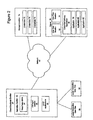
- FIG. 2 depicts an environment suitable for practicing the illustrative embodiment of the present invention.
- a client electronic device 20 communicates over a network 40 with a server 50.
- the client electronic device 20 may be a desktop, workstation, laptop, PDA, WINDOWS kiosk, or other electronic device equipped with an operating system and capable of supporting remote access to the server 50.
- the client electronic device 20 includes an operating system 20 and a third party GINA 24. The operation of the third party GINA 24 will be discussed further below.
- the client electronic device 20 automatically generates a shared operating system logon session 26 based upon a default user profile with a pre-determined set of permissions and privileges.
- the default user profile is provided by a third party and is not a default profile provided by the operating system.
- the client electronic device 20 may also include local applications 28 which may be utilized by interactive user one 30 and interactive user two 32 in the manner set forth herein.
- the client electronic device 20 communicates over a network 40 with a server 50.
- the network may be a local area network (LAN), a wide area network (WAN), an intranet, the Internet or some other type of network.
- the server 50 provides remote access to applications 58, 60 and 62 depending upon the access rights of the interactive user.
- the server 50 is a MetaFrame Presentation Server from Citrix Systems, Inc. of Fort Lauderdale, Florida providing remote access to enterprise applications using a presentation level protocol.
- the server 50 includes a credential delivery application 56 which accepts an identifier holding local user information such as username, password and domain from the 3 rd party GINA 24.
- the credential delivery application 56 uses the local interactive user information to retrieve a set of credentials 72, 74 or 76 associated with the local interactive user from a network-accessible storage location 70. Each set of credentials 72, 74 and 76 are associated with a different interactive user.
- the credential delivery application may be MetaFrame Password Manager from Citrix Systems, Inc.
- the components depicted in Figure 2 are meant to illustrate one possible architecture and that many other architectures are possible within the scope of the present invention.
- the storage location 70 may be located on the server 50.
- the applications 58, 60 and 62 to which the server 50 provides access may be located remotely from the server at a separate network-accessible location.
- the figures depicted herein should be understood to be exemplary and should not be viewed in a limiting sense. It should also be understood that although references are made to the WINDOWS operating system from Microsoft Corporation, the present invention may also be implemented using other operating systems.
- the operating system 22 is configured to start an initial process which loads the third party GINA 24 which will present a logon dialog box to an interactive user.
- the initial process also is informed by the third GINA 24 (through the triggering of event or similar process) to automatically logon a default user with a base profile thereby creating a shared account with a minimal set of privileges.
- the third party GINA 24 then receives logon information from a local interactive user and transmits the information to the credential delivery application 56.
- the credential delivery application 56 receives the local interactive user information and automatically retrieves from a network accessible storage location a set of credentials associated with the local interactive user.
- the credentials for the local interactive user are used to automatically set the authorizations for the local interactive user within a server-hosted session 52 or 54 which the interactive user is allowed to access from the client electronic device 20.
- the set of credentials may allow the local interactive user administrator privileges when accessing the server.
- the local interactive user may have read privileges within some applications and read-write privileges within other applications.
- the third party GINA of the present invention alters the traditional locking mechanism that occurs when a interactive user locks a workstation either directly through the shell or indirectly from within an application.
- the initiating process in a WINDOWS domain winlogon.exe
- the third party GINA of the present invention is loaded first in the chain of GINAs and inserts a request to lock the interactive user into the chain of GINAs. If the next or subsequent GINA declines, the process is aborted. If the next and subsequent GINAs allows the lock request, then the workstation is locked and an authentication dialog is displayed.
- the actions taken vary based upon the identity of the interactive user. If the same interactive user authenticates, the interactive user is logged back in to the remote session. If the authenticating interactive user is new, the remote session is terminated and a new session is started (or restored if the server has a saved session for that interactive user).
- the third party GINA of the present invention does not pass the lock request back to the operating system so that the shared account does not change. The result of the interception of the lock request is that a new logon session and retrieval of a profile for an interactive user is not required.
- the locking may occur in response to a direct interactive user command, as a result of time parameter being exceeded, or the occurrence of some other event.
- a locked workstation that remains locked for longer than a pre-determined parameter automatically causes a remote session to be terminated and a new session started when the lock is released. It should be noted that logoff requests may be treated in a similar manner as lock requests.
- Figure 3 depicts an alternate implementation of a stand-alone electronic device 90 which employs the present invention to rapidly grant permission-based access to multiple interactive users in a secure manner.
- the electronic device 90 includes an operating system 92 and the third party GINA 94 of the present invention.
- the electronic device 90 Upon initialization, the electronic device 90 automatically creates an operating system logon session 96 using a default user profile with a pre-determined set of permissions and privileges.
- An interactive user 120 accessing the electronic device 90 logs on via the third party GINA 94 which relays the interactive user information to a credential delivery application 104.
- the credential delivery application 104 uses the input interactive user information to retrieve a set of interactive user credentials 108, 110 or 112 that are associated with the interactive user 120 from a storage location 106.
- the credentials are delivered to the server which then allows access by the interactive user 120 to applications 98, 100 and 102 consistent with the retrieved interactive user credentials.
- the client electronic device 20 and the server 50 are provided as personal computer or computer servers, of the sort manufactured by the Hewlett-Packard Corporation of Palo Alto, California or the Dell Corporation of Round Rock, TX.
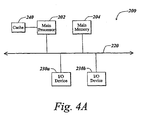
- Figures 4A and 4B depict block diagrams of a typical computer 200 useful as the server 50, or the client device 20 in those embodiments.
- each computer 200 includes a central processing unit 202, and a main memory unit 204.
- Each computer 200 may also include other optional elements, such as one or more input/output devices 230a-230n (generally referred to using reference numeral 230), and a cache memory 240 in communication with the central processing unit 202.
- the central processing unit 202 is any logic circuitry that responds to and processes instructions fetched from the main memory unit 204.
- the central processing unit is provided by a microprocessor unit, such as: the 8088, the 80286, the 80386, the 80486, the Pentium, Pentium Pro, the Pentium II, the Celeron, or the Xeon processor, all of which are manufactured by Intel Corporation of Mountain View, California; the 68000, the 68010, the 68020, the 68030, the 68040, the PowerPC 601, the PowerPC604, the PowerPC604e, the MPC603e, the MPC603ei, the MPC603ev, the MPC603r, the MPC603p, the MPC740, the MPC745, the MPC750, the MPC755, the MPC7400, the MPC7410, the MPC7441, the MPC7445, the MPC7447, the Mac7450, the MPC7451, the MPC7455
- Main memory unit 204 may be one or more memory chips capable of storing data and allowing any storage location to be directly accessed by the microprocessor 202, such as Static random access memory (SRAM), Burst SRAM or SynchBurst SRAM (BSRAM), Dynamic random access memory (DRAM), Fast Page Mode DRAM (FPM DRAM), Enhanced DRAM (EDRAM), Extended Data Output RAM (EDO RAM), Extended Data Output DRAM (EDO DRAM), Burst Extended Data Output DRAM (BEDO DRAM), Enhanced DRAM (EDRAM), synchronous DRAM (SDRAM), JEDEC SRAM, PC100 SDRAM, Double Data Rate SDRAM (DDR SDRAM), Enhanced SDRAM (ESDRAM), SyncLink DRAM (SLDRAM), Direct Rambus DRAM (DRDRAM), or Ferroelectric RAM (FRAM).
- SRAM Static random access memory
- BSRAM SynchBurst SRAM
- DRAM Dynamic random access memory
- FPM DRAM Fast Page Mode DRAM
- EDRAM Enhanced D
- the processor 202 communicates with main memory 204 via a system bus 220 (described in more detail below).
- Figure 4B depicts an embodiment of a computer system 200 in which the processor communicates directly with main memory 204 via a memory port.
- the main memory 204 may be DRDRAM.
- FIGS 4A and 4B depict embodiments in which the main processor 202 communicates directly with cache memory 240 via a secondary bus, sometimes referred to as a "backside" bus.
- the main processor 202 communicates with cache memory 240 using the system bus 220.
- Cache memory 240 typically has a faster response time than main memory 204 and is typically provided by SRAM, BSRAM, or EDRAM.
- the processor 202 communicates with various I/O devices 230 via a local system bus 220.
- Various buses may be used to connect the central processing unit 202 to the I/O devices 230, including a VESA VL bus, an ISA bus, an EISA bus, a MicroChannel Architecture (MCA) bus, a PCI bus, a PCI-X bus, a PCI-Express bus, or a NuBus.
- MCA MicroChannel Architecture
- PCI bus PCI bus
- PCI-X bus PCI-X bus
- PCI-Express PCI-Express bus
- NuBus NuBus.
- the processor 202 may use an Advanced Graphics Port (AGP) to communicate with the display.
- AGP Advanced Graphics Port
- Figure 4B depicts an embodiment of a computer system 200 in which the main processor 202 communicates directly with I/O device 230b via HyperTransport, Rapid I/O, or InfiniBand.
- Figure 4B also depicts an embodiment in which local buses and direct communication are mixed: the processor 202 communicates with I/O device 230a using a local interconnect bus while communicating with I/O device 230b directly.
- I/O devices 230 may be present in the computer system 200.
- Input devices include keyboards, mice, trackpads, trackballs, microphones, and drawing tablets.
- Output devices include video displays, speakers, inkjet printers, laser printers, and dye-sublimation printers.
- An I/O device may also provide mass storage for the computer system 200 such as a hard disk drive, a floppy disk drive for receiving floppy disks such as 3.5-inch, 5.25-inch disks or ZIP disks, a CD-ROM drive, a CD-R/RW drive, a DVD-ROM drive, tape drives of various formats, and USB storage devices such as the USB Flash Drive line of devices manufactured by Twintech Industry, Inc. of Los Alamitos, California.
- an I/O device 230 may be a bridge between the system bus 220 and an external communication bus, such as a USB bus, an Apple Desktop Bus, an RS-232 serial connection, a SCSI bus, a FireWire bus, a FireWire 800 bus, an Ethernet bus, an AppleTalk bus, a Gigabit Ethernet bus, an Asynchronous Transfer Mode bus, a HIPPI bus, a Super HIPPI bus, a SerialPlus bus, a SCI/LAMP bus, a FibreChannel bus, or a Serial Attached small computer system interface bus.
- an external communication bus such as a USB bus, an Apple Desktop Bus, an RS-232 serial connection, a SCSI bus, a FireWire bus, a FireWire 800 bus, an Ethernet bus, an AppleTalk bus, a Gigabit Ethernet bus, an Asynchronous Transfer Mode bus, a HIPPI bus, a Super HIPPI bus, a SerialPlus bus, a SCI/LAMP bus, a FibreChannel bus, or
- General-purpose desktop computers of the sort depicted in Figures 4A and 4B typically operate under the control of operating systems, which control scheduling of tasks and access to system resources.
- Typical operating systems include: MICROSOFT WINDOWS, manufactured by Microsoft Corp. of Redmond, Washington; MacOS, manufactured by Apple Computer of Cupertino, California; OS/2, manufactured by International Business Machines of Armonk, New York; and Linux, a freely-available operating system distributed by Caldera Corp. of Salt Lake City, Utah, among others.
- the client device 20 may be a JAVA-enabled cellular telephone, such as the i50sx, i55sr, i58sr, i85s, i88s, i90c, i95cl, or the im11000, all of which are manufactured by Motorola Corp. of Schaumburg, Illinois, the 6035 or the 7135, manufactured by Kyocera of Kyoto, Japan, or the i300 or i330, manufactured by Samsung Electronics Co., Ltd., of Seoul, Korea.
- JAVA-enabled cellular telephone such as the i50sx, i55sr, i58sr, i85s, i88s, i90c, i95cl, or the im11000, all of which are manufactured by Motorola Corp. of Schaumburg, Illinois, the 6035 or the 7135, manufactured by Kyocera of Kyoto, Japan, or the i300 or i330, manufactured by Samsung Electronics Co., Ltd., of Seoul, Korea.
- the client device 20 may be a personal digital assistant (PDA) operating under control of the PalmOS operating system, such as the Tungsten W, the VII, the VIIx, the i705, all of which are manufactured by palmOne, Inc. of Milpitas, California.
- PDA personal digital assistant
- the client device 20 may be a personal digital assistant (PDA) operating under control of the PocketPC operating system, such as the iPAQ 4155, iPAQ 5555, iPAQ 1945, iPAQ 2215, and iPAQ 4255, all of which manufactured by Hewlett-Packard Corporation of Palo Alto, California, the ViewSonic V36, manufactured by ViewSonic of Walnut, California, or the Toshiba PocketPC e405, manufactured by Toshiba America, Inc. of New York, New York.
- the client device is a combination PDA/telephone device such as the Treo 180, Treo 270 or Treo 600, all of which are manufactured by palmOne, Inc. of Milpitas, California.
- the client device 20 is a cellular telephone that operates under control of the PocketPC operating system, such as the MPx200, manufactured by Motorola Corp.
- FIG. 5 is a flowchart of the sequence of steps followed by the illustrative embodiment of the present invention to rapidly switch between authenticated interactive users without generating a new operating system logon session.
- the sequence begins when the electronic device automatically creates a shared account logon session using a default profile (step 140). Subsequently, the local interactive user logs on to the electronic device which is already executing the operating system logon session via a 3 rd party GINA (step 142).
- the logon information may be received by the electronic device in a number of different ways. The information may be received via an interactive user entering the information from a keyboard.
- the interactive user may enter the information by inserting a smart card into a smart card reader, by having identity information on a proximity card that is read upon coming into range of a proximity sensor.
- the authentication may be based upon a retinal scan, fingerprints, a facial recognition process or other biometric information. Those skilled in the art will recognize that the authentication information may be received in many different ways by the electronic device without departing from the scope of the present invention.
- encryption may be added to process of retrieving the interactive user credentials.
- the set of credentials for the interactive user may be stored in encrypted form at the storage location.
- the identifiers for the interactive user may also be encrypted.
- the credential delivery application may pass an encrypted identifier to a smart card which then decrypts the identifier and returns them to the credential delivery application.
- the credential delivery application may then use the decrypted identifier in decrypting the encrypted set of credentials.
- a USB token that includes a smart card or other device providing decryption functionality may also be used without departing from the scope of the present invention.
- the smart card or other device may partially decrypt the identifier as part of a multiple stage decryption process with the remaining decryption/transformation of the interactive user credentials taking place at an additional location. Similar decryption techniques to process the encrypted interactive user credentials and identifiers should be considered within the scope of the present invention.
- the interactive user logon information is directed to a credential delivery application which uses the information to retrieve a set of credentials associated with the local interactive user (step 144).
- the set of credentials provides the relevant permissions and privileges for a server-hosted domain and the applications running on the server which the interactive user is able to access remotely (step 146).
- the session of the interactive user is interrupted, either voluntarily or involuntarily.
- a doctor using a WINDOWS kiosk may be called away to attend a patient.
- the doctor may affirmatively disconnect the session by making a selection, withdrawing a smart card or in some other manner such as a proximity card leaving a sensor range.
- the session may be disconnected by a time-out parameter being exceeded after the doctor walks away.
- the remote session is saved and any local applications launched for the doctor are closed (step 148).
- the operating system logon session is not disrupted and continues to run.
- the interactive user Upon a local interactive user returning to the electronic device, the interactive user is evaluated to determine if the interactive user is a previous interactive user returning or a new interactive user (step 149). If the previous interactive user is the next interactive user to log back onto the electronic device, the remote session is restored (step 150). If the interactive user accessing the electronic device is a new interactive user (step 152), the previous remote session for the first interactive user is unmapped from the operating system logon session following the new interactive user information being entered into the third party GINA. Instead a new session for the new interactive user is begun or restored on the server.
- the second doctor would be able to be quickly authenticated without the requirement of initiating a new logon session, retrieving a roaming profile and individually entering authentication passwords for a server-hosted domain and server hosted applications. At the same time, the second doctor would not have access to the first doctor's remote session.
- the first doctor's suspended remote session is saved for a period of time and may be restored to a different electronic device in the hospital following the authentication procedures outlined above.
- the remote session of an interactive user is only saved for a pre-determined period of time before being closed even if the interactive user logs back on to the same electronic device he was previously using.
- the interactive user accessing the client device has a previously saved remote session restored that had been initiated by the interactive user on a different device.
- the interactive user is prompted for additional authorization prior to local applications on the electronic device being launched.
- session start scripts automatically launch and authenticate applications.
- the present invention may be provided as one or more computer-readable programs embodied on or in one or more articles of manufacture.
- the article of manufacture may be a floppy disk, a hard disk, a compact disc, a digital versatile disc, a flash memory card, a PROM, a RAM, a ROM, or a magnetic tape.
- the computer-readable programs may be implemented in any programming language. Some examples of languages that can be used include C, C++, C#, or JAVA.
- the software programs may be stored on or in one or more articles of manufacture as object code.
Landscapes
- Engineering & Computer Science (AREA)
- Computer Security & Cryptography (AREA)
- Theoretical Computer Science (AREA)
- Computer Hardware Design (AREA)
- Software Systems (AREA)
- Physics & Mathematics (AREA)
- General Engineering & Computer Science (AREA)
- General Physics & Mathematics (AREA)
- Computer And Data Communications (AREA)
Claims (26)
- Ein System zum Ermöglichen von erlaubnisbasiertem Zugang zu einer existierenden Anmeldesitzung, das Folgendes umfasst:einen Speicherort (70), der eine Vielzahl von Sätzen interaktiver Nutzerberechtigungen (72, 74, 76) enthält, wobei jeder Satz von Berechtigungen mit einem anderen interaktiven Benutzer (30, 32) verknüpft ist und mindestens ein Berechtigungsniveau für mindestens eine von mindestens einer Anwendung (58, 60, 62) und ein Zugangsniveau für eine Server-gehostete Domäne anzeigt,einen Server (50) in Verbindung mit einem Client (20), wobei der Server eine Setzung (52) für einen ersten lokalen interaktiven Benutzer (30) des Clients (20) hostet und der Client (20) eine aktive Betriebssystem-Anmeldesitzung (26) für ein gemeinsames Konto ausführt, wobei die aktive Betriebssystem-Anmeldesitzung (26) mit einem Standard-Benutzerprofil erstellt wird, das nicht mit einem bestimmten interaktiven Benutzer verknüpft ist,dadurch gekennzeichnet, dass das System weiter Folgendes umfasst:eine Berechtigungsvergabe-Anwendung (56), die mit dem Server (50) und dem Client (20) kommuniziert, wobei die Berechtigungsvergabe-Anwendung (56) über den Client (20) eine Kennung erhält, welche den ersten lokalen interaktiven Benutzer (30) kennzeichnet, und die Kennung benutzt, um vom Speicherort (70) einen ersten Satz von Berechtigungen für den ersten lokalen interaktiven Benutzer (30) abzurufen, wobei der erste Satz von Berechtigungen von der Berechtigungsvergabe-Anwendung (56) an den Server (50) geliefert wird und der erste Satz von Berechtigungen verwendet wird, um den ersten lokalen interaktiven Benutzer (30) auf die Server-gehostete Sitzung (52) für den ersten lokalen interaktiven Benutzer (30) zu mappen.
- Das System gemäß Anspruch 1, worin der Server (50) vom Client (20) entfernt ist.
- Das System gemäß Anspruch 1, das weiter Folgendes umfasst:einen im Client (20) befindlichen Smartcard-Leser zum Empfang der Kennung vom ersten lokalen interaktiven Benutzer (30) über eine Smartcard.
- Das System gemäß Anspruch 1, das weiter Folgendes umfasst:ein Eingabegerät, das mit dem Client (20) kommuniziert und verwendet wird, um die Kennung über eines von Folgendem zu erhalten: einen Netzhaut-Scan, eine Fingerabdruck-Analyse, ein Gesichtserkennungsverfahren auf Softwarebasis und ein Näherungsmessverfahren.
- Ein Verfahren zum Ermöglichen von erlaubnisbasiertem Zugang zu einer aktiven Betriebssystem-Anmeldesitzung (26) einer elektronischen Vorrichtung (20), das folgende Schritte umfasst:Hosting (140), auf einer elektronischen Vorrichtung (20), einer aktiven Betriebssystem-Anmeldesitzung (26) für ein gemeinsames Konto, wobei die elektronische Vorrichtung (20) in Kommunikation mit einem Server (50) steht und das gemeinsame Konto mit einem Standard-Benutzerprofil erstellt wurde, das nicht mit einem bestimmten interaktiven Benutzer verknüpft ist,Empfang (142) einer ersten Kennung, die einen ersten lokalen interaktiven Benutzer (30) identifiziert, über die elektronische Vorrichtung (20),Verwendung (144) der ersten Kennung, um einen ersten Satz von Berechtigungen für den ersten lokalen interaktiven Benutzer (30) abzurufen, wobei der erste Satz von Berechtigungen an einem Ort (70) gespeichert ist, auf den die elektronische Vorrichtung (20) und der Server (50) zugreifen können, und mindestens ein Berechtigungsniveau für mindestens eine von mindestens einer Anwendung (58, 60, 62) und ein Zugangsniveau für eine Server-gehostete Sitzung (52) anzeigt, die mit dem ersten lokalen interaktiven Benutzer verknüpft ist, undMapping (146) des ersten lokalen interaktiven Benutzers (30) auf die Server-gehostete Sitzung (52) für den ersten lokalen interaktiven Benutzer mit Hilfe des ersten Satzes von Berechtigungen.
- Das Verfahren gemäß Anspruch 5, worin die Server-gehostete Sitzung (52) anhand des Empfangs des ersten Satzes von Berechtigungen für den ersten lokalen interaktiven Benutzer (30) initiiert wird,
oder worin die Server-gehostete Sitzung (52), in die der erste lokale interaktive Benutzer (30) gemappt wird, eine zuvor gespeicherte Sitzung ist, die mit dem ersten lokalen interaktiven Benutzer (30) verknüpft ist. - Das Verfahren gemäß Anspruch 5, das folgende weitere Schritte umfasst:Sperrung der aktiven Betriebssystem-Anmeldesitzung auf der elektronischen Vorrichtung,Empfang einer zweiten Kennung, die einen zweiten lokalen interaktiven Benutzer identifiziert, über die elektronische Vorrichtung undUnmapping des ersten lokalen interaktiven Benutzers in der Server-gehosteten Sitzung für den ersten lokalen interaktiven Benutzer bei Empfang der zweiten Kennung, wobei der erste lokale interaktive Benutzer unmappt wird, noch während die Betriebssystem-Anmeldesitzung aktiv ist.
- Das Verfahren gemäß Anspruch 7, das die folgenden weiteren Schritte umfasst:Verwendung der zweiten Kennung zum Abrufen eines zweiten Satzes von Berechtigungen für den zweiten lokalen interaktiven Benutzer (32), wobei der zweite Satz von Berechtigungen an einem Ort (70) gespeichert ist, auf den die elektronische Vorrichtung (20) und der Server (50) zugreifen können, und mindestens ein Berechtigungsniveau für mindestens eine von mindestens einer Anwendung (58, 60, 62) und ein Zugangsniveau für eine Server-gehostete Sitzung (54) für den zweiten lokalen interaktiven Benutzer (32) anzeigt,Mapping des zweiten lokalen interaktiven Benutzers (32) in die Server-gehostete Sitzung (54) für den zweiten interaktiven Benutzer (32) unter Verwendung des zweiten Satzes von Berechtigungen undEntsperrung der durchgängig aktiven Betriebssitzung (26) in der elektronischen Vorrichtung (20) anschließend an das Mapping des zweiten lokalen interaktiven Benutzers (32) in die Server-gehostete Sitzung (54) für den zweiten interaktiven Benutzer (32).
- Das Verfahren gemäß Anspruch 7, worin die aktive Betriebssystem-Anmeldesitzung (26) nach Empfang einer Meldung vom ersten lokalen interaktiven Benutzer (30) gesperrt wird
oder worin die aktive Betriebssystem-Anmeldesitzung (26) nach Ablauf eines Zeitparameters gesperrt wird
oder worin die aktive Betriebssystem-Anmeldesitzung (26) nach Empfang einer Meldung von einem Näherungssensor, dass der erste lokale interaktive Benutzer (30) sich einen vordefinierten Abstand von der elektronischen Vorrichtung fort bewegt hat, gesperrt wird. - Das Verfahren gemäß Anspruch 5, worin die erste Kennung von einer Smartcard gesendet wird
oder worin die erste Kennung von der Smartcard in verschlüsselter Form empfangen und zumindest teilweise von der Smartcard entschlüsselt wird. - Das Verfahren gemäß Anspruch 5, worin die erste Kennung verschlüsselt ist, und weiter folgende Schritte umfassend:Speichern der Vielzahl von Sätzen interaktiver Nutzerberechtigungen (72, 74, 76) in verschlüsselter Form,Entschlüsselung der ersten Kennung,Abrufen eines verschlüsselten Satzes von Berechtigungen vom Speicherort (70) undVerwendung der entschlüsselten ersten Kennung zum Entschlüsseln des verschlüsselten Satzes von Berechtigungen, die vom Speicherort (70) abgerufen wurden.
- Das Verfahren gemäß Anspruch 5, worin die erste Kennung empfangen wird unter Verwendung eines von Folgendem: eines Netzhaut-Scans, einer Fingerabdruck-Analyse, eines Gesichtserkennungssystems auf Softwarebasis und eines Näherungssensors
oder worin der erste Satz von Berechtigungen verschiedene Berechtigungsniveaus für verschiedene Anwendungen einschließt. - Das Verfahren gemäß Anspruch 5, worin nach dem Mapping des ersten lokalen interaktiven Benutzers (30) in die Servergehostete Sitzung (52), die mit dem ersten lokalen interaktiven Benutzer (30) verknüpft ist, das Verfahren die folgenden weiteren Schritte umfasst:Empfang zusätzlicher Kennungen vom ersten lokalen interaktiven Benutzer (30), bevor es dem ersten lokalen interaktiven Benutzer (30) gestattet wird, eine lokale Anwendung (28) auszuführen, die von der elektronischen Vorrichtung (20) gehostet wird.
- Das Verfahren gemäß Anspruch 5, worin das Zugangsniveau für die Server-gehostete Sitzung (52) entweder Read oder Read-Write ist
oder worin der Server (50) und die elektronische Vorrichtung (20) über ein Netzwerk (40) kommunizieren. - Das Verfahren gemäß Anspruch 5, das folgenden Schritt umfasst:Zugriff auf die mindestens eine Anwendung mit Hilfe des ersten Satzes von Berechtigungen.
- Das Verfahren gemäß Anspruch 15, das weiter folgende Schritte umfasst:Sperrung der aktiven Betriebssystem-Anmeldesitzung (26) auf der elektronischen Vorrichtung (20) undEmpfang einer Kennung, die einen zweiten lokalen interaktiven Benutzer (32) identifiziert, über die elektronische Vorrichtung (20),Verwendung der Kennung, um einen zweiten Satz von Berechtigungen für den zweiten lokalen interaktiven Benutzer (32) abzurufen, wobei der zweite Satz von Berechtigungen an einem Ort (70) gespeichert ist, auf den die elektronische Vorrichtung (20) zugreifen kann, und mindestens ein Berechtigungsniveau für mindestens eine Anwendung (58, 60, 62) anzeigt,Entsperrung der aktiven Betriebssystem-Anmeldesitzung (26) in der elektronischen Vorrichtung (20) anschließend an den Empfang der Kennung für den zweiten lokalen interaktiven Benutzer (32) undZugriff auf die mindestens eine Anwendung (58, 60, 62) mit Hilfe des zweiten Satzes von Berechtigungen.
- Das Verfahren gemäß Anspruch 15, worin der erste Satz von Berechtigungen verschiedene Berechtigungsniveaus für verschiedene Anwendungen einschließt.
- Ein Herstellungsartikel, auf dem maschinenlesbare Programmmittel zum Ermöglichen von erlaubnisbasiertem Zugang zu einer existierenden Sitzung implementiert sind, wobei der Herstellungsartikel Folgendes umfasst:computer-lesbare Programmmittel zum Hosting, auf einer elektronischen Vorrichtung (20), einer aktiven Betriebssystem-Anmeldesitzung (26) für ein gemeinsames Konto, wobei die elektronische Vorrichtung in Kommunikation mit einem Server (50) steht und das gemeinsame Konto mit einem Standard-Benutzerprofil erstellt wird, das nicht mit einem bestimmten interaktiven Benutzer verknüpft ist,computer-lesbare Programmmittel, die über die elektronische Vorrichtung (20) eine erste Kennung empfangen, welche einen ersten lokalen interaktiven Benutzer (30) identifiziert,computer-lesbare Programmmittel für die Verwendung der ersten Kennung, um einen ersten Satz von Berechtigungen für den ersten lokalen interaktiven Benutzer (30) abzurufen, wobei der erste Satz von Berechtigungen an einem Ort (70) gespeichert ist, auf den die elektronische Vorrichtung (20) und der Server (50) zugreifen können, und mindestens ein Berechtigungsniveau für mindestens eine von mindestens einer Anwendung (58, 60, 62) und ein Zugangsniveau für eine Server-gehostete Sitzung (52) anzeigt, die mit dem ersten lokalen interaktiven Benutzer verknüpft ist, undcomputer-lesbare Programmmittel zum Mapping des ersten lokalen interaktiven Benutzers (30) auf die Server-gehostete Sitzung (52) für den ersten lokalen interaktiven Benutzer unter Verwendung des ersten Satzes von Berechtigungen.
- Der Herstellungsartikel gemäß Anspruch 18, der weiter Folgendes umfasst:computer-lesbare Programmmittel zur Sperrung der aktiven Betriebssystem-Anmeldesitzung (26) auf der elektronischen Vorrichtung (20),computer-lesbare Programmmittel zum Empfangen einer zweiten Kennung, die einen zweiten lokalen interaktiven Benutzer (32) identifiziert, über die elektronische Vorrichtung (20) undcomputer-lesbare Programmmittel zum Unmapping des ersten lokalen interaktiven Benutzers (30) in der Server-gehosteten Sitzung (52) für den ersten lokalen interaktiven Benutzer (30) nach dem Empfang der zweiten Kennung, wobei der erste lokale interaktive Benutzers (30) unmapped wird, noch während die Betriebssystem-Anmeldesitzung (26) aktiv ist.
- Der Herstellungsartikel gemäß Anspruch 19, der weiter Folgendes umfasst:computer-lesbare Programmmittel zum Verwenden der zweiten Kennung, um einen zweiten Satz von Berechtigungen für den zweiten lokalen interaktiven Benutzer (32) abzurufen, wobei der zweite Satz von Berechtigungen an einem Ort (70) gespeichert ist, auf den die elektronische Vorrichtung (20) und der Server (50) zugreifen können, und mindestens ein Zugangsniveau für mindestens eine von mindestens einer Anwendung (58, 60, 62) und ein Zugangsniveau für eine Server-gehostete Sitzung (54) für den zweiten lokalen interaktiven Benutzer anzeigt,computer-lesbare Programmmittel zum Mapping des zweiten lokalen interaktiven Benutzers (32) in die Server-gehostete Sitzung (54) für den zweiten interaktiven Benutzer (32) mit Hilfe des zweiten Satzes von Berechtigungen undcomputer-lesbare Programmmittel zur Entsperrung der durchgängig aktiven Betriebssitzung (26) in der elektronischen Vorrichtung (20) nach dem Mapping des zweiten lokalen interaktiven Benutzers (32) in die Server-gehostete Sitzung (54) für den zweiten interaktiven Benutzer (32).
- Der Herstellungsartikel gemäß Anspruch 18, wobei der erste Satz von Berechtigungen verschiedene Berechtigungsniveaus für verschiedene Anwendungen einschließt.
- Der Herstellungsartikel gemäß Anspruch 18, der weiter Folgendes umfasst:computer-lesbare Programmmittel zum Empfang einer Kennung über eines von Folgendem: einen Netzhautscan, eine Fingerabdruck-Analyse, ein Gesichtserkennungsverfahren auf Softwarebasis und einen Näherungssensor.
- Der Herstellungsartikel gemäß Anspruch 18, der weiter Folgendes umfasst:computer-lesbare Programmmittel zum Empfangen, an einer Smartcard in Kommunikation mit der elektronischen Vorrichtung (20), der ersten Kennung in verschlüsselter Form.
- Der Herstellungsartikel gemäß Anspruch 23, wobei die Smartcard die Kennung zumindest teilweise entschlüsselt.
- Der Herstellungsartikel gemäß Anspruch 24, wobei eine entschlüsselte Kennung verwendet wird, um einen verschlüsselten Satz interaktiver Nutzerberechtigungen zu entschlüsseln.
- Der Herstellungsartikel gemäß Anspruch 18, wobei die erste Kennung verschlüsselt ist und weiter Folgendes umfasst:computer-lesbare Programmmittel zum Speichern der Vielzahl von Sätzen interaktiver Nutzerberechtigungen in verschlüsselter Form,computer-lesbare Programmmittel zum Entschlüsseln der ersten Kennung,computer-lesbare Programmmittel zum Abrufen eines verschlüsselten Satzes von Berechtigungen vom Speicherort undcomputer-lesbare Programmmittel zur Verwendung der entschlüsselten ersten Kennung, um dem verschlüsselten Satz von Berechtigungen, der vom Speicherort abgerufen wird, zu entschlüsseln.
Applications Claiming Priority (2)
| Application Number | Priority Date | Filing Date | Title |
|---|---|---|---|
| US11/035,834 US7562226B2 (en) | 2005-01-14 | 2005-01-14 | System and method for permission-based access using a shared account |
| PCT/US2006/001401 WO2006076664A2 (en) | 2005-01-14 | 2006-01-13 | System and method for permission-based access using a shared account |
Publications (2)
| Publication Number | Publication Date |
|---|---|
| EP1836639A2 EP1836639A2 (de) | 2007-09-26 |
| EP1836639B1 true EP1836639B1 (de) | 2013-10-30 |
Family
ID=36579942
Family Applications (1)
| Application Number | Title | Priority Date | Filing Date |
|---|---|---|---|
| EP06718472.1A Expired - Lifetime EP1836639B1 (de) | 2005-01-14 | 2006-01-13 | System und verfahren für erlaubnisbasierten zugang unter verwendung eines gemeinsam genutzten kontos |
Country Status (8)
| Country | Link |
|---|---|
| US (1) | US7562226B2 (de) |
| EP (1) | EP1836639B1 (de) |
| JP (1) | JP2008527574A (de) |
| KR (1) | KR20070114127A (de) |
| AU (1) | AU2006204770A1 (de) |
| CA (1) | CA2594816C (de) |
| IL (1) | IL184595A0 (de) |
| WO (1) | WO2006076664A2 (de) |
Families Citing this family (54)
| Publication number | Priority date | Publication date | Assignee | Title |
|---|---|---|---|---|
| US7117239B1 (en) | 2000-07-28 | 2006-10-03 | Axeda Corporation | Reporting the state of an apparatus to a remote computer |
| US8108543B2 (en) | 2000-09-22 | 2012-01-31 | Axeda Corporation | Retrieving data from a server |
| US7185014B1 (en) | 2000-09-22 | 2007-02-27 | Axeda Corporation | Retrieving data from a server |
| US7254601B2 (en) | 2001-12-20 | 2007-08-07 | Questra Corporation | Method and apparatus for managing intelligent assets in a distributed environment |
| US7178149B2 (en) | 2002-04-17 | 2007-02-13 | Axeda Corporation | XML scripting of soap commands |
| US7966418B2 (en) | 2003-02-21 | 2011-06-21 | Axeda Corporation | Establishing a virtual tunnel between two computer programs |
| US20070002367A1 (en) * | 2005-06-29 | 2007-01-04 | Eric Yuan | Methods and apparatuses for selectively controlling a remote device |
| US7636851B2 (en) * | 2005-06-30 | 2009-12-22 | Microsoft Corporation | Providing user on computer operating system with full privileges token and limited privileges token |
| JP4738412B2 (ja) * | 2005-07-12 | 2011-08-03 | 富士通株式会社 | 共用管理プログラム、共用管理方法、端末装置、及び共用管理システム |
| WO2007041834A1 (en) | 2005-10-07 | 2007-04-19 | Memory Experts International Inc. | Method and apparatus for secure credential entry without physical entry |
| US8185605B2 (en) * | 2006-07-18 | 2012-05-22 | Cisco Technology, Inc. | Methods and apparatuses for accessing an application on a remote device |
| US20080018649A1 (en) * | 2006-07-18 | 2008-01-24 | Zheng Yuan | Methods and apparatuses for utilizing an application on a remote device |
| US7630386B2 (en) * | 2006-09-11 | 2009-12-08 | Eci Telecom Ltd. | Method for providing broadband communication service |
| US8370479B2 (en) | 2006-10-03 | 2013-02-05 | Axeda Acquisition Corporation | System and method for dynamically grouping devices based on present device conditions |
| WO2008049457A1 (en) * | 2006-10-23 | 2008-05-02 | Real Enterprise Solutions Development B.V. | Methods, programs and a system of providing remote access |
| US7904572B2 (en) * | 2006-11-10 | 2011-03-08 | Canon Denshi Kabushiki Kaisha | Method, apparatus, and medium for controlling access to and setting for features of an imaging processing device |
| US8065397B2 (en) | 2006-12-26 | 2011-11-22 | Axeda Acquisition Corporation | Managing configurations of distributed devices |
| US8819814B1 (en) * | 2007-04-13 | 2014-08-26 | United Services Automobile Association (Usaa) | Secure access infrastructure |
| US7996885B2 (en) * | 2007-04-19 | 2011-08-09 | International Business Machines Corporation | Password application |
| US8539568B1 (en) | 2007-10-03 | 2013-09-17 | Courion Corporation | Identity map creation |
| US8601562B2 (en) * | 2007-12-10 | 2013-12-03 | Courion Corporation | Policy enforcement using ESSO |
| US20090320125A1 (en) * | 2008-05-08 | 2009-12-24 | Eastman Chemical Company | Systems, methods, and computer readable media for computer security |
| US8533797B2 (en) | 2008-06-12 | 2013-09-10 | Microsoft Corporation | Using windows authentication in a workgroup to manage application users |
| JP2012515959A (ja) * | 2009-01-21 | 2012-07-12 | イメイション・コーポレイション | 多重認証処理機能を有する着脱可能メモリ格納装置 |
| US20100268831A1 (en) * | 2009-04-16 | 2010-10-21 | Microsoft Corporation | Thin Client Session Management |
| US20110040979A1 (en) * | 2009-08-14 | 2011-02-17 | Michael Monasterio | Networked secure logon system |
| US20110231940A1 (en) * | 2010-03-19 | 2011-09-22 | Microsoft Corporation | Credential-based access to data |
| WO2012048007A2 (en) | 2010-10-05 | 2012-04-12 | Citrix Systems, Inc. | Touch support for remoted applications |
| US20120278216A1 (en) * | 2011-04-28 | 2012-11-01 | Nokia Corporation | Method and apparatus for sharing a self-created account for storing assets |
| WO2013006155A1 (en) | 2011-07-01 | 2013-01-10 | Hewlett-Packard Development Company, L.P. | Providing access to information |
| US8869235B2 (en) | 2011-10-11 | 2014-10-21 | Citrix Systems, Inc. | Secure mobile browser for protecting enterprise data |
| US9215225B2 (en) * | 2013-03-29 | 2015-12-15 | Citrix Systems, Inc. | Mobile device locking with context |
| US9280377B2 (en) | 2013-03-29 | 2016-03-08 | Citrix Systems, Inc. | Application with multiple operation modes |
| US8886670B2 (en) | 2011-11-11 | 2014-11-11 | International Business Machines Corporation | Securely accessing remote systems |
| US9529993B2 (en) | 2012-03-02 | 2016-12-27 | International Business Machines Corporation | Policy-driven approach to managing privileged/shared identity in an enterprise |
| US8726343B1 (en) | 2012-10-12 | 2014-05-13 | Citrix Systems, Inc. | Managing dynamic policies and settings in an orchestration framework for connected devices |
| US9774658B2 (en) | 2012-10-12 | 2017-09-26 | Citrix Systems, Inc. | Orchestration framework for connected devices |
| US20140109176A1 (en) | 2012-10-15 | 2014-04-17 | Citrix Systems, Inc. | Configuring and providing profiles that manage execution of mobile applications |
| US8910239B2 (en) | 2012-10-15 | 2014-12-09 | Citrix Systems, Inc. | Providing virtualized private network tunnels |
| US20140109072A1 (en) | 2012-10-16 | 2014-04-17 | Citrix Systems, Inc. | Application wrapping for application management framework |
| US20140108793A1 (en) | 2012-10-16 | 2014-04-17 | Citrix Systems, Inc. | Controlling mobile device access to secure data |
| US9971585B2 (en) | 2012-10-16 | 2018-05-15 | Citrix Systems, Inc. | Wrapping unmanaged applications on a mobile device |
| US20150222639A1 (en) * | 2012-10-22 | 2015-08-06 | Cyber-Ark Software Ltd. | Maintaining Continuous Operational Access Augmented with User Authentication and Action Attribution in Shared Environments |
| US9369449B2 (en) | 2013-03-29 | 2016-06-14 | Citrix Systems, Inc. | Providing an enterprise application store |
| US9985850B2 (en) | 2013-03-29 | 2018-05-29 | Citrix Systems, Inc. | Providing mobile device management functionalities |
| US9355223B2 (en) | 2013-03-29 | 2016-05-31 | Citrix Systems, Inc. | Providing a managed browser |
| US10284627B2 (en) | 2013-03-29 | 2019-05-07 | Citrix Systems, Inc. | Data management for an application with multiple operation modes |
| CN104184701A (zh) * | 2013-05-21 | 2014-12-03 | 腾讯科技(深圳)有限公司 | 一种第三方应用的登录方法及装置、终端 |
| DE102013013179A1 (de) * | 2013-08-07 | 2015-02-12 | Giesecke & Devrient Gmbh | Verfahren zum Betreiben eines Sicherheitselements |
| US9363264B2 (en) * | 2013-11-25 | 2016-06-07 | At&T Intellectual Property I, L.P. | Networked device access control |
| US10679141B2 (en) * | 2015-09-29 | 2020-06-09 | International Business Machines Corporation | Using classification data as training set for auto-classification of admin rights |
| US20180096130A1 (en) * | 2016-09-30 | 2018-04-05 | Salesforce.Com, Inc. | Associating multiple e-learning development environments with a single user |
| US11599620B2 (en) | 2019-01-11 | 2023-03-07 | Xanesti Technology Services, Llc | Securing access to group accounts on a computer system |
| US12445289B2 (en) * | 2021-06-14 | 2025-10-14 | Samsung Electronics Co., Ltd. | Systems and methods for shared device access control |
Family Cites Families (22)
| Publication number | Priority date | Publication date | Assignee | Title |
|---|---|---|---|---|
| US5550981A (en) * | 1994-06-21 | 1996-08-27 | At&T Global Information Solutions Company | Dynamic binding of network identities to locally-meaningful identities in computer networks |
| US6308273B1 (en) * | 1998-06-12 | 2001-10-23 | Microsoft Corporation | Method and system of security location discrimination |
| US6138120A (en) * | 1998-06-19 | 2000-10-24 | Oracle Corporation | System for sharing server sessions across multiple clients |
| US6502135B1 (en) * | 1998-10-30 | 2002-12-31 | Science Applications International Corporation | Agile network protocol for secure communications with assured system availability |
| US6826616B2 (en) * | 1998-10-30 | 2004-11-30 | Science Applications International Corp. | Method for establishing secure communication link between computers of virtual private network |
| US7188181B1 (en) * | 1999-06-30 | 2007-03-06 | Sun Microsystems, Inc. | Universal session sharing |
| US6523027B1 (en) * | 1999-07-30 | 2003-02-18 | Accenture Llp | Interfacing servers in a Java based e-commerce architecture |
| US6704873B1 (en) * | 1999-07-30 | 2004-03-09 | Accenture Llp | Secure gateway interconnection in an e-commerce based environment |
| US6718535B1 (en) * | 1999-07-30 | 2004-04-06 | Accenture Llp | System, method and article of manufacture for an activity framework design in an e-commerce based environment |
| US6601233B1 (en) * | 1999-07-30 | 2003-07-29 | Accenture Llp | Business components framework |
| US6633878B1 (en) * | 1999-07-30 | 2003-10-14 | Accenture Llp | Initializing an ecommerce database framework |
| US7100195B1 (en) * | 1999-07-30 | 2006-08-29 | Accenture Llp | Managing user information on an e-commerce system |
| US6609128B1 (en) * | 1999-07-30 | 2003-08-19 | Accenture Llp | Codes table framework design in an E-commerce architecture |
| US6748420B1 (en) * | 1999-11-23 | 2004-06-08 | Cisco Technology, Inc. | Methods and apparatus for providing shared access to an application |
| US6871346B1 (en) * | 2000-02-11 | 2005-03-22 | Microsoft Corp. | Back-end decoupled management model and management system utilizing same |
| US6845383B1 (en) * | 2000-06-19 | 2005-01-18 | International Business Machines Corporation | System and method for managing concurrent scheduled or on-demand replication of subscriptions |
| US7210167B2 (en) * | 2001-01-08 | 2007-04-24 | Microsoft Corporation | Credential management |
| US20030046586A1 (en) * | 2001-09-05 | 2003-03-06 | Satyam Bheemarasetti | Secure remote access to data between peers |
| US20030046587A1 (en) * | 2001-09-05 | 2003-03-06 | Satyam Bheemarasetti | Secure remote access using enterprise peer networks |
| US7296077B2 (en) * | 2002-12-12 | 2007-11-13 | International Business Machines Corporation | Method and system for web-based switch-user operation |
| US7694328B2 (en) * | 2003-10-21 | 2010-04-06 | Google Inc. | Systems and methods for secure client applications |
| US20050262357A1 (en) * | 2004-03-11 | 2005-11-24 | Aep Networks | Network access using reverse proxy |
-
2005
- 2005-01-14 US US11/035,834 patent/US7562226B2/en active Active
-
2006
- 2006-01-13 KR KR1020077018494A patent/KR20070114127A/ko not_active Withdrawn
- 2006-01-13 AU AU2006204770A patent/AU2006204770A1/en not_active Abandoned
- 2006-01-13 JP JP2007551441A patent/JP2008527574A/ja not_active Withdrawn
- 2006-01-13 WO PCT/US2006/001401 patent/WO2006076664A2/en not_active Ceased
- 2006-01-13 EP EP06718472.1A patent/EP1836639B1/de not_active Expired - Lifetime
- 2006-01-13 CA CA2594816A patent/CA2594816C/en not_active Expired - Lifetime
-
2007
- 2007-07-12 IL IL184595A patent/IL184595A0/en unknown
Also Published As
| Publication number | Publication date |
|---|---|
| US7562226B2 (en) | 2009-07-14 |
| WO2006076664A3 (en) | 2006-12-07 |
| CA2594816A1 (en) | 2006-07-20 |
| US20060161783A1 (en) | 2006-07-20 |
| AU2006204770A1 (en) | 2006-07-20 |
| IL184595A0 (en) | 2008-11-03 |
| EP1836639A2 (de) | 2007-09-26 |
| HK1115651A1 (en) | 2008-12-05 |
| WO2006076664A2 (en) | 2006-07-20 |
| KR20070114127A (ko) | 2007-11-29 |
| CA2594816C (en) | 2016-10-11 |
| JP2008527574A (ja) | 2008-07-24 |
Similar Documents
| Publication | Publication Date | Title |
|---|---|---|
| EP1836639B1 (de) | System und verfahren für erlaubnisbasierten zugang unter verwendung eines gemeinsam genutzten kontos | |
| US12107844B2 (en) | Single sign on for a remote user session | |
| US7831833B2 (en) | System and method for key recovery | |
| US11514138B1 (en) | Authentication translation | |
| EP1939707B1 (de) | Dauerhafter Autorisierungskontext basierend auf externer Authentifizierung | |
| US8348157B2 (en) | Dynamic remote peripheral binding | |
| US8255984B1 (en) | Single sign-on system for shared resource environments | |
| US7404204B2 (en) | System and method for authentication via a single sign-on server | |
| US20100146608A1 (en) | Multi-Level Secure Collaborative Computing Environment | |
| US8683569B1 (en) | Application access control system | |
| CN108351924A (zh) | 电子安全容器 | |
| US20080172750A1 (en) | Self validation of user authentication requests | |
| US9479492B1 (en) | Authored injections of context that are resolved at authentication time | |
| JP2006107182A (ja) | アクセス制御システム及びプログラム | |
| JP2005208993A (ja) | 利用者認証システム | |
| JP2012118833A (ja) | アクセス制御方法 | |
| US8250640B1 (en) | Transparent kerboros delegation with a storage virtualization system | |
| JP4683856B2 (ja) | 認証プログラムおよび認証サーバ | |
| HK1115651B (en) | System and method for permission-based access using a shared account | |
| JP2006092081A (ja) | 不特定者または多数者が利用するパソコンの安全な起動利用方法及びそのような利用を実現する記録媒体 | |
| US20050204166A1 (en) | Upgrading password to security tokens | |
| KR20060040155A (ko) | 지문인증기반의 데이터 보안 시스템 및 방법 |
Legal Events
| Date | Code | Title | Description |
|---|---|---|---|
| PUAI | Public reference made under article 153(3) epc to a published international application that has entered the european phase |
Free format text: ORIGINAL CODE: 0009012 |
|
| 17P | Request for examination filed |
Effective date: 20070713 |
|
| AK | Designated contracting states |
Kind code of ref document: A2 Designated state(s): AT BE BG CH CY CZ DE DK EE ES FI FR GB GR HU IE IS IT LI LT LU LV MC NL PL PT RO SE SI SK TR |
|
| DAX | Request for extension of the european patent (deleted) | ||
| REG | Reference to a national code |
Ref country code: HK Ref legal event code: DE Ref document number: 1115651 Country of ref document: HK |
|
| 17Q | First examination report despatched |
Effective date: 20090302 |
|
| GRAP | Despatch of communication of intention to grant a patent |
Free format text: ORIGINAL CODE: EPIDOSNIGR1 |
|
| INTG | Intention to grant announced |
Effective date: 20130516 |
|
| GRAS | Grant fee paid |
Free format text: ORIGINAL CODE: EPIDOSNIGR3 |
|
| GRAA | (expected) grant |
Free format text: ORIGINAL CODE: 0009210 |
|
| AK | Designated contracting states |
Kind code of ref document: B1 Designated state(s): AT BE BG CH CY CZ DE DK EE ES FI FR GB GR HU IE IS IT LI LT LU LV MC NL PL PT RO SE SI SK TR |
|
| REG | Reference to a national code |
Ref country code: GB Ref legal event code: FG4D |
|
| REG | Reference to a national code |
Ref country code: CH Ref legal event code: EP |
|
| REG | Reference to a national code |
Ref country code: AT Ref legal event code: REF Ref document number: 638666 Country of ref document: AT Kind code of ref document: T Effective date: 20131115 |
|
| REG | Reference to a national code |
Ref country code: IE Ref legal event code: FG4D |
|
| REG | Reference to a national code |
Ref country code: DE Ref legal event code: R096 Ref document number: 602006039031 Country of ref document: DE Effective date: 20131224 |
|
| REG | Reference to a national code |
Ref country code: NL Ref legal event code: VDEP Effective date: 20131030 |
|
| REG | Reference to a national code |
Ref country code: AT Ref legal event code: MK05 Ref document number: 638666 Country of ref document: AT Kind code of ref document: T Effective date: 20131030 |
|
| REG | Reference to a national code |
Ref country code: LT Ref legal event code: MG4D |
|
| PG25 | Lapsed in a contracting state [announced via postgrant information from national office to epo] |
Ref country code: FI Free format text: LAPSE BECAUSE OF FAILURE TO SUBMIT A TRANSLATION OF THE DESCRIPTION OR TO PAY THE FEE WITHIN THE PRESCRIBED TIME-LIMIT Effective date: 20131030 Ref country code: NL Free format text: LAPSE BECAUSE OF FAILURE TO SUBMIT A TRANSLATION OF THE DESCRIPTION OR TO PAY THE FEE WITHIN THE PRESCRIBED TIME-LIMIT Effective date: 20131030 Ref country code: BE Free format text: LAPSE BECAUSE OF FAILURE TO SUBMIT A TRANSLATION OF THE DESCRIPTION OR TO PAY THE FEE WITHIN THE PRESCRIBED TIME-LIMIT Effective date: 20131030 Ref country code: IS Free format text: LAPSE BECAUSE OF FAILURE TO SUBMIT A TRANSLATION OF THE DESCRIPTION OR TO PAY THE FEE WITHIN THE PRESCRIBED TIME-LIMIT Effective date: 20140228 Ref country code: SE Free format text: LAPSE BECAUSE OF FAILURE TO SUBMIT A TRANSLATION OF THE DESCRIPTION OR TO PAY THE FEE WITHIN THE PRESCRIBED TIME-LIMIT Effective date: 20131030 Ref country code: LT Free format text: LAPSE BECAUSE OF FAILURE TO SUBMIT A TRANSLATION OF THE DESCRIPTION OR TO PAY THE FEE WITHIN THE PRESCRIBED TIME-LIMIT Effective date: 20131030 |
|
| PG25 | Lapsed in a contracting state [announced via postgrant information from national office to epo] |
Ref country code: AT Free format text: LAPSE BECAUSE OF FAILURE TO SUBMIT A TRANSLATION OF THE DESCRIPTION OR TO PAY THE FEE WITHIN THE PRESCRIBED TIME-LIMIT Effective date: 20131030 Ref country code: CY Free format text: LAPSE BECAUSE OF FAILURE TO SUBMIT A TRANSLATION OF THE DESCRIPTION OR TO PAY THE FEE WITHIN THE PRESCRIBED TIME-LIMIT Effective date: 20131030 Ref country code: ES Free format text: LAPSE BECAUSE OF FAILURE TO SUBMIT A TRANSLATION OF THE DESCRIPTION OR TO PAY THE FEE WITHIN THE PRESCRIBED TIME-LIMIT Effective date: 20131030 Ref country code: LV Free format text: LAPSE BECAUSE OF FAILURE TO SUBMIT A TRANSLATION OF THE DESCRIPTION OR TO PAY THE FEE WITHIN THE PRESCRIBED TIME-LIMIT Effective date: 20131030 |
|
| PG25 | Lapsed in a contracting state [announced via postgrant information from national office to epo] |
Ref country code: PT Free format text: LAPSE BECAUSE OF FAILURE TO SUBMIT A TRANSLATION OF THE DESCRIPTION OR TO PAY THE FEE WITHIN THE PRESCRIBED TIME-LIMIT Effective date: 20140228 |
|
| PG25 | Lapsed in a contracting state [announced via postgrant information from national office to epo] |
Ref country code: EE Free format text: LAPSE BECAUSE OF FAILURE TO SUBMIT A TRANSLATION OF THE DESCRIPTION OR TO PAY THE FEE WITHIN THE PRESCRIBED TIME-LIMIT Effective date: 20131030 |
|
| REG | Reference to a national code |
Ref country code: DE Ref legal event code: R097 Ref document number: 602006039031 Country of ref document: DE |
|
| PG25 | Lapsed in a contracting state [announced via postgrant information from national office to epo] |
Ref country code: SK Free format text: LAPSE BECAUSE OF FAILURE TO SUBMIT A TRANSLATION OF THE DESCRIPTION OR TO PAY THE FEE WITHIN THE PRESCRIBED TIME-LIMIT Effective date: 20131030 Ref country code: CZ Free format text: LAPSE BECAUSE OF FAILURE TO SUBMIT A TRANSLATION OF THE DESCRIPTION OR TO PAY THE FEE WITHIN THE PRESCRIBED TIME-LIMIT Effective date: 20131030 Ref country code: RO Free format text: LAPSE BECAUSE OF FAILURE TO SUBMIT A TRANSLATION OF THE DESCRIPTION OR TO PAY THE FEE WITHIN THE PRESCRIBED TIME-LIMIT Effective date: 20131030 Ref country code: PL Free format text: LAPSE BECAUSE OF FAILURE TO SUBMIT A TRANSLATION OF THE DESCRIPTION OR TO PAY THE FEE WITHIN THE PRESCRIBED TIME-LIMIT Effective date: 20131030 Ref country code: IT Free format text: LAPSE BECAUSE OF FAILURE TO SUBMIT A TRANSLATION OF THE DESCRIPTION OR TO PAY THE FEE WITHIN THE PRESCRIBED TIME-LIMIT Effective date: 20131030 Ref country code: LU Free format text: LAPSE BECAUSE OF FAILURE TO SUBMIT A TRANSLATION OF THE DESCRIPTION OR TO PAY THE FEE WITHIN THE PRESCRIBED TIME-LIMIT Effective date: 20140113 Ref country code: MC Free format text: LAPSE BECAUSE OF FAILURE TO SUBMIT A TRANSLATION OF THE DESCRIPTION OR TO PAY THE FEE WITHIN THE PRESCRIBED TIME-LIMIT Effective date: 20131030 |
|
| REG | Reference to a national code |
Ref country code: CH Ref legal event code: PL |
|
| PLBE | No opposition filed within time limit |
Free format text: ORIGINAL CODE: 0009261 |
|
| STAA | Information on the status of an ep patent application or granted ep patent |
Free format text: STATUS: NO OPPOSITION FILED WITHIN TIME LIMIT |
|
| PG25 | Lapsed in a contracting state [announced via postgrant information from national office to epo] |
Ref country code: DK Free format text: LAPSE BECAUSE OF FAILURE TO SUBMIT A TRANSLATION OF THE DESCRIPTION OR TO PAY THE FEE WITHIN THE PRESCRIBED TIME-LIMIT Effective date: 20131030 |
|
| 26N | No opposition filed |
Effective date: 20140731 |
|
| PG25 | Lapsed in a contracting state [announced via postgrant information from national office to epo] |
Ref country code: LI Free format text: LAPSE BECAUSE OF NON-PAYMENT OF DUE FEES Effective date: 20140131 Ref country code: CH Free format text: LAPSE BECAUSE OF NON-PAYMENT OF DUE FEES Effective date: 20140131 |
|
| REG | Reference to a national code |
Ref country code: IE Ref legal event code: MM4A |
|
| REG | Reference to a national code |
Ref country code: DE Ref legal event code: R097 Ref document number: 602006039031 Country of ref document: DE Effective date: 20140731 |
|
| PG25 | Lapsed in a contracting state [announced via postgrant information from national office to epo] |
Ref country code: IE Free format text: LAPSE BECAUSE OF NON-PAYMENT OF DUE FEES Effective date: 20140113 |
|
| PG25 | Lapsed in a contracting state [announced via postgrant information from national office to epo] |
Ref country code: SI Free format text: LAPSE BECAUSE OF FAILURE TO SUBMIT A TRANSLATION OF THE DESCRIPTION OR TO PAY THE FEE WITHIN THE PRESCRIBED TIME-LIMIT Effective date: 20131030 |
|
| REG | Reference to a national code |
Ref country code: FR Ref legal event code: PLFP Year of fee payment: 11 |
|
| PG25 | Lapsed in a contracting state [announced via postgrant information from national office to epo] |
Ref country code: BG Free format text: LAPSE BECAUSE OF FAILURE TO SUBMIT A TRANSLATION OF THE DESCRIPTION OR TO PAY THE FEE WITHIN THE PRESCRIBED TIME-LIMIT Effective date: 20131030 |
|
| PG25 | Lapsed in a contracting state [announced via postgrant information from national office to epo] |
Ref country code: GR Free format text: LAPSE BECAUSE OF FAILURE TO SUBMIT A TRANSLATION OF THE DESCRIPTION OR TO PAY THE FEE WITHIN THE PRESCRIBED TIME-LIMIT Effective date: 20140131 |
|
| PG25 | Lapsed in a contracting state [announced via postgrant information from national office to epo] |
Ref country code: HU Free format text: LAPSE BECAUSE OF FAILURE TO SUBMIT A TRANSLATION OF THE DESCRIPTION OR TO PAY THE FEE WITHIN THE PRESCRIBED TIME-LIMIT; INVALID AB INITIO Effective date: 20060113 Ref country code: TR Free format text: LAPSE BECAUSE OF FAILURE TO SUBMIT A TRANSLATION OF THE DESCRIPTION OR TO PAY THE FEE WITHIN THE PRESCRIBED TIME-LIMIT Effective date: 20131030 |
|
| REG | Reference to a national code |
Ref country code: FR Ref legal event code: PLFP Year of fee payment: 12 |
|
| REG | Reference to a national code |
Ref country code: FR Ref legal event code: PLFP Year of fee payment: 13 |
|
| PGFP | Annual fee paid to national office [announced via postgrant information from national office to epo] |
Ref country code: GB Payment date: 20211216 Year of fee payment: 17 Ref country code: FR Payment date: 20211215 Year of fee payment: 17 |
|
| PGFP | Annual fee paid to national office [announced via postgrant information from national office to epo] |
Ref country code: DE Payment date: 20211215 Year of fee payment: 17 |
|
| REG | Reference to a national code |
Ref country code: DE Ref legal event code: R082 Ref document number: 602006039031 Country of ref document: DE Representative=s name: SCHIEBER - FARAGO PATENTANWAELTE, DE Ref country code: DE Ref legal event code: R082 Ref document number: 602006039031 Country of ref document: DE Representative=s name: FARAGO PATENTANWALTSGESELLSCHAFT MBH, DE |
|
| REG | Reference to a national code |
Ref country code: DE Ref legal event code: R082 Ref document number: 602006039031 Country of ref document: DE Representative=s name: SCHIEBER - FARAGO PATENTANWAELTE, DE |
|
| P01 | Opt-out of the competence of the unified patent court (upc) registered |
Effective date: 20230521 |
|
| REG | Reference to a national code |
Ref country code: DE Ref legal event code: R119 Ref document number: 602006039031 Country of ref document: DE |
|
| GBPC | Gb: european patent ceased through non-payment of renewal fee |
Effective date: 20230113 |
|
| PG25 | Lapsed in a contracting state [announced via postgrant information from national office to epo] |
Ref country code: GB Free format text: LAPSE BECAUSE OF NON-PAYMENT OF DUE FEES Effective date: 20230113 Ref country code: DE Free format text: LAPSE BECAUSE OF NON-PAYMENT OF DUE FEES Effective date: 20230801 |
|
| PG25 | Lapsed in a contracting state [announced via postgrant information from national office to epo] |
Ref country code: FR Free format text: LAPSE BECAUSE OF NON-PAYMENT OF DUE FEES Effective date: 20230131 |