EP1830848B1 - Use of thiazolidinone derivatives for the treatment of solid tumors - Google Patents
Use of thiazolidinone derivatives for the treatment of solid tumors Download PDFInfo
- Publication number
- EP1830848B1 EP1830848B1 EP05820657A EP05820657A EP1830848B1 EP 1830848 B1 EP1830848 B1 EP 1830848B1 EP 05820657 A EP05820657 A EP 05820657A EP 05820657 A EP05820657 A EP 05820657A EP 1830848 B1 EP1830848 B1 EP 1830848B1
- Authority
- EP
- European Patent Office
- Prior art keywords
- thioxo
- thiazolidine
- furan
- ylidenemethyl
- oxo
- Prior art date
- Legal status (The legal status is an assumption and is not a legal conclusion. Google has not performed a legal analysis and makes no representation as to the accuracy of the status listed.)
- Expired - Lifetime
Links
Classifications
-
- A—HUMAN NECESSITIES
- A61—MEDICAL OR VETERINARY SCIENCE; HYGIENE
- A61K—PREPARATIONS FOR MEDICAL, DENTAL OR TOILETRY PURPOSES
- A61K31/00—Medicinal preparations containing organic active ingredients
- A61K31/33—Heterocyclic compounds
- A61K31/395—Heterocyclic compounds having nitrogen as a ring hetero atom, e.g. guanethidine or rifamycins
- A61K31/41—Heterocyclic compounds having nitrogen as a ring hetero atom, e.g. guanethidine or rifamycins having five-membered rings with two or more ring hetero atoms, at least one of which being nitrogen, e.g. tetrazole
- A61K31/425—Thiazoles
- A61K31/427—Thiazoles not condensed and containing further heterocyclic rings
-
- A—HUMAN NECESSITIES
- A61—MEDICAL OR VETERINARY SCIENCE; HYGIENE
- A61K—PREPARATIONS FOR MEDICAL, DENTAL OR TOILETRY PURPOSES
- A61K31/00—Medicinal preparations containing organic active ingredients
- A61K31/33—Heterocyclic compounds
- A61K31/395—Heterocyclic compounds having nitrogen as a ring hetero atom, e.g. guanethidine or rifamycins
- A61K31/535—Heterocyclic compounds having nitrogen as a ring hetero atom, e.g. guanethidine or rifamycins having six-membered rings with at least one nitrogen and one oxygen as the ring hetero atoms, e.g. 1,2-oxazines
- A61K31/5375—1,4-Oxazines, e.g. morpholine
- A61K31/5377—1,4-Oxazines, e.g. morpholine not condensed and containing further heterocyclic rings, e.g. timolol
-
- A—HUMAN NECESSITIES
- A61—MEDICAL OR VETERINARY SCIENCE; HYGIENE
- A61P—SPECIFIC THERAPEUTIC ACTIVITY OF CHEMICAL COMPOUNDS OR MEDICINAL PREPARATIONS
- A61P1/00—Drugs for disorders of the alimentary tract or the digestive system
- A61P1/02—Stomatological preparations, e.g. drugs for caries, aphtae, periodontitis
-
- A—HUMAN NECESSITIES
- A61—MEDICAL OR VETERINARY SCIENCE; HYGIENE
- A61P—SPECIFIC THERAPEUTIC ACTIVITY OF CHEMICAL COMPOUNDS OR MEDICINAL PREPARATIONS
- A61P1/00—Drugs for disorders of the alimentary tract or the digestive system
- A61P1/04—Drugs for disorders of the alimentary tract or the digestive system for ulcers, gastritis or reflux esophagitis, e.g. antacids, inhibitors of acid secretion, mucosal protectants
-
- A—HUMAN NECESSITIES
- A61—MEDICAL OR VETERINARY SCIENCE; HYGIENE
- A61P—SPECIFIC THERAPEUTIC ACTIVITY OF CHEMICAL COMPOUNDS OR MEDICINAL PREPARATIONS
- A61P11/00—Drugs for disorders of the respiratory system
-
- A—HUMAN NECESSITIES
- A61—MEDICAL OR VETERINARY SCIENCE; HYGIENE
- A61P—SPECIFIC THERAPEUTIC ACTIVITY OF CHEMICAL COMPOUNDS OR MEDICINAL PREPARATIONS
- A61P13/00—Drugs for disorders of the urinary system
- A61P13/08—Drugs for disorders of the urinary system of the prostate
-
- A—HUMAN NECESSITIES
- A61—MEDICAL OR VETERINARY SCIENCE; HYGIENE
- A61P—SPECIFIC THERAPEUTIC ACTIVITY OF CHEMICAL COMPOUNDS OR MEDICINAL PREPARATIONS
- A61P15/00—Drugs for genital or sexual disorders; Contraceptives
-
- A—HUMAN NECESSITIES
- A61—MEDICAL OR VETERINARY SCIENCE; HYGIENE
- A61P—SPECIFIC THERAPEUTIC ACTIVITY OF CHEMICAL COMPOUNDS OR MEDICINAL PREPARATIONS
- A61P17/00—Drugs for dermatological disorders
-
- A—HUMAN NECESSITIES
- A61—MEDICAL OR VETERINARY SCIENCE; HYGIENE
- A61P—SPECIFIC THERAPEUTIC ACTIVITY OF CHEMICAL COMPOUNDS OR MEDICINAL PREPARATIONS
- A61P17/00—Drugs for dermatological disorders
- A61P17/06—Antipsoriatics
-
- A—HUMAN NECESSITIES
- A61—MEDICAL OR VETERINARY SCIENCE; HYGIENE
- A61P—SPECIFIC THERAPEUTIC ACTIVITY OF CHEMICAL COMPOUNDS OR MEDICINAL PREPARATIONS
- A61P19/00—Drugs for skeletal disorders
- A61P19/02—Drugs for skeletal disorders for joint disorders, e.g. arthritis, arthrosis
-
- A—HUMAN NECESSITIES
- A61—MEDICAL OR VETERINARY SCIENCE; HYGIENE
- A61P—SPECIFIC THERAPEUTIC ACTIVITY OF CHEMICAL COMPOUNDS OR MEDICINAL PREPARATIONS
- A61P25/00—Drugs for disorders of the nervous system
-
- A—HUMAN NECESSITIES
- A61—MEDICAL OR VETERINARY SCIENCE; HYGIENE
- A61P—SPECIFIC THERAPEUTIC ACTIVITY OF CHEMICAL COMPOUNDS OR MEDICINAL PREPARATIONS
- A61P27/00—Drugs for disorders of the senses
- A61P27/02—Ophthalmic agents
-
- A—HUMAN NECESSITIES
- A61—MEDICAL OR VETERINARY SCIENCE; HYGIENE
- A61P—SPECIFIC THERAPEUTIC ACTIVITY OF CHEMICAL COMPOUNDS OR MEDICINAL PREPARATIONS
- A61P27/00—Drugs for disorders of the senses
- A61P27/02—Ophthalmic agents
- A61P27/06—Antiglaucoma agents or miotics
-
- A—HUMAN NECESSITIES
- A61—MEDICAL OR VETERINARY SCIENCE; HYGIENE
- A61P—SPECIFIC THERAPEUTIC ACTIVITY OF CHEMICAL COMPOUNDS OR MEDICINAL PREPARATIONS
- A61P35/00—Antineoplastic agents
-
- A—HUMAN NECESSITIES
- A61—MEDICAL OR VETERINARY SCIENCE; HYGIENE
- A61P—SPECIFIC THERAPEUTIC ACTIVITY OF CHEMICAL COMPOUNDS OR MEDICINAL PREPARATIONS
- A61P43/00—Drugs for specific purposes, not provided for in groups A61P1/00-A61P41/00
-
- C—CHEMISTRY; METALLURGY
- C07—ORGANIC CHEMISTRY
- C07D—HETEROCYCLIC COMPOUNDS
- C07D417/00—Heterocyclic compounds containing two or more hetero rings, at least one ring having nitrogen and sulfur atoms as the only ring hetero atoms, not provided for by group C07D415/00
- C07D417/02—Heterocyclic compounds containing two or more hetero rings, at least one ring having nitrogen and sulfur atoms as the only ring hetero atoms, not provided for by group C07D415/00 containing two hetero rings
- C07D417/06—Heterocyclic compounds containing two or more hetero rings, at least one ring having nitrogen and sulfur atoms as the only ring hetero atoms, not provided for by group C07D415/00 containing two hetero rings linked by a carbon chain containing only aliphatic carbon atoms
-
- C—CHEMISTRY; METALLURGY
- C07—ORGANIC CHEMISTRY
- C07D—HETEROCYCLIC COMPOUNDS
- C07D417/00—Heterocyclic compounds containing two or more hetero rings, at least one ring having nitrogen and sulfur atoms as the only ring hetero atoms, not provided for by group C07D415/00
- C07D417/14—Heterocyclic compounds containing two or more hetero rings, at least one ring having nitrogen and sulfur atoms as the only ring hetero atoms, not provided for by group C07D415/00 containing three or more hetero rings
Definitions
- the invention relates to thiazolidinone compounds capable of inhibiting the interaction between HIF-1 ⁇ transcription factor and its coactivator p300 and of preventing the production of Vascular Endothelial cell Growth Factor.
- Vascular Endothelial Cell Growth Factor plays a key role in the processes of physiological and physiopathological angiogenesis.
- a number of mechanisms are involved in the regulation of the VEGF gene, among which a fundamental role is played by the tissue oxygen tension, as proved by the reversible increase in VEGF mRNA levels under in vivo and in vitro hypoxia conditions.
- Increased expression of VEGF mRNA is mainly mediated by the transcription factor HIF-1 (hypoxia-inducible factor-1), which binds to a recognition site in the promoter region of the VEGF gene.
- HIF-1 hypooxia-inducible factor-1
- HIF-1 is a global regulator of oxygen homeostasis and that an impaired activity of HIF-1 promotes survival, proliferation, invasion and metastatization of tumoral cells (1). It has been therefore suggested that therapeutic strategies focusing on the inhibition of HIF-1 activity could increase the survival of cancer patients (2).
- HIF-1 is a heterodimer consisting of HIF-1 ⁇ and HIF-1 ⁇ sub-units, which dimerize and bind to DNA through the bHLH-PAS domain (3).
- the expression of the HIF-1 ⁇ sub-unit is strictly regulated by the tissue oxygen tension (4) through processes of ubiquitination and proteasome degradation, mediated by the binding of VHL protein to HIF-1 ⁇ . Such interaction only takes place when HIF-1 ⁇ has been hydroxylated at the 402 and 564 proline residues.
- Oxygen is the limiting substrate for prolyl-hydroxylase which modifies HIF-1 ⁇ (5).
- the expression of HIF-1 ⁇ exponentially increases as O 2 , concentration decreases and determines the HIF-1 global activity levels.
- HIF-1 ⁇ transactivation domain The function of HIF-1 ⁇ transactivation domain is also subject to negative regulation, controlled by oxygen partial pressure.
- the N-terminal transactivation domain is negatively regulated through the recruitment of hystone deacylase by VHL and by HIF-1 inhibiting factor (FIH-1), which binds to both VHL and HIF-1 ⁇ (6).
- FIH-1 HIF-1 inhibiting factor
- HIF-1 activation takes place through p300/CBP coactivators which physically interact with the activation of the HIF-1 domain to promote transcription of genes like VEGF (7). Both p300 and CBP are co-activators also for other transcription factors, such as Stat-3, NF- ⁇ B, p53.
- HIF-1 ⁇ C-terminal trans-activation domain (C-TAD) binds to a p300 and CBP domain known as CH1.
- C-TAD C-terminal trans-activation domain
- HIF-1 activation induces the transcription of a number of genes involved in the production of angiogenic factors, glucose carriers, glycolytic enzymes, survival, migration and invasion factors, which are particularly important for tumor progression.
- Hif-1 ⁇ Aberrant expression of Hif-1 ⁇ was observed in more than 70% of human tumors and their metastases and was connected with an increase in vascularization and tumor progression (12-14). In clinical practice, aberrant expression of Hif-1 ⁇ was associated to therapy failure and mortality increase in a number of tumoral pathologies, such as non-small cells lung carcinoma (15), oropharyngeal squamous cell cancer (16), early-stage cervical cancer (17), head-and-neck cancer (18), mutated p53 ovary cancer (19), oligodendrioglioma (20) and BCL-2 positive esophageal cancer (21).
- tumoral pathologies such as non-small cells lung carcinoma (15), oropharyngeal squamous cell cancer (16), early-stage cervical cancer (17), head-and-neck cancer (18), mutated p53 ovary cancer (19), oligodendrioglioma (20) and BCL-2 positive esophageal cancer (21).
- Hif-1 ⁇ activity inhibitors acting through indirect mechanisms have been described, such as PI3K-mTOR inhibitors (22-23) and MEKK (24) inhibitors which act on the transduction of signals controlling Hif-1 ⁇ activity; inhibitors of HSP90 chaperone protein (25); thioredoxin reductase inhibitors, which act modifying the cell redox state (26); molecules which destabilize microtubules, such as 2-methoxyestradiol (27) and epothilones (28).
- PX-478 Melphalan N-oxide
- chaetomine a dithiodioxopiperazine metabolite of Chaetomium sp fungi, has recently been reported to interfere with the binding of Hif-1 ⁇ to p300.
- the compound acts altering the CH1 domain structure of p300, thus preventing its interaction with Hif-1 ⁇ .
- Chaetomine administration to tumor-bearing mice inhibits hypoxia-induced transcription in the tumor and tumor growth (30). It would therefore be advantageous to provide further compounds capable of inhibiting the binding between HIF-1 ⁇ to p300.
- US 2004/002526 A1 discloses thiazolidinone compounds for use as inhibitors of phospholipase D and WO 98/53790 WO 2004/028535 and WO 2004/043955 disclose thiazolidinones useful as antitumor agents.
- JP 11302280 discloses thiaxolidinones as sialyl Lewis X synthesis inhibitors for the treatment of, inter alia, psoriasis and cancer.
- the present invention relates to the use of a compound selected from:
- the compounds of the invention can be synthesised according to known methods, for example those described in US 2004/0002526 A1 , which comprise the condensation between a 2-thioxo-thiazolidine-4-one, suitably substituted at the 3- position and a suitably substituted furanaldehyde, or according to the methods described in Tetrahedron Lett., 44, 4257 (2003 ), Bioorg. Med. Chem. Lett., 12, 2681 (2002 ), J. Med. Chem., 41, 2390 (1998 ).
- the compounds of the invention inhibit the interaction between HIF-1 ⁇ and p300 with IC 50 ranging from 0.5 to 25 ⁇ M and the production of VEGF in tumour cells under hypoxia conditions with IC 50 ranging from 0.10 to 100 ⁇ M.
- the compounds can therefore be used for the preparation of pharmaceutical compositions for the treatment of solid tumors.
- the compositions can be solid, semi-solid or liquid, preferably in the form of solutions, suspensions, powders, granules, tablets, capsules, syrups, suppositories, aerosol or controlled-release systems.
- the compositions can be administered through different routes, in particular through the oral, transdermal, subcutaneous, intravenous, intramuscular, rectal and intranasal route.
- the amount of active ingredient per dosage unit depends on the form and on the administration route, the compound, the disease to treat, but in general ranges from 0.1 to 1000 mg, preferably from 1 to 600 mg.
- the principles and methods for the preparation of pharmaceutical compositions are known to those skilled in the art and are described, for example, in Remington's Pharmaceutical Science, Mack Publishing Company, Easton (PA ).
- the compounds of the invention can be used for the treatment of a number of pathologies in which angiogenesis is involved as pathogenesis factor, for example different forms of solid tumors, diabetic retinopathy, rheumatoid arthritis, psoriasis, emangioma, sclerodermia, neovascular glaucoma.
- Solid tumors particularly sensitive to the compounds of formula ( I ) comprise lung carcinoma, mammary carcinoma, prostate carcinoma, neuroblastoma, glioblastoma multiforme, melanoma, central nervous system cancer, squamous cell oropharyngeal cancer, cervical cancer, ovary, esophageal, kidney, colon, head-and-neck cancer and oligodendrioglioma.
- the compounds were evaluated for their ability to inhibit the interaction between Hif-1 ⁇ and p300 using a fluorescence assay (DELFIA TM ).
- DELFIA TM fluorescence assay
- the human biotinylated Hif-1 ⁇ fragment corresponding to C-terminal 786-826 amino acids was obtained from AnaSpec Inc (San Josè, California, USA) and used without further purifications.
- a construct expressing the GST-p30 323-423 fragment was transformed in the BL21 strain (DE3) of E. coli. Said construct was obtained by cloning in the expression vector pGEX- 4T-1 (Amersham No. 27-45-80-01) the DNA sequence which encodes for the p300 region ranging from amino acids 323 to 423; the DNA sequence was obtained by PCR (Polymerase Chain Reaction). Protein expression was induced with 1 mM isopropyl-1-thio- ⁇ -D-galactopyranoside (IPTG).
- the bacteria were lysed by sonication in the presence of a suitable buffer (50 mM Tris.HCl pH 8.00, 100 mM NaCl, 0.1 mM ZnSO 4 , 1 mM DTT, 0.1 mg/ml lysozyme and a tablet of Complete EDTA-free Protease Inhibitor Cocktail Tablets (Roche, catalogue number 1 873 580)) and the GST fusion protein present in the soluble fraction was purified on a Glutathione-Sepharose 4B resin (Amersham Biosciences; no. 27-4574-01). The protein final concentration was determined according to Bradford with the Biorad assay ( Bradford M., Anal. Biochem.,72, 248, (1976 )) and sample purity was evaluated by SDS-PAGE. The samples were stored at -80°C in 50% glycerol.
- the assay was carried out using NUNC Maxisorp 96-well plates as follows.
- a plate (daughter plate) containing in each well 10 ⁇ l of each test compound dissolved in DMSO to a concentration of 10 ⁇ M was prepared.
- This plate was added with 100 ⁇ l of a 111 pM solution of GST-p300 323-423 diluted in the incubation buffer (TBSB added with 0.1% (v/v) Tween 20, 0.5 mM DTT, 10 ⁇ M ZnCl 2 ) and the whole was mixed. 100 ⁇ l of the mixture contained in the daughter plate was immediately transferred to the assay plate.
- Each daughter plate was prepared with 80 different compounds at a 10 ⁇ M concentration, safe for the last two well rows, wherein each well was added with 10 ⁇ l of DMSO. These two rows represented the positive (row 11, + Hif-1) and negative (row 12, - Hif-1) controls.
- each well was washed with 3 x 300 ⁇ l of TBST buffer (50 mM Tris-HCl pH 8.0, 150 mM NaCl, 0.05% (v/v) Tween 20). Each well was then added with 60.8 ng of an europium-labelled anti-GST antibody (DELFIA Eu-N1 labeled; Perkin Elmer; product no. A D 0251) dissolved in 100 ⁇ l of TBST buffer containing 10 ⁇ M ZnCl 2 .
- TBST buffer 50 mM Tris-HCl pH 8.0, 150 mM NaCl, 0.05% (v/v) Tween 20.
- Each well was then added with 60.8 ng of an europium-labelled anti-GST antibody (DELFIA Eu-N1 labeled; Perkin Elmer; product no. A D 0251) dissolved in 100 ⁇ l of TBST buffer containing 10 ⁇ M ZnCl 2 .
- the plates were then read using a FUSION alpha-FP-HT reader (Perkin Elmer) in fluorescence mode for time resolution.
- the activity of the compounds was calculated as follows. The fluorescence mean value of negative controls in row 12 of the plate test was subtracted from the fluorescence value of all the other wells. The resulting fluorescence value for each well was then divided by the fluorescence mean value of the positive controls in row 11 (which represent the maximum signal value, 100%) and expressed as percentage value. The inhibition value was expressed as the difference to 100 of the signal percentage calculated for each well.
- IC 50 value concentration of the compound necessary to inhibit the signal by 50%
- the compounds having inhibitory activity in the Hif-1 ⁇ /p300 assay described above were evaluated using a cellular test on genetically modified human hepatocarcinoma Hep3B cells (Hep3B-VEGF Luciferase ) in order to stably express a vector in which the Open Reading Frame of firefly Luciferase is under the control of the rat VEGF gene promoter.
- Hep3B-VEGF Luciferase genetically modified human hepatocarcinoma Hep3B cells
- Hif-1 induction by deferoxamine induces luciferase transcription through activation of the VEGF promoter, which in turn increases luciferase activity, which can be measured with a commercially available kit.
- the compounds interfering with the Hif-1 ⁇ /p300 complex inhibit Hif-dependent luciferase activation, resulting in a reduction of luciferase activity. Therefore, this assay allows to evaluate the activity of the compounds towards the VEGF promoter, which is essential to VEGF production and subsequent tumor angiogenesis.
- the Hep-3B-VEGF Luciferase cell line was obtained according to the following procedure.
- hepatocarcinoma cells Hep-3B (ATCC reference No. HB-8064) were seeded onto 6-well plates at a concentration of 2.5 x 10 5 cells/well in 2 ml DMEM/10% FCS and the following day were transfected using Fugene 6 (Roche Biochemicals®).
- the transfection mixtures contained 6 ⁇ l of the transfection reagent Fugene 6, 1 ⁇ g of the pxp2-VEGF-luciferase reporter plasmid (VEGF rat promoter, NCBI GenBank No. of accession U22373, Levy et al., J. Biol. Chem. 270 (22), 13333-13340, 1995 ), and 10 ng of pcDNA3.1(+)plasmid (INVITROGEN) which makes the cells resistant to neomycin. Transfection was carried out according to the manufacturer's instructions.
- a suitable cell population (phenotypically resistant to neomycin) was selected by means of a cloning approach based on the "dilution limit" procedure ( Sambrook J., Fritsch E.F. and Maniatis T. (1989) Molecular Cloning, A Laboratory Manual; Cold Spring Harbor Laboratories ).
- the subsequent assays for Luciferase expression/activity (Luciferase assay) and for the quantification of secreted VEGF in the supernatant (ELISA secreted VEGF test) were carried out with the stably transfected selected cells.
- Hep-3B -VEGF Luciferase cells were seeded onto "blank" 96-wells plates (Greiner) at a density of 1 x 10 4 cells/well/125 ⁇ l of medium, then left to adhere overnight in thermostat (37°C/5% CO 2 ).
- Quantification of the expression of the Luciferase reporter gene was performed by means of the Bright Glo Reagent (Promega). After removing the supernatant and washing once with PBS, 40 ⁇ l/well of Bright Glo Reagent were added to blank 96-well plates with Hep3B/VEGF-Luciferase cells. The expression levels of the reporter gene were determined by reading the plates with a luminometer.
- IC 50 values concentration of the compound that causes 50% inhibition of the luciferase signal or 50% reduction of secreted VEGF
- Table 2 IC 50 ( ⁇ M) Compound Structure Luciferase assay ELISA test (secreted VEGF) 1 6.66 0.37 18 3.17 0.49 19 7.29 0.33 20 10.47 0.46 21 4.86 0.24 9 > 5.0 0.18
Landscapes
- Health & Medical Sciences (AREA)
- Chemical & Material Sciences (AREA)
- Organic Chemistry (AREA)
- Animal Behavior & Ethology (AREA)
- Medicinal Chemistry (AREA)
- Pharmacology & Pharmacy (AREA)
- Life Sciences & Earth Sciences (AREA)
- General Health & Medical Sciences (AREA)
- Public Health (AREA)
- Veterinary Medicine (AREA)
- Nuclear Medicine, Radiotherapy & Molecular Imaging (AREA)
- General Chemical & Material Sciences (AREA)
- Chemical Kinetics & Catalysis (AREA)
- Engineering & Computer Science (AREA)
- Bioinformatics & Cheminformatics (AREA)
- Epidemiology (AREA)
- Ophthalmology & Optometry (AREA)
- Dermatology (AREA)
- Rheumatology (AREA)
- Physical Education & Sports Medicine (AREA)
- Biomedical Technology (AREA)
- Endocrinology (AREA)
- Reproductive Health (AREA)
- Neurosurgery (AREA)
- Orthopedic Medicine & Surgery (AREA)
- Pulmonology (AREA)
- Urology & Nephrology (AREA)
- Neurology (AREA)
- Immunology (AREA)
- Pharmaceuticals Containing Other Organic And Inorganic Compounds (AREA)
- Plural Heterocyclic Compounds (AREA)
- Thiazole And Isothizaole Compounds (AREA)
Abstract
Description
- The invention relates to thiazolidinone compounds capable of inhibiting the interaction between HIF-1α transcription factor and its coactivator p300 and of preventing the production of Vascular Endothelial cell Growth Factor.
- Vascular Endothelial Cell Growth Factor plays a key role in the processes of physiological and physiopathological angiogenesis. A number of mechanisms are involved in the regulation of the VEGF gene, among which a fundamental role is played by the tissue oxygen tension, as proved by the reversible increase in VEGF mRNA levels under in vivo and in vitro hypoxia conditions. Increased expression of VEGF mRNA is mainly mediated by the transcription factor HIF-1 (hypoxia-inducible factor-1), which binds to a recognition site in the promoter region of the VEGF gene.
- A great number of experimental data show that HIF-1 is a global regulator of oxygen homeostasis and that an impaired activity of HIF-1 promotes survival, proliferation, invasion and metastatization of tumoral cells (1). It has been therefore suggested that therapeutic strategies focusing on the inhibition of HIF-1 activity could increase the survival of cancer patients (2).
- HIF-1 is a heterodimer consisting of HIF-1α and HIF-1β sub-units, which dimerize and bind to DNA through the bHLH-PAS domain (3). The expression of the HIF-1α sub-unit is strictly regulated by the tissue oxygen tension (4) through processes of ubiquitination and proteasome degradation, mediated by the binding of VHL protein to HIF-1α. Such interaction only takes place when HIF-1α has been hydroxylated at the 402 and 564 proline residues. Oxygen is the limiting substrate for prolyl-hydroxylase which modifies HIF-1α (5). The expression of HIF-1α exponentially increases as O2, concentration decreases and determines the HIF-1 global activity levels.
- The function of HIF-1α transactivation domain is also subject to negative regulation, controlled by oxygen partial pressure. The N-terminal transactivation domain is negatively regulated through the recruitment of hystone deacylase by VHL and by HIF-1 inhibiting factor (FIH-1), which binds to both VHL and HIF-1α (6).
- HIF-1 activation takes place through p300/CBP coactivators which physically interact with the activation of the HIF-1 domain to promote transcription of genes like VEGF (7). Both p300 and CBP are co-activators also for other transcription factors, such as Stat-3, NF-κB, p53.
- The interaction of p300/CBP with HIF-1 is essential to transcription, and recent publications have proved the importance of the HIF-1/p300 interaction for tumor growth (8). HIF-1α C-terminal trans-activation domain (C-TAD) binds to a p300 and CBP domain known as CH1. The binding of CBP and p300 to HIF-1α is negatively regulated through oxygen-dependent hydroxylation of asparagine 803 in the C-terminal activation domain by FIH-1. Thus, hypoxia causes both stabilization to proteasome degradation and transcriptional activity of HIF-1.
- Structural details of the interaction between HIF-1α TAD-C and the CH1 domain of p300 or CBP have been elucidated (9, 10). Details of the interaction between p300/CBP and the CITED2 protein (also known as p35srj), which is considered a negative regulator of Hif-1α activity (11), have also been published.
- HIF-1 activation induces the transcription of a number of genes involved in the production of angiogenic factors, glucose carriers, glycolytic enzymes, survival, migration and invasion factors, which are particularly important for tumor progression.
- Aberrant expression of Hif-1α was observed in more than 70% of human tumors and their metastases and was connected with an increase in vascularization and tumor progression (12-14). In clinical practice, aberrant expression of Hif-1α was associated to therapy failure and mortality increase in a number of tumoral pathologies, such as non-small cells lung carcinoma (15), oropharyngeal squamous cell cancer (16), early-stage cervical cancer (17), head-and-neck cancer (18), mutated p53 ovary cancer (19), oligodendrioglioma (20) and BCL-2 positive esophageal cancer (21).
- Various approaches for inhibiting HIF-1 activity have been described in the literature. Some of them suggested the use of antisense oligonucleotides for Hif-1α or negative dominant forms of Hif-1α.
- Among the pharmacological approaches, Hif-1α activity inhibitors acting through indirect mechanisms have been described, such as PI3K-mTOR inhibitors (22-23) and MEKK (24) inhibitors which act on the transduction of signals controlling Hif-1α activity; inhibitors of HSP90 chaperone protein (25); thioredoxin reductase inhibitors, which act modifying the cell redox state (26); molecules which destabilize microtubules, such as 2-methoxyestradiol (27) and epothilones (28). Recently, both constitutive and hypoxia-induced inhibition of Hif-1α levels by PX-478 (Melphalan N-oxide) in human tumors transplanted in nude mice was reported. The compound shows marked antitumoral effects. However, the mechanism of action of this compound has yet to be completely clarified (29).
- Finally, chaetomine, a dithiodioxopiperazine metabolite of Chaetomium sp fungi, has recently been reported to interfere with the binding of Hif-1α to p300. The compound acts altering the CH1 domain structure of p300, thus preventing its interaction with Hif-1α. Chaetomine administration to tumor-bearing mice inhibits hypoxia-induced transcription in the tumor and tumor growth (30). It would therefore be advantageous to provide further compounds capable of inhibiting the binding between HIF-1α to p300.
-
US 2004/002526 A1 discloses thiazolidinone compounds for use as inhibitors of phospholipase D andWO 98/53790 WO 2004/028535 andWO 2004/043955 disclose thiazolidinones useful as antitumor agents.JP 11302280 - It has now been found that some thiazolidinones inhibit the interaction between Hif-1α and p300 and prevent VEGF production in tumour cells under hypoxia conditions. The compounds are therefore useful for the control of angiogenesis and tumor growth.
- Accordingly, the present invention relates to the use of a compound selected from:
- 2-[5-(3-benzyl-4-oxo-2-thioxo-thiazolidine-5-ylidenemethyl)-furan-2-yl]benzoic acid methyl ester (1);
- 4-[5-(3-benzyl-4-oxo-2-thioxo-thiazolidine-5-ylidenemethyl)furan-2-yl-] benzonitrile (5);
- 4-{ 5-[3-(4-methylbenzyl)-4-oxo-2-thioxo-thiazolidine-5-ylidenemethyl]furan-2-yl-}benzonitrile (6);
- 4-{5-[3-(4-methylbenzyl)-4-oxo-2 thioxo-thiaxolidine-5-ylidenemethyl]-furan-2-yl}benxoic acid methyl ester (9);
- 4-{ 5-[3-(3,4-methylenedioxybenzyl)-4-oxo-2-thioxo-thiazolidine-5-ylidenemethyl]-furan-2-yl}benzenesulfonamide (11);
- 4-{5-[3-(3,4-methylenedioxybenzyl)-4-oxo-2-thioxo-thiazolidine-5-ylidenemethyl]-furan-2-yl}benzoic acid methyl ester (12);
- 4-{5-[3-(2-thienyl)methyl-4-oxo-2-thioxo-thiazolidine-5-ylidenemethyl]-furan-2-yl}benzonitrile (14);
- 4-{5-[3-(2-thienyl)methyl-4-oxo-2-thioxo-thiazolidine-5-ylidenemethyl]-furan-2-yl}benzenesulfonamide (15);
- 4-{5-[3-(3,4-dimethoxyphenyl)-4-oxo-2-thioxo-thiazolidine-5-ylidenemethyl]-furan-2-yl}benzoic acid (17);
- 4-{5-[3-[2-(3,4-dimethoxyphenyl)ethyl]-4-oxo-2-thioxo-thiazolidine-5-ylidenemethyl]-furan-2-yl}benzonitrile (18);
- 4-{5-[3-[2-(phenyl)ethyl]4-oxo-2-thioxo-thiazolidine-5-ylidenemethyl]-furan-2-yl}benzonitrile (19);
- 4-{ 5-[3-[2-(phenyl)ethyl]-4-oxo-2-thioxo-thiazolidine-5-ylidenemethyl]-furan-2-yl}benzoic acid methyl ester (20);
- 4-{5-[3-[2-(3,4-dimethoxyphenyl)ethyl]-4-oxo-2-thioxo-thiazolidine-5-ylidenemethyl]-furan-2-yl}benzoic acid methyl ester (21);
- 2-{5-[4-[3-2-(phenyl)ethyl]-4-oxo-2-thioxo-thiazolidine-5-ylidenemethyl]-furan-2-yl]phenoxy}ethanol (22);
- 3-benzyl-5-[[5-(2-methoxyphenyl)furan-2-ylidenemethyl]-4-oxo-2-thioxo-thiazolidine (23);
- 2-[5-(3-benzyl-4-oxo-2-thioxo-thiazolidine-5-ylidenemethyl)-furan-2-yl]benzoic acid (24), for the preparation of pharmaceutical compositions for the treatment of solids tumors.
- The above-mentioned compounds, except for compound 1, are a further object of the invention.
- The compounds of the invention can be synthesised according to known methods, for example those described in
US 2004/0002526 A1 , which comprise the condensation between a 2-thioxo-thiazolidine-4-one, suitably substituted at the 3- position and a suitably substituted furanaldehyde, or according to the methods described in Tetrahedron Lett., 44, 4257 (2003), Bioorg. Med. Chem. Lett., 12, 2681 (2002), J. Med. Chem., 41, 2390 (1998). - The following schemes illustrate in particular the synthesis 2-[5-(3-benzyl)-4-oxo-2-thioxo-thiazolidine-5-ylidenemethyl]-furan-2-yl}benzoic acid methyl ester.


- Wherein M is Li, Zn or Bu3Sn and DBA is dibenzylidenacetone Alternatively, compound (III) can be synthesized according to the following schemes:


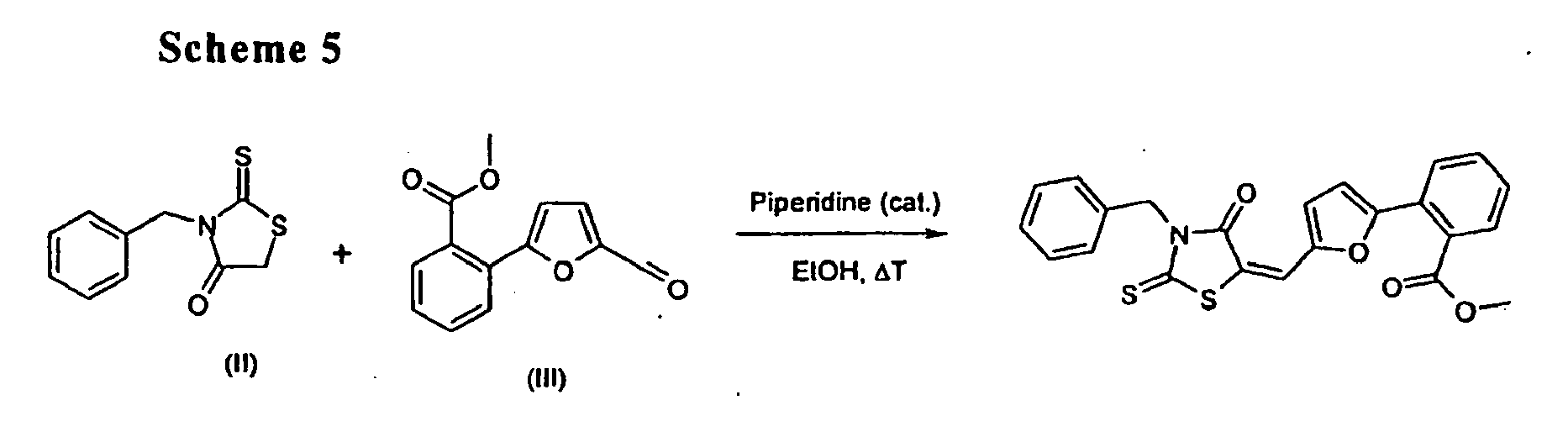
- All the reagents reported in Schemes 1-5 can be prepared with known methods and are commercially available.
- The compounds of the invention inhibit the interaction between HIF-1α and p300 with IC50 ranging from 0.5 to 25 µM and the production of VEGF in tumour cells under hypoxia conditions with IC50 ranging from 0.10 to 100 µM.
- The compounds can therefore be used for the preparation of pharmaceutical compositions for the treatment of solid tumors. The compositions can be solid, semi-solid or liquid, preferably in the form of solutions, suspensions, powders, granules, tablets, capsules, syrups, suppositories, aerosol or controlled-release systems. The compositions can be administered through different routes, in particular through the oral, transdermal, subcutaneous, intravenous, intramuscular, rectal and intranasal route. The amount of active ingredient per dosage unit depends on the form and on the administration route, the compound, the disease to treat, but in general ranges from 0.1 to 1000 mg, preferably from 1 to 600 mg. The principles and methods for the preparation of pharmaceutical compositions are known to those skilled in the art and are described, for example, in Remington's Pharmaceutical Science, Mack Publishing Company, Easton (PA).
- The compounds of the invention, suitably formulated, can be used for the treatment of a number of pathologies in which angiogenesis is involved as pathogenesis factor, for example different forms of solid tumors, diabetic retinopathy, rheumatoid arthritis, psoriasis, emangioma, sclerodermia, neovascular glaucoma. Solid tumors particularly sensitive to the compounds of formula (I) comprise lung carcinoma, mammary carcinoma, prostate carcinoma, neuroblastoma, glioblastoma multiforme, melanoma, central nervous system cancer, squamous cell oropharyngeal cancer, cervical cancer, ovary, esophageal, kidney, colon, head-and-neck cancer and oligodendrioglioma.
- The invention will be illustrated in greater detail in the following experimental section.
- A solution of 5-bromofuraldehyde (2.43 g, 13.9 mmoles), 4-(methoxycarbonyl)phenylboronic acid (2.50 g, 13.9 mmoles), tris(dibenzylideneacetone)palladium (0) (192 mg, 0.2 mmoles) and potassium fluoride (2.42 g, 41.7 mmoles) in 1,4-dioxane (100 ml) was added with a solution of tri-tert-butylphosphine in hexane (10% by weight, 101 mg, 0.5 mmoles). After heating at 65-70°C for 4 hours, the mixture was cooled to room temperature and treated with methylene chloride (150 ml). After stirring for 10 minutes, the mixture was filtered through Celite and the filtrate was concentrated under reduced pressure. The residue was purified by flash silica gel chromatography eluting with an ethyl acetate-hexane mixture (1:1) to give 4-(5-formyl-furan-2-yl)-benzoic acid methyl ester (2.6 g, 81 % yield).
1H NMR (300 MHz, CDCl3): δ 9.70 (s, 1H), 8.10 (d, 2H), 7.90 (d, 2H), 7.35 (d, 1H), 6.95 (d, 1H), 3.98 (s, 3H). - A suspension of bis(carboxymethyl)trithiocarbonate (498 mg, 2.2 mmoles), potassium carbonate (138 mg, 1.0 mmoles) and 4-(3-aminopropyl)morpholine (288 mg, 2.0 mmoles) in water (20 ml) was refluxed for 12 hours. After addition of water (10 ml), the mixture was cooled to room temperature and extracted with 10% methanol-methylene chloride (3x50 ml). The combined extracts were dried over anhydrous magnesium sulphate and concentrated under reduced pressure. The residue was purified by flash silica gel chromatography eluting with 10% methanol-methylene chloride to give 3-(3-morpholino-4-yl-propyl)-2-thioxo-thiazolidine-4-one (252 mg, 48% yield). 1H NMR (300 MHz, CDCl3): δ 4.10 (dd, 2H), 3.95 (s, 2H), 3.55-3.70 (m, 4H), 2.30-2.50 (m, 6H), 1.70-1.90 (m, 2H).
- A solution of 4-(5-formyl-furan-2-yl)-benzoic acid methyl ester (59 mg, 0.27 mmoles) and 3-(3-morpholino-4-yl-propyl)-2-thioxo-thiazolidine-4-one (72 mg, 0.27 mmoles) in ethanol (10 ml) was added with piperidine (1 drop). After heating under reflux for 6 hours, the mixture was concentrated under reduced pressure. The residue was purified by flash silica gel chromatography eluting with 10% methanol-methylene chloride to give the title compound (32 mg, 25%yield).
1H NMR (300 MHz, DMSO-d6): δ 8.15 (d, 2H), 7.75 (d, 2H), 7.50 (s, 1H), 6.95-7.05 (m, 2H), 4.20 (t, 2H), 3.95 (s, 3H), 3.90 (t, 2H), 3.58-3.75 (m, 2H), 2.30-2.60 (m, 6H), 1.80-2.00 (m, 2H). - Following general procedure B, bis(carboxymethyl)-trithiocarbonate (2.50 g, 11.0 mmoles), was reacted with benzylamine (1.07 g, 10.0 mmoles). The title compound was obtained after flash silica gel chromatography eluting with 70% methylene chloride-hexane, (960 mg, 43% yield).
- Following general procedure A, 5-bromo furaldehyde (3.50 g, 0.2 moles) was reacted with 4-cyanoboronic acid (2.94 g, 0.2 moles). After usual work-up of the mixture and chromatographic purification on silica gel column eluting with 50% ethyl acetate-hexane the title compound was obtained (2.60 g, 66% yield).
1H NMR (300 MHz, CDCl3): δ 9.70 (s, 1H), 8.00 (d, 2H), 7.80 (d, 2H), 7.40 (d, 1H), 7.00 (d, 1H). - Following general procedure B, bis(carboxymethyl) thiocarbonate (905 mg, 4.0 mmoles), was reacted with 3,4-dimethoxy-benzylamine (363 mg, 2.0 mmoles) and, after flash silica gel chromatography eluting with 70% methylene chloride-hexane, the title compound was obtained (420 mg, 71% yield).
1H NMR (300 MHz, CDCl3): δ 6.70-6.90 (m, 3H), 4.20 (t, 2H), 4.00 (s, 2H), 3.90 (s, 3H), 3.85 (s, 3H), 2.95 (t, 2H). - Following general procedure C, 4-(5-formyl-furan-2-yl)-benzonitrile (39.4 mg, 0.2 mmoles) was reacted with 2-thioxo-3-(3,4-dimethoxy-benzyl)-thiazolidine-4-one (59.4 mg, 0.2 mmoles) to give the title compound (58 mg, 61 % yield).
1H NMR (300 MHz, DMSO-d6): δ 7.95-8.25 (m, 4H), 7.75 (s, 1H), 7.60 (d, 1H), 7.40 (d, 1H), 6.7-6.90 (m, 3H), 4.25 (t, 2H), 3.75 (s, 3H), 3.70 (s, 3H), 2.95 (s, 2H). - Following general procedure B, bis(carboxymethyl)trithiocarbonate (905 mg, 4.0 mmoles), was reacted with 2-phenylethylamine (242.4 mg, 2.0 mmoles). The title compound was obtained after flash silica gel chromatography eluting with 70% methylene chloride-hexane, (246 mg, 52% yield).
1HMR (300 MHz, CDCl3): δ 7.15-7.40 (m, 5H), 4.20 (t, 2H), 3.95 (s, 2H), 3.00 (t, 2H). - Following general procedure C, 4-(5-formyl-furan-2-yl)-benzonitrile (39.4 mg, 0.2 mmoles) was reacted with 3-(2-phenylethyl)-2-thioxo-thiazolidine-4-one (47.4 mg, 0.2 mmoles) to give the title compound (64 mg, 76% yield).
1H NMR (300 MHz, DMSO-d6): δ 7.95-8.25 (m, 4H), 7.75 (s, 1H), 7.55 (d, 1H), 7.40 (d, 1H), 7.10-7.35 (m, 5H), 4.24 (t, 2H), 3.00 (t, 2H). - Following general procedure C, 4-(5-formyl-furan-2-yl)-benzoic acid methyl ester (46.0 mg, 0.2 mmoles) was reacted with 3-(2-phenylethyl)-2-thioxo-thiazolidine-4-one (47.4 mg, 0.2 mmoles) to give the title compound (39.2 mg, 44% yield).
1H NMR (300 MHz, CDCl3): δ 8.00 (d, 2H), 7.65 (d, 2H), 6.70-7.15 (m, 8H), 4.15 (t, 2H), 3.88 (s, 3H), 2.85 (t, 2H). - Following general procedure C, 4-(5-formyl-furan-2-yl)-benzoic acid methyl ester (46.0 mg, 0.2 mmoles) was reacted with 2-thioxo-3-[2-(3,4-dimethoxy-phenylethyl)]-thiazolidine-4-one (59.4 mg, 0.2 mmoles (59.4 mg, 0.20 mmoles) to give the title compound (46.7 mg, 46% yield)
1H NMR (300 MHz, CDCl3): δ 8.20 (d, 2H), 7.85 (d, 2H), 7.50 (s, 1H), 6.85-7.05 (m, 5H), 4.45 (t, 2H), 4.00 (s, 3H), 3.88 (s, 3H), 3.85(s, 3H), 2.95 (t, 2H). - Following general procedure B, bis(carboxymethyl) trithiocarbonate (905 mg, 4.0 mmoles), was reacted with 4-methyl-benzyl amine (242 mg, 2.0 mmoles) to give the title compound (250 mg, 53% yield).
1HNMR (CDCl3): δ 7.40 (d, 2H), 7.15 (d, 2H), 5.20 (s, 2H), 4.00 (s, 2H), 2.35 (s, 3H). - Following general procedure C, 4-(5-formyl-furan-2-yl)-benzoic acid methyl ester (46.0 mg, 0.2 mmoles) was reacted with 3-(4-methyl-benzyl)-2-thioxo-thiazolidine-4-one (47.4 mg, 0.2 mmoles) to give the title compound (46.7 mg, 46% yield).
1H NMR (300 MHz, CDCl3): δ 8.20 (d, 2H), 7.85 (d, 2H), 7.50 (s, 1H), 7.40 (d, 1H), 7.15 (d, 1H), 6.90-7.05 (m, 4H), 5.30 (s, 2H), 3.95 (s, 2H), 2.30 (s, 3H). - The compounds were evaluated for their ability to inhibit the interaction between Hif-1α and p300 using a fluorescence assay (DELFIA™). The procedure described by Freedman SJ at al., Nature Structural Biology 2003, 10 (7), 504-512 was suitably modified.
- The human biotinylated Hif-1α fragment corresponding to C-terminal 786-826 amino acids (Biotinylated Hif-1α 786-826) was obtained from AnaSpec Inc (San Josè, California, USA) and used without further purifications.
- A construct expressing the GST-p30323-423 fragment was transformed in the BL21 strain (DE3) of E. coli. Said construct was obtained by cloning in the expression vector pGEX- 4T-1 (Amersham No. 27-45-80-01) the DNA sequence which encodes for the p300 region ranging from amino acids 323 to 423; the DNA sequence was obtained by PCR (Polymerase Chain Reaction). Protein expression was induced with 1 mM isopropyl-1-thio-β-D-galactopyranoside (IPTG). The bacteria were lysed by sonication in the presence of a suitable buffer (50 mM Tris.HCl pH 8.00, 100 mM NaCl, 0.1 mM ZnSO4, 1 mM DTT, 0.1 mg/ml lysozyme and a tablet of Complete EDTA-free Protease Inhibitor Cocktail Tablets (Roche, catalogue number 1 873 580)) and the GST fusion protein present in the soluble fraction was purified on a Glutathione-Sepharose 4B resin (Amersham Biosciences; no. 27-4574-01). The protein final concentration was determined according to Bradford with the Biorad assay (Bradford M., Anal. Biochem.,72, 248, (1976)) and sample purity was evaluated by SDS-PAGE. The samples were stored at -80°C in 50% glycerol.
- The assay was carried out using NUNC Maxisorp 96-well plates as follows.
- C96 NUNC Maxisorp plates (from Nunc, product No. 446612) were incubated overnight with streptavidin (Sigma; product No. S 4762) at a final concentration of 1 µg/ml in PBS buffer (Phosphate Buffered Saline 10 mM sodium phosphate, 150 mM sodium chloride pH 7.4). Each well was subsequently washed with 3x300 µl of TBST buffer (50 mM Tris-HCl pH 8.0, 150 mM NaCl, 0.05% (v/v) Tween 20). Each well was then added with 100 µl of a 10 nM solution of biotinylated Hif-1α786-826 in TBSB (50 mM Tris-HCl pH 8.0, 150 mM NaCl, 5% (w/v) BSA (Sigma, product No. A 2153)) and incubated for 1 h at 25°C. In the last row of each plate, TBSB buffer only was added. Each well was subsequently washed with 3 x 300 µl of TBST buffer. The thus prepared plate represented the assay plate.
- Separately, a plate (daughter plate) containing in each well 10 µl of each test compound dissolved in DMSO to a concentration of 10 µM was prepared. This plate was added with 100 µl of a 111 pM solution of GST-p300323-423 diluted in the incubation buffer (TBSB added with 0.1% (v/v) Tween 20, 0.5 mM DTT, 10 µM ZnCl2) and the whole was mixed. 100 µl of the mixture contained in the daughter plate was immediately transferred to the assay plate.
- Each daughter plate was prepared with 80 different compounds at a 10 µM concentration, safe for the last two well rows, wherein each well was added with 10 µl of DMSO. These two rows represented the positive (row 11, + Hif-1) and negative (row 12, - Hif-1) controls.
- After incubation for 1 h at 25°C, each well was washed with 3 x 300 µl of TBST buffer (50 mM Tris-HCl pH 8.0, 150 mM NaCl, 0.05% (v/v) Tween 20). Each well was then added with 60.8 ng of an europium-labelled anti-GST antibody (DELFIA Eu-N1 labeled; Perkin Elmer; product no. A D 0251) dissolved in 100 µl of TBST buffer containing 10 µM ZnCl2. After incubation for 1 h at room temperature, each well was washed with 3 x 300 µl of TBST buffer, then 100 µl of signal amplification solution (Enhancement Solution, Perkin Elmer product No. 1244-105) was added.
- The plates were then read using a FUSION alpha-FP-HT reader (Perkin Elmer) in fluorescence mode for time resolution.
- The activity of the compounds was calculated as follows. The fluorescence mean value of negative controls in row 12 of the plate test was subtracted from the fluorescence value of all the other wells. The resulting fluorescence value for each well was then divided by the fluorescence mean value of the positive controls in row 11 (which represent the maximum signal value, 100%) and expressed as percentage value. The inhibition value was expressed as the difference to 100 of the signal percentage calculated for each well.
- Using daughter plates in which the compounds were present at 10 different concentrations ranging from 90 µM to 0.178 µM in each row, a dose-response curve could be calculated from which the IC50 value (concentration of the compound necessary to inhibit the signal by 50%) was obtained. Rows 11 and 12 containing the vehicle only were the controls.
- The IC50 values obtained for some compounds of the present invention are reported in Table 1. The data are the mean of two independent experiments.
Table 1 Structure Compound HIF/p300 (IC50, µm) 
1 8.6 
18 29.9 
19 1.4 
20 4.2 
21 7.4 
9 5.9 - The compounds having inhibitory activity in the Hif-1α/p300 assay described above were evaluated using a cellular test on genetically modified human hepatocarcinoma Hep3B cells (Hep3B-VEGFLuciferase) in order to stably express a vector in which the Open Reading Frame of firefly Luciferase is under the control of the rat VEGF gene promoter.
- Hif-1 induction by deferoxamine (which causes hypoxia) induces luciferase transcription through activation of the VEGF promoter, which in turn increases luciferase activity, which can be measured with a commercially available kit. The compounds interfering with the Hif-1α/p300 complex inhibit Hif-dependent luciferase activation, resulting in a reduction of luciferase activity. Therefore, this assay allows to evaluate the activity of the compounds towards the VEGF promoter, which is essential to VEGF production and subsequent tumor angiogenesis.
- The Hep-3B-VEGF Luciferase cell line was obtained according to the following procedure.
- Human hepatocarcinoma cells Hep-3B (ATCC reference No. HB-8064) were seeded onto 6-well plates at a concentration of 2.5 x 10⁵ cells/well in 2 ml DMEM/10% FCS and the following day were transfected using Fugene 6 (Roche Biochemicals®). In each well, the transfection mixtures contained 6 µl of the transfection reagent Fugene 6, 1 µg of the pxp2-VEGF-luciferase reporter plasmid (VEGF rat promoter, NCBI GenBank No. of accession U22373, Levy et al., J. Biol. Chem. 270 (22), 13333-13340, 1995), and 10 ng of pcDNA3.1(+)plasmid (INVITROGEN) which makes the cells resistant to neomycin. Transfection was carried out according to the manufacturer's instructions.
- A suitable cell population (phenotypically resistant to neomycin) was selected by means of a cloning approach based on the "dilution limit" procedure (Sambrook J., Fritsch E.F. and Maniatis T. (1989) Molecular Cloning, A Laboratory Manual; Cold Spring Harbor Laboratories). The subsequent assays for Luciferase expression/activity (Luciferase assay) and for the quantification of secreted VEGF in the supernatant (ELISA secreted VEGF test) were carried out with the stably transfected selected cells.
- The following experimental protocol was used:
- Day 1. Hep-3B -VEGF Luciferase cells were seeded onto "blank" 96-wells plates (Greiner) at a density of 1 x 10⁴ cells/well/125 µl of medium, then left to adhere overnight in thermostat (37°C/5% CO2).
- Day 2. 75 µl of "3.2x working solutions" of compound (previously prepared in culture medium so that the DMSO concentration is 1.6% v/v) were added to the cells (partial volume/well = 200 µl, partial concentration of compound = 1.2 x, partial concentration of DMSO = 0.6%). After 1 hour incubation in thermostat, hypoxia was induced chemically by addition of 40 µl/well of a 6x (600 µM) stock solution of deferoxamine (final volume/well = 240 µl, final concentration of compound = 1x, final concentration of DMSO = 0.5%, final concentration of deferoxamine = 1x ≈ 100 µM). The plates were then thermostated for further 18-20 hours.
- Day 3. The Luciferase assay and the secreted VEGF ELISA test were carried out as follows.
- Quantification of secreted VEGF was performed using the "DuoSet Elisa Development System human VEGF" kit (R&D Systems). 100 µl/well of the supernatant from the "blank" 96-well plates with the cells of the Hep3B/VEGF Luciferase clone were transferred into transparent 96-well plates (Maxisorp) and assayed according to the indications of the kit manufacturer.
- Quantification of the expression of the Luciferase reporter gene was performed by means of the Bright Glo Reagent (Promega). After removing the supernatant and washing once with PBS, 40 µl/well of Bright Glo Reagent were added to blank 96-well plates with Hep3B/VEGF-Luciferase cells. The expression levels of the reporter gene were determined by reading the plates with a luminometer.
- IC50 values (concentration of the compound that causes 50% inhibition of the luciferase signal or 50% reduction of secreted VEGF) for some compounds of the invention are reported in table 2.
Table 2 IC50 (µM) Compound Structure Luciferase assay ELISA test (secreted VEGF) 1 
6.66 0.37 18 
3.17 0.49 19 
7.29 0.33 20 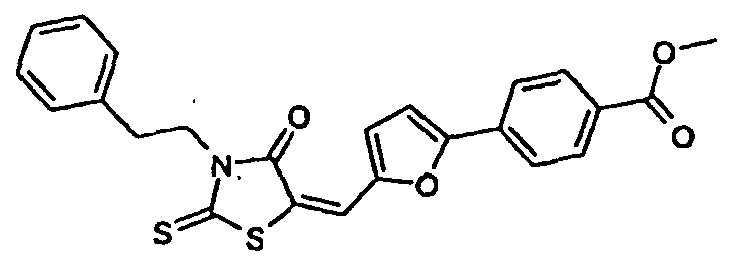
10.47 0.46 21 
4.86 0.24 9 
> 5.0 0.18 -
- 1) G.I. Semenza, Nature Review Cancer, 3, October 2003, 721-732.
- 2) Semenza GL. HIF-1 and tumor progression: pathophysiology and therapeutics. Trends Mol.. Med. 2002 8:S62.
- 3) Semenza GL et al. Dimerization, DNA binding, and transactivation properties of hypoxia-inducible factor 1. J. Biol. Chem. 1996 271:17771.
- 4) Semenza GL et al. Hypoxia-inducible factor 1 levels vary exponentially over a physiologically relevant range of O2 tension. Am. J. Physiol. 1996 271:C1172.
- 5) Epstein AC et al. C. elegans EGL-9 and mammalian homologs define a family of dioxygenases that regulate HIF by prolyl hydroxylation. Cell 2001 107:43.
- 6) Semenza GL et al. FIH-1: a novel protein that interacts with HIF-1 alpha and VHL to mediate repression of HIF-1 transcriptional activity. Genes Dev. 2001 15:2675.
- 7) Arany Z. et al. An esential role for p300/cbp in the cellular-response to hypoxia. Proc. Nat. Acad. Sci. USA 1996 93; 12969.
- 8) Damert A. et al. Activator-protein-1 binding potentiates the hypoxia-inducible factor-1-mediated hypoxia induced transcriptional activation of vascular-endothelial growth-factor expression in c6 glioma cells. Biochem J. 1997 327:419.
- 9) Eck MJ et al. Structural basis for recruitment of CBP/p300 by hypoxia-inducible factor-1 alpha. Proc. Natl. Acad. Sci. USA, 2002 99:5367.
- 10) Wright PE et al. Structural basis for HIF-1 alpha/CBP recognition in the cellular hypoxic response. PNAS, 2002 99:5271.
- 11) Freedman, S.J. et al, Nature Structural Biology, 2003, 10(7), 504-12).
- 12) Zhong, H. et al., Overexpression of hypoxia-inducible factor 1α in common human cancers and their metastases, Cancer Research, 1999, 59, 5830-5.
- 13) Bos, R. et al., Levels of hypoxia-inducible-factors-1α during breast carcinogeneis, J. Nat. Cancer Inst. 2001, 93, 309-14.
- 14) Talks, K.I. et al., The expression and distribution of the hypoxia-inducible-factors HIF-1α and HIF-2 in normal human tissues, cancers, and tumor-associated macrophages, Am. J. Pathol., 2000, 157, 411-21).
- 15) Giatromanolaki, A. et al. Relation of hypoxia inducible factor 1α and 2a in operable non-small cell lung cancer to angiogenic/molecular profile of tumours and survival. Br. J.Cancer 85, 881-890 (2001).
- 16) Aebersold, D. M. et al. Expression of hypoxia-inducible factor 1α: a novel predictive and prognostic parameter in the radiotherapy of oropharyngeal cancer. Cancer Res. 61, 2911-2916 (2001).
- 17) Birner, P. et al. Overexpression of hypoxia-inducible factor 1α is a marker for an unfavorable prognosis in early-stage invasive cervical cancer. Cancer Res. 60, 4693-4696 (2000).
- 18) Koukourakis, M. I. et al. Hypoxia-inducible factor (HIF-1 alpha and HIF-2 alpha), angiogenesis, and chemoradiotherapy outcome of squamous cell head-and-neck cancer. Int. J. Radiat. Oncol. Biol. Phys. 53, 1192-1202 (2002).
- 19) Birner, P. et al. Expression of hypoxia-inducible factor 1α in epithelial ovarian tumors: its impact on prognosis and on response to chemotherapy. Clin. Cancer Res. 7, 1661-1668 (2001).
- 20) Birner, P. et al. Expression of hypoxia-inducible factor-1α in oligodendrogliomas: its impact on prognosis and on neoangiogenesis. Cancer 92, 165-171 (2001).
- 21) Koukourakis, M.I. et al. Hypoxia inducible factor (HIF-1α and HIF-2a) expression in early esophageal cancer and response to photodynamic therapy and radiotherapy. Cancer Res. 61, 1830-1832 (2001).
- 22) Zundel, W. et al. Loss of PTEN facilitates HIF-1-mediated gene expression. Genes Dev. 14, 391-396 (2000).
- 23) Hudson, C.C. et al. Regulation of hypoxia-inducible factor 1 alpha expression and function by the mammalian target of rapamycin. Mol.. Cell. Biol. 22, 7004-7014 (2002).
- 24) Sodhi, A. et al. The Kaposi's sarcoma-associated herpes virus G protein-coupled receptor up-regulates vascular endothelial growth factor expression and secretion through mitogen-activated protein kinase and p38 pathways acting on hypoxia-inducible factor 1α. Cancer Res. 60, 4873-4880 (2000).
- 25) Mabjeesh, N. J. et al. Geldanamycin induces degradation of hypoxia-inducible factor 1α protein via the proteosome pathway in prostate cancer cells. Cancer Res. 62, 2478-2482 (2002).
- 26) Welsh, S. J. et al. The thioredoxin redox inhibitors 1-methylpropil 2-imidazolyl disulfide and pleurotin inhibit hypoxia-induced factor 1α and vascular endothelial growth factor formation. Mol.. Cancer Ther. 2, 235-243 (2003).
- 27) Mabjeesh, N. J. et al. 2ME2 inhibits tumor growth and angiogenesis by disrupting microtubules and dysregulating HIF. Cancer Cell 3, 363-375 (2003).
- 28) Escuin, D. et al., Epothilone B inhibits HIF-1α downstream of its microtubule stabilizing effects; Proceedings of the 95th Annual Meeting of the American Association for Cancer Research, Abs. 5427.
- 29) Welsh, S. et al., Antitumor activity and pharmacodynamic properties of PX-478, an inhibitor of hypoxia-inducible factor-1 alpha Mol. Cancer Ther. 2004;3(3):233-244).
- 30) A.L. Kung et al., Small molecule blockade of transcriptional coactivation of the hypoxia-inducible factor pathway. Cancer Cell, 6, 33-43, 2004.
Claims (3)
- Use of a compound selected from2-[5-(3-benzyl-4-oxo-2-thioxo-thiazolidine-5-ylidenemethyl)-furan-2-yl]benzoic acid methyl ester (1);4-[5-(3-benzyl-4-oxo-2-thioxo-thiazolidine-5-ylidenemethyl)furan-2-yl-] benzonitrile (5);4-{5-[3-(4-methylbenzyl)-4-oxo-2-thioxo-thiazolidine-5-ylidenemethyl]furan-2-yl-}benzonitrile (6);4-{5-[3-(4-methylbenzyl)-4-oxo-2-thioxo-thiazolidine-5-ylidenemethyl]-furan-2-yl}benzoic acid methyl ester (9);4-{5-[3-(3,4-methylenedioxybenzyl)-4-oxo-2-thioxo-thiazolidine-5-ylidenemethyl]-furan-2-yl}benzenesulfonamide (11);4-{5-[3-(3,4-methylenedioxybenzyl)-4-oxo-2-thioxo-thiazolidine-5-ylidenemethyl]-furan-2-yl}benzoic acid methyl ester (12);4-{5-[3-(2-thienyl)methyl-4-oxo-2-thioxo-thiazolidine-5-ylidenemethyl]-furan-2-yl}benzonitrile (14);4-{5-[3-(2-thienyl)methyl-4-oxo-2-thioxo-thiazolidine-5-ylidenemethyl]-furan-2-yl}benzenesulfonamide (15);4-{5-[3-(3,4-dimethoxyphenyl)-4-oxo-2-thioxo-thiazolidine-5-ylidenemethyl]-furan-2-yl}benzoic acid (17);4-{5-[3-[2-(3,4-dimethoxyphenyl)ethyl]-4-oxo-2-thioxo-thiazolidine-5-ylidenemethyl]-furan-2-yl}benzonitrile (18);4-{5-[3-[2-(phenyl)ethyl]-4-oxo-2-thioxo-thiazolidine-5-ylidenemethyl]-furan-2-yl}benzonitrile (19);4-{5-[3-[2-(phenyl)ethyl]-4-oxo-2-thioxo-thiazolidine-5-ylidenemethyl]-furan-2-yl}benzoic acid methyl ester (20);4-{5-[3-[2-(3,4-dimethoxyphenyl)ethyl]-4-oxo-2-thioxo-thiazolidine-5-ylidenemethyl]-furan-2-yl}benzoic acid methyl ester (21);2-{5-[4-[3-[2-(phenyl)ethyl]-4-oxo-2-thioxo-thiazolidine-5-ylidenemethyl]-furan-2-yl]phenoxy}ethanol (22);3-benzyl-5-[[5-(2-methoxyphenyl)furan-2-ylidenemethyl]-4-oxo-2-thioxo-thiazolidine (23); and2-[5-(3-benzyl-4-oxo-2-thioxo-thiazolidine-5-ylidenemethyl)-furan-2-yl]benzoic acid (24),for the preparation of pharmaceutical compositions for the treatment of solid tumors.
- Use as claimed in claim 1 in which the tumors are selected from lung carcinoma, mammary carcinoma, prostate carcinoma, neuroblastoma, glioblastoma multiforme, melanoma, central nervous system cancer, squamous cell oropharyngeal cancer, cervical cancer, ovary, esophageal, kidney, colon, head-and-neck cancer and oligodendrioglioma.
- A compound selected from:4-[5-(3-benzyl-4-oxo-2-thioxo-thiazolidine-5-ylidenemethyl)furan-2-yl-] benzonitrile (5);4-{5-[3-(4-methylbenzyl)-4-oxo-2-thioxo-thiazolidine-5-ylidenemethyl]furan-2-yl-}benzonitrile (6);4-{5-[3-(4-methylbenzyl)-4-oxo-2-thioxo-thiazolidine-5-ylidenemethyl]-furan-2-yl}benzoic acid methyl ester (9);4-{5-[3-(3,4-methylenedioxybenzyl)-4-oxo-2-thioxo-thiazolidine-5-ylidenemethyl]-furan-2-yl}benzenesulfonamide (11);4-{5-[3-(3,4-methylenedioxybenzyl)-4-oxo-2-thioxo-thiazolidine-5-ylidenemethyl]-furan-2-yl}benzoic acid methyl ester (12);4-{5-[3-(2-thienyl)methyl-4-oxo-2-thioxo-thiazolidine-5-ylidenemethyl]-furan-2-yl}benzonitrile (14);4-{5-[3-(2-thienyl)methyl-4-oxo-2-thioxo-thiazolidine-5-ylidenemethyl]-furan-2- yl}benzenesulfonamide (15);4-{5-[3-(3,4-dimethoxyphenyl)-4-oxo-2-thioxo-thiazolidine-5-ylidenemethyl]-furan-2-yl}benzoic acid (17);4-{5-[3-[2-(3,4-dimethoxyphenyl)ethyl]-4-oxo-2-thioxo-thiazolidine-5-ylidenemethyl]-furan-2-yl}benzonitrile (18);4-{5-[3-[2-(phenyl)ethyl]-4-oxo-2-thioxo-thiazolidine-5-ylidenemethyl]-furan-2-yl}benzonitrile (19);4-{5-[3-[2-(phenyl)ethyl]-4-oxo-2-thioxo-thiazolidine-5-ylidenemethyl]-furan-2-yl}benzoic acid methyl ester (20);4-{5-[3-[2-(3,4-dimethoxyphenyl)ethyl]-4-oxo-2-thioxo-thiazolidine-5-ylidenemethyl]-furan-2-yl}benzoic acid methyl ester (21);2-{5-[4-[3-[2-(phenyl)ethyl]-4-oxo-2-thioxo-thiazolidine-5-ylidenemethyl]-furan-2-yl]phenoxy}ethanol (22);3-benzyl-5-[[5-(2-methoxyphenyl)furan-2-ylidenemethyl]-4-oxo-2-thioxo-thiazolidine (23); and2-[5-(3-benzyl-4-oxo-2-thioxo-thiazolidine-5-ylidenemethyl)-furan-2-yl]benzoic acid (24)
Applications Claiming Priority (2)
| Application Number | Priority Date | Filing Date | Title |
|---|---|---|---|
| IT002475A ITMI20042475A1 (en) | 2004-12-23 | 2004-12-23 | USE OF THIAZOLIDINONIC DERIVATIVES AS THERAPEUTIC AGENTS |
| PCT/EP2005/013650 WO2006066846A1 (en) | 2004-12-23 | 2005-12-19 | Use of thiazolidinone derivatives as antiangiogenic agents |
Publications (2)
| Publication Number | Publication Date |
|---|---|
| EP1830848A1 EP1830848A1 (en) | 2007-09-12 |
| EP1830848B1 true EP1830848B1 (en) | 2009-12-16 |
Family
ID=36168693
Family Applications (1)
| Application Number | Title | Priority Date | Filing Date |
|---|---|---|---|
| EP05820657A Expired - Lifetime EP1830848B1 (en) | 2004-12-23 | 2005-12-19 | Use of thiazolidinone derivatives for the treatment of solid tumors |
Country Status (14)
| Country | Link |
|---|---|
| US (1) | US20080261980A1 (en) |
| EP (1) | EP1830848B1 (en) |
| JP (1) | JP2008525340A (en) |
| KR (1) | KR20070100718A (en) |
| CN (1) | CN101083989A (en) |
| AT (1) | ATE451922T1 (en) |
| AU (1) | AU2005318432A1 (en) |
| CA (1) | CA2592004A1 (en) |
| DE (1) | DE602005018390D1 (en) |
| IL (1) | IL184116A0 (en) |
| IT (1) | ITMI20042475A1 (en) |
| MX (1) | MX2007007498A (en) |
| WO (1) | WO2006066846A1 (en) |
| ZA (1) | ZA200704914B (en) |
Families Citing this family (11)
| Publication number | Priority date | Publication date | Assignee | Title |
|---|---|---|---|---|
| EP1916249A1 (en) * | 2006-10-10 | 2008-04-30 | LEK Pharmaceuticals D.D. | 3-(benzo[d][1,3]dioxol-5-ylmethyl)-4-(thio)oxo-2-(thio)oxo-azolidin-5-ylidene derivatives as antibacterial agents |
| FR2929851B1 (en) * | 2008-04-09 | 2012-11-30 | Centre Nat Rech Scient | MOLECULES INHIBITING A METABOLIC PATHWAY INVOLVING THE TYROSINE KINASE SYK PROTEIN AND METHOD OF IDENTIFYING SAID MOLECULES |
| US8236838B2 (en) | 2008-04-21 | 2012-08-07 | Institute For Oneworld Health | Compounds, compositions and methods comprising isoxazole derivatives |
| WO2009131957A2 (en) | 2008-04-21 | 2009-10-29 | Institute For Oneworld Health | Compounds, compositions and methods comprising oxadiazole derivatives |
| HRP20150341T1 (en) * | 2008-11-14 | 2015-05-08 | Bayer Intellectual Property Gmbh | Heterocyclically substituted aryl compounds as hif inhibitors |
| US8343976B2 (en) | 2009-04-20 | 2013-01-01 | Institute For Oneworld Health | Compounds, compositions and methods comprising pyrazole derivatives |
| AR078770A1 (en) | 2009-10-27 | 2011-11-30 | Elara Pharmaceuticals Gmbh | DERIVATIVES OF DIHYDROBENZO OXACINES AND THIAZINES, PHARMACEUTICAL COMPOSITIONS CONTAINING THEM AND USE OF THE SAME FOR THE TREATMENT OF INFLAMMATORY AND HYPERPROLIFERATIVE DISEASES. |
| EP3033083A4 (en) * | 2013-08-14 | 2017-06-14 | North Carolina Central University | A high-throughput assay for identifying small molecules that modulate amp-activated protein kinase (ampk) |
| US10723726B2 (en) * | 2015-06-12 | 2020-07-28 | Gb006, Inc. | Solid forms of (Z)-4-(5-((3-benzyl-4-oxo-2-thioxothiazolidin-5-ylidene)methyl)furan-2-yl)benzoic acid |
| WO2021061665A1 (en) * | 2019-09-23 | 2021-04-01 | Gb006, Inc. | Integrin agonist prodrugs |
| WO2024037910A1 (en) * | 2022-08-17 | 2024-02-22 | Institut National de la Santé et de la Recherche Médicale | Syk inhibitors for use in the treatment of cancer |
Family Cites Families (13)
| Publication number | Priority date | Publication date | Assignee | Title |
|---|---|---|---|---|
| BE794532A (en) * | 1972-01-26 | 1973-07-25 | Boehringer Sohn Ingelheim | NEW 3-HYDROXYMETHYL-5-BENZYLIDENE-AZOLIDINONES AND PROCESS FOR MAKING THEM |
| WO1998053790A2 (en) * | 1997-05-30 | 1998-12-03 | Texas Biotechnology Corporation | Compounds that inhibit the binding of vascular endothelial growth factor to its receptors |
| JPH11302280A (en) * | 1998-04-17 | 1999-11-02 | Ono Pharmaceut Co Ltd | Thiazolidine derivative and medicament containing the derivative as active ingredient |
| US6706766B2 (en) * | 1999-12-13 | 2004-03-16 | President And Fellows Of Harvard College | Small molecules used to increase cell death |
| US20040002526A1 (en) * | 2002-04-03 | 2004-01-01 | Cell Therapeutics, Inc. | Phospholipase D inhibitors and uses thereof |
| US7220764B2 (en) * | 2002-06-17 | 2007-05-22 | The Pennsylvania State University Research Foundation | Sphingosine kinase inhibitors |
| BR0203747A (en) * | 2002-09-10 | 2004-05-25 | Conselho Nacional Cnpq | Molecules with antitumor activity and process for obtaining them |
| WO2004028535A1 (en) * | 2002-09-26 | 2004-04-08 | Pintex Pharmaceuticals, Inc. | Pin1-modulating compounds and methods of use thereof |
| AU2003291024A1 (en) * | 2002-11-13 | 2004-06-03 | Rigel Pharmaceuticals, Inc. | Rhodanine derivatives and pharmaceutical compositions containing them |
| ATE458485T1 (en) * | 2003-07-11 | 2010-03-15 | Proteologics Inc | UBIQUITIN LIGASE INHIBITORS AND RELATED METHODS |
| EP1654380A4 (en) * | 2003-08-14 | 2009-09-09 | Insight Biopharmaceuticals Ltd | Methods and pharmaceutical compositions for modulating heparanase activation and uses thereof |
| WO2005026127A1 (en) * | 2003-09-11 | 2005-03-24 | Institute Of Medicinal Molecular Design. Inc. | Plasminogen activator inhibitor-1 inhibitor |
| US20050282840A1 (en) * | 2004-02-11 | 2005-12-22 | Painceptor Pharma Corporation | Methods of modulating neurotrophin-mediated activity |
-
2004
- 2004-12-23 IT IT002475A patent/ITMI20042475A1/en unknown
-
2005
- 2005-12-19 ZA ZA200704914A patent/ZA200704914B/en unknown
- 2005-12-19 MX MX2007007498A patent/MX2007007498A/en not_active Application Discontinuation
- 2005-12-19 AU AU2005318432A patent/AU2005318432A1/en not_active Abandoned
- 2005-12-19 KR KR1020077014023A patent/KR20070100718A/en not_active Withdrawn
- 2005-12-19 AT AT05820657T patent/ATE451922T1/en not_active IP Right Cessation
- 2005-12-19 JP JP2007547309A patent/JP2008525340A/en active Pending
- 2005-12-19 CA CA002592004A patent/CA2592004A1/en not_active Abandoned
- 2005-12-19 CN CNA2005800440053A patent/CN101083989A/en active Pending
- 2005-12-19 EP EP05820657A patent/EP1830848B1/en not_active Expired - Lifetime
- 2005-12-19 WO PCT/EP2005/013650 patent/WO2006066846A1/en not_active Ceased
- 2005-12-19 US US11/793,874 patent/US20080261980A1/en not_active Abandoned
- 2005-12-19 DE DE602005018390T patent/DE602005018390D1/en not_active Expired - Fee Related
-
2007
- 2007-06-21 IL IL184116A patent/IL184116A0/en unknown
Also Published As
| Publication number | Publication date |
|---|---|
| WO2006066846A1 (en) | 2006-06-29 |
| IL184116A0 (en) | 2007-10-31 |
| ITMI20042475A1 (en) | 2005-03-23 |
| KR20070100718A (en) | 2007-10-11 |
| DE602005018390D1 (en) | 2010-01-28 |
| ATE451922T1 (en) | 2010-01-15 |
| CA2592004A1 (en) | 2006-06-29 |
| JP2008525340A (en) | 2008-07-17 |
| EP1830848A1 (en) | 2007-09-12 |
| MX2007007498A (en) | 2007-10-10 |
| ZA200704914B (en) | 2008-10-29 |
| AU2005318432A1 (en) | 2006-06-29 |
| CN101083989A (en) | 2007-12-05 |
| US20080261980A1 (en) | 2008-10-23 |
Similar Documents
| Publication | Publication Date | Title |
|---|---|---|
| US20080255099A1 (en) | Use of Diketodithiopiperazine Antibiotics for the Preparation of Antiangiogenic Pharmaceutical Compositions | |
| US8883827B2 (en) | Azole derivatives as WTN pathway inhibitors | |
| EP1536799B1 (en) | Novel 2-amino-4-oxoquinazolones as lxr nuclear receptor binding compounds with partial agonistic properties | |
| CN106794125B (en) | NAT10 modulators for the treatment or prevention of laminopathies, aging and cancer | |
| WO2002089809A1 (en) | Medicinal uses of hydrazones and hydrazines | |
| CN102858763B (en) | Prolyl hydroxylase inhibitors and methods of use thereof | |
| US20080261980A1 (en) | Use of Thiazolidinone Derivatives as Antiangiogenic Agents | |
| WO2004087641A1 (en) | Hydrazone derivative | |
| US20070149514A1 (en) | Indole-phenylsulfonamide derivatives used as ppar-delta activating compounds | |
| US10562890B2 (en) | Cancer therapeutics | |
| WO2010007943A1 (en) | Nitrogenated heterocyclic compound | |
| CA2522225A1 (en) | Carboxamide derivatives as anti-diabetic agents | |
| RU2448093C2 (en) | Pyridine derivatives for treating metabolic disorders associated with insulin resistance or hyperglycaemia | |
| Wei et al. | Synthesis and evaluation of N-(benzofuran-5-yl) aromaticsulfonamide derivatives as novel HIF-1 inhibitors that possess anti-angiogenic potential | |
| WO2002096430A1 (en) | Cephalosporin derivatives as anti-cancer agents | |
| WO2019222134A1 (en) | Coup-tfii receptor inhibitors and methods using same | |
| US20090036441A1 (en) | Indole Derivatives With Antitumor Activity | |
| JP2022530244A (en) | A GRK2 protein inhibitor compound and a pharmaceutical composition containing the same compound. | |
| JP2011132142A (en) | Phenyloxadiazole compound having erythropoietin production-promoting action | |
| WO2023193809A1 (en) | Sarm1 inhibitor compound, pharmaceutical composition containing same, and preparation method therefor and uses thereof | |
| JPWO2008056634A1 (en) | Novel oxindole derivatives | |
| CN101547902A (en) | Compounds for the treatment of metabolic disorders |
Legal Events
| Date | Code | Title | Description |
|---|---|---|---|
| PUAI | Public reference made under article 153(3) epc to a published international application that has entered the european phase |
Free format text: ORIGINAL CODE: 0009012 |
|
| 17P | Request for examination filed |
Effective date: 20070620 |
|
| AK | Designated contracting states |
Kind code of ref document: A1 Designated state(s): AT BE BG CH CY CZ DE DK EE ES FI FR GB GR HU IE IS IT LI LT LU LV MC NL PL PT RO SE SI SK TR |
|
| AX | Request for extension of the european patent |
Extension state: AL BA HR MK YU |
|
| REG | Reference to a national code |
Ref country code: HK Ref legal event code: DE Ref document number: 1105877 Country of ref document: HK |
|
| 17Q | First examination report despatched |
Effective date: 20080918 |
|
| GRAP | Despatch of communication of intention to grant a patent |
Free format text: ORIGINAL CODE: EPIDOSNIGR1 |
|
| RTI1 | Title (correction) |
Free format text: USE OF THIAZOLIDINONE DERIVATIVES FOR THE TREATMENT OF SOLID TUMORS |
|
| GRAS | Grant fee paid |
Free format text: ORIGINAL CODE: EPIDOSNIGR3 |
|
| GRAA | (expected) grant |
Free format text: ORIGINAL CODE: 0009210 |
|
| AK | Designated contracting states |
Kind code of ref document: B1 Designated state(s): AT BE BG CH CY CZ DE DK EE ES FI FR GB GR HU IE IS IT LI LT LU LV MC NL PL PT RO SE SI SK TR |
|
| AX | Request for extension of the european patent |
Extension state: AL BA HR MK YU |
|
| REG | Reference to a national code |
Ref country code: GB Ref legal event code: FG4D |
|
| REG | Reference to a national code |
Ref country code: CH Ref legal event code: EP |
|
| REG | Reference to a national code |
Ref country code: IE Ref legal event code: FG4D |
|
| REF | Corresponds to: |
Ref document number: 602005018390 Country of ref document: DE Date of ref document: 20100128 Kind code of ref document: P |
|
| REG | Reference to a national code |
Ref country code: NL Ref legal event code: VDEP Effective date: 20091216 |
|
| PG25 | Lapsed in a contracting state [announced via postgrant information from national office to epo] |
Ref country code: FI Free format text: LAPSE BECAUSE OF FAILURE TO SUBMIT A TRANSLATION OF THE DESCRIPTION OR TO PAY THE FEE WITHIN THE PRESCRIBED TIME-LIMIT Effective date: 20091216 Ref country code: SE Free format text: LAPSE BECAUSE OF FAILURE TO SUBMIT A TRANSLATION OF THE DESCRIPTION OR TO PAY THE FEE WITHIN THE PRESCRIBED TIME-LIMIT Effective date: 20091216 Ref country code: LT Free format text: LAPSE BECAUSE OF FAILURE TO SUBMIT A TRANSLATION OF THE DESCRIPTION OR TO PAY THE FEE WITHIN THE PRESCRIBED TIME-LIMIT Effective date: 20091216 |
|
| LTIE | Lt: invalidation of european patent or patent extension |
Effective date: 20091216 |
|
| PG25 | Lapsed in a contracting state [announced via postgrant information from national office to epo] |
Ref country code: LV Free format text: LAPSE BECAUSE OF FAILURE TO SUBMIT A TRANSLATION OF THE DESCRIPTION OR TO PAY THE FEE WITHIN THE PRESCRIBED TIME-LIMIT Effective date: 20091216 Ref country code: SI Free format text: LAPSE BECAUSE OF FAILURE TO SUBMIT A TRANSLATION OF THE DESCRIPTION OR TO PAY THE FEE WITHIN THE PRESCRIBED TIME-LIMIT Effective date: 20091216 Ref country code: PL Free format text: LAPSE BECAUSE OF FAILURE TO SUBMIT A TRANSLATION OF THE DESCRIPTION OR TO PAY THE FEE WITHIN THE PRESCRIBED TIME-LIMIT Effective date: 20091216 |
|
| PG25 | Lapsed in a contracting state [announced via postgrant information from national office to epo] |
Ref country code: AT Free format text: LAPSE BECAUSE OF FAILURE TO SUBMIT A TRANSLATION OF THE DESCRIPTION OR TO PAY THE FEE WITHIN THE PRESCRIBED TIME-LIMIT Effective date: 20091216 |
|
| PG25 | Lapsed in a contracting state [announced via postgrant information from national office to epo] |
Ref country code: PT Free format text: LAPSE BECAUSE OF FAILURE TO SUBMIT A TRANSLATION OF THE DESCRIPTION OR TO PAY THE FEE WITHIN THE PRESCRIBED TIME-LIMIT Effective date: 20100416 Ref country code: MC Free format text: LAPSE BECAUSE OF NON-PAYMENT OF DUE FEES Effective date: 20100701 Ref country code: BG Free format text: LAPSE BECAUSE OF FAILURE TO SUBMIT A TRANSLATION OF THE DESCRIPTION OR TO PAY THE FEE WITHIN THE PRESCRIBED TIME-LIMIT Effective date: 20100316 Ref country code: RO Free format text: LAPSE BECAUSE OF FAILURE TO SUBMIT A TRANSLATION OF THE DESCRIPTION OR TO PAY THE FEE WITHIN THE PRESCRIBED TIME-LIMIT Effective date: 20091216 Ref country code: EE Free format text: LAPSE BECAUSE OF FAILURE TO SUBMIT A TRANSLATION OF THE DESCRIPTION OR TO PAY THE FEE WITHIN THE PRESCRIBED TIME-LIMIT Effective date: 20091216 Ref country code: IS Free format text: LAPSE BECAUSE OF FAILURE TO SUBMIT A TRANSLATION OF THE DESCRIPTION OR TO PAY THE FEE WITHIN THE PRESCRIBED TIME-LIMIT Effective date: 20100416 Ref country code: ES Free format text: LAPSE BECAUSE OF FAILURE TO SUBMIT A TRANSLATION OF THE DESCRIPTION OR TO PAY THE FEE WITHIN THE PRESCRIBED TIME-LIMIT Effective date: 20100327 Ref country code: NL Free format text: LAPSE BECAUSE OF FAILURE TO SUBMIT A TRANSLATION OF THE DESCRIPTION OR TO PAY THE FEE WITHIN THE PRESCRIBED TIME-LIMIT Effective date: 20091216 |
|
| REG | Reference to a national code |
Ref country code: CH Ref legal event code: PL |
|
| PG25 | Lapsed in a contracting state [announced via postgrant information from national office to epo] |
Ref country code: CZ Free format text: LAPSE BECAUSE OF FAILURE TO SUBMIT A TRANSLATION OF THE DESCRIPTION OR TO PAY THE FEE WITHIN THE PRESCRIBED TIME-LIMIT Effective date: 20091216 Ref country code: SK Free format text: LAPSE BECAUSE OF FAILURE TO SUBMIT A TRANSLATION OF THE DESCRIPTION OR TO PAY THE FEE WITHIN THE PRESCRIBED TIME-LIMIT Effective date: 20091216 Ref country code: BE Free format text: LAPSE BECAUSE OF FAILURE TO SUBMIT A TRANSLATION OF THE DESCRIPTION OR TO PAY THE FEE WITHIN THE PRESCRIBED TIME-LIMIT Effective date: 20091216 |
|
| PLBE | No opposition filed within time limit |
Free format text: ORIGINAL CODE: 0009261 |
|
| STAA | Information on the status of an ep patent application or granted ep patent |
Free format text: STATUS: NO OPPOSITION FILED WITHIN TIME LIMIT |
|
| PG25 | Lapsed in a contracting state [announced via postgrant information from national office to epo] |
Ref country code: CH Free format text: LAPSE BECAUSE OF NON-PAYMENT OF DUE FEES Effective date: 20091231 Ref country code: LI Free format text: LAPSE BECAUSE OF NON-PAYMENT OF DUE FEES Effective date: 20091231 Ref country code: IE Free format text: LAPSE BECAUSE OF NON-PAYMENT OF DUE FEES Effective date: 20091219 Ref country code: GR Free format text: LAPSE BECAUSE OF FAILURE TO SUBMIT A TRANSLATION OF THE DESCRIPTION OR TO PAY THE FEE WITHIN THE PRESCRIBED TIME-LIMIT Effective date: 20100317 Ref country code: CY Free format text: LAPSE BECAUSE OF FAILURE TO SUBMIT A TRANSLATION OF THE DESCRIPTION OR TO PAY THE FEE WITHIN THE PRESCRIBED TIME-LIMIT Effective date: 20091216 |
|
| 26N | No opposition filed |
Effective date: 20100917 |
|
| GBPC | Gb: european patent ceased through non-payment of renewal fee |
Effective date: 20100316 |
|
| PG25 | Lapsed in a contracting state [announced via postgrant information from national office to epo] |
Ref country code: DE Free format text: LAPSE BECAUSE OF NON-PAYMENT OF DUE FEES Effective date: 20100701 |
|
| PG25 | Lapsed in a contracting state [announced via postgrant information from national office to epo] |
Ref country code: DK Free format text: LAPSE BECAUSE OF FAILURE TO SUBMIT A TRANSLATION OF THE DESCRIPTION OR TO PAY THE FEE WITHIN THE PRESCRIBED TIME-LIMIT Effective date: 20091216 |
|
| PG25 | Lapsed in a contracting state [announced via postgrant information from national office to epo] |
Ref country code: GB Free format text: LAPSE BECAUSE OF NON-PAYMENT OF DUE FEES Effective date: 20100316 Ref country code: IT Free format text: LAPSE BECAUSE OF FAILURE TO SUBMIT A TRANSLATION OF THE DESCRIPTION OR TO PAY THE FEE WITHIN THE PRESCRIBED TIME-LIMIT Effective date: 20091216 |
|
| REG | Reference to a national code |
Ref country code: FR Ref legal event code: ST Effective date: 20110228 |
|
| PG25 | Lapsed in a contracting state [announced via postgrant information from national office to epo] |
Ref country code: LU Free format text: LAPSE BECAUSE OF NON-PAYMENT OF DUE FEES Effective date: 20091219 |
|
| PG25 | Lapsed in a contracting state [announced via postgrant information from national office to epo] |
Ref country code: FR Free format text: LAPSE BECAUSE OF NON-PAYMENT OF DUE FEES Effective date: 20100216 |
|
| PG25 | Lapsed in a contracting state [announced via postgrant information from national office to epo] |
Ref country code: HU Free format text: LAPSE BECAUSE OF FAILURE TO SUBMIT A TRANSLATION OF THE DESCRIPTION OR TO PAY THE FEE WITHIN THE PRESCRIBED TIME-LIMIT Effective date: 20100617 |
|
| PG25 | Lapsed in a contracting state [announced via postgrant information from national office to epo] |
Ref country code: TR Free format text: LAPSE BECAUSE OF FAILURE TO SUBMIT A TRANSLATION OF THE DESCRIPTION OR TO PAY THE FEE WITHIN THE PRESCRIBED TIME-LIMIT Effective date: 20091216 |
|
| REG | Reference to a national code |
Ref country code: HK Ref legal event code: WD Ref document number: 1105877 Country of ref document: HK |