EP1819367B1 - Verwendung von dem endothelin-etb-rezeptoragonist irl-1620 bei der tumordarstellung - Google Patents
Verwendung von dem endothelin-etb-rezeptoragonist irl-1620 bei der tumordarstellung Download PDFInfo
- Publication number
- EP1819367B1 EP1819367B1 EP05824775.0A EP05824775A EP1819367B1 EP 1819367 B1 EP1819367 B1 EP 1819367B1 EP 05824775 A EP05824775 A EP 05824775A EP 1819367 B1 EP1819367 B1 EP 1819367B1
- Authority
- EP
- European Patent Office
- Prior art keywords
- cancer
- tumor
- composition
- endothelin
- irl
- Prior art date
- Legal status (The legal status is an assumption and is not a legal conclusion. Google has not performed a legal analysis and makes no representation as to the accuracy of the status listed.)
- Expired - Lifetime
Links
- 0 CC(CC(C)=N1)N=C1O[C@@]([C@@](C)(*1cccc*1)OCCc(cc1)ccc1Cl)C(O)=O Chemical compound CC(CC(C)=N1)N=C1O[C@@]([C@@](C)(*1cccc*1)OCCc(cc1)ccc1Cl)C(O)=O 0.000 description 3
- POGOKFWHPFETHZ-UHFFFAOYSA-N COC(c1ccc(CC(C(O)=O)c2cc3n[s]nc3cc2)cc1)=O Chemical compound COC(c1ccc(CC(C(O)=O)c2cc3n[s]nc3cc2)cc1)=O POGOKFWHPFETHZ-UHFFFAOYSA-N 0.000 description 1
- CEZFQCDVDUKTQD-DEDYPNTBSA-N COc(cc1)cc(OCc2ccccc2C(O)=O)c1-c1c(/C=C(\Cc(c(OC)c2)cc3c2OCO3)/C(O)=O)[o]cc1 Chemical compound COc(cc1)cc(OCc2ccccc2C(O)=O)c1-c1c(/C=C(\Cc(c(OC)c2)cc3c2OCO3)/C(O)=O)[o]cc1 CEZFQCDVDUKTQD-DEDYPNTBSA-N 0.000 description 1
Images


Classifications
-
- A—HUMAN NECESSITIES
- A61—MEDICAL OR VETERINARY SCIENCE; HYGIENE
- A61K—PREPARATIONS FOR MEDICAL, DENTAL OR TOILETRY PURPOSES
- A61K49/00—Preparations for testing in vivo
- A61K49/0002—General or multifunctional contrast agents, e.g. chelated agents
Definitions
- the present invention relates to methods of imaging tumors, such as breast tumors, in a mammal, either by administration of an effective amount of an endothelin ET B receptor agonist, or an endothelin ET A receptor antagonist, in combination with an imaging agent.
- Cancer is the second leading cause of death in the United States.
- the National Cancer Institute estimates that about eight million Americans have a history of cancer. In the United States, about 1 million new cancer cases are diagnosed each year, and about 500,000 individuals die of cancer each year.
- Imaging advances already permit remarkable accuracy in (a) detecting whether a tumor has invaded vital tissue, grown around blood vessels, or spread to distant organs; (b) allowing physicians to monitor patient progress without the need for biopsies; and (c) allowing a precise delivery of tumor-destroying agents to the tumor site.
- Computed tomography (CT) imaging, magnetic resonance (MR) imaging, mammography, nuclear medicine (NM) imaging, ultrasound (US) imaging, and X-ray imaging are important imaging tools in achieving these goals.
- contrast agents Pharmaceutical compounds administered by intravenous, oral, or rectal routes often are termed “contrast agents,” and sometimes referred to as a “dye.”
- a contrast agent is used to make specific organs, blood vessels, and/or tissues "stand out” with more image contrast in order to more definitively reveal the presence of a disease or injury.
- a contrast agent highlights specific areas of the resultant image, or "dyes" the image.
- the use of contrast agents greatly improves the ability of imaging techniques in the detection and diagnosis of cancer, and improves the prognosis of a recovery by the patient.
- gadolinium-DTPA enhanced MRI and CT, with or without a contrast agent are commonly used in the detection of solid tumors.
- WO2004/037235 discloses compositions and methods of preventing or treating breast cancer based on the use of an endothelin B receptor agonist and a chemotherapeutic agent as an active ingredient, wherein the ET-B receptor agonist causes vasodilatation and increased permeability at the level of the tumour site.
- the present invention is directed to a composition for use in detecting a tumor in a mammal according to claim 1.
- the present invention is directed to administration of an effective amount of an endothelin ET B receptor agonist and an imaging agent to an individual in a diagnostic assay for a tumor.
- the present invention also is directed to administration of an effective amount of an endothelin ET A receptor antagonist and an imaging agent to an individual in a diagnostic assay for a tumor, such as a solid tumor.
- ET Endothelin
- ET A receptors have been found to be vasoconstrictors
- ET B receptors have been found to be vasodilators. It also has been demonstrated that tumor tissue, like a breast tumor, has abundant ET B receptors, and that an ET B receptor agonist can increase blood flow to a tumor because of its ability to vasodilate. In addition, because an ET A receptors are vasoconstrictive, an ET A receptor antagonist likewise can increase blood flow to a tumor.
- ET B receptors are vasodilators
- an ET B receptor agonist in combination with an imaging agent, is useful in the detection and diagnosis of a tumor, such as those found in breast cancer.
- the ET B receptor agonist more effectively delivers the imaging agent to the tumor resulting in an enhanced diagnostic assay.
- an enhanced imaging allows detection of a smaller tumor, such that treatment of a malignant tumor can be initiated at a time that improves the probabilities of patient recovery and survival.
- Enhanced imaging also allows medical personnel to differentiate a malignant tumor from a benign tumor.
- One pressing need in clinical oncology is to provide imaging agents capable of identifying tumors that are far smaller than possible with present-day technology, i.e., at a scale of 100,000 cells rather than 1,000,000 cells. Achieving this level of sensitivity requires an improved targeting of imaging agents and the generation of a larger imaging signal.
- the present invention is directed to a novel method of delivering imaging agents to a tumor, and thereby generate improved imaging signals.
- Endothelins are involved in a variety of physiological functions, involving the cardiovascular, renal, pulmonary, endocrine, and central nervous systems. Endothelins exert their effects by binding to two distinct types of cell surface receptors, ET A and ET B .
- ET A and ET B receptors located on vascular smooth muscle cells produce vasoconstriction, whereas ET B receptors present on endothelial cells mainly are vasodilators ( Remuzzi et al., Nat. Rev. Drug Discov., 1(12):986-1001 (2002 )).
- the present invention is directed to a novel role of ET B receptor agonists or ET A receptor antagonists in increasing tumor delivery of imaging agents.
- the present invention is directed to a composition comprising the endothelin B receptor agonist IRL - 1620 and an X-ray contrast agent for use in detecting a tumor in a mammal by administering said composition to the mammal, then subjecting the mammal to a diagnostic imaging procedure wherein an image of a tissue of the mammal is obtained.
- treatment includes preventing, retarding the progression of, shrinking, or eliminating a tumor.
- treatment includes both medical therapeutic and/or prophylactic administration, as appropriate.
- container means any receptacle and closure therefor suitable for storing, shipping, dispensing, and/or handling a pharmaceutical product.
- insert means information accompanying a pharmaceutical product that provides a description of how to administer the product, along with the safety and efficacy data required to allow the physician, pharmacist, and patient to make an informed decision regarding use of the product.
- the package insert generally is regarded as the "label" for a pharmaceutical product.
- prodrug means compounds that transform rapidly in vivo to a compound useful in the invention, for example, by hydrolysis.
- a thorough discussion of prodrugs is provided in Higuchi et al., Prodrugs as Novel Delivery Systems, Vol. 14, of the A.C.S.D. Symposium Series , and in Roche (ed.), Bioreversible Carriers in Drug Design, American Pharmaceutical Association and Pergamon Press, 1987 .
- Tumors that grow beyond the size of a few millimeters require a constant nutrient supply and, therefore, have their own vascular bed and blood flow (4).
- Tumor blood vessels develop very differently from normal vasculature, and have different properties.
- Single layered epithelial cells are the first hastily formed tumor blood vessels. It has been suggested that these blood vessels are recruited when the tumor secretes certain growth factors, like VEGF, in response to hypoxic conditions (5). These newly formed tumor blood vessels do not have a smooth muscle layer or innervation (6-8). Tumors also incorporate mature blood vessels that possess all their autoregulatory functions (6).
- Normal tissue vascular tone is governed by a host of endogenous factors, like H + , K + , Ca 2+ , pO 2 , pCO 2 , and nitric oxide (NO), as well as other regulatory substances, like endothelin (ET-1) (9, 10).
- endogenous factors like H + , K + , Ca 2+ , pO 2 , pCO 2 , and nitric oxide (NO), as well as other regulatory substances, like endothelin (ET-1) (9, 10).
- ETs Endothelins
- ET A has a higher affinity for ET-1, but ET B has equal affinity for both ET-1 and ET-3 (11,26,27).
- ET A receptors expressed on the smooth muscle cells are responsible for vasoconstriction.
- ET B receptors located on endothelial cells produce vasodilatation (1, 11-13).
- ET-1 is a powerful vasoconstrictor (25). ET-1 belongs to a family of peptides approximately 21 amino acids long. ET-1 has complex cardiovascular effects. When administered to anesthetized and ventilated rats, an immediate decrease followed by a sustained increase in blood pressure is observed (28). ET-1 administration results in an increase in blood flow to skin tumors, possibly due to the vasodilatory actions of ET B receptors (29). Similar results in blood flow to the breast tumor of rats are demonstrated because of an increase in ET-1 and ET B receptors in breast tumors. Because ET A is responsible for vasoconstrictor responses, ET A receptor antagonists similarly can be used to dilate the blood vessels.
- endothelin ET B receptor agonists and ET A receptor antagonists can be used to transiently dilate tumor blood vessels and enhance the selective delivery of imaging agents to the tumor tissue and, therefore, aid in diagnosis of a cancer and in monitoring the progression of a cancer treatment.
- ET B receptor agonists selectively improve tumor perfusion (1) and enhance the delivery of antineoplastic agents to a solid tumor (2,3).
- a transient window of elevated perfusion provides sufficient opportunity for an enhanced accumulation of paclitaxel in the tumor.
- Selective targeting of such chemotherapeutic agents to the tumor tissue can increase chemotherapeutic efficiency, and can diminish the risk of adverse effects without compromising chemotherapeutic efficacy.
- Endothelin is a vasoactive substance known to modulate blood flow and also has mitogenic properties. Endothelin is present in large concentrations in breast carcinoma tissues compared to normal breast tissue. It also has been shown that a subtype of endothelin receptor (ET B ) also is increased in breast cancer. Endothelin acts on ET B receptors to produce vascular dilation and increase in blood flow to the breast tumor tissue.
- ET B endothelin receptor
- ET B receptor agonists that selectively increases blood supply to the tumor can increase the delivery and efficacy of an imaging agent. Therefore, ET B receptor agonists can selectively increase the delivery of imaging agents, like a contrast agent, to a tumor, and thereby increase the efficacy of the imaging agent. An increase in imaging agent efficacy allows an earlier detection of a tumor, and an earlier onset of a therapeutic regimen.
- ET A receptors are vasoconstrictive. Therefore, administration of an ET A receptor antagonist will lead to vasodilation, and to a selective increase in the delivery of an imaging agent to a tumor.
- ET-1 endothelin-1
- breast carcinoma tissues i.e., 11.95 pg/mg tissue
- normal breast tissue i.e., 0.12 pg/mg tissue
- ET-1, ET-3, and ET B receptor expression is increased in breast cancer (grade III, strong staining compared to negative staining in controls) ( Alanen et al., Histopathology, 36(2):161-167 (2000 )). It also has been found that ET-1 produces an increase in blood flow to the breast tumor by stimulating ET B receptors. BQ788, an ET B receptor antagonist, completely blocked ET-1 induced increase in tumor blood flow. Because breast tumor tissue has enhanced ET B receptor expression, an ET B receptor agonist or an ET A receptor antagonist can be used to increase blood flow to the breast tumor tissue.
- an ET B receptor agonist in combination with an imaging agent increases blood flow to a tumor and more selectively delivers the imaging agent to the tumor. Detection of a tumor and a cancer diagnosis, therefore, is enhanced.
- an endothelin ET B receptor agonist can be used to transiently dilate the tumor blood vessels and enhance the selective delivery of imaging agent, including contrast media and dyes, to tumor tissue, and, therefore, enhance detection of a tumor and improve diagnoses of cancers.
- enhancement of tumor image can be achieved by using an ET B receptor agonist to increase the perfusion of gadolinium-DEPA, iodinated contrast media, echo contrast agents, and ultrasound contrast agents.
- an echo contrast agent improves the diagnostic ability of ultrasonography to detect and differentiate liver tumors.
- ET B receptor agonists can further improve the diagnostic ability of ultrasonography by selectively improving the perfusion of contrast agents to tumor tissue.
- Contrast agents Another example is ultrasound, wherein contrast agents originally were introduced to enhance the Doppler signals when detecting vessels with low velocity flow or when imaging conditions were suboptimal. Contrast agents showed additional properties. In particular, it was discovered that a parenchymal enhancement phase in the liver followed the enhancement of the blood pool. Contrast agents, therefore, have made ultrasound scanning more accurate in detection and characterization of focal hepatic lesions, and sensitivity is now comparable with CT and MRI scanning. The accuracy of these techniques can be further enhanced by selectively increasing tumor perfusion by administering an ET B receptor agonist or an ET A receptor antagonist with the contrast agent, either simultaneously or sequentially.
- An important aspect of an enhanced ability to detect a tumor is that a previously undetectable tumor may be detected, which would lead to an earlier diagnosis and earlier treatment. With an earlier treatment, the prospects for a successful treatment are increased.
- Another important aspect of the present invention is that enhanced imaging may confirm that a tumor is or is not present. Such confirmation may obviate additional tests, including intrusive surgical-type tests, to confirm the presence or absence of a tumor.
- an ET B receptor agonist or ET A receptor antagonist in combination with an imaging agent can be used to detect numerous tumors, including, but not limited to, ovarian cancer, colon carcinoma, breast cancer, brain cancer, liver cancer, colorectal cancer, metastatic colorectal cancer, metastatic breast cancer, esophageal, gastric, or small bowel cancer, hepatobiliary cancer, pancreatic cancer, lymphoma, bladder cancer, germ cell/testicular tumors, kidney cancer, prostate cancer, genitourinary cancer, head and neck cancer, nonsmall cell lung cancer, small cell lung cancer, other lung cancers, melanoma, and pediatric solid tumors.
- a tumor is detected using an ET B receptor agonist in conjunction with an imaging agent.
- the ET B receptor agonist increases blood flow in the tumor. It is theorized, but not relied upon herein, that the agonists stimulate ET B receptors and dilate tumor blood vessels, thereby increasing delivery of the imaging agent to the tumor.
- the ET B agonist therefore, provides a more selective target for the imaging agent and enhances the imaging effect of the imaging agent.
- a preferred ET B agonist is selective for ET B receptors.
- the ET B receptor agonist useful in the present invention is IRL-1620.
- the ET B receptor agonist is used in conjunction with an imaging agent.
- the ET B receptor agonist enhances the imaging capabilities of the imaging agent by helping to concentrate the imaging agent at the tumor site. Accordingly, an improved diagnostic assay for a tumor is achieved.
- Imaging agents that can be used in the present method include X-ray contrast agents, i.e. nanionic monomeric X-ray contrast agent.
- probes based on molecular discoveries are expanding the role of positron emission tomography (PET) in cancer treatment monitoring.
- PET positron emission tomography
- compounds programmed to find and bind to cells having properties that indicate diseases, like cancer, heart disease, or Alzheimer's disease are being synthesized.
- These compounds, also called probes attach themselves to the biomarkers and "light up" under a standard imaging device, usually PET scanners.
- the images are computer processed using algorithms that can identify quantitative changes in the data.
- Carbon-11 thymidine is the gold standard for tracking DNA proliferation. Although it is not practical for clinical use, work on this agent led to the development of F-18 fluorodeoxythymidine (FLT), F-18 2'-fluoro-5-methyl-1-beta-D-arabinofuranosyluracil (FMAU), and analogs having a longer half-life, such as iodine-124 iodo-2'-deoxyuridine (UdR). FLT's ability to detect changes in cell proliferation complements FDG's ability to measure glucose metabolism. FLT does not detect DNA division, the source of C-11 thymidine's predictive power, but proliferation marker Ki-67 histopathology tests have shown that FLT can track cancer cell division. This probe may gain acceptance for monitoring treatment because cancer cell proliferation slows almost immediately after the disease begins to respond positively to radio- or chemotherapy.
- FLT F-18 fluorodeoxythymidine
- FMAU F-18 2'-fluoro-5-methyl-1-beta-D-
- ET-1 produces an increase in blood flow to tumors by stimulating ET B receptors.
- BQ788 an ET B receptor antagonist, completely blocked an ET-1 induced increase in tumor blood flow.
- an ET B receptor agonist or an ET A receptor antagonist increases blood supply to tumor tissue, thereby facilitating detection of a tumor by administration of an imaging agent.
- An ET B receptor agonist or an ET A receptor antagonist therefore can be used in combination with an imaging agent in a diagnostic method of detecting a tumor, or in a method of monitoring the progress of a cancer treatment.
- ET B receptor agonists and ET A receptor antagonists that selectively increase blood supply to a tumor therefore can increase the selective delivery of an imaging agent to a tumor, and efficacy of the imaging agent, which allows the detection of small tumors previously undetectable using the imaging agent. Therefore, an ET B receptor agonist or an ET A receptor antagonist enhances the ability of an imaging agent to detect a tumor.
- mice Female Sprague Dawley rats (Harlan Co., Madison, WI) weighing 180-200 grams (g) were used. All animals were housed, three to a cage, in a temperature controlled room (23 ⁇ 1°C), humidity (50 ⁇ 10%), and artificial light (0600-1800 hr). The animals were given food and water ad libitum. The experiments were conducted after the animals had been acclimatized to the environment for at least four days.
- N-methylnitrosourea (MNU) was purchased from Ash Stevens Inc., Detroit, MI.
- BQ788 N-cis-2,6-dimethyl-piperidinocarbonyl-L-gamma-methylleucyl-D-1-methoxy-carbonyltrptophanyl-D-Nle), IRL-1620, and Endothelin-1 (ET-1) were obtained from American Peptide Company Inc., Sunnyvale, CA.
- BQ788 was dissolved in saline and ET-1 was dissolved in 0.1% albumin.
- DMBA 7,12-dimethylbenzene(a)anthracene
- MNU N-methylnitrosurea
- Tumors induced by DMBA or MNU have different morphological characteristics. Tumors induced by MNU are more localized at the breast and are less like to metastasize (19). Therefore, in the present study, MNU was chosen as the chemical agent for the specific induction of breast tumors in rats. These tumors can be benign with fibroadenomas and papillomas, or the tumors can be malignant (20).
- Rats have six pairs of mammary glands, one in the cervical region, two in the thoracic, one in the abdominal, and two in the ingual regions (20,21). Virgin rats treated with MNU develop more tumors in the thoracic region than the abdominal region (22).
- MNU or saline treatments were carried out as intraperitoneal injections three months prior to the study. Rats were regularly palpated from four weeks after onset of the treatments. When the tumors reached an optimal size (i.e., 4-8 mm in diameter), the experiments were begun. Systemic hemodynamic and regional circulation parameters were determined at baseline, 30, 60, and 120 minutes after initiating ET-1 (50 ng/kg/min) infusion. Because ET-1 infusion was performed for 30 minutes, the 30-minute data shows the effect of ET-1, and the 60- and 120-minute data indicates the duration of ET-1 effect.
- ET-1 50 ng/kg/min
- Blood perfusion to the mammary gland of the rats was measured using laser Doppler flowmetry as described in literature procedures (23,24).
- the animals were shaved around the nipples.
- the skin surrounding the mammary glands was dissected out as a lambeau about 6 cm wide and 4 cm long.
- a standard model fiber optic probe was applied to the surface of the lambeau, and secured to the tissue by double stick tape.
- the lambeau was placed in a metal holder and taped down to prevent movement, then connected to a Periflux PF2b 4000 Laser Doppler Flowmetry (Perimed KB, Sweden).
- the time constant was set at 1.5 seconds and the bandwidth was set at 4 KHz.
- IRL-1620 a highly selective ET B receptor agonist (i.e., 120,000-fold more selective to ET B compared to ET A receptors) was found to be the most effective agent to enhance blood flow to the tumor (Table 1).
- IRL-1620 was found to transiently dilate tumor blood vessels, improve tumor blood perfusion, and enhance delivery of chemotherapeutic agents to the tumor tissue ( N.V. Rajeshkumar et al., Breast Cancer Research and Treatment Online, Oct. 22:1-11 (2005 )).
- Table 1 a highly selective ET B receptor agonist
- ET-1 equal affinity for ET A and ET B receptors
- ET-3 three times more selective for ET B receptors than ET A receptors
- 4-Ala ET-1 1700 times more selective for ET B receptors than ET A receptors
- IRL-1620 120,000-fold more selective for ET B receptors compared to ET A receptors
- Breast tumor-bearing rats were anesthetized and mammary tumor perfusion was recorded using a Laser Doppler Flowmetry for three hours.
- a 15-minute stable baseline recording was obtained before the administration of saline or IRL-1620 1, 3, or 9 nmol/ kg via the tail vein in a final volume of 0.2 ml.
- Tumor perfusion was recorded for three hours (*p ⁇ 0.001 compared to vehicle-treated rats).
- IRL-1620 (3 and 9 nmol/kg) produced a significant increase in tumor perfusion compared to baseline and vehicle treated rats. It was found that 1 nmol/kg dose of IRL-1620 did not produce any effect and 3 nmol/kg dose produced a maximal increase in tumor perfusion (203.5%), which was more than that of 9 nmol/kg (140.5%). Therefore, 3 nmol/kg dose of IRL-1620 was selected for delivery of imaging agent to the tumor.
- ET B receptors The involvement of ET B receptors in the action of IRL-1620 was confirmed by treating animals with BQ 788, a highly selective ET B receptor antagonist. It was found that in rats treated.with BQ 788, the effect of IRL-1620 on tumor blood perfusion was completely blocked ( Figure 3 ).
- Animals received BQ 788 (0.5 ⁇ g/kg) or saline via tail vein 15 minutes before the administration of IRL-1620 (3 nmol/kg) and tumor perfusion was recorded for three hours (*p ⁇ 0.001 compared to BQ 788-administered rats). Studies also were conducted to determine the effect of IRL-1620 on blood perfusion in normal mammary tissue.
- IRL-1620 (1, 3 and 9 nmol/kg) did not produce any effect on blood perfusion of normal mammary tissue, thereby demonstrating that an increase in blood perfusion by IRL-1620 does not occur in normal mammary tissue, but is specific to tumor tissue ( Figure 4 ).
- the animals were randomly grouped to receive saline or IRL-1620 (3 nmol/kg) via the tail vein in a final volume of 0.2 ml.
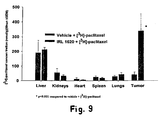
- Rats from each group received [ 3 H]paclitaxel:saline in a final volume of 1.0 ml (i.v.) 15 minutes after IRL-1620. Animals were sacrificed three hours after the administration of [ 3 H]paclitaxel. Tumor and organs were solublilized in tissue solubilizer and the concentration of [ 3 H]paclitaxel was determined using a liquid scintillation counter.
- IRL-1620 Male Copenhagen rats bearing prostate tumors, about 200 mm 3 in size, formed by intradermal injection of JHU-4 cells, were administered IRL-1620 at the dose of 3 and 6 nmol/kg via tail vein, and blood flow to the tumor was studied by Laser Doppler Flowmetry. As in the case of breast tumors, IRL-1620 enhanced blood supply to the prostate tumor within 15 minutes and the effect lasted for about 3 hours ( Figure 6). Figure 6 shows the percent difference in tumor blood perfusion in Copenhagen rats bearing prostate tumors measured using Laser Doppler Flowmetry. IRL-1620 produced a significant increase in tumor blood perfusion compared to saline.
- Figure 7 shows the percent difference concentration of doxorubicin in prostate tumor-bearing rats treated with various doses of IRL-1620.
- IRL-1620 (3 nmol/kg) dose produced the maximal increase in accumulation of doxorubicin in the tumor. Other organs were not affected.
- ET A receptor antagonists increase tumor blood flow and can be used in better imaging of tumor
- a patient is prepared for intravenous drug administration by inserting a venous cannula.
- An ET B receptor agonist then is administered intravenously, and 15 minutes later an imaging agent is administered intravenously.
- An image then is taken using an appropriate instrument, e.g., X-ray, ultrasound, CT scan, or MRI, at various times following administration of the imaging agent. Images of the tumor are better visualized because the imaging agent is accumulated selectively in tumor tissue compared to normal tissues.
- the above method also can be performed by administering an ET A receptor antagonist intravenously, then administering an imaging agent intravenously, followed by taking an image using the appropriate instrument at various times following administration of the imaging agent. Images of the tumor again are better visualized because the imaging agent is accumulated selectively in tumor tissue compared to normal tissues.
- a patient is prepared for intravenous drug administration by inserting a venous cannula.
- An imaging agent then is administered, and an image is taken using the appropriate instrument, e.g., X-ray, ultrasound, CT scan, or MRI, at various times following administration of the imaging agent.
- the imaging agent next is washed from the patient, then an ET B receptor agonist is administered to the patient intravenously. Fifteen minutes later, the imaging agent again is administered, and a second image is taken using the appropriate instrument at various times following the second administration of the imaging agent.
- the images of the tumor in the presence and the absence of the ET B receptor agonist are compared. If the second images are brighter or more enhanced due to ET B receptor agonist administration, the tumor probably is malignant.
- an ET A receptor antagonist can be used in place of an ET B receptor agonist to enhance the images of a tumor and determine the malignant or benign nature of the tumor.
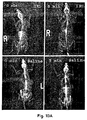
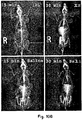
- Figure 10 also illustrates the present invention.
- the figure contains X-rays of a rat having tumors.
- One set of X-rays are of the rat administered an ET B receptor agonist (IRL) and an imaging agent (Hypaque).
- the other set of X-rays are of the rat administered saline and an imaging agent.
- Fig. 10 clearly shows that tumor visibility is increased 15 and 30 minutes after administration of an imaging agent and an ET B receptor agonist, while tumor visibility was not affected after administration of an imaging agent with saline (control).
- endothelin is a known vasoactive substance that acts on two subtypes of receptors.
- ET A receptors which are located on vascular smooth muscle cells, are responsible for vasoconstriction.
- ET B receptors which are located on the endothelial cells, are responsible for vasodilation.
- Blood vessels in the growing part of tumors are devoid of smooth muscle covering, and tumor tissues have augmented ET B receptors compared to healthy host tissues.
- an ET B receptor agonist e.g., ET-1 or IRL-1620
- the ET A receptor antagonist, ET B receptor agonist, and imaging agent can be formulated in suitable excipients for administration. Such excipients are well known in the art.
- the active ingredients typically are present in such a composition in an amount of about 0.1% to about 75% by weight.
- compositions containing the active ingredients are suitable for administration to humans or other mammals.
- the pharmaceutical compositions are sterile, and contain no toxic, carcinogenic, or mutagenic compounds that would cause an adverse reaction when administered.
- a method of the present invention can be accomplished using active ingredients as described above, or as a physiologically acceptable salt, derivative, prodrug, or solvate thereof.
- the active ingredients can be administered as the neat compound, or as a pharmaceutical composition containing either or both entities.
- the active ingredients can be administered by any suitable route, for example by oral, buccal, inhalation, sublingual, rectal, vaginal, intracisternal through lumbar puncture, transurethral, nasal, percutaneous, i.e., transdermal, or parenteral (including intravenous, intramuscular, subcutaneous, and intracoronary) administration.
- Parenteral administration can be accomplished using a needle and syringe, or using a high pressure technique, like POWDERJECTTM.
- compositions include those wherein the active ingredients are administered in an effective amount to achieve their intended purpose. More specifically, an "effective amount” means an amount effective to detect a tumor. Determination of an effective amount is well within the capability of those skilled in the art, especially in light of the detailed disclosure provided herein.
- the amount of imaging agent can be decreased without decreasing the sensitivity of the diagnostic method, or the amount of imaging agent can be maintained at an unreduced level and the sensitivity of the diagnostic method will be increased, i.e., previously undetectable tumors can be detected.
- the exact formulation, route of administration, and dosage of active ingredients are determined by an individual physician in view of the patient's condition. Dosage amount can be adjusted individually to provide levels of the active ingredients that are sufficient to detect the tumor of interest.
- the amount of pharmaceutical composition administered is dependent on the subject being treated, on the subject's weight, the manner of administration, and the judgment of the prescribing physician.
- oral dosages of active ingredients individually generally are about 10 to about 200 mg daily for an average adult patient (70 kg).
- individual tablets or capsules contain about 0.1 to about 50 mg active ingredients, in a suitable pharmaceutically acceptable vehicle or carrier.
- Dosages for intravenous, buccal, or sublingual administration typically are about 0.1 to about 100 ⁇ g/kg per dose.
- the physician determines the actual dosing that is most suitable for an individual patient, and the dosage varies with the age, weight, and response of the particular patient.
- the above dosages are exemplary of the average case, but there can be individual instances in which higher or lower dosages are merited, and such are within the scope of this invention.
- compositions for use in accordance with the present invention thus can be formulated in a conventional manner using one or more physiologically acceptable carriers comprising excipients and auxiliaries that facilitate processing of the active ingredients into preparations which can be used pharmaceutically.
- compositions can be manufactured in a conventional manner, e.g., by conventional mixing, dissolving, granulating, dragee-making, emulsifying, encapsulating, entrapping, or lyophilizing processes. Proper formulation is dependent upon the route of administration chosen.
- the composition typically is in the form of a tablet, capsule, powder, solution, or elixir.
- the composition can additionally contain a solid carrier, such as a gelatin or an adjuvant.
- the tablet, capsule, and powder contain about 5% to about 95% of an active ingredients, and preferably from about 25% to about 90% active ingredients.
- a liquid carrier such as water, petroleum, or oils of animal or plant origin
- the liquid form of the composition can further contain physiological saline solution, dextrose or other saccharide solutions, or glycols.
- the composition When administered in liquid form, the composition contains about 0.5% to about 90% by weight of active ingredients, and preferably about 1% to about 50% of active ingredients.
- the composition When a therapeutically effective amount of the active ingredients is administered by intravenous, cutaneous, or subcutaneous injection, the composition is in the form of a pyrogen-free, parenterally acceptable aqueous solution.
- parenterally acceptable solutions having due regard to pH, isotonicity, stability, and the like, is within the skill in the art.
- a preferred composition for intravenous, cutaneous, or subcutaneous injection typically contains, in addition to an isotonic vehicle.
- Suitable active ingredients can be readily combined with pharmaceutically acceptable carriers well known in the art. Such carriers enable the active agents to be formulated as tablets, pills, dragees, capsules, liquids, gels, syrups, slurries, suspensions and the like, for oral ingestion by a patient to be treated.
- Pharmaceutical preparations for oral use can be obtained by adding the active ingredients with a solid excipient, optionally grinding the resulting mixture, and processing the mixture of granules, after adding suitable auxiliaries, if desired, to obtain tablets or dragee cores.
- Suitable excipients include, for example, fillers and cellulose preparations. If desired, disintegrating agents can be added.
- the active ingredients can be formulated for parenteral administration by injection, e.g., by bolus injection or continuous infusion.
- Formulations for injection can be presented in unit dosage form, e.g., in ampules or in multidose containers, with an added preservative.
- the compositions can take such forms as suspensions, solutions, or emulsions in oily or aqueous vehicles, and can contain formulatory agents such as suspending, stabilizing, and/or dispersing agents.
- compositions for parenteral administration include aqueous solutions of the active agent in water-soluble form.
- suspensions of the active ingredients can be prepared as appropriate oily injection suspensions.
- Suitable lipophilic solvents or vehicles include fatty oils or synthetic fatty acid esters.
- Aqueous injection suspensions can contain substances which increase the viscosity of the suspension.
- the suspension also can contain suitable stabilizers or agents that increase the solubility of the compounds and allow for the preparation of highly concentrated solutions.
- a present composition can be in powder form for constitution with a suitable vehicle, e.g., sterile pyrogen-free water, before use.
- the active ingredients also can be formulated in rectal compositions, such as suppositories or retention enemas, e.g., containing conventional suppository bases.
- the active ingredients also can be formulated as a depot preparation.
- Such long-acting formulations can be administered by implantation (for example, subcutaneously or intramuscularly) or by intramuscular injection.
- the active ingredients can be formulated with suitable polymeric or hydrophobic materials (for example, as an emulsion in an acceptable oil) or ion exchange resins, or as sparingly soluble derivatives, for example, as a sparingly soluble salt.
- the active ingredients can be administered orally, buccally, or sublingually in the form of tablets containing excipients, such as starch or lactose, or in capsules or ovules, either alone or in admixture with excipients, or in the form of elixirs or suspensions containing flavoring or coloring agents.
- excipients such as starch or lactose
- capsules or ovules either alone or in admixture with excipients, or in the form of elixirs or suspensions containing flavoring or coloring agents.
- Such liquid preparations can be prepared with pharmaceutically acceptable additives, such as suspending agents.
- the active ingredients also can be injected parenterally, for example, intravenously, intramuscularly, subcutaneously, or intracoronarily.
- the active ingredients are best used in the form of a sterile aqueous solution which can contain other substances, for example, salts, or monosaccharides, such as mannitol or glucose, to make the solution isotonic with blood.
- a sterile aqueous solution which can contain other substances, for example, salts, or monosaccharides, such as mannitol or glucose, to make the solution isotonic with blood.
- the active ingredients are administered as a suitably acceptable formulation in accordance with normal veterinary practice.
- the veterinarian can readily determine the dosing regimen and route of administration that is most appropriate for a particular animal.
- the present method allows detection of previously undetectable tumors, thereby improving the ability to diagnose a cancer, allowing a cancer treatment to begin earlier, and improving the probabilities of a recovery from the cancer.
- the present method also allows for a more accurate determination of the progress of a cancer treatment regimen.
- the present method also can be used for staging of cancer.
- the imaging agent like the ET B receptor agent, is administered in an effective amount to perform its intended function.
- the imaging agent can be administered by any suitable means, typically using a composition containing the imaging agent.
- the imaging agent can be administered simultaneously with the ET B receptor agonist or prior to or after ET B receptor agonist administration.
Landscapes
- Health & Medical Sciences (AREA)
- Epidemiology (AREA)
- Life Sciences & Earth Sciences (AREA)
- Animal Behavior & Ethology (AREA)
- General Health & Medical Sciences (AREA)
- Public Health (AREA)
- Veterinary Medicine (AREA)
- Medicines Containing Antibodies Or Antigens For Use As Internal Diagnostic Agents (AREA)
Claims (15)
- Zusammensetzung, umfassend den Endothelin-B-RezeptorAgonisten IRL-1620 und ein Röntgenkontrastmittel, zur Verwendung bei der Detektion eines Tumors bei einem Säuger, indem dem Säuger die genannte Zusammensetzung verabreicht wird und das Säuger anschließend einem diagnostischen, bildgebenden Verfahren unterworfen wird, wobei ein Bild von einem Gewebe des Säugers erhalten wird.
- Zusammensetzung zur Verwendung gemäß Anspruch 1, wobei der Tumor mit einer Krebserkrankung, ausgewählt aus der Gruppe, bestehend aus Eierstockkrebs, Kolonkarzinom, Brustkrebs, Gehirnkrebs, Leberkrebs, Dickdarmkrebs, metastasierendem Dickdarmkrebs, metastasierendem Brustkrebs, Speiseröhrenkrebs, Magenkrebs, Dünndarmkrebs, hepatobiliärem Krebs, Bauchspeicheldrüsenkrebs, Lymphom, Blasenkrebs, Keimzell-/Hodentumoren, Nierenkrebs, Prostatakrebs, Urogenitalkrebs, Kopf-und Halskrebs, nicht-kleinzelligem Lungenkrebs, kleinzelligem Lungenkrebs, anderen Lungenkrebsarten, Melanom und pädiatrischen, soliden Tumoren, assoziiert wird.
- Zusammensetzung zur Verwendung gemäß Anspruch 1, wobei der Endothelin-Rezeptor-B-Agonist IRL-1620 und das Röntgenkontrastmittel gleichzeitig verabreicht werden.
- Zusammensetzung zur Verwendung gemäß Anspruch 3, wobei der Endothelin-B-Rezeptor-Agonist IRL-1620 und das Röntgenkontrastmittel in einer einzigen Zusammensetzung verabreicht werden.
- Zusammensetzung zur Verwendung gemäß Anspruch 3, wobei der Endothelin-B-Rezeptor-Agonist IRL-1620 und das Röntgenkontrastmittel in getrennten Zusammensetzungen verabreicht werden.
- Zusammensetzung zur Verwendung gemäß Anspruch 1, wobei der Endothelin-B-Rezeptor-Agonist IRL-1620 und das Röntgenkontrastmittel nacheinander verabreicht werden.
- Zusammensetzung zur Verwendung gemäß Anspruch 6, wobei das Röntgenkontrastmittel vor dem Endothelin-B-Rezeptor-Agonist IRL-1620 verabreicht wird.
- Zusammensetzung zur Verwendung gemäß Anspruch 6, wobei der Endothelin-B-Rezeptor-Agonist IRL-1620 vor dem Röntgenkontrastmittel verabreicht wird.
- Zusammensetzung zur Verwendung gemäß Anspruch 1, wobei das Säuger ein Mensch ist.
- Zusammensetzung zur Verwendung gemäß Anspruch 1, wobei das diagnostische, bildgebende Verfahren Röntgenbildaufnahme ist.
- Zusammensetzung zur Verwendung gemäß Anspruch 1, das ferner gegebenenfalls einen Hilfsstoff enthält.
- Zusammensetzung, umfassend den Endothelin-B-Rezeptor-Agonisten IRL-1620 und ein Röntgenkontrastmittel, zur Verwendung bei der Überwachung des Verlaufs einer Krebsbehandlung bei einem Säuger, indem dem Säuger die genannte Zusammensetzung verabreicht wird und das Säuger anschließend einem diagnostischen, bildgebenden Verfahren unterworfen wird, um eine Größe eines Tumors, der mit dem Krebs assoziiert wird, zu ermitteln.
- Zusammensetzung zur Verwendung gemäß Anspruch 12, wobei die Krebsbehandlung eine chemotherapeutische Behandlung ist.
- Zusammensetzung zur Verwendung gemäß Anspruch 12, wobei die Krebsbehandlung eine Strahlenbehandlung ist.
- Zusammensetzung, umfassend den Endothelin-B-Rezeptor-Agonisten IRL-1620 und ein Röntgenkontrastmittel, zur Verwendung bei der Differenzierung zwischen einem bösartigen Tumor und einem gutartigen Tumor bei einem Säuger durch(a) Verabreichen eines Röntgenkontrastmittels an das Säuger;(b) Erhalten eines ersten Bilds des Tumors unter Verwendung eines diagnostischen, bildgebenden Verfahrens,(c) Auswaschen des Röntgenkontrastmittels aus dem Säuger;(d) Verabreichen eines Endothelin-B-Rezeptor-Agonisten IRL-1620 und des Röntgenkontrastmittels an das Säuger;(e) Erhalten eines zweiten Bildes des Tumors unter Verwendung des diagnostischen, bildgebenden Verfahrens und(f) Vergleichen des ersten Bildes aus Schritt (b) mit dem zweiten Bild aus Schritt (e), wobei, wenn das zweite Bild im Vergleich zu dem ersten Bild verbessert ist, der Tumor bösartig ist.
Applications Claiming Priority (2)
| Application Number | Priority Date | Filing Date | Title |
|---|---|---|---|
| US62992304P | 2004-11-22 | 2004-11-22 | |
| PCT/US2005/042258 WO2006057988A2 (en) | 2004-11-22 | 2005-11-21 | Use of endothelin etb receptor agonists and eta receptor antagonists in tumor imaging |
Publications (2)
| Publication Number | Publication Date |
|---|---|
| EP1819367A2 EP1819367A2 (de) | 2007-08-22 |
| EP1819367B1 true EP1819367B1 (de) | 2013-11-20 |
Family
ID=36217940
Family Applications (1)
| Application Number | Title | Priority Date | Filing Date |
|---|---|---|---|
| EP05824775.0A Expired - Lifetime EP1819367B1 (de) | 2004-11-22 | 2005-11-21 | Verwendung von dem endothelin-etb-rezeptoragonist irl-1620 bei der tumordarstellung |
Country Status (3)
| Country | Link |
|---|---|
| US (1) | US8980222B2 (de) |
| EP (1) | EP1819367B1 (de) |
| WO (1) | WO2006057988A2 (de) |
Families Citing this family (7)
| Publication number | Priority date | Publication date | Assignee | Title |
|---|---|---|---|---|
| US20070032422A1 (en) | 2002-10-24 | 2007-02-08 | Spectrum Pharmaceuticals, Inc. | Methods, compositions and articles of manufacture for contributing to the treatment of cancers |
| US8026216B2 (en) | 2002-10-24 | 2011-09-27 | Spectrum Pharmaceuticals, Inc. | Methods and compositions for contributing to the treatment of cancers |
| US8394757B2 (en) * | 2002-10-24 | 2013-03-12 | Spectrum Pharmaceuticals, Inc. | Sensitization of tumor cells to radiation therapy through the administration of endothelin agonists |
| WO2008075379A1 (en) * | 2006-12-18 | 2008-06-26 | Venus Remedies Limited | Novel formulation for enhanced delivery of diagnostic agents to tumor tissues |
| US20100184698A1 (en) * | 2007-09-11 | 2010-07-22 | Dorian Bevec | Use of a deslorelin and mastoparan as a therapeutic agent |
| US9308235B2 (en) | 2012-05-09 | 2016-04-12 | Spectrum Pharmaceuticals, Inc. | Treatment of primary and metastatic carcinoma |
| CN103750916B (zh) * | 2014-01-26 | 2016-05-11 | 徐泽宽 | 一种小鼠胃癌模型的建立方法 |
Family Cites Families (2)
| Publication number | Priority date | Publication date | Assignee | Title |
|---|---|---|---|---|
| US20030104976A1 (en) * | 2001-07-23 | 2003-06-05 | Gudarz Davar | Analgesic methods using endothelin receptor ligands |
| JP2006508086A (ja) * | 2002-10-24 | 2006-03-09 | ザ ボード オブ トラスティーズ オブ ザ ユニバーシティ オブ イリノイ | 固形腫瘍を予防および治療するための方法および組成物 |
-
2005
- 2005-11-21 EP EP05824775.0A patent/EP1819367B1/de not_active Expired - Lifetime
- 2005-11-21 US US11/791,131 patent/US8980222B2/en not_active Expired - Fee Related
- 2005-11-21 WO PCT/US2005/042258 patent/WO2006057988A2/en not_active Ceased
Also Published As
| Publication number | Publication date |
|---|---|
| EP1819367A2 (de) | 2007-08-22 |
| US20080260634A1 (en) | 2008-10-23 |
| US8980222B2 (en) | 2015-03-17 |
| WO2006057988A2 (en) | 2006-06-01 |
| WO2006057988A3 (en) | 2007-07-26 |
Similar Documents
| Publication | Publication Date | Title |
|---|---|---|
| Motzer et al. | Phase I/II trial of dexverapamil plus vinblastine for patients with advanced renal cell carcinoma. | |
| Xiong et al. | A phase I surrogate endpoint study of SU6668 in patients with solid tumors | |
| Perotti et al. | Clinical and pharmacological phase I evaluation of Exherin™(ADH-1), a selective anti-N-cadherin peptide in patients with N-cadherin-expressing solid tumours | |
| TWI904072B (zh) | 治療癌症之方法 | |
| JP7113619B2 (ja) | リポソーマルイリノテカンによる乳がんの治療 | |
| Liu et al. | RGD-functionalised melanin nanoparticles for intraoperative photoacoustic imaging-guided breast cancer surgery | |
| EP3538070B1 (de) | Pharmazeutische zusammensetzung von benzolsulfonamidderivaten zur behandlung von adenoid-zystischen karzinomen | |
| AU2026201845A1 (en) | Methods of treating cancer | |
| US20170112865A1 (en) | Treatment for melanoma | |
| Guo et al. | Peptides for diagnosis and treatment of ovarian cancer | |
| TWI469776B (zh) | 有助於癌症之治療的方法,組成物以及製品 | |
| Kirsch | Successful treatment of metastatic malignant melanoma with Viscum album extract (Iscador® M) | |
| Stahl et al. | Positron emission tomography as a tool for translational research in oncology | |
| US8980222B2 (en) | Diagnostic use of endothelin ETB receptor agonists and ETA receptor antagonists in tumor imaging | |
| US20020151508A1 (en) | Methods for treating proliferative diseases | |
| KR20230018484A (ko) | 유방암 진단 치료 약물 제조에서 미톡산트론 제제의 응용 | |
| JP7545147B2 (ja) | リンパトレーサーおよびその調製方法 | |
| US20220008442A1 (en) | Phospholipid Ether Analogs for Imaging and Targeted Treatment of Pediatric Solid Tumors | |
| WO2022136317A1 (en) | Radiolabelled alpha-v beta-3 and/or alpha-v beta-5 integrins antagonist for use as theragnostic agent | |
| Teh et al. | Intraoperative assessment and postsurgical treatment of prostate cancer tumors using tumor-targeted nanoprobes | |
| Xie et al. | CuET Radiosensitizes FAP-Targeted Radioligand Therapy in Lung Cancer by inhibiting DNA Repair | |
| Liang et al. | Clinical Fluorescent Probes: Mechanisms, Advantages and Inspirations | |
| Zhao et al. | Dual-Ligand Nanoprobes for Fluorescence and Magnetic Particle Imaging-Guided Glioma Surgical Resection | |
| Metzger et al. | Intraportal chemotherapy for colorectal hepatic metastases | |
| JP2007297339A (ja) | 癌を治療又は検査するための医薬 |
Legal Events
| Date | Code | Title | Description |
|---|---|---|---|
| PUAI | Public reference made under article 153(3) epc to a published international application that has entered the european phase |
Free format text: ORIGINAL CODE: 0009012 |
|
| AK | Designated contracting states |
Kind code of ref document: A2 Designated state(s): AT BE BG CH CY CZ DE DK EE ES FI FR GB GR HU IE IS IT LI LT LU LV MC NL PL PT RO SE SI SK TR |
|
| AX | Request for extension of the european patent |
Extension state: AL BA HR MK YU |
|
| R17D | Deferred search report published (corrected) |
Effective date: 20070726 |
|
| RBV | Designated contracting states (corrected) |
Designated state(s): AT BE BG CH CY CZ DE DK EE ES FI FR GB GR HU IE IS IT LI LT LU LV MC NL PL PT RO SE SI SK TR |
|
| 17P | Request for examination filed |
Effective date: 20071210 |
|
| DAX | Request for extension of the european patent (deleted) | ||
| 17Q | First examination report despatched |
Effective date: 20080317 |
|
| GRAP | Despatch of communication of intention to grant a patent |
Free format text: ORIGINAL CODE: EPIDOSNIGR1 |
|
| INTG | Intention to grant announced |
Effective date: 20130606 |
|
| GRAS | Grant fee paid |
Free format text: ORIGINAL CODE: EPIDOSNIGR3 |
|
| GRAA | (expected) grant |
Free format text: ORIGINAL CODE: 0009210 |
|
| AK | Designated contracting states |
Kind code of ref document: B1 Designated state(s): AT BE BG CH CY CZ DE DK EE ES FI FR GB GR HU IE IS IT LI LT LU LV MC NL PL PT RO SE SI SK TR |
|
| REG | Reference to a national code |
Ref country code: GB Ref legal event code: FG4D |
|
| REG | Reference to a national code |
Ref country code: CH Ref legal event code: EP |
|
| REG | Reference to a national code |
Ref country code: AT Ref legal event code: REF Ref document number: 641189 Country of ref document: AT Kind code of ref document: T Effective date: 20131215 |
|
| REG | Reference to a national code |
Ref country code: IE Ref legal event code: FG4D |
|
| REG | Reference to a national code |
Ref country code: DE Ref legal event code: R096 Ref document number: 602005041955 Country of ref document: DE Effective date: 20140116 |
|
| REG | Reference to a national code |
Ref country code: NL Ref legal event code: VDEP Effective date: 20131120 |
|
| REG | Reference to a national code |
Ref country code: AT Ref legal event code: MK05 Ref document number: 641189 Country of ref document: AT Kind code of ref document: T Effective date: 20131120 |
|
| REG | Reference to a national code |
Ref country code: LT Ref legal event code: MG4D |
|
| PG25 | Lapsed in a contracting state [announced via postgrant information from national office to epo] |
Ref country code: LT Free format text: LAPSE BECAUSE OF FAILURE TO SUBMIT A TRANSLATION OF THE DESCRIPTION OR TO PAY THE FEE WITHIN THE PRESCRIBED TIME-LIMIT Effective date: 20131120 Ref country code: NL Free format text: LAPSE BECAUSE OF FAILURE TO SUBMIT A TRANSLATION OF THE DESCRIPTION OR TO PAY THE FEE WITHIN THE PRESCRIBED TIME-LIMIT Effective date: 20131120 Ref country code: SE Free format text: LAPSE BECAUSE OF FAILURE TO SUBMIT A TRANSLATION OF THE DESCRIPTION OR TO PAY THE FEE WITHIN THE PRESCRIBED TIME-LIMIT Effective date: 20131120 Ref country code: FI Free format text: LAPSE BECAUSE OF FAILURE TO SUBMIT A TRANSLATION OF THE DESCRIPTION OR TO PAY THE FEE WITHIN THE PRESCRIBED TIME-LIMIT Effective date: 20131120 Ref country code: IS Free format text: LAPSE BECAUSE OF FAILURE TO SUBMIT A TRANSLATION OF THE DESCRIPTION OR TO PAY THE FEE WITHIN THE PRESCRIBED TIME-LIMIT Effective date: 20140320 |
|
| PG25 | Lapsed in a contracting state [announced via postgrant information from national office to epo] |
Ref country code: LV Free format text: LAPSE BECAUSE OF FAILURE TO SUBMIT A TRANSLATION OF THE DESCRIPTION OR TO PAY THE FEE WITHIN THE PRESCRIBED TIME-LIMIT Effective date: 20131120 Ref country code: ES Free format text: LAPSE BECAUSE OF FAILURE TO SUBMIT A TRANSLATION OF THE DESCRIPTION OR TO PAY THE FEE WITHIN THE PRESCRIBED TIME-LIMIT Effective date: 20131120 Ref country code: AT Free format text: LAPSE BECAUSE OF FAILURE TO SUBMIT A TRANSLATION OF THE DESCRIPTION OR TO PAY THE FEE WITHIN THE PRESCRIBED TIME-LIMIT Effective date: 20131120 Ref country code: BE Free format text: LAPSE BECAUSE OF FAILURE TO SUBMIT A TRANSLATION OF THE DESCRIPTION OR TO PAY THE FEE WITHIN THE PRESCRIBED TIME-LIMIT Effective date: 20131120 |
|
| PG25 | Lapsed in a contracting state [announced via postgrant information from national office to epo] |
Ref country code: PT Free format text: LAPSE BECAUSE OF FAILURE TO SUBMIT A TRANSLATION OF THE DESCRIPTION OR TO PAY THE FEE WITHIN THE PRESCRIBED TIME-LIMIT Effective date: 20140320 |
|
| REG | Reference to a national code |
Ref country code: CH Ref legal event code: PL |
|
| PG25 | Lapsed in a contracting state [announced via postgrant information from national office to epo] |
Ref country code: CH Free format text: LAPSE BECAUSE OF NON-PAYMENT OF DUE FEES Effective date: 20131130 Ref country code: LI Free format text: LAPSE BECAUSE OF NON-PAYMENT OF DUE FEES Effective date: 20131130 Ref country code: EE Free format text: LAPSE BECAUSE OF FAILURE TO SUBMIT A TRANSLATION OF THE DESCRIPTION OR TO PAY THE FEE WITHIN THE PRESCRIBED TIME-LIMIT Effective date: 20131120 |
|
| REG | Reference to a national code |
Ref country code: DE Ref legal event code: R097 Ref document number: 602005041955 Country of ref document: DE |
|
| REG | Reference to a national code |
Ref country code: IE Ref legal event code: MM4A |
|
| PG25 | Lapsed in a contracting state [announced via postgrant information from national office to epo] |
Ref country code: IT Free format text: LAPSE BECAUSE OF FAILURE TO SUBMIT A TRANSLATION OF THE DESCRIPTION OR TO PAY THE FEE WITHIN THE PRESCRIBED TIME-LIMIT Effective date: 20131120 Ref country code: CZ Free format text: LAPSE BECAUSE OF FAILURE TO SUBMIT A TRANSLATION OF THE DESCRIPTION OR TO PAY THE FEE WITHIN THE PRESCRIBED TIME-LIMIT Effective date: 20131120 Ref country code: PL Free format text: LAPSE BECAUSE OF FAILURE TO SUBMIT A TRANSLATION OF THE DESCRIPTION OR TO PAY THE FEE WITHIN THE PRESCRIBED TIME-LIMIT Effective date: 20131120 Ref country code: SK Free format text: LAPSE BECAUSE OF FAILURE TO SUBMIT A TRANSLATION OF THE DESCRIPTION OR TO PAY THE FEE WITHIN THE PRESCRIBED TIME-LIMIT Effective date: 20131120 Ref country code: RO Free format text: LAPSE BECAUSE OF FAILURE TO SUBMIT A TRANSLATION OF THE DESCRIPTION OR TO PAY THE FEE WITHIN THE PRESCRIBED TIME-LIMIT Effective date: 20131120 Ref country code: MC Free format text: LAPSE BECAUSE OF FAILURE TO SUBMIT A TRANSLATION OF THE DESCRIPTION OR TO PAY THE FEE WITHIN THE PRESCRIBED TIME-LIMIT Effective date: 20131120 |
|
| PLBE | No opposition filed within time limit |
Free format text: ORIGINAL CODE: 0009261 |
|
| STAA | Information on the status of an ep patent application or granted ep patent |
Free format text: STATUS: NO OPPOSITION FILED WITHIN TIME LIMIT |
|
| PG25 | Lapsed in a contracting state [announced via postgrant information from national office to epo] |
Ref country code: DK Free format text: LAPSE BECAUSE OF FAILURE TO SUBMIT A TRANSLATION OF THE DESCRIPTION OR TO PAY THE FEE WITHIN THE PRESCRIBED TIME-LIMIT Effective date: 20131120 |
|
| 26N | No opposition filed |
Effective date: 20140821 |
|
| PG25 | Lapsed in a contracting state [announced via postgrant information from national office to epo] |
Ref country code: IE Free format text: LAPSE BECAUSE OF NON-PAYMENT OF DUE FEES Effective date: 20131121 |
|
| REG | Reference to a national code |
Ref country code: DE Ref legal event code: R097 Ref document number: 602005041955 Country of ref document: DE Effective date: 20140821 |
|
| PG25 | Lapsed in a contracting state [announced via postgrant information from national office to epo] |
Ref country code: SI Free format text: LAPSE BECAUSE OF FAILURE TO SUBMIT A TRANSLATION OF THE DESCRIPTION OR TO PAY THE FEE WITHIN THE PRESCRIBED TIME-LIMIT Effective date: 20131120 |
|
| PG25 | Lapsed in a contracting state [announced via postgrant information from national office to epo] |
Ref country code: TR Free format text: LAPSE BECAUSE OF FAILURE TO SUBMIT A TRANSLATION OF THE DESCRIPTION OR TO PAY THE FEE WITHIN THE PRESCRIBED TIME-LIMIT Effective date: 20131120 Ref country code: CY Free format text: LAPSE BECAUSE OF FAILURE TO SUBMIT A TRANSLATION OF THE DESCRIPTION OR TO PAY THE FEE WITHIN THE PRESCRIBED TIME-LIMIT Effective date: 20131120 |
|
| PG25 | Lapsed in a contracting state [announced via postgrant information from national office to epo] |
Ref country code: BG Free format text: LAPSE BECAUSE OF FAILURE TO SUBMIT A TRANSLATION OF THE DESCRIPTION OR TO PAY THE FEE WITHIN THE PRESCRIBED TIME-LIMIT Effective date: 20131120 Ref country code: LU Free format text: LAPSE BECAUSE OF NON-PAYMENT OF DUE FEES Effective date: 20131121 Ref country code: HU Free format text: LAPSE BECAUSE OF FAILURE TO SUBMIT A TRANSLATION OF THE DESCRIPTION OR TO PAY THE FEE WITHIN THE PRESCRIBED TIME-LIMIT; INVALID AB INITIO Effective date: 20051121 |
|
| PG25 | Lapsed in a contracting state [announced via postgrant information from national office to epo] |
Ref country code: GR Free format text: LAPSE BECAUSE OF NON-PAYMENT OF DUE FEES Effective date: 20131120 |
|
| REG | Reference to a national code |
Ref country code: FR Ref legal event code: PLFP Year of fee payment: 11 |
|
| PG25 | Lapsed in a contracting state [announced via postgrant information from national office to epo] |
Ref country code: GR Free format text: LAPSE BECAUSE OF FAILURE TO SUBMIT A TRANSLATION OF THE DESCRIPTION OR TO PAY THE FEE WITHIN THE PRESCRIBED TIME-LIMIT Effective date: 20140221 |
|
| REG | Reference to a national code |
Ref country code: FR Ref legal event code: PLFP Year of fee payment: 12 |
|
| REG | Reference to a national code |
Ref country code: FR Ref legal event code: PLFP Year of fee payment: 13 |
|
| PGFP | Annual fee paid to national office [announced via postgrant information from national office to epo] |
Ref country code: FR Payment date: 20201125 Year of fee payment: 16 Ref country code: DE Payment date: 20201110 Year of fee payment: 16 Ref country code: GB Payment date: 20201111 Year of fee payment: 16 |
|
| REG | Reference to a national code |
Ref country code: DE Ref legal event code: R119 Ref document number: 602005041955 Country of ref document: DE |
|
| GBPC | Gb: european patent ceased through non-payment of renewal fee |
Effective date: 20211121 |
|
| PG25 | Lapsed in a contracting state [announced via postgrant information from national office to epo] |
Ref country code: GB Free format text: LAPSE BECAUSE OF NON-PAYMENT OF DUE FEES Effective date: 20211121 Ref country code: DE Free format text: LAPSE BECAUSE OF NON-PAYMENT OF DUE FEES Effective date: 20220601 |
|
| PG25 | Lapsed in a contracting state [announced via postgrant information from national office to epo] |
Ref country code: FR Free format text: LAPSE BECAUSE OF NON-PAYMENT OF DUE FEES Effective date: 20211130 |