EP1817897B1 - Method and apparatus for handling an incoming call - Google Patents
Method and apparatus for handling an incoming call Download PDFInfo
- Publication number
- EP1817897B1 EP1817897B1 EP05814167A EP05814167A EP1817897B1 EP 1817897 B1 EP1817897 B1 EP 1817897B1 EP 05814167 A EP05814167 A EP 05814167A EP 05814167 A EP05814167 A EP 05814167A EP 1817897 B1 EP1817897 B1 EP 1817897B1
- Authority
- EP
- European Patent Office
- Prior art keywords
- incoming call
- signal
- earlier
- application
- memory unit
- Prior art date
- Legal status (The legal status is an assumption and is not a legal conclusion. Google has not performed a legal analysis and makes no representation as to the accuracy of the status listed.)
- Expired - Lifetime
Links
Images



Classifications
-
- H—ELECTRICITY
- H04—ELECTRIC COMMUNICATION TECHNIQUE
- H04M—TELEPHONIC COMMUNICATION
- H04M3/00—Automatic or semi-automatic exchanges
- H04M3/02—Calling substations, e.g. by ringing
-
- H—ELECTRICITY
- H04—ELECTRIC COMMUNICATION TECHNIQUE
- H04M—TELEPHONIC COMMUNICATION
- H04M19/00—Current supply arrangements for telephone systems
- H04M19/02—Current supply arrangements for telephone systems providing ringing current or supervisory tones, e.g. dialling tone or busy tone
- H04M19/04—Current supply arrangements for telephone systems providing ringing current or supervisory tones, e.g. dialling tone or busy tone the ringing-current being generated at the substations
-
- H—ELECTRICITY
- H04—ELECTRIC COMMUNICATION TECHNIQUE
- H04M—TELEPHONIC COMMUNICATION
- H04M3/00—Automatic or semi-automatic exchanges
- H04M3/42—Systems providing special services or facilities to subscribers
- H04M3/42025—Calling or Called party identification service
- H04M3/42034—Calling party identification service
- H04M3/42059—Making use of the calling party identifier
-
- H—ELECTRICITY
- H04—ELECTRIC COMMUNICATION TECHNIQUE
- H04M—TELEPHONIC COMMUNICATION
- H04M1/00—Substation equipment, e.g. for use by subscribers
- H04M1/57—Arrangements for indicating or recording the number of the calling subscriber at the called subscriber's set
-
- H—ELECTRICITY
- H04—ELECTRIC COMMUNICATION TECHNIQUE
- H04M—TELEPHONIC COMMUNICATION
- H04M3/00—Automatic or semi-automatic exchanges
- H04M3/38—Graded-service arrangements, i.e. some subscribers prevented from establishing certain connections
- H04M3/382—Graded-service arrangements, i.e. some subscribers prevented from establishing certain connections using authorisation codes or passwords
-
- H—ELECTRICITY
- H04—ELECTRIC COMMUNICATION TECHNIQUE
- H04M—TELEPHONIC COMMUNICATION
- H04M3/00—Automatic or semi-automatic exchanges
- H04M3/42—Systems providing special services or facilities to subscribers
- H04M3/428—Arrangements for placing incoming calls on hold
-
- H—ELECTRICITY
- H04—ELECTRIC COMMUNICATION TECHNIQUE
- H04M—TELEPHONIC COMMUNICATION
- H04M3/00—Automatic or semi-automatic exchanges
- H04M3/42—Systems providing special services or facilities to subscribers
- H04M3/50—Centralised arrangements for answering calls; Centralised arrangements for recording messages for absent or busy subscribers ; Centralised arrangements for recording messages
- H04M3/53—Centralised arrangements for recording incoming messages, i.e. mailbox systems
- H04M3/533—Voice mail systems
Definitions
- This invention relates to the field of telecommunications. More precisely, this invention pertains to the field of communication on analog lines.
- Fig. 1 there is shown a diagram which discloses how a conflict may occur due to the limitation.
- a ring signal for the first incoming call is issued to an application at the inbound terminal.
- the application may be any type of application such as for instance a voicemail managing application, an authentication application based on incoming call data, Unified Messaging Applications, Automatic Call Distribution (ACD) Server, Voice over IP (VoIP) Gateway, Point of Sales Server (POS), etc.
- ACD Automatic Call Distribution
- VoIP Voice over IP
- POS Point of Sales Server
- the application issues a "Call Accept Command" (i.e., an AT Answer (ATA) command if a port driver or a TTY driver is used as Application Programming Interface (API)) for instance.
- ATA AT Answer
- API Application Programming Interface
- Such conflict may be the source of Denial of Service (DoS) attacks in the case for instance where an access to an application is based upon a calling or called identity.
- Incoming calls may also be directed to wrong directions by an application.
- the application is an answering machine, a user issuing a call may leave a message in a wrong voicemail.
- U.S. Patent Application Publication No. 2004/0151285 by Brian V. Sychta shows a method and system for managing in-vehicle telephony.
- the disclosure includes a vehicle audio system to which a first call is provided.
- a second received call can be placed in a queue while the first call is active.
- the user has several options for handling the calls, including disconnecting the first or second call, switching the active call or rejecting the second call. Calls placed in the queue that become disconnected may be removed from the queue.
- the invention provides a method and apparatus for handling an incoming call, as specified in claims 1 and 4.
- Optional features of the invention are indicated in the dependent claims
- FIG. 2 there is shown a block diagram showing an apparatus 8 for handling an incoming call at an inbound terminal according to an embodiment of the invention.
- the apparatus 8 comprises a communication port 12, a processing unit 14 and a memory unit 16.
- the communication port 12 is adapted for receiving an incoming call signal originating from an outbound switch, not shown located on a network 10 and further for providing a received signal to the processing unit 14.
- the communication port 12 is further adapted for receiving a signal to send and providing an outgoing phone signal to the network 10.
- the communication port 12 comprises a Direct Access Arrangement (DAA) chip as analog front end (AFE) to terminate the network 10.
- DAA Direct Access Arrangement
- AFE analog front end
- the processing unit 14 is adapted for receiving the received signal provided by the communication port 12 and further adapted for providing a signal to send to the communication port 12.
- the processing unit 14 is further adapted for storing a call information signal in the memory unit 16 and further for retrieving the call information signal from the memory unit 16.
- the communication port 12, the processing unit 14 and the memory unit 16 are embedded into a single card referred to as an "active" embedded system card. Such card may be then plugged to a computer for instance.
- the processing unit of a computer as well as at least one part of the memory unit of the computer are used which is referred to as a "passive" design.
- the memory unit 16 is adapted for storing a call information signal.
- the call information signal may be any type of data enabling the identification of a call such as for instance caller ID data.
- the memory unit 16 may be used to store additional information provided in the case where an SMDI (Simplified Message Desk Interface) interface is used. Such additional information may comprise additional call related information like Redirecting Number or receive/send Message Waiting signal.
- SMDI Simple Message Desk Interface
- using SMDI requires an extra serial cable connected to some specific switch types.
- the caller ID information may be provided using in-band tones (e.g. like FSK modem tones or DTMF tones) after or before the first ring.
- the memory unit 16 may be a dedicated memory unit comprised in an embedded system card while alternatively, the memory unit of a computer may be used.
- the communication port 12, the processing unit 14 and the memory unit 16 may already be comprises in an existing communication device such as a modem for instance.
- an incoming call is received.
- the incoming call is received from the network 10 by the processing unit 14 via the communication port 12.
- the incoming call information may be received from an external serial interface (e.g. a SMDI interface), while the call comes in at the communication port 12.
- a check is performed using the received incoming call in order to find out if an earlier incoming call is being signaled.
- the check is performed by the processing unit 14 disclosed in Fig. 2 . More precisely, the processing unit 14 checks in the memory unit 16 if the latter comprises an existing call information signal indicative of an earlier incoming call. It should be appreciated that preferably, the memory unit 16 comprises an existing call information signal if an earlier incoming call is being signaled. Still in the preferred embodiment, the check is performed by comparing a stored existing call information signal, if any, with the current call information signal.
- the earlier call is disconnected.
- the earlier call is disconnected using the processing unit 14.
- an indication of the incoming call is provided.
- the indication of the incoming call is stored in the memory unit 16 by the processing unit 14. The incoming call is then presented to the application.
- Fig. 4 there is shown how the handling of an incoming call according to the invention overcomes the above-identified limitation.
- a first incoming call is provided to an Application Programming Interface (API), the first incoming call is signaled to an application.
- API Application Programming Interface
- the first incoming call is accepted by the application and a command to that effect is issued by the application and is directed to the API.
- a second incoming call is issued prior the command to the effect that the first incoming call is accepted is received by the API.
- a check is performed by the API as disclosed at step 22 of Fig. 3 and it is therefore detected that the first incoming call is being signaled.
- a notice to the effect that the first call is disconnected is then sent to the application and a notice indicating that the second incoming call is presented to the application.
- the present invention can be carried out as a method, can be embodied in a system, a computer readable medium or an electrical or electro-magnetical signal.
Landscapes
- Engineering & Computer Science (AREA)
- Signal Processing (AREA)
- Telephonic Communication Services (AREA)
- Telephone Function (AREA)
- Mobile Radio Communication Systems (AREA)
- Sub-Exchange Stations And Push- Button Telephones (AREA)
Abstract
Description
- This invention relates to the field of telecommunications. More precisely, this invention pertains to the field of communication on analog lines.
- In the case of an incoming call on analog lines, no defined event exists for signaling the end of a call establishment phase. Such limitation may create various problems as explained below.
- For instance, as shown in
Fig. 1 , there is shown a diagram which discloses how a conflict may occur due to the limitation. - In the case where a first incoming call is provided by an outbound switch to an Application Programming Interface (API) of an inbound terminal, a ring signal for the first incoming call is issued to an application at the inbound terminal. The skilled addressee will appreciate that the incoming call is provided using a ringing voltage on the line. The application may be any type of application such as for instance a voicemail managing application, an authentication application based on incoming call data, Unified Messaging Applications, Automatic Call Distribution (ACD) Server, Voice over IP (VoIP) Gateway, Point of Sales Server (POS), etc. In response to the ring for the first call, the application issues a "Call Accept Command" (i.e., an AT Answer (ATA) command if a port driver or a TTY driver is used as Application Programming Interface (API)) for instance.
- If while the "Call Accept Command" is being issued to the API, the party issuing the first incoming call hangs up and therefore causes the first incoming call to be terminated and if a second incoming call issued by another party is being provided to the application, the "Call Accept Command" issued to the API will be applied against the second incoming call causing a conflict.
- Such conflict may be the source of Denial of Service (DoS) attacks in the case for instance where an access to an application is based upon a calling or called identity. Incoming calls may also be directed to wrong directions by an application. In the case where the application is an answering machine, a user issuing a call may leave a message in a wrong voicemail.
- There is a need for a method and apparatus that will overcome at least one of the above-identified drawbacks.
-
U.S. Patent Application Publication No. 2004/0151285 by Brian V. Sychta shows a method and system for managing in-vehicle telephony. The disclosure includes a vehicle audio system to which a first call is provided. A second received call can be placed in a queue while the first call is active. The user has several options for handling the calls, including disconnecting the first or second call, switching the active call or rejecting the second call. Calls placed in the queue that become disconnected may be removed from the queue. - The invention provides a method and apparatus for handling an incoming call, as specified in
claims 1 and 4. Optional features of the invention are indicated in the dependent claims - Further features and advantages of the present invention will become apparent from the following detailed description, taken in combination with the appended drawings, in which:
-
Fig. 1 . is a diagram showing a case where a conflict occurs due to existing limitations; an answer command is issued by an application of an inbound terminal for a wrong incoming call; -
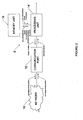
Fig. 2 is a block diagram showing an apparatus for handling an incoming call according to an embodiment of the invention. -
Fig. 3 is a flowchart showing how an incoming call is handled according to one embodiment of the invention; and -
Fig. 4 is a diagram showing how the handling of an incoming call according to the invention overcomes the above-identified limitation. - It will be noted that throughout the appended drawings, like features are identified by like reference numerals.
- Now referring to
Fig. 2 , there is shown a block diagram showing anapparatus 8 for handling an incoming call at an inbound terminal according to an embodiment of the invention. - The
apparatus 8 comprises acommunication port 12, aprocessing unit 14 and amemory unit 16. - The
communication port 12 is adapted for receiving an incoming call signal originating from an outbound switch, not shown located on anetwork 10 and further for providing a received signal to theprocessing unit 14. - The
communication port 12 is further adapted for receiving a signal to send and providing an outgoing phone signal to thenetwork 10. - In an embodiment, the
communication port 12 comprises a Direct Access Arrangement (DAA) chip as analog front end (AFE) to terminate thenetwork 10. - The
processing unit 14 is adapted for receiving the received signal provided by thecommunication port 12 and further adapted for providing a signal to send to thecommunication port 12. Theprocessing unit 14 is further adapted for storing a call information signal in thememory unit 16 and further for retrieving the call information signal from thememory unit 16. - It should be understood by the skilled addressee that in one embodiment, the
communication port 12, theprocessing unit 14 and thememory unit 16 are embedded into a single card referred to as an "active" embedded system card. Such card may be then plugged to a computer for instance. In another embodiment, the processing unit of a computer as well as at least one part of the memory unit of the computer are used which is referred to as a "passive" design. - The
memory unit 16 is adapted for storing a call information signal. It should be appreciated that the call information signal may be any type of data enabling the identification of a call such as for instance caller ID data. It should be further appreciated that thememory unit 16 may be used to store additional information provided in the case where an SMDI (Simplified Message Desk Interface) interface is used. Such additional information may comprise additional call related information like Redirecting Number or receive/send Message Waiting signal. As known by the skilled addressee, using SMDI requires an extra serial cable connected to some specific switch types. In fact, as known by the skilled addressee, with most networks the caller ID information may be provided using in-band tones (e.g. like FSK modem tones or DTMF tones) after or before the first ring. As explained previously, thememory unit 16 may be a dedicated memory unit comprised in an embedded system card while alternatively, the memory unit of a computer may be used. - It should be understood that the
communication port 12, theprocessing unit 14 and thememory unit 16 may already be comprises in an existing communication device such as a modem for instance. - Now referring to
fig. 3 , there is shown how an incoming call is handled according to one embodiment of the invention. - According to
step 20, an incoming call is received. The incoming call is received from thenetwork 10 by theprocessing unit 14 via thecommunication port 12. Alternatively, at least one part of the incoming call, the incoming call information, may be received from an external serial interface (e.g. a SMDI interface), while the call comes in at thecommunication port 12. - According to
step 22, a check is performed using the received incoming call in order to find out if an earlier incoming call is being signaled. The check is performed by theprocessing unit 14 disclosed inFig. 2 . More precisely, theprocessing unit 14 checks in thememory unit 16 if the latter comprises an existing call information signal indicative of an earlier incoming call. It should be appreciated that preferably, thememory unit 16 comprises an existing call information signal if an earlier incoming call is being signaled. Still in the preferred embodiment, the check is performed by comparing a stored existing call information signal, if any, with the current call information signal. - In the case where an earlier incoming call is being signaled, i.e., in the case where the current call information signal is different from the earlier incoming call information signal, the earlier call is disconnected. Preferably, the earlier call is disconnected using the
processing unit 14. - In the case where no earlier incoming call is being signaled and according to
step 26, an indication of the incoming call is provided. In the preferred embodiment, the indication of the incoming call is stored in thememory unit 16 by theprocessing unit 14. The incoming call is then presented to the application. - Now referring to
Fig. 4 , there is shown how the handling of an incoming call according to the invention overcomes the above-identified limitation. - More precisely, a first incoming call is provided to an Application Programming Interface (API), the first incoming call is signaled to an application.
- The first incoming call is accepted by the application and a command to that effect is issued by the application and is directed to the API.
- A second incoming call is issued prior the command to the effect that the first incoming call is accepted is received by the API.
- A check is performed by the API as disclosed at
step 22 ofFig. 3 and it is therefore detected that the first incoming call is being signaled. - A notice to the effect that the first call is disconnected is then sent to the application and a notice indicating that the second incoming call is presented to the application.
- While illustrated in the block diagrams as groups of discrete components communicating with each other via distinct data signal connections, it will be understood by those skilled in the art that the preferred embodiments are provided by a combination of hardware and software components, with some components being implemented by a given function or operation of a hardware or software system, and many of the data paths illustrated being implemented by data communication within a computer application or operating system. The structure illustrated is thus provided for efficiency of teaching the present preferred embodiment.
- It should be noted that the present invention can be carried out as a method, can be embodied in a system, a computer readable medium or an electrical or electro-magnetical signal.
- The embodiments of the invention described above are intended to be exemplary only. The scope of the invention is therefore intended to be limited solely by the scope of the appended claims.
Claims (6)
- A method for handling an incoming call upon receiving (20) the incoming call at an inbound terminal (8), via an analog line, said method characterized by:checking (22) if an earlier incoming call is being signaled to an application by accessing a memory unit (16) of the inbound terminal (8) that includes incoming call information ;
if it is determined at the inbound terminal (8) that the earlier incoming call is being signaled to the application, disconnecting (24) said earlier incoming call; and
presenting said incoming call including storing corresponding incoming call information in the memory unit (16) . - The method according to claim 1, further characterized by:storing a current caller ID enabling identification of the incoming call; andcomparing a stored existing caller ID enabling identification of an earlier incoming call with the stored current caller ID to determine if the earlier incoming call is being signaled to an application.
- The method as claimed in claim 1 or 2, wherein said application is selected from the group consisting of:voicemail applications, incoming call-based authentication applications, unified messaging applications, automatic call distribution, ACD, servers, Voice over IP, VOIP, gateways and Point of Sales, POS, servers.
- An apparatus for handling an incoming call signal received via an analog line, said apparatus comprising:a communication port (12) for receiving said incoming call signal and providing a received call signal comprising incoming call information representative of said incoming call signal;a memory unit (16); anda processing unit (14) for receiving said received call signal and accessing said memory unit (16), the apparatus being characterized in that:the processing unit (14) is adapted to determine if said memory unit (16) comprises another incoming call information signal representative of an earlier incoming call signal being signaled to an application, and to provide a signaling signal to the communication port (12) to disconnect the earlier incoming signal if said memory unit (16) includes the another incoming call information signal.
- The apparatus according to claim 4, further characterized in that:the incoming call information includes a current caller ID enabling identification of the incoming call signal; andthe another incoming call information signal includes an existing caller ID enabling identification of the earlier incoming call signal.
- The apparatus as claimed in claim 4 or 5, wherein said application is selected from a group consisting of voicemail applications, incoming call-based authentication applications, unified messaging applications, automatic call distribution, ACD, servers, Voice over IP, VoIP, gateways, Point of Sales POS, Servers.
Applications Claiming Priority (2)
| Application Number | Priority Date | Filing Date | Title |
|---|---|---|---|
| US10/998,169 US7693271B2 (en) | 2004-11-29 | 2004-11-29 | Method and apparatus for handling an incoming call to avoid a conflict with an earlier call |
| PCT/CA2005/001807 WO2006056077A1 (en) | 2004-11-29 | 2005-11-29 | Method and apparatus for handling an incoming call |
Publications (3)
| Publication Number | Publication Date |
|---|---|
| EP1817897A1 EP1817897A1 (en) | 2007-08-15 |
| EP1817897A4 EP1817897A4 (en) | 2010-03-17 |
| EP1817897B1 true EP1817897B1 (en) | 2012-01-04 |
Family
ID=36497715
Family Applications (1)
| Application Number | Title | Priority Date | Filing Date |
|---|---|---|---|
| EP05814167A Expired - Lifetime EP1817897B1 (en) | 2004-11-29 | 2005-11-29 | Method and apparatus for handling an incoming call |
Country Status (5)
| Country | Link |
|---|---|
| US (1) | US7693271B2 (en) |
| EP (1) | EP1817897B1 (en) |
| AT (1) | ATE540523T1 (en) |
| CA (1) | CA2589088A1 (en) |
| WO (1) | WO2006056077A1 (en) |
Family Cites Families (30)
| Publication number | Priority date | Publication date | Assignee | Title |
|---|---|---|---|---|
| AU9063891A (en) * | 1990-11-20 | 1992-06-11 | Unifi Communications Corporation | Telephone call handling system |
| US5586179A (en) * | 1993-03-17 | 1996-12-17 | Davox Corporation | System and method for adding and integrating outbound calling and overall system control to an existing inbound telephone system |
| US5742675A (en) * | 1995-09-26 | 1998-04-21 | Telefonaktiebolaget Lm Ericsson | Method and apparatus for automatically distributing calls to available logged-in call handling agents |
| US5999611A (en) * | 1996-11-19 | 1999-12-07 | Stentor Resource Centre Inc. | Subscriber interface for accessing and operating personal communication services |
| US6246889B1 (en) * | 1997-12-18 | 2001-06-12 | Ericsson Inc. | System, method, and apparatus for delayed call answering |
| GB2337892B (en) * | 1998-05-26 | 2003-08-27 | Mitel Corp | Smart transfer for answer positions |
| US6289084B1 (en) * | 1998-05-29 | 2001-09-11 | Lucent Technologies Inc. | Apparatus, method and system for personal telecommunication call screening and alerting |
| EP0969647A1 (en) * | 1998-07-03 | 2000-01-05 | Alcatel | Interface means between a network switch and a CTI server means and apparatus for providing a service to a customer including such an interface means |
| US6141341A (en) * | 1998-09-09 | 2000-10-31 | Motorola, Inc. | Voice over internet protocol telephone system and method |
| US6198812B1 (en) * | 1998-09-23 | 2001-03-06 | Effectrol Patent Trust | Incoming telephone call filter utilizing a duplicitous caller-ID recognition method and apparatus |
| US6654615B1 (en) | 1998-12-31 | 2003-11-25 | Albert Chow | Wireless centrex services |
| US6418200B1 (en) * | 1999-02-26 | 2002-07-09 | Mitel, Inc. | Automatic synchronization of address directories for unified messaging |
| US7123712B1 (en) * | 1999-03-26 | 2006-10-17 | Intel Corporation | Computer telephony server with improved flexibility |
| US6519335B1 (en) * | 1999-04-08 | 2003-02-11 | Lucent Technologies Inc. | Apparatus, method and system for personal telecommunication incoming call screening and alerting for call waiting applications |
| US6654616B1 (en) * | 1999-09-27 | 2003-11-25 | Verizon Laboratories Inc. | Wireless area network having flexible backhauls for creating backhaul network |
| US6539079B1 (en) * | 1999-11-12 | 2003-03-25 | Ameritech Corporation | Method and system for providing enhanced call waiting |
| US6985576B1 (en) * | 1999-12-02 | 2006-01-10 | Worldcom, Inc. | Method and apparatus for automatic call distribution |
| CN100355262C (en) * | 1999-12-21 | 2007-12-12 | 川铁情报系统株式会社 | Call center operating method and device |
| CA2313974A1 (en) | 2000-07-07 | 2002-01-07 | Daniel Wilk | Method and system for call answering |
| WO2002028079A2 (en) * | 2000-09-28 | 2002-04-04 | Accessline Communications Corporation | User configurable system for handling incoming calls to users having multiple destinations adresses |
| JP3394952B2 (en) * | 2001-03-05 | 2003-04-07 | 株式会社東芝 | Communication device |
| US6941131B2 (en) | 2001-03-23 | 2005-09-06 | Ericsson Inc. | Incoming call handling method for mobile communications device incorporating mobile assisted messaging on demand |
| US6751307B2 (en) * | 2001-07-05 | 2004-06-15 | Intel Corporation | Delivering calls using calendar information |
| GB0218712D0 (en) * | 2002-08-12 | 2002-09-18 | Mitel Knowledge Corp | Context aware call handling system |
| US7308289B2 (en) * | 2003-01-30 | 2007-12-11 | General Motors Corporation | Method and system for managing in-vehicle telephony |
| US20040229600A1 (en) * | 2003-05-13 | 2004-11-18 | Motorola, Inc. | Method and apparatus for call screening and management in a wireless communication device |
| US7103553B2 (en) * | 2003-06-04 | 2006-09-05 | Matsushita Electric Industrial Co., Ltd. | Assistive call center interface |
| US7158628B2 (en) * | 2003-08-20 | 2007-01-02 | Knowlagent, Inc. | Method and system for selecting a preferred contact center agent based on agent proficiency and performance and contact center state |
| US7499844B2 (en) * | 2003-12-19 | 2009-03-03 | At&T Intellectual Property I, L.P. | Method and system for predicting network usage in a network having re-occurring usage variations |
| US20060072739A1 (en) * | 2004-10-01 | 2006-04-06 | Knowlagent Inc. | Method and system for assessing and deploying personnel for roles in a contact center |
-
2004
- 2004-11-29 US US10/998,169 patent/US7693271B2/en active Active
-
2005
- 2005-11-29 WO PCT/CA2005/001807 patent/WO2006056077A1/en not_active Ceased
- 2005-11-29 CA CA002589088A patent/CA2589088A1/en not_active Abandoned
- 2005-11-29 EP EP05814167A patent/EP1817897B1/en not_active Expired - Lifetime
- 2005-11-29 AT AT05814167T patent/ATE540523T1/en active
Also Published As
| Publication number | Publication date |
|---|---|
| WO2006056077A1 (en) | 2006-06-01 |
| US7693271B2 (en) | 2010-04-06 |
| US20060115064A1 (en) | 2006-06-01 |
| ATE540523T1 (en) | 2012-01-15 |
| CA2589088A1 (en) | 2006-06-01 |
| EP1817897A1 (en) | 2007-08-15 |
| EP1817897A4 (en) | 2010-03-17 |
Similar Documents
| Publication | Publication Date | Title |
|---|---|---|
| US6041114A (en) | Telecommute server | |
| US8385529B2 (en) | Methods, systems, and products for recipient identification | |
| KR100513217B1 (en) | System for coordinating calls between an adjunct device and a switching system | |
| EP0437256A2 (en) | Automatic number identification blocking system | |
| US6594357B1 (en) | System and method of registering the identity of a telephone terminal in association with the identity of a computer terminal | |
| US7254220B1 (en) | Methods and apparatus for obtaining and distributing voice mail information | |
| US20090097630A1 (en) | Automatic Complaint Registration for Violations of Telephonic Communication Regulations with Call Rejection | |
| US6813347B2 (en) | Selective call waiting | |
| US7742461B2 (en) | Method for remotely associating a communications device with a computer | |
| AU2002304038B2 (en) | Method and system for data field reuse | |
| EP2087717A2 (en) | Automatic complaint registration for violations of telephonic communication regulations with call rejection | |
| EP1761011A1 (en) | A method for dailing directly to a pbx extension across regions and a system thereof | |
| WO1998035490A1 (en) | Method of handling telephone calls | |
| US7693271B2 (en) | Method and apparatus for handling an incoming call to avoid a conflict with an earlier call | |
| US20040202305A1 (en) | Supervised call redirection | |
| US7257214B2 (en) | Low cost migration to a VoIP system | |
| US8842557B2 (en) | Computer telephony system | |
| KR20010106506A (en) | Enhanced Call Waiting | |
| US8139738B1 (en) | Telephone to computational device association | |
| JPH1168952A (en) | Calling number anonymous call answering method and method | |
| JP3034220B2 (en) | Exchange system | |
| KR20100094745A (en) | Voip based absentee call connection service method | |
| KR19990012466A (en) | Control message format method for requesting voice message storage of private exchange | |
| KR20050027579A (en) | Sequential call completion for numbers in group | |
| JPH0437242A (en) | Caller information display system |
Legal Events
| Date | Code | Title | Description |
|---|---|---|---|
| PUAI | Public reference made under article 153(3) epc to a published international application that has entered the european phase |
Free format text: ORIGINAL CODE: 0009012 |
|
| 17P | Request for examination filed |
Effective date: 20070515 |
|
| AK | Designated contracting states |
Kind code of ref document: A1 Designated state(s): AT BE BG CH CY CZ DE DK EE ES FI FR GB GR HU IE IS IT LI LT LU LV MC NL PL PT RO SE SI SK TR |
|
| RAP1 | Party data changed (applicant data changed or rights of an application transferred) |
Owner name: DIALOGIC CORPORATION |
|
| DAX | Request for extension of the european patent (deleted) | ||
| RAP1 | Party data changed (applicant data changed or rights of an application transferred) |
Owner name: DIALOGIC CORPORATION |
|
| A4 | Supplementary search report drawn up and despatched |
Effective date: 20100215 |
|
| RIC1 | Information provided on ipc code assigned before grant |
Ipc: H04M 1/64 20060101AFI20110511BHEP Ipc: H04M 3/02 20060101ALI20110511BHEP |
|
| GRAP | Despatch of communication of intention to grant a patent |
Free format text: ORIGINAL CODE: EPIDOSNIGR1 |
|
| GRAS | Grant fee paid |
Free format text: ORIGINAL CODE: EPIDOSNIGR3 |
|
| GRAA | (expected) grant |
Free format text: ORIGINAL CODE: 0009210 |
|
| AK | Designated contracting states |
Kind code of ref document: B1 Designated state(s): AT BE BG CH CY CZ DE DK EE ES FI FR GB GR HU IE IS IT LI LT LU LV MC NL PL PT RO SE SI SK TR |
|
| REG | Reference to a national code |
Ref country code: GB Ref legal event code: FG4D |
|
| REG | Reference to a national code |
Ref country code: CH Ref legal event code: EP |
|
| REG | Reference to a national code |
Ref country code: AT Ref legal event code: REF Ref document number: 540523 Country of ref document: AT Kind code of ref document: T Effective date: 20120115 |
|
| REG | Reference to a national code |
Ref country code: IE Ref legal event code: FG4D |
|
| REG | Reference to a national code |
Ref country code: DE Ref legal event code: R096 Ref document number: 602005032015 Country of ref document: DE Effective date: 20120308 |
|
| REG | Reference to a national code |
Ref country code: NL Ref legal event code: VDEP Effective date: 20120104 |
|
| PG25 | Lapsed in a contracting state [announced via postgrant information from national office to epo] |
Ref country code: SI Free format text: LAPSE BECAUSE OF FAILURE TO SUBMIT A TRANSLATION OF THE DESCRIPTION OR TO PAY THE FEE WITHIN THE PRESCRIBED TIME-LIMIT Effective date: 20120104 |
|
| LTIE | Lt: invalidation of european patent or patent extension |
Effective date: 20120104 |
|
| PG25 | Lapsed in a contracting state [announced via postgrant information from national office to epo] |
Ref country code: BG Free format text: LAPSE BECAUSE OF FAILURE TO SUBMIT A TRANSLATION OF THE DESCRIPTION OR TO PAY THE FEE WITHIN THE PRESCRIBED TIME-LIMIT Effective date: 20120404 Ref country code: IS Free format text: LAPSE BECAUSE OF FAILURE TO SUBMIT A TRANSLATION OF THE DESCRIPTION OR TO PAY THE FEE WITHIN THE PRESCRIBED TIME-LIMIT Effective date: 20120504 Ref country code: LT Free format text: LAPSE BECAUSE OF FAILURE TO SUBMIT A TRANSLATION OF THE DESCRIPTION OR TO PAY THE FEE WITHIN THE PRESCRIBED TIME-LIMIT Effective date: 20120104 Ref country code: BE Free format text: LAPSE BECAUSE OF FAILURE TO SUBMIT A TRANSLATION OF THE DESCRIPTION OR TO PAY THE FEE WITHIN THE PRESCRIBED TIME-LIMIT Effective date: 20120104 Ref country code: NL Free format text: LAPSE BECAUSE OF FAILURE TO SUBMIT A TRANSLATION OF THE DESCRIPTION OR TO PAY THE FEE WITHIN THE PRESCRIBED TIME-LIMIT Effective date: 20120104 |
|
| PG25 | Lapsed in a contracting state [announced via postgrant information from national office to epo] |
Ref country code: GR Free format text: LAPSE BECAUSE OF FAILURE TO SUBMIT A TRANSLATION OF THE DESCRIPTION OR TO PAY THE FEE WITHIN THE PRESCRIBED TIME-LIMIT Effective date: 20120405 Ref country code: FI Free format text: LAPSE BECAUSE OF FAILURE TO SUBMIT A TRANSLATION OF THE DESCRIPTION OR TO PAY THE FEE WITHIN THE PRESCRIBED TIME-LIMIT Effective date: 20120104 Ref country code: PL Free format text: LAPSE BECAUSE OF FAILURE TO SUBMIT A TRANSLATION OF THE DESCRIPTION OR TO PAY THE FEE WITHIN THE PRESCRIBED TIME-LIMIT Effective date: 20120104 Ref country code: PT Free format text: LAPSE BECAUSE OF FAILURE TO SUBMIT A TRANSLATION OF THE DESCRIPTION OR TO PAY THE FEE WITHIN THE PRESCRIBED TIME-LIMIT Effective date: 20120504 Ref country code: LV Free format text: LAPSE BECAUSE OF FAILURE TO SUBMIT A TRANSLATION OF THE DESCRIPTION OR TO PAY THE FEE WITHIN THE PRESCRIBED TIME-LIMIT Effective date: 20120104 |
|
| REG | Reference to a national code |
Ref country code: AT Ref legal event code: MK05 Ref document number: 540523 Country of ref document: AT Kind code of ref document: T Effective date: 20120104 |
|
| PG25 | Lapsed in a contracting state [announced via postgrant information from national office to epo] |
Ref country code: CY Free format text: LAPSE BECAUSE OF FAILURE TO SUBMIT A TRANSLATION OF THE DESCRIPTION OR TO PAY THE FEE WITHIN THE PRESCRIBED TIME-LIMIT Effective date: 20120104 |
|
| PG25 | Lapsed in a contracting state [announced via postgrant information from national office to epo] |
Ref country code: SE Free format text: LAPSE BECAUSE OF FAILURE TO SUBMIT A TRANSLATION OF THE DESCRIPTION OR TO PAY THE FEE WITHIN THE PRESCRIBED TIME-LIMIT Effective date: 20120104 Ref country code: EE Free format text: LAPSE BECAUSE OF FAILURE TO SUBMIT A TRANSLATION OF THE DESCRIPTION OR TO PAY THE FEE WITHIN THE PRESCRIBED TIME-LIMIT Effective date: 20120104 Ref country code: DK Free format text: LAPSE BECAUSE OF FAILURE TO SUBMIT A TRANSLATION OF THE DESCRIPTION OR TO PAY THE FEE WITHIN THE PRESCRIBED TIME-LIMIT Effective date: 20120104 Ref country code: CZ Free format text: LAPSE BECAUSE OF FAILURE TO SUBMIT A TRANSLATION OF THE DESCRIPTION OR TO PAY THE FEE WITHIN THE PRESCRIBED TIME-LIMIT Effective date: 20120104 Ref country code: RO Free format text: LAPSE BECAUSE OF FAILURE TO SUBMIT A TRANSLATION OF THE DESCRIPTION OR TO PAY THE FEE WITHIN THE PRESCRIBED TIME-LIMIT Effective date: 20120104 |
|
| PLBE | No opposition filed within time limit |
Free format text: ORIGINAL CODE: 0009261 |
|
| STAA | Information on the status of an ep patent application or granted ep patent |
Free format text: STATUS: NO OPPOSITION FILED WITHIN TIME LIMIT |
|
| PG25 | Lapsed in a contracting state [announced via postgrant information from national office to epo] |
Ref country code: IT Free format text: LAPSE BECAUSE OF FAILURE TO SUBMIT A TRANSLATION OF THE DESCRIPTION OR TO PAY THE FEE WITHIN THE PRESCRIBED TIME-LIMIT Effective date: 20120104 Ref country code: SK Free format text: LAPSE BECAUSE OF FAILURE TO SUBMIT A TRANSLATION OF THE DESCRIPTION OR TO PAY THE FEE WITHIN THE PRESCRIBED TIME-LIMIT Effective date: 20120104 |
|
| 26N | No opposition filed |
Effective date: 20121005 |
|
| PG25 | Lapsed in a contracting state [announced via postgrant information from national office to epo] |
Ref country code: AT Free format text: LAPSE BECAUSE OF FAILURE TO SUBMIT A TRANSLATION OF THE DESCRIPTION OR TO PAY THE FEE WITHIN THE PRESCRIBED TIME-LIMIT Effective date: 20120104 |
|
| REG | Reference to a national code |
Ref country code: DE Ref legal event code: R097 Ref document number: 602005032015 Country of ref document: DE Effective date: 20121005 |
|
| PG25 | Lapsed in a contracting state [announced via postgrant information from national office to epo] |
Ref country code: ES Free format text: LAPSE BECAUSE OF FAILURE TO SUBMIT A TRANSLATION OF THE DESCRIPTION OR TO PAY THE FEE WITHIN THE PRESCRIBED TIME-LIMIT Effective date: 20120415 |
|
| REG | Reference to a national code |
Ref country code: CH Ref legal event code: PL |
|
| GBPC | Gb: european patent ceased through non-payment of renewal fee |
Effective date: 20121129 |
|
| PG25 | Lapsed in a contracting state [announced via postgrant information from national office to epo] |
Ref country code: LI Free format text: LAPSE BECAUSE OF NON-PAYMENT OF DUE FEES Effective date: 20121130 Ref country code: CH Free format text: LAPSE BECAUSE OF NON-PAYMENT OF DUE FEES Effective date: 20121130 |
|
| REG | Reference to a national code |
Ref country code: FR Ref legal event code: ST Effective date: 20130731 |
|
| REG | Reference to a national code |
Ref country code: IE Ref legal event code: MM4A |
|
| PG25 | Lapsed in a contracting state [announced via postgrant information from national office to epo] |
Ref country code: IE Free format text: LAPSE BECAUSE OF NON-PAYMENT OF DUE FEES Effective date: 20121129 |
|
| PG25 | Lapsed in a contracting state [announced via postgrant information from national office to epo] |
Ref country code: GB Free format text: LAPSE BECAUSE OF NON-PAYMENT OF DUE FEES Effective date: 20121129 Ref country code: FR Free format text: LAPSE BECAUSE OF NON-PAYMENT OF DUE FEES Effective date: 20121130 |
|
| PG25 | Lapsed in a contracting state [announced via postgrant information from national office to epo] |
Ref country code: MC Free format text: LAPSE BECAUSE OF NON-PAYMENT OF DUE FEES Effective date: 20121130 Ref country code: TR Free format text: LAPSE BECAUSE OF FAILURE TO SUBMIT A TRANSLATION OF THE DESCRIPTION OR TO PAY THE FEE WITHIN THE PRESCRIBED TIME-LIMIT Effective date: 20120104 |
|
| PG25 | Lapsed in a contracting state [announced via postgrant information from national office to epo] |
Ref country code: LU Free format text: LAPSE BECAUSE OF NON-PAYMENT OF DUE FEES Effective date: 20121129 |
|
| PG25 | Lapsed in a contracting state [announced via postgrant information from national office to epo] |
Ref country code: HU Free format text: LAPSE BECAUSE OF FAILURE TO SUBMIT A TRANSLATION OF THE DESCRIPTION OR TO PAY THE FEE WITHIN THE PRESCRIBED TIME-LIMIT Effective date: 20051129 |
|
| PGFP | Annual fee paid to national office [announced via postgrant information from national office to epo] |
Ref country code: DE Payment date: 20161123 Year of fee payment: 12 |
|
| REG | Reference to a national code |
Ref country code: DE Ref legal event code: R119 Ref document number: 602005032015 Country of ref document: DE |
|
| PG25 | Lapsed in a contracting state [announced via postgrant information from national office to epo] |
Ref country code: DE Free format text: LAPSE BECAUSE OF NON-PAYMENT OF DUE FEES Effective date: 20180602 |