EP1815657B1 - Verfahren und vorrichtung zur kompensierung von empfängerungleichgewicht - Google Patents
Verfahren und vorrichtung zur kompensierung von empfängerungleichgewicht Download PDFInfo
- Publication number
- EP1815657B1 EP1815657B1 EP05857329A EP05857329A EP1815657B1 EP 1815657 B1 EP1815657 B1 EP 1815657B1 EP 05857329 A EP05857329 A EP 05857329A EP 05857329 A EP05857329 A EP 05857329A EP 1815657 B1 EP1815657 B1 EP 1815657B1
- Authority
- EP
- European Patent Office
- Prior art keywords
- imbalance
- estimate
- frequency
- signal
- imbalances
- Prior art date
- Legal status (The legal status is an assumption and is not a legal conclusion. Google has not performed a legal analysis and makes no representation as to the accuracy of the status listed.)
- Expired - Lifetime
Links
Images






Classifications
-
- H—ELECTRICITY
- H04—ELECTRIC COMMUNICATION TECHNIQUE
- H04L—TRANSMISSION OF DIGITAL INFORMATION, e.g. TELEGRAPHIC COMMUNICATION
- H04L27/00—Modulated-carrier systems
- H04L27/26—Systems using multi-frequency codes
- H04L27/2601—Multicarrier modulation systems
- H04L27/2647—Arrangements specific to the receiver only
- H04L27/2655—Synchronisation arrangements
- H04L27/2657—Carrier synchronisation
Definitions
- the invention relates to the field of signal processing.
- It relates in particular to frequency and clock synchronization and multi-carrier reception system channel estimation, in the presence of gain and phase imbalances between the in-phase and quadrature-phase channels.
- the Figure 1A represents an emitter 2, comprising signal generating means 4, frequency conversion means 6, filtering means 8, 12, amplifying means, and an antenna 14.
- the Figure 1B represents a receiver 20, comprising an antenna 21, filtering means 22, 24, amplifying means 23.
- the reference 25 designates a local oscillator, the references 26 and 28 of the mixers, followed respectively by filters 27, 29, the set means 25 - 29 forming frequency transposition means.
- An analog signal processed by these means is then digitized by digitizing means, digital processing means 32, to produce a signal 34.
- Receivers that use this orthogonal frequency multiplexing no longer function properly when there is a frequency or clock offset between transmitter and receiver.
- T is the symbol period
- the coefficients H k being representative of the propagation channel
- w n denoting an additive noise.
- the signal thus affected by a frequency and clock offset, sees its phase turn, its gain degrades and interfering interferences appear.
- FIGS. 2A and 2B represent schemes of compensation devices as described in the document WO03 / 101064 .
- a correction of the IQ imbalances and a correction of a frequency offset are performed jointly from frequency-continuous OFDM drivers.
- the principle of correcting IQ imbalances is based on a frequency "smoothing" of the channel estimate.
- the evaluation of the IQ imbalances is carried out by an algorithm in the frequency (IQ-FD) or temporal (IQ-TD) domain and compensated a posteriori, as illustrated respectively on the figures 3 and 5 of this document.
- the data compensation requires having the estimates of the frequency offset and the IQ imbalances, after processing of the training sequences (including FFT). There may be latencies during which the data expect these estimates.
- the present invention overcomes these disadvantages.
- the invention relates to a method for correcting the IQ imbalance estimate of a receiver, referred to as the preceding estimate, to obtain a corrected IQ imbalance, in which the correction is performed as a function of the residual imbalance variations from said previous estimate.
- the method according to the invention requires no storing of signals and does not generate latency.
- the estimation of IQ imbalances is conducted according to an adaptive algorithm, based on a new criterion that is not very sensitive to frequency shifts.
- the channel estimate does not need to be corrected any longer: the correction occurs upstream of the fast Fourier transformation operation, or during this operation, but not directly on the estimation operation of channel.
- IQ imbalance compensation can be performed from pilots that are continuous in frequency, not necessarily consecutive.
- IQ imbalance estimation can be done from pilots, or sequences learning, generating transitions due to opposite IQ imbalances.
- IQ imbalance estimation can be done from two pilots, or learning sequences.
- the estimation of the imbalance IQ can be carried out for example from two pilots or learning sequences p 1 and p 2 , p 1 consisting for example of a pseudo-random sequence and p 2 being for example identical to p 1 on the first half of his samples and opposed to p 1 on the second half of his samples.
- the residual imbalance variations can be calculated as a function of a carrier interference signal and of a mirror subcarrier, for example according to a criterion of minimizing the envelope of the interference signal.
- 2 characteristic of the envelope of said interference signal, can for this purpose be used.
- the transitions of the interference signal are taken into account.
- the estimate ⁇ is IQ imbalance can be corrected, compared to the previous estimate, proportionally to ⁇ E 2 ⁇ ⁇ ' , where ⁇ 'represents the residual imbalance IQ.
- the estimation of the imbalances IQ is conducted according to an algorithm that is not necessarily adaptive, thanks to the opposite transitions obtained, the compensation of the imbalance IQ and a frequency offset can then be performed directly, without the use of residual variations of imbalance.
- IQ imbalance estimation can be done from two pilots or training sequences.
- the estimation of the IQ imbalance can for example be made from two pilots or learning sequences p 1 and p 2 , p 1 being constituted of a pseudo random sequence and p 2 being identical to p 1 on the first half of its samples and opposed to p 1 on the second half of its samples.
- the invention also relates to a method for correcting a signal s2 received and digitized by a wireless receiver, comprising a correction of the imbalance IQ as explained above, and a correction of the signal S2 as a function of this imbalance.
- the correction of the signal s2 is preferably performed before a Fourier transformation operation.
- Residual variations of imbalance can be obtained from the signal (S4) obtained by fast Fourier transform (FFT) in the receiver.
- FFT fast Fourier transform
- compensation for offsets, or offsets, frequency and clock as well as imbalances IQ can be performed, for example from pilots continuous in frequency.
- the estimates of frequency and clock offsets and IQ imbalances can thus be jointly adapted (imbalances between the components in-phase or I) and in phase quadrature. ("Quadrature - phase", or Q) of the receiver signal).
- a first estimate of the IQ imbalances can be made after a rough frequency synchronization, or after a fine frequency offset correction.
- This method may further include a step of channel estimation and correction of this estimation according to frequency shifts, clock and IQ imbalances.
- Correction of frequency and clock offsets can be made from the Fast Fourier Transform signal in the receiver, or from a channel estimate.
- the correction of frequency and clock offsets can be performed from two pilots or learning sequences p 1 and p 2 consecutive in time or interspersed with data symbols.
- a channel estimation step can be provided, which can be corrected as a function of IQ imbalance and possibly as a function of clock offsets and / or frequencies.
- a step of correcting the error due to a frequency and / or clock shift, before digitizing the received signal, or after digitization and before fast Fourier transform of the signal, can be provided.
- a step of correcting the error due to a clock shift is performed after fast Fourier transform of the signal.
- IQ imbalance estimation can be made from pilots, or training sequences, generating transitions due to opposite IQ imbalances.
- IQ imbalance estimation can be made from two pilots, or learning sequences.
- the estimation of the IQ imbalance can for example be made from two pilots or learning sequences p 1 and p 2 , p 1 being constituted for example by a pseudo-random sequence and p 2 being for example identical to p 1 on the first half of his samples and opposed to p 1 on the second half of his samples. With these two pilots, we obtain transitions due to the imbalances IQ which are opposite.
- Such a device may furthermore comprise means for calculating the residual imbalance variations as a function of an interference signal of carriers and subcarrier mirrors, for example according to a criterion of minimization of the envelope of the signal of interference.
- Residual variations of imbalance can be calculated according to a parameter
- the transitions of the interference signal are taken into account.
- Means can further correct the estimate ⁇ is IQ imbalance, compared to the previous estimate, proportionally to ⁇ E 2 ⁇ ⁇ ' , where ⁇ 'represents the residual imbalance IQ.
- IQ imbalance estimation can be done from two pilots, or learning sequences.
- the IQ imbalance can be estimated from two pilots or learning sequences p 1 and p 2 , p 1 consisting for example of a pseudo-random sequence and p 2 being for example identical to p 1 on the first half of his samples and opposed to p 1 on the second half of his samples.
- a receiver device may further comprise means for correcting a signal s2, received and digitized by a wireless receiver, as a function of the IQ imbalance.
- the correction of the signal s2 can be performed before a Fourier transformation operation.
- Residual unbalance variations can be obtained from the Fast Fourier Transform (FFT) signal in the receiver.
- FFT Fast Fourier Transform
- means can advantageously make it possible to make a first estimate of IQ imbalances after a rough synchronization, either after a fine correction, frequency.
- Channel estimation means and correction of this estimate as a function of frequency offsets, clock and IQ imbalances can also be provided.
- Frequency offset and clock offsetting means may perform this correction from the Fast Fourier Transform (FFT) signal in the receiver or from a channel estimate.
- FFT Fast Fourier Transform
- Means for correcting the frequency and clock offsets can perform this correction from two pilots or learning sequences p 1 and p 2 consecutive in time or interspersed with data symbols.
- Channel estimating means may further be provided, the channel estimate being corrected as a function of IQ imbalance and / or as a function of clock offsets and / or frequencies.
- the invention also relates to a computer program comprising the instructions for implementing a method according to the invention.
- the invention also relates to a data carrier, readable by a computer system, comprising data in coded form, for implementing a method according to the invention.
- the invention also relates to a software product comprising a data medium that can be read by a computer system, making it possible to implement a method according to the invention.
- a symbol and frame synchronization may have been previously performed for such a signal, as well as a coarse frequency synchronization.
- the residual frequency offset considered is for example less than a half frequency difference between sub-carriers.
- the signals considered are complex and sampled in the time domain (these signals are hereinafter denoted by lowercase variables) or frequency (these signals are referred to below by variables in upper case).
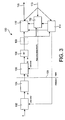
- An input signal is affected, both in frequency and in IQ imbalance, which is represented symbolically on the figures 3 and 4 by the means 102, 104, 202, 204.
- the signal entering the digital part is, after digitization (by means not shown in the figures) applied to means 106 for compensating the imbalance IQ ( figure 3 ) or compensation means 206, both IQ imbalances and frequency offsets ( figure 4 ).
- the signal s3 produced by the means 106, 206 is subjected to Fast Fourier Transform (FFT) processing by the means 108, 208.
- FFT Fast Fourier Transform
- the signal S4 thus produced can be sent to channel estimation means 110, 210.
- Means 112, 212 make it possible, from the signal S4, to make an estimate of the IQ imbalances, this estimation enabling the means 106, 206 to correct the signal s2 after digitization, but before processing by FFT.
- Means 114, 214 make it possible, from the signal S4, to make an estimation of the frequency and clock offsets, this estimation allowing the means 206 ( figure 4 ) to correct the signal s2 after digitization, but before processing by FFT, or means 102 ( figure 3 ) to correct the incoming signal before scanning.
- This estimate also makes it possible to refine the estimation of the IQ imbalances by the means 112, 212, as well as, possibly, the channel estimation.
- a clock offset can also be corrected after FFT by means 209 for compensating for clock offsets. Indeed, the clock offsets are not easily compensated before FFT.
- Such means 109 for compensating clocks offsets can also be provided for in the diagram of the figure 3 at the output of FFT, as shown in this figure in broken lines.
- Pilot signals 113, 213 are sent regularly, these signals enabling the means 112, 212, 114, 214 to calculate the estimates of the imbalances IQ and frequency and clock offsets. These pilot signals are at known frequencies.
- the estimating means 112, 114, 212, 214 perform the correction estimates from the digital signals from the FFT, or possibly signals from the means 209 or 109, but also the pilot sequences 113, 213.
- the correction signals produced by these estimation means possibly make it possible to correct the channel estimate of the channel estimation means 110, 210.
- An output signal 115, 215, and possibly a channel estimation signal are produced by the system.
- the channel estimation means 110, 210 do not intervene in the error estimation calculations.
- S m denotes the mirror signal of any signal S.
- S m is the signal which one would have permuted under carriers “n” and under carriers “Nn", where N is the number of subcarriers.
- S * is the conjugated signal of S.
- the compensation of the frequency and clock offsets is effected either by sending a control signal to the frequency synthesizer means 102 (as shown in FIG. figure 3 ), or by correcting the frequency offset before Fast Fourier Transform, and the clock shift after Fast Fourier Transform (as shown in FIG. figure 4 ), or in a looped Digital PLL type system.
- the estimation of IQ imbalance parameters is made by estimating a residual variation of the imbalance with respect to a previous estimate or the previous estimate.
- the interference signal S5 changes sign.
- p (n) be the value of the driver on the subcarrier "n” and pm (n) the driver on the subcarrier mirror "N - n", where N is the number of subcarriers.
- a transition is present when: p m ⁇ not + 1 p ⁇ not + 1 ⁇ p m not p not
- E not 2 S 5 not ⁇ p ⁇ not + 1 - S 5 ⁇ not + 1 ⁇ p not ⁇ p m not - S 5 ⁇ not + 1 ⁇ p ⁇ not + 2 - S 5 ⁇ not + 2 ⁇ p ⁇ not + 1 ⁇ p m ⁇ not + 1 S 5 ⁇ not m * ⁇ p ⁇ not + 1 ⁇ p m not - p not ⁇ p m ⁇ not + 1 - S 5 ⁇ m ⁇ not * ⁇ p ⁇ not + 2 ⁇ p m ⁇ not + 1 - p ⁇ not + 1 ⁇ p m ⁇ not + 2 2 ⁇ p m ⁇ not + 1 - p ⁇ not + 1 ⁇ p m ⁇ not + 2 2 where S 5 ( n ) is the signal received on the subcarrier "n", S 5 m ( n ) the signal received on the subcarrier mirror, p ( n )
- the estimate is adapted iteratively by using ⁇ 'which tends to 0 when the estimate approaches the values of the real imbalances.
- Adaptation can be done using a gradient-type method (Least Mean Square or Recursive Least Square).
- p ( n ) be the value of the pilot sequence at the nth subcarrier and p m ( n ) the mirror value, s ( n ) the signal corresponding to this driver after FFT and s m ( n ) the mirror value.
- the difference between these samples corresponds to the width of the IQ imbalance envelope and the variation of the channel.
- E not s not ⁇ p ⁇ not + 1 - s ⁇ not + 1 ⁇ p not s m ⁇ not * ⁇ p m not p ⁇ not + 1 ⁇ p m not - p not ⁇ p m ⁇ not + 1
- E is the half envelope of the spurious signal due to IQ imbalances and channel variation, all "normalized” by the mirror channel. E actually corresponds to the parameter ⁇ '.
- E not ⁇ ⁇ ' ⁇ p ⁇ not + 1 ⁇ e not - p not ⁇ e ⁇ not + 1 + ⁇ ⁇ ' ⁇ p ⁇ not + 1 ⁇ e m ⁇ not * - p not ⁇ e m ⁇ not + 1 * p ⁇ not + 1 ⁇ p m not - p not ⁇ p m ⁇ not + 1 ⁇ ⁇ ⁇ ' ⁇ e m ⁇ not * - ⁇ ⁇ ' ⁇ e not ⁇ p m not
- the first term [ p ( n + 1) e ( n ) - p ( n ) e ( n + 1)] corresponds to the variation of the channel from one subcarrier to another.
- Two successive pilot samples are, with a close sign, close to one carrier to another.
- Another criterion that can be used is the minimization of the error between consecutive subcarriers in the channel estimation, developed in the document WO 03/101064 (IQ-FD), modified to be implanted in an adaptive structure, as explained above in the demonstration. It is however, more sensitive to inter-carrier interferences generated by frequency and clock offsets than the previous criterion.
- the estimation of frequency and clock offsets can also be made from the channel estimation.
- H ⁇ p ⁇ . H p ⁇ e j * 2 ⁇ ⁇ * 2 ⁇ K - 1 2 ⁇ K ⁇ ⁇ ⁇ fT + p ⁇ .delta.t T + ⁇ .
- H ⁇ 1 , p H ⁇ 2 , p * ⁇ . 2 ⁇ H p 2 e - j * 2 ⁇ ⁇ * 2 ⁇ K - 1 2 ⁇ K ⁇ ⁇ ⁇ fT + 2 ⁇ K ⁇ .delta.t T + ⁇ 2 .
- clock and frequency offsets can be performed either on the FFT output signals or on the channel estimation.
- This estimation of the frequency and clock offsets can also be made from two pilots or learning sequences p 1 and p 2 consecutive in time or spaced from data symbols.
- H is replaced, in the formulas above, by the received signal / known signal ratio.
- the adaptation of the estimates can be done when the receiver is turned on.
- a periodic update allows the follow-up of the variations of the components, because these variations are slow compared to the arrival of the pilots.
- the adaptive architecture according to the invention effectively and rapidly compensates for frequency and clock offsets and IQ imbalances together, and makes it possible to automatically correct the channel estimate.
- the simulations show that the IQ imbalance compensation algorithm operates for large uncorrected frequency offsets.
- interference signal envelope minimization criterion makes the matching algorithm robust and fast, even in the presence of a coarse frequency offset. Considering only the "transitions" of the interference signal makes the algorithm less complex and less sensitive to inter-carrier interference.
- Curve I corresponds to the bit error rate without any compensation.
- Table I below collates BER data from these curves at 10, 12.5 and 15 kHz.
- Table I ⁇ u> Table I ⁇ / u> Bran E 0.058 0.0049 0, 000205
- a first pilot consisting of a pseudo-random sequence
- a second pilot identical to the first pilot on the first half of his samples and opposite on its mirror part, such as for example p 1 and p 2 below.
- p 1 1 - 1 - 1 + 1 + 1 + 1 + 1 + 1 ⁇ + ⁇ - 1 - 1 - 1 + 1 + 1 + 1 - 1 ⁇ + ⁇ 1 + j 2
- p 2 1 - 1 - 1 + 1 + 1 + 1 + 1 + 1 + 1 + 1 + 1 + 1 + 1 + 1 ⁇ + ⁇ + 1 + 1 + 1 + 1 - 1 + 1 - 1 + 1 ⁇ - ⁇ 1 + j 2
- the use of the above pilots makes it possible in particular to simplify the complexity of the IQ imbalance estimation algorithms, the frequency offset, and the channel estimation.
- the invention can be implemented according to an adaptive structure, such as that shown in FIG. figure 3 or the figure 4 .
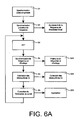
- the adaptation process performed is identical to that described above, the sequence of these synchronization operations and compensation of imperfections can be performed according to the scheme of the Figure 6A , given as an example.
- non-adaptive structure receive string Such a structure differs, for example, from those represented on figures 3 and 4 since the estimates are not updated in the estimation blocks 110, 112, 114, 210, 212 and 214. In this case, the synchronization operations and the compensation of the imperfections can be carried out according to the the Figure 6B . Compared to the diagram of the Figure 6A , block S6 of the Figure 6B does not loop on block S3 (because non adaptive structure).
- ⁇ ⁇ f is .
- T e 1 2 ⁇ ⁇ ⁇ NOT NOT - 1 .
- ⁇ ⁇ f is .
- T e 1 2 ⁇ ⁇ ⁇ NOT NOT - 1 .
- This estimate can also be averaged over N subcarriers.
- the algorithm for estimating IQ imbalances combined with the use of a first pilot consisting of a pseudo-random sequence, and a second pilot, identical to the first on the first half of his samples and opposite on his mirror part, has been tested for a 128 subcarrier OFDM system.
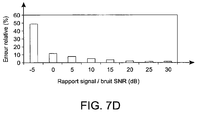
- the table below represents the sensitivity of the estimate of IQ imbalances to the noise of the propagation channel.
- the simulation is performed for a propagation channel with selective fading.
- SNR (dB) Estimate Re ( ⁇ ) Im ( ⁇ ) estimate Relative error (%) -5 0.081 -0.033 49.2 0 0.113 -0.109 11,58 5 0.106 -0.109 7.97 10 0,103 -0.106 5.03 15 0,102 -0.104 3.45 20 0,101 -0.102 1.87 25 0,101 -0.101 1.35 30 0,101 -0.1 1.07
- the Figure 7D represents the sensitivity of the estimation of IQ imbalances with respect to propagation channel noise.
- the relative error is between about 5% and 2%, which shows the quality of the estimate made.
- results show that we have a good robustness of the algorithm compared to the noise of the channel, and this regardless of the propagation channel.
- results obtained after correction in terms of bit error rate, are also very good, since we find after estimation and correction the results obtained for a system without degradation.
- the invention applies to all multi-carrier radio receivers in general, and in particular in the context of wireless local area networks (WLAN 802.11, Hiperlan II), broadcasting and digital video broadcasting (DAB, DVB), the mobile telephony, fourth generation.
- WLAN 802.11, Hiperlan II wireless local area networks
- DVB digital video broadcasting
- the system comprises a mobile broadcast network 60 (RTM), composed of a network server and a transmission infrastructure, for example wireless, and a fleet of receiving devices, wireless, mobile or portable, for example mobile phones 80, 100, associated with the network.
- RTM mobile broadcast network 60
- the system comprises a mobile broadcast network 60 (RTM), composed of a network server and a transmission infrastructure, for example wireless, and a fleet of receiving devices, wireless, mobile or portable, for example mobile phones 80, 100, associated with the network.
- Messages 130, 150 are sent to the portable devices 80, 100, while the latter can retransmit information 70, 90 in return.
- Each mobile communication device provides a structure, as illustrated on the figure 9 , and is equipped with a microprocessor and memory areas.
- the set comprises at least one processor 122, a set of RAM memories 124 (for data storage), ROM memories 126 (for example for the storage of program instructions). These various elements are connected by a bus 128.
- a peripheral element such as a keyboard (indicated by references 81 and 101 on the figure 8 ), allows a user to enter data, for example in response to a message displayed on his display screen.
- peripheral elements may be used to effect data entry such as a voice control device or a touch screen.
- Data can also be input using a combination of peripherals such as those shown above as an example.
- the reference 125 designates inputs 127 and outputs 129 management means.
- Each device can also be considered as implementing the functionalities described above in connection with the figures 3 , 4 , 6A or 6B or one of the methods according to the invention as described above.
- Data relating to an operating system is stored in a memory area of each mobile device.
- GSM SIM card
- UMTS USIM
- Program data for making imbalance IQ corrections and frequency and clock offsets can be stored in a memory area of each mobile device.
- a mobile device such as the devices 81, 101 has storage means for storing the data relating to the treatments described above, and in particular the various parameters used in the formulas above.
- each RSIB imbalance correction can be performed by each mobile device itself, when it receives drivers. Unlike the process described in the document WO 03/101064 the method according to the invention does not require two consecutive sequences, a single sequence (i.e., an OFDM symbol) suffices.
- the invention uses the reception of these known sequences directly after Fourier, and does not require a channel estimate (even though there may be a channel estimate).
- the architecture of the invention is adaptive.
- the preferred criterion for estimating IQ imbalances is based on the minimization of the envelope of the interference signal, and this only criterion for estimating IQ imbalances can be used regardless of the value of the offset. frequency, greater or less than 15 kHz.
Landscapes
- Engineering & Computer Science (AREA)
- Computer Networks & Wireless Communication (AREA)
- Signal Processing (AREA)
- Noise Elimination (AREA)
- Synchronisation In Digital Transmission Systems (AREA)
- Digital Transmission Methods That Use Modulated Carrier Waves (AREA)
- Testing Of Balance (AREA)
Claims (43)
- Verfahren zur Korrektur eines von einem drahtlosen Empfänger empfangenen und digitalisierten Signals, aufweisend ein Verfahren zur Korrektur des Ungleichgewichts IQ eines Empfänger, in Gegenwart eines Frequenz- und Zeitgeber-Versatzes, um eine korrigierte Schätzung des Ungleichgewichts IQ zu erhalten, aufweisend:- eine Schätzung des Ungleichgewichts IQ in Funktion der restlichen Ungleichgewichtsvariationen seit einer vorhergehenden Schätzung des Ungleichgewichts IQ, wobei die Schätzung des Ungleichgewichts IQ ausgehend von Piloten oder Lehrsequenzen durchgeführt wird, welche Übergänge aufgrund der entgegengesetzen Ungleichgewichte IQ erzeugen;- eine Korrektur der Frequenz- und Zeitgeber-Versätze und des Ungleichgewichts IQ in Funktion von der Schätzung des Ungleichgewichts IQ, um eine korrigierte Schätzung des Ungleichgewichts IQ zu erhalten.- eine Korrektur des Signals in Funktion von der korrigierten Schätzung des Ungleichgewichts IQ, dann- eine Fourier-Transformations-Operation des korrigierten Signals.
- Verfahren nach Anspruch 1, wobei die Schätzung des Ungleichgewichts IQ ausgehend von zwei Piloten oder Lehrsequenzen durchgeführt wird.
- Verfahren nach einem der Ansprüche 1 oder 2, wobei die Schätzung des Ungleichgewichts IQ ausgehend von zwei Piloten oder Lehrsequenzen p1 und p2 durchgeführt wird, wobei p1 aus einer pseudoaleatorischen Sequenz gebildet ist und p2 auf der ersten Hälfte ihrer Abtastwerte identisch mit p1 und auf der zweiten Hälfte ihrer Abtastwerte p1 entgegengesetzt ist.
- Verfahren nach einem der Ansprüche 1 bis 3, wobei die restlichen Ungleichgewichtsvariationen in Funktion von einem Interferenzsignal von Trägerwellen und Spiegel-Unterträgern berechnet werden.
- Verfahren nach Anspruch 4, wobei die restlichen Variationen des Ungleichgewichts nach einem Minimalisierungskriterium der Umhüllenden des Interferenzsignals berechnet werden,
- Verfahren nach Anspruch 4 oder 5, wobei die restlichen Variationen des Ungleichgewichts in Funktion von einem Parameter |E|2 berechnet werden, der charakteristisch für die Umhüllende des Interferenzsignals ist.
- Verfahren nach Anspruch 6, wobei nur die Übergänge des Interferenzsignals berücksichtigt werden.
- Verfahren nach Anspruch 7, bei welchem:- man den Wert der komplexe Pilot-Frequenz-Abtastwerte in der Nachbarschaft der Übergänge misst,- man diese Abtastwerte mit den ausgesendeten Abtastwerten des Piloten vergleicht und man den für die Umhüllende der Interferenzen der Ungle3.clagewichte IQ charakteristischen Parameter |E|2 extrahiert.
- Verfahren nach einem der Ansprüche 6 bis 8, wobei der Parameter |E|2 gleich oder proportional ist zu:

worin S5(n) das auf dem Unterträger "n" empfangene Signal ist, S5m(n) das auf dem Spiegel-Unterträger empfangene Signal ist, p(n) der Wert des Piloten auf dem Unterträger "n" und pm(n) der Pilot auf dem Spiegel-Unterträger ist. - Verfahren nach einem der Ansprüche 6 bis 8, wobei der Parameter |E|2 gleich oder proportional ist zur:

worin S5(n) das auf dem Unterträger "n" empfangene Signal ist, S5m(n) das auf dem Spiegel-Unterträger empfangene Signal ist, p(n) der Wert des Piloten auf dem Unterträger "n" und pm(n) der Pilot auf dem Spiegel-Unterträger ist. - Verfahren nach einem der Ansprüche 6 bis 8, wobei die Schätzung βest der Ungleichgewichte IQ bezüglich der vorhergehenden Schätzung proportional zu

korrigiert ist, wo β' das restliche Ungleichgewicht IQ darstellt. - Verfahren nach einem der Ansprüche 1 bis 11, wobei die restlichen Ungleichgewichtsvariationen ausgehend von dem durch die schnelle Fourier-Transformierte (FFT) in dem Empfänger erhaltenen Signal (S4) erhalten sind.
- Verfahren nach einem der Ansprüche 1 bis 12, wobei eine erste Schätzung der Ungleichgewichte IQ nach einer groben Frequenzsynchronisiemng durchgeführt wird.
- Verfahren nach einem der Ansprüche 1 bis 12, wobei eine erste Schätzung der Ungleichgewichte IQ nach einer Frequenzversatz-Feinkorrektur durchgeführt wird.
- Verfahren nach einem der Ansprüche 1 bis 12, das ferner einen Schritt der Kanalschätzung und der Korrektur dieser Schätzung in Funktion von den Versätzen der Frequenz, des Zeitgebers und der Ungleichgewichte IQ umfasst.
- Verfahren nach einem der Ansprüche 1 bis 15, wobei die Korrektur der Versätze von Frequenz und Zeitgebern ausgehend von dem durch die schnelle Fourier-Transformierte (FFT) in dem Empfänger erhaltenen Signal (S4) erhalten ist.
- Verfahren nach einem der Ansprüche 1 bis 15, wobei die Korrektur der Frequenz- und Zeitgeberversätze ausgehend von einer Kanalschätzung durchgeführt wird.
- Verfahren nach einem der Ansprüche 1 bis 15, wobei die Korrektur der Frequenz- und Zeitgeberversätze ausgehend von zwei Piloten oder Lehrsequenzen p1 und p2 durchgeführt wird, die in der Zeit folgen oder von Datensymbolen durchsetzt sind.
- Verfahren nach einem der Ansprüche 1 bis 18, das ferner einen Schritt der Kanalschätzung aufweist.
- Verfahren nach Anspruch 19, wobei die Kanalschätzung in Funktion von dem Ungleichgewicht IQ korrigiert wird.
- Verfahren nach Anspruch 19 oder 20, wobei die Kanalschätzung in Funktion von Zeitgeberversätzen und/oder Frequenzen korrigiert wird.
- Drahtlose Empfängervorrichtiing, aufweisend:- Mittel zum Empfang und zur Digitalisierung eines Signals,- Mittel (122, 124, 126) zur Korrektur eines Ungleichgewichts IQ, aufweisend:- Mittel zum Schätzen des Ungleichgewichts IQ in Funktion von den restlichen Ungleichgewichtsvariationen seit einer vorhergehenden Schätzung des Ungleichgewichts IQ, wobei die Schätzung des Ungleichgewichts IQ ausgehend von Piloten oder Lehrsequenzen durchgeführt wird, welche Übergänge aufgrund der entgegengesetzten Ungleichgewichte IQ erzeugen,- Mittel zur Korrektur von Frequenz- und Zeitgeberversätzen und des Ungleichgewichts IQ in Funktion von der Schätzung des Ungleichgewichts IQ, um eine korrigierte Schätzung des Ungleichgewichts IQ zu erhalten, wobei die drahtlose Empfängervorrichtung ferner aufweist:- Mittel zur Korrektur des Signals in Funktion von dem Ungleichgewicht IQ,- Mittel zur Realisierung einer Fourier-Transformation des korrigierten Signals.
- Vorrichtung nach Anspruch 22, wobei die Schätzung des Ungleichgewichts IQ ausgehend von zwei Piloten oder Lehrsequenzen durchgeführt wird,
- Vorrichtung nach einem der Ansprüche 22 oder 23, wobei die Schätzung des Ungleichgewichts IQ ausgehend von zwei Piloten oder Lehrsequenzen p1 und p2 durchgeführt wird, wobei p1 beispielsweise aus einer pseudoaleatorischen Sequenz gebildet ist und p2 beispielsweise identisch mit p1 auf der ersten Hälfte ihrer Abtastwerte und entgegengesetzt zu p1 auf der zweiten Hälfte ihrer Abtastwerte ist.
- Vorrichtung nach einem der Ansprüche 22 bis 24, wobei die restlichen Ungleichgewichtsvariationen in Funktion von einem Interferenzsignal von Trägerwellen und von Spiegel-Unter-Unterträgern berechnet werden.
- Vorrichtung nach Anspruch 22 bis 25, wobei die restlichen Variationen des Ungleichgewichts nach einem Minimalisierungskriterium der Einhüllenden des Interferenzsignals berechnet werden.
- Vorrichtung nach Anspruch 25 oder 26, wobei die restlichen Ungleichgewichtsvariationen in Funktion von einem für die Einhüllende des Interferenzsignals charakteristischen Parameter |E|2 berechnet werden.
- Vorrichtung nach Anspruch 27, wobei nur die Übergänge des Interferenzsignals berücksichtigt werden.
- Vorrichtung nach Anspruch 28, aufweisend:- Mittel zum Messen des Werts der komplexen Pilot-Frequenz-Abtastwerte in der Nachbarschaft der Übergänge,- Mittel zum Vergleich dieser Abtastwerte mit den ausgesendeten Abtastwerten des Piloten und zur Berechnung des für die Einhüllende der Interferenzen der Ungleichgewichte IQ charakteristischen Parameters |E|2.
- Vorrichtung nach einem der Ansprüche 27 bis 29, wobei die Schätzung βest der Ungleichgewichte IQ bezüglich der vorhergehenden Schätzung proportional zu

korrigiert ist, wo β' das restliche Ungleichgewicht IQ darstellt. - Vorrichtung nach einem der Ansprüche 22 bis 30, wobei die restlichen Ungleichgewichtsvariationen ausgehend von dem durch die schnelle Fourier-Transformierte (FFT) in dem Empfänger erhaltenen Signal erhalten sind.
- Vorrichtung nach einem der Ansprüche 22 bis 31, wobei eine erste Schätzung der Ungleichgewichte IQ nach einer groben Frequenzsynchronisierung durchgeführt wird.
- Vorrichtung nach einem der Ansprüche 22 bis 31, wobei eine erste Schätzung der Ungleichgewichte IQ nach einer Frequenzversatz-Feinkorrektur durchgeführt wird.
- Vorrichtung nach einem der Ansprüche 22 bis 32, aufweisend Mittel zur Kanalschätzung und zur Korrektur dieser Schätzung in Funktion von den Versätzen von Frequenz, Zeitgeber und von den Ungleichgewichten IQ.
- Vorrichtung nach einem der Ansprüche 22 bis 34, wobei die Korrektur der Versätze von Frequenz und Zeitgeber ausgehend von dem durch die schnelle Fourier-Transformierte (FFT) in dem Empfänger erhaltenen Signal (S4) durchgeführt wird.
- Verfahren nach einem der Ansprüche 22 bis 35, wobei die Korrektur der Frequenz- und Zeitgeberversätze ausgehend von einer Kanalschätzung durchgeführt wird.
- Verfahren nach einem der Ansprüche 22 bis 35, wobei die Korrektur der Frequenz- und Zeitgeberversätze ausgehend von zwei Piloten oder Lehrsequenzen p1 und p2 durchgeführt wird, die in der Zeit folgen oder von Datensymbolen durchsetzt sind.
- Verfahren nach einem der Ansprüche 22 bis 37, das ferner Mittel zur Kanalschätzung aufweist.
- Vorrichtung nach Anspruch 38, wobei die Kanalschätzung in Funktion von dem Ungleichgewicht IQ korrigiert wird.
- Vorrichtung nach Anspruch 38 oder 39, wobei die Kanalschätzung in Funktion von den Versätzen von Zeitgeber und/oder von Frequenzen korrigiert wird.
- Informatikprogramm, mit den Anweisungen zur Durchführung eines Verfahrens nach einem der Ansprüche 1 bis 21.
- Datenträger, der von einem Informatiksystem ausgelesen werden kann, mit Daten in codierter Form, zur Durchführung eines Verfahrens nach einem der Ansprüche 1 bis 21.
- Software-Produkt mit einem Datenträger, der von einem Informatiksystem ausgelesen werden kann, womit die Durchführung eines Verfahrens nach einem der Ansprüche 1 bis 21 ermöglicht ist.
Applications Claiming Priority (2)
| Application Number | Priority Date | Filing Date | Title |
|---|---|---|---|
| FR0412417A FR2878393B1 (fr) | 2004-11-23 | 2004-11-23 | Procede et dispositif de compensation de desequilibres d'un recepteur |
| PCT/FR2005/050972 WO2006090033A1 (fr) | 2004-11-23 | 2005-11-21 | Procede et dispositif de compensation de desequilibres d'un recepteur |
Publications (2)
| Publication Number | Publication Date |
|---|---|
| EP1815657A1 EP1815657A1 (de) | 2007-08-08 |
| EP1815657B1 true EP1815657B1 (de) | 2011-11-16 |
Family
ID=34954774
Family Applications (1)
| Application Number | Title | Priority Date | Filing Date |
|---|---|---|---|
| EP05857329A Expired - Lifetime EP1815657B1 (de) | 2004-11-23 | 2005-11-21 | Verfahren und vorrichtung zur kompensierung von empfängerungleichgewicht |
Country Status (5)
| Country | Link |
|---|---|
| US (1) | US7852973B2 (de) |
| EP (1) | EP1815657B1 (de) |
| AT (1) | ATE534221T1 (de) |
| FR (1) | FR2878393B1 (de) |
| WO (1) | WO2006090033A1 (de) |
Families Citing this family (4)
| Publication number | Priority date | Publication date | Assignee | Title |
|---|---|---|---|---|
| FR2904711B1 (fr) | 2006-08-04 | 2008-12-19 | Commissariat Energie Atomique | Procede de compensation numerique de non linearites dans un systeme de communication et dispositif recepteur |
| US7856065B2 (en) | 2007-05-02 | 2010-12-21 | Telefonkaktiebolaget Lm Ericsson (publ) | Method and apparatus for correcting IQ imbalance in an OFDM receiver |
| ATE487309T1 (de) * | 2008-04-11 | 2010-11-15 | Ericsson Telefon Ab L M | Verfahren und anordnung zur einschätzung des iq- ungleichgewichts |
| CN116708091B (zh) * | 2023-07-28 | 2023-09-29 | 中国科学院空天信息创新研究院 | 基于帧头的收发iq不平衡与多普勒联合估计与校正方法 |
Family Cites Families (16)
| Publication number | Priority date | Publication date | Assignee | Title |
|---|---|---|---|---|
| US5263196A (en) * | 1990-11-19 | 1993-11-16 | Motorola, Inc. | Method and apparatus for compensation of imbalance in zero-if downconverters |
| US5396656A (en) * | 1993-09-02 | 1995-03-07 | Motorola, Inc. | Method for determining desired components of quadrature modulated signals |
| FR2795889B1 (fr) | 1999-06-29 | 2001-10-05 | France Telecom | Procede et systeme de compensation de la non-linearite d'un convertisseur analogique-numerique sigma-delta |
| DE19948383A1 (de) | 1999-10-07 | 2001-04-12 | Rohde & Schwarz | Verfahren zum empfangsseitigen Bestimmen der Nutzdatenkonstellation eines nach dem DVB-T-Standard modulierten Multiträger-Signals für die Berechnung der Restträgerleistung bzw. Verbesserung der Demodulation |
| WO2003003686A1 (en) | 2001-06-29 | 2003-01-09 | Nokia Corporation | Iq-imbalance |
| US7076008B2 (en) * | 2001-11-02 | 2006-07-11 | Texas Instruments Incorporated | Method and apparatus for estimating and correcting gain and phase imbalance in a code division multiple access system |
| US7653164B2 (en) * | 2001-12-31 | 2010-01-26 | Intel Corporation | Adaptive IQ imbalance correction for multicarrier wireless communication systems |
| EP1339197A1 (de) | 2002-02-21 | 2003-08-27 | Motorola, Inc. | Kompensation des I/Q-Versatzes in einem OFDM-Empfänger bei Frequenzverschiebung |
| FR2840130A1 (fr) * | 2002-05-22 | 2003-11-28 | Commissariat Energie Atomique | Demodulateur de signaux modules par position d'impulsions, procede de demodulation et recepteur de signaux equipe du demodulateur |
| EP1506654A1 (de) | 2002-05-23 | 2005-02-16 | Interuniversitair Microelektronica Centrum Vzw | Verfahren und vorrichtung zur schätzung und kompensation der iq-unwucht |
| EP1537709B1 (de) * | 2002-08-28 | 2018-02-14 | Nxp B.V. | Verfahren zum erzeugen eines digitalen i/q-signals in einem tdma-sender und entsprechender modulator |
| DE10241679A1 (de) * | 2002-09-09 | 2004-03-18 | Infineon Technologies Ag | Iterative Schätzung und Entzerrung von Unsymmetrien zwischen Inphase-und Quadraturzweig in Mehrtäger-Übertragungssystemen |
| FR2855684B1 (fr) * | 2003-05-26 | 2005-07-01 | Commissariat Energie Atomique | Recepteur de signal ultra large bande et procede de reception associe. |
| US7184714B1 (en) * | 2003-11-04 | 2007-02-27 | Advanced Micro Devices, Inc. | Frequency domain estimation of IQ imbalance in a wireless OFDM direct conversion receiver using loopback connection |
| KR100798968B1 (ko) * | 2004-03-13 | 2008-01-28 | 삼성전자주식회사 | 직교 분할 다중 접속 시스템에서 파일럿 신호 송수신 방법 및 장치 |
| DE602004014922D1 (de) | 2004-08-05 | 2008-08-21 | St Microelectronics Srl | Verfahren und Vorrichtung zum Empfang eines OFDM-Signals und zur Kompensation des IQ-Ungleichgewichts und der Frequenzverschiebung |
-
2004
- 2004-11-23 FR FR0412417A patent/FR2878393B1/fr not_active Expired - Fee Related
-
2005
- 2005-11-21 AT AT05857329T patent/ATE534221T1/de active
- 2005-11-21 EP EP05857329A patent/EP1815657B1/de not_active Expired - Lifetime
- 2005-11-21 US US11/720,000 patent/US7852973B2/en not_active Expired - Fee Related
- 2005-11-21 WO PCT/FR2005/050972 patent/WO2006090033A1/fr not_active Ceased
Also Published As
| Publication number | Publication date |
|---|---|
| WO2006090033A1 (fr) | 2006-08-31 |
| FR2878393A1 (fr) | 2006-05-26 |
| US7852973B2 (en) | 2010-12-14 |
| FR2878393B1 (fr) | 2007-01-12 |
| ATE534221T1 (de) | 2011-12-15 |
| EP1815657A1 (de) | 2007-08-08 |
| US20080002795A1 (en) | 2008-01-03 |
Similar Documents
| Publication | Publication Date | Title |
|---|---|---|
| EP1212872B1 (de) | Ofdm-empfänger mit iterativer kanalschätzung und zugehöriges verfahren | |
| EP0702866B1 (de) | SIGNALISATIONSPAKET FüR KOMMUNIKATIONSSYSTEM MIT MODULIERTER REFERENZ DIE EINEM ZEITABHAENGIGEN GESETZ FOLGT | |
| EP0762703A1 (de) | Demodulation eines Mehrträgersignals mit Verringerung von weissen Frequenzstörungen | |
| EP1941547B1 (de) | Verfahren zum Senden eines Mehrträgersignals, das für die Begrenzung von störungen ausgelegt ist, Signal, Emssionseinrichtung, Empfangsverfahren und Einrichtung und entsprechende Computerprogramme | |
| EP0767996A1 (de) | Verfahren zur schätzung beziehungsweise korrektur eines restlichen phasenfehlers in einem demodulierten digitalen signal | |
| EP1260071B1 (de) | Verfahren und vorrichtung für kanalschäztung | |
| EP1583306B1 (de) | Mehrträgerempfänger mit Einschätzung der Zeitvarianz des Kanals | |
| EP1391095B1 (de) | Verfahren zur schätzung der übertragungsfunktion eines mehrträger-signalübertragungskanals und eines entsprechenden empfängers | |
| EP1330091B1 (de) | Verfahren zur Selektion einer Position eines FFT-Fensters in einem COFDM-Empfänger | |
| EP3469719A1 (de) | Verfahren zur demodulation eines empfangssignals sowie ein entsprechendes computerprogrammprodukt und vorrichtung | |
| EP0762702B1 (de) | Verfahren und Einrichtung zur Demodulation eines Mehrträgersignals, die eine Schätzung der Kanalimpulsantwort und eine Schätzung der weissen Frequenzströmung in Betracht ziehen | |
| EP2854354B1 (de) | Verfahren zur Bestimmung von Störstellen eines Sende- und eines Empfangswegs eines Geräts und dazugehörige Vorrichtung | |
| WO2006090033A1 (fr) | Procede et dispositif de compensation de desequilibres d'un recepteur | |
| EP1081855B1 (de) | Verfahren und vorrichtung zur synchronisation eines kommunikationsempfängers | |
| WO2008007020A2 (fr) | Procedes d'emission et de reception d'un signal multiporteuse comprenant des pilotes isoles, dispositifs et produits programme d'ordinateur correspondants | |
| EP1034645B1 (de) | Verfahren zur schätzung der störphasenverschiebung beim empfang von mehrträgersignalen und zugehöriger empfänger | |
| WO2024084159A1 (fr) | Procede d'estimation d'au moins un parametre parmi une avance temporelle et un decalage de frequence entre des premier et deuxieme dispositifs de communication | |
| EP0613021B1 (de) | Verfahren, Gerät und Sender zur Funkortung mittels eines Mehrträger-Funkübertragungssystems | |
| EP1925139B1 (de) | Charakterisierung von radiospektren für kommunikationsvorrichtungen | |
| EP1826973B1 (de) | Verfahren und Gerät zur Schätzung der Übertragungsfunktion des Kanals für einen COFDM-Demodulator | |
| EP1826974B1 (de) | Verfahren und Gerät zur Schätzung der Kanalübertragungsfunktion für einen COFDM Demodulator | |
| EP4542869A1 (de) | Verfahren und vorrichtung zur synchronisation einer telekommunikationsvorrichtung, die ein ultrabreitband-impulsfunksignal empfängt | |
| WO2001065792A1 (fr) | Procede d'estimation d'un ecart de frequence radio sur la base de sequences de symboles predefinis, et recepteur mettant en oeuvre le procede | |
| EP2153601B1 (de) | Verfahren zur synchronisation eines mehrträgersignals, sendeverfahren, sowie entsprechende einrichtungen und computerprogramme | |
| FR3165538A1 (fr) | Procédé de traitement d’un signal reçu par un récepteur, le signal reçu étant issu de deux signaux à modulation de phase continue |
Legal Events
| Date | Code | Title | Description |
|---|---|---|---|
| PUAI | Public reference made under article 153(3) epc to a published international application that has entered the european phase |
Free format text: ORIGINAL CODE: 0009012 |
|
| 17P | Request for examination filed |
Effective date: 20070525 |
|
| AK | Designated contracting states |
Kind code of ref document: A1 Designated state(s): AT BE BG CH CY CZ DE DK EE ES FI FR GB GR HU IE IS IT LI LT LU LV MC NL PL PT RO SE SI SK TR |
|
| DAX | Request for extension of the european patent (deleted) | ||
| RAP1 | Party data changed (applicant data changed or rights of an application transferred) |
Owner name: COMMISSARIAT A L'ENERGIE ATOMIQUE ET AUX ENERGIES |
|
| 17Q | First examination report despatched |
Effective date: 20100802 |
|
| GRAP | Despatch of communication of intention to grant a patent |
Free format text: ORIGINAL CODE: EPIDOSNIGR1 |
|
| GRAS | Grant fee paid |
Free format text: ORIGINAL CODE: EPIDOSNIGR3 |
|
| GRAA | (expected) grant |
Free format text: ORIGINAL CODE: 0009210 |
|
| AK | Designated contracting states |
Kind code of ref document: B1 Designated state(s): AT BE BG CH CY CZ DE DK EE ES FI FR GB GR HU IE IS IT LI LT LU LV MC NL PL PT RO SE SI SK TR |
|
| REG | Reference to a national code |
Ref country code: GB Ref legal event code: FG4D Free format text: NOT ENGLISH |
|
| REG | Reference to a national code |
Ref country code: CH Ref legal event code: EP |
|
| REG | Reference to a national code |
Ref country code: IE Ref legal event code: FG4D Free format text: LANGUAGE OF EP DOCUMENT: FRENCH |
|
| REG | Reference to a national code |
Ref country code: DE Ref legal event code: R096 Ref document number: 602005031293 Country of ref document: DE Effective date: 20120126 |
|
| REG | Reference to a national code |
Ref country code: NL Ref legal event code: VDEP Effective date: 20111116 |
|
| LTIE | Lt: invalidation of european patent or patent extension |
Effective date: 20111116 |
|
| PG25 | Lapsed in a contracting state [announced via postgrant information from national office to epo] |
Ref country code: LT Free format text: LAPSE BECAUSE OF FAILURE TO SUBMIT A TRANSLATION OF THE DESCRIPTION OR TO PAY THE FEE WITHIN THE PRESCRIBED TIME-LIMIT Effective date: 20111116 Ref country code: IS Free format text: LAPSE BECAUSE OF FAILURE TO SUBMIT A TRANSLATION OF THE DESCRIPTION OR TO PAY THE FEE WITHIN THE PRESCRIBED TIME-LIMIT Effective date: 20120316 |
|
| BERE | Be: lapsed |
Owner name: COMMISSARIAT A L'ENERGIE ATOMIQUE ET AUX ENERGIES Effective date: 20111130 |
|
| PG25 | Lapsed in a contracting state [announced via postgrant information from national office to epo] |
Ref country code: GR Free format text: LAPSE BECAUSE OF FAILURE TO SUBMIT A TRANSLATION OF THE DESCRIPTION OR TO PAY THE FEE WITHIN THE PRESCRIBED TIME-LIMIT Effective date: 20120217 Ref country code: SE Free format text: LAPSE BECAUSE OF FAILURE TO SUBMIT A TRANSLATION OF THE DESCRIPTION OR TO PAY THE FEE WITHIN THE PRESCRIBED TIME-LIMIT Effective date: 20111116 Ref country code: PT Free format text: LAPSE BECAUSE OF FAILURE TO SUBMIT A TRANSLATION OF THE DESCRIPTION OR TO PAY THE FEE WITHIN THE PRESCRIBED TIME-LIMIT Effective date: 20120316 Ref country code: LV Free format text: LAPSE BECAUSE OF FAILURE TO SUBMIT A TRANSLATION OF THE DESCRIPTION OR TO PAY THE FEE WITHIN THE PRESCRIBED TIME-LIMIT Effective date: 20111116 Ref country code: NL Free format text: LAPSE BECAUSE OF FAILURE TO SUBMIT A TRANSLATION OF THE DESCRIPTION OR TO PAY THE FEE WITHIN THE PRESCRIBED TIME-LIMIT Effective date: 20111116 Ref country code: SI Free format text: LAPSE BECAUSE OF FAILURE TO SUBMIT A TRANSLATION OF THE DESCRIPTION OR TO PAY THE FEE WITHIN THE PRESCRIBED TIME-LIMIT Effective date: 20111116 Ref country code: PL Free format text: LAPSE BECAUSE OF FAILURE TO SUBMIT A TRANSLATION OF THE DESCRIPTION OR TO PAY THE FEE WITHIN THE PRESCRIBED TIME-LIMIT Effective date: 20111116 |
|
| REG | Reference to a national code |
Ref country code: IE Ref legal event code: FD4D |
|
| PG25 | Lapsed in a contracting state [announced via postgrant information from national office to epo] |
Ref country code: MC Free format text: LAPSE BECAUSE OF NON-PAYMENT OF DUE FEES Effective date: 20111130 Ref country code: CY Free format text: LAPSE BECAUSE OF FAILURE TO SUBMIT A TRANSLATION OF THE DESCRIPTION OR TO PAY THE FEE WITHIN THE PRESCRIBED TIME-LIMIT Effective date: 20111116 |
|
| REG | Reference to a national code |
Ref country code: CH Ref legal event code: PL |
|
| PG25 | Lapsed in a contracting state [announced via postgrant information from national office to epo] |
Ref country code: DK Free format text: LAPSE BECAUSE OF FAILURE TO SUBMIT A TRANSLATION OF THE DESCRIPTION OR TO PAY THE FEE WITHIN THE PRESCRIBED TIME-LIMIT Effective date: 20111116 Ref country code: CZ Free format text: LAPSE BECAUSE OF FAILURE TO SUBMIT A TRANSLATION OF THE DESCRIPTION OR TO PAY THE FEE WITHIN THE PRESCRIBED TIME-LIMIT Effective date: 20111116 Ref country code: IE Free format text: LAPSE BECAUSE OF FAILURE TO SUBMIT A TRANSLATION OF THE DESCRIPTION OR TO PAY THE FEE WITHIN THE PRESCRIBED TIME-LIMIT Effective date: 20111116 Ref country code: SK Free format text: LAPSE BECAUSE OF FAILURE TO SUBMIT A TRANSLATION OF THE DESCRIPTION OR TO PAY THE FEE WITHIN THE PRESCRIBED TIME-LIMIT Effective date: 20111116 Ref country code: EE Free format text: LAPSE BECAUSE OF FAILURE TO SUBMIT A TRANSLATION OF THE DESCRIPTION OR TO PAY THE FEE WITHIN THE PRESCRIBED TIME-LIMIT Effective date: 20111116 Ref country code: LI Free format text: LAPSE BECAUSE OF NON-PAYMENT OF DUE FEES Effective date: 20111130 Ref country code: BG Free format text: LAPSE BECAUSE OF FAILURE TO SUBMIT A TRANSLATION OF THE DESCRIPTION OR TO PAY THE FEE WITHIN THE PRESCRIBED TIME-LIMIT Effective date: 20120216 Ref country code: CH Free format text: LAPSE BECAUSE OF NON-PAYMENT OF DUE FEES Effective date: 20111130 |
|
| PG25 | Lapsed in a contracting state [announced via postgrant information from national office to epo] |
Ref country code: RO Free format text: LAPSE BECAUSE OF FAILURE TO SUBMIT A TRANSLATION OF THE DESCRIPTION OR TO PAY THE FEE WITHIN THE PRESCRIBED TIME-LIMIT Effective date: 20111116 Ref country code: BE Free format text: LAPSE BECAUSE OF NON-PAYMENT OF DUE FEES Effective date: 20111130 |
|
| REG | Reference to a national code |
Ref country code: AT Ref legal event code: MK05 Ref document number: 534221 Country of ref document: AT Kind code of ref document: T Effective date: 20111116 |
|
| PLBE | No opposition filed within time limit |
Free format text: ORIGINAL CODE: 0009261 |
|
| STAA | Information on the status of an ep patent application or granted ep patent |
Free format text: STATUS: NO OPPOSITION FILED WITHIN TIME LIMIT |
|
| 26N | No opposition filed |
Effective date: 20120817 |
|
| REG | Reference to a national code |
Ref country code: DE Ref legal event code: R097 Ref document number: 602005031293 Country of ref document: DE Effective date: 20120817 |
|
| PG25 | Lapsed in a contracting state [announced via postgrant information from national office to epo] |
Ref country code: AT Free format text: LAPSE BECAUSE OF FAILURE TO SUBMIT A TRANSLATION OF THE DESCRIPTION OR TO PAY THE FEE WITHIN THE PRESCRIBED TIME-LIMIT Effective date: 20111116 |
|
| PG25 | Lapsed in a contracting state [announced via postgrant information from national office to epo] |
Ref country code: ES Free format text: LAPSE BECAUSE OF FAILURE TO SUBMIT A TRANSLATION OF THE DESCRIPTION OR TO PAY THE FEE WITHIN THE PRESCRIBED TIME-LIMIT Effective date: 20120227 |
|
| PG25 | Lapsed in a contracting state [announced via postgrant information from national office to epo] |
Ref country code: LU Free format text: LAPSE BECAUSE OF NON-PAYMENT OF DUE FEES Effective date: 20111121 |
|
| PG25 | Lapsed in a contracting state [announced via postgrant information from national office to epo] |
Ref country code: FI Free format text: LAPSE BECAUSE OF FAILURE TO SUBMIT A TRANSLATION OF THE DESCRIPTION OR TO PAY THE FEE WITHIN THE PRESCRIBED TIME-LIMIT Effective date: 20111116 |
|
| PG25 | Lapsed in a contracting state [announced via postgrant information from national office to epo] |
Ref country code: TR Free format text: LAPSE BECAUSE OF FAILURE TO SUBMIT A TRANSLATION OF THE DESCRIPTION OR TO PAY THE FEE WITHIN THE PRESCRIBED TIME-LIMIT Effective date: 20111116 |
|
| PG25 | Lapsed in a contracting state [announced via postgrant information from national office to epo] |
Ref country code: HU Free format text: LAPSE BECAUSE OF FAILURE TO SUBMIT A TRANSLATION OF THE DESCRIPTION OR TO PAY THE FEE WITHIN THE PRESCRIBED TIME-LIMIT Effective date: 20111116 |
|
| PGFP | Annual fee paid to national office [announced via postgrant information from national office to epo] |
Ref country code: GB Payment date: 20141118 Year of fee payment: 10 |
|
| PGFP | Annual fee paid to national office [announced via postgrant information from national office to epo] |
Ref country code: IT Payment date: 20141113 Year of fee payment: 10 |
|
| REG | Reference to a national code |
Ref country code: FR Ref legal event code: PLFP Year of fee payment: 11 |
|
| GBPC | Gb: european patent ceased through non-payment of renewal fee |
Effective date: 20151121 |
|
| PG25 | Lapsed in a contracting state [announced via postgrant information from national office to epo] |
Ref country code: IT Free format text: LAPSE BECAUSE OF NON-PAYMENT OF DUE FEES Effective date: 20151121 |
|
| PG25 | Lapsed in a contracting state [announced via postgrant information from national office to epo] |
Ref country code: GB Free format text: LAPSE BECAUSE OF NON-PAYMENT OF DUE FEES Effective date: 20151121 |
|
| REG | Reference to a national code |
Ref country code: FR Ref legal event code: PLFP Year of fee payment: 12 |
|
| REG | Reference to a national code |
Ref country code: FR Ref legal event code: PLFP Year of fee payment: 13 |
|
| PGFP | Annual fee paid to national office [announced via postgrant information from national office to epo] |
Ref country code: DE Payment date: 20191115 Year of fee payment: 15 |
|
| PGFP | Annual fee paid to national office [announced via postgrant information from national office to epo] |
Ref country code: FR Payment date: 20191129 Year of fee payment: 15 |
|
| REG | Reference to a national code |
Ref country code: DE Ref legal event code: R119 Ref document number: 602005031293 Country of ref document: DE |
|
| PG25 | Lapsed in a contracting state [announced via postgrant information from national office to epo] |
Ref country code: FR Free format text: LAPSE BECAUSE OF NON-PAYMENT OF DUE FEES Effective date: 20201130 |
|
| PG25 | Lapsed in a contracting state [announced via postgrant information from national office to epo] |
Ref country code: DE Free format text: LAPSE BECAUSE OF NON-PAYMENT OF DUE FEES Effective date: 20210601 |