EP1807511B1 - Stable and filterable enveloped virus formulations - Google Patents
Stable and filterable enveloped virus formulations Download PDFInfo
- Publication number
- EP1807511B1 EP1807511B1 EP05817250.3A EP05817250A EP1807511B1 EP 1807511 B1 EP1807511 B1 EP 1807511B1 EP 05817250 A EP05817250 A EP 05817250A EP 1807511 B1 EP1807511 B1 EP 1807511B1
- Authority
- EP
- European Patent Office
- Prior art keywords
- ndv
- sucrose
- lysine
- virus
- solution
- Prior art date
- Legal status (The legal status is an assumption and is not a legal conclusion. Google has not performed a legal analysis and makes no representation as to the accuracy of the status listed.)
- Expired - Lifetime
Links
Images
Classifications
-
- A—HUMAN NECESSITIES
- A61—MEDICAL OR VETERINARY SCIENCE; HYGIENE
- A61K—PREPARATIONS FOR MEDICAL, DENTAL OR TOILETRY PURPOSES
- A61K9/00—Medicinal preparations characterised by special physical form
- A61K9/0012—Galenical forms characterised by the site of application
- A61K9/0019—Injectable compositions; Intramuscular, intravenous, arterial, subcutaneous administration; Compositions to be administered through the skin in an invasive manner
-
- A—HUMAN NECESSITIES
- A61—MEDICAL OR VETERINARY SCIENCE; HYGIENE
- A61P—SPECIFIC THERAPEUTIC ACTIVITY OF CHEMICAL COMPOUNDS OR MEDICINAL PREPARATIONS
- A61P31/00—Antiinfectives, i.e. antibiotics, antiseptics, chemotherapeutics
- A61P31/12—Antivirals
- A61P31/14—Antivirals for RNA viruses
-
- C—CHEMISTRY; METALLURGY
- C12—BIOCHEMISTRY; BEER; SPIRITS; WINE; VINEGAR; MICROBIOLOGY; ENZYMOLOGY; MUTATION OR GENETIC ENGINEERING
- C12N—MICROORGANISMS OR ENZYMES; COMPOSITIONS THEREOF; PROPAGATING, PRESERVING, OR MAINTAINING MICROORGANISMS; MUTATION OR GENETIC ENGINEERING; CULTURE MEDIA
- C12N7/00—Viruses; Bacteriophages; Compositions thereof; Preparation or purification thereof
-
- C—CHEMISTRY; METALLURGY
- C12—BIOCHEMISTRY; BEER; SPIRITS; WINE; VINEGAR; MICROBIOLOGY; ENZYMOLOGY; MUTATION OR GENETIC ENGINEERING
- C12N—MICROORGANISMS OR ENZYMES; COMPOSITIONS THEREOF; PROPAGATING, PRESERVING, OR MAINTAINING MICROORGANISMS; MUTATION OR GENETIC ENGINEERING; CULTURE MEDIA
- C12N7/00—Viruses; Bacteriophages; Compositions thereof; Preparation or purification thereof
- C12N7/02—Recovery or purification
-
- A—HUMAN NECESSITIES
- A61—MEDICAL OR VETERINARY SCIENCE; HYGIENE
- A61K—PREPARATIONS FOR MEDICAL, DENTAL OR TOILETRY PURPOSES
- A61K47/00—Medicinal preparations characterised by the non-active ingredients used, e.g. carriers or inert additives; Targeting or modifying agents chemically bound to the active ingredient
- A61K47/06—Organic compounds, e.g. natural or synthetic hydrocarbons, polyolefins, mineral oil, petrolatum or ozokerite
- A61K47/26—Carbohydrates, e.g. sugar alcohols, amino sugars, nucleic acids, mono-, di- or oligo-saccharides; Derivatives thereof, e.g. polysorbates, sorbitan fatty acid esters or glycyrrhizin
-
- C—CHEMISTRY; METALLURGY
- C12—BIOCHEMISTRY; BEER; SPIRITS; WINE; VINEGAR; MICROBIOLOGY; ENZYMOLOGY; MUTATION OR GENETIC ENGINEERING
- C12N—MICROORGANISMS OR ENZYMES; COMPOSITIONS THEREOF; PROPAGATING, PRESERVING, OR MAINTAINING MICROORGANISMS; MUTATION OR GENETIC ENGINEERING; CULTURE MEDIA
- C12N2760/00—MICROORGANISMS OR ENZYMES; COMPOSITIONS THEREOF; PROPAGATING, PRESERVING, OR MAINTAINING MICROORGANISMS; MUTATION OR GENETIC ENGINEERING; CULTURE MEDIA ssRNA viruses negative-sense
- C12N2760/00011—Details
- C12N2760/18011—Paramyxoviridae
- C12N2760/18111—Avulavirus, e.g. Newcastle disease virus
- C12N2760/18151—Methods of production or purification of viral material
Definitions
- This invention pertains to the formulation of live therapeutic viruses and live virus vaccines.
- the major tasks for stabilization of enveloped virus at temperatures below the freezing point are preventing the physical disruption of the virus's structural and functional components during both the freezing and storage stages.
- the enveloped virus components include: 1) the lipid bilayer envelope membrane; 2) the proteins coded by the viral genome, and 3) the single-stranded, or double stranded DNA or RNA genome.
- Yannarell et al (“Stabilizing cold-adapted influenza virus vaccine under various storage conditions", J. Virol. Meth. Vol. 102, ppm.15-25, 2002 ) describe conditions for storage of cold-adapted influenza virus vaccine at -20°C using SPG, a mixture of sucrose, phosphate and glutamate (0.218M sucrose, 0.0038M monobasic potassium phosphate, 0.0072M dibasic potassium phosphate, 0.0049M potassium glutamate).
- Influenza virus prepared in allantoic fluid for intranasal administration was diluted 10% with a 10X solution of SPG. The final concentration of sucrose in this mixture was 7.5%.
- the presence of phosphate does not help to stabilize NDV while glutamate hinders sterile filtration and thus both compounds are detrimental to NDV preparation and storage at -20°C.
- NDV Newcastle disease virions
- a 0.2 ⁇ m sterile filter As terminal sterilization is not possible for viable virus preparations.
- Newcastle disease virions are pleomorphic but roughly spherical particles ranging in approximate size from 0.1 to 0.5 ⁇ m in diameter.
- the recovery rate of NDV filtered through a 0.2 ⁇ m sterile filter is formulation dependent and an important factor to be considered for developing a -20°C liquid NDV formulation.
- the factors affecting the ability of NDV to pass through a 0.2 ⁇ m sterile filter include the diameter of the virus, the filter pore size and the adsorptivity of NDV to the filter.
- the apparent diameter of NDV can be affected by: 1) The tonicity of the formulation; and 2) the surface charge of NDV, which may affect the molecular configuration and adsorption of proteins or nucleic acid on the surface of NDV in the presence of different buffers.
- Adsorption of NDV to the filter membrane may also have a significant effect on the ability of the virus to sterile filter.
- Several factors may have impact on the surface properties of NDV and thus affect the adsorptivity of NDV to the filter. These factors include: 1) pH, 2) ionic strength, 3) surface interactions including hydrophobic or Van Der Waal interactions and ionic interactions and 4) the presence of surface-active agents such as surfactants.
- US-B1-6 258 362 relates to stabilized dried pharmaceutical compositions dispersible in aqueous liquid or injection.
- US-A-5 792 643 relates to methods for preserving an infectious recombinant virus for subsequent reconstitution.
- US-B1-6 290 967 relates to vaccine stabilizers, vaccine formulations and lyophilized vaccines with enhanced thermostability.
- This invention provides a method for preserving stability of a Newcastle disease virus comprising maintaining and/or storing for six months or longer at a temperature from -4.°C to -30°C, an aqueous solution comprising:
- This invention is based on the surprising finding that formulating enveloped viruses in an aqueous solution containing a non-reducing saccharide is an effective way of achieving both sterile filtration and long-term stability at moderately low temperatures.
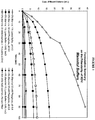
- Figure 1 The filterability of NDV in different buffers.
- the transitional term "comprising" is open-ended.
- a claim utilizing this term can contain elements in addition to those recited in such claim.
- the claims can read on treatment regimens that also include other therapeutic agents or therapeutic virus doses not specifically recited therein, as long as the recited elements or their equivalent are present.
- Newcastle disease virus is an abbreviation for Newcastle disease virus.
- the Newcastle disease virus can be of low (lentogenic), moderate (mesogenic) or high (velogenic) virulence.
- the level of virulence is determined in accordance with the Mean Death Time in Eggs (MDT) test.
- MDT Mean Death Time in Eggs
- Viruses are classified by the MDT test as lentogenic (MDT>90 hours); mesogenic (MDT from 60-90 hours); and velogenic (MDT ⁇ 60 hours).
- substantially no amount of a given component or impurity means that the compound is present in the solution at a concentration of ten parts per million or less.
- a virus is considered “stable” over a given time if less than 50% of infectivity is lost as measured by change in the amount of PFU/mL between an earlier time point and a later time point.
- This invention utilizes an aqueous solution since water is essential in maintaining the three-dimensional structure and stability of enveloped viruses in liquid formulation.
- the concentration of the enveloped virus from 10 6 PFU/mL, to 10 12 PFU/mL, preferably from 1 X 10 10 PFU/mL to 7 X 10 10 PFU/mL.
- any enveloped virus can be formulated utilizing the aqueous solution disclosed herein.
- paramyxoviruses such as Newcastle disease virus can be used.
- a mesogenic strain of Newcastle disease virus is currently preferred.
- osmotic pressure is much lower than the isotonic point, it may cause the viral membrane to burst.
- High osmotic pressure doesn't seem to affect the stability of enveloped viruses during storage.
- an osmotic pressure of about 250 mOs or higher is suitable.
- the osmotic pressure is about 300 mOs.
- Non-reducing saccharides especially disaccharides are most effective in protecting enveloped viruses from inactivation during freezing. Without intending to be limited by mechanism, it is believed that the protection occurs by preventing the denaturation of the three dimensional structure of proteins and the rupture of the lipid bilayer structure. Non-reducing saccharides can also be used to adjust the osmotic pressure in the final formulation. In contrast, the reducing saccharide lactose did not show the same stabilizing effect. Any non-reducing saccharide can be utilized in the solution of this invention. Disaccharides, present in a solution at a concentration of from 5% (w/v) to 50% (w/v) are taught herein.
- the disaccharide sucrose is present at a concentration of from 7.5% (w/v) to 15% (w/v). In a preferred embodiment the disaccharide sucrose is present at a concentration of from 10% (w/v) to 20% (w/v), more specifically about 10% (w/v).
- suitable disaccharides include sucrose.
- Monosaccharides, present in a solution at a concentration of from 2.5% (w/v) to 25% (w/v); preferably from 4% (w/v) to 7% (w/v), more preferably about 5% (w/v) are taught herein.
- the solution can optionally further contain lysine (L-lysine and D-lysine are suitable) or arginine at a concentration from 0.1% (w/v) to 5% (w/v) or lysine and arginine at a combined concentration from 0.1% (w/v) to 5% (w/v).
- concentration of lysine and/or arginine is about 1% (w/v).
- the solution can have a pH from 5 to 10, preferably from 6.5 to 9, more preferably from 7 to 9, more specifically about 7.5.
- the solution in accordance with this invention should contain substantially no reducing agents (e.g. reducing saccharides, Cysteine) or antioxidants (e.g. EDTA, ascorbic acid). Certain other compounds are less deleterious and, accordingly, need not be excluded entirely.
- reducing agents e.g. reducing saccharides, Cysteine
- antioxidants e.g. EDTA, ascorbic acid
- the solution utilized in accordance with this invention may contain up to 0.1 % (w/v) Sodium chloride; 1% (w/v) Dextran; 0.5 % (w/v) Mannitol; 0.1 % (w/v) Sorbitol; 0.01 % (w/v) Tween; 0.01 % (w/v) Glutamate; 0.5 % (w/v) polyethylene glycol; 0.1 mM Calcium chloride; 0.5% (w/v) Phosphatidyl choline; 0.05 % (w/v) Glycine; and 0.01% (w/v) phosphate.
- the solution may contain substantially no Sodium chloride, Dextran, Mannitol, Tween, Glutamate, polyethylene glycol, Calcium chloride, Phosphatidyl choline, Glycine, and phosphate.
- Glycine as well as negatively charged buffers such as glutamate or phosphate buffers is not good for sterile filtration and recovery.
- the solution When the solution is to be administered parenterally it should be sterile. Sterility is not crucial for topical or oral administration. It can, and preferably should, be sterilized prior to low temperature storage with a pharmaceutical grade sterilizing filter.
- the preferred method for sterilization is size-filtration using a filter having a size larger than the effective size of the enveloped virus but smaller than bacteria. A 0.2 micron sterile filter is preferred.
- the viscosity of the solution increases with concentration, which can make it harder for NDV to be filtered.
- the pressure should preferably be kept within 10 to 15 psi. With high viscosity and low pressure settings, it can be very difficult to filter enveloped viruses.
- the problem with high viscosity can be overcome by using aseptic mixing after sterile filtration of the virus.
- Aseptic mixing after sterile filtration of the virus.
- dextran a glucose based polymer, can affect the filtration and recovery of virus during final filtration.
- enveloped viruses formulated in accordance with this invention are stable for long periods of time at -20 °C.
- enveloped viruses formulated as in this invention are stable at temperatures from --4 °C to - 30 °C, preferably -10 °C to - 30 °C, more preferably from -15 °C to -25 °C, still more preferably at -20 °C. Storage at about - 20 °C is convenient.
- enveloped viruses are stable for 6 months, 12 months, 24 months or longer.
- the NDV is a triple-plaque purified MK107 strain, which is an attenuated (mesogenic) version of Newcastle disease virus, described more fully in International Patent Publication WO 00/62735, published October 26, 2000 (Pro-Virus, Inc.).
- ML is defined as 5% (w/v) mannitol/1% (w/v) lysine at pH 8.0
- Example 1 Stability of NDV in 5% (w/v) mannitol/1% (w/v) lysine solution
- NDV was derived from the mesogenic Newcastle disease virus strain Mass-MK107 by triple plaque purification and produced by inoculation of the virus in the allantoic fluid cavity of 10 days old embronated chicken eggs. After incubation at 36°C for 2 days, the eggs were chilled and the allantoic fluid harvested. The harvested allantoic fluid was diafiltered with 5% (w/v) D-mannitol and 1% (w/v) L-lysine, pH 8.0 buffer (ML), clarified and purified by tangential flow filtration and size exclusion chromatography to a concentration of 1 to 4 E+10 PFU/mL, aliquoted and stored at -20°C.
- NDV titer was measured by plaque assay and expressed as the amount of infectious NDV plaque forming units (PFU) per milliliter.
- PFU plaque forming units
- human HT1080 fibrosarcoma cells were seeded into tissue culture plates and grown to confluence. The growth medium was removed, the cell monolayers washed with medium and 0.5 mL of NDV sample added. The plates were incubated by rocking for 90 minutes at 37°C and 5% CO 2 . The monolayers were washed as described, and 3 mL of semi-solid agar medium overlaid onto each well. The cultures were incubated for 48 hours at 37°C and 5% CO 2 .
- the cell monolayers were stained with neutral red, the plaques counted, and the virus titers determined, PFU/mL.
- NDV was prepared by method described in example 1, buffer exchanged into a 10% (w/v) sucrose solution by tangential flow filtration and size exclusion chromatography, aliquoted and stored at -20°C. Stability was measured by plaque assay as described in example 1. The results (Table II) indicated that NDV stored at -20°C in 10% (w/v) sucrose was stable for up to 24 months. TABLE II: Stability of NDV 10% (w/v) Sucrose formulation at -20°C Lot # % Activity Remaining 3 Month 6 Month 12 Month 18 Month 24 Month 1 100 100 82 91 100 2 83 NT 96 NT NT 3 79 93 72 NT NT *NT: Not Tested
- Example 3 Stability of NDV in 10% (w/v) sucrose solution containing other excipients
- NDV was prepared by the method described in example 1 and buffer exchanged into a 10% (w/v) sucrose solution by tangential flow filtration and size exclusion chromatography. Separate formulations of NDV in 10% (w/v) sucrose containing an amino acid were prepared by the addition of either L-lysine, L-glycine or L-glutamic acid to a final concentration of 1% (w/v). The formulations were aliquoted and stored at -20°C. Stability was measured by plaque assay as described in example 1. The results (TABLE III) indicated that NDV stored at -20°C in 10% (w/v) sucrose containing 1% lysine, 1% glycine or 1% glutamic acid was stable for up to 14 months.
- NDV was prepared by the method described in example 1. Portions of the NDV sample were buffer exchanged into different formulations including: 5% (w/v) mannitol/1% (w/v) L-lysine/2% (w/v) Gelatin hydrolysate, 10% (w/v) Trehalose/1% (w/v) L-lysine, 200 mM Sodium acetate in 5% (w/v) mannitol/1% (w/v) lysine and 2% human serum albumin (HSA) in 5% (w/v) mannitol/1% (w/v) lysine, aliquoted, and stored at -20°C. Stability was measured by plaque assay as described in example 1.
- NDV was prepared by the method described in example 1. Portions of the NDV sample were buffer exchanged into different formulations including: 0.9% (w/v) NaCl/5% (w/v) Dextran and 10% (w/v) trehalose/20% (w/v) dextran. Dextran was found to provide a moderate level of protection to NDV (Table V) when NDV was stored at -20°C. TABLE V: Stability of NDV in Dextran buffers at -20°C % Activity Remaining Formulation 3 Months 6 Months 9 Months 12 Months 18 Months NDV 0.9% NaCl/5% Dextrar 61% 55% 52% NA 22% NDV 10% Trehalose/ 20% Dextran (70K) 64% 61% 50% 26% 17%
- NDV was purified by the method described in example 1, buffer exchanged into different buffers (See example 4 and 5), aliquoted and stored at -20°C. Stability was measured by plaque assay as described in example 1. The results (Table VI) indicated that NDV prepared in these buffers described in Table VI were not stable when stored at -20°C:
- NDV in 5% (w/v) mannitol/1% (w/v) lysine was prepared as described in Example 1. A portion was diafiltered (how) into 5% (w/v) mannitol. Dextran was added to another portion of NDV ML to prepare a sample of NDV in ML containing 10% (w/v) dextran. These samples were tested for their ability to undergo sterile filtration by passing approximately 30mL of each sample sequentially through a 0.45um SartobranTM prefilter and a 0.22um SartobranTM filter under 15psi. The filters were pre-wetted with ML buffer.
- Example 8 Sterile filtration of NDV mannitol buffer containing lysine/phosphate/NaCl
- NDV was prepared as described in example 1, exchanged into the buffers described in Figure 1 and tested for their ability to undergo sterile filtration as described in example 7. Filters were prewetted with buffer used in the formulation. For each formulation the volume of NDV buffer that passed through the filter was collected and the accumulated volume calculated. NDV prepared in 5% (w/v) mannitol/1% (w/v) lysine filtered well.
- NDV prepared in 324 mOs NaCl filtered somewhat but NDV did not sterile filtered well when prepared in 5% (w/v) mannitol containing 1% (w/v) L-lysine, 20 mm phosphate or 5% (w/v) mannitol/1% (w/v) lysine containing 0.9% NaCl or 20 mM phosphate.
- Example 9 Sterile Filtration of NDV prepared in buffer containing 10% (w/v) Sucrose or 10% (w/v) Trehalose
- NDV samples were prepared as described in Example 1 and diafiltered into 10% (w/v) sucrose or 10% (w/v) trehalose. From these solutions additional samples of NDV containing 10% (w/v) sucrose / 1% L-lysine, 10% (w/v) sucrose / 1% L-lysine /10% (w/v) dextran, and 10% (w/v) trehalose / 1% L-lysine were prepared by the addition of the respective components. The samples were tested for their ability to undergo sterile filtration as described in Example 6.
- NDV prepared in 10% (w/v) sucrose, 10% (w/v) sucrose / 1% (w/v) L-lysine or 10% (w/v) trehalose sterile filtered with a very good recovery rate. NDV prepared in 10% (w/v) trehalose /1% (w/v) L-lysine filtered with a reasonable recovery rate, while NDV prepared in 10% (w/v) sucrose / 1% (w/v) L-lysine / 10% (w/v) dextran sterile filtered poorly (Table VIII).
- Example 10 Sterile Filtration of NDV prepared in 10% Sucrose containing 1% L-Lysine, 1% L-Glutamate or 1% L-Glycine
- NDV samples were prepared as described in Example 1 and diafiltered into 10% (w/v) sucrose. This material was separated into four portions. L-lysine, L-glutamate, or L-glycine was added to each of three of these portions to produce samples containing 10% (w/v) sucrose and 1% (w/v) L-lysine, L-glutamate, or L-glycine. These samples were tested for their ability to undergo sterile filtration as described in Example 6.
- NDV prepared in 10% (w/v) sucrose or 10% (w/v) sucrose containing 1% L-lysine were readily filtered while NDV prepared in 10% (w/v) sucrose containing 1% (w/v) L-glutamate or glycine filtered marginally (Table IX).
- Table IX Summary of Filtration Studies for NDV Containing Sucrose/Lysine/Glutamic Acid/Glycine Formulation Total Recovery (Percent Load, Normalized) 10% Sucrose 66 ⁇ 11 10% Sucrose/1% Lysine 55 ⁇ 16 10% Sucrose/1% Glutamic Acid 35 ⁇ 5 10% Sucrose/1% Glycine 25 ⁇ 1
- Example 11 Stability of NDV in 10% Sucrose/Lysine in different pH
- NDV was prepared by methods described in example 1 and buffer exchanged into 10% (w/v) sucrose.
- Test samples of NDV/10% sucrose solution at different pH's were prepared by adding pH adjusted sucrose/lysine buffer (different pH's) and stored at -20°C. Stability samples were tested by plaque assay as described in example 1. The results indicated that NDV/10% sucrose solution is more stable in the range of pH 7.3 to pH 8.8 than at lower pH.
- NDV was prepared by methods described in example 1 and buffer exchanged into a 10% (w/v) sucrose. Test samples of NDV at different concentration of sucrose solution were prepared by adding different concentrated sucrose or by adding water for injection and stored at -20°C. The final titers of each formulation were adjusted to approximately 2E10. Stability samples were tested by plaque assay as described in example 1. The results indicate that the virus prepared in 10 to 20% (w/v) sucrose was more stable than virus prepared in lower concentrations of sucrose.
Landscapes
- Health & Medical Sciences (AREA)
- Life Sciences & Earth Sciences (AREA)
- Chemical & Material Sciences (AREA)
- Organic Chemistry (AREA)
- Zoology (AREA)
- Wood Science & Technology (AREA)
- Genetics & Genomics (AREA)
- Bioinformatics & Cheminformatics (AREA)
- Engineering & Computer Science (AREA)
- Medicinal Chemistry (AREA)
- General Health & Medical Sciences (AREA)
- Virology (AREA)
- Biotechnology (AREA)
- General Engineering & Computer Science (AREA)
- Biomedical Technology (AREA)
- Microbiology (AREA)
- Immunology (AREA)
- Biochemistry (AREA)
- Veterinary Medicine (AREA)
- Public Health (AREA)
- Animal Behavior & Ethology (AREA)
- Pharmacology & Pharmacy (AREA)
- Dermatology (AREA)
- Epidemiology (AREA)
- Molecular Biology (AREA)
- Communicable Diseases (AREA)
- Oncology (AREA)
- Chemical Kinetics & Catalysis (AREA)
- General Chemical & Material Sciences (AREA)
- Nuclear Medicine, Radiotherapy & Molecular Imaging (AREA)
- Medicinal Preparation (AREA)
- Medicines Containing Antibodies Or Antigens For Use As Internal Diagnostic Agents (AREA)
- Micro-Organisms Or Cultivation Processes Thereof (AREA)
Description
- This invention pertains to the formulation of live therapeutic viruses and live virus vaccines.
- Only very limited examples for the stabilization of frozen liquid viable virus vaccines at -20°C have been reported. Most of these did not employ purified viable enveloped virus (1, 2, 3, 4, 5). One of the major challenges to stabilizing enveloped virus at temperatures below the freezing point is preventing the physical disruption of structural and functional components (i.e. proteins, lipid bilayer and virus genome) during the freezing and storage stages. It has been reported that proteins are susceptible to denaturation (6), and lipid bilayers are prone to rupture during freezing (7). Several types of excipients have been reported to stabilize the structure of the lipid bilayer and proteins during freezing and in the frozen state (6, 7). These excipients include: polyols, saccharides, buffers, amino acids, and polymers.
- The major tasks for stabilization of enveloped virus at temperatures below the freezing point are preventing the physical disruption of the virus's structural and functional components during both the freezing and storage stages. The enveloped virus components include: 1) the lipid bilayer envelope membrane; 2) the proteins coded by the viral genome, and 3) the single-stranded, or double stranded DNA or RNA genome.
- In order to ensure stability during storage, stocks of infective virus have commonly been stored at ultra-low temperature (e.g. at ≤ -60°C) due to their complexity. Gould, E.A. ("Methods for long-term Virus Preservation", Molecular Biotechnology Vol. 13, pp.57-66, 1999) teach that lipid enveloped viruses survive well at ultra low temperatures below -60°C but that storage at -20°C should only be used if "retention of virus infectivity is not essential". D.R. Harper described the storage conditions for a wide variety of non-enveloped and enveloped viruses ("Virology, Ed. D.R. Harper, BIOS Scientific Publishers Limited, Oxford, UK, 1993). In all cases, viruses must be stored at either -70°C in liquid form or at 4°C as a lyophile in order to retain infectivity. The storage conditions for liquid formulations of Newcastle disease virus are specifically mentioned as -70°C.
- Yannarell et al ("Stabilizing cold-adapted influenza virus vaccine under various storage conditions", J. Virol. Meth. Vol. 102, ppm.15-25, 2002) describe conditions for storage of cold-adapted influenza virus vaccine at -20°C using SPG, a mixture of sucrose, phosphate and glutamate (0.218M sucrose, 0.0038M monobasic potassium phosphate, 0.0072M dibasic potassium phosphate, 0.0049M potassium glutamate). Influenza virus prepared in allantoic fluid for intranasal administration was diluted 10% with a 10X solution of SPG. The final concentration of sucrose in this mixture was 7.5%. The presence of phosphate does not help to stabilize NDV while glutamate hinders sterile filtration and thus both compounds are detrimental to NDV preparation and storage at -20°C.
- Parenteral administration adds an additional formulation issue. For safety reasons products for parenteral usage must be sterile filtered through a 0.2 µm filter, as terminal sterilization is not possible for viable virus preparations. Newcastle disease virions are pleomorphic but roughly spherical particles ranging in approximate size from 0.1 to 0.5µm in diameter. The recovery rate of NDV filtered through a 0.2 µm sterile filter is formulation dependent and an important factor to be considered for developing a -20°C liquid NDV formulation.
- The factors affecting the ability of NDV to pass through a 0.2 µm sterile filter include the diameter of the virus, the filter pore size and the adsorptivity of NDV to the filter. The apparent diameter of NDV can be affected by: 1) The tonicity of the formulation; and 2) the surface charge of NDV, which may affect the molecular configuration and adsorption of proteins or nucleic acid on the surface of NDV in the presence of different buffers.
- Adsorption of NDV to the filter membrane may also have a significant effect on the ability of the virus to sterile filter. Several factors may have impact on the surface properties of NDV and thus affect the adsorptivity of NDV to the filter. These factors include: 1) pH, 2) ionic strength, 3) surface interactions including hydrophobic or Van Der Waal interactions and ionic interactions and 4) the presence of surface-active agents such as surfactants.
-
US-B1-6 258 362 relates to stabilized dried pharmaceutical compositions dispersible in aqueous liquid or injection. -
US-A-5 792 643 relates to methods for preserving an infectious recombinant virus for subsequent reconstitution. -
US-B1-6 290 967 relates to vaccine stabilizers, vaccine formulations and lyophilized vaccines with enhanced thermostability. - Bibliographic citations for Background:
- 1. Protocol "Methods for Long Term Virus Preservation", E.A. Gould, Molecular Biotechnology, Vol 13, 1999, pp 57-66.
- 2. T. Barrett, et al., "Growth, Purification and Titration of Influenza Viruses" in Virology: A practical Approach, Ed. B.W.J. Mahy; Raven Press Books, 1985, Ch. 6, pp. 119-146.
- 3. Virology Lab Fax: Ed. D.R. Harper; Bios Scientific Publishers Limited, 1993.
- 4. Lowrence D. Gelb, "Varicella-Zoster Virus" in Virology: Ed. B. N. Fields; Raven Press, 1985, Ch. 28, pp. 591-626.
- 5. Stabilizing cold-adapted influenza virus vaccine under various storage conditions: D. A. Yannarell et. al; Journal of Virological Methods; 102: 15-25,2002.
- 6. Separation of Freezing- and Drying-induced denaturation of Lyophilized Proteins using Stress-Specific Stabilization, Prestrelski, et al., Archives of Biochemistry and Biophysics, Vol. 303, No. 2, June 1993, pp. 465-473.
- 7. Trehalose expression confers desiccation tolerance on human cells, N. Guo et al., Nature Biotechnology, Vol. 18 Feb. 2000, pp. 168-171.
- This invention provides a method for preserving stability of a Newcastle disease virus comprising maintaining and/or storing for six months or longer at a temperature from -4.°C to -30°C, an aqueous solution comprising:
- the Newcastle disease virus at a concentration of from 106 PFU/mL to 1012 PFU/mL;
- and sucrose present in the solution at a concentration of from 7.5% (w/v) to 15% (w/v);
- wherein the solution has an osmotic pressure of 250 mOs or higher; has a pH of from 5 to 10; and contains less than 0.1% (w/v) sodium chloride, 10 parts per million or less of reducing agents or antioxidants, and less than:
- 1 % (w/v) Dextran;
- 0.5 % (w/v) Mannitol;
- 0.1 % (w/v) Sorbitol;
- 0.01 % (w/v) Tween;
- 0.01 % (w/v) Glutamate;
- 0.5 % (w/v) polyethylene glycol;
- 0.1 mM Calcium chloride;
- 0.5% (w/v) Phosphatidyl choline;
- 0.05 % (w/v) Glycine; and 0.01 % (w/v) phosphate. Taught herein is a non-reducing saccharide which is a disaccharide and is present in a solution at a concentration of from 5% (w/v) to 50% (w/v), and a monosaccharide present in a solution at a concentration of from 2.5% (w/v) to 25% (w/v). The solution utilized in accordance with this invention has an osmotic pressure of about 250 mOs or higher, and has a pH of from 5 to 10.
- This invention is based on the surprising finding that formulating enveloped viruses in an aqueous solution containing a non-reducing saccharide is an effective way of achieving both sterile filtration and long-term stability at moderately low temperatures.
-
Figure 1 : The filterability of NDV in different buffers. - As used herein the transitional term "comprising" is open-ended. A claim utilizing this term can contain elements in addition to those recited in such claim. Thus, for example, the claims can read on treatment regimens that also include other therapeutic agents or therapeutic virus doses not specifically recited therein, as long as the recited elements or their equivalent are present.
- As used herein "NDV" is an abbreviation for Newcastle disease virus. In accordance with this invention, the Newcastle disease virus can be of low (lentogenic), moderate (mesogenic) or high (velogenic) virulence. The level of virulence is determined in accordance with the Mean Death Time in Eggs (MDT) test. (Alexander, "Chapter 27: Newcastle Disease" in Laboratory Manual for the Isolation and Identification of Avian Pathogens, 3rd ed., Purchase, et al. eds. (Kendall/Hunt, Iowa), page 117.) Viruses are classified by the MDT test as lentogenic (MDT>90 hours); mesogenic (MDT from 60-90 hours); and velogenic (MDT<60 hours).
- As used herein "substantially no" amount of a given component or impurity means that the compound is present in the solution at a concentration of ten parts per million or less.
- Given the inherent variability of the plaque forming unit assay, a virus is considered "stable" over a given time if less than 50% of infectivity is lost as measured by change in the amount of PFU/mL between an earlier time point and a later time point. Merely preserving enzymatic activity of individual viral proteins, without also preserving infectivity, is not considered to be the preservation of "stability" in the sense of this invention.
- This invention utilizes an aqueous solution since water is essential in maintaining the three-dimensional structure and stability of enveloped viruses in liquid formulation.
- Solutions in which the virus is too dilute are not desirable because the enveloped virus is less stable, whereas a high virus concentration does not seem to hurt stability during storage. In the freezing process, the enveloped virus will be concentrated into the interstitial region, in which condition the enveloped virus is considered to be in a highly concentrated state. In accordance with this invention the concentration of the enveloped virus from 106 PFU/mL, to 1012 PFU/mL, preferably from 1 X 10¹⁰ PFU/mL to 7 X 10¹⁰ PFU/mL.
- It is taught herein that any enveloped virus can be formulated utilizing the aqueous solution disclosed herein. For example, paramyxoviruses such as Newcastle disease virus can be used. A mesogenic strain of Newcastle disease virus is currently preferred.
- There are two important factors to be considered for protecting enveloped viruses from inactivation at moderately low temperatures (e.g. -20°C): isotonicity in the liquid state and preventing denaturation of the proteins and the rupture of the lipid membrane during freezing. If the osmotic pressure is much lower than the isotonic point, it may cause the viral membrane to burst. High osmotic pressure doesn't seem to affect the stability of enveloped viruses during storage. In accordance with this invention an osmotic pressure of about 250 mOs or higher is suitable. Preferably the osmotic pressure is about 300 mOs. When the concentration of saccharide in the solution is much below 10% (w/v) it may be necessary to add other excipients to achieve a desirable osmotic pressure.
- The other important factor that may affect the stability is the rupture of the structure and functional components during freezing and storage. Non-reducing saccharides, especially disaccharides are most effective in protecting enveloped viruses from inactivation during freezing. Without intending to be limited by mechanism, it is believed that the protection occurs by preventing the denaturation of the three dimensional structure of proteins and the rupture of the lipid bilayer structure. Non-reducing saccharides can also be used to adjust the osmotic pressure in the final formulation. In contrast, the reducing saccharide lactose did not show the same stabilizing effect. Any non-reducing saccharide can be utilized in the solution of this invention. Disaccharides, present in a solution at a concentration of from 5% (w/v) to 50% (w/v) are taught herein. In a specific embodiment the disaccharide sucrose is present at a concentration of from 7.5% (w/v) to 15% (w/v). In a preferred embodiment the disaccharide sucrose is present at a concentration of from 10% (w/v) to 20% (w/v), more specifically about 10% (w/v). Examples of suitable disaccharides include sucrose. Monosaccharides, present in a solution at a concentration of from 2.5% (w/v) to 25% (w/v); preferably from 4% (w/v) to 7% (w/v), more preferably about 5% (w/v) are taught herein.
- In accordance with this invention the solution can optionally further contain lysine (L-lysine and D-lysine are suitable) or arginine at a concentration from 0.1% (w/v) to 5% (w/v) or lysine and arginine at a combined concentration from 0.1% (w/v) to 5% (w/v). Preferably the concentration of lysine and/or arginine is about 1% (w/v).
- Stability of the virus is affected by the pH. In accordance with this invention the solution can have a pH from 5 to 10, preferably from 6.5 to 9, more preferably from 7 to 9, more specifically about 7.5.
- Various compounds have a negative effect on stability, filterability, or both, and their presence in the solution should be minimized. For optimal stability, the solution in accordance with this invention should contain substantially no reducing agents (e.g. reducing saccharides, Cysteine) or antioxidants (e.g. EDTA, ascorbic acid). Certain other compounds are less deleterious and, accordingly, need not be excluded entirely. For example it is acceptable for the solution utilized in accordance with this invention to contain up to 0.1 % (w/v) Sodium chloride; 1% (w/v) Dextran; 0.5 % (w/v) Mannitol; 0.1 % (w/v) Sorbitol; 0.01 % (w/v) Tween; 0.01 % (w/v) Glutamate; 0.5 % (w/v) polyethylene glycol; 0.1 mM Calcium chloride; 0.5% (w/v) Phosphatidyl choline; 0.05 % (w/v) Glycine; and 0.01% (w/v) phosphate. Nevertheless it is preferable for the solution to contain substantially no Sodium chloride, Dextran, Mannitol, Tween, Glutamate, polyethylene glycol, Calcium chloride, Phosphatidyl choline, Glycine, and phosphate. Glycine as well as negatively charged buffers such as glutamate or phosphate buffers is not good for sterile filtration and recovery.
- When the solution is to be administered parenterally it should be sterile. Sterility is not crucial for topical or oral administration. It can, and preferably should, be sterilized prior to low temperature storage with a pharmaceutical grade sterilizing filter. The preferred method for sterilization is size-filtration using a filter having a size larger than the effective size of the enveloped virus but smaller than bacteria. A 0.2 micron sterile filter is preferred. Usually the viscosity of the solution increases with concentration, which can make it harder for NDV to be filtered. To obtain a good virus recovery rate during sterile filtration the pressure should preferably be kept within 10 to 15 psi. With high viscosity and low pressure settings, it can be very difficult to filter enveloped viruses. The problem with high viscosity can be overcome by using aseptic mixing after sterile filtration of the virus. To avoid high viscosity it is preferable not to use high concentrations of excipients. For example, dextran, a glucose based polymer, can affect the filtration and recovery of virus during final filtration.
- Although it was previously believed that liquid formulations of enveloped viruses are stable only at ultra low temperatures such as -60 °C or -70 °C, surprisingly it has been found that enveloped viruses formulated in accordance with this invention are stable for long periods of time at -20 °C. For example, enveloped viruses formulated as in this invention are stable at temperatures from --4 °C to - 30 °C, preferably -10 °C to - 30 °C, more preferably from -15 °C to -25 °C, still more preferably at -20 °C. Storage at about - 20 °C is convenient. The ability to maintain stability at -20 °C will make it possible for a therapeutic product to be stocked in hospitals and pharmacies, which typically have -20 °C freezers but usually do not have -70 °C freezers. Moreover, because traditional container closures maintain better flexibility at -20 °C than at -70 °C, sterility maintenance and therefore patient safety is assured by storage at -20 °C. Utilizing the method of this invention, enveloped viruses are stable for 6 months, 12 months, 24 months or longer.
- The invention will be better understood by reference to the following examples, which illustrate but do not limit the invention described herein. In the following examples, the NDV is a triple-plaque purified MK107 strain, which is an attenuated (mesogenic) version of Newcastle disease virus, described more fully in International Patent Publication
WO 00/62735, published October 26, 2000 - ML is defined as 5% (w/v) mannitol/1% (w/v) lysine at pH 8.0
- NDV was derived from the mesogenic Newcastle disease virus strain Mass-MK107 by triple plaque purification and produced by inoculation of the virus in the allantoic fluid cavity of 10 days old embronated chicken eggs. After incubation at 36°C for 2 days, the eggs were chilled and the allantoic fluid harvested. The harvested allantoic fluid was diafiltered with 5% (w/v) D-mannitol and 1% (w/v) L-lysine, pH 8.0 buffer (ML), clarified and purified by tangential flow filtration and size exclusion chromatography to a concentration of 1 to 4 E+10 PFU/mL, aliquoted and stored at -20°C. NDV titer was measured by plaque assay and expressed as the amount of infectious NDV plaque forming units (PFU) per milliliter. For this assay, human HT1080 fibrosarcoma cells were seeded into tissue culture plates and grown to confluence. The growth medium was removed, the cell monolayers washed with medium and 0.5 mL of NDV sample added. The plates were incubated by rocking for 90 minutes at 37°C and 5% CO2. The monolayers were washed as described, and 3 mL of semi-solid agar medium overlaid onto each well. The cultures were incubated for 48 hours at 37°C and 5% CO2. The cell monolayers were stained with neutral red, the plaques counted, and the virus titers determined, PFU/mL. The results (Table I) indicated that NDV stored at -20°C in 5% mannitol/1% lysine was not stable losing in average greater than 80% activity. Stability was expressed as the percent of titer remaining with respect to the time zero titer.
TABLE I: Stability of NDV formulated in 5% D-mannitol (w/v) and 1% L-lysine (w/v) at -20°C Lot # % Activity Remaining 4 Month 8 Month 12 Month 18 Month 24 Month 1 26 NT* 17 NT NT 2 18 15 9 NT NT 3 11 6 0.3 0.9 1.4 *NT: Not Tested - NDV was prepared by method described in example 1, buffer exchanged into a 10% (w/v) sucrose solution by tangential flow filtration and size exclusion chromatography, aliquoted and stored at -20°C. Stability was measured by plaque assay as described in example 1. The results (Table II) indicated that NDV stored at -20°C in 10% (w/v) sucrose was stable for up to 24 months.
TABLE II: Stability of NDV 10% (w/v) Sucrose formulation at -20°CLot # % Activity Remaining 3 Month 6 Month 12 Month 18 Month 24 Month 1 100 100 82 91 100 2 83 NT 96 NT NT 3 79 93 72 NT NT *NT: Not Tested - NDV was prepared by the method described in example 1 and buffer exchanged into a 10% (w/v) sucrose solution by tangential flow filtration and size exclusion chromatography. Separate formulations of NDV in 10% (w/v) sucrose containing an amino acid were prepared by the addition of either L-lysine, L-glycine or L-glutamic acid to a final concentration of 1% (w/v). The formulations were aliquoted and stored at -20°C. Stability was measured by plaque assay as described in example 1. The results (TABLE III) indicated that NDV stored at -20°C in 10% (w/v) sucrose containing 1% lysine, 1% glycine or 1% glutamic acid was stable for up to 14 months.
TABLE III: Stability of NDV in 10% (w/v) sucrose containing amino acids at-20°C % Activity Remaining NDV/buffer 4 Months 14 Months 10% Sucrose/1% (w/v) L-Lysine (pH 6.5) 100% 138% 10% Sucrose/1% (w/v) L-Glycine (pH 6.5) 105% 115% 10% Sucrose/1% (w/v) L-Glutamic Acid (pH 7.9) 100% 107% - NDV was prepared by the method described in example 1. Portions of the NDV sample were buffer exchanged into different formulations including: 5% (w/v) mannitol/1% (w/v) L-lysine/2% (w/v) Gelatin hydrolysate, 10% (w/v) Trehalose/1% (w/v) L-lysine, 200 mM Sodium acetate in 5% (w/v) mannitol/1% (w/v) lysine and 2% human serum albumin (HSA) in 5% (w/v) mannitol/1% (w/v) lysine, aliquoted, and stored at -20°C. Stability was measured by plaque assay as described in example 1. The addition of 2% (w/v) gelatin hydrolysate to NDV prepared in 5% (w/v) mannitol/1% (w/v) L-lysine significantly improved stability as compared to NDV prepared in the mannitol/L-lysine formulation (See example 1) while the addition of 2% HSA provided a more modest level of protection.
TABLE IV: Stability of NDV formulation in buffers containing gelatin hydrolysate, HSA, Na Acetate, and trehalose at-20°C NDV/Buffer % Activity Remaining 4 Months 8 Months 12 Months 18 Months 24 Months 2% Gelatin Hydrolysate ML 78 71 64 66 80 10% Trehalose/1 % Lysine 35 NT 29 NT NT 200 mM Sodium Acetate ML 67 52 37 NT NT 2% HSA/ML 65% 70% 51% 43% NT - NDV was prepared by the method described in example 1. Portions of the NDV sample were buffer exchanged into different formulations including: 0.9% (w/v) NaCl/5% (w/v) Dextran and 10% (w/v) trehalose/20% (w/v) dextran. Dextran was found to provide a moderate level of protection to NDV (Table V) when NDV was stored at -20°C.
TABLE V: Stability of NDV in Dextran buffers at -20°C % Activity Remaining Formulation 3 Months 6 Months 9 Months 12 Months 18 Months NDV 0.9% NaCl/5% Dextrar 61% 55% 52% NA 22 % NDV 10% Trehalose/ 20% Dextran (70K) 64% 61% 50% 26% 17% - NDV was purified by the method described in example 1, buffer exchanged into different buffers (See example 4 and 5), aliquoted and stored at -20°C. Stability was measured by plaque assay as described in example 1. The results (Table VI) indicated that NDV prepared in these buffers described in Table VI were not stable when stored at -20°C:
- The remainder of this page intentionally left blank.
- NDV in 5% (w/v) mannitol/1% (w/v) lysine was prepared as described in Example 1. A portion was diafiltered (how) into 5% (w/v) mannitol. Dextran was added to another portion of NDV ML to prepare a sample of NDV in ML containing 10% (w/v) dextran. These samples were tested for their ability to undergo sterile filtration by passing approximately 30mL of each sample sequentially through a 0.45um Sartobran™ prefilter and a 0.22um Sartobran™ filter under 15psi. The filters were pre-wetted with ML buffer. The filtrants from each sample were collected and analyzed by plaque assay for the total amount of recovered viral plaque activity (PFU) as described in Example 1. NDV prepared in ML buffer or in 5% (w/v) mannitol was readily filtered while NDV prepared in ML buffer containing 10% (w/v) dextran did not pass through the filter appreciably (Table VII).
TABLE VII: Summary of Filtration Studies for NDV Containing Mannitol/Lysine/Dextran Formulation Total Recovery (Percent Load, Normalized) ML 82 ± 17 5% (w/v) Mannitol 83 ± 17 10% (w/v) Dextran/5% (w/v) Mannitol/1% (w/v) Lysine 4 ± 3 - NDV was prepared as described in example 1, exchanged into the buffers described in
Figure 1 and tested for their ability to undergo sterile filtration as described in example 7. Filters were prewetted with buffer used in the formulation. For each formulation the volume of NDV buffer that passed through the filter was collected and the accumulated volume calculated. NDV prepared in 5% (w/v) mannitol/1% (w/v) lysine filtered well. NDV prepared in 324 mOs NaCl filtered somewhat but NDV did not sterile filtered well when prepared in 5% (w/v) mannitol containing 1% (w/v) L-lysine, 20 mm phosphate or 5% (w/v) mannitol/1% (w/v) lysine containing 0.9% NaCl or 20 mM phosphate. - NDV samples were prepared as described in Example 1 and diafiltered into 10% (w/v) sucrose or 10% (w/v) trehalose. From these solutions additional samples of NDV containing 10% (w/v) sucrose / 1% L-lysine, 10% (w/v) sucrose / 1% L-lysine /10% (w/v) dextran, and 10% (w/v) trehalose / 1% L-lysine were prepared by the addition of the respective components. The samples were tested for their ability to undergo sterile filtration as described in Example 6. NDV prepared in 10% (w/v) sucrose, 10% (w/v) sucrose / 1% (w/v) L-lysine or 10% (w/v) trehalose sterile filtered with a very good recovery rate. NDV prepared in 10% (w/v) trehalose /1% (w/v) L-lysine filtered with a reasonable recovery rate, while NDV prepared in 10% (w/v) sucrose / 1% (w/v) L-lysine / 10% (w/v) dextran sterile filtered poorly (Table VIII).
TABLE VIII: Summary of Filtration Studies for NDV Containing Sucrose/Trehalose/Lysine/Dextran Formulation Total Recovery (Percent Load, Normalized) 10% Sucrose 69 ± 7 10% Sucrose/1% Lysine 83 ± 3 10% Trehalose 74 ± 3 10% Trehalose/1 % Lysine 60 ± 7 10% Dextran/10% Sucrose/1% Lysine 11 ± 1 - NDV samples were prepared as described in Example 1 and diafiltered into 10% (w/v) sucrose. This material was separated into four portions. L-lysine, L-glutamate, or L-glycine was added to each of three of these portions to produce samples containing 10% (w/v) sucrose and 1% (w/v) L-lysine, L-glutamate, or L-glycine. These samples were tested for their ability to undergo sterile filtration as described in Example 6. NDV prepared in 10% (w/v) sucrose or 10% (w/v) sucrose containing 1% L-lysine were readily filtered while NDV prepared in 10% (w/v) sucrose containing 1% (w/v) L-glutamate or glycine filtered marginally (Table IX).
TABLE IX: Summary of Filtration Studies for NDV Containing Sucrose/Lysine/Glutamic Acid/Glycine Formulation Total Recovery (Percent Load, Normalized) 10% Sucrose 66 ± 11 10% Sucrose/1% Lysine 55 ± 16 10% Sucrose/1 % Glutamic Acid 35 ± 5 10% Sucrose/1% Glycine 25 ± 1 - NDV was prepared by methods described in example 1 and buffer exchanged into 10% (w/v) sucrose. Test samples of NDV/10% sucrose solution at different pH's were prepared by adding pH adjusted sucrose/lysine buffer (different pH's) and stored at -20°C. Stability samples were tested by plaque assay as described in example 1. The results indicated that NDV/10% sucrose solution is more stable in the range of pH 7.3 to pH 8.8 than at lower pH.
TABLE X: Stability of NDV formulated in 10% sucrose (w/v)/1% lysine (w/v) at different pH's at -20°C Formulation (0-time: 10/22/05) % Activity Remaining 6 Month 6 Month 9 Month 12 Month NDV 10% Sucrose Control (pH 5.7) 41% 26% 35% 29% NDV Suc/1% Lysine pH 5.3 50% 38% 28% 42% NDV Suc/1% Lysine pH 5.7 68% 71% 52% 39% NDV Suc/1% Lysine pH 6.3 109% 58% 52% 52% NDV Suc/1% Lysine PH 6.6 49% 49% 51% 35% NDV Suc/1% Lysine PH 7.3 72% 85% 64% 62% NDV Suc/1% Lysine PH 8.3 89% 68% 74% 58% NDV Suc/1% Lysine PH 8.8 69% 64% TNTC 64% TNTC: Too numerous to count - NDV was prepared by methods described in example 1 and buffer exchanged into a 10% (w/v) sucrose. Test samples of NDV at different concentration of sucrose solution were prepared by adding different concentrated sucrose or by adding water for injection and stored at -20°C. The final titers of each formulation were adjusted to approximately 2E10. Stability samples were tested by plaque assay as described in example 1. The results indicate that the virus prepared in 10 to 20% (w/v) sucrose was more stable than virus prepared in lower concentrations of sucrose.
TABLE XI: Sucrose concentration effect on the NDV stability at -20°C Formulation % Activity Remaining 6 Month 9 Month NDV 2.5% (w/v) Sucrose 63% 51% NDV 5.0% (w/v) Sucrose 67% 76% NDV 7.5% (w/v) Sucrose 60% 55 % NDV 10% (w/v) Sucrose 100% 84% NDV15% (w/v) Sucrose 81% 71 % NDV 20% (w/v) Sucrose 89% 83%
| Formulation | % Activity Remaining | ||
| 4M | 8M | 12M | |
| 5% (w/v) Mannitol/1% (w/v) L-Lysine | 18% | 15% | 9% |
| 0.1% (w/v) Tween/ML | <1% | NT | NT |
| 10% (w/v) Lactose solution | <1% | NT | NT |
| 2% (w/v) Gelatin/5% (w/v) Mannitol/ 1% (w/v) Lysine | 13% | NT | NT |
| 1% (w/v) Arginine 5% (w/v) Mannitol solution | 2.3% | NT | NT |
| 1% (w/v) Glutamic Acid/5% (w/v) Mannitol | <1% | NT | NT |
| 5% (w/v) PEG/5% (w/v) Mannitol/ 1% (w/v) Lysine | 3.7% | NT | NT |
| 10mM CaCl2/ML | 6% | NT | NT |
| 5%PhophatidylCholine/ ML | 14% | NT | NT |
| 1% Glycine/5% (w/v) Mannitol | 5% | NT | NT |
| 0.05%EDTA/5% (w/v) Mannitol/ 1% (w/v) Lysine | 31% | 17% | NA |
| *NT: Not Tested |
Claims (13)
- A method for preserving stability of a Newcastle disease virus comprising maintaining and/or storing for six months or longer at a temperature from -4°C to -30°C, an aqueous solution comprising:the Newcastle disease virus at a concentration of from 106 PFU/mL to 1012 PFU/mL;and sucrose present in the solution at a concentration of from 7.5% (w/v) to 15% (w/v);wherein the solution has an osmotic pressure of 250 mOs or higher; has a pH of from 5 to 10; and contains less than 0.1% (w/v) sodium chloride, 10 parts per million or less of reducing agents or antioxidants, and less than:1 % (w/v) Dextran;0.5 % (w/v) Mannitol;0.1 % (w/v) Sorbitol;0.01 % (w/v) Tween;0.01 % (w/v) Glutamate;0.5 % (w/v) polyethylene glycol;0.1 mM Calcium chloride;0.5% (w/v) Phosphatidyl choline;0.05 % (w/v) Glycine; and 0.01 % (w/v) phosphate.
- The method of claim 1, wherein the solution further comprises lysine at a concentration from 0.1 % (w/v) to 5% (w/v).
- The method of claim 1 or 2, wherein the solution contains 10 parts per million or less of each of Sodium chloride, Dextran, Mannitol, Sorbitol, Tween, Glutamate, polyethylene glycol, Calcium chloride, Phosphatidyl choline, Glycine, and phosphate.
- The method of claim 2, wherein the concentration of lysine is 1 % (w/v).
- The method of any preceding claim, wherein the virus is a mesogenic strain of Newcastle disease virus.
- The method of any preceding claim, wherein the virus concentration is from 1 X 10¹⁰ PFU/mL to 7 X 10¹⁰ PFU/mL.
- The method of any preceding claim, wherein the sucrose concentration is from 10% (w/v) to 20% (w/v).
- The method of any preceding claim, wherein the osmotic pressure is 300 mOs.
- The method of any preceding claim, wherein the pH is from 7 to 9.
- The method of any preceding claim, wherein the solution is sterile.
- The method of any preceding claim, wherein the storage temperature is from -30°C to -10°C.
- The method of claim 11, wherein the storage temperature is -20°C.
- The method of any preceding claim, wherein the solution is maintained at the temperature for 12 months or more, or for 24 months or more.
Applications Claiming Priority (2)
| Application Number | Priority Date | Filing Date | Title |
|---|---|---|---|
| US62534904P | 2004-11-05 | 2004-11-05 | |
| PCT/US2005/040149 WO2006052813A2 (en) | 2004-11-05 | 2005-11-04 | Stable and filterable enveloped virus formulations |
Publications (3)
| Publication Number | Publication Date |
|---|---|
| EP1807511A2 EP1807511A2 (en) | 2007-07-18 |
| EP1807511A4 EP1807511A4 (en) | 2009-05-13 |
| EP1807511B1 true EP1807511B1 (en) | 2017-01-04 |
Family
ID=36337060
Family Applications (1)
| Application Number | Title | Priority Date | Filing Date |
|---|---|---|---|
| EP05817250.3A Expired - Lifetime EP1807511B1 (en) | 2004-11-05 | 2005-11-04 | Stable and filterable enveloped virus formulations |
Country Status (13)
| Country | Link |
|---|---|
| US (1) | US7914979B2 (en) |
| EP (1) | EP1807511B1 (en) |
| JP (2) | JP5110696B2 (en) |
| KR (1) | KR101400379B1 (en) |
| CN (1) | CN101052714B (en) |
| AU (1) | AU2005304866B2 (en) |
| CA (1) | CA2584815C (en) |
| ES (1) | ES2619936T3 (en) |
| IL (1) | IL182856A (en) |
| MX (1) | MX2007005379A (en) |
| RU (1) | RU2458125C2 (en) |
| WO (1) | WO2006052813A2 (en) |
| ZA (1) | ZA200703194B (en) |
Families Citing this family (15)
| Publication number | Priority date | Publication date | Assignee | Title |
|---|---|---|---|---|
| EP2461679B1 (en) * | 2009-07-28 | 2019-02-13 | GE Healthcare Bio-Sciences Corp. | Vaccine stabilizer |
| CN101979516B (en) * | 2010-10-19 | 2013-07-03 | 李海波 | Virus sampling liquid composition |
| CN103269716B (en) | 2010-12-02 | 2015-05-27 | 昂科利蒂克斯生物科技公司 | Lyophilized viral formulations |
| WO2012075379A2 (en) | 2010-12-02 | 2012-06-07 | Oncolytics Biotech Inc. | Liquid viral formulations |
| WO2013095965A1 (en) * | 2011-12-19 | 2013-06-27 | Wellstat Biologics Corporation | Stable storage of enveloped viruses in histidine aqueous solution |
| FR3010720B1 (en) | 2013-09-16 | 2017-08-11 | Genethon | PROCESS FOR PRODUCING ENVELOPED VIRUSES |
| FR3014901B1 (en) * | 2013-12-17 | 2017-06-09 | Genethon | PROCESS FOR PURIFYING ENHANCED VIRUSES OR VIRTORS |
| AR099470A1 (en) * | 2014-02-17 | 2016-07-27 | Intervet Int Bv | LIQUID CORRAL BIRD VIRUS VACCINES |
| TWI670085B (en) * | 2014-02-19 | 2019-09-01 | 荷蘭商英特威國際公司 | Swine virus vaccines that are liquid stable |
| AU2015357225B2 (en) | 2014-12-01 | 2020-04-09 | Transgene Sa | Stable liquid vaccinia virus formulations |
| ES3011733T3 (en) | 2015-02-13 | 2025-04-08 | Transgene | Immunotherapeutic vaccine and antibody combination therapy |
| EP3452081A1 (en) | 2016-05-04 | 2019-03-13 | Transgene SA | Combination therapy with cpg tlr9 ligand |
| EP3522920A2 (en) | 2016-10-10 | 2019-08-14 | Transgene SA | Immunotherapeutic product and mdsc modulator combination therapy |
| US11052147B2 (en) | 2017-05-15 | 2021-07-06 | Janssen Vaccines & Prevention B.V. | Stable virus-containing composition |
| CA3061678A1 (en) | 2017-05-15 | 2018-11-22 | Janssen Vaccines & Prevention B.V. | Stable virus-containing composition |
Family Cites Families (20)
| Publication number | Priority date | Publication date | Assignee | Title |
|---|---|---|---|---|
| DK124340B (en) | 1969-11-29 | 1972-10-09 | Takeda Chemical Industries Ltd | Method for producing strong attenuated, live Newcastle disease virus vaccine. |
| JPS57114527A (en) * | 1979-10-29 | 1982-07-16 | Merck & Co Inc | Vaccine stabilizer |
| PT71926B (en) * | 1979-10-29 | 1982-03-31 | Merck & Co Inc | Process for preparing a liquid vaccine comprising a stabilizer |
| US4338335A (en) * | 1980-02-05 | 1982-07-06 | Merck & Co., Inc. | Vaccine stabilizer containing L-glutamic acid and L-arginine |
| DD299213A7 (en) * | 1988-05-04 | 1992-04-09 | Saechsische Landesgewerbefoerderungsgesellschaft M.B.H.,De | METHOD FOR STABILIZING A LIVE VIRUS VACCINE AGAINST TEMPERATURE EFFECT |
| US6165500A (en) * | 1990-08-24 | 2000-12-26 | Idea Ag | Preparation for the application of agents in mini-droplets |
| US5602023A (en) * | 1992-03-24 | 1997-02-11 | Csatary; Laszlo K. | Pharmaceutical product containing live, stabilized virus for the therapy of viral and malignant diseases and process for preparing the same |
| CA2158935A1 (en) * | 1993-10-12 | 1995-04-20 | Chiron Viagene, Inc. | Methods for preserving recombinant viruses |
| FR2742756B1 (en) | 1995-12-22 | 1998-04-03 | Pasteur Merieux Serums Vacc | STABILIZERS FOR LIVE VACCINES, VACCINES CONTAINING SAME, AND PROCESSES FOR THEIR PREPARATION |
| ZA973642B (en) * | 1996-04-26 | 1997-11-25 | Merck & Co Inc | DNA vaccine formulations. |
| EP2243827B2 (en) * | 1996-08-30 | 2017-11-22 | Life Technologies Corporation | Serum-free mammalian cell culture medium, and uses thereof |
| US6290967B1 (en) | 1996-12-20 | 2001-09-18 | Merck & Co., Inc. | Stabilizers for lyophilized vaccines |
| CN1063971C (en) * | 1997-09-24 | 2001-04-04 | 中国兽药监察所 | Method for preparing freeze-dried live vaccine for animal use |
| US20030044384A1 (en) * | 1997-10-09 | 2003-03-06 | Pro-Virus, Inc. | Treatment of neoplasms with viruses |
| GB9808922D0 (en) | 1998-04-24 | 1998-06-24 | Cantab Pharmaceuticals Res Ltd | Virus preparations |
| DK1109892T3 (en) * | 1998-09-04 | 2009-02-09 | Targeted Genetics Corp | Methods for Generating Highly Titled Auxiliary Virus Free Preparations of Free Recombinant AAV Vectors |
| NZ550861A (en) | 1999-04-15 | 2009-03-31 | Wellstat Biologics Corp | Treatment of neoplasms with viruses |
| US6896894B2 (en) * | 2001-10-30 | 2005-05-24 | Battelle Memorial Institute | Proteins stabilized with polysaccharide gums |
| US20030153065A1 (en) | 2002-01-14 | 2003-08-14 | Genvec, Inc. | Composition and method for maintaining non-enveloped viral vectors |
| BRPI0417672A (en) * | 2003-12-17 | 2007-03-20 | Wyeth Corp | processes for producing storage stable virus compositions, virus and immunogenic compositions |
-
2005
- 2005-11-04 JP JP2007539369A patent/JP5110696B2/en not_active Expired - Lifetime
- 2005-11-04 EP EP05817250.3A patent/EP1807511B1/en not_active Expired - Lifetime
- 2005-11-04 CA CA2584815A patent/CA2584815C/en not_active Expired - Fee Related
- 2005-11-04 KR KR1020077012753A patent/KR101400379B1/en not_active Expired - Fee Related
- 2005-11-04 RU RU2007120758/10A patent/RU2458125C2/en not_active IP Right Cessation
- 2005-11-04 US US11/718,348 patent/US7914979B2/en not_active Expired - Lifetime
- 2005-11-04 AU AU2005304866A patent/AU2005304866B2/en not_active Ceased
- 2005-11-04 WO PCT/US2005/040149 patent/WO2006052813A2/en not_active Ceased
- 2005-11-04 MX MX2007005379A patent/MX2007005379A/en active IP Right Grant
- 2005-11-04 ES ES05817250.3T patent/ES2619936T3/en not_active Expired - Lifetime
- 2005-11-04 CN CN200580037889XA patent/CN101052714B/en not_active Expired - Fee Related
-
2007
- 2007-04-18 ZA ZA200703194A patent/ZA200703194B/en unknown
- 2007-04-29 IL IL182856A patent/IL182856A/en not_active IP Right Cessation
-
2012
- 2012-08-13 JP JP2012179515A patent/JP2012214518A/en not_active Withdrawn
Non-Patent Citations (1)
| Title |
|---|
| None * |
Also Published As
| Publication number | Publication date |
|---|---|
| WO2006052813A2 (en) | 2006-05-18 |
| JP2012214518A (en) | 2012-11-08 |
| JP5110696B2 (en) | 2012-12-26 |
| IL182856A (en) | 2015-03-31 |
| WO2006052813A3 (en) | 2006-09-14 |
| CA2584815C (en) | 2014-03-25 |
| IL182856A0 (en) | 2007-08-19 |
| ES2619936T3 (en) | 2017-06-27 |
| CA2584815A1 (en) | 2006-05-18 |
| EP1807511A4 (en) | 2009-05-13 |
| JP2008518972A (en) | 2008-06-05 |
| KR101400379B1 (en) | 2014-05-28 |
| AU2005304866A1 (en) | 2006-05-18 |
| CN101052714A (en) | 2007-10-10 |
| KR20070085818A (en) | 2007-08-27 |
| EP1807511A2 (en) | 2007-07-18 |
| US7914979B2 (en) | 2011-03-29 |
| RU2007120758A (en) | 2008-12-10 |
| MX2007005379A (en) | 2007-07-04 |
| US20080166784A1 (en) | 2008-07-10 |
| RU2458125C2 (en) | 2012-08-10 |
| ZA200703194B (en) | 2008-08-27 |
| CN101052714B (en) | 2012-01-11 |
| AU2005304866B2 (en) | 2010-04-01 |
Similar Documents
| Publication | Publication Date | Title |
|---|---|---|
| JP2012214518A (en) | Stable and filterable enveloped virus formulation | |
| KR0149677B1 (en) | Stabilized live vaccine | |
| EP2552478B1 (en) | Excipients for stabilising viral particles | |
| JP6817370B2 (en) | Attenuated live virus composition | |
| ES2352638T3 (en) | ANIMAL CELLS AND REPLICATION PROCEDURES OF THE VIRUS OF THE FLU. | |
| US6210683B1 (en) | Stabilizers containing recombinant human serum albumin for live virus vaccines | |
| KR100702086B1 (en) | Live vaccines of lyophilized directed hepatitis A and stabilizers | |
| US20070148629A1 (en) | Composition for the preservation of viruses | |
| US20100015177A1 (en) | Method for Preserving Viral Particles | |
| CN112626124A (en) | Virus preservation reagent | |
| EP2852662A2 (en) | Herpesvirus compositions and related methods | |
| CN115337408A (en) | Adeno-associated virus formulations | |
| JPH06234659A (en) | Stabilized live vaccine | |
| EP3127550A1 (en) | Stabilizing composition for dry formulation of virus | |
| WO2013095965A1 (en) | Stable storage of enveloped viruses in histidine aqueous solution | |
| HK1104316B (en) | Stable and filterable enveloped virus formulations | |
| HK1104316A (en) | Stable and filterable enveloped virus formulations | |
| NZ554550A (en) | Stable and filterable enveloped virus formulations | |
| WO2021020446A1 (en) | Composition containing herpes simplex virus | |
| CN118414164A (en) | Stabilized liquid vaccines of live viruses | |
| CN117414432B (en) | A stable adenovirus vector lyophilized formulation and its application | |
| EP4712947A1 (en) | Formulations to stabilize virus-based therapeutics | |
| AU2002366654B2 (en) | Composition for viral preservation | |
| HK1259740A1 (en) | Methods of producing and characterizing virus vaccine and virus vaccine composition | |
| KR20030025480A (en) | Protein-free Stabilizer for Live Attenuated Varicella Zoster Virus Vaccine |
Legal Events
| Date | Code | Title | Description |
|---|---|---|---|
| PUAI | Public reference made under article 153(3) epc to a published international application that has entered the european phase |
Free format text: ORIGINAL CODE: 0009012 |
|
| 17P | Request for examination filed |
Effective date: 20070502 |
|
| AK | Designated contracting states |
Kind code of ref document: A2 Designated state(s): AT BE BG CH CY CZ DE DK EE ES FI FR GB GR HU IE IS IT LI LT LU LV MC NL PL PT RO SE SI SK TR |
|
| REG | Reference to a national code |
Ref country code: HK Ref legal event code: DE Ref document number: 1104316 Country of ref document: HK |
|
| DAX | Request for extension of the european patent (deleted) | ||
| RIC1 | Information provided on ipc code assigned before grant |
Ipc: C12N 7/02 20060101AFI20070524BHEP Ipc: A61K 9/00 20060101ALI20090401BHEP |
|
| A4 | Supplementary search report drawn up and despatched |
Effective date: 20090414 |
|
| 17Q | First examination report despatched |
Effective date: 20090807 |
|
| REG | Reference to a national code |
Ref country code: DE Ref legal event code: R079 Ref document number: 602005051099 Country of ref document: DE Free format text: PREVIOUS MAIN CLASS: C12N0007020000 Ipc: A61K0047260000 |
|
| GRAP | Despatch of communication of intention to grant a patent |
Free format text: ORIGINAL CODE: EPIDOSNIGR1 |
|
| RIC1 | Information provided on ipc code assigned before grant |
Ipc: A61K 47/26 20060101AFI20160630BHEP Ipc: C12N 7/00 20060101ALI20160630BHEP Ipc: A61K 9/00 20060101ALI20160630BHEP |
|
| INTG | Intention to grant announced |
Effective date: 20160714 |
|
| GRAS | Grant fee paid |
Free format text: ORIGINAL CODE: EPIDOSNIGR3 |
|
| GRAA | (expected) grant |
Free format text: ORIGINAL CODE: 0009210 |
|
| AK | Designated contracting states |
Kind code of ref document: B1 Designated state(s): AT BE BG CH CY CZ DE DK EE ES FI FR GB GR HU IE IS IT LI LT LU LV MC NL PL PT RO SE SI SK TR |
|
| REG | Reference to a national code |
Ref country code: GB Ref legal event code: FG4D |
|
| REG | Reference to a national code |
Ref country code: DE Ref legal event code: R081 Ref document number: 602005051099 Country of ref document: DE Owner name: WELLSTAT BIOLOGICS CORPORATION, ROCKVILLE, US Free format text: FORMER OWNER: WELLSTAT BIOLOGICS CORP., GAITHERSBURG, MD., US |
|
| REG | Reference to a national code |
Ref country code: CH Ref legal event code: EP |
|
| REG | Reference to a national code |
Ref country code: AT Ref legal event code: REF Ref document number: 858599 Country of ref document: AT Kind code of ref document: T Effective date: 20170115 |
|
| REG | Reference to a national code |
Ref country code: IE Ref legal event code: FG4D |
|
| REG | Reference to a national code |
Ref country code: DE Ref legal event code: R096 Ref document number: 602005051099 Country of ref document: DE |
|
| REG | Reference to a national code |
Ref country code: CH Ref legal event code: NV Representative=s name: SERVOPATENT GMBH, CH Ref country code: CH Ref legal event code: PCOW Free format text: NEW ADDRESS: 14200 SHADY GROVE ROAD SUITE 600, ROCKVILLE, MD 20850 (US) |
|
| REG | Reference to a national code |
Ref country code: NL Ref legal event code: FP |
|
| REG | Reference to a national code |
Ref country code: DE Ref legal event code: R081 Ref document number: 602005051099 Country of ref document: DE Owner name: WELLSTAT BIOLOGICS CORPORATION, ROCKVILLE, US Free format text: FORMER OWNER: WELLSTAT BIOLOGICS CORP., GAITHERSBURG, MD., US |
|
| RAP2 | Party data changed (patent owner data changed or rights of a patent transferred) |
Owner name: WELLSTAT BIOLOGICS CORPORATION |
|
| REG | Reference to a national code |
Ref country code: LT Ref legal event code: MG4D |
|
| REG | Reference to a national code |
Ref country code: AT Ref legal event code: MK05 Ref document number: 858599 Country of ref document: AT Kind code of ref document: T Effective date: 20170104 |
|
| REG | Reference to a national code |
Ref country code: ES Ref legal event code: FG2A Ref document number: 2619936 Country of ref document: ES Kind code of ref document: T3 Effective date: 20170627 |
|
| PG25 | Lapsed in a contracting state [announced via postgrant information from national office to epo] |
Ref country code: LT Free format text: LAPSE BECAUSE OF FAILURE TO SUBMIT A TRANSLATION OF THE DESCRIPTION OR TO PAY THE FEE WITHIN THE PRESCRIBED TIME-LIMIT Effective date: 20170104 Ref country code: IS Free format text: LAPSE BECAUSE OF FAILURE TO SUBMIT A TRANSLATION OF THE DESCRIPTION OR TO PAY THE FEE WITHIN THE PRESCRIBED TIME-LIMIT Effective date: 20170504 Ref country code: FI Free format text: LAPSE BECAUSE OF FAILURE TO SUBMIT A TRANSLATION OF THE DESCRIPTION OR TO PAY THE FEE WITHIN THE PRESCRIBED TIME-LIMIT Effective date: 20170104 Ref country code: GR Free format text: LAPSE BECAUSE OF FAILURE TO SUBMIT A TRANSLATION OF THE DESCRIPTION OR TO PAY THE FEE WITHIN THE PRESCRIBED TIME-LIMIT Effective date: 20170405 |
|
| PG25 | Lapsed in a contracting state [announced via postgrant information from national office to epo] |
Ref country code: BG Free format text: LAPSE BECAUSE OF FAILURE TO SUBMIT A TRANSLATION OF THE DESCRIPTION OR TO PAY THE FEE WITHIN THE PRESCRIBED TIME-LIMIT Effective date: 20170404 Ref country code: SE Free format text: LAPSE BECAUSE OF FAILURE TO SUBMIT A TRANSLATION OF THE DESCRIPTION OR TO PAY THE FEE WITHIN THE PRESCRIBED TIME-LIMIT Effective date: 20170104 Ref country code: AT Free format text: LAPSE BECAUSE OF FAILURE TO SUBMIT A TRANSLATION OF THE DESCRIPTION OR TO PAY THE FEE WITHIN THE PRESCRIBED TIME-LIMIT Effective date: 20170104 Ref country code: LV Free format text: LAPSE BECAUSE OF FAILURE TO SUBMIT A TRANSLATION OF THE DESCRIPTION OR TO PAY THE FEE WITHIN THE PRESCRIBED TIME-LIMIT Effective date: 20170104 Ref country code: PT Free format text: LAPSE BECAUSE OF FAILURE TO SUBMIT A TRANSLATION OF THE DESCRIPTION OR TO PAY THE FEE WITHIN THE PRESCRIBED TIME-LIMIT Effective date: 20170504 Ref country code: PL Free format text: LAPSE BECAUSE OF FAILURE TO SUBMIT A TRANSLATION OF THE DESCRIPTION OR TO PAY THE FEE WITHIN THE PRESCRIBED TIME-LIMIT Effective date: 20170104 |
|
| REG | Reference to a national code |
Ref country code: DE Ref legal event code: R097 Ref document number: 602005051099 Country of ref document: DE |
|
| PG25 | Lapsed in a contracting state [announced via postgrant information from national office to epo] |
Ref country code: CZ Free format text: LAPSE BECAUSE OF FAILURE TO SUBMIT A TRANSLATION OF THE DESCRIPTION OR TO PAY THE FEE WITHIN THE PRESCRIBED TIME-LIMIT Effective date: 20170104 Ref country code: SK Free format text: LAPSE BECAUSE OF FAILURE TO SUBMIT A TRANSLATION OF THE DESCRIPTION OR TO PAY THE FEE WITHIN THE PRESCRIBED TIME-LIMIT Effective date: 20170104 Ref country code: EE Free format text: LAPSE BECAUSE OF FAILURE TO SUBMIT A TRANSLATION OF THE DESCRIPTION OR TO PAY THE FEE WITHIN THE PRESCRIBED TIME-LIMIT Effective date: 20170104 Ref country code: RO Free format text: LAPSE BECAUSE OF FAILURE TO SUBMIT A TRANSLATION OF THE DESCRIPTION OR TO PAY THE FEE WITHIN THE PRESCRIBED TIME-LIMIT Effective date: 20170104 |
|
| REG | Reference to a national code |
Ref country code: HK Ref legal event code: GR Ref document number: 1104316 Country of ref document: HK |
|
| PLBE | No opposition filed within time limit |
Free format text: ORIGINAL CODE: 0009261 |
|
| STAA | Information on the status of an ep patent application or granted ep patent |
Free format text: STATUS: NO OPPOSITION FILED WITHIN TIME LIMIT |
|
| PG25 | Lapsed in a contracting state [announced via postgrant information from national office to epo] |
Ref country code: DK Free format text: LAPSE BECAUSE OF FAILURE TO SUBMIT A TRANSLATION OF THE DESCRIPTION OR TO PAY THE FEE WITHIN THE PRESCRIBED TIME-LIMIT Effective date: 20170104 |
|
| 26N | No opposition filed |
Effective date: 20171005 |
|
| PG25 | Lapsed in a contracting state [announced via postgrant information from national office to epo] |
Ref country code: SI Free format text: LAPSE BECAUSE OF FAILURE TO SUBMIT A TRANSLATION OF THE DESCRIPTION OR TO PAY THE FEE WITHIN THE PRESCRIBED TIME-LIMIT Effective date: 20170104 |
|
| REG | Reference to a national code |
Ref country code: FR Ref legal event code: PLFP Year of fee payment: 13 |
|
| PG25 | Lapsed in a contracting state [announced via postgrant information from national office to epo] |
Ref country code: MC Free format text: LAPSE BECAUSE OF FAILURE TO SUBMIT A TRANSLATION OF THE DESCRIPTION OR TO PAY THE FEE WITHIN THE PRESCRIBED TIME-LIMIT Effective date: 20170104 |
|
| REG | Reference to a national code |
Ref country code: NL Ref legal event code: MM Effective date: 20171201 |
|
| PG25 | Lapsed in a contracting state [announced via postgrant information from national office to epo] |
Ref country code: LI Free format text: LAPSE BECAUSE OF NON-PAYMENT OF DUE FEES Effective date: 20171130 Ref country code: CH Free format text: LAPSE BECAUSE OF NON-PAYMENT OF DUE FEES Effective date: 20171130 |
|
| PG25 | Lapsed in a contracting state [announced via postgrant information from national office to epo] |
Ref country code: LU Free format text: LAPSE BECAUSE OF NON-PAYMENT OF DUE FEES Effective date: 20171104 |
|
| REG | Reference to a national code |
Ref country code: BE Ref legal event code: MM Effective date: 20171130 |
|
| REG | Reference to a national code |
Ref country code: IE Ref legal event code: MM4A |
|
| PG25 | Lapsed in a contracting state [announced via postgrant information from national office to epo] |
Ref country code: IE Free format text: LAPSE BECAUSE OF NON-PAYMENT OF DUE FEES Effective date: 20171104 Ref country code: IT Free format text: LAPSE BECAUSE OF NON-PAYMENT OF DUE FEES Effective date: 20171104 Ref country code: NL Free format text: LAPSE BECAUSE OF NON-PAYMENT OF DUE FEES Effective date: 20171201 |
|
| PG25 | Lapsed in a contracting state [announced via postgrant information from national office to epo] |
Ref country code: BE Free format text: LAPSE BECAUSE OF NON-PAYMENT OF DUE FEES Effective date: 20171130 |
|
| REG | Reference to a national code |
Ref country code: ES Ref legal event code: FD2A Effective date: 20181226 |
|
| PG25 | Lapsed in a contracting state [announced via postgrant information from national office to epo] |
Ref country code: ES Free format text: LAPSE BECAUSE OF NON-PAYMENT OF DUE FEES Effective date: 20171105 |
|
| PG25 | Lapsed in a contracting state [announced via postgrant information from national office to epo] |
Ref country code: HU Free format text: LAPSE BECAUSE OF FAILURE TO SUBMIT A TRANSLATION OF THE DESCRIPTION OR TO PAY THE FEE WITHIN THE PRESCRIBED TIME-LIMIT; INVALID AB INITIO Effective date: 20051104 |
|
| PG25 | Lapsed in a contracting state [announced via postgrant information from national office to epo] |
Ref country code: CY Free format text: LAPSE BECAUSE OF NON-PAYMENT OF DUE FEES Effective date: 20170104 |
|
| PG25 | Lapsed in a contracting state [announced via postgrant information from national office to epo] |
Ref country code: TR Free format text: LAPSE BECAUSE OF FAILURE TO SUBMIT A TRANSLATION OF THE DESCRIPTION OR TO PAY THE FEE WITHIN THE PRESCRIBED TIME-LIMIT Effective date: 20170104 |
|
| PGFP | Annual fee paid to national office [announced via postgrant information from national office to epo] |
Ref country code: DE Payment date: 20220427 Year of fee payment: 17 |
|
| REG | Reference to a national code |
Ref country code: DE Ref legal event code: R119 Ref document number: 602005051099 Country of ref document: DE |
|
| P01 | Opt-out of the competence of the unified patent court (upc) registered |
Effective date: 20230528 |
|
| PG25 | Lapsed in a contracting state [announced via postgrant information from national office to epo] |
Ref country code: DE Free format text: LAPSE BECAUSE OF NON-PAYMENT OF DUE FEES Effective date: 20230601 |
|
| REG | Reference to a national code |
Ref country code: GB Ref legal event code: 732E Free format text: REGISTERED BETWEEN 20240125 AND 20240131 |
|
| PGFP | Annual fee paid to national office [announced via postgrant information from national office to epo] |
Ref country code: GB Payment date: 20241023 Year of fee payment: 20 |
|
| PGFP | Annual fee paid to national office [announced via postgrant information from national office to epo] |
Ref country code: FR Payment date: 20241022 Year of fee payment: 20 |
|
| REG | Reference to a national code |
Ref country code: GB Ref legal event code: PE20 Expiry date: 20251103 |