EP1805326B1 - A method of nucleic acid typing for selecting registered donors for cross-matching to transfusion recipients - Google Patents
A method of nucleic acid typing for selecting registered donors for cross-matching to transfusion recipients Download PDFInfo
- Publication number
- EP1805326B1 EP1805326B1 EP05816073.0A EP05816073A EP1805326B1 EP 1805326 B1 EP1805326 B1 EP 1805326B1 EP 05816073 A EP05816073 A EP 05816073A EP 1805326 B1 EP1805326 B1 EP 1805326B1
- Authority
- EP
- European Patent Office
- Prior art keywords
- assay
- marker
- threshold
- combinations
- homozygous
- Prior art date
- Legal status (The legal status is an assumption and is not a legal conclusion. Google has not performed a legal analysis and makes no representation as to the accuracy of the status listed.)
- Expired - Lifetime
Links
Images

Classifications
-
- C—CHEMISTRY; METALLURGY
- C12—BIOCHEMISTRY; BEER; SPIRITS; WINE; VINEGAR; MICROBIOLOGY; ENZYMOLOGY; MUTATION OR GENETIC ENGINEERING
- C12Q—MEASURING OR TESTING PROCESSES INVOLVING ENZYMES, NUCLEIC ACIDS OR MICROORGANISMS; COMPOSITIONS OR TEST PAPERS THEREFOR; PROCESSES OF PREPARING SUCH COMPOSITIONS; CONDITION-RESPONSIVE CONTROL IN MICROBIOLOGICAL OR ENZYMOLOGICAL PROCESSES
- C12Q1/00—Measuring or testing processes involving enzymes, nucleic acids or microorganisms; Compositions therefor; Processes of preparing such compositions
- C12Q1/68—Measuring or testing processes involving enzymes, nucleic acids or microorganisms; Compositions therefor; Processes of preparing such compositions involving nucleic acids
- C12Q1/6876—Nucleic acid products used in the analysis of nucleic acids, e.g. primers or probes
- C12Q1/6881—Nucleic acid products used in the analysis of nucleic acids, e.g. primers or probes for tissue or cell typing, e.g. human leukocyte antigen [HLA] probes
-
- C—CHEMISTRY; METALLURGY
- C12—BIOCHEMISTRY; BEER; SPIRITS; WINE; VINEGAR; MICROBIOLOGY; ENZYMOLOGY; MUTATION OR GENETIC ENGINEERING
- C12Q—MEASURING OR TESTING PROCESSES INVOLVING ENZYMES, NUCLEIC ACIDS OR MICROORGANISMS; COMPOSITIONS OR TEST PAPERS THEREFOR; PROCESSES OF PREPARING SUCH COMPOSITIONS; CONDITION-RESPONSIVE CONTROL IN MICROBIOLOGICAL OR ENZYMOLOGICAL PROCESSES
- C12Q2600/00—Oligonucleotides characterized by their use
- C12Q2600/156—Polymorphic or mutational markers
-
- C—CHEMISTRY; METALLURGY
- C12—BIOCHEMISTRY; BEER; SPIRITS; WINE; VINEGAR; MICROBIOLOGY; ENZYMOLOGY; MUTATION OR GENETIC ENGINEERING
- C12Q—MEASURING OR TESTING PROCESSES INVOLVING ENZYMES, NUCLEIC ACIDS OR MICROORGANISMS; COMPOSITIONS OR TEST PAPERS THEREFOR; PROCESSES OF PREPARING SUCH COMPOSITIONS; CONDITION-RESPONSIVE CONTROL IN MICROBIOLOGICAL OR ENZYMOLOGICAL PROCESSES
- C12Q2600/00—Oligonucleotides characterized by their use
- C12Q2600/16—Primer sets for multiplex assays
Definitions
- DNA analysis will identify the potential antigen-negative which, if desirable, can be confirmed by classical hemagglutination. Comprehensive DNA typing also can be extended to recipients and indeed can be applied population-wide by invoking practical methodologies, preferably eMAP TM , performed on a BeadChip TM platform (See US-2004/0002073 A1 )
- a match, or near-match, between selected marker identified in a recipient, and in candidate donors of transfused blood - the markers corresponding to polymorphic sites located in genes encoding blood group antigens and specifically including minor blood group antigens - generally will minimize the risk of recipient immunization and, in immunized recipients, the risk of alloantibody-mediated adverse immune reactions following transfusion. That is, if the set of markers is selected to probe the relevant alleles associated with clinically significant hemolytic transfusion reactions ("allo-reactions"), then a comparison of markers of recipient and donor will permit the selection of donors that are genetically compatible with a given recipient. For example, each of a set of monozygotic twins, genetically identical, would be the ideal donor for the other.
- HSA human erythrocyte antigens
- allo-antibodies antibodies displayed on blood-borne cells against which the recipient either already has made (on the basis of earlier exposure) antibodies
- allo-antibodies antibodies displayed on blood-borne cells against which the recipient either already has made (on the basis of earlier exposure) antibodies
- allo-antibodies antibodies displayed on blood-borne cells against which the recipient either already has made (on the basis of earlier exposure) antibodies
- markers correlating with human erythrocyte antigens (HEA) including the "major” antigens (A, B and Rh) as well as a number of clinically relevant "minor” antigens (e.g. , Duffy, Kell, Kidd, MNS, Dombrock and others).
- the benefit of such a genetic cross-matching procedure will be to minimize or reduce not only the risk of adverse immune reactions, but also the risk of immunizing recipients in the first place, to eliminate the need for and to enable the rapid selection of blood products for transfusion from a group of registered and fully characterized donors, also referred to herein as a donor registry.
- genetic implemented, genetic cross-matching will eliminate the narrowing bottleneck created by the increasing cost of serological reagents and complex and labor-intensive protocols as well as the need for repeat testing.
- genotypes are determined in a single (“multiplexed”) test to permit rapid, large-scale typing.
- the method of the invention rather than focusing on phenotype prediction as advocated in conventional procedures, instead relies on a comparison of genetic variants identified in the recipient and available donors, whose information preferably will be compiled in a widely available donor registry, to maximize molecular compatibility.
- a BeadChip TM format such as disclosed herein, to enable, at reasonable cost, large-scale comprehensive genotyping of clinically relevant transfusion antigens, preferably performed in a neonatal screening context, would permit the transfusion antigen genotype (“TAG”) - and related genetic information - to become part of individual medical records which could be stored in a readily accessible format such as implantable chips, or other electronic tags carried, for example, in bracelets.
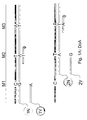
- Figs. 1A and 1B illustrates use of multiple encoded probes to resolve ambiguity through phasing.
- a genotype as a string of markers at selected polymorphic sites (also referred to herein as alleles); that is, values giving the configuration of target nucleic acid markers located within one or more genes of interest.
- each designated site is interrogated with a pair of elongation probes of which one is designed to detect the normal (N) allele, the other to detect a specific variant (V) allele, under conditions ensuring that polymerase-catalyzed probe elongation occurs for matched probes, that is those matched to the allele at the 3'-terminus, but not for mis-matched probes.
- the pattern of assay signal intensities representing the yield of individual probe elongation reactions in accordance with this eMAP TM format is converted to a discrete reaction pattern - by application of preset thresholds - to ratios (or other combinations) of assay signal intensities associated with probes within a pair of probes directed against each marker.
- Genotype into Haplotypes - Expressed antigenic determinants reflect the specific allelic combinations of the encoding genes.
- a genotype generally represents a combination of two constituent haplotype strings, here denoted H1 and H2, each in the form of a ternary string such that H1 OR H2 generates the genotype.
- All compatible 2-string combinations are determined in a process also referred to herein as allele assignment or automated allele analysis ("AAA”), preferably performed automatically, using a program such as the AAA program for Automated Allele Analysis, elaborated in co-pending application, entitled: "Automated Analysis of Multiplexed Probe Target Interaction Patterns: Pattern Matching and Allele Identification,” filed 8/2/2004, US-7,848,889 B2 .
- AAA allele assignment or automated allele analysis
- This application also discloses a method of "error correction" wherein a reaction pattern (of probes-targets) generated from an assay is compared, digit by digit, to the possible reaction patterns, that is, strings representing 2-allele combinations of known alleles; a list of such reference strings is also referred to herein as a hit table. For digits which do not match, the error correction is by way of changing individual digits in the string as judged necessary in order to produce a match with a valid reference string (generated from known allele combinations).
- genotypes of prospective donors are determined in accordance with the eMAP format.
- the genotype, and the set of constituent allele or haplotype combinations are stored in form of a list of records, in an appropriate database format, such as MicroSoft Access or SQL, as follows:
- a mismatch between patient and donor alleles or haplotypes can lead to immunization, or to adverse immune reactions of differing severity, mediated by antibodies circulating within the patient's serum recognizing expressed epitopes that are encoded by donor marker alleles (or antigenic determinants).
- the invention introduces a set of numerical weights, w ik , associated with the k-th designated marker on the i-th gene of interest. The relative magnitude of these weights reflects the severity of known or anticipated transfusion reactions associated with a mismatch at the corresponding site, and the allo-reaction(s) associated with a mismatch of the corresponding phenotypes.
- weights may be chosen to reflect empirical measures of clinical significance such as NONE (0), MILD (1), MILD-TO-SEVERE (3), SEVERE (5). Silencing mutations producing a null phenotype in the donor generally will enhance compatibility given the absence of the corresponding antigen. If allo-antibodies have been identified, the corresponding cognate antigen and associated markers are given a high weight, reflecting the clinical significance of the antibody, as shown in Table 4.
- This example uses three markers in the Dombrock system, associated with Do a /Do b , namely: M 1 (378 C > T); M 2 (624 T > C); M 3 (793 A > G) to illustrate the matching of a genotypically identical recipient and prospective donor.
- a reaction pattern representing the interaction of a set of probe pairs and target can be generated using, e.g ., the eMAP assay format with a set of probe pairs capable of annealing to Dombrock genes (or amplicons or targets derived from Dombrock genes by PCR amplification or otherwise).
- a possible reaction pattern is: AB AB AB, that is a reaction pattern: 0, 0, 0.
- a particular reaction pattern corresponds to a combination of at least two alleles.
- this reaction pattern is first decomposed into the patterns represented by combinations of alleles, in this case either of the following (see Table 4):
- Multiple biallelic combinations may be compatible with a specific genotype determined over a set of selected markers. Matching of a recipient with a known genotype, G R , to a compatible donor of the same genotype requires matching of the actual underlying set of alleles (or haplotypes). These can be established by the following phasing strategy which establishes 2-point correlations (see also US Publication No. 2004/0002073 A1 ).
- the strategy entails probing of bead-displayed elongation products using tagged hybridization probes, either one at a time (in multiple rounds of annealing and deannealing) or in a parallel process, preferably involving multiple colors of detection, where preferably in such a case, the elongation product itself is not labeled.
- markers M1, M2 and M3 are interrogated using tagged probes.
- Differentially labeled extendable probes are used for detection of a first allele, where probe “1N” (directed to marker M1) has a “G” nucleotide at the 3' terminus, probe “1V” (also directed to marker M1) has an a “A” nucleotide at the 3' terminus, probe “2N” (directed to marker M2) has an “A” nucleotide at the 3' terminus, probe “2V” (also directed to marker M2) has a “G” nucleotide at the 3' terminus.
- different combinations of the probes are elongated, generating different signal intensity patterns as interaction products interact with tagged probes, as shown in Figs.
- Haplotypes Given a recipient genotype, preferably in the representation representing at least a substring of available donor genotypes (of one or more donors of identical genotype to the recipient), they are identified by haplotype (string) matching.
- the recipient haplotype preferably comprises at least the set of marker alleles represented in the corresponding haplotype of available donors.
- each of the strings, H 2 , H R is compared to the set of strings, ⁇ H ⁇ , in a donor database, and matches are ranked in the order of an increasing weighted Hamming distance where the weights are preset so as to reflect clinical severity, as discussed in connection with the discussion of the mismatch matrix.
- a computer program implementing a string matching algorithm is used to perform the genetic cross matching automatically, to list available donor in the order of increasing II 2 (or equivalent distance function) up to a maximal distance between patient and donor strings.
- HEA-panel composition showing blood groups and associated SNPs Blood Group Phenotype Polymorphism Colton Co a /Co b 134C>T Diego Di b /Di a 2561C>T Duffy Fy a /Fy b 125G>A Fy x [Fy(b+ w )] 265C>T GATA (Fy(a-b-) -33T>C Dombrock Do a /Do b 378C>T 624T>C 793A>G Hy+/Hy- 323G>T Jo(a+)/Jo(a-) 350C>T Kidd Jk a /Jk b 838G>A Kell K/k 698T>C Landsteiner-Wiener LW a /LW b 308A>G Lutheran Lu a /Lu b 230A>G MNS GYPA (M/N) 59C>T GYPB (S/s) 143T>
- Rh-panel composition showing AA change and associated SNPs Exon Amino acid change Polymorphism 1 W16C 48 G>C 2 L60I 178 C>A 2 S68N 203 A>G 2 P103S 307 C>T 3 N152T 455 A>C 4 37 bp dup.-ins.* 5 F223V 667 T>G 5 A226P 676 G>C 5 E233Q 697 G>C 5 L245V 733 G>C 7 G336C 1006 G>T * known as "pseudoD"
- markers and alleles may also be assayed using the methods described herein, including HpA.
- Dombrock Two New Alleles - By probing five common mutations at positions Do-793, Do-624, Do-378, Do-350 and Do-323, using, for example, RFLP analysis, four alleles have been identified to date (Table 4): Table 4 DO-793 DO-624 DO-378 DO-350 DO-323 DoA A A A A A A DoB B B B A A Hy B B A A B Jo A A B B A
- pairs of encoded elongation probes were designed to interrogate the target at the five designated positions, selecting, in each pair, one probe matching the expected normal ("wild type") and a second probe differing from the first at or near the 3' terminus and matching the anticipated variant.
- Primers are used to generate amplicons serving as target sequences for subsequent elongation analysis, where the amplicons either include subsequences corresponding or complementary to the subsequences at, and proximal to the designated polymorphic sites, or which correspond or are complementary in whole to such subsequences.
- Automated Allele Assignment Hit Table -
- the process of selecting allele combinations which match or partially match a particular experimental pattern produced by eMAP preferably employs a hit table (such as Table 8 below) for the five Dombrock polymorphisms described above.
- a hit table such as Table 8 below
- an algorithm of pattern matching can be applied to select, in automated fashion, matching or partially matching combinations of alleles which can be reviewed and edited in an integrated software environment such as that provided by the Automated Allele Assignment (AAA) program, described in US-7,848,889 .
- Haplotype Determination with Phasing One method of distinguishing haplotypes (combinations of alleles on the same homolog) is to use phasing, as disclosed in International Application No. WO03034029 . Phasing involves generating an elongation product from a probe capable of detecting a first polymorphic target site, and then determining if counterparts of other designated polymorphic sites are present within that elongation product. If so, this indicates that the two markers including both the first and the other designated polymorphic sites belong to the same allele.
- phasing is carried out by using encoded beads displaying elongation probes, which thereby identify both the probes and elongation products, and then annealing to the elongation product labeled oligonucleotide probes to determine whether or not counterpart(s) of additional polymorphic sites are present within the elongation product.
- the phase of the combination of alleles generating a reaction pattern can be determined.
Landscapes
- Life Sciences & Earth Sciences (AREA)
- Chemical & Material Sciences (AREA)
- Proteomics, Peptides & Aminoacids (AREA)
- Health & Medical Sciences (AREA)
- Organic Chemistry (AREA)
- Zoology (AREA)
- Analytical Chemistry (AREA)
- Wood Science & Technology (AREA)
- Immunology (AREA)
- Engineering & Computer Science (AREA)
- Biotechnology (AREA)
- Microbiology (AREA)
- Molecular Biology (AREA)
- Biophysics (AREA)
- Physics & Mathematics (AREA)
- Cell Biology (AREA)
- Biochemistry (AREA)
- Bioinformatics & Cheminformatics (AREA)
- General Engineering & Computer Science (AREA)
- General Health & Medical Sciences (AREA)
- Genetics & Genomics (AREA)
- Measuring Or Testing Involving Enzymes Or Micro-Organisms (AREA)
Description
- The identification of antibodies and the provision of antigen-negative blood forms the basis for safe blood transfusion by minimizing the risk of adverse transfusion reactions, triggered when antibodies circulating in the patient's blood stream encounter antigens displayed on a donor's erythrocytes. Current practice in transfusion medicine provides for the serological typing and labeling of all donor blood for ABO and RHD antigens to facilitate the matching of red blood cell components to the recipient's blood type. The further reduction of allo-immunization remains an important clinical concern, and therefore it would be highly desirable to match additional blood group antigens. However, this practice is precluded by the lack of appropriate antisera, and the complexity of labor-intensive serological typing protocols, particularly when encountering multiple allo-antibodies. As a result, most donor centers screen only a selected cohort of donors and maintain limited inventory of antigen-negative units. This practice can introduce delays in treatment and thus create significant additional expense in patient care, and also can exacerbate emergency situations.
- Comprehensive donor DNA typing of donors, as recently described (see Reid et al., Transfusion May 2005) will enable donor centers to maintain a registry of prospective donors, and large and diverse inventories of fully characterized blood products available for instant shipping. In addition, the analysis of blood group genes at the DNA level provides a detailed picture of the allelic diversity that underlies phenotypic variability, an approach which helps in addressing clinical problems that cannot be addressed by serological techniques, such as determination of antigen types for which the available antibodies are weakly reactive, the analysis of recently transfused patients, or the identification of fetuses at risk for hemolytic disease of the newborn. Although the genotype may not reflect the phenotype, DNA analysis will identify the potential antigen-negative which, if desirable, can be confirmed by classical hemagglutination. Comprehensive DNA typing also can be extended to recipients and indeed can be applied population-wide by invoking practical methodologies, preferably eMAP™, performed on a BeadChip™ platform (See
US-2004/0002073 A1 ) - A match, or near-match, between selected marker identified in a recipient, and in candidate donors of transfused blood - the markers corresponding to polymorphic sites located in genes encoding blood group antigens and specifically including minor blood group antigens - generally will minimize the risk of recipient immunization and, in immunized recipients, the risk of alloantibody-mediated adverse immune reactions following transfusion. That is, if the set of markers is selected to probe the relevant alleles associated with clinically significant hemolytic transfusion reactions ("allo-reactions"), then a comparison of markers of recipient and donor will permit the selection of donors that are genetically compatible with a given recipient. For example, each of a set of monozygotic twins, genetically identical, would be the ideal donor for the other. In the case of transfusion, the requirement of genetic identity - or near-identity - of recipient and candidate donor is limited to a set of relevant genes which - when expressed - encode certain human erythrocyte antigens (HEA) displayed on blood-borne cells against which the recipient either already has made (on the basis of earlier exposure) antibodies ("allo-antibodies") or can make antibodies. Thus, markers correlating with human erythrocyte antigens (HEA) including the "major" antigens (A, B and Rh) as well as a number of clinically relevant "minor" antigens (e.g., Duffy, Kell, Kidd, MNS, Dombrock and others).
- The benefit of such a genetic cross-matching procedure will be to minimize or reduce not only the risk of adverse immune reactions, but also the risk of immunizing recipients in the first place, to eliminate the need for and to enable the rapid selection of blood products for transfusion from a group of registered and fully characterized donors, also referred to herein as a donor registry. Once fully implemented, genetic implemented, genetic cross-matching will eliminate the narrowing bottleneck created by the increasing cost of serological reagents and complex and labor-intensive protocols as well as the need for repeat testing.
- Disclosed are a method and an algorithm for genetic cross-matching based on the comparison of recipient and donor genotypes - and the underlying combinations of alleles and haplotypes. Preferably, as described, in a co-pending application, entitled "Multiplexed Analysis of Polymorphic Loci by Concurrent Interrogation and Enzyme-Mediated Detection," filed
10/15/2002, US 2004/0002073 A1 , genotypes are determined in a single ("multiplexed") test to permit rapid, large-scale typing. The method of the invention, rather than focusing on phenotype prediction as advocated in conventional procedures, instead relies on a comparison of genetic variants identified in the recipient and available donors, whose information preferably will be compiled in a widely available donor registry, to maximize molecular compatibility. Using, for example, a BeadChip™ format such as disclosed herein, to enable, at reasonable cost, large-scale comprehensive genotyping of clinically relevant transfusion antigens, preferably performed in a neonatal screening context, would permit the transfusion antigen genotype ("TAG") - and related genetic information - to become part of individual medical records which could be stored in a readily accessible format such as implantable chips, or other electronic tags carried, for example, in bracelets. -
Figs. 1A and1B illustrates use of multiple encoded probes to resolve ambiguity through phasing. - For present purposes, we define a genotype as a string of markers at selected polymorphic sites (also referred to herein as alleles); that is, values giving the configuration of target nucleic acid markers located within one or more genes of interest. Preferably, each designated site is interrogated with a pair of elongation probes of which one is designed to detect the normal (N) allele, the other to detect a specific variant (V) allele, under conditions ensuring that polymerase-catalyzed probe elongation occurs for matched probes, that is those matched to the allele at the 3'-terminus, but not for mis-matched probes. The pattern of assay signal intensities representing the yield of individual probe elongation reactions in accordance with this eMAP™ format (see
US 2004/0002073 A1 , supra), is converted to a discrete reaction pattern - by application of preset thresholds - to ratios (or other combinations) of assay signal intensities associated with probes within a pair of probes directed against each marker. - A genotype then is represented by a string, G = {(NV)ik} where i enumerates the genes in the set of selected genes of interest, and k enumerates designated polymorphic sites within the i-th gene, and where the pair (NV) can assume values of AA, AB (or BA) and BB. In a preferred embodiment, the signal intensities associated with a pair of probes directed to the same marker, preferably corrected by removing non-specific ("background") contributions, and one such intensity, iN, representing the amount of normal allele, and the other such intensity, iv, representing the amount of variant allele in the sample, are combined to form the discrimination parameter Δ = (iN - iV)/(iN + iV), a quantity which varies between -1 and 1. For a given sample, a value of Δ below a preset lower threshold indicates a call of homozygous normal, a value of Δ above a preset upper threshold indicates a call of homozygous variant, and a value of Δ above the lower and below the upper threshold indicates a call of heterozygous. A transfusion antigen genotype is represented by a string, G = {Δ ik}, where, as before, i enumerates the genes in the set of selected genes of interest, and k enumerates designated polymorphic markers within the i-th gene. Accordingly, a transfusion antigen genotype is designated herein either in the representation AA, AB (or BA) and BB or, equivalently, in the representation 1, 0, -1.
- Assigning Alleles: Decomposition of Genotype into Haplotypes - Expressed antigenic determinants reflect the specific allelic combinations of the encoding genes. A genotype generally represents a combination of two constituent haplotype strings, here denoted H1 and H2, each in the form of a ternary string such that H1 OR H2 generates the genotype. All compatible 2-string combinations are determined in a process also referred to herein as allele assignment or automated allele analysis ("AAA"), preferably performed automatically, using a program such as the AAA program for Automated Allele Analysis, elaborated in co-pending application, entitled: "Automated Analysis of Multiplexed Probe Target Interaction Patterns: Pattern Matching and Allele Identification," filed
8/2/2004, US-7,848,889 B2 . - This application also discloses a method of "error correction" wherein a reaction pattern (of probes-targets) generated from an assay is compared, digit by digit, to the possible reaction patterns, that is, strings representing 2-allele combinations of known alleles; a list of such reference strings is also referred to herein as a hit table. For digits which do not match, the error correction is by way of changing individual digits in the string as judged necessary in order to produce a match with a valid reference string (generated from known allele combinations).
- Several allele or haplotype combinations generally may be compatible with a single genotype, as illustrated in an Example below, and this issue is addressed herein by an application of the "phasing" methodology previously disclosed in
US-2004/0002073 A1 , supra.
Donor Registry - Assuming, without loss of generality, application of the preferred embodiment of multiplex genotype determination, genotypes of prospective donors are determined in accordance with the eMAP format. In a preferred embodiment, the genotype, and the set of constituent allele or haplotype combinations, are stored in form of a list of records, in an appropriate database format, such as MicroSoft Access or SQL, as follows: - {G = {(N,V)ik;}; {Haplotype Combinations}; 1 ≤ I ≤ Γ; 1 ≤ k ≤ M (i); p}, or
- {G = {Δik}; {Haplotype Combinations}; 1 ≤ i ≤ Γ; 1 ≤ k ≤ M (i); p},
- Selection Designated Polymorphic Sites and Table of Associated Weights - A mismatch between patient and donor alleles or haplotypes can lead to immunization, or to adverse immune reactions of differing severity, mediated by antibodies circulating within the patient's serum recognizing expressed epitopes that are encoded by donor marker alleles (or antigenic determinants). To represent this degree of significance, the invention introduces a set of numerical weights, wik, associated with the k-th designated marker on the i-th gene of interest. The relative magnitude of these weights reflects the severity of known or anticipated transfusion reactions associated with a mismatch at the corresponding site, and the allo-reaction(s) associated with a mismatch of the corresponding phenotypes. As illustrated in Tables 1 and 2, weights may be chosen to reflect empirical measures of clinical significance such as NONE (0), MILD (1), MILD-TO-SEVERE (3), SEVERE (5). Silencing mutations producing a null phenotype in the donor generally will enhance compatibility given the absence of the corresponding antigen. If allo-antibodies have been identified, the corresponding cognate antigen and associated markers are given a high weight, reflecting the clinical significance of the antibody, as shown in Table 4.
- This example uses three markers in the Dombrock system, associated with Doa/Dob, namely: M1 (378 C > T); M2 (624 T > C); M3 (793 A > G) to illustrate the matching of a genotypically identical recipient and prospective donor.
- A reaction pattern representing the interaction of a set of probe pairs and target (where one probe in a pair can indicate the presence of a "normal" allele, and the other probe in the pair indicates the presence of a "variant" allele) can be generated using, e.g., the eMAP assay format with a set of probe pairs capable of annealing to Dombrock genes (or amplicons or targets derived from Dombrock genes by PCR amplification or otherwise). For the three selected markers, a possible reaction pattern is: AB AB AB, that is a reaction pattern: 0, 0, 0. In a diploid genome, a particular reaction pattern corresponds to a combination of at least two alleles. Thus, this reaction pattern is first decomposed into the patterns represented by combinations of alleles, in this case either of the following (see Table 4):
- AB AB AB = AAA OR BBB; that is DoA or DoB
- AB BA AB = AB BA BA = ABB OR BAA; that is Hy or Jo
- Multiple biallelic combinations may be compatible with a specific genotype determined over a set of selected markers. Matching of a recipient with a known genotype, GR, to a compatible donor of the same genotype requires matching of the actual underlying set of alleles (or haplotypes). These can be established by the following phasing strategy which establishes 2-point correlations (see also
US Publication No. 2004/0002073 A1 ). The strategy entails probing of bead-displayed elongation products using tagged hybridization probes, either one at a time (in multiple rounds of annealing and deannealing) or in a parallel process, preferably involving multiple colors of detection, where preferably in such a case, the elongation product itself is not labeled. - This is illustrated in
Figs. 1A and1B , where markers M1, M2 and M3 (with polymorphic sites which can be C, T or A, respectively, as in the first allele (corresponding to DoA), or C, C, G, respectively, as in the second allele (corresponding to Hy), or other nucleotides) are interrogated using tagged probes. Differentially labeled extendable probes are used for detection of a first allele, where probe "1N" (directed to marker M1) has a "G" nucleotide at the 3' terminus, probe "1V" (also directed to marker M1) has an a "A" nucleotide at the 3' terminus, probe "2N" (directed to marker M2) has an "A" nucleotide at the 3' terminus, probe "2V" (also directed to marker M2) has a "G" nucleotide at the 3' terminus. Depending on the M1, M2 and M3 marker combinations, different combinations of the probes are elongated, generating different signal intensity patterns as interaction products interact with tagged probes, as shown inFigs. 1A and1B . Thus, if DoA is encountered (Fig. 1A ),probe 1N is elongated, and decorated by a fluorescent probe annealing to the elongation product at the position of marker M2; conversely, if Hy is encountered (Fig. 1B ),probe 2V is elongated, and decorated by a fluorescent probe annealing to the elongation product at the position of marker M3. The signal intensity pattern produced by addition of fluoresceinated probes (directed to markers M2 and/or M3, as shown) identifies either DoA and thus DoA OR DoB as the combination represented by the reaction pattern 0, 0, 0, or identifies Hy and thus Hy OR Jo as the combination represented by the reaction pattern 0,0,0. That is, phasing resolves the ambiguity.
Genetic Cross Matching: Distance between Haplotypes - Given a recipient genotype, preferably in the representation representing at least a substring of available donor genotypes (of one or more donors of identical genotype to the recipient), they are identified by haplotype (string) matching. Here, the recipient haplotype preferably comprises at least the set of marker alleles represented in the corresponding haplotype of available donors. In one embodiment, each of the strings, H2, HR is compared to the set of strings, {H}, in a donor database, and matches are ranked in the order of an increasing weighted Hamming distance where the weights are preset so as to reflect clinical severity, as discussed in connection with the discussion of the mismatch matrix. For example, assuming there to be M mismatched alleles, a possible distance function is: II2 = (1/M) 3mismatched alleles w2
Implementation - Preferably, a computer program implementing a string matching algorithm is used to perform the genetic cross matching automatically, to list available donor in the order of increasing II2 (or equivalent distance function) up to a maximal distance between patient and donor strings. - The pseudocode below summarizes the string matching algorithm (the terms "allele" and "haplotype" are used interchangeably). To optimize execution speed in handling the large data bases of interest, the implementation, such as that within wAAA™ (
US-7,848,889 B2 , supra), employs suitable data structures and invokes integer arithmetic.


Table 1. HEA-panel composition showing blood groups and associated SNPs Blood Group Phenotype Polymorphism Colton Coa/Cob 134C>T Diego Dib/Dia 2561C>T Duffy Fya/Fyb 125G>A Fyx [Fy(b+w)] 265C>T GATA (Fy(a-b-) -33T>C Dombrock Doa/Dob 378C>T 624T>C 793A>G Hy+/Hy- 323G>T Jo(a+)/Jo(a-) 350C>T Kidd Jka/Jkb 838G>A Kell K/k 698T>C Landsteiner-Wiener LWa/LWb 308A>G Lutheran Lua/Lub 230A>G MNS GYPA (M/N) 59C>T GYPB (S/s) 143T>C Scianna Sc1/Sc2 169G>A Rh S68N (C/c) 203 A>G Rh A226P (E/e) 676 G>C Hemoglobin S HbS 173A>T Table 2. Rh-panel composition showing AA change and associated SNPs Exon Amino acid change Polymorphism 1 W16C 48 G>C 2 L60I 178 C>A 2 S68N 203 A>G 2 P103S 307 C>T 3 N152T 455 A>C 4 37 bp dup.-ins.* 5 F223V 667 T>G 5 A226P 676 G>C 5 E233Q 697 G>C 5 L245V 733 G>C 7 G336C 1006 G>T * known as "pseudoD" - In the sequence listings attached, for the various exons 1, 2, 3, 5 or 7, the primer sequence of the forward and/or reverse primer (as indicated) is indicated with a "check" mark on the sequence listing, and the sequence of the other primer in the set (forward or reverse, as applicable) is shown in Table 3, as follows:
TABLE 3 Exon 1: reverse primer: Rh CE 5' GCT ATT TGC TCC TTT GAC CAC 3' (SEQ ID NO.:1) Exon 2: forward primer RhD: TCT CCC CAC AGA GCA GTT (SEQ ID NO.:2) Exon 3: reverse primer Rh CE: CCT CAA GTG ATC TGC CTT CCT CAG (SEQ ID NO.:3) Exon 5: reverse primer Rh CE: TGC TCA CCA TTC TGA TCT TCC T (SEQ ID NO.:4) Exon 7: reverse primer Rh CE: CAT CTC CGT CAG GCA CTC CAT (SEQ ID NO.:5) - A number of other markers and alleles may also be assayed using the methods described herein, including HpA.
- Dombrock: Two New Alleles - By probing five common mutations at positions Do-793, Do-624, Do-378, Do-350 and Do-323, using, for example, RFLP analysis, four alleles have been identified to date (Table 4):
Table 4 DO-793 DO-624 DO-378 DO-350 DO-323 DoA A A A A A DoB B B B A A Hy B B A A B Jo A A B B A - BeadChip eMAP Design - In accordance with the format of elongation-mediated multiplexed analysis of polymorphisms (eMAP), pairs of encoded elongation probes were designed to interrogate the target at the five designated positions, selecting, in each pair, one probe matching the expected normal ("wild type") and a second probe differing from the first at or near the 3' terminus and matching the anticipated variant. Primers are used to generate amplicons serving as target sequences for subsequent elongation analysis, where the amplicons either include subsequences corresponding or complementary to the subsequences at, and proximal to the designated polymorphic sites, or which correspond or are complementary in whole to such subsequences. In the alternative, it is possible to generate sufficient concentration of the genomic DNA in the sample without amplification to allow their targeting, hybridization and elongation, using complementary probes and appropriate elongation conditions. An eMAP design incorporating in a single BeadChip probe pairs for all five mutations of interest, was used to analyze a subset of 63 samples, selected from a cohort of ~430 controls and clinical samples. The results are shown below in Table 5
Table 5 DO-793 DO-624 DO-378 DO-350 DO-323 Cases Freq -1 -1 -1 1 1 DoB/DoB 14 0.22 -1 -1 0 1 0 DoB/Hy 17 0.27 -1 -1 0 1 1 DoB/Sh 3 0.05 -1 -1 1 1 -1 Hy/Hy 1 0.02 -1 -1 1 1 0 Hy/Sh 1 0.02 -1 -1 1 1 1 Sh/Sh 0 0 0 0 -1 0 1 DoB/Jo 2 0.03 0 0 -1 1 1 DoB/Ha 5 0.08 0 0 0 1 1 DoA/DoB 11 0.17 0 0 0 1 1 Hy/Ha 0 0 0 1 1 Ha/Sh 0 0 0 0 1 Jo/Sh 0 0 0 0 0 0 0 Hy/Jo 0 0 0 0 1 1 0 DoA/Hy 1 0.02 0 0 1 1 1 DoA/Sh 0 0 1 1 -1 -1 1 Jo/Jo 0 0 1 1 -1 0 1 Jo/Ha 0 0 1 1 -1 1 1 Ha/Ha 0 0 1 1 0 0 1 DoA/Jo 5 0.08 1 1 0 1 1 DoA/Ha 2 0.03 1 1 1 1 1 DoA/DoA 1 0.02 63 - Four new allele combinations, highlighted in bold face font in Table 5 (DoB/Sh; Hy/Sh; DoB/Ha; DoA/Ha) are evident - wherein 1, 0 and -1 respectively denote allele combinations AA, AB or BA and BB.
TABLE 6 DO-793 DO-624 DO-378 DO-350 DO-323 Ha A A B A A Sh B B A A A - These four combinations, which have been confirmed by sequencing of the corresponding amplicons, are readily shown to represent the combination of known alleles with two new alleles, namely (Table 6): That is, Ha differs from DoA, and Sh differs from DoB, by the replacement of, respectively, A by B and B by A in position Do-378. As a result, the combination of Ha and Sh generates the same string ("word"), namely 00011, as does the combination DoA/DoB; similarly, Hy/Ha also generates the same string. This degeneracy may account for the relatively high frequency of occurrence of that string, suggesting that observation of 000 in a first pass of analysis may be misattributed to the occurrence of DoA/DoB. However, the two 5-letter strings remain degenerate, and resolution of this ambiguity must invoke analysis of additional markers.
- The six Dombrock alleles including the two new alleles identified herein generate the following 21 combinations.
Table 7 DoB Hy Sh Jo Ha DoA DoB -1 -1 -1 1 1 -1 -1 0 1 0 -1 -1 0 1 1 0 0 -1 0 1 0 0 -1 1 1 0 0 0 1 1 Hy -1 -1 1 1 -1 -1 -1 1 1 0 0 0 0 0 0 0 0 0 1 1 0 0 1 1 0 Sh -1 -1 1 1 1 0 0 0 0 1 0 0 0 1 1 0 0 1 1 1 Jo 1 1 -1 -1 1 1 1 -1 0 1 1 1 0 0 1 Ha 1 1 -1 1 1 1 1 0 1 1 DoA 1 1 1 1 1 - As indicated in the Table 7, at the resolution provided by the first three Dombrock polymorphisms, namely DO-793, -624 and -378, several of the 3-letter allele combinations are degenerate. Complete resolution of the degeneracy of the allele combinations will require determination of polymorphisms beyond the current five. Silencing Mutations: Duffy and GATA - The expression of an antigen can be affected by silencing mutations, for example in the GATA box of the gene encoding Duffy (Fy). Thus to establish allele combinations of the markers Fy 125 T>C and GA -33 T>C, especially in the case of a heterozygous GA marker, may call for phasing, as described below.
Automated Allele Assignment: Hit Table - The process of selecting allele combinations which match or partially match a particular experimental pattern produced by eMAP preferably employs a hit table (such as Table 8 below) for the five Dombrock polymorphisms described above. Using the hit table in conjunction with a listing of known alleles, an algorithm of pattern matching can be applied to select, in automated fashion, matching or partially matching combinations of alleles which can be reviewed and edited in an integrated software environment such as that provided by the Automated Allele Assignment (AAA) program, described inUS-7,848,889 . In Table 8, "8" denotes a positive assay signal, indicating, for example, probe elongation, and "1" denotes a negative assay signal, indicating, for example, lack of probe elongation.Table 8 HIT TABLE N V N V N V N V N V DoA 8 1 8 1 8 1 8 1 8 1 DoB 1 8 1 8 1 8 8 1 8 1 Hy 1 8 1 8 8 1 8 1 1 8 Jo 8 1 8 1 1 8 1 8 8 1 Ha 8 1 8 1 1 8 8 1 8 1 Sh 1 8 1 8 8 1 8 1 8 1 RULES 8 == matched, 1 == mismatched 8 OR 8 = 8,1 OR 1 = 1, 8 OR 1 = 1,1 OR 8 = 8 Example DoB/Sh Reaction Pattern Allele 1 8 1 8 8 8 8 1 8 1 Combination -1 -1 0 1 1 - Haplotype Determination with Phasing - One method of distinguishing haplotypes (combinations of alleles on the same homolog) is to use phasing, as disclosed in International Application No.
WO03034029 - More particularly, phasing is carried out by using encoded beads displaying elongation probes, which thereby identify both the probes and elongation products, and then annealing to the elongation product labeled oligonucleotide probes to determine whether or not counterpart(s) of additional polymorphic sites are present within the elongation product. By interrogating elongation products generated from probes directed toward a series of successive designated polymorphic sites, the phase of the combination of alleles generating a reaction pattern can be determined.
-
- <110> Michael Seul
Marion E. Reid
Ghazala Hashmi
Michael Pierce - <120> A Method of Nucleic Acid Typing for
Selecting Registered Donors for Cross-Matching To Transfusion Recipients - <130> BLDXMX-US
- <150>
60/621196
<151> 2004-10-22 - <160> 5
- <170> FastSEQ for Windows Version 4.0
- <210> 1
<211> 21
<212> DNA
<213> Artificial Sequence - <220>
<223> Artificial Primer - <400> 1
gctatttgct cctttgacca c 21 - <210> 2
<211> 18
<212> DNA
<213> Artificial Sequence - <220>
<223> Artificial Primer - <400> 2
tctccccaca gagcagtt 18 - <210> 3
<211> 24
<212> DNA
<213> Artificial Sequence - <220>
<223> Artificial Primer - <400> 3
cctcaagtga tctgccttcc tcag 24 - <210> 4
<211> 22
<212> DNA
<213> Artificial Sequence - <220>
<223> Artificial Primer - <400> 4
tgctcaccat tctgatcttc ct 22 - <210> 5
<211> 21
<212> DNA
<213> Artificial Sequence - <220>
<223> Artificial Primer - <400> 5
catctccgtc aggcactcca t 21
| AAA | BBB | BAA | ABB | |
| AAA | 0 | W3 | W2 | W2+W3 |
| BBB | 0 | W2+W3 | W2 | |
| BAA | 0 | W3 | ||
| ABB | 0 |
Claims (5)
- A method of selecting a transfusion donor by determination of compatibility to a recipient by comparing combinations of polymorphic markers in a set of such markers, of candidate donors and a recipient where said determination is performed following subjecting genomic material/DNA from candidate donors and the recipient to amplification to thereby generate amplified products, wherein the amplified products are subjected to a hybridisation assay or to a capture-mediated elongation assay or to both, wherein an assay signal is generated by the individual hybridization or elongation events, as applicable, by pairs of probes wherein pair members are complementary, in whole or in part, to the subsequences of the amplified products which are the same as and/or which are complementary to polymorphic markers in the set;
wherein an assay signal intensity pattern is generated from hybridisation or elongation events such that each marker in the set is represented by a pair of particular assay signal intensities, the method comprising:determining the assay signal intensity pattern generated by said hybridisation or elongation assay and forming, for each probe pair, a combination of signal intensities associated with the members of the pair;generating from said combinations of signal intensities a series of values, each value in the series selected from one of three possible values, respectively indicating a state of homozygous-normal, heterozygous or homozygous-variant to thereby form a reaction pattern;determining the polymorphic marker combinations represented by said reaction patterns; andselecting from the candidate donors a donor having said polymorphic marker combination identical to that of the recipient,wherein combination of signal intensities of members are represented such that one such intensity, iN, correlates with the amount of normal marker in the sample, and the other such intensity, iV, correlates with the amount of variant marker in the sample, and said intensities are combined to form a discrimination parameter Δ = (iN - iV)/(iN + iV) which varies between -1 and 1. - The method of claim 1 wherein the reaction pattern is generated by designating values of the discrimination parameter below a first threshold as a lower value, designating values of the discrimination parameter above a second threshold as upper value, and designating values of the discrimination parameter below the second threshold but above the first threshold as an intermediate value.
- The method of claim 2, wherein the assay is a hybridisation assay wherein the signal intensity pattern is converted to the reaction pattern by forming ratios of signal intensities associated with a pair and designating the sample as homozygous for the marker for ratios above a first threshold and designating the sample as homozygous for the marker for a variant allele for ratios below a second threshold and designating the sample as heterozygous for the marker ratios below the first threshold and above the second threshold.
- A method of identifying a transfusion donor by analysing a set of polymorphic markers comprising:subjecting genetic material from the donor to an assay in which pairs of probes generate an assay signal;measuring the assay signals and forming a combination of signal intensities for a plurality of the pairs of probes;generating, from the combinations of signal intensities, a reaction pattern of a series of values representing homozygous-normal, homozygous-variant or heterozygous;determining polymorphic marker combinations represented by the reaction pattern; andidentifying the transfusion donor having polymorphic marker combinations compatible with polymorphic marker combinations of a recipient;wherein the assay is a hybridization assay, a capture-mediated elongation assay or both, and said probes are complementary, in whole or in part, to the polymorphic markers,
wherein the combination of signal intensities comprises a first intensity, iN, representing the amount of normal marker, and a second intensity, iV, representing the amount of variant marker, and a discrimination parameter of Δ=(iN-iV)/(iN+iV) is calculated from the combination of signal intensities. - The method of claim 4 wherein the reaction pattern is generated by designating values of the discrimination parameter below a first threshold as homozygous-normal, designating values of the discrimination parameter above a second threshold as homozygous -variant, and designating values of the discrimination parameter below the second threshold but above the first threshold as heterozygous.
Applications Claiming Priority (2)
| Application Number | Priority Date | Filing Date | Title |
|---|---|---|---|
| US62119604P | 2004-10-22 | 2004-10-22 | |
| PCT/US2005/038296 WO2006047471A2 (en) | 2004-10-22 | 2005-10-24 | A method of nucleic acid typing for selecting registered donors for cross-matching to transfusion recipients |
Publications (3)
| Publication Number | Publication Date |
|---|---|
| EP1805326A2 EP1805326A2 (en) | 2007-07-11 |
| EP1805326A4 EP1805326A4 (en) | 2008-07-09 |
| EP1805326B1 true EP1805326B1 (en) | 2014-12-17 |
Family
ID=36228358
Family Applications (1)
| Application Number | Title | Priority Date | Filing Date |
|---|---|---|---|
| EP05816073.0A Expired - Lifetime EP1805326B1 (en) | 2004-10-22 | 2005-10-24 | A method of nucleic acid typing for selecting registered donors for cross-matching to transfusion recipients |
Country Status (7)
| Country | Link |
|---|---|
| US (2) | US7449295B2 (en) |
| EP (1) | EP1805326B1 (en) |
| JP (1) | JP5312790B2 (en) |
| CA (2) | CA2887401C (en) |
| ES (1) | ES2532842T3 (en) |
| PT (1) | PT1805326E (en) |
| WO (1) | WO2006047471A2 (en) |
Families Citing this family (11)
| Publication number | Priority date | Publication date | Assignee | Title |
|---|---|---|---|---|
| US7569342B2 (en) | 1997-12-10 | 2009-08-04 | Sierra Molecular Corp. | Removal of molecular assay interferences |
| US7449295B2 (en) * | 2004-10-22 | 2008-11-11 | Bio Array Solutions | Method of nucleic acid typing for selecting registered donors for cross-matching to transfusion recipients |
| US20070100557A1 (en) * | 2005-10-24 | 2007-05-03 | Yi Zhang | Selection of genotyped transfusion donors by cross-matching to genotyped recipients |
| ITMI20070504A1 (en) * | 2007-03-13 | 2008-09-14 | Fond Irccs Ospedale Maggiore | METHOD FOR THE GENOMIC TYPE OF ERITROCITARY SYSTEMS, OLIGONUCLEOTIC PROBES AND RELATIVE DIAGNOSTIC KITS |
| GB0913258D0 (en) | 2009-07-29 | 2009-09-02 | Dynex Technologies Inc | Reagent dispenser |
| US9523701B2 (en) | 2009-07-29 | 2016-12-20 | Dynex Technologies, Inc. | Sample plate systems and methods |
| US20110070590A1 (en) | 2009-09-22 | 2011-03-24 | Jan Rohozinski | Primers and Methods for Determining RhD Zygosity |
| RU2425625C1 (en) * | 2010-01-15 | 2011-08-10 | Федеральное государственное учреждение "Федеральный научный центр трансплантологии и искусственных органов имени академика В.И. Шумакова" Министерства здравоохранения и социального развития Российской Федерации | Method of selecting recipient in case of corpse kidney transplantation |
| CN106538029B (en) | 2014-06-27 | 2020-10-16 | 泰科弗勒克斯公司 | Method and apparatus for transmitting data units |
| WO2019040362A2 (en) * | 2017-08-19 | 2019-02-28 | Bioinventors & Entrepreneurs Network, Llc | Pooling by allele partition designs for identifying anti-hla and other alloantibodies and selecting cell and graft donors |
| CN118291644B (en) * | 2024-03-12 | 2025-01-28 | 青岛市中心血站(青岛市输血医学研究所) | A SNP site associated with M variant in MNS blood group system and its application |
Family Cites Families (4)
| Publication number | Priority date | Publication date | Assignee | Title |
|---|---|---|---|---|
| CA2497740C (en) * | 2001-10-15 | 2011-06-21 | Bioarray Solutions, Ltd. | Multiplexed analysis of polymorphic loci by probe elongation-mediated detection |
| JP2004129544A (en) * | 2002-10-09 | 2004-04-30 | Asahi Kasei Corp | Nucleotide polymorphism detection probe and nucleotide polymorphism detection method |
| EP1591534A1 (en) * | 2004-04-01 | 2005-11-02 | Stichting Sanquin Bloedvoorziening | A method of genotyping blood cell antigens and a kit suitable for genotyping blood cell antigens |
| US7449295B2 (en) * | 2004-10-22 | 2008-11-11 | Bio Array Solutions | Method of nucleic acid typing for selecting registered donors for cross-matching to transfusion recipients |
-
2005
- 2005-10-24 US US11/257,285 patent/US7449295B2/en active Active
- 2005-10-24 JP JP2007538153A patent/JP5312790B2/en not_active Expired - Fee Related
- 2005-10-24 ES ES05816073.0T patent/ES2532842T3/en not_active Expired - Lifetime
- 2005-10-24 WO PCT/US2005/038296 patent/WO2006047471A2/en not_active Ceased
- 2005-10-24 CA CA2887401A patent/CA2887401C/en not_active Expired - Lifetime
- 2005-10-24 CA CA2584923A patent/CA2584923C/en not_active Expired - Lifetime
- 2005-10-24 EP EP05816073.0A patent/EP1805326B1/en not_active Expired - Lifetime
- 2005-10-24 PT PT05816073T patent/PT1805326E/en unknown
-
2008
- 2008-09-09 US US12/206,859 patent/US7612193B2/en not_active Expired - Lifetime
Also Published As
| Publication number | Publication date |
|---|---|
| PT1805326E (en) | 2015-03-30 |
| CA2887401A1 (en) | 2006-05-04 |
| EP1805326A4 (en) | 2008-07-09 |
| US7612193B2 (en) | 2009-11-03 |
| WO2006047471A9 (en) | 2014-06-05 |
| EP1805326A2 (en) | 2007-07-11 |
| WO2006047471A3 (en) | 2006-12-07 |
| US20060105370A1 (en) | 2006-05-18 |
| CA2584923C (en) | 2015-06-02 |
| JP2008517603A (en) | 2008-05-29 |
| WO2006047471A2 (en) | 2006-05-04 |
| JP5312790B2 (en) | 2013-10-09 |
| US7449295B2 (en) | 2008-11-11 |
| CA2887401C (en) | 2019-01-08 |
| CA2584923A1 (en) | 2006-05-04 |
| US20090054636A1 (en) | 2009-02-26 |
| ES2532842T3 (en) | 2015-04-01 |
Similar Documents
| Publication | Publication Date | Title |
|---|---|---|
| US7612193B2 (en) | Primers for exons of variants of RHCE and RHD genes | |
| US6703228B1 (en) | Methods and products related to genotyping and DNA analysis | |
| Beckmann | Oligonucleotide polymorphisms: A new tool for genomic genetics | |
| US20070020651A1 (en) | Compositions and methods for the inference of pigmentation traits | |
| US20140358446A1 (en) | Selection of Genotyped Transfusion Donors by Cross-Matching to Genotyped Recipients | |
| US20030082606A1 (en) | Optimizing genome-wide mutation analysis of chromosomes and genes | |
| US20040023237A1 (en) | Methods for genomic analysis | |
| US20040014035A1 (en) | Methods for producing transgenic plants containing evolutionarily significant polynucleotides | |
| EP1954821B1 (en) | Method and probes for identifying a nucleotide sequence | |
| US20050266410A1 (en) | Methods of Human Leukocyte Antigen typing by neighboring single nucleotide polymorphism haplotypes | |
| US20040023275A1 (en) | Methods for genomic analysis | |
| WO2016054135A1 (en) | Next-generation sequencing for phased hla class i antigen recognition domain exons | |
| CA2247996A1 (en) | Methods for treating bipolar mood disorder associated with markers on chromosome 18q | |
| US20080026367A9 (en) | Methods for genomic analysis | |
| AU714932B2 (en) | Methods for treating bipolar mood disorder associated with markers on chromosome 18p | |
| KR20250102218A (en) | HLA genetic mutation test method to predict serious adverse skin reactions caused by drugs | |
| US9243292B2 (en) | Method for the genomic typing of erythrocyte systems, oligonucleotide probes and relative diagnostic kits | |
| JP2006254739A (en) | Diabetes disease susceptibility gene and method for detecting difficulty in developing diabetes | |
| AU2002312112A1 (en) | Compositions and methods for the inference of pigmentation traits | |
| HK1004341A1 (en) | Process for analysing length polymorphisms in dna domains | |
| HK1004341B (en) | Process for analysing length polymorphisms in dna domains | |
| JP2006254736A (en) | Diabetes disease susceptibility gene and method for detecting difficulty in developing diabetes | |
| JP2006254738A (en) | Diabetes disease susceptibility gene and method for detecting difficulty in developing diabetes | |
| JP2006254737A (en) | Diabetes disease susceptibility gene and method for detecting difficulty in developing diabetes |
Legal Events
| Date | Code | Title | Description |
|---|---|---|---|
| PUAI | Public reference made under article 153(3) epc to a published international application that has entered the european phase |
Free format text: ORIGINAL CODE: 0009012 |
|
| 17P | Request for examination filed |
Effective date: 20070423 |
|
| AK | Designated contracting states |
Kind code of ref document: A2 Designated state(s): AT BE BG CH CY CZ DE DK EE ES FI FR GB GR HU IE IS IT LI LT LU LV MC NL PL PT RO SE SI SK TR |
|
| DAX | Request for extension of the european patent (deleted) | ||
| A4 | Supplementary search report drawn up and despatched |
Effective date: 20080606 |
|
| 17Q | First examination report despatched |
Effective date: 20080807 |
|
| R17C | First examination report despatched (corrected) |
Effective date: 20080807 |
|
| RIN1 | Information on inventor provided before grant (corrected) |
Inventor name: PIERCE, MICHAEL Inventor name: REID, MARION, E. Inventor name: HASHMI, GHAZALA Inventor name: SEUL, MICHAEL |
|
| GRAP | Despatch of communication of intention to grant a patent |
Free format text: ORIGINAL CODE: EPIDOSNIGR1 |
|
| INTG | Intention to grant announced |
Effective date: 20140626 |
|
| GRAS | Grant fee paid |
Free format text: ORIGINAL CODE: EPIDOSNIGR3 |
|
| GRAA | (expected) grant |
Free format text: ORIGINAL CODE: 0009210 |
|
| AK | Designated contracting states |
Kind code of ref document: B1 Designated state(s): AT BE BG CH CY CZ DE DK EE ES FI FR GB GR HU IE IS IT LI LT LU LV MC NL PL PT RO SE SI SK TR |
|
| REG | Reference to a national code |
Ref country code: GB Ref legal event code: FG4D |
|
| REG | Reference to a national code |
Ref country code: CH Ref legal event code: EP |
|
| REG | Reference to a national code |
Ref country code: IE Ref legal event code: FG4D |
|
| REG | Reference to a national code |
Ref country code: AT Ref legal event code: REF Ref document number: 701972 Country of ref document: AT Kind code of ref document: T Effective date: 20150115 |
|
| REG | Reference to a national code |
Ref country code: DE Ref legal event code: R096 Ref document number: 602005045475 Country of ref document: DE Effective date: 20150129 |
|
| REG | Reference to a national code |
Ref country code: PT Ref legal event code: SC4A Free format text: AVAILABILITY OF NATIONAL TRANSLATION Effective date: 20150316 |
|
| REG | Reference to a national code |
Ref country code: ES Ref legal event code: FG2A Ref document number: 2532842 Country of ref document: ES Kind code of ref document: T3 Effective date: 20150401 |
|
| PG25 | Lapsed in a contracting state [announced via postgrant information from national office to epo] |
Ref country code: FI Free format text: LAPSE BECAUSE OF FAILURE TO SUBMIT A TRANSLATION OF THE DESCRIPTION OR TO PAY THE FEE WITHIN THE PRESCRIBED TIME-LIMIT Effective date: 20141217 Ref country code: LT Free format text: LAPSE BECAUSE OF FAILURE TO SUBMIT A TRANSLATION OF THE DESCRIPTION OR TO PAY THE FEE WITHIN THE PRESCRIBED TIME-LIMIT Effective date: 20141217 |
|
| REG | Reference to a national code |
Ref country code: LT Ref legal event code: MG4D |
|
| PG25 | Lapsed in a contracting state [announced via postgrant information from national office to epo] |
Ref country code: GR Free format text: LAPSE BECAUSE OF FAILURE TO SUBMIT A TRANSLATION OF THE DESCRIPTION OR TO PAY THE FEE WITHIN THE PRESCRIBED TIME-LIMIT Effective date: 20150318 Ref country code: SE Free format text: LAPSE BECAUSE OF FAILURE TO SUBMIT A TRANSLATION OF THE DESCRIPTION OR TO PAY THE FEE WITHIN THE PRESCRIBED TIME-LIMIT Effective date: 20141217 Ref country code: LV Free format text: LAPSE BECAUSE OF FAILURE TO SUBMIT A TRANSLATION OF THE DESCRIPTION OR TO PAY THE FEE WITHIN THE PRESCRIBED TIME-LIMIT Effective date: 20141217 |
|
| REG | Reference to a national code |
Ref country code: AT Ref legal event code: MK05 Ref document number: 701972 Country of ref document: AT Kind code of ref document: T Effective date: 20141217 |
|
| PG25 | Lapsed in a contracting state [announced via postgrant information from national office to epo] |
Ref country code: NL Free format text: LAPSE BECAUSE OF FAILURE TO SUBMIT A TRANSLATION OF THE DESCRIPTION OR TO PAY THE FEE WITHIN THE PRESCRIBED TIME-LIMIT Effective date: 20141217 |
|
| PG25 | Lapsed in a contracting state [announced via postgrant information from national office to epo] |
Ref country code: RO Free format text: LAPSE BECAUSE OF FAILURE TO SUBMIT A TRANSLATION OF THE DESCRIPTION OR TO PAY THE FEE WITHIN THE PRESCRIBED TIME-LIMIT Effective date: 20141217 Ref country code: EE Free format text: LAPSE BECAUSE OF FAILURE TO SUBMIT A TRANSLATION OF THE DESCRIPTION OR TO PAY THE FEE WITHIN THE PRESCRIBED TIME-LIMIT Effective date: 20141217 Ref country code: SK Free format text: LAPSE BECAUSE OF FAILURE TO SUBMIT A TRANSLATION OF THE DESCRIPTION OR TO PAY THE FEE WITHIN THE PRESCRIBED TIME-LIMIT Effective date: 20141217 Ref country code: CZ Free format text: LAPSE BECAUSE OF FAILURE TO SUBMIT A TRANSLATION OF THE DESCRIPTION OR TO PAY THE FEE WITHIN THE PRESCRIBED TIME-LIMIT Effective date: 20141217 |
|
| PG25 | Lapsed in a contracting state [announced via postgrant information from national office to epo] |
Ref country code: IS Free format text: LAPSE BECAUSE OF FAILURE TO SUBMIT A TRANSLATION OF THE DESCRIPTION OR TO PAY THE FEE WITHIN THE PRESCRIBED TIME-LIMIT Effective date: 20150417 Ref country code: AT Free format text: LAPSE BECAUSE OF FAILURE TO SUBMIT A TRANSLATION OF THE DESCRIPTION OR TO PAY THE FEE WITHIN THE PRESCRIBED TIME-LIMIT Effective date: 20141217 Ref country code: PL Free format text: LAPSE BECAUSE OF FAILURE TO SUBMIT A TRANSLATION OF THE DESCRIPTION OR TO PAY THE FEE WITHIN THE PRESCRIBED TIME-LIMIT Effective date: 20141217 |
|
| REG | Reference to a national code |
Ref country code: DE Ref legal event code: R097 Ref document number: 602005045475 Country of ref document: DE |
|
| REG | Reference to a national code |
Ref country code: FR Ref legal event code: PLFP Year of fee payment: 11 |
|
| PLBE | No opposition filed within time limit |
Free format text: ORIGINAL CODE: 0009261 |
|
| STAA | Information on the status of an ep patent application or granted ep patent |
Free format text: STATUS: NO OPPOSITION FILED WITHIN TIME LIMIT |
|
| PG25 | Lapsed in a contracting state [announced via postgrant information from national office to epo] |
Ref country code: DK Free format text: LAPSE BECAUSE OF FAILURE TO SUBMIT A TRANSLATION OF THE DESCRIPTION OR TO PAY THE FEE WITHIN THE PRESCRIBED TIME-LIMIT Effective date: 20141217 |
|
| 26N | No opposition filed |
Effective date: 20150918 |
|
| PG25 | Lapsed in a contracting state [announced via postgrant information from national office to epo] |
Ref country code: SI Free format text: LAPSE BECAUSE OF FAILURE TO SUBMIT A TRANSLATION OF THE DESCRIPTION OR TO PAY THE FEE WITHIN THE PRESCRIBED TIME-LIMIT Effective date: 20141217 |
|
| PG25 | Lapsed in a contracting state [announced via postgrant information from national office to epo] |
Ref country code: LU Free format text: LAPSE BECAUSE OF FAILURE TO SUBMIT A TRANSLATION OF THE DESCRIPTION OR TO PAY THE FEE WITHIN THE PRESCRIBED TIME-LIMIT Effective date: 20151024 Ref country code: BE Free format text: LAPSE BECAUSE OF FAILURE TO SUBMIT A TRANSLATION OF THE DESCRIPTION OR TO PAY THE FEE WITHIN THE PRESCRIBED TIME-LIMIT Effective date: 20141217 |
|
| REG | Reference to a national code |
Ref country code: CH Ref legal event code: PL |
|
| PG25 | Lapsed in a contracting state [announced via postgrant information from national office to epo] |
Ref country code: MC Free format text: LAPSE BECAUSE OF FAILURE TO SUBMIT A TRANSLATION OF THE DESCRIPTION OR TO PAY THE FEE WITHIN THE PRESCRIBED TIME-LIMIT Effective date: 20141217 |
|
| REG | Reference to a national code |
Ref country code: IE Ref legal event code: MM4A |
|
| PG25 | Lapsed in a contracting state [announced via postgrant information from national office to epo] |
Ref country code: CH Free format text: LAPSE BECAUSE OF NON-PAYMENT OF DUE FEES Effective date: 20151031 Ref country code: LI Free format text: LAPSE BECAUSE OF NON-PAYMENT OF DUE FEES Effective date: 20151031 |
|
| REG | Reference to a national code |
Ref country code: FR Ref legal event code: PLFP Year of fee payment: 12 |
|
| PG25 | Lapsed in a contracting state [announced via postgrant information from national office to epo] |
Ref country code: IE Free format text: LAPSE BECAUSE OF NON-PAYMENT OF DUE FEES Effective date: 20151024 |
|
| PGFP | Annual fee paid to national office [announced via postgrant information from national office to epo] |
Ref country code: PT Payment date: 20161007 Year of fee payment: 12 |
|
| PG25 | Lapsed in a contracting state [announced via postgrant information from national office to epo] |
Ref country code: HU Free format text: LAPSE BECAUSE OF FAILURE TO SUBMIT A TRANSLATION OF THE DESCRIPTION OR TO PAY THE FEE WITHIN THE PRESCRIBED TIME-LIMIT; INVALID AB INITIO Effective date: 20051024 Ref country code: BG Free format text: LAPSE BECAUSE OF FAILURE TO SUBMIT A TRANSLATION OF THE DESCRIPTION OR TO PAY THE FEE WITHIN THE PRESCRIBED TIME-LIMIT Effective date: 20141217 |
|
| PG25 | Lapsed in a contracting state [announced via postgrant information from national office to epo] |
Ref country code: CY Free format text: LAPSE BECAUSE OF FAILURE TO SUBMIT A TRANSLATION OF THE DESCRIPTION OR TO PAY THE FEE WITHIN THE PRESCRIBED TIME-LIMIT Effective date: 20141217 |
|
| PG25 | Lapsed in a contracting state [announced via postgrant information from national office to epo] |
Ref country code: TR Free format text: LAPSE BECAUSE OF FAILURE TO SUBMIT A TRANSLATION OF THE DESCRIPTION OR TO PAY THE FEE WITHIN THE PRESCRIBED TIME-LIMIT Effective date: 20141217 |
|
| REG | Reference to a national code |
Ref country code: FR Ref legal event code: PLFP Year of fee payment: 13 |
|
| PG25 | Lapsed in a contracting state [announced via postgrant information from national office to epo] |
Ref country code: PT Free format text: LAPSE BECAUSE OF NON-PAYMENT OF DUE FEES Effective date: 20180424 |
|
| REG | Reference to a national code |
Ref country code: FR Ref legal event code: PLFP Year of fee payment: 14 |
|
| PGFP | Annual fee paid to national office [announced via postgrant information from national office to epo] |
Ref country code: DE Payment date: 20241029 Year of fee payment: 20 |
|
| PGFP | Annual fee paid to national office [announced via postgrant information from national office to epo] |
Ref country code: GB Payment date: 20241028 Year of fee payment: 20 |
|
| PGFP | Annual fee paid to national office [announced via postgrant information from national office to epo] |
Ref country code: FR Payment date: 20241025 Year of fee payment: 20 |
|
| PGFP | Annual fee paid to national office [announced via postgrant information from national office to epo] |
Ref country code: IT Payment date: 20241021 Year of fee payment: 20 Ref country code: ES Payment date: 20241104 Year of fee payment: 20 |
|
| REG | Reference to a national code |
Ref country code: DE Ref legal event code: R071 Ref document number: 602005045475 Country of ref document: DE |
|
| REG | Reference to a national code |
Ref country code: ES Ref legal event code: FD2A Effective date: 20251031 |
|
| REG | Reference to a national code |
Ref country code: GB Ref legal event code: PE20 Expiry date: 20251023 |
|
| PG25 | Lapsed in a contracting state [announced via postgrant information from national office to epo] |
Ref country code: ES Free format text: LAPSE BECAUSE OF EXPIRATION OF PROTECTION Effective date: 20251025 |