EP1803453A1 - Carbamate antibiotics - Google Patents
Carbamate antibiotics Download PDFInfo
- Publication number
- EP1803453A1 EP1803453A1 EP05077956A EP05077956A EP1803453A1 EP 1803453 A1 EP1803453 A1 EP 1803453A1 EP 05077956 A EP05077956 A EP 05077956A EP 05077956 A EP05077956 A EP 05077956A EP 1803453 A1 EP1803453 A1 EP 1803453A1
- Authority
- EP
- European Patent Office
- Prior art keywords
- phenyl
- carbamic acid
- ethyl ester
- dichloro
- methyl
- Prior art date
- Legal status (The legal status is an assumption and is not a legal conclusion. Google has not performed a legal analysis and makes no representation as to the accuracy of the status listed.)
- Withdrawn
Links
- HKFRMOBXGKARTH-UHFFFAOYSA-N CC(C)COC(NCC(C)O)=O Chemical compound CC(C)COC(NCC(C)O)=O HKFRMOBXGKARTH-UHFFFAOYSA-N 0.000 description 2
- 0 **C(*C(*)C(*)OC(NC1CCCCC1)=O)=O Chemical compound **C(*C(*)C(*)OC(NC1CCCCC1)=O)=O 0.000 description 1
- YOETUEMZNOLGDB-UHFFFAOYSA-N CC(C)COC(Cl)=O Chemical compound CC(C)COC(Cl)=O YOETUEMZNOLGDB-UHFFFAOYSA-N 0.000 description 1
- MZHXYMLBAOKCEG-UHFFFAOYSA-N CC(C)COC(NCC(C)OC(Nc(cc1)cc(Cl)c1Cl)=O)=O Chemical compound CC(C)COC(NCC(C)OC(Nc(cc1)cc(Cl)c1Cl)=O)=O MZHXYMLBAOKCEG-UHFFFAOYSA-N 0.000 description 1
- MFUVCHZWGSJKEQ-UHFFFAOYSA-N O=C=Nc(cc1Cl)ccc1Cl Chemical compound O=C=Nc(cc1Cl)ccc1Cl MFUVCHZWGSJKEQ-UHFFFAOYSA-N 0.000 description 1
Images

Classifications
-
- C—CHEMISTRY; METALLURGY
- C07—ORGANIC CHEMISTRY
- C07C—ACYCLIC OR CARBOCYCLIC COMPOUNDS
- C07C271/00—Derivatives of carbamic acids, i.e. compounds containing any of the groups, the nitrogen atom not being part of nitro or nitroso groups
- C07C271/06—Esters of carbamic acids
- C07C271/08—Esters of carbamic acids having oxygen atoms of carbamate groups bound to acyclic carbon atoms
- C07C271/26—Esters of carbamic acids having oxygen atoms of carbamate groups bound to acyclic carbon atoms with the nitrogen atom of at least one of the carbamate groups bound to a carbon atom of a six-membered aromatic ring
- C07C271/28—Esters of carbamic acids having oxygen atoms of carbamate groups bound to acyclic carbon atoms with the nitrogen atom of at least one of the carbamate groups bound to a carbon atom of a six-membered aromatic ring to a carbon atom of a non-condensed six-membered aromatic ring
-
- A—HUMAN NECESSITIES
- A61—MEDICAL OR VETERINARY SCIENCE; HYGIENE
- A61P—SPECIFIC THERAPEUTIC ACTIVITY OF CHEMICAL COMPOUNDS OR MEDICINAL PREPARATIONS
- A61P31/00—Antiinfectives, i.e. antibiotics, antiseptics, chemotherapeutics
- A61P31/04—Antibacterial agents
-
- C—CHEMISTRY; METALLURGY
- C07—ORGANIC CHEMISTRY
- C07C—ACYCLIC OR CARBOCYCLIC COMPOUNDS
- C07C311/00—Amides of sulfonic acids, i.e. compounds having singly-bound oxygen atoms of sulfo groups replaced by nitrogen atoms, not being part of nitro or nitroso groups
- C07C311/50—Compounds containing any of the groups, X being a hetero atom, Y being any atom
- C07C311/52—Y being a hetero atom
- C07C311/53—X and Y not being nitrogen atoms, e.g. N-sulfonylcarbamic acid
Definitions
- the invention relates to the field of pharmaceutical compounds, especially antibiotic compounds.
- the present inventors have developed a new test and detection system to search for novel antibiotics and novel targets for antibiotics.
- This system is the subject of several copending applications ( WO 03/0087397 , WO 03/0981389 , WO 05/0035782 , PCT/NL2005/00327 ). Using this system now a new class of antibiotics has been uncovered.
- the presently disclosed new class of antibiotics covers compounds with the general formula (I): wherein R 1 , R 2 , R 3 are each independently hydrogen, halogen, loweralkyl, loweralkoxy, substituted loweralkyl or loweralkoxy, R 4 and R 5 are each independently hydrogen or loweralkyl, R 6 is hydrogen, loweralkyl, loweralkoxy, aryl, substituted loweralkyl, loweralkoxy or aryl, X 1 is N or O, X 2 is C,N or O, with the proviso that X 1 and X 2 can not be both N or both O.
- alkyl or “lower alkyl” refers to an alkyl radical containing one to six carbon atoms including, but not limited to, methyl, ethyl, propyl, isopropyl, n-butyl, t-butyl and neopentyl.
- the alkyl chain can be straight or branched.
- loweralkoxy refers to a loweralkyl group as previously defined attached to a parent molecular moiety by an ether linkage.
- loweralkoxy (methyl) refers to an alkoxy group as described above attached to a parent molecular moiety via a methylene group (-CH 2 -).
- aryl refers to a mono-or bicyclic carbocyclic ring system having one or two aromatic rings including, but not limited to, phenyl, naphthyl, tetrahydronaphthyl, indanyl, indenyl and the like.
- Aryl groups can be unsubstituted or substituted with one, two or three substituents independently selected from loweralkyl, substituted loweralkyl, haloalkyl, alkoxy, thioalkoxy, amino, alkylamino, dialkylamino, acylamino, benzyloxycarbonyl, cyano, hydroxyl, halo, mercapto, nitro, carboxaldehyde, carboxy, alkoxycarbonyl, carboxamide, and protected hydroxyl.
- substituted aryl groups include tetrafluorophenyl and pentafluorophenyl.
- heteroaryl refers to a mono-or bicyclic fused aromatic radical having from five to ten ring atoms of which one ring atom is selected from S, O and N; zero, one or two ring atoms are additional heteroatoms independently selected from S, O and N; and the remaining ring atoms are carbon, the radical being joined to the rest of the molecule via any of the ring atoms, such as, for example, pyridyl, pyrazinyl, pyrimidinyl, pyrrolyl, pyrazolyl, imidazolyl, thiazolyl, oxazolyl, isooxazolyl, thiadiazolyl, oxadiazolyl, thiophenyl, furanyl, quinolinyl, isoquinolinyl, and the like.
- substituted alkyl or alkoxy refers to an alkyl or alkoxy group as defined herein substituted by independent replacement of one, two or three of the hydrogen atoms thereon with Cl, Br, F, I, OH, CN, haloalkyl, thioalkoxy, amino, alkylamino, dialkylamino, mercapto, nitro, carboxaldehyde, carboxy, alkoxycarbonyl and carboxamide.
- substituted aryl refers to an aryl group as defined herein substituted by independent replacement of one, two or three of the hydrogen atoms thereon with Cl, Br, F, I, OH, CN, C 1 -C 3 -alkyl, C 1 -C 6 -alkoxy, C 1 -C 6 -alkoxy substituted with aryl, haloalkyl, thioalkoxy, amino, alkylamino, dialkylamino, mercapto, nitro, carboxaldehyde, carboxy, alkoxycarbonyl and carboxamide.
- any one substituent may be an aryl, heteroaryl, or heterocycloalkyl group.
- substituted aryl groups include tetrafluorophenyl and pentafluorophenyl.
- substituted heteroaryl refers to a heteroaryl group as defined herein substituted by independent replacement of one, two or three of the hydrogen atoms thereon with Cl, Br, F, I, OH, CN, C 1 -C 3 -alkyl, C 1 -C 6 -alkoxy, C 1 -C 6 -alkoxy substituted with aryl, haloalkyl, thioalkoxy, amino, alkylamino, dialkylamino, mercapto, nitro, carboxaldehyde, carboxy, alkoxycarbonyl and carboxamide.
- any one substituent may be an aryl, heteroaryl, or heterocycloalkyl group.
- pharmaceutically acceptable salts refers to those carboxylate salts, esters, and prodrugs of the compound of the present invention which are, within the scope of sound medical judgment, suitable for use in contact with the tissues of humans and lower animals with undue toxicity, irritation, allergic response, and the like, commensurate with a reasonable benefit/risk ratio, and effective for their intended use, as well as the zwitterionic forms, where possible, of the compounds of the invention.
- salts are well known in the art and refer to the relatively non-toxic, inorganic and organic acid addition salts of the compounds of the present invention.
- S. M. Berge, et al. describe pharmaceutically acceptable salts in detail in J. Pharmaceutical Sciences, 66: 1-19 (1977) which is incorporated herein by reference.
- the salts can be prepared in situ during the final isolation and purification of the compounds of the invention, or separately by reacting the free base function with a suitable organic acid.
- Examples of pharmaceutically acceptable, non-toxic acid addition salts are salts of an amino group formed with inorganic acids such as hydrochloric acid, hydrobromic acid, phosphoric acid, sulfuric acid and perchloric acid or with organic acids such as acetic acid, oxalic acid, maleic acid, tartaric acid, citric acid, succinic acid or malonic acid or by using other methods used in the art such as ion exchange.
- inorganic acids such as hydrochloric acid, hydrobromic acid, phosphoric acid, sulfuric acid and perchloric acid
- organic acids such as acetic acid, oxalic acid, maleic acid, tartaric acid, citric acid, succinic acid or malonic acid or by using other methods used in the art such as ion exchange.
- salts include adipate, alginate, ascorbate, aspartate, benzenesulfonate, benzoate, bisulfate, borate, butyrate, camphorate, camphorsulfonate, citrate, cyclopentanepropionate, digluconate, dodecylsulfate, ethanesulfonate, formate, fumarate, glucoheptonate, glycerophosphate, gluconate, hemisulfate, heptanoate, hexanoate, hydroiodide, 2-hydroxyethanesulfonate, lactobionate, lactate, laurate, lauryl sulfate, malate, maleate, malonate, methanesulfonate, 2-naphthalenesulfonate, nicotinate, nitrate, oleate, oxalate, palmitate, palmoate, pectinate, pers
- alkali or alkaline earth metal salts include sodium, lithium, potassium, calcium, magnesium, and the like.
- Further pharmaceutically acceptable salts include, when appropriate, non-toxic ammonium, quaternary ammonium, and amine cations formed using counterions such as halide, hydroxide, carboxylate. sulphate, phosphate, nitrate, loweralkyl sulphonate and aryl sulphonate.
- ester refers to esters which hydrolyze in vivo and include those that break down readily in the human body to leave the parent compound or a salt thereof.
- Suitable ester groups include, for example, those derived from pharmaceutically acceptable aliphatic carboxylic acids, particularly alkanoic, alkenoic, cycloalkanoic and alkanedioic acids, in which each alkyl or alkenyl moiety advantageously has not more than 6 carbon atoms.
- esters include formates, acetates, propionates, butyrates, acrylates and ethylsuccinates.
- pharmaceutically acceptable solvate represents an aggregate that comprises one or more molecules of the solute, such as a compound of the invention, with one or more molecules of solvent.
- prodrugs refers to those prodrugs of the compounds of the present invention which are, within the scope of sound medical judgment, suitable for use in contact with the tissues of humans and lower animals without undue toxicity, irritation, allergic response, and the like, commensurate with a reasonable benefit/risk ratio, and effective for their intended use, as well as the zwitterionic forms, where possible, of the compounds of the invention.
- prodrug refers to compounds that are rapidly transformed in vivo to yield the parent compound of the above formula, for example by hydrolysis in blood. A thorough discussion is provided in T. Higuchi and V. Stella, Pro-drugs as Novel Delivery Svstems, Vol. 14 of the A. C. S. Symposium Series , and in Edward B. Roche, ed., Bioreversible Carriers in Drug Design, American Pharmaceutical Association and Pergamon Press, 1987 , both of which are incorporated herein by reference.
- the compounds (3,4-dichloro-phenyl)-carbamic acid 2-ethoxycarbonylamino-ethyl ester (CAS Nr. 306316-43-8; BAS 00212008), (3,4-dichloro-phenyl)-carbamic acid 2-isopropoxycarbonylamino-butyl ester (CAS Nr. 331959-00-3; BAS 00674544) and (3,4-dichloro-phenyl)-carbamic acid 2-isobutoxycarbonylamino-1-methyl ethyl ester (CAS Nr. 331959-03-6; BAS 00674552) are commercially available from Asinex (Moscow, Russia), TimTec (Newark, USA) and Interchim (Montlucon, France), respectively.
- the compounds according to formula (I) have antibiotic activity, in particular against Gram positive bacteria. They are especially active against staphylococcal and enterococcal strains, and in particular against S. aureus, including also the strains of S. aureus, that are commonly known as MRSA strains.
- compositions for the treatment of bacterial diseases especially those diseases caused by the above mentioned micro-organisms, or in conditions wherein the subject runs the risk of being infected with micro-organisms.
- the compounds of the invention or compositions therewith can, however, also be used in other than pharmaceutical applications, e.g. in cosmetics (e.g. for the treatment of acne), in detergents and/or other cleaning solutions, in anti-fouling paints, in food or feed or in food or feed packaging, and so on.
- a compound according to the formula (I), or a pharmaceutically acceptable salt or prodrug thereof may be provided to a subject in need thereof for prophylactic or therapeutic reasons.
- a compound according to the formula (I), or a pharmaceutically acceptable salt or prodrug thereof may be provided to a subject in need thereof in the form of any pharmaceutical preparation, when such administration form is capable of treating and/or preventing infection in a subject. As a consequence of the prevention or treatment of infection, also the clinical effects or sequellae of infection will be prevented.
- the present invention also relates to a method for preventing and/or treating infection in a subject, preferably a human or other mammalian subject, said method comprising administering to said subject a therapeutically and/or prophylactically effective amount of a pharmaceutical composition comprising a compound according to formula (I), more preferably a compound as depicted in Table 1, or pharmaceutically acceptable salts or prodrugs thereof and a pharmaceutically acceptable carrier, and optionally one or more excipients.
- a pharmaceutical composition comprising a compound according to formula (I), more preferably a compound as depicted in Table 1, or pharmaceutically acceptable salts or prodrugs thereof and a pharmaceutically acceptable carrier, and optionally one or more excipients.
- the present invention also relates to the use of a compound according to formula (I), more preferably a compound as depicted in Table 1 or pharmaceutically acceptable salts or prodrugs thereof for the manufacture of a medicament for treating infection, preferably bacterial infections, most preferably staphylococcal or enterococcal infection.
- a compound according to formula (I) more preferably a compound as depicted in Table 1 or pharmaceutically acceptable salts or prodrugs thereof for the manufacture of a medicament for treating infection, preferably bacterial infections, most preferably staphylococcal or enterococcal infection.
- An antibiotic therapy (i.e. the method for preventing and/or treating infection in a subject) may also comprise administering to an otherwise healthy individual, at risk of developing infection, a prophylactically effective amount of the pharmaceutical composition.
- an effective dose will be a daily dose between about 0.01 mg and 10 grams of the compound according to formula (I) for an adult human being. More preferably a dose between 0,1 mg and 1 gram is used, even more preferably a dose of 1 mg - 100 mg and most preferably a dose of 4-40 mg of the compound of the invention is administered.
- This daily dose may be given as a one-dose administration, or it may be subdivided in several subdoses, which are administered spread over the day.
- compositions may be packed in e.g. gelatin capsules or may be tableted in the form of tablets.
- active compound may be administered with excipients and e.g. used in the form of powders, sachets, tablets, pills, pastilles or capsules.
- the pharmaceutical compositions may be prepared by conventional means with pharmaceutically acceptable excipients such as binding agents (e.g. pregelatinised maize starch, tragacanth gum, gelatin, polyvinylpyrrolidone or hydroxypropyl methylcellulose); fillers (e.g. lactose, microcrystalline cellulose, mannitol or calcium hydrogen phosphate); lubricants (e.g.
- Liquid preparations for oral administration may take the form of, for example, solutions, syrups or suspensions, or they may be presented as a dry product for constitution with water or other suitable vehicle before use. Such liquid preparations may be prepared by conventional means with pharmaceutically acceptable additives such as suspending agents (e.g. sorbitol syrup, cellulose derivatives or hydrogenated edible fats); emulsifying agents (e.g. lecithin or acacia); nonaqueous vehicles (e.g.
- preparations may also contain buffer salts, flavoring, coloring and sweetening agents as appropriate.
- Preparations for oral administration may be suitably formulated to give controlled release of the active compound.
- compositions may take the form of tablets or lozenges formulated in conventional manner.
- the compounds according to the present invention may be formulated for parenteral administration by injection e.g. by bolus injection or continuous infusion.
- Formulations for injection may be presented in unit dosage form e.g. in ampoules or in multi-dose containers, with an added preservative.
- the compositions may take such forms as suspensions, solutions or emulsions in oily or aqueous vehicles, and may contain formulatory agents such as suspending, stabilizing and/or dispersing agents.
- the active ingredient may be in powder form for constitution with a suitable vehicle, e.g. sterile pyrogen-free water, before use.
- the capsule When dosing is in the form of a capsule, the capsule may comprise apart from the elements mentioned above a liquid carrier such as an oil. Dosage form may further be provided with coatings of sugar, shellac or other agents.
- the components of the pharmaceutical composition are preferably chosen such that they do not reduce the desired working of the active compound.
- compositions can further comprise flavoring sweetening, coloring and/or preservative agents.
- a compound according to the formula (I), or a pharmaceutically acceptable salt or prodrug thereof may also be administered in the form of e.g. an elixir, a suspension, a syrup, a waffle or a chewing gum.
- a compound according to the formula (I), or a pharmaceutically acceptable salt or prodrug thereof is used in an amount of from 0.01 to 99.9 % by weight, preferably from 0.01 to 10 wt.%, and more preferably from 0.05 to 5 wt.%.
- the present invention further relates to a method for the preparation of a pharmaceutical composition for preventing and/or treating infection, comprising processing or incorporating a compound according to the formula (I), or a pharmaceutically acceptable salt or prodrug thereof, as an active substance, together with a pharmaceutically acceptable carrier in a pharmaceutical composition.
- the preparation of a pharmaceutical composition may very suitably occur by mixing all separate ingredients such as fillers, binders, lubricants and optionally other excipients together with a compound according to the formula (I), or a pharmaceutically acceptable salt or prodrug thereof, and processing the mixture obtained to a pharmaceutical preparation.
- Table I Exemplary compounds of general formula I.
- R 1 , R 2 , and R 3 is indicated whether the indicated moieties are in the para (p-), meta (m-) or ortho (o-) position
- Compound R 1 R 2 R 3 R 4 R 5 X 1 X 2 R 6 BAS00212008 (NewCo001) p-Cl m-Cl H H H N O ethyl BAS00674544 (NewCo002) p-Cl m-Cl H H ethyl N O isopropyl BAS00674552 (NewCo003) p-Cl m-Cl H CH 3 H N O isobutyl NewCo004 p-Cl m-Cl H H H O N H NewCo005 p-Cl m-Cl H H H O N ethyl NewCo006 p-Cl m-Cl H H H H O N SO 2 -methyl NewCo007 p-Cl m-Cl H H H N C H NewCo008 p-
- Table 1 lists the results of 3 different compounds according to Formula (I) on single strains of S. aureus as MIC values expressed in micrograms per milliliter.
- Table 2 lists the results of experiments on multiple strains of S. aureus. The MIC values are expressed as a range between the lowest value and the highest value found in these experiments. Both the average MIC50 and MIC90 are indicated in bold. Again BAS 00674552 is found to be the most active. TABLE 1 IDNumber CAS MIC DETERMINATION SINGLE STRAINS S. aureus ATCC 29213 S. aureus MW2 S. aureus N315 BAS 00674552 331959-03-6 8 4 4 BAS 00674544 331959-00-3 8 8 8 BAS 00212008 306316-43-8 16 16 8 TABLE 2 Compound No of tested S . aureus strains.
- Range MIC lowest-highest (microgram/milliliter) MIC 50 MIC 90 BAS 00674552 60 4 > 32 8 16 BAS 00674544 60 8 > 32 16 32 BAS 00212008 59 > 32 > 32 > 32 > 32 > 32 > 32 > 32 > 32 > 32
- mice were treated intravenously with 0.5, 5.0 or 50 mg/kg body weight, respectively. The observation period was three days. Outgrowth of the infection was used to establish drug efficacy.
- Test substance name BAS00674552 (in vivo)
- the sponsor provided the appropriate stock solutions as 1 ml aliquots of the test substance in the vehicle (DMSO). These stock solutions were stored at 2-8oC for 16 hours.
- Positive control Vancomycin (Vancomycine 500 PCH, vancomycinehydrochloride voor i.v. gebruik, chargenr.
- mice were handled under laminar flow Lighting : 12 hour light/12 hour dark cycle Temperature during testing : 22 ⁇ 3 °C Humidity during testing : 30% -70% Ventilation : ca 10 air changes/hour Diet : ad libitum; SDS D3 food (Special Diets Service, Witham, England) certificate of analysis on request. Tap water, suitable for human consumption (Hydron Midden Nederland).
- test substances were administered as a solution in dimethylsulfoxide (DMSO).
- DMSO dimethylsulfoxide
- the test substance was administered as 20 ⁇ l injections per mouse at all dose levels.
- Vancomycin was used as positive control and injected intravenously as a 10 mg/ml solution in DMSO (20 ⁇ l per mouse).
- Fresh dilutions of the test substance in vehicle were provided by the sponsor, stored at 2-8 o C, and used within 18 hours after preparation. Shortly before injection the test substance were warmed to room temperature.
- mice were injected with 11E05 MRSA bacteria, strain 2141 in the right thigh muscle, followed one day later by an i.v. injection of the test compound, vancomycin or vehicle in the tail vein. 24 hours later mice were sacrificed, blood was collected by heart puncture and the right thigh muscle was removed. Plasma was prepared from blood samples and stored at -80° ⁇ 10° C for possible future analysis. Thigh muscles were weighted and homogenized using an Ultra-Turrax® and dilutions of the homogenate were prepared in saline.
- Limiting dilutions were plated onto agar plates and two days later the number of MRSA 2141 CFU were determined for each individual mouse as an indication of bactericidal activity of the compound. Additionally, tests were performed to determine if the bacteria used are still oxacillin resistant Staphylococcus aureus. This was done before injection and on pooled thigh muscle isolates per group. For this purpose Staphaurex® (Remel Europe Ltd., Crossways, UK) and ORSAB® + supplements (Oxoid Ltd., Basingstoke, UK) were used. In vivo antibiotic activity is determined by a CFU reduction of > 90% (1 log reduction) in comparison to the negative control (vehicle only).
- the study was comprised five groups of 10 females each.
- mice The groups are presented in the scheme below: Group Color code Dose levels (mg/kg body weight) 1 Concentration (mg/ml) Dose volume (ml/kg) Number of mice ( ⁇ ) A 0 1 White 0 0 1 10 B 0.05 Green 0.5 0.5 1 10 C 0.5 Blue 5 5 1 10 D 5 Red 50 50 1 10 E vanco Brown 10 10 1 10 1 vehicle only (DMSO)
Landscapes
- Chemical & Material Sciences (AREA)
- Organic Chemistry (AREA)
- Health & Medical Sciences (AREA)
- Chemical Kinetics & Catalysis (AREA)
- Life Sciences & Earth Sciences (AREA)
- General Chemical & Material Sciences (AREA)
- Medicinal Chemistry (AREA)
- Nuclear Medicine, Radiotherapy & Molecular Imaging (AREA)
- Communicable Diseases (AREA)
- Pharmacology & Pharmacy (AREA)
- Oncology (AREA)
- Animal Behavior & Ethology (AREA)
- General Health & Medical Sciences (AREA)
- Public Health (AREA)
- Veterinary Medicine (AREA)
- Pharmaceuticals Containing Other Organic And Inorganic Compounds (AREA)
- Acyclic And Carbocyclic Compounds In Medicinal Compositions (AREA)
- Organic Low-Molecular-Weight Compounds And Preparation Thereof (AREA)
- Agricultural Chemicals And Associated Chemicals (AREA)
Abstract
The invention relates to the field of antibiotic compositions, both inside and outside the medical field. Presented is a new class of antibiotic compounds around the lead compound (3,4-dichloro-phenyl)-carbamic acid 2-isobutoxycarbonylamino-1-methyl-ethyl ester, which are especially useful for combating infections with gram-positive bacteria and especially MRSA.
Description
- The invention relates to the field of pharmaceutical compounds, especially antibiotic compounds.
- Searching for novel antibiotic compounds has become more and more important, especially since many micro-organisms are becoming resistant to known antibiotic compounds. This is especially the case for a group of Staphylococcus aureus bacteria, which are now identified as MRSA (methicillin-resistant S. aureus). Therefore, there is an ever increasing need for new antibiotic compounds, which can be used against micro-organisms that have become resistant to commonly used antibiotics.
- The present inventors have developed a new test and detection system to search for novel antibiotics and novel targets for antibiotics. This system is the subject of several copending applications (
WO 03/0087397 WO 03/0981389 WO 05/0035782 PCT/NL2005/00327 - The presently disclosed new class of antibiotics covers compounds with the general formula (I):

-
- Fig. 1 shows the synthetic route for (3,4-dichloro-phenyl)-carbamic acid 2-isobutoxycarbonylamino-1-methyl ethyl ester.
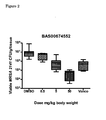
- Fig. 2 shows dosis-effect results of various doses of (3,4-dichlorophenyl)-carbamic acid 2-isobutoxycarbonylamino-1-methyl ethyl ester in mice against Staphylococcus aureus.
- The term "alkyl" or "lower alkyl" refers to an alkyl radical containing one to six carbon atoms including, but not limited to, methyl, ethyl, propyl, isopropyl, n-butyl, t-butyl and neopentyl. The alkyl chain can be straight or branched.
- The term "loweralkoxy" refers to a loweralkyl group as previously defined attached to a parent molecular moiety by an ether linkage.
- The term "loweralkoxy (methyl)" refers to an alkoxy group as described above attached to a parent molecular moiety via a methylene group (-CH2-).
- The term "aryl" as used herein refers to a mono-or bicyclic carbocyclic ring system having one or two aromatic rings including, but not limited to, phenyl, naphthyl, tetrahydronaphthyl, indanyl, indenyl and the like. Aryl groups (including bicyclic aryl groups) can be unsubstituted or substituted with one, two or three substituents independently selected from loweralkyl, substituted loweralkyl, haloalkyl, alkoxy, thioalkoxy, amino, alkylamino, dialkylamino, acylamino, benzyloxycarbonyl, cyano, hydroxyl, halo, mercapto, nitro, carboxaldehyde, carboxy, alkoxycarbonyl, carboxamide, and protected hydroxyl. In addition, substituted aryl groups include tetrafluorophenyl and pentafluorophenyl.
- The term "heteroaryl", as used herein, refers to a mono-or bicyclic fused aromatic radical having from five to ten ring atoms of which one ring atom is selected from S, O and N; zero, one or two ring atoms are additional heteroatoms independently selected from S, O and N; and the remaining ring atoms are carbon, the radical being joined to the rest of the molecule via any of the ring atoms, such as, for example, pyridyl, pyrazinyl, pyrimidinyl, pyrrolyl, pyrazolyl, imidazolyl, thiazolyl, oxazolyl, isooxazolyl, thiadiazolyl, oxadiazolyl, thiophenyl, furanyl, quinolinyl, isoquinolinyl, and the like.
- The term "substituted alkyl or alkoxy" as used herein refers to an alkyl or alkoxy group as defined herein substituted by independent replacement of one, two or three of the hydrogen atoms thereon with Cl, Br, F, I, OH, CN, haloalkyl, thioalkoxy, amino, alkylamino, dialkylamino, mercapto, nitro, carboxaldehyde, carboxy, alkoxycarbonyl and carboxamide.
- The term "substituted aryl" as used herein refers to an aryl group as defined herein substituted by independent replacement of one, two or three of the hydrogen atoms thereon with Cl, Br, F, I, OH, CN, C1-C3-alkyl, C1-C6-alkoxy, C1-C6-alkoxy substituted with aryl, haloalkyl, thioalkoxy, amino, alkylamino, dialkylamino, mercapto, nitro, carboxaldehyde, carboxy, alkoxycarbonyl and carboxamide. In addition, any one substituent may be an aryl, heteroaryl, or heterocycloalkyl group. Also, substituted aryl groups include tetrafluorophenyl and pentafluorophenyl.
- The term "substituted heteroaryl" as used herein refers to a heteroaryl group as defined herein substituted by independent replacement of one, two or three of the hydrogen atoms thereon with Cl, Br, F, I, OH, CN, C1-C3-alkyl, C1-C6-alkoxy, C1-C6-alkoxy substituted with aryl, haloalkyl, thioalkoxy, amino, alkylamino, dialkylamino, mercapto, nitro, carboxaldehyde, carboxy, alkoxycarbonyl and carboxamide. In addition, any one substituent may be an aryl, heteroaryl, or heterocycloalkyl group.
- The term "pharmaceutically acceptable salts" as used herein refers to those carboxylate salts, esters, and prodrugs of the compound of the present invention which are, within the scope of sound medical judgment, suitable for use in contact with the tissues of humans and lower animals with undue toxicity, irritation, allergic response, and the like, commensurate with a reasonable benefit/risk ratio, and effective for their intended use, as well as the zwitterionic forms, where possible, of the compounds of the invention.
- Pharmaceutically acceptable salts are well known in the art and refer to the relatively non-toxic, inorganic and organic acid addition salts of the compounds of the present invention. For example, S. M. Berge, et al. describe pharmaceutically acceptable salts in detail in J. Pharmaceutical Sciences, 66: 1-19 (1977) which is incorporated herein by reference. The salts can be prepared in situ during the final isolation and purification of the compounds of the invention, or separately by reacting the free base function with a suitable organic acid.
- Examples of pharmaceutically acceptable, non-toxic acid addition salts are salts of an amino group formed with inorganic acids such as hydrochloric acid, hydrobromic acid, phosphoric acid, sulfuric acid and perchloric acid or with organic acids such as acetic acid, oxalic acid, maleic acid, tartaric acid, citric acid, succinic acid or malonic acid or by using other methods used in the art such as ion exchange. Other pharmaceutically acceptable salts include adipate, alginate, ascorbate, aspartate, benzenesulfonate, benzoate, bisulfate, borate, butyrate, camphorate, camphorsulfonate, citrate, cyclopentanepropionate, digluconate, dodecylsulfate, ethanesulfonate, formate, fumarate, glucoheptonate, glycerophosphate, gluconate, hemisulfate, heptanoate, hexanoate, hydroiodide, 2-hydroxyethanesulfonate, lactobionate, lactate, laurate, lauryl sulfate, malate, maleate, malonate, methanesulfonate, 2-naphthalenesulfonate, nicotinate, nitrate, oleate, oxalate, palmitate, palmoate, pectinate, persulfate, 3-phenylpropionate, phosphate, picrate, pivalate, propionate, stearate, succinate, sulphate, tartrate, thiocyanate, p-toluenesulphonate, undecanoate, valerate salts, and the like. Representative alkali or alkaline earth metal salts include sodium, lithium, potassium, calcium, magnesium, and the like. Further pharmaceutically acceptable salts include, when appropriate, non-toxic ammonium, quaternary ammonium, and amine cations formed using counterions such as halide, hydroxide, carboxylate. sulphate, phosphate, nitrate, loweralkyl sulphonate and aryl sulphonate.
- As used herein, the term "pharmaceutically acceptable ester" refers to esters which hydrolyze in vivo and include those that break down readily in the human body to leave the parent compound or a salt thereof. Suitable ester groups include, for example, those derived from pharmaceutically acceptable aliphatic carboxylic acids, particularly alkanoic, alkenoic, cycloalkanoic and alkanedioic acids, in which each alkyl or alkenyl moiety advantageously has not more than 6 carbon atoms. Examples of particular esters include formates, acetates, propionates, butyrates, acrylates and ethylsuccinates.
- The term "pharmaceutically acceptable solvate" represents an aggregate that comprises one or more molecules of the solute, such as a compound of the invention, with one or more molecules of solvent.
- The term "pharmaceutically acceptable prodrugs" as used herein refers to those prodrugs of the compounds of the present invention which are, within the scope of sound medical judgment, suitable for use in contact with the tissues of humans and lower animals without undue toxicity, irritation, allergic response, and the like, commensurate with a reasonable benefit/risk ratio, and effective for their intended use, as well as the zwitterionic forms, where possible, of the compounds of the invention. The term "prodrug" refers to compounds that are rapidly transformed in vivo to yield the parent compound of the above formula, for example by hydrolysis in blood. A thorough discussion is provided in T. Higuchi and V. Stella, Pro-drugs as Novel Delivery Svstems, Vol. 14 of the A. C. S. Symposium Series, and in Edward B. Roche, ed., Bioreversible Carriers in Drug Design, American Pharmaceutical Association and Pergamon Press, 1987, both of which are incorporated herein by reference.
- Preferred compounds according to formula (I) are those compounds in which both R1 and R2 are Cl, while R3 is H. Also preferred are compounds according to formula (I) wherein X1 is N and X2 is O. Most preferred is a compound, wherein R1=R2=Cl, and located at the para- and meta-position on the phenyl-ring, R3=H, R4=H or CH3, R5=H, CH3 or CH2CH3, X1=N, X2=O, R6 is CH3, CH2CH3, CH(CH3)2 or CH2CH(CH3)2.
- The compounds (3,4-dichloro-phenyl)-carbamic acid 2-ethoxycarbonylamino-ethyl ester (CAS Nr. 306316-43-8; BAS 00212008), (3,4-dichloro-phenyl)-carbamic acid 2-isopropoxycarbonylamino-butyl ester (CAS Nr. 331959-00-3; BAS 00674544) and (3,4-dichloro-phenyl)-carbamic acid 2-isobutoxycarbonylamino-1-methyl ethyl ester (CAS Nr. 331959-03-6; BAS 00674552) are commercially available from Asinex (Moscow, Russia), TimTec (Newark, USA) and Interchim (Montlucon, France), respectively.
- A possible synthetic route for (3,4-dichloro-phenyl)-carbamic acid 2-isobutoxycarbonylamino-1-methyl ethyl ester is depicted in Fig. 1. It follows from this scheme that the herein mentioned compounds of the invention according to formula (I) can be prepared in a similar way by changing the starting or reactant components. These changes will be apparent to a person skilled in the art.
- The compounds according to formula (I) have antibiotic activity, in particular against Gram positive bacteria. They are especially active against staphylococcal and enterococcal strains, and in particular against S. aureus, including also the strains of S. aureus, that are commonly known as MRSA strains.
- They can be used in pharmaceutical compositions for the treatment of bacterial diseases, especially those diseases caused by the above mentioned micro-organisms, or in conditions wherein the subject runs the risk of being infected with micro-organisms.
- The compounds of the invention or compositions therewith can, however, also be used in other than pharmaceutical applications, e.g. in cosmetics (e.g. for the treatment of acne), in detergents and/or other cleaning solutions, in anti-fouling paints, in food or feed or in food or feed packaging, and so on.
- A compound according to the formula (I), or a pharmaceutically acceptable salt or prodrug thereof, may be provided to a subject in need thereof for prophylactic or therapeutic reasons. A compound according to the formula (I), or a pharmaceutically acceptable salt or prodrug thereof, may be provided to a subject in need thereof in the form of any pharmaceutical preparation, when such administration form is capable of treating and/or preventing infection in a subject. As a consequence of the prevention or treatment of infection, also the clinical effects or sequellae of infection will be prevented.
- The present invention also relates to a method for preventing and/or treating infection in a subject, preferably a human or other mammalian subject, said method comprising administering to said subject a therapeutically and/or prophylactically effective amount of a pharmaceutical composition comprising a compound according to formula (I), more preferably a compound as depicted in Table 1, or pharmaceutically acceptable salts or prodrugs thereof and a pharmaceutically acceptable carrier, and optionally one or more excipients.
- The present invention also relates to the use of a compound according to formula (I), more preferably a compound as depicted in Table 1 or pharmaceutically acceptable salts or prodrugs thereof for the manufacture of a medicament for treating infection, preferably bacterial infections, most preferably staphylococcal or enterococcal infection.
- An antibiotic therapy (i.e. the method for preventing and/or treating infection in a subject) may also comprise administering to an otherwise healthy individual, at risk of developing infection, a prophylactically effective amount of the pharmaceutical composition.
- Dosages for achieving the antibiotic effects of the pharmaceutical composition described herein may easily be determined by the skilled person. For purposes of the present invention, an effective dose will be a daily dose between about 0.01 mg and 10 grams of the compound according to formula (I) for an adult human being. More preferably a dose between 0,1 mg and 1 gram is used, even more preferably a dose of 1 mg - 100 mg and most preferably a dose of 4-40 mg of the compound of the invention is administered. This daily dose may be given as a one-dose administration, or it may be subdivided in several subdoses, which are administered spread over the day.
- For oral administration, the compositions may be packed in e.g. gelatin capsules or may be tableted in the form of tablets. For oral therapeutic application the active compound may be administered with excipients and e.g. used in the form of powders, sachets, tablets, pills, pastilles or capsules. The pharmaceutical compositions may be prepared by conventional means with pharmaceutically acceptable excipients such as binding agents (e.g. pregelatinised maize starch, tragacanth gum, gelatin, polyvinylpyrrolidone or hydroxypropyl methylcellulose); fillers (e.g. lactose, microcrystalline cellulose, mannitol or calcium hydrogen phosphate); lubricants (e.g. magnesium stearate, talc or silica); disintegrants (e.g. potato starch, sodium starch glycollate or alginate); or wetting agents (e.g. sodium lauryi sulphate). The tablets may be coated by methods well known in the art. Liquid preparations for oral administration may take the form of, for example, solutions, syrups or suspensions, or they may be presented as a dry product for constitution with water or other suitable vehicle before use. Such liquid preparations may be prepared by conventional means with pharmaceutically acceptable additives such as suspending agents (e.g. sorbitol syrup, cellulose derivatives or hydrogenated edible fats); emulsifying agents (e.g. lecithin or acacia); nonaqueous vehicles (e.g. almond oil, oily esters, ethyl alcohol or fractionated vegetable oils); and preservatives (e.g. methyl or propyl-p-hydroxybenzoates or sorbic acid). The preparations may also contain buffer salts, flavoring, coloring and sweetening agents as appropriate. Preparations for oral administration may be suitably formulated to give controlled release of the active compound.
- For buccal administration the compositions may take the form of tablets or lozenges formulated in conventional manner.
- The compounds according to the present invention may be formulated for parenteral administration by injection e.g. by bolus injection or continuous infusion. Formulations for injection may be presented in unit dosage form e.g. in ampoules or in multi-dose containers, with an added preservative. The compositions may take such forms as suspensions, solutions or emulsions in oily or aqueous vehicles, and may contain formulatory agents such as suspending, stabilizing and/or dispersing agents. Alternatively, the active ingredient may be in powder form for constitution with a suitable vehicle, e.g. sterile pyrogen-free water, before use.
- When dosing is in the form of a capsule, the capsule may comprise apart from the elements mentioned above a liquid carrier such as an oil. Dosage form may further be provided with coatings of sugar, shellac or other agents. The components of the pharmaceutical composition are preferably chosen such that they do not reduce the desired working of the active compound.
- The pharmaceutical compositions can further comprise flavoring sweetening, coloring and/or preservative agents.
- A compound according to the formula (I), or a pharmaceutically acceptable salt or prodrug thereof may also be administered in the form of e.g. an elixir, a suspension, a syrup, a waffle or a chewing gum.
- In a pharmaceutical composition as described above, a compound according to the formula (I), or a pharmaceutically acceptable salt or prodrug thereof, is used in an amount of from 0.01 to 99.9 % by weight, preferably from 0.01 to 10 wt.%, and more preferably from 0.05 to 5 wt.%.
- The present invention further relates to a method for the preparation of a pharmaceutical composition for preventing and/or treating infection, comprising processing or incorporating a compound according to the formula (I), or a pharmaceutically acceptable salt or prodrug thereof, as an active substance, together with a pharmaceutically acceptable carrier in a pharmaceutical composition.
- The preparation of a pharmaceutical composition may very suitably occur by mixing all separate ingredients such as fillers, binders, lubricants and optionally other excipients together with a compound according to the formula (I), or a pharmaceutically acceptable salt or prodrug thereof, and processing the mixture obtained to a pharmaceutical preparation.
Table I. Exemplary compounds of general formula I. For R1, R2, and R3 is indicated whether the indicated moieties are in the para (p-), meta (m-) or ortho (o-) position Compound R1 R2 R3 R4 R5 X1 X2 R6 BAS00212008 (NewCo001) p-Cl m-Cl H H H N O ethyl BAS00674544 (NewCo002) p-Cl m-Cl H H ethyl N O isopropyl BAS00674552 (NewCo003) p-Cl m-Cl H CH3 H N O isobutyl NewCo004 p-Cl m-Cl H H H O N H NewCo005 p-Cl m-Cl H H H O N ethyl NewCo006 p-Cl m-Cl H H H O N SO2-methyl NewCo007 p-Cl m-Cl H H H N C H NewCo008 p-Cl m-Cl H H H O. N CH3 NewCo009 p-Cl m-Cl H H H O N isobutyl NewCo0010 p-Cl m-Cl H H H O N SO3 NewCo0011 p-Cl m-Cl H H H N C O-CH3 NewCo0012 p-CH3 m-CH3 H CH3 H N O isobutyl NewCo0013 p-O-CH3 m-O-CH3 H CH3 H N O isobutyl NewCo0014 p-CH3 H H CH3 H N O isobutyl NewCo0015 p-CF3 H H CH3 H N O isobutyl NewCo0016 p-F m-F H CH3 H N O isobutyl NewCo0017 p-CF3 m-CF3 H CH3 H N O isobutyl NewCo0018 p-O-CH3 H H CH3 H N O isobutyl NewCo0019 H m-CF3 H CH3 H N O isobutyl - The chemical names of these compounds are provided in the following list:
- NewCo001: (3,4-dichloro-phenyl)-carbamic acid 2-ethoxycarbonylamino-ethyl ester (CAS-Nr. 306316-43-8)
- NewCo002: (3,4-dichloro-phenyl)-carbamic acid 2-isopropoxycarbonylamino-butyl ester (CAS-Nr. 331959-00-3)
- NewCo003: (3,4-dichloro-phenyl)-carbamic acid 2-isobutoxycarbonylamino-1-methyl-ethyl ester (CAS-Nr. 331959-03-6)
- NewCo004: (3,4-dichloro-phenyl)-carbamic acid 2-carbamoyloxy-ethyl ester NewCo005: (3,4-dichloro-phenyl)-carbamic acid 2-ethylcarbamoyloxy-ethyl ester
- NewCo006: (3,4-dichloro-phenyl)-carbamic acid 2-methanesulfonylcarbamoyloxy-ethyl ester
- NewCo007: (3,4-dichloro-phenyl)-carbamic acid 2-acetylamino-ethyl ester
- NewCo008: (3,4-dichloro-phenyl)-carbamic acid 2-methylcarbamoyloxy-ethyl ester
- NewCo009: (3,4-dichloro-phenyl)-carbamic acid 2-isopropylcarbamoyloxy-ethyl ester
- NewCo0010: (3,4-dichloro-phenyl)-carbamic acid 2-(sulfonic acid)carbamoyloxy-ethyl ester
- NewCo0011: (3,4-dichloro-phenyl)-carbamic acid 2(2-methoxy-acetylamino)-ethyl ester
- NewCo0012: (3,4-dichloro-phenyl)-carbamic acid 2-isobutoxycarbonylamino-1-methyl-ethyl ester
- NewCo0013: (3,4-dimethoxy-phenyl)-carbamic acid 2-isobutoxycarbonylamino-1-methyl-ethyl ester
- NewCo0014: p-tolyl-carbamic acid 2-isobutoxycarbonylamino-l-methyl-ethyl ester
- NewCo0015: (4-trifluoromethyl-phenyl)-carbamic acid 2-isobutoxycarbonylamino-1-methyl-ethyl ester
- NewCo0016: (3,4-difluoro-phenyl)-carbamic acid 2-isobutoxycarbonylamino-1-methyl-ethyl ester
- NewCo0017: (3,4-bis-trifluoromethyl-phenyl)-carbamic acid 2-isobutoxycarbonylamino-1-methyl-ethyl ester
- NewCo0018: (4-methoxy-phenyl)-carbamic acid 2-isobutoxycarbonylamino-1-methyl-ethyl ester
- NewCo0019: (3-trifluoromethyl-phenyl)-carbamic acid 2-isobutoxycarbonylamino-1-methyl-ethyl ester
- MIC test were performed according to standard methodology: M7-A6-"Methods for Dilution Antimicrobial Susceptibility Tests for Bacteria That Grow Aerobically"; Approved Standard, Sixth Edition Clinical and Laboratory Standards Institute 2005 (CLSI/formerly NCCLS).
- Table 1 lists the results of 3 different compounds according to Formula (I) on single strains of S. aureus as MIC values expressed in micrograms per milliliter.
- Table 2 lists the results of experiments on multiple strains of S. aureus. The MIC values are expressed as a range between the lowest value and the highest value found in these experiments. Both the average MIC50 and MIC90 are indicated in bold. Again BAS 00674552 is found to be the most active.
TABLE 1 IDNumber CAS MIC DETERMINATION SINGLE STRAINS S. aureus ATCC 29213 S. aureus MW2 S. aureus N315 BAS 00674552 331959-03-6 8 4 4 BAS 00674544 331959-00-3 8 8 8 BAS 00212008 306316-43-8 16 16 8 TABLE 2 Compound No of tested S. aureus strains. Range MIC (lowest-highest) (microgram/milliliter) MIC 50MIC 90 BAS 00674552 60 4 > 32 8 16 BAS 00674544 60 8 > 32 16 32 BAS 00212008 59 > 32 > 32 > 32 > 32 - The purpose of this study was to investigate the antibiotic efficacy of different doses of compound BAS00674552 against a local infection with
MRSA 2141 in the mouse. Thirty mice were treated intravenously with 0.5, 5.0 or 50 mg/kg body weight, respectively. The observation period was three days. Outgrowth of the infection was used to establish drug efficacy. - Test substance name : BAS00674552 (in vivo)
For each administered dose, the sponsor provided the appropriate stock solutions as 1 ml aliquots of the test substance in the vehicle (DMSO). These stock solutions were stored at 2-8oC for 16 hours.
Positive control: Vancomycin (Vancomycine 500 PCH, vancomycinehydrochloride voor i.v. gebruik, chargenr. 03L19A, expiry date: NOV-2005, Pharmachemie, Haarlem, The Netherlands)Animals and housing conditions Species : mouse Strain : Swiss out bred (IcoCaw OF1) Supplier : Charles River Nederland, The Netherlands Sex and age : 50 female, 6-8 weeks old upon arrival Identification : the animals were individually marked on the tail Acclimatization period : 7 days Caging : 5 animals/sex per cage (Macrolon cages with filter top, and environmental enrichment: shreds of paper. Handling : mice were handled under laminar flow Lighting : 12 hour light/12 hour dark cycle Temperature during testing : 22 ± 3 °C Humidity during testing : 30% -70% Ventilation : ca 10 air changes/hour Diet : ad libitum; SDS D3 food (Special Diets Service, Witham, England) certificate of analysis on request. Tap water, suitable for human consumption (Hydron Midden Nederland). - The test substances were administered as a solution in dimethylsulfoxide (DMSO). The test substance was administered as 20 µl injections per mouse at all dose levels. Vancomycin was used as positive control and injected intravenously as a 10 mg/ml solution in DMSO (20 µl per mouse).
Fresh dilutions of the test substance in vehicle were provided by the sponsor, stored at 2-8 o C, and used within 18 hours after preparation. Shortly before injection the test substance were warmed to room temperature. - The study was performed according to Lab-Sop-Amp-Anim-002 and Lab-Sop-Amp-Bac-003. In short, mice were injected with 11E05 MRSA bacteria,
strain 2141 in the right thigh muscle, followed one day later by an i.v. injection of the test compound, vancomycin or vehicle in the tail vein. 24 hours later mice were sacrificed, blood was collected by heart puncture and the right thigh muscle was removed. Plasma was prepared from blood samples and stored at -80° ± 10° C for possible future analysis. Thigh muscles were weighted and homogenized using an Ultra-Turrax® and dilutions of the homogenate were prepared in saline. Limiting dilutions were plated onto agar plates and two days later the number ofMRSA 2141 CFU were determined for each individual mouse as an indication of bactericidal activity of the compound. Additionally, tests were performed to determine if the bacteria used are still oxacillin resistant Staphylococcus aureus. This was done before injection and on pooled thigh muscle isolates per group. For this purpose Staphaurex® (Remel Europe Ltd., Crossways, UK) and ORSAB® + supplements (Oxoid Ltd., Basingstoke, UK) were used. In vivo antibiotic activity is determined by a CFU reduction of > 90% (1 log reduction) in comparison to the negative control (vehicle only). - The study was comprised five groups of 10 females each.
- The groups are presented in the scheme below:
Group Color code Dose levels (mg/kg body weight) 1 Concentration (mg/ml) Dose volume (ml/kg) Number of mice (♀) A 01 White 0 0 1 10 B 0.05 Green 0.5 0.5 1 10 C 0.5 Blue 5 5 1 10 D 5 Red 50 50 1 10 E vanco Brown 10 10 1 10 1 vehicle only (DMSO) - The results of the vivo data from the experiment are presented graphically (figure 2) and show:
- 1. Bacterial outgrowth in mice that received vehicle (DMSO) only
- 2. Over 1 Log reduction in the population treated with vancomycin (positive control)
- 3. Approximately 2 Log reduction in the groups (5 and 50 mg/kg) treated with the test substances.
- A statistical analysis (using GraphPad Prism (V3) of the experimental data shows that the compound BAS00674552 was effective (P≤0.001) against a
local MRSA 2141 infection. Individual analysis of the compound at different doses against the untreated group indicate that significant reduction of bacterial outgrowth was achieved by the compound at 5mg/kg (P≤0.01) and 50 mg/kg (P≤0.01) doses, and a significant trend of dose-dependent efficacy was observed.
All animals scored below the value of eight (8) (according Guidelines Dutch local Committee for Animal Experiments (DEC)) on the observation scoring sheets, no signs of adverse side effects were observed.
Claims (8)
- An antibiotic composition comprising a compound according to formula (I)

or a pharmaceutically acceptable salt, ester or pro-drug thereof. - An antibiotic composition according to claim 1, wherein R1 and R2 are both Cl, and wherein R3 is H.
- An antibiotic composition according to claim 2, wherein R3=H, R4=H or CH3, R5=H, CH3 or CH2CH3, X1=N, X2=O, R6 is CH3, CH2CH3, CH(CH3)2 or CH2CH(CH3)2
- An antibiotic composition according to claim 3, wherein R3=H, R4=CH3, R5=H, X1=N, X2=O, R6 is CH2CH(CH3)2.
- A compound selected from the group consisting essentially of:(3,4-dichloro-phenyl)-carbamic acid 2-carbamoyloxy-ethyl ester,(3,4-dichloro-phenyl)-carbamic acid 2-ethylcarbamoyloxy-ethyl ester,(3,4-dichloro-phenyl)-carbamic acid 2-methanesulfonylcarbamoyloxy-ethyl ester,(3,4-dichloro-phenyl)-carbamic acid 2-acetylamino-ethyl ester,(3,4-dichloro-phenyl)-carbamic acid 2-methylcarbamoyloxy-ethyl ester,(3,4-dichloro-phenyl)-carbamic acid 2-isopropylcarbamoyloxy-ethyl ester,(3,4-dichloro-phenyl)-carbamic acid 2-(sulfonic acid)carbamoyloxy-ethyl ester,(3,4-dichloro-phenyl)-carbamic acid 2(2-methoxy-acetylamino)-ethyl ester,(3,4-dichloro-phenyl)-carbamic acid 2-isobutoxycarbonylamino-1-methyl-ethyl ester,(3,4-dimethoxy-phenyl)-carbamic acid 2-isobutoxycarbonylamino-1-methyl-ethyl ester,p-tolyl-carbamic acid 2-isobutoxycarbonylamino-1-methyl-ethyl ester,(4-trifluoromethyl-phenyl)-carbamic acid 2-isobutoxycarbonylamino-1-methyl-ethyl ester,(3,4-difluoro-phenyl)-carbamic acid 2-isobutoxycarbonylamino-1-methyl-ethyl ester,(3,4-bis-trifluoromethyl-phenyl)-carbamic acid 2-isobutoxycarbonylamino-1-methyl-ethyl ester,(4-methoxy-phenyl)-carbamic acid 2-isobutoxycarbonylamino-1-methyl-ethyl ester, and(3-trifluoromethyl-phenyl)-carbamic acid 2-isobutoxycarbonylamino-1-methyl-ethyl ester.
- A pharmaceutical composition comprising a compound according to formula (I) or a pharmaceutically acceptable salt, prodrug, ester or solvate thereof and a pharmaceutically acceptable carrier.
- Use of a compound according to formula (I), more preferably a compound according to claim 5, or a pharmaceutically acceptable salt, prodrug, ester or solvate thereof, for therapy.
- Use of a compound according to formula (I) or a pharmaceutically acceptable salt, prodrug, ester or solvate thereof for the manufacture of a medicament for the treatment of bacterial infection.
Priority Applications (5)
| Application Number | Priority Date | Filing Date | Title |
|---|---|---|---|
| EP05077956A EP1803453A1 (en) | 2005-12-21 | 2005-12-21 | Carbamate antibiotics |
| PCT/NL2006/000651 WO2007073168A1 (en) | 2005-12-21 | 2006-12-21 | Carbamate antibiotics |
| US12/097,843 US8058468B2 (en) | 2005-12-21 | 2006-12-21 | Carbamate antibiotics |
| EP06835673A EP1973537A1 (en) | 2005-12-21 | 2006-12-21 | Carbamate antibiotics |
| JP2008547129A JP2009520813A (en) | 2005-12-21 | 2006-12-21 | Carbamate antibiotics |
Applications Claiming Priority (1)
| Application Number | Priority Date | Filing Date | Title |
|---|---|---|---|
| EP05077956A EP1803453A1 (en) | 2005-12-21 | 2005-12-21 | Carbamate antibiotics |
Publications (1)
| Publication Number | Publication Date |
|---|---|
| EP1803453A1 true EP1803453A1 (en) | 2007-07-04 |
Family
ID=36570860
Family Applications (2)
| Application Number | Title | Priority Date | Filing Date |
|---|---|---|---|
| EP05077956A Withdrawn EP1803453A1 (en) | 2005-12-21 | 2005-12-21 | Carbamate antibiotics |
| EP06835673A Withdrawn EP1973537A1 (en) | 2005-12-21 | 2006-12-21 | Carbamate antibiotics |
Family Applications After (1)
| Application Number | Title | Priority Date | Filing Date |
|---|---|---|---|
| EP06835673A Withdrawn EP1973537A1 (en) | 2005-12-21 | 2006-12-21 | Carbamate antibiotics |
Country Status (4)
| Country | Link |
|---|---|
| US (1) | US8058468B2 (en) |
| EP (2) | EP1803453A1 (en) |
| JP (1) | JP2009520813A (en) |
| WO (1) | WO2007073168A1 (en) |
Families Citing this family (4)
| Publication number | Priority date | Publication date | Assignee | Title |
|---|---|---|---|---|
| FR2960875B1 (en) | 2010-06-04 | 2012-12-28 | Sanofi Aventis | HEXAFLUOROISOPROPYL CARBAMATE DERIVATIVES, THEIR PREPARATION AND THEIR THERAPEUTIC APPLICATION |
| WO2012021991A1 (en) * | 2010-08-14 | 2012-02-23 | Versitech Limited | Anti-viral carbamimidothioic acid esters |
| JP5715456B2 (en) * | 2011-03-15 | 2015-05-07 | 住友精化株式会社 | Method for producing alkylsulfonylcarbamate |
| KR102756165B1 (en) * | 2019-07-16 | 2025-01-20 | 재단법인 한국파스퇴르연구소 | Anti-methicillin resistant staphylococcus aureus compound and its medical use |
Citations (10)
| Publication number | Priority date | Publication date | Assignee | Title |
|---|---|---|---|---|
| US2703810A (en) * | 1951-09-05 | 1955-03-08 | Saint Gobain | Derivatives of glycol urethanes and methods of making them |
| US2777871A (en) * | 1952-08-05 | 1957-01-15 | Columbia Southern Chem Corp | Bis nu-substituted carbamic acid esters of polyhydric alcohols and process |
| FR1400995A (en) * | 1964-07-16 | 1965-05-28 | Boots Pure Drug Co Ltd | Herbicidal composition, new carbamates usable as herbicides and their preparation |
| DE1204456B (en) * | 1952-09-25 | 1965-11-04 | Pittsburgh Plate Glass Co | Herbicides |
| WO1991007381A1 (en) * | 1989-11-14 | 1991-05-30 | Vsesojuzny Nauchno-Issledovatelsky Institut Khimicheskikh Sredstv Zaschity Rasteny | Carbamoyl derivatives of alkanolamines and antistress-type means for plant growth regulation based thereon |
| US6143471A (en) * | 1998-03-10 | 2000-11-07 | Mitsubishi Paper Mills Limited | Positive type photosensitive composition |
| US6294502B1 (en) * | 1998-05-22 | 2001-09-25 | Bayer Aktiengesellschaft | Thermally-responsive record material |
| EP1142868A1 (en) * | 1998-12-22 | 2001-10-10 | Mitsubishi Chemical Corporation | Amide derivatives |
| JP2002030130A (en) * | 2000-07-18 | 2002-01-31 | National Institute Of Advanced Industrial & Technology | Orderly polyurethane and its production method |
| JP2002088135A (en) * | 2000-02-21 | 2002-03-27 | Nitto Denko Corp | Urethane copolymer and optical material using the same |
-
2005
- 2005-12-21 EP EP05077956A patent/EP1803453A1/en not_active Withdrawn
-
2006
- 2006-12-21 JP JP2008547129A patent/JP2009520813A/en not_active Ceased
- 2006-12-21 US US12/097,843 patent/US8058468B2/en not_active Expired - Fee Related
- 2006-12-21 EP EP06835673A patent/EP1973537A1/en not_active Withdrawn
- 2006-12-21 WO PCT/NL2006/000651 patent/WO2007073168A1/en not_active Ceased
Patent Citations (10)
| Publication number | Priority date | Publication date | Assignee | Title |
|---|---|---|---|---|
| US2703810A (en) * | 1951-09-05 | 1955-03-08 | Saint Gobain | Derivatives of glycol urethanes and methods of making them |
| US2777871A (en) * | 1952-08-05 | 1957-01-15 | Columbia Southern Chem Corp | Bis nu-substituted carbamic acid esters of polyhydric alcohols and process |
| DE1204456B (en) * | 1952-09-25 | 1965-11-04 | Pittsburgh Plate Glass Co | Herbicides |
| FR1400995A (en) * | 1964-07-16 | 1965-05-28 | Boots Pure Drug Co Ltd | Herbicidal composition, new carbamates usable as herbicides and their preparation |
| WO1991007381A1 (en) * | 1989-11-14 | 1991-05-30 | Vsesojuzny Nauchno-Issledovatelsky Institut Khimicheskikh Sredstv Zaschity Rasteny | Carbamoyl derivatives of alkanolamines and antistress-type means for plant growth regulation based thereon |
| US6143471A (en) * | 1998-03-10 | 2000-11-07 | Mitsubishi Paper Mills Limited | Positive type photosensitive composition |
| US6294502B1 (en) * | 1998-05-22 | 2001-09-25 | Bayer Aktiengesellschaft | Thermally-responsive record material |
| EP1142868A1 (en) * | 1998-12-22 | 2001-10-10 | Mitsubishi Chemical Corporation | Amide derivatives |
| JP2002088135A (en) * | 2000-02-21 | 2002-03-27 | Nitto Denko Corp | Urethane copolymer and optical material using the same |
| JP2002030130A (en) * | 2000-07-18 | 2002-01-31 | National Institute Of Advanced Industrial & Technology | Orderly polyurethane and its production method |
Non-Patent Citations (29)
| Title |
|---|
| "Interchim Intermediates", 18 January 2005, INTERCHIM, MONTLUCON, FRANCE * |
| BULL. CHEM. SOC. JPN., vol. 10, 1935, pages 531 * |
| BULL. CHEM. SOC. JPN., vol. 60, no. 11, 1987, pages 3999 - 4004 * |
| BULL. SOC. CHIM. BELG., vol. 51, 1942, pages 99 - 103 * |
| BULL. SOC. CHIM. FR., 1951, pages 392 - 395 * |
| BULL. SOC. CHIM. FR., 1960, pages 1192 - 1195 * |
| BULL. SOC. CHIM. FR., 1968, pages 2962 - 2964 * |
| CAN. J. CHEM., vol. 55, 1977, pages 700 - 719 * |
| CHIM. ET IND. SONDERBAND 23. CONGR. INT. CHIM. IND. MAILAND, 1950, pages 233 - 241 * |
| DATABASE BEILSTEIN Beilstein Institut zur Förderung der Chemischen Wissenschaft, Frankfurt am Main, DE; XP002385820, retrieved from XFIRE Database accession no. 3447826, 3218757, 3223364, 5299062, 5141447 * |
| DATABASE BEILSTEIN Beilstein Institut zur Förderung der Chemischen Wissenschaft, Frankfurt am Main, DE; XP002385821, retrieved from XFIRE Database accession no. 3219444, 3219443, 3219442, 3219441 * |
| DATABASE BEILSTEIN Beilstein Institut zur Förderung der Chemischen Wissenschaft, Frankfurt am Main, DE; XP002385822, retrieved from XFIRE Database accession no. 3220090, 3220091, 3218762, 3218006, 3218761 * |
| DATABASE BEILSTEIN Beilstein Institut zur Förderung der Chemischen Wissenschaft, Frankfurt am Main, DE; XP002385823, retrieved from XFIRE Database accession no. 2159668, 2949980, 3105684, 3106838, 3108277 * |
| DATABASE BEILSTEIN Beilstein Institut zur Förderung der Chemischen Wissenschaft, Frankfurt am Main, DE; XP002385824, retrieved from XFIRE Database accession no. 3380679, 3380751 * |
| DATABASE BEILSTEIN Beilstein Institut zur Förderung der Chemischen Wissenschaft, Frankfurt am Main, DE; XP002385825, retrieved from XFIRE Database accession no. 3319043, 3361774 * |
| DATABASE BEILSTEIN Beilstein Institut zur Förderung der Chemischen Wissenschaft, Frankfurt am Main, DE; XP002385826, retrieved from XFIRE Database accession no. 3447594, 3218007 * |
| DATABASE BEILSTEIN Beilstein Institut zur Förderung der Chemischen Wissenschaft, Frankfurt am Main, DE; XP002385827, retrieved from XFIRE Database accession no. 2184604, 2174270 * |
| DATABASE BEILSTEIN Beilstein Institut zur Förderung der Chemischen Wissenschaft, Frankfurt am Main, DE; XP002385828, retrieved from XFIRE Database accession no. 3218759, 3218760, 3218758 * |
| DATABASE BEILSTEIN Beilstein Institut zur Förderung der Chemischen Wissenschaft, Frankfurt am Main, DE; XP002385829, retrieved from XFIRE Database accession no. 7001360, 7001359 * |
| DATABASE BEILSTEIN Beilstein Institut zur Förderung der Chemischen Wissenschaft, Frankfurt am Main, DE; XP002385830, retrieved from XFIRE Database accession no. 3400497, 2116347 * |
| DATABASE BEILSTEIN Beilstein Institut zur Förderung der Chemischen Wissenschaft, Frankfurt am Main, DE; XP002385831, retrieved from XFIRE Database accession no. 6699808 * |
| DATABASE CAPLUS [online] CHEMICAL ABSTRACTS SERVICE, COLUMBUS, OHIO, US; BASKAKOV, YU. A. ET AL: "Preparation of N-(hydroxyalkyl)- and N-[(aminocarbonyloxy)alkyl]carbamates as stress-reducing plant growth regulators", XP002385819, retrieved from STN Database accession no. 1991:558738 * |
| DATABASE CHEMCATS CHEMICAL ABSTRACTS SERVICE, COLUMBUS, OHIO, US; XP002385818 * |
| IZV. AKAD. NAUK. ARM. SSR KHIM. NAUKI, vol. 17, 1964, pages 314 * |
| J. AM. CHEM. SOC., vol. 56, 1934, pages 2725 * |
| J. ORG. CHEM., vol. 22, 1957, pages 1706 * |
| PATENT ABSTRACTS OF JAPAN vol. 2002, no. 05 3 May 2002 (2002-05-03) * |
| PATENT ABSTRACTS OF JAPAN vol. 2002, no. 07 3 July 2002 (2002-07-03) * |
| TETRAHEDRON, vol. 38, no. 2, 1982, pages 245 - 255 * |
Also Published As
| Publication number | Publication date |
|---|---|
| US20090192221A1 (en) | 2009-07-30 |
| JP2009520813A (en) | 2009-05-28 |
| EP1973537A1 (en) | 2008-10-01 |
| WO2007073168A1 (en) | 2007-06-28 |
| US8058468B2 (en) | 2011-11-15 |
Similar Documents
| Publication | Publication Date | Title |
|---|---|---|
| CN105682655B (en) | Antimicrobial compounds | |
| JPS62161728A (en) | Antibacterial | |
| EP2753613B1 (en) | Derivatives of xanthone compounds | |
| JP5361860B2 (en) | Use of fungicides for the treatment of fish mycosis | |
| EP3131538B1 (en) | New anti-clostridium compounds | |
| US8436027B2 (en) | Azole compounds used as tuberculostatic and leishmanicide agents | |
| JP2025523655A (en) | Tetracycline derivatives | |
| DE60133273T2 (en) | INHIBITORS OF PEPTIDE DEFORMYLASE | |
| US8058468B2 (en) | Carbamate antibiotics | |
| JP2014513670A (en) | Use of polyaminoisoprenyl derivatives in antibiotic or preservative treatment | |
| EP1769796A1 (en) | Novel antibiotics comprising bis(1-aryl-5-tetrazolyl)methane derivatives | |
| EP3906225B1 (en) | Pantothenamide analogues | |
| US6423707B1 (en) | Nitroimidazole ester analogues and therapeutic applications | |
| EP3661912B9 (en) | Compounds for treating infections | |
| KR20130120635A (en) | Novel antimicrobial comoposition having quorum sensing inhibiting activity and antimicrobial activity | |
| JP2003246726A (en) | Antimicrobial composition | |
| US20200283378A1 (en) | Novel therapeutics for central nervous system disorders | |
| JP7635923B2 (en) | Compounds and their uses | |
| US12297204B2 (en) | 5-(substitutedphenyl)-7-thioxo-7,8-dihydropyrimido[4,5-d]pyrimidine-2,4(1H,3H)-dione analogues as antibacterial agents | |
| US20230348365A1 (en) | Compounds for treating infections | |
| KR20080080176A (en) | Diphenyl urea derivative | |
| KR20160081605A (en) | Pharmaceutical composition for preventing or treating for Helicobacter pylori infectious diseases | |
| TW202608870A (en) | Naphthoquinone derivative and medical use thereof | |
| KR20260047779A (en) | Composition for inhibiting biofilm formation and antibacterial against acnes bacteria comprising triphenylphosphonium derivatives as active ingredients | |
| CN113797109A (en) | Anti-aging uses of floxacin drugs |
Legal Events
| Date | Code | Title | Description |
|---|---|---|---|
| PUAI | Public reference made under article 153(3) epc to a published international application that has entered the european phase |
Free format text: ORIGINAL CODE: 0009012 |
|
| AK | Designated contracting states |
Kind code of ref document: A1 Designated state(s): AT BE BG CH CY CZ DE DK EE ES FI FR GB GR HU IE IS IT LI LT LU LV MC NL PL PT RO SE SI SK TR |
|
| AX | Request for extension of the european patent |
Extension state: AL BA HR MK YU |
|
| AKX | Designation fees paid | ||
| REG | Reference to a national code |
Ref country code: DE Ref legal event code: 8566 |
|
| STAA | Information on the status of an ep patent application or granted ep patent |
Free format text: STATUS: THE APPLICATION IS DEEMED TO BE WITHDRAWN |
|
| 18D | Application deemed to be withdrawn |
Effective date: 20080105 |