EP1802025B1 - Regular content check method, content transmission/reception system, transmitter, and receiver - Google Patents
Regular content check method, content transmission/reception system, transmitter, and receiver Download PDFInfo
- Publication number
- EP1802025B1 EP1802025B1 EP05793204.8A EP05793204A EP1802025B1 EP 1802025 B1 EP1802025 B1 EP 1802025B1 EP 05793204 A EP05793204 A EP 05793204A EP 1802025 B1 EP1802025 B1 EP 1802025B1
- Authority
- EP
- European Patent Office
- Prior art keywords
- content
- receiver
- update information
- transmitter
- message
- Prior art date
- Legal status (The legal status is an assumption and is not a legal conclusion. Google has not performed a legal analysis and makes no representation as to the accuracy of the status listed.)
- Expired - Lifetime
Links
Images




Classifications
-
- H—ELECTRICITY
- H04—ELECTRIC COMMUNICATION TECHNIQUE
- H04L—TRANSMISSION OF DIGITAL INFORMATION, e.g. TELEGRAPHIC COMMUNICATION
- H04L9/00—Cryptographic mechanisms or cryptographic arrangements for secret or secure communications; Network security protocols
- H04L9/08—Key distribution or management, e.g. generation, sharing or updating, of cryptographic keys or passwords
-
- G—PHYSICS
- G06—COMPUTING OR CALCULATING; COUNTING
- G06F—ELECTRIC DIGITAL DATA PROCESSING
- G06F21/00—Security arrangements for protecting computers, components thereof, programs or data against unauthorised activity
- G06F21/10—Protecting distributed programs or content, e.g. vending or licensing of copyrighted material ; Digital rights management [DRM]
-
- G—PHYSICS
- G06—COMPUTING OR CALCULATING; COUNTING
- G06F—ELECTRIC DIGITAL DATA PROCESSING
- G06F21/00—Security arrangements for protecting computers, components thereof, programs or data against unauthorised activity
-
- H—ELECTRICITY
- H04—ELECTRIC COMMUNICATION TECHNIQUE
- H04L—TRANSMISSION OF DIGITAL INFORMATION, e.g. TELEGRAPHIC COMMUNICATION
- H04L12/00—Data switching networks
- H04L12/02—Details
- H04L12/22—Arrangements for preventing the taking of data from a data transmission channel without authorisation
-
- H—ELECTRICITY
- H04—ELECTRIC COMMUNICATION TECHNIQUE
- H04L—TRANSMISSION OF DIGITAL INFORMATION, e.g. TELEGRAPHIC COMMUNICATION
- H04L9/00—Cryptographic mechanisms or cryptographic arrangements for secret or secure communications; Network security protocols
- H04L9/08—Key distribution or management, e.g. generation, sharing or updating, of cryptographic keys or passwords
- H04L9/0816—Key establishment, i.e. cryptographic processes or cryptographic protocols whereby a shared secret becomes available to two or more parties, for subsequent use
- H04L9/0838—Key agreement, i.e. key establishment technique in which a shared key is derived by parties as a function of information contributed by, or associated with, each of these
- H04L9/0841—Key agreement, i.e. key establishment technique in which a shared key is derived by parties as a function of information contributed by, or associated with, each of these involving Diffie-Hellman or related key agreement protocols
- H04L9/0844—Key agreement, i.e. key establishment technique in which a shared key is derived by parties as a function of information contributed by, or associated with, each of these involving Diffie-Hellman or related key agreement protocols with user authentication or key authentication, e.g. ElGamal, MTI, MQV-Menezes-Qu-Vanstone protocol or Diffie-Hellman protocols using implicitly-certified keys
-
- H—ELECTRICITY
- H04—ELECTRIC COMMUNICATION TECHNIQUE
- H04L—TRANSMISSION OF DIGITAL INFORMATION, e.g. TELEGRAPHIC COMMUNICATION
- H04L9/00—Cryptographic mechanisms or cryptographic arrangements for secret or secure communications; Network security protocols
- H04L9/32—Cryptographic mechanisms or cryptographic arrangements for secret or secure communications; Network security protocols including means for verifying the identity or authority of a user of the system or for message authentication, e.g. authorization, entity authentication, data integrity or data verification, non-repudiation, key authentication or verification of credentials
- H04L9/3271—Cryptographic mechanisms or cryptographic arrangements for secret or secure communications; Network security protocols including means for verifying the identity or authority of a user of the system or for message authentication, e.g. authorization, entity authentication, data integrity or data verification, non-repudiation, key authentication or verification of credentials using challenge-response
-
- H—ELECTRICITY
- H04—ELECTRIC COMMUNICATION TECHNIQUE
- H04N—PICTORIAL COMMUNICATION, e.g. TELEVISION
- H04N21/00—Selective content distribution, e.g. interactive television or video on demand [VOD]
- H04N21/20—Servers specifically adapted for the distribution of content, e.g. VOD servers; Operations thereof
- H04N21/25—Management operations performed by the server for facilitating the content distribution or administrating data related to end-users or client devices, e.g. end-user or client device authentication, learning user preferences for recommending movies
- H04N21/254—Management at additional data server, e.g. shopping server, rights management server
- H04N21/2541—Rights Management
-
- H—ELECTRICITY
- H04—ELECTRIC COMMUNICATION TECHNIQUE
- H04N—PICTORIAL COMMUNICATION, e.g. TELEVISION
- H04N21/00—Selective content distribution, e.g. interactive television or video on demand [VOD]
- H04N21/20—Servers specifically adapted for the distribution of content, e.g. VOD servers; Operations thereof
- H04N21/25—Management operations performed by the server for facilitating the content distribution or administrating data related to end-users or client devices, e.g. end-user or client device authentication, learning user preferences for recommending movies
- H04N21/258—Client or end-user data management, e.g. managing client capabilities, user preferences or demographics, processing of multiple end-users preferences to derive collaborative data
- H04N21/25808—Management of client data
- H04N21/25816—Management of client data involving client authentication
-
- H—ELECTRICITY
- H04—ELECTRIC COMMUNICATION TECHNIQUE
- H04N—PICTORIAL COMMUNICATION, e.g. TELEVISION
- H04N21/00—Selective content distribution, e.g. interactive television or video on demand [VOD]
- H04N21/40—Client devices specifically adapted for the reception of or interaction with content, e.g. set-top-box [STB]; Operations thereof
- H04N21/43—Processing of content or additional data, e.g. demultiplexing additional data from a digital video stream; Elementary client operations, e.g. monitoring of home network or synchronising decoder's clock; Client middleware
- H04N21/44—Processing of video elementary streams, e.g. splicing a video clip retrieved from local storage with an incoming video stream or rendering scenes according to encoded video stream scene graphs
- H04N21/4405—Processing of video elementary streams, e.g. splicing a video clip retrieved from local storage with an incoming video stream or rendering scenes according to encoded video stream scene graphs involving video stream decryption
-
- H—ELECTRICITY
- H04—ELECTRIC COMMUNICATION TECHNIQUE
- H04N—PICTORIAL COMMUNICATION, e.g. TELEVISION
- H04N21/00—Selective content distribution, e.g. interactive television or video on demand [VOD]
- H04N21/80—Generation or processing of content or additional data by content creator independently of the distribution process; Content per se
- H04N21/83—Generation or processing of protective or descriptive data associated with content; Content structuring
- H04N21/835—Generation of protective data, e.g. certificates
-
- H—ELECTRICITY
- H04—ELECTRIC COMMUNICATION TECHNIQUE
- H04N—PICTORIAL COMMUNICATION, e.g. TELEVISION
- H04N7/00—Television systems
- H04N7/16—Analogue secrecy systems; Analogue subscription systems
- H04N7/167—Systems rendering the television signal unintelligible and subsequently intelligible
- H04N7/1675—Providing digital key or authorisation information for generation or regeneration of the scrambling sequence
-
- H—ELECTRICITY
- H04—ELECTRIC COMMUNICATION TECHNIQUE
- H04N—PICTORIAL COMMUNICATION, e.g. TELEVISION
- H04N7/00—Television systems
- H04N7/16—Analogue secrecy systems; Analogue subscription systems
- H04N7/173—Analogue secrecy systems; Analogue subscription systems with two-way working, e.g. subscriber sending a programme selection signal
- H04N7/17309—Transmission or handling of upstream communications
- H04N7/17318—Direct or substantially direct transmission and handling of requests
-
- G—PHYSICS
- G06—COMPUTING OR CALCULATING; COUNTING
- G06F—ELECTRIC DIGITAL DATA PROCESSING
- G06F2221/00—Indexing scheme relating to security arrangements for protecting computers, components thereof, programs or data against unauthorised activity
- G06F2221/21—Indexing scheme relating to G06F21/00 and subgroups addressing additional information or applications relating to security arrangements for protecting computers, components thereof, programs or data against unauthorised activity
- G06F2221/2129—Authenticate client device independently of the user
-
- G—PHYSICS
- G11—INFORMATION STORAGE
- G11B—INFORMATION STORAGE BASED ON RELATIVE MOVEMENT BETWEEN RECORD CARRIER AND TRANSDUCER
- G11B20/00—Signal processing not specific to the method of recording or reproducing; Circuits therefor
- G11B20/00086—Circuits for prevention of unauthorised reproduction or copying, e.g. piracy
-
- G—PHYSICS
- G11—INFORMATION STORAGE
- G11B—INFORMATION STORAGE BASED ON RELATIVE MOVEMENT BETWEEN RECORD CARRIER AND TRANSDUCER
- G11B20/00—Signal processing not specific to the method of recording or reproducing; Circuits therefor
- G11B20/00086—Circuits for prevention of unauthorised reproduction or copying, e.g. piracy
- G11B20/0021—Circuits for prevention of unauthorised reproduction or copying, e.g. piracy involving encryption or decryption of contents recorded on or reproduced from a record carrier
- G11B20/00485—Circuits for prevention of unauthorised reproduction or copying, e.g. piracy involving encryption or decryption of contents recorded on or reproduced from a record carrier characterised by a specific kind of data which is encrypted and recorded on and/or reproduced from the record carrier
- G11B20/00492—Circuits for prevention of unauthorised reproduction or copying, e.g. piracy involving encryption or decryption of contents recorded on or reproduced from a record carrier characterised by a specific kind of data which is encrypted and recorded on and/or reproduced from the record carrier wherein content or user data is encrypted
-
- G—PHYSICS
- G11—INFORMATION STORAGE
- G11B—INFORMATION STORAGE BASED ON RELATIVE MOVEMENT BETWEEN RECORD CARRIER AND TRANSDUCER
- G11B20/00—Signal processing not specific to the method of recording or reproducing; Circuits therefor
- G11B20/00086—Circuits for prevention of unauthorised reproduction or copying, e.g. piracy
- G11B20/00731—Circuits for prevention of unauthorised reproduction or copying, e.g. piracy involving a digital rights management system for enforcing a usage restriction
- G11B20/00746—Circuits for prevention of unauthorised reproduction or copying, e.g. piracy involving a digital rights management system for enforcing a usage restriction wherein the usage restriction can be expressed as a specific number
- G11B20/00753—Circuits for prevention of unauthorised reproduction or copying, e.g. piracy involving a digital rights management system for enforcing a usage restriction wherein the usage restriction can be expressed as a specific number wherein the usage restriction limits the number of copies that can be made, e.g. CGMS, SCMS, or CCI flags
- G11B20/00768—Circuits for prevention of unauthorised reproduction or copying, e.g. piracy involving a digital rights management system for enforcing a usage restriction wherein the usage restriction can be expressed as a specific number wherein the usage restriction limits the number of copies that can be made, e.g. CGMS, SCMS, or CCI flags wherein copy control information is used, e.g. for indicating whether a content may be copied freely, no more, once, or never, by setting CGMS, SCMS, or CCI flags
- G11B20/00775—Circuits for prevention of unauthorised reproduction or copying, e.g. piracy involving a digital rights management system for enforcing a usage restriction wherein the usage restriction can be expressed as a specific number wherein the usage restriction limits the number of copies that can be made, e.g. CGMS, SCMS, or CCI flags wherein copy control information is used, e.g. for indicating whether a content may be copied freely, no more, once, or never, by setting CGMS, SCMS, or CCI flags wherein said copy control information is encoded in an encryption mode indicator [EMI]
-
- H—ELECTRICITY
- H04—ELECTRIC COMMUNICATION TECHNIQUE
- H04L—TRANSMISSION OF DIGITAL INFORMATION, e.g. TELEGRAPHIC COMMUNICATION
- H04L2209/00—Additional information or applications relating to cryptographic mechanisms or cryptographic arrangements for secret or secure communication H04L9/00
- H04L2209/60—Digital content management, e.g. content distribution
Definitions
- the present invention relates to an authorized content verification method, content transmission and reception system, transmitter, receiver, and the like associated with a data transmission security technique for transmitting and receiving authorized content between a delivery source (transmitter) and a delivery destination (receiver) at the time of delivering content via a network.
- Figures 8 and 9 are an example of a functional block diagram of a transmitter and an example of a functional diagram of a receiver, respectively, in a conventional DTCP-IP-based transmission system using the HTTP protocol (under which a connection is established between a server and a client, and data is exchanged between them in the form of a request from the client and a response of the server to the request).
- HTTP protocol under which a connection is established between a server and a client, and data is exchanged between them in the form of a request from the client and a response of the server to the request).
- a transmitter 800 in Figure 8 comprises a certificate and key holding unit 801, an exchange key creation unit 802, an authentication and key exchange unit 803, an update information creation and updating unit 804, a copy control information management unit 805, a content key calculation unit 806, a content accumulation unit 807, a content encryption unit 808, a content packet creation unit 809, a content packet transmission unit 810, and an HTTP protocol unit 811.
- the certificate and key holding unit 801 holds a pair of keys (a public key and a private key) of a public key cryptosystem and a certificate.
- the exchange key creation unit 802 generates an exchange key (Kx) used to calculate a content key (Kc) for content encryption.
- the authentication and key exchange unit 803 accepts an authentication request from a receiver and verifies, through authentication, whether the receiver is an authorized device.
- a method for performing challenge-response authentication using pairs of keys (public keys and private keys) of the public key cryptosystem and certificates respectively held by the transmitter and receiver is used.
- an authentication key (Kauth) becomes shared between the transmitter and the receiver.
- an exchange key (Kx) created by the exchange key creation unit 802 is passed to the receiver using the shared authentication key (Kauth).
- the series of processes from authentication to key acquisition is performed by the authentication and key exchange unit 803.
- the update information creation and updating unit 804 newly creates or updates update information (Nc).
- the creation refers to, e.g., creating new update information (Nc) by random number generation or the like, and the updating refers to, e.g., adding 1 to the current value of update information (Nc).
- Update information (Nc) is created upon establishment of a TCP connection.
- the updating is performed according to a predetermined rule.
- An example of the predetermined rule is to perform updating with each pair of an HTTP request and response over a single TCP connection. The rule is not the focus of the present invention, and an explanation thereof will be omitted.
- Update information (Nc) created or updated by the update information creation and updating unit 804 is used to calculate a content key (Kc) by a predetermined rule for maintenance of content protection.
- the update information (Nc) is attached to a content component encrypted with the content key (Kc) and passed to a receiver.
- the copy control information management unit 805 manages an encryption mode used for content which indicates the details of management for the content (e.g., Copy None or Copy Once) as copy control information (E_EMI).
- Copy control information (E_EMI) is used to calculate a content key (Kc), attached to a content component encrypted with the calculated content key (Kc), and passed to a receiver.
- the content key calculation unit 806 calculates a content key (Kc) from an exchange key (Kx) created by the exchange key creation unit 802, update information (Nc) created or updated by the update information creation and updating unit 804, copy control information (E_EMI) managed by the copy control information management unit 805, and the like, using a one-way function.
- the content accumulation unit 807 stores various types of content serving as objects to be delivered.
- the content encryption unit 808 encrypts a content component to be delivered using a content key (Kc) calculated by the content key calculation unit 806.
- the content packet creation unit 809 creates a content packet formed by attaching update information (Nc) created or updated by the update information creation and updating unit 804 and copy control information (E_EMI) managed by the copy control information management unit 805 to a content component encrypted by the content encryption unit 808.
- the content packet transmission unit 810 transmits a content packet created by the content packet creation unit 809.
- the HTTP protocol unit 811 performs HTTP server processing, i.e., receives and analyzes an HTTP request and creates and sends an HTTP response.
- a content packet created by the content packet creation unit 809 is transmitted as the body of an HTTP response to an HTTP GET request from the transmitter.
- a receiver 900 in Figure 9 comprises a certificate and key holding unit 901, an authentication and key exchange unit 902, an update information storage unit 903, a copy control information storage unit 904, a content key calculation unit 905, a content utilization unit 906, a content decryption unit 907, a content packet analysis unit 908, a content packet reception unit 909, and an HTTP protocol unit 910.
- the certificate and key holding unit 901 holds a pair of keys (a public key and a private key) of the public key cryptosystem and a certificate.
- the authentication and key exchange unit 902 makes an authentication request at a predetermined time. During authentication, an authentication key (Kauth) becomes shared between a transmitter and the receiver. After the authentication, the authentication and key exchange unit 902 receives an exchange key (Kx) encrypted using the shared authentication key (Kauth) from the transmitter and decrypts the exchange key (Kx).
- Kauth an authentication key
- Kx an exchange key
- the update information storage unit 903 stores update information (Nc) attached to an encrypted content component received from a transmitter.
- the copy control information storage unit 904 stores copy control information (E_EMI) attached to an encrypted content component.
- the content key calculation unit 905 calculates a content key (Kc) from an exchange key (Kx) in the authentication and key exchange unit 902 passed from a transmitter, update information (Nc) stored in the update information storage unit 903, copy control information (E_EMI) stored in the copy control information storage unit 904, and the like, using a one-way function.
- the content utilization unit 906 utilizes a decrypted content component by, e.g., playing back or recording the content component according to copy control information (E_EMI) stored in the copy control information storage unit 904.
- E_EMI copy control information
- the content decryption unit 907 decrypts an encrypted content component using a content key (Kc) calculated by the content key calculation unit 905.
- the content packet analysis unit 908 separates, from an encrypted content component, update information (Nc) and copy control information (E_EMI) attached thereto and passes the pieces of information to the update information storage unit 903 and copy control information storage unit 904, respectively.
- the content packet reception unit 909 receives a content packet.
- the HTTP protocol unit 910 performs HTTP client processing, i.e., creates and transmits an HTTP request and receives and analyzes an HTTP response.
- Figure 10 shows a cryptographic communication protocol procedure in the conventional transmission system comprising the transmitter 800 shown in Figure 8 and the receiver 900 shown in Figure 9 .
- An authentication key (Kauth) becomes shared through an authentication process between the transmitter 800 and the receiver 900. An authentication key (Kauth) is discarded after one-time authentication.
- the transmitter 800 generates an exchange key (Kx).
- the transmitter 800 encrypts the exchange key (Kx) with the authentication key (Kauth) (to produce Ksx) and transmits Ksx to the receiver 900.
- the receiver 900 decrypts Ksx received with the authentication key (Kauth) and obtains the exchange key (Kx).
- a content request using an HTTP GET request is transmitted from the receiver 900 to the transmitter 800.
- the transmitter 800 generates update information (Nc).
- the transmitter 800 learns of copy control information (E_EMI) for content requested by the receiver 900.
- the transmitter 800 calculates a content key (Kc) using the exchange key (Kx), update information (Nc), and copy control information (E_EMI) as input parameters and using a one-way function.
- the transmitter 800 encrypts the content requested by the receiver 900 with the content key (Kc).
- the transmitter 800 attaches the update information (Nc) and copy control information (E_EMI) to the encrypted content component and transmits the resultant to the receiver as the body of an HTTP GET response.
- the receiver 900 acquires the update information (Nc) from the received response.
- the receiver 900 also acquires the copy control information (E_EMI) from the received response.
- the receiver 900 calculates the content key (Kc) using the exchange key (Kx), update information (Nc), and copy control information (E_EMI) as input parameters and using a one-way function.
- the receiver 900 decrypts the encrypted content component with the content key (Kc).
- the common exchange key (Kx) (1080, 1090); the update information (Nc) (1081, 1091) and copy control information (E_EMI) (1082, 1092) attached to the content component become shared between the transmitter 800 and the receiver 900. Only the authorized receiver can correctly decrypt the encrypted content component using these parameters.
- a receiver when a receiver requests content and receives a content, it has no way of verifying whether the received content is an authorized content from an authorized transmitter serving as a destination of request. For example, even if an attacker monitors an IP network, records (caches) an encrypted content component flowing through the IP network, and responds to a request from a receiver using the recorded content component while masquerading as an authorized transmitter, the receiver cannot discern the masquerade.
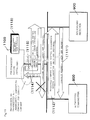
- Figure 11 shows a chart for explaining a problem in the network configuration of the conventional transmission system. A case which poses a problem will be explained below using Figure 11 .
- the transmitter 800 and receiver 900 are devices sharing an exchange key and authorized to perform cryptographic communication. Between the transmitter 800 and the receiver 900, an encrypted content component (1112) with accompanying information is transmitted in response to a content request (1111) from the receiver 900.
- An unauthorized device 1100 connected on a network can monitor and record an HTTP request and HTTP response flowing on a bus (1113). Although the unauthorized device 1100 itself cannot utilize a content by, e.g., decrypting and viewing the content, afterward it can, for example, hook an HTTP request from the receiver 900 to the transmitter 800 (1114) and fraudulently substitutes the previously recorded content for the content to be received by the receiver 900 and transmits it while masquerading as the authorized transmitter 800 (1115).
- the receiver 900 cannot determine whether the substituted and transmitted content is an authorized content transmitted from the authorized transmitter 800 or a content transmitted from the unauthorized device 1100. Accordingly, the receiver 900 lets a user utilize the substituted and US 2003 014 372 discloses a system and method for protecting against transmitted content - replay attacks based on providing transmitted data with a random number or time-dependent data.
- the present invention has been made to solve the above-described conventional problem and as its object, provide an authorized content verification method, content transmission and reception system, transmitter, receiver, and the like which can determine whether received content is authorized content.
- the 1st aspect of the present invention is an authorized content verification method in a content transmission and reception system in which a transmitter connected on a network attaches, to encrypted content, update information updated by the transmitter at a predetermined time and required to create a content key used for content encryption and decryption and transmits the update information with the encrypted content, in response to a content request from a receiver, comprising:
- the 2nd aspect of the present invention is the authorized content verification method according to the 1st aspect of the present invention, wherein the predetermined update information is update information currently in use or update information before a predetermined number of times of updating.
- the 3rd aspect of the present invention is the authorized content verification method according to the 1st aspect of the present invention, wherein in the verification request step, the receiver includes, in the authorization verification request, a number which varies with each transmission of the authorization verification request and transmits the authorization verification request, and in the message-of-acceptance transmission step, the transmitter creates the message of acceptance using the number included in the authorization verification request.
- the 4th aspect of the present invention is the authorized content verification method according to the 1st aspect of the present invention, wherein in the verification request step, the receiver includes, in the authorization verification request, an identification message created using the exchange key and the update information transmitted from the transmitter and transmits the authorization verification request, and in the message-of-acceptance transmission step, the transmitter transmits the message of acceptance to the receiver if it is determined that the update information is the predetermined update information and verifies that the identification message included in the authorization verification request matches an identification message which is created by the transmitter using the exchange key and the update information.
- the 5th aspect of the present invention is the authorized content verification method according to the 1st aspect of the present invention, wherein in the message-of-acceptance transmission step, the transmitter transmits a message of non-acceptance to the receiver if it is determined that the update information is not the predetermined update information, and in the authorized content determination step, the receiver determines that the encrypted content being received is not authorized content and stops utilizing the encrypted content if the receiver receives the message of non-acceptance from the transmitter.
- the 6th aspect of the present invention is the authorized content verification method according to the 1st aspect of the present invention, further comprising a verification request retry transmission step of, by the receiver, repeatedly transmitting the authorization verification request for a predetermined period if the receiver cannot receive the message of acceptance in the authorized content determination step, wherein in the authorized content determination step, the receiver stops utilizing the received encrypted content if the receiver cannot receive the message of acceptance even after a lapse of the predetermined period.
- the 7th aspect of the present invention is the authorized content verification method according to the 1st aspect of the present invention, further comprising a verification request retry transmission step of, by the receiver, repeatedly transmitting the authorization verification request a predetermined number of times if the receiver cannot receive the message of acceptance in the authorized content determination step, wherein in the authorized content determination step, the receiver stops utilizing the received encrypted content if the receiver cannot receive the message of acceptance even after the predetermined number of times of transmission of the authorization verification request.
- the 8th aspect of the present invention is the authorized content verification method according to any one of the 5th to the 7th aspects of the present invention, further comprising a verification request retransmission step of, by the receiver, repeatedly transmitting the authorization verification request after the receiver stops utilizing the received encrypted content in the authorized content determination step until a predetermined number-of-times limit or predetermined time limit is reached or a predetermined stop condition is met, wherein in the authorized content determination step, the receiver starts utilizing the received encrypted content if the receiver receives the message of acceptance after the receiver stops utilizing the received encrypted content.
- the 9th aspect of the present invention is a content transmission and reception system comprising a receiver which transmits a content request and a transmitter connected to the receiver over a network which attaches, to encrypted content, update information updated at a predetermined time and required to create a content key used for content encryption and decryption and transmits the update information with the encrypted content, in response to a content request from the receiver, wherein the receiver has a verification request instrument which transmits an authorization verification request created using an exchange key shared in advance with the transmitter and the update information received from the transmitter, and a verification result check instrument which determines that the encrypted content being received is authorized content if a message of acceptance is received from the transmitter, and the transmitter has a verification request acceptance instrument which receives the authorization verification request transmitted from the receiver, an update information verification instrument which checks whether the update information included in the received authorization verification request is predetermined update information, and a verification response instrument which creates the message of acceptance using the update information and the exchange key shared with the receiver and transmits the message of acceptance to the receiver if it is determined that the
- the 10th aspect of the present invention is a transmitter used in a content transmission and reception system in which the transmitter connected on a network attaches, to encrypted content, update information updated by the transmitter at a predetermined time and required to create a content key used for content encryption and decryption and transmits the update information with the encrypted content, in response to a content request from a receiver, comprising:
- the 11th aspect of the present invention is a receiver used in a content transmission and reception system in which a transmitter connected on a network attaches, to encrypted content, update information updated by the transmitter at a predetermined time and required to create a content key used for content encryption and decryption and transmits the update information with the encrypted content, in response to a content request from the receiver, comprising:
- the 12th aspect of the present invention is a program for causing a computer to execute the verification request step of, by the receiver, transmitting the authorization verification request, the update information check step of, by the transmitter, checking whether the update information is the predetermined update information, the message-of-acceptance transmission step of, by the transmitter, creating the message of acceptance and transmitting the message of acceptance to the receiver, and the authorized content determination step of, by the receiver, verifying that the transmitter is an authorized transmitter if the message of acceptance is received from the transmitter of an authorized content verification method according to the 1st aspect of the present invention.
- the 13th aspect of the present invention is a recording medium having a program according to the 12th aspect of the present invention recorded thereon which is processable by a computer.
- an authorized content verification method for verifying whether received content is authorized content.
- Figure 1 is a functional block diagram of a transmitter used in a content transmission and reception system according to a first embodiment of the present invention.
- a transmitter 100 comprises a certificate and key holding unit 801, an exchange key creation unit 802, an authentication and key exchange unit 803, a copy control information management unit 805, a content key calculation unit 806, a content accumulation unit 807, a content encryption unit 808, a content packet creation unit 809, a content packet transmission unit 810, and an HTTP protocol unit 811, similarly to the conventional transmitter 800 shown in Figure 8 .
- the transmitter 100 further comprises a verification request acceptance unit 101, an identification information verification unit 102, an update information verification unit 103, a verification response unit 104, and an update information creation and updating unit 105.
- verification request acceptance unit 101 update information verification unit 103, and verification response unit 104 are an example of the verification request acceptance instrument, an example of the update information verification instrument, and an example of the verification response instrument, respectively, of the present invention.
- the identification information verification unit 102 verifies whether the identification information included in the received verification request is information indicating a correct receiver.
- the identification information is calculated using the update information (test Nc) and given number (N) included in the verification request and an exchange key (Kx) shared with the receiver. By similar calculation, the transmitter can verify whether the identification information is correct identification information.
- the identification information is the low-order 80 bits of a value (160 bits) obtained by inputting a number generated by concatenating the components of the exchange key (Kx) to a hash function, adding the calculated hash value, update information (test Nc), and given number (N), and inputting the sum to the hash function.
- a hash value is a value like a pseudorandom number, and the original cannot be reproduced from the hash value. Accordingly, an unauthorized device cannot decrypt the exchange key (Kx) from the identification information.
- verification request is an example of the authorization verification request of the present invention and that the identification information is an example of the identification message of the present invention.
- the update information creation and updating unit 105 newly creates or updates update information (Nc), similarly to the update information creation and updating unit 804 of the conventional transmitter 800. At the same time, the update information creation and updating unit 105 holds update information (pre_Nc) before updating.
- the update information verification unit 103 verifies whether the update information (test_Nc) included in the received verification request matches update information currently in use by the transmitter 100 for content transmission.
- the update information in use refers to the update information (Nc) managed by the update information creation and updating unit 105 or immediately preceding update information (pre_Nc). In consideration of the possibility that the update information may be changed at short intervals, a plurality of pieces of update information previously used may be held as immediately preceding update information.
- the update information in use used to verify whether it matches the update information (test_Nc) is an example of the predetermined update information of the present invention.
- the plurality of pieces of update information previously used are examples of the update information before the predetermined number of times of updating of the present invention.
- the verification response unit 104 creates a message of acceptance using the update information (test_Nc) and given number (N) received from the receiver and the exchange key (Kx) shared with the receiver and transmits the message of acceptance to the receiver.
- the message of acceptance is calculated in the following manner.
- a number generated by concatenating the components of the exchange key (Kx) is input to the hash function, and a hash value is calculated.
- the calculated hash value and the update information (test_Nc) and given number (N) from the receiver are added, and the high-order 80 bits of a value (160 bits) obtained by inputting the sum to the hash function is used as the message of acceptance.
- the verification response unit 104 creates a message of non-acceptance and transmits the message of non-acceptance to the receiver.
- the low-order 80 bits of a value obtained in the same manner as the message of acceptance may be used.
- the high-order 80 bits of a value obtained by changing (e.g., adding 1 to) the given number (N) used to calculate a hash value, as in the case of the message of acceptance may be used.
- Figure 2 is a functional block diagram of a receiver used in the content transmission and reception system according to the first embodiment.
- a receiver 200 comprises a certificate and key holding unit 901, an authentication and key exchange unit 902, an update information storage unit 903, a copy control information storage unit 904, a content key calculation unit 905, a content decryption unit 907, a content packet analysis unit 908, and an HTTP protocol unit 910, similarly to the conventional receiver 900 shown in Figure 9 .
- the receiver 200 further comprises a verification parameter generation unit 201, a verification request unit 202, a verification result check unit 203, a content packet reception unit 204, and a content utilization unit 205.
- verification request unit 202 and verification result check unit 203 are an example of the verification request instrument and an example of the verification result check instrument, respectively, of the present invention.
- the verification parameter generation unit 201 generates a different number (N) with each verification request.
- the verification parameter generation unit 201 calculates identification information using update information (Nc) and the generated given number (N) and an exchange key (Kx) shared with a transmitter.
- Nc update information
- Kx exchange key
- the verification request unit 202 transmits a verification request which is composed of update information (Nc, which is attached to an encrypted component of content currently being received and turned into test Nc) stored in the update information storage unit 903, the given number (N) generated by the verification parameter generation unit 201, and the identification information to the transmitter.
- update information Nc, which is attached to an encrypted component of content currently being received and turned into test Nc
- the verification result check unit 203 verifies whether a response message received from the transmitter is a message of acceptance. At this time, in order to verify whether the response message is a message of acceptance, the verification result check unit 203 calculates a message of acceptance using the transmitted update information (test_Nc) and given number (N) and the exchange key (Kx) shared with the transmitter in the same manner as the verification response unit 104 of the transmitter calculates the message of acceptance and compares the message of acceptance with the response message received from the transmitter.
- test_Nc transmitted update information
- N given number
- Kx exchange key
- the content packet reception unit 204 receives the result of determination by the verification result check unit 203. If it is determined that the response message received from the transmitter is not a message of acceptance, the content packet reception unit 204 discards a content packet received as the body of an HTTP response including a content component until the last received such HTTP response. On the other hand, if it is determined that the response message received from the transmitter is a message of acceptance, i.e., the content is being transmitted from an authorized transmitter, the content packet reception unit 204 determines that it is receiving correct content and continues receiving the content.
- the content utilization unit 205 receives the result of determination by the verification result check unit 203. If it is determined that the response message received from the transmitter is not a message of acceptance, the content utilization unit 205 stops utilizing the content. On the other hand, if it is determined that the response message received from the transmitter is a message of acceptance, i.e., the content is being transmitted from an authorized transmitter, the content utilization unit 205 determines that it is receiving correct content and continues utilizing the content.
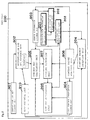
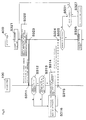
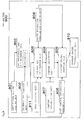
- Figure 3 is a chart showing a procedure (protocol) in the content transmission and reception system of the first embodiment comprising the transmitter 100 in Figure 1 and the receiver 200 in Figure 2 .
- the procedures for authentication and key sharing and content request and reception are the same as those of the above-described conventional example in Figure 10 , and an explanation thereof will be omitted.
- Step S321 The content utilization unit 205 starts utilizing decrypted components of content.
- Step S322 The verification parameter generation unit 201 generates a given number (N) and creates identification information. At this time, N is generated to be unequal to a number used in an immediately preceding verification request.
- Step S323 The verification request unit 202 creates a verification request using update information (Nc) attached to a content component and the given number (N) and identification information and transmits the verification request.
- Nc update information
- Step S324 The verification result check unit 203 receives a response message from the transmitter 100.
- Step S325 The verification result check unit 203 verifies whether the received response message is a message of acceptance. If the received response message is a message of acceptance, the flow shifts to step S326 to continue utilizing the content. On the other hand, if the received response message is not a message of acceptance, the flow shifts to step S327 to stop utilizing the content.
- Step S326 The content utilization unit 205 continues utilizing decrypted content.
- Step S327 The content utilization unit 205 stops utilizing the content, and the content packet reception unit 204 discards a content packet being received.
- Step S311 The verification request acceptance unit 101 receives the verification request from the receiver.
- Step S312 The identification information verification unit 102 determines whether the identification information included in the received verification request is correct. If the identification information is correct, the flow shifts to step S313 to verify the update information. On the other hand, if the identification information is not correct, the flow shifts to step S316 to create a message of non-acceptance.
- Step S313 The update information verification unit 103 determines whether the update information included in the received verification request can be considered to be in use. If the update information is in use, the flow shifts to step S314 to create a message of acceptance. On the other hand, if the update information is not in use, the flow shifts to step S316 to create a message of non-acceptance.
- Step S314 The verification response unit 104 creates a message of acceptance using the update information and given number (N) received from the receiver 200 and an exchange key (Kx) shared with the receiver.
- Step S316 The verification response unit 104 creates a message of non-acceptance different from a message of acceptance. The flow shifts to step S315.
- Step S315 The verification response unit 104 transmits the response message (the message of acceptance or message of non-acceptance).
- step S323 is an example of the verification request step of the present invention and that step S325 is an example of the authorized content determination step of the present invention. Also note that step S313 is an example of the update information check step of the present invention and that the process obtained by combining steps S314 and S315 is an example of the message-of-acceptance transmission step.
- Update information is updated by a transmitter according to a predetermined rule. Accordingly, if an unauthorized device fraudulently substitutes a content component for a correct one, update information attached to the substituted content component does not match update information held by the transmitter at that time. Thus, the transmitter can verify, from update information included in a verification request transmitted from a receiver, whether the receiver is currently receiving correct content.
- the receiver can verify whether a received message of acceptance is a message transmitted from the authorized transmitter. This makes it possible to identify a fraudulently substituted content component from an unauthorized and masquerading device.
- updating may be performed before a receiver receives a content component to which update information immediately before the updating is attached.
- Inclusion of immediately preceding update information among objects of acceptance in consideration of this possibility achieves the effect of reducing the frequency of erroneous determinations as to whether a correct content component is transmitted and received.
- a different number is used with each verification request.
- an unauthorized device stores in advance combinations of update information and a message of acceptance exchanged between a transmitter and a receiver, and the unauthorized device transmits a message of acceptance stored corresponding to a verification request when the receiver transmits the verification request during reception of a fraudulently substituted content component from a masquerading device, it is possible to prevent the receiver from successful identification.
- Inclusion of identification information created using an exchange key shared in advance between an authorized transmitter and a receiver in question in a verification request makes it possible to prevent an unauthorized device from acquiring a corresponding message of acceptance even if the unauthorized device transmits update information currently in use to the transmitter. Accordingly, it is possible to prevent the receiver from successful identification during reception of a fraudulently substituted content component from a masquerading device.
- a receiver cannot receive a message of acceptance, i.e., it receives a message of non-acceptance, it stops utilizing received content. This makes it possible to prevent a fraudulently substituted content from an unauthorized and masquerading device from being made available to a user due to interference of an unauthorized device.
- the present invention is not limited to this.
- the present invention can also be applied to a case where a transmitter delivers content in real time through streaming technology.
- Figure 4 is a functional block diagram of a receiver used in a content transmission and reception system according to a second embodiment of the present invention.
- the configuration of a transmitter used in the content transmission and reception system of the second embodiment is the same as that of the first embodiment and is as shown in Figure 1 .
- a receiver retries making a verification request to a transmitter up to a predetermined number of times.
- a receiver 400 comprises a certificate and key holding unit 901, an authentication and key exchange unit 902, an update information storage unit 903, a copy control information storage unit 904, a content key calculation unit 905, a content decryption unit 907, a content packet analysis unit 908, an HTTP protocol unit 910, a verification parameter generation unit 201, a verification request unit 202, and a verification result check unit 203, similarly to the receiver 200 of the first embodiment shown in Figure 2 .
- the receiver 400 further comprises a retry determination unit 401, a content packet reception unit 402, and a content utilization unit 403.
- the retry determination unit 401 determines whether to make a retry, if the verification result check unit 203 determines no. For example, assume that whether to make a retry is determined on the basis of the number of verification requests made and that the retry determination unit 401 determines not to make any more retry if two verification requests are already made in succession using a single piece of update information.
- the content packet reception unit 402 receives the result of determination by the verification result check unit 203 via the retry determination unit 401. If it is determined that a response message received from a transmitter is not a message of acceptance, the content packet reception unit 402 discards a content packet received as the body of an HTTP response including a content component until the last received such HTTP response. On the other hand, if it is determined that the response message received from the transmitter is a message of acceptance, i.e., the content is being transmitted from an authorized transmitter, the content packet reception unit 402 determines that it is receiving correct content and continues receiving the content.
- the content utilization unit 403 receives the result of determination by the verification result check unit 203 via the retry determination unit 401. If it is determined that a response message received from a transmitter is not a message of acceptance, the content utilization unit 403 stops utilizing the content. On the other hand, if it is determined that the response message received from the transmitter is a message of acceptance, i.e., the content is being transmitted from an authorized transmitter, the content utilization unit 403 determines that it is receiving correct content and continues utilizing the content.
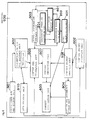
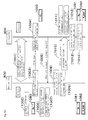
- Figure 5 is a chart showing a procedure (protocol) in the content transmission and reception system of the second embodiment comprising the transmitter 100 in Figure 1 and the receiver 400 in Figure 4 .
- Steps S321 to S324 are the same as those of the first embodiment in Figure 3 , and an explanation thereof will be omitted.
- Step S325 The verification result check unit 203 verifies whether a received response message is a message of acceptance. If the response message is a message of acceptance, the flow shifts to step S326 to continue utilizing content. On the other hand, if the response message is not a message of acceptance, the flow shifts to step S501 to determine whether to make a retry.
- Step S326 The content utilization unit 403 continues utilizing decrypted content.
- Step S501 The retry determination unit 401 determines whether to retry making a verification request. If the retry determination unit 401 determines to make a retry, the flow returns to step S322 to prepare for transmission of a verification request. Otherwise, the flow shifts to step S327.
- the retry determination unit 401 has a "limitation of the number of retries using a single piece of update information up to two" set therein. Accordingly, if the determination in step S501 is performed again after the second retry transmission of a verification request, the flow does not return to step S322 and shifts to step S327.
- step S501 is an example of the verification request retry transmission step of the present invention.
- the predetermined maximum number of retries set in the retry determination unit 401, or two times in the above example, is an example of the predetermined number of times an authorization verification request is transmitted in the verification request retry step of the present invention.
- Step S327 The content utilization unit 403 stops utilizing the content, and the content packet reception unit 402 discards a content packet being received.
- Use of the receiver 400 of the second embodiment achieves the effect of reducing, by a retry, the frequency of erroneous determinations as to whether a correct content component is transmitted and received.
- setting of the maximum number of retries makes it possible to prevent a content component from being made available (viewable) while a receiver is permanently repeating a retry due to interference of the unauthorized device.
- the predetermined maximum number of retries is two in the second embodiment explained above, the number of times only needs to be appropriately set according to the status of use, use environment, and the like of a content transmission and reception system used.
- retries are limited in terms of the number of times in the second embodiment, they may be limited in terms of period (time). In that case as well, the same effects can be obtained.
- step S501 If a period is set in the retry determination unit 401 as a retry limiting element, and the determination in step S501 is performed during the set period, the flow returns to step S322. On the other hand, if the determination in step S501 is performed after a lapse of the set period, the flow does not return to step S322 and shifts to step S327.
- the period set in the retry determination unit 401 as the retry limiting element is an example of the predetermined period for an authorization verification request repeatedly transmitted in the verification request retry transmission step of the present invention.
- update information used at the time of a retry is fixed and identical to update information used in the first verification request.
- the former update information may be synchronized with update information which varies with a received content component.
- Figure 6 is a functional block diagram of a receiver used in a content transmission and reception system according to a third embodiment of the present invention.
- the configuration of a transmitter used in the content transmission and reception system of the third embodiment is the same as that of the first embodiment and is as shown in Figure 1 .
- a receiver continues making a verification request even after stopping utilizing received content until the receiver succeeds in receiving a message of acceptance.
- a receiver 600 comprises a certificate and key holding unit 901, an authentication and key exchange unit 902, an update information storage unit 903, a copy control information storage unit 904, a content key calculation unit 905, a content decryption unit 907, a content packet analysis unit 908, an HTTP protocol unit 910, a verification parameter generation unit 201, a verification result check unit 203, a retry determination unit 401, and a content utilization unit 403, similarly to the receiver 400 of the second embodiment shown in Figure 4 .
- the receiver 600 further comprises a verification request unit 601 and a content packet reception unit 602.
- the verification request unit 601 transmits a verification request to a transmitter even after utilization of content is stopped. For example, assume that intervals at which a verification request is transmitted are repeats of a retry restart time set in advance.
- the content packet reception unit 602 Upon receipt of a request from the verification request unit 601, the content packet reception unit 602 does not discard a content packet being received and passes the content packet to the content packet analysis unit 908. This is intended to store update information (Nc) and copy control information (E_EMI) attached to a content component currently being received which are required for creation of a verification request.
- Nc update information
- E_EMI copy control information
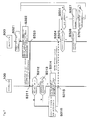
- Figure 7 is a chart showing a procedure (protocol) in the content transmission and reception system of the third embodiment comprising the transmitter 100 in Figure 1 and the receiver 600 in Figure 6 .
- Steps S321 to S327 are the same as those of the second embodiment described above in Figure 5 , and an explanation thereof will be omitted.
- Step S701 The verification request unit 601 verifies whether a retry restart time has elapsed since an immediately preceding verification request was transmitted. If the retry restart time has elapsed, the verification request unit 601 causes the content packet reception unit 602 to stop discarding a received content packet, and the flow returns to step S322 to transmit a verification request. Note that step S701 is an example of the verification request retransmission step of the present invention.
- a number-of-times limit or time limit for a retry may be set in the verification request unit 601 to prevent unlimited retries. Consecutive repeats of the determination in step S701 are limited on the basis of the number of consecutive repeats or an elapsed time from the first determination. If the number-of-times limit or time limit is reached, retry transmission of a verification request is stopped until a content request from the receiver 600 or the like is transmitted.
- the number-of-times limit or time limit set in the verification request unit 601 is an example of the predetermined number-of-times limit or predetermined time limit imposed on repeats of transmission of an authorization verification request in the verification request retransmission step of the present invention.
- Retrying may be stopped if a predetermined stop condition such as issuance of a stop instruction from a user is met.
- intervals at which a verification request is issued after utilization of content is stopped are repeats of a retry restart time, a user may input and designate when to issue a verification request.
- use of the authorized content verification method of the present invention allows a transmitter to verify, from update information transmitted from a receiver, whether the receiver is currently receiving correct content. Since a message of acceptance serving as a verification result notification is created using an exchange key shared in advance between an authorized transmitter and a receiver in question, the receiver can verify whether a received message of acceptance is a message transmitted from an authorized transmitter. This makes it possible to identify a fraudulently substituted content component from an unauthorized and masquerading device.
- updating may be performed before a receiver receives a content component to which update information immediately before the updating is attached.
- Inclusion of not only update information currently in use but also immediately preceding update information among objects of acceptance in consideration of this possibility achieves the effect of reducing the frequency of erroneous determinations as to whether a correct content component is transmitted and received.
- a different number is used with each verification request.
- an unauthorized device stores in advance combinations of update information and a message of acceptance exchanged between a transmitter and a receiver, and the unauthorized device transmits a message of acceptance stored corresponding to a verification request when the receiver transmits the verification request during reception of a fraudulently substituted content component from a masquerading device, it is possible to prevent the receiver from successful identification.
- a receiver If a receiver cannot receive a message of acceptance, it stops utilizing received content. This makes it possible to prevent a fraudulently substituted content from an unauthorized and masquerading device from being made available to a user.
- a receiver If a receiver cannot receive a message of acceptance, it stops utilizing received content after retries for a predetermined period or a predetermined number of retries. This makes it possible to prevent a content from being made available (viewable) while the receiver is permanently repeating a retry due to interference of an unauthorized device.
- a receiver continues making a verification request even after stopping utilizing received content until the receiver succeeds in receiving a message of acceptance. This achieves the effect that when an unauthorized device finishes masquerading, reception can be immediately restarted.
- a program of the present invention is a program for causing a computer to execute the operations of all or some of the steps including the verification request step of, by the receiver, transmitting the authorization verification request, the update information check step of, by the transmitter, checking whether the update information is the predetermined update information, the message-of-acceptance transmission step of, by the transmitter, creating the message of acceptance and transmitting the message of acceptance to the receiver, and the authorized content determination step of, by the receiver, verifying that the transmitter is an authorized transmitter if the message of acceptance is received from the transmitter of the above-described authorized content verification method of the present invention and is a program which operates in cooperation with the computer.
- a recording medium of the present invention is a recording medium having recorded thereon a program for causing a computer to execute all or part of each of the operations of all or some of the steps including the verification request step of, by the receiver, transmitting the authorization verification request, the update information check step of, by the transmitter, checking whether the update information is the predetermined update information, the message-of-acceptance transmission step of, by the transmitter, creating the message of acceptance and transmitting the message of acceptance to the receiver, and the authorized content determination step of, by the receiver, verifying that the transmitter is an authorized transmitter if the message of acceptance is received from the transmitter of the above-described authorized content verification method of the present invention and is a computer-readable recording medium, the program of which, when read, is used in cooperation with the computer.
- a usage form of the program of the present invention may be such that the program is recorded on a computer-readable recording medium and operates in cooperation with a computer.
- Examples of a recording medium include a ROM.
- the above-described computer of the present invention is not limited to pure hardware such as a CPU and may include firmware, an OS, and a peripheral.
- the configuration of the present invention may be implemented by software or hardware.
- the authorized content verification method, content transmission and reception system, transmitter, receiver, and the like of the present invention are useful as content verification techniques for avoiding an attack such as an unauthorized device's monitoring communication between an authorized transmitter and receiver and sending unauthorized content to the receiver on a network.
Landscapes
- Engineering & Computer Science (AREA)
- Computer Security & Cryptography (AREA)
- Signal Processing (AREA)
- Multimedia (AREA)
- Computer Networks & Wireless Communication (AREA)
- Databases & Information Systems (AREA)
- Theoretical Computer Science (AREA)
- Software Systems (AREA)
- General Physics & Mathematics (AREA)
- Computer Hardware Design (AREA)
- Physics & Mathematics (AREA)
- General Engineering & Computer Science (AREA)
- Computer Graphics (AREA)
- Technology Law (AREA)
- Storage Device Security (AREA)
- Two-Way Televisions, Distribution Of Moving Picture Or The Like (AREA)
- Signal Processing For Digital Recording And Reproducing (AREA)
- Information Transfer Between Computers (AREA)
Applications Claiming Priority (2)
| Application Number | Priority Date | Filing Date | Title |
|---|---|---|---|
| JP2004298722A JP4725070B2 (ja) | 2004-10-13 | 2004-10-13 | 正規コンテンツ確認方法、コンテンツ送受信システム、送信機、および受信機 |
| PCT/JP2005/018777 WO2006041082A1 (ja) | 2004-10-13 | 2005-10-12 | 正規コンテンツ確認システム |
Publications (3)
| Publication Number | Publication Date |
|---|---|
| EP1802025A1 EP1802025A1 (en) | 2007-06-27 |
| EP1802025A4 EP1802025A4 (en) | 2011-12-14 |
| EP1802025B1 true EP1802025B1 (en) | 2013-04-10 |
Family
ID=36148370
Family Applications (1)
| Application Number | Title | Priority Date | Filing Date |
|---|---|---|---|
| EP05793204.8A Expired - Lifetime EP1802025B1 (en) | 2004-10-13 | 2005-10-12 | Regular content check method, content transmission/reception system, transmitter, and receiver |
Country Status (6)
| Country | Link |
|---|---|
| US (1) | US8510844B2 (enExample) |
| EP (1) | EP1802025B1 (enExample) |
| JP (1) | JP4725070B2 (enExample) |
| KR (1) | KR20070063534A (enExample) |
| CN (1) | CN101036341B (enExample) |
| WO (1) | WO2006041082A1 (enExample) |
Families Citing this family (13)
| Publication number | Priority date | Publication date | Assignee | Title |
|---|---|---|---|---|
| JP2007043475A (ja) * | 2005-08-03 | 2007-02-15 | Sony Corp | 情報通信システム、情報通信装置及び情報通信方法、並びにコンピュータ・プログラム |
| KR100858975B1 (ko) * | 2006-10-30 | 2008-09-17 | 한국전자통신연구원 | 전자감시 방법 및 그 시스템 |
| US8606862B2 (en) * | 2007-08-21 | 2013-12-10 | Microsoft Corporation | Electronic mail delay adaptation |
| US8909714B2 (en) * | 2007-08-21 | 2014-12-09 | Microsoft Corporation | Electronic mail delay adaptation |
| US8706819B2 (en) * | 2007-08-21 | 2014-04-22 | Microsoft Corporation | Electronic mail delay adaptation |
| DE102007056788A1 (de) * | 2007-11-23 | 2009-06-10 | T-Mobile Internationale Ag | Verfahren zum Zugang zu geschlossenen Gruppen in Radiozugangsnetzen |
| US20120137137A1 (en) * | 2010-11-30 | 2012-05-31 | Brickell Ernest F | Method and apparatus for key provisioning of hardware devices |
| CN102663297A (zh) * | 2012-04-06 | 2012-09-12 | 天地融科技股份有限公司 | 一种字模获取方法、字符显示装置和系统,电子签名工具 |
| JP6112874B2 (ja) * | 2013-01-21 | 2017-04-12 | キヤノン株式会社 | 通信装置、通信装置の制御方法、および、プログラム |
| US20150039752A1 (en) * | 2013-07-30 | 2015-02-05 | Edward Hague | Advanced BACNet router |
| JP6433951B2 (ja) * | 2016-08-09 | 2018-12-05 | 東芝デジタルソリューションズ株式会社 | ネットワーク監視装置およびプログラム |
| US11075887B2 (en) * | 2016-10-24 | 2021-07-27 | Arm Ip Limited | Federating data inside of a trusted execution environment |
| CN112688922B (zh) * | 2020-12-11 | 2024-07-12 | 深圳前海微众银行股份有限公司 | 数据传输方法、系统、设备及介质 |
Family Cites Families (12)
| Publication number | Priority date | Publication date | Assignee | Title |
|---|---|---|---|---|
| MX9602773A (es) * | 1994-01-13 | 1997-05-31 | Bankers Trust Co | Sistema criptografico y metodo con aspecto de deposito de plica de clave. |
| US20010011253A1 (en) * | 1998-08-04 | 2001-08-02 | Christopher D. Coley | Automated system for management of licensed software |
| JPH10145354A (ja) * | 1996-11-14 | 1998-05-29 | Nippon Telegr & Teleph Corp <Ntt> | 機能遠隔変更方法 |
| JP4731034B2 (ja) * | 2000-04-06 | 2011-07-20 | パナソニック株式会社 | 著作物保護システム、暗号化装置、復号化装置および記録媒体 |
| DE60106802T2 (de) * | 2000-04-06 | 2005-03-10 | Matsushita Electric Industrial Co., Ltd., Kadoma | Urheberrechtsschutzsystem, Verschlüsselungsvorrichtung, Entschlüsselungsvorrichtung und Aufzeichnungsmedium |
| US7552333B2 (en) * | 2000-08-04 | 2009-06-23 | First Data Corporation | Trusted authentication digital signature (tads) system |
| JP4710132B2 (ja) * | 2000-12-26 | 2011-06-29 | ソニー株式会社 | 情報処理システム、および情報処理方法、並びにプログラム記録媒体 |
| JP2002207639A (ja) * | 2001-01-09 | 2002-07-26 | Sony Corp | コンテンツ並びにその処理方法及びその処理装置 |
| US20040047308A1 (en) * | 2002-08-16 | 2004-03-11 | Alan Kavanagh | Secure signature in GPRS tunnelling protocol (GTP) |
| JP2004157864A (ja) * | 2002-11-07 | 2004-06-03 | Canon Inc | コンテンツ配信システム |
| US7584353B2 (en) * | 2003-09-12 | 2009-09-01 | Trimble Navigation Limited | Preventing unauthorized distribution of media content within a global network |
| US7475322B2 (en) * | 2003-11-14 | 2009-01-06 | Avocent Huntsville Corporation | Wireless broadcast protocol |
-
2004
- 2004-10-13 JP JP2004298722A patent/JP4725070B2/ja not_active Expired - Lifetime
-
2005
- 2005-10-12 WO PCT/JP2005/018777 patent/WO2006041082A1/ja not_active Ceased
- 2005-10-12 KR KR1020077008199A patent/KR20070063534A/ko not_active Withdrawn
- 2005-10-12 US US11/577,115 patent/US8510844B2/en active Active
- 2005-10-12 EP EP05793204.8A patent/EP1802025B1/en not_active Expired - Lifetime
- 2005-10-12 CN CN2005800343886A patent/CN101036341B/zh not_active Expired - Lifetime
Also Published As
| Publication number | Publication date |
|---|---|
| JP2006115083A (ja) | 2006-04-27 |
| JP4725070B2 (ja) | 2011-07-13 |
| EP1802025A1 (en) | 2007-06-27 |
| WO2006041082A1 (ja) | 2006-04-20 |
| EP1802025A4 (en) | 2011-12-14 |
| CN101036341A (zh) | 2007-09-12 |
| US20080244698A1 (en) | 2008-10-02 |
| CN101036341B (zh) | 2010-04-21 |
| KR20070063534A (ko) | 2007-06-19 |
| US8510844B2 (en) | 2013-08-13 |
Similar Documents
| Publication | Publication Date | Title |
|---|---|---|
| JP4219965B2 (ja) | ワンタイムidによる認証 | |
| JP4617763B2 (ja) | 機器認証システム、機器認証サーバ、端末機器、機器認証方法、および機器認証プログラム | |
| US8019989B2 (en) | Public-key infrastructure in network management | |
| US8452015B2 (en) | Propagating keys from servers to clients | |
| US8010792B2 (en) | Content transmission apparatus, content reception apparatus and content transmission method | |
| US20060005026A1 (en) | Method and apparatus for secure communication reusing session key between client and server | |
| EP1802025B1 (en) | Regular content check method, content transmission/reception system, transmitter, and receiver | |
| JP2010526507A (ja) | セキュア通信方法およびシステム | |
| WO2004091167A1 (en) | Communication apparatus and authentication apparatus | |
| KR20150135032A (ko) | Puf를 이용한 비밀키 업데이트 시스템 및 방법 | |
| CN110300287B (zh) | 一种公共安全视频监控联网摄像头接入认证方法 | |
| CN109510802A (zh) | 鉴权方法、装置及系统 | |
| CN111080299B (zh) | 一种交易信息的防抵赖方法及客户端、服务器 | |
| CN114143777B (zh) | 基于sim卡的物联网终端的证书密钥下载方法及系统 | |
| US7437570B2 (en) | Method, system, and program for distributing software between computer systems | |
| US20060031680A1 (en) | System and method for controlling access to a computerized entity | |
| EP1902540B1 (en) | Method and apparatus for establishing a communication key between a first communication partner and a second communication partner using a third party | |
| WO2015178597A1 (ko) | Puf를 이용한 비밀키 업데이트 시스템 및 방법 | |
| US20100161972A1 (en) | Device and method for key block based authentication | |
| JP2004274134A (ja) | 通信方法並びにこの通信方法を用いた通信システム、サーバおよびクライアント | |
| CN103416020B (zh) | 受控的安全域 | |
| CN110139163A (zh) | 一种获取弹幕的方法和相关装置 | |
| JP5175541B2 (ja) | ネットワークを介した動作をセキュリティ保護する方法および関連装置 | |
| KR101101190B1 (ko) | 보안 통신 시스템, 방법, 및 상기 방법을 실행시키기 위한 컴퓨터 프로그램을 기록한 매체 | |
| CN120050026A (zh) | 数据获取方法和相关通信方法 |
Legal Events
| Date | Code | Title | Description |
|---|---|---|---|
| PUAI | Public reference made under article 153(3) epc to a published international application that has entered the european phase |
Free format text: ORIGINAL CODE: 0009012 |
|
| 17P | Request for examination filed |
Effective date: 20070412 |
|
| AK | Designated contracting states |
Kind code of ref document: A1 Designated state(s): DE FR GB |
|
| DAX | Request for extension of the european patent (deleted) | ||
| RBV | Designated contracting states (corrected) |
Designated state(s): DE FR GB |
|
| RAP1 | Party data changed (applicant data changed or rights of an application transferred) |
Owner name: PANASONIC CORPORATION |
|
| A4 | Supplementary search report drawn up and despatched |
Effective date: 20111114 |
|
| RIC1 | Information provided on ipc code assigned before grant |
Ipc: H04L 9/08 20060101AFI20111107BHEP Ipc: H04L 29/06 20060101ALI20111107BHEP |
|
| GRAP | Despatch of communication of intention to grant a patent |
Free format text: ORIGINAL CODE: EPIDOSNIGR1 |
|
| RIC1 | Information provided on ipc code assigned before grant |
Ipc: H04L 29/06 20060101ALI20121001BHEP Ipc: H04L 9/08 20060101AFI20121001BHEP |
|
| RIN1 | Information on inventor provided before grant (corrected) |
Inventor name: IITSUKA, HIROYUKI MATSUSHITA ELECTRIC INDUSTRIAL C Inventor name: TAKATSUJI, AYAKO MATSUSHITA ELECTRIC INDUSTRIAL CO Inventor name: USUKI, NAOSHI MATSUSHITA ELECTRIC INDUSTRIAL CO. L |
|
| GRAS | Grant fee paid |
Free format text: ORIGINAL CODE: EPIDOSNIGR3 |
|
| GRAA | (expected) grant |
Free format text: ORIGINAL CODE: 0009210 |
|
| AK | Designated contracting states |
Kind code of ref document: B1 Designated state(s): DE FR GB |
|
| REG | Reference to a national code |
Ref country code: GB Ref legal event code: FG4D |
|
| REG | Reference to a national code |
Ref country code: DE Ref legal event code: R096 Ref document number: 602005039058 Country of ref document: DE Effective date: 20130606 |
|
| PLBE | No opposition filed within time limit |
Free format text: ORIGINAL CODE: 0009261 |
|
| STAA | Information on the status of an ep patent application or granted ep patent |
Free format text: STATUS: NO OPPOSITION FILED WITHIN TIME LIMIT |
|
| 26N | No opposition filed |
Effective date: 20140113 |
|
| REG | Reference to a national code |
Ref country code: DE Ref legal event code: R097 Ref document number: 602005039058 Country of ref document: DE Effective date: 20140113 |
|
| REG | Reference to a national code |
Ref country code: FR Ref legal event code: PLFP Year of fee payment: 11 |
|
| REG | Reference to a national code |
Ref country code: FR Ref legal event code: PLFP Year of fee payment: 12 |
|
| REG | Reference to a national code |
Ref country code: FR Ref legal event code: PLFP Year of fee payment: 13 |
|
| REG | Reference to a national code |
Ref country code: FR Ref legal event code: PLFP Year of fee payment: 14 |
|
| PGFP | Annual fee paid to national office [announced via postgrant information from national office to epo] |
Ref country code: DE Payment date: 20241021 Year of fee payment: 20 |
|
| PGFP | Annual fee paid to national office [announced via postgrant information from national office to epo] |
Ref country code: GB Payment date: 20241022 Year of fee payment: 20 |
|
| PGFP | Annual fee paid to national office [announced via postgrant information from national office to epo] |
Ref country code: FR Payment date: 20241021 Year of fee payment: 20 |
|
| REG | Reference to a national code |
Ref country code: DE Ref legal event code: R071 Ref document number: 602005039058 Country of ref document: DE |
|
| REG | Reference to a national code |
Ref country code: GB Ref legal event code: PE20 Expiry date: 20251011 |