EP1797077B1 - Benzimidazole derivatives, compositions containing them, preparation thereof and uses thereof i - Google Patents
Benzimidazole derivatives, compositions containing them, preparation thereof and uses thereof i Download PDFInfo
- Publication number
- EP1797077B1 EP1797077B1 EP05786553A EP05786553A EP1797077B1 EP 1797077 B1 EP1797077 B1 EP 1797077B1 EP 05786553 A EP05786553 A EP 05786553A EP 05786553 A EP05786553 A EP 05786553A EP 1797077 B1 EP1797077 B1 EP 1797077B1
- Authority
- EP
- European Patent Office
- Prior art keywords
- mmol
- solution
- methyl
- benzimidazol
- tert
- Prior art date
- Legal status (The legal status is an assumption and is not a legal conclusion. Google has not performed a legal analysis and makes no representation as to the accuracy of the status listed.)
- Expired - Lifetime
Links
- AYXNGYVQUMYYKQ-UHFFFAOYSA-N CC(C)(C)c1nc(cc(cc2)NC)c2[n]1CC1CCOCC1 Chemical compound CC(C)(C)c1nc(cc(cc2)NC)c2[n]1CC1CCOCC1 AYXNGYVQUMYYKQ-UHFFFAOYSA-N 0.000 description 2
- GZKCEZUYNOCHLY-UHFFFAOYSA-N CCCS(N(C)c(cc1)cc2c1[n](CC1CCOCC1)c(C(F)(F)F)n2)(=O)=O Chemical compound CCCS(N(C)c(cc1)cc2c1[n](CC1CCOCC1)c(C(F)(F)F)n2)(=O)=O GZKCEZUYNOCHLY-UHFFFAOYSA-N 0.000 description 2
- MFHJQHGJSMPARF-UHFFFAOYSA-N CCS(Nc(cc1)cc2c1[n](CC(CC1)CCC1F)c(C(C)(C)C)n2)(=O)=O Chemical compound CCS(Nc(cc1)cc2c1[n](CC(CC1)CCC1F)c(C(C)(C)C)n2)(=O)=O MFHJQHGJSMPARF-UHFFFAOYSA-N 0.000 description 2
- WWUZPVQILNAXJK-UHFFFAOYSA-N CC(C)(C)c1nc(cc(cc2)N(C)S(C(C)(C)C)(=O)=O)c2[n]1CC1CCOCC1 Chemical compound CC(C)(C)c1nc(cc(cc2)N(C)S(C(C)(C)C)(=O)=O)c2[n]1CC1CCOCC1 WWUZPVQILNAXJK-UHFFFAOYSA-N 0.000 description 1
- FLUWWWVCOHACPF-UHFFFAOYSA-N CC(C)(C)c1nc(cc(cc2)NC)c2[n]1CC(CC1)CCC1(F)F Chemical compound CC(C)(C)c1nc(cc(cc2)NC)c2[n]1CC(CC1)CCC1(F)F FLUWWWVCOHACPF-UHFFFAOYSA-N 0.000 description 1
- LEBZBSQYSZHMLN-UHFFFAOYSA-N CC(Nc(cc1)cc(N)c1NCC(CC1)CCC1(F)F)=O Chemical compound CC(Nc(cc1)cc(N)c1NCC(CC1)CCC1(F)F)=O LEBZBSQYSZHMLN-UHFFFAOYSA-N 0.000 description 1
- SNKXUQZEWBFCQQ-UHFFFAOYSA-N CC(Nc(cc1)cc([N+]([O-])=O)c1NCC(CC1)CCC1(F)F)=O Chemical compound CC(Nc(cc1)cc([N+]([O-])=O)c1NCC(CC1)CCC1(F)F)=O SNKXUQZEWBFCQQ-UHFFFAOYSA-N 0.000 description 1
- IOWYMERTLXZXBR-UHFFFAOYSA-N CCCS(N(C)c(cc1)cc2c1[n](CC(CC1)CCC1(F)F)c(C(C)(C)C)n2)(=O)=O Chemical compound CCCS(N(C)c(cc1)cc2c1[n](CC(CC1)CCC1(F)F)c(C(C)(C)C)n2)(=O)=O IOWYMERTLXZXBR-UHFFFAOYSA-N 0.000 description 1
- DBYLJYMSWPOXSA-UHFFFAOYSA-N CCS(N(C)c(cc1)cc2c1[n](CC1CCOCC1)c(C(C)(C)C)n2)(=O)=O Chemical compound CCS(N(C)c(cc1)cc2c1[n](CC1CCOCC1)c(C(C)(C)C)n2)(=O)=O DBYLJYMSWPOXSA-UHFFFAOYSA-N 0.000 description 1
- GDFMEZAOYLTZIH-UHFFFAOYSA-N CCS(Nc(cc1)cc(NC(C(C)(C)C)=O)c1NCC(CC1)CCC1(F)F)(=O)=O Chemical compound CCS(Nc(cc1)cc(NC(C(C)(C)C)=O)c1NCC(CC1)CCC1(F)F)(=O)=O GDFMEZAOYLTZIH-UHFFFAOYSA-N 0.000 description 1
- ZAGGGZCIFUQHOH-UHFFFAOYSA-N CCS(Nc(cc1)cc2c1[n](CC(CC1)CCC1(F)F)c(C(C)(C)C)n2)(=O)=O Chemical compound CCS(Nc(cc1)cc2c1[n](CC(CC1)CCC1(F)F)c(C(C)(C)C)n2)(=O)=O ZAGGGZCIFUQHOH-UHFFFAOYSA-N 0.000 description 1
- MAZJLDJRJCJPLN-LKUDQCMESA-N CCS(Nc1ccc(C)c(/N=C(\CCC(CC2)CCC2(F)F)/C(C)(C)C)c1)(=O)=O Chemical compound CCS(Nc1ccc(C)c(/N=C(\CCC(CC2)CCC2(F)F)/C(C)(C)C)c1)(=O)=O MAZJLDJRJCJPLN-LKUDQCMESA-N 0.000 description 1
- LCVFWTXCVATPIT-UHFFFAOYSA-N CNc(cc1)cc2c1[n](CC1CCOCC1)c(C(F)(F)F)n2 Chemical compound CNc(cc1)cc2c1[n](CC1CCOCC1)c(C(F)(F)F)n2 LCVFWTXCVATPIT-UHFFFAOYSA-N 0.000 description 1
- VVJAZCBVGPIWAE-UHFFFAOYSA-N COC(Nc(cc1)cc(N)c1NCC1CCOCC1)=O Chemical compound COC(Nc(cc1)cc(N)c1NCC1CCOCC1)=O VVJAZCBVGPIWAE-UHFFFAOYSA-N 0.000 description 1
- UCVSNKCOBNPVPS-UHFFFAOYSA-O COC(Nc(cc1)cc([N+](O)=O)c1NCC1CCOCC1)=O Chemical compound COC(Nc(cc1)cc([N+](O)=O)c1NCC1CCOCC1)=O UCVSNKCOBNPVPS-UHFFFAOYSA-O 0.000 description 1
Classifications
-
- C—CHEMISTRY; METALLURGY
- C07—ORGANIC CHEMISTRY
- C07D—HETEROCYCLIC COMPOUNDS
- C07D235/00—Heterocyclic compounds containing 1,3-diazole or hydrogenated 1,3-diazole rings, condensed with other rings
- C07D235/02—Heterocyclic compounds containing 1,3-diazole or hydrogenated 1,3-diazole rings, condensed with other rings condensed with carbocyclic rings or ring systems
- C07D235/04—Benzimidazoles; Hydrogenated benzimidazoles
- C07D235/06—Benzimidazoles; Hydrogenated benzimidazoles with only hydrogen atoms, hydrocarbon or substituted hydrocarbon radicals, directly attached in position 2
- C07D235/08—Radicals containing only hydrogen and carbon atoms
-
- A—HUMAN NECESSITIES
- A61—MEDICAL OR VETERINARY SCIENCE; HYGIENE
- A61K—PREPARATIONS FOR MEDICAL, DENTAL OR TOILETRY PURPOSES
- A61K31/00—Medicinal preparations containing organic active ingredients
- A61K31/33—Heterocyclic compounds
- A61K31/395—Heterocyclic compounds having nitrogen as a ring hetero atom, e.g. guanethidine or rifamycins
- A61K31/41—Heterocyclic compounds having nitrogen as a ring hetero atom, e.g. guanethidine or rifamycins having five-membered rings with two or more ring hetero atoms, at least one of which being nitrogen, e.g. tetrazole
- A61K31/4164—1,3-Diazoles
- A61K31/4184—1,3-Diazoles condensed with carbocyclic rings, e.g. benzimidazoles
-
- A—HUMAN NECESSITIES
- A61—MEDICAL OR VETERINARY SCIENCE; HYGIENE
- A61P—SPECIFIC THERAPEUTIC ACTIVITY OF CHEMICAL COMPOUNDS OR MEDICINAL PREPARATIONS
- A61P1/00—Drugs for disorders of the alimentary tract or the digestive system
-
- A—HUMAN NECESSITIES
- A61—MEDICAL OR VETERINARY SCIENCE; HYGIENE
- A61P—SPECIFIC THERAPEUTIC ACTIVITY OF CHEMICAL COMPOUNDS OR MEDICINAL PREPARATIONS
- A61P25/00—Drugs for disorders of the nervous system
-
- A—HUMAN NECESSITIES
- A61—MEDICAL OR VETERINARY SCIENCE; HYGIENE
- A61P—SPECIFIC THERAPEUTIC ACTIVITY OF CHEMICAL COMPOUNDS OR MEDICINAL PREPARATIONS
- A61P25/00—Drugs for disorders of the nervous system
- A61P25/02—Drugs for disorders of the nervous system for peripheral neuropathies
-
- A—HUMAN NECESSITIES
- A61—MEDICAL OR VETERINARY SCIENCE; HYGIENE
- A61P—SPECIFIC THERAPEUTIC ACTIVITY OF CHEMICAL COMPOUNDS OR MEDICINAL PREPARATIONS
- A61P25/00—Drugs for disorders of the nervous system
- A61P25/04—Centrally acting analgesics, e.g. opioids
-
- A—HUMAN NECESSITIES
- A61—MEDICAL OR VETERINARY SCIENCE; HYGIENE
- A61P—SPECIFIC THERAPEUTIC ACTIVITY OF CHEMICAL COMPOUNDS OR MEDICINAL PREPARATIONS
- A61P25/00—Drugs for disorders of the nervous system
- A61P25/14—Drugs for disorders of the nervous system for treating abnormal movements, e.g. chorea, dyskinesia
-
- A—HUMAN NECESSITIES
- A61—MEDICAL OR VETERINARY SCIENCE; HYGIENE
- A61P—SPECIFIC THERAPEUTIC ACTIVITY OF CHEMICAL COMPOUNDS OR MEDICINAL PREPARATIONS
- A61P25/00—Drugs for disorders of the nervous system
- A61P25/14—Drugs for disorders of the nervous system for treating abnormal movements, e.g. chorea, dyskinesia
- A61P25/16—Anti-Parkinson drugs
-
- A—HUMAN NECESSITIES
- A61—MEDICAL OR VETERINARY SCIENCE; HYGIENE
- A61P—SPECIFIC THERAPEUTIC ACTIVITY OF CHEMICAL COMPOUNDS OR MEDICINAL PREPARATIONS
- A61P25/00—Drugs for disorders of the nervous system
- A61P25/22—Anxiolytics
-
- A—HUMAN NECESSITIES
- A61—MEDICAL OR VETERINARY SCIENCE; HYGIENE
- A61P—SPECIFIC THERAPEUTIC ACTIVITY OF CHEMICAL COMPOUNDS OR MEDICINAL PREPARATIONS
- A61P25/00—Drugs for disorders of the nervous system
- A61P25/28—Drugs for disorders of the nervous system for treating neurodegenerative disorders of the central nervous system, e.g. nootropic agents, cognition enhancers, drugs for treating Alzheimer's disease or other forms of dementia
-
- A—HUMAN NECESSITIES
- A61—MEDICAL OR VETERINARY SCIENCE; HYGIENE
- A61P—SPECIFIC THERAPEUTIC ACTIVITY OF CHEMICAL COMPOUNDS OR MEDICINAL PREPARATIONS
- A61P29/00—Non-central analgesic, antipyretic or antiinflammatory agents, e.g. antirheumatic agents; Non-steroidal antiinflammatory drugs [NSAID]
- A61P29/02—Non-central analgesic, antipyretic or antiinflammatory agents, e.g. antirheumatic agents; Non-steroidal antiinflammatory drugs [NSAID] without antiinflammatory effect
-
- A—HUMAN NECESSITIES
- A61—MEDICAL OR VETERINARY SCIENCE; HYGIENE
- A61P—SPECIFIC THERAPEUTIC ACTIVITY OF CHEMICAL COMPOUNDS OR MEDICINAL PREPARATIONS
- A61P35/00—Antineoplastic agents
-
- A—HUMAN NECESSITIES
- A61—MEDICAL OR VETERINARY SCIENCE; HYGIENE
- A61P—SPECIFIC THERAPEUTIC ACTIVITY OF CHEMICAL COMPOUNDS OR MEDICINAL PREPARATIONS
- A61P9/00—Drugs for disorders of the cardiovascular system
-
- C—CHEMISTRY; METALLURGY
- C07—ORGANIC CHEMISTRY
- C07D—HETEROCYCLIC COMPOUNDS
- C07D233/00—Heterocyclic compounds containing 1,3-diazole or hydrogenated 1,3-diazole rings, not condensed with other rings
- C07D233/04—Heterocyclic compounds containing 1,3-diazole or hydrogenated 1,3-diazole rings, not condensed with other rings having one double bond between ring members or between a ring member and a non-ring member
- C07D233/20—Heterocyclic compounds containing 1,3-diazole or hydrogenated 1,3-diazole rings, not condensed with other rings having one double bond between ring members or between a ring member and a non-ring member with substituted hydrocarbon radicals, directly attached to ring carbon atoms
- C07D233/24—Radicals substituted by nitrogen atoms not forming part of a nitro radical
-
- C—CHEMISTRY; METALLURGY
- C07—ORGANIC CHEMISTRY
- C07D—HETEROCYCLIC COMPOUNDS
- C07D235/00—Heterocyclic compounds containing 1,3-diazole or hydrogenated 1,3-diazole rings, condensed with other rings
- C07D235/02—Heterocyclic compounds containing 1,3-diazole or hydrogenated 1,3-diazole rings, condensed with other rings condensed with carbocyclic rings or ring systems
- C07D235/04—Benzimidazoles; Hydrogenated benzimidazoles
- C07D235/06—Benzimidazoles; Hydrogenated benzimidazoles with only hydrogen atoms, hydrocarbon or substituted hydrocarbon radicals, directly attached in position 2
- C07D235/10—Radicals substituted by halogen atoms or nitro radicals
-
- C—CHEMISTRY; METALLURGY
- C07—ORGANIC CHEMISTRY
- C07D—HETEROCYCLIC COMPOUNDS
- C07D405/00—Heterocyclic compounds containing both one or more hetero rings having oxygen atoms as the only ring hetero atoms, and one or more rings having nitrogen as the only ring hetero atom
- C07D405/02—Heterocyclic compounds containing both one or more hetero rings having oxygen atoms as the only ring hetero atoms, and one or more rings having nitrogen as the only ring hetero atom containing two hetero rings
- C07D405/06—Heterocyclic compounds containing both one or more hetero rings having oxygen atoms as the only ring hetero atoms, and one or more rings having nitrogen as the only ring hetero atom containing two hetero rings linked by a carbon chain containing only aliphatic carbon atoms
Definitions
- the invention is related to therapeutic compounds, pharmaceutical compositions containing these compounds, and uses thereof. Particularly, the present invention is related to compounds that may be effective in treating pain, cancer, multiple sclerosis, Parkinson's disease, Huntington's chorea, Alzheimer's disease, anxiety disorders, gastrointestinal disorders and/or cardiovascular disorders.
- CB 1 receptor e.g., CB 1 receptor, CB 2 receptor
- ligands including agonists, antagonists and inverse agonists produce relief of pain in a variety of animal models by interacting with CB 1 and/or CB 2 receptors.
- CB 1 receptors are located predominately in the central nervous system
- CB 2 receptors are located primarily in the periphery and are primarily restricted to the cells and tissues derived from the immune system.
- CB 1 receptor agonists such as ⁇ 9 -tetrahydrocannabinol ( ⁇ 9 -THC) and anadamide
- CNS side-effects e.g., psychoactive side effects, the abuse potential, drug dependence and tolerance, etc.
- CB 1 receptors located in CNS There are lines of evidence, however, suggesting that CB 1 agonists acting at peripheral sites or with limited CNS exposure can manage pain in humans or animals with much improved overall in vivo profile.
- the present invention provides CB 1 receptor ligands which may be useful in treating pain and/or other related symptoms or diseases.
- RT or "rt” means room temperature.
- an embodiment of the invention provides a compound which is or a pharmaceutically acceptable salt thereof.
- This compound of the invention is N - ⁇ 2- tert -Butyl-1-[(4,4-difluorocyclohexyl)methyl]-1 H -benzimidazol-5-yl ⁇ ethanesulfonamide or a pharmaceutically-acceptable salt thereof.
- the present invention also encompasses tautomers of the above compounds.
- salts of a compound of the invention are also salts of a compound of the invention.
- pharmaceutically acceptable salts of the present invention may be obtained using standard procedures well known in the art, for example by reacting a sufficiently basic compound, for example an alkyl amine with a suitable acid, for example, HCl or acetic acid, to afford a physiologically acceptable anion.
- a corresponding alkali metal such as sodium, potassium, or lithium
- an alkaline earth metal such as a calcium
- a compound of the present invention having a suitably acidic proton, such as a carboxylic acid or a phenol with one equivalent of an alkali metal or alkaline earth metal hydroxide or alkoxide (such as the ethoxide or methoxide), or a suitably basic organic amine (such as choline or meglumine) in an aqueous medium, followed by conventional purification techniques.
- a suitably acidic proton such as a carboxylic acid or a phenol
- an alkali metal or alkaline earth metal hydroxide or alkoxide such as the ethoxide or methoxide
- a suitably basic organic amine such as choline or meglumine
- a compound the invention may be converted to a pharmaceutically acceptable salt or solvate thereof, particularly, an acid addition salt such as a hydrochloride, hydrobromide, phosphate, acetate, fumarate, maleate, tartrate, citrate, methanesulphonate or p -toluenesulphonate.
- an acid addition salt such as a hydrochloride, hydrobromide, phosphate, acetate, fumarate, maleate, tartrate, citrate, methanesulphonate or p -toluenesulphonate.
- the compounds of the invention have activity as pharmaceuticals, in particular as modulators or ligands such as agonists, partial agonists, inverse agonist or antagonists of CB 1 receptors. More particularly, the compounds of the invention exhibit selective activity as agonist of the CB 1 receptors and are useful in therapy, especially for relief of various pain conditions such as chronic pain, neuropathic pain, acute pain, cancer pain, pain caused by rheumatoid arthritis, migraine, visceral pain etc. This list should however not be interpreted as exhaustive. Additionally, compounds of the present invention are useful in other disease states in which dysfunction of CB 1 receptors is present or implicated. Furthermore, the compounds of the invention may be used to treat cancer, multiple sclerosis, Parkinson's disease, Huntington's chorea, Alzheimer's disease, anxiety disorders, gastrointestinal disorders and cardiovascular disorders.
- Compounds of the invention are useful as immunomodulators, especially for autoimmune diseases, such as arthritis, for skin grafts, organ transplants and similar surgical needs, for collagen diseases, various allergies, for use as anti-tumour agents and anti viral agents.
- Compounds of the invention are useful in disease states where degeneration or dysfunction of cannabinoid receptors is present or implicated in that paradigm. This may involve the use of isotopically labelled versions of the compounds of the invention in diagnostic techniques and imaging applications such as positron emission tomography (PET).
- PET positron emission tomography
- Compounds of the invention are useful for the treatment of diarrhoea, depression, anxiety and stress-related disorders such as post-traumatic stress disorders, panic disorder, generalized anxiety disorder, social phobia, and obsessive compulsive disorder, urinary incontinence, premature ejaculation, various mental illnesses, cough, lung oedema, various gastro-intestinal disorders, e.g. constipation, functional gastrointestinal disorders such as Irritable Bowel Syndrome and Functional Dyspepsia, Parkinson's disease and other motor disorders, traumatic brain injury, stroke, cardioprotection following miocardial infarction, spinal injury and drug addiction, including the treatment of alcohol, nicotine, opioid and other drug abuse and for disorders of the sympathetic nervous system for example hypertension.
- stress-related disorders such as post-traumatic stress disorders, panic disorder, generalized anxiety disorder, social phobia, and obsessive compulsive disorder, urinary incontinence, premature ejaculation, various mental illnesses, cough, lung oedema, various
- Compounds of the invention are useful as an analgesic agent for use during general anaesthesia and monitored anaesthesia care.
- Combinations of agents with different properties are often used to achieve a balance of effects needed to maintain the anaesthetic state (e.g. amnesia, analgesia, muscle relaxation and sedation). Included in this combination are inhaled anaesthetics, hypnotics, anxiolytics, neuromuscular blockers and opioids.
- the invention provides a compound or pharmaceutically acceptable salt or solvate thereof, as hereinbefore defined for use in therapy.
- the present invention provides the use of a compound or a pharmaceutically acceptable salt or solvate thereof, as hereinbefore defined in the manufacture of a medicament for use in therapy.
- the term “therapy” also includes “prophylaxis” unless there are specific indications to the contrary.
- the term “therapeutic” and “therapeutically” should be contrued accordingly.
- the term “therapy” within the context of the present invention further encompasses to administer an effective amount of a compound of the present invention, to mitigate either a pre-existing disease state, acute or chronic, or a recurring condition. This definition also encompasses prophylactic therapies for prevention of recurring conditions and continued therapy for chronic disorders.
- the compounds of the present invention are useful in therapy, especially for the therapy of various pain conditions including, but not limited to: acute pain, chronic pain, neuropathic pain, back pain, cancer pain, and visceral pain.
- the compound of the invention may be administered in the form of a conventional pharmaceutical composition by any route including orally, intramuscularly, subcutaneously, topically, intranasally, intraperitoneally, intrathoracially, intravenously, epidurally, intrathecally, transdermally, intracerebroventricularly and by injection into the joints.
- the route of administration may be oral, intravenous or intramuscular.
- the dosage will depend on the route of administration, the severity of the disease, age and weight of the patient and other factors normally considered by the attending physician, when determining the individual regimen and dosage level at the most appropriate for a particular patient.
- inert, pharmaceutically acceptable carriers can be either solid and liquid.
- Solid form preparations include powders, tablets, dispersible granules, capsules, cachets, and suppositories.
- a solid carrier can be one or more substances, which may also act as diluents, flavoring agents, solubilizers, lubricants, suspending agents, binders, or table disintegrating agents; it can also be an encapsulating material.
- the carrier is a finely divided solid, which is in a mixture with the finely divided compound of the invention, or the active component.
- the active component is mixed with the carrier having the necessary binding properties in suitable proportions and compacted in the shape and size desired.
- a low-melting wax such as a mixture of fatty acid glycerides and cocoa butter is first melted and the active ingredient is dispersed therein by, for example, stirring. The molten homogeneous mixture in then poured into convenient sized moulds and allowed to cool and solidify.
- Suitable carriers are magnesium carbonate, magnesium stearate, talc, lactose, sugar, pectin, dextrin, starch, tragacanth, methyl cellulose, sodium carboxymethyl cellulose, a low-melting wax, cocoa butter, and the like.
- composition is also intended to include the formulation of the active component with encapsulating material as a carrier providing a capsule in which the active component (with or without other carriers) is surrounded by a carrier which is thus in association with it. Similarly, cachets are included.
- Tablets, powders, cachets, and capsules can be used as solid dosage forms suitable for oral administration.
- Liquid form compositions include solutions, suspensions, and emulsions.
- sterile water or water propylene glycol solutions of the active compounds may be liquid preparations suitable for parenteral administration.
- Liquid compositions can also be formulated in solution in aqueous polyethylene glycol solution.
- Aqueous solutions for oral administration can be prepared by dissolving the active component in water and adding suitable colorants, flavoring agents, stabilizers, and thickening agents as desired.
- Aqueous suspensions for oral use can be made by dispersing the finely divided active component in water together with a viscous material such as natural synthetic gums, resins, methyl cellulose, sodium carboxymethyl cellulose, and other suspending agents known to the pharmaceutical formulation art.
- the pharmaceutical composition will preferably include from 0.05% to 99%w (per cent by weight), more preferably from 0.10 to 50%w, of the compound of the invention, all percentages by weight being based on total composition.
- a therapeutically effective amount for the practice of the present invention may be determined, by the use of known criteria including the age, weight and response of the individual patient, and interpreted within the context of the disease which is being treated or which is being prevented, by one of ordinary skills in the art.
- any compound of this invention for the manufacture of a medicament for the therapy of various pain conditions including, but not limited to: acute pain, chronic pain, neuropathic pain, back pain, cancer pain, and visceral pain.
- composition comprising a compound of the invention or a pharmaceutically acceptable salt thereof, in association with a pharmaceutically acceptable carrier.
- composition comprising a compound of the invention or a pharmaceutically acceptable salt thereof,in association with a pharmaceutically acceptable carrier for therapy, more particularly for therapy of pain.
- composition comprising a compound of the invention or a pharmaceutically acceptable salt thereof, in association with a pharmaceutically acceptable carrier for use in any of the conditions discussed above.
- Human CB 1 receptor from Receptor Biology (hCB 1 ) or human CB 2 receptor from BioSignal (hCB 2 ) membranes are thawed at 37 °C, passed 3 times through a 25-gauge blunt-end needle, diluted in the cannabinoid binding buffer (50 mM Tris, 2.5 mM EDTA, 5 mM MgCl 2 , and 0.5 mg/mL BSA fatty acid free, pH 7.4) and aliquots containing the appropriate amount of protein are distributed in 96-well plates.
- cannabinoid binding buffer 50 mM Tris, 2.5 mM EDTA, 5 mM MgCl 2 , and 0.5 mg/mL BSA fatty acid free, pH 7.4
- the IC 50 of the compounds of the invention at hCB 1 and hCB 2 are evaluated from 10-point dose-response curves done with 3 H-CP55,940 at 20000 to 25000 dpm per well (0.17-0.21 nM) in a final volume of 300 ⁇ l.
- the total and non-specific binding are determined in the absence and presence of 0.2 ⁇ M of HU210 respectively.
- the plates are vortexed and incubated for 60 minutes at room temperature, filtered through Unifilters GF/B (presoaked in 0.1 % polyethyleneimine) with the Tomtec or Packard harvester using 3 mL of wash buffer (50 mM Tris, 5 mM MgCl 2 , 0.5 mg BSA pH 7.0). The filters are dried for 1 hour at 55 °C.
- the radioactivity (cpm) is counted in a TopCount (Packard) after adding 65 ⁇ l/well of MS-20 scintillation liquid.
- Human CB 1 receptor from Receptor Biology (hCB 1 ) or human CB 2 receptor membranes (BioSignal) are thawed at 37 °C, passed 3 times through a 25-gauge blunt-end needle and diluted in the GTP ⁇ S binding buffer (50 mM Hepes, 20 mM NaOH, 100 mM NaCl, 1 mM EDTA, 5 mM MgCl 2 , pH 7.4, 0.1% BSA).
- the EC 50 and E max of the compounds of the invention are evaluated from 10-point dose-response curves done in 300 ⁇ l with the appropriate amount of membrane protein and 100000-130000 dpm of GTPg 35 S per well (0.11 -0.14 nM).
- the basal and maximal stimulated binding is determined in absence and presence of 1 ⁇ M (hCB 2 ) or 10 ⁇ M (HCB 1 ) Win 55,212-2 respectively.
- the membranes are pre-incubated for 5 minutes with 56.25 ⁇ M (hCB2) or 112.5 ⁇ M (hCB 1 ) GDP prior to distribution in plates (15 ⁇ M (hCB 2 ) or 30 ⁇ M (hCB 1 ) GDP final).
- the plates are vortexed and incubated for 60 minutes at room temperature, filtered on Unifilters GF/B (presoaked in water) with the Tomtec or Packard harvester using 3 ml of wash buffer (50 mM Tris, 5 mM MgCl 2 , 50 mM NaCl, pH 7.0). The filters are dried for 1 hour at 55 °C. The radioactivity (cpm) is counted in a TopCount (Packard) after adding 65 ⁇ l/well of MS-20 scintillation liquid.
- wash buffer 50 mM Tris, 5 mM MgCl 2 , 50 mM NaCl, pH 7.0.
- the filters are dried for 1 hour at 55 °C.
- the radioactivity (cpm) is counted in a TopCount (Packard) after adding 65 ⁇ l/well of MS-20 scintillation liquid.
- Antagonist reversal studies are done in the same way except that (a) an agonist dose-response curve is done in the presence of a constant concentration of antagonist, or (b) an antagonist dose-response curve is done in the presence of a constant concentration of agonist.
- IC 50 is the concentration of the compound of the invention at which 50% displacement has been observed
- [rad] is a standard or reference radioactive ligand concentration at that moment
- Kd is the dissociation constant of the radioactive ligand towards the particular receptor.
- the Ki towards human CB 1 receptors for certain compounds of the invention are in the range of between 3 nM and 195 nM.
- EC 50 for these compounds are in the range of between 2.3 nM and 300 nM.
- Emax for these compounds are in the range of between 109 % and 144 %.
- a 30 mM DMSO stock is prepared of the sample and then a 25 ⁇ L aliquot is added to a 96-well plate and genevac at 40 °C for 4 hours.
- To the genevac compound add 250 ⁇ L of sodium phosphate buffer (pH 7.4) and then mix at 1200 rpm for 24 h using an Eppendorf Thermomixer at 25°C. After mixing solution is transferred to a 96-well Whatman GF/B filter plate and then filtered under vacuum. The supernatant is then injected onto the LC/MS for analysis and quantitation is performed using a 1-point calibration for the compound of interest.
- a solution of 500 ⁇ l of 100 ⁇ M compound in DMSO is incubated with human or rat liver microsomes (843 ⁇ l of microsomes of 0.5618 mg/mL in 30mL 0.1 M KH 2 PO 4 buffer pH7.4) at 37°C for 10 min in a 96-deep well plate.
- NADPH 46 ⁇ L
- the reaction mixtures are transferred to a 384-well plate containing acetonitrile to quench the reaction at time 0, 10, 20, 30 minutes.
- the 384 well plate is centrifuged for 30 min at 9000g, at 4°C, from which samples are analyzed by LC/MS (model: XDB Eclipse C18). Three references are analyzed by LC/MS as a positive control. Data are processed following a standard procedure. The metabolic stability of assayed compounds is expressed as ⁇ L/min/mg
- metabolic stabilities hClint and rClint
- solubilities aqueous
- the metabolic stabilities and solubilities for these selected compounds are illustrated in Table 1 below.
- Step A N-[2- tert -Butyl-1-(tetrahydro-2H-pyran-4-ylmethyl)-1H-benzimidazol-5-yl]-N-methylcyclopropanesulfonamide
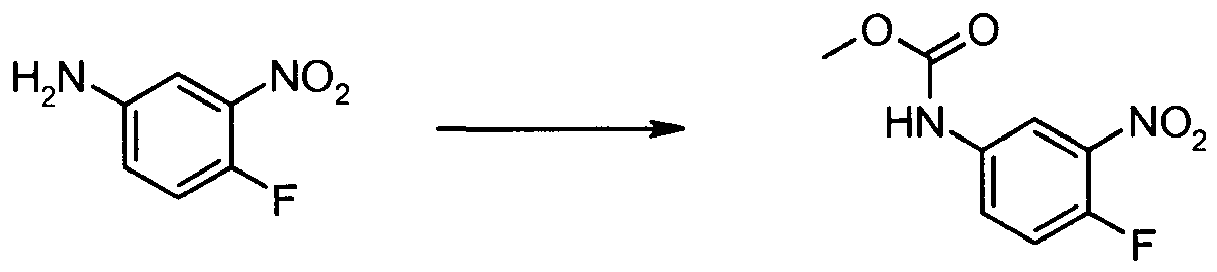
- Step C Methyl ⁇ 3-nitro-4-[(tetrahydro-2H-pyran-4-ylmethyl)amino]phenyl ⁇ carbamate
- Step D Methyl ⁇ 3-amino-4-[(tetrahydro-2 H -pyran-4-ylmethyl)amino]phenyl ⁇ carbamate
- Methyl ⁇ 3-nitro-4-[(tetrahydro-2H-pyran-4-ylmethyl)amino]phenyl ⁇ carbamate (2.53g, 8.18 mmol) was dissolved in 50 mL of EtOAc containing a catalytic amount of 10% Pd/C. The solution was shaken under H 2 atmosphere (40 psi) using a Parr hydrogenation apparatus overnight at rt. The solution was filtered through Celite and the solvent was evaporated. Yield: 2.29g (99%).
- Step E Methyl [2- tert -butyl-1-(tetrahydro-2H-pyran-4-ylmethyl)-1H-benzimidazol-5-yl]carbamate
- Methyl ⁇ 3-amino-4-[(tetrahydro-2 H -pyran-4-ylmethyl)amino]phenyl]carbamate (2.29g, 8.20 mmol) and DMAP (0.20g, 1.64 mmol) were dissolved in 75 mL of DCM.
- Trimethylacetyl chloride (1.10 mL, 9.02 mmol) was added dropwise and the solution was stirred at rt for 2h. The solution was washed with aqueous NaHCO 3 solution, brine and dried over anhydrous MgSO 4 . The residue was dissolved in 25 mL of AcOH and was heated at 125°C for 1h using a Personal Chemistry microwave apparatus. The solvent was evaporated.
- Step F 2- tert -Butyl-N-methyl-1-(tetrahydro-2H-pyran-4-ylmethyl)-1H-benzimidazol-5-amine
- Step A N - ⁇ 2-tert-Butyl-1-[(4,4-difluorocyclohexyl)methyl]-1 H -benzimidazol-5-yl ⁇ - N -methylbutane-1-sulfonamide
- Step B tert-Butyl [(4,4-difluorocyclohexyl)methyl]carbamate
- Step D Methyl (4- ⁇ [(4,4-difluorocyclohexyl)methyl]amino ⁇ -3-nitrophenyl)carbamate
- Step E Methyl (3-amino-4- ⁇ [(4,4-difluorocyclohexyl)methyl]amino ⁇ phenyl)carbamate
- Step F Methyl (2- tert -butyl-1-[(4,4-difluorocydohexyl)methyl]-1 H- benzimidazol-5-yl ⁇ carbamate
- Methyl (3-amino-4- ⁇ [(4,4-difluorocyclohexyl)methyl]amino ⁇ phenyl)carbamate (185 mg, 0.590 mmol) and DMAP (15 mg, 0.118 mmol) were dissolved in 10 mL of DCM. Trimethylacetyl chloride (0.080 mL, 0.649 mmol) was added dropwise and the solution was stirred at rt for 2h. The solution was washed with aqueous NaHCO 3 solution, brine and dried over anhydrous MgSO 4 . The solvent was concentrated.
- Step G 2- tert -Butyl-1-[(4,4-difluorocyclohexyl)methyl]- N -methyl-1 H- benzimidazol-5-amine
- Step A N -Methyl- N -[1-(tetrahydro-2 H -pyran-4-ylmethyl)-2-(trifluoromethyl)-1 H -benzimidazol-5-yl]propane-1-sulfonamide
- reaction mixture was stirred overnight at room temperature, diluted with DCM (50 mL), washed with saturated NaHCO 3 (2x10 mL) and dried over Na 2 SO 4 .
- the crude product was purified by MPLC using Hex/EtOAc (1:1) on silica gel to give 40 mg (47%) of a white solid as the title compound.
- Step C N -(4-fluoro-3-nitrophenyl)- N -methylacetamide
- Step D N -methyl- N - ⁇ 3-nitro-4-[(tetrahydro-2 H -pyran-4-ylmethyl)amino] phenyl ⁇ acetamide
- Step E N - ⁇ 3-Amino-4-(tetrahydro-2 H -pyran-4-ylmethyl)amino]phenyl ⁇ - N- methylacetamide
- N -Methyl- N - ⁇ 3-nitro-4-[(tetrahydro-2 H -pyran-4-ylmethyl)amino]phenyl ⁇ acetamide (21.7 g, 70.5 mmol) was hydrogenated in ethyl acetate (500 mL) catalyzed by 10% Pd/C (1.0 g) at 30-40 psi H 2 in Parr shaker for 18 h at room temperature. After filtration through celite and concentration, 19.6 g (100%) of a purple solid was obtained.
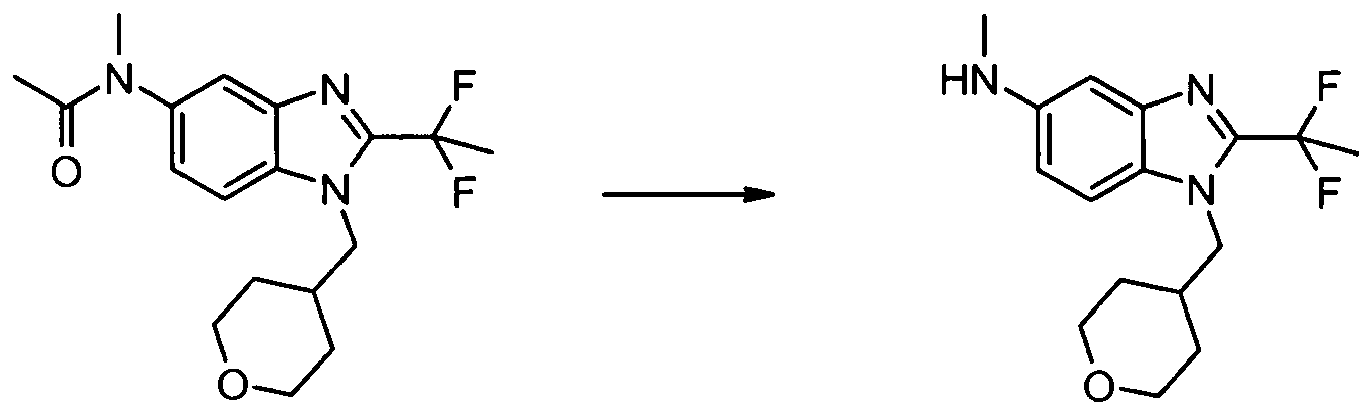
- Step F N -Methyl- N -[1-(tetrahydro-2 H -pyran-4-ylmethyl)-2-(trifluoromethyl)-1 H -benzimidazol-5-yl]acetamide
- Step G N -Methyl-1-(tetrahydro-2 H -pyran-4-ylmethyl)-2-(trifluoromethyl)-1 H- benzimidazol-5-amine
- Step A N - ⁇ 2- tert -Butyl-1-[(4,4-difluorocyclohexyl)methyl]-1 H -benzimidazol-5-yl ⁇ propane-1-sulfonamide
- Step B N -(4- ⁇ [(4,4-Difluorocyclohexyl)methyl]amino ⁇ -3-nitrophenyl)acetamide
- N -(4-Fluoro-3-nitrophenyl)acetamide (1.15 g, 5.84 mmol) and [(4,4-difluorocyclohexyl)methyl]amine hydrochloride (1.30g, 7.59 mmol) were stirred in 30 mL of EtOH containing TEA (2.40 mL, 17.5 mmol) at 80°C for 48h. The solvent was evaporated. The residue was dissolved in EtOAc and washed with aqueous 5% KHSO 4 solution, saturated aqueous NaHCO 3 solution, saturated aqueous NaCl solution and dried over anhydrous Na 2 SO 4 . The product was crystallized from EtOAc.
- Step C N -(3-Amino-4- ⁇ [(4,4-difluorocyclohexyl)methyl]amino ⁇ phenyl) acetamide
- N -(4- ⁇ [(4,4-Difluorocyclohexyl)methyl]amino ⁇ -3-nitrophenyl)acetamide (1.48 g, 4.52 mmol) was dissolved in 50 mL of EtOAc containing a catalytic amount of 10% Pd/C. The solution was shaken in a Parr hydrogenation apparatus under H 2 atmosphere (45 psi) at rt for 24h. The solution was filtered through Celite and the solvent was evaporated. Yield: 1.32 g (98%).
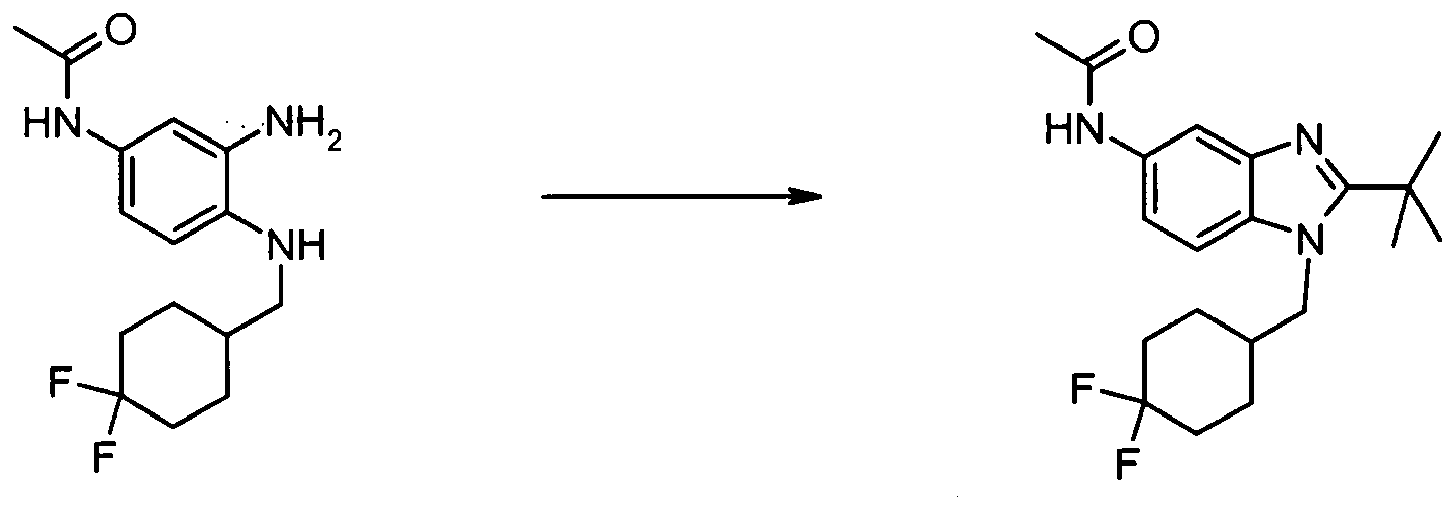
- Step D N - ⁇ 2- tert -Butyl-1-[(4,4-difluorocyclohexyl)methyl]-1 H -benzimidazol-5-yl ⁇ acetamide
- N -(3-Amino-4- ⁇ [(4,4-difluorocyclohexyl)methyl]amino ⁇ phenyl) acetamide (1.32 g , 4.44 mmol) was dissolved in 100 mL of DCM containing DMAP (108 mg, 0.89 mmol). Trimethylacetyl chloride (0.60 mL, 4.88 mmol) was added dropwise and the solution was stirred at rt for 2h. The solution was washed with saturated aqueous NaHCO 3 solution, saturated aqueous NaCl solution and dried over anhydrous Na 2 SO 4 . Part of the product precipitated during the washings and was filtered. The organic phase was evaporated and combined with the precipitate.
- the product was dissolved in 30 mL of AcOH and placed in 6 sealed tubes (5 mL/tube). Each tube was heated at 150°C in a Personal Chemistry microwaves instrument for 2.5h. The fractions were pooled and the solvent was evaporated. The product was dissolved in EtOAc and washed with aqueous NaHCO 3 solution, saturated aqueous NaCl solution and dried over anhydrous Na 2 SO 4 . The product was purified by silica gel flash chromatography using 2:1 / acetone:hexanes as eluent. Yield: 1.11 g (68%).
- Step E 2- tert -Butyl-1-[(4,4-difluorocyclohexyl)methyl]-1H-benzimidazol-5-amine
- N - ⁇ 2- tert -Butyl-1-[(4,4-difluorocyclohexyl)methyl]-1 H -benzimidazol-5-yl ⁇ acetamide (500 mg, 1.37 mmol) was dissolved in 10 mL of 1:1 / EtOH:2M HCl. The solution was divided into two sealed tubes (5 mL/tube). Each tube was heated at 120°C in a Personal Chemistry microwaves instrument for 1h. The fractions were pooled and the solvent was evaporated. The residue was diluted with 2M NaOH and extracted (3X) with EtOAc. The organic phase was washed with saturated aqueous NaCl solution and dried over anhydrous Na 2 SO 4 . The solvent was evaporated.
- Step A N -[1-[(4,4-Difluorocyclohexyl)methyl]-2-(1,1-difluoroethyl)-1 H- benzimidazol-5-yl]cyclopropanesulfonamide
- N -[1-[(4,4-Difluorocyclohexyl)methyl]-2-(1,1-difluoroethyl)-1 H -benzimidazol-5-yl]acetamide (for preparation see the following step B) (95 mg, 0.256 mmol) was heated in 5 mL of 1:1 / 2M HCl:EtOH at 120°C for 1h using a Personal Chemistry microwaves instrument. The solvent was evaporated. The residue was basified with 2M NaOH and extracted (3X) with EtOAc. The organic phase was washed with saturated aqueous NaCl solution and dried over anhydrous Na 2 SO 4 . The solvent was evaporated.
- the product was dissolved in 5 mL of DCM containing DMAP (31 mg, 0.256 mmol) and cyclopropanesulfonyl chloride (53 mg, 0.384 mmol) was added. The solution was stirred at rt for 3h. The solution was washed with saturated aqueous NaHCO 3 solution, brine and dried over anhydrous MgSO 4 . The solvent was evaporated and the product was purified by reversed-phase HPLC using 10-70% CH 3 CN/H 2 O and lyophilized affording the title compound as the corresponding TFA salt. Yield: 35 mg (25%).
- Step B N -[1-[(4,4-Difluorocyclohexyl)methyl]-2-(1,1-difluoroethyl)-1 H- benzimidazol-5-yl]acetamide
- N -(3-Amino-4- ⁇ [(4,4-difluorocyclohexyl)methyl]amino ⁇ phenyl) acetamide 99 mg, 0.333 mmol
- DIPEA 0.087 mL, 0.500 mmol
- HATU 140 mg, 0.366mmol
- 2,2-difluoropropionic acid 40 mg, 0.366 mmol
- N -[1-[(4,4-Difluorocyclohexyl)methyl]-2-(1,1-difluoroethyl)-1 H -benzimidazol-5-yl]acetamide (80 mg, 0.215 mmol) was heated in 5 mL of 1:1 / 2M HCl: EtOH at 120°C for 1h using a Personal Chemistry microwaves instrument. The solvent was evaporated. The residue was basified with 2M NaOH and extracted (3X) with EtOAc. The organic phase was washed with saturated aqueous NaCl solution and dried over anhydrous Na 2 SO 4 . The solvent was evaporated.
- the product was dissolved in 5 mL of DCM containing DMAP (31 mg, 0.256 mmol) and ethanesulfonyl chloride (0.026 mL, 0.280 mmol) was added. The solution was stirred at rt for 2h. The solution was washed with saturated aqueous NaHCO 3 solution, brine and dried over anhydrous MgSO 4 . The solvent was evaporated and the product purified by reversed-phase HPLC using 10-70% CH 3 CN/H 2 O and lyophilized affording the title compound as the corresponding TFA salt. Yield: 22 mg (19%).
- N -[1-[(4,4-Difluorocyclohexyl)methyl]-2-(1,1-difluoroethyl)-1 H -benzimidazol-5-yl]acetamide (185 mg, 0.498 mmol) was heated in 5 mL of 1:1 / 2M HCl: EtOH at 120°C for 1h using a Personal Chemistry microwaves instrument. The solvent was evaporated. The residue was basified with 2M NaOH and extracted (3X) with EtOAc. The organic phase was washed with saturated aqueous NaCl solution and dried over anhydrous Na 2 SO 4 . The solvent was evaporated.
- Step A N -[2-(1,1-difluoroethyl)-1-(tetrahydro-2 H -pyran-4-ylmethyl)-1 H- benzimidazol-5-yl]- N -methylethanesulfonamide
- Step B N - ⁇ 5-[Acetyl(methyl)amino]-2-[(tetrahydro-2 H -pyran-4-ylmethyl)amino]phenyl ⁇ -2,2-difluoropropanamide
- Step C N -[2-(1,1-Difluoroethyl)-1-(tetrahydro-2 H -pyran-4-ylmethyl)-1 H- benzimidazol-5-yl]- N -methylacetamide
- Step D 2-(1,1-difluoroethyl)- N -methyl-1-(tetrahydro-2 H -pyran-4-ylmethyl)-1 H- benzimidazol-5-amine
- Step A N - ⁇ 2- tert -Butyl-1-[(4-fluorocyclohexyl)methyl]-1 H -benzimidazol-5-yl ⁇ ethanesulfonamide
- Step B tert -Butyl [(4-fluorocyclohex-3-en-1-yl)methyl]carbamate
- Step C N -(4- ⁇ [(4-Fluorocyclohex-3-en-1-yl)methyl]amino ⁇ -3-nitrophenyl)acetamide
- N -(4-Fluoro-3-nitrophenyl)acetamide (460 mg, 2.32 mmol) and [(4-fluorocyclohex-3-en-1-yl)methyl]amine hydrochloride (350 mg, 2.11 mmol) were stirred in 20 mL of EtOH containing TEA (0.735 mL, 5.28 mmol) at 75°C for 48h. The solvent was concentrated. The residue was dissolved in EtOAc and washed with aqueous 5% KHSO 4 , saturated aqueous NaHCO 3 solution, brine and dried over anhydrous MgSO 4 .
- Step D N -(3-Amino-4- ⁇ [(4-fluorocyclohexyl)methyl]amino ⁇ phenyl)acetamide
- N -(4- ⁇ [(4-Fluorocyclohex-3-en-1-yl)methyl]amino ⁇ -3-nitrophenyl)acetamide (340mg, 1.11 mmol) was dissolved in 25 mL of EtOAc containing a catalytic amount of 10% Pd/C. The solution was shaken under H 2 atmosphere (40 psi) using a Parr hydrogenation apparatus at rt for 48h. The solution was filtered through celite and the solvent was evaporated. Yield: 308mg (99%). MS (ESI) (M+H) + 279.95.
- Step E N - ⁇ 2- tert -Butyl-1-[(4-fluorocyclohexyl)methyl]-1 H -benzimidazol-5-yl ⁇ acetamide
- N -(3-Amino-4- ⁇ [(4-fluorocyclohexyl)methyl]amino ⁇ phenyl)acetamide 300 mg, 1.07 mmol
- DMAP 25 mg, 0.214 mmol
- Trimethylacetyl chloride (0.145 mL, 1.18 mmol) was added dropwise and the solution was stirred at rt for 1h.
- the solution was washed with aqueous NaHCO 3 solution, brine and dried over anhydrous MgSO 4 .
- the residue was dissolved in 5 mL of AcOH and was heated at 150°C for 2.5h using a Personal Chemistry microwave apparatus. The solvent was evaporated.
- Step F 2- tert -Butyl-1-[(4-fluorocyclohexyl)methyl]-1 H -benzimidazol-5-amine
- Step A N - ⁇ 2- tert -butyl-1-[(4,4-difluorocyclohexyl)methyl]-1 H -benzimidazol-5-yl ⁇ ethanesulfonamide
- Step B N -(4-Fluoro-3-nitrophenyl)ethanesulfonamide
- Step C N -(4- ⁇ [(4,4-Difluorocyclohexyl)methyl]amino ⁇ -3-nitrophenyl)ethanesulfonamide
- N -(4-Fluoro-3-nitrophenyl)ethanesulfonamide 26 g, 0.107 mol
- [(4,4-difluorocyclohexyl)methyl]amine approximately 15 g
- DIPEA 20 mL
- DMSO 100 mL
- Ethanolamine 5 g was added and the reaction mixture was stirred until complete disappearance of N -(4-fluoro-3-nitrophenyl)ethanesulfonamide (approx. 4-5 hrs.).
- the room temperature cooled down reaction mixture was poured in cold water (900 mL).
- the product was extracted with DCM (5 x 200 mL).
- Step D N -(3-amino-4- ⁇ [(4,4-difluorocyclohexyl)methyl]amino ⁇ phenyl)ethanesulfonamide
- N -(4- ⁇ [(4,4-Difluorocyclohexyl)methyl]amino ⁇ -3-nitrophenyl)ethanesulfonamide (23.4g) and Pd/C 10% in EtOAc (800 mL) were shaken together overnight under H 2 atmosphere (50 PSI) in a Parr hydrogenation apparatus.
- the reaction mixture was diluted with MeOH (400 mL) and filtered over celite bed. The solvent was removed to provide the desired title product (22.2 g) as beige solid.
- Step E N - ⁇ 2- ⁇ [(4,4-difluorocyclohexyl)methyl]amino ⁇ -5-[(ethylsulfonyl)amino]phenyl ⁇ -2,2-dimethylpropanamide
Landscapes
- Health & Medical Sciences (AREA)
- Chemical & Material Sciences (AREA)
- Organic Chemistry (AREA)
- Veterinary Medicine (AREA)
- Public Health (AREA)
- General Health & Medical Sciences (AREA)
- Animal Behavior & Ethology (AREA)
- Life Sciences & Earth Sciences (AREA)
- Medicinal Chemistry (AREA)
- Pharmacology & Pharmacy (AREA)
- General Chemical & Material Sciences (AREA)
- Bioinformatics & Cheminformatics (AREA)
- Chemical Kinetics & Catalysis (AREA)
- Nuclear Medicine, Radiotherapy & Molecular Imaging (AREA)
- Engineering & Computer Science (AREA)
- Neurology (AREA)
- Neurosurgery (AREA)
- Biomedical Technology (AREA)
- Psychology (AREA)
- Pain & Pain Management (AREA)
- Psychiatry (AREA)
- Hospice & Palliative Care (AREA)
- Cardiology (AREA)
- Heart & Thoracic Surgery (AREA)
- Epidemiology (AREA)
- Rheumatology (AREA)
- Pharmaceuticals Containing Other Organic And Inorganic Compounds (AREA)
- Plural Heterocyclic Compounds (AREA)
- Acyclic And Carbocyclic Compounds In Medicinal Compositions (AREA)
Abstract
Description
- The invention is related to therapeutic compounds, pharmaceutical compositions containing these compounds, and uses thereof. Particularly, the present invention is related to compounds that may be effective in treating pain, cancer, multiple sclerosis, Parkinson's disease, Huntington's chorea, Alzheimer's disease, anxiety disorders, gastrointestinal disorders and/or cardiovascular disorders.
- Pain management has been studied for many years. It is known that cannabinoid receptor (e.g., CB1 receptor, CB2 receptor) ligands including agonists, antagonists and inverse agonists produce relief of pain in a variety of animal models by interacting with CB1 and/or CB2 receptors. Generally, CB1 receptors are located predominately in the central nervous system, whereas CB2 receptors are located primarily in the periphery and are primarily restricted to the cells and tissues derived from the immune system.
- While CB1 receptor agonists, such as Δ9-tetrahydrocannabinol (Δ9-THC) and anadamide, are useful in anti-nociception models in animals, they tend to exert undesired CNS side-effects, e.g., psychoactive side effects, the abuse potential, drug dependence and tolerance, etc. These undesired side effects are known to be mediated by the CB1 receptors located in CNS. There are lines of evidence, however, suggesting that CB1 agonists acting at peripheral sites or with limited CNS exposure can manage pain in humans or animals with much improved overall in vivo profile.
- Therefore, there is a need for new CB1 receptor ligands such as agonists that may be useful in managing pain or treating other related symptoms or diseases with reduced or minimal undesirable CNS side-effects.
- The present invention provides CB1 receptor ligands which may be useful in treating pain and/or other related symptoms or diseases.
"RT" or "rt" means room temperature. - In one aspect, an embodiment of the invention provides a compound which is

This compound of the invention is
N-{2-tert-Butyl-1-[(4,4-difluorocyclohexyl)methyl]-1H-benzimidazol-5-yl}ethanesulfonamide or a pharmaceutically-acceptable salt thereof.
The present invention also encompasses tautomers of the above compounds. - It will also be understood that certain compounds of the present invention may exist in solvated, for example hydrated, as well as unsolvated forms. It will further be understood that the present invention encompasses all such solvated forms.
- Within the scope of the invention are also salts of a compound of the invention. Generally, pharmaceutically acceptable salts of the present invention may be obtained using standard procedures well known in the art, for example by reacting a sufficiently basic compound, for example an alkyl amine with a suitable acid, for example, HCl or acetic acid, to afford a physiologically acceptable anion. It may also be possible to make a corresponding alkali metal (such as sodium, potassium, or lithium) or an alkaline earth metal (such as a calcium) salt by treating a compound of the present invention having a suitably acidic proton, such as a carboxylic acid or a phenol with one equivalent of an alkali metal or alkaline earth metal hydroxide or alkoxide (such as the ethoxide or methoxide), or a suitably basic organic amine (such as choline or meglumine) in an aqueous medium, followed by conventional purification techniques.
- In one embodiment, a compound the invention may be converted to a pharmaceutically acceptable salt or solvate thereof, particularly, an acid addition salt such as a hydrochloride, hydrobromide, phosphate, acetate, fumarate, maleate, tartrate, citrate, methanesulphonate or p-toluenesulphonate.
- We have now found that the compounds of the invention have activity as pharmaceuticals, in particular as modulators or ligands such as agonists, partial agonists, inverse agonist or antagonists of CB1 receptors. More particularly, the compounds of the invention exhibit selective activity as agonist of the CB1 receptors and are useful in therapy, especially for relief of various pain conditions such as chronic pain, neuropathic pain, acute pain, cancer pain, pain caused by rheumatoid arthritis, migraine, visceral pain etc. This list should however not be interpreted as exhaustive. Additionally, compounds of the present invention are useful in other disease states in which dysfunction of CB1 receptors is present or implicated. Furthermore, the compounds of the invention may be used to treat cancer, multiple sclerosis, Parkinson's disease, Huntington's chorea, Alzheimer's disease, anxiety disorders, gastrointestinal disorders and cardiovascular disorders.
- Compounds of the invention are useful as immunomodulators, especially for autoimmune diseases, such as arthritis, for skin grafts, organ transplants and similar surgical needs, for collagen diseases, various allergies, for use as anti-tumour agents and anti viral agents.
- Compounds of the invention are useful in disease states where degeneration or dysfunction of cannabinoid receptors is present or implicated in that paradigm. This may involve the use of isotopically labelled versions of the compounds of the invention in diagnostic techniques and imaging applications such as positron emission tomography (PET).
- Compounds of the invention are useful for the treatment of diarrhoea, depression, anxiety and stress-related disorders such as post-traumatic stress disorders, panic disorder, generalized anxiety disorder, social phobia, and obsessive compulsive disorder, urinary incontinence, premature ejaculation, various mental illnesses, cough, lung oedema, various gastro-intestinal disorders, e.g. constipation, functional gastrointestinal disorders such as Irritable Bowel Syndrome and Functional Dyspepsia, Parkinson's disease and other motor disorders, traumatic brain injury, stroke, cardioprotection following miocardial infarction, spinal injury and drug addiction, including the treatment of alcohol, nicotine, opioid and other drug abuse and for disorders of the sympathetic nervous system for example hypertension.
- Compounds of the invention are useful as an analgesic agent for use during general anaesthesia and monitored anaesthesia care. Combinations of agents with different properties are often used to achieve a balance of effects needed to maintain the anaesthetic state (e.g. amnesia, analgesia, muscle relaxation and sedation). Included in this combination are inhaled anaesthetics, hypnotics, anxiolytics, neuromuscular blockers and opioids.
- Also within the scope of the invention is the use of any of the compounds aof this invention for the manufacture of a medicament for the treatment of any of the conditions discussed above.
- Thus, the invention provides a compound or pharmaceutically acceptable salt or solvate thereof, as hereinbefore defined for use in therapy.
- In a further aspect, the present invention provides the use of a compound or a pharmaceutically acceptable salt or solvate thereof, as hereinbefore defined in the manufacture of a medicament for use in therapy.
- In the context of the present specification, the term "therapy" also includes "prophylaxis" unless there are specific indications to the contrary. The term "therapeutic" and "therapeutically" should be contrued accordingly. The term "therapy" within the context of the present invention further encompasses to administer an effective amount of a compound of the present invention, to mitigate either a pre-existing disease state, acute or chronic, or a recurring condition. This definition also encompasses prophylactic therapies for prevention of recurring conditions and continued therapy for chronic disorders.
- The compounds of the present invention are useful in therapy, especially for the therapy of various pain conditions including, but not limited to: acute pain, chronic pain, neuropathic pain, back pain, cancer pain, and visceral pain.
- In use for therapy in a warm-blooded animal such as a human, the compound of the invention may be administered in the form of a conventional pharmaceutical composition by any route including orally, intramuscularly, subcutaneously, topically, intranasally, intraperitoneally, intrathoracially, intravenously, epidurally, intrathecally, transdermally, intracerebroventricularly and by injection into the joints.
- In one embodiment of the invention, the route of administration may be oral, intravenous or intramuscular.
- The dosage will depend on the route of administration, the severity of the disease, age and weight of the patient and other factors normally considered by the attending physician, when determining the individual regimen and dosage level at the most appropriate for a particular patient.
- For preparing pharmaceutical compositions from the compounds of this invention, inert, pharmaceutically acceptable carriers can be either solid and liquid. Solid form preparations include powders, tablets, dispersible granules, capsules, cachets, and suppositories.
- A solid carrier can be one or more substances, which may also act as diluents, flavoring agents, solubilizers, lubricants, suspending agents, binders, or table disintegrating agents; it can also be an encapsulating material.
- In powders, the carrier is a finely divided solid, which is in a mixture with the finely divided compound of the invention, or the active component. In tablets, the active component is mixed with the carrier having the necessary binding properties in suitable proportions and compacted in the shape and size desired.
- For preparing suppository compositions, a low-melting wax such as a mixture of fatty acid glycerides and cocoa butter is first melted and the active ingredient is dispersed therein by, for example, stirring. The molten homogeneous mixture in then poured into convenient sized moulds and allowed to cool and solidify.
- Suitable carriers are magnesium carbonate, magnesium stearate, talc, lactose, sugar, pectin, dextrin, starch, tragacanth, methyl cellulose, sodium carboxymethyl cellulose, a low-melting wax, cocoa butter, and the like.
- The term composition is also intended to include the formulation of the active component with encapsulating material as a carrier providing a capsule in which the active component (with or without other carriers) is surrounded by a carrier which is thus in association with it. Similarly, cachets are included.
- Tablets, powders, cachets, and capsules can be used as solid dosage forms suitable for oral administration.
- Liquid form compositions include solutions, suspensions, and emulsions. For example, sterile water or water propylene glycol solutions of the active compounds may be liquid preparations suitable for parenteral administration. Liquid compositions can also be formulated in solution in aqueous polyethylene glycol solution.
- Aqueous solutions for oral administration can be prepared by dissolving the active component in water and adding suitable colorants, flavoring agents, stabilizers, and thickening agents as desired. Aqueous suspensions for oral use can be made by dispersing the finely divided active component in water together with a viscous material such as natural synthetic gums, resins, methyl cellulose, sodium carboxymethyl cellulose, and other suspending agents known to the pharmaceutical formulation art.
- Depending on the mode of administration, the pharmaceutical composition will preferably include from 0.05% to 99%w (per cent by weight), more preferably from 0.10 to 50%w, of the compound of the invention, all percentages by weight being based on total composition.
- A therapeutically effective amount for the practice of the present invention may be determined, by the use of known criteria including the age, weight and response of the individual patient, and interpreted within the context of the disease which is being treated or which is being prevented, by one of ordinary skills in the art.
- Within the scope of the invention is the use of any compound of this invention as defined above for the manufacture of a medicament.
- Also within the scope of the invention is the use of any compound of this invention for the manufacture of a medicament for the therapy of pain.
- Additionally provided is the use of any compound of this invention for the manufacture of a medicament for the therapy of various pain conditions including, but not limited to: acute pain, chronic pain, neuropathic pain, back pain, cancer pain, and visceral pain.
- Additionally, there is provided a pharmaceutical composition comprising a compound of the invention or a pharmaceutically acceptable salt thereof, in association with a pharmaceutically acceptable carrier.
- Particularly, there is provided a pharmaceutical composition comprising a compound of the invention or a pharmaceutically acceptable salt thereof,in association with a pharmaceutically acceptable carrier for therapy, more particularly for therapy of pain.
- Further, there is provided a pharmaceutical composition comprising a compound of the invention or a pharmaceutically acceptable salt thereof, in association with a pharmaceutically acceptable carrier for use in any of the conditions discussed above.
- Human CB1 receptor from Receptor Biology (hCB1) or human CB2 receptor from BioSignal (hCB2) membranes are thawed at 37 °C, passed 3 times through a 25-gauge blunt-end needle, diluted in the cannabinoid binding buffer (50 mM Tris, 2.5 mM EDTA, 5 mM MgCl2, and 0.5 mg/mL BSA fatty acid free, pH 7.4) and aliquots containing the appropriate amount of protein are distributed in 96-well plates. The IC50 of the compounds of the invention at hCB1 and hCB2 are evaluated from 10-point dose-response curves done with 3H-CP55,940 at 20000 to 25000 dpm per well (0.17-0.21 nM) in a final volume of 300 µl. The total and non-specific binding are determined in the absence and presence of 0.2 µM of HU210 respectively. The plates are vortexed and incubated for 60 minutes at room temperature, filtered through Unifilters GF/B (presoaked in 0.1 % polyethyleneimine) with the Tomtec or Packard harvester using 3 mL of wash buffer (50 mM Tris, 5 mM MgCl2, 0.5 mg BSA pH 7.0). The filters are dried for 1 hour at 55 °C. The radioactivity (cpm) is counted in a TopCount (Packard) after adding 65 µl/well of MS-20 scintillation liquid.
- Human CB1 receptor from Receptor Biology (hCB1) or human CB2 receptor membranes (BioSignal) are thawed at 37 °C, passed 3 times through a 25-gauge blunt-end needle and diluted in the GTPγS binding buffer (50 mM Hepes, 20 mM NaOH, 100 mM NaCl, 1 mM EDTA, 5 mM MgCl2, pH 7.4, 0.1% BSA). The EC50 and Emax of the compounds of the invention are evaluated from 10-point dose-response curves done in 300µl with the appropriate amount of membrane protein and 100000-130000 dpm of GTPg35S per well (0.11 -0.14 nM). The basal and maximal stimulated binding is determined in absence and presence of 1 µM (hCB2) or 10 µM (HCB1) Win 55,212-2 respectively. The membranes are pre-incubated for 5 minutes with 56.25 µM (hCB2) or 112.5 µM (hCB1) GDP prior to distribution in plates (15 µM (hCB2) or 30 µM (hCB1) GDP final). The plates are vortexed and incubated for 60 minutes at room temperature, filtered on Unifilters GF/B (presoaked in water) with the Tomtec or Packard harvester using 3 ml of wash buffer (50 mM Tris, 5 mM MgCl2, 50 mM NaCl, pH 7.0). The filters are dried for 1 hour at 55 °C. The radioactivity (cpm) is counted in a TopCount (Packard) after adding 65 µl/well of MS-20 scintillation liquid. Antagonist reversal studies are done in the same way except that (a) an agonist dose-response curve is done in the presence of a constant concentration of antagonist, or (b) an antagonist dose-response curve is done in the presence of a constant concentration of agonist.
- Based on the above assays, the dissociation constant (Ki) for a particular compound of the invention towards a particular receptor is determined using the following equation:

- Wherein IC50 is the concentration of the compound of the invention at which 50% displacement has been observed;
- [rad] is a standard or reference radioactive ligand concentration at that moment; and
- Kd is the dissociation constant of the radioactive ligand towards the particular receptor.
- Using the above-mentioned assays, the Ki towards human CB1 receptors for certain compounds of the invention are in the range of between 3 nM and 195 nM. EC50 for these compounds are in the range of between 2.3 nM and 300 nM. Emax for these compounds are in the range of between 109 % and 144 %.
- A 30 mM DMSO stock is prepared of the sample and then a 25 µL aliquot is added to a 96-well plate and genevac at 40 °C for 4 hours. To the genevac compound add 250 µL of sodium phosphate buffer (pH 7.4) and then mix at 1200 rpm for 24 h using an Eppendorf Thermomixer at 25°C. After mixing solution is transferred to a 96-well Whatman GF/B filter plate and then filtered under vacuum. The supernatant is then injected onto the LC/MS for analysis and quantitation is performed using a 1-point calibration for the compound of interest.
- A solution of 500 µl of 100 µM compound in DMSO is incubated with human or rat liver microsomes (843µl of microsomes of 0.5618 mg/mL in 30mL 0.1 M KH2PO4 buffer pH7.4) at 37°C for 10 min in a 96-deep well plate. NADPH (46 µL) at a concentration of 8.33 mg/ml in 100 mM KH2PO4 buffer pH 7.4 is added to start the reaction. The reaction mixtures are transferred to a 384-well plate containing acetonitrile to quench the reaction at time 0, 10, 20, 30 minutes. The 384 well plate is centrifuged for 30 min at 9000g, at 4°C, from which samples are analyzed by LC/MS (model: XDB Eclipse C18). Three references are analyzed by LC/MS as a positive control. Data are processed following a standard procedure. The metabolic stability of assayed compounds is expressed as µL/min/mg
- In addition, metabolic stabilities (hClint and rClint) and solubilities (aqueous) of selected compounds are determined using one or more assays described above. It is found that the selected compounds have improved metabolic stabilities and/or soluabilities in water. The metabolic stabilities and solubilities for these selected compounds are illustrated in Table 1 below.
Table 1 Metabolic stabilities (hClint and rClint) and soluabilities: Solubility (M) hCLint (ul/min/mg) rCLint (ul/min/mg) 
3.78945E-06 10.69 8.04 
7.35806E-06 5.76 11.74 
4.3035E-06 7.41 23.38 
0.00000593 7.77 10.24 
0.000051855 5.27 < 4.C 
0.000353337 5.72 62.6C 
0.00000061 8.03 15.36 
0.00000051 < 4.000 6.87 
0.00023307 4.00 N/A 
0.00015418 11.51 N/A - The invention will further be described in more detail by the following Examples which describe methods whereby compounds of the present invention may be prepared, purified, analyzed and biologically tested, and which are not to be construed as limiting the invention.
-

-

-
-

-

-

-

-

-

-

-

-

-

-

-

MS (ESI) (M+H)+ 314.29. -

-

-

-

-

-

-

-

-

-

-

-

-

-

-

-

-

-

-

-

-
-

-

-

-

-

-

-

-

-

-

-

-

-

-

-

-
-

-

-

-

-

-

-

-

-

-

-

-

-

-

-

-

-

-

-
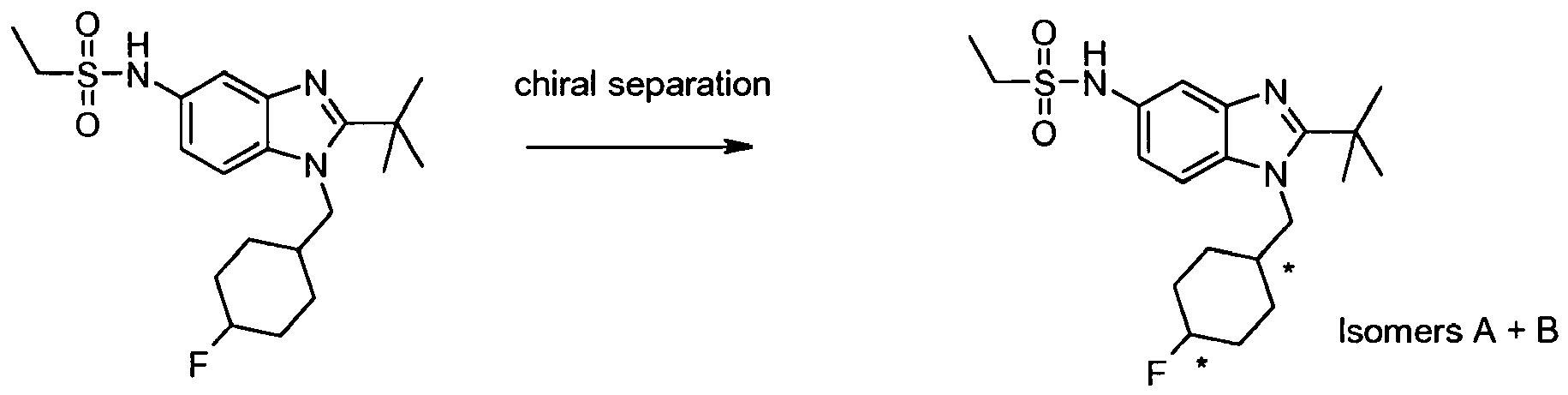
Isomer A: 1H NMR (400 MHz, METHANOL-D4) δ 1.30 (t, J=7.42 Hz, 3 H), 1.41 - 1.52 (m, 3 H), 1.54 - 1.63 (m, 3 H), 1.65 (s, 9 H), 1.97 - 2.05 (m, 2 H), 2.15 - 2.24 (m, 1 H), 3.13 (q, J=7.29 Hz, 2 H), 4.47 (d, J=7.62 Hz, 2 H), 4.72 (s, 0.5 H), 4.85 (s, 0.5 H), 7.38 (dd, J=8.98, 2.15 Hz, 1 H), 7.73 (d, J=1.95 Hz, 1 H), 7.85 (d, J=8.98 Hz, 1 H); MS (ESI) (M+H)+395.8; Chiral AD 15%EtOH/hexanes (0.1% DEA) k' = 2.97.
Isomer B: 1H NMR (400 MHz, METHANOL-D4) δ 1.30 (t, J=7.32 Hz, 3 H), 1.34 - 1.39 (m, 2 H), 1.39 - 1.45 (m, 2 H), 1.65 (s, 9 H), 1.70 - 1.75 (m, 2 H), 2.06 - 2.13 (m, 3 H), 3.13 (q, J=7.42 Hz, 2 H), 4.37 - 4.43 (m, 0.5 H), 4.45 (d, J=7.62 Hz, 2 H), 4.49 - 4.56 (m, 0.5 H), 7.39 (dd, J=9.08, 2.05 Hz, 1 H), 7.73 (d, J=2.15 Hz, 1 H), 7.84 (d, J=9.18 Hz, 1 H); MS (ESI) (M+H)+ 395.8; Anal. Calcd for C20H30N3O2SF + 1.2 TFA + 0.2 H2O: C, 50.20; H, 5.94; N, 7.84. Found: C, 50.13; H, 5.81; N, 7.74; Chiral AD 15%EtOH/hexanes (0.1% DEA) k' = 3.81.Isomer Ki hCB1 EC50 hCB1 Emax hCB1 Sol. pH 7.4 hClint (nM) (nM) (%) (µM) (µL/min/mg) A 148 --- --- 64 --- B 14.8 4.9 103 381 7.7
Claims (11)
- A compound which is

- A compound according to claim 1 which is

- A pharmaceutically acceptable salt of a compound according to claim 1.
- A compound according to claim 1 or a pharmaceutically acceptable salt thereof for use as a medicament.
- The use of a compound according to claim 1, or a pharmaceutically acceptable salt thereof, in the manufacture of a medicament for the therapy of pain.
- The use of a compound according to claim 1 or a pharmaceutically acceptable salt thereof, in the manufacture of a medicament for the treatment of anxiety disorders.
- The use of compound according to claim 1, or a pharmaceutically acceptable salt thereof, in the manufacture of a medicament for the treatment of cancer, multiple sclerosis, Parkinson's disease, Huntington's chorea, Alzheimer's disease, gastrointestinal disorders and cardiovascular disorders.
- A pharmaceutical composition comprising a compound according to claim 1 or a pharmaceutically acceptable salt thereof, and a pharmaceutically acceptable carrier.
- A compound according to claim 1 or a pharmaceutically acceptable salt thereof, for use as a medicament for the therapy of pain.
- A compound according to claim 1 or a pharmaceutically acceptable salt thereof, for use as a medicament for the treatment of anxiety disorders.
- A compound according to claim 1 or a pharmaceutically acceptable salt thereof, for use as a medicament for the treatment of cancer, multiple sclerosis, Parkinson's disease, Huntington's chorea, Alzheimer's disease, gastrointestinal disorders and cardiovascular disorders.
Applications Claiming Priority (3)
| Application Number | Priority Date | Filing Date | Title |
|---|---|---|---|
| PCT/GB2004/004124 WO2005030732A1 (en) | 2003-09-26 | 2004-09-24 | Benzimidazole derivatives, compositions containing them, preparation thereof and uses thereof |
| US64030604P | 2004-12-30 | 2004-12-30 | |
| PCT/SE2005/001403 WO2006033631A1 (en) | 2004-09-24 | 2005-09-22 | Benzimidazole derivatives, compositions containing them, preparation thereof and uses thereof i |
Publications (3)
| Publication Number | Publication Date |
|---|---|
| EP1797077A1 EP1797077A1 (en) | 2007-06-20 |
| EP1797077A4 EP1797077A4 (en) | 2009-04-01 |
| EP1797077B1 true EP1797077B1 (en) | 2012-02-15 |
Family
ID=37492537
Family Applications (1)
| Application Number | Title | Priority Date | Filing Date |
|---|---|---|---|
| EP05786553A Expired - Lifetime EP1797077B1 (en) | 2004-09-24 | 2005-09-22 | Benzimidazole derivatives, compositions containing them, preparation thereof and uses thereof i |
Country Status (15)
| Country | Link |
|---|---|
| US (2) | US7550495B2 (en) |
| EP (1) | EP1797077B1 (en) |
| JP (1) | JP5053092B2 (en) |
| KR (1) | KR101269869B1 (en) |
| AR (1) | AR050956A1 (en) |
| AT (1) | ATE545644T1 (en) |
| BR (1) | BRPI0515897A (en) |
| CA (1) | CA2581232C (en) |
| ES (1) | ES2380709T3 (en) |
| IL (1) | IL181683A0 (en) |
| MX (1) | MX2007003105A (en) |
| NO (1) | NO20072089L (en) |
| RU (1) | RU2374234C2 (en) |
| TW (1) | TW200626581A (en) |
| UY (1) | UY29134A1 (en) |
Families Citing this family (12)
| Publication number | Priority date | Publication date | Assignee | Title |
|---|---|---|---|---|
| SE0302573D0 (en) * | 2003-09-26 | 2003-09-26 | Astrazeneca Ab | Benzimidazole derivatives, compositions containing them, preparation thereof and uses thereof |
| MX2007003105A (en) * | 2004-09-24 | 2007-06-07 | Aztrazeneca Ab | Benzimidazole derivatives, compositions containing them, preparation thereof and uses thereof i. |
| TW200745049A (en) * | 2006-03-23 | 2007-12-16 | Astrazeneca Ab | New crystalline forms |
| TW200808769A (en) * | 2006-04-18 | 2008-02-16 | Astrazeneca Ab | Therapeutic compounds |
| RU2393861C1 (en) * | 2009-01-15 | 2010-07-10 | Аверин Константин Михайлович | Composition for treating multiple sclerosis (versions) |
| US20110086853A1 (en) * | 2009-10-08 | 2011-04-14 | William Brown | Therapeutic Compounds |
| TW201121957A (en) | 2009-11-18 | 2011-07-01 | Astrazeneca Ab | Benzoimidazole compounds and uses thereof |
| CA2898665C (en) | 2013-01-31 | 2021-02-16 | Neomed Institute | Imidazopyridine compounds and their use as p2x purinoreceptor modulators |
| FR3030516B1 (en) * | 2014-12-19 | 2019-12-27 | Galderma Research & Development | BICYCLE SULFONAMIDE DERIVATIVES AS INVERTED AGONISTS OF THE ORPHAN GAMMA RECEPTOR ASSOCIATED WITH ROR GAMMA (T) RETINOIDS |
| WO2020174283A1 (en) | 2019-02-25 | 2020-09-03 | Bellus Health Cough Inc. | Treatment with p2x3 modulators |
| GB202019335D0 (en) * | 2020-12-08 | 2021-01-20 | Artelo Biosciences Ltd | Pharmaceutical compositions |
| AU2024337440A1 (en) | 2023-09-09 | 2026-03-26 | Artelo Biosciences Limited | Cannabinoid for use in treating eye disorders |
Family Cites Families (44)
| Publication number | Priority date | Publication date | Assignee | Title |
|---|---|---|---|---|
| FR1604908A (en) | 1965-06-24 | 1971-05-15 | Substd benzimidazoles - with anthelmintic,fungicidal activity and some with antiviral and antibacterial activity | |
| FR5354M (en) | 1965-09-10 | 1967-09-11 | ||
| US5387600A (en) | 1992-07-30 | 1995-02-07 | Fuji Photo Film Co., Ltd. | Treating arteriosclerosis using benzimidazole compositions |
| DE4237597A1 (en) | 1992-11-06 | 1994-05-11 | Bayer Ag | Substituted benzimidazoles |
| DE4237617A1 (en) | 1992-11-06 | 1994-05-11 | Bayer Ag | Use of substituted benzimidazoles |
| DE4237557A1 (en) | 1992-11-06 | 1994-05-11 | Bayer Ag | Substituted benzimidazoles |
| EP0882718B1 (en) | 1995-12-28 | 2005-08-31 | Fujisawa Pharmaceutical Co., Ltd. | Benzimidazole derivatives |
| US6348032B1 (en) | 1998-11-23 | 2002-02-19 | Cell Pathways, Inc. | Method of inhibiting neoplastic cells with benzimidazole derivatives |
| US6534535B1 (en) | 1999-08-12 | 2003-03-18 | Millennium Pharmaceuticals, Inc. | Inhibitors of factor Xa |
| US6632815B2 (en) | 1999-09-17 | 2003-10-14 | Millennium Pharmaceuticals, Inc. | Inhibitors of factor Xa |
| US6720317B1 (en) | 1999-09-17 | 2004-04-13 | Millennium Pharmaceuticals, Inc. | Inhibitors of factor Xa |
| US6844367B1 (en) | 1999-09-17 | 2005-01-18 | Millennium Pharmaceuticals, Inc. | Benzamides and related inhibitors of factor Xa |
| JP2003509412A (en) | 1999-09-17 | 2003-03-11 | シーオーアール セラピューティクス インコーポレイテッド | Factor Xa inhibitor |
| NZ519326A (en) | 2000-01-14 | 2005-02-25 | Schering Ag | 1,2-diarylbenzimidazoles for treating diseases that are associated with a microglia activation |
| US7115645B2 (en) | 2000-01-14 | 2006-10-03 | Schering Aktiengesellschaft | 1,2 diarylbenzimidazoles and their pharmaceutical use |
| ES2254385T3 (en) | 2000-02-29 | 2006-06-16 | Millennium Pharmaceuticals, Inc. | RELATED BENZAMIDS AND INHIBITORS OF FACTOR XA. |
| AU2001273040A1 (en) | 2000-06-27 | 2002-01-08 | Du Pont Pharmaceuticals Company | Factor xa inhibitors |
| WO2002046168A1 (en) | 2000-12-07 | 2002-06-13 | Astrazeneca Ab | Therapeutic benzimidazole compounds |
| SE0101387D0 (en) * | 2001-04-20 | 2001-04-20 | Astrazeneca Ab | Novel compounds |
| US7199147B2 (en) | 2001-06-12 | 2007-04-03 | Dainippon Sumitomo Pharma Co., Ltd. | Rho kinase inhibitors |
| TW200505902A (en) | 2003-03-20 | 2005-02-16 | Schering Corp | Cannabinoid receptor ligands |
| SE0301701D0 (en) | 2003-06-10 | 2003-06-10 | Astrazeneca Ab | Benzimidazole derivatives, compositions containing them, preparation thereof and uses thereof |
| SE0301699D0 (en) | 2003-06-10 | 2003-06-10 | Astrazeneca Ab | Benzimidazole derivatives, compositions containing them, preparation thereof and uses thereof |
| US20050026968A1 (en) | 2003-07-14 | 2005-02-03 | University Of Tennessee Research Foundation | Heterocyclic amides with anti-tuberculosis activity |
| WO2005021547A2 (en) | 2003-08-28 | 2005-03-10 | Pharmaxis Pty Ltd. | Heterocyclic cannabinoid cb2 receptor antagonists |
| SE0302571D0 (en) | 2003-09-26 | 2003-09-26 | Astrazeneca Ab | Benzimidazole derivatives, compositions containing them, preparation thereof and uses thereof |
| SE0302570D0 (en) | 2003-09-26 | 2003-09-26 | Astrazeneca Ab | Benzimidazole derivatives, compositions containing them, preparation thereof and uses thereof |
| SE0302573D0 (en) | 2003-09-26 | 2003-09-26 | Astrazeneca Ab | Benzimidazole derivatives, compositions containing them, preparation thereof and uses thereof |
| SE0302572D0 (en) | 2003-09-26 | 2003-09-26 | Astrazeneca Ab | Benzimidazole derivatives, compositions containing them, preparation thereof and uses thereof |
| EP1758884A2 (en) | 2004-05-20 | 2007-03-07 | Elan Pharmaceuticals, Inc. | N-cyclic sulfonamido inhibitors of gamma secretase |
| EP1765332A2 (en) | 2004-06-17 | 2007-03-28 | Cengent Therapeutics, Inc. | Trisubstituted nitrogen modulators of tyrosine phosphatases |
| US8026237B2 (en) | 2004-07-30 | 2011-09-27 | Exelixis, Inc. | Pyrrole derivatives as pharmaceutical agents |
| US20060052421A1 (en) | 2004-09-09 | 2006-03-09 | Eastman Kodak Company | Conjugation agent |
| EP1797075A1 (en) | 2004-09-24 | 2007-06-20 | AstraZeneca AB | Benzimidazole derivatives and their use as cannabinoid receptor ligands |
| WO2006033628A1 (en) | 2004-09-24 | 2006-03-30 | Astrazeneca Ab | Benzimidazole derivatives, compositions containing them, preparation thereof and uses thereof |
| WO2006033630A1 (en) | 2004-09-24 | 2006-03-30 | Astrazeneca Ab | Compounds, compositions containing them, preparation thereof and uses thereof iii |
| WO2006033633A1 (en) | 2004-09-24 | 2006-03-30 | Astrazeneca Ab | Compounds, compositions containing them, preparations thereof and uses thereof ii |
| EP1797074A4 (en) | 2004-09-24 | 2009-04-01 | Astrazeneca Ab | Compounds, compositions containing them, preparation thereof and uses thereof iiii |
| JP2008514594A (en) | 2004-09-24 | 2008-05-08 | アストラゼネカ・アクチエボラーグ | Benzimidazole derivatives and their use as cannabinoid receptor ligands I |
| MX2007003105A (en) * | 2004-09-24 | 2007-06-07 | Aztrazeneca Ab | Benzimidazole derivatives, compositions containing them, preparation thereof and uses thereof i. |
| EP1809607B1 (en) | 2004-11-02 | 2008-12-17 | Pfizer, Inc. | Sulfonyl benzimidazole derivatives |
| WO2006078941A2 (en) | 2005-01-20 | 2006-07-27 | Sirtris Pharmaceuticals, Inc. | Novel sirtuin activating compounds and methods of use thereof |
| TW200745049A (en) | 2006-03-23 | 2007-12-16 | Astrazeneca Ab | New crystalline forms |
| TW200808769A (en) | 2006-04-18 | 2008-02-16 | Astrazeneca Ab | Therapeutic compounds |
-
2005
- 2005-09-22 MX MX2007003105A patent/MX2007003105A/en active IP Right Grant
- 2005-09-22 CA CA2581232A patent/CA2581232C/en not_active Expired - Lifetime
- 2005-09-22 AT AT05786553T patent/ATE545644T1/en active
- 2005-09-22 KR KR1020077006658A patent/KR101269869B1/en not_active Expired - Lifetime
- 2005-09-22 RU RU2007112501/04A patent/RU2374234C2/en active
- 2005-09-22 ES ES05786553T patent/ES2380709T3/en not_active Expired - Lifetime
- 2005-09-22 EP EP05786553A patent/EP1797077B1/en not_active Expired - Lifetime
- 2005-09-22 JP JP2007533433A patent/JP5053092B2/en not_active Expired - Fee Related
- 2005-09-22 BR BRPI0515897-4A patent/BRPI0515897A/en not_active Application Discontinuation
- 2005-09-23 TW TW094133148A patent/TW200626581A/en unknown
- 2005-09-23 UY UY29134A patent/UY29134A1/en unknown
- 2005-09-26 AR ARP050104027A patent/AR050956A1/en not_active Application Discontinuation
-
2006
- 2006-05-22 US US11/419,603 patent/US7550495B2/en not_active Expired - Lifetime
-
2007
- 2007-03-01 IL IL181683A patent/IL181683A0/en unknown
- 2007-04-23 NO NO20072089A patent/NO20072089L/en not_active Application Discontinuation
-
2009
- 2009-05-15 US US12/466,415 patent/US20090221657A1/en not_active Abandoned
Also Published As
| Publication number | Publication date |
|---|---|
| ATE545644T1 (en) | 2012-03-15 |
| RU2374234C2 (en) | 2009-11-27 |
| KR101269869B1 (en) | 2013-06-07 |
| US20060264490A1 (en) | 2006-11-23 |
| NO20072089L (en) | 2007-06-15 |
| KR20070054215A (en) | 2007-05-28 |
| RU2007112501A (en) | 2008-10-27 |
| MX2007003105A (en) | 2007-06-07 |
| ES2380709T3 (en) | 2012-05-17 |
| EP1797077A4 (en) | 2009-04-01 |
| HK1104823A1 (en) | 2008-01-25 |
| US20090221657A1 (en) | 2009-09-03 |
| JP2008514593A (en) | 2008-05-08 |
| UY29134A1 (en) | 2006-04-28 |
| IL181683A0 (en) | 2007-07-04 |
| EP1797077A1 (en) | 2007-06-20 |
| JP5053092B2 (en) | 2012-10-17 |
| CA2581232C (en) | 2015-04-07 |
| BRPI0515897A (en) | 2008-08-12 |
| AR050956A1 (en) | 2006-12-06 |
| TW200626581A (en) | 2006-08-01 |
| US7550495B2 (en) | 2009-06-23 |
| CA2581232A1 (en) | 2006-03-30 |
Similar Documents
| Publication | Publication Date | Title |
|---|---|---|
| US20090221657A1 (en) | Compounds, Compositions Containing Them, Preparation Thereof and Uses Thereof I | |
| JP3647051B2 (en) | Imidazole compound, method for producing the same and method for using the same | |
| JP3367945B2 (en) | 2-Substituted-1-piperidylbenzimidazole compounds as ORL1 receptor agonists | |
| US6441000B1 (en) | Compounds useful in therapy | |
| US7517898B2 (en) | Benzimidazole derivatives, compositions containing them, preparation thereof and uses thereof | |
| WO2006033628A1 (en) | Benzimidazole derivatives, compositions containing them, preparation thereof and uses thereof | |
| AU2011243393B2 (en) | Novel benzamide derivatives | |
| AU2005287427B2 (en) | Benzimidazole derivatives, compositions containing them, preparation thereof and uses thereof I | |
| WO2006033630A1 (en) | Compounds, compositions containing them, preparation thereof and uses thereof iii | |
| TW200526592A (en) | Benzimidazole derivatives, compositions containing them, preparation thereof and uses thereof | |
| HK1104823B (en) | Benzimidazole derivatives, compositions containing them, preparation thereof and uses thereof i | |
| AU2023287589A1 (en) | Substituted pyrrolidinyl and piperidinyl compounds and related methods of treatment | |
| WO2006033629A1 (en) | Benzimidazole derivatives and their use as cannabinoid receptor ligands | |
| AU2005287429A1 (en) | Compounds, compositions containing them, preparations thereof and uses thereof II | |
| EP1794150A1 (en) | Benzimidazole derivatives and their use as cannabinoid receptor ligands I | |
| EP1797074A1 (en) | Compounds, compositions containing them, preparation thereof and uses thereof iiii | |
| CN101052639B (en) | Benzimidazole derivatives, compositions containing them, processes for their preparation and uses thereof | |
| KR20070054217A (en) | Compounds, compositions containing them, preparation methods thereof and uses thereof | |
| DE19945810A1 (en) | Substituted benzimidazole derivatives, process for their preparation and their use as medicaments | |
| HK1089436B (en) | Benzimidazole derivatives, compositions containing them, preparation thereof and uses thereof | |
| HK1089436A1 (en) | Benzimidazole derivatives, compositions containing them, preparation thereof and uses thereof |
Legal Events
| Date | Code | Title | Description |
|---|---|---|---|
| PUAI | Public reference made under article 153(3) epc to a published international application that has entered the european phase |
Free format text: ORIGINAL CODE: 0009012 |
|
| 17P | Request for examination filed |
Effective date: 20070424 |
|
| AK | Designated contracting states |
Kind code of ref document: A1 Designated state(s): AT BE BG CH CY CZ DE DK EE ES FI FR GB GR HU IE IS IT LI LT LU LV MC NL PL PT RO SE SI SK TR |
|
| AX | Request for extension of the european patent |
Extension state: AL BA HR MK YU |
|
| REG | Reference to a national code |
Ref country code: HK Ref legal event code: DE Ref document number: 1104823 Country of ref document: HK |
|
| DA4 | Supplementary search report drawn up and despatched (deleted) | ||
| 17Q | First examination report despatched |
Effective date: 20090316 |
|
| R17C | First examination report despatched (corrected) |
Effective date: 20090327 |
|
| GRAP | Despatch of communication of intention to grant a patent |
Free format text: ORIGINAL CODE: EPIDOSNIGR1 |
|
| GRAS | Grant fee paid |
Free format text: ORIGINAL CODE: EPIDOSNIGR3 |
|
| GRAA | (expected) grant |
Free format text: ORIGINAL CODE: 0009210 |
|
| AK | Designated contracting states |
Kind code of ref document: B1 Designated state(s): AT BE BG CH CY CZ DE DK EE ES FI FR GB GR HU IE IS IT LI LT LU LV MC NL PL PT RO SE SI SK TR |
|
| AX | Request for extension of the european patent |
Extension state: AL BA HR MK YU |
|
| REG | Reference to a national code |
Ref country code: GB Ref legal event code: FG4D Ref country code: CH Ref legal event code: EP |
|
| REG | Reference to a national code |
Ref country code: IE Ref legal event code: FG4D |
|
| REG | Reference to a national code |
Ref country code: AT Ref legal event code: REF Ref document number: 545644 Country of ref document: AT Kind code of ref document: T Effective date: 20120315 |
|
| REG | Reference to a national code |
Ref country code: DE Ref legal event code: R096 Ref document number: 602005032702 Country of ref document: DE Effective date: 20120412 |
|
| REG | Reference to a national code |
Ref country code: NL Ref legal event code: T3 |
|
| REG | Reference to a national code |
Ref country code: SE Ref legal event code: TRGR |
|
| REG | Reference to a national code |
Ref country code: ES Ref legal event code: FG2A Ref document number: 2380709 Country of ref document: ES Kind code of ref document: T3 Effective date: 20120517 |
|
| LTIE | Lt: invalidation of european patent or patent extension |
Effective date: 20120215 |
|
| PG25 | Lapsed in a contracting state [announced via postgrant information from national office to epo] |
Ref country code: IS Free format text: LAPSE BECAUSE OF FAILURE TO SUBMIT A TRANSLATION OF THE DESCRIPTION OR TO PAY THE FEE WITHIN THE PRESCRIBED TIME-LIMIT Effective date: 20120615 Ref country code: LT Free format text: LAPSE BECAUSE OF FAILURE TO SUBMIT A TRANSLATION OF THE DESCRIPTION OR TO PAY THE FEE WITHIN THE PRESCRIBED TIME-LIMIT Effective date: 20120215 |
|
| PG25 | Lapsed in a contracting state [announced via postgrant information from national office to epo] |
Ref country code: BE Free format text: LAPSE BECAUSE OF FAILURE TO SUBMIT A TRANSLATION OF THE DESCRIPTION OR TO PAY THE FEE WITHIN THE PRESCRIBED TIME-LIMIT Effective date: 20120215 Ref country code: LV Free format text: LAPSE BECAUSE OF FAILURE TO SUBMIT A TRANSLATION OF THE DESCRIPTION OR TO PAY THE FEE WITHIN THE PRESCRIBED TIME-LIMIT Effective date: 20120215 Ref country code: GR Free format text: LAPSE BECAUSE OF FAILURE TO SUBMIT A TRANSLATION OF THE DESCRIPTION OR TO PAY THE FEE WITHIN THE PRESCRIBED TIME-LIMIT Effective date: 20120516 Ref country code: FI Free format text: LAPSE BECAUSE OF FAILURE TO SUBMIT A TRANSLATION OF THE DESCRIPTION OR TO PAY THE FEE WITHIN THE PRESCRIBED TIME-LIMIT Effective date: 20120215 Ref country code: PL Free format text: LAPSE BECAUSE OF FAILURE TO SUBMIT A TRANSLATION OF THE DESCRIPTION OR TO PAY THE FEE WITHIN THE PRESCRIBED TIME-LIMIT Effective date: 20120215 Ref country code: PT Free format text: LAPSE BECAUSE OF FAILURE TO SUBMIT A TRANSLATION OF THE DESCRIPTION OR TO PAY THE FEE WITHIN THE PRESCRIBED TIME-LIMIT Effective date: 20120615 |
|
| REG | Reference to a national code |
Ref country code: AT Ref legal event code: MK05 Ref document number: 545644 Country of ref document: AT Kind code of ref document: T Effective date: 20120215 |
|
| PG25 | Lapsed in a contracting state [announced via postgrant information from national office to epo] |
Ref country code: CY Free format text: LAPSE BECAUSE OF FAILURE TO SUBMIT A TRANSLATION OF THE DESCRIPTION OR TO PAY THE FEE WITHIN THE PRESCRIBED TIME-LIMIT Effective date: 20120215 |
|
| PG25 | Lapsed in a contracting state [announced via postgrant information from national office to epo] |
Ref country code: RO Free format text: LAPSE BECAUSE OF FAILURE TO SUBMIT A TRANSLATION OF THE DESCRIPTION OR TO PAY THE FEE WITHIN THE PRESCRIBED TIME-LIMIT Effective date: 20120215 Ref country code: CZ Free format text: LAPSE BECAUSE OF FAILURE TO SUBMIT A TRANSLATION OF THE DESCRIPTION OR TO PAY THE FEE WITHIN THE PRESCRIBED TIME-LIMIT Effective date: 20120215 Ref country code: DK Free format text: LAPSE BECAUSE OF FAILURE TO SUBMIT A TRANSLATION OF THE DESCRIPTION OR TO PAY THE FEE WITHIN THE PRESCRIBED TIME-LIMIT Effective date: 20120215 Ref country code: EE Free format text: LAPSE BECAUSE OF FAILURE TO SUBMIT A TRANSLATION OF THE DESCRIPTION OR TO PAY THE FEE WITHIN THE PRESCRIBED TIME-LIMIT Effective date: 20120215 Ref country code: SI Free format text: LAPSE BECAUSE OF FAILURE TO SUBMIT A TRANSLATION OF THE DESCRIPTION OR TO PAY THE FEE WITHIN THE PRESCRIBED TIME-LIMIT Effective date: 20120215 |
|
| REG | Reference to a national code |
Ref country code: HK Ref legal event code: GR Ref document number: 1104823 Country of ref document: HK |
|
| PG25 | Lapsed in a contracting state [announced via postgrant information from national office to epo] |
Ref country code: SK Free format text: LAPSE BECAUSE OF FAILURE TO SUBMIT A TRANSLATION OF THE DESCRIPTION OR TO PAY THE FEE WITHIN THE PRESCRIBED TIME-LIMIT Effective date: 20120215 |
|
| PLBE | No opposition filed within time limit |
Free format text: ORIGINAL CODE: 0009261 |
|
| STAA | Information on the status of an ep patent application or granted ep patent |
Free format text: STATUS: NO OPPOSITION FILED WITHIN TIME LIMIT |
|
| 26N | No opposition filed |
Effective date: 20121116 |
|
| PG25 | Lapsed in a contracting state [announced via postgrant information from national office to epo] |
Ref country code: AT Free format text: LAPSE BECAUSE OF FAILURE TO SUBMIT A TRANSLATION OF THE DESCRIPTION OR TO PAY THE FEE WITHIN THE PRESCRIBED TIME-LIMIT Effective date: 20120215 |
|
| REG | Reference to a national code |
Ref country code: DE Ref legal event code: R097 Ref document number: 602005032702 Country of ref document: DE Effective date: 20121116 |
|
| PG25 | Lapsed in a contracting state [announced via postgrant information from national office to epo] |
Ref country code: MC Free format text: LAPSE BECAUSE OF NON-PAYMENT OF DUE FEES Effective date: 20120930 |
|
| REG | Reference to a national code |
Ref country code: IE Ref legal event code: MM4A |
|
| PG25 | Lapsed in a contracting state [announced via postgrant information from national office to epo] |
Ref country code: IE Free format text: LAPSE BECAUSE OF NON-PAYMENT OF DUE FEES Effective date: 20120922 Ref country code: BG Free format text: LAPSE BECAUSE OF FAILURE TO SUBMIT A TRANSLATION OF THE DESCRIPTION OR TO PAY THE FEE WITHIN THE PRESCRIBED TIME-LIMIT Effective date: 20120515 |
|
| PG25 | Lapsed in a contracting state [announced via postgrant information from national office to epo] |
Ref country code: LU Free format text: LAPSE BECAUSE OF NON-PAYMENT OF DUE FEES Effective date: 20120922 |
|
| PG25 | Lapsed in a contracting state [announced via postgrant information from national office to epo] |
Ref country code: HU Free format text: LAPSE BECAUSE OF FAILURE TO SUBMIT A TRANSLATION OF THE DESCRIPTION OR TO PAY THE FEE WITHIN THE PRESCRIBED TIME-LIMIT Effective date: 20050922 |
|
| REG | Reference to a national code |
Ref country code: FR Ref legal event code: PLFP Year of fee payment: 11 |
|
| REG | Reference to a national code |
Ref country code: FR Ref legal event code: PLFP Year of fee payment: 12 |
|
| REG | Reference to a national code |
Ref country code: FR Ref legal event code: PLFP Year of fee payment: 13 |
|
| REG | Reference to a national code |
Ref country code: FR Ref legal event code: PLFP Year of fee payment: 14 |
|
| PGFP | Annual fee paid to national office [announced via postgrant information from national office to epo] |
Ref country code: DE Payment date: 20240927 Year of fee payment: 20 |
|
| PGFP | Annual fee paid to national office [announced via postgrant information from national office to epo] |
Ref country code: GB Payment date: 20240927 Year of fee payment: 20 |
|
| PGFP | Annual fee paid to national office [announced via postgrant information from national office to epo] |
Ref country code: FR Payment date: 20240925 Year of fee payment: 20 |
|
| PGFP | Annual fee paid to national office [announced via postgrant information from national office to epo] |
Ref country code: NL Payment date: 20240926 Year of fee payment: 20 |
|
| PGFP | Annual fee paid to national office [announced via postgrant information from national office to epo] |
Ref country code: SE Payment date: 20240927 Year of fee payment: 20 Ref country code: IT Payment date: 20240919 Year of fee payment: 20 |
|
| PGFP | Annual fee paid to national office [announced via postgrant information from national office to epo] |
Ref country code: TR Payment date: 20240906 Year of fee payment: 20 |
|
| PGFP | Annual fee paid to national office [announced via postgrant information from national office to epo] |
Ref country code: ES Payment date: 20241001 Year of fee payment: 20 |
|
| PGFP | Annual fee paid to national office [announced via postgrant information from national office to epo] |
Ref country code: CH Payment date: 20241002 Year of fee payment: 20 |
|
| REG | Reference to a national code |
Ref country code: DE Ref legal event code: R071 Ref document number: 602005032702 Country of ref document: DE |
|
| REG | Reference to a national code |
Ref country code: NL Ref legal event code: MK Effective date: 20250921 |
|
| REG | Reference to a national code |
Ref country code: ES Ref legal event code: FD2A Effective date: 20250929 |
|
| REG | Reference to a national code |
Ref country code: CH Ref legal event code: PL |
|
| PG25 | Lapsed in a contracting state [announced via postgrant information from national office to epo] |
Ref country code: ES Free format text: LAPSE BECAUSE OF EXPIRATION OF PROTECTION Effective date: 20250923 |
|
| REG | Reference to a national code |
Ref country code: GB Ref legal event code: PE20 Expiry date: 20250921 |
|
| REG | Reference to a national code |
Ref country code: SE Ref legal event code: EUG |