EP1796077A2 - Excitation of air directing valves and air handling surfaces in the cancellation of air handling system noise - Google Patents
Excitation of air directing valves and air handling surfaces in the cancellation of air handling system noise Download PDFInfo
- Publication number
- EP1796077A2 EP1796077A2 EP06077103A EP06077103A EP1796077A2 EP 1796077 A2 EP1796077 A2 EP 1796077A2 EP 06077103 A EP06077103 A EP 06077103A EP 06077103 A EP06077103 A EP 06077103A EP 1796077 A2 EP1796077 A2 EP 1796077A2
- Authority
- EP
- European Patent Office
- Prior art keywords
- air duct
- sound waves
- noise
- noise signal
- signal
- Prior art date
- Legal status (The legal status is an assumption and is not a legal conclusion. Google has not performed a legal analysis and makes no representation as to the accuracy of the status listed.)
- Withdrawn
Links
Images

Classifications
-
- F—MECHANICAL ENGINEERING; LIGHTING; HEATING; WEAPONS; BLASTING
- F16—ENGINEERING ELEMENTS AND UNITS; GENERAL MEASURES FOR PRODUCING AND MAINTAINING EFFECTIVE FUNCTIONING OF MACHINES OR INSTALLATIONS; THERMAL INSULATION IN GENERAL
- F16L—PIPES; JOINTS OR FITTINGS FOR PIPES; SUPPORTS FOR PIPES, CABLES OR PROTECTIVE TUBING; MEANS FOR THERMAL INSULATION IN GENERAL
- F16L55/00—Devices or appurtenances for use in, or in connection with, pipes or pipe systems
- F16L55/02—Energy absorbers; Noise absorbers
- F16L55/033—Noise absorbers
- F16L55/0333—Noise absorbers by means of an active system
-
- B—PERFORMING OPERATIONS; TRANSPORTING
- B60—VEHICLES IN GENERAL
- B60H—ARRANGEMENTS OF HEATING, COOLING, VENTILATING OR OTHER AIR-TREATING DEVICES SPECIALLY ADAPTED FOR PASSENGER OR GOODS SPACES OF VEHICLES
- B60H1/00—Heating, cooling or ventilating devices
- B60H1/00507—Details, e.g. mounting arrangements, desaeration devices
-
- B—PERFORMING OPERATIONS; TRANSPORTING
- B60—VEHICLES IN GENERAL
- B60H—ARRANGEMENTS OF HEATING, COOLING, VENTILATING OR OTHER AIR-TREATING DEVICES SPECIALLY ADAPTED FOR PASSENGER OR GOODS SPACES OF VEHICLES
- B60H1/00—Heating, cooling or ventilating devices
- B60H1/32—Cooling devices
- B60H1/3204—Cooling devices using compression
- B60H1/3223—Cooling devices using compression characterised by the arrangement or type of the compressor
-
- G—PHYSICS
- G10—MUSICAL INSTRUMENTS; ACOUSTICS
- G10K—SOUND-PRODUCING DEVICES; METHODS OR DEVICES FOR PROTECTING AGAINST, OR FOR DAMPING, NOISE OR OTHER ACOUSTIC WAVES IN GENERAL; ACOUSTICS NOT OTHERWISE PROVIDED FOR
- G10K11/00—Methods or devices for transmitting, conducting or directing sound in general; Methods or devices for protecting against, or for damping, noise or other acoustic waves in general
- G10K11/16—Methods or devices for protecting against, or for damping, noise or other acoustic waves in general
- G10K11/175—Methods or devices for protecting against, or for damping, noise or other acoustic waves in general using interference effects; Masking sound
- G10K11/178—Methods or devices for protecting against, or for damping, noise or other acoustic waves in general using interference effects; Masking sound by electro-acoustically regenerating the original acoustic waves in anti-phase
- G10K11/1785—Methods, e.g. algorithms; Devices
- G10K11/17857—Geometric disposition, e.g. placement of microphones
-
- G—PHYSICS
- G10—MUSICAL INSTRUMENTS; ACOUSTICS
- G10K—SOUND-PRODUCING DEVICES; METHODS OR DEVICES FOR PROTECTING AGAINST, OR FOR DAMPING, NOISE OR OTHER ACOUSTIC WAVES IN GENERAL; ACOUSTICS NOT OTHERWISE PROVIDED FOR
- G10K11/00—Methods or devices for transmitting, conducting or directing sound in general; Methods or devices for protecting against, or for damping, noise or other acoustic waves in general
- G10K11/16—Methods or devices for protecting against, or for damping, noise or other acoustic waves in general
- G10K11/175—Methods or devices for protecting against, or for damping, noise or other acoustic waves in general using interference effects; Masking sound
- G10K11/178—Methods or devices for protecting against, or for damping, noise or other acoustic waves in general using interference effects; Masking sound by electro-acoustically regenerating the original acoustic waves in anti-phase
- G10K11/1787—General system configurations
- G10K11/17875—General system configurations using an error signal without a reference signal, e.g. pure feedback
-
- B—PERFORMING OPERATIONS; TRANSPORTING
- B60—VEHICLES IN GENERAL
- B60H—ARRANGEMENTS OF HEATING, COOLING, VENTILATING OR OTHER AIR-TREATING DEVICES SPECIALLY ADAPTED FOR PASSENGER OR GOODS SPACES OF VEHICLES
- B60H1/00—Heating, cooling or ventilating devices
- B60H1/00507—Details, e.g. mounting arrangements, desaeration devices
- B60H2001/006—Noise reduction
-
- G—PHYSICS
- G10—MUSICAL INSTRUMENTS; ACOUSTICS
- G10K—SOUND-PRODUCING DEVICES; METHODS OR DEVICES FOR PROTECTING AGAINST, OR FOR DAMPING, NOISE OR OTHER ACOUSTIC WAVES IN GENERAL; ACOUSTICS NOT OTHERWISE PROVIDED FOR
- G10K2210/00—Details of active noise control [ANC] covered by G10K11/178 but not provided for in any of its subgroups
- G10K2210/10—Applications
- G10K2210/104—Aircos
-
- G—PHYSICS
- G10—MUSICAL INSTRUMENTS; ACOUSTICS
- G10K—SOUND-PRODUCING DEVICES; METHODS OR DEVICES FOR PROTECTING AGAINST, OR FOR DAMPING, NOISE OR OTHER ACOUSTIC WAVES IN GENERAL; ACOUSTICS NOT OTHERWISE PROVIDED FOR
- G10K2210/00—Details of active noise control [ANC] covered by G10K11/178 but not provided for in any of its subgroups
- G10K2210/10—Applications
- G10K2210/112—Ducts
Definitions
- the present invention relates to a system for reducing noise in an air flow structure.
- noise-reducing systems in air flow structures are known in the prior art.
- the prior art generally discloses noise-reducing systems that include an air duct that defines an air flow passage to convey an air flow having sound waves, and having a sensor that senses the sound waves to produce a noise signal in response to the sound waves.
- the prior art also discloses a driver that is responsive to the noise signal, and vibrates to attenuate the sound waves.
- An example of such a device is disclosed in U.S. Patent No. 5,791,869 (the '869 patent), which discloses a noise-reducing system that includes an actuator connected to a fan mounted inside an air duct. A sensor inside the air duct detects noise generated by the fan, and in response, the actuator vibrates the fan blade to dampen the noise.
- the prior art systems such as the system disclosed in the '869 patent, control noise in an air duct by manipulating the physical characteristics of the noise generating source. Specifically, the actuator in the '869 patent induces vibrations on the fan blade to overcome noise that is generated through turbulent air. The system disclosed by the '869 system only cancels noise generated in the system by the fan blade.
- noise-reducing systems of the prior art may be used in a variety of applications, an opportunity remains to develop noise-reducing systems to improve quality, reduce space, and reduce cost.
- automotive HVAC systems space and resources are limited.
- the systems disclosed by the prior art often require additional space for storing the various components relating to noise reduction, such as speakers.
- noise-reducing systems that use speakers require specific resources, such as audio systems, in order to operate.
- An effective noise-reducing system significantly improves the perceived noise performance of the air flow system, which in turn improves the value of the automobile. Therefore, there is a continuing objective to improve the quality of the noise-reducing system and, at the same time, provide a noise-reducing system that is less cost and space prohibitive.
- the subject invention provides for a system for reducing noise in an air flow structure.
- the system includes an air duct that defines an air flow passage for conveying an air flow having sound waves therein.
- a sensor is located in the air duct for sensing the sound waves and producing a noise signal in response to the sound waves in the air duct.
- a driver is supported in the air duct and is responsive to the noise signal for vibrating in the air duct to attenuate the sound waves in the duct.
- the system is distinguished by the driver including a piezoelectric vibrator.
- the subject invention provides an improved system for reducing noise in an air flow structure by using the piezoelectric vibrator to dampen noise generated by the system.
- the piezoelectric vibrator may be placed inside the air duct to accommodate space constraints, and the piezoelectric vibrator operates independently of other systems, which reduces the cost of maintaining and operating the noise-reducing system.
- the piezoelectric vibrator has a low profile, it may be placed throughout the air duct to improve noise-reducing quality. Therefore, the result of the subject invention is a system for reducing noise in an air flow structure that has improved quality, reduced cost, and reduced space constraints with respect to the systems disclosed by the prior art.
- a system 10 for reducing noise in an air flow structure is shown generally at reference numeral 10.
- the system 10 includes an air duct 12 that defines an air flow passage to convey an air flow.
- Sound waves 14 are generated by a blower assembly 15 that moves air through the air duct 12.
- the blower assembly 15 may include a blower or a fan blade, typically housed inside the air duct 12.
- the blower assembly 15 may include a motor that creates the sound waves 14 outside the air duct 12. Consequently, the sound waves 14 may be generated by the blower assembly 15 disposed internally and/or externally with respect to the air duct 12.
- the sound waves 14 are detected by a sensor 16 located in the air duct 12.
- the sensor 16 may be a device, such as a microphone, that includes a transducer capable of receiving the sound waves 14 and converting the sound waves 14 to a sinusoidal noise signal 18 that is representative of the sound wave 14. It should be understood that more than one sensor 16 may be used to convert the sound waves 14 to the sinusoidal noise signal 18.
- the sinusoidal noise signal 18 is mathematically defined with respect to an x-axis representing an angle, and a y-axis, which is a function of the angle, representing an amplitude. Based on the angle, the sinusoidal noise signal 18 has a crest where the amplitude reaches a maximum value. For example, the sinusoidal noise signal 18 may have the crest at an angle of 90 degrees.
- the sinusoidal noise signal 18 has a trough where the amplitude reaches a minimum value.
- the sinusoidal noise signal 18 may have the trough at an angle of 270 degrees.
- a wavelength of the sinusoidal noise signal 18 may be defined as the distance along the x-axis between the crests.
- the noise-reducing system 10 further includes a driver 22 supported in the air duct 12 that vibrates in response to the sound waves 14.
- the driver 22 may include a piezoelectric vibrator 24 supported on a wall 26 of the air duct 12.
- the wall 26 of the air duct 12 may include an opening 28, in which case the piezoelectric vibrator 24 is disposed over the opening 28.
- the piezoelectric vibrator 24 may be a thin piezoelectric film.
- the piezoelectric film may be secured to the wall 26 of the air duct 12 through various means.
- the wall 26 may include a plastic 30 component to which the piezoelectric film is bonded or molded.
- the wall 26 of the air duct 12 may be movably supported for regulating the air flow through the air duct 12. As shown in Figure 2, the wall 26 extends perpendicularly across the air duct 12 to block the air flow passage, and the piezoelectric film is disposed over the wall 26. In this embodiment, the wall 26 rotates to allow differing amounts of air to pass through the air duct 12, i.e., to regulate the air flow.
- the noise-reducing system 10 may include a processor 32 connected between the sensor 16 and the piezoelectric vibrator 24 for manipulating the sinusoidal noise signal 18 to create an attenuation signal 34.
- the attenuation signal 34 is then used to vibrate the piezoelectric vibrator 24, which produces the attenuating waves 20.
- the attenuating waves 20 are essentially equal to the additive inverse of the sound waves 14.
- the crest of the sound waves 14 occurs at roughly the same time as the trough of the attenuating waves 20.
- the crest of the amplitude of the attenuating waves 20 occur at roughly the same time as the trough of the amplitude of the sound waves 14 since the attenuating waves 20 and the sound waves 14 have the same wavelength. Therefore, when the sound waves 14 are combined with the attenuating waves 20, the sound waves 14 will be cancelled or reduced, resulting in a null wave having an amplitude of essentially zero.
- the attenuating waves 20 are related to the attenuation signal 34
- the sinusoidal noise signal 18 is related to the sound waves 14 such that the processor 32 may generate the attenuation signal 34 to be the additive inverse of the sinusoidal noise signal 18, which will create the attenuating waves 20 to be the additive inverse of the sound waves 14.
- the processor 32 may generate the attenuation signal 34 using various devices.
- an inverter 36 may be included within the processor 32.
- the inverter 36 may receive the sinusoidal noise signal 18 and rotate it around the x-axis by multiplying the sinusoidal noise signal 18 by a factor of negative one to create the attenuation signal 34.
- the attenuation signal 34 will have the same amplitude as the sinusoidal noise signal 18 but the crest of the amplitude of the attenuation signal 34 will occur at the same time as the trough of the amplitude of the sinusoidal noise signal 18.
- the crest of the amplitude of the sinusoidal noise signal 18 will occur at roughly the same time as the trough of the amplitude of the attenuation signal 34 since the sinusoidal noise signal 18 and the attenuation signal 34 have the same wavelength. Therefore, the attenuation signal 34 will be the additive inverse of the sinusoidal noise signal 18, and the attenuating waves 20 created from the attenuation signal 34 will cancel or reduce the sound waves 14.
- phase-shifter 38 may create the attenuation signal 34 by outputting the sinusoidal noise signal 18 shifted along the x-axis.
- the phase-shifter 38 may shift the sinusoidal noise signal 18 by 180 degrees to create the attenuation signal 34 to be the additive inverse of the sinusoidal noise signal 18.
- phase-shifts of varying magnitude may shift the attenuation signal 34 to be the additive inverse of the sinusoidal noise signal 18.
- the phase-shifter 38 may manipulate the sinusoidal noise signal 18 to accommodate for a time delay between the sensor 16 receiving the sound wave 14 and the processor 32 producing the attenuation signal 34.
- the phase-shifter 38 may be used in addition to, or instead of the inverter 36.
- the processor 32 may include an amplifier 40 to adjust the amplitude of the attenuation signal 34.
- the amplifier 40 stretches the attenuation signal 34 in the direction of the y-axis without affecting the angle represented by the x-axis.
- the attenuation signal 34 may have sustained losses in amplitude. Although these losses may be negligible, in order to be the additive inverse of the sinusoidal noise signal 18, and effectively cancel noise, the amplitude of the attenuation signal 34 should be as close to being equal and opposite to the amplitude of the sinusoidal noise signal 18 as possible. For that reason, the amplifier 40 may be needed to adjust the amplitude of the attenuation signal 34.
- the attenuation signal 34 is created to be the additive inverse of the sinusoidal noise signal 18, the attenuation signal 34 is transmitted to the piezoelectric vibrator 24.
- the piezoelectric vibrator 24 vibrates in response to the attenuation signal 34 to produce the attenuating waves 20.
- the attenuating waves 20, when added to the sound waves 14, create the null wave having an amplitude of essentially zero. Therefore, the sound waves 14 in the air duct 12 are cancelled or reduced.
- Figure 3 is an example of a schematic view of a control system 42 that may be used to enable the noise-reducing system 10 to cancel or reduce noise.
- the sound waves 14 produced by the blower assembly 15 are received by the sensor 16.
- the sensor 16 then converts the sound waves 14 and the attenuating waves 20 into the sinusoidal noise signal 18.
- the sinusoidal noise signal 18 is then transmitted to at least one of the inverter 36 and the phase-shifter 38 housed within the processor 32 to create the attenuation signal 34.
- the processor 32 creates the attenuation signal 34 in response to the sinusoidal noise signal 18.
- the sinusoidal noise signal 18 may also be amplified to create the attenuation signal 34.
- the processor 32 then outputs the attenuation signal 34, which is used to control the piezoelectric vibrator 24.
- the piezoelectric vibrator 24 produces the attenuating waves 20.
- Both the attenuating waves 20 and the sound waves 14 are received by the sensor 16. If the attenuating waves 20 are the additive inverse of the sound waves 14, then the attenuating waves 20 will cancel the sound waves 14. However, slight errors may cause some of the sound waves 14 to pass to the sensor 16. In this case, the sensor 16 repeats the process using both the attenuating waves 20 and the sound waves 14 as inputs. This way, the noise-reducing system 10 receives feedback, and can adjust the attenuation signal 34 to compensate for sound waves 14 that are not being cancelled.
- the system 10 as described herein may be used to cancel or reduce noise in various types of airflow devices.
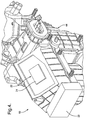
- the driver 22 may be used with a HVAC module 44.
- the driver 22 includes a piezoelectric vibrator 24 that vibrates to reduce noise generated by air that flows through the HVAC module 44.
Landscapes
- Engineering & Computer Science (AREA)
- Physics & Mathematics (AREA)
- Mechanical Engineering (AREA)
- General Engineering & Computer Science (AREA)
- Acoustics & Sound (AREA)
- Multimedia (AREA)
- Thermal Sciences (AREA)
- Soundproofing, Sound Blocking, And Sound Damping (AREA)
- Air Conditioning Control Device (AREA)
- Duct Arrangements (AREA)
Abstract
Description
- The present invention relates to a system for reducing noise in an air flow structure.
- Various noise-reducing systems in air flow structures are known in the prior art. The prior art generally discloses noise-reducing systems that include an air duct that defines an air flow passage to convey an air flow having sound waves, and having a sensor that senses the sound waves to produce a noise signal in response to the sound waves. The prior art also discloses a driver that is responsive to the noise signal, and vibrates to attenuate the sound waves. An example of such a device is disclosed in
U.S. Patent No. 5,791,869 (the '869 patent), which discloses a noise-reducing system that includes an actuator connected to a fan mounted inside an air duct. A sensor inside the air duct detects noise generated by the fan, and in response, the actuator vibrates the fan blade to dampen the noise. - The prior art systems, such as the system disclosed in the '869 patent, control noise in an air duct by manipulating the physical characteristics of the noise generating source. Specifically, the actuator in the '869 patent induces vibrations on the fan blade to overcome noise that is generated through turbulent air. The system disclosed by the '869 system only cancels noise generated in the system by the fan blade.
- Although the noise-reducing systems of the prior art may be used in a variety of applications, an opportunity remains to develop noise-reducing systems to improve quality, reduce space, and reduce cost. In automotive HVAC systems, space and resources are limited. However, the systems disclosed by the prior art often require additional space for storing the various components relating to noise reduction, such as speakers. In addition, noise-reducing systems that use speakers require specific resources, such as audio systems, in order to operate. Customers of the automobile industry demand improvements in noise reduction and cancellation. Accordingly, luxury automobiles are marketed to feature components that reduce noise. An effective noise-reducing system significantly improves the perceived noise performance of the air flow system, which in turn improves the value of the automobile. Therefore, there is a continuing objective to improve the quality of the noise-reducing system and, at the same time, provide a noise-reducing system that is less cost and space prohibitive.
- The subject invention provides for a system for reducing noise in an air flow structure. The system includes an air duct that defines an air flow passage for conveying an air flow having sound waves therein. A sensor is located in the air duct for sensing the sound waves and producing a noise signal in response to the sound waves in the air duct. A driver is supported in the air duct and is responsive to the noise signal for vibrating in the air duct to attenuate the sound waves in the duct. The system is distinguished by the driver including a piezoelectric vibrator.
- Accordingly, the subject invention provides an improved system for reducing noise in an air flow structure by using the piezoelectric vibrator to dampen noise generated by the system. The piezoelectric vibrator may be placed inside the air duct to accommodate space constraints, and the piezoelectric vibrator operates independently of other systems, which reduces the cost of maintaining and operating the noise-reducing system. Furthermore, because the piezoelectric vibrator has a low profile, it may be placed throughout the air duct to improve noise-reducing quality. Therefore, the result of the subject invention is a system for reducing noise in an air flow structure that has improved quality, reduced cost, and reduced space constraints with respect to the systems disclosed by the prior art.
- Other advantages of the present invention will be readily appreciated, as the same becomes better understood by reference to the following detailed description when considered in connection with the accompanying drawings wherein:
- Figure 1 is a perspective view of a noise-reducing system assembled in accordance with a first embodiment of the subject invention;
- Figure 2 is a perspective view of the noise-reducing system assembled in accordance with a second embodiment of the subject invention;
- Figure 3 is a schematic view of a control system used in accordance with the subject invention.
- Figure 4 is a perspective view of the noise-reducing system assembled in accordance with the subject invention; and
- Referring to the Figures, wherein like numerals indicate corresponding parts throughout the several views, a
system 10 for reducing noise in an air flow structure is shown generally atreference numeral 10. As shown in Figures 1 and 2, thesystem 10 includes anair duct 12 that defines an air flow passage to convey an air flow.Sound waves 14 are generated by ablower assembly 15 that moves air through theair duct 12. Theblower assembly 15 may include a blower or a fan blade, typically housed inside theair duct 12. Theblower assembly 15 may include a motor that creates thesound waves 14 outside theair duct 12. Consequently, thesound waves 14 may be generated by theblower assembly 15 disposed internally and/or externally with respect to theair duct 12. - The
sound waves 14 are detected by asensor 16 located in theair duct 12. Thesensor 16 may be a device, such as a microphone, that includes a transducer capable of receiving thesound waves 14 and converting thesound waves 14 to asinusoidal noise signal 18 that is representative of thesound wave 14. It should be understood that more than onesensor 16 may be used to convert thesound waves 14 to thesinusoidal noise signal 18. Thesinusoidal noise signal 18 is mathematically defined with respect to an x-axis representing an angle, and a y-axis, which is a function of the angle, representing an amplitude. Based on the angle, thesinusoidal noise signal 18 has a crest where the amplitude reaches a maximum value. For example, thesinusoidal noise signal 18 may have the crest at an angle of 90 degrees. Thesinusoidal noise signal 18 has a trough where the amplitude reaches a minimum value. For example, thesinusoidal noise signal 18 may have the trough at an angle of 270 degrees. A wavelength of thesinusoidal noise signal 18 may be defined as the distance along the x-axis between the crests. - The noise-reducing
system 10 further includes adriver 22 supported in theair duct 12 that vibrates in response to thesound waves 14. In order to maintain a low profile, thedriver 22 may include apiezoelectric vibrator 24 supported on awall 26 of theair duct 12. Thewall 26 of theair duct 12 may include an opening 28, in which case thepiezoelectric vibrator 24 is disposed over the opening 28. Furthermore, thepiezoelectric vibrator 24 may be a thin piezoelectric film. The piezoelectric film may be secured to thewall 26 of theair duct 12 through various means. For example, thewall 26 may include a plastic 30 component to which the piezoelectric film is bonded or molded. Referring now to Figure 2, thewall 26 of theair duct 12 may be movably supported for regulating the air flow through theair duct 12. As shown in Figure 2, thewall 26 extends perpendicularly across theair duct 12 to block the air flow passage, and the piezoelectric film is disposed over thewall 26. In this embodiment, thewall 26 rotates to allow differing amounts of air to pass through theair duct 12, i.e., to regulate the air flow. - In addition, the noise-reducing
system 10 may include aprocessor 32 connected between thesensor 16 and thepiezoelectric vibrator 24 for manipulating thesinusoidal noise signal 18 to create anattenuation signal 34. Theattenuation signal 34 is then used to vibrate thepiezoelectric vibrator 24, which produces theattenuating waves 20. To effectively cancel or reduce thesound waves 14, theattenuating waves 20 are essentially equal to the additive inverse of thesound waves 14. In order for theattenuating waves 20 to be the additive inverse of thesound waves 14, the crest of thesound waves 14 occurs at roughly the same time as the trough of theattenuating waves 20. Likewise, the crest of the amplitude of theattenuating waves 20 occur at roughly the same time as the trough of the amplitude of thesound waves 14 since theattenuating waves 20 and thesound waves 14 have the same wavelength. Therefore, when thesound waves 14 are combined with the attenuating waves 20, thesound waves 14 will be cancelled or reduced, resulting in a null wave having an amplitude of essentially zero. It should be understood that the attenuating waves 20 are related to theattenuation signal 34, and thesinusoidal noise signal 18 is related to thesound waves 14 such that theprocessor 32 may generate theattenuation signal 34 to be the additive inverse of thesinusoidal noise signal 18, which will create the attenuating waves 20 to be the additive inverse of the sound waves 14. - The
processor 32 may generate theattenuation signal 34 using various devices. For example, aninverter 36 may be included within theprocessor 32. Theinverter 36 may receive thesinusoidal noise signal 18 and rotate it around the x-axis by multiplying thesinusoidal noise signal 18 by a factor of negative one to create theattenuation signal 34. Following this method, theattenuation signal 34 will have the same amplitude as thesinusoidal noise signal 18 but the crest of the amplitude of theattenuation signal 34 will occur at the same time as the trough of the amplitude of thesinusoidal noise signal 18. Likewise, the crest of the amplitude of thesinusoidal noise signal 18 will occur at roughly the same time as the trough of the amplitude of theattenuation signal 34 since thesinusoidal noise signal 18 and theattenuation signal 34 have the same wavelength. Therefore, theattenuation signal 34 will be the additive inverse of thesinusoidal noise signal 18, and the attenuating waves 20 created from theattenuation signal 34 will cancel or reduce the sound waves 14. - Another method of generating the
attenuation signal 34 is to manipulate thesinusoidal noise signal 18 with a phase-shifter 38. The phase-shifter 38 may create theattenuation signal 34 by outputting thesinusoidal noise signal 18 shifted along the x-axis. For example, the phase-shifter 38 may shift thesinusoidal noise signal 18 by 180 degrees to create theattenuation signal 34 to be the additive inverse of thesinusoidal noise signal 18. However, it should be understood that phase-shifts of varying magnitude may shift theattenuation signal 34 to be the additive inverse of thesinusoidal noise signal 18. Furthermore, the phase-shifter 38 may manipulate thesinusoidal noise signal 18 to accommodate for a time delay between thesensor 16 receiving thesound wave 14 and theprocessor 32 producing theattenuation signal 34. It should be noted that the phase-shifter 38 may be used in addition to, or instead of theinverter 36. - In addition to using at least one of the
inverter 36 and the phase-shifter 38, theprocessor 32 may include anamplifier 40 to adjust the amplitude of theattenuation signal 34. Theamplifier 40 stretches theattenuation signal 34 in the direction of the y-axis without affecting the angle represented by the x-axis. Once thesinusoidal noise signal 18 is phase-shifted, inverted, or both, theattenuation signal 34 may have sustained losses in amplitude. Although these losses may be negligible, in order to be the additive inverse of thesinusoidal noise signal 18, and effectively cancel noise, the amplitude of theattenuation signal 34 should be as close to being equal and opposite to the amplitude of thesinusoidal noise signal 18 as possible. For that reason, theamplifier 40 may be needed to adjust the amplitude of theattenuation signal 34. - Once the
attenuation signal 34 is created to be the additive inverse of thesinusoidal noise signal 18, theattenuation signal 34 is transmitted to thepiezoelectric vibrator 24. Thepiezoelectric vibrator 24 vibrates in response to theattenuation signal 34 to produce the attenuating waves 20. The attenuating waves 20, when added to thesound waves 14, create the null wave having an amplitude of essentially zero. Therefore, thesound waves 14 in theair duct 12 are cancelled or reduced. - Figure 3 is an example of a schematic view of a
control system 42 that may be used to enable the noise-reducingsystem 10 to cancel or reduce noise. As shown in Figure 3, thesound waves 14 produced by theblower assembly 15 are received by thesensor 16. Thesensor 16 then converts thesound waves 14 and the attenuating waves 20 into thesinusoidal noise signal 18. Thesinusoidal noise signal 18 is then transmitted to at least one of theinverter 36 and the phase-shifter 38 housed within theprocessor 32 to create theattenuation signal 34. Theprocessor 32 creates theattenuation signal 34 in response to thesinusoidal noise signal 18. In addition to being inverted or phase-shifted, thesinusoidal noise signal 18 may also be amplified to create theattenuation signal 34. Theprocessor 32 then outputs theattenuation signal 34, which is used to control thepiezoelectric vibrator 24. In response to theattenuation signal 34, thepiezoelectric vibrator 24 produces the attenuating waves 20. Both the attenuating waves 20 and thesound waves 14 are received by thesensor 16. If the attenuating waves 20 are the additive inverse of thesound waves 14, then the attenuating waves 20 will cancel the sound waves 14. However, slight errors may cause some of thesound waves 14 to pass to thesensor 16. In this case, thesensor 16 repeats the process using both the attenuating waves 20 and thesound waves 14 as inputs. This way, the noise-reducingsystem 10 receives feedback, and can adjust theattenuation signal 34 to compensate forsound waves 14 that are not being cancelled. - The
system 10 as described herein may be used to cancel or reduce noise in various types of airflow devices. For example, as shown in Figure 4, thedriver 22 may be used with aHVAC module 44. As previously shown in Figures 1-3, thedriver 22 includes apiezoelectric vibrator 24 that vibrates to reduce noise generated by air that flows through theHVAC module 44. - Obviously, many modifications and variations of the present invention are possible in light of the above teachings. The invention may be practiced otherwise than as specifically described within the scope of the appended claims.
Claims (10)
- A system (10) for reducing noise in an air flow structure comprising; an air duct (12) defining an air flow passage for conveying an air flow having sound waves (14) therein,
a sensor (16) in said air duct (12) for sensing the sound waves (14) and producing a noise signal in response to the sound waves (14) in said air duct (12),
a driver (22) supported in said air duct (12) and responsive to the noise signal for vibrating in said air duct (12) to attenuate the sound waves (14) in said duct, and
said driver (22) including a piezoelectric vibrator (24). - The system (10) as set forth in claim 1 further comprising a processor (32) electrically connected between said sensor (16) and said driver (22) and responsive to the noise signal for producing an attenuation signal (34) to vibrate said piezoelectric vibrator (24) to produce attenuating waves (20) in opposition to the sound waves (14).
- The system (10) as set forth in claim 2 wherein said processor (32) includes an amplifier (40) for amplifying the noise signal.
- The system (10) as set forth in claim 2 wherein said sensor (16) includes a noise signal that is sinusoidal and said processor (32) includes a phase-shifter (38) for shifting a phase of the sinusoidal noise signal (18).
- The system (10) as set forth in claim 2 wherein said sensor (16) includes a noise signal that is sinusoidal and said processor (32) includes an inverter (36) for inverting the sinusoidal noise signal (18).
- The system (10) as set forth in claim 1 wherein said air duct (12) includes a wall (26) and said piezoelectric vibrator (24) is supported on said wall (26).
- The system (10) as set forth in claim 6 wherein said wall (26) includes an opening (28) and said piezoelectric vibrator (24) is disposed over said opening (28).
- The system (10) as set forth in claim 7 wherein said wall (26) comprises a plastic (30) and said piezoelectric vibrator (24) is a film having edges secured to said wall (26) about said opening (28).
- The system (10) as set forth in claim 7 wherein said wall (26) is movably supported in said air duct (12) for regulating the air flow through said air duct (12).
- The system (10) as set forth in claim 1 including a blower assembly (15) for moving air through said air duct (12) and producing the sound waves (14) in said air duct (12) to be attenuated by said piezoelectric vibrator (24).
Applications Claiming Priority (1)
| Application Number | Priority Date | Filing Date | Title |
|---|---|---|---|
| US11/296,200 US20070125592A1 (en) | 2005-12-07 | 2005-12-07 | Excitation of air directing valves and air handling surfaces in the cancellation of air handling system noise |
Publications (2)
| Publication Number | Publication Date |
|---|---|
| EP1796077A2 true EP1796077A2 (en) | 2007-06-13 |
| EP1796077A3 EP1796077A3 (en) | 2011-06-29 |
Family
ID=37892918
Family Applications (1)
| Application Number | Title | Priority Date | Filing Date |
|---|---|---|---|
| EP06077103A Withdrawn EP1796077A3 (en) | 2005-12-07 | 2006-11-27 | Excitation of air directing valves and air handling surfaces in the cancellation of air handling system noise |
Country Status (3)
| Country | Link |
|---|---|
| US (1) | US20070125592A1 (en) |
| EP (1) | EP1796077A3 (en) |
| JP (1) | JP2007212124A (en) |
Cited By (1)
| Publication number | Priority date | Publication date | Assignee | Title |
|---|---|---|---|---|
| CN104564847A (en) * | 2013-10-22 | 2015-04-29 | 英业达科技有限公司 | Active fan noise control system |
Families Citing this family (7)
| Publication number | Priority date | Publication date | Assignee | Title |
|---|---|---|---|---|
| US20070045042A1 (en) * | 2005-08-25 | 2007-03-01 | L&L Products, Inc. | Sound reduction system with sound reduction chamber |
| JP5227263B2 (en) * | 2008-06-03 | 2013-07-03 | パナソニック株式会社 | Active noise reduction device and system |
| JP2011080612A (en) * | 2009-10-02 | 2011-04-21 | Fujitsu Ltd | Muffling device |
| JP5414570B2 (en) * | 2010-02-25 | 2014-02-12 | 株式会社寺田電機製作所 | AC signal generator |
| US10041697B1 (en) * | 2015-10-16 | 2018-08-07 | Parnell Black | Noise reduction system for in-wall HVAC systems |
| CN105241026B (en) * | 2015-10-30 | 2018-05-15 | 海信(山东)空调有限公司 | A kind of vibration control method and equipment |
| CN119459256B (en) * | 2025-01-17 | 2025-09-16 | 山东田河新能源科技有限公司 | A filter for automobile air conditioning |
Family Cites Families (28)
| Publication number | Priority date | Publication date | Assignee | Title |
|---|---|---|---|---|
| US4122303A (en) * | 1976-12-10 | 1978-10-24 | Sound Attenuators Limited | Improvements in and relating to active sound attenuation |
| EP0040613B1 (en) * | 1979-11-21 | 1986-02-05 | Sound Attenuators Limited | Improved method and apparatus for cancelling vibration |
| US4473906A (en) * | 1980-12-05 | 1984-09-25 | Lord Corporation | Active acoustic attenuator |
| ZA825676B (en) * | 1981-08-11 | 1983-06-29 | Sound Attenuators Ltd | Method and apparatus for low frequency active attennuation |
| ZA828700B (en) * | 1981-11-26 | 1983-09-28 | Sound Attenuators Ltd | Method of and apparatus for cancelling vibrations from a source of repetitive vibrations |
| GB2160742B (en) * | 1984-06-21 | 1988-02-03 | Nat Res Dev | Damping for directional sound cancellation |
| US4665549A (en) * | 1985-12-18 | 1987-05-12 | Nelson Industries Inc. | Hybrid active silencer |
| GB8603678D0 (en) * | 1986-02-14 | 1986-03-19 | Gen Electric Co Plc | Active noise control |
| US4736431A (en) * | 1986-10-23 | 1988-04-05 | Nelson Industries, Inc. | Active attenuation system with increased dynamic range |
| JPH01245795A (en) * | 1988-03-28 | 1989-09-29 | Daikin Ind Ltd | electronic silencer |
| JPH02261997A (en) * | 1989-03-31 | 1990-10-24 | Toshiba Corp | Silencing device |
| US5446790A (en) * | 1989-11-24 | 1995-08-29 | Nippondenso Co., Ltd. | Intake sound control apparatus |
| US5272286A (en) * | 1990-04-09 | 1993-12-21 | Active Noise And Vibration Technologies, Inc. | Single cavity automobile muffler |
| US5319165A (en) * | 1990-04-25 | 1994-06-07 | Ford Motor Company | Dual bandpass secondary source |
| US5060271A (en) * | 1990-05-04 | 1991-10-22 | Ford Motor Company | Active muffler with dynamic tuning |
| US5146505A (en) * | 1990-10-04 | 1992-09-08 | General Motors Corporation | Method for actively attenuating engine generated noise |
| US5404409A (en) * | 1991-07-31 | 1995-04-04 | Fujitsu Ten Limited | Adaptive filtering means for an automatic sound controlling apparatus |
| US5502869A (en) * | 1993-02-09 | 1996-04-02 | Noise Cancellation Technologies, Inc. | High volume, high performance, ultra quiet vacuum cleaner |
| JPH06242787A (en) * | 1993-02-17 | 1994-09-02 | Fujitsu Ltd | Sneaking sound control type active noise elimiation device |
| US5475761A (en) * | 1994-01-31 | 1995-12-12 | Noise Cancellation Technologies, Inc. | Adaptive feedforward and feedback control system |
| WO1995024171A1 (en) * | 1994-03-07 | 1995-09-14 | Noise Cancellation Technologies, Inc. | Integral device for active control of noise in ducts |
| US5828768A (en) * | 1994-05-11 | 1998-10-27 | Noise Cancellation Technologies, Inc. | Multimedia personal computer with active noise reduction and piezo speakers |
| KR970016173A (en) * | 1995-09-18 | 1997-04-28 | 김광호 | Noise reduction device of various fans |
| US5919029A (en) * | 1996-11-15 | 1999-07-06 | Northrop Grumman Corporation | Noise absorption system having active acoustic liner |
| DE19822148C2 (en) * | 1997-06-19 | 2000-08-17 | Dornier Gmbh | Method and device for reducing noise in media carrying pipes |
| US6658118B1 (en) * | 1998-06-05 | 2003-12-02 | Dana Corporation | Suppression of fluid-borne noise |
| US6342005B1 (en) * | 1999-09-30 | 2002-01-29 | Carrier Corporation | Active noise control for plug fan installations |
| DE19949685A1 (en) * | 1999-10-15 | 2001-04-19 | Mann & Hummel Filter | Active control of noise generated at air intake of internal combustion engine uses noise cancellation |
-
2005
- 2005-12-07 US US11/296,200 patent/US20070125592A1/en not_active Abandoned
-
2006
- 2006-11-27 EP EP06077103A patent/EP1796077A3/en not_active Withdrawn
- 2006-12-07 JP JP2006330730A patent/JP2007212124A/en active Pending
Cited By (1)
| Publication number | Priority date | Publication date | Assignee | Title |
|---|---|---|---|---|
| CN104564847A (en) * | 2013-10-22 | 2015-04-29 | 英业达科技有限公司 | Active fan noise control system |
Also Published As
| Publication number | Publication date |
|---|---|
| EP1796077A3 (en) | 2011-06-29 |
| US20070125592A1 (en) | 2007-06-07 |
| JP2007212124A (en) | 2007-08-23 |
Similar Documents
| Publication | Publication Date | Title |
|---|---|---|
| US5382134A (en) | Active noise control using noise source having adaptive resonant frequency tuning through stiffness variation | |
| JPH0756582A (en) | Active acoustic controller matched to reference model | |
| US20040240678A1 (en) | Active noise control system | |
| EP2597638A1 (en) | Tunable active noise control | |
| CN103137123A (en) | Active design of exhaust sounds | |
| US20100124341A1 (en) | Noise control device | |
| EP1796077A2 (en) | Excitation of air directing valves and air handling surfaces in the cancellation of air handling system noise | |
| US20060236973A1 (en) | Active intake muffler | |
| US20030016833A1 (en) | Active noise cancellation system utilizing a signal delay to accommodate noise phase change | |
| US20070062756A1 (en) | Active exhaust-noise attenuation muffler | |
| EP1308926B1 (en) | Active noise cancellation using frequency response control | |
| US20100064696A1 (en) | Active control of an acoustic cooling system | |
| Birdsong et al. | An electronically tunable resonator for noise control | |
| US20050276422A1 (en) | Integral active noise cancellation section | |
| Shyu et al. | Modified FIR filter with phase compensation technique to feedforward active noise controller design | |
| JP3355706B2 (en) | Adaptive control device | |
| JPS61296392A (en) | electronic sound deadening system | |
| JP3549023B2 (en) | Vibration control method and device | |
| JPH0598926A (en) | Low noise equipment | |
| JP3275449B2 (en) | Active noise control device and active vibration control device | |
| Mace et al. | Active control of flexural vibration: an adaptive anechoic termination | |
| JP2564309Y2 (en) | Vehicle interior noise reduction device | |
| JP3250225B2 (en) | Active noise reduction device | |
| JP2010286684A (en) | Active vibration noise control device | |
| De Oliveira et al. | Active control of engine noise transmitted into cavities: simulation, experimental validation and sound quality assessment |
Legal Events
| Date | Code | Title | Description |
|---|---|---|---|
| PUAI | Public reference made under article 153(3) epc to a published international application that has entered the european phase |
Free format text: ORIGINAL CODE: 0009012 |
|
| AK | Designated contracting states |
Kind code of ref document: A2 Designated state(s): AT BE BG CH CY CZ DE DK EE ES FI FR GB GR HU IE IS IT LI LT LU LV MC NL PL PT RO SE SI SK TR |
|
| AX | Request for extension of the european patent |
Extension state: AL BA HR MK YU |
|
| PUAL | Search report despatched |
Free format text: ORIGINAL CODE: 0009013 |
|
| AK | Designated contracting states |
Kind code of ref document: A3 Designated state(s): AT BE BG CH CY CZ DE DK EE ES FI FR GB GR HU IE IS IT LI LT LU LV MC NL PL PT RO SE SI SK TR |
|
| AX | Request for extension of the european patent |
Extension state: AL BA HR MK RS |
|
| AKY | No designation fees paid | ||
| REG | Reference to a national code |
Ref country code: DE Ref legal event code: R108 Effective date: 20120307 |
|
| STAA | Information on the status of an ep patent application or granted ep patent |
Free format text: STATUS: THE APPLICATION IS DEEMED TO BE WITHDRAWN |
|
| 18D | Application deemed to be withdrawn |
Effective date: 20111230 |